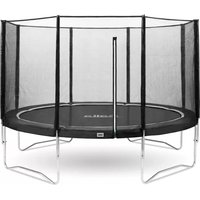
Combo 586 - Trampoline Salta - Free user manual and instructions
Find the device manual for free Combo 586 Salta in PDF.



| Product Type | Trampoline |
| Brand | Salta |
| Model | Combo 586 |
| Diameter | 427 cm |
| Maximum supported weight | 150 kg |
| Recommended use | Outdoor, domestic |
| Frame material | Steel |
| Jumping surface | Polypropylene mat |
| Springs | Galvanized steel |
| Safety net | Included |
| Protective padding | Included |
| Assembly | By an adult only |
| Minimum free height | 7.3 m |
| Minimum side clearance | 2 m around the trampoline |
| Recommended age | From 6 years old |
| Maximum number of users | 1 at a time |
| Maintenance | Check before each use; replace the net every 2 years |
| Warranty | Consult the website www.salta.com |
Frequently Asked Questions - Combo 586 Salta
User questions about Combo 586 Salta
0 question about this device. Answer the ones you know or ask your own.
Ask a new question about this device
Download the instructions for your Trampoline in PDF format for free! Find your manual Combo 586 - Salta and take your electronic device back in hand. On this page are published all the documents necessary for the use of your device. Combo 586 by Salta.
USER MANUAL Combo 586 Salta
natural_image
Illustration of a trampoline with 'Salta' branding and a central circular base (no text or symbols on the diagram itself)COMBO
ROUND
User manual | Gebruikershandleiding | Gebrauchsanweisung | Mode d'emploi | Brugervejledning Käyttöohje | Brukerhändbok | Bruksanvisning | Manuale dell'utente | Podręcznik użytkownika Посібник користувача | Руководство пользователя
GB NL DE FR DK FI NO SE IT PL UA RU
| ITEM | 581 / 582 / 587 / 584 / 585 / 586 |
| 183, 213, 251, 305, 366 & 427 cmSIZE |
Warning! Choking hazard, small parts. Adult assembly required. Read this manual prior to assembling and using this trampoline. Retain this manual for future reference.

natural_image
White circular play button icon with black triangle (no text or symbols)VIDEO INSTRUCTIONS
SCAN OR GO TO WWW.SALTA.COM/QR
PACK CONTENTS / PACKUNGSINHALT
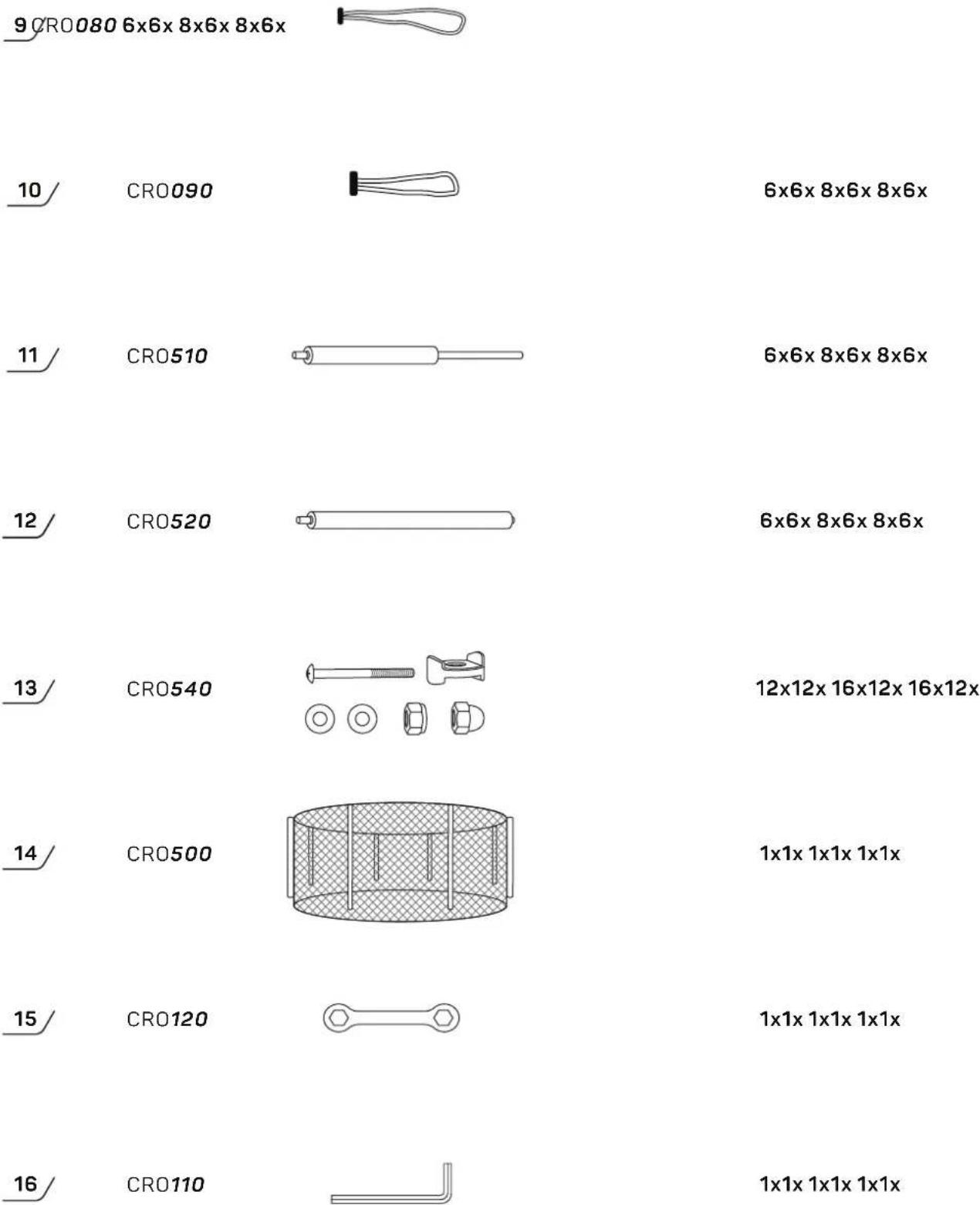
| Reference number Referenznummer | Part number Teilenummer | Item image Artikelbild | 581 183 cm | 582 213 cm | 587 251 cm | 584 305 cm | 585 366 cm | 586 427 cm |
| 1/ | CRO010 |  | 1x1x | 1x1x | 1x1x | |||
| 2/ | CRO020 |  | 1x1x | 1x1x | 1x1x | |||
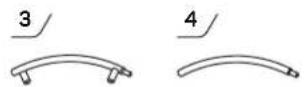
| 3/ | CRO030 | 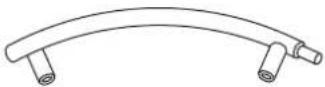 | 3x3x | 4x3x | 4x3x | |||
| 4/ | CRO031 | 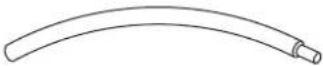 | 3x3x | 4x3x | 4x3x | |||
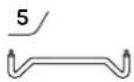
| 5/ | CRO050 |  | 3x3x | 4x3x | 4x3x | |||
| 6/ | CRO040 |  | 6x0x | 8x0x | 8x6x | |||
| 7/ | CRO060 | 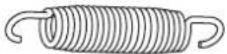 | 54x36x | 64x36x | 80x48x | |||
| 8/ | CRO070 | 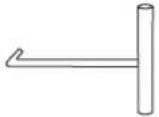 | 1x1x | 1x1x | 1x1x |
581 & 582
183, 213 cm


natural_image
Diagram showing three curved pipes with arrows indicating direction, no text or symbols present
581 & 582
183, 213 cm
3x
natural_image
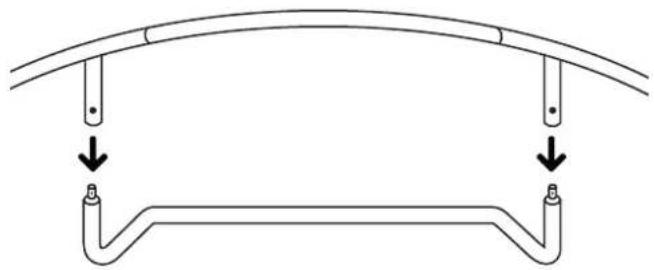
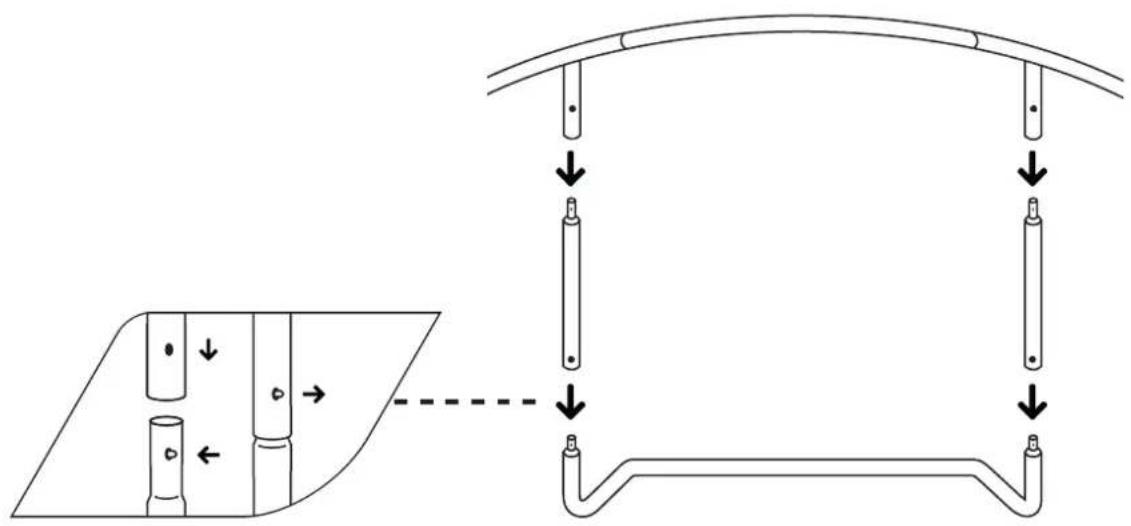
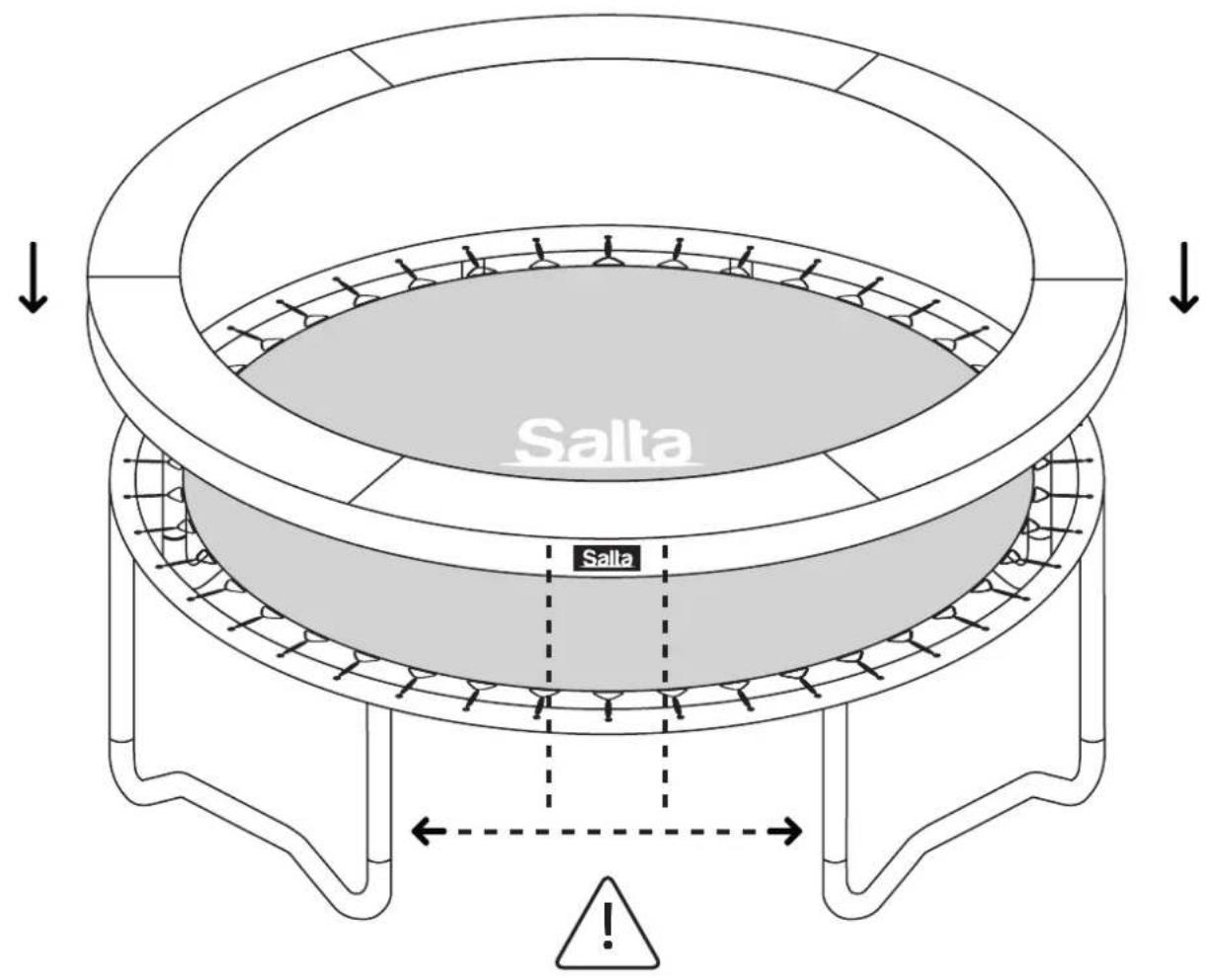
Simple line drawing of a curved beam supported by two vertical posts, with arrows indicating downward force or compression (no text or symbols)587, 584, 585 & 586
251, 305, 366, 427 cm

251, 305 cm 3x 6x
366, 427 cm 4x 8x
4
natural_image
Illustration showing a hand holding a spring with a tool, and another close-up of the spring being inserted into a cable (no text or symbols present)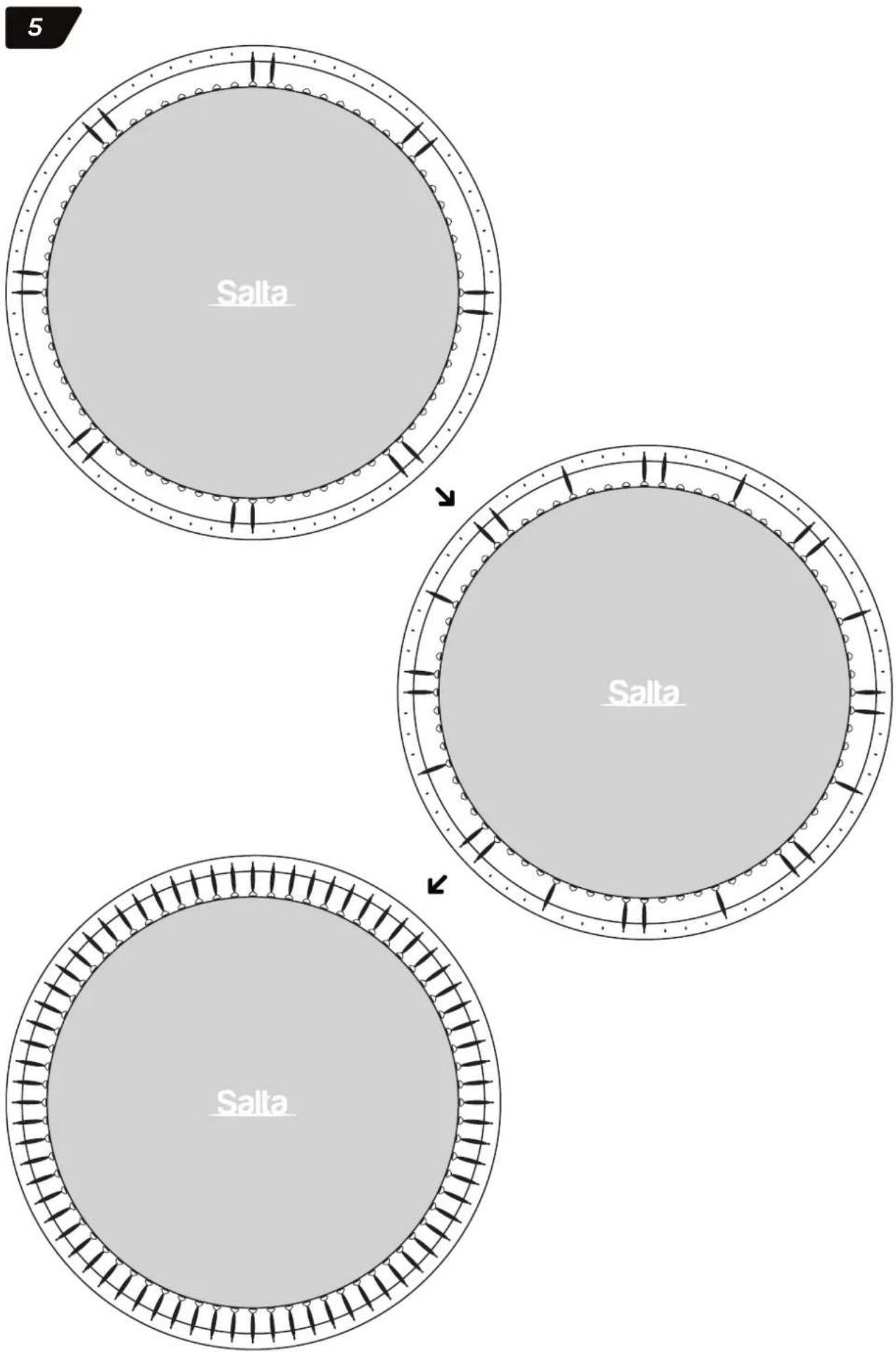

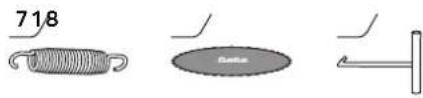
183, 213, 251, 305 cm 6x 6x
366, 427 cm 8x 8x




12 14


183, 213, 251, 305 cm 6x 1x
366, 427 cm 8x 1x

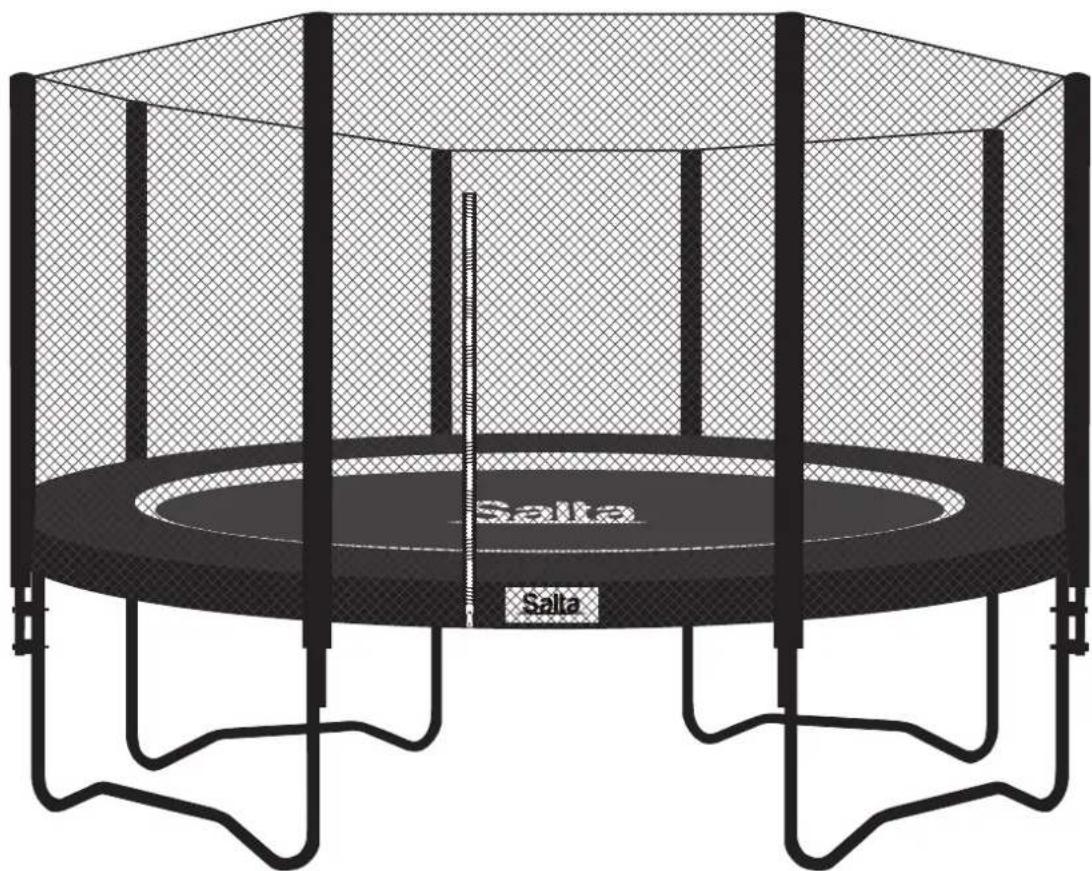
natural_image
Illustration of a trampoline with 'Salta' label on the base (no additional text or symbols)Ready to jump!
Before you start to use of this trampoline, be sure to carefully read all the information provided to you in this manual. Just like any other type of physical recreational activity, participants can be injured. To reduce the risk of injury, be sure to follow appropriate safety rules and tips.
- Recommended to wear gloves when installing the products.
- Don't place the trampoline on concrete, asphalt or any other hard surface.
- Misuse and abuse of this trampoline is dangerous and can cause serious injury!
- Trampoline, being rebounding devices, propel the performer to unaccustomed heights and into a variety of body movements.
- Always inspect the trampoline before each use for wear-out mat, loose or missing parts.
- Strong winds and gusts can result in displacement of the trampoline. Salta recommends securing the trampoline by use of anchors or sandbags and removal of the safety net and jump mat.
- Proper assembly, care and maintenance of product, safety tips, warnings, and proper techniques in jumping and bouncing are all included in this manual. All users and supervisors must read and familiarize themselves with these instructions. Anybody who chooses to use this trampoline must be aware of their own limitations in regards to performing various jumps and bounces with this trampoline.
WARNING △!
- WARNING! Read instructions before using this trampoline.
- WARNING! No somersaults.
- WARNING! Only one user. Collision hazard.
- WARNING!
| COMBO | SIZE | MAX. WEIGHT |
| 581 / 582 | 183 cm / 213 cm | 50 kg |
| 587 | 251 cm | 100 kg |
| 584 / 585 / 586 | 305 cm / 366 cm / 427 cm | 150 kg |
- WARNING! Always close net opening before jumping.
- WARNING! Only for domestic use.
- WARNING! Outdoor use only.
- WARNING! Do not wear shoes on the trampoline, as this will cause excessive wear on the mat material.
- WARNING! Do not use the mat when it is wet.
- WARNING! The trampoline shall be assembled by an adult in accordance with the assembly instructions and thereafter checked before the first use.
- WARNING! Empty pockets and hands before jumping.
- WARNING! Always jump in the middle of the mat.
- WARNING! Do not eat while jumping.
- WARNING! Do not exit by a jump.
- WARNING! Do not use in strong wind conditions and secure the trampoline.
- WARNING! Limit the time of continuous usage (make regular stops).
- WARNING! Adult supervision required.
- WARNING! Not suitable for children under 36 months. Choking hazard. Small parts.
- The trampoline is not intended to be buried into the ground.
- The net should be replaced every 2 years.
- The trampoline shall not be modified.
- Retain the maintenance instruction manual.
- Self-locking nuts are only to be used for a one-time setup.
GB
- Misuse and abuse of this trampoline can cause serious injuries.
- Inspect before using and replace any worn, defective or missing parts.
- Observe all safety requirements enclosed with this product.
- Not suitable for children under 36 months, due to lack of the ability.
- Keep away from fire.
- Do not hang from, kick, cut or climb on the safety net.
- Wear clothing free of drawstrings, hooks, loops or anything that could get caught in the barrier.
- Do not attach anything to the barrier that is not a manufacturer-approved accessory or part of the enclosure system.
- Enter and exit the enclosure only at the enclosure door or barrier opening designated for that purpose.
- Always consult a doctor/physician before performing any kind of physical activity.
2. INFORMATION ON USE OF THE TRAMPOLINE
Initially, you should get accustomed to the feel and bounce of the trampoline. The focus must be on the fundamentals of your body position and you should practice each bounce (the basic bounces) until you can do each skill with ease and control.
To brake a bounce, all you need to do is flex your knees sharply before they come in contact with the mat of the trampoline. This technique should practiced while you are learning each of the basic bounces. The skill of braking should be used whenever you lose balance or control of your jump.
Always learn the simplest bounce first and be consistent with the control of your bounce before moving on to more difficult and advanced bounces. A controlled bounce is one when your take off point and landing point is the same spot on the mat. If you move up to the next bounce without first mastering the previous, you increase your chances of getting injured.
Do not bounce on the trampoline for extended periods of time because fatigue can increase your chances of becoming injured. Bounce for a brief period of time and then allow others to join in on the fun! Never have more than one person bouncing on the trampoline.
Jumpers should wear t-shirt, shorts or sweats, and regulation gymnastics shoes, heavy socks, or be bare foot. If you are just beginning, you may want to wear long sleeve shirts and pants to protect against scrapes and abrasions until you master correct landing positions and form. Do not wear hard sole shoes, such as tennis shoes, on the trampoline as this will cause excessive wear on the mat material.
You should always mount and dismount properly in order to avoid injury. To mount properly, you should PLACE your hand on the frame and either step or roll up onto the frame, over the springs, and onto the trampoline mat. You should always remember to place your hands onto the frame while mounting or dismounting. Do not step directly onto the frame pad or grasp the frame pad. To dismount properly, move over to the side of the trampoline and place your hand onto the frame as a support and step from the mat to the ground. Smaller children should be assisted when mounting and dismounting the trampoline.
Do not bounce recklessly on the trampoline since this will increase your chances of getting injured. The key to safety and having fun on the trampoline is control and mastering the various bounces. Never try to out-bounce another bouncer in terms of height! Never use the trampoline alone without supervision.
3. ACCIDENT CLASSIFICATION
Mounting and Dismounting: Be very careful when getting on and off the trampoline. DO NOT mount the trampoline by grabbing the frame pad, stepping onto the springs, or by jumping onto the mat of the trampoline from any object (i.e. a deck, roof, or ladder). This will increase your chances of getting injured! DO NOT dismount by jumping off the trampoline and landing on the ground regardless of the makeup of the ground. If small children are playing on the trampoline, they may need help in mounting and dismounting.
Use of Alcohol or Drugs: DO NOT consume any alcohol or drugs when using this trampoline! This will increase your chances of getting injured since these foreign substances impairs your judgements, reaction time, and overall physical coordination.
Striking the Frame of Springs: When playing on the trampoline, STAY in the center of the mat. This will reduce your risk of getting injured by landing on the frame or springs. Always keep the frame pad covering the frame of the trampoline. DO NOT jump or step onto the frame pad directly since it was not intended to support the weight of a person.
Loss of Control: DO NOT try difficult manoeuvres, or any manoeuvres until you have mastered the previous manoeuvre, or if you are just learning how to jump on a trampoline. If you do, you will increase your risk of getting injured by landing on the frame, springs, or off the trampoline completely because you might lose control of your jump. A controlled jump is considered landing on the same spot that you took off from. If you do lose control when you are jumping on the trampoline, bend your knees sharply when you land and this will allow you to regain control and stop your jump.
Somersaults (Flips): DO NOT PERFORM somersaults of any type (backwards or forwards) on this trampoline. If you make a mistake when trying to perform a somersault, you could land on your head or neck. This will increase your chances of getting your neck or back broken, which will result in death or paralysis.
Foreign Objects: DO NOT use the trampoline if there are pets/animals, other people, or any objects underneath or into the trampoline. This will increase the chances of an injury occurring. DO NOT hold any foreign objects in your hand and DO NOT place any objects on the trampoline while anyone is playing on it. Please be aware of what is overhead when you are playing on the trampoline. Tree limbs, wires, or other objects located over the trampoline will increase your chances of getting injured.
Poor trampoline maintenance: A trampoline in poor condition will increase your risk of injury. The trampoline should be checked before each use for bent steel tubes, torn mats, loose or broken springs and the overall stability of the trampoline.
Weather Conditions: Please be aware of the weather conditions when using the trampoline. Do not use if the mat of the trampoline is wet, the jumper could slip and injure him or herself. If it is too windy, jumpers could lose control.
Limiting Access: When the trampoline is not in use, always store the access ladder in a secure place so that unsupervised children cannot play on the trampoline.
TIPS TO REDUCE THE RISK ACCIDENTS
Jumper's role in accident prevention
The key here is to stay in control of your jumps. DO NOT move onto more complicated, more difficult manoeuvres until you have mastered the basic, fundamental bounce.
Education is also key to safety and very important. Read, understand, and practice all safety precautions and warnings prior to using the trampoline. A controlled jump is when you land and take off from the same location. For additional safety tips and instructions, contact a certified trampoline instructor.
Supervisor's Role in Accident Prevention
Supervisor need to understand and enforce all safety rules and guidelines. It is the responsibility of the supervisor to provide knowledgeable advice and guidance to all jumpers of the trampoline. If supervision is unavailable or inadequate, the trampoline could be stored in a secure place, disassembled to prevent unauthorized use, or covered with a heavy tarpaulin that can be locked or secured with lock or chains. The supervisor is also responsible to ensure that the safety placard is placed on the trampoline and that jumpers are informed of these warnings and instructions.
4. TRAMPOLINE SAFETY INSTRUCTIONS
Jumpers
- Do not use trampoline if you have consumed alcohol or any drugs.
- Remove all hard sharp objects from person before using trampoline.
- You should climb on and off in a controlled and careful manner. Never jump on or off the trampoline and never use the trampoline as a device to bounce onto or into another object.
- Always learn the basic bounce and master each type of bounce before trying more difficult types of bounces. Review the Basic Skills Section to learn how to do the basics.
- To stop your bounce, flex your knees when you land on the mat with your feet.
- Always be in control when you are bouncing on the trampoline. A controlled jump is when you land at the same spot that you took off from. If at any time you feel out of control, try to stop your bouncing.
- Do not jump or bounce for prolonged periods of time or too high for a number of jumps.
- Keep your eyes on the mat to maintain control. If you do not, you could lose balance or control.
- Never have more than 1 person on the trampoline at any time.
- Always have a supervisor watching you when you are on the trampoline.
Supervisors
Educate yourself with the basic jumps and safety rules. To prevent and reduce the risk of injuries, enforce all safety rules and ensure that new jumpers learn the basic bounces before trying more difficult and advanced jumps.
- All jumpers need to be supervised, regardless of skill level or age.
- Never use the trampoline when it is wet, damaged, dirty, or worn out. The trampoline should be inspected before any jumpers start bouncing on it.
- Keep all objects that could interfere with the jumper away from the trampoline.
- Be aware of what is overhead, underneath, and around the trampoline.
- To prevent unsupervised and unauthorized use, the trampoline should be secured when not in use.
5. TRAMPOLINE PLACEMENT
The minimum overhead clearance required is 7.3 meters (24 feet) and a clearance of 2 meters around the perimeter of the trampoline. In terms of horizontal clearance, please ensure that no hazardous objects are near the trampoline such as tree limbs, other recreational objects (i.e. swing sets, swimming pools), electrical power wiring, walls, fences, etc.
For safe use of the trampoline, please be aware of the following when selecting a place for your trampoline:
- Make sure it is placed on a level surface.
- The area is well-lighted.
- There are no obstructions beneath the trampoline.
If you do not follow these guidelines, you increase the risk of someone getting injured.
6. WARRANTY
For warranty information please check our website; www.salta.com. Warranty can be claimed by presenting the original invoice. The warranty applies only to the material and constructions defects with respect to the product or its components. The warranty lapses if:
- The product is used incorrect or negligent or in a inappropriate way.
- The product is not installed according to the instructions / maintenance.
– The product is buried into the ground. - Defects caused by external influences (e.g. climate influences such as normal weathering by UV rays or normal wear and tear).
- Changes or modifications to the trampoline are not permitted.
– The product is used for public or the recreational market. - Defective parts have been replaced by not original Salta spare parts.
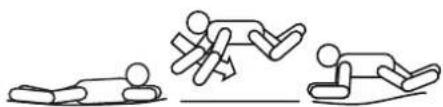
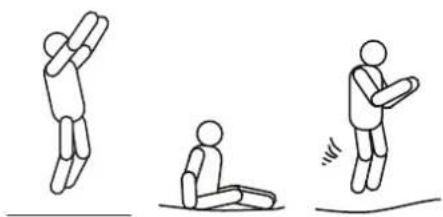
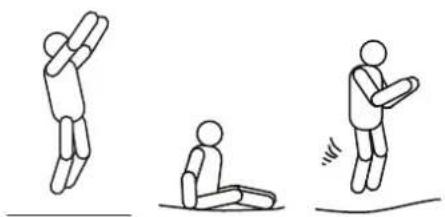
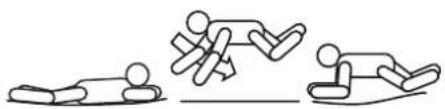
7. BASIC TRAMPOLINE BOUNCES
THE BASIC BOUNCE
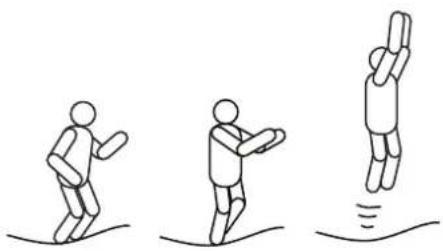
natural_image
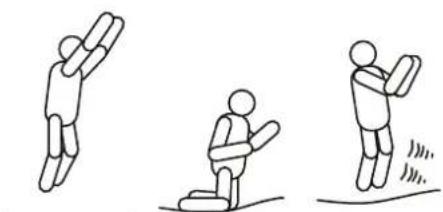
Three stick figures in action poses: one rolling, one jumping, and one jumping with a ball (no text or symbols)KNEE BOUNCE
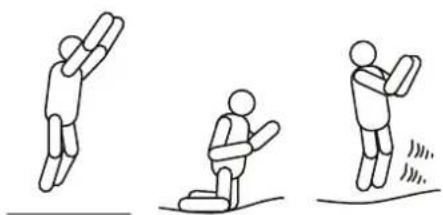
natural_image
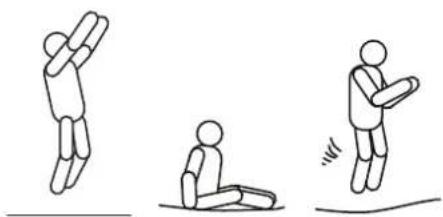
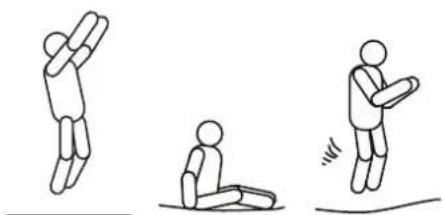
Three sequential illustrations of a person performing a stretching exercise, showing different postures (no text or symbols)SEAT BOUNCE
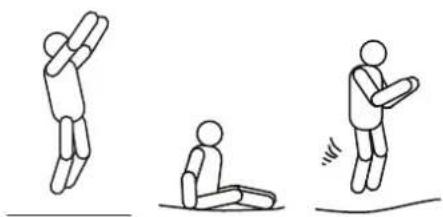
natural_image
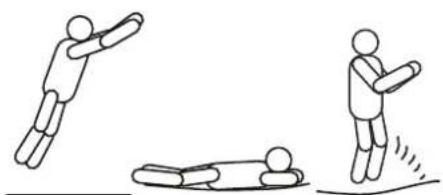
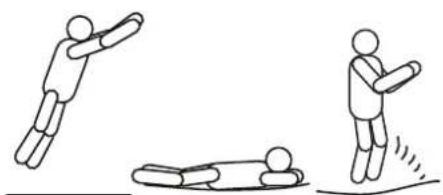
Three stick figures demonstrating different postures of physical exercise: stretching, kneeling posture, and stretching (no text or symbols)FRONT BOUNCE
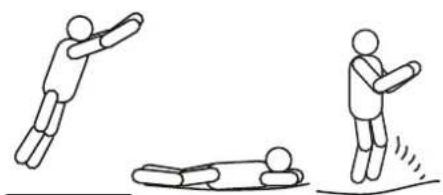
natural_image
Three stick figures in motion: one stretching, one rolling a ball, and one standing with motion lines (no text or symbols)180 DEGREE BOUNCE
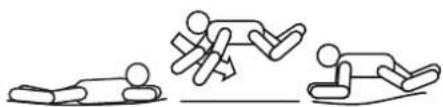
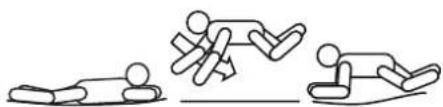
natural_image
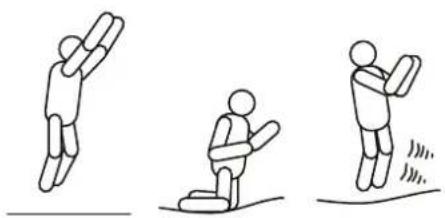
Three sequential line drawings of human figures in motion, no text or symbols present- Start from standing position, feet shoulder width apart and with bead up and eyes on mat.
- Swing arms forward and up and around in a circular motion.
- Bring feet together while in mid-air and point toes downward.
-
Keep feet shoulder width apart when landing on mat.
-
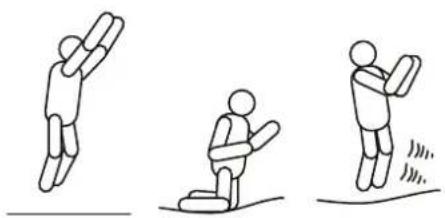
Start with basic bounce and keep it low.
- Land on knees keeping back straight, body erect and use your arms to maintain balance.
-
Bounce back to basic bounce position by swinging arms up.
-
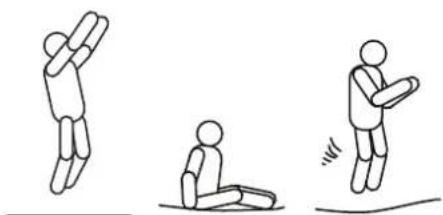
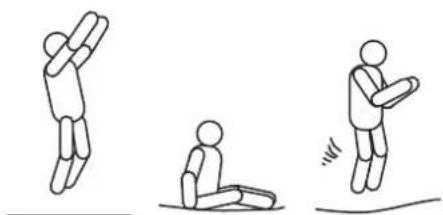
Land in a flat sitting position.
- Place hands on mat besides hips
-
Return to erect position by pushing with hands.
-
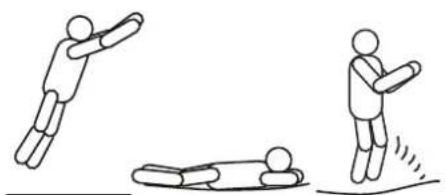
Start with front bounce position.
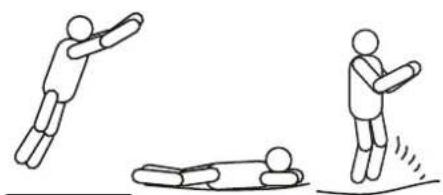
- Land in prone (face down) position and keep hand and arms extended forward on mat.
-
Push off the mat with arms to return to standing position.
-
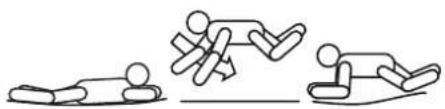
Start with front bounce position.
- Push off with left or right hands and arms (depending on which way you wish to turn).
- Maintain head and shoulders in the same direction and keep back parallel to mat and head up.
- Land in prone position by return to standing position by pushing up with hands and arms.
8. CARE AND MAINTENANCE
This trampoline was designed and manufactured with quality materials and craftsmanship. If proper care and maintenance is provided, it will provide all jumpers with years of exercise, fun, and enjoyment as well as reduce the risk of injury. Check and maintenance of the main parts (frame, suspension system, mat and padding) at the beginning of each season and also regular intervals. If these checks are not carried out, the trampoline could become dangerous. Please follow the guidelines listed below:
This trampoline is designed to withhold a certain amount of weight and use. Please make sure that only one person at any one time uses the trampoline. Jumpers should either wear socks or be barefoot when using the trampoline. Please be aware that street shoes or tennis shoes should NOT be worn while using the trampoline. In order to prevent the trampoline mat from getting cut or damaged please do not allow any pets onto the mat. Also, jumpers should remove all sharp objects from their person prior to using the trampoline. Any type of sharp or pointed objects should be kept off the trampoline mat at all times.
Retain the maintenance instruction manual. Always inspect the trampoline before each use for worn, abused or missing parts. A number of conditions could arise that may increase your chances of getting injured. Please be aware of:
- Check all nuts and bolts for tightness and tighten when required.
- Check all spring-loaded (pit pin) joints are still intact and cannot become dislodged during play.
- Check all coverings and sharp edges and replace when required.
- In certain countries during winter period, the snow load and the very low temperature can damage the trampoline. It is recommended to remove the snow and store the mat and the enclosure indoor.
- Check that mat and padding are without defects; NOTE Sunlight, rain, snow and extreme temperatures reduce the strength of these parts over time.
- Replace the net after 2 years of use or when the net no longer works properly.
– Punctures, holes, or tears in the trampoline mat.
- Sagging trampoline mat.
- Loose stitching or any kind of deterioration of the mat.
- Bent or broken frame parts, such as the legs.
- Broken, missing, or damaged springs.
- Damaged, missing, or insecurely attached frame pad.
- Parts on the frame, springs or spring mat, that stick out.
- Make sure that the hook-and-loop fasteners are closed correctly during use of trampoline.

If you find any of the previous conditions, or anything else that you feel could cause harm to any user, the trampoline should be disassembled or secured from use until the condition(s) has been resolved.
Windy conditions
In severe wind situations, the trampoline can be blown away. To increase security we recommend to use the official Salta Anchor set. If you expect windy weather conditions, the trampoline should be moved to a sheltered area or disassembled.
Moving the trampoline
If you need to move the trampoline, two people should be used. When moving, lift the trampoline slightly off the ground and keep it horizontal to the ground. For any type of other move, you should disassemble the trampoline.
NL
1. INTRODUCTIE
natural_image
Three sequential line drawings of a person performing a rolling motion, with one figure jumping upward and the other falling below (no text or symbols)KNIE SPRONG
natural_image
Three stick figures demonstrating different physical poses: standing, kneeling, and stretching (no text or symbols)ZIT SPRONG

natural_image
Three stick figures in various poses: jumping, kneeling, and stretching (no text or symbols)VOORWAARTSE SPRONG

natural_image
Three stick figures in various physical poses: one stretching, one rolling on a surface, and one standing with motion lines (no text or symbols)180 GRADEN SPRONG
natural_image
Three sequential line drawings of human figures in motion, no text or symbols presentnatural_image
Three stick figures in motion poses: running, holding a ball, and jumping with a falling object (no text or symbols)KNIESPRUNG
natural_image
Three stick figures in various poses: standing, kneeling, and stretching (no text or symbols)SITZSPRUNG

natural_image
Three stick figures in various poses: standing, kneeling, and stretching (no text or symbols)NACH-VORNE SPRUNGEN
natural_image
Three stick figures in various poses: one stretching, one rolling down with a ball, and one standing with a stick (no text or symbols)180 GRAD SPRUNG

natural_image
Three sequential illustrations of human figures in dynamic poses, no text or symbols presentnatural_image
Three stick figures in motion poses: running, holding a ball, and jumping with a falling object (no text or symbols)LE SAUT DE GENOU
natural_image
Three stick figures in various poses: standing, kneeling, and stretching (no text or symbols)LE SAUT DES FESSES

natural_image
Three stick figures in various poses: standing, kneeling, and stretching (no text or symbols)LE SAUT VENTRAL

natural_image
Three stick figures in various positions: one stretching, one rolling down with a ball, and one standing with a band (no text or symbols)IA DEMI VRILLE
natural_image
Three sequential illustrations of human figures in dynamic poses, no text or symbols presentnatural_image
Three sequential line drawings of a person performing a rolling motion, with one figure jumping upward and the other falling below (no text or symbols)FALD TIL KNÆSTILLING

natural_image
Three sequential illustrations of a person performing physical exercises, showing different postures (no text or symbols)FALD TIL SIDDESTILLING
natural_image
Three stick figures demonstrating different postures of physical exercise: stretching, kneeling posture, and stretching (no text or symbols)FRONTFALD
natural_image
Three stick figures in motion: one stretching, one rolling a ball, and one standing with motion lines (no text or symbols)180 GRADERS SPRING

natural_image
Three sequential line drawings of human figures in motion, no text or symbols presentnatural_image
Three stick figures in action poses: one rolling, one jumping, and one jumping with a ball (no text or symbols)POLVIHYPPY

natural_image
Three sequential illustrations of a person performing stretching exercises, showing different postures (no text or symbols)ISTUMAHYPPY
natural_image
Three stick figures in various poses: jumping, kneeling, and stretching (no text or symbols)HYPPY ETEENPÄIN
natural_image
Three stick figures in various positions: one stretching, one rolling on a surface, and one standing with motion lines (no text or symbols)180 ASTEEN KÄÄNNÖS
natural_image
Three sequential line drawings of human figures in motion, no text or symbols presentnatural_image
Three sequential line drawings of a person performing a rolling motion, with one figure jumping upward and the other falling below (no text or symbols)KNEHOPP

natural_image
Three sequential illustrations of a person performing physical exercises, showing different postures (no text or symbols)SETEHOPP

natural_image
Three sequential illustrations of a person performing stretching or kneeling exercises (no text or symbols)FRONTHOPP

natural_image
Three stick figures in motion: one stretching, one rolling a ball, and one standing with motion lines (no text or symbols)180 GRADERS HOPP

natural_image
Three sequential line drawings of human figures in motion, no text or symbols presentnatural_image
Three sequential line drawings of a person performing a rolling motion, with one figure jumping upward and the other falling below (no text or symbols)KNÄHOPP

natural_image
Three sequential illustrations of a person performing physical exercises, showing different postures (no text or symbols)SITTHOPP
natural_image
Three stick figures demonstrating different postures of physical exercise: stretching, kneeling posture, and stretching (no text or symbols)MAGSTUDS

natural_image
Three stick figures in various poses: one stretching, one rolling a ball, and one standing with motion lines (no text or symbols)180° HOPP

natural_image
Three sequential line drawings of human figures in motion, no text or symbols presentnatural_image
Three sequential illustrations of a person performing different actions: rolling, passing, and jumping (no text or symbols)RIMBALZO SULLE GINOCCHIA

natural_image
Three stick figures demonstrating different physical poses: standing, kneeling, and stretching (no text or symbols)RIMBALZO SEDUTO
natural_image
Three stick figures in various poses: standing, kneeling, and stretching (no text or symbols)RIMBALZO FRONTALE

natural_image
Three stick figures in various poses: one stretching, one rolling with a ball, and one standing with a stick (no text or symbols)SALTO A 180 GRADI
natural_image
Three sequential illustrations of human figures in dynamic poses, no text or symbols presentnatural_image
Three sequential line drawings of a person performing a rolling motion, with one figure jumping upward and the other falling below (no text or symbols)PAD NA KOLANA

natural_image
Three stick figure illustrations in motion: jumping, holding a box, and stretching (no text or symbols)SIAD PROSTY
natural_image
Three stick figures in various poses: jumping, kneeling, and stretching (no text or symbols)PAD NA BRZUCH
natural_image
Three stick figures in various physical poses: one stretching, one rolling on a surface, and one standing with motion lines (no text or symbols)OBRÓT O 180 STOPNI

natural_image
Three sequential line drawings of human figures in motion, no text or symbols presentnatural_image
Three sequential line drawings of a person performing a rolling motion, with one leg raised and the other lying down (no text or symbols)natural_image
Three sequential illustrations of a person performing stretching or exercise movements (no text or symbols)natural_image
Three stick figures in various poses: jumping, kneeling, and stretching (no text or symbols)natural_image
Three stick figures in various positions: one stretching, one rolling down with a ball, and one standing with a ball (no text or symbols)natural_image
Three sequential line drawings of human figures in motion, no text or symbols presentnatural_image
Three sequential line drawings of a person performing a rolling motion, with one leg raised and the other lying down (no text or symbols)ПРЫЖКИ НА КОЛЕНЯХ

natural_image
Three sequential illustrations of a person performing stretching or exercise movements (no text or symbols)ПРЫЖКИ СИДЯ
natural_image
Three stick figures demonstrating different postures of physical exercise: jumping, kneeling, and stretching (no text or symbols)ПРЫЖКИ НИЧКОМ

natural_image
Three stick figures in various positions: one stretching, one rolling down with a ball, and one standing with a ball (no text or symbols)ПРЫЖОК С ПОВОРОТОМ НА 180 ГРАДУСОВ

natural_image
Three sequential line drawings of human figures in motion, no text or symbols present
- COMBO
- ROUND
- VIDEO INSTRUCTIONS
- & 582
- WARNING △!
- GB
- INFORMATION ON USE OF THE TRAMPOLINE
- ACCIDENT CLASSIFICATION
- TIPS TO REDUCE THE RISK ACCIDENTS
- Jumper's role in accident prevention
- Supervisor's Role in Accident Prevention
- TRAMPOLINE SAFETY INSTRUCTIONS
- Jumpers
- Supervisors
- TRAMPOLINE PLACEMENT
- WARRANTY
- BASIC TRAMPOLINE BOUNCES
- THE BASIC BOUNCE
- KNEE BOUNCE
- SEAT BOUNCE
- FRONT BOUNCE
- DEGREE BOUNCE
- CARE AND MAINTENANCE
- Windy conditions
- Moving the trampoline
- NL
- INTRODUCTIE
- KNIE SPRONG
- ZIT SPRONG
- VOORWAARTSE SPRONG
- GRADEN SPRONG
- KNIESPRUNG
- SITZSPRUNG
- NACH-VORNE SPRUNGEN
- GRAD SPRUNG
- LE SAUT DE GENOU
- LE SAUT DES FESSES
- LE SAUT VENTRAL
- IA DEMI VRILLE
- FALD TIL KNÆSTILLING
- FALD TIL SIDDESTILLING
- FRONTFALD
- GRADERS SPRING
- POLVIHYPPY
- ISTUMAHYPPY
- HYPPY ETEENPÄIN
- ASTEEN KÄÄNNÖS
- KNEHOPP
- SETEHOPP
- FRONTHOPP
- GRADERS HOPP
- KNÄHOPP
- SITTHOPP
- MAGSTUDS
- 180° HOPP
- PAD NA KOLANA
- SIAD PROSTY
- PAD NA BRZUCH
- OBRÓT O 180 STOPNI
- ПРЫЖКИ НА КОЛЕНЯХ
- ПРЫЖКИ СИДЯ
- ПРЫЖКИ НИЧКОМ
- ПРЫЖОК С ПОВОРОТОМ НА 180 ГРАДУСОВ
Brand : Salta
Model : Combo 586
Category : Trampoline