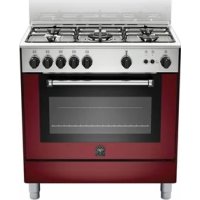
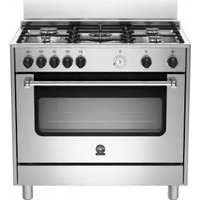
AMN805GEVSVIE - Cooker LA GERMANIA - Free user manual and instructions
Find the device manual for free AMN805GEVSVIE LA GERMANIA in PDF.



| Product type | Cooker |
| Brand | La Germania |
| Model | AMN805GEVSVIE |
| Dimensions (W x D x H) | Approximately 90 x 60 x 85 cm (estimate for standard cooker) |
| Weight | Approximately 50-60 kg (estimate) |
| Power supply | 230 V ~ 50 Hz (according to label) |
| Maximum electrical power | Varies by configuration (up to about 8 kW) |
| Compatible gas types | Natural gas (G20/G25) and LPG (G30/G31) |
| Number of gas burners | 5 (auxiliary, semi-rapid, rapid, double crown, fish) |
| Number of electric plates | 2 (Ø 110 mm 700 W, Ø 180 mm 1500 W) |
| Oven | Gas with electric or manual ignition, thermostat (120°C-270°C) |
| Grill | Gas or electric (depending on version), with rotisserie |
| Additional functions | Timer, oven light, thermocouple safety, fan (on some models) |
| Control panel | Rotary knobs for burners, oven, thermostat, selector |
| Surface material | Stainless steel / enamel (depending on parts) |
| Maintenance and cleaning | Cleaning burners, plates, enamel, glass with soapy water; door removal possible |
| Safety | Thermocouple on all burners, automatic shut-off, child lock not mentioned |
| Spare parts | Injectors, burners, bulb, heating elements, power cable (H05VV-F) |
| Standards | Gas directive 90/396/EEC, low voltage 73/23, EMC 2004/108/EC |
Frequently Asked Questions - AMN805GEVSVIE LA GERMANIA
User questions about AMN805GEVSVIE LA GERMANIA
0 question about this device. Answer the ones you know or ask your own.
Ask a new question about this device
Download the instructions for your Cooker in PDF format for free! Find your manual AMN805GEVSVIE - LA GERMANIA and take your electronic device back in hand. On this page are published all the documents necessary for the use of your device. AMN805GEVSVIE by LA GERMANIA.
USER MANUAL AMN805GEVSVIE LA GERMANIA
INSTALLATION, MAINTENANCE AND USE INSTRUCTIONS FOR FREE-STANDING COOKERS 80x50 cm (type MG/MGV)
PAG. 31
NOTICE D'INSTALLATION, D'ENTRETIEN ET MODE D'EMPLOI DE LA CUISINIERE A GAZ 80x50cm (MODELE MG/ MGV)

INSTALLATION, MAINTENANCE AND USE INSTRUCTIONS FOR FREE-STANDING COOKERS 80x50 cm (type MG/MGV)
READ THE INSTRUCTION BOOKLET BEFORE INSTALLING AND USING THE APPLIANCE.
The manufacturer will not be responsible for any damage to property or to persons caused by incorrect installation or improper use of the appliance.
The manufacturer is not responsible for any inaccuracies, due to printing or transcription errors, contained in this booklet. In addition, the appearance of the figures reported is also purely indicative.
The manufacturer reserves the right to make changes to its products when considered necessary and useful, without affecting the essential safety and operating characteristics.
CONTENTS:
INSTALLER TECHNICAL MANUAL ......pg. 18
Installing the cooker - Installation information ......pg. 19
Ventilation and aeration of rooms....pg. 19
Gas connection....pg. 19
Adaptation to different types of Gas and burner adjustments....pg. 19-20
Electric connection....pg. 21
APPLIANCE MAINTENANCE - Replacing parts....pg. 21
USE AND MAINTENANCE MANUAL....pg. 22
Description of work surface types....pg. 22
Description of control panel and control types....pg. 22-23
Using burners....pg. 23
Using hot plates....pg. 23-24
Using the gas oven....pg. 24-25
Using the thermostat with switch in series....pg. 25-26
Using the electrical thermostat ......pg. 26
Using the 4+0 switch - Using the 9+0 switch....pg. 26-27
Using the natural conventional electric oven....pg. 27
Using the ventilated conventional electric oven....pg. 27-28
Using the ventilated electric oven....pg. 28-29
Using the gas grill....pg. 29
Using the electric grill - Using the ventilated electric grill -....pg. 30
Using the minute-minder ......pg. 30
Cleaning the appliance....pg. 30-31
After-sales....pg. 31
THIS APPLIANCE HAS BEEN DESIGNED FOR NON-PROFESSIONAL DOMESTIC USE.
INSTALLER TECHNICAL MANUAL
This appliance is marked according to the European directive 2002/96/EC on Waste Electrical and Electronic Equipment (WEEE).
This guideline is the frame of a European-wide validity of return and recycling on Waste Electrical and Electronic Equipment.
INSTALLER INFORMATION
The installation, all adjustments, transformations and maintenance listed in this part of the manual must be carried out only by skilled personnel.
Improper installation may cause damage to persons, animals or property, for which the manufacture will not be held responsible.
The appliance safety or automatic adjustment devices may be changed during the service life of the system only by the manufacturer or by the duly authorised supplier.
INSTALLING THE COOKER
After having removed the various loose parts from the internal and external packing, make sure that the cooker is not damaged.
In case of doubt, do not use the appliance and contact skilled personnel.
Keep all the dangerous packing parts (polystyrene foam, bags, cardboard, staples, etc.) away from children. The appliance can be installed as a freestanding unit, next to a wall at a distance of no less than 20mm (Fig.2, Class 1 Installation) or inserted between two walls (Fig.1, Class 2 Subclass 1 Installation). A single sidewall that exceeds the height of the work surface is possible. This must be at a minimum distance of 70 mm from the edge of the cooker (Fig.2, Class 1 Installation)
Any walls of the adjacent furniture pieces and the wall behind the cooker must be made with heat-resistant material that can withstand a minimum overtemperature of 65 K.
The appliance can be installed as class 1 and as class 2 subclass 1.
WARNING: when the appliance is installed as class 2 subclass 1, the connection to the gas network must only use metal flexible pipes that conform with the national standards in force.
IMPORTANT INFORMATION FOR INSTALLING THE APPLIANCE
The cooker can be installed separately, as a freestanding unit, or between kitchen units or between a kitchen unit and the wall. The device must be installed in accordance with the regulations stated in UNI 7129 and UNI 7131 standards.
This appliance is not connected to devices which exhaust combustion products.
Special attention must be focused on the prescriptions described below regarding room aeration and ventilation. Any hanging cabinets installed above the work surface must be located at a distance of no less than 700 mm.
ROOM VENTILATION
To ensure that the appliance operate correctly, the room where it is installed must be continuously ventilated. The room volume should not be less than 25 m^3 and the quantity of air needed shall be based on the regular combustion of gas and on the ventilation of the room. Natural air will flow through permanent openings in the walls of the room to be ventilated: these openings will be connected with the outside environment and shall have a minimum cross-section defined by the current national standards regarding room ventilation (see Fig. 3).
These openings shall be built so that they cannot be clogged.
Indirect ventilation is also permitted by taking air from the rooms adjacent to the one to be ventilated.
The gas cooking appliances must always evacuate the combustion products by means of hoods connected to chimneys, flues or directly outside (see Fig. 4). If a hood cannot be installed, it is possible to use a fan installed on a window or directly facing outdoors, to be operated together with the appliance (see Fig. 5), provided that there is strict compliance with the ventilation regulations.
APPLIANCE GAS CONNECTION
Before connecting the appliance to the gas network, make sure that the data on the label attached to the food warmer drawer or on the back of the cooker are compatible with what is indicated for the gas distribution network.
A label attached to the last page of this handbook and in the food warmer drawer (or on the back) of the appliance indicates the appliance adjustment conditions: type of gas and operating pressure.
IMPORTANT: This appliance must be installed in compliance with current national standards in force and used only in a well-ventilated room.
WARNING: It should be recalled that the appliance utilises a threaded 1/2" gas cylindrical male fitting according to UNI-ISO 228-1.
To connect the appliance to the gas network with a flexible rubber hose, a supplemental hose nipple fitting is needed (see Fig. 6) which is supplied with the appliance.
ADAPTATION TO DIFFERENT TYPES OF GAS FOR COOKER TYPE M6V
Before performing any maintenance operation, disconnect the appliance from the gas supply and electricity network.
REPLACING THE NOZZLES TO OPERATE WITH ANOTHER TYPE OF GAS:
Follow the instructions below to change the burner nozzles on the work surface:
1) Pull out the plug from the electric outlet to avoid any type of electric contact.
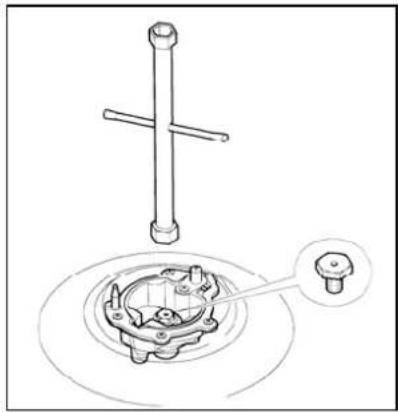
2) Remove the grids from the work surface (Fig. 7).
3) Remove the burners (Fig. 7).
4) Unscrew the nozzles using a 7 mm spanner, and replace them (Fig.8) with those needed for the new type of gas according to what is indicated in Table 1.
Follow the instructions below to change the oven burner nozzle:
1) Remove the oven level (Fig. 9).
2) Loosen the screw V and pull out the burner from the support being careful not to damage the ignition plug and the thermocouple (Fig. 10).
3) Unscrew the nozzle R (Fig. 10) using a 7 mm spanner and replace it with the nozzle needed for the new type of gas according to what is indicated in Table 1.
Follow the instructions below to change the grill burner nozzle:
1) Loosen the screw A and pull out the burner from the support being careful not to damage the ignition plug and the thermocouple (Fig. 11).
2) Unscrew the nozzle C (Fig.11) using a 7 mm spanner and replace it with the nozzle needed for the new type of gas according to what is indicated in Table 1.
WARNING: After completing the above-mentioned replacements, the technician must adjust the burners, as described in the paragraph below, seal any adjustment and pre-adjustment devices and apply the label on the appliance, to replace the existing one, corresponding to the new gas adjustment. This label is contained in the spare nozzle bag.
TABLE N°1: Adaption to various types of gas
APPLIANCE CATEGORY: Ⅱ2H3+
| Burner Diameter | Types of Gas Capacity | Pressure capacity | Nozzles | Rater Capacity | Reduce | Diameter by-pass | ||||
| mbar | 1/100mm. | g/h | l/h | kW | kcal/h | kW | kcal/h | 1/100 mm. | ||
| Auxiliary | Natural G20 | 20 | 72 | - | 95 | 1 | 860 | 0,48 | 413 | 34 |
| Butane G30 | 28-30 | 50 | 73 | - | 1 | 860 | 0,48 | 413 | 34 | |
| Propane G31 | 37 | 50 | 71 | - | 1 | 860 | 0,48 | 413 | 34 | |
| Semi-Rapid | Natural G20 | 20 | 97 | - | 167 | 1,75 | 1505 | 0,6 | 516 | 36 |
| Butane G30 | 28-30 | 65 | 127 | - | 1,75 | 1505 | 0,6 | 516 | 36 | |
| Propane G31 | 37 | 65 | 125 | - | 1,75 | 1505 | 0,6 | 516 | 36 | |
| Rapid | Natural G20 | 20 | 115 | - | 286 | 3 | 2580 | 1,05 | 903 | 52 |
| Butane G30 | 28-30 | 85 | 218 | - | 3 | 2580 | 1,05 | 903 | 52 | |
| Propane G31 | 37 | 85 | 214 | - | 3 | 2580 | 1,05 | 903 | 52 | |
| Double Ring | Natural G20 | 20 | 131 | - | 334 | 3,5 | 3010 | 1,8 | 1548 | 65 |
| Butane G30 | 28-30 | 95 | 254 | - | 3,5 | 3010 | 1,8 | 1548 | 65 | |
| Propane G31 | 37 | 95 | 250 | - | 3,5 | 3010 | 1,8 | 1548 | 65 | |
| Oven | Natural G20 | 20 | 135 | - | 334 | 3,5 | 3010 | 1,05 | 903 | 48 |
| Butane G30 | 28-30 | 90 | 254 | - | 3,5 | 3010 | 1,05 | 903 | 48 | |
| Propane G31 | 37 | 90 | 250 | - | 3,5 | 3010 | 1,05 | 903 | 48 | |
| Grill | Natural G20 | 20 | 125 | - | 286 | 3 | 2580 | - | - | NO |
| Butane G30 | 28-30 | 85 | 218 | - | 3 | 2580 | - | - | NO | |
| Propane G31 | 37 | 85 | 214 | - | 3 | 2580 | - | - | NO | |
BURNER ADJUSTMENT
Grill burner adjustment: to adjust the grill burner loosen screw P and adjust the position X of the Venturi cone (Fig. 11-12) according to the measurements indicated in table 4.
TABLE N°4: Burner primary air regulation (indicative)
| Type of gas | BURNER GRILL (mm) | |
| Natural | G20 | 13 |
| Butane | G30 | 13 |
| Propane | G31 | 13 |
2) Burner "MINIMUM" adjustment:
Work surface burner adjustment: follow the instructions below to adjust the work surface burner minimum:
1) Light the burner and set the knob to the MINIMUM position (small flame).
2) Remove the knob of the valve that is press fit on the rod of that valve.
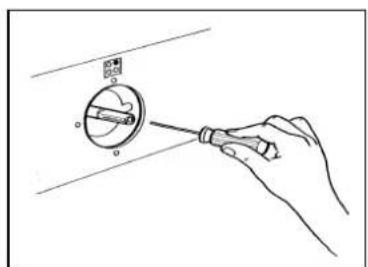
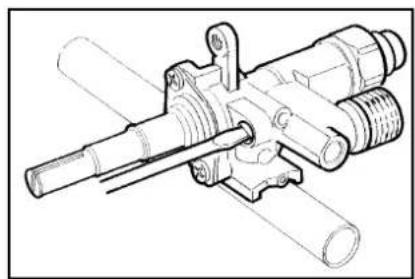
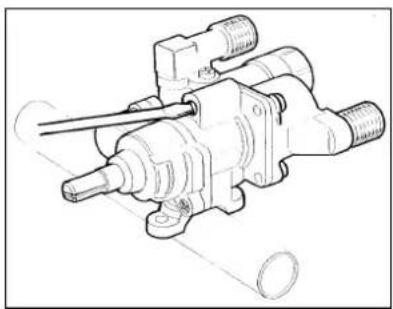
3) If the cooker is not equipped with safety valves on the surface burners, insert a small slotted screwdriver into the hole on the valve rod (Fig. 13) and turn the choke screw to the right or left until the burner flame is adjusted to minimum. If the cooker is equipped with safety valves, the choke valve is not located in the rod hole, but on the valve body (see fig. 14).
4) Make sure that the flame does not go out when switching quickly from the MAXIMUM to the MINIMUM position.
Oven burner adjustment: follow the instructions below to adjust the minimum:
1) Light the burner setting the knob to the MAXIMUM position.
2) Close the oven door and operate the oven for at least 10 minutes.
3) Set the knob to the MINIMUM position (corresponding to 120°) and then remove it.
4) With a slotted screwdriver turn the choking screw (see figure 15) and, while observing the flame at the same time through the cooker porthole, evaluate the consistency of the flame so it remains on when switching quickly from the MINIMUM to the MAXIMUM position.
WARNING: The above-mentioned adjustment should be made only with methane gas burners, while for those operating with liquid gas the screw must be locked at the end in a clockwise direction. The grill burner always operates at maximum and therefore no minimum adjustment is required.
APPLIANCE ELECTRIC CONNECTION:
The electric connection must comply with the current legal standards and regulations.
Before making the connection, check that:
- The system electrical rating and the current outlets are adequate for the maximum power output of the appliance (see the label applied to the bottom of the casing).
- The outlet or the system is equipped with an efficient ground connection in accordance with the current legal standards and regulations. The company will not be responsible for the non-compliance with these instructions.
When the connection to the power supply network is made using an outlet:
- If the power cord is supplied without a plug, apply a standard plug that is suitable for the load indicated on the label. Connect the wires according to the diagram shown in FIG.16 and check that:
letter L (phase) = brown wire;
letter N (neutral) = blue wire;
ground symbol = green-yellow wire;
- The power cord must be positioned so that an overtemperature of 75 K will not be reached at any point.
- Do not use reductions, adapters or splitters since they might cause false contacts and lead to dangerous overheating.
When the connection is made directly to the electric network:
- Use a device that ensures disconnection from the mains in which the contacts are opened to a distance that permits complete disconnection according to the conditions for over-voltage category III.
- Remember that the ground wire must not be interrupted by the circuit-breaker.
- As an alternative, the electric connection can also be protected by a high-sensitivity residual current circuit-breaker.
- It is highly recommended to attach the special green-yellow ground wire to an efficient ground system.
WARNING: If the power cord is replaced, the ground wire (yellow-green) connected to the terminal, should be longer than the other wires by about 2 cm.
TABLE N°3 : TYPES OF POWER CORDS
| OVEN OPERATION WORK SURFACE OPERATION CROSS SECTION | |
| ONLY GAS BURNERS 3 X 0.75 mm ^2 GAS OVEN / GAS GRILL GAS BURNERS + 1 HOT PLATE 3 X 1 mm ^2 GAS BURNERS + 2 HOT PLATES 3 X 1 mm ^2 | |
| ONLY GAS BURNERS 3 X 1 mm ^2 GAS OVEN/ GAS BURNERS + 1 HOT PLATE 3 X 1,5 mm ^2 ELECTRIC GRILL GAS BURNERS + 2 HOT PLATES 3 X 2,5 mm ^2 | |
| ONLY GAS BURNERS 3 X 1,5 mm ^2 ELECTRIC OVENGAS BURNERS + 2 HOT PLATES 3 X 2,5 mm ^2 GAS BURNERS + 1 HOT PLATE 3 X 2,5 mm ^2 | |
ATTENTION: The appliance conforms with the regulations of directives 90/396EEC (Gas Directive) regarding gas appliances for domestic use and the like, 93/68 and 73/23 (Low Voltage Directive) regarding electrical safety and 2004/108/CE, 93/68 and 89/336 (EMC Directive) regarding electromagnetic compatibility.
APPLIANCE MAINTENANCE
REPLACING PARTS
Before performing any maintenance operation, disconnect the appliance from the gas supply and electricity network.
To replace parts such as knobs and burners, just remove them from the seats without disassembling any part of the cooker.
To replace parts such as nozzle supports, valves and electric components follow the procedure described in the burner adjustment paragraph. To replace the valve or the gas thermostat, it is also necessary to disassemble the two rear gas train brackets, loosening the 4 screws (2 per bracket) that attach it to the rest of the cooker and, unscrew the nuts that attach the front burner valves to the control support, after removing all the knobs. To replace the gas or electric thermostat, also disassemble the rear cooker guard, loosening the relative screws, to be able to pull out and reposition the thermostat bulb.
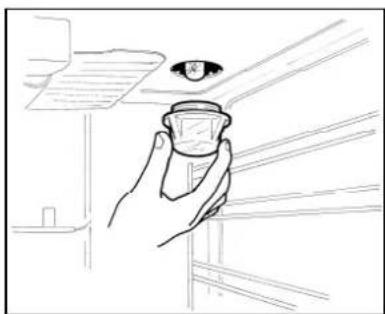
To replace the oven bulb, just unscrew the protection cap that projects out inside the oven. (Fig.17)
WARNING: Before replacing the bulb, disconnect the appliance from the electric power supply.
WARNING: The power cord supplied with the appliance is connected to that appliance with an X type connection (in compliance with standards EN 60335-1, EN 60335-2-6 and subsequent amendments) for which it can be installed without the use of special tools, with the same type of cord as the one installed.
If the power cord becomes worn or damaged, replace it based on the information reported in table 3
To replace the power cable, lift the terminal board's cover and replace the cable. To access the terminal board in cookers with a 3x2.5mm ^2 cable, the back panel on the rear of the appliance must be removed.
WARNING: If the power cord is replaced, the installer shall ensure that the ground cable is longer than the phase cables and also shall comply with the warnings regarding the electric connection.
Greasing the valves:
If it becomes difficult to operate the valve, it should be greased immediately by following the instructions listed below:
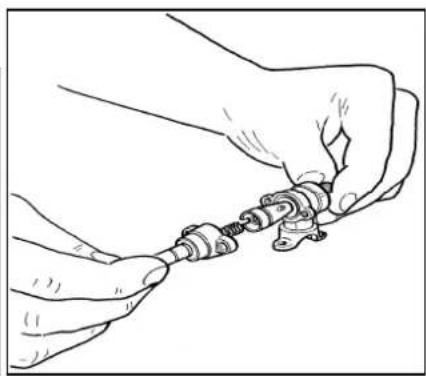
1) Disassemble the valve body by loosening the two screws located on the body of the valve.(Fig.18)
2) Extract and clean the seal cone and its housing with a rag soaked with thinner.
3) Lightly grease the cone with a special grease.
4) Insert the cone, moving it several times, remove it again, remove the excess grease and make sure that the gas passage ways are unobstructed.
5) Replace all the pieces by reversing the order in which they were disassembled and check that the valve operates correctly.
USE AND MAINTENANCE MANUAL
ATTENTION: IMPORTANT WARNINGS
For cookers resting on a base
ATTENTION: If the cooker rests on a base, take the measures necessary to prevent the cooker from sliding along the support base.
For cookers with glass covers
ATTENTION: Before opening the appliance's glass cover, carefully remove all liquid residues from the top of it.
ATTENTION: Before closing the appliance's glass cover, make sure that the work surface has cooled.
For cookers with electric ovens
The unit becomes hot during use. Do not touch the heating elements inside the oven.
For cookers with electric ovens
ATTENTION: The accessible parts can become hot during use. Keep children away from the appliance.
For the food warmer compartment (or drop leaf in our case)
ATTENTION: The internal parts of the food warmer can become hot during use.
For glass doors
Do not use abrasive cleaning products or metal spatulas with sharp edges to clean the oven door's glass since this could scratch the surface and the glass could break.
Do not use steam cleaners to clean the appliance.
DOOR GUARD
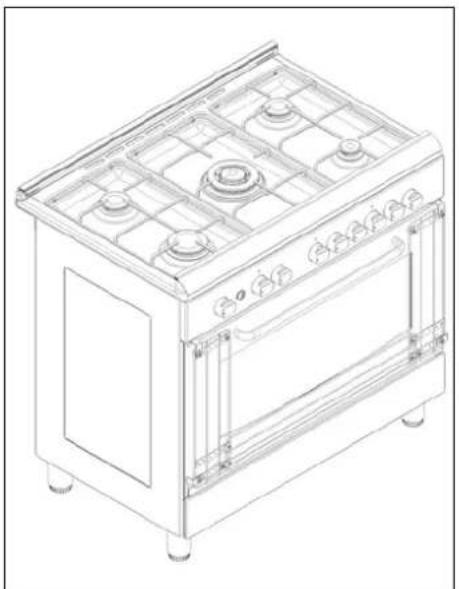
The MG and MGV cookers with strips of stainless steel on the oven door are equipped with a protective grating that can be installed on the door (see Fig.59).
CERAN AND ELECTRIC HOT PLATE DIMENSION
| TIPE OF PLATE DIMENSION | ||
| Electric hot plate | ∅ 110 | 700 W |
| Electric hot plate | ∅ 180 | 1500W |
CONTROL PANEL DESCRIPTION
On the control panel, small symbols show the function of each knob or key. Here as follows are the several controls that a cooker can have:

the symbol 📄 shows the disposition of burners on the worktop, the full dot identifies the burner in object (in this case the rear burner on the right).

the symbol shows the running of any oven (gas oven with gas grill, gas oven with electric grill, static oven, 9 positions switch)

the symbol shows the electric thermostat for electric fan oven

the symbol shows the minute minder

The symbol ☐ shows the oven fan working button as to allow the oven to operates with fan assisted gas. The fan operation of the oven prevents the operation of the electric grill, which therefore cannot be used with the fan in action.
the symbol shows the operating key for the rotisserie (only gas oven)
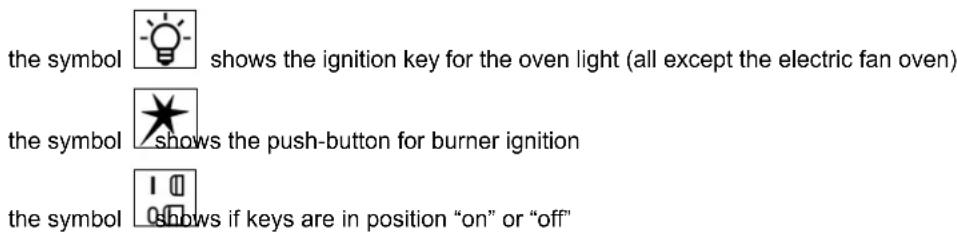
USING BURNERS
A diagram is etched on the control panel above each knob which indicates which burner corresponds to that knob. The burners can be ignited in different ways depending on the type of appliance and its specific characteristics:
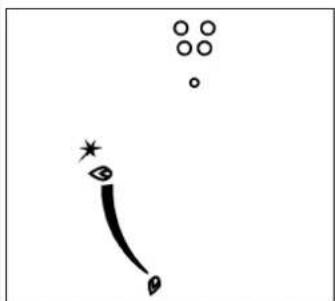
- Manual lighting (it is always possible even when the power is cut off): Push and turn the knob counterclockwise that corresponds to the burner selected, setting it to the MAXIMUM position at the etched star (large flame Fig.19-20) and place a lit match up to the burner.
- Electric ignition: Push and turn the knob counterclockwise that corresponds to the burner selected, setting it to the MAXIMUM position (large flame Fig. 19-20) and keep on pressing the knob in correspondence of the ignition symbol marked with a star (for cookers equipped with ignition trough knob) or press the ignition button marked with a star and release it as soon as the burner has ignited.
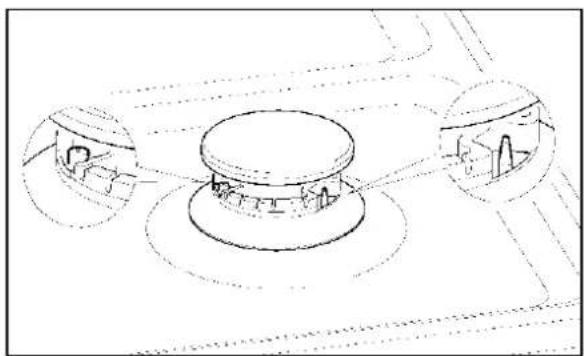
- Burner ignition equipped with safety device (thermocouple)(fig.21): Push and turn the knob counterclockwise that corresponds to the burner selected, setting it to the MAXIMUM position at the etched star (large flame Fig. 19-20), press the knob and activate one of the above-mentioned ignition devices. Once ignited, keep pressing the knob for about 10 seconds to allow the flame to heat the thermocouple. If the burner goes out after releasing the knob, repeat the entire operation.
Note: It is recommended not to try to ignite a burner if the relative flame cap is not in the correct position. Tips for using burners correctly:
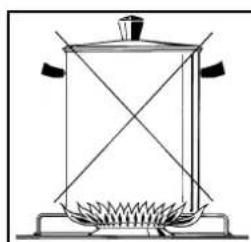
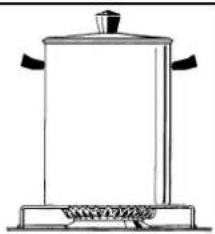
- Use suitable pots for each burner (see tab. 4 and Fig. 22).
- When the liquid is boiling, turn the knob to the MINIMUM position (small flame Fig.19-20).
- Always use pots with a cover.
TABLE N°4
| BURNER PAN DIAMETER recommended (cm) | |
| Auxiliary | 12-14 |
| Semi-rapid | 14-26 |
| Rapid | 18-26 |
| Double ring 22-26 | |
ATTENTION: Use pots with a flat bottom
WARNING: If the power is cut off, the burners can be lit with matches. When cooking foods with oil and fat, which are very flammable, the user should not leave the appliance unattended. If the appliance is equipped with a glass cover, such a cover may break when heated. Turn off all burners before lowering the cover. Do not use sprays near the appliance when it is being used. When using the burners, make sure that the handles of the pots are correctly positioned. Keep children away from the appliance. If equipped with a cover, before being closed, any food deposits should be cleaned off the built-in surface.
NOTE: The use of a gas cooking appliance produces heat and humidity in the room where it is installed. Therefore, proper aeration in the room is needed while ensuring that natural ventilation openings remain unobstructed (Fig.3) and activating the mechanical aeration device/exhaust hood or electric fan (Fig. 4 and Fig. 5). Intensive and continuous use of the appliance may require additional aeration, for example by opening a window, or more efficient aeration by increasing the power of the mechanical exhauster, if installed.
Warning: we suggest to utilize pots with the bottom made of tender aluminium to avoid permanent signs on the surface of the pan supports, that cannot be removed with a normal washing.
USING HOT PLATES
hot plates: These hot plates are controlled by a switch with 6 settings (Fig. 23-24). The hot plates are turned on by turning the knob to the desired position. A mark is etched on the control panel of the appliance indicating what plate corresponds to the knob. A red light turns on, which is also installed on the control panel, indicating that the hot plate is on.
How to use a hot plate: When a hot plate is used for the first time or after a long period of inactivity, it is recommended to use it on position 1 for about 30 minutes to eliminate any humidity absorbed by the internal insulating material. For the sake of example, we have included a table with the adjustments needed to ensure proper use of the hot plates.
WARNING: When a hot plate is used for the first time or after a long period of inactivity, it is necessary to use it on position 1 for about 30 minutes to eliminate any humidity absorbed by the insulating material.
TABLE N° 5
| No.of Setting POSSIBLE COOKING METHODS | |
| 0 | Plate |
| 1 To melt | butter, chocolate, etc. – To heat small amounts of liquid |
| 2 To heat | larger quantities of liquid - To prepare creams and sauces That required extended cooking |
| 3 To defrost foods, cook at boiling temperature | |
| 4 To cook | roasts with delicate meat and fish |
| 5 For meat | roasts and steaks, for large pieces of boiled meat |
| 6 To boil | large quantities of water, for frying |
To ensure correct use, remember the following:
- Dry the bottom of the pot before placing it on the plate.
- Use pots with a flat and thick bottom (see Fig. 25).
- Never use pots that are smaller than the plate.
- Turn on the plate only after the pot has been placed on top.
- As soon as a crack appears on the surface of the hot plate, immediately turn off the appliance.
- If the appliance is equipped with a glass cover, it may break when heated.
- Turn off all the plates before closing the cover.
- After use, and to ensure good preservation, the plate should be treated with normal products for electric hot plates that are available in the market so that the surface is always clean; this operation will prevent any corrosion (rust).
- After they are used, the plates remain hot for a long time; therefore, do not place the hands or other objects on the plate to avoid burns.
- When using the burners, make sure that the handles of the pots are correctly positioned. Keep children away from the appliance.- When cooking foods with oil and fat, which are very flammable, the user should remain near the appliance.
WARNING: As soon as a crack appears on the surface of the hot plate, immediately turn off the appliance.
USING THE GAS OVEN
GAS OVEN:
All the gas oven cookers are equipped with a thermostat and safety device to adjust the cooking temperature. The oven temperature is set by turning the knob counterclockwise to match the indicator with the temperature selected. The gas oven can be combined with a gas grill or an electric grill. See the specific pages for use information.
FAN GAS OVEN:
Operating the fan of the oven by means of the appropriate switch situated on the control panel, the circulation of warm air guarantees a uniform heat distribution. The preheating of the oven can be avoided. However for delicate baking, it is preferable to warm the oven before introducing the baking-pan. The baking system with the fan convection changes in part the various traditional baking notions. When roasting meat it is not necessary to turn the meat any more and for a roast on the spit, it is not indispensable to use the spit-roaster, but is sufficient to put the meat directly on the grate.
With the use of the fan gas oven, the baking temperatures are slightly lower of about 10-15°C compared to those in use with the traditional gas oven. The fan operation of the oven prevents the operation of the electric grill, which therefore cannot be used with the fan in action.
The oven can also be used in a traditional way, (by not activating the fan) for foods requiring heat from the bottom, e.g. pizza.
WARNING: If the burner flames are extinguished accidentally, turn off the control knob and do not try to relight the oven until after at least 1 minute.
TABLE N°6
| THERMOSTAT SETTING TEMPERATURE °C | |
| 1 | 120°C |
| 2 | 140°C |
| 3 | 160°C |
| 4 | 180°C |
| 5 | 200°C |
| 6 | 225°C |
| 7 | 245°C |
| 8 | 270°C |
The oven burner can be ignited in different ways:
- Manual lighting (it is always possible even when the power is cut off):
To light the oven, open the oven door, push and turn the knob so the no. 8 on the scale matches the indicator (fig.26-27-28). At the same time put a lit match next to the ignition tube that is visible on the oven level (fig.30). Then press the
thermostat knob (this makes the gas start to flow) and keep it pressed, after the burner has been completely lit, for 10 seconds. Release the knob and make sure that the burner remains on, otherwise repeat the operation.
- Electric ignition (only for the models equipped with this device):
In this case, first open the oven door, then push and turn the knob to the maximum temperature setting (number 8) (fig.27-28). Then press the thermostat knob (models with ignition trough knob). Wait about 10 seconds after the burner has been completely lit and then release the knob. Make sure that the burner remains on, otherwise repeat the operation. As for cookers without ignition trough knob, press the thermostat knob and the key with the spark symbol, wait about 10 seconds after the burner has been completely lit and then release the knob. Make sure that the burner remains on, otherwise repeat the operation.
The ignition device should not be used for more than 15 seconds. If after that period the burner still has not been lit, do not use the device and open the door of the room or wait at least 60 seconds before trying to light the oven again.
WARNING: when trying to light the oven, the door must always be open. When using the oven, leave the cooker cover open to prevent it from overheating.
NOTICE: when using the oven for the first time it should be operated for 15-30 minutes at a temperature of about 250° without cooking anything inside in order to eliminate any moisture and odours from the internal insulation.
During normal oven use, after lighting the burner and setting the desired temperature, wait about 15 minutes before putting in any food to preheat the oven.
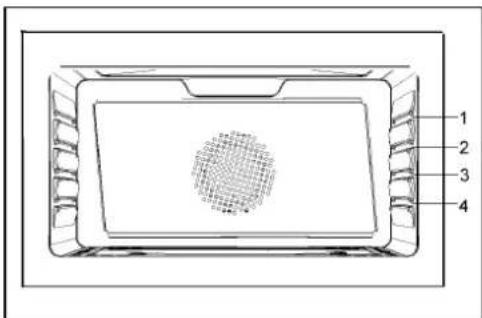
The oven is equipped with 4 guides at different heights (fig.30) which can be used to insert shelves or the tray. To keep the oven as clean as possible it is recommended to cook meat on the tray or on the shelf that has been inserted inside the tray. The table below lists the general cooking times and the position of the tray for different types of foods. Personal experience will help to determine any variations in the values reported in the table. In any case, it is recommended to follow the instructions of the specific recipe being used.
Temperatures between brackets are referred to the use of oven with fan assisted gas.
TABLE N°7
| GAS OVEN COOKING TABLE | |||
| TEMP | °C | ||
| MEAT | |||
| PORK ROAST 220 (210) 4 60-70 | |||
| BEEF ROAST (YOUNG STEER) 250 (240) 4 50-60 | |||
| BEEF ROAST 240 (230) 4 60-70 | |||
| VEAL ROAST 220 (210) 4 60-70 | |||
| LAMB ROAST 220 (210) 4 45-55 | |||
| ROAST BEEF 230 (230) 4 55-65 | |||
| ROAST HARE 235 (225) 4 40-50 | |||
| ROAST RABBIT 220 (210) 4 50-60 | |||
| ROAST TURKEY | 235 (225) 4 50-60 | ||
| ROAST GOOSE | 225 (215) 4 60-70 | ||
| ROAST DUCK 235 (225) 4 45-60 | |||
| ROAST CHICKEN | 235 (225) 4 40-45 | ||
| FISH | 200-225 (190-215) | 3 15-25 | |
| PASTRY | |||
| FRUIT PIE | 200 (210) 3 35-40 | ||
| TEA CAKE | 190 (180) 3 50-55 | ||
| BRIOCHES | 175 (165) 3 25-30 | ||
| SPONGE CAKE | 235 (225) 3 | 20 | |
| RING CAKE | 190 (180) 3 30-40 | ||
| SWEET PUFF PASTRIES | 220 (210) 3 | 20 | |
| RAISIN LOAF | 220 (210) 3 15-20 | ||
| STRUDEL | 180 (170) 3 15-20 | ||
| SAVOIA COOKIES | 190 (180) 3 | 15 | |
| APPLE FRITTERS | 220 (210) 3 | 20 | |
| SAZOIARDI SANDWICH | 220 (210) 3 20-30 | ||
| TOAST SANDWICH | 250 (240) 4 | 5 | |
| BREAD | 220 (210) 3 | 30 | |
| PIZZA | 220 (210) 3 | 20 | |
HEIGHT
USING THE THERMOSTAT WITH SWITCH IN SERIES (COOKERS WITH A SINGLE-CONTROL CONVENTIONAL ELECTRIC OVEN)
The electric oven is controlled by an electric thermostat combined with a switch used to turn on the elements. The electric oven can be combined with an electric grill (to use the grill see the specific pages). The oven is heated by 2 elements: one on the top and one on the bottom. Turning the knob (fig. 31) turns on the bottom element and the top external element while the thermostat is used to set a temperature ranging from 50°C to 250°C. It can be adjusted using the scale indicated on the ring around the knob. An orange light turns off indicating that the temperature setting has been reached.
Therefore, it is normal for this light to turn on and off while the oven is working. There are 3 fixed positions beyond the 250 °C setting:
- the symbol □ indicates that only the bottom element (1600W) has been turned on;
- the symbol □ indicates that only the top external element (1200W) has been turned on;
- the symbol 📋 indicates that only the grill element (1500W) has been turned on (see the specific paragraph).
In these positions the temperature is not controlled by the thermostat.
Warning! Oven light running for static oven.
As for cookers with one control electric static oven, the oven lamp can be switched on thanks to the specific button and also every time that the oven is ignited trough the relative selector.
USING THE ELECTRIC THERMOSTAT (COOKERS WITH A CONVENTIONAL ELECTRIC OVEN AND SEPARATE CONTROLS, WITH A VENTILATED CONVENTIONAL OVEN OR WITH A MULTIFUNCTION OVEN)
The thermostat supplied with the relative models maintains a constant temperature inside the oven at a specific temperature setting ranging from 50^ C to 250^ C. Turn the knob (fig.32-33) clockwise and align the selected temperature indicated on the ring with the index etched on the control panel. Thermostat operation is indicated by an orange light which will turn off when the temperature inside the oven is 10^ C greater than the temperature setting, and will turn on when the oven is 10^ C less than the temperature setting. The thermostat can control the oven elements only if the relative switch is in one of the possible oven element operating modes: if the switch is in position 0, the thermostat has not effect on the oven elements, which remain off.
USING THE 4 + 0 SWITCH (COOKERS WITH A VENTILATED CONVENTIONAL ELECTRIC OVEN)
The 4 + 0 switch installed in the ventilated conventional oven models is used, along with the thermostat, to control the electric fan and the oven elements since they can be turned on by turning the 4 + 0 switch knob (fig.34) and the thermostat knob. Turning just one of the two knobs will not have any effect on the oven except to turn on the oven light or the electric fan when inserted.
The electric oven is heated by 3 elements: one on the bottom and two on the top; turning the switch knob turns on the element relative to the symbol indicated on the ring but to be activated the thermostat knob must be turned until the orange light turns on indicating that the element has been turned on. Placing the switch knob on any of the four operating modes turns on the oven light, together with the relative element. Once the temperature and the elements to be used have been set, the oven elements are turned on and off by the thermostat; therefore, it is normal for the orange light to turn on and off while the oven is working.
To turn off the electric oven set the switch knob to position 0 to prevent the thermostat from controlling the elements. Setting the thermostat knob to position 0 turns off the elements but it is still possible, using the switch, to turn on the electric fan and the oven light.
The switch has 4 different fixed positions corresponding to 4 different types of oven operation:
- the symbol 📄 indicates that the bottom element (1600W) and the top external element (1200W) and the electric fan have been turned on;
- the symbol □ indicates that the bottom element (1600W) and the top external element (1200W) have been turned on
- the symbol ♂ indicates that only the electric fan has been turned on;
- the symbol 📂 indicates that only the grill element (1600W) has been turned on.
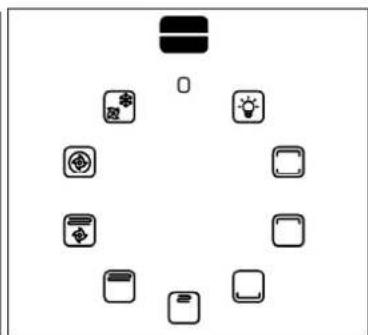
When the knob is set to one of these four positions, the oven light is always on, thus indicating that the oven is being energised.
USING THE 9 + 0 SWITCH (COOKERS WITH A MULTIFUNCTION ELECTRIC OVEN)
The 9 + 0 switch installed in the multifunction oven models is used, along with the thermostat, to control the electric fan and the oven elements since they can be turned on by turning the 9 + 0 switch knob (fig.35-36) and the thermostat knob. Turning just one of the two knobs will not have any effect on the oven except to turn on the oven light or the electric fan when inserted. The electric oven is heated by 4 elements: one on the bottom, two on the top or one circular; turning the switch knob turns on the element relative to the symbol indicated on the ring but to be activated the thermostat knob must be turned until the orange light turns on indicating that the element has been turned on. Placing the switch knob on any of the nine operating modes turns on the oven light, together with the relative element. Once the temperature and the elements to be used have been set, the oven elements are turned on and off by the thermostat; therefore, it is normal for the orange light to turn on and off while the oven is working.
To turn off the electric oven set the switch knob to position 0 to prevent the thermostat from controlling the elements. Setting the thermostat knob to position 0 turns off the elements but it is still possible, using the switch, to turn on the electric fan and the oven light.
The switch has 9 different fixed positions corresponding to 9 different types of oven operation:
- the symbol 🙏 indicates that only the oven light is turned on;
- the symbol □ indicates that the bottom element (1600W) and the top external element (1200W) have been turned on;
- the symbol □ indicates that only the top external element (1200W) has been turned on;
- the symbol □ indicates the only the bottom element (1600W) has been turned on;
- the symbol 📌 indicates that only the grill element (1600W) has been turned on;
- the symbol 📄 indicates that the top external element (1200W) and the grill element (1600W) have been turned on;
- the symbol 📋 indicates that the top external element (1200W), the grill element (1600W) and the electric fan have been turned on;
- the symbol 📷 indicates that the circular element (2800W) and the electric fan have been turned on;
- the symbol ⚙ indicates that only the electric fan has been turned on.
When the knob is set to one of these nine positions, the oven light is always on, thus indicating that the oven is being energised.
USING THE NATURAL CONVENTIONAL ELECTRIC OVEN
When using the oven for the first time it should be operated for a maximum of 30 minutes at a temperature of about 250^ to eliminate any odours generated by the internal insulation. During normal oven use, select the desired cooking temperature using the thermostat knob and wait until the orange light turns off before putting in any food. The oven is equipped with 4 guides at different heights (fig.30) which can be used to insert shelves or the tray. To keep the oven as clean as possible it is recommended to cook meat on the tray or on the shelf that has been inserted inside the tray. Table No. 8 below lists the cooking times and the position of the tray for different types of foods. Personal experience will help to determine any variations in the values reported in the table. In any case, it is recommended to follow the instructions of the specific recipe being used.
TABLE N°8
| NATURAL CONVENTIONAL ELECTRIC OVEN COOKING TABLE | |||
| TEMP | °C | ||
| MEAT | |||
| PORK ROAST 225 4 60-80 | |||
| BEEF ROAST (YOUNG STEER) 225 4 | 60-80 | ||
| BEEF ROAST 250 4 50-60 | |||
| VEAL ROAST 225 4 60-80 | |||
| LAMB ROAST 225 4 40-50 | |||
| ROAST BEEF 230 4 50-60 | |||
| ROAST HARE 250 4 40-50 | |||
| ROAST RABBIT | 250 4 60-80 | ||
| ROAST TURKEY | 250 4 50-60 | ||
| ROAST GOOSE | 225 4 60-70 | ||
| ROAST DUCK 250 4 45-60 | |||
| ROAST CHICKEN | 250 4 40-45 | ||
| FISH | 200-225 | 3 | 15-25 |
HEIGHT
| PASTRY | |||
| FRUIT PIE | 225 3 35-40 | ||
| TEA CAKE | 175-200 | 3 50-55 | |
| BRIOCHES | 175-200 | 3 | 25-30 |
| SPONGE CAKE | 220-250 | 3 20-30 | |
| RING CAKE 180-200 3 30-40 | |||
| SWEET PUFF PASTRIES | 200-220 | 3 15-20 | |
| RAISIN LOAF | 250 3 25-35 | ||
| STRUDEL | 180 | 3 | 20-30 |
| SAVOIA COOKIES | 180-200 | 3 40-50 | |
| APPLE FRITTERS | 200-220 | 3 15-20 | |
| SAZOIARDI SANDWICH | 200-220 | 3 20-30 | |
| TOAST SANDWICH | 250 4 | 5 | |
| BREAD | 220 | 4 | 30 |
| PIZZA | 220 | 3 | 20 |
USING THE VENTILATED CONVENTIONAL ELECTRIC OVEN (fig.37)
When using the oven for the first time it should be operated for a maximum of 30 minutes at a temperature of about 250^ to eliminate any odours generated by the internal insulation.
Before cooking, allow the oven to reach the desired temperature setting waiting for the orange light to turn off. This type of oven is equipped with a fan that creates forced-air circulation in the horizontal direction so that the heat generated by the top and bottom elements is uniformly distributed. Thanks to this type of operation, the ventilated conventional electric oven can be used for different types of cooking at the same time, without changing the taste of each food.
Hot-air circulation guarantees a uniform distribution of heat. Pre-heating the oven is not necessary, but for very delicate pastries, it is recommended to heat the oven before inserting the trays.
The ventilated conventional system partially changes the various notions about traditional cooking. Meat no longer needs to be turned while it is cooking and the rotisserie is no longer needed to cook a roast on the spit. Just put the meat directly on the shelf.
TABLE N° 9
| VENTILATED CONVENTIONAL OVEN COOKING TABLE | |||
| TEMP | °C | ||
| MEAT | |||
| PORK ROAST 210 3/4 60/80 | |||
| BEEF ROAST (YOUNG STEER) 210 3/4 60/80 | |||
| BEEF ROAST 230 3/4 50/60 | |||
| VEAL ROAST 210 3/4 60/80 | |||
| LAMB ROAST 210 3 40/50 | |||
| ROAST BEEF 215 3/4 50/60 | |||
| ROAST HARE 230 3/4 40/50 | |||
| ROAST RABBIT 230 3 60/80 | |||
| ROAST TURKEY 230 3 50/60 | |||
| ROAST GOOSE | 200 3 60/70 | ||
| ROAST DUCK 230 3/4 45/60 | |||
| ROAST CHICKEN | 230 3/4 40/45 | ||
| FISH | 180-200 | 3/4 | 15/25 |
| PASTRY | |||
| FRUIT PIE | 210 3 35/40 | ||
| TEA CAKE | 160-180 | 3 50/55 | |
| BRIOCHES | 160-180 | 3 | 25/30 |
| SPONGE CAKE | 200-230 | 3 20/30 | |
| RING CAKE 160-180 3 30/40 | |||
| SWEET PUFF PASTRIES | 180-200 | 3 15/20 | |
| RAISIN LOAF | 230 3 25/35 | ||
| STRUDEL | 165 | 3 | 20/30 |
| SAVOIA COOKIES | 165-190 | 3 40/50 | |
| APPLE FRITTERS | 180-200 | 3 15/20 | |
| SAZOIARDI SANDWICH | 180-200 | 3 20/30 | |
| TOAST SANDWICH | 230 3 | 5 | |
| BREAD | 200 | 3 | 30 |
| PIZZA | 200 | 3 | 20 |
HEIGHT
USING THE VENTILATED ELECTRIC OVEN (fig.37)
When using the oven for the first time it should be operated for a maximum of 30 minutes at a temperature of about 250^ to eliminate any odours generated by the internal insulation.
Before cooking, allow the oven to reach the desired temperature setting waiting for the orange light to turn off. This type of oven is equipped with a circular element around which a fan has been installed that creates forced-air circulation in the horizontal direction. Thanks to this type of operation, the ventilated oven can be used for different types of cooking at the same time, without changing the taste of each food. Only some models are equipped with a removable metallic filter applied to the rear screen which collects the fat while a roast is cooking. Therefore, it is recommended to remove this fat periodically, washing the screen with soapy water and rinsing thoroughly. To remove the metallic filter just apply slight pressure toward the top on the tab indicated by the arrow. Hot-air circulation guarantees a uniform distribution of heat. Pre-heating the oven is not necessary, but for very delicate pastries, it is recommended to heat the oven before inserting the trays. The ventilated conventional system partially changes the various notions about traditional cooking. Meat no longer needs to be turned while it is cooking and the rotisserie is no longer needed to cook a roast on the spit. Just put the meat directly on the shelf.
TABLE N° 10
| VENTILATED OVEN COOKING TABLE | |||
| TEMP | °C | ||
| MEAT | |||
| PORK ROAST 160-170 3 70-100 | |||
| BEEF ROAST (YOUNG STEER) 170-180 3 65-90 | |||
| BEEF ROAST 170-190 3 40-60 | |||
| VEAL ROAST 160-180 3 65-90 | |||
| LAMB ROAST 140-160 3 100-130 | |||
| ROAST BEEF 180-190 3 40-45 | |||
| ROAST HARE 170-180 3 30-50 | |||
| ROAST RABBIT 160-170 3 80-100 | |||
| ROAST TURKEY | 160-170 3 160-240 | ||
| ROAST GOOSE | 160-180 3 120-160 | ||
| ROAST DUCK 170-180 3 100-160 | |||
| ROAST CHICKEN | 180 | 3 70-90 | |
| FISH | 160-180 | 3-4 | s/peso |
| PASTRY | |||
| FRUIT PIE | 180-200 3 40-50 | ||
| TEA CAKE | 200-220 3 40-45 | ||
| BRIOCHES | 170-180 | 3 | 40-60 |
| SPONGE CAKE | 200-230 3 25-35 | ||
| RING CAKE | 160-180 3 35-45 | ||
| SWEET PUFF PASTRIES | 180-200 3 20-30 | ||
| RAISIN LOAF | 230-250 3 30-40 | ||
| STRUDEL | 160 | 3 | 25-35 |
| SAVOIA COOKIES | 150-180 3 50-60 | ||
| APPLE FRITTERS | 180-200 3 18-25 | ||
| SAZOIARDI SANDWICH | 170-180 3 30-40 | ||
| TOAST SANDWICH | 230-250 3 | 7 | |
| BREAD | 200-220 | 3 | 40 |
| PIZZA | 200-220 | 3 | 20 |
HEIGHT
USING THE GAS GRILL
The gas grill can be combined only with the gas oven. It is controlled with the same gas oven knob, but turning it clockwise instead of counterclockwise (see the gas oven use instructions), matching the symbol with the indicator. The grill burner always operates at maximum and therefore there is no minimum position. In addition, it is equipped with a safety device to prevent the flame from going out. The gas grill can also be ignited in different ways:
- Manual lighting: Just completely open the oven door, push and turn the knob so that the relative symbol matches the indicator, while pressing the knob, and, at the same time, put a lit match next to the burner. Make sure that the burner is completely lit and after about 10 seconds release the knob. Make sure that the burner remains on, otherwise repeat the operation.
- Electric ignition: In this case, completely open the oven door, push and turn the knob so that the relative symbol matches the indicator, then press the thermostat knob (models with ignition trough knob). Wait about 10 seconds after the burner has been completely lit and then release the knob. Make sure that the burner remains on, otherwise repeat the operation. As for cookers without ignition trough knob, press the thermostat knob and the key with the spark symbol, wait about 10 seconds after the burner has been completely lit and then release the knob. Make sure that the burner remains on, otherwise repeat the operation.
WARNING: As with the oven, the grill must be lit with the door completely open.
The gas grill can be used to grill foods on the oven shelf or using the rotisserie.
Grilling on the shelf: In this case, the shelf supplied is placed on level 1 or 2 and the foods to be grilled are placed on top, while the tray is inserted on the lower levels to collect the cooking juices.
Then light the grill burner according to the instructions described above.
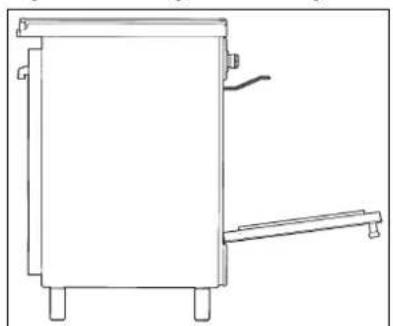
IMPORTANT: grill foods on the shelf always with the door open (fig. 38) and, to avoid overheating, mount the handle guard on the relative latches (fig. 39).
Grilling with the rotisserie: This is used to grill with the rotating skewer. Therefore, insert the skewer holder on the side shelves at level 4. Insert the food on the skewer and insert everything into the oven, inserting the point of the skewer into the spindle that projects out from the rear of the oven and resting the front of the skewer into the skewer holder support (Fig. 40). Then, insert the tray into one of the lower guides and press the button that starts the rotisserie. Then light the grill burner according to the instructions described above.
IMPORTANT: grill foods with the rotisserie always with the door open (fig. 38) and, to avoid overheating, mount the handle guard on the relative latches (fig. 39).
WARNING: the accessible parts may become very hot while grilling. Keep children away from the appliance while cooking.
USING THE CONVENTIONAL ELECTRIC GRILL
The electric grill can also be combined with the gas oven or electric oven.
In both cases, the grill is controlled using the oven's temperature knob (see also, Using the gas or electric oven). Like the gas grill, the electric grill can be used for grilling on the oven's grill or using the roasting spit.
The static electric grill must be used with the door closed. The temperature set on the thermostat (when present) must not exceed 150^ C.
The power of the electric grill is 1500W
Grilling on the shelf: In this case, the shelf supplied is placed on level 1 or 2 and the foods to be grilled are placed on top, while the tray is inserted on the lower levels to collect the cooking juices. Then turn on the grill element switching the thermostat to the relative position.
Grilling with the rotisserie: This is used to grill with the rotating skewer. Therefore, insert the skewer holder on the side shelves at level 4. Insert the food on the skewer and insert everything into the oven, inserting the point of the skewer into the spindle that projects out from the side of the oven and resting the front of the skewer into the skewer holder support. Then, insert the tray into one of the lower guides, switch the thermostat to the relative position and press the button with the rotisserie symbol and press the button that starts the rotisserie (gas oven version) or switch the thermostat to the relative position with the rotisserie symbol.
WARNING: the accessible parts may become very hot while grilling. Keep children away from the appliance while cooking.
USING THE VENTILATED ELECTRIC GRILL
The ventilated electric grill is a special function equipped only on the multifunction oven. Set the 9 + 0 switch to the relative position to activate the grill element (1200+1600W) and the electric fan. Generally, to ensure excellent grilling, place the oven shelf in the middle position while the oven tray should be inserted at the bottom.
IMPORTANT: When using the ventilated electric grill, set the thermostat knob no higher than 175 °C, which is between the 150 °C and 200 °C setting, to avoid overheating the front of the appliance. In fact, ventilated grilling must be carried out with the door closed.
ANALOGIC CLOCK WITH TIMER (Fig.41)
The analogic timer allows you to be informed of the food cooking by means of an acoustic signal, once the cooking has finished.
To settle the clock, you have to turn the pivot clockwise by pushing it till you have selected the suitable time; release the pivot and turn it clockwise till you have positioned the ring on the symbol showing a bell with a bar. In this way only the clock will be functioning.
To use the timer, you have to turn the pivot clockwise without pushing it.
Select the preferred cooking time by means of the ring. Once the cooking is over, an acoustic signal will advise you of the stop cooking.
WARNING: the acoustic signal does not stop the cooking cycle. The use must turn off the cooking cycle by hand using the relative knobs.
USING THE MINUTE-MINDER (fig.42-43)
The minute-minder advises the user, with an acoustic signal, when food has been cooked, after a certain time period has elapsed. To use the device, wind the minute-minder by turning the knob clockwise one complete turn. Then turn the knob counterclockwise so that the indicator corresponds with the selected cooking time.
WARNING: the acoustic signal does not stop the cooking cycle. The use must turn off the cooking cycle by hand using the relative knobs.
CLEANING THE APPLIANCE
Before cleaning the appliance, it should be disconnected from the power supply and turn off the main gas feeder valve.
Cleaning the work surface:
Periodically clean the burner heads, the enamelled steel grids, the enamelled covers and the flame caps using warm soapy water. Then those parts should be rinsed and thoroughly dried.
Any liquid that overflows from pots must always be removed using a rag.
If it becomes difficult to open or close a valve, do not force it, but immediately request the assistance of the technical service personnel.
Cleaning the enamelled parts:
To maintain the original features of the enamelled parts they should be cleaned frequently with soapy water. Never use abrasive powders. Do not leave acidic or alkaline substances on the enamelled parts (vinegar, lemon juice, salt, tomato sauce, etc.) and do not wash the enamelled parts while they are still hot.
Cleaning the STAINLESS steel parts:
Clean the parts with soapy water and then dry them with a soft cloth. The shine is maintained by periodically using special products that generally are found in the market. Never use abrasive powders.
Cleaning the burner flame caps:
Since the flame caps are resting on the burner, to clean them just remove them from their seat and wash them with soapy water. After they have been thoroughly dried and having checked that the holes are not clogged, they can be replaced in their proper position.
Oven door with glass screwed:
Cleaning the inside of the oven glass:
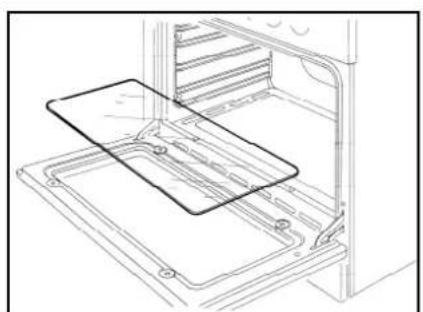
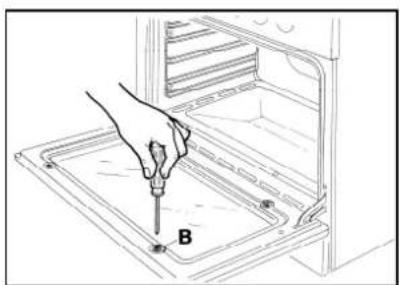
One of the features of the oven is the possibility of removing the interior glass simply by loosening the 2 screws B (fig. 44-45), to clean the inside surface of the glass. This operation should be carried out while the oven is cold and with a damp cloth. Do not use abrasives.
Cleaning the inside of the oven:
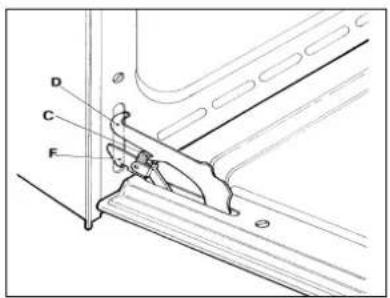
To thoroughly clean the inside of the oven, it is recommended to disassemble the door by carefully following the instructions described below. Insert the hook C (figure 46) into the hinged sector D. Put the door in a semi-open position and using both hands pull it towards you until it is released from the attachment. To replace the door, do the opposite making sure to insert the two sectors F correctly. In addition, the side shelves can be removed very easily, by loosening the lock rings that attach them to the oven.
Oven door with glass stuck:
Cleaning the inside of the oven glass:
Cleaning the interior of the crystals of the oven:
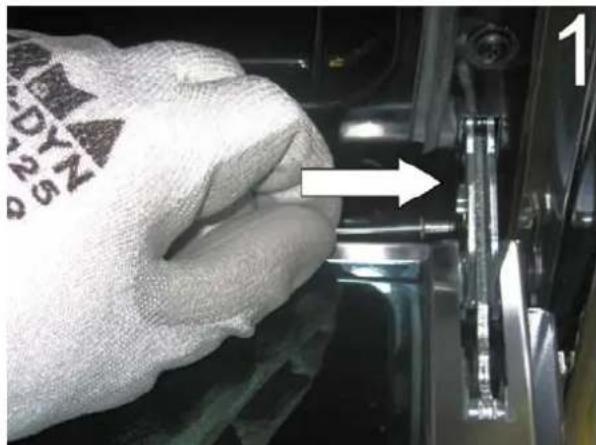
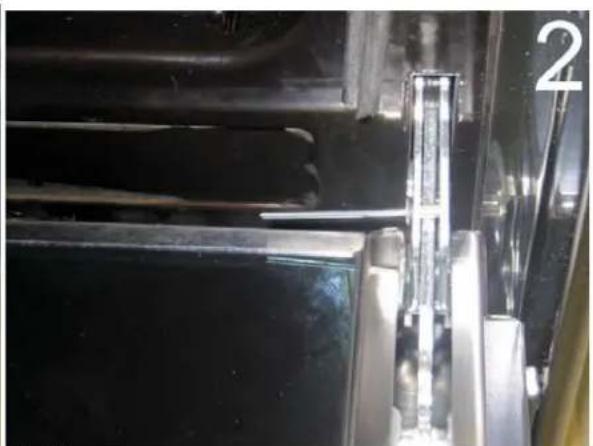
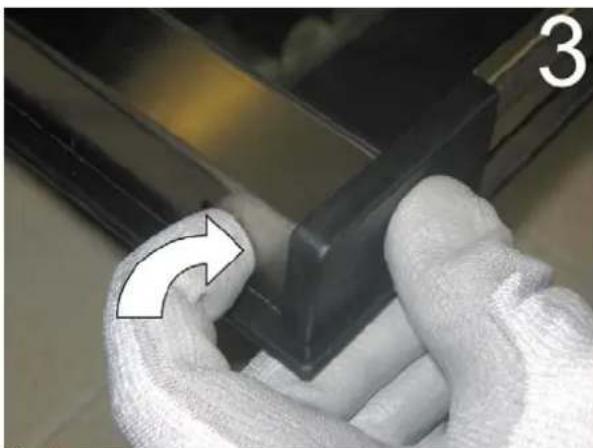
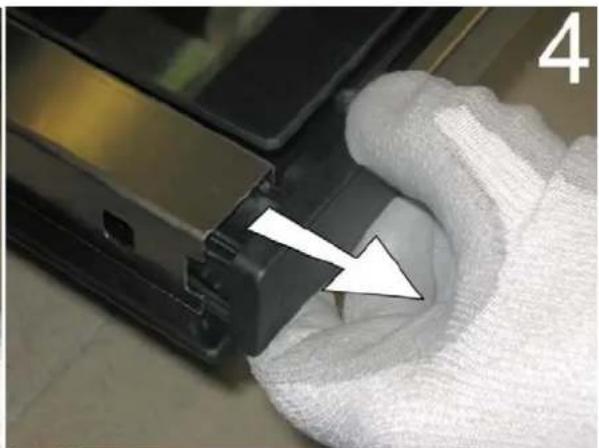
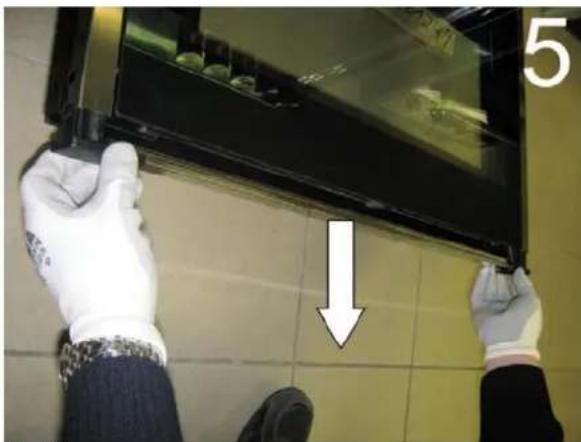
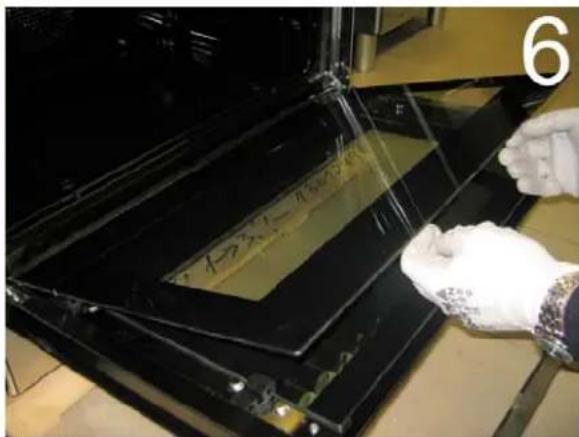
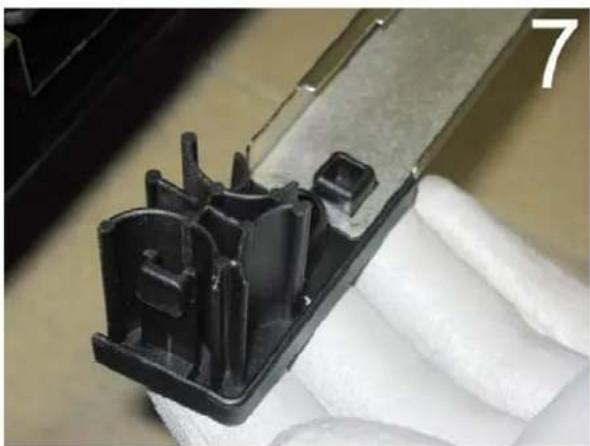
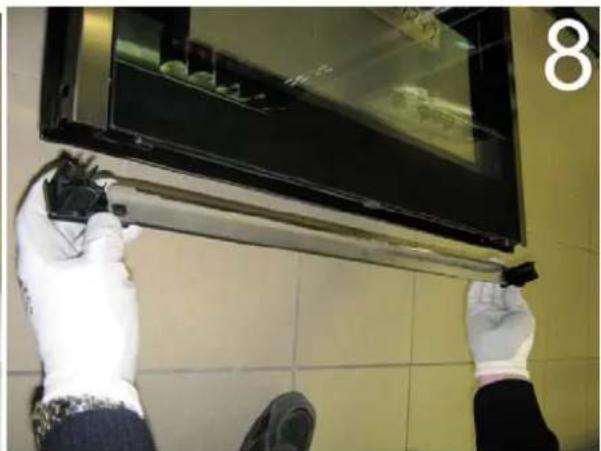
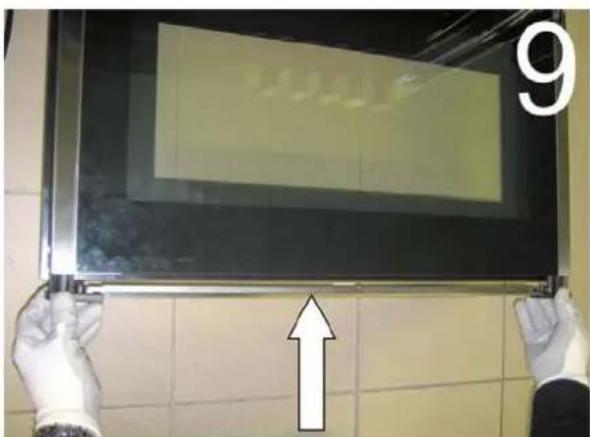
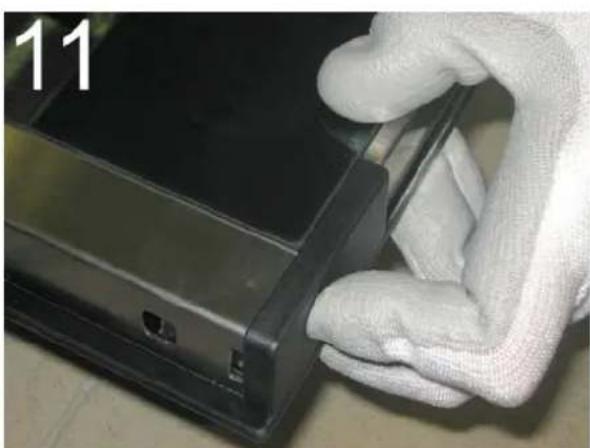
Feature of the oven is the ability to remove the inner glass in order to make the internal cleanliness of crystals. This operation is to be performed in a cold oven and with a damp cloth, taking care not to use abrasive detergents. For the removal of internal glass lock the hinges by inserting the nail that came in the hinges (22 Fig 47-48) then remove the inner glass as (Fig.49-50-51-52-53-54).
To reassemble the door to perform tasks in the opposite direction as (fig.55-56-57-58).
Cleaning the inside of the oven:
To facilitate intensive cleaning of the oven is practical to dismantle the door by following the instructions listed below. Insert the nail that came in the hinges (Fig. 47-48). Bring the half-open door in place and working with your hands pull the door towards you until the same has not been dropped from the attack. To replace the oven door proceed in reverse order. Also the grids side are easily-removable by unscrewing the rings that secure it to the oven.
AFTER-SALES TECHNICAL SERVICE AND SPARE PARTS
Before leaving the factory, this appliance was tested and calibrated by skilled and qualified personnel.
Any repairs or calibration that may become necessary after leaving the factory should be performed by skilled personnel. For this reason we advise the customer to contact the Dealer that sold the appliance or the nearest Service Centre, providing them with information about the type of appliance and the type of problem that has occurred.
If defective parts must be replaced, it is recommended to replace them with original spare parts that are available only in our technical Service Centres and authorised dealers.

NOTICE D'INSTALLATION, D'ENTRETIEN ET MODE D'EMPLOI DE LA CUISINIERE A GAZ 80x50cm (MODELE MG/ MGV)
LIRE ATTENTIVEMENT LE CONTENU DE CETTE NOTICE AVANT D'INSTALLER OU D'UTILISER LA CUISINIERE.
(CUISINES AVEC FOUR ELECTRIQUE STATIQUE A COMMANDES SEPAREES, AVEC FOUR STATIQUE VENTILE OU AVEC FOUR MULTIFONCTIONS
natural_image
Technical line drawing of a battery pack with multiple ports and a top panel (no text or symbols)Fig. 8
natural_image
Technical line drawing of a mechanical assembly with a central shaft and a circular component, no text or symbols present.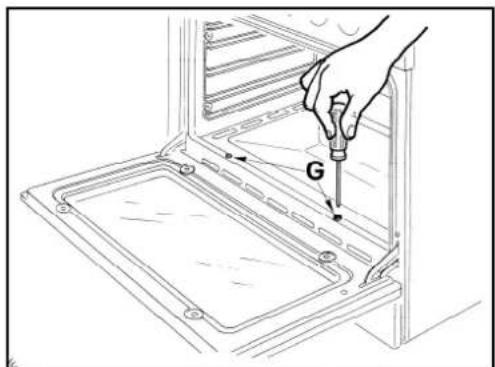
Fig. 9
Fig. 10
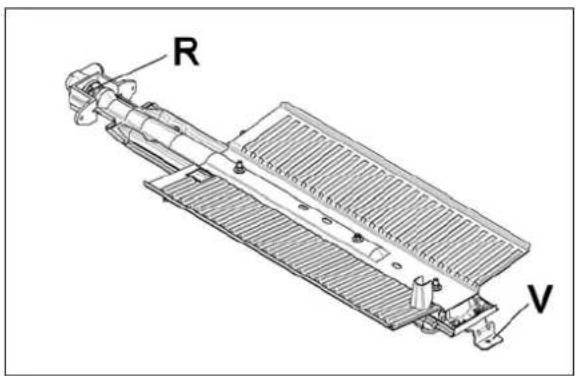
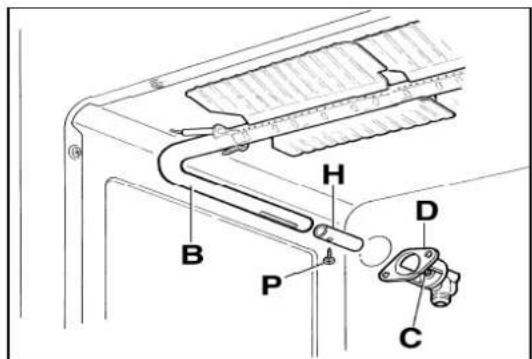
Fig.
m = 311
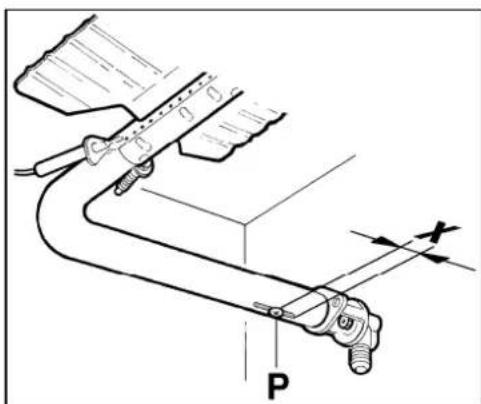
Fig.
12
natural_image
Hand using a screwdriver to adjust a circular component (no text or symbols visible)Fig. 13
natural_image
Technical line drawing of a mechanical assembly with cylindrical components and threaded shafts (no text or symbols)Fig. 15
natural_image
Technical line drawing of a mechanical valve assembly (no text or symbols)The Ground Truth image displays a single, solid horizontal line. According to Rule 2 (UNDERSCORE & LINE RULES), this is a stylistic or background line, not a placeholder underscore. Therefore, the OCR result must ignore it and output nothing or only meaningful text. The provided OCR content is "____", which consists of four underscores. This is an incorrect interpretation of the line as a placeholder, violating the rule that stylistic lines must be ignored. The OCR has hallucinated underscores where none should exist based on the GT's visual context. Hence, the OCR result is inconsistent with the Ground Truth.
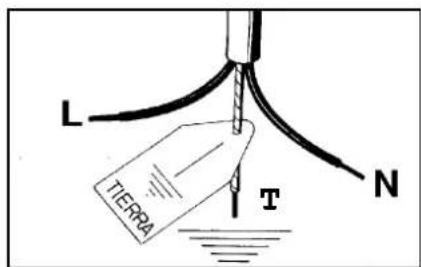
Fig. 16
natural_image
Line drawing of a hand holding a small object above a window, with an eye above (no text or symbols)Fig. 17 Fig. 18
natural_image
Line drawing of hands connecting a mechanical component to a terminal (no text or symbols)
natural_image
Line drawing of hands connecting a mechanical component to a terminal (no text or symbols)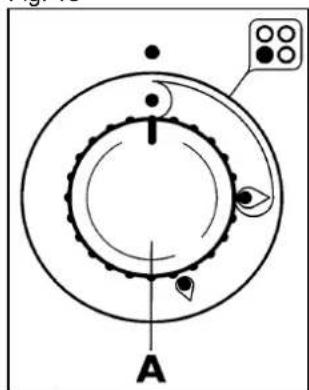
Fig. 19
natural_image
Simple line drawing of a starfish with a curved tail and scattered circles above (no text or symbols)Fig. 20
natural_image
Technical line drawing of a mechanical component with two circular features and internal components, no visible text or symbols.Fig. 21
natural_image
Line drawing of a portable stove with heating elements and a lid (no text or symbols)Fig. 22
natural_image
Simple line drawing of a rectangular container with a lid and side handles, placed on a base (no text or symbols)Fig. 23
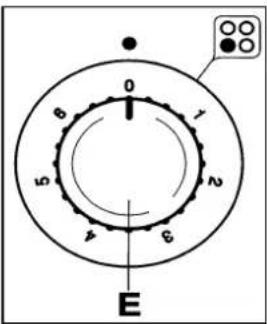
Fig. 24
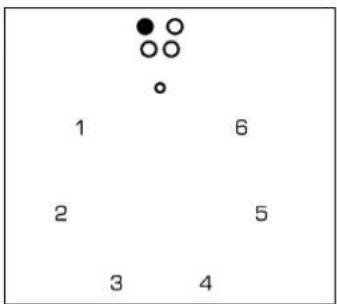
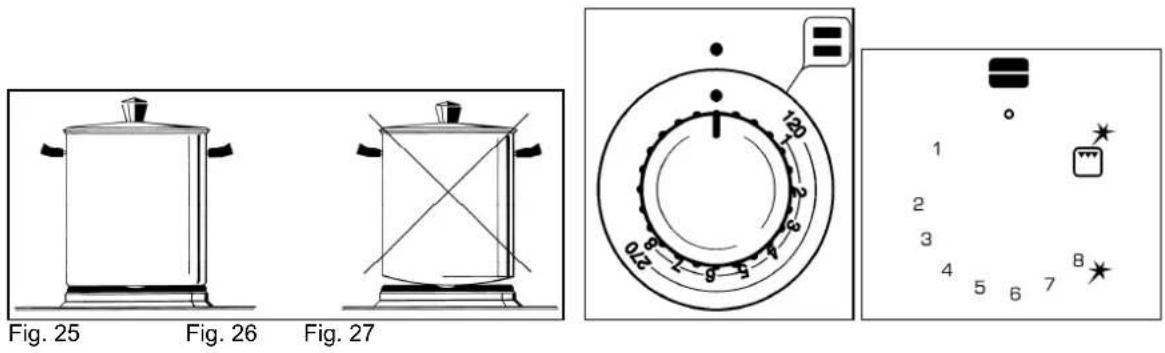
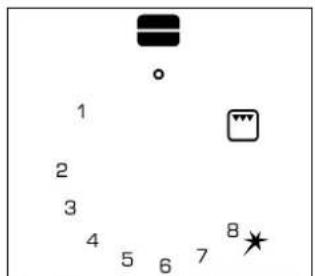
Fig. 28
Fig. 29
Fig. 30
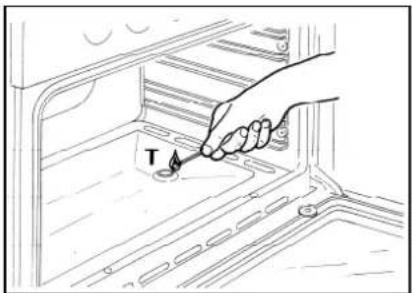
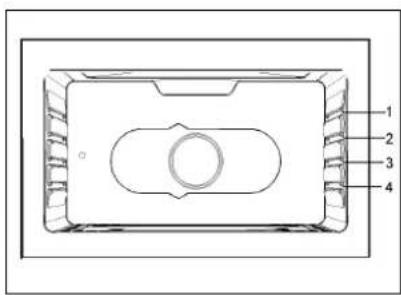
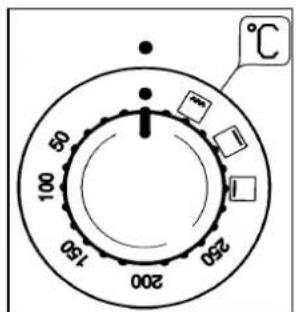
Fig. 31
Fig. 32
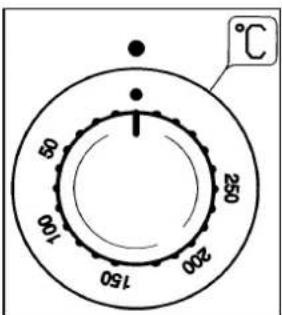
Fig. 33
Fig. 34
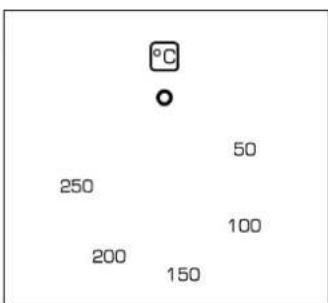
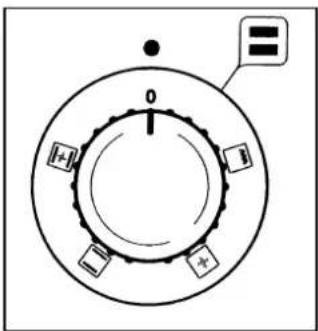
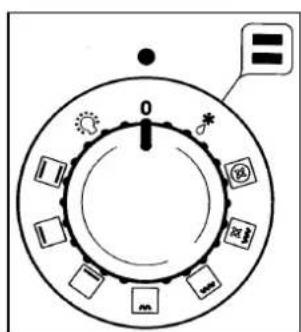
Fig. 35
natural_image
Circular arrangement of icons including battery, lightbulb, and document (no text or symbols)Fig. 37
natural_image
Line drawing of a simple rectangular device with four legs and a side arm, no text or symbols presentFig.38
Fig. 39
Fig. 40
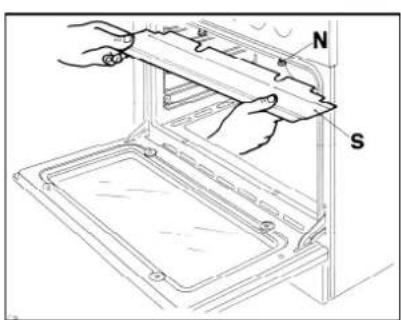
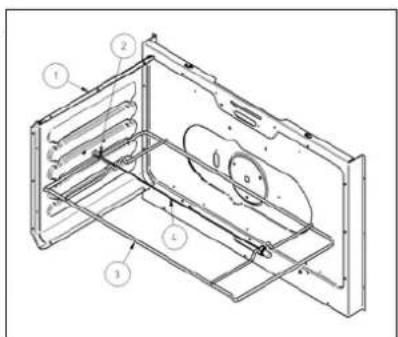
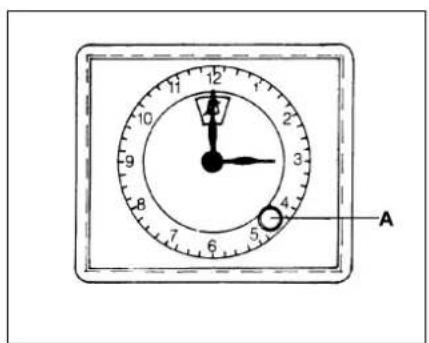
Fig.41
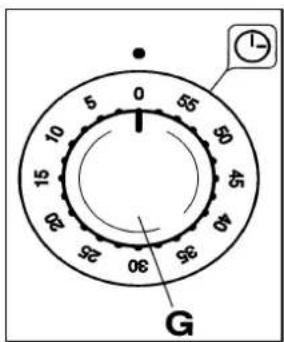
Fig. 42
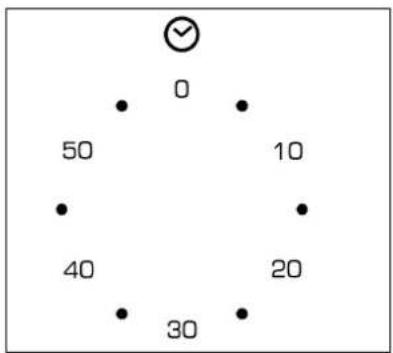
Fig.43
natural_image
Line drawing of a microwave oven with a rectangular tray and mounting base (no text or symbols)Fig.44
natural_image
Line drawing of a hand using a screwdriver to install a tray inside an oven (no text or symbols)Fig.46
natural_image
Close-up of a gloved hand adjusting a mechanical component with an arrow indicating direction (no visible text or symbols)Fig.47
natural_image
Close-up of a mechanical or electronic component with metallic components and a highlighted rectangular section (no visible text or symbols)Fig.48
natural_image
Close-up of hands holding a black mechanical component with a white arrow indicating rotation (no text or symbols)Fig.49
natural_image
Close-up of a gloved hand holding a black plastic object with a white arrow pointing to a small component, no visible text or symbols.Fig.50
natural_image
Close-up of hands installing or adjusting a black plastic panel on tiled floor, with a white arrow pointing to a detail (no text or symbols visible)Fig.51
natural_image
Close-up of gloved hands installing or maintaining a black plastic panel with visible internal structure (no text or symbols)Fig.52
natural_image
Close-up of a black plastic mechanical component with textured base and white cloth, no visible text or symbolsFig.53
natural_image
Person in gloves installing or adjusting a black electronic device on tiled floor (no visible text or symbols)Fig.54
natural_image
Close-up of gloved hands holding a transparent glass enclosure with a white arrow pointing upward (no text or symbols visible)Fig.55
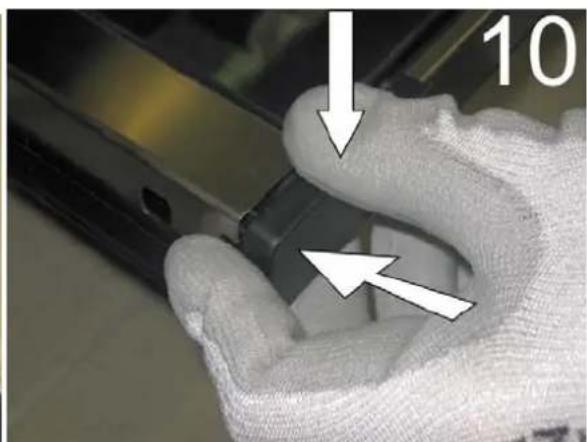
Fig.56
natural_image
Close-up of a gloved hand inserting a black plastic clip into a black rectangular device (no text or symbols visible)Fig.57
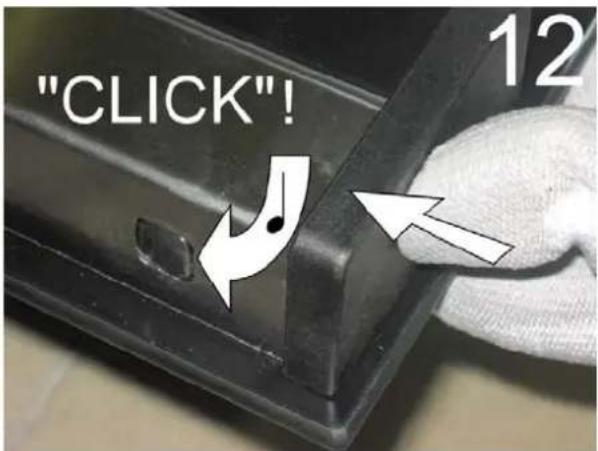
Fig.58
natural_image
Line drawing of a standard kitchen appliance with four fans and a front panel (no text or symbols)Fig.59
CE
Cod.310914


- INSTALLATION, MAINTENANCE AND USE INSTRUCTIONS FOR FREE-STANDING COOKERS 80x50 cm (type MG/MGV)
- CONTENTS:
- INSTALLER TECHNICAL MANUAL
- INSTALLER INFORMATION
- INSTALLING THE COOKER
- IMPORTANT INFORMATION FOR INSTALLING THE APPLIANCE
- ROOM VENTILATION
- APPLIANCE GAS CONNECTION
- ADAPTATION TO DIFFERENT TYPES OF GAS FOR COOKER TYPE M6V
- Follow the instructions below to change the grill burner nozzle:
- BURNER ADJUSTMENT
- 2) Burner "MINIMUM" adjustment:
- APPLIANCE ELECTRIC CONNECTION:
- APPLIANCE MAINTENANCE
- REPLACING PARTS
- USE AND MAINTENANCE MANUAL
- ATTENTION: IMPORTANT WARNINGS
- For cookers resting on a base
- For cookers with glass covers
- For cookers with electric ovens
- For the food warmer compartment (or drop leaf in our case)
- For glass doors
- DOOR GUARD
- CONTROL PANEL DESCRIPTION
- USING BURNERS
- USING HOT PLATES
- USING THE GAS OVEN
- GAS OVEN:
- FAN GAS OVEN:
- USING THE THERMOSTAT WITH SWITCH IN SERIES (COOKERS WITH A SINGLE-CONTROL CONVENTIONAL ELECTRIC OVEN)
- Warning! Oven light running for static oven.
- USING THE ELECTRIC THERMOSTAT (COOKERS WITH A CONVENTIONAL ELECTRIC OVEN AND SEPARATE CONTROLS, WITH A VENTILATED CONVENTIONAL OVEN OR WITH A MULTIFUNCTION OVEN)
- USING THE 4 + 0 SWITCH (COOKERS WITH A VENTILATED CONVENTIONAL ELECTRIC OVEN)
- USING THE 9 + 0 SWITCH (COOKERS WITH A MULTIFUNCTION ELECTRIC OVEN)
- USING THE NATURAL CONVENTIONAL ELECTRIC OVEN
- USING THE VENTILATED CONVENTIONAL ELECTRIC OVEN (fig.37)
- USING THE VENTILATED ELECTRIC OVEN (fig.37)
- USING THE GAS GRILL
- USING THE CONVENTIONAL ELECTRIC GRILL
- USING THE VENTILATED ELECTRIC GRILL
- ANALOGIC CLOCK WITH TIMER (Fig.41)
- USING THE MINUTE-MINDER (fig.42-43)
- CLEANING THE APPLIANCE
- Cleaning the work surface:
- Cleaning the enamelled parts:
- Cleaning the STAINLESS steel parts:
- Cleaning the burner flame caps:
- Oven door with glass screwed:
- Cleaning the inside of the oven glass:
- Cleaning the inside of the oven:
- Oven door with glass stuck:
- AFTER-SALES TECHNICAL SERVICE AND SPARE PARTS
- NOTICE D'INSTALLATION, D'ENTRETIEN ET MODE D'EMPLOI DE LA CUISINIERE A GAZ 80x50cm (MODELE MG/ MGV)
- (CUISINES AVEC FOUR ELECTRIQUE STATIQUE A COMMANDES SEPAREES, AVEC FOUR STATIQUE VENTILE OU AVEC FOUR MULTIFONCTIONS
Brand : LA GERMANIA
Model : AMN805GEVSVIE
Category : Cooker