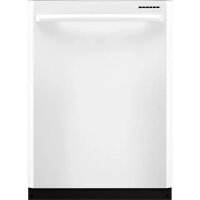
MDB6769AWW - Dishwasher MAYTAG - Free user manual and instructions
Find the device manual for free MDB6769AWW MAYTAG in PDF.


| Product Type | Dishwasher |
| Brand | Maytag |
| Model | MDB6769AWW |
| Color | White |
| Capacity | 12 place settings |
| Dimensions (W x D x H) | 60,96 x 60,96 x 86,36 cm |
| Power Supply | 120 V, 60 Hz, 15 A |
| Programs | Auto, Heavy, Normal, Light, Rinse |
| Options | High Temp Wash, Sani Rinse, Heated Dry, Delay Start (up to 6 hours), Control Lock |
| Tub Material | Stainless steel |
| Rack Type | Removable upper rack, lower rack, Split & Fit flatware rack |
| Special Features | Cup hangers, flatware sprayer, fold-down stacking shelf |
| Safety | Control lockout, door lock, grounding |
| Maintenance | Exterior cleaning with soft cloth, interior cleaning with detergent paste, vinegar rinse recommended |
| Warranty | 1 year parts and labor |
| Customer service | 1-800-688-9900 (United States), 1-800-807-6777 (Canada) |
| General Information | User manual and operating instructions available in PDF format |
Frequently Asked Questions - MDB6769AWW MAYTAG
User questions about MDB6769AWW MAYTAG
0 question about this device. Answer the ones you know or ask your own.
Ask a new question about this device
Download the instructions for your Dishwasher in PDF format for free! Find your manual MDB6769AWW - MAYTAG and take your electronic device back in hand. On this page are published all the documents necessary for the use of your device. MDB6769AWW by MAYTAG.
USER MANUAL MDB6769AWW MAYTAG
THANK YOU for purchasing this high-quality product. If you should experience a problem not covered in TROUBLESHOOTING, please visit our website at www.maytag.com for additional information. If you still need assistance, call us at 1-800-688-9900. In Canada, visit our website at www.maytag.ca or call us at 1-800-807-6777.
You will need your model and serial number located near the door on the right-hand or left-hand side of the dishwasher interior.
DISHWASHER FEATURES....7
DISHWASHER CARE....9
TROUBLESHOOTING....9
WARRANTY 12
Dishwasher Safety
Your safety and the safety of others are very important.
We have provided many important safety messages in this manual and on your appliance. Always read and obey all safety messages.

This is the safety alert symbol.
This symbol alerts you to potential hazards that can kill or hurt you and others.
All safety messages will follow the safety alert symbol and either the word "DANGER" or "WARNING."
These words mean:
DANGER
You can be killed or seriously injured if you don't immediately follow instructions.
WARNING
You can be killed or seriously injured if you don't follow instructions.
All safety messages will tell you what the potential hazard is, tell you how to reduce the chance of injury, and tell you what can happen if the instructions are not followed.
IMPORTANT SAFETY INSTRUCTIONS
WARNING: When using the dishwasher, follow basic precautions, including the following:
- Read all instructions before using the dishwasher.
■ Use the dishwasher only for its intended function.
■ Use only detergents or rinse agents recommended for use in a dishwasher, and keep them out of the reach of children.
■ When loading items to be washed:
1) Locate sharp items so that they are not likely to damage the door seal; and
2) Load sharp knives with the handles up to reduce the risk of cut-type injuries.
- Do not wash plastic items unless they are marked “dishwasher safe” or the equivalent. For plastic items not so marked, check the manufacturer's recommendations.
■ Do not touch the heating element during or immediately after use.
■ To avoid electrical shock hazard, the sides and back must be enclosed and the front panels must be attached before electrical power is applied to the dishwasher. Refer to the installation instructions for proper grounding procedures.
■ Do not tamper with controls.
■ Do not abuse, sit on, or stand on the door, lid, or dish racks of the dishwasher.
■ To reduce the risk of injury, do not allow children to play in or on the dishwasher.
■ Under certain conditions, hydrogen gas may be produced in a hot water system that has not been used for two weeks or more. HYDROGEN GAS IS EXPLOSIVE. If the hot water system has not been used for such a period, before using the dishwasher turn on all hot water faucets and let the water flow from each for several minutes. This will release any accumulated hydrogen gas. As the gas is flammable, do not smoke or use an open flame during this time.
■ Remove the door or lid to the washing compartment when removing an old dishwasher from service or discarding it.
SAVE THESE INSTRUCTIONS
GROUNDING INSTRUCTIONS
■ For a grounded, cord-connected dishwasher:
The dishwasher must be grounded. In the event of a malfunction or breakdown, grounding will reduce the risk of electric shock by providing a path of least resistance for electric current. The dishwasher is equipped with a cord having an equipment-grounding conductor and a grounding plug. The plug must be plugged into an appropriate outlet that is installed and grounded in accordance with all local codes and ordinances.
WARNING: Improper connection of the equipment-grounding conductor can result in a risk of electric shock.
Check with a qualified electrician or service representative if you are in doubt whether the dishwasher is properly grounded. Do not modify the plug provided with the dishwasher; if it will not fit the outlet, have a proper outlet installed by a qualified electrician.
■ For a permanently connected dishwasher:
The dishwasher must be connected to a grounded metal, permanent wiring system, or an equipment-grounding conductor must be run with the circuit conductors and connected to the equipment-grounding terminal or lead on the dishwasher.
SAVE THESE INSTRUCTIONS

WARNING
Tip Over Hazard
Do not use dishwasher until completely installed.
Do not push down on open door.
Doing so can result in serious injury or cuts.
Quick Steps
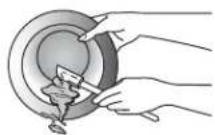
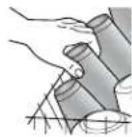
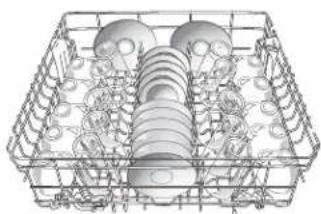
1 Prepare and load dishwasher.
3 Select a cycle and option.
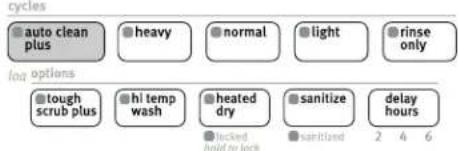
flowchart
graph TD
    A["auto clean plus"] --> B["heavy"]
    B --> C["normal"]
    C --> D["light"]
    D --> E["rinse only"]
    F["tough scrub plus"] --> G["hl temp wash"]
    G --> H["heated dry"]
    H --> I["sanitize"]
    I --> J["delay hours"]
    K["locked hold to lock"] --> L["sanitized"]
    M["2 4 6"] --> N["2 4 6"]
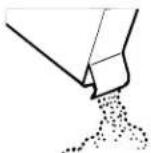
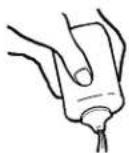
2 Add detergent for cleaning and rinse aid for drying.
4 Start dishwasher.

Dishwasher Use
STEP 1
Prepare and Load the Dishwasher
IMPORTANT: Remove leftover food, bones, toothpicks and other hard items from the dishes. Remove labels from containers before washing.
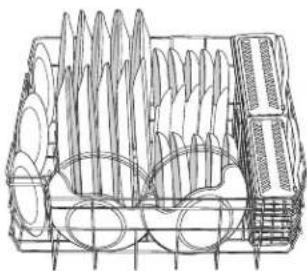
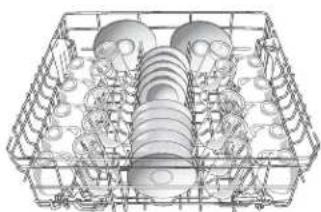
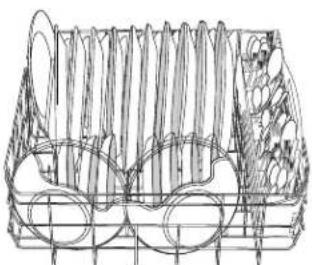
Rack loading
natural_image
3D wireframe rendering of a multi-tiered kitchen sink with circular components (no text or symbols)Upper rack Lower rack
natural_image
Technical line drawing of a mechanical component with internal gear-like structures and mounting brackets (no text or symbols)Alternative rack loading
natural_image
Technical line drawing of a mechanical assembly with multiple circular components and mesh framework (no text or symbols)Upper rack Lower rack
natural_image
Line drawing of a mechanical component with internal cavities and layered structure (no text or symbols)■Make sure nothing keeps spray arm(s) from spinning freely. It is important for the water spray to reach all soiled surfaces.
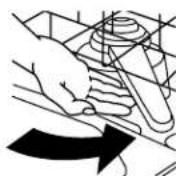
■Make sure that when the dishwasher door is closed no items are blocking the detergent dispenser.
■Items should be loaded with soiled surfaces facing down and inward to the spray as shown. This will improve cleaning and drying results.
■ Avoid overlapping items like bowls or plates that may trap food.
■Place plastics, small plates and glasses in the upper rack. Wash only plastic items marked "dishwasher safe."
■To avoid thumping/clattering noises during operation: Load dishes so they do not touch one another. Make sure lightweight load items are secured in the racks.
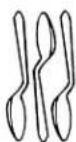
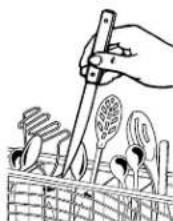
■When loading silverware, always place sharp items pointing down. Mix some of the items having some pointing up and some items pointing down.
STEP 2
Add Detergent
NOTE: If you do not plan to run a wash cycle soon, run a rinse cycle. Do not use detergent.
■Use automatic dishwasher detergent only. Add powder, liquid or tablet detergent just before starting a cycle.
■Fresh automatic dishwasher detergent results in better
cleaning. Store tightly closed detergent container in a cool, dry place.
■The amount of detergent to use depends on:
How much soil remains on the items - Heavily soiled loads require more detergent.
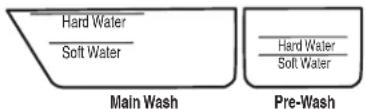
The hardness of the water - If you use too little in hard water, dishes won't be clean. If you use too much in soft water, glassware will etch.
Soft to Medium Water (0-6 grains per U.S. gallon) [typical water softener water and some city water] Medium to Hard Water (7-12 grains per U.S. gallon) [well water and some city water]
■Depending on your water hardness, fill the Main Wash section of the dispenser as shown. Fill the Pre-Wash section to the level shown, if needed.
NOTE: Fill amounts shown are for standard powdered detergent. Follow instructions on the package when using other dishwasher detergent.
Add Rinse Aid
Your dishwasher is designed to use rinse aid for good drying performance. Without rinse aid your dishes and dishwasher interior will have excessive moisture. The heat dry option will not perform as well without rinse aid.
■Rinse aid keeps water from forming droplets that can dry as spots or streaks. It also improves drying by allowing water to drain off of the dishes after the final rinse.
■Rinse aid helps to reduce excess moisture on the dish racks and interior of your dishwasher.
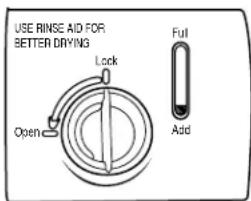
- Check the rinse aid indicator. Add rinse aid when indicator drops to "Refill" level.
■To add rinse aid, turn the dispenser cap counterclockwise and lift off. Pour rinse aid into the opening until the indicator window looks full. Replace the dispenser cap and turn clockwise. Make sure cap is fully locked.

14 turn to lock
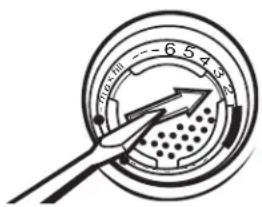
NOTE: For most water conditions, the factory setting of 2 will give good results. If you have hard water or notice rings or spots, try a higher setting. Turn the arrow adjuster inside the dispenser by either using your fingers or inserting a flat-blade screwdriver into the center of the arrow and turning.
STEP 3
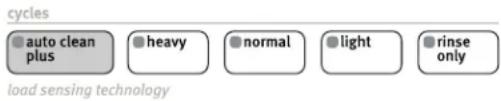
Select a Cycle (cycles vary by model)
See "Cycle and Option Descriptions" charts in the following section.
Heavier cycles and options affect cycle length. Some cycles and options will take up to 3½ hours to complete.
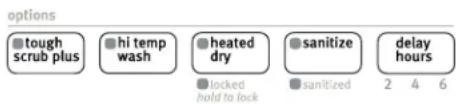
Select Options (options vary by model)
See “Cycle and Option Descriptions” charts in the following section.
You can customize your cycles by pressing the options desired and press Start/Resume.
STEP 4
Start or Resume a Cycle
NOTE: For portable models, see the "Dishwasher Features" section for instructions on how to connect the water and electrical supply.
■Run hot water at the sink nearest your dishwasher until the water is hot. Turn off water.
■Push door firmly closed. The door latches automatically. Select the wash cycle and options desired and press START/RESUME OR press START/RESUME to repeat the same cycle and options as in the previous wash cycle.
■You can add an item anytime before the main wash starts. Open the door slowly and add the item. Close the door firmly. Press the START/RESUME button, the cycle resumes automatically at the point of interruption.
For fully integrated models (controls on top of console)
■Select the wash cycle and options desired.
■Press the START/RESUME button once and close the door. After a brief pause, the cycle will begin. The door must be closed within 3 seconds after pushing START/RESUME or the lights will flash, and the dishwasher will not begin. Press the START/RESUME button again and shut the door within 3 seconds.
You can add an item anytime before the main wash starts. Open the door slowly and add the item. Press the START/RESUME then close the door.
Cycle and Option Descriptions


This information covers several different models. Your dishwasher may not have all the cycles and options described.
| CYCLE SELECTIONS | |||||
| CYCLES DISH LOAD TYPES DESCRIPTIONS WASH TIME (HH:MM) | |||||
| Cycle Minimum | Cycle + Options Minimum | *Maximum | |||
 | Use for any loads with heavy, normal or light amounts of food soil. | Designed to select the number of water fills best suited for the soil level of each load.During the wash, the wash action will repeatedly pause for several seconds. | 0:55 1:21 3:39 | ||
 | Use for hard-to-clean, heavily soiled pots, pans, casseroles, and regular tableware. | This cycle forces maximum time water and heat. During the wash, the wash action will repeatedly pause for several seconds. | 1:09 1:35 3:50 | ||
 | Use for loads with normal amounts of food soil. | The energy-usage label is based on this cycle. During the wash, the wash action will repeatedly pause for several seconds. | 1:04 1:30 3:46 | ||
 | Use for lightly soiled items or china and crystal. | During the wash, the wash action will repeatedly pause for several seconds. | 0:47 1:13 2:56 | ||
 | Use for rinsing dishes, glasses, and silverware that will not be washed right away. | This cycle does not dry.Do not use detergent. During the wash, the wash action will repeatedly pause for several seconds. | 0:10 0:10 0:10 | ||
You can customize your cycle by selecting an option.
See option selections. If you change your mind, press the option again to turn off the option, or select a different option. You can change an option anytime before the selected option begins.
*Maximum wash times depend on water temperature, heavy soil condition, dish load size and options selected.
OPTION SELECTIONS
OPTIONS DISH LOAD TYPES DESCRIPTIONS USE WITH:
| Use for loads with tough food soil. | Depending upon which cycle is being used, adds heat and/or wash time to the cycle. | Heavy, Normal, & Auto Clean Plus cycles | |
| Loads containing tough, baked-on food. | Increases the target water temperature during the wash portions of the cycle.Adds heat, wash time and water to the cycle. | Heavy, Normal, & Auto Clean Plus cycles |
OPTION SELECTIONS
OPTIONS DISH LOAD TYPES DESCRIPTIONS USE WITH:
Heated dry  | Heated dry: For best drying results, dry dishes with heat. | Turn OFF when loads contain plastic dinnerware that may be sensitive to high temperatures.This option with the use of rinse aid will provide the best drying performance. | Heavy, Normal, Light, or Auto Clean Plus |
 | To sanitize your dishes and glassware in accordance with NSF/ANSI Standard 184 for Residential Dishwashers. | Raises the water temperature in the final rinse to approximately 154^ ( 68^ ). This high temperature rinse sanitizes your dishes and glassware in accordance with NSF/ANSI Standard 184 for Residential Dishwashers.Certified residential dishwashers are not intended for licensed food establishments.The Sanitize option adds heat and time to the cycle. | Heavy, Normal, Light, or Auto Clean Plus |
| [xw3w] | To run your dishwasher at a later time or during off-peak hours. | Delays the start of a cycle up to 6 hours.Select a wash cycle and options. Press Delay. Press START/RESUME. Close the door firmly within 3 seconds. For fully integrated models ((controls on top of console). | All cycles |
| Control Lock [wzw8] | To avoid unintended use of your dishwasher, or cycle and option changes during a cycle. | To turn on Lock, press and hold Heated Dry for at least 3 seconds.To turn off Lock, press and hold Heated Dry for at least 3 seconds.When Control Lock is lit, all buttons are disabled. If you press any pad while your dishwasher is locked, the light flashes 5 times. The dishwasher door can be opened while the controls are locked. | Anytime |
IMPORTANT: The sensor in your dishwasher monitors the soil level. Cycle time and/or water usage can vary as the sensor adjusts the cycle for the best wash performance. If the incoming water is less than the recommended temperature or food soils are heavy, the cycle will automatically compensate by adding time, heat and water as needed.
CONTROLS AND CYCLE STATUS
CONTROL PURPOSE COMMENTS
 | To start or resume a wash cycle | If the door is opened during a cycle or the power is interrupted, all lights will flash to indicate a suspended cycle. The cycle will not resume until the door is closed, and the START/RESUME button is pushed. |
 | To cancel wash cycle | Close the door firmly. The dishwasher starts a 2-minute drain (if needed). Let the dishwasher drain completely. |
 wash dry clean wash dry clean | To follow the progress and status of your dishwasher cycle | The “Clean” indicator glows when a cycle is finished.If you select the Sanitize option, when the Sanitize cycle is finished, the Sanitized indicator glows. If your dishwasher did not properly sanitize your dishes, the light will be blinking. This can happen if the cycle is interrupted, or the water could not be heated to the required temperature. The clean and sanitize lights go off when the door has been opened for more than 30 seconds or the CANCEL key is pressed.The “Washing” indicator glows at the start of the first fill of any cycle (except Rinse Only) and remains on until the end of the main wash cycle.The “Drying” indicator glows during the drying portion of each cycle (except Rinse Only). |
Dishwasher Features
Your Maytag dishwasher may have some or all of these features.
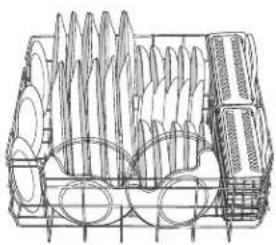
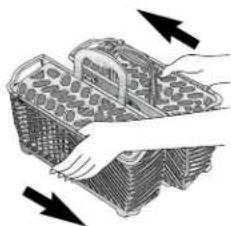
The split silverware basket can be separated and placed in various locations in the lower rack. Load flatware and utensils into both sections or just one, depending on your load.
natural_image
Technical line drawing of a mechanical component with multiple blades and grooves (no text or symbols)To split the basket:
Hold the basket firmly along the sides. Unlock the baskets.
Silverware basket lids:
Use silverware basket lids to provide optimal spacing and best cleaning performance.
natural_image
Illustration of hands carrying a basket filled with food items, no text or symbols presentCup Clips
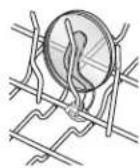
The Cup Clips located in the center of the upper rack can be used to hold lightweight plastic items, cooking utensils and knives in place. Clip the item between the tine and the clip.
Stack-Rack
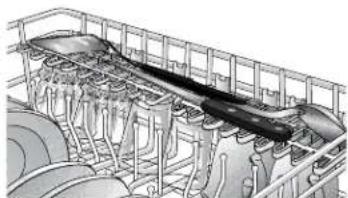
Fold down the extra shelf on the right-hand side of the upper rack to hold additional cups, stemware or long items such as utensils and spatulas.
natural_image
Technical line drawing of a mechanical assembly with no visible text or symbolsSilverWare Blast™
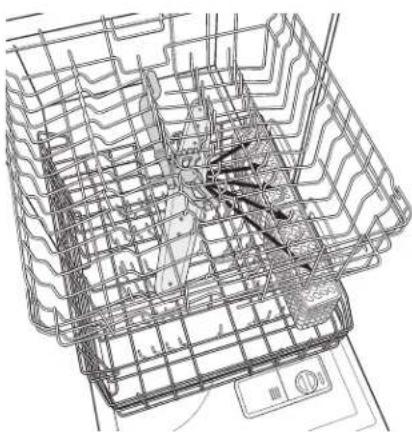
The SilverWare Blast is designed to focus cleaning power on your silverware.
natural_image
Technical line drawing of a mechanical component with internal grid structure and directional arrows (no text or symbols)Removable Upper Rack
The removable rack allows you to wash larger items such as stock pots, roasters, and cookie sheets in the lower level rack.
IMPORTANT: Remove dishes prior to removing the upper rack from the dishwasher.
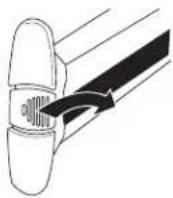
To remove the rack (push tab rack stop):
-
Roll the rack 13 to 12 of the way out.
-
Remove each plastic push tab rack stop from the end of each track by pushing inward toward the rack on the ridged area of the rack stop. The rack stop will snap open and can be easily removed by pulling straight out. Be sure to support the track while removing rack stops.
-
Roll the rack all the way out of the track and remove from the dishwasher.
To replace the rack:
Reverse the above steps 1-3 to replace the rack into the dishwasher.
Portable Dishwashers (on some models)
WARNING

Electrical Shock Hazard
Plug into a grounded 3 prong outlet.
Do not remove ground prong.
Do not use an adapter.
Do not use an extension cord.
Failure to follow these instructions can result in death, fire, or electrical shock.
Connecting the Faucet Adapter
NOTE: A special adapter must be installed on the faucet before the dishwasher can be connected. Complete Installation Instructions and the adapter are packed with your dishwasher. (See the Installation Instructions.)
When moving your dishwasher, make sure the door is latched. Hold the dishwasher at the top front corners.
Preparing the faucet
-
Remove the screen holder or aerator, screen, and washer from the end of the faucet.
-
Use the faucet adapter kit that came with your portable dishwasher to modify the faucet where the dishwasher will be used.
NOTE: Remove and save the washer, screen, and screen holder or aerator for future use.
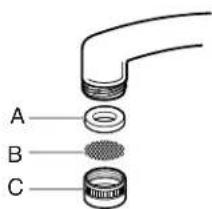
A. Washer
B. Screen
C. Screen holder or aerator
Connecting the faucet adapter to faucets with external threads
Insert the 2 screens and then the thin washer from the faucet adapter kit into the faucet adapter. Attach the adapter onto the end of the faucet.
NOTE: Do not use the thick washer.
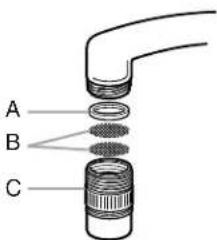
A. Thin washer
B. Screens
C. Faucet adapter
Connecting the faucet adapter to faucets with internal threads
Insert the 2 screens, the thin washer, and then the thick washer from the faucet adapter kit into the faucet adapter. Attach the adapter onto the end of the faucet.
NOTE: Use both washers.
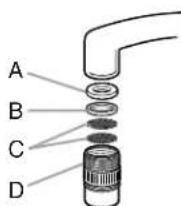
A. Thick washer
B. Thin washer
C. Screens
D. Faucet adapter
Connecting to Water and Electrical Supply
-
Run water at the faucet until it is hot. Turn off the water.
-
Pull the hoses out of their storage compartment on the back of the dishwasher.
NOTE: Make sure the hoses are not kinked or twisted. Kinked hoses reduce washing performance.

- Pull down on the locking collar while lifting the hose connector onto the faucet adapter.
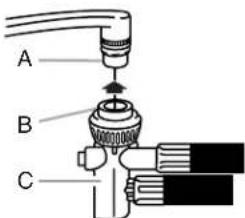
A. Faucet adapter
B. Locking collar
C. Hose connector
-
When the connector snaps into place, release the locking collar.
-
Turn the hot water on slowly until it is all the way on.
-
Plug into a grounded 3 prong outlet.
Disconnecting the Dishwasher
-
Turn off the hot water. (This can be done after the last rinse.)
-
Press the red button on the connector to release the water pressure.

A. Faucet adapter
B. Locking collar
C. Red button
D. Hose connector
-
Lift slightly on the hose connector while pulling down the locking collar. Pull down on the connector.
-
Empty any remaining water from the connector by turning the connector upside down.
-
Unplug the power supply cord and return it to the storage compartment.
-
Return the hoses to the storage compartment.
Dishwasher Care
Cleaning the Dishwasher
Clean the exterior of the dishwasher with a soft, damp cloth and mild detergent. If your dishwasher has a stainless steel exterior, a stainless steel cleaner is recommended - Stainless Steel Cleaner and Polish Part Number 31462.
Clean the interior of the dishwasher, with a paste of powdered dishwasher detergent and water or use liquid dishwasher detergent on a damp sponge to clean the cooled-down interior.
A white vinegar rinse may remove white spots and film. Vinegar is an acid, and using it too often could damage your dishwasher.
Put 2 cups (500 mL) white vinegar in a glass or dishwasher-safe measuring cup on the bottom rack. Run the dishwasher through a complete washing cycle using an air-dry or an energy-saving dry option. Do not use detergent. Vinegar will mix with the wash water.
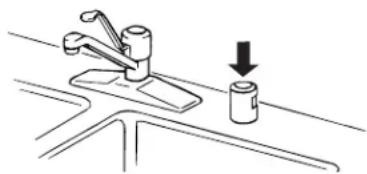
If you have a drain air gap, check and clean it if the dishwasher isn't draining well.
natural_image
Simple line drawing of a kitchen sink with faucet and sink (no text or symbols)Storing the Dishwasher
If you will not be using the dishwasher during the summer months, turn off the water and power supply to the dishwasher. In the winter, if the dishwasher could be exposed to near freezing temperatures or is left in a seasonal dwelling such as a second home or vacation home, avoid water damage by having your dishwasher winterized by authorized service personnel.
Troubleshooting
First try the solutions suggested here or visit our website and reference FAQs (Frequently Asked Questions) to possibly avoid the cost of a service call.
In the U.S.A., www.maytag.com In Canada, www.maytag.ca
| PROBLEM SOLUTION | |
| DISHWASHER DOES NOT RUN | NOTE: It is normal for the dishwasher to repeatedly pause several times during a cycle.If the START/RESUME light is blinking, press START/RESUME and close the door firmly within 3 seconds. For fully integrated models (controls on top of console).Be sure the door is closed and latched.Be sure you have selected a cycle. (See “Cycles and Options Descriptions.”)Be sure there is power to the dishwasher. A circuit breaker or fuse may have tripped.If lights other than START/RESUME blink and the unit will not run, you will need to call for service. |
| DETERGENT REMAINS IN THE DISPENSER OR TABLET IS ON BOTTOM OF TUB | Check for dishware such as cookie sheets, cutting boards, or large containers, etc., that may be blocking the detergent dispenser from opening properly.Be sure your detergent is fresh and lump free.Be sure the cycle has completed (green light is on). If it has not completed, you will need to resume the cycle by pressing START/RESUME and closing the door within 3 seconds. |
| CYCLE RUNS TOO LONG NOTES:■ To use less water and reduce energy consumption you will encounter cycles that typically run for up to 3 hours.■ A water heater setting of 120°F (49°C) is best. The dishwasher will delay longer while heating cooler water.■ Some options will add time to the cycle. (See “Cycles and Options Descriptions” section.) The Heated Dry option adds 1⁄2 hour.Try the Insta Wash cycle.Run the hot water at a faucet close to the dishwasher before starting the cycle. | |
| DISHWASHER NOT DRYING | NOTE: Plastic and items with nonstick surfaces are difficult to dry because they have a porous surface which tends to collect water droplets. Towel drying may be necessary.Use of rinse aid along with the Heated Dry option is needed for proper drying.Use of the High Temp Wash option will improve drying results.Proper loading of items can affect drying. (See specific loading instructions within this guide.) Glasses and cups with concave bottoms hold water. This water may spill onto other items when unloading.■Unload the bottom rack first.■Locate these items on the more slanted side of the rack for improved results. |
WILL NOT FILL Be sure the water is turned on to the dishwasher.
Check that the float is free from obstructions.
Check for suds in the dishwasher. If foam or suds are detected, the dishwasher may not operate properly or may not fill with water.

| PROBLEM SOLUTION | |
| WATER REMAINS IN THE TUB/WILL NOT DRAIN | Be sure the cycle has completed (the green light is on). If the cycle has not completed, you will need to resume the cycle by pressing START/RESUME and closing the door within 3 seconds.If dishwasher is connected to a food waste disposer, be sure the knockout plug has been removed from the disposer inlet.Check for kinks in the drain hose.Check for food obstructions in the drain or disposer.Check your house fuse or circuit breaker. |
| HARD WATER(WHITE RESIDUE ON DISHWASHER INTERIOR OR GLASSWARE) | NOTE:Extremely hard water mineral deposits can cause damage to your dishwasher and make it difficult to achieve good cleaning. A water softener is strongly recommended if your hardness is 15 grains or more. If a water softener is not installed, the following steps may help:Use a commercial cleaner designed for dishwashers once per month.Always use a rinse aid.Always use a high-quality, fresh detergent.Use a detergent booster/water softener additive designed for dishwashers. |
| ODORS | NOTE:If the dishwasher is not used daily, you can run a rinse cycle with the partial load daily until a full load is ready to run.Run a vinegar rinse through the dishwasher by putting 2 cups (500 mL) of white vinegar in an upright glass measuring cup in the lower rack. Run a normal cycle with the Heated Dry option turned off. Do not use detergent.The dishwasher may not be draining properly, see “WATER REMAINS IN THE TUB/WILL NOT DRAIN” in “Troubleshooting.” |
| NOISY NOTES: | ■ Surging sounds can occur periodically throughout the cycle while the dishwasher is draining.■Normal water valve hissing may be heard periodically.■ A normal snap sound may be heard when the detergent dispenser opens during the cycle and when the door is opened at the end of the cycle.■Improper installation will affect noise levels.Be sure the filters are properly installed.A thumping sound may be heard if items extend beyond the racks and interfere with the wash arms. Readjust the dishware and resume the cycle. |
| FOOD SOILS REMAIN ON DISHES | Be sure the dishwasher is loaded correctly. Improper loading can greatly decrease the washing performance (see “Prepare and Load the Dishwasher”).Select the proper cycle and option for the type of soils. The Pots Pans cycle with the Hi Temp option can be used for tougher loads.Be sure the incoming water temperature is at least 120°F (49°C).Use the proper amount of fresh detergent. More detergent is needed for heavier-soiled loads and hard water conditions.Scrape food from dishes prior to loading (do not prerinse). |
| DID NOT SANITIZE | If the sanitized light is blinking, the load is NOT sanitized. The cycle was interrupted in the final rinse, or your water heater is set too low. Set your water heater to 120°F (49°C). |
| DAMAGE TO DISHWARE | Improper loading can cause dishes to become chipped or damaged. (See specific loading instructions within this guide.) |
| BLINKING LIGHTS | If the START/RESUME light is blinking, press START/RESUME and close the door within 3 seconds.If the Clean light or any other lights are blinking and the dishwasher will not run, call for service. |
| CLOUDY OR SPOTTED DISHWARE (AND HARD WATER SOLUTION) | NOTES:■Liquid rinse aid is necessary for drying and to reduce spotting.■Use the correct amount of detergent.Confirm that the cloudiness is removable by soaking the item in white vinegar for 5 minutes. If the cloudiness disappears, it is due to hard water. Adjust the amount of detergent and rinse aid. See ("HARD WATER [WHITE RESIDUE ON DISHWASHER INTERIOR OR GLASSWARE]) in "Troubleshooting." If it does not come clear, it is due to etching (see below).Be sure the incoming water temperature is set at 120°F (49°C).Try using the Hi Temp and Sani Rinse options.To remove spotting, run a vinegar rinse through the dishwasher.■Wash and rinse the affected dishware and load into dishwasher. Remove all silverware and metal items. Put 2 cups (500 mL) of white vinegar in a glass measuring cup in the lower rack. Run a normal cycle with the Heated Dry option turned off. No detergent is needed. |
| ETCHING (PERMANENT CLOUDINESS) | This is an erosion of the surface of the glassware and can be caused by a combination of: water that is too hot, from using too much detergent with soft water or by pre-washing. Detergent needs food soil to act upon. If etching has occurred, the glassware is permanently damaged. To avoid further etching, adjust the detergent amount to match the water hardness, stop pre-washing, and use water heating options only when incoming water temperature is below 120°F (49°C). |
| LEAKING WATER | Be sure dishwasher has been installed properly and is level.Suds can cause the dishwasher to overflow. Measure the detergent accurately and use only detergents designed for use in a dishwasher. Less detergent is needed in soft water. Try another brand of detergent if sudsing continues.To avoid rinse aid leaking from the dispenser, be sure the lid is securely attached and avoid overfilling. |
| TUB IS DISCOLORED NOTES: | ■High iron content in the water can discolor the tub.■Tomato-based foods can discolor the tub or dishware.A citrus-based cleaner can be used to clean. |
MAYTAG® MAJOR APPLIANCE WARRANTY
LIMITED WARRANTY
For one year from the date of purchase, when this major appliance is operated and maintained according to instructions attached to or furnished with the product, Maytag brand of Whirlpool Corporation or Whirlpool Canada LP (hereafter "Maytag") will pay for factory specified parts and repair labor to correct defects in materials or workmanship. Service must be provided by a Maytag designated service company. This limited warranty is valid only in the United States or Canada and applies only when the major appliance is used in the country in which it was purchased. Outside the 50 United States and Canada, this limited warranty does not apply. Proof of original purchase date is required to obtain service under this limited warranty.
ITEMS EXCLUDED FROM WARRANTY
This limited warranty does not cover:
- Service calls to correct the installation of your major appliance, to instruct you on how to use your major appliance, to replace or repair house fuses, or to correct house wiring or plumbing.
- Service calls to repair or replace appliance light bulbs, air filters or water filters. Consumable parts are excluded from warranty coverage.
- Repairs when your major appliance is used for other than normal, single-family household use or when it is used in a manner that is contrary to published user or operator instructions and/or installation instructions.
- Damage resulting from accident, alteration, misuse, abuse, fire, flood, acts of God, improper installation, installation not in accordance with electrical or plumbing codes, or use of consumables or cleaning products not approved by Maytag.
- Cosmetic damage, including scratches, dents, chips or other damage to the finish of your major appliance, unless such damage results from defects in materials or workmanship and is reported to Maytag within 30 days from the date of purchase.
- Any food loss due to refrigerator or freezer product failures.
- Costs associated with the removal from your home of your major appliance for repairs. This major appliance is designed to be repaired in the home and only in-home service is covered by this warranty.
- Repairs to parts or systems resulting from unauthorized modifications made to the appliance.
- Expenses for travel and transportation for product service if your major appliance is located in a remote area where service by an authorized Maytag servicer is not available.
- The removal and reinstallation of your major appliance if it is installed in an inaccessible location or is not installed in accordance with published installation instructions.
- Major appliances with original model/serial numbers that have been removed, altered or cannot be easily determined. This warranty is void if the factory applied serial number has been altered or removed from your major appliance.
The cost of repair or replacement under these excluded circumstances shall be borne by the customer.
DISCLAIMER OF IMPLIED WARRANTIES; LIMITATION OF REMEDIES
CUSTOMER'S SOLE AND EXCLUSIVE REMEDY UNDER THIS LIMITED WARRANTY SHALL BE PRODUCT REPAIR AS PROVIDED HEREIN. IMPLIED WARRANTIES, INCLUDING WARRANTIES OF MERCHANTABILITY OR FITNESS FOR A PARTICULAR PURPOSE, ARE LIMITED TO ONE YEAR OR THE SHORTEST PERIOD ALLOWED BY LAW. MAYTAG SHALL NOT BE LIABLE FOR INCIDENTAL OR CONSEQUENTIAL DAMAGES. SOME STATES AND PROVINCES DO NOT ALLOW THE EXCLUSION OR LIMITATION OF INCIDENTAL OR CONSEQUENTIAL DAMAGES, OR LIMITATIONS ON THE DURATION OF IMPLIED WARRANTIES OF MERCHANTABILITY OR FITNESS, SO THESE EXCLUSIONS OR LIMITATIONS MAY NOT APPLY TO YOU. THIS WARRANTY GIVES YOU SPECIFIC LEGAL RIGHTS, AND YOU MAY ALSO HAVE OTHER RIGHTS WHICH VARY FROM STATE TO STATE OR PROVINCE TO PROVINCE.
If outside the 50 United States and Canada, contact your authorized Maytag dealer to determine if another warranty applies.
9/07
For additional product information, in the U.S.A., visit www.maytag.com
In Canada, visit www.maytag.ca
If you do not have access to the Internet and you need assistance using your product or you would like to schedule service, you may contact Maytag at the number below.
Have your complete model number ready. You can find your model number and serial number on the label located near the door on the right-hand or left-hand side of the dishwasher interior.
For assistance or service in the U.S.A., call 1-800-688-9900. In Canada, call 1-800-807-6777.
If you need further assistance, you can write to Maytag with any questions or concerns at the address below:
In the U.S.A.:
Maytag Brand Home Appliances
Customer eXperience Center
553 Benson Road
Benton Harbor, MI 49022-2692
In Canada:
Maytag Brand Home Appliances
Customer eXperience Centre
1901 Minnesota Court
Mississauga, Ontario L5N 3A7
Please include a daytime phone number in your correspondence.
Please keep this User Instructions and model number information for future reference.
W10240116A
SP PN W10240117A
© 2009.
All rights reserved.
®Registered Trademark/™ Trademark of Maytag Corporation or its related companies.
Used under license by Maytag Limited in Canada.
6/09
Printed in U.S.A.
natural_image
Illustration of hands using a tool to adjust a mechanical component (no text or symbols present)natural_image
Two hand-drawn diagrams showing a tool interacting with a dotted object, one being pointed at the tip and the other holding a pencil (no text or symbols)natural_image
Technical line drawings of a mechanical assembly, showing internal components and cross-sectional views (no text or symbols)natural_image
Two wireframe diagrams of a multi-compartment container with circular components and internal structures (no text or symbols)natural_image
Illustration of a hand using a tool to cut or spread food items into a basket (no text or symbols)ÉTAPE 2
Verser le détergent
natural_image
Diagram of a mechanical component with a tool interacting with a circular dial (no text or symbols)ÉTAPE 3

natural_image
Technical line drawing of a mechanical component with multiple blades and circular features (no text or symbols)natural_image
Illustration of hands carrying a basket with arrows indicating movement (no text or symbols)natural_image
Technical line drawing of a mechanical assembly with gears and structural framework (no text or symbols)SilverWare Blast ^TM
natural_image
Technical line drawing of a mechanical component with grid lines and internal components (no text or symbols)natural_image
Line drawing of a kitchen sink with faucet and sink (no text or symbols)1901 Minnesota Court
Mississauga, Ontario L5N 3A7

- Dishwasher Safety
- Your safety and the safety of others are very important.
- DANGER
- WARNING
- IMPORTANT SAFETY INSTRUCTIONS
- SAVE THESE INSTRUCTIONS
- GROUNDING INSTRUCTIONS
- ■ For a grounded, cord-connected dishwasher:
- ■ For a permanently connected dishwasher:
- Quick Steps
- Prepare and load dishwasher.
- Select a cycle and option.
- Add detergent for cleaning and rinse aid for drying.
- Start dishwasher.
- Dishwasher Use
- STEP 1
- Prepare and Load the Dishwasher
- Rack loading
- Alternative rack loading
- STEP 2
- Add Detergent
- Add Rinse Aid
- STEP 3
- Select a Cycle (cycles vary by model)
- Select Options (options vary by model)
- STEP 4
- Start or Resume a Cycle
- For fully integrated models (controls on top of console)
- Cycle and Option Descriptions
- OPTION SELECTIONS
- CONTROLS AND CYCLE STATUS
- Dishwasher Features
- To split the basket:
- Silverware basket lids:
- Cup Clips
- Stack-Rack
- SilverWare Blast™
- Removable Upper Rack
- To remove the rack (push tab rack stop):
- To replace the rack:
- Portable Dishwashers (on some models)
- Electrical Shock Hazard
- Connecting the Faucet Adapter
- Preparing the faucet
- Connecting the faucet adapter to faucets with external threads
- Connecting the faucet adapter to faucets with internal threads
- Connecting to Water and Electrical Supply
- Disconnecting the Dishwasher
- Dishwasher Care
- Cleaning the Dishwasher
- Storing the Dishwasher
- Troubleshooting
- First try the solutions suggested here or visit our website and reference FAQs (Frequently Asked Questions) to possibly avoid the cost of a service call.
- MAYTAG® MAJOR APPLIANCE WARRANTY
- LIMITED WARRANTY
- ITEMS EXCLUDED FROM WARRANTY
- This limited warranty does not cover:
- DISCLAIMER OF IMPLIED WARRANTIES; LIMITATION OF REMEDIES
- ÉTAPE 2
- Verser le détergent
- ÉTAPE 3
- SilverWare Blast TM
Brand : MAYTAG
Model : MDB6769AWW
Category : Dishwasher