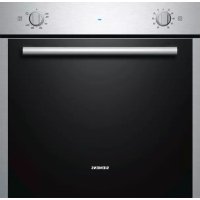
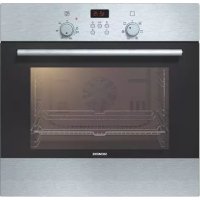
HG10LE150 - Built-in oven SIEMENS - Free user manual and instructions
Find the device manual for free HG10LE150 SIEMENS in PDF.


| Product type | Built-in gas oven |
| Brand | Siemens |
| Model | HG10LE150 |
| Dimensions (W x H x D) | 595 x 595 x 545 mm (approx.) |
| Net weight | 35 kg (approx.) |
| Power supply | Gas (natural or butane/propane) |
| Oven temperature range | 150 to 250 °C |
| Electric grill | Yes, with indicator light |
| Rotisserie | Yes, automatic drive with the grill |
| Mechanical timer | 5 to 90 minutes, audible signal |
| Oven light | 40 W bulb, G9 base, resistant to 300 °C |
| Wall cleaning | Self-cleaning catalytic panels |
| Oven levels | 4 levels |
| Supplied accessories | Grid, enameled baking tray, rotisserie |
| Cooling fan | Yes, delayed shut-off |
| Safety | Flame extinction, door locking possible |
Frequently Asked Questions - HG10LE150 SIEMENS
User questions about HG10LE150 SIEMENS
0 question about this device. Answer the ones you know or ask your own.
Ask a new question about this device
Download the instructions for your Built-in oven in PDF format for free! Find your manual HG10LE150 - SIEMENS and take your electronic device back in hand. On this page are published all the documents necessary for the use of your device. HG10LE150 by SIEMENS.
USER MANUAL HG10LE150 SIEMENS
[en] Instruction manual ..... 3
Register your product online
en
Table of contents
Important safety information....3
Causes of damage ....5
Your new appliance ....6
The oven....6
The timer....6
Cooling fan....6
Accessories 6
Before using the oven for the first time....7
Baking out the oven 7
Cleaning the accessories....7
How to operate your oven....7
Oven lighting....7
Operating modes....7
Operating the oven....7
Operating the grill 7
Operating the rotary spit....8
Operating the timer....8
Care and cleaning 9
Cleaning agents 9
Catalytic cooking compartment panels....9
Removing and installing the door panels 9
Removing and fitting the appliance door.... 10
Removing and inserting the hook-in racks 11
Troubleshooting 11
Replacing the oven light bulb.... 11
After-sales service ....12
Energy and environment tips....12
Saving energy.... 12
Environmentally-friendly disposal.... 12
Acrylamide in foodstuffs 12
Tips for using your appliance ....13
Baking....13
Roasting and grilling 13
Additional information on products, accessories, replacement parts and services can be found at www.siemens-home.bsh-group.com and in the online shop www.siemens-home.bsh-group.com/eshops
⚠️ Important safety information
Read these instructions carefully. Only then will you be able to operate your appliance safely and correctly. Retain the instruction manual and installation instructions for future use or for subsequent owners.
This appliance is only intended to be fully fitted in a kitchen. Observe the special installation instructions.
Check the appliance for damage after unpacking it. Do not connect the appliance if it has been damaged in transport.
Only allow a licensed professional to connect the appliance. Damage caused by incorrect connection is not covered under warranty. Call the after-sales service if you want to convert your appliance to a different type of gas.
This appliance is intended for domestic use and the household environment only. This appliance must only be used to prepare food and drinks and must never be used as a heater. Do not leave the appliance unattended during operation. Only use the appliance indoors.
This appliance is intended for use up to a maximum height of 2000 metres above sea level.
This appliance is not intended for operation with an external clock timer or a remote control.
This appliance may be used by children over the age of 8 years old and by persons with reduced physical, sensory or mental capabilities or by persons with a lack of experience or knowledge if they are supervised or are instructed by a person responsible for their safety how to use the appliance safely and have understood the associated hazards.
Children must not play with, on, or around the appliance. Children must not clean the appliance or carry out general maintenance unless they are at least 8 years old and are being supervised.
Keep children below the age of 8 years old at a safe distance from the appliance and power cable.
Always slide accessories into the cooking compartment correctly. See "Description of accessories in the instruction manual.
Risk of overheating!
In the event of a power cut, the cooling fan does not work. The appliance may overheat. The touchable parts become very hot and may cause injury. Due to the high temperatures, the appliance and the fitted unit could be damaged. In the event of a power cut, the appliance must not be manually ignited and put into operation. In the event of a power cut, switch off the appliance.
WHAT TO DO IF YOU SMELL GAS!
Escaping gas may cause an explosion.
If you smell gas or notice any faults in the gas installation:
- Immediately shut off the gas supply or close the gas cylinder valve.
- Immediately extinguish all naked flames and cigarettes.
- Do not use any light or appliance switches and do not pull any plugs out of sockets. Do not use any telephones or mobile phones within the building.
- Open windows and ventilate the room.
- Call the after-sales service or the gas supplier.
Risk of asphyxiation!
The use of a gas cooker leads to a build-up of heat, moisture and products of combustion in the room where the appliance is installed. Ensure that the installation room is well ventilated. The natural ventilation openings must be kept open or a mechanical ventilation device must be provided (e.g. an extractor hood). Intensive and persistent use of the appliance may mean that it is necessary to have additional ventilation (e.g. opening a window), or more effective ventilation (e.g. operating the existing mechanical ventilation device at a higher setting).
Risk of fire!
A draught is created when the appliance door is opened. Greaseproof paper may come into contact with the heating element and catch fire. Do not place greaseproof paper loosely over accessories during preheating. Always weight down the greaseproof paper with a dish or a baking tin. Only cover the surface required with greaseproof paper. Greaseproof paper must not protrude over the accessories.
- Combustible objects that are left in the cooking compartment may ignite. Never store combustible items in the cooking compartment. Never open the appliance door if there is smoke inside. Switch off the appliance and unplug the mains plug or switch off the fuse in the fuse box. Shut off the gas supply.
Hot oil and fat can ignite very quickly. Never leave hot fat or oil unattended. Never use water to put out burning oil or fat. Switch off the hotplate. Extinguish flames carefully using a lid, fire blanket or something similar.
■ The appliance becomes very hot and flammable materials could catch fire. Never store or use flammable objects (e.g. spray cans, cleaning agents) under the appliance or in its immediate vicinity. Never place flammable items on or in the appliance.
■ Under no circumstances should a baking sheet, a baking tray, a pan or another form of cookware be placed directly on the oven floor. This causes the floor of the appliance to overheat and can seriously damage the bottom of the fitted unit.
■ The rear of the appliance becomes very hot. This may cause damage to the power cables. Electricity and gas lines must not come into contact with the rear of the appliance.
Risk of burns!
■ The appliance becomes very hot. Never touch the interior surfaces of the cooking compartment or the heating elements. Always allow the appliance to cool down. Keep children at a safe distance.
■ Accessories and ovenware become very hot. Always use oven gloves to remove accessories or ovenware from the cooking compartment.
■ Alcoholic vapours may catch fire in the hot cooking compartment. Never prepare food containing large quantities of drinks with a high alcohol content. Only use small quantities of drinks with a high alcohol content. Open the appliance door with care.
■ The accessible parts become very hot when in operation. Never touch hot parts. Keep children at a safe distance.
Risk of scalding!
■ The accessible parts become hot during operation. Never touch the hot parts. Keep children at a safe distance.
- When you open the appliance door, hot steam may escape. Open the appliance door with care. Keep children at a safe distance.
■ Water in a hot cooking compartment may create hot steam. Never pour water into the hot cooking compartment.
Risk of injury!
- Scratched glass in the appliance door may develop into a crack. Do not use a glass scraper, sharp or abrasive cleaning aids or detergents.
- Incorrect repairs are dangerous. Repairs may only be carried out, and damaged power and gas lines replaced, by an after-sales engineer trained by us. If the appliance is faulty, unplug the mains plug or switch off the fuse in the fuse box. Shut off the gas supply. Contact the after-sales service.
■ Faults or damage to the appliance are dangerous. Never switch on a faulty appliance. Unplug the appliance from the mains or switch off the circuit breaker in the fuse box. Shut off the gas supply. Contact the after-sales service.
Risk of electric shock and serious injury!
■ The cable insulation on electrical appliances may melt when touching hot parts of the appliance. Never bring electrical appliance cables into contact with hot parts of the appliance.
- Do not use any high-pressure cleaners or steam cleaners, which can result in an electric shock.
- When replacing the cooking compartment bulb, the bulb socket contacts are live. Before replacing the bulb, unplug the appliance from the mains or switch off the circuit breaker in the fuse box.
Causes of damage
Caution!
■ Accessories, foil, greaseproof paper or ovenware on the cooking compartment floor: do not place accessories on the cooking compartment floor. Do not cover the cooking compartment floor with any sort of foil or greaseproof paper. Do not place ovenware on the cooking compartment floor. This will cause heat accumulation. The baking and roasting times will no longer be correct and the enamel will be damaged.
- Inserting accessories: depending on the appliance model, accessories can scratch the door panel when closing the appliance door. Always insert the accessories into the cooking compartment as far as they will go.
■ Water in a hot cooking compartment: do not pour water into the cooking compartment when it is hot. This will cause steam. The temperature change can cause damage to the enamel.
■ Moist food: do not store moist food in the cooking compartment when it is closed for prolonged periods This will damage the enamel.
■ Fruit juice: when baking particularly juicy fruit pies, do not pack the baking tray too generously. Fruit juice dripping from the baking tray leaves stains that cannot be removed. If possible, use the deeper universal pan.
■ Cooling with the appliance door open: only allow the cooking compartment to cool when it is closed. Even if the appliance door is only open a little, front panels of adjacent units could be damaged over time.
■ Very dirty door seal: If the door seal is very dirty, the appliance door will no longer close properly when the appliance is in use. The fronts of adjacent units could be damaged. Always keep the door seal clean.
■ Oven door as a bearing surface: do not stand or place objects on the oven door when it is open. Do not hang objects on the oven door.
- Carrying the appliance: do not carry or hold the appliance by the door handle. The door handle cannot support the weight of the appliance and could break.
■ Heavy accessories: do not pull out heavily laden accessories too far without first unloading them sufficiently. Heavy accessories will tip when pulled out. This causes pressure to be exerted on the shelf supports in the cooking compartment, which can damage the enamel. Relieve the strain on the accessories when they are pulled out by raising them slightly with one hand. Caution: always use an oven cloth or oven gloves when handling hot accessories.
■ Grilling: do not insert the baking tray or universal pan higher than level 3 when grilling. The high heat distorts it and the enamel may be damaged when it is removed. At level 4 and 5, only grill directly on the wire rack.
Your new appliance
Get to know your appliance. You will find information on the control panel, the oven, types of heating and accessories.
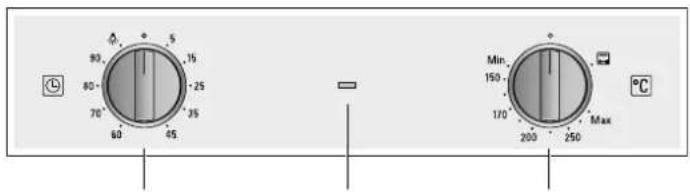
Explanation
1 Control knob for timer
2 Grill indicator light
3 Control knob for oven and grill
The oven
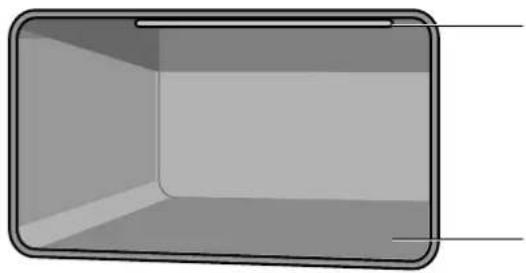
natural_image
3D rendering of a rectangular room with a curved top and horizontal lines on both sides (no text or symbols)Explanation
1 Electric grill
2 Oven gas burners
Control knob for oven
This control knob is used to adjust the heat setting of the oven and the grill.
Setting Meaning
o Off. The oven does not heat up.
Min Economy flame, lowest power
150-250 Oven gas burner on, temperature range in °C
Max Large flame, highest power
The grill heats up and the rotary spit turns.
There is a limit stop between settings ☐ and Max. Do not turn the knob beyond this point.
The indicator light will light up when the grill is switched on.
The timer
You can use the timer to set a cooking time.
An audible signal sounds once the cooking time has elapsed.
Control knob for timer
Use this control knob to set the cooking time. You can also use this control knob to switch the oven lighting on.
Setting Meaning
○ Off
5 - 90 Cooking time in minutes
Switching on the oven lighting
Cooling fan
The cooling fan switches on and off as required. The hot air escapes above the door. Caution: Do not cover the ventilation slots. Otherwise the oven will overheat.
So that the cooking compartment cools down more quickly after operation, the cooling fan continues to run for a certain period afterwards.
Accessories
The accessories can be inserted into the cooking compartment at 4 different levels. Always insert them as far as they will go so that the accessories do not touch the door panel. Ensure that the accessories have always been inserted into the cooking compartment correctly.
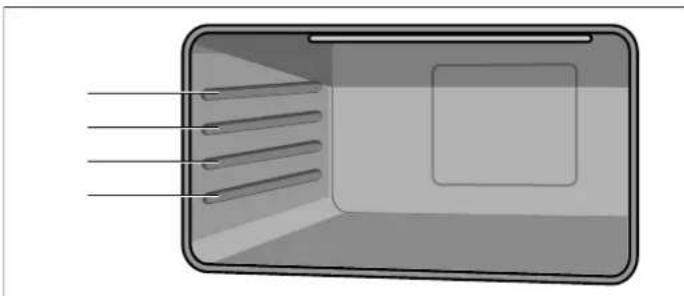
natural_image
Diagram of a rectangular device with internal parallel lines and a central square (no text or symbols)Risk of fire!
Under no circumstances should a baking sheet, a baking tray, a pan or another form of cookware be placed directly on the oven floor. This causes the floor of the appliance to overheat and can seriously damage the bottom of the fitted unit.
You can pull out the accessories two thirds of the way without them tipping. This allows dishes to be removed easily.
The accessories may become deformed when they become hot. As soon as they have cooled down, the deformation disappears with no effect on the function.
You can buy accessories from the after-sales service, from specialist retailers or online.
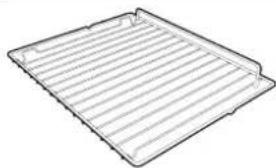
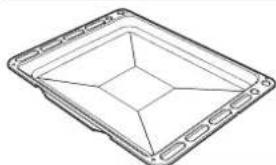
Accessories Description
natural_image
Line drawing of a rectangular metal grate or rack with parallel slats (no text or symbols)Baking and roasting shelf
For ovenware, cake tins, joints, grilled items, frozen meals.
natural_image
Technical line drawing of a square mechanical component with internal grid pattern (no text or symbols)Enamelled baking tray
For moist cakes, pastries, frozen meals and large roasts. Can also be used as a drip tray to collect fat.
natural_image
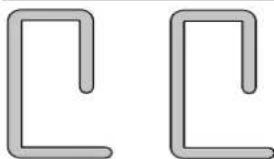
Two identical gray L-shaped geometric shapes with no text or symbolsLocking pins
For locking the hinges.
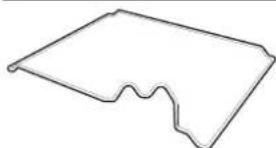
natural_image
Simple line drawing of a folded paper or plastic sheet with a wavy seam (no text or symbols)Rotary spit holder
For holding the rotary spit.
Before using the oven for the first time
In this section, you can find out what you must do before using your appliance to prepare food for the first time. Read the Safety information section beforehand.
Remove the appliance packaging and dispose of it appropriately.
Baking out the oven
Precleaning the oven
- Remove accessories and hook-in racks from the cooking compartment.
- Fully remove any remaining packaging, such as small pieces of polystyrene, from the cooking compartment.
- Some parts are covered with a protective film. Remove the protective film.
- Clean the outside of the appliance with a soft, damp cloth.
- Clean the cooking compartment with hot soapy water.
Heating up the oven
To remove the new cooker smell, heat up the oven when it is empty and closed.
- Turn the temperature selector to the maximum temperature.
- Switch off the oven after 45 minutes.
Recleaning the oven
- Clean the cooking compartment with hot soapy water.
- Fit the hook-in racks.
Cleaning the accessories
Before using the accessories, clean them thoroughly using a cloth and warm soapy water.
How to operate your oven
Oven lighting
Switching on the oven lighting
Turn the control knob to the 🔒 position.
The oven lighting switches on when the timer is switched on or the oven door is opened.
Switching off the oven lighting
Turn the control knob to the O position.
The oven lighting switches off.
Operating modes
The following operating modes are available.
| Operating mode Application | ||
| °C | Oven gas burner 150-250 °C | For cakes and pastries, bakes, poultry, lean joints of meat, e.g. beef, veal and game. |
| Electric grill For steaks, sausages, fish and toast. | ||
Operating the oven
Switching on the oven gas burner
- Open the appliance door.
- Press the control knob for the oven and turn it to the 250 °C position.
- Press and hold the control knob for a few seconds until the flame stabilises.
- Close the appliance door carefully.
- Turn the control knob to set the desired temperature. Do not turn the knob beyond the "Min" position.
If the flame goes out
Switch off the control knob. Wait one minute and switch the burner on again.
Risk of fire!
If the flame goes out, gas will escape. Never leave the gas burner unattended during operation. Ensure that there are no draughts.
Switching off the oven gas burner
Turn the control knob to the o position. Press and hold down the control knob while doing so.
Operating the grill
The appliance door must be closed when grilling.
Notes
■ It is not possible to use the oven gas burner and the grill at the same time.
■ When using the grill, a cooking time of 60 minutes must not be exceeded.
■ When switching on the grill, the drive for the rotary spit is automatically activated.
Switching on the grill
Press the control knob for the oven and turn it to the position.
The indicator light will light up when the grill is switched on.
Switching off the grill
Turn the control knob to the o position.
Operating the rotary spit
The rotary spit can be used with excellent results to cook joints, such as rolled roasting joints and poultry. The meat is roasted thoroughly and evenly.
The drive for the rotary spit is automatically activated as soon as you switch on the grill.
Preparing roasts
- Place the joint as centrally as possible on the rotary spit and secure it at both ends with the retaining clips. You can also secure the joint using kitchen twine.
- With poultry, bind the ends of the wings underneath the back and the thighs against the body. This prevents them from overbrowning.
- Pierce the skin on the underside of the wings to allow the fat to escape.
Inserting the rotary spit
Risk of burns!
Never touch the hot surfaces of the cooking compartment or the heating elements. Children must be kept at a safe distance from the appliance at all times. Open the appliance door carefully. Hot steam may escape.
- Insert the rotary spit shelf at level 2 as far as it will go.
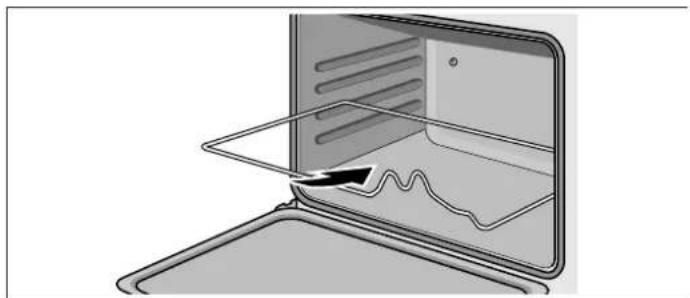
natural_image
Illustration of a kitchen oven with a tray and lid, showing internal structure without any text or symbols.- Slide the rotary spit into the motor mount in the back wall of the cooking compartment (a).
- Place the rotary spit on the rotary spit shelf (b).
Note: The rotary spit must engage correctly in the rotary spit shelf.
- Unscrew the handle (c).
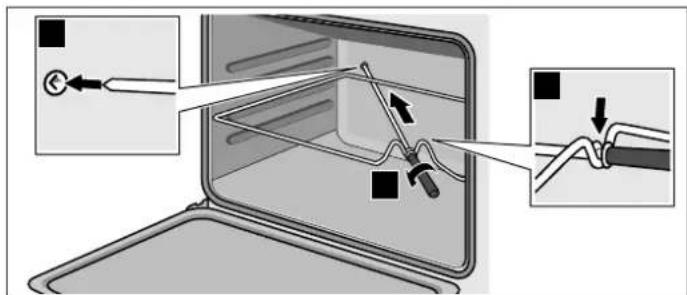
- Pour water into a baking tray and slide the baking tray into shelf position 1 to collect the drips of fat.
- Close the appliance door.
Switching on the rotary spit
Turn the control knob for the oven to the ☑ position.
Switching off the rotary spit
Turn the control knob for the oven to the O position.
Removing the rotary spit
Risk of burns!
Never touch the hot surfaces of the cooking compartment or the heating elements. Children must be kept at a safe distance from the appliance at all times. Open the appliance door carefully. Hot steam may escape.
Risk of burns!
Never touch the rotary spit or other accessories directly when they are hot. Always wear oven gloves or heat-resistant gloves when handling hot accessories.
- Carefully open the appliance door and screw the handle back onto the rotary spit.
- Carefully pull the rotary spit from the mount in the back wall and remove it.
- Remove the rotary spit shelf and the baking tray.
Operating the timer
The timer runs independently of the oven.
Setting the cooking time
- Turn the control knob clockwise as far as the stop.
- Turn the control knob anti-clockwise until you reach the required cooking time.
An audible signal sounds once the time has elapsed.
Care and cleaning
With good care and cleaning, your oven will remain clean and fully-functioning for a long time to come. Here we will explain how to maintain and clean your oven correctly.
Notes
- Slight differences in the colours on the front of the oven are caused by the use of different materials, such as glass, plastic and metal.
■ Shadows on the door panel which look like streaks, are caused by reflections made by the oven light. - Enamel is baked on at very high temperatures. This can cause some slight colour variations. This is normal and does not affect their function. The edges of thin trays cannot be completely enamelled. As a result, these edges can be rough. This will not impair the anti-corrosion protection.

Risk of electric shock!
Do not use any high-pressure cleaners or steam cleaners, which can result in an electric shock.

Risk of burns!
The appliance becomes very hot. Never touch the interior surfaces of the cooking compartment or the heating elements. Always allow the appliance to cool down. Keep children at a safe distance.
Cleaning agents
To ensure that the different surfaces are not damaged by using the wrong cleaning agent, pay attention to the information in the table. Do not use
■ sharp or abrasive cleaning agents,
■ cleaning agents with a high alcohol content,
■ hard scouring pads or cleaning sponges,
■ high-pressure cleaners or steam cleaners.
Wash new sponge cloths thoroughly before use.
Area Cleaning agents
| Oven front Hot soapy water: | |
| Clean with a dish cloth and dry with a soft cloth. Do not use glass cleaners or glass scrapers. | |
| Stainless steel Hot soapy water: | |
| Clean with a dish cloth and dry with a soft cloth. Remove flecks of limescale, grease, starch and albumin (e.g. egg white) immediately. Corrosion can form under such residues. | |
| Special stainless steel cleaning products suitable for hot surfaces are available from our after-sales service or from specialist retailers. Apply a very thin layer of the cleaning product with a soft cloth. | |
| Aluminium Clean with a mild window cleaning agent. | |
| Using a window cloth or a non-fluffing microfibre cloth, wipe over the surfaces lightly in a horizontal direction. | |
| Enamel surfaces(smooth surfaces) | Apply commercially available washing-up liquid or a vinegar solution with a soft, damp cloth or chamois; dry with a soft cloth. Soak baked-on food residues with a damp cloth and detergent. If the cooking compartment is heavily soiled, use a gel oven cleaner. This can be applied to the affected area. Leave the cooking compartment open after cleaning to allow it to dry. |
Area Cleaning agents
| Self-cleaning surfaces (rough surfaces) | Note the instructions in the section: Catalytic cooking compartment panel |
| Gas burner Never clean the gas burners in the cooking compartment yourself. | |
| Door panels Glass cleaner: Clean with a soft cloth. Do not use a glass scraper. | |
| Glass cover for the oven light | Hot soapy water: Clean with a dish cloth. |
| Seal Do not remove. | Hot soapy water: Clean with a dish cloth. Do not scour. |
| Rails Hot soapy water: Soak and clean with a dish cloth or brush. | |
| Accessories Hot soapy water: Soak and clean with a dish cloth or brush. | |
Catalytic cooking compartment panels
The catalytic cooking compartment panels are coated with self-cleaning enamel.
The surfaces clean themselves while the oven is in operation. Larger splashes will only be removed after the oven has been used several times.
Self-cleaning surfaces
The side walls are covered with catalytic panelling. Never clean these surfaces with oven cleaner. Slight discolouration of the enamel does not affect automatic self-cleaning.
Removing and installing the door panels
To facilitate cleaning, you can remove the glass panels from the oven door.
Removing the door panels
- Open the oven door fully.
- Lock both hinges on the left and right using the locking pin.
Note: The locking pins must be fully inserted into the holes in the hinges.
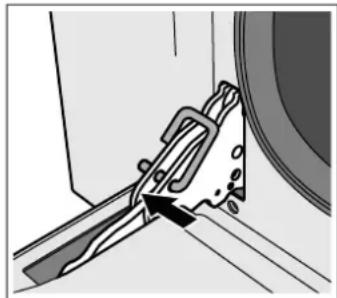
natural_image
Mechanical assembly diagram showing a lever mechanism interacting with a circular component (no text or symbols visible)-
Lift the bottom of the inner panel slightly until the fastening pins come out of the holder (1).
-
Carefully lift the top of the inner panel until the fastening pins come out of the holder (2).
Caution!
When lifting the inner panel, the middle panel may stick to the inner panel. Make sure that the middle panel does not fall.
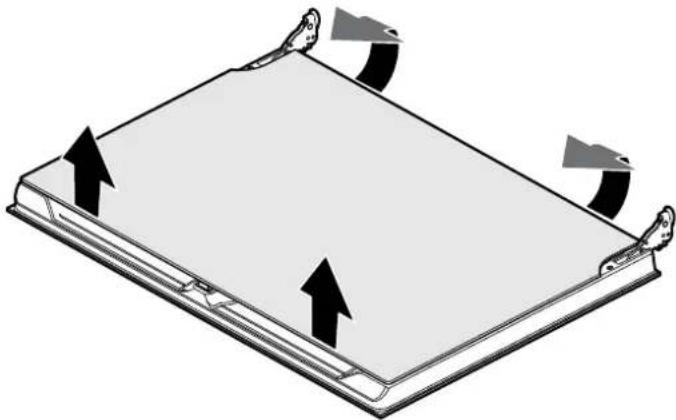
natural_image
Diagram of a flatboard with directional arrows indicating orientation or movement (no text or symbols)- Remove the inner panel.
- Remove the middle panel.
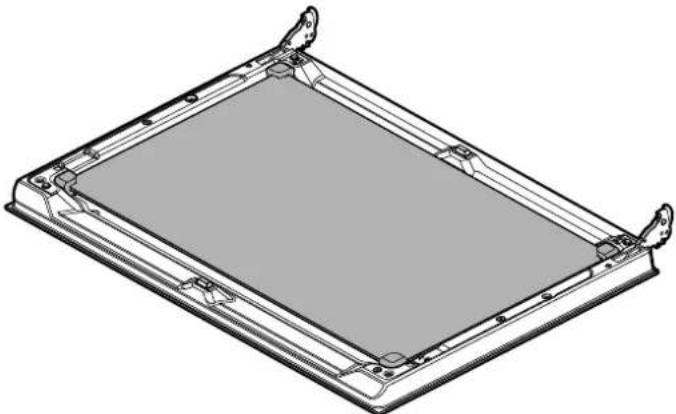
natural_image
Technical line drawing of a rectangular electronic component with mounting flanges (no text or symbols)Note: The middle panel is kept in place with rubber bushings rather than retaining pins.
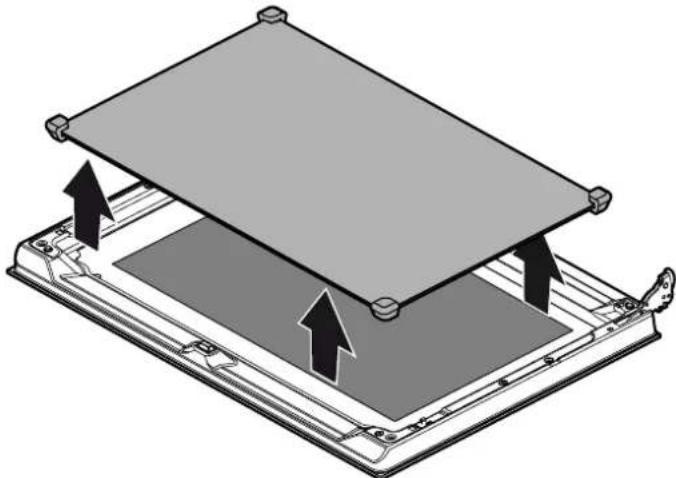
natural_image
Diagram of a device with two stacked panels and directional arrows indicating movement or assembly (no text or symbols present)Clean the panels with glass cleaner and a soft cloth.
Risk of injury!
Scratched glass in the appliance door may develop into a crack. Do not use a glass scraper, sharp or abrasive cleaning aids or detergents.
Fitting the door panels
- Reinsert the middle panel.
Note: Make sure that the panel is seated correctly. All rubber bushings must lay flat against the outer panel.
- Reinsert the inner panel.
Note: All four fastening pins must engage in the holders provided for them.
- Remove the locking pins and close the oven door.
Removing and fitting the appliance door
If the oven is very heavily soiled, the oven door can be removed for easier cleaning. Normally, however, this is not necessary.
Removing the appliance door
- Open the oven door fully.
- Lock both hinges on the left and right using the locking pin (a).
Note: The locking pins must be fully inserted into the holes in the hinges.
- Grip the oven door on either side with both hands and close the oven door by approx. 30^ (b).
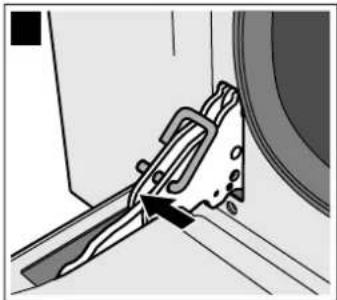
natural_image
Mechanical assembly diagram showing a tool interacting with a circular component (no text or symbols visible)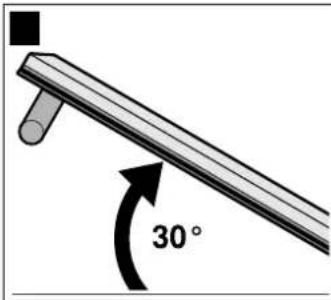
- Raise the oven door slightly and pull it out.
Note: Do not fully close the oven door. The hinges could become bent and the enamel could be damaged.
Fitting the appliance door
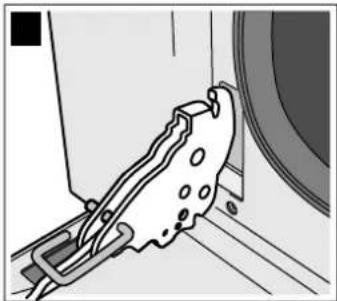
- Grip the oven door on either side with both hands.
- Slide the hinges into the slots in the oven (a).
Note: The notch below the hinges must engage into the frame of the oven (b).
natural_image
Mechanical assembly diagram showing a bracket and mounting bracket (no text or symbols)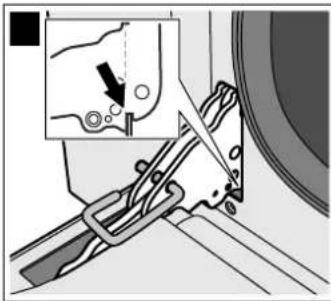
natural_image
Mechanical assembly diagram showing a bracket with a hand tool inserted, no text or symbols present- Lower the door downwards.
- Remove the locking pins.
Risk of injury!
Do not reach into the hinge if the oven door falls out unintentionally or a hinge snaps closed. Call after-sales service.
Removing and inserting the hook-in racks
You can remove the hook-in racks for easier cleaning.
Removing the hook-in racks
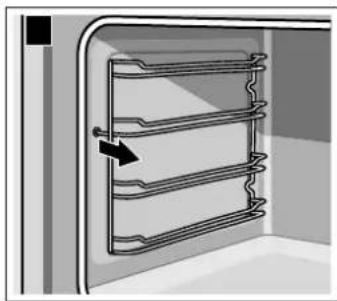
The hook-in racks are each fixed to the side panels of the cooking compartment at three points.
- Grip the front of the hook-in rack and pull it to the middle of the cooking compartment.
The front hook of the hook-in rack will release from the hole. - Fold out the hook-in rack further and pull it from the rear holes of the side panel.
-
Hold the catalytic cooking compartment panel in place.
-
Remove the hook-in rack from the cooking compartment.
natural_image
Diagram of a kitchen appliance with a rack and handle, showing internal structure without any text or symbols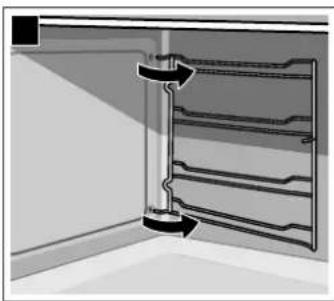
natural_image
Diagram of a wall-mounted rack with a vertical support structure (no text or symbols)Inserting the hook-in rack
- Hold the catalytic cooking compartment panel in place.
- Insert the hooks of the hook-in rack into the rear holes in the side panel.
- Press the front hook of the hook-in rack into the hole.
Troubleshooting
Malfunctions often have simple explanations. Refer to the table before calling the after-sales service, as you may be able to remedy the fault yourself.
Risk of injury!
Incorrect repairs are dangerous. Repairs may only be carried out, and damaged power and gas lines replaced, by an after-sales engineer trained by us. If the appliance is faulty, unplug the mains plug or switch off the fuse in the fuse box. Shut off the gas supply. Contact the after-sales service.
Malfunction Possible cause Solution
| The appliance does not work | Power cut Check whether other kitchen appliances are working | |
| Faulty circuit breaker | Check in the fuse box to make sure that the circuit-breaker for the appliance is OK | |
| The oven lighting has failed. | Oven light is faulty | Replace the oven light. (See section "Replacing oven light") |
| The flame (oven) does not burn through all outlet openings. | Normal build-up of dirt | The burner must be professionally cleaned. |
| The door panel steams up when the oven heats up. | Normal occurrence; caused by the difference in temperature | Not possible; this has no effect on oven performance. |
Replacing the oven light bulb
If the oven light bulb fails, it must be replaced. Replacement heat-resistant bulbs can be obtained from the after-sales service or from specialist retailers. Please specify the E number and FD number of your appliance. Do not use any other type of bulb.
Risk of electric shock!
When replacing the cooking compartment bulb, the bulb socket contacts are live. Before replacing the bulb, unplug the appliance from the mains or switch off the circuit breaker in the fuse box.
- Allow the cooking compartment to cool down.
- Open the appliance door.
- Place a tea towel in the cooking compartment to prevent damage.
- Remove the hook-in racks.
- Remove the glass cover. To do this, open the glass cover at the front with your hand. Should you experience difficulties removing the glass cover, use a spoon to help.
- Remove the oven light bulb.

natural_image
Illustration showing a hand inserting a screw into a wall-mounted device, with a spoon inserted (no text or symbols present)- Replace the oven light bulb with a bulb of the same type:
Voltage: 230 V;
Power: 40 W;
Fitting: G9;
Temperature resistance: 300 °C
-
Refit the glass cover for the oven light bulb.
-
Refit the hook-in racks.
-
Remove the tea towel.
-
Switch the circuit breaker back on.
-
Check that the oven lighting is working again.
After-sales service
Our after-sales service is there for you if your appliance needs to be repaired. We will always find the right solution in order to avoid unnecessary visits from a service technician.
When calling us, please give the product number (E no.) and the production number (FD no.) so that we can provide you with the correct advice. The rating plate is located on the side behind the oven door.
You can make a note of the numbers of your appliance and the telephone number of the after-sales service in the space below to save time should it be required.
E no. FD no.
After-sales service
Please be aware that a visit by an after-sales engineer will be charged if a problem turns out to be the result of operator error, even during the warranty period.
Please find the contact data of all countries in the enclosed customer service list.
To book an engineer visit and product advice
GB 0344 892 8999
Calls charged at local or mobile rate.
IE 01450 2655
0.03 € per minute at peak. Off peak 0.0088 € per minute.
Rely on the professionalism of the manufacturer. You can therefore be sure that the repair is carried out by trained service technicians who carry original spare parts for your appliances.
Energy and environment tips
Here you can find tips on how to save energy when baking and roasting and how to dispose of your appliance properly.
Saving energy
■ Only preheat the oven when it is specified in the recipe that you should do so.
■ Open the oven door as little as possible while you are cooking, baking or roasting.
It is best to bake several cakes one after the other. The oven is still warm. This reduces the baking time for the second cake. You can also place two loaf tins next to each other.
■ For longer cooking times, you can switch the oven off 10 minutes before the end of the cooking time and use the residual heat to finish cooking.
Environmentally-friendly disposal
Dispose of packaging in an environmentally-friendly manner.
This appliance is labelled in accordance with European Directive 2012/19/EU concerning used electrical and electronic appliances (waste electrical and electronic equipment - WEEE). The guideline determines the framework for the return and recycling of used appliances as applicable throughout the EU.
Acrylamide in foodstuffs
Acrylamide is mainly produced in grain and potato products prepared at high temperatures, such as potato crisps, chips, toast, bread rolls, bread or fine baked goods (biscuits, gingerbread, cookies).
Tips for keeping acrylamide to a minimum when preparing food
| General | ■Keep cooking times to a minimum. ■Cook meals until they are golden brown, but not too dark. ■Large, thick pieces of food contain less acrylamide. |
Baking max. 200 °C.
| Biscuits max. 190 °C. | Egg or egg yolk reduces the production of acrylamide. |
| Oven chips Spread out a single layer evenly on the baking tray. Cook at least 400 g at once on a baking tray so that the chips do not dry out. |
Tips for using your appliance
Here you will find a selection of tips on ovenware and preparation methods.
Notes
■ Use the accessories provided. Additional accessories may be obtained as special accessories from specialist retailers or from the after-sales service.
Before using the oven, remove any unnecessary accessories and ovenware from the cooking compartment.
■ Always use an oven cloth or oven gloves when taking accessories or cookware out of the cooking compartment.
Baking
Baking tins
■ Use light-coloured baking tins and trays wherever possible.
■ Always place the baking tins on the middle of the baking and roasting wire rack.
Baking tips
| How to establish whether sponge cake is baked through. | Approx. 10 minutes before the end of the baking time stated in the recipe, insert a cocktail stick into the cake at its deepest point. If no cake mixture sticks to the wood, the cake is ready. |
| The cake collapses. Use less fluid next time or set the oven temperature 10 degrees lower. Note the stirring times indicated in the recipe. | |
| The cake has risen high in the middle and less around the edges. | Do not grease the sides of the springform cake tin. After baking, carefully loosen the cake using a knife. |
| The cake is too dark on the top. Place it lower in the oven, select a lower temperature and bake the cake for a little longer. | |
| The cake is too dry. When it is done, make small holes in the cake using a cocktail stick. Then drizzle fruit juice or an alcoholic drink over it. Next time, set the temperature 10 degrees higher and reduce the baking time. | |
| The bread or cake (e.g. cheesecake) looks good but is sticky on the inside (soggy with wet streaks). | Next time, use less liquid and bake at a lower temperature for slightly longer. For cakes with a moist topping, bake the base first. Sprinkle it with almonds or bread crumbs and then place the topping on top. Take care to follow recipes and baking times. |
| The pastries are not evenly browned. | Select a slightly lower temperature to ensure that the cake is baked more evenly. Excess greaseproof paper can affect the air circulation. Always cut the greaseproof paper to suit the size of the baking tray. |
| The bottom of a fruit flan is too light. Place the cake one level lower the next time. | |
| The fruit juice overflows. Next time, use the deeper universal pan, if you have one. | |
| Small baked items made out of yeast dough stick to one another during baking. | There should be a gap of approx. 2 cm around each item. This gives enough space for the baked items to expand and turn brown on all sides. |
| Condensation forms when you bake moist cakes. | Baking may create water vapour, which escapes above the door. The steam may settle and form water droplets on the control panel or on the fronts of adjacent units. This is a natural process. |
Roasting and grilling
Ovenware
You may use any heat-resistant ovenware. Always place the ovenware in the middle of the wire rack. The enamelled baking tray is also suitable for large roasts.
Roasting tips
■ A a lower temperature produces more even browning.
■ Depending on the size of the joint, add 2 or 3 tablespoons of liquid to lean meat and 8 to 10 tablespoons of liquid to pot roasts.
■ When cooking duck or goose, pierce the skin on the underside of the wings to allow the fat to run out.
■ Poultry will turn out particularly crispy and brown if you baste it towards the end of the roasting time with butter, salted water or orange juice.
■Turn pieces of meat halfway through the cooking time.
■When the roast is ready, turn off the oven and allow it to rest for an additional 10 minutes. This will allow the meat juices to distribute themselves better inside the roast.
■When roasting large pieces of meat, you may find that the amount of steam and condensation on the oven door is more than usual. This is a normal occurrence which has no effect on the oven's performance. Once roasting is complete, dry the oven door and window with a cloth.
If you are roasting on the wire rack, insert the enamelled baking tray into shelf position 1 to collect the drips of fat.
Grilling tips
If possible, grill items should be of equal thickness. They should be at least 2 to 3 cm thick. This ensures that they brown evenly while also remaining succulent.
■ Place the food to be grilled in the centre of the wire rack. Pour a little water into the enamelled baking tray and insert this into the shelf position underneath the grill to collect the drips of fat. Never place it on the cooking compartment floor.
- Drizzle some oil over the food to be grilled before you place it on the wire rack under the grill.
If the food to be grilled is thin, turn it over halfway through grilling; if it is thick, turn it over several times during grilling. Use tongs when turning the food to avoid piercing it and, in the case of meat, to keep the meat juices inside the meat.
■ Dark meats such as lamb and beef brown better and more quickly than light meats such as pork and veal.
Tips on using the rotary spit
■ Place the joint as centrally as possible on the rotary spit and secure it at both ends with the retaining clips.
■ You can also truss the joint with string. With poultry, bind the ends of the wings underneath the back and the thighs against the body. This prevents them from overbrowning. Pierce the skin on the underside of the wings to allow the fat to escape.
Roasting tips
| How can you tell when the roast is ready? | Use a meat thermometer (available from specialist retailers) or carry out a "spoon test". Press down on the roast with a spoon. If it feels firm, it is ready. If the spoon can be pressed in, it needs to be cooked for a little longer. |
| The roast is too dark and the crackling is burnt in places. | Check the shelf position and temperature. |
| The roast looks good but the juices are burnt. | Next time, use a smaller roasting dish and add more liquid. |
| The roast looks good, but the juices are too clear and watery. | Next time, use a larger roasting dish and add less liquid. |
natural_image
Simple 3D illustration of a rectangular room with no text, numbers, or symbolsExplication
Position Signification
Position Signification
| o | Eteint |
natural_image
Diagram of a rectangular container with internal parallel lines and a central square (no text or symbols)
Risque d'incendie !
natural_image
Simple line drawing of a rectangular metal grate or rack with slats (no text or symbols)natural_image
Line drawing of a square plastic tray with internal grid pattern (no text or symbols)natural_image
Two identical gray L-shaped metal bracket symbols with no text or markingsTiges de sécurité
natural_image
Simple line drawing of a folded paper or sheet with a wavy edge and a small notch (no text or symbols)Support de tournebroche
natural_image
Illustration of a kitchen oven with a tray and lid, showing internal ventilation duct (no text or symbols)natural_image
Mechanical assembly diagram showing a tool interacting with a circular component (no text or symbols visible)natural_image
Diagram of a flatboard with directional arrows indicating orientation or movement (no text or symbols)natural_image
Technical line drawing of a rectangular electronic component with mounting flanges (no text or symbols)natural_image
Diagram of a device's top-down assembly with arrows indicating movement or force, no text or symbols present.natural_image
Mechanical assembly diagram showing a lever mechanism interacting with a wheel (no text or symbols visible)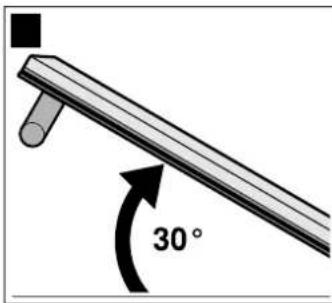
natural_image
Mechanical assembly diagram showing a bracket and mounting bracket (no text or symbols)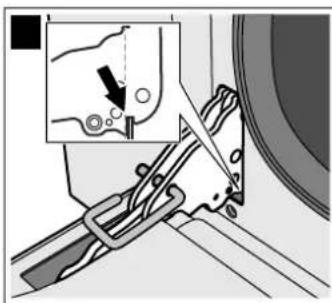
natural_image
Mechanical assembly diagram showing a clamp securing a component with an inset close-up of a tool (no text or symbols)natural_image
Diagram of a kitchen appliance with three horizontal panels and a black arrow indicating a directional component (no text or symbols)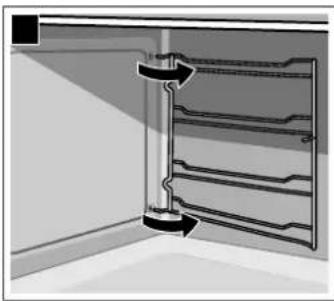
natural_image
3D diagram of a vertical structure with horizontal lines and a central vertical element, no text or symbols presentMise en place de la grille support
natural_image
Illustration showing a hand inserting a component into a microwave oven with a spoon (no text or symbols)natural_image
Diagram of a vertical shelf assembly mounted on a wall, showing structural components (no text or labels)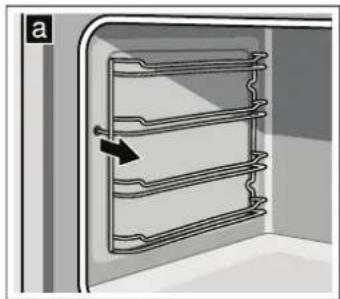
natural_image
Diagram of a door with three horizontal panels and an arrow indicating direction (no text or symbols)natural_image
Diagram of a kitchen sink with a spoon and switch, showing airflow direction (no text or symbols)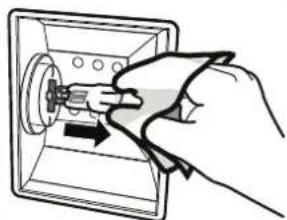
natural_image
Hand inserting a plug into a device inside a transparent housing (no text or symbols visible)natural_image
Mechanical assembly diagram showing a lever mechanism interacting with a circular component (no text or symbols visible)natural_image
Mechanical assembly diagram showing a tool interacting with a bracket, with an inset highlighting a detail (no text or symbols present)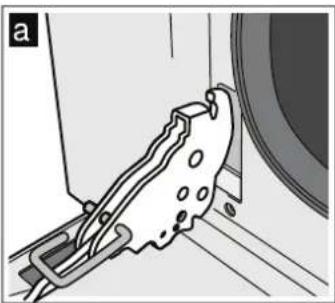
natural_image
Mechanical assembly diagram showing a bracket and mounting bracket (no text or symbols)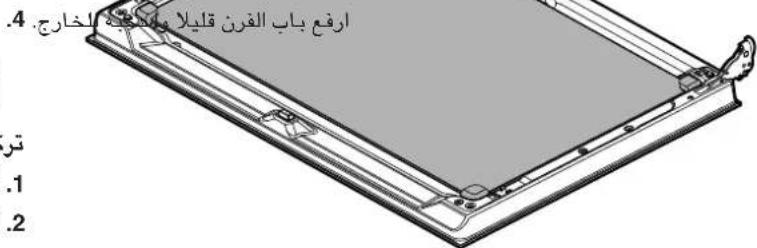
natural_image
Mechanical assembly diagram showing a lever mechanism interacting with a circular component (no text or symbols visible)natural_image
Illustration of a kitchen appliance with a tray and lid, showing internal components (no text or symbols)natural_image
Line drawing of a square plastic tray with internal compartments (no text or symbols)www.siemens-home.bsh-group.com/eshops
موقعエンترنت
siemens-home.bsh-group.com



- en
- Table of contents
- ⚠️ Important safety information
- Risk of overheating!
- WHAT TO DO IF YOU SMELL GAS!
- If you smell gas or notice any faults in the gas installation:
- Risk of asphyxiation!
- Risk of fire!
- Risk of burns!
- Risk of scalding!
- Risk of injury!
- Risk of electric shock and serious injury!
- Causes of damage
- Caution!
- Your new appliance
- Explanation
- The oven
- Control knob for oven
- Setting Meaning
- The timer
- Control knob for timer
- Cooling fan
- Accessories
- Accessories Description
- Baking and roasting shelf
- Enamelled baking tray
- Locking pins
- Rotary spit holder
- Before using the oven for the first time
- Baking out the oven
- Precleaning the oven
- Heating up the oven
- Recleaning the oven
- Cleaning the accessories
- How to operate your oven
- Oven lighting
- Switching on the oven lighting
- Switching off the oven lighting
- Operating modes
- Operating the oven
- Switching on the oven gas burner
- If the flame goes out
- Switching off the oven gas burner
- Operating the grill
- Notes
- Switching on the grill
- Switching off the grill
- Operating the rotary spit
- Preparing roasts
- Inserting the rotary spit
- Switching off the rotary spit
- Removing the rotary spit
- Operating the timer
- Setting the cooking time
- Care and cleaning
- Risk of electric shock!
- Cleaning agents
- Catalytic cooking compartment panels
- Self-cleaning surfaces
- Removing and installing the door panels
- Removing the door panels
- Fitting the door panels
- Removing and fitting the appliance door
- Removing the appliance door
- Fitting the appliance door
- Removing and inserting the hook-in racks
- Removing the hook-in racks
- Inserting the hook-in rack
- Troubleshooting
- Replacing the oven light bulb
- After-sales service
- To book an engineer visit and product advice
- Energy and environment tips
- Saving energy
- Environmentally-friendly disposal
- Acrylamide in foodstuffs
- Tips for using your appliance
- Baking
- Baking tins
- Roasting and grilling
- Ovenware
- Roasting tips
- Grilling tips
- Tips on using the rotary spit
- Explication
- Risque d'incendie !
- Tiges de sécurité
- Support de tournebroche
- Mise en place de la grille support
Brand : SIEMENS
Model : HG10LE150
Category : Built-in oven