ManualGo.com
 MS2021C - Four à micro-ondes LG - Free user manual and instructions
Find the device manual for free MS2021C LG in PDF.


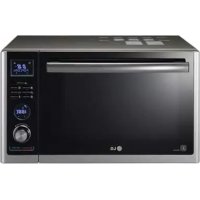
Download the instructions for your Four à micro-ondes in PDF format for free! Find your manual MS2021C - LG and take your electronic device back in hand. On this page are published all the documents necessary for the use of your device. MS2021C by LG.
USER MANUAL MS2021C LG
Please read this owner’s manual thoroughly before operating.
4. Safety lock system
Control Panel/Tableau de commande
MS2021C / MS2022D Power selector
Allows selection of desired
permits selection of the
desired cooking time.
MICROWAVE OVEN OWNER’S MANUAL Please read this owner’s manual thoroughly before operating.
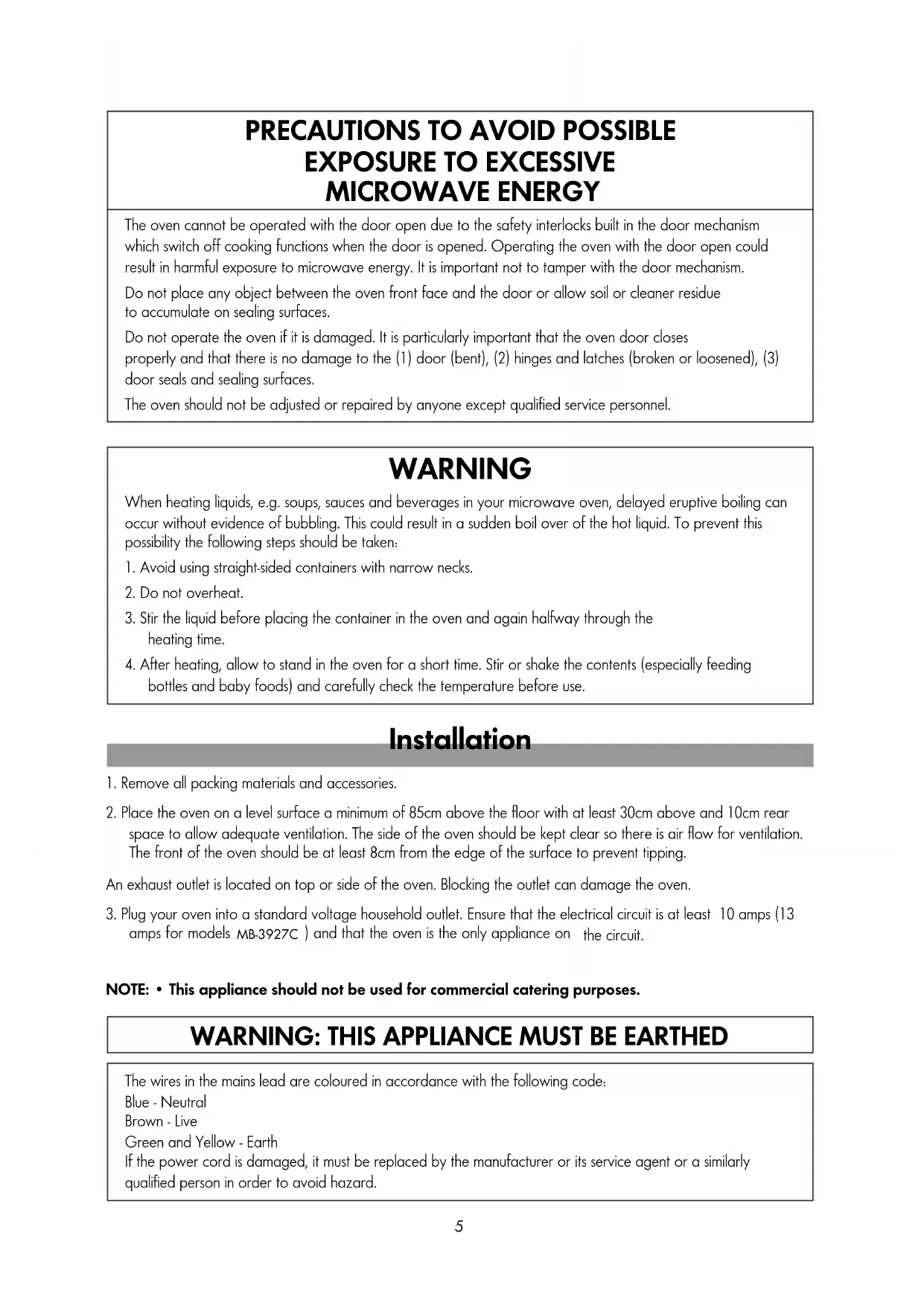
WARNING: THIS APPLIANCE MUST BE EARTHED The oven cannot be operated with the door open due to the safety interlocks built in the door mechanism
which switch off cooking functions when the door is opened. Operating the oven with the door open could
result in harmful exposure to microwave energy. It is important not to tamper with the door mechanism.
Do not place any object between the oven front face and the door or allow soil or cleaner residue
to accumulate on sealing surfaces.
Do not operate the oven if it is damaged. It is particularly important that the oven door closes
properly and that there is no damage to the (1) door (bent), (2) hinges and latches (broken or loosened), (3)
door seals and sealing surfaces.
The oven should not be adjusted or repaired by anyone except qualified service personnel.
PRECAUTIONS TO AVOID POSSIBLE EXPOSURE TO EXCESSIVE MICROWAVE ENERGY WARNING When heating liquids, e.g. soups, sauces and beverages in your microwave oven, delayed eruptive boiling can
occur without evidence of bubbling. This could result in a sudden boil over of the hot liquid. To prevent this
possibility the following steps should be taken:
1. Avoid using straight-sided containers with narrow necks.
3. Stir the liquid before placing the container in the oven and again halfway through the
4. After heating, allow to stand in the oven for a short time. Stir or shake the contents (especially feeding
bottles and baby foods) and carefully check the temperature before use.
1. Remove all packing materials and accessories.
2. Place the oven on a level surface a minimum of 85cm above the floor with at least 30cm above and 10cm rear
space to allow adequate ventilation. The side of the oven should be kept clear so there is air flow for ventilation.
The front of the oven should be at least 8cm from the edge of the surface to prevent tipping.
An exhaust outlet is located on top or side of the oven. Blocking the outlet can damage the oven.
3. Plug your oven into a standard voltage household outlet. Ensure that the electrical circuit is at least 10 amps (13
) and that the oven is the only appliance on
NOTE: • This appliance should not be used for commercial catering purposes.
The wires in the mains lead are coloured in accordance with the following code:
Green and Yellow - Earth
If the power cord is damaged, it must be replaced by the manufacturer or its service agent or a similarly
qualified person in order to avoid hazard.
5• Do not operate the oven when empty. It is
best to leave a glass of water in the oven
when not in use. The water will safely
absorb all microwave energy if the oven
is accidentally started.
• Do not dry clothes in the microwave oven.
They may become carbonized or burned if
• Do not cook food wrapped in paper towels,
unless your cook book contains instructions for
the food you are cooking.
• Do not use the oven for drying kitchen towels
or paper products. They may burn.
• Do not use wooden containers. They may
• Do not use recycled paper products since
they may contain impurities which may
cause sparks and/or fires when used in
• Allow the turntable to cool before cleaning.
• Small amounts of food require shorter
cooking or heating time. If normal times
are allowed they may overheat and burn.
• Before cooking, pierce the skin of fruit and
• Do not cook eggs in their shell.
Pressure will build up inside the egg
• Do not attempt deep fat frying in your
• Remove the plastic wrapping from food
before cooking or defrosting. Note
though that in some cases food should
be covered with plastic film, for heating
or cooking, as detailed in microwave
• If smoke is observed, switch off or disconnect
the oven from the power supply and keep the
oven door closed in order to stifle any flames.
• When food is heated or cooked in disposable
containers of plastic, paper or other
combustible materials, check the oven
frequently due to the possibility of ignition.
- WARNING : Liquids or other foods must not be heated in sealed containers since they
are liable to explode.
- WARNING : Only allow children to use the oven without supervision when adequate
instructions have been given so that the child is able to use the oven in a
safe way and understands the hazards of improper use.
- WARNING : If the oven door and door seal are damaged, the oven must not be
operated until it has been repaired by a qualified service technician.
- WARNING : Do not attempt to tamper with, or make any adjustments or repairs to the
door, control panel, safety interlock switches or any other part of the oven.
It is hazardous for anyone to carry out any service or repair operation
which involves the removal of any cover which gives protection against
exposure to microwave energy. Repair should only be undertaken by a
qualified service technician.
Important safety instructions
Read carefully and keep for future reference
COOKING UTENSILS Utensils should be checked to ensure that they are suitable for use in the microwave oven.
The following chart summarises the proper use of cooking utensils in your oven:
Cooking utensils Microwave
Heat resistant glass, glass ceramic yes
(Do not use china with
gold or silver trim.)
Non-heat resistant glass no
Microwave plastic yes
Paper (cup, plates, towels) yes
Straw, wicker and wood no
1. Most glass, glass ceramic, and heat resistant
glassware utensils are excellent. Those with
metal trim should not be used in a microwave
2. Paper napkins, towels, plates, cups, cartons,
and cardboard can be used in the microwave
oven. Do not use recycled paper products
since they may contain impurities which may
cause sparks and/or fires when used in
(Consult your cookbook for correct use of
3. Plastic dishes, cups, freezer bags, and plastic
wraps may be used in the microwave oven.
Follow the manufacturer’s instructions or the
information given in the cookbook when using
plastics in the microwave oven.
4. Metal utensils and utensils with metallic trim
should not be used in the microwave oven.
For more information on the proper use of
metal in your oven, please read the
introduction section in the cookbook. If the
use of aluminum foil, skewers, or utensils
containing metal in the oven is specified in the
recipe, allow at least 2.5cm clearance
between the metal object and the interior
oven wall. If arcing (sparks) occurs, remove
Consult your cookbook, individual recipes, and
charts for correct use of cooking containers,
products, and other useful information.
• Care should be taken when removing utensils
or the glass turntable, as they may become
• Only use a thermometer that is designed or
recommended for use in the microwave oven.
• Ensure the turntable is in place when you
7Other Helpful Instructions
For best results and more enjoyable cooking,
please read these comments thoroughly.
1. When determining the time for a particular food,
begin by using minimum time and checking con-
dition occasionally. It is easy to overcook food
because microwaves cook very quickly.
2. Small quantities of food, or foods with low water
content may dry out and become hard if
Defrosting Frozen Foods:
1. Foods that have been frozen can be placed
directly in the oven for thawing. (Be certain
to remove any metallic ties or wraps.)
2. Defrost according to the Defrosting Tips found in
3. For areas of the food thawing faster than others,
cover with small pieces of aluminium foil. This
helps slow down or stop the defrosting process.
4. Some foods should not be completely thawed
before cooking. For example, fish cooks so
quickly that it is sometimes better to begin
cooking while still slightly frozen.
5. It may be necessary to increase or decrease the
cooking time in some recipes, depending
on the starting temperature of the foods.
Air from the vent may become warm during
There are a few foods which are not cooked long
enough in the microwave oven to brown and may
need additional colour.
Coatings such as paprika, and browning agents
such as Worcestershire sauce may be used on
chops, meat patties or chicken pieces.
Roasts, poultry or ham, cooked for 10-15 minutes or
longer, will brown without extra additives.
BE SURE THE OVEN IS TURNED OFF BEFORE CLEANING.
Keep the oven interior surfaces clean and dry.
As a general rule clean after each use.
INTERIOR WALLS Remove any crumbs and food remains between the
door and oven using a damp cloth. This area has
to be particularly well cleaned to ensure the door
will close properly. Remove any grease splashes
with a soapy cloth then rinse and dry. Do not use
abrasives which may scratch and damage the
painted surface of the oven.
NEVER POUR WATER INTO THE OVEN ROLLER REST The roller rest should be removed and cleaned in
hot soapy water at least once a week to prevent
grease restricting the rotation of the wheels.
DOOR The door and door seals should be kept clean at
all times. Use only warm, soapy water to rinse then
DO NOT USE ABRASIVE MATERIALS, SUCH AS CLEANING POWDERS OR STEEL AND PLASTIC PADS.
Metal parts will be easier to maintain if wiped
frequently with a damp cloth.
EXTERIOR Clean with mild soap and warm water, rinse and
dry with a soft cloth. Do not use abrasive materials.
Do not spill water in the vents. If the power lead
becomes soiled wipe it with a damp cloth.
8Operating Procedure
MICROWAVE COOKING See page 3.
1.Open the oven door, place the food on the
turntable in the oven, and close the oven
WEIGHT DEFROST COOKING See page 3.
Defrosting frozen food is one of the benefits of a
microwave oven. Defrosting using a microwave
oven is much faster than in the refrigerator and
safer than at room temperature, as it does not
promote the growth of harmful bacteria.
It is important to remember that defrosting takes
longer than normal cooking. Check the food,
turning it over at least once during defrosting.
2.Set the power selector () to the desired
power level. There are five power levels from
70 Watts to max. The power selector can
be set to any one of these positions.
3.Set the timer () to the desired cooking
time. The turntable begins to rotate and
cooking starts. At the end of cooking time the
bell will ring, and the lamp is turned off.
• Each number on the scale represents one
minute. To ensure accurate timing, it is
advisable to turn the timer knob slightly past
the desired cooking time and then back to
the proposed setting.
• Press the door opener to check the cooking
condition during oven operation. Opening the
door during cooking automatically turns off
the oven and stops the timer. If cooking is to
continue, close the door - the oven will turn
on and the timer will resume counting.
• The turntable may rotate in either direction.
1.Turn the power select knob () to set
the defrosting mode. ( )
2.Turn the timer knob () clockwise to set the
weight (kg) of food.
NOTE: The oven starts working as soon as the
timer knob is turned. Each number on the scale
9Questions and Answers
Q. What’s wrong when the oven light will not
Light bulb has blown.
Q. Why is steam coming out of the air exhaust
vent and/or why is water dripping from the
A. Steam is normally produced during cooking
operations. The microwave has been made
to vent this steam out of the side vent,
occasionally this steam condenses on the
door and water then drips out at the bottom
of the door. This is quite normal and safe.
Q. Does microwave energy pass through the
viewing screen in the door?
A. No. The metal screen reflects the energy to
the oven cavity. The holes, or ports are
made to allow light to pass; they do not let
microwave energy through.
Q. Will the microwave oven be damaged if it
operates while empty?
A. Yes. Never run it empty.
Q. Why do eggs sometimes pop?
A. When baking or poaching eggs, the yolk
may pop due to steam build-up inside the yolk
membrane. To prevent this, simply pierce the
yolk with a toothpick before cooking.
Never cook eggs witthout piercing their shells.
Q. Why is standing time recommended after the
cooking operation has been completed?
A. Standing time is very important.
With microwave cooking, the heat is in the
food, not in the oven.
Many foods build up enough internal heat to
allow the cooking process to continue, even
after the food is removed from the oven.
Standing time for joints of meat, large
vegetables and cakes is to allow the inside to
cook completely, without overcooking the outside.
Q. Why does my oven not always cook as fast
as the microwave cooking guide says?
A. Check your cooking guide again, to make
sure you’ve followed directions exactly;
and to see what might cause variations in
cooking time. Cooking guide times and heat
settings are suggestions, to help prevent
over-cooking . . . the most common problem
in getting used to a microwave oven.
Variations in the size, shape and weights and
dimensions could require longer cooking time.
Use your own judgement along with the
cooking guide suggestions to check
whether the food has been properly cooked
just as you would do with a conventional
Q. Why do sparks and crackling (arcing) occur
A. There may be several reasons why sparks
and crackling (arcing) within cavity happens.
You are using dishes with metal parts or trim
You have left a fork or other metal utensil in
You are using a large amount of metal foil.
(IEC60705 Rating Standard )
Technical Specifications
• Dimensions shown are approximate.
• Because we continually strive to improve our products we may change specifications without prior notice.Installation
AVERTISSEMENT : CET APPAREIL ELECTRIQUE DOIT ETRE MIS A LA TERRE On ne peut pas faire marcher le four la porte étant ouverte, en raison des dispositifs de verrouillage de