
RTG75SQDIN - Cooktop ROSIERES - Free user manual and instructions
Find the device manual for free RTG75SQDIN ROSIERES in PDF.


| Product type | Built-in gas hob |
| Brand | ROSIERES |
| Model | RTG75SQDIN |
| Dimensions (W x D) | 745 x 510 mm |
| Weight | Approximately 13 kg |
| Electrical supply | 220-240 V, 50-60 Hz, 15 W |
| Gas supply | Natural gas (G20) or butane/propane (G30/G31) |
| Total power | 9.25 kW (depending on version) |
| Number of burners | 4 burners: 1 quadruple crown, 1 rapid, 1 semi-rapid, 1 auxiliary |
| Ignition | Integrated electronic ignition |
| Safety | Safety thermocouple (gas shut-off if flame extinguished) |
| Materials | Stainless steel, chrome-plated grates |
| Installation class | Class 3 (built-in) |
| Maintenance and cleaning | Clean with warm soapy water; avoid abrasive products and steam cleaners |
| Spare parts and repairability | Replacement injectors available; tap lubrication by qualified technician |
| Use | Domestic use only |
| Oven compatibility | Can be installed above an oven with tangential ventilation if 75 cm |
| Supplied accessories | Fixing brackets, gas conversion injectors, sealing gasket |
Frequently Asked Questions - RTG75SQDIN ROSIERES
User questions about RTG75SQDIN ROSIERES
0 question about this device. Answer the ones you know or ask your own.
Ask a new question about this device
Download the instructions for your Cooktop in PDF format for free! Find your manual RTG75SQDIN - ROSIERES and take your electronic device back in hand. On this page are published all the documents necessary for the use of your device. RTG75SQDIN by ROSIERES.
USER MANUAL RTG75SQDIN ROSIERES
BAPOUHbIE NOBEPXHOCTN
HCTPYKlIy IOnb3OBATEJIa RU
CONTENU
FR
- Installation 04
1.1 Encastrement 04
1.2. Characteristiques Requires 04
2.1.Raccordement Electrique 04
2.2.Raccordement Gaz 04
2.3. Adapter La Table A Differents Types De Gaz 05
2.4. Reguler La Flamme Au Minimum 05 - Utilisation De La Table 05
3.1. Using The Gas Burner 05 - Maintenance Et Entretien 06
- Assistance Technique 06
- Protection De L'environnement 06
CONTENT
GB-IE
- Instructions For The Installer 07
1.1. Building In 07
1.2. Suitable Location 07 - Electrical Connection (For U.K. Only) 07
2.1. Electrical Connection 07
2.2. Gas Connection (For U.K. Only) 07
2.3.Adapting The Hob To Different Types Of Gas 08
2.4.Regulating The Minimum Flame 08
3.Use Of Hob-User Instructions 08
3.1. Using The Gas Burner 08 - Maintenance and Cleaning 09
- Aftercare 09
- Protection Of The Environment 09
COДЕРЖAHNE
RU
1.Инструкци no BbINONHeHNo yctaHOBKn 10
1.1.BcTpaIbAeMbIe BapOChIe NOBepXHocTn 10
1.2.Bb6op MeCTa dIy ycTaHOBKn BapOCHN IOBepxHocTn 10
2.ПодклоченkeКэлькторсети(TолькоДяВелнобрпани) 10
2.1.ПодкlioчениКэл ektrpoсети 10
2.2.Подклоченke Клини ra3ochna6жени (ToIbko ДяВeIiko6pntahnii) 10
2.3.AdaTnTaunBapOuHNoIIOBepXHocTnHaIpyrHe Tnblra3a 11
2.4.PerynilpoBkaMinHmAlbHoroPnAmEHN 11
3.Инструкци по Зкплуаци варочи NOBepxHocTn 11
3.1 nCnoIb3OBAHne ra3oBoi konΦopKn 11
4.ObcIyXmbHne n Chstka 12
5.Послpenpoаджhoeобсуньане 12
6. 3aunta okpykaioe cpebl
Gas Type Tables
13-14-15
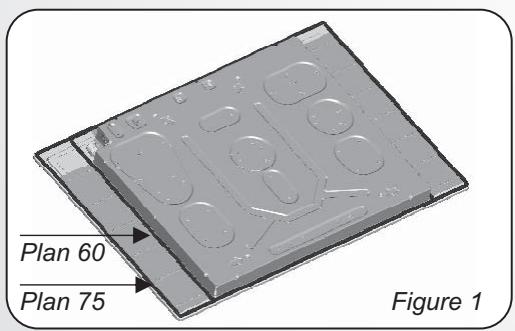
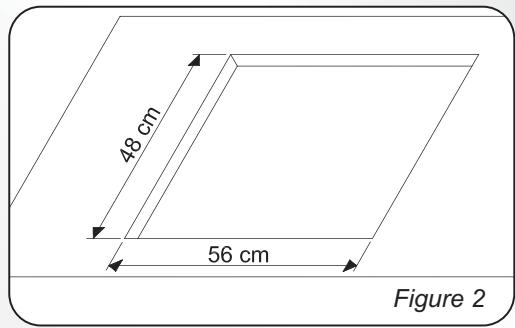
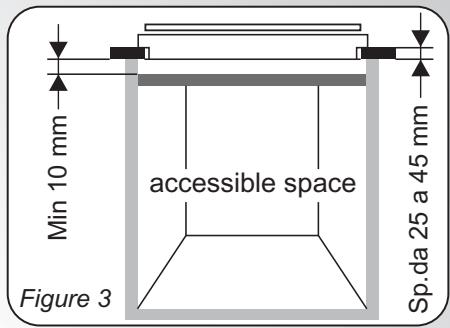
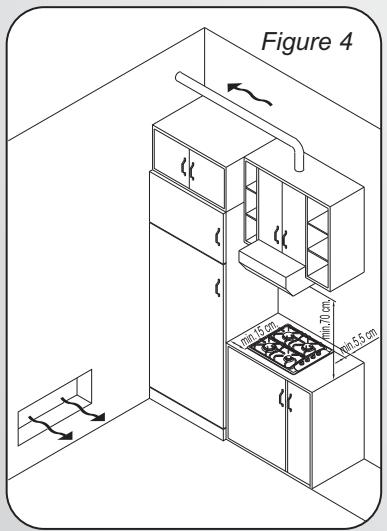
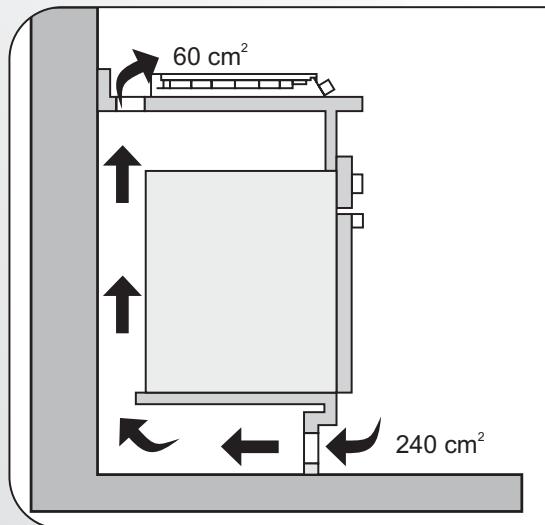
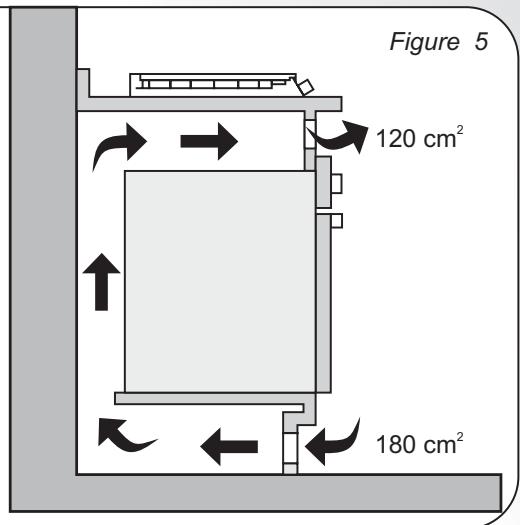
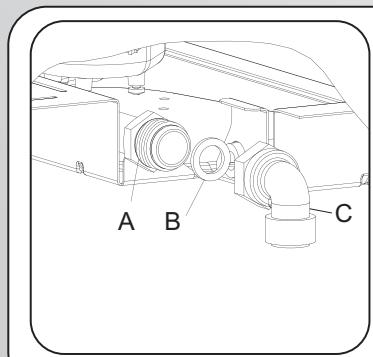
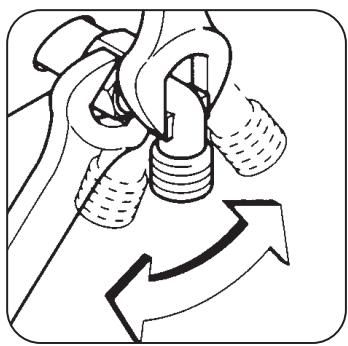
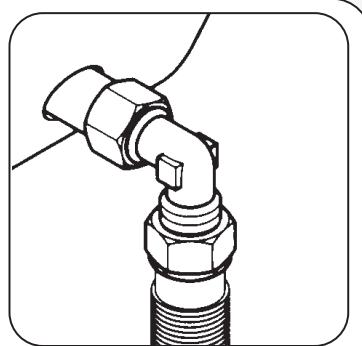
Figure 6
1. INSTALLATION
The hob may be installed in any worktop which is heat resistant to a temperature of 100^ , and has a thickness of 25-45 mm. The dimensions of the insert to be cut out of the worktop are in shown in Figure 2.
If the Hob is fitted next to a cabinet on either side, the distance between the Hob and the cabinet must be at least 15 cm (see Figure 4); while the distance between the hob and the rear wall must be at least 5,5 cm.
The distance between the hob and any other unit or appliance above it (e.g. An extractor hood) must be no less than 70~cm (Figure 4).
When there is an accessible space between the built-in hob and the cavity below, a dividing wall made of insulating material should be inserted (wood or a similar material) (Figure 3).
Important - The diagram in figure 1 shows how the sealant should be applied.
The Hob unit is fitted by attaching the Fixing Clamps supplied, using the holes at the base of the unit.
If a hob of 60~cm is fitted above an oven which is not equipped with fan cooling system it is recommended that openings are created within the built in furniture to ensure correct air circulation.
The size of these openings must be at least 300cm^2 and placed as shown in Figure 5.
When a 75 cm hob is fitted over a built in oven, the latter must be fan cooled.
1.2. SUITABLE LOCATION
This appliance must be installed in accordance with applicable regulations and should only be used in well-ventilated locations. Before using this appliance carefully study the instruction book.
2. ELECTRICAL CONNECTION (FOR U.K. ONLY)
Warning - this appliance must be earthed
This appliance is designed for domestic use only. Connection to the main supply must be made by a competent electrician, ensuring that all current regulations concerning such installations are observed.
The appliance must only be connected to a suitably rated spur point, a 3 pin 13 amp plug/socket is not suitable. A double pole switch must be provided and the circuit must have appropriate fuse protection. Further details of the power requirement of the individual product will be found in the users' instruction and on the appliance rating plate. In the case of built-in product you are advised, should you wish to use a longer cable than the one supplied, that a suitably rated heat resistant type must be used.
The wiring must be connected to the mains supply as follows: CONNECT TO SPUR TERMINAL
Green & Yellow Wire
Blue Wire
Brown Wire
Earth Connection
Neutral Connection
Live Connection
Note: We do not advocate the use of earth leakage devices with electric cooking appliances installed to spur points because of the «nuisance tripping» which may occur. You are again reminded that the appliance must be correctly earthed, the manufacturer declines any responsibility for any event occurring as a result of incorrect electrical installation.
2.1. ELECTRICAL CONNECTION
Check the data on the rating plate, located on the outside of the unit, to ensure that the supply and input voltage are suitable.
Before connection, check the earthing system.
By Law, this appliance must be earthed. If this regulation is not complied with, the Manufacturer will not be responsible for any damage caused to persons or property. If a plug is not already attached, fit a plug appropriate to the load indicated on the rating plate. The earth wire is coloured yellow/green. The plug should always be accessible.
Where the Hob is connected direct to the electricity supply, a circuit breaker must be fitted.
If the power supply cord is damaged this is to be replaced by a qualified engineer so as to prevent any potential risk.
The earth wire ( green and yellow coloured ) must be at least 10 mm longer than the live and neutral wires.
The section of the cable used must be of the correct size in relation to the absorbed power of the hob.
Please check rating plate for the power details and ensure that the power supply cord is of the type H05RR-F, H05VV-F, H05V2V2-F.
| LIVE | L | Brown Wire |
| EARTH | Green/Yellow Wire | |
| NEUTRAL | N | Blue Wire |
2.2. GAS CONNECTION
These instructions are for qualified personnel, installation of equipment must be in line with the relevant national standard. (For U.K. only: by law the gas installation\commissioning must be carried out by a "Gas Safe" installer)
All work must be carried out with the electricity supply disconnected.
The rating plate on the hob shows the type of gas with which it is designed to be used. Connection to the mains gas supply or gas cylinder should be carried out after having checked that it is regulated for the type of gas with which it will be supplied. If it is not correctly regulated see the instructions in the following paragraphs to change gas setting
For liquid gas (cylinder gas) use pressure regulators which comply with the relevant national standards.
Use only pipes, washers and sealing washers which comply with the relevant national standards.
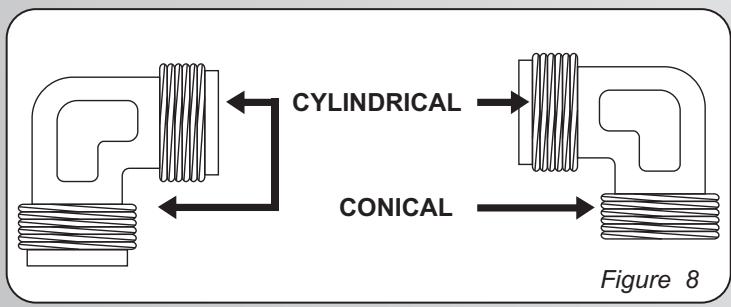
For some models a conic link is furnished to outfit for the installation in the countries where this type of link is obligatory; in picture 8 it is pointed out how to recognize the different types of links (CY = cylindrical, CO = conic). In every case the cylindrical part of the link has to be connected to the hob.
When connecting the hob to the gas supply via use offlexible hoses please ensure that the maximum distance covered by the hose does not exceed 2 metres.
To prevent any potential damage to the hob please carry out the installation following this sequence (picture 6):
1)As illustrated, assemble parts in sequence:
A: 1/2 Male Adaptor Cylindrical
B:1/2 Seal
C: 1/2 Female Gas Adaptor Conical-Cylindrical or
Cylindrical-Cylindrical
2) Tighten the joints with the spanner, remembering to twist the pipes into position.
3)Attach fitting C to mains gas supply using rigid copper pipe or flexible steel pipe.
IMPORTANT: carry out a final check for leaks on the pipe connections using a soapy solution. NEVER USE A FLAME. Also, make sure that the flexible pipe cannot come into contact with a moving part of the cabinet (eg.adrawer) and that it is not situated where it could be damaged.
Warning: If gas can be smelt in the vicinity of this appliance turn off the gas supply to the appliance and call the engineer directly. Do not search for a leak with a naked flame.
2.3. ADAPTING THE HOB TO DIFFERENT TYPES OF GAS
To adapt the Hob for use with different types of gas, carry out the following instructions:
- remove the grids and burners
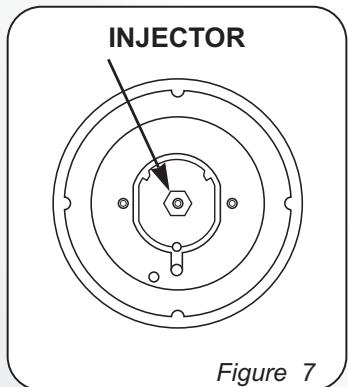
- insert on hexagonal spanner (7 mm) into the burner support (Figure 7)
- Unscrew the injector and replace it with one suitable for the gas to be used (see gas type table)
2.4. REGULATING THE MINIMUM FLAME
After lighting the burners, turn the control knob to the minimum setting and then remove the knob (this can easily be removed by applying gentle pressure).
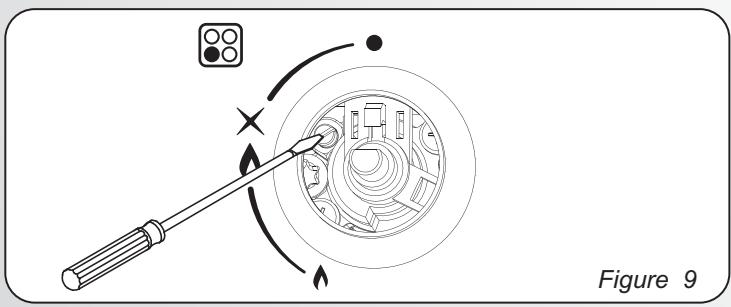
Using a small «Terminal» type screwdriver the regulating screw can be adjusted as in Figure 9. Turning the screw clockwise reduces the gas flow, whilst turning it anticlockwise increases the flow – Use this adjustment to obtain a flame of approximately 3 to 4mm in length and then replace the control knob.
When the gas supply available is LPG - the screw to set the idle flame must be turned (clockwise) to the end stop.
When you have carried out the new gas regulation, replace the old gas rating plate on your appliance with one (supplied with hob) suitable for the type of gas for which it has been regulated.
3. USE OF HOB - USER INSTRUCTIONS
This appliance must only be used for the purpose for which it is intended, domestic cooking, and any other use will be considered improper and could therefore be dangerous. The Manufacturer will not be responsible for any damage or loss resulting from improper use.
This appliance is not intended for use by persons (including children) with reduced physical, sensory or mental capabilities, or lack of experience and knowledge, unless they have been given supervision or instruction concerning use of the appliance by a person responsible for their safety.
Children should be supervised to ensure that they do not play with the appliance.
To ignite the burners, place a lighted taper close to the burner, press in and turn the control knob anti-clockwise.
If the burners have not been used for a couple of days, wait for a few seconds before lighting the burner, this will allow any air present in the pipes to escape.
For appliances fitted with electronic ignition carry out the following:
-
push in and turn the knob anticlockwise to the ignition symbol.
-
ignite the burner by pressing the sparker button.
For hobs fitted with automatic ignition simply push in and turn the knob to the ignition symbol.
The ignition system will continue to generate sparks as long as the control knob is being pressed.
If the burner has not ignited within 5 seconds, turn the knob to the 0 position and repeat the operation.
For models fitted with a safety tap (which cuts-off the flow of gas if the flame is accidentally extinguished) the burners are ignited and described above, but care must be taken.
Prior to switching on the gas hob ensure that the burners and burner caps are correctly placed within their position.
GENERAL ADVISE
For best results, use cooking vessels with a flat surface. The size of the surface should match the gas burner side as follows. Table A.
Table A
| Burner Type | Ø pan / pot (cm) | |
| AUX | Auxiliary Burner | 12 - 18 |
| SR | Semi Rapid Burner | 18 - 24 |
| R | Rapid Burner | 24 - 26 |
| UR | Ultra Rapid Burner | 24 - 28 |
| QC | Double Ring Burner | 24 - 28 |
For smaller containers the gas burner should be regulated so that the flame does not overlap the base of the pan. Vessels with a concave or convex base should not be used.
WARNING: If a flame is accidentally extinguished, turn the knob to the off position and do not attempt to re-ignite if for at least 1 minute.
If over the years the gas taps become stiff to turn it is necessary to lubricate them.
Such operation must be carried out only by qualified Service Engineers.
4. MAINTENANCE AND CLEANING
Before cleaning the hob, ensure the appliance has cooled down. Remove the plug from the socket or (if connected directly) switch off the electricity supply.
Never use abrasives, corrosive detergents, bleaching agents or acids. Avoid any acid or alkaline substances (lemon, juice, vinegar etc.) on the enamelled, varnished or stainless steel sections.
"WARNING" - Do not use a steam cleaner to clean the hob.
When cleaning the enamelled, varnished or chrome sections, use warm soapy water or a non caustic detergent. For stainless steel use an appropriate cleaning solution.
The burners can be cleaned with soapy water. To restore their original shine, use a household stainless steel cleaner. After cleaning, dry the burners and replace.
It is important the Burners are replaced correctly.
Chromed grids and burners
Chromed grids and burners have a tendency to discolour with use. This does not jeopardize the functionality of the hob.
Our After Sales Service Centre can provide spare parts if required.
5. AFTERCARE
Before calling out a Service Engineer please check the following:
- that the plug is correctly inserted and fused;
- that the gas supply is not faulty.
If the fault cannot be detected:
Switch off the appliance and call the After Service Centre. DO NOT TAMPER WITH THE APPLIANCE.
6. PROTECTION OF THE ENVIRONMENT
This appliance is marked according to the European directive 2002/96/EC on Waste Electrical and Electronic Equipment (WEEE).
By ensuring this product is disposed of correctly, you will help prevent potential negative consequences for the environment and human health, which could otherwise be caused by inappropriate waste handling of this product.
The symbol on the product indicates that this product may not be treated as household waste. Instead it shall be handed over to the applicable collection point for the recycling of electrical and electronic equipment.
Disposal must be carried out in accordance with local environmental regulations for waste disposal.
For more detailed information about treatment, recovery and recycling of this product, please contact your local city office, your household waste disposal service or the shop where you purchased the product.
Declaration of compliance: This equipment, in the parts intended to come into contact with food, complies with the regulations laid down in EEC directives 89/109.
CE Appliance complies with European Directives 73/23/EEC and 89/336/EEC, replaced by 2006/95/EC and 2004/108/EC, and subsequent amendments.
The Manufacturer will not be responsible for any inaccuracy resulting from printing or transcript errors contained in this brochure. We reserve the right to carry out modifications to products as required, including the interests of consumption, without prejudice to the characteristics relating to safety or function.
Table 1
| BUILT IN HOBS | ||||
| Burner | 1 | 1 | 2 | 3 |
| 4 gas QC / R / SR / AUX | 4 gas UR / R / SR / AUX | 5 gas QC / 2R / SR / AUX | 4 gas QC / R / SR / AUX | |
| Type / reference | S67 / HBGPX | S67 / HBGPX | S67 / HBGPX | S67 / HBGPX |
| Flame failure device | YES | YES | YES | YES |
| Auxiliary burner ( AUX Ø 50 mm) | 1 | 1 | 1 | 1 |
| Double ring burner ( QC Ø 135 mm) | 1 | - | 1 | 1 |
| Ultra rapid burner ( UR Ø 110 mm) | - | 1 | - | - |
| Semirapid burner ( SR Ø 75 mm) | 1 | 1 | 1 | 1 |
| Rapid burner ( R Ø 100 mm) | 1 | 1 | 2 | 1 |
| Installed Gas Type / Power: | ||||
| Power | 9.25 kW | 8.75 kW | 11.75 kW | 9.25 kW |
| G 20/20 mbar (methane) | 881 L/h | 833 L/h | 1119 L/h | 881 L/h |
| G 30/28-30 mbar (LPG) | 673 L/h | 636 L/h | 854 L/h | 673 L/h |
| Installation Class | 3 | 3 | 3 | 3 |
| Voltage / Frequency V / Hz | 220-240 V / 50-60 Hz | 220-240 V / 50-60 Hz | 220-240 V / 50-60 Hz | 220-240 V / 50-60 Hz |
| Electrical input power | 15 W | 15 W | 15 W | 15 W |
| Electric ignition | YES | YES | YES | YES |
| Product dimension | 595 x 510 | 595 x 510 | 745 x 510 | 745 x 510 |
This appliance has been designed for non-professional, i.e. domestic, use.
1.ИHCTPYKUINIIO BbIINOJIHEHNIO YCTAHOBKN
YCTAHOBKA BbITOBOI TEXHNI KABJETCRO JIOXHOI PABOTOH, HEPPABINbHOE BbINOJIHEHNE KOTOPOI MOKET OTPUATEJIbHO CKA3ATbCS HA B630NACHOCTI NOL3OBATEJI. NO 3TOI PPUNHE YCTAHOBKA BbTOBOI TEXHNI DOJNXBA BblONHtBcR BbICOKOBALINPHUPOBAHHbIMCNIEUANCTAMN, KOTOPBIE BbINOHNRT YCTAHOBKY COBIODEHEM BCEX DEIECTBYOuixn IPABNJ I HOPM. B TOM CUYAE, ECJN 3TO INEOCTPEXHEENBEyET PONIHOPINPOBAHO, I YCTAHOBKA BYET BblONHENA JINUCOM, HE IMEQUIM IOCTATOCHNO KBALINPHKAUIM, INPON3BOJNTeH He BYET INPNHIMATb HNKAKNX PIPETEH3N OTHOCNTJIbHO BbIXODA OBOPUDOBAHN I3 CTPOA HAHECEHHORIOPIN 3TOM USEPBMAUMUECTBYIIN 3DOPOBBIOJIOJE.
1.1.BCTPANBAEMbIE BAPOUHbIE NOBEPXHOCTN
Bapouhna nobepxhoctb moKet yctahabnBaTcRa Ha IIO6o pa6oey nobepxHoctn KXoHHoro cTOna, KOtopa BbIePxAbaET HarpeB Do TemnepaTyplb 100 C, n IMeet ToIunHy O T 25 do 40 MM. Pa3Mpebl OTBepCTn, KOTOpoe DoJIxHo 6blTb BbIpe3aHO B pa6oey nobepxHOCTN KXoHHoro cTOna, NOKa3AHbHa npC.2.
EcnB BapOuHnA NOBepxHocTb yCTaHabNtBaetc TaK, YTO NO oBe ee cSTOPHO bapCOnanarAOCTa WkaΦbl, TO paccToHne Mekdy BapOuHnIOBepxHocTbO n WkaΦom DoJnxHo 6blte Me MeHbSe 15 cm (CM. pnc. 4), a pacctOraHne Mekdy BapOuHnIOBepxHocTbO n paCnONoXeHHo C3aDi CTeho DoJnxHo 6blte He MeHbSe 5,5 cm.
PacctoarHne MeJxdu BapOCHNo NOBepXHoCTbIO u npyTMM 3nEeKtpOnpN6OpOM (HaNPmEp, BbITaXHO KOJIInak)doJXHO 6bIbHe MeHbSe 70 cm (cm. pnc. 4).
Ecni noiB aBoUHNo IOBepxHOCTbIO UMeETcR CBO6OJHOe IpocTpaHCTBO, TOniB aBoUHNO IOBepxHOCTbIO HxKHO UCTaHOBnTb pa3JeNITeHbHyI NaHeJIb, N3rTOBJIeHHyIO N3 TeIION3OJNAUHO HmATEpHnA (HaNPmEp, N3 DepeBa) (cm. pnc. 3).
Baxha HOpmaun Ha pnc. 1 nokaaso, KaKaHaocntc repmetnk
Bapouhna nobepxhoctb kpenTcra n omoIbu oKcnpyuux 3aJIMOB, KOtOpBle BCTabJIyOTcB OTBepCTn, paONIOXKeHHbIe Ha OCHOBaHm BapouHno nobepxHOCTn.
EcnI Bapouhna nobepxhoctb 60 cm yctanabnBaetcna Had IyXOBKO, B KOTOPH HET CNTEmbl OXnAaJdHnC B EHTINrAToPOM, TO BO BCTpAmBaEMOJI MeBEN pekomeHnyeTcCdeNaTb OTBepCTnI dIPObeCneueHn HOpMaIbHOI ZUPKpyauu Bo3Dyxa.
Плоцадь STINx OTBepCTN DoJnxHa 6bITb He MeHbIe 300 cm2 n 3TN OTBepCTN DoJnxHbI paCnOlaRaTbCra TAK, KaK pOKa3aHo Ha pnc.5.
EcniB aBoOpHaia NoBepxHocb7 5Cm KpeiNTcHa Nd DyXOBKo,TO B DyXOBKe DoJxHa 6bIb CnCTema OXJaXeHnC BeHTnIaTOpOM.
1.2. BbIbOP MECTAДЛЯ UCTAHOBKINBAPOUHOI NOBEPXHOCTN
Даннь 6ытobои 3лкрponрбор должен устаньваць в COOTBETCTBи C DeiCTByUOuIMn nPabunamn HOpMaMn dЯ 6ытOBbIX npD6OBOPи DOLJENK 3KcNpyaTInpOBAtbc TOnIbKO B XopoWo BEHTINnPyembixnomeueHnx.пepd Tem Kak npuctyntB K 3KcNpyataunn DAHNHO BapOCHNo NOBepxHocTN BHIMATEbHo npOHTNe IHCTpykUIO NO 3KcNpyaTaunn.
2. ПОДКЛЮЧЕНЕ KЭЛЕКТPOCETN (TOЛьКо ДЯВЕЛИКOBРУТAHИN)
BHHMaHHe daHbI 3JIeKTpOpiN6Op DOJIKeH 6bITb 3a3emJH
Danhbl 3neKtpo np6op npedHa3haueh Tolbko dny 6bIToBbIX pnpimehenm. IpoknIOeHMe K 3neKtpocTeN DOJXHO BbIOnHrTaBcTolbKO ONbTHbIM 3neKtpuKOM CcoBIOJeHHeM BCEx DeIcTBUOUX npBUNI HOPM 3neKtpo6e3oNaChOCTn.
Danhbl 3neKtpoepbop DOnJxHn POnKlOuCybC K OTBeTBNeHIO 3neKtpocTe n DOCTaOChHn Harpy3OuHn CnOC6HoCTbI. 3-ItbIpbKOBaB BnLka/po3EtKa h 13 A He NpOxDnT DnA DAnHORo NpOKnHOeHn. B IInnn 3neKtpoNtAHn IOnJxHn 6bITb YcTAHOBn DByXnOLOCHB BbIKLIOUaTeB, IN cIeB DOnJxHa 6bITb 3aunueHa C nOMouBn I pNObKOro PnpEOxApaHTen B COOTBeCTbYUcero HOMINHAp. BoIee NpODbNa HnΦOpMaun OTHOCHTeBn HO Tpe6obAHn, PpeBraBmBX K 3neKtpoNtAHn DnI KOHKPeTHoro INdEInn, PpeCTabNEHa B INCTpyKUnn PO EKnPlyataunn IN B NaCnpOpTHo TAbnue, ZkappeNHeHn Ha INdEInn. EcIy dInna HA Kabena NtAHn, NOCTabNMeRTO B KOMnKeTe C BarOuHn IOBepxHOCTbI, ABnEETCA HeOCTaOChHn, TO CLeDeyET NcONlb3OBA Tb BoIee DInHHb TEINTOkN Ka6JIb NtAHN C DOCTaOChHn Harpy3OuHO nCnocBOHocTbI. POnKlOuCeHne K 3neKtpocTe n DOJxHO 6bITb BbINOnHeNo CLeDyUoM o6pa30m:
IPODCOEHNHTE
Ceyehne npoBODHnKOB Ka6eJIy NITaHnI DOJXHO COOTBeTCTByET MOUHOCTN,NOTpe6nREMOBAPOCHNO NOBepxHOCTbIO.
PpOBepbTe 3NaueHHe MoUHocTn, NOTpe6IeMOn 3JNeKTPoPnpOpOM, yKa3aHHoe B nacopTpHO T6NHyKe, a TaKke npOBepbTe, yTO nCNoB3yeTcKa6eJIb NtTaHnTuHa HO5RR-F, H05VV-F uNt HO5V2V-F.
He pa3peshaTe TETaM UrgaTb C3JeKtponpnp6opom.
3.1 NcIIOJIb3OBAHNE rA3OBOKOHΦOPKIN
YTo6bI 3aKeey KOHΦopky, NOHecnTe K Hei 3aXKeHHyO CnUky, HaxMnte Ha pyuKy peYJInpOBKn BbICOTbI PJIaMeHN, INOBepHnte ee npOTNB YacOBoB CTpeKN.
EcnI KOHΦOpKn He nCnOJIb3OBaIIncB TeueHne DByx IIN 60onee DHei, To npexKe cheM 3aJceHy KOHΦOpKy IOdoKdnte HeCKoJIbKO CekyHdIgToro, YTO6blN3 Tpy6OK BblIeN BO3dyX.
YTo6bI 3aKeey KOHΦOpky BApOuHoN IOBepxHocTn, Cha6KeHHyUcTpoiCTBOM 3NeKtPOnoJxNra, BbIIOJIHnTE CneDyUOune Oepaun:
-
HaxMMTE Ha puKy peRyIINpOBKn BbICOTbI pIaMeHn I NOBepHNTe ee npOTNB YacOBoN CTpeKN B NIOJoxHeNe, O6O3HaueHHoe NODxIrA.
-
3axrnte KOHOpky C NOMOuHaxaTn KHOKN 3JNeKTPoNOnJxra.
EcInBapOuHna NOBepxHocb Cha6KeHa ABTOMaTHueCKM3NeKtpoNoJXnIROM, npocTo HaxMMte Ha puKy peRyInpOBKn BbICOTbI pIamEHn UyCTAHOBnTe ee B NoJIOXeHne, 06O3NaehHOe 3NaYKOM POnJNra.CnCTema 3NeKtpoNoJXnIra 6yDet nOCToHHoreHepeRipOBaT NCKpbl,doTexnop,poKa puKAp eRyInpOBKn pIamEHn 6yDet hAxODnTbCBAHxaTOM NoJIOXeHnn.
Ecn konhopka He 3aropaetcB TeueHne 5 ckyH, yctahOBnTe pyky perynilpoBkn B noloxHne 0, n nobTopnte onncanHybIwe Onpaun.
B MoJeIax, Cha6XeHHbIX 3aUHTbIM KJanaHOM, KOtOpbI aBTOMaTHueckn nepeKpbIbAet NODauy rAa B CJIyae BHe3aHOrO nORacAHN IINAMEH, KOHΦopKn 3aJInraTcR, KaK OINCAHO BbIe, HO npn 3TOM NocIe 3aJInraHn KOHΦopKn Heo6xOdmo Co6IIoDaTb OCTOPOKHOCTb.
IpepeBkIouHeHemra30BOB BapOuHOIOBepxHocTn npOBepbTe,TO KOHOpOKN KpbIUsKoKOHΦopOK npaBnIbHO yCTaHOBJIeHbHa BapOuHyIO NOBepxHocTb.
NOJE3HbIE COBETbl
The manufacturer will not be responsible for any inaccuracy resulting from printing or transcript errors contained in this brochure. We reserve the right to carry out modifications to products as required, including the interests of con sumption, without prejudice to the characteri stics relating to safety or function.
RU
PpOIN3BODInTeH He HecET OTBcTBeHHOCHT 3a OoneAtKn HHeTOUHOCTN, KOToPbIE MOrY BCTpeTbC8 B DaHHO INCHpyKUn. MbI OCTaBIAeM 3a cO6o IpaBO BVOCNTb N3MeHeHn B KOHCTpyKcIIO BbIyNcKaEmbIX HAm N3dJIIN C CEbIIO yIyUHeHn KaueCTBa BblNyCKaEMO INPOdyKUn. Ppi 3OM OCHOBHbIE fynKcIMn3dJIIN ero 6e3OnacHOCTb 6dyT OCTaBAcbr HEN3MeHHbIMN.
- BAPOUHbIE NOBEPXHOCTN
- CONTENU
- FR
- CONTENT
- GB-IE
- COДЕРЖAHNE
- RU
- INSTALLATION
- SUITABLE LOCATION
- ELECTRICAL CONNECTION (FOR U.K. ONLY)
- Warning - this appliance must be earthed
- ELECTRICAL CONNECTION
- GAS CONNECTION
- ADAPTING THE HOB TO DIFFERENT TYPES OF GAS
- REGULATING THE MINIMUM FLAME
- USE OF HOB - USER INSTRUCTIONS
- GENERAL ADVISE
- MAINTENANCE AND CLEANING
- Chromed grids and burners
- AFTERCARE
- PROTECTION OF THE ENVIRONMENT
- 1.ИHCTPYKUINIIO BbIINOJIHEHNIO YCTAHOBKN
- 1.1.BCTPANBAEMbIE BAPOUHbIE NOBEPXHOCTN
- Baxha HOpmaun Ha pnc. 1 nokaaso, KaKaHaocntc repmetnk
- BbIbOP MECTAДЛЯ UCTAHOBKINBAPOUHOI NOBEPXHOCTN
- ПОДКЛЮЧЕНЕ KЭЛЕКТPOCETN (TOЛьКо ДЯВЕЛИКOBРУТAHИN)
- BHHMaHHe daHbI 3JIeKTpOpiN6Op DOJIKeH 6bITb 3a3emJH
- IPODCOEHNHTE
- NcIIOJIb3OBAHNE rA3OBOKOHΦOPKIN
- NOJE3HbIE COBETbl
Brand : ROSIERES
Model : RTG75SQDIN
Category : Cooktop