
LASERJET PRO MFP M26NW - Laser MFP HP - Free user manual and instructions
Find the device manual for free LASERJET PRO MFP M26NW HP in PDF.


| Product Type | Laser Multifunction Printer |
| Brand | HP |
| Model | LaserJet Pro MFP M26NW |
| Dimensions (closed) | 420 x 266 x 254 mm |
| Dimensions (open) | 420 x 365 x 410 mm |
| Weight | 8.2 kg (with cartridge) |
| Power Supply | 110-127 V or 220-240 V, 50/60 Hz |
| Standby Power Consumption | Less than 1 W (auto-off mode) |
| Main Functions | Print, copy, scan |
| Duplex Printing | Manual |
| Input Tray Capacity | 150 sheets |
| Print Resolution | Up to 600 x 600 dpi |
| Print Speed | Up to 23 pages per minute |
| Toner Cartridge | HP 79A (CF279A) black |
| Connectivity | USB 2.0, Ethernet, Wi-Fi, Wi-Fi Direct |
| Control Panel Display | LCD Display (M26nw model) |
| Monthly Duty Cycle | Up to 8,000 pages |
| Maintenance and Cleaning | Clean scanner glass, print cleaning page |
| Security | Administrator password via embedded web server |
| Spare Parts and Repairability | HP 79A toner cartridge; Customer Replaceable Parts (CSR) |
Frequently Asked Questions - LASERJET PRO MFP M26NW HP
User questions about LASERJET PRO MFP M26NW HP
0 question about this device. Answer the ones you know or ask your own.
Ask a new question about this device
Download the instructions for your Laser MFP in PDF format for free! Find your manual LASERJET PRO MFP M26NW - HP and take your electronic device back in hand. On this page are published all the documents necessary for the use of your device. LASERJET PRO MFP M26NW by HP.
USER MANUAL LASERJET PRO MFP M26NW HP
Copyright and License
Copyright 2016 HP Development Company, L.P.
Reproduction, adaptation, or translation without prior written permission is prohibited, except as allowed under the copyright laws.
The information contained herein is subject to change without notice.
The only warranties for HP products and services are set forth in the express warranty statements accompanying such products and services. Nothing herein should be construed as constituting an additional warranty. HP shall not be liable for technical or editorial errors or omissions contained herein.
Edition 1, 10/2016
Trademark Credits
Adobe, Adobe Photoshop, Acrobat, and PostScript are trademarks of Adobe Systems Incorporated.
Apple and the Apple logo are trademarks of Apple Inc., registered in the U.S. and other countries.
OS X is a trademark of Apple Inc., registered in the U.S. and other countries.
Microsoft, Windows, Windows XP, and Windows Vista are U.S. registered trademarks of Microsoft Corporation.
Table of contents
1 Printer overview 1
Printer views 2
Printer front view 2
Printer back view 2
LED control-panel view (M26a models) 3
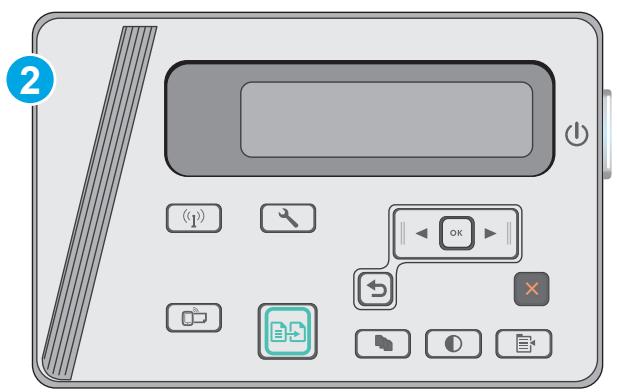
LCD control-panel view (M26nw models) 4
Printer specifications 6
Technical specifications 6
Supported operating systems 7
Mobile printing solutions 8
Printer dimensions 9
Power consumption, electrical specifications, and acoustic emissions 9
Operating-environment range 9
Printer hardware setup and software installation 10
2 Paper trays 11
Load the input tray 12
Load the input tray 15
Tray adjustment for small paper sizes 16
Load and print envelopes 18
Introduction 18
Print envelopes 18
Envelope orientation 18
3 Supplies, accessories, and parts 19
Order supplies, accessories, and parts 20
Ordering 20
Supplies and accessories 20
Customer self-repair parts 20
Replace the toner cartridge 21
Introduction 21
Toner-cartridge information 21
Remove and replace the toner cartridge 22
4 Print 25
Print tasks (Windows) 26
How to print (Windows) 26
Manually print on both sides (Windows) 27
Print multiple pages per sheet (Windows) 28
Select the paper type (Windows) 31
Additional printing information 33
Print tasks (OS X) 34
How to print (OS X) 34
Manually print on both sides (OS X) 34
Print multiple pages per sheet (OS X) 35
Select the paper type (OS X) 35
Additional print tasks 36
Mobile printing 37
Introduction 37
Wireless Direct (wireless models only) 37
Enable or disable Wireless Direct 37
Change the printer Wireless Direct name 38
HP ePrint via email 39
HP ePrint software 40
Android embedded printing 40
5 Copy 43
Make a copy 44
Copy on both sides (duplex) 45
Copy on both sides manually 45
6 Scan 47
Scan by using the HP Scan software (Windows) 48
Scan by using the HP Scan software (OS X) 49
7 Manage the printer 51
Change the printer connection type (Windows) 52
Advanced configuration with HP Embedded Web Server (EWS) and HP Device Toolbox (Windows) 53
Advanced configuration with HP Utility for OS X 55
Open HP Utility 55
HP Utility features 55
Configure IP network settings 57
Introduction 57
Printer sharing disclaimer 57
View or change network settings 57
Rename the printer on a network 57
Manually configure IPv4 TCP/IP parameters from the control panel 58
Printer security features 59
Introduction 59
Assign or change the system password using the Embedded Web Server 59
Energy-conservation settings 61
Introduction 61
Print with EconoMode 61
Set the Sleep/Auto Off After Inactivity setting 62
Set the Shut Down After Inactivity delay and configure the printer to use 1 watt or less of power.
Set the Delay Shut Down setting.
Update the firmware.
Update the firmware using the Firmware Update Utility.
8 Solve problems.
Customer support.
Interpret control-panel light patterns (LED model only).
Restore the factory-set defaults.
A "Cartridge is low" or "Cartridge is very low" message displays on the printer control panel.
Change the "Very Low" settings.
Order supplies.
Solve paper feed or jam problems.
Introduction.
Solve paper feed or jam problems.
The product does not pick up paper.
The product picks up multiple sheets of paper 74
Frequent or recurring paper jams 74
Prevent paper jams 75
Clear paper jams 77
Introduction 77
Paper jam locations 77
Clear jams from the input tray 77
Clear jams in the toner-cartridge area 80
Clear jams in the output bin 83
Improve print quality 87
Introduction 87
Print from a different software program 87
Check the paper-type setting for the print job 87
Check the paper type setting (Windows) 87
Check the paper type setting (OS X) 87
Check toner-cartridge status 87
Clean the printer 88
Print a cleaning page 88
Visually inspect the toner cartridge and imaging drum 89
Check paper and the printing environment 89
Use paper that meets HP specifications 89
Check the printer environment 89
Check the EconoMode settings 89
Improve copy and scan image quality 91
Introduction 91
Check the scanner glass for dirt and smudges 91
Check the paper settings 91
LED control panel 91
LCD control panel 92
Optimize for text or pictures 92
Edge-to-edge copying 92
Solve wired network problems 94
Introduction 94
Poor physical connection 94
The computer is using the incorrect IP address for the printer 94
The computer is unable to communicate with the printer 94
New software programs might be causing compatibility problems 95
The computer or workstation might be set up incorrectly 95
The printer is disabled, or other network settings are incorrect 95
Solve wireless network problems 96
Introduction 96
Wireless connectivity checklist 96
The printer does not print after the wireless configuration completes 97
The printer does not print, and the computer has a third-party firewall installed 97
The wireless connection does not work after moving the wireless router or printer 97
Cannot connect more computers to the wireless printer 97
The wireless printer loses communication when connected to a VPN 98
The network does not appear in the wireless networks list 98
The wireless network is not functioning 98
Perform a wireless network diagnostic test 98
Reduce interference on a wireless network 99
1 Printer overview
- Printer views
- Printer specifications
- Printer hardware setup and software installation
For more information:
The following information is correct at the time of publication. For current information, see www.hp.com/support/ljM25-M27mfp.
HP's all-inclusive help for the printer includes the following information:
Install and configure Learn and use - Solve problems Download software and firmware updates - Join support forums Find warranty and regulatory information
Printer views
Printer front view
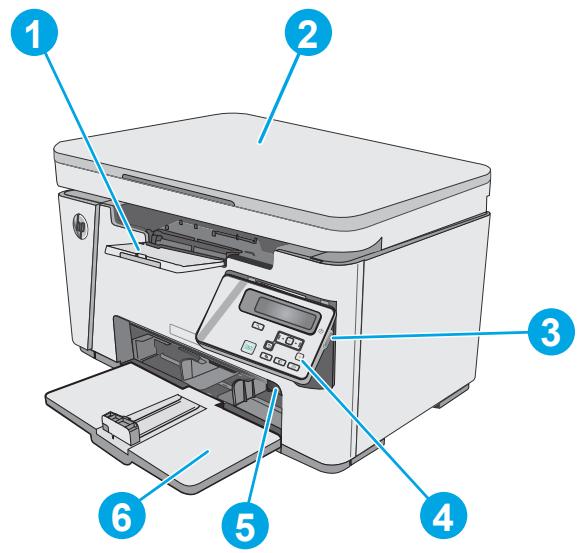
1 Output bin 2 Scanner 3 Power on/off button 4 Control panel (tilts up for easier viewing and type varies by model) 5 Short-paper extender tool 6 Input tray
Printer back view
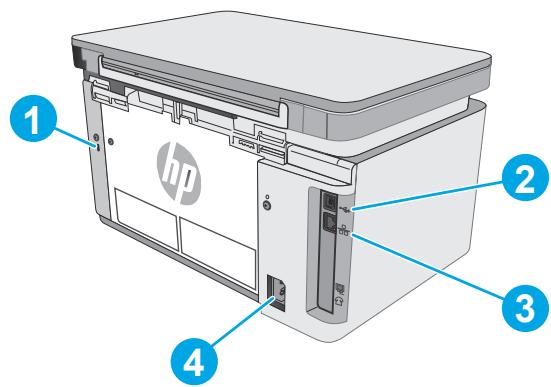
1 Slot for cable-type security lock 2 Hi-Speed USB 2.0
3 Ethernet port 4 Power connection
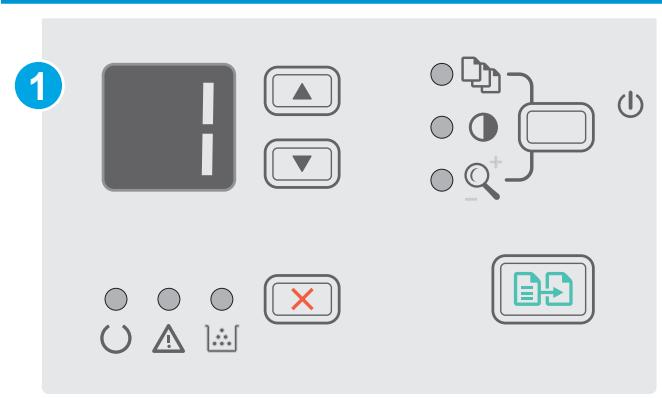
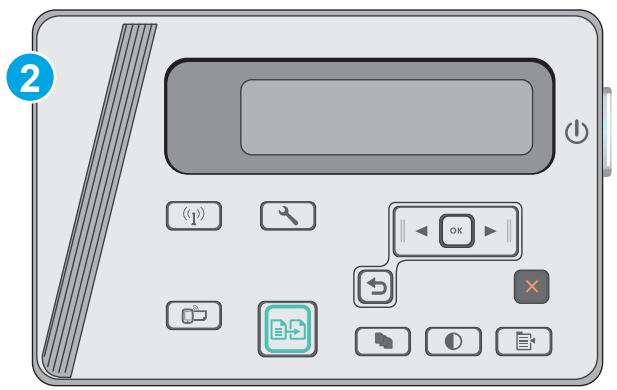
LED control-panel view (M26a models)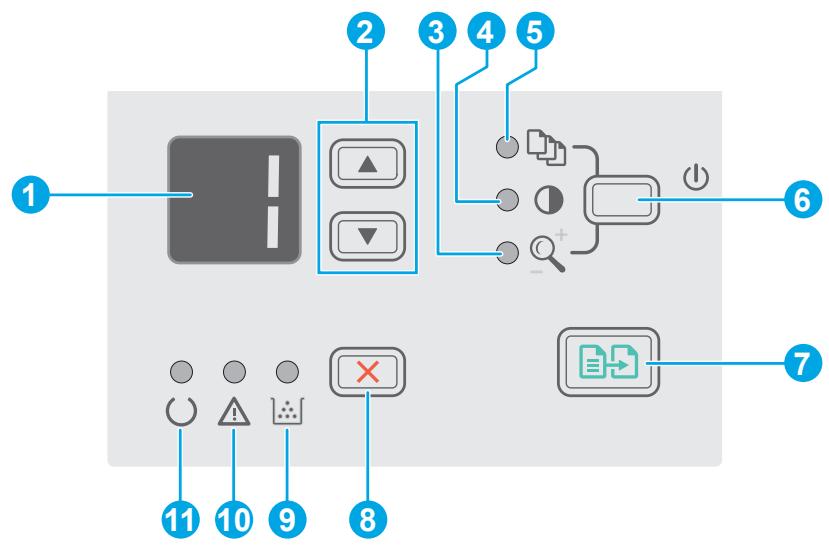
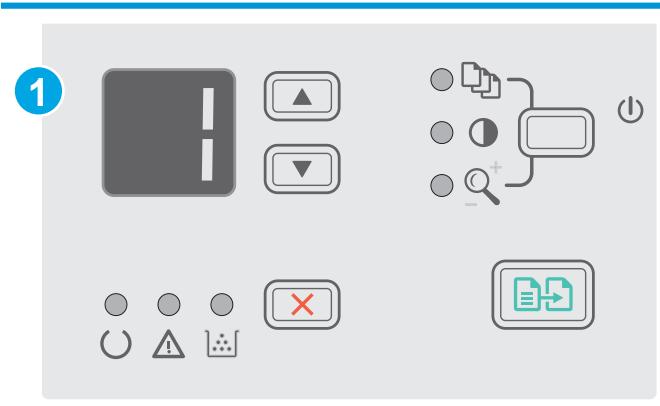
| 1 | Control panel LED display | This screen displays numerical information for copy jobs. |
| 2 | Up▲and Down▼arrow buttons | Use these buttons to increase or decrease the value that appears on the display. |
| 3 | Reduce/Enlarge copy light | Indicates the copy-size reduction or enlargement feature that is active. |
| 4 | Darker/Lighter copy light | Indicates the copy-darkness feature is active. |
| 5 | Number Of Copies light | Indicates the number-of-copies feature is active. |
| 6 | Setup button | Use this button to scroll between the copy settings for number of copies, darkness, and copy size for each job. The default option is the number of copies. To change the default settings for all jobs, scroll to the setting and then press and hold the button for 3 seconds. When the light is blinking, adjust the setting. Press this button again to save the setting. |
| 7 | Start Copy button | Press this button to start a copy job. |
| 8 | Cancel×button | Press this button to perform the following actions: • Cancel a print job when the printer is printing. • Reset the current copy settings to the default values when the printer is idle. • Exit Copy Default Setting mode without saving the value when the printer is in Copy Default Setting mode. |
| 9 | Toner-level status light | Indicates the level of toner in the toner-cartridge is low. |
| 10 | Attention▲LED | The Attention light blinks when the printer requires user attention, such as when the printer runs out of paper or a toner-cartridge needs to be changed. |
| 11 | Ready○LED | The Ready light glows without blinking when the printer is ready to print. |
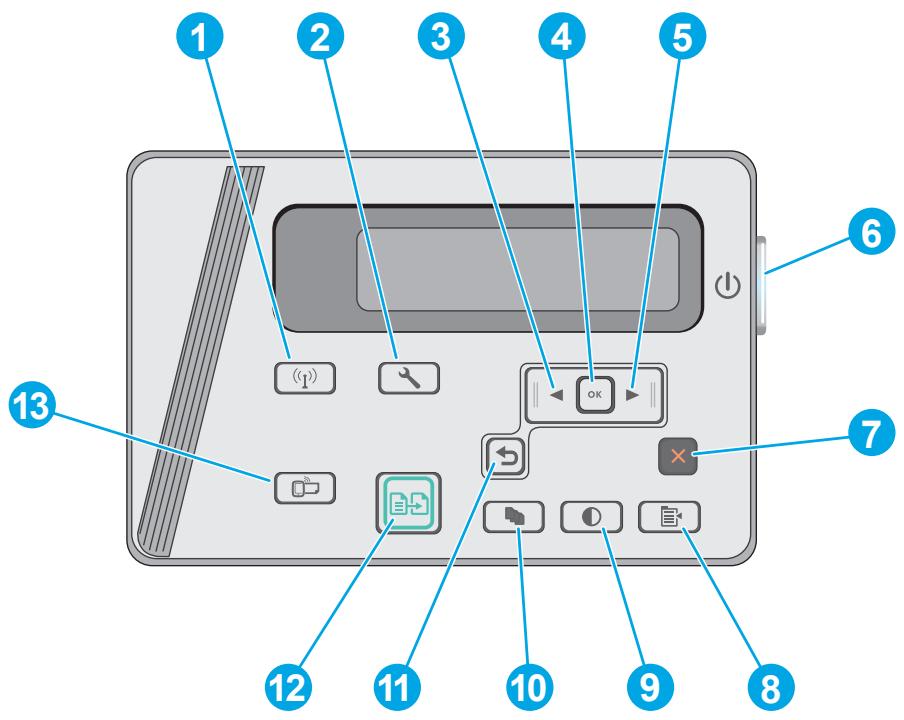
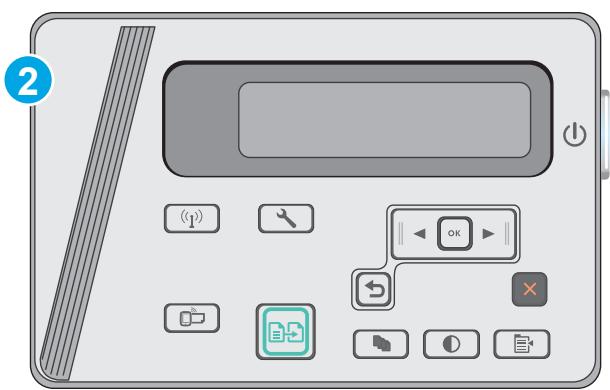
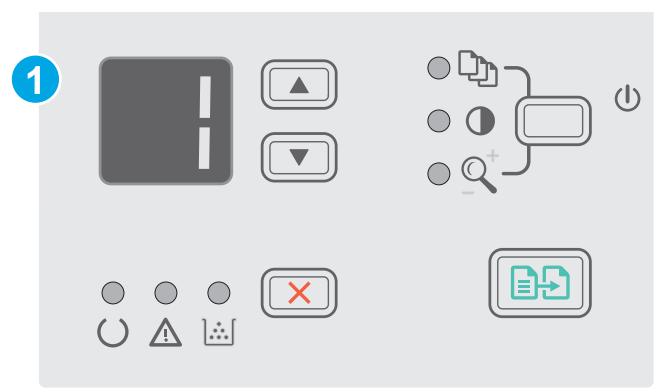
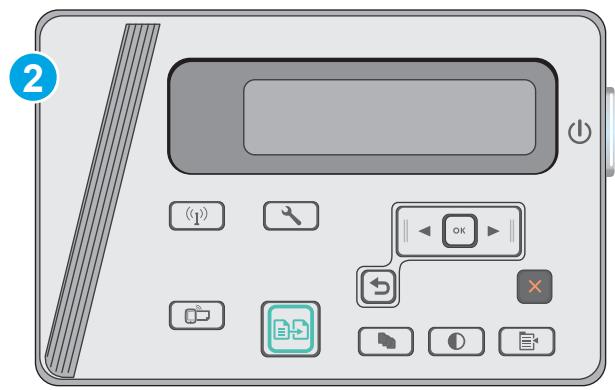
| 1 | Wireless (p) button (wireless models only) | Use this button to navigate the open the Wireless menu and wireless status information. |
| 2 | Setup ↓ button | Use this button to open the Setup menu. |
| 3 | Left arrow ↓ button | Use this button to navigate through the menus or to decrease a value that appears on the display |
| 4 | OK button | Use the OK button for the following actions: • Open the control-panel menus. • Open a submenu displayed on the control-panel display. • Select a menu item. • Clear some errors. • Begin a print job in response to a control-panel prompt (for example, when the message Press [OK] to continue appears on the control-panel display). |
| 5 | Right arrow ↓ button | Use this button to navigate through the menus or to increase a value that appears on the display. |
| 6 | Power on/off button | Use this button to turn the printer on or off. |
| 7 | Cancel × button | Use this button to cancel a print job or to exit the control panel menus. |
| 8 | Copy Settings button | Use this button to open the Copy Settings menu. |
| 9 | Lighter/Darker button | Use this button to lighten or darken copies. |
| 10 | Number of Copies button | Use this button to set the number of copies to be produced. |
| 11 | Back arrow button | Use this button for the following actions: • Exit the control-panel menus. • Scroll back to a previous menu in a submenu list. • Scroll back to a previous menu item in a submenu list (without saving changes to the menu item). |
| 12 | Start Copy button | Use this button to start a copy job. |
| 13 | ePrint button | Use this button to open the Web Services menu. |
Printer specifications

IMPORTANT: The following specifications are correct at the time of publication, but they are subject to change. For current information, see www.hp.com/support/ljM25-M27mfp.
Technical specifications Supported operating systems - Mobile printing solutions - Printer dimensions Power consumption, electrical specifications, and acoustic emissions - Operating-environment range
Technical specifications
See www.hp.com/support/ljM25-M27mfp for current information.
Supported operating systems
The following information applies to the printer-specific Windows PCLmS and OS X print drivers.
Windows: The HP Software Installer installs the PCLmS driver depending on the Windows operating system along with optional software when using the full software installer. See the software installation notes for more information.
OS X: Mac computers are supported with this printer. Download HP Easy Start either from the printer installation CD or from 123.hp.com, and then use HP Easy Start to install the HP print driver and utility. See the software installation notes for more information.
- Go to 123.hp.com.
- Follow the steps provided to download the printer software.
| Operating system | Print driver installed | Notes |
| Windows® XP, 32-bit | The HP PCLmS printer-specific print driver is installed for this operating system as part of the full software installation. | |
| Windows Vista®, 32-bit and 64-bit | The HP PCLmS printer-specific print driver is installed for this operating system as part of the full software installation. | |
| Windows 7, 32-bit and 64-bit | The HP PCLmS printer-specific print driver is installed for this operating system as part of the full software installation. | |
| Windows 8, 32-bit and 64-bit | The HP PCLmS printer-specific print driver is installed for this operating system as part of the full software installation. | |
| Windows 8.1, 32-bit and 64-bit | The HP PCLmS printer-specific print driver is installed for this operating system as part of the full software installation. | |
| Windows 10, 32-bit and 64-bit | The HP PCLmS printer-specific print driver is installed for this operating system as part of the full software installation. | |
| Windows Server 2003, 32-bit | The HP PCLmS printer-specific print driver is installed for this operating system as part of the basic software installation. The basic installer installs the driver only. | |
| Windows Server 2008, 32-bit and 64-bit | The HP PCLmS printer-specific print driver is installed for this operating system as part of the basic software installation. | |
| Windows Server 2012, 64-bit and R2, 64-bit | The HP PCLmS printer-specific print driver is installed for this operating system as part of the basic software installation. | |
| OS X 10.9 Mavericks, 10.10 Yosemite, and 10.11 El Capitan | The OS X print driver and print utility are available for download from either the installation CD or 123.hp.com. | Download HP Easy Start either from the printer installation CD or from 123.hp.com, and then use HP Easy Start to install the HP print driver and utility. 1. Go to 123.hp.com. 2. Follow the steps provided to download the printer software. |

NOTE: For a current list of supported operating systems, go to www.hp.com/support/ljM25-M27mfp for HP's all-inclusive help for the printer.
Mobile printing solutions
HP offers multiple mobile and ePrint solutions to enable easy printing to an HP printer from a laptop, tablet, smartphone, or other mobile device. To see the full list and to determine the best choice, go to www.hp.com/go/LaserJetMobilePrinting.

NOTE: Update the printer firmware to ensure all mobile printing and ePrint capabilities are supported.
- Wireless Direct (wireless models only) HP ePrint via email (Requires HP Web Services to be enabled and the printer to be registered with HP Connected) HP ePrint software
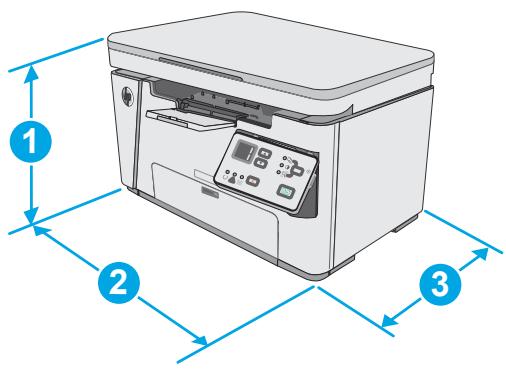
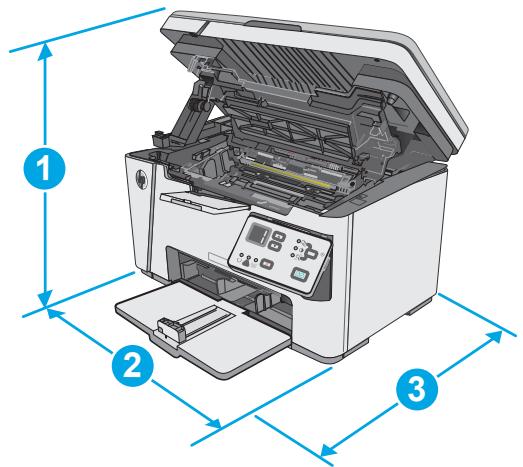
| Printer fully closed | Printer fully open | |
| 1. Height | 254 mm (10 in) | 410 mm (16.1 in) |
| 2. Width | 420 mm (16.5 in) | 420 mm (16.5 in) |
| 3. Depth | 266 mm (14.4 in) | 365 mm (17.2 in) |
| Weight (with cartridges) | 8.2 kg (18.1 lb) |
Power consumption, electrical specifications, and acoustic emissions
See www.hp.com/support/ljM25-M27mfp for current information.
CAUTION: Power requirements are based on the country/region where the printer is sold. Do not convert operating voltages. This will damage the printer and void the printer warranty.
Operating-environment range
| Environment | Recommended | Allowed |
| Temperature | 17° to 25°C (62.6° to 77°F) | 15° to 30°C (59° to 86°F) |
| Relative humidity | 30% to 70% relative humidity (RH), non-condensing | 10% to 80% (RH), non-condensing |
| Altitude | Not applicable | 0 to 3048 m (0 to 10,000 ft) |
Printer hardware setup and software installation
For basic setup instructions, see the Setup Poster and Getting Started Guide that came with the printer. For additional instructions, go to HP support on the Web.
Go to www.hp.com/support/ljM25-M27mfp for HP's all-inclusive help for the printer. Find the following support:
Install and configure Learn and use - Solve problems Download software and firmware updates - Join support forums Find warranty and regulatory information
2 Paper trays
- Load the input tray
- Load the input tray
- Load and print envelopes
For more information:
The following information is correct at the time of publication. For current information, see www.hp.com/support/ljM25-M27mfp.
HP's all-inclusive help for the printer includes the following information:
Install and configure, Learn and use, Solve problems, Download software and firmware updates, Join support forums, Find warranty and regulatory information
Load the input tray

NOTE: When adding new paper, make sure to remove all of the paper from the input tray and straighten the stack. Do not fan the paper. This reduces jams by preventing multiple sheets of paper from feeding through the printer at one time.
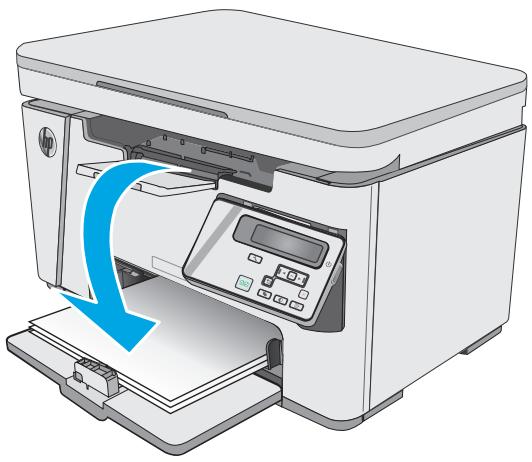
- If it is not already open, open the input tray.
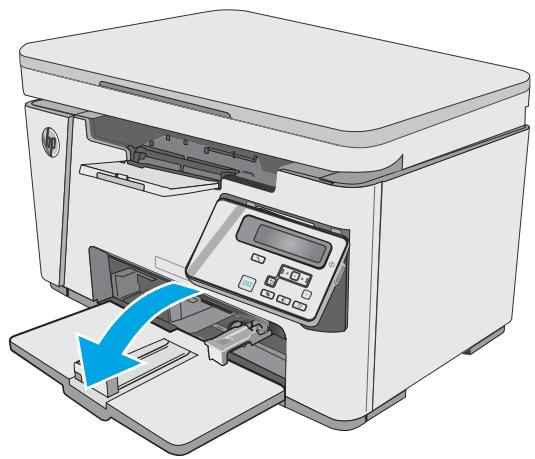
- Adjust the paper width and length guides outward.
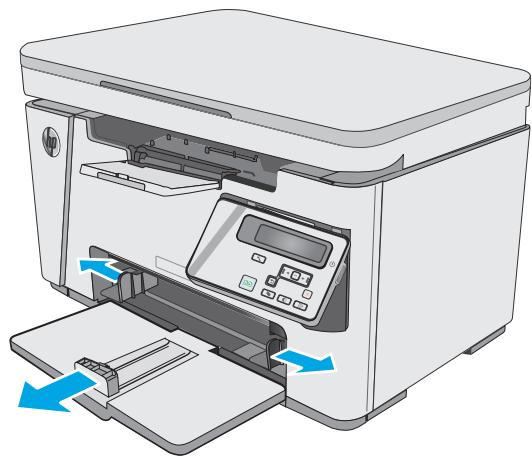
- Load the paper face-up with the top forward in the input tray.
The orientation of the paper in the tray varies depending on the type of print job. For additional information, see the table below.

- Adjust the paper guides inward until they are snug against the paper.
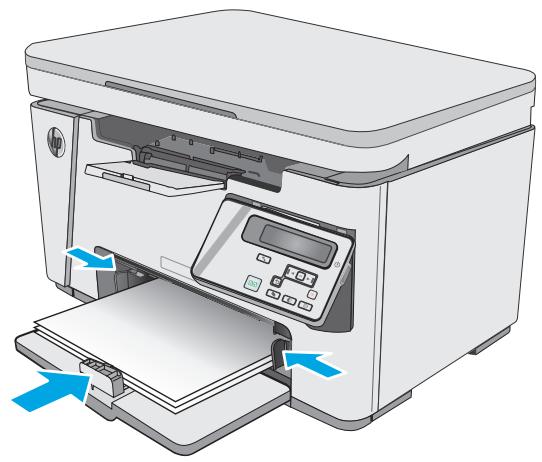
| Paper type | Duplex mode | How to load paper |
| Preprinted or letterhead | 1-sided printing or 2-sided printing | Face-up Top edge leading into the printer |
| Prepunched | 1-sided printing or 2-sided printing | Face-up Holes toward the left side of the printer |
Load the input tray
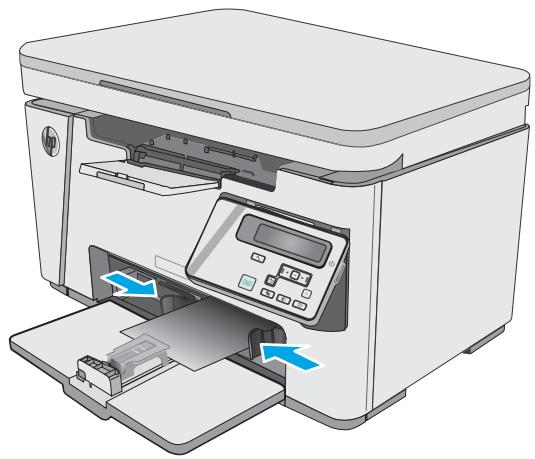
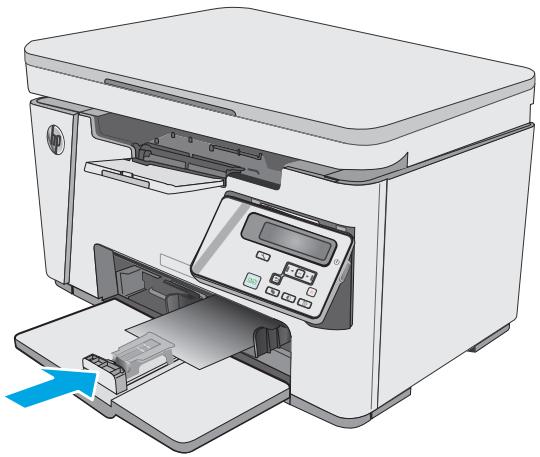
Tray adjustment for small paper sizes
To print on paper shorter than 185 mm (7.3 in), use the short-paper extender to modify the input tray.
- Remove the short-paper extender tool from the storage slot on the right side of the input area.
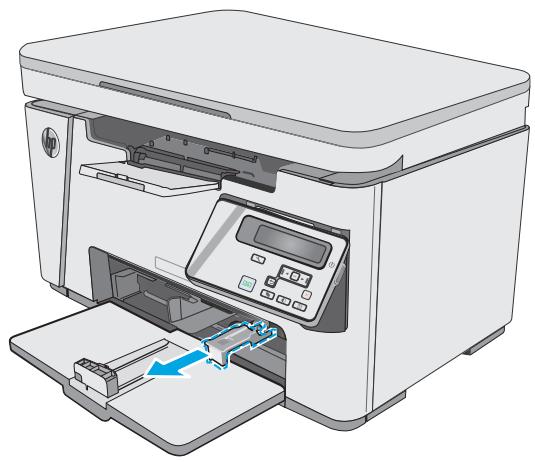
- Attach the tool to the paper length guide on the input tray.
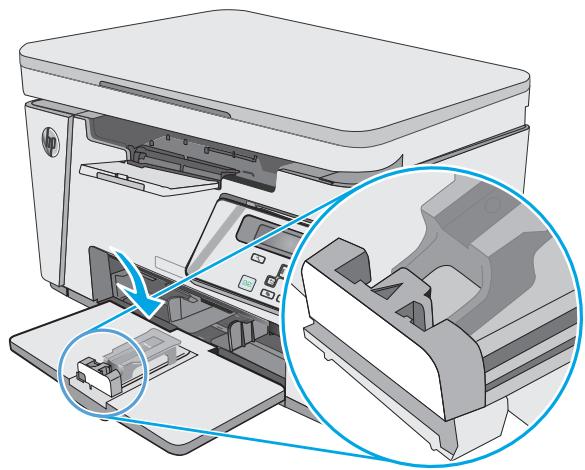
- Load the paper into the tray, and then adjust the paper guides until they are snug against the paper.
- Push the paper into the product until it stops, and then push the paper length guide in so the extender tool supports the paper.
- When finished printing on short paper, remove the short-paper extender tool from the input tray, and then place it in the storage slot.
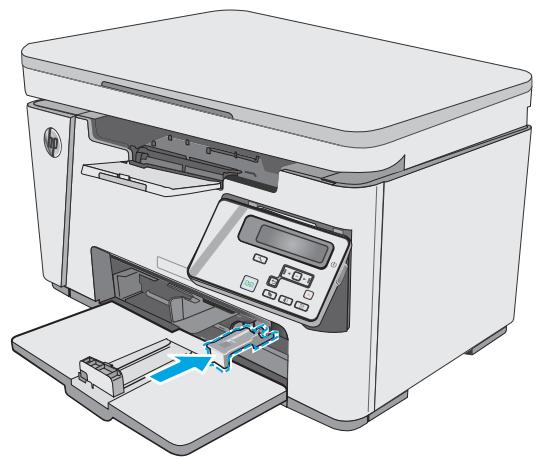
Load and print envelopes
Introduction
The following information describes how to print and load envelopes. For the best performance, only 5 mm (2 in) of envelopes (4 to 6 envelopes) should be loaded into the priority feed tray, and only 10 envelopes should be loaded into the input tray.
To print envelopes, follow these steps to select the correct settings in the print driver.
Print envelopes
- From the software program, select the Print option.
- Select the printer from the list of printers, and then click or tap the Properties or Preferences button to open the print driver.

NOTE: The name of the button varies for different software programs.

NOTE: To access these features from a Windows 8 or 8.1 Start screen, select Devices, select Print, and then select the printer.
- Click or tap the Paper/Quality tab.
- In the Paper source drop-down list, select the tray to be used.
- In the Media drop-down list, select Envelope.
- Click the OK button to close the Document Properties dialog box.
- In the Print dialog box, click the OK button to print the job.
Envelope orientation
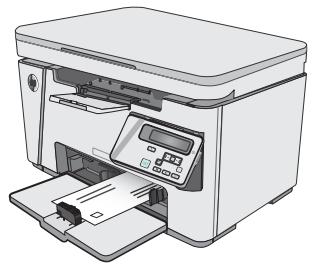
Load envelopes in the input tray face up, with the short, return address end leading into the printer.
3 Supplies, accessories, and parts
Order supplies, accessories, and parts - Replace the toner cartridge
For more information:
The following information is correct at the time of publication. For current information, see www.hp.com/support/ljM25-M27mfp.
HP's all-inclusive help for the printer includes the following information:
Install and configure Learn and use - Solve problems Download software and firmware updates - Join support forums Find warranty and regulatory information
Order supplies, accessories, and parts
Ordering
| Order supplies and paper | www.hp.com/go/suresupply |
| Order genuine HP parts or accessories | www.hp.com/buy/parts |
| Order through service or support providers | Contact an HP-authorized service or support provider. |
| Order using the HP Embedded Web Server (EWS) | To access, in a supported Web browser on the computer, enter the printer IP address or host name in the address/URL field. The EWS contains a link to the HP SureSupply Web site, which provides options for purchasing Original HP supplies. |
Supplies and accessories
| Item | Description | Cartridge number | Part number |
| Supplies | |||
| HP 79A Black Original LaserJet Toner Cartridge | Replacement black toner cartridge for M25–M27 models | 79A | CF279A |
Customer self-repair parts
Customer Self-Repair (CSR) parts are available for many HP LaserJet printers to reduce repair time. More information about the CSR program and benefits can be found at www.hp.com/go/csr-support and www.hp.com/go/csr-faq.
Genuine HP replacement parts can be ordered at www.hp.com/buy/parts or by contacting an HP-authorized service or support provider. When ordering, one of the following will be needed: part number, serial number (found on back of printer), product number, or printer name.
- Parts listed as Mandatory self-replacement are to be installed by customers, unless you are willing to pay HP service personnel to perform the repair. For these parts, on-site or return-to-depot support is not provided under the HP product warranty.
- Parts listed as Optional self-replacement can be installed by HP service personnel at your request for no additional charge during the printer warranty period.
Replace the toner cartridge
Introduction - Toner-cartridge information - Remove and replace the toner cartridge
Introduction
The following information provides details about the toner cartridge for the printer, and it includes instructions to replace it.
Toner-cartridge information
This printer indicates when the toner cartridge level is low and very low. The actual toner cartridge life remaining can vary. Consider having a replacement cartridge available to install when print quality is no longer acceptable.
To purchase cartridges or check cartridge compatibility for the printer, go to HP SureSupply at www.hp.com/go/suresupply. Scroll to the bottom of the page and verify that the country/region is correct.
| Item | Description | Cartridge number | Part number |
| HP 79A Black Original LaserJet Toner Cartridge | Replacement black toner cartridge for M25-M27 models | 79A | CF279A |

NOTE: High-yield toner cartridges contain more toner than standard cartridges for increased page yield. For more information, go to www.hp.com/go/learnaboutsupplies.
Do not remove the toner cartridge from its package until it is time to replace it.

CAUTION: To prevent damage to the toner cartridge, do not expose it to light for more than a few minutes. Cover the green imaging drum if the toner cartridge must be removed from the printer for an extended period of time.
The following illustration shows the toner-cartridge components.
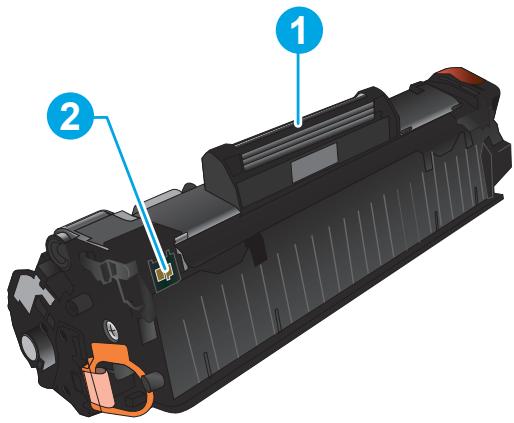
1 Imaging drum
CAUTION: Do not touch the imaging drum. Fingerprints can cause print-quality problems.
2 Memory chip
CAUTION: If toner gets on clothing, wipe it off by using a dry cloth and wash the clothes in cold water. Hot water sets toner into fabric.
NOTE: Information about recycling used toner cartridges is in the toner-cartridge box.
Remove and replace the toner cartridge
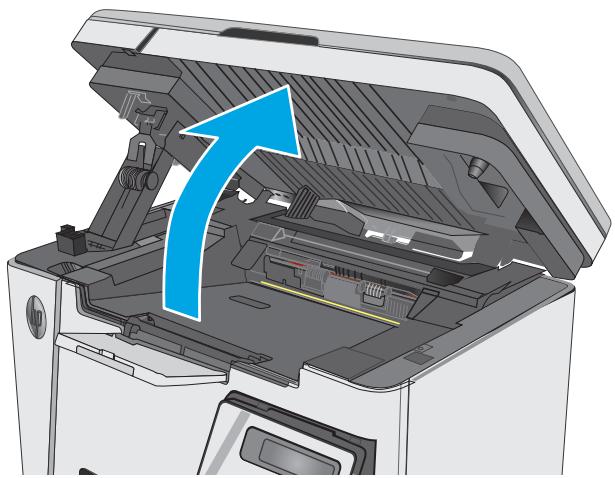
- Lift the scanner assembly.
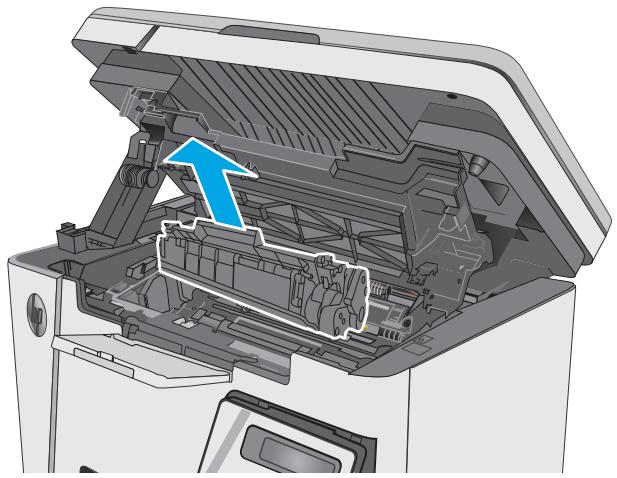
- Remove the used toner cartridge from the printer.
- Remove the new toner cartridge package from the bag. Place the used toner cartridge in the bag for recycling.
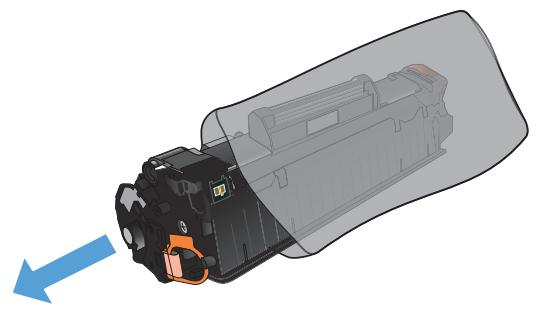
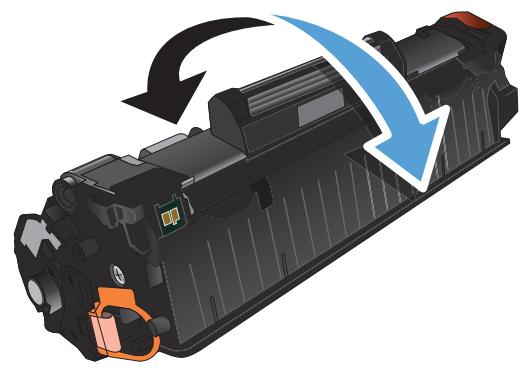
- Grasp both sides of the toner cartridge and distribute the toner by gently rocking the cartridge.
CAUTION: Do not touch the shutter or the surface of the roller.
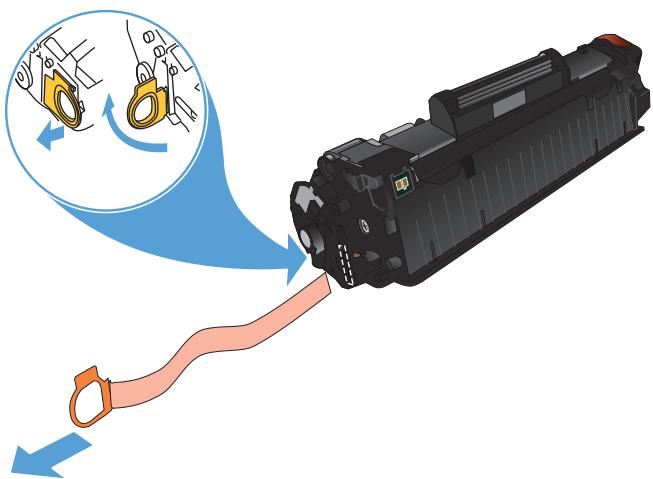
- Bend the tab on the left side of the cartridge until the tab breaks loose. Pull the tab until all the tape is removed from the cartridge. Place the tab and tape in the toner cartridge box to return for recycling.
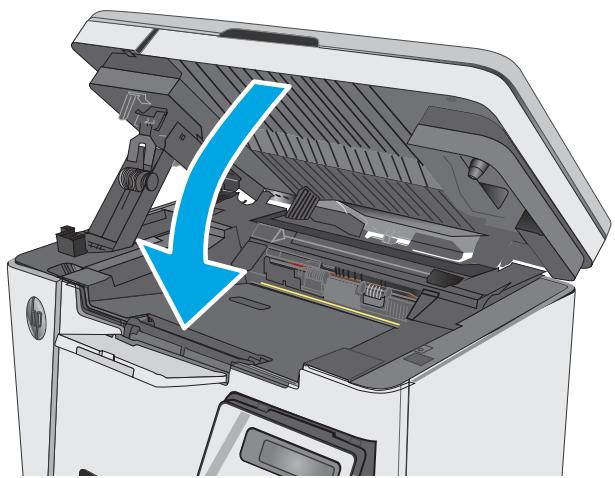
- Install the new toner cartridge until it is firmly seated.
- Close the scanner assembly.

4 Print
Print tasks (Windows) - Print tasks (OS X) - Mobile printing
For more information:
The following information is correct at the time of publication. For current information, see www.hp.com/support/ljM25-M27mfp.
HP's all-inclusive help for the printer includes the following information:
Install and configure Learn and use - Solve problems Download software and firmware updates - Join support forums Find warranty and regulatory information
Print tasks (Windows)
How to print (Windows)
The following procedure describes the basic printing process for Windows.
- From the software program, select the Print option.
- Select the product from the list of printers, and then click or tap the Properties or Preferences button to open the print driver.

NOTE: The name of the button varies for different software programs.
- Click or tap the tabs in the print driver to configure the available options.
- Click or tap the OK button to return to the Print dialog box. Select the number of copies to print from this screen.
- Click or tap the OK button to print the job.
Manually print on both sides (Windows)
- From the software program, select the Print option.
- Select the product from the list of printers, and then click or tap the Properties or Preferences button to open the print driver.
NOTE: The name of the button varies for different software programs.
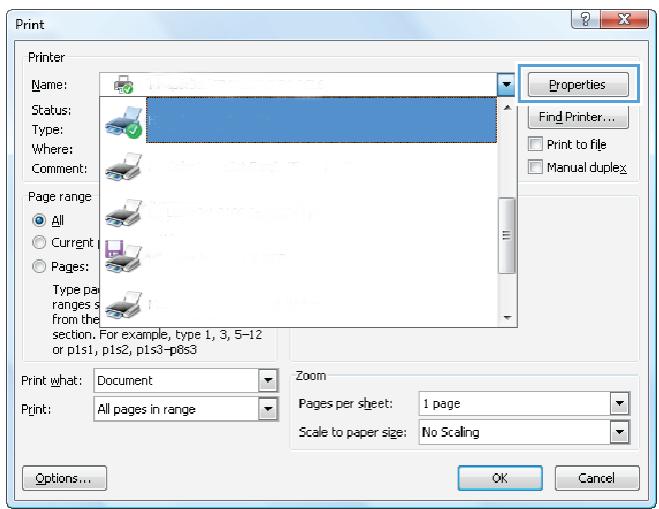
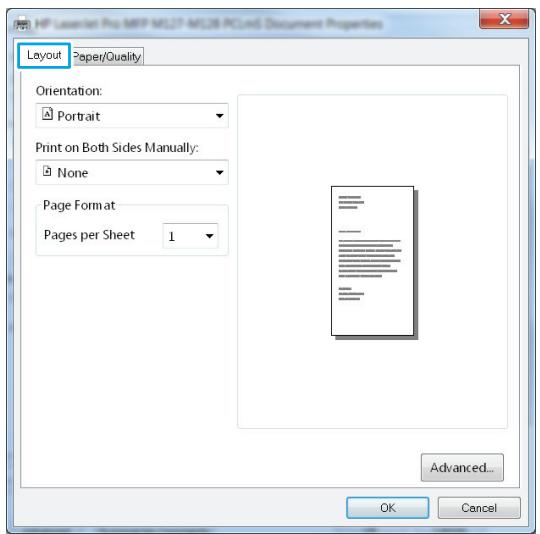
- Click or tap the Layout tab.
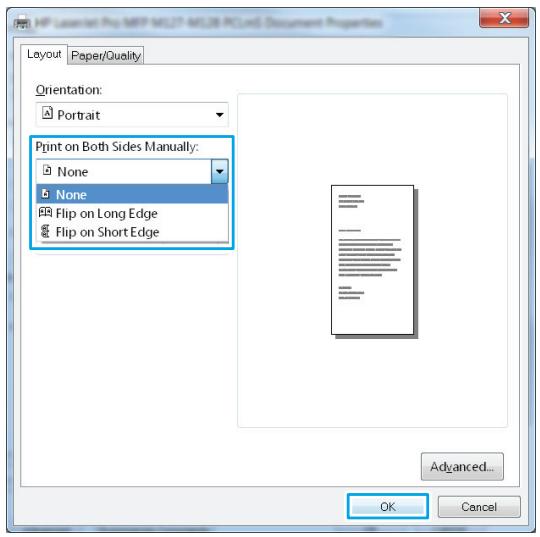
- Select the appropriate duplex option from the Print on Both Sides Manually drop-down list, and then click or tap the OK button.
- In the Print dialog box, click or tap the OK button to print the job. The product will print the first side of all the pages in the document first.
- Retrieve the printed stack from the output bin, and place it with the printed-side facing down, top edge first in the input tray.
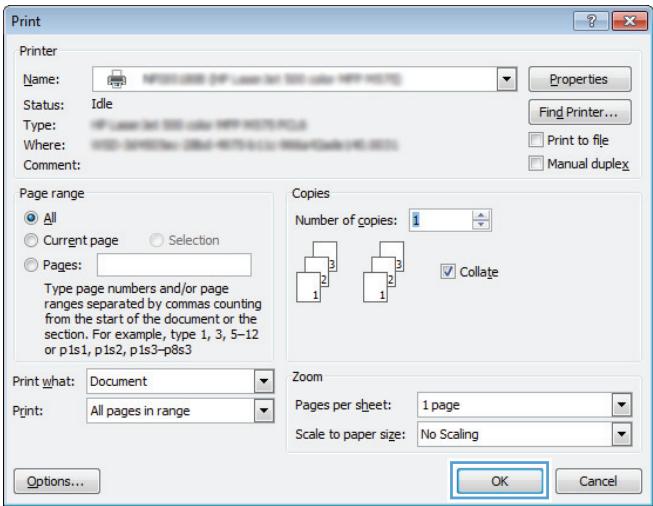
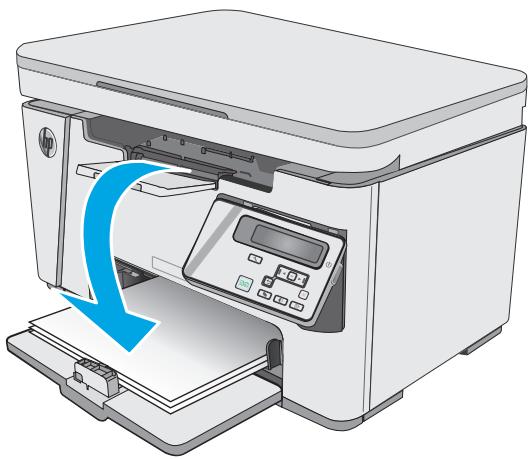
- At the computer, click or tap the OK button to print the second side of the job.
- If prompted, touch or press the appropriate control panel button to continue.
Print multiple pages per sheet (Windows)
- From the software program, select the Print option.
- Select the product from the list of printers, and then click or tap the Properties or Preferences button to open the print driver.
NOTE: The name of the button varies for different software programs.
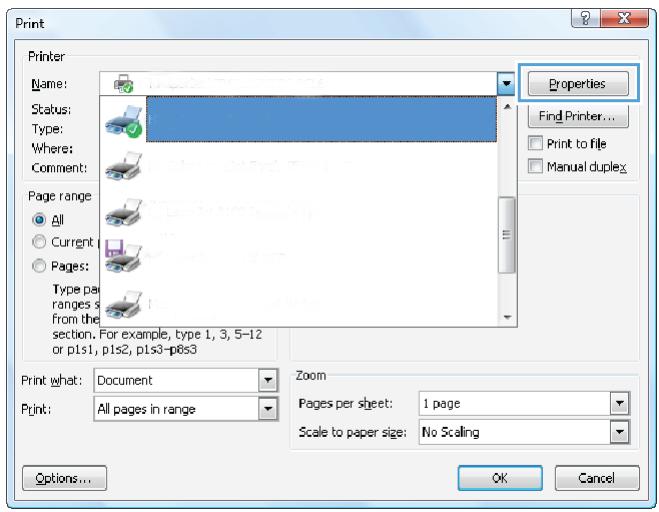
- Click or tap the Layout tab.
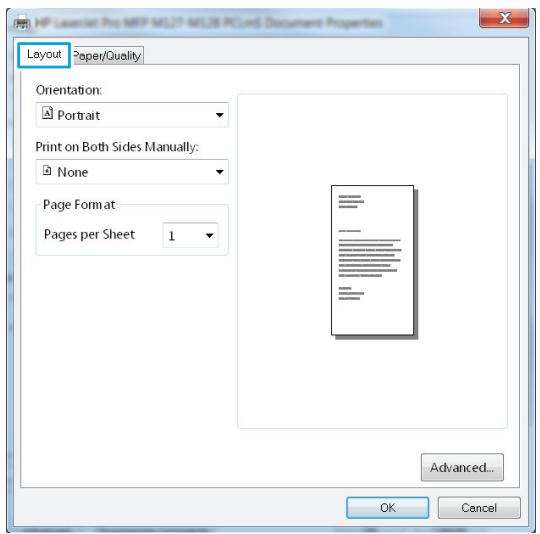
- Select the correct Orientation option from the drop-down list.
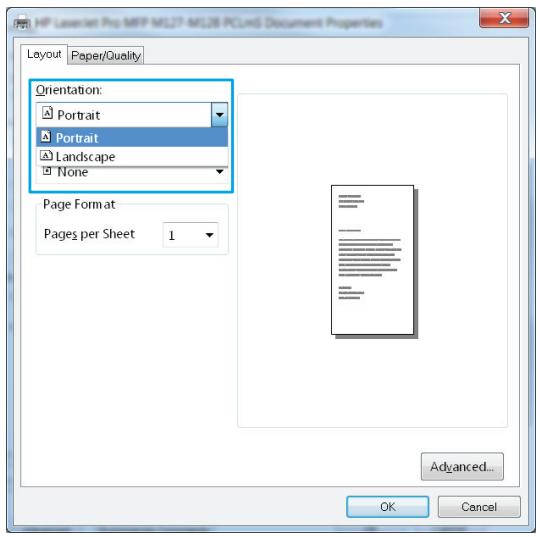
- Select the correct number of pages per sheet from the Pages per sheet drop-down list, and then click or tap the Advanced button.
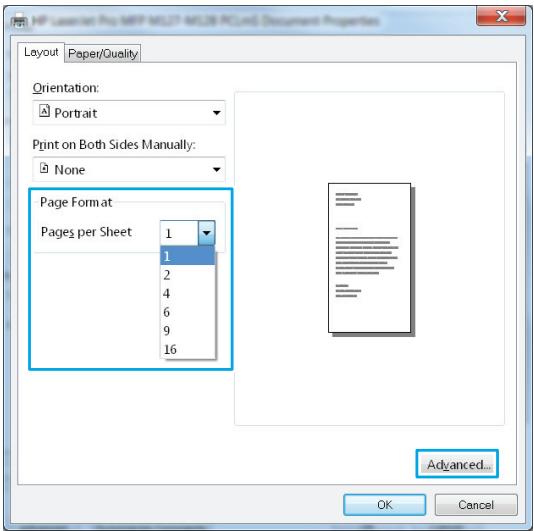
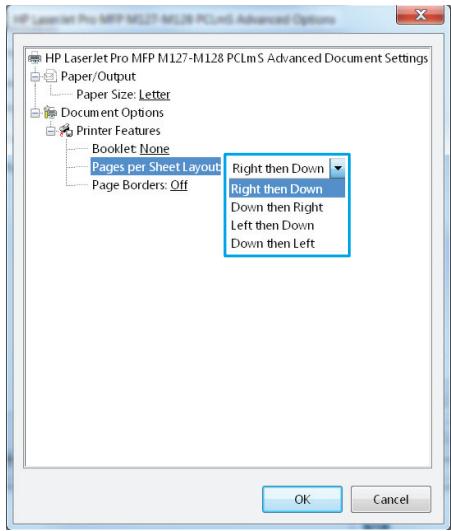
- Select the correct Pages per Sheet Layout option from the drop-down list.
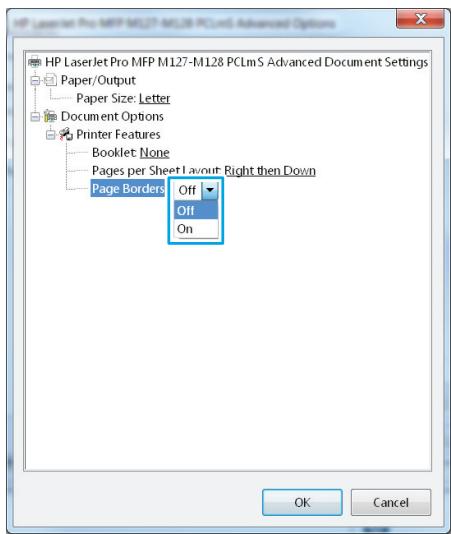
- Select the correct Page Borders option from the drop-down list, click or tap the OK button to close the Advanced Options dialog box, and then click or tap the OK button to close the Properties or Preferences dialog box.
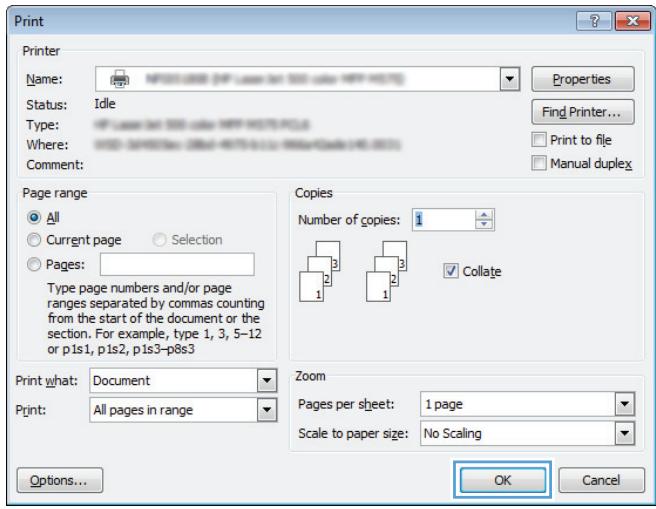
- In the Print dialog box, click or tap the OK button to print the job.
Select the paper type (Windows)
- From the software program, select the Print option.
- Select the product from the list of printers, and then click or tap the Properties or Preferences button to open the print driver.
NOTE: The name of the button varies for different software programs.
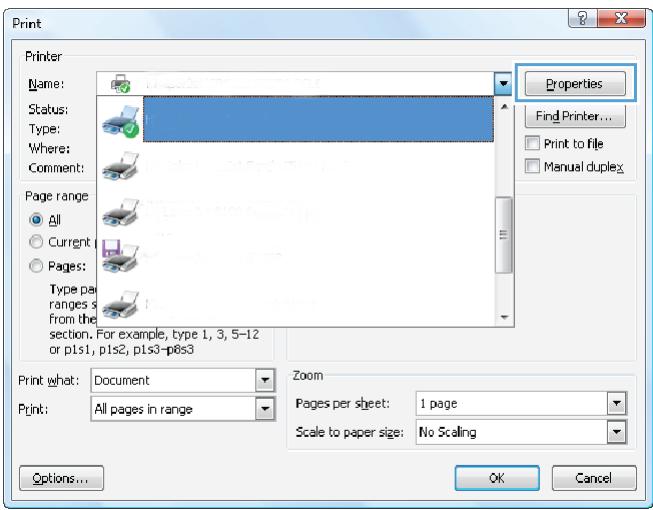
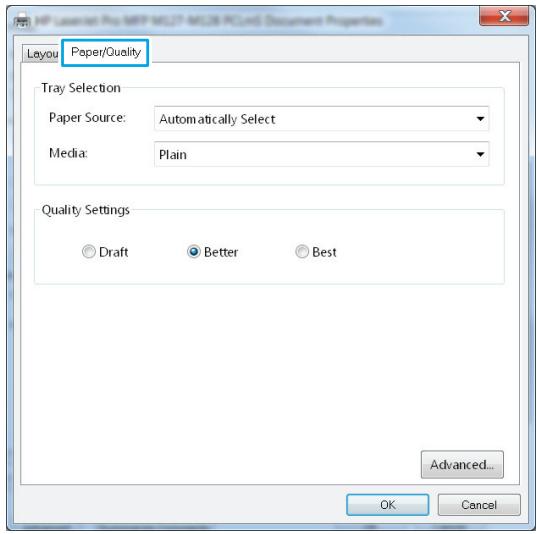
- Click or tap the Paper/Quality tab.
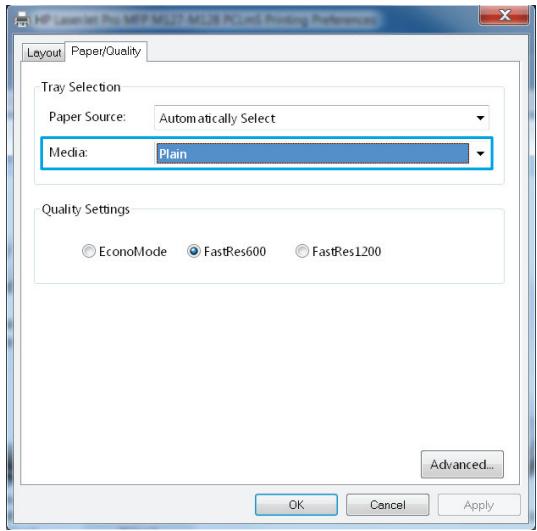
- From the Media drop-down list, select the correct paper type, and then click or tap the OK button to close the Properties or Preferences dialog box.
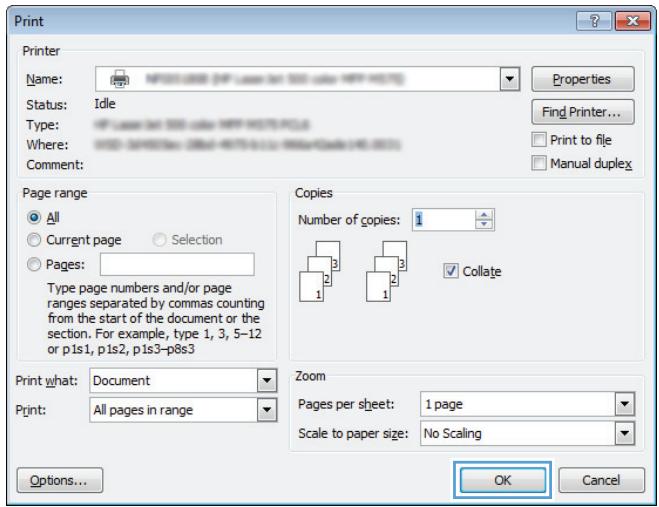
- In the Print dialog box, click the OK button to print the job.
Additional printing information
Go to www.hp.com/support to visit the support Web site for this product and for details about performing specific print tasks, such as the following:
- Select the paper size
- Select the page orientation Create a booklet
- Select the quality settings
- Select page borders
Print tasks (OS X)
How to print (OS X)
The following procedure describes the basic printing process for OS X.
- Click the File menu, and then click the Print option.
- Select the printer.
- Click Show Details or Copies & Pages, and then select other menus to adjust the print settings.

NOTE: The name of the item varies for different software programs.
- Click the Print button.
Manually print on both sides (OS X)

NOTE: This feature is available if you install the HP print driver. It might not be available if you are using AirPrint.
- Click the File menu, and then click the Print option.
- Select the printer.
- Click Show Details or Copies & Pages, and then click the Manual Duplex menu.

NOTE: The name of the item varies for different software programs.
- Click the Manual Duplex box, and select a binding option.
- Click the Print button.
- The product will print the first side of all the pages in the document first.
- Retrieve the printed stack from the output bin and place it with the printed-side facing down in the input tray.
- At the computer, click the Continue button or the OK button (if prompted, see step 9) to print the second side of the job.
- If prompted, touch the appropriate control panel button to continue.
Print multiple pages per sheet (OS X)
- Click the File menu, and then click the Print option.
- Select the printer.
- Click Show Details or Copies & Pages, and then click the Layout menu.

NOTE: The name of the item varies for different software programs.
- From the Pages per Sheet drop-down list, select the number of pages that you want to print on each sheet.
- In the Layout Direction area, select the order and placement of the pages on the sheet.
- From the Borders menu, select the type of border to print around each page on the sheet.
- Click the Print button.
Select the paper type (OS X)
- Click the File menu, and then click the Print option.
- In the Printer menu, select the product.
- Click Show Details, open the menus drop-down list, and click Paper/Quality.
- Select a type from the Media-type drop-down list.
- Click the Print button.
Additional print tasks
Go to www.hp.com/support/ljM25-M27mfp.
Instructions are available for performing specific print tasks, such as the following:
Create and use printing shortcuts or presets - Select the paper size, or use a custom paper size - Select the page orientation Create a booklet Scale a document to fit a specific paper size - Print the first or last pages of the document on different paper - Print watermarks on a document
Mobile printing
Introduction
HP offers multiple mobile and ePrint solutions to enable easy printing to an HP printer from a laptop, tablet, smartphone, or other mobile device. To see the full list and to determine the best choice, go to www.hp.com/ go/LaserJetMobilePrinting.

NOTE: Update the printer firmware to ensure all mobile printing and ePrint capabilities are supported.
- Wireless Direct (wireless models only) HP ePrint via email HP ePrint software Android embedded printing
Wireless Direct (wireless models only)
Wireless Direct enables printing from a wireless mobile device without requiring a connection to a network or the Internet.

NOTE: Not all mobile operating systems are currently supported by Wireless Direct.

NOTE: For non-Wireless Direct capable mobile devices, the Wireless Direct connection only enables printing. After using Wireless Direct to print, you must reconnect to a local network in order to access the Internet.
The following devices and computer operating systems support Wireless Direct:
Android 4.0 and later tablets and phones with the HP Print Service or Mopria mobile printing plugin installed Most Windows 8.1 computers, tablets, and laptops that have the HP print driver installed
The following devices and computer operating systems to not support Wireless Direct, but can print to a printer that does:
Apple iPhone and iPad Mac computers running OS X
For more information on Wireless Direct printing, go to www.hp.com/go/wirelessprinting.
Wireless Direct capabilities can be enabled or disabled from the printer control panel.
Enable or disable Wireless Direct
Wireless Direct capabilities must be enabled first from the printer EWS.
1 LCD control panel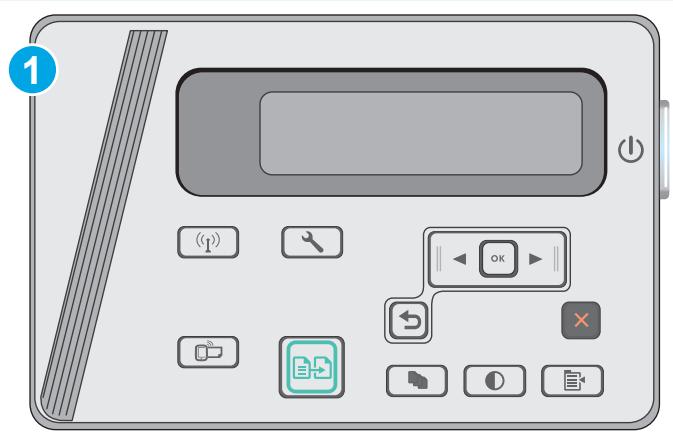
- LCD control panels: On the printer control panel, press the Setup button.
- Open the following menus:
Network Setup - Wireless Menu Wireless Direct
- Select the On option, and then press the OK button. The product saves the setting and then returns the control panel to the Wireless Direct Settings menu.
Change the printer Wireless Direct name
Follow this procedure to change the printer Wireless Direct name using the HP Embedded Web Server (EWS):
Step one: Open the HP Embedded Web Server
1 LCD control panel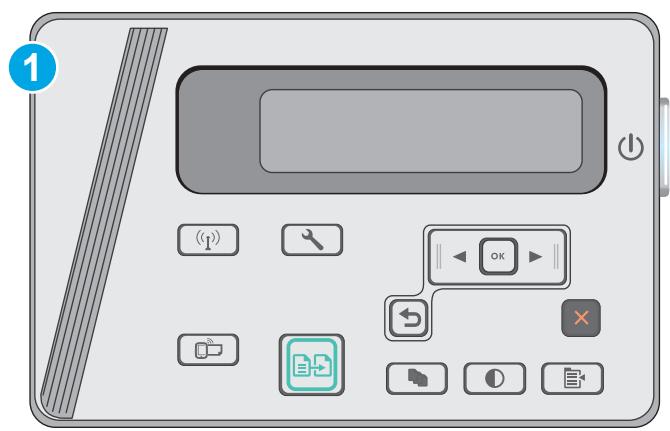
- LCD control panels: On the printer control panel, press the Setup button. Open the Network Setup menu, and then select Show IP Address to display the IP address or host name.
- Open a Web browser, and in the address line, type the IP address or host name exactly as it displays on the printer control panel. Press the Enter key on the computer keyboard. The EWS opens.

https://10.10.XX.XXX/

NOTE: If the Web browser displays a message indicating that accessing the website might not be safe, select the option to continue to the website. Accessing this website will not harm the computer.
Step two: Change the Wireless Direct name
- Click the Networking tab.
- On the left navigation pane, click the Wireless Direct Setup link.
- In the Name (SSID) field, enter the new name.
- Click Apply.
HP ePrint via email
Use HP ePrint to print documents by sending them as an email attachment to the printer's email address from any email-enabled device.
To use HP ePrint, the printer must meet these requirements:
The printer must be connected to a wired or wireless network and have Internet access. HP Web Services must be enabled on the printer, and the printer must be registered with HP Connected. Follow this procedure to enable HP Web Services and register with HP Connected:
1 LCD control panel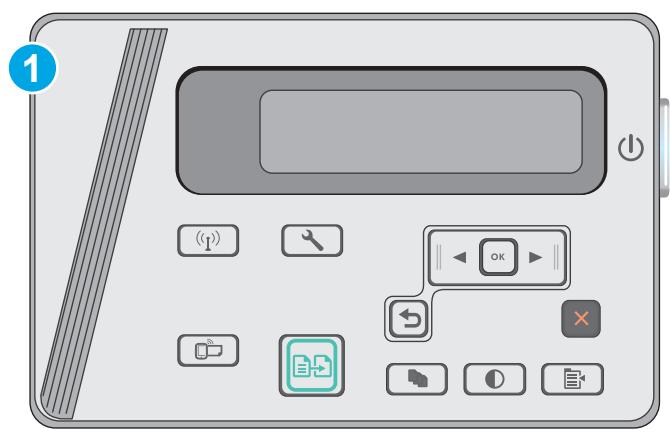
LCD control panels
- On the printer control panel, press the Setup button. Open the Network Setup menu, and then select Show IP Address to display the IP address or host name.
- Open a Web browser, and in the address line, type the IP address or host name exactly as it displays on the printer control panel. Press the Enter key on the computer keyboard. The EWS opens.

https://10.10.XX.XXX/

NOTE: If the Web browser displays a message indicating that accessing the website might not be safe, select the option to continue to the website. Accessing this website will not harm the computer.
- Click the HP Web Services tab, and then click Enable. The printer enables Web Services, and then prints an information page.
The information page contains the printer code necessary to register the HP printer at HP Connected.
- Go to www.hpcconnected.com to create an HP ePrint account and complete the setup process.
HP ePrint software
The HP ePrint software makes it easy to print from a Windows or Mac desktop or laptop computer to any HP ePrint-capable printer. This software makes it easy to find HP ePrint-enabled printers that are registered to your HP Connected account. The target HP printer can be located in the office or at locations across the globe.
Windows: After installing the software, open the Print option from within your application, and then select HP ePrint from the installed printers list. Click the Properties button to configure print options. - OS X: After installing the software, select File, Print, and then select the arrow next to PDF (in the bottom left of the driver screen). Select HP ePrint.
For Windows, the HP ePrint software supports TCP/IP printing to local network printers on the network (LAN or WAN) to products that support UPD PostScript®.
Windows and OS X both support IPP printing to LAN or WAN network-connected products that support ePCL.
Windows and OS X also both support printing PDF documents to public print locations and printing using HP ePrint via email through the cloud.
Go to www.hp.com/go/eprintsoftware for drivers and information.

NOTE: For Windows, the name of the HP ePrint Software print driver is HP ePrint + JetAdvantage.

NOTE: The HP ePrint software is a PDF workflow utility for OS X, and is not technically a print driver.

NOTE: HP ePrint Software does not support USB printing.
Android embedded printing
HP's built-in print solution for Android and Kindle enables mobile devices to automatically find and print to HP printers that are either on a network or within wireless range for Wireless printing.
The printer must be connected to the same network (sub-net) as the Android device.
The print solution is built into the many versions of the operating system.

NOTE: If printing is not available on your device, go to the Google Play > Android apps and install the HP Print Service Plugin.
For more information on how to use Android embedded printing and which Android devices are supported, go to www.hp.com/go/LaserJetMobilePrinting.
5 Copy
Make a copy - Copy on both sides (duplex)
For more information:
The following information is correct at the time of publication. For current information, see www.hp.com/support/ljM25-M27mfp.
HP's all-inclusive help for the printer includes the following information:
Install and configure, Learn and use, Solve problems, Download software and firmware updates, Join support forums, Find warranty and regulatory information

NOTE: The steps vary according to the type of control panel.
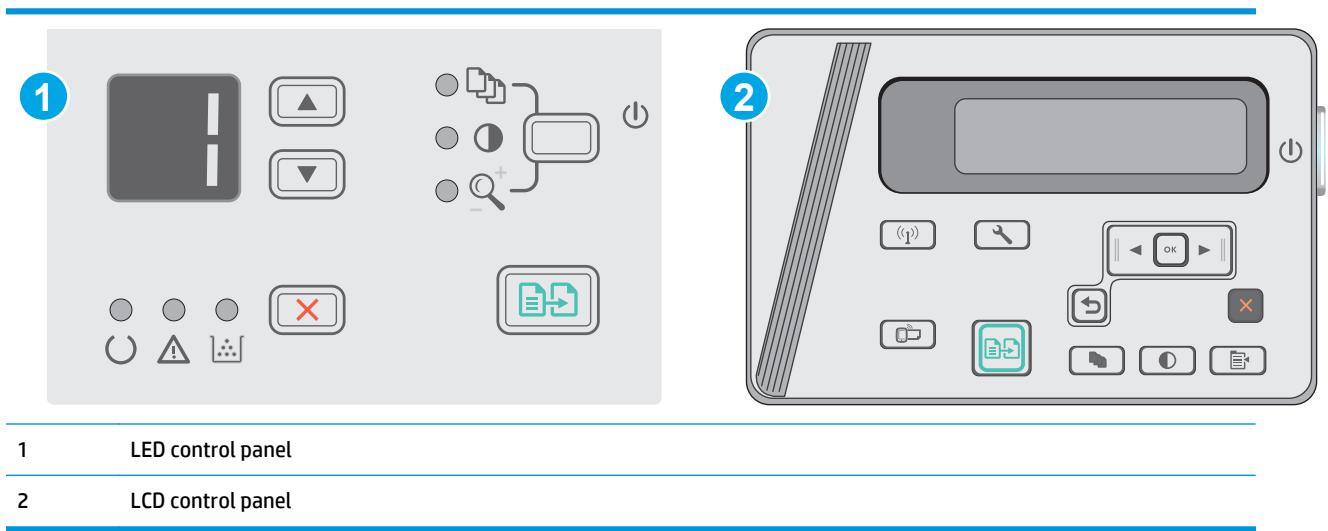
1 LED control panel 2 LCD control panel
LED control panels
- Load the document on the scanner glass according to the indicators on the product.
- Close the scanner.
- At the product control panel, press the Setup button, and make sure that the Number of Copies light is on.
- Press the arrow buttons to adjust the number of copies.
- Press the Start Copy button to start copying.
LCD control panels
- Load the document on the scanner glass according to the indicators on the product.
- Close the scanner.
- At the product control panel, press the Number of Copies button.
- Select the number of copies.
- Press the Start Copy button to start copying.
Copy on both sides (duplex)
Copy on both sides manually

NOTE: The steps vary according to the type of control panel.
LED and LCD control panels:
- Place the document face-down on the scanner glass with the upper-left corner of the page in the upper-left corner of the glass. Close the scanner.
- Press the Start Copy button to start copying.
- Retrieve the printed page from the output bin, and place it with the printed-side facing down, top edge first in the input tray.
- Flip the original document on the scanner glass to copy the second side.
- Press the Start Copy button to start copying.
- Repeat this process until you have copied all of the pages.
6 Scan
- Scan by using the HP Scan software (Windows)
- Scan by using the HP Scan software (OS X)
For more information:
The following information is correct at the time of publication. For current information, see www.hp.com/support/ljM25-M27mfp.
HP's all-inclusive help for the printer includes the following information:
Install and configure, learn and use, solve problems, download software and firmware updates, join support forums, find warranty and regulatory information.
Scan by using the HP Scan software (Windows)
Use the HP Scan software to initiate scanning from software on your computer. You can save the scanned image as a file or send it to another software application.
- Load the document on the scanner glass according to the indicators on the printer.
- From the computer, click Start, and then click Programs (or All Programs in Windows XP).
- Click HP, and then select your printer.
- Click HP Scan, select a scanning shortcut, and then adjust the settings if necessary.
- Click Scan.
NOTE: Click More to gain access to more options.
Click Create New Scan Shortcut to create a customized set of settings and save it in the list of shortcuts.
Scan by using the HP Scan software (OS X)
Use the HP Scan software to initiate scanning from software on your computer.
- Load the document on the scanner glass according to the indicators on the printer.
- From the computer, open HP Easy Scan, which is located inside the Applications folder.
- Follow the on-screen instructions to scan the document.
- When you have scanned all the pages, click File and then Save to save them to a file.
7 Manage the printer
- Change the printer connection type (Windows) Advanced configuration with HP Embedded Web Server (EWS) and HP Device Toolbox (Windows) Advanced configuration with HP Utility for OS X
- Configure IP network settings
- Printer security features Energy-conservation settings
- Update the firmware
For more information:
The following information is correct at the time of publication. For current information, see www.hp.com/support/ljM25-M27mfp.
HP's all-inclusive help for the printer includes the following information:
Install and configure Learn and use - Solve problems Download software and firmware updates - Join support forums Find warranty and regulatory information
Change the printer connection type (Windows)
If you are already using the printer and you wish to change the way it is connected, use the Reconfigure your HP Device shortcut on your computer desktop to change the connection. For example, you can reconfigure the printer to use a different wireless address, to connect to a wired or wireless network, or change from a network connection to a USB connection. You can change the configuration without inserting the printer CD. After you select the type of connection you wish to make, the program goes directly to the portion of the printer setup procedure that needs to change.
Advanced configuration with HP Embedded Web Server (EWS) and HP Device Toolbox (Windows)
Use the HP Embedded Web Server to manage printing functions from a computer instead of the printer control panel.
The HP Embedded Web Server works when the printer is connected to an IP-based network. The HP Embedded Web Server does not support IPX-based printer connections. Internet access is not needed to open and use the HP Embedded Web Server.
When the printer is connected to the network, the HP Embedded Web Server is automatically available.

NOTE: HP Device Toolbox is software used to connect to the HP Embedded Web Server when the printer is connected to a computer via USB. It is available only if a full installation was performed when the printer was installed on a computer. Depending on how the printer is connected, some features might not be available.

NOTE: The HP Embedded Web Server is not accessible beyond the network firewall.
Method one: Open the HP Embedded Web Server (EWS) from the Start menu
- Click the Start button, and then click the Programs item.
- Click the HP printer group, and then click the HP Device Toolbox item.
Method two: Open the HP Embedded Web Server (EWS) from a Web browser

NOTE: The steps vary according to the type of control panel.
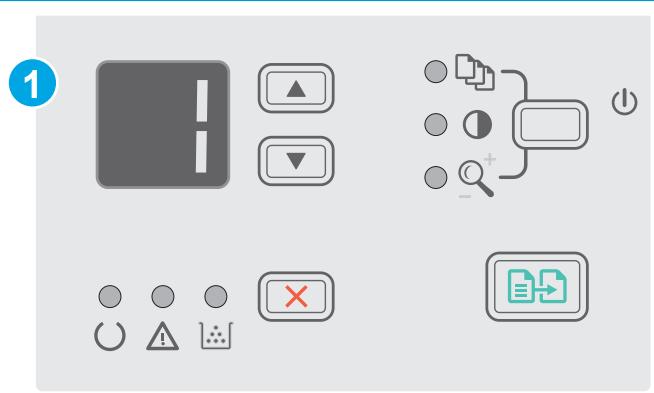
1 LED control panel 2 LCD control panel
- LCD control panels: On the printer control panel, press the Setup button. Open the Network Setup menu, and then select Show IP Address to display the IP address or host name.
- Open a Web browser, and in the address line, type the IP address or host name exactly as it displays on the printer control panel. Press the Enter key on the computer keyboard. The EWS opens.

https://10.10.XX.XXX/

NOTE: If the Web browser displays a message indicating that accessing the website might not be safe, select the option to continue to the website. Accessing this website will not harm the computer.
| Tab or section | Description |
| Home tab Provides printer, status, and configuration information. | Device Status: Shows the printer status and shows the approximate percent life remaining of HP supplies. Supplies Status: Shows the approximate percent life remaining of HP supplies. Actual supply life remaining can vary. Consider having a replacement supply available to install when print quality is no longer acceptable. The supply does not need to be replaced unless the print quality is no longer acceptable. Device Configuration: Shows the information found on the printer configuration page. Network Summary: Shows the information found on the printer network configuration page. Reports: Print the configuration and supplies status pages that the printer generates. Event Log: Shows a list of all printer events and errors. |
| System tab Provides the ability to configure the printer from your computer. | Device Information: Provides basic printer and company information. Paper Setup: Change the default paper-handling settings for the printer. EcoSMART Console: Change the default times for entering Sleep mode or Auto Power Down mode. Configure which events cause the product to wake. Paper Types: Configure print modes that correspond to the paper types that the printer accepts. System Setup: Change the system defaults for the printer. Service: Perform the cleaning procedure on the printer. Product Security: Set or change the Administrator password. |
| Networking tab (Network-connected printers only) Provides the ability to change network settings from your computer. | Network administrators can use this tab to control network-related settings for the printer when it is connected to an IP-based network. It also allows the network administrator to set up Wireless Direct functionality. This tab does not appear if the printer is directly connected to a computer. |
| HP Web Services tab | Use this tab to set up and use various Web tools with the printer. |
Advanced configuration with HP Utility for OS X
Use the HP Utility to check printer status or to view or change printer settings from your computer.
You can use the HP Utility when the printer is connected with a USB cable or is connected to a TCP/IP-based network.
Open HP Utility
From the Finder, click Applications, click HP, and then click HP Utility.
If HP Utility is not included, use the following procedure to open it:
- At the computer, open the Apple menu, click the System Preferences menu, and then click the Print & Fax icon or the Print & Scan icon.
- Select the product in the left side of the window.
- Click the Options & Supplies button.
- Click the Utility tab.
- Click the Open Printer Utility button.
HP Utility features
The HP Utility toolbar includes these items:
Devices: Click this button to show or hide Mac products found by the HP Utility. - All Settings: Click this button to return to the HP Utility main view. HP Support: Click this button to open a browser and go to the HP support website. Supplies: Click this button to open the HP SureSupply website. - Registration: Click this button to open the HP registration website. Recycling: Click this button to open the HP Planet Partners Recycling Program website.
HP Utility consists of pages that you open by clicking in the All Settings list. The following table describes the tasks that you can perform with HP Utility.
| Menu | Item | Description |
| Information and Support | Supplies Status | Show the product supplies status and provides links for ordering supplies online. |
| Device Information | Show information about the currently selected product, including the product Service ID (if assigned), the firmware version (FW Version), the Serial Number, and the IP address. | |
| HP Connected | Access the HP Connected Web site. | |
| Information | Message Center | Display error events that have occurred with the product. |
| Printer Settings | Auto-off | Configure the product to automatically turn off after a period of inactivity. You can adjust the number of minutes after which the product turns off. |
| Network Settings | Configure the network settings, such as the IPv4 settings, IPv6 settings, Bonjour settings, and other settings. | |
| Supplies Management | Configure how the product should behave when supplies are nearing the end of their estimated life. | |
| Trays Configuration | Change the paper size and type for each of the trays. | |
| Additional Settings | Open the HP Embedded Web Server (EWS) for the product. | |
| NOTE: USB connections are not supported. |
Configure IP network settings
Introduction - Printer sharing disclaimer View or change network settings - Rename the printer on a network - Manually configure IPv4 TCP/IP parameters from the control panel
Introduction
Use the following sections to configure the printer network settings.
Printer sharing disclaimer
HP does not support peer-to-peer networking, as the feature is a function of Microsoft operating systems and not of the HP printer drivers. Go to Microsoft at www.microsoft.com.
View or change network settings
Use the HP Embedded Web Server to view or change IP configuration settings.
- Open the HP Embedded Web Server (EWS):
a. On the printer control panel, press the OK button. Open the Network Setup menu, and then select Show IP Address to display the IP address or host name. b. Open a Web browser, and in the address line, type the IP address or host name exactly as it displays on the printer control panel. Press the Enter key on the computer keyboard. The EWS opens.

https://10.10.XXXXX/

NOTE: If the Web browser displays a "There is a problem with this website's security certificate" message when attempting to open the EWS, click "Continue to this website (not recommended)".
Choosing "Continue to this website (not recommended)" will not harm the computer while navigating within the EWS for the HP printer.
- Click the Networking tab to obtain network information. Change settings as needed.
Rename the printer on a network
To rename the printer on a network so that it can be uniquely identified, use the HP Embedded Web Server.
- Open the HP Embedded Web Server (EWS):
a. On the printer control panel, press the OK button. Open the Network Setup menu, and then select Show IP Address to display the IP address or host name.
b. Open a Web browser, and in the address line, type the IP address or host name exactly as it displays on the printer control panel. Press the Enter key on the computer keyboard. The EWS opens.

https://10.10.XX.XXX/

NOTE: If the Web browser displays a "There is a problem with this website's security certificate" message when attempting to open the EWS, click "Continue to this website (not recommended)".
Choosing "Continue to this website (not recommended)" will not harm the computer while navigating within the EWS for the HP printer.
- Open the System tab.
- On the Device Information page, the default printer name is in the Device Description field. You can change this name to uniquely identify this printer.

NOTE: Completing the other fields on this page is optional.
- Click the Apply button to save the changes.
Manually configure IPv4 TCP/IP parameters from the control panel
Use the control-panel menus to manually set an IPv4 address, subnet mask, and default gateway.
- On the printer control panel, press the OK button.
- Open the following menus:
Network Setup > IPv4 Config Method - Manual
- Use the arrow keys and the OK button to enter the IP address, subnet mask, and default gateway, and then touch the OK button to save the changes.
Printer security features
Introduction
The printer includes several security features to restrict who has access to configuration settings, to secure data, and to prevent access to valuable hardware components.
- Assign or change the system password using the Embedded Web Server
Assign or change the system password using the Embedded Web Server
Assign an administrator password for access to the printer and the HP Embedded Web Server so that unauthorized users cannot change the printer settings.

NOTE: The steps vary according to the type of control panel.
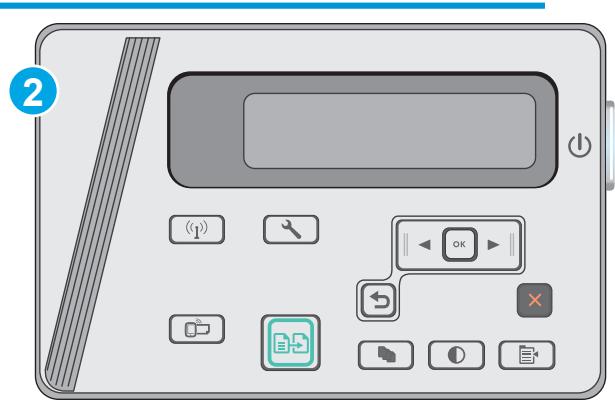
1 LED control panel 2 LCD control panel
- Open the HP Embedded Web Server (EWS):
LED control panels
a. Open the Start menu, and then select Programs or All Programs. b. Open the HP group, open the printer group, and then select HP Device Toolbox.
LCD control panels:
a. LCD control panels: On the printer control panel, press the Setup button. Open the Network Setup menu, and then select Show IP Address to display the IP address or host name.
b. Open a Web browser, and in the address line, type the IP address or host name exactly as it displays on the printer control panel. Press the Enter key on the computer keyboard. The EWS opens.

NOTE: If the Web browser displays a message indicating that accessing the website might not be safe, select the option to continue to the website. Accessing this website will not harm the computer.
- On the System tab, click the Product Security link in the left navigation pane.
- In the area labeled Product Security, enter the password in the Password field.
- Re-enter the password in the Confirm Password field.
- Click the Apply button.

NOTE: Make note of the password and store it in a safe place.
Energy-conservation settings
Introduction Print with EconoMode - Set the Sleep/Auto Off After Inactivity setting - Set the Shut Down After Inactivity delay and configure the printer to use 1 watt or less of power - Set the Delay Shut Down setting
Introduction
The printer includes several economy features to conserve energy and supplies.
Print with EconoMode
This printer has an EconoMode option for printing drafts of documents. Using EconoMode can use less toner. However, using EconoMode can also reduce print quality.
HP does not recommend the full-time use of EconoMode. If EconoMode is used full-time, the toner supply might outlast the mechanical parts in the toner cartridge. If print quality begins to degrade and is no longer acceptable, consider replacing the toner cartridge.

NOTE: If this option is not available in your print driver, you can set it using the HP Embedded Web Server.
- From the software program, select the Print option.
- Select the printer, and then click the Properties or Preferences button.
- Click the Paper/Quality tab.
- Click the EconoMode option.
Set the Sleep/Auto Off After Inactivity setting
Use the control panel menus to set the amount of idle time before the printer enters sleep mode.
Complete the following procedure to change the Sleep/Auto Off After setting:

NOTE: The steps vary according to the type of control panel.
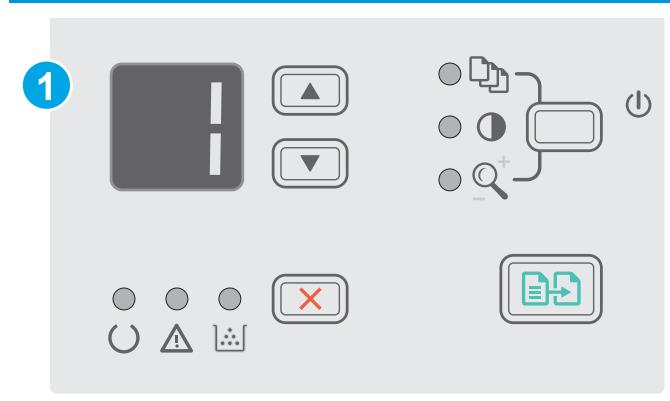
1 LED control panel 2 LCD control panel
LED control panels:
- Open the HP Embedded Web Server (EWS):
a. Open the Start menu, and then select Programs or All Programs. b. Open the HP group, open the printer group, and then select HP Device Toolbox.
- Click the System tab and select the Energy Settings page.
- Select the time for the Sleep/Auto Off After inactivity, and then click the Apply button.
LCD control panels:
- On the printer control panel, open the Setup menu.
- Open the following menus:
System Setup > Energy Settings > Shut Down After Inactivity
- Select the time for the Shut Down After Inactivity delay.

NOTE: The default value is 4 hours.
Set the Shut Down After Inactivity delay and configure the printer to use 1 watt or less of power.
Use the control panel menus to set the amount of time before the printer shuts down.

NOTE: After the printer shuts down, the power consumption is 1 watt or less.
Complete the following procedure to change the Shut Down After Delay setting:

NOTE: The steps vary according to the type of control panel.
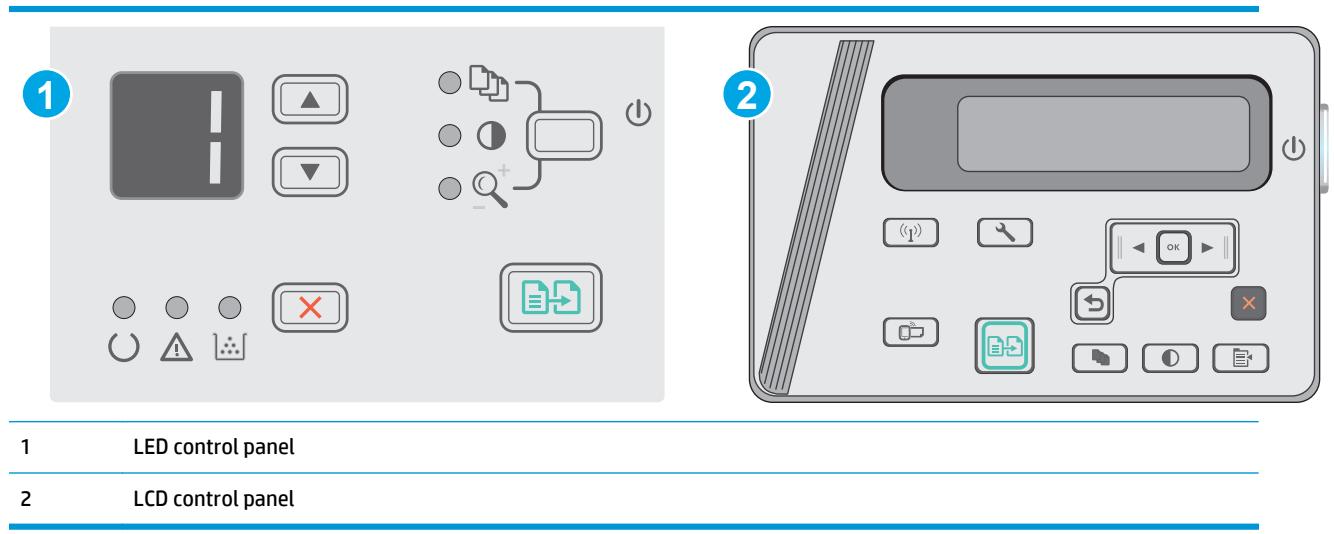
1 LED control panel 2 LCD control panel
LED control panels:
- Open the HP Embedded Web Server (EWS):
a. Open the Start menu, and then select Programs or All Programs. b. Open the HP group, open the printer group, and then select HP Device Toolbox.
- Click the System tab, select the Energy Settings page.
- In the Shut Down After Inactivity area, select the time for the delay.

NOTE: The default value is 4 hours.
LCD control panels:
- On the printer control panel, open the Setup menu.
- Open the following menus:
System Setup > Energy Settings > Shut Down After Inactivity
- Select the time for the Shut Down After Inactivity delay.

NOTE: The default value is 4 hours.
Set the Delay Shut Down setting
Use the control panel menus to select whether or not the printer delays shutting down after the power button is pressed.

NOTE: The steps vary according to the type of control panel.
LED control panels
- Open the HP Embedded Web Server (EWS):
a. Open the Start menu, and then select Programs or All Programs. b. Open the HP group, open the printer group, and then select HP Device Toolbox.
- Click the System tab, and then select the Energy Settings page.
- When Delay When Ports Are Active option is selected, the printer will not shut down unless all ports are inactive. An active network link or USB connection will prevent the printer from shutting down.
LCD control panels
- On the printer control panel, open the Setup menu.
- Open the following menus:
a. System Setup b. Energy Settings c. Delay Shut Down
- When Delay When Ports Are Active option is selected, the printer will not shut down unless all ports are inactive. An active network link or USB connection will prevent the printer from shutting down.
Update the firmware
HP offers periodic printer updates, new Web Services apps, and new features to existing Web Services apps. Follow these steps to update the printer firmware for a single printer. When you update the firmware, Web Service apps will update automatically.
Update the firmware using the Firmware Update Utility
Use these steps to manually download and install the Firmware Update Utility from HP.com.

NOTE: This method is the only firmware update option available for printers connected to the computer via a USB cable. It also works for printers connected to a network.

NOTE: You must have a print driver installed in order to use this method.
- Go to www.hp.com/support/ljm25-m27.
- Under Download options, click Drivers, software, & firmware, and then select the appropriate operating system.
- Click Next.
- Select Firmware and then click Download.
- When the utility launches, select the printer from the drop-down list, and then click Send Firmware.

NOTE: To print a configuration page to verify the installed firmware version before or after the update process, click Print Config.
- Follow the on-screen instructions to complete the installation, and then click the Exit button to close the utility.
8 Solve problems
- Customer support Interpret control-panel light patterns (LED model only)
- Restore the factory-set defaults A “Cartridge is low” or “Cartridge is very low” message displays on the printer control panel
- Solve paper feed or jam problems Clear paper jams
- Improve print quality
- Improve copy and scan image quality
- Solve wired network problems
- Solve wireless network problems
For more information:
The following information is correct at the time of publication. For current information, see www.hp.com/support/ljM25-M27mfp.
HP's all-inclusive help for the printer includes the following information:
Install and configure, learn and use, solve problems, download software and firmware updates, join support forums, find warranty and regulatory information.
Customer support
| Get telephone support for your country/region | Country/region phone numbers are on the flyer that was in the box with the printer or at www.hp.com/support/. |
| Have the printer name, serial number, date of purchase, and problem description ready | |
| Get 24-hour Internet support, and download software utilities and drivers | www.hp.com/support/ljM25-M27mfp |
| Order additional HP service or maintenance agreements | www.hp.com/go/carepack |
| Register the printer | www.registerer.hp.com |
Interpret control-panel light patterns (LED model only)
If the printer requires attention, an error code appears on the control-panel display.
Table 8-1 Status-light legend
| ● | Symbol for "light off" |
| ○ | Symbol for "light on" |
| ● | Symbol for "light blinking" |
Table 8-2 Control-panel light patterns
| Light status | Error code | State of the product | Action |
| All lights are off. | The printer is turned off or in low power mode. | Press the power button to turn on the printer. | |
| Ready and attention lights blink. | The status lights cycle during theformatter initialization period or when the printer is processing a cleaning page. | No action is required. Wait for the initialization period to end. The product should enter the ready state when the initialization period is finished. | |
| Ready light is on. | The printer is in the ready state. | No action is required. The printer is ready to receive a print job. | |
| Ready light is blinking. | The printer is receiving or processing data. | No action is required. The printer is receiving or processing a print job. | |
| Attention light is blinking. | E0 | Paper is jammed in the printer. | Clear the jam. |
| E1 | The input tray is empty. | Load the tray. | |
| E2 | A door is open. | Verify that the toner-cartridge door is fully closed. | |
| E4 | The toner cartridge is very low. | Press the Start Copy button to continue or replace the toner cartridge. | |
| E5 | The toner cartridge is very low. | Replace the toner cartridge. | |
| H0 | The printer is in manual-feed mode. | Load the correct paper type and size into the input tray. Press the Start Copy button to continue. | |
| H1 | The printer is processing a manual duplex job. | Load the pages into the input tray to print the second sides. Press the Start Copy button to continue. | |
| The attention and toner lights are blinking. | E3 | The toner-cartridge is missing or is not installed correctly. | Install the toner-cartridge. |
| The toner light is on. | The toner-cartridge has reached the end of its estimated useful life. When the supply has reached this condition, the HP Premium Protection warranty for that supply has ended. | You do not need to replace the toner-cartridge at this time unless print quality is no longer acceptable. | |
| The attention and ready lights are on. | E6 | The printer has experienced a fatal error from which it cannot recover. | 1. Turn off the printer or disconnect the power cord from the printer. |
| E7 | 2. Wait 30 seconds, and then turn on the printer or reconnect the power cord to the printer. | ||
| E8 | 3. Wait for the printer to initialize. | ||
| E9 | If the error persists, contact HP customer support. |
Restore the factory-set defaults
Restoring the factory-set defaults returns all of the printer and network settings to the factory defaults. It will not reset the page count or tray size. To restore the printer to the factory-default settings, follow these steps.
CAUTION: Restoring the factory-set defaults returns all of the settings to the factory defaults, and it also deletes any pages that are stored in the memory.

NOTE: The steps vary according to the type of control panel.
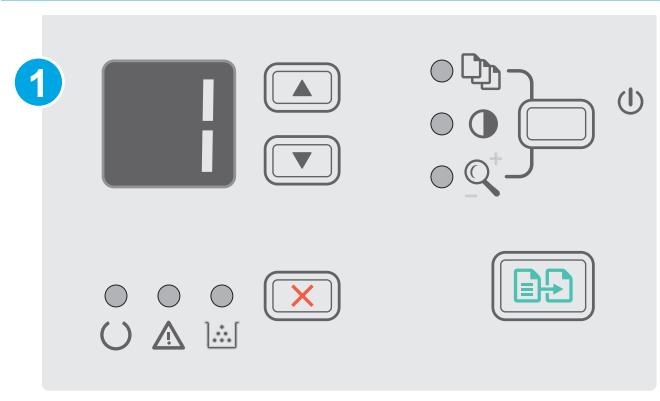
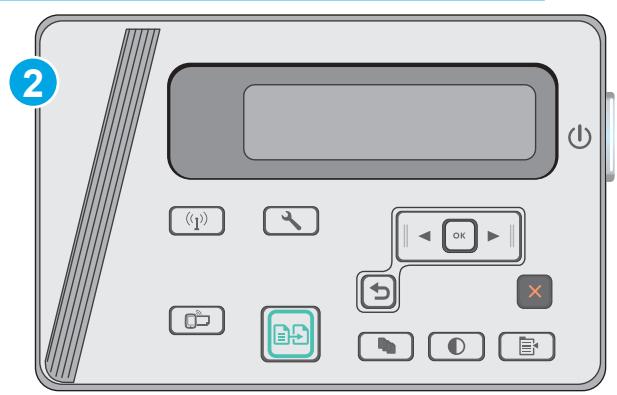
1 LED control panel 2 LCD control panel
LED control panels:
- Open the HP Embedded Web Server (EWS):
a. Open the Start menu, and then select Programs or All Programs. b. Open the HP group, open the printer group, and then select HP Device Toolbox.
- Click the System tab, and then click the System Setup page.
- Select the Restore System Defaults option, and click the Apply button.
The printer automatically restarts.
LCD control panels:
- On the printer control panel, open the Setup menu.
- Open the Service menu.
- Select Restore Defaults.
The printer automatically restarts.
A “Cartridge is low” or “Cartridge is very low” message displays on the printer control panel
Cartridge is low: The printer indicates when a toner cartridge level is low. Actual toner cartridge life remaining may vary. Consider having a replacement available to install when print quality is no longer acceptable. The toner cartridge does not need to be replaced now.
Cartridge is very low: The printer indicates when the toner cartridge level is very low. Actual toner cartridge life remaining may vary. Consider having a replacement available to install when print quality is no longer acceptable. The toner cartridge does not need to be replaced now unless the print quality is no longer acceptable.
Once an HP toner cartridge has reached Very Low, HP's Premium Protection Warranty on that toner cartridge has ended.
Change the "Very Low" settings
You can change the way the printer reacts when supplies reach the Very Low state. You do not have to re-establish these settings when you install a new toner cartridge.

NOTE: The steps vary according to the type of control panel.
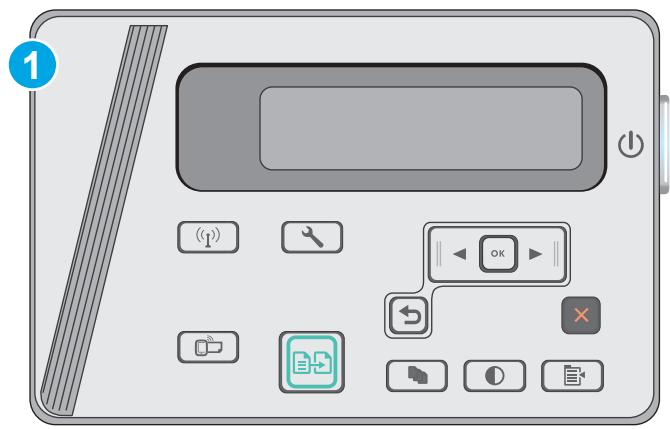
1
LCD control panel
LCD control panels:
- On the printer control panel, open the Setup menu.
- Open the following menus:
System Setup > Supply Settings > Black Cartridge > Very Low Setting
- Select one of the following options:
- Select the Continue option to set the printer to alert you that the toner cartridge is very low, but to continue printing.
- Select the Stop option to set the printer to stop printing until you replace the toner cartridge.
- Select the Prompt option to set the printer to stop printing and prompt you to replace the toner cartridge. You can acknowledge the prompt and continue printing. A customer configurable option on this printer is "Prompt to Remind Me in 100 pages, 200 pages, 300 pages, 400 pages, or never." This option is provided as a customer convenience and is not an indication these pages will have acceptable print quality.
Order supplies
| Order supplies and paper | www.hp.com/go/suresupply |
| Order through service or support providers | Contact an HP-authorized service or support provider. |
| Order using the HP Embedded Web Server (EWS) | To access, in a supported Web browser on your computer, enter the printer IP address or host name in the address/URL field. The EWS contains a link to the HP SureSupply website, which provides options for purchasing Original HP supplies. |
Solve paper feed or jam problems
Introduction
The following solutions can help solve problems if the printer is not picking up paper from the tray or is picking up multiple sheets of paper at one time. Either of these situations can result in paper jams.
- Solve paper feed or jam problems
Solve paper feed or jam problems
If the product has recurring problems with paper feeding or with jams, use the following information to reduce the number of occurrences.
The product does not pick up paper
If the product does not pick up paper from the tray, try these solutions.
- Open the product and remove any jammed sheets of paper.
- Load the tray with the correct size of paper for your job.
- Make sure the paper size and type are set correctly on the product control panel.
- Make sure the paper guides in the tray are adjusted correctly for the size of paper. Adjust the guides to the appropriate indentation in the tray.
- Check the product control panel to see if the product is waiting for you to acknowledge a prompt to feed the paper manually. Load paper, and continue.
- The pickup roller and separation pad might be contaminated.
The product picks up multiple sheets of paper
If the product picks up multiple sheets of paper from the tray, try these solutions.
- Remove the stack of paper from the tray and flex it, rotate it 180 degrees, and flip it over. Do not fan the paper. Return the stack of paper to the tray.
- Use only paper that meets HP specifications for this product.
- Use paper that is not wrinkled, folded, or damaged. If necessary, use paper from a different package.
- Make sure the tray is not overfilled. If it is, remove the entire stack of paper from the tray, straighten the stack, and then return some of the paper to the tray.
- Make sure the paper guides in the tray are adjusted correctly for the size of paper. Adjust the guides to the appropriate indentation in the tray.
- Make sure the printing environment is within recommended specifications.
Frequent or recurring paper jams
Follow these steps to solve problems with frequent paper jams. If the first step does not resolve the problem, continue with the next step until you have resolved the problem.
- If paper has jammed in the product, clear the jam and then print a configuration page to test the product.
- Check that the tray is configured for the correct paper size and type on the product control panel. Adjust paper settings if necessary.
- Turn the product off, wait 30 seconds, and then turn it on again.
- Print a cleaning page to remove excess toner from inside the product.
LED control panel
a. Click the Start button, and then click the Programs item. b. Click your HP product group, and then click the HP Device Toolbox item. c. On the Systems tab, click Service.
LCD control panel
a. From the product control panel, press the Setup button. b. Open the Service menu. c. Use the arrow keys to select the Cleaning mode option, and then press the OK button.
The product prints the first side and then prompts you to remove the page from the output bin and reload it in Tray 1, keeping the same orientation. Wait until the process is complete. Discard the page that prints.
- Print a configuration page to test the product.
LED control panel
a. Press and hold the Cancel button until the Ready light starts blinking. b. Release the Cancel button.
LCD control panel
a. From the Home screen on the product control panel, touch the Setup button. b. Touch the Reports menu. c. Touch the Configuration Report button.
If none of these steps resolves the problem, the product might need service. Contact HP customer support.
Prevent paper jams
To reduce the number of paper jams, try these solutions.
- Use only paper that meets HP specifications for this product.
- Use paper that is not wrinkled, folded, or damaged. If necessary, use paper from a different package.
- Use paper that has not previously been printed or copied on.
- Make sure the tray is not overfilled. If it is, remove the entire stack of paper from the tray, straighten the stack, and then return some of the paper to the tray.
- Make sure the paper guides in the tray are adjusted correctly for the size of paper. Adjust the guides so they are touching the paper stack without bending it.
- Make sure that the tray is fully inserted in the product.
- If you are printing on heavy, embossed, or perforated paper, use the manual feed feature and feed sheets one at a time.
- Verify that the tray is configured correctly for the paper type and size.
- Make sure the printing environment is within recommended specifications.
Clear paper jams
Introduction
The following information includes instructions for clearing paper jams from the product.
- Paper jam locations
- Clear jams from the input tray
- Clear jams in the toner-cartridge area
- Clear jams in the output bin
Paper jam locations
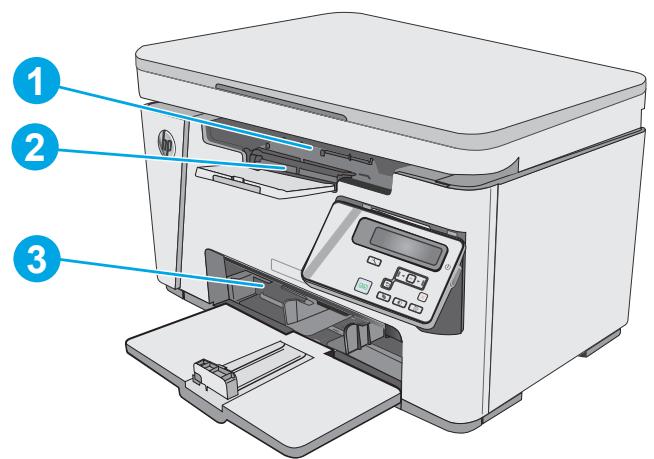
| 1 | Toner cartridge area |
| 2 | Output bin |
| 3 | Input tray |
Clear jams from the input tray
When a jam occurs, the Attention triangle light blinks repeatedly on LED control panels, and a jam message displays on LCD control panels.
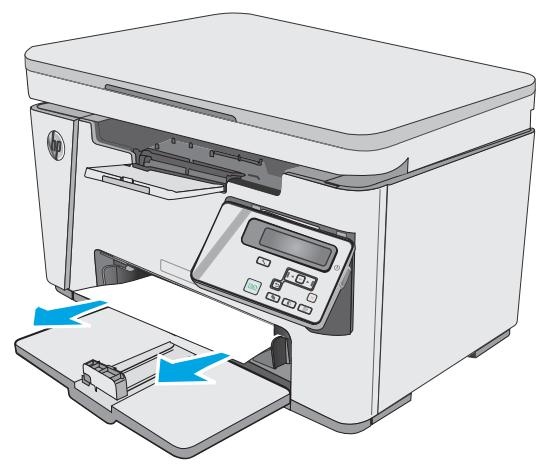
- Remove any loose paper from the input tray.
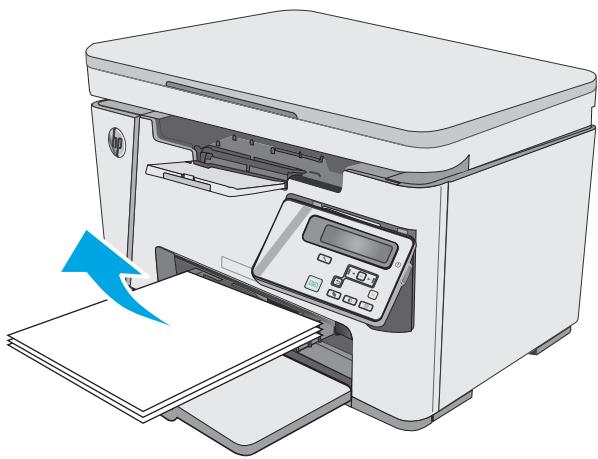
- Lift the scanner assembly.
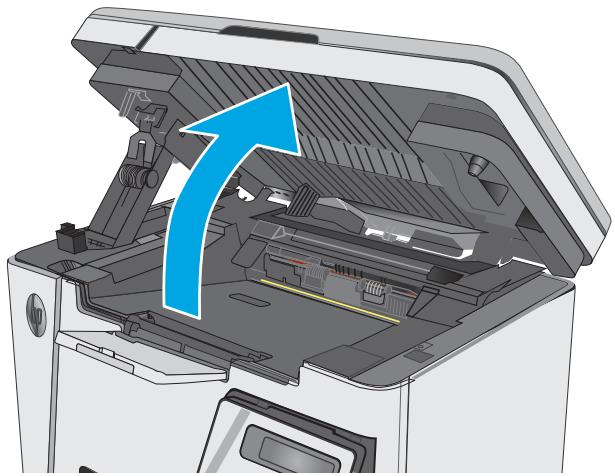
- Lift the top cover.
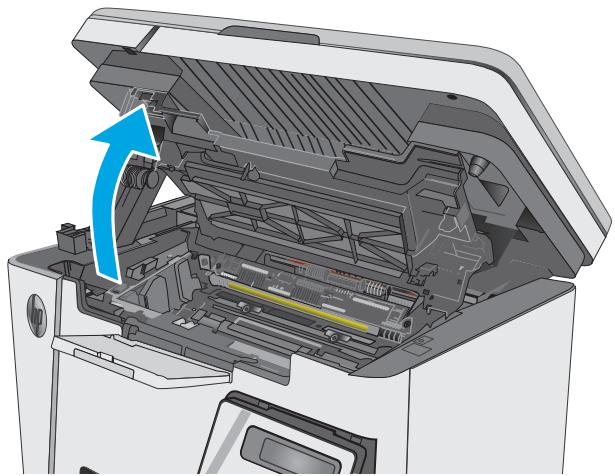
- Remove the toner cartridge.
- Remove any visible jammed paper in the input tray area. Use both hands to remove jammed paper to avoid tearing the paper.
- Remove any jammed paper from the toner-cartridge area. Use both hands to remove jammed paper to avoid tearing the paper.
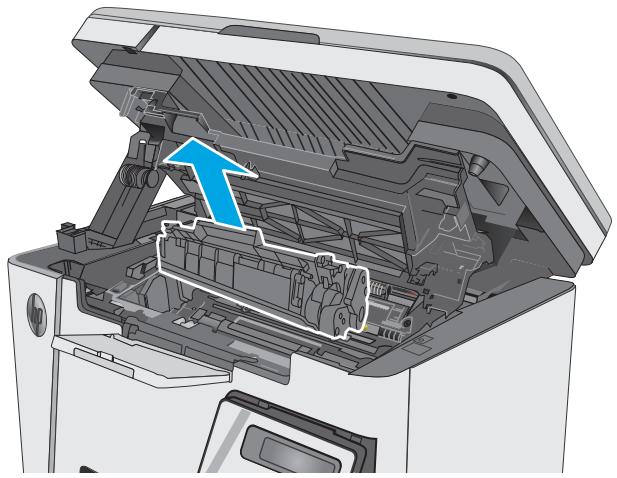
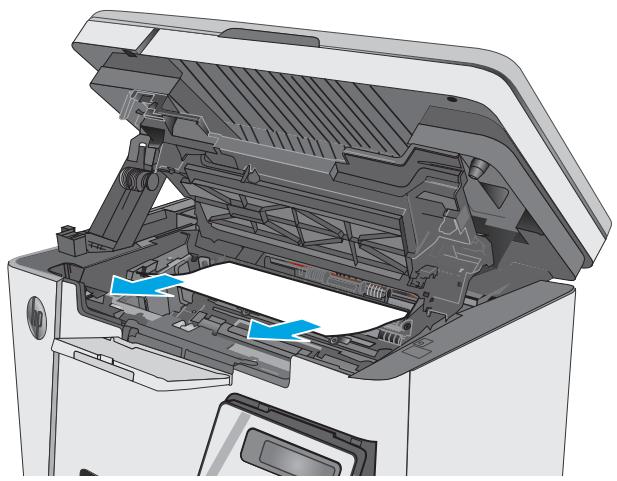
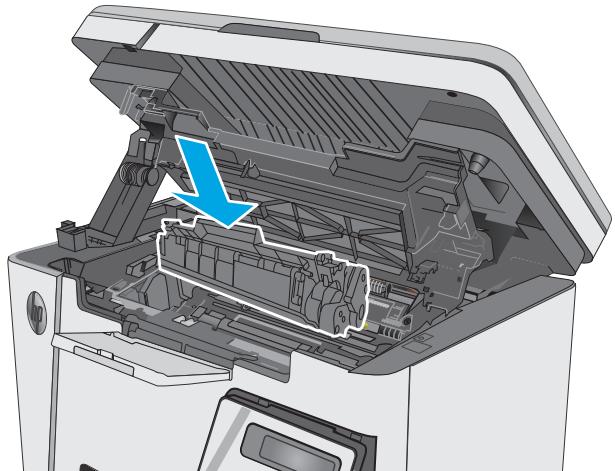
- Insert the toner cartridge.
- Lower the top cover.
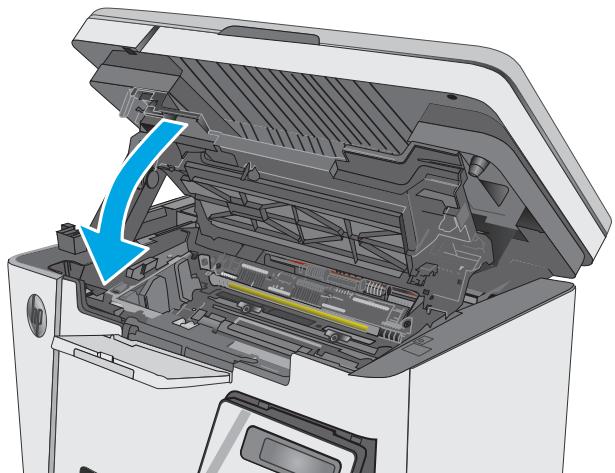
- Lower the scanner assembly.
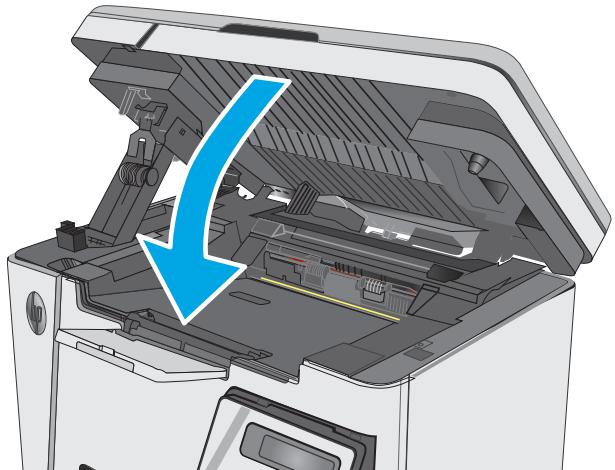
Clear jams in the toner-cartridge area
When a jam occurs, the Attention triangle light blinks repeatedly on LED control panels, and a jam message displays on LCD control panels.
- Lift the scanner assembly.
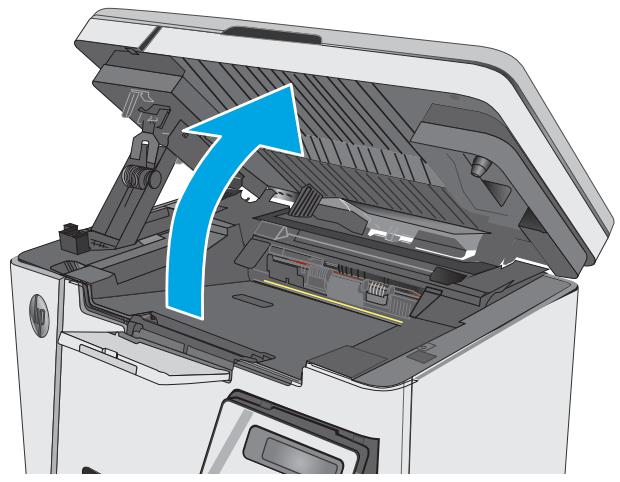
- Lift the top cover.
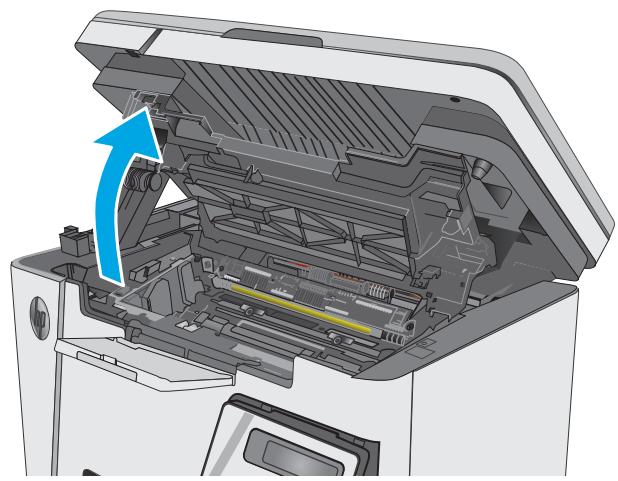
- Remove the toner cartridge.
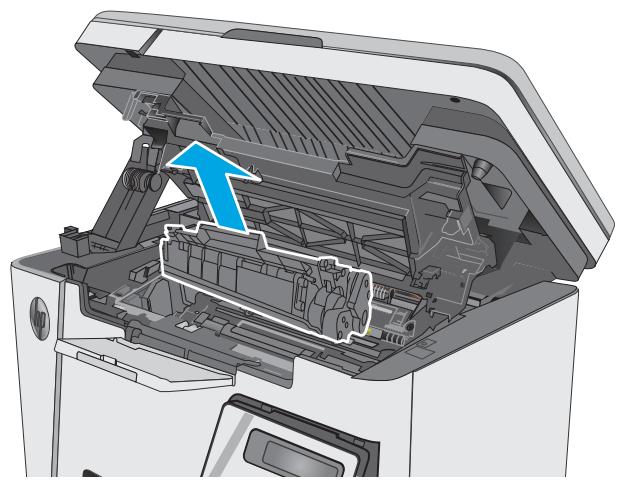
- Remove any jammed paper from the toner-cartridge area. Use both hands to remove jammed paper to avoid tearing the paper.
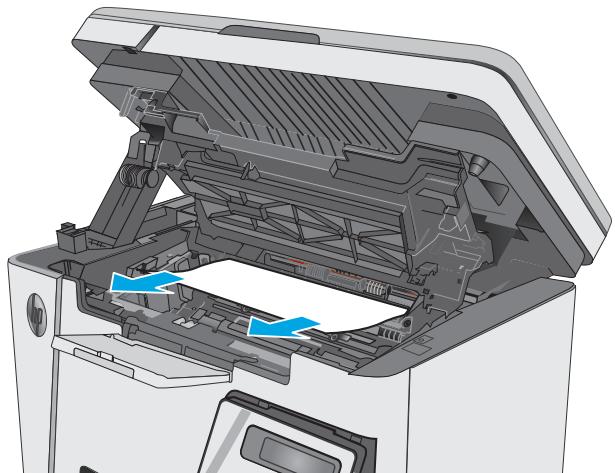
- Insert the toner cartridge.
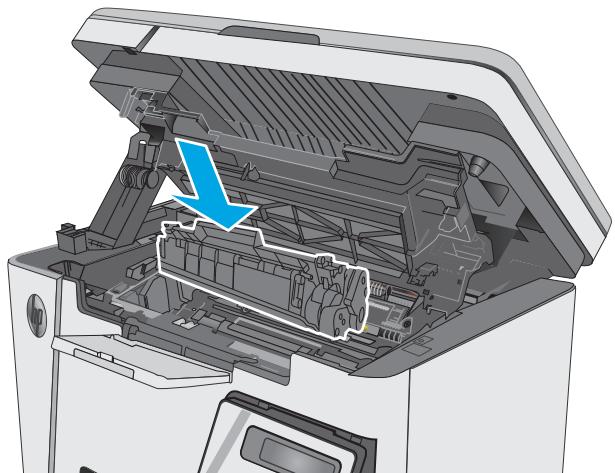
- Lower the top cover.
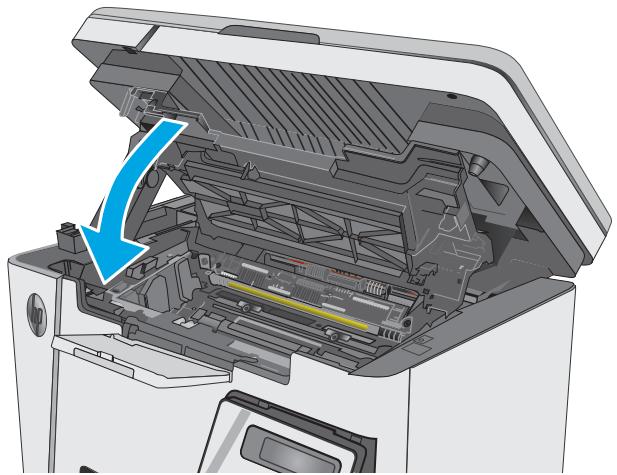
- Lower the scanner assembly.
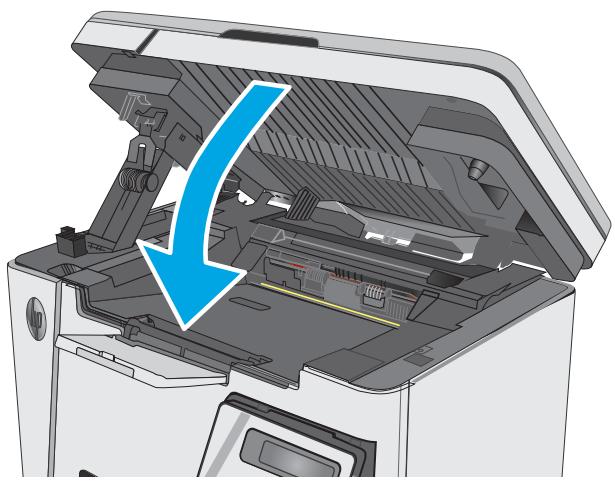
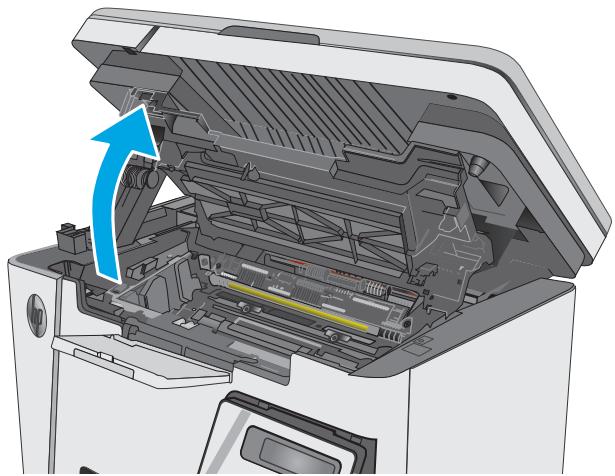
Clear jams in the output bin
When a jam occurs, the Attention triangle light blinks repeatedly on LED control panels, and a jam message displays on LCD control panels.
- Remove any visible jammed paper from the output bin area. Use both hands to remove jammed paper to avoid tearing the paper.
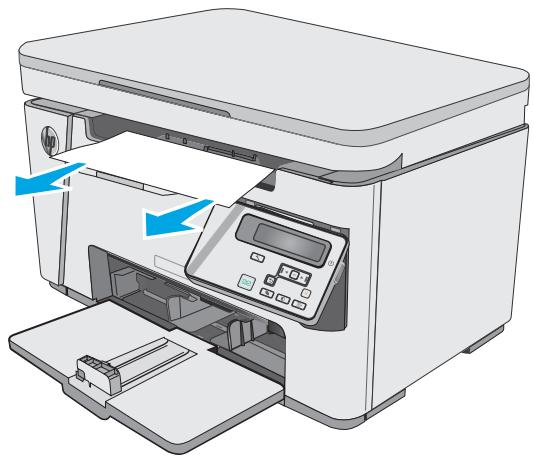
- Lift the scanner assembly.
- Lift the top cover.
- Remove the toner cartridge.

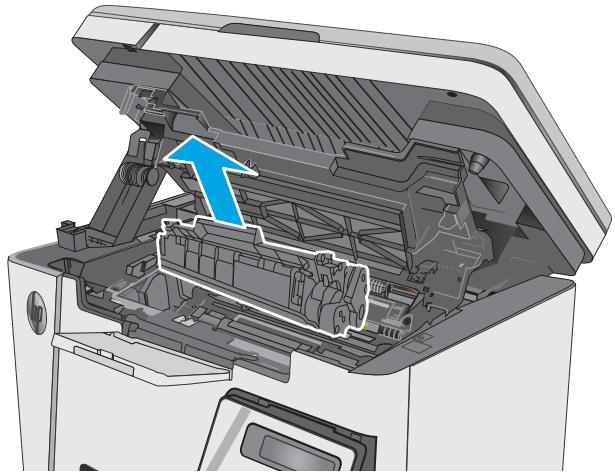
- Remove any jammed paper from the toner-cartridge area.
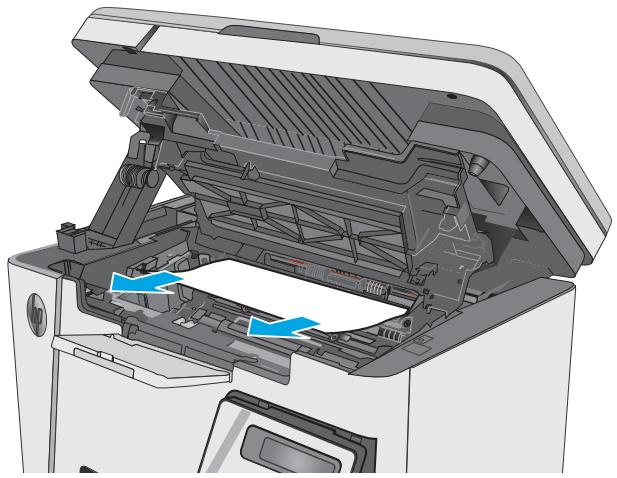
- Insert the toner cartridge.

- Lower the top cover.
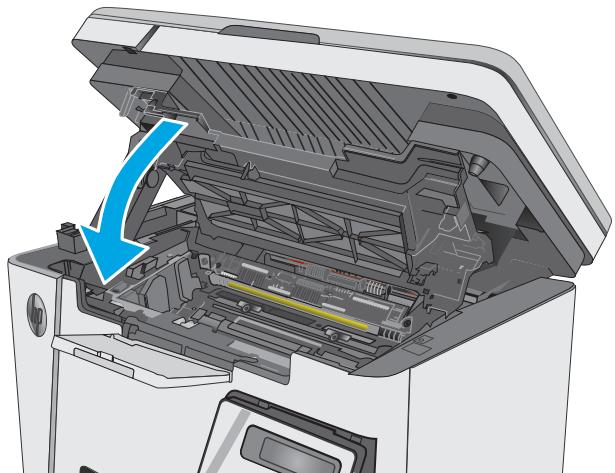
- Lower the scanner assembly.
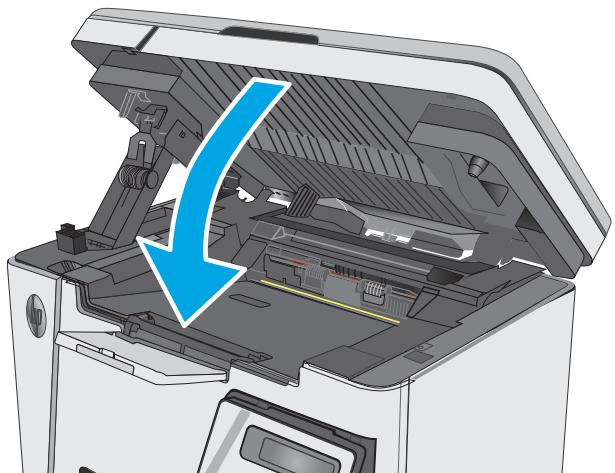
Improve print quality
Introduction
If the printer is having print-quality problems, try the following solutions in the order presented to resolve the issue.
Print from a different software program
Try printing from a different software program. If the page prints correctly, the problem is with the software program from which you were printing.
Check the paper-type setting for the print job
Check the paper type setting when printing from a software program and the printed pages have smears, fuzzy or dark print, curled paper, scattered dots of toner, loose toner, or small areas of missing toner.
Check the paper type setting (Windows)
- From the software program, select the Print option.
- Select the printer, and then click the Properties or Preferences button.
- Click the Paper/Quality tab.
- From the Media: drop-down list, select the correct paper type.
- Click the OK button to close the Document Properties dialog box. In the Print dialog box, click the OK button to print the job.
Check the paper type setting (OS X)
- Click the File menu, and then click the Print option.
- In the Printer menu, select the printer.
- By default, the print driver displays the Copies & Pages menu. Open the menus drop-down list, and then click the Finishing menu.
- Select a type from the Media-Type drop-down list.
- Click the Print button.
Check toner-cartridge status
LED control panels
The Toner-level status light indicates that the toner level in the print cartridge is very low.
LCD control panels
- On the product control panel, press the Setup button.
- Open the following menus:
- Reports > Supplies status
- Use the arrow keys to select Print Supplies status page, and then press the OK button.
Clean the printer
Print a cleaning page
During the printing process, paper, toner, and dust particles can accumulate inside the printer and can cause print-quality issues such as toner specks or spatter, smears, streaks, lines, or repeating marks.
Use the following procedure to print a cleaning page.

NOTE: The steps vary according to the type of control panel.
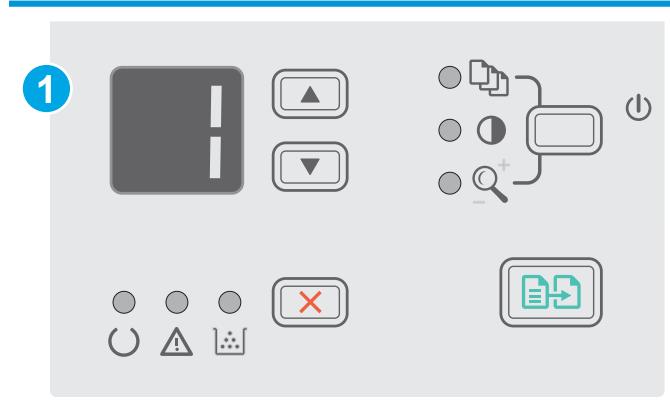
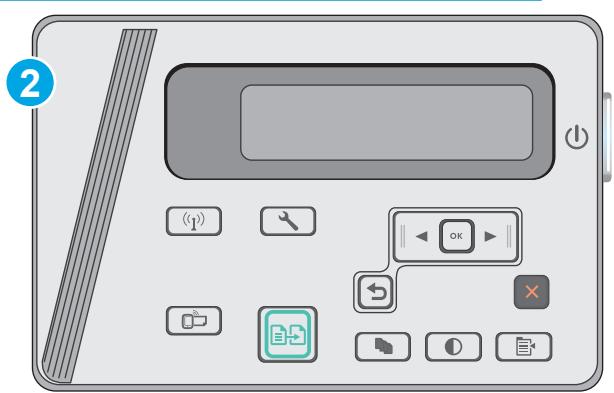
1 LED control panel 2 LCD control panel
LED control panels:
- Open the HP Embedded Web Server (EWS):
a. Open the Start menu, and then select Programs or All Programs. b. Open the HP group, open the printer group, and then select HP Device Toolbox.
- Click the System tab, and then select the Service page.
- In the Cleaning Mode area, click Start to begin the cleaning process.
LCD control panels
- From the product control panel, press the Setup button.
- Open the Service menu.
- Use the arrow keys to select the Cleaning mode option, and then press the OK button.
The product prints the first side and then prompts you to remove the page from the output bin and reload it in the input tray, keeping the same orientation. Wait until the process is complete. Discard the page that prints.
Visually inspect the toner cartridge and imaging drum
Follow these steps to inspect each toner cartridge and imaging drum.
- Remove the toner cartridge and imaging drum from the printer.
- Check the memory chip for damage.
- Examine the surface of the green imaging drum.
CAUTION: Do not touch the imaging drum. Fingerprints on the imaging drum can cause print-quality problems.
- If you see any scratches, fingerprints, or other damage on the imaging drum, replace the toner cartridge and imaging drum.
- Reinstall the toner cartridge and imaging drum, and print a few pages to see if the problem has resolved.
Check paper and the printing environment
Use paper that meets HP specifications
Use different paper if you are having any of the following problems:
The printing is too light or seems faded in areas. Specks of toner are on the printed pages. - Toner is smearing on the printed pages. Printed characters seem misformed. Printed pages are curled.
Always use a paper type and weight that this product supports. In addition, follow these guidelines when selecting paper:
Use paper that is of good quality and free of cuts, nicks, tears, spots, loose particles, dust, wrinkles, voids, staples, and curled or bent edges. Use paper that has not been previously printed on. Use paper that is designed for use in laser printers. Do not use paper that is designed only for use in inkjet printers. Use paper that is not too rough. Using smoother paper generally results in better print quality.
Check the printer environment
Verify that the product is operating within the environmental specifications listed in the product Warranty and Legal Guide.
Check the EconoMode settings
HP does not recommend the full-time use of EconoMode. If EconoMode is used full-time, the toner supply might outlast the mechanical parts in the toner cartridge. If print quality begins to degrade and is no longer acceptable, consider replacing the toner cartridge.
Follow these steps if the entire page is too dark or too light.
- From the software program, select the Print option.
- Select the product, and then click the Properties or Preferences button.
- Click the Paper/Quality tab, and then locate the Quality Settings area.
- If the entire page is too dark, select the EconoMode setting.
- If the entire page is too light, select the FastRes 1200 setting.
- Click the OK button to close the Document Properties dialog box. In the Print dialog, click the OK button to print the job.
Improve copy and scan image quality
Introduction
If the printer is having image quality problems, try the following solutions in the order presented to resolve the issue.
- Check the scanner glass for dirt and smudges. Check the paper settings.
- Optimize for text or pictures.
- Edge-to-edge copying.
Try these few simple steps first:
Use the flatbed scanner rather than the document feeder. Use high-quality originals. When using the document feeder, load the original document into the feeder correctly, using the paper guides, to avoid unclear or skewed images.
If the problem still exists, try these additional solutions. If they do not fix the problem, see "Improve print quality" for further solutions.
Check the scanner glass for dirt and smudges.
Over time, specks of debris might collect on the scanner glass and white plastic backing, which can affect performance. Use the following procedure to clean the scanner.
- Press the power button to turn the printer off, and then disconnect the power cable from the electrical outlet.
- Open the scanner lid.
- Clean the scanner glass and the white plastic backing underneath the scanner lid with a soft cloth or sponge that has been moistened with nonabrasive glass cleaner.
CAUTION: Do not use abrasives, acetone, benzene, ammonia, ethyl alcohol, or carbon tetrachloride on any part of the printer; these can damage the printer. Do not place liquids directly on the glass or platen. They might seep and damage the printer.
- Dry the glass and white plastic parts with a chamois or a cellulose sponge to prevent spotting.
- Connect the power cable to an outlet, and then press the power button to turn the printer on.
Check the paper settings.
LED control panel
- Click the Start button, and then click the Programs item.
- Click your HP product group, and then click the HP Device Toolbox item.
- On the Systems tab, click Paper Setup.
LCD control panel
- On the product control panel, press the Setup button.
- Open the following menus:
System Setup - Paper Setup
- Select Def. paper size.
- Select the name of the paper size that is in the input tray, and then press the OK button.
- Select the Def. paper type.
- Select the name of the paper type that is in the input tray, and then press the OK button.
Optimize for text or pictures
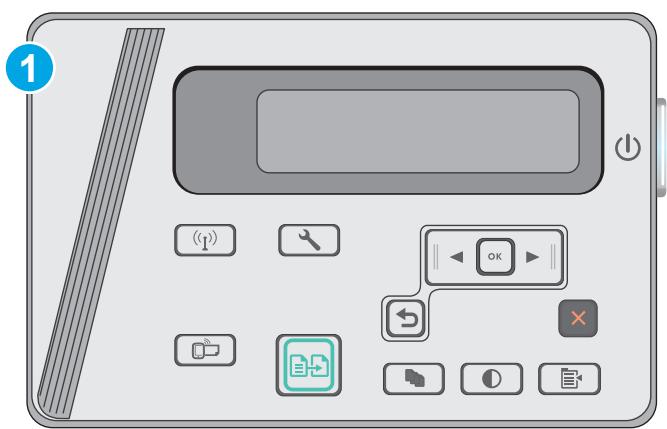
1
LCD control panel
LCD control panels
- Load the document on the scanner glass according to the indicators on the printer.
- On the printer control panel, press the Copy Menu button.
- Select the Optimize menu.
- Use the arrow buttons to scroll through the options, and then press the OK button to select an option.
- Touch the Start Copy button to start copying.
Edge-to-edge copying
The printer cannot print fully edge-to-edge. There is a 4 mm (1/6 inch) unprintable border around the page.
Considerations for printing or scanning documents with cropped edges:
- When the original is smaller than the output size, move the original 4 mm (1/6 inch) away from the corner indicated by the icon on the scanner. Recopy or scan in this position.
- When the original is the size of the printed output that you want, use the Reduce/Enlarge feature to reduce the image so the copy is not cropped.
Solve wired network problems
Introduction
Check the following items to verify that the printer is communicating with the network. Before beginning, print a configuration page from the printer control panel and locate the printer IP address that is listed on this page.
Poor physical connection. The computer is using the incorrect IP address for the printer. The computer is unable to communicate with the printer. New software programs might be causing compatibility problems. The computer or workstation might be set up incorrectly. The printer is disabled, or other network settings are incorrect.

NOTE: HP does not support peer-to-peer networking, as the feature is a function of Microsoft operating systems and not of the HP print drivers. For more information, go to Microsoft at www.microsoft.com.
Poor physical connection
- Verify that the printer is attached to the correct network port using a cable of the correct length.
- Verify that cable connections are secure.
- Look at the network port connection on the back of the printer, and verify that the amber activity light and the green link-status light are lit.
- If the problem continues, try a different cable or port on the hub.
The computer is using the incorrect IP address for the printer
- Open the printer properties and click the Ports tab. Verify that the current IP address for the printer is selected. The printer IP address is listed on the printer configuration page.
- If you installed the printer using the HP standard TCP/IP port, select the box labeled Always print to this printer, even if its IP address changes.
- If you installed the printer using a Microsoft standard TCP/IP port, use the hostname instead of the IP address.
- If the IP address is correct, delete the printer and then add it again.
The computer is unable to communicate with the printer
- Test network communication by pinging the network.
a. Open a command-line prompt on your computer.
For Windows, click Start, click Run, type cmd, and then press Enter. For OS X, go to Applications, then Utilities, and open Terminal.
b. Type ping followed by the IP address for your printer. c. If the window displays round-trip times, the network is working.
- If the ping command failed, verify that the network hubs are on, and then verify that the network settings, the printer, and the computer are all configured for the same network.
New software programs might be causing compatibility problems.
Verify that any new software programs are correctly installed and that they use the correct print driver.
The computer or workstation might be set up incorrectly.
- Check the network drivers, print drivers, and the network redirection settings.
- Verify that the operating system is configured correctly.
The printer is disabled, or other network settings are incorrect.
- Review the configuration page to check the status of the network protocol. Enable it if necessary.
- Reconfigure the network settings if necessary.
Solve wireless network problems.
Introduction - Wireless connectivity checklist. The printer does not print after the wireless configuration completes. The printer does not print, and the computer has a third-party firewall installed. The wireless connection does not work after moving the wireless router or printer. Cannot connect more computers to the wireless printer. The wireless printer loses communication when connected to a VPN. The network does not appear in the wireless networks list. The wireless network is not functioning. Perform a wireless network diagnostic test. Reduce interference on a wireless network.
Introduction.
Use the troubleshooting information to help resolve issues.

NOTE: To determine whether Wireless Direct printing is enabled on your printer, print a configuration page from the printer control panel.
Wireless connectivity checklist
- Verify that the network cable is not connected.
- Verify that the printer and the wireless router are turned on and have power. Also make sure that the wireless radio in the printer is turned on.
- Verify that the service set identifier (SSID) is correct. Print a configuration page to determine the SSID. If you are not sure the SSID is correct, run the wireless setup again.
- With secured networks, verify that the security information is correct. If the security information is incorrect, run the wireless setup again.
- If the wireless network is working correctly, try accessing other computers on the wireless network. If the network has Internet access, try connecting to the Internet over a wireless connection.
- Verify that the encryption method (AES or TKIP) is the same for the printer as it is for the wireless access point (on networks using WPA security).
- Verify that the printer is within the range of the wireless network. For most networks, the printer must be within 30 m (100 ft) of the wireless access point (wireless router).
- Verify that obstacles do not block the wireless signal. Remove any large metal objects between the access point and the printer. Make sure poles, walls, or support columns containing metal or concrete do not separate the printer and wireless access point.
- Verify that the printer is located away from electronic devices that might interfere with the wireless signal. Many devices can interfere with the wireless signal including motors, cordless phones, security system cameras, other wireless networks, and some Bluetooth devices.
- Verify that the print driver is installed on the computer.
- Verify that you have selected the correct printer port. Verify that the computer and printer connect to the same wireless network. For OS X, verify that the wireless router supports Bonjour.
The printer does not print after the wireless configuration completes
- Make sure that the printer is turned on and in the ready state.
- Turn off any third-party firewalls on your computer.
- Make sure that the wireless network is working correctly.
- Make sure that your computer is working correctly. If necessary, restart the computer.
- Verify that you can open the printer HP Embedded Web Server from a computer on the network.
The printer does not print, and the computer has a third-party firewall installed
- Update the firewall with the most recent update available from the manufacturer.
- If programs request firewall access when you install the printer or try to print, make sure you allow the programs to run.
- Temporarily turn off the firewall, and then install the wireless printer on the computer. Enable the firewall when you have completed the wireless installation.
The wireless connection does not work after moving the wireless router or printer
- Make sure that the router or printer connects to the same network that your computer connects to.
- Print a configuration page.
- Compare the service set identifier (SSID) on the configuration page to the SSID in the printer configuration for the computer.
- If the numbers are not the same, the devices are not connecting to the same network. Reconfigure the wireless setup for the printer.
Cannot connect more computers to the wireless printer
- Make sure that the other computers are within the wireless range and that no obstacles block the signal. For most networks, the wireless range is within 30 m (100 ft) of the wireless access point.
- Make sure that the printer is turned on and in the ready state.
- Make sure there are not more than 5 concurrent Wireless Direct users.
- Turn off any third-party firewalls on your computer.
- Make sure that the wireless network is working correctly.
- Make sure that your computer is working correctly. If necessary, restart the computer.
The wireless printer loses communication when connected to a VPN
Typically, you cannot connect to a VPN and other networks at the same time.
The network does not appear in the wireless networks list
Make sure the wireless router is turned on and has power. The network might be hidden. However, you can still connect to a hidden network.
The wireless network is not functioning
- Make sure that the network cable is not connected.
- To verify if the network has lost communication, try connecting other devices to the network.
- Test network communication by pinging the network.
a. Open a command-line prompt on your computer.
For Windows, click Start, click Run, type cmd, and then press Enter. For OS X, go to Applications, then Utilities, and open Terminal.
b. Type ping followed by the router IP address. c. If the window displays round-trip times, the network is working.
- Make sure that the router or printer connects to the same network that the computer connects to.
a. Print a configuration page. b. Compare the service set identifier (SSID) on the configuration report to the SSID in the printer configuration for the computer. c. If the numbers are not the same, the devices are not connecting to the same network. Reconfigure the wireless setup for the printer.
Perform a wireless network diagnostic test
From the printer control panel, you can run a diagnostic test that provides information about the wireless network settings.

NOTE: The steps vary according to the type of control panel.
1 LCD control panel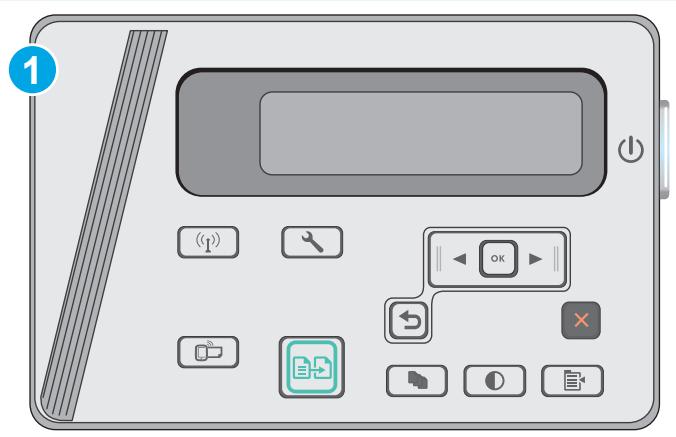
LCD control panels
- On the printer control panel, press the Setup button.
- Open the following menus:
Self Diagnostics - Run Wireless Test
- Press the OK button to start the test. The printer prints a test page that shows test results.
Reduce interference on a wireless network
The following tips can reduce interference in a wireless network:
- Keep the wireless devices away from large metal objects, such as filing cabinets, and other electromagnetic devices, such as microwaves and cordless telephones. These objects can disrupt radio signals.
- Keep the wireless devices away from large masonry structures and other building structures. These objects can absorb radio waves and lower signal strength.
- Position the wireless router in a central location in line of sight with the wireless printers on the network.
Index
A
accessories
ordering 20
part numbers 20
acoustic specifications 9
Android devices
printing from 40
B
browser requirements
HP Embedded Web Server 53
C
cartridge
replacing 21
checklist
wireless connectivity 96
cleaning
glass 91
paper path 88
control panel
LED 3
LED light patterns 69
locating 2
copying
edges of documents 92
multiple copies 44
optimizing for text or pictures
92
setting paper size and type 91
single copies 44
two-sided documents 45
customer support
online 68
D
defaults, restoring 71
dimensions, printer 9
document feeder 45
copying two-sided documents
45
locating 2
double-sided copying 45
double-sided printing
Mac 34
drivers, supported 7
duplex 45
duplex printing
Mac 34
duplex printing (double-sided)
settings (Windows) 27
duplexing
manually (Mac) 34
E
EconoMode setting 61
economy settings 61
electrical specifications 9
Embedded Web Server (EWS)
assigning passwords 59
features 53
envelopes, loading 18
Explorer, versions supported HP Embedded Web Server 53
F
factory-set defaults, restoring 71
G
glass, cleaning 91
H
HP Customer Care 68
HP Device Toolbox, using 53
HP Embedded Web Server (EWS)
features 53
HP ePrint 39
HP ePrint software 40
HP EWS, using 53
HP Scan software (OS X) 49
HP Scan software (Windows) 48
HP Utility 55
HP Utility for Mac
Bonjour 55
features 55
HP Utility, Mac 55
1
input tray
locating 2
interface ports
locating 2
Internet Explorer, versions supported
HP Embedded Web Server 53
J
jams
causes of 75
locations 77
L
labels
printing (Windows) 31
LED control panel
controls 3
lock slot
locating 2
M
Macintosh
HP Utility 55
maintenance kits
part numbers 20
manual duplex
Mac 34
memory
included 6
memory chip (toner)
locating 21
mobile printing
Android devices 40
mobile printing solutions 6
mobile printing, software
supported 8
multiple pages per sheet
printing (Mac) 35
printing (Windows) 28
N
Netscape Navigator, versions supported HP Embedded Web Server 53
network installation 52
networks installing the printer 52 supported 6
number of copies, changing 44
0
on/off button, locating 2
online support 68
operating systems (OS) supported 6
operating systems, supported 7
ordering supplies and accessories 20
OS (operating system) supported 6
output bin
locating 2
P
pages per minute 6
pages per sheet selecting (Mac) 35 selecting (Windows) 2
paper
jams 75
selecting 89
paper jams locations 77
paper pickup problems solving 74
paper types selecting (Mac) 35 selecting (Windows) 31
paper,ordering 20
part numbers
accessories 20
replacement parts 20
staple cartridges 20
supplies 20
toner cartridge 20
toner cartridges 20
power
consumption 9
power connection, locating 2
power switch, locating 2
print drivers, supported 7
print on both sides (Mac) 34
printing on both sides settings (Windows) 27
priority feed tray, loading envelopes 18
R
replacement parts, part numbers 20
replacing toner cartridge 21
restoring factory-set defaults 71
S
scanner glass cleaning 91 locating 2
scanning from HP Scan software (OS X) 49
from HP Scan software (Windows) 48
settings
factory-set defaults, restoring 71
shut down after delay setting 62
sleep delay setting
software HP Utility 55
special paper printing (Windows) 31
specifications electrical and acoustic 9
staple cartridges
part numbers 20
status
HP Utility, Mac 55
LED, control panel lights 69
supplies
low threshold settings 72
ordering 20
part numbers 20
replacing toner cartridge 21
status, viewing with HP Utility for Mac 55
using when low 72
supplies status 87
support online 68
system requirements
HP Embedded Web Server 53
T
technical support online 68
toner cartridge components 21
low threshold settings 72
part numbers 20 replacing 21 using when low 7
toner cartridges part numbers 20
toner-cartridge status 87
transparencies printing (Windows) 31
Tray 1 loading 12, 15 loading envelopes 18
trays capacity 6
included 6
troubleshooting jams 75
LED, error codes 69
LED, light patterns 69
network problems 94
paper feed problems 74 wired network 94
wireless network 96
two-sided copying 45
two-sided printing settings (Windows) 27
Web browser requirements HP Embedded Web Server 53 Web sites customer support 68 weight, printer 9 Wi-Fi Direct printing 37 Wireless Direct printing 8 wireless network troubleshooting 96 wireless network interference 99
- COPYRIGHT AND LICENSE
- TRADEMARK CREDITS
- TABLE OF CONTENTS
- PRINTER OVERVIEW
- PAPER TRAYS
- SUPPLIES, ACCESSORIES, AND PARTS
- COPY
- SCAN
- MANAGE THE PRINTER
- FOR MORE INFORMATION
- PRINTER VIEWS
- PRINTER FRONT VIEW
- PRINTER BACK VIEW
- PRINTER SPECIFICATIONS
- TECHNICAL SPECIFICATIONS
- SUPPORTED OPERATING SYSTEMS
- MOBILE PRINTING SOLUTIONS
- POWER CONSUMPTION, ELECTRICAL SPECIFICATIONS, AND ACOUSTIC EMISSIONS
- OPERATING-ENVIRONMENT RANGE
- PRINTER HARDWARE SETUP AND SOFTWARE INSTALLATION
- LOAD THE INPUT TRAY
- TRAY ADJUSTMENT FOR SMALL PAPER SIZES
- LOAD AND PRINT ENVELOPES
- INTRODUCTION
- PRINT ENVELOPES
- ENVELOPE ORIENTATION
- ORDER SUPPLIES, ACCESSORIES, AND PARTS
- ORDERING
- SUPPLIES AND ACCESSORIES
- CUSTOMER SELF-REPAIR PARTS
- REPLACE THE TONER CARTRIDGE
- TONER-CARTRIDGE INFORMATION
- REMOVE AND REPLACE THE TONER CARTRIDGE
- PRINT TASKS (WINDOWS)
- HOW TO PRINT (WINDOWS)
- MANUALLY PRINT ON BOTH SIDES (WINDOWS)
- PRINT MULTIPLE PAGES PER SHEET (WINDOWS)
- SELECT THE PAPER TYPE (WINDOWS)
- ADDITIONAL PRINTING INFORMATION
- PRINT TASKS (OS X)
- HOW TO PRINT (OS X)
- MANUALLY PRINT ON BOTH SIDES (OS X)
- PRINT MULTIPLE PAGES PER SHEET (OS X)
- SELECT THE PAPER TYPE (OS X)
- ADDITIONAL PRINT TASKS
- MOBILE PRINTING
- WIRELESS DIRECT (WIRELESS MODELS ONLY)
- ENABLE OR DISABLE WIRELESS DIRECT
- CHANGE THE PRINTER WIRELESS DIRECT NAME
- STEP ONE: OPEN THE HP EMBEDDED WEB SERVER
- STEP TWO: CHANGE THE WIRELESS DIRECT NAME
- HP EPRINT VIA EMAIL
- LCD CONTROL PANELS
- HP EPRINT SOFTWARE
- ANDROID EMBEDDED PRINTING
- LED CONTROL PANELS
- COPY ON BOTH SIDES (DUPLEX)
- COPY ON BOTH SIDES MANUALLY
- LED AND LCD CONTROL PANELS
- SCAN BY USING THE HP SCAN SOFTWARE (WINDOWS)
- SCAN BY USING THE HP SCAN SOFTWARE (OS X)
- CHANGE THE PRINTER CONNECTION TYPE (WINDOWS)
- ADVANCED CONFIGURATION WITH HP EMBEDDED WEB SERVER (EWS) AND HP DEVICE TOOLBOX (WINDOWS)
- ADVANCED CONFIGURATION WITH HP UTILITY FOR OS X
- OPEN HP UTILITY
- HP UTILITY FEATURES
- CONFIGURE IP NETWORK SETTINGS
- PRINTER SHARING DISCLAIMER
- VIEW OR CHANGE NETWORK SETTINGS
- RENAME THE PRINTER ON A NETWORK
- MANUALLY CONFIGURE IPV4 TCP/IP PARAMETERS FROM THE CONTROL PANEL
- PRINTER SECURITY FEATURES
- ASSIGN OR CHANGE THE SYSTEM PASSWORD USING THE EMBEDDED WEB SERVER
- ENERGY-CONSERVATION SETTINGS
- PRINT WITH ECONOMODE
- SET THE SLEEP/AUTO OFF AFTER INACTIVITY SETTING
- SET THE SHUT DOWN AFTER INACTIVITY DELAY AND CONFIGURE THE PRINTER TO USE 1 WATT OR LESS OF POWER
- SET THE DELAY SHUT DOWN SETTING
- UPDATE THE FIRMWARE
- UPDATE THE FIRMWARE USING THE FIRMWARE UPDATE UTILITY
- SOLVE PROBLEMS
- CUSTOMER SUPPORT
- INTERPRET CONTROL-PANEL LIGHT PATTERNS (LED MODEL ONLY)
- RESTORE THE FACTORY-SET DEFAULTS
- A “CARTRIDGE IS LOW” OR “CARTRIDGE IS VERY LOW” MESSAGE DISPLAYS ON THE PRINTER CONTROL PANEL
- CHANGE THE "VERY LOW" SETTINGS
- SOLVE PAPER FEED OR JAM PROBLEMS
- THE PRODUCT DOES NOT PICK UP PAPER
- THE PRODUCT PICKS UP MULTIPLE SHEETS OF PAPER
- FREQUENT OR RECURRING PAPER JAMS
- LED CONTROL PANEL
- LCD CONTROL PANEL
- PREVENT PAPER JAMS
- CLEAR PAPER JAMS
- PAPER JAM LOCATIONS
- CLEAR JAMS FROM THE INPUT TRAY
- CLEAR JAMS IN THE TONER-CARTRIDGE AREA
- CLEAR JAMS IN THE OUTPUT BIN
- IMPROVE PRINT QUALITY
- PRINT FROM A DIFFERENT SOFTWARE PROGRAM
- CHECK THE PAPER-TYPE SETTING FOR THE PRINT JOB
- CHECK THE PAPER TYPE SETTING (WINDOWS)
- CHECK THE PAPER TYPE SETTING (OS X)
- CHECK TONER-CARTRIDGE STATUS
- CLEAN THE PRINTER
- PRINT A CLEANING PAGE
- VISUALLY INSPECT THE TONER CARTRIDGE AND IMAGING DRUM
- CHECK PAPER AND THE PRINTING ENVIRONMENT
- USE PAPER THAT MEETS HP SPECIFICATIONS
- CHECK THE PRINTER ENVIRONMENT
- CHECK THE ECONOMODE SETTINGS
- IMPROVE COPY AND SCAN IMAGE QUALITY
- CHECK THE SCANNER GLASS FOR DIRT AND SMUDGES
- CHECK THE PAPER SETTINGS
- OPTIMIZE FOR TEXT OR PICTURES
- EDGE-TO-EDGE COPYING
- CONSIDERATIONS FOR PRINTING OR SCANNING DOCUMENTS WITH CROPPED EDGES
- SOLVE WIRED NETWORK PROBLEMS
- POOR PHYSICAL CONNECTION
- THE COMPUTER IS USING THE INCORRECT IP ADDRESS FOR THE PRINTER
- THE COMPUTER IS UNABLE TO COMMUNICATE WITH THE PRINTER
- NEW SOFTWARE PROGRAMS MIGHT BE CAUSING COMPATIBILITY PROBLEMS
- THE COMPUTER OR WORKSTATION MIGHT BE SET UP INCORRECTLY
- THE PRINTER IS DISABLED, OR OTHER NETWORK SETTINGS ARE INCORRECT
- SOLVE WIRELESS NETWORK PROBLEMS
- WIRELESS CONNECTIVITY CHECKLIST
- THE PRINTER DOES NOT PRINT AFTER THE WIRELESS CONFIGURATION COMPLETES
- THE PRINTER DOES NOT PRINT, AND THE COMPUTER HAS A THIRD-PARTY FIREWALL INSTALLED
- THE WIRELESS CONNECTION DOES NOT WORK AFTER MOVING THE WIRELESS ROUTER OR PRINTER
- CANNOT CONNECT MORE COMPUTERS TO THE WIRELESS PRINTER
- THE WIRELESS PRINTER LOSES COMMUNICATION WHEN CONNECTED TO A VPN
- THE NETWORK DOES NOT APPEAR IN THE WIRELESS NETWORKS LIST
- THE WIRELESS NETWORK IS NOT FUNCTIONING
- PERFORM A WIRELESS NETWORK DIAGNOSTIC TEST
- REDUCE INTERFERENCE ON A WIRELESS NETWORK
- INDEX
- A
- B
- C
- D
- E
- F
- G
- H
- J
- L
- M
- N
- P
- R
- S
- T
Brand : HP
Model : LASERJET PRO MFP M26NW
Category : Laser MFP