Torche de soudage laser portative (G4J53 SC A1) - Portable laser welder JASIC - Free user manual and instructions
Find the device manual for free Torche de soudage laser portative (G4J53 SC A1) JASIC in PDF.



| Product type | Portable laser welding machine |
| Brand | JASIC |
| Compatible models | LS-15000IV / LS-20000IV |
| Laser technology | Fiber laser (infrared) |
| Wavelength | 1080 nm |
| Laser class | Class 4 (according to IEC 60825-1) |
| Laser power | 1500 W (LS-15000IV) / 2000 W (LS-20000IV) |
| Power supply | Three-phase 380 V, 50/60 Hz |
| Approximate weight | 130 kg (with water cooler) |
| Dimensions (L × W × H) | 950 × 550 × 800 mm |
| Control screen | Touchscreen with intuitive interface |
| Main functions | Laser welding, laser cleaning |
| Cooling | Built-in water cooler |
| Shielding gas | Clean and dry, pressure < 0.5 MPa, flow rate ≥ 15 L/min |
| Laser protection | Certified protective glasses for 1080 nm mandatory |
| Grounding | Ground clamp mandatory on the workpiece to be welded |
| Routine maintenance | Regular cleaning of optics and replacement of protective lenses |
| Spare parts | Lenses, mirrors, nozzles, cables |
| Repairability | Manufacturer after-sales support, repair by qualified technician |
| Recommended use | In a workshop with laser protection, away from unauthorized persons |
| Applications | Welding of steel, stainless steel, aluminum, copper and alloys |
| Welding gun | Handheld laser head with optical fiber |
Frequently Asked Questions - Torche de soudage laser portative (G4J53 SC A1) JASIC
User questions about Torche de soudage laser portative (G4J53 SC A1) JASIC
0 question about this device. Answer the ones you know or ask your own.
Ask a new question about this device
Download the instructions for your Portable laser welder in PDF format for free! Find your manual Torche de soudage laser portative (G4J53 SC A1) - JASIC and take your electronic device back in hand. On this page are published all the documents necessary for the use of your device. Torche de soudage laser portative (G4J53 SC A1) by JASIC.
USER MANUAL Torche de soudage laser portative (G4J53 SC A1) JASIC

JASIC®
HANDHELD LASER WELDING MACHINE
OPERATOR'S MANUAL
MODELS:LS-15000IV/LS-20000IV
Table of Content
1. Safety Precautions....1
1.1 Safety Precautions for the Use of Laser 1
1.1.1 Safety in use of the Handheld Laser Welder 1
1.1.2 Hazards and protection measures of laser radiation 2
1.1.3 Safety Warning Symbols of the Laser Welder 7
1.2 Safety Precautions for Welding 8
1.2.1 Safety Tips 8
1.2.2 Notes 12
1.3 Safety Precautions for the Use of the Device....13
1.3.1 Safety in the Use of the Welder 13
1.3.2 Safety in the Use of the Welding Torch 14
1.3.3 Safety in the Use of the Wire Feeder 14
1.4 Other Safety Precautions....15
1.4.1 Safety in the use of Gas Cylinders.... 15
1.4.2 Optical Safety 15
1.4.3 Fire Protection Safety 15
2 Product Overview 16
2.1 Machine Parameters....17
2.2 Wire Feeder Parameters....18
2.3 Welding Unit 19
3 Control Panel and its Functions....20
3.1 Overview of the Welding Mode Panel 20
3.1.1 Safety Instructions for the Use of Handheld Laser Welders 20
3.1.2 Home Interface of the Touch Screen 21
3.1.3 Parameter Recommendation Interface 22
3.1.4 Red Calibration Interface 24
3.1.5 Setting Interface 26
3.1.6 Monitoring Interface 27
3.1.7 Device Information Interface....27
3.2 Overview of Cleaning Mode Panel 29
3.2.1 Touchscreen Home Page 29
3.2.2 Auxiliary Parameter Page 30
3.2.3 Red Calibration Interface....32
3.2.4 Status Page 32
3.3 Description of the front panel components of the welding machine 34
3.4 Description of the rear components of the welding machine 34
3.5 Description of Wire Feeder Control Panel 36
3.6 Description of Wire Feeder Rear Panel Components 37
4 Installation....37
4.1 Installation Requirements 37
4.1.1 Installation Environment Requirements 37
4.1.2 Installation Space Requirements....38
4.2 Electrical Connection 38
4.3 Connection of Safety Ground Lock....40
4.4 Gas Connection....40
4.5 Welding Torch Assembly 40
4.6 Wire Feeder Assembly 41
4.6.1 Internal Assembly of the Wire Feeder 41
4.6.2 Connection of the Wire Feeder 42
4.7 Guide to Turning On and Off the Device 42
5 Precautions....44
6 Maintenance 46
6.1 Maintenance and Replacement of the Protective Lens and Focal Lens 46
6.1.1 Tools Used 46
6.1.2 Operation Steps....46
6.2 Maintenance and Service of the Water Cooler 47
7 Troubleshooting of Common Abnormalities....50
8 After Sales Service 52
8.1 Warranty Card....52
8.2 Repair 52
Appendix 1: Wiring Diagram....53
1. Safety Precautions
The handheld laser welder is a device that is hand-operated to perform welding jobs. The safety precautions include:
1) Safety precautions for use of laser.
2) Safety precautions for welding.
3) Safety precautions for use of the device.
4) Other safety precautions.
1.1 Safety Precautions for the Use of Laser
1.1.1 Safety in use of the Handheld Laser Welder
According to Article 9, IEC 60825-1, the laser used in the handheld laser welder is a Class 4 laser instrument.
The laser in the handheld laser welder is a dangerous, invisible laser radiation instrument. The welder has infrared laser radiation with a wavelength of 1080 nm and an average power of more than 100 W from the welding head, which may cause direct or indirect damage to eyes and skin exposed to such laser intensity. The infrared laser radiation is invisible and the laser beam may cause irreversible damage to retinas or corneas of human eyes. Therefore, operators must well know the hazards of laser and are only allowed to operate the handheld laser welder after being properly trained for safety.

Special Note!
Before operating the laser welder, always wear a pair of appropriate and certified laser protection glasses suitable for 1080 nm near infrared band. Below are 12 safety rules:
- When the device is operating, do not look directly at the laser output end or point the welding head at other people.
- Do not use the device in a dim or dark environment.
- To ensure your and others' safety, you must attach the crocodile clip to the welding workpiece before activating the laser. It is prohibited to use the clip to hold other parts other than the workpiece, avoiding any safety hazards due to abnormalities in the laser output.
- Ensure that the handheld laser welder is earthed properly; if not, there may be a live current on the
welder's housing, resulting in personal injury to the operator. If the welder earthing is not in accordance with the requirements, hidden failures may result, such as laser device alarm, no laser, and laser instability.
- Do not work in the rain or direct sunlight. Otherwise, an alarm or a short-circuit problem may result from high temperature and humidity, influencing normal operation of the laser device or even causing potential safety hazards.
- The operation of the handheld laser welder should be performed in a separate room provided with laser protection measures. During its use, the non-welding workers, combustibles, and inflammables should be at a distance of more than 10 meters from the welding bench. Furthermore, fire extinguishers should be put in the vicinity of the welding area.
- When welding workpieces, no people shall move at the front and lateral sides of the working torch, and no objects with specular reflection shall be placed around the torch, preventing people and combustible, inflammable materials from being exposed to laser.
- When stopping the laser welding, turn off the laser switch. When repairing the laser, turn off all power supplies or the laser switch. Do not point the welding torch at people or other objects, as laser may lead to injuries.
- The shield gas for welding must be clean, dry, with gas pressure controlled below 0.5 MPa and gas flow not less than 15 L/min.
- Prior to starting the welding or tuning up, the shield gas supply must be turned on, or otherwise optical lenses may be damaged; when the laser beam weakens in the course of welding, check whether the protective lens is damaged, and when replacing the protective lens, clean the lens to ensure no fingerprints or other contaminations.
- When taking or placing the welding torch, handle it carefully, not bending or improperly pulling the torch; clean the torch head regularly.
- After welding a workpiece, pay attention to residual workpiece temperature, not touching the workpiece directly with your hands to avoid burns.
1.1.2 Hazards and protection measures of laser radiation
handheld laser welders are Class 4 laser products, which have high output power and may cause a great hazard to the human eyes and skin. During work, workers should take safety measures for the laser products. Also, the working areas should be provided with safety measures to prevent personnel from any
hazards by laser radiation. When protective measures fail to meet the requirements for this protection degree, reasonable and practicable methods can be adopted, such as enclosing the processing area and providing interlocking protection, etc., to limit the laser radiation hazards and other hazards to which personnel are exposed to a specific extent. In any case, the laser radiation exposure for personnel should not exceed the maximum permissible exposure (MPE) specified in GB 7247.1 and the limit requirements outlined in GBZ 2.2 for a radiation duration of 3 × 10⁴ seconds.
1) Safety measures protecting from hazards of laser radiation:
a) Engineering measures: Establish protective measures around the laser device, such as enclosed workshop and security fencing, etc.; in case of an enclosed workshop as shown in Figure 1-1, at its door erect safety warning symbols as shown in Figure 1-2, indicating "No entry if not allowed". In case of security fencing, install protective devices for laser hazards around the fencing, which shall be capable of withstanding laser radiation with no human intervention.

Figure 1-1 Enclosed workshop

Figure 1-2 Warning symbols for laser hazards
b) Management measures: use and display of hazard warning symbols; training and instructions for operators; safety responsibilities and prohibitions of operators;
- Use and display of hazard warning symbols (see Section 1.1.3): provide a clearly identified warning symbol diagram around the work site of the laser welder, and annotate the diagram properly. Indicate this area has laser beam hazards, and only designated people receiving safety training and controlled people in this area are allowed in.
- Training and instructions for operators: provide adequate safety training and examination for operators; training in respect of use and tuning-up methods of the device; and training of operator to enable them to perform simple maintenance and service of the device.
- Safety responsibilities of operators and prohibitions: Safety responsibilities of operators: strictly follow 12 safety rules in use safety of the handheld laser welder specified in Section 1.1.1.
Prohibitions: prohibit people not receiving safety training and device training from entering the working area of the laser welder, or using the laser welder.
c) Assignment of laser safety officers
Laser safety officers must know potential hazards they may be exposed to during use of the laser device and necessary protective measures. A laser safety officer shall be assigned to manage and monitor daily laser safety matters of the device.
The laser safety officer's responsibilities include at least:
- Getting knowledge of all laser devices and their accessories (including the operating manual, accessories and purposes of the laser devices; place of storage; special safety requirements) with potential hazards, and keep their records.
- Being responsible for monitoring and ensuring compliance to safety rules of laser devices, and keep written records. In case of any rule violations and significant non-compliance to safety practices, immediately stop them and take proper corrective actions.
2) Personal protective equipment protecting from hazards of laser radiation:
a) Laser protection glasses: they are available in coated reflection and material absorption models. The coated reflection model involves coating a reflection film on the surface of optical glass, and the glass is fragile with potential hazards. Laser protection glasses with coated reflection will immediately lose their protection properties as long as the glass coating is scratched even in short-time use. The material absorption model now adopts the following popular materials: PC (polycarbonate, high-strength impact resistance plastics) is injection molded into lenses, while absorption material is evenly mixed in the PC lenses; the glass surface is reinforced, and the overall protection properties will not be affected even the surface is scratched.
Main international standards for laser protection glasses are ANSI Z136 in US and EN207 for CE marking in EU. Good laser protection glasses will be printed with technical parameters directly on their lenses, such as protective wave band, optical density (OD) value, L level, and CE marking, to enable you to see at a glance. For example, in the glasses provided JASIC shown in Figure 1-3, the lenses are marked with 900-1100nm D LB6 + IR LB8 LP S CE.

Figure 1-3 Protection glasses
b) Special protection clothing and protection gloves;
In the modern manufacturing industry, laser welders have become a necessary welding device for many enterprises due to their efficiency and precision properties. However, the safety protection for operators during actual use is also an issue that cannot be neglected. This requires laser protection clothing for this purpose, and so the protection capability of the clothing is very important.
1) Thermal resistance
There will be much heat produced in the course of welding, and the protection clothing shall have good thermal resistance and be capable of withstanding high temperature impact and radiation, thereby protecting operators from injuries. Laser protection clothing designed in a scientific manner will effectively block and reflect heat sources, reducing direct harms to your skin.
2) Radiation resistance
Due to intensive light and radiation from laser welding, the protection clothing must have good radiation resistance to ensure the eyes and skin of operators are not damaged due to such intensive light and radiation. Efficient protection clothing normally is made of special radiation resistant materials to reduce the influence of radiation on your body.
3) Antistatic properties
During laser welding, static electricity or electromagnetic fields may occur and cause harms to operators if no proper protection measures are taken. The protection clothing must have good antistatic properties to isolate and discharge static electricity, reducing the influence of electromagnetic radiation.
4) Abrasive resistance
In actual operations, the protection clothing shall withstand various physical impact and friction, so its abrasive resistance is also an important consideration. Tough and durable fabrics can improve the service life of the protection clothing, ensuring its continuous protection effect.
5) Comfort
Although the protection properties are critical, the comfort of the protection clothing shall not be neglected. A set of well-designed, comfortable protection clothing not only improves the productivity of operators, but also increases their affection for the protection clothing, further enhancing the adoption of the protection clothing.
Figures 1-4 and 1-5 below show 1064nm laser protection clothing and gloves that comply with EN60825 (with its full name: Safety of laser products - Part 1: equipment classification and requirements). The protection clothing has a three-layer structure where the outer layer is flame-retardant antistatic fabric, the inner layer is polyester fabric, and the intermediate layer is laser protection fabric. The laser protection fabric is made of specially coated complex material. Two sides of the fabric are coated with high-temperature resistant silicone, while the intermediate layer is fiberglass fireproof cloth.


Figure 1-4 Laser protection clothing (left: front side, right: reverse side)

Figure 1-5 Laser protection gloves
c) Ordinary masks, to prevent dust from entering your respiratory system.
d) Ordinary earplugs, to prevent noise hazards.
3) Protection from reflected beams:
Generally, a lager number of secondary laser beams will occur at different angles around the laser output orifice. These beams are called as "specularly-reflected laser beams", which are generated when laser is reflected from the incidence surface of the main beam. Due to interactions between laser beams and processed workpieces, specular reflection may occur in the laser welding system. Although the power of these secondary beams is not as high as that of laser emission, their light intensity is strong enough to cause damages to eyes, skin, and surrounding materials.
Highly-reflective metals, such as aluminum alloy or copper alloy, may cause partial beam energy to be reflected from the weld site of interest, and so additional precautions are needed. If any part of laser
beams is reflected from many surfaces, its specular reflection may also endanger operators. Precautions shall be taken to understand the expected specular reflection of each processed part, not trying to look at this part or placing any portion of your body within the expected specular reflection area.
1.1.3 Safety Warning Symbols of the Laser Welder
All safety warning symbols involved in the operation process of handheld laser welder include:
| Symbol | Description | |||
 | Indicates laser radiation. There is a risk of laser radiation. Please take laser protection measures. | |||
 | Indicates electric warning. There is a risk of electric shock. Please follow the operation procedures. | |||
 | General precautions. Failure to follow the precautions may cause damage to or fault of the machine. | |||
 |  |  |  | |
| AVOID EYE OR SKIN EXPOSURE TO DIRECT OR SCATTERED RADIATION | The handheld laser welder is a Class 4 laser product. Please protect your eyes or skin from direct or scattered radiation. | |||
 | Indicates wearing protective glasses. Operators must wear a pair of laser-light protective goggles certified and suitable for the 1080 nm near-infrared band | |||
 | Indicates potential hazards, which will indirectly or directly lead to harms to your eyes or skin due to welding reflection beam. Operators must wear protective equipment or protection clothing. | |||
 | Never directly look at the output welding "torch" or point it at other people. This is very dangerous. | |||
 | Indicates operators must wear anti-laser and thermal resistant protection gloves. | |||
 | Indicates operators must wear anti-laser and thermal resistant protection aprons. | |||
1.2 Safety Precautions for Welding
1.2.1 Safety Tips

During welding, laser radiation, arc and welding smoke may cause harm to you and others, therefore, you shall take protection measures during welding operation. For details, refer to the safety protection guidelines for operators that meet the manufacturer's accident prevention requirements.
Only qualified personnel should operate this machine!
| Identification | Description |
 | Use welding labor protection equipment recognized by the national safety supervision department!The operator must be a special operator with a valid "Metal Welding (Gas Cutting) Operation" operation certificate!When maintaining and repairing the machine, do not work on live equipment. |
Only qualified personnel should operate this machine!
| Identification | Description |
 | Install grounding devices according to application standards.Do not contact with any live parts with exposed skin, wet gloves, or wet clothes.Ensure you are insulated from ground and the workpiece. |
| ● Ensure that the workstation is safe. |
Smoke—May be harmful to your health!
| Identification | Description |
 | ● Welding "fumes" may consist of very fine particles and gases. The welding fumes and gases come from a combination of welding or filler materials, shield gas used, paint, coating, chemical reactions, and air contaminations. The welding fumes may negatively affect your lung, heart, kidney, and central nervous system.● When welding workpieces, keep your head away from the welding fumes. Always weld workpieces in a well ventilated area, to ensure the safety of your breathing.● Use a fume extractor to purge out steam, particles and dangerous chips from the welding area.In a confined space or another environment, a respirator may also be needed.● Perform routine air monitoring to determine the level of harmful fumes in the welding area. |
ser radiation and arc rays—May injure the eyes and burn the skin.
| Identification | Description |
 | ● Visible and invisible light radiations may occur in the course of welding. Interactions between high-power laser beams and targeted materials may result in plasma, which will emit ultraviolet radiation and "blue light", possibly leading to conjunctivitis, photochemical damages of retina or skin sunburn-like reactions. Operators that are exposed to invisible ultraviolet lightbut without taking proper protection measures may suffer permanent eye damages.Exposure to infrared and ultraviolet radiation in the course of welding may damage your skin. Infrared and ultraviolet light will cause skin burn, increasing the skin cancer risk of operators and accelerating their skin aging. Welding sparks may also cause burns.The laser is reflected by a mirror. Materials that can reflect the laser include aluminum, copper, and mirror materials. Please note that any person without protective equipment should not stand in the laser reflection area. |
Improper use and operation may lead to fire or explosion!
| Identification | Description |
 | Welding sparks may cause a fire. Please confirm that there are no flammable materials near the welding station and pay attention to safety and fire prevention.The fire extinguishing devices shall be ensured to be equipped nearby and the trained personnel proficient in using them shall be available.Do not weld closed containers.It is prohibited to use the machine for pipeline thawing.The laser intensity output from the handheld laser welder is enough to ignite inflammable and explosive materials, such as gasoline, coal gas, alcohol, etc.Make sure there are no inflammable and explosive materials around the welding area. |
Hot workpieces may cause serious burns!
Identification | DescriptionLaser material processing will transfer a large amount of energy to the parts processed. The parts may be very hot even if the cutting operation has been completed. Ensure appropriate personal protective equipment is used to prevent potential burns. Take precautions to prevent skin damages by wearing protection clothing, such as fireproof gloves, fire hats, leather aprons, and other fireproof suits. Sleeves and collars shall be well tied. |
Noise——Excessive noise may be harmful to hearing!
| Identification | Description |
 | ● Protect your ears with ear shields or other hearing protectors. ● Warn bystanders that noise can potentially harm their hearing. |
Magnetic field affects cardiac pacemaker!
| Identification | Description |
 | People using pacemakers shall stay away from the welding site before consulting a doctor. |
- Moving parts may cause personal injury!
| Identification | Description |
 | ● Keep away from moving parts (such as fans).● All protective devices such as doors, panels, covers, and guards should be securely closed and in position. |
Fault - When encountering difficulties, seek professional assistance!
| Identification | Description |
 | ● For difficulties during installation and operation, please follow the relevant content of this manual for troubleshooting.● If you still cannot fully understand the content containedin this manual after reading, or cannot solve the problem as per the instructions in this manual, immediately contact your supplier or the service center of JASIC to seek professional assistance. |
1.2.2 Notes
 | Warning! | If the equipment tips over or falls, it may be damaged, or personal injury may result. Therefore, refer to the handling and placement methods indicated on the outer package and use a trolley or similar handling equipment with a sufficient load-carrying capacity to handle the equipment. |
 | Warning! | The handle or strap on the welder is only suitable for carrying the welder by hand. When lifting the welder using a crane or other machines, put the welder in a container with a sufficient load-carrying capacity and then lift the welder together with the container. |
 | Warning! | The welder has been internally installed with overvoltage, overcurrent, and overheat protecting circuits. |
When the grid voltage, output current, and internal temperature exceed their set points, the welder will stop automatically; however, excessive use (such as at a too high voltage) will also cause damages to the welder. Therefore, please pay attention to the followings.
1) When the operator's movement is limited by the surroundings (for example, the operator can only bend his knees, barefoot, or lie down during operation), the operator shall practice proper insulation and avoid direct contact with conductive parts on the equipment.
2) Do not use the welder in closed containers in narrow spaces where conductive components cannot be removed.
3) Do not use the welder in humid environments where the operator is prone to the risk of electric shock.
4) Do not weld in sunlight or rain, and no water or rainwater shall seep into the welder.
5) Do not perform gas shielded welding in an environment with strong air flow.
6) Avoid using the welder in dusty area or environment with corrosive chemical gas.
7) The welding should be performed in a relatively dry environment with air humidity of not more than 90%.
8) The inclination of the welder should not exceed 10° .
9) Ensure that the input power voltage does not exceed ±10% of the voltage rating of the machine.
10) Take care of fall risks when welding at heights.
1.3 Safety Precautions for the Use of the Device
To ensure safe operations and optimize the operational performance of the welder, please strictly follow the following safety in use and tips as well as other information contained in this manual.
1.3.1 Safety in the Use of the Welder
1) When using the welder, ensure a proper grounded power supply is adopted.
2) In initial use, inject deionized water or distilled water into the welder, not using tap water; ensure the water injection level is below the green safety mark; when the ambient temperature is below 7° C in winter, add a proper amount of antifreeze to protect the welder.
3) When using the welder, ensure the shield gas has been connected to the welder.
4) When using the welder, ensure the ground lock has been connected to the welder.
5) When using the welder, if wanting to leave midway, place the welding torch at a safety position, and ensure the laser enabling switch is turned off to prevent accidental touch and potential dangers.
6) When using the welder, no high-frequency output equipment shall exist around to prevent false output of laser.
7) When not using the welder, turn off the power supply and the shield gas.
8) When the welder malfunctions and its housing needs to be opened for maintenance, ensure the power supply (circuit breaker on the back panel of the welder) is turned off.
9) Use the welder in a less dusty environment as possible, and clean the welder regularly if the environment is dusty.
10) Use the welder in a dry environment as possible, and wipe or dry the welder timely if the air
humidity is high, particularly with wet welder surface.
11) Operate the welder within 22° C\~ 32° C (reference value) as much as possible, which will increase its service life.
12) When the ambient temperature of the welder is lower than 22° C (reference value) or higher than 32° C (reference value), the water in the welder is not within its operating temperature range. After startup, please wait patiently, and the welder will adjust its internal water temperature automatically. When the water temperature is within 22° C\~ 32° C, the welder will operate normally.
1.3.2 Safety in the Use of the Welding Torch
(1) Before each use of the welding torch, check the protective lens for cleanliness and if dirty, clean it timely to increase its service life.
(2) If the ambient temperature varies significantly, there must be water drops or water mist on the protective lens, please clear them away timely.
(3) When using the welding torch, handle it gently. It is best to place the torch in a fixed support to prevent its falling and damages.
(4) The torch has four lenses that are important pathways for laser output and also vulnerable parts; in case of no or weak laser output, always check the lenses timely and replace damaged lenses, or otherwise torch accessories will be damaged. Recommended inspection order of lenses: protective lens, focal lens, collimation lens, and reflector.
(5) There is circulating water in the torch that heats or cools the torch; in case of water leakage in use of the torch, stop using it immediately, waiting for maintenance or replacement.
(6) When replacing torch accessories or performing other maintenance operations, ensure the laser is turned off.
(7) Never point the torch head at people in any case.
1.3.3 Safety in the Use of the Wire Feeder
a. When the feed roll is used, ensure it is placed flat and stable to prevent it from toppling or falling.
b. When installing the welding wire, be careful not to pinch your hand when guiding the wire through the feed roll.
c. When feeding the wire manually, place the wire conduit end at a safe position to prevent from being stabbed by the wire.
d. When the wire conduit is used, do not step on or bend it, or otherwise the wire feeding will not go smoothly.
1.4 Other Safety Precautions
1.4.1 Safety in the use of Gas Cylinders
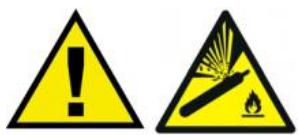
If gas cylinders are damaged or placed near the welding area, they may explode. Gas cylinders shall be shielded and placed at a position where they will not be hit or damaged. Keep them away from heat sources, sparks or flame. Gas cylinders must be stored perpendicularly and fixed on a stationary bracket. Ensure proper storage and pressure regulation for any gas. All hoses or accessories must also be suitable for the gas type and pressure used in welding applications.
1.4.2 Optical Safety
Laser output is transferred via an orifice. Ensure the orifice is clean and high-quality. Any dust at the end of head components may burn the orifice and damage the laser. Check the quality of light spots emitted from the laser output orifice at a low power level, and then increase the output power progressively.
When the device is powered on, do not directly observe laser holes, such as output fiber or welding head. When operating the product, always wear safety goggles and helmets with masks. Nearby people must also wear the same safety equipment. Ensure all pieces of personal protective equipment are applicable to the output power and wavelength range listed on the laser safety label attached on the product.
1.4.3 Fire Protection Safety
If combustible or inflammable materials stay close to the welding area, the heat and sparks produced in the course of welding will lead to fire or explosion. The laser welding is only allowed if no combustible materials exist in the welding area. Do not weld a container with combustible or inflammable materials. If the content in the container is unknown, stop the welding. Fire extinguishers shall be placed near the welding area, easy to access, and also emergency responders trained in their use shall be available.
2 Product Overview
The handheld laser welder is to achieve the purpose of welding by controlling the high energy laser beam to fuse the metal base and the welding wire. Compared with traditional arc welding, laser welding enjoys such advantages as more delicate, more stable, lower heat input, more beautiful weld formation, few consumables, simpler operation and higher efficiency, which can meet the welding needs of various industries.
Performance features:
Synergic design, flexible and convenient. The compact synergic design covers a small area and is equipped with moving pulleys, which can be adjusted at any time according to the site requirements, making it convenient and flexible to use.
In addition to the beautiful weld formation, and the heat input can be precisely controlled by finely adjusting the laser swing width, laser power, swing frequency, etc. to meet the welding strength, reduce the deformation of the workpiece, and achieve the optimal welding results.
Reduce labor cost and material cost. The operation is less difficult, making it easy to get started; the welding speed is fast, enjoying high efficiency; the weld seam is beautiful, eliminating the need for later grinding; and the consumables are reduced.
The human-machine interface is simple and easy to operate.
Wide range of applications, basically suitable for welding all thin metal plates.
2.1 Machine Parameters
Table 2-1 Machine parameters
| Name | Handheld laser welder | |
| Model | LS-15000 IV | LS-20000 IV |
| Input power supply | AC220V±10% 50Hz | |
| Input power | 5.8kW | 7.8kW |
| Conduction type | Optical fiber | |
| Optical fiber connection mode | QBH | |
| Central wavelength | 1080nm | |
| Operating mode | Continuous or modulated | |
| Power adjustment range | 10%~100% | |
| Operating temperature range | -10°C~40°C (≤7°C, antifreeze needed) | |
| Laser cooling methods | Water-cooled | |
| Cooler temperature control precision | ±1°C | |
| Refrigerant type | R32/R410a | |
| Water tank volume | 10L | |
| Water pump power | 0.25kW | 0.32kW |
| Auxiliary heating mode | Electric auxiliary heating | |
| Shield gas | Argon, nitrogen, compressed air (cutting) | |
| Machine body | Cabinet type | |
| Machine dimensions | 760mm*357mm*695mm | |
| Machine weight | 85 kg | 92 kg |
| Machine package size | 864mm*474mm*1032mm | |
| Machine package weight | 112 kg | 119 kg |
| Package size of feed roll and accessories | 628mm*240mm*340mm | |
| Package weight of feed roll and accessories | 17.3 kg | |
2.2 Wire Feeder Parameters
Table 2-2 Feed roll parameters
| Model | WF-22LP |
| Input power supply | DC24V |
| Maximum weight of welding wire | 20 kg |
| Wire feeding diameter supported | 0.8/1.0/1.2/1.6mm, 2.0/2.5mm customizable |
| Wire feed speed | 25~600cm/min |
| Operating mode | Continuous mode, pulse mode |
| Installation environment | Level and free of vibration or shock |
| Overall dimensions | 628mm*240mm*340mm |
| Weight | 11.5 kg |
2.3 Welding Unit
The handheld laser welding torch is available in HD31 model, comprised of the following parts:

Figure 2-1 Handheld laser welding torch diagram
Table 2-3 Welding torch parts and model
| Part Name | Model |
| Brass nozzle | AS-12/BS-16/CS-12/ES-12/FS-16/WD24-02-003L |
| Graded tube | FT80 |
| Protective lens | D20*3 |
| Focal lens | D20*F150*T3 |
| Reflector | 30*14 T2 |
| Collimation lens | D16*F60*T3 |
| Water joints 1 and 3 | Φ6 |
| Gas joint 2 | Φ6 |
3 Control Panel and its Functions
3.1 Overview of the Welding Mode Panel
The operation interface is divided into five parts, Safety instructions for the use of handheld laser welders, Home, Technology, Settings, and Monitoring.
3.1.1 Safety Instructions for the Use of Handheld Laser Welders

JASIC®
Hand-held laser welding machine use safety notice
- For your safety and the safety of others, do not point the welding torch at yourself or others.
- Before using the handheld laser welding machine, you must wear appropriate and certified 1080nm nearinfrared laser protective glasses and anti-high temperature gloves.
- For the safety of you and others, the earth clamp must be clamped on the welding workpiece before the laser is triggered during welding, and it is strictly prohibited to clamp in other places except the workpiece to avoid safety risks caused by abnormal laser beam.
- Handheld laser welding machine operation needs to be carried out in an independent space with laser protection. Non-operator and combustible, flammable materials should be more than 10 meters away from the operating table, and a fire extinguisher should be placed near the working area.
- Wear a mask, high temperature gloves and protective clothing when welding highly reflective materials.
- Ensure that the ground of the handheld laser welding machine is normal, otherwise it may cause the product shell to be charged, resulting in electric shock and other injuries to the operator. If the grounding is not performed according to the requirements, hidden faults such as laser alarm, no light, and laser instability may occur.
Warning: To ensure the safety of the laser welding machine work area, the interaction between the laser and the work surface can produce high temperatures, gases, sparks and debris, which may pose an additional safety hazard. The corresponding operators need to undergo certain assessment training, and be familiar with the conventional safety specifications of laser welding machine operation.
AGREE
Figure 3-1 Interface of safety instructions for the use of handheld laser welders
Notes:
At each startup, the interface of safety instructions for the use of handheld laser welders will appear. Please carefully read and understand the safety instructions. After reading and accepting the instructions, click "Agree" button to enter the operation interface.
3.1.2 Home Interface of the Touch Screen

Figure 3-2 Home Page in Welding System
1) This page displays the current process parameters and allows direct modification of the process parameters, as well as real-time alarm information.
2) When the laser enable function is turned off, no enable signal will be sent to the laser source. Gas Check can be used to test whether the gas output is normal. When the Scan Width is set to 0, the motor stops oscillating; at this time, the red light appears as a single point and is used to adjust the center position. The Welding Modes include Standard (Continuous), Spot, Pulse, and Cut, and different modes can be selected according to the current requirements.
3) is the safety lock indicator icon, which has two states: orange and green. When the metal clamp is attached to the workpiece and the copper nozzle of the torch is in contact with the workpiece, the signal is established and the safety lock indicator turns green. In this state, press the laser enable button on the panel and then press the trigger to achieve laser output.

4) is the laser enable indicator icon, which has two states: orange and green. When the laser
enable button on the machine panel is pressed, the icon turns orange.

5) is the torch trigger indicator icon. When the trigger is not pressed, the icon is orange; when the trigger is pressed, the icon turns green.
3.1.3 Parameter Recommendation Interface

Figure 3-3 Synergic Page in Welding System
1) The synergic page includes selection of material, thickness, wire diameter, and welding position.
2) The materials include steel, stainless steel, aluminum alloy and galvanized sheet.
3) Thickness range adjustable: 0.3\~6mm.
4) The welding wire diameter can be selected within the range of 0.8 to 1.6 mm.
5) The welding positions include butt, inner fillet and outer fillet.
6) After selecting the desired material, thickness, wire diameter, and welding position, the corresponding parameters will appear on the right-hand side. The parameters are automatically saved and synchronized to the home page, where you can verify whether the synchronization has been completed successfully.
7) After operating on the synergic page, the settings are immediately synchronized to the home page and saved.
3.1.4 Red Calibration Interface

Figure 3-4 Laser Center Offset Correction Page

Figure 3-5 Fig 3-5 Scan Width Correction Page
Calibrate the red light position and the red light width according to the instructions displayed on the panel.
3.1.5 Setting Interface
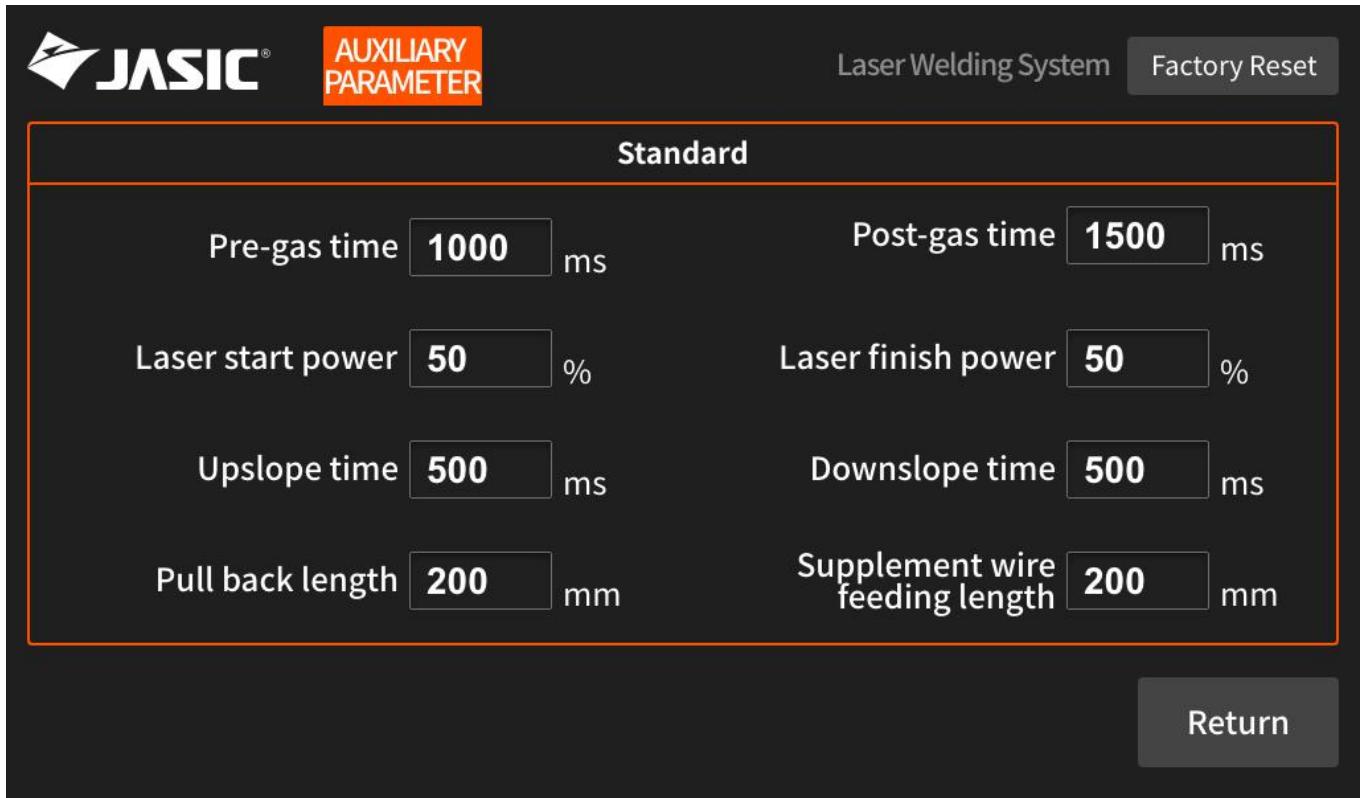
Figure 3-6 Setting interface of welding mode
1). The auxiliary parameter page includes welding process parameters such as Pre-gas time, Post-gas time, Laser start power, Laser finish power, Upslope time, Downslope time, Pull back length, and Supplement wire feeding length
2). Pre-gas time range adjustable: 0\~3000 ms.
3). Post-gas time range adjustable: 0\~9000 ms.
4). Laser start power range adjustable: 0\~100 %.
5). Laser finish power range adjustable: 0\~100 %.
6). Upslope time range adjustable: 0\~2000 ms.
7).Downslope time range adjustable: 0\~2000 ms.
8). Pull back length range adjustable: 0\~200 mm.
9). Supplement wire feeding length range adjustable: 0\~200 mm
10). When laser is output, the power ramps up from N1% of the process power to the process power; when laser output is finished, the power ramps down from the process power to N2% of the process power.
As shown in the figure below.

Figure 3-7 Welding time sequence
The user can adjust the corresponding parameters according to the actual welding to achieve better welding effect.
3.1.6 Monitoring Interface

Figure 3-8 Welding mode monitoring interface
1). This page displays the relevant diagnostic signals of the welding machine, which can be used to preliminarily assess the machine's operating status.
2). On the status page, the left side shows the machine alarm signals. 📄 indicates that the corresponding function is in an alarm state and the machine must be inspected and the alarm cleared before normal operation can resume, while 📄 indicates that the corresponding function is operating normally.
3). On the right side of the status page, the machine status information during welding is displayed.

indicates that the signal is active, and

indicates that no signal is present. The machine's
operating status can be preliminarily assessed based on this status information.
3.1.7 Device information interface

Figure 3-9 Device authorization interface
If you want to view the device information or use the device authorization interface, the operation steps are as follows:
1). make sure that the battery is installed on the main control board.
After installing the battery, tap System in the upper-right corner of the home page. After entering the system page, you can view the serial numbers of components such as the laser source, chiller, and welding torch.
2). To use the device authorization function, tap Device Authorization 设备授权 长期有效 . A
6-digit serial number will be generated. Each time you enter the authorization page, the serial number will change. If authorization has not yet been completed by entering a password, remain on the current page.
3). Contact Jasic after-sales service and provide the serial number shown on the welding torch license page, along with the required authorization duration (e.g., one day, one month, or six months). The Jasic after-sales service will then provide the welding torch license password to the customer.
4). Enter the password provided by the Jasic after-sales service on the LCD screen and tap Import for the authorization to take effect.
Note:
1). If the battery is removed during the license validity period, the authorization will be terminated immediately upon power-on and the machine will not be able to output laser. After reinstalling the battery, authorization must be performed again to restore operation.
2). Authorization can also be performed on the authorization page without installing the battery; however, once the machine is powered off and then powered on again, the authorization will be terminated.
3.2 Overview of Cleaning Mode Panel
The operation interface is mainly divided into four parts: home page, process, setting, and monitor.
3.2.1 Touchscreen Home Page

Figure 3-10 Home Page in Cleaning System
1). This page displays the current process parameters and allows direct modification of the process parameters, as well as real-time alarm information.
2). When the laser enable function is turned off, no enable signal will be sent to the laser source. Gas Check can be used to test whether the gas output is normal. When the Scan Width is set to 0, the motor stops oscillating; at this time, the red light appears as a single point and is used to adjust the center position. The corresponding focal length and scan width should be selected based on the model of the focusing lens installed on the welding torch.

3). is the laser enable indicator icon, which has two states: orange and green. When the
laser enable button on the machine panel is pressed, the icon turns orange.

4). is the torch trigger indicator icon. When the trigger is not pressed, the icon is orange;
when the trigger is pressed, the icon turns green.
5). Click the icon

in the upper right corner to switch the welding system.
3.2.2 Auxiliary Parameter Page

Figure 3-11 Auxiliary Parameter Page in Cleaning System
1). The auxiliary parameter page includes welding process parameters such as Pre-gas time, Post-gas time, Laser start power, Laser finish power, Upslope time, Downslope time.
2). Pre-gas time range adjustable: 0\~3000 ms
3). Post-gas time range adjustable: 0\~9000 ms
4). Laser start power range adjustable: 0\~100 %
5). Laser finish power range adjustable: 0\~100 %
6). Upslope time range adjustable: 0\~2000 ms
7). Downslope time range adjustable: 0\~2000 ms
8). When laser is output, the power ramps up from N1% of the process power to the process power; when laser output is finished, the power ramps down from the process power to N2% of the process power.
As shown in the figure below.

Figure 3-12 Welding sequence diagram
Users can adjust the corresponding parameters according to actual welding requirements to achieve improved cleaning results.
3.2.3 Red calibration interface

Figure 3-13 Laser Center Offset Correction Page

Figure 3-14 Scan Width Correction Page
Calibrate the red light position and the red light width according to the instructions displayed on the
3.2.4 Status Page

Figure 3-18 Monitoring interface of cleaning mode
1). This page displays the relevant diagnostic signals of the welding machine, which can be used to preliminarily assess the machine's operating status.
2). On the status page, the left side shows the machine alarm signals. 📄 indicates that the corresponding function is in an alarm state and the machine must be inspected and the alarm cleared before normal operation can resume, while 📄 indicates that the corresponding function is operating normally.
3). On the right side of the status page, the machine status information during welding is displayed.

indicates that the signal is active, and

indicates that no signal is present. The machine's
operating status can be preliminarily assessed based on this status information.
3.3 Description of the front panel components of the welding machine

Figure 3-19 Front Panel Photo
1). Power switch: Turn the power control switch of the welding machine clockwise to power on and start the machine.
2). Laser enable : Control the laser enable signal for laser output. When it is turned on, the indicator light will light up.
3). Emergency stop: Press it in case of an emergency, and the machine will stop working. Rotate it clockwise to reset.

4). Knob: To adjust the parameters.
5). Back Button: Returns to the previous page on the display interface.
3.4 Description of the rear panel components of the welding machine

Figure 3-20 Rear Panel Photo
1). Residual Current Circuit Breaker: Controls the main power input of the machine and provides short-circuit protection.
2). Power cord: Machine power cable. Connect to single-phase AC 220 V. The grounding conductor must be reliably connected to earth.
3). Shielding gas: Connect the gas hose to supply shielding gas, which provides protection during welding.
4). Torch cable: Welding torch cable outlet, containing optical fiber, water hoses, gas hose, and torch control cables.
5). Wire feeder: Connect via the 7-pin aviation connector to the wire feeder to supply power and control wire feeding.
6). Earth clamp: Connect the earth clamp. During welding, the clamp must be attached to the workpiece; laser output is enabled only after a complete circuit is formed with the torch tip.
7). Interlock signal: Optional interlock function interface.
8). Robot interface: Interface for communication and integration with a robot system.
3.5 Description of Wire Feeder Control Panel


Figure 3-21 Description of feed roll panel
Table 3-1 Description of feed roll panel functions
| Functional Parameter | Description |
| Continuous and pulse modes | Click the button  to switch between "Continuous mode" and "Pulse mode". In "Continuous mode", the pulse time and interval time are disabled and the corresponding parameters cannot be adjusted; In "Pulse mode", the pulse time, interval time, and parameters can be adjusted. to switch between "Continuous mode" and "Pulse mode". In "Continuous mode", the pulse time and interval time are disabled and the corresponding parameters cannot be adjusted; In "Pulse mode", the pulse time, interval time, and parameters can be adjusted. |
| Wire feed speed | Controls the wire feed speed during welding.In continuous mode: 25~600 cm/min.In Pulse mode:Range with welder not connected: 25~600 cm/min.Range with welder connected: 0~150 cm/min.Adjust the panel knob directly. |
| Manual wire feed | Controls the manual wire feed speed. It is generally used for daily debugging of the machine. Continuously press the "Manual wire feed" button and the motor willcontinue to feed the wire at the fastest speed. Release the button and the machine will stop feeding. |
| Manual withdraw | Controls the manual withdraw speed. It is generally used for daily debugging of the machine. Continuously press the "Manual withdrawal" button, and the motor will continue to withdraw the wire at the fastest speed. Release the button and the machine will stop withdrawal. |
| Run/Stop | Controls the feed roll to switch the working state. Click "Stop" and the panel will display "——". At this point, the machine is in "Stop" state and the motor cannot feed or withdraw the wire. Click "Run" and the panel will display the set wire feeding speed. At this point, the machine is in "Run" state and the motor can feed the wire normally. |
3.6 Description of Wire Feeder Rear Panel Components
Power switch: controls the power input of the feed roll.
Control cable: Connected to the machine so that it can provide power and welding torch signals to the feed roll.
4 Installation
4.1 Installation Requirements
4.1.1 Installation Environment Requirements
Read the following precautions when selecting an installation environment.
Avoid installing the machine in an environment with dust or metal powder.
Avoid installing the machine in an environment that contains corrosive or explosive gas.
Ensure that the working environment is maintained at a temperature between -10°C and 40°C . If the equipment is used in an environment with the temperature lower than 7°C , antifreeze should be used to protect the coolant from freezing.
It should be used in an environment where the humidity is less than 90% and where there is no condensation of water droplets.
The altitude shall be no more than 1000 m.
The inclination of the machine should not exceed 10° . When the machine is placed on a slope,
additional fixing measures should be taken to prevent it from sliding.
There shall be no obvious vibration or impact.
Please consult and confirm with JASIC's customer service personnel first regarding any special installation requirements.
4.1.2 Installation Space Requirements
The laser welder shall be at least 30 cm away from walls or other objects.
4.2 Electrical Connection
Notes:
- All electrical connection should be completed by experienced and qualified personnel.
- Be sure to turn off the power switch of the power distribution box before wiring to ensure safety.
- Always use reliable standard cables.
- Do not operate with wet hands.
- Do not place heavy objects on cables.
- Water supply pipes and house steel bars may not be reliably connected to the ground. Please do not use them for safety grounding.
- Each machine shall be equipped with a gas switch or fuse.
Connection of power supply cables

Warning! Electric shock may cause death! After power failure, there is still a high voltage direct current in the equipment, do not touch the live parts on the equipment.

Warning! The power supply connection of the machine must be operated by experienced and qualified electricians.

Warning! Do not connect the live wire (blue, brown, black) of the power cord to ground, and do not connect the earth lead (yellow-green) to the live wire!

Warning! Incorrect input voltage may damage the equipment.
1) Connect the power source to the suitable power distribution box according to the voltage grade of machine. Meanwhile, ensure that the supply voltage deviation is within the allowable range.
2) When an extension cord is required, it is recommended to use power cords with a larger cross-sectional area to reduce voltage drop. An excessively long cord may affect normal operation of the system. Therefore, please use the recommended cord length.
Ensure that the switch of the power distribution box is turned off when connecting the input power cord.
Connect the input power cord of the machine to the output of the power distribution box reliably.
Connection of the power distribution box

Figure 4-1 Wiring diagram of single-phase distribution box
1 Single-phase AC power input: 220V;
2 Power switch of distribution box;
3 Earthing terminal board;
4 The machine should be connected with a power cord that has a specification of 3 × 4 mm2 or above;
5 Yellow-green earth wire (connected to the ground!);
Fuse: The machine should be provided with a fuse of not less than 60A.
Please connect the power cords by the method shown in the figure or other correct ways with the main power switch being turned off.
Note: Do not operate with electricity!
The wiring of the machine can only be carried out by professional electricians.
Do not connect two machines to the same distribution box.
4.3 Connection of Safety Ground Lock
Before welding, connect the aviation socket of the grounding clamp to the interface on the rear panel of the machine, and clamp the alligator clip of the safety ground lock to the workpiece. The torch head will emit laser only when the laser enabling signal is valid, the torch head is in contact with the workpiece, and the torch trigger is pressed.
4.4 Gas Connection
During the welding, a kind of inert gas should be used to cool the torch head and protect the weld seam. The purity and pressure of inert gas shall be guaranteed. Generally, nitrogen and argon gases are used as the shielding gas, with the purity of not less than 99.99% and the inlet gas pressure of greater than 80 kpa. The gas is injected into the gas inlet on the rear panel of the machine through a 6 mm gas hose, and the gas flow should be ≥15 L/min.
4.5 Welding Torch Assembly
The graded tube and brass nozzle are not assembled on the welding torch at the factory, and need to
be assembled before use.

Warning!
- Before installing the welding torch, you should cut off the power supply of the machine.
1) Take out the graduated tube and brass nozzle from the accessory box;
2) Remove the sealing plug from the torch nozzle;
3) Assemble the graduated tube onto the torch nozzle, and adjust the scale to 0;
4) Assemble the brass nozzle onto the graduated tube and tighten it, rotate the graduated tube to align the wire feeding trough of the brass nozzle with the welding wire, and then tighten the nut sleeve.
4.6 Wire Feeder Assembly
4.6.1 Internal Assembly of the Wire Feeder

Figure 4-1 Interior of wire feeder
Step 1: Select proper wire feeding roller according to the welding wire diameter;
Release two preload adjustable press rods;
Unscrew the nut of wire feeding roller and remove it;
Replace with proper wire feeding roller, put the side of the corresponding wire feeding trough facing inward, and then tighten the nut.
Step 2: Install the wire spool. Note that the welding wire must be led out from the wire spool, insert the wire spool on the spool shaft, and pass the welding wire through the wire feeding roller.
Note: The welding wire must be placed into the slot and then clamped. The welding wire should be ordinary welding wire weighing from 5 kg to 25 kg, but flux-cored wire should not be used.
Step 3: Adjust the press rod pressure to stably send out the welding wire.
4.6.2 Connection of the Wire Feeder

Figure 4-2 Assembly of wire feeding brass nozzle
Step 1: Connect the wire conduit. Loosen the locking screw to insert the brass nozzle of the wire conduit onto the feed roll, pass the welding wire through the brass nozzle and tighten the screw fixing the brass nozzle.
Step 2: Assemble the wire conduit on the torch head bracket and tighten the nut; adjust the length of wire conduit to extend to the welding brass nozzle.
Step 3: Connect the control line of the wire feeder. Insert the seven-pin connector plug of the control line into the seven-pin socket on the rear panel of the wire feeder and tighten it. Then, insert the other end into the wire feeder interface on the rear panel of the machine.
Step 4: After the above steps are finished, turn on the power supply of the wire feeder, switch on the feed roll, and manually feed a wire and make it come out of the wire liner nozzle.
Notes: 1) Do not direct the wire guide nozzle at any person or equipment during the wire feeding to avoid personal injury.
2) Avoid bending the wire guide tube to avoid affecting the wire feeding.
4.7 Guide to Turning On and Off the Device
- After connecting the entire system, check again for any errors or omissions before startup.
- Open the gas cylinder valve and adjust the gas flow.
- Turn on the switch of the power distribution box, the switch of the rear panel of the machine, and the switch of the feed roll in turn.
- Turn on the power switch and emergency stop switch on the front panel. At this time, the machine will start, and the panel will light up. After startup, check whether the machine and water tank are
operating normally and whether there are any alarms.
- Press the manual wire feeding button on the wire feeder to make the welding wire come out of the wire guide nozzle.
- Disable the laser enabling button to check if the red light is in the center of the brass nozzle and aligned with the wire.
- Welding can be carried out after the welding parameters have been set and protective equipment has been worn.
- After welding, disable the laser enabling button, turn off the power switch on the front panel, the switch on the rear panel, the switch on the power distribution box, and then the gas cylinder valve in sequence.
- Place the welding torch lightly in the torch holder.

Warning!
When manual wire feeding is performed with the feed roll, do not direct the guide wire nozzle to people or equipment to avoid puncture.
When adjusting the red light, it is forbidden to enable the laser enabling button, to avoid causing injury by light emission.
5 Precautions

Warning! Dropping may cause machine damage or personal injury. Please operate in accordance with the transportation and placement labels on the machine, and use a cart or similar tools with corresponding load-bearing capacity for transportation.
- Machine lifting method: The machine can be lifted by forklift or crane. As the machine is not equipped with lifting rings, special attention should be paid to the fixing method when using a crane for lifting.
- Input cable specification: A cable of 3 × 4 mm2 or larger should be used to connect the power distribution box and the machine. The power distribution box must be equipped with a circuit breaker or fuse rated at not less than 60A.
- Protective earth lead connection: Be sure to connect the yellow-green wire in the input cable of the machine to the protective ground.
- Cooling method: The water tank is equipped with a cooling fan. The air inlet and outlet of the machine should not be blocked during use to ensure proper ventilated.
- The inclination of the machine should not exceed 10° ; otherwise, it is prone to tipping over. When the machine is placed on a slope, additional fixing measures should be taken to prevent it from sliding.
- The operation environment of the machine should meet the following requirements:
1) Air temperature range:
During welding, the temperature range is -10°C to +40°C . Use antifreeze when the ambient temperature is lower than 7°C . During transportation and storage, the temperature range is -20°C to +55°C .
Note: When using a water cooler, pay attention to prevent it from being used or stored at the solidification temperature of the coolant; when storing at a low temperature, the coolant should be drained first!
2) Relative air humidity: not more than 70% at 40° C, and not more than 90% at 20° C.
3) The dust, acid, corrosive gas, or other substances in the surrounding air should not exceed normal levels, except for those substances produced during the welding process.
- The bottom of the equipment is equipped with rollers. When the equipment is placed in a location, the rollers should be locked to prevent damage or personal injury caused by equipment movement.
- Do not put your hands, hair, tools, or other objects near live components inside the machine when it is energized, such as fans, to avoid personal injury or damage to the machine.
- Avoid allowing water or water vapor to enter the inside of the machine. If such s condition occurs, the inside of the machine should be dried. Then, the insulation of the machine (including between the connection nodes and between the connection points and the enclosure) shall be measured with a megohmmeter. Do not proceed with welding unless confirming that there is no abnormal condition.
- The welder and welding torch can only be operated according to their duty cycle.
The bending radius of the welding torch cable should not be less than 20 cm to avoid fiber breakage.
- Care for the torch: Rough operation of the welding torch can easily cause wire breakage, water leakage (gas leakage), and damage to the internal torch lens; when not in use, it should be placed carefully and securely in the torch holder.
- Poor flow meter or gas hose connection will lead to gas leakage or reduced gas flow at the nozzle, thereby diminishing the gas protection effect, and making the weld prone to gas pores.
- There should be windproof measures in windy workplaces, otherwise, the wind will blow away the protective gas and cause gas pores.
- Clean the oil, rust, paint, water and other conductive substances attached to the base metal surface to be welded; otherwise, pores and cracks may form, and a good welding effect cannot be achieved.
- During manual wire feeding and inching, do not direct the wire liner to people or equipment to avoid puncture.
- Do not replace the wire feed roller while the feed roll is powered on to avoid the risk of being crushed.

Warning! The machine is equipped with an abnormal temperature protection circuit.
When the water temperature is too high/low, the machine will trigger an alarm and automatically stop the light emission.
6 Maintenance
6.1 Maintenance and Replacement of the Protective Lens and Focal Lens
The protective lens of the welding torch head needs regular maintenance and wiping to avoid dust or stains. If there is debris on the surface of the lens, it will affect the light emission and lead to a decrease in welding performance, or even burn the lens.
6.1.1 Tools Used
1) Rubber gloves or finger cots;
2) Lens cleaning cloth;
3) Non-woven cotton swab;
4) Textured tape (width: 5 cm);
5) Anhydrous ethanol (purity ≥ 99%)
6.1.2 Operation Steps

Warning!
- When replacing or maintaining lenses, it is necessary to cut off the power supply of the machine.
1) Cut off the power supply of the machine;
2) Wear rubber gloves or finger cots, and open the lens protection cover to take out the protective lens base;
3) Immediately close the lens protection cover to prevent dust from entering the device;
4) Wipe the surface of the protective lens with a cotton swab dipped in anhydrous ethanol;
5) If damaged lenses are found, replace them with new ones in a timely manner;
6) Install the protective lens bracket into the welding head, paying attention to the installation direction, and close the lens protection cover.

- Please perform lens maintenance or replacement in a dust-free environment!
- Do not touch the surface of the protective lenses with your fingers!
- Do not blow debris on the surface of the lens with your mouth!
- If the white energized sealing ring under the lens is scratched or deformed, it must be replaced immediately!
6.2 Maintenance and Service of the Water Cooler
The main function of the water cooler is to cool the laser and welding head, so that the laser and welding head can maintain in a constant temperature working condition. Therefore, proper and regular maintenance is the key to ensure the normal work of the machine. At the same time, the circulating water of the water cooler must use distilled water. Due to the water quality problems, there are still certain minerals, dust and other impurities in the circulating water, and the dust in the environment may also enter the circulating water in some operation links. The deposition of these impurities can lead to the blockage of water systems (such as metal filter, welding head, laser, QBH), which can seriously affect the welding results or even burn out the optical components. The accumulation of dust and other debris in the environment on the radiator and water pump of water cooler will lead to poor heat dissipation, resulting in poor cooling, burned compressor, or burned water pump, which will also directly affect the welding results or cause the machine not to work. Therefore, the daily maintenance of the water cooler is particularly important.
Please refer to the maintenance instructions for water cooler and regularly maintain the cooling system of the laser welder (cleaning machine).
Table 6-3 Maintenance instructions of water cooler
| Maintenance Period | Content | Target |
| Daily | 1. Check whether the temperature setting of the water cooler is normal (set temperature: 25±1°C). | Ensure that the temperature of the cooling water supplied to the laser is normal. |
| 2. Check whether the water circuit seal, water temperature and water pressure of the water cooler meet the requirements. | Ensure proper operation of the equipment and prevent water leakage. | |
| 3. Keep the working environment of the water cooler dry, clean and ventilated. | Contribute to the proper operation of the water cooler. | |
| Monthly | 1. Remove the dirt on the surface of the water cooler with neutral cleaner or high quality soap. Donot clean the system with benzene, acid, abrasive powder, steel brush, or hot water. | Ensure that the surface of the water cooler is clean. |
| 2. Check whether the condenser is blocked by dirt. Please use compressed air or brush to remove the dust from the condenser. | Ensure the normal operation of the condenser. | |
| 3. You can use vacuum cleaner, air gun and brush to remove the dust on the filter. After cleaning, if the filter is wet, please shake it to dry and then install it back. | Prevent poor heat dissipation from causing poor cooling, and burning out the water pump and compressor. | |
| 4. Check the water quality of the tank and follow up. | Good water quality can ensure the normal operation of the laser. | |
| 5. Replace the cooling water (distilled or purified water) and clean the metal parts of the water tank and water circuit. | ||
| Quarterly | 1. Check electrical parts (such as switches, terminals, etc.) and wipe clean with a dry rag. | Ensure that the surface of the electrical parts of the water cooler is clean to extend the service life. |
| 2. When the machine is used in winter, replace the antifreeze and clean the metal parts of the water cooler and water circuit. | Ensure that the laser operates normally. |
Notes:
Cooling water should be deionized or distilled water, and tap water is strictly prohibited. The cooling water and filter element of the water cooler should be replaced regularly every month. Adding 5% -10% anhydrous alcohol to the water cooler can effectively prevent the production of micro-organisms in the water, thus making the product more reliable.
When the laser is used in summer, pure water should be used as the cooling water to protect the water circuit of the water cooler from corrosion resulted from long-term use of the antifreeze.
When the laser is used in winter with an ambient temperature below 7\ °C , it is required to protect the
internal water circuit of the laser and the water cooler from being frozen. An appropriate amount of antifreeze should be added to the cooling water for protection. The freezing point of the antifreeze must be 5 °C lower than the minimum ambient temperature
The water inside the equipment and QBH should be emptied timely before the machine is out of service for a long period. Otherwise, the water remained in the equipment for a long period may cause damage to the laser. When the water inside the QBH is drained, the air pressure must be less than 0.1 Mpa. Excessive air pressure should be avoided to protect the optical fiber from being damaged.
When the laser is used in summer, it is required to prevent any internal condensation. Once the cooling temperature of the water cooler drops below the dew point of the laser's internal environment, the moisture in the air will be condensed onto the electrical and optical modules. If no measures are taken, the moisture will be condensed on the outer surface of the laser. Once the condensation is visible on the laser housing, it indicates that the moisture is already condensed in the laser. In this case, the machine should be powered off and stopped, and the working environment of the laser should be improved.
To reduce the risk of condensation, connect the clean and dry compressed air line from the CDA on the back panel of the laser and inject the clean and dry compressed air into the inside of the laser. The air pressure should be kept at 0.1 MPa. It is prohibited to use the compressed air containing water or oil.
7 Troubleshooting of Common Abnormalities
Table 7-1 Troubleshooting of common abnormalities
| S/N | Parts | Symptom | Reasons | Troubleshooting |
| 1 | Welder | After start up | The input voltage is insufficient; the power cord is damaged or in poor contact; or the emergency stop button on the panel is pressed. | Ensure that the input voltage conforms to the requirements, the power cord is properly connected, and the emergency stop button is released. |
| 2 | Water cooler | Water cooler overheating alarm | The internal coolant temperature exceeds the set value. | In case of overheat, please stop welding, disable the laser enabling button, and continue welding after the alarm is removed. |
| 3 | Insufficient water level leads to overheat. | Check the coolant level of water cooler, which should be in the standard area. | ||
| 4 | Welding torch | No light emission after pressing the torch trigger | The enabling button or the laser button on the display is not enabled; or the earth clamp is not clamped. | Enter the diagnosis interface, and check the various parameters, to ensure that all preparation signals are normal and the safety ground lock is connected. |
| 5 | The permission to use the controller has expired. | Contact the manufacturer to provide a password for reactivation. | ||
| 6 | Welding torch protective lens often burn out | The welding mode is not correct, and the laser reflection causes damage to the lens. | The welding torch should be welded at 45 degrees to the plate, not perpendicular to plate. | |
| 7 | Parameter settings are incorrect during high-power | During high-power welding, upslope and downslope | ||
| welding. | parameters shall be enabled. | |||
| 8 | The environment where the welder is located is too dusty and the lens is contaminated with dust, resulting in burnout. | The welding machine should be stored in a room with little dust, and the nozzle should be protected from dust when the welding torch is not in use. | ||
| 9 | Laser weakened during welding | Damage to the protective lens causes the laser to fail to gather properly. | Replace the protective lens, check the cause of lens damage and avoid it. | |
| 10 | Brass nozzle burnt | Laser light is not in the center; or the focal length adjustment of the graded tube is not appropriate. | Check whether the red light emission position and spot size are normal. If the position is not right, adjust the red light; if the spot size is not appropriate, adjust the focal length of graded tube. | |
| 11 | Wire feeder | No wire feeding after pressing the torch trigger | The feed roll is not connected to the welder or the signal cable is damaged. | Ensure the connection to the welder is normal, and replace any damaged signal cable. |
| 12 | The wire conduit is blocked or knotted; the wire conduit is bent too small; or the pressure of the pinch roller is incorrect. | Straighten the wire conduit to ensure the conduit is internally smooth.Avoid too small bending angles, and increase the pressure applied on the tension wheel. | ||
| 13 | Unstable wire feed speed or unsmooth wire feeding | |||
| 14 | Feed roll not matched to wire model/feed roll deformation ordamages. | Replace the feed roll. | ||
| 15 | The welding parameters do not match the wire feed speed. | Adjust the welding parameters or wire feed speed. | ||
| 16 | The wire conduit material or size does not match the welding wire. | Replace the wire conduit. |
8 After Sales Service
8.1 Warranty Card
Each machine is provided with a warranty card. Please fill in the relevant information.
Read and keep the warranty card carefully.
8.2 Repair
Perform preliminary troubleshooting or keep records according to Section 7, Troubleshooting of common abnormalities. To repair or replace a device, contact your local dealer. Please use accessories or consumables provided by Shenzhen JASIC Technology Co., Ltd.
Appendix 1: Wiring Diag

SHENZHEN JASIC TECHNOLOGY CO., LTD.
No. 3, Qinglan 1st Road, Pingshan District, Shenzhen, Guangdong, China www.jasictech.com


- JASIC®
- HANDHELD LASER WELDING MACHINE
- OPERATOR'S MANUAL
- TABLE OF CONTENT
- SAFETY PRECAUTIONS
- SAFETY PRECAUTIONS FOR THE USE OF LASER
- SAFETY PRECAUTIONS FOR WELDING
- SAFETY PRECAUTIONS FOR THE USE OF THE DEVICE
- OTHER SAFETY PRECAUTIONS
- PRODUCT OVERVIEW
- CONTROL PANEL AND ITS FUNCTIONS
- OVERVIEW OF THE WELDING MODE PANEL
- SAFETY IN USE OF THE HANDHELD LASER WELDER
- SPECIAL NOTE
- HAZARDS AND PROTECTION MEASURES OF LASER RADIATION
- SAFETY MEASURES PROTECTING FROM HAZARDS OF LASER RADIATION
- ASSIGNMENT OF LASER SAFETY OFFICERS
- PERSONAL PROTECTIVE EQUIPMENT PROTECTING FROM HAZARDS OF LASER RADIATION
- PROTECTION FROM REFLECTED BEAMS
- SAFETY WARNING SYMBOLS OF THE LASER WELDER
- SAFETY TIPS
- IMPROPER USE AND OPERATION MAY LEAD TO FIRE OR EXPLOSION
- HOT WORKPIECES MAY CAUSE SERIOUS BURNS
- NOISE——EXCESSIVE NOISE MAY BE HARMFUL TO HEARING
- MAGNETIC FIELD AFFECTS CARDIAC PACEMAKER
- MOVING PARTS MAY CAUSE PERSONAL INJURY
- FAULT - WHEN ENCOUNTERING DIFFICULTIES, SEEK PROFESSIONAL ASSISTANCE
- NOTES
- SAFETY IN THE USE OF THE WELDER
- SAFETY IN THE USE OF THE WELDING TORCH
- SAFETY IN THE USE OF THE WIRE FEEDER
- SAFETY IN THE USE OF GAS CYLINDERS
- OPTICAL SAFETY
- FIRE PROTECTION SAFETY
- MACHINE PARAMETERS
- WIRE FEEDER PARAMETERS
- WELDING UNIT
- SAFETY INSTRUCTIONS FOR THE USE OF HANDHELD LASER WELDERS
- HAND-HELD LASER WELDING MACHINE USE SAFETY NOTICE
- HOME INTERFACE OF THE TOUCH SCREEN
- PARAMETER RECOMMENDATION INTERFACE
- RED CALIBRATION INTERFACE
- SETTING INTERFACE
- MONITORING INTERFACE
- DEVICE INFORMATION INTERFACE
- OVERVIEW OF CLEANING MODE PANEL
- TOUCHSCREEN HOME PAGE
- AUXILIARY PARAMETER PAGE
- STATUS PAGE
- DESCRIPTION OF THE FRONT PANEL COMPONENTS OF THE WELDING MACHINE
- DESCRIPTION OF THE REAR PANEL COMPONENTS OF THE WELDING MACHINE
- DESCRIPTION OF WIRE FEEDER CONTROL PANEL
- DESCRIPTION OF WIRE FEEDER REAR PANEL COMPONENTS
- INSTALLATION
- INSTALLATION REQUIREMENTS
- INSTALLATION ENVIRONMENT REQUIREMENTS
- INSTALLATION SPACE REQUIREMENTS
- ELECTRICAL CONNECTION
- CONNECTION OF POWER SUPPLY CABLES
- CONNECTION OF THE POWER DISTRIBUTION BOX
- NOTE: DO NOT OPERATE WITH ELECTRICITY
- CONNECTION OF SAFETY GROUND LOCK
- GAS CONNECTION
- WELDING TORCH ASSEMBLY
- WARNING
- WIRE FEEDER ASSEMBLY
- INTERNAL ASSEMBLY OF THE WIRE FEEDER
- CONNECTION OF THE WIRE FEEDER
- GUIDE TO TURNING ON AND OFF THE DEVICE
- PRECAUTIONS
- MAINTENANCE
- MAINTENANCE AND REPLACEMENT OF THE PROTECTIVE LENS AND FOCAL LENS
- TOOLS USED
- OPERATION STEPS
- MAINTENANCE AND SERVICE OF THE WATER COOLER
- TROUBLESHOOTING OF COMMON ABNORMALITIES
- AFTER SALES SERVICE
- WARRANTY CARD
- REPAIR
- SHENZHEN JASIC TECHNOLOGY CO., LTD
Brand : JASIC
Model : Torche de soudage laser portative (G4J53 SC A1)
Category : Portable laser welder