
WHSD 18A073C1 - Refrigerator WHIRLPOOL - Free user manual and instructions
Find the device manual for free WHSD 18A073C1 WHIRLPOOL in PDF.


 FR
FR
 BG
BG
 CS
CS
 DA
DA
 DE
DE
 EL
EL
 EN
EN
 ES
ES
 ET
ET
 FI
FI
 HE
HE
 HU
HU
 HY
HY
 IS
IS
 IT
IT
 KK
KK
 KY
KY
 LT
LT
 LV
LV
 NL
NL
 NO
NO
 PL
PL
 PT
PT
 RO
RO
 RU
RU
 SK
SK
 SL
SL
 SV
SV
 TR
TR
 UK
UK
 ZH
ZH
| Product type | Top freezer refrigerator |
| Brand | Whirlpool |
| Model | WHSD 18A073C1 |
| Dimensions (H x W x D) | 185 x 60 x 63 cm |
| Net weight | 55 kg |
| Power supply | 220-240 V, 50 Hz |
| Energy class | D |
| Total net capacity | 300 L |
| Refrigerator capacity | 210 L |
| Freezer capacity | 90 L |
| Cooling type | Static |
| Freezer star rating | 4 stars (****) |
| Power failure autonomy | 12 h |
| Freezing capacity | 4 kg/24 h |
| Interior lighting | LED |
| Shelves | 3 adjustable glass shelves |
| Reversible door | Yes |
| Defrost | Manual for the freezer |
| Noise level | 42 dB(A) |
| Spare parts | Available on the Whirlpool website |
| Maintenance | Clean with a soft cloth and soapy water |
Frequently Asked Questions - WHSD 18A073C1 WHIRLPOOL
If the lighting is integrated LED, contact customer service.
User questions about WHSD 18A073C1 WHIRLPOOL
0 question about this device. Answer the ones you know or ask your own.
Ask a new question about this device
Download the instructions for your Refrigerator in PDF format for free! Find your manual WHSD 18A073C1 - WHIRLPOOL and take your electronic device back in hand. On this page are published all the documents necessary for the use of your device. WHSD 18A073C1 by WHIRLPOOL.
USER MANUAL WHSD 18A073C1 WHIRLPOOL
User manual
User manual
Table of contents
Fans
Legend

**
MODERATE ZONE
Instructions for use
INSTRUCTIONS FOR USE
CONTENTS
Bulb type 2)
Shelves
Explanatory notes
**
MODERATE ZONE
Explanations
User manual
USER MANUAL
TABLE OF CONTENTS
Lamp type 2)
Shelves
Key

**
TEMPERED AREA
Operating instructions
OPERATING INSTRUCTIONS
INDEX
Light type 2)
Storage surfaces
Symbols

TEMPERATURE RANGE
Legend
A. FREEZER COMPARTMENT (if present)
User Manual
USER MANUAL
MANUAL
Shelves
Legend

TEMPERATURE ZONE
User Manual
USER MANUAL
INDEX
Use & Care guide 2
Refrigerator light 2
Replacing the LED light bulb (depending on model) 2
Shelves 2
Door 2
How to use the appliance 3
First time use 3
Refrigerator compartment and food storage 3
How to store fresh food and beverages 3
* Freezer compartment food storage (Depending on model) 4
Food shelf life at different temperatures 4
* How to defrost the freezer compartment (Depending on model) 5
Functional sounds 5
Recommendation in case of no use of the appliance 5
Cleaning and maintenance 6
Gasket replacement 7
Refrigerator light
The light system inside the refrigerator compartment uses LED lights, providing better illumination than traditional light bulbs as well as very low energy consumption. Contact the Technical Assistance Service if you need a replacement. Important: The refrigerator compartment light switches on when the refrigerator door is opened.
Replacing the LED light bulb (depending on model)
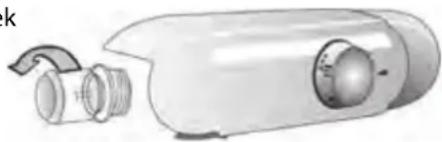
Always disconnect the appliance from the power supply before replacing the light bulb. Then follow the instructions based on the type of light bulb for your product. Replace the light bulb with one with the same features, available from the Technical Assistance Service and authorized sellers.
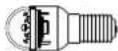
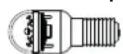
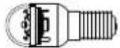
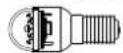
Light type 1)
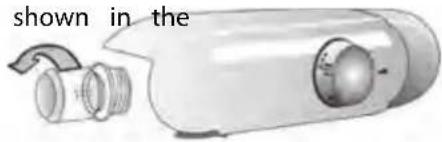
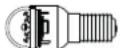
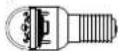
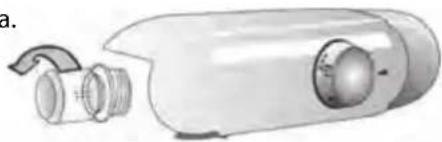
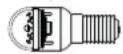
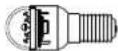
To remove the light bulb, unscrew it in an anti-clockwise direction, as shown in the figure. Wait 5 minutes before reconnecting the appliance.
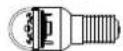
LED light bulb (max 25W)
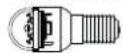
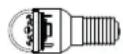
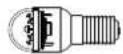
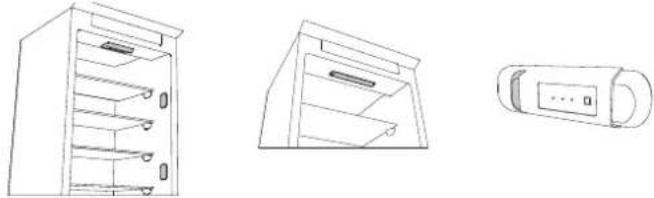
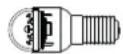
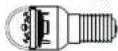
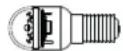
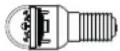
Light type 2)
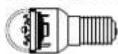
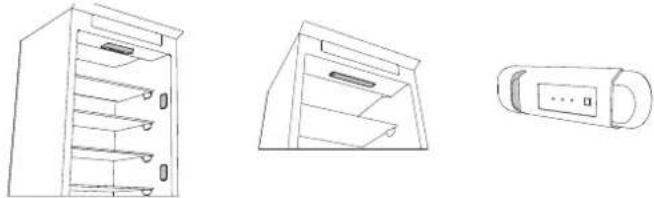
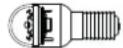
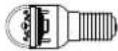
If the product has LED lights, as demonstrated in the figures below, contact the Technical Assistance Service if you need a replacement. LEDs last longer than traditional light bulbs, improve internal visibility, and are environmentally friendly.
Shelves
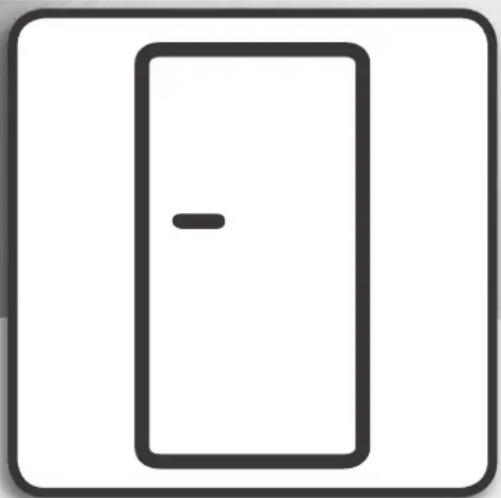
All of the drawers, door shelves, and shelves can be removed.
Door
Door reversibility
Note: The direction of door opening can be changed. If this operation is performed by After-sales Service, it is not covered by the warranty. Follow the instructions in the Installation Guide.
How to use the appliance
First time use
Wait at least two hours, after the installation, before connecting the appliance to the power supply. Connect the appliance to the power supply it starts the operation automatically. The ideal storage temperatures for the food are preset in the factory.
After turning the appliance on, you must wait for 4-6 hours for the correct storage temperature to be reached for a normally filled appliance. Position the antibacterial anti-odour filter in the fan as demonstrated in the filter packaging (if available). If the audible signal sounds, it means that the temperature alarm has intervened: press the button to switch off the acoustic alarms.
Refrigerator compartment and food storage
The refrigerator compartment allows for the storage of fresh food and drink. The refrigerator compartment defrosts completely automatically. The occasional presence of drops of water on the internal back wall of the compartment is a sign of the automatic defrosting phase. The defrosting water is channelled into a drain and then collected in a container, where it evaporates.
Note: the ambient temperature, how often the doors are opened and the position of the appliance may affect the internal temperatures in the two compartments. Set the temperatures depending on these factors. In very humid conditions, condensation may form in the refrigerator compartment, especially on the glass shelves. In this case, it is recommended that you close containers with liquids in (e.g. a pot of stock), wrap up food with a high water content (e.g. vegetables) and turn on the fan, if there is one. All of the drawers, door shelves and shelves can be removed.
Air ventilation
The ventilation air allows a better distribution of the temperatures inside the compartments and, consequently, be preservation of the food and reduction of excess humidity. Do not obstruct the ventilation area.
How to store fresh food and beverages
Foods which give off a large amount ethylene gas (apples, apricots, pears, peaches, avocado, figs, prunes, blueberries, mellons, beans) and those that are sensitive to this gas, such as fruit vegetables and salad, should always be separated or wrapped so as not to reduce the storage life; for example do not store tomatoes together with kiwi fruits or cabbage. Do not store food too close together to enable sufficient air circulation. Use recyclable plastic, metal, aluminum and glass containers and cling film to wrap foods.
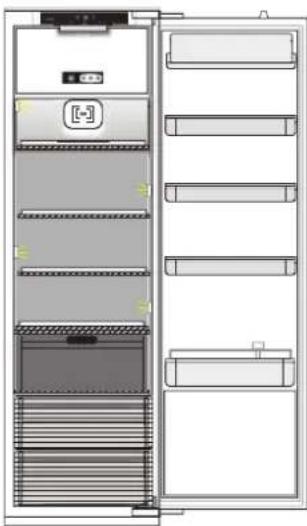
If you have a little quantity of food to store in the refrigerator, we recommend to use the shelves above the crisper for fruits and vegetables since this is the coolest area of the compartment. Always use closed containers for liquids and for food that may give off or be tainted by odor or flavor transfer or cover them. To avoid bottles falling over, you can use the bottle holder (available on selected models).
Legend

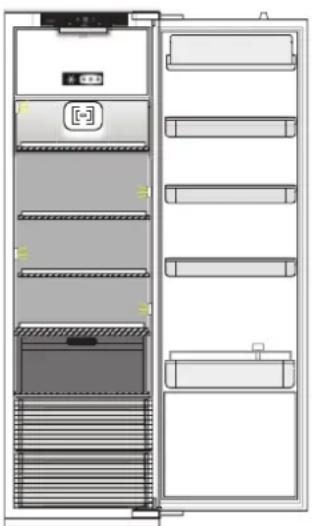
**
TEMPERATE ZONE
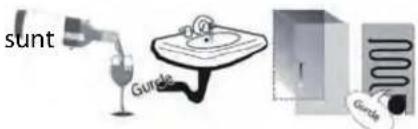
Suggested for storage of tropical fruit, cans, drinks, eggs, sauces, pickles, butter, jam
COOL ZONE
Suggested for the storage of cheese, milk, daily food, delicatessen, yogurt
COOLEST AREA
Suggested for storage of cold cuts, desserts, meat and fish
FRUIT AND VEGETABLE DRAWER
For models with "0 ° ZONE" COMPARTMENT the "coolest area" is the one highlighted in the legend
* Freezer compartment food storage (Depending on model)
*** The frozen compartment allows long time storage for frozen food. You can only use the "Storage" compartment maintaining frozen food, BUT IT IS NOT CAPABLE TO FREEZE NEW FRESH FOOD.
The freezer compartment allows long time storage of frozen food and freezing of fresh food. The quantity of food that can be frozen in 24 hours is written on the rating plate. Arrange the fresh food in the freezing area inside the freezer compartment, leaving enough space around the food packages to allow air to circulate freely. It is advisable that you do not re-freeze food that has partially defrosted. It is important to wrap the food in a way that prevents the ingress of water, humidity or condensation.
Ice cubes
Fill 2/3 of the ice tray with water and put it back in the freezer compartment. Do not use sharp or pointed objects to remove the ice under any circumstances.
Removing the drawers
Pull the drawers outwards as far as they will go, lift them up and remove them. To get more volume, the freezer compartment can be used without the drawers. Make sure that the door is closed properly after putting the food back on the grilles/shelves.
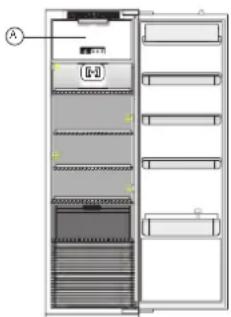
Legend
A. FREEZER COMPARTMENT (If the refrigerator has one)
Food shelf life at different temperatures
| FROZEN COMPARTMENT | |||
| Product Storage period (-12°C) | Recommended Storage period (-18°C) | Storage period (-24°C) | |
| Butter or margarine 1 month | 6 months 9 months | ||
| Fish 1 month 1-3 months | 6 months | ||
| Fruits (except citrus) & Vegetables | 1 month 8-12 months | 12 months | |
| Meat- Ham- sausage Roasts (beef-pork- lamb) Steaks or chops (beef-lamb-pork) | 1 month 2 months | 8-12 months4 months | 12 months |
| Milk, Fresh fluid, Cheese, Ice cream or sherbet | 1 month 1-3 months | 5 months (not recommended for ice cream) | |
| Poultry (chicken-turkey) | 1 month 5-7 months | 9 months | |
Food shelf life at different temperatures
| UNFROZEN COMPARTMENT | |||
| Product | Storage period 0-3°C | Storage period (3-6°C) | Storage period 6-8°C |
| Cans, drinks, eggs, sauces, pickles, butter, jam | 3-4 weeks | 3-4 weeks | 3-4 weeks |
| Tropical fruit | Not recommended 2-4 weeks | 3-4 weeks | |
| Cheese, milk, dairy food, deli-5 daysfood, yoghurt | 2-5 days | 2-5 days | 2-5 days |
| Cold cuts, desserts, meat and fish and home-cooked food | 3-5 days | 1-2 days | Not recommended |
| Store vegetables and fruits (excluding tropical fruits and citrus) | 15 days | 10-12 days | 4-7 days |
* How to defrost the freezer compartment (Depending on model)
- It is advisable to set the temperature colder or turn on the Fast Freeze/Fast Cool* at least four hours before removing the food from the freezer compartment, to prolong the preservation of the food during the defrosting phase.
- To defrost, turn the appliance off and remove the drawers. Put the frozen food in a cool place. Leave the door open to allow the frost to melt. To prevent the water from escaping during the defrost, it is advised that you place an absorbent cloth on the bottom of the freezer compartment and wring it out regularly.
- Clean the inside of the freezer compartment and dry it carefully.
- Turn the appliance back on and put the food back inside.
Functional sounds
- A buzz generated by the compressor is normal while the product is working.
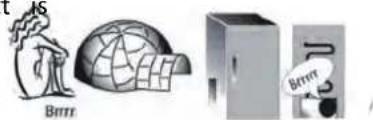
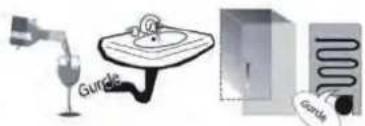
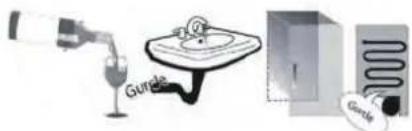
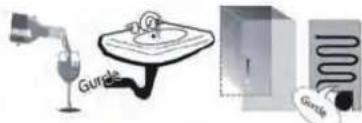
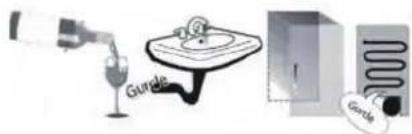
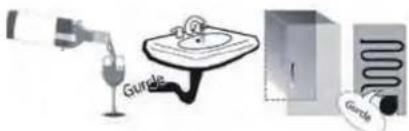
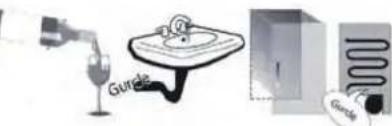
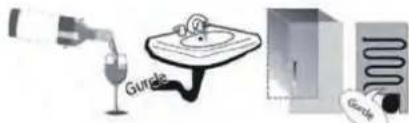
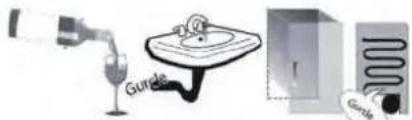
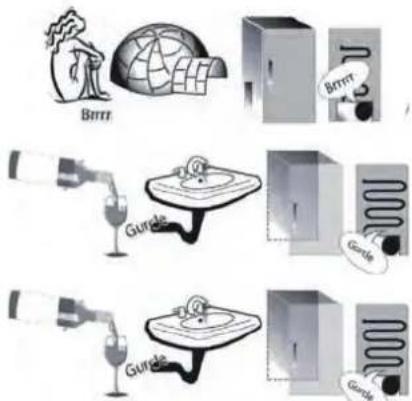
- Gurgling and crackles are generated by the passage of the refrigerant gas inside the cooling circuit, therefore these are normal noises.
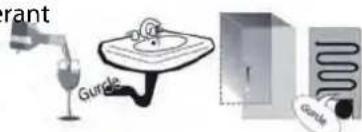
- It's possible to "hear" creaks when the compressor is active and inactive: it is a normal sound of the product's structure.
- Check that the balconies on the inside of the refrigerator door, the shelves and the drawers in the refrigerator compartment are attached and positioned properly, to avoid possible vibrations.
- Don't place glass containers (bottles, jars, etc.) in direct contact with each other, to avoid vibrations.
- This device is equipped with a compressor that operates at an optimum speed to minimize energy consumption. So it may happen that in certain situations (in summer or if large quantities of food are introduced) that the increases the speed and therefore it is more noisy than usual.
Recommendation in case of no use of the appliance
In the event of non-use of the appliance
Disconnect the appliance from the power supply, empty it, defrost it (if necessary) and clean it.
Keep the doors slightly ajar to let air circulate inside the compartments. By doing this, you avoid the development of mould and bad odours.
In the event of an interruption to the power supply
Keep the doors closed so the food stays cold for as long as possible. Do not re-freeze food that has partially defrosted. If there is a prolonged power cut, the black out alarm may also activate (in products with electronics).
Cleaning and maintenance
Before any cleaning or maintenance operation, unplug the appliance from the mains or disconnect the electric power supply.
Never use abrasives. Never clean refrigerator parts with flammable fluids.
Do not use steam cleaners.
The buttons and control panel display must not be cleaned with alcohol or alcohol-derived substances, but with a cloth.
Clean the appliance occasionally with a cloth and a solution of warm water and neutral cleaning agents specifically for cleaning the inside of the refrigerator.
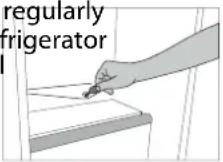
To ensure the constant and correct flow of the defrosting water, regularly clean the inside of the drain situated in the back wall of the refrigerator compartment near the fruit and vegetable drawer using the utensil provided.
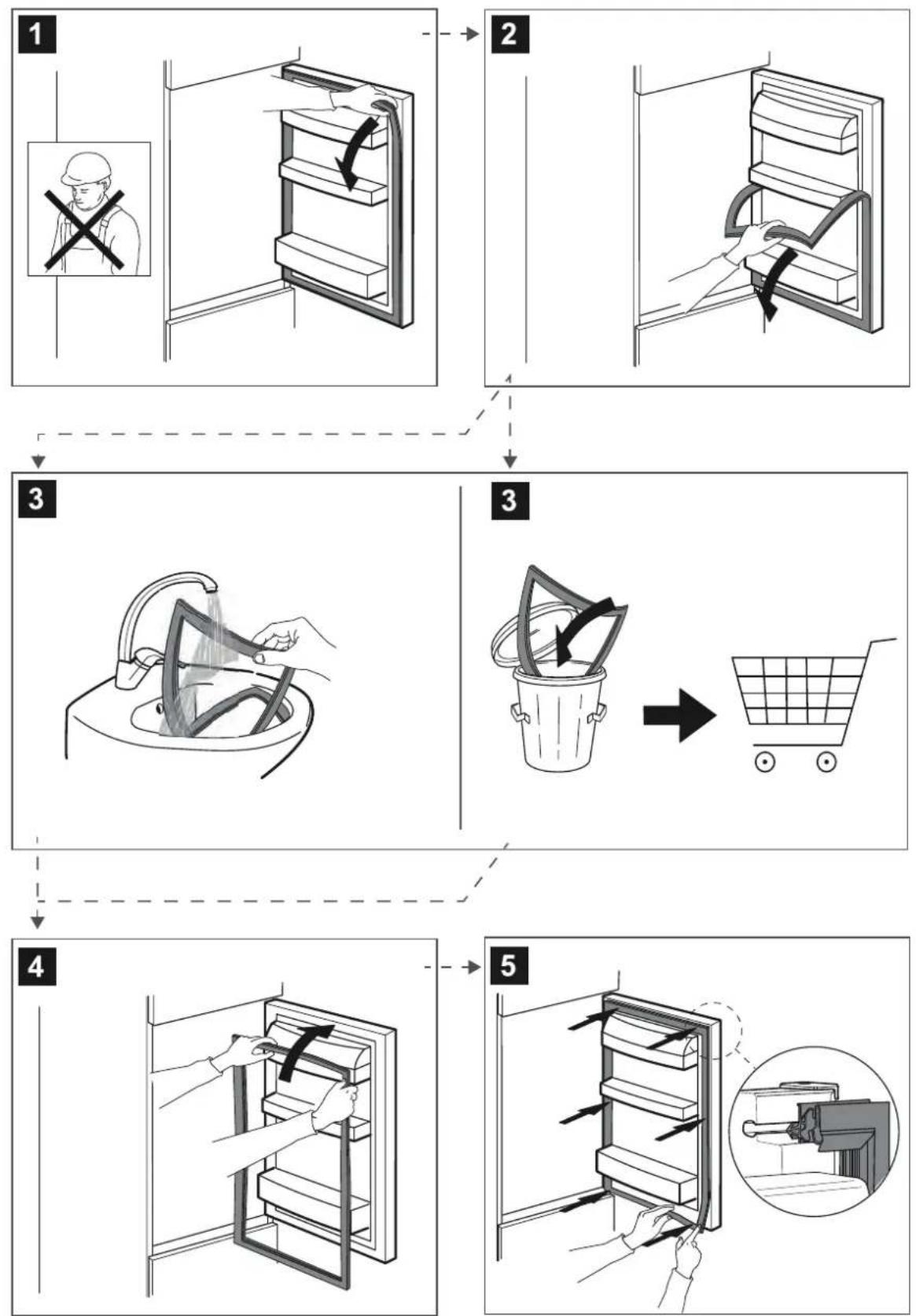
Gasket replacement
User manual
USER MANUAL
INDEX
Shelves
Legend

**
TEMPERATURE ZONE
User manual
USER MANUAL
REGISTER
Lamp type 2)
Shelves
Description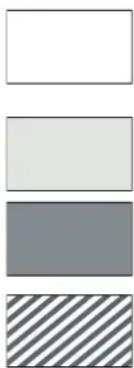
**
MODERATE ZONE
Description
User manual
USER MANUAL
CONTENTS
Bulb type 2)
Shelves
Legend

**
COOL ZONE
Legend
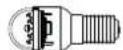
Bulb type 2)
Shelves
Legend

**
TEMPERATE ZONE
KUTPO
OTD
.1
.2
Light type 2)
Shelves
All drawers, door shelves and shelves can be removed.
Door
Legend

**
MODERATE ZONE
Recommended for storing tropical fruit, cans, drinks, eggs, sauces, canned vegetables, butter, jam
COLD ZONE
Recommended for storing cheese, milk, dairy products, deli, yogurt
COLDEST ZONE
Recommended for storing cold cuts, desserts, meat, and fish.
FRUIT AND VEGETABLE DRAWER
User Manual
USER MANUAL
TABLE OF CONTENTS
Type 2 bulb
Shelves
Legend

MODERATE TEMPERATURE ZONE
Oqnwnqnpnδnnh δtnGwply
FICBU
Oqunwqnpdduu & h jguwufh nntgngjg 2 Ummfmpm6|LmJn 2 Thujungfuuf Luwunh lqud Lwununphngh dwnuwphfucd (huufulud dwnk1hg) 2 PwpwlyGtp 2 τmin 2 Bújūtu oqunwqnptl uwpfwnjnpnidp 3 Unwgh ofwnqnprdnuf 3 Uunfumupufh jughly le dplupf h upubkum 3 HgSgtu wqhtl pwnf dptpfu u pswtllhfu 3 * Uungangbghh dphfgh quuhquafunl (huwulud dmpk1hg) 4 Uplpfh whuwuklhaepjndp unnpplp ylpduuunhfuwddlpnd 4 * 165wto hwltggtl uwngwlughlgl (hwlpulwd dnntllgl) 5 Bnclghhunl hfsjmldlp 5 lnphmipn6tp wwpfwjnpnidp soqnwnqnptlm ntwfnid 5 Uwfpnd h upwhqufdm 6 Ullnauhsh dunvunphlinuf 7
UwnGwpwGh lnJu
Ummgupwgh (yghh) gkpwh ynuwjhi hwnwlhpqq lwnwlpinphtk, upnf wltjhi ywi ynuwulapnepjnd kth wqwhunlnd wufwlpwhni yuzhi ydwqkph hkan hwnlafwnmud, fhiyuku finl ewan fhs lkbpqwh kth upwnnd: Φnwnphfawi wifhpwdkennepjnd qbyfnd, lquy hwnwnntf Slphplwwh U,ywhgnlpjnd Owwwnlpjnd hku:
ln juh mluwq 2)
The present invention relates to a method for controlling the operation of a gas turbine, in particular for controlling the fuel supply to the combustion chamber. The method is characterized in that the fuel supply is regulated as a function of the compressor outlet pressure and the turbine inlet temperature.
Background
The invention relates to a method and a device for controlling a gas turbine.
γn,n
7 and the like
The object of the invention is to provide a method and a device for controlling a gas turbine which are improved with respect to the prior art. This object is achieved by the features of the independent claims. Advantageous embodiments are described in the dependent claims.
Method for controlling
Device for controlling
The method according to the invention is characterized in that the fuel supply is regulated as a function of the compressor outlet pressure and the turbine inlet temperature. The fuel supply is adjusted by means of a control valve which is arranged in the fuel supply line. The control valve is actuated by a control device which receives signals from sensors for the compressor outlet pressure and the turbine inlet temperature.
The control device is designed such that it regulates the fuel supply in such a way that the turbine inlet temperature does not exceed a predetermined maximum value. For this purpose, the control device compares the actual value of the turbine inlet temperature with a setpoint value and adjusts the fuel supply accordingly. The setpoint value is determined as a function of the compressor outlet pressure and the turbine inlet temperature.
Brief description of the drawings
The invention is explained in more detail below with reference to the accompanying drawings. The drawings show exemplary embodiments of the invention. In the drawings: FIG. 1 shows a schematic representation of a gas turbine with a control device according to the invention; FIG. 2 shows a characteristic diagram for the control of the fuel supply.
1 The method according to the invention is particularly suitable for controlling a gas turbine in a power plant. The control device can be implemented as a digital control unit. The method is based on the fact that the fuel supply is regulated as a function of the compressor outlet pressure and the turbine inlet temperature. The control device receives corresponding measured values from sensors. The setpoint value for the turbine inlet temperature is determined as a function of the compressor outlet pressure and the turbine inlet temperature (see FIG. 2). The control device compares the actual value with the setpoint value and adjusts the fuel supply accordingly. The control device can be implemented as a programmable logic controller (PLC) or as a microprocessor-based control unit.
Οηωψηνηργηδ
The control device according to the invention is particularly suitable for use in a gas turbine for power generation. The control device can be integrated into the gas turbine control system. The control device is designed to regulate the fuel supply as a function of the compressor outlet pressure and the turbine inlet temperature. The control device receives corresponding measured values from sensors. The control device can be implemented as a digital control unit.
In the preparation, according to the requirements of the technical documentation (screws, nuts, washers, gaskets, seals, pipes, fittings, hoses, clamps, etc.) and in the preparation, the required tools are used for the assembly, according to the manufacturer's instructions and the safety regulations, especially the personal protective equipment. However, the process must be carried out by qualified personnel: The preparation of the equipment is carried out in stages, the following operations are performed: Checking the completeness of the delivery, the technical condition, the absence of defects and the correct installation of the equipment.
The main technical characteristics of the equipment are given in the table, the parameters of which are indicated in the corresponding columns of the table: The values of the parameters are given for the nominal operating modes, the deviations are indicated in the technical specifications: the measurement error is indicated in the documentation (see the appendix, the measurement methods).

The equipment is designed for operation in the following conditions: temperature, humidity, atmospheric pressure, vibration, mechanical shock, and other factors specified in the technical documentation.
The equipment is supplied with a set of spare parts, tools, accessories, and documentation according to the delivery set.
The equipment is installed on a flat surface, secured with bolts, nuts, and washers.
The installation procedure is described in the installation manual.
The equipment is connected to the power supply, the grounding, and the control circuits.
The installation of the equipment is carried out in the following order: The equipment is unpacked and inspected for damage.
User manual
User manual
INDEX
Shelves
Explanation

**
TEMPERED GLASS
Explanation
A. FREEZER COMPARTMENT (if the refrigerator has one)
Cleaning and maintenance
User manual
USER MANUAL
INDEX
LED bulb (max 25W)
Shelves
Legend
**
TEMPERATE ZONE
2nd type)
Cubes
Symbols

**
TEMPERATURE ZONE
Symbols
Shelves
Symbols
TEMPERATE REGION
Symbols
User manual
USER MANUAL
INDEX
2 lamp type
Shelves
Legend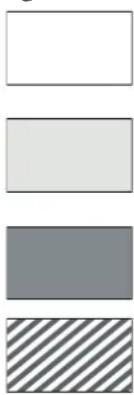
**
MEDIUM TEMPERATURE ZONE
Light type 2)
Shelves
All drawers, door shelves, and shelves can be removed.
Door
Designation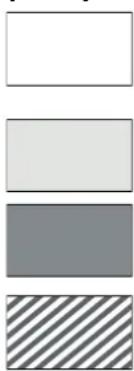
**
MODERATE ZONE
Manual
MANUAL
INDEX
Lamp type 2)
Shelves
Legend

**
TEMPERATE ZONE
User guide
USER MANUAL
INDEX
Light type 2)
Shelves
Explanation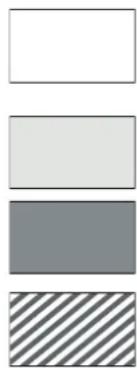
**
TEMPERATE ZONE
THE COOLEST AREA
Bulb type 2)
Shelves
Legend

**
MODERATE TEMPERATURE ZONE
Legend
User manual
USER MANUAL
INDEX
Bulb type 2)
Shelves
Legend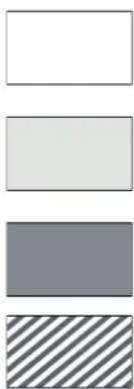
**
TEMPERATURE ZONE
Recommended for storing tropical fruits, cans, beverages, eggs, sauces, pickles, butter, and jams.
FRESH ZONE
Legend
A. FREEZER COMPARTMENT (If the refrigerator has one)
Shelf life of food at different temperatures
User manual
USER MANUAL
TABLE OF CONTENTS
Bulb type 2)
Shelves
Legend

**
TEMPERATE ZONE
Legend
Shelves
Symbols

**
TEMPERATE ZONE
Instructions for use
INSTRUCTIONS FOR USE
CONTENTS
Type of light 2)
Shelves
Legend

**
TEMPERATE ZONE
Legend
A. FREEZER COMPARTMENT (if the refrigerator is equipped with one)
Instructions for use
INSTRUCTIONS FOR USE
TABLE OF CONTENTS
Shelves
Legend

**
MODERATE TEMPERATURE ZONE
For storing tropical fruits, preserves, drinks, eggs, sauces, pickles, butter, and jam
REFRIGERATOR ZONE
User Manual
USER MANUAL
INDEX
Instructions for use and maintenance 2
Refrigerator light 2
Replacing the LED bulb (depending on model) 2
Shelves 2
Doors 2
How to use the device 3
First use 3
Refrigerator compartment and food storage 3
How to store fresh food and drinks 3
Shelves
All drawers, door bins and shelves can be removed.
Door
Legend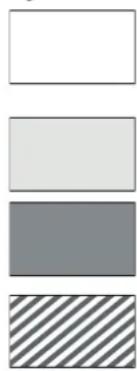
**
MODERATE ZONE
Recommended for storing tropical fruit, canned goods, drinks, eggs, sauces, pickles, butter, jam
COOLING ZONE
Suggested for storing cheese, milk, dairy products, deli items, yogurt
COLDEST ZONE
INSTRUCTIONS FOR USE
TABLE OF CONTENTS
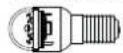
Lamp type 2)
Shelves
Legend

**
TEMPERED ZONE
Legend
User Manual
USER MANUAL
INDEX
LED lamp (max. 25W)
Bulb type 2)
Shelves
Legend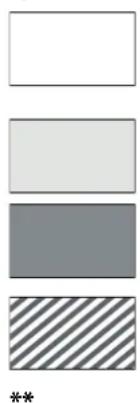
ILIMAN BÖLGE
Legend
A.
Lamp type 2)
Shelves
Symbols

**
User manual
User manual
Index
Use & Care Guide
Refrigerator light
Replacing the LED bulb (depending on model)
Shelves
Door
How to use the appliance
First use
Refrigerator compartment and food storage
How to store fresh food and drinks
* Freezer compartment food storage (depending on model)
Shelf life of food at different temperatures
* How to defrost the freezer compartment (depending on model)
Function sounds
Recommendations when not using the appliance
Cleaning and maintenance
Replacing the door seal
Refrigerator light
Bulb type 2)
Shelves
All drawers, door shelves, and storage racks can be removed.
Door
Reversible refrigerator door
Legend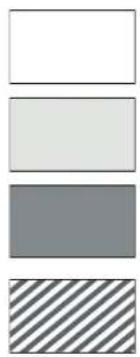
Ambient zone
Cleaning and maintenance
User manual
User manual
Index
Use & Care Guide
Refrigerator lighting
Replacing the LED bulb (depending on model)
Shelf
Door
How to use this appliance
First use
Refrigerator compartment and food storage
How to store fresh food and beverages
* Food freezer compartment (depending on model)
Shelf life of food stored at different temperatures
* Defrosting method for the freezer compartment (depending on model)
Operating sounds
Recommendations when the appliance is not in use
Cleaning and maintenance
Replacing the gasket
Refrigerator lighting
Bulb type 2)
Shelves
All drawers, door shelves, or shelves can be removed.
Door
Reversing the door swing
Legend
Cool zone
- USER MANUAL
- FANS
- MODERATE ZONE
- INSTRUCTIONS FOR USE
- SHELVES
- EXPLANATIONS
- TABLE OF CONTENTS
- TEMPERED AREA
- OPERATING INSTRUCTIONS
- INDEX
- STORAGE SURFACES
- SYMBOLS
- TEMPERATURE RANGE
- LEGEND
- MANUAL
- TEMPERATURE ZONE
- USE & CARE GUIDE
- REFRIGERATOR LIGHT
- HOW TO USE THE APPLIANCE
- CLEANING AND MAINTENANCE
- GASKET REPLACEMENT
- REPLACING THE LED LIGHT BULB (DEPENDING ON MODEL)
- DOOR
- DOOR REVERSIBILITY
- FIRST TIME USE
- REFRIGERATOR COMPARTMENT AND FOOD STORAGE
- AIR VENTILATION
- HOW TO STORE FRESH FOOD AND BEVERAGES
- TEMPERATE ZONE
- COOL ZONE
- COOLEST AREA
- FRUIT AND VEGETABLE DRAWER
- FREEZER COMPARTMENT FOOD STORAGE (DEPENDING ON MODEL)
- ICE CUBES
- REMOVING THE DRAWERS
- HOW TO DEFROST THE FREEZER COMPARTMENT (DEPENDING ON MODEL)
- FUNCTIONAL SOUNDS
- RECOMMENDATION IN CASE OF NO USE OF THE APPLIANCE
- IN THE EVENT OF NON-USE OF THE APPLIANCE
- IN THE EVENT OF AN INTERRUPTION TO THE POWER SUPPLY
- REGISTER
- DESCRIPTION
- CONTENTS
- OTD
- COLD ZONE
- COLDEST ZONE
- TYPE 2 BULB
- MODERATE TEMPERATURE ZONE
- FICBU
- UWNGWPWGH LNJU
- BACKGROUND
- N
- METHOD FOR CONTROLLING
- DEVICE FOR CONTROLLING
- BRIEF DESCRIPTION OF THE DRAWINGS
- ΟΗΩΨΗΝΗΡΓΗΔ
- TEMPERED GLASS
- EXPLANATION
- CUBES
- TEMPERATE REGION
- MEDIUM TEMPERATURE ZONE
- THE COOLEST AREA
- FRESH ZONE
- REFRIGERATOR ZONE
- INSTRUCTIONS FOR USE AND MAINTENANCE
- HOW TO USE THE DEVICE
- COOLING ZONE
- TEMPERED ZONE
- ILIMAN BÖLGE
- AMBIENT ZONE
- REFRIGERATOR LIGHTING
Brand : WHIRLPOOL
Model : WHSD 18A073C1
Category : Refrigerator