Clean with a soft, dry cloth. Do not use solvents.
Safety
Disconnect the power plug for complete disconnection. Avoid heat sources and moisture.
Spare Parts and Repairability
Contact an authorized Denon after-sales service for repairs.
Included Accessories
RC-1043 remote control, batteries, AM antenna, FM antenna, power cable
Warranty
2 years (parts and labor)
Frequently Asked Questions - AVP-A1HDA DENON
How to connect a Blu-ray player to the AVP-A1HDA?
Connect the HDMI output of the player to one of the HDMI inputs on the back of the AVP-A1HDA. Then select the corresponding input using the remote control or front panel.
What to do if sound only comes out of the front speakers?
Check that the listening mode is not set to Stereo. Use the Mode button to select a multichannel mode such as Direct or Dolby Surround.
How to update the firmware of the AVP-A1HDA?
Connect the device to the Internet via Ethernet. Go to the Network menu then Firmware Update. Follow the on-screen instructions. Do not disconnect the device during the update.
The remote control does not work, what to do?
Check that the batteries are not depleted and inserted with correct polarity. Point the remote towards the front sensor. If the problem persists, reset the remote by removing the batteries for 30 seconds.
Can I use the AVP-A1HDA with speakers without an amplifier?
No, the AVP-A1HDA is a preamplifier: it does not have power amplification. You must connect its pre-out outputs to an external power amplifier connected to the speakers.
How to configure the system for a projector and a TV?
Use the two HDMI outputs: connect the Main output to the TV and the Zone 2 output to the projector. In the HDMI Setup menu, choose Output Mode to manage assignments.
What does the message 'Check SP Wires' mean on the screen?
This message indicates a short circuit or fault on the speaker cables connected to the amplifier. Check that the cables are properly inserted and that the strands are not touching.
How to perform a factory reset?
Turn off the device. Press and hold the Preset + and Preset - buttons on the front panel while turning the device back on. Release the buttons when 'Initialized' appears.
Does the AVP-A1HDA heat up normally?
Yes, slight heating is normal during operation. Make sure the ventilation openings are not blocked and the device is installed in a well-ventilated area. If the temperature becomes excessive, the device will automatically go into standby.
How to clean the casing without damaging it?
Use a soft, dry cloth slightly dampened if necessary. Never use chemicals, alcohol, or abrasive cleaners. Avoid spraying liquid directly onto the device.
User questions about AVP-A1HDA DENON
0 question about this device. Answer the ones you know or ask your own.
Ask a new question about this device
No questions yet. Be the first to ask one.
Download the instructions for your AV Preamplifier in PDF format for free! Find your manual AVP-A1HDA -
DENON and take your electronic device back in hand. On this page are published all the documents necessary for the use of your device. AVP-A1HDA by DENON.
USER MANUAL AVP-A1HDA DENON
Use this manual in combination with the operating guide displayed on the GUI screen.
GUI Menu Operation ( page 23)
GUI Menu Map ( page 24)
Language ( page 42)
Remote Control Unit Operations (T page 66)
AV SURROUND PRE-AMPLIFIER
AVP-A1HD
Owner's Manual
CAUTION
RISK OF ELECTRIC SHOCK DO NOT OPEN
CAUTION:
TO REDUCE THE RISK OF ELECTRIC SHOCK, DO NOT REMOVE COVER (OR BACK). NO USER-SERVICEABLE PARTS INSIDE. REFER SERVICING TO QUALIFIED SERVICE PERSONNEL.
The lightning flash with arrowhead symbol, within an equilateral triangle, is intended to alert the user to the presence of uninsulated "dangerous voltage" within the product's enclosure that may be of sufficient magnitude to constitute a risk of electric shock to persons.
The exclamation point within an equilateral triangle is intended to alert the user to the presence of important operating and maintenance (servicing) instructions in the literature accompanying the appliance.
WARNING:
TO REDUCE THE RISK OF FIRE OR ELECTRIC SHOCK, DO NOT EXPOSE THIS APPLIANCE TO RAIN OR MOISTURE.
C∈0413①
R&TTE Directive 1999/5/EC
This product may be operated in the following countries;
AT
BE
CZ
DK
FI
FR
DE
GR
HU
IE
IT
NL
PL
PT
SK
ES
SE
GB
NO
CH
- DECLARATION OF CONFORMITY
Hereby, D&M Holdings Inc., Denon Brand Company declares that this product AVP-A1HD is in compliance with the essential requirements and other relevant provisions of Directive 1999/5/EC, in conformity with the following standards;
The declaration of conformity may be consulted to our European representative, DENON Europe.
Division of D&M Germany GmbH
To completely disconnect this product from the mains, disconnect the plug from the wall socket outlet.
The mains plug is used to completely interrupt the power supply to the unit and must be within easy access by the user.
VORSICHT:
Allow for sufficient heat dispersion when installed in a rack.
Handle the power cord carefully.
Hold the plug when unplugging the cord.
* (For apparatuses with ventilation holes)
Do not obstruct the ventilation holes.
Decken Sie den Luftungsbereich nicht ab.
Ne pas obstruer les trouès d'airation.
Non coprite i fori di ventilazione.
No obstruya los orificios de ventilación.
De ventilatieopengingen mogen nicht wordenbeblokkeerd.
Tapp inte till ventilationsöppningarna.
Do not let foreign objects into the unit.
Lassen Sie keine fremden Gegenstände in das Gerätkommen.
Ne pas laisser des objets étrangers dans l'appareil.
Non inserte corpi estranei all'interno dell'unita.
Nodeojejobeosextraosdentrodelequipo.
Laat geen vreemde voorwerpen in dit apparaat vallen.
Se till att främmande foremål inte tränger in i apparaten.
Do not let insecticides, benzene, and thinner come in contact with the unit.
Lassen Sie das Gerät nicht mit Insektiziden, Benzin oder Verdunnungsmitteln in Berührung kommt.
Ne pasmettre en contact des insecticides,du benzene et un diluant avec l'appareil.
Assicuratevi che I'unità non entri in contatto con insettici di, benzolo o solventi.
No permitted contact of insecticidas, gasolina y diluyentes con el equipo.
Voorkom dat insecticiden, benzeen de verfverdunner met dit toestel in contact komen.
Se till ante inte insktsmedel på spraybruken, bensen och thinner kommt其间 kontakt med apparatens höje.
Never disassemble or modify the unit in any way.
Versuchen Sie niemals das Gerät auseinander zu behnem oder zu verändern.
Ne jamais démonter ou modifier l'appareil d'une manière ou d'une autre.
Non smontate né modificate l'unità in alcun modo.
Nunca desarme o modifique el equipo de ninguna manera.
Dit toestel mag nicht gedemonteerd of aangepast worden.
Ta inte isär apparaten och försök inte byygga om den.
CAUTION:
The ventilation should not be impeded by covering the ventilation openings with items, such as newspapers, tablecloths, curtains, etc.
No naked flame sources, such as lighted candles, should be placed on the unit.
Observe and follow local regulations regarding battery disposal.
Do not expose the unit to dripping or splashing fluids.
Do not place objects filled with liquids, such as vases, on the unit.
ACHTUNG:
A NOTE ABOUT RECYCLING:
This product's packaging materials are recyclable and can be reused. Please dispose of any materials in accordance with the local recycling regulations.
When discarding the unit, comply with local rules or regulations.
Batteries should never be thrown away or incinerated but disposed of in accordance with the local regulations concerning battery disposal.
This product and the supplied accessories, excluding the batteries, constitute the applicable product according to the WEEE directive.
m = 311 ;
HINWEIS ZUM RECYCLING:
1. IMPORTANT NOTICE: DO NOT MODIFY THIS PRODUCT
This product, when installed as indicated in the instructions contained in this manual, meets R&TTE directive requirements. Modification of the product could result in hazardous Radio and EMC radiation.
2. CAUTION
Separation distance of at least 20~cm must be maintained between the antenna of this product and all persons.
This product and its antenna must not be co-located or operating in conjunction with any other antenna or transmitter.
Accessories 3
Cautions on Handling 3
Cautions on Installation 3
About the Remote Control Unit 3
Inserting the Batteries 3,4
Operating Range of the Remote Control Unit 4
Part Names and Functions 4
Front Panel 4,5
Display 5
Rear Panel 6
Remote Control Unit 7
Connections
Preparations 8
Cables Used for Connections 8
Video Conversion Function 9
Speaker Layout 10
Connecting to the Power Amp 10
POA-A1HD Connection and Operation 10 ~ 12
Connecting Equipment with HDMI connectors 12, 13
Connecting the Monitor 13
Connecting thePlayback Components 13
DVD Player 13
Record Player 14
CD Player 14
iPod® 14
TV/CABLE Tuner 15
Satellite Receiver 15
Connecting the Recording Components 16
Digital Video Recorder 16
Video Cassette Recorder 17
CD Recorder / MD Recorder / Tape Deck 17
Connections to Other Devices 18
Components Equipped with a DENON LINK connector 18
Video Camera / Game Console 18
Component with Multi-channel Output connectors 18
USB Port 19
Network Audio 20
Multi Zone 21
External Controller 22
Connecting the Power Cord 22
Once Connections are Completed 22
GUI Menu Operations
Example of the Display of the GUI Mark at a Title 23
Example of Display of Default Values 23
Examples of GUI Screen Displays 23
Example: Browse Menu (Top Menu) 23
Example: Menus with Illustrations (Auto Setup) 23
Cursor Position Display 23
Operations 23
GUI Menu Map 24
Playing Multi-channel Sources (Dolby Digital, DTS, etc.) 46
Standard Playback 47
Surround Playback of 2-channel Sources 47
Playing Multi-channel Sources (Dolby Digital, DTS, etc.) 47
Dolby Headphone 47
DSP Simulation Playback 47, 48
Stereo Playback 48
DirectPlayback 48
Playback in the PURE DIRECT Mode 48
Parameter
Audio
1 Surround Parameters
48 ~ 50
2 Tone
50, 51
3 Room EQ
51
4 Dynamic EQ
51
5 RESTORER
51
6 Night Mode
51
7 Audio Delay
52
Picture Adjust
1 Contrast
52
2 Brightness
52
3 Chroma Level
52
4 Hue
52
5 DNR
52
6 Enhancer
52
7 Sharpness
52
Information
Status
52
1 MAIN ZONE
52
2 ZONE2/3/4
52
Audio Input Signal
53
HDMI Information
53
1 Signal Information
53
2 Monitor1
53
3 Monitor2
53
Auto Surround Mode
53
Quick Select
53
Preset Station
53
Playback
Preparations
54
Turning the Power On
54
Operations During Playback
54
Playing Video and Audio Equipment
54
Basic Operation
54
iPod® Playback
55
Basic Operation
55
Listening to Music
55
Viewing Still Pictures or Videos on the iPod
56
Playing Network Audio, USB Memory Devices
56, 57
Basic Operation
58
Listening to Internet Radio
59
Playing Files Stored on a Computer
60
Playing Files Stored on USB Memory Devices
60, 61
Operating the AVP-A1HD Using a Browser (Web control)
61
Other Operations and Functions
Other Operations
62
Playing Super Audio CD
62
Recording on an External Device (REC OUT mode)
62, 63
Convenient Functions
63
HDMI Control Function
63, 64
Channel Level
65
Fader Function
65
Quick Select Function
65
Personal Memory Plus Function
65
Last Function Memory
65
Backup Memory
65
Resetting the Microprocessor
65
Remote Control Unit Operations
Main Remote Control Unit
66
Operating DENON Audio Components
66
Presetting
66
Operating Preset Components
66 ~ 68
Setting the Remote ID
69
Learning Function
69
System Call Function
70
Punch Through Function
70
Setting the Time the Backlight Stays Lit
71
Adjusting the Backlight's Brightness
71
Resetting the Main Remote Control Unit
71
Sub Remote Control Unit Operations
72, 73
Switching Zones
74
Setting the Zone for Which the Sub Remote Control Unit is Used (ZONE SELECT LOCK Mode)
74
Setting the Remote ID
74
Resetting the Settings
74
Multi-Zone Connections and Operations
Multi-Zone Connections
75
Multi-Zone Operations
76
Turning the Power On and Off
76
Selecting the Input Source
76
Adjusting the Volume
76
Turning off the Sound Temporarily
76
Other Information
77 ~ 91
Troubleshooting
92 ~ 95
Specifications
95, 96
List of preset codes End of this manual
Getting Started
Thank you for purchasing this DENON product. To ensure proper operation, please read this owner's manual carefully before using the product.
After reading them, be sure to keep them for future reference.
Accessories
Check that the following parts are supplied with the product.
① Owner's manual 1
② CD-ROM (Owner's manual) 1
③ Service station list. 1
④ Power cord (Cord length: Approx. 1.5 m)
⑤ Main remote control (RC-1067) 1
⑥ LR6/AA batteries (for RC-1067) 2
⑦ Sub remote control (RC-1070) 1
⑧ R03/AAA batteries (for RC-1070) 2
⑨ Rod antenna for wireless LAN connection. 1
⑩ Setup microphone (Cord length: Approx. 7.6 m)............ 1
②
(4)
(5)
7
9
Cautions on Handling
Before turning the power switch on
Check once again that all connections are correct and that there are no problems with the connection cables.
Power is supplied to some of the circuitry even when the unit is set to the standby mode. When traveling or leaving home for long periods of time, be sure to unplug the power cord from the power outlet.
About condensation
If there is a major difference in temperature between the inside of the unit and the surroundings, condensation (dew) may form on the operating parts inside the unit, causing the unit not to operate properly.
If this happens, let the unit sit for an hour or two with the power turned off and wait until there is little difference in temperature before using the unit.
Cautions on using mobile phones
Using a mobile phone near this unit may result in noise. If so, move the mobile phone away from this unit when it is in use.
Moving the unit
Turn off the power and unplug the power cord from the power outlet.
Next, disconnect the connection cables to other system units before moving the unit.
Note that the illustrations in these instructions may differ from the actual unit for explanation purposes.
Light Emitting Diodes (LED) are used in the AVP-A1HD circuit. When powered on, a green light shows inside part of the AVP-A1HD, however this is not a fault.
Cautions on Installation
Note:
For proper heat dispersal, do not install this unit in a confined space, such as a bookcase or similar enclosure.
About the Remote Control Unit
In addition to the AVP-A1HD, the included main remote control unit (RC-1067) can also be used to operate the equipment listed below.
① DENON system components
(2) Non-DENON system components
By setting the preset memory (K page 66 ~ 68)
By using the learn function (1 page 69)
Inserting the Batteries
① Lift the clasp and remove the rear lid.
(RC-1067)
(RC-1070)
② Load the two batteries properly as indicated by the marks in the battery compartment.
(RC-1067)
(RC-1070)
③ Put the rear cover back on.
NOTE
Replace the batteries with new ones if the set does not operate even when the remote control unit is operated close to the unit.
The supplied batteries are only for verifying operation.
When inserting the batteries, be sure to do so in the proper direction, following the “ ” and “ ” marks in the battery compartment.
To prevent damage or leakage of battery fluid:
Do not use a new battery together with an old one.
Do not use two different types of batteries.
Do not attempt to charge dry batteries.
Do not short-circuit, disassemble, heat or dispose of batteries in flames.
If the battery fluid should leak, carefully wipe the fluid off the inside of the battery compartment and insert new batteries.
Remove the batteries from the remote control unit if it will not be in use for long periods.
When replacing the batteries, have the new batteries ready and insert them as quickly as possible.
Operating Range of the Remote Control Unit
Point the remote control unit at the remote sensor when operating it.
NOTE
The set may function improperly or the remote control unit may not operate if the remote control sensor is exposed to direct sunlight, strong artificial light from an inverter type fluorescent lamp or infrared light.
Part Names and Functions
For buttons not explained here, see the page indicated in parentheses ( ).
Front Panel
Power operation button (ON/STANDBY) (54)
Power indicator (54)
3 Power switch (ON OFF) (54)
Door
5 QUICK SELECT buttons / indicators (65)
6 MASTER VOLUME control knob (54)
7 Master volume indicator
1 Input signal indicators
Input signal channel indicators
These light when digital signals are input.
Information display
The input source name, surround mode, setting values and other information are displayed here.
4 Output signal channel indicators
Surround speaker indicators
These light according to the settings of the surround A and B speakers.
Monitor output indicators
These light according to the HDMI monitor output setting. When set to "Auto (Dual)", the indicators light according to the connection status.
Master volume indicator
AUDYSSEY DYNAMIC EQ indicator
This lights when the Dynamic EQ is selected.
AUDYSSEY MULTEQ XT indicator
This lights when the room equalizer is selected.
10 Recording output source indicator
This lights when the REC OUT mode is selected.
11 NIGHT indicator
This lights when the night mode is selected.
12 Multi zone indicators
These light when the power for the respective zone is turned on.
13 RESTORER indicator
This lights when the RESTORER mode is selected.
14 ADVANCED AL24 indicator
This lights when Advanced AL24 Processing is activated ( page 81).
D.LINK indicator
This lights when playing using DENON LINK connections.
16 Input mode indicators
17 HDMI indicator
This lights when playing using HDMI connections.
13 Decoder indicators
These light when the respective decoders are operating.
Rear Panel
1 CONTROL LINK connector (11)
RS-232C connector (22)
3 Analog audio connectors (AUDIO) (14)
4 RCA PRE OUT connectors (11, 21)
⑤ AC inlet (AC IN) (22)
AC OUTLET (22)
7 XLR PRE OUT connectors (11)
EXT.IN connectors (18)
9 COMPONENTVIDEO connectors (13, 21)
10 Digital audio connectors (OPTICAL / COAXIAL / BNC) (13, 21)
11 HDMI connectors (12)
12 ETHERNET connector (20)
USB port (19)
14 WLAN ANTENNA terminal (20)
15 DENON LINK connector (18)
16 TRIGGER OUT jacks (22)
17 REMOTE CONTROL jacks (21)
18 XLR audio connectors (CD) (14)
19 DOCK CONTROL jack (14)
20 SIGNAL GND terminal (14)
21VIDEO/S-VIDEO connectors (13)
Remote Control Unit
Main remote control unit (RC-1067)
1 Signal transmission indicator (66)
2 Mode select buttons (66)
Quick select / System call buttons (65, 70)
4 Surround mode buttons (46 ~ 48)
System buttons (67, 68)
Audio delay button (A. DL) (52)
7 Tuner system buttons (68)
Input mode button (INPUT) (45)
9 MENU button (23)
10 Cursor buttons ( ) (23)
Parameter / Search button (PARA / SRCH) (48, 55)
Monitor select (M. SEL) / HOME button (31, 66)
13 Channel buttons (CH) (55, 67)
14 Input source select / Number buttons (42, 54)
15 Remote control signal transmitter (4)
16 Device select indicators (DEV1/DEV2)…(66)
17 ZONE3 / ZONE4 select indicators (Z3 / Z4) (76)
18 RESTORER button (RSTR) (51)
Night button (NGT) (51)
20 Test tone button (TEST) (29)
② Surround speaker select button (SPKR) …… (30)
2 POWER buttons (54)
Channel select (CH SEL) / ENTER button (23, 65)
24 Return button (RTN) (23)
25 Master volume control buttons (VOL) ……(54)
26 Muting button (MUTE) (54, 76)
27 Main remote control unit setup button (RC SETUP) (66)
The time for which the backlight stays on can be changed ( page 71 "Setting the Time the Backlight Stays Lit").
NOTE
The SAT TU, DTU, ZONE2 mode QUICK SELECT (1 ~ 3), A. DL, RSTR, NGT, INPUT, SPKR, TEST and surround mode buttons cannot be used.
Sub remote control unit (RC-1070)
1 ZONE indicators (74)
2 Advanced setup button (74)
3 Input source select buttons (42)
4 CHANNEL buttons (55, 73)
5 MENU button (23)
Cursor buttons ( ) (23)
SEARCH button (55)
8 REPEAT button (55)
9 RANDOM button (55)
Remote control signal transmitter (4)
11 ZONE SELECT button (74)
Zone power on/off buttons (ZONE ON / ZONE OFF) (76)
Master volume control buttons (VOLUME) (54)
14 Muting button (MUTE) (54, 76)
15 ENTER button (23)
16 RETURN button (23)
System buttons (73)
13 ALL MUSIC/FAVORITES (DIRECT PLAY) button (72)
USB (DIRECT PLAY) button (72)
NOTE
The AUX-1, AUX-2, AUX-3, SAT TU, DTU, SHIFT and OPTION buttons cannot be used.
Connections
Connections for all compatible audio and video signal formats are described in these operating instructions. Please select the types of connections suited for the equipment you are connecting.
With some types of connections, certain settings must be made on the AVP-A1HD. For details, refer to the instructions for the respective connection items below.
NOTE
Do not plug in the power cord until all connections have been completed.
When making connections, also refer to the operating instructions of the other components.
Be sure to connect the left and right channels properly (left with left, right with right).
Do not bundle power cords together with connection cables. Doing so can result in humming or noise.
Preparations
Cables Used for Connections
Select the cables according to the equipment being connected.
Audio cables
Coaxial digital connections
(Orange)
xial digital (75 Ω/ohms pin-plug) cable
Optical digital connections
Optical cable
BNC digital connections
BNC (75 Ω/ohms) cable
Analog connections (XLR)
Balanced cable
Analog connections (stereo, RCA)
(White)
(Red)
Stereo pin-plug cable
Analog connections (monaural, for subwoofer)
DENON LINK connections
tions (wired LAN)
Ethernet cable
tions (wired LAN)
tions (wired LAN)
Output Input
signal direction
Audio signal:
A
1
(
Outp
out
1
Inp
Input
1
1
1
1
Ou
Ou
Video Conversion Function
This function automatically converts various formats of video signals input to the AVP-A1HD into the format used to output the video signals from the AVP-A1HD to a monitor.
The AVP-A1HD's video input/output circuitry is compatible with the following four types of video signals: Digital video signals: HDMI
Analog video signals: Component video, S-Video and Video
[Flow of video signals inside the AVP-A1HD]
----:When480i/576i signals are input
[Flow of video signals for ZONE2]
----:When480i/576i signals are input
[Flow of video signals for ZONE3]
When not using this function, connect a monitor output with the same type of connector as the video input connector.
The resolution of the HDMI input-compatible monitor connected to the AVP-A1HD can be checked at GUI menu "Information" - "HDMI Information" - "Monitor1" or "Monitor2" (page 53).
NOTE
For optimum video performance, THX recommends that you set the conversion mode to "OFF" to use video signals pass through system without up conversion.
Example: View video input from a component video on the component video monitor.
HDMI signals cannot be converted into analog signals.
1080p component input video signals cannot be output to anything other than component video connectors.
480p/576p, 1080i and 720p component video input signals cannot be converted into S-Video or Video format.
When a non-standard video signal from a game machine or some other source is input, the video conversion function might not operate.
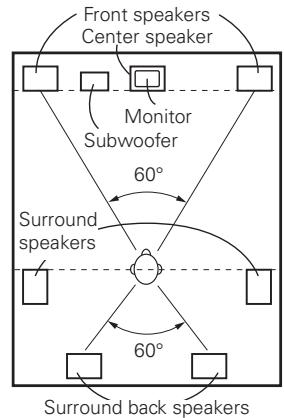
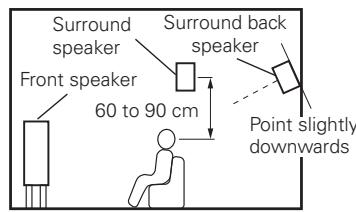
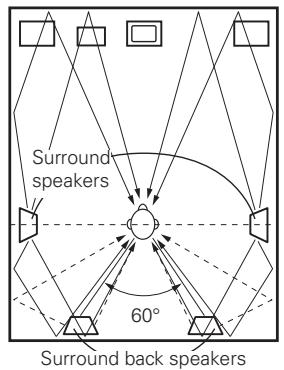
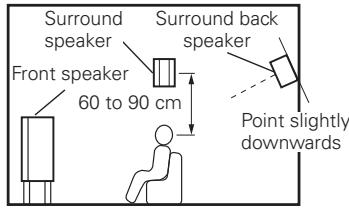
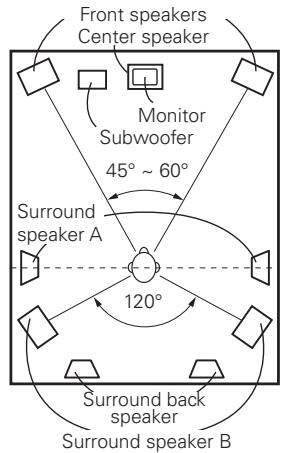
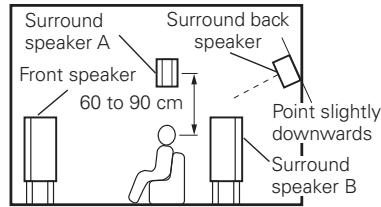
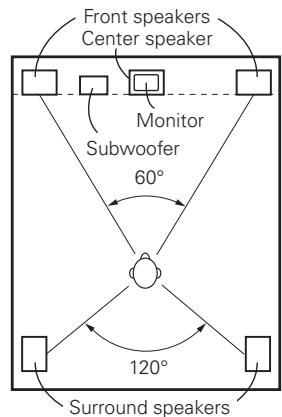
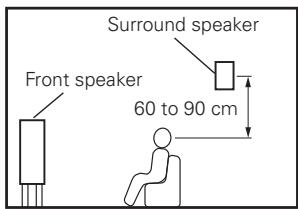
Speaker Layout
The illustration below shows a basic example of installation of the amplifier combined with 8 speakers and a monitor.
Two surround back speakers are required to use the THX Ultra2 Cinema,THX Music mode and THX Games mode.
Set the surround back speakers so that the distance to the listening position is the same for both the left and right speakers. It is also recommended that the deviations of the distance from the listening position to L and R channel speakers (front left (FL) and front right (FR), surround left (SL) and surround right (SR), surround back left (SBL) and surround back right (SBR)) is less than 60~cm .
The table below shows a typical speaker configuration for the AVP-A1HD.
※ The AVP-A1HD can be connected to a maximum of 3 subwoofoers.
Connecting to the Power Amp
Connect the AVP-A1HD pre-out terminal to the power amp (sold separately).
AVP-A1HD has a RCA pre-out terminal and XLR pre-out terminal. Connect accordingly with the power amp you want to use.
The polarity of the XLR pre-out terminal can be switched using GUI menu "Manual Setup" - "Option Setup" - "XLR Out Polarity" (10 page 38).
Connect the speakers to the power amp.
Refer to the owner's manual of each piece of equipment when making connections.
POA-A1HD Connection and Operation
When connecting the AVP-A1HD to the power amp POA-A1HD with a control link cable (included with the POA-A1HD), you can perform the following control operations.
POA-A1HD channel input selection and power amp settings
Link POA-A1HD to AVP-A1HD On/Standby control
Link POA-A1HD meter operation to AVP-A1HD display on/off control (page 41)
Updating POA-A1HD firmware (1 page 41)
Up to 2 POA-A1HD units can be connected. Refer to the POA-A1HD owner's manual for making connections and POA-A1HD settings.
For instructions for connecting speakers, please refer to the POA-A1HD owner's manual.
When using just one surround back speaker, connect it to the left channel (SBL).
When using Subwoofer 2 or 3, set GUI menu "Manual Setup" - "Speaker Setup" - "Subwoofer Setup" (12 page 28).
- Connecting the RCA pre-out terminal (Example : 9.3-channels)
- Connecting the XLR pre-out terminal (Example : 9.3-channels)
The default AVP-A1HD balance model XLR pre-out terminal pin alignment is as shown.
① :GROUND
② :HOT
③ :COLD
Operations
1 Connect AVP-A1HD and POA-A1HD with the control link cable.
The control link cable is included with the POA-A1HD.
AVP-A1HD can be connected and control to up to 2 POA-A1HD units.
Refer to the POA-A1HD user's manual for how to connect.
2 Set the POA-A1HD's control selector switch to "AVP".
3 Set the POA-A1HD's mode select switch according to the number of POA-A1HD units you are connecting.
When connecting 1 unit : "1"
When connecting 2 units : 1st unit “1”, 2nd unit “2”
※ Refer to the POA-A1HD owner's manual for details.
4 Switch the AVP-A1HD and POA-A1HD power on.
Depending on the number of POA-A1HD units to be connected, set GUI menu "Option Setup" - "POA Setting" - "POA LINK" to either "ON (Single)" or "ON (Dual)" ( page 38).
6 Use GUI menu "Option Setup" - "POA Setting" - "LINK Check" to check the connection.
Connecting Equipment with HDMI connectors
With HDMI connections, the video and audio signals can be transferred with a single cable.
By default, HDMI sound is output from the speaker of the power amp connected to AVP-A1HD.
To output the sound from the TV, make the settings at GUI menu "Manual Setup" - "HDMI Setup" - "Audio" - "TV" (12 page 31).
※ The AVP-A1HD is supported to the feature of HDMI listed below.
30 and 36 bit Deep Color
xvYCC
- Auto Lipsync Correction
Compatible audio format
Details
Discs (examples)
2-channel linear PCM
2ch 32-192 kHz 16/20/24 bits
CD, DVD-Video, DVD-Audio
Multi-channel linear PCM
8ch 32-192 kHz 16/20/24 bits
DVD-Audio
Dolby Digital, DTS
Bitstream
DVD-Video
DSD
2/5.1ch 2.8224 MHz 1 bit
SACD
Dolby Digital Plus, Dolby TrueHD, DTS-HD
Bitstream
HD DVD, Blu-ray Disc
Copyright protection system (HDCP)
In order to play the digital video and audio signals of a DVD-Video or DVD-Audio disc using HDMI/DVI connections, both the connected DVD player and monitor must be equipped for a copyright protection system called "HDCP" (High-bandwidth Digital Content Protection). HDCP is a copy protection technology consisting of data encoding and mutual identification of the devices.
The AVP-A1HD is HDCP-compatible. For details on the DVD player or monitor you are using, refer to its operating instructions.
When connecting with an HDMI/DVI converter cable (adapter)
HDMI video signals are theoretically compatible with the DVI format.
When connecting to a monitor, etc., equipped with a DVI-D connector, connection is possible using an HDMI/DVI converter cable, but depending on the combination of components in some cases the video signals will not be output.
When connecting using an HDMI/DVI converter adapter, the video signals may not be output properly due to poor connections with the connected cable, etc.
NOTE
Use a CPPM-compatible DVD player to play DVD-Audio discs that are copyright-protected by CPPM.
The audio signals output from the HDMI connector (sampling frequency, bit rate, etc.) may be restricted by the connected device.
Video signals are not output properly when using devices that are not HDCP-compatible.
Video signals are not output if the input video signals do not match the monitor's resolution. In this case, switch the DVD player's resolution to a resolution with which the monitor is compatible.
If the GUI menu "Manual Setup" - "HDMI Setup" - "Audio" setting (12 page 31) is set to "Amp", the sound may be interrupted when the monitor's power is turned off.
Use a cable on which the HDMI logo is indicated (a certified HDMI product) for connection to the HDMI connector. Normal playback may not be possible when using a cable other than one on which the HDMI logo is indicated (a non-HDMI-certified product).
If the monitor or DVD player does not support Deep Color, Deep Color signal transfer is not possible.
If the monitor or DVD player does not support xvYCC, xvYCC signal transfer is not possible.
If the monitor does not support "Auto Lipsync Correction" function, this function will not work.
The AVP-A1HD is compatible with the HDMI's CEC (Consumer Electronics Control) function. Please note the following.
It may not work depending on the device it is connected to and its setup.
It does not operate with televisions or players that are not compatible with HDMI's CEC.
When the AVP-A1HD and DVD player are connected using an HDMI cable, also connect the AVP-A1HD and monitor using an HDMI cable.
If the connected monitor or DVD player only has a DVI-D connector, use an HDMI/DVI converter cable. When using a DVI cable, no audio signals are transmitted.
Use a Deep Color compatible cable for connection to Deep Color compatible devices.
Connecting the Monitor
Connect the cables to be used (page 9 "Video Conversion Function").
With HDMI connections, the video and audio signals can be transferred with a single cable.
To output the audio signals to the monitor with HDMI connections, set GUI menu "Manual Setup" - "HDMI Setup" - "Audio" to "TV" (page 31).
NOTE
The component video connectors may be indicated differently on your monitor. For details, see the monitor's operating instructions.
The audio signals output from the HDMI connectors are only the HDMI input signals.
Connecting thePlayback Components
Carefully check the left (L) and right (R) channels and the inputs and outputs, and be sure to interconnect correctly.
DVD Player
Connect the cables to be used
With HDMI connections, the video and audio signals can be transferred with a single cable.
Connect an HDP (High-Definition Player) in the same way.
When using an optical cable or a BNC cable for the digital audio connection, make the settings at GUI menu "Source Select" - "DVD" - "Assign" - "Digital" (10 page 44).
When using a BNC cable for the component video connection, make the settings at GUI menu "Source Select" - "DVD" - "Assign" - "Component" (12 page 44).
Record Player
When connecting a record player with an MC cartridge, use a commercially available MC head amplifier or a step-up transformer.
Induction humming (a booming sound) may be produced from the speakers if the volume is raised with no record player connected.
With some record players, noise may be generated when the ground wire is connected. If so, disconnect the ground wire.
NOTE
The AVP-A1HD's SIGNAL GND terminal is meant to reduce noise when a record player is connected. This is not a safety ground terminal.
CD Player
Connect the cables to be used.
When using an optical cable or a BNC cable for the digital audio connection, make the settings at GUI menu "Source Select" - "CD" - "Assign" - "Digital" (12 page 44).
The default analog audio input setting is "RCA." When using a balanced cable for the analog audio connection, make the settings at GUI menu "Source Select" - "CD" - "Assign" - "Analog" (4 page 44).
NOTE
The default AVP-A1HD balance model XLR input connectors pin alignment is as shown.
Use a DENON Control Dock for iPod (ASD-1R, sold separately) to connect the iPod to the AVP-A1HD. For instructions on the Control Dock for iPod settings, refer to the Control Dock for iPod's operating instructions.
Example :
With the default settings, the iPod can be used connected to the VCR (iPod) connector.
To assign the iPod to a connector other than VCR (iPod), make the settings at GUI menu "Source Select" - "(input source to which iPod dock assigned)" - "Assign" - "iPod dock" (page 44).
TV/CABLE Tuner
Connect the cables to be used.
When using a coaxial digital cable or a BNC cable for the digital audio connection, make the settings at GUI menu "Source Select" - "TV/CBL" - "Assign" - "Digital" (12 page 44).
When using a BNC cable for the component video connection, make the settings at GUI menu "Source Select" - "TV/CBL" - "Assign" - "Component" (12 page 44).
Satellite Receiver
Connect the cables to be used.
When using an optical cable or a BNC cable for the digital audio connection, make the settings at GUI menu "Source Select" - "SAT" - "Assign" - "Digital" (123 page 44).
When using a BNC cable for the component video connection, make the settings at GUI menu "Source Select" - "SAT" - "Assign" - "Component" (12 page 44).
Connecting the Recording Components
Carefully check the left (L) and right (R) channels and the inputs and outputs, and be sure to interconnect correctly.
Digital Video Recorder
Connect the cables to be used.
Make analog connections if you wish to record analog audio signals.
When recording to a digital video recorder, it is necessary that the type of cable used with the playback source equipment be the same type that is connected to the AVP-A1HD DVR-1 OUT connector.
Example: TV IN S-Video cable : DVR-1 OUT S-Video cable TV IN Video cable : DVR-1 OUT Video cable
Connect a DVR-2 in the same way.
When using a component video cable or a BNC cable for the component video connection of DVR-2, make the settings at GUI menu "Source Select" - "DVR-1" or "DVR-2" - "Assign" - "Component" ( page 44).
NOTE
Do not connect the output of the component connected to the AVP-A1HD's OPTICAL2 output connector to any input connector other than OPTICAL2.
Do not connect the output of the component connected to the AVP-A1HD's OPTICAL3 output connector to any input connector other than OPTICAL3.
Video Cassette Recorder
Connect the cables to be used.
Video cassette recorder
When recording to a VCR, it is necessary that the type of cable used with the playback source equipment be the same type that is connected to the AVP-A1HD VCR OUT connector.
Example: TV IN S-Video cable : VCR OUT S-Video cable
TV IN Video cable : VCR OUT Video cable
When using a component video cable or a BNC cable for the video connection, make the settings at GUI menu "Source Select" - "VCR" - "Assign" - "Component" (12 page 44).
NOTE
Do not connect the output of the component connected to the AVP-A1HD's OPTICAL4 output connector to any input connector other than OPTICAL4.
CD Recorder / MD Recorder / Tape Deck
Make analog connections if you wish to record analog audio signals, or digital connections if you wish to record digital audio signals, depending on the types of connectors on the components being used.
CD recorder /
MD recorder / Tape deck
NOTE
Do not connect the output of the component connected to the AVP-A1HD's OPTICAL4 output connector to any input connector other than OPTICAL4.
Connections to Other Devices
Carefully check the left (L) and right (R) channels and the inputs and outputs, and be sure to interconnect correctly.
Components Equipped with a DENON LINK connector
Multi-channel playback is possible with DVD-Audio discs, Super Audio CD, etc.
To use with DENON LINK connections, make the settings at GUI menu "Source Select" - "(input source)" - "Assign" - "Digital" - "DENON LINK" (12 page 44).
Video Camera / Game Console
Component with Multi-channel Output connectors
To play the analog input signals input to the EXT. IN connectors, press the INPUT MODE button on the main unit or INPUT button on the main remote control unit and select "EXT. IN" or make the settings at GUI menu "Source Select" - "(input source)" - "Input Mode" - "Input Mode" - "EXT. IN" (12 page 45).
The video signal can be connected in the same way as a DVD player (10 page 13).
To play copyright-protected discs, connect the AVP-A1HD's EXT. IN connector with the DVD player's analog multi-channel output connector.
USB Port
□ Front panel
Rear panel
In the initial status, USB memory devices can be used by connecting them to the USB port on the front panel.
To change the port to be used, see "USB Select" on page 46.
For instructions on playing the files on a USB memory device, see page 60, 61.
NOTE
Set to the USB port you want to use.
The AVP-A1HD is equipped with two USB ports, one each on the front and rear panels. It is not possible to use the set with USB memory devices connected to both the ports at the same time. Select the USB port you want to use at the GUI menu "Source Select" - "NET/USB" - "Playback Mode" - "USB Select".
Do not use the extension cable for connecting the USB memory device to the AVP-A1HD's USB port.
Use of the extension cable may cause harmful interference.
Network Audio
[Wired LAN]
[Wireless LAN]
Required system
Broadband Internet connection
A broadband line connection to the Internet is required in order to use the AVP-A1HD's Internet radio function and firmware update.
Modem
This is a device that is connected to the broadband line to communicate with the Internet. Some are integrated with the router.
Router
When using the AVP-A1HD, we recommend you use a router equipped with the following functions:
Built-in DHCP (Dynamic Host Configuration Protocol) server This function automatically assigns IP addresses on the LAN.
Built-in 100BASE-TX switch
When connecting multiple devices, we recommend a switching hub with a speed of 100 Mbps or greater.
When using with a wireless LAN, prepare a broadband router with built-in access point.
□ Ethernet cable (CAT-5 or greater recommended)
Use for wired LAN.
The AVP-A1HD does not come with an Ethernet cable.
Some flat type Ethernet cables are easily affected by noise.
We recommend using a normal type cable.
For the Ethernet cable, used a shielded twisted pair (STP) cable. Do not use an unshielded twisted pair (UTP) cable, as it may exceed noise standard limits.
Computer
A computer with the following specifications is required to use a media server:
OS
Windows® XP Service Pack2, Windows Vista
Software (Prepare one of the following.)
.NET Framework 1.1 and Windows Media Connect (Windows XP)
Windows Media Player ver.11
DLNA-compatible server software
Internet browser
Microsoft Internet Explorer 5.01 or later
LAN port
300 MB or more free disk space
※ Free disk space is required to store music and video files. The following sizes are approximate.
Format
Bit rate
Per minute
Per hour
MP3 / WMA MPEG-4 AAC
128 kbps
Approx. 1 MB
Approx. 60 MB
192 kbps
Approx. 1.5 MB
Approx. 90 MB
256 kbps
Approx. 2 MB
Approx. 120 MB
392 kbps
Approx. 3 MB
Approx. 180 MB
WAV (LPCM)
1400 kbps
Approx. 10 MB
Approx. 600 MB
FLAC
1080 kbps
Approx. 7.7 MB
Approx. 464 MB
For connections to the Internet, contact an ISP (Internet Service Provider) or a computer shop.
NOTE
A contract with an ISP is required to connect to the Internet.
No additional contract is needed if you already have a broadband connection to the Internet.
The types of routers that can be used depend on the ISP. Contact an ISP or a computer shop for details.
Depending on the server, video files may be displayed, but they cannot be played on the AVP-A1HD.
Others
If you have an Internet provider contract for a line on which network settings are made manually, make the settings at GUI menu "Manual Setup" - "Network Setup" (12 page 34, 35).
With the AVP-A1HD, it is possible to use the DHCP and Auto IP functions to make the network settings automatically.
When using a broadband router (DHCP function), the AVP-A1HD sets the IP address, etc., automatically.
When using the AVP-A1HD connected to a network with no DHCP function, make the settings for the IP address, etc., at GUI menu "Manual Setup" - "Network Setup" ( page 34, 35).
The AVP-A1HD is not compatible with PPPoE. A PPPoE-compatible router is required if you have a contract for a line of the type with which the PPPoE is set.
Depending on the ISP with which you have your contract, it may be necessary to make proxy server settings to use the Internet radio function. If you made proxy server settings on the computer to connect to the Internet, make the proxy server settings on the AVP-A1HD in the same way.
Multi Zone
ZONE2 or ZONE3 Pre-out Connections
If another power amplifier or pre-main (integrated) amplifier is connected, the ZONE2 or ZONE3 pre-out (variable or fixed level) connectors can be used to play a different program source in ZONE2 or ZONE3 the same time ( page 75, 76).
To the monitor output of ZONE2, various formats of video signals input by the video conversion function are automatically converted and output (12 page 9).
To the monitor output of ZONE3, video signals input from the S video terminal or video terminal is output (10 page 9).
The ZONE2 (ZONE3) video out is only for ZONE2 (ZONE3).
NOTE
For the audio output, use high quality pin-plug cords so that no induction humming or noise is produced.
For instructions on installing and operating separately sold devices, refer to the respective devices' operating instructions.
To conduct multi-zone playback, see "Multi-Zone Connections and Operations" (page 75, 76).
ZONE2 or ZONE4 Optical Connections
The AVP-A1HD is equipped with Optical output connectors for ZONE2 and ZONE4. If a bit-stream amp is rigged-up, these zones can also be used to enjoy home theater.
Connect the monitor for ZONE2 the same as the "ZONE2 or ZONE3 Pre-out Connectors" (See left column).
If the signal inputted to ZONE2 is analog, change to PCM(2-channel) signal, and output it from ZONE2 optical output connectors.
External Controller
RS-232C connector
This connector is used for an external controller.
※ If you use an external controller to operate the unit via the RS-232C terminal, you must confirm the following beforehand.
① Turn on the AVP-A1HD's power.
② Turn off the AVP-A1HD's power from the external controller.
③ AVP-A1HD enters the standby status.
When using in combination with an RF Remote Controller (RC-7000CI, sold separately) and RF Remote Receiver (RC-7001RCl, sold separately) two-way communication with an RF Remote Controller is possible. The AVP-A1HD's status information as well as iPod and Internet audio music files can be browsed watching the RF Remote Controller's display. For details, refer to the operating instructions of the respective devices.
When used in combination with an RF Remote Controller and RF Remote Receiver, make the settings at GUI menu "Manual Setup" - "Option Setup" - "2Way Remote" - "Used" (40 page 40).
When using the 2-way remote control unit, connect to the Port 1 RS-232C connector.
If GUI menu "Manual Setup" - "Option Setup" - "2Way Remote" is set to "Used", you cannot use port 1 of the RS-232C terminal for the external controller.
Trigger output jacks
The power of an external device equipped with a trigger input jack can be turned on and off in association with operations on the AVP-A1HD. For details, see GUI menu "Manual Setup" - "Option Setup" - "Trigger Out 1", "Trigger Out 2", "Trigger Out 3" or "Trigger Out 4" (page 40).
- Output level: 250 mA/12 V Check the trigger input conditions of the connected device.
Connecting the Power Cord
Wait until all connections have been completed before connecting the power cord.
NOTE
Insert the AC plugs securely. Incomplete connections could cause noise.
Only use the AC outlet to plug in audio devices. Do not use them as power supplies for hairdryers or anything other than audio equipment. In addition, do not connect audio devices such as high electricity consumption power amplifiers (e.g. POA-A1HD).
Once Connections are Completed
Turning the Power On ( page 54)
GUI Menu Operations
With the AVP-A1HD, settings and operations for most functions can be performed by operating while looking at the GUI menus displayed on the monitor screen.
The GUI cannot be superimposed when xvYCC signals and component 1080p signal, computer's resolution (e.g.VGA) are input.
Example of the Display of the GUI Mark at a Title
Items for which this mark is indicated at the title can be operated from the GUI.
We recommend performing such operations from the GUI.
Auto Setup
Optimize settings for speakers in use.
This is the GUI icon for this setting item or for the menu series to which this item belongs.
Example of Display of Default Values
In lists of selectable items or adjustable ranges, the item surrounded by a border is the default value.
[Selectable items]
9.1
7.1
5.1
Examples of GUI Screen Displays
Some typical examples are described below.
Example: Browse Menu (Top Menu)
Example: Menus with Illustrations (Auto Setup)
Cursor Position Display
Icon
List
Operations
The same operation is possible on the main unit or remote control unit.
Press the MENU button. The GUI menu is displayed.
※ To operate from the main remote control unit, be sure to set the remote control unit to the AMP mode.
Press the button to select the menu to be set or operated.
※ To return to the previous item, press the or RETURN button.
3 Press the ENTER button to enter the setting.
4 Press the MENU button to finish.
GUI Menu Map
Information
page 52, 53
□ Status
MAIN ZONE
ZONE2/3/4
Audio Input Signal
HDMI Information
Auto Surround Mode
Quick Select
Preset Station
Parameter
page 48 ~ 52
Audio
Surround Parameters
Mode
Decoder
Cinema EQ
DRC
D.COMP
LFE
Center Image
Panorama
Dimension
Center Width
Delay Time
Effect
Effect Level
Room Size
AFDM
SB CH Out
Input Channel
Subwoofer Att.
Subwoofer
Default
Tone
· Tone Defeat
Bass
Treble
Front
Center
Surround
Surround Back
Subwoofer
Room EQ
Dynamic EQ
RESTORER
Night Mode
Audio Delay
Picture Adjust
Contrast
Brightness
Chroma Level
Hue
DNR
Enhancer
Sharpness
Surround Mode
page 46 ~ 48)
STEREO
DIRECT
STANDARD
DOLBY HEADPHONE
(When using headphones)
DOLBY PLIIx, DOLBY PLII or DOLBY PL
DTS NEO:6
HOMETHX CINEMA
7CH STEREO
WIDE SCREEN
SUPER STADIUM
ROCK ARENA
JAZZCLUB
CLASSIC CONCERT
MONO MOVIE
VIDEO GAME
MATRIX
When "Screensaver" is set to "ON", the screenshot is activated if no operation is performed for about 3 minutes.
Assign
HDMI
Digital
Component
Analog (CD only)
iPod dock
Video
Video Select
: Video Convert
(Excluding CD and TUNER)
i/pScaler
- Resolution
- Progressive Mode
(Excluding CD and TUNER)
- Aspect
(Excluding CD and TUNER)
Input Mode
Rename
Source Level
Input Att.
NET/USB
Play
-Playback Mode
Still Picture
Video
Video Select
i/pScaler
Resolution
Input Mode
Rename
Source Level
PHONO
Video
Video Select
i/pScaler
- Resolution
Input Model
Rename
Source Level
Input Att.
Bass
Treble
HPF
Lch Level
Rch Level
Channel
Volume Level
Volume Limit
Power On Level
Mute Level
- Video Convert (ZONE2 only)
OSD
Option Setup (page 37 ~ 41)
- Pre-out Assign
XLR Out Polarity
- POA Setting
Volume Control
Volume Limit
Power On Level
Mute Level
- Source Delete
GUI
- Screensaver
·Wall Paper
Format
Text
·MasterVolume
- NET/USB / iPod
- Quick Select Name
Trigger Out 1
- Trigger Out 2
Trigger Out 3
Trigger Out 4
- Transducer Setup
Digital Out
- Remote ID
- 2Way Remote
- Dimmer
- Setup Lock
- Maintenance Mode
- Firmware Update
- Add New Feature
Language (page 42)
Auto Setup
Audyssey MultEQ® XT automatically measures the acoustical problems in the listening environment to create the best audio experience for your home theater.
It optimizes a large listening area where one or more listeners are seated.
Measurements are performed by placing the calibrated microphone (DM-A505Z) successively at multiple positions throughout the listening area as shown in Example ①. For best results, it is strongly recommended to measure 6 or more positions so that the measurements have the proper spatial weighting.
Even if the listening environment is small as shown in Example ②, measuring at multiple points throughout the listening environment results in more effective correction.
Example ①
Example ②
About the main listening position (*M)
The main listening position refers to the most central position where one would normally sit within the listening environment.
MultEQ XT uses the measurements from this position to calculate speaker distance, level, polarity, and the optimum crossover value for the subwoofer.
To make manual adjustments to the settings, see pages 28 ~ 30.
Preparations
1 Connect the included calibrated setup microphone to the SETUP MIC jack on the main unit.
The "Auto Setup" screen appears automatically.
2 Place the microphone at ear height on a tripod or stand with the microphone pointing directly up towards the ceiling.
※ It is not recommended to hold it in your hand. Be sure that the path from microphone to the speakers is not blocked by objects. Avoid placing the microphone close to a seat back or wall as sound reflections may give inaccurate results.
When using a subwoofer, make the following settings before starting the auto setup procedure:
Defeat the volume and crossover controls if possible
The Audyssey MultEQ XT Auto Setup process automatically calculates the size, level, distance, bass management crossover frequency, and optimal settings for each speaker and subwoofer. Audyssey MultEQ XT corrects acoustical distortions within the listening area. Before starting, connect and position all your speakers. Once started, MultEQ XT will play a series of test tones through each speaker.
If an error message appears during the measurements, check "Error Messages" (page 27), take the advised action, then start the measurements again.
Configuration
The speaker system to be measured can be selected ahead of time here.
1: This can be set when "Subwoofer" is set to "1SP". 2: This can be set when "Subwoofer" is set to "2SP L/R" or "2SP MIX".
*3: This can be set when "Subwoofer" is set to "3SP L/R/LFE" or "3SP MIX".
Setting the correct speaker configuration can reduce the time required to measure during the auto setup procedure as the system will not have to look for speakers that are not connected.
Subwoofer
The configuration of the measuring subwoofer can be selected beforehand.
Pre-out Assign
Change the pre-out assignment.
XLR Out Polarity
Set to switch the XLR pre-out terminal polarity.
Set each channel.
STEP1:Speaker Detection
The speaker connection and polarity are detected at the first measurement position. The following attributes are also determined at this time: "Speaker Size", "Speaker Distance", "Channel Level", "Crossover Frequency".
Once the measurements are completed, the results are displayed.
NOTE
Loud test tone may be played during Audyssey MultEQ XT Automatic Speaker Setup. This is part of normal operation. If there is background noise in room, these test tones will increase in volume.
Do not stand between the speakers and setup microphone or allow obstacles in the path while the measurements are being made. This will cause inaccurate readings.
Quiet the listening environment before beginning measurements and refrain from talking. Turn off air conditioning units or other devices that emit noise if at all possible as measurements may be affected by these sounds.
Operating the MASTER VOLUME knob on the main unit or the VOL +/- buttons on the remote control unit during the measurements will cancel the measurements.
Do not change the speaker connections or subwoofer volume after "STEP1".
STEP2: Measurement
After completing a measurement position, move the microphone to the next position.
Measure at least 6 positions (main listening position and at least 5 other surrounding positions). For best results it is recommend measuring 6 or more positions (with a maximum of 8 positions).
STEP3: Calculation
When "Calculate" is selected at "STEP2", the measurements taken are analyzed automatically to determine how the speaker system interacts with the room.
The time required for this analysis depends on the number of speakers connected. The higher the number of speakers, the longer the time required for analysis.
STEP4: Check
Once the auto setup procedure is complete, a measuring result check screen appears.
Select any item whose results you want to check to review the results.
Values that are different from the actual distance may be set for speakers with built-in filters (subwoofoers, etc.). This is because filters add electrical delay to the signal that should be compensated.
STEP5:Store
The auto setup measurement results are stored in the AVP-A1HD.
NOTE
Do not turn the power off while the settings are being stored.
Error Messages
If the auto setup procedure could not be completed due to speaker installation, the measuring environment, etc., an error message is displayed. If this happens, check the relevant items, be sure to take the necessary measures, then perform the auto setup procedure over again.
Error messages (examples)
Cause
Measures
No microphone or speaker
• Included setup microphone is not connected.
• Not all speakers could be detected.
• The front L speaker was not properly detected.
• Connect the included setup microphone to the SETUP MIC jack on the main unit.
• Check the speaker connections.
Ambient noise is too high or Level is too low
• Too much noise in the room for accurate measurements to be made.
• Speaker or subwoofer sound is too low for accurate measurements to be made.
• Either turn off any device generating noise or move it away.
• Try again when the surroundings are quieter.
• Check the speaker installation and the direction in which the speakers are facing.
• Adjust the subwoofer's volume.
None
• Displayed speaker could not be detected.
• The front R speaker was not properly detected.
• Only one channel of the surround (A) and surround (B) speakers was detected.
• Sound was output from the R channel when only one surround back speaker was connected.
• The surround back or the surround (B) speaker was detected, but the surround (A) speaker was not detected.
• When the subwoofer configuration is set at "2SP L/R", "2SP MIX", "3SP L/R/LFE" or "3SP MIX", the subwoofer could not be detected.
• Check the connections of the displayed speaker.
Phase
• Displayed speaker connected with the polarities reversed.
• If the XLR pre-out terminal is used, the polarity is reversed.
• Check the polarities of the displayed speaker.
• Check the polarity setting for the XLR output of the displayed pre-set channel.
• For some speakers, this error message may be displayed even if the speaker is properly connected. If you are sure that the wiring is correct, select "Skip".
Sometimes due to the electrical complexities of subwoofoers and the interaction with the room, THX recommends setting the level and the distance of the subwoofer manually.
Sometimes due to interaction with the room, you may notice irregular results when setting the level and/or distance of the main speakers. If this happens, THX recommends setting them manually.
Please note that any THX main speakers should be set to Small (80 Hz). If you set up your speakers using Auto Setup, please make sure manually that any THX speakers are set to Small with 80 Hz crossover.
Select "Retry" to make the measurements again.
NOTE
Be sure to turn the power off before checking the speaker connections.
Option
Select settings for room EQ, mic, etc.
Room EQ
Select room EQ setting method.
[Selectable items]
All
Assign
Direct Mode
Select room EQ use for DIRECT or PURE DIRECT mode.
[Selectable items]
ON
OFF
Mic Select
Select the microphone type if not using supplied mic. The microphone connected to V.AUX Lch is used.
[Selectable items]
Mic
V.AUX L
Only a professionally certified installer should ever connect a professionally-calibrated microphone to the V.AUX L input on the front panel.
Parameter Check
Check auto setup measurement results.
This is displayed after the auto setup procedure is completed.
[Selectable items]
Spkr Config Check
Distance Check
Ch. Level Check
Crossover Check
EQ Check Restore
The auto setup results can be reset to what was originally calculated by MultEQ XT when "Restore" is selected.
Manual Setup
Make detailed settings for various parameters
Speaker Setup
Use this procedure to set the speakers manually or if you wish to change the settings made with the auto setup procedure.
Select speaker configuration and size. (bass reproduction capability)
Front
Select front speaker size.
[Selectable items]
Large
Sma
1
Center
Select center speaker use and size.
[Selectable items]
Large
Small
None
Subwoofer
Select subwoofer use.
[Selectable items]
Yes
No
Surround A
Select surround speakers A use and size.
[Selectable items]
Large
Small
None
Surround B
Select surround speakers B use and size.
[Selectable items]
Large
Small
None
Surround Back
Select surround back speaker use and size.
[Selectable items]
Large
Small
None
2spkrs
1spkr
: Select this for a large speaker with strong bass reproduction.
:Select this for a smaller speaker with weaker bass reproduction.
Select "Large" or "Small" not according to the physical size of the speaker but according to the low frequency reproduction capabilities based on the frequency set at "Crossover Frequency" (10 page 29, 30).
When "Front" is set to "Small", "Subwoofer" is automatically set to "Yes".
If "Subwoofer" is set to "No", "Front" is automatically set to "Large".
If "Surround A" is set to "None", "Surround B" and "Surround Back" are automatically set to "None".
When using just one surround back speaker, connect it to the left channel (SBL).
To take full advantage of the performance of the Home THX certified speaker systems, set the front, center and surround speaker size parameters to "Small" and the subwoofer to "Yes".
Subwoofer Setup
Select subwoofer output configuration and bass signal for playback.
Configuration
Select number of subwoofoers and configuration.
[Selectable items]
1SP
2SP L/R
2SP MIX
3SP L/R/LFE
3SP MIX
Subwoofer Configuration
Subwoofer Connector
1SP
SW1
2SP L/R
L
SW1
R
SW2
2SP MIX
1
SW1
2
SW2
3SP L/R/LFE
L
SW1
R
SW2
LFE
SW3
3SP MIX
1
SW1
2
SW2
3
SW3
When "2SP MIX" or "3SP MIX" is selected, "Subwoofer 1", "Subwoofer 2" and "Subwoofer 3" are each displayed.
Mode
Select bass signal for playing with the subwoofer.
[Selectable items]
LFE-THX
LFE+Main
THX recommends LFE-THX- mode so that bass interference is less likely to occur in the room.
This can be set when the GUI menu "Speaker Configuration" - "Subwoofer" is set to "Yes".
Play music or a movie source and select the mode offering the strongest bass.
Select "LFE+Main" if you want the bass signals to always be produced from the subwoofer.
3 Distance
Set distance from listening position to speakers.
Before making the settings, measure the distance from the listening position to the different speakers.
Meters / Feet
Select unit for distance.
Step
Select step. (smallest distance)
[Selectable items]
0.1m
0.01m
Can be selected when "Meters" is set.
1ft
0.1ft
Can be selected when "Feet" is set.
Default
Resetsthe settings to the default values.
Distance measurement
Select the speaker you want to set, then set the distance. Set the value closest to the measured distance.
[Variable range]
0.00m ~ 18.00m
: Display when "Meters" is set.
0.0ft ~ 60.0ft
: Display when "Feet" is set.
Two surround back speakers are required to use the THX Ultra2 Cinema, THX Music mode and THX Games mode.
Set the surround back speakers so that the distance to the listening position is the same for both the left and right speakers.
It is also recommended that the deviations of the distance from the listening position to L and R channel speakers (front left (FL) and front right (FR), surround left (SL) and surround right (SR), surround back left (SBL) and surround back right (SBR) is less than 60 cm (2 ft).
NOTE
Set the distance between the listening position and the various speakers to no more than 6.00 meters (20 ft).
4 Channel Level
Adjust channel levels to obtain equal volume from all speakers.
Mode
Select test tone playback method.
[Selectable items]
Auto
Manual
Surround
Select surround speaker from which test tone is output.
[Selectable items]
A
B
A+B
Start
Output test tone.
[Variable range]
OFF
-1
2dB
0
+
*: "OFF" can be set by pressing when the subwoofer's volume is set to -12 dB.
Default
Resetsthe settings to the default values.
Operating from the main remote control unit
Adjusting with the main remote control unit using the test tones is only possible in the "Auto" mode and only effective in the STANDARD (Dolby/DTS Surround) and HOME THX CINEMA modes. The adjusted levels for the different modes are automatically stored in the memory.
[Adjusting using test tones]
① Press the TEST button.
Test tones are output from the various speakers.
② Use the button to adjust so that the volume is equal for all speakers.
③ When the adjustments are completed, press the TEST button again.
The level of each channel should be adjusted to 75 dB (Cweighted, slow meter mode) on a sound level meter at the listening position. If a sound level meter is not available adjust the channels by ear so the sound levels are the same. Because adjusting the subwoofer level test tone by ear is difficult, use a well known music selection and adjust for natural balance.
When the GUI menu "Speaker Configuration" - "Surround Back" setting (12 page 28) is set to "1spkr", the surround back speaker display is set to "Surround Back".
Speakers set to "None" in the "Speaker Configuration" settings are not displayed.
"Surround" can be set when GUI menu "Speaker Configuration" - "Surround B" is set to "Large" or "Small" (14 page 28).
When using surround speakers, be sure to adjust the volume of the different speakers.
When "Channel Level" is adjusted, the adjusted values are set for all the surround modes. To adjust the channel level separately for the different surround modes, use the operation see page 65.
5 Crossover Frequency
Select crossover frequency from which subwoofer handles low range signal.
[Selectable items]
FIXED-THX
Setup when using a THX-certified speaker.
40Hz
80H
90Hz
100Hz
10Hz
Hz 150Hz
200Hz
Hz:
Only the portion of the bass sound of the various speakers output from the subwoofer that has a frequency below the frequency set here is output.
Set this according to the low frequency reproduction capabilities of the speakers you are using.
Advanced :
Specify crossover frequency for each speaker.
Please set all THX Certified speakers, set the "Speaker Configuration" for all speakers to "Small". We recommend using with the crossover frequency set to "FIXED-THX-", but depending on the speaker, setting it to a different frequency may improve frequency response near the crossover frequency.
The "Crossover Frequency" can be set when there are speakers that have been set to "Small" at GUI menu "Speaker Configuration" or when "Subwoofer" is set to "Yes" (12 page 28).
At the "Advanced" settings, if the "Subwoofer Setup" (12 page 28) setting is set to "LFE-THX-", GUI menu speakers for which "Speaker Configuration" is set to "Small" can be set. If set to "LFE+Main", the setting can be made regardless of the speaker size.
For speakers set to "Small", sound below the crossover frequency is cut from the sound output. The cut bass sound is output from the subwoofer or front speakers.
6 THX Audio Setup
Set the speaker to play the optimal THX surround mode.
THX Ultra2 Subwoofer
Set when using a subwoofer compatible with THX Ultra2 standards or a subwoofer that can be properly played at low range.
[Selectable items]
Yes
No
Make these settings when "Yes" is selected for the subwoofer in the "Speaker Configuration" settings. This option is not available when "No" is selected (12 page 28).
BGC (Boundary Gain Compensation)
If bass sound feels big compensate by lowering volume.
[Selectable items] ON OFF
If the bass sound seems too strong:
Set "BGC" to "ON". This activates a filter that gently reduces very deep bass below 55 Hz to provide the flattest overall deep bass response. Select "ON" or "OFF" according to how strong you prefer the deep bass response to be.
This can be set when the "THX Ultra2 Subwoofer" setting is set to "Yes."
SB Speaker Position
Set the distance between the left and right surround back speakers.
[Selectable items] Under 0.3m 0.3m-1.2m Over 1.2m
When two surround back speakers have been set in "Speaker Configuration" (2 page 28), set the distance of the speakers. This option is not available when "1spkr" is selected.
This setting is necessary to achieve the optimum effect in the THX Surround EX, THX Ultra2 Cinema, THX Music mode and THX Games mode.
7 Surround Speaker
Select surround speakers to use for each surround mode.
THX/DOLBY/DTS Cinema
[Selectable items] A B A+B
THX/DOLBY/DTS Music
[Selectable items] A B A+B
THX/DOLBY Game
[Selectable items] A B A+B
WIDE SCREEN
[Selectable items] A B A+B
7CH STEREO
[Selectable items] A B A+B
DSP SIMULATION
[Selectable items] A B A+B
MULTI CH MODE
[Selectable items] A B A+B
Operating from the main remote control unit
Press the SPKR button.
This can be set when GUI menu "Speaker Configuration" - "Surround A" and "Surround B" are used (12 page 28).
Make the surround speaker settings when the input mode is set to "EXT.IN" at GUI menu "Manual Setup" - "Audio Setup" - "EXT.IN Setup" (12 page 32).
About Speaker Type Setting when Using Both Surround speakers A and B
If "Small" is set for either surround speakers A or B, the output is the same as when "Small" is set for both A and B.
Color Space
Make settings for output color space.
[Selectable items] YCbCr RGB
When connected to a monitor with a DVI-D connector (HDCP compatible) using an HDMI/DVI converter cable, the signals are output in RGB format, regardless of this setting.
2 RGB Range
Make settings for RGB output range.
[Selectable items] | Normal | Enhanced
When "YCbCr" is selected under "Color Space", "RGB Range" will have no effect.
3 Auto Lip Sync
Automatic compensation for timing shift in audio and video output.
[Selectable items] ON OFF
4 Audio
Select HDMI audio output device.
[Selectable items]
Amp
TV
GUI menu "HDMI Control" - "Control" is "ON", the "Amp" and "TV" will switch with the operation of any television not related to this setting.
5 Monitor Out
Make settings for HDMI monitor output.
[Selectable items]
Auto (
ual)
Monitor 1
Monitor 2
Operating from the main remote control unit
Press the M.SEL button.
When "Monitor Out" is set to "Auto (Dual)", connections with the MONITOR 1 or MONITOR 2 connectors are recognized automatically.
If both the MONITOR 1 and 2 connectors are connected and "Resolution" is set to "Auto" (45), the signals are output with a resolution compatible with both monitors.
If "Resolution" is set to something other than "Auto", check the resolutions with which your monitor is compatible at GUI menu "Information" - "HDMI Information" - "Monitor 1" and "Monitor 2" and set accordingly ( page 53).
6 HDMI Control
Make settings for HDMI control function.
Control
Set HDMI control function to ON/OFF.
[Selectable items]
ON
OFF
Control Monitor
Select the interlocking monitor through the HDMI controls.
[Selectable items]
Monitor1
Monitor2
This can be set when "Control" is set to "ON".
Power Off Control
Interlock with the power off function through the HDMI controls.
[Selectable items]
ON
OFF
This can be set when "Control" is set to "ON".
Please consult the operating instructions for each connected device to check the settings.
NOTE
When the "Control" setting has been changed, always turn off the power to the connecting devices afterwards and then turn back on.
The HDMI control function does not work when the power to the equipment is off.
For details, see "HDMI Control Function" (page 63).
Setup playback method for analog signals inputted from external input connectors (EXT. IN).
Mode
Select playback mode.
[Selectable items]
DSP An
log
Surround Back Input
Select surround back channel input in combination with the connected player.
[Selectable items]
Not Used
SBL/SBR
SB(SBL)
This can be set when "Mode" is set to "DSP".
Surround Speaker
Select the surround speakers to use.
[Selectable items]
This can be set when "Mode" is set to "Analog".
This can be set when GUI menu "Speaker Setup" - "Speaker Configuration" - "Surround A" and "Surround B" are used (28) page 28).
Subwoofer Level
Set the subwoofer level for playback.
Select according to the player in use.
[Selectable items]
We recommend setting to +15dB .
Input Att.
Setup when input level is too large and playback volume is distorted.
[Selectable items]
This can be set when "Mode" is set to "DSP".
2 2ch Direct/Stereo
Make speaker settings for 2-channel mode playback.
Setting
To change the settings, select "Custom".
[Selectable items]
*: Use the same settings as in "Speaker Setup".
Front
Select front speaker size.
[Selectable items]
Subwoofer
Select subwoofer use.
[Selectable items]
Subwoofer Mode
Select low range signal to be reproduced by subwoofer.
[Selectable items]
Crossover
Select crossover frequency from which subwoofer handles low range signal.
[Selectable items]
THX
40Hz
60Hz
80Hz
90Hz
100Hz
110Hz
120Hz
150Hz
200Hz
250Hz
Distance FL
Set distance from listening position to front left speaker.
[Variable range]
Distance FR
Set distance from listening position to front right speaker.
[Variable range]
3Downmix Option
Set dynamic range for downmix playback of Dolby Digital sources.
[Selectable items]
ON
OFF
Set this to "ON" if the sound from the front speakers seems distorted.
When not using the center speaker or surround speakers, the playback sound is down-mixed and output from the front speakers.
4 Auto Surround Mode
Make setting for memorizing surround mode setting for each input signal type.
[Selectable items]
ON
OFF
The auto surround mode function lets you store in the memory the surround mode last used for playing the four types of input signals listed below.
① Analog and PCM 2-channel signals
② Dolby Digital and DTS 2-channel signals
③ Dolby Digital and DTS multi-channel signals
④ Multi-channel signals other than Dolby Digital and DTS (PCM, DSD, etc.)
- When playing in the PURE DIRECT mode, the surround mode does not change even if the input signal is changed.
5 Manual EQ
Adjust tonal quality for each speaker using graphic equalizer.
Adjust CH
Select speaker adjustment method.
[Selectable items]
Each
L/R
All
Select the speaker and frequency band and adjust the level.
[Selectable items]
63Hz 125Hz 250Hz 500Hz 1kHz 2kHz 4kHz 8kHz
16kHz
[Variable range]
-20dB ~ 0dB ~ +6dB
Curve Copy
Copy the Room EQ's "Audyssey Flat" correction curve.
[Selectable items]
Yes
No
"Curve Copy" is displayed after the auto setup procedure has been performed.
Default
Resetsthe settings to the default values.
Network Setup
Make network settings.
Menu
Manual Setup
Network Setup
1 Network Setup
Other
3 Network Information
Network Setup
Make settings for wired or wireless LAN.
Wired LAN settings
Make settings for wired LAN.
Recheck the connections and settings if you cannot connect to the Internet ( page 20).
NOTE
Knowledge about networks is required to make the IP address and proxy settings. For details, consult a network administrator.
Make settings for wireless LAN.
2 Other Make setting for amp power save mode and computer language environment.
Power Saving
Make setting for power saving when not connected to network.
[Selectable items] ON OFF
To use the web control function, set this setting to "OFF".
Character
Set the character code type of the MP3 ID3-Tag played by USB.
[Selectable items] Auto Latin Japanese
If the characters are not properly displayed when set to "Auto", set to "Latin" or "Japanese".
PC Language
Select computer environment language.
[Selectable items]
ara chi (smpl) chi (trad) cze dan dut eng fin fre ger gre heb hun ita jpn kor nor pol por por(BR) rus spa swe tur
3 Network Information
Display network information.
[Items to be checked]
Wired or Wireless SSID DHCP=ON or OFF IP Address MAC Address
Zone Setup
Make settings for audio playback in a multi-zone system.
Menu tree
Manual Setup
1 ZONE2
Make settings for audio playback in a ZONE2 system.
2 ZONE3
Make settings for audio playback in a ZONE3 system.
Bass
Adjust low frequency range (bass).
[Variable range] -10dB ~ 0dB ~ +10dB
Treble
Adjust high frequency range (treble).
[Variable range] -10dB ~ 0dB ~ +10dB
HPF
When using speakers that cannot satisfactorily play low frequencies, distortion of the bass sound can be reduced by setting "HPF" to "ON."
[Selectable items] ON OFF
Lch Level
Adjust the left channel output level.
[Variable range] -12dB ~ 0dB ~ +12dB
The "Lch Level" and "Rich Level" can be set when "Channel" is set to "Stereo".
Rch Level
Adjust the right channel output level.
[Variable range] -12dB \~ 0dB \~ +12dB
Channel
Switch between stereo and mono output.
[Selectable items] Stereo Mono
Volume Level
Adjust the main volume level.
[Selectable items] Variable -40dB 0dB
Volume Limit
Make a setting for maximum volume.
This can be set when "Volume Level" is set to "Variable".
Power On Level
Define the volume setting that is active when the power is turned on.
This can be set when "Volume Level" is set to "Variable".
Mute Level
Set the amount of attenuation when muting is on.
Video Convert (ZONE2 only)
Automatically convert video input signal to ZONE2 monitor output format.
[Input source]
3 OSD
Set ZONE2 monitor as onscreen display Zone.
[Selectable items]
ZONE2
Display only ZONE2 operations.
ZONE2/ZONE3
Display ZONE2 and ZONE3 operations.
NOTE
On-screen display appears only on the ZONE2 monitor.It does not appear on the ZONE3 monitor.
Option Setup
Make various other settings.
Menu tree
Manual Setup
Option Setup
1 Pre-out Assign
2 XLR Out Polarity
3 POA Setting
4 Volume Control
5 Source Delete
6 GUI
Quick Select Name
Trigger Out 1
9 Trigger Out 2
10 Trigger Out 3
1 Trigger Out 4
12 Transducer Setup
Digital Out
Remote ID
15 2Way Remote
16 Dimmer
17 Setup Lock
18 Maintenance Mode
Firmware Update
20 Add New Feature
1 Pre-out Assign
Change the pre-out assignment.
Setting "Free Assign" allows you to freely assign each pre-out to any channel, depending on the environment used.
[Selectable items] Normal Free Assign
Preout terminal
Pre-out Assign
FL
FR
C
SL (A)
SR (A)
SL (B)
SR (B)
SBL
SBR
SW1
SW2
SW3
Normal
FL
FR
C
SL (A)
SR (A)
SL (B)
SR (B)
SBL
SBR
SW1
SW2
SW3
Free Assign
FL
FL
FL
FL
FL
FL
FL
FL
FL
FL
FL
FL
FR
FR
FR
FR
FR
FR
FR
FR
FR
FR
FR
FR
C
C
C
C
C
C
C
C
C
C
C
C
SL (A)
SL (A)
SL (A)
SL (A)
SL (A)
SL (A)
SL (A)
SL (A)
SL (A)
SL (A)
SL (A)
SL (A)
SR (A)
SR (A)
SR (A)
SR (A)
SR (A)
SR (A)
SR (A)
SR (A)
SR (A)
SR (A)
SR (A)
SR (A)
SL (B)
SL (B)
SL (B)
SL (B)
SL (B)
SL (B)
SL (B)
SL (B)
SL (B)
SL (B)
SL (B)
SL (B)
SR (B)
SR (B)
SR (B)
SR (B)
SR (B)
SR (B)
SR (B)
SR (B)
SR (B)
SR (B)
SR (B)
SR (B)
SBL
SBL
SBL
SBL
SBL
SBL
SBL
SBL
SBL
SBL
SBL
SBL
SBR
SBR
SBR
SBR
SBR
SBR
SBR
SBR
SBR
SBR
SBR
SBR
SW1
SW1
SW1
SW1
SW1
SW1
SW1
SW1
SW1
SW1
SW1
SW1
SW2
SW2
SW2
SW2
SW2
SW2
SW2
SW2
SW2
SW2
SW2
SW2
SW3
SW3
SW3
SW3
SW3
SW3
SW3
SW3
SW3
SW3
SW3
SW3
Channels that are set up in the GUI menu "Speaker Setup" - "Speaker Configuration" to "None" can be set up, but will not generate output.
Pre-out terminals in ZONE2 and ZONE3 can not be allocated.
2 XLR Out Polarity
Set to switch the XLR pre-out terminal polarity.
[Selectable channels]
Front L Front R Center Surround A L Surround A R
Surround B L Surround B R Surround Back L
Surround Back R Subwoofer 1 Subwoofer 2 Subwoofer 3
[Selectable items] XLR
① GROUND
②HOT
③COLD
XLR (INV)
① GROUND
②COLD
(3)HOT
3 POA Setting
Set when connecting the receiver to a POA-A1HD.
POA LINK
Set when connecting the receiver to a POA-A1HD through a CONTROL LINK.
[Selectable items]
OFF
ON (Single)
ON (Dual)
POA 1/POA 2
Set POA-A1HD for which the MODE select switch is set to "1" or "2".
See the POA-A1HD operating instructions.
Input Selector
Select the setup channel.
[Selectable items]
L1
F
1
L2
R2
L3
R3
L4
F
L5
R5
Mute Level
This sets the amount of attenuation of the volume when the mute mode is set in the MAIN ZONE.
[Selectable items]
Full
-40dB
-20dB
5 Source Deleted
Remove input sources that are not used from the display.
[Selectable items]
ON
Delete
NOTE
Input sources being used in the various zones cannot be deleted.
Input sources set to "Delete" cannot be selected from GUI menu "Source Select" or using the SOURCE SELECT knob on the main unit or SOURCE SELECT button on the remote control unit.
6 GUI
Make GUI related settings.
Power Amp
Select the setup channel.
[Selectable items]
L1/I
2
3/L4
L5/I
R1/R2
R3/R4
Set the power amp usage for each channel.
[Selectable items]
NORMAL
BI-AMP
BRIDGE (BTL)
LINK Check
Check CONTROL LINK.
4 Volume Control
Set the MAIN ZONE volume setting.
Volume Limit
Make a setting for maximum volume.
[Selectable items]
OFF
-20dl
-10dB
0dB
Power On Level
This sets the volume set when the MAIN ZONE's power is turned on.
[Selectable items]
Last
--dB
-80dB ~ 18dB
Screensaver
Makescreensaver settings.
Use the screenshot to prevent burn-in on the monitor screen.
When set to "ON," the screenshot is activated if there is no activity for about 3 minutes.
[Selectable items]
ON
OFF
Wall Paper
Change the GUI background.
[Selectable items]
Picture
Black
Gray
Blue
Format
Select the video output signal format to match the monitor.
[Selectable items]
PAL
NTSC
NOTE
When a format other than the video format of the connected monitor is set, the picture will not be displayed properly. Use the procedure described below to change the video format.
Operating from the main unit
※ The GUI menu is not displayed when performing this setting.
① Press and hold the AUDIO DELAY and RETURN buttons for at least 3 seconds.
"Video Format" appears on the display.
② Use the button to make the setting.
③ Press the ENTER, MENU or RETURN button to complete the setting.
*Video Format
Text
Text information display.
[Selectable items]
ON
OFF
Master Volume
Master volume display during adjustment.
[Selectable items]
ON
OFF
NET/USB / iPod
This sets the time the on-screen display is displayed when an operation is performed.
[Selectable items]
Always
30s
10s
OFF
7 Quick Select Name
Change "Quick Select" display name.
Up to 16 characters can be input.
[Input characters]
A~Z
a~z
0~9
!“#
% \& '()^* + , - . / : < = >? @[\space] (space)
Trigger Out 1
Select the conditions to turn on the trigger out 1 with respect to the zone, input source, surround mode, HDMI monitor, etc. For details about the trigger out function, see page 22.
Trigger Out 2
This sets the conditions to turn on the trigger out 2, in the same way as "Trigger Out 1" above.
Trigger Out 3
This sets the conditions to turn on the trigger out 3, in the same way as "Trigger Out 1" above.
Trigger Out 4
This sets the conditions to turn on the trigger out 4, in the same way as "Trigger Out 1" above.
[Selectable items]
Setting with Respect to the Zone
When the power of the zone turned on/off, the trigger out turns on.
Setting with Respect to the Input Source
When the input source set to on is selected, the trigger out turns on.
Associated with respect to the input source for zones set to "ON" at "Setting with Respect to the Zone".
Setting with Respect to the Surround Mode
When the surround mode set to on is selected, the trigger out turns on.
This is effective when the "MAIN ZONE" has been set to "ON" for the "Setting with Respect to the Zone" and the input source which is set to "ON" has been selected for the "Setting with Respect to the Input Source".
Setting with Respect to the Monitor
When the HDMI monitor set to on is selected, the trigger out turns on.
This is effective when the "MAIN ZONE" has been set to "ON" for the "Setting with Respect to the Zone" and the input source which is set to "ON" has been selected for the "Setting with Respect to the Input Source".
Transducer Setup
Set when using transducer.
The Transducer Setup can be accessed through GUI menu "Speaker Setup" - "Subwoofer Setup" is "1SP", "2SP L/R" or "2SP MIX". The transducer signal is outputted from "SW3".
Level
[Variable range]
Set the transducer level.
OFF
Turn the transducer output off.
When you adjust "Level", the adjusted value is set for all surround modes. To adjust the level for individual surround modes, use "Channel Level" (1 page 65).
LPF
Set the upper limit of the low frequency output to the transducer.
[Selectable items]
40Hz
60Hz
80Hz
90Hz
100Hz
110Hz
120Hz
150Hz
200Hz
250Hz
13 Digital Out
Set usage of OPT4 OUT.
[Selectable items]
ZONE4 Select Rec Select
NOTE
The ZONE4 operations cannot be performed when set to "Rec Select".
Remote ID
Set remote control ID. Match the ID setting of the remote control unit and the receiver.
[Selectable items]
When changing the remote ID, also change the AMP, iPod and NET/DTU modes of the main remote control unit at the same time (page 69).
When changing the remote ID, also change the sub remote control unit at the same time (12 page 74).
15 2Way Remote
Set when using the 2-way remote control unit.
[Selectable items]
When using a 2-way remote control unit (RC-7000CI and RC-7001RCI, sold separately), set this to "Used."
NOTE
When using the 2-way remote control unit, connect to the Port 1 RS-232C connector.
If GUI menu "Manual Setup" - "Option Setup" - "2Way Remote" is set to "Used", you cannot use port 1 of the RS-232C terminal for the external controller.
16 Dimmer
Adjust display brightness of the receiver.
[Selectable items]
Bright
Dim
Dark
OFF
Operating from the main unit
Press the DIMMER button.
If POA-A1HD is connected using the control link, POA-A1HD meter operation is turned OFF when the AVP-A1HD display is turned "OFF".
17 Setup Lock
Protect settings from inadvertent change.
[Selectable items]
ON
OFF
When "Setup Lock" is set to "ON," the settings listed below can no longer be changed. Also, "SETUP LOCKED!" is displayed if you attempt to operate related buttons.
GUI menu operations
RESTORER
Night Mode
Parameter
Room EQ
Channel Level
Audio Delay
To cancel the setting, press the MENU button to re-display the "Setup Lock" screen, then change the setting to "OFF".
18 Maintenance Mode
This sets the function for maintenance by a DENON serviceperson or installer. (For professional use only.)
This function allows a DENON serviceperson or installer to check the AVP-A1HD's status and make settings via the Internet.
NOTE
Only use this function if so instructed by a DENON serviceperson or installer.
19 Firmware Update
Update the firmware of the receiver.
If POA-A1HD is connected using the control link, POA-A1HD is updated simultaneously with update of AVP-A1HD.
Check for Update
You can check for firmware updates. You can also check approximately how long it will take to complete an update.
Start
Execute the update process.
When updating starts, the power indicator becomes red and the GUI screen is shut down.
The amount of update time which has elapsed is displayed during the update process.
When updating is complete the power indicator becomes green and normal status is resumed.
※ If the display reads as shown below, check the settings and network environment, then update again.
Display
Description
Updating failed
Updating failed.
Login failed
Failure to log into server.
Server is busy
Server is busy. Wait a while then try again.
Connection fail
Failure connecting to server.
20 Add New Feature
Display the new functions which can be purchased for downloading to the AVP-A1HD and upgrade.
When you purchase a new function and register your user information, "Registerd" is displayed on this menu and you can proceed with the upgrade.
Upon completion of the upgrade, you can start using the new function.
Upgrade
Execute the upgrade process.
When upgrading starts, the power indicator becomes red and the GUI screen is shut down.
The amount of upgrade time which has elapsed is displayed during the upgrade process.
When upgrading is complete the power indicator becomes green and normal status is resumed.
※ If the upgrade is not successful, an error message identical to those in "Firmware Update" will appear on the display.
Notes concerning use of "Firmware Update" and "Add New Feature"
In order to use these functions, you must have the correct system requirements and settings for a broadband Internet connection. For details, see pages 34 ~ 36.
Do not turn off the power until updating or upgrating is completed.
Normally there is no need to use this function, aside from the cases described below.
Firmware Update : In the case of applying the latest firmware updates (free)
Add New Feature : In the case of future upgrades to add new functions to the receiver (payment required)
Information regarding the "Firmware Update" function and "Add New Feature" will be announced on the DENON web site each time related plans are defined.
Even with a broadband connection to the Internet, approximately 1 hour is required for the updating/upgrading procedure to be completed.
Once updating/upgrading starts, normal operations on the AVP-A1HD cannot be performed until updating/upgrading is completed.
Furthermore, updating/upgrading the firmware may reset the backup data for the parameters, etc., set for the AVP-A1HD.
When updating/upgrading the firmware, we recommend using wired connections (Ethernet cable).
Language
Select the language displayed on the GUI screen.
Menu tree
Manual Setup
Language
[Selectable items]
English
Deutsch
Français
Italiano
Espanol
Nederlandsls
Svenska
日本語
Operating from the main unit
※ The GUI menu is not displayed when performing this setting.
① Press and hold the AUDIO DELAY and RETURN buttons for at least 3 seconds.
"Video Format" appears on the display.
② Use the button to set "GUI Language".
③ Use the button to make the setting.
④ Press the ENTER, MENU or RETURN button to complete the setting.
*GUI Language < ENGLISH >
Source Select
Use this procedure to select the input source and make the settings related to playing input sources.
Input Source Selection
- Menu tree
Source Select
DVD
HDP
TV/CBL
SAT
VCR
DVR-1
DVR-2
V.AUX
NET/USB
TUNER
PHONO
CD
Operating from the main unit or main remote control unit
[Operation on the main unit]
Turn the SOURCE SELECT knob.
※ If "Rec Select" or "Video Select" is selected, press the SOURCE button before turning the SOURCE SELECT knob.
[Operation on the main remote control unit]
Press the SOURCE SELECT button.
The desired input source can be selected directly.
(Main unit)
(Main remote control unit)
To operate the AVP-A1HD using the main remote control unit, set the remote control unit to the AMP mode (页面 66 "Remote Control Unit Operations").
Pressing the DVD/HDP button and the VCR/DVR button on the main remote control will switch between the following.
DVD/HDP:
DVD HDP
VCR/DVR:
*: "Play" and "Playback Mode (iPod)" are displayed for input sources for which "iPod dock" is assigned.
Play
The playback screen is displayed.
[Input source] NET/USB (iPod)
2Playback Mode (iPod)
Make settings for iPod playback.
Repeat
Make settings for repeat mode.
[Input source]
DVD HDP TV/CBL SAT VCR DVR-1 DVR-2 VAUX TUNER CD
[Selectable items] All One OFF
Shuffle
Make settings for shuffle mode.
[Input source]
DVD HDP TV/CBL SAT VCR DVR-1 DVR-2 V.AUX TUNER CD [Selectable items] Songs Albums OFF
This can be selected for input sources for which "Assign" is assigned at the "iPod dock" setting.
3 Assign
Assign input sources to input connectors.
HDMI
Select HDMI connector to assign to this source.
[Input source]
DVD HDP TV/CBL SAT VCR DVR-1 DVR-2 V.AUX [Selectable items] 1 2 3 4 5 6 None
Input source
DVD
HDP
TV/CBL
SAT
Default setting
HDMI1
HDMI2
None
HDMI3
Input source
VCR
DVR-1
DVR-2
V.AUX
Default setting
HDMI4
HDMI5
HDMI6
None
With an HDMI connection, video and audio signals are transmitted simultaneously. To play the video signal assigned at "HDMI" combined with the audio signal assigned at "Digital", select "Digital" at the GUI menu "Source Select" - "Input Mode" (page 45).
When the AVP-A1HD and monitor are connected with an HDMI cable, if the monitor is not compatible with HDMI audio signal playback, only the video signals are output to the monitor.
The audio signals input from the analog, digital and EXT. IN connectors are not output to the monitor.
NOTE
This cannot be set for input sources for which "iPod dock" is assigned.
Digital
Select digital input connector to assign to this source.
[Input source]
DVD
HDP
TV/CBL
SAT
VCR
DVR-1
DVR-2
V.AUX
TUNER
CD
[Selectable items]
Coaxial1 ~ 4
Optical1 ~ 5
DENON LINK *
BNC1/2
None
*: When a DENON DVD player and the DENON LINK have been connected, be sure to make a setting to "DENON LINK".
Input source
DVD
HDP
TV/CBL
SAT
VCR
Default setting
Coaxial 1
Coaxial 2
Optical 1
Coaxial 3
Optical 4
Input source
DVR-1
DVR-2
V.AUX
TUNER
CD
Default setting
Optical 2
Optical 3
Optical 5
None
Coaxial 4
NOTE
This cannot be set for input sources for which "iPod dock" is assigned.
Component
Select component video input to assign to this source.
[Input source]
DVD
HDP
TV/CBL
SAT
VCR
DVR-1
DVR-2
V.AUX
[Selectable items]
1 ~ 5 – RCA
6 – BNC
None
Input source
DVD
HDP
TV/CBL
SAT
Default setting
1-RCA
2-RCA
3-RCA
4-RCA
Input source
VCR
DVR-1
DVR-2
V.AUX
Default setting
None
5-RCA
None
None
NOTE
This cannot be set for input sources for which "iPod dock" is assigned.
Analog
Select the analog connector using the CD input.
[Selectable items]
[Input source]
CD
①GROUND
②HOT
(3)COLD
XLR (INV)
①GROUND
(2)COLD
③HOT
NOTE
When you assign "iPod dock," you cannot select "XLR," or "XLR(INV)".
iPod dock
Assign Control Dock for iPod to this source.
[Input source]
DVD
HDP
TV/CBL
SAT
VCR
DVR-1
DVR-2
V.AUX
TUNER
CD
[Selectable items]
Assign
None
With the default settings, the Control Dock for iPod can be used connected to the VCR (iPod) connector.
Even if "iPod dock" is set to "Assign", if the set is not connected to a Control dock for iPod, the input source can be used as the normal input source.
4 Video
Setting the video source.
Video Select
Switch video input source while listening to audio signal.
[Selectable items]
DVD
HDP
TV/CBL
SAT
VCR
DVR-
DVR-2
V.AUX
SOURCE
Operating from the main unit
Press the VIDEO SELECT button, then turn the SOURCE SELECT knob until the desired picture appears.
※ To cancel, press the main unit's VIDEO SELECT button, then turn the main unit's SOURCE SELECT knob and select "SOURCE".
NOTE
It is not possible to select HDMI input signals.
When playing HDMI video input signals, the analog video signal of another input source cannot be selected for the HDMI video output.
Input sources for which "Delete" is selected at "Source Delete" cannot be selected.
Video Convert
Automatically convert video input signal to monitor output format.
[Input source]
DVD
HDP
TV/CBL
SAT
VCR
DVR-1
DVR-2
V.AUX
[Selectable items]
ON
OFF
NOTE
For optimum video performance, THX recommends that you set the conversion mode to "OFF" to use video signals pass through system without up conversion.
Example: View video input from a component video on the component video monitor.
When a non-standard video signal from a game machine or some other source is input, the video conversion function might not operate. If this happens, please set the conversion mode to "OFF".
i/pScaler
Make settings for i/p scalar function.
[Selectable items]
A to H
A to H & H to H
OFF
This can not be set when "Video Convert" is set to "OFF".
The "A to H & H to H" can be set to the input source assigned to the HDMI input connector.
"A to H & H to H" setting:
Deep color (10 bit/12 bit) signals are converted into 8-bit signals.
The i/pScaler function does not work if xvYCC or computer's resolution signals are input.
Resolution
Set resolution for video signal output to HDMI.
[Selectable items]
Auto
480p/576p
1080i
720p
1080p
Operating from the main unit
Press the SCALE button.
This can be set when "i/pScaler" is set to anything other than "OFF".
When the "i/pScaler" is set to "A to H & H to H", the resolutions can be setup to the analog video input signal and HDMI input signal.
Progressive Mode
Select optimum progressive mode for video material.
[Selectable items]
Auto
Video1
Video2
This can be set when "i/pScaler" is set to anything other than "OFF".
Aspect
This sets the aspect ratio when outputting 480i/576i or 480p/576p input signals from the HDMI output connector.
[Selectable items]
Full
Normal
This can be set when "i/pScaler" is set to anything other than "OFF".
5 Input Mode
Make input mode and decode mode settings for this source. The selectable input modes depend on the input source "Assign" setting (12 page 43, 44).
Input Mode
Set the input mode for this source.
[Input source]
PHONO
iPod
[Selectable items]
Analog
EXT.IN
[Input source]
NET/USB
3
[Selectable items]
Auto
EXT.IN
[Input source]
DVD
HDP
TV/CBL
SAT
VCR
DVR-1
DVR-2
V.AUX
TUNER
CD
[Selectable items]
Auto
HDMI
tal
Ana
log
EXT.IN
When a digital signal is properly input, the "Dig" indicator lights on the display. If the "Dig" indicator does not light, check the digital input connector assignment and the connections.
Operating from the main unit or main remote control unit
Press the INPUT MODE button on the main unit or the INPUT button on the main remote control unit.
1: This can be selected for input sources for which the GUI menu "Assign" setting is set to "HDMI" (页面 43). Excluding CD and TUNER. 2: This can be selected for input sources for which the GUI menu "Assign" setting is set to "Digital" (44).
Decode Mode
Set the decode mode for this source.
[Input source]
DVD
HDP
TV/CBL
SAT
VCR
DVR-1
DVR-2
V.AUX
TUNER
CD
[Selectable items]
Auto
PCM DTS
This can be selected for input sources for which the GUI menu "Assign" setting is set to "HDMI" or "Digital".
Only set "PCM" and "DTS" when playing the respective signals.
6 Rename
Change the display name for this source.
Names containing up to 8 characters can be input.
[Characters that can be input]
A~Z
a~z 0~9
!"#
0\& 1^*
-./:
<=>
7 Source Level
Corrects the playback level of the selected input source's audio input.
[Variable range]
-12dB
\~ 0dB
\~ +12dB
For input sources for which "HDMI" or "Digital" are set at the GUI menu "Assign" setting, the analog input level and digital input level can be set separately.
8 Input Att.
Set when replay sound is distorted because the input level is too large.
[Selectable items]
OFF
-6dB
9Playback Mode
Make settings for "NET/USB" playback.
[Input source]
NET/USB
USB Select
Select USB port to use.
[Selectable items]
Front
Rear
Match the port to be used and the setting.
Repeat
Make settings for repeat mode.
[Selectable items]
All
One
OFF
Random
Make random mode settings.
[Selectable items]
ON
OFF
Direct Play
Set the folder to be played using the DIRECT PLAY button on the sub remote control unit.
[Selectable items]
Favorites
All Music
10 Still Picture
Make settings for still picture (JPEG) playback.
[Input source]
NET/USB
Slide Show
Make slideshow settings.
[Selectable items]
ON
OFF
Interval
Set the playback time per image.
[Variable range]
5s
60s
Surround Mode
HOMETHX CINEMA
THX surround sound mode to recreate the authentic sound of movie soundtracks.
SurroundPlaybackof2-channelSources
[Selectable items]
PLIIx CINEMA
PLII CINEMA
Pro Logic
NEO:6 CINEMA
Playing Multi-channel Sources (Dolby Digital, DTS, etc.)
[Selectable items]
HOME THX CINEMA
This mode is for decoding the input signals according to their format and playing THX surround sound.
The display when the HOME THX CINEMA mode is selected depends on the input signal and surround back output playback mode.
Input signal
Display
Dolby Digital Source
DOLBY DIGITAL (other than 2ch) / DOLBY DIGITAL EX DOLBY DIGITAL Plus DOLBY TrueHD
1: This is displayed when the input signal is "DTS-ES Matrix 6.1" and the AVP-A1HD's "AFDM" setting is set to "ON". 2: This is displayed when the input signal is "DTS-ES Discrete 6.1".
For details, see page 84.
Operating from the main unit or main remote control unit
Press the HOME THX CINEMA button on the main unit or the THX button on the main remote control unit.
Standard Playback
This is the standard mode for enjoying surround sound according to the program source.
To select these surround modes pressing the STANDARD button on the main unit or press the STD button on the main remote control unit. The mode switches each time the button is pressed.
SurroundPlaybackof2-channelSources
□When using a surround back speaker
[Selectable items]
DOLBY PLIIx
DTS NEO:6
When not using a surround back speaker
[Selectable items]
DOLBY PLII
DTS NEO:6
DOLBY PLIIx or DOLBY PLII
The signals are decoded in DOLBY PLIIx or DOLBY PLII for playback.
Cinema
: This mode is suited for movie sources.
Music
: This mode is suited for music sources.
Game
: This mode is suited for games.
Pro Logic
: This is the Pro Logic playback mode. This can be selected when playing with a DOLBY PLII decoder. When this mode is selected, "DOLBY PL" is displayed.
Operating from the main unit
The "Cinema", "Music", or "Game" modes can be directly selected with the CINEMA, MUSIC or GAME button on the main unit.
DTS NEO:6
The signals are decoded in DTS NEO:6 for playback.
Cinema
: This mode is suited for movie sources.
Music
: This mode is suited for music sources.
Operating from the main unit
The "Cinema" or "Music" modes can be directly selected with the CINEMA button or MUSIC button on the main unit.
Select the "Cinema", "Music", "Game" and "Pro Logic" modes at GUI menu "Parameter" - "Audio" - "Surround Parameters" - "Mode" (page 48).
Playing Multi-channel Sources (Dolby Digital, DTS, etc.)
[Selectable items]
STANDARD
This mode is for decoding the input signals according to their format and playing surround sound.
The display when the STANDARD mode is selected depends on the input signal and surround back output playback mode.
1: This is displayed when the input signal is "DTS-ES Matrix 6.1" and the AVP-A1HD's "AFDM" setting is set to "ON". 2: This is displayed when the input signal is "DTS-ES Discrete 6.1".
*3: This is displayed when the input signal is "DTS 96/24".
For details, see page 84, 85.
Dolby Headphone
The Dolby Headphone mode is set when headphones are connected to the PHONES jack while in the STANDARD (DOLBY/ DTS SURROUND) mode.
[Selectable items]
DOLBY HEADPHONE
When RECOUT mode is set to "SOURCE," with this amplifier signals encoded in the Dolby Headphone mode can be output from the recording output terminals and recorded on another recorder (63).
DSP SimulationPlayback
The desired mode according to the program source and viewing situation can be selected from among 9 DENON original surround modes.
The surround parameters can be adjusted ( page 82, 83) to achieve an even more realistic, powerful sound field.
[Selectable items]
7CH STEREO
*1
: This mode is for enjoying stereo sound from all speakers.
WIDE SCREEN
: This mode is for enjoying the atmosphere of viewing a movie on a large screen.
SUPER STADIUM
: This mode is suited for viewing sports programs.
ROCK ARENA
: This mode is for enjoying the atmosphere of a live concert in an arena.
JAZZCLUB
: This mode is for enjoying the atmosphere of a live concert in a jazz club.
CLASSIC CONCERT
: This mode is for appreciating classical concert programs.
MONO
*2
: This mode is for playing monaural moviesources with surround sound.
VIDEO GAME
: This mode is suited for achieving surround sound with video games.
MATRIX
: This mode lets you add a sense of expansion to stereo music sources.
1: Can also be set by pressing the 7CH STEREO button on the main unit. However, the GUI menu is not displayed. 2: When playing sources recorded in monaural in the MONO MOVIE mode, the sound will be off balance with a single channel (left or right), so input to both channels.
Press the DSP SIMULATION button on the main unit or SIMU button on the main remote control unit to switch the surround mode. The mode switches each time the button is pressed.
Depending on the program source being played, it may not be possible to achieve a satisfactory surround effect. In this case, try other modes to achieve a sound field suited to your tastes.
StereoPlayback
[Selectable items]
STEREO
This is the mode for playing in stereo. The tone can be adjusted.
Sound is output from the front left and right speakers and subwoofer.
When the main unit's DIRECT/STEREO button or the main remote control unit's D/ST button is pressed, DIRECT mode can be switched to STEREO mode.
DirectPlayback
[Selectable items]
DIRECT
In this mode the signals bypass the tone control circuitry for high quality sound.
The display when the DIRECT mode is selected depends on the input signal.
For multi-channel sources, the display depends on the surround back output's play mode.
Input signal
Display
Analog signal / PCM (2ch) / Dolby Digital source / DTS source / Other 2-channel digital signals
DIRECT
DSD (2ch)
DSD DIRECT (*)
PCM (multi ch)
MULTI CH DIRECT
M DIRECT + PLIIx CINEMA
M DIRECT + PLIIx MUSIC
M DIRECT 7.1
DSD (multi ch)
DSD MULTI DIRECT (*)
*: When DSD signals are converted to PCM signals as set by the audio parameters and speaker settings, "DIRECT" or "MULTI CH DIRECT" is displayed.
For details, see page 85.
Playback in the PURE DIRECT Mode
This is the mode that recreates the original sound most faithfully, providing extremely high quality sound.
Press the PURE DIRECT button on the main unit or the PURE button on the main remote control unit.
To cancel, press the PURE DIRECT button on the main unit or the PURE button on the main remote control unit.
When in the PURE DIRECT mode, the GUI screen is not displayed and the display on the main unit is turned off.
If the HDMI input connector is selected, video outputs are output in the PURE DIRECT mode.
The channel level and surround parameters in the PURE DIRECT mode are the same as in the DIRECT mode.
Parameters can be called out directly by pressing the PARA button on the main remote control unit.
Surround Parameters
Adjust surround sound parameters.
The adjustable parameters differ for the different surround modes (page 82, 83).
Mode
Select the mode according to the playback source.
In the PLIIx or PLII mode
[Selectable items]
Cinema
Music
Game
Pro Logic
In the DTS NEO:6 mode
[Selectable items]
Cinema
Music
The "Music" mode is also effective for movie sources including a lot of stereo music.
In the THX mode (for 2-channel sources)
[Selectable items]
Surround Back ON Surround Back OFF THX Games Mode
In the THX mode (for Multi-channel sources)
[Selectable items]
THX Surr. EX ES DSCRT ES MTRX 7.1+THX PLIIx Cinema + THX THX Ultra2 Cinema THX Music Mode THX Games Mode Surround Back OFF
Decoder
Select this when playing analog, PCM or other 2 channel sources. The signals are converted into multichannel signals using the decoders shown below and played in the Dolby Headphone mode.
In the THX mode (for 2-channel sources)
[Selectable items]
PLIIx CINEMA PLII CINEMA Pro Logic NEO:6 CINEMA
In the DOLBY HEADPHONE mode
[Selectable items]
PLII CINEMA PLII MUSIC NEO:6 CINEMA
NEO:6 MUSIC OFF
Cinema EQ
Soften the treble range of movie soundtracks for better understanding.
[Selectable items]
ON OFF
DRC
Compress dynamic range (difference between loud and soft sounds).
[Selectable items] Auto Low Middle High OFF
This can be set in the Dolby TrueHD mode.
D.COMP
Compress dynamic range (difference between loud and soft sounds).
[Selectable items] OFF Low Middle High
When playing DTS sources, this is only displayed for compatible software.
LFE
Adjust the low-frequency effects level (LFE).
[Variable range] -10dB \~ 0dB
For proper playback of the different program sources, we recommend setting to the values below.
Dolby Digital sources: "0 dB"
DTS movie sources: "0 dB"
DTS music sources: "−10 dB"
Center Image
Assign center channel signal to front left and right channels for wider sound.
[Variable range] 0.0 ~ 0.3 ~ 1.0
Panorama
Assign front L/R signal also to surround channels, for wider sound.
[Selectable items] ON OFF
Dimension
Shift sound image center to front or rear, to adjust playback balance.
[Variable range] 0 ~ 3 ~ 6
Center Width
Assign center channel signal to front left and right channels for wider sound.
[Variable range] 0 ~ 3 ~ 7
Delay Time
Adjust delay time to control sound stage size.
[Variable range] 0 ms ~ 30 ms ~ 300 ms
Effect
Switch effect signal for multi-surround speakers on and off.
[Selectable items] ON OFF
Effect Level
Adjust effect signal level.
[Variable range] 1 ~ 10 ~ 15
※ Only when the surround mode is "MONO".
[Variable range] 0 ~ 15
Set to a lower level if the positioning and sense of phase of the surround signals seems unnatural.
Room Size
Determine size of acoustic environment.
[Selectable items]
Small Medium small Medium Medium large Large
NOTE
"Room Size" does not indicate the size of the room in which sources are played.
AFDM
Auto-select surround mode by source.
This function only works for software containing a special identification signal.
If the software being played is recorded in Dolby Digital EX or DTS-ES, it is played in 6.1-channels. If not, it is played in 5.1-channels.
[Selectable items]
ON
OFF
Example : Playing Dolby Digital software (with EX flag)
When "AFDM" is set to "ON", the surround mode is automatically set to the DOLBY D + PLIIx C mode.
To play in the DOLBY DIGITAL EX mode, set "AFDM" to "OFF" and "SB CH Out" to "MTRX ON".
Some Dolby Digital EX sources do not include EX flags. If the playback mode does not switch automatically even when "AFDM" is set to "ON", set "SB CH Out" to "MTRX ON" or "PLIIx CINEMA".
SB CH Out (for Multi-channel sources)
Select playback mode for surround back channels.
[Selectable items]
1: This can be selected when "Surround Back" is set to "2spkrs" at the GUI menu "Manual Setup" - "Speaker Setup" - "Speaker Configuration" setting (1 page 28). 2: This can be selected when "Surround Back" is set to "2spkrs" or "1spkr" at the GUI menu "Manual Setup" - "Speaker Setup" - "Speaker Configuration" setting. 3: This can be selected when playing DTS sources. 4: This can be selected when playing DTS sources including a discrete 6.1-channel signal identification signal.
SB CH Out (for 2-channel sources)
Determine whether to use surround back speakers.
[Selectable items]
ON
OFF
Input Channel
Select channel using external input connectors (EXT. IN) for source being played.
[Selectable items]
8CH
2CH
Can be selected when GUI menu "Manual Setup" - "Audio Setup" - "EXT. IN Setup" - "Mode" is set to "DSP" (10 page 32).
Subwoofer Att.
Attenuate subwoofer level when using EXT. IN input.
[Selectable items]
ON
OFF
Set this to "ON" if the subwoofer channel level seems too high when playing Super Audio CD.
Subwoofer
Turn subwoofer output on and off.
[Selectable items]
ON
OFF
Default
Resetsthe settings to the default values.
2 Tone
Adjust the tonal quality of the sound.
Tone Defeat
Turn tone adjustments off.
[Selectable items]
ON
OFF
The tone cannot be adjusted when in the DIRECT, PURE DIRECT and HOME THX CINEMA mode.
Bass
Adjust bass for all channels together.
[Variable range]
-6dB ~ +6dB
Treble
Adjust treble for all channels together.
[Variable range]
-6dB ~ +6dB
"Bass" and "Treble" can be set when "Tone Defeat" is set to "OFF".
Front
Adjust each front channel tone.
[Selectable items]
Bass Treble
[Variable range]
-6dB\~+6dB
Center
Adjust each center channel tone.
[Selectable items]
Bass Treble
[Variable range]
-6dB\~+6dB
Surround
Adjust each surround channel tone.
[Selectable items]
Bass Treble
[Variable range]
-6dB ~ +6dB
Surround Back
Adjust each surround back channel tone.
[Selectable items]
Bass Treble
[Variable range]
-6dB ~ +6dB
Subwoofer
Adjust each subwoofer channel tone.
[Selectable items]
Bass
[Variable range]
-6dB ~ +6dB
This can be set individually for the separate surround mode other than PURE DIRECT, DIRECT and Home THX Cinema mode.
3 Room EQ.
Select room equalizer for current environment.
[Selectable items]
Audyssey
: Optimize frequency response of all speakers.
Audyssey Byp. L/R
:Optimize frequency response of speakers except front L and R speakers.
Audyssey Flat
:Optimize frequency response of all speakers to flat response.
Manual
:Apply frequency response set with "Manual EQ" ( page 33).
OFF
:Turn equalizer off.
Operating from the main unit or main remote control unit
Press the ROOM EQ button on the main unit or the EQ button on the main remote control.
When "Audyssey" is selected, "AUDYSYVELTLEXT" lights.
When "Audyssey Byp. L/R" or "Audyssey Flat" is selected, or when the auto setup measuring results have changed, "AUDYSSEY" lights.
"Audyssey", "Audyssey Byp. L/R" and "Audyssey Flat" can be selected after the auto setup procedure has been performed.
If the settings of the speakers for which "None" has been determined at "Auto Setup" are changed, "Audyssey", "Audyssey Byp. L/R" and "Audyssey Flat" cannot be selected and measurements have to be taken again to include the newly-added speakers.
When using headphones, "Room EQ" is always set to "OFF".
4 Dynamic EQ
Make Dynamic EQ settings.
[Selectable items]
ON
OFF
Operating from the main unit
Press the DYNAMIC EQ button.
"Dynamic EQ" is displayed when selecting "Audyssey", "Audyssey Flat" or "Audyssey Byp.L/R" in the "Room EQ" setup. When set to "ON", the "AUDYSSEY DYNAMICEO" indicator is lit.
When the audio setup measuring results have changed, "AUDYSSEY" lights.
5 RESTORER
This function restores compressed audio signals to how they were before compression and corrects the sense of volume of the bass and treble to obtain richer playback sound.
[Selectable items]
OFF
Mode1 (RESTORER 64)
Mode2 (RESTORER 96)
Mode3 (RESTORER HQ)
The default setting for "NET/USB" and "iPod" is "Mode3". All others are set to "OFF".
Operating from the main unit or main remote control unit
During playback, press the RESTORER button on the main unit or the RSTR button on the main remote control unit.
When set to something other than "OFF", "RESTOREH" is displayed.
About the RESTORER function
Such compressed audio formats as MP3, WMA (Windows Media Audio) and MPEG-4 AAC reduce the amount of data by eliminating signal components that are hard for the human ear to hear. The RESTORER function generates the signals eliminated upon compression, restoring the sound to conditions near those of the original sound before compression. It also corrects the sense of volume of the bass to obtain richer sound with compressed audio signals.
This is displayed on the GUI menu and can be set when the input source is set to "NET/USB," or when analog signals or PCM signals (fs = 44.1/48 kHz) are input.
6 Night Mode
Optimized setting for late-night listening.
[Selectable items]
OFF
Low
Middle
High
Audio Delay
Compensate for mismatched timing between video and audio.
Delay audio.
This sets the delay time for audio signals.
[Variable range]
0 ms
\~ 200 ms
Operating from the main unit or the main remote control unit
※ The GUI menu is not displayed when carrying out this setting.
① Press the AUDIO DELAY button on the main unit or A. DL button on the main remote control unit.
② Use the button to set.
This cannot be adjusted when playing in the EXT. IN (when in analog mode), DIRECT or STEREO mode (with "Crossover Frequency" set to "FIXED-THX-," "Front" set to "Large," "Tone Defeat" to "ON" and "Room EQ" to "OFF").
The adjustment range is 0 to 100 ms when the Auto Lipsync Correction function is activated.
Reduces the overall level of noise on the picture.
[Selectable items]
OF
6 Enhancer
Emphasize picture contours.
[Variable range]
7 Sharpness
Adjust color definition.
[Variable range]
When the input signal is 1080p the "Picture Adjust" setting will be ineffective.
Adjusting the "Contrast", "Brightness", "Chroma Level" and "Hue" settings does not affect the HDMI input signal.
"Hue" can be adjusted for composite video and S-Video signals.
The adjustment values are stored for the individual input sources.
"DNR", "Enhancer", and "Sharpness" are each effective with HDMI output. However, they are ineffective with 480i/576i output.
1 MAIN ZONE
Shows information about settings for MAIN ZONE.
The items displayed differ according to the input source.
[Items to be checked]
Select Source
Name
Surround Mode
Input Mode
Room EQ
Dynamic EQ
Video Select
i/pScaler
Source Level
Rec Select
Night Mode
RESTORER etc.
ZONE2/3/4
Shows information about settings for multi-zone.
[Items to be checked]
Power
Select Source
Volume Level
[Items to be checked]
Surround Mode
: The currently set surround mode is displayed.
Signal
: The input signal type is displayed.
fs
: The input signal's sampling frequency is displayed.
Format
: The number of channels in the input signal (front, surround, LFE) is displayed.
Offset
: The dialogue normalization correction value is displayed.
Flag
: "MATRIX" is displayed if the input signal has undergone matrix processing, "DISCRETE" if the input signal has undergone discrete processing.
Dialogue normalization function
Dialogue Normalization (Dial Norm) is a feature of Dolby Digital, which is used to keep the programs at the same average listening level so the user does not have to change the volume control between Dolby Digital programs. When playing back software which has been encoded in Dolby Digital, sometimes you may see a brief message in the front panel display which will read "Dial. Norm X dB" (X being a numeric value). The display is showing how the program level relates with THX calibration level. If you want to play the program at calibrated theatrical levels, you may wish to adjust the volume. For example, if you see the following message: "Dial. Norm + 4 dB" in the front panel display, to keep the overall output level at THX calibrated loudness, just turn down the volume control by 4 dB. However, unlike a movie theater where the playback loudness is preset, you can choose your preferred volume setting for best enjoyment.
Dial.Norm Offset +4dB
HDMI Information
Shows information about HDMI input/output signals and monitor.
- Menu tree
Information
HDMI Information
1 Signal Information
Monitor1
Monitor2
Signal Information
The HDMI input/output signal information is displayed.
[Items to be checked]
Resolution
Color Space
Pixel Depth
2 Monitor1
The HDMI monitor 1 information is displayed.
3 Monitor2
The HDMI monitor 2 information is displayed.
[Items to be checked]
Interface
Supported resol.
Auto Surround Mode
Shows information about auto surround mode settings.
The surround mode for which the last memory function was used for the different input signal types is displayed.
Menu tree
Information
Auto Surround Mode
[Items to be checked]
Analog/PCM2ch
Digital 2ch
Digital 5.1ch
Multich
Quick Select
Shows information about "Quick Select" settings.
Menu tree
Information
Quick Select
Quick Select 1
Quick Select 2
Quick Select 3
[Items to be checked]
Select Source
Input Mode
Room EQ
Auto Surround Mode setting
Volume Level
For instructions on storing settings at Quick Select 1 to 3, see page 65.
Preset Station
Shows information about preset stations.
Menu tree
Information
Preset Station
A
B
C
D
E
F
G
[Input source]
NET/USB
[Items to be checked]
A1\~G8
When the STATUS button on the main unit is pressed, the set's status can be checked on the display.
SOURCE SELECT MASTER VOLUME
(Main remote control unit)
(Sub remote control unit)
About the button names in these explanations
< > : Buttons on the main unit
[ ] : Buttons on the remote control unit
Button name only:
Buttons on the main unit and remote control unit
Playback
Preparations
Turning the Power On
1 Press.
The power indicator lights red and the power is set to the standby mode.
Press or [POWER ON].
The power indicator flashes green and the power turns on.
To operate the AVP-A1HD using the main remote control unit, set the remote control unit to the AMP mode (12 page 66 "Remote Control Unit Operations").
Turning the Power Off
①Press or [POWER OFF].
The power is set to the standby mode.
②Press
The power indicator turns off, and so does the power.
NOTE
Power continues to be supplied to some of the circuitry even when the power is in the standby mode. When leaving home for long periods of time or when traveling, either press to turn off the power, or unplug the power cord from the power outlet.
Operations During Playback
Adjusting the Master Volume
Either turn or press [MASTER VOLUME].
Turning Off the Sound Temporarily (Muting)
Press [MUTE].
To cancel, press [MUTE] again. Muting can also be canceled by adjusting the master volume.
Listening with Headphones
Plug the headphones into .
The sound from the pre-out connectors is automatically cut.
NOTE
Be careful not to set the volume too high when using headphones.
Playing Video and Audio Equipment
Basic Operation
1 Prepare the equipment.
① Load the DVD, CD or other software in the player.
See the operating instructions of the respective devices.)
② To play a video device, switch the monitor input.
See the monitor's operating instructions.)
2 To operate using the main remote control unit, set the remote control unit to the AMP mode.
page 66 "Remote Control Unit Operations")
3 Use SOURCE SELECT to select the input source.
GUI:"Source Select" (page 42)
4 Start playback. (See the operating instructions of the respective devices.)
iPod®Playback
The music on an iPod can be played by using the Control Dock for iPod (ASD-1R, sold separately).
The operation can also be performed using the buttons on the main unit or remote control unit while watching the GUI menus.
iPod is a trademark of Apple Inc., registered in the U.S. and other countries.
※ The iPod may only be used to copy or play contents that are not copyrighted or contents for which copying or playback is legally permitted for your private use as an individual. Be sure to comply with applicable copyright legislation.
Basic Operation
1 Make the necessary preparations.
① Set the iPod in the DENON Control Dock for iPod. (See the Control Dock for iPod's operating instructions.)
② Assign the Control Dock for iPod's input.
3 To operate using the main remote control unit, set the remote control unit to the iPod mode.
page 66 "Remote Control Unit Operations")
With the default settings, the iPod can be used connected to the VCR (iPod) connector.
Use the RESTORER mode to expand the low and high frequency components of compressed audio files and achieve a richer sound. The default setting is "Mode3".
Press or [POWER OFF] and set the AVP-A1HD's power to the standby mode before disconnecting the iPod. Also switch the input source to one to which the GUI menu "iPod dock" is not assigned before disconnecting the iPod.
NOTE
Depending on the type of iPod and the software version, some functions may not operate.
DENON will accept no responsibility whatsoever for any loss of iPod data.
Listening to Music
1 Use to select the menu, then press ENTER or to select the music file to be played.
2 Press ENTER or .Playback starts.
To pause
During playback, press ENTER or [▶].
Press again to resume playback.
Fast-forwarding or fast-reversing
During playback, either press and hold (to fast-reverse) or (to fast-forward), or press [▶] or [▶].
To cue to the beginning of a track
During playback, either press (to cue to the previous track) or (to cue to the next track), or press [I▶] or [▶▶I].
To stop
During playback, either press and hold ENTER or press [■].
Playing repeatedly
Press [CHANNEL -] or [REPEAT] on the sub remote control unit.
[Selectable items]
"Source Select" - "input source")
"Playback Mode (iPod)" - "Repeat" (page 43)
Shuffling playback
Press [CHANNEL +] or [RANDOM] on the sub remote control unit.
[Selectable items]
"Source Select" - "input source")
"Playback Mode (iPod)" - "Shuffle" (page 43)
Searching up or down pages
Press [SEARCH], then press (down) or (up).
To cancel, press or [SEARCH]
To switch between the Browse and Remote modes
Either press and hold [SEARCH].
The title name, artist name and album name can be checked by pressing during playback.
On the AVP-A1HD, folder and file names can be displayed as titles. Any characters that cannot be displayed are replaced with " . (period)".
The time for which the GUI are displayed can be set at GUI menu "Manual Setup" - "Option Setup" - "GUI" - "iPod" (10 page 39).
About the button names in these explanations
< > : Buttons on the main unit
[ ] : Buttons on the remote control unit
Button name only:
Buttons on the main unit and remote control unit
Viewing Still Pictures or Videos on the iPod
Photo and video data on the iPod can be viewed on the monitor. (Only for iPod equipped with slideshow or video functions.)
1 Press and hold [SEARCH] to set the Remote mode. "Remote iPod" is displayed on the AVP-A1HD's display.
2 Watching the iPod's screen, use to select "Photos" or "Videos".
Press ENTER until the image you want to view is displayed.
"TV Out" at the iPod's "Slideshow Settings" or "Video Settings" must be set to "On" in order to display the iPod's photo data or videos on the monitor. For details, see the iPod's operating instructions.
Playing Network Audio, USB Memory Devices
This procedure can be used to play Internet radio stations or music or still picture (JPEG) files stored on a computer or USB memory device.
About the Internet radio function
Internet radio refers to radio broadcasts distributed over the Internet. Internet radio stations from around the world can be tuned in.
The AVP-A1HD is equipped with the following Internet radio functions:
Stations can be selected by genre and region.
- Up to 56 Internet radio stations can be preset.
- Internet radio stations in MP3 and WMA (Windows Media Audio) format can be listened to.
- Your favorite radio stations can be registered by accessing an exclusive DENON Internet radio URL from a Web browser on a computer.
※ The function is managed for individual users, so you must provide your MAC or e-mail address.
Exclusive URL: http://www.radiodenon.com
※ The radio station database service may be suspended without notice.
The AVP-A1HD's Internet radio station list is created using a radio station database service (vTuner). This database service provides a list edited and created for the AVP-A1HD.
Media server
This function lets you play music files and playlists (m3u, wpl) stored on a computer (media server) connected to the AVP-A1HD via a network.
With the AVP-A1HD's network audio playback function, connection to the server is possible using one of the technologies below.
Windows Media Player Network Sharing Service
Windows Media DRM10
[Album art function]
When a WMA (Windows Media Audio), MP3 or MPEG-4 AAC file includes album art data, the album art can be displayed while the music files are playing.
For music files in WMA (Windows Media Audio) format, the album art is only played when using Windows Media Player ver. 11.
[Slide show function]
Still picture (JPEG) files stored in folders on a media server can be played as slide shows.
The time for which each picture is displayed can be set.
When still picture (JPEG) files are played on the AVP-A1HD, they are played in the direction in which they are stored in the folder, so store in them in the direction in which you want them to play.
Installing Windows Media Player ver. 11
① If Windows XP Service Pack 2 has not yet been installed, either download it free of charge from Microsoft or install it via a Windows update installer.
② Download the latest version of Windows Media Player ver. 11, either directly from Microsoft or using a Windows update installer.
When using Windows Vista, there is no need to download a new version of Windows Media Player.
USB memory devices
A USB memory device can be connected to the AVP-A1HD's USB port to play music and still picture (JPEG) files stored on the USB memory device.
Only USB memory devices conforming to mass storage class and MTP (Media Transfer Protocol) standards can be played on the AVP-A1HD.
The AVP-A1HD is compatible with USB memory devices in "FAT16" or "FAT32" format.
[Album art function]
When an MP3 music file includes album art data, the album art can be displayed while playing the file.
[Slide show function]
Still picture (JPEG) files stored on USB memory devices can be played as slide shows.
The time for which each picture is displayed can be set.
When still picture (JPEG) files are played on the AVP-A1HD, they are played in the direction in which they are stored in the folder, so store in them in the direction in which you want them to play.
[Compatible formats]
A server or server software compatible with distribution in the corresponding formats is required to play music files via a network.
*: Only files that are not protected by copyright can be played on the AVP-A1HD.
Contents downloaded from pay sites on the Internet are copyright protected. Also, files encoded in WMA format when ripped from a CD, etc., on a computer may be copyright protected, depending on the computer's settings.
※ Media server and USB
The AVP-A1HD is compatible with MP3 ID3-Tag (Ver. 2) standards.
The AVP-A1HD is compatible with WMA META tags.
[Playable formats]
Sampling frequency
Bit rate
Extension
WMA (Windows Media Audio)
32/44.1/48 kHz
48~192 kbps
.wma
MP3 (MPEG-1 Audio Layer-3)
32/44.1/48 kHz
32~320 kbps
.mp3
WAV
32/44.1/48 kHz
-
.wav
MPEG-4 AAC
32/44.1/48 kHz
16~320 kbps
.aac/.m4a/.mp4
FLAC (Free Lossless Audio Codec)
32/44.1/48 kHz
-
.flac
WAV format Quantization bit rate: 16 bits.
(Main remote control unit)
(Sub remote control unit)
About the button names in these explanations
< > : Buttons on the main unit
[ ] : Buttons on the remote control unit
Button name only:
Buttons on the main unit and remote control unit
Basic Operation
1 Make the necessary preparations.
① Check the network environment, then turn on the AVP-A1HD's power. (2) page 20 "Network Audio")
② If settings are required, make the network settings. (1) page 34 ~ 36 "Network Setup")
③ Prepare the computer. (Computer's operating instructions) Install "Windows Media Player ver. 11."
Either turn or press [NET/USB] (AMP mode) to select "NET/USB".
GUI:"Source Select"-"NET/USB"-Play" (page 43)
3 To operate using the main remote control unit, set the remote control unit to the NET/DTU (DEV1) mode.
page 66 "Remote Control Unit Operations")
Use to select the menu, then press ENTER or to select the file you want to play.
The repeat mode and random mode can only be used when playing tracks recorded in USB/Media Server.
To pause
During playback, press ENTER.
Press again to resume playback.
To stop
During the play or pause mode, press and hold ENTER.
Searching up or down pages
Press [SEARCH], then press (down) or (up).
To cancel, press or [SEARCH]
Searching by first letter (Character search)
This operation is convenient for choosing items from the menu screens for Internet radio stations or files stored on the computer.
① When the menu screen is displayed, press [SEARCH] twice.
② Use to select the first letter you want to search for. If there are multiple items starting with the selected letter, they are displayed in alphabetical order. If it is not possible to search the list, "unsorted list" is displayed. To cancel, press or or [SEARCH].
Use the RESTORER mode to expand the low and high frequency components of compressed audio files and achieve a richer sound. The default setting is "Mode3".
The time for which the GUI are displayed can be set at GUI menu "Manual Setup" - "Option Setup" - "GUI" - "NET/USB" (123 page 39).
Use to switch between displaying the title name, artist name or album name.
Listening to Internet Radio
1 Use to select "Internet Radio", then press ENTER or .
Use to select the item you want to play, then press ENTER or. The station list is displayed.
3 Use to select the station, then press ENTER or . Playback starts once buffering reaches "100%."
There are many Internet radio stations on the Internet, and the quality of the programs they broadcast as well as the bit rate of the tracks varies widely.
Generally, the higher the bit rate, the higher the sound quality, but depending on the communication lines and server traffic, the music or audio signals being streamed may be interrupted.
Inversely, lower bit rates mean a lower sound quality but less tendency for the sound to be interrupted.
"Server Full" or "Connection Down" is displayed if the station is busy or not broadcasting.
On the AVP-A1HD, folder and file names can be displayed as titles. Any characters that cannot be displayed are replaced with " . (period)".
Recently Played Internet Radio Stations
Recently played internet radio stations can be selected from "Recently Played" in top menu.
1 Use to select "Recently Played", then press ENTER or .
Use to select the item you want to play, then press ENTER or .
NOTE
Up to 20 stations stored in "Recently Played".
Presetting Internet Radio Stations
Preset Internet radio stations can be selected directly.
1 While the Internet radio station you want to preset is playing, press [MEMO].
2 Use to select “Preset”, then press ENTER.
Press [A G] , then press [1 8] to select the desired preset number.
The Internet radio station is now preset.
NOTE
If registered at a number that has already been preset, the previously registered setting is cleared.
□ Listening to Preset Internet Radio Stations
Press [A G] , then press [1 8].
The AVP-A1HD automatically connects to the Internet and playback begins.
Registering Internet Radio Stations as Your Favorites
Favorites are listed at the top of the menu screen, so when a station is registered as a favorite it can be tuned in easily.
1 Press [MEMO] while the Internet radio station you want to register is playing.
Use to select "Favorites", then press ENTER.
Press to select "Yes".
The Internet radio station is registered. If you do not want to register it, press
□ Listening to Internet Radio Stations Registered in Your Favorites
1 Use to select "Favorites", then press ENTER or .
Use to select the Internet radio station, then press ENTER or .
The AVP-A1HD automatically connects to the Internet and playback begins.
Clearing Internet Radio Stations from Your Favorites
1 Use to select "Favorites", then press ENTER or .
Use to select the Internet radio station you want to clear, then press [MEMO].
Press to select "Delete". The selected Internet radio station is cleared. To cancel the operation without clearing the station, press
About the button names in these explanations
< > : Buttons on the main unit
[ ] : Buttons on the remote control unit
Button name only:
Buttons on the main unit and remote control unit
Playing Files Stored on a Computer
Use this procedure to play music files, image files or playlists.
1 Use to select "Media Server", then press ENTER or .
Use to select the host name of the computer on which the music file you want to play is located, then press ENTER or .
3 Use to select the search item or folder, then press ENTER or .
Use to select the file, then press ENTER or > . Playback starts once buffering reaches " 100% "
Selecting tracks
During playback, either press (previous track) or (next track).
When playing still picture (JPEG) files, files can also be selected using the operation described below. During playback, either press [▲] (previous file) or [▼] (next file).
Connections to the required system and specific settings must be made in order to play music files (12 page 20).
Before starting, you must launch the computer's server software and set the files as server contents. For details, see the operating instructions of your server software.
Depending on the size of the still picture (JPEG) file, some time may be required for the file to be displayed.
Playing files that have been Preset or Registered in Your Favorites
Files can be preset, registered in your favorites and played using the same operations as for Internet radio stations.
NOTE
Presettings are erased by overwriting them.
When the operation described below is performed, the media server's database is updated and it may no longer be possible to play preset or favorite music files.
When you quit the media server and then restart it.
When music files are deleted or added on the media server.
Playing Files Stored on USB Memory Devices
Only USB memory devices conforming to mass storage class and MTP (Media Transfer Protocol) standards can be played on the AVP-A1HD.
Basic Operation
1 Make the necessary preparations.
- Set the USB port to be used.
GUI: "Source Select" - "NET/USB" - "Playback Mode" - "USB Select" (page 46)
- Connect the USB memory device to the set USB port.
Use to select "USB", then press ENTER or .
3 Use to select the search item or folder, then press ENTER or .
4 Use to select the file, then press ENTER or D . Playback starts once buffering reaches "100%".
By default, the front panel's USB port will be used.
Depending on the size of the still picture (JPEG) file, some time may be required for the file to be displayed.
Selecting tracks
During playback, either press (previous track) or (next track).
When playing still picture (JPEG) files, tracks can also be selected using the operation described below. During playback, either press [▲] (previous file) or [▼] (next file).
If the USB memory device is divided into multiple partitions, only the top partition can be selected.
The AVP-A1HD is compatible with MP3 files conforming to "MPEG-1 Audio Layer-3" standards.
When [USB] is pressed, playback starts from the first track on the USB memory device.
NOTE
The AVP-A1HD is equipped with two USB ports, one each on the front and rear panels. It is not possible to use the set with USB memory devices connected to both the ports at the same time. Select the USB port you want to use at the "Source Select" - "NET/USB" - "Playback Mode" - "USB Select" menu.
DENON will accept no responsibility whatsoever for any loss or damage to data on USB memory devices when using the USB memory device connected to the AVP-A1HD.
USB memory devices will not work via a USB hub.
DENON does not guarantee that all USB memory devices will operate or receive power. When using a USB connection type portable hard disk of the type for which power can be supplied by connecting an AC adapter, we recommend using the AC adapter.
It is not possible to connect and use a computer via the AVP-A1HD's USB port using a USB cable.
The AVP-A1HD is not compatible with the iPod shuffle.
Operating theAVP-A1HD Using a Browser (Web control)
This function lets you operate the AVP-A1HD using Internet Explorer.
Input the AVP-A1HD's IP address in Internet Explorer.
Example:"http://192.168.x.x/("The" x "is digits.)
The AVP-A1HD can be operated in the same way as with regular Internet browsing.
To use the web control function, set the GUI menu "Manual Setup" - "Network Setup" - "Other" - "Power Saving" setting to "OFF" (12 page 36).
About the button names in these explanations
< > : Buttons on the main unit
[ ] : Buttons on the remote control unit
Button name only:
Buttons on the main unit and remote control unit
Other Operations and Functions
Other Operations
Playing Super Audio CD
1 Assign “DENON LINK” with the “Digital” setting or assign “HDMI” with the “HDMI” setting (43, 44).
Either turn or press [SOURCE SELECT] to select the input source assigned in step 1. The "D.LINK" or "HDMI" indicator lights on the display.
3 Select "AUTO" for the INPUT MODE (page 45).
4 Select the surround mode (page 46 ~ 48). We recommend playing in the DIRECT mode.
Start playing the Super Audio CD. The "dsd" indicator lights on the display. For operating instructions, refer to the respective equipment's operating instructions.
When playing DSD signals in the DIRECT or PURE DIRECT mode, the DSD signals are converted as such into analog signals. When playing in other surround modes, the DSD signals are first converted into PCM format, then into analog signals.
"DSD DIRECT" is shown on the display when playing DSD 2-channel signals in the DIRECT mode. "DSD MULTI DIRECT" is shown on the display when playing DSD multi-channel signals in the DIRECT mode.
The DSD signal may not be output depending on the equipment that is connected. For further details, refer to the user manual for the equipment being used.
Recording on an External Device (REC OUT mode)
You can listen to one program source while recording a different program source.
1 Press . "ZONE3 SOURCE" is shown on the display.
2 Turn until "RECOUT SOURCE" is displayed.
The "REC" indicator lights.
3 Turn to choose the input source to be recorded.
Play the program source.
For operating instructions, refer to the respective equipment's operating instructions.
Start recording.
For operating instructions, refer to the respective equipment's operating instructions.
To cancel, press , then turn until "ZONE3 SOURCE" is displayed.
Make a test recording before starting the actual recording.
Signals are only output to the analog REC OUT connectors when the digital signals input to the digital input connectors (OPTICAL/COAXIAL) are PCM (2-channel) signals.
Digital audio signals input to the DENON LINK or HDMI connectors are not output to the REC OUT connectors, so connect using the OPTICAL or COAXIAL connectors.
Sources selected with the REC OUT mode are output from ZONE3 as well.
In the REC OUT mode, the remote control unit's ZONE3 mode buttons cannot be operated.
When the "Digital Out" setting is set to "ZONE4 Select", the OPTICAL4 output connector becomes the ZONE4 output. When using for recording, set to "Rec Select".
Copyright protected network audio (Internet radio, media server and USB) signals cannot be output from the digital output connectors (OPTICAL).
NOTE
Recordings you make are for your personal enjoyment and should not be used for other purposes without permission of the copyright holder.
When "DENON LINK" is assigned at the GUI menu "Assign" setting, the PCM signals, network audio signals (Internet radio, media server and USB), input from the digital input connectors cannot be output from the analog REC OUT connectors.
Input sources for which "Delete" is selected at "Source Delete" cannot be selected.
Dolby Headphone recording
When REC OUT mode is set to "SOURCE," with the AVP-A1HD it is possible to output signals encoded in the Dolby Headphone mode from the recording output terminal and record them on a separate recorder.
1 The Dolby Headphone play mode is set when headphones are connected to during playback in the STANDARD (DOLBY/CTS Surround) mode.
When this is done, signals encoded in the Dolby Headphone mode are automatically output from the recording output terminals (analog and digital) and can be recorded.
2 Select the parameters and set the desired mode. Start recording.
Refer to the "Dolby Headphone" (page 47).
NOTE
Do not disconnect the headphones during recording.
Convenient Functions
HDMI Control Function
When connecting the AVP-A1HD to a television or player compatible with the HDMI control function, the following operations are possible.
Turn power ON/OFF (Synchronize with television)
Switch to sound output equipment (TV and AVP-A1HD)
Adjust volume
Switch input source
When using these functions set as follows: GUI menu "Manual Setup" - "HDMI Setup" - "HDMI Control" (12 page 31).
When using these functions do not assign the "HDMI" to "TV/CBL".
Connections
QUICK SELECT
About the button names in these explanations
< > : Buttons on the main unit
[ ] : Buttons on the remote control unit
Button name only:
Buttons on the main unit and remote control unit
Operations
1 Connect the HDMI to the AVP-A1HD with equipment compatible with the HDMI control function.
2 Put the power on for all the equipment connected to the HDMI.
3 Check the settings for all the equipment connected to the HDMI and make HDMI available to them.
※ Please consult the operating instructions for the connected equipment to check the settings.
※ Operations 1 ~ 3 do not have to be repeated once started.
※ Carryout Operations 2 and 3 should any of the equipment be plugged out.
4 Switch the television input to the HDMI connected to the AVP-A1HD.
Switch the AVP-A1HD input to the HDMI input source and check if the picture from the player is ok.
6 Put the television power on standby and check if the AVP-A1HD goes into standby.
If the AVP-A1HD does not work please check the following.
Is the GUI menu "Manual Setup" - "HDMI Setup" - "HDMI Control" - "Control" (12 page 31) set to "ON"?
Is the GUI menu "Manual Setup" - "HDMI Setup" - "HDMI Control" - "Control Monitor" (10 page 31) set for the monitor output connected to television?
Is the GUI menu "Manual Setup" - "HDMI Setup" - "HDMI Control" - "Power Off Control" (1 page 31) set to "ON"?
Is the control function used for the television HDMI properly set? (Check the television operating instructions for details.)
Should any of the operations below be performed, the interlocking function may be reset, in which case, repeat Operation's 2 and 3.
GUI menu "Source Select" - (input source) - "Assign" - "HDMI" (42 page 43) setting has changed
There is a change to the connection between the equipment and the HDMI, or an increase in equipment.
Change of HDMI monitor output in AVP-A1HD setup.
Channel Level
You can adjust the channel level either according to the playback sources or to suit your taste, as described below.
1 Press CH SELECT.
Use or CH SELECT to select the speaker.
The speaker that can be set switches each time one of the buttons is pressed.
3 Use to adjust the volume.
※ "OFF" can be set by pressing when the subwoofer's volume is set to -12dB.
Fader Function
This function lets you adjust (fade) the sound from all the front or rear speakers at once.
1 Press CH SELECT.
Press or CH SELECT to select "Fader".
Use to adjust the volume of the speakers. (front, rear)
The fader function does not affect the subwoofer.
The fader can be adjusted until the volume of the speaker adjusted to the lowest value is -12 dB.
Quick Select Function
With this function, the currently playing input source, input mode, surround mode, room EQ settings and volume can be stored in the memory.
1 Set the input source, input mode, surround mode, room EQ settings and volume to the conditions you want to store.
2 Press and hold the desired QUICK SELECT. Keep pressing the button until the quick select indicator lights.
[Quick Select Defaults]
Input Source
Volume
Quick Select 1
DVD
-40 dB
Quick Select 2
TV/CBL
-40 dB
Quick Select 3
VCR
-40 dB
To call out the settings, press QUICK SELECT at which the desired settings were stored.
The Quick Select name can be changed (1 page 39).
NOTE
Input sources stored with the quick select function cannot be selected if they have been deleted at GUI menu "Manual Setup" - "Option Setup" - "Source Delete" (12 page 39). In this case, store them again.
Personal Memory Plus Function
This function sets the settings (input mode, surround mode, HDMI output mode, Picture Adjust, Audio Delay etc.) last selected for the individual input sources.
When you switch to an input source, the settings are automatically set to the ones that were set the last time that input source was used.
The surround parameters, tone control, room EQ settings and the volumes of the different speakers are stored for the individual surround modes.
Last Function Memory
This stores the settings as they were directly before the standby mode was set.
When the power is turned back on, the settings are restored to as they were directly before the standby mode was set.
Backup Memory
The various settings are backed up for about 1 week, even if the power is turned off or the power cord is disconnected.
Resetting the Microprocessor
Perform this procedure if the display is abnormal or if operations cannot be performed. All settings are reset when the microcomputer is reset.
1 Turn off the power using .
Press while simultaneously pressing and .
3 Once the display starts flashing at intervals of about 1 second, release the two buttons.
If in step 3 the display does not flash at intervals of about 1 second, start over from step 1.
Remote Control Unit Operations
Main Remote Control Unit
On the main remote control unit, the display switches according to the device being operated and the mode.
In modes other than iPod, the mode switches between "DEV1" and "DEV2" each time the [MODE SELECTOR] is pressed.
In the AMP, NET/DTU (DEV1) and iPod modes, when the remote ID is set, the AVP-A1HD can be used independently even in an environment containing multiple DENON amplifiers.
Depending on the model and year of manufacture of your equipment, some buttons may not operate.
NOTE
The device mode ("DEV1" or "DEV2") cannot be changed while the setting is being made.
Operating DENON Audio Components
1 Press [MODE SELECTOR] for the component to be operated.
The indicator for the component to be operated flashes.
DVD player (recorder) / CD player (recorder)
NETWORK/USB DIGITAL TUNER
VCR/TAPE
Satellite Receiver / Cable TV
TV
※ The mode switches each time [AMP] is pressed.
2 Operate the component.
※ For details, refer to the component's operating instructions.
[HOME] is used to return to the AMP mode (AMP, ZONE2, ZONE3,
ZONE4 or SYSTEM CALL) when in any mode other than AMP.
Presetting
The included main remote control unit can be preset to operate devices of various brands.
1 Press [MODE SELECTOR] for the device you want to preset.
Press and hold in [RC SETUP] for at least 3 seconds. The signal transmission indicator flashes twice.
Press [NUMBER] and input the 5-digit number of the brand of the component to be preset. The numbers are shown in the Preset Code Table (End of the this manual).
When the code is registered, the signal transmission indicator flashes twice.
When the preset code is transmitted, the mode indicator for the component to which that code belongs flashes.
※ The input mode is canceled if no button is operated for 10 seconds.
Some brands have more than one preset code. If the component does not operate, try inputting a different code.
Operating Preset Components
1 Press [MODE SELECTOR] for the component to be operated.
The mode indicator of the device to be operated flashes.
2 Operate the component.
※ For details, refer to the component's operating instructions.
EL Display
MODE SELECTOR
DVD
VCR
iPod
Device Mode
DEV1
DEV2
DEV1
DEV2
DEV1
Device operated
DVD(Default setting)
DVD Recorder
CD(Default setting)
CD Recorder
VCR
TAPE
iPod
▶
Playback
Playback
Playback
Playback
Playback
Playback
Playback/Pause
I<▶▶I
Auto search(cue)
Auto search(cue)
Auto search(cue)
Auto search(cue)
Auto search(cue)
Auto search(cue)
Auto search(cue)
<▶▶>
Manual search(fast-reverse/fast-forward)
Manual search(fast-reverse/fast-forward)
Manual search(fast-reverse/fast-forward)
Manual search(fast-reverse/fast-forward)
Manual search(fast-reverse/fast-forward)
Manual search(fast-reverse/fast-forward)
Manual search(fast-reverse/fast-forward)
II
Pause
Pause
Pause
Pause
Pause
Pause
-
■
Stop
Stop
Stop
Stop
Stop
Stop
Stop
SOURCE ON
Power on
Power on
-
-
Power on
-
-
SOURCE OFF
Power off
Power off
-
-
Power off
-
-
Buttons
MENU
Menu/guide
Menu/guide
-
-
Menu/guide
-
Menu
△ ▽ < ▽
Cursor
Cursor
-
-
Cursor
-
Cursor
ENTER
Enter setting
Enter setting
-
-
Enter setting
-
Enter
SETUP/SEARCH
Set up
Set up
-
-
Set up
-
Page forward screen / Browse/Remote mode switching (Press and hold)
RETURN
Return
Return
-
-
Cancel
-
Return
CH+/SHUFFLE
-
-
-
-
Switch channels
-
1-track/album shuffle play
CH-/REPEAT
-
-
-
-
Switch channels
-
1-track/all-track repeat play
0~9,+10
Select track
Select track
Select track
Select track
-
-
-
Special Remarks
①,②
①
①
①
-
[Special Remarks]
① Only one component can be preset for each mode. If a new code is preset, the previous code is automatically cleared.
② The names of the functions for the DVD remote control buttons differ from brand to brand. Check beforehand.
NOTE
Preset a DVD player or DVD recorder for the "DVD" (DEV1) mode. Preset a CD player or CD recorder for the "DVD" (DEV2) mode.
Preset a VCR for the "VCR" (DEV1) mode. Preset a tape deck for the "VCR" (DEV2) mode.
EL Display
MODE SELECTOR
TV
Satellite Receiver / Cable TV
Device Mode
DEV1
DEV2
DEV1
DEV2
Device operated
TV (HITACHI)
TV (SONY)
SAT
SAT
▶
Punch through
Punch through
Punch through
Punch through
I←▶I
←▶▶
Power on
Power on
Power on
Power on
SOURCE OFF
Power off
Power off
Power off
Power off
Buttons
MENU
Menu/guide
Menu/guide
Menu/guide
Menu/guide
△▼←▶
Cursor
Cursor
Cursor
Cursor
ENTER
Enter setting
Enter setting
Enter setting
Enter setting
SETUP
Set up
Set up
Set up
Set up
DISPLAY
Display
Display
Display
Display
CH+/−
Switch channels
Switch channels
Switch channels
Switch channels
0~9,+10
Channel selection
Channel selection
Channel selection
Channel selection
TV/VCR
Switch inputs
Switch inputs
-
-
Special Remarks
①,③
①,③
①,③
①,③
[Special Remarks]
① Only one component can be preset for each mode. If a new code is preset, the previous code is automatically cleared.
③ The CD, VCR or DVD buttons (one only set) can be assigned to the TV, satellite receiver and cable TV mode ( page 70 "Punch Through Function").
EL Display
MODE SELECTOR
TU
NET / DTU
Device Mode
DEV1
DEV1
DEV2
Device operated
Analog tuner
NET / USB
DAB
A ~ G
Preset memory block selection
Preset memory block selection
-
▲▼
Tuning + / -
-
Channel selection
BAND
AM/FM switching
-
-
MODE
Switch search modes
-
Switch search modes
MEMO
Preset memory registration
Preset memory registration
-
Buttons
△▼◁▷
-
Cursor
-
ENTER
-
Enter, Playback/Pause
-
SEARCH
RDS search
Search
Station order selection
CH+/−
Preset channel selection
Preset channel selection
Preset channel selection
0~9
Preset channel selection (1~8)
Preset channel selection (1~8)
Preset channel selection (1~8)
SHIFT
Switch memory block
-
Switch memory block
Setting the Remote ID
When using multiple DENON AV receivers in the same room, make this setting so that only the desired AV receiver operates.
1 Press [AMP] to set the main remote control unit to the AMP mode.
Press and hold in [RC SETUP] for at least 3 seconds. The signal transmission indicator flashes twice.
3 Refer to the table at the right, and use [NUMBER] to input the 5-digit number corresponding to the remote ID to be changed.
The signal transmission indicator flashes twice.
4 Press [iPod] or [NET/DTU] to select the mode to be set.
5 Repeat steps 2 to 4 to set the remote IDs for all modes.
MODE SELECTOR
Remote ID
AMP (MAIN)
iPod
NET/DTU
DEV1
(Net Audio)
1
(Default)
81001
72815
62865
2
82001
72816
62837
3
83001
72817
62838
4
84001
72818
62839
NOTE
When changing a setting, be sure to set the same remote ID as the AVP-A1HD's ( page 40).
When changing the AMP mode's remote ID, also change the "iPod" and "NET/DTU" remote ID at the same time.
Learning Function
If your AV devices are of a brand other than DENON or if they cannot be operated with the preset memory function, their remote control signals can be transferred to stored in the AVP-A1HD's main remote control unit.
1 Press [MODE SELECTOR] for the device you want to set.
Press and hold in [RC SETUP] for at least 3 seconds. The signal transmission indicator flashes twice.
Press [9], [7] and [5], in that order.
The signal transmission indicator flashes twice and the learning mode is set.
Press the button to be set.
The main remote control unit's display turns off.
※ If a button that cannot be learned is pressed, the signal transmission indicator lights but the signal is not learned.
5 Point the main remote control units directly at each other and press and hold the button on the other device's remote control unit that you want to learn.
Once learning is completed normally, the display lights and the signal transmission indicator flashes twice.
Other device's remote control unit
※ If you want to learn other buttons, repeat steps 4 and 5.
※ The mode can be switched by pressing [MODE SELECTOR].
※ The signal transmission indicator lights once for a long time if learning was not possible
Press and hold in [RC SETUP] for at least 3 seconds. The signal transmission indicator flashes twice and the setting is completed.
With some remote control units, the signals cannot be learned or the device will not operate properly even when the signals have been learned. In this case, use the device's own remote control unit.
Learned buttons have priority over the preset memory. If you no longer need the learned setting, reset the learning function (7 page 71).
NOTE
[HOME] cannot be learned.
Do not learn any remote control signals at [RC SETUP].
The AMP, ZONE2, ZONE3, ZONE4 and SYSTEM CALL modes cannot be learned.
System Call Function
This function lets you register a series of operations at a single button.
For example, the amplifier can be turned on, the input source selected, the monitor's power turned on, the source device's power turned on and the play mode set all by pressing a single button.
Up to 32 signals each can be registered at [SYSTEM CALL] (1, 2 or 3).
Registering
1 Press [MODE SELECTOR] for the device you want to register.
Press and hold in [RC SETUP] for at least 3 seconds. The signal transmission indicator flashes twice.
Press [9], [7] and [8], in that order. The signal transmission indicator flashes twice and the system call registration mode is set.
4 Press [SYSTEM CALL] (1, 2 or 3) at which you want to register the signals.
Press the buttons you want to register in the same sequence as the operations you want to perform. The signal transmission indicator lights when a button is pressed.
※ The mode can be switched by pressing [MODE SELECTOR]. ※ Perform the registration procedure for all the buttons you want to register.
6 Press and hold in [RC SETUP] for at least 3 seconds. The signal transmission indicator flashes twice and the setting is completed.
Calling out
1 Press [AMP], to select "SYSTEM CALL".
2 Press [SYSTEM CALL] (1, 2 or 3) at which the signals were registered.
The registered signals are transmitted in the registered sequence.
Punch Through Function
CD, DVD or VCR mode buttons can be stored at unused TV or SAT/CBL mode buttons.
For example, when DVD mode buttons are assigned to the TV mode, the DVD mode operations can be performed while in the TV mode.
1 Press [MODE SELECTOR] for the device you want to punch through (CD, DVD or VCR).
Press and hold in [RC SETUP] for at least 3 seconds. The signal transmission indicator flashes twice.
Press [9], [8] and [4], in that order. The signal transmission indicator flashes twice and the punch through setting mode is set.
4 Press the button you want to punch through (, , , ) or .
Press [MODE SELECTOR] for the device you want to punch through (TV or SAT/CBL).
6 Press and hold in [RC SETUP] for at least 3 seconds. The signal transmission indicator flashes twice and the setting is completed.
Setting the Time the Backlight Stays Lit
1 Press and hold in [RC SETUP] for at least 3 seconds. The signal transmission indicator flashes twice.
Press [9], [7] and [3], in that order. The signal transmission indicator flashes twice and the backlight on time setting mode is set.
3 Set the light on time. The signal transmission indicator flashes twice.
[Settable times]: [1]: 5 sec.
[2]: 10 sec. (Default)
[3]: 15 sec.
[4]: 20 sec.
[5]: 25 sec.
Adjusting the Backlight's Brightness
The display's brightness can be adjusted in 5 steps. (Default: Step 3)
1 Press and hold in [RC SETUP] for at least 3 seconds. The signal transmission indicator flashes twice.
Press [CHANNEL +] or [CHANNEL -]. The display gets one step brighter when [+] is pressed. The display gets one step darker when [-] is pressed.
3 Press [RC SETUP] to complete the setting.
Resetting the Main Remote Control Unit
Learning Function
[Resetting button by button]
1 Press [MODE SELECTOR] for the device you want to reset.
Press and hold in [RC SETUP] for at least 3 seconds. The signal transmission indicator flashes twice.
Press [9], [7] and [6], in that order. The signal transmission indicator flashes twice.
Press the button you want to reset twice. The signal transmission indicator flashes twice.
[Resetting by device mode]
1 Press [MODE SELECTOR] for the device you want to reset.
Press and hold in [RC SETUP] for at least 3 seconds. The signal transmission indicator flashes twice.
Press [9], [7] and [6], in that order. The signal transmission indicator flashes twice.
Press [MODE SELECTOR] for the device you want to reset twice. The signal transmission indicator flashes twice.
System call function
1 Press and hold in [RC SETUP] for at least 3 seconds. The signal transmission indicator flashes twice.
Press [9], [7] and [8], in that order. The signal transmission indicator flashes twice.
Press [SYSTEM CALL] (1, 2 or 3) you want to reset.
Press and hold in [RC SETUP] for at least 3 seconds. The signal transmission indicator flashes twice.
Punch-through function
1 Press [MODE SELECTOR] for the device you want to reset (TV or SAT/CBL).
Press and hold in [RC SETUP] for at least 3 seconds. The signal transmission indicator flashes twice.
Press [9], [8] and [4], in that order. The signal transmission indicator flashes twice.
Press and hold in [RC SETUP] for at least 3 seconds. The signal transmission indicator flashes twice.
All settings
1 Press and hold in [RC SETUP] for at least 3 seconds. The signal transmission indicator flashes twice.
Press [9], [8] and [1], in that order. The signal transmission indicator flashes 4 times. All the settings are restored to their defaults.
Sub Remote Control Unit Operations
The sub remote control unit is equipped with frequently used buttons, so it can be used for simple remote control unit operations.
The sub remote control unit can also be used for multi-zone, so you can use it to control the AVP-A1HD from other rooms.
The operations listed below can be performed with the sub remote control unit.
Switching the input source
Adjusting the volume
iPod operations
NET/USB direct play
GUI menu and ZONE2 on-screen display operations
Zone power on/off
It is not possible to operate devices other than the amplifier.
※1: Affects the currently selected zone.
※2: In ZONE4, it is not possible to select sources with no digital input signals ("PHONO", "iPod", etc.). Network audio signals (Internet radio, media server, USB) can be played as long as they are not copyright-protected.
※3: The input source switches to "NET/USB" and the files on the USB memory device are played.
※4: The input source switches to "NET/USB" and the files in "All Music" on the media server are played.
※5:The input source switches to "NET/USB" and the files in "Favorites" are played.
*: Whether "All Music" or "Favorites" is selected depends on the "Direct Play" setting (it page 46).
DIRECT PLAY button
Playback is possible in the mode selected at GUI menu "Source Select" - "NET/USB" - "Playback Mode" - "Direct Play".
FAVORITES: Playback starts from the first track registered in the favorites.
ALL MUSIC: Playback starts from the first track registered in the "All Music" folder.
When [USB] is pressed, playback starts from the first track on the USB memory device.
NOTE
When the media server is stopped or restarted, it may no longer be possible to play tracks stored in the favorites.
Device operated
NET / USB
iPod
Zone selection
M
Z2
Z3
Z4
M
Z2
Z3
Z4
ZONE SELECT
Zone operation mode selection
Zone operation mode selection
ZONE OFF
Power turned off (※1)
Power turned off (※1)
ZONE ON
Power turned on (※1)
Power turned on (※1)
SOURCE SELECT
Input source selection (※2)
Input source selection
-
CHANNEL + / -
Preset channel selection
-
VOLUME + / -
Adjustment of volume (※1)
-
Adjustment of volume (※1)
-
MUTE
Muting (※1)
-
Muting (※1)
-
MENU
Selected zone menu
-
Selected zone menu
-
△ ▽ ▲ ▼
File operations
-
File operations
-
ENTER
File operations
-
File operations
-
SEARCH
Page forward screen / Character search
-
Page forward screen / Browse/Remote mode switching (press and hold)
-
RETURN
File operations
-
File operations
-
I←→, TUNING ▲ ▼
Track search
Track search
-
■
Stop
Stop
-
▷/■
Play/pause
Play/pause
-
REPEAT
1-track/all-track repeat play (USB / Media server)
1-track/all-track repeat play
-
RANDOM
Random play (USB / Media server)
Song/album shuffle play
-
USB
※3
※3
-
ALL MUSIC * (Media server only)
※4
※4
-
FAVORITES *
※5
※5
-
※1: Affects the currently selected zone.
※2: In ZONE4, it is not possible to select sources with no digital input signals ("PHONO", "iPod", etc.).
Network audio signals (Internet radio, media server, USB) can be played as long as they are not copyright-protected.
※3: The input source switches to "NET/USB" and the files on the USB memory device are played.
※4: The input source switches to "NET/USB" and the files in "All Music" on the media server are played.
※5: The input source switches to "NET/USB" and the files in "Favorites" are played.
*: Whether "All Music" or "Favorites" is selected depends on the "Direct Play" setting (1 page 46).
Switching Zones
Use this procedure to select the zone to be operated by the sub remote control unit.
1 Press [ZONE SELECT].
The currently selected multi-zone indicator lights.
2 While the multi-zone indicator is light, press [ZONE SELECT] to select the zone to be operated.
The currently selected multi-zone indicator lights.
Setting the Zone for Which the Sub Remote Control Unit is Used (ZONE SELECT LOCK Mode)
We recommend always using the sub remote control unit for the same room. When this is done, the unit can be set so that the zone does not switch when buttons are operated.
1 Use the tip of a pen to press [ADVANCED SETUP]. All the multi-zone indicators light.
2 Select the multi-zone to be set. The selected multi-zone indicator lights.
①To set to“MAIN ZONE”:Press [REPEAT].
②To set to “ZONE2” : Press [RANDOM]
③To set to “ZONE3” : Press [USB].
④To set to "ZONE4" : Press [ALL MUSIC/FAVORITES].
3 Use the tip of a pen to press [ADVANCED SETUP]. The multi-zone indicator turns off.
To Cancel
1 Use the tip of a pen to press [ADVANCED SETUP]. The currently selected multi-zone indicator lights.
2 Press [ZONE SELECT]. All the multi-zone indicators
3 Use the tip of a pen to press [ADVANCED SETUP]. The multi-zone indicator turns off.
Setting the Remote ID
When using multiple DENON AV receivers in the same room, make this setting so that no AV receiver other than the desired one operates.
1 While pressing [MENU], press [ADVANCED SETUP] with the tip of a pen. The multi-zone indicator corresponding to the currently selected remote ID flashes.
2 Select the remote ID to be set.
①To set to 1 : Press [REPEAT].
The "M" indicator flashes.
②To set to 2 : Press [RANDOM].
The "Z2" indicator flashes.
③To set to 3 : Press [USB].
The "Z3" indicator flashes.
(4)To set to 4 : Press [ALL MUSIC/FAVORITES].
The "Z4" indicator flashes.
3 While pressing [MENU], press [ADVANCED SETUP] with the tip of a pen.
The multi-zone indicator turns off.
NOTE
When changing a setting, be sure to set the same remote ID as the AVP-A1HD's ( page 40).
Resetting the Settings
While pressing [ZONE OFF], press [ADVANCED SETUP] with the tip of a pen.
All the multi-zone indicators flash 4 times, then all the settings are restored to their defaults.
Multi-Zone Connections and Operations
Multi-Zone Connections
For ZONE2, it is necessary to set in sequence with the signal connected to either the power amplifier or bit stream amps. The amp should be the power amplifier in the case of ZONE3, and the bit-stream for ZONE4.
If the signal inputted to ZONE2 is analog, change to PCM(2-channel) signal, and output it from ZONE2 optical output connectors.
Connectors for audio output
Audio signals
Connectors for video output
ZONE2
ZONE2 PRE OUT
Stereo
ZONE2 VIDEO OUT,
ZONE2 S-VIDEO OUT,
ZONE2 COMPONENT VIDEO OUT
ZONE2 OPTICAL OUT
Bit-stream
ZONE3
ZONE3 PRE OUT
Stereo
ZONE3 VIDEO OUT
ZONE4
ZONE4 OPTICAL4 OUT
Bit-stream
-
When only using one speaker for ZONE2 or ZONE3, set to "Mono". In this case, the ZONE2 (ZONE3) monaural output is output from the ZONE2 (ZONE3) pre-out L and R connectors, so connect as desired.
Separate power amplifiers are needed for ZONE2 and ZONE3.
SOURCE SELECT VOLUME
(Main remote control unit)
(Sub remote control unit)
About the button names in these explanations
< > : Buttons on the main unit
[ ] : Buttons on the remote control unit
Button name only:
Buttons on the main unit and remote control unit
Multi-Zone Operations
Turning the Power On and Off
[Operation on the main unit]
Press , or for the zone to be operated.
When the power turns on, the multi-zone indicator lights on the display.
[Operation on the remote control unit]
In the zone mode you want to operate, press [ON] or [OFF].
Selecting the Input Source
[Operation on the main unit]
① Press < ZONE2/3/4/REC SELECT> and select the zone to be adjusted.
② Turn
[Operation on the remote control unit]
In the zone mode you want to operate, press [SOURCE SELECT].
Adjusting the Volume
[Operation on the main unit]
① Press < ZONE2/3/4/REC SELECT> and select the zone to be adjusted.
② Turn to adjust.
[Operation on the remote control unit]
In the zone mode whose volume you want to adjust, press [VOLUME].
[Variable range]
The volume can be adjusted when GUI menu "Manual Setup" - "Zone Setup" - "(select the zone)" - "Volume Level" is set to "Variable". The volume can be increased up to the value set at GUI menu "Manual Setup" - "Zone Setup" - "(select the zone)" - "Volume Limit" (12 page 37).
The volume for ZONE2 and ZONE3 can be adjusted with the remote control unit.
Turning off the Sound Temporarily
In the zone mode for which you want to mute the sound, press [MUTE].
The sound is reduced to the level set at GUI menu "Manual Setup"
To cancel, either adjust the volume or press [MUTE] again.
The setting is canceled when the zone's power is turned off.
The source selected for ZONE3 is also output from the recording output connectors.
When the [MENU] is selected, it is possible to carryout "Zone Setup" looking at the on-screen display in ZONE2. Also, when the "OSD" is set as "ZONE2/ZONE3", the on-screen display comes on the ZONE2 monitor when ZONE3 has been operated so it is possible to operate it looking at this.
ZONE2 MENU
ZONE2 MENU
INPUT :DVD
SIGNAL :ANALOG
VOL. :-40 dB
>Bass
Treble
HPF
Lch Lev.
Rch Lev.
Channel
Vol. Lev.
Vol. Limit
P. On Lev.
Mute Lev.
STEREO
VAR
OFF
LAST
FULL
NOTE
The digital signal from the digital input connectors (OPTICAL/ COAXIAL) are output to the analog audio connectors in ZONE2 and ZONE3 in the case of PCM (2-channel) signals only.
Digital audio signals input from the DENON LINK or HDMI connectors cannot be played in multi-zone.
The digital output (OPTICAL) from ZONE2 and ZONE4 cannot be copyrighted network signals (internet radio, media server, and USB).
When certain digital signals are being input, noise may be output from the ZONE2 and ZONE3 audio output connectors.
Other Information
About Speaker Installation
Surround back speakers
The THX Surround EX format adds new "Surround Back" (SB) channels to the conventional 5.1 channel system. This makes it easy to achieve sound positioned directly behind the listener, something that was previously difficult with sources designed for conventional multi surround speakers. In addition, the acoustic image extending between the sides and the rear is narrowed, thus greatly improving the expression of the surround signals for sounds moving from the sides to the back and from the front to the point directly behind the listening position.
Movement of acoustic image from SR to SL
Change of positioning and acoustic image with 6.1-channel systems
Movement of acoustic image from SR to SB to SL
In addition to sources recorded in 6.1-channels, the surround effect of conventional 2- to 5.1-channel sources can also be enhanced.
Speaker(s) for one or two channels are required in order to achieve a THX Surround EX system with the AVP-A1HD. Adding these, however, allows you to achieve stronger surround effects not only with sources recorded in THX Surround EX, but also with conventional 2- to 5.1 channel sources. The WIDE SCREEN mode is a mode for achieving surround sound with up to 7.1 channels using surround back speakers, for sources recorded in conventional Dolby Surround as well as Dolby Digital 5.1 channel and DTS Surround 5.1 channel sources. Furthermore, all the DENON original surround modes (page 47 "DSP Simulation Playback") are compatible with 7.1 channel playback, so you can enjoy 7.1 channel sound with any signal source.
Number of surround back speakers
With THX Surround EX, the surround back channel consists of one channel of playback signals, but we recommend using two speakers. The modes that use the new ASA technology from THX (10 page 80) are most effective when using two monopole type surround back speakers placed close together.
Using two speakers results in a smoother blend with the sound of the surround channels and better sound positioning of the surround back channel when listening from a position other than the center.
Placement of the surround left and right channels when using surround back speakers
Using surround back speakers greatly improves the positioning of the sound at the rear. Because of this, the surround left and right channels play an important role in achieving a smooth transition of the acoustic image from the front to the back. As shown on the diagram above, in a movie theater the surround signals are also produced from diagonally in front of the listeners, creating an acoustic image as if the sound were floating in space.
To achieve these effects, we recommend placing the speakers for the surround left and right channels slightly more towards the front than with conventional surround systems. Doing so sometimes increases the surround effect when playing conventional 5.1 channel sources in the THX Surround EX mode. Check the surround effects of the various modes before selecting the surround mode.
Examples of speaker layouts
Below we introduce examples of speaker layouts. Refer to these to arrange your speakers according to their type and how you want to use them.
[1] For THX surround EX systems (Using surround back speakers)
① When mainly playing movies
Recommended when your surround speakers are single or 2-way speakers.
[As seen from above]
[As seen from the side]
(2) Setting for primarily watching movies using diffusion type speakers for the surround speakers
For the greatest sense of surround sound envelopment, diffuse radiation speakers such as bipolar (THX) types, or dipolar types, provide a wider dispersion than is possible to obtain from a direct radiating speaker (monopolar). Place these speakers at either side of the prime listening position, mounted above ear level.
Path of the surround sound from the speakers to the listening position
[As seen from above]
[As seen from the side]
③ When playing movies and music
To activate the appropriate speakers for movies and music, we suggest that during setup, choose Dolby Digital/DTS with THX and Surround Speakers A (the bipolar or dipolar speakers mounted at the sides of the listening position).
Choose Dolby Digital/DTS without THX and Surround Speakers B (the direct radiating speakers mounted at the rear corners of the listening room). Then, by simply activating the THX function (used during movie playback, the Surround A speakers are automatically activated. For multi-channel music listening (Dolby Digital or DTS music programs), turn off the THX enhancements by touching the THX button on the remote control, and the Surround B speakers will be automatically activated.
Example: Movie sources (Dolby, DTS Surround, etc.)
"THX" or "THX Cinema" mode ... Speakers A
Music sources (DVD video, DTS CD, etc.)
"Dolby/DTS Surround" ... Speakers B
The speakers can be switched at the touch of a button by turning HOME THX CINEMA on when playing movies and off when playing multi-channel music.
[As seen from above]
[As seen from the side]
[2] When not using surround back speakers
[As seen from above]
[As seen from the side]
Surround
The AVP-A1HD is equipped with a digital signal processing circuit that lets you play program sources in the surround mode to achieve the same sense of presence as in a movie theater.
Dolby Surround
Dolby Digital
Dolby Digital is a multichannel digital signal format developed by Dolby Laboratories.
A total of 5.1-channels are played: 3 front channels ("FL", "FR" and "C"), 2 surround channels ("SL" and "SR") and the "LFE" channel for low frequencies.
Because of this, there is no crosstalk between channels and a realistic sound field with a "three-dimensional" feeling (sense of distance, movement and positioning) is achieved.
A real, overpowering sense of presence is achieved when playing movie sources in AV rooms as well.
Dolby Digital Plus
Dolby Digital Plus is an improved Dolby Digital signal format that is compatible with up to 7.1-channels of discrete digital sound and also improves sound quality thanks to extra data bit rate performance. It is upwardly compatible with conventional Dolby Digital, so it offers greater flexibility in response to the source signal and the conditions of the playback equipment.
Dolby TrueHD
Dolby TrueHD is a high definition audio technology developed by Dolby Laboratories, using lossless coding technology to faithfully reproduce the sound of the studio master.
This format is compatible with a maximum sampling frequency of 96 kHz and up to 7.1-channels, so it is used for applications particularly prioritizing sound quality.
Dolby Pro Logic II
Dolby Pro Logic II is a matrix decoding technology developed by Dolby Laboratories.
Regular music such as that on CDs is encoded into 5-channels to achieve an excellent surround effect.
The surround channel signals are converted into stereo and full band signals (with a frequency response of 20Hz to 20kHz or greater) to create a "three-dimensional" sound image offering a rich sense of presence for all stereo sources.
Dolby Pro Logic IIx
Dolby Pro Logic IIx is a further improved version of the Dolby Pro Logic II matrix decoding technology.
Audio signals recorded in 2-channels are decoded to achieve a natural sound with up to 7.1-channels.
There are 3 modes: "Music" suited for playing music, "Cinema" suited for playing movies, and "Game" which is optimized for playing games.
Dolby Headphone
This is a three-dimensional sound technology developed jointly by Dolby Laboratories and Lake Technology Ltd. of Australia for achieving surround sound using regular headphones.
Previously, when using headphones all the sounds resonated inside the head and it was uncomfortable to listen with headphones for long periods of time. Dolby Headphone simulates speaker playback in a room and places the sound at the front or the sides, outside the head, to achieve a powerful sound like the sound of movie or home theaters. This technology is mainly for multichannel audio/video equipment with Dolby Digital or Dolby Pro Logic Surround decoding functions and works with a high performance digital signal processing (DSP) chip.
Dolby Headphone is effective not only for multichannel sources but also for stereo programs.
On the AVP-A1HD, it is possible to output signals encoded in the Dolby Headphone mode from the recording output terminal and record them on a separate recorder.
※ Sources recorded in Dolby Surround
Sources recorded in Dolby Surround are indicated with the following logo marks.
Dolby Surround support mark : DOLBY SURROUND
Manufactured under license from Dolby Laboratories.
"Dolby", "Pro Logic" and the double-D symbol are trademarks of Dolby Laboratories.
DTS Surround
DTS Digital Surround
DTS Digital Surround is the standard digital surround format of DTS, Inc., compatible with a sampling frequency of 44.1 or 48kHz and up to 5.1-channels of digital discrete surround sound.
DTS-HD High Resolution Audio
DTS-HD High Resolution Audio is an improved version of the conventional DTS, DTS-ES and DTS 96/24 signals formats, compatible with sampling frequencies of 96 or 48kHz and up to 7.1-channels of discrete digital sound. High data bit rate performance provides high quality sound. This format is fully compatible with conventional products, including conventional DTS digital surround 5.1-channel data.
DTS-HD Master Audio
DTS-HD Master Audio is DTS, Inc's lossless audio format compatible with up to 96 kHz/7.1-channels. The lossless audio coding technology faithfully reproduces the sound of the studio master. It is fully compatible with conventional products, including conventional DTS digital surround 5.1-channel data.
DTS-ES™ Discrete 6.1
DTS-ESTM Discrete 6.1 is a 6.1-channel discrete digital audio format adding a surround back (SB) channel to the DTS digital surround sound. Decoding of conventional 5.1-channel audio signals is also possible according to the decoder.
DTS-ES™ Matrix 6.1
DTS-EST™ Matrix 6.1 is a 6.1-channel discrete digital audio format inserting a surround back (SB) channel to the DTS digital surround sound through matrix encoding. Decoding of conventional 5.1-channel audio signals is also possible according to the decoder.
DTS NEO:6™ Surround
DTS NEO:6™ is a matrix decoding technology for achieving 6.1-channel surround playback with 2-channel sources. It includes "DTS NEO:6 CINEMA" suited for playing movies and "DTS NEO:6 MUSIC" suited for playing music.
DTS 96/24
DTS 96/24 is a digital audio format enabling high sound quality playback in 5.1-channels with a sampling frequency of 96kHz and 24 bit quantization on DVD-Video.
THX is an exclusive set of standards and technologies established by the world-renowned film production company, Lucasfilm Ltd. THX grew from George Lucas' personal desire to make your experience of the film soundtrack, in both movie theaters and in your home theater, as faithful as possible to what the director intended.
Movie soundtracks are mixed in special movie theaters called dubbing stages and are designed to be played back in movie theaters with similar equipment and conditions. The soundtrack created for movie theaters is then transferred directly onto Laserdisc, VHS tape, DVD, etc., and is not changed for playback in a small home theater environment.
THX engineers developed patented technologies to accurately translate the sound from the movie theater environment into the home, correcting the tonal and spatial errors that occur. On the AVP-A1HD, when the Home THX Cinema mode is on, THX post-processing is automatically added after the Dolby Pro Logic, Dolby Digital or DTS decoder:
Re-EQ™ (Re-Equalization)
The tonal balance of a film soundtrack will be excessively bright and harsh when played back over audio equipment in the home because film soundtracks are designed to be played back in large movie theaters using very different professional equipment. Re-Equalization restores the correct tonal balance for listening to a movie soundtrack in a normal home environment.
Timbre Matching™
The human ear changes our perception of a sound depending on the direction from which the sound is coming. In a movie theater, there is an array of surround speakers so that the surround information is all around you. In a home theater, only two speakers located to the side of your head are used. The Timbre Matching feature filters the information going to the surround speakers so that they more closely match the tonal characteristics of the sound coming from the front speakers. This ensures seamless panning between the front and surround speakers.
Adaptive DecorrelationTM
In a movie theater, a large number of surround speakers help create an enveloping surround sound experience, while in a home theater there are usually only two speakers. This can make the surround speakers sound like headphones that lack spaciousness and envelopment. The surround sounds will also collapse into the closest speaker as you move away from the middle seating position. Adaptive Decorrelation slightly changes one surround channel's time and phase relationship with respect to the other surround channel. This expands the listening position and creates—with only two speakers—the same spacious surround experience as in a movie theater.
THX Ultra2TM
Before any home theater component can be THX Ultra2 certified, it must incorporate all the features above and also pass a rigorous series of quality and performance tests. Only then can a product feature the THX Ultra2 logo, which is your guarantee that the Home Theater products you purchase will give you superb performance for many years to come. THX Ultra2 requirements cover every aspect of the product including power amplifier performance, pre-amplifier performance and operation, as well as hundreds of other parameters in both the digital and analog domain.
In addition to improvements to the power amplifier with respect to previous THX Ultra standards, three surround modes have been added: the THX Ultra2 Cinema mode, THX Music Mode and THX Games Mode.
THX Ultra2 Cinema
THX Ultra2 Cinema mode plays 5.1 movies using all 8 speakers giving you the best possible movie watching experience. In this mode, new THX processing blends the side surround speakers and back surround speakers providing the optimal mix of ambient and directional surround sounds.
DTS-ES (Matrix and 6.1 Discrete) and Dolby Digital Surround EX encoded soundtracks will be automatically detected in Ultra2 Cinema mode if the appropriate flag has been encoded.
Some Dolby Digital Surround EX soundtracks are missing the digital flag that allows automatic switching. If you know that the movie that you are watching is encoded in Surround EX, you can manually select the THX Surround EX playback mode, otherwise THX Ultra2 Cinema mode will apply processing to provide optimum replay.
THX Music Mode
For the replay of 5.1 multi-channel music the THX Music Mode should be selected. In this mode new THX processing is applied to the surround channels of all 5.1 encoded music sources such as DTS and Dolby Digital to provide a wide stable rear soundstage.
THX Games Mode
For the replay of stereo and multi-channel game audio the THX Games Mode should be selected. In this mode THX ASA processing is applied to the surround channels of all 5.1 and 2.0 encoded game sources such as analog, PCM, DTS and Dolby Digital. This accurately places all game audio surround information, providing a full 360 degree playback environment. THX Games Mode is unique as it gives you a smooth transition of audio in all points of the surround field.
ASA (Advanced Speaker Array)
ASA is a proprietary THX technology which processes the sound fed to 2 side and 2 back surround speakers to provide the optimal surround sound experience. When you set up your home theater system using all eight speaker outputs (Left, Center, Right, Surround Right, Surround Back Right, Surround Back Left, Surround Left and Subwoofer) placing the two Surround Back speakers close together facing the front of the room as shown in the diagram will provide the largest sweet spot. If for practical reasons you have to place the Surround Back speakers apart, you will need to go THX Audio Set-up screen and choose the setting that most closely corresponds to the speaker spacing, which will re-optimize the surround sound-field.
ASA is used in three new modes; THX Ultra2 Cinema, THX Music Mode and THX Games Mode.
Boundary Gain Compensation
If your chosen listening room layout (for practical or aesthetic reasons) results in the most of the listeners being close to the rear wall, the resulting bass level can be sufficiently reinforced by the boundary that the overall sound quality becomes "boom": THX Ultra2 receivers and controllers contain the BGC (Boundary Gain Compensation) feature to provide an improved bass balance. BGC can be selected by choosing "THX Ultra2 Subwoofer-Yes" from the "Boundary Gain Compensation" section of the THX Audio setup menu.
THX and Re-EQ, THXTimbre Matching, THX Adaptive Decorrelation, and THX Advanced Speaker Array are trademarks of THX Ltd. THX may be registered in some jurisdictions. All rights reserved.
THX™ Surround EX™
In 1999, a new surround system was launched simultaneously with the release of the movie "Star Wars Episode I": "Dolby Digital Surround EX" is a new movie sound track that greatly enhances the sense of spatial expression and the positioning of the surround channel sound. The result is 360 degrees of movement and moving sound effects that seem to pass right over the listener's head. This system was developed jointly by THX and Dolby Laboratories, fusing THX's idea of improving spatial expression and achieving a uniform 360 degree sound positioning with Dolby Laboratories' matrix encoding technology. Emphasis was placed on compatibility with the existing system Dolby Digital 5.1 channel, and the new "surround back (SB) channel" was added to achieve improvements over the conventional 5.1 channel system in terms of the positioning of the sound at the rear, the acoustic image of sound moving from the two sides to the back as well as sound moving from the front to the center rear with the multi surround speaker systems used in movie theaters, thereby enabling various types of surround sound. The surround back channel signal is a matrix-encoded signal inserted into both the Dolby Digital SL (surround left) and SR (surround right) channels. Upon playback, the signals are decoded by a high precision digital matrix decoder within the Dolby Digital decoder into the SL, SR and SB channels and output as 6.1 channels of signals. With the AVP-A1HD, the signals further undergo Home THX Cinema processing to achieve a THX Surround EX system. Even without the proper environment for playing the SB channel, Dolby Digital Surround EX signals are 100% compatible with existing 5.1 channel playback systems, so they can be played as such. In this case, the SB channel signal is produced as a monaural signal from both the SL and SR channels, so none of the signal components are missing. The effects specific to THX Surround EX (the sense of spatial expression and the positioning of the sound), however, are the same as with conventional 5.1 channel surround systems.
THX and Ultra2 are trademarks of THX Ltd. THX may be registered in some jurisdictions. All rights reserved. Surround EX is a trademark of Dolby Laboratories. Used with permission.
Audyssey
Audyssey MultEQ® XT
Audyssey MultEQ® XT is the first technology to properly measure sound information throughout a listening area, then combine this information to accurately represent the acoustical problems in the room. Based on these measurements, MultEQ XT calculates an equalization solution that corrects for both time and frequency response problems in every seat. Audyssey MultEQ XT not only corrects frequency response problem in a large listening area but also performs a fully automated surround system setup.
For a detailed description, see page 25.
Audyssey Dynamic EQ™
Audyssey Dynamic EQ solves the problem of deteriorating sound quality as volume is decreased by taking into account human perception and room acoustics. Dynamic EQ selects the best possible frequency response and surround levels moment-by-moment as volume is changed. The result is bass response, tonal balance and surround impression that remain constant despite changes in volume. This is the first technology to combine information from incoming source levels with actual output sound levels in the room, a pre-requisite for delivering a loudness correction solution. Audyssey Dynamic EQ works in tandem with Audyssey MultEQ to provide well-balanced sound for every listener at any volume level.
AUDYSSEY MULTJEQ XT DYNAMIC EQ
Manufactured under license from Audyssey Laboratories. U.S. and foreign patents pending. Audyssey MultEQ® XT is a registered trademark of Audyssey Laboratories. Dynamic EQ™ is a trademark of Audyssey Laboratories.
For more information, visit www.audyssey.com.
HDCD^R (High Definition Compatible Digital®)
HDCD® is an encoding/decoding technology that greatly reduces the distortion that occurs upon digital recording while maintaining compatibility with the conventional CD format, thus expanding the dynamic range and achieving a high resolution.
Conventional CDs and HDCD compatible CDs are identified automatically to select the optimum digital processing.
HDCD®, HDCD®, High Definition Compatible Digital® and Microsoft® are either registered trademarks or trademarks of Microsoft Corporation, Inc. in the United States and/or other countries. HDCD system manufactured under license from Microsoft Corporation, Inc. This product is covered by one or more of the following: In the USA: 5,479,168, 5,638,074, 5,640,161, 5,808,574, 5,838,274, 5,854,600, 5,864,311, 5,872,531, and in Australia: 669114. Other patents pending.
DENON LINK
DENON LINK is a unique digital, balanced transfer type interface developed by DENON. It offers high speed, high quality transfer of digital audio data with low signal loss. It can be used together with DENON DVD players equipped with a special DENON LINK connector using a single cable to enable playback with high sound quality. It allows digital transfer of the 192 kHz/24 bit 2-channel digital signals of DVD-Audio discs, PCM multi-channel signals, etc. Full-spec digital transfer of the audio contents of Super Audio CD is possible by connecting a player equipped for DENON LINK 3rd Edition.
Advanced AL24 Processing Multi channel
Equipped with "Advanced AL24 Processing" time axis region information volume expansion
In addition to the existing "AL24 Processing Plus" bit expansion technology, DENON has also developed "Advanced AL24 Processing" that dramatically improves information volume in the time axis region using high-speed signal detection and processing technology. In addition to expanding original 16-bit digital data to 24 bits, "Advanced AL24 Processing" uses data interpolation along the time axis or upconverted sampling to achieve natural interpolation without losing the original data. A digital filter is used to further expand adaptability and perform optimum filtering calculations for ringing-free pulse response, pulsive music data and attack sounds.
This results in the reproduction of such spatial information as the delicate nuances in the music, the positions of the performers, and the breadth, height, and depth of the concert hall. "Advanced AL24 Processing" is conducted for all channels and modes other than DSD DIRECT.
HDMI (High-Definition Multimedia Interface)
HDMI is a digital interface standard for next generation TVs based on DVI (Digital Visual Interface) standards and optimized for use in consumer equipment.
Non-compressed digital video and multi-channel audio signals are transmitted with a single connection.
HDMI is also compatible with HDCP (High-bandwidth Digital Contents
Protection), a technology for protecting copyrights that encrypts digital video signals in the same was as with DVI.
Deep Color
Eliminates on-screen color banding, for smooth tonal transitions and subtle gradations between colors.
Enables increased contrast ratio.
Can represent many times more shades of gray between black and white.
At 30-bit pixel depth, a four times improvement would be the minimum, and the typical improvement would be eight times or more.
XVYCC
Next-generation "xvYCC" color space supports 1.8 times as many colors as existing HDTV signals.
Lets HDTVs display colors more accurately.
Enables displays with natural, vivid colors.
Lip Sync
Because consumer electronics devices are using increasingly complex digital signal processing to enhance the clarity and detail of the content, synchronization of video and audio in user devices has become a greater challenge and could potentially require complex end-user adjustments. HDMI 1.3 incorporates an automatic video/audiosynching capability that allows devices to perform this synchronization automatically with total accuracy.
"HDMI","HDMI logo" and "High-Definition Multimedia Interface" are trademarks or registered trademarks of HDMI Licensing LLC.
Surround Modes and Parameters
Surround Mode
Signals and adjustability in the different modes
Channel output
Parameter (default values are shown in parentheses)
Front L/R
Center
Surround L/R
Surround Back L/R
Subwoofer
D. COMP *1
DRC *2
LFE *3
AFDM *1
SB CH Out
Cinema EQ.
PURE DIRECT, DIRECT
○
×
×
×
◎
○ (OFF)
○ (Auto)
○ (0 dB)
×
×
×
DSD DIRECT
○
×
×
×
×
×
×
×
×
×
×
DSD MULTI DIRECT
○
◎
◎
◎
◎
×
×
○ (0 dB)
×
○
×
MULTI CH DIRECT
○
◎
◎
◎
◎
×
×
○ (0 dB)
○ (ON)
○
×
STEREO
○
×
×
×
◎
○ (OFF)
○ (Auto)
○ (0 dB)
×
×
×
EXT. IN
○
◎
◎
◎
◎
×
×
×
×
○ (NOTE6)
×
MULTI CH IN
○
◎
◎
◎
◎
×
×
○ (0 dB)
○ (ON)
○
×
WIDE SCREEN
○
◎
◎
◎
◎
○ (OFF)
○ (Auto)
○ (0 dB)
×
○
○ (OFF)
HOME THX CINEMA (2ch)
○
◎
◎
◎
◎
×
×
×
×
○
×
HOME THX CINEMA (5.1ch)
○
◎
◎
◎
◎
×
×
○ (0 dB)
○ (ON)
○
×
DOLBY PRO LOGIC IIx
○
◎
◎
◎
◎
○ (OFF)
○ (Auto)
×
×
○
○ (NOTE1)
DOLBY PRO LOGIC II
○
◎
◎
×
◎
○ (OFF)
○ (Auto)
×
×
○
○ (NOTE2)
DTS NEO:6
○
◎
◎
◎
◎
○ (OFF)
○ (Auto)
×
×
○
○ (NOTE1)
DOLBY DIGITAL
○
◎
◎
◎
◎
○ (OFF)
○ (Auto)
○ (0 dB)
○ (ON)
○
○ (OFF)
DTS SURROUND
○
◎
◎
◎
◎
○ (OFF)
○ (Auto)
○ (0 dB)
○ (ON)
○
○ (OFF)
7CH STEREO
○
◎
◎
◎
◎
○ (OFF)
○ (Auto)
○ (0 dB)
×
○
×
SUPER STADIUM
○
◎
◎
◎
◎
○ (OFF)
○ (Auto)
○ (0 dB)
×
○
×
ROCK ARENA
○
◎
◎
◎
◎
○ (OFF)
○ (Auto)
○ (0 dB)
×
○
×
JAZZ CLUB
○
◎
◎
◎
◎
○ (OFF)
○ (Auto)
○ (0 dB)
×
○
×
CLASSIC CONCERT
○
◎
◎
◎
◎
○ (OFF)
○ (Auto)
○ (0 dB)
×
○
×
MONO MOVIE
○
◎
◎
◎
◎
○ (OFF)
○ (Auto)
○ (0 dB)
×
○
×
VIDEO GAME
○
◎
◎
◎
◎
○ (OFF)
○ (Auto)
○ (0 dB)
×
○
×
MATRIX
○
◎
◎
◎
◎
○ (OFF)
○ (Auto)
○ (0 dB)
×
○
×
DOLBY HEADPHONE
○
×
×
×
×
×
×
×
×
×
×
: Signal/Adjustable
X: No signal / Not adjustable
: Turned on or off by speaker configuration setting
NOTE1: This parameter is available when the GUI menu "Parameter" - "Audio" - "Surround Parameters" - "Mode" is set to "Cinema" ( page 48).
NOTE2 : This parameter is available when the GUI menu "Parameter" - "Audio" - "Surround Parameters" - "Mode" is set to "Cinema" or "Pro Logic" (12 page 48).
NOTE6: This parameter can be used when GUI menu "Manual Setup" - "Audio Setup" - "EXT. IN Setup" - "Mode" is set to "DSP" (12 page 32)
NOTE:
1: When playing Dolby Digital and DTS signals. 2 : When playing Dolby True HD signal.
*3 : When playing Dolby Digital, DTS, DVD-Audio and Super Audio CD.
Surround Mode
Signals and adjustability in the different modes
Parameter (default values are shown in parentheses)
Mode
Decoder
Room Size
Effect Level
Delay Time
Subwoofer
PRO LOGIC II/IIx MUSIC mode only
NEO:6 MUSIC mode only
EXT. IN only
Tone
Night Mode
Room EQ
Dynamic EQ*
RESTORER
Panorama
Dimension
Center Width
Center Image
Subwoofer Att.
Input Channel
PURE DIRECT, DIRECT
×
×
×
×
×
○
×
×
×
×
×
×
×
○ (OFF)
○ (NOTE5)
○ (NOTE5)
○
DSD DIRECT
×
×
×
×
×
○
×
×
×
×
×
×
×
×
×
×
×
DSD MULTI DIRECT
×
×
×
×
×
×
×
×
×
×
×
×
×
×
×
×
×
MULTI CH DIRECT
×
×
×
×
×
×
×
×
×
×
×
×
×
○ (OFF)
○ (NOTE5)
○ (NOTE5)
×
STEREO
×
×
×
×
×
×
×
×
×
×
×
×
○ (0 dB)
○ (OFF)
○ (OFF)
○ (OFF)
○
EXT. IN
×
×
×
×
×
×
×
×
×
×
○ (NOTE6)
×
×
×
×
×
×
MULTI CH IN
×
×
×
×
×
×
×
×
×
×
×
×
○ (0 dB)
○ (OFF)
○ (OFF)
○ (OFF)
×
WIDE SCREEN
×
×
×
○ (ON, 10)
×
×
×
×
×
×
×
×
○ (0 dB)
○ (OFF)
○ (OFF)
○ (OFF)
○
HOME THX CINEMA (2ch)
○ (PLIIx C)
○
×
×
×
×
×
×
×
×
×
×
×
○ (OFF)
○ (OFF)
○ (OFF)
○
HOME THX CINEMA (5.1ch)
×
×
×
×
×
×
×
×
×
×
×
×
×
○ (OFF)
○ (OFF)
○ (OFF)
×
DOLBY PRO LOGIC IIx
○ (Cinema)
×
×
×
×
×
○ (OFF)
○ (3)
○ (3)
×
×
×
○ (0 dB)
○ (OFF)
○ (OFF)
○ (OFF)
○
DOLBY PRO LOGIC II
○ (Cinema)
×
×
×
×
×
○ (OFF)
○ (3)
○ (3)
×
×
×
○ (0 dB)
○ (OFF)
○ (OFF)
○ (OFF)
○
DTS NEO:6
○ (Cinema)
×
×
×
×
×
×
×
×
○ (0.3)
×
×
○ (0 dB)
○ (OFF)
○ (OFF)
○ (OFF)
○
DOLBY DIGITAL
×
×
×
×
×
×
×
×
×
×
×
×
○ (0 dB)
○ (OFF)
○ (OFF)
○ (OFF)
×
DTS SURROUND
×
×
×
×
×
×
×
×
×
×
×
×
○ (0 dB)
○ (OFF)
○ (OFF)
○ (OFF)
×
7CH STEREO
×
×
×
×
×
×
×
×
×
×
×
×
○ (0 dB)
○ (OFF)
○ (OFF)
○ (OFF)
○
SUPER STADIUM
×
×
○ (Medium)
○ (10)
×
×
×
×
×
×
×
×
○ (NOTE3)
○ (OFF)
○ (OFF)
○ (OFF)
○
ROCK ARENA
×
×
○ (Medium)
○ (10)
×
×
×
×
×
×
×
×
○ (NOTE4)
○ (OFF)
○ (OFF)
○ (OFF)
○
JAZZ CLUB
×
×
○ (Medium)
○ (10)
×
×
×
×
×
×
×
×
○ (0 dB)
○ (OFF)
○ (OFF)
○ (OFF)
○
CLASSIC CONCERT
×
×
○ (Medium)
○ (10)
×
×
×
×
×
×
×
×
○ (0 dB)
○ (OFF)
○ (OFF)
○ (OFF)
○
MONO MOVIE
×
×
○ (Medium)
○ (0)
×
×
×
×
×
×
×
×
○ (0 dB)
○ (OFF)
○ (OFF)
○ (OFF)
○
VIDEO GAME
×
×
○ (Medium)
○ (10)
×
×
×
×
×
×
×
×
○ (0 dB)
○ (OFF)
○ (OFF)
○ (OFF)
○
MATRIX
×
×
×
×
○ (30 ms)
×
×
×
×
×
×
×
○ (0 dB)
○ (OFF)
○ (OFF)
○ (OFF)
○
DOLBY HEADPHONE
×
○
×
×
×
×
×
×
×
×
×
×
○ (0 dB)
○ (OFF)
○ (OFF)
○ (OFF)
○
: Signal / Adjustable
X: No signal / Not adjustable
NOTE3:BASS +6 dB,TREBLE 0 dB
NOTE4:BASS +6 dB,TREBLE +4 dB
NOTE5: Can be used according to the "Direct Mode" setting.
NOTE6: "DSP" mode only
*: Can be set when GUI menu "Parameter" - "Audio" - "Room EQ" (R page 51) is set to "Audyssey", "Audyssey Flat", "Audyssey Byp.L/R".
Differences in Surround Mode Names Depending on the Input Signals
1: This mode is not available when the surround back speaker setup is set to "None." 2: This mode is not available when the surround back speaker setup is set to "1spkr" or "None".
*3: For input signals other than 2 channel signals, this mode cannot be selected when surround back speaker is set to "1spkr" or "None".
: Mode selectable in initial status
: Mode fixed when "AFDM" is "ON"
: Selectable mode
X: Non-selectable mode
1: This mode is not available when the surround back speaker setup is set to "None". 2: This mode is not available when the surround back speaker setup is set to "1spkr" or "None".
*4: You can select this when the headphone plug is inserted into the headphone jack.
: Mode selectable in initial status
: Mode fixed when "AFDM" is "ON"
: Selectable mode
X: Non-selectable mode
1: This mode is not available when the surround back speaker setup is set to "None". 2: This mode is not available when the surround back speaker setup is set to "1spkr" or "None".
*5: If the surround back speaker setup is set to "None" and when using headphones, then "5CH STEREO" is displayed. "9CH STEREO" is displayed when surround (A + B) and the surround back speaker are used.
: Mode selectable in initial status
: Selectable mode
X:Non-selectable mode
About Networks
Windows Media Player Ver.11
This is a media player distributed free of charge by Microsoft Corporation.
It can be used to play playlists created with Windows Media Player ver. 11 as well as files in such formats as WMA, DRM WMA, MP3 and WAV.
vTuner
This is a free online contents server for Internet radio. Note that usage fees are included in upgrade costs.
For inquiries about this service, visit the vTuner site below.
vTuner website: http://www.radiodenon.com
This product is protected by certain intellectual property rights of Nothing Else Matters Software and BridgeCo. Use or distribution of such technology outside of this product is prohibited without a license from Nothing Else Matters Software and BridgeCo or an authorized subsidiary.
DLNA
DLNA and DLNA CERTIFIED are trademarks and/or service marks of Digital Living Network Alliance.
Some contents may not be compatible with other DLNA CERTIFIED™ products.
Windows Media DRM
A copyright-protected technology developed by Microsoft.
Windows Vista and the Windows logo are trademarks of the Microsoft group of companies.
The PlaysForSure logo, Windows Media and the Windows logo are trademarks or registered trademarks of Microsoft Corporation in the United States and/or other countries.
Content providers are using the digital rights management technology for Windows Media contained in this device (WM-DRM) to protect the integrity of their content (Secure Content) so that their intellectual property, including copyright, in such content is not misappropriated. This device uses WM-DRM software to play Secure Content (WM-DRM Software). If the security of the WM-DRM Software in this device has been compromised, owners of Secure Content (Secure Content Owners) may request that Microsoft revoke the WM-DRM Software's right to acquire new licenses to copy, display and/or play Secure Content. Revocation does not alter the WM-DRM Software's ability to play unprotected content. A list of revoked WM-DRM Software is sent to your device whenever you download a license for Secure Content from the Internet or from a PC. Microsoft may, in conjunction with such license, also download revocation list onto your device on behalf of Secure Content Owners.
About Wireless LAN
Wi-Fi®
Wi-Fi Certification assures tested and proven interoperability by the Wi-Fi Alliance, a group certifying interoperability among wireless LAN devices.
IEEE 802.11b
This is one wireless LAN standard set by the 802 working group that establishes LAN technology standards at the IEEE (Institute of Electrical and Electronics Engineers) of the United States. It uses the 2.4 GHz band usable freely without a radio frequency license (ISM band), enabling communications at a maximum speed of 11 Mbps.
The value indicated above is the maximum theoretical value for the wireless LAN standard, and does not indicate the actual data transfer rate.
IEEE 802.11g
This is another wireless LAN standard set by the 802 working group that establishes LAN technology standards at the IEEE (Institute of Electrical and Electronics Engineers) of the United States, and is compatible with IEEE 802.11b. It also uses the 2.4 GHz band, but enables communications at a maximum speed of 54 Mbps.
The value indicated above is the maximum theoretical value for the wireless LAN standard, and does not indicate the actual data transfer rate.
Infrastructure Communications
"Infrastructure Communications" refers to networks using wireless LAN access points.
This function can be used to connect to the Internet or a wired LAN via a wireless LAN access point. Wireless LAN access points include wireless broadband routers.
Ad-hoc Communications
Signal transfer through wireless interconnection of computers is referred to as "ad hoc communications." With such ad hoc communications there is no connection to the Internet. Ad hoc communications are suited for establishing simple temporary networks.
Network Names (SSID: Security Set Identifier)
When forming wireless LAN networks, groups are formed to prevent interference, data theft, etc. This grouping is done by "SSID" or "Security Set Identifiers". For further security, a WEP key is set and signal transfer is not possible unless the SSID and WEP key match.
WEP Key (Network Key)
This is key information used for encrypting data when conducting data transfer. On the AVP-A1HD, the same WEP key is used for data encryption and decryption, so the same WEP key must be set on both devices in order for communications to be established between them.
WPA (Wi-Fi Protected Access)
This is a security standard established by the Wi-Fi Alliance. In addition to the conventional SSID (network name) and WEP key (network key), it also uses a user identification function and encrypting protocol for stronger security.
WPA2 (Wi-Fi Protected Access 2)
This is a new version of the WPA established by the Wi-Fi Alliance, compatible with more secure AES encryption.
WPA-PSK/WPA2-PSK (Pre-shared Key)
This is a simple authentication system for mutual authentication when a preset character string matches on the wireless LAN access point and client.
Passphrase
This refers to the code key used for WPA-PSK/WPA2-PSK authentication, a WPA authentication method.
TKIP (Temporal Key Integrity Protocol)
This is a network key used for WPA. The encryption algorithm is RC4, the same as for WEP, but the security level is increased by changing the network key used for encryption for each packet.
AES (Advanced Encryption Standard)
This is a next generation standard encryption method replacing the current DES and 3DES, and because of its high security it is expected to be applied widely to wireless LANs in the future. It uses the "Rijndael" algorithm developed by two Belgian cryptographers to divide the data into blocks of fixed lengths and encrypt each block. It supports data lengths of 128, 192 and 256 bits and key lengths of 128, 192 and 256 bits as well, offering extremely high encryption security.
Relationship Between Video Signals and Monitor Output
MAIN ZONE
Video Convert
Input signal
Monitor output
Monitor output (when GUI menu displayed)
HDMI
COMPONENT
S-VIDEO
VIDEO
HDMI
COMPONENT
S-VIDEO
VIDEO
HDMI
COMPONENT
S-VIDEO
VIDEO
ON
With HDMI monitor
×
×
×
×
×
※ *4
*4
*4
*4
×
×
×
○
※VIDEO*1
VIDEO*1
VIDEO*1 *5
VIDEO*1 *5
※VIDEO*3
VIDEO*3
VIDEO*3
VIDEO*3
×
×
○
×
※ S-VIDEO*1
S-VIDEO*1
S-VIDEO*1
S-VIDEO*1
※ S-VIDEO*3
S-VIDEO*3
S-VIDEO*3
S-VIDEO*3
×
×
○
○
※ S-VIDEO*1
S-VIDEO*1
S-VIDEO*1
S-VIDEO*1
※ S-VIDEO*3
S-VIDEO*3
S-VIDEO*3
S-VIDEO*3
×
○ (1080p)
×
×
×
COMPONENT
×
×
※ *4
*4
*4
*4
×
○ (480p ~ 720p)
×
×
※ COMPONENT*1
COMPONENT*1
×
×
※ COMPONENT*3
COMPONENT*3
×
×
×
○ (480i/576i)
×
×
※ COMPONENT*1
COMPONENT*1
COMPONENT*1
COMPONENT*1
※ COMPONENT*3
COMPONENT*3
COMPONENT*3
COMPONENT*3
×
○ (1080p)
×
○
※VIDEO*1
COMPONENT
VIDEO *1 *5
VIDEO *1 *5
※VIDEO*3
VIDEO*3
VIDEO*3
VIDEO*3
×
○ (480p ~ 720p)
×
○
※ COMPONENT*1
COMPONENT*1
×
VIDEO
※ COMPONENT*3
COMPONENT*3
×
VIDEO
×
○ (480i/576i)
×
○
※ COMPONENT*1
COMPONENT*1
COMPONENT*1
COMPONENT*1
※ COMPONENT*3
COMPONENT*3
COMPONENT*3
COMPONENT*3
×
○ (1080p)
○
×
※ S-VIDEO*1
COMPONENT
S-VIDEO*1
S-VIDEO*1
※ S-VIDEO*3
S-VIDEO*3
S-VIDEO*3
S-VIDEO*3
×
○ (480p ~ 720p)
○
×
※ COMPONENT*1
COMPONENT*1
S-VIDEO*1
S-VIDEO*1
※ COMPONENT*3
COMPONENT*3
S-VIDEO*3
S-VIDEO*3
×
○ (480i/576i)
○
○
※ COMPONENT*1
COMPONENT*1
COMPONENT*1
S-VIDEO*1
S-VIDEO*3
S-VIDEO*3
S-VIDEO*3
S-VIDEO*3
×
○ (480p ~ 720p)
○
○
※ COMPONENT*1
COMPONENT*1
S-VIDEO*1
S-VIDEO*1
※ COMPONENT*3
COMPONENT*3
S-VIDEO*3
S-VIDEO*3
×
○ (480i/576i)
○
○
※ COMPONENT*1
COMPONENT*1
COMPONENT*1
COMPONENT*1
※ COMPONENT*3
COMPONENT*3
COMPONENT*3
COMPONENT*3
○
×
×
×
HDMI*2
×
×
×
HDMI*3
×
×
×
○
×
×
○
HDMI*2
VIDEO*1
VIDEO *1 *5
VIDEO *1 *5
HDMI*3
VIDEO
VIDEO
VIDEO
○
×
○
×
HDMI*2
S-VIDEO*1
S-VIDEO*1
S-VIDEO*1
HDMI*3
S-VIDEO
S-VIDEO
S-VIDEO
○
×
○
○
HDMI*2
S-VIDEO*1
S-VIDEO*1
S-VIDEO*1
HDMI*3
S-VIDEO
S-VIDEO
S-VIDEO
○
○ (1080p)
×
×
HDMI*2
COMPONENT
×
×
HDMI*3
COMPONENT
×
×
○
○ (480p ~ 720p)
×
×
HDMI*2
COMPONENT*1
×
×
HDMI*3
COMPONENT
×
×
○
○ (480i/576i)
×
×
HDMI*2
COMPONENT*1
COMPONENT*1
COMPONENT*1
HDMI*3
COMPONENT
COMPONENT
COMPONENT
○
○ (1080p)
×
○
HDMI*2
COMPONENT*1
VIDEO *1 *5
VIDEO *1 *5
HDMI*3
COMPONENT
VIDEO
VIDEO
○
○ (480p ~ 720p)
×
○
HDMI*2
COMPONENT*1
×
VIDEO
HDMI*3
COMPONENT
×
VIDEO
○
○ (480i/576i)
×
○
HDMI*2
COMPONENT*1
COMPONENT*1
COMPONENT*1
HDMI*3
COMPONENT
COMPONENT
COMPONENT
○
○ (480p ~ 720p)
○
×
HDMI*2
COMPONENT*1
S-VIDEO*1
S-VIDEO*1
HDMI*3
COMPONENT
S-VIDEO
S-VIDEO
○
○ (480i/576i)
○
×
HDMI*2
COMPONENT*1
S-VIDEO*1
S-VIDEO*1
HDMI*3
COMPONENT
S-VIDEO
S-VIDEO
○
○ (480i/576i)
○
×
HDMI*2
COMPONENT*1
S-VIDEO*1
S-VIDEO*1
HDMI*3
COMPONENT
S-VIDID
S-VIDID
○
○ (480i/576i)
○
×
HDMI*2
COMPONENT*1
S-VIDEO*1
S-VIDEO*1
HDMI*3
COMPONENT
S-VIDID
S-VIDID
○
○ (480i/576i)
○
×
HDMI*2
COMPONENT*1
×
×
×
COMPONENT*3
×
×
○
○ (480i/576i)
○
×
×
COMPONENT*1
COMPONENT*1
COMPONENT*1
×
COMPONENT*3
COMPONENT*3
COMPONENT*3
○
○ (480i/576i)
○
×
×
COMPONENT*1
COMPONENT*1
COMPONENT*1
×
COMPONENT*3
COMPONENT*3
COMPONENT*3
○
○ (480i/576i)
○
×
×
COMPONENT*1
COMPONENT*1
COMPONENT*1
× ×
COMPONENT*3
COMPONENT*3
COMPONENT*3
○
○ (480i/576i)
○
×
×
COMPONENT*1
COMPONENT*1
COMPONENT*1
× ×
COMPONENT*3
COMPONENT*3
COMPONENT*3
○
○ (480i/576i)
○
×
×
PARTICULARS
COMPONENT*1
COMPONENT*1
× ×
COMPONENT*3
COMPONENT*3
COMPONENT*3
○
○ (480i/576i)
○
× ×
× ×
COMPONENT*1
COMPONENT*1
COMPONENT*1
× ×
COMPONENT*3
COMPONENT*3
COMPONENT*3
○
○ (480i/576i)
○
× ×
× ×
COMPONENT*1
COMPONENT*1
COMPONENT*1
× ×
COMPONENT*3
COMPONENT*3
COMPONENT*3
○
○ (481o/576i)
○
× ×
× ×
COMPONENT*1
COMPONENT*1
COMPONENT*1
× ×
COMPONENT*3
COMPONENT*3
COMPONENT*3
○
○ (480i/576i)
○
× ×
× ×
COMPONENT*1
COMPONENT*1
COMPONENT*1
× ×
COMPONENT*3
COMP-OSSO
COMP-OSSO
○
○ (480i/576i)
○
× ×
× ×
COMPONENT*1
COMPONENT*1
COMPONENT*1
× ×
COMPONENT*3
COMP-OSSO
COMP-OSSO
○
○ (480i/576i)
○
× ×
× ×
COMPONENT*1
COMPONENT*1
COMP-OSSO*1
× ×
COMP-OSSO*3
COMP-OSSO*3
COMP-OSSO
○
○ (480i/576i)
○
× ×
× ×
COMPONENT*1
COMP-OSSO*1
COMP-OSSO*1
× ×
COMP-OSSO*3
COMP-OSSO*3
COMP-OSSO
○
○ (480i/576i)
○
× ×
× ×
COMPONENT*1
COMP-OSSO*1
COMP-OSSO*1
× ×
COMP-OSSO*3
COMP-OSSO*3
COMP-OSSO*3
○
○ (480i/576i)
○
× ×
× ×
COMPONENT*1
COMP-OSSO*1
COMP-OSSO*1
× ×
COMP-OSSO*3
COMP-OSSO*3
COMP-OSSO
○
○ (480i/576i)
○
× ×
× ×
COMPONENT*2
COMPONENT*1
COMPONENT*1
× ×
COMP-OSSO*3
COMP-OSSO*3
COMP-OSSO
○
○ (480i/576i)
○
× ×
× ×
COMPONENT*1
COMPONENT*1
COMP-OSSO*1
× ×
COMP-OSSO*3
COMP-OSSO*3
COMP-OSSO
○
○ (480i/576i)
○
× ×
× ×
PARTICULARS
COMPONENT*1
COMP-OSSO*1
× ×
COMP-OSSO*3
COMP-OSSO*3
COMP-OSSO
○
○ (480i/576i)
○
× ×
× ×
COMPONENT*1
COMP-OSSO*1
COMP-OSSO*1
× ×
COMP-OSSO*3
COMP-OSSO*3
COMP-ON
: Signal present
X:No signal
480p ~ 720p : 480p / 576p / 1080i / 720p
X : No output
*1: The "Picture Adjust" setting can be made ("Contrast", "Brightness", "Chroma Level", "Hue").
*2: The "Picture Adjust" setting can be made ("DNR", "Enhancer", "Sharpness").
*3 : Superimposed over video signal
*4 : Only displayed when the MENU button is pressed
*5 : If the input signal is in SECAM format, it is converted to PAL for output
※ : Output according to “Resolution” setting (i/pScaler: When “A to H” is set) (16 page 45).
: Wallpaper or set background color displayed
: Output according to "Resolution" setting (i/pScaler : When "H to H" is set) ( page 45).
:GUI menu not displayed
The MAIN ZONE video conversion function is compatible with the following formats: NTSC, PAL, SECAM, NTSC4,43, PAL -N, PAL -M and PAL -60.
- When SECAM signals of video input are up-converted, the signals are output in PAL format from the S-Video connector.
- If the input signal is a component 1080p signal, up-converting to HDMI is not possible.
- The GUI menu display cannot be superimposed when xvYCC signals and component 1080p signal, computer's resolution (e.g. VGA) are input.
: Signal present
X:No signal
Output present
X:No output
*: Superimposed over video signal
To display the GUI menu on an HDMI monitor, output with a resolution of 480p / 576p
ZONE2
: Output present
X : No output 1: With On-screen display, the VIDEO signal is superimposed output. 2: With On-screen display, the S-VIDEO signal is superimposed output.
IPONENT :
When you operate the MENU button, on-screen display is displayed.
: Output present
X : No output 1: With On-screen display, the VIDEO signal is superimposed output. 2: With On-screen display, the S-VIDEO signal is superimposed output.
ZONE3
: Signal present
X:No signal
: Output present
X:No output
Troubleshooting
If a problem should arise, first check the following:
Are the connections correct?
Is the set being operated as described in the owner's manual?
Are the other components operating properly?
If this unit does not operate properly, check the items listed in the table below. Should the problem persist, there may be a malfunction.
In this case, disconnect the power immediately and contact your store of purchase.
[General]
Symptom
Cause
Countermeasure
Page
Power does not turn on, or turns off directly after it was turned on.
• Connection of the power cord is faulty.
• Check that the power plugs are securely inserted into the AVP-A1HD's AC inlet and the wall power outlet.
22
No sound is produced from speakers.
• The connection with the input devices or power amp is faulty.• Device you want to play and set input source do not match.• Master volume is turned too low.• Mute mode is set.• Headphones are connected.• No digital signals are being input.• The connectors to which the digital inputs are assigned and the settable input modes do not match.
• Check the connections.• Select an appropriate input source.• Adjust the master volume to an appropriate level.• Cancel the mute mode.• Disconnect the headphones.• Select an input source for which the digital input setting has been made.• Set the input mode.
1142545442 ~ 4445
Display is off.
• The "Dimmer" setting is set to "OFF".• The PURE DIRECT mode is set.
• Set to something other than "OFF".• Set a surround mode other than the PURE DIRECT mode.
4148
"DOLBY DIGITAL" indicator does not appear on display.
• DVD player's digital audio output setting is not proper.
• Check the DVD player's audio output setting. For details, read the DVD player's operating instructions.
-
Symptom
Cause
Countermeasure
Page
Power turns off suddenly and power indicator flashes red.
• Set is damaged.
• Turn off the power and contact a DENON service center.
-
[Remote Control Unit]
Symptom
Cause
Countermeasure
Page
Set does not work properly when remote control unit operated.
·Batteries are worn.
·You are operating outside of the specified range.
·Obstacle between main unit and remote control unit.
·The batteries are not inserted in the proper direction, as indicated by the polarity marks in the battery compartment.
·The set's remote control sensor is exposed to strong light (direct sunlight, inverter type fluorescent bulb light, etc.).
·The remote ID of the main unit and remote control unit do not match.
·Replace with new batteries.
·Operate within the specified range.
·Remove the obstacle.
·Insert the batteries in the proper direction, following the polarity marks in the battery compartment.
·Move the set to a place in which the remote control sensor will not be exposed to strong light.
·Set the same remote IDs for the main unit and remote control unit.
3, 4
4
-
3, 4
4
40, 69, 74
[Audio]
Symptom
Cause
Countermeasure
Page
No sound is produced from center speaker.
You are playing a monaural source (TV, AM radio broadcast, etc.) in the "STANDARD" (Dolby/ DTS Surround) or "HOME THX CINEMA" mode.
The mode is set to something other than "STANDARD" (Dolby/ DTS Surround) or "HOME THX CINEMA".
46, 47
No sound is produced from surround speakers.
The surround mode is set to "STEREO", "DIRECT" or "PURE DIRECT".
Set to a surround playback mode.
46 ~ 48
No sound is produced from surround back speaker.
Surround back speaker setting is set to "None".
Surround mode not set to a mode for 6.1- or 7.1-channel playback.
Set to something other than "None".
Select a surround playback mode.
28
46 ~ 48
No sound is produced from subwoofer.
Subwoofer's power not turned on.
The "Subwoofer" setting at "Speaker configuration" is set to "No".
The subwoofer is not properly connected.
The subwoofer's volume is turned off.
Turn on the subwoofer's power.
Set to "Yes".
Check the connections.
Adjust the subwoofer's volume to an appropriate level.
-
28
11
-
No test tones are produced when main remote control unit's TEST button is pressed.
Surround mode not set to "STANDARD" (Dolby/DTS Surround) or "HOME THX CINEMA" mode.
Set to the "STANDARD" (Dolby/ DTS Surround) or "HOME THX CINEMA" mode.
46, 47
DTS sound is not output.
DVD player's audio output setting is not set to bitstream.
DVD player is not compatible with DTS sound playback.
The AVP-A1HD's "Decode Mode" setting is set to "PCM".
Set the DVD player. For details, refer to the DVD player's operating instructions.
Use a DTS-compatible player.
Set to the "Auto" or "DTS" mode.
-
-
45
HDMI audio signals are not output from speakers.
The "Manual Setup" - "HDMI Setup" - "Audio" setting is set to "TV".
Set to "Amp".
31
Symptom
Cause
Countermeasure
Page
No sound is output from the monitor connected with HDMI connections.
• The “Manual Setup” – “HDMI Setup” – “Audio” setting is set to “Amp”.
• Set to “TV”.
31
[Video]
Symptom
Cause
Countermeasure
Page
The on-screen display does not appear.
·The format of the GUI and TV (PAL or NTSC) do not match.
·Match the format of the GUI and TV.
39
No picture appears.
·The connections between the AVP-A1HD and monitor are faulty.
·The monitor's input setting is wrong.
·PURE DIRECT mode is set.
·The player is connected using the component input connectors, the monitor is connected using the video (yellow) or S-Video output connectors.
·Check the connections.
·Set properly.
·Cancel the PURE DIRECT mode.
·High definition (1080i/720p) and progressive (480p/576p) video signals are not down-converted.
Set the player to interlace (480i/576i) signals.
12, 13
-
48
-
No picture appears with HDMI connections.
·The connections to the HDMI connectors are faulty.
·HDMI input setting is improper.
·The monitor is not compatible with copyright protection (HDCP).
·The HDMI format of the player and monitor do not match.
·Check the connections.
·Check the HDMI input setting.
·Connect a monitor that is compatible with copyright protection (HDCP).
·Match the HDMI format of the player and monitor.
12
43
12
12
Picture cannot be recorded.
·Input source does not match recorder's video connection connector (video or S-Video).
·The video conversion function does not work for the REC OUT connectors. Match the input source and recorder connections.
16, 17
DVDs cannot be copied on a VCR.
-
·This is not a malfunction. Most movie software includes copy prevention signals and cannot be copied.
-
[iPod]
Symptom
Cause
Countermeasure
Page
iPod cannot be played.
·The input source assigned to “iPod dock” is not selected.
·Cable is not properly connected.
·Control Dock for iPod’s AC adapter is not connected to power outlet.
·Switch to the input source assigned at “iPod dock.”
·Reconnect.
·Plug the Control Dock for iPod’s AC adapter into a power outlet.
44
14
-
[NET/USB]
Symptom
Cause
Countermeasure
Page
When a USB memory device is connected, "USB" is not displayed on the GUI menu.
·The set cannot recognize a USB memory device.
·A USB memory device not conforming to mass storage class or MTP standards is connected.
·The set port and the connected port do not match.
·A USB memory device that the set cannot recognize is connected.
·USB memory device is connected via USB hub.
·Check the connection.
·Connect a USB memory device conforming to mass storage class or MTP standards.
·Connect to the port set at "USB Select".
·This is not a malfunction. DENON does not guarantee that all USB memory devices will operate or receive power.
·Connect the USB memory device directly to the USB port.
19
-
46
-
-
Files on a USB memory device cannot be played.
·USB memory device is in format other than FAT16 or FAT32.
·USB memory device is divided into multiple partitions.
·Files are stored in a non-compatible format.
·You are attempting to play a file that is copyright protected.
·Set the format to FAT16 or FAT32. For details, refer to the USB memory device's operating instructions.
·When divided into multiple partitions, only files stored in the top partition can be played.
·Record the files in a compatible format.
·Files that are copyright protected cannot be played on this set.
-
-
57
57
The file names are not displayed properly ("...", etc.).
·Characters that cannot be displayed are used.
·This is not a malfunction. On this set, characters that cannot be displayed are replaced with a "... (period)".
-
Symptom
Cause
Countermeasure
Page
Internet radio cannot be played.
·Ethernet cable is not properly connected or network is disconnected.
·Program is being broadcast in non-compatible format.
·The computer's or router's firewall is activated.
·Radio station is not currently broadcasting.
·IP address is wrong.
·Check the connection status.
·Only Internet radio programs in MP3 and WMA can be played on this set.
·Check the computer's or router's firewall settings.
·Choose a radio station that is currently broadcasting.
·Check the set's IP address.
20
56, 57
-
59
36
Files stored on a computer cannot be played.
·Files are stored in a non-compatible format.
·You are attempting to play a file that is copyright protected.
·Set and computer are connected by USB cable.
·Record in a compatible format.
·Files that are copyright protected cannot be played on this set.
·The set's USB port cannot be used for connection to a computer.
56, 57
56, 57
-
-
Server is not found, or it is not possible to connect to the server.
·The computer's or router's firewall is activated.
·Computer's power is not turned on.
·Server is not running.
·Set's IP address is wrong.
·Check the computer's or router's firewall settings.
·Turn on the power.
·Launch the server.
·Check the set's IP address.
-
-
-
36
Cannot connect to preset or favorite radio stations.
·Radio station is not currently broadcasting.
·Radio station is not currently in service.
·Wait a while before trying again.
·It is not possible to connect to radio stations that are no longer in service.
-
-
-
For some radio stations, "Server Full" or "Connection Down" is displayed and station cannot be connected to.
·Station is congested or not currently broadcasting.
·Wait a while before trying again.
-
-
Sound is broken during playback.
·Network's signal transfer speed is slow or communications lines or radio station is congested.
·This is not a malfunction. When playing broadcast data with a high bit rate, the sound may be broken, depending on the communications conditions.
-
-
Sound quality is poor or played sound is noisy.
·File being played has a low bit rate.
·This is not a malfunction.
-
-
[Wireless LAN]
Symptom
Cause
Countermeasure
Page
Cannot connect to network.
·The settings of the SSID and network key (WEP) are incorrect.
·The reception is poor and the signals cannot be received.
·There are multiple networks and the usable channels overlap.
·Match the network settings with the AVP-A1HD's settings.
·Shorten the distance from the wireless LAN's access point, remove any obstacles and otherwise improve visibility, then try reconnecting. Also install away from microwave ovens and the access points of other networks.
·Set the access point's channel settings away from the channels used for other networks. Alternatively, connect using a network cable.
34, 35
-
Played sound is interrupted or sound cannot be played.
·There are multiple networks and the usable channels overlap.
·Set the access point's channel settings away from the channels used for other networks. Alternatively, connect using a network cable.
-
Specifications
Audio section
Analog
Input sensitivity / Input impedance:
RCA Pre output (unbalanced) : 200 mV / 47 kΩ/kohms
Frequency response:
XLR Pre output (balanced) : 400 mV / 100 kΩ/kohms
S/N:
10 Hz ~ 100 kHz +1, -3 dB (DIRECT mode)
Distortion:
102 dB (IHF-A weighted, DIRECT mode)
Rated output:
0.005% (20 Hz ~ 20 kHz) (DIRECT mode)
Digital
RCA Pre output (unbalanced) : 1.2 V
D/A output:
XLR Pre output (balanced) : 2.4 V
Digital input:
Rated output — 2 V (at 0 dB playback)
Phono equalizer (PHONO input - REC OUT)
Total harmonic distortion — 0.005 % (1 kHz, at 0 dB)
Input sensitivity:
Dynamic range — 110 dB
RIAA deviation:
Format-Digital audio interface
S/N:
74 dB (A weighting, with 5 mV input)
Rated output:
150mV
Distortion factor:
0.03% (1 kHz, 3 V)
Video section
Standard video connectors
Input / output level and impedance:
1 Vp-p, 75 Ω/ohms
Frequency response:
5Hz 10MHz - + 0, - 3 dB (when video convert set to "OFF")
S-Video connectors
Input / output level and impedance:
Y (brightness) signal — 1 Vp-p, 75 Ω/ohms
Frequency response:
C (color) signal — 0.3 (PAL) / 0.286 (NTSC) Vp-p, 75 Ω/ohms
Color component video connector
5Hz 10MHz - + 0, - 3 dB (when video convert set to "OFF")
Input / output level and impedance:
Y (brightness) signal — 1 Vp-p, 75 Ω/ohms
P_B / C_B signal 0.7 Vp-p, 75 Ω/ohms
PR/CR signal—0.7 Vp-p, 75 Ω/ohms
5Hz 100MHz - + 0, - 3 dB (when video convert set to "OFF")
Frequency response:
Wireless LAN
Network type (wireless LAN standards): Conforming to IEEE 802.11b
Conforming to IEEE 802.11g
(Conforming to Wi-Fi®) *
Conforming to IEEE 802.11b : 13ch (DS-SS) (Of which 1 channel used)
Conforming to IEEE 802.11g : 13ch (OFDM) (Of which 1 channel used)
General
Power supply:
AC 230 V, 50 Hz
Power consumption:
150 W
0.3 W (Standby)
Maximum external dimensions:
434 (W) x 214 (H) x 485 (D) mm
Weight:
27.5 kg
Main remote control unit (RC-1067)
Batteries:
LR6/AA Type (two batteries)
Maximum external dimensions:
63 (W) x 238 (H) x 31 (D) mm
Weight:
190 g (including batteries)
Sub remote control unit (RC-1070)
Batteries:
R03/AAA Type (two batteries)
Maximum external dimensions:
49 (W) x 220 (H) x 24.5 (D) mm
Weight:
114 g (including batteries)
*: Wi-Fi® conformity indicates tested and proven interoperability by the "Wi-Fi Alliance", a group certifying interoperability among wireless LAN devices.
※ For purposes of improvement, specifications and design are subject to change without notice.
Denon Amp
D Denon
81001, 82001, 83001, 84001
Denon Tuner
D Denon (Analog)
52863, 52795, 52800, 52805
Denon Digital Tuner
Denon (NET)
62865, 62837, 62838, 62839
Denon iPod
D Denon
72815, 72816, 72817, 72818
Cable
A A-Mark
ABC 00237,00003,00008
Accuphase 00003
Acorn 00237
Action 00237
Active 00237
ADB 01230
Aichi Denshi 01512
Americast 00899
Amstrad 01222
Archer 00237
Auna 01230
Austar 00276
B BCC
Bell South 00899
Bestlink 00303
Birmingham Cable Communications 00276
British Telecom 00003
C Cable
Century 00008
Coship 01462
D Daeh
Daeryung 01877,00877,00477,00008
Digeo 01187
Director 00476
E Emer
Encon 00008
F Fosg
Foxtel 01222
France Telecom 00817
Freebox 01482
Fujitsu 01497
G Galaxi 00008
GE 00237,00144
Gehua 00476
General Instrument 00476,00810,00276,00003
Gibraltar 00003
GNI 01466
GoldStar 00144
H Hitachi 00003,00008
Hongtian Jiangsu 01462
Hwalin 00303
Insight 00476,00810
J Jerrold 00476,00810,00276,00003
Jiuzhou 01445
K KNC 00008
L LG 00144
M Macab 00817
Madritel 01230
Maspro 01510
Matav 01082
Memorex 00000
Mitsubishi 00003
Motorola 01376,00476,00810,00276, 01187
MS 00303
NEC 01496
Noos 00817
Nova Vision 00008
Novaplex 00008
NTL 00276,00003,01060,01068
0 Oak 00303
Ono 01068
Optus 00276,01060
P Pace 01877,00877,00237,00008 01060,01068,01577
Panasonic 00000,00008,00144,01488
Paragon 00000,00008,00525
Penney 00000
Philips 01305,00317,00817
01877,00877,00144,00533, 01500
Pulsar 00000
PVP Stereo Visual 0003
Q Quasar 00000
R RadioShack 00303
Regal 00276
Runco 00000
S Sagem 00817
Salora 00000
Samsung 00003,00000,00144,00778 00840,01060,01666
Scientific Atlanta 01877,00877,00477,00237 00003,00000,00008,01510
Skyworth 01464
Sony 01006,01460
Sprucer 00144
Starcom 00003
StarHub 00276
Sumitomo 01500, 01504
Supercable 00276
T Taihan 00778
TCL 01445
Telewest 01068
Time Warner cable 01877
TongKook 00840
Torx 00003
Toshiba 00000,01509
Trans PX 00276,00303
TS 00003,00303
U United Cable 00276,00003
US Electronics 00276,00003,00008
V Videoway 00000
Visiopass 00817
Z Zenith 00000,00525,00899
Cable/PVR Combination
A Americast 00899
D Digeo 01187
F Freebox 01482
G General Instrument 00810
J Jerrold 00810
M Motorola 01376,00810,01187
P Pace 01877,00237
Pioneer 01877,00877
S Scientific Atlanta 01877,00877
Sony 01006
Supercable 00276
T Time Warner cable 01877
Z Zenith 00899
K Kenwood 20070, 20071, 20092, 20233, 20234, 21364
L LG 20375
Luxman 20308, 20309
M Magnavox 20029
Marantz 20029, 20009
Memorex 20099
Mitsubishi 20283,20439
Myryad 20029
0 Onkyo 20135, 20136, 20282
Optimus 20027, 20220, 20337, 20439
Orion 20308, 20309
P Palladium 20375
Panasonic 20229
Philips 20029, 20229
Phonotrend 20337
Pioneer 20027,20220,2009,20109, 21306,21312
Polk Audio 20029
R Radiola 20029
RCA 20027, 20220
Revox 20029
S Sansui 20029, 20009
Sanyo 20074
Sharp 20231, 20371
Sherwood 20337
Sonic 20375
Sony 20243, 20170, 20291, 20234, 21313
T TaeKwang 20439
Tandberg 20109
Teac 20280, 20283, 20289, 20308, 20309
Technics 20229
Technovox 20229
Thorens 20029
W Wards 20027, 20029
Wharfedale 20439
Y Yamaha 20097, 20094
HDTV Tuner※1
A ABS 01272
Accurian 01653
Alienware 01272
C CyberPower 01272
D D-Link 01554
Dgtec 01363
E Epson 01563
G Gateway 01272
H Hewlett Packard 01272,01267
Howard Computers 01272
HP 01272,01267
Hush 01272
iBUYPOWER 01272
L LG 01415
Linksys 01272,01365
Media Center PC 01272
Microsoft 01272,01805
Mind 01272
Motorola 01363
N Niveus Media 01272
Northgate 01272
P Packard Bell 01272
Panasonic 01120
Pioneer 01010
R Ricavision 01272
Samsung 01190,01490
Sensory Science 01126
Sharp 01010
SMC 01456
Sony 01272,01324,01364
Stack 9 01272
Sylvania 01563
Systemax 01272
T Tagar Systems 01272
Toshiba 01272
Touch 01272
V Viewsonic 01272,01329
Vizio 01126
Voodoo 01272
X Xbox 01805
Z ZT Group 01272
Satellite Receiver
A @sat 01300
@Sky 01334
A-Mark 00345
ABsat 00123
ADB 00642,01259,01367,01418, 01473,01491
AGS 00710
Aiwa 01514
Akai 00200
Alba 00455,00713,01284,01659, 01811
Allsat 00200,01043
Alltech 00713
Allvision 01232,01334,01412
AlphaStar 00772
Amitronica 00713
Amstrad 00863,00882,01113,01175, 01693,01801
Anglo 00713
Ankaro 00713
AntSat 01083
Apollo 00455
Arcon 01043,01075
Armstrong 00200
Arnion 01300
Asat 00200
ASCI 01334
ASLF 00713
AssCom 00853
Astacom 00710
Aston 00142
Astra 00713
Astratec 01743
Astro 00173,00658,01099,01100, 01113
Atlantic Telephone 01333
Atsat 01300
AtSky 01334
Audioline 01672
Aurora 00642,00879,01333,01433
Austar 00497,00642,00863.00879, 01176,01259
Axiel 00710
Axil 01457,01659
Axis 01111
B B@vtronic 01412
Beko 00455
Bell ExpressVu 00775
Big Sat 01457
Black Diamond 01284
Blaupunkt 00173
Blue Sky 00713
Boca 00713,01232,01366
Boston 00710,01251
Brainwave 00658,01672
British Sky 00847,01175,01662,01847
Broadcasting
Broco 00713
BskyB 00847,01175,01662
BT 00710,01296
Bubu Sat 00713
Buch 01284,01645,01672,01743
01811
C Canal 00853
Canal Digital 00853, 01622
CanalSatellite 00853,01339,01853
Canal+ 00853
Centrex 01457
CGV 01413,01567
Chaparral 00216
Cherokee 00123,00710
Chess 00713,01085,01334,01626
Chili 01718
CityCom 00299,00394,00818,01075, 01176,01232
Classic 01672
Clatronic 01413
CNS 01367
Comag 01232,01366,01412,01413
Condor 01700
Conia 01695
Contec 00394
Continental Edison 01695
Coship 01457
Crossdigital 01109
Crown 01284
Cryptovision 00455, 00795
Cyfra+ 01076
Cyrus 00200
D D-box 00723,00873,01114
Daewoo 00713,01111,01296,01743
Delfa 00863
Deltasat 01075
Dqtec 01542.01631.01242
Digenius 00299
Diquality 01685
Digifusion 01645,01743
DigiLogic 01284
DigiQuest 00863, 01300, 01457, 01473
DiqiSat 01232
Diqisky 01457
DigitAllWorld 01227
Diqiturk 01076
Digiwave 01631
Dijam 01296
DiPro 01367.01543
01377.00392.00566.00639
01639.01142.00247.00749
01749.00724.00819.01856
01076011080009901109
0141401420160901392
01640
Discovery 00710
Dish Network System 01505, 01005, 00775, 01775
Dishpro 01505,01005,00775,01775
Distratel 01283,01704
DMT 01075
DNT 00200
Dream Multimedia 01237
DSE 01375
DSTV 00642,00879,01433
Durabrand 01284
DX Antenna 01530
01505.01005.00775.00455
00610.00713.00853.00871
01086.01200.01323.01409
01418.01473.01775
Einhell 00713
Elap 00713,01567
Elsat 00713
Elta 00200,01659
Emme Esse 00871
EnergySistem 01631
Engel 00713,01251
EP Sat 00455
Esat 00879
Eurieult 00882
A ABS 21972 Alienware 21972
C CyberPower 21972
D Dell 21972 DirecTV 20739
G Gateway 21972
Go Video 20614
H Hewlett Packard 21972
Howard Computers 21972
HP 21972
Hughes Network Systems 20739
Humax 20739
Hush 21972
iBUYPOWER 21972
L Linksys 21972
M Media Center PC 21972
Microsoft 21972
Mind 21972
N Niveus Media 21972 Northgate 21972
P Panasonic 20614,20616 Philips 20618,20739
R RCA 20880 ReplayTV 20614,20616
Samsung 20739
Sonic Blue 20614, 20616
Sony 20636, 21972
Stack 9 21972
Systemax 21972
T Tagar Systems 21972
Tivo 20618, 20636, 20739
Toshiba 21008, 21972, 21996
Touch 21972
V Viewsonic 21972
Voodoo 21972
Z ZT Group 21972
DVD preset codes
DVD-Voreinstellungscodes
Codes préréglés DVD
Codici di presezione DVD
Codigos de preajuste de DVD
DVD-voirkeuzecodes
Förinstälda DVD-koder
32134
30490
DENON
Model No.
DVD-550
DVD-2800II
DVD-800
Modellnr
DVD-700
DVD-2900
DVD-1600
Modèle numéro
DVD-900
DVD-2910
DVD-2000
Modello No
DVD-1000
DVD-2930
DVD-2500
N° de modelos
DVD-1400
DVD-3800
DVD-3000
Modellnr
DVD-1500
DVD-3910
DVD-3300
Modellnr
DVD-1710
DVD-3930
DVD-1910
DVD-A11
DVD-1930
DVD-A1
DVD-2200
DVD-A1XV
DVD-2800
[ ]*: Preset codes set upon shipment from the factory.
※1: These preset codes can be recorded in the SAT/CBL mode.
: These voreingestellten Codes konnen im SAT/CBL-Modus aufgenommen werden.
: Ces codes de présélection peuvent être enregistrés en mode SAT/CBL.
: I codici preimpostati possono essere registrati nel modo SAT/CBL
: Es possible guardar these codigos preajustados en el modo SAT/CBL.
: Deze voorkeuzecodes können worden opgenomen in de SAT/CBL-modus.
: Dessa forinställningskoder kan lagras i SAT/CBL-läget.
※2: These preset codes can be recorded in the TV mode.
: These voreingestellungen Codes konnen im TV-Modus aufgenommen werden.
: Ces codes de presélection peuvent être enregistrés en mode TV.
: I codici preimpostati possono essere registrati nel modo TV.
: Es possible guardar these codigos preajustados en el modo TV.
: Deze voorkeuzecodes hunnen worden opgenomen in de TV-modus.
: Dessa forinställningskoder kan lagras i TV-laget.
※3: These preset codes can be recorded in the VCR mode.
: These voreingestellen Codes konnen im VCR-Modus aufgenommen werden.
: Ces codes de présélection peuvent être enregistrés en mode VCR.
: I codici preimpostati possono essere registrati nel modo VCR.
: Es possible guardar these codigos preajustados en el modo VCR.
: Deze voorkeuzecodes konnen worden opgenomen in de VCR-modus.
: Dessa forinställningskoder kan lagras i VCR-laget.
※4: These preset codes can be recorded in the DVD mode.
: These voreingestellen Codes konnen im DVD-Modus aufgenommen werden.
: Ces codes de présélection peuvent être enregistrés en mode DVD.
: I codici preimpostati possono essere registrati nel modo DVD.
: Es possible guardar these codigos preajustados en el modo DVD.
: Deze voorkeuzecodes hunnen worden opgenomen in de DVD-modus.
: Dessa forinställningskoder kan lagras i DVD-laget.
Other manuals DENON
Discover other manuals and user guides for the brand DENON
💬 Hi! I'm your manual assistant.I know your DENON AVP-A1HDA.
How can I help you? (use, settings, error codes, maintenance, explaining a step from the manual, etc.)💡 Examples :
• How do I use it ?
• Error code E3 ?
• How do I clean it ?







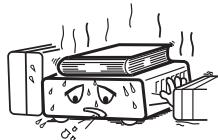
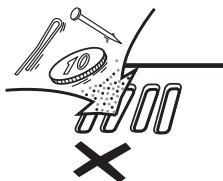
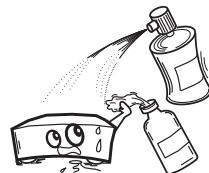
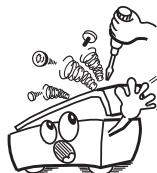

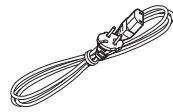
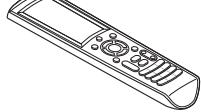
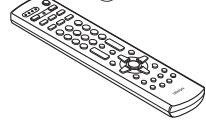
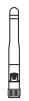
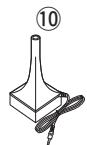

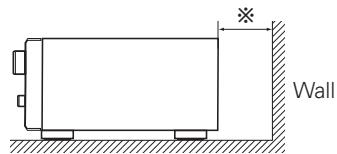
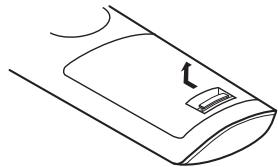
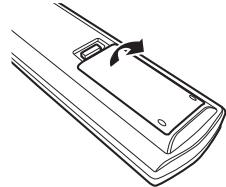
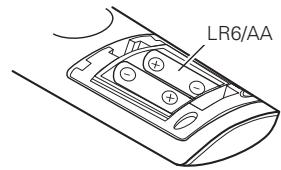
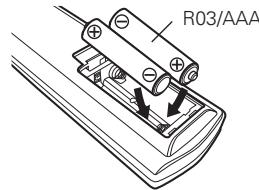
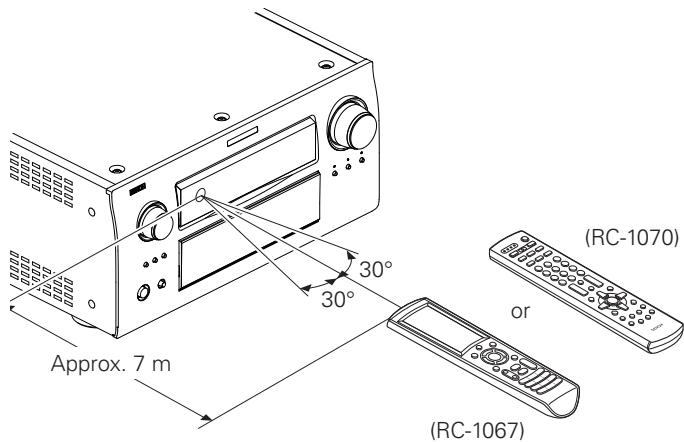
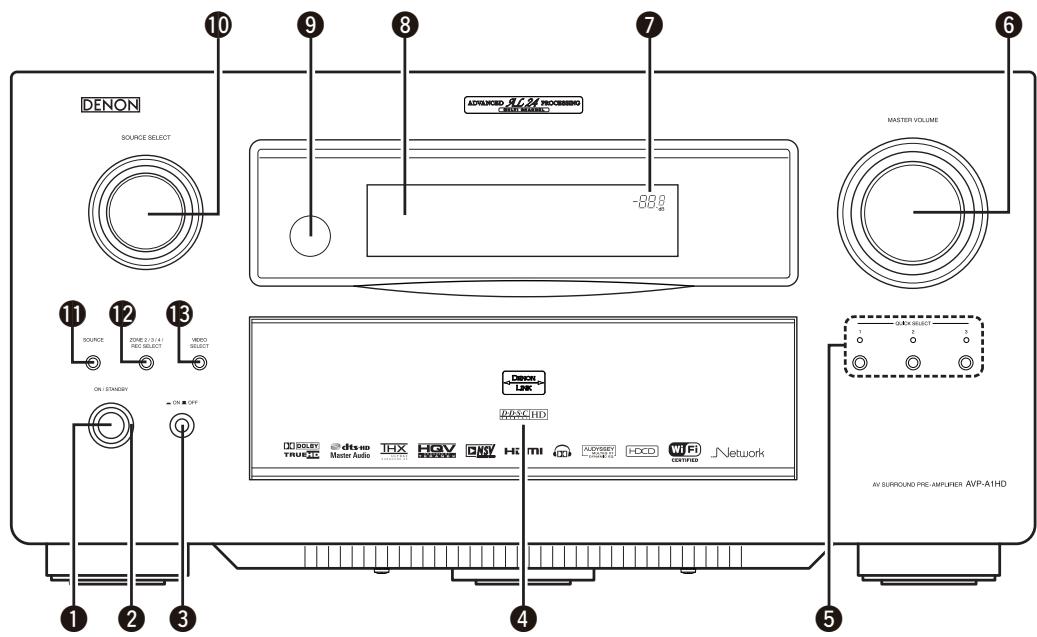
![DENON AVP-A1HDA - [With the door open] - 1](/content/2025/01/135552/images/41705f4d716f5d9730687a587a58547540dafe47856c515eb96c18cb66fcaba0.jpg)
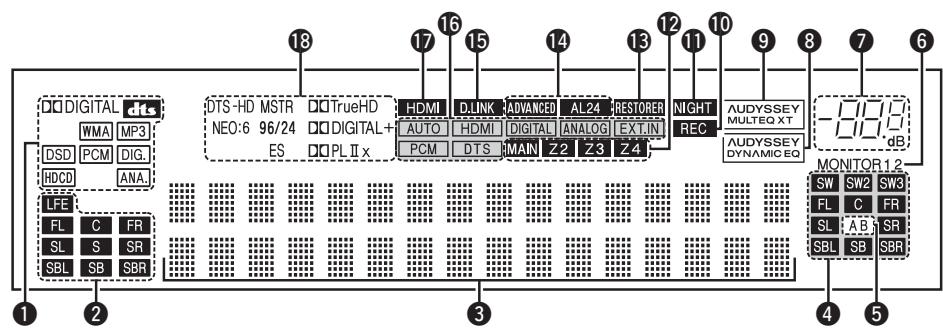
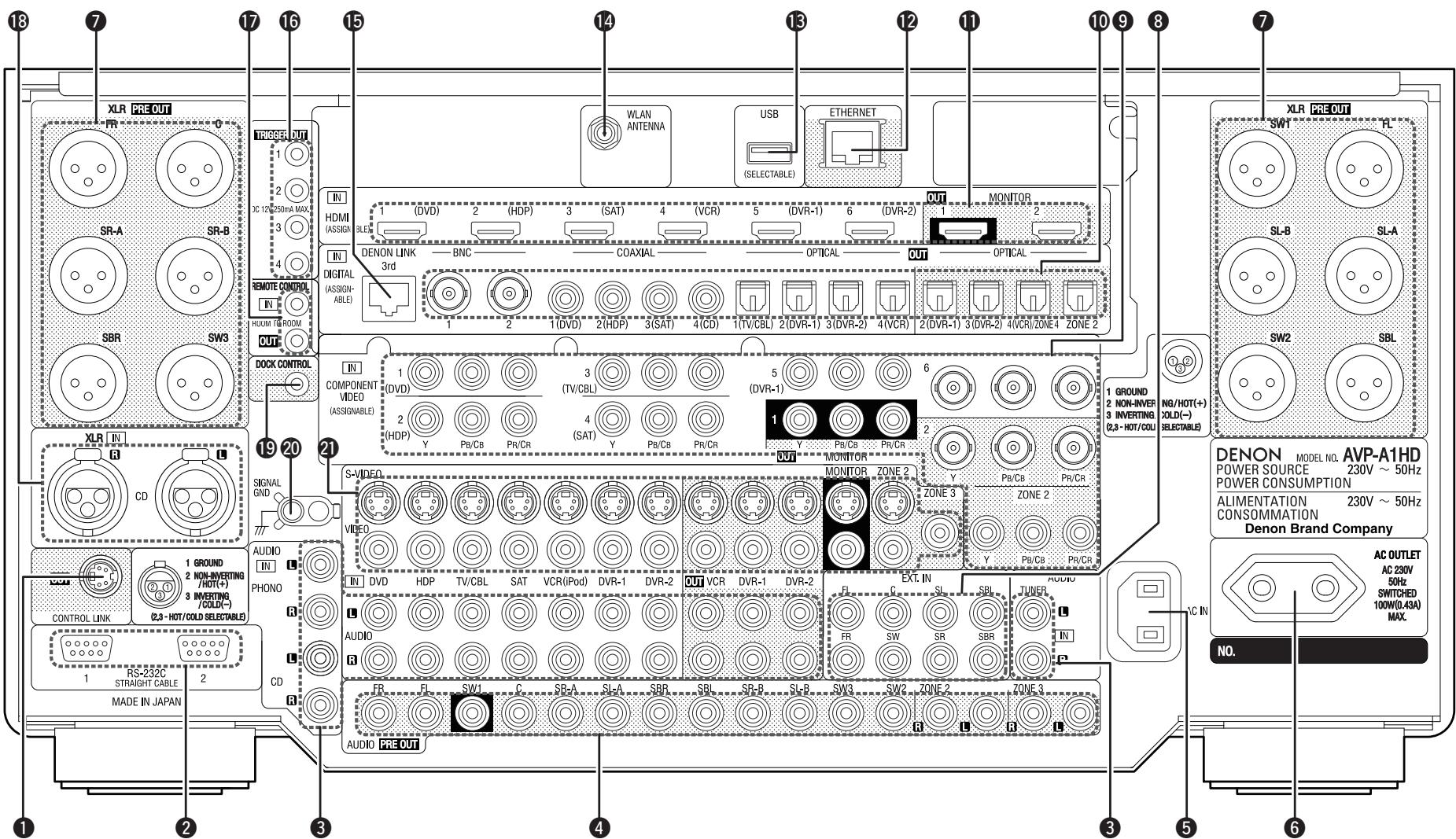
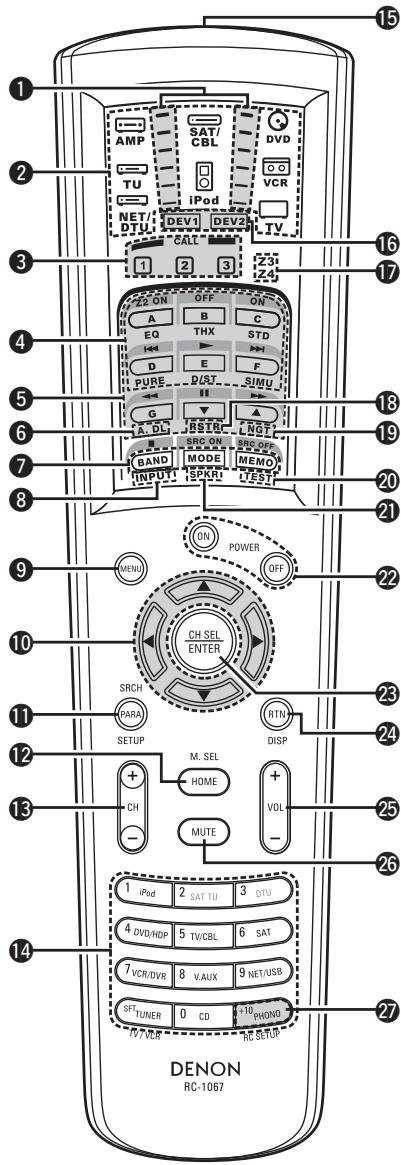

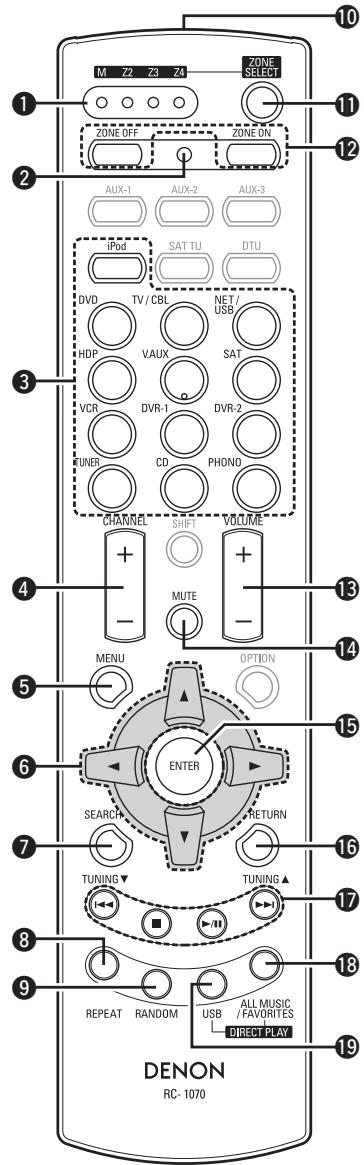




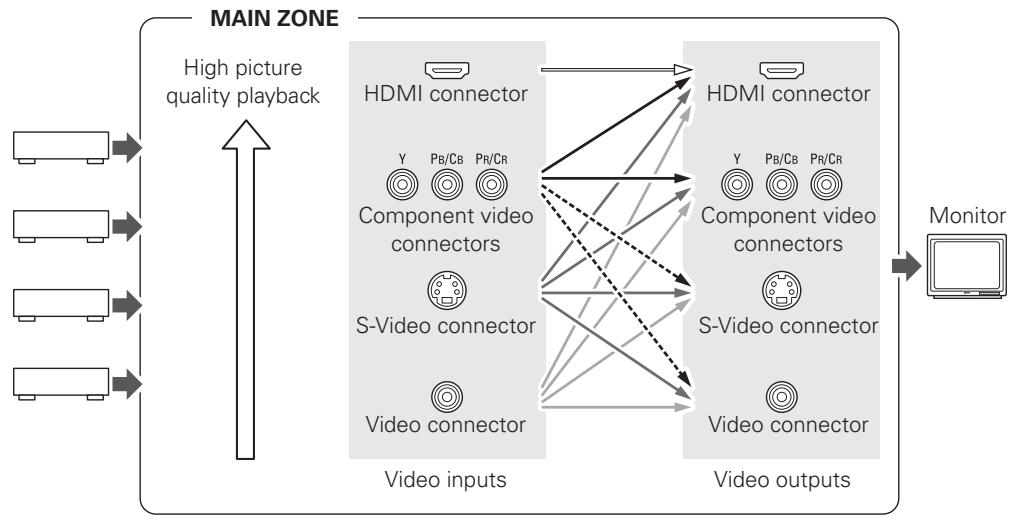
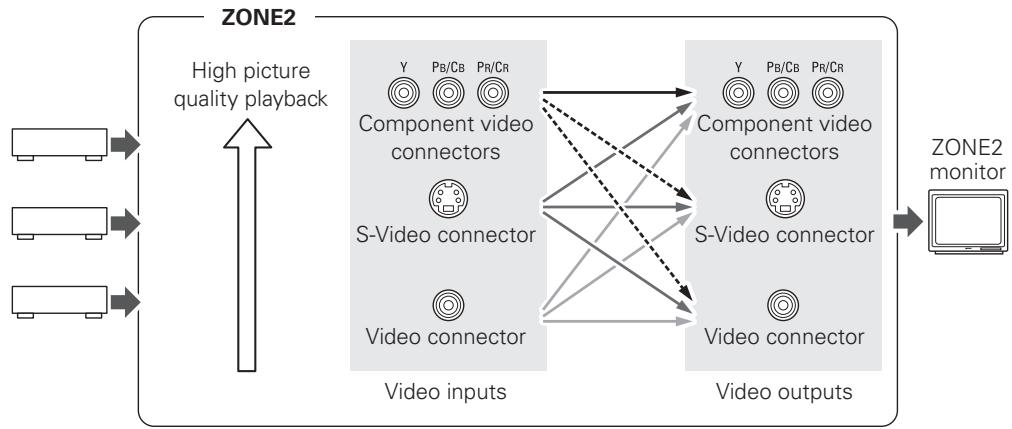
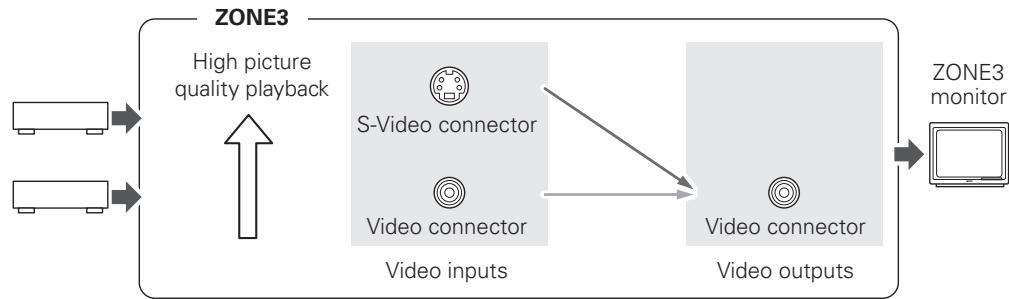

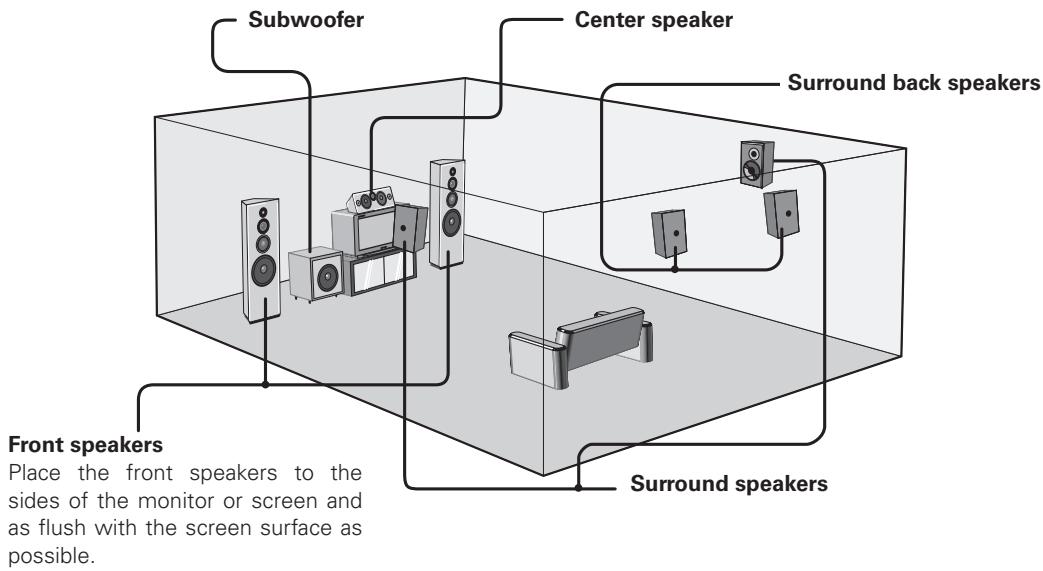


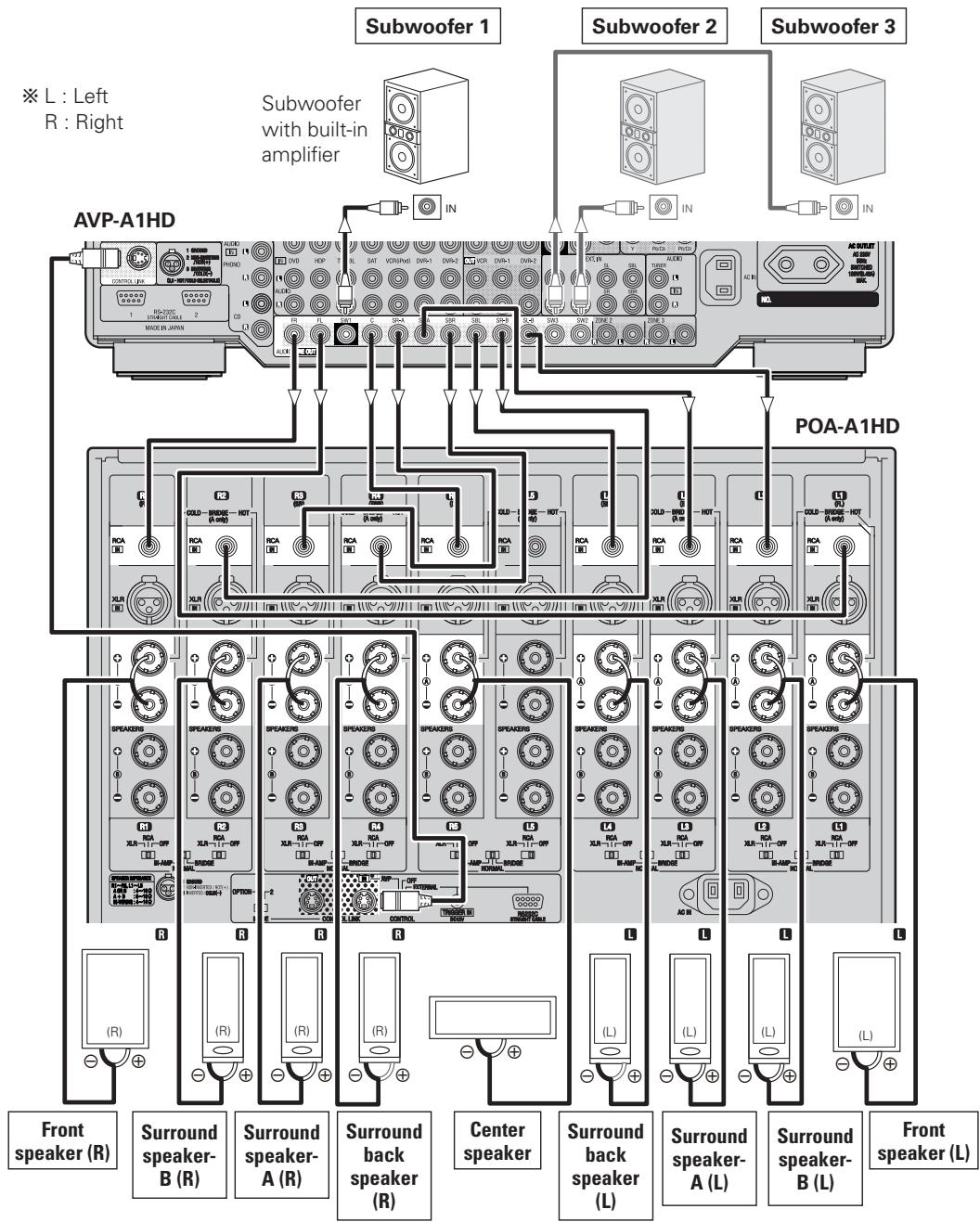
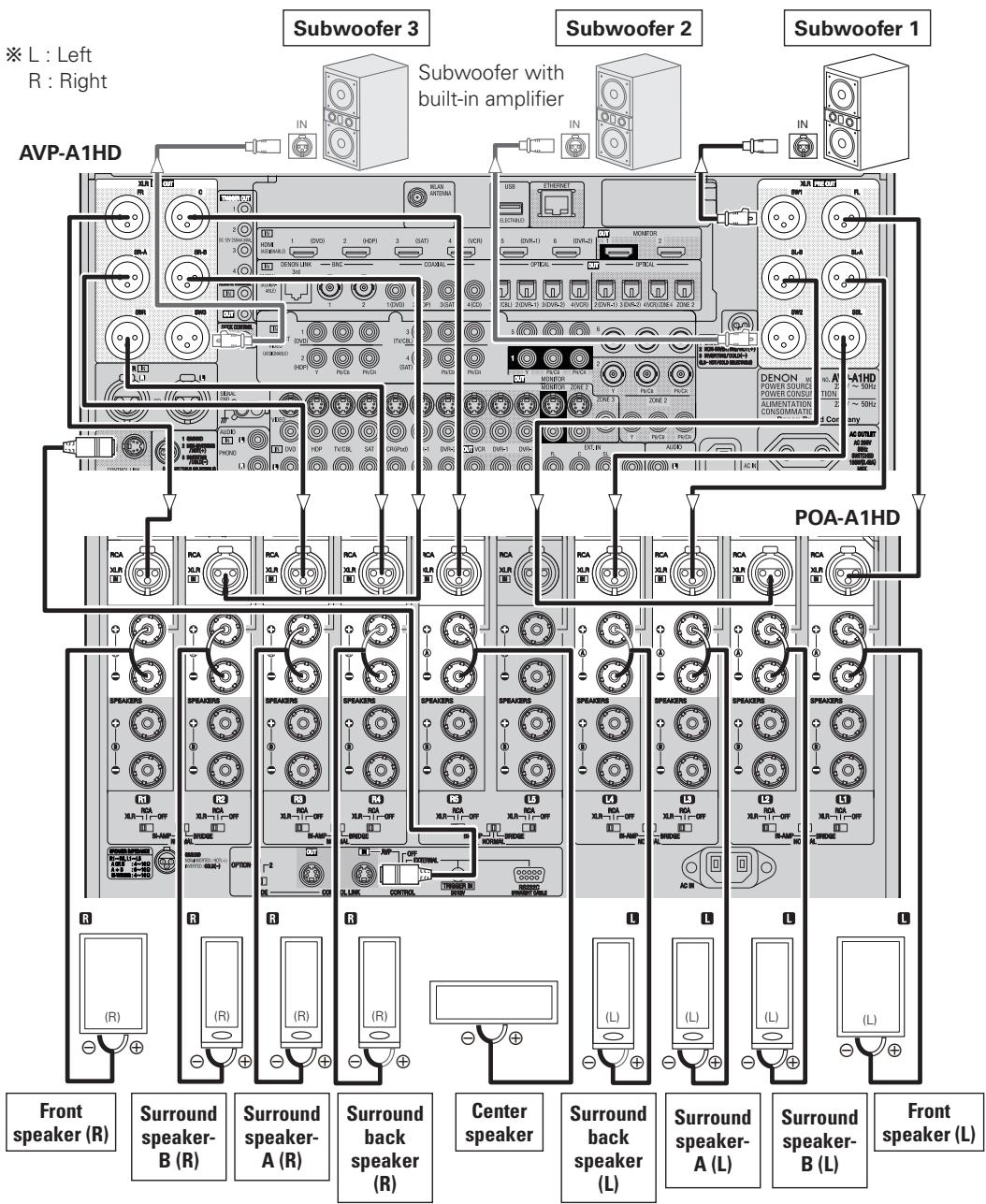


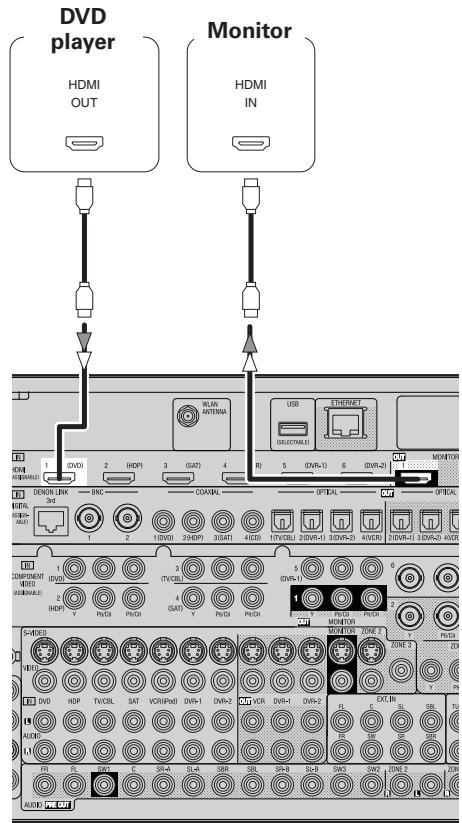


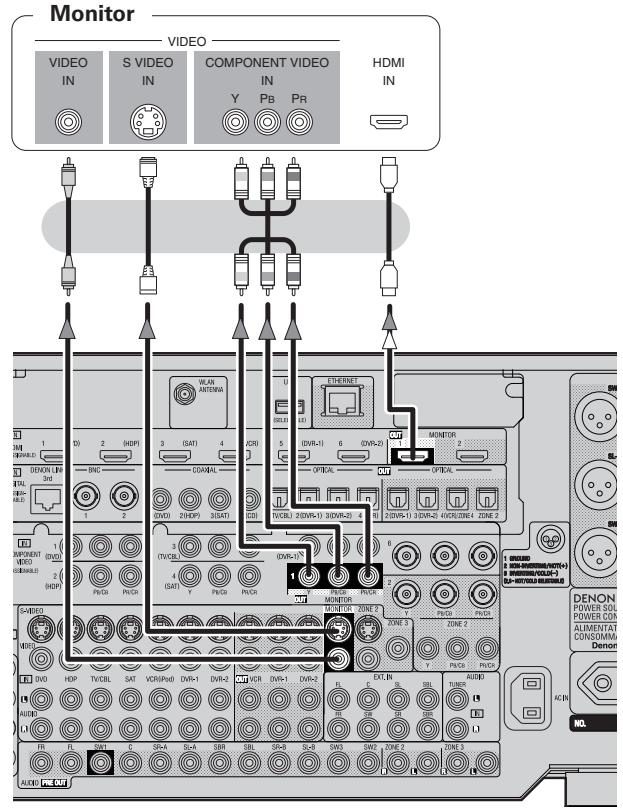
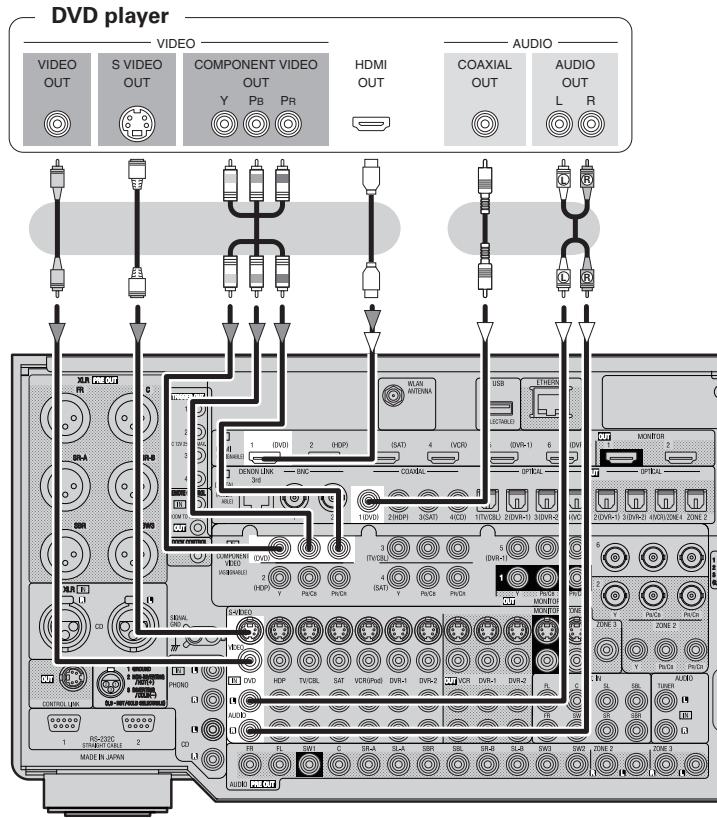

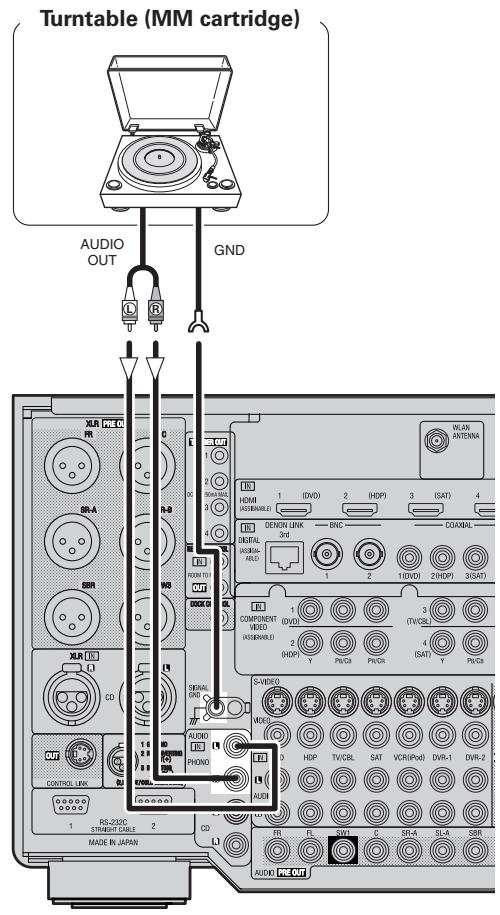

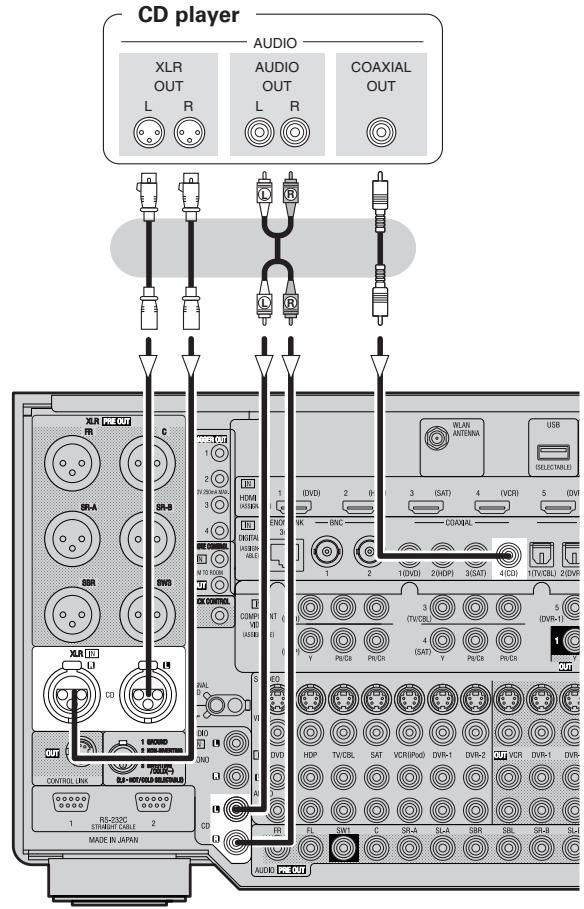

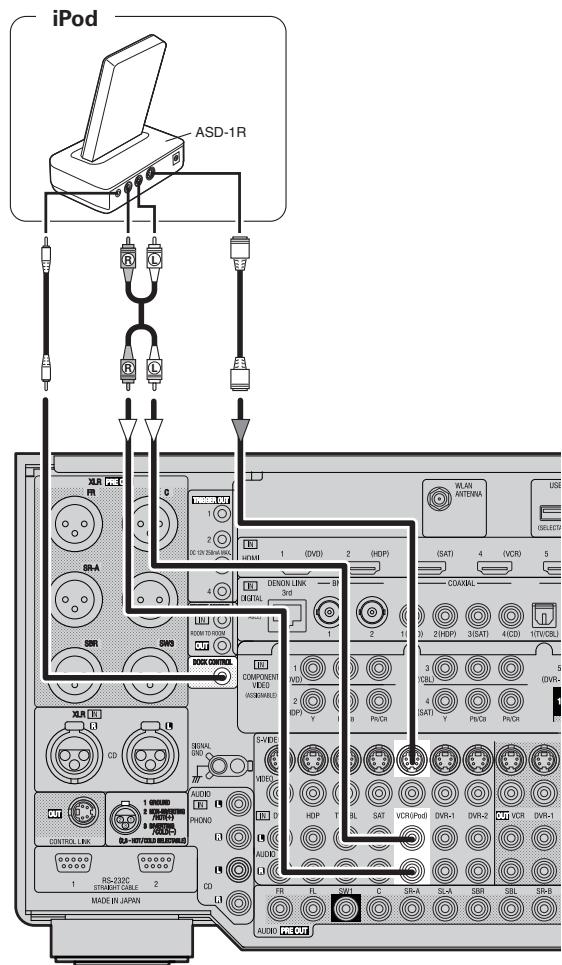

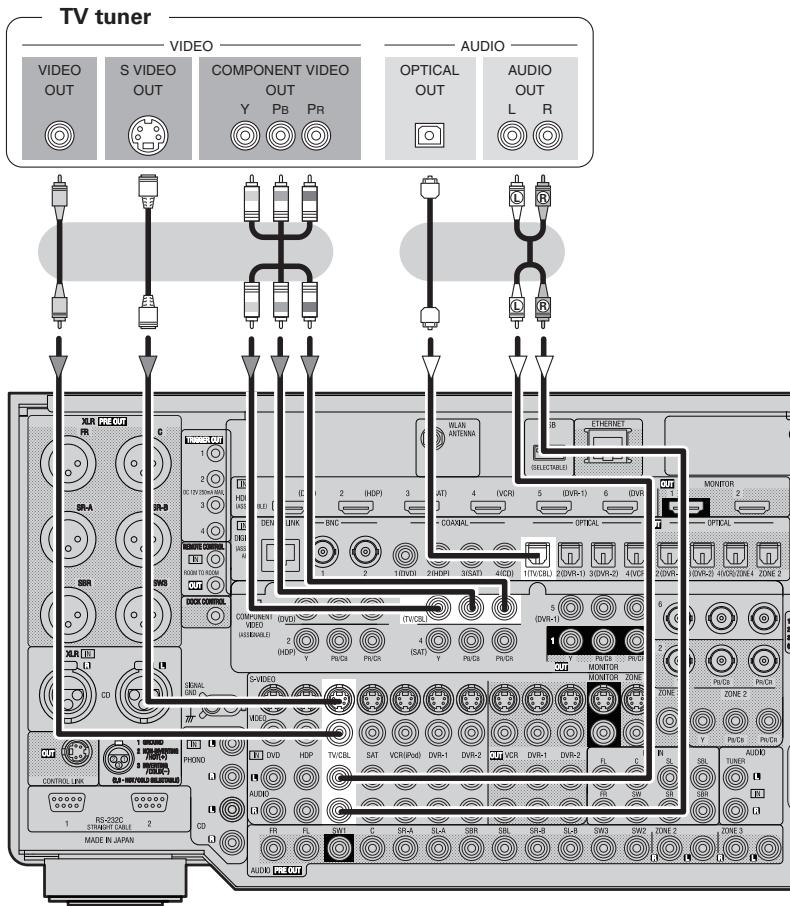

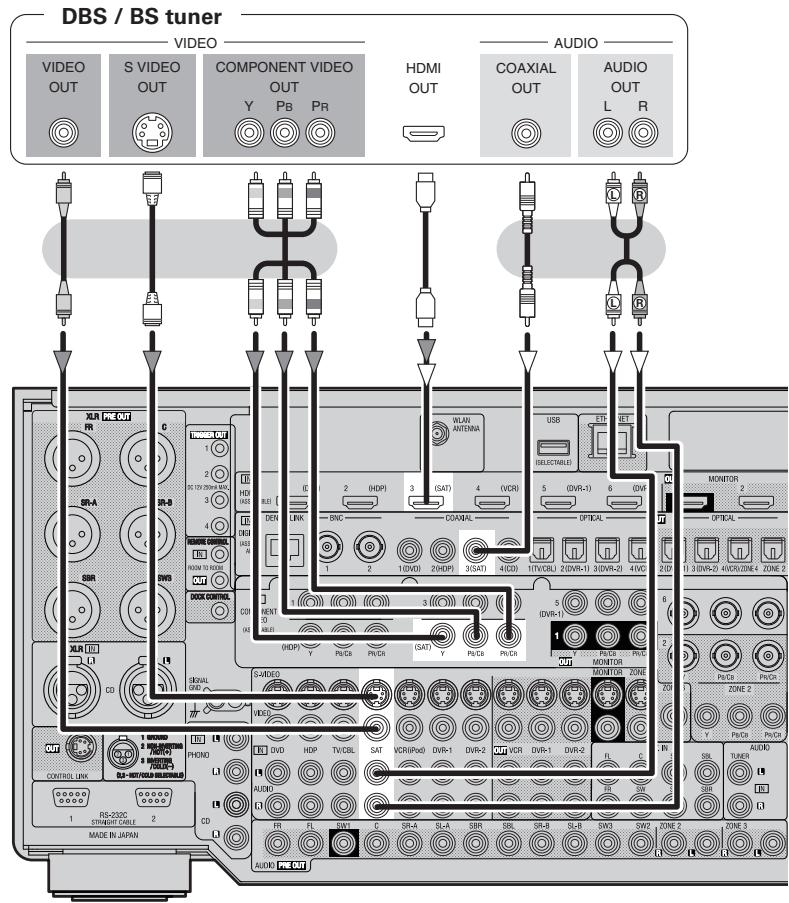

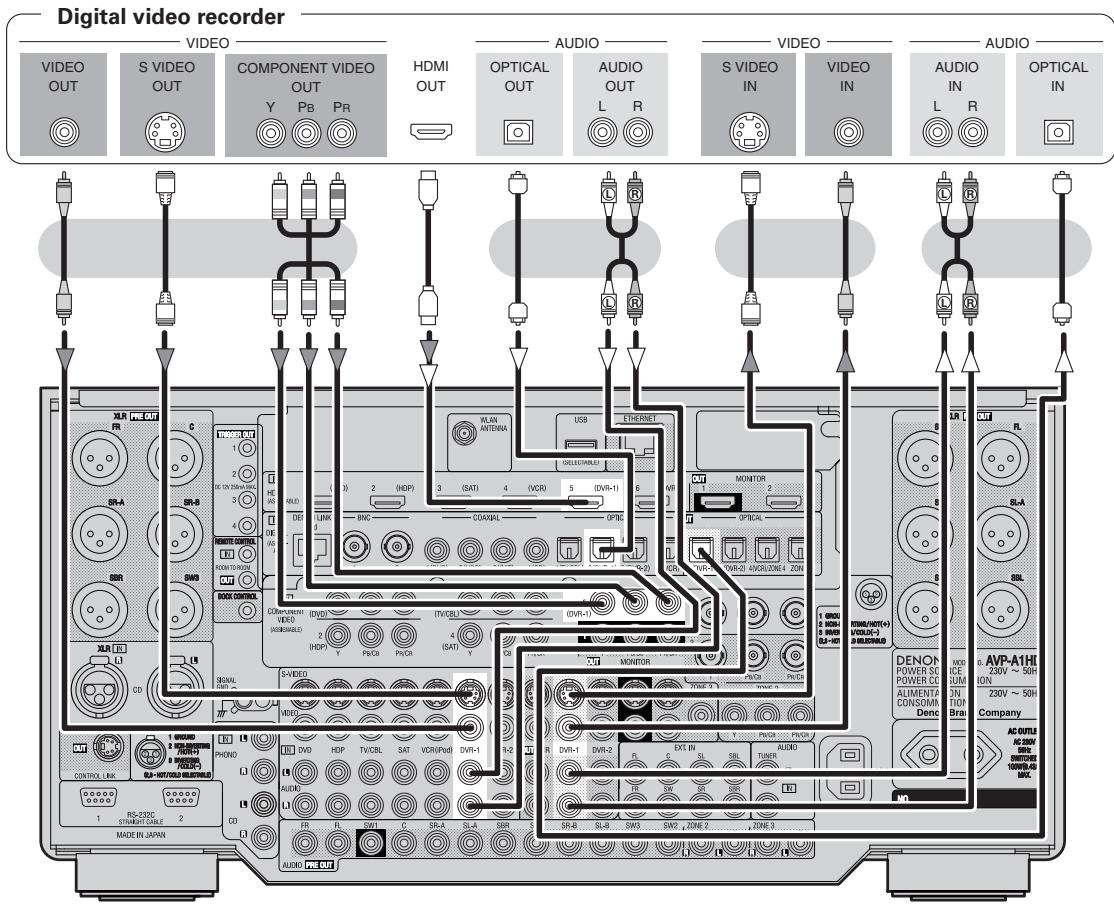

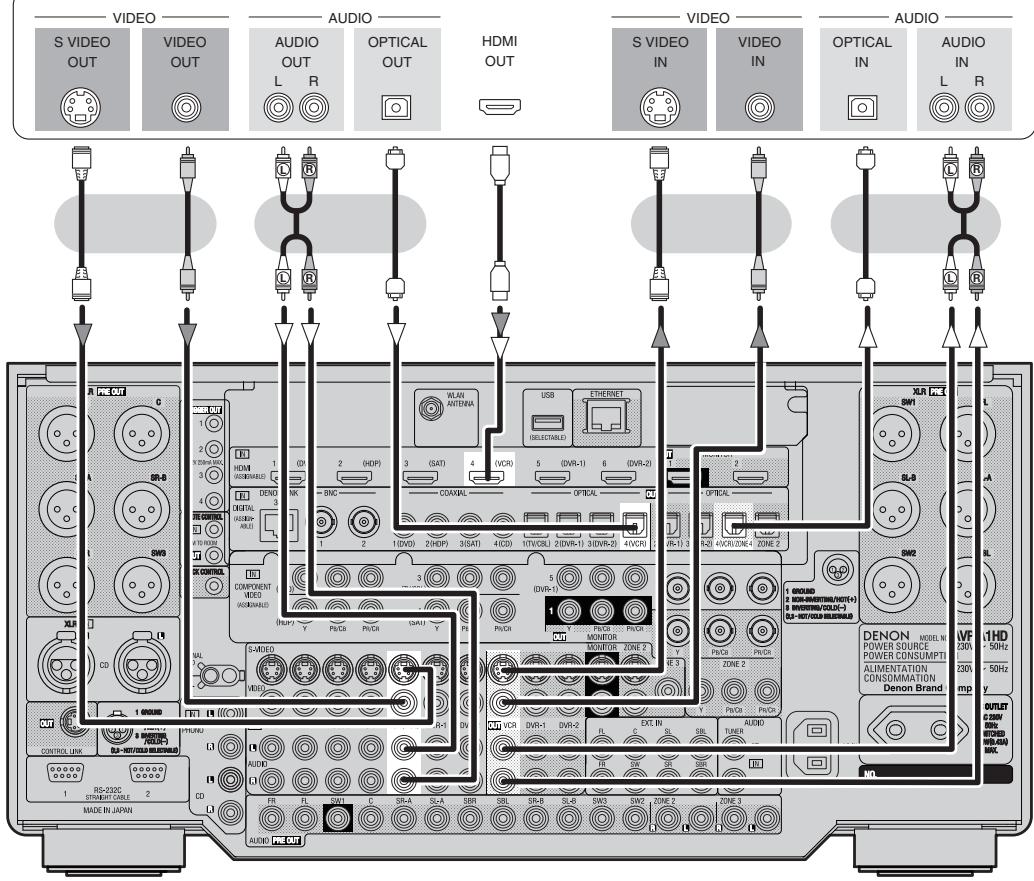

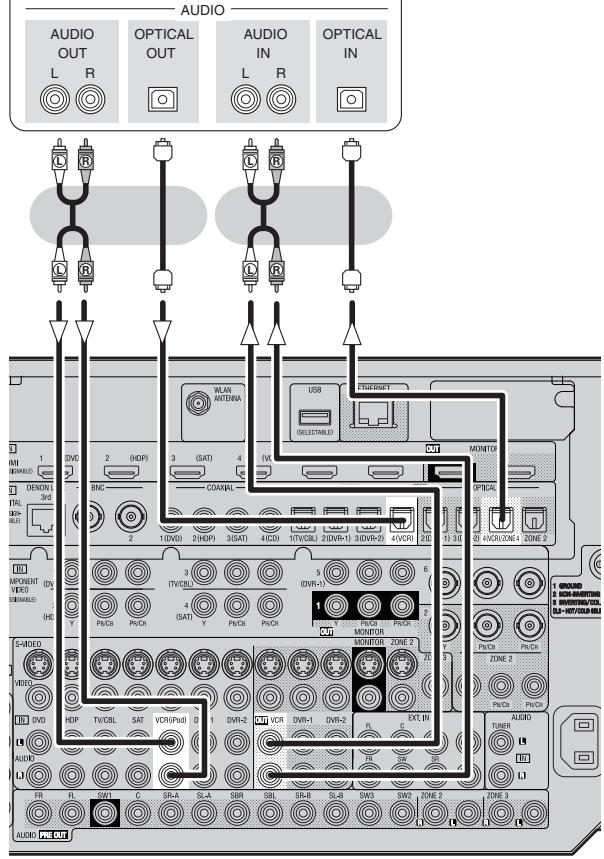
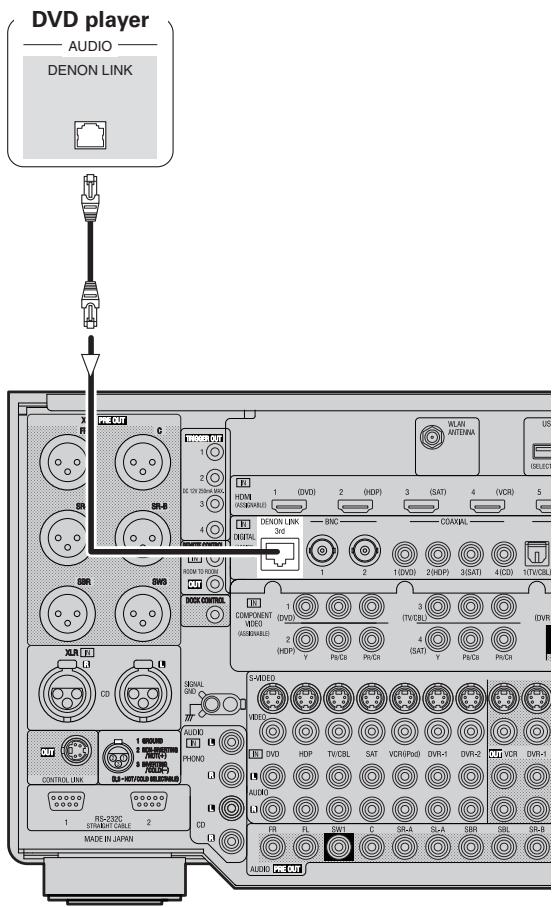

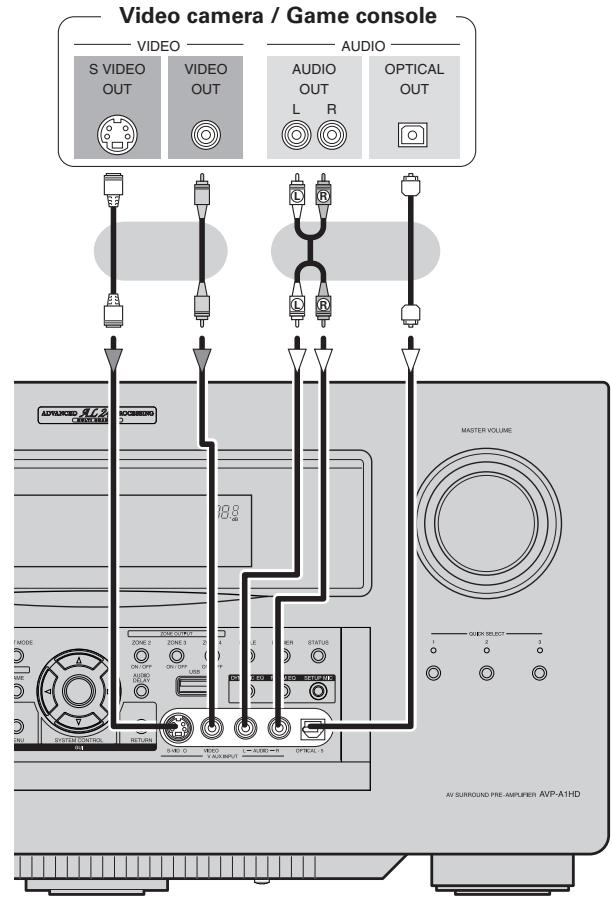
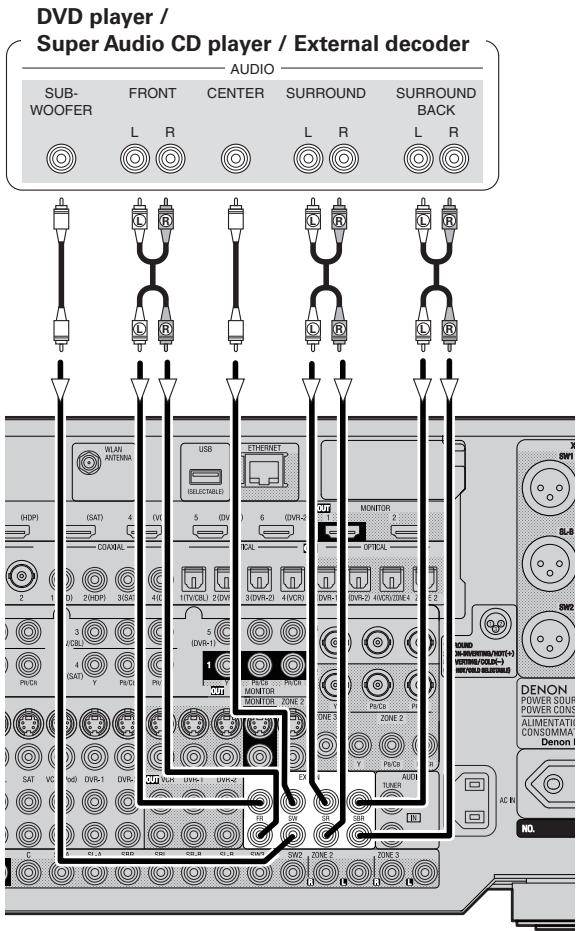

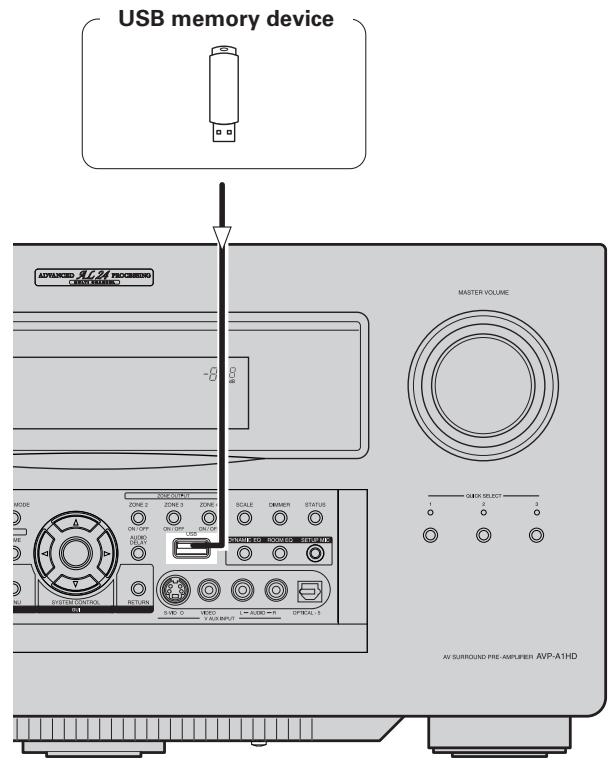
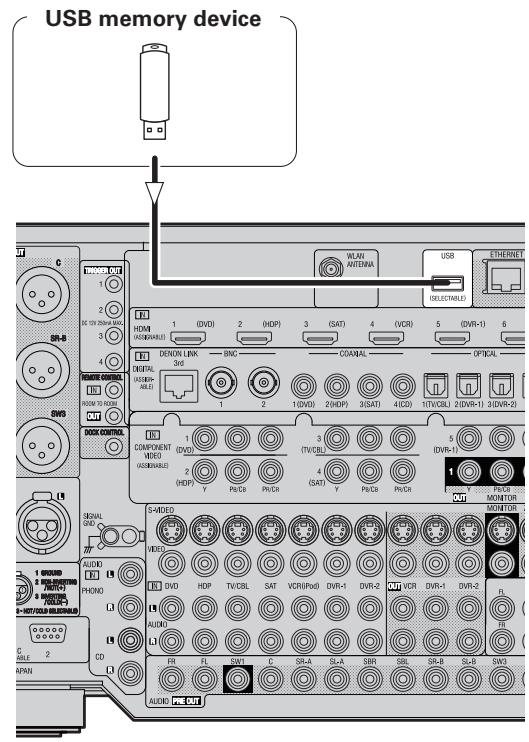

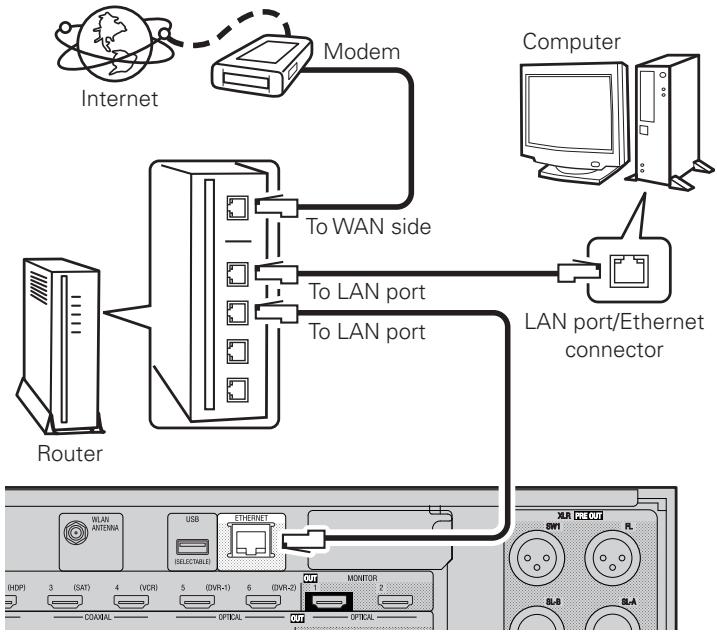
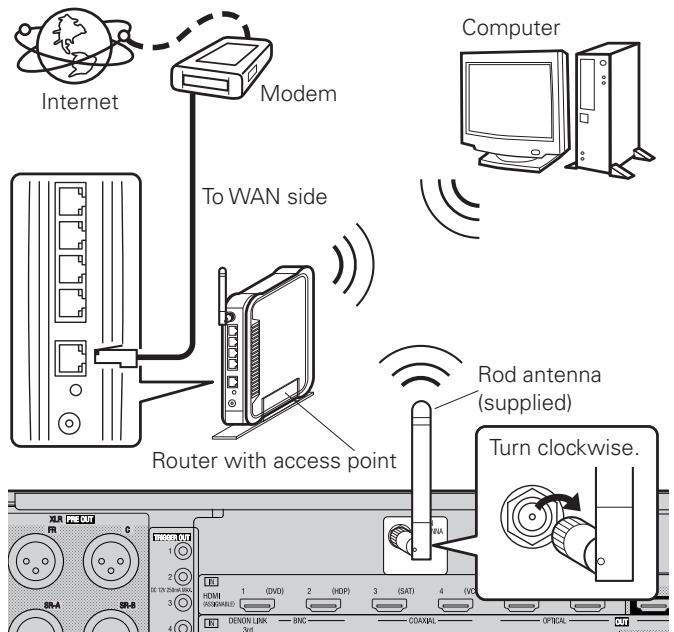
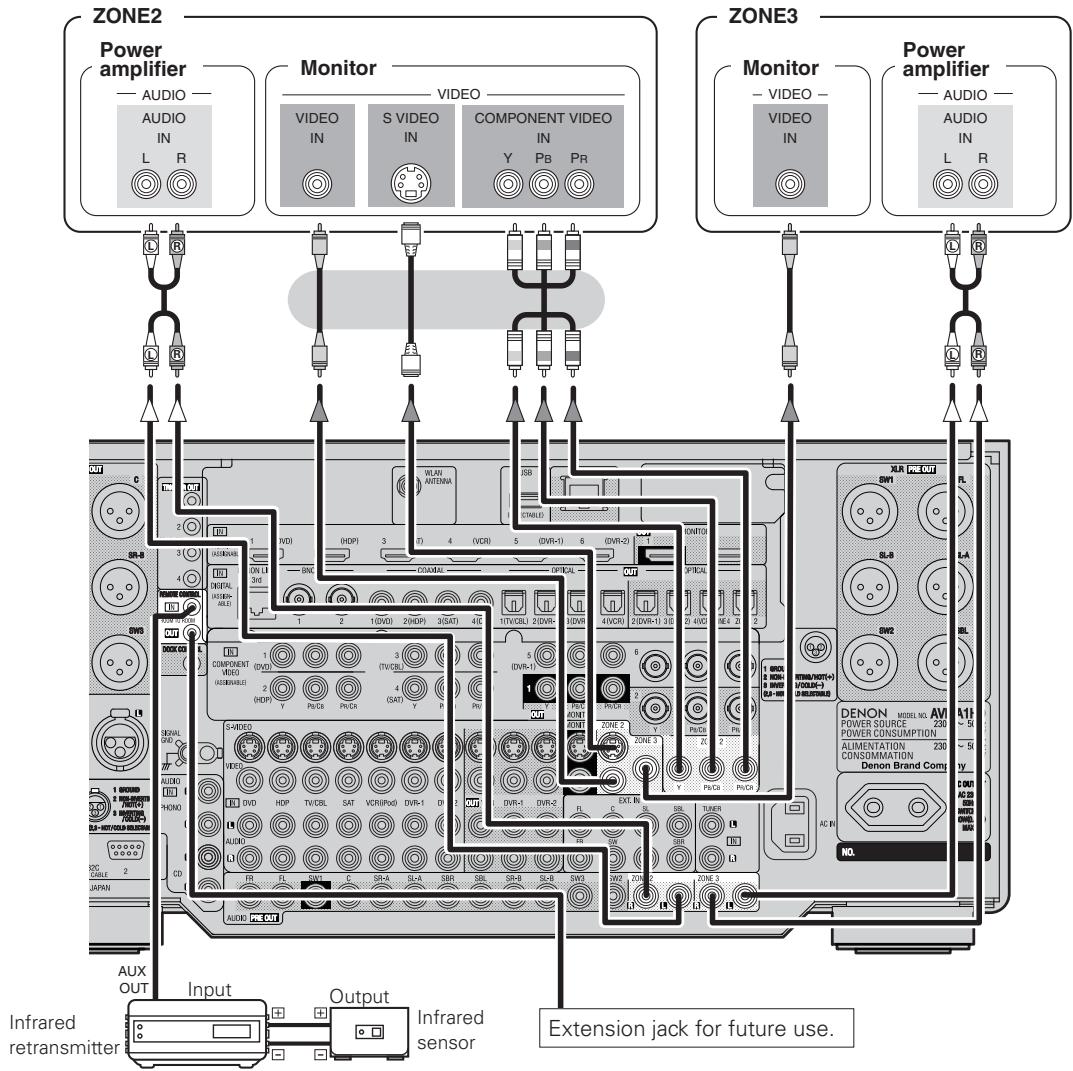
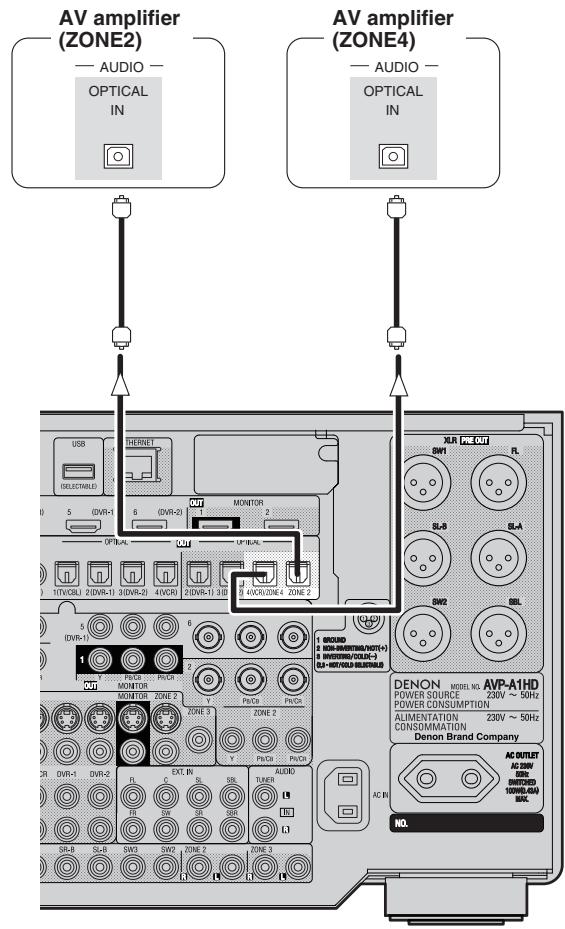

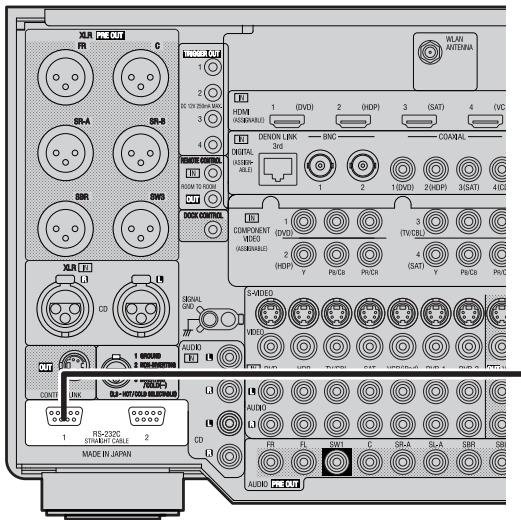

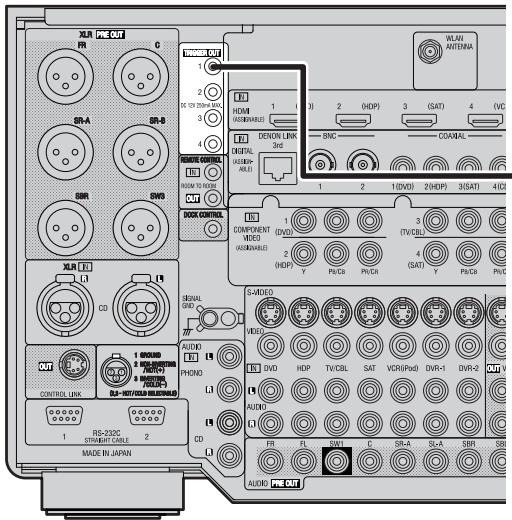
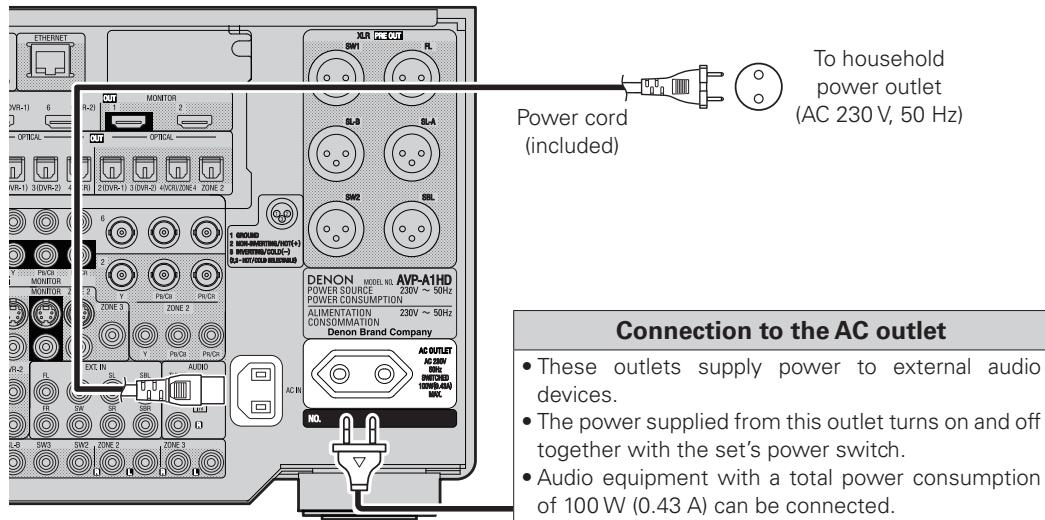


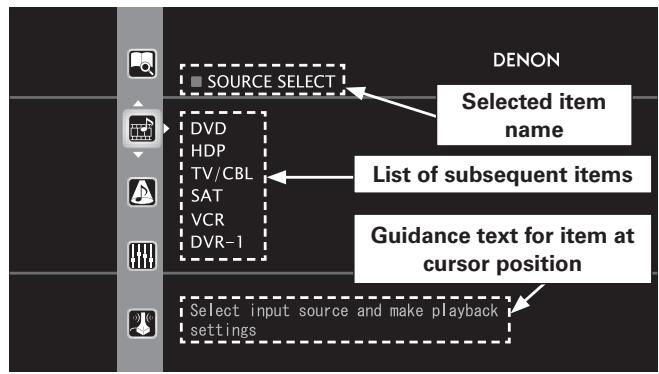
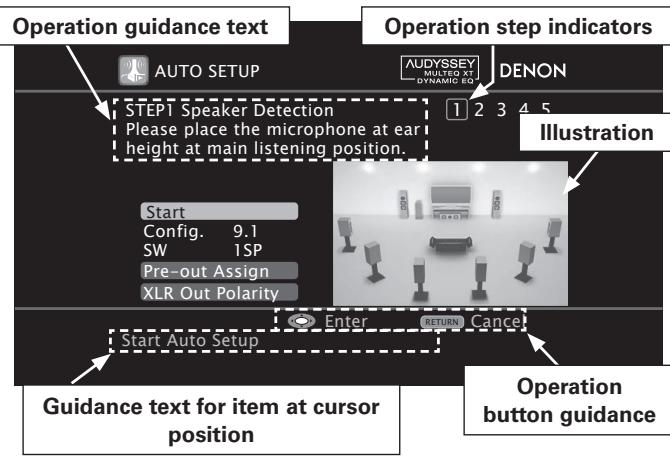
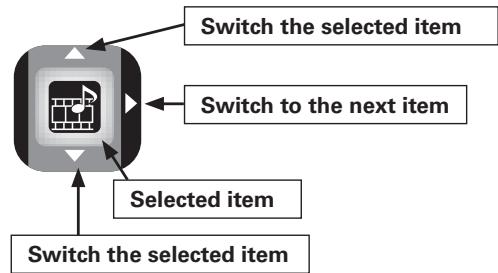
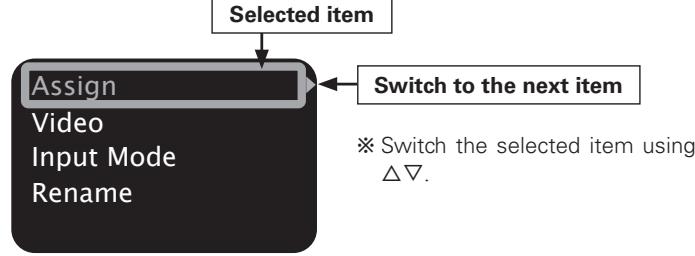







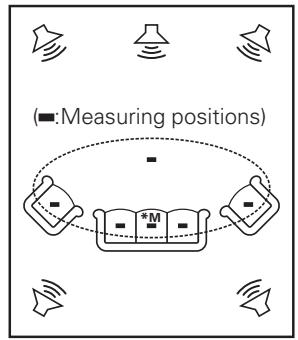
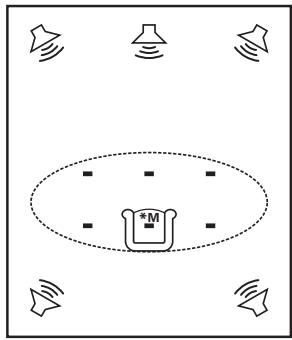

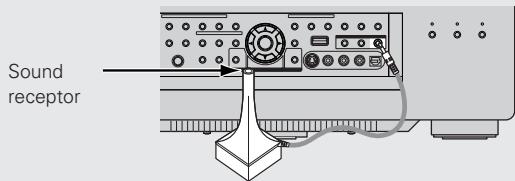
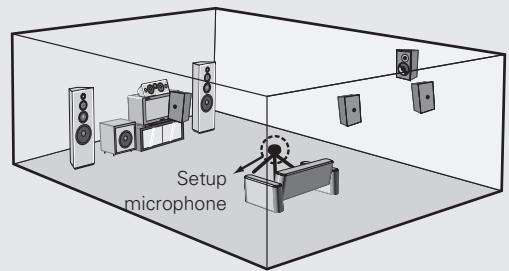





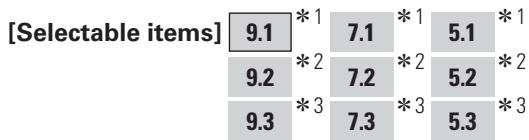






![DENON AVP-A1HDA - [Selectable items] - 1](/content/2025/01/135552/images/e306427285c78be916d94f2764bdc82765cf6a9f1e7f5ee7c2b3fe8b7ea6fadf.jpg)


![DENON AVP-A1HDA - [Selectable items] - 1](/content/2025/01/135552/images/938f29cde0b57174c73c6c5b2682a846b54f28f6c4851dad9acd788af93de7cf.jpg)

![DENON AVP-A1HDA - [Variable range] - 1](/content/2025/01/135552/images/e4211d45d3eb1e0e396757e33d9f1992a10b95ed679555877167f87ecf215584.jpg)

![DENON AVP-A1HDA - [Adjusting using test tones] - 1](/content/2025/01/135552/images/3655b2b9fad7041f4ae975a2d355887d816db16d10c023a253a6c26d5abb5af2.jpg)
![DENON AVP-A1HDA - [Selectable items] - 1](/content/2025/01/135552/images/ac6ddc159dbffe13f2062cec3dfc8e0af7def0ebc624ab938373cc88e8e183bb.jpg)
![DENON AVP-A1HDA - [Selectable items] - 1](/content/2025/01/135552/images/b60e2660af760c4a1b72dcd534038ea06c2c19b6d1781cc112d64b7ef29374e5.jpg)
![DENON AVP-A1HDA - [Selectable items] ON OFF - 1](/content/2025/01/135552/images/d721068d2ea04f7be7643b91eaf6db32c129e176856420c4dec7a0339490226a.jpg)
![DENON AVP-A1HDA - [Selectable items] Under 0.3m 0.3m-1.2m Over 1.2m - 1](/content/2025/01/135552/images/0b92f152b74214554ffb58fb67631da75610a43cff0b907f777a8e13049706d9.jpg)
![DENON AVP-A1HDA - [Selectable items] A B A+B - 1](/content/2025/01/135552/images/3a1914777349a5e6244f8da494ce8c435ef39681d7157d9367aaa0e40c76e98d.jpg)


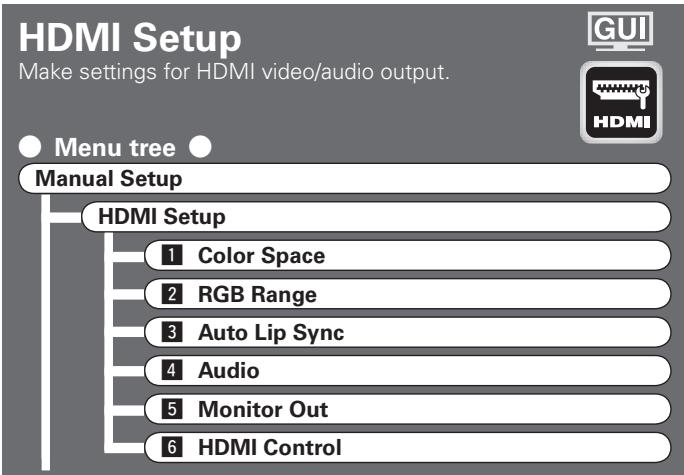





![DENON AVP-A1HDA - [Selectable items] - 1](/content/2025/01/135552/images/26626ced5f2957431a8d300473f45c85e6ad07aac2f6362d3e6a3f2498baa4e3.jpg)
![DENON AVP-A1HDA - [Selectable items] - 2](/content/2025/01/135552/images/7d3ea6930ff2575f5608b98de313832d076b60003ace6f8c3d9c08d676c79088.jpg)
![DENON AVP-A1HDA - [Selectable items] - 3](/content/2025/01/135552/images/749e79676c5de229cb63ea1012b4d280ca2f028af23aac2139b6e29195dcc05d.jpg)
![DENON AVP-A1HDA - [Selectable items] - 4](/content/2025/01/135552/images/36845b4532f040affeb0ed7c17a6347e4127964b63aa74f779262b75ae563015.jpg)


![DENON AVP-A1HDA - [Selectable items] - 1](/content/2025/01/135552/images/2d6f5f11ff46af552acb71b71d4d26b3324c0bb9accaf29377a4201e65b58654.jpg)
![DENON AVP-A1HDA - [Selectable items] - 2](/content/2025/01/135552/images/06363d33ec3c2fbf57cc1839caf0f7f230641e89b3102654af965be639747147.jpg)


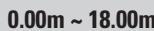

![DENON AVP-A1HDA - [Selectable items] - 1](/content/2025/01/135552/images/bcfd90f5073edc5404dae567121c1eebe9becaef58d65c774db252869589b3a6.jpg)
![DENON AVP-A1HDA - [Selectable items] - 1](/content/2025/01/135552/images/66eb28ce2ea2e6f2202535d3d94e02537c3391275693ffc1acea726d06964657.jpg)
![DENON AVP-A1HDA - [Selectable items] - 1](/content/2025/01/135552/images/59acc6bdbb5933191e184fdbca9ac6d9b9e1e50173494e11d1345374fb5f55c5.jpg)


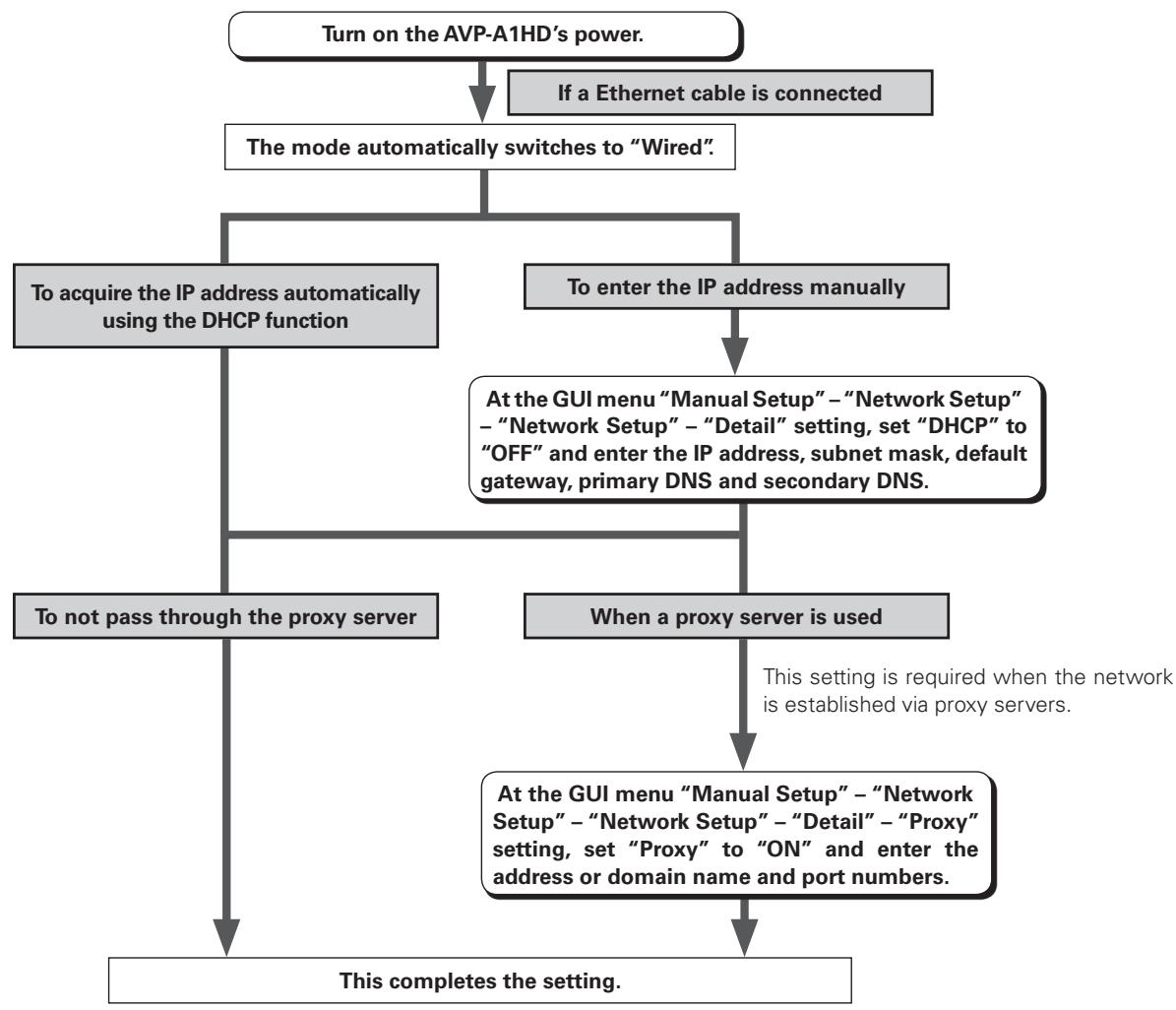

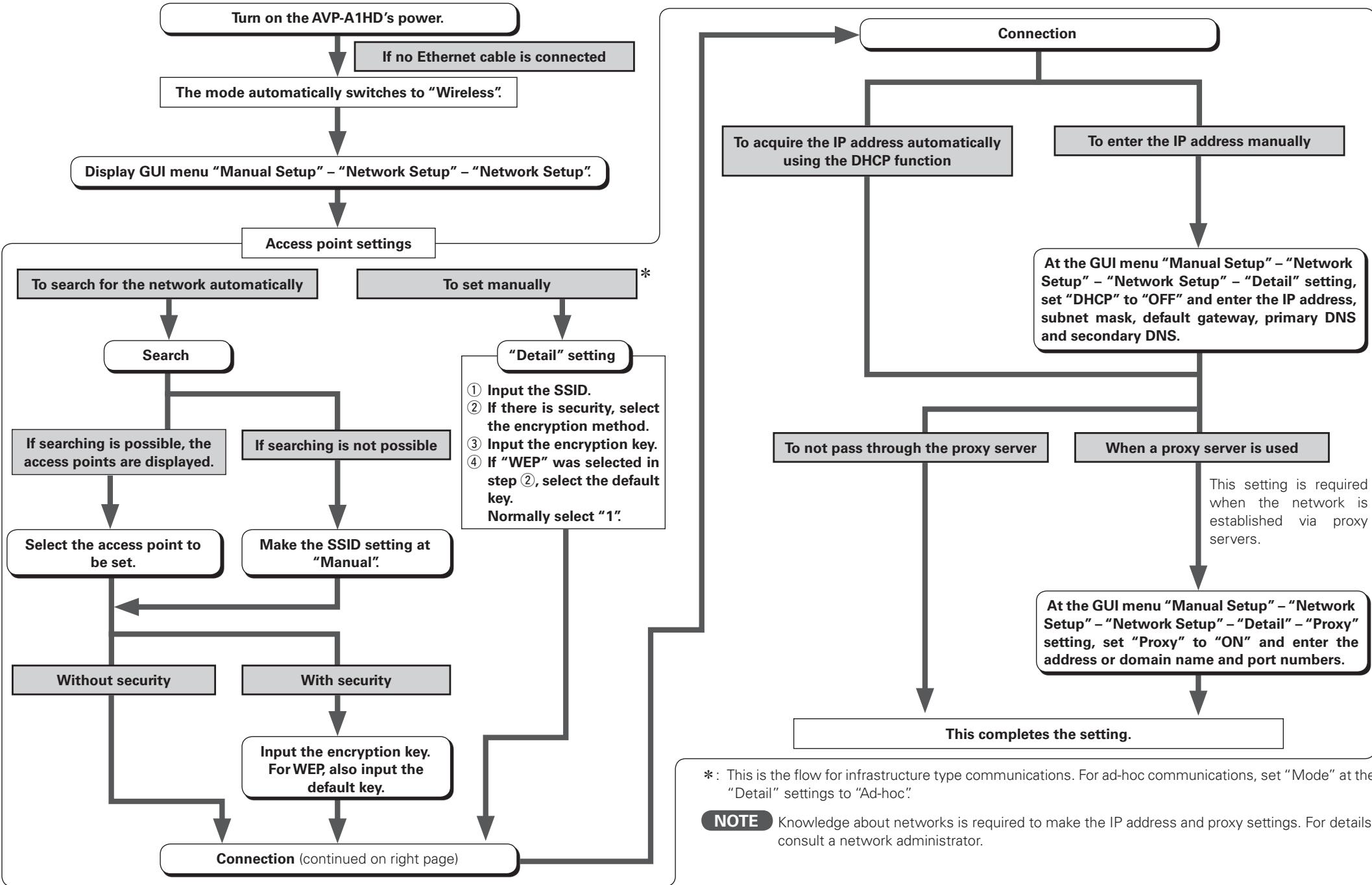


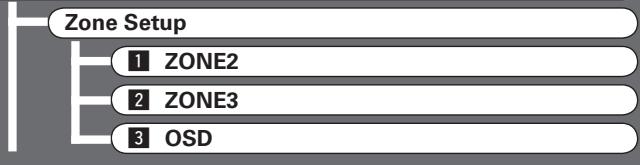






![DENON AVP-A1HDA - [Input source] - 1](/content/2025/01/135552/images/18cf55297ec7d0d973467748d780c84e11d9815b8537a4696ac020128df7d5b8.jpg)
![DENON AVP-A1HDA - [Input source] - 2](/content/2025/01/135552/images/fe5e92e9505bc41a0148014e816cf4205187949e67ff82f02f5692b452684423.jpg)

![DENON AVP-A1HDA - [Selectable items] Normal Free Assign - 1](/content/2025/01/135552/images/cfeb429ea594eec3bdf9896ac6e5cb26145ba549d4d225d30a96d15dd24eb368.jpg)
![DENON AVP-A1HDA - [Selectable items] XLR - 1](/content/2025/01/135552/images/b90214d699339e26831bb77d03e1b9d848f296d963a4155703d2e09665d1a76d.jpg)
![DENON AVP-A1HDA - [Selectable items] XLR - 2](/content/2025/01/135552/images/e87c30cbf74eb92ee8216f574c546bbdb77c8168b9195266563fbada26ddfcd1.jpg)


![DENON AVP-A1HDA - [Selectable items] - 1](/content/2025/01/135552/images/2eca379ecefeb56d519a05a909a53d7b72358d5d6da26d5c0026902c932c41af.jpg)


![DENON AVP-A1HDA - [Variable range] - 1](/content/2025/01/135552/images/d71a0440de07ebe539f2477caf5fca8299536084b052a3a40c32e6bd16abd5ce.jpg)
![DENON AVP-A1HDA - [Variable range] - 2](/content/2025/01/135552/images/6448b8d3625b721ad47acd75bb0ab5c6e246874e0009a9623ca9030b7818d0b2.jpg)

![DENON AVP-A1HDA - [Selectable items] - 1](/content/2025/01/135552/images/2bba31f80a1e4a53baa69053e8baa24232341791d7c6332fe58aa0b1619a1ad0.jpg)
![DENON AVP-A1HDA - [Selectable items] - 2](/content/2025/01/135552/images/720a3c725aa035a792749ab9199c13b2a3edeb99a3a71f6de42500878fdd13de.jpg)
![DENON AVP-A1HDA - [Selectable items] - 1](/content/2025/01/135552/images/efd64af10272899a4b81cef587b8435f4cbe8048e77ad604cab72e16999ded7a.jpg)
![DENON AVP-A1HDA - [Selectable items] - 2](/content/2025/01/135552/images/8997faef83abc5d6ae9cfbcea42df2408dae2cc32da6e24e435a37f500e32dc2.jpg)




![DENON AVP-A1HDA - [Selectable items] - 1](/content/2025/01/135552/images/46e7074926b7cb77c78f3e00753c551bdcfed1b3681d49a47dcf8baef529f637.jpg)


![DENON AVP-A1HDA - [Operation on the main remote control unit] - 1](/content/2025/01/135552/images/9e267a8684de1acef2e3487ffbd1d17905cc933183f7396721e4f4495a8390de.jpg)
![DENON AVP-A1HDA - [Operation on the main remote control unit] - 2](/content/2025/01/135552/images/e7eadbaf690b61c2bc79d70e848a30ff53181f336d5850802a54aa9969bd194d.jpg)
![DENON AVP-A1HDA - [Operation on the main remote control unit] - 3](/content/2025/01/135552/images/33abf52945d7d65d6fd8a9dc571a475a7fe5a918cdb11e098c53058685085a3f.jpg)

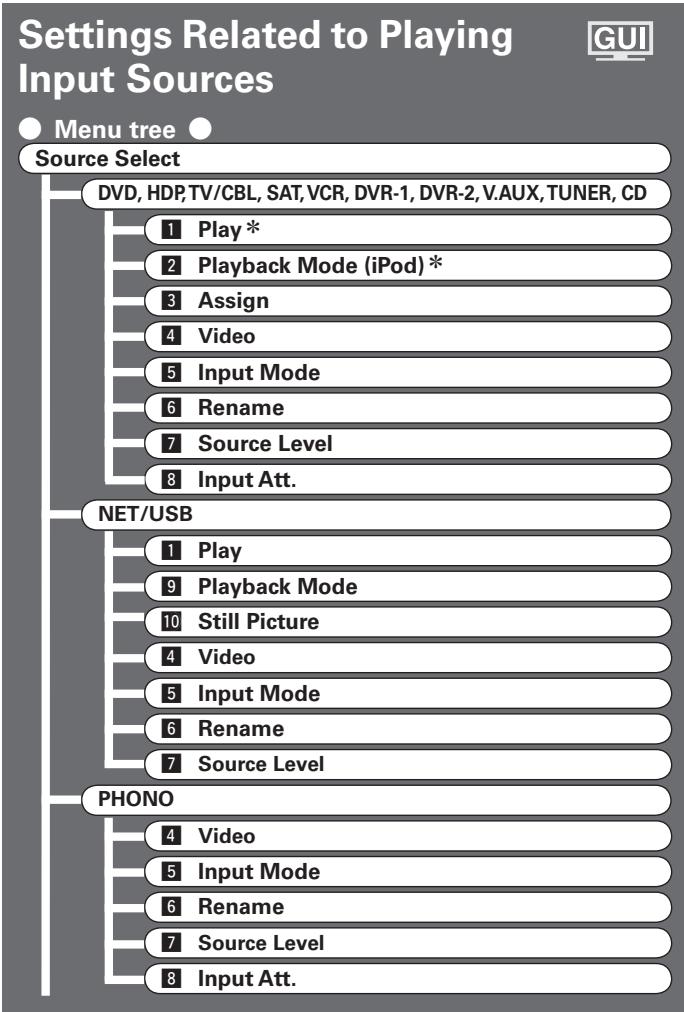
![DENON AVP-A1HDA - [Input source] - 1](/content/2025/01/135552/images/fac94d4dcd52939f61bcf9d68337e111e795a6e7dbd93d233ac1770752d7143f.jpg)
![DENON AVP-A1HDA - [Input source] - 1](/content/2025/01/135552/images/6aa0b95fe35315f8dbd3be97cea111b228246c27228b887b6ccad31f143169f0.jpg)


![DENON AVP-A1HDA - [Input source] - 1](/content/2025/01/135552/images/693b208e1622fdacd9288dd08f1b0c0fb5a45be4f63fcc6f2cca4865be931744.jpg)
![DENON AVP-A1HDA - [Selectable items] - 1](/content/2025/01/135552/images/d5dbc9e20750b075e1dd7f7118ac8cfc0ae63966f43079964f2963b1630ee138.jpg)





![DENON AVP-A1HDA - [Selectable items] - 1](/content/2025/01/135552/images/2c360c5727c5632f37328d8ebab21eba5ecd69f88a2f530bb1b2328ba0d5fc1f.jpg)
![DENON AVP-A1HDA - [Selectable items] - 2](/content/2025/01/135552/images/e7515b6808404e49a6faa6db63a1bac390548b1d3507be9b456d8a2f28116798.jpg)

![DENON AVP-A1HDA - [Input source] - 1](/content/2025/01/135552/images/822290aefebc8dc568bc939147303aed802899a4718d3cd70af302d15147fac0.jpg)


![DENON AVP-A1HDA - [Selectable items] - 1](/content/2025/01/135552/images/ebd2fc1c0757dd3cbbe0d804cbed31c89914d736276ae9d1fed4e447d8f231c7.jpg)


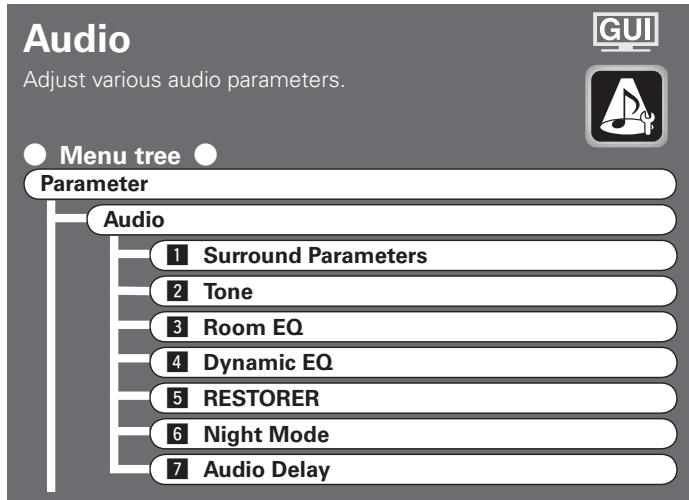


![DENON AVP-A1HDA - [Selectable items] - 1](/content/2025/01/135552/images/841fa403fb73b47f5c8da9d7caa39778c42667445b3c94bdeb289a884deeb527.jpg)


![DENON AVP-A1HDA - [Selectable items] - 1](/content/2025/01/135552/images/2db3449b8ed6cd45b9bab0601592fbbc2b5723e24dce5059abc1b18c1c3fbc09.jpg)



![DENON AVP-A1HDA - [Selectable items] - 1](/content/2025/01/135552/images/2e576cfa9bba3cf62b45940bb8cc7040461ac4ee4431dd5050f4a405e331e297.jpg)
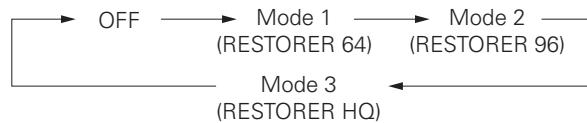



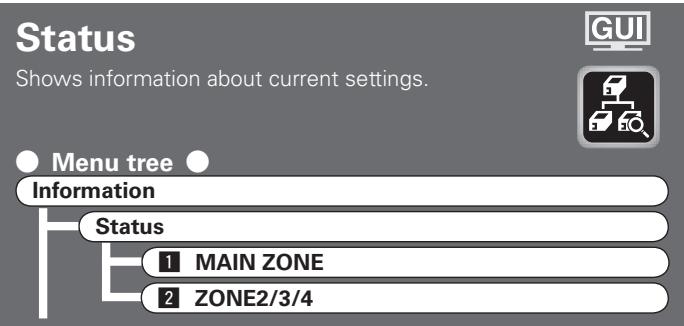


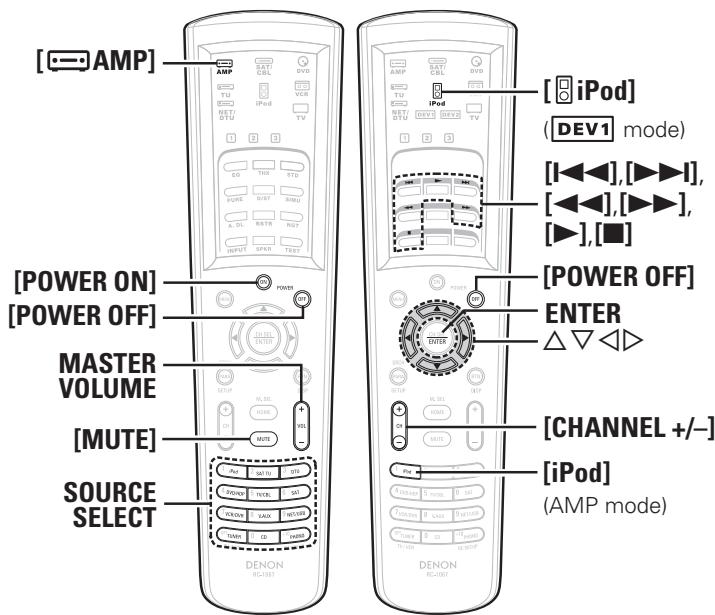
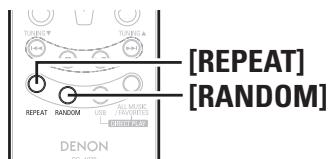

![DENON AVP-A1HDA - Press [MUTE]. - 1](/content/2025/01/135552/images/927c797c999e6ea7d6f6031fe565cc00eaee005b97d6e0bfe9a156e99b5b1103.jpg)


![DENON AVP-A1HDA - Either turn or press [iPod] (AMP mode) to select the input source assigned in step 1-② above. - 1](/content/2025/01/135552/images/69daa56d578d6eaa5bf8861bf8eaea26dd79fc67ba4e3d78687a88065333f7f0.jpg)
![DENON AVP-A1HDA - Either turn or press [iPod] (AMP mode) to select the input source assigned in step 1-② above. - 2](/content/2025/01/135552/images/59227cf85f182fca9d3d6bd32cc3bc64ea8e636e12bdd67cd6ea0fc26a92b25d.jpg)

![DENON AVP-A1HDA - [Selectable items] - 1](/content/2025/01/135552/images/d0413a3512fb15507785e59527c1a604b13e4f404dd74d2e3ef5d499729e8408.jpg)
![DENON AVP-A1HDA - [Selectable items] - 2](/content/2025/01/135552/images/9b752663ac6cba3bb55b2d73b837c3f393f681f05ed44aabd345650f6181d682.jpg)
![DENON AVP-A1HDA - [Selectable items] - 3](/content/2025/01/135552/images/f5ef1f6c21524305a6aee6f8597838e53cda189da6a979f18eee0f0b0efee992.jpg)
![DENON AVP-A1HDA - [Selectable items] - 4](/content/2025/01/135552/images/301dcc090d2658533096df07dd121564f2c410fcca79f013daa776709815dd8f.jpg)
![DENON AVP-A1HDA - [Selectable items] - 1](/content/2025/01/135552/images/e70dac9a93dfd40549225b09dc2a8c8e030e6345fa2342fc4d3615f5a0cae762.jpg)
![DENON AVP-A1HDA - [Selectable items] - 2](/content/2025/01/135552/images/415d87c381e5d62dd3ef8d993e1d72a524a240f70b71b235693d335d167d4f7a.jpg)
![DENON AVP-A1HDA - [Selectable items] - 3](/content/2025/01/135552/images/ebab08aac17162c1ce92aeb820db7c750eaf1312c5a64cca3645b387109929a4.jpg)
![DENON AVP-A1HDA - [Selectable items] - 4](/content/2025/01/135552/images/59e3ced8853847ba6c980868db4e55f71b256300700710613c74fa6dc0f77494.jpg)

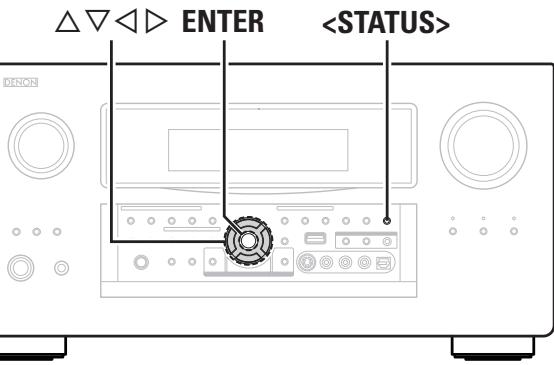
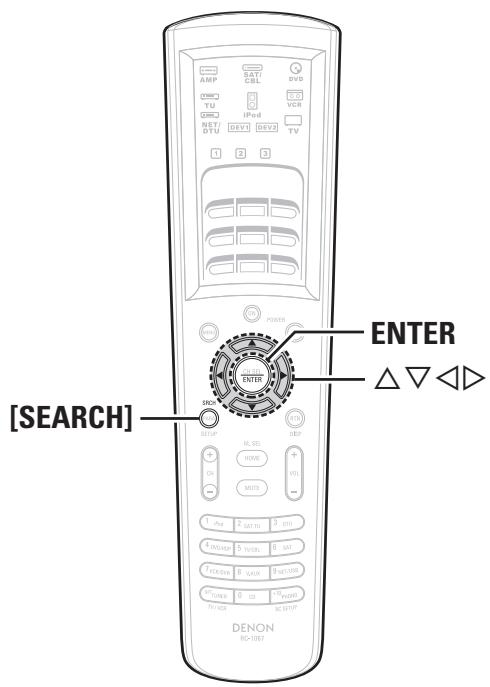

![DENON AVP-A1HDA - [Album art function] - 1](/content/2025/01/135552/images/2f62ace6fd22c181bc6733dec3c7b59848bed72609ea6c641cd83ba515dee5fd.jpg)
![DENON AVP-A1HDA - [Slide show function] - 1](/content/2025/01/135552/images/4f2a1fcd8a4d6425d8e1eea36438eecd353bd64c71fc44b9f541eb2c5cb7d787.jpg)
![DENON AVP-A1HDA - [Slide show function] - 1](/content/2025/01/135552/images/582c25e995c970a0d254992c48fc4c2fb4851fe24ea136cf4c4e3ceba097ff2f.jpg)
![DENON AVP-A1HDA - [Slide show function] - 2](/content/2025/01/135552/images/58b3b4651ce31358145596b0f048c51f8c30b8560d4f26d20afd466dea3a1cbe.jpg)
![DENON AVP-A1HDA - [Slide show function] - 3](/content/2025/01/135552/images/40016d6a60b97239a1e899698c3e6d07c76714acdc3191c2301da2adb602b534.jpg)
![DENON AVP-A1HDA - [Slide show function] - 4](/content/2025/01/135552/images/9eb88cb6e1610f8dc78f7898be1a95b23d1b5d884061b156eda96b115cd3068f.jpg)


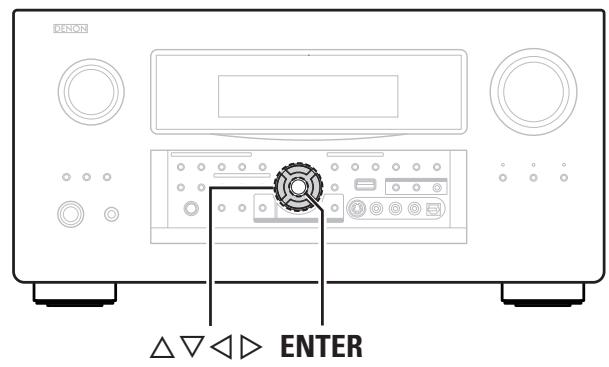
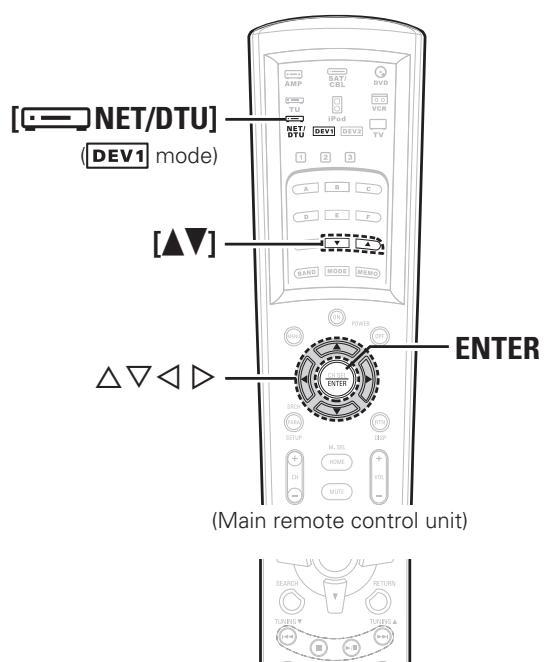
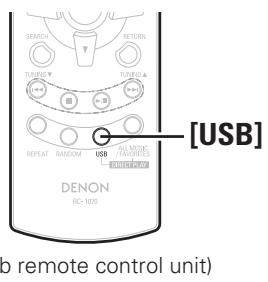


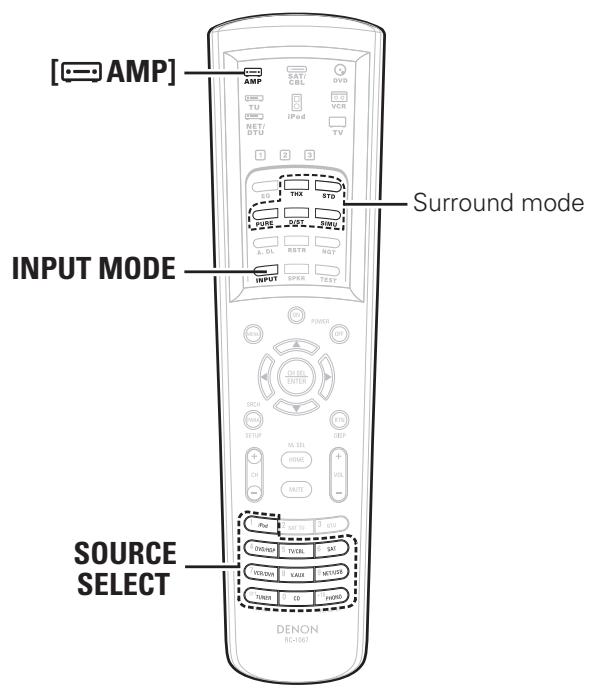




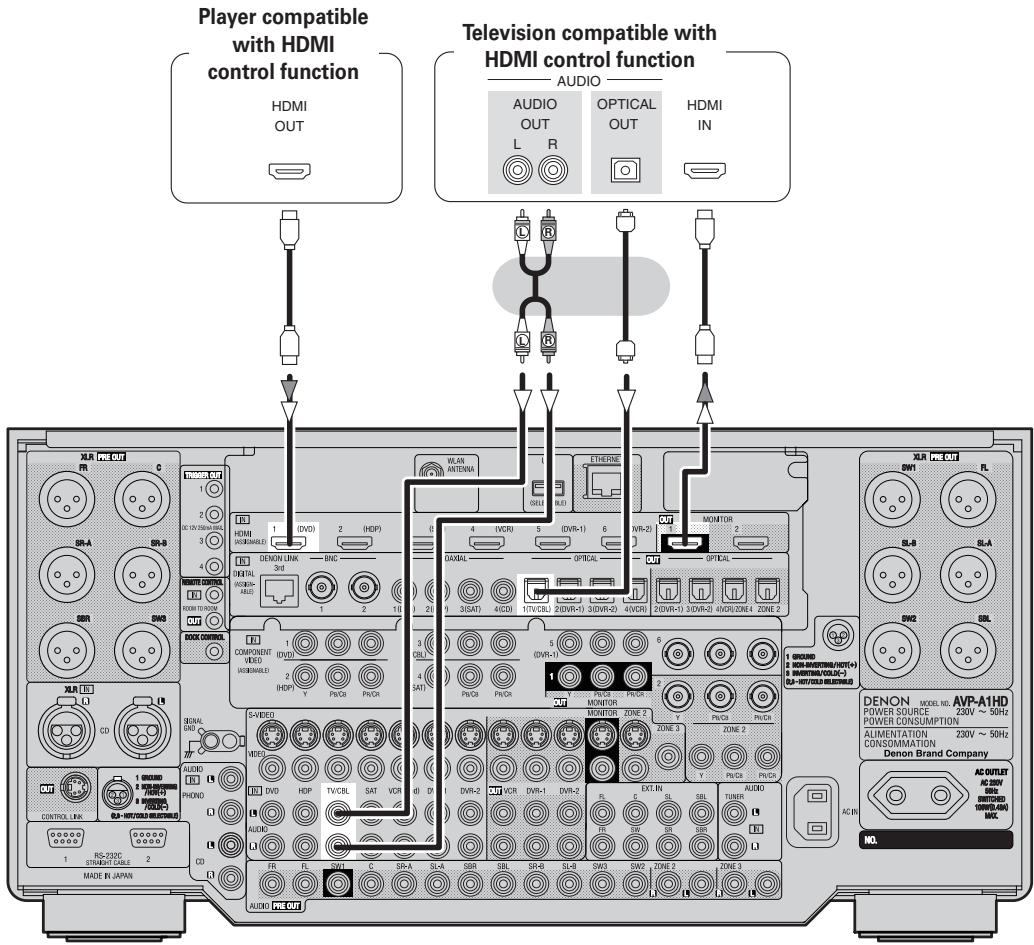
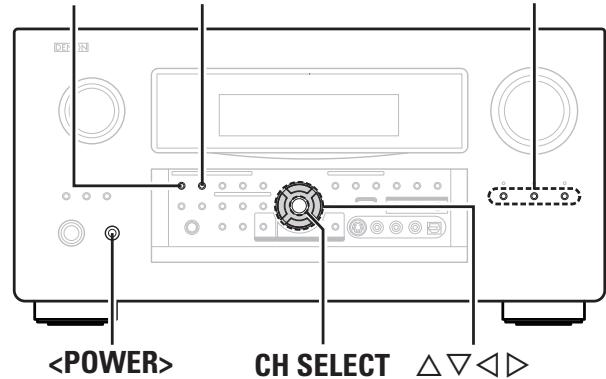
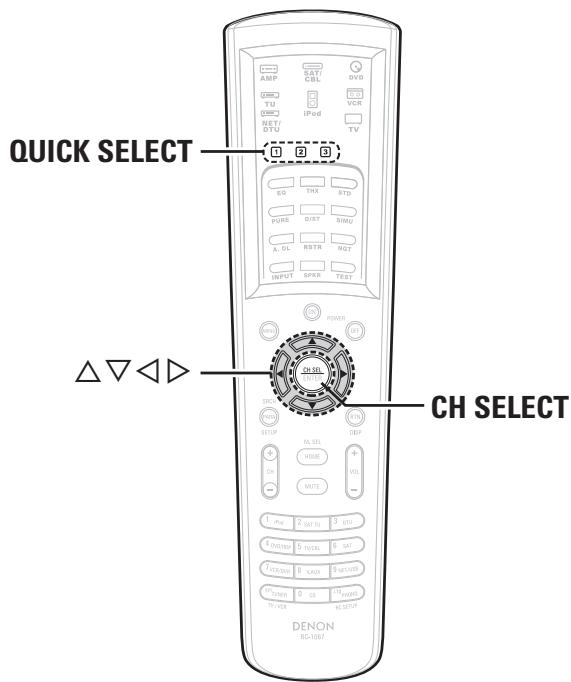


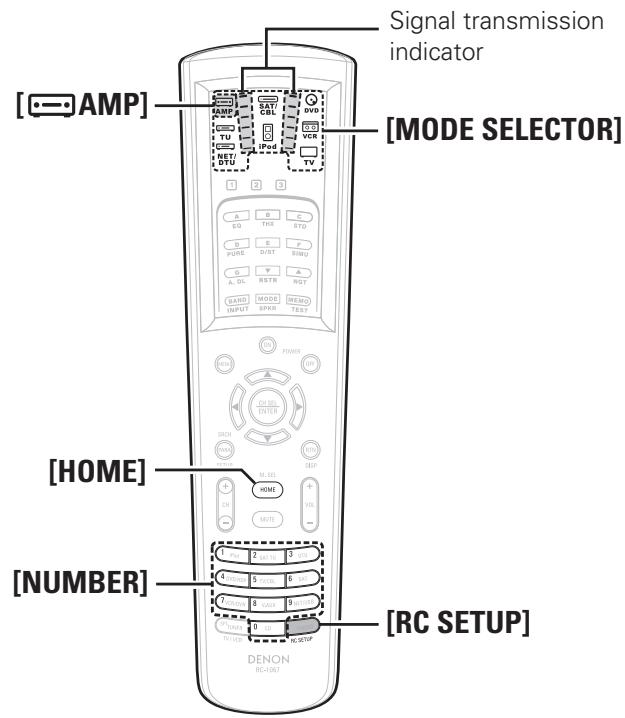

![DENON AVP-A1HDA - Press [MODE SELECTOR] for the component to be operated. - 1](/content/2025/01/135552/images/00eee688c4dd419962654896cccd2bf195d31f80479dd791d0e641e6a869d353.jpg)
![DENON AVP-A1HDA - Press [MODE SELECTOR] for the component to be operated. - 2](/content/2025/01/135552/images/90bb08bdb810ca9109315ff6a671c266fdfa6ea05e6fb2c940f1f5fb739b6ebe.jpg)
![DENON AVP-A1HDA - Press [MODE SELECTOR] for the component to be operated. - 3](/content/2025/01/135552/images/5d26ca1d1c0105a536b9e8bb1b2d5f4fc0c415899b75c0d20bf596e393e7fca0.jpg)
![DENON AVP-A1HDA - Press [MODE SELECTOR] for the component to be operated. - 4](/content/2025/01/135552/images/c7f286ea49cbe4e62f36f217b772921474af57559685df099e49f4f76043f7bc.jpg)
![DENON AVP-A1HDA - Press [MODE SELECTOR] for the component to be operated. - 5](/content/2025/01/135552/images/d308d6e6b75df21d7eba5976e62558095b4be0a1f3ea42f83f08756b47f5d556.jpg)
![DENON AVP-A1HDA - Press [MODE SELECTOR] for the component to be operated. - 6](/content/2025/01/135552/images/340cd1f5dbf7e7282b5a4cb0c6203a82ca8c280b626de6125af9d89d7c03a223.jpg)

![DENON AVP-A1HDA - Press [NUMBER] and input the 5-digit number of the brand of the component to be preset. The numbers are shown in the Preset Code Table (End of the this manual). - 1](/content/2025/01/135552/images/81c5b5246e8a9fc5cd6016e669dd2bc1185891a0242caf9449039638c1d9e22a.jpg)
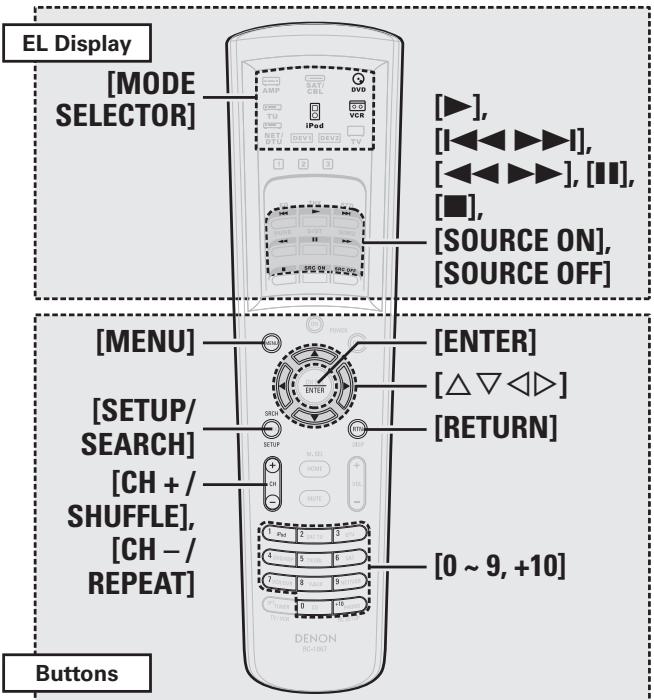
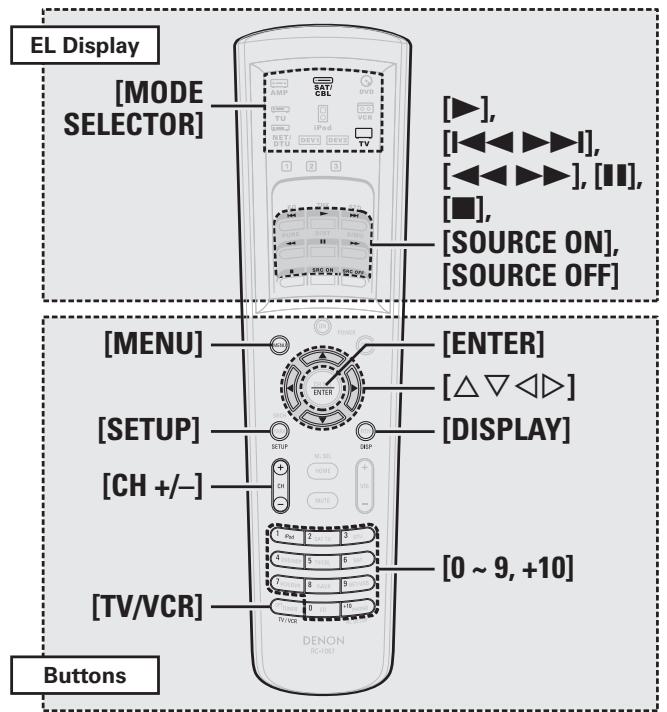
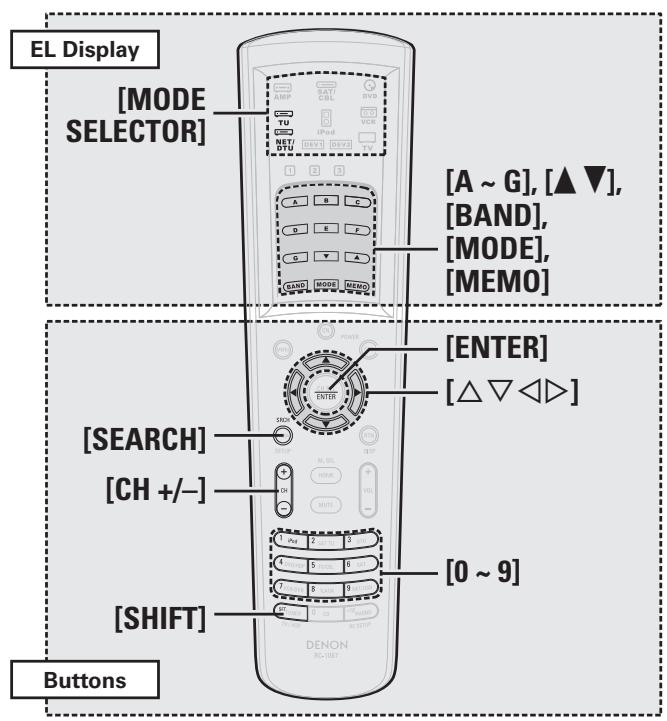
![DENON AVP-A1HDA - [Special Remarks] - 1](/content/2025/01/135552/images/ba9fdc4e7b5e4b9386a9a4b43614590b46fde98a7b757d362495dec235c2ce3e.jpg)

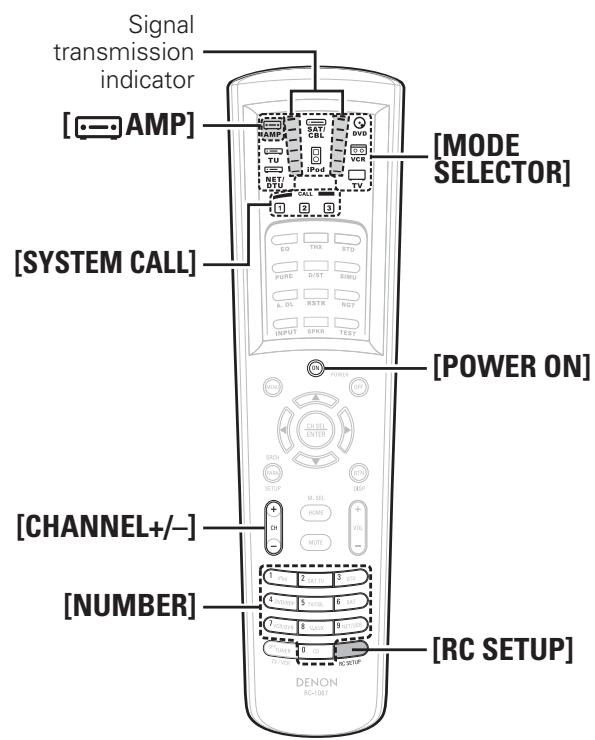
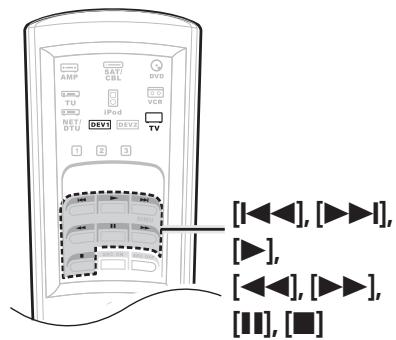
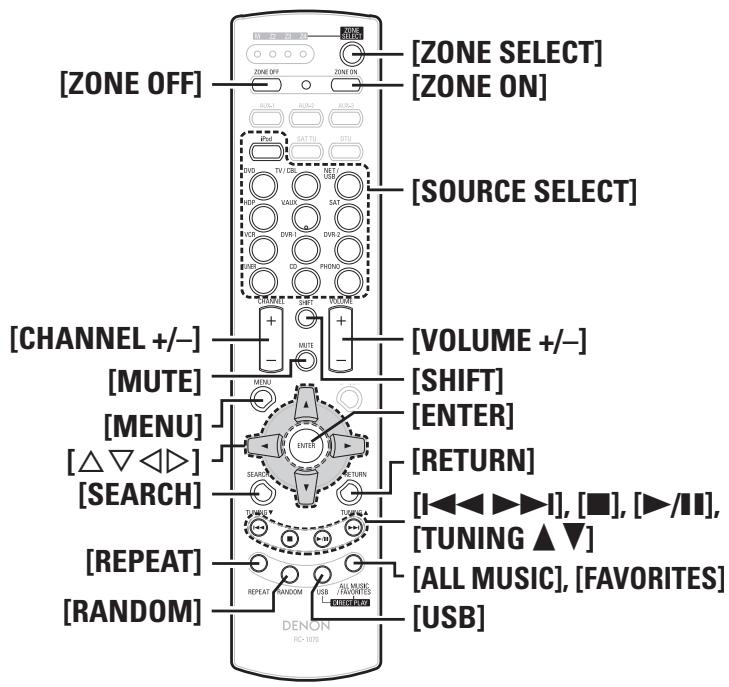
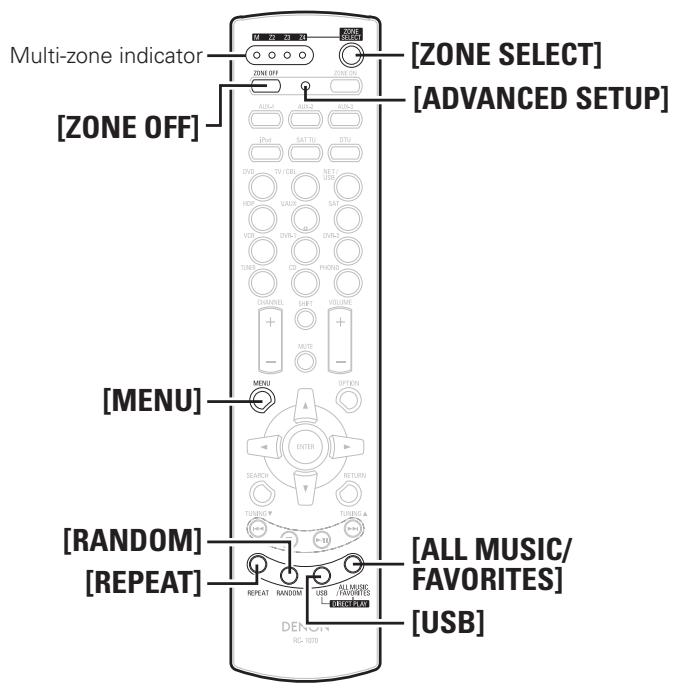
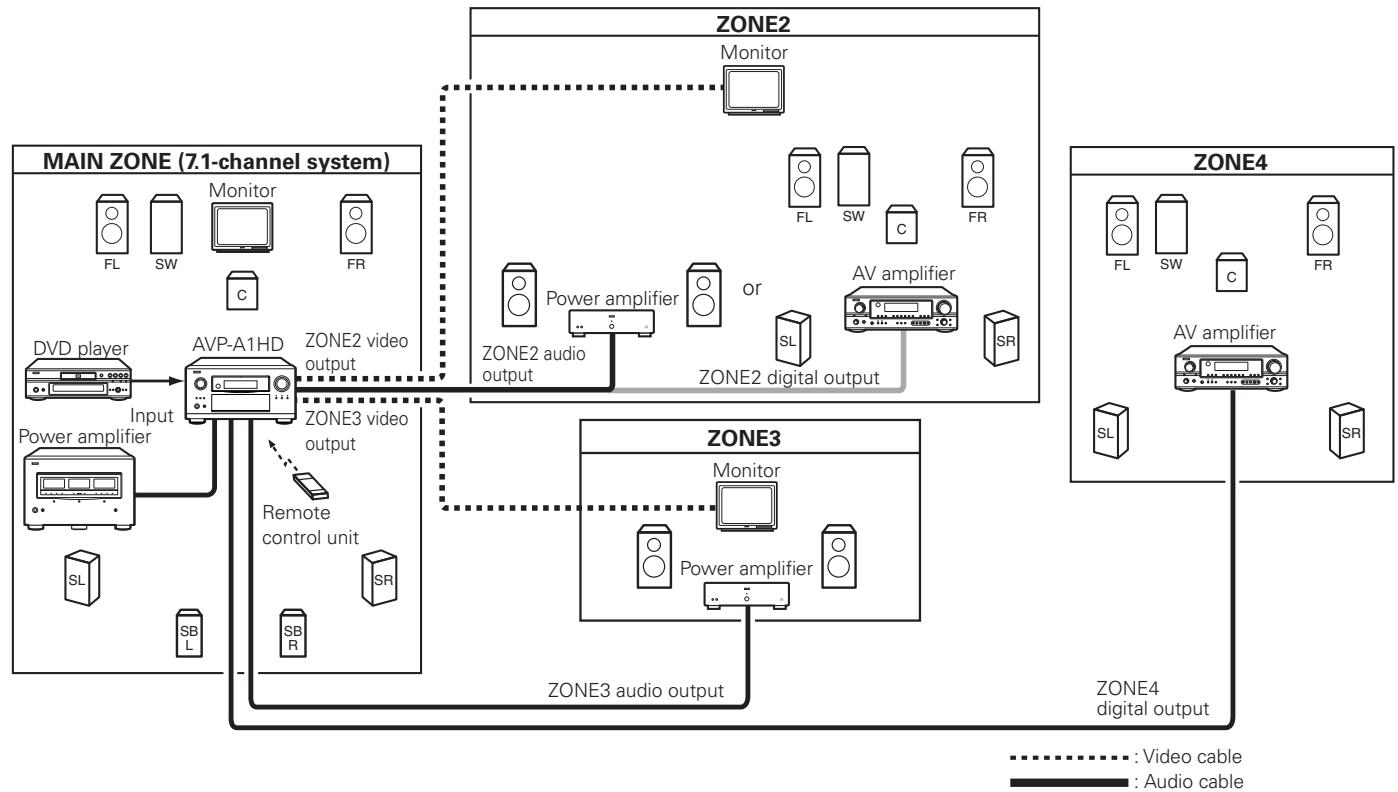

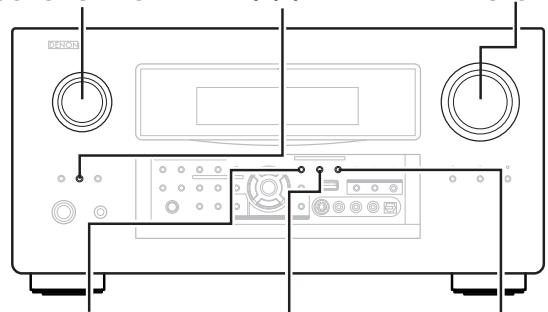
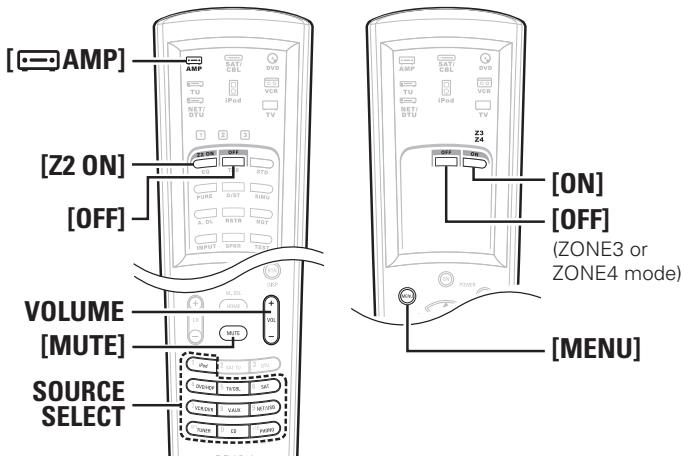
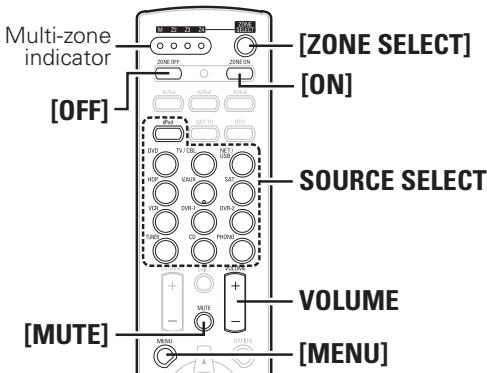
![DENON AVP-A1HDA - [Operation on the remote control unit] - 1](/content/2025/01/135552/images/bd19ea1b40463d3a391c8288a9b51468a633b3ebfa7a1463b5140e516a366c25.jpg)
![DENON AVP-A1HDA - [Operation on the remote control unit] - 2](/content/2025/01/135552/images/f6ce2568076966d8a5cbee9d376412994bad87657c799b8060ef25b0bfb00739.jpg)
![DENON AVP-A1HDA - [Operation on the remote control unit] - 3](/content/2025/01/135552/images/239ab8a6aed882deac5dc8d2a8e06378a4e088ab935b64aa8d9e2a3cd7022ffa.jpg)
![DENON AVP-A1HDA - [Operation on the remote control unit] - 4](/content/2025/01/135552/images/c9966376ca1f2494d3934f9eea045c496161a6d483599a4e0bee111c16e93a85.jpg)
![DENON AVP-A1HDA - [Operation on the remote control unit] - 5](/content/2025/01/135552/images/0fe256d8b0b45e743f0728af468c7c677a6cda6960bf1879832cf1c4723935e5.jpg)
![DENON AVP-A1HDA - [Operation on the remote control unit] - 6](/content/2025/01/135552/images/f4e1707affc2f5740b8cef2604c18c1e5e6a83fc549044905381cc36a9e4a6cf.jpg)
![DENON AVP-A1HDA - [Operation on the remote control unit] - 7](/content/2025/01/135552/images/3b37f50a304d15fcdbb99e3d8da3f6acb7ae6c8c3b02bdddf08c973c3a6c42c6.jpg)