
MS 622 BI - Microwave TEKA - Free user manual and instructions
Find the device manual for free MS 622 BI TEKA in PDF.


| Product type | Built-in Microwave Oven |
| Brand | Teka |
| Model | MS 622 BI |
| Capacity | 20 liters |
| Microwave power | 800 W |
| Grill power | 1000 W |
| Number of power levels | 5 |
| Control type | Touch control |
| Display | LED digital display |
| Timer | Yes, up to 95 minutes |
| Defrost function | Yes, by weight |
| Auto cooking programs | 8 |
| Child lock | Yes |
| Interior light | Yes |
| Turntable | Yes, 290 mm |
| Door opening | Drop-down |
| Dimensions (H x W x D) | 388 x 595 x 400 mm |
| Built-in dimensions (H x W x D) | 380 x 560 x 500 mm |
| Net weight | 17.5 kg |
| Power supply | 230 V, 50 Hz |
| Power consumption (microwave) | 1200 W |
| Power consumption (grill) | 1000 W |
| Cleaning | Wipe with damp cloth, avoid abrasives |
| Safety features | Child lock, door safety interlock, overheat protection |
| Spare parts availability | Contact Teka customer service or authorized dealers |
Frequently Asked Questions - MS 622 BI TEKA
User questions about MS 622 BI TEKA
0 question about this device. Answer the ones you know or ask your own.
Ask a new question about this device
Download the instructions for your Microwave in PDF format for free! Find your manual MS 622 BI - TEKA and take your electronic device back in hand. On this page are published all the documents necessary for the use of your device. MS 622 BI by TEKA.
USER MANUAL MS 622 BI TEKA
User Manual
MS 622 BI
EN ES PT
ENGLISH

Before using your oven for the first time, please carefully read the installation and maintenance instructions that come with it.
Depending on the model, the accessories included in your oven may vary from those shown in the pictures.
ESPAÑOL

Children and Vulnerable People Safety.....4
General Safety....5
Installation....7
Cleaning and Maintenance 7
Service and Repair 8
Avoid damaging the oven or other dangerous situations by following these instructions....8
Advantages of the microwave oven...... 10
Microwave oven operating mode....10
Why the food is heated....10
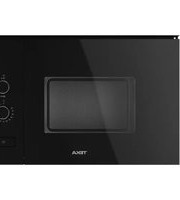
Description of the appliance.... 11
Description of functions 12
Basic settings.... 12
Microwaves....12
When the oven is working.... 12
Altering parameters 12
Cancelling a cooking cycle....13
End of a cooking cycle 13
Defrosting 13
General tips for defrosting....14
Cooking with a microwave oven.... 15
Tables and suggestions – Cooking vegetables....16
Tables and suggestions – Cooking fish ... 16
What type of containers may be used? ... 17
Microwave function....17
How to test ovenware you want to use...17
Aluminium containers and foil....17
Lids 17
Table – dishware....18
Oven Cleaning and Maintenance 18
Front surface....19
Oven interior....19
Troubleshooting 19
Substitution of light bulb 20
Technical Features.... 20
Specifications....20
Environmental protection 20
Installation instructions....20
Before installation 20
After installation....21
Installation....60
Safety Information

Before the installation and use of the appliance, carefully read the supplied instructions. The manufacturer is not responsible if an incorrect installation and use causes injuries and damages. Always keep the instructions with the appliance for future reference.
Children and Vulnerable People Safety
Warning! Risk of suffocation, injury or permanent disability.
- This appliance can be used by children aged from 8 years and above and persons with reduced physical, sensory or mental capabilities or lack of experience and knowledge if they are supervised by an adult or a person who is responsible for their safety.
- Children should be supervised to ensure that they do not play with the appliance.
- Keep all packaging away from children.
- WARNING: The appliance and its accessible parts become hot during use. Care should be taken to avoid touching heating elements. Children less than 8 years of age shall be kept away unless continuously supervised.
- WARNING: When the appliance is operated in the combination mode, children should only use the oven under adult supervision due to the temperatures generated.
- If the appliance has a child safety device, we recommend that you activate it. Children under 3 years must not be left unsupervised in the vicinity of the appliance.
- Cleaning and user maintenance shall not be made by children without supervision.
General Safety
- This appliance is intended to be used in household applications and not in hotels, shops, offices and other similar environments.
- Internally the appliance becomes hot when in operation. Do not touch the heating elements that are in the appliance. Always use oven gloves to remove or put in accessories or ovenware.
- WARNING: Do not heat liquids and other foods in sealed containers. They are liable to explode.
- Only use utensils that are suitable for use in microwave ovens.
- When heating food in plastic or paper containers, keep an eye on the appliance due to the possibility of ignition.
- The appliance is intended for heating food and beverages. Drying of food or clothing and heating of warming pads, slippers, sponges, damp cloth and similar may lead to risk of injury, ignition or fire.
- Warning! The oven cannot be used if:
- The door is not closed correctly;
- The door hinges are damaged;
- The surfaces of the contact between the door and the oven front are damaged;
- The door window glass is damaged;
- There is frequent electrical arcing inside the oven even though there is no metal object inside.
The oven can only be used again after it has been repaired by a Technical Assistance Service technician.
- If smoke is emitted, switch off or unplug the appliance and keep the door closed in order to stifle any flames.
- Microwave heating of beverages can result in delayed eruptive boiling. Care must be taken when handling the container.

• Take care when heating liquids!
When liquids (water, coffee, tea, milk, etc.) are nearly at boiling point inside the oven and are taken out suddenly, they may spurt out of their containers.
DANGER OF INJURIES AND BURNS!
To avoid that type of situation when heating liquids, put a teaspoon or glass rod inside the container.
- The contents of feeding bottles and baby food jars shall be stirred or shaken and the temperature checked before consumption, in order to avoid burns.
- Eggs in their shell and whole hard-boiled eggs should not be heated in the appliance since they may explode, even after microwave heating has ended.
- Warning! Do not heat pure alcohol or alcoholic drinks in the microwave. FIRE RISK!
- Beware! To avoid food overheating or burning it is very important not to select long time periods or power levels that are too high when heating small quantities of food. For example, a bread roll can burn after 3 minutes if the power selected is too high.
- For toasting, use just the grilling function and watch the oven all the time. If you use a combined function to toast bread it will catch fire in a very short time.
- Make sure you never catch the power cables of other electrical appliances in the hot door or the oven. The cable insulation may melt. Danger of short-circuiting!
Installation
- The electric system must be equipped with a means for disconnection, with a contact separation in all poles that provides full disconnection under overvoltage category III.
- If a plug is used for the electric connection, then it must be accessible after installation.
- The installation must comply with current regulations.
- Protection against electric shock must be provided by the electrical installation.
- WARNING! The oven must be earthed.
- WARNING! The appliance is intended to be built in. Please refer to the last pages of this user manual for detailed information on the installation dimensions.
Cleaning and Maintenance
- WARNING! Cut the power supply before cleaning and maintenance.
- The appliance should be cleaned regularly and any food deposits removed.
- Failure to maintain the appliance in a clean condition could lead to deterioration of the surface that could adversely affect the life of the appliance and possibly result in a hazardous situation.
- Do not use harsh abrasive cleaners or sharp metal scrapers to clean the glass door since they can scratch the surface, which may result in shattering of the glass.
- Do not use a steam cleaner to clean the appliance.
- The door contact surfaces (the front of the cavity and the inside part of the doors) must be kept very clean in order to ensure the oven functions correctly.
- Please follow the instructions regarding cleaning in the section "Oven Cleaning and Maintenance".
- WARNING: Ensure that the appliance is switched off before replacing the lamp to avoid the possibility of electric shock. Please refer to the chapter "CHANGING THE OVEN LIGHT BULB".
Service and Repair
- WARNING! Cut the power supply before repair.
- WARNING! Only a competent person can carry out any service or repair operation that involves the removal of a cover which gives protection against exposure to microwave energy.
- WARNING! If the door or door seals are damaged, the appliance must not be operated until it has been repaired by a competent person.
- If the power cable is damaged it should be substituted by the manufacturer, authorized agents or technicians qualified for this task in order to avoid dangerous situations.
- Repair and maintenance work, especially of current carrying parts, can only be carried out by technicians authorized by the manufacturer.
Avoid damaging the oven or other dangerous situations by following these instructions.
- Never switch on the microwave when it is empty. If there is no food inside there may be an electrical overcharge and the oven could be damaged. RISK OF DAMAGE!
- For carrying out oven programming tests put a glass of water inside the oven. The water will absorb the microwaves and the oven will not be damaged.
- Do not cover or obstruct the ventilation openings.
- Use only dishes suitable for microwaves. Before using dishes and containers in the microwave, check that these are suitable (see the section on types of dishes).
- Never remove the mica cover on the ceiling of the oven interior! This cover stops fat and pieces of food damaging the microwave generator.
- Do not keep any inflammable object inside the oven as it may burn if the oven is switched on.
- Do not use the oven as a pantry.
- Do not use the oven for frying as it is impossible to control the temperature of oil heated by microwaves.
- The base and the grills can bear a maximum load of 8 kg. To avoid damaging the oven, do not exceed this load.
Advantages of the microwave oven
In a conventional cooker, the heat that is radiated through the resistances or gas burners slowly penetrates the foods from the outside in. Therefore, there is a great loss of energy in heating the air, the oven components and the containers holding the food.
In the microwave, the heat is generated by the foods themselves, i.e. the heat goes from the inside out. There is no loss of heat to the air, the walls of the cavity or the containers (as long as they are microwave-safe containers). This means that only the food is heated.
To sum up, microwave ovens have the following advantages:
- Savings in cooking time; in general, there is a 3/4 reduction in time compared to conventional cooking.
- Ultra fast defrosting of foods, thus reducing the danger of bacteria developing.
- Energy-saving.
- Conservation of the nutritional value of foods due to the reduction in cooking time.
Microwave oven operating mode
The microwave oven contains a high voltage valve called a Magnetron, which converts the electrical energy into microwave energy. These electromagnetic waves are channelled towards the inside of the oven by a wave guide and distributed using a metallic disperser or a rotating plate.
Inside the oven, the microwaves are propagated in all directions and reflected by the metallic walls, thus uniformly penetrating the foods.
Why the food is heated
Most foods contain water and the water molecules vibrate with the microwaves.
The friction between the molecules generates heat, which raises the temperature of the foods, defrosting or cooking them or keeping them hot.
Because heat is formed inside the foods:
- The foods may be cooked without any liquids or oils, or with very little of these;
- Defrosting, heating or cooking in the microwave oven is faster than in a conventional oven;
- The vitamins, minerals and nutritious substances are conserved;
- Neither the natural colour nor the aroma are altered.
The microwaves go through porcelain, glass, cardboard or plastic, but not through metal. For this reason, metallic containers or containers with metallic parts should not be used in the microwave oven.
Microwaves are reflected by metal...

...they go through glass and porcelain...

... and are absorbed by the foods.

Description of the appliance

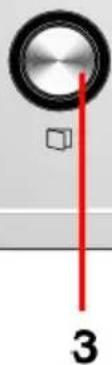
- Door window glass
- Ceramic base
- Control panel

- Power Selector knob
- Timer knob

- Door Open key
Description of functions
| Symbol | Description | Power | Foods |
 | Keep hot | 150W | Slow defrosting for delicate foods, keeping food hot |
 | Defrost | 290W | Cooking at low heat, boiling riceFast defrosting |
 | Minimum | 460W | Melting butterHeating baby food |
 | Medium | 650W | Cooking vegetables and other foodsCooking and heating carefully,Heating and cooking small quantitiesHeating delicate foods |
 | Maximum | 800W | Cooking and heating liquids and other foods fast |
Basic settings
Microwaves
Use this function to cook and heat vegetables, potatoes, rice, fish and meat.
- Open the door by pressing the Door Open button and place the food inside the cavity. 2 Set the Power Selector knob to the position that corresponds to the desired
power level (see table "Description of Functions").
- Turn the Timer knob to the desired operating time. For times under 2 minutes, turn the Timer knob to a higher time and then go down to the desired time.
- Close the door. The oven will start to operate.
When the oven is working...
Interrupting a cooking cycle
You can stop the cooking process at any time by pressing the Door Open button.
In this case:
- Microwave emission is stopped immediately.
- The timer stops automatically, indicating the operating time that is left.
If you wish, at this time you can:
- Turn or stir the food to ensure it will be evenly cooked. • Alter the cooking parameters.
- Cancel the process as described below.
To restart the process, close the door.
Altering parameters
The operating parameters (time and temperature) can only be altered when the cooking process has been interrupted by proceeding as follows:
- To alter the time, turn the Timer knob. The new time defined is immediately valid.
- To alter the power, turn the Power Selector to a new position. The new power level will be applied within 30 seconds.
Cancelling a cooking cycle
If you wish to cancel the cooking process, turn the Timer Button to ZERO.
WARNING: When you finish using the oven, always turn the Timer Button to
Defrosting
The following table is a general guideline for the various defrosting and resting times required (to guarantee that the food reaches a uniform temperature), according to the type and weight of the foods. It also contains the respective recommendations for defrosting different foods.
zero, because otherwise the oven will start to function when you close the door and may be damaged if it functions when empty.
End of a cooking cycle
At the end of the process you will hear a bell and the Timer Button points at ZERO.
WARNING: When you finish using the oven, always turn the Timer Button to zero, because otherwise the oven will start to function when you close the door and may be damaged if it functions when empty.
| Position | Power level | Power |
| Defrost | 290 W | |
| Defrost / KeepWarm | 150 W |
| Food | Weight | Defrosting Time | Resting time | Comment |
| Pieces of meat, veal, beef, pork | 100 g | 3-4 min | 5-10 min | Turn once |
| 200 g | 6-7 min | 5-10 min | Turn once | |
| 500 g | 14-15 min | 10-15 min | Turn twice | |
| 700 g | 20-21 min | 20-25 min | Turn twice | |
| 1000 g | 29-30 min | 25-30 min | Turn twice | |
| 1500 g | 42-45 min | 30-35 min | Turn three times | |
| Stewed meat | 500 g | 12-14 min | 10-15 min | Turn twice |
| 1000 g | 24-25 min | 25-30 min | Turn three times | |
| Minced meat | 100 g | 4-5 min | 5-6 min | Turn twice |
| 300 g | 8-9 min | 8-10 min | Turn three times | |
| 500 g | 12-14 min | 15-20 min | Turn once | |
| Sausage | 125 g | 3-4 min | 5-10 min | Turn twice |
| 250 g | 8-9 min | 5-10 min | Turn once | |
| 500 g | 15-16 min | 10-15 min | Turn twice | |
| Poultry, poultry parts | 200 g | 7-8 min | 5-10 min | Turn three times |
| 500 g | 17-18 min | 10-15 min | Turn once | |
| Chicken | 1000 g | 34-35 min | 15-20 min | Turn once |
| 1200 g | 39-40 min | 15-20 min | Turn once | |
| 1500 g | 48-50 min | 15-20 min | Turn twice | |
| Fish | 100 g | 3-4 min | 5-10 min | Turn once |
| 200 g | 6-7 min | 5-10 min | Turn once | |
| Trout | 200 g | 6-7 min | 5-10 min | Turn twice |
| Shrimps | 100 g | 3-4 min | 5-10 min | Turn once |
| 500 g | 12-15 min | 10-15 min | Turn once | |
| Fruit | 200 g | 4-5 min | 5-8 min | Turn twice |
| 300 g | 8-9 min | 10-15 min | Turn once | |
| 500 g | 12-14 min | 15-20 min | Turn once | |
| Bread | 100 g | 2-3 min | 2-3 min | Turn twice |
| 200 g | 4-5 min | 5-6 min | Turn twice | |
| 500 g | 10-12 min | 8-10 min | Turn twice | |
| 800 g | 15-18 min | 15-20 min | Turn three times | |
| Butter | 250 g | 8-10 min | 10-15 min | Turn once, keep covered |
| Cottage cheese | 250 g | 6-8 min | 5-10 min | Turn once, keep covered |
| Cream | 250 g | 7-8 min | 10-15 min | Remove the lid |
General tips for defrosting
- Only use microwave-safe dishes for defrosting (porcelain, glass, suitable plastic).
- The tables refer to defrosting of raw foods.
- The defrosting time depends on the quantity and the height of the food. When freezing foods, prepare for the defrosting process. Distribute the food in parts that match the size of the container.
- Distribute the food as well as possible inside the microwave. The thickest parts of the fish or the chicken legs should be placed on top. The most delicate parts may be protected using aluminium foil. Important: the aluminium foil should not come in contact with the walls of the cavity, as this could cause an electrical arch.
- The most dense parts should be turned around several times.
- Distribute the frozen food in the most uniform manner possible, because the thin, narrow parts defrost faster than the thickest parts at the top.
- Foods that are rich in fats, such as butter, cottage cheese and cream, should not be entirely defrosted. If they are at room temperature, they will be ready to serve within a few minutes. In the case of deep-frozen cream, if there are little bits of ice, the cream should be whipped before eating.
- Place poultry on a turn over plate so that the juices may drain more easily.
- Bread should be wrapped in a napkin so that it does not get too dry.
- Turn the food at regular intervals.
- Remove frozen foods from their packaging and do not forget to remove any metal clips. If the containers that are used to keep the foods in the freezer may also be
used for heating and cooking, just remove the lid. Otherwise, place the foods in containers that are suitable for microwave ovens.
- The liquid that results in the defrosting process, particularly in the case of poultry, should be discarded and under
no circumstances should it come in contact with other foods.
- Bear in mind that a resting period is required in defrosting function, so that the food is totally defrosted. This normally takes between 15 to 20 minutes.
Cooking with a microwave oven
Warning! Read the section "Microwave Safety" before cooking with your microwave.
Follow these recommendations when cooking with your microwave:
- Before heating or cooking foods with peel or skin (e.g. apples, tomatoes, potatoes, sausages) prick them so that they do not burst. Cut the food up before starting to prepare it.
- Before using a container or dish make sure that it is suitable for microwave use (see the section on types of ovenware).
- When cooking food with very little moisture (e.g. defrosting bread, making popcorn, etc.) evaporation is very quick. The oven then works as if it was empty and the food may burn. The oven and the container may be damaged in such a situation. You should therefore set just the cooking time necessary and you must keep a close eye on the cooking process.
- It is not possible to heat large quantities of oil (frying) in the microwave.
- Remove pre-cooked food from the containers they come in since these are not always heat resistant. Follow the food manufacturer's instructions.
- If you have several containers, such as cups, for example, set them out uniformly on the ceramic base.
- Do not close plastic bags with metal clips. Use plastic clips instead. Prick the bags several times so that the steam can escape easily.
- When heating or cooking foods, check that they reach at least a temperature of 70°C.
- During cooking, steam may form on the oven door window and may start to drip. This situation is normal and may be more noticeable if the room temperature is low. The oven's safe working is not affected by this. After you have finished cooking, clean up the water coming from the condensation.
- When heating liquids, use containers with a wide opening, so that the steam can evaporate easily.
Prepare the foods as per the instructions and keep in mind the cooking times and power levels indicated in the tables.
Keep in mind that the figures given are only indicative and can vary depending on the initial state, temperature, moisture and type of food. It is advisable to adjust the times and power levels to each situation. Depending on the exact characteristics of the food you may need to increase or shorten the cooking times or increase or decrease the power levels.
Cooking with microwaves...
- The greater the amount of food, the longer the cooking time. Keep in mind that:
- Double the quantity » double the time • Half the quantity » half the time
- The lower the temperature, the longer the cooking time.
- Foods containing a lot of liquid heat up more quickly.
- Cooking will be more uniform if the food is evenly distributed on the ceramic base. If you put dense foods on the outside part of the ceramic base and less dense ones on the centre of the ceramic base, you can heat up different types of food simultaneously.
- You can open the oven door at any time. When you do this the oven
Tables and suggestions – Cooking vegetables
| Food | Quantity (g) | Addition of liquids | Power (Watt) | Time (min.) | Standing Time (min.) | Instruction s |
| Cauliflower | 500 | 100 ml | 850 | 9-11 | 2-3 | Cut into slices. |
| Broccoli | 300 | 50 ml | 850 | 6-8 | 2-3 | |
| Mushrooms | 250 | 25 ml | 850 | 6-8 | 2-3 | Keep covered. |
| Peas & carrots | 300 | 100 ml | 850 | 7-9 | 2-3 | Cut into chunks or slices. Keep covered. |
| Frozen carrots | 250 | 25 ml | 850 | 8-10 | 2-3 | |
| Potatoes | 250 | 25 ml | 850 | 5-7 | 2-3 | Peel and cut into equal sized pieces. Keep covered. |
| Paprika | 250 | 25 ml | 850 | 5-7 | 2-3 | Cut into chunks or slices Keep covered. |
| Leek | 250 | 50 ml | 850 | 5-7 | 2-3 | |
| Frozen Brussel sprouts | 300 | 50 ml | 850 | 6-8 | 2-3 | Keep covered. |
| Sauerkraut | 250 | 25 ml | 850 | 8-10 | 2-3 | Keep covered. |
Tables and suggestions – Cooking fish
| Food | Quantity (g) | Power (Watt) | Time (min.) | Standing Time (min.) | Instructions |
| Fish fillets | 500 | 600 | 10-12 | 3 | Cook covered over. Turn after half of cooking time. |
| Whole fish | 800 | 850 | 2-3 | 2-3 | Cook covered over. Turn after half of cooking time. You may wish to cover up the small edges of the fish. |
| 360 | 7-9 |
switches off automatically. The microwave will only start working again when you close the door and press the start key.
- Foods that are covered require less cooking time and retain their characteristics better. The lids used must let microwaves pass through and have small holes that allow steam to escape.
What type of containers may be used?
Microwave function
For the microwave function, keep in mind that microwaves are reflected by metal surfaces. Glass, china, clay, plastic, and paper let microwaves pass.
For this reason, metal pans and dishes or containers with metal parts or decorations cannot be used in the microwave. Glass ware and clay with metallic decoration or content (e.g. lead crystal) cannot be used in microwave ovens.
The ideal materials for use in microwave ovens are glass, refractory china or clay, or heat resistant plastic. Very thin, fragile glass or china should only be used for short period of times (e.g. heating).
Hot food transmits heat to the dishes which can become very hot. You should, therefore, always use an oven glove!
How to test ovenware you want to use
Put the item you want to use in the oven for 20 seconds at maximum microwave power. After that time, if it is cold and just slightly warm, it is suitable to use. However, if it heats up a lot or causes electric arcing it is not suitable for microwave use.
Aluminium containers and foil
Pre-cooked food in aluminium containers or in aluminium foil can be put in the microwave if the following aspects are respected:
- Keep in mind the manufacturer's recommendations written on the packaging.
- The aluminium containers cannot be more than 3 cm high or come in contact with the cavity walls (minimum distance 3 cm). Any aluminium lid or top must be removed.
- Put the aluminium container directly on top of the ceramic base. If you use the rack, put the container on a china plate. Never put the container directly on the rack!
- The cooking time is longer because the microwaves only enter the food from the top. If you have any doubts, it is best to use only dishes suitable for microwave use.
- Aluminium foil can be used to reflect microwaves during the defrosting process. Delicate food, such as poultry or minced meat, can be protected from excessive heat by covering the respective extremities/edges.
- Important: aluminium foil cannot come into contact with the cavity walls since this may cause electrical arcing.
Lids
We recommend you use glass or plastic lids or cling film since: ONLY FOR THE MICROWAVE FUNCTION.
- They prevent excessive evaporation (especially in very long cooking periods);
- The cooking process is faster;
- The food does not go dry;
- The aroma is preserved.
The lid should have holes or openings so that no pressure develops. Plastic bags must also be opened. Baby feeding bottles or jars with baby food and similar containers can only be heated without their tops or lids, otherwise they can burst.
The table below gives you a general idea of what type of ovenware is suitable for each situation.
Table – dishware
| Type of dish\Operating mode | Microwave | |
| Defrost / heat | Cook | |
| Glass and porcelain 1)Domestic, non fire-resistant, may be washed in dishwasher | yes | yes |
| Glazed ceramicFire-resistant glass and porcelain | yes | yes |
| Ceramic, earthenware dishesunglazedglazed without metallic decorations | yes | yes |
| Earthenware dishesglazedunglazed | yesno | yesno |
| Plastic dishes 2)heat-resistant up to 100°Cheat-resistant up to 250°C | yesyes | noyes |
| Plastic films 3)Cling filmCellophane | noyes | noyes |
| Paper, cardboard, parchment 4) | yes | no |
| MetalAluminium foilAluminium containers 5)Accessories (grille) | yesnono | noyesno |
- No golden or silver edges and no lead glass.
- Remember the manufacturer's tips!
- Do not use metal clips to close the bags. Perforate the bags. Use films only to cover foods.
- Do not use paper plates.
- Only shallow aluminium containers without lids. The aluminium must not come into contact with the walls of the cavity.
Oven Cleaning and Maintenance
Cleaning is the only maintenance normally required.
Warning! Your microwave oven should be cleaned regularly, with all food remains being removed. If the microwave is not kept clean its surfaces may deteriorate, reducing the oven's working life and possibly resulting in a dangerous situation.
Warning! Cleaning should be done with the oven power switched off. Take the plug out of the socket or switch off the oven's power circuit.
Do not use aggressive or abrasive cleaning products, scourers that scratch surfaces or sharp objects, since stains may appear.
Do not use high pressure or steam jet cleaning appliances.
Front surface
Normally you just need to clean the oven with a damp cloth. If it is very dirty, add a few drops of dishwashing liquid to the cleaning water. Afterwards, wipe the oven with a dry cloth.
Immediately remove lime, fat, starch or egg white stains. Corrosion can occur under these stains.
Oven interior
Do not let any water get inside the oven. After each time the oven is used, clean the inside walls with a damp cloth since this is the easiest way to remove splashes or spots of food that may have stuck to the inside.
To remove dirt that is harder to shift, use a non-aggressive cleaning product. Do not
Troubleshooting
WARNING! Any type of repair must only be done by a specialised technician. Any repair done by a person not authorised by the manufacturer is dangerous.
You do not need to contact Technical Assistance to resolve the following questions:
• The oven does not work! Check if:
- The plug is correctly fitted in the socket.
- The oven's power is switched on.
- The door is completely closed. The door should close with an audible click.
- There are any foreign bodies between the door and the cavity front.
- When the oven is operating I can hear some strange noises! Check if:
- There is an electrical arcing inside the oven caused by foreign metallic objects (see section on type of ovenware).
use oven sprays or other aggressive or abrasive cleaning products.
Always keep the door and the oven front very clean to ensure that the door opens and closes properly.
Make sure water does not enter the microwave ventilation holes.
Regularly clean the cavity base, especially after any liquid spillage.
If the oven cavity is very dirty, put a glass of water on the cavity base and switch on the microwave oven for 2 or 3 minutes at maximum power. The steam released will soften the dirt which can then be cleaned easily using a soft cloth.
Unpleasant odours (e.g. after cooking fish) can be eliminated easily. Put a few drops of lemon juice in a cup with water. Put a spoonful of coffee in the cup to avoid the water boiling over. Heat the water for 2 to 3 minutes at maximum microwave power
- The ovenware is touching the oven walls.
- There are any loose items of cutlery or cooking tools inside the oven.
- The food doesn't heat up or heats very slowly! Check if:
- You have inadvertently used metal ovenware.
- You have selected the correct operating times and power level.
- The food you have put inside the oven is a larger amount or colder than you usually put in.
- The food is too hot, dried out or burnt! Check if you selected the correct operating time and power level.
- The oven switches on but the interior light does not go on! If all the functions work properly it is probable that the lamp has blown. You can keep on using the oven.
- I hear some noises when the door is open! This is not a problem. The cooling fan keeps on working while the door is open.
- The oven door doesn't open. Make sure the oven is plugged in. The oven
door only opens when the oven is connected to the mains.
Substitution of light bulb
If the light bulb needs substitution call the Technical Assistance since it is necessary to uninstall the oven to replace it.
Technical Features
Specifications
- AC Voltage...... (see rating plate) • Power required.... 1550 W
- Microwave output power. 850 W
- Microwave frequency.... 2450 MHz
- Exterior dimensions (W×H×D).... 595 × 390 × 320 mm
- Interior dimensions (W×H×D).... 350 × 220 × 280 mm
- Oven capacity: 22 liters
- Weight: 21.6 kg
Environmental protection
Disposal of the packaging

The packaging bears the Green Point mark.
Dispose of all packaging materials such as cardboard, expanded polystyrene, and plastic wrapping in the appropriate bins. In this way, you can be sure that the packaging materials will be reused.
Disposal of equipment no longer used

According to European Directive 2012/19/EU on the management of waste electrical and electronic equipment (WEEE), home electrical appliances should not be put into the normal systems for disposal of solid urban waste.
Installation instructions
Before installation
Check that the input voltage indicated on the characteristics plate is the same as the
Outdated appliances should be collected separately to optimize component material recovery and recycling rates and to prevent potential harm to human health and the environment. The symbol of a rubbish container superimposed by a diagonal cross should be put on all such products to remind people of their obligation to have such items collected separately.
Consumers should contact their local authorities or point of sale and request information on the appropriate places to leave their old home electrical appliances.
Before disposing of your appliance, render it non-usable by pulling out the power cable, cutting this, and disposing of it.
voltage of the power outlet you are going to use.
Open the oven door and take out all the accessories and remove the packing material.
Warning! The front surface of the oven may be wrapped with a protective film. Before using the oven for the first time, carefully remove this film, starting on the inside.
Make sure that the oven is not damaged in any way. Check that the oven door closes correctly and that the interior of the door and the front of the oven opening are not damaged. If you find any damage contact the Technical Assistance Service.
DO NOT USE THE OVEN if the power cable or the plug are damaged, if the oven does not function correctly or if it has been damaged or dropped. Contact the Technical Assistance Service.
Put the oven on a flat and stable surface. The oven must not be put close to any sources of heat, radios or televisions.
During installation, make sure that the power cable does not come into contact with any moisture or objects with sharp edges behind the oven. High temperatures can damage the cable.
Warning: after the oven is installed you must make sure you can access the plug.
After installation
The oven is equipped with a power cable and a plug for single phase current.
If the oven is to be installed on a permanent basis it should be installed by a qualified technician. In such a case, the oven should be connected to a circuit with an all-pole circuit breaker with a minimum separation of 3 mm between contacts.
WARNING: THE OVEN MUST BE EARTHED.
The manufacturer and retailers do not accept responsibility for any damage that may be caused to people, animals or property if these installation instructions are not observed.
The oven only functions when the door is closed correctly.
After the first use, clean the inside of the oven and the accessories, following the cleaning instructions given in the section "Oven cleaning and maintenance".


Oven description

| Símbolo | Descrição | Potência | Alimentos |
 | Manter quente | 150W | Slow defrosting for delicate foods, keeping food hot |
 | Descongelar | 290W | Cooking at low heat, boiling riceFast defrosting |
 | Potência Mínima | 460W | Melting butterHeating baby food |
 | Potência Média | 650W | Cooking vegetables and other foodsCooking and heating carefully, Heating and cooking small quantitiesHeating delicate foods |
 | Potência Máxima | 800W | Cooking and heating liquids and other foods fast |
Basic functions
This microwave is designed to be installed above 850mm from floor level. This microwave cannot be installed under a worktop or below another oven, in order to avoid liquid spillage.
- Push oven completely into the cabinet and centre it.
- Open microwave door and fasten the appliance to the cabinet using the four screws provided. Insert the screws through the front holes.

- ENGLISH
- ESPAÑOL
- SAFETY INFORMATION
- CHILDREN AND VULNERABLE PEOPLE SAFETY
- WARNING! RISK OF SUFFOCATION, INJURY OR PERMANENT DISABILITY
- GENERAL SAFETY
- INSTALLATION
- CLEANING AND MAINTENANCE
- SERVICE AND REPAIR
- AVOID DAMAGING THE OVEN OR OTHER DANGEROUS SITUATIONS BY FOLLOWING THESE INSTRUCTIONS
- ADVANTAGES OF THE MICROWAVE OVEN
- MICROWAVE OVEN OPERATING MODE
- WHY THE FOOD IS HEATED
- DESCRIPTION OF THE APPLIANCE
- BASIC SETTINGS
- MICROWAVES
- WHEN THE OVEN IS WORKING
- INTERRUPTING A COOKING CYCLE
- TO RESTART THE PROCESS, CLOSE THE DOOR
- ALTERING PARAMETERS
- CANCELLING A COOKING CYCLE
- WARNING: WHEN YOU FINISH USING THE OVEN, ALWAYS TURN THE TIMER BUTTON TO
- DEFROSTING
- END OF A COOKING CYCLE
- GENERAL TIPS FOR DEFROSTING
- COOKING WITH A MICROWAVE OVEN
- WARNING! READ THE SECTION "MICROWAVE SAFETY" BEFORE COOKING WITH YOUR MICROWAVE
- COOKING WITH MICROWAVES
- WHAT TYPE OF CONTAINERS MAY BE USED
- MICROWAVE FUNCTION
- HOW TO TEST OVENWARE YOU WANT TO USE
- ALUMINIUM CONTAINERS AND FOIL
- LIDS
- OVEN CLEANING AND MAINTENANCE
- DO NOT USE HIGH PRESSURE OR STEAM JET CLEANING APPLIANCES
- FRONT SURFACE
- OVEN INTERIOR
- TROUBLESHOOTING
- WARNING! ANY TYPE OF REPAIR MUST ONLY BE DONE BY A SPECIALISED TECHNICIAN. ANY REPAIR DONE BY A PERSON NOT AUTHORISED BY THE MANUFACTURER IS DANGEROUS
- ALWAYS KEEP THE DOOR AND THE OVEN FRONT VERY CLEAN TO ENSURE THAT THE DOOR OPENS AND CLOSES PROPERLY
- SUBSTITUTION OF LIGHT BULB
- TECHNICAL FEATURES
- SPECIFICATIONS
- ENVIRONMENTAL PROTECTION
- DISPOSAL OF THE PACKAGING
- DISPOSAL OF EQUIPMENT NO LONGER USED
- INSTALLATION INSTRUCTIONS
- BEFORE INSTALLATION
- AFTER INSTALLATION
- OVEN DESCRIPTION
- BASIC FUNCTIONS
Brand : TEKA
Model : MS 622 BI
Category : Microwave