
CXSE 7204 - Refrigerator CANDY - Free user manual and instructions
Find the device manual for free CXSE 7204 CANDY in PDF.


| Product Type | Freestanding Fridge (Larder) |
| Brand | Candy |
| Model | CXSE 7204 |
| Energy Class | A+ |
| Total Net Capacity | 170 L |
| Dimensions (H x W x D) | 85 cm x 54 cm x 55 cm |
| Weight | 28 kg |
| Voltage / Frequency | 220-240 V / 50 Hz |
| Climate Class | N-ST |
| Noise Level | 40 dB |
| Defrost Type | Manual |
| Temperature Control | Adjustable thermostat (1-7) |
| Interior Light | Yes |
| Door Reversibility | Yes (user serviceable) |
| Shelves | 3 glass shelves |
| Salad Crisper | 1 drawer |
| Egg Tray | Yes |
| Bottle Storage | Door racks (2) |
| Refrigerant | R600a (isobutane) |
| Spare Parts Availability | Via authorized service centers |
| Reparability Index (if applicable) | 8/10 (estimated) |
Frequently Asked Questions - CXSE 7204 CANDY
User questions about CXSE 7204 CANDY
0 question about this device. Answer the ones you know or ask your own.
Ask a new question about this device
Download the instructions for your Refrigerator in PDF format for free! Find your manual CXSE 7204 - CANDY and take your electronic device back in hand. On this page are published all the documents necessary for the use of your device. CXSE 7204 by CANDY.
USER MANUAL CXSE 7204 CANDY
Side By Side Fridge Freezer
Model: CXSE 7204
ENGLISH Page...1
IMPORTANT SAFETY INFORMATION.
READ ALL INSTRUCTIONS BEFORE USING.
WARNING!
These warnings are provided in the interests of your safety. Ensure you fully understand them before installing or using the appliance.
Your safety is of paramount importance. If you are unsure about the meaning of these warnings, contact the Service Center for assistance.
Intended use
The refrigerator is intended for use in the home. It is suitable for the storage of food at low temperature. If the appliance is used for purposes other than those intended or used incorrectly, no liability can be accepted by the manufacturer for any damage that may be caused.
Alterations or changes to the refrigerator are not permitted for reasons of safety. If you use the refrigerator in a commercial application or for purposes other than the cooling of foods, the manufacturer accepts no liability for any damages that may occur.
SAFETY PRECAUTIONS
When using electrical appliances, basic safety precautions should be followed, including the following:
This refrigerator must be properly installed and located in accordance with the Installation Instructions before it is used. - Do not attempt to stand on top of the refrigerator. Doing so may result in bodily injury or damage to the refrigerator. - Do not allow children to play with the refrigerator or tamper with the controls. - Do not allow children to climb, stand or hang on the shelves in the refrigerator. They could damage the refrigerator and seriously injure themselves. - Do not touch the cold surfaces in the freezer compartment when hands are damp or wet. Skin may stick to these extremely cold surfaces. - Do not store or use gasoline or other flammable vapours and liquids in the vicinity of this or any other appliance. - Keep fingers out of the “pinch point” areas; clearances between the doors and between the doors and cabinet are necessarily small. Be careful closing doors when children are in the area. ■ Unplug the refrigerator before cleaning and making repairs. NOTE: We strongly recommend that any servicing be performed by a qualified individual. - Do not refreeze frozen foods which have thawed completely.
DANGER! RISK OF CHILD ENTRAPMENT
PROPER DISPOSAL OF THE REFRIGERATOR
Child entrapment and suffocation are not problems of the past. Junked or abandoned refrigerators are still dangerous...even if they will sit for "just a few days." If you are getting rid of your old refrigerator, please follow the instructions below to help prevent accidents.
Before You Throw Away Your Old Refrigerator or Freezer:
Take off the doors and discard separately. Leave the shelves in place so that children may not easily climb inside. If the refrigerator has a lock, make it unusable.
Refrigerants
All refrigeration products contain refrigerants, which under federal law must be removed prior to product disposal. If you are getting rid of an old refrigeration product, check with the company handling the disposal about what to do.
WARNING!
HOW TO CONNECT ELECTRICITY
The power cord of this appliance is equipped with an earthing plug which mates with a standard earthed wall outlet to minimize the possibility of electric shock hazard from this appliance. Have the wall outlet and circuit checked by a qualified electrician to make sure the outlet is properly earthed. Where an unearthed wall outlet is encountered, it is your personal responsibility and obligation to have it replaced with a properly earthed wall outlet.
The refrigerator should always be plugged into its own individual electrical outlet.
This provides the best performance and also prevents overloading house wiring circuits which could cause a fire hazard from overheated wires.
Please refer to the rating plate on the refrigerator for the correct voltage, wattage and frequency. If the product plug does not fit your outlet, the product should be fitted with a new plug.

IMPORTANT: The fitting of electric plugs and cables should be done by a qualified technician or service agent. In some countries the fitting of electric plugs and cables is only permitted when the work is completed by a qualified technician. If the power supply cord becomes damaged, it must be replaced by a qualified service agent in order to avoid a safety hazard.
Never unplug your refrigerator by pulling on the power cord. Always grip plug firmly and pull straight out from the outlet.
Repair or replace immediately all power cords that have become frayed or otherwise damaged. Do not use a cord that shows cracks or abrasion damage along its length or at either end.
When moving the refrigerator away from the wall, be careful not to roll over or damage the power cord.
Mains lead replacement
If the mains lead on your refrigerator needs replacing at any time, it must be replaced by a special lead which is obtainable from your local dealer. A charge will be made for the replacement of the mains lead if you have damaged the lead.
The refrigerator must be positioned so that the plug is accessible.
READ AND FOLLOW THIS SAFETY INFORMATION CAREFULLY.
SAVE THESE INSTRUCTIONS
This appliance is not intended for use by persons (including children) with reduced physical, sensory or mental capabilities or lack of experience and knowledge, unless they have been given supervision or instruction concerning use of the appliance by a person responsible for their safety. Children should be supervised to ensure that they do not play with the appliance.
THE RIGHT USING OF REFRIGERATOR
DECORATIVE COVER INSTALLATION GUIDE
In order to mount the decorative cover for bottom beam, put it closer to the fridge and tighten the three screws.
Note:
The decorative cover for bottom beam is used as ornament, so you can choose not to install it.
It won't affect the refrigerator's performance or conditions no matter whether you install it or not.

Refrigerator's transportation and location
Transportation
Please do not invert, squeeze, or vibrate the refrigerator. When moving, the tilt angle cannot be larger than 45 degrees. When moving, do not cling to the door or coping.
Location
Ensure proper air circulation around the refrigerator. Do not place the unit near heat sources, direct sunlight, moisture, or water, and avoid rust and weakening of the insulation.
Top space at least 30mm, space on both sides and back at least 10mm from the wall. Install the refrigerator on a solid, level floor. (If it is not level, it can be adjusted to level.)
Remove all securing tapes. Wash the inside of the appliance with lukewarm water with a little bicarbonate of soda added (5ml to 0.5 liter of water). Do not use soap or detergent as the smell may linger. Dry the appliance thoroughly.
To start the appliance
- Allow the appliance to stand for 2 hours after installation.
- Plug in the appliance and switch on at the mains supply.
- Set the required temperature.
- Leave the appliance for approximately 4 hours for the correct temperature to be reached before placing food inside.
Warning
The defrosting is automatic. Never use a metal instrument or electrical device to de-ice the freezer.
Start using
Before it is used, make sure that the refrigerator is installed on a solid and level floor.
- After unsealing the refrigerator, fix the lower cover on the refrigerator. (If the door is rugged, please refer to the adjustment instructions which are located in the lower left corner of the right panel of the refrigerator to adjust.)
- Connect to power supply.
After connecting to power supply, the refrigerator is in the default status, and it shows the actual chilled and frozen temperature. The refrigerator has a power-down memory; the first time it is powered on, and then every time it will be set up at the last power-down operation.
- Work mode of the refrigerator.
You can choose one of the following two modes to set up the refrigerator:
(1) Intelligent mode: It will work automatically, the temperature will be 5°C in the refrigerator compartment and -18°C in the freezer compartment. (2) Human mode: You can use Temperature Control keys to set the desired temperature. 4. Put the food into the refrigerator.
Tips: When the temperature is set to change or new food is put into the refrigerator, it takes some time to balance the inside temperature. The length of this period depends on the size of the temperature change, the temperature of the surrounding environment, the frequency of opening the door, and the number of food items, and so on.
SPECIFICATIONS OF PRODUCT
Invariable keeping fresh technology
Separate windy system in the refrigerator compartment, separate temperature control, stable storage temperature, long time fresh.
VIP anti-heat technology
Thick foaming in anti-heat layer, low energy consumption.
Automatic alarm of problem
Opening door alarm, LED screen
Vitamins fresh technology: two ashing led lights simulate sunlight, activating the vegetables' natural defences and stopping them from losing vitamins, even when the door is closed.
Temperature regulation

1. Button operation
A. Freezer compartment temperature adjustment B. Mode settings C. Refrigerator compartment temperature adjustment D. Lock / Unlock
3. Display
5 Freezer Icon 6 Refrigerator Icon 7 Freezer Compartment 8 Quick-Freeze mode (Freezer Compartment) 9 Refrigerator Compartment 10 Quick-Cold mode (Refrigerator Compartment) 11 Intelligent Mode 12 Vacation mode 13 Lock Icon 14 Refrigerator compartment temperature 15 Compressor running dynamic signage 16 Freezer compartment temperature
2. MODE Indicator
- Frozen thermostat Indicator lamp
- Mode selection Indicator lamp
- Refrigerator thermostat Indicator lamp
- Lock / Unlock Indicator lamp
4. Lock / Unlock
Press D key for 3 seconds, the refrigerator will go into the state of Locked operation and the 13 icon shows. Press D key for 3 seconds persistently at the Locked state, the 13 icon disappears and locked state releases.
The following functions must be in operation under the unlocked state
5. Intelligent mode
Press B key to select intelligent mode, the 11 icon shows, then press D key to confirm, the refrigerator will be running according to intelligent mode.
6. Vacation mode
Press B key to select Holiday mode, the 12 icon shows, then press D key to confirm, the refrigerator will be running according to Holiday mode.
7. Rapid cooling mode
Press B key to select Rapid cooling mode, the 10 icon shows, then press D key to confirm, the refrigerator will be running according to Rapid cooling mode.
8. Quick-freeze mode
Press B key to choose Quick-freeze mode, the 8 icon shows, then press D key to confirm, the refrigerator will be running according to Quick-freeze mode.
9. Withdraw from Cold-speed, Quick-frozen, Intelligence and Vacation mode
When these modes have been in force, press B key to select corresponding mode, then press D key to exit from corresponding mode.
10. Refrigerator compartment temperature settings
Press C key once, the Refrigerator compartment temperature displays with flashing, press C key again and you can set the temperature; the range of temperature is from 2° C to 8° C.
11. Freezer room temperature settings
Press a key once, the Refrigerator room temperature displays with flashing press D key again and you can set the temperature; the range of temperature is from -16°C to -24°C.
12. Power failure memory function
When the electricity is 0, the instantaneous work state is locked, after the electricity is on, the Refrigerator recovers work state before power failure automatically.
13. Latency protection function
With a 5-minute time-delay circuit and procedures, the compressor's running time intervals are not less than five minutes at any time.
14. Failure prompts
When the screen displays E1~E6, it indicates that the refrigerator is malfunctioning. The fridge is still able to refrigerate with some failures, but it must be maintained as soon as possible so that the refrigerator can work well.
COMPONENTS:

- Freezer door rack
- Freezer glass shelves
- Ice maker box
- Ice box
- Freezer compartment drawer
- Refrigerator compartment glass shelves
- Crisper
- Dairy Cellar
- Refrigerator door balconies
- Lower Cover
Shelf adjustment
According to the needs of food storage, you can adjust the use of it or adjust the location. The shelf can be adjusted easily. When you want to clear the shelf, please move the shelf in the direction (2) for 90° until it is perpendicular to the direction (3).

Height adjustment and cleaning of rack
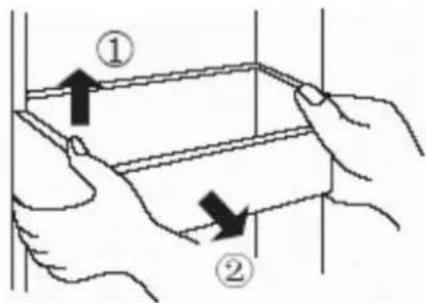
Lift the rack by the direction (1), hold both sides, and then pull it out by the direction (2). After cleaning, install the rack by the opposite direction. You can also adjust the position according to the height of stored food.

Recommendations of storage area for all kinds of food
As the cycle of air-conditioning in the refrigerator makes the temperature of all areas different, different kinds of food should be placed in different temperature regions.

- Store pasta, canned goods, milk, etc.
- Store fast food, foods that easily mix flavors, dairy products, etc.
- Store cooked meat and sausage, etc.
- Store fruits and vegetables, etc.
- Store eggs, butter, cheese, etc.
- Store easy-open cans, canned goods, spices, etc.
- Store all kinds of bottled drinks and food.
FREEZER COMPARTMENT
The freezer compartment is for long-term food storage.
The temperature of the freezer compartment is very low, so it can keep food fresh for a long time. You'd better put food that needs to be stored for a long period in this space. However, you should comply with the storage time marked on the food packaging.
Recommendations for storage areas for all kinds of food
Warning
The defrosting is automatic. Never use a metal instrument or electrical device to de-ice the freezer.

As the cycle of air-conditioning in the refrigerator makes the temperature of all areas different, different kinds of food should be placed in different temperature regions.
- The storage grilles on the door of the freezer room (2 stars) are used for short-term storage of food and ice cream.
- The storage grilles in the freezer room are used for the storage of frozen food.
- The glass shelves are used for the storage of frozen foods, such as fish, meat, and ice cream.
- Rotary ice maker is used to produce ice.
- Ice box is used for the storage of ice lumps.
- Freezer drawer is used for the storage of fish, meat, and poultry with the food packaging.
Announcements
- The refrigerator uses alternating current supply which is 220~240V-50Hz. If the voltage fluctuations are large (over the scope of 187-242V), it may cause some failures, such as the refrigerator does not start, the main control board and compressor burn, and the compressor works with abnormal voice, etc. At this time, you must install an automatic voltage regulator which is above 750W for use. The refrigerator's power cord with a three-plug (grounding) complies with the standard three-socket (grounding). Don't cut off or remove the third pin of the power cord under any circumstances. After the refrigerator is installed, plugs should be able to reach to facilitate use. The power plug must be firmly contacted with the socket, otherwise it might cause fire.
- Do not grasp and drag the power cord to pull out the refrigerator plugs. Hold the plug firmly, and pull out the plug from the socket directly. Do not let power lines be pinned by the refrigerator or trampled by people. Be careful when the refrigerator will be removed from walls. Do not roll or damage power lines, do not use power lines and plugs when they were damaged or worn out. Go to the service center which the factory assigns to replace power lines if they were worn out or damaged.
- When flammable gas is leaked, such as coal gas, close the gas valve, open the doors and windows, do not pull out or plug in plugs of the refrigerator and other appliances.
- Do not put flammable and explosive materials into refrigerator, such as butane, alcohol, gasoline, etc. Do not put boiled liquid products into the freezer, so as to avoid the bottles crack as a result of freezing.
- Do not use flammable solvent near refrigerator, so as to avoid fire.
- To ensure safety, do not place power outlets, voltage regulated power supply, microwave ovens, and other appliances on refrigerator table. Do not use other appliances in refrigerator (except recommended models), in order to avoid electromagnetic interference and other accidents.
- Do not let children go into the refrigerator or climb up the refrigerator. In order to avoid the children are closed in it or the refrigerator falls to hurt children.
- After the refrigerator is running, do not touch the icy surface of the freezer with hands, especially hands are wet. It may cause frostbite.
- The gap between the door and the door, and the gap between the door and the refrigerator body are very narrow. Be careful not to stretch hands into these areas to prevent fingers from being injured. Do not let children near the refrigerator when opening and closing the doors.
- Do not spray and rinse the refrigerator with water, and do not install the refrigerator in a wet place or a place where water or rain splashes, so as not to affect the electrical insulation of the refrigerator.
- Never dismantle the refrigerator personally, never transform the refrigerator, and do not damage the cooling pipes. Maintenance of the refrigerator must be carried out by professionals.
- Do not put bottles of beer or drinks in the freezer. It may freeze the contents and break the bottle.
- Pull out the plug when there is a power failure or when cleaning. Wait for 5 minutes or longer when reconnecting the plug. It may damage the compressor due to continuous starting.
- Before you dispose of your old refrigerator, take off the door, remove the door seals and the shelves, and place the door and racks in the right position, in order to avoid children climbing inside.
- This product is for household refrigerator use. According to the regulation of government standards, household refrigerators are only for food storage, not for other uses, such as storage of blood, drugs, and biological products.
MAINTENANCE AND CARE REFRIGERATOR
Defrost the freezer
The freezer compartment will defrost automatically.
Cleaning
The remnants of food in the refrigerator will have a bad odor, so it is necessary to clean the refrigerator regularly.
- For security, pull out the power plug before cleaning.
- Use a soft towel or sponge with warm water to clean the refrigerator.
- Remove the water on the surface of the refrigerator with a dry cloth.
Replacement of lights
Refrigerator light and its replacement
Lighting parameters: 220-240V ~ / 1W LED lights
Lampholders: E14
When changing the lights:
- Remove the plug and cut off power supply.
- Unload the screw which is at the bottom of the lamp holder.
- Remove the light bulbs by anti-clockwise rotation, replace the same specifications of the light bulbs.
- Return to original installation with anti-step.
- Replace the lights by professionals.
Freezer light and its replacement
Lighting parameters: DC /12 V LED lights
When changing the lights:
- Remove the plug and cut off power supply.
- Remove the lamp holder, unload the screw, and then remove the lights.
- Return to original installation with an-step.
- Replace the lights by professionals.


WHEN SHUTTING OFF THE REFRIGERATOR
No use for Long period of me
You should pull out the power supply; otherwise, it may cause electric shock or re if power lines are aging.
When Power failure
You should minimize the frequency of opening the door, and it is not appropriate to add to fresh foods in the refrigerator.
When discarding the refrigerator
Before you throw away your old refrigerator, make sure take o the doors, so as to avoid the children climb inside to cause accidents.
TROUBLESHOOTING GUIDE
Please read the following contents carefully before repair request.
If the situaon seems not be beer aer the above items been checked, please contact our aer-sale service. If the power cable is damaged, the repair must be done by the technicians sent by us for avoiding any danger.
| PROBLEM | POSSIBLE CAUSE |
| Refrigerator does not operate. | Not plugged in.The circuit breaker tripped or a blown fuse. |
| Compressor turns on and o frequently. | The room temperature is hoer than normal.A large amount of food has been added to the refrigerators.The door is open too oen.The door is not closed completely.The temperature control is not set correctly.The door gasket does not seal properly.The refrigerator hasn’t the correct clearances. |
| Temperature inside the product is too warm. | Temperature control is set too warm. Turn the control to a cooler seng and allow several hours for the temperature to stabilize.Door is kept open too long or is opened too frequently. Open the door less oen.The door is not closed completely.The door gasket does not seal properly.A large amount of warm or hot food might have been stored recently. |
| Temperature inside the refrigerator is too cold. | Temperature control is set too cold. Set the control to a warmer temperature and allow several hours for the temperature to stabilize. |
| Popping or cracking sound when compressor comes on. | Metal parts undergo expansion and contracon, as in hot water pipes. This is normal. Sound will level o or disappear as refrigerator connues to run. |
| Bubbling or gurgling sound, like water boiling. | Refrigerant is circulang throughout the system. This is normal. |
| Vibraons. | Check to assure that the product is levelled. Be sure oor can adequately support it. The refrigerator is touching the wall. Re-level and move it from the wall.See “Installaon Instrucons”. |
| Moisture forms on inside freezer walls. | Weather is hot and humid, which increases internal rate of frost build-up. This is normal.Door is slightly open. Door is kept open too long, or is opened too frequently. Open the door less oen. The door is not sealed properly. |
| Moisture forms on outside of refrigerator. | Door is slightly open, causing cold air from inside the product to meet warm moist air from outside. |
| The door will not close properly. | The gasket is dirty.The storage basket is out of posion. |
Refrigerant
The refrigerant isobutene (R600a) is contained within the refrigerant circuit of the appliance, a natural gas with a high level of environmental compatibility, which is nevertheless ammable.
During transportaon and installaon of the appliance, be certain that none of the components of the refrigerant circuit become damaged.
If the refrigerant circuit should become damaged:
avoid open flames and sources of ignition, thoroughly ventilate the room in which the appliance is situated.
Regulations, Standards, Guidelines
This appliance is in accordance with the following EU guidelines:
-2006/95/EC Low Voltage Directive.
-2004/108/EEC EMC Directive
Disposal of the appliance
It is prohibited to dispose of this appliance in domestic household waste.
For disposal there are several possibilities:
a) The municipality has established collection systems, where electronic waste can be disposed of at least free of charge to the user. b) The manufacturer will take back the old appliance for disposal at least free of charge to the user. c) As old products contain valuable resources, they can be sold to scrap metal dealers.
Wild disposal of waste in forests and landscapes endangers your health when hazardous substances leak into the groundwater and find their way into the food chain.


This appliance is manufactured using recyclable material.
This appliance is marked in compliance with European Directive 2002/96/EC on Waste Electrical and Electronic Equipment (WEEE). Meaning of crossed out wheeled dustbin:
Do not dispose of electrical appliances as unsorted municipal waste, use separate collection facilities.
Contact your local government for the information regarding the collection systems available.
If electrical appliances are disposed of in landfills or dumps, hazardous substances can leak into the groundwater and get into the food chain, damaging your health and well-being.
This symbol on the product or in the instructions means that your electrical and electronic equipment should be disposed of at the end of its life separately from your household waste. There are separate collection systems for recycling in the EU. For more information, please contact the local authority or your retailer where you purchased the product.
Energy Saving Tips
- The appliance should be located in the coolest area of the room, away from heat-producing appliances or heating ducts, and out of direct sunlight.
- Let hot foods cool to room temperature before placing them in the appliance. Overloading the appliance forces the compressor to run longer. Foods that freeze too slowly may lose quality or spoil.
- Be sure to wrap foods properly and wipe containers dry before placing them in the appliance. This cuts down on frost build-up inside the appliance.
- The appliance storage bin should not be lined with aluminium foil, wax paper, or paper towelling. Liners interfere with cold air circulation, making the appliance less efficient.
- Organize and label food to reduce door openings and extended searches. Remove as many items as needed at one time, and close the door as soon as possible.
CANDY
User Manual
Model: CXSE 7204
IMPORTANT SAFETY INFORMATION. READ BEFORE USING THE REFRIGERATOR.
WARNING!
REFRIGERATOR
-Directive EMC 2004/108/EEC
Unplug the appliance
FREEZER COMPARTMENT

Refrigerator compartment
Caution: risk of fire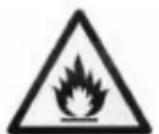

REFRIGERATOR COMPARTMENTS
Due to air circulation in the refrigerator, temperatures vary in all parts of the refrigerator. Therefore, different types of food should be placed in areas with different temperatures.
- The shelf space on the refrigerator door (2 stars) is used for short-term storage of food and ice cream.
- The shelf space is used for storing frozen food.
- Glass shelves are used for storing frozen food: fish, meat, and ice cream.
- Ice maker.
- Ice storage box.
- Drawers are used for storing fish, meat, and poultry in packaging.
Useful tips
- The refrigerator must be connected to a 220~240V-50Hz electrical supply. If voltage fluctuations are too large (outside the range of 187-242V), this can cause operational problems: the refrigerator may not start, the control panel and compressor may overheat, and the compressor's operating noise will not be normal. If you notice such problems, we recommend installing an automatic voltage regulator rated above 750 W. The refrigerator's power cord has three wires (including ground) and fits standard grounded wall outlets. Under no circumstances should you attempt to cut or disconnect the ground wire on the power cord. After placing the refrigerator in its permanent location, the wall outlet must always be easily accessible. The plug must be firmly connected to the wall outlet; otherwise, overheating and fire may occur.
- Never unplug the refrigerator by pulling the power cord; always grasp the plug and pull it out of the wall outlet. Make sure the power cord is not pinched by the refrigerator or surrounding objects, or stepped on by people. Be careful when moving the refrigerator away from the wall. Do not use the power cord or wall outlet if they are damaged or frayed. Do not replace a damaged cord yourself; contact an authorized service center.
- If gas accidentally leaks in your home, immediately close the main gas valve. Open all windows and in that case, do not unplug the refrigerator or other electrical appliances from the wall outlet.
- Do not place flammable liquids such as gasoline, alcohol, etc., in or near the refrigerator. Do not place bottled drinks in the freezer, as the bottles will crack due to freezing.
- Do not use solvents or other flammable substances near the refrigerator, as this may cause a fire.
- For safety reasons, do not place electrical appliances such as microwave ovens, voltage regulators, etc., on top of the refrigerator. Do not use electrical appliances inside the refrigerator (except those recommended by the manufacturer) to prevent electromagnetic interference or other accidents.
- Be careful and do not allow children to enter or climb on the refrigerator, as this may cause serious injury.
- When the refrigerator is operating, be careful not to touch frozen surfaces in the freezer with your hands, especially if your hands are wet or damp, as this may cause injury (frostbite).
- The gap between the refrigerator door and the freezer door, and between the doors and the body of the refrigerator, is very narrow. Be careful not to put your fingers in these spaces, as this may cause injury. Make sure children are not near the refrigerator when you close or open the doors.
- Do not spray or rinse the refrigerator directly with water, and do not place the refrigerator in a damp room or in a place where it may be exposed to weather conditions (rain), as this may adversely affect the electrical insulation of the refrigerator.
- SIDE BY SIDE FRIDGE FREEZER
- IMPORTANT SAFETY INFORMATION
- READ ALL INSTRUCTIONS BEFORE USING
- WARNING
- INTENDED USE
- SAFETY PRECAUTIONS
- DANGER! RISK OF CHILD ENTRAPMENT
- PROPER DISPOSAL OF THE REFRIGERATOR
- BEFORE YOU THROW AWAY YOUR OLD REFRIGERATOR OR FREEZER
- REFRIGERANTS
- HOW TO CONNECT ELECTRICITY
- MAINS LEAD REPLACEMENT
- THE RIGHT USING OF REFRIGERATOR
- DECORATIVE COVER INSTALLATION GUIDE
- NOTE
- REFRIGERATOR'S TRANSPORTATION AND LOCATION
- TRANSPORTATION
- LOCATION
- TO START THE APPLIANCE
- START USING
- SPECIFICATIONS OF PRODUCT
- INVARIABLE KEEPING FRESH TECHNOLOGY
- VIP ANTI-HEAT TECHNOLOGY
- AUTOMATIC ALARM OF PROBLEM
- OPENING DOOR ALARM, LED SCREEN
- TEMPERATURE REGULATION
- BUTTON OPERATION
- DISPLAY
- MODE INDICATOR
- LOCK / UNLOCK
- THE FOLLOWING FUNCTIONS MUST BE IN OPERATION UNDER THE UNLOCKED STATE
- INTELLIGENT MODE
- VACATION MODE
- RAPID COOLING MODE
- QUICK-FREEZE MODE
- WITHDRAW FROM COLD-SPEED, QUICK-FROZEN, INTELLIGENCE AND VACATION MODE
- REFRIGERATOR COMPARTMENT TEMPERATURE SETTINGS
- FREEZER ROOM TEMPERATURE SETTINGS
- POWER FAILURE MEMORY FUNCTION
- LATENCY PROTECTION FUNCTION
- FAILURE PROMPTS
- COMPONENTS
- SHELF ADJUSTMENT
- HEIGHT ADJUSTMENT AND CLEANING OF RACK
- RECOMMENDATIONS OF STORAGE AREA FOR ALL KINDS OF FOOD
- FREEZER COMPARTMENT
- THE FREEZER COMPARTMENT IS FOR LONG-TERM FOOD STORAGE
- RECOMMENDATIONS FOR STORAGE AREAS FOR ALL KINDS OF FOOD
- ANNOUNCEMENTS
- MAINTENANCE AND CARE REFRIGERATOR
- DEFROST THE FREEZER
- CLEANING
- REPLACEMENT OF LIGHTS
- WHEN CHANGING THE LIGHTS
- FREEZER LIGHT AND ITS REPLACEMENT
- WHEN SHUTTING OFF THE REFRIGERATOR
- NO USE FOR LONG PERIOD OF ME
- WHEN POWER FAILURE
- WHEN DISCARDING THE REFRIGERATOR
- TROUBLESHOOTING GUIDE
- REFRIGERANT
- DISPOSAL OF THE APPLIANCE
- ENERGY SAVING TIPS
- CANDY
- USER MANUAL
- IMPORTANT SAFETY INFORMATION. READ BEFORE USING THE REFRIGERATOR
- REFRIGERATOR
- REFRIGERATOR COMPARTMENT
- REFRIGERATOR COMPARTMENTS
- USEFUL TIPS
Brand : CANDY
Model : CXSE 7204
Category : Refrigerator