
CW 391 - Freezer VESTFROST - Free user manual and instructions
Find the device manual for free CW 391 VESTFROST in PDF.


| Product Type | Freezer |
| Brand | Vestfrost |
| Model | CW 391 |
| Energy Efficiency Class | E (estimated) |
| Annual Energy Consumption | 220 kWh (estimated) |
| Total Freezer Capacity | 220 L (estimated) |
| Dimensions (H x W x D) | 142.5 x 54 x 60 cm (estimated) |
| Weight | 45 kg (estimated) |
| Climate Class | N-T (16°C - 43°C) |
| Noise Level | 40 dB (estimated) |
| Freezing Capacity | 12 kg/24h (estimated) |
| Storage Time During Power Failure | 12 hours (estimated) |
| No-Frost System | Yes (estimated) |
| Fast Freeze Function | Yes |
| Temperature Control | Mechanical dial |
| Interior Light | Yes |
| Door Alarm | No (estimated) |
| Lock | Yes |
| Castors | No |
| Reversible Door | Yes |
| Refrigerant Type | R600a (estimated) |
| Power Input | 100 W (estimated) |
| Voltage | 220-240 V ~ 50 Hz |
| Warranty | 2 years (estimated) |
Frequently Asked Questions - CW 391 VESTFROST
User questions about CW 391 VESTFROST
0 question about this device. Answer the ones you know or ask your own.
Ask a new question about this device
Download the instructions for your Freezer in PDF format for free! Find your manual CW 391 - VESTFROST and take your electronic device back in hand. On this page are published all the documents necessary for the use of your device. CW 391 by VESTFROST.
USER MANUAL CW 391 VESTFROST
(Instruction booklet)
391
TABLE OF CONTENTS
BEFORE USE 2
No-Frost technology....2


CHAPTER 2. USE
Operation

FUNCTION button
SETTING button


Defrosting
CHAPTER 5. TRANSPORT AND MOVING
Information on No-Frost Technology 21
Safety Instructions 21
Safety warnings 22
Installing and Operating your Fridge 23
Before Using Your Fridge
Usage Information
Operating Your Fridge
MODE Button
SET Button
Freezer Department Temperature Adjustment and Activating FAST FREEZING Mode
Fast Freezing Mode
While SF mode is selected:
Economy mode
Warnings about Temperature Adjustments
Placing the Food
Cleaning and Maintenance
Defrosting
Shipment and Repositioning
Repositioning the Door
BEFORE CALLING SERVICE 34
Advice for Saving Energy 37
THE PARTS OF THE APPLIANCE AND THE COMPARTMENTS ......38
CHAPTER 1. BEFORE USING YOUR FRIDGE
Information on No-Frost Technology
No-frost fridges differ from other static fridges in their operating principle.
In normal fridges, the humidity entering the fridge in the door openings and the humidity of the food causes freezing in the freezer department. To defrost the snow and ice in the freezer department, you should turn off the fridge, take the food that needs to be kept in a constant temperature off the fridge, and remove the ice gathered in the freezer department periodically.
The situation is completely different in no-frost fridges. Dry and cold air is blown to the fridge and freezer departments homogeneously from several points via a blower fan. Cold air dispersed homogeneously even between the shelves cools all your food equally and uniformly, thus prevents humidity and freezing.
Therefore your no-frost fridge allows you ease of use, besides its huge volume and stylish appearance.
![graph TD A["Top Section"] --> B["Leftmost Column"] B --> C["Rightmost Column"] C --> D["Bottom Section"] D --> E["Leftmost Column"] E --> F["Rightmost Column"] F --> G["Bottom Section"] G --> H["Leftmost Column"] H --> I["Rightmost Column"] I --> J["Bottom Section"] J --> K["Leftmost Column"] K -->…](/content/2026/06/1314620/images/587dd9bf7e3603efb7b8680a7630cacc2828ff7d4d88e331a98fc582be682d7a.jpg)
Safety Instructions
- This model contains R600a gas. This gas is environmental and friendly but combustible. Do not damage your fridge's refrigerant circuit, while transporting and installing.
- If your old fridge has a lock, break or remove the lock before discarding it, because children may get trapped inside it and may cause an accident.
- Old fridges and freezers contain isolation material and refrigerant with CFC. Therefore, take care not to harm environment when you are discarding your old fridges.
IMPORTANT NOTE:
Please read the instruction manual carefully before installing and using your appliance. We are not responsible of the damage occurred due to misuse.
Follow all instructions on your appliance and instruction manual, and keep this manual in a safe place to resolve the problems that may occur in the future.
Safety warnings
Notice: Do not use mechanical devices or other artificial methods to quicken to the defrosting. Do not use electrical devices on the food storage areas of your appliance. Keep the ventilation areas of your appliance open. Do not damage your fridge's refrigerant circuit.
- Do not use multiple receptacles or extension cord.
- Do not plug in damaged, torn or old plugs.
- Do not pull, bend or damage the cord.


- This appliance is designed for use by adults, do not allow children to play with the appliance or let them to hang over the door.
- Do not plug-in or out the plug from the receptacle with wet hands to prevent electrocution!
- Do not place glass bottles or beverage cans in the freezer department. Bottles or cans may explode.
- Do not place explosive or flammable material in your fridge for your safety. Place drinks with higher alcohol amount vertically and by closing their necks tightly in the fridge department.
- When taking ice made in the freezer department, do not touch it, ice may cause iceburns and/or cuts.
- Do not touch frozen goods with wet hands! Do not eat ice-cream and ice cubes immediately after you take them out of the freezer department!
- Do not re-freeze the frozen goods after being melted. This may cause health issues like food poisoning.
- Do not cover the body or top of fridge with lace. This effects the performance of your fridge.
- Fix the accessories in the fridge during transportation to prevent damage to accessories.

- When the door of the fridge is closed, a vacuum will occur. Wait for about 1 minute before reopening it.
- Your fridge is not intended for use by physically, mentally, or sensibly handicapped people or by people with less experience and knowledge (including children). These people may be allowed to use the appliance under the supervision of a responsible person giving necessary instructions. You should supervise children to prevent them from playing with the appliance.
- The power cord should be replaced by an authorized technician when it is damaged.
Installing and Operating Your Fridge
- Before making the connection to the power supply, ensure that the voltage on the nameplate corresponds to the voltage of the electrical system at your home.
- The operating voltage for your fridge is 220-240 V at 50Hz.
- Before starting to use your fridge, please call the nearest Authorized service and get free help on the installation, operation, and usage of your fridge.
- The mains cord of your fridge has a grounded plug. This plug should be used with a grounded receptacle that has a 16 ampere fuse minimum. If you don't have a receptacle conforming to this, please have it done by a qualified electrician.
- We do not take responsibility for damages that occur due to ungrounded usage.
- Place your fridge in a place where it would not be exposed to direct sunlight.
- Your appliance should be at least 50 cm away from stoves, ovens, and heater cores, and should be at least 5 cm away from electrical ovens.
- It should never be used outdoors or left under the rain.
- Fit the plastic wall spacers to the condenser at the back of the refrigerator in order to prevent cleaning to the wall for good performance.
- When your fridge is placed next to a deep freezer, there should be at least 2 cm between them to prevent humidity on the outer surface. Do not place anything on your fridge, and install your fridge in a suitable place so that at least 15 cm is available on the upper side.
- If you will place your fridge next to your kitchen cabinets, leave a space of 2 cm between them.
• Install the distance adjustment plastic (the part with black vanes at the rear) by turning it 90° to prevent the condenser from touching the wall.


- The adjustable front legs should be stabilized at an appropriate height to allow your fridge to operate in a stable and proper way. You can adjust the legs by turning them clockwise (or in the opposite direction). This should be done before placing food in the fridge.
- Before using your fridge, wipe all parts with warm water added with a teaspoonful of sodium bicarbonate, then rinse with clean water and dry. Place all parts after cleaning.
Before Using Your Fridge
- When it is operated for the first time or after transportation, keep your fridge in the upright position for 3 hours and plug it in to allow efficient operation. Otherwise, you may damage the compressor.
- Your fridge may have a smell when it is operated for the first time; the smell will fade away when your fridge starts to cool.

CHAPTER 2. USAGE INFORMATION
Operating Your Fridge

MODE Button
- Mode button allows switching between Freezer Department Indicator, Fast Freezing Mode Lamp, Economy Mode Lamp.
- When you press once, Freezer Department Indicator starts to flash.
Set value is ready to be changed.
- When you press twice, Fast Freezing Mode Lamp starts to flash.
- When you press three times, Economy Mode Lamp starts to flash.

SET Button
Allows the temperature adjustment of the related department when Freezer Department Indicator is selected with the mode button.

Freezer Department Temperature Adjustment and Activating FAST FREEZING Mode
- Initial temperature value for Freezer Department Indicator is -18°C.
- Press mode button once.
- The set value for freezer Department indicator starts to flash when you press this button.
- The value for freezer Department indicator changes for a lower temperature each time you press this button when the indicator is flashing.

(-16°C, -17°C, -18°C, -19°C, -20°C, -21°C, -22°C, -23°C, -24°C)
- When you wait for 5 seconds without pressing any button after reaching the desired set value, the set value is activated and your fridge operates with that set value.
- When you press set button until the value for Freezer Department Indicator reaches -24°C (maximum cold position), if you press the button again, SF letters will flash.
- If you continue to press the button when SF is flashing, the values will start again from -16°C.
Recommended Temperature Values for Freezer
| When would it be adjusted? | Inner Temperature |
| When small amount of food is stored | -16°C,-17°C |
| In normal usage | -18°C,19°C,-20°C,-21°C |
| When lots of food is stored | -22°C,-23°C,-24°C |
Fast Freezing Mode
• To freeze plenty of food - To freeze ready foods • To freeze foods rapidly • To store the seasonal foods for a long time
How to use;
- Press the mode button until Fast Freezing mode.
- While Fast Freezing Mode Lamp is flashing, if no button is clicked for 5 seconds, a beep sound will be heard and the mode will be enabled.
- While the Fast Freezing mode is active, the letters "SF" will be seen at the Indicator of the Freezer.
While SF mode is selected:
To cancel SF Mode and continue with previous set value:
Please press Mode Button 2 times and wait for 5 seconds. SF mode will be cancelled and the appliance will start to work according to the previous set value.
To cancel SF Mode and continue with new set value:
Please press Mode Button 1 time and within 5 seconds, push the set button until you see the set value you want, and wait for 5 seconds. SF mode will be cancelled and the appliance will start to work according to the new set value.

To cancel SF Mode and activate Economy Mode:
Please press Mode Button 3 times and wait for 5 seconds. SF mode will be cancelled and the appliance will start to work according to Economy Mode.
Note: "Super Freezing" mode will be cancelled automatically after 24 hours or when the freezer sensor temperature falls below -32°C .
Economy mode
Your freezer will consume minimum energy at -18°C set value, which is the most optimum storage condition.
When to use:
- When you want your refrigerator to operate economically.
How to use:
- Press the mode button until the Economy Mode LED lights up (3 times).

- While the Economy Mode LED is flashing, if no button is clicked, a beep sound will be heard and the mode will be enabled.
- During this mode, the freezer compartment operates at the special temperature value set on the control circuit.
- While the Economy mode is active, the letters "Ec" will be seen on the indicator of the freezer compartment.
While Economy mode is selected:
To cancel Economy Mode and continue with the previous set value:
Press the Mode button 3 times and wait for 5 seconds. Economy mode will be cancelled and the appliance will start to work according to the previous set value.
To cancel SF Mode and continue with a new set value:
Press the Mode button 1 time and within 5 seconds, press the set button until you see the set value you want, then wait for 5 seconds. Economy mode will be cancelled and the appliance will start to work according to the new set value.
To cancel Economy Mode and activate SF Mode:
Press the Mode button 3 times and wait for 5 seconds. Economy mode will be cancelled and the appliance will start to work according to SF Mode.
Warnings about Temperature Adjustments
- Your temperature adjustments will not be deleted when an energy breakdown occurs.
- Do not pass to another adjustment before completing an adjustment.
- Temperature adjustments should be made according to the frequency of door openings, the quantity of food kept inside the fridge, and the ambient temperature of the place where your fridge is located.
- Your fridge should be operated up to 24 hours according to the ambient temperature without interruption after being plugged in to be completely cooled.
- Do not open doors of your fridge frequently and do not place much food inside it in this period.
- A 5 minute delaying function is applied to prevent damage to the compressor of your fridge, when you take the plug off and then plug it on again to operate it or when an energy breakdown occurs. Your fridge will start to operate normally after 5 minutes.
CHAPTER 3. PLACING THE FOOD
- Use your freezer to keep frozen food for a long time and to produce ice.
- Do not place food you want to freeze next to frozen food.
- You should freeze your food (meat, minced meat, fish etc) in portions that allow consuming in a time.
- Do not put fresh and warm food with frozen food side by side as it can thaw the frozen food.
- While freezing fresh food (i.e. meat, fish and mincemeat) divide them in parts in order to use in one time.
- For storing the frozen food; the instructions shown on frozen food packages should always be followed carefully and if no information is provided, food should not be stored for more than 3 months from the purchased date.
- Maximum load; if you want to load large quantities and use the maximum net capacity, you can remove the drawers (Except the bottom one). You can store bulky items directly on the shelves.
- When buying frozen food ensure that these have been frozen at suitable temperatures and that the packing is intact.
- Frozen food should be transported in appropriate containers to maintain the quality of the food and should be returned to the freezing surfaces of the unit in the shortest possible time.
- If a package of frozen food shows the sign of humidity and abnormal swelling it is probable that it has been previously stored at an unsuitable temperature and that the contents have deteriorated.
- The storage life of frozen food depends on the room temperature, thermostat setting, how often the door is opened, the type of food and the length of time required to transport the product from the shop to your home. Always follow the instructions printed on the package and never exceed the maximum storage life indicated.
- If you would use maximum freezing capacity of your freezer
- Take the frozen food in the upper basket to other baskets and activate “Fast Freezing” mode. “Fast Freezing” mode will be deactivated automatically after 24 hours. Place the food you want to freeze to the upper basket of the freezer department without exceeding the freezing capacity of your fridge. (Your refrigerator has the capacity to freeze 15 kg at 25°C and 14 kg at 32°C) Then reactivate the “Fast Freezing” mode. You can put your food next to other frozen food after they are frozen (minimum 24 hours after “Fast Freezing” mode is activated for the 2nd time).
- If you would freeze about 3 kg food in your freezer:
- You can place your food without touching other frozen food and activate “Fast Freezing” mode. You can put your food next to other frozen food after they are frozen (after minimum 24 hours).
- Do not re-freeze the frozen goods after being melted. This may cause health issues like food poisoning.
- Do not place hot food to the freezer before cooling them. This may cause the spoiling of food frozen before in the freezer.
- When you are buying frozen food, make sure that they frozen in proper conditions and the package is undamaged.
- Follow the instructions for storing conditions on the package of the frozen food while storing them. If there is no explanation, food must be consumed in a short time.
- If the package of frozen food is humid and smells bad, it may be stored under inappropriate conditions and spoiled. Do not buy this kind of food!
- If there is a power cut or malfunction, do not open the door. This will help maintain the temperature inside the freezer, ensuring that foods are conserved for about 9.5 hours at 25°C ambient temperature and about 8 hours at 32°C ambient temperature. Do not re-freeze food that is defrosting or that has already been defrosted. These foods must be cooked and eaten.
- Storing time for frozen food may differ according to the ambient temperature, frequency of door openings, thermostat adjustments, type of food and the time between the buying of the food and placing of the food in the freezer. Always follow instructions on the package and do not exceed storing period.
| MEAT AND FISH | Preparing | Storing time (months) | Thawing time in room temperature (hours) |
| Steak | Wrapping in a foil | 6-10 | 1-2 |
| Lamb meat | Wrapping in a foil | 6-8 | 1-2 |
| Veal roast | Wrapping in a foil | 6-10 | 1-2 |
| Veal cubes | In small pieces | 6-10 | 1-2 |
| Lamb cubes | In pieces | 4-8 | 2-3 |
| Minced meat | In packages without using spices | 1-3 | 2-3 |
| Giblets (pieces) | In pieces | 1-3 | 1-2 |
| Bologna sausage/salami | Should be packaged even if it has membrane | 1-2 | Until it is thawed completely |
| Chicken and turkey | Wrapping in a foil | 7-8 | 10-12 |
| Goose/duck | Wrapping in a foil | 4-8 | 10 |
| Deer, hog, rabbit | In 2.5 kg portions and as fillets | 9-12 | 10-12 |
| Fresh water fishes; trout, carp, tuna, bullhead | After cleaning the bowels and scales of the fish, wash and dry it; and if necessary, cut the tail and head. | 2 | Until it is thawed completely |
| Lean fish; bass, turbot, flounder | 4-8 | Until it is thawed completely | |
| Fatty fish; atlantic bonito, mackarel, blue fish, anchovy | 2-4 | Until it is thawed completely | |
| Shellfish | Cleaned and in bags | 4-6 | Until it is thawed completely |
| Caviar | In its package, aluminum or plastic container | 2-3 | Until it is thawed completely |
| Snail | In salty water, aluminum or plastic container | 3 | Until it is thawed completely |
Note: Frozen meat should be cooked as fresh meat after being thawed. If the meat is not cooked after being thawed, it should never be frozen again.
| VEGETABLES AND FRUITS | Preparing | Storing time (months) | Thawing time in room temperature (hours) | |
| Cauliflower | Take the leaves apart, cut the heart into pieces, and leave it in water with a little lemon juice for a while | 10-12 | Can be used in frozen form without waiting for to be thawed | |
| String bean, gren bean | Wash and cut to small pieces | 10-13 | Can be used in frozen form without waiting for to be thawed | |
| Beans | Hull and wash | 12 | Can be used in frozen form without waiting for to be thawed | |
| Mushroom and asparagus | Wash and cut to small pieces | 6-9 | Can be used in frozen form without waiting for to be thawed | |
| Cabbage | Cleaned | 6-8 | 2-in room temperature | |
| Eggplant | Cut to pieces of 2 cm after washing | 10-12 | Can be used in frozen form without waiting for to be thawed | |
| Corn | Clean and pack with its stem or as sweetcorn | 12 | Can be used in frozen form without waiting for to be thawed | |
| Carrot | Clean and cut to slices | 12 | Can be used in frozen form without waiting for to be thawed | |
| Pepper | Cut the stem, cut into two pieces and remove the core | 8-10 | Can be used in frozen form without waiting for to be thawed | |
| Spinach | Washed | 6-9 | 2-in room temperature | |
| Apple and pear | Peel and slice | 8-10 | 5-in fridge | |
| Apricot, peach | Cut into two pieces and remove the stone | 4-6 | 4-in fridge | |
| Strawberry, raspberry | Wash and hull | 8-12 | 2-in room temperature | |
| Cooked fruits | Inside a cup with addition of 10% of sugar | 12 | 4-in room temperature | |
| Plums, cherries, sour cherries | Wash them and remove the stems | 8-12 | 5-7 -in room temperature | |
| Dairy Products and Pastries | Preparation | Storage Duration (months) | Storage Conditions | |
| Milk | 2-3 | Only homogeneous products | ||
| Cheese - excluding white cheese | In slices | 6-8 | Original package may be used for short storing period. It should be wrapped in foil for longer periods. | |
| Butter, margarine | In its package | 6 | ||
| Egg* | Albumen | 10-12 | In closed container | |
| Egg mix (albumen-yolk) | Mixed completely, you may add a pinch of salt or sugar to prevent thickening | 10 | In closed container | |
| Egg yolk | Mixed completely, you may add a pinch of salt or sugar to prevent thickening | 8-10 | In closed container | |
*Should never be frozen with its shell. Albumen and yolk should be frozen individually or completely mixed.
| Storing time (months) | Thawing time in room temperature (hours) | Thawing time in oven (minutes) | |
| Bread | 4-6 | 2-3 | 4-5 ( 220-225°C ) |
| Biscuits | 3-6 | 1-1,5 | 5-8 ( 190-200°C ) |
| Pastry | 1-3 | 2-3 | 5-10 ( 200-225°C ) |
| Pie | 1-1,5 | 3-4 | 5-8 ( 190-200°C ) |
| Phyllo dough | 2-3 | 1-1,5 | 5-8 ( 190-200°C ) |
| Pizza | 2-3 | 2-4 | 15-20 ( 200°C ) |
Some spices in cooked food (aniseed, basil, dill, vinegar, spice mix, ginger, garlic, onion, mustard, thyme, marjoram, black pepper, bologna sausage etc.) may have a foul taste when stored for a long time. Therefore, frozen food should be spiced just a little or spice should be added after the food is thawed.
The storing time for the food depends on the oil used. Margarines, veal fat, olive oil and butter are suitable, peanut oil and lard are not suitable. Cooked food in liquid form should be frozen in plastic containers, other food should be frozen wrapped in plastic foil or in plastic bags.
CHAPTER 4. CLEANING AND MAINTENANCE
- Make sure to unplug the fridge before starting to clean it.
- Do not wash your fridge by pouring water.
- You can wipe the inner and outer sides with a soft cloth or a sponge using warm and soapy water.
- Remove the parts individually and clean with soapy water. Do not wash in washing machine.
- Never use flammable, explosive or corrosive material like thinner, gas, acid for cleaning.
Make sure that your fridge is unplugged while cleaning.


Defrosting
- Your fridge defrosts automatically. Water produced by defrosting flows to evaporating container passing through water collecting groove, and vaporizes here by itself.
- Unplug your fridge before cleaning the evaporation container.
- Remove the evaporation container by removing its screws as shown in the figure. Clean with soapy water periodically. This will prevent smell.

CHAPTER 5. SHIPMENT AND REPOSITIONING
- Original package and foam may be kept for re-transportation (optionally).
- You should fasten your fridge with thick package, bands or strong cords and follow the instructions for transportation on the package for re-transportation.
- Remove movable parts (shelves, accessories, vegetable bins, etc.) or fix them into the fridge against shocks using bands during re-positioning and transportation. Carry your fridge in the upright position.

Repositioning the Door (For Some Models)
You can reposition the doors of your fridge. Contact the nearest Authorized service for this.
CHAPTER 6. BEFORE CALLING SERVICE
If your fridge is not operating:
• Is there any electrical fault? - Is the plug placed properly in the receptacle? - Is the fuse of the receptacle that the plug is plugged into or the main fuse blown? - Is there any fault in the socket? Examine this by plugging your fridge into a receptacle which you are sure is working.
| WARNING TYPE | MEANING | REASON | REMEDY |
| Sr | Failure warnings | Appears when one or more of the refrigerator parts fail or there is a problem in the cooling system. | Call service immediately. |
| LF | Freezer compartment is not cold enough | This warning appears if there has been a power failure for a long period and when the refrigerator is operated for the first time. | 1-) If your frozen food is thawed, consume them as soon as possible and do not freeze them again since there is a risk of putrefaction. |
| 2-) Temporarily increase the freezer temperature setting to the desired level or switch the appliance to fast freezing mode. | |||
| LP | Low voltage | Refrigerator switches to the standby mode when the voltage supply falls below 170 Volts. | This feature prevents the compressor from getting damaged due to low voltage. Refrigerator will start operating automatically when the voltage restores to the required level. |
Temperature Warning:
The temperature display flashes “LF” and an audible warning sounds when the temperature in the freezer compartment is too warm.
A rise in the temperature may be caused by:
- Frequent door opening for long periods of time
- Loading with large quantities of warm foods • High ambient temperature
- An error with the appliance.
Check Warnings:
Your fridge warns you if the temperatures for fridge and freezer departments are at improper levels or when a problem occurs in the appliance. Warning codes are displayed in the Freezer and Fridge Department Indicators. Warning codes appear in the Freezer Compartment Setting Displays.
Also a warning sound is heard.
The display and buzzer will continue until you press the SET or MODE button. When you press one of these buttons, the buzzer will stop. The "LF" warning will disappear within 15 minutes. You don't have to call your service; this condition may appear due to the reasons above. You can keep storing your food in your freezer. If the "LF" warning does not disappear within an hour after pressing the button, you can call your service and do not re-freeze your food. These foods must be eaten.
If your fridge is operating too loudly:
Normal Noises
Cracking (Ice cracking) Noise:
• During automatic defrosting. - When the appliance is cooled or warmed (due to expansion of appliance material). - Heard when the thermostat switches the compressor on/off.
Short cracking
Compressor noise
- Normal motor noise. This noise means that the compressor operates normally. The compressor may cause more noise for a short time when it is activated.
Bubbling noise and splash:
- This noise is caused by the flow of the refrigerant in the tubes of the system.
Water flow noise:
- Normal flow noise of water flowing to the evaporation container during defrosting. This noise can be heard during defrosting.
Air Blow Noise:
- Normal fan noise. This noise can be heard in No-Frost fridges during normal operation of the system due to the circulation of air.
If the edges of the fridge cabinet that the door joint contacts are warm;
Especially in summer (hot weather), the surfaces that the joint contacts may get warmer during the operation of the compressor. This is normal.
If humidity builds up inside the fridge:
- Are all food packed properly? Are the containers dried before placing them in the fridge?
- Are the fridge doors opened frequently? Humidity of the room gets in the fridge when the doors are opened. Humidity build up will be faster when you open the doors more frequently, especially if the humidity of the room is high.
- Building up of water drops on the rear wall after automatic defrosting is normal (in Static Models).
If the doors are not opened and closed properly:
- Do the food packages prevent closing of the door?
- Are the door compartments, shelves and drawers placed properly?
- Are door joints broken or torn? Is your fridge on a level surface?
If your fridge is not cooling enough:
Your fridge is designed to operate in the ambient temperature intervals stated in the standards, according to the climate class stated in the information label. We do not recommend operating your fridge out of stated temperature value limits in terms of cooling effectiveness.
| Climate Class | Ambient Temperature (°C) |
| T | Between 16 and 43 (°C) |
| ST | Between 16 and 38 (°C) |
| N | Between 16 and 32 (°C) |
| SN | Between 10 and 32 (°C) |
(*) Tropical class is designated for temperatures between 16°C and 43°C according to TS EN ISO 15502 standards.
IMPORTANT NOTES:
- Compressor protection function will be activated after sudden power breakdowns or after unplugging the appliance, because the gas in the cooling system is not stabilized yet. Your fridge will start after 5 minutes, there is nothing to worry about.
- If you will not use your fridge for a long time (e.g. in summer holidays) unplug it. Clean your fridge according to Chapter 4 and leave the door open to prevent humidity and smell.
If the problem persists after you have followed all the instructions above, please consult the nearest Authorized service center.
The lifetime of your appliance, as stated and declared by the Department of Industry, is 10 years (the period for retaining parts required for the proper functioning of the appliance).
Advice for Saving Energy
- Do not install the appliance close to heat-producing appliances such as cookers, ovens, dishwashers, or radiators. Locate the appliance in the coolest part of the room.
- Locate the appliance in a cool, well-ventilated room and make sure that the air openings of the appliance are not obstructed.
- Always allow warm food to cool down to room temperature before placing it in the freezer.
- Try to avoid keeping the door open for long periods or opening it too frequently, as warm air will enter the cabinet and cause the compressor to switch on unnecessarily often.
- Ensure there are no obstructions preventing the door from closing properly.
- Cover foods before placing them in the freezer. This reduces moisture build-up inside the unit.
- Refer to the "Temperature Settings" section for the suggested temperature control settings.
- Do not block cold air vents. Doing so causes the freezer to run longer and use more energy.
- Keep the freezer full.
- Level the freezer so that the door closes tightly.
- Occasionally clean the rear of the appliance with a vacuum cleaner or paint brush to prevent increased power consumption.
- Keep door gaskets clean and pliable. Replace gaskets if worn.
CHAPTER 7.
THE PARTS OF THE APPLIANCE AND THE COMPARTMENTS
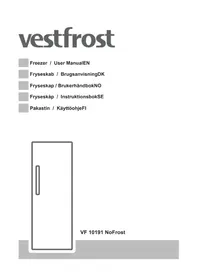
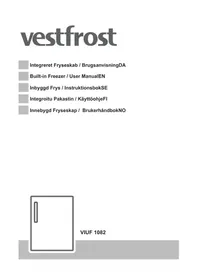
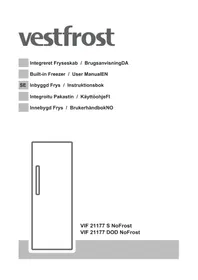
This presentation is only for information about the parts of the appliance. Parts may vary according to the appliance model.

- TABLE OF CONTENTS
- BEFORE USE
- CHAPTER 2. USE
- OPERATION
- FUNCTION BUTTON
- SETTING BUTTON
- DEFROSTING
- CHAPTER 5. TRANSPORT AND MOVING
- USAGE INFORMATION
- PLACING THE FOOD
- CLEANING AND MAINTENANCE
- SHIPMENT AND REPOSITIONING
- BEFORE CALLING SERVICE
- THE PARTS OF THE APPLIANCE AND THE COMPARTMENTS
- CHAPTER 1. BEFORE USING YOUR FRIDGE
- INFORMATION ON NO-FROST TECHNOLOGY
- SAFETY INSTRUCTIONS
- IMPORTANT NOTE
- SAFETY WARNINGS
- INSTALLING AND OPERATING YOUR FRIDGE
- BEFORE USING YOUR FRIDGE
- CHAPTER 2. USAGE INFORMATION
- OPERATING YOUR FRIDGE
- MODE BUTTON
- SET VALUE IS READY TO BE CHANGED
- SET BUTTON
- FREEZER DEPARTMENT TEMPERATURE ADJUSTMENT AND ACTIVATING FAST FREEZING MODE
- FAST FREEZING MODE
- HOW TO USE
- WHILE SF MODE IS SELECTED
- TO CANCEL SF MODE AND CONTINUE WITH PREVIOUS SET VALUE
- TO CANCEL SF MODE AND CONTINUE WITH NEW SET VALUE
- TO CANCEL SF MODE AND ACTIVATE ECONOMY MODE
- ECONOMY MODE
- WHEN TO USE
- WHILE ECONOMY MODE IS SELECTED
- TO CANCEL ECONOMY MODE AND CONTINUE WITH THE PREVIOUS SET VALUE
- TO CANCEL SF MODE AND CONTINUE WITH A NEW SET VALUE
- TO CANCEL ECONOMY MODE AND ACTIVATE SF MODE
- WARNINGS ABOUT TEMPERATURE ADJUSTMENTS
- CHAPTER 3. PLACING THE FOOD
- CHAPTER 4. CLEANING AND MAINTENANCE
- CHAPTER 5. SHIPMENT AND REPOSITIONING
- REPOSITIONING THE DOOR (FOR SOME MODELS)
- CHAPTER 6. BEFORE CALLING SERVICE
- IF YOUR FRIDGE IS NOT OPERATING
- TEMPERATURE WARNING
- CHECK WARNINGS
- ALSO A WARNING SOUND IS HEARD
- IF YOUR FRIDGE IS OPERATING TOO LOUDLY
- NORMAL NOISES
- CRACKING (ICE CRACKING) NOISE
- SHORT CRACKING
- COMPRESSOR NOISE
- BUBBLING NOISE AND SPLASH
- WATER FLOW NOISE
- AIR BLOW NOISE
- IF THE EDGES OF THE FRIDGE CABINET THAT THE DOOR JOINT CONTACTS ARE WARM
- IF HUMIDITY BUILDS UP INSIDE THE FRIDGE
- IF THE DOORS ARE NOT OPENED AND CLOSED PROPERLY
- IF YOUR FRIDGE IS NOT COOLING ENOUGH
- IMPORTANT NOTES
- ADVICE FOR SAVING ENERGY
- CHAPTER
Brand : VESTFROST
Model : CW 391
Category : Freezer