
SJ-B2297M1I - Refrigerator SHARP - Free user manual and instructions
Find the device manual for free SJ-B2297M1I SHARP in PDF.


| Product type | Ventilated refrigerator |
| Brand | Sharp |
| Model | SJ-B2297M1I |
| Total net capacity | 229 liters |
| Refrigerator compartment capacity | 195 liters |
| Freezer compartment capacity | 34 liters |
| Dimensions (H x W x D) | 1400 x 545 x 600 mm |
| Net weight | 42 kg |
| Power supply | 220-240 V, 50 Hz |
| Energy class | E (new label) |
| Annual energy consumption | 220 kWh/year |
| Climate type | N-ST |
| Noise level | 40 dB(A) |
| Main features | Freezer compartment, LED lighting, adjustable shelves |
| Maintenance and cleaning | Manual defrost of freezer, interior cleaning with soapy water |
| Safety | Automatic door closing, child lock not available |
| Spare parts and repairability | Repairability index 7.0/10, spare parts available on request |
| General information | User manual available in several languages |
Frequently Asked Questions - SJ-B2297M1I SHARP
User questions about SJ-B2297M1I SHARP
0 question about this device. Answer the ones you know or ask your own.
Ask a new question about this device
Download the instructions for your Refrigerator in PDF format for free! Find your manual SJ-B2297M1I - SHARP and take your electronic device back in hand. On this page are published all the documents necessary for the use of your device. SJ-B2297M1I by SHARP.
USER MANUAL SJ-B2297M1I SHARP
EN User Manual Refrigerator - Freezer
SJ-B2297M1I-EU SJ-B2297M1W-EU
SHARP
Contents
CHAPTER -1: GENERAL WARNINGS ....2
CHAPTER -2: YOUR FRIDGE FREEZER....5
CHAPTER -3: USING YOUR FRIDGE FREEZER....6
CHAPTER -4: FOOD STORAGE GUIDANCE 8
CHAPTER -5: DOOR REVERSAL 9
CHAPTER -6: TROUBLESHOOTING....9
CHAPTER -7: TIPS FOR SAVING ENERGY 10
Your fridge freezer conforms to current safety requirements. Inappropriate use can lead to personal injury and damage to property. To avoid the risk of damage, read this manual carefully before using your fridge freezer for the first time. It contains important safety information on the installation, safety, use, and maintenance of your fridge freezer. Retain this manual for future use.
CHAPTER -1: GENERAL WARNINGS

WARNING: Keep the ventilation openings of the fridge freezer clear from obstruction.

WARNING: Do not use mechanical devices or other means to accelerate the defrosting process.

WARNING: Do not use other electrical appliances inside the Fridge Freezer.

WARNING: Do not damage the refrigerant circuit.
WARNING: To avoid personal injury or damage, this appliance must be installed in accordance with the manufacturer's instructions.

The small quantity of refrigerant used in this fridge freezer is eco-friendly R600a (an isobutene) and is flammable and explosive if ignited in enclosed conditions.
* While carrying and positioning the fridge, do not damage the cooler gas circuit. * Do not store any containers with flammable materials, such as spray cans or fire extinguisher refill cartridges in the vicinity of the fridge freezer. * This appliance is intended to be used in household and similar applications such as: - staff kitchen areas in shops, offices and other working environments; - farm houses and by clients in hotels, motels and other residential type environments; - bed and breakfast type environments; - catering and similar non-retail applications.
* Your fridge freezer requires a 220-240V, 50Hz mains supply. Do not use any other supply. Before connecting your fridge freezer, ensure that the information on the data plate (voltage and connected load) matches the mains electricity supply. If in doubt, consult a qualified electrician.
* This appliance can be used by children aged from 8 years and above and persons with reduced physical, sensory or mental capabilities or lack of experience and knowledge if they have been given supervision or instruction concerning use of the appliance in a safe way and understand the
hazards involved. Children shall not play with the appliance. Cleaning and user maintenance shall not be made by children without supervision.
* A damaged power cord/plug can cause fire or give you an electric shock. When damaged, it must be replaced, and this should only be done by qualified personnel.
Disposal
- All packaging and materials used are environmentally friendly and recyclable. Please dispose of any packaging in an environmentally friendly manner. Consult your local council for further details.
- When the appliance is to be scrapped, cut off the electrical supply cable and destroy the plug and cable. Disable the door catch in order to prevent children becoming trapped inside.
- A cut-off plug inserted into a 16 amp socket is a serious safety (shock) hazard. Please ensure the cut-off plug is disposed of safely.
Disposal of your old appliance

This symbol on the product or package implies that the product should not be treated as domestic waste. Instead, it should be delivered to applicable waste collection places recycling electrical and electronic equipment. Recycling materials will help natural resources be preserved. For more detailed information regarding recycling of this product, please contact local authority, domestic waste disposal service or the shop you have purchased the product from.
Please ask your local authority about the disposal of the WEEE for the reuse, recycle and recovery purposes.
Notes:
- Please read the instruction manual carefully before installing and using your appliance. We are not responsible for the damage occurred due to misuse.
- Follow all instructions on your appliance and instruction manual, and keep this manual in a safe place to resolve the problems that may occur in the future.
- This appliance is produced to be used in homes and it can only be used in domestic environments and for the specified purposes. It is not suitable for commercial or common use. Such use will cause the guarantee of the appliance to be cancelled and our company will not be responsible for the losses to be occurred.
- This appliance is produced to be used in houses and it is only suitable for cooling / storing foods. It is not suitable for commercial or common use and/or for storing substances except for food. Our company is not responsible for the losses to be occurred in the contrary case.

Safety warnings
- Do not connect your Fridge Freezer to the mains electricity supply using an extension lead.
- A damaged power cord / plug can cause fire or give you an electric shock. When damaged it must be replaced, this should only be done by qualified personnel.
- Never bend the power cord excessively.
- Never touch the power cord / plug with wet hands as this could cause a short circuit electric shock.
- Do not place glass bottles or beverage cans in the freezer department. Bottles or cans may explode.
- When taking ice made in the freezer department, do not touch it, ice may cause ice burns and/or cuts.
- Do not remove items from the freezer if your hands are damp or wet. This could cause skin abrasions or frost / freezer burns.
- Do not refreeze food once it has thawed out.
Installation Information
Before unpacking and moving your fridge freezer, take some time to familiarize yourself with the following points.
- Position it away from direct sunlight and any heat source such as a radiator.
- Your appliance should be at least 50 cm away from stoves, gas ovens, and heater cores, and at least 5 cm away from electric ovens.
- Do not expose your fridge freezer to moisture or rain.
- Your fridge freezer should be positioned at least 20 mm away from another freezer.
- Leave at least 150 mm of clearance at the top and back of your fridge freezer. Do not place anything on top of it.
- For safe operation, it is important that your fridge freezer is stable and balanced. Use the adjustable feet to level it. Make sure it is level before placing any food inside.
- We recommend wiping all shelves and trays with a cloth soaked in warm water mixed with a teaspoon of bicarbonate of soda before use. After cleaning, rinse with warm water and dry.
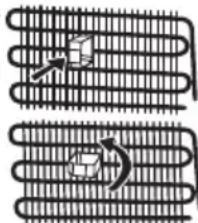
- Install using the plastic distance guides found at the rear of the appliance. Turn them 90 degrees (as shown in the diagram). This will keep the condenser from touching the wall.
- The refrigerator should be placed against a wall with a free distance not exceeding 75 mm.
Before Using Your Fridge

- Before setting up your fridge freezer, check for any visible damage. Do not install or use it if it is damaged.
- When using your fridge freezer for the first time, keep it upright for at least 3 hours before plugging it into the mains. This ensures efficient operation and prevents damage to the compressor.
- You may notice a slight odor when using your fridge freezer for the first time. This is perfectly normal and will fade as the fridge starts to cool.
CHAPTER -1: GENERAL WARNINGS
No-Frost technology
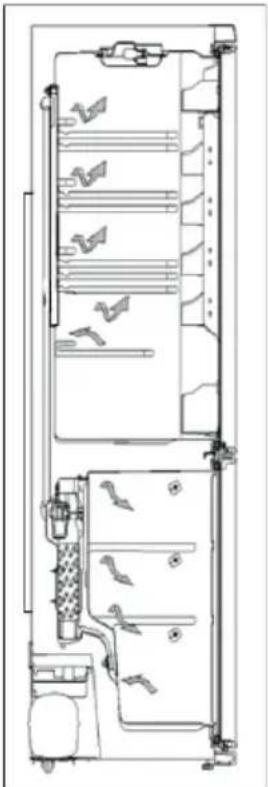
Your fridge freezer differs from many other standard fridge freezers. Other appliances may experience ice in the freezer compartment due to the opening of the doors and humidity caused by the food. In such appliances defrosting is required. They have to be turned off periodically, the food inside moved and the ice removed.
Your "no frost" fridge freezer prevents such problems by evenly distributing in the fridge and freezer compartments through the use of a fan. This cools your food evenly and uniformly, preventing humidity and freezing.
CHAPTER -2: YOUR FRIDGE FREEZER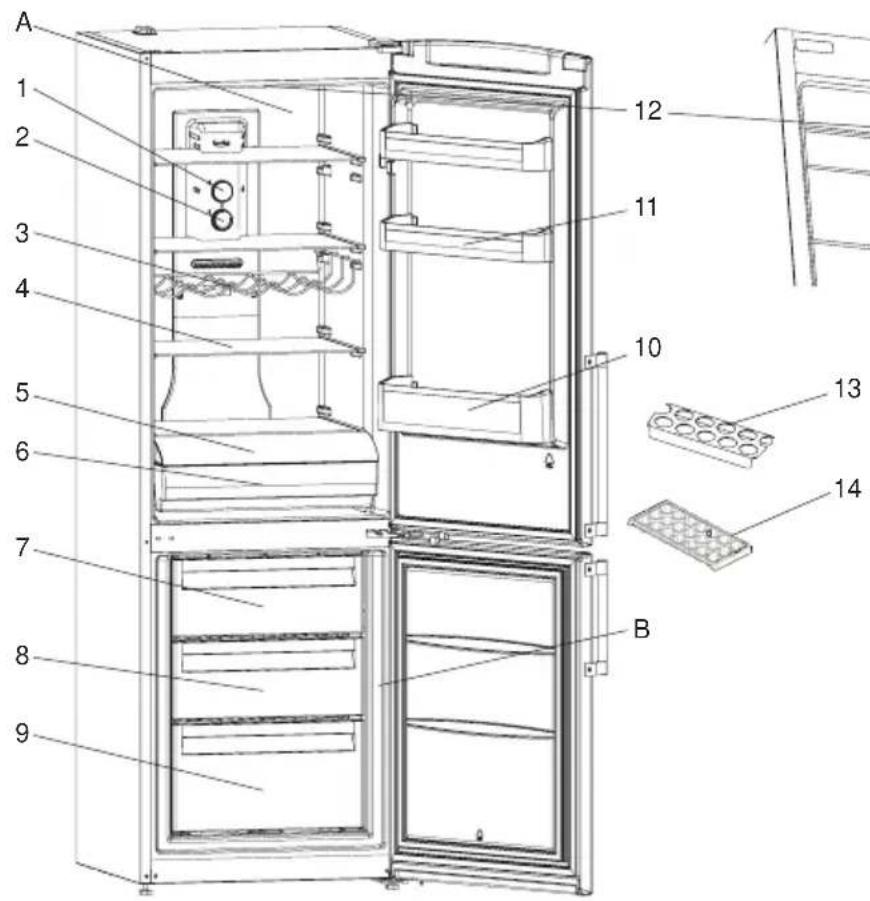
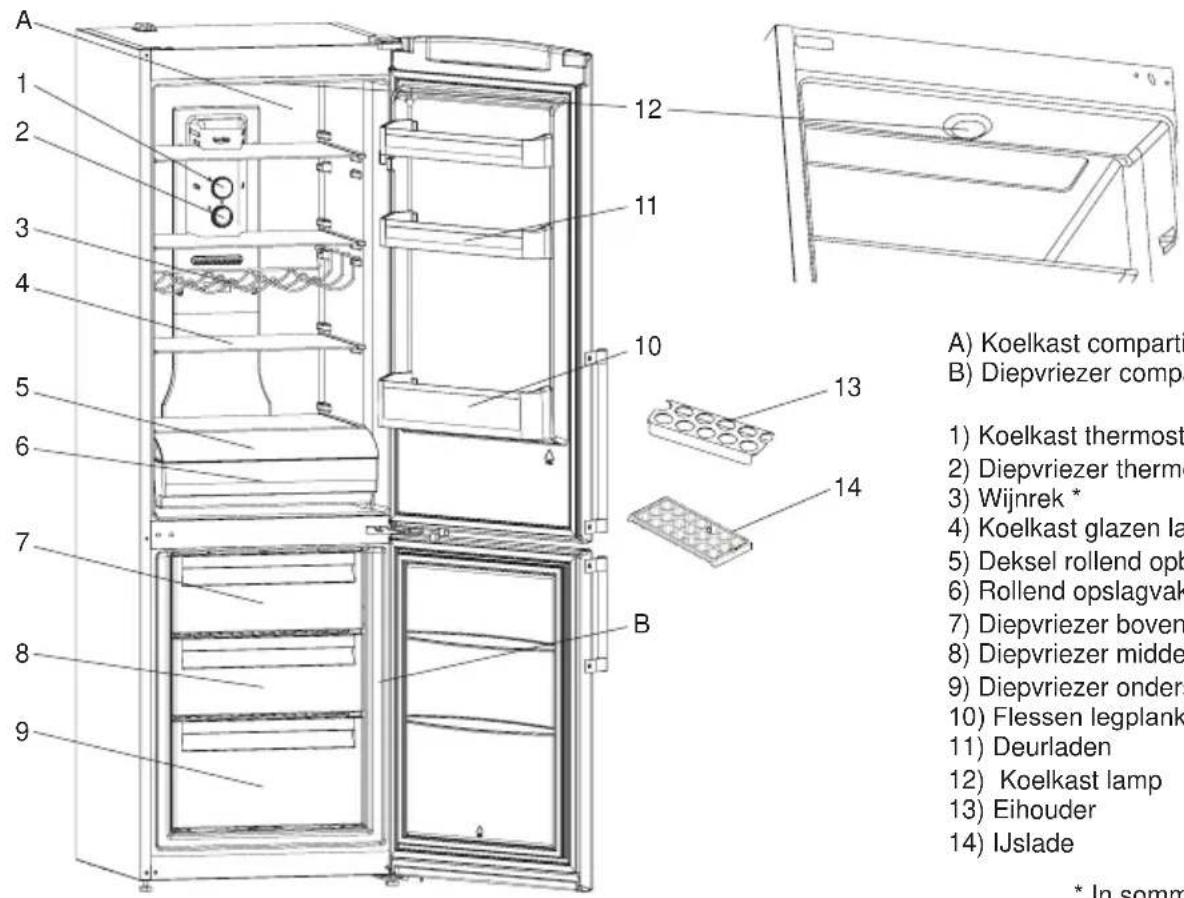
A) Fridge compartment B) Freezer compartment
1) Refrigerator thermostat knob
2) Freezer thermostat knob
3) Wine rack *
4) Fridge glass shelves
5) Roller storage box cover
6) Roller storage box
7) Freezer upper basket
8) Freezer middle basket
This figure has been drawn for information purposes to show the various parts and accessories in the appliance. Parts may vary according to the model of the appliance.
CHAPTER 3: USING YOUR FRIDGE FREEZER
Control panel
Thermostat setting
The freezer and refrigerator thermostats automatically regulate the inside temperature of the compartments.
![graph TD A["Start"] --> B{Max} B --> C["Arrow to Next Step"] C --> D["End"]](/content/2026/06/1299524/images/8cff8234ba14428000cdd5628818aee50a5548d795aa830a034822d9b66865d7.jpg)
Refrigerator Thermostat:
By rotating the knob from position "●" to "MAX", colder temperatures can be obtained. In cold seasons, you can set it to lower positions in order to decrease energy consumption.
Freezer Thermostat:
- For short-term storage of food in the freezer compartment, you can set the knob between "●" and the medium position.
- For long-term storage of food in the freezer compartment, you can set the knob to the medium position.
- When freezing fresh food, ensure the appliance is set to the coolest conditions, but remember to set it back to medium once initial freezing is completed.
Warnings about Temperature Adjustments
- Your temperature adjustments will remain at the levels set if an energy breakdown occurs.
- It is not recommended that you operate your fridge in environments colder than 10°C.
- Temperature adjustments should be made according to the frequency of door openings and the quantity of food kept inside the fridge.
- Wait for any adjustments to be made before changing the setting again.
- Your fridge should be operated up to 24 hours without interruption after being plugged in so it is completely cooled. Do not open the doors of your fridge and do not place food inside during this period.
- There is a five minute delay function to prevent damage to the compressor of your fridge when you plug the appliance in or when there is a power cut. Your fridge will start to operate normally after 5 minutes.
- Your fridge is designed to operate in the ambient temperature intervals stated in the standards, according to the climate class stated on the information label. We do not recommend operating your fridge outside the stated temperature value limits in terms of cooling effectiveness.
Note: If ambient temperature is less than 25°C, the refrigerator setting should be adjusted "between" "and MIDDLE position"
- If the ambient temperature is more than 25°C, the refrigerator setting should be increased until temperature reaches sufficient cooling levels.
- For optimum efficiency, the freezer setting should be in the middle position.
- In summer, if the refrigerator is used where the ambient temperature is too high, you should adjust the freezer thermostat to the MAX position.
| Climate Class Ambient Temperature °C | |
| T Between | 16 and 43 (°C) |
| ST Between | 16 and 38 (°C) |
| N Between | 16 and 32 (°C) |
| SN Between | 10 and 32 (°C) |
Temperature indicator
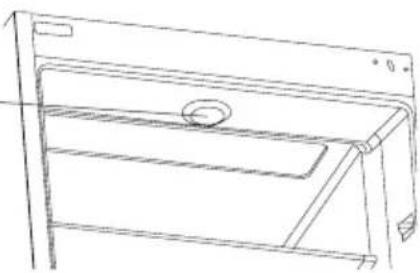
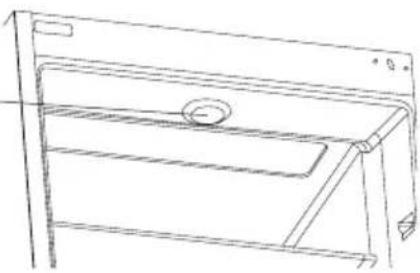
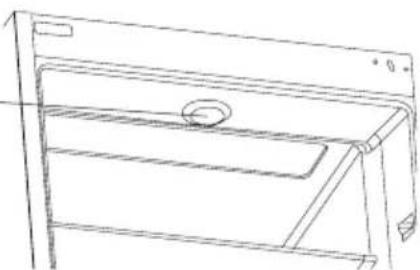
In order to help you better set your refrigerator, we have equipped it with a temperature indicator located in the coldest area.
To better store the food in your refrigerator, especially in the coldest area, make sure the message "OK" appears on the temperature indicator. If "OK" does not appear, this means the temperature has not been set properly.
It may be difficult to see the indicator; make sure it is properly lit. Each time the temperature setting device is changed, wait for the stabilization of the temperature inside the appliance before proceeding, if necessary, with a new temperature setting. Please change the position of the temperature setting device progressively at least 12 hours before starting a new check and potential change.
NOTE: Following repeated openings (or prolonged opening) of the door or after putting fresh food into the appliance, it is normal for the indication "OK" not to appear in the temperature setting indicator. If there is an abnormal build-up of ice crystals (bottom wall of the appliance) on the refrigerator compartment, evaporator (overloaded appliance, high room temperature, frequent door openings), put the temperature setting device on a lower position until compressor off periods are obtained again.

Store food in the coldest area of the refrigerator.
Your foods will be better stored if you put them in the most appropriate cooling area. The coldest area is just above the crisper.

The following symbol indicates the coldest area of your refrigerator.
To ensure a low temperature in this area, make sure the shelf is positioned at the level of this symbol, as shown in the illustration.
The upper limit of the coldest area is indicated by the lower side of the
sticker (head of the arrow). The coldest area's upper shelf must be at the same level as the arrow head. The coldest area is below this level.
As these shelves are removable, make sure they are always at the same level as the zone limits described on the stickers, in order to guarantee temperatures in this area.

CHAPTER 3: USING YOUR FRIDGE FREEZER
Accessories
Ice box
- To remove the ice box, pull the upper freezer box out as far as possible and then pull the ice box out.
- Fill 3/4 full with water and place the ice box in the freezer.
Note: When placing the ice box in the freezer, place it in a horizontal position. Otherwise, the water in the ice box can spill.
Freezer box
- The freezer box is for foods that need to be accessed more easily.
- Removing the freezer box:
- Pull the box out as far as possible.
- Pull the front of the box up and out. To reset the sliding compartment, perform the inverse of the same operation.
Note: Always hold the handle of the box while moving it in or out.


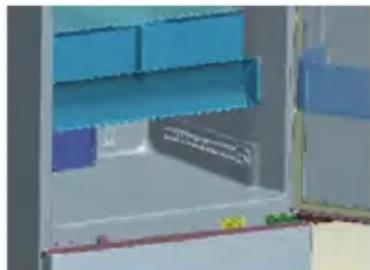
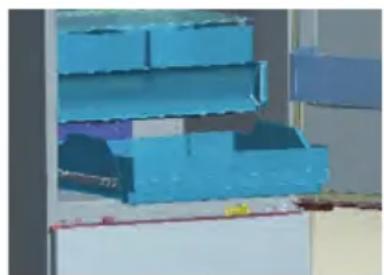
Roller storage box
You can use this compartment for three different functions.
Note: Your fridge is delivered with the shown section in the open position. The declared energy consumption and volume are according to this setting.
- To use for 0 °C Department: If you want to use this compartment as a 0 °C box, you must move the sliding part (cover, as indicated in the picture) from the closed position to the open position.
- To use for Crisper Department: If you want to use this compartment as a crisper, you must move the sliding part (cover, as indicated in the picture) from the open position to the closed position.

- When this compartment is used as a 0 °C compartment, food retains freshness for longer.
- Pull the chiller shelf out toward you. The cover will open automatically.
Please note that this is not a freezer compartment.


Picture-1 Picture-2 Picture-3
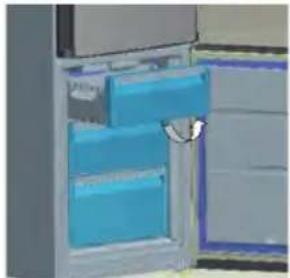
Removing the chiller shelf:
- Open the cover fully. (Picture-1)
- Pull the chiller shelf out towards you. (Picture-2)
- Pull the wheels of the chiller shelf up from the rail in order to remove it. (Picture-3)
Visual and text descriptions in the accessories section may vary depending on the model you have.
Cleaning
- Before cleaning your fridge freezer, turn off the mains supply and remove the plug from the socket.
- Do not wash your fridge freezer by pouring water on it.
- Use a warm, soapy cloth or sponge to wipe the interior and exterior of your fridge freezer.
- Carefully remove all shelves and drawers by sliding them upwards or outwards and clean them with soapy water. Do not wash them in a washing machine or dishwasher.
- Do not use solvents, abrasive cleaners, glass cleaners, or all-purpose cleaning agents to clean your fridge freezer. This may cause damage to the plastic surfaces and other components due to the chemicals they contain. Clean the condenser at the back of your fridge freezer at least once a year with a soft brush or vacuum cleaner.
Make sure that your fridge is unplugged while cleaning.
CHAPTER -3: USING YOUR FRIDGE FREEZER
Defrosting
Your refrigerator automatically defrosts. The water formed as a result of defrosting passes through the water collection spout, flows into the vaporization container behind your refrigerator, and evaporates by itself there.

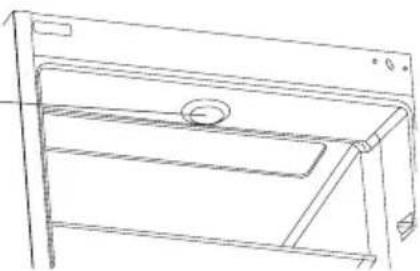
Replacing LED Lighting
If your fridge freezer has LED lighting, contact the Sharp help desk, as this should be changed only by authorized personnel.

CHAPTER -4: FOOD STORAGE GUIDANCE
Refrigerator compartment
• To reduce frost build-up, never place liquids in unsealed containers in the fridge compartment. Allow warm or hot food to cool down before storing. This helps reduce power consumption. To avoid frost build-up, ensure that nothing is stored touching the back wall. The coldest area of the refrigerator is at the bottom. We recommend using this area to store food that will perish easily, such as fish, ready meals, baked goods, or dairy products. The warmest area is the top shelf of the door. We recommend storing butter or cheese here.
Freezer compartment
- Use the freezer to store frozen foods for long periods of time and make ice cubes.
- If you are going to use the refrigerator with maximum freezing capacity:
* Place the foods that you want to freeze in the top basket of the freezer department without exceeding the freezing capacity of your refrigerator. While you use Super Freeze Mode, you must not store existing frozen food near the fresh foods that you want to freeze.
Then enable the “Super Freeze” mode again. You may place your food next to the other frozen food after they are frozen (for at least 24 hours after the 2nd activation of the “Super Freeze” mode).
- To freeze fresh food, ensure that as much of the surface of the food to be frozen is in contact with the cooling surface.
- Do not put fresh food on either side of frozen food as it can thaw it.
- While freezing fresh foods (i.e., meat, fish, and mincemeat), divide into portion sizes.
- Once the unit has been defrosted, replace the foods into the freezer and remember to consume them in a short period of time.
- Never place warm food in the freezer compartment.
- The instructions shown on frozen food packages should always be followed carefully, and if no information is provided, food should not be stored for more than 3 months from the purchase date.
- When buying frozen foods, ensure that these have been frozen at suitable temperatures and that the packing is intact.
- Frozen foods should be transported in appropriate containers to maintain the quality of the food and should be stored in the freezer as soon as possible.
- If a package of frozen food shows signs of humidity and abnormal swelling, it has been previously stored at an unsuitable temperature and the contents have deteriorated.
- The storage life of frozen foods depends on the room temperature, thermostat setting, how often the door is opened, the type of food, and the length of time required to transport the product from the shop to your home. Always follow the instructions printed on the package and never exceed the maximum storage life indicated.
If you decide to open the freezer door again immediately after closing, it may be difficult to re-open. This is normal, and after the freezer has reached an equilibrium condition, the door will open easily.
Important note:
- Frozen foods, when thawed, should be cooked just like fresh foods. If they are not cooked after being thawed, they must NEVER be re-frozen.
CHAPTER -4: FOOD STORAGE GUIDANCE
- The taste of some spices found in cooked dishes (anise, basil, watercress, vinegar, assorted spices, ginger, garlic, onion, mustard, thyme, marjoram, black pepper, etc.) changes and they assume a strong taste when they are stored for a long period. Therefore, only add a small amount of spice if planning to freeze, or the desired spice should be added after the food has been thawed.
- The storage period of food is dependent on the oil used. The suitable oils are margarine, calf fat, olive oil, and butter, and the unsuitable oils are peanut oil and pig fat.
- The food in liquid form should be frozen in plastic cups, and the other food should be frozen in plastic folios or bags.
CHAPTER -5: DOOR REVERSAL
Repositioning the door
- It depends on which fridge freezer you have as to whether it is possible to reverse the doors.
- It is not possible where handles are attached at the front of the appliance.
- If your model does not have handles, it is possible to reverse the doors, but this needs to be completed by authorized personnel. Please call Sharp service.
CHAPTER -6: TROUBLESHOOTING
Check Warnings;
If your fridge is not operating;
• Is there any electrical fault?
• Is the plug placed properly in the socket outlet?
- Is the fuse of the socket outlet that the plug is plugged into or the main fuse blown?
- Is the thermostat setting on the “●” position?
- Is there any fault in the socket outlet? Examine this by plugging your fridge into a socket outlet which you are sure is working.
If your fridge is not cooling enough;
- Is the thermostat setting on the "1" position?
- Is the door of your fridge opened frequently and left open for a long while?
- Is the door of the fridge closed properly?
- Did you put a dish or food in your fridge so that it contacts the rear wall of your fridge, preventing air circulation?
- Is your fridge filled excessively?
- Is there adequate distance between your fridge and the rear and side walls?
- Is the ambient temperature within the range of values specified in the operating manual?
If the food in your refrigerator compartment is over cooled
• Is the thermostat adjustment correct?
- Are there many recently added foods inside the freezer compartment? If so, your fridge may over cool the food inside the refrigerator compartment as it will operate longer to cool these foods.
If your fridge is operating too loudly:
To maintain the set cooling level, the compressor may be activated from time to time. Noises from your fridge at this time are normal and due to its function. When the required cooling level is reached, noises will decrease automatically. If the noises persist:
• Is your appliance stable? Are the legs adjusted?
• Is there anything behind your fridge?
- Are the shelves or dishes on the shelves vibrating? Re-place the shelves and/or dishes if this is the case.
- Are the items placed on your fridge vibrating?
Normal Noises:
Cracking (Ice cracking) Noise:
• During automatic defrosting.
- When the appliance is cooled or warmed (due to expansion of appliance material).
Short cracking: Heard when the thermostat switches the compressor on/off.
Compressor noise (Normal motor noise): This noise means that the compressor operates normally. The compressor may cause more noise for a short time when it is activated.
Bubbling noise and splash: This noise is caused by the flow of the refrigerant in the tubes of the system.
Water flow noise: Normal flow noise of water flowing to the evaporation container during defrosting. This noise can be heard during defrosting.
Air Blowing Noise (Normal fan noise): This noise can be heard in No-Frost fridge during normal operation of the system due to the circulation of air.
CHAPTER -6: TROUBLESHOOTING
If humidity builds up inside the fridge;
- Has the food been properly packaged? Have the containers been well dried before they were put into the refrigerator?
- Are the doors of the refrigerator opened very frequently? When the door is opened, the humidity found in the air in the room enters the refrigerator. Especially if the humidity rate in the room is too high, the more frequently the door is opened the faster will be the humidification.
- It is normal to have water drops formed on the back wall following the automatic defrosting process. (In Static Models)
If the doors are not opened and closed properly;
- Do the food packages prevent closing of the door?
- Are the door compartments, shelves and drawers placed properly?
- Are door gaskets broken or torn? • Is your fridge on a level surface?
If the edges of fridge cabinet that the door joint contact are warm;
Especially in summer (hot weather), the surfaces that the joint contact may get warmer during the operation of the compressor, this is normal.
IMPORTANT NOTES:
- The compressor protection thermal fuse will cut out after sudden power breakdowns or after unplugging the appliance, because the gas in the cooling system is not stabilised. This is quite normal, and the fridge will restart after 4 or 5 minutes.
- The cooling unit of your refrigerator is hidden in the rear wall. Therefore, water droplets or ice may occur on the rear surface of your fridge due to the operation of the compressor in specified intervals. This is normal. There is no need to perform a defrosting operation unless the ice is excessive.
- If you will not use your fridge for a long time (e.g. in summer holidays), put the thermostat to “•” position. After defrosting, clean your fridge and leave the door open to prevent humidity and odor build up.
- The appliance you have purchased is designed for home type use and can be used only at home and for the stated purposes. It is not suitable for commercial or common use. If the consumer uses the appliance in a way that does not comply with these features, we emphasise that the producer and the dealer shall not be responsible for any repair and failure within the guarantee period.
- If the problem persists after you have followed all the instructions above, please consult an authorised service provider.
Conformity Information
- This appliance is designed for use at an ambient temperature within the 16°C - 38°C range.
- The appliance is designed in compliance with the IEC60335-1 / IEC60335-2-24, 2004/108/EC standards.
CHAPTER -7: TIPS FOR SAVING ENERGY
- Always allow foodstuffs to cool before storing in the appliance.
- Thaw food in the fridge compartment, this helps save energy.

Thermostat setting

Freezer box

Cleaning
PART -1: GENERAL WARNINGS
PART -2: PARTS AND PIECES OF YOUR FREEZER

Accessories
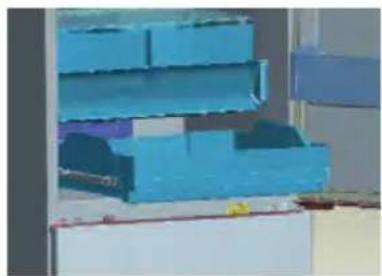

Image 1 Image 2 Image 3
Evaporation tray
PART -4: FOOD ARRANGEMENT
CHAPTER -6: TROUBLESHOOTING....41
CHAPTER -7: TIPS FOR ENERGY SAVING 42
CHAPTER -2: YOUR FREEZER
A) Refrigerator compartment B) Freezer compartment 1) Refrigerator thermostat knob 2) Freezer thermostat knob 3) Wine rack * 4) Refrigerator glass shelves 5) Lid rolling storage compartment 6) Rolling storage compartment 7) Freezer upper basket 8) Freezer middle basket 9) Freezer lower basket 10) Bottle shelf 11) Door shelves 12) Refrigerator light 13) Egg holder 14) Ice tray
* In some models
the image.

Rolling storage compartment

CHAPTER -3: USING YOUR FREEZER
CHAPTER -4: FOOD STORAGE GUIDELINES
Refrigerator compartment
Accessories
Ice cube tray

CHAPTER 3: USING THE REFRIGERATOR

CHAPTER -2: YOUR REFRIGERATOR

Freezer chest


Figure 1 Figure 2 Figure 3
Remove the refrigerator shelf;
CHAPTER -2: THIS REFRIGERATOR-FREEZER

CHAPTER -3: HOW TO USE YOUR REFRIGERATOR-FREEZER
Accessories
Ice box
Roller storage box

CHAPTER 4: FOOD STORAGE GUIDE
Refrigerator compartment
CHAPTER 2: YOUR COMBI FRIDGE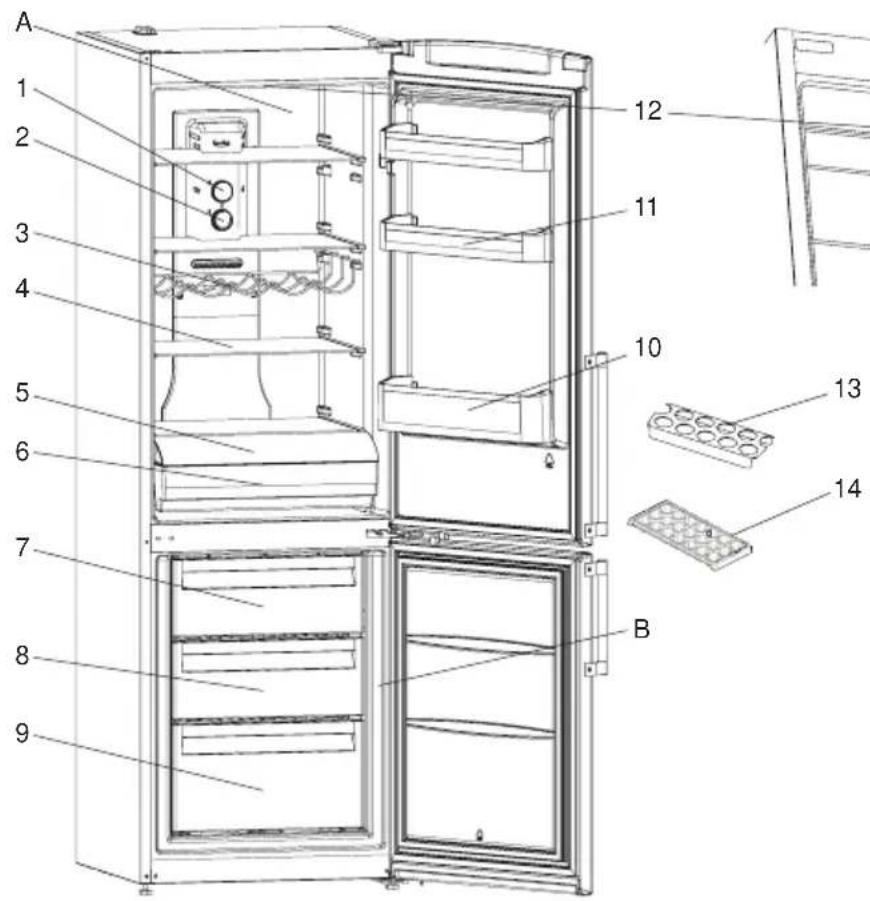

CHAPTER 3: HOW TO USE YOUR COMBI FRIDGE
Accessories
Ice box
- To remove the ice box, pull the upper freezer drawer out as far as possible, then pull the ice box out.
- Fill 3/4 with water and place the ice box in the freezer.
Note: When placing the ice box in the freezer, put it in a horizontal position. Otherwise, the water in the ice box may leak out.
Freezer drawer


CHAPTER 4: FOOD STORAGE GUIDELINES
Refrigerator
Installation information
CHAPTER 2: YOUR FRIDGE AND FREEZER
CHAPTER -3: USING YOUR REFRIGERATOR AND FREEZER
Accessories
Ice cube tray
Freezer drawer


CHAPTER -3: USING YOUR REFRIGERATOR AND FREEZER
Cleaning
Evaporation tray
Replacing the LED lamp
CHAPTER -4: FOOD STORAGE GUIDE
Refrigerator compartment
CHAPTER-2: REFRIGERATOR-FREEZER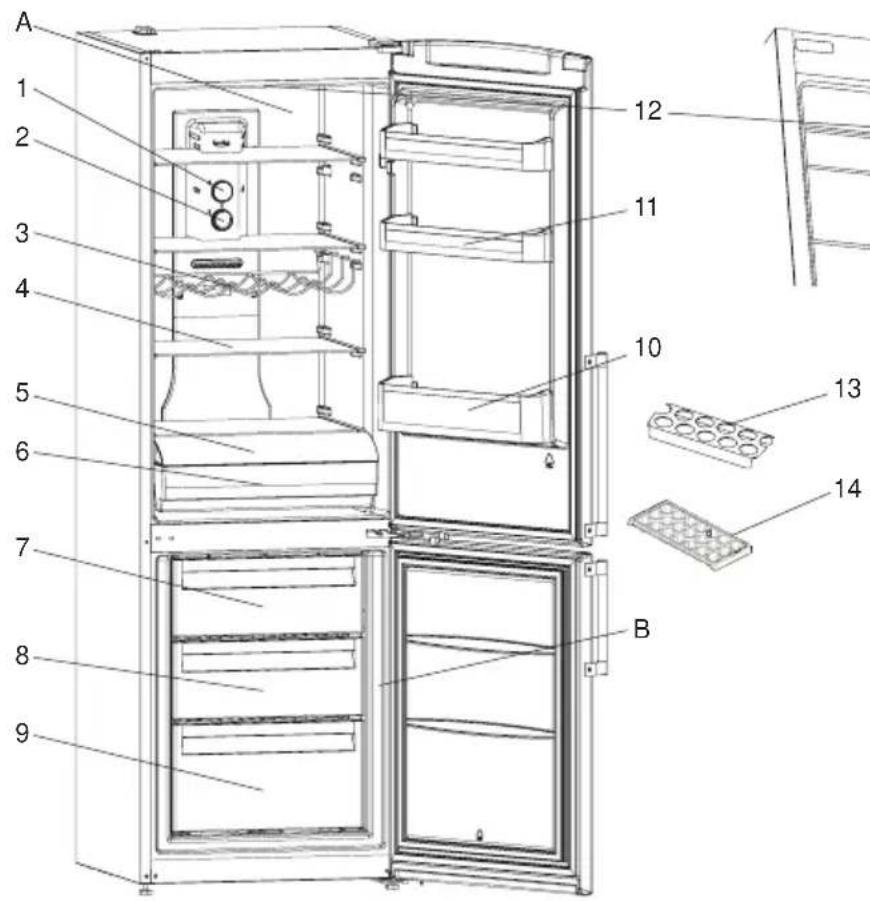
CHAPTER 3: USING THE REFRIGERATOR-FREEZER
Accessories
Ice cube tray
Freezer drawer

CHAPTER 4: FOOD STORAGE GUIDE
Refrigerator compartment
CHAPTER 6: TROUBLESHOOTING
CHAPTER 6: TROUBLESHOOTING
2. CHAPTER: YOUR REFRIGERATOR WITH FREEZER

3. CHAPTER: USING THE REFRIGERATOR WITH FREEZER
Accessories
Ice cube tray
Freezer drawer
Storage drawer on rollers


4. CHAPTER: FOOD STORAGE GUIDE
Refrigerator
2. SECTION: REFRIGERATOR WITH FREEZER
![graph TD A["Start"] --> B{Max} B --> C["Arrow to Next Step"] C --> D["End"]](/content/2026/06/1299524/images/98e28742f6809c2360ba8a2ffa3b26d3538d336788c00bde440d4f84ca2dd855.jpg)
Refrigerator thermostat.
3. SECTION: USING THE REFRIGERATOR WITH FREEZER
Freezer box


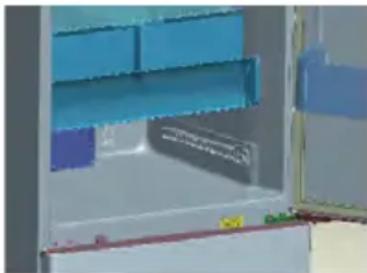
4. SECTION. FOOD STORAGE INSTRUCTIONS
Refrigerator compartment
6. SECTION. TROUBLESHOOTING
6. SECTION. TROUBLESHOOTING
2 SECTION: PARTS OF YOUR REFRIGERATOR-FREEZER

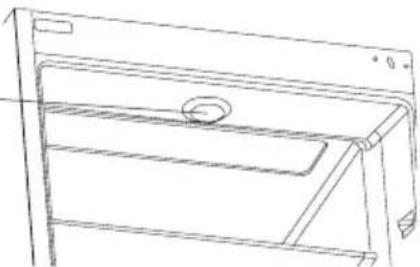
3 SECTION: USING YOUR REFRIGERATOR-FREEZER
Accessories
Ice cube tray

Flip-up shelf


4 SECTION: STORING FOOD PRODUCTS
Refrigerator compartment
- CONTENTS
- CHAPTER -1: GENERAL WARNINGS
- DISPOSAL
- DISPOSAL OF YOUR OLD APPLIANCE
- NOTES
- SAFETY WARNINGS
- INSTALLATION INFORMATION
- BEFORE USING YOUR FRIDGE
- NO-FROST TECHNOLOGY
- CHAPTER 3: USING YOUR FRIDGE FREEZER
- CONTROL PANEL
- THERMOSTAT SETTING
- REFRIGERATOR THERMOSTAT
- FREEZER THERMOSTAT
- WARNINGS ABOUT TEMPERATURE ADJUSTMENTS
- TEMPERATURE INDICATOR
- STORE FOOD IN THE COLDEST AREA OF THE REFRIGERATOR
- ACCESSORIES
- ICE BOX
- FREEZER BOX
- ROLLER STORAGE BOX
- REMOVING THE CHILLER SHELF
- CLEANING
- CHAPTER -3: USING YOUR FRIDGE FREEZER
- DEFROSTING
- REPLACING LED LIGHTING
- CHAPTER -4: FOOD STORAGE GUIDANCE
- REFRIGERATOR COMPARTMENT
- FREEZER COMPARTMENT
- IMPORTANT NOTE
- CHAPTER -5: DOOR REVERSAL
- REPOSITIONING THE DOOR
- CHAPTER -6: TROUBLESHOOTING
- CHECK WARNINGS
- IF YOUR FRIDGE IS NOT OPERATING
- IF YOUR FRIDGE IS NOT COOLING ENOUGH
- IF THE FOOD IN YOUR REFRIGERATOR COMPARTMENT IS OVER COOLED
- IF YOUR FRIDGE IS OPERATING TOO LOUDLY
- NORMAL NOISES
- CRACKING (ICE CRACKING) NOISE
- IF HUMIDITY BUILDS UP INSIDE THE FRIDGE
- IF THE DOORS ARE NOT OPENED AND CLOSED PROPERLY
- IF THE EDGES OF FRIDGE CABINET THAT THE DOOR JOINT CONTACT ARE WARM
- IMPORTANT NOTES
- CONFORMITY INFORMATION
- CHAPTER -7: TIPS FOR SAVING ENERGY
- PART -1: GENERAL WARNINGS
- PART -4: FOOD ARRANGEMENT
- CHAPTER -2: YOUR FREEZER
- ROLLING STORAGE COMPARTMENT
- CHAPTER -3: USING YOUR FREEZER
- CHAPTER -4: FOOD STORAGE GUIDELINES
- ICE CUBE TRAY
- CHAPTER 3: USING THE REFRIGERATOR
- CHAPTER -2: YOUR REFRIGERATOR
- FREEZER CHEST
- REMOVE THE REFRIGERATOR SHELF
- CHAPTER -3: HOW TO USE YOUR REFRIGERATOR-FREEZER
- CHAPTER 4: FOOD STORAGE GUIDE
- CHAPTER 3: HOW TO USE YOUR COMBI FRIDGE
- FREEZER DRAWER
- CHAPTER 4: FOOD STORAGE GUIDELINES
- REFRIGERATOR
- CHAPTER -3: USING YOUR REFRIGERATOR AND FREEZER
- REPLACING THE LED LAMP
- CHAPTER -4: FOOD STORAGE GUIDE
- CHAPTER 3: USING THE REFRIGERATOR-FREEZER
- CHAPTER 6: TROUBLESHOOTING
- CHAPTER: YOUR REFRIGERATOR WITH FREEZER
- CHAPTER: USING THE REFRIGERATOR WITH FREEZER
- STORAGE DRAWER ON ROLLERS
- CHAPTER: FOOD STORAGE GUIDE
- SECTION: REFRIGERATOR WITH FREEZER
- SECTION: USING THE REFRIGERATOR WITH FREEZER
- SECTION. FOOD STORAGE INSTRUCTIONS
- SECTION. TROUBLESHOOTING
- SECTION: PARTS OF YOUR REFRIGERATOR-FREEZER
- SECTION: USING YOUR REFRIGERATOR-FREEZER
- FLIP-UP SHELF
- SECTION: STORING FOOD PRODUCTS
Brand : SHARP
Model : SJ-B2297M1I
Category : Refrigerator