ZBOX nano VD01 PLUS - Desktop computer Zotac - Free user manual and instructions
Find the device manual for free ZBOX nano VD01 PLUS Zotac in PDF.


| Product Type | Mini PC |
| Model | ZBOX nano VD01 PLUS |
| Brand | Zotac |
| Processor | Intel Celeron N3150 (quad-core, 1.6 GHz, burst up to 2.08 GHz) |
| Memory | 4 GB DDR3L-1600 (expandable up to 8 GB) |
| Storage | 32 GB eMMC |
| Graphics | Intel HD Graphics (Bay Trail) |
| Operating System | Windows 10 Home (64-bit) pre-installed |
| Wireless Connectivity | 802.11ac WiFi + Bluetooth 4.0 |
| Ethernet | Gigabit LAN |
| Video Outputs | 1 x HDMI, 1 x DisplayPort |
| USB Ports | 4 x USB 3.0, 2 x USB 2.0 |
| Audio | Headphone/Microphone combo jack, analog audio via HDMI/DP |
| Card Reader | SD/SDHC/SDXC |
| Dimensions (W x D x H) | 127 x 127 x 45 mm (5.0 x 5.0 x 1.8 in) |
| Weight | Approx. 0.6 kg (1.32 lbs) |
| Power Supply | External AC adapter (19V, 3.42A, 65W) |
| Power Consumption | Idle ~8W, max ~25W |
| Cooling | Passive (fanless) with heatsink |
| Mounting | VESA mount compatible (75 x 75 mm) |
| Maintenance | Clean with dry cloth; no internal user-serviceable parts |
| Safety | Do not block vents; use only supplied power adapter |
| Spare Parts | Contact Zotac support for replacement adapter or mounting kit |
| Warranty | 2 years limited |
Frequently Asked Questions - ZBOX nano VD01 PLUS Zotac
User questions about ZBOX nano VD01 PLUS Zotac
0 question about this device. Answer the ones you know or ask your own.
Ask a new question about this device
Download the instructions for your Desktop computer in PDF format for free! Find your manual ZBOX nano VD01 PLUS - Zotac and take your electronic device back in hand. On this page are published all the documents necessary for the use of your device. ZBOX nano VD01 PLUS by Zotac.
USER MANUAL ZBOX nano VD01 PLUS Zotac
natural_image
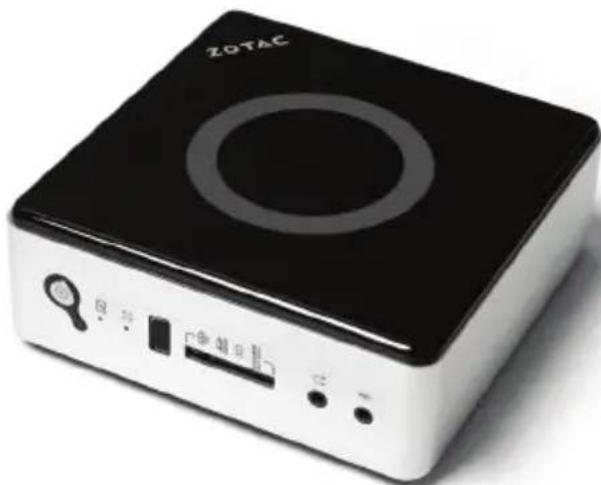
Black and orange ZOTAC portable electronic device with control buttons and indicator lights (no readable text beyond branding)


ZOTAC ZBOX nano VD01
ZOTAC ZBOX nano VD01 PLUS
USER'S MANUAL
ZOTAC ZBOX nano User's Manual
natural_image
Black and white electronic device labeled 'ZOTAC' with ports and buttons (no readable text beyond branding)No part of this manual, including the products and software described in it, may be reproduced, transmitted, transcribed, stored in a retrieval system, or translated into any language in any form or by any means, except documentation kept by the purchaser for backup purposes, without the express written permission of ZOTAC.
Products and corporate names mentioned in this manual may not be registered trademarks or copyrights of their respective companies, and are used for identification purposes only. All trademarks are the property of their respective owners.
Every effort has been made to ensure that the contents of this manual are correct and up to date. However, the manufacturer makes no guarantee regarding the accuracy of its contents, and reserves the right to make changes without prior notice.
CAUTION:
Risk of explosion if the battery is replaced with an incorrect type. Batteries should be recycled where possible. Disposal of used batteries must be in accordance with local environmental regulations.
Table of Contents
Product specifications 3
Safety information 4
Setting up your system 4
Care during use 4
Welcome 5
Package contents 5
Getting to know your ZOTAC ZBOX nano 6
Front view 6
Rear view----7
BIOS settings of specific functions 8
How to disable the ring LED indicator 8
How to enable DeepSleep status 9
How to disable USB2.0 charge (for S3/S4 status)----10
How to enable CIR controller (for internal IR receiver) 12
Customizing the ZOTAC ZBOX nano 14
Installing a memory module 15
Installing a hard disk 16
Setting up the ZOTAC ZBOX nano 18
Positioning the ZOTAC ZBOX nano 20
Mounting the ZOTAC ZBOX nano to a LCD monitor----20
IR receiver 21
Remote control (optional) 22
Function keys 22
Lithium cell installation----23
Installing drivers and software 24
Installing an operating system 24
Installing system drivers 24
Using your ZOTAC ZBOX nano---- 25
Configuring wireless connection 25
Configuring wired connection 25
Using a static IP 25
Using a dynamic IP (PPPoE connection)----26
Configuring audio output via an HDMI device 26
Product specifications
Chipset
- VIA VX900H
Product Dimensions
- 127mm x 127mm x 45mm
Onboard CPU
• VIA Nano X2 U4025 (1.2 G/1066 MHz)
Internal graphics processor (IGP)
• VIA Chrome9 IGP
- DirectX 9.0 SM2.0, support HDTV (resolution: 1080i/720P)
Memory support
• One 204-pin SO-DIMM DDR3-1066
- Up to 4 GB of memory
USB ports
- Two USB 2.0 ports & two USB 3.0 ports
Storage support
• SATA 3.0 Gb/s transfer rates
• Supports one 2.5-inch SATA HDD or SSD (height limit: 9.5 mm)
- One eSATA port
Network support
• Gigabit (10/100/1000Mbps) LAN
• IEEE 802.3 compatible
WiFi/BT support
- Compliant with IEEE802.11b/g/n standard
• High speed wireless connection up to 150 Mbps
• Fully qualified Bluetooth v3.0
Audio
• 2-channel high-definition audio
- Jack-sensing compatible
Operating System support
- Microsoft Windows XP 32bit, Windows 7 32bit & 64bit
Green Function
- ACPI (Advanced Configuration and Power Interface) compatible
IR receiver
• Support carrier frequencies 36k Hz
- Compliant with Win 7
Safety information
Your ZOTAC ZBOX is designed and tested to meet the latest standards of safety for information technology equipment. However, to ensure your safety, it is important that you read the following safety instructions.
Setting up your system
Read and follow all instructions in the documentation before you operate your system.
Do not use this product near water or a heat source such as a radiator.
- Set up the system on a stable surface with the provided stand. Never use the system alone without the stand.
Openings on the chassis are for ventilation. Do not block or cover these openings. Make sure you leave plenty of space around the system for ventilation. Never insert objects of any kind into the ventilation openings.
Use this product in environments with ambient temperatures between 0^ C and 35^ C.
If you use an extension cord, please use the UL listed cord and make sure that the total ampere rating of the devices plugged into the extension cord does not exceed its ampere rating.

Care during use
Do not walk on the power cord or allow anything to rest on it.
Do not spill water or any other liquids on your system.
When the system is turned off, a small amount of electrical current still flows. Always unplug all power, modem, and network cables from the power outlets before cleaning the system.
If you encounter the following technical problems with the product, unplug the power cord and contact a qualified service technician or your retailer.
The power cord or plug is damaged.
Liquid has been spilled into the system.
The system does not function properly even if you follow the operating instructions.
The system was dropped or the cabinet is damaged.
The system performance changes.
Welcome
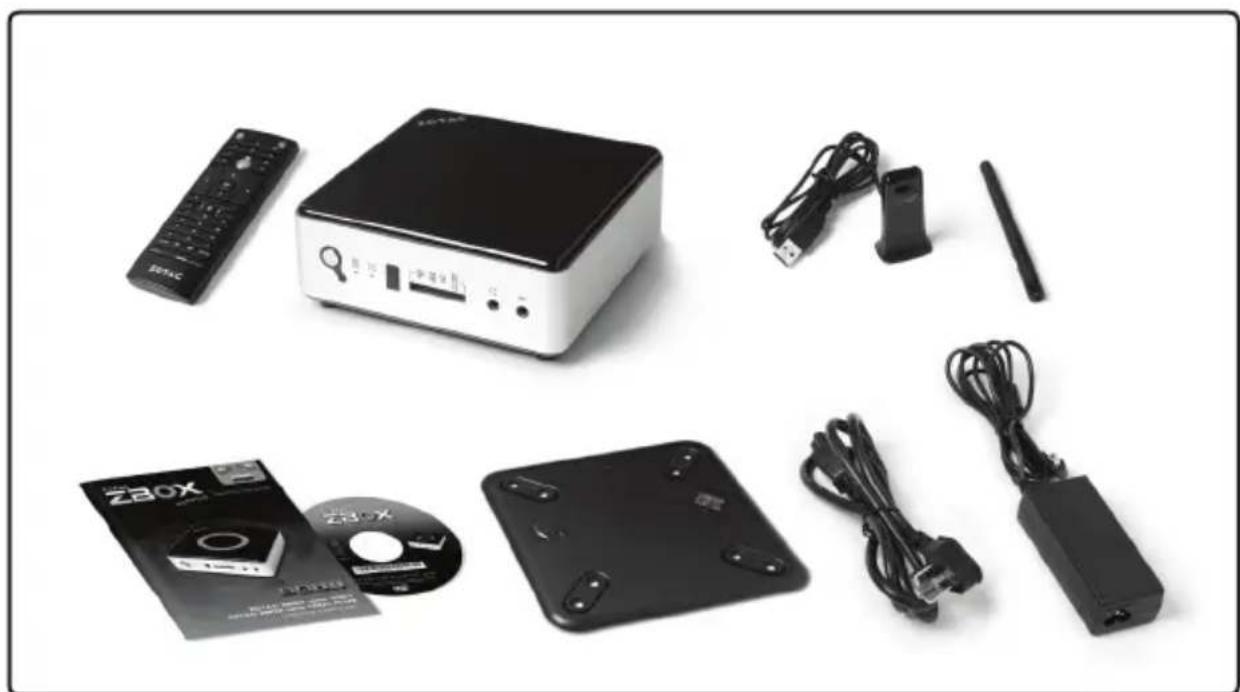
Congratulations on your purchase of the ZOTAC ZBOX nano mini-PC. The following illustration displays the package contents of your new ZOTAC ZBOX nano. Please contact your retailer If any of the below items are damaged or missed.
Package contents
• 1 x ZOTAC ZBOX nano mini-PC
• 1 x ZOTAC VESA mount
- 4 x Mount screws
- 1 x AC Adapter
- 1 x Power Cord
- 1 x User Manual
• 1 x Quick Start Guide
- 1 x Support DVD
• 1 x External USB IR receiver
- 1 x Remote Control
• 2 x CR2032 Lithium Cells
natural_image
Product display set including a wireless router, CD cards, and electronic devices (no visible text or symbols)Getting to know your ZOTAC ZBOX nano
Front view
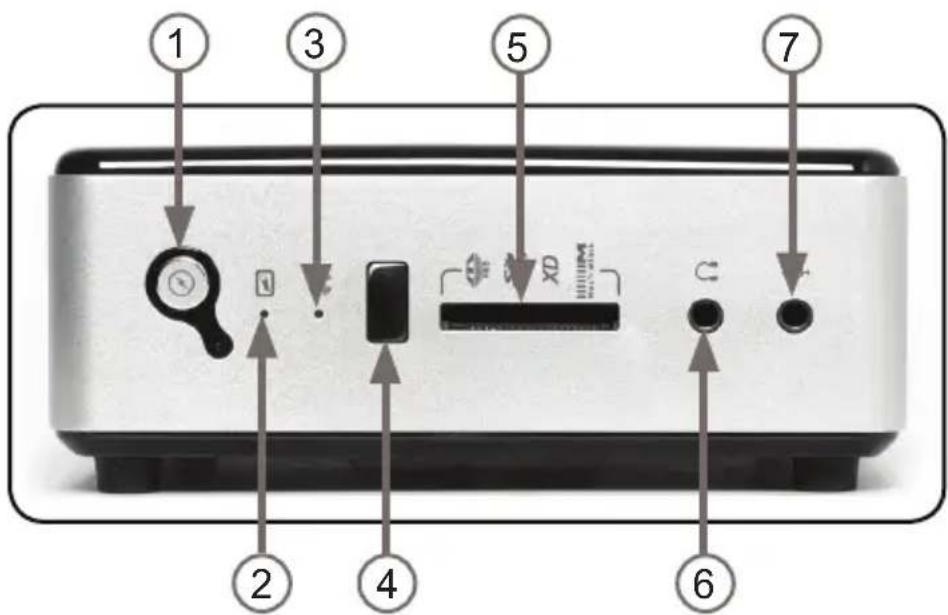
Refer to the diagram below to identify the components on this side of the system
1. Power switch
The power switch turns the mini-PC ON and OFF.
2. HDD status indicator
The HDD status indicator shows when the hard disk is transferring data.
3. WiFi status indicator
The WiFi status indicator shows when the WiFi is transferring data.
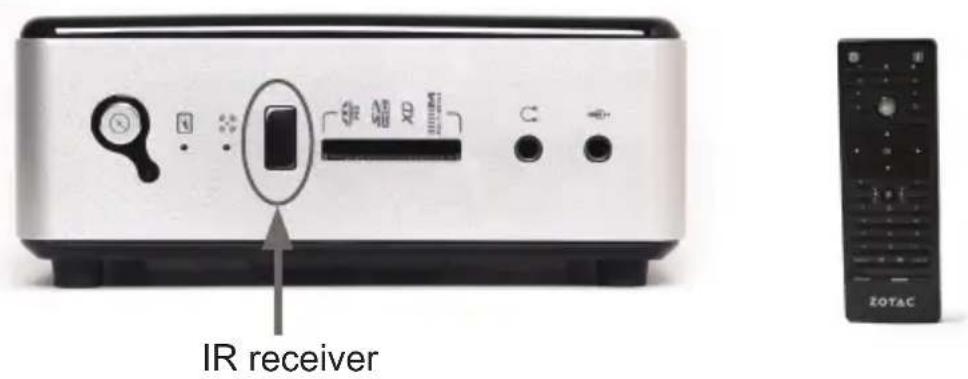
4. IR receiver
The IR receiver is used to receive the signal from the IR remote control.
5. 6-in-1 Memory card slot
The built-in memory card reader reads and writes MMC/SD/SDHC/MS/MS Pro/xD cards used in devices such as digital cameras, MP3 players, mobile phones and PDAs.
6. Headphone/Audio output jack
The stereo headphone jack (3.5mm) is used to connect the system's audio out signal to analog headphones or amplified speakers.
7. Microphone jack
The microphone jack is designed to connect a microphone for video conferencing, voice narrations or simple audio recordings.
Note 1: The power adapter may become warm to hot when in use. Do not cover the adapter and keep it away from your body.
Note 2: Due to the special design for easy upgrade, some connectors are placed upside down.
Rear view
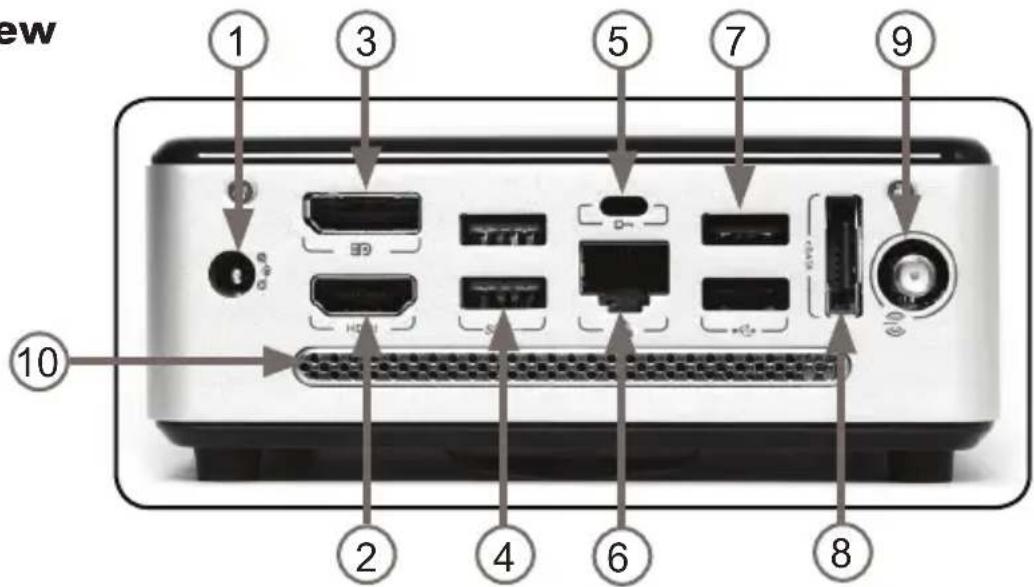
Refer to the diagram below to identify the components on this side of the system.
1. Power input (DC19V)
The supplied power adapter converts AC power to DC power for use with this jack. Power supplied through this jack supplies power to the mini-PC. To prevent damage to the mini-PC, always use the supplied power adapter.
2. HDMI output
The HDMI (High Definition Multimedia Interface) output supports Full HD 1080p displays such as an HDTV or monitor.
3. DisplayPort
DisplayPort supports both external (box-to-box) and internal (laptop LCD panel) display connections.
4. USB 3.0 ports
The USB 3.0 ports support the SuperSpeed USB 3.0 devices and are backwards compatible with USB 2.0/1.1 devices. Use the ports for USB 3.0 devices for maximum performance with USB 3.0 compatible devices.
5. Safety lock
Connects to compatible Kensington Safety Lock.
6. Ethernet port
The eight-pin RJ-45 LAN port supports standard Ethernet cable for connection to a local area network (LAN) with speeds of 10/100/1000Mbps.
7. USB 2.0 ports
The USB (Universal Serial Bus) ports are compatible with USB devices such as keyboards, mice, cameras and hard disk drives.
8. eSATA port
The external SATA port is compatible with e.SATA devices such as external hard drives and Blu-ray drives.
9. WiFi antenna connector
The WiFi antenna connector supports WiFi antenna module.
10. Ventilation area
The ventilation area is designed for cooling.
BIOS settings of specific functions
ZOTAC ZBOX nano has some specific functions which can be enabled or disabled in BIOS settings, such as LED indicator, USB2.0 charge and CIR controller.
How to disable the ring LED indicator
- Turn on the ZBOX nano mini-PC, then press
to enter the BIOS SETUP UTILITY. - Use the arrow keys to navigate to the Advanced menu and select ACPI Configuration.
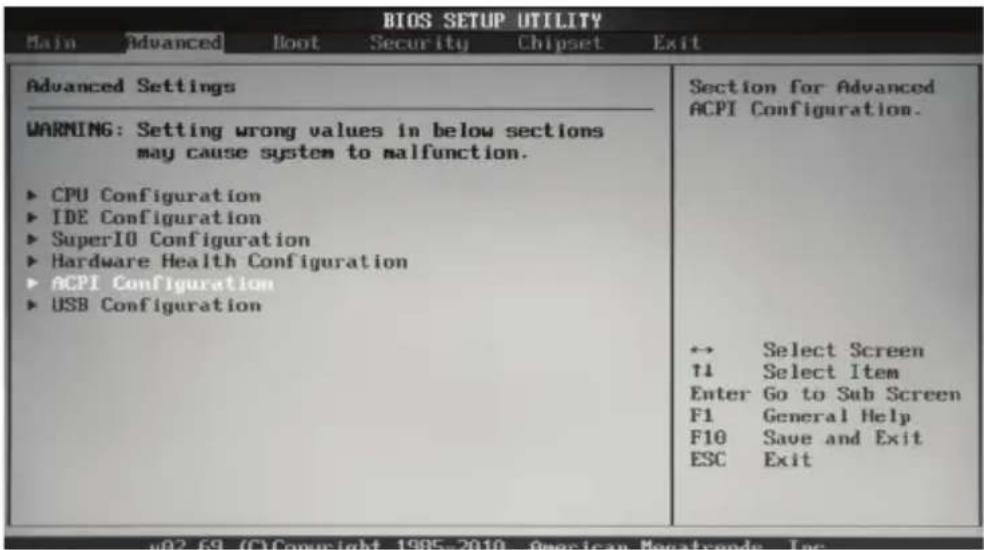
- Press
to display the ACPI Settings and navigate to Back light LED.
| ACPI Settings | Back light LED enabled | |
| ► General ACPI Configuration ► Advanced ACPI Configuration ► Chipset ACPI Configuration DeepSleep (ErP Compliant) [Disabled] Restore on AC/Power Loss [Last State] Resume On Ring [Disabled] Resume On PMEN [Disabled] Resume On PS/2 KBC [Disabled] Wake-Up Key [Any Key] Resume On PS/2 Mouse [Disabled] Resume On RTC Alarm [Disabled] Back light LED [Enabled] | ||
| ← Select Screen ↑1 Select Item +- Change Option F1 General Help F10 Save and Exit ESC Exit | ||
- Press
and select Disabled.
![BIOS SETUP UTILITY Advanced ACPI Settings ► General ACPI Configuration ► Advanced ACPI Configuration ► Chipset ACPI Configuration DeepSleep (ErP Compliant) [Disabled] Restore on AC/Power Loss [Last State] Resume On Ring [Disabled] Resume On PMEN Options Resume On PS/2 KBC Disabled Wake-Up Key Enabled Resume On PS/2 Mouse Resume On RTC Alarm [Disabled] Back light LED [Enabled] Back light LED enabled ↔ Select Screen ↑4 Select Item +- Change Option F1 General Help F10 Save and Exit ESC Exit v02.69 (C) Copyright 1985-2010, American Newsatrends, Inc.](/content/2026/06/1279531/images/84f2ac7aa078819c1e2cc666bd65d9ffa75b4271697f5dbffca596f26f10f83a.jpg)
- Press F10 to save the configuration and exit. The PC will reboot.
How to enable DeepSleep status
- In ACPI Settings menu, select DeepSleep (Erp Compliant).
| BIOS SETUP UTILITY Advanced | |
| ACPI Settings | DeepSleep enabled/disa |
| ► General ACPI Configuration ► Advanced ACPI Configuration ► Chipset ACPI Configuration DeepSleep (ErP Compliant) [Disabled] Restore on AC/Power Loss [Last State] Resume On Ring [Disabled] Resume On PMEN [Disabled] Resume On PS/2 KDC [Disabled] Wake-Up Key [Any Key] Resume On PS/2 Mouse [Disabled] Resume On RTC Alarm [Disabled] Back light LED [Disabled] | ← Select Screen ↑1 Select Item +- Change Option F1 General Help F10 Save and Exit ESC Exit |
2. Press and select Enabled.
![BIOS SETUP UTILITY Advanced ACPI Settings ► General ACPI Configuration ► Advanced ACPI Configuration ► Chipset ACPI Configuration DeepSleep (ErP Compliant) [Disabled] Restore on AC/Power Loss [Last State] Resume On Ring [Disabled] Resume On PMEN Resume On PS/2 KBC Wake-Up Key Resume On PS/2 Mouse Resume On RTC Alarm [Disabled] Back light LED [Disabled] DeepSleep enabled/disa ↔ Select Screen ↑↓ Select Item ← Change Option F1 General Help F10 Save and Exit ESC Exit v02.69 (C) Copyright 1985-2010, American Megatrends, Inc.](/content/2026/06/1279531/images/21eba7332d80e6584aa6e102da343e3ff474b98853d72db23900a5b4cd0efe55.jpg)
How to disable USB2.0 charge (for S3/S4 status)
1. In Advanced menu, select USB Configuration.
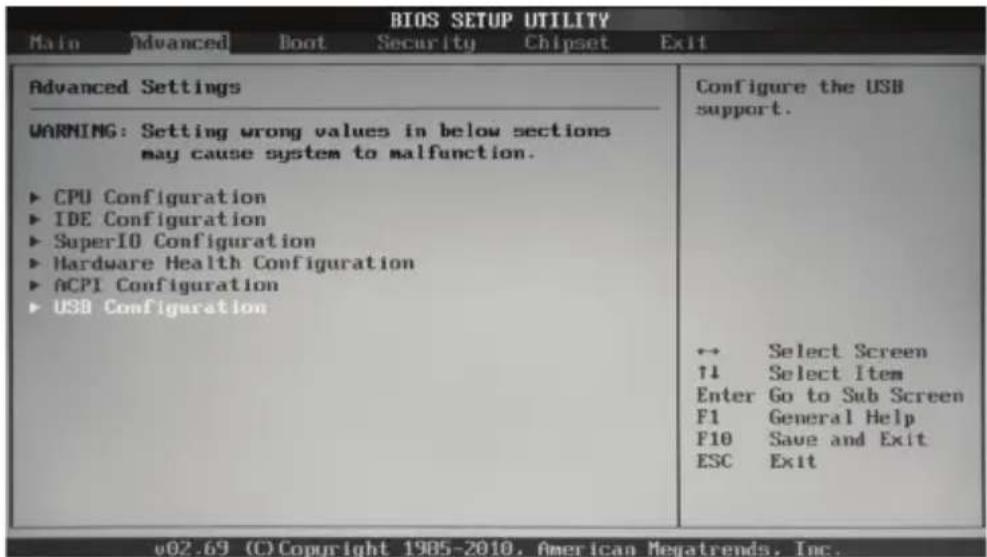
- Press
to display the USB Configuration and navigate to Charger mode.
| BIOS SETUP UTILITY Advanced | |
| USB Configuration Module Version - 2.24.5-13.4 USB Devices Enabled: 1 Keyboard --UT3410 USB Setup Items=- OnChip UHCI Device [Enabled] OnChip UHCI2 Device [Enabled] OnChip UHCI3 Device [Enabled] OnChip UHCI4 Device [Enabled] OnChip EHCI Device [Enabled] USB Device Mode Enable [Disabled] Charger mode [Enable] Legacy USB Support [Enabled] USB 2.0 Controller Mode [HiSpeed] BIOS EHCI Hand-Off [Enabled] Legacy USB1.1 HC Support [Enabled] | Enable:Enable USB port as charger power source in S3/S5. Disabled:Disabled USB charger mode. ↔ Select Screen ↑↓ Select Item +- Change Option F1 General Help F10 Save and Exit ESC Exit |
- Press
and select Disabled.
![BIOS SETUP UTILITY Advanced USB Configuration Module Version - 2.24.5-13.4 USB Devices Enabled : 1 Keyboard --UT3410 USB Setup Items-- OnChip UHCI Device OnChip UHCI2 Device OnChip UHCI3 Device OnChip UHCI4 Device OnChip EHCI Device USB Device Mode Enable Charger mode Legacy USB Support USB 2.0 Controller Mode BIOS EHCI Hand-Off Legacy USB1.1 HC Support Options Enable Disabled [Enabled] [Disabled] [Enable] [Enabled] [HiSpeed] [Enabled] [Enabled] Enable:Enable USB port as charger power source in S3/S5. Disabled:Disabled USB charger mode. ++ Select Screen ↑↓ Select Item -- Change Option F1 General Help F10 Save and Exit ESC Exit v02.69 (C) Copyright 1985-2010, American Megatrends, Inc.](/content/2026/06/1279531/images/2c9fc314c02548426f7584af782ea47c58062dbb11965723a3024c6ac2d18404.jpg)
How to enable CIR controller (for internal IR receiver)
- Use the arrow keys to navigate to the Advanced menu and select Super IO Configuration.
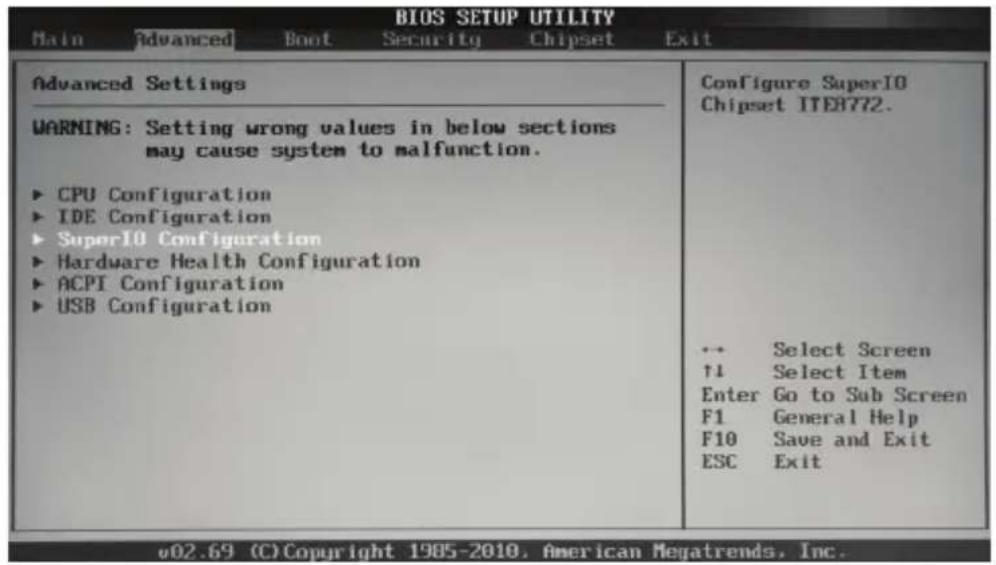
- Press
to display the Super IO Configuration and enter CIR Controller Configuration.
![BIOS SETUP UTILITY Advanced Configure ITE8772 Super IO Chipset Serial Port1 Address [Disabled] OnBoard CIR Port [Disabled] ↔ Select Screen ↑↓ Select Item ← Change Option F1 General Help F10 Save and Exit ESC Exit v02.69 (C) Copyright 1985-2010, American Megatrends, Inc.](/content/2026/06/1279531/images/f09c94e76bc77825d11977b1cdd399946e2ce2535eb86179bd8eabc544fb1f4a.jpg)
3. Enter CIR Controller and select Enabled.
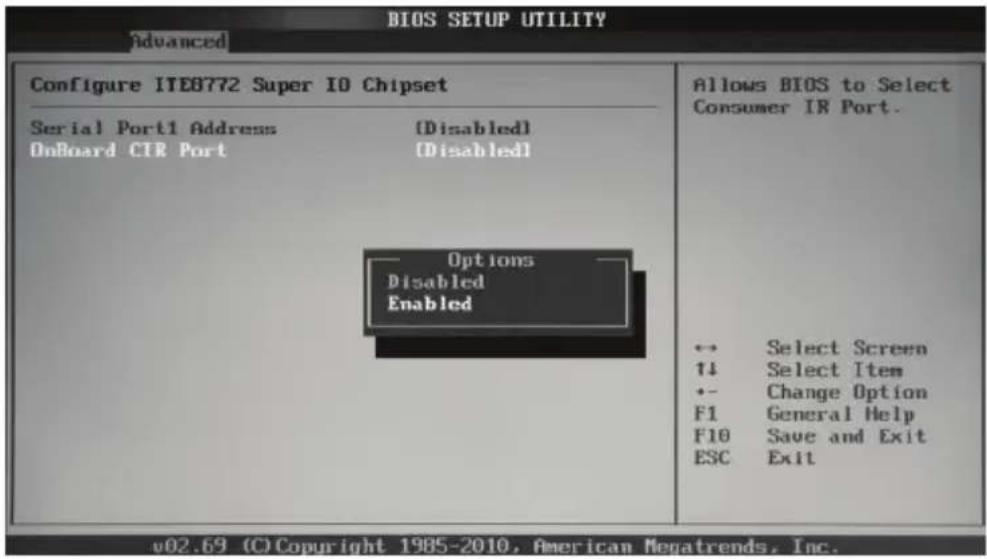
Enabled: enable the internal IR receiver Disabled: disable the internal IR receiver
Customizing the ZOTAC ZBOX nano
Please follow the instructions below to remove the cover of the ZOTAC ZBOX nano before customizing.
- Remove the four screws securing the bottom cover into place.
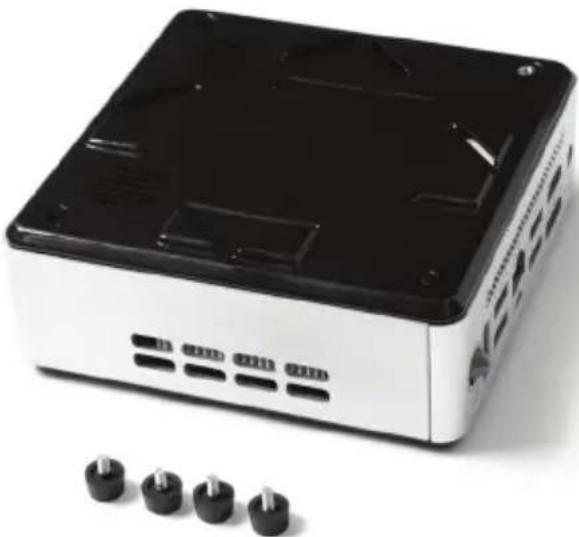
natural_image
Exterior view of a black and white electronic device with multiple black buttons arranged nearby (no visible text or symbols)- Gently remove the cover from the side marked with words: Pull upward.
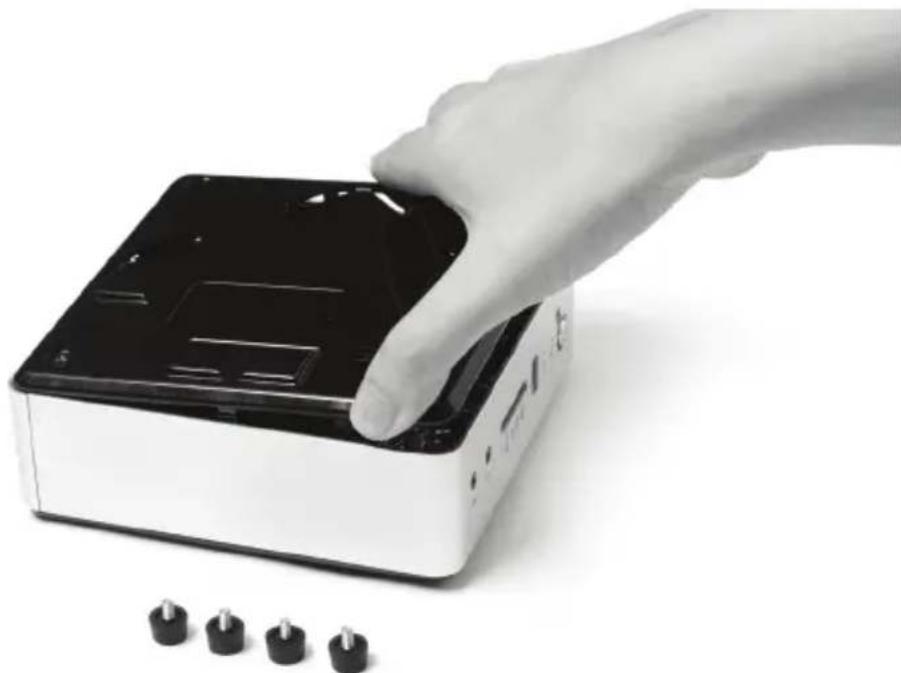
natural_image
Hand placing a black plastic component into a white electronic device with four small black components nearby (no text or symbols visible)Installing a memory module
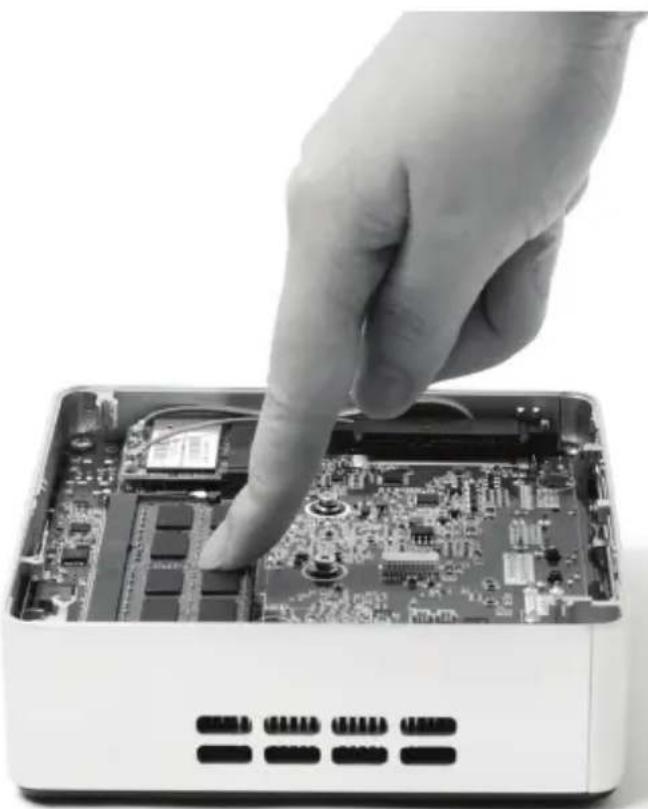
- Locate the SO-DIMM memory slot and insert a SO-DIMM memory module into the slot at a 45 degree angle.
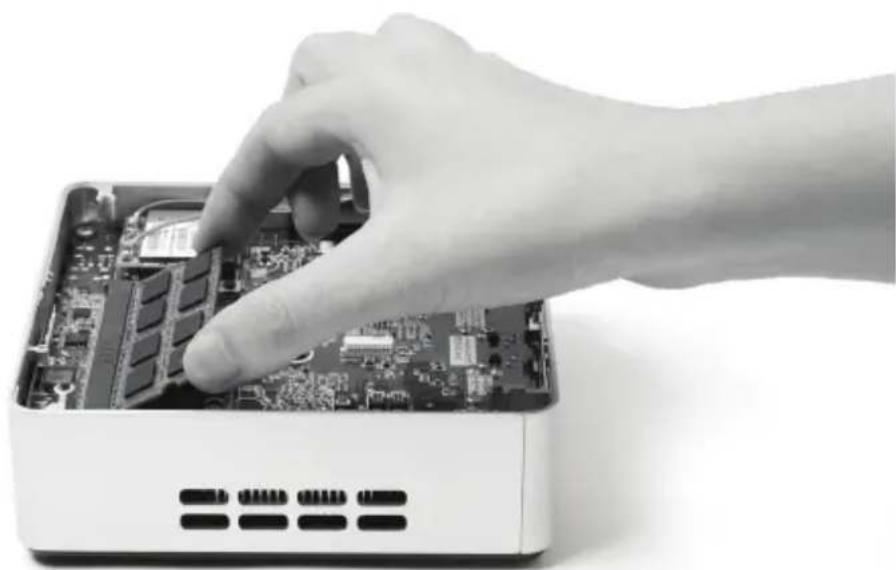
natural_image
Hand inserting a circuit board into a device casing (no visible text or symbols)- Gently press down on the memory module until it locks into place by the arms of the memory slot.
natural_image
Hand inserting a card into an open electronic device with visible circuit boards and ports (no text or symbols)Installing a hard disk
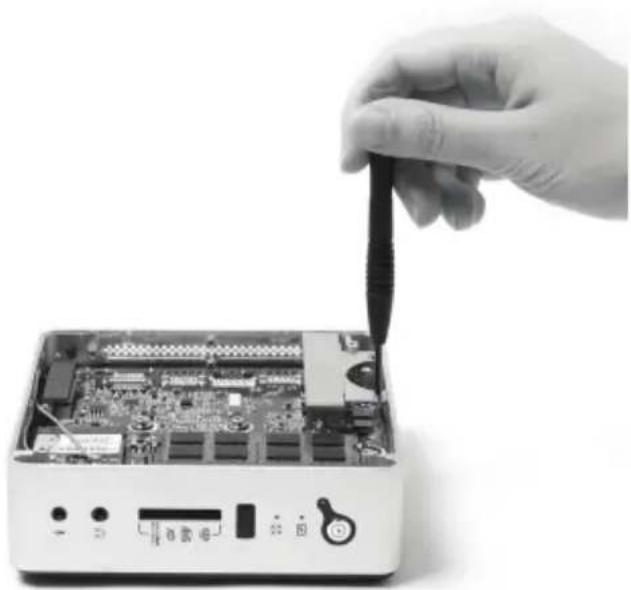
- Locate the hard disk bracket, remove the 2 screws, and remove the hard disk bracket as shown in the image below.
natural_image
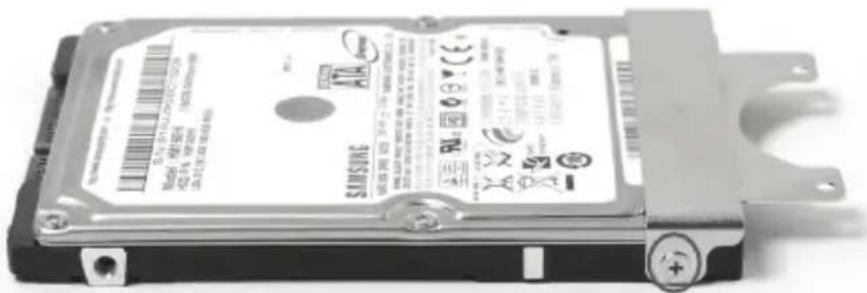
Hand inserting a USB into an electronic device into a circuit board (no visible text or symbols)- Install the hard disk bracket to a 2.5-inch SATA hard disk with 2 screws.
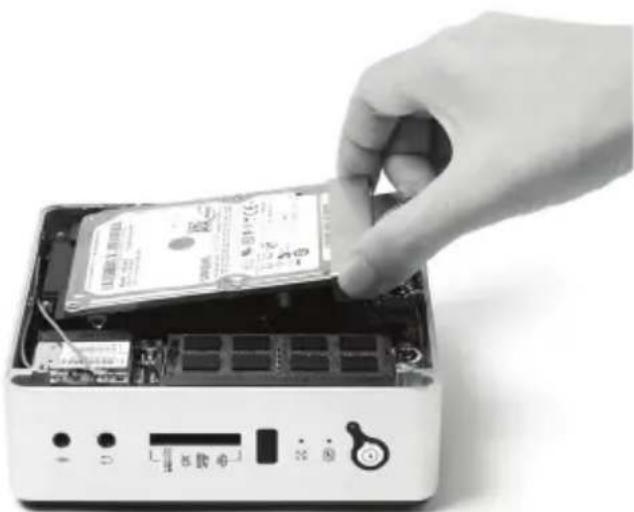
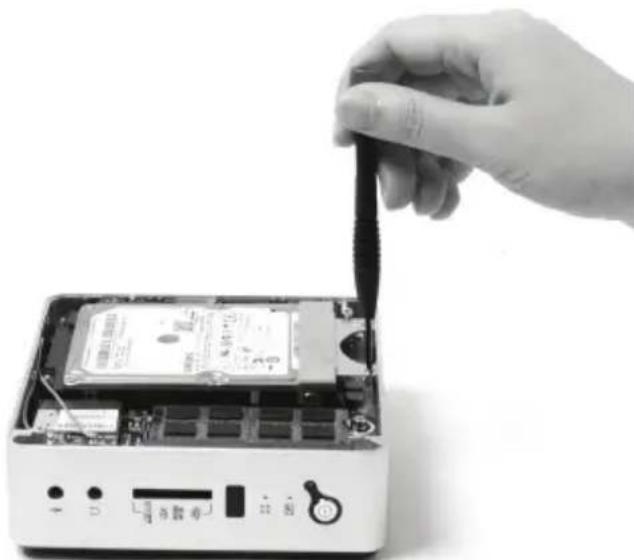
- Insert the hard disk into the socket and gently slide into the connector.
natural_image
Hand inserting a CD into an electronic device (no visible text or symbols)- Reinstall the screws of the hard disk bracket.
natural_image
Hand inserting a USB into a hard disk drive into an open electronic device (no visible text or symbols)Note: Due to the 9.5mm-height limit of the hard disk, 12.5mm height drives are not supported by the ZOTAC ZBOX nano.
Setting up the ZOTAC ZBOX nano
Please connect the peripherals before using the ZOTAC ZBOX nano.
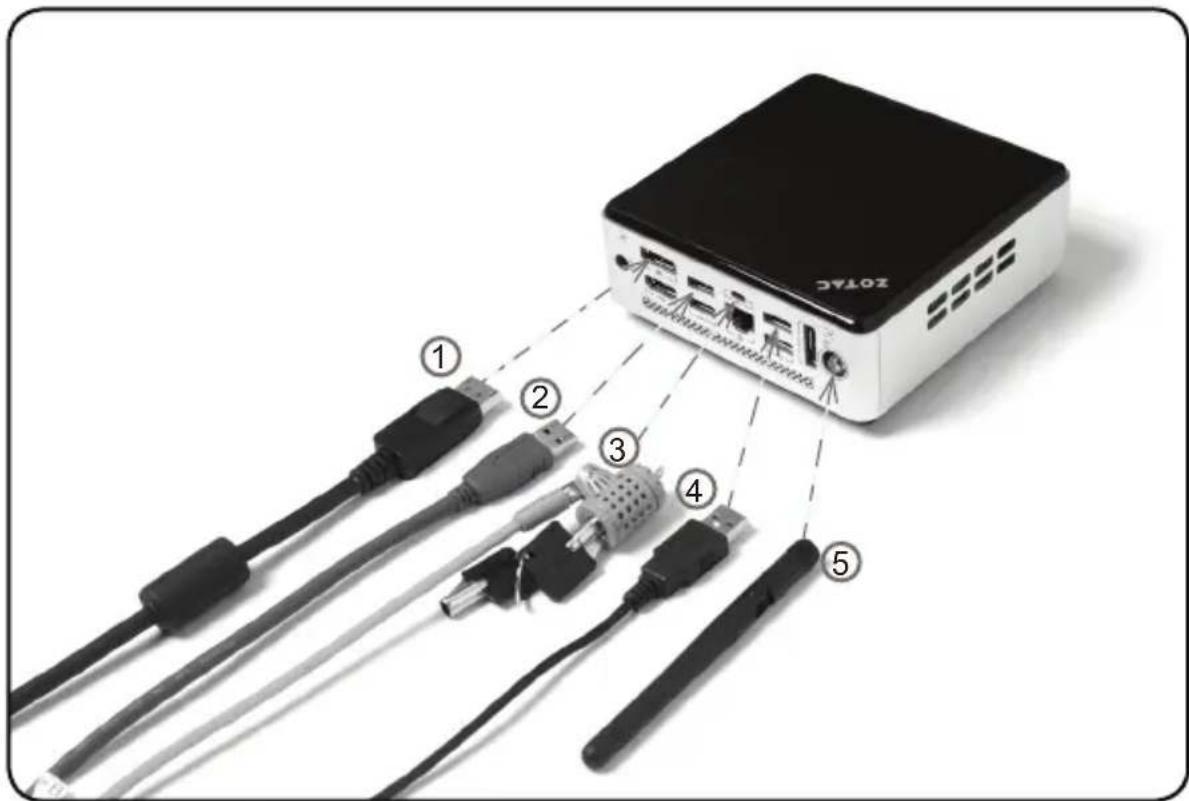
- Connecting a DisplayPort display
Connect the DisplayPort connector to the DP port.
- Connecting USB 3.0 device
Connect USB 3.0 devices such as external hard drives, SSDs and flash drives to the USB 3.0 port.
- Connecting to a Kensington safety lock
Connect Kensington Safety Lock to ZBOX nano and lock.
- Connecting USB 2.0 device
Connect USB 2.0 devices like wired/wireless keyboards (varying with areas), mouse devices and printers to the USB 2.0 ports.
- Connecting a WiFi antenna module
Connect a WiFi antenna module to the WiFi antenna connector.
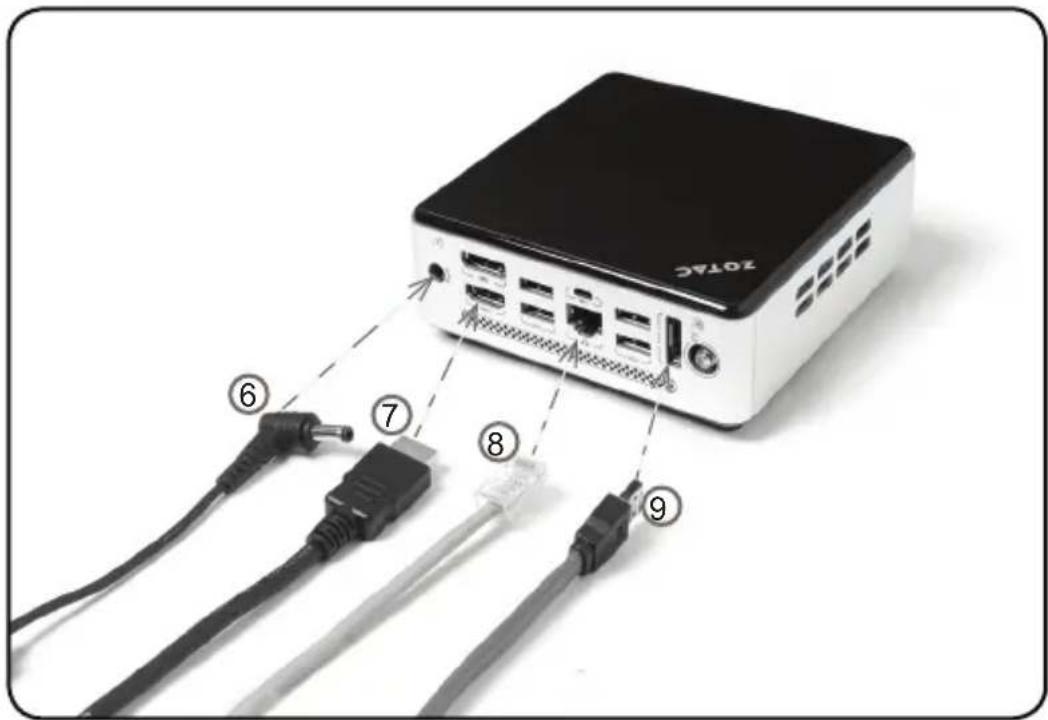
6. Turning on the system
Connect the supplied AC adapter to the DC IN jack on the system rear panel and then press the power switch on the front panel to turn on the system.
7. Connecting to an HDMI display
Connect one end of an HDMI cable to the HDMI port on the system rear panel and the other end to a HDMI-compatible display such as an HDTV or monitor. (When both the HDMI and the DP are connected, the audio output is from HDMI by default.)
8. Connecting to a home network
Connect one end of a network cable to the LAN port on the system rear panel and the other end to a network hub, switch or router.
9. Connecting an eSATA device
Connect one end of an eSATA device to the eSATA port.
Note: When your ZOTAC ZBOX nano is not in use, unplug the power adapter or switch off the AC outlet to conserve power.
Positioning the ZOTAC ZBOX nano
- Do not cover or block the ventilation holes on ZOTAC ZBOX nano. To ensure proper operation and reliability, leave approximately 4 inches (10 cm) of spacing in front of the ventilation holes.
- ZOTAC ZBOX nano mini-PC systems provide ample expansion in a miniature form factor, please use connectors and cables that are appropriate in size to avoid interference.
Mounting the ZOTAC ZBOX nano to a LCD monitor
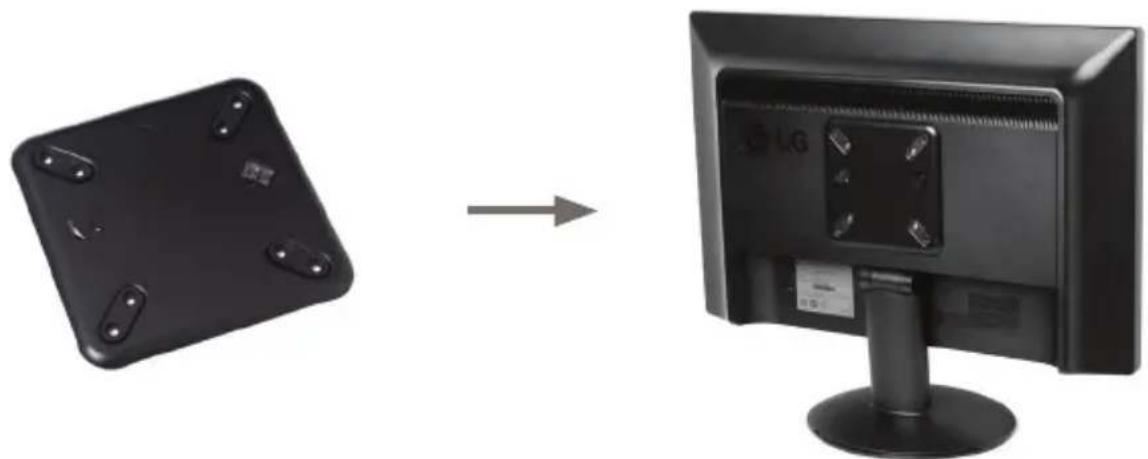
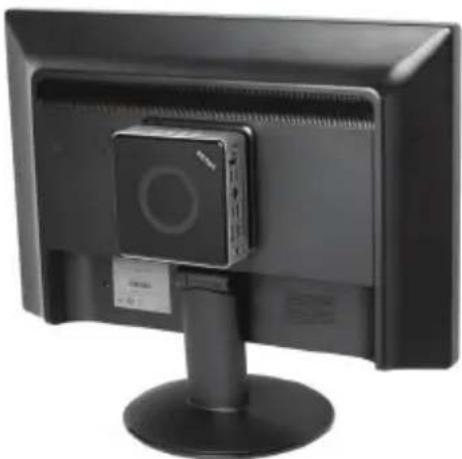
The ZOTAC ZBOX nano is monitor-mountable using the included VESA mount.
- Secure the VESA mount to the LCD monitor using screws (not included). Disclaimer: ZOTAC cannot be held liable for damages resulting from an improper installation.
natural_image
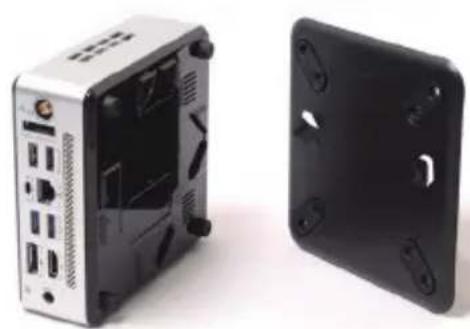
Diagram showing a black electronic device with four buttons being processed to form a monitor displaying LG (no text or symbols on device)- Align the ZOTAC ZBOX mounting holes to the VESA mount attachment pegs. Attach the ZOTAC ZBOX to the VESA mount and gently press down to secure the ZBOX to the mount.
natural_image
Two electronic device modules: a silver internal case and a black rectangular cover with four mounting holes (no text or symbols visible)- Connect the ZOTAC ZBOX nano to your LCD monitor with an HDMI/DP cable.
natural_image
Front view of a black computer monitor with a small camera module mounted on top, no visible text or symbols.IR receiver
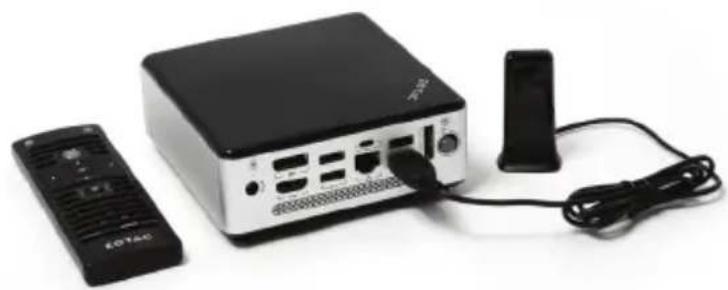
Users can control the LCD monitor/TV by either IR receiver or external USB IR receiver.
- IR receiver
Note: Please refer to page 12-13 to enable CIR controller and install CIR driver from DVD before you use the IR receiver.
- External USB IR receiver
natural_image
Exterior view of a black and silver wireless router with attached cable and remote control (no visible text or symbols)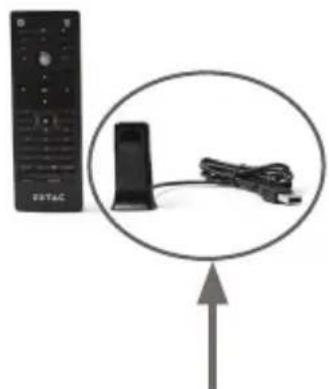
natural_image
Retrofac remote control device with cable and antenna, shown in a circular inset (no text or symbols)External USB IR receiver
Remote control (optional)
ZOTAC ZBOX nano is shipped with a remote control. Follow the instructions below to use the remote control.
Function keys
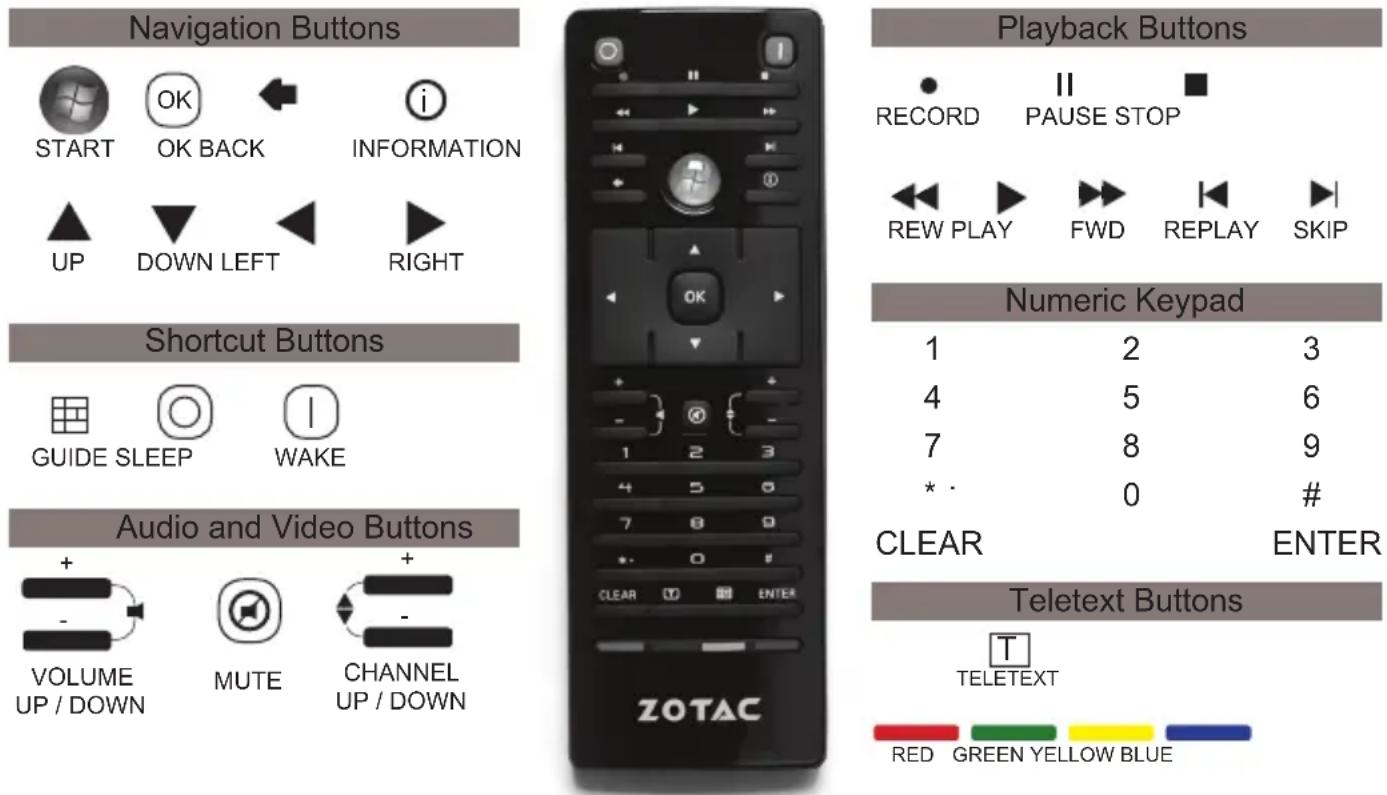
Note: Some remote control functions listed above are only available with the relative hardware equipments. If the hardware equipments you adopt are not compatible with the system, you are unable to use these functions. This product is designed to meet MCE standards.
Lithium cell installation
- Locate the arrow on the rear cover of the remote control, and push the cover as the arrow direction.
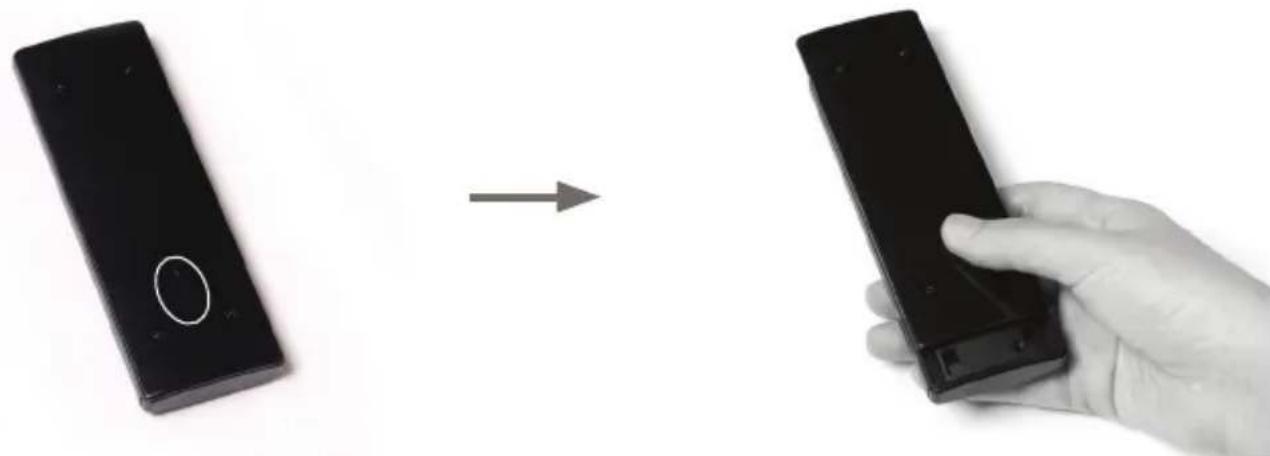
natural_image
Hand holding a black remote control device, showing a change from left to right (no text or symbols visible)- Remove the rear cover, and insert the CR2032 lithium cells into the battery jar at a 45 degree angle.
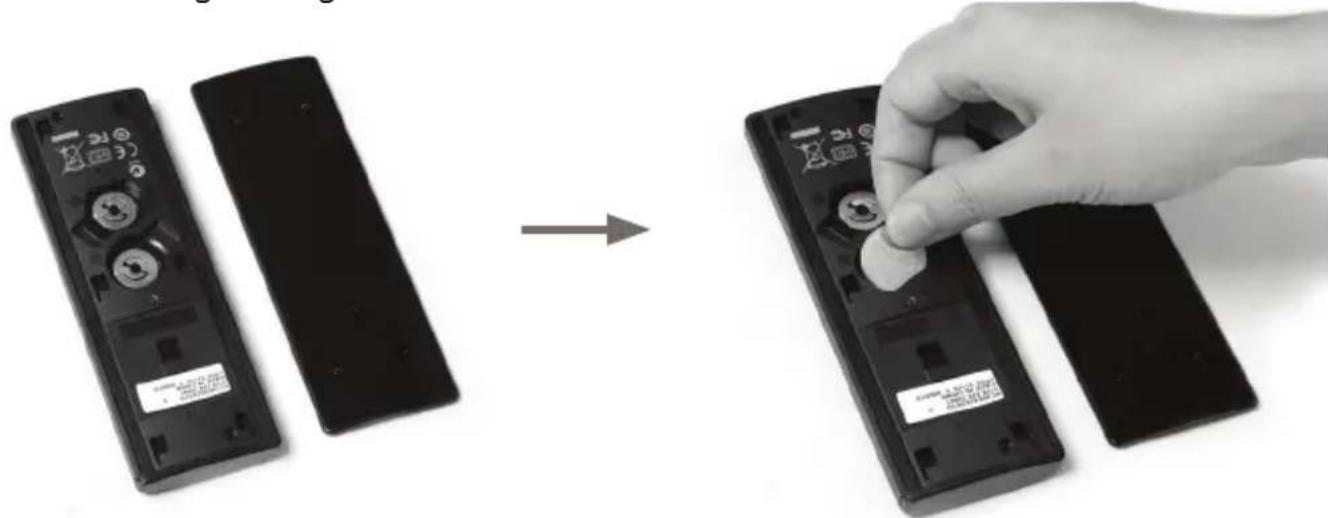
natural_image
Hand placing a button into a black remote control case, showing device status change (no text or symbols visible)- Gently press down on the CR2032 lithium cells, and reinstall the rear cover.
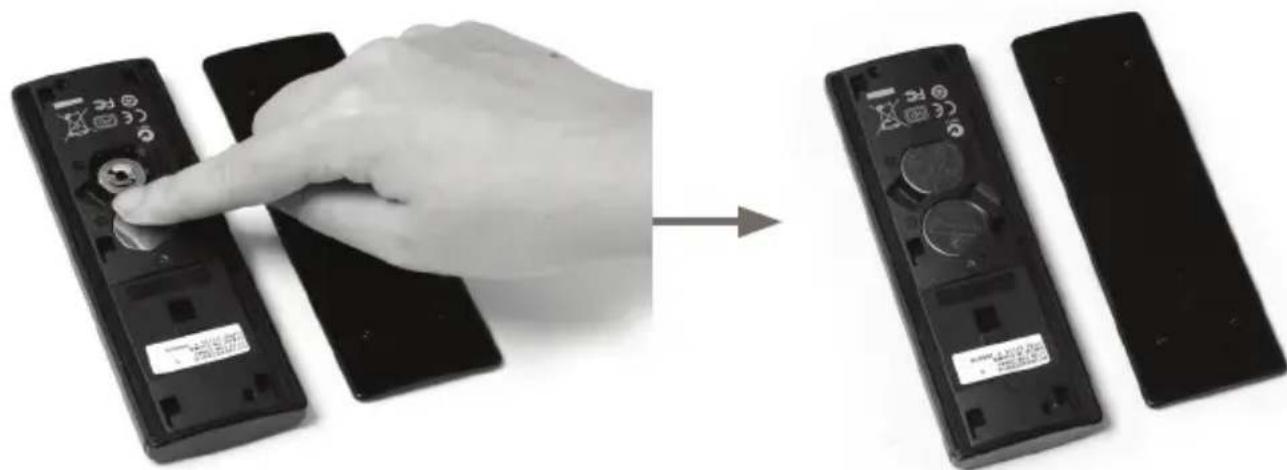
natural_image
Hand placing a remote control knob on a black remote device, showing the process from left to right (no text or symbols visible)Installing drivers and software
Installing an operating system
The ZOTAC ZBOX nano does not ship with an operating system preinstalled. An operating system must be installed before the ZOTAC ZBOX nano can be used. The following operating systems are supported:
- Windows ® XP 32 bit
- Windows ® 7 32bit & 64bit
Follow the instructions below to install an operating system:
- Insert disk for operating system into the optical drive.
- Wait for the ZOTAC ZBOX nano to boot from the disk.
- Follow the onscreen directions to install the operating system.
- Install system drivers to gain full functionality of the ZOTAC ZBOX nano hardware and features.
Installing system drivers
Before you can use the full features of the ZOTAC ZBOX nano, the system drivers must be installed. The following types of operating systems are supported by the ZOTAC ZBOX nano driver DVD:
- Windows® XP 32bit
- Windows® 7 32bit & 64bit
Follow the instructions below to install the system drivers:
- Insert the ZOTAC ZBOX nano driver DVD. If autorun is enabled, the driver installation main menu will show up automatically. Windows Vista may ask for further confirmation, please click "Allow" or "OK" to proceed.
Note: If autorun is disabled, you can click the file Launch.EXE to bring up the driver installation main menu.
- The following drivers are available on the DVD:
• VIA Chipset driver
• VIA VGA driver
• VIA Audio Driver
• VIA Network Driver
• VIA USB 3.0 Driver
• CIR Driver (optional)
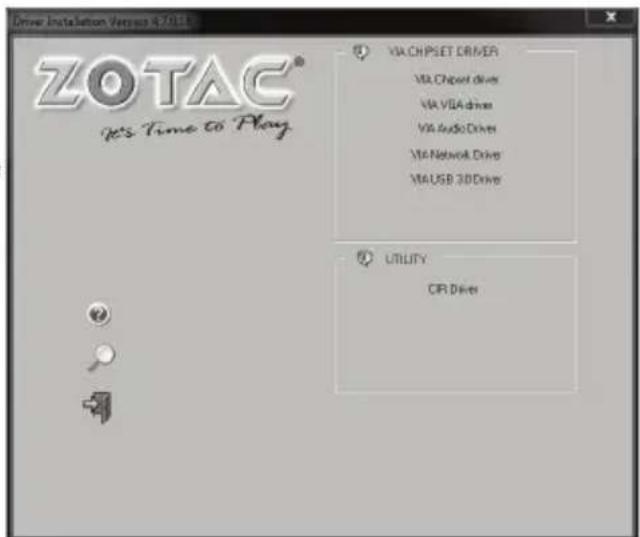
Note: Each driver must be installed individually to ensure proper operation of the ZOTAC ZBOX nano.
- Select the driver you want to install. The driver installer should launch.
- Follow the onscreen instructions for the selected driver to install.
- Restart the system.
Using your ZOTAC ZBOX nano
Configuring wireless connection
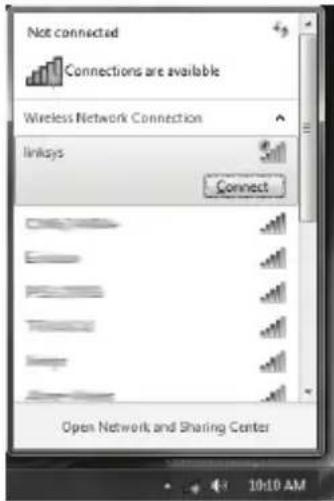
Please follow the instructions below to connect to a wireless network:
- Double-click the crossed wireless network icon (pic) in the notification area.
- Select the wireless network you want to connect to from the list and click Connect.
- After connection was established, you will see "Connected".
Note 1: For security concerns, Do NOT connect to an unsecured network, otherwise, the transmitted information without encryption might be visible to others.
Note 2: Enter the network security key if necessary.
Configuring wired connection Using a static IP
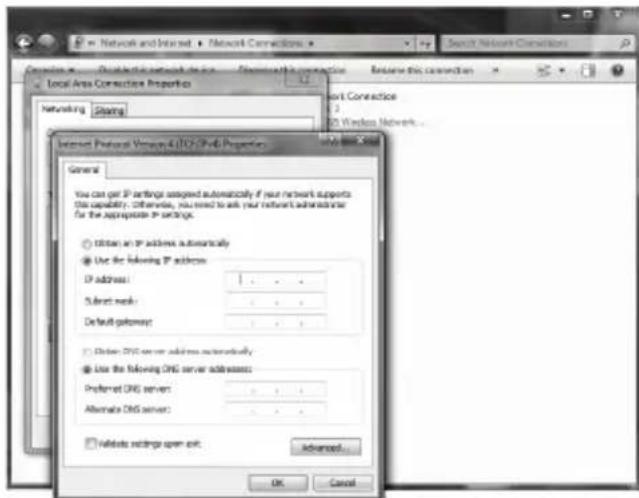
- Right-click the network icon in the notification area and select "Open Network Connections".
- Right-click "Local Area Connection" and select "Properties".
- Highlight "Internet Protocol (TCP/IP)" and click "Properties".
- Select "Use the following IP address".
- Enter your IP address, subnet mask and Default gateway.
- Enter the preferred DNS server address if necessary.
- After entering all of the related values, click "OK" to finish the configuration.
Using a dynamic IP (PPPoE connection)
- Repeat Step 1-3 in the previous section.
- Select "Obtain an IP address automatically" and click "OK".
- Click "Create a new connection" to start the NEW Connection Wizard.
- Click "Next".
-
Select "Connect to the Internet" and click "Next".
-
Select "Set up my connection manually".
-
Select your connection type and click "Next".
-
Enter your ISP Name and click "Next".
-
Enter your User name and Password. Click "Next".
-
Click "Finish" to finish the configuration.
-
Enter your user name and password. Click "Connect" to connect to the internet.
![Control Panel Home Manage wireless network Change adapter settings Change advanced sharing settings View your basic network information and set up connections [The computer] New your active networks Home network Access types Internet HomeGroups Internet Connect or download Change your networking settings Set up a new connection or network Set up a wireless, broadband, dan't up, or access point. Connect to a network Connect or connect to a wireless, will Choose homegroup and sharing options Access Files and printers located on other To access problems Diagnose and repair network problems. Set up a connection option Connect to the Internet Set up a wireless network or data connection to the Internet Set up a wireless network Config a new route or access points. Manually connect to a wireless network Connect to a hidden network or create a new wireless profile. Connect to a workplace Set up a dial-up connection to 90% connection to your workplace. Set up a dial-up connection Connect to the Internet using a dial-up connection. Close Password. Click e internet](/content/2026/06/1279531/images/788ae33ca9d8dac63c2110e55f0ff726b239cf011fb1b7156125dc132a4abe85.jpg)
Note: Contact your internet Service Provider (ISP) if you have problems connecting to the network.
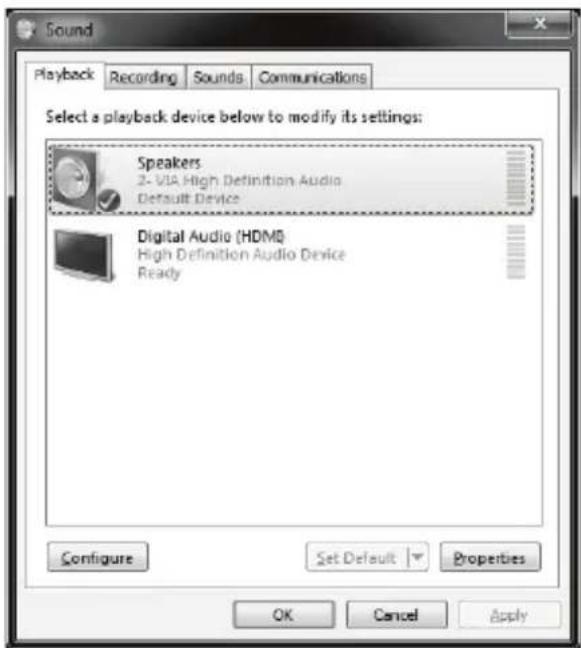
Configuring audio output via an HDMI device
Follow the steps below to enable audio output via HDMI when connecting the ZOTAC ZBOX nano to a TV or receiver via HDMI.
- Access the Sound settings via the system Control Panel.
- Under Playback devices, click "Speakers".
- Click the "Set Default" in the lower right hand corner.
- Click "OK" to exit the setup.
ZOTAC®
It's Time to Play
WWW.ZOTAC.COM

CE
FC
10