
ORF-160 A+ - Refrigerator Orima - Free user manual and instructions
Find the device manual for free ORF-160 A+ Orima in PDF.


| Product Type | Refrigerator with freezer compartment |
| Brand | Orima |
| Model | ORF-160 A+ |
| Energy Class | A+ |
| Total Net Capacity | 160 L (approx.) |
| Refrigerator Capacity | 115 L (approx.) |
| Freezer Capacity | 45 L (approx.) |
| Freezing Star Rating | 4 stars |
| Temperature Control | Adjustable thermostat |
| Defrost Type | Manual (freezer) |
| Door Reversibility | Yes |
| Shelving Material | Tempered glass |
| Interior Light | Yes |
| Power Supply | 220-240 V, 50 Hz |
| Energy Consumption | Approx. 0.6 kWh/24h |
| Noise Level | 42 dB (approx.) |
| Dimensions (H x W x D) | 143 x 55 x 60 cm (approx.) |
| Net Weight | 32 kg (approx.) |
| Refrigerant | R600a (isobutane) |
| Climate Class | N/ST (16-38°C) |
| Warranty | 2 years (standard) |
Frequently Asked Questions - ORF-160 A+ Orima
User questions about ORF-160 A+ Orima
0 question about this device. Answer the ones you know or ask your own.
Ask a new question about this device
Download the instructions for your Refrigerator in PDF format for free! Find your manual ORF-160 A+ - Orima and take your electronic device back in hand. On this page are published all the documents necessary for the use of your device. ORF-160 A+ by Orima.
USER MANUAL ORF-160 A+ Orima
natural_image
Black-and-white photo of a woman holding a small glass bottle (no text or symbols visible)
natural_image
Black-and-white portrait of a person with short hair and decorative hair accessory, no visible text or symbols
natural_image
Black-and-white photo of a woman gesturing with steam, no visible text or symbols
natural_image
Black-and-white photo of a smiling woman holding a glass, no visible text or symbols
natural_image
Black-and-white close-up of a person lying in bed covered with white foam-like foam (no text or symbols visible)
natural_image
Black-and-white photo of a woman meditating outdoors under a cloudy sky (no text or symbols visible)
Orima®
electrodomésticos
MANUAL DE INSTRUÇÕES
INSTRUCTION MANUAL
Combinado Combi

natural_image
Exterior view of a modern white refrigerator with open doors and glass shelves (no visible text or symbols)ORF160A ORP160
PROBLEMAS E SOLUÇÕES
- Thermostat and bulb
- Glass shelf
- Crisper
- Upper freezer drawer
- Middle freezer drawer
- Bottom freezer drawer
- Adjust foot
- Upper door bottle shelf
- Middle door bottle shelf
- Bottom door bottle shelf
- Freezer foaming door
Transportation and Handing
When transporting, hold the base and lift the refrigerator carefully with the tilted angle no more than 45 degree. Never hold the door handle as support. Never position it upside down nor horizontal.
Maneuver the appliance by tilting it backward until it is on the rear rollers.
Installation
- Do not site in a location which is likely to drop below 5 degrees centigrade, i.e. an unheated garage or shed in winter.
- Install the refrigerator on flat, firm ground to prevent vibration and noise.
- Choose a dry and well-ventilated location. A space of no less than 10cm must be left around the refrigerator.
- Choose a location where there is no heat source. Keep the refrigerator away from direct sunlight, radiators, heaters and oven etc.
- Adjust the front feet to achieve vertical alignment.
- Allow to stand for 2-3 hours after moving before plugging in to mains.
Before using
- Clean all parts of the refrigerator with lukewarm water containing a little mild detergent and wipe dry.
Notes: Do not wet electric parts. - Turn the thermostat knob to the "3" position and turn on electricity. The compressor and the light inside the refrigerator will begin to work.
- Close the door and leave for 30 minutes. If the temperature in the freezer compartment has decreased noticeably the refrigerator is working normally.
Temperature Control
-
The temperature in the refrigerator and freezer compartment is controlled by the temperature controller installed on the inside wall of the refrigerator compartment.
We strongly recommend you use a freezer thermostat to check that the temperature is below -18 centigrade before loading any food. This can take 2 - 3 hours. -
The marks on the knob are the temperature grades, NOT the exact degrees of temperature. '0' is 'OFF' and "7" represents the lowest temperature.
-
Please start with the knob set to position "3". Use a suitable thermometer to check the temperature after two hours. The refrigerator temperature should be set between +2°C and +5° and the freezer will vary between -18 and -25 degrees centigrade over a typical cycle. To reduce the refrigerator temperature turns the knob towards '7' and check after one hour.

Quick Freezing
- Quick freezing allows moisture inside foodstuffs to form fine ice-crystals which prevent the cell membrane from being damaged and the cytoplasm being lost when unfreezing, thus the original freshness and nutrition constituent of foodstuffs can be retained.
- Fresh meal and fish to be stored for long time must be done by quick freezing.
- To quick freeze turn the temperature knob to setting "7" before adding food. NOTE; the maximum allowable capacity is 3KG at a time.
After quick freezing, turn the knob back to the original position (Normally time for quick freezing shall not exceeds 4 hours).
Tips and Hints
Fresh foods such as fish and meat can be frozen to maintain freshness, and keep the nutrients in the food.
Wrap food to be frozen or place it in an airtight container.
Do not allow already frozen food into direct contact with food to be frozen.
Ready frozen food should be placed it in freezer as soon as possible.
Storage of frozen food
When using the freezer for the first time or after defrosting, turn the thermostat knob to '7' for 2 hours before introducing the food. Reset to
normal position 2 hours after introducing food.
Wrap food to be frozen or place it in an airtight container.
Do not allow already frozen food into direct contact with food to be frozen.
Ready frozen food should be placed it in freezer as soon as possible.
Storage of fresh food
Food should always be covered tightly with foil, wrapped in film, placed in an airtight bag or container. This will prevent it from dehydrating and prevent strong smells contaminating other food.
Do not allow raw meat to come into contact with cooked foods.
Fruit and vegetables should be stored in the bottom box with the glass cover in place.
Placement of Food
Space should be left between food items to allow free movement of cold air.
Cool hot food down to the room temperature before storing.
Defrosting
When the inner surfaces of the freezer are covered with a layer of frost about 4 mm thick the electricity consumption will increase and the effect of refrigeration reduce. It is essential to defrost.
- Remove the mains plug, open the doors and remove all food and shelves. Frozen foods needs to be well insulated using newspaper or blankets.
- Either let the temperature rise naturally till frost melts or a container of warm water can be place inside to speed up the process.
- Wipe away all ice and water before washing with a cloth dampened with water and a mild detergent.
- Remember to clear the defrost drain situated at the back.
- Wipe dry before plugging in to the mains.
6.
Notes: Do not use pointed or sharp edged metal tools. It is possible to
puncture the sealed gas refrigeration system.
Never use an electric heating appliance to speed the process.
Replacing the light bulb
Should the light fail, switch off at the socket outlet and pull out the mains plug. Remove the lamp guard and check that the bulb is fully screwed in. Replace the plug and switch on. If the light still fails, obtain a replacement E14 screw-cap type 230 volt 15 Watt (Max) Refrigerator bulb from your local electrical sore and then fit it. Carefully dispose of the burnt-out light bulb immediately.
General Instructions for Care and Maintenance
The door seals should be cleaned regularly.
Do not use an extension lead with this appliance.
Damaged power cable or plugs must be replaced immediately by a competent person.
If you are going away on holiday or for any other reason, wish to leave the refrigerator idle for any period of time, proceed as follows:
Disconnect the refrigerator from the electric power supply by removing the plug from the wall socket.
TROUBLE SHOOTING
The following points are intended to help you resolve some queries before you call the Help Line.
Appliance not operating;
Check that the plug is in the socket, the switch is on, the fuse is in-tact and the socket is live.
A gurgling or trickling noise can be heard;
This is NOT a fault. It is simply the coolant in the circuit.
Compressor runs continuously but the fridge temperature does not go down to 5°C.
Check that the door has been closed properly.
Check that the thermostat has not been moved accidentally.
Insufficient air flow space has been provided around the freezer.
The fridge is overly cold;
Check that the thermostat is set correctly, 3-4, then use a thermometer.
If an engineers visit is required and the conditions of the Guarantee are fully satisfied a repair may be offered without charge.
Electrical Safety
THIS APPLIANCE MUST BE PLUGGED INTO AN EARTHED SOCKET.
Before switching on, make sure that the voltage of your electricity supply is the same as that indicated on the rating plate. This product is designed to operate on 220 – 240V AC; 50Hz.
Connection to any other power source may damage the unit.
This product may be fitted with a non-rewireable plug. If it is necessary to change the fuse in the plug, the fuse cover must be refitted. If the fuse cover becomes lost or damaged, the plug
must not be used until a suitable replacement obtained.
If the plug has to be changed because it is not suitable for your socket, or becomes damaged in any way, it should be cut off and an appropriate plug fitted following the wiring instructions below. This should be carried out by a qualified electrician. The plug removed must be disposed of safely, as insertion into a 13 Amp socket is likely to cause an electrical hazard.
If a 13Amp (BS1363) plug is used, a 13Amp (BS1362) fuse must be fitted, or if any other type of plug is used, a 13Amp fuse must be fitted, either in the plug or adaptor, or on the Distribution Board.
Disposal
This appliance contains non CFC/HFC substances in the cooling system and in the insulation. While they are environmentally friendly they are potentially flammable if exposed to fire. Please consult your Local Authority for advice on disposal.
Correct Disposal of this product
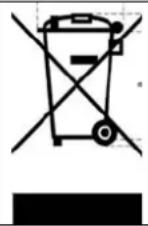
This marking indicates that this product should not be disposed with other household wastes throughout the EU. To prevent possible harm to the environment or human health from uncontrolled waste disposal, recycle it responsibly to promote the sustainable reuse of material resources. To return your used device, please use the return and collection systems or contact the retailer where the product was purchased. They can take this product for environmental safe recycling.
- Orima®
- MANUAL DE INSTRUÇÕES
- INSTRUCTION MANUAL
- Combinado Combi
- PROBLEMAS E SOLUÇÕES
- Transportation and Handing
- Installation
- Before using
- Temperature Control
- Quick Freezing
- Tips and Hints
- Storage of frozen food
- Storage of fresh food
- Placement of Food
- Defrosting
- Replacing the light bulb
- TROUBLE SHOOTING
- Electrical Safety
- Disposal
- Correct Disposal of this product
Brand : Orima
Model : ORF-160 A+
Category : Refrigerator