Domobar Junior 2B - Coffee machine Vibiemme - Free user manual and instructions
Find the device manual for free Domobar Junior 2B Vibiemme in PDF.


User questions about Domobar Junior 2B Vibiemme
0 question about this device. Answer the ones you know or ask your own.
Ask a new question about this device
Download the instructions for your Coffee machine in PDF format for free! Find your manual Domobar Junior 2B - Vibiemme and take your electronic device back in hand. On this page are published all the documents necessary for the use of your device. Domobar Junior 2B by Vibiemme.
USER MANUAL Domobar Junior 2B Vibiemme
-
Unpacking and Assembly 5
-
Water 8
-
Connect the machine 9
-
Start up 10
4.1. Start up: plug the machine 10
4.2. Start up: turn the machine ON 11
4.3. Start up: grouphead 12
4.4. Start up: steam boiler pressure gauge 12
4.5. Start up: brew pressure gauge 13
-
First use of machine 14
-
Coffee boiler temperature adjustment 15
-
Steam boiler pressurestat adjustment 16
-
Hints, Tips, and Tricks 16
8.1. Maximizing Steaming Power 16
8.2. Minimizing Temperature Variations During the Pull 17
8.3. Minimizing Mineral Buildup 17
- Troubleshooting 18
9.1. The machine is not working 18
9.2. No water can be pumped 18
9.3. The Grouphead is not getting very warm 18
9.4. I can pump water, but the water is always cold 19
9.5. The Machine Stopped Suddenly in the Middle of a Pull 19
9.6. The Coffee Tastes Bad 19
9.7 Bitter coffee can come from: 20
9.8. Sour tastes can come from: 20
- Cleaning and Maintenance 21
10.1. After Each Pull 21
10.2. After each stretching milk 21
10.3. After Each Session 22
10.4. Backflushing 23
10.5. Exterior Cleaning 24
10.6. Grouphead Gasket Replacement 25
10.7. Hot Water Wand and Steam Wand 26
10.8. Long Term Storage 26
Waste disposal 31
1. Unpacking and Assembly
CAUTION: Vibemme Domobar espresso machines are quite heavy. The shipping weight is around 70 pounds! We recommend getting assistance whenever the machine has to be moved or relocated. Open the box and carefully remove the machine. Setting the box on a carpeted surface or on a large, soft towel so that the machine has its backside down makes it easier to slide it out of the box (as shown here, to the left).
CAUTION: The machine ships with the hot water valve closed and the steam valve open. DO NOT force the valves. Moderate pressure is sufficient to open or close the valves. They do not have to be shut tight, or "seated," like a home faucet to seal properly.
Slip off the large plastic bag and remove the end of the power cord from the parts box. Slide the parts box sideways to remove it from its shipping location.
Please inspect the machine upon unpacking to be sure it was not damaged during shipping. Report any shipping damage immediately to the shipper as well as to your reseller/retailer.
WARNING: There are times when a machine will dribble water during shipping. If you notice that the machine arrives wet or dripping, remove the machine as described in this section, but wait 24 hours to allow excess moisture to evaporate to alleviate any electrical danger or damage from short circuits. If in doubt, open the case as described later in this manual to assist in drying as well as to inspect for accumulated water in the machine.
You may notice that there is a rough area on the right side of the Grouphead where the chrome is not quite as smooth and shiny as the rest of the Grouphead. This is from the production process and is not a defect.
Stand the machine upright and remove the five pieces of tape- three holding the top Cup Warmer Tray and two holding the Drip Tray Cover. Remove the Cup Warmer Tray and take off the protective plastic wrap and the white, stick-on protective plastic on the tray itself. Clean any remaining adhesive or bits of plastic from the warming tray with a cleaning product meant for stainless steel. Inspect the area of the inner panel under the Cup Warmer Tray. There should be a small black plug inserted in the panel. If not, it is possible that it fell into the machine during shipping. If the plug is not visible, remove the six slotted screws (three on each side of the back panel) and slide the panel off to the rear of the machine. It can help if you spread the front of the panel just enough get it to slide easily.
Replace the back panel when the plug has been retrieved.
To replace the Cup Warmer Tray, hold it at a sloping angle with the front edge lower then the rear. Lower the front edge in place, and then lower the back edge until it hooks the back edge of the machine. Return the shipping materials, packing, plastic bags, padding, and boxes to their original locations and save them. Should the machine need to be shipped in the future, it must be repacked in its original box to avoid damage.
CAUTION: Do not plug the machine in at this time!
The Drip Tray Cover has a front and a rear side. The rear side (the edge facing away from you that sits up against the front of the face of the machine) has a cutout in the corner as shown here. Where you place your machine is important. The size and weight of Vibiemme Domobar espresso machines is such that having it in a location where it will not need to be moved is highly recommended. One of the first considerations is placing the machine where you will have access to the water reservoir. Locating the machine under a low overhead cabinet will make access to the water reservoir nearly impossible. Easy access to a sink for disposing the drip tray's contents as well as washing various parts after use is a good idea, but don't place it so close that washing dishes and other such chores will cause splattering on the machine which could leave difficult-to-remove stains. You should also allow room to have the grinder close by the espresso machine. Logically, there needs to be an electrical outlet that can handle the load from the machines. If the circuit breaker trips when using the machine, you should use another circuit. If you have any doubts, please consult an electrician for professional advice. The circuit needs to be protected by a CFCI and have surge suppression of 10 amper.
Upon careful inspection you may find some water stains or wet spots on your new Vibiemme that make the machine appear used. These spots are from testing at the factory to assure that the machine is operating properly before shipping.
NOTE: Be aware that once the machine is in place it will be quite difficult to move on the counter because of the non-skid feet. Carefully chose a location for the machine.
The other items in the box are as follows:
1 - a double Portafilter with double basket
2 - a single Portafilter with single basket
3 - a Blind Filter Basket for cleaning chores
4 - a Grouphead Brush for cleaning the shower screen and grouphead gasket
5 - a Coffee Measure
6 - a Plastic tamper
It is best to just place the tamper back into the small packing box as it should not be used. We highly recommend a proper-sized tamper for best results. All Vibiemme Domobar espresso machines use a commercial sized 58mm filter basket.
2. Water
All coffee beverages start with two things-coffee and water. Because the majority of espresso is water, it should come as no surprise that quality water is important to the taste of the espresso. Additionally, using the wrong water can eventually cause problems for your machine and even cause part failures. So what water to use? None of the Viciemme Domobar espresso machines can use distilled or reverse osmosis (RO) water because these waters contain virtually no minerals. The water level sensor in the boiler needs a small amount of minerals to sense the water level. Without these minerals the boiler will be overfilled and that can cause numerous problems, and can even damage the machine. On the other hand, water too high in mineral content or water containing the wrong minerals can cause rapid buildup of lime and calcium deposits that can reduce boiler volume, cause poor heating performance, and can eventually lead to heating element failure.
Water hardness test strips are available that can be used to make sure that the water you are using is safe for your machine. Inexpensive TDS meters are also readily available for purchase and these can be used to test the hardness of your water. If you find that your water is too hard, we recommend using either an in-tank replaceable water softener cartridge that attaches to the inlet hose!
If you don't want to deal with filtering water in the pitchers then another solution is to install an in-line, under the sink water filter designed to filter water to be used in espresso machines. Check with your retailer/reseller for more details on which of these filter systems would work best for you.
3. Connect the machine
To access the reservoir, lift the Cup Warming Tray off the machine using the two handles and place the cover aside. The Water Reservoir, located in the rear of the machine, has two hoses inserted into it. Pull them out of the tank and lift the reservoir out of the machine. Use a small amount of mild detergent and warm water to wash the reservoir, and rinse thoroughly to remove all traces of soap. Never use any abrasive scrubbing pads or brushes on the reservoir.
These will leave scratches in the plastic which may eventually harbor microorganisms. The water reservoir should be washed in this way every two weeks or so. This helps prevent the growth of any undesirable organisms in the water.
Replace the Water Reservoir in the machine. Be sure that both hoses enter the reservoir correctly and are not kinked or pinched. Once you have verified that your water will be of a quality appropriate for use in an espresso machine, fill the Water Reservoir. A funnel is recommended to prevent spilling water into the machine. Do not overfill. Filling it to just below the level where the hoses enter the reservoir is fine. Replace the cap on the reservoir. Get into the habit of regularly checking the water level in the
reservoir. The large capacity may not need filling as often as smaller machines, so it can be easy to forget to check the water level. But not to worry the switch under the reservoir will temporarily disable the machine, including the heating element, if the water level gets low, and the LowWater Indicator Lamp will be illuminated on the front panel alerting you to the situation. Too remedy this situation if it occurs, simply refill the Water Reservoir.
Relocate the Cup Warning Tray and check to see that the steam valve as well as the hot water valve are closed. DO NOT tighten the valves until they stop. Lightly hand tighten only: be sure that the brew lever is in the full down position.
4. Start up
Locate the Portafilter you wish to use. Your machine came with two- a smaller, single portafilter (shown here on the right) as well as the larger, double portafilter (left). The single is meant to create about one ounce of espresso at a time, and the double creates about two ounces-a double. The double portafilter can also be used to make two singles at one time.
The first time you lock the portafilter in place, you might find that it takes significant force to get it tight. The proper position should have the portafilter handle pointing roughly straight towards you, perpendicular to the front of the machine. This properly seats the gasket and shower screen into place. Leave the portafilter in place while the machine is warming up. This allows the portafilter to warm up the same as the rest of the machine.
Place a few cups that you will be using on top of the machine. The heat from the machine's normal operation will preheat the cups which will in turn keep your beverage warm as you enjoy it.
CAUTION: Do not place items on the top of the machine that are prone to drip or spill or might be sensitive to heat. Temperatures on top of the machine reach about 63 C (145 F).
4.1. Start up: plug the machine
Plug the machine into a surge suppressor capable of handling 10 amper (not included). The outlet must be properly grounded and should be protected with a GFCI (ground fault circuit interrupter).
Make sure that the Manual Control Lever if in the fully-down position, pushed back nearly against the front of the machine. Turn the Coffee switch to position ON as the Power Lamp on the far right side of the front panel will be illuminated indicating that the machine is getting power. The double boiler technology allows to use at the same time or separately the coffee and the steam boilers; so you can turn one of them or both of them on as you like: only espresso, only steam or both. Anyway, the first time you turn the machine ON (installation process) you will firstly be required to turn the Coffee switch ON and only then you will have to turn the Steam switch ON. The Vibiemme Dornobar Junior 2B leaves the factory with full coffee boiler and empty steam boiler. When you turn the coffee switch on, this actuates the coffee boiler heating element and at the same time the pump filling the steam boiler.
4.2. Start up: turn the machine ON
Within a second or two after turning the Coffee switch to position ON you should hear the pump begin to run. The sound of the pump indicates that the electronic water level control has begun to fill the boiler. When the boiler is filled to the level determined by the water level sensor, the autofill electronics will turn the pump off. After the pump stops, check and refill the Water Reservoir as it will have had about half of its contents pumped into the boilers. You will know that the steam boiler is filled to the proper level because the pump will stop operating.
At this stage turn the Steam switch to position ON: the element is getting ON.
As the machine begins to warm up you may notice that there is a slight hissing sound coming from inside the machine. This is normal. It is the antivacuum valve. This valve opens as the machine cooled off the last time it was used to allow air to be drawn into the boiler to prevent a high vacuum being formed which can damage the machine. When the machine starts up it takes a little pressure to close this valve, and until it closes completely it may hiss slightly.
Wait about five minutes for the boiler to gain some heat. You should notice that the Boiler Pressure Gauge is indicating that pressure is rising, and when it gets into its operating range you will and you will hear the pressurestat clicking on and off as it cycles in response to the boiler pressure.
CAUTION: While the boilers are coming up to pressure for the first time you should stay close by to monitor its progress to be sure that all is as it should be.
WARNING: The Grouphead and other external parts will get hot enough to cause bums. Use caution when using the machine and if there are any small children in the home (or adults not accustomed to such appliances) make sure that they are aware of the dangers. Shiny chrome surfaces invite curious hands!
4.3. Start up: grouphead
Vibiemme Domobar espresso machines is manual in its function with only one switch controlled by a lever on the grouphead itself.
Here you see the Manual Control Lever on the right side of the E-61 grouphead. It is shown in its at rest position. This is where the lever should be whenever the machine is not brewing espresso
When the lever is lifted just past the first click stop the passive pre-infusion begins. This allows a slight flow of water onto the coffee. This gentle flow of water wets the puck slightly which helps with extraction and can also help eliminate channeling (disruption of the coffee causing a fast flow). If is not necessary to use this position, but leaving it in this mode for about two or three seconds can be useful.
Lifting the Manual Control Lever to its full up position closes the 3-way valve and open the brewing path between the heat exchanger and the coffee. At the same time, the cam to which the lever is attached depresses the switch on the front of the Vibiemme Domobar espresso machines, just to the right of the E-61 Grouphead, behind the cam. This switch activates the pump.
When you choose to end the brewing cycle, return the Manual Control Lever to its at-rest, fully down position. Moving the Manual Control Lever to this position turns off the pump and opens the manual 3-way valve which is built into the grouphead.
This is a path from the grouphead down through the lower portion of the casting, and into the drip tray. When it is opened it allows the pressure remaining in the brewing path to flow into the drip tray. This allows you to immediately remove the Portafilter without worrying about the "portafilter sneeze" - that's a spitting out of coffee or hot water from confined pressure as can happen on lesser machines without a 3-way valve.
4.4. Start up: steam boiler pressure gauge
On the far left side of the panel is the steam Boiler Pressure Gauge (scale 0.5 to 2.5 bar). This displays the pressure in the boiler which indirectly supplies you with the water temperature in the boiler. The higher the pressure, the higher the temperature. While the machine is idling this gauge will move upwards when the heating element is on, and will slowly move downwards when the heating element is off. Generally speaking, a reading of about .9 to 1.1 should be expected. The gauge will fluctuate in a range of about .15 in normal operation when the machine is idling (on, but not being used). Each division is .05 BAR (.73 psi). The Heating Element Activity Lamp to the left of the steam boiler pressure gauge indicates heating element activity. When the Heating Element Activity Lamp is energized the lamp will be illuminated.
4.5. Start up: brew brew boiler gauge
The Brew Gauge on the right side of the display panel (scale 0 to 16 bar) displays the pressure in the brewing path during an espresso pull. This gives a general indication as to what is happening during the brewing cycle. The only time when the gauge will display any useful information is when the brewing process is underway. At all other times, even when the pump is refilling the boiler, this gauge is not displaying any useful information and should be ignored. About 9 BAR is a good place to be brewing as you get started. Each division is .5 BAR.
To the left of the brew pressure gauge is the Low Water Indicator Lamp. If this is illuminated it means that the water reservoir needs to be refilled and the machine will not operate until this task has been completed. If the lamp is off, it indicates that the reservoir has sufficient water to operate.
To the right of the brew pressure gauge is the power indicator. This lamp is illuminated when the machine is plugged into an electrical outlet and the machine is switched to stage I. The indicator lamps make it easy to judge the machine's state at a glance.
5. First use of machine
For this first use of the Vibiemme Domobar espresso machines, once the pressure is above about 0.5 you should flush the boiler to be sure that the machine is working properly. Place a suitable container like a heat-resistant glass measuring cup or stainless steaming pitcher under the hot water spout and carefully open the hot water valve. Water should pour out and the pump should start. Pump out about 6 ounces and then close the hot water valve. Repeat this two or three times over the next five or ten minutes, and then check the reservoir level.
WARNING: The water dispensed as described above is hot enough to cause serious burns. Use caution whenever dispensing or disposing of water from the Vibiemme Domobar espresso machines.
After an additional five or ten minutes of warm-up time, test the steam function. Place a vessel under the steam wand and slowly open the Steam Valve. Steam should come from the Steam Wand and the boiler pressure should drop slightly. After a few seconds close the Steam Valve. It is normal for some water to be pushed out of the Steam Wand with some force when the Steam Valve is first opened after the Steam Valve has been closed for some time.
WARNING: Steam can easily cause deep and nasty burns. The metal Steam Wand gets very hot. Always move the Steam Wand by holding the rubber sleeve and take great care whenever using the steam function.
When using the Steam Wand, the pump may occasionally operate on its own. The steam comes off the top of the main boiler where it is "stored" all the time, and the pump will only run when the water level drops to a point determined by the depth of the water-level sensing wire.
Now it's time to wait! We mentioned in the other manual that patience is a virtue when it comes to making espresso and here is our first example. The boiler, that huge brass grouphead, the portafilter, and all the related metal parts need to come up to temperature. As the boiler comes up to temperature, hot water will circulate through the system, helping to speed things up, but plan on waiting about twenty or thirty minutes before the machine is ready for use.
6. Coffee boiler temperature adjustment
The thermostat controls Coffee boiler temperature by sensing the temperature in the Coffee boiler. Accessing the thermostat adjustment is simple. Simply remove the Cup Warming Tray and beneath that you will see a perforated panel with a with a symbol +/- around: fit a screwdriver, then turn to adjust the boiler temperature:
CLOCKWISE RAISESTHE TEMPERATURE
COUNTERCLOCKWISE LOWERS THE TEMPERATURE
Temperatures on Domobar Junior 2B are mechanically set. By acting on the thermometer adjusting screw you can change values by steps of 3 °C (approx.). The screw on its clockwise end of stroke corresponds to 0°C, while the counterclockwise end of stroke corresponds to 128°C. The Vibiemme Domobar Junior 2B is set by manufacturer at 95°C.
7. Steam boiler pressurestat adjustment
The pressurestat controls temperature (pressure) by sensing the pressure in the Steam boiler. Accessing the pressurestat adjustment is simple. Simply remove the Cup Warming Tray and on far left you will see a perforated panel with a black plug. Remove the plug fit a screwdriver, then turn to adjust the boiler temperature.
CLOCKWISE RAISES THE PRESSURE
COUNTERCLOCKWISE LOWERS THE PRESSURE
8. Hints, Tips, and Tricks
We have already reviewed in the general instructions some of the ways that you can control the way the Vibiemme Domobar espresso machine operates. The best example is the cooling flush which allows you equalize and control the brewing temperature throughout the brewing path as well as eliminate any steam that may have built up during an extended idling period. There are other procedures that you can use to gain further control over the way your Vibiemme operates.
8.1. Maximizing Steaming Power
You probably have noticed that the heating element cycles on an off while the machine is in operation and even when it is idling. That can be seen by watching the Heating Element Activity Lamp on the control panel. That cycling can be used to your advantage when steaming milk. For the greatest production of steam throughout the steaming cycle, start steaming just before the heating element turns off. You can judge this by watching the Heating Element Activity Lamp in conjunction with the boiler pressure gauge. The goal is to begin steaming when the boiler is as hot as its range allows while the heating element is still energized. As you draw off steam the pressure in the boiler (and thus the temperature) will drop slightly which keeps the heating element energized. With a little practice you will be able to do this without hardly even thinking about it..
8.2. Minimizing Temperature Variations During the Pull
A similar procedure can be used for the brew cycle. The best time to begin pulling a shot is when the heating element has just turned off. This gives a bit more temperature stability as well because it eliminates the variable of the heating element coming on during the pull. If the heating element comes on during a pull, you will hear the pump lose a bit of power because the heating element is drawing a large percentage of the circuit's available current. If the circuit that feeds electricity to your Viciemme Domobar is challenged by the demands of the machine, this procedure will help lessen that load.
8.3. Minimizing Mineral Buildup
Mineral buildup in the boiler can be minimized by using the proper quality water and by de-scaling as mentioned in the general instructions. Another way to lessen this scale accumulation is to pump water out of the boiler occasionally.
This is particularly important if you rarely use the hot-water function of the Vibiemme Domobar. To refresh the water in the boiler, simply place a heat-resistant vessel under the hot water wand and open the valve. Dispense about 6 ounces, and then allow the boiler to refill before proceeding. Repeat this two or three times. Doing so every one or two weeks will help minimize scale build up.
9. Troubleshooting
9.1. The machine is not working
- Be sure it is plugged in and the circuit is working. Try another outlet if in doubt.
- Be sure both Coffee and Steam switches are turn on position ON.
9.2. No water can be pumped
- Check the Low Water Level Warning Light to see if the Water Reservoir needs to be refilled.
- Check the Water Reservoir to be sure that the tank is properly seated in the machine.
Lift it and set it back into place. You should be able to feel it compress the springs of its platform which engage the safety switch. - Be sure both Coffe and Steam switches are turn on position ON.
9.3. The Grouphead is not getting very warm
- The operating lever on the right side of the Grouphead must be in the fully-down position, pushed back towards the face of the machine as far as it will go light pressure is all that is necessary- no need to force the lever. If it is not in this position, the water path for the thermosyphon is restricted and the Grouphead will not reach the proper operating temperature.
- Be sure the Coffee Switch is turn on position ON.
- Check the Low Water Level Warning Light to see if the reservoir needs to be refilled.
9.4. I can pump water, but the water is always cold
- Be sure both Coffee and Steam switches are turn on position ON.
• Over Temperature Safety Thermostat tripped. This occurs if the pressurestat malfunctions or the water level is not maintained in the boiler. In either case the boiler can overheat. To save the machine from damage, there is an over-temperature thermostat that protects the machine much like a circuit breaker or fuse protects the wiring in your home. And much in the same way as a circuit breaker, the over-temperature thermostat can be reset. If you suspect that the thermostat has been tripped it is important to verify the cause before continuing: please contact your retailer's service department.
9.5. The Machine Stopped Suddenly in the Middle of a Pull
- Check the water level in the Water Reservoir.
9.6. The Coffee Tastes Bad
The list of causes is nearly endless. Volumes can be written on what can cause espresso to taste bad, some of which is discussed in the general instructions.
Here are a few tips to help:
- Be sure that the coffee you are using is fresh.
• Try a different brand of coffee. - Are you using a quality grinder and grind the beans fresh for each use?
- If you know someone who makes espresso, invite them over and let them try making espresso with your equipment and coffee. Sometimes the smallest change in procedure can make a big difference in taste.
9.7. Bitter coffee can come from:
• Water that is too hot
• Coffee that is over-roasted or stale
- Cheap, low-quality coffee
- Worn burrs or low-quality grinder that makes too much dust
• Brew pressure that is too high
- Not using enough coffee in the portafilter.
9.8. Sour tastes can come from:
- Brewing temperature that is too cold
• Coffee that is under roasted
• Brew pressure that is too low
• Bad or spoiled coffee
• The brew pressure gauge acts erratically*
The Brew Pressure Gauge on the front panel should only be used as a general indicator as to what is happening during the brewing cycle. The only time when the gauge will display any useful information is when there is a properly prepared portafiller, filled with properly ground and tamped coffee, locked in the Groupehead, and the brewing process is underway. At all other times, even when the pump is refilling the boiler, this gauge is not displaying any useful information and should be ignored. Even when the pull is underway the brew gauge will reach a little higher than the actual brew pressure at the coffee. If all is going well, the gauge should read about 9.5 to 10 BAR during most of the out
10. Cleaning and Maintenance
As with all fine tools, the Vibiemme Domobar espresso machines can give you years of trouble-free service and better performance if properly maintained. Your Vibiemme Domobar espresso machines does require a bit of care, but it is not at all difficult.
Although the following guidelines will give you some idea of how often the tasks should be performed, there is no specific set of rules concerning the frequency of cleaning and maintenance. A machine that is being used to make two or three drinks each day in a home environment will not need to be cleaned quite as often as a machine used in an office or restaurant where it is called upon to make fifty drinks a day. If in doubt, it is better to do cleaning and maintenance chores a little too often rather than not often enough.
10.1. After Each Pull
KNOCK PUCK After the pull the spent coffee puck in the Portafilter should be knocked out. The best way is to use a knock box. These feature a cushioned bar with a soft surface that protects the Portafilter from damage.
QUICK FLUSH As soon as you remove the Portafilter from the Grouphead after a pull, cycle the brew function for about one second or so. This will help flush out any coffee on or behind the shower screen.
FLUSH PORTAFILTER If you are not immediately going to pull another shot, replace the Portafilter and repeat the quick flush. Pushing a bit of clean water through the Portafilter will remove most of the left-over coffee in the Portafilter. Remove and wipe it off after the flush. If the machine is going to be left on, leave the Portafilter in place so that it can remain warm.
10.2. After each stretching milk
The steam wand must be wiped off immediately after every use with a clamp towel or dish rag after removing the wand from the milk. As soon as the wand is wiped, the steam valve should be briefly opened and closed to create a blast of steam to force out the remaining milk that may be in the wand. Allowing milk to sit on (or in) the wand will bake the milk onto the hot metal. This is not only unsanitary but can also become very difficult to remove. If you do have baked on milk we do not recommend soaking
the wand in a pitcher. This can cause dirty water to be drawn into the wand, and under certain conditions, possibly into the boiler.
WARNING: The Steam Wand can be very hot. Avoid touching the wand directly and use caution when wiping the Steam Wand. The heat can cause the water on the rag to turn to steam which can cause a burn.
10.3. After Each Session
GROUPHEAD The area where the Portafilter locks into place gets exposed to a lot of coffee and must be kept clean. Coffee residue left here will not only degrade performance over time but can also detrimentally affect the taste of the coffee. At the end of each session, use the Grouphead Brush which was included with your Vibiemme Domobar espresso machine to clean the screen as well as to give the area in which the grouphead gasket resides a good scrubbing.
PORTAFILTER At the end of each session, the Portafilter should be rinsed under hot, running water and dried off before storage. While it should be left in place on the Groupehead during use, if the machine is being turned off, the portafilter should be stored elsewhere so that the moisture can evaporate from the grouphead. Otherwise it can stagnate in there.
DAILY BLIND FLUSH - At the end of each day (or when you are through using the machine for that day) you should do a blind flush:
1 - Remove a filter basket from either of the portafilters and insert the blind basket in its place. The blind filter basket is the one that has no holes in it.
2 - Lock the portafilter into place just like you would to make espresso.
3 - Manually engage the brew function
4 - Watch the brew pressure gauge and when pressure builds to about 9 BAR, turn the brew function off.
5 - Repeat steps 3 and 4 two or three times.
6 - Loosen but do not remove the portafilter and turn on the brew switch again. Wiggle the handle to loosen the portafilter a bit so that water can flush the area around the grouphead.
WARNING: Hot water will spill out and pour onto the drip tray. Use caution to avoid burns from the splashing hot water.
10.4. Backflushing
This is the process of forcing some special cleaner back though the Grouphead. This will remove any stray coffee left in the places that normal, day-to-day cleaning cannot reach. How often this should be done depends on how much use the machine gets, the coffee you use, as well as the amount of coffee you use for each pull. If you are making one or two beverages a day, then once every one or two weeks is probably sufficient. If you are making around four to six doubles a day, then once per week is probably a good idea. If the machine is being used all day (such as in an office or small restaurant) then backflush every day.
Your Vibiemme Domobar was supplied with a blind filter to be used to backflush. This is the basket with no holes in it. To use it, follow these simple instructions:
WARNING: The cleaning agent is quite strong. Follow all safety recommendations on the cleaner's packaging. Only use chemicals designated for back flushing. Other cleaners can cause problems or even damage to your machine.
1 - Insert the blind filter basket into one of the Portafilters.
2 - Place a small amount of espresso machine cleaner into the basket (see manufacturer's instructions for specific amounts to be used).
3 - Lock the Portafilter into place just like you would to make espresso.
4 - Manually engage the brew function
5 - Watch the Brew pressure gauge and when pressure builds to about 9 BAR, turn the brew function off.
6 - Repeat steps 4 and 5 until you see the suds of the cleaning agent appear in the Drip Tray (removing the drip tray cover during this process can help you see what is going on). Wait about two or three minutes, then repeat steps 4 and 5 once again.
7 - After two or three cycles like this, loosen but do not remove the Portafilter and turn on the brew switch again. Wiggle the handle and allow the cleaner to be flushed up into the Grouphead. The cleaner will overflow the Portafilter and clean the area up inside the grouphead of coffee.
WARNING: Hot water and cleaning agent will spill out. Use caution to avoid burns or exposure to the cleaner. Wear eye protection to prevent injury.
8.-When the suds coming through the 3-way valve appear to be clean and free from coffee residue, empty and clean the drip tray and the Portafilter. Replace the Drip tray and run a bit more water through the Grouphead so it is free from cleaner. Replace the portafilter and repeat steps 3 through 5 until the water runs clean into the drip tray. Repeat step 7 to rinse any remaining cleaner from the grouphead.
9 - Remove the Blind filter basket, rinse the Portafilter assembly, and you are done. It is suggested that the first pull after backflushing be discarded just in case a bit of cleaner is left that could taint the coffee.
CAUTION: The cleaning products meant for backflushing must NEVER be used in the water reservoir. Using this cleaning agent in any way other than described here can damage your machine and void your warranty.
10.5. Exterior Cleaning
NEVER use any abrasive cleaners or cleaning pads on your Vibiemme Domobar as they will scratch the surface. A quality glass cleaner sprayed on a rag will usually do a good job of cleaning the outer surfaces, but do not spray these in the area of the Grouphead, and always wait for the machine to cool before cleaning the exterior. If your machine has painted panels take care to use products that are compatible with powder coating. No solvents should ever be used as these may permanently damage the powder coating's sheen.
10.6. Grouphead Gasket Replacement
The thick, rubber gasket that seals the Portafilter in the Grouphead is subjected to a lot of heat and pressure.
Over time it will harden and the portafilter's action will create a depression in the surface. If it begins to leak, the first resolution is to give it a good cleaning as mentioned above. If that does not cure the problem then replacement is the next step. Before attempting this it is a good idea to have the spare gasket as well as a spare shower screen on hand.
The most difficult thing about replacing the grouphead gasket is removing the old one. Depending on just how hard or old the existing gasket is will dictate the difficulty of removing it. First try removing it by gently prying it out. Use a small screwdriver or a paint can opener. Take care not to damage the chrome surface of the grouphead.
If that does not seem to be working, the next step is to use one or two drywall screws. Try using a single one at first and screw it directly into the black, rubber gasket, then grasp it with a pair of pliers and pull it out (be careful not to scrape your knuckles if the screw suddenly pulls out). Placing another, 180 degrees from the first will allow pulling on one side then the other to work it out of the grouphead. If the screw just pulls out of the rubber, use a larger diameter wood screw, file off the pointed tip so it flat, and screw it into the gasket in the same hole made by the drywall screw until it touches the grouphead, and then continue turning the screw. As it penetrates the gasket and hits the grouphead it will pull the gasket down the screw. If this isn't working, try repeating the process with a second wood screw in the other hole.
If you do this and the gasket breaks that is fine. You can then just pry it out with a small screwdriver or ice pick. Use care not to mar the grouphead. It is a very good idea to have a spare shower screen on hand when attempting this job. The screen is held in place by the gasket, and if you have to go at the gasket with vigor the shower screen can be damaged. Having a spare on hand will limit downtime.
Once the gasket is out, remove the shower screen and give the area a good cleaning. Be sure that no old gasket or coffee residue is left in the grouphead. If need be, use a brass-bristle brush to clean the area.
To install the new gasket, assemble the gasket over the shower screen and place them on a portafilter. Maneuver the assembly into place and then simply lock the portafilter into place as you would when making espresso.
The cam-action of the portafilter locking into place will push the shower screen and gasket into place. How often this needs to be done depends on many factors, but for in home use about once every six months portafilter in place or when leaks occur that are not resolved by other solutions as mentioned above.
10.8. Hot Water Wand and Steam Wand
The tip of the Hot Water Wand is removable and can be cleaned after removing it from the machine. It simply unscrews, but do not use pliers or other similar tool that may mar the finish. A small strap wrench is preferable if a tool is needed.
Here is an image of the parts disassembled so you can see how they go back together. Note the black O-ring still on the wand. Be sure it is there when reassembling. All parts are shown here with the correct side facing upwards, and in order of assembly, starting with the part on the right.
The Steam Wand can become clogged if a cleaning is missed after steaming milk. The tip can be removed by unscrewing. Remove the tip and soak it in cleaner, overnight if necessary. Note the O-ring. It fits in the slot of the tip. Be sure the O-ring is used when assembling.
10.9. Long Term Storage
The boiler and heat exchanger contain water. Because of that, if your Vibiemme Domobar is not going to be used for a while or is being placed into storage, some factors must be considered.
The first is temperature. If it can be avoided the machine should never be stored where it will be subjected to freezing temperatures. If water in the machine is allowed to freeze, a lot of damage can be done as the water expands when it turns to ice. Try to avoid damage by freezing.
Although there are steps that can be taken to remove some of the water in the boiler, heat exchanger, brewhead, and all the pipes and hoses, it is very difficult to get all the water out. If you suspect that your Vibiemme may be left where it could be subjected to freezing conditions, check with your local RV supply store. They sell antifreeze chemicals designed to be used in drinking water systems. Be sure that the additives are safe to use on brass, copper, plastic, and chrome parts. Follow the instructions precisely. After treating with these chemicals, tape over the power plug and tape a note to the machine and the power cord at the plug end warning of the addition of these chemicals, and add a warning to completely flush the machine before use! Be sure to completely flush the system before energizing the heating element when putting the machine back into service.
WARNING: Neither damage from these sorts of chemicals nor damage from freezing are covered by the warranty. Use of these chemicals and storage in freezing conditions is to be done at your own risk.
When placing a machine back into service after storage, even if not stored in such extreme conditions as mentioned above, you must flush out the machine with fresh water to remove any stale water that was left in the boiler, the heat exchanger, and in the various pipes and hoses. To do so:
1 - First wash the Water Reservoir, then fill it with water.
2 - Turn the Power Switch to position I. After the initial cycle of the pump stops, turn the Power Switch to position II and wait for pressure to build in the boiler.
3 -When the boiler pressure is at or above .5 bar, open the Hot Water Valve and pump about 6 ounces of water into an appropriate vessel. Repeat that four times, waiting between glasses for the pump to stop which signifies that the boiler has been refilled.
4 - Now pull three or four double shots without using coffee, then do a clean water backflush.
5 - Check the reservoir water level (unless plumbed-in).
6 - Allow the machine to fully warm up and you are ready, once again, to make espresso.
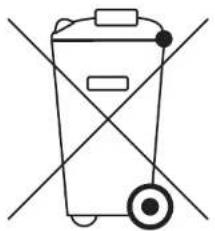
Waste disposal
For the waste management of the used appliances in safety and in respect of the environment, you can deliver it to the appropriate sites for the differentiated waste collection, managed by the Commune.
In case the appliance has got batteries, take them away before proceeding to the waste disposal. Since batteries contain substances highly polluting, they also must be disposed in a differentiated collection site.
natural_image
Simple line drawing of a trash bin with crossed lines indicating no waste or plastic discharge (no text or symbols)VBM
VIBIEMME
ESPRESSO MACHINE INDUSTRY
www.lavibiemme.it
20092 (Milano) . Italy