Q320 - Barbecue WEBER - Free user manual and instructions
Find the device manual for free Q320 WEBER in PDF.


User questions about Q320 WEBER
0 question about this device. Answer the ones you know or ask your own.
Ask a new question about this device
Download the instructions for your Barbecue in PDF format for free! Find your manual Q320 - WEBER and take your electronic device back in hand. On this page are published all the documents necessary for the use of your device. Q320 by WEBER.
USER MANUAL Q320 WEBER
Thank you for purchasing a WEBER barbecue.
Now take a few minutes and protect it by registering your product online at www.weber.com.
DANGER
If you smell gas:
1) Shut off gas to the appliance.
2) Extinguish any open flames.
3) Open lid.
4) If odor continues, keep away from the appliance and immediately call your gas supplier or your fire department.
⚠ WARNING
1) Do not store or use gasoline or other flammable liquids or vapors in the vicinity of this or any other appliance.
2) An LP cylinder not connected for use shall not be stored in the vicinity of this or any other appliance.
NOTICE TO INSTALLER: These instructions must be left with the owner, who should keep them for future use.
YOU MUST READ THIS OWNER'S GUIDE BEFORE OPERATING YOUR GAS BARBECUE.
Leaking gas may cause a fire or explosion which can cause serious bodily injury, death, or damage to property.
Carefully follow all leak-check procedures in this Owner's Guide prior to barbecue operation. Do this even if the barbecue was dealer-assembled.
Do not ignite this appliance without first reading the burner ignition sections of this manual.
THIS GAS APPLIANCE IS DESIGNED FOR OUTDOOR USE ONLY.
WARNINGS
DANGER
Failure to follow the DANGERS, WARNINGS and CAUTIONS contained in this Owner's Guide may result in serious bodily injury or death, or may result in a fire or an explosion causing damage to property.
WARNINGS:
⚠ Improper assembly of barbecue may be dangerous. Please follow the assembly instructions carefully.
Do not use this barbecue unless all parts are in place. The barbecue must be properly assembled according to the assembly instructions.
△ Your WEBER gas barbecue should never be used by children. Accessible parts of the barbecue may be very hot. Keep young children away while barbecue is in use.
Exercise caution when using your WEBER gas barbecue. It will be hot during cooking or cleaning, and should never be left unattended, or moved while in operation.
⚠ Do not use charcoal or lava rock in your WEBER gas barbecue.
While igniting the barbecue or cooking, never lean over open barbecue.
⚠️ Never place hands or fingers on the front edge of the cookbox when the barbecue is hot or the lid is open.
Do not attempt to disconnect the gas regulator and hose assembly or any gas fitting while your barbecue is in operation.
⚠ Use heat-resistant barbecue mitts or gloves when operating barbecue.
⚠ Use the pressure regulator and hose assembly that is supplied with your WEBER gas barbecue.
Should the burners go out while barbecue is in operation, turn all gas valves off. Open the lid and wait five minutes before attempting to relight barbecue, using the igniting instructions.
Do not install in, or connect to the consumer piping or gas supply of a boat or caravan.
Do not use the barbecue within 61 cm (24 in) of combustible materials. This includes the top, bottom, back or sides of the barbecue.
Do not build this model of barbecue in any built-in or slide-in construction. Ignoring this WARNING could cause a fire or an explosion that can damage property and cause serious bodily injury or death.
⚠ Do not store an extra (spare) or disconnected LPG cylinder under or near this barbecue.
After a period of storage and/or nonuse, the WEBER gas barbecue should be checked for gas leaks and burner obstructions before use. See instructions in this Owner's Guide for correct procedures.
⚠ Do not operate the WEBER gas barbecue if there is a gas leak present.
⚠ Do not use a flame to check for gas leaks.
Do not put a barbecue cover or anything flammable on, or in the storage area under the barbecue while barbecue is in operation or is hot.
△ Universal liquefied petroleum gas is not natural gas. The conversion or attempted use of natural gas in a universal liquefied petroleum gas unit or universal liquefied petroleum gas in a natural gas unit is dangerous and will void your warranty.
⚠ Keep any electrical supply cord and the fuel supply hose away from any heated surfaces.
⚠ Do not enlarge valve orifices or burner ports when cleaning the valves or burners.
⚠ The WEBER gas barbecue should be thoroughly cleaned on a regular basis.
A dented or rusty LPG cylinder may be hazardous and should be checked by your gas supplier. Do not use a LPG cylinder with a damaged valve.
Although your LPG cylinder may appear to be empty, gas may still be present, and the LPG cylinder should be transported and stored accordingly.
⚠️ If you see, smell or hear the hiss of gas escaping from the LPG cylinder:
1. Move away from LPG cylinder.
2. Do not attempt to correct the problem yourself.
3. Call your fire department.
Should a grease fire occur, turn off all burners and leave lid closed until fire is out.
The barbecues illustrated in this Owner's Guide may vary slightly from the model purchased.

text_image
AGAMark AGA® LICENCE NUMBER 1303WARRANTY TABLE OF CONTENTS
Thank you for purchasing a WEBER product. Weber-Stephen Products LLC, 1415 S. Roselle Road, Palatine, Illinois 60067 ("WEBER") prides itself on delivering a safe, durable, and reliable product.
This is WEBER's Voluntary Warranty provided to you at no extra charge. It contains the information you will need to have your WEBER product repaired in the unlikely event of a failure or defect.
Pursuant to applicable laws, the customer has several rights in case the product is defective. Those rights include supplementary performance or replacement, abatement of the purchasing price, and compensation. In the European Union, for example, this would be a two-year statutory warranty starting on the date of the handover of the product. These and other statutory rights remain unaffected by this warranty provision. In fact, this warranty grants additional rights to the Owner that are independent from statutory warranty provisions.
WEBER'S VOLUNTARY WARRANTY
WEBER warrants, to the purchaser of the WEBER product (or in the case of a gift or promotional situation, the person for whom it was purchased as a gift or promotional item), that the WEBER product is free from defects in material and workmanship for the period(s) of time specified below when assembled and operated in accordance with the accompanying Owner's Manual. (Note: If you lose or misplace your WEBER Owner's Manual, a replacement is available online at www.weber.com, or such country-specific website to which Owner may be redirected.) Under normal, private single family home or apartment use and maintenance. WEBER agrees within the framework of this warranty to repair or replace defective parts within the applicable time periods, limitations, and exclusions listed below. TO THE EXTENT ALLOWABLE BY APPLICABLE LAW, THIS WARRANTY IS EXTENDED ONLY TO THE ORIGINAL PURCHASER AND IS NOT TRANSFERABLE TO SUBSEQUENT OWNERS, EXCEPT IN THE CASE OF GIFTS AND PROMOTIONAL ITEMS AS NOTED ABOVE.
Our goods come with guarantees that cannot be excluded under the Australian Consumer Law. You are entitled to a replacement or refund for a major failure and for compensation for any other reasonably foreseeable loss or damage. You are also entitled to have the goods repaired or replaced if the goods fail to be of acceptable quality and the failure does not amount to a major failure.
The benefits given under this Limited Warranty are in addition to other rights and remedies you have under the Australian Consumer Law in relation to this WEBER gas barbecue.
OWNER'S RESPONSIBILITIES UNDER THIS WARRANTY
To ensure trouble-free warranty coverage, it is important (but it is not required) that you register your WEBER product online at www.weber.com, or such country-specific website to which Owner may be redirected. Please also retain your original sales receipt and/or invoice. Registering your WEBER product confirms your warranty coverage and provides a direct link between you and WEBER in case we need to contact you.
The above warranty only applies if the Owner takes reasonable care of the WEBER product by following all assembly instructions, usage instructions, and preventative maintenance as outlined in the accompanying Owner's Manual, unless the Owner can prove that the defect or failure is independent of non-compliance with the above mentioned obligations. If you live in a coastal area, or have your product located near a pool, maintenance includes regular washing and rinsing of the exterior surfaces as outlined in the accompanying Owner's Manual.
WARRANTY HANDLING / EXCLUSION OF WARRANTY
If you believe that you have a part which is covered by this Warranty, please contact WEBER Customer Service using the contact information on our website (www.weber.com, or such country-specific website to which Owner may be redirected). WEBER will, upon investigation, repair or replace (at its option) a defective part that is covered by this Warranty. In the event that repair or replacement are not possible, WEBER may choose (at its option) to replace the barbecue in question with a new barbecue of equal or greater value. WEBER may ask you to return parts for inspection, shipping charges to be pre-paid.
This WARRANTY lapses if there are damages, deteriorations, discolorations, and/or rust for which WEBER is not responsible caused by:
- Abuse, misuse, alteration, modification, misapplication, vandalism, neglect, improper assembly or installation, and failure to properly perform normal and routine maintenance;
- Insects (such as spiders) and rodents (such as squirrels), including but not limited to damage to burner tubes and/or gas hoses;
- Exposure to salt air and/or chlorine sources such as swimming pools and hot tubs/spas;
- Severe weather conditions such as hail, hurricanes, earthquakes, tsunamis or surges, tornadoes or severe storms.
The use and/or installation of parts on your WEBER product that are not genuine WEBER parts will void this Warranty, and any damages that result hereby are not covered by this Warranty. Any conversion of a gas barbecue not authorized by WEBER and performed by a WEBER authorized service technician will void this Warranty.
PRODUCT WARRANTY PERIODS
Cookbox: 5 years, no rust through/burn through (2 years paint excluding fading or discolouration)
Lid assembly: 5 years, no rust through/burn through (2 years paint excluding fading or discolouration)
Stainless steel burner tubes: 5 years, no rust through/burn through
Porcelain-enamelled cast iron cooking grills: 5 years, no rust through/burn through
Plastic components: 5 years, excluding fading or discolouration
All remaining parts: 2 years
DISCLAIMERS
APART FROM THE WARRANTY AND DISCLAIMERS AS DESCRIBED IN THIS WARRANTY STATEMENT, THERE ARE EXPLICITLY NO FURTHER WARRANTY OR VOLUNTARY DECLARATIONS OF LIABILITY GIVEN HERE WHICH GO BEYOND THE STATUTORY LIABILITY APPLYING TO WEBER. THE PRESENT WARRANTY STATEMENT ALSO DOES NOT LIMIT OR EXCLUDE SITUATIONS OR CLAIMS WHERE WEBER HAS MANDATORY LIABILITY AS PRESCRIBED BY STATUTE.
NO WARRANTIES SHALL APPLY AFTER THE APPLICABLE PERIODS OF THIS WARRANTY. NO OTHER WARRANTIES GIVEN BY ANY PERSON, INCLUDING A DEALER OR RETAILER, WITH RESPECT TO ANY PRODUCT (SUCH AS ANY "EXTENDED WARRANTIES"), SHALL BIND WEBER. THE EXCLUSIVE REMEDY OF THIS WARRANTY IS REPAIR OR REPLACEMENT OF THE PART OR PRODUCT.
IN NO EVENT UNDER THIS VOLUNTARY WARRANTY SHALL RECOVERY OF ANY KIND BE GREATER THAN THE AMOUNT OF THE PURCHASE PRICE OF THE WEBER PRODUCT SOLD.
YOU ASSUME THE RISK AND LIABILITY FOR LOSS, DAMAGE, OR INJURY TO YOU AND YOUR PROPERTY AND/OR TO OTHERS AND THEIR PROPERTY ARISING OUT OF THE MISUSE OR ABUSE OF THE PRODUCT OR FAILURE TO FOLLOW INSTRUCTIONS PROVIDED BY WEBER IN THE ACCOMPANYING OWNER'S MANUAL.
PARTS AND ACCESSORIES REPLACED UNDER THIS WARRANTY ARE WARRANTED ONLY FOR THE BALANCE OF THE ABOVE MENTIONED ORIGINAL WARRANTY PERIOD(S).
THIS WARRANTY APPLIES TO PRIVATE SINGLE FAMILY HOME OR APARTMENT USE ONLY AND DOES NOT APPLY TO WEBER BARBECUES USED IN COMMERCIAL, COMMUNAL OR MULTI-UNIT SETTINGS SUCH AS RESTAURANTS, HOTELS, RESORTS, OR RENTAL PROPERTIES.
WEBER MAY FROM TIME TO TIME CHANGE THE DESIGN OF ITS PRODUCTS. NOTHING CONTAINED IN THIS WARRANTY SHALL BE CONSTRUED AS OBLIGATING WEBER TO INCORPORATE SUCH DESIGN CHANGES INTO PREVIOUSLY MANUFACTURED PRODUCTS, NOR SHALL SUCH CHANGES BE CONSTRUED AS AN ADMISSION THAT PREVIOUS DESIGNS WERE DEFECTIVE.
Refer to International Business Units list at the end of this Owner's Manual for additional contact information.
Weber-Stephen PRODUCTS LLC
Level 1, 142-144 Fullarton Road Rose Park South Australia 5067 61.8.8221.6111 www.WEBERbbq.com.au
WEBER New Zealand ULC 86 East Highbrook Drive East Tamaki, Auckland 2013 NEW ZEALAND +64 9 279 7133 www.WEBERnz.co.nz
WARNINGS....2
WARRANTY....3
TABLE OF CONTENTS....3
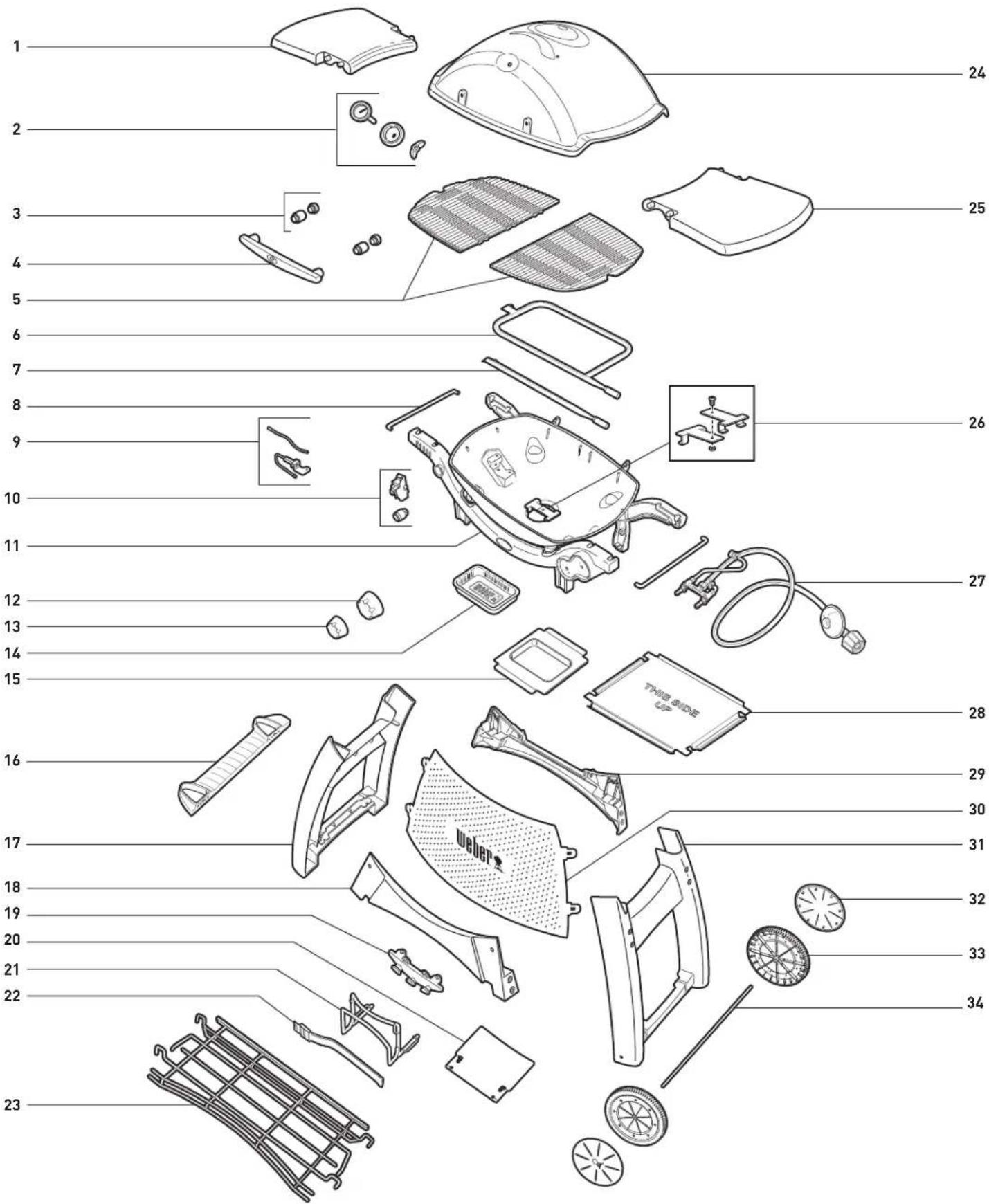
WEBER Q 3100 EXPLODED VIEW....4
WEBER Q 3200 EXPLODED VIEW....6
PARTS LIST 8
ASSEMBLY....9
STORAGE FEATURES.... 23
BARBECUE LOCATION REQUIREMENTS .... 24
CONSIDERATIONS FOR LOCATING YOUR BARBECUE....24
IMPORTANT INFORMATION ABOUT UNIVERSAL LIQUEFIED PETROLEUM GAS .. 25
WHAT IS UNIVERSAL LIQUEFIED PETROLEUM GAS? 25
SAFE HANDLING TIPS FOR LPG CYLINDERS. 25
STORAGE AND/OR NONUSE GUIDELINES. 25
GENERAL SAFETY GUIDELINES. 25
IMPORTANT INFORMATION ABOUT LPG CONNECTIONS....26
WHAT IS A REGULATOR? 26 REGULATOR CONNECTIONS 28
LPG CYLINDER INSTALLATION AND REMOVAL....27
INSTALLING THE LPG CYLINDER....27 REMOVING THE LPG CYLINDER FOR REFILLING OR REPLACEMENT....27 FILLING THE LPG CYLINDER....27 FUELING YOUR GRILL....27
PREPARING TO USE YOUR BARBECUE .....28
WHAT IS A LEAK CHECK? 28 CHECKING FOR GAS LEAKS. 28
SAFETY CHECKS BEFORE USING YOUR BARBECUE ....29
SAFETY FIRST .... 29 REMOVABLE CATCH PAN AND DISPOSABLE DRIP PAN .... 29 HOSE INSPECTION .... 29
BURNER IGNITION & USAGE....30
METHODS OF BURNER IGNITION 30
BURNER IGNITION 30
TO EXTINGUISH BURNER 30
BURNER IGNITION - Lighting with a Match 31
COOKING METHODS 32
DIRECT METHOD OR INDIRECT METHOD? 32
TROUBLESHOOTING....33
ANNUAL MAINTENANCE ....34
KEEPING YOUR WEBER BARBECUE IN TIP-TOP SHAPE....34
BURNER FLAME PATTERN....34
WEBER SPIDER/INSECT SCREEN(S)....34
BURNER TUBE PORTS....34
BURNER TUBE CLEANING OR REPLACEMENT....35
ROUTINE MAINTENANCE....37
BEAUTIFUL—INSIDE AND OUT....37 CLEANING THE OUTSIDE OF THE GRILL....37 CLEANING THE INSIDE OF THE GRILL....37 HOSE INSPECTION....37 IGNITION SYSTEM OPERATIONS....38 MAINTAINING THE PUSH BUTTON IGNITION SYSTEM (Q 1000, Q 2000 & Q 3100)....38 MAINTAINING THE ELECTRONIC IGNITION SYSTEM (Q 1200, Q 2200 & Q 3200)....38
WEBER Q 3100 EXPLODED VIEW
Q3100 ULPG - AU/NZ 020122

text_image
Exploded view diagram of a washing machine with numbered parts and labeled partsWEBER Q 3100 EXPLODED VIEW
-
Left Fold-Down Table
-
Handle Spacer
-
Handle
-
Cooking Grate
-
Outside Burner Tube
-
Inside Burner Tube
-
Wire Brace
-
Igniter Electrode Assembly
-
Push Button Igniter
-
Cookbox/Cradle Assembly
-
Large Burner Control Knob
-
Small Burner Control Knob
-
Disposable Drip Pan
-
Removable Catch Pan
-
Foot Base
-
Left Cart Leg
-
Front Cross Brace
-
Tool Holder
-
Cylinder Rest
-
Cylinder Bracket
-
Cylinder Strap
-
Bottom Rack
-
Lid
-
Right Fold-Down Table
-
Draft Damper* *New Zealand only
-
Manifold, Valve and Regulator Assembly
-
Grease Shield
-
Rear Cross Brace
-
Cylinder Screen
-
Right Cart Leg
-
Wheel Cover
-
Wheel
-
Axle
WEBER Q 3200 EXPLODED VIEW
Q3200 - ULPG - AU/NZ 020122
text_image
Exploded view diagram of a washing machine with numbered parts and Chinese labelsWEBER Q 3200 EXPLODED VIEW
- Left Fold-Down Table
- Thermometer Assembly
- Handle Spacer
- Handle
- Cooking Grate
- Outside Burner Tube
- Inside Burner Tube
- Wire Brace
- Igniter Electrode Assembly
- Electronic Igniter Button/Electronic Igniter Module
- Cookbox/Cradle Assembly
- Large Burner Control Knob
- Small Burner Control Knob
- Disposable Drip Pan
- Removable Catch Pan
- Foot Base
- Left Cart Leg
- Front Cross Brace
- Tool Holder
- Cylinder Rest
- Cylinder Bracket
- Cylinder Strap
- Bottom Rack
- Lid
- Right Fold-Down Table
- Draft Damper* *New Zealand only
- Grease Shield
- Rear Cross Brace
- Cylinder Screen
- Right Cart Leg
- Wheel Cover
- Wheel
-
Axle
-
Manifold, Valve and Regulator Assembly
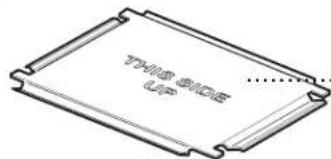
PARTS LIST
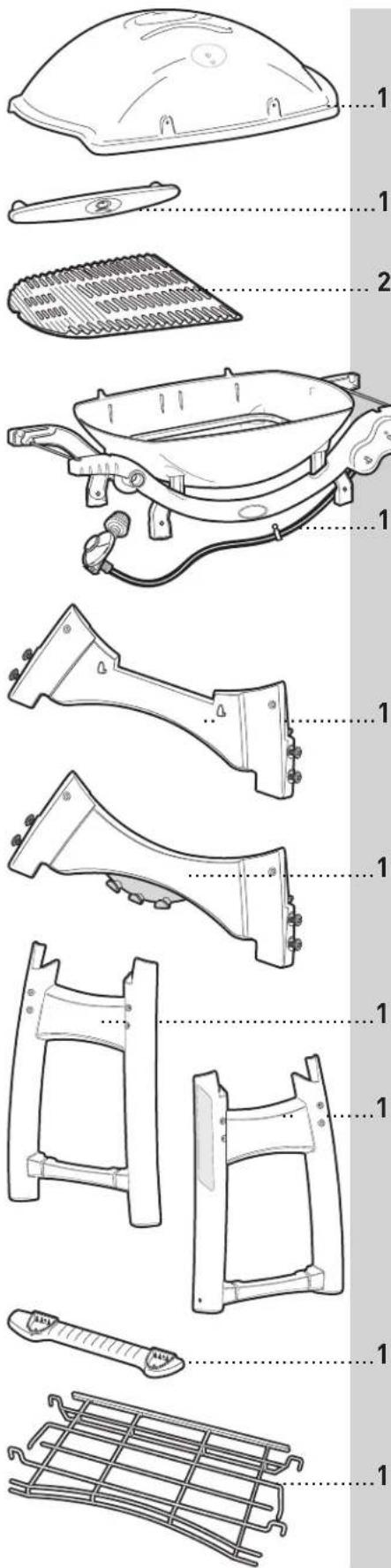

natural_image
Simple line drawing of a curved mechanical part or bracket (no text or symbols)

text_image
T14000 00000 UP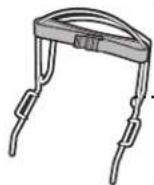


text_image
weber 2010 2011 2012 2013 2014 2015 2016 2017 2018 2019 2020 2021 2022 2023 2024 2025 2026 2027 2028 2029 2030 2031 2032 2033 2034 2035 2036 2037 2038 2039 2040 2041 2042 2043 2044 2045 2046 2047 2048 2049 2050 2051 2052 2053 2054 2055 2056 2057 2058 2059 2060 2061 2062 2063 2064 2065 2066 2067 2068 2069 2070 2071 2072 2073 2074 2075 2076 2077 2078 2079 2080 2081 2082 2083 2084 2085 2086 2087 2088 2089 2090 2091 2092 2093 2094 2095 2096 2097 2098 2099 2100

2
.1
.1
.1
.1
.1
.1
.1
2
2
.1


natural_image
Simple 3D illustration of a cylindrical object with a dotted line and the number 2 labeled, no text or symbols present.

natural_image
Illustration of a screw with a star-shaped head and threaded shaft (no text or symbols)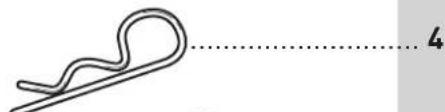
natural_image
Simple line drawing of a ribbon or clip with a dotted line indicating size (no text or symbols)
natural_image
Simple line drawing of a cylindrical object with a hole, labeled with the number 2 (no text or symbols on the object itself)
3200
1
- AAA + 1
1
1

natural_image
Simple line drawing of a fish-shaped object with a dotted line and the number 1 labeled (no text or symbols on the object itself)After unpacking your barbecue, ensure all parts are supplied. Remove all protective and transit packing material before assembly.
ASSEMBLY
1
text_image
3-
natural_image
Technical line drawing of a mechanical component with two views: top view shows a curved bracket and base plate, bottom view shows a flat blade (no text or symbols)
natural_image
Mechanical assembly diagram showing a lever and foot with two arrows indicating motion (no text or symbols present)
natural_image
Diagram of a mechanical assembly with two vertical posts and directional arrows indicating force or motion (no text or symbols)
natural_image
Technical line drawing of a mechanical assembly with two bolts and a dashed line indicating alignment (no text or symbols)
natural_image
Technical illustration of a mechanical component with a bolt and threaded end (no text or symbols)2

natural_image
Diagram showing a pendulum setup with a string and rope, no text or symbols present
natural_image
Diagram of a compass with an arrow indicating direction (no text or labels)
natural_image
Technical line drawing of a mechanical bracket or support structure (no text or symbols)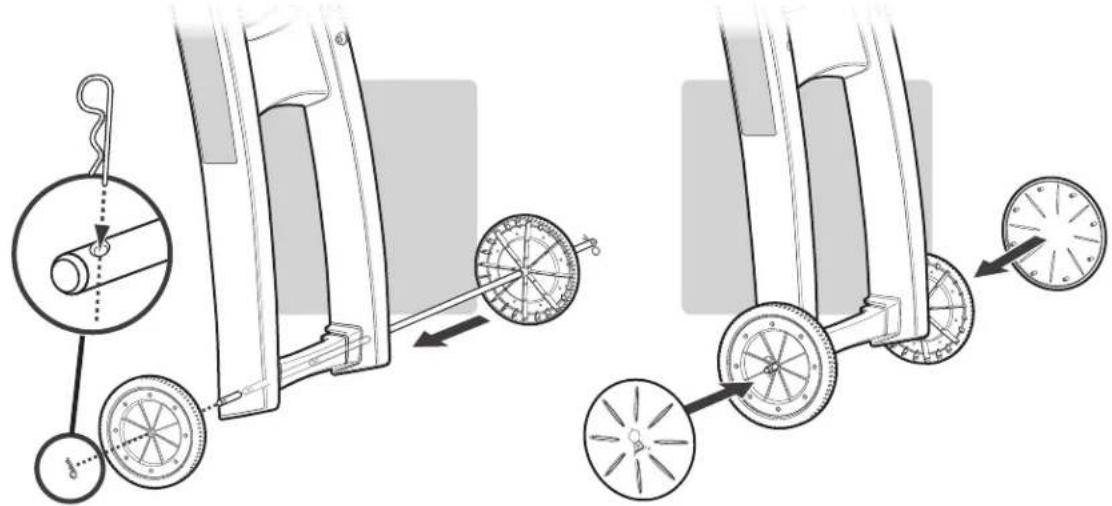
text_image
Technical diagram illustrating mechanical assembly steps with labeled components and directional arrows3
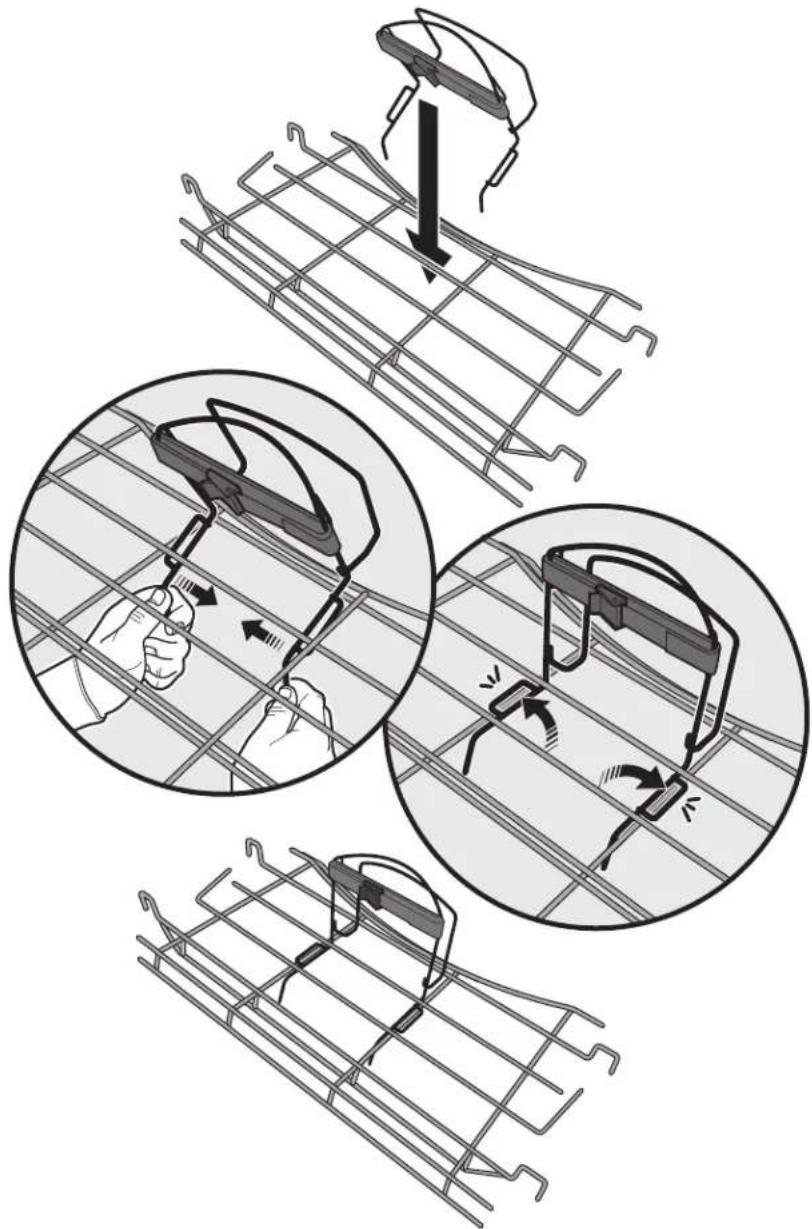
text_image
Diagram illustrating four steps of using a wire cage to adjust eyewear, showing hand positioning and adjustment mechanism.4
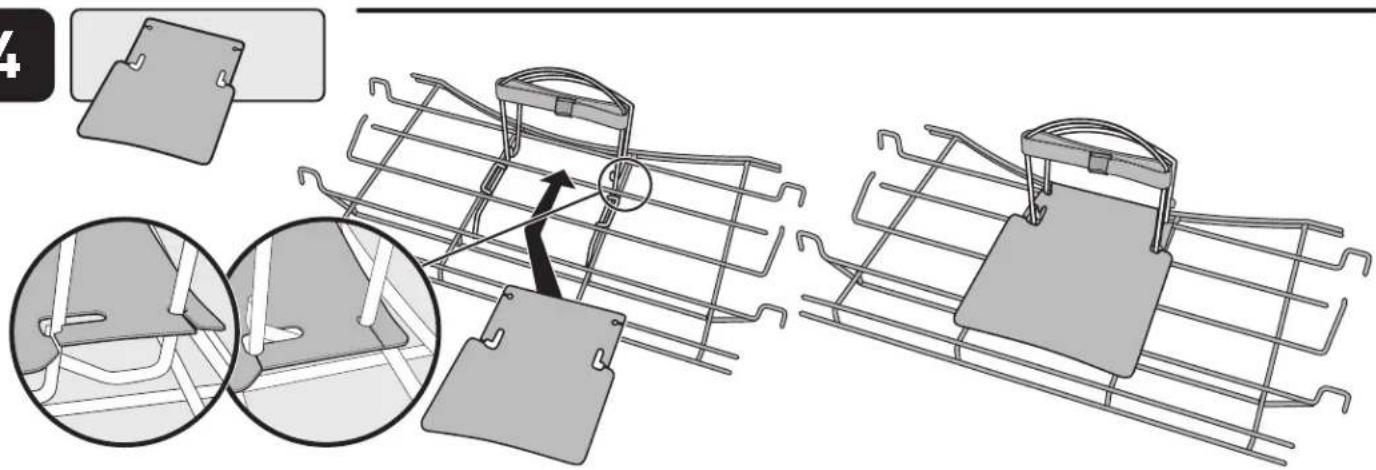
text_image
Diagram illustrating the assembly of a metal cage with labeled parts and steps, showing folding and mounting instructions.ASSEMBLY
5
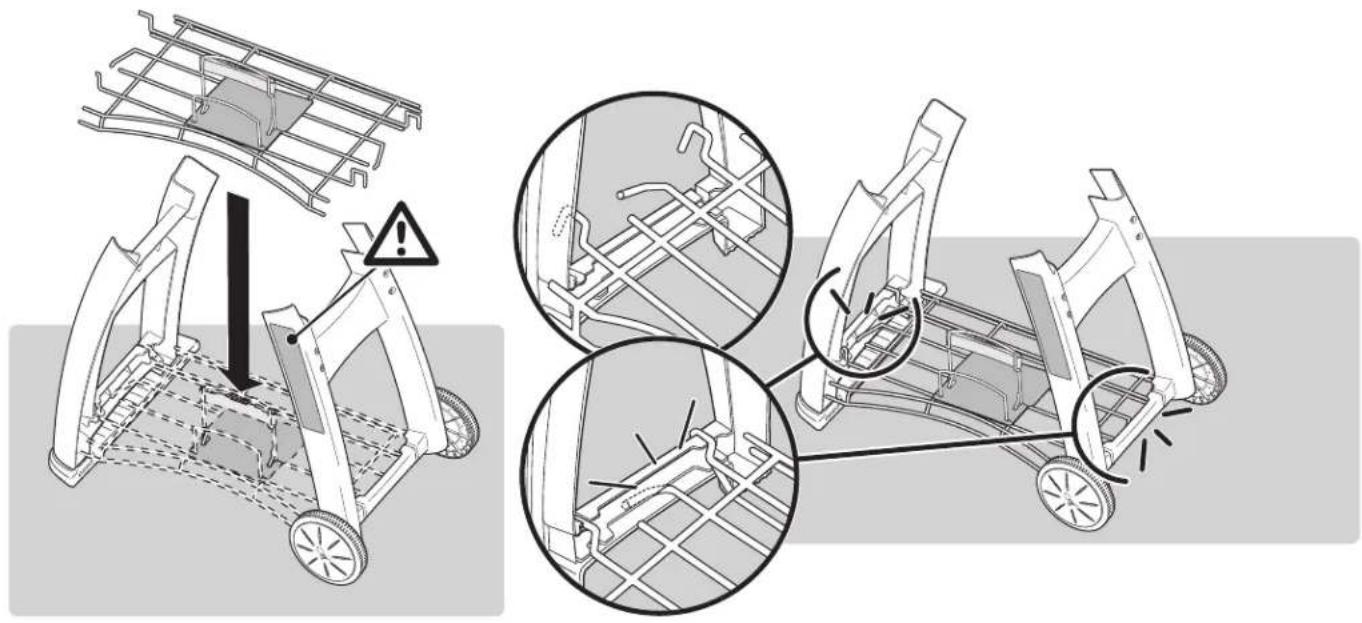
⚠ Place wheel frame on the right. Ignition instruction sticker faces forward.
text_image
Technical diagram illustrating the assembly of a vehicle chassis with labeled components and warning indicators6

natural_image
Technical illustration of mechanical components including a screwdriver, bracket, and flange (no text or symbols)
text_image
Technical diagram of a mechanical component with force vectors and dimension annotations12-
natural_image
Technical line drawing of a mechanical component with directional arrows indicating flow or movement (no text or symbols)ASSEMBLY
7
text_image
2-
natural_image
Technical line drawing of a mechanical device with wheels and structural components (no text or symbols)8
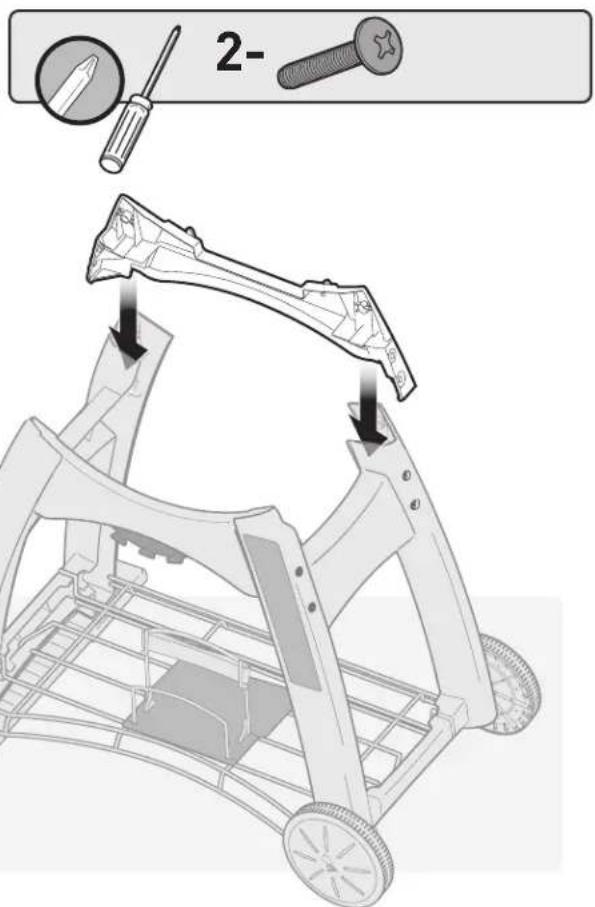
text_image
2-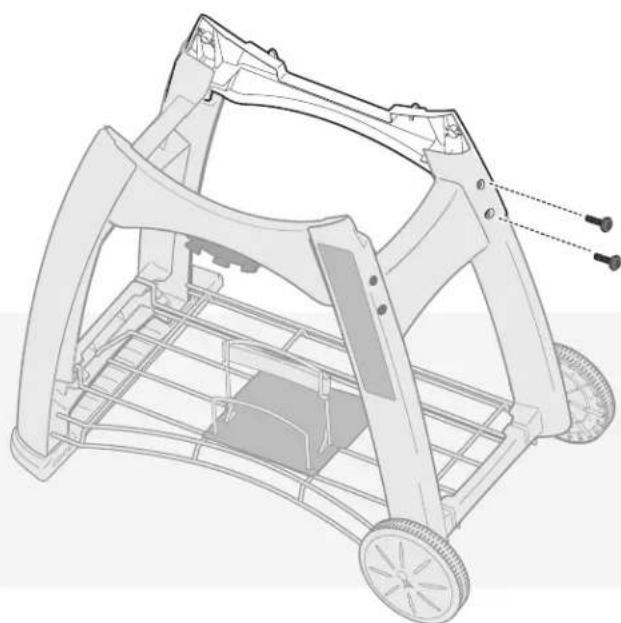
natural_image
Technical line drawing of a mechanical device with wheels and frame structure (no text or symbols)ASSEMBLY

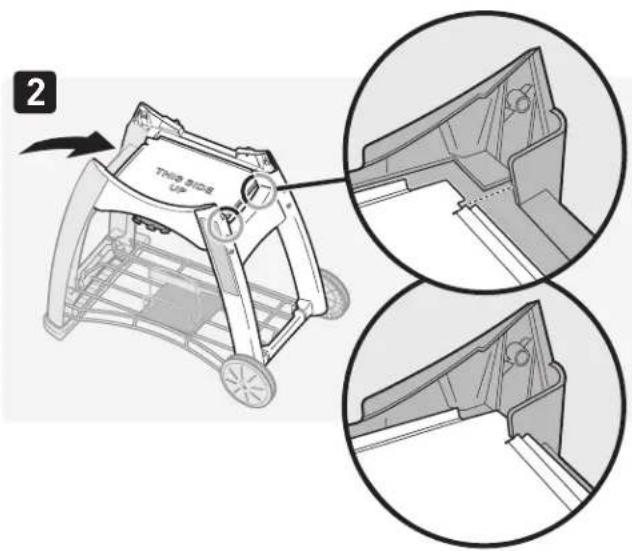
text_image
2 TRIO BIGS UP
natural_image
Technical line drawing of a mechanical device with wheels and a labeled part (no readable text or symbols)10
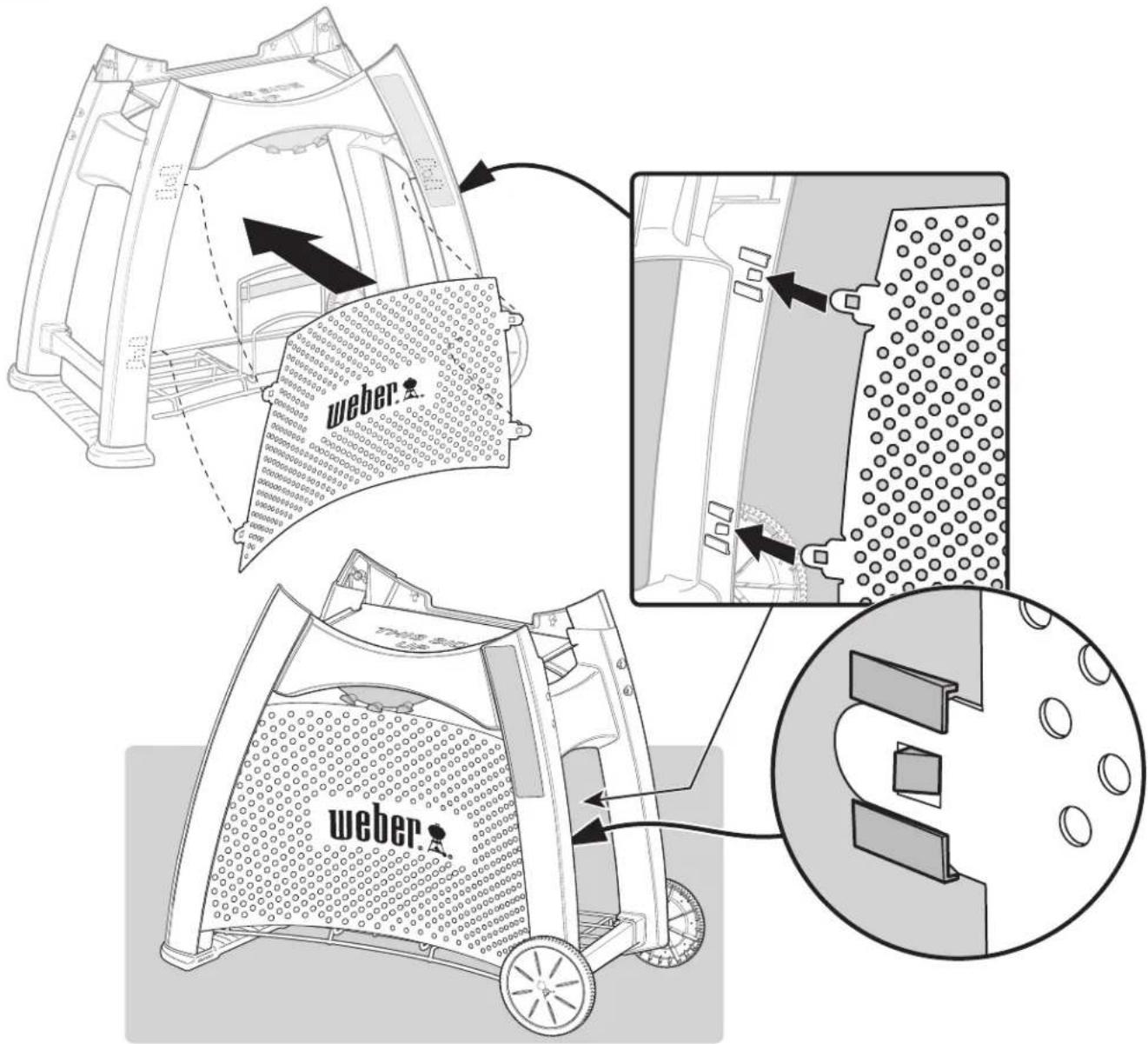
text_image
weber weber weberASSEMBLY
11
text_image
weber.12
text_image
4-
text_image
Technical diagram of a weber electric grill with labeled components and a magnified inset showing the internal structure.ASSEMBLY
13
text_image
weber weber14


natural_image
Technical illustration of a mechanical device with two circular insets showing hand operating a tool (no text or symbols present)ASSEMBLY
15


1-
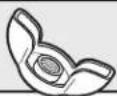

3200

text_image
weber16
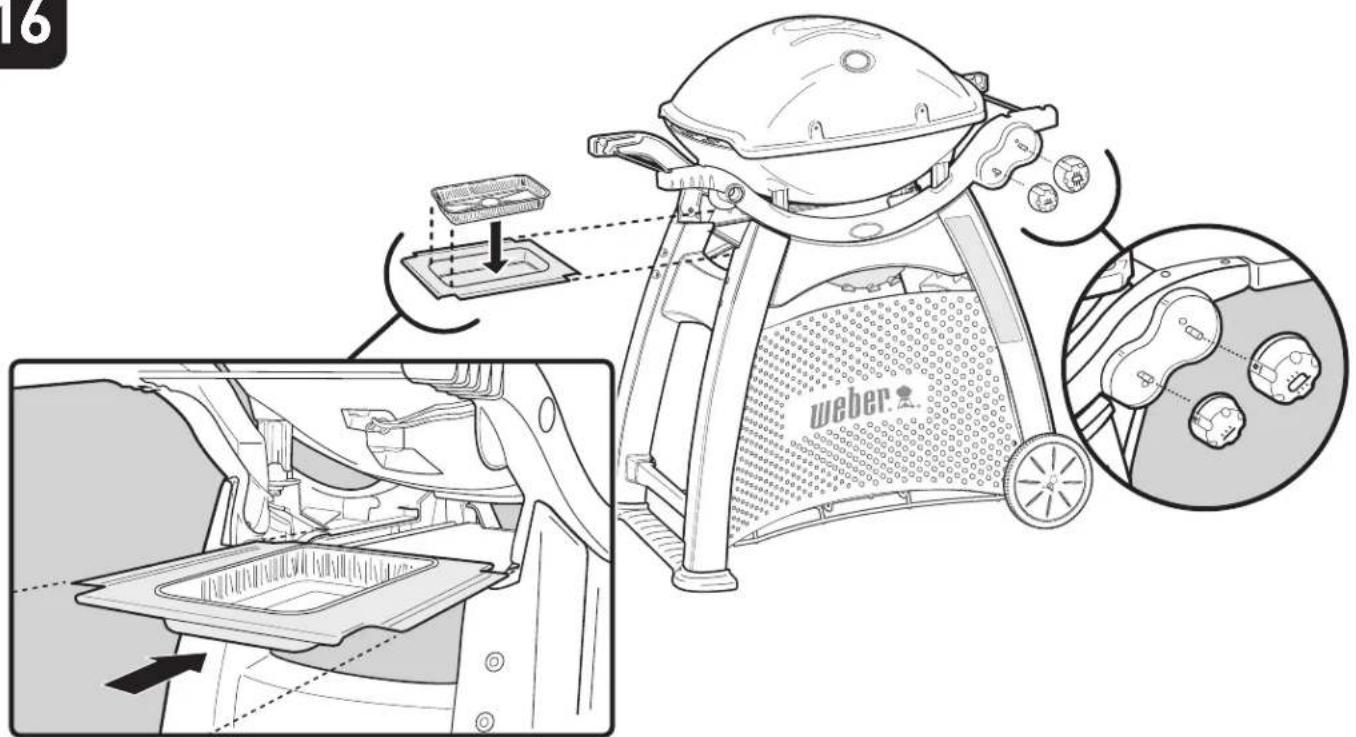
text_image
weberASSEMBLY
17
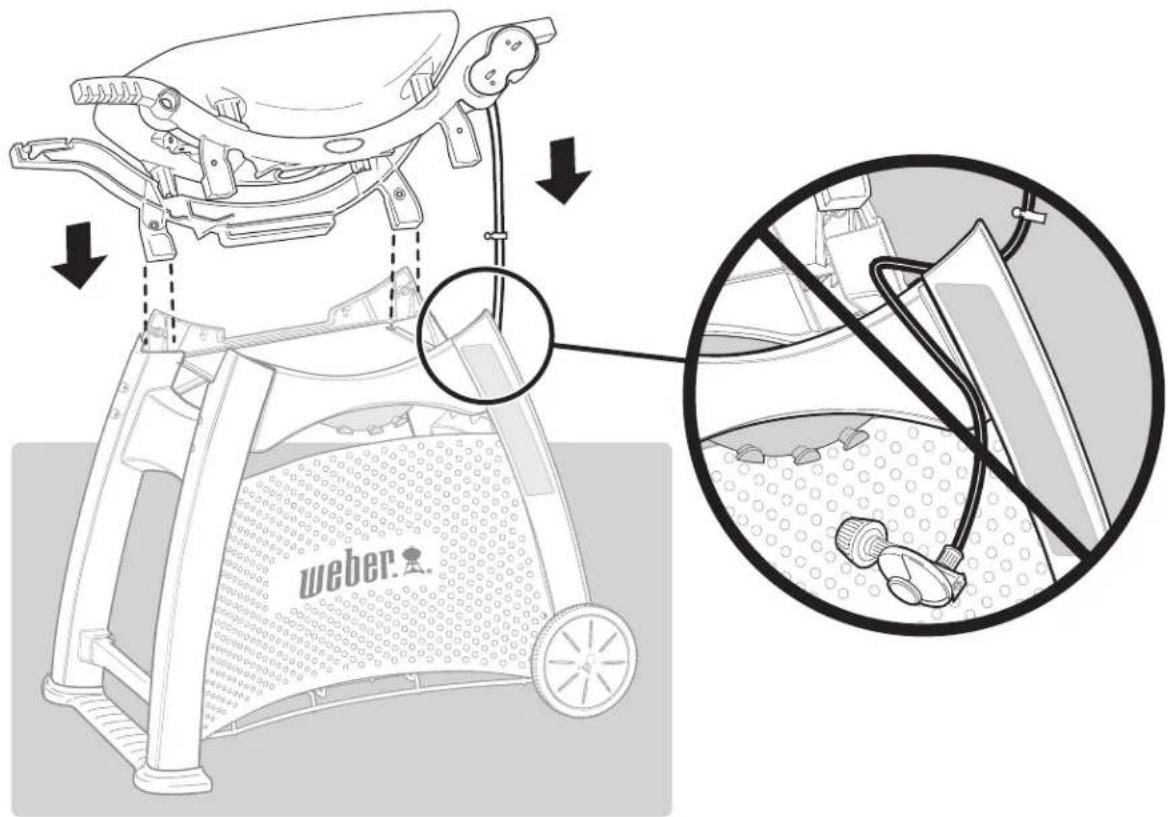
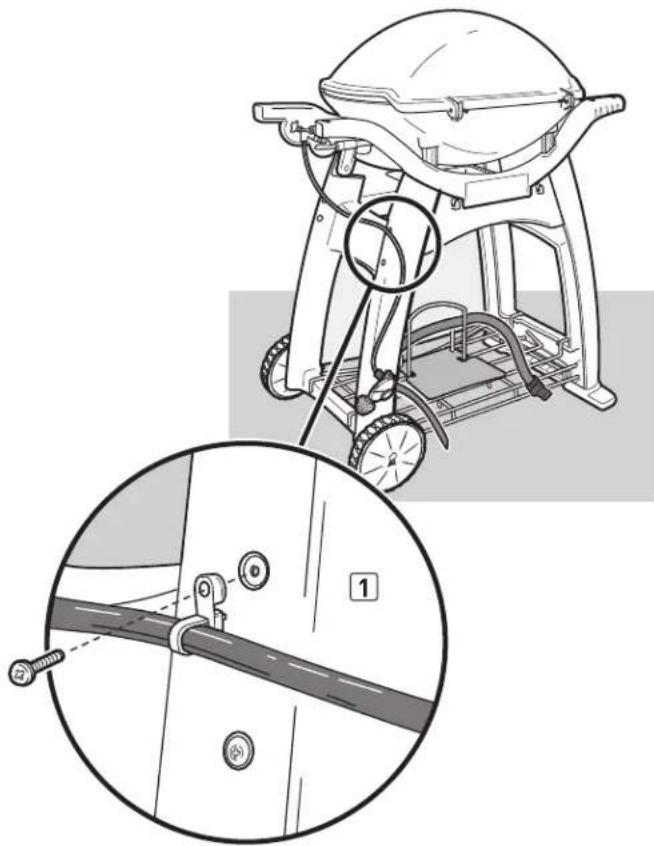
A] Uncoil the hose and regulator.
B] Remove leg screw then secure hose and retention clip (1) to cart leg.
⚠ WARNING: The hose must be secured to the cart leg by the hose retention clip. Failure to do so could cause damage to hose resulting in a fire or explosion, which can cause serious bodily injury or death and damage to property.
natural_image
Technical illustration of a mechanical device with a close-up inset showing a cable being inserted into a bracket (no text or symbols present)
natural_image
Mechanical device with a circular symbol indicating no prohibition (no text or labels present)
natural_image
Mechanical device with a circular symbol indicating no prohibition (no text or labels present)ASSEMBLY
18
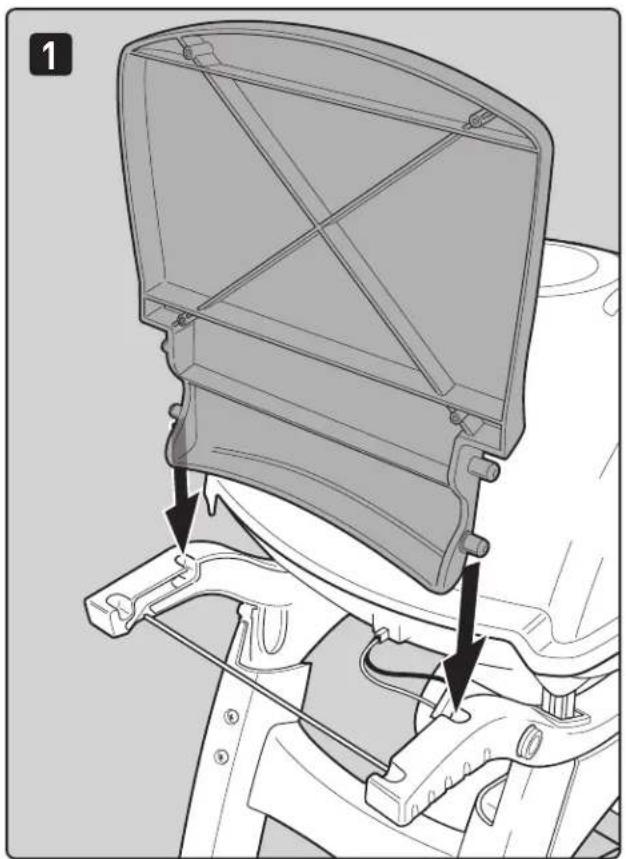
natural_image
Mechanical assembly diagram showing a component with arrows indicating assembly steps (no text or symbols present)
natural_image
Illustration of hands installing or adjusting a mechanical component with a black arrow indicating motion (no text or symbols present)
natural_image
Mechanical assembly diagram showing a lever mechanism with a black arrow indicating motion (no text or symbols present)ASSEMBLY
19
natural_image
Line drawing of a weber grill with rotating wheels and a dome-shaped top (no text or symbols)
natural_image
Illustration of a person adjusting a seatbelt with arrows indicating stress or pressure (no text or symbols)
natural_image
Illustration of a person holding a gray fabric or cushion, with an arrow indicating upward motion (no text or symbols)
natural_image
Diagram of a mechanical component with a curved arrow indicating rotation (no text or symbols present)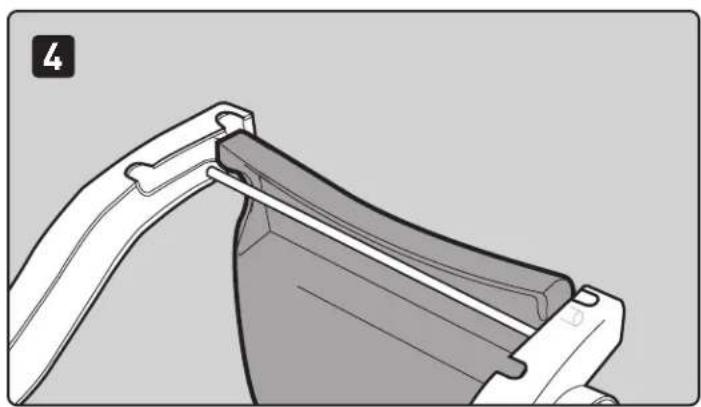
natural_image
Technical illustration of a mechanical component with a curved bracket and flange (no text or symbols)ASSEMBLY
20

text_image
2-
text_image
weberASSEMBLY
21
1 - 0 + AAA -

3200

text_image
weber + AAA -Use heat-resistant mitts or gloves (conforming to EN 407, Contact Heat rating level 2 or greater) when adjusting rack.

text_image
Diagram illustrating a grill setup with labeled components and a Weber brand logo on the right.BARBECUE LOCATION REQUIREMENTS
CONSIDERATIONS FOR LOCATING YOUR BARBECUE
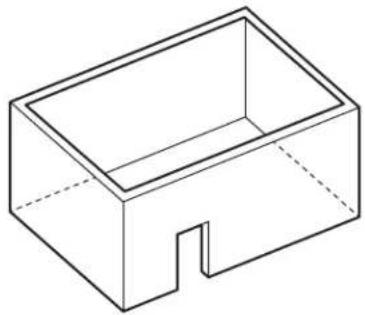
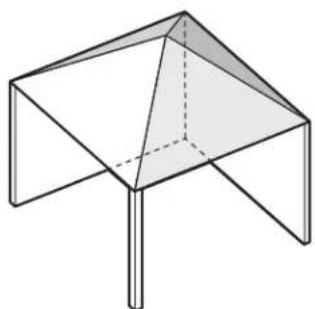
Any enclosure in which the appliance is used shall comply with one of the following:
- An enclosure with walls on all sides, but at least one permanent opening at ground level and no overhead cover (1).
- Within a partial enclosure that includes an overhead cover and no more than two walls (2).
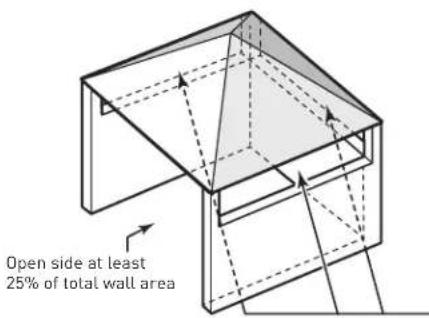
- Within a partial enclosure that includes an overhead cover and more than two walls, the following shall apply (3):
(a) at least 25% of the total wall area is completely open; and
(b) at least 30% of the remaining wall area is open and unrestricted.
- In the case of balconies, at least 20% of the total of the side, back and front wall areas shall be and remain open and unrestricted.
1
natural_image
Isometric line drawing of a rectangular box with an open top and a small cutout on the side (no text or symbols)
natural_image
Empty rectangular frame with no text, symbols, or markings2
natural_image
Isometric line drawing of a simple geometric structure resembling a table or support frame (no text or symbols)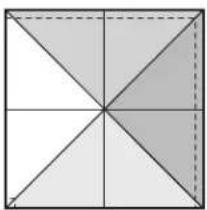
natural_image
Geometric diagram of a square divided into four triangles by diagonals, one shaded gray (no text or symbols)
text_image
Both ends open
natural_image
Geometric diagram of a square divided into four triangles by diagonals (no text or symbols)3
text_image
Open side at least 25% of total wall area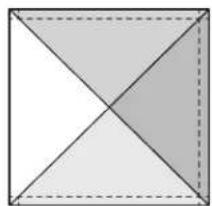
natural_image
Geometric diagram of a square divided into two triangles by diagonals, one shaded gray (no text or symbols)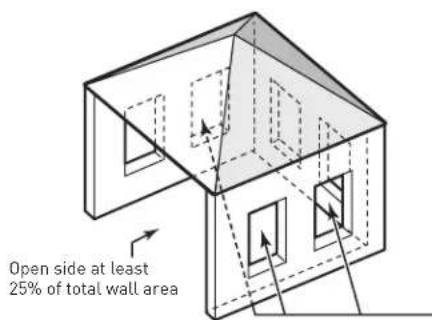
text_image
Open side at least 25% of total wall area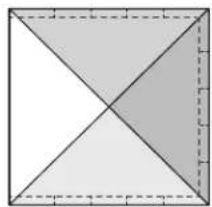
natural_image
Geometric diagram of a square divided into four triangles by diagonals, with no text or symbols present.30% or more in total of the remaining wall area is open and unrestricted
30% or more in total of the remaining wall area is open and unrestricted
IMPORTANT INFORMATION ABOUT UNIVERSAL LIQUEFIED PETROLEUM GAS
WHAT IS UNIVERSAL LIQUEFIED PETROLEUM GAS?
Universal liquefied petroleum gas is the flammable, petroleum-based product used to fuel your barbecue. It is a gas at moderate temperatures and pressure when it is not contained. But at moderate pressure inside a container, such as a cylinder, it is a liquid. As pressure is released from the cylinder, the liquid readily vaporizes and becomes gas.
- Universal liquefied petroleum gas has an odour similar to natural gas. You should be aware of this odour.
- Universal liquefied petroleum gas is heavier than air. Leaking universal liquefied petroleum gas may collect in low areas and resist dispersion.
SAFE HANDLING TIPS FOR LPG CYLINDERS
There are various guidelines and safety factors that you need to keep in mind when using universal liquefied petroleum gas. Carefully follow these instructions before using your WEBER gas barbecue.
• Always close the LPG cylinder valve before disconnecting regulator.
- Do not use a damaged LPG cylinder. A dented or rusty LPG cylinder or a LPG cylinder with a damaged valve may be hazardous and should be replaced with a new LPG cylinder immediately.
- Handle "empty" LPG cylinders with the same care as you treat full LPG cylinders. Even when a LPG cylinder is empty of liquid, there may still be gas pressure inside the LPG cylinder.
- The LPG cylinder must be installed, transported, and stored in an upright position. LPG cylinders should not be dropped or handled roughly.
- Never store or transport the LPG cylinder where temperatures can reach 51^ (125°F) (the LPG cylinder will become too hot to hold by hand). For example: do not leave the LPG cylinder in a car on a hot day.
- Leak test the fitting where the regulator connects to the LPG cylinder each time a reconnection occurs. For example: test each time the LPG cylinder is refilled and reinstalled.
• LPG cylinders must be kept out of reach of children.
STORAGE AND/OR NONUSE GUIDELINES
The gas must be turned off at the LPG cylinder when the WEBER gas barbecue is not in use.
⚠ WARNING: Make sure that the LPG cylinder valve is closed when the barbecue is not in use. Close by turning valve clockwise.
- If storing the WEBER gas barbecue indoors, first DISCONNECT the gas supply and store the LPG cylinder outdoors in a well-ventilated space.
- Do not store a disconnected LPG cylinder in a building, garage, or any other enclosed area.
- If you do not disconnect the LPG cylinder from the WEBER gas barbecue, be sure to keep both the barbecue and the LPG cylinder outdoors in a well-ventilated area.
For barbecues that have been stored or left unused for a while, it is important to follow these guidelines:
- The WEBER gas barbecue should be checked for gas leaks and any obstructions in the burner tubes before it is used. (Refer to "CHECKING FOR GAS LEAKS" and "ANNUAL MAINTENANCE.")
- Check that the areas around the LPG cylinder and under the cookbox and the removable catch pan are free from debris that might obstruct the flow of combustion or ventilation air.
- The spider/insect screens should also be checked for any obstructions. (Refer to "ANNUAL MAINTENANCE.")
GENERAL SAFETY GUIDELINES
- This appliance shall only be used in an above ground, open-air situation with natural ventilation, without stagnant areas, where gas leakage and other products of combustion are rapidly dispersed by wind and natural convection.
- Refer to data plate on barbecue for gas type, consumption, pressures and injector sizing details.
- Gas inlet connection - 3/8" SAE Flare with 5/8" UNF thread.
- This WEBER gas barbecue is not intended for commercial use.
- This WEBER gas barbecue is not intended for and should never be used as a heater.
- Use only AGA approved hose assemblies.
IMPORTANT INFORMATION ABOUT LPG CONNECTIONS
WHAT IS A REGULATOR?
Your WEBER gas barbecue is equipped with a pressure regulator, which is a device to control and maintain uniform gas pressure as gas is released from the LPG cylinder.
REGULATOR CONNECTIONS
Your WEBER gas barbecue is equipped with a pressure regulator, which is a device to control and maintain uniform gas pressure as gas is released from the LPG cylinder. Each WEBER pressure regulator is designed for vapor withdrawal.
- The pressure regulator supplied with the WEBER gas barbecue must be used. This regulator is set for 2.75 kPa.
- Replacement pressure regulator and hose assemblies must be those specified by Weber-Stephen Products LLC.
- Be sure the small vent hole on the regulator does not collect water. This vent should be kept free of dirt, grease, bugs, etc.
⚠ WARNING: Replacement LPG cylinders must match the regulator connection supplied with this WEBER gas appliance.
REPLACEMENT HOSE, REGULATOR AND VALVE ASSEMBLY
⚠️ IMPORTANT NOTICE:
We recommend that you replace the gas hose assembly on your WEBER gas barbecue every five years. Some countries may have requirements that the gas hose be replaced within less than five years, in which case that country's requirement would take precedence.
For replacement hose, regulator, and valve assemblies, contact the Customer Service Representative in your area using the contact information on our web site. Log on to www.weber.com.
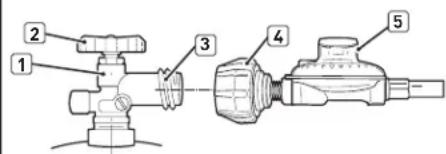
REGULATOR CONNECTION
text_image
Technical diagram of a valve assembly with numbered parts labeled 1 to 51 Valve
2 Handwheel - close clockwise
3 External Thread
4 Thermally Sensitive Nut – tighten clockwise
5 Regulator Vent Hole
FUELING YOUR BARBECUE
Before using your barbecue for the first time, you need to obtain an LPG cylinder. New LPG cylinders can be purchased full; empty LPG cylinders can be refilled or exchanged. You may choose to purchase a spare LPG cylinder so that you don't run out of fuel in the middle of cooking a meal.
DANGER
NEVER store a spare LPG cylinder under or near WEBER gas appliances. NEVER fill the LPG cylinder beyond 80% full. Failure to follow these statements exactly may result in a fire causing death or serious injury.
INSTALLING THE LPG CYLINDER
The LPG cylinder is installed on the LPG cylinder rest or on the ground. A LPG cylinder that is taller than 465 mm will not fit on the cart and needs to be set upright in a stable position on the ground. The minimum LPG cylinder capacity for this barbecue is 9 kg.
Prepare Barbecue for LPG Cylinder Installation
A) Check that all burner control knobs are in the off (Dposition. Your barbecue was shipped with burner control knobs in the off [O] position, but you should check to be sure that they are turned off. Check by pushing in and turning knobs clockwise. If they do not turn, they are off. If they do turn, continue turning them clockwise until they stop; then they are off.
LPG CYLINDER INSTALLATION AND REMOVAL
Install the LPG Cylinder
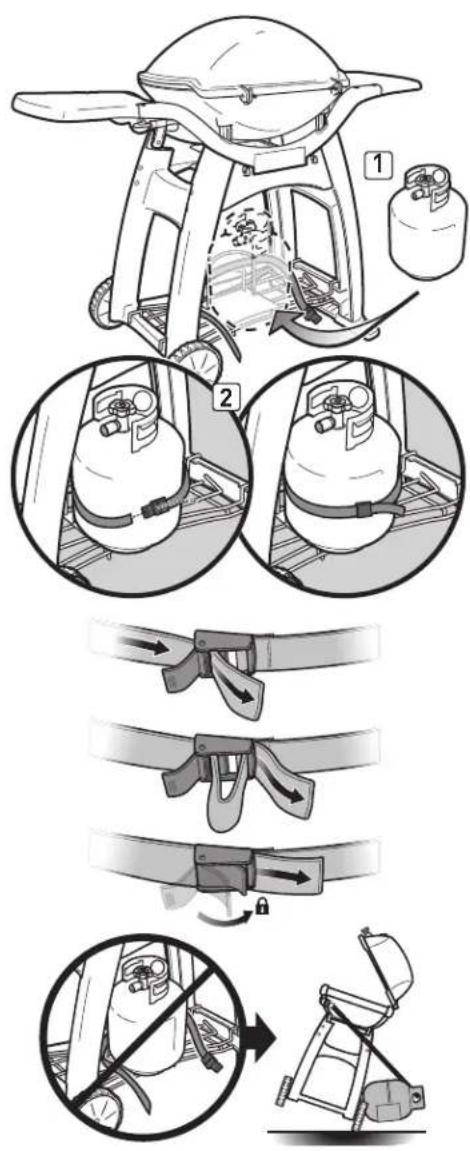
A) Turn the LPG cylinder so the opening of the valve is facing the right side or back of the grill.
B) Place the LPG cylinder on the cylinder rest (1).
C) Secure the LPG cylinder to the LPG cylinder bracket using the LPG cylinder strap (2).
⚠ WARNING: The LPG cylinder must be secured to the LPG cylinder bracket when grill is in use.
⚠ WARNING: Make sure that the LPG cylinder valve is closed. Close by turning valve clockwise.
Connect the Regulator / Hose to the LPG Cylinder
A) Remove screw from right leg of cart. Insert hose retention clip. Reinstall screw (3).
⚠ WARNING: The hose must be secured to the cart leg by the hose retention clip. Failure to do so could cause damage to hose resulting in a fire or explosion, which can cause serious bodily injury or death and damage to property.
B) Connect regulator to cylinder.
⚠ WARNING: Make sure that the LPG cylinder or regulator valve is closed.
Connect by Turning Clockwise
Screw regulator onto LPG cylinder by turning fitting clockwise (4). Hand-tighten only.
⚠ WARNING: Do not use a wrench to tighten the connection. Using a wrench could damage the regulator coupling and could cause a leak.
⚠ WARNING: No sealant is required on the fitting. Do not use pipe dope, tape or any other sealant on the fitting or LPG cylinder.
REMOVING THE LPG CYLINDER FOR REFILLING OR REPLACEMENT
The amount of cooking time a full LPG cylinder will last varies depending on use. You do not have to run out of fuel before you can refill the LPG cylinder. In fact, we recommend that you refill the LPG cylinder before it is completely empty.
Removal of the LPG Cylinder
A) Close LPG cylinder valve (turn clockwise) [5].
Disconnect by Turning Anti-Clockwise
Unscrew regulator from cylinder by turning fitting anti-clockwise (6).
FILLING THE LPG CYLINDER
⚠ WARNING: We recommend that your LPG cylinder be filled at an authorized gas supplier, by a qualified attendant, who fills the LPG cylinder by weight. IMPROPER FILLING IS DANGEROUS.
NOTE: Be certain LPG cylinder is purged of trapped air prior to first filling. Your gas supplier is equipped to do this.
The minimum LPG cylinder capacity for this barbecue is 9 kg.
text_image
Diagram illustrating a mechanical device with labeled steps and safety instructions for lifting a device.
text_image
Technical diagram showing a hand operating a valve mechanism with numbered steps and component detailsPREPARING TO USE YOUR BARBECUE
WHAT IS A LEAK CHECK?
The fuel system in your barbecue features connections and fittings. A leak check is a reliable way to make sure that no gas is escaping from any of the connections or fittings.
Although all factory-made connections have been thoroughly checked for gas leaks, it's important to perform a leak check before using your barbecue for the first time, as well as anytime you disconnect and reconnect a fitting and each time you perform routine maintenance.
DANGER
Do not use an open flame to check for gas leaks. Be sure there are no sparks or open flames in the area while you check for leaks. Sparks or open flames will result in a fire or explosion, which can cause serious bodily injury or death and damage to property.
⚠ WARNING: The gas connections of your gas barbecue have been factory tested. We do, however, recommend that you leak check all gas connections before operating your gas barbecue.
⚠ WARNING: Perform these leak checks even if your barbecue was dealer or store assembled.
⚠ WARNING: You should check for gas leaks every time you disconnect and reconnect a gas fitting.
NOTE: All factory-made connections have been thoroughly checked for gas leaks and the burner has been flame-tested. As a safety precaution, however, you should check all fittings for leaks before using your WEBER gas barbecue. Shipping and handling may loosen or damage a gas fitting.
CHECKING FOR GAS LEAKS
You will need: A spray bottle or brush or rag and a soap and water solution. (You can make your own soap and water solution by mixing 20% liquid soap with 80% water; or, you can purchase leak check solution in the plumbing section of any hardware store.)
A) Check that ALL burner control knobs are in the off (O) position (1). Burner control knobs are shipped in the off (Φposition, but you should check to be sure that they are turned off. Check by pushing burner control knobs in and turning them clockwise. If they do not turn, they are off. If they do turn, continue turning them clockwise until they stop; then they are off.
B) Turn gas supply on at source (2).
⚠ WARNING: Do not ignite burners when leak checking.
C) To check for leaks, wet fittings with the soap and water solution, using a spray bottle, brush or rag. If bubbles form, or if a bubble grows, there is a leak. Apply the soap and water solution to the following connections:
a) Regulator-to-LPG cylinder connection [3].
b) Manifold-to-regulator hose connection (4).
c) Regulator hose-to-regulator connection [5].
⚠ WARNING: If there is a leak at connections (3, 4 or 5), turn off the gas. DO NOT OPERATE THE BARBECUE. Contact the Customer Service Representative in your area using the contact information on our web site. Log onto www.weber.com.
D) When leak checking is complete, turn gas supply off at the source and rinse connections with water.
NOTE: Since some leak test solutions, including soap and water, may be slightly corrosive, all connections should be rinsed with water after checking for leaks.
Now you are ready to use your barbecue.

text_image
OFF APAGADO ARRÊTÉ 1
natural_image
Illustration of a hand using a tool to lift a mechanical component (no text or symbols visible)
text_image
Technical diagram showing mechanical assembly steps with numbered components and labeled partsSAFETY CHECKS BEFORE USING YOUR BARBECUE
SAFETY FIRST
It's a good idea to get in the habit of performing a few safety checks before barbecuing.
Safety must be considered when you are deciding where to place and operate your barbecue. Be sure to read the following warnings before installing or using your barbecue.
WARNINGS:
△ Only use this barbecue outdoors in a well-ventilated area. Do not use in a garage, building, breezeway or any other enclosed area.
⚠️ Your WEBER gas barbecue shall not be used beneath overhead combustible construction.
⚠️ Your WEBER gas barbecue is not intended to be installed in or on recreational vehicles and/or boats.
Do not use the barbecue within 61 cm (24 in) of combustible materials. This includes the top, bottom, back or sides of the barbecue.
△ Keep the cooking area clear of flammable vapors and liquids such as gasoline, alcohol, etc., and combustible materials.
⚠ The entire cookbox gets hot when in use. Do not touch.
⚠ Do not move the WEBER gas barbecue when operating or while barbecue is hot.
REMOVABLE CATCH PAN AND DISPOSABLE DRIP PAN
Your barbecue was built with a grease collection system, which funnels grease away from food and into a removable catch pan. For your convenience, you can also line the removable catch pan with a WEBER disposable drip pan, which will help keep the removable catch pan cleaner longer.
Cleaning the removable catch pan is just as important as cleaning the cookbox. Check the removable catch pan for grease build-up each time you use your barbecue. Remove excess grease with a plastic scraper (1). Wash the removable catch pan with warm, soapy water and rinse with water.
⚠ WARNING: Check the removable catch pan or disposable drip pan for grease build-up before each use. Remove excess grease to avoid a grease fire. A grease fire can cause serious bodily injury or damage to property.
⚠️ CAUTION: Do not line the cookbox, removable catch pan or disposable drip pan with aluminium foil.
HOSE INSPECTION
The hose should be inspected routinely for any signs of cracking (2).
⚠ WARNING: Check hose before each use of barbecue for nicks, cracking, abrasions or cuts. If the hose is found to be damaged in any way, do not use the barbecue. Replace using only WEBER authorised replacement hose. Contact the Customer Service Representative in your area using the contact information on our web site. Log onto www.weber.com.

natural_image
Line drawing of a person using a griddle to clean food items from a kettle (no text or symbols)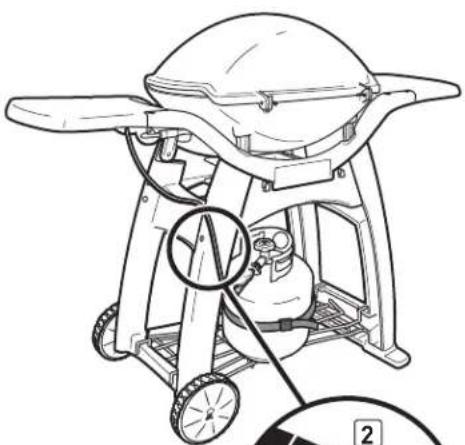
natural_image
Line drawing of a portable air fryer with wheels and a dome-shaped top (no text or symbols)
natural_image
Circular diagram with a black textured band and a circled number 2, no text or symbols present.BURNER IGNITION & USAGE
METHODS OF BURNER IGNITION
There are two ways to ignite the burner. The first is by using the ignition system built into your barbecue. The second is with a match.
Next are the steps for igniting your barbecue using the ignition system. On the following page are steps for igniting your barbecue with a match.
Summary lighting instructions are posted on the cart leg under the burner control knobs.
BURNER IGNITION
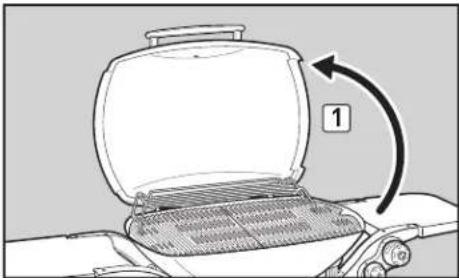
A) Open the barbecue lid (1).
DANGER
Failure to open the lid before igniting the barbecue's burners, or not waiting five minutes to allow the gas to clear if the barbecue does not light, may result in an explosive flare-up which can cause serious bodily injury or death.
B) Make sure ALL burner control knobs are turned off (2). Check by pushing burner control knobs in and turning them clockwise until they stop.
C) Turn gas supply on at source.
D) Light the outside burner by pushing the large burner control knob in and turning it counterclockwise to start/high (1) position (3).
E1) Push the red igniter button several times, so it clicks each time (4) [Q 3100].
OR
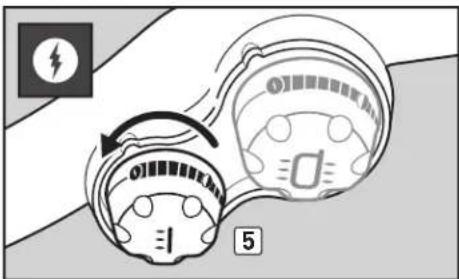
E2] Push and hold in the electronic igniter button (5) (Q 3200). You will hear the igniter clicking.
F) Check that the burner is lit by looking through the cooking grates. You should see a flame.
⚠ WARNING: While igniting the barbecue or cooking, never lean over open barbecue.
⚠ WARNING: If the burner fails to ignite within five seconds, stop, turn the burner control knob to off and wait five minutes to allow the gas to clear before you try again or light with a match.
G) After the outside burner is lit, you can turn on the inside burner. Push in the small burner control knob and turn it to start/high (1) position (6). The inside burner will then be ignited by the outside burner.
TO EXTINGUISH BURNER
Push each burner control knob in and turn it clockwise to the off position. Turn gas supply off at the source.
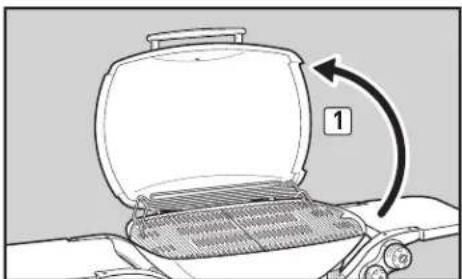
text_image
1
text_image
OFF APAGADO ARRÊTE 2
text_image
Diagram showing a device with labeled components and directional arrows, including a lightning bolt symbol and number 3.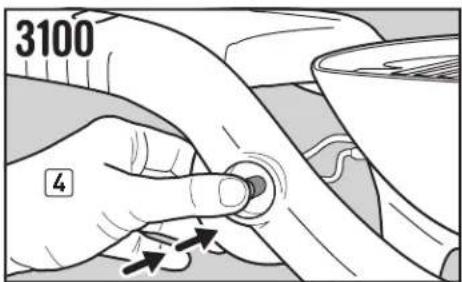
text_image
3100 4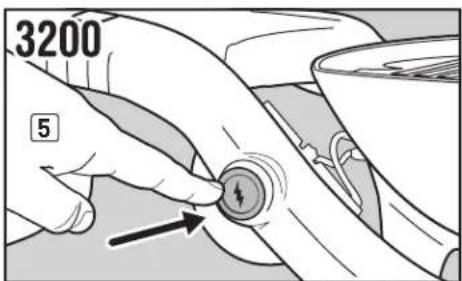
text_image
3200 5Some batteries have a plastic protective wrap around them. This plastic must be removed before you attempt to ignite your barbecue. Do not confuse this plastic with the battery label.
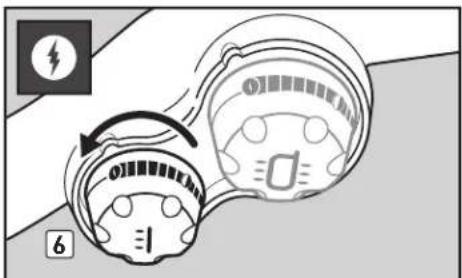
text_image
Diagram illustrating a mechanical or electrical component with labeled parts and directional arrows, including a lightning bolt symbol.BURNER IGNITION & USAGE
BURNER IGNITION
Lighting with a Match
A) Open the barbecue lid (1).
DANGER
Failure to open the lid before igniting the barbecue's burners, or not waiting five minutes to allow the gas to clear if the barbecue does not light, may result in an explosive flare-up which can cause serious bodily injury or death.
B) Make sure ALL burner control knobs are turned off (2). Check by pushing burner control knobs in and turning them clockwise until they stop.
C) Turn gas supply on at source.
D) Strike a match and put the flame under the matchlight hole [3]. While holding lit match, light the outside burner by pushing the large burner control knob in and turning it counterclockwise to start/high (4) position (4).
E) Check that the burner is lit by looking through the cooking grates. You should see a flame.
△ WARNING: Do not lean over the open barbecue while igniting. Keep your face and body at least 30 cm (12 in) away from the matchlight hole when lighting the barbecue.
⚠ WARNING: If the burner fails to ignite within five seconds, stop, turn the burner control knob to off and wait five minutes to allow the gas to clear before you try again or light with a match.
F) After the outside burner is lit, you can turn on the inside burner. Push in the small burner control knob and turn it to start/high (1) position (5). The inside burner will then be ignited by the outside burner.
TO EXTINGUISH BURNER
Push each burner control knob in and turn it clockwise to the off (Φposition. Turn gas supply off at the source.
text_image
1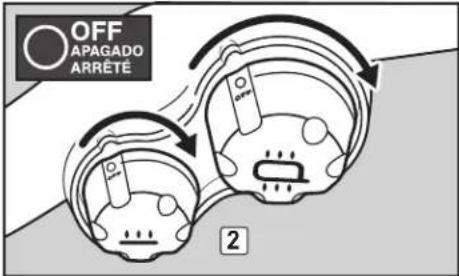
text_image
OFF APAGADO ARRÊTÉ 2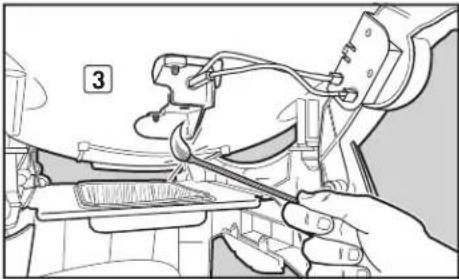
natural_image
Illustration of a hand using a tool to adjust or install components, no text or symbols visible
flowchart
graph TD
    A["Power Supply"] --> B{Condition}
    B --> C["Arrow to Center"]
    C --> D["Circle Symbol"]
    D --> E["Output"]
    style A fill:#f9f,stroke:#333
    style E fill:#bbf,stroke:#333
text_image
Diagram illustrating a mechanical or electrical system with labeled components and directional arrows, including a lightning bolt symbol and numbered parts 5.COOKING METHODS
DIRECT METHOD OR INDIRECT METHOD?
The most important thing to know about barbecuing is which cooking method to use for a specific food, direct or indirect. The difference is simple. With the direct method, the food is cooked directly over the fire. With the indirect method, fire is arranged on either side of the food. The indirect method is similar to roasting, but with the added benefits of that barbecued texture, flavor, and appearance you can't get from cooking with an oven. Using the right method is the shortest route to great results—and the best way to ensure doneness safety.
With each method, you can adjust the burners as desired. The control settings — HIGH, MEDIUM, LOW, or OFF — are described in the chart to the right. For example, to sear steaks, set both burners to HI, then to complete cooking, set both burners to LOW. For great barbecuing inspiration, visit www.weber.com/recipes.
| COOKING METHOD AND USES | INSIDE BURNER CONTROL SETTING | OUTSIDE BURNER CONTROL SETTING |
| PREHEAT |  HIGH HIGH HIGH HIGH | 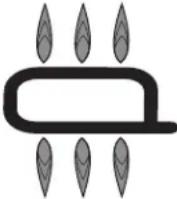 |
| DIRECT LOWChicken pieces, sausage | 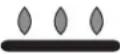 LOW LOW LOW LOW | 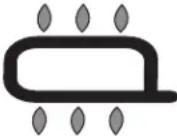 |
| SEARINGSteak and items that need searingStart by searing thick steaks over direct high heat......finish by cooking over direct low heat |  HIGH HIGH HIGH HIGH | 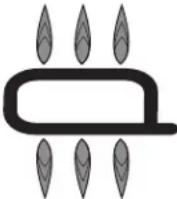 |
 LOW LOW LOW LOW | 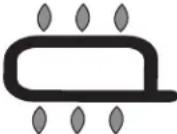 | |
| INDIRECTWhole chicken |  OFF MEDIUM OFF MEDIUM |  |
TROUBLESHOOTING
| PROBLEMS SOLUTIONS | |
| Burner does not ignite when you push the igniter button. | Be sure that there is gas flow to the burner by attempting to match light your burner. Refer to "BURNER IGNITION—Lighting with a Match." If match lighting is successful, the problem lies in the ignition system. Refer to "IGNITION SYSTEM OPERATIONS." |
| Be sure that wires are correctly inserted into terminals on igniter electrode assembly. Check that the wires are connected to terminals on the push button igniter (Q 1000, Q 2000 & Q 3100) or the electronic igniter module (Q 1200, Q 2200 & Q 3200). Refer to "MAINTAINING THE PUSH BUTTON IGNITION SYSTEM (Q 1000, Q 2000 & Q 3100) or MAINTAINING THE ELECTRONIC IGNITION SYSTEM (Q 1200, Q 2200 & Q 3200)." | |
| If a new battery is installed, confirm that battery's plastic wrapping has been removed. Verify that the battery is in good condition and has been installed correctly. Refer to "MAINTAINING THE ELECTRONIC IGNITION SYSTEM (Q 1200, Q 2200 & Q 3200)." | |
| Burner does not ignite, or flame is low when burner control knob is on high (‡) position. | Fuel could be low or empty. Refill LPG cylinder. |
| Fuel hose could be bent or kinked. Straighten fuel hose. | |
| Burner flame pattern is erratic.Flame is low when burner control knob is on high (‡) position.Flames do not run the whole length of the burner tube. | Clean burner ports that run down the entire length of burner tube. Refer to "ANNUAL MAINTENANCE." |
| Burners burn with a yellow or orange flame, in conjunction with the smell of gas. | Inspect spider/insect screens for possible obstructions. (Blockage of holes.) Clean spider/insect screens. Refer to "ANNUAL MAINTENANCE." |
| Experiencing flare-ups.△ CAUTION: Do not line the cookbox with aluminum foil. | Barbecue must be preheated with all burners on high for 10 to 15 minutes. |
| Clean the cooking grills thoroughly to remove grease. Refer to "CLEANING THE INSIDE OF THE BARBECUE." | |
| The cookbox may be dirty and is not allowing grease to flow into removable catch pan. Clean cookbox. Refer to "CLEANING THE INSIDE OF THE BARBECUE." | |
| Inside of lid appears to be "peeling."(Resembles paint peeling.) | The inside of the lid is cast aluminum. It is not painted. It cannot "peel." What you are seeing is baked-on grease that has turned to carbon and is flaking off. THIS IS NOT A DEFECT. Clean thoroughly. Refer to "CLEANING THE INSIDE OF THE BARBECUE." |
If problems cannot be corrected by using these methods, please contact the Customer Service Representative in your area using the contact information on our web site. Log onto www.weber.com.
ANNUAL MAINTENANCE
KEEPING YOUR WEBER BARBECUE IN TIP-TOP SHAPE
DANGER
Failure to correct any problems described on this page may result in a fire, which can cause serious bodily injury or death, and cause damage to property.
To keep your WEBER gas barbecue performing as safely and efficiently as on day one, we strongly recommend that you inspect and clean the spider/insect screen(s) and burner tube(s) at least once a year. Below is important information about these two areas of the barbecue that should undergo annual maintenance.
If you observe an incorrect flame pattern or blocked burner port, proceed to the "BURNER TUBE CLEANING OR REPLACEMENT" instructions on the following page.
BURNER FLAME PATTERN
The burner tube(s) in your WEBER gas barbecue was/were factory set for the correct air and gas mixture. The correct flame pattern is shown in illustration and described below:
- Burner tube(s) (1)
- Tips occasionally flicker yellow (2)
- Light blue (3)
- Dark blue (4)
Check burner flame pattern. If the flames do not match the above description, it could be an indication that the spider/insect screen(s) has/have become dirty or blocked.
WEBER SPIDER/INSECT SCREEN(S)
The combustion air opening(s) of the burner tube(s) (5) is/are fitted with stainless steel screen(s) to help prevent spiders and other insects from spinning webs and building nests inside the venturi section (6) of the burner tube(s). These nests can obstruct the normal gas flow, and can cause gas to flow back out of the combustion air opening(s) (7). Symptoms of this kind of obstruction include the odour of gas in conjunction with burner flames that appear yellow and lazy. This obstruction could result in a fire (8) in and around the gas valve(s), causing serious damage to your barbecue.
NOTE: If a spider/insect screen becomes damaged or cannot be cleaned, please contact the Customer Service Representative in your area using the contact information on our web site. Log onto www.weber.com.
BURNER TUBE PORTS
Over time, from repeated use of the barbecue, the burner tube ports will become dirty. Blocked and dirty ports can restrict full gas flow. Following are ways to determine whether burner tube ports are dirty or blocked.
- Barbecue does not reach desired temperature
- Barbecue heats unevenly
• One or more of the burner(s) do not ignite

text_image
1 2 3 4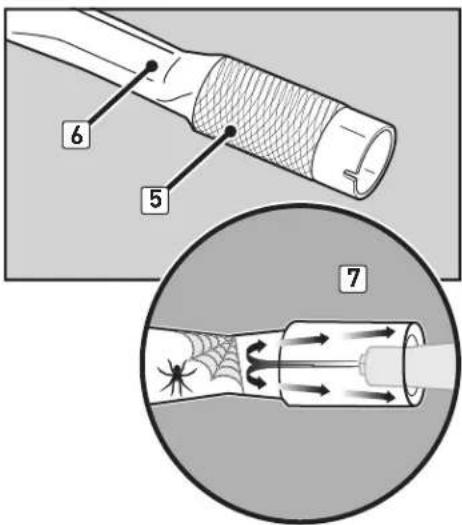
text_image
6 5 7
natural_image
Technical line drawing of a mechanical assembly with no visible text or symbols
natural_image
Diagram showing a cable being lifted with flames, connected to a hook and clamped components (no text or symbols)ANNUAL MAINTENANCE
BURNER TUBE CLEANING OR REPLACEMENT
Confirm that Barbecue is Off and Cool
A) Turn gas supply off at source and disconnect gas fitting.
B) Check that all burner control knobs are in the off (①position. Check by pushing burner control knobs in and turning them clockwise until they stop. If they do not turn, they are already off. If they do turn, continue turning them clockwise until they stop; then they are off.
C) Open lid and remove cookbox components.
Remove Burner Tubes
You will need: A 3/8" nut driver.
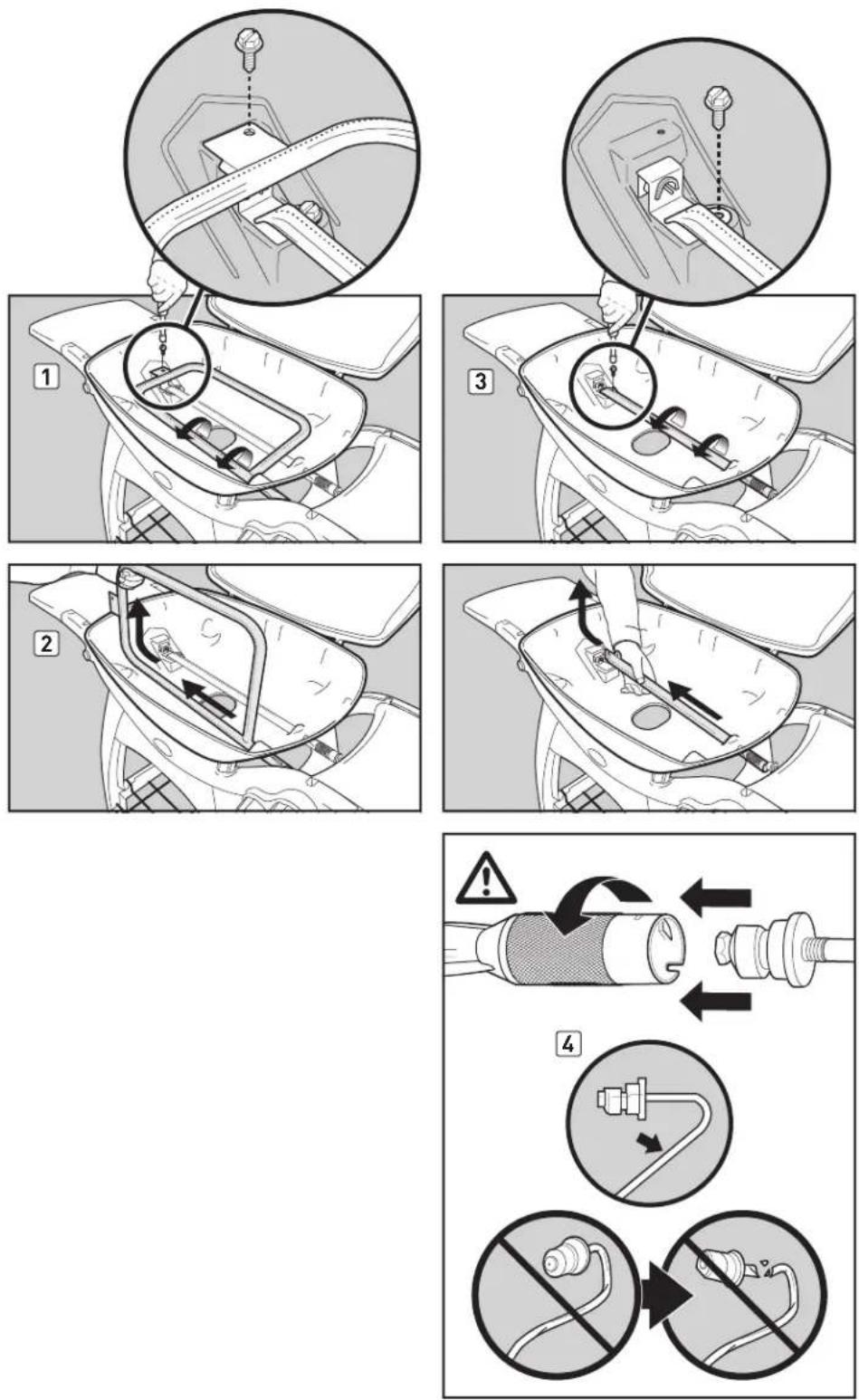
A) Remove the screw that holds the outside burner tube to the cookbox [1].
B) Rotate the outside burner tube 90° to unlock it from the valve orifice. Slide and lift burner tube away from valve orifice and remove from cookbox. (2)
C) Repeat this procedure for the inside burner tube [3].
△ CAUTION: Care must be taken when removing or reinstalling burner tubes. Do not force or bend the gas lines that connect the control valves to the burner tubes (4).
ANNUAL MAINTENANCE
Clean Burner Tubes
You will need: A flashlight, a wire (a straightened-out coat hanger), a suitable stainless steel bristle brush, and a soft bristle brush (toothbrush).
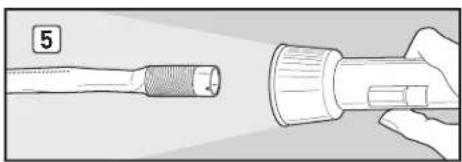
A) Look inside each burner tube with a flashlight (5).
B] Clean any debris or blockage from the inside of the burner tubes with the wire [6].
C) Check spider/insect screens at the ends of the burner tubes and clean them using the soft bristle brush [7].
△ CAUTION: Do not clean the spider/insect screens with hard or sharp tools. Do not dislodge the spider/insect screens or enlarge the screen openings.
D) Use the steel bristle brush to clean the outside of the burner tubes. This is done to make sure all burner ports (openings) running along the length of the burner tubes are fully open [8].
⚠️ CAUTION: Do not enlarge the burner ports when cleaning.
Reinstall Burner Tubes
You will need: A 3/8" nut driver.
A) Carefully slide the inside burner tube back into hole in right side of cookbox [9], aligning burner tube opening with valve orifice [10].
B) Reinstall screw that holds the inside burner tube to the cookbox.
C) Repeat this procedure for the outside burner tube (11).
⚠️ CAUTION: The burner tube openings (12) must be positioned properly over the valve orifices (13).
⚠ WARNING: You should check for gas leaks every time you disconnect and reconnect a gas fitting. Refer to "CHECKING FOR GAS LEAKS."
DJ Replace cookbox components.
natural_image
Illustration of a flashlight being pointed at by a hand (no text or symbols present)
natural_image
Illustration of a hand holding a screwdriver with a pointed tip (no text or symbols)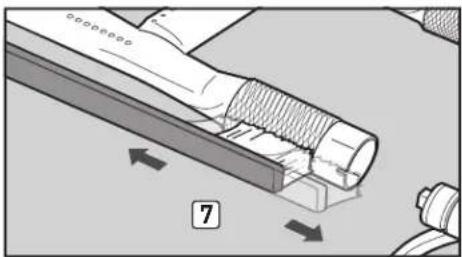
natural_image
Mechanical assembly diagram showing a tool interacting with a component, labeled with number 7 (no text or symbols present)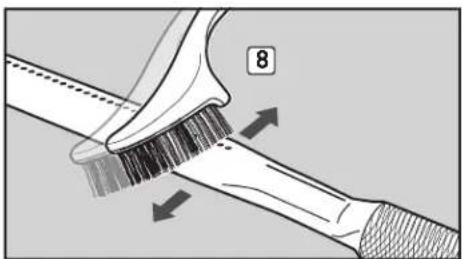
natural_image
Diagram showing a brush applying material to a tool, with arrows indicating direction (no text or symbols present)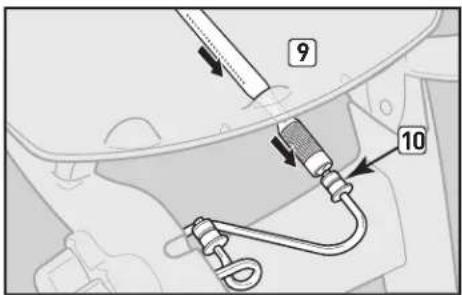
text_image
9 10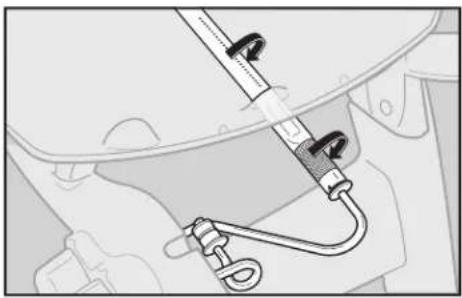
natural_image
Mechanical assembly diagram showing a clamp and connecting rod (no text or symbols)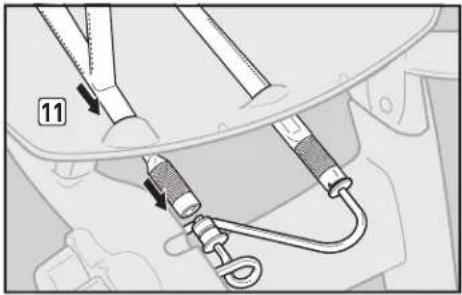
text_image
11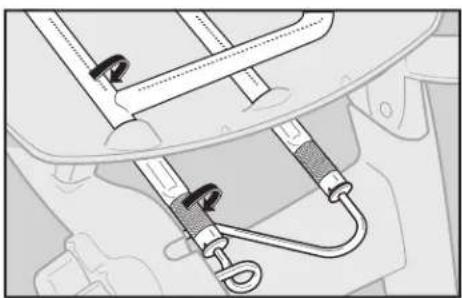
natural_image
Mechanical assembly diagram showing a belt buckle and clamp (no text or labels)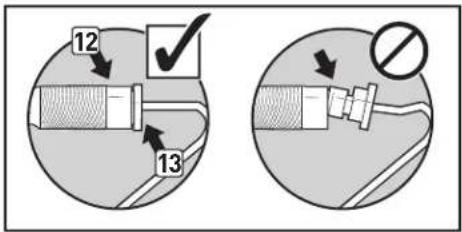
text_image
12 13ROUTINE MAINTENANCE
BEAUTIFUL— INSIDE AND OUT
WEBER barbecue owners take a lot of pride in their barbecues. Flaunt your pride and joy. Keep your barbecue clean and beautiful—inside and out—by following these routine maintenance steps.
CLEANING THE OUTSIDE OF THE BARBECUE
To keep the outside of your barbecue looking its best, use the following guidelines for safe cleaning.
⚠ WARNING: Turn your WEBER gas barbecue off and wait for it to cool before cleaning it.
Painted, Enameled and Plastic Surfaces
Use a warm, soapy water solution to clean outside surfaces; then rinse with water.
IMPORTANT: Do not use cleaners that contain acid, mineral spirits, or xylene. Do not use oven cleaner, abrasive cleansers (kitchen cleansers), cleaners that contain citrus products, or abrasive cleaning pads on barbecue or cart surfaces.
Fold-down tables are not to be used as cutting boards.
CLEANING THE INSIDE OF THE BARBECUE
To keep your barbecue performing safely and efficiently, it is important to remove any debris and excess grease that may have accumulated on the inside of the barbecue. Use the following guidelines for safe cleaning.
Inside Lid
Flaking, built-up grease resembles paint flakes. Wipe inside of lid with paper towel to prevent grease build-up. Wash inside lid with warm, soapy water; then rinse with water.
Cookbox Components & Burner Tubes
You will need: A stainless steel bristle brush, and a stiff plastic scraper.
A) Scrape and brush the cooking grates with the scraper and brush. Remove the cooking grates and set aside.
CAUTION: Barbecue brushes should be checked for loose bristles and excessive wear on a regular basis. Replace brush if any loose bristles are found on cooking grates or brush. WEBER recommends purchasing a new stainless steel barbecue brush at the beginning of every spring.
⚠️ CAUTION: Do not clean cooking grates in a self-cleaning oven.
B) Brush any debris off of burner tubes. Do not enlarge burner ports [openings] running along length of burner tube (1).
C) When cleaning is complete, replace the cooking grates.
Cookbox
Wash inside of cookbox with warm, soapy water; then rinse with water.
Removable Catch Pan and Disposable Drip Pan
Your barbecue was built with a grease collection system, which funnels grease away from food and into a removable catch pan. For your convenience, you can also line the removable catch pan with a WEBER disposable drip pan, which will help keep the removable catch pan cleaner longer.
Cleaning the removable catch pan is just as important as cleaning the cookbox. Check the removable catch pan for grease build-up each time you use your barbecue. Remove excess grease with a plastic scraper [2]. Wash the removable catch pan with warm, soapy water and rinse with water.
△ WARNING: Check the removable catch pan or disposable drip pan for grease build-up before each use. Remove excess grease to avoid a grease fire. A grease fire can cause serious bodily injury or damage to property.
⚠️ CAUTION: Do not line the cookbox, removable catch pan or disposable drip pan with aluminum foil.
HOSE INSPECTION
The hose should be inspected routinely for any signs of cracking (3).
⚠ WARNING: Check hose before each use of barbecue for nicks, cracking, abrasions or cuts. If the hose is found to be damaged in any way, do not use the barbecue. Replace using only WEBER authorized replacement hose. Contact the Customer Service Representative in your area using the contact information on our web site. Log onto www.weber.com.

natural_image
Diagram showing a brush applying material to a tool, with arrows indicating direction (no text or symbols present)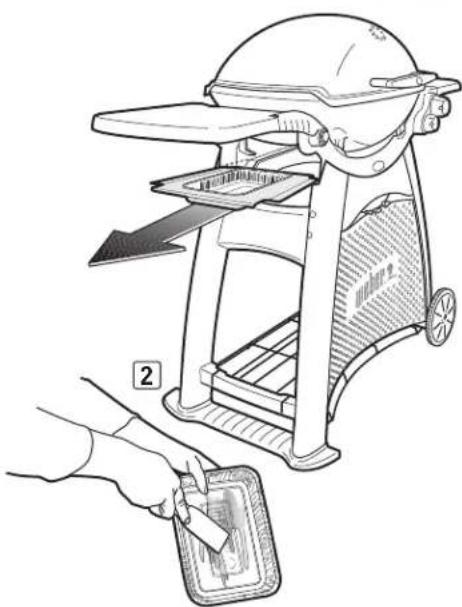
natural_image
Line drawing of a person using a griddle to clean or prepare food, with no text or symbols present.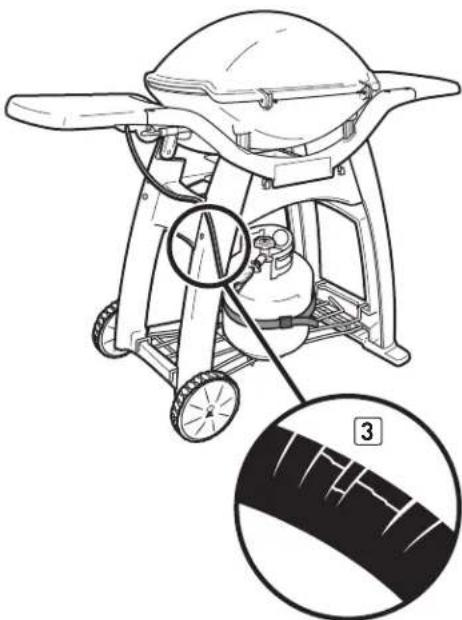
natural_image
Line drawing of a portable grill with a magnified inset showing a textured surface (no text or symbols)To obtain replacement disposable drip pans and cooking grills, contact the local retailer in your area or log onto www.weber.com. If you need further assistance, contact your Customer Service Representative.
ROUTINE MAINTENANCE
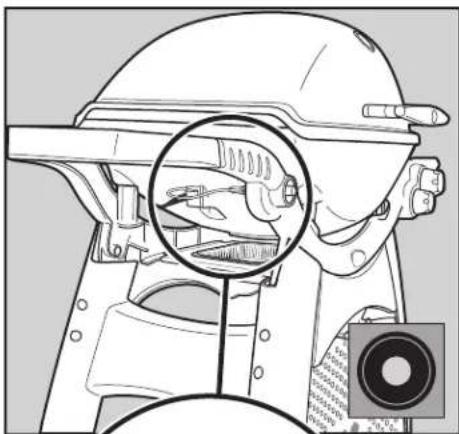
The igniter supplies a spark to the igniter electrode assembly. Whether you are performing routine maintenance or a troubleshooting check on the ignition system, read the following to keep your ignition system working properly.
⚠ WARNING: All gas controls and supply valves should be in the OFF position.
If the igniter fails to ignite your Q barbecue, you will need to pinpoint where the problem is occurring: with the gas flow or with the ignition system. Begin by attempting to match light your burner. Refer to "BURNER IGNITION—Lighting with a Match." If match lighting is successful, the problem lies in the ignition system.
MAINTAINING THE PUSH BUTTON IGNITION SYSTEM (Q 1000, Q 2000 & Q 3100)
- Check that both the white (1) and black (2) ignition wires are attached properly.
- Verify that the igniter button pushes in, clicks and returns to the out position.
MAINTAINING THE ELECTRONIC IGNITION SYSTEM (Q 1200, Q 2200 & Q 3200)
- Verify that the AAA battery (alkaline only) is in good condition and is installed correctly (3). Some batteries have a plastic protective wrap around them. This plastic must be removed before installing battery. Do not confuse this plastic with the battery label.
- Make sure that both igniter wires are properly attached to the igniter module. Black wire to black terminal (4), white wire to white terminal (5).
- Make sure the electronic igniter button is working by listening for clicking and looking for sparks at burner.
If the electronic ignition system still fails to ignite, contact the Customer Service Representative in your area using the contact information on our web site. Log onto www.weber.com.
natural_image
Technical line drawing of a mechanical component with a magnified inset showing internal components (no text or symbols)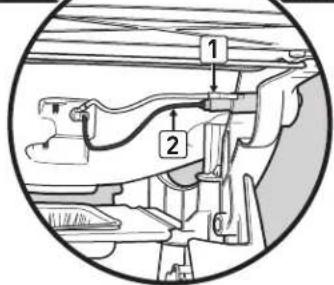
text_image
Technical diagram of a mechanical assembly with numbered components, likely illustrating a linkage or mounting mechanism.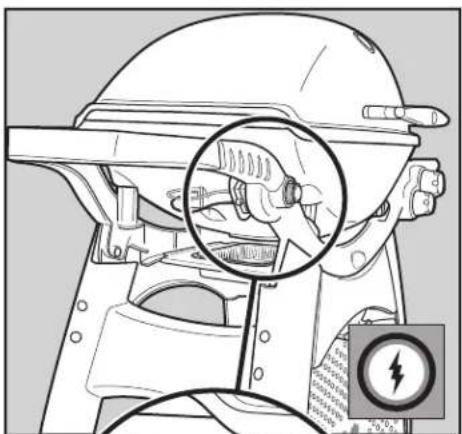
natural_image
Technical line drawing of a mechanical component with a magnified inset showing internal components (no text or symbols)
text_image
Technical diagram showing car engine components with numbered parts and labeled partsMEMO
ATTENTION: This product has been safety tested and is only certified for use in a specific country. Refer to country designation located on outer carton.
These parts may be gas carrying or gas burning components. Please contact Weber-Stephen Products LLC Customer Service Department for genuine Weber-Stephen Products LLC replacement part(s) information.
⚠ WARNING: Do not attempt to make any repair to gas carrying, gas burning, igniter components, or structural components without contacting Weber-Stephen Products LLC Customer Service Department. Your actions, if you fail to follow this Product Warning, may cause a fire, an explosion, or structural failure resulting in serious personal injury or death as well as damage to property.
Weber-Stephen Products (Aust) Pty Ltd.
Level 1, 142-144 Fullarton Road
ROSE PARK SA 5067 AUSTRALIA
+61 8 8221 6111 | www.weberbbq.com.au
WEBER New Zealand ULC
86 East Highbrook Drive
East Tamaki, Auckland 2013 NEW ZEALAND
+64 9 279 7133 | www.WEBERnz.co.nz

Weber-Stephen Products LLC
www.weber.com