N5500 - Server Thecus - Free user manual and instructions
Find the device manual for free N5500 Thecus in PDF.


User questions about N5500 Thecus
0 question about this device. Answer the ones you know or ask your own.
Ask a new question about this device
Download the instructions for your Server in PDF format for free! Find your manual N5500 - Thecus and take your electronic device back in hand. On this page are published all the documents necessary for the use of your device. N5500 by Thecus.
USER MANUAL N5500 Thecus
natural_image
Black Theca CPU unit with ventilation grilles and a digital display showing 'Pedia 1058' and 'CPU 408-70C' (no readable text beyond branding)Thecus N5500
FW v3.00.08
User's Manual
Copyright and Trademark Notice
Thecus and other names of Thecus products are registered trademarks of Thecus Technology Corp. Microsoft, Windows, and the Windows logo are registered trademarks of Microsoft Corporation. Apple, iTunes and Apple OS X are registered trademarks of Apple Computers, Inc. All other trademarks and brand names are the property of their respective owners. Specifications are subject to change without notice.
Copyright © 2009 Thecus Technology Corporation. All rights reserved.
About This Manual
All information in this manual has been carefully verified to ensure its correctness. In case of an error, please provide us with your feedback. Thecus Technology Corporation reserves the right to modify the contents of this manual without notice.
Product name: Thecus N5500
Manual Version: 1.2
Release Date: November 2009
Limited Warranty
Thecus Technology Corporation guarantees all components of Thecus N5500 are thoroughly tested before they leave the factory and should function normally under general usage. In case of any system malfunctions, Thecus Technology Corporation and its local representatives and dealers are responsible for repair without cost to the customer if the product fails within the warranty period and under normal usage. Thecus Technology Corporation is not responsible for any damage or loss of data deemed to be caused by its products. It is highly recommended that users conduct necessary back-up practices.
Safety Warnings
For your safety, please read and follow the following safety warnings:
Read this manual thoroughly before attempting to set up your N5500.
Your N5500 is a complicated electronic device. DO NOT attempt to repair it under any circumstances. In the case of malfunction, turn off the power immediately and have it repaired at a qualified service center. Contact your vendor for details.
DO NOT allow anything to rest on the power cord and DO NOT place the power cord in an area where it can be stepped on. Carefully place connecting cables to avoid stepping or tripping on them.
Your N5500 can operate normally under temperatures between 0^ C and 40^ C, with relative humidity of 20% – 85%. Using the N5500 under extreme environmental conditions could damage the unit.
Ensure that the N5500 is provided with the correct supply voltage (AC 100V \~ 240V, 50/60 Hz, 3A). Plugging the N5500 to an incorrect power source could damage the unit.
Do NOT expose the N5500 to dampness, dust, or corrosive liquids.
Do NOT place the N5500 on any uneven surfaces.
DO NOT place the N5500 in direct sunlight or expose it to other heat sources.
DO NOT use chemicals or aerosols to clean the N5500. Unplug the power cord and all connected cables before cleaning.
DO NOT place any objects on the N5500 or obstruct its ventilation slots to avoid overheating the unit.
Keep packaging out of the reach of children.
If disposing of the device, please follow your local regulations for the safe disposal of electronic products to protect the environment.
Table of Contents
Copyright and Trademark Notice 2
About This Manual....2
Limited Warranty....2
Safety Warnings....3
Table of Contents 4
Chapter 1: Introduction....9
Overview 9
Product Highlights....9
File Server 9
FTP Server....9
iTunes Server....9
Media Server....10
Backup Server....10
Printer Server....10
Multiple RAID 10
Dual Mode Support 10
Superior Power Management 10
Package Contents....11
Front Panel....12
Hard Disk Trays....13
Rear Panel....14
Chapter 2: Hardware Installation .... 15
Overview 15
Before You Begin....15
Hard Disk Installation....15
Cable Connections....15
Checking System Status....16
System Status Normal....16
System Trouble 17
Chapter 3: First Time Setup....18
Overview 18
Thecus Setup Wizard 18
LCD Operation 20
LCD Controls....20
Display Mode 20
USB Copy 21
Management Mode....21
Typical Setup Procedure....21
Step 1: Network Setup....22
Step 2: RAID Creation....22
Step 3: Create Local Users or Setup Authentication ...... 22
Step 4: Create Folders and Set Up ACLs....22
Step 5: Start Services....22
Chapter 4: System Administration....24
Overview 24
Web Administration Interface 24
Menu Bar 24
Message Bar 25
Logout 26
Language Selection 26
System Information....26
Product Information 26
System/Service Status 27
Logs 28
System Management 29
Time: Setting system time 29
Notification configuration 30
Firmware Upgrade 31
UPS Setting 31
Schedule Power On/Off 32
Wake-Up On LAN (WOL) 33
SNMP Support 34
Utility....34
System Network 39
WAN Configuration....39
LAN 40
LAN Configuration 40
DHCP Server Configuration....41
Samba / CIFS....41
Samba Service 41
File Access Cache 41
Samba Recycle Bin....42
Samba Anonymous Login Authentication 42
AFP (Apple Network Setup) 42
NFS Setup 43
FTP 43
Media Server 44
Media Manager Settings....44
Share Media Folders 45
Connecting DMAs to the Media Server 45
HTTP/ Web Disk 46
UPnP 47
Nsync Target 47
Bonjour Setting 47
Storage Management....48
Disks Information 48
S.M.A.R.T. Information 49
Bad Block Scan....50
RAID Information....50
Create a RAID 51
RAID Level 53
Edit RAID 54
Remove RAID....55
Expanding a RAID....56
Migrating a RAID 57
Space Allocation 59
Allocating Space for iSCSI Volume....60
Modify iSCSI Volume 61
Delete Volume....62
Allocating Space for Target USB Volume....63
Advance Option 63
iSCSI Block Size 64
iSCSI CRC/Checksum 64
Share Folder 64
Adding Folders 65
Modify Folders....66
Remove Folders....66
NFS Share 67
Snapshot....68
Snap (Snapshot configuration)....68
Folder and sub-folders Access Control List (ACL) 69
Stackable NAS....71
ISO Mount 77
User and Group Authentication....80
ADS/NT Support 80
Local User Configuration 82
Add Users 82
Edit Users 83
Remove Users 84
Local Group Configuration 84
Add Groups 85
Edit Groups....85
Remove Groups 86
Batch Create Users and Groups....86
Application Server 87
Printer Information 87
Windows XP SP2 88
Windows Vista....89
iTunes® Server....92
Module Management 92
Module Installation 92
System Module 92
User Module 93
Backup 93
Nsync 93
Add Nsync Task 93
Setting Up an Nsync Target on an Nsync Device 95
Setting Up an Nsync Target on Another Device....95
Designating N5500 as an Nsync Target 95
Thecus Backup Utility 96
Windows XP Data Backup 96
Apple OS X Backup Utilities 97
Chapter 5: Using the N5500....98
Overview 98
Login Page....98
Using WebDisk 98
Photo Server....100
Windows XP Publishing Wizard 101
Managing Albums and Photos 106
Creating Albums 107
Password Protecting Albums 107
Uploading Pictures to Albums 107
EXIF Information 107
Slide Shows 108
Mapping a Client PC to the N5500 108
Windows....108
Apple OS X 108
Mapping the N5500 as an iSCSI Drive 109
Windows 2000/XP....109
Windows Vista.... 113
Chapter 6: Tips and Tricks.... 114
USB and eSATA Storage Expansion....114
Adding a Spare Disk ....114
Remote Administration....114
Part I - Setup a DynDNS Account 115
Part II - Enable DDNS on the Router.... 115
Part III - Setting up Virtual Servers (HTTPS).... 115
Firewall Software Configuration 115
Replacing Damaged Hard Drives....116
Hard Drive Damage.... 116
Replacing a Hard Drive 116
RAID Auto-Rebuild 116
Chapter 7: Troubleshooting .... 117
Forgot My Network IP Address....117
Can't Map a Network Drive in Windows XP....117
Restoring Factory Defaults 117
Problems with Time and Date Settings....117
Dual DOM Supports for Dual Protection....118
Chapter 8: Revision Updates (FW 3.00.01 to 3.00.04).... 119
What's New 119
RAID Expansion for iSCSI Target Volume 119
RAID Volume Encryption 120
iSCSI Thin-Provisioning.... 122
iSCSI LUN ID 126
Error Corrections....126
Chapter 9: Revision updated up to FW 3.00.08....127
What's New 127
Updated Login User Interface 127
Updated Photo Server User Interface 127
Disclaimer Page Added 128
Updated Main User Interface 129
Add On-Line Register Service 129
Added Rsync Setting under Nsync Target 130
Added Rsync Backup Feature.... 130
Added 2^nd Gateway for Clients of DHCP Server Route 131
Added Dual DOM for Auto Repair 132
Appendix A: Product Specifications .... 133
Hardware Specifications....133
Software Specifications....133
Appendix B: Customer Support.... 135
Appendix C: RAID Basics 136
Overview 136
Benefits....136
Improved Performance 136
Data Security 136
RAID Levels....136
RAID 0 136
RAID 1 136
RAID 5 137
RAID 6 137
RAID 10 137
JBOD 137
Stripe Size 137
Disk Usage....138
Appendix D: Active Directory Basics.... 139
Overview 139
What is Active Directory? 139
ADS Benefits....139
Appendix E: UPS Compatibility List.... 140
Appendix F: Licensing Information.... 144
Overview 144
Source Code Availability 144
CGI C License Terms....145
GNU General Public License....145
Chapter 1: Introduction
Overview
Thank you for choosing the Thecus N5500 IP Storage Server. The Thecus N5500 is an easy-to-use storage server that allows a dedicated approach to storing and distributing data on a network. Data reliability is ensured with RAID features that provide data security and recovery—over six Terabyte of storage is available using RAID 5 and RAID 6. Gigabit Ethernet ports enhance network efficiency, allowing the N5500 to take over file management functions, increase application and data sharing and provide faster data response. The N5500 offers data mobility with a disk roaming feature that lets you hot swap working hard drives for use in another N5500, securing the continuity of data in the event of hardware failure. The N5500 allows data consolidation and sharing between Windows (SMB/CIFS), UNIX/Linux, and Apple OS X environments. The N5500's user-friendly GUI supports multiple languages.
Product Highlights
File Server
First and foremost, the N5500 allows you to store and share files over an IP network. With a Network Attached Storage (NAS) device, you can centralize your files and share them easily over your network. With the easy-to-use web-based interface, users on your network can access these files in a snap.
To learn about the Web User Interface, go to Chapter 5: Using the N5500 > Using WebDisk.
FTP Server
With the built-in FTP Server, friends, clients, and customers can upload and download files to your N5500 over the Internet with their favorite FTP programs. You can create user accounts so that only authorized users have access.
To set up the FTP Server, refer to Chapter 4: System Network>
iTunes Server
With the built-in iTunes server capability, the N5500 enables digital music to be shared and played anywhere on the network!
To set up the iTunes Server, refer to Chapter 4: Application Server>iTunes Configuration.
Media Server
With the built-in Media Server capability, the N5500 provides media streaming service to stand-alone networked home media adapters that support the UPnP AV protocol or are Digital Living Network Alliance (DLNA) standard compliant.
To set up the Media Server, refer to
Chapter 4: System Network > Media Server.
Backup Server
Don't leave precious data to chance. With advanced backup capabilities, you can easily upload mission critical files to the N5500, and even automate your backup tasks for true peace-of-mind.
To find out how to backup your files with the N5500, refer to
Chapter 4: Backup > Nsync.
Printer Server
With the N5500's Printer Server, you can easily share an IPP printer with other PCs connected to your network.
To set up the Printer Server, refer to
Chapter 4: Application Server> Printer Information.
Multiple RAID
N5500 supports multiple RAID volumes on one system. So, you can create RAID 0 for your non-critical data, and create RAID 5 for mission-critical data. Create the RAID levels depending on your needs.
To configure RAID modes on the N5500, refer to
Chapter 4: Storage Management > RAID Information.
Dual Mode Support
N5500 is not only a file server, but it also supports iSCSI initiators. Your server can access N5500 as a direct-attached-storage over the LAN or Internet. There is no easier way to expand the capacity of your current application servers. All the storage needs can be centrally managed and deployed. This brings ultimate flexibility to users.
To set up an iSCSI volume, refer to
Chapter 4: Storage Management > Space Allocation > Allocating Space for iSCSI Volume.
Superior Power Management
N5500 supports schedule power on/off. With this feature, administrator can set at what time to turn on or off the system. This feature is a big plus for people who want to conserve energy. Wake-On-LAN enables administrator to remotely turn on the system without even leaving their own seat.
To schedule system on and off, refer to
Chapter 4: System Management> Scheduled Power On/ Off
Package Contents
Your N5500 package should contain the following items:
N5500 Unit x1
● Power Cord x1
- USB Cable x1
• QIG (Quick Installation Guide) x1
- CD-Title x2 (DriveClone5 Pro CD & Universal CD)
- Ethernet Cable x1
- Screw Kit & Key-Luck x1
- HDD Compatibility list Card x1
● Multiple Languages Warranty Card x1
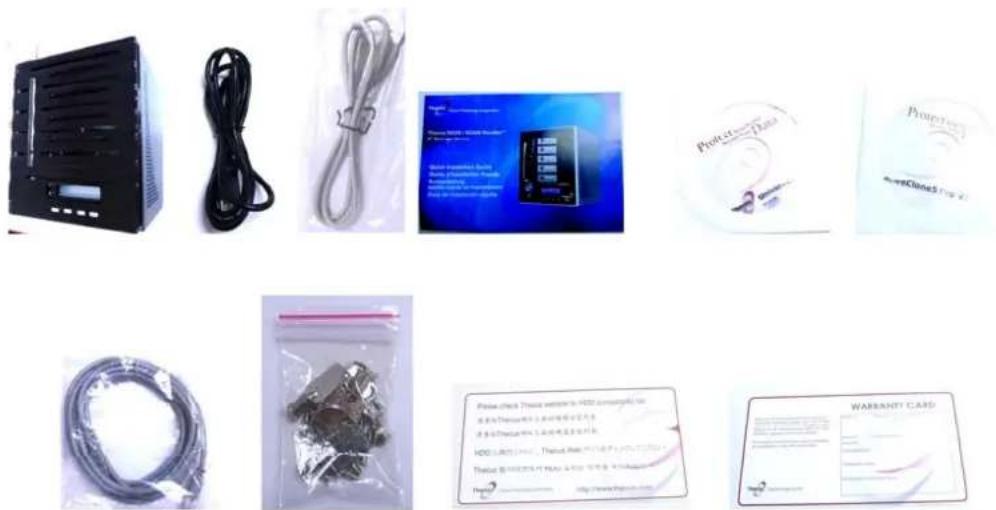
Please check to see if your package is complete. If you find that some items are missing, contact your dealer.
Front Panel
The Thecus N5500's front panel has the device's controls, indicators, and hard disk trays:
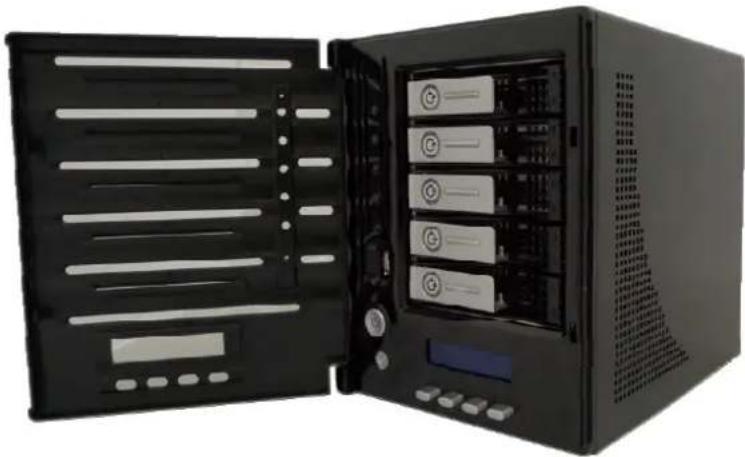
natural_image
Black desktop computer tower case with open door, showing internal rack-mounted drive and ventilation slots (no visible text or labels)
text_image
1 2 3 4 5 7 8 6 13 14 9 10 11 12| Front Panel | |
| Item | Description |
| 1.System LED | Blinking orange: system is being upgraded or system startup; data currently inaccessible |
| 2.WAN LED | Solid green: network linkBlinking green: network activity |
| 3.LAN LED | Solid green: network linkBlinking green: network activity |
| 4.USB Copy LED | Solid blue: files are being copied from a USB storage device |
| 5.Sytem Warning LED | Solid RED: System error. |
| 6.Reset Button | Reset system configuration to default value. |
| 7.USB Port | USB 2.0 port for compatible USB devices, such as USB disks, USB printers, and USB wireless dongles*Note: For supported USB wireless dongles, please contact http://esupport.thecus.com/support |
| 8.Power Button/ Power LED | Power on/off N5500 and Power LED.Solid blue: System is power on. |
| 9.Up Button ▲ | Push to scroll up when using the LCD display |
| 10.Down Button ▼ | Push to enter USB copy operation screen |
| 11.Enter Button ↓ | Push to enter LCD operate password for basic system setting |
| 12.Escape Button ESC | Push to leave the current LCD menu |
| 13.LCD Display | Displays current system status and warning messages |
| 14.HDD Trays | Five 3.5” SATA HDD traysLocks are provided for added security |
Hard Disk Trays
Each of the N5500's hard disk trays has a lock, a latch, and two LED indicators:

text_image
1 2 3 4 5| Hard Disk Trays | |
| Item | Description |
| 1.HDD Power LED | Solid blue: hard disk is powered on |
| 2.HDD Access/Error LED | Blinking green: system is accessing data on the hard disk |
| 3.Lock | Use the lock to physically secure the hard disk to the unit |
| 4.Handle • Pull out HDD tray | |
Rear Panel
The N5500 rear panel features ports and connectors.
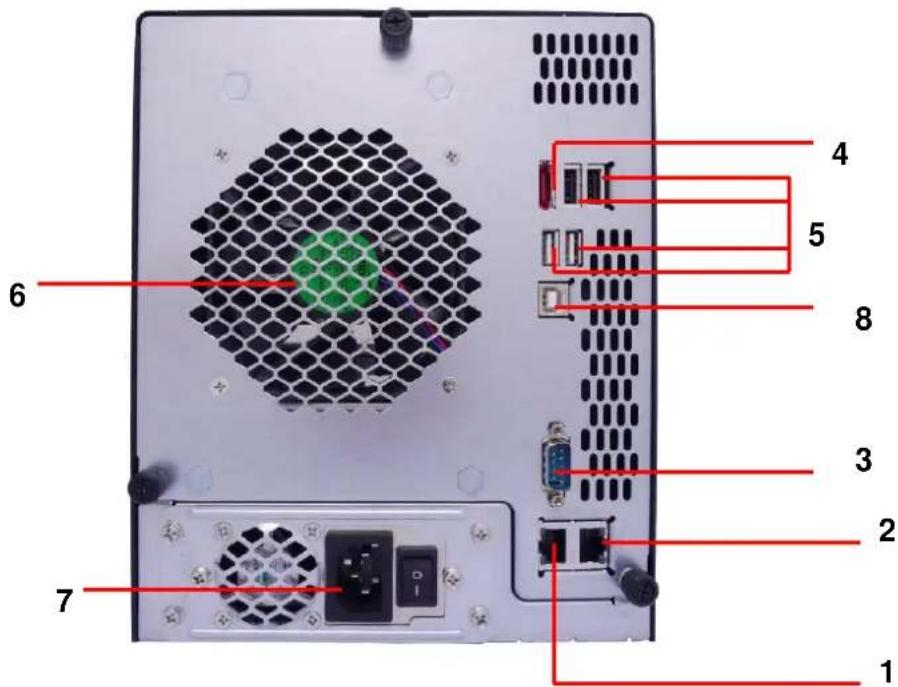
text_image
1 2 3 4 5 6 7 8| Back Panel | |
| Item | Description |
| 1.WAN Port | • WAN port for connecting to an Ethernet network through a switch or router |
| 2.LAN Port | • LAN port for connecting to an Ethernet network through a switch or router |
| 3.Serial Port | • This port is for external UPS device |
| 4.eSATA Port | • eSATA port for high-speed storage expansion |
| 5.USB Port | • USB 2.0 port for compatible USB devices, such as USB disks, and USB printers |
| 6.System Fan | • System fan that exhausts heat from the unit |
| 7.Power Connector | • Connect the included power cords to these connectors |
| 8.USB Port | • USB 2.0 port to connect PC (Type B of target mode) |
Chapter 2: Hardware Installation
Overview
Your N5500 is designed for easy installation. To help you get started, the following chapter will help you quickly get your N5500 up and running. Please read it carefully to prevent damaging your unit during installation.
Before You Begin
Before you begin, be sure to take the following precautions:
- Read and understand the Safety Warnings outlined in the beginning of the manual.
- If possible, wear an anti-static wrist strap during installation to prevent static discharge from damaging the sensitive electronic components on the N5500.
- Be careful not to use magnetized screwdrivers around the N5500's electronic components.
Hard Disk Installation
The N5500 supports five standard 3.5" Serial ATA (SATA) hard disks. To install a hard disk into the N5500, follow the steps below:
- Remove a hard disk tray from the N5500.
- Slide the new SATA hard disk into the tray and fasten the screws.
- Insert the hard disk and tray back into the N5500 until it snaps into place and lock it with a key if desired.
- The LED blinks green when the hard disk is accessed.
Cable Connections
To connect the N5500 to your network, follow the steps below:
- Connect an Ethernet cable from your network to the WAN port on the back panel of the N5500.
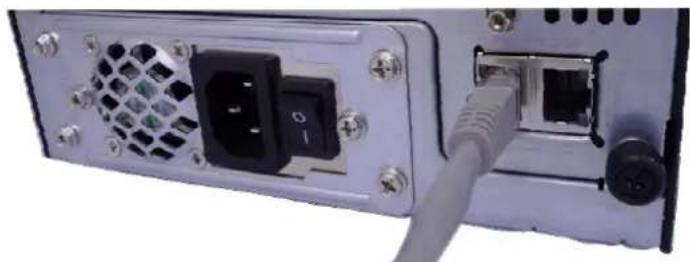
natural_image
Close-up of a computer power connector showing drive, socket, and cable (no text or symbols visible)- Connect the provided power cord into the universal power socket on the back panel. Plug the other end of the cord into a surge protector socket. Press the power supply switch to turn on the power supply.

natural_image
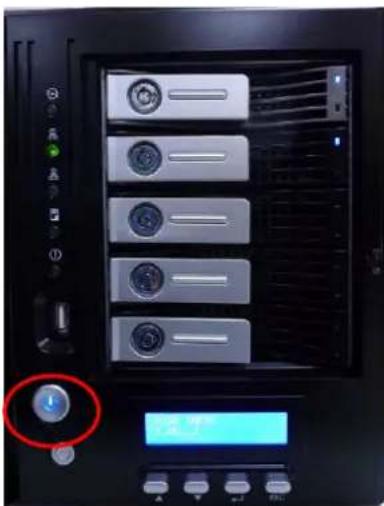
Back panel of a computer drive showing a black socket and ports, with no visible text or symbols.- Press the power button on the Front Panel to boot up the N5500.
text_image
Device control panel with labeled buttons and a digital display showing Chinese textChecking System Status
After making connections on the N5500 and powering up, check whether the system status is normal or has trouble by observing indicators on the front panel and hard disk trays.
System Status Normal
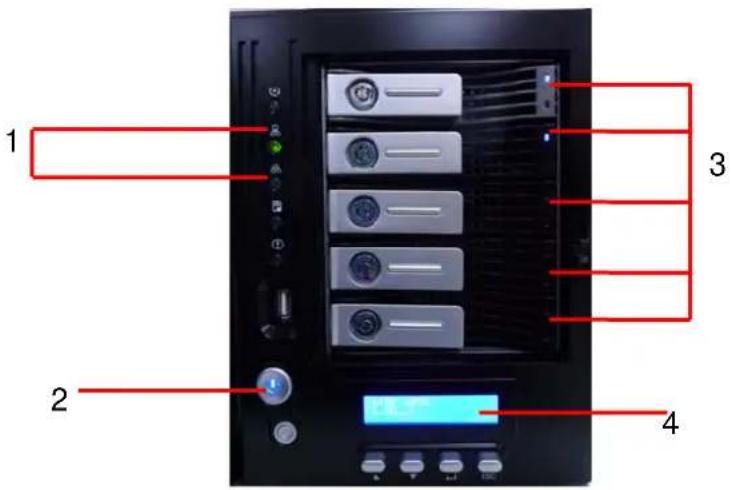
The system status is normal if:
- The WAN and LAN LEDs glow green (assuming both are connected).
- The Power LED on the Front Panel glows blue.
- The HDD Power LED on each HDD tray glows blue (assuming all disks are installed).
- The default IP address of the WAN port is 192.168.1.100 displayed on LCD.
text_image
1 2 3 4System Trouble
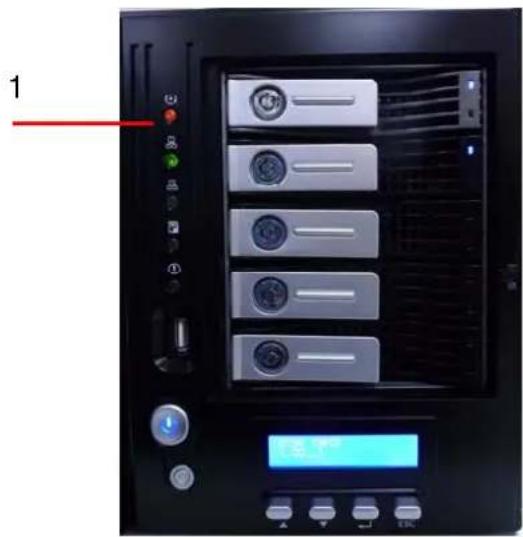
The system has trouble if:
- System LED always glows orange.
If the system has trouble, please refer to Chapter 7: Troubleshooting.
text_image
1 5.1WARNING
There are no user serviceable parts inside the N5500. Please contact your distributor for service.
Chapter 3: First Time Setup
Overview
Once the hardware is installed, physically connected to your network, and powered on, you can configure the N5500 so that it is accessible to your network users. There are two ways to set up your N5500: using the Thecus Setup Wizard or the LCD display. Follow the steps below for initial software setup.
Thecus Setup Wizard
The handy Thecus Setup Wizard makes configuring N5500 a snap. To configure the N5500 using the Setup Wizard, perform the following steps:
- Insert the installation CD into your CD-ROM drive (the host PC must be connected to the network).
- The Setup Wizard should launch automatically. If not, please browse your CD-ROM drive and double click on Setup.exe.

text_image
Welcome Thecus® Setup Wizard STARTNOTE
For MAC OS X users, double click on Thecus Setup Wizard .dmg file.
- The Setup Wizard will start and automatically detect all Thecus storage devices on your network. If none are found, please check your connection and refer to Chapter 7: Troubleshooting for assistance.

text_image
Device Discovery Version 1.2.0 No Host Name IP MAC 1 N5500 17219.91.39 00-14-FE-11-C8-4C 100% Start Browser RELOAD NEXT END-
Select the N5500 that you like to configure.
-
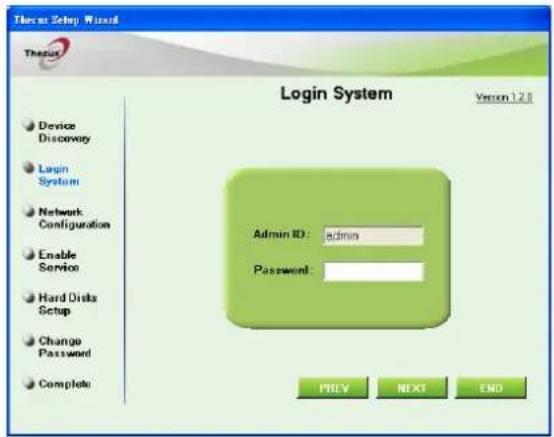
Login with the administrator account and password. The default account and password are both "admin".
text_image
Theroc Setup Wizard Theroc Login System Version 12.1 Device Discovery Login System Network Configuration Enable Service Hard Disks Setup Change Password Complete Admin ID: admin Password: PREV NEXT END- Name your N5500 and configure the network IP address. If your switch or router is configured as a DHCP Server, configuring the N5500 to automatically obtain an IP address is recommended. You may also use a static IP address and enter the DNS Server address manually.

text_image
Network Configuration Host Name: N5500 IP Type Fixed IP DHCP IP Setting IP address: 172.16.66.39 Network: 255.255.252.0 Gatomo/IP: 172.16.66.135 DNS Server: NEXT END- Change the default administrator password.

text_image
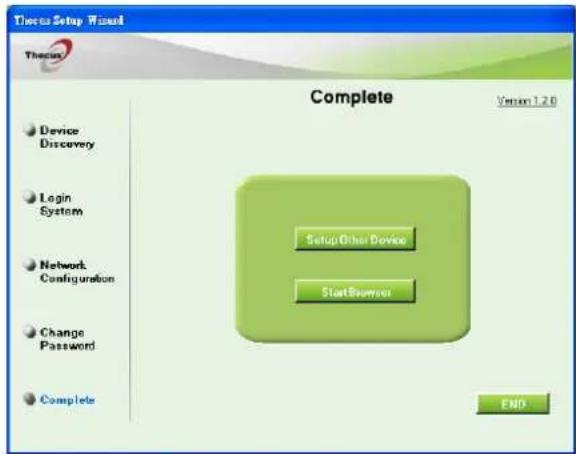
Thesis Setup Wizard Thesis Change Password Version 1.20 Device Discovery Login System Network Configuration Change Password Complete New Password: Confirm Again: PREV APPLY END- Finished! Access the N5500 Web Administrator Interface by pressing the Start Browser button. You can also configure another N5500 at this point by clicking the Setup Other Device button. Press Exit to exit the wizard.
text_image
Theca Setup Wizard Thesis Complete Version 1.20 Device Discovery Login System Network Configuration Change Password Complete Setup Other Device Start Services ENDNOTE
The Thocus Setup Wizard is designed for installation on systems running Windows XP/2000 or Mac OSX or later. Users with other operating systems will need to install the Thocus Setup Wizard on a host machine with one of these operating systems before using the unit.
LCD Operation
The N5500 is equipped with an LCD on the front for easy status display and setup. There are four buttons on the front panel to control the LCD functions.
LCD Controls
Use the Up (▲), Down (▼), Enter (↓) and Escape (ESC) keys to select various configuration settings and menu options for N5500 configuration.
The following table illustrates the keys on the front control panel:
LCD Controls
Icon Function Description
▲ Up Button Select the previous configuration settings option.
▼ Down Button USB copy confirmation display.
Enter Enter the selected menu option, sub-menu, or parameter setting.
ESC Escape Escape and return to the previous menu.
There are two modes of operation for the LCD: Display Mode and Management Mode.
Display Mode
During normal operation, the LCD will be in Display Mode.
| Display Mode | |
| Item | Description |
| Host Name Current host name of the system. | |
| WAN | Current WAN IP setting. |
| LAN Current LAN IP setting. | |
| Link Aggregation Current Link Aggregation status | |
| System Fan Current system fan status. | |
| CPU Fan Current CPU fan status | |
| 2009/05/22 12:00 Current system time. | |
| Disk Info Current status of disk slot has been installed | |
| RAID Current RAID status. | |
The N5500 will rotate these messages every one-two seconds on the LCD display.
USB Copy
The USB Copy function enables you to copy files stored on USB devices such as USB disks and digital cameras to the N5500 by press button. To use USB copy, follow the steps below:
-
Plug your USB device into an available USB port on the Front end.
-
In Display Mode, press the Down Button (▼).
-
The LCD will display "USB Copy?"
-
Press Enter (←) and the N5500 will start copying USB disks connected to the front USB port.
-
All of data will be copied into system folder named "USB copy".
Management Mode
During setup and configuration, the LCD will be in Management Mode.
To enter into Management Mode, press Enter (↓) and an "Enter Password" prompt will show on the LCD.
At this time, the administrator has to enter the correct LCD password. System will check whether the correct LCD password has been entered. The default LCD password is "0000". If correct password is entered, you will enter into the Management Mode menu.
| Management Mode | |
| Item | Description |
| WAN Setting IP address | and netmask of your WAN ports. |
| LAN Setting IP address | and netmask of your LAN ports. |
| Link Agg. Setting | Select Load Balance, 802.3ad or Failover. |
| Change Admin Passwd | Change administrator's password for LCD operation. |
| Reset to Default Reset | system to factory defaults. |
| Exit | Exit Management Mode and return to Display Mode. |
NOTE
You can also change your LCD password using the Web Administration Interface by navigating to System Management > Utility> Administrator Password. For more on the Web Administration Interface, see Chapter 4: System Management.
Typical Setup Procedure
From the Web Administration Interface, you can begin to setup your N5500 for use on your network. Setting up the N5500 typically follows the five steps outlined below.
For more on how to use the Web Administration Interface, see
Chapter 4: Web Administration Interface.
Step 1: Network Setup
From the Web Administration Interface, you can configure the network settings of the N5500 for your network. You can access the Network menu from the menu bar. For details on how to configure your network settings, refer to
Chapter 4: System Network.
Step 2: RAID Creation
Next, administrators can configure their preferred RAID setting and build their RAID volume. You can access RAID settings from the menu bar of the Web Administration Interface by navigating to Storage Management > RAID Configuration.
For more information on configuring RAID, see
Chapter 4: System Management > RAID Configuration.
Don't know which RAID level to use? Find out more about the different RAID levels from Appendix C: RAID Basics.
Step 3: Create Local Users or Setup Authentication
Once the RAID is ready, you can begin to create local users for the N5500, or choose to setup authentication protocols such as Active Directory (AD).
For more on managing users, go to Chapter 4:User and Group Authentication.
For more information on configuring Active Directory, see
Chapter 4: User and Group Authentication > ADS/ NT Support.
For information about the benefits of Active Directory, see Appendix D: Active Directory Basics.
Step 4: Create Folders and Set Up ACLs
Once users are introduced into your network, you can begin to create various folders on the N5500 and control user access to each using Folder Access Control Lists.
More information on managing folders, see
Chapter 4: Storage Management > Share Folder.
To find out about configuring Folder Access Control Lists, see Chapter 4: Storage Management > Share Folder> Folder Access Control List (ACL).
Step 5: Start Services
Finally, you can start to setup the different services of the N5500 for the users on your network. You can find out more about each of these services by clicking below:
SMB/ CI FS
Apple File Protocol (AFP)
Network File System (NFS)
File Transfer Protocol (FTP)
iTunes Server
Media Server
Printer Server
Photo Server
Chapter 4: System Administration
Overview
The N5500 provides an easily accessible Web Administration Interface. With it, you can configure and monitor the N5500 anywhere on the network.
Web Administration Interface
Make sure your network is connected to the Internet. To access the N5500 Web Administration Interface:
- Type the N5500's IP address into your browser. (Default IP address is http://192.168.1.100)

text_image
Theus IP Storage Server Login Web Disk Photo Server Customer System administrator (admin) Password: Login www.thesus.com Protect your system DataNOTE
Your computer's network IP address must be on the same subnet as the N5500. If the N5500 has default IP address of 192.168.1.100, your managing PC IP address must be 192.168.1.x, where x is a number between 1 and 254, but not 100.
- Login to the system using the administrator user name and password. The factory defaults are:
User Name: admin Password: admin
※ If you changed your password in the setup wizard, use the new password.
Once you are logged in as an administrator, you will see the Web Administration Interface. From here, you can configure and monitor virtually every aspect of the N5500 from anywhere on the network.
Menu Bar
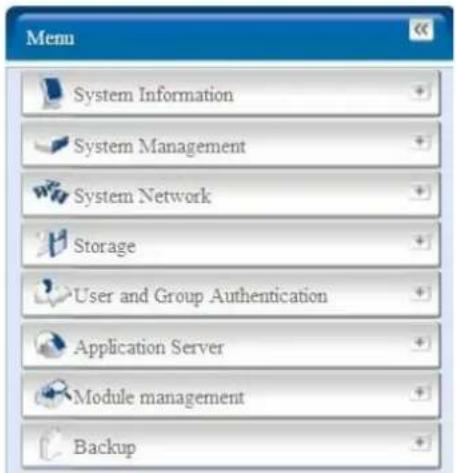
The Menu Bar is where you will find all of the information screens and system settings of the N5500. The various settings are placed in the following groups on the menu bar:
text_image
Menu System Information System Management System Network Storage User and Group Authentication Application Server Module management Backup| Menu Bar | |
| Item | Description |
| System Information Current system status of the N5500. | |
| System Management Various N5500 system settings and information. | |
| System Network Information and settings for network connections, as well as various services of the N5500. | |
| Storage Information and settings for storage devices installed into the N5500. | |
| User and Group Authentication Allows configuration of users and groups. | |
| Application Server Printer Server and iTunes Server to set up of the N5500. | |
| Module Management System and user Module to install of the N5500. | |
| Backup Category of Backup Features set up of the N5500. | |
Moving your cursor over any of these items will display the dropdown menu selections for each group.
In the following sections, you will find detailed explanations of each function, and how to configure your N5500.
Message Bar
You can get information about system status quickly by moving mouse over.

| Message Bar | ||
| Item | Status Description | |
 | RAID Information. | Display the status of created RAID volume. Click to go to RAID information page as short cut. |
 | Disks Information. | Display the status of disks installed in the system. Click to go to Disk information page as short cut. |
 | FAN. | Display system FAN Status. Click to go to System Status page as short cut. |
 | UPS. | Display UPS device status. Click to go to UPS Setting page as short cut. |
 | Temperature. | Green: Systematic temperature is normal.Red: Systematic temperature is unusual.Click to go to System Status page as short cut. |
 | Network. | Green: Connection to network is normal.Red: abnormal connection to the network |
Logout

Click to logout Web Administration Interface.
Language Selection
The N5500 supports multiple languages, including:
- English
- Japanese
• Traditional Chinese - Simplified Chinese
- French
- German
- Italian
- Korean
- Spanish
- Russia
- Polish
On the menu bar, click Language and the selection list appears. This user interface will switch to selected language for the N5500.

text_image
Language: English 日本語 正體中文 體体中文 Français Deutsch Italiano Korean Spanish RussiaSystem Information
Information provides viewing on current Product info, System Status, Service Status and Logs.
The menu bar allows you to see various aspects of the N5500. From here, you can discover the status of the N5500, and also other details.
Product Information
Once you login, you will first see the basic Product Information screen providing Manufacturer, Product No., Firmware Version, and System Up Time information.

text_image
Menu System Information Info Status Logs| Manufacturer | THECUS |
| Product No. | N5500 |
| Firmware Version | 3.00.00.8 |
| Up Time | 19 hours 15 minutes |
| Product Information | |
| Item | Description |
| Manufacturer Displays the name of the system manufacturer. | |
| Product No. Shows the model number of the system. | |
| Firmware version Shows the current firmware version. | |
| Up time Displays the total run time of the system. | |
System/Service Status
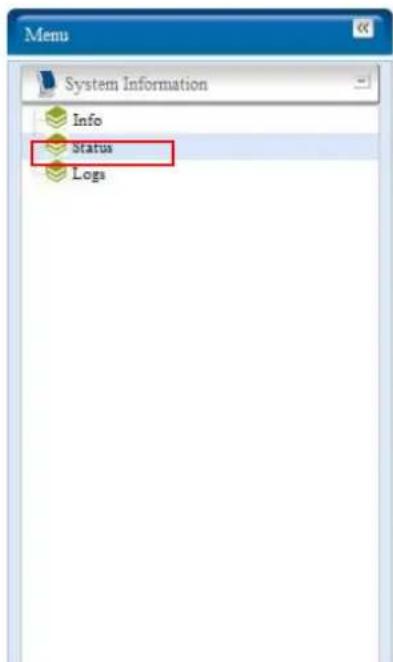
From the Status menu, choose the System item, System Status and Service Status screens appear. These screens provide basic system and service status information.
text_image
Menu System Information Info Status Logs| System Status | |
| CPU Loading(%) | 10% |
| CPU Fan Speed | OK |
| System Fan 1 Speed | OK |
| Up Time | 22 hours 15 minutes |
| Service Status | |
| AFP Status | Running |
| NFS Status | Running |
| SMB/CIFS Status | Running |
| FTP Status | Running |
| Media Server | Running |
| Nsync Status | Running |
| UPnP Status | Running |
| SNMP | Stop |
| System Status | |
| Item | Description |
| CPU Loading (%) Displays current CPU workload of the N5500. | |
| CPU Fan Speed Displays current CPU fan status. | |
| System Fan Speed Displays the current status of the system fan. | |
| Up Time Shows how long the system has been up and running. | |
| Service Status | |
| Item | Description |
| AFP Status The status of the Apple Filing Protocol server. | |
| NFS Status The status of the Network File Service Server. | |
| SMB/CIFS Status The status of the SMB/CIFS server. | |
| FTP Status The status of the FTP server. | |
| Media Server The status of the Media Server | |
| Nsync Status The status of the Nsync server. | |
| UPnP Status The status of the UPnP service. | |
| SNMP | The status of |
the SNMP ser
Logs
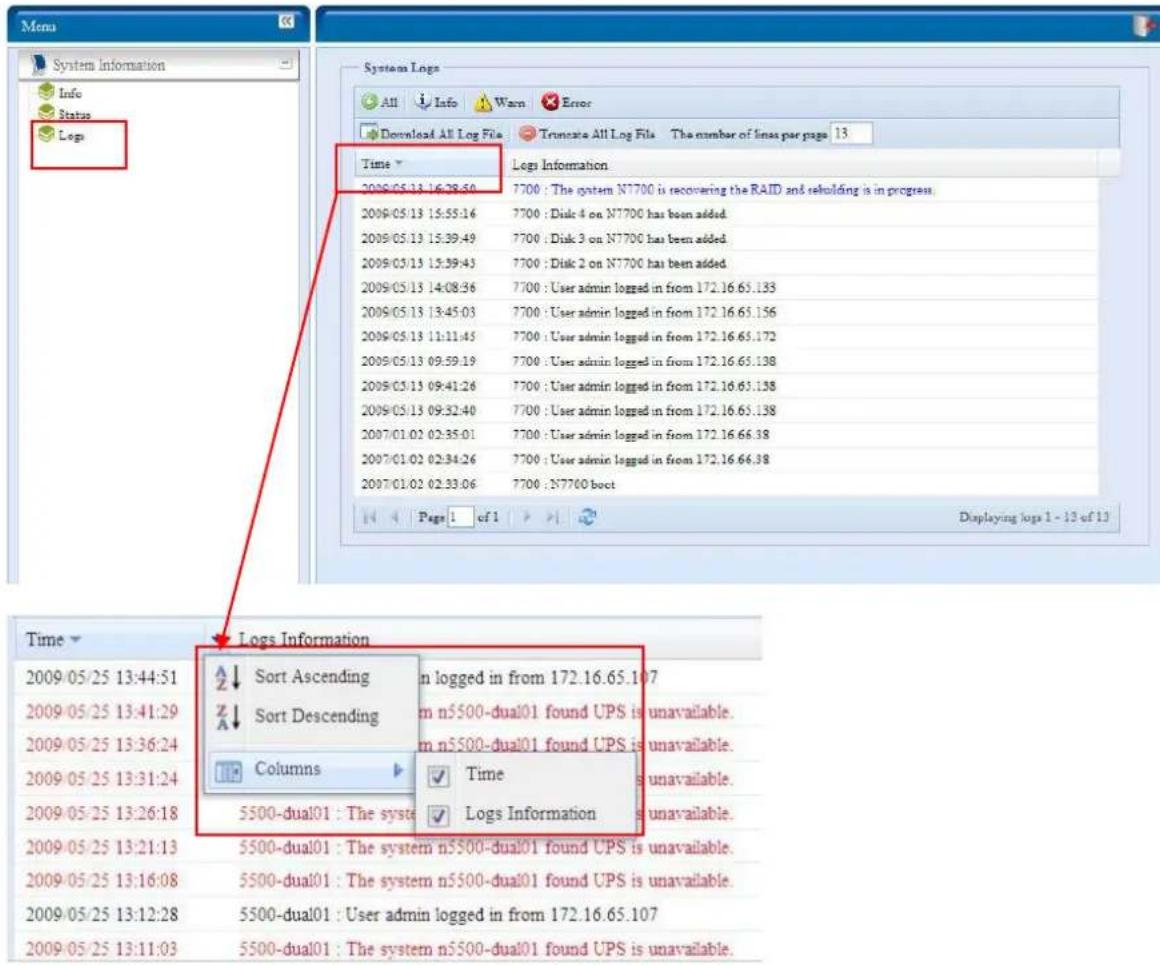
From the System Information menu, choose the Logs item and the System Logs screen appears. This screen shows a history of system usage and important events such as disk status, network information, and system booting. See the following table for a detailed description of each item:
text_image
Menu System Information Info Status Logs System Logs All Info Warn Error Download All Log File Truncate All Log File The number of lines per page 13 Time Logs Information 2009/05/13 16:28:50 7700 : The system N7700 is recovering the RAID and rebuilding is in progress. 2009/05/13 15:55:16 7700 : Disk 4 on N7700 has been added. 2009/05/13 15:39:49 7700 : Disk 3 on N7700 has been added. 2009/05/13 15:59:43 7700 : Disk 2 on N7700 has been added. 2009/05/13 14:08:36 7700 : User admin logged in from 172.16.65.133 2009/05/13 13:45:03 7700 : User admin logged in from 172.16.65.156 2009/05/13 11:11:45 7700 : User admin logged in from 172.16.65.172 2009/05/13 09:59:19 7700 : User admin logged in from 172.16.65.138 2009/05/13 09:41:26 7700 : User admin logged in from 172.16.65.138 2009/05/13 09:32:40 7700 : User admin logged in from 172.16.65.138 2007/01/02 02:35:01 7700 : User admin logged in from 172.16.66.38 2007/01/02 02:34:26 7700 : User admin logged in from 172.16.66.38 2007/01/02 02:33:06 7700 : N7700 boct Page of Displaying logs 1 - 13 of 13 Time Logs Information 2009/05/25 13:44:51 Sort Ascending Sort Descending Z A↓ Columns Time 5500-dual01 : The system n5500-dual01 found UPS is unavailable. 5500-dual01 : The system n5500-dual01 found UPS is unavailable. 5500-dual01 : The system n5500-dual01 found UPS is unavailable. 5500-dual01 : User admin logged in from 172.16.65.107 5500-dual01 : The system n5500-dual01 found UPS is unavailable.See the following table for a detailed description of each item:
| System Logs | |
| Item | Description |
| All Provides all log information including system messages, warning messages and error messages. | |
| INFO Records information about system messages. | |
| WARN Shows only warning messages. | |
| ERROR Shows only error messages. | |
| Download All Log File Export all logs to an external file. | |
| Truncate All Log File Clear page | | all log files. |
| The number of lines per page | | Specify desired number of lines to display per page. |
| Sort Ascending Shows logs by date in ascending order. | |
| Sort Descending Shows logs by date in descending order. | |
| |<< < > >>| | Use the forward ( > >>| ) and backward ( |<< < ) buttons to browse the log pages. |
 | Re-loading logs. |
System Management
The System Management menu gives you a wealth of settings that you can use to configure your N5500's system administration functions. You can set up system time, system notifications, and even upgrade firmware from this menu.
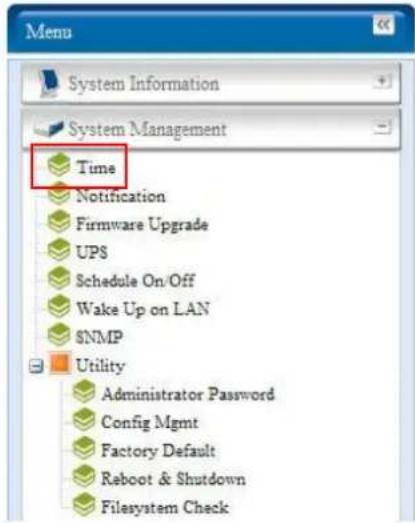
Time: Setting system time
From the time menu, choose the Time item and the Time screen appears. Set the desired Date, Time, and Time Zone. You can also elect to synchronize the system time on the N5500 with an NTP (Network Time Protocol) Server.
text_image
Menu System Information System Management Time Notification Firmware Upgrade UPS Schedule On/Off Wake Up on LAN $NMP Utility Administrator Password Config Mgmt Factory Default Reboot & Shutdown Filesystem Check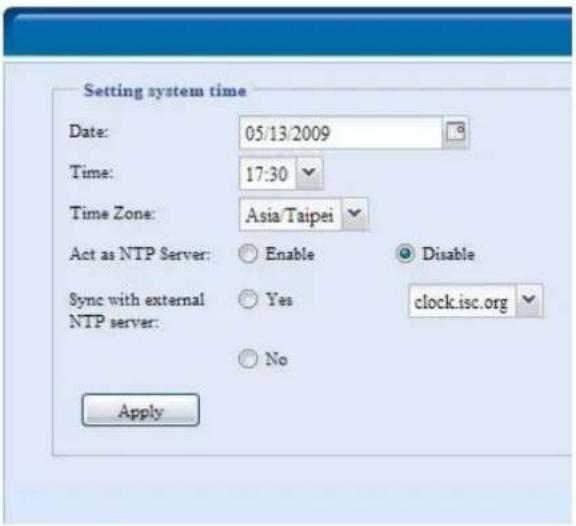
text_image
Setting system time Date: 05/13/2009 Time: 17:30 Time Zone: Asia/Taipei Act as NTP Server: Enable Disable Sync with external Yes clock.isc.org NTP server: No ApplySee the following table for a detailed description of each item:
| Time | |
| Item | Description |
| Date Sets the system date. | |
| Time Sets the system time. | |
| Time Zone Sets the system time zone. | |
| Act as NTP Server | Select Enable to synchronize with the NTP server.Select Disable to close the NTP server synchronization. |
| Sync with external NTP Server | Select YES to allow the N5500 to synchronize with an NTP server of your choice. Press Apply to change. |
WARNING
If an NTP server is selected, please make sure your N5500's network has been setup to access the NTP server.
Notification configuration
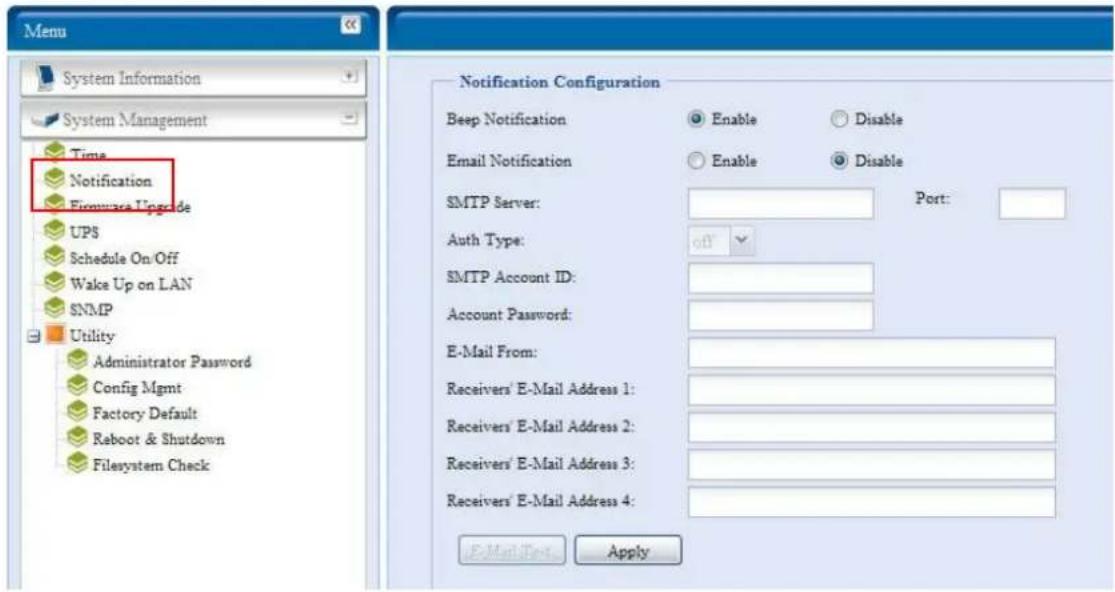
From the menu, choose the Notification item, and the Notification
Configuration screen appears. This screen lets you have the N5500 notify you in case of any system malfunction. Press Apply to confirm all settings. See following table for a detailed description of each item.
text_image
Menu System Information System Management Time Notification Eirnwara Upgrade UPS Schedule On/Off Wake Up on LAN SNMP Utility Administrator Password Config Mgmt Factory Default Reboot & Shutdown Filesystem Check Notification Configuration Beep Notification Enable Disable Email Notification Enable Disable SMTP Server: Port: Auth Type: off SMTP Account ID: Account Password: E-Mail From: Receivers' E-Mail Address 1: Receivers' E-Mail Address 2: Receivers' E-Mail Address 3: Receivers' E-Mail Address 4: E-Mail Text... Apply| Notification Configuration | |
| Item | Description |
| Beep Notification Enable | or disable the system beeper that beeps when a problem occurs. |
| Email Notification Enable | or disable email notifications of system problems. |
| SMTP Server Specifies the hostname/IP address of the SMTP server. | |
| Port Specifies the port to send outgoing notification emails. | |
| Auth Type Select the SMTP Server account authentication type. | |
| SMTP Account ID Set the SMTP Server Email account ID. | |
| Account Password Enter a new password. | |
| E-mail From Set email address to send email. | |
| Receiver's E-mail Address (1,2,3,4) | Add one or more recipient's email addresses to receive email notifications. |
NOTE
Consult with your mail server administrator for email server information.
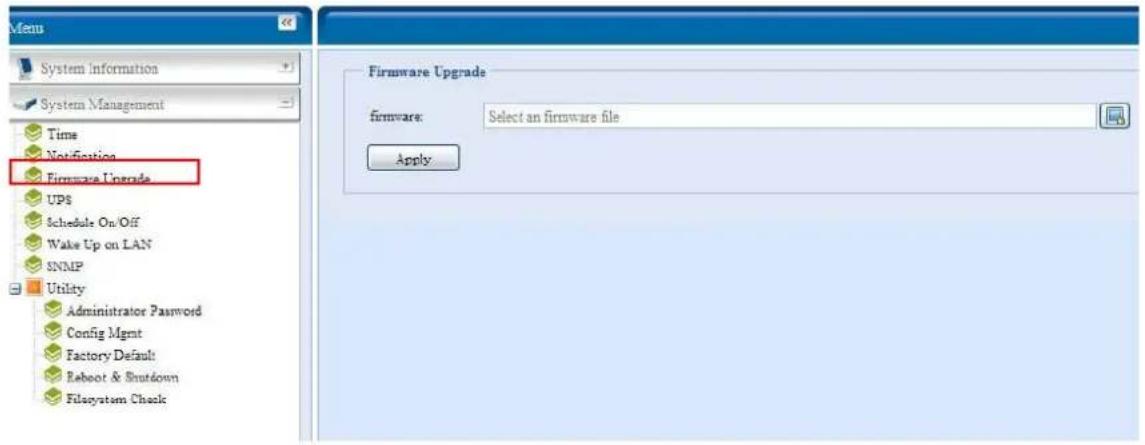
Firmware Upgrade
From the menu, choose the Firmware Upgrade item and the Firmware Upgrade screen appears.
text_image
Menu System Information System Management Time Notification Firmware Upgrade UPS Schedule On/Off Wake Up on LAN SNMP Utility Administrator Password Config Mgmt Factory Default Reboot & Shutdown Filesystem Check Firmware Upgrade firmware: Select an firmware file ApplyFollow the steps below to upgrade your firmware:
- Use the Browse button to find the firmware file.
- Press Apply.
- The beeper beeps and the Busy LED blinks until the upgrade is complete.
NOTE
- The beeper only beeps if it is enabled in the System Notification menu.
- Check Thecus website for the latest firmware release and release notes.
- Downgrading firmware is not permitted.
WARNING
Do not turns off the system during the firmware upgrade process. This will lead to a catastrophic result that may render the system inoperable.
UPS Setting
The N5500 can also support various uninterruptible power supply units via either "Serial" or "USB" interface, providing extra data security and accessibility in the case of a power failure.
From the Status menu, choose the UPS item and the UPS Setting screen appears. Make any changes you wish, and press Apply to confirm changes.

text_image
Menu System Information System Management Time Notification Firmware Upgrade UPS Schedule On/Off Wake Up on LAN SNMP Utility Administrator Password Config Mgmt Factory Default Reboot & Shutdown Filesystem Check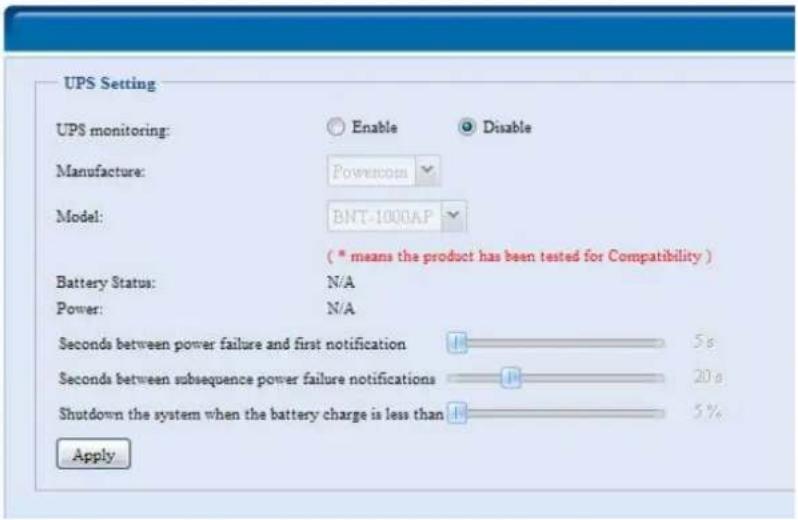
text_image
UPS Setting UPS monitoring: Enable Disable Manufacture: Powercom Model: BNT-1000AP (* means the product has been tested for Compatibility ) Battery Status: N/A Power: N/A Seconds between power failure and first notification 5s Seconds between subsequence power failure notifications 20g Shutdown the system when the battery charge is less than 5% ApplySee the following table for a detailed description of each item.
| UPS Setting | |
| Item | Description |
| UPS Monitoring Enable or disable UPS | monitoring. |
| Manufacturer Choose the UPS manufacturer from the dropdowns. | |
| Model Choose the UPS model number | from the dropdowns. |
| Battery Status Current status of the UPS battery | |
| Power Current status of the power being supplied to the UPS | |
| Seconds between power failure and first notification | Delay between power failure and first notification in seconds. |
| Seconds between subsequent power failure notifications | Delay between subsequent notifications in seconds. |
| Shutdown the system when the battery charge is less than | Amount of UPS battery remaining before system should auto-shutdown. |
| Apply | Press Apply to say |
For a list of supported UPS units, see Appendix E: UPS Compatibility List.
Schedule Power On/Off
Using the N5500's System Management, you can save energy and money by scheduling the N5500 to turn itself on and off during certain times of the day.
From the menu, choose the Schedule Power On/ Off item and the Schedule Power On/ Off screen appears.
To designate a schedule for the N5500 to turn on and off, first enable the feature by checking the Enable Schedule Power On/ Off checkbox.
Then, simply choose an on and off time for each day of the week that you would like to designate a schedule by using the various dropdowns.
Finally, click Apply to save your changes.
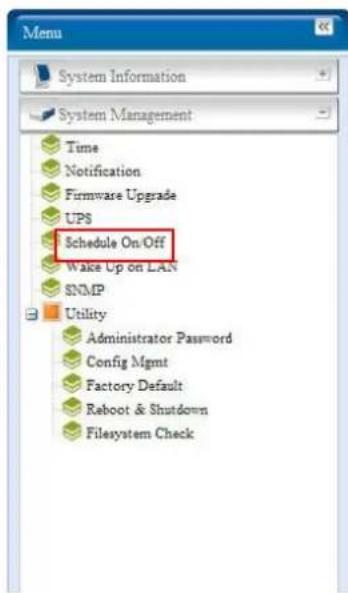
text_image
Menu System Information System Management Time Notification Firmware Upgrade UPS Schedule On-Off Wake Up on LAN SNMP Utility Administrator Password Config Mgmt Factory Default Reboot & Shutdown Filesystem Check
text_image
Schedule Power On/Off Enable Schedule Power On/Off Action Time Action Time Sunday: None 00:00 None 00:00 Monday: None 00:00 None 00:00 Tuesday: None 00:00 None 00:00 Wednesday: None 00:00 None 00:00 Thursday: None 00:00 None 00:00 Friday: None 00:00 None 00:00 Saturday: None 00:00 None 00:00 ApplyExample - Monday: On: 8:00; Off: 16:00
System will turn on at 8:00 AM on Monday, and off at 16:00 on Monday. System will turn on for the rest of the week.
If you choose an on time, but do not assign an off time, the system will turn on and remain on until a scheduled off time is reached, or if the unit is shutdown manually.
Example - Monday: On: 8:00
System will turn on at 8:00 AM on Monday, and will not shut down unless powered down manually.
You may also choose two on times or two off times on a particular day, and the system will act accordingly.
Example - Monday: Off: 8:00; Off: 16:00
System will turn off at 8:00 AM on Monday. System will turn off at 16:00 PM on Monday, if it was on. If the system was already off at 16:00 PM on Monday, system will stay off.
Wake-Up On LAN (WOL)
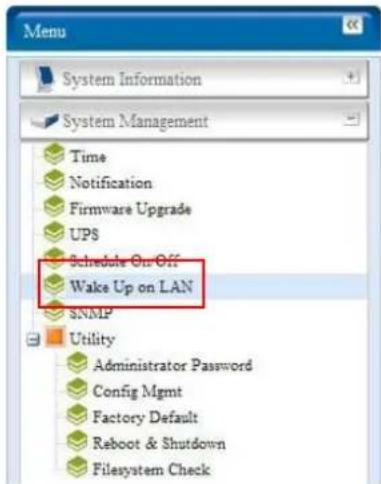
The N5500 has the ability to be awoken from sleep mode via WAN port.
text_image
Menu System Information System Management Time Notification Firmware Upgrade UPS Schedule On Off Wake Up on LAN SNMP Utility Administrator Password Config Mgmt Factory Default Reboot & Shutdown Filesystem Check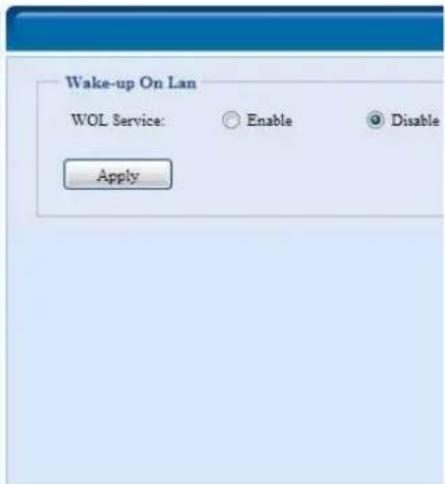
text_image
Wake-up On Lan WOL Service: Enable Disable ApplyFrom the menu, choose the WOL item, and the Wake-up On LAN screen appears. From here, you can Enable or Disable.
| Wake-up On LAN Configuration | |
| Item | Description |
| WOL Service | Enable or Disable WOL service |
| Apply | ClickApply to save changes. |
SNMP Support
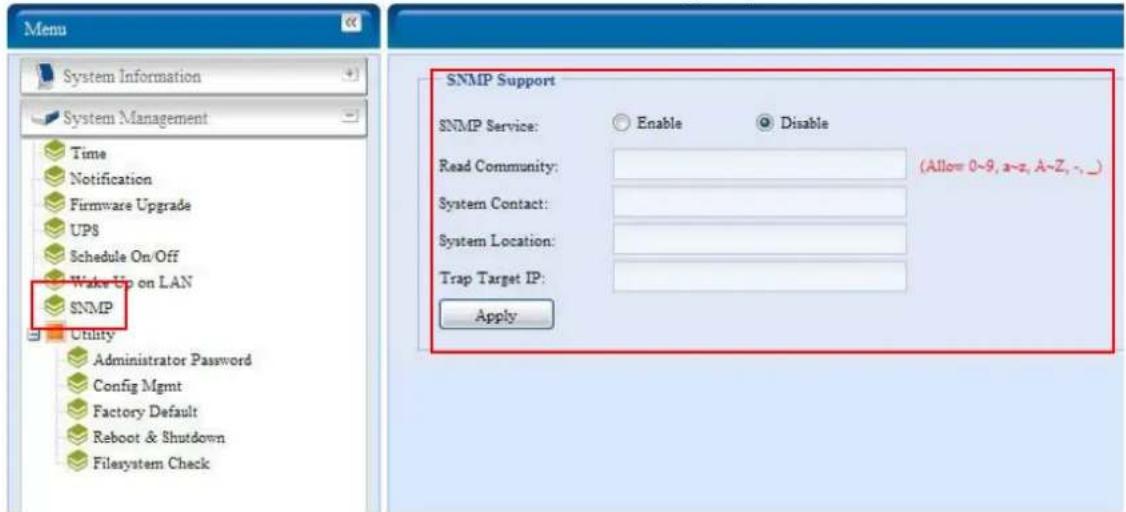
From the menu, choose the SNMP item and the SNMP Support screen appears. You could enable the SNMP function and filled in the related information in each fields. With the SNMP management software could get system basic information.
text_image
Menu System Information System Management Time Notification Firmware Upgrade UPS Schedule On/Off Wake Up on LAN SNMP Utility Administrator Password Config Mgmt Factory Default Reboot & Shutdown Filesystem Check SNMP Support SNMP Service: Enable Disable Read Community: (Allow 0~9, x~z, A~Z, -, _) System Contact: System Location: Trap Target IP: ApplyFrom the menu, choose the SNMP item, and the SNMP Support screen appears. From here, you can Enable or Disable.
Utility
• Administrator password
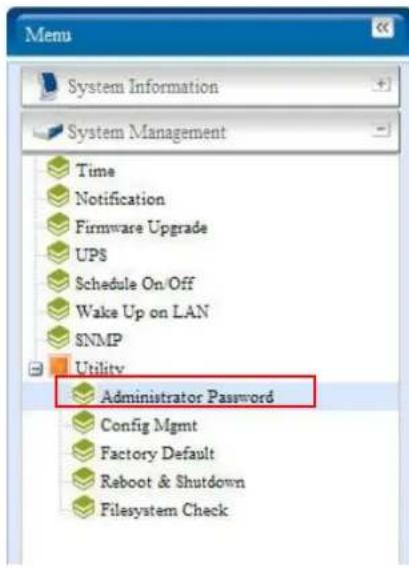
From the menu, choose the Administrator Password item and the Change Administrator Password screen appears. Enter a new password in the New Password box and confirm your new password in the Confirm Password box. Press Apply to confirm password changes.
There is also password for enter LCD setting you could setup here. Enter a new password in the New Password box and confirm your new password in the Confirm Password box. Press Apply to confirm password changes.
text_image
Menu System Information System Management Time Notification Firmware Upgrade UPS Schedule On/Off Wake Up on LAN SNMP Utility Administrator Password Config Mgmt Factory Default Reboot & Shutdown Filesystem Check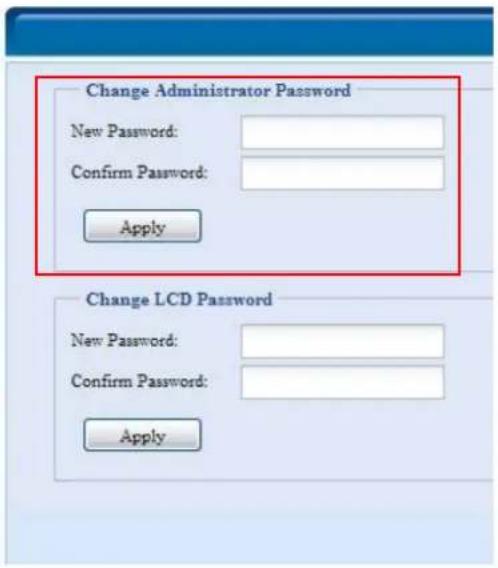
text_image
Change Administrator Password New Password: Confirm Password: Apply Change LCD Password New Password: Confirm Password: ApplySee the following table for a detailed description of each item.
| Change Administrator and LCD Entry Password | |
| Item | Description |
| New Password Type in a new administrator password. | |
| Confirm Password Type | the new password again to confirm. |
| Apply Press this to save | your changes. |
Config Mgmt
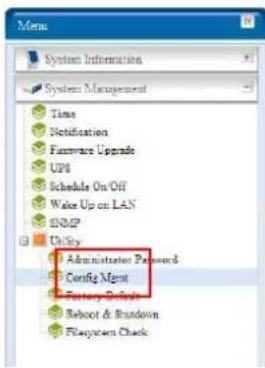
From the menu, choose the Config Mgmt item and the System Configuration Download/ Upload screen appears. From here, you can download or upload stored system configurations.
text_image
Mem System Information System Management Time Notification Firmware Upgrade UPS Schedule On Off Wake Up on LAN SNXP Utility 10 Administrator Password 11 Configure Manager 12 Battery Reserve Reboot & Shutdown Playsystem Check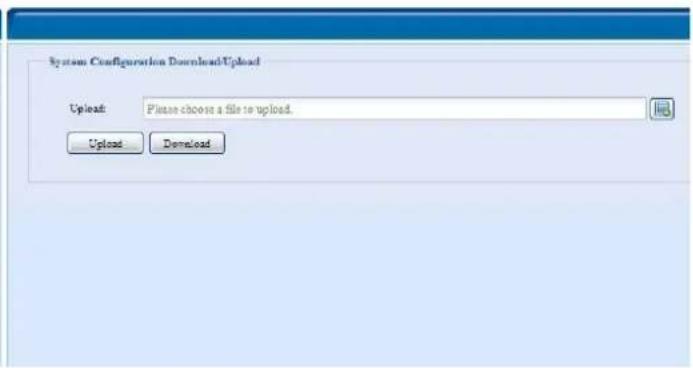
text_image
System Configuration Download/Upload Upload: Please choose a file to upload. Upload DownloadSee the following table for a detailed description of each item.
| System Configuration Download/ Upload | |
| Item | Description |
| Download Save and export the current system configuration. | |
| Upload Import a saved configuration file to overwrite current system configuration. | |
NOTE
Backing up your system configuration is a great way to ensure that you can revert to a working configuration when you are experimenting with new system settings. The system configuration you have backup can be only restore in same firmware version. And the backup details have excluded user/group accounts.
Factory default
From the menu, choose the Factory Default item and the Reset to Factory Default screen appears. Press Apply to reset the N5500 to factory default settings.

text_image
Menu System Information System Management Time Notification Firmware Upgrade UPS Schedule On/Off Wake Up on LAN SNMP Utility Administrator Password Config Mgmt Factory Default Keboot & Shutdown Filesystem Check Reset To Factory Default ApplyWARNING
Resetting to factory defaults will not erase the data stored in the hard disks, but WILL revert all the settings to the factory default values.
Reboot & Shutdown
From the menu, choose Reboot & Shutdown item, and the Shutdown/Reboot System screen appears. Press Reboot to restart the system or Shutdown to turn the system off.

text_image
Menu System Information System Management Time Notification Firmware Upgrade UPS Schedule On/Off Wake Up on LAN SNMP Utility Administrator Password Config Mgmt Factory Default Reboot & Shutdown Filesystem Check Shutdown/Reboot System Shutdown RebootFile System check
The File System Check allows you to perform a check on the integrity of your disks' file system. Under the menu, click File system Check and the File System Check prompt appears.
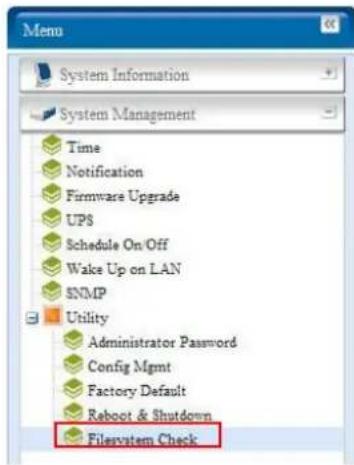
text_image
Menu System Information System Management Time Notification Firmware Upgrade UPS Schedule On/Off Wake Up on LAN SNMP Utility Administrator Password Config Mgmt Factory Default Reboot & Shutdown Filesystem Check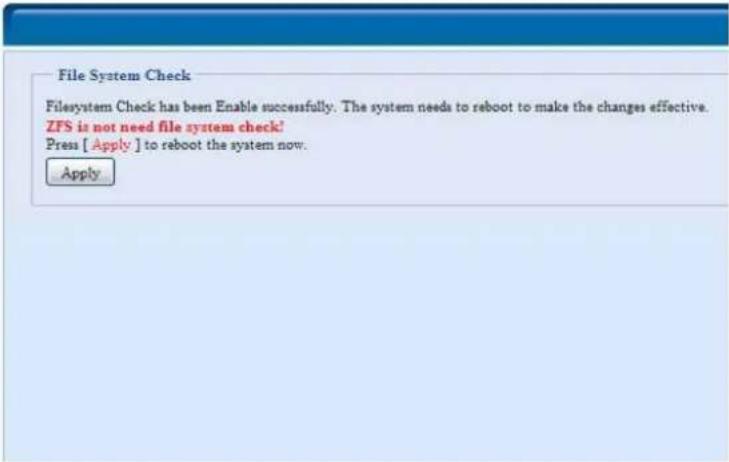
text_image
File System Check Filesystem Check has been Enable successfully. The system needs to reboot to make the changes effective. ZFS is not need file system check! Press [ Apply ] to reboot the system now. ApplyTo perform a file system check, click Apply.
Once clicked, the following prompt will appear:
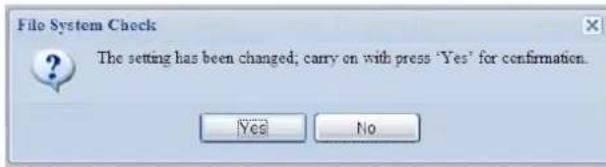
text_image
File System Check The setting has been changed, carry on with press 'Yes' for confirmation. Yes NoClick Yes to reboot the system.
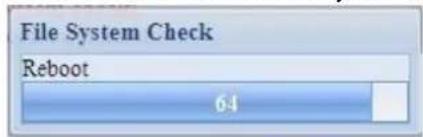
text_image
File System Check Reboot 64

text_image
File System Check Reboot Done.Once the system has rebooted, you will be returned to the File System Check prompt. There you will see the available RAID volumes to run the file system check on except ZFS volume, ZFS has no need to perform file system check. Check the desired RAID volumes and click Next to proceed with the file system check. Click Reboot to reboot without running the check.

text_image
Thecus.com File System Check ZFS is not need file system check! RAID Level Disks Status Filesystem Status Data Capacity Last Check Time RAIDS 4 Healthy Normal 0.2 GB / 41.8 GB Thecus.com File System Check ZTS is not need file system check! RAID Level Disks Status Filesystem Status Data Capacity Last Check Time RAIDS 4 Healthy Normal 0.2 GB / 41.8 GBOnce you click Next, you will see the following screen:

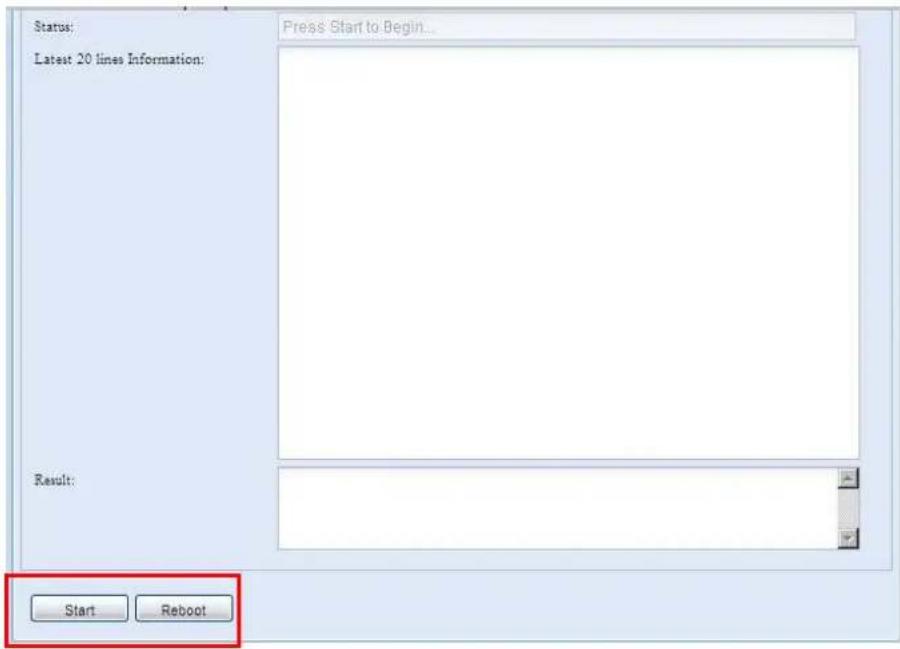
text_image
Status: Latest 20 lines Information: Press/ Start to Begin... Result: Start RebootClick Start to begin the file system check. Click Reboot to reboot the system. When the file system check is run, the system will show 20 lines of information until it is complete. Once complete, the results will be shown at the bottom.
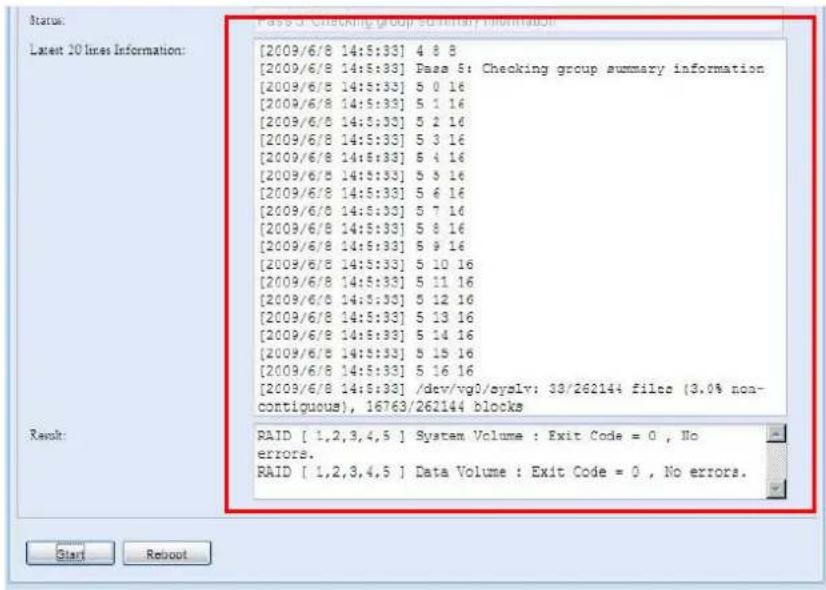
text_image
[2009/6/8 14:5:33] 4 8 8 [2009/6/8 14:5:33] Pass 5: Checking group summary information [2009/6/8 14:5:33] 5 0 16 [2009/6/8 14:5:33] 5 1 16 [2009/6/8 14:5:33] 5 2 16 [2009/6/8 14:5:33] 5 3 16 [2009/6/8 14:5:33] 5 4 16 [2009/6/8 14:5:33] 5 5 16 [2009/6/8 14:5:33] 5 6 16 [2009/6/8 14:5:33] 5 7 16 [2009/6/8 14:5:33] 5 8 16 [2009/6/8 14:5:33] 5 9 16 [2009/6/8 14:5:33] 5 10 16 [2009/6/8 14:5:33] 5 11 16 [2009/6/8 14:5:33] 5 12 16 [2009/6/8 14:5:33] 5 13 16 [2009/6/8 14:5:33] 5 14 16 [2009/6/8 14:5:33] 5 15 16 [2009/6/8 14:5:33] 5 16 16 [2009/6/8 14:5:33] /dev/vg0/syslv: 33/262144 files (3.0% non-contiguous), 16763/262144 blocks Result: RAID [ 1,2,3,4,5 ] System Volume : Exit Code = 0 , No errors. RAID [ 1,2,3,4,5 ] Data Volume : Exit Code = 0 , No errors.NOTE
The system must be rebooted before the N5500 can function normally after file system check complete.
System Network
Use the System Network menu to make network configuration settings as well as service support settings.
WAN Configuration
From the System Network menu, choose WAN, and the WAN Configuration screen appears. This screen displays the network parameters of the WAN connection. You may change any of these items and press Apply to confirm your settings. See a description of each item in the following table:
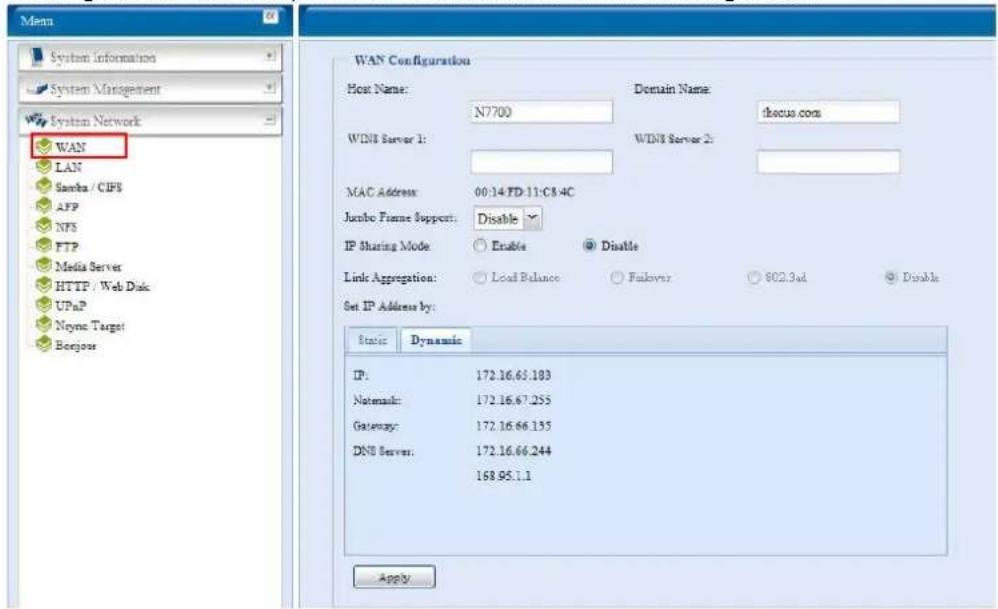
text_image
WAN Configuration Host Name: N7700 Domain Name: chocus.com WINB Server 1: WINB Server 2: MAC Address: 00:14 FD: 11:C8:4C Jumbo Frame Support: Disable IP Sharing Mode: Enable Disable Link Aggregation: Load Balance Fulkover 602.3ad Durable Set IP Address by: Static Dynamic IP: 172.16.65.183 Notemail: 172.16.67.255 Gateway: 172.16.66.135 DNS Server: 172.16.66.244 168.95.1.1 Apply| WAN Configuration | |
| Item | Description |
| Host name Host name that identifies the N5500 on the network. | |
| Domain name Specifies the domain name of the N5500. | |
| WINS Server | To set a server name for NetBIOS computer. |
| MAC Address MAC address of the network interface. | |
| Jumbo Frame Support Enable or disable Jumbo Frame Support of the WAN interface on your N5500. | |
| IP Sharing Mode When enabled, PCs connected to the LAN port will be able to access the WAN. | |
| Link Aggregation Specifies whether WAN and LAN ports will be aggregated and act as one port.Load Balance: Ethernet traffic will flow alternative between two Ethernet ports.Failover: When one port fails, the other one will take over.802.3ad: Linkage two Ethernet ports in parallel to increase throughput. | |
| Set IP Address by:Static / Dynamic | You can choose a static IP or Dynamic IP, and input your network configuration. |
| IP IP address of the WAN interface. | |
| Netmask Network mask, which is generally: 255.255.255.0 | |
| Gateway Default Gateway IP address. | |
| DNS Server Domain Name Service (DNS) server IP address. | |
NOTE
- Only use Jumbo Frame settings when operating in a Gigabit environment where all other clients have Jumbo Frame Setting enabled.
- Enabling DHCP automatically turns on UPnP—see the Service Support Screen.
- If you are only using the WAN port, we suggest that you disable IP Sharing Mode. This will result in higher throughput.
- A correct DNS setting is vital to networks services, such as SMTP and NTP.
- To use the Link Aggregation with "802.3ad selected" feature, please make sure the networking equipment on the other end of Ethernet cable also supports 802.3ad protocol.
WARNING
Most Fast Ethernet (10/100) Switches/Routers do not support Jumbo Frame and you will not be able to connect to your N5500 after Jumbo Frame is turned on. If this happens, turn off the N5500. Then, press the reset button on the front panel right below power button. System will bring your network settings back to factory default.
LAN
LAN Configuration
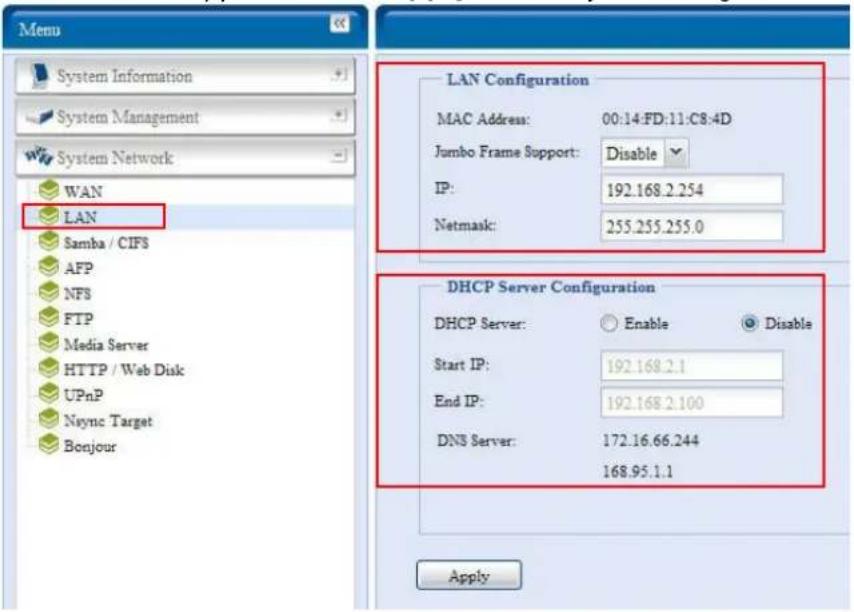
The N5500 supports two Gigabit Ethernet ports for higher service availability. To configure these ports, choose LAN from the System Network menu, and the LAN Configuration screen appears. Press Apply to save your changes.
text_image
Menu System Information System Management System Network WAN LAN Samba / CIFS AFP NFS FTP Media Server HTTP / Web Disk UPnP Nsync Target Bonjour LAN Configuration MAC Address: 00:14:FD:11:C8:4D Jumbo Frame Support: Disable IP: 192.168.2.254 Netmask: 255.255.255.0 DHCP Server Configuration DHCP Server: Enable Disable Start IP: 192.168.2.1 End IP: 192.168.2.100 DNS Server: 172.16.66.244 168.95.1.1 Apply| LAN Configuration | |
| Item | Description |
| MAC Address Displays the MAC address of the LAN interface. | |
| Jumbo Frame Support Enable or disable Jumbo Frame Support on the LAN interface. | |
| IP Specifies the IP address of the LAN interface. | |
| Netmask Specifies the Network Mask of the LAN interface. | |
NOTE
Before enabling Jumbo Frame Support, please make sure your network equipment supports Jumbo Frame. If your equipment is incompatible, you might not be able to connect to your N5500.
DHCP Server Configuration
A DHCP server can be configured to assign IP addresses to devices connected to the LAN port. To configure these ports, choose LAN from the System Network menu.
| DHCP Configuration | |
| Item | Description |
| DHCP Server Enable or | disable the DHCP server to automatically assign IP address to PCs connected to the LAN interface. |
| Start IP Specifies the starting IP address of the DHCP range. | |
| End IP Specifies the ending IP address of the DHCP range. | |
| DNS Server Displayed the DNS server IP address. | |
NOTE
The IP Segment of WAN and LAN should not overlap.
WARNING
The IP address of the LAN interface should not be in the range of the Start IP address and End IP address.
Samba / CIFS
There are 4 options is currently allow Admin to Enable/Disable to operate N5500 associated with Samba / CIFS protocol. With the option changed, it will need to reboot system to activate.

text_image
Menu System Information System Management System Network WAN LAN Samba / CIFS AFP NFS FTP Media Server HTTP / Web Disk UPnP Naync Target Bonjour
text_image
Samba / CIFS Samba Service: Enable Disable File Access Cache: Enable Disable Samba Recycle Bin: Enable Disable Samba Anonymous Login Authentication: Enable Disable ApplySamba Service
Used for letting the operating system of UNIX series and SMB/CIFS of Microsoft Windows operating system (Server Message Block / Common Internet File System). Do the link in network protocol. Enable or Disable SMB/CIFS protocol for Windows, Apple, Unix drive mapping.
File Access Cache
File Access Cache is default Enable. This option will help to increase the performance while single client access share folder in writing under SMB/CIFS protocol.
Samba Recycle Bin
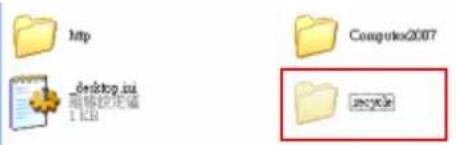
The N5500 is supported recycle bin via SMB/CIFS protocol. Simply enable it then all of deleted files/folders will reside in the ".recycle" folder with hidden attribution in each share.
text_image
http computer2007 desktop.ini 服务器定盘 1 KB recycleIn general, Windows has default to invisible all of hidden folders/files. So please enable this option to view “.recycle” folder.
Samba Anonymous Login Authentication
To enable this option, no matter there is share folder has been created in public access. The user account and password is needed from system to access under SMB/CIFS protocol. On the other hand, no more anonymous login is allowed.
NOTE
- In some environments, due to security concerns, you may wish to disable SMB/CIFS as a precaution against computer viruses.
AFP (Apple Network Setup)
From the System Network menu, choose the AFP item, and the AFP Support screen appears. This screen displays the configuration items for the Apple Filing Protocol. You can change any of these items and press Apply to confirm your settings.

text_image
Menu System Information System Management System Network WAN LAN Samba / CIFS AFP NPS FTP Media Server HTTP / Web Disk UPnP Nsync Target Bonjour AFP Support AFP Server: Enable Disable MAC CHARSET: UTF-8 ZONE: ApplyA description of each item follows:
| Apple Network Configuration | |
| Item | Description |
| AFP Server Enable or dis | sable Apple File Service to use the N5500 with MAC OS-based systems. |
| Zone Specifies Zone for | Applet Talk service.If your AppleTalk network uses extended networks and is assigned with multiple zones, assign a zone name to the N5500. If you do not want to assign a network zone, enter an asterisk (*) to use the default setting. |
NFS Setup
From the System Network menu, choose the NFS item, and the NFS Support screen appears. The N5500 can act as an NFS server, enabling users to download and upload files with the favorite NFS clients. Press Apply to confirm your settings.

text_image
Menu System Information System Management System Network WAN LAN Samba / CIFS AFP NFS FTP Media Server HTTP / Web Disk UPnP Nsync Target Bonjour NFS Support NFS: Enable Disable ApplyA description of each item follows:
| NFS Server Setting | |
| Item | Description |
| NFS | Enable or Disable NFS support. |
| Apply | Click Apply to save your changes. |
FTP
N5500 can act as a FTP server, enabling users to download and upload files with their favorite FTP programs. From the System Network menu, choose the FTP item, and the FTP screen appears. You can change any of these items and press Apply to confirm your settings.

text_image
Menu System Information System Management System Network WAN LAN Samba / CIFS AFP NFS FTP Media Server HTTP / Web Disk UPnP Naync Target Bonjour FTP FTP: Enable Disable Secure FTP (Explicit): Enable Disable Port: 21 FTP ENCODE: UTF-8 Allow Anonymous FTP Access: Upload/Download Auto Rename: Upload Bandwidth: Download Bandwidth: Apply Unlimited UnlimitedA description of each item follows:
| FTP | |
| Item | Description |
| FTP Enable FTP Service | on the N5500. |
| Security FTP Enable or | disable Security FTP, be sure the client FTP software has also security FTP setting enabled. |
| Port Specifies the port | number of an incoming connection on a non-standard port. |
| FTP ENCODE If your FTP | client or operating system does not support Unicode (e.g. Windows® 95/98/ME or MAC OS9/8), select the same encoding as your OS here in order to properly view the files and directories on the server. Available options are BIG5, HZ, GB2312, GB18030, ISO, EUC-JP, SHIFT-JIS and UTF-8. |
| Allow Anonymous FTP Access | Upload/ Download: Allow anonymous FTP users to upload or download files to/from public folders.Download: Allow anonymous FTP users to download files from public folders.No access: Block anonymous FTP user access. |
| Auto Rename If checked | , the system will automatically rename files that are uploaded with a duplicate file name. The renaming scheme is [filename].#, where # represents an integer. |
| Upload Bandwidth You | may set the maximum bandwidth allocated to file uploads. Selections include Unlimited, 1, 2, 4, 8, 16 and 32 MB/s. |
| Download Bandwidth You | may set the maximum bandwidth allocated to file downloads. Selections include Unlimited, 1, 2, 4, 8, 16 and 32 MB/s. |
To access the share folder on the N5500, use the appropriate user login and password set up on the Users page. Access control to each share folder is set up on the ACL page (Storage Management > Shore Folder > ACL).
Media Server
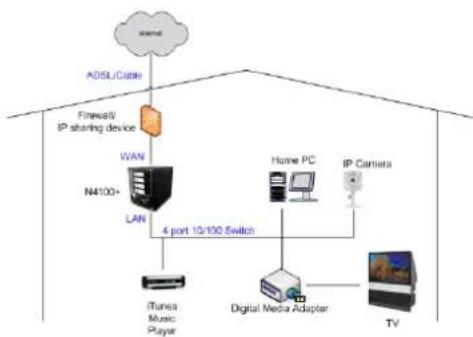
With the built-in Media Server capability, the N5500 provides media streaming service to stand-alone networked home media adapters that support the UPnP AV protocol or are Digital Living Network Alliance (DLNA) standard compliant.
With the N5500's built-in media server capability, you can share digital media such as music, pictures, and movies with any compatible device throughout your entire home.
flowchart
graph TD
    A["Internet"] --> B["ADSL/Cable"]
    B --> C["WiFi/IP sharing device"]
    C --> D["WAN"]
    D --> E["N4100+"]
    E --> F["LAN"]
    F --> G["4 port 10/100 Switch"]
    G --> H["Home PC"]
    G --> I["IP Camera"]
    H --> J["TV"]
    I --> J
    K["iTunes Music Player"] --> L["Digital Media Adapter"]
Media Manager Settings
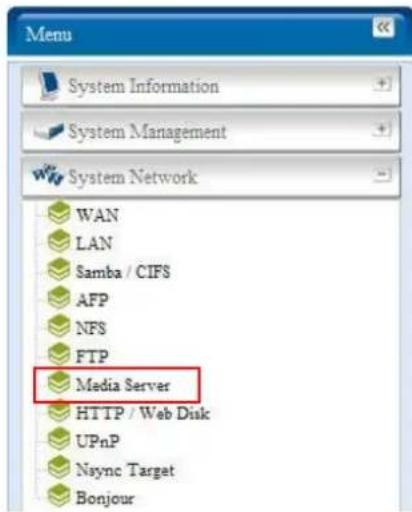
To configure the media server, under the System Network menu, click Media Server and the Media Manager Settings window will appear.
text_image
Menu System Information System Management System Network WAN LAN Samba / CIFS AFP NFS FTP Media Server HTTP / Web Disk UPnP Nsync Target Bonjour
text_image
Media Manager Settings Media Server: Enable Disable Apply Shared Media Folders Shared Media Folders Action usbcopy naswebsiteA description of each field follows:
| Media Manager Settings | |
| Item | Description |
| Media Server Enable or | disable the Media Server service. |
| Shared Media Folders S | Select the folder(s) that contains media files to be shared. |
| Rescan | Click the Rescan button to have the N5500 for new contents in the selected media folder. |
Share Media Folders
Once the Media Server software is installed, you can start adding folders that contain the media that you would like to share. To create a media share folder, follow the steps below:
- Click on System Network > Media Server in the menu bar.
- From the Shared Media Folders window, select the folder that contains your media files, and click its checkbox.
- The contents in the folder will be scanned for the Media Server. The time required for scanning depends on the size of the folder.
Connecting DMAs to the Media Server
Next, it's time to connect your Digital Media Adapter (DMA) to the media server:
- Connect your DMA to your Media Server
a. Configure your DMA to use a Dynamic IP address. The IP address will be assigned by the router.
b. Some DMAs are wireless enabled. You can connect the DMA to a wireless router. For instructions on how to connect your DMA to a wireless router, please refer to your DMA's user manual.
- Connect your DMA's video output to video input of your TV set.
-
Turn on the TV and change the video signal input to DMA.
-
Setup the DMA (These steps will be different if you use a different DMA)
a. From the Server List screen, select "N5500: Media Server" as the server.
b. Go to My Media
c. Click on the Up/ Down Arrow buttons to select Music Jukebox, Photo Albums, or Video Clips
d. Start enjoying the contents stored in your N5500.
HTTP/ Web Disk
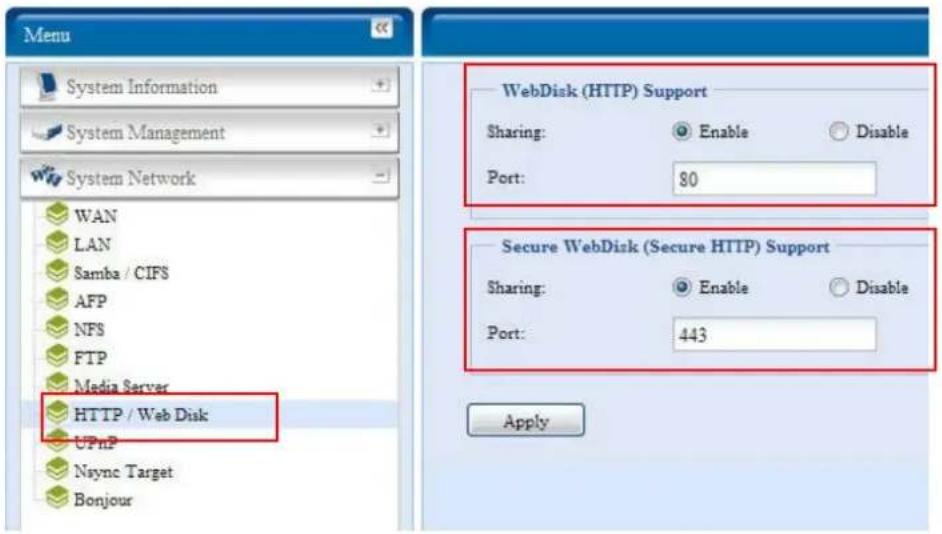
From the System Network menu, choose the HTTP/ Web Disk item, and the Web Disk (HTTP) Support screen appears. This screen displays the service support parameters of the system. You can change any of these items and press Apply to confirm your settings.
text_image
Menu System Information System Management System Network WAN LAN Samba / CIFS AFP NFS FTP Media Server HTTP / Web Disk UPnP Nsync Target Bonjour WebDisk (HTTP) Support Sharing: Enable Disable Port: 80 Secure WebDisk (Secure HTTP) Support Sharing: Enable Disable Port: 443 ApplyA description of each item follows:
| Web Service | |
| Item | Description |
| HTTP (WebDisk) Support | Enable or disable WebDisk support. Enter the port number if this option is enabled. The port number is default 80. |
| HTTPS (Secure WebDisk) Support | Enable or disable secure WebDisk support. Enter the port if this option is enabled. |
NOTE
- Disable HTTP support and Enable Secure HTTP support to guarantee secure access.
UPnP
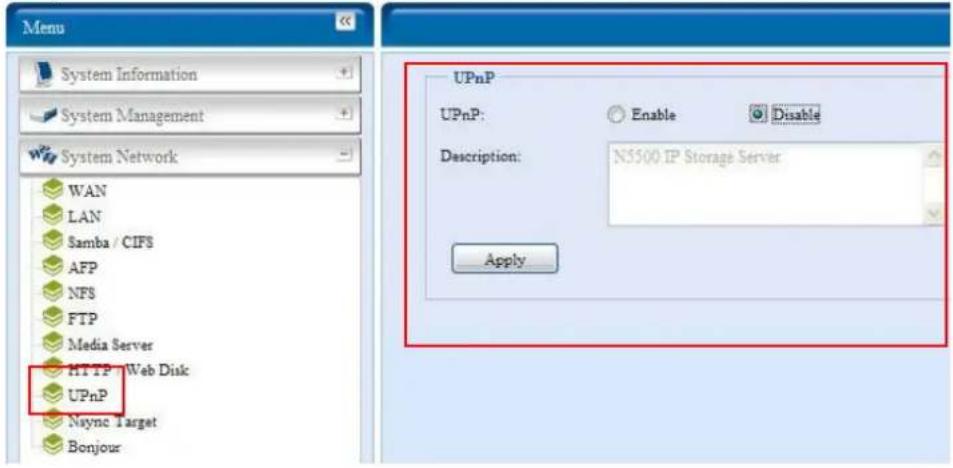
This device supports UPnP Media server, which allows users to play media files with UPnP client (ex. DMA devices). Enable or disable Universal Plug and Play protocol. UPnP helps to find the IP address of the N5500.
text_image
Menu System Information System Management System Network WAN LAN Samba / CIFS AFP NFS FTP Media Server HTTP / Web Disk UPnP Naync Target Bonjour UPnP UPnP: Enable Disable Description: N5500 IP Storage Server ApplyNsync Target
From the System Network menu, choose the Nsync Target item, and the Nsync Setting screen appears. Enable or Disable your Nsync Target Server. Press Apply to confirm your settings.
Once Nsync Target has been enabled, the other Thecus NAS product is able to operate remote replication to this NAS system.

text_image
Menu System Information System Management System Network WAN LAN Samba / CIFS AFP NFS FTP Media Server HTTP / Web Disk UPnP Nsync Target Bonjour Nsync Setting Nsync Target Server: Enable Disable ApplyBonjour Setting
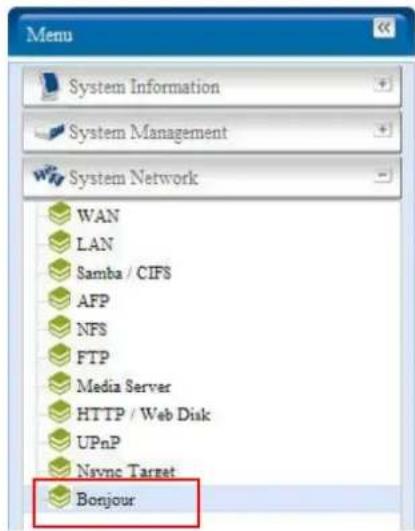
Bonjour, is Apple Inc.'s trade name for its implementation of Zeroconf, a service discovery protocol. Bonjour locates devices such as printers, as well as other computers, and the services that those devices offer on a local network using multicast Domain Name System service records. This definitive guide walks you through Bonjour zero-configuration networking with a complete description of the protocols and technologies used to create Bonjour enabled applications and devices.
text_image
Menu System Information System Management System Network WAN LAN Samba / CIFS AFP NFS FTP Media Server HTTP / Web Diak UPnP Navnc Target Bonjour
text_image
Bonjour Setting Bonjour service: ○ Enable ● Disable ApplyStorage Management
The Storage menu displays the status of storage devices installed in the N5500, and includes storage configuration options such as RAID and disk settings, folder configuration, space allocation and ISO Mount.
Disks Information
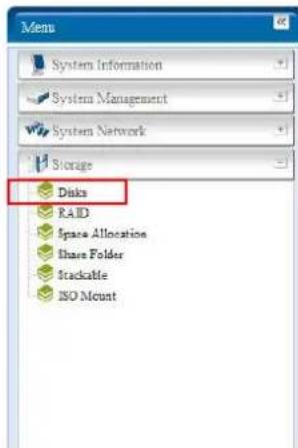
From the Storage menu, choose the Disks item and the Disks Information screen appears. From here, you can see various items about installed SATA hard disks. Blank lines indicate that a SATA hard disk is not currently installed in that particular disk slot.
text_image
Menu System Information System Management System Network Storage Disks RAID Space Allocation Share Folder Stackable ISO Mount
text_image
Disk Information Disk No. Capacity (MB) Model Furniture Status Bad Block Scan 1 N/A N/A N/A N/A N/A 2 76,319 WDC WD800JD-00L$ 06.0 OK Yes to start 3 76,319 WDC WD800JD-00L$ 06.0 OK Yes to start 4 76,319 WDC WD800AAB-00 05.0 OK Yes to start 5 N/A N/A N/A N/A Total Capacity: 228957 (MB) Disk Power Management Disk Power Management: OFF Minute Apply| Disks Information | |
| Item | Description |
| Disk No. Indicates disk location. | |
| Capacity Shows the SATA hard disk capacity. | |
| Model Displays the SATA hard disk model name. | |
| Firmware Shows the SATA hard disk firmware version. | |
| Status | Indicates the status of the disk. Can read OK, Warning, or Failed. |
| Bad Block scan Yes to start scan Bad Block. | |
| Total Capacity Shows the total SATA hard disk capacity. | |
| Disk Power Management | The administrator can set the disk to power down after a period of inactivity. |
NOTE
When the Status shows Warning, it usually means there are bad sectors on the hard disk. It is shown only as a precaution and you should consider changing the drives.
S.M.A.R.T. Information
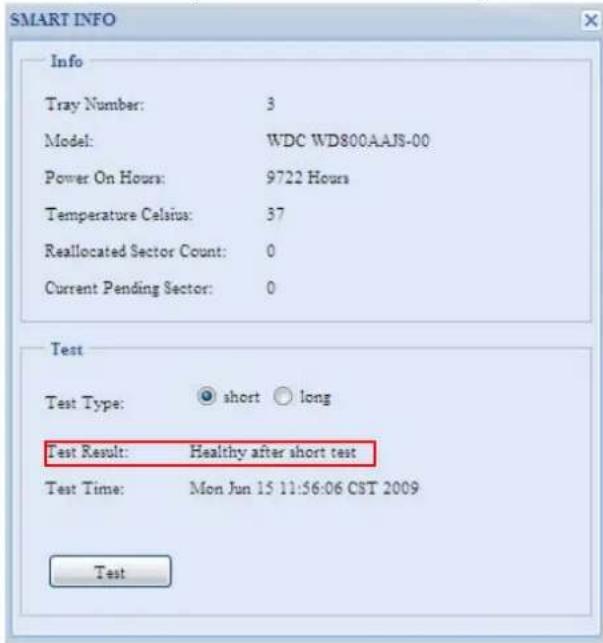
On the Disks Information screen, the status of each disk will be displayed in the Status column. Clicking on an OK or Warning link will display the S.M.A.R.T Information window for that particular disk.
You may also perform disk SMART test, simply to click "Test" to start with. The result is only for reference and system will not take any action from its result.
text_image
SMART INFO Info Tray Number: 3 Model: WDC WD800AAJS-00 Power On Hours: 9722 Hours Temperature Celsius: 37 Reallocated Sector Count: 0 Current Pending Sector: 0 Test Test Type: short long Test Result: Healthy after short test Test Time: Mon Jun 15 11:56:06 CST 2009 Test| S.M.A.R.T. Information | |
| Item | Description |
| Tray Number Tray the hard disk is installed in. | |
| Model Model name of the installed hard disk. | |
| Power ON Hours Count of hours in power-on state. The raw value of this attribute shows total count of hours (or minutes, or seconds, depending on manufacturer) in power-on state. | |
| Temperature Celsius The current temperature of the hard disk in degrees Celsius | |
| Reallocated Sector Count | Count of reallocated sectors. When the hard drive finds a read/write/verification error, it marks this sector as "reallocated" and transfers data to a special reserved area (spare area). This process is also known as remapping and "reallocated" sectors are called remaps. This is why, on a modern hard disks, you can not see "bad blocks" while testing the surface - all bad blocks are hidden in reallocated sectors. However, the more sectors that are reallocated, the more a decrease (up to 10% or more) can be noticed in disk read/write speeds. |
| Current Pending Sector | Current count of unstable sectors (waiting for remapping). The raw value of this attribute indicates the total number of sectors waiting for remapping. Later, when some of these sectors are read successfully, the value is decreased. If errors still occur when reading sectors, the hard drive will try to restore the data, transferit to the reserved disk area (spare area), and mark this sector as remapped. If this attribute value remains at zero, it indicates that the quality of the corresponding surface area is low. |
| Test Type Set short or long time to test. | |
| Test Result Result of the test. | |
| Test Time Total time of the test. | |
NOTE
If the Reallocated Sector Count > 32 or Current Pending Sector of a hard disk drive > 0, the status of the disk will show "Warning". This warning is only used to alert the system administrator that there are bad sectors on the disk, and they should replace those disks as soon as possible.
Bad Block Scan
On the Disks Information screen, you may also perform disk bad block scan, simply to click "Yet to start" to start with. The result is only for reference and system will not take any action from its result.
| Disk No. | Capacity (MB) | Model | Firmware | Status | Bad Block Scan |
| 1 | N/A | N/A | N/A | N/A | N/A |
| 2 | 76,319 | WDC WD800JD-00LS | 06.0 | OK | Healthy |
| 3 | 76,319 | WDC WD800AAJS-00 | 05.0 | OK | Yet to start |
| 4 | N/A | N/A | N/A | N/A | N/A |
| 5 | N/A | N/A | N/A | N/A | N/A |
The testing result will be stay till system reboot with "Yet to start" displayed as default.
RAID Information
From the Storage menu, choose the RAID item and the RAID Information screen appears.
This screen lists the RAID volumes currently residing on the N5500. From this screen, you can get information about the status of your RAID volumes, as well as the capacities allocated for data, target USB and iSCSI. There is also a graph which represents how the RAID volume is currently allocated.

text_image
Menu System Information System Management System Network Storage Data RAID Space Allocation Share Folder Stackable ISO Mount RAID Information Create Master ID RAID Status Data Total Data USB iSCI RAID Level Used Capacity Capacity Capacity Capacity| RAID Information | |
| Item | Description |
| Master RAID The RAID | volume currently designated as the Master RAID volume. |
| ID ID of the current RA | D volume.NOTE: All RAID IDs must be unique. |
| RAID Level Shows the current RAID configuration. | |
| Status | Indicates status of the RAID. Can read either Healthy, Degraded, or Damaged. |
| Disks Used Hard disks used to form the current RAID volume. | |
| Total Capacity Total capacity of the current RAID. | |
| Data Capacity Indicates the used capacity and total capacity used by user data. | |
| USB Capacity Total capacity of the target USB Device. | |
| iSCSI Capacity Indicates the capacity allocated to iSCSI. | |
Create a RAID
On the RAID Information screen, press the create button to go to the CREAT RAID screen. In addition to RAID disk information and status, this screen lets you make RAID configuration settings.
Using Create RAID, you can select stripe size, choose which disks are RAID disks or the Spare Disk.
| RAID Configurations | |
| Item | Description |
| Disk No. Number assigned to the installed hard disks. | |
| Capacity (MB) Capacity of the installed hard disks. | |
| Model | Model number of the installed hard disks. |
| Status Status of the installed hard disks. | |
| Used | If this is checked, current hard disk is a part of a RAID volume. |
| Spare | If this is checked, current hard disk is designated as a spare for a RAID volume. |
| Master RAID | Check a box to designate this as the Master RAID volume. See the NOTE below for more information. |
| Stripe Size | This sets the stripe size to maximize performance of sequential files in a storage volume. Keep the 64K setting unless you require a special file storage layout in the storage volume. A larger stripe size is better for large files. |
| Data Percentage | The percentage of the RAID volume that will be used to store data. |
| Create | Press this button to configure a file system and create the RAID storage volume. |
To create a RAID volume, follow the steps below:
- On the RAID Information screen, click create.
- On the RAID Configuration screen, set the RAID storage space as JBOD, RAID 0, RAID 1, RAID 5, RAID 6, or RAID 10 — see Appendix C: RAID Basics for a detailed description of each.
- Specify a RAID ID.
- If this RAID volume is meant to be the Master RAID volume, tick the Master RAID checkbox.
NOTE
In a multiple RAID configuration, one RAID volume must be designated as the Master RAID volume. The Master RAID volume will store all installed modules. If the Master RAID is changed to another location (i.e. assigning volume 2 to be the Master RAID volume after volume 1 had been previously assigned), then all modules must be reinstalled. In addition, all system folders that were contained on the Master RAID volume will be invisible. Reassigning this volume to be the Master RAID will make these folders visible again.
- Specify a stripe size — 64K is the default setting.
- Specify the percentage allocated for user data by drag the horizontal bar. The remaining space will be made available for target USB or iSCSI.
- Selected the file system you like to have for this RAID volume. The selection is available from ext3, XFS and ZFS.
NOTE
- Select ZFS file system while snapshot is needed. It is only one ZFS file system allowed to be created per system.
- ZFS file system is only accessible by CIFS/SMB, not for AFP and NFS users.
· XFS file system is not support folder quota feature
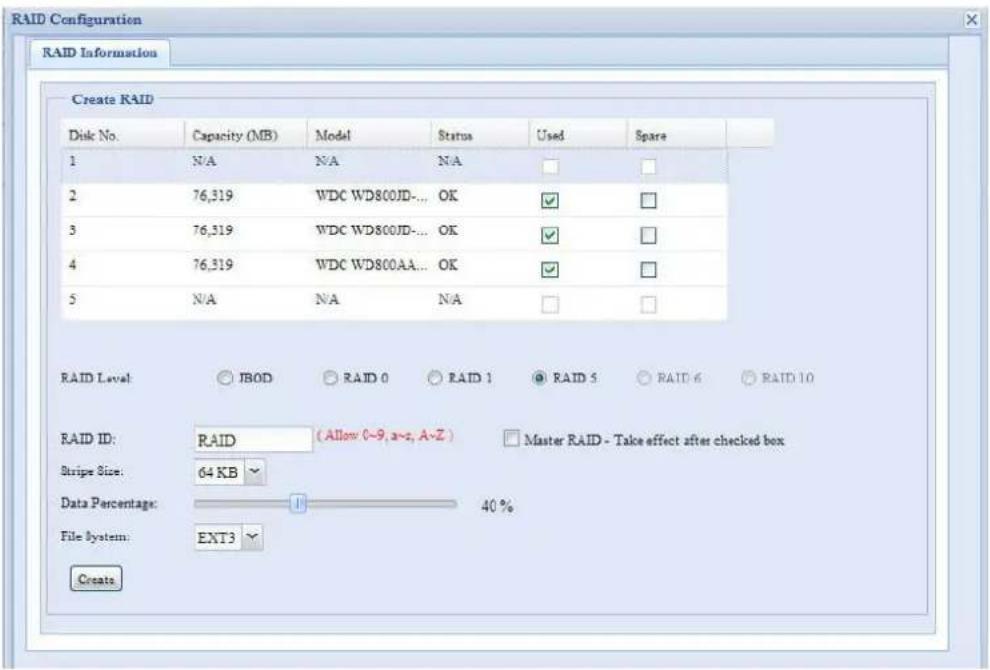
text_image
RAID Configuration RAID Information Create RAID Disk No. Capacity (MB) Model Status Used Spare 1 N/A N/A N/A 2 76,319 WDC WD800JD-... OK ✓ ✓ 3 76,319 WDC WD800JD-... OK ✓ ✓ 4 76,319 WDC WD800AA... OK ✓ ✓ 5 N/A N/A N/A RAID Level IBOD RAID 0 RAID 1 RAID 5 RAID 6 RAID 10 RAID ID: RAID (Allow 0~9, a~z, A~Z) Master RAID - Take effect after checked box Stripe Size: 64 KB Data Percentage: 40 % File System: EXT3 Create- Press Create to build the RAID storage volume.
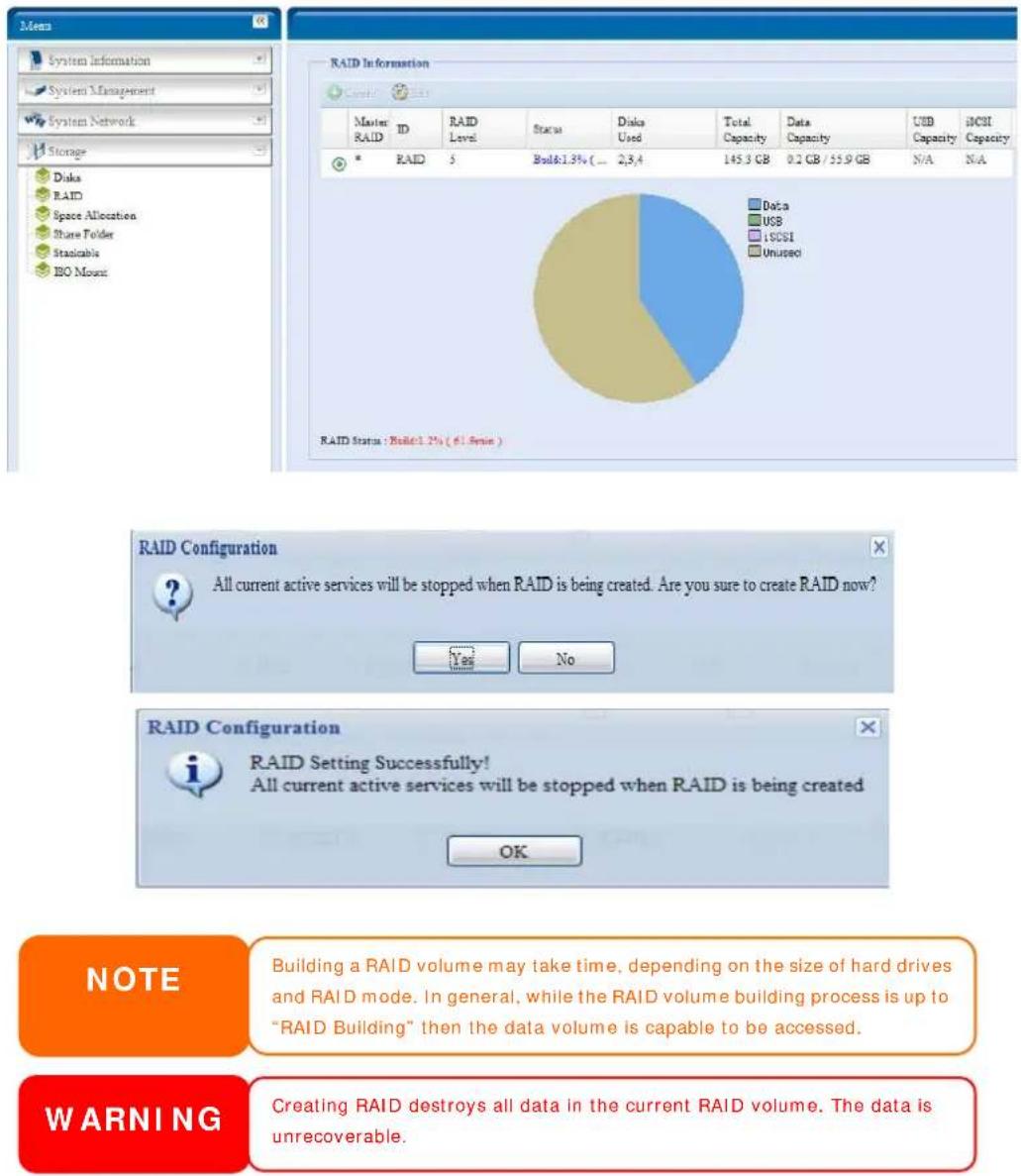
NOTE
Building a RAID volume may take time, depending on the size of hard drives and RAID mode. In general, while the RAID volume building process is up to "RAID Building" then the data volume is capable to be accessed.
WARNING
Creating RAID destroys all data in the current RAID volume. The data is unrecoverable.
With a RAID 1, RAID 5, RAID 6, or RAID 10 volume, you can also add a spare disk after the RAID is created.
See Chapter 6: Tips and Tricks > Adding a Spare Disk for details.
For more information on RAID, see Appendix C: RAID Basics.
RAID Level
You can set the storage volume as JBOD, RAID 0, RAID 1, RAID 5, RAID 6 or RAID 10. RAID configuration is usually required only when you first set up the device. A brief description of each RAID setting follows:
| RAID Levels | |
| Level | Description |
| JBOD The storage volume is a single HDD with no RAID support. JBOD requires a minimum of 1 disk. | |
| RAID 0 Provides data striping but no redundancy. Improves performance but not data safety. RAID 0 requires a minimum of 2 disks. | |
| RAID 1 Offers disk mirroring. Provides twice the read rate of single disks, but same write rate. RAID 1 requires a minimum of 2 disks. | |
| RAID 5 Data striping and stripe error correction information provided. | |
| RAID 5 requires a minimum of 3 disks. RAID 5 can sustain one failed disk. | |
| RAID 6 Two independent | parity computations must be used in order to provide protection against double disk failure. Two different algorithms are employed to achieve this purpose. RAID 6 requires a minimum of 4 disks. RAID 6 can sustain two failed disks. |
| RAID 10 RAID 10 has high reliability and high performance. RAID 10 is implemented as a striped array whose segments are RAID 1 arrays. It has the fault tolerance of RAID 1 and the performance of RAID 0. RAID 10 requires 4 disks. RAID 10 can sustain two failed disks. | |
WARNING
If the administrator improperly removes a hard disk that should not be removed when RAID status is degraded, all data will be lost.
Edit RAID
On the RAID Information screen, press the Edit button to go to the RAID Information screen.
Using Edit RAID, you can select RAID ID and the Spare Disk.

text_image
Menu System Information System Management System Network Storage Disk RAID Space Allocation Share Folder Stackable ISO Mount User and Group Authentication Application Server Module management Backup
pie
RAID Information | Category | Value | |---|---| | Data | 143.3 GB | | USB | 0.2 GB / 132.7 GB | | iSCSI | N/A | | Unused | 2.3 |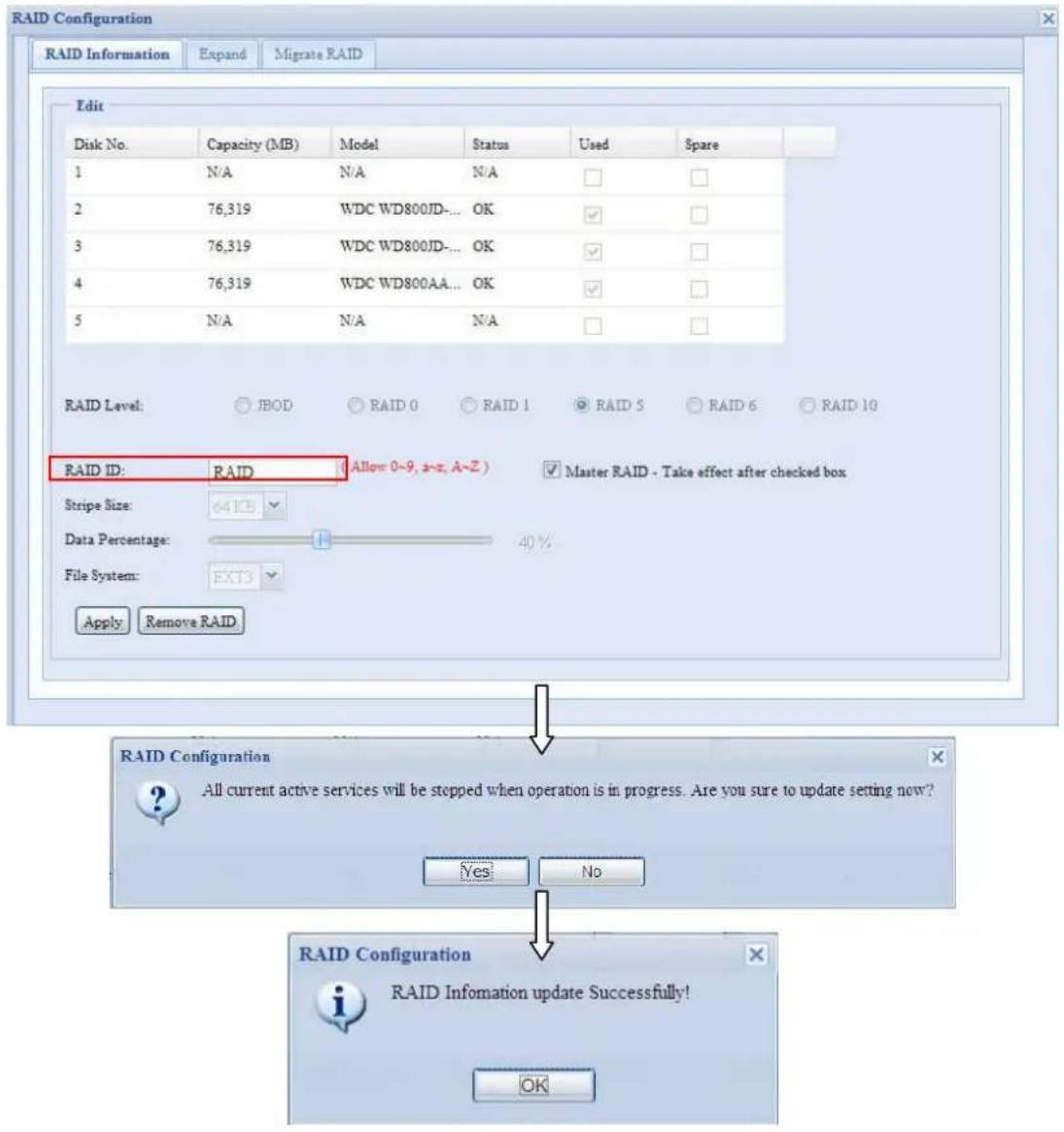
text_image
RAID Configuration RAID Information Expand Migrate RAID Edit Disk No. Capacity (MB) Model Status Used Spare 1 N/A N/A N/A □ □ 2 76,319 WDC WD800JD-... OK ✓ □ 3 76,319 WDC WD800JD-... OK ✓ □ 4 76,319 WDC WD800AA... OK ✓ □ 5 N/A N/A N/A □ □ RAID Level: BJOD BRAID 0 BRAID 1 BRAID 5 BRAID 6 BRAID 10 RAID ID: RAID Allow 0~9, a~z, A~Z) ✓ Master RAID - Take effect after checked box Stripe Size: 6413 Data Percentage: 40% File System: EXTS Apply Remove RAID RAID Configuration All current active services will be stopped when operation is in progress. Are you sure to update setting now? Yes No RAID Configuration RAID Information update Successfully! OKRemove RAID
Click to remove the RAID volume. All user data, iSCSI and target USB data been created in selected RAID volume will be removed.
To remove a RAID volume, follow the steps below:
- On the RAID List screen, select the RAID volume by clicking on its radio button, and click RAID Information to open the RAID Configuration screen.
- On the RAID Configuration screen, click Remove RAID.
- The confirmation screen appear, you will have to input "Yes" with exactly wording case to complete "Remove RAID" operation
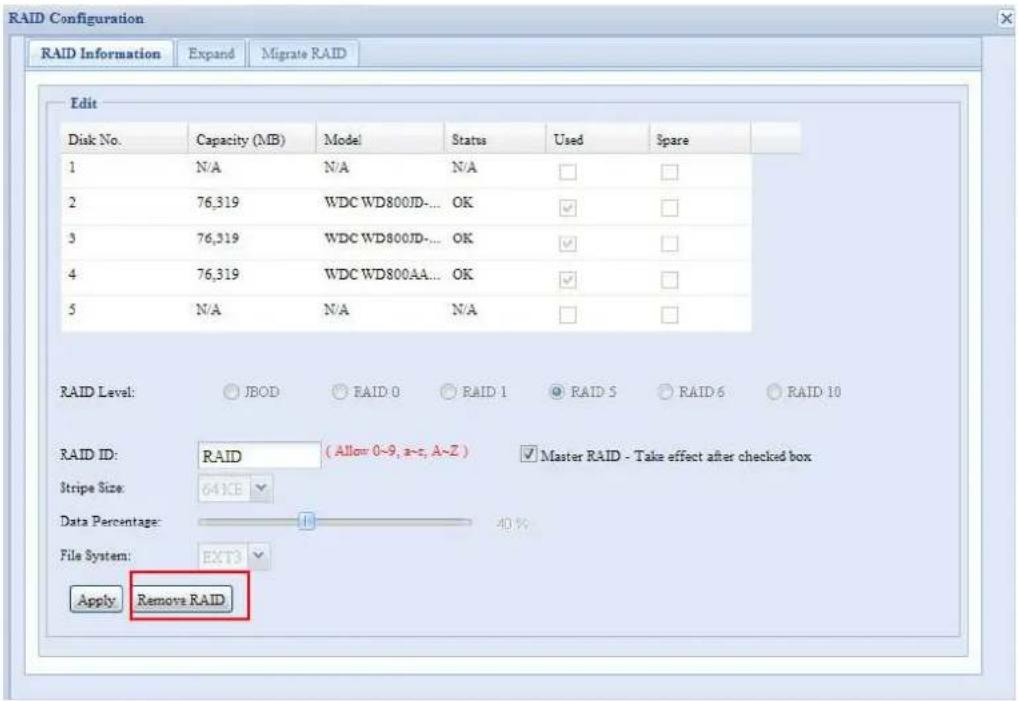
text_image
RAID Configuration RAID Information Expand Migrate RAID Edit Disk No. Capacity (MB) Model Status Used Spare 1 N/A N/A N/A □ □ 2 76,319 WDC WD800JD-... OK ✓ □ 3 76,319 WDC WD800JD-... OK ✓ □ 4 76,319 WDC WD800AA... OK ✓ □ 5 N/A N/A N/A □ □ RAID Level: JBOD RAID 0 RAID 1 RAID 5 RAID 6 RAID 10 RAID ID: RAID (Allow 0~9, a~5, A~Z) Master RAID - Take effect after checked box Stripe Size: 64KB Data Percentage: 40% File System: EXT3 Apply Remove RAIDWARNING
Remove RAID destroys all data in the current RAID volume. The data is unrecoverable.
Expanding a RAID
To expand a RAID 1, RAID 5, RAID 6, or RAID 10 volume, follow the steps below:
- Replace one of the hard drives in the RAID volume and allow it to automatically rebuild.
- Once rebuilt, you can continue to replace any remaining disks in the RAID array.
- When you are done replacing hard drives, log on to Web Management. Navigate to Storage> RAID to open the RAID Configuration screen.
- On the RAID Information screen, and click Edit to open the RAID Configuration screen.
- On the RAID Configuration screen, click Expand.
NOTE
RAID expansion did not support file system created by ZFS.

text_image
RAID Configuration RAID Information Expand Migrate RAID Unused: $6.59 GB ( 60 % ) Expand Capacity: 86.59 GB ApplyMigrating a RAID
Once a RAID volume has been created, you may want to move it to other physical drives or change the RAID array all together. To migrate a RAID 0, RAID 1, RAID 5 or RAID 6 volume, follow the steps below:
- From the RAID Configuration screen, click Migrate RAID.
- A list of possible RAID migration configurations will be listed. Select the desired migration scheme and click Apply.
- The system will begin migrating the RAID volume.
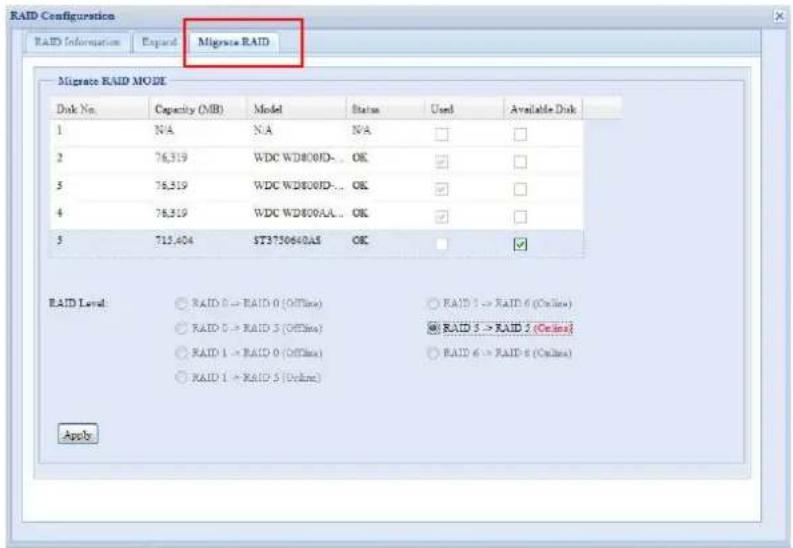
text_image
RAID Configuration RAID Information Expand Migrate RAID Migrate RAID MODE Disk No. Capacity (MB) Model Status Used Available Disk 1 N/A N/A N/A □ □ 2 76,319 WDC WD800D... OK □ □ 5 76,319 WDC WD800D... OK □ □ 4 76,319 WDC WD800AA... OK □ □ 5 715,404 ST3750640A5 OK □ ✓ RAID Level: RAID 0 -> RAID 0 (OffLine) RAID 1 -> RAID 6 (Online) RAID 0 -> RAID 3 (OffLine) RAID 5 -> RAID 2 (Online) RAID 1 -> RAID 0 (OffLine) RAID 6 -> RAID 8 (Online) RAID 1 -> RAID 5 (Online) Apply: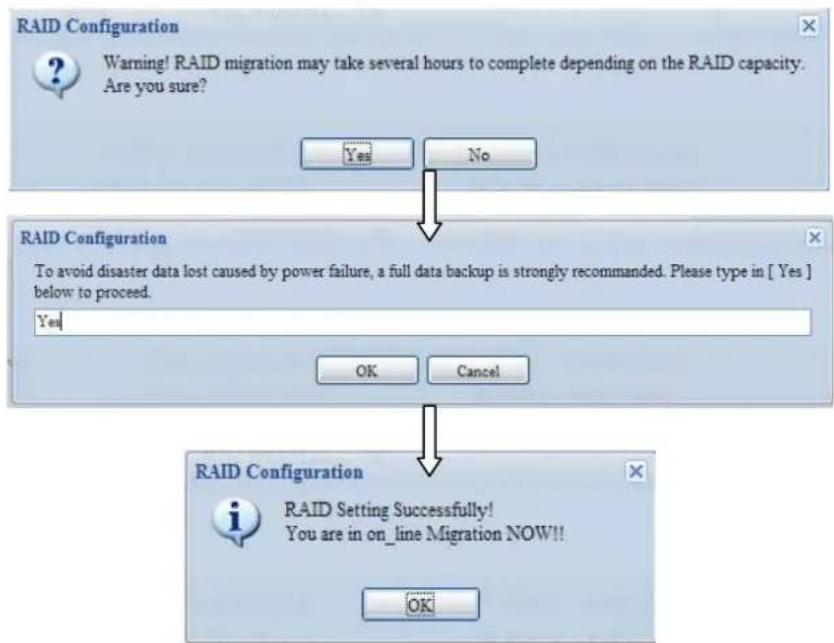
text_image
RAID Configuration Warning! RAID migration may take several hours to complete depending on the RAID capacity. Are you sure? Yes No RAID Configuration To avoid disaster data lost caused by power failure, a full data backup is strongly recommended. Please type in [ Yes ] below to proceed. Yes OK Cancel RAID Configuration RAID Setting Successfully! You are in on_line Migration NOW!! OKNOTE
Migrating a RAID volume could take several hours to complete
With RAID level migration function, it has two different type "On line" and "Off line" alone with limitation as listed below.
- During RAID level migration, it is not allowed reboot or shutdown system.
- Off line RAID level migration, all services will stop and data is inaccessible.
- To have ZFS file system created doing on line RAID level migration from R1 to R5 or R1 to R6, the all services will restart and volumes "user data", "iSCSI" and "Target USB" are read only during operation.
- To have ext3 and XFS file system created doing on line RAID level migration from R1 to R5 or R1 to R6, the all services will restart and volumes "iSCSI" and "Target USB" are read only but "user data" is capable read / write during operation.
- The other combination to make as "On line" can have read / write work as normal.
Below is a table listing of possible RAID migration schemes:
| To From | RAID 0 RAID 5 RAID 6 | ||
| RAID 0 | [OFFLINE] [RAID 0] HDDx2 to [RAID 0] HDDx3 [RAID 0] HDDx2 to [RAID 0] HDDx4 [RAID 0] HDDx2 to [RAID 0] HDDx5 [RAID 0] HDDx3 to [RAID 0] HDDx4 [RAID 0] HDDx3 to [RAID 0] HDDx5 [RAID 0] HDDx4 to [RAID 0] HDDx5 | [OFFLINE] [RAID 0] HDDx2 to [RAID 5] HDDx3 [RAID 0] HDDx2 to [RAID 5] HDDx4 [RAID 0] HDDx2 to [RAID 5] HDDx5 [RAID 0] HDDx3 to [RAID 5] HDDx4 [RAID 0] HDDx3 to [RAID 5] HDDx5 [RAID 0] HDDx4 to [RAID 5] HDDx5 | X |
| RAID1 | [OFFLINE] [RAID 1] HDDx2 to [RAID 0] HDDx2 [RAID 1] HDDx2 to [RAID 0] HDDx3 [RAID 1] HDDx2 to [RAID 0] HDDx4 [RAID 1] HDDx2 to [RAID 0] HDDx5 [RAID 1] HDDx3 to [RAID 0] HDDx4 [RAID 1] HDDx3 to [RAID 0] HDDx5 [RAID 1] HDDx4 to [RAID 0] HDDx5 [RAID 1] HDDx4 to [RAID 0] HDDx5 | [ONLINE] [RAID 1] HDDx2 to [RAID 5] HDDx3 [RAID 1] HDDx2 to [RAID 5] HDDx4 [RAID 1] HDDx2 to [RAID 5] HDDx5 [RAID 1] HDDx3 to [RAID 5] HDDx4 [RAID 1] HDDx3 to [RAID 5] HDDx5 [RAID 1] HDDx4 to [RAID 5] HDDx5 | [ONLINE] [RAID 1] HDDx2 to [RAID 6] HDDx4 [RAID 1] HDDx2 to [RAID 6] HDDx5 [RAID 1] HDDx3 to [RAID 6] HDDx4 [RAID 1] HDDx3 to [RAID 6] HDDx5 [RAID 1] HDDx4 to [RAID 6] HDDx5 |
| RAID5 | X [ONLINE] | [RAID 5] HDDx3 to [RAID 5] HDDx4 [RAID 5] HDDx3 to [RAID 5] HDDx5 [RAID 5] HDDx4 to [RAID 5] HDDx5 | X |
| RAID6 | X | X | [ONLINE] [RAID 6] HDDx4 to [RAID 6] HDDx5 |
Space Allocation
You may specify the space allocated for both Target USB and iSCSI volumes. The iSCSI volume can be created up to 5 volumes per RAID volume.
To do this, under the Storage menu, click RAID and the RAID List window appears. Select the RAID volume you wish to reallocate by clicking on its radio button, and click Space Allocation. The RAID Information and Volume Allocation List windows will appear.
The Volume Allocation List displays the space allocated for Target USB and iSCSI volumes on the current RAID volume. The N5200PRO supports up to five iSCSI volumes.
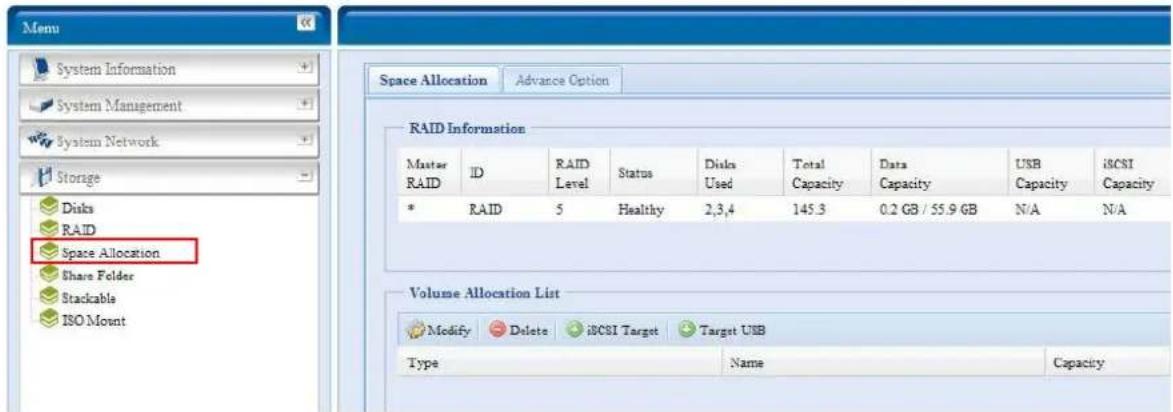
text_image
Menu System Information System Management System Network Storage Disks RAID Space Allocation Share Folder Stackable ISO Mount Space Allocation Advance Option RAID Information Master RAID ID RAID Level Status Disks Total Data USB Used Used Capacity Capacity Capacity Capacity * RAID 5 Healthy 2,3,4 145.3 0.2 GB / 55.9 GB N/A N/A Volume Allocation List Modify Delete iRCSI Target Target USB Type Name Capacity| Volume Allocation List | |
| Item | Description |
| Modify Click this to modify the allocated space. | |
| Delete Click this to delete the allocated space. | |
| iSCSI Target Click to allocate space to iSCSI volume. | |
| Target USB Click to allocate space to USB volume. | |
| Type Type of volume. Can be either USB or iSCSI. | |
| Name Name assigned to the volume. | |
| Capacity Capacity of the allocated space. | |
Allocating Space for iSCSI Volume

text_image
Menu System Information System Management System Network Storage Disks RAID Space Allocation Share Folder Stackable ISO Mount Space Allocation Advance Option RAID Information Master RAID ID RAID Level Status Disks Used Total Data Capacity USB Capacity iCSI Capacity * RAID 5 Healthy 2,3,4 145.3 5.2 GB / 55.9 GB 27.4 GB 30.3 GB Volume Allocation List Modify Delete iCSI Target Capit USB Type Name Capacity Target USB Target USB 27.4 GB iCSI local 30.3 GBTo allocate space for an iSCSI volume on the current RAID volume, follow the steps below:
1. Under the Volume Allocation List, click iSCSI Target.
The Create iSCSI Volume screen appears.

text_image
Space Allocation Create iSCSI Volume RAID ID: RAID Allocation: 60 % (86.6 GB) Unused: 86.6 GB iSCSI Target Volume: Enable Disable Target Name: Limit:(0~9, a~z) ign_Year: 2009 ign_Year: 05 Authentication: None CHAP Username: Limit:(0~9, a~z, A~Z) Password: Limit:(0~9, a~z, A~Z,length between 12~16) Password Confirm: OK Description The iSCSI block size can be set under system advance option, default is 512 Bytes. Please using [ 4K ] block size while more than 2TB capacity will be configured in Windows XP. Please using [ 512 Bytes ] block size for application like VMware etc.| Create iSCSI Volume | |
| Item | Description |
| RAID ID ID of current | RAID volume. |
| Allocation Percentage | and amount of space allocated to iSCSI volume. |
| Unused Percentage and | amount of unused space on current RAID volume. |
| iSCSI Target Volume | Enable or Disable the iSCSI Target Volume. |
| Target Name Name of | the iSCSI Target. This name will be used by the Stackable NAS function to identify this export share. |
| Year Select the current | year from the dropdown. |
| Authentication | You may choose CHAP authentication or choose None. |
| Month Select the current | month from the dropdown. |
| Username Enter a username. |
| Password Enter a password. |
| Password Confirm Reenter the chosen password |
- Designate the percentage to be allocated from the Allocation drag bar.
- Enable the iSCSI Target Service by selecting Enable.
- Choose to enable CHAP authentication or choose None.
- Enter a Target Name. This will be used by the Stackable NAS function to identify this export share.
- Choose the current year from the Year dropdown.
- Choose the current month from the Month dropdown.
- If you've enabled CHAP authentication, enter a username and a password. Confirm your chosen password be reentering it in the Password Confirm box.
- Click OK to create the iSCSI volume.
Modify iSCSI Volume
To Modify iSCSI volume on the current RAID volume, follow the steps below:
- Under the Volume Allocation List, click Modify.
The Modify iSCSI Volume screen appears.
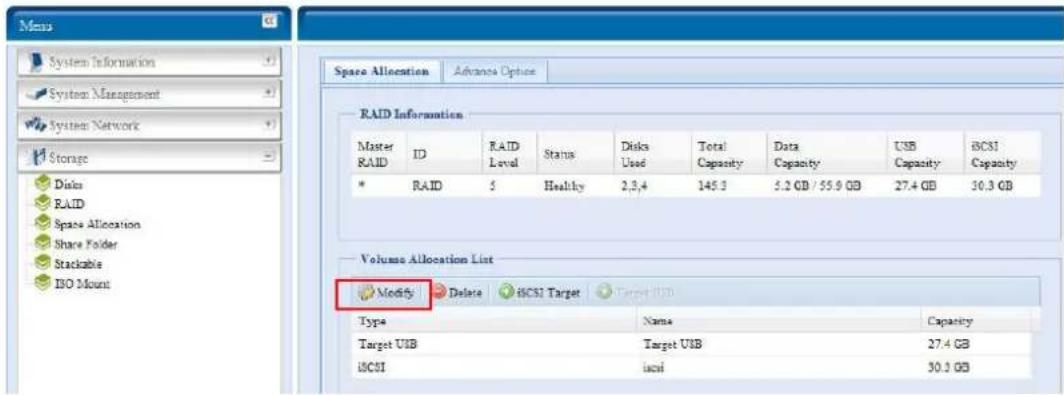
text_image
Menu System Information System Management System Network Storage Disk RAID Space Allocation Share Folder Stackable ISO Mount Space Allocation Advance Option RAID Information Master ID RAID Status Disks Total Data USB CSCI RAID 5 Healthy 2,3,+ 145.3 5.2 GB / 55.9 GB 27.4 GB 30.3 GB * RAID 5 Healthy 2,3,+ 145.3 5.2 GB / 55.9 GB 27.4 GB 30.3 GB Volume Allocation List Modify Delete HCSI Target Target USB Type Media Capacity Target USB Target USB 27.4 GB HCSI Israel 30.3 GB
text_image
Space Allocation Modify iSCSI Volume RAID ID: RAID Unused: 39 % (56.3 GB) Allocation: 30.3 GB iSCSI Target Volume: Enable Disable Target Name: iscsi Limit:(0~9, a~z) ign_Year: 2009 ign_Year: 05 Authentication: None CHAP Username: Limit:(0~9, a~z, A~Z) Password: Limit:(0~9, a~z, A~Z,length between 12~16) Password Confirm: ign: ign.2009-5.com.thecua.RAID.iscsi0.vg0.iscsi Initiator Information: OK Description The iSCSI block size can be set under system advance option, default is 512 Bytes. Please using [4K] block size while more than 2TB capacity will be configured in Windows XP. Please using [512 Bytes] block size for application like VMware etc.- Modify your setting. Press ok to change.
Delete Volume
To delete volume on the current RAID volume, follow the steps below:
- Under the Volume Allocation List, click Delete. The Space Allocation screen appears.

text_image
Menu System Information System Management System Networks Storage Disk RAID Space Allocation Share Folder Stacklife ISO Mount Space Allocation Advance Option RAID Information Master RAID ID RAID Level Status Disk Used Total Capacity Data Capacity USB Capacity sCSI Capacity * RAID 5 MaxInry 2,3,4 145.3 5.2 GB / 55.9 GB 27.4 GB 50.5 GB Volume Allocation List Moder Delete sCSI Target Type Name Capacity Target USB Target USB 27.4 GB sCSI usci 30.3 GB Space Allocation All data in the volume will be removed as well. Are you sure ? Yes No-
Press YES. All data in the volume will be removed.
-
Under the Volume Allocation List, click Target USB. The Create Target Volume screen appears.

text_image
Menu System Information System Management System Network Storage Disks RAID Space Allocation Share Folder Trackable ISO Mount Space Allocation Advance Option RAID Information Master RAID ID RAID Level Status Disk Used Total Capacity Data Capacity USB Capacity sCSI Capacity * RAID 5 Healthy 2.3,4 145.3 0.2 GB / 55.9 GB N/A N/A Volume Allocation List Modify Delete &CSM Target Target USB Type None Capacity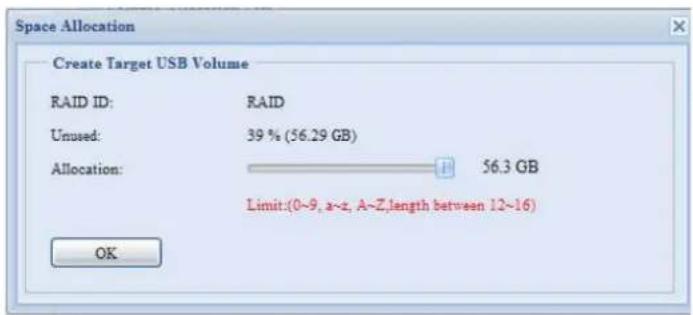
text_image
Space Allocation Create Target USB Volume RAID ID: RAID Unused: 39 % (56.29 GB) Allocation: 56.3 GB Limit:(0~9, a~z, A~Z,length between 12~16) OK- Designate the percentage to be allocated from the Allocation drag bar.
- Click OK to create the USB volume.
| Create USB Volume | |
| Item | Description |
| RAID ID ID of current RAID volume. | |
| Unused Percentage and amount of unused space on current RAID volume. | |
| Allocation Percentage and amount of space allocated to USB volume. | |
Advance Option
There are 2 options is currently allow Admin to Enable/Disable to operate N5500 associated with iSCSI setting. The details as listed in following screenshot. With the option changed, it will need to reboot system to activate.
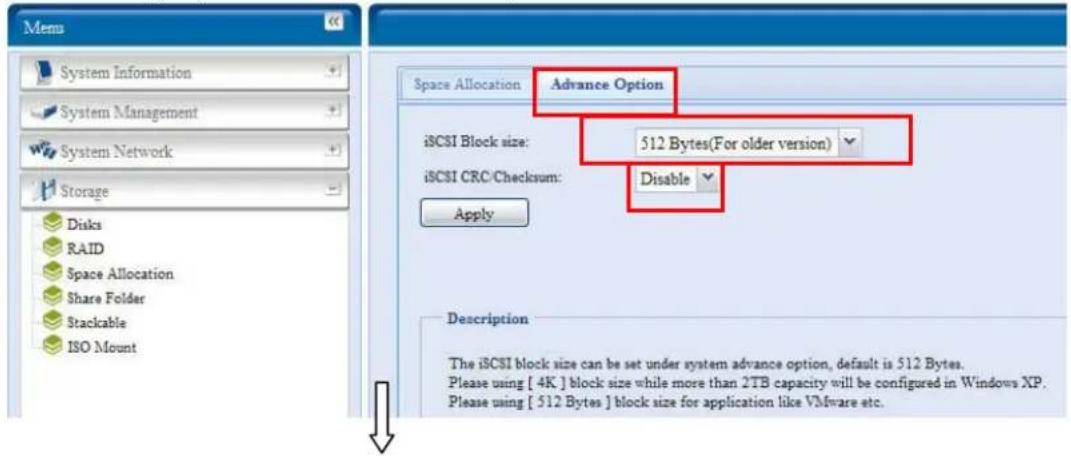
text_image
Menu System Information System Management System Network Storage Disks RAID Space Allocation Share Folder Stackable ISO Mount Advance Option iSCSI Block size: 512 Bytes(For older version) iSCSI CRC/Checksum: Disable Apply Description The iSCSI block size can be set under system advance option, default is 512 Bytes. Please using [ 4K ] block size while more than 2TB capacity will be configured in Windows XP. Please using [ 512 Bytes ] block size for application like VMware etc.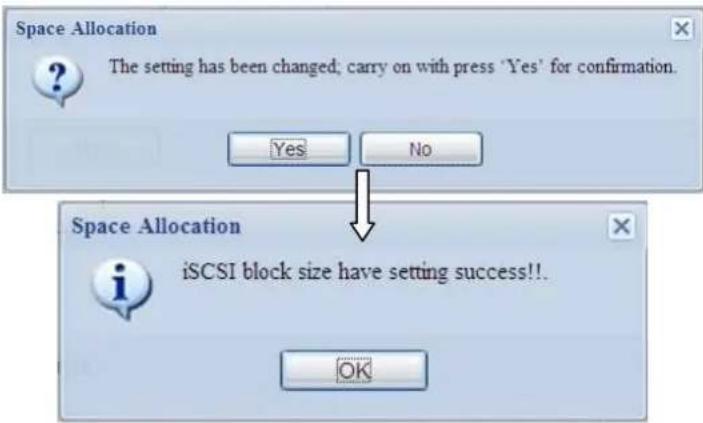
text_image
Space Allocation The setting has been changed; carry on with press 'Yes' for confirmation. Yes No Space Allocation iSCSI block size have setting success!! OKiSCSI Block Size
Select the block size with 4K while the iSCSI volume size is over 2TB.
iSCSI CRC/Checksum
To enable this option, the initiator can connect with "Data digest" and "Header digest" enabled.

text_image
CRC / Checksum ✓ Data digest ✓ Header digestShare Folder
From the Storage menu, choose Share Folder, and the Folder screen appears. This screen allows you to create and configure folders on the N5500 volume.

text_image
Menu System Information System Management System Network Storage Dias RAID Source Allocation Share Folder Blackable ISO Mount Folder Add Add File System Public Description Folder name # arayac subhd subcopy narmebsite RAID ID axd3 no neyno RAID axd3 no usbhdd RAID exd3 no usbcopy RAID exd3 yes naswebsiteAdding Folders
On the Folder screen, press the Add button and the Add Folder screen appears. This screen allows you to add a folder. After entering the information, press Apply to create new folder.

text_image
Menu System Information System Management System Network Storage Disk RAID Space Allocation Share Folder Stackable ISO Mount Folder Add Folder name >> RAID ID File System Public Description aysnc RAD ext3 no aysnc subhdd RAD ext3 no subhdd subcopy RAD ext3 no subcopy macrebits RAD ext3 yes nasu website add folder RAID ID: RAID Folder name: Description: Browseable: Yes No Public: Yes No Share Folder Limit: 0 GB Apply| Add Folder | |
| Item | Description |
| RAID ID RAID volume where the new folder will reside. | |
| Folder Name Enter the name of the folder. | |
| Description Provide a description the folder. | |
| Browseable Enable or disable users from browsing the folder contents. If Yes is selected, then the share folder will be browseable. | |
| Public | Admit or deny public access to this folder. If Yes is selected, then users do not need to have access permission to write to this folder. When accessing a public folder via FTP, the behavior is similar to anonymous FTP. Anonymous users can upload/download a file to the folder, but they cannot delete a file from the folder. |
| Share Folder Limit Enter the maximum size of the folder in Gigabytes (GB). The folder cannot grow beyond this limit. You can enter a 0 to turn off the share folder limit.This option did not apply while XFS file system selected. | |
| Apply | Press Apply to create the folder. |
NOTE
Folder names are limited to 60 characters. Systems running Windows 98 or earlier may not support file names longer than 15 characters.
Modify Folders
On the Folder screen, press the Edit button and the Modify Folder screen appears. This screen allows you to change folder information. After entering the information, press Apply to save your changes.

text_image
Modify Folder RAID ID: RAID Folder name: nsync Description: nsync Browseable: Yes No Public: Yes No Share Folder Limit: 0 GB Apply| Modify Folder | |
| Item | Description |
| RAID ID RAID volume w | where the folder will reside. |
| Folder Name Enter the | name of the folder. |
| Description Provide a d | description the folder. |
| Browseable Enable or d | disable users from browsing the folder contents. This setting will only apply while access via SMB/CIFS and web disk. |
| Public Admit or deny p | ublic access to this folder. |
| Share Limit Enter the m | aximum size of the folder. The folder will not grow beyond this limit. You can enter a 0 to turn off the share folder limit. |
Remove Folders
To remove a folder, press the Remove button from the specified folder row. The system will confirm folder deletion. Press Yes to delete the folder permanently or No to go back to the folder list.
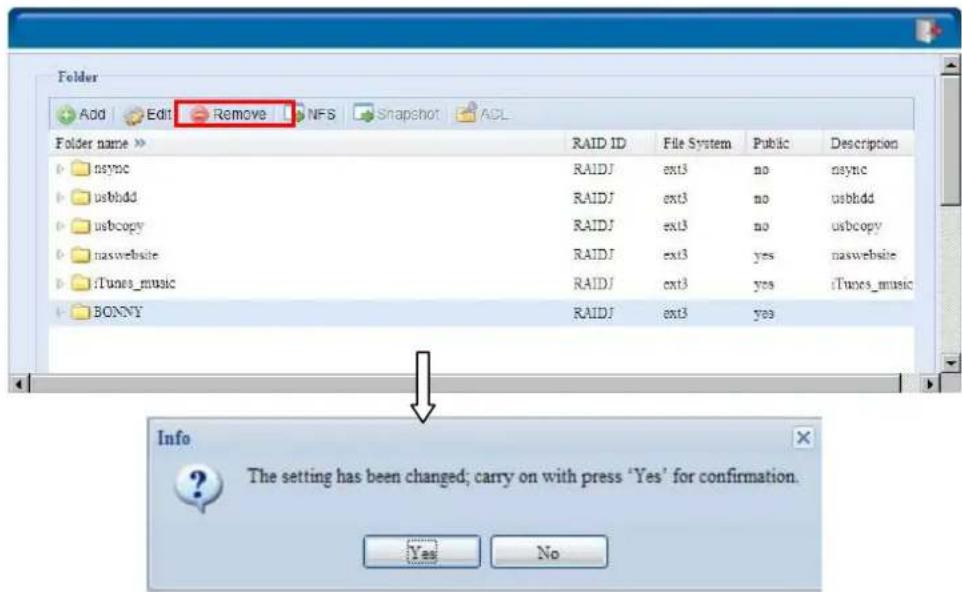
text_image
Folder Add Edit Remove NFS Snapshot ACL Folder name > RAID ID File System Public Description nsync RAIDJ ext3 no nsync usbhdd RAIDJ ext3 no usbhdd usbcopy RAIDJ ext3 no usbcopy naswebsite RAIDJ ext3 yes naswebsite iTunes_music RAIDJ ext3 yes iTunes_music BONNY RAIDJ ext3 yes Info The setting has been changed; carry on with press 'Yes' for confirmation. Yes NoWARNING
All the data stored in the folder will be deleted once the folder is deleted. The data will not be recoverable.
NFS Share
To allow NFS access to the share folder, enable the NFS Service, and then set up hosts with access rights by clicking Add.
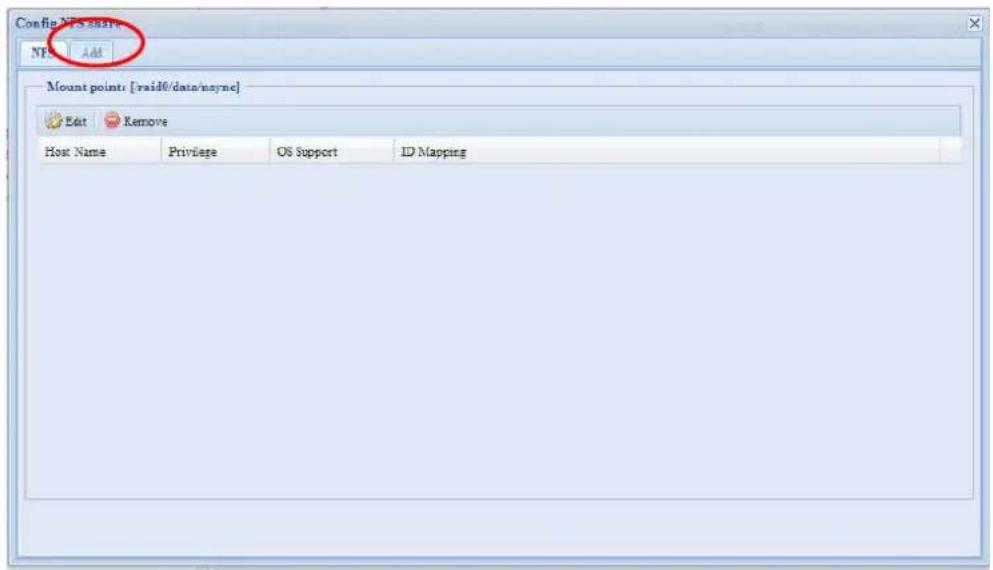
text_image
Config NTFS name NTFS Add Mount points [rsaid0/data/async] Edit Remove Host Name Privilege OS Support ID Mapping
text_image
Config NFS share NFS Add Mount points: [/raid0/data/nsync] Host Name: XX.XXX.XXI.XXI Privilege: Read Only Writable Of Support: Unix / Linux System AIX ( Allow source port > 1024 ) ID Mappings: Guest system root account will have full access to this share (root root). Guest system root account will be mapped to anonymous user (nobody.nogroup) on NAS. All User or guest system will be mapped to anonymous user (nobody.nogroup) on NAS. Apply| NFS Share | |
| Item | Description |
| Hostname Enter the name or IP address of the host | |
| Privilege Host has either read only or writeable access to the folder. | |
| Guest System Support | There are two selections available:Unix / Linux SystemAIX (Allow source port > 1024)Choose the one which best fits your needs. |
| IO Mapping There are three selections available:Guest system root account will have full access to this share (root:root).Guest system root account will be mapped to anonymous user (nobody:nogroup) on NAS.All user on guest system will be mapped to anonymous user (nobody:nogroup) on NAS.Choose the one which best fits your needs. |
| Apply Click to save your changes. |
Snapshot
The N5500 is capable for 16 snapshot version control. To have snapshot to work on, the file system creation for RAID volume has to be "ZFS".
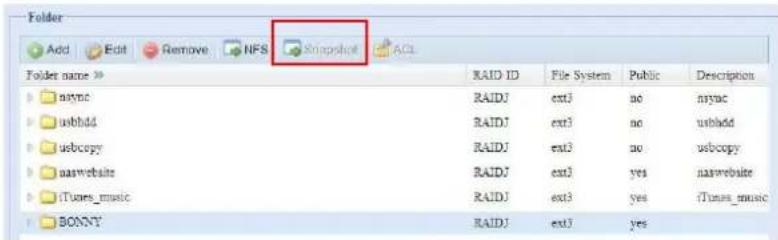
text_image
Folder Add Edit Remove NFS Snapshot ACL Folder name > RAID ID File System Public Description nsync RAIDJ ext3 no nsync usbhdd RAIDJ ext3 no usbhdd usbcopy RAIDJ ext3 no usbcopy naswebsite RAIDJ ext3 yes naswebsite iTunes_music RAIDJ ext3 yes iTunes_music BONNY RAIDJ ext3 yesSnap (Snapshot configuration)
If added folder has located in the RAID volume with "ZFS" file system, then the folder management screen with "Snap" button will be configurable.

text_image
Snapshot List for [ nsync ]- [ \172.16.66.39\snapshot\ ] Snapshot Schedule Take Shot Remove Snapshot Date| Snapshot | |
| Item | Description |
| Take Shot Click to take | snapshot right away. |
| Remove Click to remove | snapshot schedule. |
| Schedule Click to open | snapshot schedule setup screen. |
Clicking on schedule button then schedule setup screen appear. Checked the enable check box to activate the snapshot scheduled operation.

text_image
Snapshot List for [nsync] - [\\172.16.66.39\snapshot\ Snapshot Schedule Enabled Snapshot Schedule Automatically remove oldest snapshot Schedule Rule: Monthly 1 Day 0 Hour ApplyThe N5500 snapshot is supported total 16 versions. Once checked "Automatically remove oldest snapshot", the oldest will be removed to let newest to added on top. Otherwise, if the check box is unchecked and snapshot versions are up to 16 then system will appear warning message and won't execute the task till available version count.
The snapshot schedule rules can be setup for monthly, weekly or daily hour. Clicking on Apply after firmed with desired schedule
These taken snapshot is only accessible though CIFS/SMB by manually type \ NAS IP address\ snapshot and invisible from normal access. Also, the taken snapshot version is read only can not be deleted under CIFS/SMB access but only click the "Del" button showing on the screen shot above.
Folder and sub-folders Access Control List (ACL)
On the Folder screen, press the ACL button, and the ACL setting screen appears. This screen allows you to configure access to the specific folder and sub-folders for users and groups. Select a user or a group from the left hand column and then choose Deny, Read Only, or Writable to configure their access level. Press the Apply button to confirm your settings.
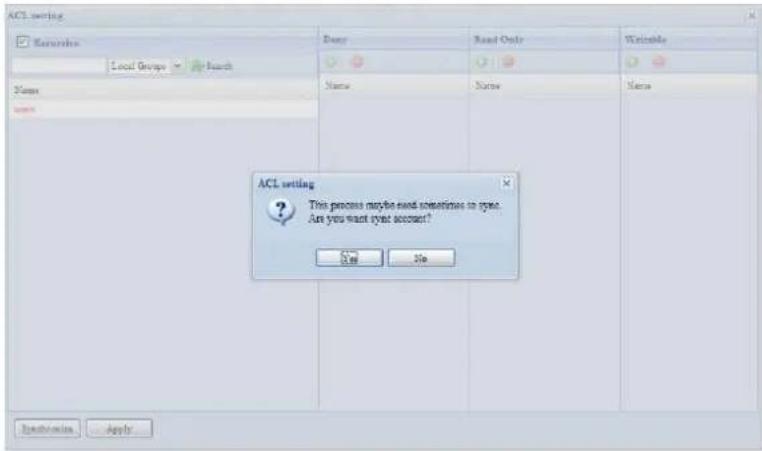
text_image
ACL setting Search Local Groups Search Name Name Name Name ACL setting This process maybe needs sometimes to try. Are you want trye account? OK Use Use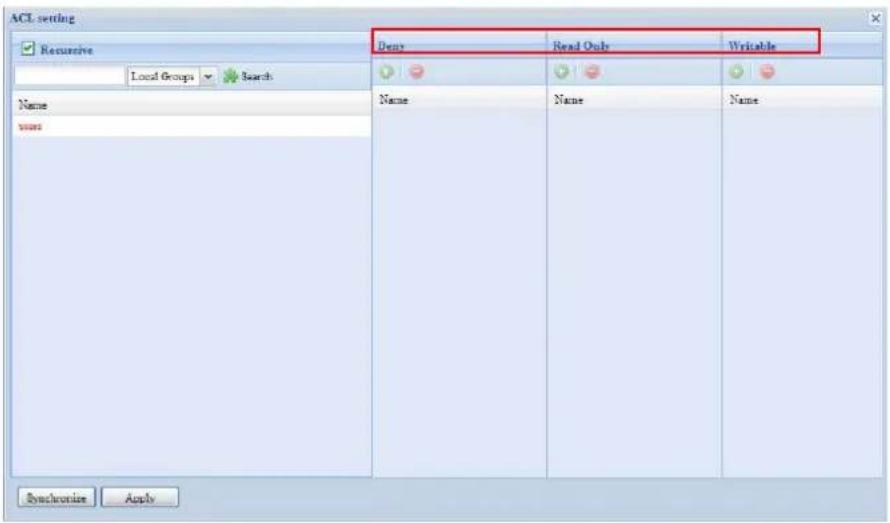
text_image
ACL setting Rescursive Dens Read Only Writable Local Groups Search Name Name Name Name Year Synchronize Apply| ACL setting | |
| Item | Description |
| Deny Denies access to users or groups who are displayed in this column. | |
| Read Only Provides Read Only access to users or groups who are displayed in this column. | |
| Writable Provides Write access to users or groups who are displayed in this column. | |
| Recursive Enable to inherit the access right for all its sub-folders. | |
To configure folder access, follow the steps below:
- On the ACL screen, all network groups and users are listed in the left hand column. Select a group or user from this list.
- With the group or user selected, press one of the buttons from the three access level columns at the top. The group or user then appears in that column and has that level of access to the folder.
- Continue selecting groups and users and assigning them access levels using the column buttons.
- To remove a group or user from an access level column, press the Remove
button in that column.

- When you are finished, press Apply to confirm your ACL settings.
NOTE
If one user has belonged to more than one group but different privilege than the priority Deny > Read Only > Writable
To setup sub-folders ACL, click on “▶” symbol to extract sub folders list as screen shot shows below. You may carry on with same steps as share level ACL setting.
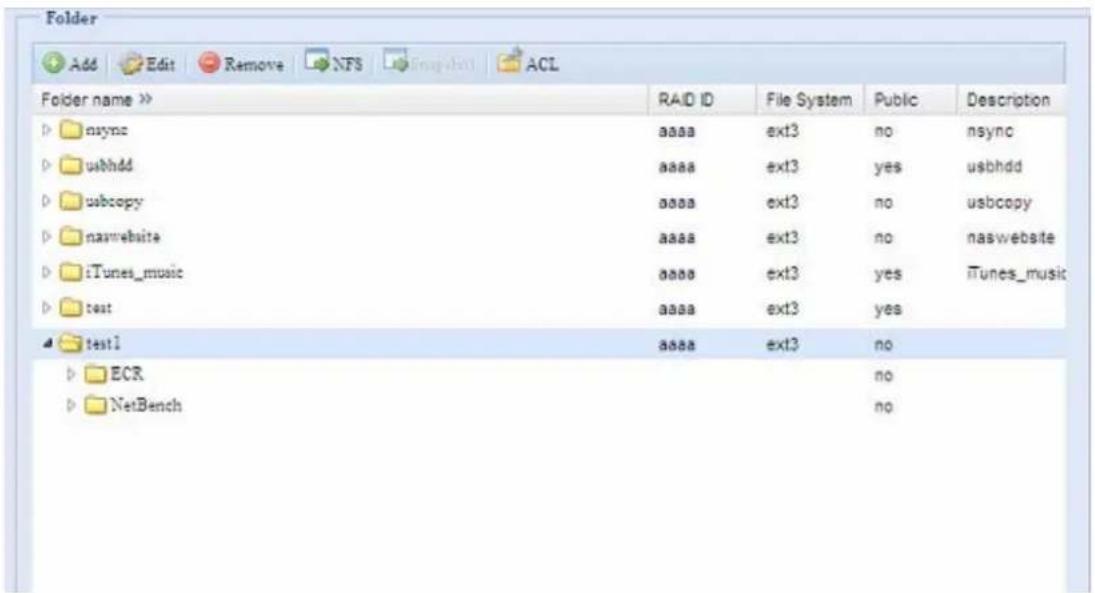
text_image
Folder Add Edit Remove NFS ImageText ACL Folder name >> nsync usbhdd usbcopy naswebsite iTunes_music test test1 ECR NetBench RAID ID File System Public Description aaaa ext3 no nsync aaaa ext3 yes usbhdd aaaa ext3 no usbcopy aaaa ext3 no naswebsite aaaa ext3 yes iTunes_music aaaa ext3 yes aaaa ext3 no no noNOTE
The ACL can be set for share and sub-folders level, not for files.
The ACL screen also allows you to search for a particular user. To do this, follow the steps below:
- In the blank, enter the name of the user you would like to find.
- From the drop down select the group you would like to search for the user in.
- Click Search.

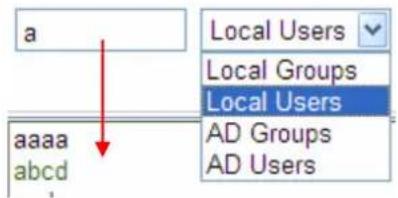
text_image
a aaaa abcd Local Users Local Groups Local Users AD Groups AD UsersNOTE
The system will list up to 1,000 users from the chosen category. To narrow your search, enter a search term in the blank provided.
Stackable NAS
The N5500's capacity can be expanded even further using the stackable function. With it, users can expand the capacity of their network storage systems up to 5 other stack target volumes which are located in different systems. These can be stacked through single network access like SMB or AFP acting as a share folder type.

flowchart
graph LR
    A["Config to act as Stack Master"] --> B["HUB Switch"]
    B --> C["Capacity Expansion"]
    C --> D["1 Target device volume available"]
    C --> E["2 Target device volume available"]
    C --> F["..."]
    C --> G["1 Target device volume available"]
    D --> H["Available target device from 1U4500 / N5200 PRO"]
    E --> H
    F --> H
    G --> H
    H --> I["Can connect toial 5 Thecus target device. Up to 20 TB capacity."]
From the main menu, the stackable feature is located under "Storage". Please refer the figure below for reference.
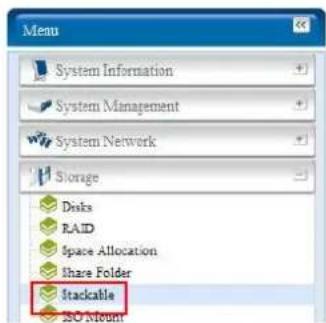
text_image
Menu System Information System Management System Network Storage Disks RAID Space Allocation Share Folder Stackable ISO Mount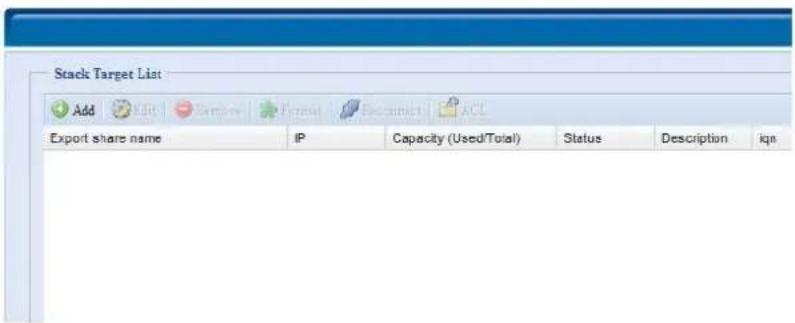
text_image
Stack Target List Add Edit View Export Document ACL Export share name IP Capacity (Used/Total) Status Description iqnA. Add a Stack Target Volume
From the figure above, click Add to access the stackable target device configuration page. Please refer to the figure below:
With the added stack target you could "Enable" or "Disable" now or later per usage needed.
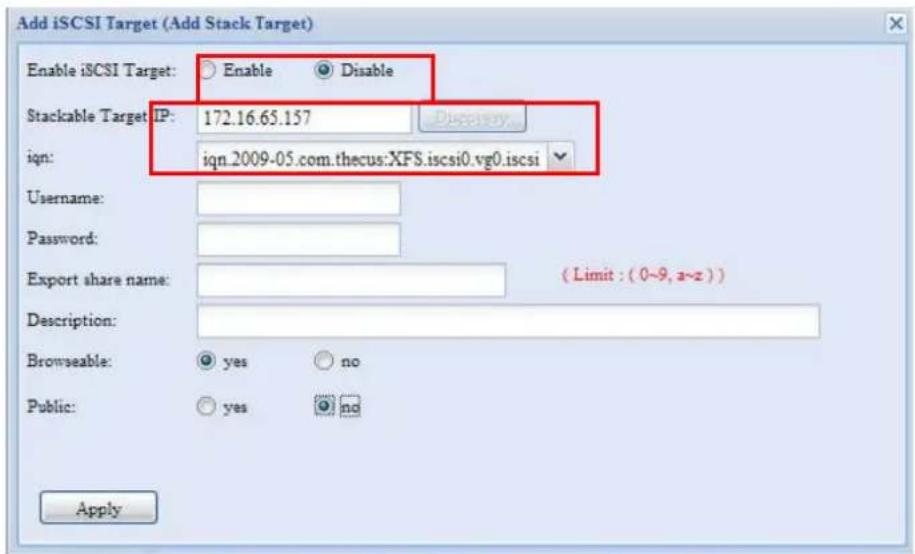
text_image
Add iSCSI Target (Add Stack Target) Enable iSCSI Target: Enable Disable Stackable Target: IP: 172.16.65.157 iqn: iqn_2009-05.com.thecus:XFS.iscsi0.vg0.iscsi Username: Password: Export share name: (Limit : (0~9, a~z)) Description: Browseable: yes no Public: yes no ApplyNext, input the target IP address of the stackable device and click the Discovery button. The system will list available target volumes from the inputted IP address.
Once IP with volume have been set, you may need to input a valid user name and password to validate your access rights. If there is no user name and password needed to access target volume, then leave it blank.
Once IP with volume have been set, you may need to input a valid user name and password to validate your access rights. If there is no user name and password needed to access target volume, then leave it blank.
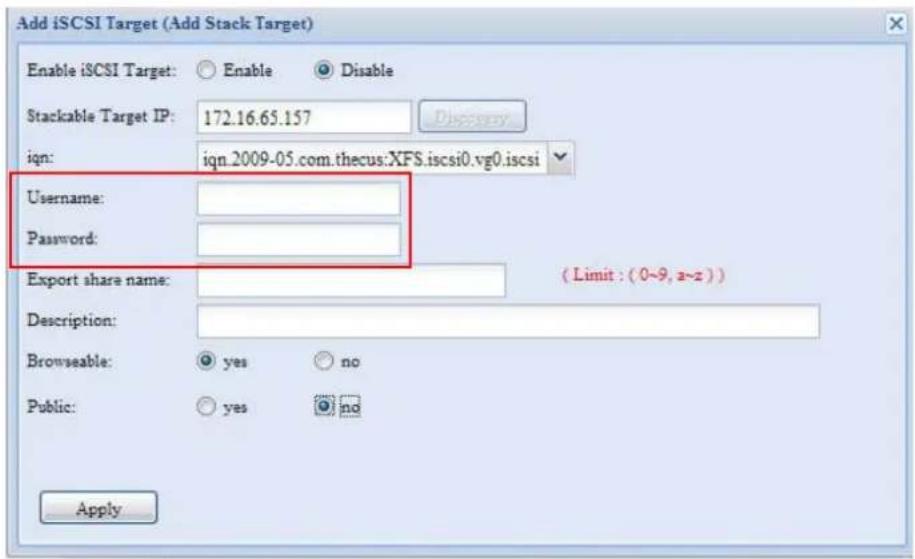
text_image
Add iSCSI Target (Add Stack Target) Enable iSCSI Target: ○ Enable ○ Disable Stackable Target IP: 172.16.65.157 Discovery iqn: iqn_2009-05.com.thecus:XFS.iscsi0.vg0.iscsi Username: Password: Export share name: ( Limit : ( 0~9, a~z ) ) Description: Browseable: yes ○ no Public: yes ○ no ApplyThe Export share name will become the network share name and displayed through network access such as SMB. You may refer the figures below to see the result. Please note the naming limitation.

text_image
Add iSCSI Target (Add Stack Target) Enable iSCSI Target: Enable Disable Stackable Target IP: 172.16.66.39 Discovery iqn: iqn.2009-6.com.thecus:aaaa.iscsi0.vg0.abcd Username: Password: Export share name: pmmmeeting (Limit : (0~9, a~z)) Description: Browseable: yes no Public: yes no ApplyFrom the figure above, the Export share name is "pmmeeting". The figures below show the result before and after via Microsoft Network Access with settings have been completed.
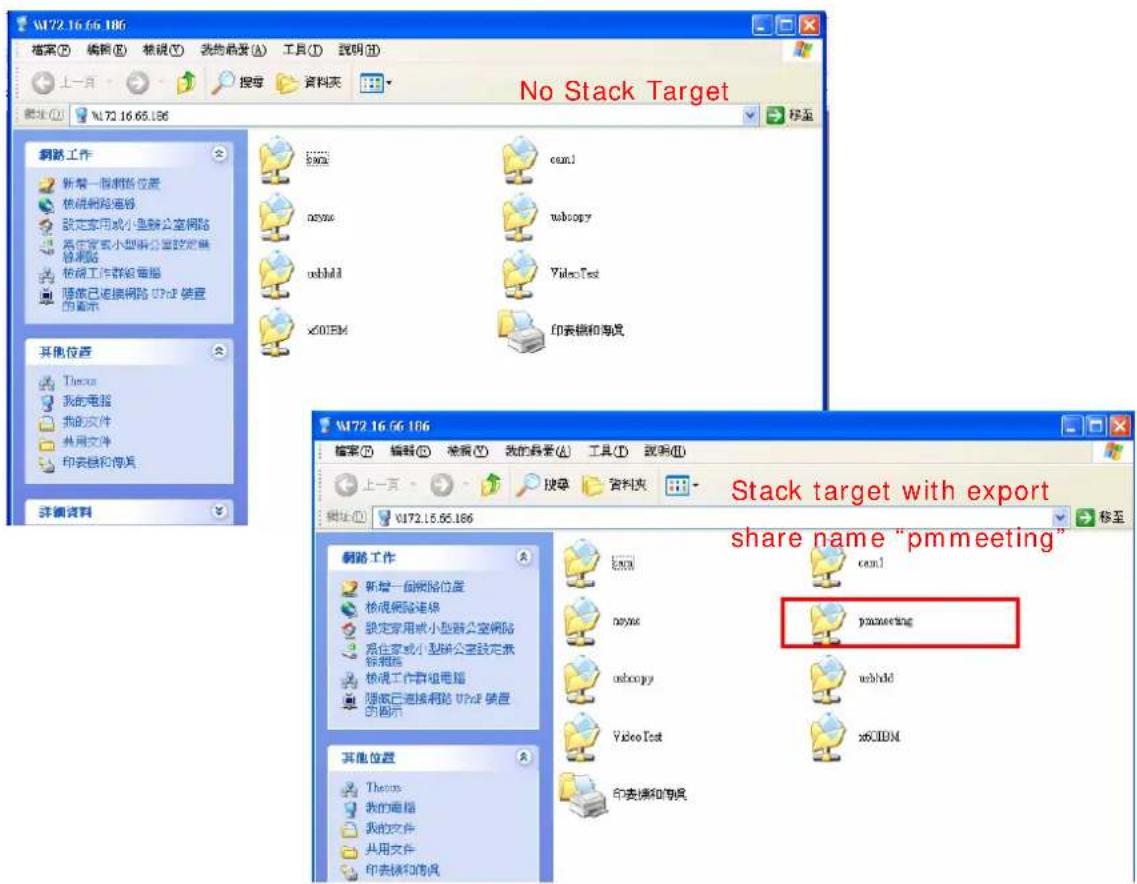
The Browseable setting will be same method of setting for system share folder. It designates whether or not this folder will be visible through web disk. You may refer the figures below for reference when Yes and No are selected.
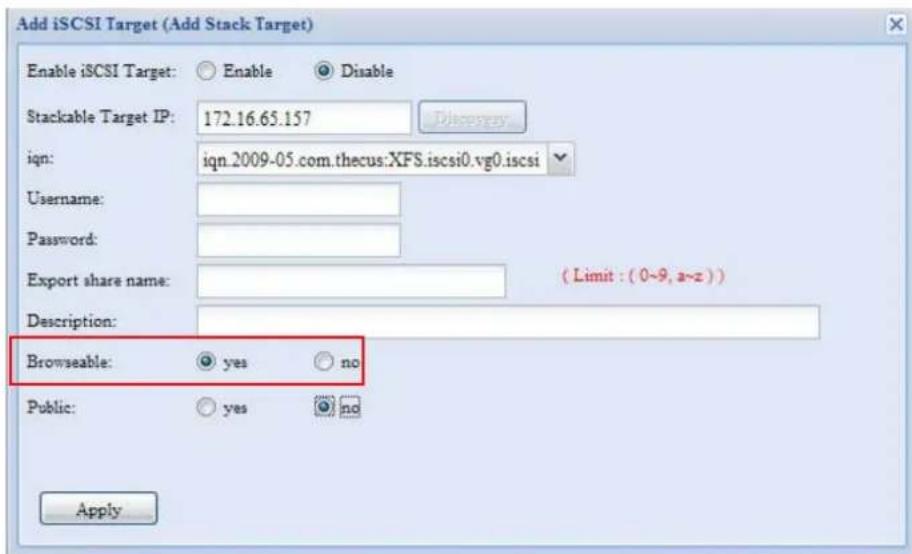
text_image
Add iSCSI Target (Add Stack Target) Enable iSCSI Target: Enable Disable Stackable Target IP: 172.16.65.157 iqn: iqn.2009-05.com.thecus:XFS.iscsi0.vg0.iscsi Username: Password: Export share name: ( Limit : ( 0~9, a~z ) ) Description: Browseable: yes no Public: yes no ApplyThe Public setting will be set same as what the setting for the system share folder associated with the ACL permission setup. If Public is set to Yes, all users will be able to access it, and ACL button will be grayed out. If Public is set to No, the ACL button will be available on the Stack Target List window.
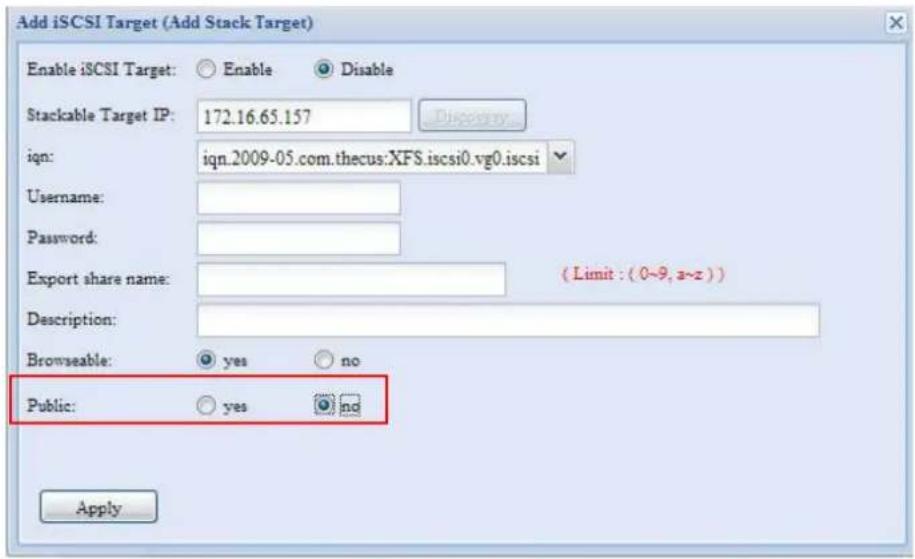
text_image
Add iSCSI Target (Add Stack Target) Enable iSCSI Target: Enable Disable Stackable Target IP: 172.16.65.157 Discovery iqn: iqn.2009-05.com.thecus:XFS.iscsi0.vg0.iscsi Username: Password: Export share name: (Limit : (0~9, a~z)) Description: Browseable: yes no Public: yes no ApplyClick Apply to save your changes.
B. Activate a Stack Target
After your settings have been applied, the system will bring you back to Stack Target List window as shown below. There is one stack target device has been attached into this stack master.
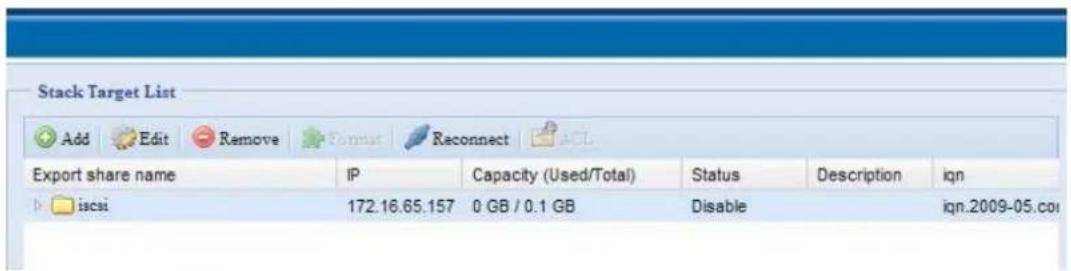
text_image
Stack Target List Add Edit Remove Format Reconnect ACL Export share name IP Capacity (Used/Total) Status Description iqn iscsi 172.16.65.157 0 GB / 0.1 GB Disable qqn.2009-05.com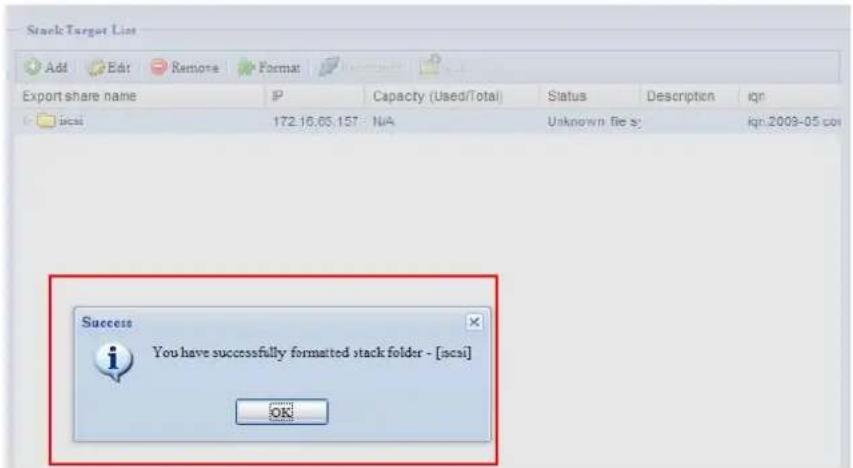
text_image
Stack:Target List Add Edit Remove Format Export share name IP Capacity (Used/Total) Status Description ign iscai 172.16.05.157 N/A Unknown files ign:2009-05.coi Success You have successfully formatted stack folder - [iscai] OKWith this newly attached stack target device, you will see the information displayed and also several options you can choose.
In general, if attached stack target device has been used by another N5200PRO/1U4500/N5500/N7700/N8800 as stack target volume, then the Format item will be display and system will recognize it straight away and display its capacity. Otherwise, the Format item will be available and the Capacity and Status items will show as "N/A" and "Unknown file system" respectively. Next, click Format to proceed with formatting.
After the format is complete, the stack target volume will be created successfully. You will see the volume's capacity and status in the Stack Target List screen.
C. Edit a Stack Target
To make any changes to stack targets, click Edit for the corresponding stack target, and system will bring up the following dialogue:

text_image
Edit iSCSI Target Enable iSCSI Target: Enable Disable Stackable Target IP: 172.16.65.137 ign: spa.2009-05 com thecu XFS iscsi0 vg0 iscsi Username: Password: Export share name: iscsi (Limit : (0~9, a~z)) Description: Browseable: yes no Public: yes no ApplyAfter your changes have been made, click Apply to confirm any modifications. Once changes are applied, the associated information will be updated on the Stack Target List window.
D. Stack Target ACL
If the stack target Public setting set to Yes, then the ACL button will be grayed out. However, if Public setting is set to No, then the ACL button will be available for you to setup user access permissions for the stack target.
ACL settings will be exactly the same as system folder that you may have setup previously.
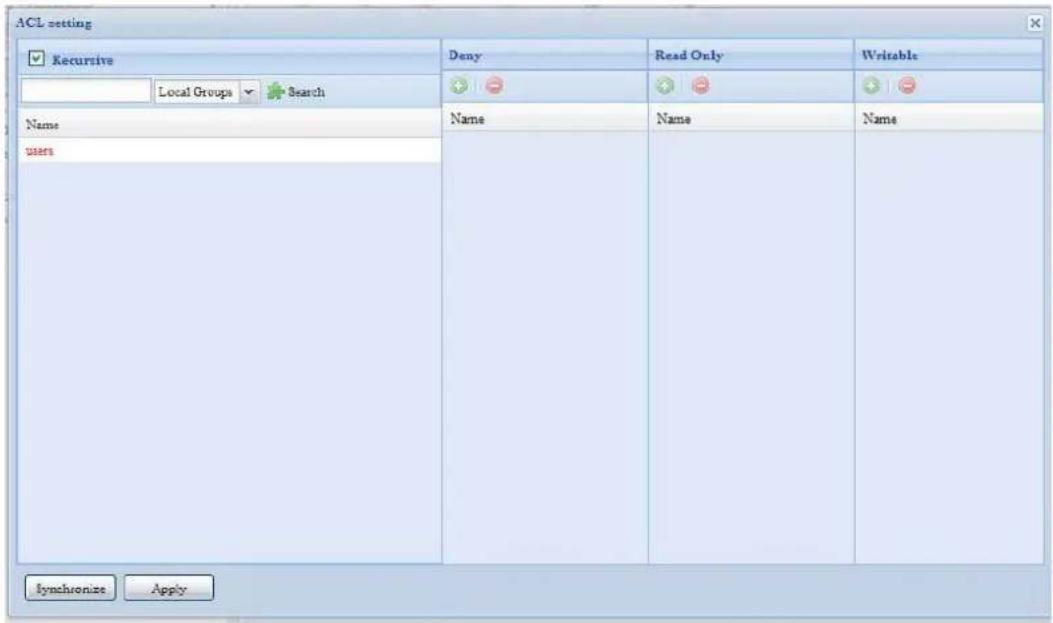
text_image
ACL setting Recursive Local Groups Search Name Users Deny Read Only Writable Name Name Name Synchronize ApplyE. Reconnect a Stack Target
The enabled stack target devices may be disconnected by situations such as power outages or network disconnects. When this happens, the Reconnect button will available. To attempt to reconnect the stack target, click Reconnect.
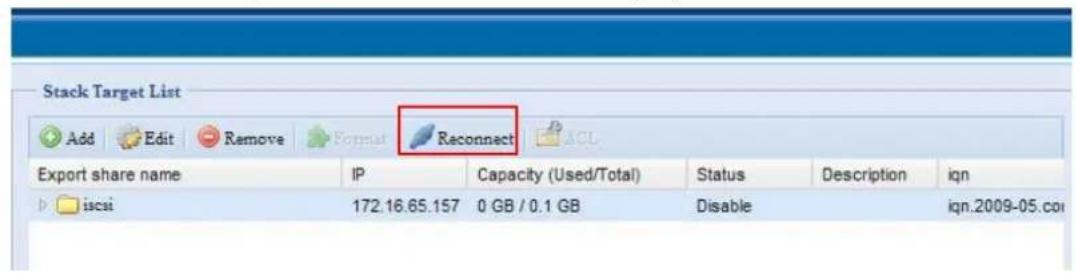
text_image
Stack Target List Add Edit Remove Format Reconnect ACL Export share name IP Capacity (Used/Total) Status Description iqn iscsi 172.16.65.157 0 GB / 0.1 GB Disable qn.2009-05.col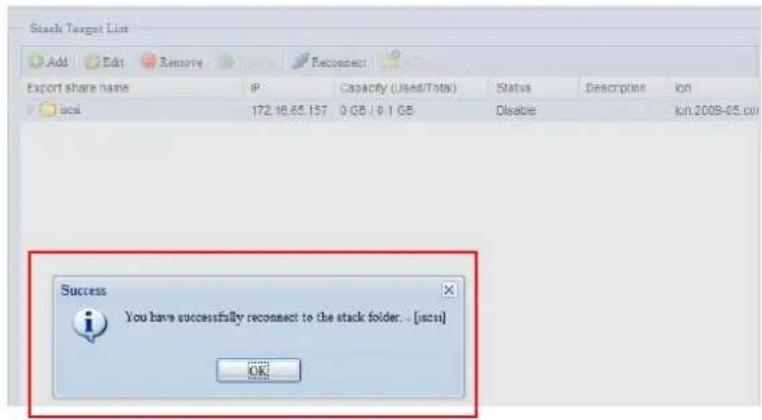
text_image
Stack Target List Add Edit Remove Recorock Export share name IP Capacity (Used/Total) Status Description Ign usci 172.16.65.157 0 GB / 0.1 GB Disable kin.2009-05.com Success You have successfully reconnect to the stack folder. - [usci] OKISO Mount
The ISO Mount feature is very useful tool from Thecus products. With it, users can mount an ISO file and having export name to display all details from mounted ISO file.
From the main menu, the ISO Mount feature is located under "Storage". Please refer the figure below for reference.
Select on the ISO mount function and you will have the screen shot appear as following.
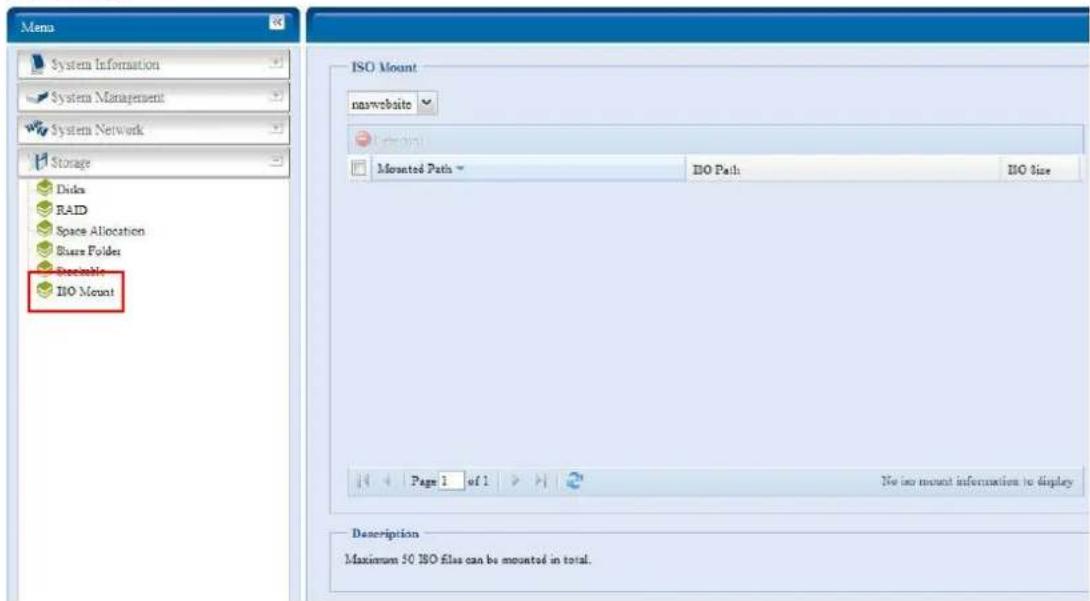
text_image
Menu System Information System Management System Network Storage Diskx RAID Space Allocation Base Folder Specible IIO Mount ISO Mount naswebsite MOUNTED Path IBO Path IBO Size Page 1 of 1 No too mount information to display Description Maximum 50 IBO files can be mounted in total.A. Add a ISO file
From the figure above, select ISO file from drop down share list.
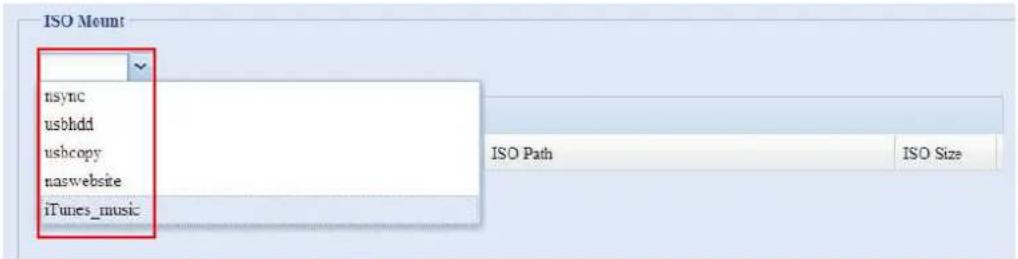
text_image
ISO Mount nsync usbhdd ushcopy naswebsite iTunes_music ISO Path ISO SizeAfter selection, system will bring up Mount table for further setting screen.
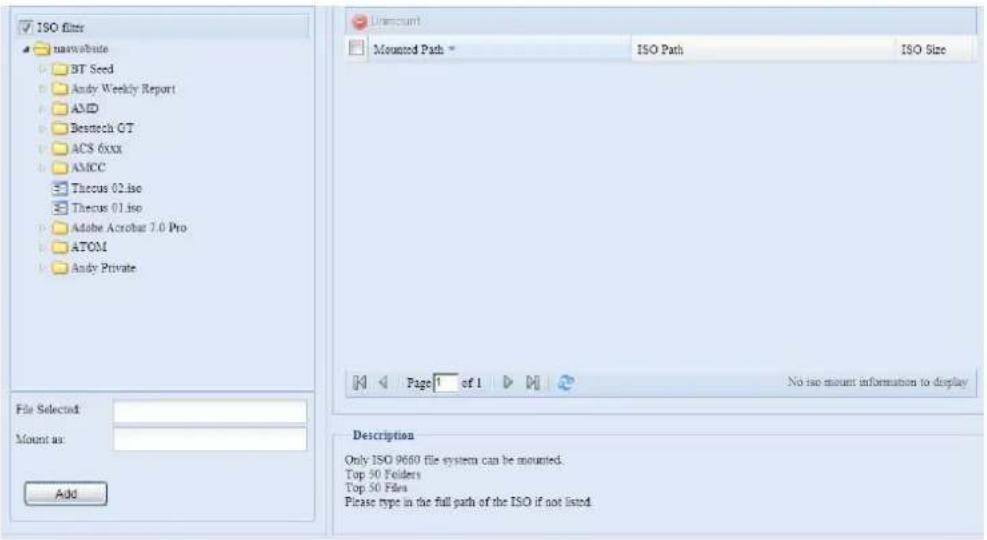
text_image
ISO files www.bito BT Seed Andy Weekly Report AMD Bestech GT ACS 6xxx AMCC Thocus 02.iso Thocus 01.iso Adobe Acrobat 7.0 Pro ATOM Andy Private File Selected: Mount as: Add Unmount Mounted Path ISO Path ISO Size Page 1 of 1 No iso mount information to display Description Only ISO 9680 file system can be mounted. Top 50 Folders Top 50 Files Please type in the full path of the ISO if not listed.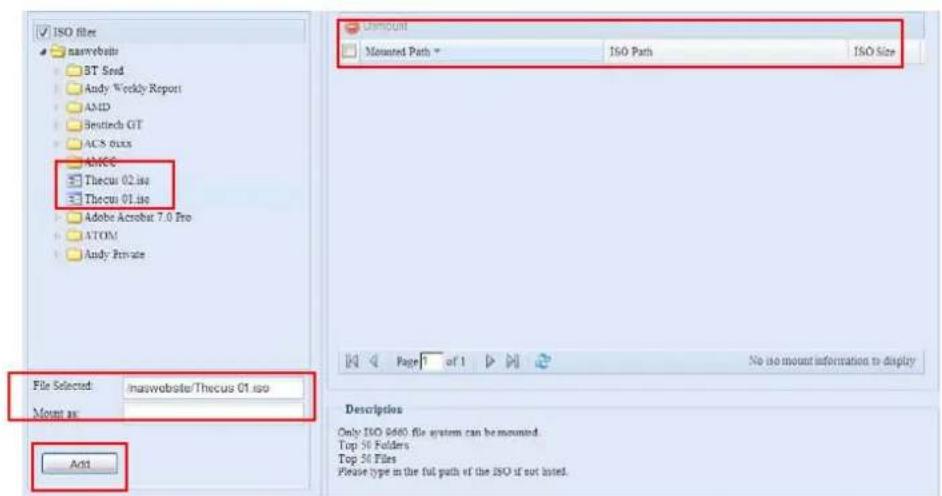
text_image
ISO files naevebits BT Seed Andy Weekly Report AMD Sentech GT ACS 0x3s ADCC Thecus 02.io Thecus 01.io Adobe Acrobat 7.0 Pro ATOM Andy Private File Selected: naevebits/Thecus 01.io Mount as: Add Amount Mounted Path * ISO Path ISO Size Page 1 of 1 No isoe mount information to display Description Only ISO 0660 file system can be mounted. Top 56 Folders Top 56 Files Please type in the full path of the ISO if not listed.To mount new ISO file, select from listed ISO file and input desired mounting name into "Mount as:" field. Click "ADD" with confirmation to complete mounting ISO file. Or without "Mount as" ISO file export name input, system will automatic to give the export name by ISO file name.
If left "Mount as:" blink then system will create mount point by ISO file name.
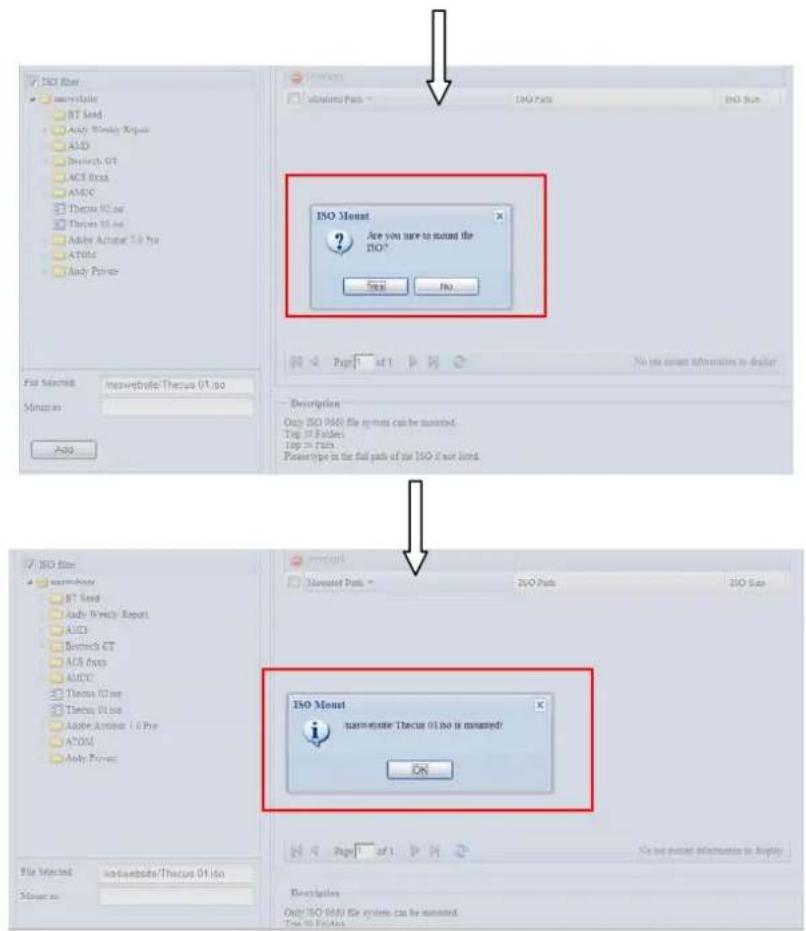
text_image
ISO File narweste RT Send Auto Weekly Report AIDS DeviceS GT ACS Box3 AMDC Thesis 01.no Thesis 01.no Adobe Award: 7.0 Pro ATOSI Andy Prime File Selection: narwetrable Theos 01.no Source: Add ISO Mount Are you sure to manage the ISO* Find No Page 1 at 1 No use smart information to deliver Description Only ISO 9600 file systems can be mounted. Top 15 Folders Top 20 rows Parameter type in the full path of the ISO if not listed. ISO File narweste RT Send Auto Weekly Report AIDS DeviceS GT ACS Box3 AMDC Thesis 01.no Thesis 01.no Adobe Award: 7.0 Pro ATOSI Andy Prime File Selected: narwetrable Theos 01.no Source: Add ISO Mount narweste Theos 01.no is mounted! OK Page 1 at 1 No use smart information to display Description Only ISO 9600 file systems can be mounted. Top 15 FoldersAfter you have completed to add ISO then the page will displayed all mounted ISO files,
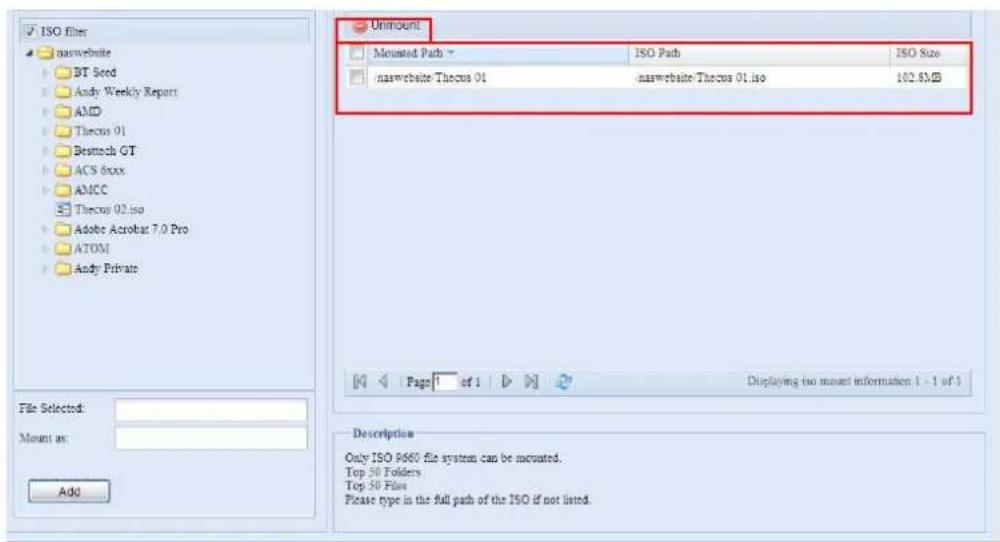
text_image
ISO files narwebsite BT Seed Andy Weekly Report AMD Thecus 01 Bestech GT ACS 6xxx AMCC Thecus 02.iso Adobe Acrobat 7.0 Pro ATOM Andy Private File Selected: Mount as: Add Unmount Mounted Path ISO Path ISO Size narwebsite Thecus 01 naswebsite/Thecus 01.iso 102.6MB Page 1 of 1 Displaying too much information 1 - 1 of 1 Description Only ISO 9660 file system can be mounted. Top 50 Folders Top 50 Files Please type in the full path of the ISO if not listed.You could click "Unmount" to eliminate mounted ISO file.
B. Using ISO
The mounted ISO file will be located same share folder with name giving. Please refer the screen shot below.
ISO file "image" has mounted as folder "Image" you could see. The ISO file "Thecus 01" without assign mounting name, system automatically has folder "Thecus 01" created.

User and Group Authentication
The N5500 has built-in user database that allows administrators to manage user access using different group policies. From the User and Group Authentication menu, you can create, modify, and delete users, and assign them to groups that you designate.
ADS/NT Support
If you have a Windows Active Directory Server (ADS) or Windows NT server to handle the domain security in your network, you can simply enable the ADS/NT support feature; the N5500 will connect with the ADS/NT server and get all the information of the domain users and groups automatically. From the Accounts menu, choose Authentication item and the ADS/NT Support screen appears. You can to change any of these items and press Apply to confirm your settings.
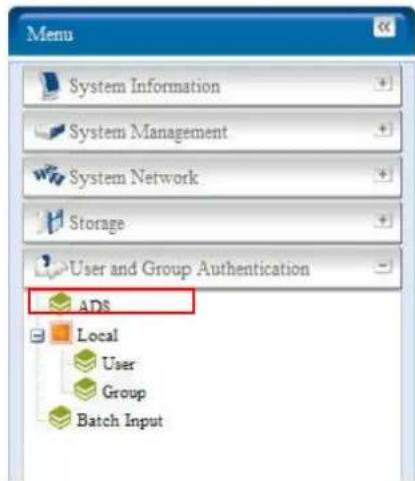
text_image
Menu System Information System Management System Network Storage User and Group Authentication ADS Local User Group Batch Input
text_image
ADS/NT Support Work Group/Domain Name : MYGROUP ADS/NT Support : Enable Disable Authentication Method : ADS NT ADS/NT Server Name : ADS/NT Realm : Administrator ID : Administrator Password : ApplyA description of each item follows:
| ADS/ NT Support | |
| Item | Description |
| Work Group / Domain Name | Specifies the SMB/CIFS Work Group / ADS Domain Name (e.g. N5500). |
| ADS/NT Support Select | Disable to disable authentication through Windows Active Directory Server or Windows NT. |
| Authentication Method | Select ADS for Windows Active Directory Server, or select NT for Windows NT |
| ADS/NT Server Name | Specifies the ADS/NT server name (e.g. adservername). |
| ADS/NT Realm Specifies the ADS/NT realm (e.g. example.com). | |
| Administrator ID Enter | the administrators ID of Windows Active Directory or Windows NT, which is required for N5500 to join domain. |
| Administrator Password | Enter the ADS/NT Administrator password. |
| Apply To save your settings. | |
To join an AD domain, you can refer the figure and use the example below to
configure the N5500 for associated filed input:

text_image
System Properties General Network Identification Hardware User Profiles Advanced Windows uses the following information to identify your computer on the network. Full computer name: computer1.domain.local ADS Server Name domain.local Domain: ADS Realm Work Group/Domain Name To rename this computer or join a domain. click Properties Properties Note: The identification of the computer cannot be changed because: - The computer is a domain controller. OK Cancel Apply| AD Domain Example | |
| Item | Information |
| Work Group / Domain Name | domain |
| ADS Support Enable | |
| ADS Server Name Computer1 | |
| ADS/NT Realm Domain,local | |
| Administrator ID Administrator | |
| Administrator Password | ********** |
NOTE
- The DNS server specified in the WAN configuration page should be able to correctly resolve the ADS server name.
• The time zone setting between N5500 and ADS should be identical. - The system time difference between N5500 and ADS should be less than five minutes.
- The Administrator Password field is for the password of ADS (Active Directory Server) not N5500.
Local User Configuration
From the Accounts menu, choose the User item, and the Local User Configuration screen appears. This screen allows you to Add, Edit, and Remove local users.
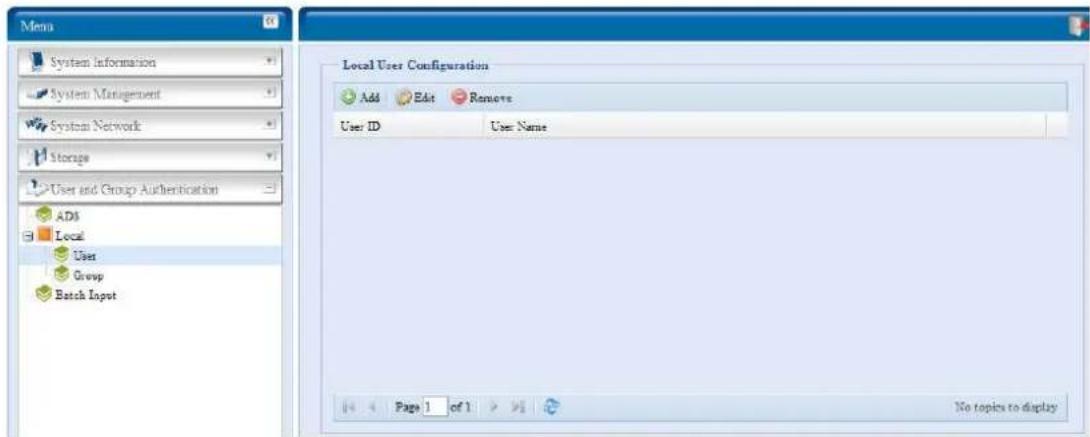
text_image
Menu System Information System Management System Network Storage User and Group Authentication ADS Local User Group Batch Input Local User Configuration Add Edit Remove User ID User Name Page 1 of 1 No topics to display| Local User Configuration | |
| Item | Description |
| Add | Press the Add button to add a user to the list of local users. |
| Edit | Press the Edit button to modify a local user. |
| Remove | Press the Remove button to delete a selected user from the system. |
Add Users
- Click on the Add button on Local User Configuration screen, and Local User Setting screen appears.
- On the Local User Setting screen, enter a name in the User Name box.
- Enter a User ID number. If left blank, the system will automatically assign one.
- Enter a password in the Password box and re-enter the password in the Confirm box.
- Select which group the user will belong to. Group Members is a list of groups this user belongs to. Group List is a list of groups this user does not belong to. Use the << or >> buttons to have this user join or leave a group.
- Press the Apply button and the user is created.

text_image
Menu System Information System Management System Network Local User Configuration Add Edit Remove User ID User Name Add Local User Setting User Name: User ID: 1002 Password: Confirm Password: Group Members GroupID Group Name 102 users Group List Search: GroupID Group Name ApplyNOTE
All users are automatically assigned to the 'users' group.
Edit Users
- Select an existing user from the Local User Configuration screen.
- Click on the Edit button, and Local User Setting screen appears.
- From here, you can enter a new password and re-enter to confirm, or use the << or >> buttons to have this user join or leave a group. Click the Apply button to save your changes.

text_image
Edit Local User Setting User Name: User User ID: 1002 Password: ••••••••••••••• Confirm Password: ••••••••••••••• Group Members GroupID Group Name 102 users Group List Search: GroupID Group Name ApplyRemove Users
- Select an existing user from the Local User Configuration screen.
- Click on Remove button and the user is deleted from the system.
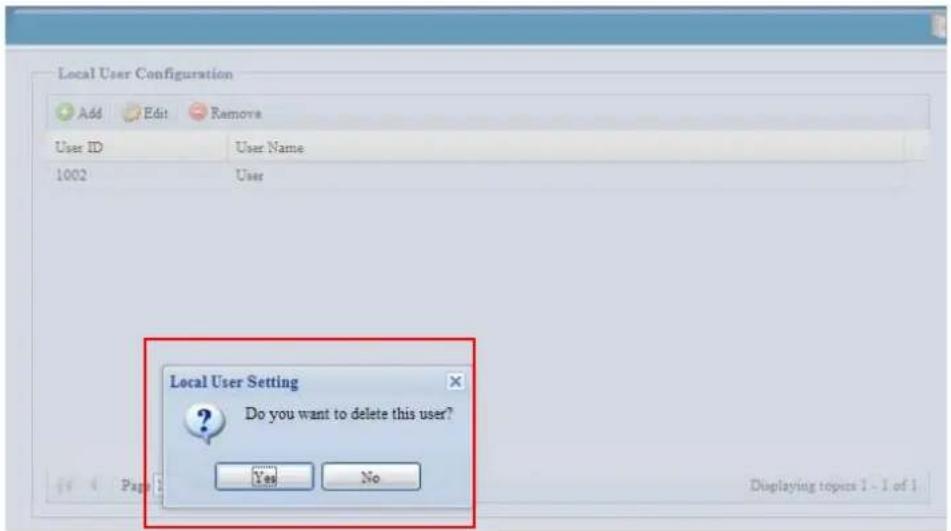
text_image
Local User Configuration Add Edit Remove User ID User Name 1002 User Local User Setting Do you want to delete this user? Yes No Displaying topics 1 - 1 of 1Local Group Configuration
From the Accounts menu, choose the Group item, and the Local Group Configuration screen appears. This screen allows you to Add, Edit, and Remove local groups.
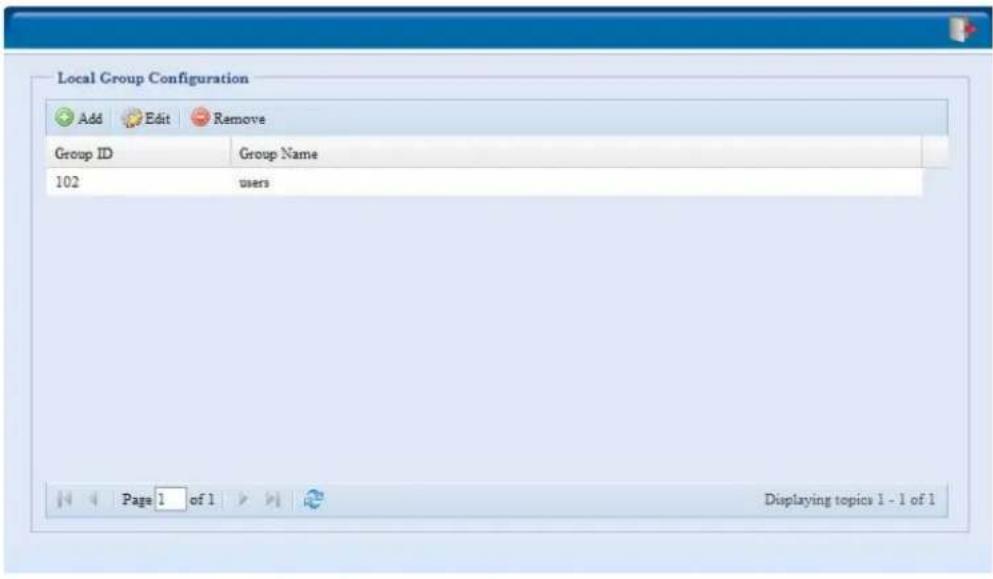
text_image
Local Group Configuration Add Edit Remove Group ID Group Name 102 users Page 1 of 1 Displaying topics 1 - 1 of 1| Local Group Configuration | |
| Item | Description |
| Add | Press the Add button to add a user to the list of local groups. |
| Edit | Press the Edit button to modify a selected group from the system. |
| Remove | Press the Remove button to delete a selected group from the system. |
Add Groups
- On the Local Group Configuration screen, click on the Add button.
- The Local Group Setting screen appears.
- Enter a Group Name.
- Enter a Group ID number. If left blank, the system will automatically assign one.
- Select users to be in this group from the Users List by adding them to the Members List using the << button.
- Click the Apply button to save your changes.
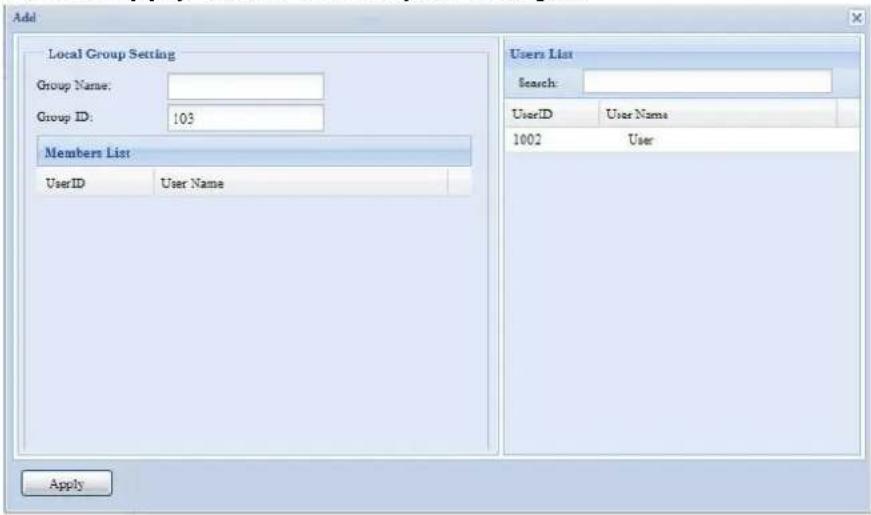
text_image
Add Local Group Setting Group Name: Group ID: 103 Members List UserID User Name Users List Search: UserID User Name 1002 User ApplyEdit Groups
- On the Local Group Configuration screen, select a group name from the list.
- Press the Edit button to modify the members in a group.
- To add a user into a group, select the user from the Users List, and press the << button to move the user into the Members List.
- To remove a user from a group, select the user from Members List, and press the >> button.
- Click the Apply button to save your changes.
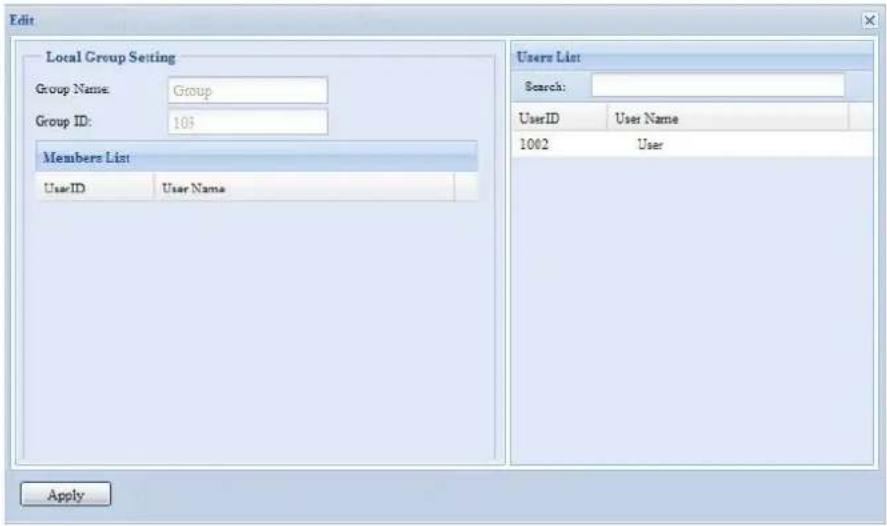
text_image
Edit Local Group Setting Group Name: Group Group ID: 103 Members List UserID User Name Users List Search: UserID User Name 1002 User ApplyRemove Groups
- On the Local Group Configuration screen, select a group name from the list.
- Press Remove to delete the group from the system.
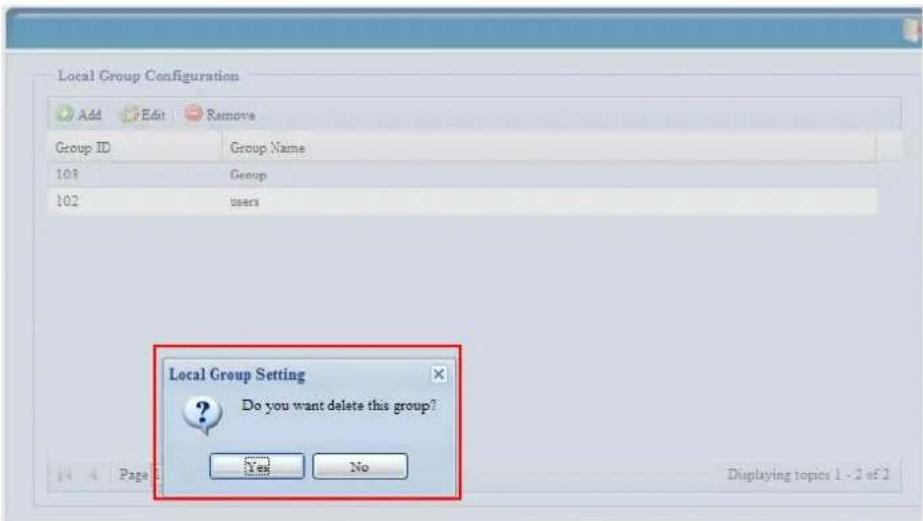
text_image
Local Group Configuration Add Edit Remove Group ID Group Name 101 Group 102 users Local Group Setting Do you want delete this group? Yes No Page 1 2 of 3 Displaying topics 1 - 2 of 3Batch Create Users and Groups
The N5500 can also add users and groups in batch mode. This enables you to conveniently add numerous users and groups automatically by importing a simple comma-separated plain text (*.txt) file.
From the Accounts menu, click Batch Mgmt and the Batch Create Users and Groups dialogue will appear. To import your list of users and groups, follow these steps:
- Click Browse... to locate your comma-separated text file. The information in the text file should follow this format:
[USERNAME], [PASSWORD], [GROUP]
- Click Open.
- Click Import to begin the user list import.
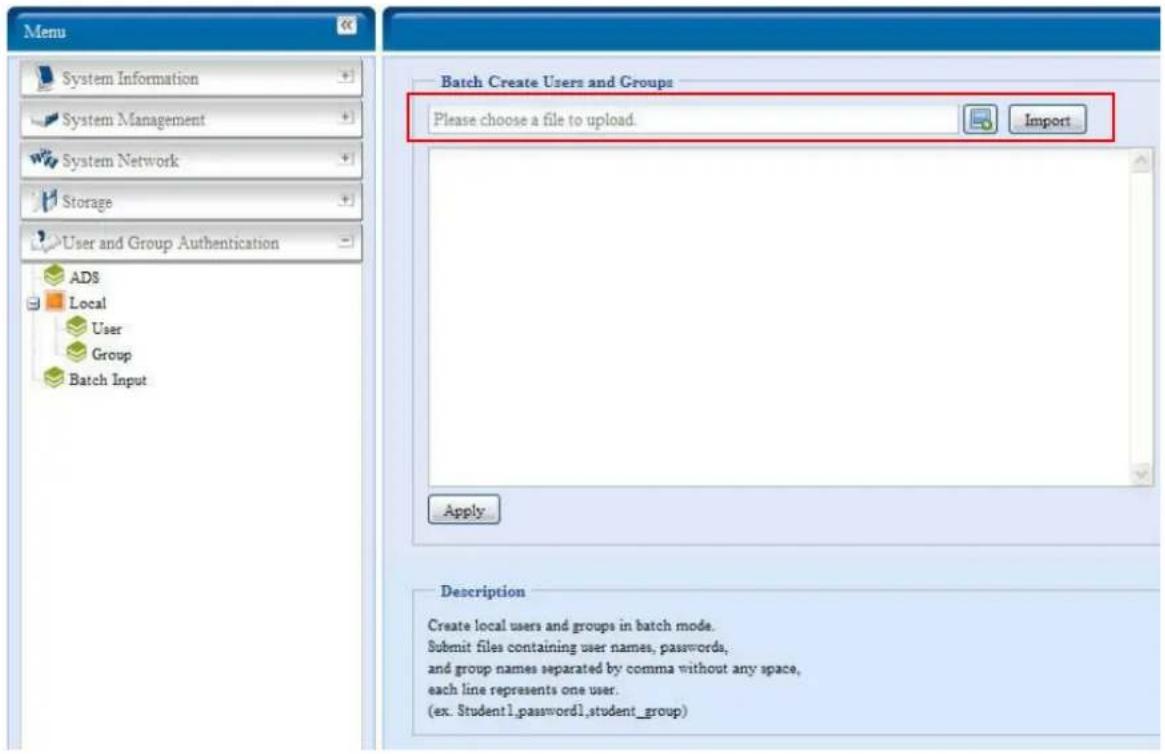
text_image
Menu System Information System Management System Network Storage User and Group Authentication ADS Local User Group Batch Input Batch Create Users and Groups Please choose a file to upload. Import Apply Description Create local users and groups in batch mode. Submit files containing user names, passwords, and group names separated by comma without any space, each line represents one user. (ex. Student1.password1,student_group)Application Server
The N5500 supports printer server, and Tunes server. The integrated Print Server allows you to share a single USB printer will all users on the network. The N5500 provides activating the iTunes Server on the device. You will be able to play music files on this device with your iTunes client software directly. The following section shows you how.
Printer Information
From the Application Server menu, choose the Printer item, and the Printer Information screen appears. This screen provides the following information about the USB printer connected to the USB port.

text_image
Menu System Information System Management System Network Storage User and Group Authentication Applied to Server Printer Printer 1 Manufacturer: N/A Model: N/A Status: No Printer Detected Remove document: from queue: Restart printer service: Reset| Printer Information | |
| Item | Description |
| Manufacturer Displays the name of the USB printer manufacturer. | |
| Model Displays the model of the USB printer. | |
| Status Displays the status of the USB printer. | |
| Remove document from Queue | Click to remove all documents from printer queue |
| Restart Printer service Click to restart printer service | |
If a corrupt print job is sent to a printer, printing may suddenly fail. If your print jobs seem to be locked up, pressing the Remove All Documents button to clear the print queue may resolve the issue.
You can configure the N5500 to act as a printer server. That way, all PCs connected to the network can utilize the same printer.
Windows XP SP2
To set up the Printer Server in Windows XP SP2, follow the steps below:
- Connect the USB printer to one of the USB ports (preferably the rear USB ports; front USB ports can be used for external HDD enclosures).
- Go to Start > Printers and Faxes.
- Click on File > Add Printer.
- The Add Printer Wizard appears on your screen. Click Next.
- Select the "A network printer, or a printer attached to another computer" option.
- Select "Connect to a printer on the Internet or on a home or office network", and enter "http://N5500_IP_ADDRESS:631/printers/usb-printer" into the URL field.
- Your Windows system will ask you to install drivers for your printer. Select correct driver for your printer.
- Your Windows system will ask you if you want to set this printer as "Default Printer". Select Yes and all your print jobs will be submitted to this printer by default. Click Next.
- Click Finish.
NOTE
- Not all USB printers are supported. Please check Thecus website for a list of supported printers.
- Note that if a multi-function (all-in-one) printer is attached to the N5500, usually only the printing and fax functions will work. Other features, such as scanning, will probably not function.
Windows Vista
To set up the Printer Server in Windows Vista, follow the steps below:
- Open Printer Folder from the Control Panel.
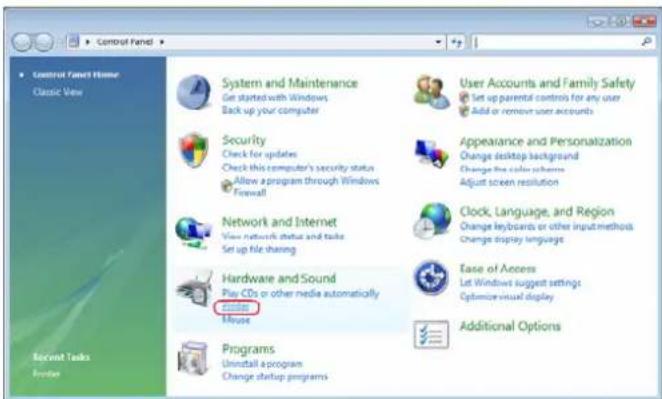
text_image
Control Panel Home Classic View System and Maintenance Get started with Windows Back up your computer Security Check for updates Check this computer's security status Allow a program through Windows Firewall Network and Internet View network status and tasks Set up file sharing Hardware and Sound Play CDs or other media automatically Mouse Programs Uninstall a program Change startup programs User Accounts and Family Safety Set up parental controls for any user Add or remove user accounts Appearance and Personalization Change desktop background Change the color scheme Adjust screen resolution Clock, Language, and Region Change keyboards or other input methods Change display language Ease of Access Let Windows suggest settings Optimize visual display Additional Options- Click the right mouse button in anywhere on the Printers folder and then select Add Printer.

text_image
Hardware and Sound → Printers Organize → Views → Add a printer Favorite Links Documents Pictures Music More >> Folders Desktop Fax Public Computer Network Control Panel Additional Opt Appearance or Clock Language... Ease of Access Hardware and AutoPlay Personalizati Power Optio Name Documents Status Comments Location Model Fax Ready Microsoft XPS Document Writer View Sort By Group By Stack By Refresh Paste Paste Shortcut Undo Copy Ctrl+Z Run as administrator Add Printer... Server Properties...- Select Add a network, wireless or Bluetooth printer.

text_image
Add Printer Choose a local or network printer → Add a local printer Use this option only if you don't have a USB printer. (Windows automatically installs USB printers when you plug them in.) → Add a network, wireless or Bluetooth printer Make sure that your computer is connected to the network, or that your Bluetooth or wireless printer is turned on. Next Cancel- Select The printer that I want isn't listed.

text_image
Add Printer Searching for available printers... Stop The printer that I want isn't listed Next CancelYou can press The printer that I want isn't listed to go into next page without waiting for Searching for available printers to finish.
- Click Select a shared printer by name.
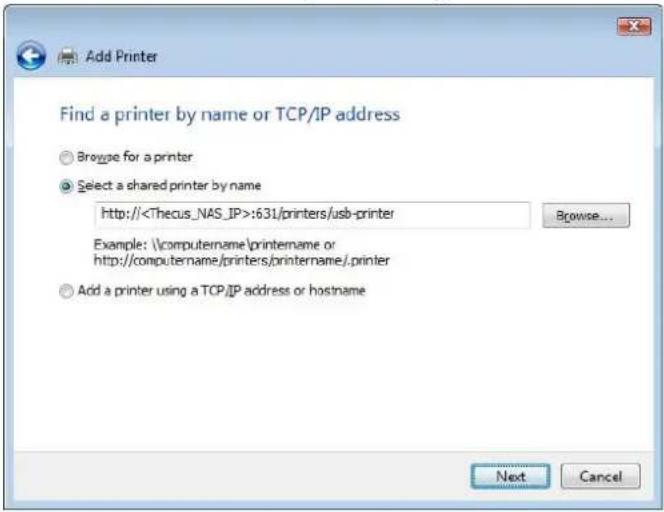
text_image
Add Printer Find a printer by name or TCP/IP address Browse for a printer Select a shared printer by name http://Type http://
- Select or install a printer and then press OK.
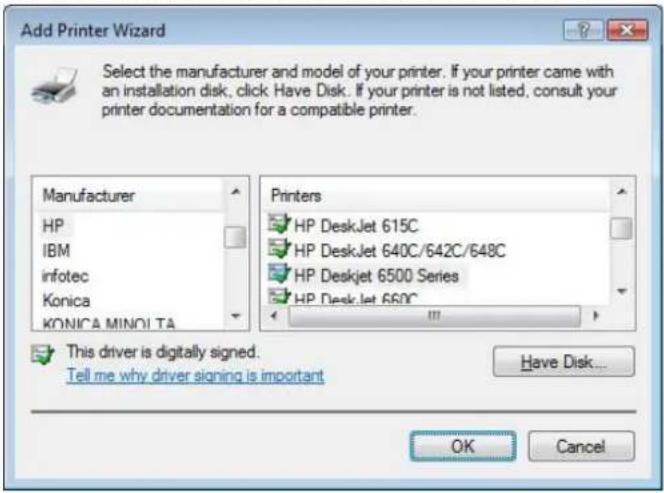
text_image
Add Printer Wizard Select the manufacturer and model of your printer. If your printer came with an installation disk, click Have Disk. If your printer is not listed, consult your printer documentation for a compatible printer. Manufacturer HP IBM infotec Konica KONICA MINOLTA Printers HP DeskJet 615C HP DeskJet 640C/642C/648C HP Deskjet 6500 Series HP DeskJet 660C This driver is digitally signed. Tell me why driver signing is important Have Disk... OK CancelIf your printer model is not listed, please contact your printer manufacturer for help.
- Windows will attempt to connect to the printer.

text_image
Windows Printer Installation Connecting to http://172.16.66.64:631/printers/usb-printer Cancel- You can choose to set this printer as the default printer by checking the Set as the default printer box. Click Next to continue.
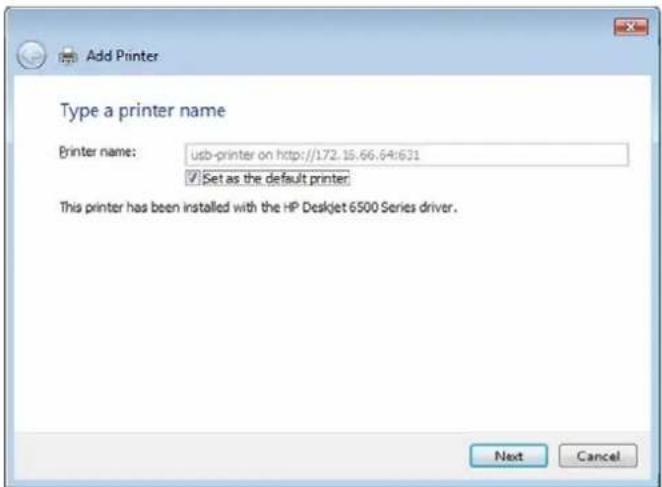
text_image
Add Printer Type a printer name Printer name: usb-printer on http://172.15/66.64:631 ✓ Set as the default printer This printer has been installed with the HP Deskjet 6500 Series driver. Next Cancel- Done! Click Finish.

text_image
Add Printer You've successfully added usb-printer on http://172.16.66.64:631 To see if the printer is working correctly, or to see troubleshooting information for the printer, print a test page. Print a test page Finish CanceliTunes® Server
With the built-in iTunes server capability, the N5500 enables digital music to be shared and played anywhere on the network!
From the Network menu, choose the iTunes item, and the iTunes Configuration screen appears. You may enable or disable the iTunes Service from here. Once enabled, enter correct information for each field and press Apply to save your changes.
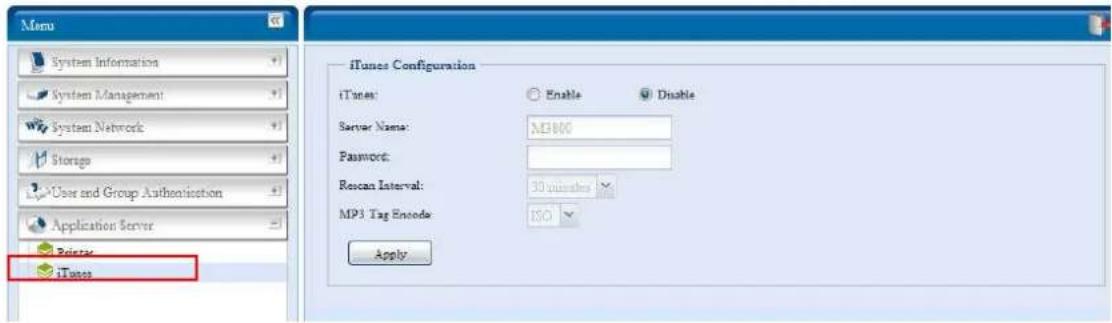
text_image
Menu System Information System Management System Network Storage User and Group Authentication Application Server Printer iTunes iTunes Configuration iTunes: Enable Disable Server Name: MH00 Password: Rescan Interval: 30 minutes MP3 Tag Encode: ISO ApplySee the following table for detailed descriptions of each field:
| iTunes Configuration | |
| Item | Description |
| iTunes Enable or disable | the iTunes Service. |
| Server Name Name used | to identify the N5500 to iTunes clients. |
| Password Enter password | to control access to your iTunes music. |
| Rescan Interval Rescan | interval in seconds. |
| MP3 Tag Encode Specify | tag encoding for MP3 files stored in N5500. All ID3 tags will be sent out in UTF-8 format. |
Once the iTunes service is enabled, the N5500 will make all music located in the Music folder available for iTunes-equipped computers on the network.
Module Management
Module Installation
From the Module Management menu, choose the Module Installation item and the Module Management screen appears. From here, you can install separate software modules to extend the functionality of your N5500.
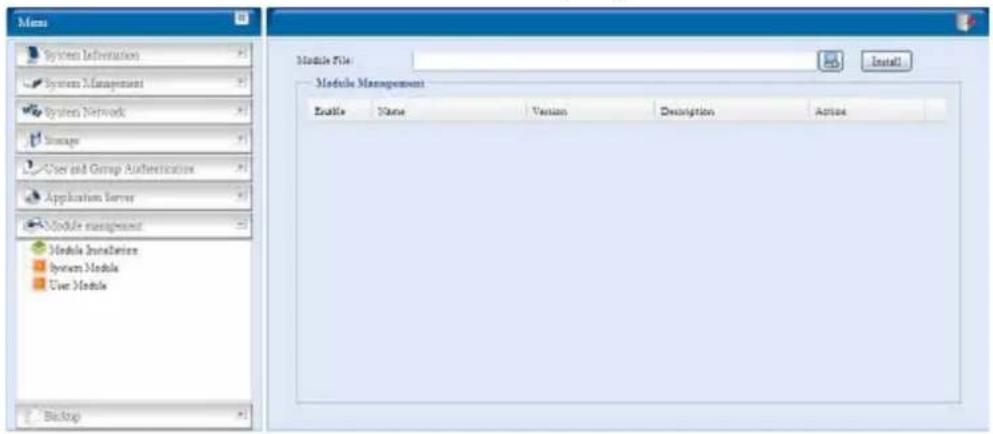
text_image
Menu System Information System Management System Network Storage User and Group Authentication Application Server Module management Module Installations System Modules User Modules Backup Module File Install Module Management Enable Name Version Description ActionsSystem Module
The system module is officially provided by Thecus for new features added.
User Module
The user module is reserved for Thecus fans to build up 3^rd party functions in the future.
Backup
There are a number of ways to back up data with the N5500.
Nsync
You can backup a share folder to another N5500 (Nsync Target) or any FTP server for safe keeping as long as you have appropriate access right on that target. When using Nsync between two N5500s, you have the option to transmit files securely between two N5500s.
If the files on your N5500 are lost for any reason, you can restore those files from the target N5500. To backup files regularly, you can set up a scheduled task to run only once, daily, weekly, or monthly. You can also limit the bandwidth of your Nsync tasks, so other users on the network can share the bandwidth equally.
Under the Backup menu, click Nsync and the Nsync window appears.
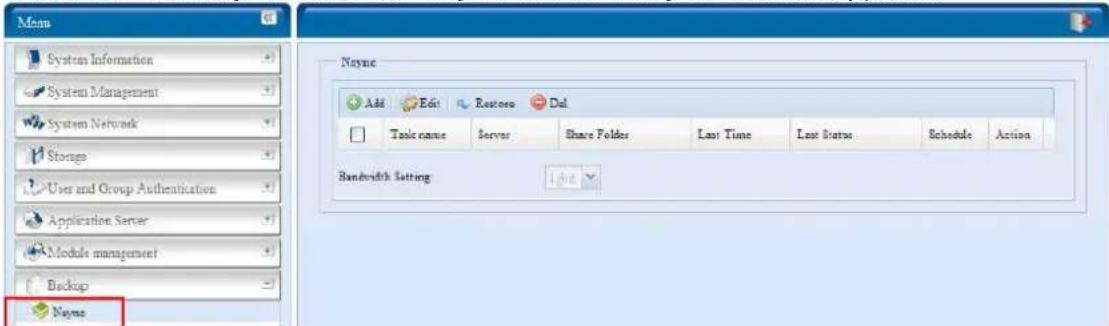
text_image
Menu System Information System Management System Network Storage User and Group Authentication Application Server Module management Backup Name Add Edit Restore Dal Task name Server Share Folders Last Time Last Status Schedule Action Bandwidth Setting 1/23Below is a description of each field:
| Nsync | |
| Item | Description |
| Add Click to add a Nsync task | |
| Edit Click to Edit an Nsync task. | |
| Restore Restore share folder from an Nsync target. | |
| Del Click to delete an Nsync task. Backup files on Nsync target is also deleted. | |
| Task name The name of your Nsync task. | |
| Server The IP address of your target server | |
| Share folder The share folder you would want to backup. | |
| Last Time The time when the last Nsync task was executed. | |
| Last Status The status of your last Nsync task. | |
| Schedule Schedule backup of your share folders. | |
| Action Administrator can run or stop an Nsync task by pressing the action button. | |
| Bandwidth Setting Bandwidth control on Nsync tasks. | |
Add Nsync Task
From the Nsync screen, click Add to display the Add Nsync Task screen.
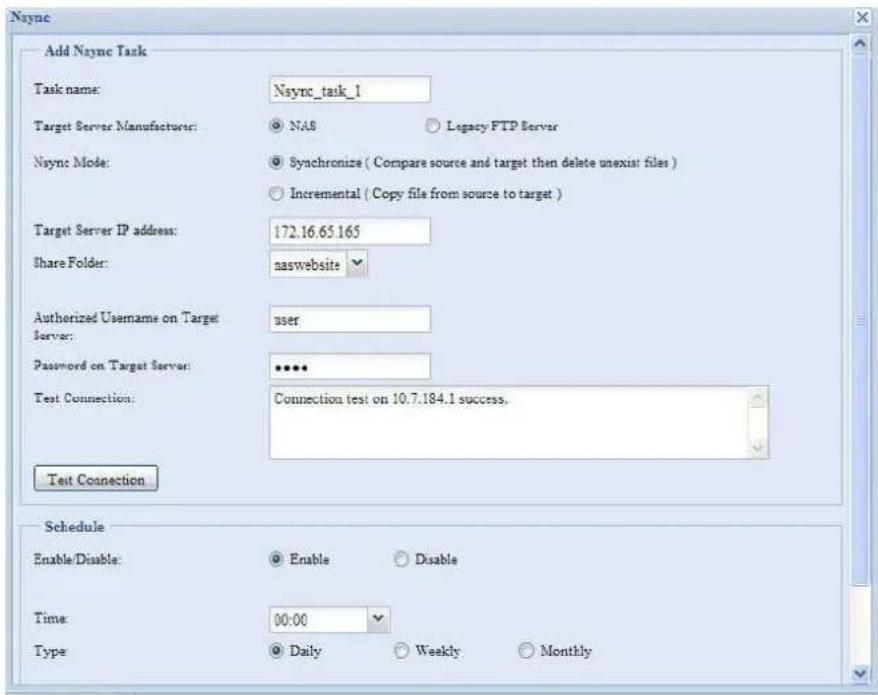
text_image
Naync Add Naync Task Task name: Nsync_task_1 Target Server Manufacture: NAS Legacy FTP Server Nsync Mode: Synchronize ( Compare source and target then delete unexist files ) Incremental ( Copy file from source to target ) Target Server IP address: 172.16.65.165 Share Folder: naswebsite Authorized Username on Target user Server: Password on Target Server: ****** Test Connection: Connection test on 10.7.184.1 success. Test Connection Schedule Enable/Disable: Enable Disable Time: 00:00 Type: Daily Weekly Monthly
text_image
Nsync Target Server Implementation: Nsync Mode: Synchronize ( Compare source and target then delete unexst files ) Intersemacl ( Copy files from source to target ) Target Server IP address: 172.16.65.165 Share Folder: naswebsite Authorized Username on Target Server: user Password on Target Server: Test Connection: Test Connection Add Nsync Task Success OK Schedule Enable/Disable: Enable Disable Time: 00:00 Type: Daily Weekly Monthly Add| Add Nsync Task | |
| Item | Description |
| Task Name The name of your Nsync task. | |
| Target Server Manufacturer | Select whether the target is a Thecus Product (e.g. N5500) or FTP server. |
| Nsync Mode Synchronize mode or Incremental mode . | |
| Target Server IP Address | The IP address of your target server. |
| Source Folder The share folder you want to backup. | |
| Authorized Username on Target Server | The account name on the target server. |
| Password on Target Server | The password for the username on the target server. |
| Test Connection Click to check the connection to the Target Server. | |
| Schedule Enable or Disable schedule backup of your share folders. | |
| Time The time when the Nsync task will run. | |
| Type Select whether to run the Nsync task daily, weekly, or monthly.Daily: input the time of day to execute Nsync task.Weekly: input which day of the week to execute the task.Monthly: decide which day of the month to execute the task. | |
| Add | Press Add to submit your settings. |
NOTE
Before starting an Nsync Task, make sure the target server's Nsync Server (or FTP Server) is enabled.
Setting Up an Nsync Target on an Nsync Device
On the Nsync target server, the administrator of that server has to set up a user account with a folder named "nsync" and grant write access.
- On the Nsync server, add a user for Nsync source (ex. nsyncsource1). For instructions on how to add a user on the N5500, see Chapter 4: User and Groups Authentication> Local User Configuration > Add Users.
- On the Nsync server, grant that user (ex. nsyncsource1) write access to the nsync folder. For instructions on how to set up a folder's ACL, see Chapter 4: Storage management> Shore Folder> Folder Access Control List (ACL).
- Once this is done, the target server will start accepting Nsync tasks from server using that ID and password.
Setting Up an Nsync Target on Another Device
If you selected "Other Device" when setting up your Nsync task, the N5500 will use the FTP protocol to back up the share folder. On the external storage device, make sure there is a folder named "nsync", and the Auth ID has writable permission in that folder.
Designating N5500 as an Nsync Target
The N5500 can act as an Nsync server, enabling another Nsync-equipped Thecus NAS at a remote location backup their files to this N5500. From the System Network menu, choose the Nsync Target item, and the Nsync Target Server screen appears.
| Nsync Target Server Setting | |
| Item | Description |
| Nsync Target Server Enable or Disable Nsync Target support. | |
NOTE
To enable Nsync task to go thru firewall, you have to open port TCP/1194 on your firewall in both directions.
Thecus Backup Utility
The Thecus Backup Utility is on your Installation CD. When you click on the CD, the Backup Utility will be installed under Program Groups > Thecus > Thecus Backup Utility. If it is not installed, you can copy the file (Thecus Backup Utility.exe) to a convenient location on your hard disk and double click to execute it.

NOTE
If you can not find Thecus Backup Utility on your CD, please download it from the Thecus website (http://www.thecus.com).
When you execute this utility for the first time, it will ask you whether to create a DB file. Click Yes.
- Click Add to create a Backup task. The Add New Task dialog box appears.
| Add New Task | |
| Item | Description |
| Task Specifies a name for the current task. | |
| Source Click to specify the source folder/file location. | |
| Incremental Click to specify whether the backup will be incremental.If unchecked, the backup will be a full backup. | |
| Destination Click to specify the destination folder/file location. | |
| Excluded extensions Files with these file name extensions will be skipped and not back up to the destination. | |
| Comments | If you wish, enter comments here for your records. |
- To schedule the task to run at regular intervals, click on the Schedule icon for that task. You can schedule the task to run Monthly or Weekly.
- To check the log for that task, click on the Log icon for that task.
NOTE
Thecus Backup Utility also supports MAC OS X. Just copy the Thecus BackupUtility.dmg to your MAC OS X machine and double click to execute it.
Windows XP Data Backup
If you use Windows XP Professional, you can also use the Windows Backup Utility (Ntbackup.exe) to backup your files.
If you use Windows XP Home Edition, follow these steps to install the utility:
-
Insert the Windows XP CD into a drive and double-click the CD icon in My Computer.
-
When the Welcome to Microsoft Windows XP screen appears, click Perform Additional Tasks.
- Click Browse this CD.
- In Windows Explorer, navigate to ValueAdd > Msft > Ntbackup.
- Double-click Ntbackup.msi to install the backup utility.
Once installed, you can use the Windows Backup Utility by following the steps below:
- Click Start, and point to All Programs > Accessories > System Tools > Backup to start the wizard.
- Click Next to skip past the opening page. Choose Backup files and settings from the second page, and then click Next.
- Select which option you want to back up.
- Click Next and in the Backup Type, Destination, and Name page, specify a back up location using the Browse button.
- Find and select the drive that specifies your N5500 as your backup destination and click Next.
- Click Next to display the wizard's final page and click Finish to start backing up.
Apple OS X Backup Utilities
Mac OS X does not include any backup software. However, there are a number of backup solutions available for the Mac OS X, including: iBackup, Psyncx, iMSafe, Rsyncx, Folder Synchronizer X, Tri-BACKUP, Impression, Intego Personal Backup, SilverKeeper, and Apple's dotMac Backup utility to name just a few. To find even more freeware and shareware backup utilities to choose from, go to VersionTracker or MacUpdate and search on "backup".
Chapter 5: Using the N5500
Overview
Once the N5500 is setup and operating, users on the network may manage all varieties of digital music, photos, or files by simply using their web browsers. To manage your personal files or access public files on the N5500, just enter its IP address into your browser (default IP address is http://192.168.1.100), and you will be taken to the N5500 Login page.
NOTE
Before proceeding, make sure that WebDisk Support or Secure WebDisk Support is enabled in the Service Support screen in the system's Network menu. See Service Support in Chapter 4: System Network >HTTP/Web Disk.
Login Page
To login to the system, enter your user name and password, and select Web Disk or Photo server then click Login to log into the system. You will be taken to the selected interface.
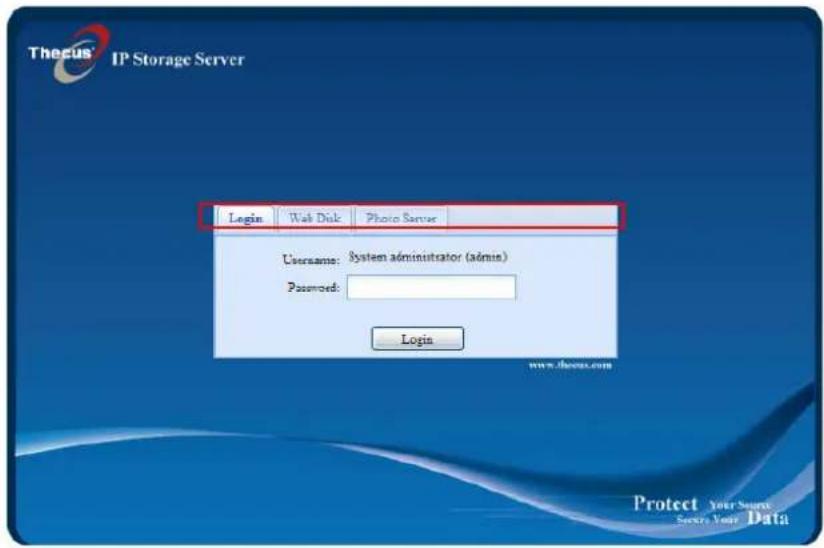
text_image
Thecus IP Storage Server Login Web Disk Photo Server Username: System administrator (admin) Password: Login www.thecus.com Protect Your Search Secure Your DataUsing WebDisk
The N5500 provides a WebDisk function that allows you to access the system over the Internet from any browser.
-
In the Login page, type in the User ID and password that were previously set for you in the Accounts menu. See
Chapter 4:User and Group Authentication > Local User Configuration. -
The WebDisk page appears showing folders made currently available to you via the Access Control List (ACL).
-
Click on a folder name to enter the folder.
-
The folder's page appears displaying files and folders. Click on a file to download the file.
-
Buttons on the folder page allow you to create a new folder, upload files and delete files in the folder.
-
To create a new folder within the current folder, press the New folder button. When the screen appears enter a name for the folder. Press OK to create the folder.
- To upload a file from your computer to the current folder, press the New file (upload) button. When the screen appears, press Browse and locate the file to upload. Press OK and the file is uploaded to the current folder.
- To delete a file or folder, select the file or folder's check box. Press the Delete selected items button. You can also check the check box as the red circle indicates to select all files and folders in this folder.
To access folders with access control, you must first login with a local user account.
For more information on how to setup user rights to the folders, please check Chapter 4: Storage Management > Share Folder > Folder Access Control List (ACL).
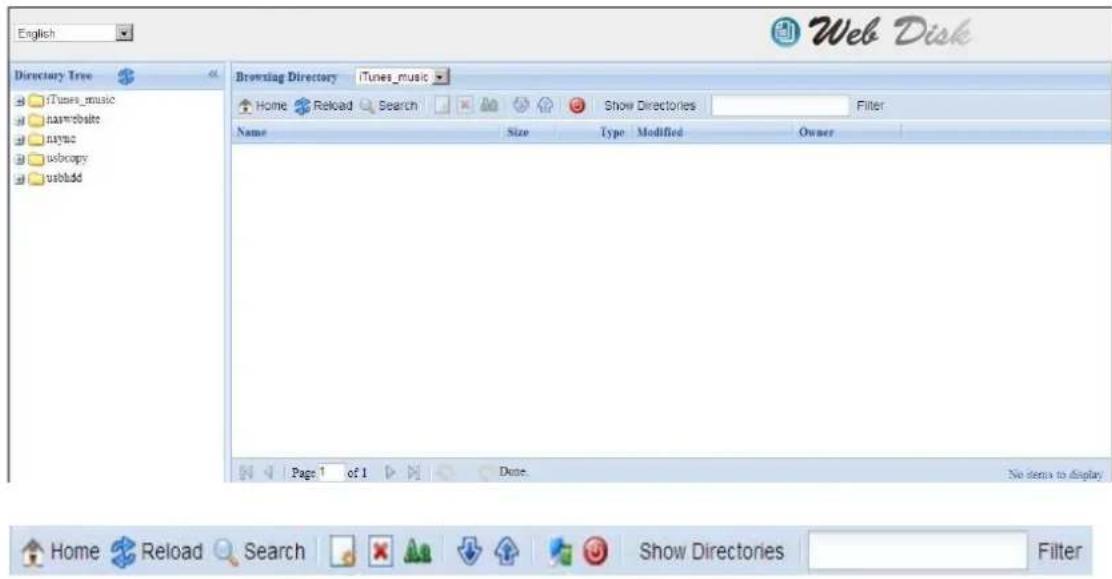
text_image
English Directory Tree iTunes_music nasw websites nayuc usbcopy usbadd Browsing Directory iTunes_music Home Reload Search Show Directories Filter Name Size Type Modified Owner Page 1 of 1 Done No items to display Home Reload Search Show Directories Filter| Folder Page Button | |
| Button | Description |
| Directory Tree List all directory trees per login user's privilege. | |
| Browsing Directory Browsing selected directory of its folders and files. | |
| Home Go back to the web disk directory layer. | |
| Reload Re-load the current list. | |
| Search Search files in the current web disk directory.(Must input the complete file name.) | |
| (new file/Directory) Creates a new folder or directory. | |
| (delete) Deletes selected files or folders. | |
| (Rename) Rename a directory or file. | |
| (download) Download a file to current folder of your computer. | |
| (upload) Upload file from your computer to current web disk folder. | |
| (Admin) Change password and confirm new password. | |
| (logout) To logout of the web disk interface. | |
| Show Directories | Show the files and folders in the directory. |
| Filter | Search files in the directory.(You can only input some word string.) |
| Name | Displays the names of folders and files. |
| Size | Shows the size of folders and files. |
| Type | Displays the type of folders and files. |
| Modified | Shows the time of most recent modification of folders and files. |
| owner | Owner of the file. |
There is also the way by using right click button to bring up contact windows as short cut to operate what you needed.

text_image
Directory Tree iTunes_music test test1 usbhdd New File/Directory Rename Remove Reload CancelPhoto Server
Using the Photo Server, users can view and share photos, and even create their own albums right on the N5500.
You will see your own Photo Gallery and all public Photo Albums on the network.
To manage any picture files, you must first select the item by clicking the box.
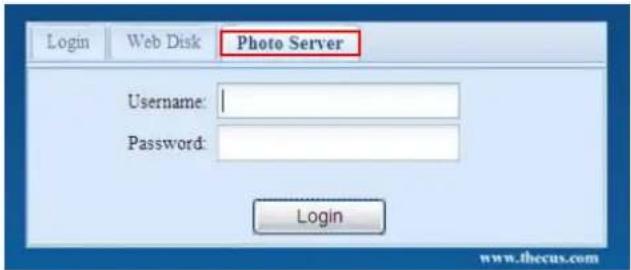
text_image
Login Web Disk Photo Server Username: Password: Login www.thecus.com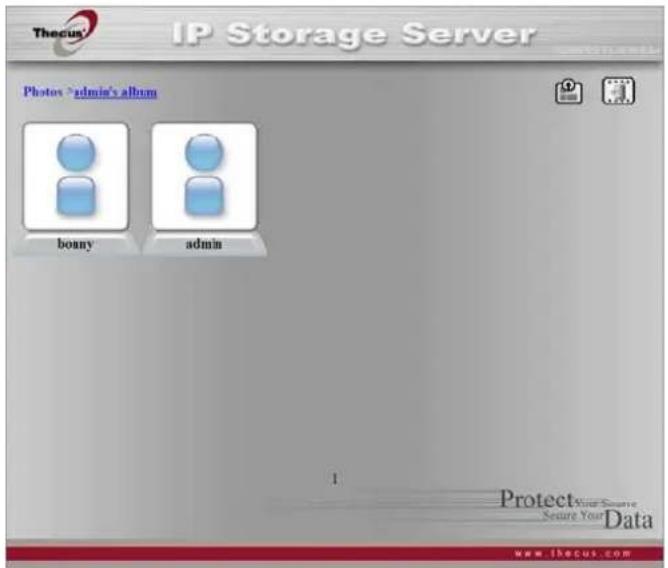
text_image
IP Storage Server Photos >admin's album boany admin 1 ProtectYourSource Secure YourData www.thecus.comWindows XP Publishing Wizard
There are many ways for a local user to upload pictures into their photo album. Users of Windows XP can upload their pictures using the Windows XP Publishing Wizard.

- Click on the XP Publishing Wizard icon on top right corner.
- The XP Web Publishing Wizard Client screen appears. Click on the link to install the Publishing Wizard.

text_image
Theocus IP Storage Server XP Web Publishing Wizard Client This function allows to use Windows XP web publishing wizard with N4100PRO. What is required ■ Windows XP in order to have the wizard. How to install on client side ■ Right click on this link. Select: "save target as...". Save the file on your hard drive. When saving the file, check that the proposed file name is XPPublish.reg. When downloaded, double click on the file in order to register your server with the web publishing wizard. How to publish ■ In Windows Explorer, select some files and click on Publish xxx on the web in the left pane. ■ When it is completed, check your gallery to see if pictures have been properly added. Protect Your Source Secure Your Data www.thocus.com- Windows XP will ask whether you want to run or save this file. Click Save to save the register file.

text_image
File Download - Security Warning Do you want to run or save this file? Name: XPPublish.reg Type: Registration Entries, 377 bytes From: 172.16.66.158 Run Save Cancel While files from the Internet can be useful, this file type can potentially harm your computer. If you do not trust the source, do not run or save this software. What's the risk?- Once the register file is installed, use the Windows file manager to browse the folder that contains the picture you want to publish. On the left pane, there will be an icon labeled "Publish this folder to the Web".
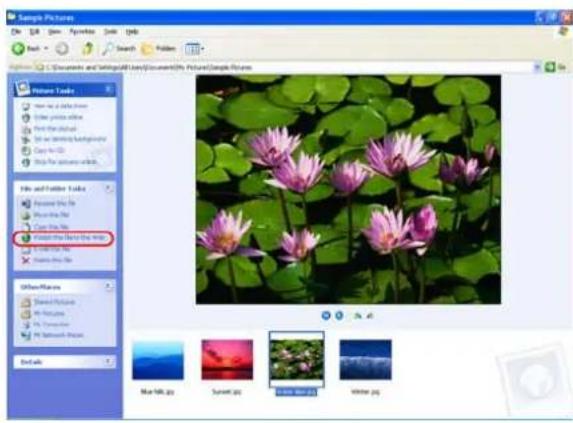
text_image
Sample Pictures File Edit View Favorites Edit Help Back Search Search Folders C:\Documents and Settings\Allkey\Documents\Pho Picture\Samples\Frames Figure Tools New in the middle from Show your image files Show the image Set out using background Copy to CD Copy for images within... File and Folder Tools Previewing PDFs My Documents Copy PDFs Finished the text by the map A: 100% PDF Create PDFs Uniform Patterns Sharet Picture PI Pictures PI Transactions PI Network Files Details Map PDF.jpg Sunset.jpg Shiny PDF.jpg Winter.jpg- Click on this icon and Web Publishing Wizard will start.

text_image
Web Publishing Wizard Welcome to the Web Publishing Wizard This wizard will help you publish your files over the Internet or a local network so that other people can view them in their Web browsers. To continue, click Next.- Select the pictures you want to publish to the Photo Web Server by placing a check mark on the top left hand corner of the picture. Click Next.
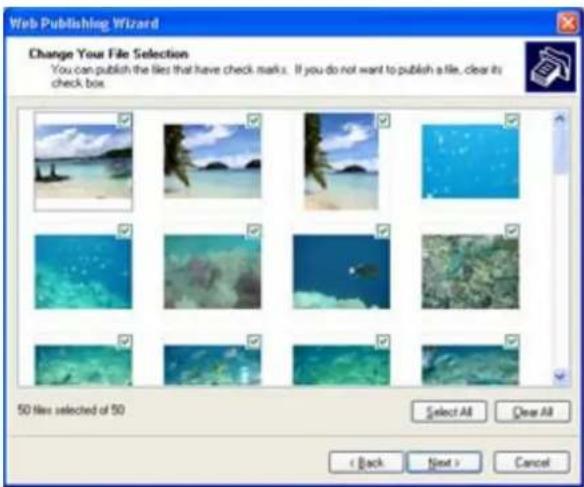
text_image
Web Publishing Wizard Change Your File Selection You can publish the files that have check marks. If you do not want to publish a file, clear its check box. 50 files selected of 50 Select All Clear All < Back Next > Cancel- Your PC will start to connect to the Photo Web Server.
- Select N5500 Photo Gallery Wizard to publish your pictures to the N5500.

text_image
Web Publishing Wizard Where do you want to publish these files? Select a service provider to host your Web site. If you do not have a membership account, one will be created for you. Service providers: N5500 Photo Salary - N5500 N5500 Photo Salary Wizard < Back Next > Cancel- Login into the N5500 with your local user name and password.

text_image
Web Publishing Wizard N5500 Photo Gallery Wizard Powered by Thecus Please input ID and Password ID : Password : Welcome to Thecus Thecus: https://www.elsevier.com/ < Back Next > Cancel- Create your album by entering an album name and clicking on the Create Album button.

text_image
Web Publishing Wizard N5500 Photo Gallery Wizard Powered by Thecus Service On Gallery : Please Select Album To Upload : Album Album name : Create Album Welcome to Thecus These Technology Calculator < Back Next > Cancel- Select the album you want to upload your pictures to.
- Confirm the target album.
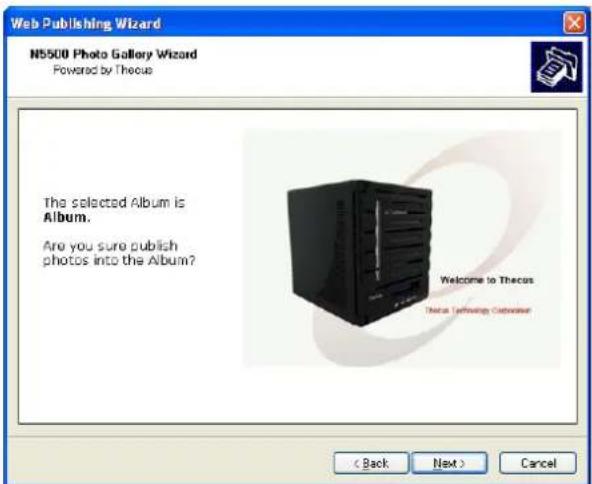
text_image
Web Publishing Wizard NS500 Photo Gallery Wizard Powered by Theocus The selected Album is Album. Are you sure publish photos into the Album? Welcome to Theocus Note: Following CDS/DS/DS < Back Next > Cancel- Windows will show you that the picture upload is in progress.
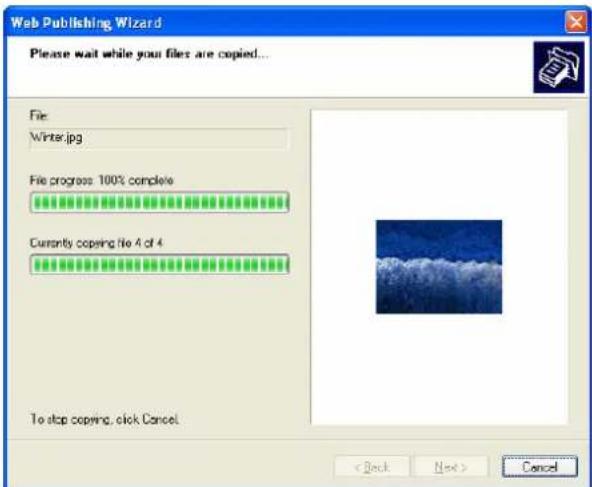
text_image
Web Publishing Wizard Please wait while your files are copied... File: Winter.jpg File progress: 100% complete Currently copying file 4 of 4 To stop copying, click Cancel. < Back Next > Cancel- When the upload is finished, the Wizard will ask you whether if you want to go to the website. Click Finish to go to your Photo Web Server.
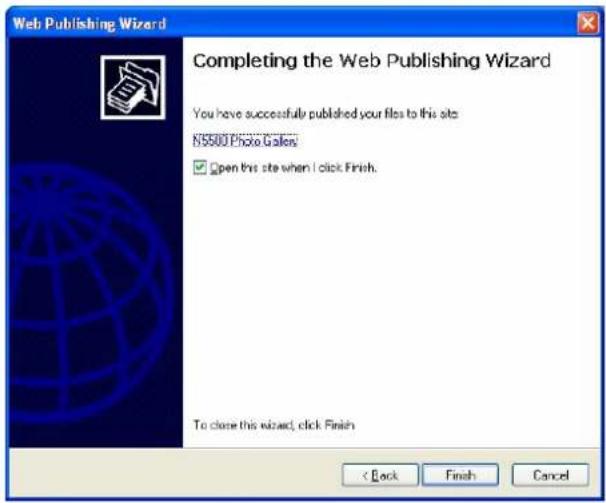
text_image
Web Publishing Wizard Completing the Web Publishing Wizard You have successfully published your files to this site: MS500 Photo Galers ✓ Open this site when I click Finish. To close this wizard, click Finish < Back Finish Cancel- Click on the user's icon to go to that user's album.
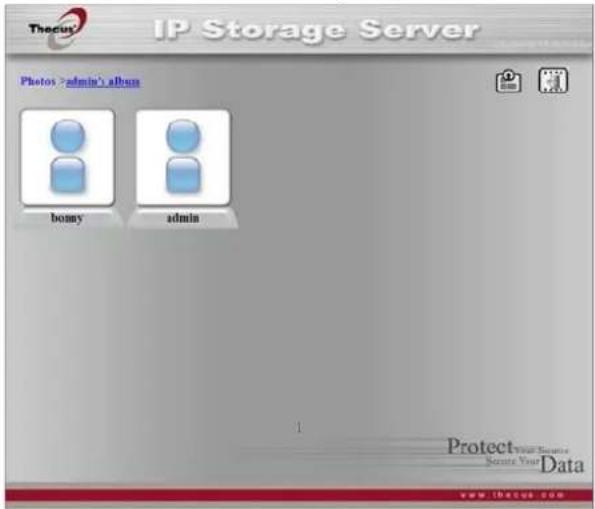
text_image
Theocus IP Storage Server Photos >admin's album bonny admin ProtectYourSource Scute YourData www.thocus.com- You will see the user's album list. Click on Album.
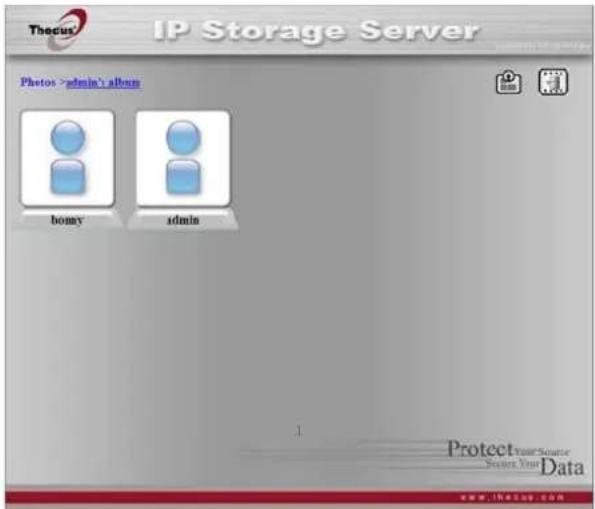
text_image
IP Storage Server Photos >admin> albums bonny admin ProtectYourSource Source Your Data www.thocus.com- Finished! You will see the pictures just selected in the album.
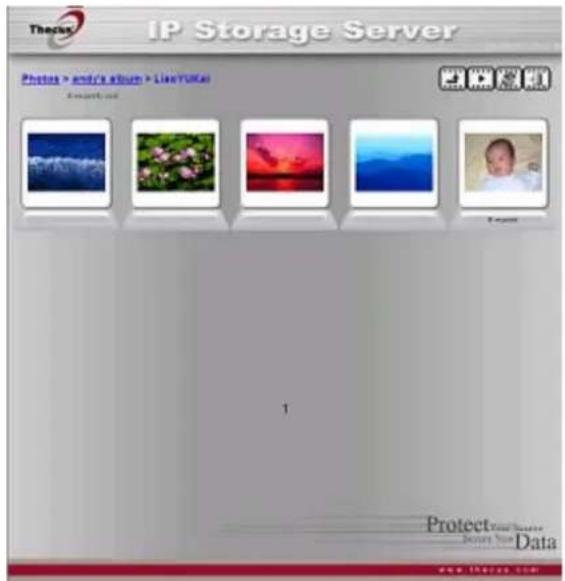
text_image
Thecat IP Storage Server Photos > and's album > LiveYUCA Project site 1 Protect your Data www.thescat.comManaging Albums and Photos
Icon
Function
Description

Make Cover Make selected photo your cover picture.

Back
Return
to the previous screen.

Add Add a new album or photos.

Modify
Edit the name and description of the selected album or photo. Each name is limited to 20 characters and each description is limited to 255 characters.

Delete Delete the selected albums or photos.
NOTE
- Only logged in users will see these icons.
- To prevent system errors, the N5500 sets the following limitations on photo files:
• Each file upload is limited to a size of 8MB. Files exceeding 8MB will NOT be uploaded and no error message will appear. - Only these photo file types will be uploaded: *.jpg, *.gif, *.bmp, *.png, *.pcx, *.psd, *.bmp.
- If duplicate file names exist during upload process, system will add a number in front of the original file name (abc → 1abc).
Creating Albums
To create a photo album, follow the steps below:
- Click the Add button to create a new album.
- Enter a name for the album, and enter a description if you wish. Then, click on the Create Album button.
Password Protecting Albums
If you would like to put a password on a particular album, follow these steps:
- Select the album to be protected, click on the Edit button, and the Album Edit screen will appear.
- The owner of the album can enter an album password to protect the album, so that only people with the correct password can view the album.
Uploading Pictures to Albums
Uploading pictures to albums using the Web User Interface is easy:
- When the album is created, click the album icon to enter the album. Initially the album is empty.
- Click the Add button to upload pictures into the album. The Upload Photos screen will appear. Users can select and upload up to 8 pictures at a time.
- Once the picture is uploaded, you can view it in the album. The owner of the album can delete or modify the pictures with the Delete or Modify buttons on the top right hand corner.
EXIF Information
While viewing pictures, you can also have the N5500 display the EXIF information for each photo.
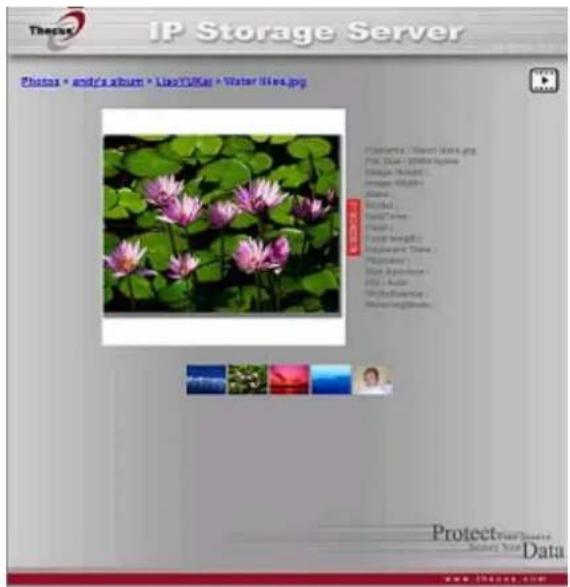
text_image
IP Storage Server Photos • and/or album • Lisa/TUGAI • Water Blue.jpg File name: Windows 9003.psd File Size: 2000000000 Image Style: Image Style1 Image Color: Image Color: Image Color: Image Color: Image Color: Image Color: Image Color: Image Color: Image Color: Image Color: Image Color: Image Color: Image Color: Image Color: Image Color: Image Color: Image Color: Image Color: Image Color: Image Color: Image Color: Image Color: Image Color: Image Color: Image Color: Image Color: Image Color: Image Color: Image Color: Image Color: Image Color: Image Color: Image Color: Image Color:Simply click the EXIF button to display EXIF information. To hide this information, click the EXIF button again.
Slide Shows
Slide shows are a great way to enjoy pictures stored on your N5500.
You can click on the Start Slide Show icon on the top right hand corner to start the slide show.
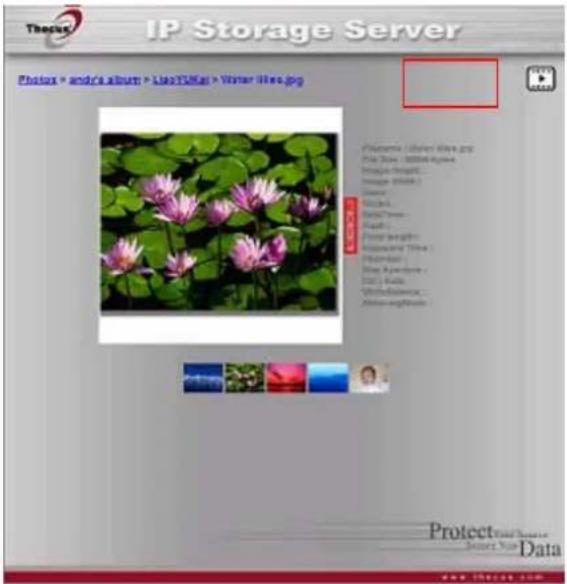
text_image
IP Storage Server Photo = and/or album > LiveTSLR > Water files.jpg File Size: 1000000000 Image Length: ... Image (Block) Name: Movie: Movie Length: Movie Length: Movie Length: Movie Length: Movie Length: Movie Length: Movie Length: Movie Length: Movie Length: Movie Length: Movie Length: Movie Length: Movie Length: Movie Length: Movie Length: Movie Length: Movie Length: Movie Length: Movie Length: Movie Length: Movie Length: Movie Length: Movie Length: Movie Length: Movie Length: Movie Length: Movie Length: Movie Length: Movie Length: Movie Length: Movie Length: Movie Length: Movie Length: Movie Length: 1000000000 Protected by: Home Water Your Data www.thesps.comTo stop the slide show, click on the Stop Slide Show icon on the top right hand corner.
Mapping a Client PC to the N5500
You can map share folders on the N5500 so that you can access them as if they were drives on your computer. You can connect to the shared network folders on the N5500 as follows:
Windows
-
Go to the My Computer folder in Windows.
-
In the menu bar, select Tools and then Map Network Drive...
-
The Map Network Drive window appears.
-
Assign a drive letter for the share folder.
-
Click the Browse button to find the folder over your network. Alternatively, you may enter the folder name you wish to connect to or enter its IP address. (i.e. \192.168.1.100\share)
-
Click Finish. When the Connect As... window appears, enter your user name and password.
-
Click OK. The share folder appears as the drive you assigned. You can now access this folder as though it were a drive on your computer.
Apple OS X
On an Apple computer, you can connect to shared computers and servers using a network address.
- Choose Go > Connect to Server...
-
Enter the network address for the server in the Server Address text box.
When connecting using SMB/CIFS protocol, type:
smb://192.168.1.100/Folder1
When connecting using AFP protocol, type:
afp://192.168.1.100/Folder1
Click Connect. -
When MAC OS X is trying to connect N5500, it will ask for a User Name and Password which has access to the folder.
-
When MAC OS X has connected to the N5500 successfully, an icon representing the folder will appear on the MAC OS X desktop. You can access the folder by double clicking on the icon.
Mapping the N5500 as an iSCSI Drive
With the N5500, you are able to map it as an iSCSI drive. With iSCSI, you can remotely access the N5500 at great speeds, as if it were installed as a local drive in your computer.
To do this, simply follow the steps below:
Windows 2000/XP
-
First, download the iSCSI Initiator from the Microsoft website (http://www.microsoft.com). You can find this software by entering iSCSI Initiator into the search box on their homepage.
-
Once the download is complete, install the iSCSI Initiator by double-clicking the EXE file. You may be presented with the following security warning. Click Run to continue.
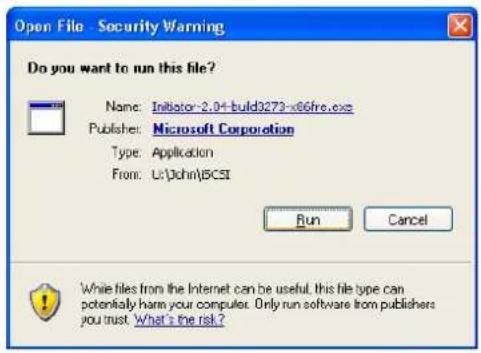
text_image
Open File - Security Warning Do you want to run this file? Name: Initiator-2.04-build3273-x66fre.exz Publisher: Microsoft Corporation Type: Application From: U:\John\5CSI Run Cancel While files from the Internet can be useful, this file type can potentially harm your computer. Only run software from publishers you trust. What's the risk?- You will now install the iSCSI Initiator using the Setup Wizard. Click Next to continue.

text_image
Software Update Installation Wizard Use this update to install the following software update: Microsoft iSCSI Initiator Before you install this update, we recommend that you - Back up your system - Close all open programs You might need to restart your computer after you complete this update. To continue, click Next. < Back > Cancel- Leave the default selections and click Next.

text_image
Software Update Installation Wizard Microsoft iSCSI Initiator Installation Microsoft iSCSI Initiator will be installed Installation Options ✓ Virtual Pad Drive ✓ Software Service ✓ Software Initiator ✓ Microsoft MR103 (Upcoming Support) for iSCSI < Back Next > Cancel- Read the license agreement. To continue with the installation, click I Agree and then click Next.
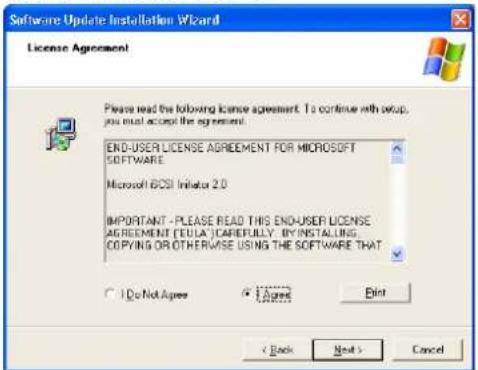
text_image
Software Update Installation Wizard License Agreement Please read the following license agreement. To continue with setup, you must accept the agreement: END-USER LICENSE AGREEMENT FOR MICROSOFT SOFTWARE. Microsoft GCSI Initiator 2.0 IMPORTANT - PLEASE READ THIS END-USER LICENSE AGREEMENT (EULA) CAREFULLY, BY INSTALLING, COPYING OR OTHERWISE USING THE SOFTWARE THAT Do Not Agree Agree Edit < Back Next > Cancel- The iSCSI Initiator will now install automatically. Click Finish once completed.
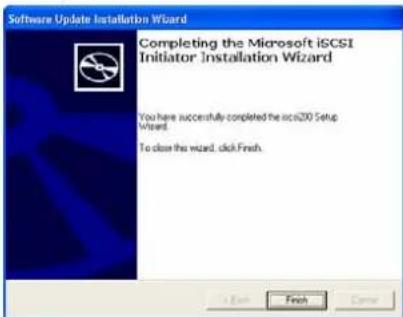
text_image
Software Update Installation Wizard Completing the Microsoft iSCSI Initiator Installation Wizard You have successfully completed the iSCI20 Setup Wizard. To close this wizard, click Finish.- Start the iSCSI Initiator by double-clicking its icon on the desktop. The iSCSI Initiator properties window will appear.

Microsoft iSCSI Initiator
- Select the Discovery tab. Under Target Portals, click Add.
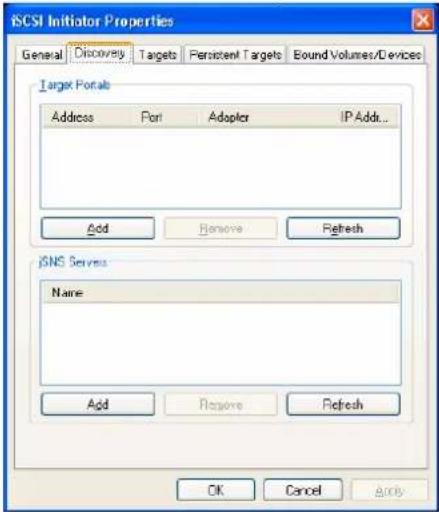
text_image
iSCSI Initiator Properties General Discovery Targets Persistent Targets Bound Volumes/Devices Target Portals Address Port Adapter IP Addr... Add Remove Refresh jSNS Servers Name Add Remove Refresh OK Cancel Addy- Enter the IP address of the N5500. Click OK.

text_image
Add Target Portal Type the IP address or DNS name and socket number of the portal you want to add. Click Advanced to select specific settings for the discovery session to the portal. IP address or DNS name: xxx.xxx.xxx.xxx Port: 3260 Advanced... OK Cancel- On the iSCSI Initiator Properties window, select the Targets tab. With the iSCSI target highlighted, click Log On. The Log On to Target dialogue will appear.
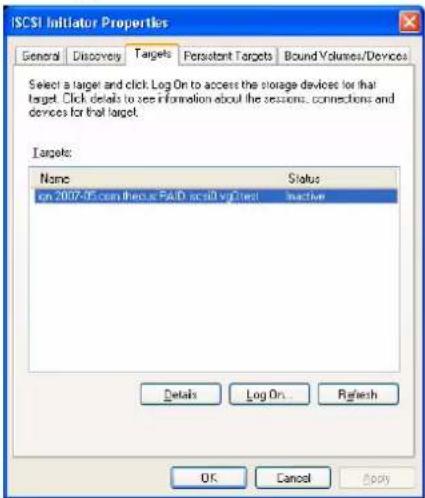
text_image
SCSI Initiator Properties General Discovery Targets Persistent Targets Bound Volumes/Devices Select a target and click Log On to access the storage devices for that target. Click details to see information about the sessions, connections and devices for that target. Targets: Name Status on 2007-05.com there is PAID as all vgDirect Inactive Details Log On... Refresh OK Cancel Apply- If you have not enabled CHAP, click OK to continue.

text_image
Log On to Target Target name: ign.2007-05.com.thecus:PAID.iscsi0.vg0.test Automatically restore this connection when the system boots Enable multi-path Only select this option if iSCSI multi-path software is already installed on your computer. Advanced... OK CancelIf you have enabled CHAP, click Advanced. Under Advanced Settings, check the CHAP login information checkbox and enter your username and password. Click OK.
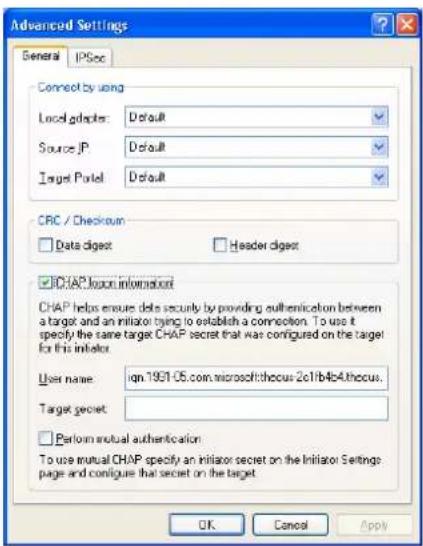
text_image
Advanced Settings General IPSec Connect by using Local objects: Default Source JP Default Target Panel Default CRC / Checkout Data digest Header digest CHAP location information CHAP helps ensure data security by providing authentication between a target and an initiator trying to establish a connection. To use it specify the same target CHAP secret that was configured on the target for this initiator. User name: qjn 1991-05.com.microsoft:thecus 2c11b4bA.thecus. Target secret: Perform mutual authentication To use mutual CHAP specify an initiator secret on the Initiator Settings page and configure that secret on the target. OK Cancel Apply- Right click My Computer on the desktop and select Manage.

text_image
Desktop My Documents My Computer Collapse Explore Open Search... Manage Map Network Drive... Disconnect Network Drive... Delete Rename Properties- Click on Disk Management and you will see a new hard disk listed.

text_image
Computer Management Volume Layout Type File System Status Capacity Free Space % Free SYSTEM Tools Event Server ShareHolders Local Users and Groups Performance Links and Alerts Device Manager Storage Personal Storage Data Delegments Services and Applications A27082 (C:) 4.35 GB NTFS Healthy (Centers) 4.69 GB 1.71 GB 35 % A2443 (C:) Partition: basic NTFS Healthy (Centers) 44.75 GB 33.85 GB 32 % FAT32 (C:) Partition: basic FAT32 Healthy 4.88 GB 1.38 GB 69 % Disk 0 Basic DATA (D:) Basic 74.53 GB DATA (D:) Customs 4.35 GB NTFS FAT32 (G:) Healthy (Centers) 4.35 GB FAT32 Healthy Disk 1 Unknown 69.59 GB Unallocated 69.59 GB Disk 0 DVD (C:) Unallocated Primary partition Extruded partition Logical above- Initialize the new hard disk and you will then be able to use the iSCSI target as a local drive.
Windows Vista
Because Windows Vista has the Microsoft iSCSI Initiator pre-installed, you will not have to install this piece of software. Instead, start the iSCSI Initiator and follow steps 8-14 to map the N5500 as an iSCSI drive.
Chapter 6: Tips and Tricks
USB and eSATA Storage Expansion
The N5500 supports external USB hard disks through its five USB ports. Once a USB hard disk has successfully mounted, the entire volume will be linked automatically to the default USB HDD folder. The N5500 supports up to 5 USB external storage devices. All file names on the USB disk volume are case sensitive.
The N5500 also supports eSATA hard disks with its eSATA port.
Before attaching an eSATA or USB disk drive to N5500, you have to partition and format it on a desktop computer or a notebook first. The attached device will be located at \192.168.1.100\usbhdd\sdf1 where 192.168.1.100 means the IP address of N5500 and sdf1 stands for the first partition on disk #6, the eSATA or USB disk drive. If it is an NTFS partition, NAS users can open or copy files from \192.168.1.100\usbhdd\sdf1 but cannot add new files or modify existing files.
NOTE
If you want to write to an USB storage device, the file system must be FAT32.
| USB Storage | FAT32 Partition | NTFS Partition |
| Read | OK | OK |
| Write | OK | - |
Adding a Spare Disk
With a RAID 1, RAID 5, RAID 6, or RAID 10 volume, you can add a spare disk after the initial RAID is setup. To add a spare disk, follow the steps below:
- On the RAID Configuration Screen, tick the checkbox of the hard disk you wish to designate as a spare disk.
- Click Add Spare. The disk will be configured as a spare disk. The system automatically rebuilds the spare disk when one of the disks in the RAID set fails.
Remote Administration
You can set up your N5500 for remote administration. With remote administration, you can access your N5500 over the Internet, even if your N5500 is behind a router. This is especially useful if you are traveling and suddenly need a file from your N5500.
Setting up remote administration is a three-part process, and will require the following equipment:
• Thecus N5500 NAS device
- Cable / DSL Router with Dynamic DNS support
- Home PC
- Internet Connection
NOTE
Router setup will differ slightly depending on router used. For this example, we will use the Asus WL500g because it has support for Dynamic DNS. Contact your router hardware vendor for setup help.
Part I - Setup a DynDNS Account
- Go to http://www.dyndns.org from your home PC.
- Click on the Sign Up Now link.
- Check the Check boxes, select a user name (i.e.: N5500), enter your email address (i.e.: xxx@example.com), check Enable Wildcard, and create a password (i.e.: xxxx).
- Wait for an email from www.dyndns.org.
- Open the email and click on the link to activate your account
Part II - Enable DDNS on the Router
- Go to the router setup screen and select IP Config > Miscellaneous DDNS Setting from your Home PC.
- Click on Yes for Enable the DDNS Client?
- Select www.dyndns.org.
- Go to router setup screen, and enter the following information:
a. User Name or E-mail Address: xxx@example.com
b. Password or DDNS Key: xxxx
c. Host Name: www.N5500.dyndns.org
d. Enable wildcard? Select Yes
e. Update Manually: Click Update
Part III - Setting up Virtual Servers (HTTPS)
- Navigate to NAT Setting > Virtual Server.
- For Enable Virtual Server?, select Yes
-
Setup the HTTPS Server
a. Well-Known Applications: Select User Defined
b. Local IP: Enter 192.168.1.100
c. Port Range: 443 (the default HTTPS port setting on the N5500)
d. Protocol: select TCP
e. Click Add.
f. Click Apply. -
Test the HTTPS connection from another computer on the Internet
a. From a remote computer, open your browser and enter https://www.N5500.dyndns.org
b. You should see the login page of N5500.
Firewall Software Configuration
If you are using a software firewall (i.e. Norton Internet Security) and are having trouble connecting to the N5500, you can try the following steps:
- Double click the NIS icon on system tray, and then configure the Personal Firewall.
- On the Programs page, find the SetupWizard.exe and change its permission to "Permit All". If it's not in the program list, use the Add or Program Scan buttons to find it.
- On the Networking page, manually add N5500 IP address (i.e. 192.168.1.100) to the Trusted list.
Replacing Damaged Hard Drives
If you are using RAID 1, RAID 5, or RAID 6 you can easily replace a damaged hard drive in the Thecus N5500 while keeping your data secure with the system's automatic data recovery.
Hard Drive Damage
When a hard drive is damaged and data in the RAID volume, the system LCD will display warning message also the system beeps.
Replacing a Hard Drive
To replace a hard disk drive in the N5500:
- Remove the tray with the damaged hard disk.
- Unscrew the damaged hard disk and remove it from the tray.
- Slide a new hard disk into the tray and fasten the screws.
- Insert the hard disk tray back into the N5500 until it snaps into place. You can also lock it with a key if desired.
- The LED blinks green when the HDD is accessed.
RAID Auto-Rebuild
When using RAID 1, 5, 6, or 10 on the N5500, you can use the auto-rebuild function when an error is detected.
- When a hard disk fails the system beeps and/or an email notification is sent to specified receivers.
- Check the LCD to see which disk has failed.
- Follow the steps mentioned above to replace the failed hard disk.
- The system automatically recognizes the new hard disk and starts the auto-rebuild sequence to resume its status before the hard disk crash.
Chapter 7: Troubleshooting
Forgot My Network IP Address
If you forget your network IP address and have no physical access to the system, you can find out the IP address by either looking directly onto the N5500's LCD panel, or by using the setup wizard to retrieve the IP of your N5500.
- Start the Setup Wizard, and it will automatically detect all Thecus IP storage products on your network.
- You should be able to find the IP address of the N5500 which you have forgotten in the Device Discovery screen.
Can't Map a Network Drive in Windows XP
You may have problems mapping a network drive under the following conditions:
- The network folder is currently mapped using a different user name and password. To connect using a different user name and password, first disconnect any existing mappings to this network share.
- The mapped network drive could not be created because the following error has occurred: Multiple connections to a server or shared resource by the same user, using more than one user name, are not allowed. Disconnect all previous connections to the server or shared resource and try again.
To check out existing network connections, type net use under the DOS prompt. You may refer the URL below for more network mapping information.
http://esupport.thecus.com/support/index.php?_m=downloads&_a=viewdownload&downloaditemid=57&nav=0
Restoring Factory Defaults
From the System menu, choose the Factory Default item and the Reset to Factory Default screen appears. Press Apply to reset the N5500 to factory default settings.
WARNING
Resetting to factory defaults will not erase the data stored in the hard disks, but WILL revert all the settings to the factory default values.
Problems with Time and Date Settings
The administrator is able to select an NTP Server to keep the N5500's time synchronized. However, if the N5500 can not access the Internet, you may encounter a problem when setting the Time and Time Zone. If this happens:
- Login to the Web Administration Interface.
- Navigate to System Management> Time.
-
Under NTP Server, select No.
-
Set the Date, Time, and Time Zone.
- Click Apply.
In addition, if the N5500 is able to access the Internet and you want to keep the NTP Server clock.isc.org by default, please make sure the DNS Server is correctly entered, thereby allowing the NTP Server name to correctly resolve. (See System Network > WAN > DNS Server)
Dual DOM Supports for Dual Protection
The most advance and useful of N5500 is Dual DOM implemented. In the normal circumstance, it has no need to have this feature involved. But with irresistible cause like power cut or human error by accident occurred especially during system booting stage, this will become the great feature to prevent system down time. Practically while it happened, system will try to recovery the DOM 1 from DOM 2 first. If it is unachievable then system can boot from DOM 2. And all of this procedure can be operated by LCM.
NOTE
The Dual DOM in DOM1 is default master and FW upgrading will only execute in DOM1 unlike DOM2 is 'Read only' initially.
Any circumstance occurred, while DOM2 successes recover DOM1. The FW will be version of DOM2. Therefore, it may need to upgrade to the version of DOM1 it has.
If DOM1 can not be recovery from DOM2, then system will boot up from DOM2. The original configuration in DOM1 may need to setup again with DOM2 operation.
Chapter 8: Revision Updates (FW 3.00.01 to 3.00.04)
What's New
There are additional features implemented into the new 3.00.04 version firmware.
RAID Expansion for iSCSI Target Volume
First, the iSCSI volume is now able to expand its capacity from unused space. From the volume list, simply select the iSCSI volume you like to expand and click the Expand button:

text_image
Space Allocation RAID Information Master RAID ID RAID Level Status Disks Total Data Used Capacity Capacity USB iCSCI * RAID 5 Healthy 1,2,3,4,5 1855.5 10.5 GB / 1006 GB N/A 519.2 GB Volume Allocation List iSCSI Target iCSCI Thin-Prvision Target Target USB Advance Option Add Modify Expand Delete Type Name Capacity iCSCI n553046 37.1 GB iCSCI n55304602 74.1 GB iCSCI n55304603 37.1 GBYou will then see the dialog box displayed below. Drag the Expand Capacity bar to the size you want. Then press Expand to confirm the operation.
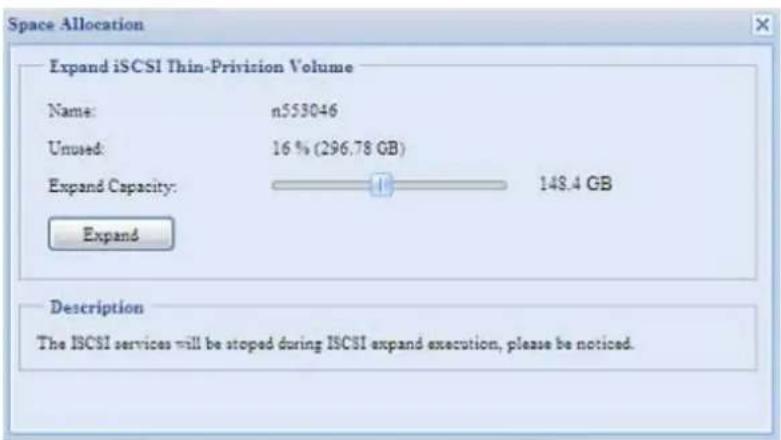
text_image
Space Allocation Expand iSCSI Thin-Privision Volume Name: n553046 Unused: 16 % (296.78 GB) Expand Capacity: 148.4 GB Expand Description The iSCSI services will be stopped during iSCI expand execution, please be noticed.RAID Volume Encryption
With firmware v3.00.04, you can protect your data by using RAID Volume Encryption function to prevent the risk of data exposure. To activate this function, the Encryption option needs to be enabled while the RAID is created and followed by password input for identification. Also, an external writable USB disk plugged into any USB port on the system is required to save the password you have entered while the RAID volume is being created. See the screenshot below for details.
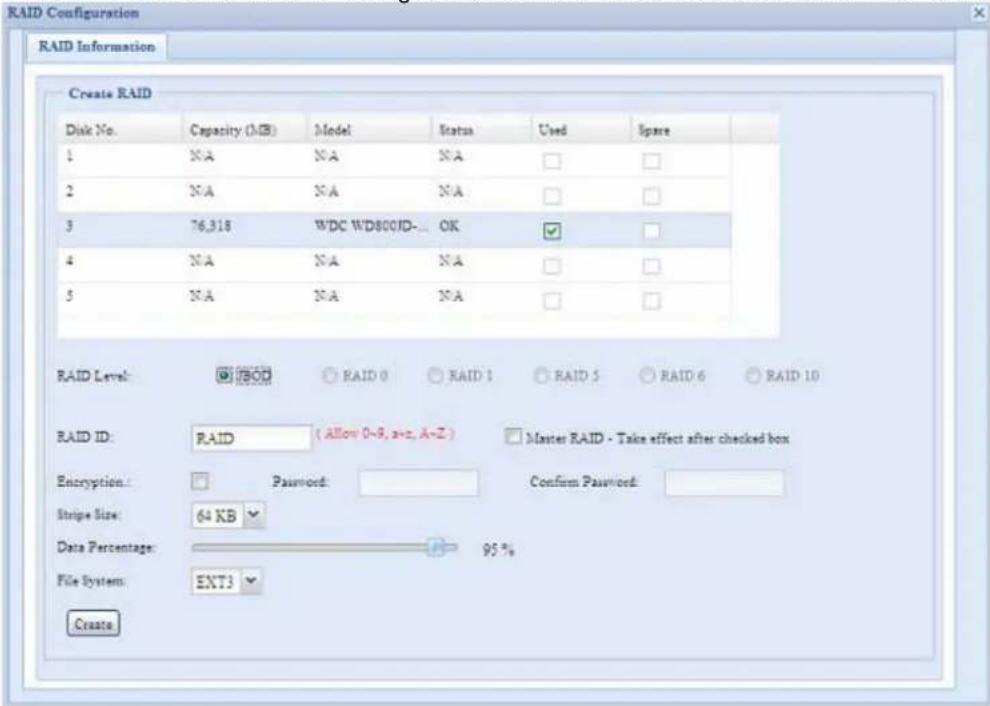
text_image
RAID Configuration RAID Information Create RAID Disk No. Capacity (MB) Model Status Used Space 1 N/A N/A N/A □ □ 2 N/A N/A N/A □ □ 3 76,318 WDC WD800/ID-... OK ✓ □ 4 N/A N/A N/A □ □ 5 N/A N/A N/A □ □ RAID Level: RAID 0 RAID 1 RAID 5 RAID 6 RAID 10 RAID ID: RAID (Allow 0~8, a-z, A-Z) Master RAID - Take effect after checked box Encryption: Password: Confirm Password: Stripe Size: 64 KB Data Percentage: 95 % File System: EXT3 CreateOnce the Create button has been pressed with the Encryption checkbox enabled, the following message pop-up will appear for confirmation.

text_image
RAID Configuration To encrypt RAID volume will cause performance down, and you need to have writable USB disk insert to USB port to store encrypted password. Strongly recommend to backup your encrypted password to somewhere else safely, or the password lose will cause data unreachable.After the RAID volume has been created, you may remove this USB disk until the next time the system boots. The RAID volume can not be mounted if the USB disk with key can not be found in any system USB port when the volume is accessed. To activate the encrypted volume, plug the USB disk containing the encryption key and into any system USB port.
We are strongly recommended copying the RAID volume encryption key to a safe place. You can find the encryption key file from the USB disk in the following format:
(RAID volume created date)_xxxxx.key
WARNING
Please keep USB disk in a safe place and also backup the encrypted key. There is no way to rescue data back if the key is lost.
NOTE
- With RAID volume encryption enabled, the system performance will go down.
- With RAID volume encryption enabled, RAID volume expansion will operate in off line mode.
RAID volumes with encryption enabled will be displayed with a key lock symbol next to volume ID name.
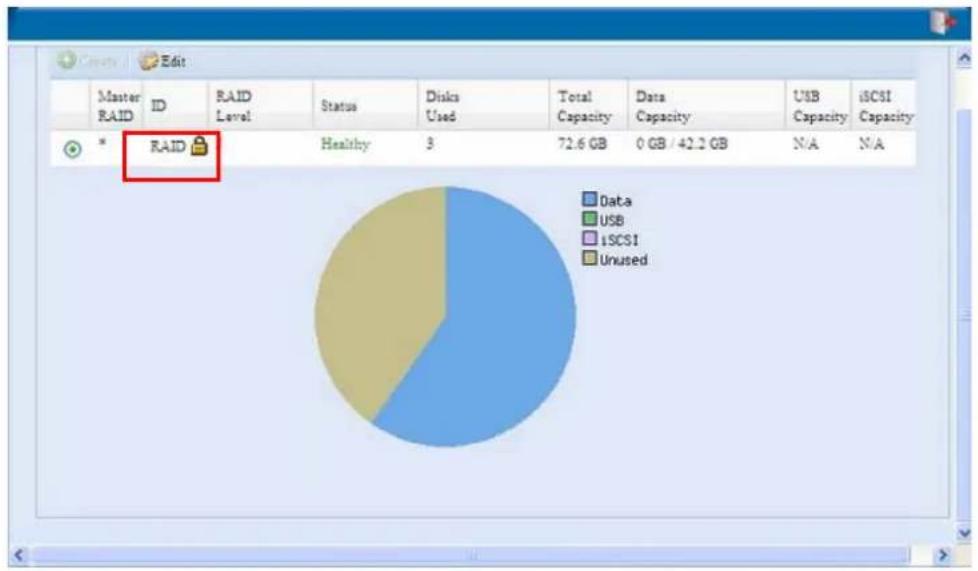
pie
| Status | Value | | -------- | --------- | | Data | 72.6 GB | | Unused | 0 GB / 42.2 GB |iSCSI Thin-Provisioning
An advanced thin-provisioning for iSCSI feature is available in this firmware release. With this function, the iSCSI capacity can be more flexible and more efficiently serve more users.
The idea for iSCSI thin-provisioning is sharing the available physical capacity to a number of iSCSI target volumes and also setup virtual capacity to expand the physical size while it needed.
To setup iSCSI thin-provisioning, go to Space Allocation under the Storage category. The iSCSI thin-provisioning volume needs to be created first. Simply click iSCSI Thin-Provision Target. You can refer the screen shot below.
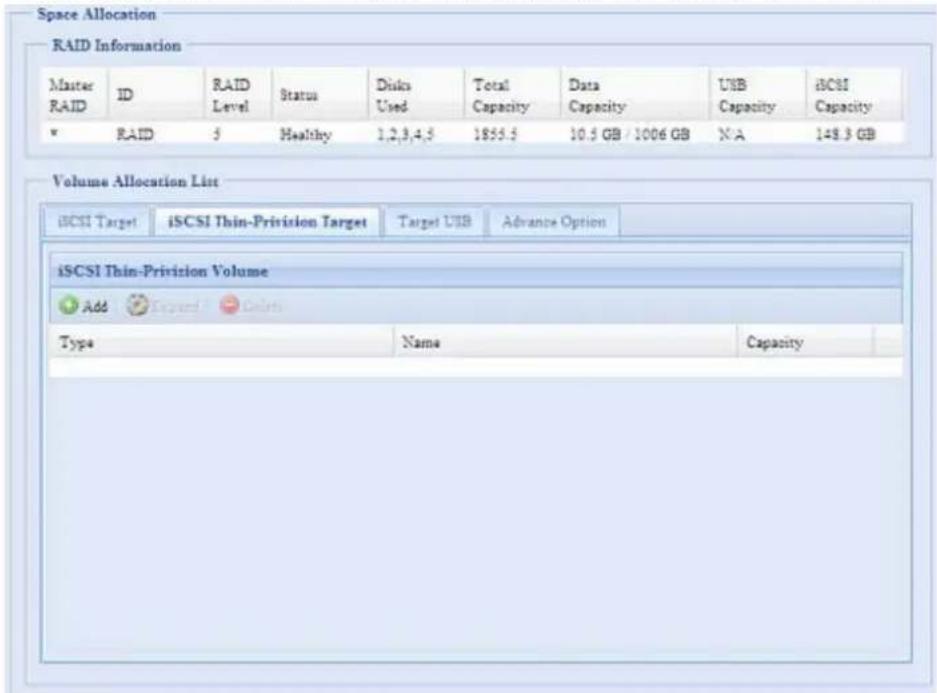
text_image
Space Allocation RAID Information Master RAID ID RAID Level Status Disks Total Data Used Used Capacity Capacity UIB * RAID 5 Healthy 1,2,3,4,5 1855.5 10.5 GB / 1006 GB N/A 148.3 GB Volume Allocation List iSCSI Target iSCSI Thin-Privision Target Target USB Advance Option iSCSI Thin-Privision Volume Add Cancel Cancel Type Name CapacityNext, setup the physical capacity for iSCSI thin-provision volume by dragging the Allocation bar to the desired size.

text_image
Space Allocation Create iSCSI Thin-Privision Volume RAID ID: RAID Unused: 36 % (667.68 GB) Allocation: 667.68 GB OKAfter the size has been determined, click OK to confirm. Now you will see the iSCSI thin-provisioning volume is available from the list. Please refer to the screenshot below.

text_image
iSCSI Target iSCSI Thin-Privision Target Target USB Advance Option iSCSI Thin-Privision Volume Add Expand Delete Type Name Capacity iSCSI Thin-Privision Volume iSCSI Thin-Privision Volume 333.8 GB iSCSI Thin-Privision Add Modify Delete Type Name CapacityNow you can start to create iSCSI targets to join the newly-created iSCSI thin-provision volume. Basically, the iSCSI target under iSCSI thin-provisioning has exactly same settings screen as the standard iSCSI target volume creation. The only difference is the "Virtual Size" of capacity.
Unlike creating standard iSCSI target volumes, the capacity has been physically allocated. The iSCSI target volume creation under thin-provisioning can virtually be up to 16000GB (16TB).
Let's take the example below:
- The physical size for the iSCSI thin-provision volume is 333.88GB. You can refer the screenshot above.
- The iSCSI target volume under thin-provisioning starts with 333.38GB in physical size and you may use drag the Virtual Size bar to select the desired virtual size. The maximum virtual size is 16000GB.
- In this case, if you make the iSCSI target volume 1700GB, then the virtual size is available for the next iSCSI target volume under thin-provisioning is 14300GB (16000-1700).
- The limit is 5 iSCSI target volumes under thin-provisioning or a virtual size of 16000GB.
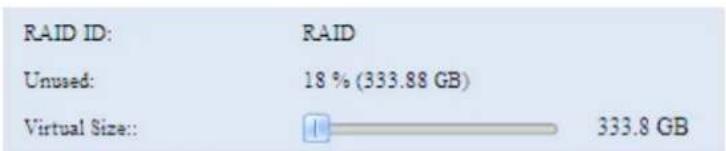
text_image
RAID ID: RAID Unused: 18 % (333.88 GB) Virtual Size:: 333.8 GBiSCSI Thin-provision physical size starts with 333.8GB
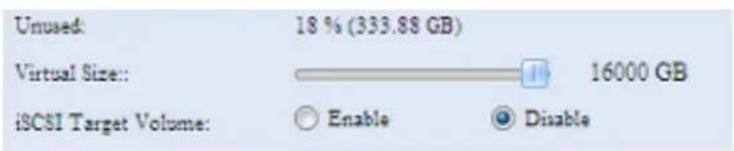
text_image
Unused: 18 % (333.88 GB) Virtual Size:: 16000 GB i9CSI Target Volume: Enable DisableThe virtual capacity is limited to 16000GB
The screen shot for iSCSI target volume creation under thin-provisioning; the physical capacity 333.8GB.

text_image
Space Allocation Create iSCSI Thin-Privision RAID ID: RAID Unused: 18 % (333.88 GB) Virtual Size: 333.8 GB iSCSI Target Volume: Enable Disable Target Name: Limit:(0~9, a~z) iqn_Year: 2009 iqn_Month: 08 LUN ID: 2 Authentication: None CHAP Username: Limit:(0~9, a~z, A~Z) Password: Limit:(0~9, a~z, A~Z,length between 12~16) Password Confirm: OK Description The iSCSI block size can be set under system advance option, default is 512 Bytes. Please using [4K] block size while more than 2TB capacity will be configured in Windows XP. Please using [512 Bytes] block size for application like VMware etc.The screen shot to setup an iSCSI target volume under thin-provisioning of 1700GB.
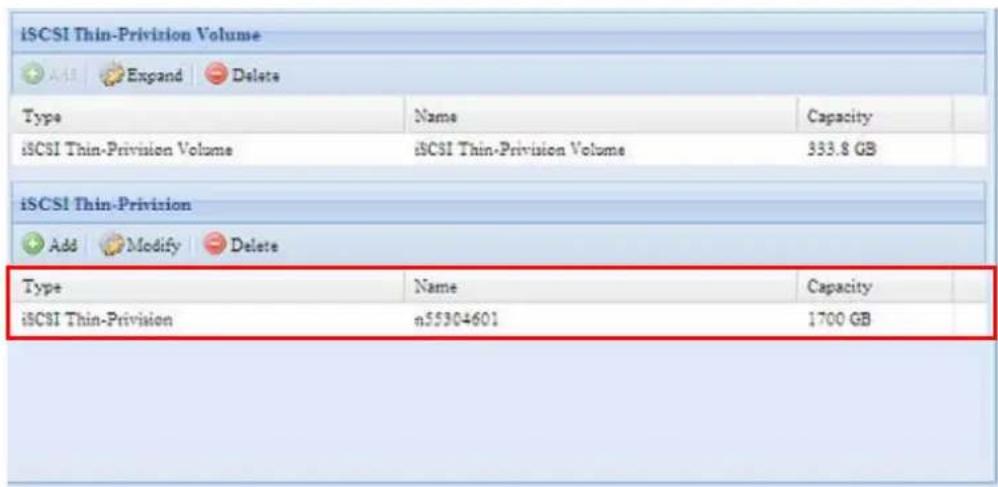
text_image
iSCSI Thin-Privision Volume Add Expand Delete Type Name Capacity iSCSI Thin-Privision Volume iSCSI Thin-Privision Volume 333.8 GB iSCSI Thin-Privision Add Modify Delete Type Name Capacity iSCSI Thin-Privision n55304601 1700 GBiSCSI target volume creation. The maximum virtual size is 14300GB (16000GB - 1700GB(1 ^st iSCSI target volume)).

text_image
Space Allocation Create iSCSI Thin-Privision RAID ID: RAID Unused: 18 % (333.88 GB) 14300GB Virtual Size: 333.8 GB iSCSI Target Volume: Enable Disable Target Name: Limit:(0~9, a~z) ion Year: 2009This screenshot lists iSCSI target volumes created under thin-provisioning. The 2^nd iSCSI target volume under thin-provisioning has been created with a capacity of 14300GB.

text_image
iSCSI Thin-Privision Volume Expand Delete Type Name Capacity iCSI Thin-Privision Volume iCSI Thin-Privision Volume 333.8 GB iCSI Thin-Privision Add Modify Delete Type Name Capacity iCSI Thin-Privision n55304601 1700 GB iCSI Thin-Privision n554036002 14300 GBThis message appears if there is no more room for new iSCSI target creation.

text_image
Volume Allocation List iSCSI Target iSCSI Thin-Privision Target Target USB Advance Option iSCSI Thin-Privision Volume Space Allocation Not enough free space to allocate. It takes at least 1GB free space to allocate iSCSI/USB volume Capacity 333.8 GB OK Type Name Capacity iSCSI Thin-Privision n55304601 1700 GB iSCSI Thin-Privision n554036002 14300 GBNOTE
- Each RAID volume can only create one iSCSI thin-provision volume.
- Each thin-provision volume can only create 5 ISCSI target volumes.
- The notification will be sent out if 90% of the physical size of iSCSI thin-provision capacity has been used.
iSCSI LUN ID
When iSCSI target volume has been created, there is a default LUN ID of 0 in previous firmware versions which was un-configurable. From v3.00.04, it is configurable from 1 to 254 with a default of the next available number in ascending numerical order. The LUN ID is unique and can not be duplicated except for LUN ID 0.
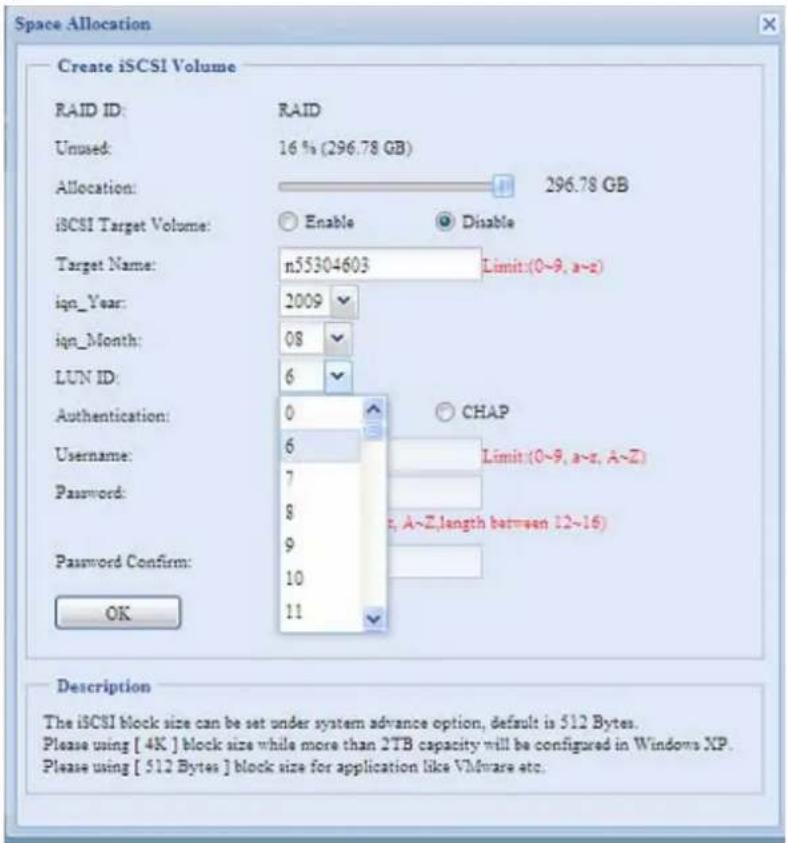
text_image
Space Allocation Create iSCSI Volume RAID ID: RAID Unused: 16 % (296.78 GB) Allocation: 296.78 GB iSCSI Target Volume: Enable Disable Target Name: n55304603 Limit:(0~9, a~z) iqn_Year: 2009 iqn_Month: 08 LUN ID: 6 Authentication: 0 CHAP Username: 6 Limit:(0~9, a~z, A~Z) Password: 7 Password Confirm: 8 Password Confirm: 9 10 11 Description The iSCSI block size can be set under system advance option, default is 512 Bytes. Please using [ 4K ] block size while more than 2TB capacity will be configured in Windows XP. Please using [ 512 Bytes ] block size for application like VMware etc.Error Corrections
None
Chapter 9: Revision updated up to FW 3.00.08
What's New
There are additional features implemented into the new 3.00.08 version firmware.
Updated Login User Interface
There is a brand new design for the admin login UI.
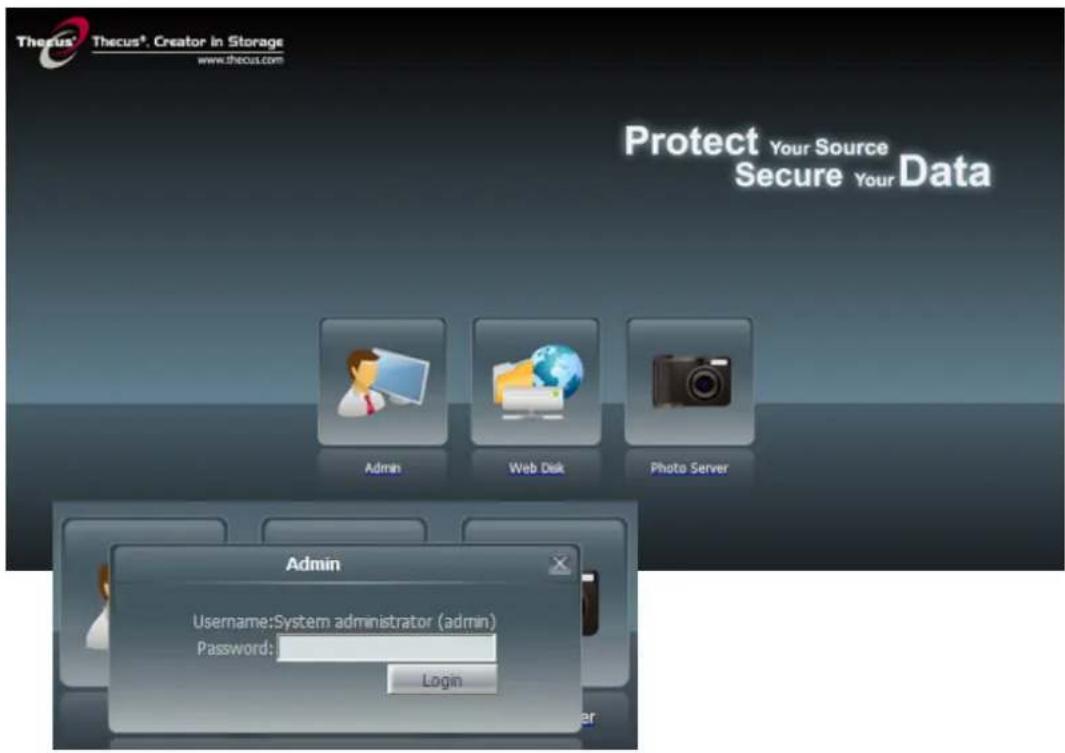
text_image
Thecus® Thecus®, Creator in Storage www.thecus.com Protect Your Source Secure Your Data Admin Web Disk Photo Server Admin Username:System administrator (admin) Password: LoginNOTE
The previous chapters have screenshots of the original user interface. Please note that all changes are visual only. There are no functional changes.
Updated Photo Server User Interface
Same as the admin login user interface, the photo server has a brand new art design from its previous version.
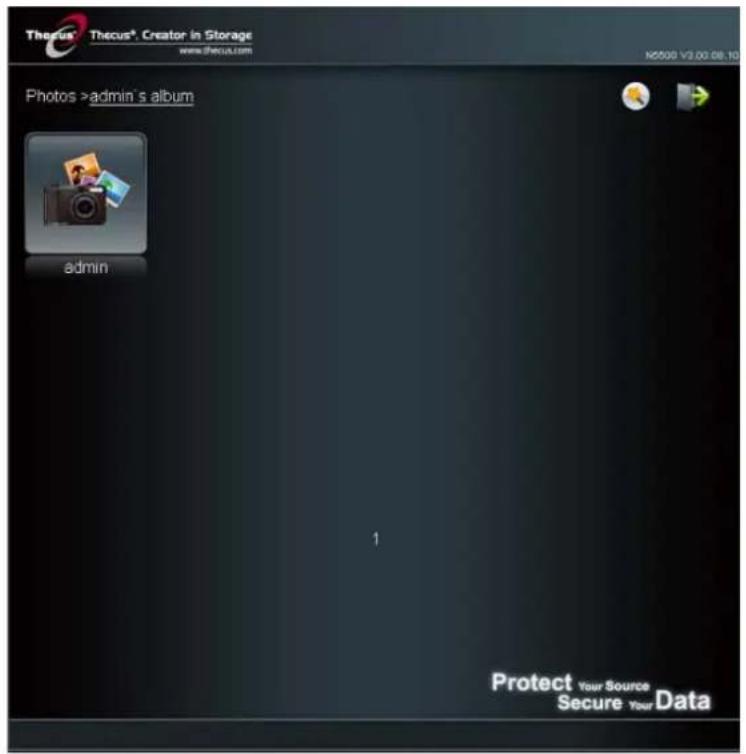
text_image
Thecus® Thecus® Creator in Storage www.thcus.com NOSOO V3.00.08.10 Photos >admin's album admin 1 Protect Your Source Secure Your DataDisclaimer Page Added
The following disclaimer page has been added to this firmware release. Please click the check box if you do not want to have this page displayed during the next login.
Disclaimer
THECUS has no liability, consequential, incidental or special damages. These include, without limitation, loss of recorded data, the cost of recovery of lost data, lost profits and the cost of the installation or removal of any THECUS products, the installation of replacement THECUS products, and any inspection, testing, or redesign caused by any defect or by the repair or replacement of Products arising from a defect in any THECUS products.
Users can now register their Thecus NAS online. Simply go to the online registration page and enable the registration function. The registration page states what system information will be kept in the archive. Users will receive firmware upgrade and module release notice regularly.
I agree. Don't show this message next time.
OK
Updated Main User Interface
The look and icons of the main user interface have been updated.
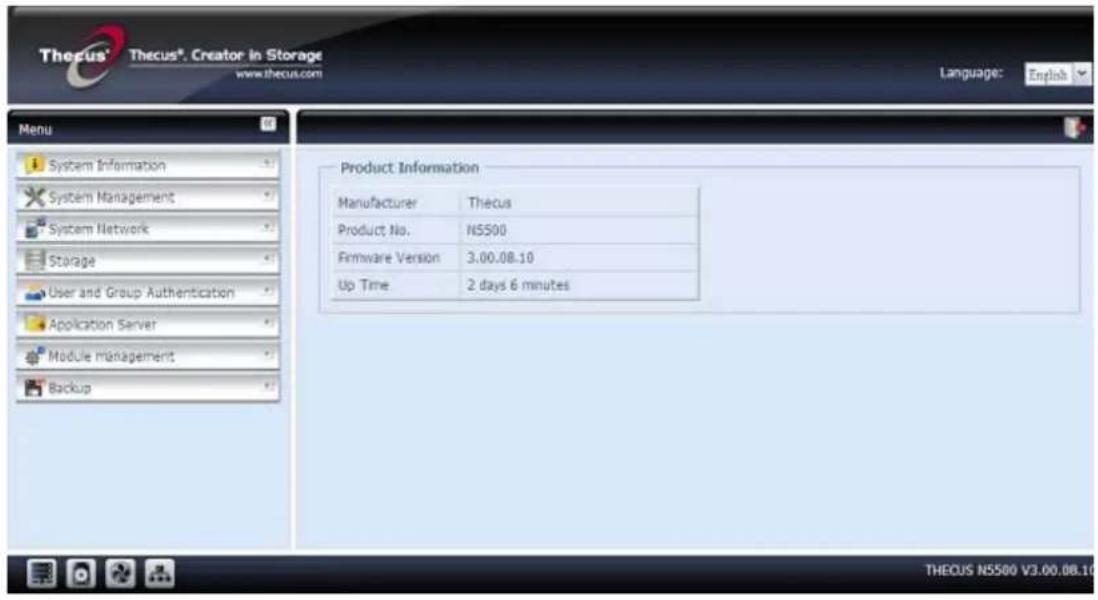
text_image
Thecus® Thecus®. Creator in Storage www.thecus.com Language: English Menu System Information System Management System Network Storage User and Group Authentication Application Server Module management Backup Product Information Manufacturer Thecus Product No. N5500 Firmware Version 3.00.08.10 Up Time 2 days 6 minutes THECUS N5500 V3.00.08.10Add On-Line Register Service
From main menu tree, there is a new "On-line Register" option added with this firmware release.
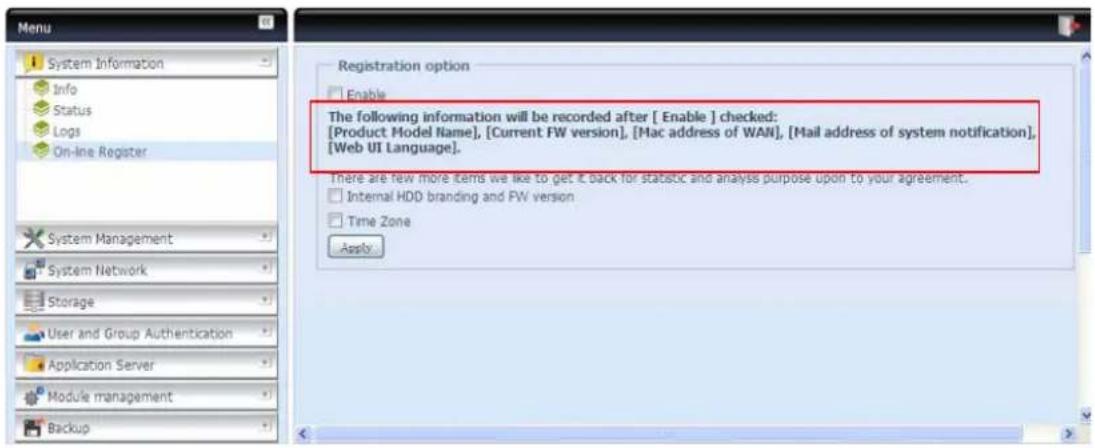
text_image
Menu System Information Info Status Logs On-line Register System Management System Network Storage User and Group Authentication Application Server Module management Backup Registration option Enable The following information will be recorded after [ Enable ] checked: [Product Model Name], [Current FW version], [Mac address of WAN], [Mail address of system notification], [Web UI Language]. There are few more items we like to get it back for statistic and analysis purpose upon to your agreement. Internal HDD branding and FW version Time Zone ApplyThis on-line register service can periodically update the user when new firmware and software modules are released by Thecus. To enable this service, simply check the "Enable" check box. By enabling this service, the items in bold will be sent to Thecus via the Internet.
Other than the defined items sent upon registration, there are also two additional items: "HDD Info" and "Time Zone". These two optional items can also be sent to Thecus anonymously for analysis and statistics purposes. To send these items, simply check the desired checkboxes to help Thecus improve its products and services.
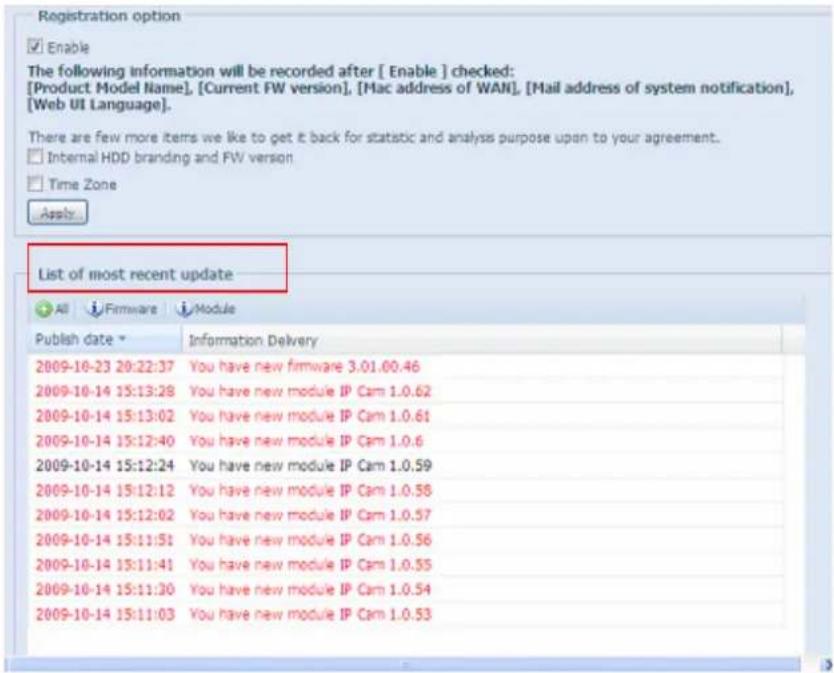
text_image
Registration option Enable The following information will be recorded after [ Enable ] checked: [Product Model Name], [Current FW version], [Mac address of WAN], [Mail address of system notification], [Web UI Language]. There are few more items we like to get it back for statistic and analysis purpose upon to your agreement. Internal HDD branding and FW version Time Zone Apply... List of most recent update All Firmware Module Publish date Information Delivery 2009-10-23 20:22:37 You have new firmware 3.01.00.46 2009-10-14 15:13:28 You have new module IP Cam 1.0.62 2009-10-14 15:13:02 You have new module IP Cam 1.0.61 2009-10-14 15:12:40 You have new module IP Cam 1.0.6 2009-10-14 15:12:24 You have new module IP Cam 1.0.59 2009-10-14 15:12:12 You have new module IP Cam 1.0.58 2009-10-14 15:12:02 You have new module IP Cam 1.0.57 2009-10-14 15:11:51 You have new module IP Cam 1.0.56 2009-10-14 15:11:41 You have new module IP Cam 1.0.55 2009-10-14 15:11:30 You have new module IP Cam 1.0.54 2009-10-14 15:11:03 You have new module IP Cam 1.0.53Added Rsync Setting under Nsync Target
The Thecus Nsync feature has added a third way to use Rsync to replicate data between two systems. For the target side to allow source cross data, the Rsync target server needs to first select "Enable" and then assign a username and password for authentication.

text_image
Menu System Information System Management System Network NFS FTP Media Server HTTP / Web Disk UPnP Nsync Target Bonjour Storage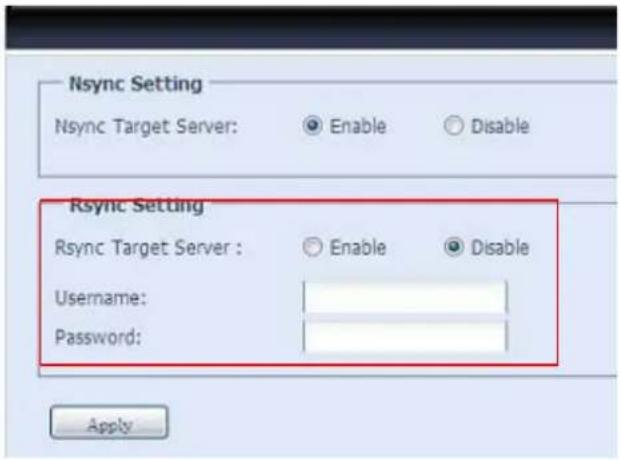
text_image
Nsync Setting Nsync Target Server: ○ Enable ○ Disable Rsync Setting Rsync Target Server : ○ Enable ○ Disable Username: Password: ApplyNOTE
The Rsync target server username and password is used for this replication feature only. It is not related to the standard local user.
Added Rsync Backup Feature
Thecus Nsync now provides backup features to other Thecus NAS with VPN protection or legacy FTP server with the added Rsync option.
Using "Rsync" to backup data to other Thecus NAS devices uses the exact same procedure as the original Nsync method. The only thing that needs to be done is to
enable the sync target server and input a valid username and password to grant access permission.

text_image
Nsync Add Nsync Task Task name: Nsync_task_1 Target Server Manufacturer: NAS Legacy FTP Server Native Sync Server Nsync Mode: Synchronize ( Compare source and target then delete unexist files ) Incremental ( Copy file from source to target ) Target Server IP address: Share Folder: naswebsite Authorized Username on Target Server: Password on Target Server: Test Connection: Test Connection Schedule Enable/Disable: Enable Disable Time: 00:00 Type: Daily Weekly MonthlyAdded 2 ^nd Gateway for Clients of DHCP Server Route
The adding of a 2^nd gateway has been phased in to serve clients that use their Thecus NAS as a DHCP server to have another route to balance traffic bandwidth.
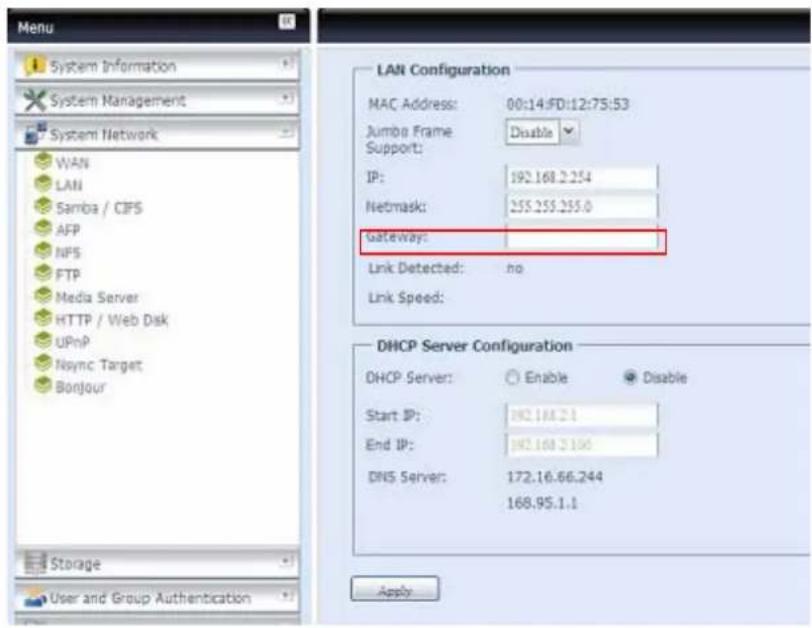
text_image
Menu System Information System Management System Network WAN LAN Samba / CIFS AFP NPS FTP Media Server HTTP / Web Disk UPnP Nsync Target Bonjour LAN Configuration MAC Address: 00:14:FD:12:75:53 Jumbo Frame: Disable Support: IP: 192.168.2.254 Netmask: 255.255.255.0 Gateway: Link Detected: no Link Speed: DHCP Server Configuration DHCP Server: Enable Disable Start IP: 192.168.2.1 End IP: 192.168.2.166 DNS Server: 172.16.66.244 168.95.1.1 ApplyNOTE
If the IP sharing mode setting is set to "Enable" under WAN port, then this 2^nd gateway cannot be configured.
Added Dual DOM for Auto Repair
The unique Dual DOM feature can now perform "Auto Repair". The Thecus NAS will backup up to five versions of the system configuration either by the default timing of 1:00am every day automatically or as scheduled by the user.
This unique "Auto Repair" will be triggered if the primary DOM has a booting issue. In this instance, the 2^nd DOM will take over the boot function. Then, the system will automatically load the most recent system configuration backup image to repair the primary DOM.

text_image
Menu System Information System Management: System Network Storage User and Group Authentication Application Server Module management Backup Nsync Dual DOM Backup Dual DOM Schedule Backup Enable/Disable Dual DOM schedule backup Auto Daily 00:00 Weekly Sunday 05:00 Monthly 1 00:00 Status: Manually Apply Dual DOM Backup Status Task name Date Firmware backup_0000004 2009/11/10 01:00 3.00.08.10 backup_0000003 2009/10/28 19:30 3.00.08.10 backup_0000002 2009/10/27 19:30 3.00.08.10 backup_0000001 2009/10/26 19:30 3.00.08.10Appendix A: Product Specifications
Hardware Specifications
| Product Model N5500 | |
| Network Interfaces | |
| WAN Gigabit RJ-45 connector | |
| LAN Gigabit RJ-45 connector | |
| Storage | |
| HDD Bays 5 x 3.5" SATA II HDD, hot-swappable | |
| HDD Support SATA II HDDs up to 2000GB | |
| eSATA 1 x eSATA connector for capacity expansion | |
| I/O Interfaces | |
| USB Ports 5 x USB type A ports (Host mode),1 x USB type B ports (Device mode) | |
| System Information | |
| LCD Control Panel For basic configurations and status display | |
| System LED Display 5 x LED ( System LED, Network Activity x 2, USB Copy, System warning) | |
| Physical | |
| Height | 230 mm |
| Width | 190 mm |
| Depth | 240 mm |
| Power Supply Server-rated AC power supply100/220V AC, 50/60Hz, Auto-detect | |
| Security | Lockable disk trays |
| Environment | |
| Temperature | 5 ~ 40°C |
| Humidity | 20 ~ 85% relative humidity (non-condensing) |
| Certifications | CE, FCC, BSMI, C-Tick, RoHS Compliant |
Software Specifications
| Network File Protocols | Microsoft Networks (CIFS/SMB)Apple Filing Protocol (AFP 3.0)Network File System (NFS v3)File Transfer Protocol (FTP)Hyper Text Transfer Protocol (HTTP)Secure Hyper Text Transfer Protocol (HTTPS) |
| Authentication | Local User AccountMicrosoft Active Directory Authentication (AD)* |
| Network Client Type | Microsoft Windows NT/2000/XP/2003/VistaUnix/Linux/BSDMAC OS X/9 |
| Network Configuration | Fixed IP addressDynamic IP address802.3ad based failover and link aggregation |
| Disk Management | Disk status monitoring (S.M.A.R.T.)Disk idle spin-down |
| RAID | RAID 0, 1, 5, 6, 10 and JBODSupports multiple RAID modes – users can create multiple RAID volumes with different RAID levels in one systemAuto rebuildHot swappableHot spareDisk roamingRAID level migrationRAID expansion |
| iSCSI Target Supports: | Microsoft iSCSI Initiator v2.0.4StarPort Initiator V3.5.2MAC OS: globalSAN iSCSI initiator version 3.0 (1150)Linux: open-iscsi 2.0-865 |
| Folder Management Share | and sub-folder level permissionPublic folder |
| Quota Management Share | folder quota control |
| Backup Thecus Backup Utility (Windows XP/2000 and MAC OS X)Thecus Nsync | |
| System Management Web | GUILMultilingual support (English, French, German, Italian, Traditional Chinese, Simplified Chinese, Japanese, Korean, Spanish, Russian and Polish)NTP supportWake-on-LANScheduled Power On/Off |
| Event Notification Email notification | Buzzer notificationLCD |
| UPS Support UPS monitoring via RS-232 or USB interface , and system shutdown on low battery | |
| Printer Server USB Printer (IPP support) | |
| Supported USB Devices USB PrinterExternal HDD/flash diskUSB IEEE 802.11 b/g dongle w/AP mode support** | |
| Setup Utility Windows 2000/XP/2003MAC OS X | |
* AD support: Works as a client member in a Microsoft Active Directory domain, allowing the N5500 to utilize the domain users and groups setting for authentication to the system and authorization to the share folders.
** For supported USB dongles, please contact sales@thecus.com
Appendix B: Customer Support
If your N5500 is not working properly, we encourage you to check out Chapter 7: Troubleshooting, located in this manual. You can also try to ensure that you are using the latest firmware version for your N5500. Thecus is committed to providing free firmware upgrades to our customers. Our newest firmware is available on our Download Center:
http://www.thecus.com/download.php
If you are still experiencing problems with your N5500, or require a Return Merchandise Authorization (RMA), feel free to contact technical support via our Technical Support Website:
http://www.thecus.com/support_tech.php
Customers in the US should send all technical support enquiries to the US contact window included in the following web page:
http://www.thecus.com/support_tech.php
For Sales Information you can e-mail us at:
sales@thecus.com
Thank you for choosing Thecus!

text_image
Thecus®Appendix C: RAID Basics
Overview
A Redundant Array of Independent Disks (RAID) is an array of several hard disks that provide data security and high performance. A RAID system accesses several hard disks simultaneously, which improves I/O performance over a single hard disk. Data security is enhanced by a RAID, since data loss due to a hard disk failure is minimized by regenerating redundant data from the other RAID hard disks.
Benefits
RAID improves I/O performance, and increases data security through fault tolerance and redundant data storage.
Improved Performance
RAID provides access to several hard disk drives simultaneously, which greatly increases I/O performance.
Data Security
Hard disk drive failure unfortunately is a common occurrence. A RAID helps prevent against the loss of data due to hard disk failure. A RAID offers additional hard disk drives that can avert data loss from a hard disk drive failure. If a hard drive fails, the RAID volume can regenerate data from the data and parity stored on its other hard disk drives.
RAID Levels
The Thecus N5500 supports standard RAID levels 0, 1, 5, 6, 10, and JBOD. You choose a RAID level when you create a system volume. The factors for selecting a RAID level are:
- Your requirements for performance
- Your need for data security
- Number of hard disk drives in the system, capacity of hard disk drives in the system
The following is a description of each RAID level:
RAID 0
RAID 0 is best suited for applications that need high bandwidth but do not require a high level of data security. The RAID 0 level provides the best performance of all the RAID levels, but it does not provide data redundancy.
RAID 0 uses disk striping and breaking up data into blocks to write across all hard drives in the volume. The system can then use multiple hard drives for faster read and write. The stripe size parameter that was set when the RAID was created determines the size of each block. No parity calculations complicate the write operation.
RAID 1
RAID 1 mirrors all data from one hard disk drive to a second one hard disk drive, thus providing complete data redundancy. However, the cost of data storage capacity is doubled.
This is excellent for complete data security.
RAID 5
RAID 5 offers data security and it is best suited for networks that perform many small I/O transactions at the same time, as well as applications that require data security such as office automation and online customer service. Use it also for applications with high read requests but low write requests.
RAID 5 includes disk striping at the byte level and parity information is written to several hard disk drives. If a hard disk fails the system uses parity stored on each of the other hard disks to recreate all missing information.
RAID 6
RAID 6 is essentially an extension of RAID level 5 which allows for additional fault tolerance by using a second independent distributed parity scheme (dual parity). Data is striped on a block level across a set of drives, just like in RAID 5, and a second set of parity is calculated and written across all the drives; RAID 6 provides for an extremely high data fault tolerance and can sustain two simultaneous drive failures.
This is a perfect solution for mission critical applications.
RAID 10
RAID 10 is implemented as a striped array whose segments are RAID 1 arrays. RAID 10 has the same fault tolerance as RAID level 1.
RAID 10 has the same overhead for fault-tolerance as mirroring alone. High I/O rates are achieved by striping RAID 1 segments.
Under certain circumstances, RAID 10 array can sustain up to 2 simultaneous drive failures
Excellent solution for applications that would have otherwise gone with RAID 1 but need an additional performance boost.
JBOD
Although a concatenation of disks (also called JBOD, or "Just a Bunch of Disks") is not one of the numbered RAID levels, it is a popular method for combining multiple physical disk drives into a single virtual one. As the name implies, disks are merely concatenated together, end to beginning, so they appear to be a single large disk.
As the data on JBOD is not protected, one drive failure could result total data loss.
Stripe Size
The length of the data segments being written across multiple hard disks. Data is written in stripes across the multiple hard disks of a RAID. Since multiple disks are accessed at the same time, disk striping enhances performance. The stripes can vary in size.
Disk Usage
When all 5 disks are of the same size, and used in RAID, N5500 disk usage percentage is listed below:
| RAID Level | Percentage Used |
| RAID 0 | 100% |
| RAID 1 | 1/n × 100% |
| RAID 5 | (n-1)/n × 100% |
| RAID 6 | (n-2)/n × 100% |
| RAID 10 | 50% |
| JBOD | 100% |
n : HDD number
Appendix D: Active Directory Basics
Overview
With Windows 2000, Microsoft introduced Active Directory (ADS), which is a large database/information store. Prior to Active Directory the Windows OS could not store additional information in its domain database. Active Directory also solved the problem of locating resources; which previously relied on Network Neighborhood, and was slow. Managing users and groups were among other issues Active Directory solved.
What is Active Directory?
Active Directory was built as a scalable, extensible directory service that was designed to meet corporate needs. A repository for storing user information, accounts, passwords, printers, computers, network information and other data, Microsoft calls Active Directory a "namespace" where names can be resolved.
ADS Benefits
ADS lets the N5500 integrate itself with the existing ADS in an office environment. This means the N5500 is able to recognize your office users and passwords on the ADS server. Other major benefits ADS support provides include:
- Easy integration of the N5500 into the existing office IT infrastructure
The N5500 acts as a member of the ADS. This feature significantly lowers the overhead of the system administrator. For example, corporate security policies and user privileges on an ADS server can be enforced automatically on the N5500.
- Centralized user/password database
The N5500 does not maintain its own copy of the user/password database. This avoids data inconsistency between the N5500 and other servers. For example, without ADS support, an administrator might need to remove a specific user privilege on the N5500 and each individual server. With ADS support, the change on an ADS server is known to all of its ADS members.
Appendix E: UPS Compatibility List
| Brand | Series | Model | Notes |
| Ablerex MS-RT | |||
| ActivePower | 1400VA | ||
| AEC | MiniGuard UPS 700 M2501 cable | ||
| APC | Back-UPS Pro | ||
| Matrix-UPS | |||
| Smart-UPS | |||
| Back-UPS | 940-0095A/C cables, 940-0020B/C cables, 940-0023A cable | ||
| Back-UPS Office | 940-0119A cable | ||
| Masterswitch Not a UPS - 940-0020 cable | |||
| Back-UPS RS 500 custom non-USB cable | |||
| Belkin | Regulator Pro serial | ||
| Resource | |||
| Home Office | F6H350-SER, F6H500-SER, F6H650-SER | ||
| Universal UPS | F6C800-UNV, F6C120-UNV, F6C1100-UNV, F6H500ukUNV | ||
| Best Power | Fortress (newer) | ||
| Fortress Telecom | |||
| Axxium Rackmount | |||
| Patriot Pro | |||
| Patriot Pro II | |||
| Patriot INT51 cable | |||
| Micro-Ferrups | |||
| Fortress/Ferrups f-command support | |||
| Centralion | Blazer | ||
| Clary | ST-800 | ||
| Compaq | T1500h | ||
| Cyber Power Systems | 320AVR, 500AVR, 650AVR, 700AVR, 800AVR850AVR, 900AVR, 1250AVR,. 1500AVR, Power99550SL, 725SL, CPS825VA, 1100AVR, 1500AVR-HO | ||
| Deltec | PowerRite Pro II | ||
| Dynex | 975AVR | ||
| Effekta | MI/MT/MH 2502 cable | ||
| Energy Sistem | (various) | ||
| ETA | mini+UPS WinNT/Upsoft cable | ||
| ETA | mini+UPS PRO UPS Explorer cable | ||
| Ever UPS | NET *-DPC | ||
| AP *-PRO | |||
| Ever-Power | 625/1000 | ||
| Exide | NetUPS SE | ||
| Fenton Technologies | PowerPal P-series | ||
| PowerPal L-series | |||
| PowerOn | |||
| PowerPure | |||
| Fairstone | L525/L625/L750 | ||
| Fideltronik | Ares 700 and larger | ||
| Other Ares models | |||
| Fiskars | PowerRite MAX | ||
| PowerServer | 10, 30 | ||
| Gamatronic | All models with alarm interface | ||
| MP110/210 | |||
| MS-T | |||
| MS | |||
| μPS3/1 | |||
| Gemini | UPS625/UPS1000 | ||
| HP | R3000 XR | ||
| R5500 XR | |||
| INELT | Monolith 1000LT | ||
| Infosec | iPEL | 350, 500, 750, 1000 | |
| Ippon | (various) | ||
| Liebert | UPStation GXT2 contact-closure cable | ||
| Masterguard | (various) | ||
| Meta System | HF Line | 1..4 boards, /2 5..8 boards | |
| HF Millennium | 810, 820 | ||
| HF TOP Line | 910, 920, 930, 940, 950, 960, 970, 980 | ||
| ECO Network | 750, M1000, M1050, M1500, M1800M2000, M2100, M2500, M3000 | ||
| ECO | 305, 308, 311, 511, 516, 519, 522 | ||
| ally HF | 800, 1000, 1250, 1600, 2000, 2500 | ||
| Megaline | 1250, 2500, 3750, 5000, 6250, 7500, 8750, 10000 | ||
| MGE UPS SYSTEMS | NOVA AVR 600 Serial | ||
| NOVA AVR 1100 Serial | |||
| Pulsar Ellipse | USBS Serial cable, S, Premium USBS Serial cable, Premium S | ||
| Ellipse Office | 600 Serial cable, 750 Serial cable, 1000 Serial cable, 1500 Serial cable | ||
| Pulsar EXtreme C / EX RT | |||
| Comet EX RT | Serial port, 3:1 Serial port | ||
| Pulsar Esprit | |||
| Evolution S | 1250, 1750, 2500, 3000 | Serial Port | |
| Pulsar M | 2200, 3000, 3000 XL | Serial Port | |
| Pulsar | 700, 1000, 1500, 1000 RT2U, 1500 RT2U, MX 4000 RT, MX 5000 RTEvolution, EXtreme C, ES+, ESV+, SV, ESV, EX, EXL, PSX, SX, Extreme | Serial Port | |
| Comet EXtreme | |||
| Comet / Galaxy (Serial) | Utalk Serial Card (ref 66060), HID COM Serial Card (ref 66066) | ||
| MicroDowell | B.Box BP | 500, 750, 1000, 1500 | |
| Microsol | Solis | 1.0 1000VA, 1.5 1500VA, 2.0 2000VA, 3.0 3000VA | |
| Rhino | 6.0 6000VA, 7.5 7500VA, 10.0 10000VA, 20.0 20000VA | ||
| Mustek | Various | ||
| Powermust | 400VA Plus, 600VA Plus, 800VA Pro1000VA Plus, 1400VA Plus, 2000VA USB | ||
| Nitram | Elite | 500, 2002 | |
| Oneac EG/ON Series advanced interface | |||
| Online P-Series | |||
| OnLite AQUA 50 | |||
| Orvaldi various not 400 or 600 | |||
| Powercom | SMK-800A | ||
| ULT-1000 | |||
| TrustTrust 425/625 | |||
| BNT-1000AP | |||
| Advice Partner/King Pr750 | |||
| BNT-2000AP | |||
| PowerGuard | PG-600 | ||
| PowerKinetics | 9001 | ||
| PowerTech | Comp1000 DTR cable power | ||
| Power Walker | Line-Interactive VI1000 | ||
| Powerware | 3110, 3115, 5119, 5125, 5119 RM, PW5115PW5125PW9120, PW9125, 9120, 9150, 9305 | ||
| Powerwell | PM525A/-625A/-800A/-1000A/-1250A | ||
| Repotec | RPF525/625/800/1000 | ||
| RPT-800A | |||
| RPT-162A | |||
| SMS (Brazil) | Manager III | ||
| SOLA | 325, 520, 610, 620, 330 | ||
| SOLA/BASIC Mexico | various ISBMEX protocol | ||
| Socomec Sicon | Egys 420 VA | ||
| Soltec | Winmate 525/625/800/1000 | ||
| Soyntec | Sekury C | 500, 800 | |
| SquareOne Power | QP1000 | ||
| SuperPower | HP360, Hope-550 | ||
| Sweex | 500/1000 smart - shipped with SafeNet | ||
| 500/1000 contact closure - shipped with UPSmart | |||
| BC100060 800VA | |||
| Sysgration | UPGUARDS Pro650 | ||
| Tecnoware | Easy Power 1200 | ||
| Tripp-Lite | SmartUPS | ||
| SmartOnline | |||
| (various) Lan 2.2 interface - black 73-0844 cable | |||
| Trust | UPS 1000 Management PW-4105 | ||
| UNITEK | Alpha | 500 IC, 1000is, 500 ipE | |
| UPSonic | LAN Saver 600 | ||
| Power Guardian | |||
| Victron/IMV | (various) | ||
| Lite crack cable | |||
NOTE
• The UPSes marked Blue have been tested and work well
- If your UPS is not in the support list, be sure that the UPS supports one of following protocols:
o SEC protocol
o Generic RUPS model
o Generic RUPS 2000 (Megatec M2501 cable)
o Phoenix Tec protocol
o Safenet software
Appendix F: Licensing Information
Overview
This product included copyrighted third-party software licensed under the terms of GNU General Public License. Please see THE GNU General Public License for extra terms and conditions of this license.
Source Code Availability
Thecus Technology Corp. has exposed the full source code of the GPL licensed software. For more information on how you can obtain our source code, please visit our web site, http://www.thecus.com.
Copyrights
- This product includes cryptographic software written by Eric Young (eay@cryptsoft.com).
- This product includes software developed by Mark Murray.
- This product includes software developed by Eric Young (eay@cryptsoft.com).
- This product includes software developed by the OpenSSL Project for use in the OpenSSL Toolkit (http://www.openssl.org/).
- This product includes PHP, freely available from (http://www.php.net/).
- This product includes software developed by the University of California, Berkeley and its contributors.
- This product includes software developed by Winning Strategies, Inc.
- This product includes software developed by the Apache Group for use in the Apache HTTP server project (http://www.apache.org/).
- This product includes software developed by Softweyr LLC, the University of California, Berkeley, and its contributors.
- This product includes software developed by Bodo Moeller.
- This product includes software developed by Greg Roelofs and contributors for the book, "PNG: The Definitive Guide," published by O'Reilly and Associates.
- This product includes software developed by the NetBSD Foundation, Inc. and its contributors.
- This product includes software developed by Yen Yen Lim and North Dakota State University.
- This product includes software developed by the Computer Systems Engineering Group at Lawrence Berkeley Laboratory.
- This product includes software developed by the Kungliga Tekniska Högskolan and its contributors.
- This product includes software developed by the Nick Simicich.
- This product includes software written by Tim Hudson (tjh@cryptsoft.com).
- This product includes software developed by Christopher G. Demetriou for the NetBSD Project.
CGIC License Terms
Basic License
CGIC, copyright 1996, 1997, 1998, 1999, 2000, 2001, 2002, 2003, 2004 by Thomas Boutell and Boutell.Com, Inc.
Permission is granted to use CGIC in any application, commercial or noncommercial, at no cost. HOWEVER, this copyright paragraph must appear on a "credits" page accessible in the public online and offline documentation of the program. Modified versions of the CGIC library should not be distributed without the attachment of a clear statement regarding the author of the modifications, and this notice may in no case be removed. Modifications may also be submitted to the author for inclusion in the main CGIC distribution.
GNU General Public License
Version 2, June 1991
Copyright © 1989, 1991 Free Software Foundation, Inc. 51 Franklin St, Fifth Floor, Boston, MA 02110-1301 USA
Everyone is permitted to copy and distribute verbatim copies of this license document, but changing it is not allowed.
PREAMBLE
The licenses for most software are designed to take away your freedom to share and change it. By contrast, the GNU General Public License is intended to guarantee your freedom to share and change free software--to make sure the software is free for all its users. This General Public License applies to most of the Free Software Foundation's software and to any other program whose authors commit to using it. (Some other Free Software Foundation software is covered by the GNU Library General Public License instead.) You can apply it to your programs, too.
When we speak of free software, we are referring to freedom, not price. Our General Public Licenses are designed to make sure that you have the freedom to distribute copies of free software (and charge for this service if you wish), that you receive source code or can get it if you want it, that you can change the software or use pieces of it in new free programs; and that you know you can do these things.
To protect your rights, we need to make restrictions that forbid anyone to deny you these rights or to ask you to surrender the rights. These restrictions translate to certain responsibilities for you if you distribute copies of the software, or if you modify it.
For example, if you distribute copies of such a program, whether gratis or for a fee, you must give the recipients all the rights that you have. You must make sure that they, too, receive or can get the source code. And you must show them these terms so they know their rights.
We protect your rights with two steps: (1) copyright the software, and (2) offer you this license which gives you legal permission to copy, distribute and/or modify the software.
Also, for each author's protection and ours, we want to make certain that everyone understands that there is no warranty for this free software. If the software is modified by someone else and passed on, we want its recipients to know that what
they have is not the original, so that any problems introduced by others will not reflect on the original authors' reputations.
Finally, any free program is threatened constantly by software patents. We wish to avoid the danger that redistributors of a free program will individually obtain patent licenses, in effect making the program proprietary. To prevent this, we have made it clear that any patent must be licensed for everyone's free use or not licensed at all.
The precise terms and conditions for copying, distribution and modification follow.
TERMS AND CONDITIONS FOR COPYING, DISTRIBUTION AND MODIFICATION
- This License applies to any program or other work which contains a notice placed by the copyright holder saying it may be distributed under the terms of this General Public License. The "Program", below, refers to any such program or work, and a "work based on the Program" means either the Program or any derivative work under copyright law: that is to say, a work containing the Program or a portion of it, either verbatim or with modifications and/or translated into another language. (Hereinafter, translation is included without limitation in the term "modification".) Each licensee is addressed as "you".
Activities other than copying, distribution and modification are not covered by this License; they are outside its scope. The act of running the Program is not restricted, and the output from the Program is covered only if its contents constitute a work based on the Program (independent of having been made by running the Program).
Whether that is true depends on what the Program does.
- You may copy and distribute verbatim copies of the Program's source code as you receive it, in any medium, provided that you conspicuously and appropriately publish on each copy an appropriate copyright notice and disclaimer of warranty; keep intact all the notices that refer to this License and to the absence of any warranty; and give any other recipients of the Program a copy of this License along with the Program.
You may charge a fee for the physical act of transferring a copy, and you may at your option offer warranty protection in exchange for a fee.
- You may modify your copy or copies of the Program or any portion of it, thus forming a work based on the Program, and copy and distribute such modifications or work under the terms of Section 1 above, provided that you also meet all of these conditions:
a) You must cause the modified files to carry prominent notices stating that you changed the files and the date of any change.
b) You must cause any work that you distribute or publish, that in whole or in part contains or is derived from the Program or any part thereof, to be licensed as a whole at no charge to all third parties under the terms of this License.
c) If the modified program normally reads commands interactively when run, you must cause it, when started running for such interactive use in the most ordinary way, to print or display an announcement including an appropriate copyright notice and a notice that there is no warranty (or else, saying that you provide a warranty) and that users may redistribute the program under
these conditions, and telling the user how to view a copy of this License. (Exception: if the Program itself is interactive but does not normally print such an announcement, your work based on the Program is not required to print an announcement.)
These requirements apply to the modified work as a whole. If identifiable sections of that work are not derived from the Program, and can be reasonably considered independent and separate works in themselves, then this License, and its terms, do not apply to those sections when you distribute them as separate works. But when you distribute the same sections as part of a whole which is a work based on the Program, the distribution of the whole must be on the terms of this License, whose permissions for other licensees extend to the entire whole, and thus to each and every part regardless of who wrote it.
Thus, it is not the intent of this section to claim rights or contest your rights to work written entirely by you; rather, the intent is to exercise the right to control the distribution of derivative or collective works based on the Program.
In addition, mere aggregation of another work not based on the Program with the Program (or with a work based on the Program) on a volume of a storage or distribution medium does not bring the other work under the scope of this License.
- You may copy and distribute the Program (or a work based on it, under Section 2) in object code or executable form under the terms of Sections 1 and 2 above provided that you also do one of the following:
a) Accompany it with the complete corresponding machine-readable source code, which must be distributed under the terms of Sections 1 and 2 above on a medium customarily used for software interchange; or,
b) Accompany it with a written offer, valid for at least three years, to give any third party, for a charge no more than your cost of physically performing source distribution, a complete machine-readable copy of the corresponding source code, to be distributed under the terms of Sections 1 and 2 above on a medium customarily used for software interchange; or,
c) Accompany it with the information you received as to the offer to distribute corresponding source code. (This alternative is allowed only for noncommercial distribution and only if you received the program in object code or executable form with such an offer, in accord with Subsection b above.)
The source code for a work means the preferred form of the work for making modifications to it. For an executable work, complete source code means all the source code for all modules it contains, plus any associated interface definition files, plus the scripts used to control compilation and installation of the executable. However, as a special exception, the source code distributed need not include anything that is normally distributed (in either source or binary form) with the major components (compiler, kernel, and so on) of the operating system on which the executable runs, unless that component itself accompanies the executable.
If distribution of executable or object code is made by offering access to copy from a designated place, then offering equivalent access to copy the source code from the same place counts as distribution of the source code, even though third parties are not compelled to copy the source along with the object code.
-
You may not copy, modify, sublicense, or distribute the Program except as expressly provided under this License. Any attempt otherwise to copy, modify, sublicense or distribute the Program is void, and will automatically terminate your rights under this License. However, parties who have received copies, or rights, from you under this License will not have their licenses terminated so long as such parties remain in full compliance.
-
You are not required to accept this License, since you have not signed it. However, nothing else grants you permission to modify or distribute the Program or its derivative works. These actions are prohibited by law if you do not accept this License. Therefore, by modifying or distributing the Program (or any work based on the Program), you indicate your acceptance of this License to do so, and all its terms and conditions for copying, distributing or modifying the Program or works based on it.
-
Each time you redistribute the Program (or any work based on the Program), the recipient automatically receives a license from the original licensor to copy, distribute or modify the Program subject to these terms and conditions. You may not impose any further restrictions on the recipients' exercise of the rights granted herein. You are not responsible for enforcing compliance by third parties to this License.
-
If, as a consequence of a court judgment or allegation of patent infringement or for any other reason (not limited to patent issues), conditions are imposed on you (whether by court order, agreement or otherwise) that contradict the conditions of this License, they do not excuse you from the conditions of this License. If you cannot distribute so as to satisfy simultaneously your obligations under this License and any other pertinent obligations, then as a consequence you may not distribute the Program at all. For example, if a patent license would not permit royalty-free redistribution of the Program by all those who receive copies directly or indirectly through you, then the only way you could satisfy both it and this License would be to refrain entirely from distribution of the Program.
If any portion of this section is held invalid or unenforceable under any particular circumstance, the balance of the section is intended to apply and the section as a whole is intended to apply in other circumstances.
It is not the purpose of this section to induce you to infringe any patents or other property right claims or to contest validity of any such claims; this section has the sole purpose of protecting the integrity of the free software distribution system, which is implemented by public license practices. Many people have made generous contributions to the wide range of software distributed through that system in reliance on consistent application of that system; it is up to the author/donor to decide if he or she is willing to distribute software through any other system and a licensee cannot impose that choice.
This section is intended to make thoroughly clear what is believed to be a consequence of the rest of this License.
-
If the distribution and/or use of the Program is restricted in certain countries either by patents or by copyrighted interfaces, the original copyright holder who places the Program under this License may add an explicit geographical distribution limitation excluding those countries, so that distribution is permitted only in or among countries not thus excluded. In such case, this License incorporates the limitation as if written in the body of this License.
-
The Free Software Foundation may publish revised and/or new versions of the General Public License from time to time. Such new versions will be similar in spirit to the present version, but may differ in detail to address new problems or concerns.
Each version is given a distinguishing version number. If the Program specifies a version number of this License which applies to it and "any later version", you have the option of following the terms and conditions either of that version or of any later version published by the Free Software Foundation. If the Program does not specify a version number of this License, you may choose any version ever published by the Free Software Foundation.
- If you wish to incorporate parts of the Program into other free programs whose distribution conditions are different, write to the author to ask for permission. For software which is copyrighted by the Free Software Foundation, write to the Free Software Foundation; we sometimes make exceptions for this. Our decision will be guided by the two goals of preserving the free status of all derivatives of our free software and of promoting the sharing and reuse of software generally.
NO WARRANTY
-
BECAUSE THE PROGRAM IS LICENSED FREE OF CHARGE, THERE IS NO WARRANTY FOR THE PROGRAM, TO THE EXTENT PERMITTED BY APPLICABLE LAW. EXCEPT WHEN OTHERWISE STATED IN WRITING THE COPYRIGHT HOLDERS AND/OR OTHER PARTIES PROVIDE THE PROGRAM "AS IS" WITHOUT WARRANTY OF ANY KIND, EITHER EXPRESSED OR IMPLIED, INCLUDING, BUT NOT LIMITED TO, THE IMPLIED WARRANTIES OF MERCHANTABILITY AND FITNESS FOR A PARTICULAR PURPOSE. THE ENTIRE RISK AS TO THE QUALITY AND PERFORMANCE OF THE PROGRAM IS WITH YOU. SHOULD THE PROGRAM PROVE DEFECTIVE, YOU ASSUME THE COST OF ALL NECESSARY SERVICING, REPAIR OR CORRECTION.
-
IN NO EVENT UNLESS REQUIRED BY APPLICABLE LAW OR AGREED TO IN WRITING WILL ANY COPYRIGHT HOLDER, OR ANY OTHER PARTY WHO MAY MODIFY AND/OR REDISTRIBUTE THE PROGRAM AS PERMITTED ABOVE, BE LIABLE TO YOU FOR DAMAGES, INCLUDING ANY GENERAL, SPECIAL, INCIDENTAL OR CONSEQUENTIAL DAMAGES ARISING OUT OF THE USE OR INABILITY TO USE THE PROGRAM (INCLUDING BUT NOT LIMITED TO LOSS OF DATA OR DATA BEING RENDERED INACCURATE OR LOSSES SUSTAINED BY YOU OR THIRD PARTIES OR A FAILURE OF THE PROGRAM TO OPERATE WITH ANY OTHER PROGRAMS), EVEN IF SUCH HOLDER OR OTHER PARTY HAS BEEN ADVISED OF THE POSSIBILITY OF SUCH DAMAGES.
END OF TERMS AND CONDITIONS