Fritz!WLAN - Network card / adapter AVM - Free user manual and instructions
Find the device manual for free Fritz!WLAN AVM in PDF.


User questions about Fritz!WLAN AVM
0 question about this device. Answer the ones you know or ask your own.
Ask a new question about this device
Download the instructions for your Network card / adapter in PDF format for free! Find your manual Fritz!WLAN - AVM and take your electronic device back in hand. On this page are published all the documents necessary for the use of your device. Fritz!WLAN by AVM.
USER MANUAL Fritz!WLAN AVM
Installation and Operation

text_image
FRITZ! WLAN WLAN USBLegal Notice
FRITZ!WLAN USB Stick
This documentation and the software it describes are protected by copyright. AVM grants the non-exclusive right to use the software, which is supplied exclusively in what is known as object code format. The licensee may create only one copy of the software, which may be used exclusively for backup use.
AVM reserves all rights that are not expressly granted to the licensee. Without previous approval in writing, and except for in cases permitted by law, it is particularly prohibited to
- copy, propagate or in any other manner make this documentation or this software publicly accessible, or
- process, disassemble, reverse engineer, translate, decompile or in any other manner open the software and subsequently copy, propagate or make the software publicly accessible in any other manner.
Please consult the “License.txt” file on the product CD included in the package for specifics about the licensing conditions.
This documentation and software have been produced with all due care and checked for correctness in accordance with the best available technology. AVM GmbH disclaims all liability and warranties, whether express or implied, relating to the AVM product's quality, performance or suitability for any given purpose which deviates from the performance specifications contained in the product description. The licensee bears all risk in regard to hazards and impairments of quality which may arise in connection with the use of this product.
AVM will not be liable for damages arising directly or indirectly from the use of the manual or the software, nor for incidental or consequential damages, except in case of intent or gross negligence. AVM expressly disclaims all liability for the loss of or damage to hardware or software or data as a result of direct or indirect errors or destruction and for any costs (including connection charges) related to the documentation and the software and due to incorrect installations not performed by AVM itself.
The information in this documentation and the software are subject to change without notice for the purpose of technical improvement.
We offer a manufacturer's warranty for this original product. The conditions of this warranty are contained in the "Warranty.pdf" file in the "Info" folder on the product CD included with delivery.

© AVM GmbH 2010 - 2013. All rights reserved. Documentation release 02/2013
AVM Audiovisuelles Marketing
und Computersysteme
Alt-Moabit 95
AVM Computersysteme
Vertriebs GmbH
Alt-Moabit 95
D 10559 Berlin D 10559 Berlin
AVM in the Internet: www.avm.de/en
Trademarks: Unless otherwise indicated, all trademarks mentioned are legally protected trademarks owned by AVM GmbH, especially product names and logos. Microsoft, Windows and the Windows logo are trademarks owned by Microsoft Corporation in the USA and/or other countries. Bluetooth is a trademark of Bluetooth SIG, Inc. licensed to AVM GmbH. All other product and company names are trademarks of their respective owners.
Table of Contents
Legal Notice 2
Safety Instructions 5
Disposal 5
Symbols and Highlighting 6
1 FRITZ!WLAN USB Stick....7
1.1 Package Contents .... 7
1.2 Operation Requirements ....7
1.3 LEDs....8
1.4 Technical Specifications 9
2 AVM Stick & Surf Technology 11
3 Installation....13
3.1 Installation in Windows 8 32-bit or 64-bit Edition ..... 13
3.2 Installation in Windows 7 / Windows Vista 32-bit Edition.....14
3.3 Installation in Windows 7 / Windows Vista 64-bit Edition.....15
3.4 Installation in Windows XP 32-bit Edition....16
3.5 Installation in Windows XP 64-bit Edition....17
4 The FRITZ!WLAN Control Software ..... 19
4.1 Operating FRITZ!WLAN 19
4.2 Establishing a WLAN Connection....21
5 Microsoft WLAN Service 26
6 More about WLAN 33
6.1 Standards....33
6.2 Security 35
6.3 Frequency Range.... 37
6.4 WPS (Wi-Fi Protected Setup) 38
7 Uninstallation 40
8 Troubleshooting 41
8.1 Errors During Installation 41
8.2 WLAN Connection Is Not Established 44
8.3 Errors During Data Exchange with Other Devices in the Network ... 47
8.4 Checking the IP Settings 49
9 Customer Service Guide .... 56
9.1 Documentation 56
9.2 Information in the Internet....57
9.3 Updates....57
9.4 Support from the AVM Service Team .... 58
Index 60
Declaration of CE Conformity 62
Safety Instructions

When working with the FRITZ!WLAN USB Stick, follow the instructions below to protect yourself and the FRITZ!WLAN USB Stick from damage.
- Do not install FRITZ!WLAN USB Stick during an electrical storm.
- Unplug the FRITZ!WLAN USB Stick from the computer during an electrical storm.
- Never let liquids get inside the FRITZ!WLAN USB Stick. Otherwise, electric shocks or short circuits may result.
- Protect the FRITZ!WLAN USB Stick from dust, moisture and steam. Clean the FRITZ!WLAN USB Stick with a slightly moist, lint-free cloth. Intensive cleaning products or solvents are not suitable.
- FRITZ!WLAN USB Stick is intended for indoor use only.
- Do not open the FRITZ!WLAN USB Stick housing. The device contains hazardous components and should only be opened by authorized repair technicians.
Disposal

The symbol next to this text means that old appli and electronic parts must be disposed of separate from household waste.
In accordance with European regulations and the Waste Electrical and Electronic Equipment Directive (WEEEE), the FRITZ!WLAN USB Stick, as well as all devices and electronic components contained in the FRITZ!WLAN USB Stick package may not be disposed with household waste. Please bring these to your local collection points for disposal.
Symbols and Highlighting
The following highlighting and icons are used to designate important information:

This symbol indicates useful hints to assist you in working with the FRITZ!WLAN USB Stick.

This symbol indicates important instructions that must be observed to avoid malfunctions.
The table below explains the highlighting used in this manual.
| Highlighting Function Example | ||
| Quotation marks Keys | “F1” key | |
| Buttons | “Help” | |
| Settings pages | “Advanced” | |
| Menus | “Edit / Paste” | |
| Commands | “Copy” | |
| File paths | “C:/My Documents” | |
| File names | “Documentation” | |
| Pointed brackets Joker | ||
| Bold | Emphasis | Do not click the button... |
1 FRITZ!WLAN USB Stick
An Overview
FRITZ!WLAN USB Stick is a WLAN adapter for the Universal Serial Bus (USB).
With the FRITZ!WLAN USB Stick, you can connect your computer directly with a WLAN access point, for example, with a FRITZ!Box by AVM. You can also connect to other WLAN devices, to printers, and to PDAs. This grants you high mobility while allowing you to work with advantages of wireless connections, high throughput rates and fast connections at maximum security.
1.1 Package Contents
• one AVM WLAN-Controller FRITZ!WLAN USB Stick v2
• one FRITZ!WLAN USB Stick CD with
– driver software
– control software with Online Help
- manual in PDF format
• one printed quick guide
• one USB docking station
1.2 Operation Requirements
In order to operate FRITZ!WLAN USB Stick, your computer must meet the following requirements:
- A free port on your computer for USB devices. A USB 2.0 port is recommended; USB 1.1 works at a lower throughput rate.

- A computer with one of the following operating systems installed:
- Microsoft Windows 8 (32- or 64-bit edition)
- Microsoft Windows 7 (32-or 64-bit edition)
- Microsoft Windows Vis ta (32- or 64-bit edition)
- Windows X P (32- or 64-bit edition)
Installation of the latest service packs and updates is recommended.
- Pentium-class computer or notebook (500 MHz CPU or better)
- At least 64 MB RAM and 5 MB free memory on the hard drive.
- one CD drive
You can install FRITZ!WLAN USB Stick if your computer meets all of these requirements.
If you would like to connect additional computers, additional FRITZ!WLAN USB Sticks are required.
1.3 LEDs
During operation, the LEDs on the FRITZ!WLAN USB Stick indicate the following:
green: USB remains lit as soon as the FRITZ!WLAN USB Stick has been detected by the operating system
yellow: WLAN flashes during data exchange between WLAN devices
1.4 Technical Specifications
LEDs 2 for display of connections and activity
USB port USB version 2.0, compatible with USB 1.1
with reduced data throughput
WLAN module Support for radio network in accordance with
IEEE 802.11n
IEEE 802.11g and
IEEE 802.11b
Frequency band 2.4 GHz
Encryption WPA (Wi-Fi Protected Access) /
WPA2 (802.11i) /
WEP 64-/128-bit (Wired Equivalent Privacy)
Antennas integrated
Operating systems supported Windows 8 (32-bit or 64-bit edition)
Windows 7 (32-bit or 64-bit edition)
Windows Vista (32-bit or 64-bit edition)
Windows XP (32-bit or 64-bit edition)
Dimensions (W x D x H): approx. 40 x 20 x 10 mm
Weight approx. 10 g
Power supply powered by USB, no external power supply required
Maximum power consumption: 1.35 W (transfer)
Transmitter power max. 76 mW
Receiver sensitivity min. -101 dBm
Supported data throughput 802.11n up to 150 Mbit/s*
rates (gross) 802.11g up to 54 Mbit/s*
802.11b up to 11 Mbit/s*
* The user data rate that can actually be achieved is somewhat below the specified value (see the table on “Standards” on page 33).
Firmware can be updated
Channels 1 through 13 (ETSI)
Ambient temperature -5 to 45°C (during operation)
Ambient temperature (idle) -10 to 70°C
Humidity (idle/operation) 5 to 90%, no-condensation
Certification CE
2 A V M S t i c k & Surf Technology
Connecting Securely with a FRITZ!Box
With the AVM Stick & Surf technology the FRITZ!WLAN USB Stick can take over the WLAN security settings from FRITZ!Box products. This allows a secure WLAN connection to be established between your computer and your FRITZ!Box without any additional configuration.
For this, your FRITZ!Box must be equipped with a port for USB devices (USB host function).
In order to use the AVM Stick & Surf technology for secure WLAN connections, perform the following steps:
- Insert the FRITZ!WLAN USB Stick into the USB port on your FRITZ!Box.

text_image
Stick & Suri automatic security for wireless surfing DSL/Tel FON 1 FON 2 FON 3 AN1 LAN2 LAN3 LAN4 PowerPort for USB devices (here on the FRITZ!Box Fon WLAN 7270)
- The FRITZ!Box "Info" LED begins flashing to indicate that the WLAN security settings are being transmitted to the FRITZ!WLAN USB Stick.
- When data transmission has been completed, the "Info" LED stops flashing on the FRITZ!Box and remains lit.
- Remove the FRITZ!WLAN USB Stick from the FRITZ!Box USB port.
The WLAN security settings have now been transmitted to the FRITZ!WLAN USB Stick.
As soon as you connect the FRITZ!WLAN USB Stick to your computer, the security settings of your WLAN are implemented in the FRITZ!WLAN control software and then deleted from the FRITZ!WLAN USB Stick. The AVM Stick & Surf logo appears and a WLAN connection to your FRITZ!Box is established automatically.

If you are using a FRITZ!Box without a USB port or a device from a third-party manufacturer as a WLAN access point, you can still use WPS (Wi-Fi Protected Setup) or enter the network key manually to establish a secure WLAN connection. For more information, see the section “WPS (Wi-Fi Protected Setup)” from page 38 and the Help on the FRITZ!WLAN control software, which is available as soon as your FRITZ!WLAN USB Stick has been installed.
3 Installation
Installing FRITZ!WLAN USB Stick
The FRITZ!WLAN USB Stick can be installed in the operating systems Windows 8 (32-bit and 64-bit edition), Windows 7 (32-bit and 64-bit edition), Windows Vista (32-bit and 64-bit edition) and Windows XP (32-bit and 64-bit edition).

Please install the current Microsoft Service Packs using Microsoft Windows Update and use a USB 2.0 port for optimum performance of your FRITZ!WLAN USB Stick.
You can change the display of menus and folders in most operating systems. The following instructions are based on the standard installation of each operating system.
If you have a FRITZ!Box with USB host function, first use Stick & Surf (see “AVM Stick & Surf Technology” from page 11) to transmit the WLAN security settings from your FRITZ!Box to your computer.
3.1 Installation in Windows 8 32-bit or 64-bit Edition

Administrator rights are required to install the FRITZ!WLAN USB Stick in Windows 8!
Perform the following steps to install the software:
- Switch on the WLAN device you wish to connect to.
- Switch on your computer.
- Insert the FRITZ!WLAN USB Stick into the USB port on your computer.
Windows detects the FRITZ!WLAN USB Stick automatically. This process may take some time.
In the upper right corner of your Windows 8 start page, a message element signals that the “AVM FRITZ!WLAN USB Stick v2” was detected. Click this message to continue.
-
Another Windows 8 message prompts you to select a task for the data medium. Click “Install Software from Medium or Run AVM FRITZ!WLAN USB Stick v2 Installation”.
-
Then click "Yes" in the "User Account Control" dialog.
The drivers and the control software for the FRITZ!WLAN USB Stick will be installed now.
A progress bar indicates the progress and the conclusion of the installation.
This completes the driver installation for the FRITZ!WLAN USB Stick. Continue reading from section “Information on WLAN Connections” on page 18.
3.2 Installation in Windows 7 / Windows Vista 32-bit Edition

Administrator rights are required to install the FRITZ!WLAN USB Stick in Windows 7 or Windows Vista! Over the course of installation Windows will request the rights required for installation. Confirm with “Continue”.
Perform the following steps to install the software:
-
Switch on the WLAN device you wish to connect to.
-
Switch on your computer.
-
Insert the FRITZ!WLAN USB Stick into the USB port on your computer.
Windows detects the FRITZ!WLAN USB Stick automatically. This process may take some time.
-
In the dialog for running the “AVM FRITZ!WLAN USB Stick v2 Selfinstall”, click the “Install or Run FRITZ!WLAN USB Stick v2” entry.
-
Then click “Yes” (Windows 7) or “Continue” (Windows Vista) in the “User Account Control” dialog.
The drivers and the control software for the FRITZ!WLAN USB Stick will be installed now.
If you are prompted to do so, insert the FRITZ!WLAN USB Stick CD and follow the instructions on the screen.
If an additional Windows dialog asks if you want to install software not digitally signed by Microsoft, click “Continue Anyway”. This request depends on the driver signature options set on your computer.
A progress bar indicates the progress and the conclusion of the installation.
This completes the driver installation for the FRITZ!WLAN USB Stick. Continue reading from section “Information on WLAN Connections” on page 18.
3.3 Installation in Windows 7 / Windows Vista 64-bit Edition

Administrator rights are required to install the FRITZ!WLAN USB Stick in Windows 7 64-bit edition or Windows Vista 64-bit edition!
Perform the following steps to install the software:
-
Switch on the WLAN device you wish to connect to.
-
Switch on your computer.
-
Insert the FRITZ!WLAN USB Stick into the USB port on your computer.
Windows detects the FRITZ!WLAN USB Stick automatically. This process may take some time.
-
In the “Autoplay” dialog, select the “FRITZ!WLAN USB Stick v2 installation” option.
-
Then click “Yes” (Windows 7) or “Continue” (Windows Vista) in the “User Account Control” dialog.
- In the “Found New Hardware” window, select “Locate and install driver software (recommended)”.
If Windows reports that the program may not have been installed correctly, click “The Program was installed correctly.” or “Cancel”.
-
Then click “Yes” (Windows 7) or “Continue” (Windows Vista) in the “User Account Control” dialog.
-
If Windows asks whether you would like to search for drivers online, select the “Do not search for drivers online” option.
-
Insert the FRITZ!WLAN USB Stick CD when Windows prompts you to do so.
The driver software is installed automatically.
This completes the driver installation for the FRITZ!WLAN USB Stick. Continue reading from section “Information on WLAN Connections” on page 18.
3.4 Installation in Windows XP 32-bit Edition

Administrator rights are required to install the FRITZ!WLAN USB Stick in Windows XP!
Perform the following steps to install the software:
- Switch on the WLAN device you wish to connect to.
- Switch on your computer.
- Insert the FRITZ!WLAN USB Stick into the USB port on your computer.
Windows detects the FRITZ!WLAN USB Stick automatically. This process may take some time.
- The drivers and the control software for your FRITZ!WLAN USB Stick are installed automatically.
If you are prompted to do so, insert the FRITZ!WLAN USB Stick CD and follow the instructions on the screen.
If an additional Windows dialog asks if you want to install software not digitally signed by Microsoft, click “Continue Anyway”. This request depends on the driver signature options set on your computer.
A progress bar indicates the progress and the conclusion of the installation.
This completes the driver installation for the FRITZ!WLAN USB Stick. Continue reading from section “Information on WLAN Connections” on page 18.
3.5 Installation in Windows XP 64-bit Edition

Administrator rights are required to install the FRITZ!WLAN USB Stick in Windows XP 64-bit Edition!
Perform the following steps to install the software:
-
Switch on the WLAN device you wish to connect to.
-
Switch on your computer.
-
Insert the FRITZ!WLAN USB Stick into the USB port on your computer.
Windows detects the FRITZ!WLAN USB Stick automatically. This process may take some time.
- When asked whether you would like to connect to Windows Update, select the option "No, not this time" and then click "Next".
The “Add New Hardware” Wizard starts and searches for drivers.
- Insert the FRITZ!WLAN USB Stick CD and select the option "Install software automatically (recommended)". Confirm with "Next".
If an additional Windows dialog asks if you want to install software not digitally signed by Microsoft, click the “Continue Anyway” button. This request depends on the driver signature options set on your computer.
- A message appears: "The Wizard has finished installing the software for this device". Conclude the installation by clicking "Finish".
This completes the driver installation for the FRITZ!WLAN USB Stick. Continue reading in the next section, “Information on WLAN Connections”.
Information on WLAN Connections

If you performed installation using Stick & Surf, no further steps are necessary to establish a WLAN connection. Your FRITZ!Box will be identified automatically as WLAN access point. A WLAN connection you can use immediately will be established.
If you performed installation without using Stick & Surf, you have to select the WLAN remote site (the WLAN access point) to connect with manually in your WLAN control software. Please see the corresponding chapter of the control software for more information:
- If you are using the control software FRITZ!WLAN, please continue by reading the section “Establishing a WLAN Connection” from page 21.
- If you are using Microsoft Windows' WLAN Service, continue reading in the section “Establishing a WLAN Connection (Windows 8)” from page 26, “Establishing a WLAN Connection (Windows 7)” from page 28, “Establishing a WLAN Connection (Windows Vista)” from page 29 or “Establishing a WLAN Connection (Windows XP from Service Pack 2)” from page 31.
4 The FRITZ!WLAN Control Software
Establishing and Clearing WLAN Connections
With the FRITZ!WLAN USB Stick you can establish wireless network (WLAN) connections between your computer and wireless devices. The FRITZ!WLAN control software is available to manage all these WLAN connections.
With FRITZ!WLAN you can configure, establish and clear WLAN connections as well as view connection information.
4.1 Operating FRITZ!WLAN

After FRITZ!WLAN USB Stick is installed, FRITZ!WLAN appears as a program icon in the notification area of the task bar. You can open the user interface of the control software in two ways:
- Double-click the FRITZ!WLAN program icon in the notification area of the Windows task bar.
- Or click the FRITZ!WLAN program icon with the right mouse button to open the context menu and select the “Display Connection...” command.

text_image
FRITZ!WLAN Local WLAN Device Connection WLAN Remote Site FRITZ!WLAN USB Stick IP: 192.168.178.26 150 MBit/s WF&2 FRITZ!Box Fan WLAN 7270 Channel 1 Band: 2.4 GHz Mode: 11b.11g.11n IP: 192.168.178.1 Find Help CloseFRITZ!WLAN user interface (connection example)
User Interface All elements of a WLAN connection are displayed as icons in the user interface. The user interface window is divided into three sections.
The left side shows your own WLAN device, the FRITZ!WLAN USB Stick, complete with name and IP address.
The middle section displays the icon of the WLAN connection as a box with links to the devices on the left and on the right. The small icons in the box display the connection quality and the encryption used.
The right side shows the WLAN remote site with which you are currently connected or were connected most recently.
Context Menus The features of FRITZ!WLAN are available using the context menu:
- Click the device or connection icons in the FRITZ!WLAN user interface, or the FRITZ!WI gram icon in the notification area of the task bar.
The corresponding context menu opens.
- Select the desired command from the list.
Each icon displays its own selection of commands. You can search for WLAN devices at your location and configure them as WLAN remote sites, establish or clear WLAN connections to known remote sites, and have information displayed on device and connection properties.
For more information, please see the section “Establishing a WLAN Connection” from page 21 or click the “Help” button in the user interface to open the FRITZ!WLAN Online Help.
Connection Status The colors of the connection icons in the FRITZ!WLAN user interface and the FRITZ!WLAN program icon in the notification area of the task bar show the current condition of the connection:
| Icon Meaning | ||
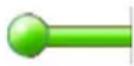 and and  | WLAN connection active | |
 | WLAN connection is being established or the ad-hoc network you offered is ready to connect | |
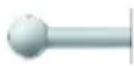 and [DHAA] and [DHAA] | No WLAN connection | |
4.2 Establishing a WLAN Connection
With FRITZ!WLAN you can establish WLAN connections to WLAN remote sites (access points), which can provide access to DSL, to printers, to mobile phones, PDAs, and even to other WLAN clients. Direct connections are also possible to other FRITZ!WLAN USB Sticks.
No matter which device you want to connect to, connecting with FRITZ!WLAN is always based on the principle: search, find, and connect.
There are two basic types of WLAN connections:
Infrastructure Network
When WLAN users connect with a WLAN access point like the FRITZ!Box, they establish what is called an infrastructure network. In this network the WLAN access point manages bandwidth so that each device receives the optimum amount. The access point can be used to establish connections to a cable-connected network or the Internet.

In the device lists in the FRITZ!WLAN control software, this type of connection is designated by the infrastructure network icon.
Ad-hoc Network
When WLAN users connect directly with each other without using an access point, they have established an ad-hoc network. This kind of direct connection is practical when WLAN users in the immediate vicinity want to exchange data with each other quickly and directly. The ad-hoc network participants have to share the existing bandwidth.

In the device lists in the FRITZ!WLAN control software, this type of connection is designated by the ad-hoc connection icon.

Establishing a Connection with a WLAN Access Point (Infrastructure Network)
If you performed installation using Stick & Surf, no further steps are necessary to establish a WLAN connection. Your FRITZ!Box will be identified automatically as WLAN access point. A WLAN connection you can use immediately will be established.
If you performed installation without using Stick & Surf, you have to select the WLAN remote site (the WLAN access point) to connect with manually. In this case the control software FRITZ!WLAN automatically searches for WLAN devices at your location. Once a list of the WLAN access points found is displayed, proceed as follows:
- Select the WLAN device to which you would like to establish a connection and confirm your selection by clicking "Select" or "Connect".
- Enter the network key of the WLAN access point.
On the AVM FRITZ!Box family products, the network key is printed on the underside of the device. - The WLAN connection is established.

Once the connection is established, the WLAN icon in the notification area of the Windows task bar turns green. Click the icon to display connection details.

An active WLAN connection between the FRITZ!WLAN USB Stick and a known WLAN remote site that has been cleared because the computer has been shut down will be re-established automatically every time the computer is started whenever the remote site is accessible.
Connecting Two WLAN Users Directly (Ad-hoc Network)
To establish a direct connection via WLAN, one WLAN party has to offer an ad-hoc network that other ad-hoc parties may join.
How to Create an Ad-hoc Network
- In the FRITZ!WLAN user interface, click the icon of the WLAN remote site with the right mouse button or click the FRITZ!WLAN program icon in the notification area of the task bar and select the command "Create Ad-hoc Network...".
The “Ad-hoc Network” window opens.
- Enter the WLAN key in the “WLAN key” field.
All other WLAN parties of the ad-hoc connection must also enter this key.
See also the encryption instructions in the section "Encryption" from page 36.


Confirm the settings configured earlier for the ad-hoc network. If you would like to change these settings, click the “Edit” button.
- Confirm with "OK".
The ad-hoc network is now ready for operation and awaits other WLAN users.
In the FRITZ!WLAN control software, yellow waves in the ad-hoc network icon indicate that it is ready to establish ad-hoc connections.

text_image
0 MBit/s WEPThe connection icon in FRITZ!WLAN: ready for ad-hoc connections
How to Join an Ad-hoc Network
- Open the FRITZ!WLAN control software on all of the computers to be connected to the ad-hoc network by double-clicking the FRITZ!WLAN icon in the notification area of the task bar.
- Click the "Find" button to display the WLAN devices at your location.

Possible ad-hoc parties found at your location are designated by the ad-hoc icon in the list of accessible WLAN devices.
-
Select the desired ad-hoc remote site in the list of WLAN devices found. Then click the "Select" button.
-
Next, enter the shared WLAN key in the “Ad-hoc Network” window and confirm your entry by clicking “OK”.

See the encryption instructions in the section “Encryption” from page 36.
The ad-hoc network is displayed on the FRITZ!WLAN console as a known device and the WLAN connection is established.

The process of automatically assigning IP addresses can take up to 3 minutes and is signaled by a flashing IP traffic light in the control software.
Connecting to the Internet
There are two different ways for FRITZ!WLAN USB Stick to connect to the Internet. In both cases you need account information from an Internet Service Provider.
Connecting Using the WLAN Access Point
The WLAN access point (FRITZ!Box, for instance) establishes the connection with the Internet. For this the account information of the Internet Service Provider must be configured in the WLAN access point. All connected computers can then use this Internet connection at the same time. It is not necessary to install any additional Internet access software on the other connected computers. With this configuration, the WLAN access point can be used as a router for multiple-workplace operation. Instructions on how to configure the WLAN access point for multiple-workplace operation are presented in your WLAN access point manual.
Establishing Connections Using the Computer
The computer to which a FRITZ!WLAN USB Stick is connected establishes the Internet connections itself. In this case the WLAN access point works like a DSL modem and is responsible only for forwarding data. An Internet connection must be configured on the connected computer, using Internet access software (FRITZ!DSL, for instance) and the account information from an Internet Service Provider. The Internet access software is also required to establish Internet connections.
5 Microsoft WLAN Service
Establishing and Clearing WLAN Connections
In Windows 8, Windows 7, Windows Vista and Windows XP with Service Pack 2, the Microsoft WLAN service WZC (Wireless Zero Configuration) can be used to manage wireless devices rather than the FRITZ program.
Information on the WLAN Control Software
In your FRITZ!WLAN USB Stick, FRITZ!WLAN is provided as the default application for WLAN connections.
If you prefer to work with the Microsoft WLAN Service as WLAN control software, you can switch to this program as follows:

- Click the WLAN icon in the notification area of task bar.
- Select the "Microsoft WLAN" entry.
Establishing a WLAN Connection (Windows 8)
To establish a WLAN connection in Windows 8 using Microsoft WLAN Service, work through the following steps:
- Move the mouse cursor to the upper right corner of the Start page and click "Settings".

- Click the Microsoft WLAN icon with the right mouse button.
A list appears on the screen, showing all wireless networks (mostly WLAN access points) found in the vicinity of the FRITZ!WLAN USB Stick.

text_image
Networks FRITZ!Box 7390 FRITZ!Box 7360Wireless networks in the vicinity of the FRITZ!WLAN USB Stick
- Select the desired WLAN access point and click the "Connect" button.
The window for entering the network security key opens:

text_image
Networks wirelessNet Enter the network security keyEntering the network key
- In the “Enter the network security key” field, enter the key of the wireless network of the selected WLAN access point and then click “OK”.
On the AVM FRITZ!Box family products the network key is printed on the underside of the device.
The WLAN connection will be established.
Should difficulties arise in establishing a WLAN connection, see the sections “WLAN Connection Is Not Established” from page 44 and “Errors During Installation” from page 41.
For information on AVM Stick & Surf, see the section “AVM Stick & Surf Technology” from page 11.

To display all important status information for your WLAN connection, click the FRITZ!WLAN program icon in the notification area of the task bar.
Establishing a WLAN Connection (Windows 7)
To establish a WLAN connection in Windows 7 using Microsoft WLAN Service, work through the following steps:

- Click the Microsoft WLAN icon in the notification area of the Windows taskbar with the right mouse button.
All wireless networks found at your location (mostly WLAN access points) are displayed in a list.

text_image
Not connected Connections are available Wireless Network Connection FRITZIBox Fan WLAN 7270Available wireless networks (example view)
- Select the desired WLAN access point and click the "Connect" button.
The window for entering the network security key opens:

text_image
Connect to a Network Type the network security key Security key: Hide characters OK CancelEntering the WLAN key
- Enter the network security key of the selected WLAN access point in the “Security key” field. Click the “OK” button.
On the AVM FRITZ!Box family products the network key is printed on the underside of the device.
The WLAN connection is established.

text_image
Connect to a Network Connecting to FRITZ!Box Fon WLAN 7270... CancelShould difficulties arise in establishing a WLAN connection, see the sections “WLAN Connection Is Not Established” from page 44 and “Errors During Installation” from page 41.
For information on AVM Stick & Surf, see the section “AVM Stick & Surf Technology” from page 11.

To display all important status information for your WLAN connection, click the FRITZ!WLAN program icon in the notification area of the task bar.
Establishing a WLAN Connection (Windows Vista)
To establish a WLAN connection in Windows Vista using Microsoft WLAN Service (“automatic WLAN configuration”), work through the following steps:

- Click the Microsoft WLAN icon in the notification area of the task bar and select the option "Connect to a network".

text_image
Not Connected Wireless networks are available. Connect to a network Network and Sharing CenterAll wireless networks found at your location (mostly WLAN access points) are displayed in a list.

text_image
Connect to a network Select a network to connect to Show All WLAN-00150CC60DB6 Security-enabled networkAvailable wireless networks (example view)
- Select the desired WLAN access point and click the "Connect" button.
The window for entering the network security key opens:

text_image
Connect to a network Type the network security key or passphrase for WLAN-00150CC60DE6 The person who setup the network can give you the key or passphrase. Security key or passphrase: *************** Display charactersEntering the WLAN key
- Enter the WLAN key of the selected WLAN access point in the “Security key or passphrase” field and click “Connect”.
On the AVM FRITZ!Box family products the network key is printed on the underside of the device.
The WLAN connection is established.

text_image
Connect to a network Connecting to WLAN-00150CC60DE6Should difficulties arise in establishing a WLAN connection, see the sections “WLAN Connection Is Not Established” from page 44 and “Errors During Installation” from page 41.
For information on AVM Stick & Surf, see the section “AVM Stick & Surf Technology” from page 11.

To display all important status information for your WLAN connection, click the FRITZ!WLAN program icon in the notification area of the task bar.
Establishing a WLAN Connection (Windows XP from Service Pack 2)
To establish a WLAN connection using Microsoft WLAN Service (“Wireless Zero Configuration Service”) in Windows XP from Service Pack 2, proceed as follows:

- Click the Microsoft WLAN icon in the notification area of the task bar.
The “Wireless Network Connection” window opens. All wireless networks found at your location (mostly WLAN access points) are displayed in a list.

text_image
Wireless Network Connection Choose a wireless network Click an item in the list below to connect to a wireless network in range or to get more information. FRITZ!Box For WLAN Security-enabled wireless networkAvailable wireless networks (example of display)
- Select the desired WLAN access point and click the "Connect" button.
The “Wireless Network Connection” window is opened.
- Enter the WLAN key of the WLAN access point in the "Network key" field.
On the AVM FRITZ!Box family products the network key is printed on the underside of the device.
- Repeat your entry in the "Confirm network key" field and then click the "Connect" button.

text_image
Wireless Network Connection The network 'FRITZIBox For WLAN /Raum 216' requires a network key (also called a WEP key or WPA key). A network key helps prevent unknown intruders from connecting to this network. Network key: ************ Confirm network key: ************ Connect CancelEntering the WLAN key
The WLAN connection is established.
Should difficulties arise in establishing a WLAN connection, see the sections “WLAN Connection Is Not Established” from page 44 and “Errors During Installation” from page 41.
For information on AVM Stick & Surf, see the section “AVM Stick & Surf Technology” from page 11.

To display all important status information for your WLAN connection, click the FRITZ!WLAN program icon in the notification area of the task bar.
6 More a about W L A N
AVM and WLAN
WLAN (Wireless Local Area Network) is a radio technology that allows networks and access to the Internet to be provided without cable connections. This allows multiple users to share one wireless Internet connection.
6.1 Standards
The WLAN standards IEEE 802.11a, IEEE 802.11b, IEEE 802.11g and IEEE 802.11n and IEEE 802.11i were developed by the Institute of Electrical and Electronic Engineers (IEEE).
The standards IEEE 802.11a, IEEE 802.11b, IEEE 802.11g and IEEE 802.11n define the transmission rate within a wireless LAN. The IEEE 802.11i standard is a security standard.
Data Troughput
Standards for the Throughput Rate
The FRITZ!WLAN USB Stick supports the 802.11n wireless standard and is downward compatible to 802.11b and g networks. The standard used in a given WLAN depends on the settings of the WLAN access point.
| Standard | Frequency Band | Gross Data Throughput | Net Data Throughput up to |
| 802.11b | 2.4 GHz | 11 Mbit/s | 5 Mbit/s |
| 802.11g | 2.4 GHz | 54 Mbit/s | 25 Mbit/s |
| 802.11n | 2.4 GHz | 150 Mbit/s | 80 Mbit/s |
The throughputs listed differentiate between gross and net transmission rates. The net speed describes the transmission rate of the user data.
Range The range within a WLAN is highly dependent on the following three factors:
• the WLAN adapter used,
• the structural conditions, and
- the amount of radio traffic on the same frequency band. Other wireless networks may be active, but also what are known as analog interferers (for instance baby monitors, video bridges, DECT telephones, Bluetooth transmitters for mobile telephones, and microwave ovens).
IEEE 802.11b With a maximum throughput rate of 11 Mbit/s, this is the oldest standard for radio networks in the 2.4-GHz frequency range (ISM). First-generation WLAN access points, for example, can use this standard to communicate with the FRITZ!WLAN USB Stick.
IEEE 802.11g This is currently the most common WLAN sta communicates with a maximum of 54 Mbit/s gross in the 2.4-GHz frequency range (ISM) and guarantees broad compatibility with many WLAN devices.
However, due to heavy use of the 2.4-GHz range, interference is quite common.
IEEE 802.11n This standard provides for high throughput speeds and ranges. The FRITZ!WLAN USB Stick supports 802.11n in the 2.4-GHz frequency band.

The use of the 802.11n standard—and thus the availability of higher throughput rates—is possible only if the WLAN connection is secured using the WPA2 security mechanism (AES-CCMP).
The Standard for Security
IEEE 802.11i The WPA2 security mechanism is defined in the IEEE 802.11i standard. WPA2 is an extension of the familiar security mechanism WPA (Wi-Fi Protected Access).
The main feature of the extension of WPA to WPA2 is the AES-CCM encryption process.
| Mechanism Encryption | |
| WPA TKIP (Temporary Key Integrity Protocol) | |
| WPA2 TKIP | AES-CCM based on the extremely secure AES (Advanced Encryption Standard) procedure. CCM (Counter with CBC-MAC) defines how the AES procedure is applied to WLAN packets. |
The FRITZ!WLAN USB Stick supports the AES encryption procedure as part of the WPA2 mechanism, and the TKIP encryption procedure as part of the WPA mechanism. This means that the FRITZ!WLAN USB Stick can be used in combination with any WLAN access points that also support WPA2 with AES or WPA with TKIP.
6.2 Security

Security is of utmost importance within radio networks.
Radio signals can also be received outside of office or residential spaces and abused for criminal purposes.
Therefore it is important that no unauthorized users can register in a WLAN to use its Internet access or shared network resources.
The necessary requirements for this, which contribute to the security of your WLAN and of your computers, are integrated in the FRITZ!WLAN control software.
Encryption
The most important security setting is encryption. The FRITZ!WLAN USB Stick supports the security mechanisms WEP (Wired Equivalent Privacy), WPA (Wi-Fi Protected Access) and WPA2 as follows:
- As part of the WEP mechanism a static key is determined to serve for the encryption of the user data.
The key must be registered in the WLAN settings of the WLAN client and correspond with the WLAN settings of the WLAN access point. - The FRITZ!WLAN USB Stick uses WEP 64/128 with the setting “Open” or “Open Key”, respectively. When establishing a WLAN connection using products from other manufacturers, always make sure that the setting “Open” or “Open Key” is set for registration or authentication in the manufacturer’s software. If necessary, consult the manufacturer’s documentation for more information.
- If you use a WEP key, make sure that it is the correct length.
| WEP ASCII Characters Hex. Characters | ||
| 64 5 10 | ||
| 128 13 26 | ||
- The WPA and WPA2 mechanisms provide for authentication while the connection is being established. The user data are encrypted using an automatically generated key. This key is regenerated at regular intervals.

If the WPA security mechanisms are supported by your WLAN remote sites, use WPA for your WLAN encryption. WEP is out of date and data encrypted with WEP can be deciphered within minutes.
6.3 Frequency Range
WLAN uses the frequency range around 2.4 GHz in the ISM band or, alternatively, the frequency range at 5 GHz.
With the FRITZ!WLAN USB Stick you can use the 2.4-GHz frequency band.
A WLAN in the 2.4-GHz frequency band works in the same band as Bluetooth, DECT, microwave devices, video bridges and baby monitors. This means that interference may occur within WLANs operated in the vicinity of such devices. Generally the only adverse effects are to the transmission rate; aborted connections and data losses are rare.
In the 2.4-GHz frequency range the European regulation authorities have designated 13 channels for WLAN. One channel has a bandwidth of 20 or 40 MHz.
Channels located directly next to each other may overlap and result in mutual interference. For instance, if several WLANs are operated close to each other in the 2.4-GHz frequency range, a distance of at least five channels should be left empty between each two channels used. This means that if channel 1 is selected for one WLAN, the channels 6 through 13 can be selected for a second WLAN. This maintains the minimum distance between channels.
Should interference in a WLAN persist, the first step should be to select a different channel. If your WLAN access point is equipped with an autochannel function, you can automatically have it search for the WLAN channel in your frequency range that is subject to the least interference. For more instructions, see the section “WLAN Connection Is Not Established” from page 44.
Allocation of the WLAN Channels in the 2.4-GHz Range
| Channel Frequency (GHz) Channel Frequency (GHz) | |||
| 1 2.412 8 2.447 | |||
| 2 2.417 9 2.452 | |||
| 3 2.422 10 2.457 | |||
| 4 2.427 11 2.462 | |||
| 5 2.432 12 2.467 | |||
| 6 2.437 13 2.472 | |||
| 7 2.442 | |||
6.4 WPS (Wi-Fi Protected Setup)
The FRITZ!WLAN USB Stick supports the standardized WPS networking procedure (Wi-Fi Protected Setup). With WPS you can establish a secure WLAN connection between your FRITZ!WLAN USB Stick and your WLAN access point. All of the necessary WLAN security settings are transferred in the process.
When establishing a WLAN connection via WPS you can use either the push-button or the PIN method:
- For the push-button method (WPS-PBC) your WLAN access point must be equipped with a hardware or software switch that is used to enable WPS functionality.
- For the pin method, you enter the PIN specified by the FRITZ!WLAN USB Stick in the WPS data of your WLAN access point.

WPS can be used only in combination with WLAN access points that also support WPS. See the documentation of your WLAN access point to find out whether it supports WPS and which connection methods can be selected.
Establishing WLAN Connections Using WPS
Proceed as follows to establish a WLAN connection using WPS:

- Double-click the program icon in the notification area of the Windows task bar to open the FRITZ!WLAN user interface, and then click the "Find" button.

All WLAN devices found are displayed in the “Find and Select WLAN Devices” window. The WPS icon indicates which devices support WPS.

text_image
Find and Select WLAN Devices Display of allWLAN devices accessible at your location. Select from the list the WLAN device to which a connection should be established. Name (SSID) Node Security WPS Channel Band NAC Address FRITZBox Fan/WLAN 7270-# 7270 v3.Doku 802.11b+gn WPA+WPA2 1 2.4 GHz 00:1F 3F:15.C4.00 FRITZBox Fan/WLAN 7270 802.11b+gn WPA+WPA2 1 2.4 GHz 00:24 FE 04:34.92 FRITZBox Fan/WLAN 7112 802.11b+g WPA+WPA2 1 2.4 GHz 00:24 FE 03:28.A6 Find Select Cancel-
Select from the list the WLAN access point to which a connection is to be established, and then click the "Select" button.
-
If the device you selected supports WPS, next the "WPS Quick Connection" window will open.

text_image
WPS Quick Connection WPS quick connection: FRITZ9Box Fan WLAN 7270-8 "Wi-Fi Protected Setup (WPS)" automate the secure connection of WLAN devices. Select one of the following options, then click, "Continue". ● Push Button method (recommended) In the push-button method, pressing a W/LAN button starts the automatic synchronization of the WLAN settings on the WLAN devices. ○ PIN method In the PIN method, the automatic synchronization of the WLAN settings on the WLAN devices is controlled by means of a PIN. ○ Continue without WPS Back ContinueSelect the desired connection method here and follow the relevant instructions.
The WPS connection to the selected WLAN access point will be established automatically.
7 Uninstallation
Removing Software and Program Entries
The instructions for removing the FRITZ!WLAN USB Stick are valid for all operating systems. The FRITZ!WLAN USB Stick driver software and the FRITZ!WLAN control software are removed at the same time.
Proceed as follows:
- Insert the FRITZ!WLAN USB Stick CD.
- Run the "setup.exe" file.

For the operation systems Windows 8 64-bit edition, Windows 7 64-bit edition, Windows Vista 64-bit edition and Windows XP 64-bit edition, the required setup.exe file is located in the WINDOWS_7_VISTA_XP_x64 folder on the CD.
- C lick "Continue" in the following window.
- Select the "Removal" option.
The FRITZ!WLAN USB Stick will be removed.
- Click "Finish" to complete the process of uninstalling the software.
8 Troubleshooting
Help for Errors
This chapter provides assistance if you are having problems with the WLAN connection, or if you want to change the IP settings on your computer.
8.1 Errors During Installation
If an error message is returned during installation of the FRITZ!WLAN USB Stick, this can have various causes. Check the possible causes and attempt to resolve the error.
Checking the Installation
After installing the FRITZ!WLAN control software and the FRITZ!WLAN USB Stick, the FRITZ!WLAN icon does not appear in the notification area of the Windows task bar.
Possible Cause
The FRITZ!WLAN software or drivers for the FRITZ!WLAN USB Stick were not installed correctly or the device is disabled in the "Device Manager".
Remedy
First check the “Device Manager” in the “Control Panel” to see whether the device is listed and disabled. Enable the device.
If it is not listed, uninstall the FRITZ!WLAN USB Stick and repeat the installation as described in the manual.
Checking the USB Port
The computer does not detect the FRITZ!WLAN USB Stick.
Possible Cause
The FRITZ!WLAN USB Stick is not inserted correctly into the USB port or the chip set drivers of your computer are out of date.
Remedy
Make sure that the FRITZ!WLAN USB Stick is inserted firmly into the USB port. Pull the FRITZ!WLAN USB Stick out if it is not positioned correctly and insert it into the USB port again.
Install the latest chip set drivers. See the documentation for your mainboard to find out which drivers your computer requires. To obtain the latest chip set drivers, visit the Internet pages of the following manufacturers:
www.intel.com
www.nvidia.com
www.viaarena.com
Uninstalling the WLAN Adapter Software
The AVM FRITZ!WLAN software is installed, but every time Windows 8/7/Vista/XP is restarted, the Microsoft WLAN control is applied, no matter which settings were configured before.
Possible Cause
The FRITZ!WLAN USB Stick is utilized in the notebook along with an Intel Pro Wireless Adapter.
Remedy
Remove the Intel Pro Wireless Software (not the driver) to eliminate the problem.
Changing the WLAN Control Setting
The WLAN control software AVM FRITZ!WLAN was installed in the Windows 8 operating system. Some Metro apps claim that there is no Internet connection, although there is no problem with using the Internet, e.g. via a browser.
Possible Cause
Some Windows 8 Metro apps do not detect the existing Internet connection via WLAN whenever software other than the Microsoft WLAN control software is in charge of the WLAN connection.
Remedy
Set the WLAN control such that the WLAN connection is no longer controlled by FRITZ!WLAN, but instead by the Microsoft WLAN service integrated in Windows 8. For detailed instructions on how to do this, see the section “Microsoft WLAN Service” from page 26.
Installing the Latest Service Packs
The FRITZ!WLAN USB Stick is detected automatically in the Windows XP operating system. However, the device is not fully functional.
Possible Cause
The necessary service packs have not been installed.
Remedy
USB 2.0 support was integrated into the operating systems for the first time with the current Microsoft Service Packs. To ensure full operation capability, install the current service packs and updates using the Windows Update function. We recommend at least Service Pack 2 for Windows XP.
For more information on the subject of support for USB 2.0 in Microsoft operating systems, see:
USB 2.0 support in Windows XP
Knowledge base article 822603
8.2 WLAN Connection Is Not Established
Make sure that the settings in the WLAN access point and in the FRITZ!WLAN control software agree with the entries in the following table. Try again to establish a WLAN connection.
For the settings in this table it is presumed that an AVM WLAN product from the FRITZ!Box family is WPA/WPA2 encryption (mixed mode). In general it ways advisable to secure your WLAN using the most secure mechanism supported by your WLAN remote site.
| Setting Preset Value | |
| SSID(name of the WLAN radio network) | Name of the WLAN access point, for example:FRITZ!Box Fon WLAN 7270 |
| Encryption WPA or WPA2 | |
| Key The key (ASCII format) is printed on the underside of the device and on the back of the installation CD. | |
| Type of authentication/registration | Pre-shared key |
| Network mode Infrastructure | |
| Frequency band 2.4-GHz (mode: 802.11n/g/b) | |
| Channel The channel (1 - 13) depends on the settings of the WLAN access point. | |
For more support on problems with WLAN connections, see the following sections.
Checking the Data of the WLAN Connection
Could not register at the WLAN remote site.
Possible Cause
The settings of the WLAN remote site and the entries in the “WLAN Remote Site” area of the FRITZ!WLAN control software do not match.
Remedy
Check whether the correct WLAN access point has been selected from the list of WLAN devices and make sure that the WLAN key and the name (SSID) of the WLAN remote site have been entered correctly. Pay special attention to capitalization.
For a WLAN product from the AVM FRITZ!Box family, the default name always begins with "FRITZ!Box". On AVM FRITZ!Box products, the WLAN key is printed on the underside of the device and on the installation CD jewel case.
If you are using a WLAN access point from another manufacturer, please see the documentation of this device.
In a direct connection, the preconfigured name of the ad-hoc network in the FRITZ!WLAN control software is “ad hoc”.
Then connect with the WLAN remote site again.
Setting the 2.4-GHz Frequency Band in the WLAN Access Point
Could not register at the WLAN remote site.
Possible Cause
The WLAN remote station transmits in the 5-GHz frequency band (802.11n/a mode).
FRITZ!WLAN USB Stick supports only the 2.4-GHz frequency band, however (see "Frequency Range" from page 37).
Remedy
Switch the WLAN remote station to 2.4-GHz transmission (802.11n/g/b mode, channel 1 - 13).
Changing the Position of the WLAN Devices
No WLAN remote sites are found.
Possible Cause
The WLAN remote site has not been turned on or is located too far away from the FRITZ!WLAN USB Stick.
Remedy
Make sure that the power supply of the WLAN remote site is secure and that the device is switched on.
Check whether the WLAN remote site is within transmission range of the FRITZ!WLAN USB Stick. Reduce the distance and try to establish the connection again.
Installing the Patch for WPA2 with Microsoft WLAN Service
The connection to an access point cannot be established using the Microsoft WLAN Service (WZC) in Windows XP with Service Pack 2.
Possible Cause
The required Microsoft patch for WPA2 (IEEE 802.11i) may not be not installed.
Remedy
Support for WPA2 in Microsoft WLAN service was not available until the current patch for Windows XP with Service Pack 2. Install the current patch from Microsoft:
support.microsoft.com/kb/917021/en-us
Alternatively, you can install Service Pack 3 instead.
8.3 Errors During Data Exchange with Other Devices in the Network
Checking the WLAN Access Point
The FRITZ!WLAN USB Stick and the WLAN access point cannot exchange any data with each other.
Possible Cause
The WLAN access point is not connected correctly or not switched on.
Remedy
Check whether the WLAN access point is connected correctly and make sure that the device and the WLAN function are switched on.
Allowing Network Access
Two or more computers are networked via FRITZ!WLAN USB Stick, but you cannot access files and connected devices on the remote site.
Possible Cause
The desired resources like folders, drives, printers or Internet connections are not configured for network sharing.
Remedy
Make sure that those resources are configured for network sharing. Further information is provided in the Online Help of your operating system.
Checking the Network Data
You computer recognizes the network and the router, but cannot access the Internet or the network (limited connectivity).
Possible Cause
The WLAN key is wrong or the IP address was not assigned by Windows automatically (note: the process can take up to three minutes).
Remedy
Check the WLAN key entry. On AVM FRITZ!Box products, the WLAN key is printed on the underside of the device and on the installation CD jewel case.
If you are using a WLAN access point from another manufacturer, please see the documentation of this device.
Make sure that the automatic assignment of IP addresses is enabled in your operating system. For details, see the section "Checking the IP Settings" from page 49.
Checking the Data of the Ad-hoc Connection
The FRITZ!WLAN USB Stick and a further WLAN adapter are connected directly via WLAN, but cannot exchange any data with each other.
Possible Cause
The IP address was not assigned by Windows automatically (note: the process can take up to three minutes), or the network key, workgroup or ad-hoc network names do not match.
Remedy
Make sure that the ad-hoc network name of your connection and the network key match, and that automatic assignment of IP addresses is enabled in your operating system. The connected computers must be in the same working group (see also: "Encryption" from page 36 and "Checking the IP Settings" from page 49).
Switching the WLAN Channel
An undefined malfunction occurs.
Possible Cause
Radio traffic is subjected to interference by strong irradiation.
Remedy
Switch the WLAN channel setting on the access point.
Find a better location for the WLAN devices to avoid potential interference from baby monitors, video bridges, microwaves, cordless DECT telephones or Bluetooth devices.
8.4 Checking the IP Settings
A WLAN access point, for instance, a FRITZ!Box, has its own DHCP server, which assigns IP addresses to the connected computers. For this the computers must be configured to obtain an IP address automatically from the DHCP server of the access point. The steps for checking and adjusting this option differ among the operating systems.
See the relevant section for your operating system.
Obtaining an IP Address Automatically in Windows 8
Proceed as follows in Windows 8:
- Move the mouse cursor to the upper right corner of the Start page and click "Search". Enter "ncpa.cpl" and then press "Enter".

text_image
Search Apps ncpa.cplEntering "ncpa.cpl" in Windows 8
The “Network Settings” window appears.
-
Click the Wireless network connection icon with the right mouse button and select "Properties".
-
Under “This connection uses the following items”, select the “Internet Protocol Version 4 (TCP/IPv4)” entry and click “Properties”.
-
On the “General” tab, enable the options “Obtain an IP address automatically” and “Obtain DNS server address automatically”.

text_image
General Alternate Configuration You can get IP settings assigned automatically if your network so this capability. Otherwise, you need to ask your network adminis for the appropriate IP settings. Obtain an IP address automatically Use the following IP address: IP address: .... Subnet mask: .... Default gateway: .... Obtain DNS server address automaticallyProperties of the Internet protocol (TCP/IP)
-
Click "OK" to save the settings.
-
Enable the options “Obtain an IP address automatically” and “Obtain DNS server address automatically” for the Internet protocol version 6 (TCP/IPv6) as well.
The computer now receives an IP address from the WLAN access point.
For WLAN products of the AVM FRITZ!Box family, automatic IP address assignment (DHCP) is enabled in the fa settings.
Obtaining an IP Address Automatically in Windows 7
Proceed as follows in Windows 7:

-
Click the "Start" button in the task bar and select the "Control Panel / Network and Internet".
-
Under "Network and Sharing Center", click "View network status and tasks".
-
From the left column, select the "Change adapter settings" command.
-
Click the wireless network connection icon with the right mouse button and select "Properties".
-
Under “This connection uses the following items”, select the “Internet Protocol Version 4 (TCP/IPv4)” entry and click “Properties”.
-
On the “General” tab, enable the options “Obtain an IP address automatically” and “Obtain DNS server address automatically”.

text_image
Internet Protocol Version 4 (TCP/IPv4) Properties General Alternate Configuration You can get IP settings assigned automatically if your network supports this capability. Otherwise, you need to ask your network administrator for the appropriate IP settings. Obtain an IP address automatically Use the following IP address: IP address: .... Subnet mask: .... Default gateway: .... Obtain DNS server address automatically Use the following DNS server addresses: Preferred DNS server: .... Alternate DNS server: .... Validate settings upon exit Advanced... OK CancelProperties of the Internet protocol (TCP/IP)
- Confirm your selection by clicking "OK".
If necessary, repeat steps 5 through 7 for the “Internet Protocol Version 6 (TCP/IPv6)” as well.
The computer now receives an IP address from the WLAN access point.
For WLAN products of the AVM FRITZ!Box family, automatic IP address assignment (DHCP) is enabled in the fa settings.
Obtaining an IP Address Automatically in Windows Vista
Proceed as follows in Windows Vista:

- Click the “Start” button in the task bar and select “Control Panel / Network and Internet / View Network Status and Tasks”.
- From the “Tasks”, select “Manage network connections”.
- Click the wireless network connection icon with the right mouse button and select "Properties".
- Under “This connection uses the following items”, select the “Internet Protocol Version 4 (TCP/IPv4)” entry and click “Properties”.
- On the “General” tab, enable the options “Obtain an IP address automatically” and “Obtain DNS server address automatically”.

text_image
Internet Protocol Version 4 (TCP/IPv4) Properties General Alternate Configuration You can get IP settings assigned automatically if your network supports this capability. Otherwise, you need to ask your network administrator for the appropriate IP settings. Obtain an IP address automatically Use the following IP address: IP address: . Subnet mask: . Default gateway: . Obtain DNS server address automatically Use the following DNS server addresses: Preferred DNS server: . Alternate DNS server: . Advanced... OK CancelProperties of the Internet protocol (TCP/IP)
- Confirm your selection by clicking "OK".
If necessary, repeat steps 4 through 6 for the “Internet Protocol Version 6 (TCP/IPv6)” as well.
The computer now receives an IP address from the WLAN access point.
For WLAN products of the AVM FRITZ!Box family, automatic IP address assignment (DHCP) is enabled in the fa settings.
Obtaining an IP Address Automatically in Windows XP
Proceed as follows in Windows XP:
- Go to “start / Control Panel / Network and Internet Connections / Network Connections” and double-click the “Wireless Network Connection” of the FRITZ!WLAN USB Stick.
- Click the "Properties" button.
- Select “Internet Protocol (TCP/IP)” in the list of items used in this network connection and click “Properties”.
- On the “General” tab, enable the options “Obtain an IP address automatically” and “Obtain DNS server address automatically”.

text_image
Internet Protocol (TCP/IP) Properties General You can get IP settings assigned automatically if your network supports this capability. Otherwise, you need to ask your network administrator for the appropriate IP settings. Obtain an IP address automatically Use the following IP address: IP address: Obtain DNS server address automatically Use the following DNS server addresses: Preferred DNS server: Alternate DNS server: Advanced... OK CancelProperties of the Internet protocol (TCP/IP)
- Confirm your selection by clicking "OK".
The computer now receives an IP address from the WLAN access point.
For WLAN products of the AVM FRITZ!Box family, automatic IP address assignment (DHCP) is enabled in the face settings.
9 Customer Service Guide
Help on All Important Service Topics
AVM provides numerous sources of information to assist you should any questions or problems arise. Here you will find the important information you need, in the form of manuals, updates and support.
MS Service Pack In many cases problems which arise during operation can be resolved by installing the current Microsoft Service Pack for your operating system.
The current service packs can be obtained free of charge from Microsoft at the address:
www.microsoft.com
9.1 Documentation
To take advantage of all commands and features of your FRITZ!WLAN USB Stick, consult the following documentation as well:
FRITZ!WLAN Help In the FRITZ!WLAN control software you can open the detailed Online Help by selecting the “Help” button, clicking the Help icon or pressing “F1”.
Readme The Readme file contains current information which was not yet available at the time the manual was completed. The “Readme” file is included on the FRITZ!WLAN USB Stick CD.
Manual The manual of the FRITZ!WLAN USB Stick is included in PDF format in the “Info” folder on the FRITZ!WLAN USB Stick CD.
You can install the Adobe Acrobat reader to view PDF documents from the "Info" folder of the FRITZ!WLAN USB Stick CD.

9.2 Information in the Internet
On its web site AVM presents comprehensive information on your AVM products as well as new product announcements and new product versions.
Frequently Asked Questions (FAQs)
We would like to make our products as easy to use as possible. If you still have problems, sometimes a little tip is all you need to resolve them. That is why we present you with a selection of frequently asked questions.
The FAQs can be viewed at the following address:
www.avm.de/en/service/FAQs
9.3 Updates
FRITZ!WLAN USB Stick provides software updates for the AVM and the software applications for free downloading over the Internet.
To download updates from the Internet, go to:
www.avm.de/en/download
FTP Experienced users can also download updates from the AVM FTP server. Click the “FTP Server” link in the download area, or enter the following address:
ftp.avm.de
9.4 Support from the AVM Service Team
Should problems with your FRITZ!WLAN USB Stick arise, we recommend taking the following steps:
- Read the FAQs in the Internet:
www.avm.de/en/service/FAQs
This site contains answers to questions our customers have frequently asked our Support team.
- If you do not find the answer you need in the FAQs, the AVM Service Team will assist you. The support desk can be reached by e-mail.
Support by E-mail
You can send us an English-language e-mail request at any time using the “Service” area of our website. The “Service” area can be reached at:
www.avm.de/en/service
Preparing an E-mail The following information should be included in your e-mail to the Support team:
- Which operating system are you using (for example, Windows 8, Windows 7 or Windows Vista)?
- At what step of the installation or in which application does an error occur or an error message appear?
What is the exact wording of the message?
- What is the exact name of the WLAN base station you use with your FRITZ!WLAN USB Stick?
- The exact name of a FRITZ!Box is located on the underside of the box housing.
- For a FRITZ!Box, make sure that the latest version of FRITZ!OS is installed.
- Which driver version is the FRITZ!WLAN USB Stick is installed? The driver version can be found in the context menu of the FRITZ!WLAN program icon:

Click the FRITZ!WLAN program icon in the notification area of the task bar and select the menu command "About".
Once you have gathered this information, please write mail to AVM Support.
in the “Service” area of the AVM web site, select the product, your operating system, and the topic for which you need support, from the “Support” area. You will receive a selection of FAQs. If you need more Help, click the “more” button to open the e-mail support form. Fill out the form and then click “Send”. The Support team will contact you by e-mail to assist you in resolving your problem.
Index
A
access point 21
establishing connection ..... 22
ad-hoc icon 21
ad-hoc network ..... 21
creating....23
participating....24
assistance
documentation on the product...56
FAQs 57
frequently asked questions ..... 57
information in the Internet ..... 57
support....58
C
connection icon....23
control software
FRITZ!WLAN....19
information 26
customer service
guide....56
updates....57
D
declaration of conformity ..... 62
DHCP server 49
direct connection 23
disposal of the device .... 5
E
encryption 36
F
FRITZ!WLAN 19
connection status ..... 20
context menus 20
establishing WLAN connections .. 21
help....56
network key.....22
program icon....19
user interface 19
FRITZ!WLAN icons
"Edit" icon....23
connection icon 23
infrastructure network icon ..... 21
WLAN icon 22
|
icons in FRITZ!WLAN
ad-hoc icon 21
program icon 19
infrastructure network .....21
establishing connections .....22
infrastructure network icon ..... 21
installation 13
errors during installation ..... 41
in Windows 7....14
in Windows 8....13
in Windows Vista....14
in Windows XP....16
Internet connection
via the computer 25
via the WLAN access point.....25
K
key....22
L
light-emitting diodes....8
M
Microsoft WLAN Service.....26
network key 27, 28
Microsoft WLAN service
Microsoft WLAN icon....26, 28, 29
N
network key 27, 28
networks
available 28, 29
wireless 28,30
0
obtaining an IP address automatically in Windows Vista....52
in Windows XP....54
Windows 7 .... 51
Windows 8 49
operation requirements ..... 7
P
package contents 7
program icon FRITZ!WLAN ..... 19
R
recycling of the device .... 5
remote site
establishing a connection.....22
requirements for operation ..... 7
S
safety instructions 5
security in wireless networks ..... 35
settings
FRITZ!WLAN USB Stick v2 ..... 44
IP (Internet protocol).....49
Stick & Surf....11, 18, 22
support 58
T
taking over security settings of a FRITZ!Box 11
technical specifications ..... 9
troubleshooting....41
assistance....56
diagnostics 41
U
uninstallation .... 40
W
WEP key 36
WEP security mechanism.....36
Wi-Fi Protected Setup 38
Windows 7, installing in .....14
Windows 8, installing in .....13
Windows Vista, installing in .....14
Windows XP, installing in.....16
wireless networks ....31
access point 21
ad-hoc network ..... 21
connecting via an access point . . . 22
connecting with FRITZ!WLAN .....21
connecting with Microsoft WLAN
Service 26
connection between WLAN adapters23
direct connection....23
encryption 36
frequency range. 37
icon in the task bar .....22
infrastructure network ..... 21
more information....33
network key....22, 27, 28
remote site 21
security 35
standards 33
taking over security settings ..... 11
transmission channels .....37
troubleshooting 44
types of WLAN connections ..... 21
using Stick & Surf for connections 11
Wi-Fi Protected Setup ....38
WPS 38
searching for 22
WPA security mechanisms ..... 36
WPS 38
WLAN
WLAN devices
Declaration of CE Conformity
The manufacturer AVM GmbH
Address Alt-Moabit 95
D-10559 Berlin
herewith declares that the product
Type WLAN-Controller
Product FRITZ!WLAN USB Stick v2
complies with the following directives:
• 1999/ 5/EC R
&TTE Directive: Radio Equipment and Telecommunications Terminal Equipment
• 2009/ 125/EC EU
directive: ecodesign requirements for energy-related products
• 2011/ 65/EU EU
directive: on the restriction of the use of certain hazardous substances in electrical and electronic equipment
The following norms were consulted to assess conformity:
• EN 60950-1:2006/A1:2010
• EN 55024:2010
• EN 301 489-1 V1.8.1
• EN 301 489-17 V2.2.1
• EN 300 328 V1.8.1
• EN 62479:2010

The CE symbol confirms that this product conforms with the above mentioned norms and regulations.

Berlin, 2013-02-01 Peter Faxel, Technical Director
Indication of Countries
The WLAN radio technology of this device is designed for use in all countries of the European Union and in Switzerland, Norway and Iceland. In France only indoor operation is permitted.