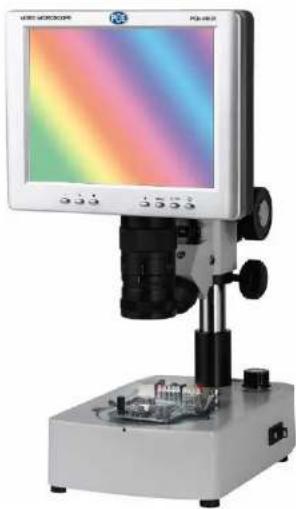
VM 21 - Video camera PCE Instruments - Free user manual and instructions
Find the device manual for free VM 21 PCE Instruments in PDF.


User questions about VM 21 PCE Instruments
0 question about this device. Answer the ones you know or ask your own.
Ask a new question about this device
Download the instructions for your Video camera in PDF format for free! Find your manual VM 21 - PCE Instruments and take your electronic device back in hand. On this page are published all the documents necessary for the use of your device. VM 21 by PCE Instruments.
USER MANUAL VM 21 PCE Instruments
USA From outside US: +1
Tel: (561) 320-9162
Fax: (561) 320-9176
info@pce-americas.com
PCE Instruments UK Ltd.
Units 12/13
Southpoint Business Park
Ensign way
Hampshire / Southampton United Kingdom 9034185
United Kingdom, SO31 4RF From outside UK: +44
From outside OK +44 Tel: (0) 3389 98703 0
Tel: (0) 2380 98703 9 Fax: (0) 2380 98703 9
info@industrial-needs.com
www.pce-instruments.com/english
www.pce-instruments.com
natural_image
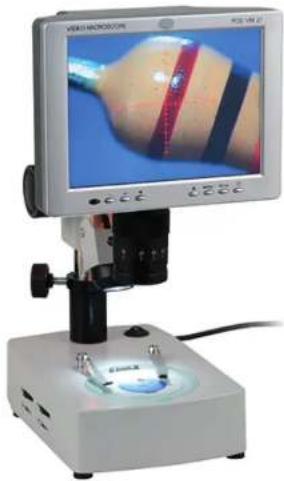
Medical imaging device with monitor displaying a medical specimen (no visible text or symbols)Manual Microscope PCE-VM 21
User Guide

Video Microscope
PCE-VM 21/22/23
Please read through the User Manual carefully before use.
The software can be downloaded here:
https://www.pce-instruments.com/english/download-win_4.htm

Attentions
- Do not disassemble the equipment without correct guide otherwise faults or errors may happen.
- High voltage inside, be careful, only a qualified person can open it.
- The optical lens is pre-adjusted ready for instant use, disassembly is not recommended.
- The machine is a sophisticated precise optical instrument, and is damageable, knock and impact is prohibited.
- Careful operation is required to avoid damage.
- Do not use the machine under humidity condition.
- When the halogen lamp of PCE-VM 21 is working, it may be hot, keep yourself/your skin and inflammable materials away from it to avoid burn or fire.
- Do not use the machine under oily fuse or dirty conditions.
- Please pull out the plug when the machine is not in use.
- Please keep the machine in dry situation when it won't be used within a long time.
- LED light is a original brand optional accessory, please do not use other brands', otherwise it might not light or damage the machine or the power supply.
- Please note the parameters of the power supply, do not use other brands' power supply.
To avoid damage during transportation, original package should be used to protect the sophisticated equipment, if lost; quality substitute package is required.
WARNING
The display is vulnerable and may be damaged forever should its interior parts are changed by any means, to avoid which please let a qualified person to disassemble and fix the machine when faults and dysfunctions happen.
CONTENT
Introduction 2
Framework of the microscope system....2
Working principles of the video microscope system ..2
Functions and features....3
Parameters ....3
Instruction of whole machine....6
Operation and usage 11
Dysfunctions diagnosis....15
Introduction
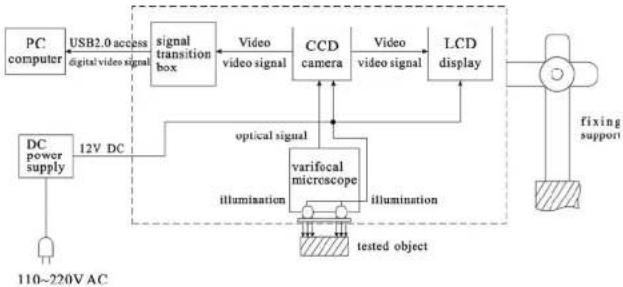
Consisting of varifocal microscope, CCD camera and LCD; PCE-VM 21/22/23 is a multi-functional microscope system set on the fixing support. Besides, it can be connected to PC via the USB2.0 access, which enables the system more powerful and applicable to wider usage range.
Framework of the microscope system
flowchart
graph TD
    A["PC computer"] -->|USB2.0 access digital video signal| B["signal transition box"]
    B --> C["video signal"]
    C --> D["CCD camera"]
    D --> E["LCD display"]
    E --> F["fixing support"]
    G["DC power supply"] -->|12V DC| H["varifocal microscope"]
    H --> I["illumination"]
    I --> J["tested object"]
    J --> K["110~220V AC"]
    L["optical signal"] --> H
    M[" illumination"] --> H
Working principles of the video microscope system
A clear picture of tiny object could be seen through the Microscope, then, such picture would be grabbed and turned into video signal by the CCD camera, and then, the video signal would turn into a digital picture on the LCD display, meanwhile, the video signal will be transformed in the signal transition box and then sent via the USD2.0 access to the computer for display, picture-grapping, photographing, measuring, saving and printing as well. Users can get the picture of ideal video effect by turning the zooming ring of the lens section.
Functions and features
- Ideal effect pictures for users' comfortable watching.
- Relieve the fatigue of and damage to the eyes results from long time watching via the microscope.
- Clear pictures of high resolution, wide visible range and zoom range.
- All-in-one integration design, smart size, space saving.
- Simple and easy to operate, stepless zooming range.
- With “+” scale, for measurement and orientation reference.
- LED lamp is easy to fix and operate, stepless lightness adjustable.
- Double halogen lamp, provide illumination from top & bottom, stepless lightness adjustable. (for PCE-VM 21)
- USB2.0 access enables the connection to computer for display, picture-grapping, photographing, measuring, saving and printing as well.
Application:
Electronics (Micro-electronics), mechanism processing, medicine & biology, metallurgical industry, material analyzing, jewelry, education and science research, etc.
Parameters
- System magnification: 10X—75X
Remark: System magnification is the ratio of the size of the tested part on the screen to that of the real tested object.
Relevant parameters: magnification of the object lens/CCD ocular, size of CCD lens/display.
- View range (mm): 13.5 X 10 \~ 2.1 X 1.5
-
Optical object lens of the microscope system
Focus of the main optical lens: 0.7X----4.5X (ratio: 1:6.5)
Focus of the CCD ocular: 0.5X
Focus of the entire optical lens: 0.35X----2.25X
Working distance: approx. 95 mm -
CCD camera:
Size of lens: 1/3 inch.
Display chip: SONY
Horizontal visual resolution: 700TVL.
Video output: 1.0Vp-p 75 Ω
Video mode: PAL
Working Voltage: DC 12V
- LCD display:
Size: 8 inches.
Pixel: 600*800
Lattice proportion: 0.2×0.2 mm
Video input(output): 1.0Vp-p 75 Ω
Work power: DC 12V (8W)
Video signal output mode: PAL
- USB2.0 Display card:
Requirements for computer system:
CPU: Pentium III 800MHZ or above
Operating system: Windows 2000 or Windows XP.
Memory: 256MB above.
Hard disk capacity: 500MB above.
USB access: 2.0
Remark: The picture effect will be affected if the PC can not meet the above settings.
- Electrical index of the halogen lamp for PCE-VM 21G
Working voltage: 100—240V AC 50/60Hz
Power: upper lamp: 10W/12V bottom lamp: 10W/12V
- LED lamp access (output) electrical index: (Notes: LED lamp is of optional accessory)
Max. working voltage: DC 12V.
Voltage range: DC 7.5V-10.5V.
Max. working current :250MA.
(Notes: max. input current for the outer connected illumination should not exceed 250mA.)
- Working voltage for the whole machine:
Power supply: 100-240V AC 50/60Hz
Bottom power supply: 100-240V AC 50/60Hz
- Physical parameters:
a>PCE-VM 23
Length on horizontal axis: 250mm
Height on vertical axis: 62+23mm
Weight for whole machine: approx. 4.5kgs
b>PCE-VM 21
Size of the base: 235(L) X 155(W) X 64(H)mm
Height on vertical axis: 250mm
Weight for whole machine: approx. 4.8kgs
c>PCE-VM 22
Size of the base: 235(L) X 155(W)mm
Height on vertical axis: 250mm
Weight for whole machine: approx. 3.55kgs
Notes: All the abovementioned parameters are subject to updates without prior notice.
Instruction of whole machine
A. Parts of the whole machine:

text_image
LCD CCDcamera(inside) vertical pole upright positioning bolt upright positioning adjusting nut upright position fixing bolt horizontal pole LED lamp access (bottom) working table microscope testing objects PC access power supply access horizontal positioning axletree horizontal position fixing bolt controlling buttons fixing support lock (Picture 1.1) PCE-VM 23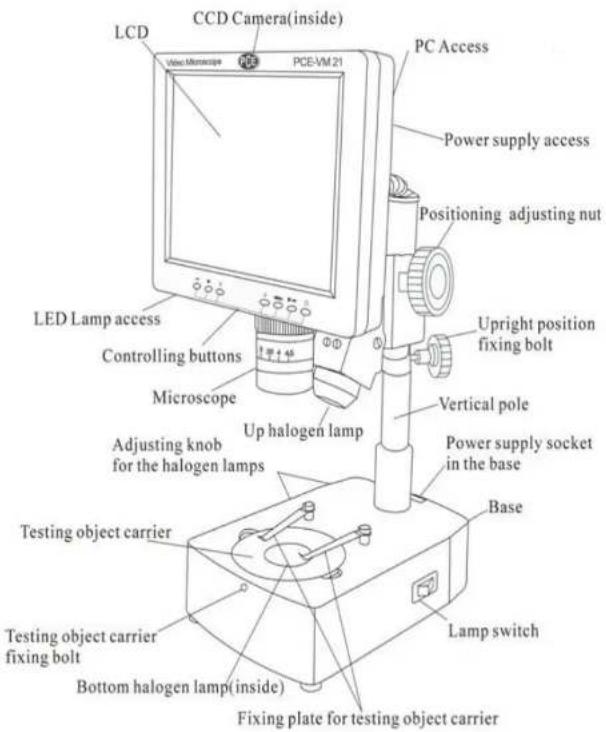
text_image
LCD CCD Camera(inside) Video Microscope PCE PCE-VM 21 PC Access Power supply access Positioning adjusting nut LED Lamp access Controlling buttons Microscope Upright position fixing bolt Vertical pole Power supply socket in the base Base Adjusting knob for the halogen lamps Up halogen lamp Testing object carrier Testing object carrier fixing bolt Bottom halogen lamp(inside) Fixing plate for testing object carrier Lamp switch(Picture 1.2)
PCE-VM 21
(Picture 1.3)
PCE-VM 22

text_image
CCD Camera(inside) LCD PC Access Power supply access LED Lamp access(bottom) Controlling buttons Microscope Tested object carrier Base Carrier fixing bolt Fixing plate for tested object carrier Upright positioning adjusting nut Vertical pole Upright position fixing boltB. Parts:
B.1. Lens section & CCD camera
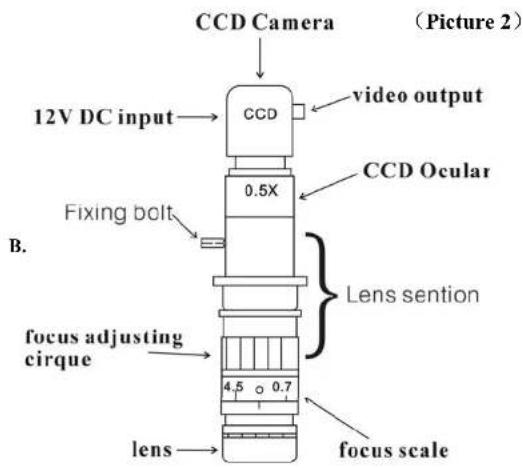
text_image
CCD Camera 12V DC input video output 0.5X CCD Ocular Fixing bolt Lens sention focus adjusting cirque 4.5 0.7 lens focus scale Picture 2 B.
text_image
AV:1V p-p 75Ω USB 2.0 DC: 12 V AV OUT AV SIGNAL OUT LET PC ACCESS USB OUT DC IN 12V DC INPUT LED LAMP OUTLET LED LAMP DC: 12 V LED LAMP Picture 3)B.3. Moving platform carrier (optional accessory)
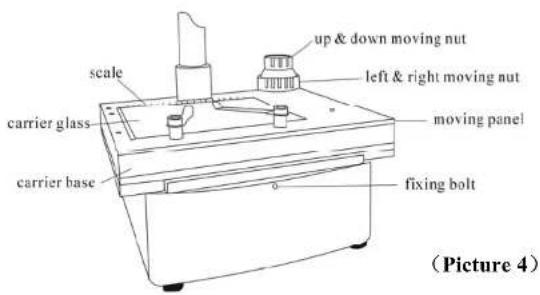
text_image
up & down moving nut left & right moving nut moving panel fixing bolt scale carrier glass carrier base (Picture 4)B.4. Function Buttons:
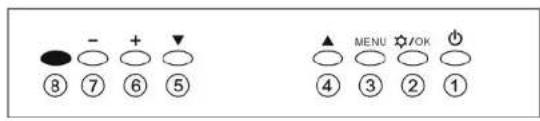
text_image
- + ⑧ ⑦ ⑥ ⑤ ▲ MENU ★/OK ④ ③ ② ①(Picture 5)
①: Power on/off button of the LCD display screen
②: Power on/off of up halogen lamp/confirming OSD parameters adjustment
③: OSD menu; enter into OSD menu, and its items and options.
④⑤: Choosing the menu and its item and options.
⑥⑦: Adjusting lightness of the up halogen lamp; choosing items and options in the menu.
⑧: Power on/off indicator
Operation and usage
Installation: firstly, fix the fixing support of PCE-VM 23 lock in suitable place onto the working table, secondly, set the installed main body into the horizontal positioning axletree, thirdly, adjust the horizontal pole so that the lens aims at the testing objects, lastly, adjust the LCD display screen in a suitable visual angle; while PCE-VM 21 G & PCE-VM 22 G can be put on working table directly for instant use. Pull the power adaptor plug into the socket.
Turn on/off: connect the machine to the power source, the power indicator(button ⑧) will turn on, press button to turn on the display, meanwhile, the power indicator will turn off; when working, press the button to turn off the display, meanwhile, the power indicator will turn on..
Attention: Please pull out the plug cut the power supply when the equipment is not in use, otherwise the power adaptor, CCD and display will keep on working.
Adjusting:
1) Adjust the imaging: place the testing objects under the lens, loosen the vertical positioning bolt to adjust the height of microscope and make the distance between the object with the surface of lens is 100mm, and then adjust the focus adjusting cirque to make the image clear. Finally, turn slightly the upright positioning adjusting nut so that the lens will go up and down to zoom in and out, till get the image of the best effect.
2) Adjust the zooming times: turn the focus adjusting cirque to get
suitable zooming times.
3) Adjust the lightness: lightness plays an important role in imaging, weak lightness makes the image dim and not clear while strong lightness changes the original colors of the object's image. The more spectrums, the more vivid the imaging will be. Moreover, refraction of the light also affects the imaging quality. So the illumination and lightness have to be carefully chosen and adjusted.
Installation and usage of the LED lamp:
a. lock the LED lamp to the lens tightly. b. insert the plug of LED into correspondent access/socket. c. press button “/OK”, the correspondent mark appears in the right up corner of the screen, and the lamp is on. (direct pressing “+” or “-” will also turn on the LED lamp)
d. press "+" " -" to adjust the lightness. e. once the lightness becomes ideal, press button "OK" to confirm and quit.
f. When the LED lamp is on, press button “/OK”, the correspondent mark and the lamp will be off.
4) Adjust the parameters of the image & system setting: OSD can be adjusted via buttons. OSD includes "image" and "settings"." While "image" includes "brightness", "contrast", "saturation" and "hue", users can adjust these parameters at their wills. "Settings" includes "language", "scale", and "default".
"language": 9 languages available.
"scale": 10mm for a big graduation of scale while 5mm for a small one.
(Notes: the scale is just for reference only.)
“default”: recover the factory settings.
Image adjusting:
a. press "MENU" to enter into the sub-menu "image".
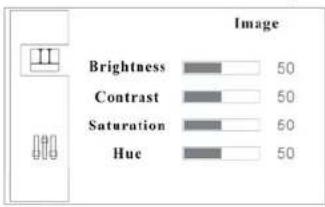
text_image
Image Brightness 50 Contrast 50 Saturation 60 Hue 50b. press "MENU" again and the option "brightness" is selected and ready for adjustment
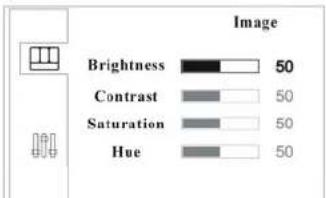
text_image
Image Brightness 50 Contrast 50 Saturation 50 Hue 50c. to adjust the brightness, press “+” or “-”, to activate other options, press “▽” or “△”.
d. once the options is selected, press "+" or "-" for adjustment.
e. when adjustments finish, press button “/OK” to confirm and quit.
System "settings":
a. press "MENU" to enter into the sub-menu "image".
b. press “▽” or “△” to enter into sub-menu “settings”.

text_image
SYSTEM LANGUAGE ENGLISH RETICLE ON RESET 4+c. press "menu", then option "language" is selected and ready for adjustment.
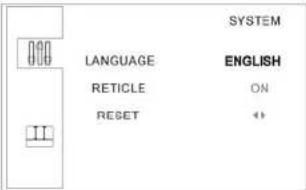
text_image
SYSTEM LANGUAGE ENGLISH RETICLE ON RESET 41d. to change the language, press "+" or "-"
e. to select "scale", press the button "▽", then the options "on" "off" are selected, press "+" or "-" to activate or close "scale".
f. to recover the factory settings, press “▽” or “△” to select the option “default”, then press “+” or “-” to recover or quit the factory settings.
g. when adjustments finish, press button “OK” to confirm and quit. AV OUT (av signal outlet): enable the machine to be connected with exterior display for better watching.
Installation of USB2.0 display card
The system of PCE-VM 21\22\23 is equipped with USB/PC access (see picture 3), which enables it to be connected with computer and thus
extends its functions. For the first time using, the drive software for display card and operation interface software for computer should be activated/set up:
- Check the computer's parameters and make sure they meet the requirements stated in the point "4.USB2.0 Display card in the "Requirements for computer system".
- Connect the machine to computer via the USB2.0 access, and then activate the system.
- Put the drive disk of USB2.0 display card into the computer's disk driver; finish the installation of the driving procedures according to the guide of Instruction of USB2.0 and computer indications.
- After the driving procedures finished, click to activate the operation software, finish the installation of the USB2.0 display card according to the guide of Instruction of USB2.0 and computer indications.
- After the above steps, check and make sure the installation is successful, and then computer operation can be stared.
Note: For installation steps, please refer to "Installation of USB2.0 Driving Progress for the Video Microscope".
Dysfunctions diagnosis
- Vague image:
Generally results from the improperly adjusted working distance, please re-check and make sure the working distance is approx 95mm as required.
- Image is dim, unclear, colorless, red, and with "snow stains":
Generally results from weak lightness/brightness, please adjust lightness/brightness properly strong.
- Image is too white:
Generally results from strong lightness/brightness, please adjust lightness/brightness to a properly extent.
- Image with white spot:
Generally results from refraction of the light or strong lightness/brightness, please adjust the light incidence and the lightness/brightness to a properly extent. Normally, scattering light is a better mean of illumination.
- No image appears on the display screen:
This may result from many factors, among which the most common two are display screen dysfunction and signal dysfunction. When this happens, first, check whether the power supply system is properly working or not; open the top cover of the machine, if the indicator of CCD camera is on, it means the power supply system is all right, then the below procedures should be followed:
(1) Display screen dysfunction: Normally, if the display screen is OK, press button ①, the caught image or the two-second "no signal" -14-
indication should be on the screen, otherwise display screen dysfunctions can be deemed affirmative. This symptom can also be judged from the exterior display connected via the AV OUT outlet.
(2) No signal dysfunction: When no signals are sent to the display, the backlight of the display screen will be off even it is power on, so no image appears on the screen. When this happens, please check the pass through which the signals are transmitted. Normally, the ocular microscope is deeded to be ok without outside force, and if the video signal transmitting wire is ok, then CCD camera will be
considered to arise.
Attention:
① If any dysfunction happens to CCD camera or display screen, please contact the supplier for repair.
② Please take care of the power supply voltage, wire polarity and the video format, if users want to change the CCD camera by themselves.
6. No image appears on computer
When the screen of PCE-VM 21/22/23oes well, but no image appears on computer, please check whether the computer works well or whether the system of the machine and the computer is properly connected or not, if affirmative answer comes, then the display card dysfunction is deemed to arise. When this happens, please open the top cover of the machine and check whether the indicator of the display card is on or not, and check if the connections between the card and the signal outlet as well as the video signal input are ok, if yes, then the display card dysfunction is confirmed to arise. Please contact the supplier for repair.
Note: High voltage inside, take care, please make sure the Electricity is cut off when checking.
WARNING
The display is vulnerable and may be damaged forever should its interior parts are changed by any means, to avoid which please let a qualified person to disassemble and fix the machine when faults and dysfunctions happen.