AT32UC3A464 - Electronic component Microchip - Free user manual and instructions
Find the device manual for free AT32UC3A464 Microchip in PDF.


User questions about AT32UC3A464 Microchip
0 question about this device. Answer the ones you know or ask your own.
Ask a new question about this device
Download the instructions for your Electronic component in PDF format for free! Find your manual AT32UC3A464 - Microchip and take your electronic device back in hand. On this page are published all the documents necessary for the use of your device. AT32UC3A464 by Microchip.
USER MANUAL AT32UC3A464 Microchip
8-bit Microcontrollers
AVR32
32-bit Microcontrollers and Application Processors

natural_image
Three black Intel 806 chips with visible branding, displayed against a blue background (no text or symbols on the chip surfaces)QUICK REFERENCE GUIDE
February 2009

Everywhere You Are®

natural_image
Abstract blue and white gradient background with soft gradients (no text or symbols)
AVR Introduction
Atmel ^® offers both 8-bit and 32-bit AVR ^® s.
AVR microcontrollers and application processors deliver unmatched flexibility. AVR combines the most code-efficient architecture for C and assembly programming with the ability to tune system parameters throughout the entire life cycle of your key products. Not only do you get to market faster, but once there, you can easily and cost-effectively refine and improve your product offering.
The AVR XMEGA gives you 16-bit performance and leading low-power features at 8-bit price.
It's simple: AVR works across the entire range of applications you're working on... or want to work on.
Introduction
AVR & AVR32
QUICK REFERENCE GUIDE
AVR Key Benefits
High performance
picoPower™ technology
High code density
High integration and scalability
Complete tool offering
Atmel's AVR is addressing the 8-bit and 16-bit market
AVR32 Key Benefits
High CPU performance
Low power consumption
High data throughput
Low system cost
High reliability
Easy to use
Environment Friendly Packages
For AVR and AVR32 microcontrollers and application processors, all the lead free packages are RoHS compliant, lead free, halide free and fully green.
All parts are offered in fully green packaging only.

natural_image
Green globe with leaf-shaped leaves above it, symbolizing environmental protection (no text or symbols)
natural_image
Abstract gradient background with soft blue and white tones, no text or symbols present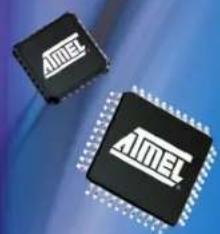
natural_image
Two black integrated circuit chips with white markings, placed on a blue gradient background (no text or symbols visible)Product Range
Atmel microcontrollers - success through innovation
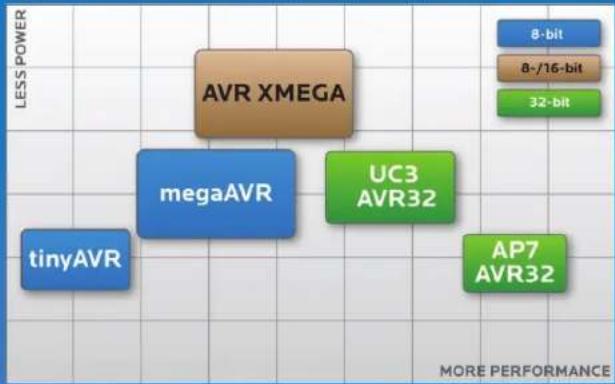
Atmel offers both 8-bit and 32-bit AVR's, and since day one the AVR philosophy has always been clear:
Highest performance with no power penalty.
flowchart
graph TD
    A["AVR XMEGA"] --> B["megaAVR"]
    A --> C["UC3 AVR32"]
    A --> D["tinyAVR"]
    A --> E["AP7 AVR32"]
    F["8-bit"] --> G["8-/16-bit"]
    F --> H["32-bit"]
tinyAVR
1-16 KBytes Flash, 8-32 pin packages
megaAVR
4-256 KBytes Flash, 28-100 pin packages
AVR XMEGA
16-384 KBytes Flash, 44-100 pin packages
AVR32 UC3
16-512 KBytes Flash, 48-144 pin packages
AVR32 AP7
Up to 32 KBytes On-chip SRAM,
196-256 pin packages
AVR & AVR32
QUICK REFERENCE GUIDE
Product Range
Product Families
tinyAVR®
General purpose microcontrollers with up to 16K Bytes Flash program memory, 512 Bytes SRAM and EEPROM.
megaAVR®
High performance microcontrollers with Hardware Multiplier. Up to 256 KBytes Flash, 4K Bytes EEPROM and 8K Bytes SRAM.
XMEGA™
The new XMEGA 8/16-bit AVR microcontrollers have new and advanced peripherals with increased performance, DMA and Event system, and extends the AVR family in low power/high performance markets.
AVR32 UC3
High performance, low power 32-bit AVR32 flash microcontrollers. Up to 512 KBytes Flash, 128 KBytes SRAM.
AVR32 AP7
High performance, low power 32-bit AVR32 application processors. Up to 32 KBytes SRAM.
Application Oriented
AVR-based devices covering specified areas such as such as automotive, LCD drivers, CAN networking, USB connectivity, motor control, lighting applications, battery management single-chip, IEEE 802.15.4/ZigBee™ and Remote Access Control.
Low Power
To meet the tough requirements of modern microcontrollers Atmel has combined years of low power research and developed picoPower technology. picoPower enables AVR microcontrollers to reduce power consumption in both sleep and active mode, and achieve the industry's lowest power consumption with 500 nA @ 1.8V with RTC running and 100 nA in power-down sleep mo
True 1.8 Volt operation
Low leakage process
Sleeping Brown-out detector
Ultra low power 32 kHz crystal oscillator
Power Reduction Register
Flash sampling
Web resources: www.atmel.com/products/avr/picopower/

text_image
AVR Advanced Driver LOW-HANGE PROCESS EFFECTIVE 32x16 RTC SLEEPING 80D IRE-15V OPERATIONPackaging Range

TFBGA-324
15x15 mm
CTBGA-256
17x17 mm
CTBGA-196
12x12 mm

OBGA-100
9x9 mm

VFBGA-49
5x5 mm

LGA-32
3.5x6.5 mm
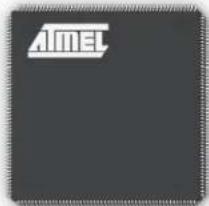
natural_image
Close-up of a dark gray surface with a white logo resembling 'Almel' in the top-left corner (no other text or symbols visible)QFP-208 28x28 mm

LQFP-144 20x20 mm
TQFP-100
14x14 mm

TQFP-64
14x14 mm

TQFP-64 10x10 mm

TQFP-44
10x10 mm

LQFP-48
7x7 mm

TQFP-32
7x7 mm

natural_image
Close-up of an integrated circuit chip with pin headers and a triangular connector (no visible text or symbols)PDIP-40
13.72×52.32 mm
PDIP 28
7.3×34.69 mm
PDIP 20
6.6×25.74 mm
PDIP-14
6.6x19.17 mm

PDIP-8
6.35×9.3 mm

TSSOP-44
4.5×11.1 mm
natural_image
Abstract gradient background with soft blue and white tones, no text or symbols present
tinyAVR
Don't let the name fool you... tinyAVR delivers huge capability. Optimized for a wide range of applications that require a small but powerful MCU solution, tinyAVR requires no external glue logic, and is available with integrated A/D converter and EEPROM memory.
By delivering Flash flexibility at Mask ROM prices, tinyAVR significantly cuts your time to market, while boosting your bottom line. And there's nothing tiny about that.
AVR & AVR32
QUICK REFERENCE GUIDE
tinyAVR
tinyAVR
tinyAVR Key Benefits
Optimized for simple applications requiring a small microcontroller.
Great performance for cost effective devices.
Fully featured with 10-bit ADCs and high speed PWMs onboard.
Self-Programming Flash memory for maximum flexibility.
debugWIRE On-Chip Debug and In-System Programming.
| Product | Status (f) | Flash (KB) | EEPROM (Bytes) | RAM (Bytes) | picoPower | I/O pins | UART/USART | SPI/TWI by USI | TWI | 8-bit Timers | 16-bit Timers | PWM (Channel) | 10+4 AD (seconds) | Analog Gain Step | DebugWIRE/OCD | Vcc Range (V) | Clock Speed (MHz) | Package | Po-free, Green (a) | Temp. Range |
| ATtiny13A | P | 1 | 64 | 64 | Y | 6 | 1 | 2 | 4 | Y | 1.8 - 5.5 | 20 | PDIP8, SOIC8, QFN20, QFN10 | Y | -40°C to +85°C | |||||
| ATtiny2313 | P | 2 | 128 | 128 | 18 | 1 | 1 | 1 | 1 | 4 | Y | 1.8 - 5.5 | 10 | PDIP20, SOIC20, QFN20 | Y | -40°C to +85°C | ||||
| P | 2 | 128 | 128 | 18 | 1 | 1 | 1 | 1 | 4 | Y | 2.7 - 5.5 | 20 | PDIP20, SOIC20, QFN20 | Y | -40°C to +85°C | |||||
| ATtiny24 | P | 2 | 128 | 128 | 12 | 1 | 1 | 1 | 4 | 8 | Y | Y | 1.8 - 5.5 | 10 | PDIP14, SOIC14, QFN20 | Y | -40°C to +85°C | |||
| P | 2 | 128 | 128 | 12 | 1 | 1 | 1 | 4 | 8 | Y | Y | 2.7 - 5.5 | 20 | PDIP14, SOIC14, QFN20 | Y | -40°C to +85°C | ||||
| ATtiny25 | P | 2 | 128 | 128 | 6 | 1 | 2 | (c) | 4 (c) | 4 | Y | Y | 1.8 - 5.5 | 10 | PDIP8, SOIC8, QFN20 | Y | -40°C to +85°C | |||
| P | 2 | 128 | 128 | 1 | 2 | (c) | 4 (c) | 4 | Y | Y | 2.7 - 5.5 | 20 | PDIP8, SOIC8, QFN20 | Y | -40°C to +85°C | |||||
| ATtiny26 | P | 2 | 128 | 16 | 1 | 2 | 2 | 11 | Y | 2.7 - 5.5 | 8 | PDIP20, SOIC20, QFN32 | Y | -40°C to +85°C | ||||||
| P | 2 | 128 | 128 | 16 | 1 | 2 | 2 | 11 | Y | 4.5 - 5.5 | 16 | PDIP20, SOIC20, QFN32 | Y | -40°C to +85°C | ||||||
| ATtiny261 | P | 2 | 128 | 128 | 16 | 1 | (c) | 1 | 5 (c) | 11 | Y | Y | 1.8 - 5.5 | 10 | PDIP20, SOIC20, QFN32 | Y | -40°C to +85°C | |||
| P | 2 | 128 | 128 | 16 | 1 | (c) | 1 | 5 (c) | 11 | Y | Y | 2.7 - 5.5 | 20 | PDIP20, SOIC20, QFN32 | Y | -40°C to +85°C | ||||
| ATtiny28L | P | 2 | (b) | 11 | 1 | 1.8 - 5.5 | 1.2 | PDIP28, QFN32, TQFP32 | Y | -40°C to +85°C | ||||||||||
| P | 2 | (c) | 11 | 1 | 2.7 - 5.5 | 4 | PDIP28, QFN32, TQFP32 | Y | -40°C to +85°C | |||||||||||
| ATtiny44A | P | 4 | 256 | 256 | Y | 12 | 1 | 1 | 1 | 4 | 8 | Y | Y | 1.8 - 5.5 | 10 | PDIP14, SOIC14, QFN20 , VQFN20 | Y | -40°C to +85°C | ||
| ATtiny45 | P | 4 | 256 | 256 | 6 | 1 | 2 (c) | 4 (c) | 4 | Y | Y | 1.8 - 5.5 | 10 | PDIP8, SOIC8, QFN20 | Y | -40°C to +85°C | ||||
| P | 4 | 256 | 256 | 6 | 1 | 2 (c) | 4 (c) | 4 | Y | Y | 2.7 - 5.5 | 20 | PDIP8, SOIC8, QFN20 | Y | -40°C to +85°C | |||||
| ATtiny461 | P | 4 | 256 | 256 | 16 | 1 | 1 (c) | 1 | 5 (e) | 11 | Y | 1.8 - 5.5 | 10 | PDIP20, SOIC20, QFN32 | Y | -40°C to +85°C | ||||
| P | 4 | 256 | 256 | 16 | 1 | (c) | 1 | 5 (e) | 11 | Y | Y | 2.7 - 5.5 | 20 | PDIP20, SOIC20, QFN32 | Y | -40°C to +85°C | ||||
| ATtiny48 | P | 4 | 64 | 256 Y | 28 | (c) | 1 | 1 | 1 | 2 | 8 | Y | 1.8 - 5.5 | 12 | PDIP28, QFN32/28, TQFP32 | Y | -40°C to +85°C | |||
| ATtiny84 | P | 8 | 512 | 512 | 12 | 1 | 1 | 1 | 4 | 8 | Y | Y | 1.8 - 5.5 | 10 | PDIP14, QFN20 | Y | -40°C to +85°C | |||
| P | 8 | 512 | 512 | 12 | 1 | 1 | 1 | 4 | 8 | Y | Y | 2.7 - 5.5 | 20 | PDIP14, QFN20 | Y | -40°C to +85°C | ||||
| ATtiny85 | P | 8 | 512 | 512 | 6 | 1 | 2 (c) | 4 (c) | 4 | Y | Y | 1.8 - 5.5 | 10 | PDIP8, SOIC8, QFN20 | Y | -40°C to +85°C | ||||
| P | 8 | 512 | 512 | 6 | 1 | 2 (c) | 4 (c) | 4 | Y | Y | 2.7 - 5.5 | 20 | PDIP8, SOIC8, QFN20 | Y | -40°C to +85°C | |||||
| Product | Status (f) | Flash (KB) | EEPROM (Bytes) | RAM (Bytes) | DicoPower | I/O pins | UART/USART | SP/TWI by LSI | TWI | 3-bit Timers | 16-bit Timers | PAM (Channel) | 10-bit A/D (Channel) | Analog Gain Stage | Debug/WIRE/OCD | Vcc Range (V) | Clock Speed (MHz) | Package | Phi-free, Green (s) | Temp. Range |
| ATtiny861 | P 8 | 512 | 512 16 | 1 1 | (4) | 1 | 5 (4) | 11 | Y | Y | 1.8 - 5.5 | 10 | PDIP20, SOIC20, QFN/32 | Y | -40°C to +85°C | |||||
| P | 8 | 512 | 512 | 16 | 1 | 1 (4) | 1 | 5 (4) | 11 | Y | Y | 2.7 - 5.5 | 20 | PDIP20, SOIC20, QFN32 | Y | -40°C to +85°C | ||||
| ATtiny88 | P | 8 | 64 | 512 | Y | 28 (g) | 1 | 1 | 1 | 2 | 8 | Y | 1.8 - 5.5 | 12 | PDIP28, QFN32/28, TQFP32 | Y | -40°C to +85°C |
a) Po-free packaging complies to the European Directive for Restriction of Hazardous Substances (RoHS directive). Also Halide free and fully Green.
c) The AVB core has 32 internal registers that can be used as RAM storage.
c) One high speed 8-bit timer/counter.
d) Two High Frequency, 250kHz. PWM Outputs.
a) Three High Frequency PWM Outputs for BLDC motor control.
1. P: Product in Full Production, 1: Device under Introduction
g) 28 Programmable I/O Lines in 32-load TQFP and 32-pad QFN/MLF package, 24 Programmable I/O Lines in 28-pin PDIP and 28-pad QFN/MLF package
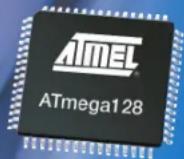
megaAVR
When your designs call for a bit of extra muscle, you need megaAVR. Developed for applications that need to store a large amount of program code, megaAVR offers substantial program and data memories, and performance approaching 1 MIPS per MHz. Better yet, megaAVR delivers the power of self-programmability for fast, secure, cost-effective remote upgrades.
AVR & AVR32
QUICK REFERENCE GUIDE
megaAVR
megaAVR Key Benefits
Self-Programming Flash memory with boot block.
High accuracy 10-bit A/D converters with up to x200 analog gain stage.
USART, SPI and TWI ^(1) compliant serial interfaces.
IEEE 1149.1 compliant JTAG interface on megaAVRs with 44 pins or more.
On-Chip Debug through JTAG or debugWIRE interface.
| Product | Status (in) | Flash (KB) | EEPROM (Bytes) | RAM (Bytes) | picoPower | I/O pins | UART/USART | SPI/TVM I/D USI | SPI | TVM (2C compliant) | 8-bit Timers | 16-bit Timers | PWM (Channel) | IO-bit A/D (Channel) | Analog Gain Stage | Dalog/WIRE/OOD | JTAGOOD | Vcc Range (V) | Clock Speed (MHz) | Package | PI-free, Green, AI Temp. Range | ||||||||||||||||||||
| ATmega48PA | P | 4 | 256 | 512 | Y | 23 | 1 | 1+USART | Y | 2 | 1 | 6 | 8 | Y | 1.8-5.5V | 20 | TQFP32, QFN32, PDIP28 | Y | -40°C to +85°C | ||||||||||||||||||||||
| ATmega88PA | P | 8 | 512 | 1K | Y | 23 | 1 | 1+USART | Y | 2 | 1 | 6 | 8 | Y | 1.8-5.5V | 20 | TQFP32, QFN32, PDIP28 | Y | -40°C to +85°C | ||||||||||||||||||||||
| ATmega8515 | P | 8 | 512 | 512 | 35 | 1 | 1 | 1 | 1 | 3 | 2.7-5.5V | 8 | TQFP44, PLCC44, QFN44, PDIP40 | Y | -40°C to +85°C | ||||||||||||||||||||||||||
| P | 8 | 512 | 512 | 35 | 1 | 1 | 1 | 1 | 3 | 4.5-5.5V | 16 | TQFP44, PLCC44, QFN44, PDIP40 | Y | -40°C to +85°C | |||||||||||||||||||||||||||
| ATmega8535 | P | 8 | 512 | 512 | 32 | 1 | 1 | Y | 2 | 1 | 4 | 8 | Y | 2.7-5.5V | 8 | TQFP44, PLCC44, QFN44, PDIP40 | Y | -40°C to +85°C | |||||||||||||||||||||||
| P | 8 | 512 | 512 | 32 | 1 | 1 | Y | 2 | 1 | 4 | 8 | Y | 4.5-5.5V | 16 | TQFP44, PLCC44, QFN44, PDIP40 | Y | -40°C to +85°C | ||||||||||||||||||||||||
| ATmega16A | P | 16 | 512 | 1K | 32 | 1 | 1 | Y | 2 | 1 | 4 | 8 | Y | Y | 2.7-5.5V | 16 | TQFP44, QFN44, PDIP40 | Y | -40°C to +85°C | ||||||||||||||||||||||
| ATmega162 | P | 16 | 512 | 1K | 35 | 2 | 1 | 2 | 2 | 6 | Y | 1.8-5.5V | 8 | TQFP44, QFN44, PDIP40 | Y | -40°C to +85°C | |||||||||||||||||||||||||
| P | 16 | 512 | 1K | 35 | 2 | 1 | 2 | 2 | 6 | Y | 2.7-5.5V | 16 | TQFP44, QFN44, PDIP40 | Y | -40°C to +85°C | ||||||||||||||||||||||||||
| ATmega164P | P | 16 | 512 | 1K | Y | 32 | 2 | 1+USART | Y | 2 | 1 | 6 | 8 | Y | Y | 1.8-5.5V | 10 | TQFP44, QFN44, PDIP40 | Y | -40°C to +85°C | |||||||||||||||||||||
| P | 16 | 512 | 1K | Y | 32 | 2 | 1+USART | Y | 2 | 1 | 6 | 8 | Y | Y | 2.7-5.5V | 20 | TQFP44, QFN44, PDIP40 | Y | -40°C to +85°C | ||||||||||||||||||||||
| ATmega165P | P | 16 | 512 | 1K | Y | 54 | 1 | 1 | 1+USART | USI | 2 | 1 | 4 | 8 | Y | 1.8-5.5V | 8 | TQFP64, QFN64 | Y | -40°C to +85°C | |||||||||||||||||||||
| P | 16 | 512 | 1K | Y | 54 | 1 | 1 | 1+USART | USI | 2 | 1 | 4 | 8 | Y | 2.7-5.5V | 16 | TQFP64, QFN64 | Y | -40°C to +85°C | ||||||||||||||||||||||
| ATmega168 | P | 16 | 512 | 1K | 23 | 1 | 1+USART | Y | 2 | 1 | 6 | 8 c) | Y | 1.8-5.5V | 10 | TQFP32, QFN32, PDIP28 | Y | -40°C to +85°C | |||||||||||||||||||||||
| P | 16 | 512 | 1K | 23 | 1 | 1+USART | Y | 2 | 1 | 6 | 8 c) | Y | 2.7-5.5V | 20 | TQFP32, QFN32, PDIP28 | Y | -40°C to +85°C | ||||||||||||||||||||||||
| ATmega168P | P | 16 | 512 | 1K | Y | 23 | 1 | 1+USART | Y | 2 | 1 | 6 | 8 | Y | 1.8-5.5V | 10 | TQFP32, QFN32, PDIP28 | Y | -40°C to +85°C | ||||||||||||||||||||||
| P | 16 | 512 | 1K | Y | 23 | 1 | 1+USART | Y | 2 | 1 | 6 | 8 | Y | 2.7-5.5V | 20 | TQFP32, QFN32, PDIP28 | Y | -40°C to +85°C | |||||||||||||||||||||||
| Product | Status (m) | Flash (K2) | EEPROM (Bytes) | RAM (Bytes) | PicoPower | I/O pins | UART/USART | SPI/TWI by USI | SPI | TWI (I/O compliant) | 8-bit Timers | 16-bit Timers | PWM (Channel) | 10-bit A/D (Channel) | Analog Gain Stage | DelouyWIRE/OOD | JTAGOOD | Voc Range (V) | Clock Speed (MHz) | Package | Phi-free, Green, (a) |
| ATmega32A | P | 32 | 1K | 2K | 32 | 1 | 1 | Y | 2 | 1 | 4 | 8 | Y | Y | 2.7-5.5V | 16 | TQFP44, QFN44, PDIP40 | Y -40°C to +85°C | |||
| ATmega324PA | P | 32 | 1K | 2K | Y | 32 | 2 | 1+USART | Y | 2 | 1 | 8 | 8 | Y | Y | 1.8-5.5V | 20 | TQFP44, QFN44, PDIP40 | Y -40°C to +85°C | ||
| ATmega325 | P | 32 | 1K | 2K | 54 | 1 | 1 | 1+USI | USI | 2 | 1 | 4 | 8 | Y | 1.8-5.5V | 8 | TQFP64, QFN64 | Y -40°C to +85°C | |||
| P | 32 | 1K | 2K | 54 | 1 | 1 | 1+USI | USI | 2 | 1 | 4 | 8 | Y | 2.7-5.5V | 16 | TQFP64, QFN64 | Y -40°C to +85°C | ||||
| ATmega325P | I | 32 | 1K | 2K | Y | 54 | 1 | 1 | 1+USI | USI | 2 | 1 | 4 | 8 | Y | 1.8-5.5V | 10 | TQFP64, QFN64 | Y -40°C to +85°C | ||
| I | 32 | 1K | 2K | Y | 54 | 1 | 1 | 1+USI | USI | 2 | 1 | 4 | 8 | Y | 2.7-5.5V | 20 | TQFP64, QFN64 | Y -40°C to +85°C | |||
| ATmega3250 | I | 32 | 1K | 2K | 69 | 1 | 1 | 1+USI | USI | 2 | 1 | 4 | 8 | Y | 1.8-5.5V | 8 | TQFP100 | Y -40°C to +85°C | |||
| I | 32 | 1K | 2K | 69 | 1 | 1 | 1+USI | USI | 2 | 1 | 4 | 8 | Y | 2.7-5.5V | 16 | TQFP100 | Y -40°C to +85°C | ||||
| ATmega3250P | I | 32 | 1K | 2K | Y | 69 | 1 | 1 | 1+USI | USI | 2 | 1 | 4 | 8 | Y | 1.8-5.5V | 10 | TQFP100 | Y -40°C to +85°C | ||
| I | 32 | 1K | 2K | Y | 69 | 1 | 1 | 1+USI | USI | 2 | 1 | 4 | 8 | Y | 2.7-5.5V | 20 | TQFP100 | Y -40°C to +85°C | |||
| ATmega328P | I | 32 | 1K | 2K | Y | 23 | 1 | 1+USART | Y | 2 | 1 | 6 | 8 | Y | 1.8-5.5V | 10 | TQFP32, QFN32, PDIP28 | Y -40°C to +85°C | |||
| I | 32 | 1K | 2K | Y | 23 | 1 | 1+USART | Y | 2 | 1 | 6 | 8 | Y | 2.7-5.5V | 20 | TQFP32, QFN32, PDIP28 | Y -40°C to +85°C | ||||
| ATmega64 | P | 64 | 2K | 4K | 54 | 2 | 1 | Y | 2 | 2 | 6+2 | 8 | Y | Y | 2.7-5.5V | 8 | TQFP64, QFN64 | Y -40°C to -85°C | |||
| P | 64 | 2K | 4K | 54 | 2 | 1 | Y | 2 | 2 | 6+2 | 8 | Y | Y | 4.5-5.5V | 16 | TQFP64, QFN64 | Y -40°C to -85°C | ||||
| ATmega640 | P | 64 | 4K | 8K | 86 | 4 | 1+USART | Y | 2 | 4 | 12+4 | 16 | Y | Y | 1.8-5.5V | 8 | TQFP100, CBGA100 | Y -40°C to +85°C | |||
| P | 64 | 4K | 8K | 86 | 4 | 1+USART | Y | 2 | 4 | 12+4 | 16 | Y | Y | 2.7-5.5V | 16 | TQFP100, CBGA100 | Y -40°C to +85°C | ||||
| ATmega644 | P | 64 | 2K | 4K | 32 | 1 | 1+USART | Y | 2 | 1 | 6 | 8 | Y | Y | 1.8-5.5V | 10 | TQFP44, QFN44, PDIP40 | Y -40°C to +85°C | |||
| P | 64 | 2K | 4K | 32 | 1 | 1+USART | Y | 2 | 1 | 6 | 8 | Y | Y | 2.7-5.5V | 20 | TQFP44, QFN44, PDIP40 | Y -40°C to +85°C | ||||
| ATmega644P | P | 64 | 2K | 4K | Y | 32 | 2 | 1+USART | Y | 2 | 1 | 6 | 8 | Y | Y | 1.8-5.5V | 10 | TQFP44, QFN44, PDIP40 | Y -40°C to +85°C | ||
| P | 64 | 2K | 4K | Y | 32 | 2 | 1+USART | Y | 2 | 1 | 6 | 8 | Y | Y | 2.7-5.5V | 20 | TQFP44, QFN44, PDIP40 | Y -40°C to +85°C | |||
| ATmega645 | P | 64 | 2K | 4K | 54 | 1 | 1 | 1+USI | USI | 2 | 1 | 4 | 8 | Y | 1.8-5.5V | 8 | TQFP64, QFN64 | Y -40°C to +85°C | |||
| P | 64 | 2K | 4K | 54 | 1 | 1 | 1+USI | USI | 2 | 1 | 4 | 8 | Y | 2.7-5.5V | 16 | TQFP64, QFN64 | Y -40°C to +85°C | ||||
| Product | Status (s) | Flash (KB) | EEPROM (Bytes) | RAM (Bytes) | picoPower | I/O pins | UART/USART | SPI/TWI by USI | TMI (IO-compliant) | 8-bit Timers | 16-bit Timers | PWM (Channel) | 10-bit A/D (Channel) | Analog Gain Stage | DebugWIRE/OCD | JTAG/OOD | Vcc Range (V) | Clock Speed (MHz) | Package | Phi-free, Green (in)Temp. Range | |
| ATmega6450 | I | 64 | 2K | 4K | 69 | 1 | 1 | 1+USI | USI | 2 | 1 | 4 | # | Y | 1.8-5.5V 8 | TQFP100 Y -40°C to +85°C | |||||
| I | 64 | 2K | 4K | 69 | 1 | 1 | 1+USI | USI | 2 | 1 | 4 | 8 | Y | 2.7-5.5V | 16 | TQFP100 | Y | -40°C to +85°C | |||
| ATmega1284P | I | 128 | 4K | 16K | Y | 32 | 2 | 1+USART | Y | 1 | 2 | 6 | 8 | Y | Y | 1.8-5.5V | 20 | TQFP44, QFN44, PDIP40 | Y | -40°C to +85°C | |
| ATmega128 | P | 128 | 4K | 4K | 53 | 2 | 1 | Y | 2 | 2 | 6+2 | 8 | Y | Y | 2.7-5.5V | 8 | TQFP64, QFN64 | Y | -40°C to +85°C | ||
| P | 128 | 4K | 4K | 53 | 2 | 1 | Y | 2 | 2 | 6+2 | 8 | Y | Y | 4.5-5.5V | 16 | TQFP64, QFN64 | Y | -40°C to +85°C | |||
| ATmega1280 | P | 128 | 4K | 8K | 86 | 4 | 1+USART | Y | 2 | 4 | 12+4 | 16 | Y | Y | 1.8-5.5V | 8 | TQFP100, CBGA100 | Y | -40°C to +85°C | ||
| P | 128 | 4K | 8K | 86 | 4 | 1+USART | Y | 2 | 4 | 12+4 | 16 | Y | Y | 2.7-5.5V | 16 | TQFP100, CBGA100 | Y | -40°C to +85°C | |||
| ATmega1281 | P | 128 | 4K | 8K | 64 | 2 | 1+USART | Y | 2 | 4 | 6+4 | 8 | Y | Y | 1.8-5.5V | 8 | TQFP64, QFN64 | Y | -40°C to +85°C | ||
| P | 128 | 4K | 8K | 64 | 2 | 1+USART | Y | 2 | 4 | 6+4 | 8 | Y | Y | 2.7-5.5V | 16 | TQFP64, QFN64 | Y | -40°C to +85°C | |||
| ATmega2560 | P | 256 | 4K | 8K | 86 | 4 | 1+USART | Y | 2 | 4 | 12+4 | 16 | Y | Y | 1.8-5.5V | 8 | TQFP100, CBGA100 | Y | -40°C to +85°C | ||
| P | 256 | 4K | 8K | 86 | 4 | 1+USART | Y | 2 | 4 | 12+4 | 16 | Y | Y | 4.5-5.5V | 16 | TQFP100, CBGA100 | Y | -40°C to +85°C | |||
| ATmega2561 | P | 256 | 4K | 8K | 54 | 2 | 1+USART | Y | 2 | 4 | 6+4 | 8 | Y | Y | 1.8-5.5V | 8 | TQFP64, QFN64 | Y | -40°C to +85°C | ||
| P | 256 | 4K | 8K | 54 | 2 | 1+USART | Y | 2 | 4 | 6-4 | 8 | Y | Y | 4.5-5.5V | 16 | TQFP64, QFN64 | Y | -40°C to +85°C | |||
a) Pb-free packaging complies to the European Directive for Restriction of Hazardous Subalances (RoHS directive). Also Halide free and fully Groon.
By P: Product in Full Production, T. Device under Introduction.
c) Only 6 ADC in PDIP packages.

natural_image
Abstract gradient background with soft blue and white tones, no text or symbols present
AVR XMEGA
AVR XMEGA extends the AVR product family to reach new markets and improve existing applications. With a DMA Controller, an Innovative Event System, Multi-level Interrupt Controller, Crypto engine, and high speed ADC and DAC, AVR XMEGA pushes the boundaries for high performance 8/16-bit MCUs while still remaining highly compatible with tinyAVR and megaAVR
AVR XMEGA is the MCU for the next generation of 8- and 16-bit applications!
AVR & AVR32
QUICK REFERENCE GUIDE
XMEGA
XMEGA
AVR XMEGA Key Benefits
picoPower technology for ultra low power consumption
True 1.6 volt operation and CPU speed up to 32 MHz
Event System and DMA Controller
High speed, high resolution 12-bit ADC and DAC
Crypto engine, Timers/Counters and fast communication interfaces
Accurate and flexible Clock System with dynamic clock switching
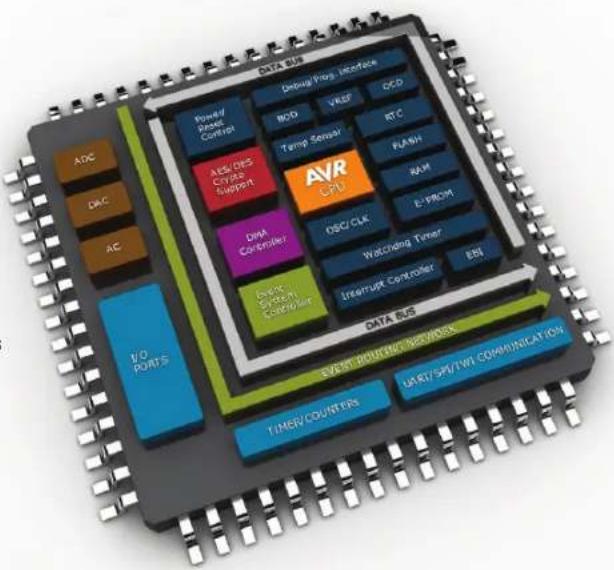
text_image
DATA BUS Output Plug Interface Power/ phase Control RCD VREF CCD Temp Sensor RTC AES/DES Cryase Support AVR CPU Disk Controller OSC/CLK FLASH RAM E/PROM Dink Controller OSC/CLK Watching Timer Interrupt Controller ESI I/O PORTS DATA BUS SYSTEM/OUTPUT/NECESS TIME/COUNTERS UART/SAT/TWI COMMUNICATION| Product (a) | Status (b) | Flash (KB) | Boot code (bytes) | EEPROM (Bytes) | SPIOM (Bytes) | DPOPower | DMA (Channels) | I/O | 16-bit Timers | PWM (Channel) | RTC 16-bit | SRI | TWI (2C) | USAFT | 12-bit A/D (Channel) | 12-bit DAC (Channel) | Analog Comb. | Interrupts | Interrupts Ext. | TJAC | PUI | Voc IV Range | Clock Speed (MHz) | Package | Temp. Range | |||||||
| Boot code (Bytes) | EEPROM (Bytes) | SPIOM (Bytes) | DPOPower | DMA (Channels) | 12-bit A/D (Channel) | 12-bit DAC (Channel) | Analog Comb. | Interrupts | Interrupts Ext. | |||||||||||||||||||||||
| ATxmega64A1 | P | 64 | 4 | 2 | 4 | Y | 4 | 8 | 78 | 8 | 24 | Y | 4 | 4 | 8 | 2x8 | 2x2 | 4 | 122 | 78 | Y | Y | 1.6 - 3.6 | 32 | TQFP100, BGA100 | -40°C to +85°C | ||||||
| ATxmega128A1 | P | 128 | 8 | 2 | 8 | Y | 4 | 8 | 78 | 8 | 24 | Y | 4 | 4 | 8 | 2x8 | 2x2 | 4 | 122 | 78 | Y | Y | 1.6 - 3.6 | 32 | TQFP100, BGA100 | -40°C to +85°C | ||||||
| ATxmega192A1 | F | 192 | 8 | 4 | 16 | Y | 4 | 8 | 78 | 8 | 24 | Y | 4 | 4 | 8 | 2x8 | 2x2 | 4 | 122 | 78 | Y | Y | 1.6 - 3.6 | 32 | TQFP100, BGA100 | -40°C to +85°C | ||||||
| ATxmega256A1 | F | 256 | 8 | 4 | 16 | Y | 4 | 8 | 78 | 8 | 24 | Y | 4 | 4 | 8 | 2x8 | 2x2 | 4 | 122 | 78 | Y | Y | 1.6 - 3.6 | 32 | TQFP100, BGA100 | -40°C to +85°C | ||||||
| ATxmega384A1 | F | 384 | 8 | 4 | 32 | Y | 4 | 8 | 78 | 8 | 24 | Y | 4 | 4 | 8 | 2x8 | 2x2 | 4 | 122 | 78 | Y | Y | 1.6 - 3.6 | 32 | TQFP100, BGA100 | -40°C to +85°C | ||||||
| ATxmega64A3 | I | 64 | 4 | 2 | 4 | Y | 4 | 8 | 50 | 7 | 22 | Y | 3 | 2 | 7 | 2x8 | 1x2 | 4 | 102 | 50 | Y | Y | 1.6 - 3.6 | 32 | TQFP64, QFN64 | -40°C to +85°C | ||||||
| ATxmega128A3 | I | 128 | 8 | 2 | 8 | Y | 4 | 8 | 50 | 7 | 22 | Y | 3 | 2 | 7 | 2x8 | 1x2 | 4 | 102 | 50 | Y | Y | 1.6 - 3.6 | 32 | TQFP64, QFN64 | -40°C to +85°C | ||||||
| ATxmega192A3 | I | 192 | 8 | 4 | 16 | Y | 4 | 8 | 50 | 7 | 22 | Y | 3 | 2 | 7 | 2x8 | 1x2 | 4 | 102 | 50 | Y | Y | 1.6 - 3.6 | 32 | TQFP64, QFN64 | -40°C to +85°C | ||||||
| ATxmega256A3B | I | 256 | 8 | 4 | 16 | Y | 4 | 8 | 49 | 7 | 22 | Y | 2 | 2 | 6 | 2x8 | 1x2 | 4 | 102 | 49 | Y | Y | 1.6 - 3.6 | 32 | TQFP64, QFN64 | -40°C to +85°C | ||||||
| ATxmega256A3 | I | 256 | 8 | 4 | 16 | Y | 4 | 8 | 50 | 7 | 22 | Y | 3 | 2 | 7 | 2x8 | 1x2 | 4 | 102 | 50 | Y | Y | 1.6 - 3.6 | 32 | TQFP64, QFN64 | -40°C to +85°C | ||||||
| ATxmega16A4 | I | 16 | 4 | 1 | 2 | Y | 4 | 8 | 34 | 5 | 16 | Y | 2 | 2 | 5 | 1x12 | 1x2 | 2 | 77 | 34 | Y | 1.6 - 3.6 | 32 | TQFP44, QFN44, VFBGA49 | -40°C to +85°C | |||||||
| ATxmega32A4 | I | 32 | 4 | 1 | 4 | Y | 4 | 8 | 34 | 5 | 16 | Y | 2 | 2 | 5 | 1x12 | 1x2 | 2 | 77 | 34 | Y | 1.6 - 3.6 | 32 | TQFP44, QFN44, VFBGA49 | -40°C to +85°C | |||||||
| ATxmega64A4 | F | 64 | 4 | 2 | 4 | Y | 4 | 8 | 34 | 5 | 16 | Y | 2 | 2 | 5 | 1x12 | 1x2 | 2 | 77 | 34 | Y | 1.6 - 3.6 | 32 | TQFP44, QFN44 | -40°C to +85°C | |||||||
| ATxmega128A4 | F | 128 | 4 | 2 | 8 | Y | 4 | 8 | 34 | 5 | 16 | Y | 2 | 2 | 5 | 1x12 | 1x2 | 2 | 77 | 34 | Y | 1.6 - 3.6 | 32 | TQFP44, QFN44 | -40°C to +85°C | |||||||
| ATxmega64D3 | I | 64 | 4 | 2 | 4 | Y | 4 | 50 | 5 | 18 | Y | 2 | 1 | 3 | 1x16 | 2 | 67 | 50 | Y | 1.6 - 3.6 | 32 | TQFP64, QFN4 | -40°C to +85°C | |||||||||
| ATxmega128D3 | I | 128 | 8 | 2 | 8 | Y | 4 | 50 | 5 | 18 | Y | 2 | 1 | 3 | 1x16 | 2 | 67 | 50 | Y | 1.6 - 3.6 | 32 | TQFP64, QFN84 | -40°C to +85°C | |||||||||
| ATxmega192D3 | I | 192 | 8 | 2 | 16 | Y | 4 | 50 | 5 | 18 | Y | 2 | 1 | 3 | 1x16 | 2 | 67 | 50 | Y | 1.6 - 3.6 | 32 | TQFP64, QFN84 | -40°C to +85°C | |||||||||
| ATxmega256D3 | I | 256 | 8 | 4 | 16 | Y | 4 | 50 | 5 | 18 | Y | 2 | 1 | 3 | 1x16 | 2 | 67 | 50 | Y | 1.6 - 3.6 | 32 | TQFP64, QFN84 | -40°C to +85°C | |||||||||
| ATxmega16D4 | I | 16 | 4 | 1 | 2 | Y | 4 | 34 | 4 | 14 | Y | 2 | 1 | 2 | 1x12 | 2 | 55 | 34 | Y | 1.6 - 3.6 | 32 | TQFP44, QFN44, VFBGA49 | -40°C to +85°C | |||||||||
| ATxmega32D4 | I | 32 | 4 | 1 | 4 | Y | 4 | 34 | 4 | 14 | Y | 2 | 1 | 2 | 1x12 | 2 | 55 | 34 | Y | 1.6 - 3.6 | 32 | TQFP44, QFN44, VFBGA49 | -40°C to +85°C | |||||||||
ai Plo-free packaging compiles to the European Directive for Restriction of Hazardous Substances (RoHS directive). Also Halide free and fully Green. All products have 32 MHz, 2 MHz and 32 kHz calibrated oscillators and
Event System channels
b) P: Production. F: Future product, I: Device under Introduction. c) Include Battery backup function

natural_image
Abstract gradient background with soft blue and white tones, no text or symbols presentAVR32 UC3
The Atmel AVR32 UC3 product family is built on the new AVR32 UC architecture optimized for highly integrated embedded applications requiring microcontrollers with on-chip Flash program memory. UC3 microcontrollers achieve high computation throughput, real-time behavior and low power consumption.
AVR & AVR32
QUICK REFERENCE GUIDE
AVR32 UC3
AVR32 UC3
AVR32 UC3 Key Benefits
High CPU performance
Low power consumption
High data throughput
Low system cost
High reliability
Easy to use

flowchart
graph TD
    A["AVR32 CPU"] --> B["6-Layer High Speed Bus Matrix"]
    B --> C["Peripheral Bridge"]
    B --> D["Peripheral Chip Controller"]
    B --> E["Peripheral Bus"]
    B --> F["Peripheral Network"]
    B --> G["Peripherals"]
    B --> H["USB/DCs"]

    subgraph Inputs
        I["Internet Controller"] --> J["Watchdog Timer"]
        J --> K["Power Manager"]
        L["1.8V Regulator"] --> M["BRR/RC OTC"]
        N["IQR"] --> O["80D"]
        P["OSCI"] --> Q["15kHz RC OTC"]
        R["PLD"] --> S["PLL"]
        T["RFID"] --> U["IQC"]
        V["Analog Devices"] --> W["Flash 2544B"]
        X["SRAM2 64KB"] --> Y["MHC Suzand SOIO"]
        Z["Ebl NATRO SBRAM SRAM IEC"] --> AA["Hi-Speed USB OTG"]
    end

    subgraph Outputs
        AB["Peripheral Bridge"] --> AC["Peripheral Chip Controller"]
        AD["Peripheral Chip Controller"] --> AE["Peripheral Bus"]
        AF["Peripheral Network"] --> AG["Peripherals"]
        AH["Peripherals"] --> AI["USB/DCs"]
        AJ["Peripherals"] --> AK["TWI x2"]
        AL["Peripherals"] --> AM["SCC x1"]
        AN["Peripherals"] --> AO["GRID x113"]
        AP["Peripherals"] --> AQ["Timer 6 ch"]
        AR["PWM 6 ch"] --> AS["ADC 8 ch 10bit"]
        AT["Audio DAC"] --> AU["Audio DAC"]
    end
| Products | Status(D) | Flash (KBytes) | SRAM (Bytes) | SD/MMC | Ethernet MAC | USB High Speed | USB Full Speed | USART / OTG | PWM (Channels) | System Bus Layer | PDC (Channels) | To-bit Timers | RTC | SPI | SSG (2C audio) | TMI(2C) | Crystal Oscillator | MFLU | 10-bit A/D Channel | 12-bit 540C (Charter) | CyDIO (AES) | Vcc (V) max | Clock Speed (MPa) | Package(s) | Temp Range | |
| AT32UC3A0128 | P | 128 | 32K | 1 | Y | Y | 4 | 13 | 109 | 6 | 7 | 3 | Y | 2 | 1 | Y | 2 | Y | 8 | 3.3V | 66 | LQFP144 | -40°C to +85°C | |||
| AT32UC3A0256 | P | 256 | 64K | 1 | Y | Y | 4 | 13 | 109 | 6 | 7 | 3 | Y | 2 | 1 | Y | 2 | Y | 8 | 3.3V | 66 | LQFP144 | -40°C to +85°C | |||
| AT32UC3A0512 | P | 512 | 64K | 1 | Y | Y | 4 | 13 | 109 | 6 | 7 | 3 | Y | 2 | 1 | Y | 2 | Y | 8 | 3.3V | 66 | LQFP144 | -40°C to +85°C | |||
| AT32UC3A1128 | P | 128 | 32K | 1 | Y | Y | 4 | 13 | 69 | 6 | 7 | 3 | Y | 2 | 1 | Y | 2 | Y | 8 | 3.3V | 66 | TQFP100 | -40°C to +85°C | |||
| AT32UC3A1256 | P | 256 | 64K | 1 | Y | Y | 4 | 13 | 69 | 6 | 7 | 3 | Y | 2 | 1 | Y | 2 | Y | 8 | 3.3V | 66 | TQFP100 | -40°C to +85°C | |||
| AT32UC3A1512 | P | 512 | 64K | 1 | Y | Y | 4 | 13 | 69 | 6 | 7 | 3 | Y | 2 | 1 | Y | 2 | Y | 8 | 3.3V | 66 | TQFP100 | -40°C to +85°C | |||
| AT32UC3A364 | I | 64 | 128K | Y | Y | Y | Y | 4 | 13 | 110 | 6 | 8 | 3 | Y | 2 | 1 | Y | 2 | Y | 8 | 3.3V | 66 | LQFP144, TBGA144 | -40°C to +85°C | ||
| AT32UC3A3128 | I | 128 | 128K | Y | Y | Y | Y | 4 | 13 | 110 | 6 | 8 | 3 | Y | 2 | 1 | Y | 2 | Y | 8 | 3.3V | 66 | LQFP144, TBGA144 | -40°C to +85°C | ||
| AT32UC3A3256 | I | 256 | 128K | Y | Y | Y | Y | 4 | 13 | 110 | 6 | 8 | 3 | Y | 2 | 1 | Y | 2 | Y | 8 | 3.3V | 66 | LQFP144, TBGA144 | -40°C to +85°C | ||
| AT32UC3A364S | I | 64 | 128K | Y | Y | Y | Y | 4 | 13 | 110 | 6 | 8 | 3 | Y | 2 | 1 | Y | 2 | Y | 8 | Y | 3.3V | 66 | LQFP144, TBGA144 | ||
| AT32UC3A3128S | I | 128 | 128K | Y | Y | Y | Y | 4 | 13 | 110 | 6 | 8 | 3 | Y | 2 | 1 | Y | 2 | Y | 8 | Y | 3.3V | 66 | LQFP144, TBGA144 | ||
| AT32UC3A3256S | I | 256 | 128K | Y | Y | Y | Y | 4 | 13 | 110 | 6 | 8 | 3 | Y | 2 | 1 | Y | 2 | Y | 8 | Y | 3.3V | 66 | LQFP144, TBGA144 | ||
| AT32UC3B064 | P | 64 | 16K | Y | Y | 3 | 13 | 44 | 5 | 7 | 3 | Y | 1 | 1 | Y | 2 | Y | 8 | 3.3V | 60 | TQFP64, QFN64 | -40°C to +85°C | ||||
| AT32UC3B0128 | P | 128 | 32K | Y | Y | 3 | 13 | 44 | 5 | 7 | 3 | Y | 1 | 1 | Y | 2 | Y | 8 | 3.3V | 60 | TQFP64, QFN64 | -40°C to +85°C | ||||
| AT32UC3B0256 | P | 256 | 32K | Y | Y | 3 | 13 | 44 | 5 | 7 | 3 | Y | 1 | 1 | Y | 2 | Y | 8 | 3.3V | 60 | TQFP64, QFN64 | -40°C to +85°C | ||||
| AT32UC3B0512 | P | 512 | 96K | Y | Y | 3 | 13 | 44 | 5 | 7 | 3 | Y | 1 | 1 | Y | 2 | Y | 8 | 3.3V | 60 | TQFP64, QFN64 | -40°C to +85°C | ||||
| AT32UC3B164 | P | 64 | 16K | Y | 2 | 13 | 28 | 5 | 7 | 3 | Y | 1 | Y | 1 | Y | 6 | 3.3V | 60 | TQFP48, QFN48 | -40°C to +85°C | ||||||
| AT32UC3B1128 | P | 128 | 32K | Y | 2 | 13 | 28 | 5 | 7 | 3 | Y | 1 | Y | 1 | Y | 6 | 3.3V | 60 | TQFP48, QFN48 | -40°C to +85°C | ||||||
| AT32UC3B1256 | P | 256 | 32K | Y | 2 | 13 | 28 | 5 | 7 | 3 | Y | 1 | Y | 1 | Y | 6 | 3.3V | 60 | TQFP48, QFN48 | -40°C to +85°C | ||||||
| AT32UC3B1512 | P | 512 | 96K | Y | 2 | 13 | 28 | 5 | 7 | 3 | Y | 1 | Y | 1 | Y | 6 | 3.3V | 60 | TQFP48, QFN48 | -40°C to +85°C | ||||||
| AT32UC3L016 | I | 16 | 8K | 4 | 36 | 36 | 5 | 12 | 6 | Y | 1 | Y | 3 | Y | 6 | 3.6V | 50 | TQFP48, QFN48 | -40°C to +85°C | |||||||
| AT32UC3L032 | I | 32 | 16K | 4 | 36 | 36 | 5 | 12 | 6 | Y | 1 | Y | 3 | Y | 6 | 3.6V | 50 | TQFP48, QFN48 | -40°C to +85°C | |||||||
| AT32UC3L064 | I | 64 | 16K | 4 | 36 | 36 | 5 | 12 | 6 | Y | Y | 1x12 | Y | 3 | Y | 6 | 3.6V | 50 | TQFP48, QFN48 | -40°C to +85°C |
a) Pb-free packaging compiles to the European Directive for Restriction of Hazardous Substances (RoHS directive). Also Halide free and fully Clean b) P: Product in Full Production, I: Device under Introduction, F: Future device.

natural_image
Abstract gradient background with soft blue and white tones, no text or symbols presentAVR32 AP7
The Atmel AVR32 AP7 product family is built on the high performance AVR32 AP architecture optimized for embedded Linux applications. All AP7 devices are designed to deliver the highest possible CPU performance at the lowest possible power consumption, and a rich set of high-speed peripherals in combination with the innovative DMA controllers and multi-layer data busses offer the highest possible data throughput rates.
AVR & AVR32
QUICK REFERENCE GUIDE
AVR32 AP7
AVR32 AP7
AVR32 AP7 Key Benefits
High CPU performance
Low power consumption
SIMD / DSP instructions
Instruction & data caches
Memory management unit
Built for embedded Linux
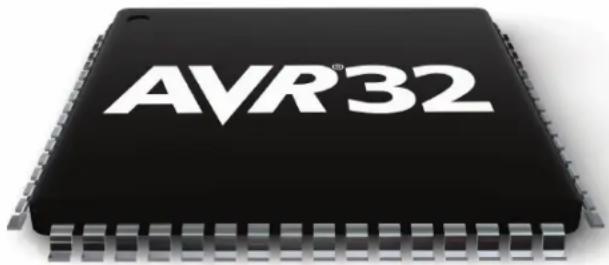
text_image
AVR®32| Product(s) | Status(b) | SRAM (Bytes) | SFRAM | NAND Flash | DSP inst. | Vactor mult. | Ethernet MAC | USB High Speed | LCD | USART | PWM (Channels) | I/Q | PDC (Channels) | 16-bit Timers | RTC | SPI | 16-bit Audio DAC | Audio | ISI | PSPI Interface | SSC (I2S Audio) | TWI (I2C) | Crystal oscillator | PLL | MMLI JTAG | Nexus | 10-bit I:SADC (Channels 1) | Vcc (V) Perp | Package(s) | ||||||||||||||||||||||||||||
| AT32AP7000 | P | 32K | Y | Y | Y | Y | Y | 2 | Y | 2048x2048 24-bit | 4 4 | 160 15 | 6 Y 2 | Survo | AC97, 3x125 | CMOS | Y 3 Y 2 Y Y | Class 3 | 1.8-3.3V CTBGA56 | ||||||||||||||||||||||||||||||||||||||
| AT32AP7001 | P | 32K | Y | Y | Y | Y | Y | Y | 4 | 4 | 80 | 16 | 6 | Y | 2 | Stereo | AC97, 3x125 | CMOS | Y 3 Y 2 Y Y | Class 3 | 1.8-3.3V Q-PX8 | ||||||||||||||||||||||||||||||||||||
| AT32AP7002 | P | 32K Y Y Y Y Y | 2048x2048 18-bit | 4 4 | 65 | 15 6 Y 2 | Stereo | AC97, 3x125 | CMOS | Y 3 Y 2 Y Y | Class 3 | 1.8-3.3V CTBGA196 | |||||||||||||||||||||||||||||||||||||||||||||
a) Pb-free packaging complies to the European Directive for Restriction of Hazardous Substances (RoHS directive). Also Halde free and fully Green.
b) P: Product in Full Production, I: Device under Introduction, F: Future device.
c) industrial temperature range, -40 °C to +85°C

natural_image
Abstract gradient background with soft blue and white tones, no text or symbols present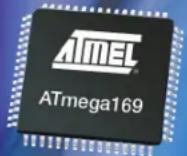
Application Oriented
The range of standard AVRs is complemented by an increasing number of derivatives specified to deliver precise characteristics and capabilities. Available devices cover domains such as automotive, LCD drivers, CAN networking, USB connectivity, motor control, lighting applications, battery management single-chip, IEEE 802.15.4, ZigBee and Remote Access Control.
AVR & AVR32
QUICK REFERENCE GUIDE
Application
Oriented
Application Oriented
AVR for LCD Control
Designed for maximum flexibility and the highest possible integration, the LCD AVR family of high performance, low-power microcontrollers includes everything you need for human interface. The feature set includes keyboard interrupts, visual LCD driver with contrast control and interrupts for input switches.
| Product | Status (b) | Flash (K) | EEPROM (Bytes) | RAM (Bytes) | PicoPower | I/O pins | LCD Segments | UART/USART | SPI/TW by USI | 8-bit Timers | 16-bit Timers | PWM (Chenw) | 10-bit AND Chenw | JTAG/ODD | Vcc Range (V) | Clock Speed (MHz)Package | Po-free, Green (a) | Temp. Range |
| ATmega169P | P | 16 | 512 | 1K | Y | 54 | 4x25 | 1 | 1+USI | 2 | 1 | 4 | 8 | Y | 1.8 - 5.5 | 8 | TQFP64, QFN64 | Y -40°C to +85°C |
| P | 16 | 512 | 1K | 54 | 4x25 | 1 | 1+USI | 2 | 1 | 4 | 8 | Y | 2.7 - 5.5 | 16 | TQFP64, QFN64 | Y -40°C to +85°C | ||
| ATmega329P | P | 32 | 1K | 2K | Y | 54 | 4x25 | 1 | 1+USI | 2 | 1 | 4 | 8 | Y | 1.8 - 5.5 | 10 | TQFP64, QFN64 | Y -40°C to +85°C |
| P | 32 | 1K | 2K | 54 | 4x25 | 1 | 1+USI | 2 | 1 | 4 | 8 | Y | 2.7 - 5.5 | 20 | TQFP64, QFN64 | Y -40°C to +85°C | ||
| ATmega329 | P | 32 | 1K | 2K | 54 | 4x25 | 1 | 1+USI | 2 | 1 | 4 | 8 | Y | 1.8 - 5.5 | 8 | TQFP64, QFN64 | Y -40°C to +85°C | |
| P | 32 | 1K | 2K | 54 | 4x25 | 1 | 1+USI | 2 | 1 | 4 | 8 | Y | 2.7 - 5.5 | 16 | TQFP64, QFN64 | Y -40°C to +85°C | ||
| ATmega3290P | I | 32 | 1K | 2K | Y | 69 | 4x40 | 1 | 1+USI | 2 | 1 | 4 | 8 | Y | 1.8 - 5.5 | 10 | TQFP100 | Y -40°C to +85°C |
| I | 32 | 1K | 2K | 69 | 4x40 | 1 | 1+USI | 2 | 1 | 4 | 8 | Y | 2.7 - 5.5 | 20 | TQFP100 | Y -40°C to +85°C | ||
| ATmega3290 | P | 32 | 1K | 2K | 69 | 4x40 | 1 | 1+USI | 2 | 1 | 4 | 8 | Y | 1.8 - 5.5 | 8 | TQFP100 | Y -40°C to +85°C | |
| P | 32 | 1K | 2K | 69 | 4x40 | 1 | 1+USI | 2 | 1 | 4 | 8 | Y | 2.7 - 5.5 | 16 | TQFP100 | Y -40°C to +85°C | ||
| ATmega649 | P | 64 | 2K | 4K | 54 | 4x25 | 1 | 1+USI | 2 | 1 | 4 | 8 | Y | 1.8 - 5.5 | 8 | TQFP64, QFN64 | Y -40°C to +85°C | |
| P | 64 | 2K | 4K | 54 | 4x25 | 1 | 1+USI | 2 | 1 | 4 | 8 | Y | 2.7 - 5.5 | 16 | TQFP64, QFN64 | Y -40°C to +85°C | ||
| ATmega6490 | I | 64 | 2K | 4K | 69 | 4x40 | 1 | 1+USI | 2 | 1 | 4 | 8 | Y | 1.8 - 5.5 | 8 | TQFP100 | Y -40°C to +85°C | |
| I | 64 | 2K | 4K | 69 | 4x40 | 1 | 1+USI | 2 | 1 | 4 | 8 | Y | 2.7 - 5.5 | 16 | TQFP100 | Y -40°C to +85°C |
a) Pb-free packaging to the European Directive for Restriction of Hazardous Substances (RoHS directive). Also Halide free and fully Green. b) P: Product in Full Production, I: Device under Introduction.
AVR for USB Connectivity
The USB microcontrollers are designed to address the varied requirements of embedded applications needing USB connectivity. Devices have either a USB interface for applications needing to communicate with USB host or comply with the USB On-The-Go (OTG) standard for use as Dual Role Devices (DRD) in applications operating as either host or function on the USB.
Atmel offers a number of applications notes with implementation examples, and a set of development tools. An extensive software library is offered to support the most-relevant USB classes for the embedded market: Mass Storage Device (MSD), Human Interface Device (HID), Device Firmware Upgrade (DFU), Communication Device Class (CDC), Audio Class, etc.
Web resources: www.atmel.com/products/avr/usb/
| Product | Status (b) | Flash (KB) | EEPROM (Bytes) | I/O pins | UART/USART | TM I/O corrufant | USB 2.0 Host/OTG | USB Full Speed | USB Low Speed | USB D+RAM ef/tesi | 8-bit Timers | 10-bit HS Timers | 15-bit PMM (channel) | 10-bit AVD channel | Analog Gain Stage | DebugWIRE/OCD | JFACOCD | Vcc Range (V) | Clock Speed (MHz) | PoTres, Greer (g) | |||||||||||||||||||||
| P | 8 | 512 | 512 | 22 | 1 | 1 | Y | 176 | 4+1 | 1 | 1 | 5 | |||||||||||||||||||||||||||||
| AT90USB82 | P | 16 | 512 | 512 | 22 | 1 | 1 | Y | 176 | 4+1 | 1 | 1 | 5 | ||||||||||||||||||||||||||||
| AT90USB162 | P | 16 | 512 | 512 | 22 | 1 | 1 | Y | 176 | 4+1 | 1 | 1 | 5 | ||||||||||||||||||||||||||||
| ATmega8U2 | I | 8 | 256 | 128 | 22 | 1 | 1 | Y | 176 | 4+1 | 1 | 1 | 2+3 | Y | Y | ||||||||||||||||||||||||||
| AT mega16U2 | I | 16 | 512 | 512 | 22 | 1 | 1 | Y | 176 | 4+1 | 1 | 1 | 2+3 | Y | Y | ||||||||||||||||||||||||||
| AT mega32U2 | I | 32 | 1K | 1K | 22 | 1 | 1 | Y | 176 | 4+1 | 1 | 1 | 2+3 | Y | Y | ||||||||||||||||||||||||||
| ATmega16U4 | I | 16 | 1K | 1.25K | 26 | 1 | 1 | 1 | Y | Y | 835 | 6+1 | 1 | 1 | 2 | 5+3+1 | 12 | Y | |||||||||||||||||||||||
| ATmega32U4 | I | 32 | 1K | 2.5K | 26 | 1 | 1 | 1 | Y | Y | 835 | 6+1 | 1 | 1 | 2 | 6+3+1 | 12 | Y | |||||||||||||||||||||||
| ATmega32U6 | I | 32 | 1K | 2.5K | 26 | 1 | 1 | 1 | Y | Y | 835 | 6+1 | 2 | 2 | 6+2 | 8 | Y | ||||||||||||||||||||||||
| AT90USB646 | P | 64 | 2K | 4K | 48 | 1 | 1 | 1 | Y | Y | 832 | 6+1 | 2 | 2 | 6+2 | 8 | Y | ||||||||||||||||||||||||
| AT90USB647 | P | 64 | 2K | 4K | 48 | 1 | 1 | 1 | Y | Y | Y | 832 | 6+1 | 2 | 2 | 6+2 | 8 | Y | |||||||||||||||||||||||
| AT90USB1286 | P | 128 | 4K | 8K | 48 | 1 | 1 | 1 | Y | Y | 832 | 6+1 | 2 | 2 | 6+2 | 8 | Y | ||||||||||||||||||||||||
| AT90USB1287 | P | 128 | 4K | 8K | 48 | 1 | 1 | 1 | Y | Y | Y | 832 | 6+1 | 2 | 2 | 6+2 | 8 | Y | |||||||||||||||||||||||
a) Pb-free packaging complies to the European Directive for Restriction of Hazardous Substances (RoHS directive). Also Halide free and fully Green. b) F: Future product, I: Device under Introduction, P: Product in Full Production.
AVR for CAN Networking
AVRs with extended CAN (Controller Area Network) capabilities are perfectly suited for industrial applications. They feature a large amount of Flash memory to operate higher level protocol stack (CANopen, DeviceNet™ or J1939) and offer up to 16 MIPS throughput. Designers can take benefits of the highly flexible In-Application Programming capability via CAN, UART or SPI interface, as well as the V2.0A/V2.0B CAN controller with 15 independent message objects programmable on-the-fly.
| Product | Status to | Flash (KB) | EEPROM (Bytes) | FAM (Bytes) | I/O pins | CAN Mess. Obj. | UART/USART | TMI (2C compliant) | SP1 | 8-bit Timers | 16-bit Timers | PWM (Chenley) | 10-bit A/D (Chenley) | debugWire/QCD | JTAG/QCD | Vcc Range (V) | Clock Speed (MHz) | Package | Po-free, Green /at | ||||||||||||||||||
| ATmega32M1 | I | 32 | 2K | 2K | 27 | 6 | 1 | 1 | 1 | 1 | 6+4 | 11 | Y | ||||||||||||||||||||||||
| AT90CAN32 | P | 32 | 1K | 2K | 53 | 15 | 2 | 1 | 1 | 2 | 2 | 6+2 | 8 | ||||||||||||||||||||||||
| AT90CAN64 | P | 64 | 2K | 4K | 53 | 15 | 2 | 1 | 1 | 2 | 2 | 6-2 | 8 | ||||||||||||||||||||||||
| AT90CAN128 | P | 128 | 4K | 4K | 53 | 15 | 2 | 1 | 1 | 2 | 2 | 6+2 | 8 | ||||||||||||||||||||||||
a) Pb-free packaging alternative, complies to the European Directive for Restriction of Hazardous Substances (Rol IS directive). Also I laide free and fully Green, b) b) P: Product in Full Production, I: Device under Introduction.
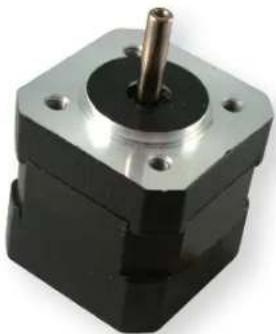
AVR for Motor Control
Microcontrollers are more and more used for motor control instead of Application Specific Standard Products (ASSP). Incorporating the necessary functions, they provide more flexibility and offer a better cost solution in most of the cases. Ranging from 8- to 100-pin devices, AVR Flash microcontrollers are well suited for applications such as PC fans up to highly advanced motor control applications.
From ATtiny13A to AT90PWM3B, designer can find a cost-effective solution for a variety of motor type and application complexity. Atmel is providing support to developers using AVR for motor control designs, with a number of applications notes with implementation examples, and a set of development tools.
This covers:
- Sensor-based or sensorless 2-phase BLDC Motors
– Sensor-based or sensorless 3-phase BLDC Motors - AC motors
Web resources: www.atmel.com/products/avr/mc/
natural_image
Close-up of a black square stepper motor with a metallic shaft and mounting holes (no visible text or symbols)AVR for Automotive
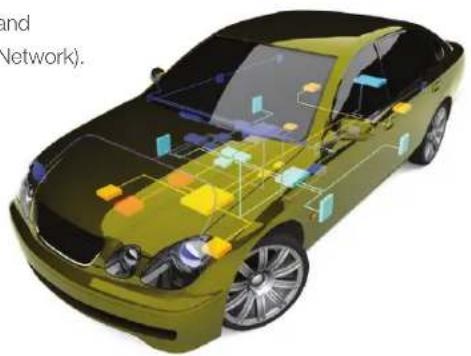
AVR 8-bit architecture has reached a high level of acceptance in many market segments for its performance, high code density and efficient development tool set. It is perfectly suited for many automotive applications. The range of devices made available to automotive already covers a variety of needs and will expand rapidly in the future. AVR devices incorporate all the basic peripherals as well as powerful analog functions.
Typical applications cover Brushless DC Motor Control, sensors and actuators control and in-vehicle networking with CAN (Controller Area Network) and LIN (Local Interconnect Network).
In addition to usual manufacturing and development plant qualifications (ISO-TS-16949 and QS-9000) automotive products are being qualified according to the AEC Q100 (Automotive Electronic Council) requirements, and a PPAP (Production Part Approval Process) document is made available for each product.
Web resources: www.atmel.com/automcu/
natural_image
3D cutaway illustration of a green sedan with internal components and colored indicators (no text or symbols)| Product | Status (d) | Flash (KB) | EEPROM (Bytes) | PAM (Bytes) | IO Chris | CAN Miss. Obj | TUN (fg) | UART | USART | USI | SPI | 8-bit Timers | 12-bit Timers | PWM (Channel) | 10-bit A/D (Internet) | Analog Gain Stage | DebugWIRE/OCD | JTAG/OCD | 2.7-5.5V @ 16 MHz | 1.8-3.6V @ 8 MHz | Package | PC-free, Green (in) | |
| ATtiny24 | P | 2 | 128 | 128 | 12 | 1 | 1+USI | 1 | 1 | 4 | 8 | Y | Y | SOIC14, QFN20 | Y | Z | |||||||
| ATtiny25 | P | 2 | 128 | 128 | 6 | 1 | 1+USI | 2 | 4(d) | 4 Y | Y | Y SOIC8, QFN20 | YZ | ||||||||||
| ATtiny261 | I | 2 | 128 | 128 | 16 | 1 | 1+USI | 1 | 1 | 5 | 11 | Y | Y | SOIC8, QFN20 | Y | Z, T2 | |||||||
| ATtiny44 | P | 4 | 256 | 256 | 12 | 1 | 1+USI | 1 | 1 | 4 | 8 | Y | Y | SOIC20, QFN32, TSSOP20 | Y | D | |||||||
| ATtiny45 | P | 4 | 258 | 258 | 6 | 1 | 1+USI | 2 | 4(d) | 4 Y | Y | Y SOIC8, QFN20 | YZ, T2 | ||||||||||
| ATtiny461 | I | 4 | 256 | 256 | 16 | 1 | 1+USI | 1 | 1 | 5 | 11 | Y | Y | SOIC20, QFN32, TSSOP20 | Y | Z, D | |||||||
| ATtiny84 | P | 8 | 512 | 512 | 12 | 1 | 1+USI | 1 | 1 | 4 | 8 | Y | Y | QFN20 | Y | Z | |||||||
| ATtiny85 | P | 8 | 512 | 512 | 6 | 1 | 1+USI | 2 | 4(d) | 4 Y | Y | Y SOIC8, QFN20 | YZ | ||||||||||
| ATtiny87 | I | 8 | 512 | 512 | 16 | H | 1 | 1+USI | 1 | 1 | 4 | 11 | Y | Y | SOIC20, QFN32, TSSOP20 | Y | Z, D | ||||||
| ATtiny861 | I | 8 | 512 | 512 | 16 | 1 | 1+USI | 1 | 1 | 5 | 11 | Y | Y | SOIC20, QFN32, TSSOP20 | Y | Z | |||||||
| ATtiny167 | I | 16 | 512 | 512 | 16 | H | 1 | 1+USI | 1 | 1 | 4 | 11 | Y | Y | SOIC20, QFN32, TSSOP20 | Y | Z, D | ||||||
| ATtiny327 | I | 32 | 1024 | 2048 | 16 | H | 1 | 1+USI | 1 | 1 | 4 | 11 | Y | Y | SOIC20, QFN32, TSSOP20 | Y | Z, D | ||||||
| ATmega48 | P | 4 | 256 | 512 | 23 | S | 1 | 1+USART | 2 | 1 | 6 | 8 | Y | TQFP32, QFN32 | Y | T, T1, Z | |||||||
| ATmega88 | P | 8 | 512 | 1K | 23 | S | 1 | 1+USART | 2 | 1 | 6 | 8 | Y | TQFP32, QFN32 | Y | T, T1, Z, T2 | |||||||
| ATmega164P | P | 16 | 512 | 1K | 32 | S | 2 | 1+USART | 2 | 1 | 6 | 8 | Y | TQFP44, QFN44 | Y | Z | |||||||
| ATmega168 | P | 16 | 512 | 1K | 23 | S | 1 | 1+USART | 2 | 1 | 6 | 8 | Y | TQFP32, QFN32 | Y | T, T1, Z, D | |||||||
| ATmega169P | P | 16 | 512 | 1K | 54 | S | 1 | 1 | 1+USI | 2 | 1 | 4 | 8 | Y | TQFP64, QFN64 | Y | T | ||||||
| ATmega16M1 | I | 16 | 1K | 2K | 27 | 6 | H | 1 | 1 | 1 | 1 | 6+4(d) | 11 | Y | Y | TQFP32, QFN32 | Y | Z, D | |||||
| ATmega324P | P | 32 | 1K | 2K | 32 | S | 2 | 1+USART | 2 | 1 | 6 | 8 | Y | TQFP44, QFN44 | Y | Z | |||||||
| ATmega328P | I | 32 | 1K | 2K | 23 | S | 1 | 1+USART | 2 | 1 | 6 | 8 | Y | TQFP32, QFN32 | Y | Z | |||||||
| ATmega32M1 | I | 32 | 2K | 2K | 27 | 6 | H | 1 | 1 | 1 | 1 | 6+4(d) | 11 | Y | Y | TQFP32, QFN32 | Y | Z, D | |||||
| ATmega32C1 | I | 32 | 2K | 2K | 27 | 6 | H | 1 | 1 | 1 | 1 | 4 | 11 | Y | TQFP32, QFN32 | Y | Z, D | ||||||
| ATmega64M1 | I | 64 | 1K | 4K | 27 | 6 | H | 1 | 1 | 1 | 1 | 6+4(d) | 11 | Y | Y | TQFP32, QFN32 | Y | Z, D | |||||
| ATmega64C1 | I | 64 | 1K | 4K | 27 | 6 | H | 1 | 1 | 1 | 1 | 4 | 11 | Y | TQFP32, QFN32 | Y | Z, D | ||||||
| ATmega644P | P | 64 | 2K | 4K | 32 | S | 2 | 1+USART | 2 | 1 | 6 | 8 | Y | TQFP44, QFN44 | Y | Z | |||||||
| AT90CAN32 | P | 32 | 1K | 2K | 53 | 15 | S | 2 | 1 | 1 | 2 | 2 | 6+2 | 8 | Y | TQFP64, QFN64 | Y | T, T1, Z | |||||
| AT90CAN64 | P | 64 | 2K | 4K | 53 | 15 | S | 2 | 1 | 1 | 2 | 2 | 6+2 | 8 | Y | TQFP64, QFN64 | Y | T, T1, Z | |||||
| AT90CAN128 | P | 128 | 4K | 4K | 53 | 15 | S | 2 | 1 | 1 | 2 | 2 | 6+2 | 8 | Y | TQFP64, QFN64 | Y | T, T1, Z |
a) Pb-free packaging complies to the European directive for Restriction of Hazardous Substances (PcHS directive). Also Halide free and fully Green.
b) P: Product in Full Production, I: Device under Introduction
c) T: -40°C; -85°C - T1: -40°C; +105°C - Z: -40°C; +125°C
D or T2: -40°C; -150°C.
c) One high speed δ-bit timer/counter.
ei Two High Frequency, 250kHz, PWM Outputs.
f) Only 8 ADC in PDP packages.
g) S: software. H: hardware.
AVR for Lighting
AT90PWM devices have been specially developed to handle ballasts for High Intensity Discharge (HID) and dimmable fluorescent lamps.
They feature enhanced 12-bit PWM to realize the Power Factor Correction and control the ballast. With an embedded EEPROM allowing to save configuration parameters and necessary analog functions, the microcontrollers help to reduce ballast component count and system cost. The Digital Addressable Lighting Interface (DALI) protocol is also supported, allowing highly flexible user control.

natural_image
Two electronic devices: a light bulb and a projector, shown against a white background (no text or symbols visible)| Product | Status (al) | Flash (KB) | EEPROM (Bytes) | RAM (Bytes) | I/O pins | UART/USART | DALI | SPI | 8-bit Timers | 12-bit Timers | 16-bit Timers | PWM (channel) | 10-bit A/D (channel) | 10-bit D/A | Debug/WIRE/OCD | Vcc Range (V) | Clock Speed (MHz) | Package | Pct-free, Green (bit)Temp. Range | |||||||||||||||
| AT90PWM1 | P | 8 | 512 | 512 | 19 | 1 | 1 | 1 | 2 | 1 | 7 | 8 | Y 2.7 - | 5.5 | 16 | SO24 | Y | -40°C to +105°C | ||||||||||||||||
| AT90PWM2B | P | 8 | 512 | 512 | 19 | 1 | Y | 1 | 1 | 2 | 1 | 7 | 8 | Y 2.7 - | 5.5 | 16 | SO24 | Y | -40°C to +105°C | |||||||||||||||
| AT90PWM3B | P | 8 | 512 | 512 | 27 | 1 | Y | 1 | 1 | 3 | 1 | 10 | 11 | Y | Y | 2.7 - 5.5 | 16 | SO32, QFN32 | Y | -40°C to +105°C | ||||||||||||||
| AT90PWM81 | I | 8 | 512 | 256 | 16/20 | 1 | 1 | 4 | 11 | Y | Y | 2.7 - 5.5 | 18 | SO20, QFN32 | Y | -40°C to +105°C | ||||||||||||||||||
| AT90PWM216 | P | 16 | 512 | 1024 | 19 | 1 | Y | 1 | 1 | 2 | 1 | 7 | 8 | Y | 2.7 - 5.5 | 16 | SO24 | Y | -40°C to +105°C | |||||||||||||||
| AT90PWM316 | P | 16 | 512 | 1024 | 27 | 1 | Y | 1 | 1 | 3 | 1 | 10 | 11 | Y | Y | 2.7 - 5.5 | 16 | QFN32, SO32 | Y | -40°C to +105°C | ||||||||||||||
a) Po-free packaging complies to the European Directive for Restriction of Hazardous Substances (RoHS directive). Also Halide free and fully Green. b) P: Future product. I: Device under Introduction. P: Product in Full Production.
AVR for Battery Management
The single-chip AVR battery management products cover the 1 to 4 Li-ion cells market. They feature dedicated analog-to-digital converters tailored for battery fuel gauging and voltage monitoring. Other MCU features include independent battery protection circuitry, voltage regulators, integrated cell balancing FETs, and special high voltage I/O controlling charge and discharge.

natural_image
Black electronic device labeled 'LI-HON' with visible ports and connectors (no readable text beyond branding)| Product | Status (a) | Li-ion cells | Flash (KB) | EEPROM (Bytes) | SPRAM (Bytes) | I/O pins | FET Drive (Channel) | Vps typ (V) | Battery Protection | 12-bit A/D (Channel) | Voltage Measurement Accuracy (mV/kg) | Coulomb Counter | JTAGOOD | Vcc Range (V) | Clock Speed (MHz) | Package | Pb-free, Green tb) | Temp. Range |
| ATmega8HVA | F | 1-2 | 8 | 256 | 512 | 6 | N | 4.5 | Y | 5 | 12.5 | 18-bit | Y | 1.8 - 9.0 | 4 | LGA36, TSOP28 | Y | -10°C to +85°C |
| ATmega16HVA | I | 1-2 | 16 | 256 | 512 | 6 | N | 4.5 | Y | 5 | 12.5 | 18-bit | Y | 1.8 - 9.0 | 4 | LGA36, TSOP28 | Y | -10°C to +85°C |
| ATmega406 | P | 2-4 | 40 | 512 | 2048 | 18 | P | 1 | 10 | 12.5 | 18-bit | Y | 4.0 - 25 | 1 | LQFP48 | Y | -40°C to +85°C | |
| ATmega4HVD | I | 1 | 4 | 256 | 512 | 5 | N | 4.5 | Y | 2 (10-bit) | 50 | Y | 2.0 - 5.5 | 4 | DFN18 | Y | -40°C to +85°C | |
| ATmega8HVD | I | 1 | 8 | 256 | 512 | 5 | N | 4.5 | Y | 2 (10-bit) | 50 | Y | 2.0 - 5.5 | 4 | DFN18 | Y | -40°C to +85°C | |
| ATmega16HVB | I | 2-4 | 16 | 512 | 1024 | 18 | N | 12 | Y | 10 | 12.5 | 18-bit | Y | 4.0 - 25 | 6 | TSSOP44 | Y | -40°C to +85°C |
| ATmega32HVB | I | 2-4 | 32 | 1024 | 2048 | 18 | N | 12 | Y | 10 | 12.5 | 18-bit | Y | 4.0 - 25 | 8 | TSSOP44 | Y | -40°C to +85°C |
a) P: Future product, b) Device under Introduction, P: Product in Full Production. b) Pb-free packaging comploos to the European Directive for Restriction of Hazardous Substances (RoHS directive). Also Haldo free and fully Green.
MCU Wireless Solutions for IEEE 802.15.4 and ZigBee Applications
Atmel's wireless MCUs provide a complete single source for IEEE 802.15.4 and ZigBee wireless applications with its own RF trancever chips, AVR microcontrollers and specific kits & tools. The radio chips feature the best link budget in the industry today and are available for the 2.4 GHz and 700/800/900 MHz ISM bands.
A rich selection of FREE software for complete system solutions supporting the Atmel chipsets is available:
- Low level drivers/ Transceiver Access Toolbox
- IEEE 802.15.4 MAC
- Wireless IPv6/ 6LoWPAN
- ZigBee and ZigBee PRO stack
Web resources: www.atmel.com/wireless
| Product | Status (a) | MCU | RIF Device | Flash (Gb) | EEPROM (Bytes) | RAM (Bytes) | ISM Rand | Bitrate | Sensitivity (dBm) | Output Power (dBm) | Vcc Range (V) | Clock Speed (MHz) | MCU Package |
| AT86RF230 | P | AT86RF230 | 2,4 GHz | 250 kbps | -101 | -17 to +3 | 1.8-3.6V | QFN32 | |||||
| ATmega64RZA | P | ATmega644 | AT86RF230 | 64 | 2K | 4K | 2,4 GHz | 250 kbps | -101 | -17 to +3 | 1.8-3.6V | 10 | TQFP44, QFN44, PDIP40 |
| ATmega64RZ AP | P | ATmega644P | AT86RF230 | 64 | 2K | 4K | 2,4 GHz | 250 kbps | -101 | -17 to +3 | 1.8-3.6V | 10 | TQFP44, QFN44 |
| ATmega128 4RZ AP | I | ATmega1284P | AT86RF230 | 128 | 4K | 16K | 2,4 GHz | 250 kbps | -101 | -17 to +3 | 1.8-3.6V | 20 | TQFP44, QFN44 |
| ATmega128R Z A | P | ATmega1281 | AT86RF230 | 128 | 4K | 8K | 2,4 GHz | 250 kbps | -101 | -17 to +3 | 1.8-3.6V | 8 | TQFP64, QFN64 |
| ATmega128R ZB | P | ATmega1280 | AT86RF230 | 128 | 4K | 8K | 2,4 GHz | 250 kbps | -101 | -17 to +3 | 1.8-3.6V | 8 | TQFP100, CBGA100 |
| ATmega256RZA | P | ATmega2561 | AT86RF230 | 256 | 4K | 8K | 2,4 GHz | 250 kbps | -101 | -17 to +3 | 1.8-3.6V | 8 | TQFP64, QFN64 |
| ATmega256RZB | P | ATmega2560 | AT86RF230 | 256 | 4K | 8K | 2,4 GHz | 250 kbps | -101 | -17 to +3 | 1.8-3.6V | 8 | TQFP100, CBGA100 |
a) I: Device under Introduction. P: Product in Full Production. All products available in Pb-free packaging alternative, compiling to the European Directive for Restriction of Hazardous Substances (RoHS directive); Also Halide free and fully Green.
| Product | Status (e) | MCU | RF Device | Flash (KB) | EEPROM (Bytes) | HAM (Bytes) | ISM Band | Bitrate (bps) | Sensitivity (dBm) | Output Power (dbm) | Vcc Range (V) | Clock Speed (MHz) | MCU Package | |
| AT86RF231 | AT86RF231 | 2,4 GHz | 2 Mbps | -101 | -17 to +3 | 1.8-3.6V | QFN32 | |||||||
| ATmega644PR231 | | | ATmega644P | AT86RF231 | 64 | 2K | 4K | 2,4 GHz | 2 Mbps | -101 | -17 to +3 | 1.8-3.6V | 10 | TQFP44, QFN44 | |
| ATmega1280R231 | | | ATmega1280 | AT86RF231 | 128 | 4K | 8K | 2,4 GHz | 2 Mbps | -101 | -17 to +3 | 1.8-3.6V | 8 | TQFP100, CBGA100 | |
| ATmega1281R231 | | | ATmega1281 | AT86RF231 | 128 | 4K | 8K | 2,4 GHz | 2 Mbps | -101 | -17 to +3 | 1.8-3.6V | 8 | TCFP64, QFN64 | |
| ATmega1284PR231 | | | ATmega1284P | AT86RF231 | 128 | 4K | 16K | 2,4 GHz | 2 Mbps | -101 | -17 to +3 | 1.8-3.6V | 20 | TQFP44, QFN44 | |
| ATmega2560R231 | | | ATmega2560 | AT86RF231 | 256 | 4K | 8K | 2,4 GHz | 2 Mbps | -101 | -17 to +3 | 1.8-3.6V | 8 | TQFP100, CBGA100 | |
| ATmega2561R231 | | | ATmega2561 | AT86RF231 | 256 | 4K | 8K | 2,4 GHz | 2 Mbps | -101 | -17 to +3 | 1.8-3.6V | 8 | TCFP64, QFN64 | |
| AT86RF212 | AT86RF212 | 700/800/900 MHz | 1 Mbps | -110 | -10 to +10 | 1.8-3.6V | QFN32 | |||||||
| ATmega644PR212 | | | ATmega644P | AT86RF212 | 64 | 2K | 4K | 700/800/900 MHz | 1 Mbps | -110 | -10 to +10 | 1.8-3.6V | 10 | TQFP44, QFN44 | |
| ATmega1280R212 | | | ATmega1280 | AT86RF212 | 128 | 4K | 8K | 700/800/900 MHz | 1 Mbps | -110 | -10 to +10 | 1.8-3.6V | 8 | TQFP100, CBGA100 | |
| ATmega1281R212 | | | ATmega1281 | AT86RF212 | 128 | 4K | 8K | 700/800/900 MHz | 1 Mbps | -110 | -10 to +10 | 1.8-3.6V | 8 | TQFP64, QFN64 | |
| ATmega1284PR212 | | | ATmega1284P | AT86RF212 | 128 | 4K | 16K | 700/800/900 MHz | 1 Mbps | -110 | -10 to +10 | 1.8-3.6V | 20 | TQFP44, QFN44 | |
| ATmega2560R212 | | | ATmega2560 | AT86RF212 | 256 | 4K | 8K | 700/800/900 MHz | 1 Mbps | -110 | -10 to +10 | 1.8-3.6V | 8 | TQFP100, CBGA100 | |
| ATmega2561R212 | | | ATmega2561 | AT86RF212 | 256 | 4K | 8K | 700/800/900 MHz | 1 Mbps | -110 | -10 to +10 | 1.8-3.6V | 8 | TQFP64, QFN64 | |
a) I: Device under Introduction, P: Product in Full Production. AI products available in Pb-free packaging alternative, comping to the European Directive for Restriction of Hazardous Substances (RoHS directive). Also Halide free and fully Green;
AVR for Remote Access Control
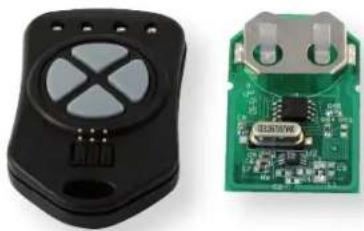
Remote Access Control (also referred to as Remote Keyless Entry and Remote Wireless Entry) is remote control of applications like doors, alarms, blinds etc. The communication is usually done via radio and the transmission uses IDs and encryption to provide authentication and prevent unauthorized users from accessing the system.
Atmel provides a complete secure solution using AVR microcontrollers, Smart RF radios, application notes and development tools.
Web resources: www.atmel.com/products/avr/rac/
natural_image
Two electronic components: a black remote control device with four switches and a green circuit board (no visible text or symbols)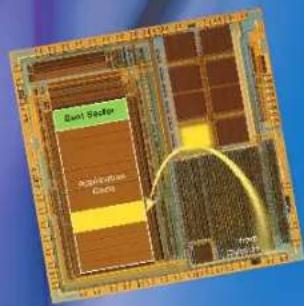
text_image
Burst Bulator Amplifier Cells Power DifferentialAVR MCUs Are Designed to Program Themselves at Your Command
By eliminating the expensive and time-consuming steps inherent in Mask ROM-based microcontrollers, AVR slashes months from your development and production schedule. You get to market first. Then, you get back to thinking up your next great idea.
AVR & AVR32
QUICK REFERENCE GUIDE
Flash
Programming
Flash Programming
Self-Programming Flash – Key Benefits
Reprogram without external components
Flash sector size optimized for programming speed
Separate protection of Boot block sector
Application allowed to run while Self-Programming
True 1.6 - 5.5V operation
Easy-to-Use
Reduced programming time
Hardware controlled programming
Flexible Programming Implementation
Self-Program using any physical link!
– Program through any interface (e.g. SPI, TWI)
– 100% secure encrypted remote updates


text_image
ion AVR®Parallel
– One of the fastest ways to download
- Compatible with major programmers
In-System Programming
– Native 2-wire PDI or 3-wire SPI interface
– Quick updates in the field
- Easy-to-use
JTAG
- IEEE 1149.1 compliant interface
- Can program Flash, EEPROM, Fuses and Lock Bits
- On-Chip Debugging
– Boundary-scan PCB test

The programming channels can be disabled to avoid any further download!

natural_image
Close-up of a green printed circuit board with gold contacts and a black rubber clip (no visible text or symbols)Complete Tool Chain
Atmel offers a high quality, easy-to-use toolchain for the whole range of AVR and AVR32 families. The completely free AVR Studio and AVR32 Studio front-end assembler and simulator integrate seamlessly with the starter kits, programmers, debuggers, evaluation kits, and reference designs. All created to deliver more functionality... for less.
AVR & AVR32
QUICK REFERENCE GUIDE
Development
Tools
Development Tools
Integrated Development Environment for AVR and AVR32
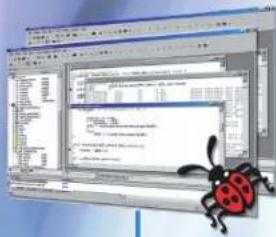
text_image
Screenshot of a software interface displaying a code editor with a ladybug graphic overlaying the main content area.AVR Studio
• Front end for all AVR tools
• C and assembly source level debugging
• Includes Atmel macro assembler
• Supports third party compilers
• Free GCC-AVR C-compiler included
• Freely available from http://www.atmel.com
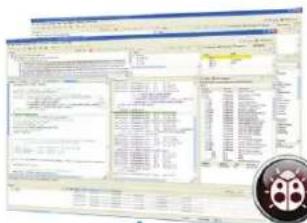
text_image
Screenshot of a software interface displaying a form with text fields, buttons, and a circular logo featuring the number 68.AVR32 Studio
• Front end for all AVR32 tools
- Source code editor with syntax highlighting
- Debugging and Disassembler views
- Target Control
• AVR32 GNU toolchain including GCC
- Support for writing and debugging Linux applications
• Freely available from http://www.atmel.com
Compilers
Starter kits Programmers Debuggers Evaluation kits &
Reference designs
IAR Systems®
CodeVision
ImageCraft ^20
GCC AVR
Rowley
STK500
- expansion cards
STK600
- expansion cards
STK1000
- expansion cards
Low Cost Development Tool
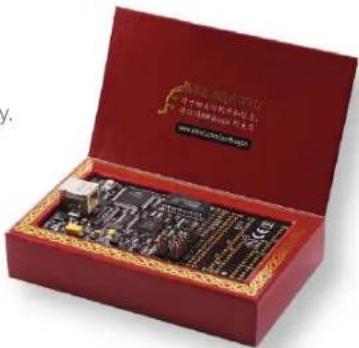
AVR DRAGON
For less than \$50, the AVR Dragon (ATAVRDRAGON) sets a new standard for low cost development tools.
AVR Dragon supports all programming modes for the AVR device family.
Programming Interfaces:
- In-System Programming
– High Voltage Serial Programming - Parallel Programming
- JTAG Programming.
It also includes complete emulation support for devices with 32 KB or less Flash memory.
Emulation Interfaces
- JTAG
- debugWIRE
The AVR Dragon is USB powered and is capable of sourcing an external target.
A prototype area allows simple programming and debugging.
natural_image
Red open box containing a circuit board with electronic components, no visible text or symbols on the main subject.Starter Kits
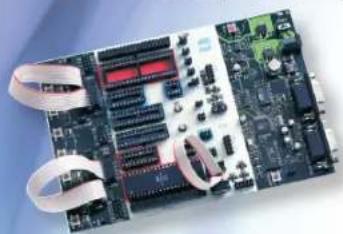
Atmel offers a modular platform based on the STK500, providing designers an easy way to start with any AVR device and engage development activity.
natural_image
Top-down view of a computer motherboard with visible circuit boards, RAM slots, and connectors (no text or symbols)STK500
STK500 handles most tinyAVR and megaAVR microcontrollers.
- In-system and parallel programming support
- Software programmable clock sources
- LEDs and switches
- Sockets for 8- to 40-pin AVRs
- Expansion connectors for custom boards or expansion modules
- Expansion modules available from Atmel for AVRs with more than 40 pins
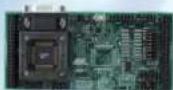
STK501 (For 64-pin devices)
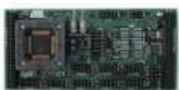
STK503 (For 100-pin devices)

STK505 (For 14-pin devices)

STK525 (For USB devices)
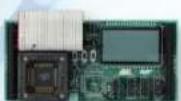
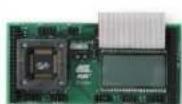
STK502 (For 64-pin devices with LCD display)
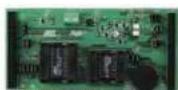
STK504 (For 100-pin devices with LCD display)
STK520 (For 24-pin and 32-pin AT90PWM devices with DALI interface)

STK524 (For 32-pin automotive devices with motor control LIN and CAN)
STK600
The STK600 is a complete starter kit and development system for the 8-bit AVR and 32-bit AVR32 Flash microcontrollers.
- AVR Studio 4 and AVR32 Studio compatible
- Flexible routing and socket card system for all supported devices
– Parallel and Serial High-Voltage Programming of AVR devices - JTAG and Serial In-System Programming (ISP) of AVR devices
- 8 general purpose LEDs and switches
- On-board 2 Mbit Data flash for non-volatile data storage
- USB, RS232, CAN, and LIN headers and connectors
- USB or external power

natural_image
Close-up of various green circuit boards with visible internal components, no text or symbols present.For a complete list of socket and routing cards, visit http://www.atmel.com/stk600

natural_image
Abstract blue and white gradient background with soft gradients (no text or symbols)STK1000
STK1000 provides a complete AT32AP7000 development environment. A pre-installed Linux ensures that the user can boot and start program development directly after power up.
- AVR32 Studio compatible
- Two Ethernet Ports
– High Quality QVGA LCD - Loadspeaker
- Connetors for USART, PS/2, VGA and USB
- SD Card Reader
- Expansion Header for Prototyping

natural_image
Close-up of a green printed circuit board with various electronic components and connectors (no visible text or symbols)STK1005
STK1005 is a CPU carrier and expansion module for the STK1000, containing the AT32AP7200 device, extra RAM and NAND Flash.
STK1006
STK1006 is a CPU carrier and expansion module for the STK1000, containing the AT32AP7000 device, extra RAM and NAND Flash.
Evaluation Kits and Reference designs
For more dedicated development needs, Atmel also offers specific tools.
text_image
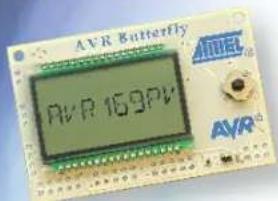
AVR Butterfly AVR 169Pv AVRLCD Control
AVR Butterfly (ATAVRBFLY) is an evaluation tool demonstrating the capabilities of the ATmega169.
The tool is shipped with preloaded firmware supporting temperature sensing, light measurement, voltage readings, music playback and nametag display.
It can also be re-programmed and used as a hardware platform for code development.
natural_image
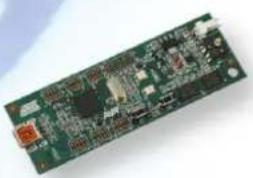
Close-up of a green printed circuit board (PCB) with visible traces and components, no readable text or symbols.USB Connectivity
The AT90USBKey is a low-cost demonstration board based on the AT90USB1287 microcontroller. It allows the quick evaluation of AVR microcontrollers and the AT90USB family.

natural_image
Five green printed circuit boards with various electronic components, displayed against a blue gradient background (no visible text or labels)Motor Control
- The ATAVRMC100 kit includes an evaluation board, a 3-phase BLDC motor and a demonstration software. It allows users to quickly evaluate the capability of the AT90PWM3 to control high speed brushless DC motor applications.
- The ATAVRMC200 is an evaluation kit dedicated to asynchronous AC motor control, using various sensors for regulation. The kit includes an evaluation board and a demonstration firmware. Supporting 110-230V motors, the kit also allows evaluation of BLDC motors using the AT90PWM3 AVR microcontroller.
- The ATAVRMC320, ATAVRMC321 and ATAVRMC323 are complete hardware systems for demonstrating motor control. These kits include the ATAVRMC300 power stage board, BLDC motor, and a processor board, ATAVRMC310 (with ATmega32M1, CAN and LIN interfaces), ATAVRMC301 (with low cost ATtinyx61) and ATAVRMC303 (with the high performance XMEGA) respectively.
CAN Networking
The ATDVK90CAN1 development kit is dedicated to the AT90CAN AVR microcontrollers. This stand alone board has numerous serial interfaces (dual RS232, CAN, LIN, SPI & TWI) and resources (keyboard, LEDs, voltage reading, light and temperature sensors and speaker) and comes with demonstration software.

natural_image
USB device with circuit board and connector, connected to a light blue background with wireless signal waves (no text or symbols visible)RAVEN: AVR Wireless 2.4 GHz solution
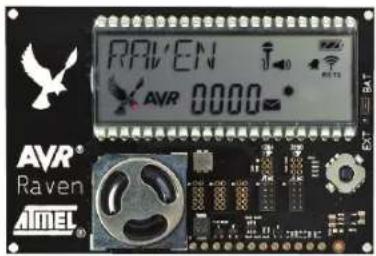
The RZ Raven kit enables development, debugging and demonstration of IEEE 802.15.4, 6LoWPAN, and ZigBee wireless networks. Raven is using Atmel's AT86RF230 2.4 GHz high performance RF tranceiver and AVR picoPower and USB microcontrollers. The ATAVRRZRAVEN kit comes with two Ravens and one RZ USB Stick.
Atmel MCU Wireless Solution offers flexibility through the AVR family of 8-bit RISC microcontrollers, AVR32 32-bit microcontrollers, and the Smart ARM (SAM) devices. AVR MCUs have flash memory densities ranging from 1 KB to 512 KB, and a suite of free and certified software is available for you, ranging from low level drivers (Transceiver Access Toolbox) to IEEE 802.15.4 MAC, 6LoWPAN, and ZigBee PRO stacks. Choosing Atmel and partners gives you a head start with ready to use wireless solutions and the shortest time to market!
text_image
AVR® Raven ATMEL® PRAVEN AVR 0000*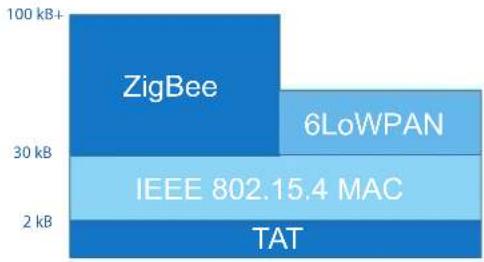
bar_stacked
| Category | Value (kB+) | |---|---| | ZigBee | 100 | | 6LoWPAN | 30 | | IEEE 802.15.4 MAC | 2 | | TAT | 2 |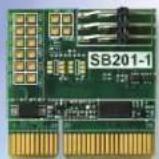
natural_image
Green printed circuit board with various electronic components (no visible text or symbols)Battery Management Development Platform
Atmel's battery management reference designs show how to get the most out of the AVR battery management devices. The firmware provides all needed safety measures for a Lithium-ion battery design. This includes over- and undervoltage protection and protection against excessive charge and discharge currents. The reference designs also features:
■ High accuracy voltage and current measurements
■ AES based authentication
Gas gauging
■ SHA2 based authentication
■ Temperature checks
■ Command set based on SMBus™ specification
Reference design Device #cells
ATAVRSB201 ATmega8HVA - ATmega16HVA 1-2
ATAVRSB202 ATmega16HVB - ATmega32HVB 2-4
ATAVRSB204 ATmega4HVD - ATmega8HVD 1
| ATAVRSB206 | ATmega406 | 2-4 |

text_image
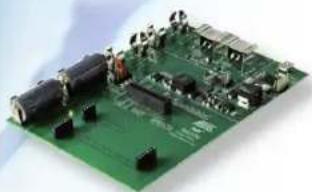
Technical diagram of a device layout with labeled components and control panelThe ATAVRSB200 evaluation kit includes Lithium-ion batteries, a
programmable charger and load, and a USB communication gateway. The SB200 connects to AVR Studio® by starting the AVR battery management services plug-in. Through this interface all battery parameters can be observed and modified, and the ATAVRSB200 functions are also controlled through this interface.
natural_image
Electronic components including a black plastic device, green circuit board, and electronic modules (no visible text or symbols)Remote Access Control
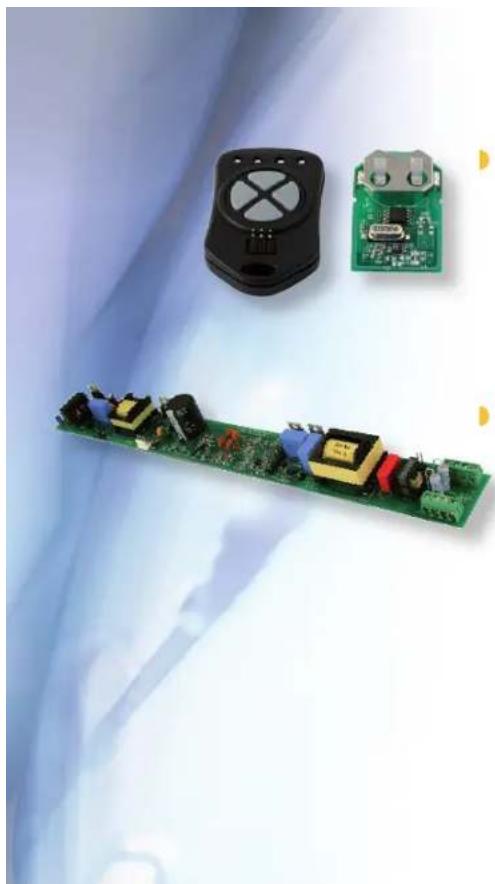
The ATAKSTK512 is an Remote Access Control kit for unidirectional communication.
The kit contains a functional standalone UHF radio system consisting of a transmitter (ATtiny45 + T575x) and receiver (ATA5743), and Interface Board.
The STK512 starter kit is available in 2 different versions covering 315 MHz or 434 MHz.
Lighting
The ATAVRFBKIT is a Dimmable Fluorescent Ballast kit which demonstrate the ability of the AT90PWM2 to control all the main functions of a DALI Fluorescent Ballast. C code is provided to speed-up development time.

natural_image
Four electronic circuit boards with visible components, one labeled 'AVR32', against a blue gradient background (no readable text or symbols on the boards themselves)EVK1100
The EVK1100 is an evaluation kit and development system for the AVR32 AT32UC3A microcontrollers. It is equipped with a rich set of peripherals, memory, and makes it easy to try the full potential of the AVR32 devices.
EVK1101
The EVK1101 is an evaluation kit and development system for the AVR32 AT32UC3B microcontroller. It is equipped with a rich set of peripherals, memory, and makes it easy to try the full potential of the AVR32 devices.
EVK1104
The EVK1104 is an evaluation kit for the AVR32 AT32UC3A3 which combines Atmel's state of art AVR32 microcontroller with an unrivalled selection of communication interface like USB device including On The-Go functionality, SDcard, NAND flash with ECC and stereo 16-bit DAC.
EVK1105
The EVK1105 is an evaluation kit for the AVR32 AT32UC3A0512 which demonstrates Atmel's state-of-the-art AVR32 microcontroller in Hi-Fi audio decoding and streaming applications. The kit contains reference hardware and software for generic MP3 player docking stations.

natural_image
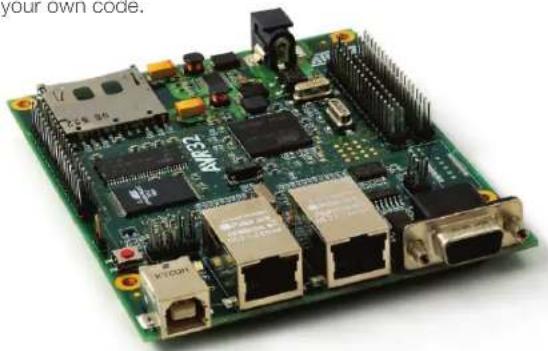
Abstract blue and white gradient background with soft gradients (no text or symbols)NGW100 Network Gateway
The NGW100 uses the AT32AP7000 which combines Atmel's state of the art AVR32 AP7000 Application Processor with an unrivalled selection of communication interfaces. The NGW100 is also an ideal development board for the AT32AP7000. All resources are available, and it supports communication on any of the device's communication interfaces. The board is preloaded with Linux and shipped with I/O interface drivers that can be called from your own code.
natural_image
Green printed circuit board with various electronic components and connectors (no readable text or symbols)In-System Programmers
AVRISP mkII
– Supports In-System Programming on all 8-bit AVRs
- Interfaces with AVR Studio
- Improved level converters
– Supports all AVR target voltages
- Target interface protection
- Fast programming
- USB 1.1 interface to PC
- Powers directly from USB, does not draw current from target
natural_image
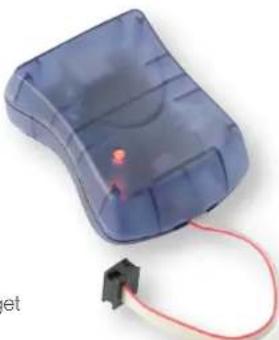
Transparent plastic electronic device with red wires and a small black connector (no visible text or symbols)JTAGICE mkII
- This powerful AVR debug tool can also be used for In-System Programming.
– Supports programming via JTAG and ISP.
Debugging Solutions

natural_image
Close-up of a blue medical device with a white cable and green connector (no visible text or symbols)JTAGICE mkII
– Real-Time emulation in actual silicon
- Debug the real device at the target level
- Communicates directly to the device through
4-pin JTAG interface
One-wire debugWIRE interface
- Supports
Program breakpoints
Data breakpoints
Full I/O view and watches
Full execution control
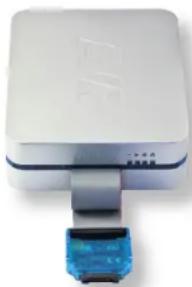
AVR ONE!
The AVR ONE! is a powerful development tool for on-chip debugging and programming of AVR devices.
Supported debug interfaces are JTAG (IEEE 1149.1), debugWire, PDI and the Nexus (IEEE-ISTO 5001(TM)-2003) auxiliary interface
for high-speed trace.
Supported programming interfaces are ISP, JTAG and PDI.
natural_image
White rectangular device with a blue internal component, possibly a printer or scanner, connected to a black connector (no visible text or symbols)
natural_image
Abstract gradient background with soft blue and white tones, no text or symbols present
Support & Contact
Atmel provides extensive support to 8-bit AVR and 32-bit AVR32 MCUs/DSPs through its sales offices and network of representatives and distributors.
Atmel's dedicated technical staff as well as certified AVR consultants are available to help and support customer projects.
Atmel.com web site and other web resources from AVR community provide a huge amount of product literature, application notes, tools information and other technical advises. FAQs and community forums also offer a dynamic knowledge resource for AVR and AVR32.
AVR & AVR32
QUICK REFERENCE GUIDE
Contact
Contact
http://www.atmel.com/avr http://www.atmel.com/avr32
Selection Guides, Data Sheets and Errata Sheets
Application Notes and Reference Library
Atmel and Third Party Tools
Software, User Guides
Consultants, Distributors and Atmel Representatives
http://support.atmel.no
Official Atmel MCU technical support center with FAQ and email notification service
http://www.avrtv.com
Official AVR podcasts
http://www.avrfreaks.net
AVR Experts Discussion Forum
Selection Guides for Tools and Products,
Third Party Tools Information, FAQs

natural_image
Abstract gradient background with soft blue and white tones, no text or symbols presentHeadquarters
Atmel Corporation
2325 Orchard Parkway
San Jose, CA 95131
USA
Tel.: 1 (408) 441 - 0311
Fax: 1 (408) 487 - 2600
International
Atmel Asia
Unit 1-5 & 16, 19/F
BEA Tower, Millennium City 5
418 Kwun Tong Road
Kwun Tong, Kowloon
Hong Kong
Tel.: (852) 2245 - 6100
Fax: (852) 2722 - 1369
Atmel Europe
Le Krebs
© 2009 Atmel Corporation. All rights reserved. Atmel ^6 , logo and combinations thereof, «Everywhere You Are ^3 , AVR ^6 , AVR Studio ^9 , megaAVR ^5 , tinyAVR ^8 , STK ^8 , and others are registered trademarks, picoPower ^™ , XMEGA ^™ and others are trademarks of Atmel Corporation or its subsidiaries. Other terms and product names may be the trademarks of others.
Rev. 4064I-AVR-02/09/5M
Disclaimer: The information in this document is provided in connection with Atmel products. No license, express or implied, by estoppel or otherwise, to any intellectual property right is granted by this document or in connection with the sale of Atmel products. EXCEPT AS SET FORTH IN ATMEL'S TERMS AND CONDITIONS OF SALES LOCATED ON ATMEL'S WEB SITE, ATMEL ASSUMES NO LIABILITY WHATSOEVER AND DISCLAIMS ANY EXPRESS. IMPLIED OR STATUTORY WARRANTY RELATING TO ITS PRODUCTS INCLUDING, BUT NOT LIMITED TO THE IMPLIED WARRANTY OF MERCHANTABILITY. FITNESS FOR A PARTICULAR PURPOSE, OR NON-INFRINGEMENT. IN NO EVENT SHALL ATMEL BE LIABLE FOR ANY DIRECT, INDIRECT, CONSEQUENTIAL, PUNITIVE, SPECIAL OR INCIDENTAL DAMAGES (INCLUDING, WITHOUT LIMITATION, DAMAGES FOR LOSS AND PROFITS, BUSINESS INTERRUPTION, OR LOSS OF INFORMATION) ARISING OUT OF THE USE OR INABILITY TO USE THIS DOCUMENT, EVEN IF ATMEL HAS BEEN ADVISED OF THE POSSIBILITY OF SUCH DAMAGES. Atmel makes no representations or warranties with respect to the accuracy or completeness of the contents of this document and reserves the right to make changes to specifications and products descriptions at any time without notice. Atmel does not make any commitment to update the information contained herein. Unless specifically provided otherwise, Atmel products are not suitable for, and shall not be used in, automotive applications. Atmel's products are not intended, authorized, or warranted for use as components in applications intended to support or sustain life.

Everywhere You Are®