1927L - Suivi ELO - Free user manual and instructions
Find the device manual for free 1927L ELO in PDF.


User questions about 1927L ELO
0 question about this device. Answer the ones you know or ask your own.
Ask a new question about this device
Download the instructions for your Suivi in PDF format for free! Find your manual 1927L - ELO and take your electronic device back in hand. On this page are published all the documents necessary for the use of your device. 1927L by ELO.
USER MANUAL 1927L ELO
Elo Entuitive Touchmonitor User Guide
19" LCD Desktop Touchmonitor
1925L Series

Revision A
P/N 008585
Elo TouchSystems, Inc.
1-800-ELOTOUCH
www.elotouch.com
turn
Copyright © 2004 Elo TouchSystems Inc. All Rights Reserved.
No part of this publication may be reproduced, transmitted, transcribed, stored in a retrieval system, or translated into any language or computer language, in any form or by any means, including, but not limited to, electronic, magnetic, optical, chemical, manual, or otherwise without prior written permission of File TouchSystems.
Disclaimer
The information in this document is subject to change without notice. Elo TouchSystems makes no representations or warranties with respect to the contents hereof, and specifically disclaims any implied warranties of merchantability or fitness for a particular purpose. Elo TouchSystems reserves the right to revise this publication and to make changes from time to time in the content hereof without obligation of Elo TouchSystems to notify any person of such revisions or changes.
Trademark Acknowledgments
IntelliTouch, SecureTouch, AccuTouch, Entuitive, and MonitorMouse are trademarks of Elo TouchSystems, Inc.
Other product names mentioned herein may be trademarks or registered trademarks of their respective companies. Elo TouchSystems claims no interest in trademarks other than its own.
Table of Contents
Chapter 1
Introduction 1
Precautions .... 1 About the Product .... 1
Chapter 2
Installation and Setup 3
Unpacking Your Touchmonitor. 3
Product Overview 4
Main Unit 4
Main Unit 4 Poor) (low 4
Rear view 4 Side View 5
Side view. 5
Base Bottom View 5
Touch Interface Connection....6
erial/USB Connection. 6
Step 1-Routing the Cables .....8
Step 2-Connecting the Video Cables ..... 9
Step 3-Connecting the Serial or USB
Touchscreen Cable 10
Step 4-Connecting the Speaker Cable 11
Step 5-Connecting the Power Cable 11
Step 5-Connecting the Power Cable . . . 11 Tilt Lock Function 12
Tilt Lock Function....12 Optimizing the LCD Display....13
Optimizing the LCD Display ..... 12
VESA Mount on Your Touchmonitor. . . . . . . 13
Rear Mount Template 14
Front Mount Template 14
Front Mount for Horizontal Surface. . . . . . 15
Mounting the Base 16
Mooring the Base 16 Security 17
17 Instelling the Driver Software 18
stalling the Driver Software . . . . . . .
OSD Menu Function 25
Chapter 4
Troubleshooting 27
Solutions to Common Problems ..... 27
Appendix A
Native Resolution 29
Appendix B
Touchmonitor Safety 31
Care and Handling of Your Touchmonitor. . . . 32
Appendix A
Technical Specifications 33
Compatible Video Modes 33
Touchmonitor Specifications 34
19" LCD Touchmonitor (ET192XL-XXWA-1)
Dimensions 39
Regulatory Information 43
Warranty 47
Index 49
CHAPTER

INTRODUCTION
Congratulations on your purchase of an Elo TouchSystems Entuitive touchmonitor. Your new touchmonitor combines the reliable performance of Elo's touch technology with the latest advances in LCD display design. This combination of features creates a natural flow of information between a user and your touchmonitor.
Precautions
Follow all warnings, precautions and maintenance as recommended in this user's manual to maximize the life of your unit. See Appendix B for more information on touchmonitor safety.
About the Product
• Auto adjustment capability
• High quality full screen re-scaling
- Multilingual OSD menus in 11 languages: English, French, German, Spanish, Italian, Swedish, Finnish, Danish, Portuguese, Dutch and Japanese
- Serial or USB touch interface (USB requires Windows 98, 2000, Me and XP.)
• Built in speakers with volume control thorough OSD
• Patented touch technology of Elo TouchSystems
• VESA DDC 1/2B data communication
• VESA DPMS power saving
- Stand with minimum 95^ angle of tilt.
• Cable management device
• VESA flat panel monitor physical mounting interface (M4x 100mm)
- OSD and Power button lockouts
• Wall mountable with existing stand
- VESA 100 mm M5 threaded holes on bottom of stand for securing to desk or other surface, i.e. table top
• Cable strain reliefs for all cables
For full Product Specifications refer to Appendix C.
CHAPTER
2
INSTALLATION AND SETUP
This chapter discusses how to install your LCD touchmonitor and how to install Elo TouchSystems driver software.
Unpacking Your Touchmonitor
Check that the following 10 items are present and in good condition:

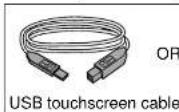
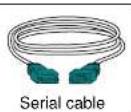

Product Overview
Main Unit
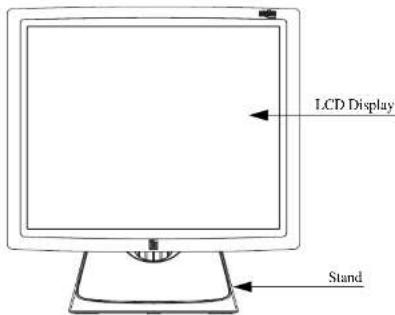
text_image
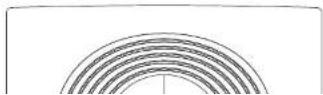
LCD Display StandRear View
Side View
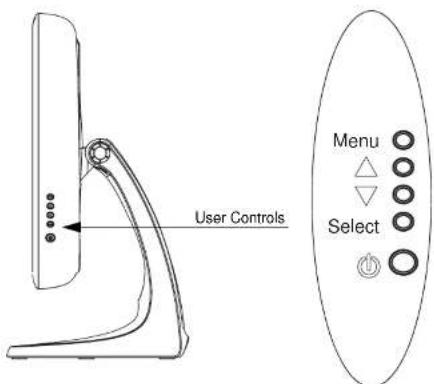
text_image
User Controls Menu SelectBase Bottom View
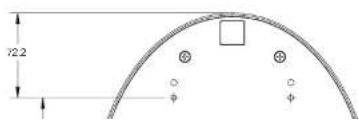
text_image
72.2 φ φTouch Interface Connection
NOTE: Your interface cables may have been pre-connected to your monitor at the factory.
Your touchmonitor comes with one of the following touchscreen connector cables: Serial (RS-232) cable or USB cable. (For Windows 98, 2000, Me and XP systems only.)
To set up this display, please refer to the following figures and procedures:
Serial/USB Connection
The following illustrations guide you step by step in connecting your touchmonitor using a serial or USB cable connection.
CAUTION Before connecting the cables to your touchmonitor and PC, be sure that the computer and the touchmonitor are turned off.


text_image
Sensel transceiver cable Oil USB in transformer cable Water cable (MOS, DW10, MTSG IPGA) 2ND S-0026 Speaker cable Motor power cable (USB-Coupled) European motor power cableFigure 2.1 Touchmonitor and Cables
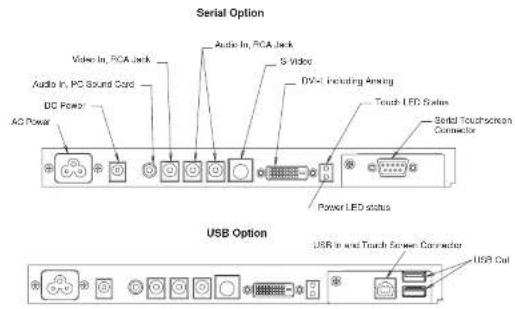
text_image
Serial Option Audio In, RCA Jack Video In, RCA Jack Audio In, PC Sound Cord DC Power AC Power S-Video DV+ Including Analog Touch LED System Serial Touchscreen Connector Power LED status USB Option USB in and Touch Screen Connector USB OutFigure 2.2 Touchmonitor Connections (Serial and USB)
The following table indicates the LED status options for the Touch LED.
LED Status On LED Status Off LED Status Blinking
Contact Elo Support Contact Elo Support OK
NOTE: Touch LED is currently only available with IntelliTouch -Serial Option monitors.
Step 1-Routing the Cables
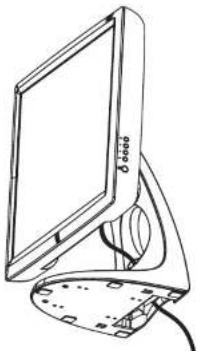
natural_image
Line drawing of a computer monitor with a cable attachment (no text or symbols)• The cables are routed through the cable management channel in the stand.
Step 2-Connecting the Video Cables

text_image
video port video cable Connections on underside RCA S-Video Female 15-pin video connector- Tilt the screen up and back to access the connection ports.
- Connect the 15-pin video cable (the ferrite bead end), the 24-pin DVI-D cable, the RCA or the S-Video cable to the video port on your PC.
- Connect the other end of the video cable to the video connector on your touchmonitor by routing the cable through the hole in the stand.
- Secure the cable to your touchmonitor and PC by turning the screws on the connector clockwise.
Step 3-Connecting the Serial or USB Touchscreen Cable
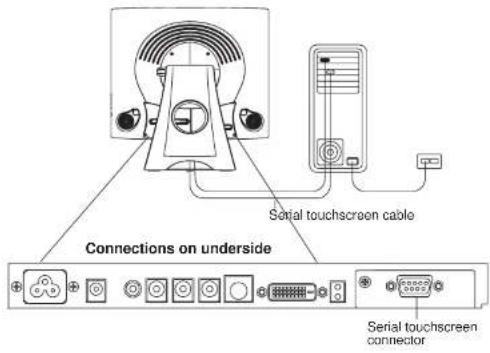
text_image
Serial touchscreen cable Connections on underside Serial touchscreen connector
text_image
USB Out USB In and Touchscreen Connector- Connect the female end of the serial (RS-232) cable to the serial port on the back of your PC, or connect the USB touchscreen cable to the USB touchscreen connector on the back of your touchmonitor.
Step 4-Connecting the Speaker Cable

text_image
Connections on underside Sensor inputs Sensor outputsNOTE: If you do not wish to connect the speaker cable, go to step 5.
- To use the built in speakers, you need to connect the speaker cable. Connect the speaker cable to the speaker port inside the back of your touchmonitor.
- Connect the other end of the cable to the speaker connector on your PC.
Step 5-Connecting the Power Cable
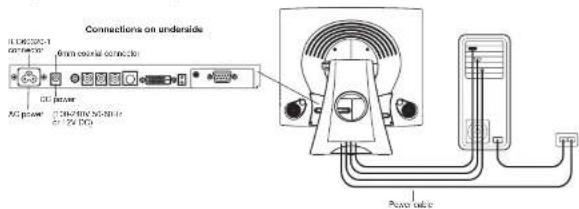
text_image
Connections on underside ICU power ACI power DC/DCB/DCB/DCB/DCB/DCB/DCB/DCB/DCB/DCB/DCB/DCB/DCB/DCB/DCB/DCB/DCB/DCB/DCB/DCB/DCB/DCB/DCB/DCB/DCB/DCB/DCB/DCB/DCB/DCB/DCB/DCB/DCB/DCB/DCB 10000000000000000000000000000000000000000000000000000000000000000000000000000000000000000000000000000 Power tableNOTE: The monitor is equipped with both AC and DC power connectors. The monitor is shipped with only an AC power cable.
Tilt Lock Function
You are able to lock the monitor in a desired position.
- Pivot the monitor to the desired position.
- Rotate the knob one full turn clockwise to lock the monitor in position.
- Rotate the knob one full turn counter-clockwise to unlock the monitor from its position.

natural_image
Technical line drawing of a mechanical component with a pin and cable, showing no text or symbolsVESA Mount on Your Touchmonitor
Your touchmonitor conforms to the VESA Flat Panel Monitor Physical Mounting Interface (I:PMPM1TM) Standard which defines a physical mounting interface for flat panel monitors, and corresponding standards for flat panel monitor mounting devices, such as wall and table arms. The VESA mounting interface is located on the back of your touchmonitor and is shipped pre-connected to the base.

text_image
Remove these four screws (retain for reassembly) VESA mounting surface is located 8mm below the surface of the plastic.Figure 2.4 Stand and Display Separation
NOTE: The above drawing displays the VESA mounting interface after the removal of the mounting cover and base.
NOTE: You will need a screwdriver for the following steps.
- Damona the four cesars in order to canorata the stand from the monitor (sea
Rear Mount Template

text_image
100 100 15 Cable access cutout 30 150Front Mount Template

text_image
100 100 Cable Access CircuitFront Mount for Horizontal Surface
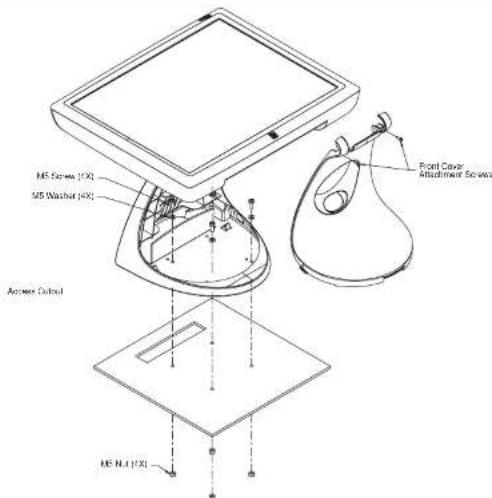
text_image
MS Swims (CX) MS Washer (CX) Mount N.1 (CX) Front Cover Attachment Screws Answer CutoutThe following companies provide VESA mounting devices compatible with your touchmonitor:
Mounting the Base
You can also mount your touchmonitor by using the keyholes in the base of the stand. These keyholes provide easy slide on mounting. You can also bolt your touchmonitor to a tabletop or other flat surface. Please refer to Appendix C for location and dimension of the mounting holes.

text_image
MD screw (4X) MD washer (4X)Security
You can protect your touchmonitor from theft by locking it with a Kensington Lock. See figure 2.5 for details.
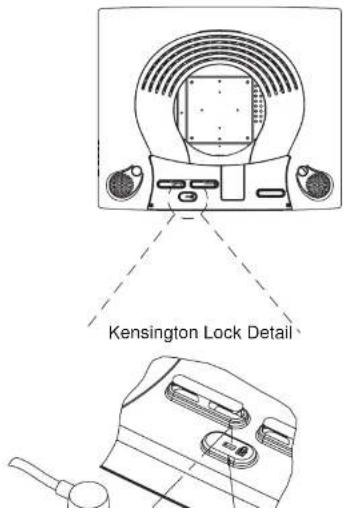
text_image
KENSINGTON LOCK DETAILInstalling the Driver Software
Elo TouchSystems provides driver software that allows your touchmonitor to work with your computer. Drivers are located on the enclosed CD-ROM for the following operating systems:
- Windows XP
- Windows 2000
- Windows Me
- Windows 98
- Windows 95
- Windows NT 4.0
Additional drivers and driver information for other operating systems are available on the Elo TouchSystems web site at www.elotouch.com.
Your Elo touchmonitor is plug-and-play compliant. Information on the video capabilities of your touchmonitor is sent to your video display adapter when Windows starts. If Windows detects your touchmonitor, follow the instructions on the screen to install a generic plug-and-play monitor.
Refer to the appropriate following section for driver installation instructions.
Installing the Serial Touch Driver for Windows XP, Windows 2000 ^1 , Me, 95/98 and NT 4.0
NOTE: For Windows 2000 and NT 4.0 you must have administrator access rights to install the driver.
1 Insert the Elo CD-ROM in your computer's CD-ROM drive.
If the AutoStart feature for your CD-ROM drive is active, the system automatically detects the CD and starts the setup program.
2 Follow the directions on the screen to complete the driver setup for your version of Windows.
If the AutoStart feature is not active:
1 Click Start > Run.
2 Click the Browse button to locate the EloCd.exe program on the CD-ROM.
3 Click Open, then OK to run EloCd.exe.
4 Follow the directions on the screen to complete the driver setup for your version of Windows.
Installing the Serial Touch Driver for MS-DOS and Windows 3.1
You must have a DOS mouse driver (MOUSE.COM) installed for your mouse if you wish to continue using your mouse along with your touchmonitor in DOS.
To install Windows 3.x and MS-DOS from Windows 95/98, follow the directions below:
1 Insert the Elo CD-ROM in your computer's CD-ROM drive.
2 From DOS, type d:\EloDos_W31 to change to the correct directory on the CD-ROM (your CD-ROM drive may be mapped to a different drive letter).
3 Type install and press Enter to start the installation.
4 Align the touchscreen.
You must have already completed Steps 1 and 2 before proceeding. Refer to Chapter 2 of the Elo DOS and Windows Driver Guide as necessary for additional installation information.
To run the INSTALL program:
1 Type INSTALL at the DOS prompt in the directory containing the driver install files.
2 INSTALL asks you to select the software to install. Then choose d:\EloDos_W31 from the displayed list.
3 INSTALL also asks you for the paths to use during installation, or you may use its defaults. INSTALL creates directories as necessary, and warns you if they exist.
If you are updating your software, you may wish to specify the paths containing the earlier versions, and overwrite the obsolete files. All executable programs are outward compatible. For a list of differences from each previous version of
Installing the USB Touch Driver
Installing the USB Touch Driver for Windows XP, Windows 2000 ^4 , Me and 98
1 Insert the Elo CD-ROM in your computer's CD-ROM drive.
If Windows 98, Windows Me or Windows 2000 starts the Add New Hardware Wizard:
2 Choose Next. Select "Search for the best driver for your device (Recommended)" and choose Next.
3 When a list of search locations is displayed, place a checkmark on "Specify a location" and use Browse to select the \EloUSB directory on the Elo CD-ROM.
4 Choose Next. Once the Elo TouchSystems USB touchscreen driver has been detected, choose Next again.
5 You will see several files being copied. Insert your Windows 98 CD if prompted. Choose Finish.
If Windows 98, Windows Me or Windows 2000 does not start the Add New Hardware Wizard:
NOTE: For Windows 2000 you must have administrator access rights to install the driver.
1 Insert the Elo CD-ROM in your computer's CD-ROM drive.
If the AutoStart feature for your CD-ROM drive is active, the system automatically detects the CD and starts the setup program.
2 Follow the directions on the screen to complete the driver setup for your version of Windows.
If the AutoStart feature is not active:
CHAPTER

OPERATION
About Touchmonitor Adjustments
Your touchmonitor will unlikely require adjustment. Variations in video output and application may require adjustments to your touchmonitor to optimize the quality of the display.
For best performance, your touchmonitor should be operating in native resolution, that is 1024 x 768 at 60-75 Hz. Use the Display control panel in Windows to choose 1024 x 768 resolution.
Operating in other resolutions will degrade video performance. For further information, please refer to Appendix A.
All adjustments you make to the controls are automatically memorized. This feature saves you from having to reset your choices every time you unplug or power your touchmonitor off and on. If there is a power failure your touchmonitor settings will not default to the factory specifications.
Side Bezel Buttons
Menu

Select


| Control Function | |||
| 1 | MENU | Menu Display on exit | the OSD menus. |
| 2 | Contrast/Up/Toggle | 1. Shortcut to Contrast adjustment2. Increase value of adjustment items3. With menu on toggles OSD options | |
| 3 | Volume/Down Toggle | 1. Shortcut to Volume adjustment2. Decrease value of the adjustment items3. With menu on toggles OSD options | |
| 4 | SELECT | Enter Select item | 1. Shortcut to Auto Adjust2. Select- To select the adjustment items from the OSD menus.3. Auto- To activate the “Auto Adjustment” function to obtain an optimum image. |
| 5 | |||
OSD Menu Function

text_image
CONTRAST 50Controls the picture contrast
Brightness Controls the picture brightness
V-Position Controls the vertical position
H-Position Controls the horizontal position
Recall Defaults Recalls factory settings of the image parameters
C1/C2/USER (Color) Using these icons, you can select one of the preset color temperatures (9300 ^o K or
Phase Controls the vertical fine adjustment
Clock Controls the horizontal fine adjustment
OSD H-Position Adjusts the horizontal position of the OSD menu
OSD V-Position Adjust the vertical position of the OSD menu
OSD Time Determines how long (in seconds) the OSD menu waits before closing automatically after no action has been performed.
Auto Adjust Automatically selects the optional settings for image parameters (brightness, contrast, image
CHAPTER

TROUBLESHOOTING
If you are experiencing trouble with your touchmonitor, refer to the following table. If the problem persists, please contact your local dealer or our service center.
Solutions to Common Problems
Problem Suggestion(s)
No image appears on screen. Check that all the I/O and power connectors are properly
connected as described in Chapter 2
Make sure the pins of the connectors are not crooked or
broken
Test power supply by trying different cables, a different
wall outlet or plug another appliance into the outlet.
...
Image has vertical flickering line bars. Use "PHASE" to make an adjustment.
Check and reconfigure the display mode of the vertical refresh rate of your graphic card to make it compatible with the LCD display.
Image is unstable and flickering Use "CLOCK" to make an adjustment.
Image is scrolling Make sure the VGA signal cable (or adapter) is well
connected.
Check and reconfigure the display mode of the vertical refresh rate of your graphic card to make it compatible with the LCD display.
Touch doesn't work
Make sure cable is securely attached at both ends.
APPENDIX

NATIVE RESOLUTION
The native resolution of a monitor is the resolution level at which the LCD panel is designed to perform best. For the Elo LCD touchmonitor, the native resolution is 1280 x 1024 for the SXGA-19 inch size. In almost all cases, screen images look best when viewed at their native resolution. You can lower the resolution setting of a monitor but not increase it.
Input Video 19" LCD
640x480 (VGA) Transforms input format to 1024x768
800x600 (SVGA) Transforms input format to 1024x768
1024x768 (XGA) Displays in Native Resolution
The native resolution of an LCD is the actual number of pixels horizontally in the LCD by the number of pixels vertically in the LCD. LCD resolution is usually represented by the following symbols:
As an example, a SVGA resolution LCD panel has 800 pixels horizontally by 600 pixels vertically. Input video is also represented by the same terms. XGA input video has a format of 1024 pixels horizontally by 768 pixels vertically. When the input pixels contained in the video input format match the native resolution of the panel, there is a one to one correspondence of mapping of input video pixels to LCD pixels. As an example, the pixel in column 45 and row 26 of the input video is in column 45 and row 26 of the LCD. For the case when the input video is at a lower resolution than the native resolution of the LCD, the direct correspondence between the video pixels and the LCD pixels is lost. The LCD controller can compute the correspondence between video pixels and LCD pixels using algorithms contained on its controller. The accuracy of the algorithms determines the fidelity of conversion of video pixels to LCD pixels. Poor fidelity conversion can result in artifacts in the LCD displayed image such as varying width characters.
APPENDIX
B
TOUCHMONITOR SAFETY
This manual contains information that is important for the proper setup and maintenance of your touchmonitor. Before setting up and powering on your new touchmonitor, read through this manual, especially Chapter 2 (Installation), and Chapter 3 (Operation).
1 To reduce the risk of electric shock, follow all safety notices and never open the touchmonitor case.
2 Turn off the product before cleaning
3 Your new touchmonitor is equipped with a 3-wire, grounding power cord. The power cord plug will only fit into a grounded outlet. Do not attempt to fit the plug into an outlet that has not been configured for this purpose. Do not use a damaged power cord. Use only the power cord that comes with your Elo TouchSystems Touchmonitor. Use of an unauthorized power cord may invalidate your warranty.
4 The slots located on the sides and top of the touchmonitor case are for
Care and Handling of Your Touchmonitor
The following tips will help keep your Elo Entuitive touchmonitor functioning at the optimal level.
- To avoid risk of electric shock, do not disassemble the brick supply or display unit cabinet. The unit is not user serviceable. Remember to unplug the display unit from the power outlet before cleaning.
- Do not use alcohol (methyl, ethyl or isopropyl) or any strong dissolvent. Do not use thinner or benzene, abrasive cleaners or compressed air.
- To clean the display unit cabinet, use a cloth lightly dampened with a mild detergent.
- Avoid getting liquids inside your touchmonitor. If liquid does get inside, have a qualified service technician check it before you power it on again.
- Do not wipe the screen with a cloth or sponge that could scratch the surface.
- To clean the touchscreen, use window or glass cleaner. Put the cleaner on the rag and wipe the touchscreen. Never apply the cleaner directly on the touchscreen





APPENDIX

TECHNICAL SPECIFICATIONS
Compatible Video Modes
Your Elo Entuitive touchmonitor is compatible with the following standard video modes:
| Mode | Resolution | II. Frequency (kHz) | V. Frequency (Hz) |
| IBM & VESA VGA 640 x 350 31.47 70.09 | |||
| IBM & VESA VGA 640 x 400 31.47 70.09 | |||
| IBM & VESA VGA 720 x 400 31.47 70.09 | |||
| IBM & VESA VGA 640 x 480 31.47 59.94 | |||
| IBM & VESA VGA 640 x 480 37.86 72.81 | |||
| IBM & VESA VGA 640 x 480 37.50 75.00 | |||
| VESA SVGA 800 x 600 35.16 56.25 | |||
| VESA SVGA 800 x 600 37.88 60.32 | |||
Touchmonitor Specifications
TABLE 1. 19" LCD Touchmonitor (ET19-XXxx-1) Specifications
| Display Type | Active matrix TFT LCD | |
| Display Size | 19-inch diagonal | |
| Useful Screen Area | Horizontal: 376 mm (14.8 in.)Vertical: 301 mm (11.9 in.) | |
| Maximum Monitor Dimensions | Width (incl. base): 436 mm (17.2 in.)Height (incl. base): 457 mm (18.0 in.)Depth: 241 mm (9.49 in.) | |
| Optimal (native) Resolution | 1280 x 1024 at 60, 70, 75 Hz | |
| Touchscreen | 0.125-inch IntelliTouch and AccuTouch, anti-glareIntelliTouch or AccuTouch | |
| Colors | 16.7 million Colors with dithering (8 bit data) | |
| Brightness (typical) | No Touchscreen: 300 cd/m^2 typicalIntelliTouch: 276 cd/m^2 typicalSecureTouch: 270 cd/m^2 typicalAccuTouch: 240 cd/m^2 typical | |
| Back-light Lamp Life | 40.000 hours at 50% brightness typical | |
| Viewing Angle (from center) | Horizontal (left/right) | ± 85^ or 170^ total (CR=10) |
| Vertical (up/down) | ± 85^ or 170^ total (CR=10) | |
TABLE 1. 19" LCD Touchmonitor (ET19-XXxx-1) Specifications
| Display Type | Active matrix TFT LCD |
| Input Audio | Computer Audio on 3.5mm stereo miniAudio for Video on dual RCA jacksTwo built-in, rear-facing 2W speakers in display head |
| Display Response Time | Tr: 15 mscc (typical)TF: 10 mscc (typical) |
| Operating Temp | 0°C to 40°C |
| Storage Temp | -20°C to +60°C |
| Humidity (non-condensing) | |
| Operating | 20% to 80% |
| Storage | 5% to 90% |
| Weight (approx.) | |
| Actual | 21.5 lb. (9.78 kg) |
| Shipping | 30.0 lb. (13.6 kg) |
| Power Dissipation | 40W (typical) |
| User Controls | Remote OSD: Auto/Sel, Up, Down, Menu (1.8m cable length)OSD: Brightness, Contrast, Color Temperature, H/V position, Phase/ Clock, Recall, Auto-Adjust, Input Select. Language (English, Spanish, German, French, Italian, Swedish, Finnish, Danish, Portuguese, Dutch, Japanese) |
| Agencies | UL/cUL, TÜV-GS, CE, FCC/IC/VCCI/C-tick Class B |
Table 0.1 IntelliTouch Touchmonitor Specifications
Mechanical
| Positional Accuracy | Standard deviation of error is less than 0.080 in. (2.03 mm). Equates to less than ± 1% . |
| Touchpoint Density | More than 100,000 touchpoints/ m^2 (15,500 touchpoints/ cm^2 ). |
| Touch Activation Force | Typically less than 3 ounces (85 grams). |
| Surface Durability | Surface durability is that of glass, Mohs' hardness rating of ?. |
| Expected Life Performance | No known wear-out mechanism, as there are no layers, coatings, or moving parts. IntelliTouch technology has been operationally tested to more than 50 million touches in one location without failure, using a stylus similar to a finger. |
| Sealing | Unit is scaled to protect against splashed liquids, dirt, and dust. |
| Optical | |
| Light Transmission (per ASTM D1003) | 90% |
| Visual Resolution | All measurements made using USAF 1951 Resolution Chart, under 30X magnification, with test unit located approximately 1.5 in (38 mm) from surface of resolution chart. Clear surface: Excellent, with no noticeable degradation. Antiglare surface: 6:1 minimum. |
| Gloss (per ASTM D2457 using a 60-degree gloss meter) | Antiglare surface: Curved: 60 ± 20 gloss units or 75 ± 15 gloss units. |
Environmental
| Chemical Resistance | The active area of the touchscreen is resistant to all chemicals that do not affect glass, such as: |
| Acetone | |
| Toluene | |
| Methyl ethyl ketone | |
| Isopropyl alcohol | |
| Methyl alcohol | |
| Ethyl acetate | |
| Ammonia-based glass cleaners | |
| Gasoline | |
| Kerosene | |
| Vinegar | |
| Electrostatic Protection (per EN 61 000-4-2, 1995) | Meets Level 4 (15 kV air/8 kV contact discharges). |
Table 0.1 AccuTouch Touchmonitor Specifications
| Mechanical | |
| Construction | Top: Polyester with outside hard-surface coating with clear or antiglare finish. Inside: Transparent conductive coating. Bottom: Glass substrate with uniform resistive coating. Top and bottom layers separated by Elo-patented separator dots. |
| Positional Accuracy | Standard deviation of error is less than 0.080 in. (2.03 mm). This equates to less than ±1%. |
| Touchpoint Density | More than 100,000 touchpoints/in ^2 (15,500 touchpoints/cm ^2 ). |
| Touch Activation Force | Typically less than 4 ounces (113 grams). |
| Surface Durability | Meets Taber Abrasion Test (ASTM D1044), CS-10F wheel, 500 g. Meets pencil hardness 3H. |
| Expected Life Performance | AccuTouch technology has been operationally tested to greater than 35 million touches in one location without failure, using a stylus similar to a finger. |
| Optical | |
| Light Transmission (per ASTM D1003) | Typically 75% at 550-nm wavelength (visible light spectrum). |
| Visual Resolution | All measurements made using USAF 1951 Resolution Chart, under 30 X magnification, with test unit located approximately 1.5 in. (38 mm) from surface of resolution chart. Antiglare surface: 6:1 minimum. |
| Haze (per ASTM D1003) | Antiglare surface: Less than 15%. |
| Gloss (per ASTM D2457) | Antiglare surface: 90 ± 20 gloss units tested on a hard-coated front surface. |
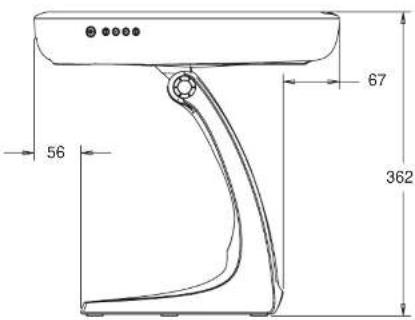
19" LCD Touchmonitor (ET192XL-XXWA-1) Dimensions

text_image
376 300.8 457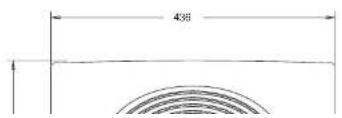
text_image
436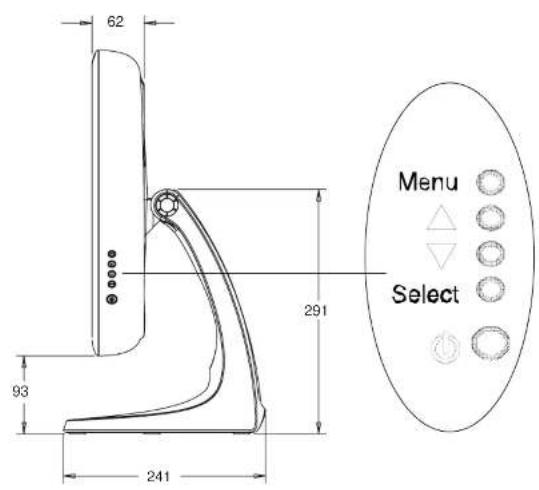
text_image
62 93 241 291 Menu Select
text_image
56 67 362Aft tilt 90° from vertical
REGULATORY INFORMATION
I. Electrical Safety Information:
A) Compliance is required with respect to the voltage, frequency, and current requirements indicated on the manufacturer's label. Connection to a different power source than those specified herein will likely result in improper operation, damage to the equipment or pose a fire hazard if the limitations are not followed.
B) There are no operator serviceable parts inside this equipment. There are hazardous voltages generated by this equipment which constitute a safety hazard. Service should be provided only by a qualified service technician.
C) This equipment is provided with a detachable power cord which has an integral safety ground wire intended for connection to a grounded safety outlet.
1) Do not substitute the cord with other than the provided approved type. Under no circumstances use an adapter plug to connect to a 2-wire outlet as this will defeat the continuity of the grounding wire.
2) The equipment requires the use of the ground wire as a part of the safety certification, modification or misuse can provide a shock hazard that can result in serious injury or death.
3) Contact a qualified electrician or the manufacturer if there are questions about the installation prior to connecting the equipment to mains power.
II. Emissions and Immunity Information
A) Notice to Users in the United States: This equipment has been tested and found to comply with the limits for a Class B digital device, pursuant to Part 15 of FCC Rules. These limits are designed to provide reasonable protection against harmful interference in a residential installation. This equipment generates, uses, and can radiate radio frequency energy, and if not installed and used in accordance with the instructions, may cause harmful interference to radio communications.
B) Notice to Users in Canada: This equipment complies with the Class B limits for
This Information Technology Equipment (ITE) is required to have a CE Mark on the manufacturer's label which means that the equipment has been tested to the following Directives and Standards:
This equipment has been tested to the requirements for the CE Mark as required by EMC Directive 89/336/EEC indicated in European Standard EN 55 022 Class B and the Low Voltage Directive 73/23/EEC as indicated in European Standard EN 60 950.
D) General Information to all Users: This equipment generates, uses and can radiate radio frequency energy. If not installed and used according to this manual the equipment may cause interference with radio and television communications. There is, however, no guarantee that interference will not occur in any particular installation due to site-specific factors.
1) In order to meet emission and immunity requirements, the user must observe the following:
a) Use only the provided I/O cables to connect this digital device with any computer.
b) To ensure compliance, use only the provided manufacturer's approved line cord.
c) The user is cautioned that changes or modifications to the equipment not expressly approved by the party responsible for compliance could void the user's authority to operate the equipment.
2) If this equipment appears to cause interference with radio or television reception, or any other device:
a) Verify as an emission source by turning the equipment off and on.
b) If you determine that this equipment is causing the interference, try to correct the interference by using one or more of the following measures:
i) Move the digital device away from the affected receiver.
ii) Reposition (turn) the digital device with respect to the affected receiver.







N10051
WARRANTY
Except as otherwise stated herein or in an order acknowledgment delivered to Buyer, Seller warrants to Buyer that the Product shall be free of defects in materials and workmanship. The warranty for the touchmonitors and components of the product is 1 year.
Seller makes no warranty regarding the model life of components. Seller's suppliers may at any time and from time to time make changes in the components delivered as Products or components.
Buyer shall notify Seller in writing promptly (and in no case later than thirty (30) days after discovery) of the failure of any Product to conform to the warranty set forth above; shall describe in commercially reasonable detail in such notice the symptoms associated with such failure; and shall provide to Seller the opportunity to inspect such Products as installed, if possible. The notice must be received by Seller during the Warranty Period for such product, unless otherwise directed in writing by the Seller. Within thirty (30) days after submitting such notice, Buyer shall package the allegedly defective Product in its original shipping carton(s) or a functional equivalent and shall ship to Seller at Buyer's expense and risk.
Within a reasonable time after receipt of the allegedly defective Product and verification by Seller that the Product fails to meet the warranty set forth above, Seller shall correct such failure by, at Seller's options, either (i) modifying or repairing the Product or (ii) replacing the Product. Such modification, repair, or replacement and the return shipment of the Product with minimum insurance to Buyer shall be at Seller's expense. Buyer shall bear the risk of loss or damage in transit, and may insure the Product. Buyer shall reimburse Seller for transportation cost incurred for Product returned but not found by Seller to be defective. Modification or repair, of Products may, at Seller's option, take place either at Seller's facilities or at Buyer's premises. If Seller is unable to modify
THESE REMEDIES SHALL BE THE BUYER'S EXCLUSIVE REMEDIES FOR BREACH OF WARRANTY. EXCEPT FOR THE EXPRESS WARRANTY SET FORTH ABOVE, SELLER GRANTS NO OTHER WARRANTIES, EXPRESS OR IMPLIED BY STATUTE OR OTHERWISE, REGARDING THE PRODUCTS, THEIR FITNESS FOR ANY PURPOSE, THEIR QUALITY, THEIR MERCHANTABILITY, THEIR NONINFRINGEMENT, OR OTHERWISE. NO EMPLOYEE OF SELLER OR ANY OTHER PARTY IS AUTHORIZED TO MAKE ANY WARRANTY FOR THE GOODS OTHER THAN THE WARRANTY SET FORTH HEREIN. SELLER'S LIABILITY UNDER THE WARRANTY SHALL BE LIMITED TO A REFUND OF THE PURCHASE PRICE OF THE PRODUCT. IN NO EVENT SHALL SELLER BE LIABLE FOR THE COST OF PROCUREMENT OR INSTALLATION OF SUBSTITUTE GOODS BY BUYER OR FOR ANY SPECIAL, CONSEQUENTIAL, INDIRECT, OR INCIDENTAL DAMAGES.
Buyer assumes the risk and agrees to indemnify Seller against and hold Seller harmless from all liability relating to (i) assessing the suitability for Buyer's intended use of the Products and of any system design or drawing and (ii) determining the compliance of Buyer's use of the Products with applicable laws, regulations, codes, and standards. Buyer retains and accepts full responsibility for all warranty and other claims relating to or arising from Buyer's products, which include or incorporate Products or components manufactured or supplied by Seller. Buyer is solely responsible for any and all representations and warranties regarding the Products made or authorized by Buyer. Buyer will indemnify Seller and hold Seller harmless from any liability, claims, loss, cost, or expenses (including reasonable attorney's fees) attributable to Buyer's products or representations or warranties concerning same.
Index
Numerics
19" LCD Touchmonitor (ET19-XXWA-1) Dimensions, 39
A
About the Product. 1
About Touchmonitor Adjustments, 23
AccuTouch Touchmonitor Specifications, 38
Agencies, 35
Auto Adjust. 25
B
Back-light Lamp Life, 34
Base Bottom View. 5
Brightness. 25
Brightness (typical). 34
C
C1/C2/USER (Color), 25
Care and Handling of Your Touchmonitor, 32
Chemical Resistance, IntelliTouch, 37
Cleaning Your Touchmonitor, 32
Clock, 25
Colors, 34
Compatible Video Modes, 33
Connecting the Video Cable, 9
Connecting the Video Cable or DVI-D Video Cable. 9
Construction, AccuTouch, 38
Contrast, 24. 25
Contrast Ratio, 34
D
Display Response Time: 95
F
Figure 3-Front Mount Template, 14
Front, 15
Front Mount for Horizontal Surface, 15
Front Mount Template, 14
G
GCX.15
Gloss, AccuTouch, 38
Gloss, IntelliTouch, 36
H
Haze, AccuTouch, 38
H-Position. 25
Humidity, operating, 35
|
Image Information, 25
Image problem, 27
Image, scrolling, 28
Image. unstable, 28
Image, vertical flickering, 28
Innovative Office Products, 15
Input Audio, 35
Input Syncs, 34
Input Video Format(s), 34
Input Video Signal Connector, 34
Installation and Setup, 3
Installing the Driver Software, 18
Installing the Serial Touch Driver for MS-DOS and
Windows 3.1.20
Installing the Serial Touch Driver for Windows XP,
Mechanical, AccuTouch, 38
Mechanical, Intelli Touch, 36 Menu, 24
Mena, 24 Minus Counter-clockwise, 24
Mounting the Base, 16
MRI, 15
N
Native Resolution, 29
0
Operating Temp, 35
Operation, 23
Optical, AccuTouch, 38
Optical, IntelliTouch, 36
Optimal (native) Resolution, 34
Optimizing the LCD Display, 12
OSD H-Position, 25
OSD Language, 25
OSD Menu Function, 25
OSD Time, 25
OSD V-Position, 25
Out of Range display, 27
P
Phase, 25
Plus/Clockwise, 24
Positional Accuracy, AccuTouch, 38
Positional Accuracy, IntelliTouch, 36
Power Dissipation, 35
Power Switch, 24
Precautions,
Product Overview, 4
R
Rear, 14
Step 2-Connecting the Video Cables, 9
Step 3-Connecting the Serial or USB Touchscreen
Cable, 10
Step 4-Connecting the Speaker Cable, 11
Storage Humidity, 35
Storage Temp, 35
Surface Durability, AccuTouch, 38
Surface Durability, IntelliTouch, 36
SVGA, 29
SXGA, 29
T
Technical Specifications, 33
Tilt Lock Function, 12
Touch Activation Force, AccuTouch, 38
Touch Activation Force, IntelliTouch, 36
Touch Interface Connection, 6
Touch not working, 28
Touchmonitor Safety, 31
Touchmonitor Specifications, 34
Touchpoint Density, AccuTouch, 38
Touchpoint Density, IntelliTouch, 36
Touchscreen, 34
Troubleshooting, 27
U
Unpacking Your Touchmonitor, 3
Useful Screen Area, 34
User Controls, 35
Using the On-Screen Display (OSD) Menus, 23
UXGA, 29
V
VESA Mount on Your Touchmonitor, 13
VGA, 29
Viewing Angle, 34
Visual Resolution. AccuTouch 38