ProND100 - Optical filter Hoya - Free user manual and instructions
Find the device manual for free ProND100 Hoya in PDF.


| Product Type | Neutral Density (ND) Filter |
| Model | ProND100 |
| Brand | Hoya |
| Filter Factor | ND100 (100x light reduction, approx. 6.7 stops) |
| Optical Density | 2.0 |
| Material | Optical glass with multi-coating |
| Coating | Multi-coated to reduce reflections and flare |
| Thread Size Options | Available in common sizes: 52mm, 58mm, 62mm, 67mm, 72mm, 77mm, 82mm |
| Mount Type | Screw-in, front filter thread |
| Ring Material | Aluminum, matte black finish |
| Thickness | Approx. 6.5 mm (varies by size) |
| Weight | Approx. 20-40 g depending on size |
| Color Neutrality | Excellent; minimal color cast |
| Application | Long exposure photography, video, and wide aperture shooting in bright light |
| Maintenance | Clean with microfiber cloth and lens cleaning solution; avoid abrasive materials |
| Storage | Store in original case or padded pouch, away from dust and moisture |
| Safety | Not for direct eye viewing of sun; use only on cameras with proper precautions |
| Compatibility | All DSLR, mirrorless, and camcorders with standard filter threads |
| Warranty | Lifetime limited warranty against defects |
| Accessories Included | Plastic storage case |
| Repairability | Non-repairable; replace if damaged |
| Country of Origin | Japan |
Frequently Asked Questions - ProND100 Hoya
User questions about ProND100 Hoya
0 question about this device. Answer the ones you know or ask your own.
Ask a new question about this device
Download the instructions for your Optical filter in PDF format for free! Find your manual ProND100 - Hoya and take your electronic device back in hand. On this page are published all the documents necessary for the use of your device. ProND100 by Hoya.
USER MANUAL ProND100 Hoya
from EVOLUTION to REVOLUTION
natural_image
Close-up of a black optical filter with visible lens and aperture, set against a blue striped background (no text or symbols on the object itself)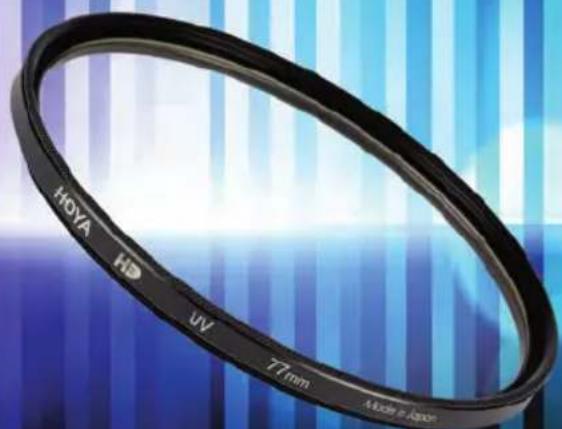
natural_image
Close-up of a black circular optical fiber with visible texture and measurement markings (no text or symbols on the fiber itself)
text_image
HOYA PROD PROTECTOR,WI 7mm x8PANTHE PRODUCTION PROCESS OF HOYA FILTERS
Each Hoya filter is the result of research, know-how and complete precision facilities backed by full quality control.
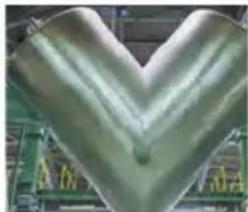
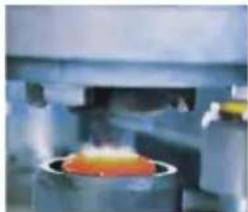
Before production starts, controls are first programmed into a computer. Then the finest materials are carefully mixed by an automatic V-blender for absolute uniformity. After being melted with highly sophisticated equipment, this material is then precision molded with automatic direct pressing equipment. The pressed blanks are next slowly and continuously cooled to remove strain, and are then polished by high-speed, double-surface polishing machines that assure precise surface quality and perfect flatness.
Next is the coating process which improves the filter light transmission ability. And the transmission characteristics are checked by Spectro-Photometer, after which an ultrasonic cleaner removes all foreign matter from the surfaces. Only after passing all of Hoya's quality tests are the filters assembled, finished and made ready for shipment to customers throughout the world.
HOYA SEES AND RESPONDS TO THE NEEDS OF TODAY
HOYA Corporation has diversified its operations by capitalizing on the potential of optoelectronic technologies since its establishment in 1941 as Japan's first specialty manufacturer of optical glass. Today, Hoya is active in four fields of business: Information Technology business makes mask blanks and photomasks for semiconductor devices and liquid crystal panels, optical lenses, and glass memory disks for hard disk drives. The Eye Care provides eyeglasses and operates contact lenses retail shops, as well as makes intraocular lenses for cataract surgery. The Life Care Business provides endoscopic system. The Imaging System produces SLR/compact digital cameras and interchangeable lenses as well as digital camera lens module and microlens.
OUTLINE
INFOMATION TECHNOLOGY
EYE CARE
MEDICAL
IMAGING SYSTEM
DIGITAL CAMERAS NEED MULTICOATED FILTERS
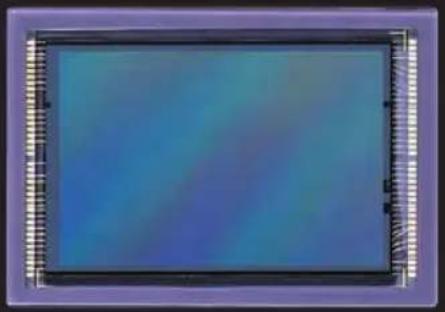
Digital camera CCD or CMOS sensors are highly susceptible to reflections - this stray light can ruin your photographs! Don't risk your valuable photos by using bare-glass filters.
natural_image
Rectangular electronic component with blue gradient background and metallic traces (no visible text or symbols)THE CLEAR ADVANTAGE
Take a bare glass filter, hold it so that light reflection off the surface can be seen. Then take a long, very thin object like a pin or the tip of a pen and hold it over the filter so that its reflection can be seen. There will actually be two reflections of the pin on the surface, one a little more pronounced than the other. The more pronounced reflection is from the front surface and the lighter one is from light reflecting off the rear surface. Now try it with a HOYA Digital Multi-Coated filter and see how much more dim the reflection is, a dimmer reflection means less light is reflected off the surface of the glass.
mono-coated
non-coated

text_image
coated non Multi-coatedDMC digital multi-coated

natural_image
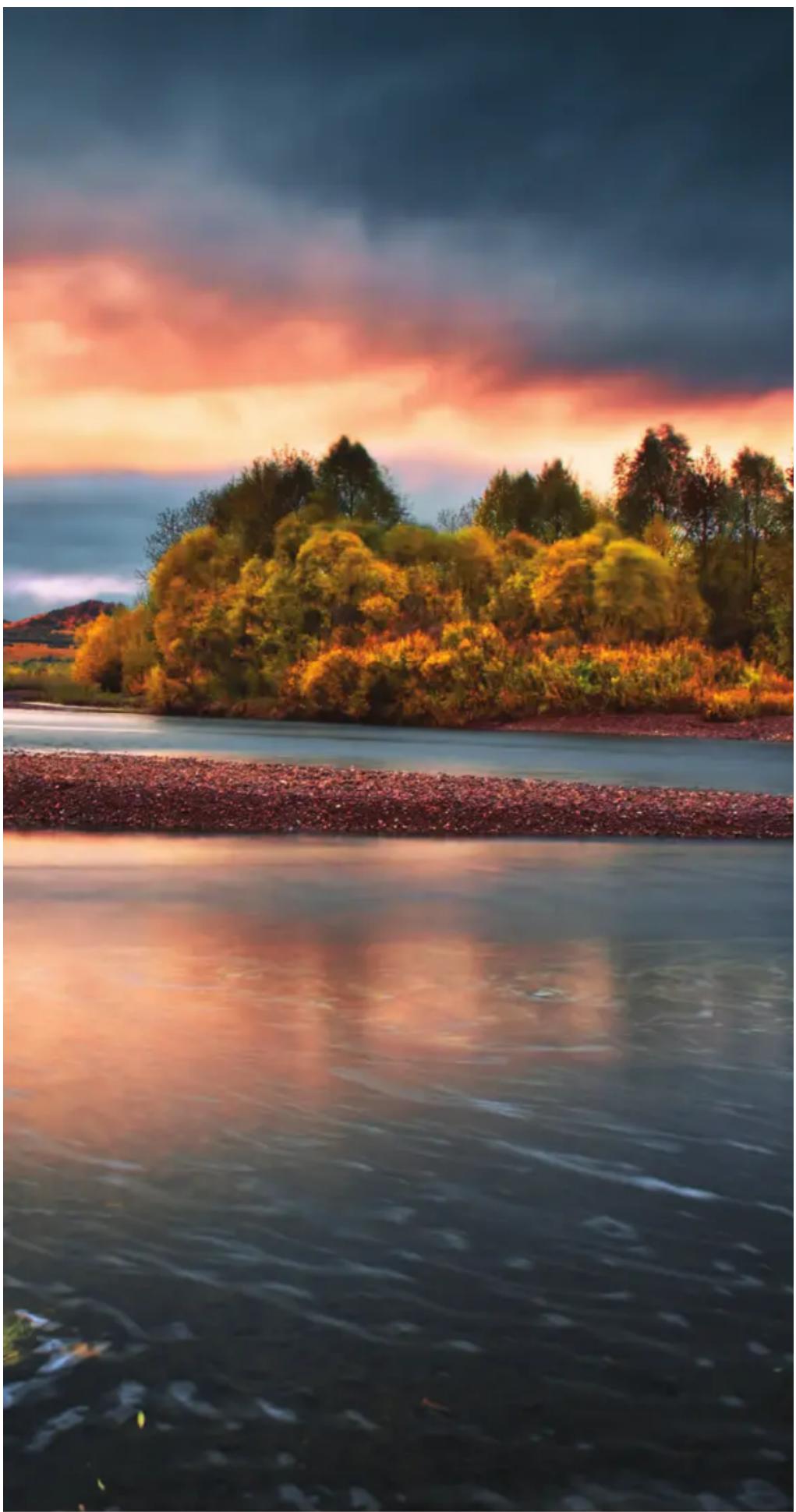
Autumn landscape with vibrant orange and yellow sky over a calm river, surrounded by autumn foliage and distant hills (no text or symbols)Title Root River Quietly
Photographed by Chen Lei
International Filter Photo Contest 2008-2009 3rd Prize
natural_image
Autumn landscape with colorful sky, autumn trees, and a calm river reflecting on the water (no text or symbols)Premium Performance in Lens Protection and Image Enhancement
HARDENED GLASS (UV / PROTECTOR)
Hardened optical glass that has 4 times the breaking strength in ANSI standardized testing (ANSI Z80.3 : 2001) where a steel balls of varying size and weight were dropped from a height of 50 inches onto the glass.
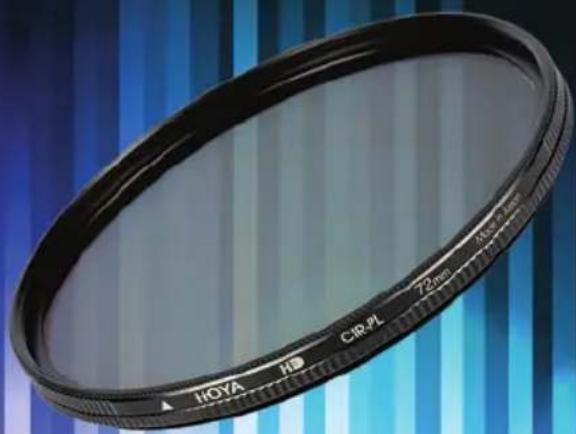
HIGH TRANSPARENCY POLARIZING FILM (CIR-PL)
The polarizing film is the same as that used in the latest high definition LCD TV screens. It has 25% higher light transmission than standard polarizing film used in current photographic filters.
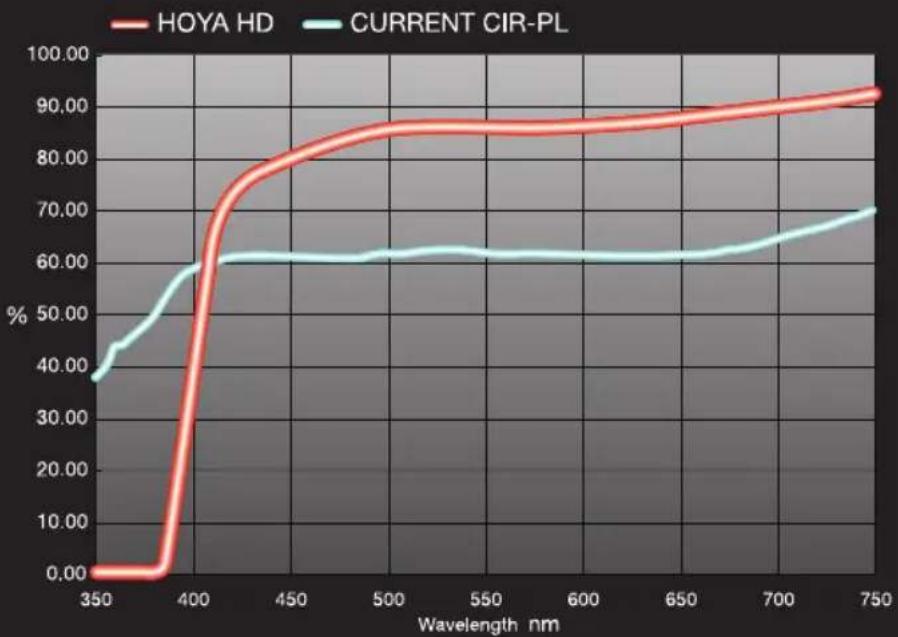
line
| Wavelength (nm) | HOYA HD | CURRENT CIR-PL | | --------------- | ------- | -------------- | | 350 | 0.00 | 38.00 | | 400 | 70.00 | 60.00 | | 450 | 85.00 | 61.00 | | 500 | 87.00 | 62.00 | | 550 | 87.50 | 62.50 | | 600 | 88.00 | 62.00 | | 650 | 89.00 | 63.00 | | 700 | 91.00 | 65.00 | | 750 | 93.00 | 70.00 |HARDENED 8 LAYER WATERPROOF MULTI-COATING THAT IS SCRATCH & STAIN RESISTANT
Newly developed industry leading 8-layer multi-coating yields an average light transmission rate of 99.35% between 400 and 700nm (visible spectrum). These coatings greatly reduce reflections off the surface of the glass allowing you to capture more light in your photos.
As with all HOYA multi-coatings, HD HMC is applied in a furnace at high heat, bonding the coating to the surface of the glass. This process is called "hard coating" and it is far more durable than other coating techniques. The chemistry of the top layer is formulated not just to be more durable but to be resistant to oil stains. This means that finger prints and other oils are much easier to remove.

text_image
HOYA UV 77mm Hoya - H2O Hoya - H2O Hoya - H2OBest Quality Filter in History
HD GLASS
• High Density Sharp Cut UV Glass
• Chemically Enhanced Optical Glass is 4x Stronger
HD COATING
• 8-layer Anti-Reflective Multi-Coating
• Water & Oil Repellent, Scratch & Stain Resistant
HD FRAME
- Wide-Angle Lens Compatible Ultra Thin Frame
• Glass Mounted with High Pressure Press Technology
A multi-purpose fine-weather filter
Absorbs the ultraviolet rays which often make outdoor photographs hazy and indistinct. A multi-purpose, fine-weather filter for color as well as black and white films. Also serves as a permanent lens protector.
Available sizes (mm):
| 37 | 40.5 | 43 | 46 | 49 | 52 | 55 | 58 | 62 | 67 | 72 | 77 | 82 |

natural_image
Large black filter blade resting on turquoise ocean water under a blue sky with clouds (no text or symbols visible)Best Filter Performance in History
HD POLARIZING FILM
• High Transparency & High Durability UV Absorbing Film
• 25% Greater Light Transmission than Standard Polarizing Film
HD COATING
• 8-layer Anti-Reflective Multi-Coating
• Water & Oil Repellent, Scratch & Stain Resistant
HD FRAME
- Wide-Angle Lens Compatible Ultra Thin Frame
• Glass Mounted with High Pressure Press Technology
Color and contrast enhancement
Light rays which are reflected by any surface can become polarised so polarising filters are used to select which light rays enter your camera lens. CIR-PL filters allow you to remove unwanted reflections from non-metallic surfaces such as water, glass etc. They also enable colors to become more saturated and appear clearer with better contrast. This effect is often used to increase the contrast and saturation in blue skies and white clouds. HOYA's polarising filters will not affect the overall color balance of a shot.
Available sizes (mm):
| 37 | 40.5 | 43 | 46 | 49 | 52 | 55 | 58 | 62 | 67 | 72 | 77 | 82 |
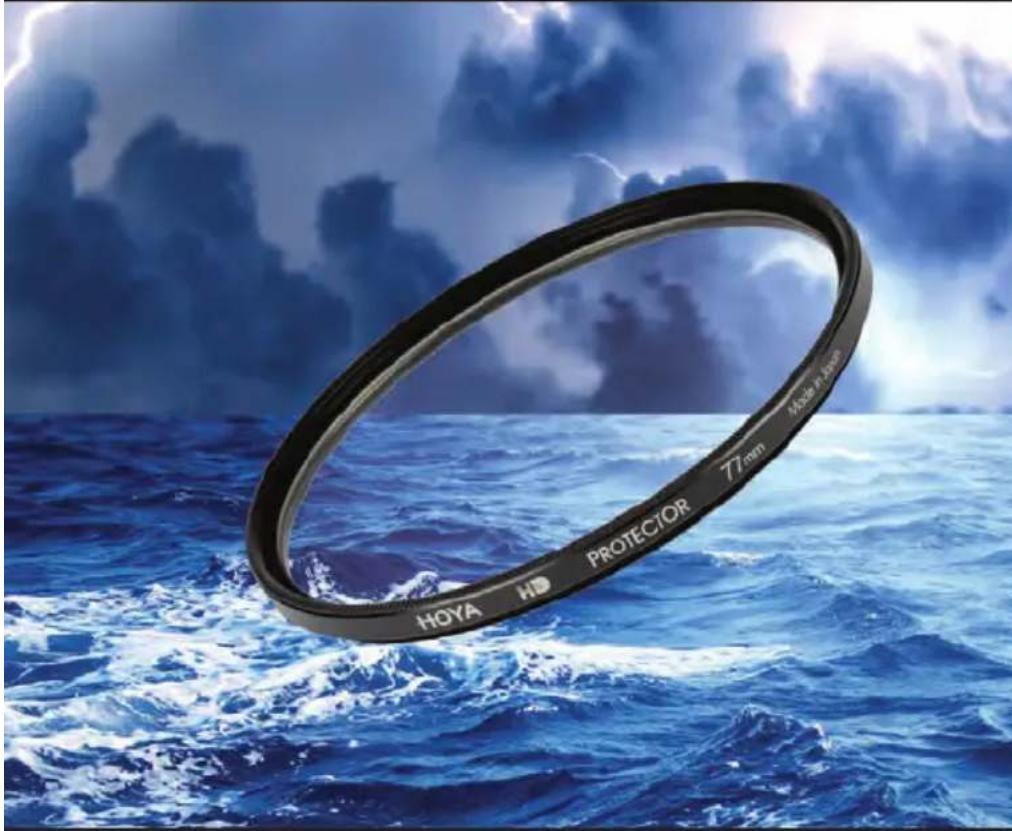
text_image
HOYA HD PROTECTOR 77mm Make a newBest Lens Protection in History
HD GLASS
• Ultra Clear High Transparency Optical Glass
• Chemically Enhanced Optical Glass is 4x Stronger
HD COATING
• 8-layer Anti-Reflective Multi-Coating
• Water & Oil Repellent, Scratch & Stain Resistant
HD FRAME
- Wide-Angle Lens Compatible Ultra Thin Frame
• Glass Mounted with High Pressure Press Technology
Protect your valued lenses
This is the ultimate in clear filters. It will not affect the color balance or performance of your lenses in the slightest. However, constant use will protect your valued lenses from expensive front element damage which could be caused by dirt, knocks or scratches. A cracked filter costs nothing in comparison to a cracked lens.
Available sizes (mm):
| 37 | 40.5 | 43 | 46 | 49 | 52 | 55 | 58 | 62 | 67 | 72 | 77 | 82 |
PRO1 Digital
Filter Series
DESIGNED EXCLUSIVELY FOR DIGITAL CAMERAS

text_image
HOYA PROZ D CIRCULAR PL(W) 7mm JapanKEY FEATURES

Digital Multi-Coated
Digital multi-coated filters greatly reduce the appearance of lens flare and ghosting caused by reflections.
Black Almite Frame
Filters feature a black matte aluminum satin finish almite frame which reduces reflections.

Black Rimmed Glass
These filters are equipped with black rimmed glass to reduce the chance of light reflecting off the edge.
Low Profile Frame
Ultra thin filter frames to help avoid vignetting on super wide angle lenses are also designed to hold a lens cap.
Knurling Edge Frame
These filters are equipped with a straight knurling edge for non-slip, easy attachment and removal.

UV Protected Case
Filter cases are UV protected to further lengthen the life of filters.
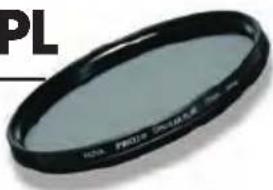
PRO1D CIRCULAR PL
Color and contrast enhancement
natural_image
Close-up of a black filter or optical component with visible lens and markings (no readable text or symbols)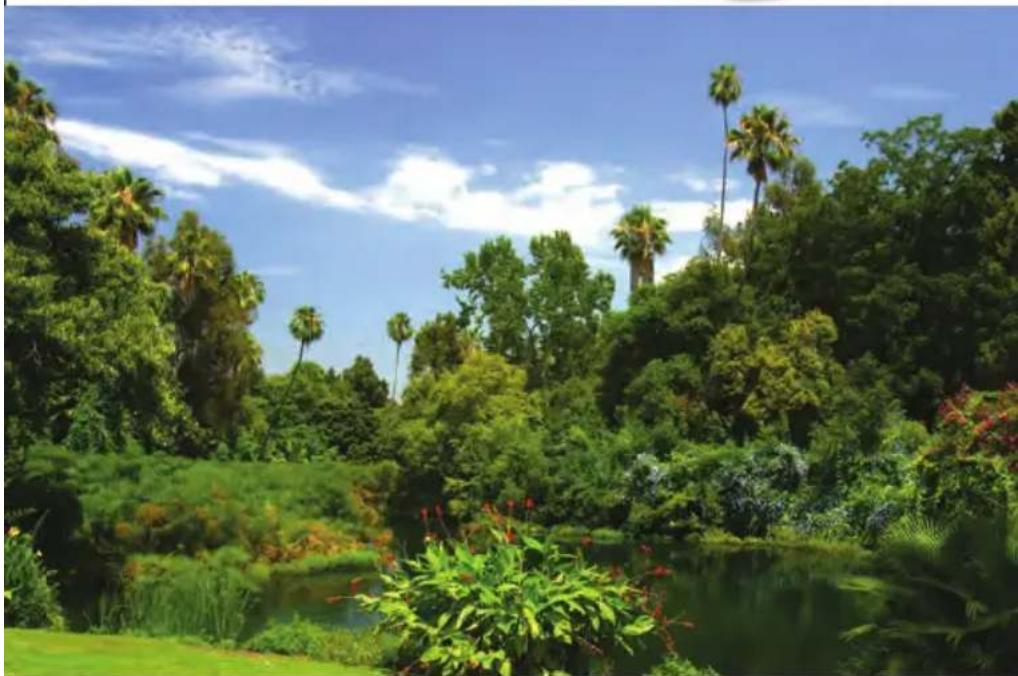
natural_image
Lush garden scene with lush green trees, a calm pond, and tall palm trees under a blue sky with scattered clouds (no text or symbols visible)▲ With CIRCULAR PL Filter
natural_image
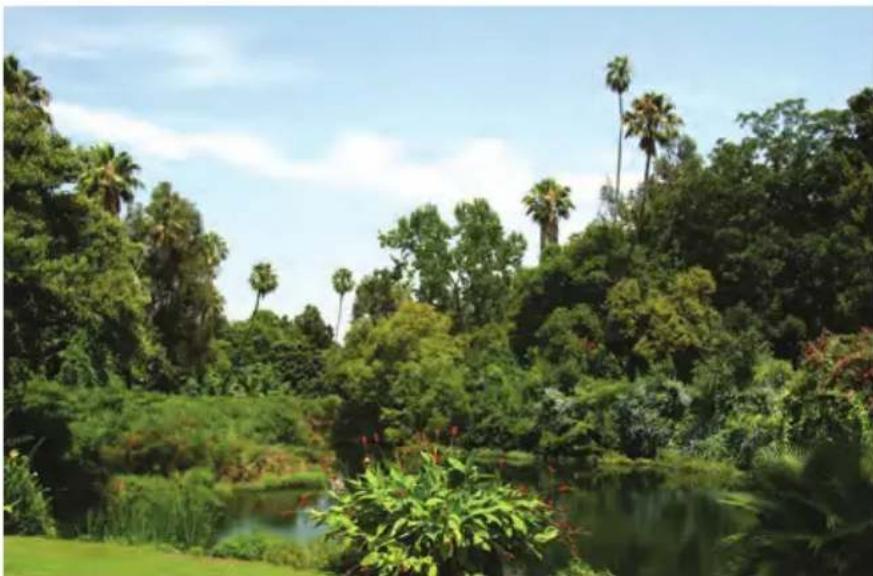
Lush green garden with palm trees and a calm pond under a partly cloudy sky (no text or symbols visible)▲ Without Filter
Light rays which are reflected by any surface can become polarised so polarising filters are used to select which light rays enter your camera lens. CIRCULAR PL filters allow you to remove unwanted reflections from non-metallic surfaces such as water, glass etc. They also enable colors to become more saturated and appear clearer with better contrast. This effect is often used to increase the contrast and saturation in blue skies and white clouds. HOYA's polarising filters will not affect the overall color balance of a shot.
Features:

text_image
DMC DIGITAL MULTI-OCATED BAF BLACK ALMITE FRAME BRG BLACK RIMMED GLASS LPF LOW PROFILE FRAME KEF KURLING EDGE FRAME UVC UV PROTECTED CASEAvailable sizes (mm):
| 37 | 40.5 | 43 | 46 | 49 | 52 | 55 | 58 | 62 | 67 | 72 | 77 | 82 |
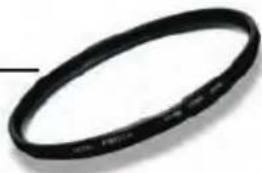
PRO1D UV (0)
A multi-purpose fine-weather filter
natural_image
Close-up of a black ring or film strip with no visible text or symbols
natural_image
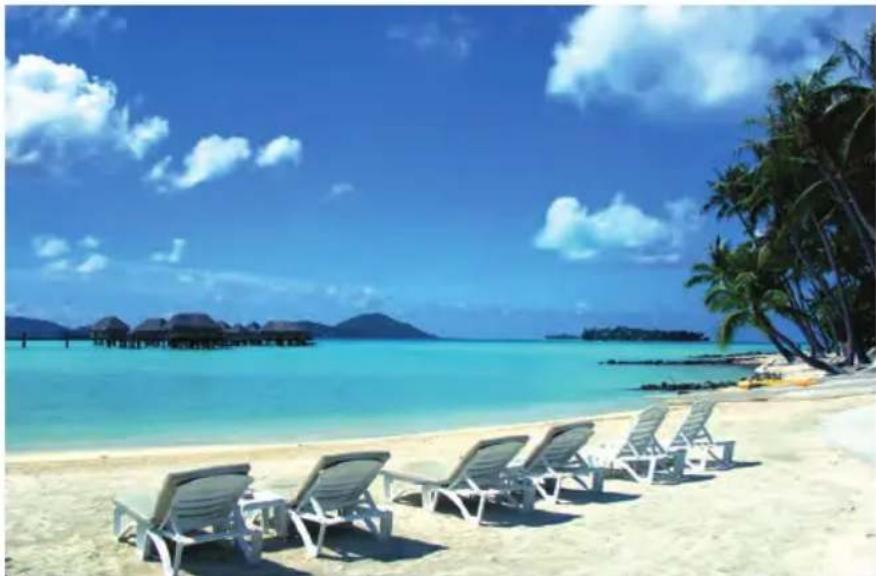
Tropical beach scene with lounge chairs, turquoise water, and floating bungalows under a blue sky (no text or symbols visible)▲ With UV(0) Filter
natural_image
Tropical beach scene with lounge chairs, turquoise water, and floating bungalows under a blue sky (no text or symbols visible)▲ Without Filter
Absorbs the ultraviolet rays which often make outdoor photographs hazy and indistinct. A multi-purpose, fine-weather filter for color as well as black and white films. Also serves as a permanent lens protector.
Features:

text_image
DMC DIGITAL MULTI-COATED BAF BLACK ALMITE FRAME BRG BLACK RIMMID GLASS LPF LOW PROFILE FRAME KEF KNULING EDGE FRAME UVC UV PROTECTED CASEAvailable sizes (mm):
37 40.5 43 46 49 52 55 58 62 67 72 77 82
PRO1D PROTECTOR
Protect your valued lenses

natural_image
Close-up of a black ring with no visible text or symbols
natural_image
Sailboat on open water under clear blue sky, no visible text or symbols▲ With PROTECTOR Filter
This is the ultimate in clear filters. It will not affect the color balance or performance of your lenses in the slightest. However, constant use will protect your valued lenses from expensive front element damage which could be caused by dirt, knocks or scratches. A cracked filter costs nothing in comparison to a cracked lens.
Features:

text_image
DMC DIGITAL MULTI-COATED BAF BLACK ALMITE FRAME BRG BLACK RIMMID GLASS LPF LOW PROFILE FRAME KEF KNURLING EDGE FRAME UVC UV PROTECTED CASEAvailable sizes (mm):
| 37 | 40.5 | 43 | 46 | 49 | 52 | 55 | 58 | 62 | 67 | 72 | 77 | 82 |
PRO1D
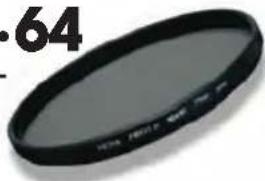
ND4.8.16.32.64
natural_image
Close-up of a black filter or optical lens with no visible text or symbols on its surfaceFor wider apertures or longer exposures
natural_image
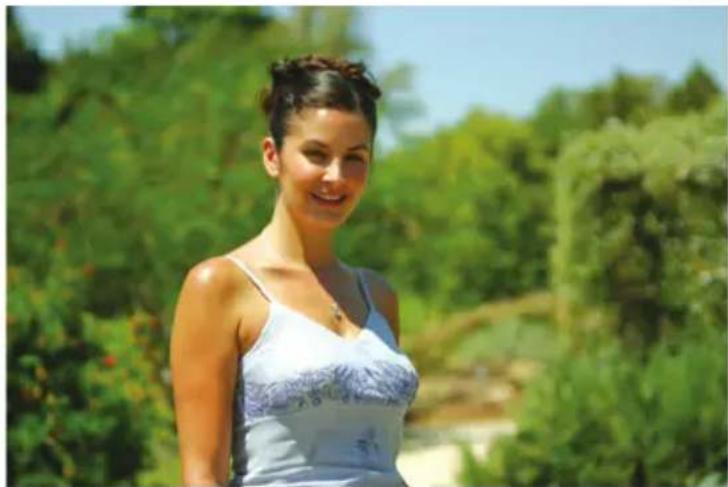
Woman in a light blue tank top outdoors with green foliage and clear sky (no text or symbols visible)
With ND4 Filter
Without Filter
natural_image
Woman standing outdoors in a lush green garden with trees and clear sky (no text or symbols visible)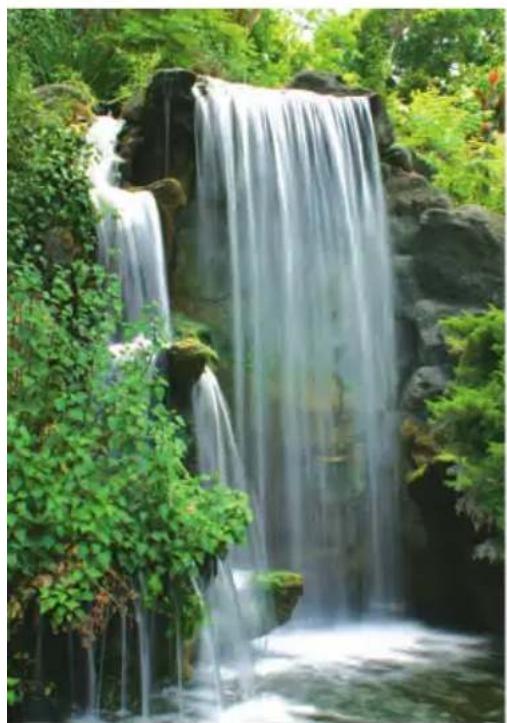
natural_image
Scenic waterfall cascading over rocks surrounded by lush greenery (no text or symbols visible)
With ND8 Filter

natural_image
Scenic waterfall cascading over rocks surrounded by lush green foliage (no text or symbols visible)
Without Filter
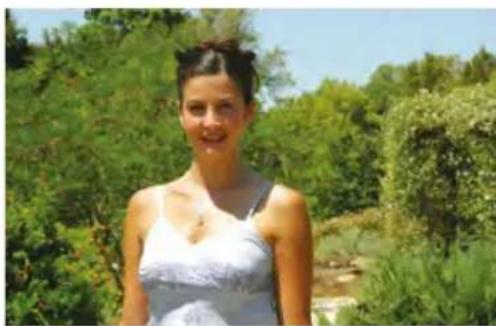
These ND filters reduce the amount of light entering the lens so wider apertures can be selected, which is perfect for portraiture to reduce depth of field. Subject appears crisp and clear while the background becomes a soft blur. Also widely used for photographs of waterfalls and other nature scenes to emphasize movement.
Features:





Available sizes (mm):
52 5\$ 58 62 67 72 77 82
PRO1D
SOFTON-A
Clear focus and soft gradation

natural_image
Close-up of a black circular filter or optical component with no visible text or symbols
natural_image
Wedding couple posing together outdoors with a white gasket and pink flower bouquet (no visible text or symbols)▲ With SOFTON-A Filter
natural_image
Wedding couple posing outdoors with a red flower, surrounded by greenery (no visible text or symbols)▲ Without Filter
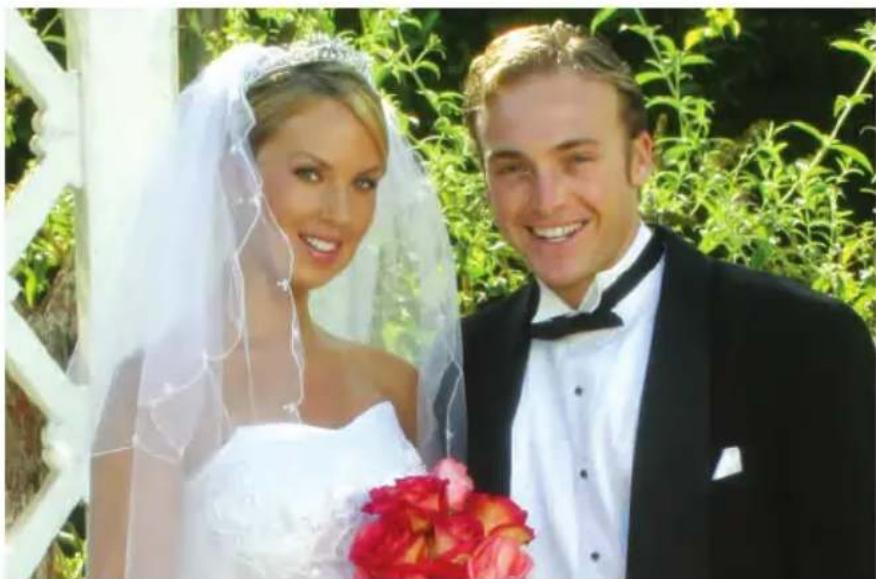
Creates a picture with a clear focus and a soft gradation. This effect is especially evident on an object with a point light source. A filter randomly arranging minute lens shaped like drops of water on the surface of an acrylic board scatters the light and results in a soft focus.
Features:





Available sizes (mm):
52 55 58 62 67 72 77 82
PRO1D
STAR-4
Add a dramatic four-cross flare

natural_image
Close-up of a black filter or aperture with no visible text or symbols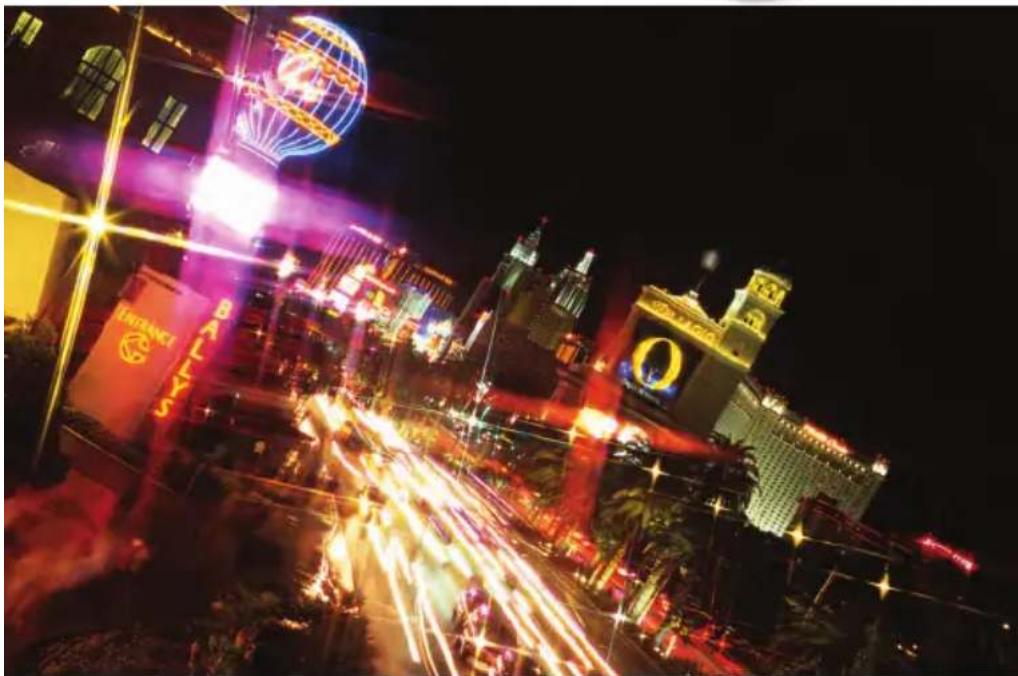
natural_image
Nighttime cityscape with illuminated hot air balloon, palm trees, and hotel signage (no readable text or symbols)▲ With STAR-4 Filter

natural_image
Nighttime cityscape featuring illuminated hot air balloon and palm trees, no visible text or signage▲ Without Filter
The STAR-4 filter adds a dramatic four-cross flare to very bright areas, giving a soft-focus effect. Ideal for photographs of night scene illumination or other scenes with strong reflections.
Features:





Available sizes (mm):
52 55 58 62 67 72 77 82
PRO1D
CLOSE-UP No.3
A world of new creativity
natural_image
Close-up of a black ring with measurement markings, no visible text or symbols
natural_image
Close-up of vibrant pink and white flowers with green stems, set against a backdrop of lush green foliage (no text or symbols visible)▲ With CLOSE-UP No.3 Filter

natural_image
Floral arrangement with vibrant pink flowers and green palm trees in a tropical garden setting (no text or symbols visible)▲ Without Filter
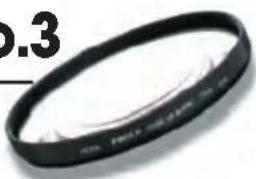
The CLOSE-UP No.3 lens turns a normal lens into a macro by reducing the lens minimum focusing distance. Depth-of-field is shallow so use as small an aperture as possible. CLOSE-UP NO.3 offers a world of new creativity.
Features:




Available sizes (mm):
52 55 58 62 67 72 77 82
HRT
CIR-PL UV FILTER
The perfect filter to capture seasons

text_image
HOYA HRT CIR-PL UV 77mm Made in InnerHigh-Rate Transparency Film
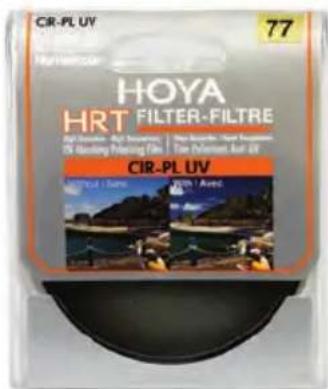
This filter uses a newly developed High-Rate Transparency film that passes more visible light through the filter while still filtering the same amount of polarized light. The HOYA HRT circular polarizer filter transmits as much as 25% more light through the polarizing film giving the photographer about 1/3 stop more light than a standard circular polarizer. This new polarizing film is also used in the latest HD LCD TVs.
UV Absorbing
The glass of the HOYA HRT filter also has UV absorbing properties making the HRT a combination UV/circular polarizing filter.
The most common use for a circular polarizer filter is to darken bright blue skies in outdoor photography, but they also can reduce or eliminate reflections from non-metallic surfaces such as glass and water. By rotating the outer ring of the filter the change of effect can be seen by looking though the filter or through the viewfinder if it is mounted on a camera.

natural_image
Two-panel beach photo: one showing a smiling child sliding through waves, the other showing a vibrant girl peeking through autumn leaves (no text or symbols)HRT CIR-PL UV
The perfect filter to capture seasons

natural_image
Scenic tropical beach scene with water pools, sandy beaches, and palm trees under a blue sky (no visible text or symbols)
With CIR-PL UV Filter

natural_image
Scenic tropical beach scene with a large water tank, palm trees, and people relaxing near the shore under a clear blue sky (no visible text or symbols)
Without Filter
text_image
CIR-PL UV 77 High Efficiency HOYA HRT FILTER-FILTRE Full Diameter: High Diameter DS Attacking Polishing Film Non-Infrared: Non-Infrared Time Defecture: Full UV CIR-PL UV Natural Light Light AidedAvailable sizes (mm):
49 52 55 58 62 67 72 77
82
HMC
UV(C) FILTER
A multi-purpose fine-weather filter
text_image
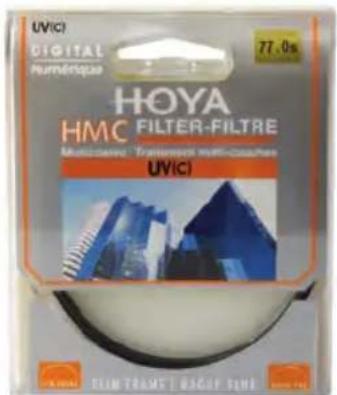
HOYA HMC UV(C) 77mm PhilippinesHeat-resistant / High-Transparency glass
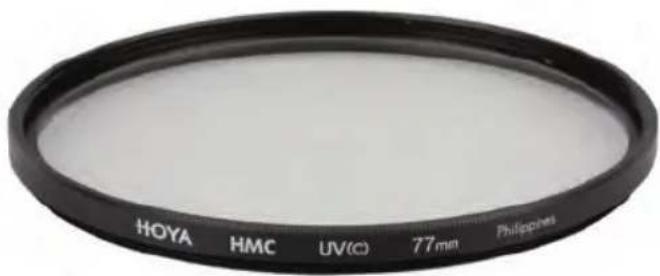
The HOYA UV (C) filter uses the highest quality heat-resistant tempered glass, which creates a smooth, clear image.
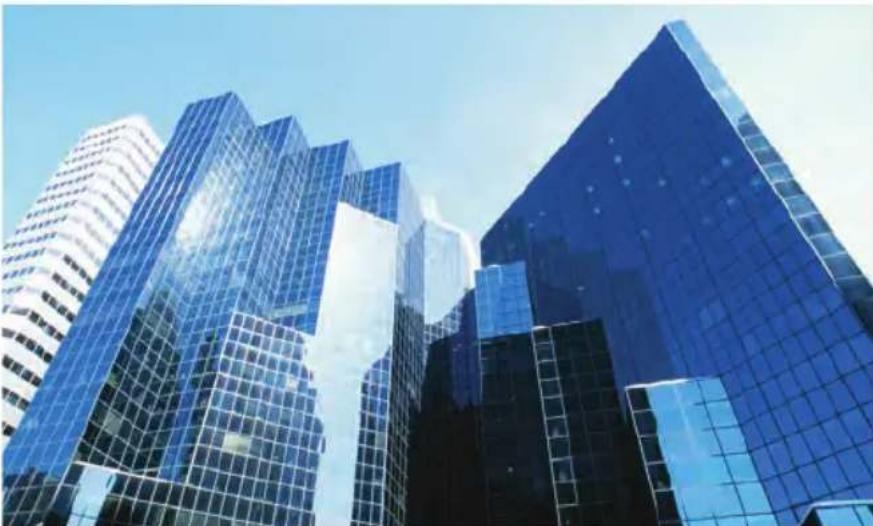
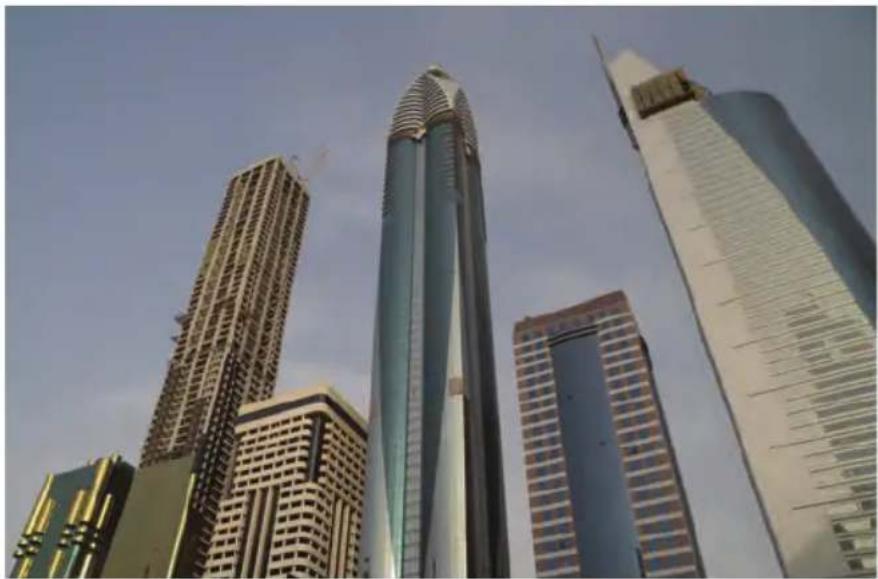
This filter cuts out all range of UV rays to give an astounding sharpness and clarity without the least affect on color balance. Constant use for lens protection is recommended.
These popular filters are renowned for their ability to minimize reflection on filter surfaces which reduces flare and ghosting. With an average light transmission of over 97%, the HOYA HMC filters are engineered to enhance the performance of today's multi-coated lenses.
natural_image
Exterior view of modern glass skyscrapers under a clear blue sky (no signage or text visible)HMC UV(C)
A multi-purpose fine-weather filter

natural_image
Exterior view of modern skyscrapers under construction against a clear blue sky (no signage or text visible)▲ With UV(C) Filter
natural_image
Exterior view of modern skyscrapers under a clear sky (no visible text or signage)▲ Without Filter
text_image
UViC DIGITAL Fumérapas 77.0s HOYA HMC FILTER-FILTRE Multi-contrast Transmittent Multi-contrast UViC CLIM TRAMS | MAGIF TIMEAvailable sizes (mm):
37 40.5 43 46 49 52 55 58 62 67 72 77 82
ND(NEUTRAL DENSITY) 2X 4X 8X 16X
For wider apertures or longer exposures

natural_image
Scenic waterfall cascading over rocks surrounded by lush greenery (no text or symbols visible)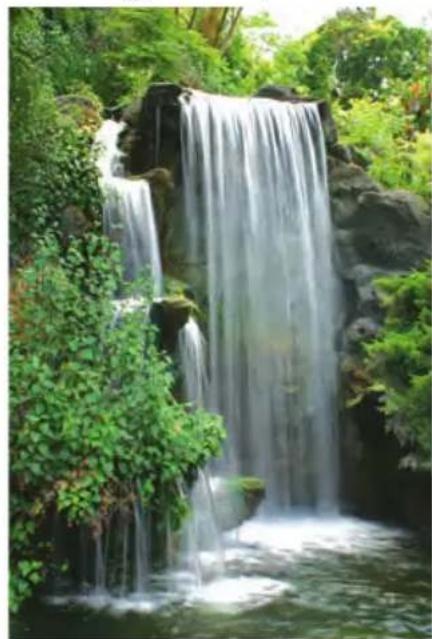
natural_image
Scenic waterfall cascading over rocks surrounded by lush greenery (no text or symbols visible)▲ With ND 8X Filter With ND 4X Filter

natural_image
Scenic waterfall cascading over a rocky stream surrounded by lush greenery (no text or symbols visible)
natural_image
Scenic waterfall cascading over a rocky stream surrounded by lush green foliage (no text or symbols visible)▲ With ND 2X Filter ▲ Without Filter
Neutral Density filters are often ignored by photographers, but they have several uses and offer the possibility to get otherwise unachievable results. ND filters appear grey and reduce the amount of light reaching the film and sensor. They have no affect on color balance. There four main uses are:
1) To enable slow shutter speeds to be used, especially with fast film, to record movement in subjects such as waterfalls, clouds, cars, the sea, etc.
2) To decrease depth of field by allowing wider apertures to be used, which helps separate subjects from their background.
3) To decrease the effective ISO of high speed film (i.e., above ISO 400) and allow it to be used outdoors in bright situations.
4) To allow HDSLR, movie and video cameras (which have fixed shutter speeds) to film subjects such as snow, sand or other bright scenes which would normally cause overexposure.
ND X400
Blurring time to create beauty

natural_image
Water flowing through a rocky stream with a damaged pipe and autumn leaves on the ground (no text or symbols visible)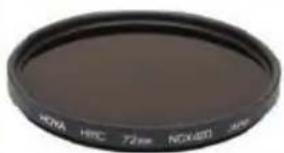
natural_image
Circular black filter or optical component with no visible text or symbols on its surfaceWithout Filter
▲ With ND X400 Filter
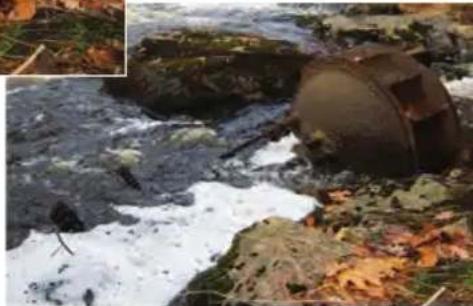
The ND 400 can be used in many creative ways to achieve super slow shutter speeds in daylight. It can create beautiful blurred motion or render moving subjects invisible.
natural_image
Polluted concrete stream with a large pipe and debris, surrounded by autumn leaves (no visible text or symbols)Photographing solar eclipses and ultra-bright light sources can be extremely dangerous. This filter reduces light values by 9 stops to less than 1/500th of its original intensity and allows safe photography. It can also be used to achieve super slow shutter speeds in daylight to render moving subjects invisible.
HALF ND X4
Control bright/dark contrast
natural_image
Person relaxing in a lounge chair with colorful balloons on turquoise water, while windsurfing on the horizon under a clear blue sky.
natural_image
Circular black object with a white reflective surface, labeled 'HYA' on the side (no other text or symbols visible)▲ With HALF-ND X4 Filter
Without Filter

natural_image
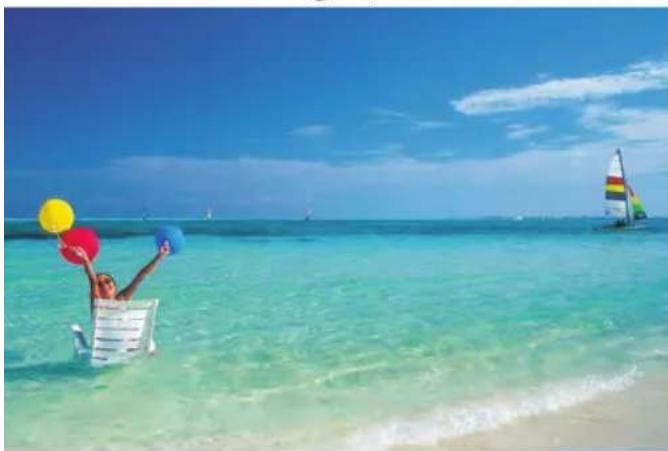
Person relaxing in a striped chair with colorful balloons on turquoise water (no text or symbols visible)One half of this filter is ND X4 Neutral Density and the other half is clear, with a soft boundary between the two. It is used to control bright/dark contrast, by reducing half the shot by 2 stops. Particularly useful in landscape photography, the rotating mount allows bright skies to be easily controlled for dramatic effect.
Variable Density FILTER
The creative possibilities are endless
natural_image
Coastal scene with crashing waves breaking rocks, no visible text or symbols▲ With Variable Density
Without Filter

natural_image
Coastal scene with waves crashing against rocks, inset shows magnified detail (no text or symbols)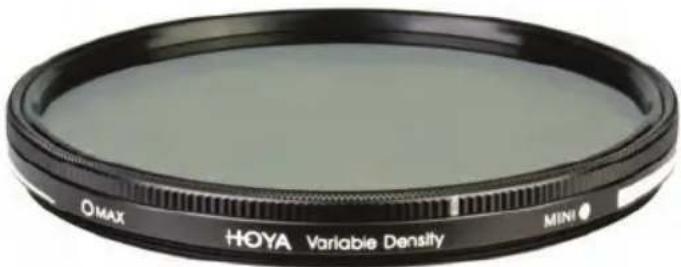
natural_image
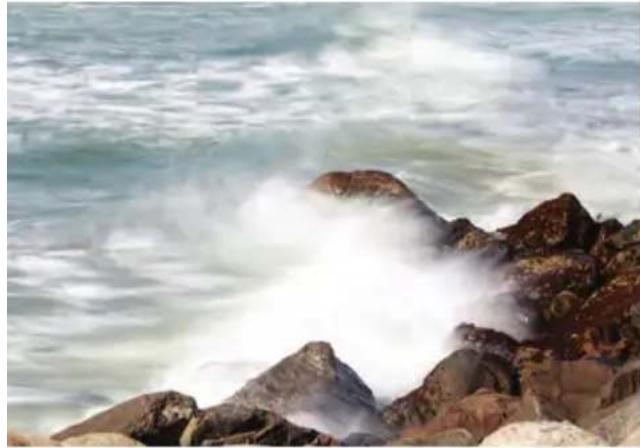
Circular black filter or aperture with labeled settings (O_MAX, HOYA, Variable Density, MINI) and no visible text beyond labels.The Hoya Variable Density filter uses two polarizing layers to control the amount of light that passes through the filter and into the camera lens. At its minimum effect the filter passes 1/3 of the light in a scene. That is equal to 1.5 stops on the aperture or shutter speed. At its maximum effect the filter passes just 1/400 of the light in a scene. That is equal to 9 stops on the aperture or shutter speed.
After the filter is mounted on the lens, turning the filter ring between "MINI" and "MAX" can greatly control the amount of light entering the lens. With the Hoya Variable Density filter it is possible to shoot with fast lenses like a 50mm f/1.4 lens wide open at f/1.4 in full sun for a very shallow depth of field. Or, to slow down the shutter speed to where the shutter can be open for several seconds in full sunlight. This is enough to create artistic blurring shots of motion on water, cars, people or almost anything that moves. The creative possibilities are endless.
The Hoya Variable Density filter uses high-quality optical glass from Hoya Corporation, the worlds largest optical glass manufacturer and is available in sizes 52mm to 82mm.
For best results Hoya recommends using a tripod when photographing with slow shutter speeds.
UV & IR Cut FILTER
Blocks both UV rays and IR rays
natural_image
Tropical beach scene with a large, gnarled tree on sandy shore under clear blue sky (no text or symbols)▲ With UV & IR Cut Filter
text_image
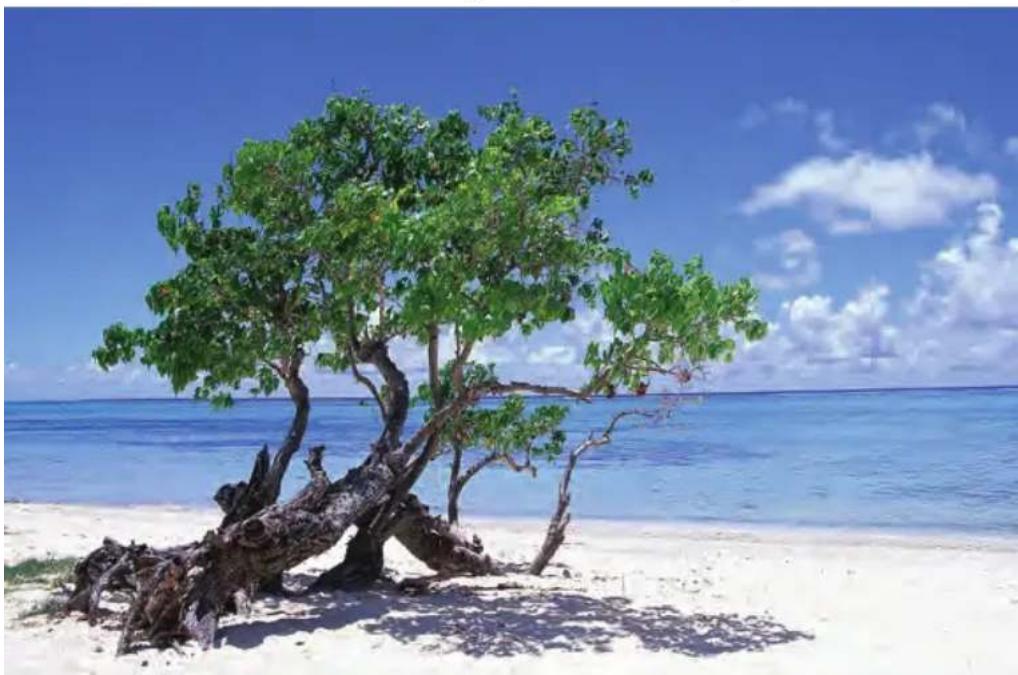
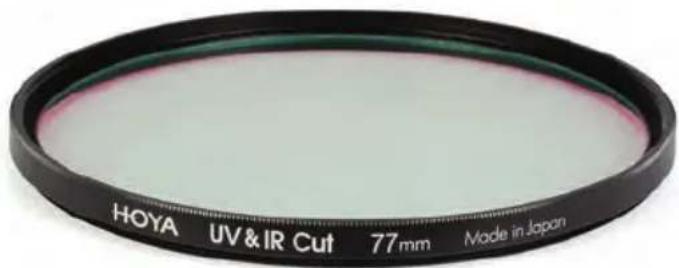
HOYA UV & IR Cut 77mm Made in JapanHOYA has introduced the new Hoya UV & IR Cut filter in 49mm through 82mm sizes. This specialized filter has the ability to cut out both UV rays below 390nm and IR rays above 700mn leaving just the light rays in the visible spectrum passing through the filters and into the camera. This is important because CCD and CMOS sensors are extremely susceptible to UV and IR rays just outside the visible spectrum that have a very negative impact on image quality.
The Hoya UV & IR Cut filter blocks both UV rays and IR rays yielding clearer and sharper pictures outdoors. This filter can reduce the effects of atmospheric haze to an even greater degree than a standard UV filter.
The Hoya UV & IR's light transmission curve shows the sharp-cut nature of the filter glass and coatings as well as the consistent light transmission in the visible spectrum. This curve demonstrates a more even light transmission than the closest competitor. This means that sharper images with more depth and finer, richer color gradations are possible with the Hoya UV & IR Cut filter.
UV (0)
A multi-purpose fine-weather filter

natural_image
Tropical beach scene with turquoise water, small boats, and a palm tree under a blue sky with clouds (no text or symbols visible)With UV Filter
natural_image
Tropical beach scene with a palm tree, floating bungalows, and small boats under a clear blue sky (no text or symbols visible)▲ Without Filter
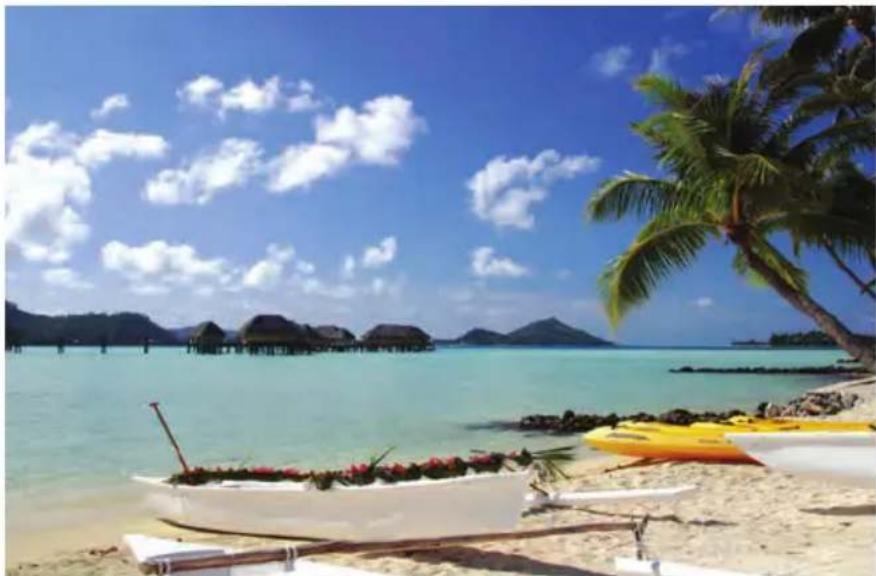
Absorbs the ultraviolet rays which often make outdoor photographs hazy and indistinct. A multi-purpose, fine-weather filter for color as well as black and white films. Also serves as a permanent lens protector.
SKYLIGHT 1B
For outdoor color photography
natural_image
Woman in white dress sitting among greenery with pink flowers and distant mountains (no text or symbols visible)▲ With SKYLIGHT 1B Filter
natural_image
Woman smiling while sitting among green shrubs and flowers in a garden setting (no visible text or symbols)▲ Without Filter
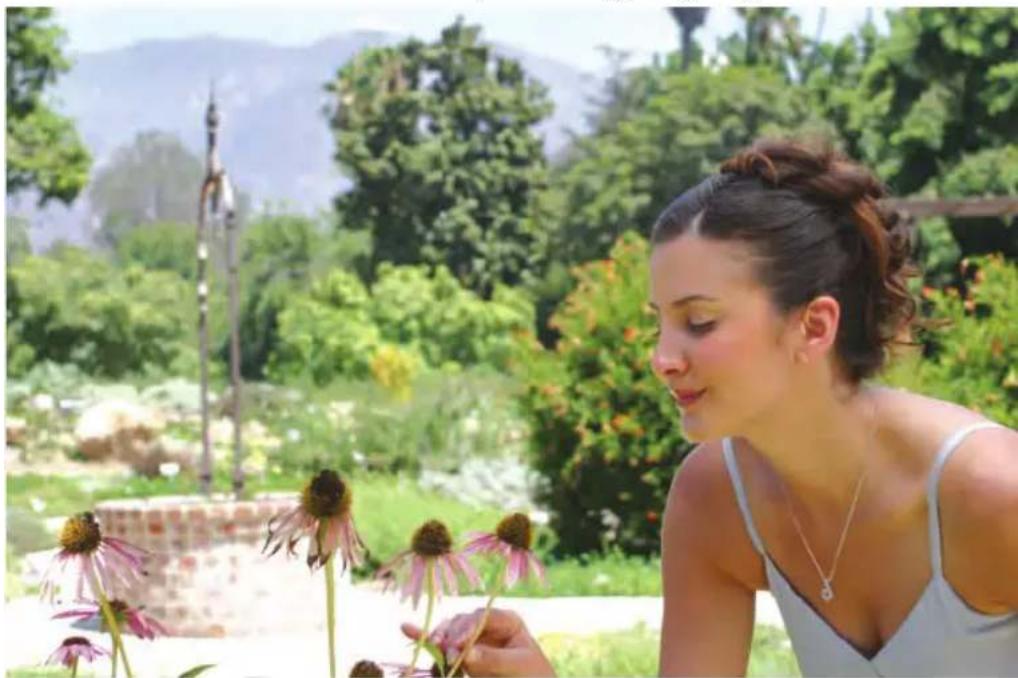
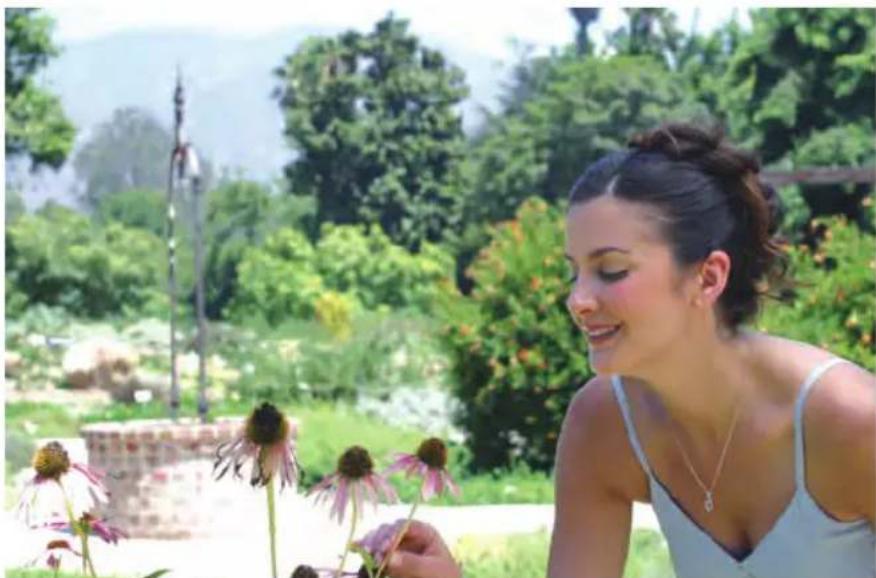
Reduces excessive bluishness that frequently occurs in outdoor color photography, especially in open shade under a clear, blue sky. The absorption peak is in the range which corresponds to the film's green spectrum. This means outstanding outdoor shots with superb color balance and clarity under all conditions. Also keeps skin tones free of colored reflections from nearby objects such as the shade of trees.
natural_image
Circular black ring with printed specifications (no readable text or symbols)PL/PL-CIR
Color and contrast enhancement

natural_image
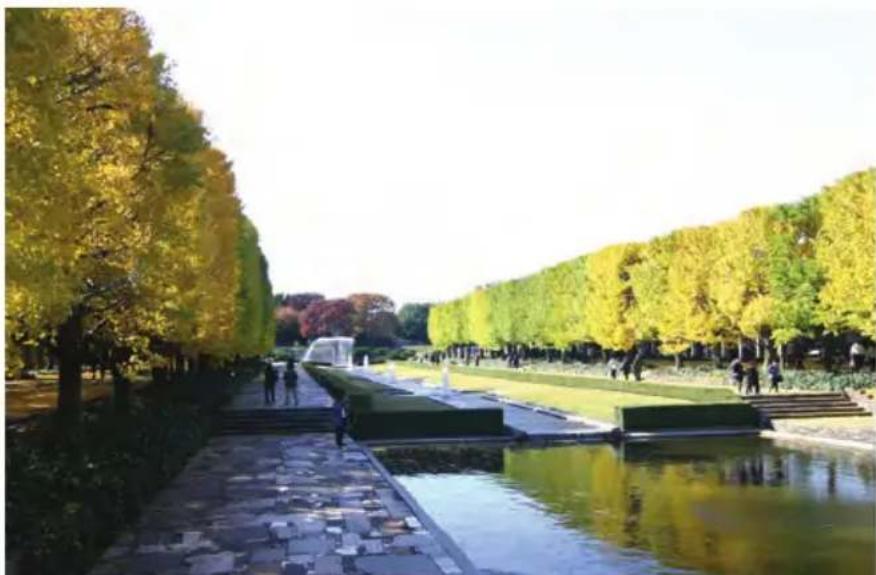
Scenic park view with autumn trees lining a canal, featuring a paved walkway and a modern building (no visible text or symbols)▲ With PL Filter
natural_image
Scenic park pathway lined with vibrant yellow and pink trees, featuring a calm pond and walkway (no text or symbols visible)▲ Without Filter
What is a polarizing filter?
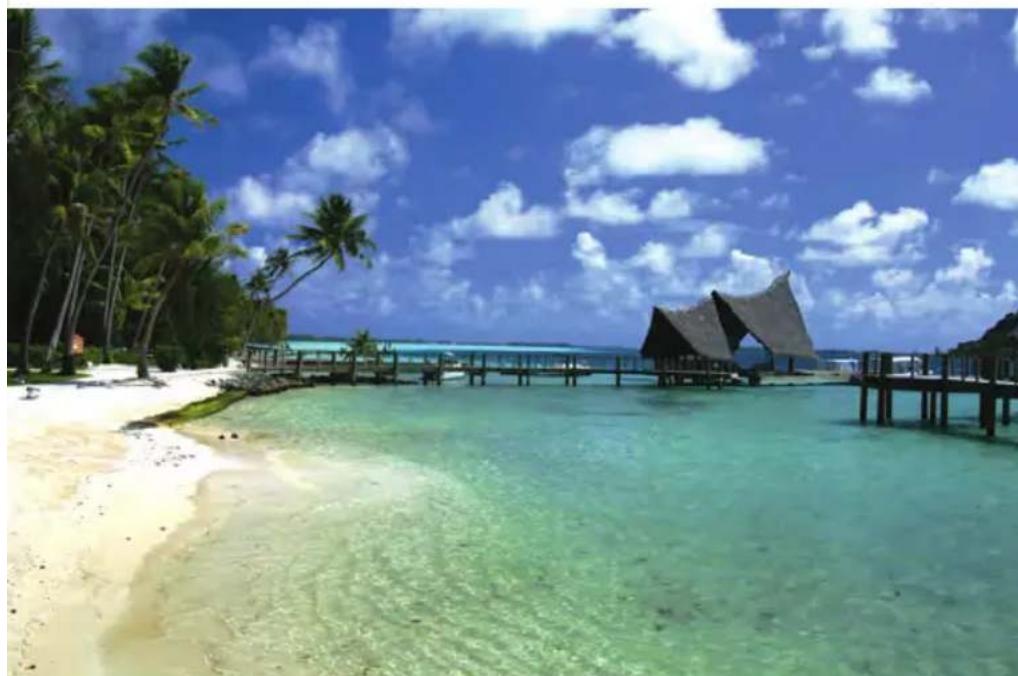
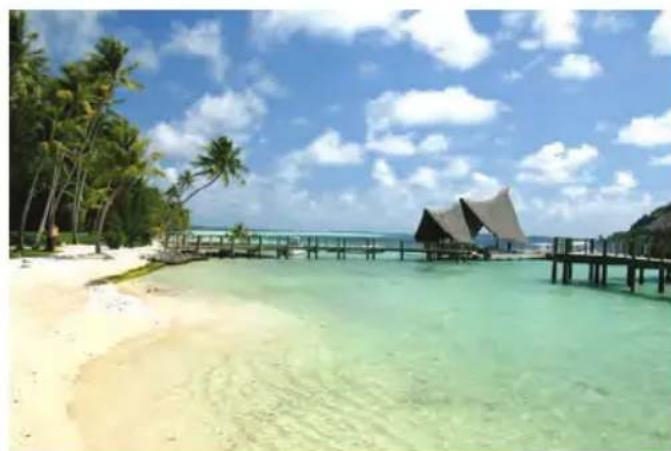
Light rays which are reflected by any surface can become polarised so polarising filters are used to select which light rays enter your camera lens. CIRCULAR PL filters allow you to remove unwanted reflections from non-metallic surfaces such as water, glass etc. They also enable colors to become more saturated and appear clearer with better contrast. This effect is often used to increase the contrast and saturation in blue skies and white clouds. HOYA's polarising filters will not affect the overall color balance of a shot.
How to select the correct Polarizing Filter
Two kinds of polarizing filters are the PL (Linear Polarizing) and PL-CIR (Circular Polarizing) filters which have the same effect of reducing glare, however, there are differences in the way each works in combination with your specific camera so it is important to research and choose the correct version of filter for your camera.
Many of today's cameras use semi-silvered mirrors or prisms to split the light (a.k.a. beam) entering the viewfinder in order to calculate exposure and focusing distance. PL filters can sometimes interact with these light controlling devices to give unpredictable exposure or focusing. If your camera, whether auto or manual, is equipped with this kind of device, we recommend using a PL-CIR filter.
Both types of filters allow you not only to remove unwanted reflections from non-metallic surfaces such as water, glass etc., but also filter out atmospheric haze enabling colors to become more saturated and appear clearer with a much sharper contrast.
These effects will prove to be invaluable to photographers at any level of interest.
natural_image
Tropical beach scene with turquoise water, wooden docks, and palm trees under a blue sky with scattered clouds (no text or symbols visible)▲ With PL-CIR Filter
natural_image
Tropical beach scene with turquoise water, palm trees, and a modern floating structure under a blue sky (no text or symbols visible)▲ Without Filter
RED ENHANCER (INTENSIFIER)
Enhance red, orange and brown
natural_image
Autumn foliage with vibrant red and orange leaves, no text or symbols visible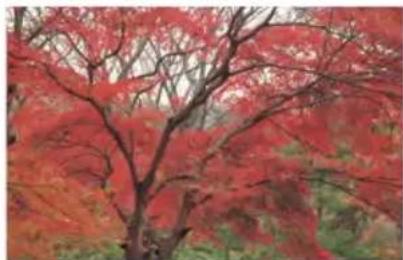
natural_image
Autumn maple trees with vibrant red and orange foliage, no visible text or symbols▲ Without Filter
With RED ENHANCER
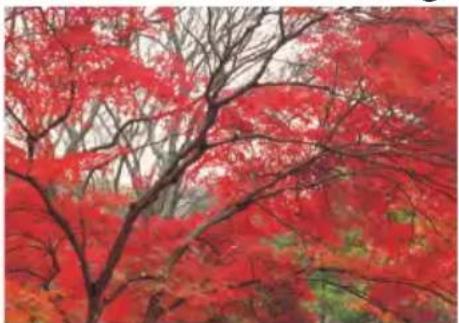
Also known as a “didymium” filter, this is used to enhance red, orange and brown subjects to give more color saturation and contrast, while having very little effect on other colors. It can be used in many situations such as architecture where certain building features need emphasizing, or for landscapes to enhance foliage and rocky features.
Improve outdoor shots

natural_image
Aerial view of a spiral grove made of green hedges, with water channels and a paved walkway in the foreground (no text or symbols visible).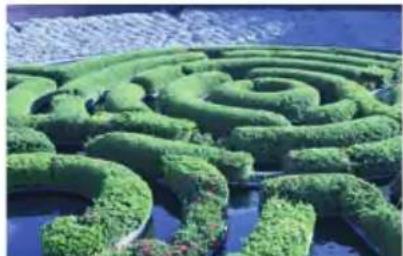
natural_image
Aerial view of a large, spiral-patterned maze or garden with green shrubs and water channels (no text or symbols visible)▲ Without Filter
With GREEN ENHANCER
Intensifies and enhances colors in the Green region of the spectrum without adversely affecting other colors. It is particularly useful for improving outdoor shots which include nature, flowers, landscapes and water. Combination use with PRO1D UV (0) or Circular PL is recommended for increased contrast and sharpness.
BLUE ENHANCER (BLUE INTENSIFIER)
Brighten landscapes

natural_image
Scenic view of a white sailboat on calm blue water with a tropical island in the background under a partly cloudy sky (no text or symbols visible)
natural_image
Sailboat on calm water with a forested island in the background under a partly cloudy sky (no text or symbols visible)▲ Without Filter
With BLUE ENHANCER
Intensifies and enhances colors in the Blue region of the spectrum without adversely affecting other colors. It is particularly useful for brightening seascapes and pare or cloudy skies, but also suitable for when, due to the sun's direction, polarizing filters are ineffective in increasing the saturation of a blue sky. Combination use with PRO1D UV (0) or Circular PL is recommended for increased contrast and sharpness.
PORTRAIT
Make skin tones more vivid and clear
natural_image
Portrait of a woman with long blonde hair wearing a blue tank top, outdoors near a stone wall (no text or symbols visible)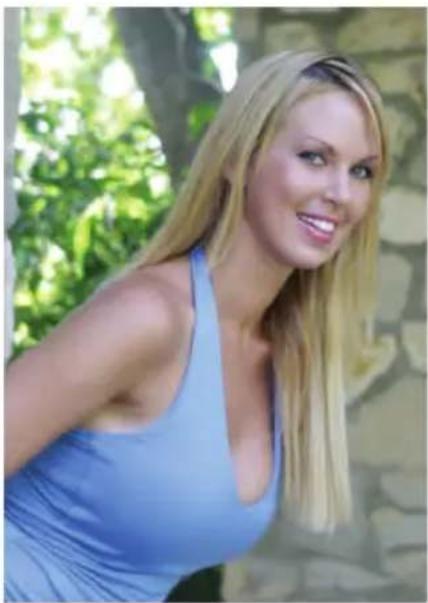
natural_image
Portrait of a woman with blonde hair wearing a blue tank top, outdoors near greenery (no text or symbols visible)▲ Without Filter
With PORTRAIT Filter
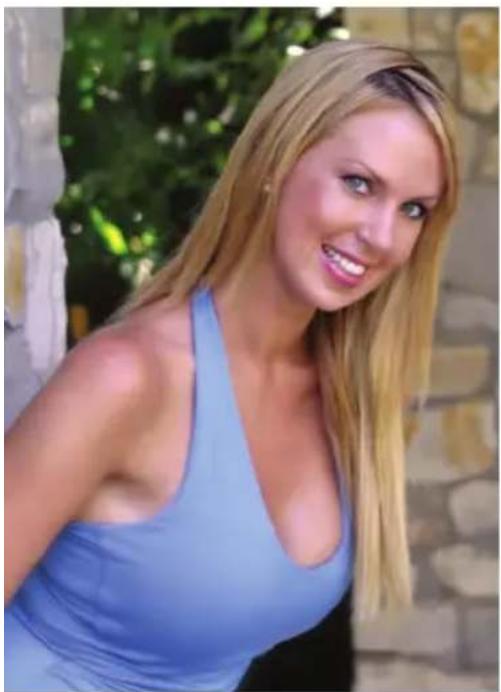
Enhances pink and reduces both yellow and orange to make human skin tones more vivid and clear. Combination use with PRO1D UV (0) is ideal when shooting under fine blue skies.
FL-W • FL-DAY
Correct greenish tones

natural_image
Small ceramic figurine of a galloping horse with red and white accents, displayed on a dark surface (no text or symbols visible)
natural_image
Small ceramic horse figurine with red and white body, displayed on a wooden surface (no text or symbols visible)▲ Without Filter
With FL-W Filter

natural_image
Woman smiling while sitting on a white sofa with yellow cushions and green pillows (no visible text or symbols)
natural_image
Woman in pink dress sitting on a white sofa with soft pillows (no visible text or symbols)▲ Without Filter
With FL-DAY Filter
Used to correct the greenish tone that appears when daylight type film is used under fluorescent lighting. FL-W is for use with warm white or white type fluorescent lamps. FL-DAY is for use with daylight type fluorescent lamps. It is recommended that auxiliary light sources be used when long exposures become necessary due to insufficient light.
80A · 80B · 80C
Light balancing filters

natural_image
Family photo of three people sitting on a sofa with a framed painting on the wall behind them (no visible text or symbols)With 80A
natural_image
Family photo of three people sitting on a sofa with decorative wall art in the background (no visible text or symbols)▲ Without Filter

natural_image
Family photo of three people sitting on a sofa with decorative artwork in the background (no visible text or symbols)With 80B
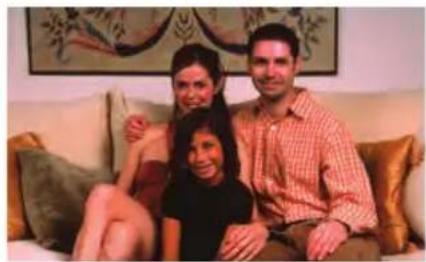
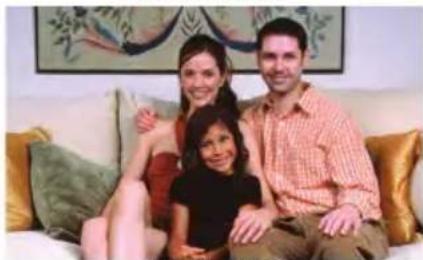
These are color conversion filters for the use of daylight type color film with artificial light sources. 80A increases the color temperature from 3200°K to 5500°K for use with 3200°K lamps. 80B increases the color temperature from 3400°K to 5500°K for use with photoflood lamps. 80C increases the color temperature from 3800°K to 5500°K for use with clear flash bulbs.
natural_image
Family photo of a family sitting on a sofa with a framed painting in the background (no visible text or symbols)With 80C
82A · 82B · 82C
Light balancing filters

natural_image
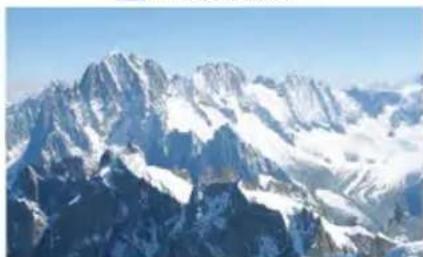
Snow-covered mountain range under clear blue sky (no text or symbols visible)With 82A
natural_image
Snow-covered mountain range under clear blue sky (no text or symbols visible)▲ Without Filter
natural_image
Snow-covered mountain range under clear blue sky (no text or symbols visible)With 82B
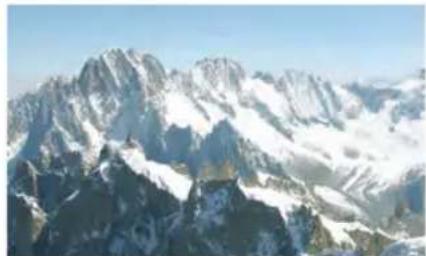
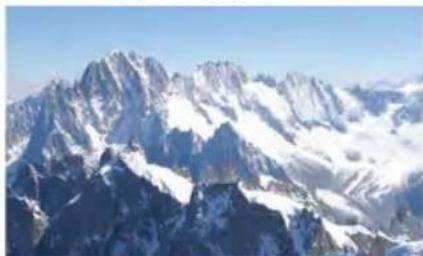
These are light balancing filters used to increase the color temperature slightly for a cooler (bluer) tone. Corrects the tendency toward reddish tones. As an example, select the 82B when using tungsten Type B film (3200°K) with ordinary household 100W electric bulbs (2900°K). These filters are also used to prevent the reddish tones in early morning or late evening light for natural skin tones. These filters can be used together, but do not mix the 81 and 82 series filters since they cancel each other out.
natural_image
Snow-covered mountain range under clear blue sky (no text or symbols visible)With 82C
81A · 81B · 81C
Decrease color temperatures
natural_image
Family photo of a man, woman, and child in a living room with plants and decorative lighting (no visible text or symbols)With 81A
natural_image
Family photo of a man, woman, and child in a decorated living room with plants and chandelier (no visible text or symbols)▲ Without Filter
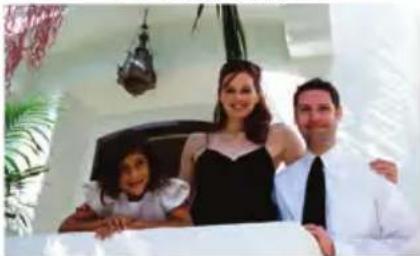
natural_image
Family photo of three people posing indoors, no visible text or symbolsWith 81B
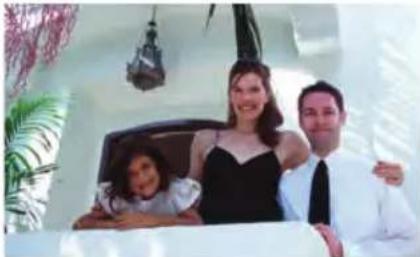
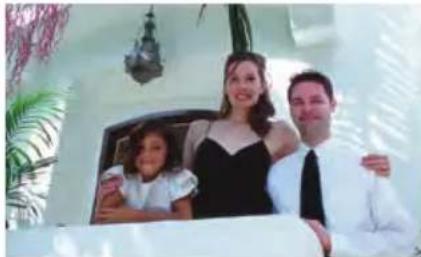
These are light balancing filters used to decrease the color temperature slightly for a warmer (redder) tone. Corrects the tendency toward bluish tones. For example, the 81A should be selected when using tungsten type B color film (3200°K) with photoflood lamps (3400°K). These filters can be used together.

natural_image
Family photo of three people posing indoors, no visible text or symbolsWith 81C
85 · 85B · 85C
Color conversion filters
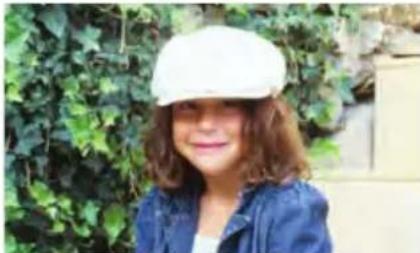
natural_image
Portrait of a person wearing a white cap, outdoors with green foliage background (no visible text or symbols)With 85
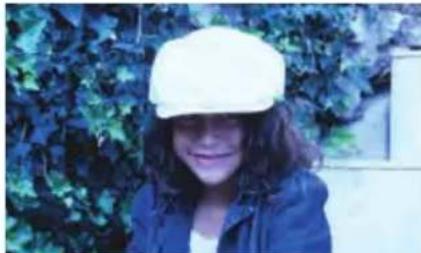
natural_image
Person wearing a white cap outdoors with green foliage in the background (no visible text or symbols)▲ Without Filter

natural_image
Portrait of a smiling young girl wearing a white cap, standing outdoors with green foliage in the background (no text visible)With 85B
These are color conversion filters for the use of tungsten type color films in daylight. 85 decreases the color temperature from 5500°K to 3400°K for the use of Type A color film. 85B decreases the color temperature from 5500°K to 3200°K for the use of Type B color film. 85C decreases the color temperature from 5500°K to 3800°K. The effect obtained is the same as with daylight type color film used in daylight.

natural_image
Portrait of a smiling person wearing a white cap, outdoors with green foliage background (no text or symbols visible)With 85C
K2 (YELLOW)
For clear contrast
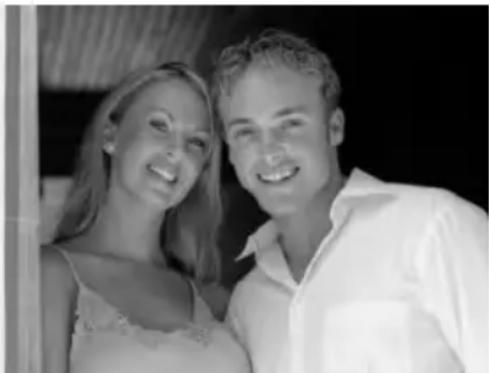
natural_image
Black-and-white photo of a smiling couple posing together (no text or symbols visible)
natural_image
Black-and-white photo of a smiling couple posing together (no text or symbols visible)▲ Without Filter
With K2 Filter
Especially useful for clear contrast between blue sky with clouds and foreground. Provides a natural tonal rendition. Often used for subjects at intermediate distances.
G (ORANGE)
For balancing contrast

natural_image
Black-and-white photo of a smiling couple posing together (no text or symbols visible)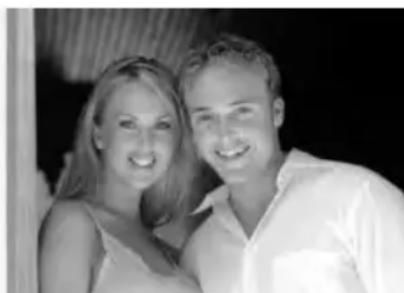
natural_image
Black-and-white photo of a smiling couple posing together (no text or symbols visible)▲ Without Filter
With G Filter
Increases contrast between reds and yellows. Particularly useful for distant outdoor shots taken with a telephoto lens. Also useful in color photography for spectacular sunsets, seascapes, etc.
25A (RED)
Increases contrast
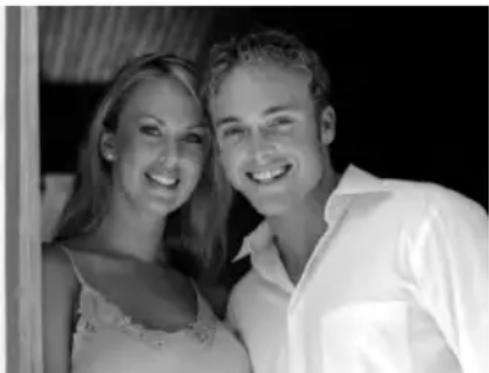
natural_image
Black-and-white photo of a smiling couple posing together (no text or symbols visible)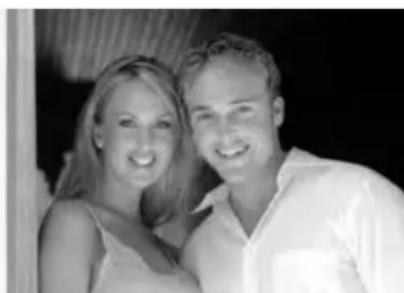
natural_image
Black-and-white photo of a smiling couple posing together (no text or symbols visible)▲ Without Filter
With 25A Filter
Especially effective for increasing contrast. Ideal for dramatic cloud effects in landscapes. Can also be applied creatively in color and infrared photography.
X0 (YELLOW GREEN)
Great for outdoor portraits

natural_image
Black-and-white portrait of a smiling woman with long hair, outdoors with blurred foliage background (no text or symbols)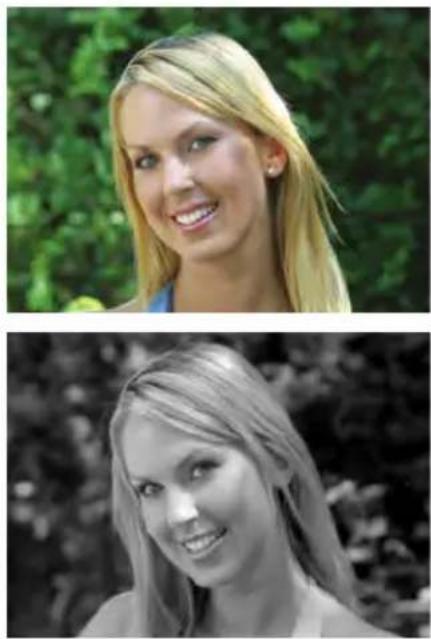
natural_image
Two portrait photos of a smiling woman against a green foliage background (no text or symbols visible)▲ Without Filter
With X0 Filter
Used primarily for black and white photography. X0 is highly effective for outdoor portraits because red is rendered dark while green appears lighter. Great for correcting skin tones, bringing out facial expressions in close-ups and emphasizing the feeling of liveliness.
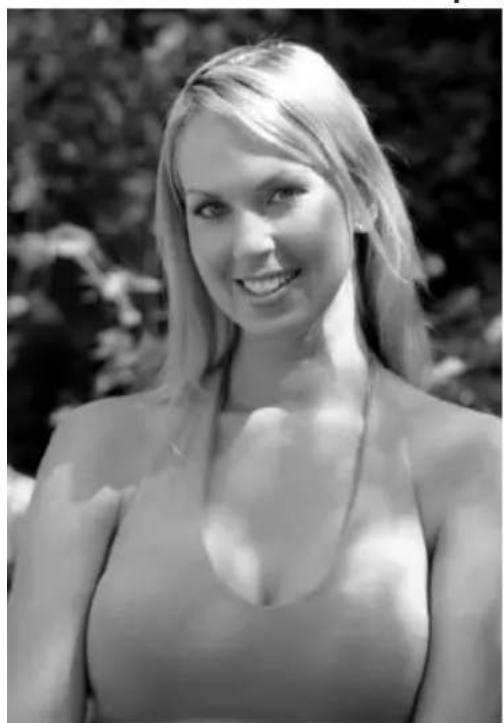
X1 (GREEN)
Great for indoor portraits
natural_image
Black-and-white portrait of a smiling woman with long hair, wearing a light top (no text or symbols visible)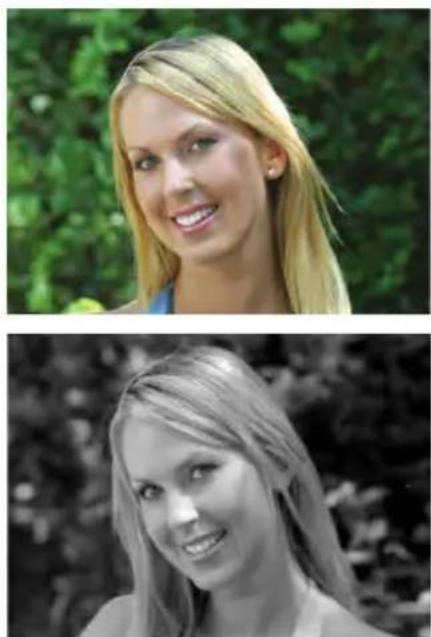
natural_image
Two grayscale portrait photos of a woman with blonde hair, one in foreground and one in background (no text or symbols)▲ Without Filter
With X1 Filter
Used primarily for black and white photography. X1 is highly effective for indoor portraits under tungsten lighting.
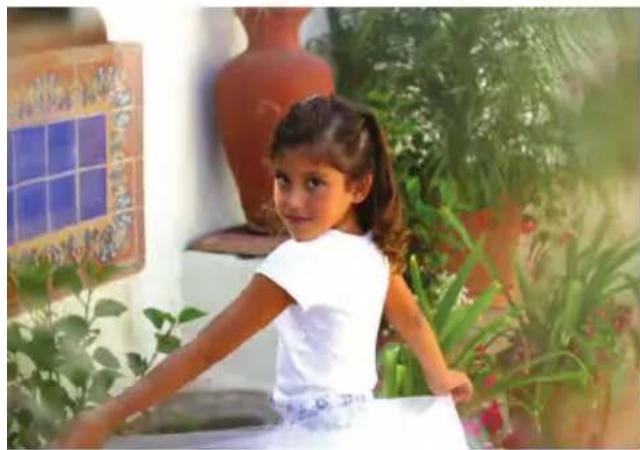
CENTER-SPOT
Center focus for portraits
natural_image
A young girl in a white dress standing beside plants, with a decorative mosaic and vase in the background (no visible text or symbols)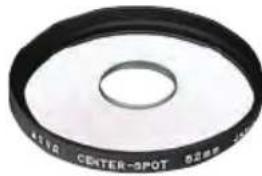
natural_image
Circular mechanical component with concentric rings and a central hole, labeled 'CENTER-SPOT' (no additional text or symbols visible)▲ With CENTER-SPOT Filter
Without Filter

natural_image
A young girl standing in front of a garden with plants and a tiled wall (no visible text or symbols)A close-up lens with a hole in the center. The periphery of the picture is rendered a delicate, soft-focus effect while the central image is sharply focused.
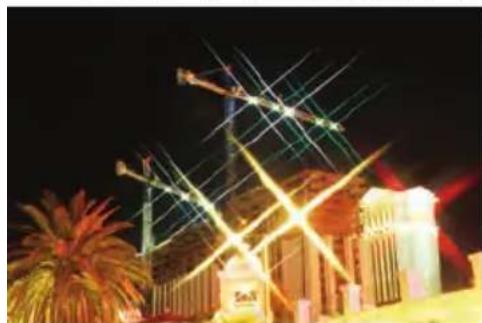
STAR-4 · STAR-6 · STAR-8
Add a dramatic cross flare
natural_image
Night scene of a large illuminated tower with a starry sky and palm trees in the foreground (no visible text or symbols)▲ With STAR-4 Filter

natural_image
Interior scene with a woman standing beside ornate chandelier and decorative lattice windows (no visible text or symbols)
natural_image
Night view of the Arc de Triomphe illuminated with colorful streetlights and light trails, no visible text or symbols.▲ With STAR-6 Filter
▲ With STAR-8 Filter
STAR-4 adds a dramatic four-cross flare to very bright areas, giving a soft-focus effect. Ideal for photographs of ladies wearing jewelry or other objects with strong reflections. STAR-6 (six-pointed light flares) and STAR-8 (eight-pointed star flares) can also be used for a variety of effects.
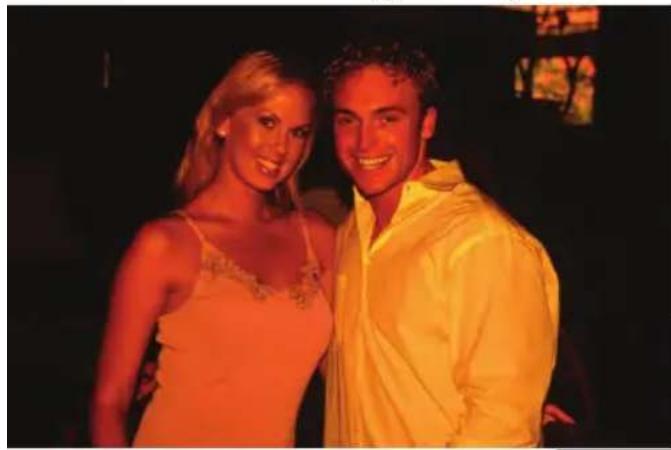
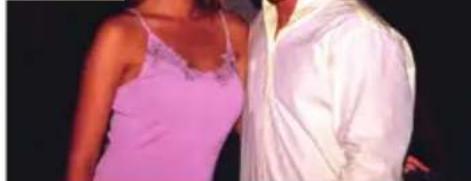
SEPIA A • B
Give a nostalgic sepia color effect
natural_image
Two people posing together at night, smiling under warm lighting (no visible text or symbols)
natural_image
Two people posing for a photo at night, one in pink top and the other in white shirt (no visible text or symbols)▲ With SEPIA A Filter
Without Filter
natural_image
Two people posing side by side, one in pink tunic and the other in white shirt (no visible text or symbols)These two filters give a nostalgic effect to otherwise ordinary color photographs. Sepia tones are produced across the whole image, as if taken many years ago in Black & White, having then discolored with age. Sepia B has a stronger effect than Sepia A.
BLACK MIST • WHITE MIST
A subtle softening filter

natural_image
Portrait of a woman with blonde hair against a blue background (no text or symbols visible)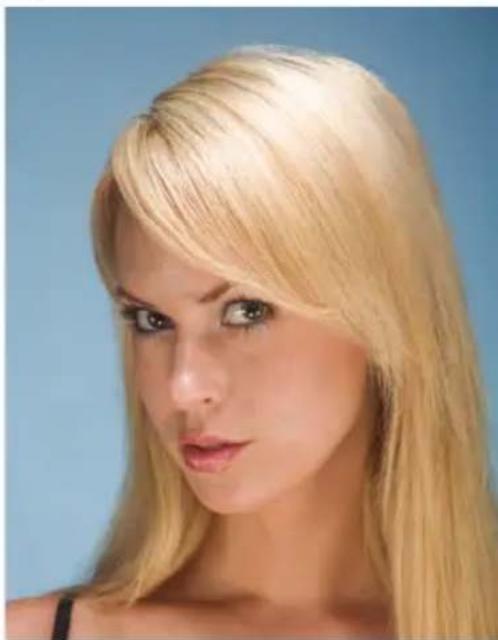
natural_image
Close-up portrait of a woman with blonde hair against a blue background (no text or symbols visible)▲ With BLACK MIST Filter
▲ With WHITE MIST Filter
The Hoya Black Mist filter is a subtle softening filter that lowers contrast and gives an over-all soft look to portraits.
The Hoya White Mist filter yields a very subtle, pleasing effect for softening portraits. The white sheen of the filter gives strong highlights a soft glow.
FOG FILTER A • B
Produce the effect of dense fog
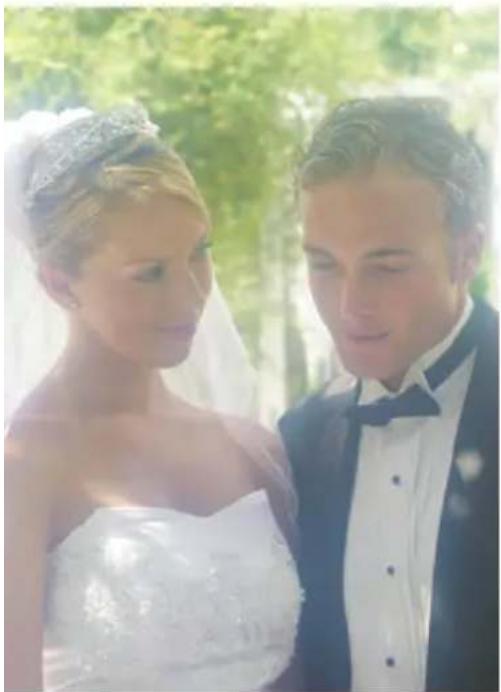
natural_image
Wedding couple in formal attire with greenery background (no visible text or symbols)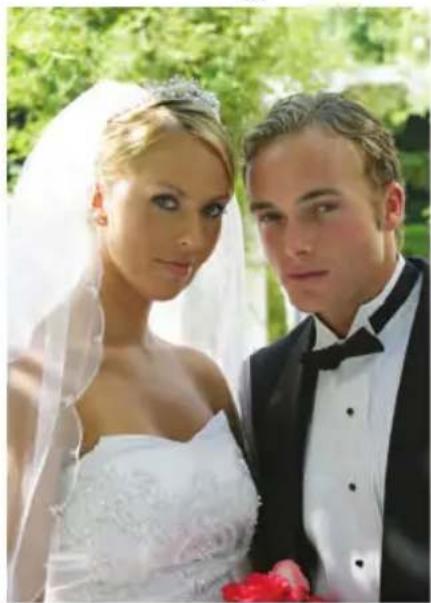
natural_image
Wedding couple photo with bride and groom in formal attire, greenery background (no visible text or symbols)▲ Without Filter
With FOG Filter
Lightly veils the entire picture in white. Available in a set of two: FOG (A) and FOG (B). FOG (B) has a stronger effect than FOG (A). Both can be used together to produce an effect similar to dense fog. The effect can be varied by changing the aperture of the lens, but stopping down too far will reduce the effect.
DIFFUSER • DUTO
The beauty of a Soft-focus effect

natural_image
Wedding couple posing outdoors under a white lattice structure, no visible text or symbols
natural_image
Wedding couple posing in front of a white lattice-garden bench, no visible text or symbols▲ With DIFFUSER Filter
▲ With DUTO Filter
Both are diffusion type filters, but DIFFUSER gives a soft-focus effect due to its irregularly uneven surface while DUTO has fine concentric lines etched on its surface. The center of the picture is usually sharp with DUTO, but DIFFUSER gives an overall soft-focus effect. Both are particularly effective in portraiture and commercial.
SOFTENER A • B
Scatters light for a soft-focus

natural_image
Wedding couple posing in front of a white lattice-garden with greenery (no visible text or symbols)▲ With SOFTENER A Filter

natural_image
Wedding couple in wedding attire with floral brooch, set against greenery (no visible text or symbols)▲ With SOFTENER B Filter
A filter with randomly arranged minute lenses shaped like drops of water on an acrylic surface which scatters the light and results in a soft focus. Creates a picture with a clear focus and a soft gradation. This effect is especially evident with an object with a point light source. Color reproduction is easy and there is no need for exposure adjustment.
SPECTRAL CROSS
Produce soft-focus and cross effects
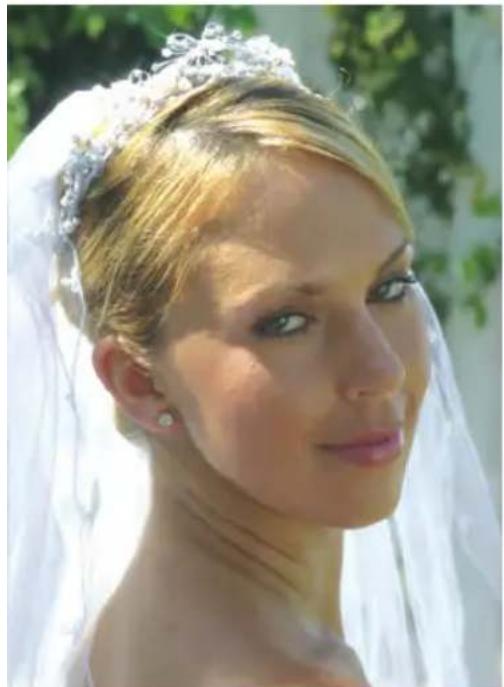
natural_image
Close-up portrait of a woman wearing a white bridal veil and silver tiara, outdoors with green foliage in the background (no text or symbols visible)
natural_image
Close-up portrait of a woman wearing a white bridal veil and silver tiara, outdoors with green foliage background (no text or symbols visible)▲ Without Filter
With SPECTRAL CROSS
A filter made by sandwiching black gauze-like fiber between two pieces of colorless, transparent optical glass in a rotating frame, producing both soft focus and cross effects.
CLOSE-UP
A world of new creativity
natural_image
Close-up of a vibrant red and yellow tulip flower with green foliage in the background (no text or symbols visible)With AC+5

natural_image
Close-up of a vibrant red and yellow tulip with green leaves in natural setting (no text or symbols)With AC+4

natural_image
Close-up of vibrant red and orange tulips in a garden setting (no text or symbols visible)With +1
natural_image
Close-up of vibrant red and orange tulips in a garden setting (no text or symbols visible)With UV Filter+2

natural_image
Field of orange and yellow tulips with green foliage (no text or symbols visible)▲ Without Filter
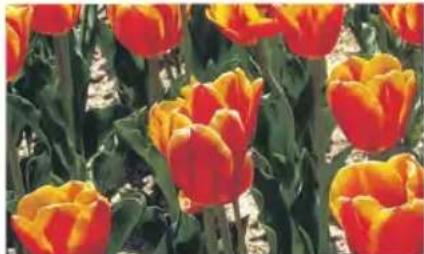
Available in +1, +2, +3, +4 and +5 diopters for close-up photography. Depth-of-field is shallow so use as small an aperture as possible. CLOSE-UPs offer a world of new creativity.
MACRO CLOSE-UP
Discover the art of nature
natural_image
Close-up of a purple flower with visible petals and stamens (no text or symbols)▲ With MACRO CLOSE-UP
Without Filter

natural_image
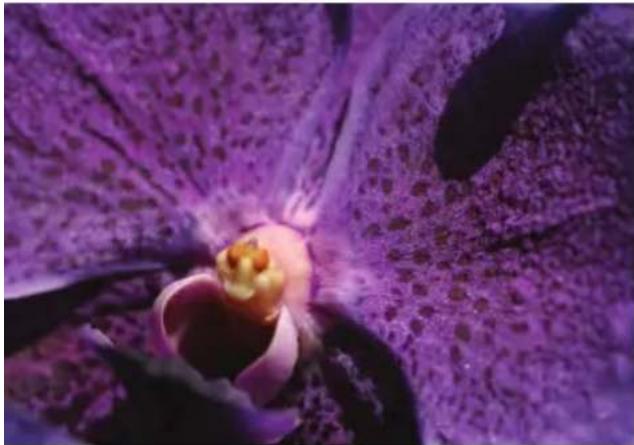
Close-up of purple orchid flowers with visible petals and yellow centers (no text or symbols)A lens of 2-element, 2-group construction and a +10 diopter rating. Resolution is outstanding and focusing is possible at 10cm for super close-ups of insects, flowers and other small objects. The magnification is about 1:2 with a 50mm standard lens (35mm camera), roughly equates to a 100mm telephoto lens. The lens should be stopped down as much as possible to get maximum depth-of-field.
INFRARED (R72)
Used for photography with infrared film

natural_image
Black-and-white photo of frost-covered evergreen trees against a cloudy sky (no text or symbols)With R72
Without Filter ▶
natural_image
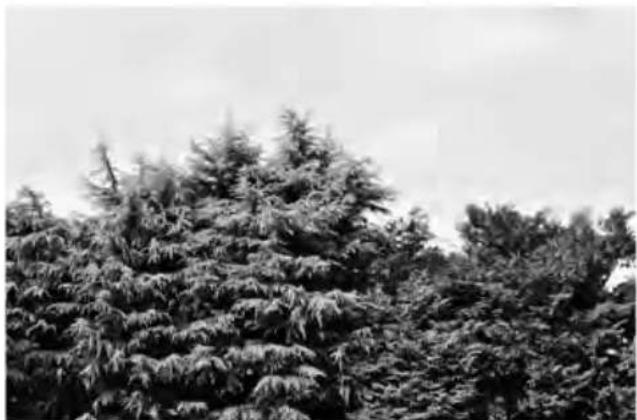
Black-and-white photo of dense evergreen trees against a cloudy sky (no text or symbols visible)Used for photography with infrared film. Infrared film is also sensitive to ultraviolet rays and the shorter wavelengths of the visible spectrum so it is necessary to filter out all but the infrared rays. R72 passes only infrared rays above 720nm. Often used in crime detection, medical photography, detection of distribution of vegetation, etc. In ordinary photography with infrared film or infrared color film, the Y (K2), O(G), R(25A) and other filters can also be used to change the contrast or color effect.
LENS ACCESSORIES
MULTI LENS HOOD
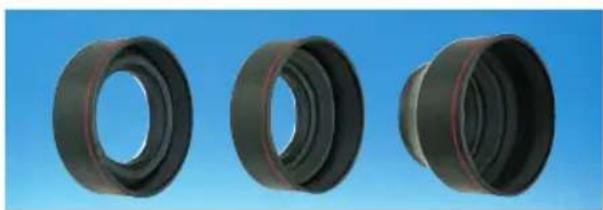
Protects the lens from direct light which may cause glare. Most suitable for zoom lenses, tele, wide and standard lenses. Easy to use for each type by one touch.
natural_image
Three black cylindrical mechanical components against a blue gradient background (no text or symbols visible)| SLR35mm | Large Format(6×6,6×7) | 49mm | 52mm | 55mm | 58mm | 62mm | 67mm | 72mm | 77mm | |
| Tele | 70mm~ | 150mm~ | 32° | 29° | 32° | 26° | 33° | 28° | 33° | 30° |
| Standard | 55~70mm | 110~140mm | 44° | 41° | 44° | 38° | 45° | 40° | 46° | 43° |
| Wide | 35~50mm | 65~100mm | 72° | 60° | 78° | 63° | 80° | 72° | 66° | 63° |
ALL FILTERS ARE
natural_image
Close-up of a metallic V-shaped component with layered structure, no visible text or symbols
natural_image
Close-up of a dark metallic object with circular patterns on a surface, possibly a mechanical or industrial component (no visible text or symbols)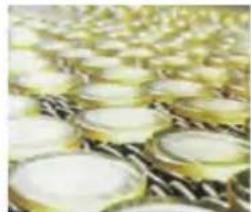
natural_image
Close-up of a row of small, translucent yellow objects resembling food items or containers (no visible text or symbols)How another Large Manufacturer makes Filters
Imagine a sandwich made with a thin gel or even colored glue between two pieces of regular glass, similar to the glass used in windowpanes. This is how some other brands of optical filters are made. These types of filters are cheap to produce, but inferior for several reasons:

text_image
Regular Glass Colored Gel Laminate Regular Glass Not to scale-
Over time, the expansion and contraction of the different materials can lead to delamination, which is a separation of the different materials. This will show up as bubbling, peeling, or discoloration, rendering the filter useless.
-
The color of the gel can shift or fade over a relatively short period of time and will not yield the same color rendition.
-
If all six surfaces, three layers, two surfaces each, are not perfectly flat and perfectly parallel, the filter causes a "lens effect" which degrades the optical performance, or in extreme cases, shift or limit the focus of the lens it is used with.
How Hoya Makes Filter Glass
text_image
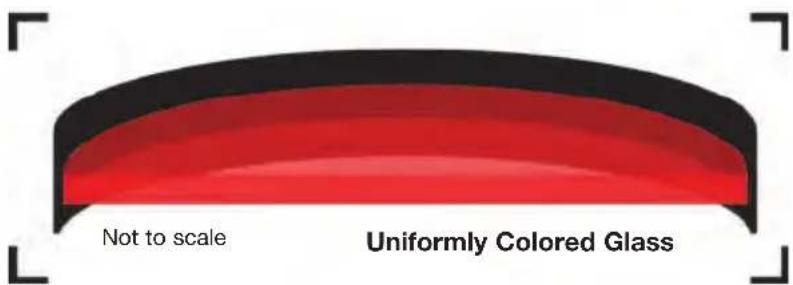
Not to scale Uniformly Colored GlassTo make its filters, Hoya adds different raw elements, like gold, and chemicals compounds to its optical glass silicates while mixing in a molten state. To insure consistency in glass manufacturing, Hoya uses a furnace called an Automatic V blender to mix the different materials continuously at a highly controlled rate. This ensures that Hoya filter glass is uniformly colored all the way through. There is never any risk of uneven coloration, shifting or fading of the color, or delamination. The two surfaces are ground and polished for perfect flatness.
NOT CREATED EQUAL!
natural_image
Industrial machine with a glowing orange component inside a cylindrical chamber (no visible text or symbols)
natural_image
Person operating a mechanical device with a circular component (no visible text or symbols)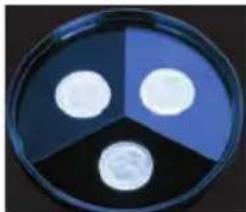
natural_image
Circular petri dish with three white circular spots on blue and black sides (no text or symbols)Hoya Coating and Multi-Coating, the Quality Difference.
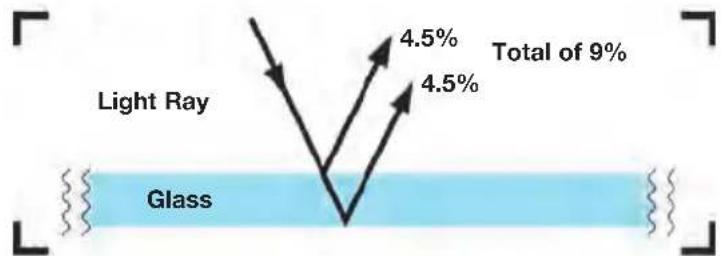
Hoya manufactures a full line of filters in both standard and Hoya multi-coated. The difference between Hoya's standard line and that of other manufacturer is that Hoya standard filters have a layer of anti-reflective coating bonded to each surface of the glass. Many other manufacturer's standard filters are bare glass, and bare glass can reflect as much as 10% of the light hitting it. This greatly increases the risks of flare and ghosting and reflections.
text_image
Light Ray Glass 4.5% 4.5% Total of 9%Hoya's single layer coating decreases light reflection off the surface from approx. 10% down to 4-5%. Multi-Coating, Clearly Different

text_image
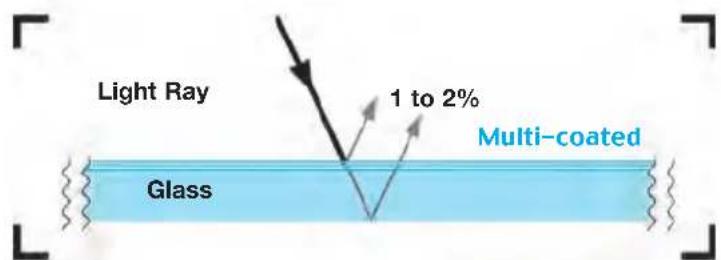
Light Ray Glass 2 to 2.5% 2 to 2.5% Total of 4 to 5% Single Layer-coatingTo provide photographers with a higher quality professionals require, Hoya created the Multi-coated line of filters. These filters have a 3 layer coating system that further reduces light reflections off the surfaces of the glass, the average is only 1-2%. This means that 98-99% of the light striking the filter is going through it, into the camera lens and onto the film or sensor. These layers of anti-reflective coating are bonded to the surface of the glass in a furnace at a temperature of up to 800 degrees F, so there is never any chance of the coatings coming off through normal use.
text_image
Light Ray 1 to 2% Multi-coated GlassYou should beware!
Some other manufacturers claim to have “coated” filters. But this coating is often only applied to the front side of the glass, not both sides like Hoya filters. Also, the coating on some filters is “painted” on or applied as a cold spray that wares off or can even flake off easily.
THE DIFFERENCE

natural_image
Scenic mountain landscape with a winding river and forested slopes under a partly cloudy sky (no text or symbols visible)
natural_image
Woman in dark top sitting outdoors with green foliage in background (no visible text or symbols)
natural_image
Close-up of a yellow flower with visible stamens and petals, held by fingers (no text or symbols)Filter Quality Comparison
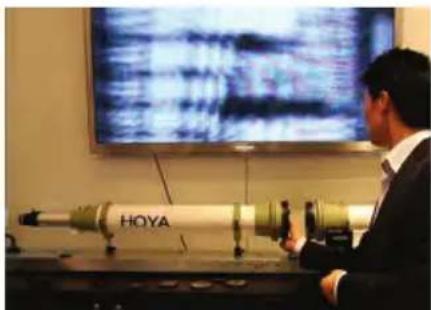
The apparatus on the counter in the image below is a simple collimator used for testing the optical clarity of filters and other optics. On one side is a light source shining into an "eyepiece" that contains a test chart. The image of the test chart is projected through one telescope into the other. The other telescope has a video camera attached to its eyepiece so the test pattern can be displayed on the LCD TV mounted above.
There are so many circular polarizing filters in the world, most are made in India or China regardless of what name is on them. They all look fine and clear if you look through them but once tested by the collimator you can find that these filters degrade the image quality so that the test pattern cannot even be seen. (See the image left below) It would be impossible to get a sharp picture when photographing with these filters. The test pattern shown right below is shot with Hoya circular polarizing filter and it has almost no optical effect on it. This is how a filter should perform in this test.
natural_image
Man operating a HOYA rocket on a control panel, with a large screen displaying abstract text in the background (no readable signage or symbols on the rocket itself)Other brand circular polarizing filter

text_image
Street photo with visible store signboardsHOYA circular polarizing filter
We've Been Framed!
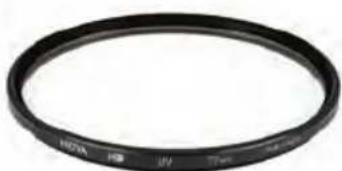
Hoya believes the filter frame is an extremely important part of the filter as well. Hoya created precision machined aluminum frames to hold their high quality glass. They prefer aluminum to other materials because it is strong enough to hold up to years of use. Some say that brass is the best material to use. However, Hoya doesn't hold that view and here is why; brass is a far more rigid material than either aluminum, or other materials that are being use in today's lens barrels. This means that, should the front of the lens get hit, the rigid brass filter ring will transfer almost all the force of the shock to the lens barrels and mechanics within the lens. An aluminum filter frame will absorb some of the shock by bending, and at a certain point the glass will chip or break, which is what the filter is supposed to do, protect the lens! Replacing a filter is always preferable to getting a lens repaired.
natural_image
Close-up of a black ring with printed markings (no readable text or symbols beyond branding)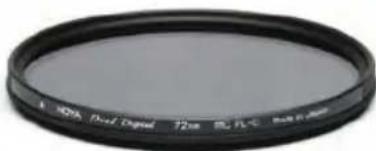
natural_image
Close-up of a black film camera lens with no visible text or symbols on the lens surface.I S C L E A R !
natural_image
Sunset over water with palm fronds in foreground (no text or symbols)
natural_image
Black-and-white mountain landscape with misty peaks and a small boat on the ground (no text or symbols)
natural_image
Scenic waterfall cascading over moss-covered rocks, surrounded by green foliage (no text or symbols visible)The Value in a Hoya Multi-coated filter
Wide aperture professional lenses are very expensive, and all photographers want to get the most speed, optical performance, and dollar performance from their investment.
Look at it this way, a customer pays \800.00 for a 80-200mm f/2.8 lens. Then, to protect this investment the customer buys a cheap bare glass filter, which has a light reflection rate of 10%. This filter is literally slowing the lens down by 10% because that reflected light is not getting to the lens, or effectively turning an \800 f/2.8 lens into the equivalent of a slower f/3.0 lens with a corresponding value of \$720. The value of the lens, along with the light, drops 10% when you put the cheap filter on it. The cost savings of the less expensive filter do not off set the loss of lens speed.
Also, this does not address the possible loss of sharpness or focus shift, which can have a detrimental impact on picture quality. For these reasons, Hoya multi-coated filters present the best value in filters available today.
Testing, 1, 2, 3...
Take a bare glass filter, hold it so that light reflection off the surface can be seen. Then take a long very thin object like a pin or the tip of a pen and hold it over the filter so that its reflection can be seen. There will actually be two reflections of the pin on the surface, one a little more pronounced than the other. The more pronounced reflection is from the front surface and the lighter one is from light reflecting off the rear surface. Now try it with a HOYA Multi-coated filter and see how much more dim the reflection is, a dimmer reflection means less light is reflected off the surface of the glass.

text_image
mono-coated non-coated Multi-coated HOYA multi-coatedHow to Select Color Conversion and Light Balancing Filters
Each color film is made to reproduce colors correctly when used with a specific light source. When other light sources are used, color conversion filters must be used to match the color of the light source to the film capabilities. Light balancing filters are used for slight adjustments of the color of the light source for cooler (bluer) or warmer (redder) tones.
The following table is given for your convenience in selecting the proper filter. To determine the necessary filter, make a line from the original light source (T1) to the converted light source (T2). The proper filter will be indicated at the point where this line crosses the center column.
Light Source Conversion Diagram
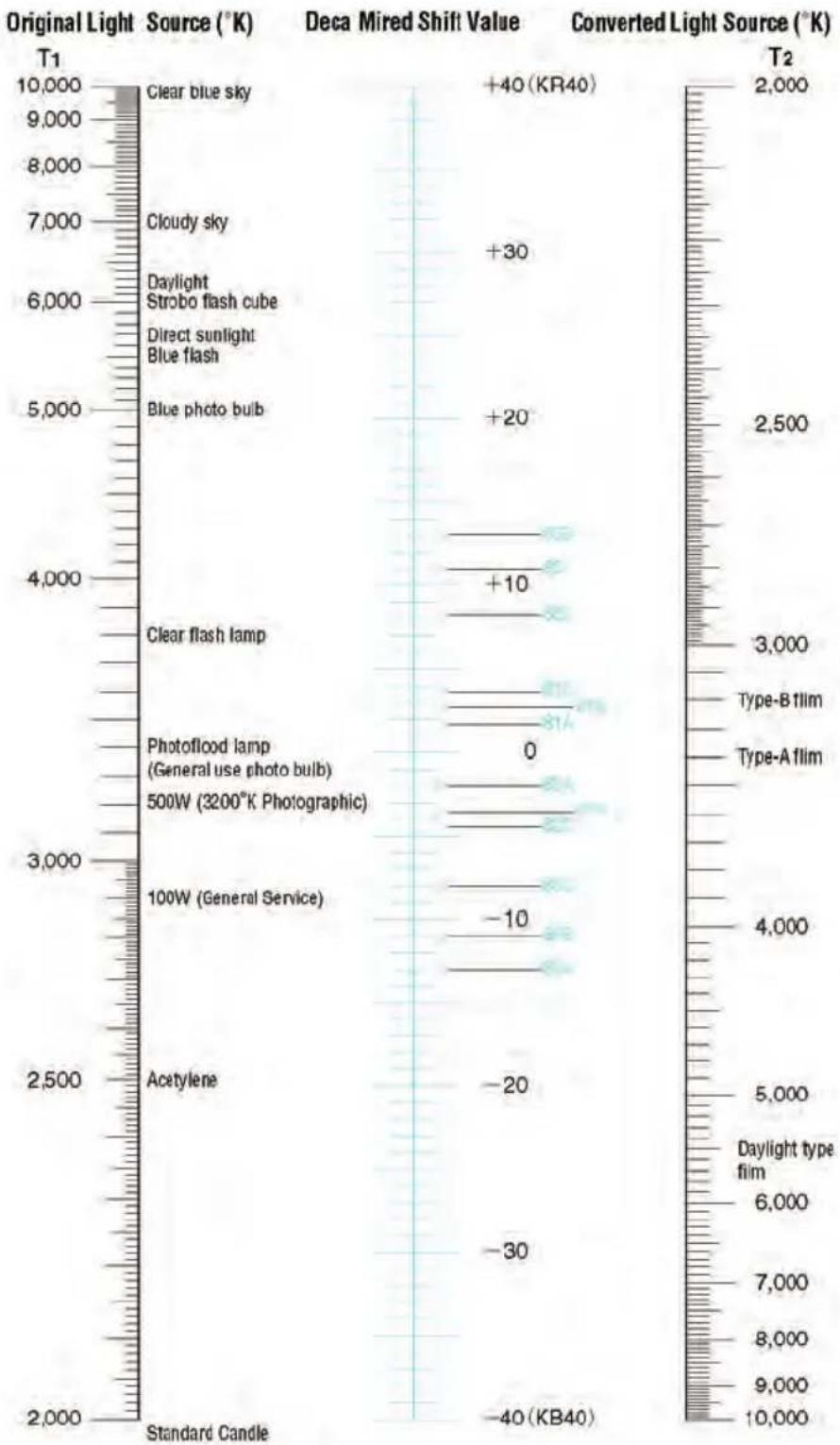
bar
| Original Light Source (°K) | Deca Mired Shift Value | | --------------------------- | ---------------------- | | Clear blue sky | +40 (KR40) | | Cloudy sky | +30 | | Daylight Strobo flash cube | +20 | | Direct sunlight | +10 | | Blue flash | +11 | | Blue photo bulb | -10 | | Clear flash lamp | -30 | | Photoflood lamp (General use photo bulb) | -20 | | 500W (3200°K Photographic) | -30 | | 100W (General Service) | -40 (KB40) | | Acetylene | -40 (KB40) | | Standard Candle | -40 (KB40) |Filter Factors
Since photographic filters absorb light, exposure must be increased to compensate for the effective light absorbed. The number by which the exposure must be increased for a particular filter used with a particular film is called the filter factor.
While these factors for basic applications are given below, as well as on the filter instruction sheet, the factor will vary according to shooting conditions. The precise filter factor is determined by considering the film type and specific light source. Therefore, filter factors indicated are for your reference only. The filter factor and exposure compensation required is as follows:
| Filter factor | I-stop | |
| UV(0) | 1 | 0 |
| 1B | 1 | 0 |
| PL | 3~4 | 1 2/3~2 |
| PL-Cir | 5~4 | 1 2/3~2 |
| FL-W | 2 | 1 |
| FL-Day | 2 | 1 |
| 60A | 2.4 | 1 1/3 |
| 60B | 2 | 1 |
| 80C | 1.9 | 1 |
| 85 | 2 | 1 |
| 85B | 2.1 | 1 |
| 85C | 1.6 | 1 |
| 82A | 1.3 | 1/3 |
| 82B | 1.4 | 1/2 |
| 82C | 1.5 | 2/3 |
| 81A | 1.4 | 1/2 |
| Filter factor | I-stop | |
| 81B | 1.4 | 1/2 |
| 81C | 1.5 | 2/3 |
| K2(Y) | 2 | 1 |
| O(0) | 2.5 | 1 1/3 |
| 25A(R) | 8 | 3 |
| X0(YG) | 2.5 | 1 1/2 |
| X1(G) | 4 | 2 |
| ND×2 | 2 | 1 |
| ND×4 | 4 | 2 |
| ND×8 | 8 | 3 |
| Intensifier | 1.4 | 1/2 |
| Green Field | 2.5 | 1 1/3 |
| Blue Intensifier | 2.5 | 1 1/3 |
| Portrait | 1.15 | 1/5 |
| Warm | 1.4 | 1/2 |
The Production Process Of Hoya Filters

text_image
Automatic V-blender Direct pressing machine Continuous annealing furnace High speed polishing machine Vacuum evaporatorUV(0)L39 /
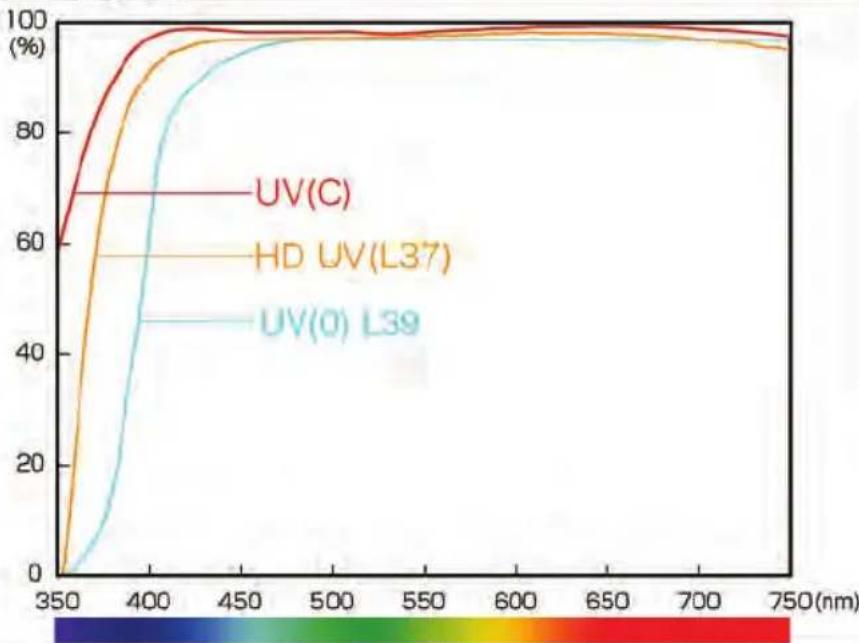
line
| Wavelength (nm) | UV(C) (%) | HD UV(L37) (%) | UV(0) L39 (%) | | --------------- | --------- | -------------- | ------------- | | 350 | 60 | 0 | 0 | | 400 | 95 | 85 | 40 | | 450 | 98 | 92 | 85 | | 500 | 99 | 95 | 92 | | 550 | 99 | 96 | 95 | | 600 | 99 | 97 | 96 | | 650 | 99 | 97 | 97 | | 700 | 99 | 97 | 97 | | 750 | 99 | 97 | 97 |SKYLIGHT 1B / WARM
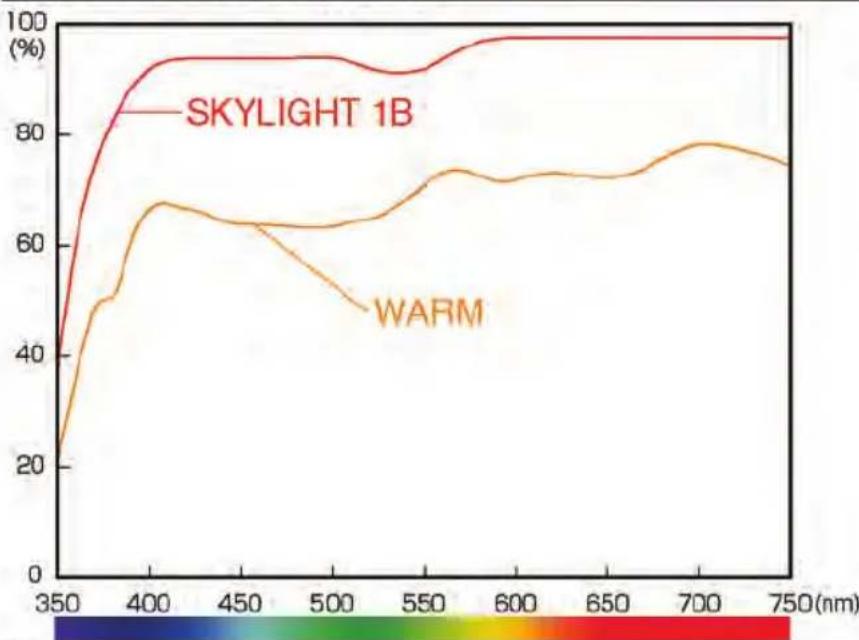
line
| Wavelength (nm) | SKYLIGHT 1B (%) | WARM (%) | | --------------- | --------------- | -------- | | 350 | 40 | 20 | | 400 | 90 | 65 | | 450 | 95 | 60 | | 500 | 95 | 65 | | 550 | 95 | 70 | | 600 | 98 | 72 | | 650 | 98 | 70 | | 700 | 98 | 78 | | 750 | 98 | 75 |INTENSIFIER / PORTRAIT

line
| Wavelength (nm) | INTENSIFIER (%) | PORTRAIT (%) | | --------------- | --------------- | ------------ | | 350 | ~10 | ~10 | | 400 | ~90 | ~90 | | 450 | ~70 | ~90 | | 500 | ~90 | ~90 | | 550 | ~90 | ~90 | | 600 | ~10 | ~80 | | 650 | ~90 | ~90 | | 700 | ~90 | ~90 | | 750 | ~25 | ~70 |GREEN FIELD / BLUE FIELD
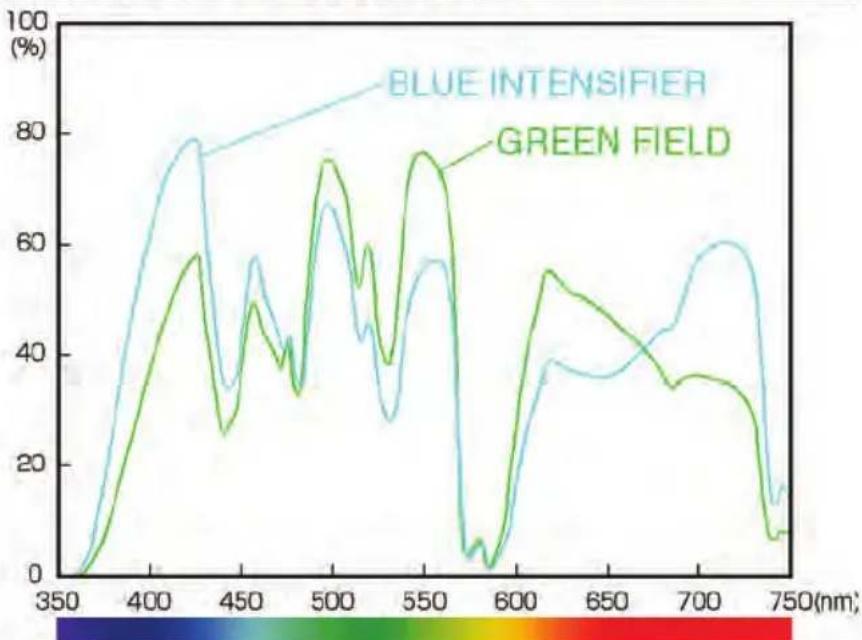
line
| Wavelength (nm) | BLUE INTENSIFIER (%) | GREEN FIELD (%) | | --------------- | -------------------- | --------------- | | 350 | 0 | 0 | | 400 | ~80 | ~60 | | 450 | ~75 | ~55 | | 500 | ~65 | ~75 | | 550 | ~55 | ~75 | | 600 | ~40 | ~55 | | 650 | ~35 | ~45 | | 700 | ~60 | ~35 | | 750 | ~15 | ~10 |FL-W / FL-DAY

line
| Wavelength (nm) | FL-W (%) | FL-DAY (%) | | --------------- | -------- | ---------- | | 350 | 70 | 0 | | 400 | 85 | 60 | | 450 | 60 | 50 | | 500 | 40 | 55 | | 550 | 35 | 65 | | 600 | 40 | 70 | | 650 | 50 | 75 | | 700 | 60 | 80 | | 750 | 65 | 85 |80A / 80B / 80C

line
| Wavelength (nm) | 80A (%) | 80B (%) | 80C (%) | | --------------- | ------- | ------- | ------- | | 350 | 60 | 40 | 40 | | 400 | 80 | 85 | 85 | | 450 | 60 | 70 | 75 | | 500 | 40 | 55 | 65 | | 550 | 25 | 45 | 50 | | 600 | 20 | 35 | 40 | | 650 | 15 | 30 | 35 | | 700 | 15 | 25 | 30 | | 750 | 15 | 25 | 25 |85 / 85B / 85C

line
| Wavelength (nm) | 85 | 85C | 85B | | --------------- | ----- | ----- | ----- | | 350 | 0 | 5 | 0 | | 400 | 10 | 20 | 5 | | 450 | 30 | 45 | 20 | | 500 | 35 | 55 | 30 | | 550 | 50 | 70 | 45 | | 600 | 70 | 85 | 65 | | 650 | 80 | 90 | 75 | | 700 | 75 | 85 | 70 | | 750 | 70 | 80 | 65 |82A/82B/82C

line
| Wavelength (nm) | 82A (%) | 82C (%) | 32B (%) | | --------------- | ------- | ------- | ------- | | 350 | ~65 | ~60 | ~70 | | 400 | ~85 | ~80 | ~90 | | 550 | ~70 | ~75 | ~75 | | 650 | ~60 | ~55 | ~65 | | 750 | ~55 | ~50 | ~60 |81A/81B/81C
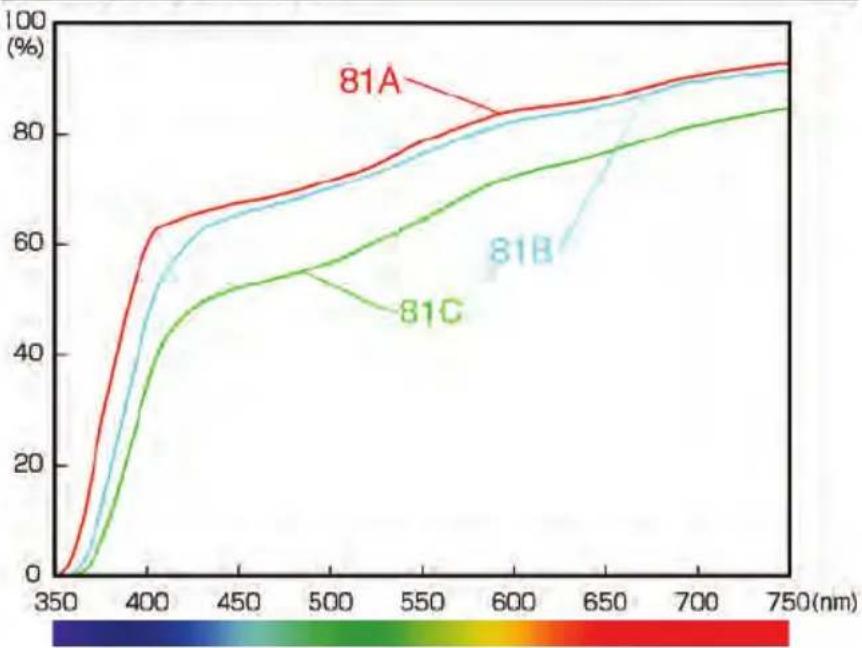
line
| Wavelength (nm) | 81A (%) | 81B (%) | 81C (%) | | --------------- | ------- | ------- | ------- | | 350 | 0 | 0 | 0 | | 400 | 62 | 55 | 45 | | 450 | 68 | 62 | 50 | | 500 | 72 | 68 | 55 | | 550 | 78 | 72 | 60 | | 600 | 82 | 78 | 65 | | 650 | 85 | 82 | 70 | | 700 | 88 | 85 | 75 | | 750 | 90 | 88 | 80 |X0 / X1 / G / K2 / 25A
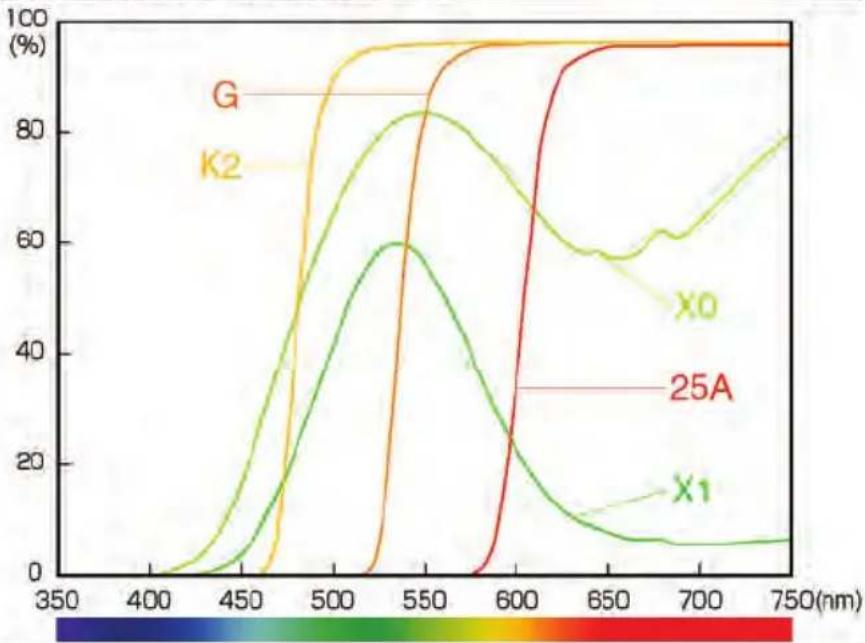
line
| Wavelength (nm) | G | K2 | X0 | 25A | X1 | | --------------- | ---- | ---- | ---- | ---- | ---- | | 350 | 0 | 0 | 0 | 0 | 0 | | 400 | 0 | 0 | 0 | 0 | 0 | | 450 | 0 | 0 | 0 | 0 | 0 | | 500 | 80 | 80 | 60 | 0 | 0 | | 550 | 90 | 90 | 80 | 60 | 60 | | 600 | 95 | 95 | 70 | 95 | 30 | | 650 | 98 | 98 | 60 | 98 | 10 | | 700 | 99 | 99 | 65 | 99 | 5 | | 750 | 100 | 100 | 80 | 100 | 5 |R72
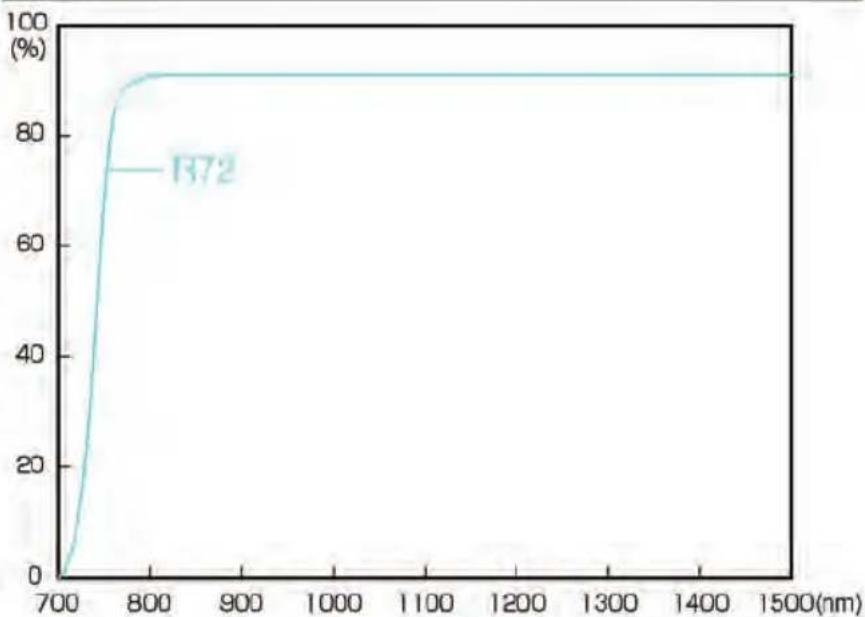
line
| Wavelength (nm) | Percentage (%) | | --------------- | -------------- | | 700 | 0 | | 800 | 90 | | 1500 | 90 |Spectral-Sensitivity Curves for KODAK High Speed Infrared Film / HIE and HSI
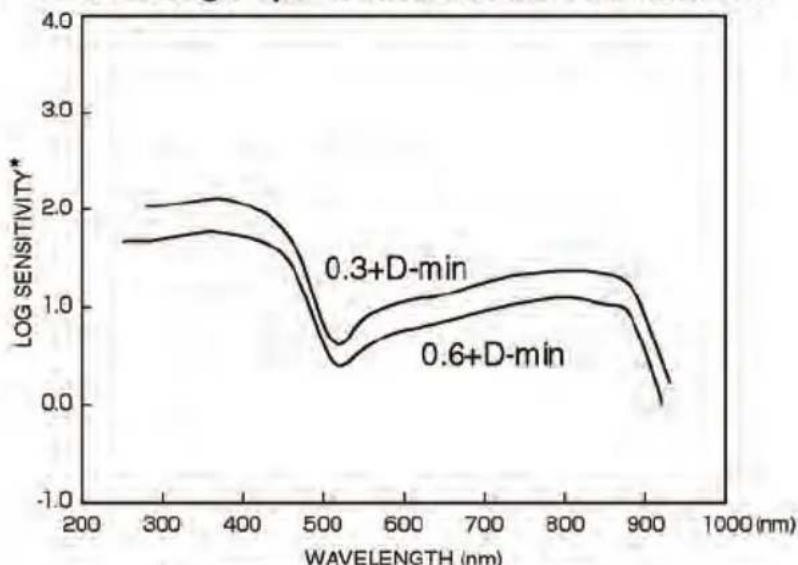
line
| Wavelength (nm) | 0.3+D-min | 0.6+D-min | | --------------- | --------- | --------- | | 200 | 1.7 | 1.6 | | 300 | 2.0 | 1.8 | | 400 | 2.1 | 1.9 | | 500 | 0.5 | 0.4 | | 600 | 1.0 | 0.9 | | 700 | 1.2 | 1.1 | | 800 | 1.3 | 1.2 | | 900 | 1.1 | 1.0 | | 1000 | 0.2 | 0.1 |* Sensitivity = reciprocal of exposure (ergs/cm ^2 ) required to produce specified density.
"Kodak" is the registered trade mark of EASTMAN KODAK COMPANY in USA.
INDEX
(Range table with size indication) See table opposite for sizes available.
| Filter | Page | Size Table | |
| HD FILTER SERIES | |||
| HD UV 7 E | |||
| HD CIR-PL | 8 | E | |
| HD PROTECTOR 9 E | |||
| PRO1 DIGITAL FILTER SERIES | |||
| PRO1D CIRCULAR PL 11 E | |||
| PRO1D UV (0) | 12 | E | |
| PRO1D PROTECTOR 13 E | |||
| PRO1D ND4,ND8,ND16,ND32,ND64 | 14 | G | |
| PRO1D SOFTON-A 15 G | |||
| PRO1D STAR-4 16 G | |||
| PRO1D CLOSE-UP No.3 17 G | |||
| HRT FILTER | |||
| CIR-PL UV 18 F | |||
| STANDARD HMC | |||
| GENERAL FILTERS | |||
| UV (C) 20 E | |||
| UV (0) | 26 | ||
| SKYLIGHT 1B | 27 D | ||
| PL/PL-CIR | 28 | C | H |
| RED ENHANCER | 30 | M | |
| GREEN ENHANCER | 30 | M | |
| BLUE ENHANCER | 30 | M | |
| PROTRAIT | 31 | M | |
| FL-W, FL-DAY | 31 P | ||
| 80A, B, C, | 32 | L | |
| 82A, B, C | 32 | L | |
| 81A, B, C | 33 | L | |
| 85A, B, C | 33 | L | |
| K2, G, 25A | 34 | M | |
| XO, X1 | 35 | M | |
| SPECIAL EFFECTS FILTERS | |||
| CENTER SPOT 36 N | |||
| STAR-4 | 36 | B | |
| STAR-6, STAR-8 36 I | |||
| ND X2 | 22 | L | |
| ND X4, ND X8, ND X16 | 22 | D | |
| ND X 400 | 23 | F | |
| HALF ND | 23 | R | |
| VARIABLE DENSITY | 24 | G | |
| UV & IR CUT | 25 | F | |
| BLACK MIST | 37 | F | |
| WHITE MIST | 37 | F | |
| FOG FILTER A,B, A+B | 38 | A | H |
| DIFFUSER | 38 | B | |
| DUTO 38 J | |||
| SOFTNER A, B | 39 | P | |
| SPECTRAL CROSS | 39 | M | |
| AC CLOSE-UP +3,+4, +5 | 40 R | ||
| CLOSE-UP (+1,+2,+3,+4) | 40 | K | O |
| CLOSE-UP (+1,+2,+4) | 40 | Q | O |
| MACRO CLOSE-UP (+10) | 40 | S | |
| SEPIA A, B | 37 | P | |
| INFRARED (R72) 41 P | |||
| LENS ACCESSORIES | 41 | ||
| INFORMATION | |||
| All filters are not created equal ! | 42 | ||
| The difference is clear ! | 44 | ||
| Light Source Conversion | 46 | ||
| Filter Factors | 47 | ||
| Production Process | 47 | ||
| Transmission Curves | 48 | ||
| Hoya Offers A Wide Variety Of Superior Quality Filters | 55 | ||
SIZE TABLE (mm)
1) When using color negative film with certain special-effect filters intended to give a false color to your pictures (Sepia etc.), please ensure you inform your processing lab that these filters have been used. Otherwise, their equipment will automatically attempt to correct the colors and remove the desired effect.
(NB: This will not be of concern when using color slide film).
2) Certain ultra wide angle lenses have very convex front elements. In such cases, it is possible that a filter could make contact with the optics and cause damage. If in doubt, please place a small piece of paper between your lens and the filter when you first attempt to fit it. This will allow you to check if there is likely to be any contact, without the risk of any damage occurring.
3) Using filters with ultra wide-angle lenses can sometimes lead to vignetting, where the filter ring is seen as a shadow in each corner of the picture. To avoid this, we recommend that you choose HD series or PRO1D series filters which have ultra thin filter frames.
HOYA offers a wide variety of superior quality filters for use in all imaging applications such as 35mm SLR cameras, Medium Format, Large Format, Video, Movie and Digital. It is important to select the best filters for your needs, as choosing inferior brands can deteriorate the performance of your high quality lenses. HOYA filters guarantee you the highest standards so you can create the best images.
In order for you to fully understand the wide range which HOYA offers, the four main categories, into which our filters are grouped, are explained below:
GENERAL FILTERS
This group includes everyday filters which can be left on your lenses, such as Skylight 1B, UV and Polarising. These are the first filters that every photographer should ensure they own. Skylight and UV filters should be constantly fitted to a lens to give improved clarity and color balance as well as offering protection to your lens. Polarising filters have several uses such as eliminating unwanted reflections, increasing color saturation and enhancing contrast. As to whether you should use Circular Polarising or Linear Polarising filters with your camera, we recommend that you refer to the detailed explanation later in this catalogue.
CREATIVE FILTERS
This is a new classification, exclusive to HOYA. Although similar to general filters, they produce a subtle, but realistic result which may be used to artistic effect. They are also suitable for use as everyday protection filters and may be combined with other types such as Circular-PL and UV for enhanced effect. In this case, we recommend the use of HD Filters or PRO1Digital series models which have thin rings and multicoating to avoid vignetting and ghosting.
COLORED FILTERS
As their names suggests, these filters use HOYA colored glass. They are used for color correction of different light sources when using color film, or for controlling contrast with Black & White film. Color correction filters are important as color films do not have the flexibility of the human eye to automatically adjust to different situations. Black & White films register colors as shades of grey and the rendition of each color in a scene is important, so filters can be used to control this. The color of the glass used in all these filters is carefully controlled and to reduce the possibility of color shift over a period of time, such high quality filters are coated or multicoated on both sides. This maintains the desired effect and gives a long service life.
SPECIAL EFFECT FILTERS
As you saw in the previous pages of this catalogue, HOYA makes it possible to add many different special effects to your pictures, such as star-bursts, close-ups, softening and multi-images. It is simple to achieve outstanding creative or unusual results and take special photographs for memorable occasions such as weddings, birthdays and holidays.
OF SUPERIOR QUALITY FILTERS
Why Coated?
There are three main reasons why filters should be coated. First, coating enhances light transmission, second, it protects the surface of the filter and third, it removes ghosting and flare, particularly between the rear of a filter and the surface of a lens. In general, light transmission increases as more layers of coating are applied.
Within these four groups, we offer a choice of grades with different coatings as follows:
STANDARD
These filters offer both amateur and professional photographers HOYA's famous quality at reasonable prices. They have coatings applied to both surfaces to suppress reflection and increase light transmission. There are a few exceptions in the special effects range which, due to the special materials used in construction, do not have coatings applied.
HMC (HOYA MULTI COATED)
These popular filters are renowned for their ability to minimise reflection at the filter surfaces which reduces flare and ghosting. The result is an average light transmission of over 97%, giving sharp contrast and well balanced color. HOYA HMC filters are recommended for enhancing the performance of today's multicoated lenses.
PRO1 DIGITAL FILTERS
Newly formulated multi-coating for digital camera CCD or CMOS sensor. These image capture devices are highly susceptible to reflections - this stray light can ruin your photographs! Don't risk your valuable photos by using bare-glass filters.
HD FILTERS
Newly developed industry leading 8-layer multi-coating yields an average light transmission rate of 99.35% between 400 and 700nm (visible spectrum). These coatings greatly reduce reflections off the surface of the glass allowing you to capture more light in your photos. As with all HOYA multi-coatings, HD HMC is applied in a furnace at high heat, bonding the coating to the surface of the glass. This process is called "hard coating" and it is far more durable than other coating techniques. The chemistry of the top layer is formulated not just to be more durable but to be resistant to oil stains. This means that finger prints and other oils are much easier to remove.

text_image
HOYA HD PROTECTOR 77mm Made in JapanHOYA
FILTERS
Kenko Tokina Co., Ltd.