FLM-2634B - TV POLAROID - Free user manual and instructions
Find the device manual for free FLM-2634B POLAROID in PDF.


| Product Type | LCD TV |
| Model | FLM-2634B |
| Screen Size | 26 inches (diagonal) |
| Max Resolution | 1366 x 768 |
| Brightness | 400 cd/m² |
| Contrast Ratio | 1200:1 |
| TV Tuner | Built-in ATSC (HDTV) and NTSC |
| Input Connectors | 2x Composite Video/Audio, 1x S-Video, 2x Component (YPbPr), 1x VGA, 1x HDMI, 1x HDMI Audio, 1x Headphone |
| Output Connectors | 1x Audio Out (L/R), 1x Optical, 1x Coaxial |
| Power Source | AC 100-240V, 50/60Hz, 2.2A |
| Power Consumption | 180 W (typical), < 5 W in standby |
| Dimensions (W x H x D) | 26.7 x 22.1 x 7.9 inches (with stand) |
| Weight | 31.97 lb |
| Special Features | Picture-in-Picture (PIP), 3D Digital Noise Reduction, Film-Mode Detection, Wide Screen modes (Normal/Full/Wide/Zoom) |
| V-Chip | Block content by MPAA and TV ratings, password protection |
| Parental Controls | Block channels and input sources, change password |
| Closed Caption | Analog (CC1-CC4) and Digital (Service1-6), customizable style |
| Remote Control | Universal remote (programmable for up to 4 devices) |
| Included Accessories | Stand & screws, remote control with batteries, power cord, user manual, quick start guide |
| Safety Features | Fuse protection (4A 250V), grounding plug, ventilation requirements |
Frequently Asked Questions - FLM-2634B POLAROID
User questions about FLM-2634B POLAROID
0 question about this device. Answer the ones you know or ask your own.
Ask a new question about this device
Download the instructions for your TV in PDF format for free! Find your manual FLM-2634B - POLAROID and take your electronic device back in hand. On this page are published all the documents necessary for the use of your device. FLM-2634B by POLAROID.
USER MANUAL FLM-2634B POLAROID
Federal Communications Commission Statement
This equipment has been tested and found to comply with the limits of a class B digital device, pursuant to Part 15 of the FCC Rules. These limits are designed to provide reasonable protection against harmful interference in a residential installation. This equipment generates, uses and can radiate radio frequency energy and, if not installed and used in accordance with the instructions, may cause harmful interference to radio communications. However, there is no guarantee that interference will not occur in a particular installation. If this equipment does cause harmful interference to radio or television reception, which can be determined by turning the equipment off and on, the user is encouraged to try to correct the interference by one or more of the following measures:
- Reorient/Relocate the receiving antenna.
- Increase the separation between the equipment and receiver.
- Connect the equipment into an outlet on a circuit which is different from what the receiver is connected to.
- Consult the dealer or an experienced radio/TV technician for help.

Changes or modifications not expressly approved by the manufacturer responsible for compliance could void the user authority to operate the equipment.
WEEE
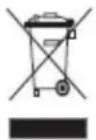
This product contains electrical or electronic materials. The presence of these materials may, if not disposed of properly, have potential adverse effects on the environment and human health. Presence of this label on the product means it should not be disposed of as unsorted waste and must be collected separately. As a consumer, you are responsible for ensuring that this product is disposed of properly. To find out how to properly dispose of this product, please go to www.polaroid.com and click on "Company" or call the customer service number for your country listed in the instruction manual.
FCC

ENGL
Warnings and Precautions
To prevent any injuries, the following safety precautions should be observed in the installation, use, servicing and maintenance of this equipment. Before operating this equipment, please read this manual completely, and keep it nearby for future reference.

WARNING
This symbol is intended to alert the user to avoid the risk of electric shock. This equipment must not be disassembled by anyone except qualified service personnel.

CAUTION
This symbol is intended to alert the user to the presence of important operating and maintenance instructions in the literature accompanying the appliance.

To reduce the risk of fire or electric shock, do not expose this equipment to rain or moisture.
• TO REDUCE THE RISK OF ELECTRIC SHOCK,
- DO NOT REMOVE COVER (OR BACK).
• NO USER-SERVICEABLE PARTS INSIDE.
• REFER SERVICING TO QUALIFIED SERVICE PERSONNEL.

Use of controls, adjustments or performance of procedures other than those specified herein may result in hazardous radiation exposure.
Important Safety Instructions
| This symbol indicates caution points. | |
| This symbol indicates actions that should not be done. | |
| This symbol indicates actions that must be performed. | |
| Do not place the equipment on any uneven or unstable carts, stands, tables, shelves etc.The equipment may fall, causing serious injury to children or adults and serious damage to the equipment itself.Use only a cart or stand recommended by the manufacturer. This equipment and recommended cart or stand should be handled with care. Quick stops, excessive force, and uneven surfaces may cause the equipment and cart/stand to overturn. | |
| Do not disable the 3-wire grounding type plug. The grounding pin on the 3-prong plug is an important feature. Removing the grounding pin will increase the risk of damaging the equipment.If you can not sit the plug into the electrical outlet, contact an electrician to install a grounding outlet.Always operate this equipment from the type of power source indicated on the rear of the serial/model plate.Never overload wall outlets and extensions. |

- Use and handle the power cord with care. Do not place any heavy objects on the AC power cord.
- Do not pull the AC power cord. Do not handle the AC power cord with a wet hand.
- Do not touch the power cord and antenna cable during lightning.
- Remove the plug from the wall outlet, if the equipment will not be used for a long period of time.
- Do not place, use or handle this equipment near water.
- Never expose the equipment to liquid, rain, or moisture. Seek for service if any of the above is spilled into the equipment.
- Do not expose the equipment to extreme temperature or to direct sunlight, as the equipment may heat up and suffer damage.
- Do not install the equipment near any heat sources such as radiators, heat registers, stoves, or any other apparatus that might produce heat.
- Do not attempt to service the equipment yourself.
- Opening and removing the covers may expose you to dangerous voltage or other hazards and may void your warranty. Refer service to qualified personnel.
- Do not place or drop any other objects on top.
- Do not insert anything into the ventilation holes of your equipment. Inserting any metal or jammable objects may result to fire or electric shock.
- Protect the power cord from being walked on or pinchrd particularly at plugs, convenience receptacles, and the point where they exit from the apparatus.
- Do not place the equipment on uneven or unstable carts, stands, tables, shelves etc. The equipment may fall, causing serious injury to children or adults and serious damage to the equipment itself. Always place the equipment on the floor or on a surface that is sturdy, level, stable and strong enough to support the weight of the equipment.
- Do not block any ventilating openings. Leave an open space around the equipment. Never place the equipment: on a bed, sofa, rug, or any other similar surfaces; too close to drapes/curtains/walls, in a bookcase, built-in cabinet, or any other similar places that may cause poor ventilation.
- Unplug this apparatus during lightning storms or when unused for long periods of time.
- Refer all servicing to qualified service personnel. Servicing is required when the apparatus has been admaged in any way, such as power-supply cord or plug is damaged, liquid has been spilled or objects have fallen into the apparatus, the apparatus has been exposed to rain or moisture, does not operate normally, or has been dropped.
- Always remove the power cord from the outlet before cleaning the equipment.
- Never use liquid or aerosol cleaners on the equipment. Clean only with a soft dry cloth.


- Only use attachments/accessories specified by the manufacturer.
Antenna Safety Instructions
If an outdoor antenna is connected, follow the precautions below:

- An outdoor antenna should not be located in any area where it could come in contact with overhead power lines, or any other electric light or power circuits.
- When installing an outdoor antenna system, extreme caution should be taken to prevent contact with power lines. Direct contact with power lines may be fatal and should be avoided at all costs.
Section 810 of National Electrical Code (NEC) provides information with respect to proper grounding of the mast and supporting structure, grounding of the lead-in wire to an antenna discharge unit, size of grounding conductors, location of antenna discharge unit, connection to grounding electrodes, and requirements for the grounding electrode.
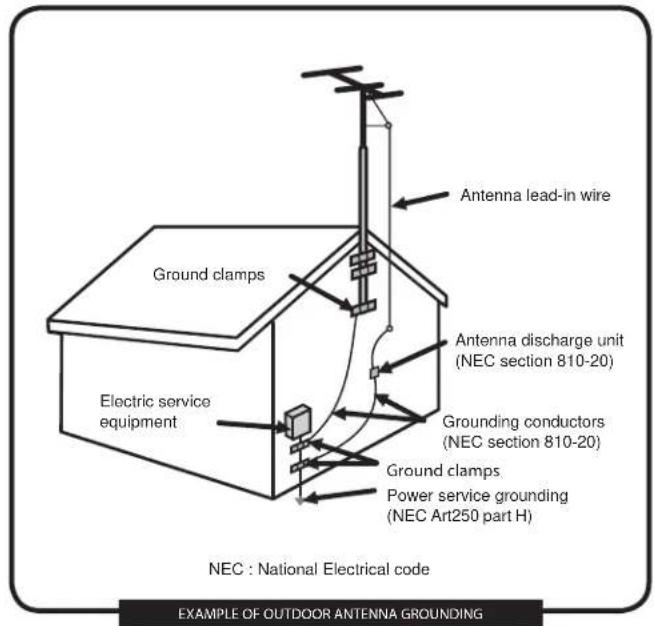
TABLE OF CONTENTS
■ Federal Communications Commission Statement....1
■ Warnings and Precautions
Important Safety Instructions....2
Antenna Safety Instructions....4
■ Chapter 1 Introducing the LCD TV
Key Features 6
Package Contents 7
Setting Your LCD TV....8
Your LCD TV....10
Your Remote Control 12
■ Chapter 2 Installing the LCD TV
Connecting a TV Cable or an Antenna 14
Connecting a VCR....18
Connecting a Video Camera or Play Station 19
Connecting a DVD Player 20
Connecting a Digital TV Cable Box or Digital Satellite Receiver 22
Connecting an AV Equipment with HDMI Connector 23
Connecting an AV Equipment with DVI Connector 24
Connecting a PC....25
Connecting an Audio Receiver or a Dolby Digital 5.1 Sound System.... 26
■ Chapter 3 USING THE FEATURES
Using Picture-In-Picture 27
Wide Screen Viewing....29
Operating the Menu....30
Setting up the HDTV Function 32
Customizing the VIDEO Settings....35
Customizing the AUDIO Settings....36
Customizing the SETUP Settings 37
Using the V-CHIP Settings....39
Using the Parental Settings....41
Customizing the TV Settings....42
■ Specifications 43
■ Chapter 4 Programming your Remote Control
Introduction...... 45
Programming a Device 45
Troubleshooting 46
Manufacturer's Codes 47
Chapter 1 Introducing the LCD TV
Key Features
Various Audio/Video terminals for external equipment connection
- 2 set of composite A/V input terminals
- 1 set of S-VIDEO terminals
- 2 set of component Video input terminals
- 1 VGA/ Audio input terminal
- 1 HDMI/Auido input terminal
- 1 sets of Audio(L/R) output terminals
- 2 SPDIF output terminal (Optical x 1 /Coaxial x 1)
- 1 Headphone terminal
The built-in TV tuner to receive HD ATSC
- This function allows the reception of HD broadcasting without the addition of a set top box.
High Definition Multimedia Interface (HDMI)
- High Definition Multimedia Interface (HDMI) is a small, user-friendly interconnect that can carry up to 5 Gbps of combined video and audio in a single cable. This system eliminates the cost, complexity and confusion of multiple cables used to connect current A/V systems.
HDTV Component Video Inputs
- Offers the best video quality for DVD(480p) and digital set-top-box (HD1080i, 720p) connections.
3D Digital Noise Reduction
- This function can digitally reduce image noise to provide better picture quality.
Film-Mode Detection (3:2 Reverse Pull Down)
- This function can automatically detect content derived from film and adjust the interlacer's frame matching to provide a more natural-looking, clearer image of the moving picture.
PIP Function
- Provides viewing of two programs simultaneously, in either picture-in-picture mode or picture-on-picture (side by side) mode.
Package Contents
Make sure all of the following contents are included.
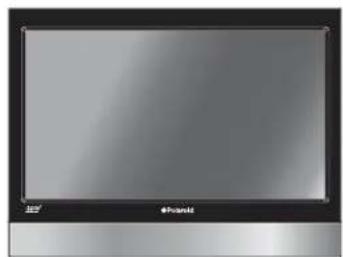
LCD TV
natural_image
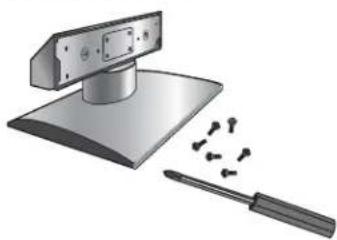
Front view of a flat-screen monitor with no visible text or symbols on the screen surface☑ Bottom Stand / Screw Driver and 6 Screws
natural_image
Illustration of a mechanical device with a mounted sensor and a tool, showing no text or symbols.AA Batteries x 2
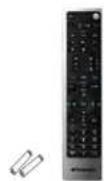
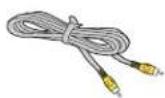
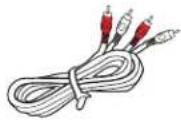
☑ VIDEO Cable☑ Remote ControlComponent Cable
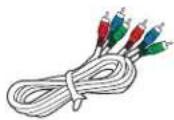
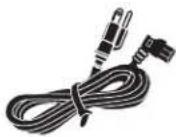
Power Cord
☑ AUDIO Cable ☑ Warranty Card
User's Manual
Quick Start Guide
These items are all you need to set up and operate the LCD TV in its basic configuration.

Make sure all of the above contents are included in the package. If you are missing any items, please contact the Polaroid customer service department.
Setting Up Your LCD TV
Attach the Stand
If you prefer to mount your new Polaroid TV on a wall instead of attaching it to the stand, please reference the instructions included in the wall mounting kit (not included).
IMPORTANT : Attach the Stand to the TV with the bottom foam packaging material still attached.
Read all instructions before continuing with the stand installation.
a) Lift foam packaging material from the top of the TV out of the box.
b) Lift TV out of box, with the bottom foam packaging material still attached, and place onto a stable surface.
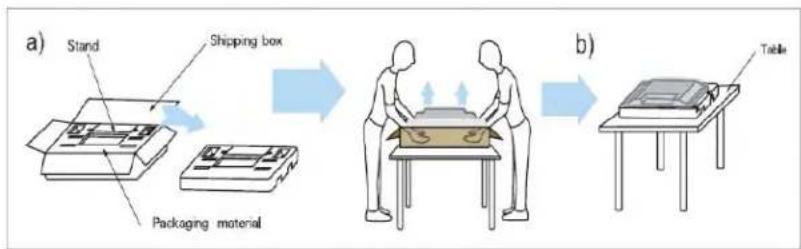
flowchart
graph LR
    A["Stand"] --> B["Shipping box"]
    B --> C["Packaging material"]
    C --> D["Table"]
c) Remove the protective bag from the LCD unit, but DO NOT remove the bottom foam packaging material.
d) Locate the place on the back of the TV to attach the stand. Secure the stand to the LCD with all six screws.
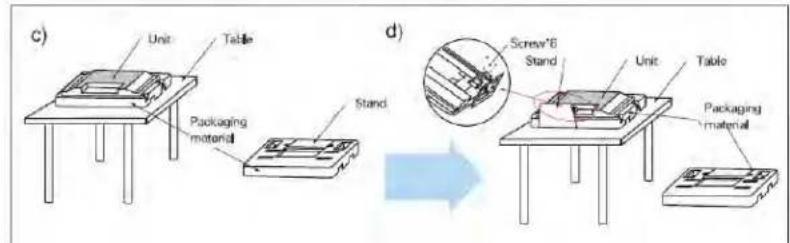
Use a supplied antenna cable to connect the VHF/UHF signal to the LCD TV's ANT. terminal (refer to page17).
2 Connect the AC power cord at the back of the TV and connect the power cord to wall outlet.
3 Insert the 2 batteries supplied in remote control.
Step1 Slide the back cover up to open the battery compartment of the remote control.
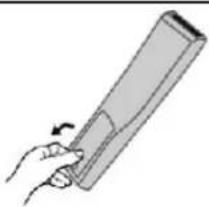
natural_image
Illustration of a hand holding a rectangular object with an arrow indicating rotation (no text or symbols)Step2 Insert two AA size batteries. Make sure to match the (+) and (-) ends of the batteries with the (+) and (-) ends indicated in the battery compartment. Slide the cover back into place.
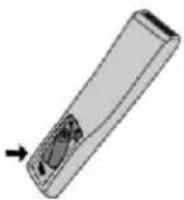

Do not use caustic cleaners (porcelain, stainless steel, toilet, or oven cleaner etc.) on the remote, as it may suffer damage.
4 Connect other an external A/V device (refer to page14-26).
Your LCD TV
Front/Right Side View and Controls
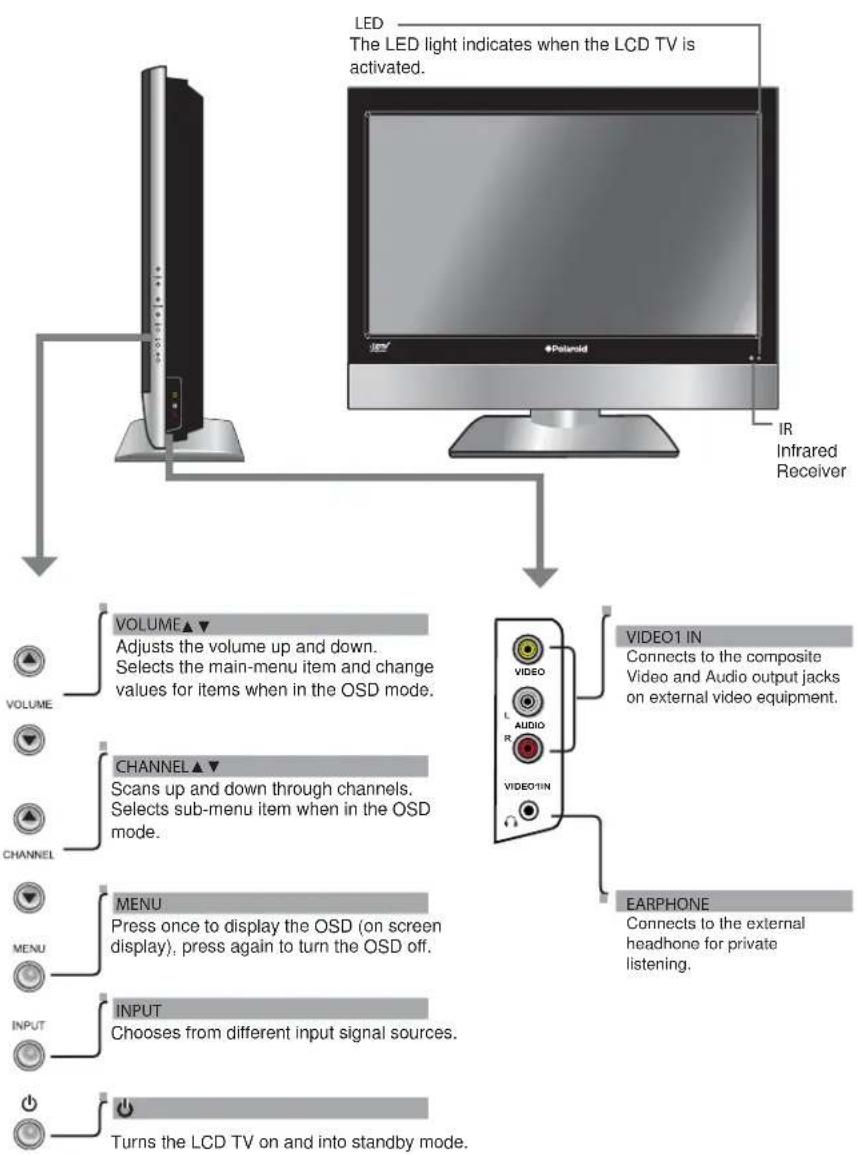
flowchart
graph TD
    A["LED"] --> B["The LED light indicates when the LCD TV is activated."]
    B --> C["IR Infrared Receiver"]
    C --> D["VOLUME ▲▼<br>Adjusts the volume up and down.<br>Selects the main-menu item and change values for items when in the OSD mode."]
    C --> E["CHANNEL ▲▼<br>Scans up and down through channels.<br>Selects sub-menu item when in the OSD mode."]
    C --> F["MENU<br>Press once to display the OSD (on screen display), press again to turn the OSD off."]
    C --> G["INPUT<br>Choose from different input signal sources."]
    C --> H["Turns the LCD TV on and into standby mode."]
    D --> I["VIDEO1 IN<br>Connects to the composite Video and Audio output jacks on external video equipment."]
    E --> J["VIDEO1IN<br>Connects to the external headphone for private listening."]
    F --> K["EARPHONE<br>Connects to the external headphone for private listening."]
Rear View and Jacks
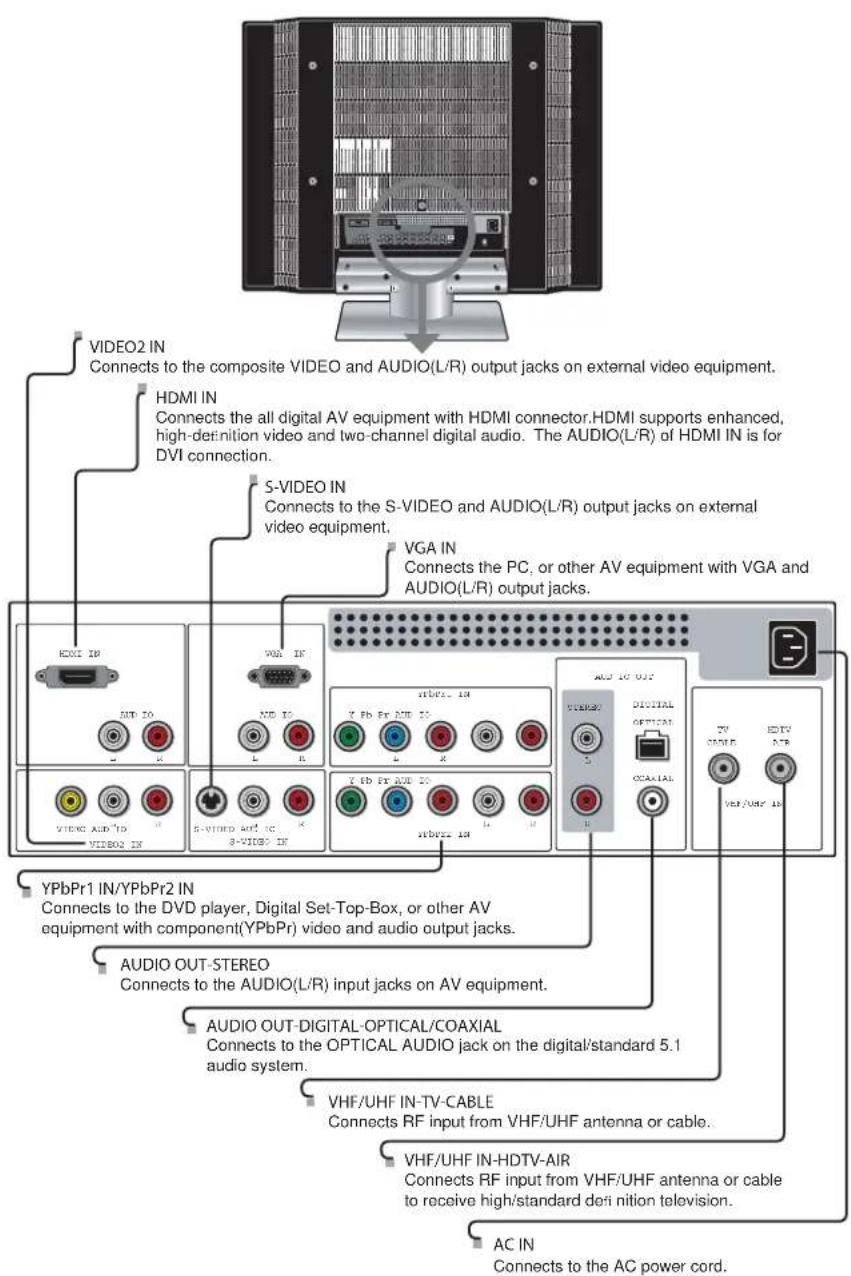
ENGLISH
Your Remote Control
This package includes a Polaroid remote control that enables you to control up to four devices. To select a device, simply select one of the following device mode controls: TV, CBL/SAT, DVD/VCR, or AUDIO.
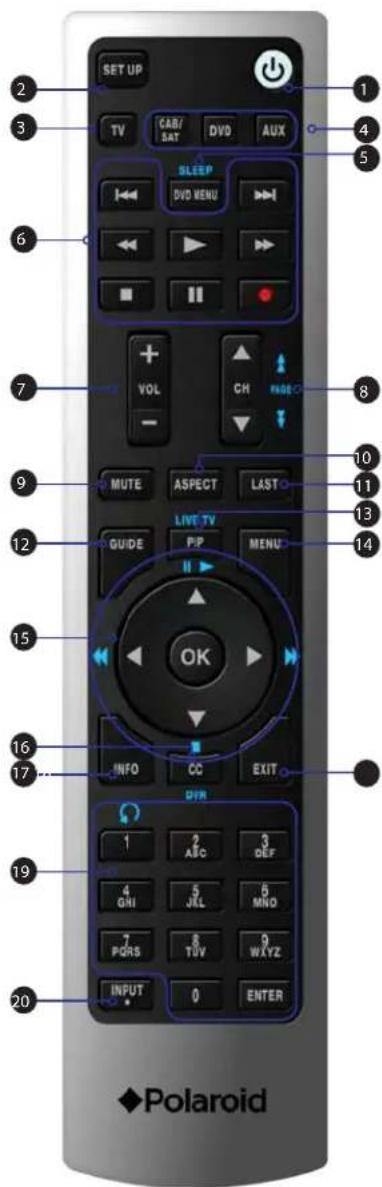
1 Turns the LCD TV on and off.
2 SET Remote control universal code setup. For more information on setting up your remote control, please see the "Programming Your Remote Control" section.
3 TV Controls this LCD TV.
4 CBL Controls Cable Converter or Satellite Receiver.
DVD Controls DVD player or Video player.
AUX Controls Audio Amplifier.
5 SLEEP Cycles through the LCD TV sleep time: OFF/30/60/90/120 mins.
6 Other device function keys
7 VOL+- Increases and decreases volume.
8 CH+- Change channel up and down.
9 MUTE Pressing once mutes audio. Pressing again restores audio.
10 ASPECT Cycles through Wide mode settings: NORMAL/FULL/WIDE/ZOOM.
11 LAST Returns to previously selected channel.
12 GUIDE In HDTV mode, pressing GUIDE displays the Program Guide on the screen.
13 PIP Turns PIP/POP on and off.
14 MENU Displays the OSD menu on the screen.
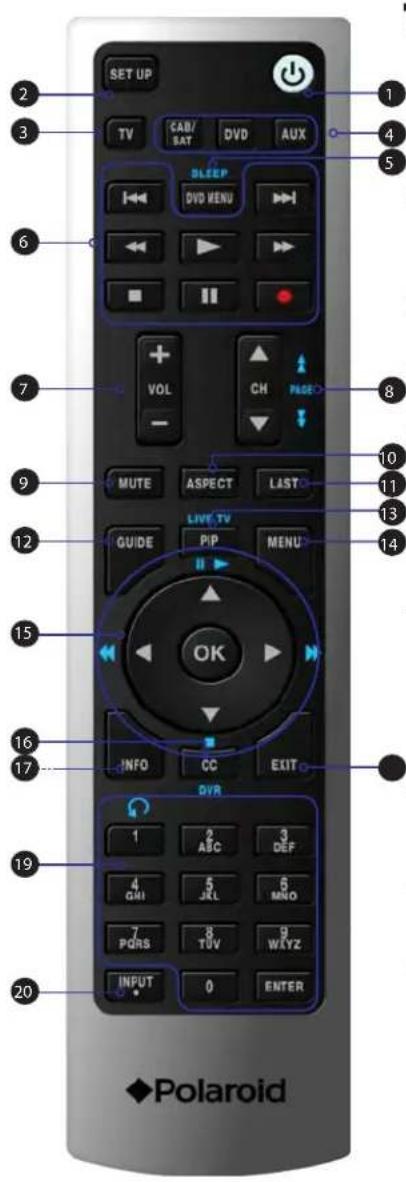
15 ▲▼▶◀,OK Cycles through OSD options and selects individual menu items. OK confirms
option settings. OK In HDTV mode, pressing OK to display a digital channel list.
16 CC Cycles through the Closed Caption: OFF/CC1/CC2/CC3/CC4/TT1/TT2/TT3/ TT4.
17 INFO Pressing once displays a variety of information such as the current channel and the input source.
18 EXIT Exits the OSD menu.
19 0-9/ENTER Pressing a number selects a channel. Following selection, pressing ENTER activates the channel, or channel activates automatically in 3 seconds.
In HDTV mode, use with 0-9 and ENTER buttons to select a digital channels.
20 INPUT Pressing INPUT to display a source list, use ▲▼buttons to select the video equipment connected to the video inputs of your LCD TV: TV/HDTV/VIDEO1/VIDEO2/VIDEO3/VIDEO4/VIDEO5/VIDEO6/COMPUTER.

Eff ective range:
The remote can control the LCD TV from up to 5m away, if pointed directly at the receiver.
Chapter 2 Installing the LCD TV
Refer to the owner's manual of any external equipment to be connected.
When connecting any external equipment, do not connect any AC power cords to wall outlets until all other connections are completed.
Connecting a TV Cable or an Antenna
Antenna Connection
The antenna requirements for good color TV reception are more important than those for a black s white TV reception. For this reason, a good quality outdoor antenna is strongly recommended. The following is a brief explanation of the type of connection that is provided with the various antenna systems.
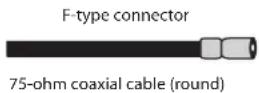
■ A 75-ohm system is generally a round cable (not included) with F-type connector that can easily be attached to a terminal without tools.
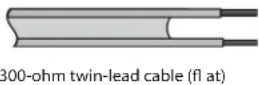
A 300-ohm system is a fl at twin-lead cable (not included) that can be attached to a 75-ohm terminal through a 300-75-ohm adapter (not included).
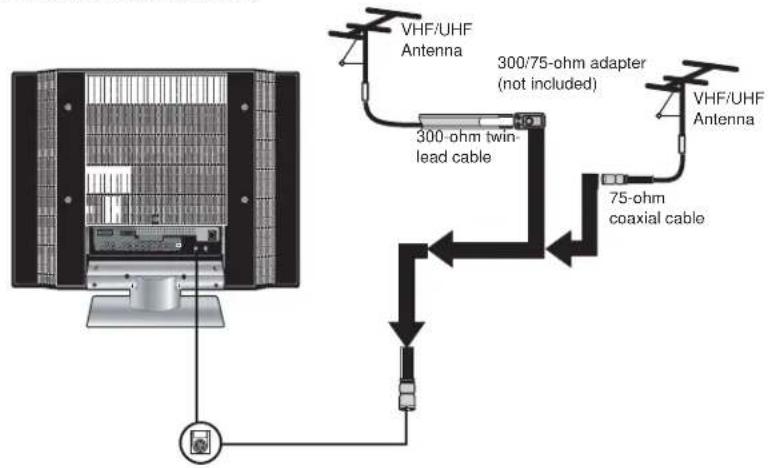
Use one of the following two diagrams when connecting an outdoor antenna.
A: Shows how to use a VHF/UHF combination outdoor antenna.
B: Shows how to use a separate VHF and/or UHF outdoor antenna.
A. Combination VHF/UHF antenna
ENGLISH
B. Separate VHF and/or UHF antennas
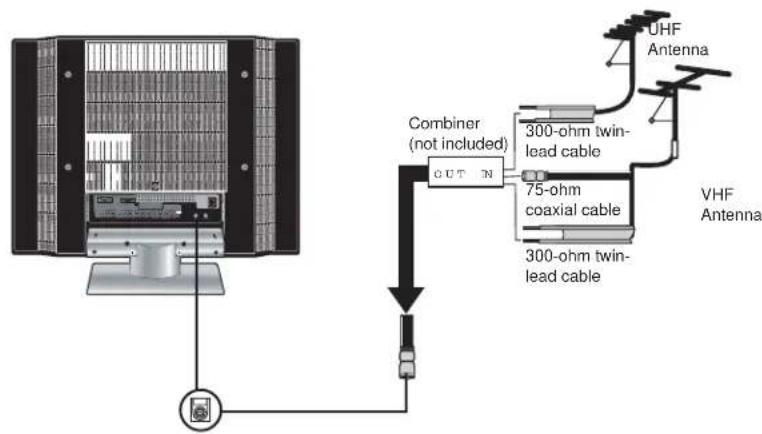
flowchart
graph TD
    A["Computer Server"] --> B["Combiner (not included)"]
    B --> C["300-ohm twin-lead cable"]
    B --> D["75-ohm coaxial cable"]
    B --> E["300-ohm twin-lead cable"]
    F["UHF Antenna"] --> G["VHF Antenna"]
    G --> H["Output"]
Cable TV (CATV) Connection
This reminder is provided to call the CATV system installer's attention to Article 820-40 of the National Electrical Code (NEC) that provides guidelines for proper grounding and, in particular, specifies that the cable ground shall be connected to the grounding system of the building accurately, or as close to the point of cable entry as possible. Use of this TV for other than private viewing of programs broadcasted on UHF, VHF or transmitted by cable companies for the use of the general public may require authorization from the broadcast/cable company, and/or program owner.
A 75-ohm coaxial cable connector is built into the set for easy hookup. When connecting the 75-ohm coaxial cable to the set, connect the 75-ohm cable into the ANT. terminal.
■ Some cable TV companies offer premium pay channels. Since the signals of these premium pay channels are scrambled, a cable TV converter/descrambler is generally provided to the subscriber by the cable TV company.
This converter/descrambler is necessary for normal viewing of scrambled channels. (Set your TV to channel 3 or 4, typically one of these channels is used. If this is unknown, consult your cable TV company.)
For more specific instructions on installing cable TV, consult your cable TV company. One possible method of connecting the coverter/descrambler provided by your cable TV company is shown in the diagram below.
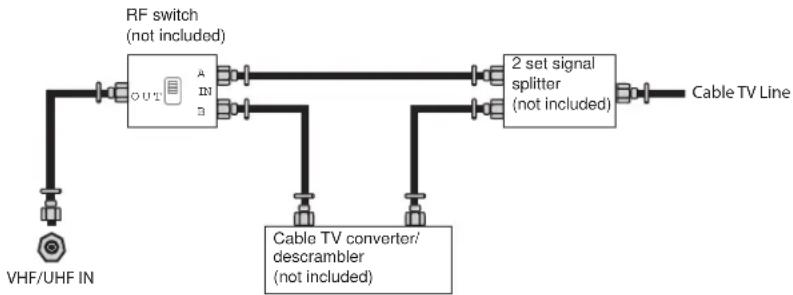
flowchart
graph LR
    A["VHF/UHF IN"] --> B["RF switch (not included)"]
    B --> C["A"]
    B --> D["B"]
    C --> E["2 set signal splitter (not included)"]
    D --> E
    E --> F["Cable TV Line"]
    G["Cable TV converter/descrambler (not included)"] --> E

■ The RF switch (not included) is required to provide two inputs (A and B). Setting the RF switch to position A allows viewing of all unscrambled channels by using the TV channel keys.
■ Setting the RF switch to position B allows viewing of all scrambled channels via the converter/descrambler by using the converter channel keys.

METHOD A:
Use a supplied antenna cable to connect the NTSC signal to the LCD TV's TV CABLE terminal.
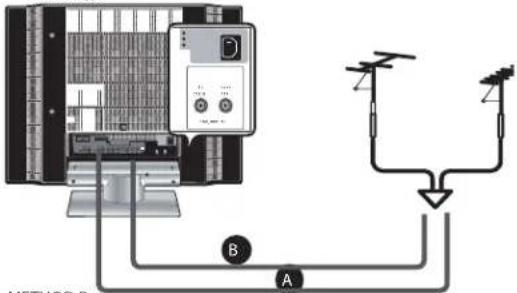
METHOD B:
Use a supplied antenna cable to connect the ATSC signal to the LCD TV's HDTV AIR terminal.

Connect the AC power cord at the back of the TV and connect the power cord to wall
outlet.
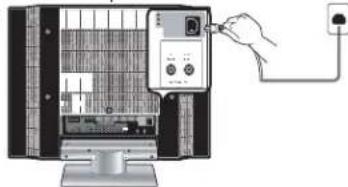
natural_image
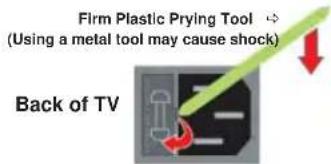
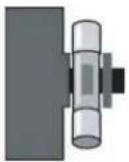
Illustration of a computer tower with an attached control panel and cable (no text or symbols visible)This TV is equipped with a safety fuse. In the event of an electrical storm or power outage the safety fuse is designed to protect your TV. If your TV has no power, check the fuse by prying the cover off, following the illustration below. If the fuse is blown, visit your local hardware store and ask for a 4A 250V - 5x20mm Time Lag Fuse (Slow Blow) to replace the fuse.
NOTE: Unplug the AC power cord from the back of your TV before removing the fuse.
4A 250V
5x20mm
Fuse

Press the button on the remote to turn on the LCD TV.

Always disconnect the LCD TV from the main voltage when the LCD TV will not be used for a long period of time. The POWER button on the front panel is only used for switching the LCD TV into standby, it does not disconnect the device from the main voltage. To completely disconnect the main voltage, please remove the power plug from the socket.

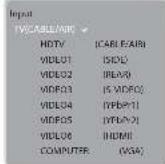
Press the Input button on the remote to display the Input List. Use the ▲▶ buttons to select TV(METHOD A), or HDTV(METHOD B), and press the OK button.
Connecting a VCR
flowchart
graph TD
    A["Audio Cable"] --> B["S-VIDEO Cable"]
    B --> C["VCR"]
    D["ACB 1000"] --> E["ACB 1000"]
    E --> F["ACB 1000"]
    G["ACB 1000"] --> H["ACB 1000"]
    H --> I["ACB 1000"]
    J["AV Cable"] --> K["AV Cable"]
    K --> L["VCR"]
    style A fill:#f9f,stroke:#333
    style B fill:#ccf,stroke:#333
    style C fill:#cfc,stroke:#333
    style D fill:#fcc,stroke:#333
    style E fill:#cff,stroke:#333
    style F fill:#ffc,stroke:#333
    style G fill:#fcc,stroke:#333
    style H fill:#cff,stroke:#333
    style I fill:#ffc,stroke:#333
    style J fill:#fcc,stroke:#333
    style K fill:#cff,stroke:#333
    style L fill:#ffc,stroke:#333
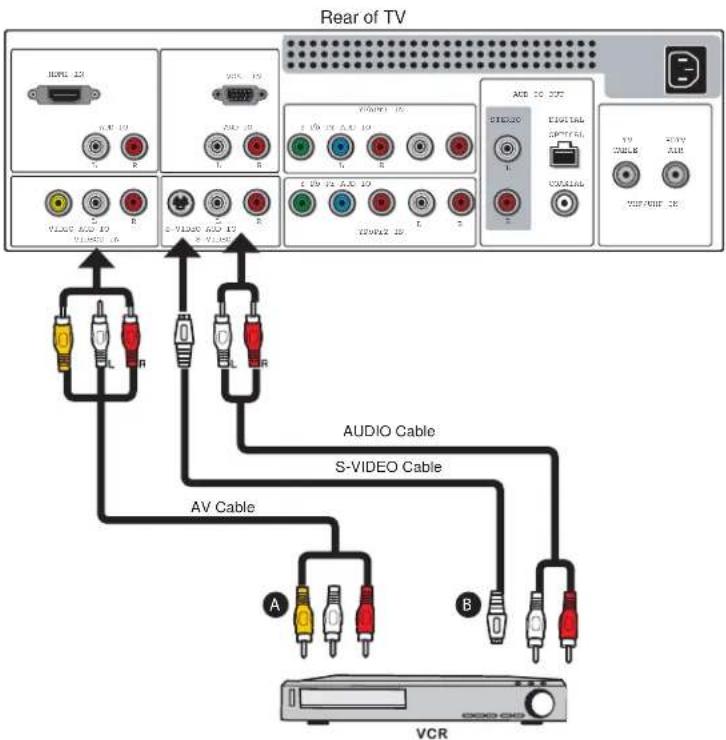
1 METHOD A:
Use a composite cable to connect the VCR's composite video/audio jacks to the LCD TV's VIDEO2 IN jacks.
METHOD B:
Use an audio cable to connect the VCR's audio output jacks to the LCD TV's audio inputs. Use a S-Video cable to connect the VCR's s-video output jack to the LCD TV's S-VIDEO IN input jack.
2 Connect all AC power sources, before turning on the power switch of the LCD TV or other connected equipment.
3 Press the ⏻ button on the remote to turn on the LCD TV.
4 To watch a videotape, press the Input button on the remote to select VIDEO2(METHOD A), or VIDEO3(METHOD B).
Connecting a Video Camera or Play Station
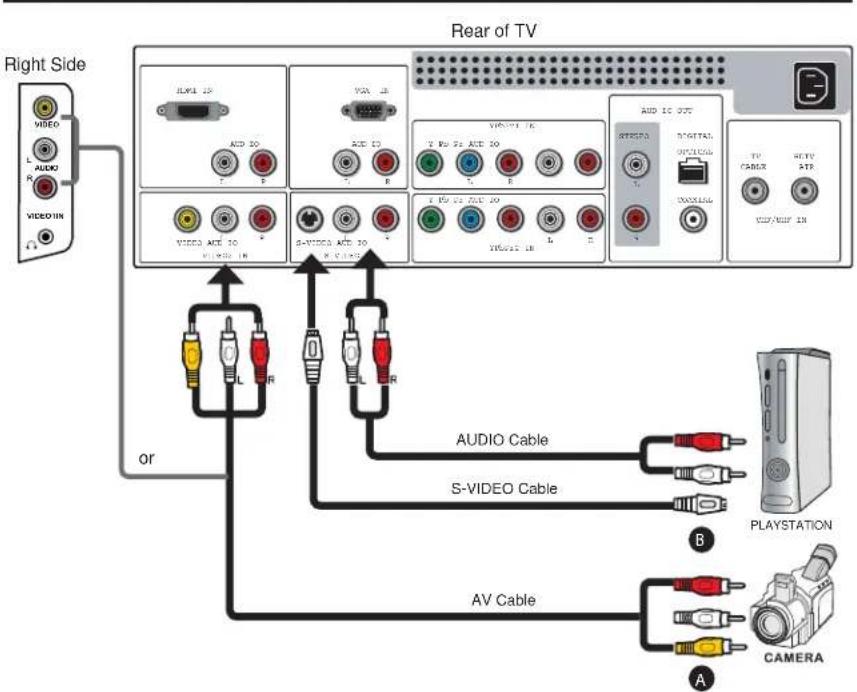
flowchart
graph TD
    A["Right Side"] --> B["Back to Panel"]
    B --> C["Left Audio"]
    B --> D["Right Side Video"]
    C --> E["ACD 20"]
    D --> F["ACD 10"]
    E --> G["VIDEO ANT 10"]
    F --> H["VIDEO ANT 20"]
    G --> I["AV ANT 10"]
    H --> J["AV ANT 20"]
    I --> K["AV ANT 30"]
    J --> L["AV ANT 40"]
    K --> M["Audio IC 20"]
    L --> N["Audio IC 30"]
    M --> O["Playstation"]
    N --> P["Playstation"]
    O --> Q["Playstation"]
    P --> R["AV Cable"]
    Q --> S["AV Cable"]
    R --> T["CAMERA"]
    S --> U["Audio Cable"]

METHOD A:
Use a composite cable to connect the video camera's or play station's composite video/audio jacks to the LCD TV's VIDEO2 IN jacks or VIDEO1 IN jacks.
METHOD B:
Use an audio cable to connect the video camera's or play station's audio output jacks to the LCD TV's audio inputs. Use a S-Video cable to connect the video camera's or play station's s-video output jack to the LCD TV's S-VIDEO IN input jack.

Connect all AC power sources, before turning on the power switch of the LCD TV or other connected equipment.

Press the ⏻ button on the remote to turn on the LCD TV.

To watch a video vis camera or play station, press the Input button on the remote to select VIDEO2/VIDEO1(METHOD A), or VIDEO3 (METHOD B).

Not all cameras have the ability to connect to a TV. Please check your video camera user guide for compatibility.
Connecting a DVD Player
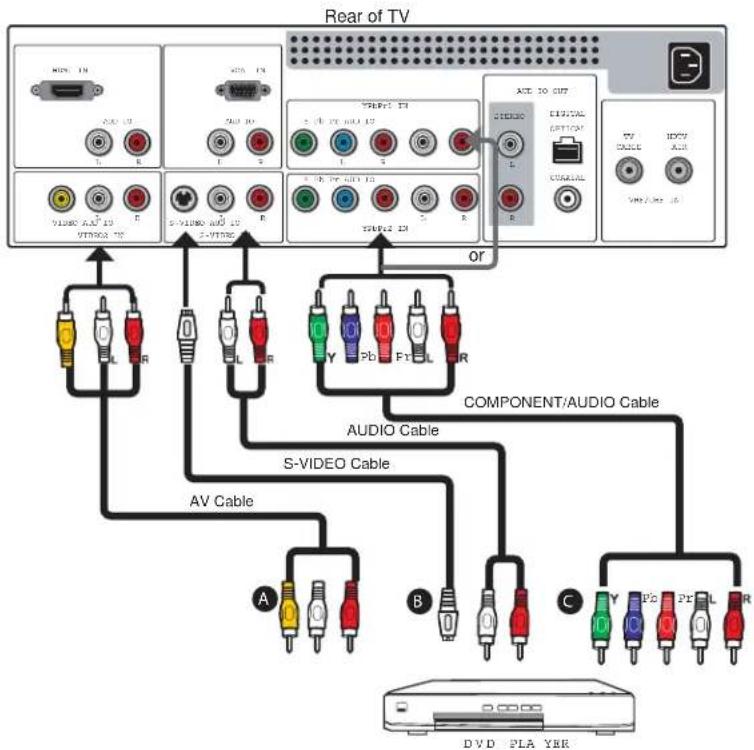
flowchart
graph TD
    A["Back of TV"] --> B["Component/Audio Cable"]
    A --> C["S-VIDEO Cable"]
    A --> D["AV Cable"]
    A --> E["Audio Cable"]
    A --> F["Display Panel"]
    B --> G["Component/Audio Cable"]
    B --> H["AV Cable"]
    B --> I["S-VIDEO Cable"]
    B --> J["AV Cable"]
    C --> K["Component/Audio Cable"]
    C --> L["AV Cable"]
    C --> M["S-VIDEO Cable"]
    C --> N["AV Cable"]
    D --> O["Component/Audio Cable"]
    D --> P["AV Cable"]
    D --> Q["S-VIDEO Cable"]
    D --> R["AV Cable"]
    E --> S["Component/Audio Cable"]
    E --> T["AV Cable"]
    E --> U["S-VIDEO Cable"]
    E --> V["AV Cable"]
    F --> W["Component/Audio Cable"]
    F --> X["AV Cable"]
    F --> Y["S-VIDEO Cable"]
    F --> Z["AV Cable"]

METHOD A:
Use a composite cable to connect the DVD player's composite video/audio jacks to the LCD TV's VIDEO2 IN jacks.
METHOD B:
Use an audio cable to connect the DVD player's audio output jacks to the LCD TV's audio inputs. Use a S-Video cable to connect the DVD player's s-video output jack to the LCD TV's S-VIDEO IN input jack.
METHOD C:
Use a component cable to connect the DVD player's component output jacks to the LCD TV's YPbPr1 IN or YPbPr2 IN input jacks.
Use an audio cable to connect the DVD player's component audio jacks to the LCD TV's audio input jacks.

The component video jacks on your DVD player are sometimes labeled YPbPr, or YCbCr. For an explanation of component video, see your DVD player's user guide.
2 Connect all AC power sources, before turning on the power switch of the LCD TV or other connected equipment.
3 Press the button on the remote to turn on the LCD TV.
4 To watch a DVD, press the Input button on the remote to select VIDEO2(METHOD A), or VIDEO3(METHOD B), or VIDEO4/VIDEO5(METHOD C).

For best picture quality, if your equipment has component video output, use a component cable instead of a composite video or S-video cable.
Connecting a Digital TV Cable Box or Digital Satellite Receiver
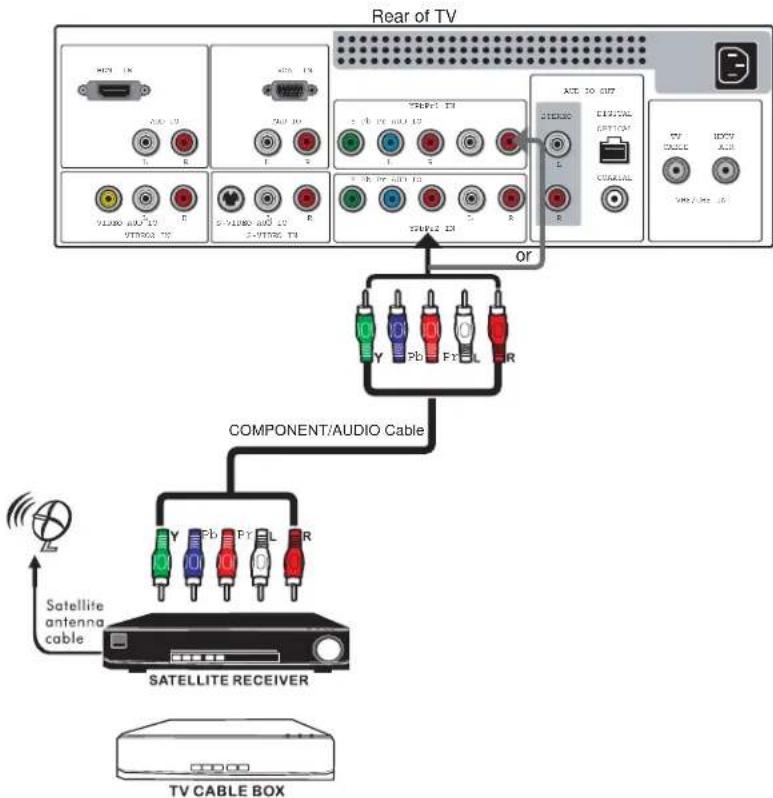
flowchart
graph TD
    A["Back of TV"] --> B["Component/AUDIO Cable"]
    B --> C["SATELLITE RECEIVER"]
    C --> D["Satellite antenna cable"]
    D --> E["TV CABLE BOX"]
    A --> F["Antenna 10"]
    A --> G["Antenna 12"]
    A --> H["Antenna 14"]
    A --> I["Antenna 16"]
    A --> J["Antenna 18"]
    A --> K["Antenna 20"]
    A --> L["Antenna 22"]
    A --> M["Antenna 24"]
    A --> N["Antenna 26"]
    A --> O["Antenna 28"]
    A --> P["Antenna 30"]
    A --> Q["Antenna 32"]
    A --> R["Antenna 34"]
    A --> S["Antenna 36"]
    A --> T["Antenna 38"]
    A --> U["Antenna 40"]
    A --> V["Antenna 42"]
    A --> W["Antenna 44"]
    A --> X["Antenna 46"]
    A --> Y["Antenna 48"]
    A --> Z["Antenna 50"]
Use a component cable to connect the satellite receiver's/TV Cable Box's component (YPbPr1) output jacks to the LCD TV's component input jacks. Use an audio cable to connect the satellite receiver's/TV Cable Box's component audio jacks to the LCD TV's audio input jacks.
2 Connect all AC power sources, before turning on the power switch of the LCD TV or other connected equipment.
3 Press the button on the remote to turn on the LCD TV.
4 To watch programs via satellite receiver or TV Cable Box, press the Input button on the remote to select VIDEO4/VIDEO5.
Connecting an AV Equipment with HDMI Connector
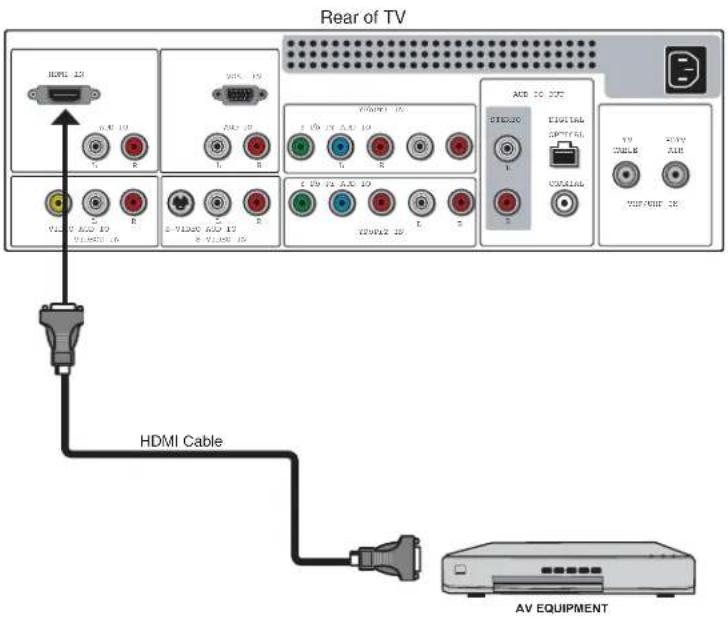
ENGLISH
Use a HDMI cable to connect the AV equipment's HDMI output jack to the LCD TV's HDMI IN jacks.
2 Connect all AC power sources, before turning on the power switch of the LCD TV or other connected equipment.
3 Press the button on the remote to turn on the LCD TV.
4 Press the Input button on the remote to select VIDEO6.

The HDMI connector provides both video and audio signals, it's not necessary to connect the audio cable.
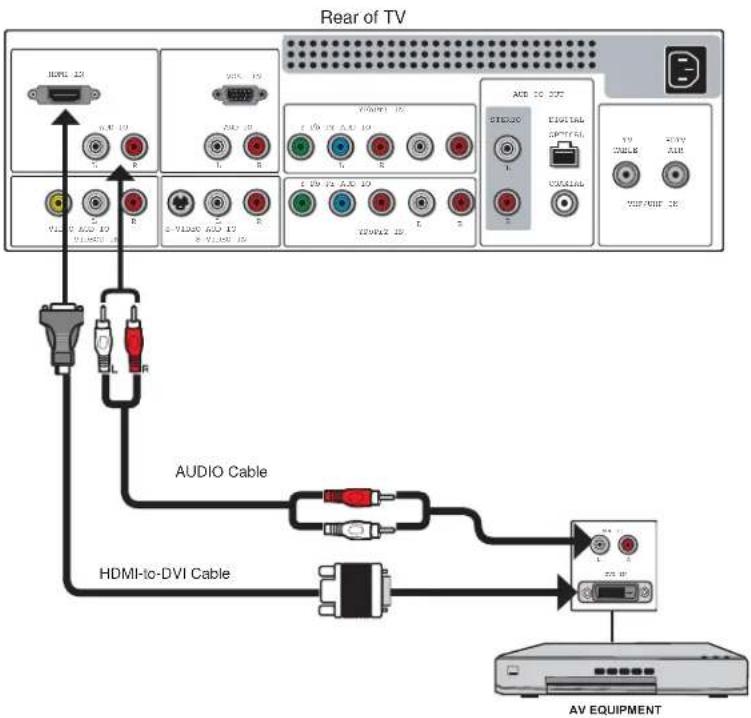
Connecting an AV Equipment with DVI Connector
flowchart
graph TD
    A["Back Panel"] --> B["Residential Cable"]
    B --> C["Audio Cable"]
    C --> D["AV Equipment"]
    A --> E["Residential Cable"]
    E --> F["Residential Cable"]
    F --> G["Residential Cable"]
    G --> H["Residential Cable"]
    H --> I["Residential Cable"]
    I --> J["Residential Cable"]
    J --> K["Residential Cable"]
    K --> L["Residential Cable"]
    L --> M["Residential Cable"]
    M --> N["Residential Cable"]
    N --> O["Residential Cable"]
    O --> P["Residential Cable"]
    P --> Q["Residential Cable"]
    Q --> R["Residential Cable"]
    R --> S["Residential Cable"]
    S --> T["Residential Cable"]
    T --> U["Residential Cable"]
    U --> V["Residential Cable"]
    V --> W["Residential Cable"]
    W --> X["Residential Cable"]
    X --> Y["Residential Cable"]
    Y --> Z["Residential Cable"]
    Z --> AA["Residential Cable"]
    AA --> AB["Residential Cable"]
    AB --> AC["Residential Cable"]
    AC --> AD["Residential Cable"]
    AD --> AE["Residential Cable"]
    AE --> AF["Residential Cable"]
    AF --> AG["Residential Cable"]
Use a HDMI-to-DVI cable to connect the AV equipment's DVI output jack to the LCD TV's HDMI IN jacks.
Use an audio cable to connect the AV equipment's audio output jacks to LCD TV's HDMI AUDIO jacks.
2 Connect all AC power sources, before turning on the power switch of the LCD TV or other connected equipment.
3 Press the ⏻ button on the remote to turn on the LCD TV.
4 Press the Input button on the remote to select VIDEO6.

If the LCD TV is connected to AV equipment's DVI connector, you will need an HDMI-to-DVI cable or an HDMI adapter(not supplied).
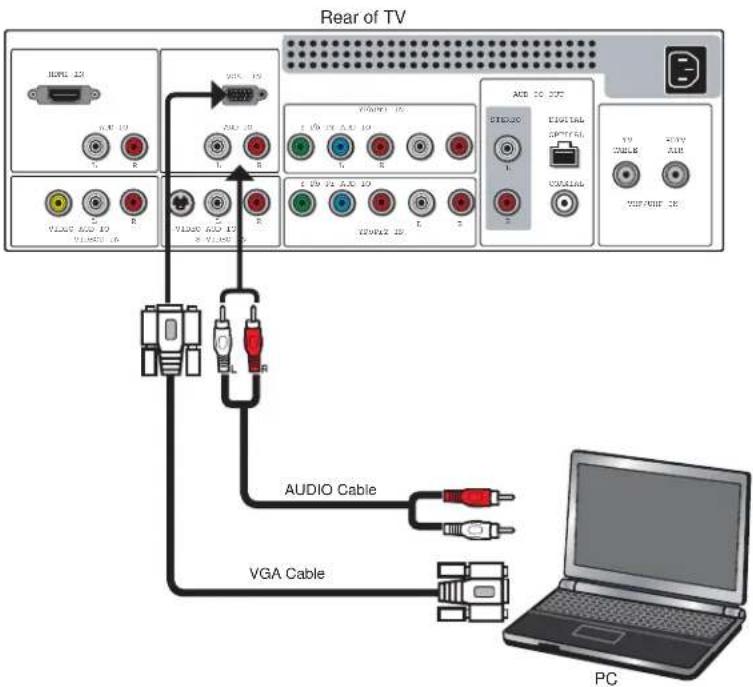
Connecting a PC
flowchart
graph TD
    A["Back of TV"] --> B["Residential Audio Cable"]
    A --> C["Residential Video Cable"]
    A --> D["Residential Audio Cable"]
    A --> E["Residential Video Cable"]
    B --> F["Computer Laptop"]
    C --> F
    D --> F
    E --> F
    F --> G["PC"]
    style A fill:#f9f,stroke:#333
    style B fill:#ccf,stroke:#333
    style C fill:#cfc,stroke:#333
    style D fill:#fcc,stroke:#333
    style E fill:#cff,stroke:#333
ENGLISH
1 Use a D-SUB cable to connect the PC's D-SUB output jack to the LCD TV's VGA input jack. Use an audio cable to connect the PC's audio output jacks to LCD TV's.
2 Connect all AC power sources, before turning on the power switch of the LCD TV or other connected equipment.
3 Press the button on the remote to turn on the LCD TV.
4 Press the Input button on the remote to select COMPUTER.
Connecting an Audio Receiver or a Dolby Digital 5.1 Sound System
For better sound quality, you may want to play the LCD TV audio through your stereo system.
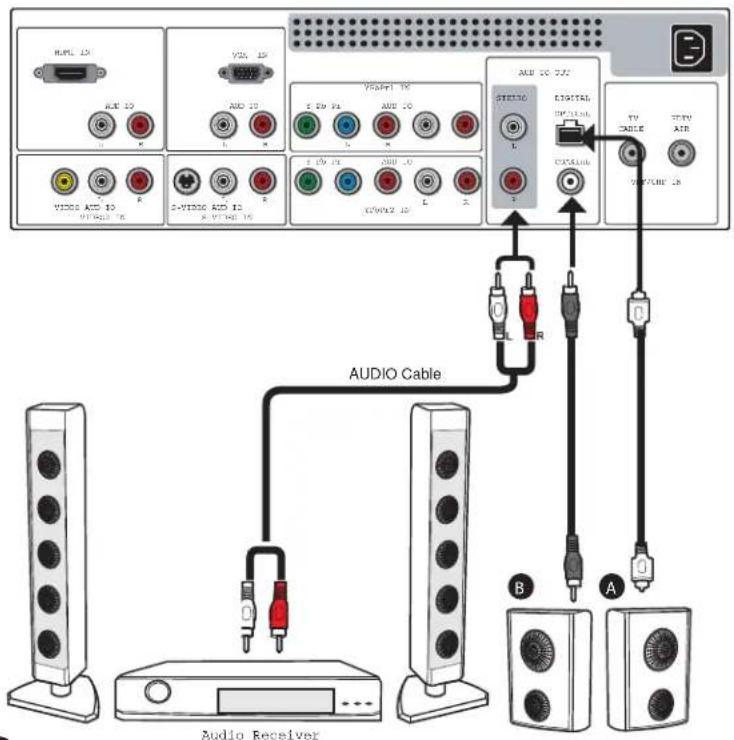

Connecting to Audio Receiver;
Use an audio cable to connect the audio receiver's audio LINE IN jacks to LCD TV's AUDIO OUT jacks.

Connecting to Digital 5.1 Sound System:
METHOD A:
Use an optical cable to connect the audio amplifier's OPTICAL IN jacks to LCD TV's OPTICAL OUT jacks.
METHOD B:
Use a coaxial cable to connect the audio amplifier's COAXIAL IN jacks to LCD TV's COAXIAL OUT jacks.
Note: Above mentioned function is only available under HDTV (cable/air) mode.

Connect all AC power sources, before turning on the power switch of the LCD TV or other connected equipment.

Press the ⏻ button on the remote to turn on the LCD TV.
Chapter 3
USING THE FEATURES
Using Picture-In-Picture
The PIP/POP feature allows simultaneous viewing of video from two sources (TV, VCR, DVD etc). Only one source's audio is played at a time; the user may select which source's audio is heard.
NOTE: Picture-in-Picture/Picture-on-Picture do not work when both picture sources are coming from component input (YPbPr).

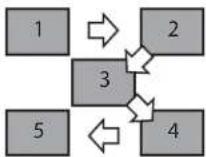
Press the PIP button once to enter picture in picture mode.
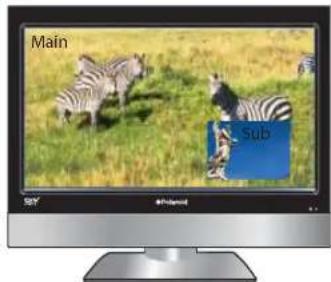
- Press ◀▶ to toggle the audio source between the main window and the sub window.
- Press the OK button to change the position of the second window.
SUD
[Unreadable]
- Press ◀▶ to activate either the main or sub window, then press the Input button to display the Input List:
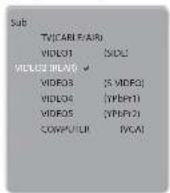
- Press ▲▼ to change input source and press the OK button.

Press the PIP button again to view images side by side.
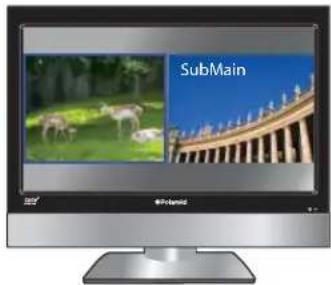
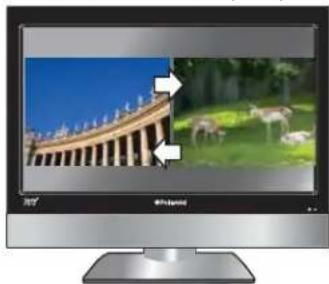
- Press ◀▶ to toggle the audio source between the main window and the sub window.
- Press the OK button to swap the pictures between the main and sub windows.
natural_image
Computer monitor displaying a scenic view of a classical building with grazing animals in the background (no text or symbols visible)- Press ◀▶ to activate either the main or sub window, then press the Input button to display the Input List:
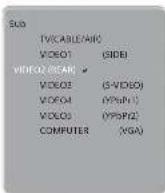
Press ▲▼ to change input source and press the OK button. NOTE: PIP does not function when VIDEO4 (YPbPr1) and VIDEO5 (YPbPr2) inputs are selected together.

Press the PIP button again to exit.
Wide Screen Viewing
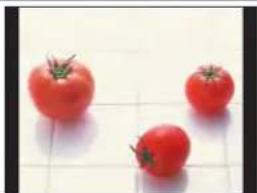
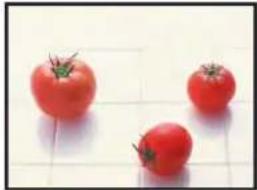
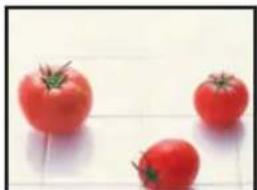
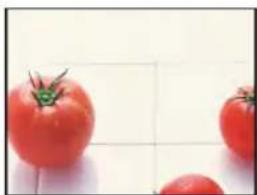
Wide Screen function allows viewing of 4:3/16:9 images in wide screen mode, cycling through the following wide screen settings. Press the ASPECT button repeatedly to select the screen format you want.

NORMAL
Displays at 4:3 aspect ratio.
natural_image
Three red tomatoes on a tiled surface (no text or symbols visible)
FULL
Stretches the image vertically and horizontally to keeps the image size consistent in the center of the screen and stretches the sides
natural_image
Three red tomatoes on a tiled surface (no text or symbols visible)
WIDE
Stretches the image vertically and horizontally to fill the screen at 1:1.85 aspect ratio.
natural_image
Three red tomatoes on a tiled surface (no text or symbols visible)
ZOOM
Stretches the image vertically and horizontally to fill the screen at 1:2.35 aspect ratio.
natural_image
Close-up of three red tomatoes on a white surface (no text or symbols visible)Operating the Menu

Press the button to turn the LCD TV on.

Press the MENU button on the remote control, the on-screen menu will appear on the screen. Use the ◀▶ buttons to select your main menu option.
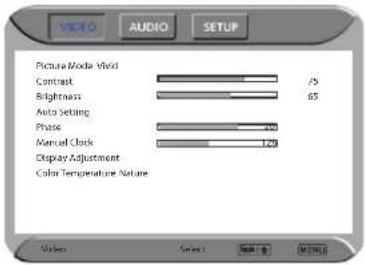
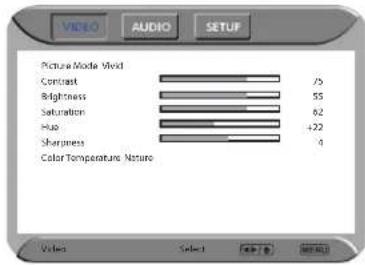
VIDEO MENU:
Allows you to make adjustments to your picture settings.
- If the signal source is VGA, the VIDEO MENU appears as:
- If the signal source is TV/HDTV/VIDOE/SVIDEO/YPbPr/HDMI, the VIDEO MENU appears as:
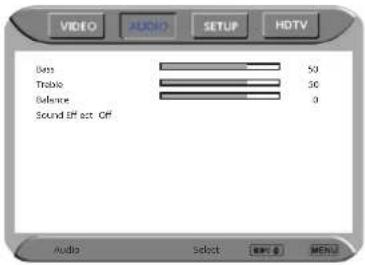
AUDIO MENU:
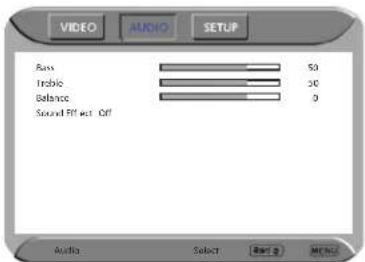
Allows you to customize the audio options and effects.
- If the signal source is VIDOE/SVIDEO/YPbPr/HDMI/VGA, the AUDIO MENU appears as:
- If the signal source is TV, the AUDIO MENU appears as:
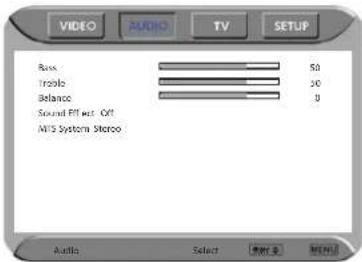
- If the signal source is HDTV, the AUDIO MENU appears as:
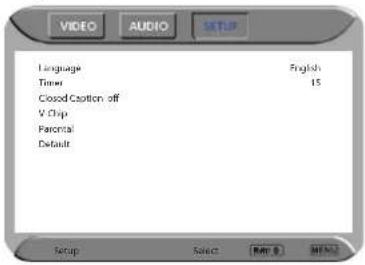
SETUP MENU:
Allows you to set up a variety of features: Language, Closed Caption, factory reset, V-Chip, Parental Control sleep timer.
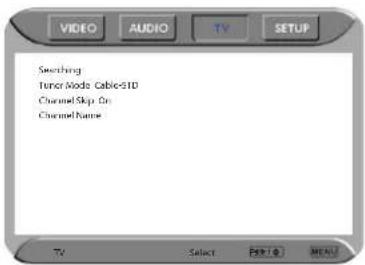
TV MENU:
Allows you to edit and label channels.
HDTV MENU:
Allows you to set up the HDTV program function.
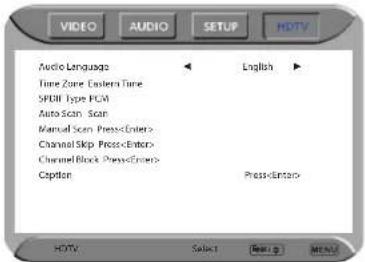

Use the ▲▼ buttons to select an option of the sub-menu, and press the OK button. While in adjustment mode, and use the ◀▶ buttons to change the value of the item.

Press the MENU button to exit the menu.
Setting up the HDTV Function
Automatically scans and stores all the TV channels

With the LCD TV connected to a television programming source, press the TV button on the remote control.

Press the MENU button on the remote control to display the Main menu, and use the ◀▶ buttons to select the HDTV.
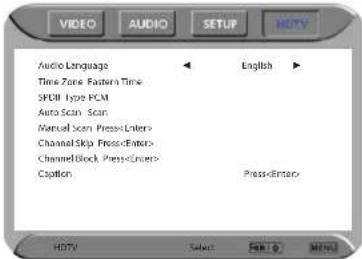

Press the ▼ button to select Auto Scan, and press the OK button. The Auto Scan automatically creates a list of receivable channels. Press the MENU button at any time to interrupt the memorization process.(the list cannot be created if interrupted)
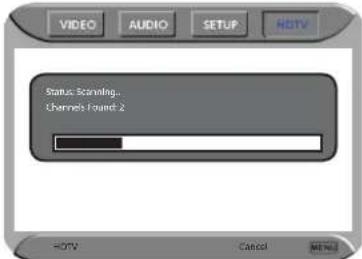

Press the OK button to display the received channel list, then press ▲▼the buttons to select a channel. Or, use the • (Input button) with 0-9 buttons to select digital channel( for example 9.1)
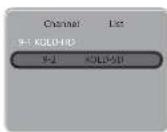

The digital main channel might include many subchannels (for example 9-1, 9-2...) that are showing program at the same time.

The HDTV menu includes the following options:
| Audio Language | Allows to select the audio language: English/Spanish/French. |
| one Allows selection of regional TV systems of USA: Eastern Time/Indiana/ Central time/Mountain Time/Arizona/Paclitc Time/Alaska/Hawaii | |
| SPDIF Type | Allows to selection of the digital sound format: PCM/OFF/Dolby Digital |
| Auto Scan | Automatically sets up channel list on TV for all receivable channels. |
Manual Scan Allows to set up TV channel manually.
Channel Skip Allows addition/removal of digital channels.
Channel Block Allows to block digital channels.
Use the Channel Block function, must enter a four-digit password. The factory password is 0000.
Caption
Allows to set closed caption:
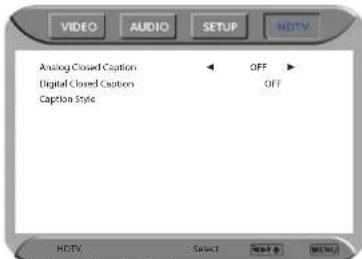
- Analog Closed Caption:
Allows to set basic analog closed caption options: OFF/CC1/CC2/CC3/CC4
- Digital Closed Caption:
Allows to set digital closed caption options:Service1/Service2/Service3/Service4/Service5/Service6/OFF
- Caption Style:
Allows to customize the settings for digital closed caption option:
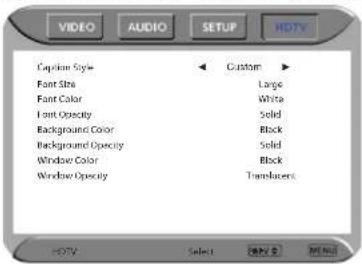
Using the Program Guide
The Program Guide feature brings all sorts of information provided by the cable TV company to your screen, such as program title, program duration, time remaining, rating information, closed caption, availability, etc.

With the LCD TV connected to a television programming source, press the TV button on the remote control.

Press the GUIDE button on the remote control, the Program Guide will appear on the screen:
Monday 29 April 2005 2:36:26 PM
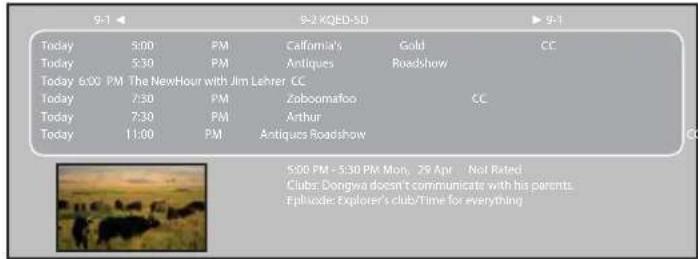
9-2 KOED-SD

Press the ▲▼ button to select the program from a list, the Program Guide provides introduction about the current program being shown on each channel.
Monday 29 April 2005 2:36:26 PM
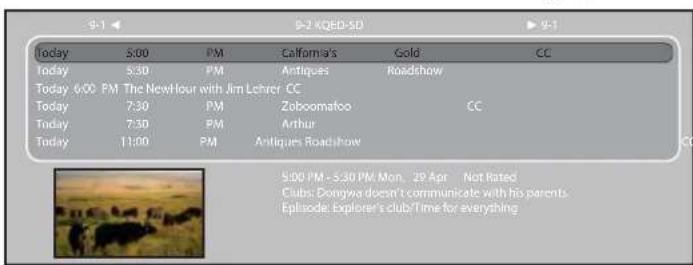
9-2 KOED-5D

Press the GUIDE button again on the remote control to exit the Program Guide
Customizing the VIDEO Settings

Press the button to turn the LCD TV on.

Press the MENU button on the remote control to display the Main menu, and use the ◀▶ buttons to select the VIDEO.

Use the ▲▼buttons to highlight an individual VIDEO option, use the ◀▶ buttons to change the setting, and press the MENU to exit the menu
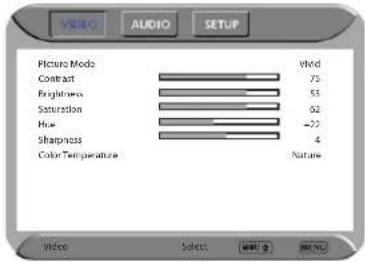

The VIDEO menu includes the following options:
Picture Mode Cycles among display types: Vivid/Hi-Bright/Cinema/Sport/User
Contrast Controls the difference between the brightest and darkest regions of the picture.
Brightness Controls the overall brightness of the picture.
Saturation Controls the color intensity.
Hue Controls the difference between the green and red regions of the picture.
Sharpness Increase this setting to see crisp edges in the picture; decrease it for soft edges.
Color temperature Adjusts color components independently to achieve a warm or cool effect: Cool/Middle/Warm/User
- Warm: Increases red tint
- Nature: Increases natural tint
- Cool: Increases blue tint
- User: Allows the user to adjust red, green and blue color
component levels independently.
Customizing the AUDIO Settings

Press the button to turn the LCD TV on.

Press the MENU button on the remote control to display the Main menu, and use the ◀▶ buttons to select the AUDIO.

Use the ▲▼buttons to highlight an individual AUDIO option, use the ◀▶ buttons to change the setting, and press the MENU to exit the menu
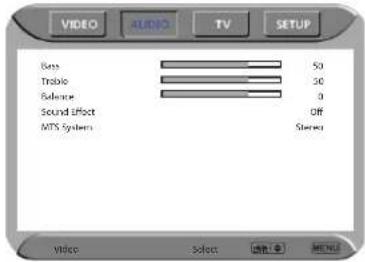

The AUDIO menu includes the following options:
Bass Controls the relative intensity of lower-pitched sounds.
Treble Controls the relative intensity of higher pitched sounds.
Balance Adjusts the relative volume of the speakers in a multiple speaker system.
Sound Effect
Allows selection of an audio-enhancement technique from among the following options: Surround/Live/Dance/Techno/Classic/Soft/Rock/POP/Off.
MTS System
Allows you to listen to high-idelity stereo sound while watching TV. - Stereo:
Use separate audio tracks for left and right speakers, if available.
- SAP:
You can enjoy a second audio program from the speakers while watching a scene in the original program.
- Mono:
Allows mono output (useful when stereo is noisy or inconsistent).
Customizing the SETUP Settings

Press the button to turn the LCD TV on.

Press the MENU button on the remote control to display the Main menu, and use the ◀▶ buttons to select the SETUP.

Use the ▲▼buttons to highlight an individual SETUP option, use the ◀▶ buttons to change the setting, and press the MENU to exit the menu.
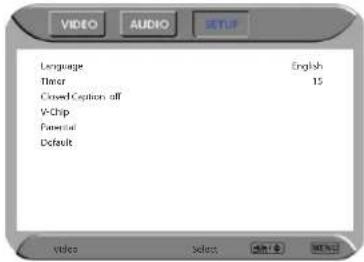

The SETUP menu includes the following options:
Language Selects to display all on-screen menus in your language of choice:
English/Trandition Chinese/Simplified Chinese/French/Spanish.
Timer Allows to set up clock and to program the TV to turn on and off and tune
to a specific channel.
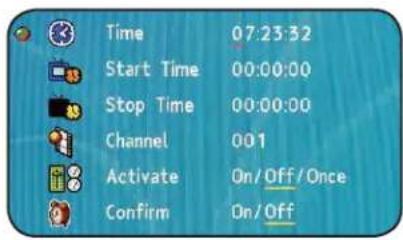
NOTE:
The timer can only be set using Military time. Military time uses a 24-hour scale instead of a 12-hour scale. For example, if you need to set your timer for 3:00 a.m. you would use 03:00:00, but if you would like to set it for 3:00 p.m., you should use 15:00:00.
HINT:
For times that fall in the p.m. hours, add 12 to your desired time. If the power goes off or the unit's power cord is removed, you will need to reset your timer.
- Time:
Selects to set the current time by hour, minute, second.
- Start Time:
Selects to set the time that you want the TV to turn on.
- Stop Time:
Selects to set the time that you want the TV to turn off.
- Channel:
Selects to set the specific channel that you want the TV to tune.
- Activate:
Selects to turn on/off/once the timer (each day).
Confirm:
Selects to confirm and set settings.
Chapter 3 Using the LCD TV
Closed Caption Allows to select from 4 closed caption modes:
- CC1 /CC2 /CC3 /CC4:
Display a printed version of the dialog and sound effects of the program being viewed.
T1/T2:
Display station information presented using either half or the whole screen.
T3/T4:
Extended Data Services. For example: Network name, program name, program length, etc.
NOTE: For better viewing CC in text mode will have a black box behind the text.
V-Chip Allows to setup the TV and MPAA Rating Lock options (refer to "Using the V-CHIP Setting").
Parental Allows to setup the Parental Lock options.
Default Restores factory settings.
Using the V-CHIP Settings
The US has 2 rating system for viewing content: Movie blocking(MPAA) and TV Blocking.
The TV Blocking conjuncts with the V-CHIP to help parents block inappropriate programs from their children.
The Movie blocking(MPAA) is used for original movies rated by the Motion Picture Association of America(MPAA) as broadcasted on cable TV and not edited for television.
The V-CHIP can also be set to block MPAA-rated movies.

Use the ▼ button to select the V-Chip, and press the OK to display the V-Chip menu.
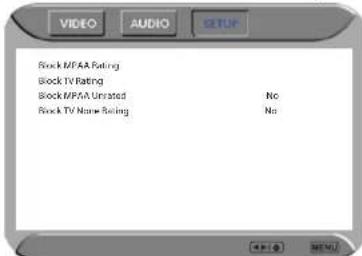

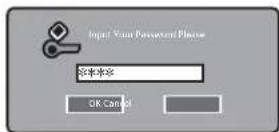
The factory preset password is 0000. This password must be used first before setting your own personal password. It is recommended that you keep your personal password in a safe place and away from children. In the event you loose your personal password the master password is 8202. The master password overrides all passwords. The master password can't be changed and should be kept in a safe place away from children.

The MPAA includes the following options:
| RATING | DESCRIPTION |
| G | General Audiences. Movie is appropriate for all ages. |
| PG | Parental Guidance Suggested. May contain material not suited for younger viewers |
| PG-13 | Contains content that may not be appropriate for viewers under the age of 13. |
| R | Restricted. Contains adult content, no one under 17 admitted without parent. |
| NC-17 No one 17 and under admitted. | |
| X No one 17 and under admitted. | |
Use the ▲▼ buttons to select the rating you want and press the OK button repeatedly to select BLOCK(√) or UNBLOCK(X).

The TV GUIDELINE has 2 rating methods: Content-Based Rating and Age-Based Rating. The TV GUIDELINE includes the following options: TV-MA Mature Audience on
| AGE-BASED | CONTENT-BASED | ||
| RATING | DESCRIPTION | RATING | DESCRIPTION |
| TV-Y | All children | FV | Fantasy violence |
| TV-Y7 | Directed to children age 7 and older | D | Suggestive dialogue |
| TV-G | General Audience | L | Strong language |
| TV-PG | Parental Guidance suggested | S | Sexual situations |
| TV-14 | Parents strongly cautioned | ||
| CONTENT-BASED | ||||||
| FVDLSV | ||||||
| AGE-BASED | TV-Y | |||||
| TV-Y7 | √ | |||||
| TV-G | ||||||
| TV-PG | √ | √ | √ | √ | ||
| TV-14 | √ | √ | √ | √ | ||
| TV-MA | √ | √ | √ | |||
√ : To block programs by both content and age.
Use the ▲▼ buttons to select the rating you want and press the OK button repeatedly to select BLOCK(▼) or UNBLOCK(✗).

The V-CHIP menu includes the following options:
Block MPAA Rating Selects to activate the MPAA Rating programs
Block TV Rating Selects to activate the TV Rating programs.
Block MPAA Unrated · YES:
Block all movies that are broadcast without a MPAA rating.
NO:
Allows all movies that are broadcast without a MPAA rating
Block TV None Rating • YES:
Block all movies that are broadcast without a TV rating.
NO:
Allows all movies that are broadcast without a TV rating.
Using the Parental Settings
The Parental blocking can be set up to the TV to block a Channel or a Video Source.

Use the ▼ button to select the Parental, and press the OK to display the Parental menu.
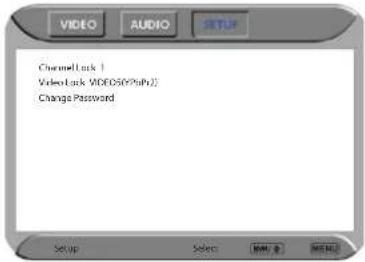

Use the V-CHIP function, must enter a four-digit password. The factory password is 0000.
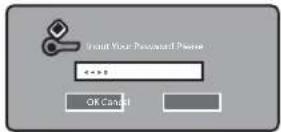

You need your password for any future access into the V-Chip and Parental Setting,

The Parental menu includes the following options:
Channel
Lock Selects to block a TV channel.
Video Lock Selects to block a Input source signal.
Change Password Selects to change your password.
Customizing the TV Settings

Press the button to turn the LCD TV on.

Press the MENU button on the remote control to display the Main menu, and use the ◀▶ buttons to select the TV.

Use the ▲▼buttons to highlight an individual TV option, use the ◀▶ buttons changes the setting, and press the MENU exits the menu.
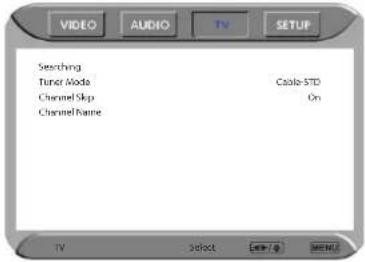

The TV menu includes the following options:
Searching Automatically sets up channel list on TV for all receivable channels.
Tuner Mode Allows selection between CATV cable and antenna signal sources: AN TENNA
Choose this setting if you are receiving TV channels with an antenna cable.
• CABLE STD/CABLE IRC/CABLE HRC
Choose this setting if you are receiving TV channels with a CATV cable.
Channel Skip Allows addition/removal of channels on the channel list.
Channel Name
Allows channel labels to be edited.
SPECIFICATIONS
| MODEL | FLM-2632/ FLM-2634BFLM-263B/ FLM-2632M | FLM-3232/ FLM-323B/ FLM-3232M | |
| LCD Panel Panel | Size 26" TFT LCD 32" TFT LCD | ||
| Brightness 400 400 | |||
| Contrast Ratio 1200:1 1200:1 | |||
| Max. Resolution 1366x768 1366x768 | |||
| Input Connector V | IDEO/AUDIO(L/R) 2 2 | ||
| S-VIDEO/AUDIO(L/R) | 1 1 | ||
| YPbPr/AUDIO(L/R) | 2 2 | ||
| VGA/AUDIO(L/R) | 1 1 | ||
| HDMI/AUDIO(L/R) | 1 1 | ||
| AUDIO OUT(L/R) | 1 1 | ||
| OPTICAL/COAXIAL | 2 2 | ||
| HEADPHONE | 1 1 | ||
| Power Source | AC100~240V, 50/60HZ, 2.2A | AC100~240V, 50/60HZ, 2.2A | |
| Power Consumption | 180 W, standby < 5 W | 180 W, standby < 5 W | |
| Dimension | 26.7 w x 22.1 h x 7.9 d inch | 31.7 w x 25.0 h x 8.4 d inch | |
| WEIGHT | 31.97 LB | 39.5 LB | |

| MODEL | FLM-3732/FLM-373B/FLM-3734B/FLX-374/FLM-3732M | FLM-4034B | |
| LCD Panel Panel | Size 37" TFT LCD 40" T | FT LCD | |
| Brightness 500 500 | |||
| Contrast Ratio 1000:1 | 200:1 | ||
| Max. Resolution 1366x768 1366x768 | |||
| Input Connector V | IDEO/AUDIO(L/R) 2 2 | ||
| S-VIDEO/AUDIO(L/R) 1 | 1 | ||
| YPbPr/AUDIO(L/R) 2 2 | |||
| VGA/AUDIO(L/R) | 1 1 | ||
| HDMI/AUDIO(L/R) | 1 1 | ||
| AUDIO OUT(L/R) | 1 1 | ||
| OPTICAL/COAXIAL | 1 1 | ||
| HEADPHONE | 1 1 | ||
| Power Source | AC100~240V, 50/60HZ, 3.0A | AC100~240V, 50/60HZ, xx A | |
| Power Consumption | 275 W, standby < 8 W | 275 W, standby < 8 W | |
| Dimension | 36.6 w x 28.2 h x 9.4 d inch | 39 w x29.2 h x 9.4 d inch | |
| WEIGHT | 54 LB | 60 LB | |
Chapter 4
Programming your Remote Control
Introduction
Your remote lets you control four devices with one easy-to-use, compact unit. After installing batteries, you can program the remote to control your Universal TV, VCR or DVD, Cable or Satellite Receivers, Amplifier or Tuner, and Auxiliary devices. To do so, follow the instructions in "Programming a Device". For best results, please read and follow all the remaining instructions. Keep this guide for future reference.
A Quick Look at Programming a Device
To control VCR or DVD, Cable or Satellite Receivers, Amplifier or Tuner, and Auxiliary devices, follow these steps. Before proceeding, find the codes for the devices you want to program in "Manufacturer's Codes" on the right side of this page and write them down or highlight them.
NOTE: To program a DVD Player, TV/DVD Combo, TV/VCR/DVD Combo, portable DVD player, or mobile DVD player, use the DVD key.
- Turn on the device (for example, DVD player) and, if needed, load media (for example, a DVD).
- Press a device key (VCR/DVD, CBL/SAT, or AUX).
- Press and hold SET until the red LED blinks twice; then release.
-
Enter the first five-digit code for your device. The LED blinks once as each digit is entered. If the code is correct, the LED blinks twice.
NOTE: If the LED does not blink twice, repeat steps 2 to 4 and try entering the code again. -
Aim the remote at the device and press Power. The device should turn off. If it does not, repeat steps 3–5, trying each code for your brand until you find one that works. If you cannot find a code that works, see "Searching for Your Code".
-
Repeat steps 1–5 for the other devices you want to control. For future reference, write down each working device code below:
AUX Code:
CBL Code:
CD Code:
DVD Code:
SAT Code:
TNR Code:
VCR Code:
- Press set to save and exit
Searching for your Code
If your device does not respond to the remote after trying all codes listed for your brand, or if your brand is not listed, try searching for your code:
- Press a device key once.
- Press and hold SET until the red LED blinks twice; then release.
- Enter 9-9-1, then the device group number (0= Cable, 1= TV, 2= VCR, 3= Audio). The LED blinks twice.
- Aim the remote at the device and press Power. The remote sends IR codes from its library to the selected device, starting with the most popular code first. If the device responds, go to step 7.
- If the device does not respond, press CH+. The remote will try the next code. Continue until the device responds.
• Note: Press CH- to try the previous code.
-
To search for other device codes, repeat steps 1 to 5.
-
Press SET to save and exit.
Checking the Codes
If you have set up the remote using the procedure in "Searching for Your Code", you may need to find out which four-digit code is operating your equipment.
For example, to find out which code is assigned to your TV:
-
Press TV once.
-
Press and hold SET until the red LED blinks twice; then release.
-
Enter 9-9-0. The LED blinks twice.
-
To view the code for the first digit, press 1. Count the LED blinks (for example, three blinks = 3), and write down the number in the appropriate code listing in step 8 under "Programming a Device".
NOTE: If a code digit is 0, the LED does not blink.
- Repeat step 4 for the four remaining digits, using 2 for the second digit, 3 for the third digit, 4 for the fourth digit, and 5 for the fifth digit.
Changing Volume Lock
The remote comes preset to allow independent volume control of each selected device (Global Volume Unlock). However, you may change the Volume Lock setting to Global Volume Lock so that one device's volume will control volume in all other modes. After that, you can perform Individual Volume Unlock on a selected device to set its volume control for independent operation or Global Volume Unlock to remove all volume locking.
Locking Volume Control to One Mode (Global Volume Lock)
-
Press and hold SET until the red LED blinks twice; then release.
-
Enter 9-9-3 and then press the mode key for the device you want to control volume (for example, TV). The LED blinks twice. Now when you press VOL+, VOL-, or Mute, the selected device (for example, TV) will control the volume regardless of the current mode.
Unlocking All Volume Control (Restoring Global Unlock)
-
Press and hold SET until the red LED blinks twice; then release.
-
Enter 9-9-3 and then press VOL+. The LED blinks four times. Volume is now independently controlled for all programmed devices.
Unlocking a Single Device's Volume Control
-
Press a device key (TV, VCR/DVD, CBL/SAT, or AUX).
-
Press and hold SET until the red LED blinks twice; then release.
-
Enter 9-9-3 and then press VOL-. The LED blinks four times. Volume is now independently controlled for the selected devices.
Troubleshooting
PROBLEM: LED does not blink when you press a key.
SOLUTION: Replace battery with new AA size battery.
PROBLEM: LED blinks when you press a key, but device does not respond
SOLUTION: Make sure the remote is aimed at your device and is not more than 15 feet away
PROBLEM: LED blinks one long blink.
SOLUTION: An entry error has occurred (for example, wrong key). Try entry sequence again.
PROBLEM: Remote does not control devices or commands are not working properly.
SOLUTION: Try all listed codes for the device. Make sure the device operates with an infrared remote control.
PROBLEM: CH+, CH-, and LAST do not work for your RCA TV.
SOLUTION: Due to RCA design from 1983 to 1987, only the original remote control will operate these functions.
PROBLEM: No volume on a device.
SOLUTION: See "Changing Volume Lock".
PROBLEM: Channels do not change properly.
SOLUTION: If the original remote control required you to press Enter to change channels, press Enter on this remote after entering the channel number.
MANUFACTURER'S CODES
SETUP CODES FOR Audio Amplifiers
| Adcom | 0577, 1100 | |
| Aiwa | 0406 | |
| Arcam | 0269 | |
| Bose | 0674 | |
| Carver 0892, 0269 | ||
| Cinema Sound 0160 | ||
| Curtis Mathes 0300 | ||
| Denon | 0160 | |
| Durabrand | 1561 | |
| Elan | 0647 | |
| GE | 0078 | |
| Grundig 0269 | ||
| Harman/Kardon | 0892 | |
| JVC | 0331 | |
| Left Coast 0892 | ||
| Lenoxx | 1561 | |
| Linn | 0269 | |
| Luxman | 0165 | |
| Magnavox | 0269 | |
| Marantz | 0892, 0269, 0321 | |
| McIntosh | 0251 | |
| Micromega | 0269 | |
| Modulaire | 0395 | |
| NEC | 0264 | |
| Naim | 0269 | |
| Nakamichi | 0321 | |
| Optimus | 0013, 0300, 0823, 0395 | |
| Panasonic | 0308, 0521 | |
| Pass Labs | 0269 | |
| Philips | 0892, 0269 | |
| Pioneer | 0013, 0300, 0823 | |
| Polk Audio | 0892, 0269 | |
| RCA | 0013, 0300, 0823 | |
| RadioShack | 0395 | |
| Realistic | 0013, 0395, 0220 | |
| Revox | 0269 | |
| Sansui | 0321 | |
| Shure | 0264 | |
| Sony | 0815, 0220, 0689 | |
| Soundesign | 0078 |
Technics 0308, 0521
Victor 0331
Wards 0013, 0078
Yamaha 0354, 0133
SETUP CODES FOR
Cable Converters
A-Mark 0008, 0144
ABC 0237,0003,0008
Accuphase 0003
Acorn 0237
Action 0237
Active 0237
Americast 0899
Archer 0237
BCC 0276
Bell South 0899
British Telecom 0003
Century 0008
Digeo 1187
Director 0476
Fosgate 0276
GE 0144
General Instrument 0476, 0810, 0276, 0003
Gibraltar 0003
GoldStar 0144
Hamlin 0009
Hitachi 0003, 0008, 0009
Insight 0476, 0810
Jerrold 0476, 0810, 0276, 0003
Memorex 0000
Mitsubishi 0003
Motorola 0476, 1376,
0810, 0276, 1187
Nova Vision 0008
Novaplex 0008
Pace 0877, 1877, 0237, 0008
Panasonic 0000, 0008, 0144, 0107
Paragon 0000, 0008, 0525
Penneys 0000
Philips 1305, 0317
Pioneer 0877, 1877,
0144, 0533
Pulsar 0000
Quasar 0000
Regal 0276, 0279
Runco 0000
Samsung 0003, 0144
Scientifi c Atlanta 0877, 1877,0477,
SETUP CODES FOR Satellite Receivers
AlphaStar 0772
Bell ExpressVu 0775
Chaparral 0216
DirecTV 0566, 0639, 1639,
1640, 0247, 0749, 1749, 1142, 1442,
0724, 0819, 1856, 1108, 1609, 0392,
1392,1076,0099
Dish Network 0775
| Dish Network System | 0775, 1775, 1005, 1505 |
| Dishpro | 0775, 1775, 1005, 1505 |
| Echostar | 0775, 1775, 1005, 1505 |
| Expressvu | 0775, 1775 |
| GE | 0566, 0392 |
| GOI | 0775, 1775 |
| General Instrument | 0869 |
| Goodmans | 1246 |
| HTS | 0775, 1775 |
| Hitachi | 1250, 0749, 0819 |
| Houston tracker | 0775 |
| Hughes | 0749, 1749, 1142, 1442 |
| Hughes Network Systems | 0749, 1749, 1142, 1442 |
| Innova | 0099 |
| JVC | 0775, 1775 |
| Jerrold | 0869 |
| LG | 1226 |
| Magnavox | 0724, 0722 |
| McIntosh | 0869 |
| Memorex | 0724 |
| Mitsubishi | 0749 |
| Motorola | 0869, 0856 |
| NEC | 1270 |
| Netsat | 0099 |
| Next Level | 0869 |
| Optimus | 0724 |
| Panasonic | 0701, 0247 |
| Paysat | 0724 |
| Philips | 0749, 1749, 1142, 1442, 0775, 0724, 0722, 0819, 1076, 0099 |
| Pioneer | 1142, 1442 |
| Primestar | 0869 |
| Proscan | 0566, 0392 |
| RCA | 0566, 1142, 1442, 0775, 0143, 0855, 0392, 1392 |
| RadioShack | 0566, 0775, 0869 |
| SKY | 0856, 0099 |
| Samsung | 1142, 1442, 1276, 1108, 1609 |
| Sanyo | 1219 |
| Sony | 0639, 1639, 1640 |
| Star Choice | 0869 |
| Star Trak | 0772, 0869 |
| Thomson | 0566, 0392 |
| Tivo | 1142, 1442 |
| Toshiba 0749, 1749, 0790, 1285, 0819 | |
| UltimateTV | 1640, 1392 |
| Uniden | 0724, 0722 |
| Voom | 0869 |
| Zenith | 0856, 1856 |
SETUP CODES FOR TVs
| A-Mark | 0047, 0054 |
| AOC | 0180, 0030 |
| Accuscan | 0047 |
| Action | 0030 |
| Admiral | 0463, 0180 |
| 0047, 0054, 0017, 0051, 0093 | |
| Advent 0761, 0783, 0815, 0817, 0842 | |
| Adventuri | 0000 |
| Agna | 0150 |
| Aiko | 0092 |
| Akai | 0060, 0702, 0672, 0030, 0145, 0812 |
| Albatron | 0700, 0843 |
| Alde | 0672 |
| Alleron | 0030 |
| Ambassador | 0150 |
| America Action | 0180 |
| American High | 0000, 0060 |
| Amstrad | 0171 |
| Amtron | 0000, 0180 |
| Anam | 0180 |
| Apex | 0156, 0748, 0765 |
| Apex Digital | 0156, 0748, 0765, 0879, 0767 |
| Audinac | 0180 |
| Audiovox | 0451, 0180, 0092, 0623 |
| Aumark | 0060 |
| Aventura | 0171 |
| Baysonic | 0180 |
| Beaumark | 0017, 0030, 0178 |
| Belcor | 0030 |
| Bell & Howell | 0054, 0154, 0093 |
| Bell and Howell | 0054, 0154, 0093 |
| BenQ | 1756, 1032 |
| Bradford | 0180 |
| Brockwood | 0030, 0178 |
| Broksonic | 0236, 0463, 0180 |
| CXC | 0180 |
| Candle | 0030 |
| Capehart | 0017, 0030, 0178, 0092 |
| Capetronic | 0030 |
| Carnivale | 0030 |
| Carver | 0054 |
| Celebrity | 0000 |
| Celera | 0765 |
| Changhong | 0156, 0765, 0783, 0767 |
| Cineral | 0451, 0092 |
| Citek | 0047 |
| Citizen | 0054, 0000, 0451, 0463, 0180,0060, 0030, 0092, 0171 |
| Clarion | 0180 |
| Classic | 0030, 0092 |
| Colortyme | 0047, 0054, 0017, 0060, 0030, 0178 |
| Commercial Solutions | 0047, 1447 |
| Conic | 0178 |
| Contec | 0180 |
| Craig | 0180, 0171 |
| Crosley | 0054, 0000, 0180, 0030, 0171 |
| Crown | 0093, 0180, 0672 |
| Crown Mustang | 0672 |
| Curtis Mathes | 0047, 0054, |
| 0154, 0000, 0051, 0451, 0093, 0180, 0060, 0702, 0030, 0178,0145, 0166, 1147, 1347 | |
| Daewoo | 0451, 1661, 0672, |
| 0178, 0092, 0623, 1755, 1756,0661 | |
| Dayton | 0092 |
| Daytron | 0030, 0178, 0092 |
| Dell | 1454 |
| Denon | 0511, 0145 |
| Dumont | 0017, 0180, 0178 |
| Durabrand | 0463, 0180, |
| 0178, 0171, 1034, 1463 | |
| Dwin | 0093 |
| ESA | 0171, 0812 |
| Eaton | 0060 |
| Electroband | 0000 |
| Electrograph | 1755 |
| Electrohome | 0154, 0000, |
| 0150, 0030, 0178 | |
| Emerald | 0178 |
| Emerson | 0047, 0154, |
| 0451, 0236, 0463, 0180, 0150, 0178, 0171, 0623 | |
| Envision | 0030 |
| Fisher | 0054, 0154, 0000 |
| Fortress | 0093 |
| Funai | 0000, 0180, 0171 |
| Futuretech | 0180 |
| GE | 0047, 0000, 0051, 0451, |
| 0060, 0030, 0178, 1147,1347, 1447 | |
| Gateway | 1755, 1756 |
| Gemini | 0047 |
| Gibraltar | 0017, 0000, 0030 |
| Gibraltar | 0017, 0030 |
| Go Video | 0060 |
| GoldStar | 0047, |
| 0054, 0030, 0178 | |
| Goodmans | 0360 |
| Gradiente | 0053 |
| Grundig | 0672, 0706 |
| Grundy | 0180 |
| Grunpy | 0180 |
| Haier | 1034 |
| Hallmark 0236, 0180, 0178 | |
| Harley Davidson 0000,0180, 0060, 0030, 0178 | |
| Harman/Kardon 0054 | |
| Harvard | 0180 |
| Havermy 0093 | |
| Heathkit 0017 | |
| Helios | 0865 |
| Hello Kitty 0451 | |
| Hisense 0748 | |
| Hitachi 0047, 0054,0017, 0000, 0051, 0145, 1145 | |
| Hyundai 0865 | |
| Ima 0236, 0180, 0178 | |
| Infi nity | 0054 |
| Inteq 0017, 0145 | |
| JBL 0054 | |
| JCB 0000 | |
| JIL 0030 | |
| JVC 0054,0053, 0030, 1253, 0731 | |
| Jensen 0761, 0815, 0817 | |
| Jutan 0030 | |
| KEC 0180, 0060 | |
| KLH 0156, 0180, 0765, 0767 | |
| KTV 0463, 0180, 0030 | |
| Kamp 0017, 0180 | |
| Kawasho 0030 | |
| Kenwood 0180, 0030 | |
| Kloss 0030 | |
| Kloss Novabeam 0030 | |
| Konka 0180 | |
| LG 0442, 0054,1265, 0060, 0030, 0178, 0700 | |
| LXI 0047, 0054, 0017,0154, 0000, 0156, 0051, 0093,0060,0053, 0030, 0178, 0171, 0166, 1347 | |
| Lark 0154 | |
| Lloyds 0236, 0180, 0030 | |
Logik 0236, 0180
MGA 0150,0030,0178
MGN Technology 0178
MTC 0180, 0060, 0030, 0092
Magnasonic 0054, 0000, 0156, 0093, 0030, 0092
Magnavox 0047, 1454, 0054, 0154, 0000, 0051, 0250, 0180, 0060, 0030, 0092, 0171, 0706, 1254, 1755
Majestic 0017
Marantz 1454, 0054, 0030
Matsushita 0051, 0250, 0650
Maxcent 1755, 1756
Maxent 1755
Megapower 0700
Megatron 0047, 0178, 0145
Memorex 0154, 0463, 0180, 0150, 0060, 0030, 0178
Micro Genius 0150
Midland 0047, 0017, 0051
Mitsubishi 0154, 0093, 0150, 1250, 0030, 0178, 0836
Monivision 0700, 0843
Motorola 0054, 0051, 0093, 0150
Multitech 0180
NAD 0156, 0178, 0166, 1156, 0866
NEC 0047, 0030, 0178, 1704
NTC 0092
NetTV 1755
Nikko 0047, 0017, 0154, 0156, 0030, 0178, 0092, 1347
SETUP CODES FOR VCRs
| A-Mark | 0000, 0037, 0240 |
| ABS | 1972 |
| Admiral | 0209, 0060, 0048, 0039, 0047, 0104 |
| Adventura | 0000, 0037, 0240 |
| Adyson | 0072 |
| Aiwa | 0124, 0000, 0037 |
| Akai | 0175, 0041 |
| Alba | 0209, 0072 |
| Alienware | 1972 |
| Allegro | 0039 |
| American High | 0035, 0081 |
| Amstrad | 0000 |
| Asha | 0240 |
| Astra | 0035, 0240 |
| Audiovox | 0037 |
| Avis | 0000, 0072 |
| Beaumark | 0240 |
| Bell & Howell | 0000, 0035, 0048, 0039, 0104 |
| Bell and Howell | 0000, 0035, 0048, 0039, 0104 |
| Broksonic | 1479, 0184, 0121, 0209 |
| CCE | 0072 |
| Calix | 0037 |
| Candle | 0037 |
| Canon | 0035 |
| Carrera | 0240 |
| Carver | 0035, 0081 |
| Citizen | 1278, 0000, 0035, 0037, 0240, 0209 |
| Classic | 0037 |
| Colortyme | 0035, 0060, 0045 |
| Colt | 0000, 0072 |
| Craig | 0037, 0047, 0240, 0072 |
| Criterion | 0000, 0072 |
| Crosley | 0000, 0035, 0081 |
| Crown | 0072 |
| Curtis Mathes | 1035, 0000, 0035, 0060, 0162, 0240, 0041 |
| CyberPower | 1972 |
| Cybernex | 0240 |
| Daewoo | 1278, 0037, 0045 |
| Daytron | 0037 |
| Dell | 1972 |
| Denon | 0081, 0042 |
| Derwant | 0041 |
| DirecTV | 0739 |
| Dual | 003, 0000 |
| Durabran | 9 |
| Dynatech | 0000, 0240 |
| Electrohome | 0000, 0060, 0037, 0240, 0043, 0209 |
| Electrophonic | 0037 |
| Emerald | 0184, 0121 |
| Emerex | 0032 |
| Emerson | 1479, 1278, 0000, 0037, 0184, 0240, 0121, 0043,0209 |
| Fisher | 0000, 0039, 0047, 0104 |
| Fuji | 0035, 0033 |
| Fujitsu | 0000 |
| Funai | 0000, 0037, 0072 |
| GE | 1035, 1060, 0807, 0000, 0035, 0060, 0048, 0240 |
| Garrard | 0000 |
| Gateway | 1972 |
| Gemini | 0060 |
| Genexxa | 0000, 0037 |
| Go Video | 0614, 0240 |
| GoldStar | 1237, 0000, 0035, 0037, 0039 |
| Granada | 0081, 0042 |
| Grundig | 0081 |
| HI-Q | 0000, 0035, 0047 |
| HP | 1972 |
| Harley Davidson | 0000 |
| Harman/Kardon | 0081 |
| Harvard | 0072 |
| Harwood | 0072 |
| Hewlett Packard | 1972 |
| Hitachi | 0089, 0000,0035, 0037, 0045, 0042, 0041 |
| Howard Computers | 1972 |
| Hughes Network Systems | |
| 0739, 0042 | |
| Humax | 0739 |
| Hush | 1972 |
| Hytek | 0000, 0047, 0072 |
| ITT Nokia | 0240, 0041 |
| JVC | 0067, 0041 |
| Janeil | 0240 |
| Jensen | 0067, 0041 |
| KEC | 0037 |
| KLH | 0072 |
| KTV | 0000 |
| Kenwood | 0067, 0041 |
| Kodak | 0035, 0037 |
| LG | 0037, 0240 |
| LXI | 0000, 0037, 0042, 0067 |
| Linksys | 1972 |
| Lloyd's | 0000 |
| Lloyds | 0000, 0240, 0072 |
| Loewe | 0081 |
| Logik | 0000, 0240, 0072 |
| M Electronic | 0240 |
| MEI | 0035 |
| MGA | 0060, 0240, 0043 |
| MGN Technology | 0240 |
| MTC | 0000, 0240, 0072 |
| MTC | 0000, 0240, 0072 |
| MTX | 0000 |
| Magnasonic | 1278, 0000,0037, 0240, 0072 |
Magnavox 1781, 0000, 0618, 0035, 0037, 0048, 0039, 0081, 0240
Magnin 0035, 008, 0240
Marant1
Marta 0037
Matsui 0037, 0209
Matsushita 0035, 0081, 0162
Media Center PC 1972
Memorex 1237, 0000, 0035, 0037, 0048, 0039, 0047, 0162, 0240, 0104, 0209, 0072
Metz 0037
Microsoft 1972
Midland 0240
Mind 1972
Minolta 0042
Mitsubishi 0807, 0000, 0060, 0048, 0047, 0042, 0067, 0043, 0041
Motorola 0035, 0048
Movie Walker 0072
Multitech 0000, 0039, 0072
NAD 0240,0104
NAP 0035,
0037, 0039, 0033, 0042
NEC 0067, 0104, 0041
Newtech 0072
Nikko 0037
Nikkodo 0037
Nishi 0240
Niveus Media 1972
Noblex 0240
Northgate 1972
Olympus 0035, 0162, 0104
Onkyo 0222
Optimus 0000, 0035, 0037,
1062, 0048, 0047, 0162, 0240,
Orion 1479,0000,
0184, 0240, 0104, 0121, 0209
Panama 0035
| Panasonic | 0225, 1035, 0000, 0614, 0616, 0035, 1062, 0162 |
| Penney | 1237, 1035, 0035, 0037, 0042, 0240 |
| Penneys | 0000, 0035, 0037, 0047, 0081, 0162, 0042, 0067,0240 |
| Pentax | 0042 |
| Philco | 0000, 0035, 0081, 0209 |
| Philips | 0000, 0616, 0618, 0739, 0035, 0048, 0081, 0162, 0045, 0209 |
| Pilot | 0037 |
| Pioneer | 0081, 0162, 0042, 0067 |
| Polk Audio | 0081 |
| Profi tronic | 0240 |
| Proscan | 1060, 0060 |
| Protec | 0000, 0072 |
| Protech | 0072 |
| Pulsar | 0039, 0240 |
| Pulser | 0240 |
| Quartz | 0035, 0047 |
| Quasar | 1035, 0035, 0162 |
| RCA | 1035, 1060, 0807, 0000, 0880, 0035, 0060, 0048, 0045, 0042, 0240 |
| RadioShack | 0000, 0035, 0037, 0048, 0047, 0162, 0240, 0104 |
| Radix | 0037 |
| Randex | 0037 |
| Realistic | 0000, 0035, 0037, 0048, 0047, 0162, 0240, 0104, 0121 |
| ReplayTV | 0614, 0616 |
| Ricavision | 1972 |
| Runco | 0039 |
| STS | 0042 |
| SV2000 | 0000, 0072 |
| SVA | 0000 |
| Samsung | 0000, |
| 1014, 0739, 0060, 0045, 0240 | |
| Samtron | 0240 |
| Sanky | 0048, 0039 |
| Sansui | 1479, 0000, |
| 0067, 0240, 0209, 0041, 0072 | |
| Sanyo | 0159, |
| 0000, 0047, 0240, 0104 | |
| Scott | 0184, 0045, 0121, 0043 |
| Sears | 1237, 0000, 0035, 0060, |
| 0037, 0048, 0039, 0047, | |
| 0033, 0162, 0045, 0042 | |
| 0067, 0104, 0043, 0209, 0041, 0072 | |
| Sharp | 0807, 0000, |
| 0048, 0047, 0032 | |
| Shintom | 0000, |
| 0039, 0240, 0072 | |
| Shogun | 0240 |
| Siemens | 0037, 0104 |
| Signature | 0035 |
| Signature 2000 | 0000, 0035, |
| 0060, 0037, 0048 | |
| Singer | 0037, 0240, 0072 |
| Sonic Blue | 0614, 0616 |
| Sony | 1232, 0000, 0636, |
| 1972, 0035, 0047, 0032, 0033, 0067 | |
| Soundmaster | 0000 |
| Stack 9 | 1972 |
| Sylvania | 1781, 0000, |
| 0035, 0081, 0043 | |
| Symphonic | 0000, 0240 |
| Systemax | 1972 |
| TMK | 0000, 0240 |
| TNIX | 0037 |
| Tagar Systems | 1972 |
| Tandy | 0000, 0104 |
| Tatung | 0000, 0048, |
| 0081, 0067, 0041 | |
| Teac | 0000, 0067, 0041 |
| Technics | |
| 0000, 0035, 0060, 0037, 0039, 0162 | |
| Teknika | 0000, 0035, 0037 |
| Telecorder | 0240 |
| Telefunken | 0041 |
| Thomas | 0000 |
| Thomson | 0060, 0041 |
| Tivo | 0618, 0636, 0739, 1503 |
| Tocom | 0240 |
| Toshiba | 0845, 1145, 0000, 1503, 1008, 1972, 0045, 0240, 0043, 0209, 0041 |
| Totevision | 0037, 0240 |
| Touch | 1972 |
| Trix | 0037 |
| Ultra | 0045 |
| Unitech | 0240 |
| Vector | 0045 |
| Vector Research | 0184 |
| Vextra | 0072 |
| Victor | 0067, 0041 |
| Video Concepts | 0045 |
| Videomagic | 0037 |
| Videosonic | 0000, 0240, 0072 |
| Viewsonic | 1972 |
| Villain | 0000 |
| Voodoo | 1972 |
| Wards | 0000, 0035, 0060, 0037, 0048, 0039, 0047, 0081, 0033, 0045, 0042, 0240, 0043, 0041, 0072 |
| White Westinghouse | 0000, 0209, 0072 |
| World | 0209 |
| XR-1000 | 0000, 0035, 0072 |
| XR1000 | 0000, 0035, 0240, 0072 |
| Yamaha | 0041 |
| ZT Group | 1972 |
| Zenith | 1479, 0000, 0037, 0039, 0033, 0209, 0041 |
| iBUYPOWER | 1972 |
SETUP CODES FOR DVD Players
| 3D LAB | 0503, 0539 |
| Advent | 1016 |
| Aiwa | 0641 |
| Akai | 0899, 0770, 0705 |
| Alba | 0672, 0717 |
| Alco | 0790 |
| Allegro | 0869 |
| Apex | 0533, 0672, 1056, 1061, 0830, 0794, 0796, 0797, 1100, 1020, 0717, 0755 |
| Apex Digital | 0672, 1056, 1061, 0830, 0794, 0796, 0797, 1100, 1004, 1020, 0717, 0755 |
| Aspire Digital | 1168 |
| Audiovox | 0790, 0717, 1071, 1121, 1122 |
| Axion | 1071 |
| Blaupunkt | 0717 |
| Blue Parade | 0571 |
| Blue Sky | 0695, 0699 |
| Brandt | 0651 |
| Broksonic | 0695, 0868 |
| California Audio Labs | 0490 |
| Celestial | 1020 |
| Centrex | 0672, 1004 |
| CineVision | 0869, 0876, 0833 |
| Cinea | 0831 |
| Citizen | 1003, 1277 |
| Clairtone | 0571 |
| Coby | 0778, 1107 |
| Craig | 0831 |
| Creative | 0503, 0539 |
| Curtis Mathes | 1087 |
| CyberHome | 0816, 1023, 1117, 1024, 1129, 0874 |
| Cytron | 0705 |
| DVD2000 | 0521 |
| Daewoo | 0869, 1172, 0784, 0770, 1169, 0705, 0833 |
| Dansai | 0770 |
| Decca | 0770 |
| Denon | 0490, 0634 |
| Denver | 0778 |
| DiViDo | 0705 |
| Digitrex | 0672 |
| Disney | 0675, 1270 |
| Dual | 0675 |
| Durabrand | 1127 |
| Electrohome | 1003 |
| Emerson | 0675, 0821, 1268, 0591 |
| Enterprise | 0591 |
| Entivo | 0503, 0539 |
| Enzer | 0770 |
| Firstline | 0651 |
| Fisher | 0670 |
| Funai | 0675, 1268, 1334 |
| GE | 0522, 0717, 0815 |
| GPX | 0699 |
| Gateway | 1158, 1073 |
| General Electric | 0717 |
| Go Video | 0573, 1075, 1044, 0744, 0717, 0869, 0741, 0783, 1158, 1099, 1304, 1730, 0833, 0715 |
| Go Vision | 1071 |
| GoldStar | 0801, 0869, 0741 |
| Goodmans | 0790 |
| Gradiente | 0490, 0651 |
| Greenhill | 0717 |
| Grundig | 0539, 0705 |
| Harman/Kardon | 0582, 0702 |
| Hitachi | 0573, 0664, 1247 |
| Hiteker | 0672 |
| IRT | 0783 |
| Initial | 0717 |
| Integra | 0571, 0627 |
| JBL | 0702 |
| JMB | 0695 |
| JVC | 0623, 1164, 0558, 0867 |
| Jensen | 1016 |
| KLH | 1020, 0790, 0717, 1149 |
| KLH Digital | 0717 |
| Kawasaki | 0790 |
| Kenwood | 0490, 0534 |
| Kloss | 0533 |
| Koss | 1061, 0651 |
| LG | 0801, 0591, 0869, 0741 |
| Lasonic | 0798, 0627 |
| Lecson | 1533 |
| Lenoxx | 1127 |
| Lite-On | 1058, 1158 |
| LiteOn | 1058, 1158, 1416, 1440 |
| Loewe | 0511, 0741 |
| Logix | 0783 |
| Magnasonic | 0675, 0651 |
| Magnavox | 0503, 0539, 0675, 0646, 0821 |
| Marantz | 0503, 0539, 0675 |
| McIntosh | 1533 |
| Medion | 0651 |
| Memorex | 0695, 1270, 0831 |
| Microsoft | 0522 |
| Minato | 0752 |
| Mintek | 0717, 0839 |
| Mitsubishi | 0521, 1521 |
| NAD | 0591, 0741 |
| NEC | 0785, 0869 |
| Naiko | 0770 |
| Nesa | 0717 |
| NexxTech | 1402 |
| Norcent | 1003, 1107 |
| Onkyo | 0792, 0503, 0627 |
| Optimus | 0571 |
| Orion | 0695 |
| Oritron | 0651 |
| Palsonic | 0672 |
| Panasonic | 0503, 0490, 1762, 0703, 1362, 1462, 1490, 0571 |
| Philips | 0503, 0539, 0675, 1267, 0646, 0854, 1354, 1260 |
| Phonotrend | 0699 |
| PianoDisc | 1024 |
| Pioneer | 0571, 0525, 0631 |
| Polaroid | 1061, 1020 |
| Polk Audio | 0539 |
| Portland | 0770 |
| Prima | 1016 |
| ProVision | 0778 |
| Proceed | 0672 |
| Proscan | 0522 |
| Prosonic | 0699 |
| Qwestar | 0651 |
| RCA | 0522, 0571, 0822, 1132, 1022, 0790, 0717 |
| RadioShack | 0571 |
| Radionette | 0741 |
| Realistic | 0571 |
| Reoc | 0752 |
| Revoy | 0699 |
| Rio | 0869 |
| Rotel | 0623 |
| Rowa | 1004, 0823 |
| SVA | 0717 |
| Saba | 0651 |
| Sampo | 0752 |
| Samsung | 0490, 0573, 0820, 1075, 0899, 1044, 0744 |
| Sansui | 0695 |
| Sanyo | 0695, 0675, 0670, 1334, 0873 |
| Schneider | 0783 |
| Schwaiger | 0752 |
| Sensory Science | 1158 |
| Sharp | 0675, 1256, 0752, 0630 |
| Sharper Image | 1117 |
| Sherwood | 0770, 1043 |
| Shinsonic | 0533, 0839 |
| Slim Art | 0784 |
| Sonic Blue | 0573, 0869, 0783, 1099, 0715 |
| Sony | 0533, 1033, 1431, 0864, 1533 |
| Sova | 1122 |
| Superscan | 0821 |
| Sylvania | 0675, 0821, 1268, 0630 |
| Symphonic | 0675, 0821, 1268, 1334 |
| Tatung | 0770 |
| Teac | 0809, 0571, 0790, 0717 |
| Technics | 0490, 0703 |
| Technika | 0770 |
| Tevion | 0651 |
| Theta Digital | 0571 |
| Thomson | 0511, 0522 |
| Toshiba | 0503, 0695, 1045, 1154, 0573, 0539 |
| US Logic | 0839 |
| USLogic | 0839 |
| Unimax | 0770 |
| Universum | 0591 |
| Urban Concepts | 0503, 0539 |
| Venturer | 0790 |
| Wesder | 0699 |
| Xbox | 0522 |
| Yamaha | 0490, 0539, 0545 |
| Zenith | 0503, 0591, 0869, 0741 |
| Zeus | 0784 |
| iLo | 1348 |
CARE
- Keep the remote dry. If it gets wet, wipe it dry immediately.
- Use and store the unit only in normal temperature environments.
- Handle the remote gently and carefully. Don't drop it.
- Wipe the remote with a damp cloth to keep it looking like new.
Manufactured under license from Dolby Laboratories. "Dolby" and the double-D symbol are trademarks of Dolby Laboratories. Confi dental unpublished works. © 1992 -1997 Dolby Laboratories, Inc. All rights reserved.
"Polaroid" and "Polaroid and Pixel" are trademarks of Polaroid Corporation, Waltham, MA, USA.
For service, support and warranty information, visit www.polaroid.com.
20070130