RGC3422AW0 - Cooker Roper - Free user manual and instructions
Find the device manual for free RGC3422AW0 Roper in PDF.


| Product Type | Compact Electric & Gas Dryer |
| Model Number | RGC3422AW0 |
| Brand | Roper |
| Power Supply | 120 V, 60 Hz AC |
| Drying Cycles | Regular Heavy, Permanent Press, Air (no heat) |
| Cycle Control | Rotary knob with timed settings |
| Start Button | Push-to-start |
| End of Cycle Signal | Audible (non-adjustable) |
| Lint Screen Location | Inside drum, on back wall |
| Lint Screen Cleaning | Before each load; deep clean every 6 months |
| Interior Cleaning | Use nonflammable cleaner; turn off power before cleaning |
| Exterior Cleaning | Soft, damp cloth |
| Lint Removal Frequency | Every 2–3 years by qualified person |
| Gas Safety | If gas smell: do not light appliances, do not touch switches, leave area, call gas supplier |
| Electrical Grounding | Required per installation instructions |
| Optional Mounting Kits | Dryer Stand Kit (#695570), Stack Kits (#346721 electric, #3390196 almond, #3390175 white), Wall-Mounting Kit (#345994 electric) |
| Optional Exhaust Deflector Kit | #346001 (electric) |
| Warranty | Full one-year from purchase; parts and labor |
| Customer Service | 1-800-44-ROPER (1-800-447-6737) |
| Manual Pages | 20 |
Frequently Asked Questions - RGC3422AW0 Roper
User questions about RGC3422AW0 Roper
0 question about this device. Answer the ones you know or ask your own.
Ask a new question about this device
Download the instructions for your Cooker in PDF format for free! Find your manual RGC3422AW0 - Roper and take your electronic device back in hand. On this page are published all the documents necessary for the use of your device. RGC3422AW0 by Roper.
USER MANUAL RGC3422AW0 Roper
4-93
COMPACT ELECTRIC AND GAS DRYERS MODELS REC3422A RGC3422A REP3422A
A Note To You
Thank you for buying a Roper appliance.
You have purchased a quality, world-class home appliance. Years of engineering experience have gone into its manufacturing. Use this Use and Care Guide to safely and efficiently operate and maintain your appliance. Complete and mail the Ownership Registration Card provided with your appliance. This will help us notify you about any new information on your appliance.
Your safety is important to us.
This guide contains safety symbols and statements. Please pay special attention to these symbols and follow any instructions given. Here is a brief explanation of the use of each symbol.
WARNING
This symbol will help alert you to such dangers as personal injury, burns, fire and electrical shock.
CAUTION
This symbol will help you avoid actions which could cause product damage (scratches, dents, etc.) and damage to your personal property.
Our toll-free number, 1-800-44-ROPER (1-800-447-6737), is available 24 hours a day.
If you have a question concerning your appliance's operation, or if you need service, first see "If You Need Assistance or Service" on pages 18 and 19. If you need further help, call us. When calling, you will need to know your appliance's complete model number and serial number. You can find this information on the model and serial number label (see diagram on page 5). For your convenience, we have included a handy place below for you to record these numbers, the purchase date from the sales slip and your dealer's name and telephone number. Keep this book and the sales slip together in a safe place for future reference.
Model Number
Dealer Name
Serial Number
Dealer Phone
Purchase Date ____
Understanding Safety
WARNING
For your safety, the information in this manual must be followed to minimize the risk of fire or explosion or to prevent property damage, personal injury or loss of life.
-Do not store or use gasoline or other flammable vapors and liquids in the vicinity of this or any other appliance.
-WHAT TO DO IF YOU SMELL GAS:
- Do not try to light any appliance.
- Do not touch any electrical switch; do not use any phone in your building.
- Clear the room, building or area of all occupants.
- Immediately call your gas supplier from a neighbor's phone. Follow the gas supplier's instructions.
- If you cannot reach your gas supplier, call the fire department.
Installation and service must be performed by a qualified installer, service agency or the gas supplier.
IMPORTANT SAFETY INSTRUCTIONS
WARNING
To reduce the risk of fire, electrical shock, or injury to persons when using your dryer, follow basic precautions, including the following:
- Read all instructions before using your dryer.
- Do not machine wash or machine dry items cleaned, washed, soaked in, or spotted with wax, paint, gasoline, oil, dry cleaning solvents, and other flammable fluids. The fumes can create a fire hazard or explosion. Always hand wash and line dry items containing these materials.
- Do not allow children to operate, play with or crawl inside your dryer. Supervise children when your dryer is used near children.
- Do not reach into a dryer if the drum is moving.
- When removing from service or discarding a dryer, always remove the door to prevent accidental entrapment.
- Do not dry rubber, rubber-like, and heat sensitive materials with heat.
• Install and/or store dryer where it will not be exposed to the weather.
- Do not tamper with the controls.
- You are responsible for making sure that your dryer is installed, repaired and has parts replaced by a qualified person.
- Use only fabric softeners specifically labeled as not being harmful to the dryer.
- Do not allow lint to build-up inside the dryer or exhaust system. Cleaning should be done periodically by a qualified person.
- Clean lint screen before or after each load.
- Do not let dust, lint, paper, rags, chemicals, etc. pile up around or under the dryer.
- Dryer must be electrically grounded. See the Installation Instructions.
Understanding your responsibilities
- Never operate the dryer if:
- it is not working right (i.e. noisy, too hot).
- it is damaged.
- parts are missing.
– all panels are not in place.
– the lint screen is loose, damaged or missing. - Unplug the power supply cord or turn off electrical power before attempting to service your dryer. Shut off gas valve if you have a gas dryer.
- Do not wash or dry items that are soiled with vegetable or cooking oil. These items may contain some oil after laundering. Due to the remaining oil, the fabric may smoke or catch fire by itself.
- Store flammable solvents or fluids away from your dryer.
-
Dry cleaning solvents or fluids should never be put directly into your dryer.
-
Be sure that your dryer:
-is properly installed and leveled on a floor that can support the weight in a well-ventilated room.*
-is connected to the proper outlet and electrical supply.*
-is properly connected to fuel and exhaust systems (gas dryers must be vented outdoors).*
-is not installed against draperies or curtains, or on carpet."
-is located in an area where the temperature is above 45°F (7°C).
-is properly maintained.
– is used only for jobs normally expected of home clothes dryers.
-is not used by anyone unable to operate it properly.
*See the Installation Instructions for complete information.
Knowing Your Dryer's Features
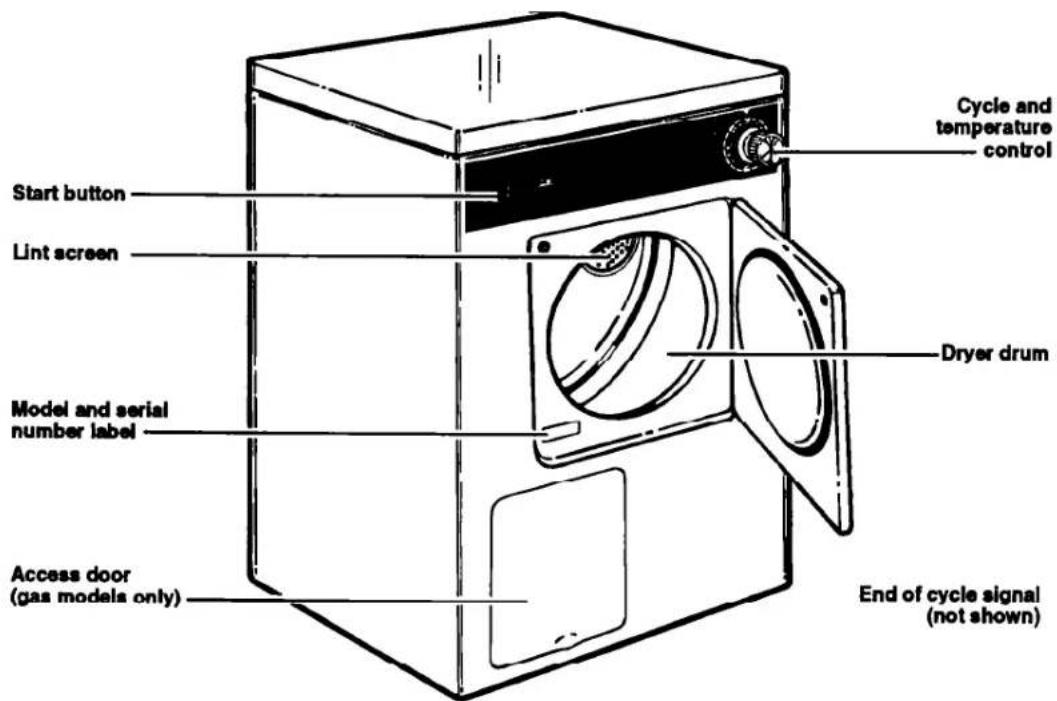
The parts and features of your dryer are illustrated below. Become familiar with all parts and features before using your dryer.
NOTE: The drawings in this book may vary from your dryer model. They are designed to show the different features of all models covered by this book. Your model may not include all features.
Optional mounting kits
You can mount your compact dryer above your compact washer using one of the following:
WARNING
Fire and Explosion hazard
If mounting a gas dryer, use only Dryer Stand Kit, Part No. 695570. Using any other kit could result in a gas leak.
Failure follow the above instructions could cause fire or explosion.
- Dryer Stand Kit for permanent installation, secured to the wall. Part No. 695570 (electric or gas)
- Stack Kit for free-standing installation. Part No. 346721 (electric)
- Stack Kit to mount dryer permanently onto the washer.
Almond
Part No. 3390196 (electric)
White
Part No. 3390175 (electric)
- Dryer Wall-Mounting Kit for securing the dryer to the wall with a steel bracket. Part No. 345994 (electric)
NOTE: The wall must be strong enough to support the dryer's weight. (Do not use in mobile homes.)
Optional deflector kit
- Exhaust Deflector Kit to move dryer exhaust up, down, or to the side. Part No. 346001 (electric)
Operating Your Dryer
In This Section
Page
Before starting your dryer 6
Starting or stopping your dryer 6
Page
Selecting a cycle 7
Operating your dryer properly assures the best drying results. This section gives you important information to help you to select a cycle, time, and temperature.
Before starting your dryer
Refer to the information below, and "Laundry Tips" on page 12 for control setting, sorting, and loading information.
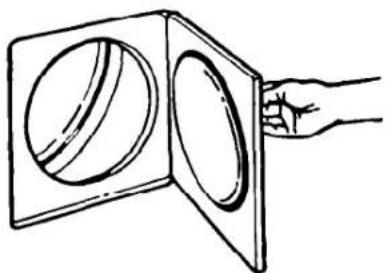
NOTE: Remove any hang tags or temporary labels before using your dryer. Wipe dryer drum with a damp cloth to remove dust from storing and shipping.
Starting or stopping your dryer
Starting your dryer
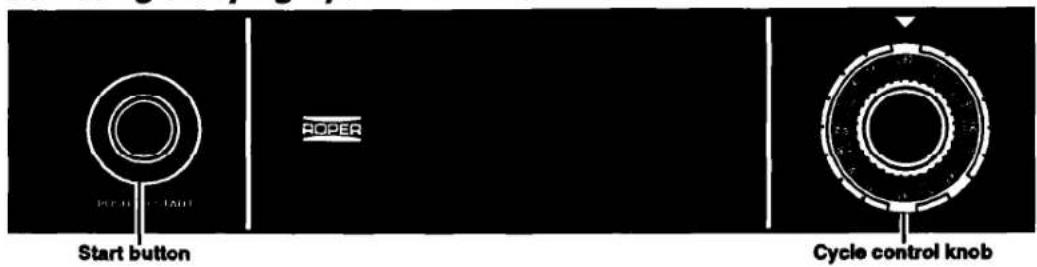
Close the door and select a cycle and temperature. Push the Start button. See pages 7-8 for additional setting information. Your dryer automatically stops when a cycle ends.
Stopping and restarting your dryer
Open the dryer door or turn the Cycle Control Knob to OFF. Close the door; make new selections (if necessary). Push the Start Button.
NOTE: The Cycle Control Knob should point to an OFF area when the dryer is not in use. If the dryer is stopped before the cycle is finished, turn the Cycle Control Knob to an OFF area.
End of cycle signal
The dryer sounds a signal to let you know when the cycle is finished. The signal is not adjustable and cannot be turned off.
The signal is helpful when you are drying permanent press, synthetics, and other items that should be taken out as soon as the dryer stops.
Selecting a cycle
Use pages 7 and 8 to find information about drying cycles that may be on your model.
To Select a cycle:
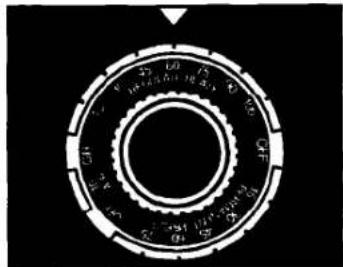
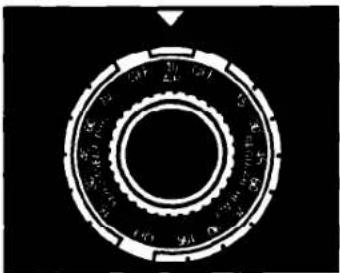
- Turn the Cycle Control Knob either way to a desired time or setting.
- Stop when the indicator points to the cycle you want.
- Push the Start Button.
Changing a selection:
- Turn the Cycle Control Knob to point to a new setting.
- Push the Start Button, if necessary.
Using the Air cycle (no heat)
WARNING
Fire Hazard
Do not dry plastic or rubber items with heat. Use the Air cycle, or line dry. Failure to do so could result in fire or damaged items.
The dryer does not heat when the Cycle Control Knob is set in the Air cycle. This cycle can be used to fluff or air dry bedding, plastic tablecloths, foam pillows, sneakers, etc.
- Turn the Cycle Control Knob to the number of minutes you want in the Air cycle. (Cycle is unheated.) Refer to the chart below for suggested times.
- Push the Start Button.
NOTE: Repeat steps above if more time is needed to dry items.
| TYPE OF LOAD | AIR CYCLE |
| RUBBER, PLASTIC, HEAT-SENSITIVE FABRICS | |
| Foam Rubber-Pillows, bras, stuffed toys | 20-30 min |
| Plastic-Shower curtains, tablecloths | 20-30 min |
| Rubber-backed rugs | 40-50 min |
| Olefin, Polypropylene, Sheer nylon | 15-20 min |
Selecting a drying cycle and time
Loads tumble without heat during the last few minutes of all heated cycles. This makes a load easier to handle and helps keep wrinkles from setting in.
Using your Regular Heavy cycle
Use your Regular Heavy cycle to dry heavy and mediumweight cotton and linen fabrics.
Using your Permanent Press cycle
Use your Permanent Press cycle to dry permanent press and some synthetic fabrics.
NOTE: To help reduce wrinkling, remove the load from the dryer as soon as tumbling stops. This is important for permanent press, knits and synthetic fabrics. Do not overdry. Over-drying can cause shrinkage, static cling, and damage some fabrics.
| TYPE OF LOAD | CYCLE | MODELS | |
| REC3422ARGC3422A | REP3422A | ||
| COTTONS AND LINENSExtra Heavy-Bedspreads, mattress pads, quiltsHeavyweight-Towels, jeans, corduroys, work clothesMediumweight-Sheets, cotton underwear, diapersLightweight-Batistes, organdies, lingerie | Regular/HeavyRegular/HeavyRegular/HeavyPerm. Press | 45-55 min40-50 min30-40 min20-30 min | 90-105 min80-90 min70-80 min50-60 min |
| PERMANENT PRESS, SYNTHETICS AND BLENDSHeavyweight-Work clothes, jackets, raincoatsMediumweight-Shirts, play clothes, sheets, slacksLightweight-Lingerie, blouses, dresses | Perm. PressPerm. PressPerm. Press | 30-40 min20-30 min15-25 min | 60-70 min50-60 min30-40 min |
| KNITSHeavyweight-Cottons, rayons, blends, T-shirts, slacks, shirtsMediumweight-Synthetics (polyester, acrylic, etc.), dress slacks, skirts, sweatersLightweight-Synthetics (polyester, acrylic, etc.) and blends, lingerie, blouses, dresses | Perm. PressPerm. PressPerm. Press | 30-40 min20-30 min15-25 min | 60-70 min50-60 min30-40 min |
| DELICATE FABRICSSheer curtains (2 or 3 panels), gauze, lace, etc. | Air | 20-30 min | 20-30 min |
Caring For Your Dryer
In This Section
Page Maintenance—every load 9
Page
Maintenance-as needed....9
Dryers require regular maintenance. Follow the suggestions below to maintain your dryer properly.
Maintenance—every load
Cleaning the lint screen
The lint screen is located inside the dryer drum, on the back wall. Clean it before each load. A screen blocked by lint can increase drying time.
CAUTION
Product and Fabric Damage Hazard
Do not run the dryer with the lint screen loose, damaged, blocked or missing.
Doing so can cause overheating and damage to both the dryer and fabrics.
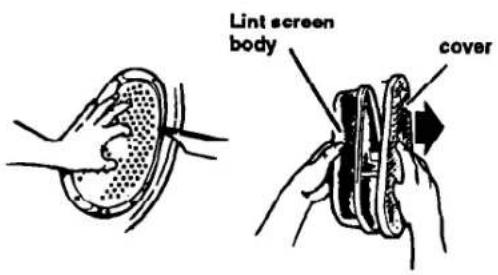
- Open the door and pull the lint screen straight out.
- Squeeze body of lint screen lightly while pulling the cover off. See illustration.
- Roll lint off the screen with your fingers. Do not rinse or wash the screen to remove lint. Wet lint is hard to remove.
- Replace cover on lint screen body. Push the lint screen firmly back into place and close the door.
Maintenance-as needed
Use the following suggestions about cleaning and lint removal to maintain your dryer and keep it operating efficiently.
Cleaning a clogged lint screen
Laundry detergents and fabric softeners can cause a residue build-up on the lint screen. A clogged lint screen can extend drying times. Clean the lint screen every six months or more frequently if it becomes clogged due to a residue build-up. Use the following method:
- Wet both sides of lint screen with hot water.
- Wet a nylon brush with hot water and liquid detergent.
- Scrub lint screen with the brush until all residue build-up is removed.
- Rinse with hot water.
- Thoroughly dry lint screen with a clean towel and replace in dryer.
Cleaning the dryer interior
WARNING
Electrical Shock, Personal Injury and Fire Hazard
- Turn off the electrical power before cleaning the interior.
• Make sure the dryer is cool. - Use nonflammable cleaner.
Failure to do so could result in electrical shock or injury, fire or explosion.
Garments which contain unstable dyes, such as denim blue jeans or brightly colored cotton items, may discolor the dryer interior. If you want to remove stains from dryer drum, use powdered laundry detergent.
- Make a paste with detergent and very warm water.
- Apply paste to a soft cloth and scrub area until all excess dye is removed.
- Wipe thoroughly with a damp cloth.
- Tumble a load of rags to dry.
Cleaning the dryer exterior
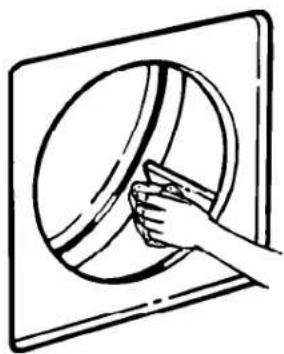
Wipe with a soft, damp cloth.
Lint removal
Lint can gather inside the dryer and be a fuel for fire. It is recommended that lint be removed every 2 to 3 years, or more often, depending on dryer usage. Cleaning should be done by a qualified person. If you have any questions, please call our toll-free number at 1-800-447-6737.
WARNING
Electrical Shock and Personal Injury Hazard
- Unplug the power supply cord, or turn off the electrical power at the main power supply before removing dryer panels.
• Make sure the dryer is cool. - Dryer parts can have sharp edges. Use care when handling.
Failure to do so could result in electrical shock or personal injury.
- Unplug the power supply cord, or turn off the electrical power at the main power supply.
- Remove back panel (electric) or lower front access panel (gas).
- Remove lint from shaded area in illustration with a soft brush or vacuum cleaner. Avoid damaging wires, thermostats (electric), funnel (gas) or ignitor (gas).
- Replace panel; reconnect and level dryer again, if necessary.
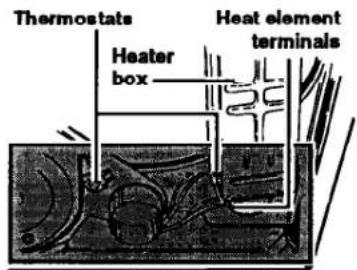
Electric dryer with back panel removed
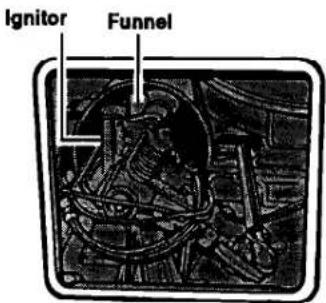
Gas dryer with lower front access panel removed
Laundry Tips
In This Section
Page
Before you dry 12
Drying special-care items 13
Using dryer fabric softeners 15
Page
Saving energy 15
Vacation care 15
Voltage requirements 15
Solving laundering problems ....16
This section reviews proper drying techniques, gives you additional drying information, and discusses causes or solutions to common drying problems.
Before you dry
Before using your dryer, see pages 3 and 4 for Important Safety Information.
Drying tips
- Check garments to make sure all spots and stains were removed during the wash. If stains were not removed, do not tumble dry. Heat may permanently set stain. Soiled items can also leave stains on the dryer drum. These stains can be picked up by other items in the load.
• Empty all pockets. Turn pockets of heavy items inside out for even drying. - Turn lint takers and dark items inside out to help prevent lint pickup.
- Remove heat-sensitive trim that can be damaged by drying.
- Tie strings and sashes so they will not tangle.
- Place small items such as baby socks or hankies in a mesh bag for easier removal.
- Close zippers, snaps and hooks to avoid snagging other items. Remove pins, buckles and other hard objects to avoid scratching the dryer drum.
- Articles to be ironed should be removed from the dryer while still damp.
Sorting
- Items properly sorted for washing are usually properly sorted for drying.
- Separate heavy fabrics (denim, towels) from light fabrics (synthetics, permanent press).
- Separate lint givers (towels, chenille) from lint takers (corduroy, synthetics, permanent press). When possible, turn lint takers inside out.
- Separate dark from light colors; colorfast from noncolorfast.
Load sizes
- Load the dryer by the amount of space items take up, not by their weight.
- Do not overload the dryer. Overcrowding causes uneven drying and wrinkling, and can cause items to wear out faster (because of pilling).
- Mix large items with smaller items.
- You may need to rearrange large items (sheets, blankets, tablecloths) during a cycle to reduce balling or rolling up.
- Reduce wrinkling of permanent press and synthetics by drying smaller loads and removing items from the dryer as soon as tumbling stops.
- For better tumbling action when drying only a few small items, add one or two lint-free towels. This also prevents small, lightweight items from blocking airflow.
Drying special-care items
Most garments and household textiles have care labels with laundering instructions. Always follow label directions when they are available. General drying instructions for some special washables are included in this section.
| Air dryingHeat-sensitive fabricsOlefin, polypropylene, sheer nylonCotton and canvas shoesPillows, stuffed toysFeather, foam, polyesterPlastic, rubber ItemsShower curtains, tablecloths, baby pantiesScatter rugs | Heat sensitive fabrics, plastic, rubber or some stuffed items require drying without heat. Use an Air setting or line dry. The Air setting is useful for fluffing bedding and pillows, and dusting draperies and clothing. See Warning on page 7.Follow care label directions.If shoes can be machine laundered:1. Place several bath towels in the dryer to act as a buffer, or place shoes on drying rack if your dryer has one.2. If rubber or foam rubber materials are part of the shoe, use an Air setting. For other materials, see page 8 for cycle, time, and temperature recommendations.Remove shoes from dryer while still damp and allow to air dry.If manufacturer recommends machine drying, dry one pillow at a time and:1. Make sure coverings are securely stitched.Shake and fluff the items by hand several times during the cycle.Make sure pillows are completely dry. Feather pillows take a long time to dry.Follow care label directions.Follow care label directions. |
| Blankets and woolensCotton, rayon, synthetic blanketsElectric blankets, electric sheets, woolen blankets, washable woolen garments | Machine drying knitted woolens is not recommended. Block to shape when wet and allow to air dry. Line dry blankets in shade on a breezy day over two lines. Pin edges together and straighten them. When partly dry, turn the blanket over, repin and restraighten. When dry, brush nap.Dry as recommended for permanent press fabrics on page 8.If manufacturer recommends machine drying:1. Place one or two dry towels in the dryer and preheat 3-5 minutes on a high setting. This will dry blankets faster and help avoid pilling.2. Put blanket in dryer with warm towels. Set control for 20 minutes.3. Check after 10 minutes. Remove when still damp. Overdrying and long tumbling can cause shrinking and pilling.Place blanket on flat surface or over two lines to finish drying. Gently stretch to original size and shape.When completely dry, brush gently to raise nap. Press binding with cool iron if needed. |
| Curtains, slipcoversDraperies, slipcoversSheers, some synthetic curtainsBonded or laminated fabrics | Remove drapery weights and hooks before laundering.Use lowest temperature or an Air setting.Leave room in dryer for load to fluff.Remove from dryer while slightly damp. Do not overdry.For slipcovers, replace while still slightly damp. They will dry to fit tightly.Dry only a few minutes.Do not overdry or tumble in high heat. Overdrying loosens the adhesive and causes fabrics to separate. |
| Diapers, baby clothes | Wash and dry small items in a mesh bag or pillowcase for convenient handling.Dry according to fabric and cycle settings listed on page 8.Remove diapers and cotton knit items while still slightly damp. They will feel softer, shrink less, and be easier to fold. |
| Elastic Items | Dry at lowest temperature setting. Remove from dryer while still slightly damp. |
| Fiberglass materials | Do not machine wash or dry fiberglass materials. Small particles can stick to fabrics washed or dried in following loads and cause skin irritation. |
| Flame-retardant finishes | Some items have been treated with a flame-retardant finish to improve their resistance to burning. Such items are clearly labeled. To retain flame-retardant qualities through continuous use and washing, clean and dry according to the manufacturer's instructions. |
| Napped itemsCorduroy, velveteen | Dry separately or with similar colors to avoid lint transfer. Follow care label directions.Dry according to fabric and cycle settings shown on page 8.Remove from dryer while there is still a trace of moisture.Smooth, reshape and air dry before putting away. |
| Quilted, down-filled items | Follow care label instructions.Dry one at a time.Remove from dryer and shake or fluff the item during the drying cycle.Smooth and reshape before putting away. |
| Snowsuits, jacketsNylon, polyester-base | Check label for fiber content, then see page 8 for cycle and temperature recommendations.Follow care label directions.Dry garment for about 10 minutes. Remove and turn inside out. Dry for 10 more minutes.Remove from dryer immediately and hang on a nonrusting hanger to finish drying. This will help eliminate wrinkles. |
| Tinted, dyed or noncolorfast items | Dry according to fabric, weight and care label instructions. Wipe the dryer drum carefully to remove any dye or lint that can be transferred to other loads. See "Cleaning the dryer interior" on page 10. |
| Towels | Select cycle according to fabric type. Some towels, particularly those made of a blend of synthetic fibers and natural fibers (polyester and cotton blends), may shed more lint than other towels causing your dryer's lint screen to get full faster. Be sure to remove lint from the dryer lint screen before and after drying new towels. |
| Washable knits | Do not overdry knits. Overdrying can cause shrinking and static cling.1. Select cycle according to fabric and construction.2. Turn synthetics and blends inside out when drying to avoid pilling.3. Remove cotton and rayon knits while still slightly damp. Stretch into shape and lay flat to finish drying. |
Using dryer fabric softeners
Dryer fabric softeners are recommended for reducing static cling (static can also be reduced by not overdrying) and for softening fabrics. Always follow package instructions carefully.
- Put fabric softener sheet on top of the load before starting the dryer. Do not add a fabric softener sheet after the cycle has started. Instant heat can cause the fabric softener to spot fabrics.
- Clear, grease-like spots can result from the fabric softener sheet becoming tangled in an item during tumbling. If fabric softener causes a stain, wet the stain and rub with liquid detergent or bar soap, rewash.
- Some fabric softeners can clog the lint screen and slow drying. Use fabric softeners labeled as dryer safe.
Saving energy
- Dry only full loads without overdrying.
- Avoid overloading dryer, adding wet items to a partly dried load, or opening the door unnecessarily.
-
Plan your laundry to dry one load after another. A warm dryer shortens drying time.
-
Shorten drying times by exhausting dryer properly and cleaning exhaust duct as needed.
- Keep the lint screen clean.
- Use your dryer in a room where room air temperature is above 45°F (7°C).
- Sort loads by fabric weight and type.
Vacation care
- Unplug power supply cord or turn off electrical power supply.
- Clean lint screen.
Voltage requirements
- Model REC3422A operates on 240 or 208 volt household current.
- Models REP3422A and RGC3422A operate on 120 volt household current.
NOTE: Electric dryers using 208 or 120 volts require longer drying times than dryers using 240 volts.
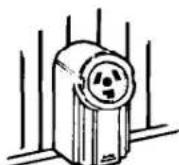
240 or 208 volt power supply
Solving laundering problems
Most laundering problems are easily solved. Check the following list for problems you may have and possible causes. If you need additional help, check the "Assistance or Service" section of this book.
| PROBLEM | CHECK IF | CAUSES/SOLUTIONS |
| Greasy spots | Dryer fabric softeners were usedUndiluted washer fabric softener was usedEnough detergent was usedItems were clean before they were dried | Follow manufacturer's product directions carefully.Dilute fabric softener before adding to the final rinse.Use enough detergent to hold soil in the wash water until it drains away. Undrained soil can stick to outer tub of the washer and cause greasy spots with next load.Soiled items can stain other items in the load. They can also leave stains on the dryer drum that can be picked up by items in later loads. Dryer heat may permanently set these stains. |
| LintShrinking | Lint screen is cloggedLoad is properly sortedStatic electricity is attracting lintLoad is too big or heavyPaper or tissue was in pocketEnough detergent was usedPilling is being mistaken for lintItems are overdriedFabric type and quality is suitable for drying | Clean lint screen. (See page 9.)Sort lint-givers (bath towels, etc.) from lint-takers (synthetics, permanent press).Use fabric softener in the washer's final rinse. Use correct dryer settings for fabric. Overdrying synthetics can cause lint-attracting static electricity.Dry smaller loads. When items can't tumble freely, air is unable to carry lint to lint screen.Empty pockets carefully. A small scrap of paper can cause a lot of lint.Use enough detergent to hold the lint in the water until it drains away. Base detergent amount on water hardness and soil in wash load.Pilling (surface fuzz) is caused by normal wear and laundering. Pills do not break away easily from the fabric and can often collect lint. Synthetic fabrics are more likely to pill than others, especially at neckbands, elbows and knees.Remove items while there is still a trace of moisture. Some items should be removed while damp, then shaped and air dried.Some knits are stretched during manufac-turing. Washing and drying returns them to the original size. This is normal. Check quality of garment before buying. Follow fabric care label directions carefully. |
| Slow drying | There is a large amount of moisture in the load to be driedCold rinse water is usedRoom air temperature is below 45°F (7°C)Dryer is exhausted according to Installation InstructionsLint screen is cloggedExhaust duct or outside exhaust hood is cloggedProper electrical supply is used | Some items hold more moisture than others (cottons more than polyester). They take longer to dry. Full loads take longer to dry than small loads of the same fabric.A load rinsed in cold water will take slightly longer to dry than a warm one. Cold rinses, however, help save energy and reduce wrinkling more than warm rinses do.Install dryer in a room where the air temperature is warmer than 45°F (7°C). Cold air increases drying time and may cause wrinkles not to be removed.Install and exhaust your dryer according to the Installation Instructions provided.Clean lint screen before or after each use.Clean if needed.Properly connect the dryer to a grounded electrical circuit that meets the electrical requirements stated in the Installation Instructions. |
| Static electricity | Load is overdriedFabric softener is usedSynthetics, synthetic blends, permanent press and knits are in load | Remove items while there is still a trace of moisture.Use a fabric softener and follow package directions carefully.Synthetics, synthetic blends, permanent press and knits build up static electricity. Use a fabric softener and be careful not to overdry the load. |
If You Need Assistance Or Service
This section is designed to help you save the cost of a service call. Part 1 of this section outlines possible problems, their causes, and actions you can take to solve each problem. Parts 2 and 3 tell you what to do if you still need assistance or service. When calling our Consumer Assistance Center for help or calling for service, please provide a detailed description of the problem, your appliance's complete model and serial numbers and the purchase date. (See page 2.) This information will help us respond properly to your request.
1. Before calling for assistance ...
Performance problems often result from little things you can find and fix without tools of any kind. Please check the chart below for problems you can fix. It could save you the cost of a service call.
| PROBLEM | CHECK IF | SOLUTION |
| Dryer will not run. | Power cord is plugged in.Home's main fuse has blown or circuit breaker has tripped. Also check if a time-delay fuse or circuit breaker has been used.Dryer door is closed.Start button is pushed firmly.Controls are set in a running or ON position. | Firmly plug cord into electrical outlet. Reset controls and push start button.Turn cycle control knob to OFF.Replace fuse with a time-delay fuse of the correct capacity. Reset circuit breaker. Reset controls and push start button.Close door firmly.Push start button.Set controls and push start button. |
| Dryer will not heat. | Cycle control knob is set on an Air setting.Heat cycle is in its last minutes (there is no heat during that time).Home's main fuse has blown or circuit breaker has tripped. Also check if a time-delayed fuse or circuit breaker has been used.Gas shutoff valves are open both on dryer and on supply line if yours is a gas dryer. | Reset cycle control knob to heat setting.Wait for cycle to finish.Turn cycle control knob to OFF.Replace fuse with a time-delayed fuse of the correct capacity. Reset circuit breaker. Reset controls and push start button.The circuit supplying an electric dryer uses 2 breakers or 2 fuses. If one breaker has tripped or one fuse has blown, the dryer may run, but not heat.Turn cycle control knob to OFF. Open gas valves. Wait 5 minutes. Reset controls and push start button. |
IF YOU NEED ASSISTANCE OR SERVICE
| PROBLEM | CHECK IF | SOLUTION |
| Drying time too long. | Lint screen is clean.Exhaust duct or outside exhaust hood is clogged. | Clean lint screen. See instructions on page 9.See “Slow drying” section of table, page 17, for additional information.Clean if needed. |
2. If you need assistance ...
Call our toll-free telephone number. Dial free from anywhere in the U.S.:
1-800-44-ROPER (1-800-447-6737)
and talk with one of our trained consultants. The consultant can instruct you in how to obtain satisfactory operation from your appli- ance or, if service is necessary, recommend a qualified service company in your area.
If you prefer, write to:
Mr. William Clark
Consumer Assistance Representative
Roper Brand Appliances
2000 M-63
Benton Harbor, MI 49022
Please include a daytime phone number in your correspondence.
3. If you need service ...
Contact the dealer from whom you purchased the appliance or the authorized servicer in your area. For help finding an authorized servicer in your area, call our toll-free telephone number in Step 2.
4. If you are not satisfied with how the problem was solved ...
- Contact the Major Appliance Consumer Action Panel (MACAP). MACAP is a group of independent consumer experts that voices consumer views at the highest levels of the major appliance industry.
- Contact MACAP only when the dealer, authorized servicer and Roper Brand Appliance warrantor have failed to resolve your problem.
Major Appliance Consumer Action Panel 20 North Wacker Drive Chicago, IL 60606
• MACAP will in turn inform us of your action.
ROPER® Dryer Warranty
| LENGTH OF WARRANTY | WHAT WE WILL PAY FOR |
| FULL ONE-YEARWARRANTY(from date of purchase) | Replacement parts and repair labor to correct defects in materials or workmanship. Service must be provided by an authorized Roper service company. |
| WHAT WE WILL NOT PAY FOR | |
| A. Service calls to:1. Correct the installation of your dryer.2. Instruct you how to use your dryer.3. Replace house fuses or correct house wiring or plumbing.4. Replace owner accessible light bulbs.B. Repairs when your dryer is used in other than normal, single-family household use.C. Pickup and delivery. Your dryer is designed to be repaired in the home.D. Damage to your dryer caused by accident, misuse, fire, flood, acts of God, or use of products not approved by us.E. Repairs to parts or systems caused by unauthorized modifications made to the appliance.8-92 | |
This Roper appliance is warranted by Whirlpool Corporation. Under no circumstances shall it be liable under this warranty for incidental or consequential damages and all implied warranties are limited to the same time period stated in the express warranties for Roper Brand Appliances. Some states do not allow the exclusion or limitation of incidental or consequential damages, so this limitation or exclusion may not apply to you.
This warranty gives you specific legal rights, and you may also have other rights which vary from state to state.
Outside the United States, a different warranty may also apply. For details, please contact your authorized Roper distributor or military exchange.
If you need service, first see the "Assistance or Service" section of this book. After checking "Assistance or Service," additional help can be found by calling our toll-free telephone number, 1-800-44-ROPER (1-800-447-6737), from anywhere in the U.S.
- A NOTE TO YOU
- THANK YOU FOR BUYING A ROPER APPLIANCE
- YOUR SAFETY IS IMPORTANT TO US
- WARNING
- CAUTION
- OUR TOLL-FREE NUMBER, 1-800-44-ROPER (1-800-447-6737), IS AVAILABLE 24 HOURS A DAY
- UNDERSTANDING SAFETY
- IMPORTANT SAFETY INSTRUCTIONS
- UNDERSTANDING YOUR RESPONSIBILITIES
- KNOWING YOUR DRYER'S FEATURES
- OPTIONAL MOUNTING KITS
- FIRE AND EXPLOSION HAZARD
- OPTIONAL DEFLECTOR KIT
- OPERATING YOUR DRYER
- IN THIS SECTION
- BEFORE STARTING YOUR DRYER
- STARTING OR STOPPING YOUR DRYER
- STARTING YOUR DRYER
- STOPPING AND RESTARTING YOUR DRYER
- END OF CYCLE SIGNAL
- SELECTING A CYCLE
- TO SELECT A CYCLE
- CHANGING A SELECTION
- USING THE AIR CYCLE (NO HEAT)
- FIRE HAZARD
- USING YOUR REGULAR HEAVY CYCLE
- USING YOUR PERMANENT PRESS CYCLE
- CARING FOR YOUR DRYER
- MAINTENANCE—EVERY LOAD
- CLEANING THE LINT SCREEN
- MAINTENANCE-AS NEEDED
- CLEANING A CLOGGED LINT SCREEN
- CLEANING THE DRYER INTERIOR
- ELECTRICAL SHOCK, PERSONAL INJURY AND FIRE HAZARD
- CLEANING THE DRYER EXTERIOR
- LINT REMOVAL
- ELECTRICAL SHOCK AND PERSONAL INJURY HAZARD
- LAUNDRY TIPS
- BEFORE YOU DRY
- DRYING TIPS
- SORTING
- LOAD SIZES
- DRYING SPECIAL-CARE ITEMS
- USING DRYER FABRIC SOFTENERS
- SAVING ENERGY
- VACATION CARE
- VOLTAGE REQUIREMENTS
- SOLVING LAUNDERING PROBLEMS
- IF YOU NEED ASSISTANCE OR SERVICE
- BEFORE CALLING FOR ASSISTANCE
- IF YOU NEED ASSISTANCE
- CALL OUR TOLL-FREE TELEPHONE NUMBER. DIAL FREE FROM ANYWHERE IN THE U.S
- 1-800-44-ROPER (1-800-447-6737)
- IF YOU NEED SERVICE
- IF YOU ARE NOT SATISFIED WITH HOW THE PROBLEM WAS SOLVED
- ROPER® DRYER WARRANTY
Brand : Roper
Model : RGC3422AW0
Category : Cooker