
Tureis - Cellphone ZTE - Free user manual and instructions
Find the device manual for free Tureis ZTE in PDF.


| Product Type | WCDMA/GSM Dual-Mode Digital Mobile Phone |
| Brand | ZTE |
| Model | Tureis |
| Dimensions | 114 mm × 65 mm × 10.9 mm |
| Weight | Approx. 126 g (with battery) |
| Display | 2.6 inches, 320×240 pixels |
| Camera | 3.2 MP CMOS, still image resolution 3.2 MP |
| Internal Memory | ROM: 512 MB, RAM: 256 MB |
| Expandable Memory | microSD up to 32 GB |
| Battery | 1100 mAh Li-ion |
| Talk Time | Approx. 210 minutes (subject to network status) |
| Standby Time | Approx. 200 hours (subject to network status) |
| Network | GSM/WCDMA, GPRS/EDGE/3G |
| Connectivity | Wi-Fi 802.11 b/g, Bluetooth, USB 2.0 |
| Operating System | Android (version not specified, likely 2.2 or 2.3) |
| Keyboard | Hardware QWERTY and onscreen touch keyboard |
| Audio | FM radio, loudspeaker, 3.5mm headphone jack |
| Special Features | Touch screen, Google apps (Gmail, Maps, Talk), speed dial, call forwarding |
| SAR Value | 1.08 W/kg at ear (10g) |
| Compliance | RoHS, CE, WEEE |
| Accessories Included | Battery, charger, USB cable, wired headset |
| Spare Parts | Battery and SIM/microSD are user-replaceable; other parts require authorized service |
| Maintenance | Keep away from liquids and extreme temperatures; clean with soft cloth; avoid harsh chemicals |
| Repairability | Do not disassemble; only authorized personnel; contact service center |
Frequently Asked Questions - Tureis ZTE
User questions about Tureis ZTE
0 question about this device. Answer the ones you know or ask your own.
Ask a new question about this device
Download the instructions for your Cellphone in PDF format for free! Find your manual Tureis - ZTE and take your electronic device back in hand. On this page are published all the documents necessary for the use of your device. Tureis by ZTE.
USER MANUAL Tureis ZTE
Copyright © 2011 ZTE CORPORATION.
All rights reserved.
No part of this publication may be quoted, reproduced, translated or used in any form or by any means, electronic or mechanical, including photocopying and microfilm, without the prior written permission of ZTE Corporation.
ZTE Corporation reserves the right to make modifications on print errors or update specifications in this guide without prior notice.
The Bluetooth ® trademark and logos are owned by the Bluetooth SIG, Inc. and any use of such trademarks by ZTE Corporation is under license. Other trademarks and trade names are the property of their respective owners.
Version No.: R1.0
Edition Time: 2011.8
Contents
For Your Safety 14
General Safety 14
Radio Frequency (RF) Exposure 15
General Statement on RF Energy 15
Specific Absorption Rate (SAR) 16
Body Worn Operation.... 17
Limiting Exposure to Radio Frequency (RF) Fields.... 17
Regulatory Information....18
Distraction....18
Driving 18
Operating Machinery 18
Product Handling 19
General Statement on Handling and Use.... 19
Small Children....20
Demagnetization 20
Electrostatic Discharge (ESD)....21
Antenna 21
Normal Use Position....21
Air Bags 22
Seizures/Blackouts 22
Repetitive Motion Injuries....23
Emergency Calls....23
Loud Noise....23
Phone Heating 23
Electrical Safety....24
Accessories....24
Connection to a Car....24
Faulty and Damaged Products ....24
Interference 25
General Statement on Interface....25
Pacemakers....25
Hearing Aids 25
Medical Devices....26
Hospitals 26
Aircraft....26
Interference in Cars ....26
Explosive Environments....27
Petrol Stations and Explosive Atmospheres 27
Blasting Caps and Areas ....27
Getting Started.... 28
Overview 29
Keys Explained 31
Starting Up 32
Installing the SIM/microSD Card and Battery 32
Removing the Battery and SIM/microSD Card 35
Charging the Battery 36
Switching Your Phone On/Off 37
Setting Up Your Phone for the First Time 37
Switching to Sleep Mode.... 38
Waking Up Your Phone 39
Getting Around Your Phone 39
Touch Control....39
Home Screen 40
Status and Notification Icons....42
Applications and Settings Preview 46
Phone Calls 52
How to Make Calls....52
Calling from the Dialer....52
Calling from Your Contacts 53
Calling from Your Call History ....53
Calling from a Text Message ....53
Using Speed Dial ....54
Making Emergency Calls ....54
Making International Calls....55
How to Receive Calls ....55
Answering a Call....55
Rejecting a Call....56
Muting a Call....56
Putting a Call on Hold ....57
Turning the Speakerphone On/Off....57
Ending a Call....57
Adjusting Your Call Settings....57
Contacts 59
Importing and Exporting Contacts 60
Sharing Contacts Information....61
Creating a Contact 61
Adding a Contact to Favourites ....61
Searching for a Contact....62
Editing a Contact 62
Deleting a Contact 62
Creating a New Group 63
Using the Hardware Keyboard to Enter Text.... 64
Text Input Settings 66
Using the Onscreen Keyboard to Enter Text 67
Text Input Settings 68
Messages 70
Sending a Text Message 70
Sending an MMS 71
Managing Messages and Their 'Threads' 72
Replying to a Message....72
Deleting a Message Thread 72
Message Settings....73
Email 76
Creating an Email Account 76
Writing and Sending Emails....77
Replying to and Forwarding Emails 78
Email Settings....78
Getting Connected to the Internet.... 81
Adding a New GPRS/EDGE/3G Connection ....81
Turning on Wi-Fi 82
Connecting to a Wi-Fi Network....83
Checking the Wi-Fi Network Status....83
Using the Phone as a Modem....83
Enabling the Modem Function 84
Disabling the Modem Function 85
Using the Phone as a Wi-Fi Hotspot 85
Enabling the Wi-Fi Hotspot 86
Disabling the Wi-Fi Hotspot 86
Browsing the Internet 87
Browsing Options 87
Opening Links in Web Pages 88
Downloading Apps from the Web....89
Using Bookmarks 89
Editing a Bookmark....90
Deleting a Bookmark....90
Browser Settings 90
Bluetooth ® 93
Turning Bluetooth on/off 93
Making Your Phone Visible....93
Changing Your Phone's Name 94
Hooking Up With Another Bluetooth Device 94
Making the Most of Multimedia....96
Taking Pictures With Your Camera 96
Adjusting Camera Settings....96
Shooting Video With Your Camcorder 97
Adjusting Your Video Settings....97
Listening to Your FM Radio 98
Playing Your Music....99
Creating Playlists....101
Managing Playlists .... 101
Setting a Song as Ringtone....102
Playing Your Videos 102
Opening Your Gallery 103
Making Memorable Memos 104
Using Your Google™ Applications 106
Gmail....106
Google Calendar....107
Google Talk....107
Places....108
Latitude....109
Sorting out Your Phone Settings....110
Setting Time and Date....110
Changing Display Settings 110
Adjusting Screen Brightness....111
Adjusting Screen-timeout....111
Switching Screen Orientation Automatically 111
Showing Animation When Opening/Closing Windows ......111
Sound Settings 112
Choosing Your Ringtone....112
Setting the Default Notification Ringtone....112
Switching Your Phone to Silent Mode....113
Switching to Vibrate ....113
Flipping to Turn off Ringtone....114
Adjusting Volume 114
Turning on Haptic Feedback....114
Turning on Touch Tones....115
Turning on Selection Sound....115
Turning on Screen Lock Sound 115
Language Settings 115
Mobile Network Services 116
Getting Data Services While Roaming 116
Enabling Data Services.... 116
Switching Network Modes.... 116
Switching Networks.... 117
Setting Access Point Names 117
Security Settings....118
Protecting Your Phone With a Screen Unlock Pattern 118
Protecting Your Phone with a PIN or Password 120
Disabling Screen Unlock Security 121
Protecting Your SIM Card With a PIN 121
Setting Up Credential Storage.... 122
Managing Your Memory Card....123
Checking Memory Card Space 123
Unmounting Your Memory Card.... 123
Checking Phone Memory....124
Resetting to Factory Settings.... 124
Managing Applications and Their Settings 124
Viewing Your Applications....124
Allowing Installation of Non-Market Applications ....125
Installing an Application....125
Removing an Application....126
Moving an Application to or from the Memory Card ......126
Setting Quick Launch of Your Applications....127
Managing Other Settings....128
Search Settings....128
Voice Input and Output....128
Accessibility 128
About phone....129
Other Applications....130
Alarm....130
Calculator 130
Note Pad ....130
SIM Tool Kit....131
Stopwatch....131
Task Manager 131
Specifications....132
Declaration of RoHS Compliance....133
Disposal of Your Old Appliance 134
EC DECLARATION OF CONFORMITY.... 135
For Your Safety
General Safety
 | Don’t make or receive handheld calls while driving. And never text while driving. |  | Don’t use at petrol stations. |
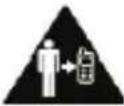 | Keep your phone at least 15mm away from your ear or body while making calls. |  | Your phone may produce a bright or flashing light. |
 | Small parts may cause a choking. |  | Don’t dispose of your phone in fire. |
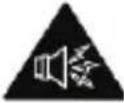 | Your phone can produce a loud sound. |  | Avoid contact with anything magnetic. |
 | Keep away from pacemakers and other electronic medical devices. |  | Avoid extreme temperatures. |
 | Switch off when asked to in hospitals and medical facilities. |  | Avoid contact with liquids. Keep your phone dry. |
 | Switch off when told to in aircrafts and airports. |  | Don’t take your phone apart. |
 | Switch off when near explosive materials or liquids. |  | Only use approved accessories. |
 | Don’t rely on your phone for emergency communications. | ||
Radio Frequency (RF) Exposure
General Statement on RF Energy
Your phone contains a transmitter and a receiver. When it is ON, it receives and transmits RF energy. When you communicate with your phone, the system handling your call controls the power level at which your phone transmits.
Specific Absorption Rate (SAR)
Your mobile device is a radio transmitter and receiver. It is designed not to exceed the limits for exposure to radio waves recommended by international guidelines. These guidelines were developed by the independent scientific organization ICNIRP and include safety margins designed to assure the protection of all persons, regardless of age and health.
The guidelines use a unit of measurement known as Specific Absorption Rate, or SAR. The SAR limit for mobile devices is 2 W/kg and the highest SAR value for this device when tested at the ear was 1.08 W/kg*. As mobile devices offer a range of functions, they can be used in other positions, such as on the body as described in this user guide**.
As SAR is measured utilizing the device's highest transmitting power, the actual SAR of this device while operating is typically below that indicated above. This is due to automatic changes to the power level of the device to ensure it only uses the minimum power required to communicate with the network.
* The tests are carried out in accordance with EN 50360, EN 62209-1, EN 62209-2.
** Please see body worn operation.
Body Worn Operation
Important safety information regarding radio frequency radiation (RF) exposure:
To ensure compliance with RF exposure guidelines the phone must be used with a minimum of 15 mm separation from the body.
Failure to observe these instructions could result in your RF exposure exceeding the relevant guideline limits.
Limiting Exposure to Radio Frequency (RF) Fields
For individuals concerned about limiting their exposure to RF fields, the World Health Organization (WHO) provides the following advice:
Precautionary measures: Present scientific information does not indicate the need for any special precautions for the use of mobile phones. If individuals are concerned, they might choose to limit their own or their children's RF exposure by limiting the length of calls, or using ‘hands-free’ devices to keep mobile phones away from the head and body.
Further information on this subject can be obtained from the WHO home page http://www.who.int/peh-emf (WHO Fact sheet 193: June 2000).
Regulatory Information
The following approvals and notices apply in specific regions as noted.
Please find the section Declaration of RoHS Compliance and CE DOC in the end of this manual.
Distraction
Driving
Full attention must be given to driving at all times in order to reduce the risk of an accident. Using a phone while driving (even with a hands free kit) can cause distraction and lead to an accident. You must comply with local laws and regulations restricting the use of wireless devices while driving.
Operating Machinery
Full attention must be given to operating the machinery in order to reduce the risk of an accident.
Product Handling
General Statement on Handling and Use
You alone are responsible for how you use your phone and any consequences of its use.
You must always switch off your phone wherever the use of a phone is prohibited. Use of your phone is subject to safety measures designed to protect users and their environment.
- Always treat your phone and its accessories with care and keep it in a clean and dust-free place.
- Do not expose your phone or its accessories to open flames or lit tobacco products.
- Do not expose your phone or its accessories to liquid, moisture or high humidity.
- Do not drop, throw or try to bend your phone or its accessories.
- Do not use harsh chemicals, cleaning solvents, or aerosols to clean the device or its accessories.
- Do not paint your phone or its accessories.
- Do not attempt to disassemble your phone or its accessories, only
authorized personnel must do so.
- Do not expose your phone or its accessories to extreme temperatures, minimum - [5] and maximum + [50] degrees Celsius.
- Please check local regulations for disposal of electronic products.
- Do not carry your phone in your back pocket as it could break when you sit down.
Small Children
Do not leave your phone and its accessories within the reach of small children or allow them to play with it.
They could hurt themselves or others, or could accidentally damage the phone.
Your phone contains small parts with sharp edges that may cause an injury or may become detached and create a choking hazard.
Demagnetization
To avoid the risk of demagnetization, do not allow electronic devices or magnetic media close to your phone for a long time.
Electrostatic Discharge (ESD)
Do not touch the SIM card's metal connectors.
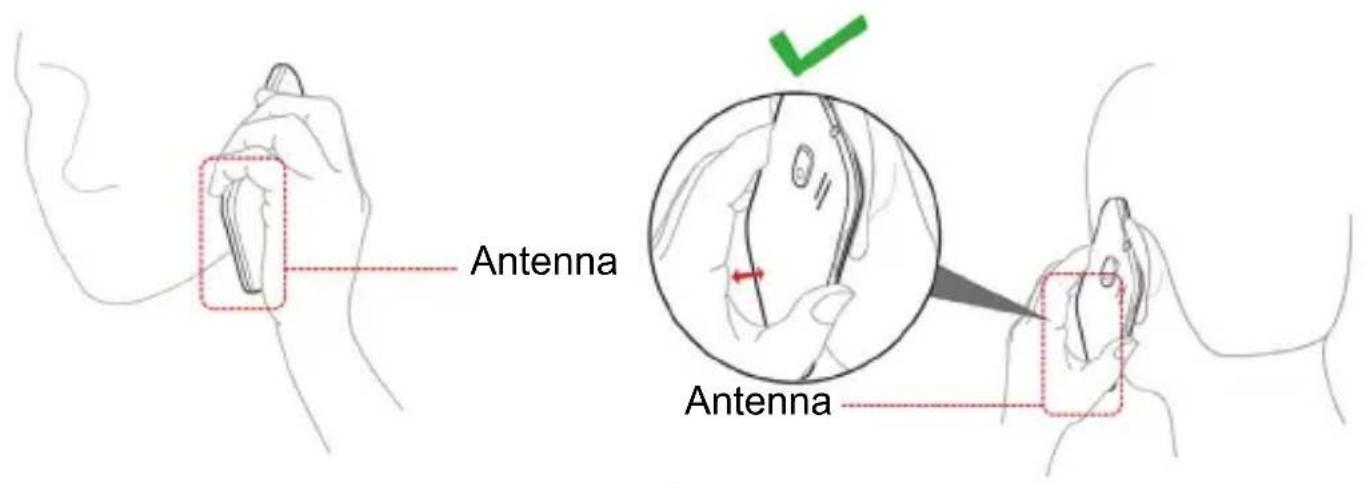
Antenna

Do not touch the antenna unnecessarily.
Normal Use Position
When making or receiving a phone call, hold your phone to your ear, with the bottom towards your mouth.
Air Bags
Do not place the phone in the area over an air bag or in the air bag deployment area.
Store the phone safely before driving your vehicle.
Seizures/Blackouts
The phone can produce a bright or flashing light.
Repetitive Motion Injuries
To minimize the risk of RSI when texting or playing games with your phone:
- Do not grip the phone too tightly.
- Press the buttons lightly.
- Use the special features which are designed to minimize the times of pressing buttons, such as Message Templates and Predictive Text.
• Take lots of breaks to stretch and relax.
Emergency Calls
This phone, like any wireless phone, operates using radio signals, which cannot guarantee connection in all conditions. Therefore, you must never rely solely on any wireless phone for emergency communications.
Loud Noise
This phone is capable of producing loud noises, which may damage your hearing. Turn down the volume before using headphones, Bluetooth stereo headsets or other audio devices.
Phone Heating
Your phone may become warm during charging and during normal use.
Electrical Safety
Accessories
Use only approved accessories.
Do not connect with incompatible products or accessories.
Take care not to touch or allow metal objects, such as coins or key rings, to contact or short-circuit in the battery terminals.
Connection to a Car
Seek professional advice when connecting a phone interface to the vehicle electrical system.
Faulty and Damaged Products
Do not attempt to disassemble the phone or its accessory.
Only qualified personnel should service or repair the phone or its accessory.
If your phone or its accessory has been submerged in water, punctured, or subjected to a severe fall, do not use it until you have taken it to be checked at an authorized service centre.
Interference
General Statement on Interface
Care must be taken when using the phone in close proximity to personal medical devices, such as pacemakers and hearing aids.
Pacemakers
Pacemaker manufacturers recommend that a minimum separation of 15 cm be maintained between a mobile phone and a pacemaker to avoid potential interference with the pacemaker. To achieve this, use the phone on the opposite ear to your pacemaker and do not carry it in a breast pocket.
Hearing Aids
People with hearing aids or other cochlear implants may experience interfering noises when using wireless devices or when one is nearby.
The level of interference will depend on the type of hearing device and the distance from the interference source, increasing the separation between them may reduce the interference. You may also consult your hearing aid manufacturer to discuss alternatives.
Medical Devices
Please consult your doctor and the device manufacturer to determine if operation of your phone may interfere with the operation of your medical device.
Hospitals
Switch off your wireless device when requested to do so in hospitals, clinics or health care facilities. These requests are designed to prevent possible interference with sensitive medical equipment.
Aircraft
Switch off your wireless device whenever you are instructed to do so by airport or airline staff.
Consult the airline staff about the use of wireless devices on board the aircraft, if your phone offers a ‘flight mode’ this must be enabled prior to boarding an aircraft.
Interference in Cars
Please note that because of possible interference to electronic equipment, some vehicle manufacturers forbid the use of mobile phones in their
vehicles unless a hands-free kit with an external antenna is included in the installation.
Explosive Environments
Petrol Stations and Explosive Atmospheres
In locations with potentially explosive atmospheres, obey all posted signs to turn off wireless devices such as your phone or other radio equipment.
Areas with potentially explosive atmospheres include fuelling areas, below decks on boats, fuel or chemical transfer or storage facilities, areas where the air contains chemicals or particles, such as grain, dust, or metal powders.
Blasting Caps and Areas
Power off your mobile phone or wireless device when in a blasting area or in areas posted power off “two-way radios” or “electronic devices” to avoid interfering with blasting operations.
Getting Started
Thanks for choosing the Tureis. If you'd like your new phone to live a long and fruitful life, please read this guide carefully and keep it for future reference. You never know when you might need it.
And don't worry if the pictures we use to demonstrate your phone's functions look a little different from what you see on its screen. It's the functions they show that matter.
and get in touch with your phone
Another thing you'll notice is that we talk about ‘tapping’ a lot. That's because your phone has a touch-screen, which means a simple tap with your finger can both select and open a file. Indeed, you can ‘slide’ switches on the screen, ‘hold’ files until a list of shortcuts pops up, casually ‘flick’ from page to page, ‘drag’ items into the bin with a well-aimed index finger, or even ‘pinch’ images to zoom in or zoom out. It's a joy to use.
And that's exactly what this guide is about: making sure the relationship with your new phone is a pleasure from day one. So please read on and enjoy...
Overview

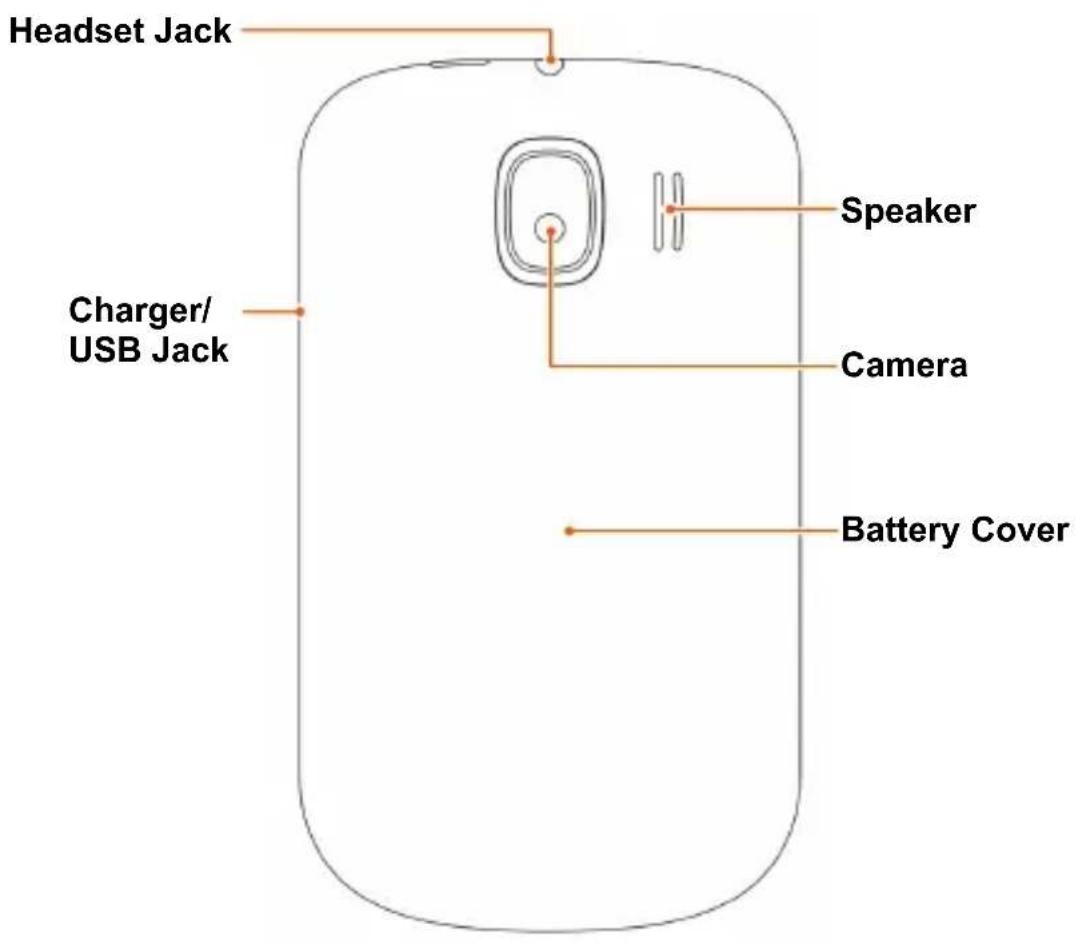
Keys Explained
| Key | Function |
| Power Key | When the phone is powered off, hold on to power on your phone.After power on, hold on for phone options: Silent mode, Airplane mode or Power off.Press to switch your phone to sleep mode.Press to wake up your phone. |
| Home Key • Press to return | to the Home Screen from any application or screen.Hold to see recently used applications. |
| Menu Key Press to get the | options on the current screen. |
| Back Key Press to go to the | previous screen. |
| Search Key Press to use | the search feature. |
| Navigation Key Scroll through | ugh the menu options or items on the screen. |
| OK Key Press to confirm actions or make selections. | |
| Send Key Press to open the | dialer or answer phone calls. |
| End Key • Press to end phone calls. | • After power on, hold on for phone options: Silent mode, Airplane mode or Power off. |
| Camera Key Hold to open | the camera screen. |
| Silent Mode Key Hold to turn on/off the silent mode. | |
| Volume Keys Press higher | end of the key to turn the volume up and press lower end of the key to turn it down. |
Starting Up
Installing the SIM/microSD Card and Battery
Switch off your phone before installing or replacing the battery, SIM card, or microSD card.
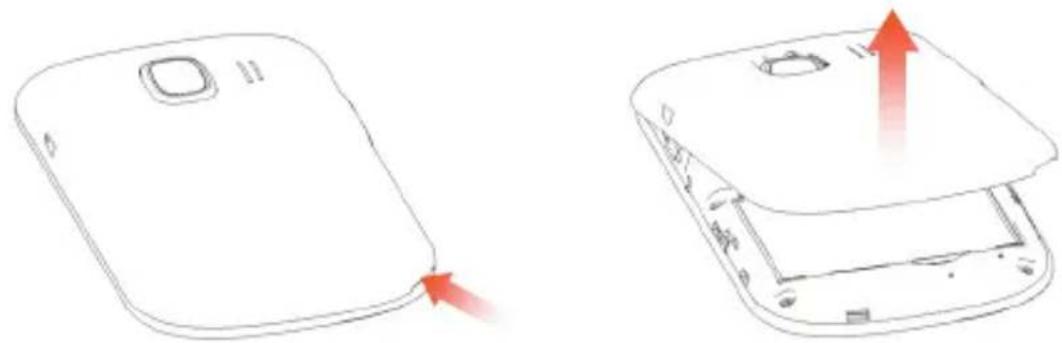
- Remove the back cover.
- Hold the SIM card with the cut corner oriented as shown and slip it into the card holder.
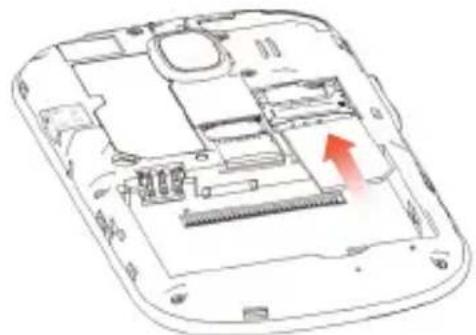
- Hold the microSD card with the cut corner oriented as shown and slip it into the card holder.

microSD logo is a trade mark of the SD Card Association.
- Insert the battery by aligning the gold contacts on the battery with the gold contacts in the battery compartment. Gently push down on the battery until it clicks into place.
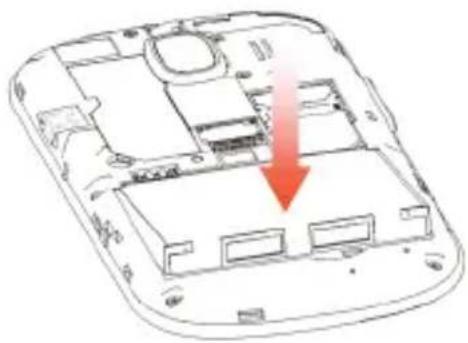
- Press the cover gently back into place until you hear a click.

Removing the Battery and SIM/microSD Card
- Make sure that your mobile phone is off.
- Remove the back cover.
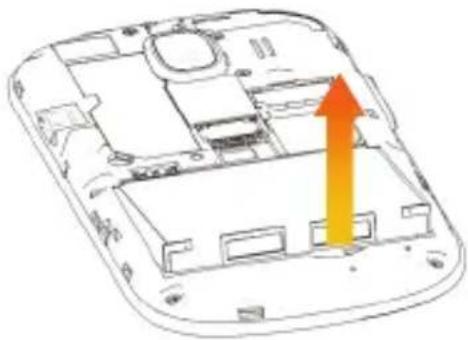
- Lift the battery up and out.
35
- Slide the SIM card and microSD card out.
Charging the Battery
When you first get your new phone you'll need to charge the battery like this.
- Connect the adapter to the charger jack. Ensure that the adapter is inserted with the correct orientation. Do not force the connector into the charger jack.
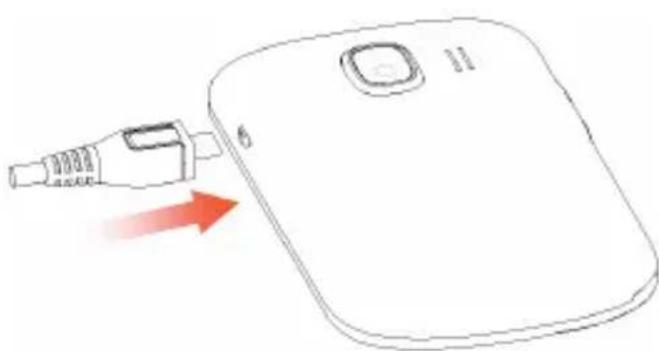
- Connect the charger to a standard AC wall outlet.
- Disconnect the charger when the battery is fully charged.
how much charge have you got?
If the battery is low, there will be a pop-up message on the screen. As you charge your phone, the screen will tell you the exact battery level each time you wake up your phone.
If the phone is on, you'll see this charging icon ☐/ appear on the status bar.
As soon as charging is completed, this icon ■ appears on the status bar.
Switching Your Phone On/Off
- Make sure the SIM card is in your device and the battery is charged.
- Hold the Power Key to switch on your phone.
- To switch it off, hold the Power Key or End Key to get the phone options. Select Power off, and then tap OK.
Note: If the screen is locked, unlock it before holding the Power Key or End Key to get the phone options.
Setting Up Your Phone for the First Time
When you first switch on your phone (or if you've reset it to Factory Settings) you need to select some settings before you can use it.
- Insert your SIM card and switch on your phone.
- Tap the android image on the screen to begin. You can select to change the language or make an emergency call.
- Follow the on-screen instructions to continue. You can set up your Google account, set Google location service, and set the date and time.
- The Home Screen appears when all settings are finished.
Note: It's recommended to create or sign in a Google account on your phone. If you forget the screen unlock pattern, you can use the Google account to unlock your phone (see Sorting out Your Phone Settings – Unlocking the screen With Your Pattern).
Switching to Sleep Mode
To save battery power, Sleep Mode suspends your device to a low-power-consumption state while the display is off. Your device also goes into Sleep Mode by itself when the display is automatically turned off after a certain period of time, which you can set in Settings > Display > Screen timeout.
Press the Power Key to switch to Sleep Mode.
Waking Up Your Phone
- Press the Power Key to activate your screen display.
- Drag the icon down.
NOTE: If you have set up screen lock (see Sorting out Your Phone Settings – Protecting Your Phone with a Screen Unlock Pattern), you need to draw an unlock pattern, or enter PIN or password to unlock your screen.
Getting Around Your Phone
Touch Control
You can use finger gestures to control your phone. The controls on your touch screen change dynamically depending on the tasks you're performing.
- Tap the buttons, icons, or applications to select items or to open applications.
- Hold your finger on an item to see the available options.
- Flick the screen to scroll up, down, left or right.
- Point, drag and drop to move particular items across the screen.
- Pinch with two fingers to zoom in/out an image.
NOTE: You can view the phone screen in landscape or portrait in some applications when you hold the phone upright or turn it on its side.
You can also use the Navigation Key and OK Key to scroll through the menu options or items on the screen and make selections or confirm actions.
Home Screen
You can choose what is shown on your Home Screen. Just add or remove stuff to make it your own.
Status & Notifications
Wallpaper You can add or remove items here.

Tap to open the web browser.
Applications
Tap to open the main menu.
Tap to open the dialer.
Extended Home Screen
The Home Screen extends beyond the screen width, giving you loads more
space to add more stuff. Simply slide your finger to the left or right to see the extended Home Screen.
Choosing Your Wallpaper
- Press Home Key to return to the Home Screen.
- Press Menu Key and select Wallpaper.
- Select the wallpaper you want to use from Download Wallpapers, Gallery, Live wallpaper, or Wallpaper.
- Tap Save or Set wallpaper.
Adding Items to Your Home Screen
- Press Home Key to return to the Home Screen.
- Slide left or right to find an extended Home Screen where there is space to add an item.
- Press Menu Key and select Add.
You can also tap and hold the blank area of the Home Screen to get the Add to Home screen menu. - Select an item type and the item you want to add to the Home Screen.
Removing Items from Your Home Screen
-
Press Home Key to return to the Home Screen.
-
Tap and hold the item you want to delete until the icon appears on the screen.
- Drag the item to 📋.


Status and Notification Icons
Your phone will tell you exactly what's going on by showing you simple icons. Here's what they mean.
 | GPRS connected No signal |  | |
 | GPRS in use Signal strength |  | |
 | EDGE connected Phone spea |  | |
 | EDGE in use Phone micropho |  | |
 | 3G connected No SIM installe |  | |
 | 3G in use GPS on |  | |
 | USB connected Recording ph |  | |
 | Battery flat microSD card rem |  | |
 | Battery very low Preparing mic |  card card | |
 | Battery low Connected to a W |  network network | |
 | Battery partially drained Alarr |  | |
 | Battery full Wired microphone |  set set | |
 | Battery charging Bluetooth on |  | |
 | Syncing Speaker on |  | |
 | Vibrate mode Problem with S |  MS delivery MS delivery | |
 | Airplane mode New instant n |  je je | |
 | New mail Upcoming event |  | |
 | New SMS/MMS/ voicemail | [k7x8] | Song is playing |
 | New Gmail message Download |  data data | |
 | Missed call |  | Content downloaded and installed successfully |
 | Call in progress Sending data |  | |
 | Call on hold USB tethering is |  | |
 | Call forwarding Portable Wi-Fi |  pot is on pot is on | |
 | More (not displayed) notifications |  | New Wi-Fi network detected |
 | Error or warning |
Using the Notification Panel
Flick the status bar downwards to open the Notification Panel, where you can see your calendar events, new messages, and current settings – such as call forwarding or call status. From here you can also open messages, reminders, etc.
TIPS: You can also open the Notification Panel from the Home Screen by
tapping Menu Key > Notifications.
Applications and Settings Preview
Application Preview
Your phone has lots of functions. Tap to see the following applications.
| Applications | Description |
| Alarm | Set alarms. |
| Browser Browse the Internet. | |
| Calculator Do basic calculation. | |
| Calendar Schedule appointments and events. | |
| Call log View the incoming, outgoing and missed calls. | |
| Camcorder Shoot video clips. | |
| Camera Take some great pictures. | |
| Contacts Manage your contacts information. | |
| Dialer Dial a number. | |
| Downloads Download the files. | |
| Email Send and receive emails. | |
| Filer Manage files on your microSD card. | |
| FMRadio Search for, listen to and save radio channels. | |
| Gallery Manage multimedia files. | |
| Gmail Access your Gmail account and check email on your phone. | |
| Google Search | Search for information online or on your phone. |
| Latitude See your friends' locations on the map and share yours with them. | |
| Maps Track your current location, view real-time traffic, and receive detailed directions to your destination. | |
| Market Access useful applications and fun games to download. | |
| Messages Open the Messages screen, where you can send and receive SMS and MMS messages. | |
| Music Browse your audio files and listen to them in Music player. | |
| Navigation Use | Google Maps Navigation which is an Internet-connected GPS navigation system. |
| News & Weather | Check the weather forecast and the latest news. |
| Note pad Create text notes. | |
| Places | Use the online map to search for the places such as restaurants, hotels, bars, etc. |
| SIM Tool Kit Only appears on the screen if your SIM card provides this function. Please contact the service provider for more information. | |
| Settings Adjust phone settings. | |
| Sound Recorder | Capture audio clips. |
| Stopwatch Measure exactly how long it (whatever ‘it’ may happen to be) takes to do. | |
| Talk Use Google Talk to send and receive instant messages. | |
| Task Manager | Manage all the programs running on your phone. |
| Videos Browse | and watch video files. |
| Voice Search | Use the Google Voice Search. |
| YouTube Watch | YouTube videos and upload your own. |
Checking Your Settings
To change or view your phone's settings, tap Home Key > Settings. Or from the Home Screen tap Menu Key > Settings.
| Wireless & networks | Configure and manage wireless connections, such as Wi-Fi, Bluetooth®, mobile networks, mobile data connection sharing and Virtual Private Networks. You can also selectAirplane modefrom here. |
| Call settings | Set up fixed dialing numbers, voicemail, speed dial, call barring, call forwarding, call waiting, caller ID and international call settings etc. |
| Sound Set sound settings, such as ringtones and notifications. | |
| Display Set display settings, such as screen brightness. | |
| Location & security | Create your screen unlock pattern, set the SIM card lock, manage the phone's credential storage or select device administrators. You can also select the sources to use when determining locations from My Location. |
| Applications | Manage your applications and installati |
| Accounts & sync | Manage your accounts and configure synchronization settings. |
| Privacy | Configure privacy settings, such as back-up settings, and personal data. |
| Storage | Check available memory on the external card and the internal phone storage. |
| Language & keyboard | Set the system language and region, plus text input options. |
| Voice input & output | Set up voice recognition and text-to-speech options. |
| Accessibility | Choose accessibility options after you have installed accessibility related applications. |
| Date & time Set the | date, time, time zone, and date/time format. |
| About phone | View phone status, battery use, legal information, etc.You can also check for system updates. |
Opening Recently Used Applications
- Hold Home Key from any screen until the following recently used applications screen appears.

- Tap the application you want to open.
Phone Calls
How to Make Calls
Calling from the Dialer
- Open the dialer in one of the following ways.
■ Tap Home Key > □ > Dialer.
■ Tap on the Home Screen.
■ Press the Send Key.
- Enter the phone number you want to call.
If you make a mistake, tap ☐ on the screen or press ☐ on the keyboard to erase a wrong entry. Hold ☐ or ☐ to clear all digits.
Your phone automatically lists the matching contacts. You can tap and see if there are more matching numbers or contacts.

- Tap Call or press the Send Key.
Calling from Your Contacts
- Tap Home Key > 📋 > Contacts.
- Slide your finger to scroll the contacts list and tap the contact you want to call.
You can search for a contact by tapping Menu Key > Search.
- Tap
Calling from Your Call History
- Open the call log in one of the following ways.
■ Tap Home Key > □ > Call log.
■ Tap Home Key > □ > Dialer > □.
■ Tap Home Key > 📄 > Contacts > Call log.
- Tap 📋 next to the number you want to call.
Calling from a Text Message
If a text message contains a phone number that you want to call, you can make the call while viewing the text message.
-
Tap Home Key > □ > Messages and tap the message that contains the phone number you want to call.
-
Tap the message content.
- Select a number.
- Tap Call or press the Send Key.
Using Speed Dial
Press and hold 1 \~ 9 key from the dialer to call the corresponding speed dial number.
The number key 1 is reserved to speed dial your voicemail.
Assigning a speed dial key:
- Tap Menu Key > Settings > Call settings > Speed dial from the Home Screen.
- Tap a speed dial key.
- Enter a phone number or tap 📁 to select one from the contact list.
- Tap OK.
Making Emergency Calls
- Enter the emergency number for your location from the dialer.
- Tap Call or press the Send Key.
TIPS: It's possible to dial emergency numbers when your SIM card is not
inserted. Please call the service provider to find out more information. For instance, what emergency numbers are supported?
Making International Calls
- Open the dialer and press on the keyboard to enter ‘+’.
- Enter the full phone number.
For example: +44-123-12345678 in the following format: + country code / area code / phone number.
- Tap Call or press the Send Key.
Whether you can make international calls depends on network status and/or your tariff. Please call the service provider to find out more.
How to Receive Calls
Answering a Call
Press the Send Key or drag 📞 down to answer the call.
TIPS: Press the Volume Keys to adjust the in-call volume.

Rejecting a Call
Press the End Key or drag 📞 up to reject the call.
Muting a Call
During a call, you can mute your microphone so that the person you are speaking to cannot hear you, but you can still hear him.
Tap Menu Key > Mute to turn your microphone off. The mute icon 🎨× will appear on the screen. To turn your microphone back on, tap Menu Key > Mute again.
Putting a Call on Hold
During a call, you can put it on hold by tapping Menu Key > Hold. The icon will appear on the screen.

TIPS: If you accept an incoming call while you're on another call, the first call automatically goes on hold. Just tap Menu Key > Swap calls to switch between the two callers.
Turning the Speakerphone On/Off
Tap Menu Key > Speaker during a call to turn the speakerphone on. This icon will appear in the status bar. Tap Menu Key > Speaker again to turn it off.
Ending a Call
Just press the End Key or tap Menu Key > End call to finish a call.
Adjusting Your Call Settings
From the Home Screen, you can open the call settings menu by tapping Menu Key > Settings > Call settings.
| Fixed dialing numbers | Restrict outgoing calls to a fixed set of numbers. To do this you must know your SIM card's PIN2 code. | |
| Voicemail service | Select a voicemail service provider. | |
| Voicemail settings | Specify a voicemail number. | |
| Speed dial Set speed dialing keys. | ||
| Call Barring Settings | Forbid certain types of calls. | |
| Call forwarding | Forward your incoming calls to a different number. And choose when to forward: Always forward; Forward when busy; Forward when unanswered, or Forward when unreachable. | |
| Additional settings | Caller ID | Choose whether people you call can see your number. |
| Call waiting | See new incoming call notification while you're on another call. | |
| Accounts Set up Internet calling (SIP) accounts. | ||
| Use Internet calling | Choose when to use the Internet calling function. | |
Contacts
You can save contacts to your phone memory or your SIM card. If you store their information on the phone memory, you can add emails, postal addresses, pictures, nicknames, websites, etc.
To access your contacts, tap Home Key > 📄 > Contacts.
There are five tabs on the Contacts Screen: Dialer, Call log, Contacts, Favourites and Groups.
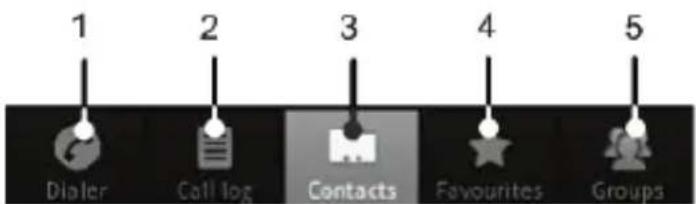
| 1 | Dial the number you want to call. |
| 2 | View the call history. |
| 3 | View all contacts. |
| 4 | Access your favourite and frequently-called contacts. |
| 5 | Sort contacts into groups so that you can send |
messages to a group of people quickly.
Importing and Exporting Contacts
You can import/export contacts from/to your SIM card (or microSD card). First, let's do it for the SIM card.
- Tap ☐/Menu Key > Import/Export from the Contacts Screen.
- Choose to import or export contacts. Your phone will automatically read the contacts.
- Select the contacts you want to import/export. Or, just tap or Menu Key > Select all.
- Tap OK.
And this is how you import/export contacts from/to a microSD card.
- Tap Menu Key > Import/Export from the Contacts Screen.
- Choose to import or export contacts. If you want to import contacts from the microSD card, you should have vCard files saved in the microSD card. If there's more than one vCard file, you need to select the vCard file and tap OK.
Sharing Contacts Information
- Tap ☐/Menu Key > Import/Export > Share visible contacts from the Contacts Screen. Your phone will export all information of the contacts in the Contact Screen to a temporary vCard file.
- Choose how you want to send the vCard file. You can either send it via Bluetooth to another device, or as an attachment in an Email, a Gmail or a Message.
Creating a Contact
- Tap 📋 or 📋/Menu Key > New contact from the Contacts Screen.
- Select where you want to save your contact.
- Enter the name and phone number(s), email addresses, chat addresses, postal addresses, etc if needed.
- Tap Done to save the contact.
Adding a Contact to Favourites
-
Tap and hold the contact you want to add to Favourites from the Contacts Screen.
-
Tap Add to favourites from the shortcut menu.
TIPS: You can also tap a contact and then tap ☆ next to the contact's name to add it to Favourites.
Searching for a Contact
- Tap 🔒 at the bottom of the Contacts Screen.
- Input the contact name you want to search for.
The contacts matched will be listed.
Editing a Contact
- Tap the contact you want to edit from the Contacts Screen.
- Tap
- Edit the contact and tap Done.
TIPS: You can also edit a contact by holding it in the Contacts Screen and selecting Edit contact from the pop-up shortcut menu.
Deleting a Contact
-
Tap 📄/ Menu Key > Delete contacts from the Contacts Screen.
-
Select the contacts you want to delete.
- Tap OK.
- Tap OK to delete the contacts.
Creating a New Group
- Tap the Groups tab from the Contacts Screen.
- Tap at the bottom of the screen.
- Enter the group name and tap Done.
- Tap the new group and tap 🏠 to add group members.
- Tick the check boxes next to the contacts you want. Then tap 📄
To send messages to the group members, you can tap 🤨 next to the group and select message recipients from the listed group members.
Using the Hardware Keyboard to Enter Text
Your phone has a hardware keyboard – a compact version of standard computer keyboard.
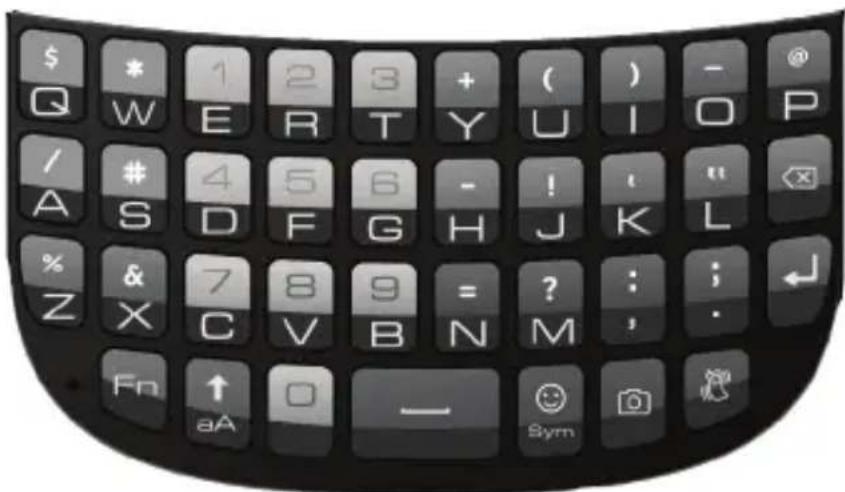
When entering text, do the following:
- To enter lowercase letters, press the letter keys on the hardware keyboard.
-
To enter a single uppercase letter, press ↑ and then press the corresponding key.
-
To enter all uppercase letters, press twice and then press the letter keys. To change back to all lowercase letters, press again.
- To enter a character, number or symbol (labeled at the upper part of the key), press and then press the corresponding keys. Press twice to enter all characters, numbers or symbols (labeled at the upper part of the key). And then the same again to go to normal type.
- To open the symbol pad, press 📂. You can tap on the screen or use Navigation Key and OK Key to enter a symbol.
- To move the cursor, tap on the screen or press Navigation Key.
- To delete the character before the cursor, press
- To start a new line, press
- To enter a space, press .
Note: Holding a specific letter key may result in multiple accented character options (like á, ü, é, etc). Tap on the screen or use Navigation Key and OK
Key to enter the character you need.
Text Input Settings
You can choose the text input settings for the hardware keyboard by tapping Menu Key > Settings > Language & keyboard > Built-in keyboard from the Home Screen.
Tick the check boxes to enable the following options:
• Auto-replace: Correct the mistyped words automatically.
• Auto-cap: Capitalise the first letter in each sentence automatically.
- Auto-punctuate: Press the space key twice to insert “.”
Using the Onscreen Keyboard to Enter Text
You can also use the onscreen Android keyboard to enter text. If the keyboard is enabled, it automatically appears on the screen when you enter a field that needs text.
To enable the onscreen keyboard:
- Tap Home Key > Settings > Language & keyboard.
- Tick the Android keyboard check box.
- Tap Android keyboard and tick the Enable the soft keyboard check box.
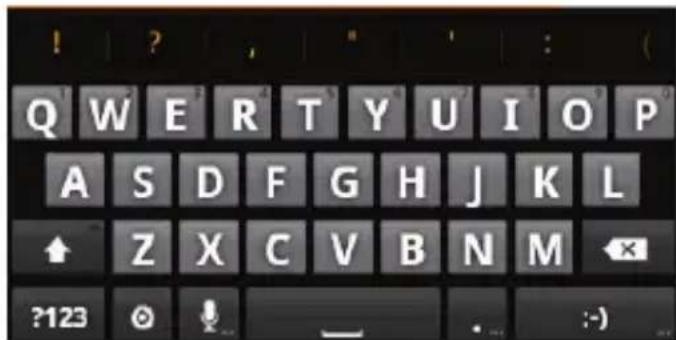
- Tap the alphabetic keys to enter letters. Tap and hold the keys to enter associated accented letters or numbers. For example, to enter È, tap
and hold E and the available accented letters and number 3 appear. Then slide to choose È.
- Tap ↑ to use uppercase or lowercase. This key also changes to indicate the current case you are using: ↑ for lowercase, ↑ for uppercase, and ↑ when locked in uppercase.
- Tap to delete any text you have entered.
- Tap 7123 to select numbers and symbols. You can then tap AI to find more. Also, often used symbols are displayed on top of the keyboard. Flick left or right to find the one you need and tap to enter.
- Tap ▶ to enter a smiley face; hold the key and swipe to choose more emoticons.
- Tap to change input method or set up Android keyboard.
- Tap 📁 to use Google's networked voice input.
Text Input Settings
To choose the text input settings for the onscreen Android keyboard, tap Menu Key > Settings > Language & keyboard > Android keyboard from the Home Screen.
You can tick the check boxes to enable:
- Enable the soft keyboard
- Vibrate on key-press
- Sound on key-press
- Pop-up on key press
- Touch to correct words
• Auto-capitalisation of the first letter in each sentence
• Show settings key
You can also set the following options:
- Voice input: Select to display the voice input icon on the main or symbols keyboard. You can also hide the icon.
Messages
Your SMS (text message) and MMS (multimedia messaging service) files are located in Messages (☐ > Messages).
From Messages, you can receive and send an SMS or MMS.
When you receive a new message, you can open it from the Notification Panel, or from the Messages Screen. Simply tap on the new message to read it.
Sending a Text Message
- Tap Home Key > □ > Messages.
- Tap New message.
- Tap the To field and enter the recipient's number, or tap 📷 to add recipients from the Contact list. You can also enter the first letters of the recipient's name to display a list of matching names stored in Contacts, and then select their names from the list.
- Tap Type to compose and type your message.
- Tap Send to send your text.
Sending an MMS
- Tap Home Key > □ > Messages.
- Tap New message.
- Tap To field and enter the recipient's number, or tap 📁 to add recipients from the Contact list. You can also enter the first letters of the recipient's name to display a list of matching names stored in Contacts, and then select their names from the list.
- Tap Menu Key > Add subject to enter the subject of your MMS.
- Tap Type to compose and type your message.
-
Tap Menu Key > Attach if you want to add an attachment to your MMS.
-
Pictures: Select a picture to add to your MMS.
• Capture picture: Take a photo to attach to your MMS. - Videos: Select a video clip to attach to your MMS.
• Capture video: Shoot a video clip and attach to your MMS.
• Audio: Select an audio file to attach to your MMS. - Record audio: Record an audio file to attach to your MMS.
-
Slideshow: Edit a slideshow to attach to your MMS.
-
When you've finished, tap Send.
NOTE: Add an attachment to text message and it will be converted into an MMS without you having to do a thing. Likewise if you remove the attachment from an MMS, it'll automatically become a text message.
Managing Messages and Their ‘Threads’
Text and MMS messages sent to and received from the same contact (or number) are grouped into a message thread in your Messages Screen. That way you can tap a message thread and see the ‘conversation’ you’ve had with someone – like a chat program. These message threads are arranged according to when you received them, with the latest one on top.
Replying to a Message
- Tap the message thread you want to reply to from the Messages Screen.
- Tap Type to compose and type your message.
- Tap Send.
Deleting a Message Thread
- Tap Menu Key > Delete threads from the Messages Screen.
-
Select the threads you want to delete.
-
Tap Delete.
- Tap Delete again to confirm.
You can also delete a message or thread by opening it from the Messages Screen and tapping Menu Key > Delete.
Message Settings
To configure your message settings, tap Menu Key > Settings from the Messages Screen.
Storage settings:
- Delete old messages: Select to delete old messages when your storage limits are reached.
- Text message limit: Set the maximum number of text messages allowed in a single thread.
- Multimedia message limit: Set the maximum number of multimedia messages allowed in a single thread.
Text message (SMS) settings:
- Delivery reports: Request a delivery report for every text message you send.
- Manage SIM card messages: Manage the messages saved on your SIM
card.
- SMS validity: Set the validity time for outgoing text messages.
- SMS priority: Set the priority of outgoing text messages.
• Service Center: Enables you to view and edit the service centre number.
Multimedia message (MMS) settings:
- Delivery reports: Request a delivery report for every MMS message you send.
- Read reports: Request a read report for each MMS message you send.
• Auto-retrieve: Automatically retrieve MMS messages. - Roaming auto-retrieve: Automatically retrieve MMS messages while roaming.
- MMS validity: Set the validity time for outgoing MMS messages.
- MMS creation mode: Select to create an MMS message with or without restriction, or receive warning when adding restricted attachment to an MMS message.
Notification settings:
- Notifications: Show message notifications in the status bar.
- Select ringtone: Choose a ringtone for your incoming messages.
• Vibrate: Make your phone vibrate when a new message arrives.
Signature settings:
- Edit signature: Edit your signature, which can be added automatically to outgoing messages.
- Add signature: Add the signature to all outgoing messages.
Go to the Email Screen to set up your email account and exchange emails: Tap Home Key > ☐ > Email.
Creating an Email Account
- Enter your email address and password. Then tap Next when you enter the Email Screen for the first time.
- Select the type of your account, edit the incoming server settings, and then tap Next or Next [Check].
After you tap Next [Check], your phone will check the incoming server settings. If you are notified that the setup could not be finished, you'll need to correct some settings to finish it. If there is any problem, please contact your mobile service provider and email service provider.
- Edit the outgoing server settings and tap Next or Next [Check].
After you tap Next [Check], your phone will check the outgoing server settings.
NOTE: Your device ‘knows’ the client settings for lots of email service providers. If the email service you use is from those providers, the phone
will automatically check the incoming and outgoing settings after you enter your email account and password.
- Set the Email checking frequency, download options, account name and other settings. Tap Done when you finish.
Your phone will show the inbox of the Email account and start to download Email messages.
TIPS: To add more Email accounts, open Email to get the Inbox screen. Then tap Menu Key > More > Accounts > Menu Key > Add account.
Writing and Sending Emails
After creating your email account, you're ready to write and send emails.
- Tap Menu Key >Compose from the Email Screen.
- Tap To field and enter the recipient's email address.
When you enter the email address, the matching addresses saved in your Contacts will be displayed. You can tap the recipient from the list.
TIPS: You can also tap Menu Key > Add Cc/Bcc to add recipients.
- Enter the subject and the content of your email. If necessary, change the email priority.
-
Tap Menu Key > Add attachment to add files to the email.
-
Tap Send.
Replying to and Forwarding Emails
- From the Email Screen open the email you want to reply to/forward.
- Tap Reply or Menu Key > Forward.
You can also tap Reply all if you want to include everybody who got the original email. If forwarding, enter the email address(es) your message will be sent to.
- Type your email.
- Tap Send.
Email Settings
Tap the account you want to set from the Email Screen and tap Menu Key > More > Account settings. Here's what you can choose from.
General settings:
• Account name: Set your account name.
- Your name: Set the name shown on your outgoing emails.
- Email address: Set the email address of the account.
- Use signature: Choose to use your signature.
• Signature: Set your signature.
• Use reply to: Use reply to email address - Reply to: Edit reply to email address.
- Email check frequency: Choose how often you want to check for emails.
- Power-saving mode: Enable the email synchronization time intelligent adjustment.
- Default account: Select the check box to send email from this account by default.
Download settings:
- Download settings: Select download options and message number per download.
- Sync deleted message: Delete emails on the server and the emails will be deleted on the phone, too.
Notification settings:
- Email notifications: Select to be notified in status bar when email arrives.
- Select ringtone: Select the ringtone for incoming email.
• Vibrate: Make phone vibrates when email arrives.
Server settings:
- Incoming settings: Set the incoming email server.
- Outgoing settings: Set the outgoing email server.
Getting Connected to the Internet
Your phone's impressive networking capabilities will get you onto the Internet or a corporate network (intranet) with ease.
You can use default connection settings to connect to the web via your mobile network (GPRS/EDGE/3G), or Wi-Fi.
The GPRS/EDGE/3G connection can be enabled/disabled manually. Just select > Settings > Wireless & networks > Mobile networks from the Home Screen and tick or clear the Data enabled check box.
Adding a New GPRS/EDGE/3G Connection
To get connected via GPRS/EDGE/3G you need a data plan with your service provider. Also if the GPRS/EDGE/3G settings are not pre-configured on your phone, please contact your provider to get the following information. Changing the settings without talking to your service provider could stop your phone from working.
- Access Point Name (APN).
- Your user name and password if needed.
-
Server IP and the port number if the network uses a proxy server.
-
Tap Home Key > Settings > Wireless & networks > Mobile
networks > Access Point Names.
- Tap Menu Key > New APN.
- Tap Name to enter your APN name (it can be whatever you like).
- Tap APN to enter the APN you want to add.
- Tap Proxy and Port to enter the Server IP and port if the network uses a proxy server.
- Tap and enter Username and Password. (If there's no user name or password, leave them blank.)
- If needed, tap and enter APN type.
- Tap Menu Key > Save to complete.
TIPS: To set the APN to default settings, tap Menu Key > Reset to default.
Turning on Wi-Fi
Wi-Fi provides wireless Internet access over distances of up to 300 feet (about 100 meters).
- Tap Home Key > Settings > Wireless & networks.
- Tick the WiFi box to turn it on.
Connecting to a Wi-Fi Network
- Tap Home Key > Settings > Wireless & networks > Wi-Fi settings.
The Wi-Fi network names and security settings (open or secured) that your phone has detected are shown in Wi-Fi networks section.
- Tap a network to connect to it.
If the network is secured, you'll need to enter a password.
Checking the Wi-Fi Network Status
You can check the Wi-Fi network by looking at the icon in the status bar.
Or tap Home Key > Settings > Wireless & networks > Wi-Fi settings. Next, tap the wireless network that the phone is currently connected to. You can check the network status from the pop-up window.
Using the Phone as a Modem
You can access the Internet on your PC via your phone as a modem. Note the function may result in data charges from your mobile phone carrier. Please contact them for detail.
Enabling the Modem Function
You can use your phone's mobile data connection via USB to connect to the Internet on your computer.
NOTE:
- Make sure that USB storage is turned off before enabling the modem function. You can flick down the notification panel and tap Turn off USB storage > Turn off USB storage.
-
The PC accesses the Internet via the phone's mobile network. Therefore, set up the GPRS/EDGE/3G connection correctly before you try to use the phone as a modem.
-
Make sure your phone's data connection is enabled.
-
When you connect your phone to your PC with the provided USB cable for the first time, a window will pop up and prompt you to install the driver.
-
Double click the executable file (.exe) in the window and follow the prompt to finish the driver installation.
NOTE: If the window doesn't pop up automatically for some reason, please open the new CD-ROM drive on your PC manually and find the executable file to run it.
- Tap on the phone Home Key > Menu Key > Settings > Wireless &
networks > Tethering & portable hotspot and tick the USB tethering check box. A new network connection will be created on your PC.
- Go to Control Panel > Network on your PC to enable the new network connection.
Now you can launch the Internet browser on your PC and start surfing.
Disabling the Modem Function
Tap Home Key > Menu Key > Settings > Wireless & networks > Tethering & portable hotspot and clear the USB tethering check box.
You can also just pull out the USB cable.
Using the Phone as a Wi-Fi Hotspot
You can use the phone as a portable wireless router, sharing the Wi-Fi connection for one or more computers or other devices. The function need data connection on a mobile network and may result in data charges.
NOTE:
- The PC accesses the Internet via the phone's mobile network. Therefore, set up the GPRS/EDGE/3G connection correctly before you try to use the phone as a Wi-Fi hotspot.
- When the portable Wi-Fi hotspot function is enabled, you cannot use your
phone's applications to access the Internet via its Wi-Fi connection.
Enabling the Wi-Fi Hotspot
- Make sure your phone's data connection is enabled.
- Tap Home Key > Menu Key > Settings > Wireless & networks > Tethering & portable hotspot and tick the Portable Wi-Fi hotspot check box.
- Tap Portable Wi-Fi hotspot settings > Configure Wi-Fi hotspot.
- Change the name of the hotspot and its security setting, if necessary. NOTE: The default hotspot is set as an open one. You can tap Open and choose WPA2 PSK to set up a password.
- Tap Save. Now you can find the hotspot on other devices and connect to it.
Disabling the Wi-Fi Hotspot
Tap Home Key > Menu Key > Settings > Wireless & networks > Tethering & portable hotspot and clear the Portable Wi-Fi hotspot check box.
Browsing the Internet
You can use your phone to get on the Internet. Your phone automatically creates a GPRS, EDGE or 3G connection while you browse web pages.
Tap Home Key > 📄 > Browser.
There are different ways to open web pages.
- Tap the address bar to enter the website you want to browse. Then tap

- Tap beside the address bar or tap Menu Key > Bookmarks. Select an item to open.
- Tap beside the address bar or tap Menu Key > Bookmarks. Choose an item from the Most visited tab or History tab.
Browsing Options
- Refresh: Menu Key > Refresh.
- Forward: Menu Key > More > Forward to browse the next web page.
- Add the page to Bookmarks: Menu Key > More > Add bookmark.
-
Search: Menu Key > More > Find on page and enter the search item.
-
Copy: Menu Key > More > Select text and slide your finger on the page to select the text you want to copy. Your phone automatically copies the selected text to the clipboard.
- Share pages: Menu Key > More > Share page to send a page by Bluetooth, Email, Gmail or Messages.
- Download/page info: Menu Key > More > Page info/Downloads.
- Landscape browser: Menu Key > More > Settings. Tick the Landscape-only display box to view the landscape browser screen only.
- Open new browser window: Menu Key > New window. Then tap the address bar to enter the website you want to browse.
- Switch browser windows: If you have more than one browser windows opened, you can switch between these windows by tapping Menu Key > Windows. Then tap the page you want to browse. You can also tap ✗ to close a window.
Opening Links in Web Pages
When you're on a web page with a link to another site, either tap the link to open the page, or hold on the link to open the shortcut menu, giving you these options:
- Open
- Open in new window
- Bookmark link
- Save link
- Share link
- Copy link URL
Downloading Apps from the Web
If a web page has link to an application you'd like to download, just hold on the link and select Save link. The application will be saved to your microSD card.
Using Bookmarks
To bookmark a web page, open it, tap 📄 or Menu Key > Bookmarks, and then Add. Give the bookmark a name and tap OK.
TIPS: To change how you view bookmarks on your phone screen, tap Menu Key > List view/Thumbnail view.
Editing a Bookmark
Open a browser window. Tap 📄 or Menu Key > Bookmarks. Select the bookmark you want to edit – holding on it until the shortcut menu pops up and select Edit bookmark. Edit the name or location, and then tap OK to save.
Deleting a Bookmark
Open a browser window. Tap 📄 or Menu Key > Bookmarks. Choose the bookmark you want to get rid of by holding on it until the shortcut menu pops up. Then select Delete bookmark and tap OK to confirm.
Browser Settings
You can set the browser text size, home page etc. by tapping Menu Key > More > Settings from a browser window.
Page content settings
- Text size
- Default zoom
- Open pages in overview
-
Text encoding
-
Block pop-up windows
- Load images
- Auto-fit pages
- Landscape-only display
- Enable JavaScript
- Enable plug-ins
- Open in background
- Set homepage
Privacy settings
- Clear cache: Clear locally cached content and databases.
- Clear history: Clear the browser navigation history.
- Accept cookies: Allow websites to use cookies.
- Clear all cookie data: Clear the browser cookies – deleting all history data.
- Remember form data: Remember the data you type in forms for later use.
- Clear form data: Clear all the saved form data.
- Enable location: Allow sites to request access to your location.
- Clear location access: Clear location access for all websites.
Security settings
- Remember passwords: Save usernames and passwords for websites.
- Clear passwords: Clear all saved passwords.
- Show security warnings: Warn if there’s a problem with a site’s security.
Advanced settings
- Set search engine: Select a search engine.
- Website settings: View advanced settings for individual websites. (Only available for some websites.)
- Reset to default: Clear all browser data and reset all settings to default.
Bluetooth®
Bluetooth ® is a short-range wireless communication technology. Phones or other devices with Bluetooth capabilities can exchange information wirelessly within a distance of about 10 meters. The Bluetooth devices must be paired before the communication is performed.
Turning Bluetooth on/off
Tap Home Key > Settings > Wireless & networks and tick the Bluetooth check box. When Bluetooth is on, the ✦ icon will appear in the status bar.
If you want to turn Bluetooth off, just clear the Bluetooth check box.
NOTE: If you switch off your phone while Bluetooth is turned on, when you switch on the phone again, Bluetooth will turn on automatically.
Making Your Phone Visible
In order to work with other phones or devices that have Bluetooth, you need to make your phone ‘visible’ to them.
- Tap Home Key > Settings > Wireless & networks > Bluetooth
settings.
- Tick the Bluetooth check box if it isn't already ticked.
- Tick the Discoverable check box to make your device visible.
To make your phone ‘invisible’ simply clear the Discoverable check box.
Changing Your Phone's Name
When your phone is visible to other Bluetooth devices it will be seen by its name, and you can make that anything you want – like ‘Ben’s Android edition STARTEXT’.
- Tap Home Key > Settings > Wireless & networks > Bluetooth settings.
- Tick the Bluetooth box if it is not already ticked.
- Tap Device name.
- Enter the name and tap OK.
Hooking Up With Another Bluetooth Device
You can pair your phone with another device that has Bluetooth capabilities. Once you do this, the two devices can exchange information with Bluetooth
turned on.
- Tap Home Key > Settings > Wireless & networks > Bluetooth settings.
- Tap Scan for devices. Your phone will show all visible Bluetooth devices (in range) in its Bluetooth devices list.
- Select the device you want to pair with.
- If required, enter your PIN and tap OK.
If a PIN is required, the same PIN should be entered on the other device.
Making the Most of Multimedia
Taking Pictures With Your Camera
Your phone has a 3.2-megapixel camera. Open it by holding the Camera Key or tapping Home Key > > Camera.
Aim the camera at the subject, then tap 📄 or press the OK Key to take a shot. To view it, just tap the picture in the right up corner of the screen. Or select Menu Key > Gallery to view all your pictures.
Adjusting Camera Settings
From the Camera Screen, you can do the following settings.
- Tap 📷 to set up focus mode, exposure, picture size/quality, color effect, ISO, anti-banding, saturation, contrast, sharpness, or restore the camera settings to default.
- Tap ☑ to enable or disable saving of pictures' locations.
- Tap AW to change white balance.
- Tap 1x to zoom in or out.
TIPS: To change quickly from camera to camcorder or vice versa, use the switch icon 📄. Use the bar to adjust the brightness.
Shooting Video With Your Camcorder
Open the camcorder by tapping Home Key > 📄 > Camcorder. Then tap 📍 or press the OK Key to start shooting, and tap 📍 or press the OK Key to stop. Tap the picture in the right up corner of the screen to view the video you’ve just shot. Or tap Menu Key > Gallery to see all your video clips.
Adjusting Your Video Settings
From the Camcorder Screen, you can do the following settings.
- Tap 📋 to adjust color effect, video quality, video/audio encoder, video duration, and restore the camcorder settings to default.
- Tap ▲ to change white balance.
- Tap 📄 to change video quality, video/audio encoder, and video duration together. And the icon will change to High, Low, MMS or YouTube.
Listening to Your FM Radio
The FM Radio on your phone lets you search for, listen to and save radio channels. And when you get a call, the radio will automatically switch off.
To tune in, plug your headset into your phone.
Tap Home Key > ☐ > FMRadio and then tap 🔒 if needed. This 📋 icon will pop up in the status bar.
Tap or to scan for available FM channels. If you need to fine tune the radio's reception, tap Menu Key > Adjust. Select + / - to make the frequency go up or down by +/- 0.1 MHz.
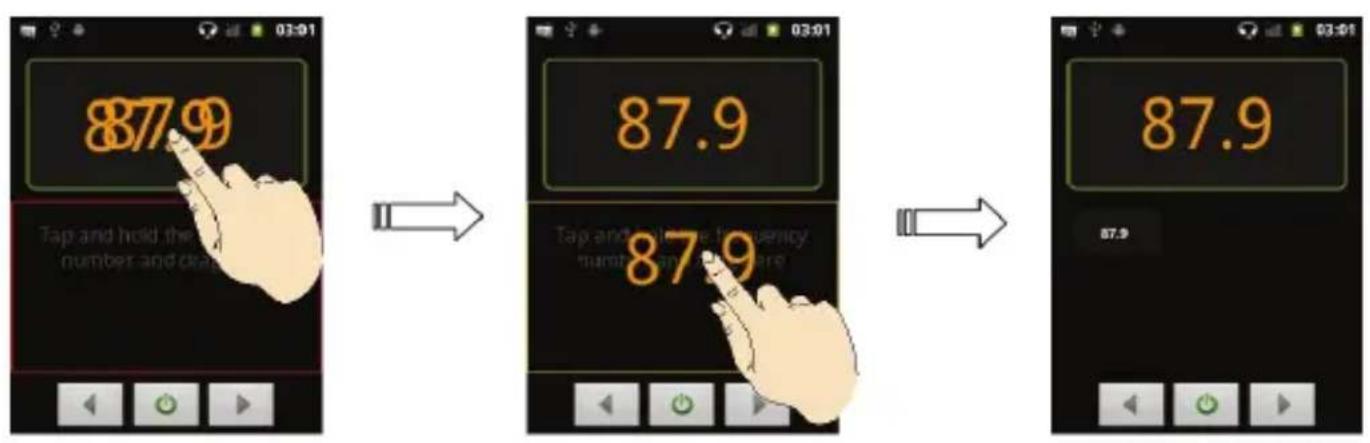
Once you get the best reception of a channel, hold the frequency shown until a red box appears on the screen, and then drag it into the box to save – as shown in the following diagram.
IMPORTANT: The quality of your radio's reception depends on the coverage of the radio station where you are. The wired headset that comes with your phone works as an antenna, so always connect the headset when using the FM Radio.
- Press the Volume Keys to adjust the volume.
- Tap Menu Key > Sleep to set the FM radio sleep timer.
- Tap to switch off the radio.
Playing Your Music
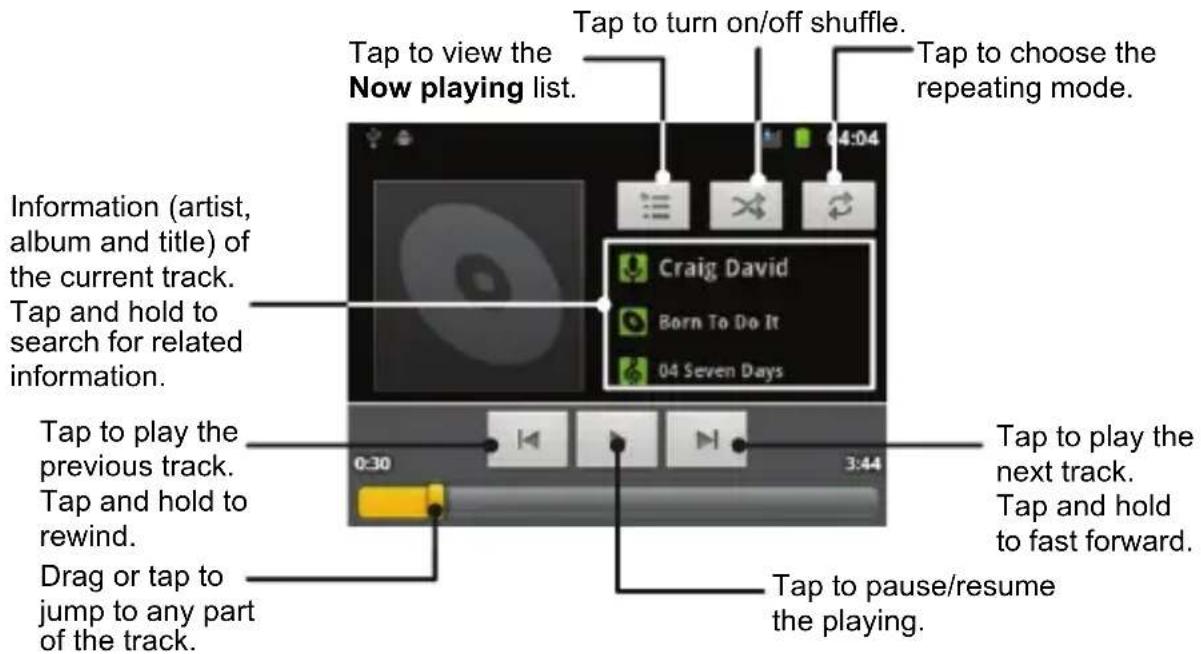
You can play digital audio files from your phone's memory card in Music.
- Tap Home Key > Music to open the Music Screen.
-
Select Artists/Albums/Songs/Playlists to see the songs you want to play.
-
Tap a song from the list to start playing.
- Press the Volume Keys to adjust the volume.
Creating Playlists
Playlists help you organize your music files:
- Select a music file you want to add to a new playlist.
- Tap and hold on the file until a shortcut menu pops up.
- Tap Add to playlist.
- Tap New.
- Type the playlist name and tap Save.
Managing Playlists
- From the Music Screen tap Playlists to see them all.
- Hold on the playlist you want to play or edit until a shortcut menu pops up.
- Tap Play, Delete or Rename.
Adding a Song to a Playlist
- Select Artists/Albums/Songs/Playlists to see the songs.
- Hold on the song until a shortcut menu pops up.
- Select Add to playlist.
- Select a playlist.
Setting a Song as Ringtone
- Select Artists/Albums/Songs/Playlists to see the songs.
- Hold on the song until a shortcut menu pops up.
- Select Use as phone ringtone.
TIPS: You can also set a song as ringtone when you are playing it by tapping Menu Key > Use as ringtone.
Playing Your Videos
First, you need to copy video files to your memory card. Then, to play a video file, tap Home Key > Videos. This will open the Videos Screen and show the video files saved to your memory card.
Choose a video file and the video player will open. Tap on the screen and the control bar will appear as below. So now you can play, pause, fast forward, etc.

Opening Your Gallery
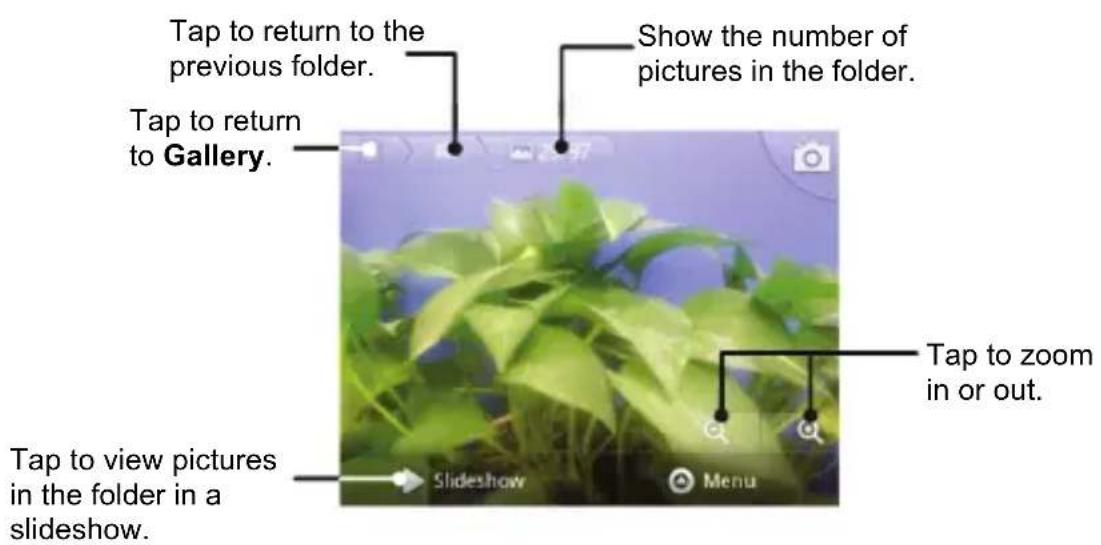
Gallery helps you view pictures and play videos. You can also do some basic editing of your pictures – such as setting them as wallpaper or contact icons, cropping them and sharing them with friends.
TIPS: When viewing a picture, you can double-tap to zoom in/out. You can also pinch to zoom in or out.
Making Memorable Memos
Sound Recorder enables you to record your voice memos. You need a microSD card to use it.
- Tap Home Key > □ > Sound Recorder.
-
Make sure your mouth is near the phone's microphone.
-
Tap to start recording.
- Tap to stop recording.
- Tap ▶ to play back the voice recording.
- Tap OK to save the voice recording, or tap Discard to delete it.
TIPS: Where are your recordings? You'll find them by going to Home Key >
Music > Playlists > My recordings. And if you'd like to use a recording as a ringtone, hold the recording and select Use as phone ringtone from the pop-up shortcut menu.
Using Your Google™ Applications
Signing in to your Google Account lets you synchronize Gmail, Calendar, and Contacts between your phone and the web. And if you don't have an account, you can easily create one.
- Tap a Google application, such as Market.
- Read the instructions and select Next.
- If you've got a Google account, tap Sign in. Enter your user name and password. Then tap Sign in. (Or tap Create if you don't have a Google account.)
Gmail
Gmail is a web-based email service that's configured when you sign in to your Google account. Depending on your synchronization settings, the Gmail on your phone can be automatically synchronized with your Gmail account on the web.
This is how you create and send an email:
- Open Gmail by tapping Home Key > 📄 > Gmail.
-
Tap Menu Key > Compose.
-
Enter the email address of the person you're contacting in the 'To' field. If you're sending the email to several people, separate the email addresses with a comma. You can add as many recipients as you want.
- Enter the email subject, and then write your email.
- Tap Menu Key > Send.
Google Calendar
Tap Home Key > 📋 > Calendar to use Google Calendar, Google’s time management application. You can use the calendar to schedule appointments, including meetings and other events. Your appointments will be displayed on the screen as scheduled. You can also synchronize appointments to your Google account, which enables you to manage your schedule online on your PC.
Google Talk
Tap Home Key > 📄 > Talk to use Google Talk. Google Talk is Google's instant Messages program, which enables you to communicate with other people who also use Google Talk.
This is how you add a new friend:
You can only add people who have a Google Account.
- In the Friends list, tap Menu Key > Add friend.
- Enter the Google email address of the friend you want to add.
This is how you start a chat:
- Tap a friend in the Friends list.
- Chat with your friend by entering text using the on-screen keyboard.
- Tap Send.
TIPS: Tap the talk status bar above the friends list, tap ▼ to change status, and then enter your status message in the text box.
Places
Google Places helps you find all kinds of businesses near you.
- Tap Home Key > Settings > Location & security and tick the Use GPS satellites or Use wireless networks check box.
- Tap Home Key > □ > Places. Wait while you are being located.
- Select a business category and the information of that type of business near you will be displayed. You can also use the Find places search box on the top to find the business you need.
NOTE: Tap Add to add new business categories.
- Tap a result you are interested in and check out the details and reviews about that place. You can also see the place on Google Maps, find out how to get there, or give that business a call.
Latitude
Google's Latitude service is a social tool for sharing your location information with selected friends.
Tap Home Key > 📄 > Latitude to enable Latitude service.
Each time you launch the Maps application, your location will be determined by GPS or the phone network and your Latitude status will be updated. You can tap Menu Key > Join Latitude in Maps or Home Key > 📄 > Latitude to see your status as well as that of your selected friends.
In Latitude, tap Menu Key to refresh friends' status, see them on Maps, add new friends, show stale friends or change the settings.
You can also turn off Latitude service. In Latitude Screen, tap Menu Key > Settings > Sign out of Latitude.
Sorting out Your Phone Settings
Setting Time and Date
- Tap Home Key > Menu Key > Settings > Date & time.
- Clear the Automatic tick box if you want to set the time and date by yourself.
- Tap Set date. Adjust the date, and tap Set to save it.
- Tap Select time zone and tap where you are in the world.
- Tap Set time. Adjust the time, and tap Set to save it.
- Tap the tick box behind Use 24-hour format if you want to change the time format.
- Tap Select date format to select the one you prefer.
Changing Display Settings
By tapping Home Key > Menu Key > Settings > Display, you can adjust the display settings as you like.
Adjusting Screen Brightness
- Tap Brightness in the display settings.
- Adjust the screen brightness bar.
- Tap OK to confirm.
Adjusting Screen-timeout
When not in use, your phone will turn the screen off after a set length of time. If that time is too long or short, you can adjust it.
- Tap Screen timeout in the display settings.
- Select your preferred time from the list.
Switching Screen Orientation Automatically
You can select to switch your screen orientation to landscape or portrait automatically when rotating your phone. Simply tick the Auto-rotate screen check box in the display settings.
And when you want to disable this function, just clear the check box.
Showing Animation When Opening/Closing Windows
-
Tap Animation in the display settings.
-
Select the animation type you like.
When you want to disable this function, select No animations.
Sound Settings
By tapping Home Key > Menu Key > Settings > Sound, you can adjust the sound settings, such as ringtones and alerts.
Choosing Your Ringtone
- Tap Phone ringtone in the sound settings.
- Scroll through the ringtone list and select the ringtone you want to use.
- Tap OK to save.
Setting the Default Notification Ringtone
- Tap Notification ringtone in the sound settings.
- Scroll through the ringtone list and select one as the default notification ringtone.
- Tap OK to save.
Switching Your Phone to Silent Mode
In the sound settings, tick the Silent mode check box.
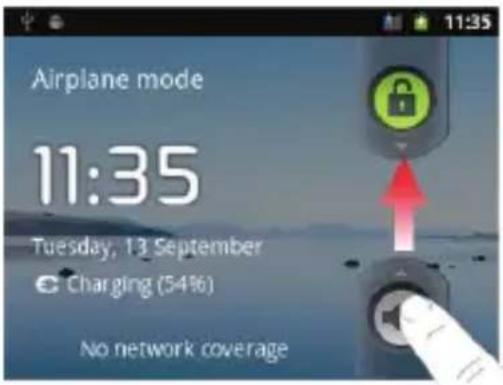
You can also switch to Silent mode by holding the Volume Key (down) or – if the screen is locked – by dragging the Sound off bar up, as shown below.
By default, vibration is enabled in silent mode, and the icon appears in the status bar. If vibration is disabled, the silent icon will appear in the status bar.
Switching to Vibrate
In the sound settings, tap Vibrate and choose the condition for vibration. If your phone is already in Silent mode, the icon 📋 will appear in the status bar when vibration is enabled.
Flipping to Turn off Ringtone
In the sound settings, tick the Silence Ringer When Face Down box. Then you can flip your phone over to mute the ringtone when there is an incoming call
Adjusting Volume
- Make sure your phone isn't in Silent mode.
- Tap Volume in the sound settings.
- Adjust the ringtone volume, media volume, and alarm volume.
- Tap OK to save.
TIPS: You can adjust the media volume when a media application is in use by pressing the Volume Keys. If no media application is active, press the keys to adjust ringtone volume. And if you’d like to adjust the notification volume together with the ringer volume, tick the Use incoming call volume for notifications box.
Turning on Haptic Feedback
If you'd like your phone to vibrate when pressing soft keys and on certain UI interactions, then you need to turn on the Haptic feedback.
Tick the Haptic feedback box in the sound settings.
Turning on Touch Tones
To make your phone play tones whenever you use dial pad, tick the Audible touch tones box in the sound settings.
Turning on Selection Sound
Tick the Audible selection box in the sound settings, and your phone will play sound when you touch the screen to make a selection.
Turning on Screen Lock Sound
Tick the Screen lock sounds box in the sound settings, and your phone will play sound as a notification when you lock or unlock the screen.
Language Settings
You can change the language of your phone's operating system in two simple steps.
-
Tap Home Key > Settings > Language & keyboard > Select language.
-
Select a language from the list given.
Mobile Network Services
Both GSM and WCDMA are supported by your phone. You can configure the network settings according to the phone service you use.
Getting Data Services While Roaming
- Tap Home Key > Settings > Wireless & networks > Mobile networks.
- Tick the Data roaming box.
IMPORTANT: Data roaming may incur significant roaming charges.
Enabling Data Services
- Tap Home Key > Settings > Wireless & networks > Mobile networks.
- Tick the Data enabled box to enable data services over the mobile network. To disable data services, just clear the tick box.
Switching Network Modes
-
Tap Home Key > Settings > Wireless & networks > Mobile networks > Network Mode.
-
Select one of the following: GSM/WCDMA auto, WCDMA only, or GSM only.
Switching Networks
- Tap Home Key > Settings > Wireless & networks > Mobile Networks > Network operators. The phone automatically searches for all available networks.
- Tap a network to register manually, or tap Select automatically.
Setting Access Point Names
To connect to the Internet you can use the default Access Point Names (APN). And if you want to add a new APN, please contact your service provider to find out more.
- Tap Home Key > Settings > Wireless & networks > Mobile networks > Access Point Names.
- Tap Menu Key > New APN.
- Set the necessary parameters. (See Adding a New GPRS/EDGE/3G Connection on page 81.)
- Tap Menu Key > Save.
Security Settings
Here's how to protect your phone and SIM card from unauthorized use.
Protecting Your Phone With a Screen Unlock Pattern
Creating Your Screen Unlock Pattern
- Tap Home Key > Settings > Location & security > Set up screen lock > Pattern.
- Read the instructions and tap Next.
- Watch the example pattern and tap Next.
- Draw your own pattern and tap Continue.
- Draw the pattern again and tap Confirm.
- Press the Power Key to lock the screen.
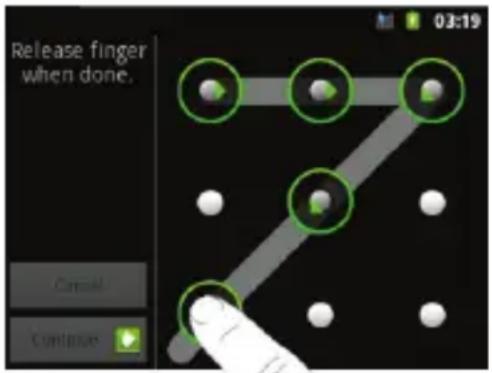
TIPS: You can also clear the Use visible pattern box in the Location & security screen if you don't want to display your screen unlock pattern as you draw it on the screen.
Unlocking the Screen With Your Pattern
- Press the Power Key.
- Draw the pattern you set to unlock the screen.
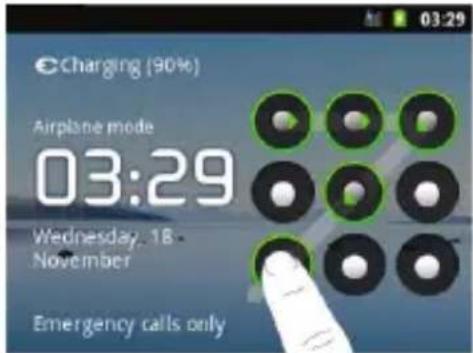
If you make a mistake, your phone will ask you to try again.
Forgot your screen unlock pattern?
If you've forgotten your screen unlock pattern, you have up to five attempts to unlock your phone. If the pattern has been drawn incorrectly five times, you can enter your Google account user name and password to unlock your phone.
IMPORTANT: You must sign in or create a Google account on your phone before using the following method to reset or cancel the lock pattern.
-
Draw the unlock pattern on the screen.
-
After the fifth attempt, you're prompted to try again in 30 seconds. Then tap OK. Note: If the display turns off, press the Power Key to turn the display on.
- Tap Forgot pattern? on the screen.
- Enter your Google account user name and password, and then tap Sign in.
- You will be asked to draw a new unlock pattern. If you do not need an unlock pattern, tap Cancel.
Protecting Your Phone with a PIN or Password
Creating a PIN or Password
- Tap Home Key > Settings > Location & security > Set up screen lock.
- Tap PIN or Password.
- Enter the numeric PIN or any password you like. Then tap OK.
- Enter it again and tap OK to confirm.
Unlocking the Screen With Your PIN or Password
-
Press the Power Key to wake up the phone.
-
Drag the icon down.
- Enter the PIN or password you set.
- Tap OK.
Disabling Screen Unlock Security
If you have created an unlock pattern, PIN or password, you can disable it.
- Tap Home Key > Settings > Location & security > Change screen lock.
- Draw the screen unlock pattern or enter your PIN/password you have created.
- Tap None.
Protecting Your SIM Card With a PIN
Every SIM card comes with a PIN. The initial PIN is provided by your service provider. It's best to lock your SIM card as soon as you can.
- Tap Home Key > Settings > Location & security > Set up SIM card lock.
- Tick the Lock SIM card check box.
- Enter the PIN you've been given and tap OK.
Changing Your SIM PIN
You can change the PIN you've been given to one easier for you to remember and harder for others to guess.
- Tap Home Key > Settings > Location & security > Set up SIM card lock.
- Make sure you already tick the Lock SIM card check box.
- Tap Change SIM PIN.
- Enter the old PIN and tap OK.
- Enter your new PIN and tap OK.
- Enter the new PIN again and tap OK.
Setting Up Credential Storage
This lets you select applications to access secure certificates and other credentials.
Enabling Secure Credentials
- Tap Home Key > Settings > Location & security.
- Tap Set password and create a password for the credential storage.
- Tick the Use secure credentials box if needed.
TIPS: You can also install encrypted certificates from your microSD card by tapping Install from SD card.
Deleting Secure Credentials
- Tap Home Key > Settings > Location & security.
- Tap Clear storage to clear credentials and reset the password.
Managing Your Memory Card
Checking Memory Card Space
Tap Home Key > Settings > Storage.
You can view the space information from Total space/Available space in SD card section.
Unmounting Your Memory Card
Unmounting makes your memory card unavailable to the phone's operating system, and ready for removal or replacement.
- Tap Home Key > Settings > Storage.
- Tap Unmount SD card.
The icon will appear in the status bar. You can tap Mount SD card to
mount the memory card again.
Checking Phone Memory
Tap Home Key > Settings > Storage.
You can view the Available space in the Internal storage section.
Resetting to Factory Settings
- Tap Home Key > □> Settings > Privacy.
- Tap Factory data reset.
- Tap Reset phone.
- Tap Erase everything.
WARNING: All your personal information and downloaded applications on your phone will be erased after the resetting.
Managing Applications and Their Settings
Viewing Your Applications
Tap Home Key > Settings > Applications > Manage applications.
You can check the running applications or view the applications installed on your phone and memory card.
Allowing Installation of Non-Market Applications
- Tap Home Key > Settings > Applications.
- Tick the Unknown sources box.
Installing an Application
You can install an application from the Android Market (Home Key > Market) by selecting the item you want to download and tapping Install.
You can also install a non-Market application if you have allowed the installation of it. Make sure that you select an application developed for your device and processor type before installing it.
- Tap Home Key > Filer, and open the folder where the application you want to install is.
- Tap the application to start installation.
- Follow the instructions that come with the application to complete the installation.
Removing an Application
- Tap Home Key > Settings > Applications > Manage applications.
- Select the application you want to delete.
- Tap Uninstall and OK to confirm.
TIPS: Market applications can also be removed by going to the Downloads page in Market, selecting the unwanted application, and tapping Uninstall.
Moving an Application to or from the Memory Card
You can move the applications downloaded or installed on your phone to the memory card when the phone memory is full. You can also move applications to your phone if the memory card is getting full.
NOTE: Not all applications can be move to your phone or memory card.
- Tap Home Key > Settings > Applications > Manage applications.
- Tap the application you want to move on the Downloaded tab.
- Tap Move to phone or Move to SD card.
Setting Quick Launch of Your Applications
You can use keyboard shortcuts to launch the applications quickly.
Assigning a keyboard shortcut:
- Tap Home Key > Settings > Applications > Quick launch.
- Tap a shortcut entry and then select an application.
Clearing a keyboard shortcut:
- Tap Home Key > Settings > Applications > Quick launch.
- Hold an assigned shortcut entry to open the pop-up window.
- Tap OK to confirm.
Using the keyboard shortcuts to launch applications:
Press and hold the Search Key and then press an alphanumeric key on the keyboard to open the corresponding application.
For example, if the 'b' key is assigned to Browser, you can press and hold the Search Key and then press the 'b' key to open the web browser quickly.
Managing Other Settings
Search Settings
You can manage search settings and search history by opening the Google Search application and tapping Menu Key > Search settings.
- Google search: Adjust Google search settings.
- Searchable items: When you search for an item on your phone, only the searchable items will be looked for.
You can also clear shortcuts to recently chosen search suggestions.
Voice Input and Output
You can set the voice recognition and text-to-speech options by tapping Home Key > Settings > Voice input & output.
NOTE: You need to download voice data in order to use the text-to-speech function. Just tap Install voice data in Text-to-speech settings.
Accessibility
Configure accessibility options for accessibility-related applications.
About phone
Check system updates, phone status and battery use, or view legal information and software versions.
Other Applications
Alarm
- Tap Home Key > Alarm.
- Tap the default alarm set to configure it. Or, to create a new alarm, tap Menu Key > Add alarm.
- Tick the Turn on alarm box and set up the alarm options.
TIPS: You can use the phone as a bedside clock. In Alarm Screen, tap Menu Key > Bed Clock.
Calculator
Tap Home Key > □ > Calculator.
TIPS: Tap Menu Key > Advanced panel to use scientific calculation.
Note Pad
Tap Home Key > ☐ > Note pad. Note pad is for your memos. Tap Menu Key to add or delete them. Hold an existing note to edit or delete it, or change its title.
SIM Tool Kit
Services SIM Tool Kit will only appear on the screen if your SIM card provides this function. To use SIM services, insert your SIM card in the phone first.
Tap Home Key > SIM Tool Kit.
Stopwatch
- Tap Home Key > □ > Stopwatch.
- Tap Start to start timing. You can Pause or Resume.
- Reset will take the stopwatch back to 00:00.0.
Task Manager
Tap Home Key > ☐ > Task Manager. Go to Task Manager to view or stop applications.
Specifications
| Dimensions Approx. 114 mm × 65 mm × 10.9 mm | ||
| Weight Approx. 126 g (with battery) | ||
| Bearer | GSM/WCDMA support | |
| Main display dimension, resolution | 2.6 inches 320*240 | |
| Back Camera | Sensor type CMOS | |
| Still image capture resolution | 3.2 M Pixels | |
| Internal memory ROM: 512MB, RAM: 256MB | ||
| Removable memory card | Support microSD card, maximum capacity: 32 GB | |
| Battery | Capacity | 1100 mAh |
| Standby time Approx. 200 hours (subject to network status) | ||
| Voice talk time Approx. 210 minutes (subject to network status) | ||
| WAP browser version WAP2.0 | ||
Declaration of RoHS Compliance
To minimize the environmental impacts and take more responsibilities to the earth we live on, this document shall serve as a formal declaration that the Android ™ edition by sfr STARTEXT manufactured by ZTE CORPORATION is in compliance with the Directive 2002/95/EC of the European Parliament - RoHS (Restriction of Hazardous Substances) with respect to the following substances:
- Lead (Pb)
- Mercury (Hg)
- Cadmium (Cd)
- Hexavalent Chromium (Cr (VI))
- Polybrominated biphenyls (PBBs)
- Polybrominated diphenyl ethers (PBDEs)
The Android ™ edition by sfr STARTEXT manufactured by ZTE CORPORATION, meets the requirements of EU 2002/95/EC.
Disposal of Your Old Appliance

- When this crossed-out wheeled bin symbol is attached to a product, it means the product is covered by the European Directive 2002/96/EC.
- All electrical and electronic products should be disposed of separately from the municipal waste stream via designated collection facilities appointed by the government or the local authorities.
- The correct disposal of your old appliance will help prevent potential negative consequences for the environment and human health.
For this product's recycling information based on WEEE directive, please send an e-mail to weee@zte.com.cn
EC DECLARATION OF CONFORMITY
C € 1588 Ⓖ
It is hereby declared that following designated product:
Product Type: WCDMA/GSM(GPRS) Dual-Mode Digital Mobile Phone
Model No: Tureis
Complies with the essential protection requirements of the Radio and
Telecommunication Terminal Equipment Directive (EC Directive 1999/5/EC) and the Electromagnetic Compatibility Directive (2004/108/EC)
This declaration applies to all specimens manufactured identical to the samples submitted for testing/evaluation.
Assessment of compliance of the product with the requirements relating to the Radio and Telecommunication Terminal Equipment Directive (EC Directive 1999/5/EC) was performed by American TCB (Notified Body No.1588), based on the following standards:
| Safety | EN 60950-1:2006/A11:2009 |
| EMC EN | N 301 489-1 V1.8.1; EN 301 489-7 V1.3.1;EN 301 489-17 V2.1.1; EN 301 489-24 V1.5.1; EN 55013:2001+A2:2006; EN 55020:2007; |
| Radio | EN 301 511 V9.0.2; EN 301 908-1 V3.2.1; EN 301 908-2 V3.2.1; EN 300 328 V1.7.1; EN 300 487 A1:1997 |
| Health | EN 50360:2001; EN 62209-1:2006; EN 62209-2:2010; EN 50332-1:2000; EN 50332-2:2003 |
This declaration is the responsibility of the manufacturer:
ZTE Corporation
ZTE Plaza, Keji Road South, Hi-Tech, Industrial Park,
Nanshan District, Shenzhen, Guangdong, 518057, P.R.China
Authorised person signing for the company:
Xu Feng Quality Director Of ZTE Corporation
Name in block letters & position in the company
Shenzhen, 22 June 2011
Place & date
徐锋.
Legally valid signature
- CONTENTS
- FOR YOUR SAFETY 14
- GETTING STARTED.... 28
- PHONE CALLS 52
- CONTACTS 59
- USING THE HARDWARE KEYBOARD TO ENTER TEXT.... 64
- USING THE ONSCREEN KEYBOARD TO ENTER TEXT 67
- MESSAGES 70
- EMAIL 76
- GETTING CONNECTED TO THE INTERNET.... 81
- BROWSING THE INTERNET 87
- BLUETOOTH ® 93
- MAKING THE MOST OF MULTIMEDIA....96
- USING YOUR GOOGLE™ APPLICATIONS 106
- SORTING OUT YOUR PHONE SETTINGS....110
- FOR YOUR SAFETY
- RADIO FREQUENCY (RF) EXPOSURE
- GENERAL STATEMENT ON RF ENERGY
- SPECIFIC ABSORPTION RATE (SAR)
- BODY WORN OPERATION
- LIMITING EXPOSURE TO RADIO FREQUENCY (RF) FIELDS
- REGULATORY INFORMATION
- DISTRACTION
- DRIVING
- OPERATING MACHINERY
- PRODUCT HANDLING
- GENERAL STATEMENT ON HANDLING AND USE
- SMALL CHILDREN
- DEMAGNETIZATION
- ELECTROSTATIC DISCHARGE (ESD)
- ANTENNA
- NORMAL USE POSITION
- AIR BAGS
- SEIZURES/BLACKOUTS
- REPETITIVE MOTION INJURIES
- EMERGENCY CALLS
- LOUD NOISE
- PHONE HEATING
- ELECTRICAL SAFETY
- ACCESSORIES
- CONNECTION TO A CAR
- FAULTY AND DAMAGED PRODUCTS
- INTERFERENCE
- GENERAL STATEMENT ON INTERFACE
- PACEMAKERS
- HEARING AIDS
- MEDICAL DEVICES
- HOSPITALS
- AIRCRAFT
- INTERFERENCE IN CARS
- EXPLOSIVE ENVIRONMENTS
- PETROL STATIONS AND EXPLOSIVE ATMOSPHERES
- BLASTING CAPS AND AREAS
- GETTING STARTED
- AND GET IN TOUCH WITH YOUR PHONE
- STARTING UP
- INSTALLING THE SIM/MICROSD CARD AND BATTERY
- REMOVING THE BATTERY AND SIM/MICROSD CARD
- CHARGING THE BATTERY
- HOW MUCH CHARGE HAVE YOU GOT
- SWITCHING YOUR PHONE ON/OFF
- SETTING UP YOUR PHONE FOR THE FIRST TIME
- SWITCHING TO SLEEP MODE
- WAKING UP YOUR PHONE
- GETTING AROUND YOUR PHONE
- TOUCH CONTROL
- HOME SCREEN
- STATUS & NOTIFICATIONS
- APPLICATIONS
- EXTENDED HOME SCREEN
- CHOOSING YOUR WALLPAPER
- ADDING ITEMS TO YOUR HOME SCREEN
- REMOVING ITEMS FROM YOUR HOME SCREEN
- STATUS AND NOTIFICATION ICONS
- USING THE NOTIFICATION PANEL
- APPLICATIONS AND SETTINGS PREVIEW
- APPLICATION PREVIEW
- CHECKING YOUR SETTINGS
- OPENING RECENTLY USED APPLICATIONS
- PHONE CALLS
- HOW TO MAKE CALLS
- CALLING FROM THE DIALER
- CALLING FROM YOUR CONTACTS
- CALLING FROM YOUR CALL HISTORY
- CALLING FROM A TEXT MESSAGE
- USING SPEED DIAL
- ASSIGNING A SPEED DIAL KEY
- MAKING EMERGENCY CALLS
- MAKING INTERNATIONAL CALLS
- HOW TO RECEIVE CALLS
- ANSWERING A CALL
- REJECTING A CALL
- MUTING A CALL
- PUTTING A CALL ON HOLD
- TURNING THE SPEAKERPHONE ON/OFF
- ENDING A CALL
- ADJUSTING YOUR CALL SETTINGS
- CONTACTS
- IMPORTING AND EXPORTING CONTACTS
- SHARING CONTACTS INFORMATION
- CREATING A CONTACT
- ADDING A CONTACT TO FAVOURITES
- SEARCHING FOR A CONTACT
- EDITING A CONTACT
- DELETING A CONTACT
- CREATING A NEW GROUP
- USING THE HARDWARE KEYBOARD TO ENTER TEXT
- TEXT INPUT SETTINGS
- USING THE ONSCREEN KEYBOARD TO ENTER TEXT
- TO ENABLE THE ONSCREEN KEYBOARD
- MESSAGES
- SENDING A TEXT MESSAGE
- SENDING AN MMS
- MANAGING MESSAGES AND THEIR ‘THREADS
- REPLYING TO A MESSAGE
- DELETING A MESSAGE THREAD
- MESSAGE SETTINGS
- STORAGE SETTINGS
- TEXT MESSAGE (SMS) SETTINGS
- MULTIMEDIA MESSAGE (MMS) SETTINGS
- NOTIFICATION SETTINGS
- SIGNATURE SETTINGS
- CREATING AN EMAIL ACCOUNT
- WRITING AND SENDING EMAILS
- REPLYING TO AND FORWARDING EMAILS
- EMAIL SETTINGS
- GENERAL SETTINGS
- DOWNLOAD SETTINGS
- SERVER SETTINGS
- GETTING CONNECTED TO THE INTERNET
- ADDING A NEW GPRS/EDGE/3G CONNECTION
- TURNING ON WI-FI
- CONNECTING TO A WI-FI NETWORK
- CHECKING THE WI-FI NETWORK STATUS
- USING THE PHONE AS A MODEM
- ENABLING THE MODEM FUNCTION
- NOTE
- DISABLING THE MODEM FUNCTION
- USING THE PHONE AS A WI-FI HOTSPOT
- ENABLING THE WI-FI HOTSPOT
- DISABLING THE WI-FI HOTSPOT
- BROWSING THE INTERNET
- BROWSING OPTIONS
- OPENING LINKS IN WEB PAGES
- DOWNLOADING APPS FROM THE WEB
- USING BOOKMARKS
- EDITING A BOOKMARK
- DELETING A BOOKMARK
- BROWSER SETTINGS
- PAGE CONTENT SETTINGS
- PRIVACY SETTINGS
- SECURITY SETTINGS
- ADVANCED SETTINGS
- BLUETOOTH®
- TURNING BLUETOOTH ON/OFF
- MAKING YOUR PHONE VISIBLE
- SETTINGS
- CHANGING YOUR PHONE'S NAME
- HOOKING UP WITH ANOTHER BLUETOOTH DEVICE
- TURNED ON
- MAKING THE MOST OF MULTIMEDIA
- TAKING PICTURES WITH YOUR CAMERA
- ADJUSTING CAMERA SETTINGS
- SHOOTING VIDEO WITH YOUR CAMCORDER
- ADJUSTING YOUR VIDEO SETTINGS
- LISTENING TO YOUR FM RADIO
- PLAYING YOUR MUSIC
- CREATING PLAYLISTS
- MANAGING PLAYLISTS
- ADDING A SONG TO A PLAYLIST
- SETTING A SONG AS RINGTONE
- PLAYING YOUR VIDEOS
- OPENING YOUR GALLERY
- MAKING MEMORABLE MEMOS
- USING YOUR GOOGLE™ APPLICATIONS
- GMAIL
- THIS IS HOW YOU CREATE AND SEND AN EMAIL
- GOOGLE CALENDAR
- GOOGLE TALK
- THIS IS HOW YOU START A CHAT
- PLACES
- LATITUDE
- SORTING OUT YOUR PHONE SETTINGS
- SETTING TIME AND DATE
- CHANGING DISPLAY SETTINGS
- ADJUSTING SCREEN BRIGHTNESS
- ADJUSTING SCREEN-TIMEOUT
- SWITCHING SCREEN ORIENTATION AUTOMATICALLY
- SHOWING ANIMATION WHEN OPENING/CLOSING WINDOWS
- SOUND SETTINGS
- CHOOSING YOUR RINGTONE
- SETTING THE DEFAULT NOTIFICATION RINGTONE
- SWITCHING YOUR PHONE TO SILENT MODE
- SWITCHING TO VIBRATE
- FLIPPING TO TURN OFF RINGTONE
- ADJUSTING VOLUME
- TURNING ON HAPTIC FEEDBACK
- TURNING ON TOUCH TONES
- TURNING ON SELECTION SOUND
- TURNING ON SCREEN LOCK SOUND
- LANGUAGE SETTINGS
- MOBILE NETWORK SERVICES
- GETTING DATA SERVICES WHILE ROAMING
- ENABLING DATA SERVICES
- SWITCHING NETWORK MODES
- SWITCHING NETWORKS
- SETTING ACCESS POINT NAMES
- PROTECTING YOUR PHONE WITH A SCREEN UNLOCK PATTERN
- CREATING YOUR SCREEN UNLOCK PATTERN
- UNLOCKING THE SCREEN WITH YOUR PATTERN
- FORGOT YOUR SCREEN UNLOCK PATTERN
- PROTECTING YOUR PHONE WITH A PIN OR PASSWORD
- CREATING A PIN OR PASSWORD
- UNLOCKING THE SCREEN WITH YOUR PIN OR PASSWORD
- DISABLING SCREEN UNLOCK SECURITY
- PROTECTING YOUR SIM CARD WITH A PIN
- CHANGING YOUR SIM PIN
- SETTING UP CREDENTIAL STORAGE
- ENABLING SECURE CREDENTIALS
- DELETING SECURE CREDENTIALS
- MANAGING YOUR MEMORY CARD
- CHECKING MEMORY CARD SPACE
- UNMOUNTING YOUR MEMORY CARD
- CHECKING PHONE MEMORY
- RESETTING TO FACTORY SETTINGS
- MANAGING APPLICATIONS AND THEIR SETTINGS
- VIEWING YOUR APPLICATIONS
- ALLOWING INSTALLATION OF NON-MARKET APPLICATIONS
- INSTALLING AN APPLICATION
- REMOVING AN APPLICATION
- MOVING AN APPLICATION TO OR FROM THE MEMORY CARD
- SETTING QUICK LAUNCH OF YOUR APPLICATIONS
- ASSIGNING A KEYBOARD SHORTCUT
- CLEARING A KEYBOARD SHORTCUT
- USING THE KEYBOARD SHORTCUTS TO LAUNCH APPLICATIONS
- MANAGING OTHER SETTINGS
- SEARCH SETTINGS
- VOICE INPUT AND OUTPUT
- ACCESSIBILITY
- ABOUT PHONE
- OTHER APPLICATIONS
- ALARM
- CALCULATOR
- NOTE PAD
- SIM TOOL KIT
- STOPWATCH
- TASK MANAGER
- DECLARATION OF ROHS COMPLIANCE
- DISPOSAL OF YOUR OLD APPLIANCE
- EC DECLARATION OF CONFORMITY
- C € 1588 Ⓖ
Brand : ZTE
Model : Tureis
Category : Cellphone