
Sable Ridge - Vacuum Cleaner HUNTER - Free user manual and instructions
Find the device manual for free Sable Ridge HUNTER in PDF.


| Product Type | Upright Vacuum Cleaner |
| Dimensions (H x W x D) | 110 x 30 x 25 cm |
| Weight | 5.5 kg |
| Power Supply | 120 V, 60 Hz |
| Cord Length | 6 m |
| Dust Capacity | 1.5 L (bagless) |
| Filtration | HEPA washable filter |
| Noise Level | 78 dB |
| Main Functions | Carpet & hard floor cleaning, adjustable suction, brush roll on/off |
| Maintenance | Washable filter, empty dustbin, clean brush roll |
| Safety Features | Overheat protection, automatic shut-off |
| Spare Parts | Brush roll, belts, filters available |
| Repairability | User-replaceable belts and filters; professional service for motor |
| General Info | Model: Sable Ridge, Color: Gray, Bagless design |
Frequently Asked Questions - Sable Ridge HUNTER
User questions about Sable Ridge HUNTER
0 question about this device. Answer the ones you know or ask your own.
Ask a new question about this device
Download the instructions for your Vacuum Cleaner in PDF format for free! Find your manual Sable Ridge - HUNTER and take your electronic device back in hand. On this page are published all the documents necessary for the use of your device. Sable Ridge by HUNTER.
USER MANUAL Sable Ridge HUNTER
To register your fan, please visit: www.HunterFan.com/register
Save your receipt for proof of purchase.
Congratulations on purchasing your new Hunter® ceiling fan! It will provide comfort and performance in your home or office for many years. This installation and operation manual contains complete instructions for installing and operating your fan.
We are proud of our work and appreciate the opportunity to supply you with the best ceiling fan available anywhere in the world.
What to Expect with Your Installation
Tools Needed
Mounting Options
Ceiling Bracket
Preparation Blades
Downrod
Wiring
Canopy
Switch Housing
Light Kit
Remote Control
Operation, Maintenance & Cleaning
Uninstalling the Light Kit
Energy Star
Troubleshooting

M3562-01 · 12/17/14 · © Hunter Fan Company
What to Expect with Your Installation
www.HunterFan.com
1.888.830.13261.888.830
natural_image
Pure technical diagram of a mechanical or electrical component with no visible text, numbers, or symbols.
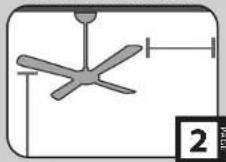
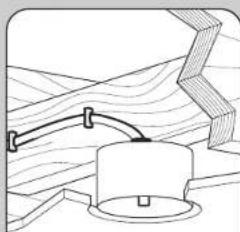
Must be able to
secure the fan to
building structure or
fan-rated outlet box
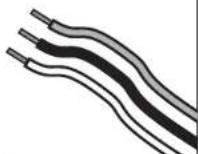
If you are unfamiliar with wiring, use a qualified electrician.

Know your wiring

Assess location
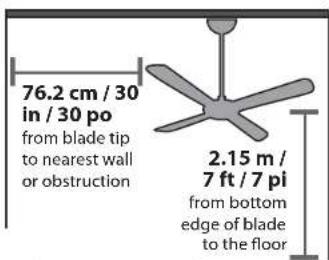
You may need a friend to help you.


Check box to see
fan weight

Ceiling angles greater than 34^ will require an Angled Mounting Kit. See page 4 for details.

Assess ceiling angle

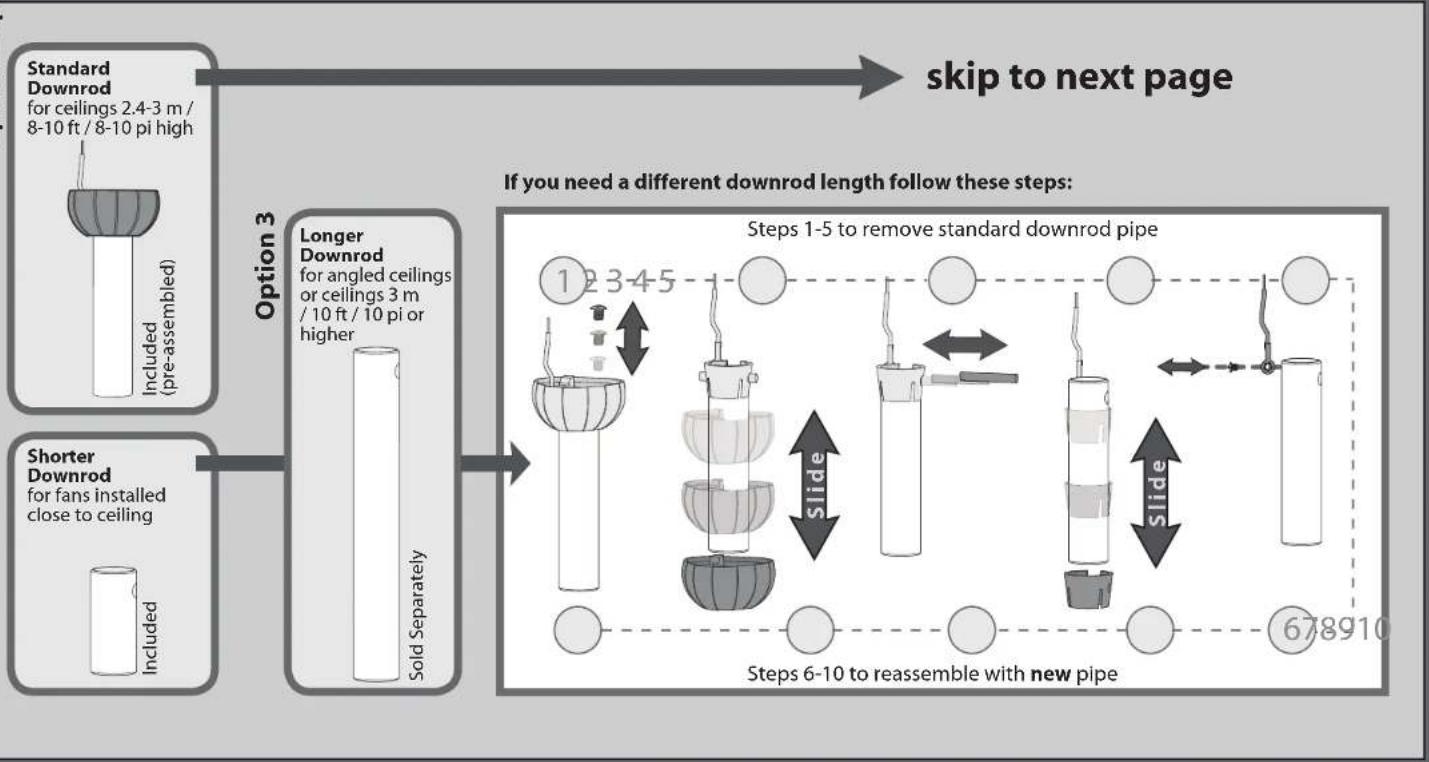
Standard Downrod
for ceilings 2.4-3 m / 8-10 ft /
8-10 pi high

Shorter Downrod
for fans installed close to ceiling

Longer Downrod
for ceilings 10 feet / 3 meters or higher

Select a downrod length
Read and Save These Instructions
This product conforms to UL Standard 507.
WARNINGS
w.1 - To reduce the risk of fire, electrical shock, or personal injury, mount fan directly from building structure and/or an outlet box marked acceptable for fan support of 70 lbs (31.8 kg) and use the mounting screws provided with the outlet box. w.2 - To avoid possible electrical shock, before installing or servicing your fan, disconnect the power by turning off the circuit breakers to the outlet box and associated wall switch location. If you cannot lock the circuit breakers in the off position, securely fasten a prominent warning device, such as a tag, to the service panel.
w.3 - To reduce the risk of fire, electrical shock, or motor damage, use only Hunter Solid State Speed Controls.
w4 - To reduce the risk of personal injury, do not bend the blade brackets when installing the blade brackets, balancing the blades, or cleaning the fan. Do not insert foreign objects in between rotating fan blades.
CAUTIONS
c.1 - All wiring must be in accordance with national and local electrical codes ANSI/NFPA 70. If you are unfamiliar with wiring, use a qualified electrician.
c.2 - Use only Hunter replacement parts.
This equipment has been tested and found to comply with the limits for a Class B digital device, pursuant to part 15 of the FCC Rules. These limits are to provide reasonable protection against harmful interference in a residential installation. This equipment generates, uses and can radiate radio frequency energy and if not installed and used in accordance with the instructions may cause harmful interference to radio communications.
This product may cause interference to radio equipment and should not be installed near maritime safety communications equipment, ships at sea, or other critical navigation or communications equipment operating between 0.45-30 MHz.
This device complies with Part 18 of the FCC Rules.

M3562-01·12/17/14·© Hunter Fan Company
Tools Needed
www.HunterFan.com
1.888.830.1326
natural_image
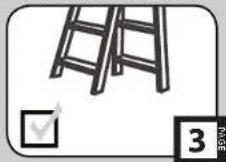
Simple line drawing of a ladder with a checkmark label (no text or symbols on the ladder itself)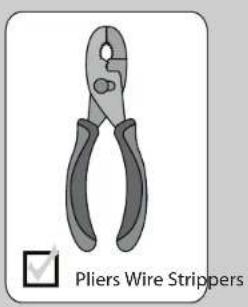
natural_image
Illustration of a pliers wire stripper tool (no text or symbols on the diagram itself)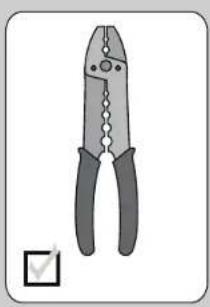
natural_image
Illustration of a pair of pliers with black handles and a white checkmark (no text or symbols on the pliers themselves)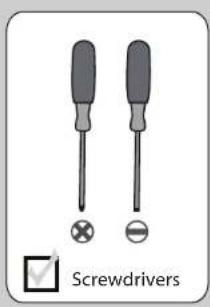
natural_image
Two screwdrivers with selection handles and a checkmark icon, no text or symbols present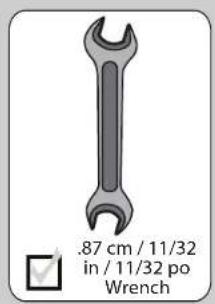
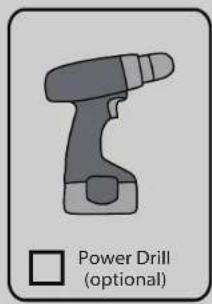
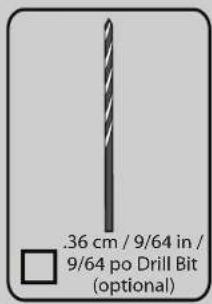
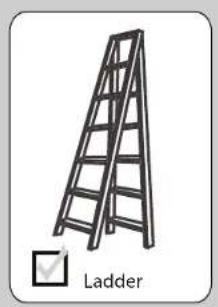
If mounting to a support structure, you will also need these tools.

M3562-01 · 12/17/14 · @ Hunter Fan Company
CEILING
If you have a flat ceiling:
Hang your fan by a standard downrod (included).
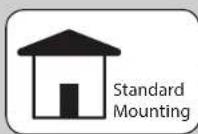
OPTION 1
If you have an angled ceiling:
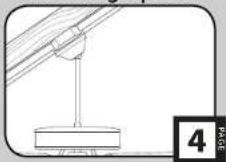
- You will need a longer downrod (sold separately).
- If your ceiling angle is greater than 34^ , you will also need an Angled Mounting Kit (sold separately).
OPTION 2
Use the three steps below to determine if your ceiling angle is greater than 34°
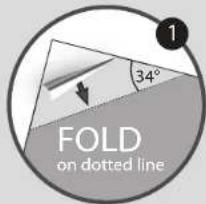
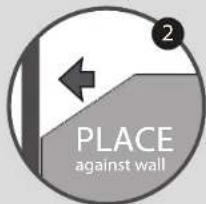
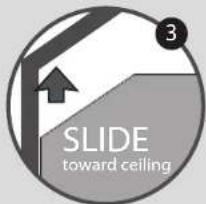
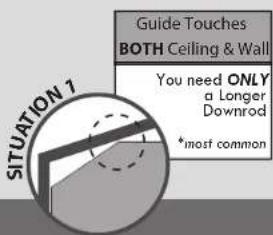
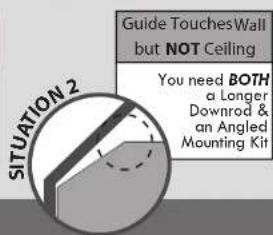
Mounting Options
www.HunterFan.com
1.866.268.1936
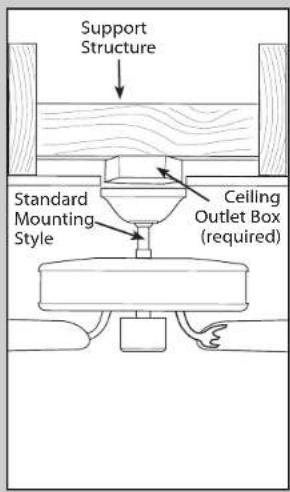
Use Standard Mounting or Low-Profile Mounting to hang the fan from a flat ceiling.
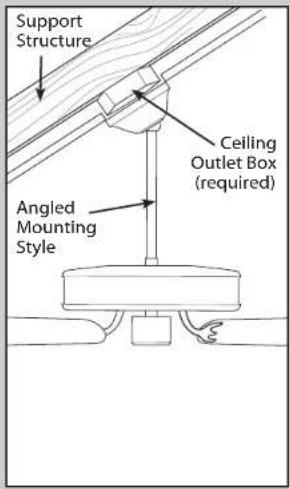
Use Angled Mounting
to hang the fan from a
vaulted or angled ceiling.

M3562-01 · 12/17/14 · @ Hunter Fan Company
Ceiling Bracket
www.HunterFan.com
1.888.830.1326
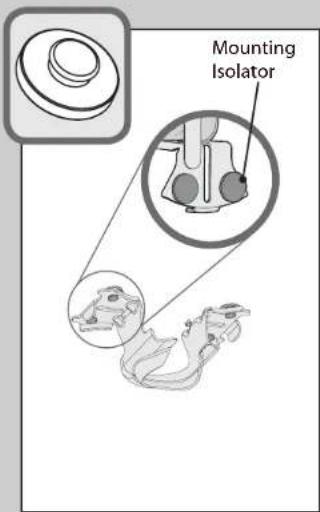
Remove all four mounting isolators.
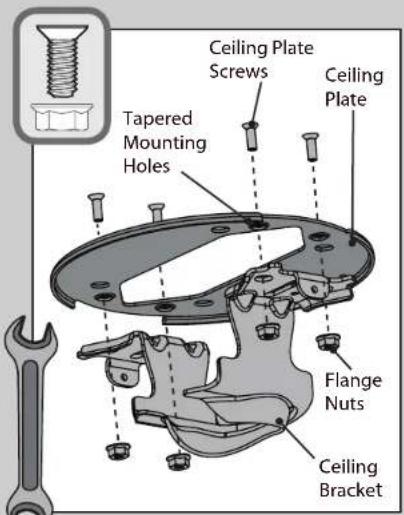
Align the tapered mounting holes in the ceiling plate with the holes in the ceiling bracket. Install the four ceiling plate screws found in
the hardware bag and secure with the flange nuts using a .87 cm / 11/32 in / 11/32 po wrench. Hold the ceiling bracket assembly up to the outlet box and mark the screw locations. To mount to support structure, also mark the ceiling for drilling pilot holes.
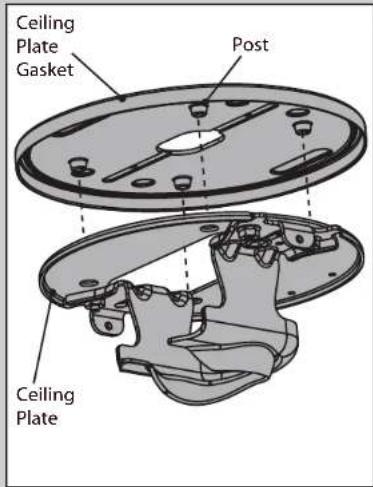
Install the ceiling plate gasket onto the ceiling plate. The four holes in the ceiling plate should line up with the four posts in the gasket.
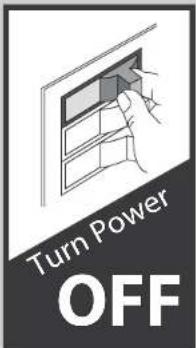
To avoid possible electrical shock, before installing your fan, disconnect the power by turning off the circuit breakers to the outlet box associated with the wall switch location


M3562-01 · 12/17/14 · @ Hunter Fan Company
Refer to warning w.1 on pg. 2

Ceiling Bracket (continued)
www.HunterFan.com
1.888.830.13261.888.830
natural_image
Technical line drawing of a screw and nut assembly (no text or symbols)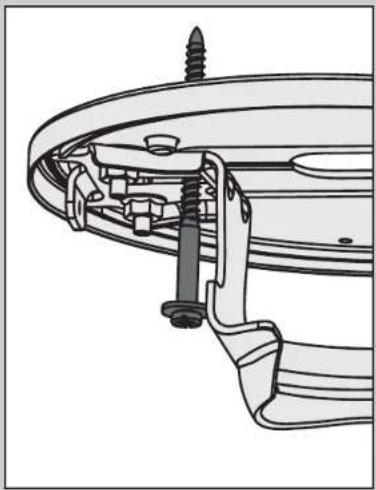
natural_image
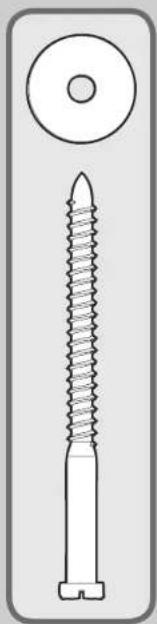
Technical line drawing of a mechanical assembly with screws and bolts (no text or symbols)Use the wood screw to poke holes through the rubber gasket in order to install the ceiling bracket assembly to your support structure or ceiling fan-rated outlet box.
natural_image
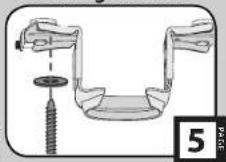
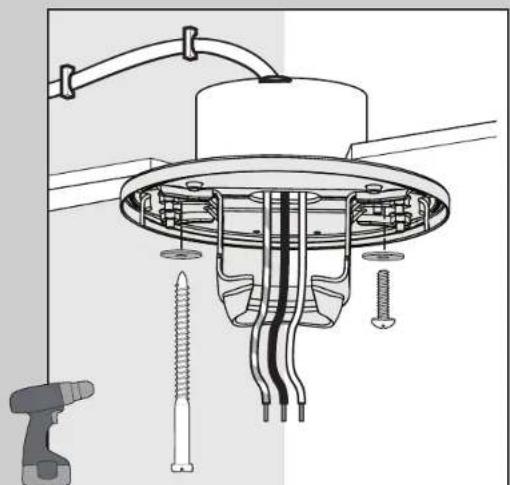
Technical diagram of a mechanical assembly with screws, springs, and a central housing (no text or labels)Use wood screws (included) and washers when securing to support structure with approved electrical outlet box. Drill .36 cm /
9/64 in / 9/64 po pilot holes in support structure to aid in securing ceiling bracket with hardware found in
the ★ hardware bag.
Use machine screws
(provided with outlet box) and washers when securing to existing ceiling fan-rated outlet box. Make sure it is securely installed and is acceptable for fan support of 70 lbs / 31.8 kg or less.
natural_image
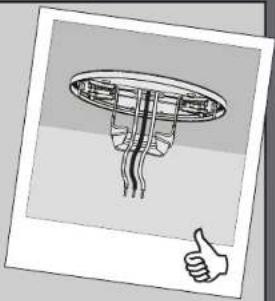
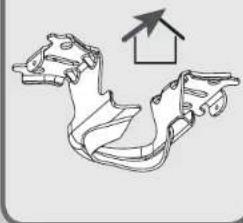
Illustration of a mechanical component with a thumbs-up gesture (no text or symbols)For angled ceilings, point opening toward peak.
natural_image
Diagram of a mechanical assembly with an upward arrow and house symbol (no text or labels)If you are unable to do this, call Technical Support at 1-888-830-1326.
To avoid possible electrical shock, before installing your fan, disconnect the power by turning off the circuit breakers to the outlet box associated with the wall switch location.


M3562-01 · 12/17/14 · © Hunter Fan Company
Refer to warning w.1 on pg. 2

Preparation
www.HunterFan.com
1.888.830
natural_image
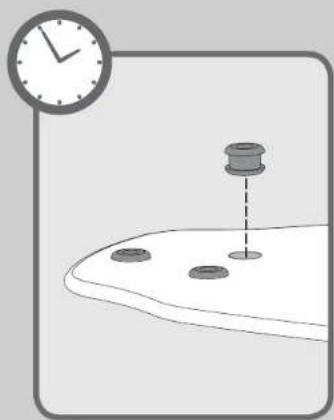
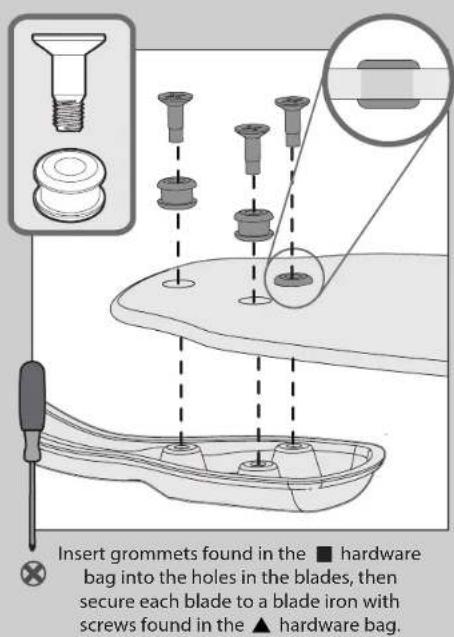
Simple diagram showing a clock with a ball and three circular components on a surface (no text or symbols)Time Saver Tip: Get a helper to insert grommets, found in the ■ hardware bag, into the blades while you're doing the next couple of steps.
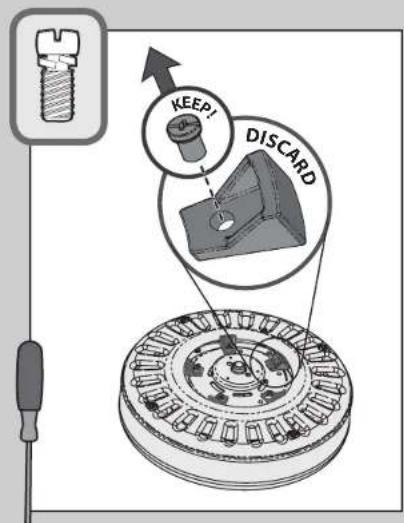
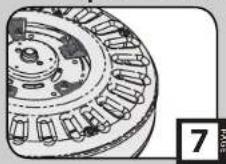
Remove the shipping blocks from the motor. Save the screws. They will be needed for blade iron installation.
Note: Some fans will have a shipping ring instead of shipping blocks. Please remove the ring and save the screws.

M3562-01·12/17/14·© Hunter Fan Company
flowchart
graph TD
    A["Standard Downrod for ceilings 2.4-3 m / 8-10 ft / 8-10 pi high"] --> B["Option 3: Longer Downrod for angled ceilings or ceilings 3 m / 10 ft / 10 pi or higher"]
    C["Shorter Downrod for fans installed close to ceiling"] --> D["Option 3: Longer Downrod for extended ceilings or ceilings 3 m / 10 ft / 10 pi or higher"]
    B --> E["If you need a different downrod length follow these steps:"]
    D --> E
    E --> F["Steps 1-5 to remove standard downrod pipe"]
    F --> G["Steps 6-10 to reassemble with new pipe"]
    G --> H["Next step: 678910"]

M3562-01 · 12/17/14 · © Hunter Fan Company
www.HunterFan.com
1.888.830.1326

Downrod (continued)
www.HunterFan.com
1.888.830.1326
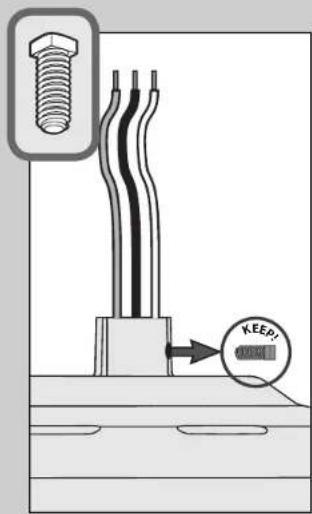
Remove the pre-installed setscrew so that the downrod can be inserted.
natural_image
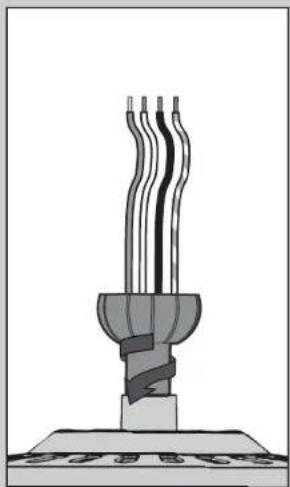
Diagram of a mechanical component with multiple curved wires and a base, no visible text or symbolsHand tighten the downrod (at least 4-5 full turns) until it stops.
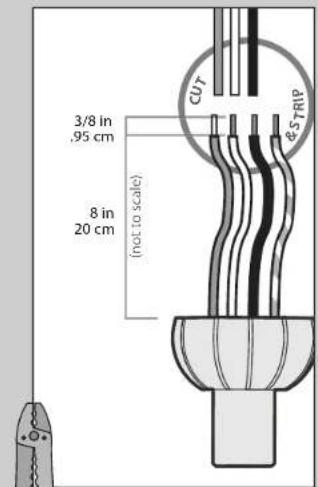
The wires can be cut, but leave at least 20 cm / 8 in / 8 po extending from the top of the downrod.
natural_image
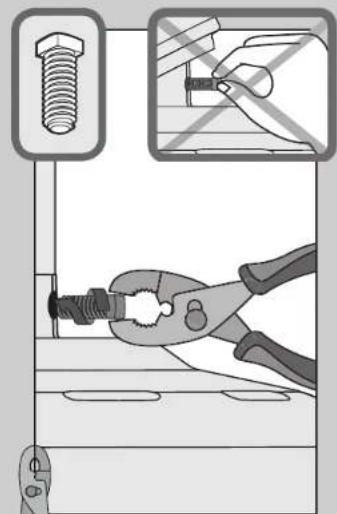
Illustration of a hand using a pliers to adjust a bolt, with an inset showing the same tool (no text or symbols present)Tighten the setscrew with pliers. DO NOT HAND TIGHTEN.
20 cm / 8 in / 8 po
.95 cm
3/8 in
3/8 po
If the setscrew is not tightened securely, the fan may fall.

M3562-01 · 12/17/14 · @ Hunter Fan Company
Downrod (continued)
www.HunterFan.com
1.888.830.1326
natural_image
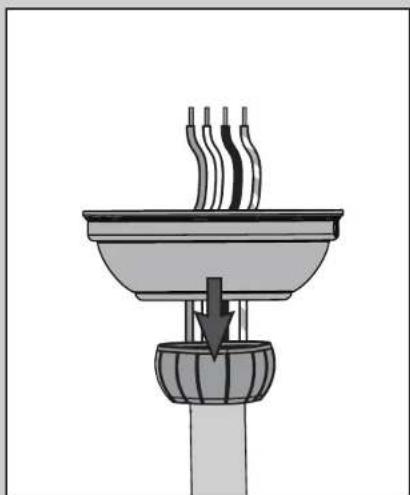
Diagram of a steaming bowl with three handles, emitting steam from a downward arrow (no text or symbols)Put the wires and downrod through the canopy. Let the canopy sit loosely on top of the fan.
natural_image
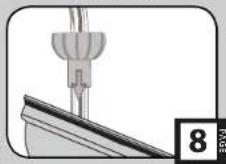
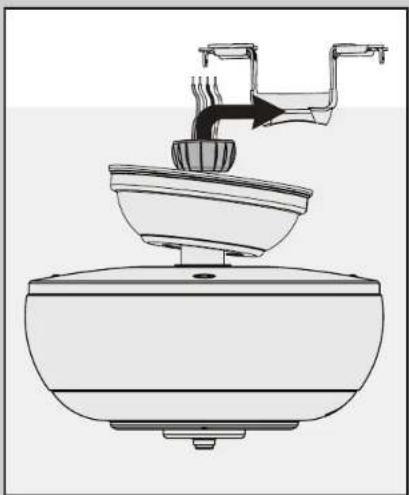
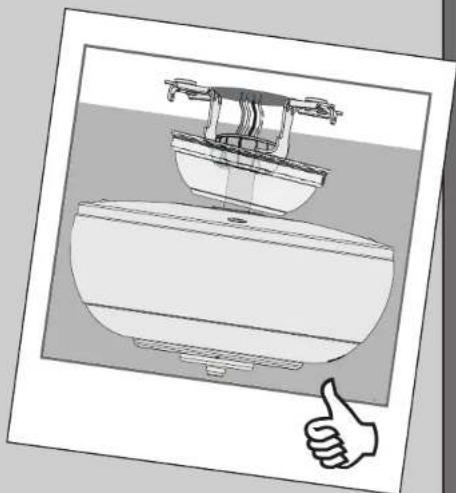
Line drawing of a kitchen sink with a bowl and faucet (no text or symbols)DO NOT PICK THE FAN UP BY THE CANOPY OR WIRES. Place the downrod ball into the slot in the ceiling bracket.
natural_image
Illustration of a kitchen sink with a hand giving a thumbs-up gesture (no text or symbols)
M3562-01 · 12/17/14 · @ Hunter Fan Company
Wiring
www.HunterFan.com
1.888.830.1326
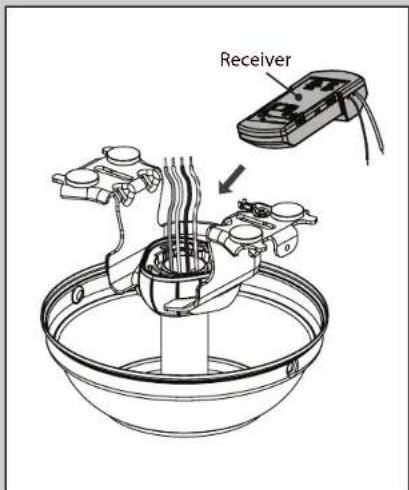
Place the receiver on top of the downrod assembly as shown.
Note: To connect the wires, hold the bare metal leads together and place a wire connector over them, then twist clockwise until tight.
Using an orange wire connector from the ★ hardware bag:
Connect the 3 grounding wires (green, green/yellow stripe, or bare copper) coming from the ceiling, downrod, and ceiling bracket.
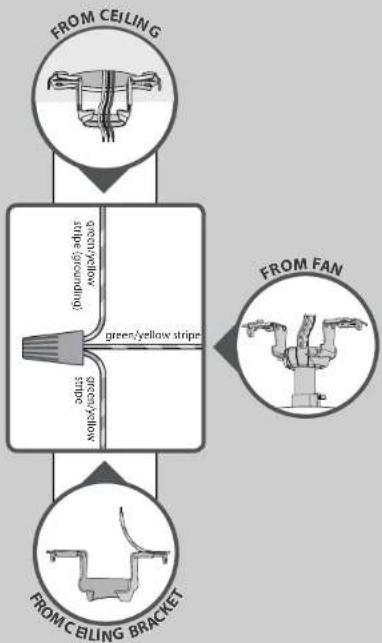
flowchart
graph TD
    A["FROM CEILING"] --> B["GREEN/Yellow stripe"]
    B --> C["magenta/yellow stripe"]
    C --> D["green/yellow stripe"]
    D --> E["Color change"]
    E --> F["FROM CEILING BRACKET"]
    G["FROM FAN"] --> H["Green/Yellow stripe"]
    H --> I["magenta/yellow stripe"]
    I --> J["Green/Yellow stripe"]
Turn the splices upward and push them carefully back through the hanger bracket into the outlet box. Spread the wires apart, with the grounded wires on one side of the outlet box and the ungrounded wires on the other side of the outlet box.
Refer to CAUTION c.1 on pg. 2

M3562-01 · 12/17/14 · @ Hunter Fan Company
Wiring (continued)
www.HunterFan.com
1.888.830.1326
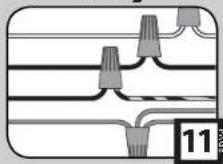
Using the orange wire connectors from the remote control hardware bag:
- Connect the yellow wire from the receiver to the black wire from the fan.
- Connect the blue wire from the receiver to the blue wire (or possibly black with white stripe wire) from the fan.
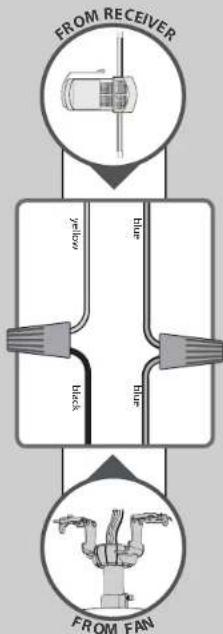
flowchart
graph TD
    A["FROM FAN"] --> B["Blue"]
    B --> C["Black"]
    C --> D["Yellow"]
    D --> E["FROM RECEIVER"]
Using the orange wire connectors from the ★ hardware bag:
- Connect the black (ungrounded) wire from the ceiling to the black wire from the receiver.
- Connect the white (grounded) wire from the ceiling to both the white wire from the receiver and the white wire from the fan.
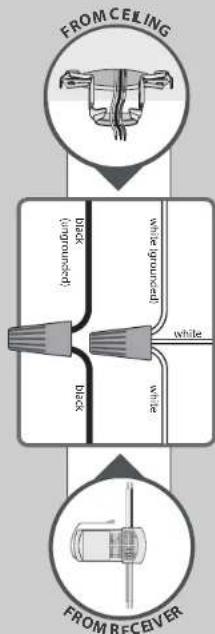
flowchart
graph TD
    A["FROM CEILING"] --> B["Black (unmounted)"]
    B --> C["white (up runnected)"]
    C --> D["white"]
    D --> E["black"]
    E --> F["from receiver"]
Refer to CAUTION c.1 on pg. 2
Turn the splices upward and push them carefully back through the hanger bracket into the outlet box. Spread the wires apart, with the grounded wires on one side of the outlet box and the ungrounded wires on the other side of the outlet box.

M3562-01·12/17/14·@ Hunter Fan Company
Canopy
www.HunterFan.com
1.888.830.1326
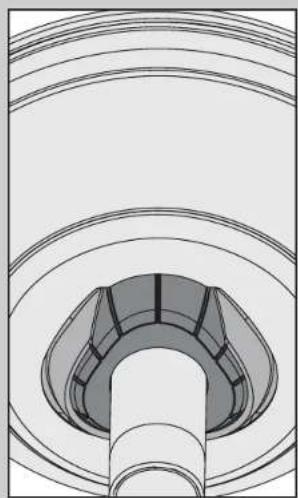
natural_image
Technical line drawing of a mechanical component with concentric rings and a central shaft (no text or symbols)Position the canopy so that, when lifted into place, the canopy fits into the ceiling bracket as shown.
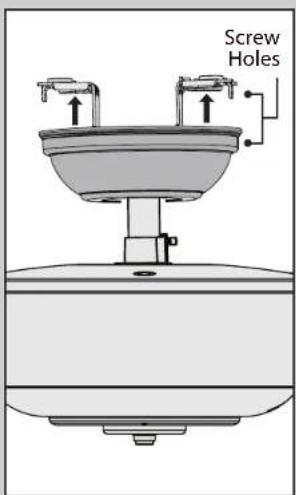
Lift the canopy into place so that the screw holes are aligned.
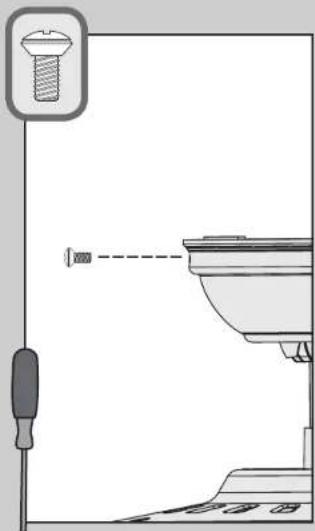
natural_image
Diagram of a screwdriver inserted into a mechanical component, showing alignment and assembly (no text or symbols)Insert the two canopy screws found in the ● hardware bag.
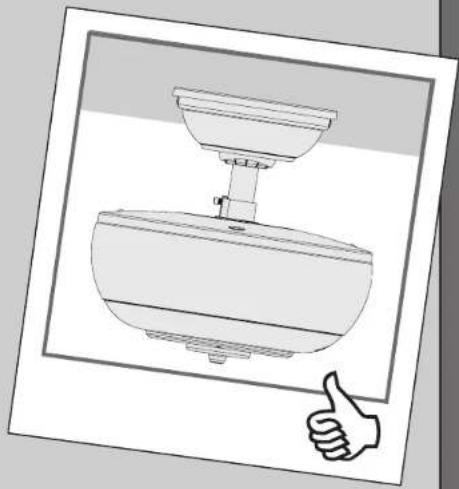
natural_image
Line drawing of a kitchen sink with a handle and a thumbs-up gesture (no text or symbols)Note: Fan style may vary.

M3562-01 · 12/17/14 · @ Hunter Fan Company
Blades
www.HunterFan.com
1.888.830.1326
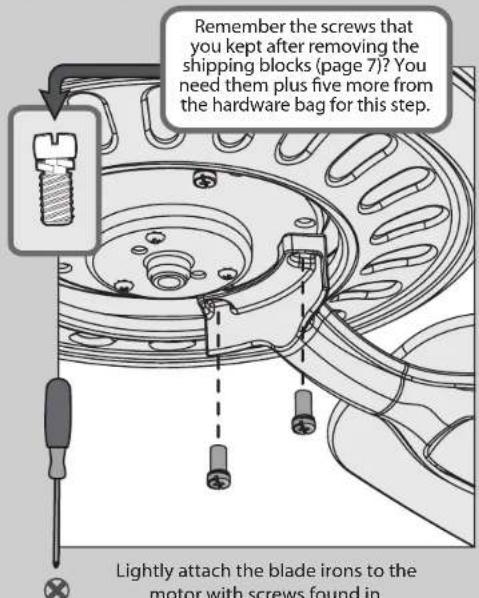
the ✘ hardware bag, then securely tighten after both screws are attached.
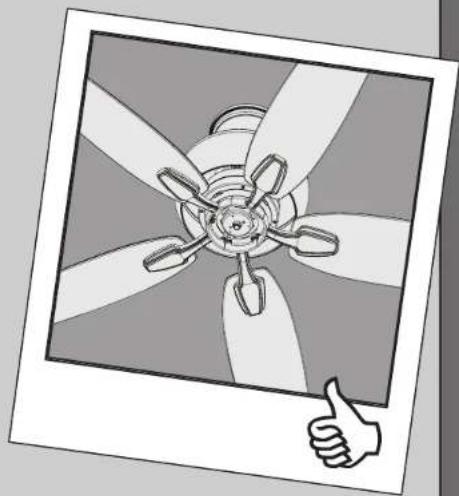
natural_image
Illustration of a propeller with six blades, surrounded by abstract geometric background (no text or symbols)
Your blades are shielded with Dust Armor® which is a nanotechnology coating that repels dust. For cleaning the fan, use soft brushes or cloths to prevent cratching. Cleaning agents may damage the finishes.

M3562-01·12/17/14·@ Hunter Fan Company
Switch Housing
www.HunterFan.com
1.888.830.1326
natural_image
Technical diagram of a mechanical assembly with screw fasteners and mounting flange (no text or labels)
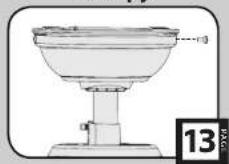
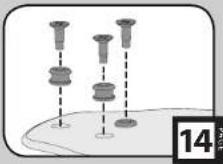
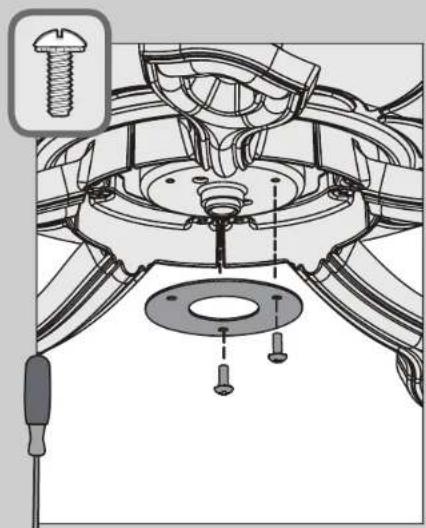
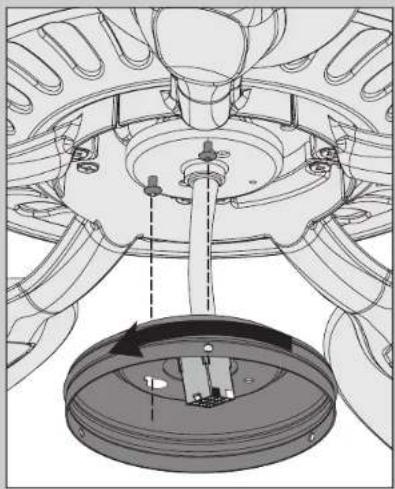
Align the screw holes in the switch
housing gasket and the motor housing. Screw two switch housing assembly screws from the ≡ hardware bag halfway into the motor housing. It does not matter which two screw holes you choose.
natural_image
Technical diagram of a vehicle wheel assembly with a central hub and internal components (no text or labels)Feed the wire plug through the center hole of the upper switch housing, then wrap keyhole slots around the screws and twist counterclockwise.
natural_image
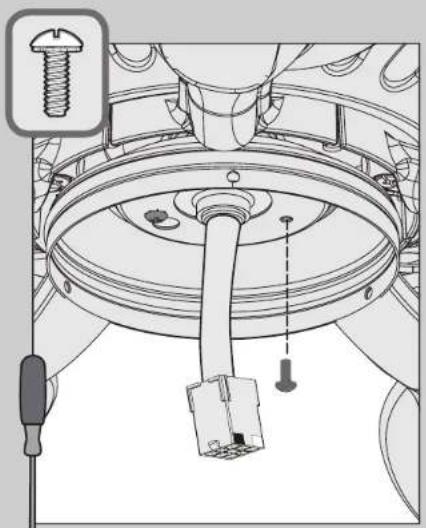
Technical diagram of a mechanical assembly with screw and connector components (no text or labels)
Insert the third screw, found in the ≡ hardware bag, into place and then tighten all three screws.
Make sure the upper switch housing is securely attached to the mounting plate. Failure to properly secure all 3 assembly screws could result in the switch housing fixture falling.

M3562-01 · 12/17/14 · © Hunter Fan Company
Light Kit
www.HunterFan.com
1.888.830.1326
natural_image
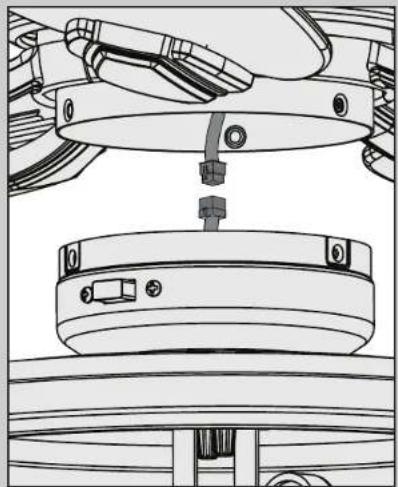
Technical line drawing of a mechanical assembly with no visible text or symbolsConnect the plugs from the upper and lower switch housings. Make sure to line up the colored markings on the connectors.
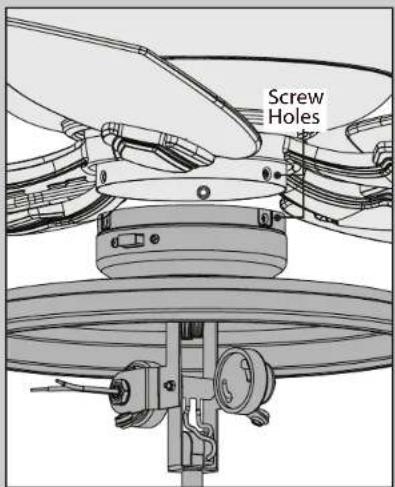
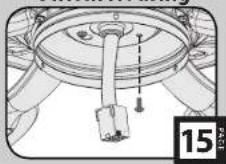
Lift the lower switch housing up until its screw holes are aligned with the screw holes in the upper switch housing.
natural_image
Technical line drawing of a mechanical component with screw and housing (no text or symbols)
Install the three switch housing screws found in the ≡ hardware bag.
Note: Fan style may vary.

M3562-01 · 12/17/14 · © Hunter Fan Company
Make sure the lower switch housing is securely attached to the upper switch housing. Failure to properly secure all three assembly screws could result in the light fixture falling.

Light Kit (continued)
www.HunterFan.com
1.888.830.1326
natural_image
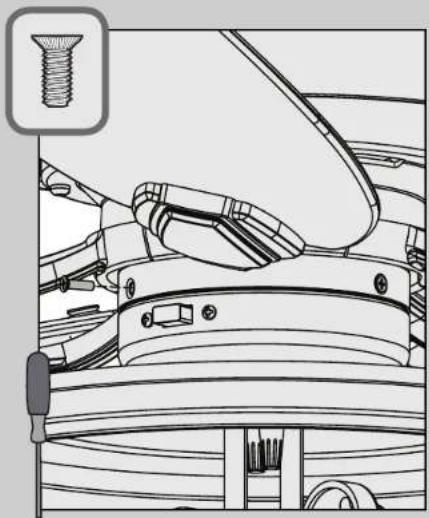
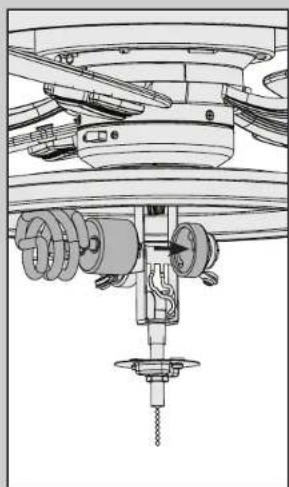
Technical line drawing of a mechanical assembly with springs and gears (no text or symbols)Install a light bulb in each socket.
Note: The included bulbs are not dimmable. If you wish to utilize the dimming feature, you may install dimmable GU24 CFL bulbs (sold separately).
Replacement bulbs may be available on www.costco.com.
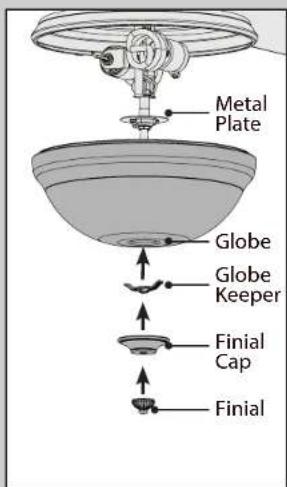
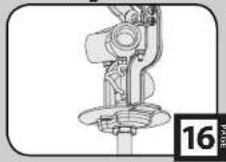
Press the globe and globe keeper flush against the metal plate. Thread the light pull chain through the hole in the center of the finial cap and thread the fan pull chain through the hole in the side of the cap. Finally, thread only the light pull chain through the hole in the finial and screw the finial onto the threaded rod.
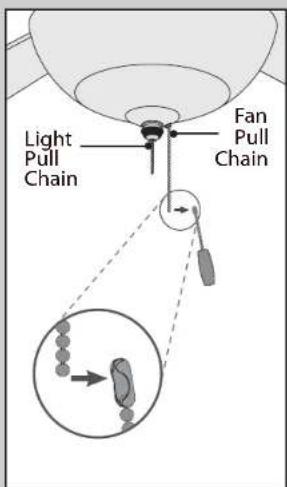
Connect the appropriate pull chain pendant to each of the short chains coming from the finial and finial cap. The fan pull chain controls the speed: from high to off. The light pull chain controls the light fixture: on and off.
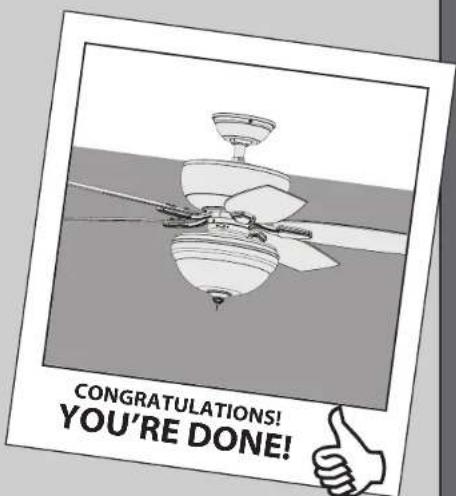
See next page for fan operation instructions.
Note: Globe style and number of lights may vary.

M3562-01 · 12/17/14 · © Hunter Fan Company
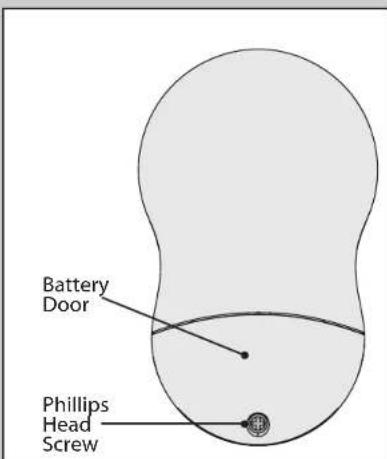
To access the battery compartment, remove the small Phillips head screw that secures the battery door to the transmitter assembly. Install one (1) 3-Volt, CR2032 battery (included) into the transmitter. Clean the battery contacts and also those of the device prior to battery installation. The battery should be installed with the positive (+) side up. Please contact your local battery recycling center for proper battery disposal information.
CAUTION:
- Always purchase the correct size and grade of battery most suitable for the intended use.
- Replace all batteries of a set at the same time.
- Clean the battery contacts and also those of the device prior to battery installation.
- Ensure the batteries are installed correctly with regard to polarity (+ and -).
- Remove batteries from equipment which is not to be used for an extended period of time.
- Remove used batteries promptly.
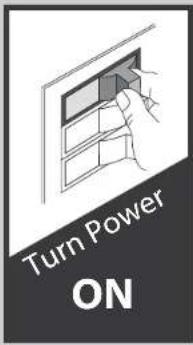
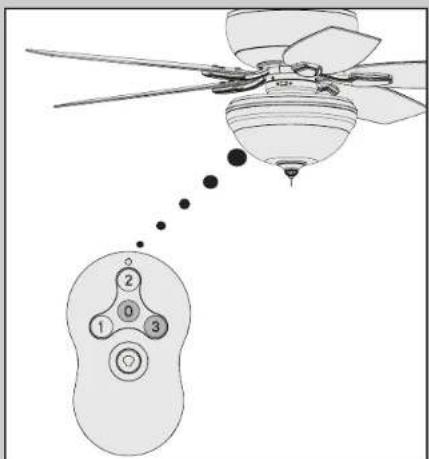
The remote transmitter should already be paired to the receiver and ready to use.
Note: If your need to pair your remote, cycle power to the fan by turning power off and back on at the wall switch (or circuit breaker if necessary). Within three minutes, press and hold both the Fan Off button and the 4 button for four seconds to pair the remote. To prevent faulty operation, please disconnect power from all other ceiling fans within range while pairing.
This product contains a button battery. If swallowed, it could cause severe injury or death in just two hours. Seek medical attention immediately.

M3562-01·12/17/14·© Hunter Fan Company
Remote Control
www.HunterFan.com
1.888.830.1326
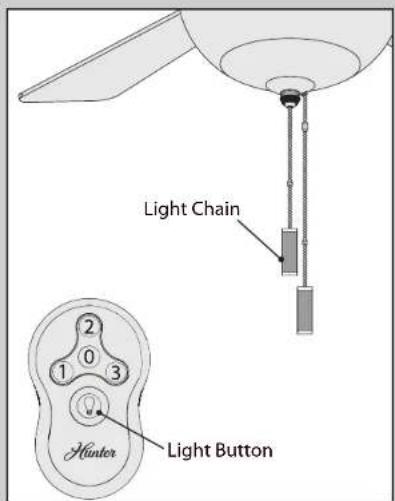
Push the light button on the remote transmitter. Pull the light chain once. If the light does not turn on, repeat step.
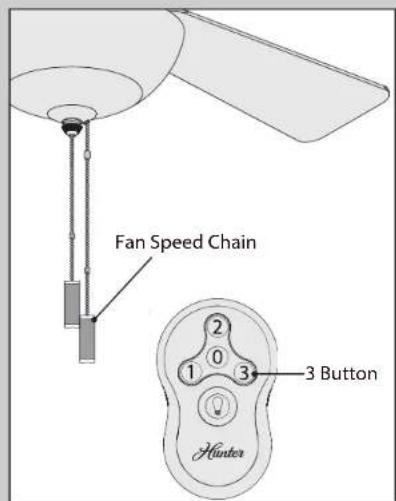
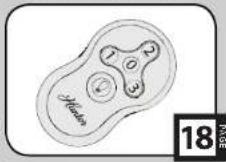
Push the 3 button on the remote transmitter for high fan speed. Pull the fan speed chain until the fan is on the highest speed.
See next page for fan operation instructions.


M3562-01 · 12/17/14 · Hunter Fan Company
Operation, Maintenance, & Cleaning
www.HunterFan.com
1.888.830.1326
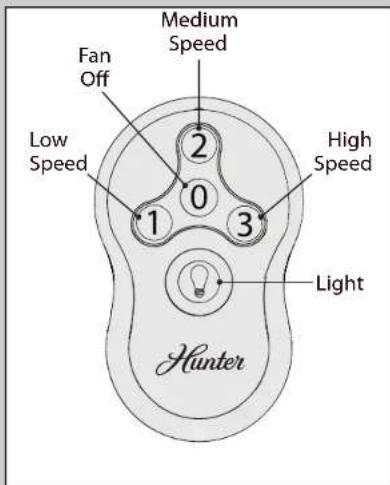
To turn on fan, press a fan speed button. Speeds range from off (0) to high (3). Quickly press the Light button to turn the lights off and on. Hold the Light button to raise and dim the light level.
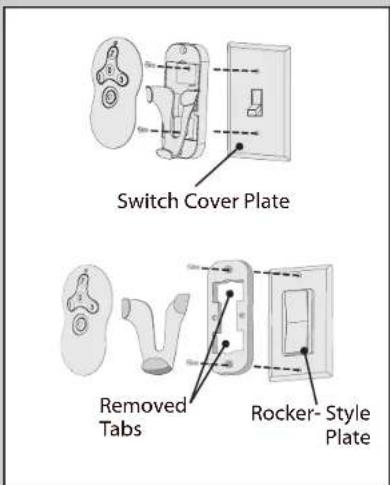
To install the transmitter cradle, remove the two screws holding the switch cover plate. Do not remove the cover plate. Orient the cradle by lining up the two mounting holes with those on the cover plate. Insert and tighten the screws. Do not over tighten.
Note: For rocker-style cover plates, break off the tabs by pushing outward.
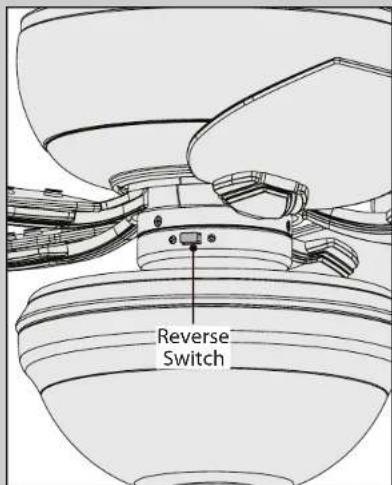
To switch the direction of air flow, move the reverse switch to the opposite position.

M3562-01·12/17/14·@Hunter Fan Company
Operation, Maintenance, & Cleaning (continued)
www.HunterFan.com
1.888.830.1326
flowchart
graph TD
    A["Finial Cap"] --> B["Globe"]
    B --> C["Globe Keeper"]
    C --> D["Metal Plate"]
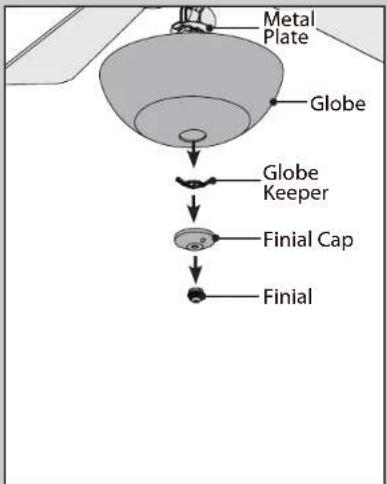
Changing the bulbs - unscrew the finial and remove it from the threaded rod. Remove the finial cap and unscrew the globe keeper while supporting the globe with your other hand. Carefully remove the globe. Unscrew bulbs and replace with bulbs of same type and wattage. Reinstall the globe assembly.
natural_image
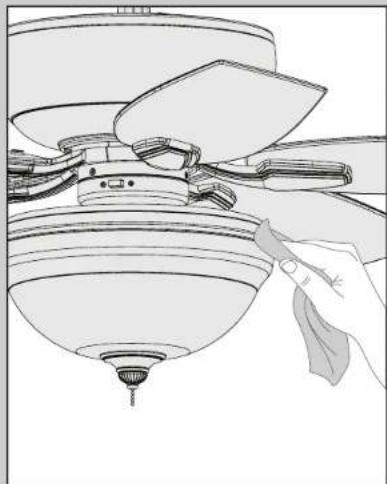
Line drawing of a ceiling fan with a hand adjusting the blade (no text or symbols)When cleaning the fan, use soft brushes or cloths to prevent scratching. Cleaning products may damage the finishes.
Safe-Exit
The Safe-Exit Program gives you about thirty seconds of light when you turn the lights off to exit the room before the lights go out. To use Safe-Exit:
- Press the Fan Off button for at least three seconds to initiate the Safe-Exit Mode.
• The lights will flash for visual confirmation. - The lights will stay on 50% brightness for 15 seconds and then begin to dim. After a total of 30 seconds, the lights will be completely off.
Note: For CFL lighting, the lights will stay on 100% brightness for 30 seconds. After a total of 30 seconds, the lights will be completely off.
For questions regarding removing a light kit, call customer service 1-888-830-1326.
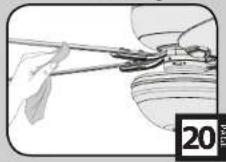
Uninstalling the Light Kit
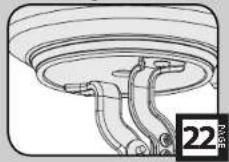
Energy Star
www.HunterFan.com
1.888.830.1326
- To uninstall the light kit, first carefully remove the globe and bulbs. Detach the lower switch housing from the upper switch housing. In the lower switch housing, disconnect the black wire from the blue wire and disconnect the two white wires.
- Remove the reverse switch by unscrewing the two screws on the outside of the lower switch housing.
- Remove the fan switch by unscrewing the switch nut located under the light kit shroud.
• Install the fan switch assembly into the optional lower switch housing by feeding the pull chain through the round hole in the side of the optional switch housing. Secure the switch by installing the switch nut to the threaded barrel on the outside of the switch housing. Hand tighten the nut in a clockwise direction until snug.
• Install the reverse switch into the optional lower switch housing by aligning the gasket and reverse switch with the square hole in the side of the optional switch housing then installing the two screws. - Once both switches have been installed in the optional switch housing, install the dummy terminals (included in the sack parts) on the two disconnected wires in the lower switch housing.
- Repeat the steps on page 15 to install the lower switch housing.

Hunter fans have the power to cut your cooling costs up to 40%.
Beat the High Cost of Cooling
The air movement created by a Hunter ceiling fan lets you set your thermostat higher and still stay comfortable. Every degree you raise the thermostat saves up to 7% on energy costs. So, you can cut back on expensive air conditioning ... and save up to 40%* on cooling. In winter, your Hunter fan recirculates warm air and saves up to 10%* on heating bills. * On average at low speed settings. Your savings may vary based on climate, building type and thermostat setting.
Save Energy and Money While Protecting the Environment
Congratulations! You're saving energy and money while protecting the environment by purchasing this ENERGY STAR qualified Hunter ceiling fan! With this purchase, you are doing your part to protect the environment. Your new ceiling fan has earned the ENERGY STAR label because it meets high energy efficiency specifications set by the Environmental Protection Agency (EPA). ENERGY STAR labeled ceiling fans save energy because they have more efficient fan motors and air delivery due to more aerodynamic blade configurations. Ceiling fan models bearing the ENERGY STAR label move air 14 - 20% more efficiently than typical ceiling fan models. For more information on ENERGY STAR visit www.energystar.gov.

3-Year Energy Star Light Kit Warranty
The Hunter Fan Company, Inc. makes the following warranty to the original user or consumer purchaser of each Hunter Energy Efficient Light Kit: If your Hunter Energy Efficient Light Kit fails at any time within three years after the date of sale due to a defect in material or workmanship, labor to repair the defect will be provided free of charge at our nearest service center or our service department in Memphis, TN. You will be responsible for all labor costs after this three-year period. This warranty is voided if this product is not purchased in the U.S.A. or Canada.
This warranty excludes and does not cover defects, malfunctions or failures of any product which were caused by repairs by persons not authorized by us, use of parts or accessories not authorized by us, mishandling, improper Installation, modifications or damage to the light fixture while in your possession, or unreasonable use, including failure to provide reasonable and necessary maintenance. IN NO EVENT SHALL HUNTER FAN COMPANY BE LIABLE FOR CONSEQUENTIAL OR INCIDENTAL DAMAGES.
SOME STATES DO NOT ALLOW LIMITATION ON HOW LONG AN IMPLIED WARRANTY LASTS OR THE EXCLUSION OR LIMITATION OF INCIDENTAL OR CONSEQUENTIAL DAMAGES SO THE ABOVE LIMITATION OR EXCLUSIONS MAY NOT APPLY TO YOU.
THIS WARRANTY GIVES YOU SPECIFIC LEGAL RIGHTS, AND YOU MAY ALSO HAVE OTHER RIGHTS THAT VARY FROM STATE TO STATE.

M3562-01 · 12/17/14 · © Hunter Fan Company
Troubleshooting
www.HunterFan.com
1.888.830.1326
Fan doesn't work
• Make sure power switch is on.
- Pull the pull chain to make sure it is on.
- Push the motor reversing switch firmly left or right to ensure that it is engaged.
- Check the circuit breaker to ensure the power is turned on.
• Make sure the blades spin freely.
- Turn off power from the circuit breaker, then loosen the canopy and check all the connections according to the wiring diagram on pages 11-12.
• Make sure the battery is working.
- Check the plug connection in the switch housing.
Excessive wobbling
- Tighten all of the blade and blade iron screws until they are snug.
- Turn the power off, support the fan carefully, and check that the hanger ball is properly seated.
- Use the provided balancing kit and instructions to balance the fan.
Remote control of fan is erratic
• Make sure the battery is installed correctly.
• Install a fresh battery.
Transmitter only works when held at close range
- Change battery.
Noisy operation
- Tighten the blade and blade iron screws until they are snug.
- Check to see if any of the blades are cracked. If so, replace all of the blades.
Fan Runs Slowly
- Turn the power to the fan off at the wall switch. Then, turn it on again. Push the 3 button on the remote transmitter for high fan speed. Then, pull the fan speed chain until the fan is on the highest speed.
Lights dim when turned on or do not turn on at all.
• Make sure the wattage of the light bulbs installed matches the specifications on the light sockets.
If you have multiple remotes or multiple remote-controlled fans installed on the same circuit breaker and you are experiencing interference or faulty operation of your remote controls, please go to www.HunterFan.com/FAQs and click "How do I properly install multiple remote-controlled fans?" for information on how to correct this issue.
- To register your fan, please visit: www.HunterFan.com/register
- What to Expect with Your Installation
- Read and Save These Instructions
- WARNINGS
- CAUTIONS
- Tools Needed
- If you have a flat ceiling:
- If you have an angled ceiling:
- Mounting Options
- Ceiling Bracket
- Ceiling Bracket (continued)
- Preparation
- Downrod (continued)
- Wiring
- Wiring (continued)
- Canopy
- Blades
- Switch Housing
- Light Kit
- Light Kit (continued)
- CAUTION:
- Remote Control
- Operation, Maintenance, & Cleaning
- Operation, Maintenance, & Cleaning (continued)
- Safe-Exit
- Uninstalling the Light Kit
- Energy Star
- Beat the High Cost of Cooling
- Save Energy and Money While Protecting the Environment
- 3-Year Energy Star Light Kit Warranty
- Troubleshooting
- Fan doesn't work
- Excessive wobbling
- Remote control of fan is erratic
- Transmitter only works when held at close range
- Noisy operation
- Fan Runs Slowly
- Lights dim when turned on or do not turn on at all.
- If you have multiple remotes or multiple remote-controlled fans installed on the same circuit breaker and you are experiencing interference or faulty operation of your remote controls, please go to www.HunterFan.com/FAQs and click "How do I properly install multiple remote-controlled fans?" for information on how to correct this issue.
Brand : HUNTER
Model : Sable Ridge
Category : Vacuum Cleaner