Mercury Magnetic Upright Bike 20575 - Exercise bike Life Gear - Free user manual and instructions
Find the device manual for free Mercury Magnetic Upright Bike 20575 Life Gear in PDF.


User questions about Mercury Magnetic Upright Bike 20575 Life Gear
0 question about this device. Answer the ones you know or ask your own.
Ask a new question about this device
Download the instructions for your Exercise bike in PDF format for free! Find your manual Mercury Magnetic Upright Bike 20575 - Life Gear and take your electronic device back in hand. On this page are published all the documents necessary for the use of your device. Mercury Magnetic Upright Bike 20575 by Life Gear.
USER MANUAL Mercury Magnetic Upright Bike 20575 Life Gear
natural_image
Line drawing of a stationary exercise bike with adjustable arms and legs (no text or symbols)OWNER'S MANUAL
IMPORTANT: Read all instructions carefully before using this product. Retain this owner's manual for future reference. The specifications of this product may vary from this photo, subject to change without notice.
TABLE OF CONTENTS
WARRANTY 2
IMPORTANT SAFETY INSTRUCTIONS 3
PARTS LIST 4
HARDWARE PACKING LIST 5
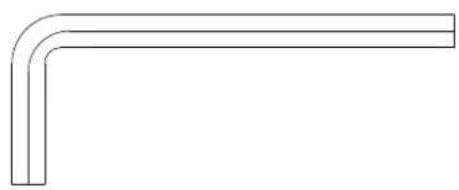
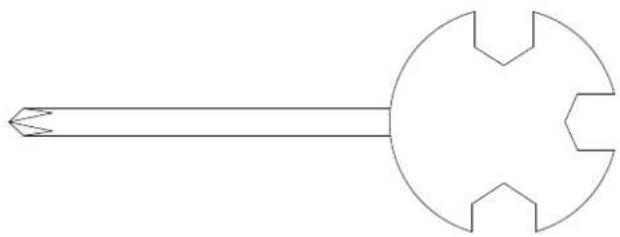
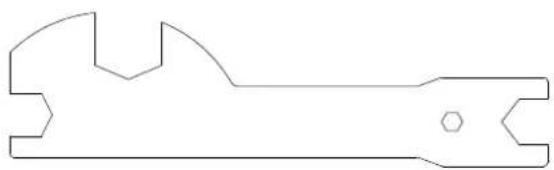
TOOLS 5
OVERVIEW DRAWING 6
ASSEMBLY INSTRUCTIONS 7
LifeGear Inc. warrants to the original purchaser that this product is free from defects in material and workmanship when used for the purpose intended, under the conditions that it has been installed and operated in accordance with LifeGear's Owner's Manual. LifeGear's obligation under this warranty is limited to replacing or repairing free of charge, any parts which may prove to be defective under normal home use. This warranty does not include any damage caused by improper operation, misuse or commercial application.
From the date of purchase, the frame is warranted to be free from defects for 1 (one) year.
This warranty is offered only to the original owner and is not transferable. Proof of purchase is required.
When ordering replacement parts please have the following information ready:
- Owner's Manual
- Model Number
- Description of Parts
- Part Number
- Date of Purchase
IMPORTANT SAFETY INSTRUCTIONS
Basic precautions should always be followed, including the following important safety instructions when using this equipment: Read all instructions before using this equipment.
- Read all instructions and follow it carefully before using this equipment. Make sure the equipment is properly assembled and tightened before use.
- Before exercise, in order to avoid injuring the muscle, warm-up exercise is necessary. Refer to the Warm Up and Cool Down Routine pages. After exercise, relaxation of the body is suggested for cool-down.
- Please make sure all parts are not damaged and fixed well before use. This equipment should be placed on a flat surface when using. Using a mat or other covering material on the ground is recommended.
- Please wear proper clothes and shoes when using this equipment; do not wear clothes that might catch any part of the equipment; remember to tighten the pedaling straps.
- Do not attempt any maintenance or adjustments other than those described in this manual. Should any problems arise, discontinue use and consult your local dealer.
- Do not use the equipment outdoors.
- This equipment is for household use only.
- Only one person at a time should use this equipment.
- If you feel any chest pains, nausea, dizziness, or short of breath, you should stop exercising immediately and consult your physician before continuing.
- Care should be taken in mounting or dismounting the equipment.
- Do not allow children to use or play on the equipment. Keep children and pets away from the equipment while in use. This machine is designed for adults use only. The minimum free space required for safe operation is not less than two meters.
- The maximum weight capacity for this product is 110 kgs.
WARNING: Before beginning any exercise program consult your physician.
This is especially important for the persons who are over 35 years old or who have pre-existing health problems. Read all instructions before using any fitness equipment.
CAUTION: Read all instructions carefully before operating this product.
Retain this Owner's Manual for future reference.
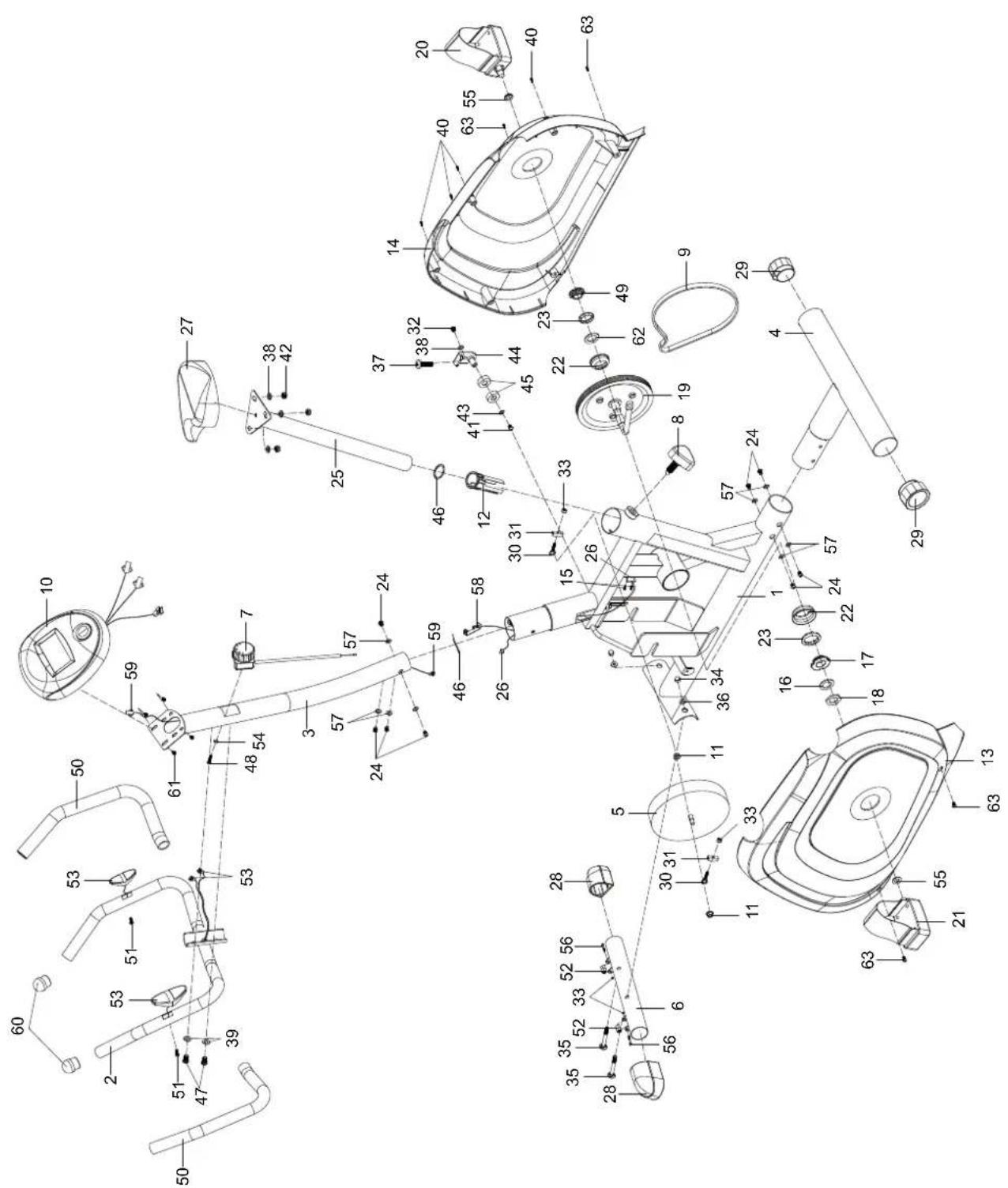
PARTS LIST
| No. | Description | Qty | No. | Description | ||
| 001 | Main Frame 1 030 Eyebolt | 2 | ||||
| 002 | Handlebar 1 031 Tension | Bracket | 2 | |||
| 003 | Handlebar Post 1 032 Bolt M8x10 | 1 | ||||
| 004 | Rear Stabilizer | 1 | 033 | Nylon Nut M6 | 4 | |
| 005 | Flywheel ∅190 | 1 | 034 | Cap Nut M10 | 2 | |
| 006 | Front Stabilizer ∅50x1.5x380 | 1 | 035 | Bolt M10x57 | 2 | |
| 007 | Tension Control Knob | 1 | 036 | Big Curve Washer ∅10 | 2 | |
| 008 | Seat Post Knob M12x55 | 1 | 037 | Bolt M8x25 | 1 | |
| 009 | Belt PJ 330J6 | 1 | 038 | Washer ∅8 | 4 | |
| 010 | Computer JVT-29140 | 1 | 039 | Big Curve Washer ∅16x∅8 | 2 | |
| 011 | Nut M10x1x10 | 2 | 040 | Screw ST4.2x18 | 4 | |
| 012 | Seat Post Bushing | 1 | 041 | Bolt M6x10 | 1 | |
| 013 | Left Cover | 1 | 042 | Nylon Nut M8 | 3 | |
| 014 | Right Cover | 1 | 043 | Big Washer ∅20x∅6x1.5 | 1 | |
| 015 | Screw ST2.9x10 | 2 | 044 | Idler Arm | 1 | |
| 016 | Washer | 1 | 045 | Bearing 6000Z | 2 | |
| 017 | Bearing Nut I 15/16" | 1 | 046 | Main Frame Tube Cover | 2 | |
| 018 | Hexagon Nut 7/8" | 1 | 047 | Bolt M8x20 | 2 | |
| 019 | Belt Pulley with Crank 240J6 | 1 | 048 | Bolt M5x45 | 1 | |
| 020 | Right Foot Pedal YH-4X | 1 | 049 | Bearing Nut II 7/8" | 1 | |
| 021 | Left Foot Pedal YH-4X | 1 | 050 | Handlebar Foam Grip ∅30x∅24x455 | 2 | |
| 022 | Bearing Cup | 2 | 051 | Screw ST4.2x20 | 2 | |
| 023 | Bearing | 2 | 052 | Transport Wheel ∅23x∅6x32 | 2 | |
| 024 | Bolt M8x15 | 8 | 053 | Hand Pulse Sensor with Wire L=750mm | 2 | |
| 025 | Seat Post | 1 | 054 | Washer ∅5 1 | ||
| 026 | Sensor with Wire L=450mm | 1 | 055 | Crank Cover ∅50x∅26x10 | 2 | |
| 027 | Seat Cushion DD-9811T | 1 | 056 | Bolt M6x48 | 2 | |
| 028 | Front Stabilizer End Cap ∅50x1.5 | 2 | 057 | Curve Washer ∅20x∅8 | 8 | |
| 029 | Rear Stabilizer End Cap ∅50x1.5 | 2 | 058 | Tension Cable L=750mm | 1 |
PARTS LIST
| No. | Description | Qty | No. | Description | ||
| 059 | Extension Sensor Wire L=850mm | 1 | 062 | Washer 7/8" | 1 | |
| 060 | Handlebar End Cap ∅25 2 063 | Pan Head Phillips Self Drilling Screw ST4.2x18 | 4 | |||
| 061 | Bolt M5x10 4 | |||||
HARDWARE PACKING LIST
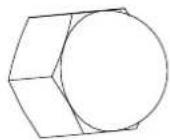
(34) Cap Nut M10
2 PCS
natural_image
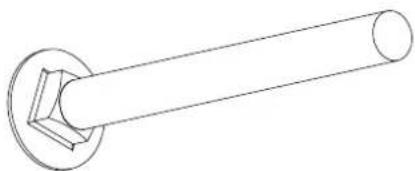
Pure technical line drawing of a cylindrical mechanical component with flanged ends (no text or symbols)(35) Bolt M10x57 2 PCS
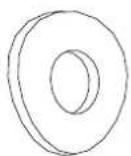
(36) Big Curve Washer ∅10
2 PCS
TOOLS
natural_image
Simple L-shaped line drawing with no text, numbers, or symbolsAllen Wrench 5mm 1 PC
natural_image
Simple line drawing of a hammer-like tool with a circular head and four triangular blades (no text or symbols)Multi Hex Tool with Phillips Screwdriver S13, S14, S15 1 PC
natural_image
Pure line drawing of a mechanical tool handle (no text or symbols)Multi Hex Tool 1 PC
OVERVIEW DRAWING
ASSEMBLY INSTRUCTIONS
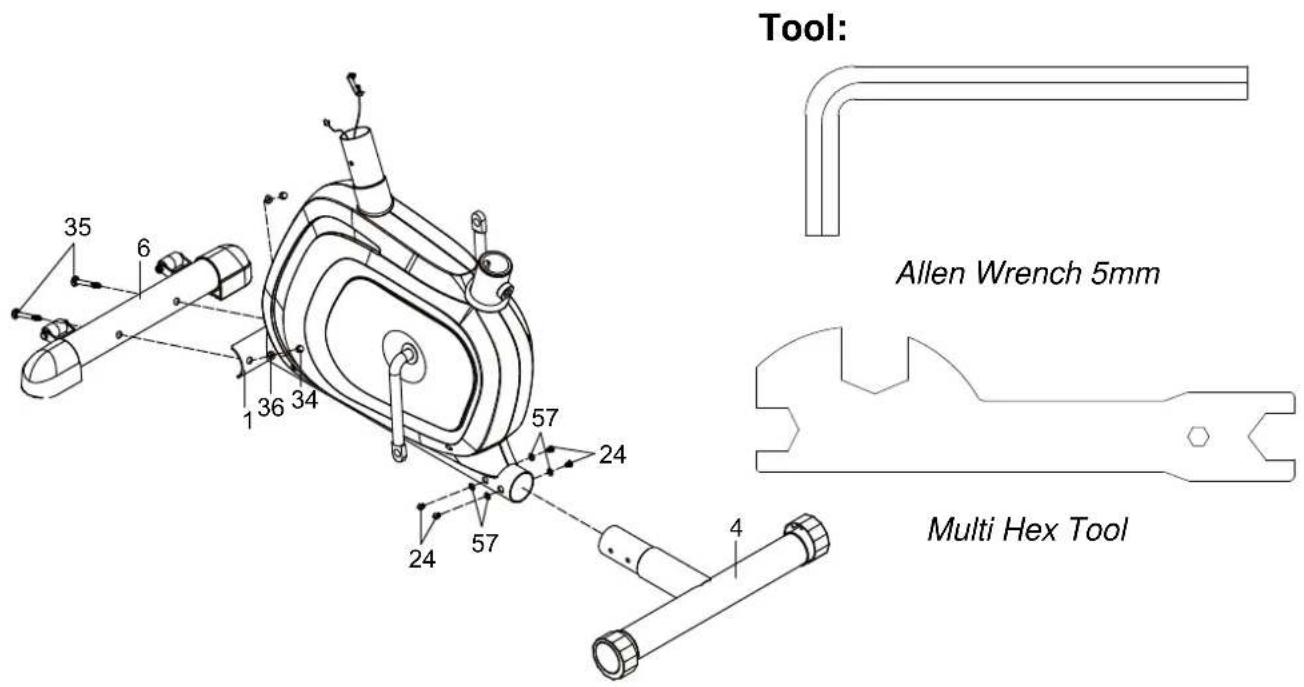
1. Front and Rear Stabilizers Installation
Position the Front Stabilizer (6) in front of the Main Frame (1) and align bolt holes.
Attach the Front Stabilizer (6) onto the front curve of the Main Frame (1) with two M10 Cap Nuts (34), two M10x57 Bolts (35), and two ∅10 Big Curve Washers (36). Tighten cap nuts with the Multi Hex Tool provided.
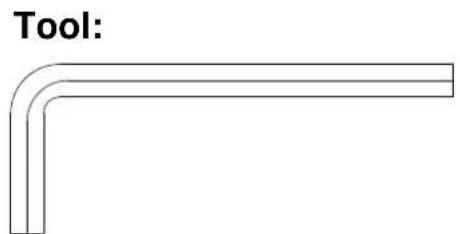
Remove four M8x15 Bolts (24) and four ∅20x∅8 Curve Washers (57) from the Rear Stabilizer (4). Remove bolts with the 5mm Allen Wrench provided.
Insert the Rear Stabilizer (4) into the tube of the Main Frame (1) and align bolt holes.
Attach the Rear Stabilizer (4) into the tube of the Main Frame (1) with four M8x15 Bolts (24) and four ∅20x∅8 Curve Washers (57) that were removed. Tighten bolts with the 5mm Allen Wrench provided.
Hardware:
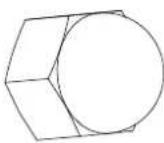
(34) Cap Nut M10
2 PCS
natural_image
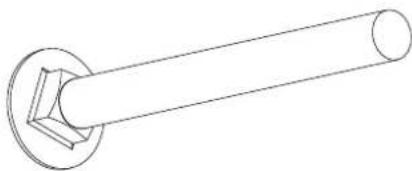
Simple line drawing of a cylindrical mechanical lever with flanges (no text or symbols)(35) Bolt M10x57 2 PCS
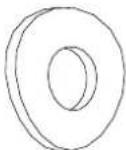
(36) Big Curve Washer ∅10
2 PCS
2. Left and Right Foot Pedals Installation
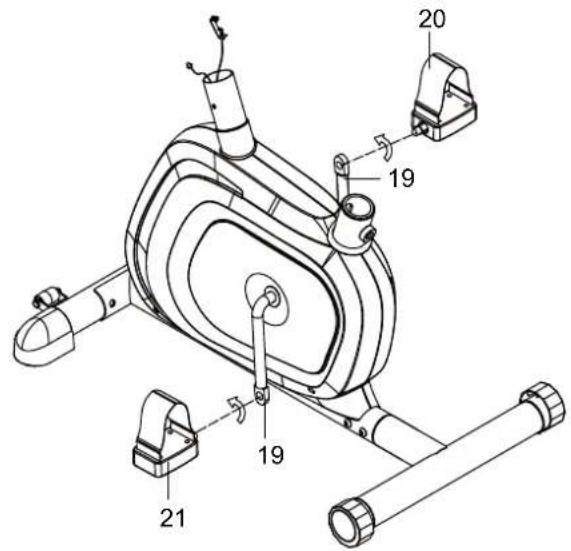
The Cranks, Pedal Shafts, and Foot Pedals are marked “R” for Right and “L” for Left. Insert the pedal shaft of Left Foot Pedal (21) into threaded hole in the left Crank (19). Turn the pedal shaft by hand in the counter-clockwise direction until snug.
Note: DO NOT turn the pedal shaft in the clockwise direction, doing so will strip the threads.
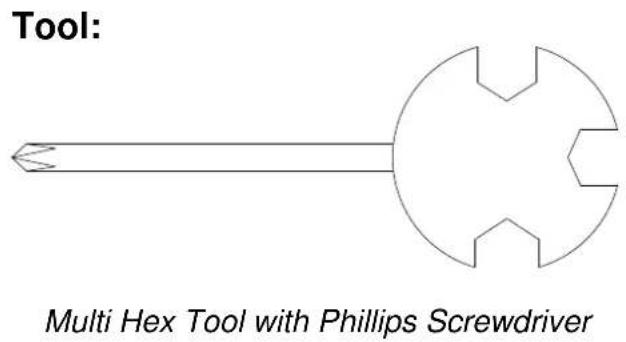
Tighten the pedal shaft of Left Foot Pedal (21) with the Multi Hex Tool with Phillips Screwdriver provided. Insert pedal shaft of Right Foot Pedal (20) into threaded hole in right Crank (19). Turn the pedal shaft by hand in the clockwise direction until snug. Tighten pedal shaft of Right Foot Pedal (20) with the Multi Hex Tool with Phillips Screwdriver provided.
3. Seat Post and Seat Cushion Installation
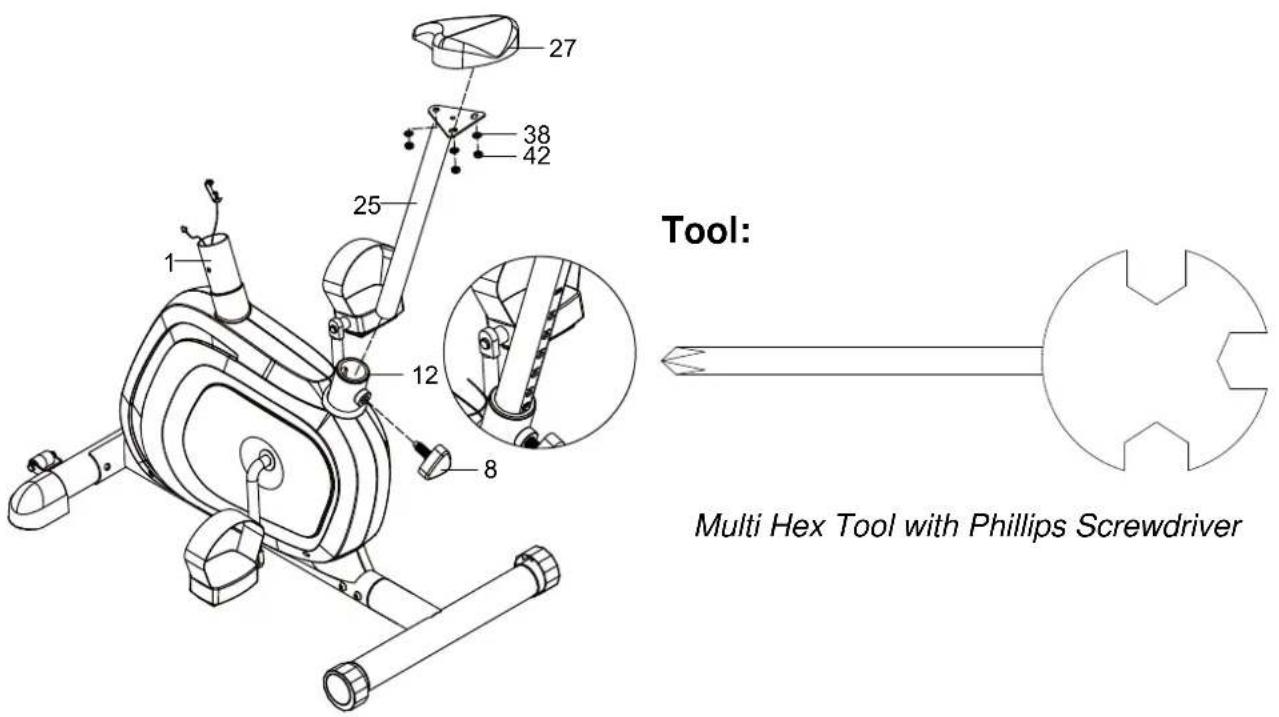
Remove three ∅8 Washers (38) and three M8 Nylon Nuts (42) from underside of the Seat Cushion (27). Remove nylon nuts and washers with the Multi Hex Tool with Phillips Screwdriver provided. Guide bolts on underside of the Seat Cushion (27) through holes on top of the Seat Post (25), attach with three removed ∅8 Washers (38) and three M8 Nylon Nuts (42). Tighten nylon nuts and washers with the Multi Hex Tool with Phillips Screwdriver provided.
Insert the Seat Post (25) into the Seat Post Bushing (12) on the tube of the Main Frame (1) and then attach the Seat Post Knob (8) onto the tube of the Main Frame (1) by turning it in a clockwise direction to lock the Seat Post (25) in the suitable position.
natural_image
Simple line drawing of a right-angle pipe or elbow joint (no text or symbols)Allen Wrench 5mm
4. Handlebar Post Installation
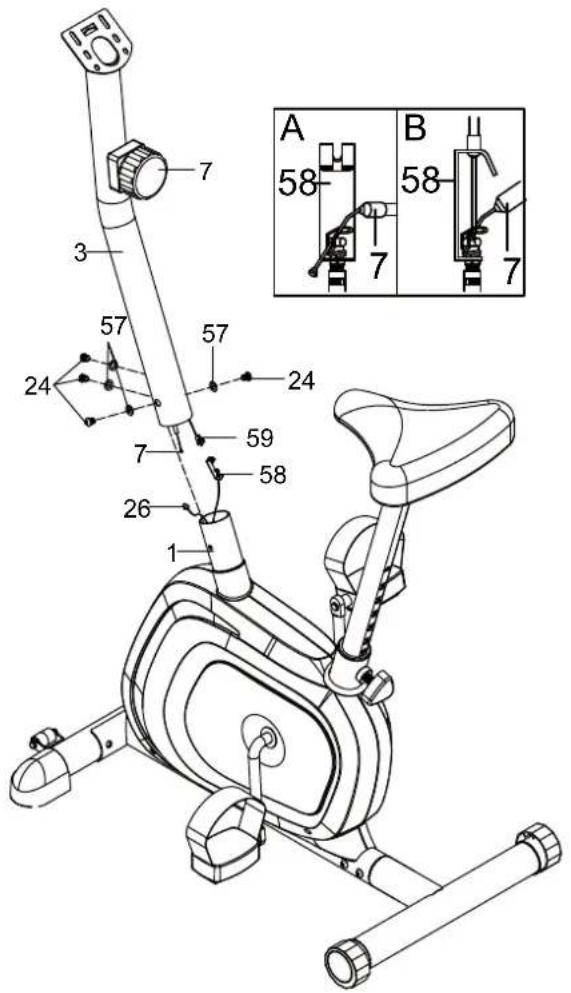
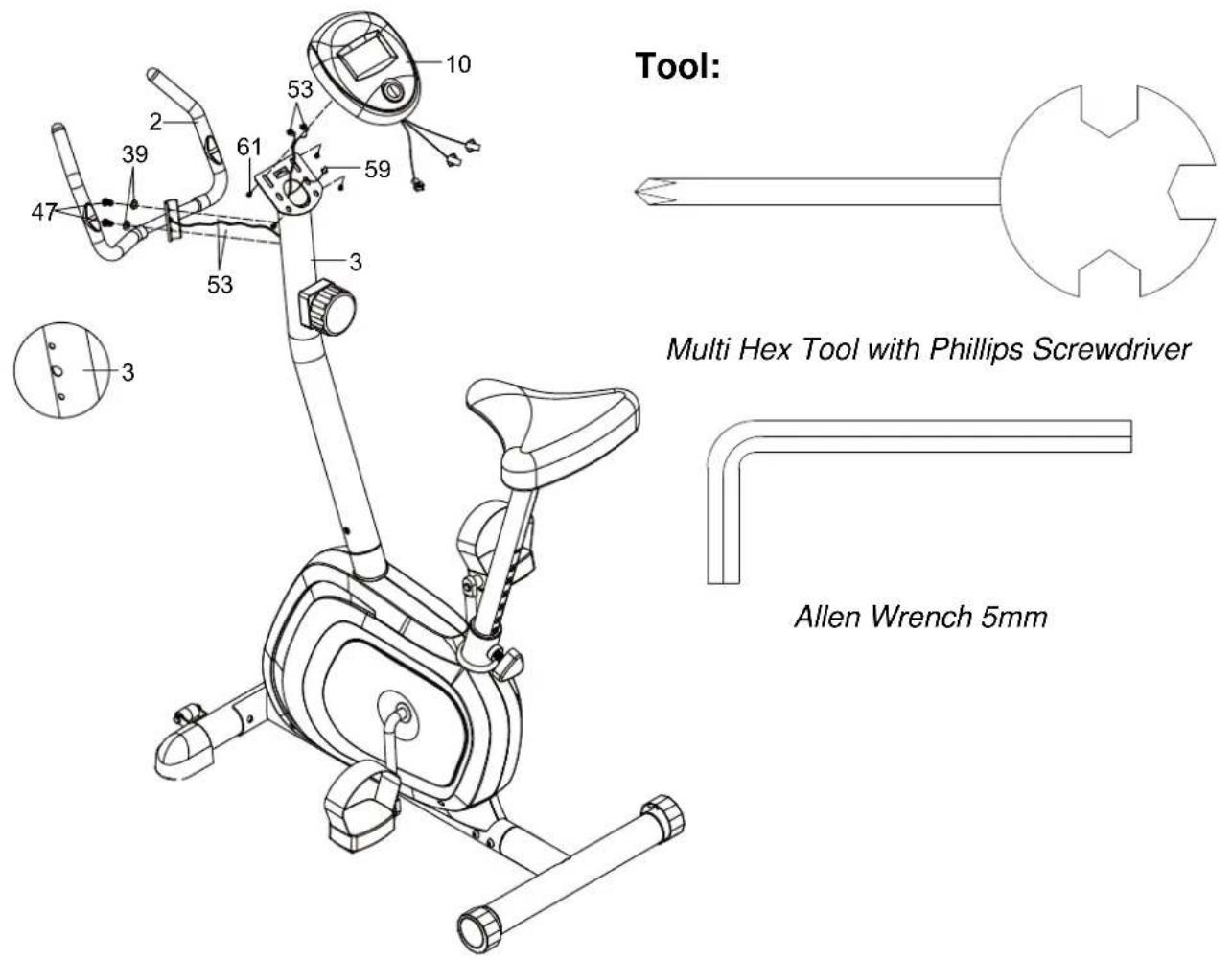
Remove four M8x15 Bolts (24) and four ∅20x∅8 Curve Washers (57) from the Main Frame (1). Remove bolts with the 5mm Allen Wrench provided.
Connect the Sensor Wire (26) from the Main Frame (1) to the Extension Sensor Wire (59) from the Handlebar Post (3).
Put the cable end of resistance cable of Tension Control Knob (7) into the spring hook of Tension Cable (58), see Figure A. Pull the resistance cable of Tension Control Knob (7) up and force it into the gap of metal bracket of Tension Cable (58), see Figure B.
Insert the Handlebar Post (3) onto the tube of the Main Frame (1) and secure with four M8x15 Bolts (24) and four ∅20x∅8 Curve Washers (57) that were removed. Tighten bolts with the 5mm Allen Wrench provided.
5. Handlebar and Computer Installation
Remove two ∅16x∅8 Big Curve Washers (39) and two M8x20 Bolts (47) from the Handlebar Post (3). Remove bolts with the 5mm Allen Wrench provided.
Insert the Hand Pulse Sensor Wires (53) into the hole on the Handlebar Post (3) and then pull them out from the top end of the Handlebar Post (3).
Attach the Handlebar (2) onto the Handlebar Post (3) with two ∅16x∅8 Big Curve Washers (39) and two M8x20 Bolts (47) that were removed. Tighten bolts with the 5mm Allen Wrench provided.
Remove four M5x10 Bolts (61) from the Computer (10). Remove bolts with the Multi Hex Tool with Phillips Screwdriver provided.
Connect the Hand Pulse Sensor Wires (53) and Extension Sensor Wire (59) to the wires that come from the Computer (10). Tuck wires into the Handlebar Post (3). Attach the Computer (10) onto the top end of the Handlebar Post (3) with four M5x10 Bolts (61) that were removed. Tighten bolts with the Multi Hex Tool with Phillips Screwdriver provided.
natural_image
Front view of a life gear device with a digital display and control button (no visible text or symbols on the device itself)USING YOUR COMPUTER
The computer can be activated by pressing the button or by pedaling. If you leave the equipment for 4 minutes, the power will turn off automatically.
BUTTON FUNCTIONS:
Press the MODE button to select each function of the computer.
Press and hold the MODE button for 3 seconds to reset all data values to zero except the ODOMETER data values.
COMPUTER FUNTIONS:
SCAN: Automatically scans each function in sequence with change every 6 seconds.
NOTE: If you do not want to use the SCAN function, press the MODE button to select one of the other functions.
TIME: Displays your elapsed workout time in minutes and seconds.
SPEED: Displays the current training speed.
DIST (DISTANCE): Displays the cumulative distance traveled during workout.
CAL (CALORIES): Displays approximate amount of calories burned during workout. (This data is a rough guide for comparison of different exercise sessions and should not be used in medical treatment).
ODO (ODOMETER): Displays the total accumulative distance traveled. The ODOMETER data values can not be clear to zero by pressing and holding the MODE button for 3 seconds. If you take out the batteries from the computer, the ODOMETER data values will clear to zero.
PULSE: Displays your current heart rate figures after you grip the handlebar pulse sensors with both your hands during exercise. To ensure the pulse readout is more precise, please always hold on to the handlebar pulse sensors with two hands instead of just with one hand only when you try to test your heart rate figures.
HOW TO INSTALL THE BATTERIES:
- Remove the battery cover on the back of the computer.
- Place two "SIZE-AA" batteries into the battery housing.
- Insure batteries are correctly positioned and battery springs are proper contact with batteries.
- Re-install the battery cover.
- If the display is illegible or only partial segment appear, remove batteries and wait 15 seconds before reinstalling.
ADJUSTMENTS
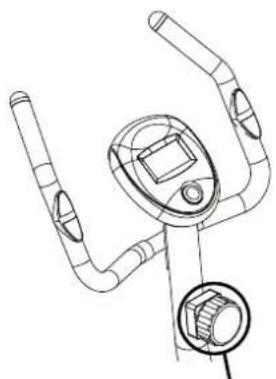
Adjusting the Tension Control Knob
To increase the load, turn the tension control knob in a clockwise direction.
To decrease the load, turn the tension control knob in a counterclockwise direction.
natural_image
Technical line drawing of a mechanical device with no visible text or symbolsTension Control Knob
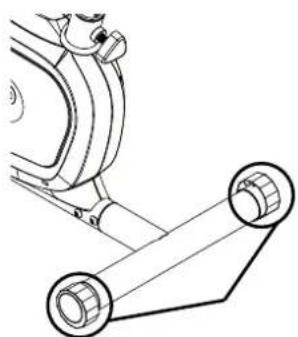
Adjusting the Rear Stabilizer End Cap
Turn the rear stabilizer end cap on the rear stabilizer as needed to level the upright bike.
natural_image
Technical line drawing of a mechanical assembly with two rollers and a curved component (no text or symbols)Rear Stabilizer End Cap
Adjusting the Seat Height
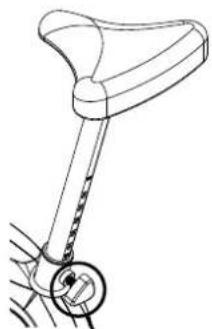
Turn the seat post knob in a counterclockwise direction until the seat post can be slid up or down and then slide the seat post up or down direction to the suitable position. Lock the seat post in place by tightening the seat post knob in a clockwise direction.
NOTE: When adjusting the height of seat post, make sure the seat post bushing does not exceed the mark line on the seat post.
natural_image
Line drawing of a mechanical device with a handle and circular base (no text or symbols)Seat Post Knob
MAINTENANCE
Cleaning
The upright bike can be cleaned with a soft cloth and mild detergent. Do not use abrasives or solvents on plastic parts. Please wipe your perspiration off the upright bike after each use. Be careful not get excessive moisture on the computer display panel as this might cause an electrical hazard or electronics to fail.
Please keep the upright bike, specially, the computer console, out of direct sunlight to prevent screen damage.
Please inspect all assembly bolts and pedals on the machine for proper tightness every week.
Storage
Store the upright bike in a clean and dry environment away from children.
TROUBLESHOOTING
| PROBLEM | SOLUTION |
| The upright bike wobbles when in use. | Turn the rear stabilizer end cap on the rear stabilizer as needed to level the upright bike. |
| There is no display on the computer console. | 1. Remove the computer console and verify the wires that come from the computer console are properly connected to the wires that come from the handlebar post.2. Check if the batteries are correctly positioned and battery springs are in proper contact with batteries.3. The batteries in the computer console may be dead. Change to new batteries. |
| There is no heart rate reading or heart rate reading or is erratic / inconsistent. | 1. Make sure that the wire connections for the hand pulse sensors are secure.2. To ensure the pulse readout is more precise, please always hold on to the handlebar grip sensors with two hands instead of just with one hand only when you try to test your heart rate figures.3. Gripping the hand pulse sensors too tight. Try to maintain moderate pressure while holding onto the hand pulse sensors. |
| The upright bike makes a squeaking noise when in use. | The bolts may be loose on the upright bike, please inspect the bolts and tighten the loose bolts. |
WARM UP AND COOL DOWN ROUTINE
The WARM-UP is an important part of any workout. The purpose of warming up is to prepare your body for exercise and to minimize injuries. Warm up for two to five minutes before aerobic exercising. It should begin every session to prepare your body for more strenuous exercise by heating up and stretching your muscles, increasing your circulation and pulse rate, and delivering more oxygen to your muscles.
COOL DOWN at the end of your workout, repeat these exercises to reduce soreness in tired muscles. The purpose of cooling down is to return the body to its resting state at the end of each exercise session. A proper cool-down slowly lowers your heart rate and allows blood to return to the heart.
HEAD ROLLS
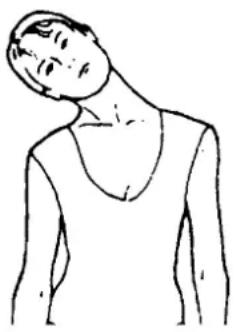
Rotate your head to the right for one count, you should feel a stretching sensation up the left side of your neck. Then rotate your head back for one count, stretching your chin to the ceiling and letting your mouth open. Rotate your head to the left for one count, then drop your head to your chest for one count.
natural_image
Line drawing of a person's neck and shoulder (no text or symbols)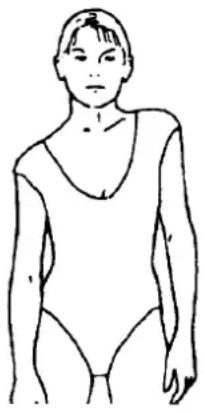
natural_image
Line drawing of a person wearing a leotard (no text or symbols)SHOULDER LIFTS
Lift your right shoulder toward your ear for one count. Then lift your left shoulder up for one count as you lower your right shoulder.
SIDE STRETCHES
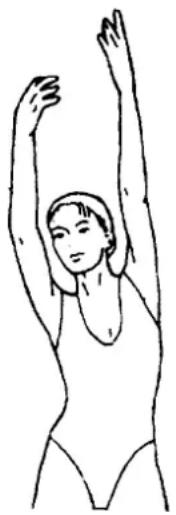
Open your arms to the side and lift them until they are over your head. Reach your right arm as far toward the ceiling as you can for one count. Repeat this action with your left arm.
natural_image
Line drawing of a person performing a stretching exercise with arms raised (no text or symbols)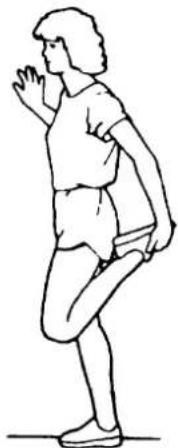
natural_image
Line drawing of a person in a standing or kneeling posture (no text or symbols)QUADRICEPS STRETCH
With one hand against a wall for balance, reach behind you and pull your right foot up. Bring your heel as close to your buttocks as possible. Hold for 15 counts and repeat with left foot.
INNER THIGH STRETCH
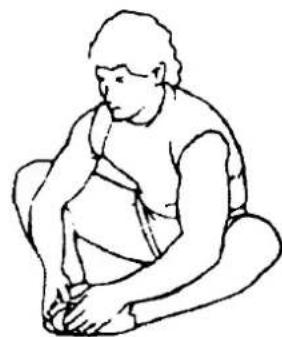
Sit with the soles of your feet together and your knees pointing outward. Pull your feet as close to your groin as possible. Gently push your knees toward the floor. Hold for 15 counts.
natural_image
Line drawing of a seated person in profile, no text or symbols present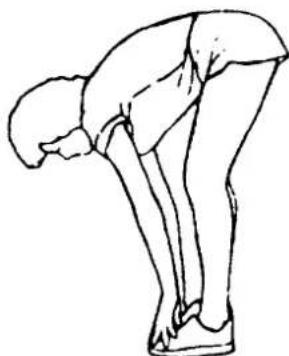
natural_image
Line drawing of a person bending forward with knees and arms extended (no text or symbols)TOE TOUCHES
Slowly bend forward from your waist, letting your back and shoulders relax as you stretch toward your toes. Reach as far as you can and hold for 15 counts.
HAMSTRING STRETCHES
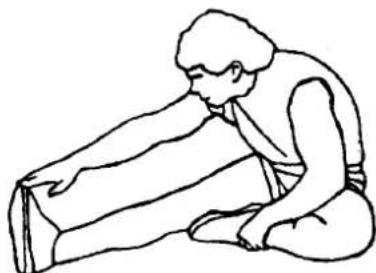
Extend your right leg. Rest the sole of your left foot against your right inner thigh. Stretch toward your toe as far as possible. Hold for 15 counts. Relax and then repeat with left leg.
natural_image
Line drawing of a person kneeling and stretching their back (no text or symbols)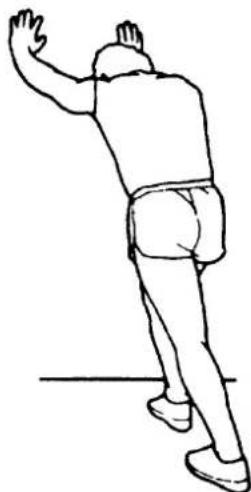
natural_image
Line drawing of a person in motion, viewed from above (no text or symbols)CALF/ACHILLES STRETCH
Lean against a wall with your left leg in front of the right and your arms forward. Keep your right leg straight and the left foot on the floor; then bend the left leg and lean forward by moving your hips toward the wall. Hold, then repeat on the other side for 15 counts.