
MWD202FW - Microwave WHIRLPOOL - Free user manual and instructions
Find the device manual for free MWD202FW WHIRLPOOL in PDF.


| Product Type | Microwave oven with grill |
| Brand | Whirlpool |
| Model | MWD202FW |
| Outer Dimensions (HxWxD) | 285 x 456 x 359 mm |
| Inner Dimensions (HxWxD) | 196 x 292 x 295 mm |
| Net Weight | Approx. 12 kg |
| Supply Voltage | 230 V / 50 Hz |
| Rated Power Input | 1100 W |
| Microwave Output Power | 700 W |
| Fuse Rating | 10 A (UK 13 A) |
| Cooking Functions | Microwave, Grill, Defrost, Keep Warm |
| Power Levels | Max (700 W), 600 W, 400 W, Defrost, Keep Warm |
| Accessories Included | Glass turntable, Turntable support, Wire rack |
| Dishwasher Safe Parts | Turntable support, Glass turntable, Wire rack |
| Cleaning Method | Soft damp cloth with mild detergent; do not use abrasive cleaners |
| Safety Features | Door safety interlock, child supervision required, earthing compulsory |
| Installation Clearance | At least 30 cm above; sides and back must be clear for airflow |
| Reparability | Service only by trained technician; original mains cord available via service organization |
| Waste Disposal | Do not dispose as household waste; follow local WEEE regulations |
Frequently Asked Questions - MWD202FW WHIRLPOOL
User questions about MWD202FW WHIRLPOOL
0 question about this device. Answer the ones you know or ask your own.
Ask a new question about this device
Download the instructions for your Microwave in PDF format for free! Find your manual MWD202FW - WHIRLPOOL and take your electronic device back in hand. On this page are published all the documents necessary for the use of your device. MWD202FW by WHIRLPOOL.
USER MANUAL MWD202FW WHIRLPOOL
Instructions for use
Instructions for use
Instructions for use
Instructions for use
Instructions for use
Instructions for use

Instructions for use
Instructions for use
Instructions for use
SENSING THE DIFFERENCE

INSTALLATION

PRIOR TO CONNECTING

CHECK THAT THE VOLTAGE on the rating plate corresponds to the voltage in your home.
PLACE THE OVEN ON A STABLE, EVEN SURFACE that is strong enough to hold the oven and the food utensils you put in it. Use care when handling.

POSITION THE OVEN AT A DISTANCE from other heating sources. For sufficient ventilation there must be a space of at least 30 cm above the oven. The appliance must be placed against a wall, ensure that the space underneath, above and both sides of the oven is empty to allow for proper airflow. The microwave oven shall not be placed in a cabinet.
ENSURE THAT THE APPLIANCE IS NOT DAMAGED. Check that the oven door closes firmly against the door support and that the internal door seal is not damaged. Empty the oven and clean the interior with a soft, damp cloth.

Do NOT OPERATE THIS APPLIANCE if it has a damaged mains cord or plug, if it is not working properly, or if it has been damaged or dropped. Do not immerse the mains cord or plug in water. Keep the cord away from hot surfaces. Electrical shock, fire or other hazards may result.
AFTER CONNECTING
THE OVEN CAN BE OPERATED ONLY if the oven door is firmly closed.
POOR TELEVISION RECEPTION and radio interference may result if the oven is located close to a TV, radio or aerial.


THE EARTHING OF THIS APPLIANCE is compulsory. The manufacturer will accept no responsibility for injury to persons, animals or damage to objects arising from the non-observance of this requirement.
The manufacturers are not liable for any problems caused by the user's failure to observe these instructions.

IMPORTANT SAFETY INSTRUCTIONS

READ CAREFULLY AND KEEP FOR FUTURE REFERENCE

Do NOT HEAT, OR USE FLAMMABLE MATERIALS in or near the oven. Fumes can create a fire hazard or explosion.

Do NOT USE YOUR MICROWAVE oven for drying textiles, paper, spices, herbs, wood, flowers, fruit or other combustible materials. Fire could result.

IF MATERIAL INSIDE / OUTSIDE THE OVEN SHOULD IGNITE OR SMOKE IS OBSERVED, keep oven door closed and turn the oven off. Disconnect the power cord or shut off power at the fuse or circuit breaker panel.

Do NOT OVER-COOK FOOD. Fire could result.

Do not leave the oven unattended, especially when using paper, plastic or other combustible materials in the cooking process. Paper can char or burn and some plastics can melt if used when heating foods.
Do not leave the oven unattended if you are using a lot of fat or oil since they can overheat and cause a fire!

Do not use corrosive chemicals or vapors in this appliance. This type of oven is specifically designed to heat or cook food. It is not designed for industrial or laboratory use.

Do not hang or place heavy items on the door, as this can damage the oven opening and hinges. The door handle should not be used for hanging things on.

Only allow children to use the appliance without adult supervision after adequate instructions have been given, so that the child is able to use the appliance in a safe way and understands the hazards of improper use. Children should be supervised when using other heat sources (if avail-
able) separately or in combination with microwaves due to the high temperatures generated.

This appliance is not intended for use by persons (including children) with reduced physical, sensory or mental capabilities, or lack of experience and knowledge, unless they have been given supervision or instruction concerning use of the appliance by a person responsible for their safety.
Children should be supervised to ensure that they do not play with the appliance.

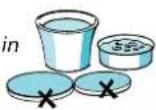
Do not use your microwave oven for heating anything in airtight sealed containers. The pressure increases and may cause damage when opening or may explode.

The door seals and the door seal areas must be regularly inspected for damage. If these areas are damaged, the appliance should not be operated until it has been repaired by a trained service technician.

The appliances are not intended to be operated by means of an external timer or separate remote-control system.
Eggs
Do not use your microwave oven for cook-
ing or reheating whole eggs without shell since they may explode even after microwave heating has ended.

GB

Precautions

General
THIS APPLIANCE IS DESIGNED FOR DOMESTIC USE ONLY!
THE APPLIANCE SHOULD NOT BE OPERATED without food in the oven when using microwaves. Operation in this manner is likely to damage the appliance.
THE VENTILATION OPENINGS on the oven must not be covered. Blocking the air intake or exhaust vents may cause damage to the oven and poor cooking results.
IF YOU PRACTICE OPERATING the oven, put a glass of water inside. The water will absorb the microwave energy and the oven will not be damaged.
Do NOT STORE or use this appliance outdoors. Do NOT USE this product near a kitchen sink, in a wet basement, or near a swimming pool, or similar.
Do not use the cavity for any storage purposes.
REMOVE WIRE TWIST-TIES from paper or plastic bags before placing bag in the oven.

DEEP-FRYING
DO NOT USE YOUR MICROWAVE oven for deep-frying, because the oil temperature cannot be controlled.


USE HOT PADS OR OVEN MITTS to prevent burns, when touching containers, oven parts, and pan after cooking. Accessible parts may become hot during use, young children should be kept away.
LIQUIDS
E.G. BEVERAGES OR WATER. Overheating the liquid beyond boiling point can occur without evidence of bubbling.
This could result in a sudden boil over of the hot liquid.
To prevent this possibility the following steps should be taken:

- Avoid using straight-sided containers with narrow necks.
- Stir the liquid before placing the container in the oven and let the teaspoon remain in the container.
- After heating, allow standing for a short time, stirring again before carefully removing the container from the oven.
CAREFUL
ALWAYS REFER to a microwave cookbook for details. Especially, if cooking or reheating food that contains alcohol.
AFTER HEATING BABY FOOD or liquids in a baby bottle or in a baby food jar, always stir and check the temperature before serving.
This will ensure that the heat is evenly distributed and the risk of scalding or burns can be avoided.
Ensure the Lid and the Teat is removed before heating!

ACCESSORIES

GENERAL
THERE ARE a number of accessories available on the market. Before you buy, ensure they are suitable for microwave use.
ENSURE THAT THE UTENSILS YOU USE are oven proof and allow microwaves to pass through them before cooking.
WHEN YOU PUT FOOD AND ACCESSORIES in the microwave oven, ensure that they do not come in contact with the interior of the oven.
This is especially important with accessories made of metal or metal parts.
If accessories containing metal come into contact with the oven interior while the oven is in operation, sparking can occur and the oven could be damaged.
Always ensure that the turntable is able to turn freely before starting the oven. If the turntable isn't able to turn freely, you should use a smaller vessel.
TURNTABLE SUPPORT
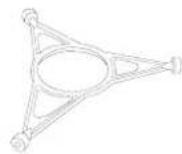
Use the turntable support under the glass turntable. Never put any other utensils on the turntable support.

Fit the turntable support in the oven.
GLASS TURNTABLE
Use the glass turntable with all cooking methods. It collects the dripping juices and food particles that otherwise would stain and soil the interior of the oven.
Place the glass turntable on the turntable support.
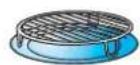
WIRE RACK
Use the wire rack when cooking with grill functions.
CHOOSING MICROWAVE POWER
| POWER SUGGESTED USE: | |
| MAX(700 W) | REHEATING OF BEVERAGES, water, clear soups, coffee, tea or other food with a high water content. If the food contains egg or cream choose a lower power. |
| 600 W C | OOKING OF fish, meat, vegetables etc. |
| 400 W | MORE CAREFUL COOKING e.g. high protein sauces, cheese and egg dishes and to finish cooking casseroles. Simmering stews, melting butter. |
| DEFROST | DEFROSTING. Softening butter, cheeses. |
| KEEP WARM | SOFTENING Ice cream. |
PAUSE OR STOP COOKING
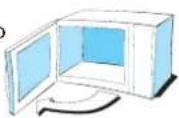
To pause cooking
The cooking can be paused to check, turn, or stir the food by opening the door.
If you don't want to continue cooking
Remove the food, turn the adjust knob to zero and close the door.
To continue cooking
Close the door. The cooking is resumed from where it was paused.
OPERATING THE OVEN
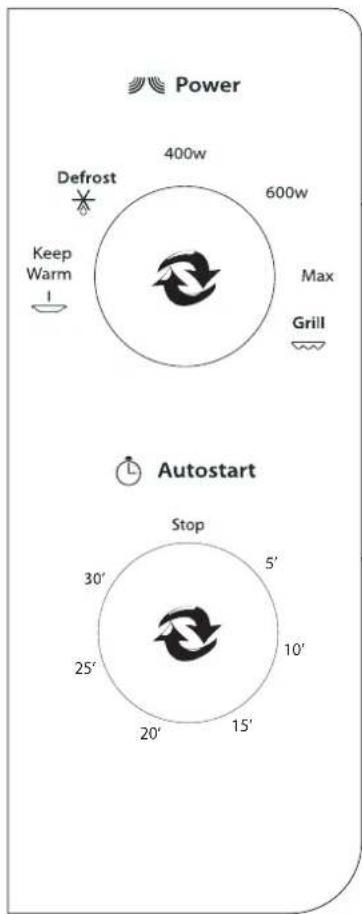
1 SELECT POWER LEVEL AND FUNCTION by turning the multifunction knob.
2 TURN THE ADJUST KNOB clockwise to set the desired cooking time. The oven starts automatically.
COOKING CHART
THE MORE FOOD YOU WANT TO COOK the longer it takes. A rule of thumb is that double amount of food requires almost double the time.
THE LOWER STARTING TEMPERATURE, the longer cooking time is required. Food at room temperature cooks faster than food taken directly from the refrigerator.
IF YOU ARE COOKING SEVERAL ITEMS of the same food, such as jacket potatoes, place them in a ring pattern for uniform cooking.
SOME FOODS ARE COVERED BY A SKIN OR MEMBRANE e.g. potatoes, apples and egg yolks. These food should be pricked with a fork or cocktail stick to relieve the pressure and to prevent bursting.
SMALLER PIECES OF FOOD WILL COOK FASTER than larger pieces and uniform pieces of food cook more evenly than irregularly shaped foods.
STIRRING AND TURNING OF FOOD ARE techniques used in conventional cooking as well as in microwave cooking to distribute the heat quickly to the center of the dish and avoids over-
cooking at the outer edges of the food. WHEN COOKING FOOD OF UNEVEN SHAPE OR thickness, place the thinner area of food towards the center of the dish, where it will be heated last.
Food with a lot of fat and sugar will be cooked faster than food containing a lot of water. Fat and sugar will also reach a higher temperature than water.
Always allow the food to stand for some time after cooking. Standing time always improves the result since the temperature will then be evenly distributed throughout the food.
| TYPE OF FOOD | AMOUNT POWER LEVEL | TIME STANDING TIME | HINTS | ||
| CHICKEN (whole) | 1000 G | 700 W | 18 - 20 MIN. | 5 - 10 MIN. | TURN THE CHICKEN midway thru cooking. Check that the meatjuice is uncolored when the cooking is fi nished. |
| CHICKEN (fi llets or pieces) | 500 G | 8 - 10 MIN. | 5 MIN. | CHECK that the meatjuice is uncolored when the cooking is fi nished. | |
| BACON | 150 G | 3 - 4 MIN. | 1 - 2 MIN. | PLACE ON KITCHEN PAPER, on a plate, in 2 or 3 layers and cover with more kitchen paper. | |
| VEGETABLES (fresh) | 300 G | 3 - 4 MIN. | 1 - 2 MIN. | COOK COVERED and add 2 tbs salt. | |
| VEGETABLES (frozen) | 250 - 400 G | 3 - 4 MIN.5 - 6 MIN. | 1 - 2 MIN. | COOK COVERED | |
| JACKET POTATOES | 1 PC4 PCS | 4 - 6 MIN.12 - 15 MIN. | 2 MIN.5 MIN. | PRICK WITH FORK. (1 pc = 250 g).Turn midway thru cooking. | |
| MEAT(loaf) | 600 - 700 G | 600 W | 12 - 14 MIN. | 5 | MIN. |
| FISH (whole) | 600 G | 8 - 9 MIN. | 4 - 5 MIN. | SCORE THE SKIN and cook covered. | |
| FISH(steaks or fi llets) | 400 G | 5 - 6 MIN. | 2 - 3 MIN. | PLACE WITH THINNER PARTS towards the center of the plate. Cook covered. | |
REHEATING CHART
As in traditional cooking methods, food reheated in a microwave oven must always be heated until piping hot.
The best results are achieved if the food is arranged with the thicker food to the outside of the plate and the thinner food in the centre.
Place thin slices of meat on top of each other or interlace them. Thicker slices such as meat loaf and sausages have to be placed close to each other.
When reheating stews or sauces it is better to stir once to distribute the heat evenly.
Covering the food helps to keep the moisture inside the food, reduces spattering and shortens the reheating time.
When reheating frozen food portions follow the manufacturer's instruction on the package.
Food which cannot be stirred, like gratin is best reheated on 400–600 W.
Some minutes standing time will make sure the temperature is evenly distributed throughout the food.
| TYPE OF FOOD | AMOUNT POWER LEVEL | TIME STANDING TIME | HINTS | ||
| PLATED MEAL | 300 G450 G | 700 W | 3 - 5 MIN.4 - 5 MIN. | 1 - 2 MIN. | COVER THE PLATE |
| RICE | 2 DL6 DL | 1 - 2 MIN.3 - 4 MIN. | 1 MIN.2 MIN | COVER THE DISH | |
| MEAT BALLS | 250 G | 2 MIN. | 1-2 MIN. | HEAT UNCOVERED | |
| BEVERAGE | 2 DL | 1 - 2 1⁄2 MIN. | 1 MIN. | PUT A METAL SPOON in the cup to prevent overcooking. | |
| SOUP (clear) | 21⁄2 DL | 2 - 2 1⁄2 MIN. | 1 MIN. | REHEAT UNCOVERED in a soup plate or bowl. | |
| MILKBASED SOUPS OR SAUCES | 2 1⁄2 DL | 2 1⁄2 - 3 MIN. | 1 MIN. | DO NOT FILL the container more than 3/4. Stir once during heating. | |
| HOT DOGS | 1 PC2 PCS | 600 W | 1⁄2 - 1 MIN.1 - 1 1⁄2 MIN. | 1 MIN. | |
| LASAGNA | 500 G | 5 - 6 MIN. | 2 - 3 MIN. | ||
DEFROSTING CHART
Frozen food in plastic bags, plastic films or cardboard packages can be placed directly in the oven as long as the package has no metal parts (e.g. metal twist ties).
The shape of the package alters the defrosting time. Shallow packets defrost more quickly than a deep block.
Separate pieces as they begin to defrost. Individual slices defrost more easily.
SHIELD AREAS OF FOOD with small pieces of aluminium foil if they start to become warm (e.g. chicken legs and wing tips).
TURN LARGE JOINTS halfway through the defrosting process.
BOILED FOOD, STEWS AND MEAT SAUCES defrost better if stirred during defrosting time.
When defrosting it is better to under-thaw the food slightly and allow the process to finish during standing time.
STANDING TIME AFTER DEFROSTING always improves the result since the temperature will then be evenly distributed throughout the food.
| TYPE OF FOOD | AMOUNT POWER LEVEL | TIME STANDING TIME | HINTS | |
| ROAST | 800 - 1000 G | DEFROST | 20 - 22 MIN. | 10 - 15 MIN. TURN halfway thru defrosting. |
| MINCED MEAT | 500 G | 8 - 10 MIN. | 5 MIN. TURN halfway thru defrosting. Separate thawed parts. | |
| CHOPS, CUTLETS, STEAKS | 500 G | 7 - 9 MIN. | 5 - 10 MIN. TURN halfway thru defrosting. | |
| CHICKEN (whole) | 1200 G | 25 MIN. | 10 - 15 MIN. TURN halfway thru defrosting. | |
| CHICKEN pieces or fillets | 500 G | 7 - 9 MIN. | 5 - 10 MIN. TURN / SEPARATE halfway thru defrosting. Shield wingtips and legs with foil to prevent overheating. | |
| FISH (whole) | 600 G | 8 - 10 MIN. | 5 - 10 MIN. TURN halfway thru defrosting and shield the tail with foil to prevent overheating. | |
| FISH (steaks or fillets) | 400 G | 6 - 7 MIN. | 5 MIN. TURN halfway thru defrosting. Separate thawed parts. | |
| LOAF OF BREAD | 500 G | 4 - 6 MIN. | 5 MIN. TURN halfway thru defrosting. | |
| ROLLS & BUNS | 4 PCS (150 - 200 G) | 1 1/2 - 2 MIN. | 2 - 3 MIN. PLACE in a ring pattern. | |
| FRUIT & BERRIES | 200 G | 2 - 3 MIN. | 2 - 3 MIN. SEPARATE during defrosting. | |
GRILLING CHART
THE GRILL FUNCTION IS EXCELLENT for browning the food after cooking with microwaves.
THE WIRE RACK may be used to move foods closer to the grill element for quicker browning.
PLACE THIN FOODS such as toasts and sausages on the wire rack and cook with grill only.
THICKER FOODS such as gratins and chicken; Cook with microwaves first and then allow the grill to brown the top surface in order to put some colour to it.
You may place vessels or gratins directly on the Glass turntable.

ENSURE that the utensils you use are heat resistant, ovenproof and allow microwaves to pass through them before Grilling with microwaves combined.
Do not use plastic utensils when grilling. They will melt. Items of wood or paper are not suitable either.
| TYPE OF FOOD A MOUNT SETTING TIME H INTS | ||||
| CHEESE TOAST 3 PCS | GRILL- 12 MIN. | 4 - 5 MIN. | PLACE on wire rack | |
| POMMES DUCHESSE | 2 PORTIONS | 6 - 8 MIN. | PLACE dish on the wire rack. | |
| SAUSAGES(100 g / pc) | 2 - 3 PCS | PLACE on the wire rack. Turn midway thru cooking. | ||
| CHICKEN PIECES | 1000 G | 700 WTHEN GRILL | 13 - 15 MIN.8 - 9 MIN. | PLACE with skin up in a dish. |
| POTATOE GRATIN 4 PORTIONS | 18 - 20 MIN.5 - 6 MIN. | PLACE vessle on the turntable. | ||
| LASAGNA(frozen) | 500G | 600 WTHEN GRILL | 18 - 20 MIN.5 - 6 MIN. | PLACE vessle on the turntable. |
| FISH GRATIN(frozen) | 600 G | 15 - 18 MIN.5 - 7 MIN. | PLACE vessle on the turntable. | |
MAINTENANCE & CLEANING
CLEANING IS THE ONLY MAINTENANCE normally required. It must be carried out with the microwave oven disconnected.
Failure to maintain the oven in a clean condition could lead to deterioration of the surface that could adversely affect the life of the appliance and possibly result in a hazardous situation.

Do not use metal scouring pads,
abrasive cleansers, steel-wool pads, gritty wash-cloths, etc. which can damage the control panel, and the interior and exterior oven surfaces. Use a cloth with a mild detergent or a paper towel with spray glass cleaner. Apply spray glass cleaner to a paper towel.

el, and the interior and exterior oven surfaces. Use a cloth with a mild detergent or a paper towel with spray glass cleaner. Apply spray glass cleaner to a paper towel.
At regular intervals, especially if spillovers have occurred, remove the turntable, the turntable support and wipe the base of the oven clean.
At regular intervals, especially if spillovers have occurred, remove the turntable, the turntable support, and wipe the base of the oven clean.

THIS OVEN IS DESIGNED to operate with the turntable in place.

Do not operate the microwave oven when the turntable has been removed for cleaning.
Use a soft and damp cloth with mild detergent to clean the interior surfaces, front and rear of the door, and the door opening.

Do NOT ALLOW GREASE or food particles to build up around the door.
FOR STUBBORN STAINS, boil a cup of water in the oven for 2 or 3 minutes. Steam will soften the marks.
Adding some lemon juice to a cup of water, placing this on the turntable and boiling for a few minutes can eliminate odors inside the oven.

Do not use steam cleaning appliances when cleaning your microwave oven.

The oven should be cleaned regularly and any food deposits removed.
The grill element does not need cleaning since the intense heat will burn off any splashes, but the ceiling beneath it may need regular cleaning. This should be done with a soft and damp cloth with mild detergent.
If the Grill is not used regularly, it should be run for 10 minutes a month to burn off any splashes, in order to reduce the risk of fire.
DISHWASHER SAFE:
TURNTABLE SUPPORT.
GLASS TURNTABLE.
WIRE RACK


TROUBLE SHOOTING GUIDE
IF THE OVEN DOES NOT WORK, do not make a service call until you have made the following checks:
The Turntable and turntable support is in place. The Plug is properly inserted in the wall socket. The Door is properly closed. Check your Fuses and ensure that there is power available. Check that the oven has ample ventilation. Wait for 10 minutes, then try to operate the oven once more. Open and then close the door before you try again.
THIS IS TO AVOID UNNECESSARY CALLS FOR WHICH YOU will be charged.
When calling for Service, please give the serial number and type number of the oven (see Service label). Consult your warranty booklet for further advice.

IF THE MAINS CORD NEEDS REPLACING it should
be replaced by the original mains cord, which is available via our service organization. The mains cord may only be replaced by a trained service technician.

SERVICE ONLY TO BE CARRIED OUT BY A TRAINED SERVICE TECHNICIAN. It is hazardous for anyone other than a trained person to carry out any service or repair operation, which involves the removal of any cover, which gives protection against exposure to microwave energy.
Do NOT REMOVE ANY COVER.

ENVIRONMENTAL HINTS
THE PACKING BOX may be fully recycled as confirmed by the recycling symbol. Follow local disposal regulations. Keep potentially hazardous packaging (plastic bags, polystyrene, etc.) out of the reach of children.
cal disposal regulations. Keep potentially hazardous packaging (plastic bags, polystyrene, etc.) out of the reach of children.
This appliance is marked according to the European directive 2002/96/EC on Waste Electrical and Electronic Equipment (WEEE). By ensuring this product is disposed of correctly, you will help prevent potential negative consequences for the environment and human health, which could otherwise be caused by inappropriate waste handling of this product.

DISPOSAL must be carried out in accordance with local environmental regulations for waste disposal.
ments accompanying the product, indicates that this appliance may not be treated as household waste. Instead it shall be handed over to the applicable collection point for the recycling of electrical and electronic equipment.

DISPOSAL must be carried out in accordance with local environmental regulations for waste disposal.

FOR MORE DETAILED INFORMATION about treatment, recovery and recycling of this product, please contact your local city office, your household waste disposal service or the shop where you purchased the product.
BEFORE SCRAPPING, cut off the mains cord so that the appliance cannot be connected to the mains.


TECHNICAL SPECIFICATION
The International Electrotechnical Commission has developed a standard for comparative testing of heating performance of different microwave ovens. We recommend the following for this oven:
| TEST AMOUNT APPROX. TIME POWER LEVEL CONTAINER | ||||
| 12.3.1750 G | 10 MIN. | 700 W | PYREX 3.220 | |
| 12.3.2475 G | 5 MIN. | 700 W | PYREX 3.827 | |
| 12.3.3900 G | 14 MIN. | 700 W | PYREX 3.838 | |
| 12.3.4 | 1100 G | 18 - 20 MIN.5 - 6 MIN. | 700 WGRILL | PYREX 3.827 |
| 13.3 | 500 G | 12 MIN. | DEFROST | PLACE ON TURNTABLE |
TECHNICAL SPECIFICATION
| SUPPLY VOLTAGE | 230 V/50 Hz |
| RATED POWER INPUT | 1100 W |
| FUSE | 10 A (UK 13 A) |
| MW OUTPUT POWER | 700 W |
| OUTER DIMENSIONS (HxWxD) | 285 x 456 x 359 |
| INNER DIMENSIONS (HxWxD) | 196 x 292 x 295 |


- INSTRUCTIONS FOR USE
- INSTALLATION
- PRIOR TO CONNECTING
- AFTER CONNECTING
- IMPORTANT SAFETY INSTRUCTIONS
- READ CAREFULLY AND KEEP FOR FUTURE REFERENCE
- EGGS
- PRECAUTIONS
- GENERAL
- DEEP-FRYING
- LIQUIDS
- CAREFUL
- ACCESSORIES
- PAUSE OR STOP COOKING
- TO PAUSE COOKING
- TO CONTINUE COOKING
- OPERATING THE OVEN
- COOKING CHART
- REHEATING CHART
- DEFROSTING CHART
- GRILLING CHART
- MAINTENANCE & CLEANING
- TROUBLE SHOOTING GUIDE
- ENVIRONMENTAL HINTS
- TECHNICAL SPECIFICATION
Brand : WHIRLPOOL
Model : MWD202FW
Category : Microwave