DUST OFF HF - Uncategorized Kontakt Chemie - Free user manual and instructions
Find the device manual for free DUST OFF HF Kontakt Chemie in PDF.


User questions about DUST OFF HF Kontakt Chemie
0 question about this device. Answer the ones you know or ask your own.
Ask a new question about this device
Download the instructions for your Uncategorized in PDF format for free! Find your manual DUST OFF HF - Kontakt Chemie and take your electronic device back in hand. On this page are published all the documents necessary for the use of your device. DUST OFF HF by Kontakt Chemie.
USER MANUAL DUST OFF HF Kontakt Chemie
SECTION 1: Identification of the substance/mixture and of the company/undertaking
1.1. Product identifier
Trade name or designation DUST OFF HF of the mixture
Registration number -
UFI: 5Y1X-H8AX-400J-S9SE
Synonyms None.
Product code BDS002488AE
Issue date 14-March-2022
Version number 1.0
Revision date 14-March-2022
1.2. Relevant identified uses of the substance or mixture and uses advised against
Identified uses Cleaners - Precision
Uses advised against None known.
1.3. Details of the supplier of the safety data sheet
Company name CRC Industries Europe bv
Castlefield Industrial Estate
TA6 4DD Bridgwater Somerset
United Kingdom
Telephone +44 1278 727200
Fax +44 1278 425644
E-mail hse.uk@crcind.com
Website www.crcind.com
1.4. Emergency telephone number Tel.:(+44)(0)1278 72 7200 (office hours: 9-17h CET)
SECTION 2: Hazards identification
2.1. Classification of the substance or mixture
The mixture has been assessed and/or tested for its physical, health and environmental hazards and the following classification applies.
Classification according to Regulation (EC) No 1272/2008 as amended
2.2.Label elements
Label according to Regulation (EC) No. 1272/2008 as amended
Hazard pictograms None.
Signal word Warning
Hazard statements H229 Pressurized container: May burst if heated.
Precautionary statements
Prevention
P102 Keep out of reach of children.
P210 Keep away from heat/sparks/open flames/hot surfaces. No smoking.
P251 Do not pierce or burn, even after use.
| Response | |
| P336 | Thaw frosted parts with lukewarm water. Do not rub affected area. |
| Storage | |
| P410 + P412 | Protect from sunlight. Do not expose to temperatures exceeding 50°C/122°F. |
| Disposal | Not assigned. |
| Supplemental label information | Avoid contact with skin and eyes, in case of contact with liquid product frostbite symptoms may occur.Regulation (EC) No 648/2004 on detergents: halogenated hydrocarbons >30% |
| 2.3. Other hazards | This mixture does not contain substances assessed to be vPvB / PBT according to Regulation (EC) No 1907/2006, Annex XIII. |
SECTION 3: Composition/information on ingredients
Mixture
| General information | |||||
| Chemical name | % | CAS-No. / EC No. | REACH Registration No. | Index No. | Notes |
| 75 - 100 | -(E)-1,3,3,3-tetrafluoroprop-1-ε | ||||
| 471-480-0 | |||||
Classification: -
List of abbreviations and symbols that may be used above
: This substance has been assigned Union workplace exposure limit(s).
M: M-factor
PBT: persistent, bioaccumulative and toxic substance.
vPvB: very persistent and very bioaccumulative substance.
All concentrations are in percent by weight unless ingredient is a gas. Gas concentrations are in percent by volume.
SECTION 4: First aid measures
| General information | Ensure that medical personnel are aware of the material(s) involved, and take precautions to protect themselves. |
4.1. Description of first aid measures
| Inhalation | If symptoms develop move victim to fresh air. Get medical attention if symptoms persist. |
| Skin contact | Wash off with soap and water. Get medical attention if irritation develops and persists. |
| Eye contact | Rinse with water. Get medical attention if irritation develops and persists. |
| Ingestion | Rinse mouth. Get medical attention if symptoms occur. |
4.2. Most important symptoms and effects, both acute and delayed
| 4.3. Indication of any immediate medical attention and special treatment needed | Treat symptomatically. |
SECTION 5: Firefighting measures
| General fire hazards | Not available. |
| 5.1. Extinguishing media | |
| Suitable extinguishing media | Water. Alcohol resistant foam. Carbon dioxide (CO2). Dry sand. |
| Unsuitable extinguishing media | Do not use water jet as an extinguisher, as this will spread the fire. |
| 5.2. Special hazards arising from the substance or mixture | During fire, gases hazardous to health may be formed. |
| 5.3. Advice for firefighters | |
| Special protective equipment for firefighters | Self-contained breathing apparatus and full protective clothing must be worn in case of fire. |
| Special fire fighting procedures | Containers should be cooled with water to prevent vapour pressure build up. |
| Specific methods | Use standard firefighting procedures and consider the hazards of other involved materials. |
SECTION 6: Accidental release measures
| 6.1. Personal precautions, protective equipment and emergency procedures | |
| For non-emergency personnel | Wear appropriate personal protective equipment. |
| For emergency responders | Keep unnecessary personnel away. Use personal protection recommended in Section 8 of the SDS. |
| 6.2. Environmental precautions | Avoid discharge into drains, water courses or onto the ground. |
| 6.3. Methods and material for containment and cleaning up | Stop leak if you can do so without risk. Move the cylinder to a safe and open area if the leak is irreparable. Isolate area until gas has dispersed. Eliminate all ignition sources (no smoking, flares, sparks, or flames in immediate area). Keep combustibles (wood, paper, oil etc) away from spilled material. This product is miscible in water. |
| 6.4. Reference to other sections | For personal protection, see section 8 of the SDS. For waste disposal, see section 13 of the SDS. |
SECTION 7: Handling and storage
| 7.1. Precautions for safe handling | Pressurised container: Do not pierce or burn, even after use. Do not use if spray button is missing or defective. Do not spray on a naked flame or any other incandescent material. Do not smoke while using or until sprayed surface is thoroughly dry. Do not cut, weld, solder, drill, grind, or expose containers to heat, flame, sparks, or other sources of ignition. Ground and bond containers when transferring material. Do not re-use empty containers. Avoid prolonged exposure. Use only in well-ventilated areas. Wear appropriate personal protective equipment. Observe good industrial hygiene practices. |
| 7.2. Conditions for safe storage, including any incompatibilities | Contents under pressure. Do not expose to heat or store at temperatures above 120^/49^ as can may burst. Do not puncture, incinerate or crush. Do not handle or store near an open flame, heat or other sources of ignition. Store away from incompatible materials (see Section 10 of the SDS).Storage class (TRGS 510): 2B (Aerosol dispensers and lighters) |
| 7.3. Specific end use(s) | Not available. |
SECTION 8: Exposure controls/personal protection
| 8.1. Control parameters | |
| Occupational exposure limits | No exposure limits noted for ingredient(s). |
| Biological limit values | No biological exposure limits noted for the ingredient(s). |
| Recommended monitoring procedures | Follow standard monitoring procedures. |
| Derived no effect levels (DNELs) | Not available. |
| Predicted no effect concentrations (PNECs) | Not available. |
| 8.2. Exposure controls | |
| Appropriate engineering controls | Good general ventilation should be used. Ventilation rates should be matched to conditions. If applicable, use process enclosures, local exhaust ventilation, or other engineering controls to maintain airborne levels below recommended exposure limits. If exposure limits have not been established, maintain airborne levels to an acceptable level. |
| Individual protection measures, such as personal protective equipment | |
| General information | Personal protection equipment should be chosen according to the CEN standards and in discussion with the supplier of the personal protective equipment. |
| Eye/face protection | Wear safety glasses with side shields (or goggles). Use eye protection conforming to EN 166. |
| Skin protection | |
| - Hand protection | For incidental contact with the product wear chemical-resistant gloves (standard EN 374). The use of disposable gloves is acceptable provided that they are changed immediately after a splash or spill. Viton gloves are recommended. |
| - Other | Not available. |
| Respiratory protection | In case of insufficient ventilation, wear suitable respiratory equipment. Recommended respiratory protection: Compressed air. |
| Thermal hazards | Wear appropriate thermal protective clothing, when necessary. |
| Hygiene measures | When using do not smoke. Always observe good personal hygiene measures, such as washing after handling the material and before eating, drinking, and/or smoking. Routinely wash work clothing and protective equipment to remove contaminants. |
| Environmental exposure controls | Emissions from ventilation or work process equipment should be checked to ensure they comply with the requirements of environmental protection legislation. Fume scrubbers, filters or engineering modifications to the process equipment may be necessary to reduce emissions to acceptable levels. |
SECTION 9: Physical and chemical properties
9.1. Information on basic physical and chemical properties
Appearance
| Physical state | Liquid. |
| Form | Compressed liquefied gas. |
| Colour | Colourless. |
| Odour | Neutral. |
| Odour threshold | Not available. |
| pH | Not applicable. |
| Melting point/freezing point | Not available. |
| Initial boiling point and boiling range | -19 °C (-2.2 °F) |
| Flash point | None |
| Evaporation rate | Not applicable. |
| Flammability (solid, gas) | Not available. |
| Upper/lower flammability or explosive limits | |
| Flammability limit - lower (%) | No LEL was assigned at standard testing conditions(20°C). Exhibits flame limits at temperatures in excess of 28°C. |
| Flammability limit - upper (%) | No UEL was assigned at standard testing conditions(20°C). Exhibits flame limits at temperatures in excess of 28°C. |
| Vapour pressure | 420 kPa at 20°C |
| Vapour density | Not available. |
| Relative density | 1.18 g/cm3 at 20°C |
| Solubility(ies) | |
| Solubility (water) | Partly soluble in water |
| Auto-ignition temperature | 288 - 293 °C (550.4 - 559.4 °F) |
| Decomposition temperature | Not available. |
| Viscosity | Not available. |
| Explosive properties | Not explosive. |
| Oxidising properties | Not oxidising. |
| 9.2. Other information | |
| Aerosol spray enclosed space | |
| Deflagration density | >300 g/cm3 |
| Time equivalent | >300 s/m3 |
| Aerosol spray ignition distance | < 15 cm |
| Heat of combustion | < 20 kJ/g |
| VOC | 1180 g/l |
SECTION 10: Stability and reactivity
| 10.1. Reactivity | The product is stable and non-reactive under normal conditions of use, storage and transport. |
| 10.2. Chemical stability | Material is stable under normal conditions. |
| 10.3. Possibility of hazardous reactions | No dangerous reaction known under conditions of normal use. |
| 10.4. Conditions to avoid | Avoid high temperatures. Avoid temperatures exceeding the decomposition temperature. |
| 10.5. Incompatible materials | Strong oxidising agents. |
| 10.6. Hazardous decomposition products | Carbon oxides.HF may be formed. |
SECTION 11: Toxicological information
General information Occupational exposure to the substance or mixture may cause adverse effects.
Information on likely routes of exposure
| Inhalation | Prolonged inhalation may be harmful. |
| Eye contact | Based on available data, the classification criteria are not met. |
| Skin contact | Based on available data, the classification criteria are not met. |
| Ingestion | May cause discomfort if swallowed. However, ingestion is not likely to be a primary route of occupational exposure. |
| nptoms | Exposure may cause temporary irritation, redness, or discomfort. |
11.1. Information on toxicological effects
| Acute toxicity | Based on available data, the classification criteria are not met. |
| Skin corrosion/irritation | Based on available data, the classification criteria are not met. |
| Serious eye damage/eye irritation | Based on available data, the classification criteria are not met. |
| Respiratory sensitisation | Based on available data, the classification criteria are not met. |
| Skin sensitisation | Based on available data, the classification criteria are not met. |
| Germ cell mutagenicity | Based on available data, the classification criteria are not met. |
| Carcinogenicity | Based on available data, the classification criteria are not met. |
| Reproductive toxicity | Based on available data, the classification criteria are not met. |
| Specific target organ toxicity - single exposure | Based on available data, the classification criteria are not met. |
| Specific target organ toxicity - repeated exposure | Based on available data, the classification criteria are not met. |
| Aspiration hazard | Not likely, due to the form of the product. |
| Mixture versus substance information | Not available. |
SECTION 12: Ecological information
| 12.1. Toxicity | The product is not classified as environmentally hazardous. However, this does not exclude the possibility that large or frequent spills can have a harmful or damaging effect on the environment. |
| 12.2. Persistence and degradability | No data is available on the degradability of any ingredients in the mixture. |
| 12.3. Bioaccumulative potential | No data available. |
| Partition coefficient n-octanol/water (log Kow) | Not available. |
| Bioconcentration factor (BCF) | Not available. |
| 12.4. Mobility in soil | No data available. |
| 12.5. Results of PBT and vPvB assessment | This mixture does not contain substances assessed to be vPvB / PBT according to Regulation (EC) No 1907/2006, Annex XIII. |
| 12.6. Other adverse effects | The product contains volatile organic compounds which have a photochemical ozone creation potential. |
SECTION 13: Disposal considerations
| 13.1. Waste treatment methods | |
| Residual waste | Dispose of in accordance with local regulations. Empty containers or liners may retain some product residues. This material and its container must be disposed of in a safe manner (see: Disposal instructions). |
| Contaminated packaging | Since emptied containers may retain product residue, follow label warnings even after container is emptied. Empty containers should be taken to an approved waste handling site for recycling or disposal. Do not re-use empty containers. |
| EU waste code | The Waste code should be assigned in discussion between the user, the producer and the waste disposal company. |
| Disposal methods/information | Collect and reclaim or dispose in sealed containers at licensed waste disposal site. Contents under pressure. Do not puncture, incinerate or crush. Dispose of contents/container in accordance with local/regional/national/international regulations. |
| Special precautions | Dispose in accordance with all applicable regulations. |
SECTION 14: Transport information
ADR
| 14.1. UN number | UN1950 |
| 14.2. UN proper shipping name | AEROSOLS |
| 14.3. Transport hazard class(es) | |
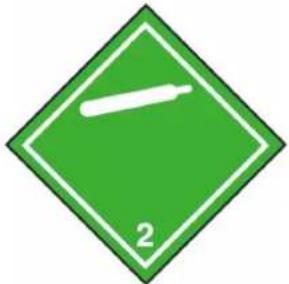
| Class | 2.2 |
| Subsidiary risk | - |
| Label(s) | 2.2 |
| Hazard No. (ADR) | Not available |
| Tunnel restriction code | E |
| 14.4. Packing group | Not available |
| 14.5. Environmental hazards | No. |
14.6. Special precautions Read safety instructions, SDS and emergency procedures before handling. for user
RID
14.1. UN number UN1950
14.2. UN proper shipping AEROSOLS
name
14.3. Transport hazard class(es)
| Class | 2.2 |
| Subsidiary risk | - |
| Label(s) | 2.2 |
14.4. Packing group Not available.
14.5. Environmental hazards No.
14.6. Special precautions Read safety instructions, SDS and emergency procedures before handling. for user
ADN
14.1. UN number UN1950
14.2. UN proper shipping AEROSOLS name
14.3. Transport hazard class(es)
| Class | 2.2 |
| Subsidiary risk | - |
| Label(s) | 2.2 |
14.4. Packing group Not available.
14.5. Environmental hazards No.
14.6. Special precautions Read safety instructions, SDS and emergency procedures before handling. for user
IATA
14.1. UN number UN1950
14.2. UN proper shipping AEROSOLS name
14.3. Transport hazard class(es)
| Class | 2.2 |
| Subsidiary risk | - |
14.4. Packing group Not available.
14.5. Environmental hazards No. ERG Code 2L
14.6. Special precautions Read safety instructions, SDS and emergency procedures before handling. for user
Other information
| Passenger and cargo aircraft | Allowed with restrictions. |
| Cargo aircraft only | Allowed with restrictions. |
IMDG
14.1. UN number UN1950
14.2. UN proper shipping AEROSOLS name
14.3. Transport hazard class(es)
| Class | 2.2 |
| Subsidiary risk | - |
14.4. Packing group Not available.
14.5. Environmental hazards Marine pollutant No.
EmS F-D, S-U
14.6. Special precautions Read safety instructions, SDS and emergency procedures before handling. for user
14.7. Transport in bulk according to Annex II of MARPOL 73/78 and the IBC Code
Not applicable.
SECTION 15: Regulatory information
15.1. Safety, health and environmental regulations/legislation specific for the substance or mixture
Retained direct EU regulations
Regulation (EC) No. 1005/2009 on substances that deplete the ozone layer, Annex I and II, as amended Not listed.
Regulation (EU) 2019/1021 On persistent organic pollutants (recast), as amended Not listed.
Regulation (EU) No. 649/2012 concerning the export and import of dangerous chemicals, Annex I, Part 1 as amended Not listed.
Regulation (EU) No. 649/2012 concerning the export and import of dangerous chemicals, Annex I, Part 2 as amended Not listed.
Regulation (EU) No. 649/2012 concerning the export and import of dangerous chemicals, Annex I, Part 3 as amended Not listed.
Regulation (EU) No. 649/2012 concerning the export and import of dangerous chemicals, Annex V as amended Not listed.
Regulation (EC) No. 166/2006 Annex II Pollutant Release and Transfer Registry, as amended Not listed.
Regulation (EC) No. 1907/2006, REACH Article 59(10) Candidate List as currently published by ECHA Not listed.
Authorisations
Regulation (EC) No. 1907/2006, REACH Annex XIV Substances subject to authorization, as amended Not listed.
Restrictions on use
Regulation (EC) No. 1907/2006, REACH Annex XVII Substances subject to restriction on marketing and use as amended Not listed.
Other EU regulations
Directive 2012/18/EU on major accident hazards involving dangerous substances, as amended Not listed.
Other regulations
The product is classified and labelled in accordance with Regulation (EC) 1272/2008 (CLP Regulation) as amended. This Safety Data Sheet complies with the requirements of Regulation (EC) No 1907/2006, as amended.
This safety data sheet conforms to the following laws, regulations and standards:
Act on the management of packaging and packaging waste of June 13, 2013
Regulation of the Minister of Health of June 11, 2012 on the categories of dangerous substances and dangerous preparations whose packaging should be fitted with child-resistant closures and a tactile warning of danger
REGULATION OF THE MINISTER OF HEALTH of February 2, 2011 on tests and measurements of factors harmful to health in working environments
Regulation of Ministry of Labor and Social Policy of June 6, 2014. On the matter of maximum permissible concentrations and intensities of harmful factors in the work environment (Journal of Laws 2014, item. 817)
Chemical Safety at Workplace Ordinance Joint Decree No. 25/2000 (Annex 2): Permissible limit values of biological exposure (effect) indices Decree No. 25/2000. (IX. 30.) EüM-SzCsM of the Minister of Health and the Minister of Social and Family Affairs on chemical safety at work
Act No. 93 of 1993 on Labour Safety (1993.évi XCIII.), as amended
Government Decree No. 220 of 2004 (VII. 21.) providing rules on the protection of surface waters quality
Government Decree No. 98/2001 (VI. 15.), on the conditions of the activities related to hazardous waste, and Ministry of Environmental Affairs Decree No. 16/2001 (VII. 18.), on the register of wastes
Public Act No. XXV of 2000 on Chemical Safety, and Application Decree No. 44/2000. (XII.27.) EüM [of the Ministry of Health] Follow national regulation for work with chemical agents in accordance with Directive 98/24/EC, as amended.
15.2. Chemical safety assessment
No Chemical Safety Assessment has been carried out.
SECTION 16: Other information
List of abbreviations
ADN: European Agreement Concerning the International Carriage of Dangerous Goods by Inland Waterways.
ADR: European Agreement concerning the International Carriage of Dangerous Goods by Road.
ADR: European Agreement Concerning the International Carriage of Dangerous Goods by Road.
ATE: Acute Toxicity Estimate according to REGULATION (EC) No 1272/2008 (CLP).
CAS: Chemical Abstract Service.
Ceiling: Short Term Exposure Limit Ceiling value.
CEN: European Committee for Standardization.
CLP: Classification, Labeling and Packaging REGULATION (EC) No 1272/2008 on classification, labeling and packaging of substances and mixtures.
GWP: Global Warming Potential.
IATA: International Air Transport Association.
IBC: Intermediate Bulk Container.
IMDG: International Maritime Dangerous Goods.
MARPOL: International Convention for the Prevention of Pollution from Ships.
PBT: Persistent, bioaccumulative, toxic.
REACH: Registration, Evaluation and Authorization of Chemicals (REGULATION (EC) No
1907/2006 concerning Registration, Evaluation Authorization and Restriction of Chemicals).
RID: Regulations concerning the international carriage of dangerous goods by rail (Règlement International concernant le transport de marchandises dangereuses par chemin de fer).
RID: Regulations concerning the International Carriage of Dangerous Goods by Rail.
STEL: Short term exposure limit.
TLV: Threshold Limit Value.
TWA: Time Weighted Average.
VOC: Volatile organic compounds.
vPvB: Very persistent and very bioaccumulative.
STEL: Short-term Exposure Limit.
References
Not available.
Information on evaluation method leading to the classification of mixture
The classification for health and environmental hazards is derived by a combination of calculation methods and test data, if available.
Full text of any H-statements not written out in full under Sections 2 to 15
None.
Revision information
None.
Training information
Follow training instructions when handling this material.
Disclaimer
CRC Industries Europe bvba cannot anticipate all conditions under which this information and its product, or the products of other manufacturers in combination with its product, may be used. It is the user's responsibility to ensure safe conditions for handling, storage and disposal of the product, and to assume liability for loss, injury, damage or expense due to improper use. The information in the sheet was written based on the best knowledge and experience currently available. Apart from any fair dealing for purposes of study, research and review of health, safety and environmental risks, no part of these documents may be reproduced by any process without written permission from CRC.