CTX712BRN - Smartphone PHILIPS - Free user manual and instructions
Find the device manual for free CTX712BRN PHILIPS in PDF.


User questions about CTX712BRN PHILIPS
0 question about this device. Answer the ones you know or ask your own.
Ask a new question about this device
Download the instructions for your Smartphone in PDF format for free! Find your manual CTX712BRN - PHILIPS and take your electronic device back in hand. On this page are published all the documents necessary for the use of your device. CTX712BRN by PHILIPS.
USER MANUAL CTX712BRN PHILIPS
text_image
Back of phone: 5.0MP camera lens AMOLED LCD Left soft key Charger, headset connector & USB port Pick-up key Alphanumeric keypad Symbol input Fingerprint, Navigation and keys Right soft key Side volume key Hang-up and Power key Camera keyPhilips continuously strives to improve its products. Due to software upgrading, some contents in this user guide may be different from your product. Philips reserves the rights to revise this user guide or withdraw it at any time without prior notice. Please take your product as standard.
Home screen
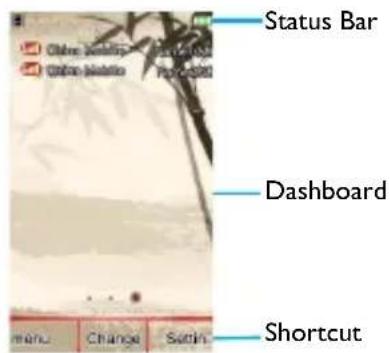
Your phone's home screen consists of the following areas:
text_image
Status Bar Dashboard ShortcutKeys
Learn about the main keys.
| Key Definition Function | |
| Dial Make or answer a call. | |
| Confirm Select or confirm an option. | |
| Hang-up/ End a call;Power/ Hold to turn on/off the phone;Exit Return to home screen. | |
| — | Left soft key | Select the options on the screen. |
| — | Right soft key | Select the options on the screen. |
Dashboard displays
On the home screen, you can press the navigation ◀ or ▶ key to switch between different displays.
Customize dashboard displays:
Go to Menu>Settings>General>Dashboard
Main display dashboard to enter dashboard list.
2 Tap on ☐ On/Off to select the dashboard.
3 Press — Done to confirm setting.
Shortcut menu
To use shortcut dashboard, you need to select On in Main display dashboard.
Select shortcut menu:
Go to Settings > General > Dashboard > Shortcuts dashboard items to enter shortcut list.
2 Tap on ☐ Change to change shortcut menu.
3 Tap on Select/Unmark to select or cancel an item. Press Done to confirm setting.
Icons & symbols
Learn about the icons and symbols on the screen.
| Icons Definition Function | ||
 | Silent | Your phone will not ring when receiving a call. |
 | Vibration only | Your phone will vibrate when receiving a call. |
 | Battery | The bars indicate the battery level. |
 | SMS | You have a new message. |
 | MMS | You have a new multimedia message. |
 | Wap message | You have received a Wap push message. |
| [BHXK] | Missed call | You have missed a call. |
 | Call diverts | All your incoming voice calls are being forwarded to a number. |
 | Bluetooth | Bluetooth is activated. |
| [8WZ0] | Bluetooth headset | The Bluetooth headset is connected. |
| Headset | The headset is plugged into the phone. | |
| Alarm | The alarm clock is activated. | |
| Roaming | Displayed when your phone is registered to a network other than your own (especially when you're abroad). | |
| Homezone | A zone designated by your network operator. Contact your service provider for details. | |
| GSM network | Your phone is connected to a GSM network. The more bars are shown the better the reception is. | |
| GPRS attach | Your phone is connected to the GPRS network. | |
| EDGE attach | Your phone is connected to the EDGE network. | |
| Blacklist | Indicates that blacklist feature is activated. | |
| Memory card | The memory card is in use. |
2 Your phone
Table of contents
Getting started 4
Insert SIM card and Charge the battery ..... 4
Insert a Micro SD card (Memory card) ..... 6
Connect to your PC 7
Customize your phone 7
Basic function 9
Use basic call functions ..... 9
Receive and send messages.....10
Enter text ..... 11
Manage your phonebook 12
Fingerprint....14
Edit your fingerprint....14
Using security function ..... 14
Settings for security mode ..... 15
MultiMedia....16
Media player 16
Camera 17
Video recorder 18
FM radio 19
Business applications 21
Manage your calendar 21
Alarm 21
Bluetooth....22
Read E-books 22
File management 23
Use blacklist 24
Check world clock 24
Calculator 24
Currency converter 24
Web applications & Java .....25
Browser 25
Java applications 25
Settings. 27
SIM setting 27
Display setting 27
General setting 27
Sound setting 28
Connectivity setting....29
Safety & Precaution 30
Precaution 30
Tips 31
Troubleshooting 31
Trademark Declaration....32
Specific Absorption Rate Information.....33
Limited warranty 33
Declaration of Conformity 35
Tips & tricks. 36
Table of contents 3
Getting started
Congratulations on your purchase and welcome to Philips!
To get the most of your product and enjoy all Philips has to offer, register your product at:
www.philips.com/welcome.
More details about your product, please access:
www.philips.com/support
Note: Please read the safety instructions in the "Safety & Precaution" section before use.
Insert SIM card and Charge the battery
Learn about installing SIM card and charging the battery for the first use.
Insert SIM card
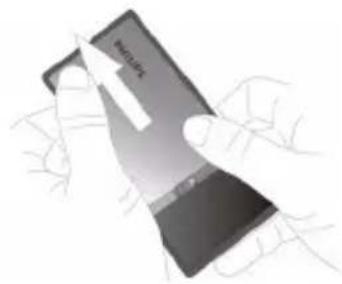
Follow the steps below to insert your SIM card. Remember to turn off your mobile phone before removing the back cover.
Remove the back cover.
natural_image
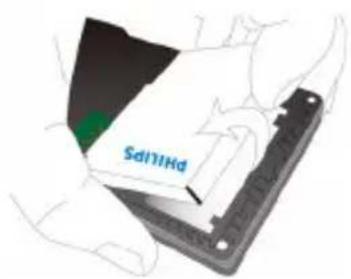
Illustration of hands holding a smartphone with a white arrow pointing to the screen (no text or symbols visible)2 Take out the battery.
text_image
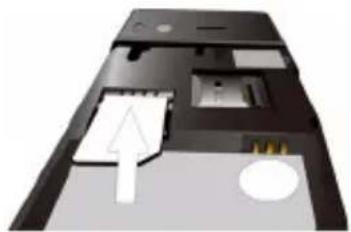
Sd11Hd3 Insert SIM1/SIM2.
natural_image
Interior view of a computer case with visible internal components and a white arrow pointing to a component (no text or symbols)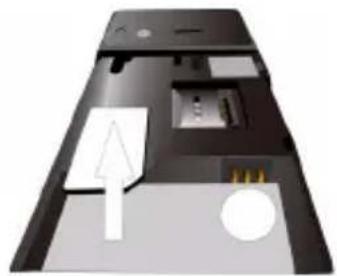
natural_image
Interior view of a modern kitchen appliance with cutouts and a triangular-shaped object on the side (no visible text or symbols)4 Install the battery.
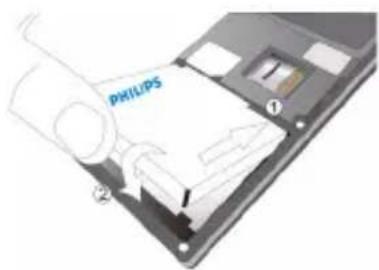
text_image
PHILL/PS ① ②5 Replace the back cover.
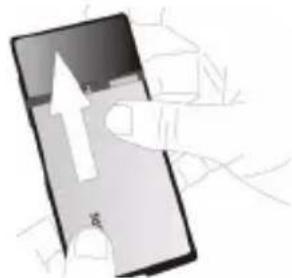
natural_image
Illustration of a hand pressing a smartphone screen with an upward arrow (no text or symbols)Charge the battery
A new battery is partially charged. The battery icon in the upper-right corner shows the battery level of charging status.
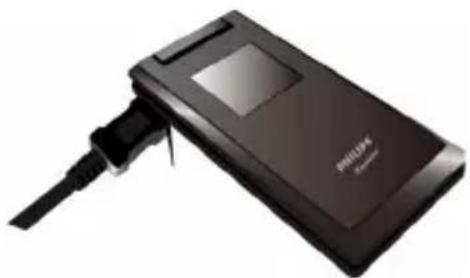
natural_image
Black Philips Ultrasonic device with a probe inserted, no visible text or symbols on the device body.Note:
• You can user the phone while it is charging.
- Keeping the charger plugged to the mobile phone when the battery is fully charged will not damage the battery. The only way to turn off the charger is to unplug it, so it is advisable to use an easily accessible power socket.
- If you do not intend to use your phone for several days, we recommend that you remove the battery.
- If a fully charged battery left unused, it will lost its charge over time.
- If a battery is being used for the first time or the battery has not been used for a prolonged period, it may take longer time to recharge.
Insert a Micro SD card (Memory card)
You can expand the memory of your phone by adding a micro-SD card.
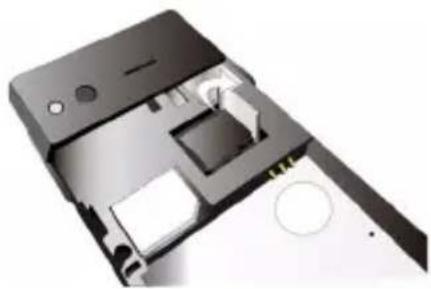
Push down the card holder and lift it up. Align your micro-SD card with the slot. Put it in place.
2 Press down the card holder and pull it until it is locked.
natural_image
Interior view of a smartphone showing internal components and casing (no text or symbols visible)Connect to your PC
Data communication software (Mobile Phone Tools) offers instant synchronization between your phone and your computer. You can use the software for the data synchronization between your phone and PC, like phonebook, calendar, SMS messages, and audio/video/picture files.
Install MobilePhoneTools on your PC
Insert the supplied Data communication software into the CD drive.
2 Run the autorun.exe program.
3 Make selections as prompted, and installation starts automatically.
Connecting your Phone to the PC
Connect your phone to the PC using the supplied USB cable or through the Bluetooth.
2 When using the USB cable for connection, select COM port on your phone.
3 On your PC, double click the MobilePhoneTools icon, then the connected icon is displayed.
Customize your phone
Customize your phone to match your preferences.
Set clock
On the home screen, go to Menu>Settings>General>Time and date.
2 Select Set time/date: Enter the digits or long press navigation key ▲ or ▼ until you reach the desired digits.
SIM settings
Check that your phone is turned on. Enter the PIN code if required.
2 Go to Settings>SIM settings>Dual SIM >Slot1/Slot2 settings, name your SIM card, select a theme and activate it or not.
3 Select SIM1 or SIM2 to be the primary card.
Note:
- The PIN code is preconfigured and communicated to you by your network operator or retailer.
- If you enter an incorrect PIN code three times in succession, your SIM card will be blocked. To unblock it, you must request the PUK code from your operator.
- If you enter an incorrect PUK code ten times in succession, the SIM card will be locked permanently. When this happens, please contact your network operator or retailer.
Profiles
The profiles are defined for several scenes. They consist of the settings for ringtone, volume, and others. With preset profiles, you can easily adjust the settings for incoming calls and messages as desired.
Go to Profiles, tap on ☐ to activate the profile.
2 Press — to modify ringtone, volume and others.
To activate Meeting mode, long press #10 on the home screen.
Note: If you select Flight mode, you disable the connection between your phone and your mobile phone network.
Basic function
Use basic call functions
Learn to make or answer a call and use basic call functions.
Make a call
Enter the phone number.
2 Press ☐ to dial the number.
3 Press ☐ to hang up.
Note: For international calls, long press ☐+ to enter the "+" sign for the international prefix.
Answer and end a call
Press ☐ to answer the call (Press the side volume key to adjust the volume).
2 Press — to select handsfree mode.
3 Press ☐ to hang up.
Note: You can use the supplied headset to answer or end a call.
Make a conference call
If network applicable, you can handle two or more calls, or make a conference call.
During a call, enter a phone number, and then press ☐ to dial the number. The second number is dialled.
2 The first call is put on hold at this time.
3 You can tap on Swap to toggle between 2 calls.
4 To end the call, select Options>End call or End all calls.
Use speed dial
On the home screen, you can call a number by long pressing a numeric key.
To assign a contact to a speed-dial key:
Select Settings > General > Speed dial > Set number.
2 Choose a numeric key.
3 Tap on ☐ to add a number.
Make an emergency call
Without a SIM card in phone, you can press ☐ to make the emergency call.
In Europe, the standard emergency number is 112; in the UK, it is 999.
Receive and send messages
You can use the Message menu to send text message, multimedia message and E-mails.
Send a SMS message
Select Menu>Message>SMS>Create SMS.
2 Write your text message.
3 Tap on ☐ to send the message.
Send a MMS message
Select Menu>Message> MMS> Create MMS.
2 Enter the contact number (To), a copy (Cc), a blind copy (Bcc) and subject.
3 Edit contents, and press ☐Options to add multimedia contents (photo, audio, video, attachment or bookmark text).
4 Press — to send the Multimedia message.
Note: Copyright protected pictures and sound cannot be sent by MMS.
Send an E-mail
Go to Email > Email accounts > Options > New account. After setting up a new account, tap on 📄 to activate it.
2 Go to Write Email, enter the address (To), a copy (Cc), a blind copy (Bcc), subject and attachment.
3 Edit the E-mail contents.
4 Press — to send the E-mail.
Note: Consult your mail service provider for the mail server configuration.
Receive E-mails
Select Email>Send and receive, you can receive E-mails from the Internet.
To receive E-mails automatically:
Go to Email > Email accounts > Options > Edit > Advanced settings.
2 In Account settings> Check interval, select your desired time span. Your mail box will be checked automatically after each time span.
Enter text
Your mobile phone supports a number of text entry methods, including T9 input, English input, numeric input and symbol input.
Keys:
| Keys Function | |
| Select a input method. | |
| Long press to switch T9 English input on or off. | |
| Enter symbols and punctuations. | |
| Insert a space. | |
Note: Depending on the language you select for your phone, the supported input methods may vary.
Introduction of input methods:
| Input method Function | |
| English input | Press the keys that are marked with the letter you wish to enter. Press once to get the first letter on the key, press twice quickly to get the second letter and so on until the letter you want is displayed on the screen. |
| T9® predictive text input | You need to press only once on the key corresponding to each letter needed to spell a word: keystrokes input are analyzed and the word suggested by T9® is displayed at the pop-up window. |
| Numeric input | Press the numeric key to enter a number. |
| Pinyin input Input pinyin and select a character. |
| Stroke input Press the keys corresponding to the required strokes according to sequence to get the desired character. The stroke input method classifies a Chinese character into 5 basic strokes: (horizontal, vertical, left falling stroke, right falling stroke and over-down) as well as a stroke. When the stroke you need does not correspond to the 5 basic strokes, replace it with the special strokes. |
Manage your phonebook
Learn about basic phonebook function.
Add a new contact
Method one:
On the home screen, enter a number, select a location. (To SIM1/To SIM2/To phone).
2 Save the number, and add details as desired.
12 Basic function
3 Press — to finish saving.
Method two:
Go to Contacts>View contacts, use navigation key ◀ or ▶ to select a phonebook.
2 Press ☐ Options>New contact to add a new contact.
Note: For contacts on the smart phonebook, you can add detailed information, like home number, office number, contact pictures and ringtones.
special
Search for a contact
Go to Contacts.
2 There are four phonebooks above the list: all, phone, SIM1 and SIM2.
3 Select a desired phonebook.
4 Enter the first few letters of the name in the search bar. (For example “John Henry” enter JH)
5 Select the contact from the list.
Manage your contacts
You can copy or move contacts between the SIM card and phone, or delete contacts. Go to Contacts>View contacts or Advanced, select the desired option.
Set group:
You can group your contacts as different groups. For different groups, you can use different ringtones for identification, and send messages to a group.
2 Add contacts to a group:
- Select Contacts>Groups, enter a group.
- In Group members, tap on ☐ to add members for the group.
Back-up your phonebook
You can save the phonebook as .udx files in your phone or memory card.
Back up phonebook information:
In Tools>Phonebook backup, select Back-up to memory.
2 In Phone or Memory card, select a folder.
3 Enter a file name, and tap on ☐ to finish backing up the file.
Restore phonebook information:
In Phonebook backup, select Restore from memory.
2 In My files, find the back-up file.
3 Tap on ☐ to restore the phonebook.
Special numbers
You can keep a list of useful numbers on your phone. Go to Contacts>Special numbers.
| Function | Definition |
| Owner numbers | Edit the phone number and name. |
| SOS number | Edit your emergency phone number. |
| Voice mail | Set your voice mail server number, as well as retrieve your voice mails. Consult the network operator for the account information.On the home screen, long press 1.. to dial the voice mail number. |
| Service dialing number | Contact your network operator for more information. |
Fingerprint
Edit your fingerprint
For the first time, please follow the steps as below to edit your fingerprint:
Go to Security>Edit signature.
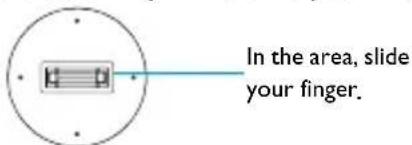
2 In the area of key ☐, slide your finger.
text_image
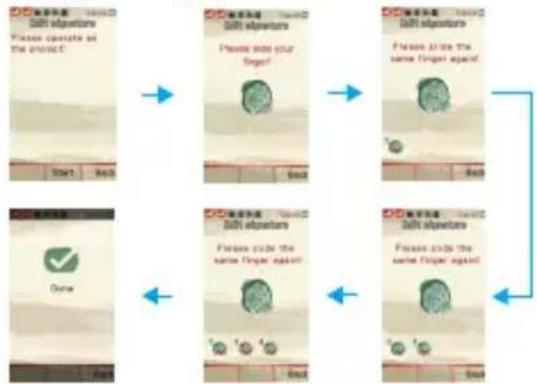
In the area, slide your finger.3 Please following the hint on the screen to finish editing your fingerprint.
flowchart
graph TD
    A["Start"] --> B["Done"]
    B --> C["Start"]
    D["Start"] --> E["Done"]
    E --> F["Start"]
    G["Start"] --> H["Done"]
    H --> I["Start"]
    J["Start"] --> K["Done"]
    K --> L["Start"]
    M["Start"] --> N["Done"]
    N --> O["Start"]
    P["Start"] --> Q["Done"]
    Q --> R["Start"]
    S["Start"] --> T["Done"]
    T --> U["Start"]
    V["Start"] --> W["Done"]
    W --> X["Start"]
    Y["Start"] --> Z["Done"]
    Z --> AA["Start"]
To edit another fingerprint, you need to enter your previous fingerprint to verify and start to edit another fingerprint.
Note: Please DO NOT change your finger while editing your fingerprint.
Using security function
Protect your phone
Go to Security>Fingerprint recognition, tap on ☐ to select On.
2 Press 📋 to return to home screen. Press ◀ or ▶ to select security dashboard, and then tap on 🔊 Lock to enter protection mode.
You need to enter your fingerprint, and then you can access the home screen and other protected information.
Protect your phone after closing the flip
After editing your fingerprint successfully, go to Security>Fingerprint recognition to turn on protection mode.
2 In Lock phone on close, tap on ☐ to select On. Your phone will enter protection mode automatically after your close the flip.
Every time you open your flip, you need to enter your fingerprint, and then you can use your phone.
Decrypt your phone by entering password
You can enter a password instead of sliding your finger to decrypt your phone.
Use password to decrypt your phone:
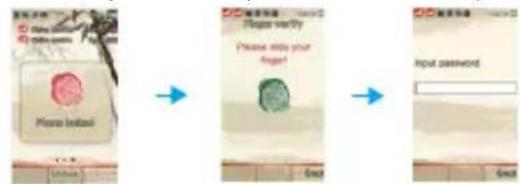
In protection mode, tap on ☐ Unlock to enter fingerprint screen.
2 Press the combine key sequentially. (The default combine key is - + 1_ + 2_ )
3 Enter the password (Default is 000000).
text_image
Please Initial Finger verify Please miss your Angel! Input passwordSet combine keys and password:
Go to Security>Advance settings, enter your fingerprint.
2 Select Combination key, press ◀ or ▶ to select a key. Tap on 📄 to confirm settings.
3 Select Password, set the password. Tap on to confirm settings. (The default password is 000000)
Settings for security mode
Select function can be used in protection mode
Go to Security>Owner settings, select your desired options.
• Outgoing call: Allow to make calls or not.
- Send SMS: Allow to send messages or not.
- Bluetooth accessibility: Allow to accept Bluetooth or not.
- Incoming call: Select to display contact name or not while receiving a call.
Parameter settings
You can select a suitable parameter according to your habit of sliding speed. Go to Security >Parameter settings, select the suitable parameter.
If you slide your finger fast, select Fast or Fastest; If you slide your finger lowly, select Slow or Slowest.
MultiMedia
Media player
Save MIDI, AMR, MP3, WAV, AAC and AAC music files under the Audio folder on your phone and memory card.
Play music
Go to Music>Music player>Tracks, select your desired song in the folder.
2 Using the following keys to control playback:
Function Definition
| Pause and resume playback. | |
| Select previous track. | |
| Select next track. | |
| Press side volume key to adjust volume. | |
| Return to the previous menu. | |
| Go to the home screen. |
Player settings
Go to Music player>Settings:
- Music source: Play audio files from your phone or memory card.
- Play in background: Continue to play music after exiting the music player.
- Equaliser: Select music style suitable to your songs.
- Repeat: One (play current file repeatedly); All (play all the files in the folder repeatedly).
- Shuffle: Play music files in the folder randomly.
- Update list: Refresh all songs in your list.
To turn off the music player on the home screen Press ☐, and then tap on ☐.
Note: When listening to music, adjust the volume to a moderate level. Continuous exposure to high volume may impair your hearing.
Camera
Learn about camera function. Let you take photos as desired by using your phone.
Take a photo
Go to Menu>Camera, press navigation key ▲ or ▼ to select camera mode.
2 Aim the lens at the subject.
- Press navigation key ◀ or ▶ to increase or decrease the brightness.
- Press side volume key to zoom in or zoom out.
3 Tap on ☐ to take a photo.
4 Press — to exit.
All the photos taken are saved to My files>Phone or Memory card>Pictures.
View photos
Go to View photos,
View photos: press navigation key ◀ or ▶ to select a photo.
2 Zoom in/out photos: press side volume key to zoom in or out a photo. After zooming in a photo, press the navigation key▲, ▼, ◀ or ▶ to slide the screen.
3 Rotate photos: press ☐ to rotate a photo.
4 Set as wallpaper: tap on 📄.
Camera settings
While using the camera, press—to select settings:
Icon Option Function
| View picture | View the photos you have taken. | |
| Capture mode | Switch the picture mode. | |
| Scene mode | Select a scene to take a photo. | |
| Image size | Select image size. | |
| Flash | Use the flash to increase the brightness. | |
| AF range | Adjust the auto focus range. | |
| Face detection | Set ideal exposure and clarity of faces. | |
| Self-timer | Select a time span for auto photographing. | |
| ISO | Select a ISO value. | |
| White balance | Remove the effects on colors by surroundings. | |
| Effects | Add special effects to the photos. | |
| Storage | Select default storage location. | |
| Image quality | Set image quality. | |
| AF zone | Adjust the auto focus zone. | |
| AE meter | Select how to highlight different areas in a photo. | |
| Sharpness | Sharpen or blur the borders between objects. | |
| Contrast | Adjust the contrast. | |
| Saturation | Make colors more or less pronounced. | |
| Time stamp | Display time on photos. | |
| Shutter sound | Adjust the shutter sound. |
| Anti-flicker | Select a band to avoid the impacts on photos caused by flickers from lighting sources. | |
| Restore default | Restore to default settings. |
Note: To zoom in or out a photo, please ensure that the photo is taken in a size equal to or greater than 640x480.
Video recorder
Learn about video recorder function. Let you record a video clip as desired by using your phone.
Record a video
Go to Menu>Camera, press navigation key ▲ or ▼ to select video recorder mode.
2 Aim the lens at the subject.
3 Tap on ☐ to record a video clip.
4 Tap on 📄 again to save the video clip.
All the videos recorded are saved to My files>Phone or Memory card>Videos.
Play a video clip
Go to View video,
Tap on 📄 start or pause playing a video clip.
2 Press the side volume key to adjust volume.
3 Press — to exit.
Video recorder settings
While using the video recorder, press ☐ to select settings:
Icon Option Function
| View video | View the videos you have recorded. | |
| Record limit | Set the video length. |
Other settings, see Camera settings on page 17.
Note: To send a video clip via E-mail, the file size should equal to smaller than 60KB.
FM radio
Lear about listening to radio programs by using a FM radio.
Listen to a radio station
Plug the supplied headset into your phone.
2 Go to Music>FM radio, press Options>Auto search. It starts scanning automatically and save the available channels.
3 Press ▲ to activate auto search, and then press the navigation key ◀ or ▶ to select a station.
4 Press the navigation key ▼ to turn off FM radio.
FM radio settings
Go to ☐ Options>Settings:
- Background play: Continue playback after exit FM radio.
- Loudspeaker: Listen to radio through the speaker.
- RDS: Activate RDS services (depend on the radio station service).
When you are listening to a RDS station, your phone displays the following details: station
name, program type (for example, News, Sports and Info), and frequency.
To turn off the FM radio on the home screen
Press ☐, and then tap on ☐.
Record radio programs
You can record a radio program when listen to it.
Go to Options>Record to start recording.
2 Press — to stop recording.
3 Tap on ☐ to save the file.
The files recorded are saved to My files>Phone or
Memory card>Audio.
Business applications
Manage your calendar
You can create your to-do list and make a plan on your calendar.
Create your to-do list
Go to Tools>Calendar select a date, and then press ☐Options>Add event.
2 Edit reminder settings.
3 Press — to save the task.
4 To change your to-do list, select the task, and then press ☐ Options to edit the task.
Check your to-do list
You can check your to-do list in weekly or monthly view. Go to Tools>Calendar, tap on ☐ to check your to-do list.
Check the calendar
Go to Tools>Calendar, you can check the calendar.
Notes
You can save text notes, and display it as dashborad on the home screen.
In Tools>Quick note, edit the content.
2 Tap on 📄 to save the editing.
3 To display it on the home screen, see "Dashboard displays" on page 1.
Alarm
Learn about how to set and use an alarm. You can set up to five alarms.
Set an alarm
Go to Tools>Alarm.
2 Select an alarm, tap on ☐ to edit the alarm.
3 Press — to finish setting the alarm.
Turn off an alarm
Go to Tools>Alarm.
2 Select the alarm you want to turn off.
3 Press the navigation key ◀ or ▶ to select Off.
Stop an alarm
When the alarm rings,
- Select Stop: The alarm stops.
- Select Snooze: The alarm will sound again after the set Snooze (min) interval.
Bluetooth
Your phone can connect to a compatible Bluetooth device for exchanging data.
Connect to a Bluetooth device
Go to Tools>Bluetooth>Power, turn on the Bluetooth function.
2 Select Inquiry new device, a list of available Bluetooth devices appears.
3 Select the device you wish to connect.
4 Enter your Bluetooth password to start pairing (0000 by default). The pairing is made if your pairing request is accepted by the other part.
Send files via Bluetooth
Go to My files, select the file you want to send.
2 Press ☐ Options>Send>Via Bluetooth.
22 Business applications
3 Select a device.
4 Tap on ☐ to start send the file.
Receive files via Bluetooth
Go to Bluetooth>Settings>Visibility, make your phone visible to other Bluetooth devices.
2 Enter the password and accept the request.
3 Tap on ☐ to start receiving the file. The files received are saved to My files>Phone or Memory>Others.
Note: If you do not use the Bluetooth feature for some time, you should deactivate it in order to conserve battery power.
Read E-books
You can read E-books (.txt file) on your phone.
Start reading an E-book
Go to Tools>Ebook reader.
2 Select the .txt file you wish to read.
3 Tap on ☐ to start reading.
Go to Options>Settings>Encoding, select the encoding suitable to your language.
Reading setup
Go to Options, you can setup the following:
• Find: Find specific words in the file.
- Add bookmark: Add current page to bookmark.
- Go to bookmark: Read the page saved as bookmark.
- Settings: Set font size, scroll screen automatically or read E-book on full screen.
File management
Learn about how to use and manage your files and folders.
Use your files
Set a photo as contact picture:
- Open My files>Pictures, select a photo.
- Press ☐ Options>Use>As contacts.
2 Set an audio file as ringtone:
- Select an audio file.
- Press ☐ Options>Set as ringtone.
Note: To set photos you have taken as contact picture, select contact pictures in Image size.
Share your files
You can share your photos, audio or video files with others via MMS, E-mail or Bluetooth.
Select your desired photos, audio or video files.
2 Press — Options>Send.
Note: To send files via E-mail, the file size should smaller 90K.
Manage your files
You can copy, move or delete a file in a folder.
Open a folder, press ☐ Options>Select multiple>Select all or Select one by one,enter multiple selection list.
2 Tap on Select or Unmark.
3 Go to Options to finish copying, moving or deleting.
Note: The insecurity audio, video files and pictures are not recommended to save to your phone.
Use blacklist
Learn about how to set the blacklist, you can reject the incoming calls or messages from those included in the blacklist.
Activate blacklist
Go to Tools>Blacklist>Mode.
2 Press the navigation key ◀ or ▶ to activate blacklist function.
Add a phone number to blacklist
Go to Blacklist>Blacklist numbers.
2 Edit the blacklist, add contacts by entering a phone number or select a contact from phonebook.
Check world clock
Learn about how to check time & date of cities in other countries.
Set world clock
Select Tools>World clock,
In Local settings/Foreign settings, press the navigation key ◀ or ▶ to select a city.
2 Press ☐ Options to turn on/off Daylight saving.
3 In Switch local/foreign, switch clock.
Note: Alarms, reminders, programmed events are time zone independent.
Calculator
Use the numeric keys to calculate on the phone.
Currency converter
Go to Tools>Currency converter, enter the rate.
2 Enter the sum of money in Local. Press ☐ to confirm.
Note: The result of the calculator is indicative only.
Web applications & Java
Browser
You can use this function to browse the Internet. Consult your network operator for the service subscription, data account information, and WAP settings.
Access web sites
Go to Browser>WAP.
2 Select Input address, enter your desired websites.
3 Tap on ☐ to access the website.
Set homepage
Go to Browser>WAP, browse a website.
2 Select Options, save current website as homepage. You can set the websites you usually used as homepage.
Add bookmarks
Go to Browser>WAP, browse a website.
2 Select Options, add current website to bookmarks. You can add your favorite websites to bookmarks.
Java applications
Learn about how to use Java applications and play games. Your phone is preloaded with some Java games and applications.
Install Java games
Connect your phone to a PC via supplied USB cable.
2 Save .jar file to My files>Others.
3 Install the Java games.
Play Java games
I Go to Fun.
2 Select a game from the list.
3 Tap on ☐ to start playing the game.
Note: To run some Java applications (entrusted third party software) on your phone, you may need to adjust the Java settings. Press ☐ Options>Settings.
Java settings
Go to Settings>Connectivity>Java settings,
| Function | Definition |
| Java audio | Set the volume level. |
| Java vibration | Turn the vibration on or off. |
| Select SIM | Select SIM1 or SIM2. |
| Java SIM1/ SIM2 profile | Select a Java network (service subscription-dependent). |
| Heap size | Display allowed maximum size for Java memory. |
Settings
SIM setting
| Function | Definition |
| Dual SIM | Change SIM card slot settings. |
| Slot1/Slot2 settings | Set SIM card name and select a theme.Select Active mode to receive calls or messages from a SIM card. |
| Primary settings | The default SIM card is SIM1.You are provided services by primary SIM by default.You can select SIM1 or SIM2 as primary card. |
| Ask when power on | Display mode setting screen or not while power on the phone. |
Display setting
| Function | Definition |
| Wallpaper | Select an image as the wall paper of your phone. |
| Themes | Define the theme for your phone. |
| Backlight level | Select the brightness of backlight. |
Backlight duration Select the duration of backlight.
| Greeting text | Select whether to show greetings when your phone is turned on. |
General setting
| Function | Definition |
| Dashboard | Select the dashboards to be shown on the home screen. |
| Language | Select a language for your phone. |
| Time and date | Set the clock of the phone. |
| Auto power-on time | Set time for the phone to be switched on automatically. |
| Auto power-off time | Set time for the phone to be switched off automatically. |
| Speed dial | Call a contact by long pressing a numeric key. |
| Security settings | This menu allows you to use passwords to protect your SIM card, phone, and information stored on the phone. |
PIN protection Set PIN or PIN2 password protection for your SIM card. (The PIN provided by the network operator.)
| Change PIN/PIN2 Change your PIN and PIN2 passwords as desired. | |
| Phone lock Set password protection for your phone.You are required to enter the password each time you turn on the phone (1122 by default). | |
| Safeguard Set password protection for the information stored on your phone. | |
| Default storage | Select the default storage location for your files: phone or memory card. |
| Memory status | Check the memory occupancy of information of different memory storage. |
| Factory setting | Restore your phone settings to the default values. You need to enter your phone lock password (1122 by default). |
Sound setting
| or PIN2 are | |
| Function | Definition |
| Alert type | Select alert types. |
| Tone settings | Select a ringtone for incoming calls and messages. |
| Ring volume | Adjust the volume of rings. |
| Key sound | Select whether the key sounds when pressed. |
| Flip sound | Select whether the flip sounds when opened or closed. |
| Shutter sound | Select shutter sounds for your camera. |
| Battery low | Select whether a warning tone is emitted when the battery level is low. |
Connectivity setting
| Function | Definition |
| Call options | Select call options for your phone. |
| Predictive dialing | Quick search and list your phone number while entering a number on the home screen. |
| Open to answer | Select whether to answer a call by opening the flip. |
| Close to end | Select whether to end a call by closing the flip. |
| Headset answer | Use headset to answer an incoming call. |
| Any key answer | Answer an incoming call by pressing any keys (except ). |
| Call time reminder | Get reminded after the call time span once or repeatedly. |
| Call services | Set call services. |
| Call divert | Divert incoming calls to your voice mailbox or another phone number. |
| Call barring | Set limits to your incoming and outgoing calls. |
| Auto redial | Keep redialling the number that fails to go through. |
| Fixed dial | Restrict your outgoing calls to certain numbers (PIN2 code required). |
| Network settings | Set network settings for your phone. |
| Network selection | Select the network for your phone (service subscription dependent). Automatic is recommended. |
| Preferences | Select your preferred network. |
| Browser | See “Browser” on page 25. |
| Connections | The menu allows you to define the Internet access profiles of your phone. Consult your network operator for details. |
| Java settings | See “Java settings” on page 26 |
Safety & Precaution
Precaution
Keep your phone away from small children
Keep your phone and all accessories out of the reach of small children. Small parts may cause choking or serious injury if swallowed.
Radio Waves
Your phone transmits/receives radio waves in the GSM frequency (900/1800/1900MHz). Check with the vehicle manufacturer that electronic equipment used in your vehicle will not be affected by radio energy. Your cellular telephone complies with all applicable safety standards and the Radio Equipment and Telecommunications Terminal Equipment Directive 1999/5/EC.
Switch off your phone...
Turn off the phone when in an aircraft. The use of mobile phones in an aircraft may be dangerous for the operation of the aircraft, disrupt the mobile phones network and may be illegal.
In hospitals, clinics, other health care centers and anywhere else where you may be in the close vicinity of medical equipment. In areas with a potentially explosive atmosphere (e.g. petrol stations and also areas where the air contains dust particles, such as metal powders). In a vehicle transporting flammable products or a vehicle powered by liquefied petroleum gas (LPG). In quarries or other areas where blasting operations are in progress.
Your mobile phone and your car
Avoid using your phone while driving and obey all regulations that restrict the use of mobile phones while driving. Use hands free accessories to increase your safety when possible. Ensure that your phone and car kit do not block any air bags or other security devices fitted in your car.
Handle your phone carefully and sensibly
For the optimal and satisfactory operation of the phone you are recommended to use the phone in the normal operating position.
• Do not expose your phone to extreme temperatures.
- Do not immerse the phone in any liquid; if your phone is damp, switch it off, remove the battery and let them dry for 24hrs before using them again.
• To clean the phone, wipe it with a soft cloth.
Protect batteries from damage
You should only use Philips Authentic Accessories, as the use of any other accessories may damage your phone and may be dangerous, and will make all guarantees for your Philips phone null and void. The use of an unspecified type of battery may also cause an explosion.
Make sure damaged parts are replaced immediately by a qualified technician and that they are replaced with genuine Philips replacement parts.
- Your phone is powered by a rechargeable battery.
• Use specified charger only. - Do not incinerate.
• Do not deform or open the battery. - Do not allow metal objects (such as keys in your pocket) to short circuit the battery contacts.
- Avoid exposure to excessive heat ( >60^ C or 140^ F), moisture or caustic environments.
Environmental care
Remember to observe the local regulations regarding the disposal of the packaging materials, exhausted batteries and old phone and please promote their recycling. Philips has marked the battery and packaging with standard symbols designed to promote the recycling and appropriate disposal of your eventual waste.
The labeled packaging material is recyclable.
A financial contribution has been made to the associated national packaging recovery and recycling system.
△: The plastic material is recyclable (also identifies the type of plastic).
WEEE Marking in the DFU: "Information to the Consumer"
Disposal of your old product
Your product is designed and manufactured with high quality materials and components, which can be recycled and reused.

When this crossed-out wheeled bin symbol is attached to a product it means the product is covered by the European Directive 2002/96/EC
Please inform yourself about the local separate collection system for electrical and electronic products.
Please act according to your local rules and do not dispose of your old products with your normal household waste. The correct disposal of your old product will help prevent potential negative consequences for the environment and human health.
This device may contain commodities, technology or software subject to export laws and regulations from the US and other countries. Diversion contrary to law is prohibited.
Tips
Pacemakers
If you have a pacemaker:
- Always keep the phone more than 15 cm from when the phone is switched on, in order to avoid potential interference.
• Do not carry the phone in a breast pocket. - Use the ear opposite to the pacemaker to minimize the potential interference.
- Switch off your phone if you suspect that interference is taking place.
Hearing aids
If you are a user of a hearing aid, consult your physician and hearing aid manufacturer to learn whether your particular device is susceptible to cellular phone interference.
EN 60950 Norm
In hot weather or after prolonged exposure to the sun (e.g., behind a window or a windscreen), the temperature of your phone's casing might increase. Be very careful in this case when picking up your phone and also avoid using it with an ambient temperature over 40^ C.
How to prolong the battery life of your phone
To have your mobile phone function properly, sufficient battery power is important. For the power-saving purpose, do the following, if applicable:
• Turn off the Bluetooth function of your phone.
- Set the backlight level and duration of your phone to a low value.
- Turn on the auto keypad lock, turn off the key sounds, tap vibration, or vibration alerts.
- Establish GPRS connection when needed. Otherwise, your phone will keep searching for GPRS connection, and drain your battery power.
- Turn off your phone if there is no coverage. Otherwise, the phone will keep searching for network, and drain your battery power.
Troubleshooting
The phone does not switch on
Remove/reinstall the battery. Then charge the phone until the battery icon stops scrolling. Unplug the charger and try to switch the mobile on.
The display shows BLOCKED when you switch on the phone
Somebody tried to use your phone but didn't know the PIN code nor the unblocking code (PUK). Contact your service provider.
The display shows IMSI failure
This problem is related to your subscription. Contact your operator.
Your phone doesn't return to home screen
Long press the hang-up key or switch off the phone, check that the SIM card and the battery are installed correctly and switch it on again.
The network symbol is not displayed
The network connection is lost. Either you are in a radio shadow (in a tunnel or between tall buildings) or you are outside the network coverage area. Try from another place, try to reconnect to the network (especially when abroad), check that the antenna is in place if your mobile has an external antenna, or contact your network operator for assistance/information.
The display doesn't respond (or the display responds slowly) to key presses
The display responds more slowly at very low temperatures. This is normal and does not affect the operation of the phone. Take the phone to a warmer place and try again. In other cases please contact your phone supplier.
Your battery seems to over heat
You might be using a charger that was not intended for use with your phone. Make sure you always use the Philips authentic accessory shipped with your phone.
Your phone doesn't display the phone numbers of incoming calls
This feature is network and subscription dependent. If the network doesn't send the caller's number, the phone will display Call I or Withheld instead. Contact your operator for detailed information on this subject.
You can't send text messages
Some networks don't allow message exchanges with other networks. First check that you have entered the number of your SMS centre, or contact your operator for detailed information on this subject.
You can't receive and/or store JPEG pictures
A picture may not be accepted by your mobile phone if it is too large, if its name is too long, or if it doesn't have the correct file format.
You feel that you have missed some calls
Check your call divert options.
When charging, the battery icon shows no bar and the outline is flashing
Only charge the battery in an environment where the temperature does not go below 0^ C ( 32^ F) or above 50^ C ( 113^ F).
In other cases please contact your phone supplier.
The display shows SIM failure
Check that the SIM card has been inserted correctly. If the problem persists, your SIM card may be damaged. Contact your operator.
When attempting to use a feature in the menu, the display shows NOT ALLOWED
Some features are network dependent. They are only available, therefore, if the network or your subscription supports them. Contact your operator for detailed information on this subject.
The display shows INSERT YOUR SIM CARD
Check that the SIM card has been inserted correctly. If the problem persists, your SIM card may be damaged. Contact your operator.
The autonomy of your phone seems lower than indicated on the user guide
The autonomy is linked to your settings (e.g., ringer volume, backlight duration) and the features you use. To increase the autonomy, and whenever possible, you must deactivate features you do not use.
Your phone doesn't work well in your car
A car contains many metallic parts that absorb electromagnetic waves which can affect the phone's performance. A car kit is available to provide you with an external antenna and enables you to make and receive phone calls without handling the handset.
Notes: Check with the local authorities whether or not you are allowed to use the phone while driving.
Your phone is not charging
If the battery is completely flat, it might take several minutes of pre-charge (up to 5 minutes in some cases) before the charging icon is displayed on the screen.
The picture captured with the phone camera is not clear
Make sure that the camera lens on both sides is clean.
Trademark Declaration
T9 ^® T9 ^® is a registered trademark of Nuance Communications, Inc..
JAVA JAVA is a trademark of Sun Microsystems, Inc.
Bluetooth ^™ Bluetooth ^™ is a trade-mark owned by telefonaktiebolaget L M Ericsson, Sweden and licensed to Philips.
Philips PHILIPS and PHILIPS' Shield Emblem are registered trademarks of Koninklijke Philips Electronics N.V. manufactured by Shenzhen Sang Fei Consumer Communications Co., Ltd. Under license from Koninklijke Philips Electronics N.V..
Specific Absorption Rate Information
International standards
THIS MOBILE PHONE MEETS THE INTERNATIONAL RECOMMENDATIONS FOR EXPOSURE TO RADIO WAVES
Your mobile phone is a radio transmitter and receiver. It is designed and manufactured not to exceed the limits for exposure to radio frequency (RF) energy defined by the international standards. These recommendations have been established by the International Commission on Non-Ionizing Radiation Protection (ICNIRP) and, the Institute of Electrical and Electronics Engineers (IEEE) that forecast a substantial safety margin for assuring the protection of all persons, regardless of age and health.
The exposure recommendations for mobile phones use a measurement unit known as the Specific Absorption Rate (SAR). The SAR limit recommended by the ICNIRP for the mobile phones used by the general public is 2.0W/kg averaged over ten grams of tissue and, is 1,6W/kg averaged over one gram of tissue by IEEE Std 1528 for the head.
Tests for SAR have been conducted using recommended operating positions with the mobile phone transmitting at its highest certified power level in all tested frequency bands. Although the SAR is determined at the highest certified power level, the actual SAR levels of the mobile phone while operating are generally below the maximum SAR value. This is because the phone is designed to operate at multiple power levels so as to use only the power required to reach the network general, the closer you are to a base station antenna, the lower the power output.
While there may be differences between the SAR levels of various phones and at various positions, they all meet the international protection standards for exposure to radio waves.
The highest SAR value for this Xenium X712 model phone when tested for compliance against the standard was 0.449 W/kg for ICNIRP recommendation.
For limiting the radio waves exposure, it is recommended to reduce the mobile phone call duration or to use a headset. The purpose of those precautions is to take the mobile phone away from the head and the body.
Limited warranty
What Does This Limited Warranty Cover? Philips warrants to the original retail purchaser (“Consumer” or “You”) that this Philips cellular product and all accessories originally provided by Philips in the sales package (“Product”) are free from defects in materials, design and workmanship under normal use in accordance with the operating instructions and pursuant to the following terms and conditions. This limited warranty extends only to the Consumer for Products purchased and used in the original country of purchase. The limited warranty is valid only in Philips’ intended country of sales of the product.
- How Long is The Limited Warranty Period?
The limited warranty period for the Product extends for ONE (1) YEAR from the date of purchase of the Product, documented by valid proof of purchase. The limited warranty for original Philips rechargeable battery extends for six (6) months from the date of purchase.
- What Will Philips Do if The Product is Not Free From Material Defects in Materials and Workmanship During The Limited Warranty Period?
During the limited warranty period, Philips or its authorized service representative will, at its option either repair or replace, without charge for parts or labour, a materially defective Product with new or refurbished parts or Product and return such repaired or replaced Product to the Consumer in working condition. Philips will retain defective parts, modules or equipment.
Repaired or replaced Product will be covered by this limited warranty for the balance of the original limited warranty period or ninety (90) days from the date of repair or replacement whichever is longer. Repair or replacement of Product, at Philips' option is your exclusive remedy.
- What is Not Covered By This Limited Warranty?
This limited warranty does not cover:
a) Product that has been subjected to misuse, accident, shipping or other physical damage, improper installation, abnormal operation handling, neglect, inundation, fire, water or other liquid intrusion; or
b) Product that has been damaged due to repair, alteration, or modification by anyone not authorized by Philips; or
c) Product that has reception or operation problems caused by signal conditions, network reliability or cable or antenna systems; or
d) Product defects or problems caused by uses with non-Philips products or accessories; or
e) Product which warranty/quality stickers, product serial number or electronic serial number has been removed, altered or rendered illegible; or
f) Product purchased, used, serviced, or shipped for repair from outside the original country of purchase, or used for commercial or institutional purposes (including but not limited to Products used for rental purposes); or
g) Product returned without valid proof of purchase or which proof of purchase has been altered or is illegible.
h) Normal wear and tear or Force Majeure.
5. How Do You Get Warranty Service?
a) Return the Product to an authorized service center of Philips. You may contact the local Philips office for the location of the nearest authorized service center.
b) The SIM card must be removed from the Product before it is given to Philips. Philips assumes no liability for damaged or loss of the SIM card or the data contained therein.
c) If the Product failure is not covered by this limited warranty, or this limited warranty is inapplicable, void or invalid due to any terms and conditions stated herein, the Consumer will be charged for the cost of repair or replacement of the Product and all other related cost incurred in repairing or replacing the Product.
d) IMPORTANT - you are required to return the Product together with a valid proof of purchase which must identify the point of purchase, date of purchase, Product model and Product serial number clearly.
6. Other Limitation: This Warranty is The Entire Agreement.
EXCEPT FOR THE EXPRESS WARRANTIES SET FORTH ABOVE AND THOSE IMPLIED BY LAW AND WHICH CANNOT BE EXCLUDED OR MODIFIED BY AGREEMENT, PHILIPS PROVIDES NO OTHER
WARRANTY WHETHER EXPRESS OR IMPLIED (WHETHER BY STATUTE, UNDER THE OPERATION OF LAW OR OTHERWISE) AND SPECIALLY DISCLAIMS ANY WARRANTY OF SATISFACTORY QUALITY MERCHANTABILITY OR FITNESS FOR A PARTICULAR PURPOSE.
PHILIPS' TOTAL LIABILITY FOR DAMAGES RELATING TO OR ARISING OUT OF THE PURCHASE OR USE OF THE PRODUCT, REGARDLESS OF THE TYPE OR CAUSE OF SUCH DAMAGE OR THE FORM OR CHARACTERISATION OF THE CLAIM ASSERTED (E.G. CONTRACT OR TOPIT), SHALL NOT EXCEED THE ORIGINAL PURCHASE PRICE PAID FOR THE PRODUCT.
HOWEVER IN NO EVENT SHALL PHILIPS BE LIABLE FOR ANY PUNITIVE, SPECIAL, INCIDENTAL, INDIRECT OR CONSEQUENTIAL DAMAGES (INCLUDING BUT NOT LIMITED TO THE LOSS OF USE, LOSS OF TIME, INCONVENIENCE, COMMERCIAL LOSS, LOST PROFITS, LOST BUSINESS OPPORTUNITIES, COST OF SUBSTITUTION OF GOODS OR SERVICES, INVESTMENTS, DAMAGE TO GOODWILL OR REPUTATION, OR LOSS OF DATA AND CLAIMS BY THIRD PARTIES) RESULTING FROM PURCHASE OR USE OF THE PRODUCT, TO THE FULLEST EXTENT ALLOWED BY LAW, WHETHER OR NOT PHILIPS HAS BEEN ADVISED OF THE POSSIBILITY OF SUCH DAMAGES. THESE LIMITATIONS SHALL APPLY NOTWITHSTANDING THE FAILURE OF THE ESSENTIAL PURPOSE OF ANY LIMITED REMEDY.
This limited warranty represents the complete and exclusive agreement between the Consumer and Philips with respect to this cellular Product and it supersedes all prior agreements between the parties, oral or written, and all other communications between the parties relating to the subject matter of this limited warranty. No carrier, retailer, agent, dealer, employee, thereof, or employee of Philips is authorized to make modifications to this limited warranty and you should not rely on any such representation.
This limited warranty does not affect the Consumer's statutory rights under applicable national laws in force.
Declaration of Conformity
We,
Shenzhen Sang Fei Consumer
Communications Co., Ltd.
II Science and Technology Road,
Shenzhen Hi-tech Industrial Park,
Nanshan District, Shenzhen 518057
China
declare under our sole responsibility that the product
Xenium X712
Philips GSM/GPRS 900/1800/1900
TAC number: 35183604
to which this declaration relates, is in conformity with the following Standards:
SAFETY : EN 60950-1:2006+AII:2009
HEALTH: EN 50360:2001
EN 62209-1:2006
EMC: ETSI EN301 489-1 v1.8.1
ETSI EN 30| 489-7 v|.3.1
ETSI EN 301 489-17 v1.3.2
SPECTRUM: ETSI EN 301 511 v9.0.2
ETSI EN 300 328 v1.7.1
We hereby declare that all essential radio test suites have been carried out and that the above named product is in conformity to all the essential requirements of Directive 1999/5/EC.
The conformity assessment procedure referred to in Article 10 and detailed in Annex IV of Directive 1999/5/EC has been followed with the involvement of the following Notified Body:
TÜV RHEINLAND PRODUCT SAFETY GMBH Am Grauen Stein
51105 Köln
Germany
Identification mark: 0197
April 15, 2010

Connie Shen
Tips & tricks
Optimizing your Philips Xenium battery performance
Here are some steps to help you optimize your Philips Xenium's battery performance.
How to optimize the standby and talk time of your phone?
- Always ensure that your phone profile is appropriately set to meet your actual usage. Profile setting significantly impacts the phone's battery performance. In general, Outdoor Mode is the most power-draining setting while Silent Mode consumes the least amount of power.
- If you're using a Xenium phone with a dual SIM feature, try to activate the 2 SIM cards only when absolutely necessary. If you are in a country with single coverage, deactivate the non-covered SIM to prolong battery usage.
-
If you're not using applications like Bluetooth, WIFI, GPS and JAVA, turn them off. And be sure to lock your phone to prevent accidental pressing of the keys with the auto-lock feature.
-
Adjust the intensity and duration of your display screen's backlight to low or medium level and for the shortest duration. In general, the lower the backlight level and the shorter the duration, the more power you will save.
- Avoid using or placing your phone near magnetic objects (eg. a radio or television) or on metal surfaces, which will impact the network connection and ultimately drain power from your battery.
How to extend your battery's life?
- Full charging and full running down of your battery will extend its life. Charge the battery once the low-battery warning comes on.
- Temperature will impact battery usage. Over time, heat will degrade your battery's performance. Keep your phone out of the sun or a hot car. If in low temperature, place your phone in a warmer place (eg. your pocket), as battery capacity decreases as the temperature drops.
• Always use authentic accessories as they enable your battery to perform at its peak. Non-authentic accessories (eg. chargers) can damage your battery and even your phone.