
VA6611NT - Dishwasher Atag - Free user manual and instructions
Find the device manual for free VA6611NT Atag in PDF.


| Product Type | Built-in Dishwasher |
| Brand | Atag |
| Model | VA6611NT |
| Energy Class | A++ |
| Place Settings | 13 |
| Width | 60 cm |
| Height | 85 cm |
| Depth | 55 cm |
| Noise Level | 44 dB |
| Annual Energy Consumption | 262 kWh |
| Annual Water Consumption | 2940 L |
| Number of Programs | 6 |
| Programs | Eco, Auto, Intensive, Glass, Quick, Pre-rinse |
| Drying System | Heat exchanger |
| Door Color | Stainless steel |
| Control Type | Electronic with LED display |
| Child Lock | Yes |
| AquaStop | Yes |
| Self-Cleaning Filter | No |
| Remaining Time Indicator | Yes |
| Delay Start | Yes, up to 24 hours |
| Weight | 35 kg |
| Power Supply | 220-240 V, 50 Hz, 10 A |
Frequently Asked Questions - VA6611NT Atag
User questions about VA6611NT Atag
0 question about this device. Answer the ones you know or ask your own.
Ask a new question about this device
Download the instructions for your Dishwasher in PDF format for free! Find your manual VA6611NT - Atag and take your electronic device back in hand. On this page are published all the documents necessary for the use of your device. VA6611NT by Atag.
USER MANUAL VA6611NT Atag
Use & Care Guide Dishwasher
VA6611NTUU/A01
Dear ATAG customer,
Thank you for choosing this quality product.
We want you to feel assured that the inside of your new machine is just as good as the outside and that the ethics and standards that went into the production of this machine are just as high as the quality and performance that you will receive from it. We hope that this product will give you many years of pleasure.
To ensure that you get the most from your new machine, we recommend that you read the operating instructions before using the machine. The operating instructions also contain information on how to avoid damaging the environment.
Contents
Page
Before doing your first wash 4
Safety 5
Child safety 6
Parts of the dishwasher 7
Technical information 7
Baskets 8
Control panel 11
Dispenser 11
Basic Course 12
Programs 13
Options 14
Eco-dishwashing 16
Fragile dishes 17
Salt 18
Program description 19
Cleaning 20
Rinse aid 23
Settings 24
Fault indications 27
Troubleshooting 28
Performance information 31
Installation instructions 32
Service & guarantee 47
Quick Guide 48
Before doing your first wash
Read the directions of use
Read the directions of use before starting to use your machine, especially the Safety, Child Safety and Basic Course sections.
Take care with certain materials
Read the section ‘Fragile dishes’ before washing china with unglazed decoration or other household goods made of plastic, wood or crystal requiring careful treatment.
Safety

General
Winter storage/Transport
- Read and keep the directions for use!
• Installation of water, drainage and electricity must be carried out by a qualified professional. - Do not use the dishwasher for any purposes other than those stated in this User Guide.
- Do not load the dishwasher with anything other than dishes.
- Only use dishwasher detergent!
- Place knives and other sharp objects so that they cannot cause injury to people or damage the dishwasher.
Never put dishes containing solvent residue in the machine due to risk of explosion. Neither may dishes containing ashes, wax or lubricating grease be washed in the dishwasher.
Winter storage/Transport
Store the machine away from frost.
Avoid long journeys in extreme cold. Transport the machine in an upright position or lying on its back.
Overfill protection
The overfill protector starts pumping out water and closes off the water intake if the machine's water level exceeds the normal level. If the overfill protector starts up, shut off the water supply and phone for service. See ‘Troubleshooting’.
Cleaning
Only use a slightly damp cloth for cleaning around the edge of the door. Do not use a spray bottle! Water can penetrate into the lock and come into contact with the electrical components.
Packaging materials
Sort at source in accordance with the recommendations of your local authority.
Scrapping
When the time comes for the machine to be scrapped, it should immediately be rendered unusable. Remove the plug and cut off the lead as short as possible.
Contact your refuse collection department or your local authority for information on the correct way to dispose of the machine!
The machine is manufactured and labelled for recycling.
Child Safety!
Child-safe button lock
To prevent children starting the machine, you can activate a button lock.
Proceed as follows:
- Switch off the dishwasher with the main switch.
- Hold in the Temperature and Drying buttons for 3 seconds, and at the same time switch on the main switch.
The Temperature, Drying and start symbols will then flash. Release the Temperature and Drying buttons.
- Press the Program selection button. Once the symbol for Daily lights up, the button lock has been activated.
- Press the Start/Stop button to store the setting.
Once the button lock has been activated, the Temperature and Drying symbols will flash when any of the buttons are pressed.
To deactivate the button lock temporarily when you want to start the machine, press the Temperature and Dry buttons simultaneously. The button lock will then automatically switch on again after 3 minutes.
To deactivate the button lock altogether, use the same procedure as for activation. When the symbol for Daily goes out, the button lock has been deactivated.
Advice!
You can read more about this in the Settings chapter.
Child-safe dishwashing
- Use the knife basket, or knife holder, for all long/sharp items.
• Always close the door and start the program immediately once dishwasher detergent has been added. - Keep children away from the dishwasher when it is open. There might be remains of dishwasher detergent present!
- Do not allow children to use or play with the dishwasher. Always take particular care when the door is open.
Protect your children!

- Dishwasher detergent is corrosive! Store dishwasher detergent and rinse aid out of the reach of children! Should dishwasher detergent be swallowed, immediately drink one or two glasses of milk or water. Do not attempt to induce vomiting. Contact a doctor! Should dishwasher detergent come into contact with the eyes, rinse (for at least 15 minutes) with copious amounts of water.
Parts of the dishwasher\*
- Upper basket
- Spray arms
- Cutlery basket
- Lower basket
- Rinse aid dispenser
- Dishwasher detergent compartment
- Main switch
- Program panel
- Filter
- Type plate
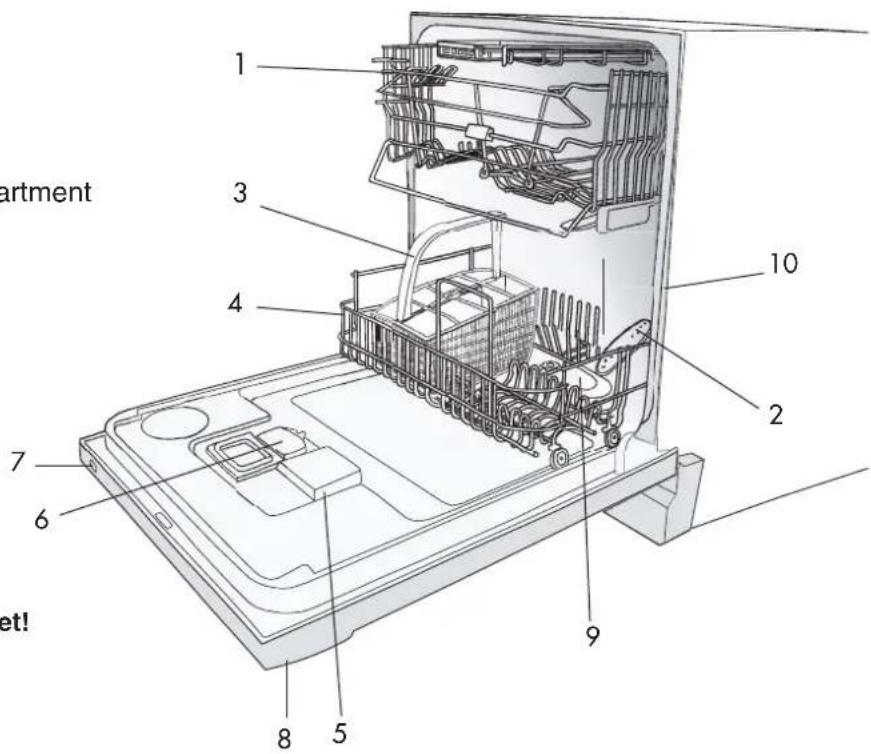
* Details may differ depending on model and market!
Technical information
| Height | 820-870 mm |
| Width | 596 mm |
| Depth | 550 mm |
| Weight | 48/51 kg*** |
| Capacity* | 12 place settings |
| Water pressure | 0.03-1.0 MPa (0.3–10 kp/cm2) |
| Connection | 1-phase, 230 V, 50Hz 10/10A** |
| Max | 1600 W** |
| Accessories |
*In accordance with standard, AS/NZS 2007
**See type plate.
***The weight can vary due to varying specifications.
Baskets\*
Upper basket
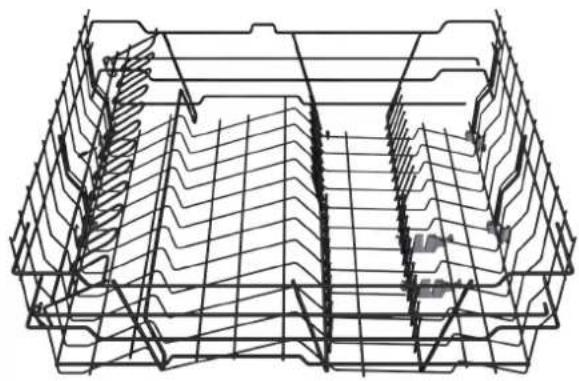
natural_image
3D wireframe diagram of a container with internal grid lines and shaded areas (no text or symbols)Lower basket
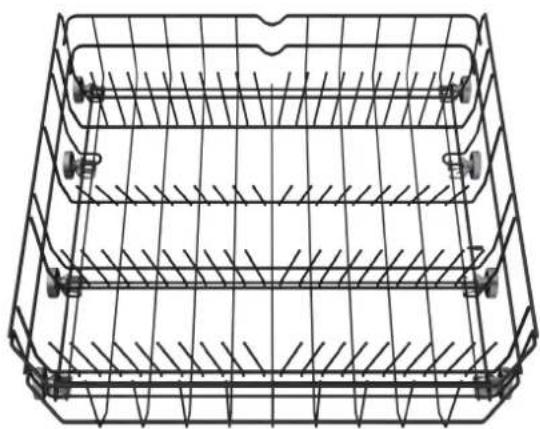
natural_image
Line drawing of a three-tier wire cage or basket structure (no text or symbols)*Details may differ depending on the model and market!
Baskets\*
Cutlery basket
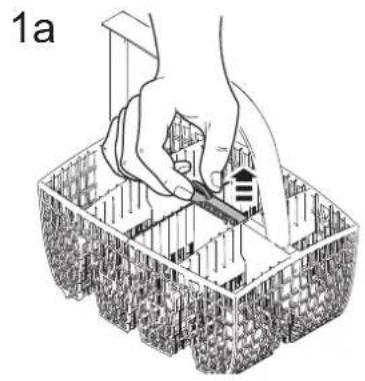
natural_image
Hand using a tool to cut or mark a grid structure in a container (no text or symbols visible)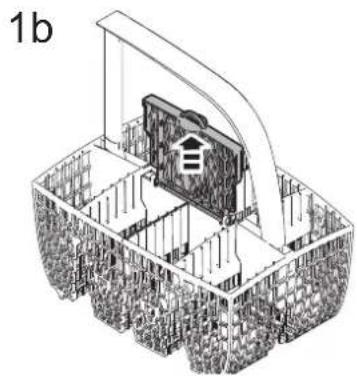
natural_image
Isometric technical diagram of a container with internal structure and a curved top component (no text or symbols)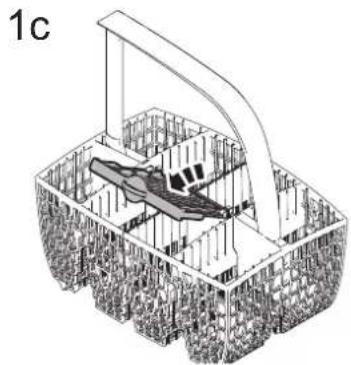
natural_image
3D wireframe illustration of a basket with a handle and internal structure (no text or symbols)Cutlery basket with cover
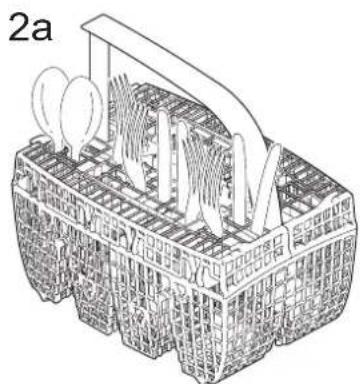
natural_image
Line drawing of a basket with cutouts and handles, no text or symbols present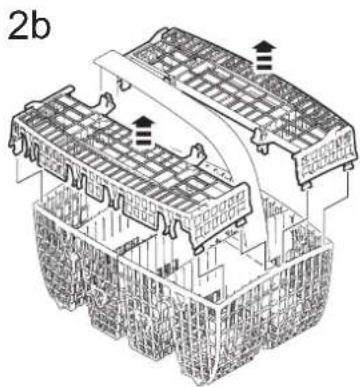
natural_image
Architectural wireframe diagram of a multi-story building structure with structural framework (no text or symbols)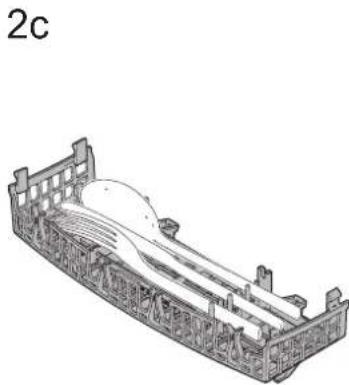
natural_image
Technical line drawing of a mechanical assembly or structural component (no text or symbols)*Details may differ depending on the model and market!
Baskets\*
Placement of the cutlery basket cover (in Upper basket))
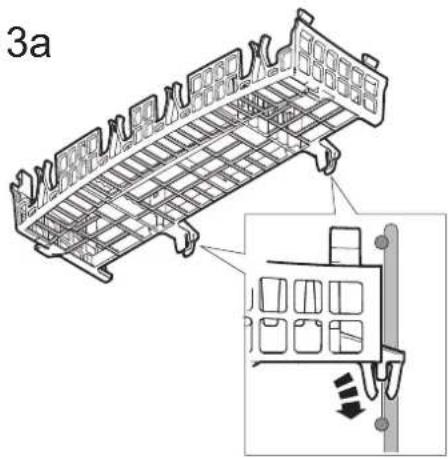
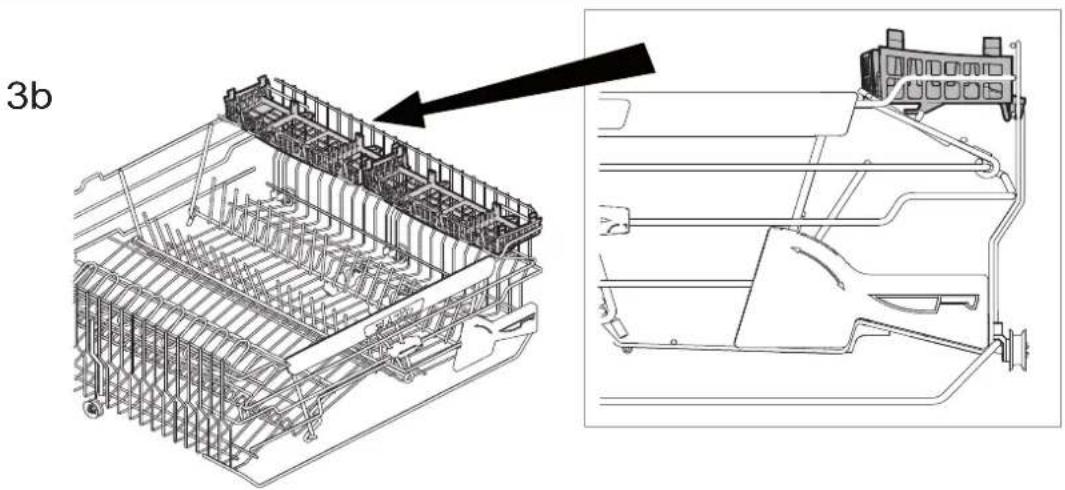
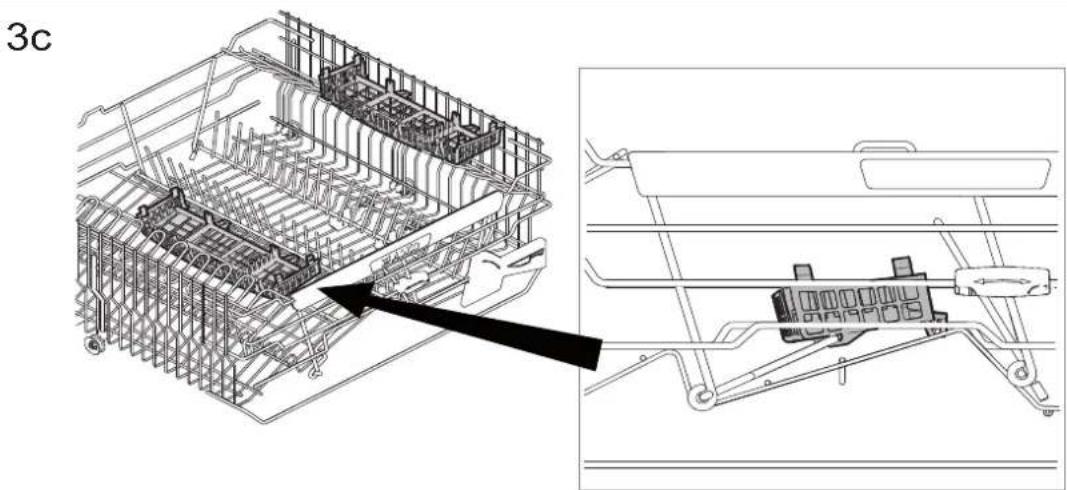
natural_image
Technical line drawing of a vehicle chassis frame with structural components, showing internal structure and assembly (no text or symbols)*Details may differ depending on the model and market!
Control panel
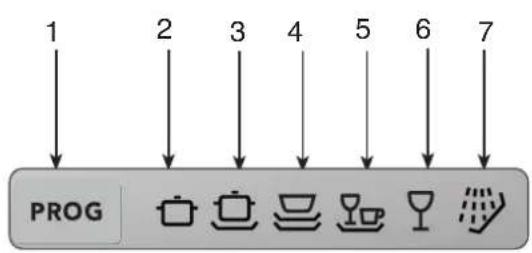
flowchart
graph TD
    A["1"] --> B["PROG"]
    C["2"] --> B
    D["3"] --> B
    E["4"] --> B
    F["5"] --> B
    G["6"] --> B
    H["7"] --> B
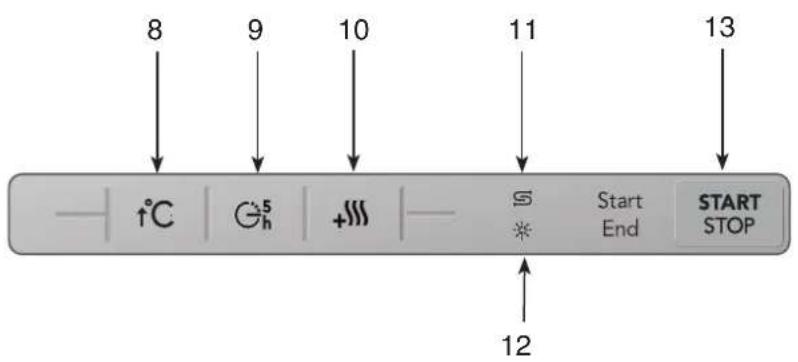
flowchart
graph TD
    A["8"] --> B["↑C"]
    C["9"] --> D["Gₕ⁵"]
    E["10"] --> F["+"]
    G["11"] --> H["S"]
    I["12"] --> J["*"]
    K["Start End"] --> L["START STOP"]
- Program selector
- Daily wash
- Heavy wash
- Normal wash
- Delicate wash
- Quick wash
-
Rinse & Hold
-
Higher temperature
- Delayed start
- Extra dry
- Salt indicator
- Rinse aid indicator
- Start/stop
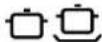 |  | [50cm] | Daily wash | Delicate wash | Higher temperature | Salt Gloss | |||
| °C | 60° | 55° | eco 55° | 40° | 30° | Heavy wash | Quick wash | Delayed start | |
| -°C | 65° | 70° | 65° | 50° | 60° | Normal wash | Rinse & Hold | Extra dry | |
Dispenser
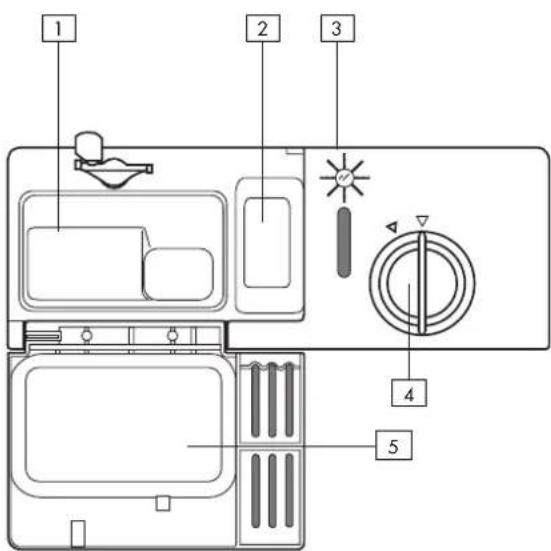
- Compartment for main wash dishwasher detergent
- Compartment for pre-wash detergent
- Refill indicator rinse aid (not all models)
- Rinse aid cover
- Detergent compartment cover
Basic Course
SCS
SUPER CLEANING SYSTEM™
Below are step by step instructions to help you achieve the best possible dishwashing results.
1 Load the baskets correctly!
Thanks to Super Cleaning System™, you do not need to rinse the dishes under running water. Convenient and environmentally friendly! Scrape off large food particles before loading the machine.
Place glasses, cups, bowls, side plates and saucers in the upper basket, wine glasses should be placed on the wine glass shelf, and knives in the knife stand if present.
NB!
Ensure that all soiled surfaces face inwards or downwards!
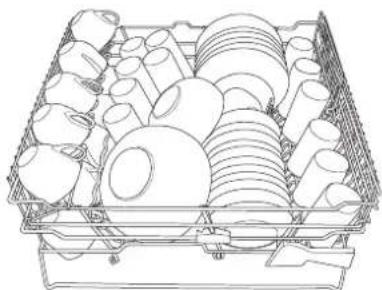
natural_image
Line drawing of a multi-tiered plastic container filled with various mechanical parts (no text or symbols)Place dinner plates, side plates, serving dishes, saucepans and cutlery (in the cutlery basket) in the lower basket.
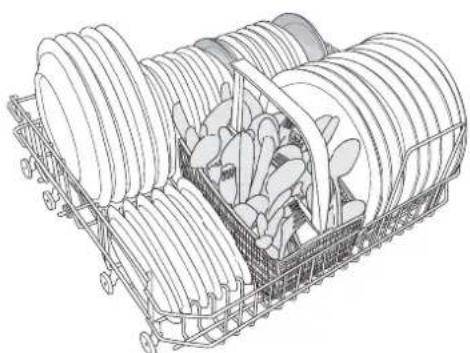
natural_image
Line drawing of a multi-tiered container filled with food items, no text or symbols presentStand the cutlery with handles downward and as spread out as possible. Ensure that spoons are not resting inside each other.
Do not put cutlery made of different materials, e.g. silver and stainless steel, in the same compartment (risk of stains).
Check that the spray arms are able to move freely.
See Fragile dishes, if you want to wash articles that may be fragile.
2 Detergent dosage
Detergent should be dispensed in accordance with the water's hardness level.
Follow the dosage instructions on the detergent package. If your dishwasher is fitted with a water softener, dispense as for soft water.
Pour the dishwasher detergent into the dishwasher detergent compartment. There is one compartment for pre-wash and one for main wash, see Dispenser. Phone the dishwasher detergent manufacturer if you have any questions regarding the detergent.
Dishwasher tablets
Halve the tablet if it is difficult to close the dispenser cover.
3in1/ Combined detergent NB!
Read through the directions for these products carefully. If anything is unclear, contact the dishwasher detergent manufacturer.
CAUTION!
Protect your children!
- Dishwasher detergent is corrosive!
NB!
Only use dishwasher detergent
Hand and Clothes washing detergent cannot be used as the build-up of foam may damage or impede the machine's performance.
Programs
3 Press the main power switch
4 Select program
Select a program by pressing the program selector one or more times until the required program is displayed.

Daily wash
A program suitable for daily dishes.
The program can also deal with dried food, though the short prewashes are not designed for burnt food.

Heavy wash
The Heavy Wash program should be used for heavily soiled dishes, e.g. saucepans, pots and gratin dishes. If there is still space in the machine after loading such items, you can add plates et.

Normal wash
Used for washing normally soiled dishes such as plates, serving dishes, cups and glasses, etc.
For washing normally soiled dishes use the Normal wash program with temperature ^ C and drying +
To save more water and energy use economy temperature and economy drying.

Delicate wash
If the dishes are not heavily soiled, you can select Delicate wash. This program is intended for glass and china which has just been used and therefore does not need such a powerful program.

Quick wash
Select Quick Wash if the dishes are very lightly soiled. This program is used for very lightly soiled glass and china, e.g. coffee cups.

Rinse & Hold
For rinsing the dishes while waiting for the machine to be illd.
If you wish to use additional options, continue to point 5. Otherwise you can now start the machine, see pint 6.
Options
5 Select options
To select an option, press one of the option ut-tons.
^ C Higher temperature
With the temperature option button you can select the wash temperature.
Program Normal °C Eco °C
| Daily: | 65 | 60 | |
| Heavy wash: | 70 | 55 | |
| Normal wash: | 65 | 55 | |
| Delicate wash: | 50 | 40 | |
| Quick wash: | 60 | 30 |
The temperature symbol will light up if you have chosen the normal temperature. This selection will remain in force until a change is made.
G ^5 h Delayed start
If you want the machine to start later, press the Delayed start option button. The clock symbol on the button lights up. Then press the Start/Stop button and the machine will start the program 5 hours later. To cancel delayed start, hold down the Start/Stop button for tree seconds.
+ Extra dry
If you require a better drying result, press the option button Drying to select normal drying. A symbol in the form of three wavy lines lights. If you want a program with Eco drying – press it again and the symbol will go out. The fan assists drying even if Eco dry is selected, but not in the QuickWash program.
6 Press Start/Stop
The dishwasher will now start. It manages the entire wash automatically. Ensure that the door is properly closed or the machine will not start.
Changing options
If you want to change program after having started the machine, press the Start/Stop button for three seconds. Then select a new program and then press the Start/Stop button again.
Do you want to load more dishes?
Carefully open the door; the machine will stops automatically, put in the dishes, close the door and the dishwasher will continue from where it left off.
If the machine is switched off from the main switch
(or in the event of a power cut) before the washing program has been completed, the interrupted program will continue when power comes back on.
NB!
If the power is switched off, or if the door is open for more than 2 minutes during drying, the program is interrupted.
7 After dishwashing
Once the machine has finished, it only draws standby current. Turn off the water faucet if the machine is not to be used for an extended period, such as during vacations, for example.
Drying
For additional drying the door should be opened 35 mm upon completion of the drying cycle. For more information refer to the page marked Performance Information in these instructions.
Eco-dishwashing
Only wash with a full load
Waiting to run the wash until the machine is full saves energy.
Wash at a lower temperature
If the load is only lightly soiled, you can lower the temperature.
Select program with Eco drying
To save energy, select Economy dry. You will get a better drying result if you leave the door slightly open after the end of the program.
Do not rinse before dishwashing
You do not need to rinse the dishes before loading them into the machine. Just scrape off large food particles before loading the machine.
Choose environmentally-friendly dishwasher detergent
Read environmental declarations on the package!
Connect to cold water supply
For best performance it is recommended that connection is to cold water.
Fragile dishes
A number of household goods are not suitable for machine washing. There can be many reasons for this. Certain materials cannot withstand intense heat, others can be damaged by the dishwasher detergent.
Fragile decoration
China with decoration on top of the glaze (the article has a rough feel) should not be machine washed.
Crystal/ glass
Place the articles so that they do not knock together during the wash. Use the lowest possible wash temperature and the shortest possible program. Do not heat dry! Antique and very fragile items should not be machine washed.
Glass which is machine washed at high temperatures can in time develop a grey film which cannot be removed. Wash fine glass at the lowest temperature and with a low dosage of dishwasher detergent.
Silver
Silver and stainless items should not come into contact with each other as the silver can discolour.
Cutlery with glued handles
Certain types of adhesive cannot withstand machine washing. In such cases the handles can come loose.
Wood
Wooden articles should only be machine washed if they are labelled as dishwasher proof.
Aluminium
Aluminium can be dulled by machine washing. However, good quality aluminium saucepans can be machine washed, although a reduction in lustre should be expected.
Plastic
Certain types of plastic cannot withstand the high temperature generated in machine dish-washing.
To protect plastic articles
Select a program with Economy temperature and Economy drying.
Salt

Add salt
Before using a dishwasher with a water softening filter, you must fill the salt compartment with salt. Use coarse salt or special salt for dishwashers.
It is best to fill with salt when you are about to do a wash, as the dishwasher needs to be rinsed out immediately after filling.
Proceed as follows the first time:
- First unscrew the cover as illustrated.
- Place the funnel, which is supplied with the dishwasher, into the compartment's filler hole.
- First pour in approximately 1 litre of water. Then fill the compartment with max 1.5 kg salt.
- Wipe away excess salt so that the cover can be properly screwed into place.
- Run a Normal wash program so that any salt in the machine is rinsed away.
When the salt runs out, the salt symbol on the display* lights up. Unscrew the cover and fill the compartment with salt. Water is only needed on the first occasion! Wipe clean and screw back in place. Run a Normal wash program so that any salt is rinsed away.
Occasionally check to see if more salt is needed. A green indicator can be seen in the cover of the salt compartment.
The indicator is not working
If the indicator is not working, this may be because the float, which is positioned under the cover, has become stuck in salt residue. The float can be reached through the green arm located under the cover of the salt compartment.
- Move the float arm up and down to loosen it.
- Once the float has been loosened, press it down again.
Models without a salt symbol in the display show green in the salt compartment cover when there is sufficient salt.
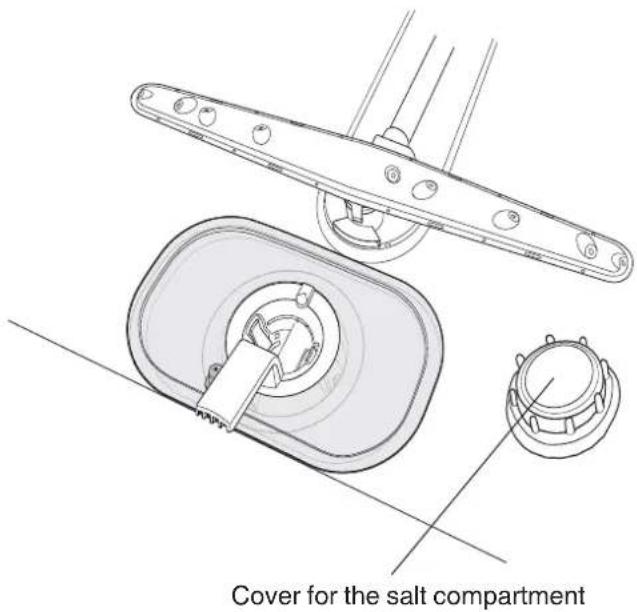
\*NB!
After filling, there may be a short delay before the signal light goes out.
CAUTION!

Never pour dishwasher detergent into the salt compartment. It will destroy the water softener!
Program Description
| Programs Daily | Heavy Normal Delicate | Quick Rinse & | Hold | |||
 |  |  |  | [1322] |  | |
| Options -- | -- |  |  |  | ||
| Prewashes with SCS* | 1 prewash | 2 prewashes 2 | prewashes | -- -- -- | ||
| Mainwash *** | 60°C | 55°C 65°C | 50°C | 60°C | -- | |
| Number of rinses | 3, last rinse 65°C | 3, last rinse 60°C | 3, last rinse 70°C | 2, last rinse 50°C | 2, last rinse 60°C | 1 rinse |
| Consumption values | ||||||
| 1. Wash time hot water /hours:min. ** | 1:20 | 2:50 | 2:10 1:35 | 0:45 | 0:04 | |
| Energy approx. kWh | 0.8 | 0.6 | 0.9 | 0.5 | 0.6 | 0.01 |
| 2.Wash time cold water / hours:min.** | 1:30 | 3:15 | 2:35 1:55 | 1:00 | 0:04 | |
| Energy approx. kWh | 1.2 | 1.3 | 1.5 | 0.9 | 1.0 | 0.01 |
| Water consumption (l) | 13 | 19 | 17 | 10 | 10 | 3 |
| * SCS = Self Cleaning System.** All quoted times are approximate. Cycle time fluctuations may occur due to water temperature, water pressure, variations in voltage etc.1. Hot water connection approx. 60°C.2. Cold water connection approx. 15°C.*** The listed temperatures are set as the default from the factory. | ||||||
Cleaning
The dishwasher tub is made of stainless steel and is kept clean through normal use. However, if you have hard water, limescale deposits may form in the machine.
If this happens, run a normal wash program with two tablespoons of citric acid in the dishwasher detergent compartment.
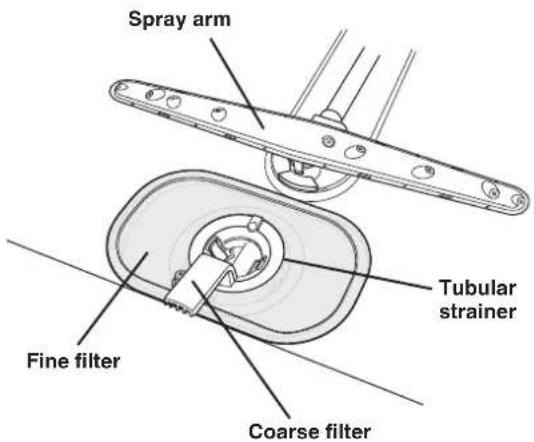
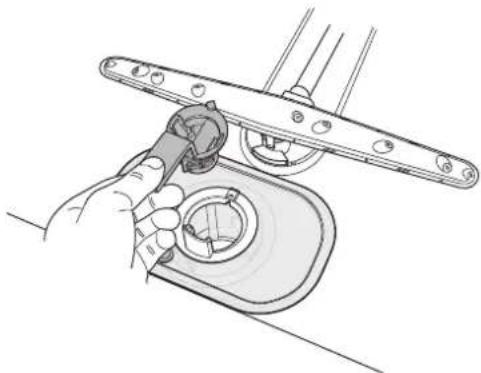
Coarse filter
The coarse filter traps larger food particles, which cannot get past the drain pump. Empty the coarse filter as necessary.
- Lift the coarse filter by the handle.
- Empty the coarse filter. Don't forget to replace it!
natural_image
Hand using a wrench to adjust a mechanical component (no text or symbols visible)Fine filter
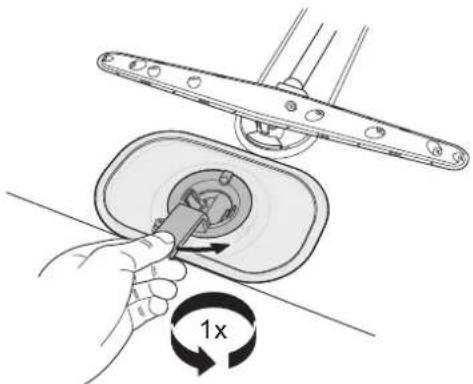
Debris that collects on the fine filter is auto matically rinsed away during each wash. However, the fine filter and its pipe section should be cleaned once or twice a year.
- Turn the handle once counter-clockwise.
- Lift the pipe section straight up by the handle. Free the coarse filter to clean the pipe section.
natural_image
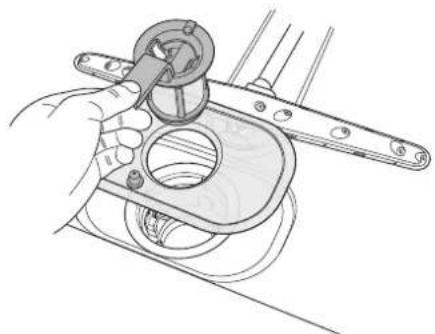
Illustration of a hand turning a component with a 1x rotational speed indicator (no text or symbols)- Remove and clean the fine filter.
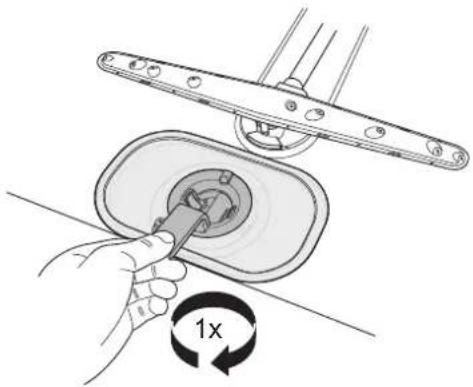
- Replace in reverse order. Ensure that the edges are properly sealed when replacing the fine filter.
natural_image
Hand holding a mechanical clamp or bracket component, no text or symbols visible- Lock the filter in place by turning the handle clockwise to the stop position: the handle should point out from the dishwasher.
natural_image
Illustration of a hand using a tool to adjust a mechanical component with a 1x rotational speed indicator (no text or symbols present)NOTE:
The dishwasher must not be used without the filter in place!
An improperly fitted coarse filter may affect the dishwashing result!
Cleaning
Drain pump
The pump can be accessed from inside the machine.
- Cut the power to the machine by pulling out the plug!
- Remove the coarse filter and pipe section.
- Remove the small fitted piece at the left of the bottom drain (see the image below).
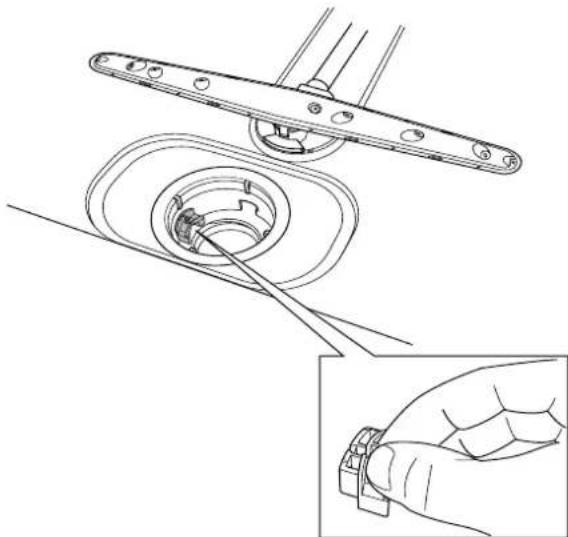
natural_image
Technical line drawing of a mechanical component with a close-up inset showing a hand holding a small tool (no text or symbols present)- You can release and turn the pump blade by inserting your finger into the hole and release anything blocking it.
- Reinstall the fitted piece and filters.
- Plug the plug into the wall socket.
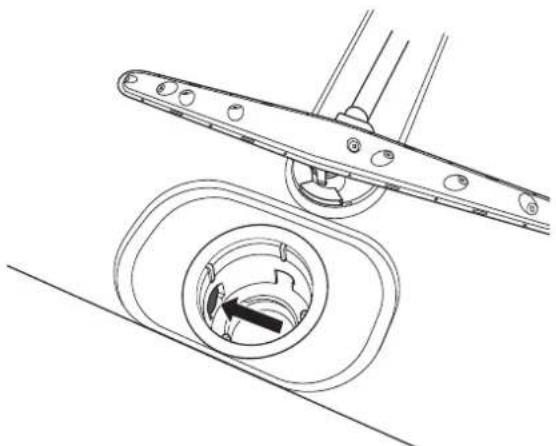
natural_image
Technical line drawing of a mechanical assembly with a circular component and a bracket (no text or symbols)If the machine still does not start and a buzzing sound is heard, the overflow guard has been activated.
- Shut off the water.
- Pull the plug out from the wall socket.
- Call the service division.
NOTE!
Do not forget to reinstall the fitted piece.
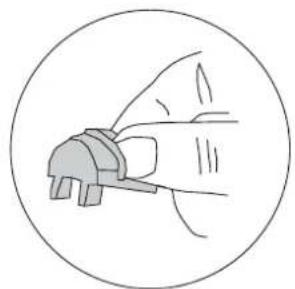
natural_image
Line drawing of a hand holding a small electrical plug, enclosed in a circle (no text or symbols)The spray arms
Holes and bearings can sometimes become blocked.
- Pull the lower washer arm straight up to release it.
- Remove any deposits using a needle or similar.
The washer arms also have holes under neath.
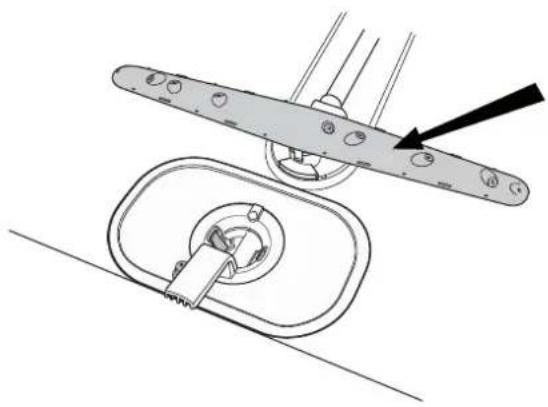
natural_image
Technical diagram of a mechanical assembly with a bracket and housing (no text or symbols)
Cleaning
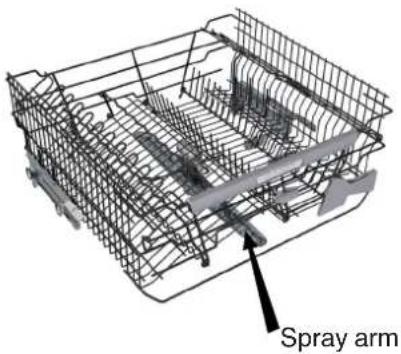
To release the upper spray arm, the upper basket must be removed.
- Pull out the basket.
- Remove the upper spray arm by unscrewing it counter-clockwise from the basket and clean it.
- Screw the spray arm back into place.
Door
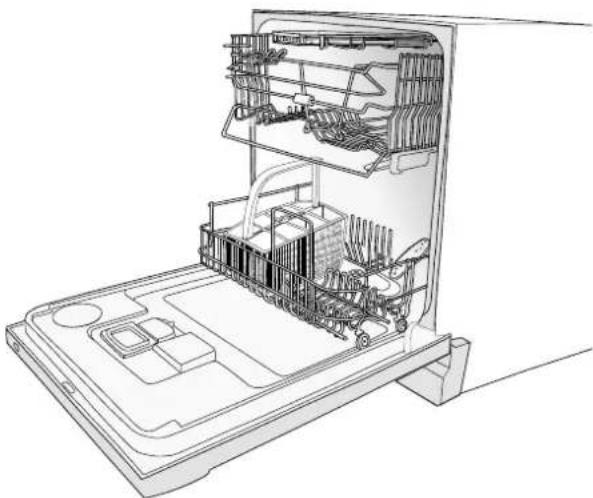
When cleaning the edge around the door, use only a slightly damp cloth, possibly with a little detergent. Do not use a spray bottle or similar around the door catch. This is to ensure that water does not penetrate into the door catch and come into contact with the electrical components.
natural_image
Technical line drawing of an open refrigerator with internal compartments and ventilation slots (no text or symbols)CAUTION!
Do not use a spray bottle or similar around the door catch.
Tip!
In order to prevent bad odours in the dish-washer, clean the strips and corners with a dish brush and low-lather detergent.
Rinse aid
Pour in rinse aid
Rinse aid, helps quicken the drying process.
Machines with indicator on the panel
When the rinse aid has run out and more is needed, the rinse aid symbol - on the panel lights up*.
To fill with rinse aid:
- Turn and lift up the cover of the rinse aid compartment to the right of the dispenser. This is where you top up and set the amount of rinse aid to be dispensed in each wash.
- Carefully pour in rinse aid up to the knob for dosage setting.
Alter dosage if required. Do not forget to close the cover.
\*NB!
After filling there may be a short delay before the signal light goes out.
Machines with refill indicator
There is a refill indicator in the middle of the dispenser (see picture). If the refill indicator is totally black, there is sufficient rinse aid. However, if the indicator has a more transparent appearance, you need to top up with rinse aid (see above).
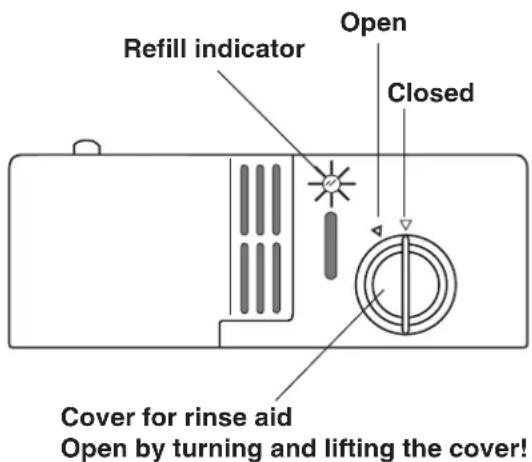
Select dosage
The dispenser is usually set at 1= soft water. However, depending on the water hardness, it may be necessary to change the dosage.
Open the rinse aid cover. Here you will find the dispenser's adjustment dial. Settings 1-6: the harder the water, the higher the dosage. When the water hardness exceeds 10-12H you should use rinse aid with citric acid (acid rinse aid) if the machine does not have a water softening filter. If the machine has a water softening filter, dispense as for soft water.
Too much rinse aid can lead to the build-up of foam. If your water is particularly soft, you can dilute the rinse aid (1 part rinse aid, 1 part water).
Too much rinse aid can cause streaks on the dishes, while too little can result in water stains.
Settings
Reprogramming
Some of the machine's functions can be reprogrammed. You get into the machine's change program using the machine's ordinary buttons as per the instructions below. The selection will be retained until the next time you reset this function.
Even if the machine is turned off at the main switch or loses power for any other reason, all selections registered before the interruption of power will be retained.
Child-safe button lock
You can prevent a child starting the machine by accident or changing the settings by programming the machine with a button lock, which requires the Temperature and Drying buttons to be pressed simultaneously to start up the machine. The button lock will automatically be reactivated after three minutes.
① 1. Switch off the dishwasher with the main switch.
^1 C+ + 2. Hold in the Temperature and Drying buttons while pressing the main switch. The Temperature, Drying and start symbols will flash. Release the Temperature and Drying buttons.
PROG 3. Press the Program button – when the Daily wash symbol is lit, the button lock has been activated.
START STOP 4. Then press the Start/Stop button to store the setting.
or Reset: ① 1. Switch off the dishwasher with the main switch.
^1 C + + 3. Hold in the Temperature and Drying buttons at the same time as pressing the main switch.
PROG 3. Press the Program button – when the Daily wash symbol goes out the button lock has been deactivated.
START STOP 4. Then press the Start/Stop button to confirm the setting.
Settings
Setting a signal
If you want the machine to signal when the wash is complete, you can program it to do this. The machine is set without a signal by default.

- Switch off the dishwasher at the main switch.

- Hold in the Delayed start button at the same time as you press the switch. The button flashes. Release the button.
PROG
- Press the Program button – when the Daily wash symbol lights, the
signal is activated.
START
- Press the Start/Stop button and the setting will be stored until next
STOP
or Reset

- Switch off the dishwasher with the main switch.

- Hold in the Delayed start button at the same time as you press the
main switch. The button flashes. Release the button.
PROG
- Press the Program button – when the Daily wash symbol goes out, the
signal is deactivated.
START
- Press the Start/Stop button and the setting will be stored until next
STOP tim
OP time you want to make a change.
Settings
Setting water hardness
If you have a dishwasher with a water softener, you may need to change the setting, depending on the degree of hardness of the water. Phone your local Water Board to check the water hardness in your area. The dishwasher is set for low water hardness on delivery.
| 1 | 1 | Switch off the dishwasher with the main switch. | |||||
START STOP  | 2 | Hold in the Start/Stop and Drying buttons at the same time as pressing the main switch. Release the Start/Stop button. | |||||
| PROG | 3 | Press the Program button from one to six times depending on the hardness of the water. Program symbols will light up as you press. See illustration. | |||||
| Setting water hardness °dH °fH | |||||||
| * | * | * | * | * | 0-5 0-9 | ||
| 6-8 | 9-14 | ||||||
| 9-14 | 15-25 | ||||||
| 15-19 | 26-34 | ||||||
| 20-29 | 35-52 | ||||||
| 30-44 | 53-79 | ||||||
| 45+ | 80+ | ||||||
| * All program indicators extinguished: Machines without water softeners and machines with water softeners and low water hardness. | |||||||
| START STOP | 4 | Press the Start/Stop button and the setting will be stored until next time you want to make a change. | |||||
| Setting water hardness | °dH | °fH | |||||
| * | * | * | * | * | * | 0-5 | 0-9 |
| 6-8 | 9-14 | ||||||
| 9-14 | 15-25 | ||||||
| 15-19 | 26-34 | ||||||
| 20-29 | 35-52 | ||||||
| 30-44 | 53-79 | ||||||
| 45+ | 80+ | ||||||
| Setting water hardness | °dH | °fH | |||||
| * | * | * | * | * | * | 0-5 0-9 | |
| 6-8 | 9-14 | ||||||
| 9-14 | 15-25 | ||||||
| 15-19 | 26-34 | ||||||
| 20-29 | 35-52 | ||||||
| 30-44 | 53-79 | ||||||
| 45+ | 80+ | ||||||
Fault indications
Display
Type of fault
Action

flashes Too much water
Phone service
in the dishwasher

flashes Fault with water inlet
Check that the water tap
is open

flashes Valve leakage Shut off the water tap
and contact service

flashes Blocked drain See 'Possible causes' in chapter Trouble shooting
To remove the fault indications from the display, turn off the main switch and then turn it back on again.
Troubleshooting
Problems Possible causes Action
The dishes are not clean
- The spray arms are not rotating.
- Old dishwasher detergent. NB! Detergent is a perishable.
- Incorrect dosage of detergent.
• Insufficiently powerful dish-washing program. - Incorrect program chosen.
- Incorrect loading of the dishwasher.
• Glasses and cups have tipped over during the wash. - Dishwasher fitted with water softener is leaking salt.
- Incorrectly set water softener.
- Incorrectly set rinse aid dispenser.
- The salt compartment is empty.
- Phosphate-free detergent in combination with hard water.
- Too high a temperature and/or too much detergent can cause etching on (crystal) glass. Unfortunately this cannot be remedied, only prevented!
-
Too high dosage of rinse aid.
-
Lift off the arms and clean.
- Avoid large packs.
- Dispense according to the level of water hardness.
- Select the Temperature normal option or switch to a more powerful program.
- Change to a more intensive program.
- Do not cover china with large bowls or similar.
- Avoid placing very tall glasses in the corners of baskets.
- Load the china securely.
- Check that the cover of the salt compartment is properly screwed on. Otherwise phone for Service.
• See the chapter on water softeners.
• See the chapter on rinse aid. - Top up with salt.
- Change detergent.
- Wash (crystal) glass at a low temperature and dispense dishwasher detergent with care. Contact the dishwasher detergent manufacturer.
- Reduce dosage. See the chapter on rinse aid. If the water is very soft, you could try diluting the rinse aid (1 part rinse aid, 1 part water).
Troubleshooting
Problems Possible causes
Stains on stainless steel or silver
- Certain food remnants such as mustard, mayonnaise, lemon, vinegar, salt and dressings can cause stains on stainless steel if allowed to remain for any length of time. All stainless steel can mark silver if allowed to come into contact during the dish-washing process. Aluminium can also cause stains on dishes.
Stains which remain after dishwashing
- Lipstick and tea can be difficult to remove.
Rattling sound during dishwashing
- The dishes are not properly loaded or the spray arms are not rotating.
The machine will not start
- You have forgotten to switch on the main switch.
- The door is not properly closed.
- A fuse has blown.
- The plug is not plugged in.
- The water tap is off.
• Overfilling/leakage
- A droning sound (drainage pump) can be heard from the machine, this does not stop when the power is switched off using the main power switch.
To restart the machine, press Start/stop for 3 seconds. Now select a new programme and press Start/stop.
Action
- Rinse off food residue of this type if you do not intend to start the dishwasher immediately.
- Seperate your cutlery into the various compartments in the basket. Make sure silver and stainless steel are not together.
- Change to a detergent with bleach.
- Check that the china is loaded securely. Spin the spray arms to make sure that they rotate.
- Check
- Check
- Check
- Check
- Check
- Close the water tap.
- Pull out the plug.
- Call a service engineer
Troubleshooting
Problems Possible causes
Water remains in the machine
- Obstruction in the drain hose.
- Kinks in the drain hose.
- The filters are clogged.
- Items in the drain pump.
Bad odor in the machine
- Dirt along the strips and in corners
- Low-temperature programs have been selected for a prolonged period.
The dishes are not sufficiently dry
- Drying power too low. The machine is not fully loaded.
- The rinse aid has run out or the set dose is too low.
Action
- Disconnect the drain hose where it is connected to the sink's water trap. Check that no debris has become stuck. Is the cone-shaped part of the pipe cut so that the diameter is at least 16 mm?
- Check that the hose is free from kinks or sharp bends.
- Clean out the coarse filter, the fine filter and the filter.
- Clean out the drain pump. See chapter on cleaning
- Clean with a dish brush and low-lather detergent.
- Run a Normal Temperature program around once a month.
- Activate the Normal drying option (not all models). Put a full load in the machine.
- Replenish rinse aid or increase the dose of rinse aid if required.
- Open the door slightly once the program has finished.
Performance information
Test dosage
Normal wash
Main wash 25 gram Standard detergent. Rinse aid dosage 3.
Energy labelling
Europa: EN50242
Dishwasher program:
Normal wash, Eco wash, Economy drying.
Program time: 2:50 hours:minutes
Connection: Cold water
Test method noise measurement: IEC-704-3
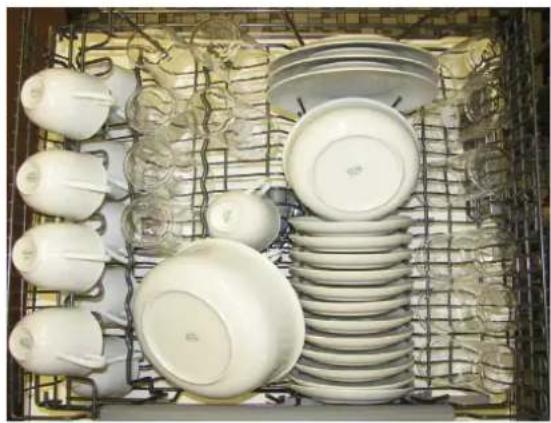
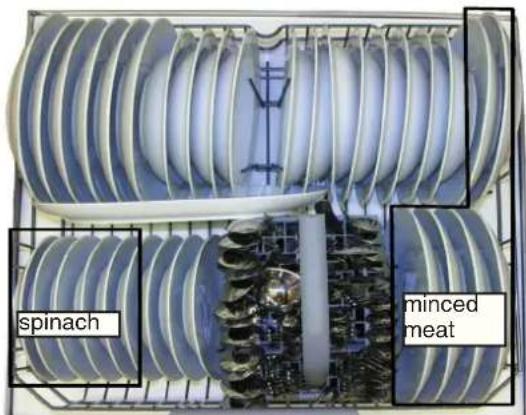
Loading of performance test
natural_image
Interior view of a kitchen appliance rack with white ceramic dishes, glassware, and a rack of plates (no text or symbols visible)Upper basket with 12 place settings EN50242
EN50242
Lower basket with 12 place settings EN50242
Cutlery basket EN50242
- Teaspoons
- Dessertspoons
- Soupspoons
- Forks
- Knives
- Serving cutlery - fork
- Serving cutlery – gravy ladle
- Serving cutlery - spoons
Technical data
Height
Width
Depth
Weight
Capacity*
Water pressure
Connection
Max
*In accordance with standard, EN 50242
**See type plate.
820-870 mm
596 mm
550 mm
48 kg/51 kg
12 place settings
0.03-1.0 MPa (0.3–10 kp/cm²)
1-phase, 230 V, 50Hz 10/10A**
1600 W**
Installation instructions
FULLY INTEGRATED MODELS
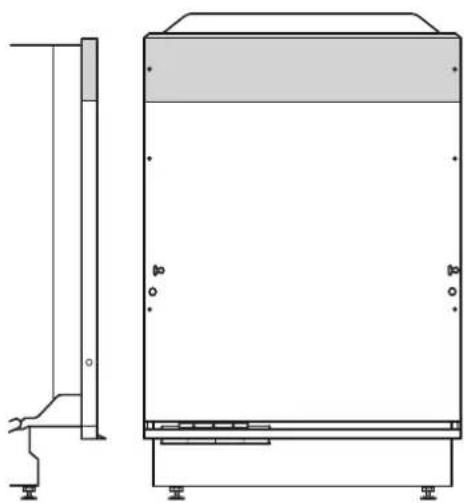
natural_image
Technical line drawing of a mechanical enclosure or enclosure with side and top views (no text or symbols)SAFETY INSTRUCTIONS:
- It is important that you closely follow the instructions provided here.
- An incorrect or defective installation can lead to higher consumption of energy, water and dishwashing detergent, which can lead to higher costs and poorer cleaning results.
- Plumbing and electrical installations must be carried out by qualified professionals.
- Exercise caution during the installation! Wear protective gloves! Always work in pairs!
- The power socket must be fitted outside the cavity for the dishwasher to enable easy access after installing the machine.
- Always follow the applicable regulations for water, drain and electrical connection.
- A dishwasher fitted with a wired plug must be connected to an earthed socket.
Caution!
Turn off the water supply when installing the dishwasher!
SEMI-INTEGRATED MODELS
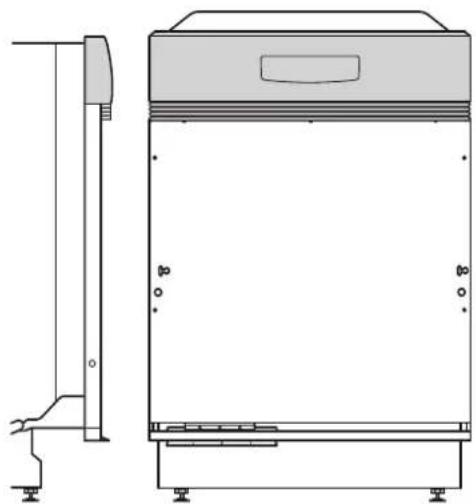
natural_image
Technical line drawing of a vertical mechanical device with base and top views (no text or symbols)BEFORE STARTING THE INSTALLATION:
-
Connection to water supply:
-
There must be a shut off valve on the water supply pipe. The shut off valve should be installed in a location that is easily accessible so that the water may be shut off in the event that the dishwasher needs to be moved.
- Installation advice:
- Cable holes for wires/cables need not be larger than 40 mm.
- Affix the light shielding film (see Fitting the dishwasher in place). Not all models.
- Place a watertight protective tray on the floor under the dishwasher to prevent any water leakage.
Note:
Check that the fitting and connection measurements are correct. See Installation and connection information.
Installation and connection information
DISHWASHER CAVITY MEASUREMENTS
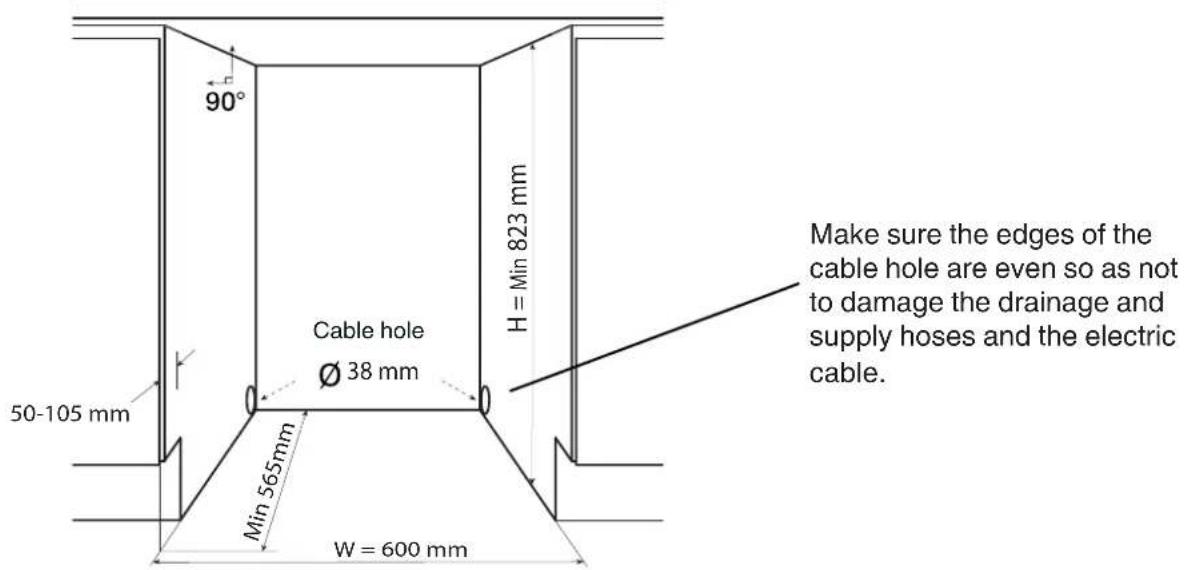
WATER CONNECTION
- The machine can be connected to a cold or hot water supply (maximum 85°C). However, °C). we recommend connection to a cold water supply.
- The inlet pipe has a connector with either a 3/4" internal thread.
ELECTRICAL CONNECTION
• 220-230VAC mains voltage, minimum 15A
DRAINAGE
- The supplied cone-shaped connection pipe fits a drainage connection with an internal diameter of 13, 16, 18 and 22mm .

natural_image
Close-up of a gray industrial pipe fitting with threaded ends and a metallic end cap (no text or symbols visible)- Use a hose clamp if connecting to a fixed drain (sink).
The connector is ready to cut to the desired drain connection size. Only a clamp is required.
CABLE/HOSE LENGTHS
Drainage hose: 1930 mm
Supply hose: 1670 mm
Power cable: 1770 mm
DISHWASHER MEASUREMENTS
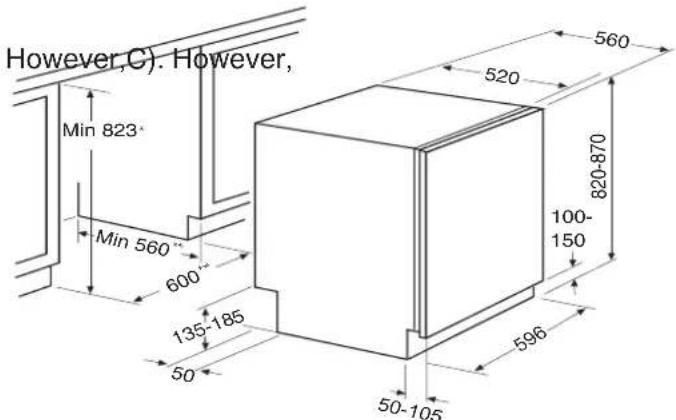
* With nut and sliding protection mounted
* Recommended measurements
TOOLS
1) Flathead screwdriver
2) Open-ended spanner 16 m
3) Tape measure
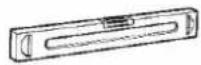
4) Spirit level

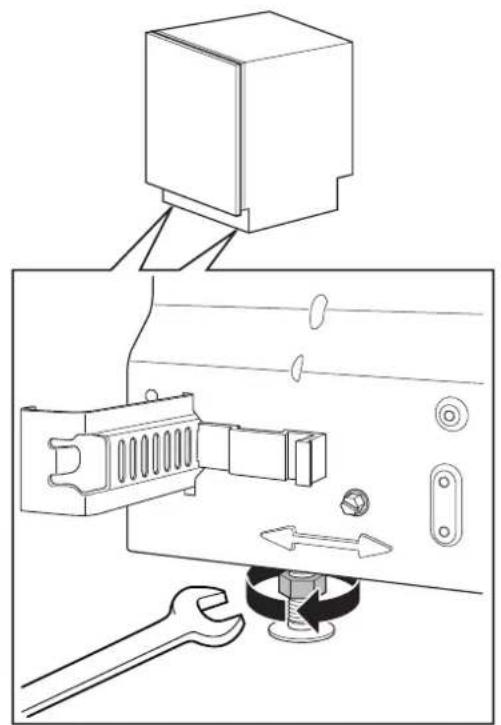
Step 1. Fitting the dishwasher in place
- Loosen the locking nuts on the dishwasher's two front steel feet using a 16 mm open-ended spanner. Screw the locking nuts down as close to the floor as possible.
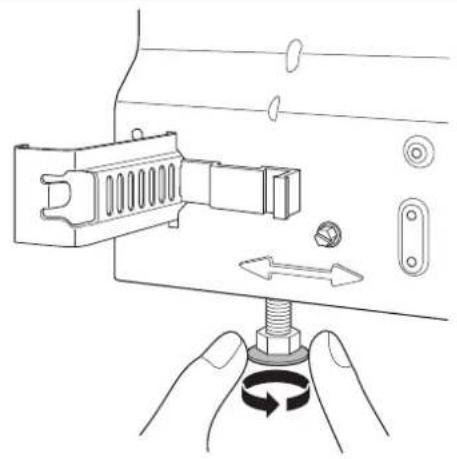
- Adjust the height of the dishwasher by turning the front steel feet with your hands. Leave enough space to adjust them later.
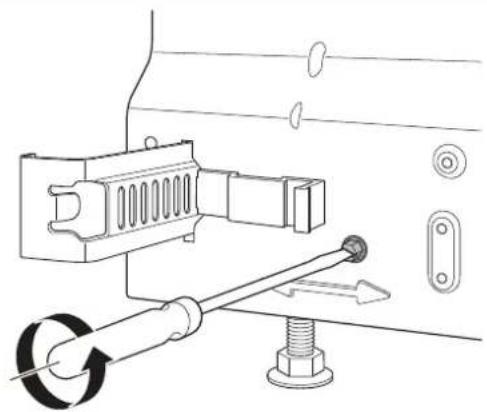
natural_image
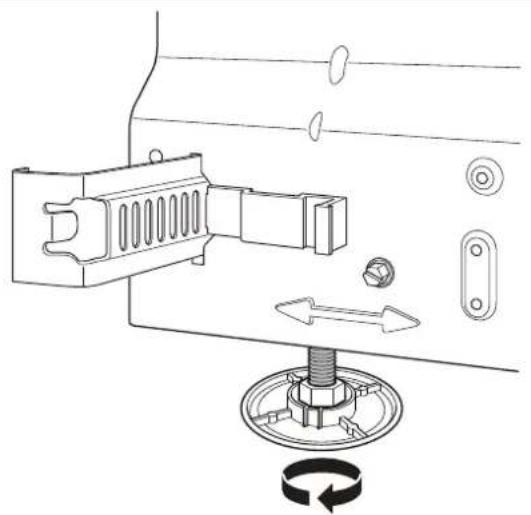
Illustration of hands assembling a mechanical component with directional arrows indicating rotation (no text or symbols)- Screw in the back foot completely by turning the adjustment screw at the front anticlockwise. Use a flat-bladed screwdriver or an Allen screwdriver.
natural_image
Technical line drawing of a mechanical assembly with no visible text or symbolsFitting the dishwasher in place
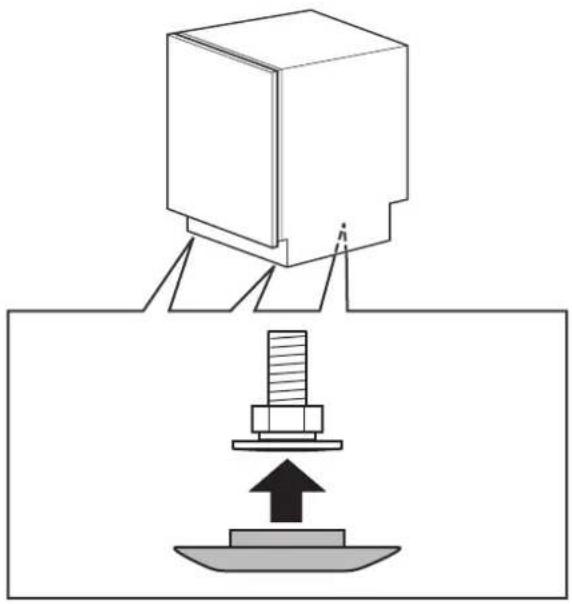
- Push the plastic feet into place on all three steel feet (included in document bag).
Note:
Do not attach the plastic feet if the installation space is of minimum height.
natural_image
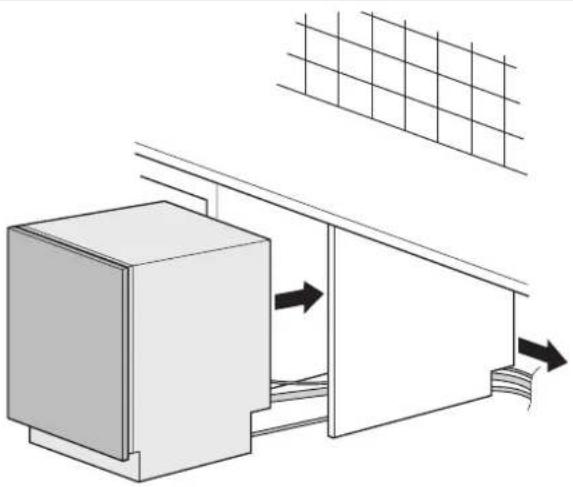
Diagram of a mechanical assembly with a block, a bolt, and a load on a base (no text or symbols)- Push the dishwasher into the cavity. At the same time, pull the electric cable and drainage and supply hoses through the cable hole.
natural_image
Diagram of a room interior with a cabinet and wall grid, showing airflow direction (no text or symbols)- Lift the dishwasher a little at the front and turn the front feet to lower them.
natural_image
Technical diagram of a mechanical assembly with no visible text or symbolsFitting the dishwasher in place
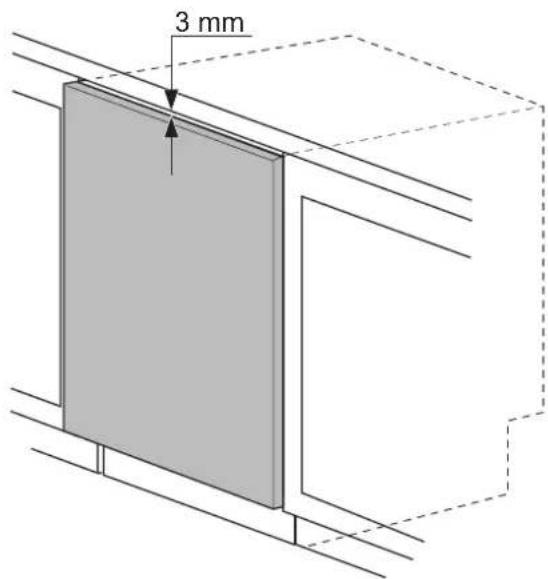
- Check that there is a space of 3 mm between the top of the dishwasher door and the underside of the worktop.
Do not attach the locking nuts. This will be done later.
- Adjust the back foot by turning the adjustment screw at the front clockwise.
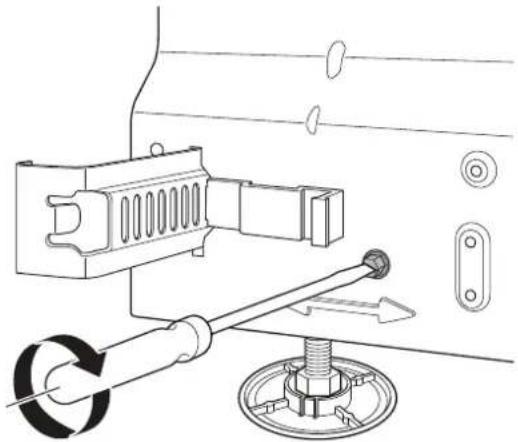
natural_image
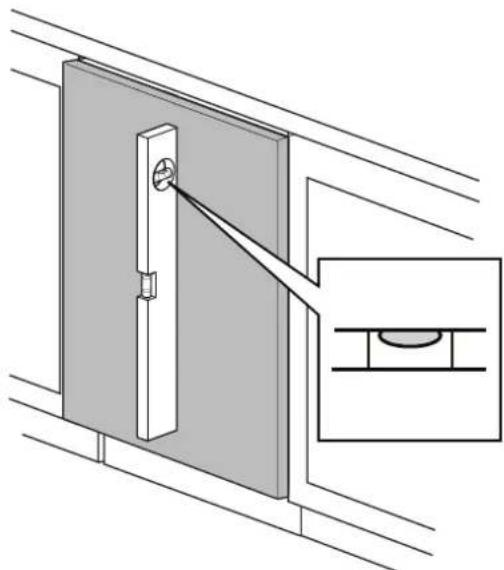
Technical line drawing of a mechanical assembly with no visible text or symbols- Place the spirit level on the dishwasher door to check that the machine is level and adjust if necessary. The door must be fully closed!
Note:
The dishwasher must be level!
An unlevel machine can affect the amount of water taken in, the door can be difficult to close, and the baskets difficult to place securely.
natural_image
Technical diagram showing a mechanical assembly with a bracket and a close-up inset of a cylindrical component (no text or symbols)Step 2. Attaching cover or wooden door
Follow the separate instructions supplied with the dishwasher to attach the chosen cover or wooden door to the front of the machine.
Note:
Once you have fitted the cover or wooden door to the dishwasher, the door springs may need adjusting. Check that the door stays in the position in which it is placed. If the door drops down when you open it, the springs need tightening. If the door shuts on its own, the springs need loosening. See step 3 for further instructions.
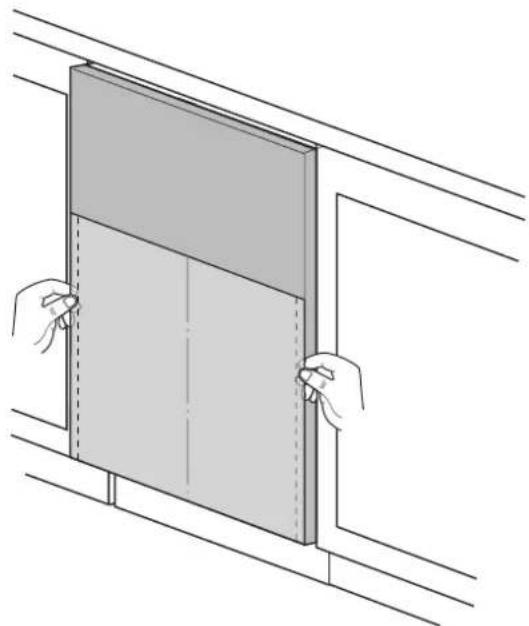
natural_image
Illustration of two hands holding a rectangular panel mounted on a wall, with no visible text or symbols.MEASUREMENTS OVERVIEW - WOODEN DOOR
| FULLY INTEGRATED MODELS SEMI-INTEGRATED MODELS | |
| Width: 596 mm Width: 596 mm | |
| Height: 700 mm to 800 mm Height: 575 mm to 685 mm | |
Step 3. Adjusting the door springs
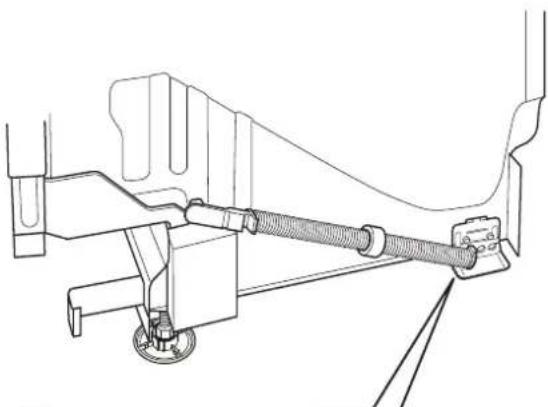
The door springs are on the sides of the dishwasher. If necessary, pull out the dishwasher and adjust the tension of the door springs. A good idea is to try adjusting one side only first.
-
Make sure the door is closed.
-
Grab the front end of the spring and pull it up and forward to release it from the forward mount.
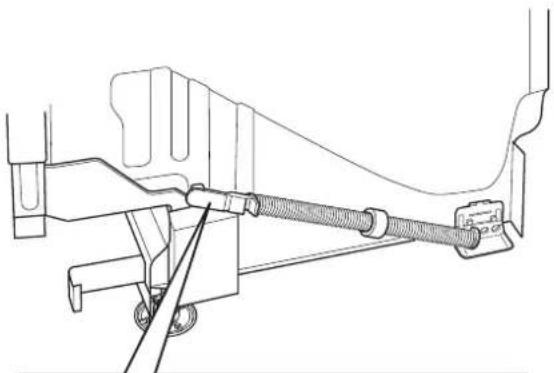
natural_image
Technical line drawing of a mechanical assembly with a coiled spring and mounting bracket (no text or symbols)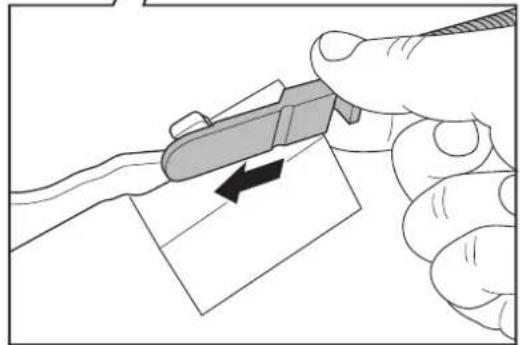
natural_image
Illustration of a hand holding a tool interacting with a document or paper (no text or symbols visible)- Loosen the spring from the rear mount by turning it outwards.
natural_image
Technical line drawing of a mechanical assembly with a coiled spring and mounting bracket (no text or symbols)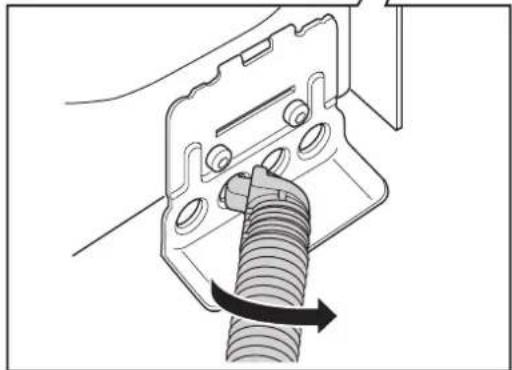
natural_image
Mechanical assembly diagram showing a threaded component being inserted into a housing (no text or symbols)Adjusting the door springs
- Adjust the spring tension using one of the following methods depending on how much adjustment is needed.
If you need to adjust the spring a lot, place the rear mount in another hole. Place the spring further forward to reduce the tension and further back to increase the tension.
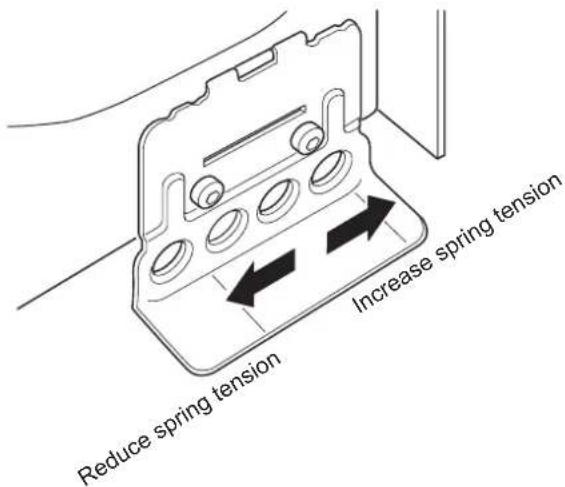
If you want to make small adjustments to the spring, hold the back end with one hand and turn the forward mount clockwise or anticlockwise one or more times. Turn the mount clockwise to increase spring tension and anticlockwise to reduce spring tension.
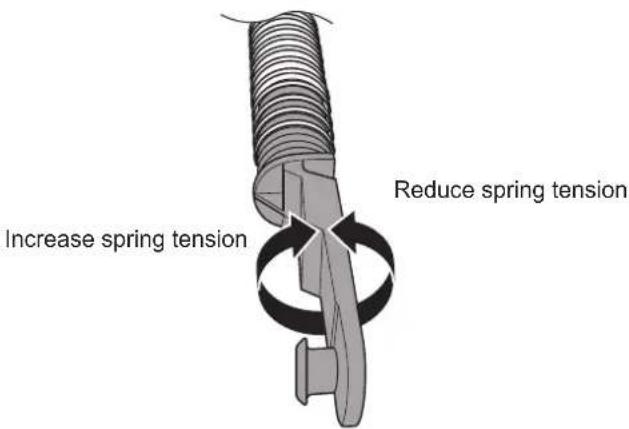
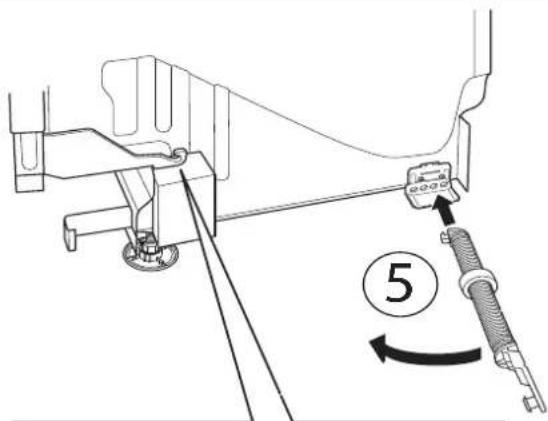
- Replace the back end of the spring by holding the spring at a right angle to the side of the dishwasher and pushing the end of the spring into the hole, then turning the spring in towards the dishwasher.
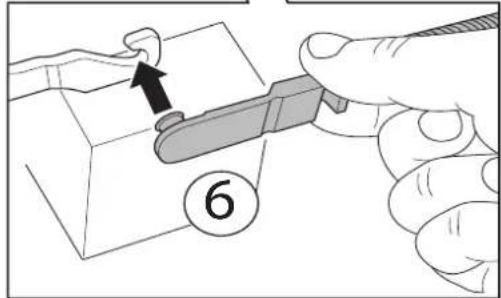
- Reattach the front end of the spring by pulling it up and forward to fasten it in the mount.
- Open the door and check the spring tension again. If necessary, make further adjustments as above.
Stronger door springs are available for purchase for dishwashers fitted with a cover door. Springs are available for various weights and sizes of door. Door springs can be purchased from the retailer who sold you the dishwasher.
Step 4. Connecting electricity, water and drain
1. ConnectConnect drain hose
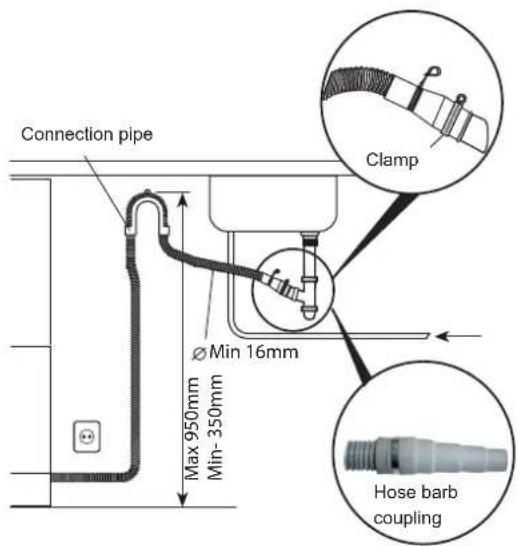
The drain hose runs to an inlet plug on the ink unit's water trap.
Note:!
The hose must be fastened on a level with the underside of the sink unit.
Cut the drain hose adapter to the appropriate size for connection to the undersink drain or garbage disposer. The overall length of the drainage hose must not exceed 4,5 m.
No part of the drainage hose may be more than 950 mm above the bottom of the dishwasher.
The hose must not be run directly to the floor drain or similar.
The hose must always discharge at least 350 mm above the bottom of the dishwasher.
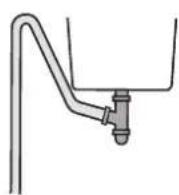
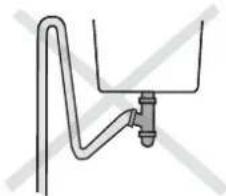
natural_image
Pure technical line drawing of a pipe or tube with a valve-like component (no text or symbols)2. Connect water supply hose
ConnecUse the supplied O ring and tighten the connection by hand plus a quarter turn with a wrench. Open the shutoff valve and let the pressure settle for a while. Check the connections again to make sure they are not leaking.
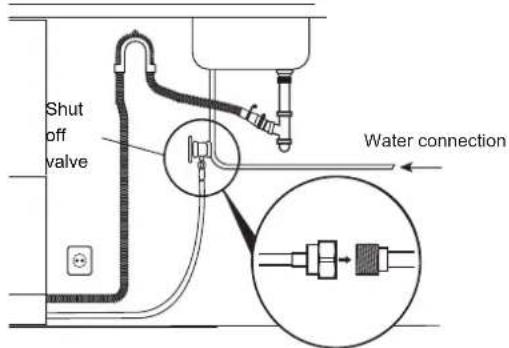
3. Connect the electric plug
Ensure that the power socket is within the range of the power cable. Do not use an extension cord! The dishwasher must be connected to a grounded outlet.
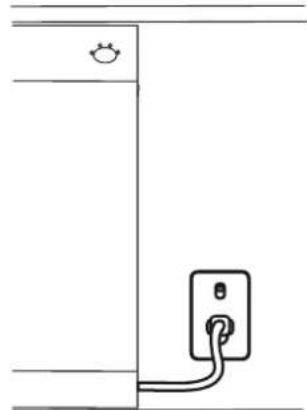
natural_image
Simple line drawing of a wall-mounted electrical outlet with a bulb and a small sun icon (no text or symbols)Step 5. Checking dishwasher function and fit
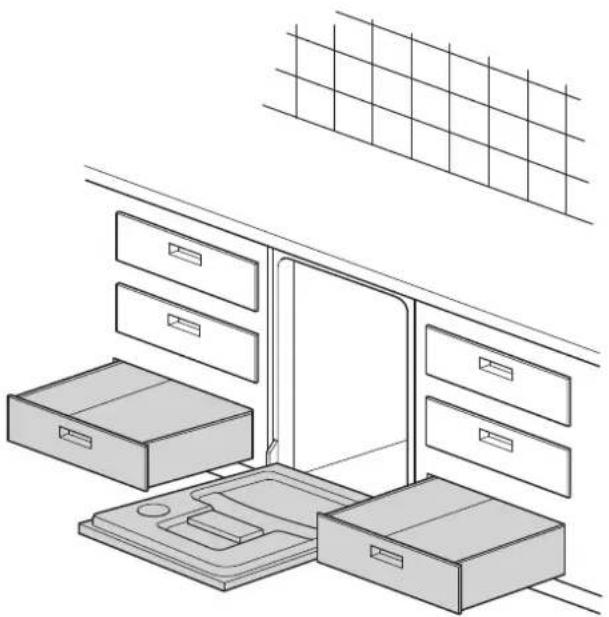
Test the dishwasher with the rinse program. Check that the dishwasher takes in water and drains. Also check that none of the connections leak.
Also check that adjacent drawers and cup- boards can be opened when the dishwasher door is open.
natural_image
Isometric line drawing of a room with hanging drawers and storage compartments (no text or symbols)Step 6. Securing the dishwasher
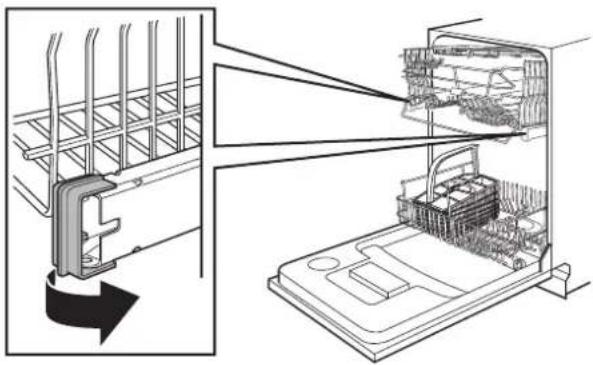
- Pull out the upper basket, and the centre basket if present, and turn the basket stop on the runner outwards.
- Remove the upper basket, and the centre basket if present, by pulling the basket(s) out as far as possible. This is to make more space available during installation.
-
Remove the lower basket. Otherwise it easily rolls out if you need to adjust the dishwasher during installation.
-
Connec. Screw the dishwasher to the work-top from the inside or to the cabinets on either side. If the worktop is a hard material, such as marble, screw the dishwasher to the side cabinets. Use the supplied plastic spacers when screwing the dishwasher into place!
natural_image
Technical line drawing of a refrigerator interior showing front and side views (no text or symbols)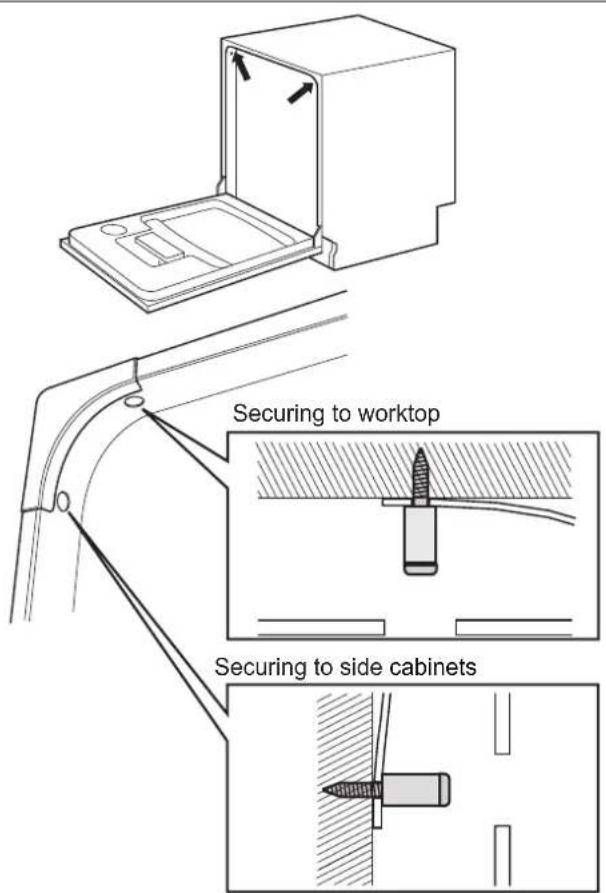
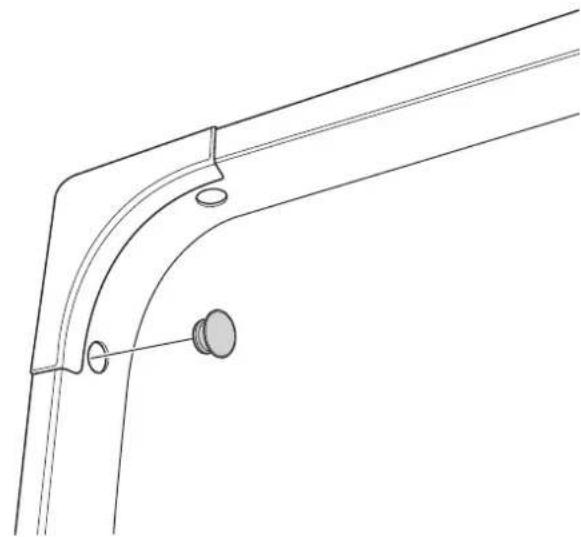
Securing the dishwasher
- Cover the screw holes on the sides with the supplied plastic plugs. Push in the plugs diagonally to fit them in place.
natural_image
Technical line drawing of a mechanical bracket with two circular components and a central pin (no text or symbols)- Check that the dishwasher's two front steel feet are solidly placed on the floor, that is, the dishwasher is not hanging in the air. Otherwise turn the front feet to lower them.
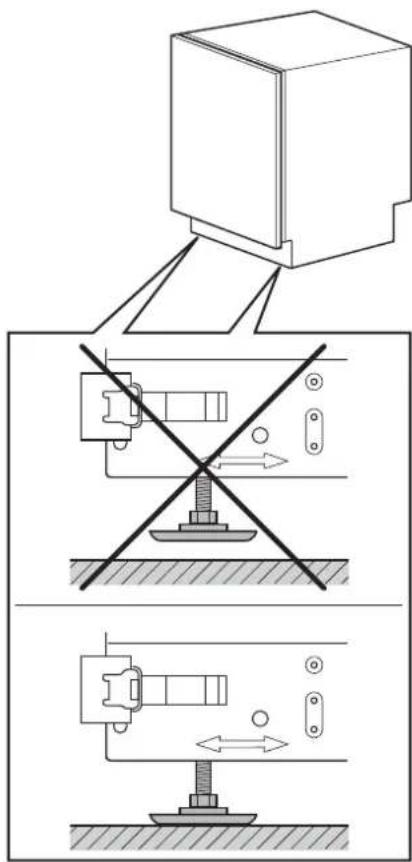
Securing the dishwasher
Also adjust the rear foot if necessary so that the dishwasher is level.
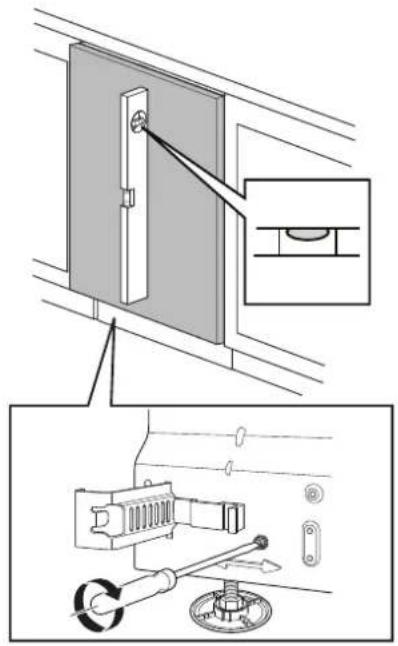
- Tighten the lock nuts on the front feet with 16mm open-ended wrench.
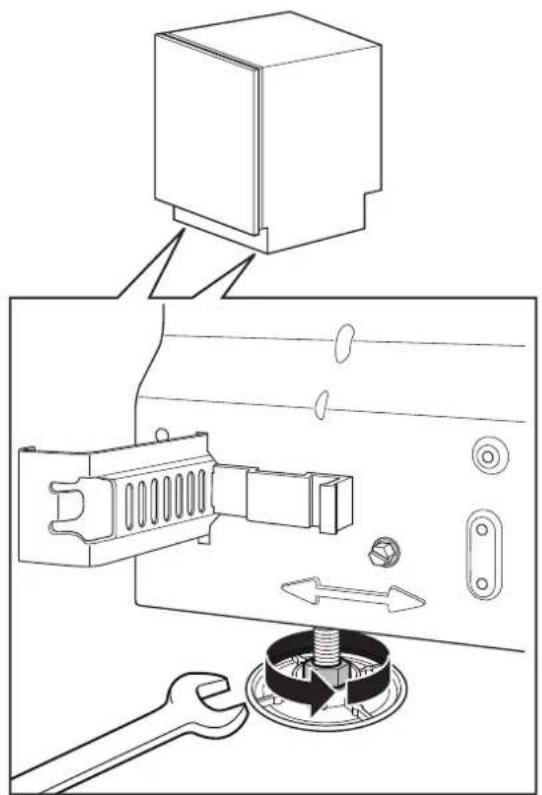
natural_image
Technical diagram showing mechanical assembly with tool, spring, and housing (no text or symbols)Step 7. Attaching the toe kick (if applicable)
When fitting the kickboard, choose a size best suited to the installation. Start by testing the high kickboard. If the dishwasher door hits the kickboard when opened, change to the lower kickboard. For installations with a worktop height of 900 mm, the higher kickboard is recommended. For installations with a worktop height of 850 mm, the lower kickboard is recommended.
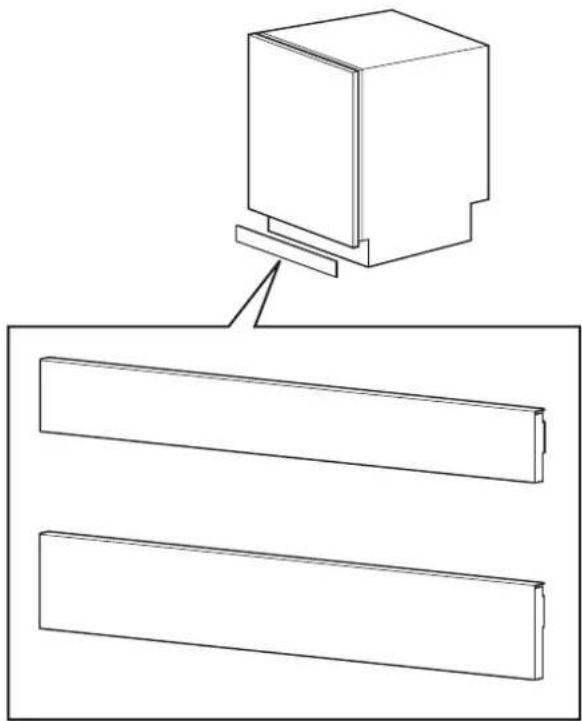
natural_image
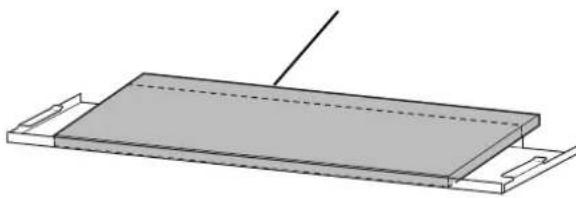
Pure technical line drawing of a 3D block assembly with no text, numbers, or symbols- Attach the supplied sound insulation material to the back of the kickboard (certain models only). If you use the low kickboard, adjust the height of the insulation material by removing the thin strip.
Adjust the height of the insulation material
natural_image
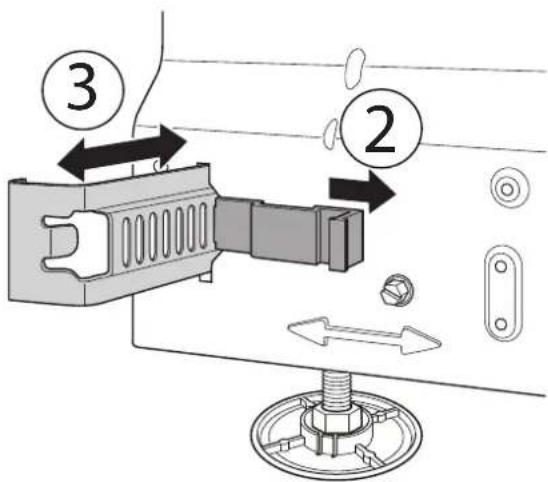
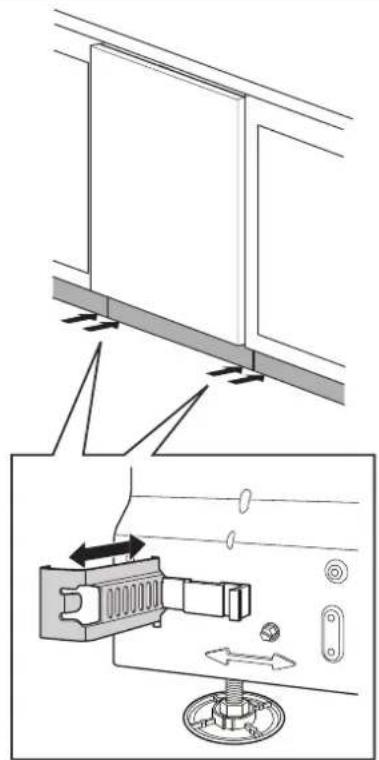
3D diagram of a rectangular plate with a diagonal line and two side supports, no text or symbols present- Loosen the holders for the kickboard by moving the grey catches to the side.
- Adjust the holders (pull out or push in) until they are on a level with the surrounding kitchen plinth.
Attaching the toe kick (if applicable)
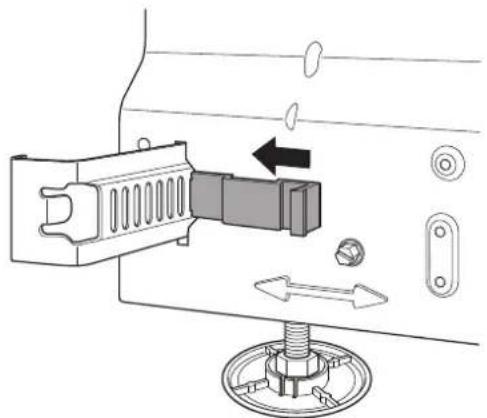
- Lock the holders in place by pushing each catch into a suitable notch in the holder.
natural_image
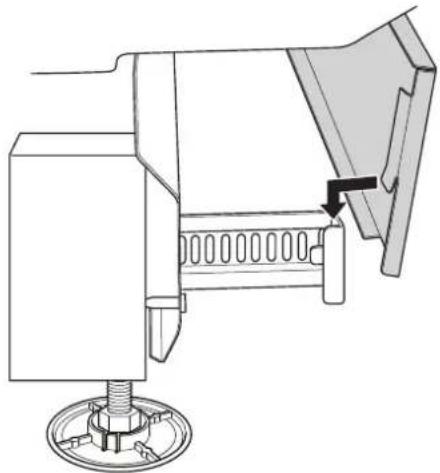
Diagram of a mechanical assembly with directional arrows indicating movement or force (no text or symbols present)- Hang the toe kick on the holders.
natural_image
Technical line drawing of a mechanical device with a base and mounting bracket (no text or symbols)- Check that the toe kick is in line with the surrounding kitchen toe kick, that is, at the same depth. Loosen and adjust the holders as necessary until satisfied.
natural_image
Technical diagram showing a door panel installation and a mechanical device with directional arrows (no text or symbols)Service & guarantee
Service
Before calling for service, check to see whether the faults is due to something that you can rectify yourself.
See Trouble shooting.
Guarantee
For guarantee details, see the guarantee card.
Quick Guide
1. Loading baskets
Scrape off large food particleas before loading the machine.
2. Dispensing dishwasher detergent
The detergent compartment has a small compartment for pre-wash and one for main wash.
3. Ensure that the spray arms can rotate freely
4. Turn on the main switch
5. Select program and press start
For washing normally soiled dishes use the Normal wash program with temperature C and drying +)))
To save more water and energy use economy temperature and economy drying.
6. Close the door
Mini Program Guide
| Programs Daily Heavy Normal Delicate Quick Rinse & | Hold | |||||
 |  |  |  |  |  | |
| Options -- | -- |  |  |  | ||
| Prewashes with SCS | 1 prewash | 2 prewashes | 2 prewashes | -- | -- | -- |
| Mainwash | 60°C | 55°C | 65°C | 50°C | 60°C | -- |
| Number of rinses | 3, last rinse 65°C | 3, last rinse 60°C | 3, last rinse 70°C | 2, last rinse 50°C | 2, last rinse 60°C | 1 rinse |
Art. No: 80 883 14. Rev. 01• We reserve the right to make changes. Disclaimer! Not all models contain all the features listed in this manual.
Printed on environmentally-friendly paper which meets the demands of Friends of the Earth and the Swedish Society for Nature Conservation.
- Use & Care Guide Dishwasher
- Contents
- Page
- Before doing your first wash
- Safety
- General
- Winter storage/Transport
- Overfill protection
- Cleaning
- Packaging materials
- Scrapping
- Child Safety!
- Child-safe button lock
- Advice!
- Child-safe dishwashing
- Protect your children!
- Parts of the dishwasher\*
- Technical information
- Baskets\*
- Control panel
- Dispenser
- Basic Course
- Load the baskets correctly!
- NB!
- Detergent dosage
- Dishwasher tablets
- 3in1/ Combined detergent NB!
- CAUTION!
- Programs
- Press the main power switch
- Select program
- Daily wash
- Heavy wash
- Normal wash
- For washing normally soiled dishes use the Normal wash program with temperature ° C and drying +
- Delicate wash
- Quick wash
- Rinse & Hold
- Options
- Select options
- ° C Higher temperature
- G 5 h Delayed start
- + Extra dry
- Press Start/Stop
- Changing options
- Do you want to load more dishes?
- If the machine is switched off from the main switch
- After dishwashing
- Drying
- Eco-dishwashing
- Only wash with a full load
- Wash at a lower temperature
- Select program with Eco drying
- Do not rinse before dishwashing
- Choose environmentally-friendly dishwasher detergent
- Connect to cold water supply
- Fragile dishes
- Fragile decoration
- Crystal/ glass
- Silver
- Cutlery with glued handles
- Wood
- Aluminium
- Plastic
- To protect plastic articles
- Salt
- Add salt
- The indicator is not working
- \*NB!
- Program Description
- Coarse filter
- Fine filter
- NOTE:
- Drain pump
- NOTE!
- The spray arms
- Door
- Tip!
- Rinse aid
- Pour in rinse aid
- Machines with indicator on the panel
- To fill with rinse aid:
- Machines with refill indicator
- Select dosage
- Settings
- Reprogramming
- Setting a signal
- PROG
- START
- Setting water hardness
- Fault indications
- Troubleshooting
- Action
- Performance information
- Test dosage
- Energy labelling
- Technical data
- Installation instructions
- SAFETY INSTRUCTIONS:
- BEFORE STARTING THE INSTALLATION:
- Installation and connection information
- WATER CONNECTION
- ELECTRICAL CONNECTION
- DRAINAGE
- CABLE/HOSE LENGTHS
- TOOLS
- Step 1. Fitting the dishwasher in place
- Fitting the dishwasher in place
- Step 2. Attaching cover or wooden door
- Step 3. Adjusting the door springs
- Adjusting the door springs
- Step 4. Connecting electricity, water and drain
- ConnectConnect drain hose
- Note:!
- Connect water supply hose
- Connect the electric plug
- Step 5. Checking dishwasher function and fit
- Step 6. Securing the dishwasher
- Securing the dishwasher
- Step 7. Attaching the toe kick (if applicable)
- Attaching the toe kick (if applicable)
- Service & guarantee
- Service
- Guarantee
- Quick Guide
- Loading baskets
- Dispensing dishwasher detergent
- Ensure that the spray arms can rotate freely
- Turn on the main switch
- Select program and press start
- Close the door
Brand : Atag
Model : VA6611NT
Category : Dishwasher