XDA Ignito - Mobile Phone O2 - Free user manual and instructions
Find the device manual for free XDA Ignito O2 in PDF.


| Product Type | Mobile Phone |
| Brand | O2 |
| Model | XDA Ignito |
| Operating System | Windows Mobile 6.1 |
| Processor | Qualcomm MSM7200 528 MHz |
| Display | 2.8 inch TFT touchscreen, 480x640 pixels |
| Camera | 3.15 MP rear camera |
| Memory | 256 MB RAM, 512 MB ROM, microSD slot |
| Battery | Li-Ion 1340 mAh, removable |
| Dimensions | 102 x 54 x 15 mm (4.02 x 2.13 x 0.59 in) |
| Weight | 120 g (4.23 oz) |
| Connectivity | GSM/EDGE, UMTS/HSDPA, Wi-Fi 802.11 b/g, Bluetooth 2.0, GPS |
| Sensors | Accelerometer, proximity sensor |
| Audio | 3.5mm headphone jack, loudspeaker |
| User Interface | TouchFLO 3D interface |
| Cleaning | Use a dry, soft cloth; avoid water and harsh chemicals |
| Safety | Avoid extreme temperatures, moisture, and use only O2-approved charger |
| Repairability | Battery, SIM, and microSD are user-replaceable; other repairs by professional |
Frequently Asked Questions - XDA Ignito O2
User questions about XDA Ignito O2
0 question about this device. Answer the ones you know or ask your own.
Ask a new question about this device
Download the instructions for your Mobile Phone in PDF format for free! Find your manual XDA Ignito - O2 and take your electronic device back in hand. On this page are published all the documents necessary for the use of your device. XDA Ignito by O2.
USER MANUAL XDA Ignito O2
natural_image
Simple icon of a camera with no text or symbolsWe're better, connected
O_2
Please Read Before Proceeding
THE BATTERY IS NOT CHARGED WHEN YOU TAKE IT OUT OF THE BOX.
DO NOT REMOVE THE BATTERY PACK WHEN THE DEVICE IS CHARGING.
YOUR WARRANTY IS INVALIDATED IF YOU OPEN OR TAMPER WITH THE DEVICE'S OUTER CASING.
PRIVACY RESTRICTIONS
Some countries require full disclosure of recorded telephone conversations, and stipulate that you must inform the person with whom you are speaking that the conversation is being recorded. Always obey the relevant laws and regulations of your country when using the recording feature of your PDA Phone.
INTELLECTUAL PROPERTY RIGHT INFORMATION
Copyright © 2008 High Tech Computer Corp. All Rights Reserved.
htc, , ExtUSB, and HTC Care are trademarks and/or service marks of High Tech Computer Corp.
Microsoft, MS-DOS, Windows, Windows NT, Windows Server, Windows Mobile, Windows XP, Windows Vista, ActiveSync, Windows Mobile Device Center, Internet Explorer, MSN, Hotmail, Windows Live, Outlook, Excel, PowerPoint, Word, OneNote and Windows Media are either registered trademarks or trademarks of Microsoft Corporation in the United States and/or other countries.
Bluetooth and the Bluetooth logo are trademarks owned by Bluetooth SIG, Inc.
Java, J2ME and all other Java-based marks are trademarks or registered trademarks of Sun Microsystems, Inc. in the United States and other countries.
Copyright © 2008, Adobe Systems Incorporated. All Rights Reserved. Opera® Mobile from Opera Software ASA. Copyright 1995-2008 Opera Software ASA. All Rights Reserved.
Google is a registered trademark and Google Maps is a trademark of Google, Inc. in the United States and other countries.
YouTube is a trademark of Google, Inc.
Sprite Backup is a trademark or service mark of Sprite Software.
Copyright © 2001-2008, Spb Software House. All Rights Reserved.
Copyright © 2008, Esmertec AG. All Rights Reserved.
Copyright © 2003-2008, ArcSoft, Inc. and its licensors. All Rights Reserved. ArcSoft and the ArcSoft logo are registered trademarks of ArcSoft, Inc. in the United States and/or other countries.
Copyright © 2004-2008, Ilium Software, Inc. All Rights Reserved.
All other company, product and service names mentioned herein are trademarks, registered trademarks or service marks of their respective owners.
HTC shall not be liable for technical or editorial errors or omissions contained herein, nor for incidental or consequential damages resulting from furnishing this material. The information is provided “as is” without warranty of any kind and is subject to change without notice. HTC also reserves the right to revise the content of this document at any time without prior notice.
No part of this document may be reproduced or transmitted in any form or by any means, electronic or mechanical, including photocopying, recording or storing in a retrieval system, or translated into any language in any form without prior written permission of HTC.
Disclaimers
THE WEATHER INFORMATION, DATA AND DOCUMENTATION ARE PROVIDED "AS IS" AND WITHOUT WARRANTY OR TECHNICAL SUPPORT OF ANY KIND FROM HTC. TO THE MAXIMUM EXTENT PERMITTED BY APPLICABLE LAW, HTC AND ITS AFFILIATES expressly disclaim any and all representations and warranties, express or implied, arising by law or otherwise, regarding the Weather Information, Data, Documentation, or any other Products and services, including without limitation any express or implied warranty of merchantability, express or implied warranty of fitness for a particular purpose, non-infringement, quality, accuracy, completeness, effectiveness, reliability, usefulness, that the Weather Information, Data and/or Documentation will be error-free, or implied warranties arising from course of dealing or course of performance.
Without limiting the foregoing, it is further understood that HTC and its Providers are not responsible for Your use or misuse of the Weather Information, Data and/or Documentation or the results from such use. HTC and its Providers make no express or implied warranties, guarantees or affirmations that weather information will occur or has occurred as the reports, forecasts, data, or information state, represent or depict and it shall have no responsibility or liability whatsoever to any person or entity, parties and non-parties alike, for any inconsistency, inaccuracy, or omission for weather or events predicted or depicted, reported, occurring or occurred. WITHOUT LIMITING THE GENERALITY OF THE FOREGOING, YOU ACKNOWLEDGE THAT THE WEATHER INFORMATION, DATA AND/OR DOCUMENTATION MAY INCLUDE INACCURACIES AND YOU WILL USE COMMON SENSE AND FOLLOW STANDARD SAFETY PRECAUTIONS IN CONNECTION WITH THE USE OF THE WEATHER INFORMATION, DATA OR DOCUMENTATION.
Limitation of Damages
TO THE MAXIMUM EXTENT PERMITTED BY APPLICABLE LAW, IN NO EVENT SHALL HTC OR ITS PROVIDERS BE LIABLE TO USER OR ANY THIRD PARTY FOR ANY INDIRECT, SPECIAL, CONSEQUENTIAL, INCIDENTAL OR PUNITIVE DAMAGES OF ANY KIND, IN CONTRACT OR TORT, INCLUDING, BUT NOT LIMITED TO, INJURY, LOSS OF REVENUE, LOSS OF GOODWILL, LOSS OF BUSINESS OPPORTUNITY, LOSS OF DATA, AND/OR LOSS OF PROFITS ARISING OUT OF, OR RELATED TO, IN ANY MANNER, OR THE DELIVERY, PERFORMANCE OR NONPERFORMANCE OF OBLIGATIONS, OR USE OF THE WEATHER INFORMATION, DATA OR DOCUMENTATION HEREUNDER REGARDLESS OF THE FORESEEABILITY THEREOF.
Important Health Information and Safety Precautions
When using this product, the safety precautions below must be taken to avoid possible legal liabilities and damages.
Retain and follow all product safety and operating instructions. Observe all warnings in the operating instructions on the product.
To reduce the risk of bodily injury, electric shock, fire, and damage to the equipment, observe the following precautions.
ELECTRICAL SAFETY
This product is intended for use when supplied with power from the designated battery or power supply unit. Other usage may be dangerous and will invalidate any approval given to this product.
SAFETY PRECAUTIONS FOR PROPER GROUNDING INSTALLATION
CAUTION: Connecting to an improperly grounded equipment can result in an electric shock to your device.
This product equipped with a USB Cable for connecting with desktop or notebook computer. Be sure your computer is properly grounded (earthed) before connecting this product to the computer. The power supply cord of a desktop or notebook computer has an equipment-grounding conductor and a grounding plug. The plug must be plugged into an appropriate outlet which is properly installed and grounded in accordance with all local codes and ordinances.
SAFETY PRECAUTIONS FOR POWER SUPPLY UNIT
- Use the correct external power source
A product should be operated only from the type of power source indicated on the electrical ratings label. If you are not sure of the type of power source required, consult your authorized service provider or local power company. For a product that operates from battery power or other sources, refer to the operating instructions that are included with the product.
- Handle battery packs carefully
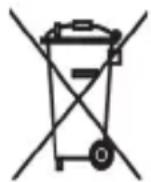
This product contains a Li-ion battery. There is a risk of fire and burns if the battery pack is handled improperly. Do not attempt to open or service the battery pack. Do not disassemble, crush, puncture, short external contacts or circuits, dispose of in fire or water, or expose a battery pack to temperatures higher than 60^ C ( 140^ F).

WARNING: Danger of explosion if battery is incorrectly replaced.
To reduce risk of fire or burns, do not disassemble, crush, puncture, short external contacts, expose to temperature above 60^ C ( 140^ F), or dispose of in fire or water. Replace only with specified batteries. Recycle or dispose of used batteries according to the local regulations or reference guide supplied with your product.

Li-ion
• Take extra precautions
- Keep the battery or device dry and away from water or any liquid as it may cause a short circuit.
- Keep metal objects away so they don't come in contact with the battery or its connectors as it may lead to short circuit during operation.
-
Do not use a battery that appears damaged, deformed, or discolored, or the one that has any rust on its casing, overheats, or emits a foul odor.
-
Always keep the battery out of the reach of babies and small children, to avoid swallowing of the battery. Consult the doctor immediately if the battery is swallowed.
-
If the battery leaks:
-
Do not allow the leaking fluid to come in contact with skin or clothing. If already in contact, flush the affected area immediately with clean water and seek medical advice.
- Do not allow the leaking fluid to come in contact with eyes. If already in contact, DO NOT rub; rinse with clean water immediately and seek medical advice.
• Take extra precautions to keep a leaking battery away from fire as there is a danger of ignition or explosion.
SAFETY PRECAUTIONS FOR DIRECT SUNLIGHT
Keep this product away from excessive moisture and extreme temperatures. Do not leave the product or its battery inside a vehicle or in places where the temperature may exceed 60^ C ( 140^ F), such as on a car dashboard, window sill, or behind a glass that is exposed to direct sunlight or strong ultraviolet light for extended periods of time. This may damage the product, overheat the battery, or pose a risk to the vehicle.
PREVENTION OF HEARING LOSS

CAUTION: Permanent hearing loss may occur if earphones or headphones are used at high volume for prolonged periods of time.
NOTE: For France, Earphone (listed below) for this device have been tested to comply with the Sound Pressure Level requirement laid down in the applicable NF EN 50332-1:2000 and/or NF EN 50332-2:2003 standards as required by French Article L. 5232-1.
- Earphone, manufactured by HTC, Model HS S300.
SAFETY IN AIRCRAFT
Due to the possible interference caused by this product to an aircraft's navigation system and its communications network, using this device's phone function on board an airplane is against the law in most countries. If you want to use this device when on board an aircraft, remember to turn off your phone by switching to Airplane Mode.
ENVIRONMENT RESTRICTIONS
Do not use this product in gas stations, fuel depots, chemical plants or where blasting operations are in progress, or in potentially explosive atmospheres such as fuelling areas, fuel storehouses, below deck on boats, chemical plants, fuel or chemical transfer or storage facilities, and areas where the air contains chemicals or particles, such as grain, dust, or metal powders. Please be aware that sparks in such areas could cause an explosion or fire resulting in bodily injury or even death.
EXPLOSIVE ATMOSPHERES
When in any area with a potentially explosive atmosphere or where flammable materials exist, the product should be turned off and the user should obey all signs and instructions. Sparks in such areas could cause an explosion or fire resulting in bodily injury or even death. Users are advised not to use the equipment at refueling points such as service or gas stations, and are reminded of the need to observe restrictions on the use of radio equipment in fuel depots, chemical plants, or where blasting operations are in progress. Areas with a potentially explosive atmosphere are often, but not always, clearly marked. These include fueling areas, below deck on boats, fuel or chemical transfer or storage facilities, and areas where the air contains chemicals or particles, such as grain, dust, or metal powders.
ROAD SAFETY
Vehicle drivers in motion are not permitted to use telephony services with handheld devices, except in the case of emergency. In some countries, using hands-free devices as an alternative is allowed.
SAFETY PRECAUTIONS FOR RF EXPOSURE
- Avoid using your phone near metal structures (for example, the steel frame of a building).
-
Avoid using your phone near strong electromagnetic sources, such as microwave ovens, sound speakers, TV and radio.
-
Use only original manufacturer-approved accessories, or accessories that do not contain any metal.
- Use of non-original manufacturer-approved accessories may violate your local RF exposure guidelines and should be avoided.
INTERFERENCE WITH MEDICAL EQUIPMENT FUNCTIONS
This product may cause medical equipment to malfunction. The use of this device is forbidden in most hospitals and medical clinics.
If you use any other personal medical device, consult the manufacturer of your device to determine if they are adequately shielded from external RF energy. Your physician may be able to assist you in obtaining this information.
Turn your phone OFF in health care facilities when any regulations posted in these areas instruct you to do so. Hospitals or health care facilities may be using equipment that could be sensitive to external RF energy.
HEARING AIDS
Some digital wireless phones may interfere with some hearing aids. In the event of such interference, you may want to consult your service provider, or call the customer service line to discuss alternatives.
NONIONIZING RADIATION
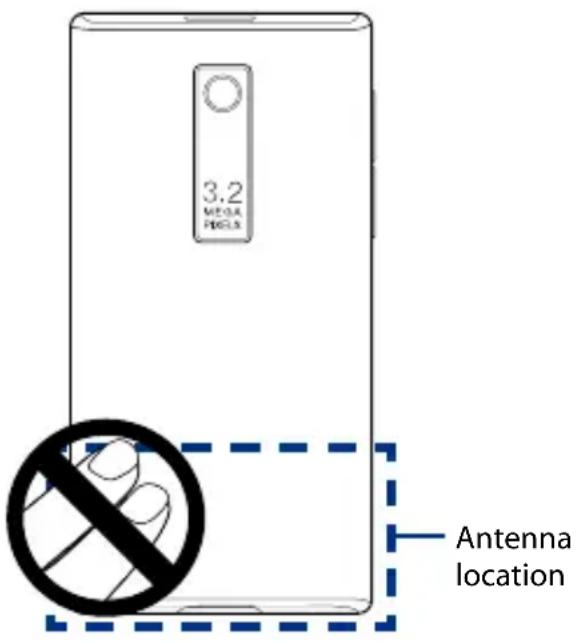
Your device has an internal antenna. This product should be operated in its normal-use position to ensure the radiative performance and safety of the interference. As with other mobile radio transmitting equipment, users are advised that for satisfactory operation of the equipment and for the safety of personnel, it is recommended that no part of the human body be allowed to come too close to the antenna during operation of the equipment.
Use only the supplied integral antenna. Use of unauthorized or modified antennas may impair call quality and damage the phone, causing loss of performance and SAR levels exceeding the recommended limits as well as result in non-compliance with local regulatory requirements in your country.
To assure optimal phone performance and ensure human exposure to RF energy is within the guidelines set forth in the relevant standards, always use your device only in its normal-use position. Contact with the antenna area may impair call quality and cause your device to operate at a higher power level than needed. Avoiding contact with the antenna area when the phone is IN USE optimizes the antenna performance and the battery life.
General Precautions
- Avoid applying excessive pressure to the device
Do not apply excessive pressure on the screen and the device to prevent damaging them and remove the device from your pants' pocket before sitting down. It is also recommended that you store the device in a protective case and only use the device stylus or your finger when interacting with the touch screen. Cracked display screens due to improper handling are not covered by the warranty.
• Device getting warm after prolonged use
When using your device for prolonged periods of time, such as when you're talking on the phone, charging the battery or browsing the web, the device may become warm. In most cases, this condition is normal and therefore should not be interpreted as a problem with the device.
- Heed service markings
Except as explained elsewhere in the Operating or Service documentation, do not service any product yourself. Service needed on components inside the device should be done by an authorized service technician or provider.
• Damage requiring service
Unplug the product from the electrical outlet and refer servicing to an authorized service technician or provider under the following conditions:
- Liquid has been spilled or an object has fallen into the product.
- The product has been exposed to rain or water.
- The product has been dropped or damaged.
- There are noticeable signs of overheating.
- The product does not operate normally when you follow the operating instructions.
- Avoid hot areas
The product should be placed away from heat sources such as radiators, heat registers, stoves, or other products (including amplifiers) that produce heat.
- Avoid wet areas
Never use the product in a wet location.
- Avoid using your device after a dramatic change in temperature
When you move your device between environments with very different temperature and/or humidity ranges, condensation may form on or within the device. To avoid damaging the device, allow sufficient time for the moisture to evaporate before using the device.
NOTICE: When taking the device from low-temperature conditions into a warmer environment or from high-temperature conditions into a cooler environment, allow the device to acclimate to room temperature before turning on power.
- Avoid pushing objects into product
Never push objects of any kind into cabinet slots or other openings in the product. Slots and openings are provided for ventilation. These openings must not be blocked or covered.
- Mounting accessories
Do not use the product on an unstable table, cart, stand, tripod, or bracket. Any mounting of the product should follow the manufacturer's instructions, and should use a mounting accessory recommended by the manufacturer.
- Avoid unstable mounting
Do not place the product with an unstable base.
- Use product with approved equipment
This product should be used only with personal computers and options identified as suitable for use with your equipment.
- Adjust the volume
Turn down the volume before using headphones or other audio devices.
- Cleaning
Unplug the product from the wall outlet before cleaning. Do not use liquid cleaners or aerosol cleaners. Use a damp cloth for cleaning, but NEVER use water to clean the LCD screen.
- For magnetic devices
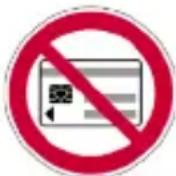
Please avoid putting any media that contains magnets, e.g. magnetic card, credit cards, bank cards, audio/video tape or magnetic memory devices, directly on the device or stylus without any distance.

It is highly recommended to put the media containing magnets in a security distance of at least 5 cm. If you carry your wallet or billfold which contains magnetic cards next to the device or its stylus, information stored on these cards could be destroyed.
Please make sure that there is an adequate distance between the device or its stylus and other magnetic sensitive devices, e.g., a mechanical watch or measure instruments.
- For pacemakers

The functionality of pacemakers can be interfered by the device and its stylus. Always keep the device and its stylus in a fair distance to your pacemaker, which at least will be 5 cm. In any case, please do not carry the device and/or its stylus in the front pockets of your shirt or coat.

For information about other medical active implants, please contact the producer or a doctor to ensure such active implants will not be interfered by magnetic field.
Contents
Chapter 1 Getting Started 21
1.1 Getting to Know Your Touch Phone and Accessories 22
Top panel 22
Left panel....22
Right panel....22
Front panel 23
Back panel 24
Bottom panel....24
Accessories....25
1.2 Installing the SIM Card and Battery 25
SIM card....25
Battery....26
1.3 Charging the battery 28
1.4 Using the Strap Holder 29
1.5 Starting Up 30
Turn your device on and off 30
Auto configure the data connection settings 30
Switch to Sleep mode when not in use 31
1.6 Navigating Your Device 32
Finger-touch control 32
Stylus 34
Navigation Control 34
1.7 Home Screen 35
1.8 Status Icons .... 36
1.9 Start Menu.... 39
1.10 Quick Menu 40
1.11 LED Alerts 41
1.12 Adjusting the Volume 42
1.13 Using your Device as a USB Drive 43
Chapter 2 Using Phone Features 45
2.1 Using the Phone 46
The Phone screen 46
Enter your PIN 46
2.2 Voice Call 47
Make a call....47
Answer a call....48
End a call 50
Call History 51
Speed Dial 51
Turn the phone function on and off 52
2.3 Video Call....53
Make a video call....53
Answer a video call....53
End a video call ....53
Change settings 54
2.4 Smart Dial 56
Make a call or send a text message using Smart Dial 57
2.5 Setting Up Bluetooth SIM Access for Car Kit Phones 58
Chapter 3 TouchFLO™ 3D 59
3.1 About TouchFLO™ 3D 60
3.2 Using the TouchFLO 3D Home Screen 60
Home....62
People....63
Messages 65
Mail....66
Photos and Videos....67
Music 68
Internet....72
Weather 72
Settings....74
Programs....75
3.3 Finger Gestures 76
Finger scrolling 76
Finger zooming 77
Finger panning....77
Chapter 4 Entering Text 79
4.1 Selecting an Input Method....80
4.2 Using the Full QWERTY 81
4.3 Using the Compact QWERTY 82
4.4 Using the Phone Keypad 83
4.5 Using Multitap and T9 Modes 84
Multitap mode....84
T9 mode....84
4.6 Using Numeric and Symbol Mode 86
4.7 Using Block Recognizer 87
4.8 Using Letter Recognizer 87
4.9 Using Transcriber 88
Chapter 5 Synchronizing Information With Your Computer 89
5.1 About Synchronization 90
Ways to synchronize 90
5.2 Setting Up Windows Mobile® Device Center on Windows Vista® ..... 91
Set up synchronization in Windows Mobile Device Center....91
Use Windows Mobile Device Center ....92
5.3 Setting Up ActiveSync ^® on Windows XP ^® 93
Install ActiveSync....93 Set up synchronization in ActiveSync....93
5.4 Synchronizing With Your Computer 94
Start and stop synchronization .....94 Change which information is synchronized .....94 Troubleshoot sync connection problem .....95
5.5 Synchronizing via Bluetooth 95
5.6 Synchronizing Music and Video 96
Chapter 6 Exchanging Messages 97
6.1 Messaging 98
6.2 Text Messages 99
Create a new text message 99
Compose and send a text message 100
Manage text messages....100
6.3 MMS 102
Change MMS settings 102
Create and send MMS messages.... 104
View and reply to MMS messages 106
6.4 Types of E-mail Accounts....107
Set up your device to synchronize Outlook e-mail with the computer .....107
Add an e-mail account.... 107
6.5 E-mail Setup Wizard 108
Set up an Internet e-mail account....108
Set up a custom domain e-mail.... 110
6.6 Using E-mail 111
Create a new e-mail message.... 111
Compose and send an e-mail 112
Filter the Inbox message list 112
View and reply to messages 113
Synchronize e-mails.... 114
Customize e-mail settings 115
Chapter 7 Working With Company E-mails and Meeting Appointments 117
7.1 Synchronizing with the Exchange Server 118
Set up an Exchange Server connection.... 118
Start synchronization 119
7.2 Working With Company E-mails 120
Automatic synchronization through Direct Push 120
Scheduled synchronization 121
Instant download through Fetch Mail 121
Search for e-mails on the Exchange Server 122
Flag your messages.... 122
Out-of-office auto-reply 123
7.3 Managing Meeting Requests 124
7.4 Finding Contacts in the Company Directory 125
Chapter 8 Internet 127
8.1 Ways of Connecting to the Internet 128
Wi-Fi 128
GPRS/3G 131
Dial-up 132
8.2 Starting a Data Connection....133
8.3 Using Opera Mobile™ 134
View web pages 135
Opera Mobile menu.... 136
8.4 Using YouTube™ 137
Browse for videos.... 137
Watching videos.... 139
Bookmarks....140
History....141
8.5 Using Streaming Media....141
8.6 Using Windows Live™ 143
Set up Windows Live™ 143
The Windows Live™ interface 144
Windows Live™ Messenger 145
Launch Messenger and sign in 145
Add Windows Live™ contacts.... 146
8.7 Using Your Device as a Modem(Internet Sharing) 147
8.8 Using RSS Hub 149
Subscribe to and organize news channels 149
View and organize headlines.... 151
View the news summary 152
Chapter 9 Bluetooth 155
9.1 Bluetooth Modes 156
9.2 Bluetooth Partnerships 157
9.3 Connecting a Bluetooth Hands-free or Stereo Headset .....158
9.4 Beaming Information Using Bluetooth 159
9.5 Bluetooth Explorer and Bluetooth File Sharing 160
9.6 Printing Files via Bluetooth....162
Chapter 10 Navigating on the Road 163
10.1 Google™ Maps (Available by Country) 164
Open Google Maps 164
Search for a place of interest 165
10.2 Guidelines and Preparation for Using GPS 166
10.3 Downloading Satellite Data via QuickGPS 167
Download options.... 168
Chapter 11 Experiencing Multimedia 169
11.1 Taking Photos and Videos 170
Capture modes.... 170
Camera controls 172
On-screen controls and indicators 172
Menu Panel 174
Zooming....175
The Review screen.... 177
Advanced Options 178
11.2 Viewing Photos and Videos Using Album 181
Select a photo or video to view.... 181
View an image....182
Play back video....185
Close Album....185
11.3 Using Windows Media® Player Mobile 185
About the controls 186
About the screens and menus.... 187
Synchronize video and audio files.... 187
Play media....189
Playlists....190
Troubleshooting....190
11.4 Using FM Radio 190
FM Radio controls.... 191
Device controls used in FM Radio.... 192
Save presets.... 193
FM Radio Main Menu 193
11.5 Using Audio Booster 194
11.6 Using MP3 Trimmer 195
Chapter 12 Programs 197
12.1 Programs on your Device 198
12.2 Adding and Removing Programs ....201
12.3 Adobe ^® Reader ^® LE 202
12.4 Calendar 203
Create appointments 203
View appointments 204
Send appointments 205
12.5 Contacts 206
Add new contacts.... 207
Organize and search contacts.... 208
Share contact information.... 209
12.6 Comm Manager 210
12.7 Microsoft® Office Mobile 211
12.8 Notes 212
12.9 Java 214
Install and launch MIDlets/MIDlet suites.... 214
Manage MIDlets/MIDlet suites.... 215
12.10 SIM Manager 216
12.11 Spb GPRS Monitor (Available by Country) 218
Install GPRS Monitor 218
The GPRS Monitor icon and pop-up window 218
Set up monitoring and notification 219
View charts and reports.... 220
12.12 Sprite Backup 220
12.13 Tasks 223
12.14 Voice Recorder 224
12.15 Voice Speed Dial 226
12.16 ZIP 227
Chapter 13 Managing Your Device 229
13.1 Copying and Managing Files 230
13.2 Settings on your Device 231
Personal tab 231
System tab....232
Connections tab 234
13.3 Changing Basic Settings 235
Date and time....235
Regional settings 236
Display settings 236
Device name 237
Ringer settings.... 237
Alarms and notifications 238
Phone services 238
13.4 Using Connection Setup 239
13.5 Using Task Manager 240
13.6 Protecting Your Device 242
Protect your SIM card with a PIN 242
Protect your device with a password.... 242
13.7 Managing Memory 243
13.8 Resetting Your Device 244
Soft reset 244
Hard reset 244
Clear Storage 245
13.9 Windows Update 246
13.10 Battery Saving Tips 247
Appendix 249
A.1 Specifications 250
A.2 Regulatory Notices 252
Index 259
Chapter 1
Getting Started
1.1 Getting to Know Your Touch Phone and Accessories
1.2 Installing the SIM Card and Battery 1.3 Charging the battery
1.4 Using the Strap Holder 1.5 Starting Up
1.6 Navigating Your Device 1.7 Home Screen
1.8 Status Icons 1.9 Start Menu
1.10 Quick Menu 1.11 LED Alerts
1.12 Adjusting the Volume 1.13 Using your Device as a USB Drive
1.1 Getting to Know Your Touch Phone and Accessories
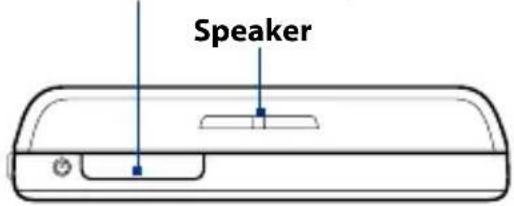
Top panel
POWER
Press to turn off the display temporarily. To turn off the power, press and hold for about 5 seconds. For more information, see "Starting Up" in this chapter.
Left panel Right panel
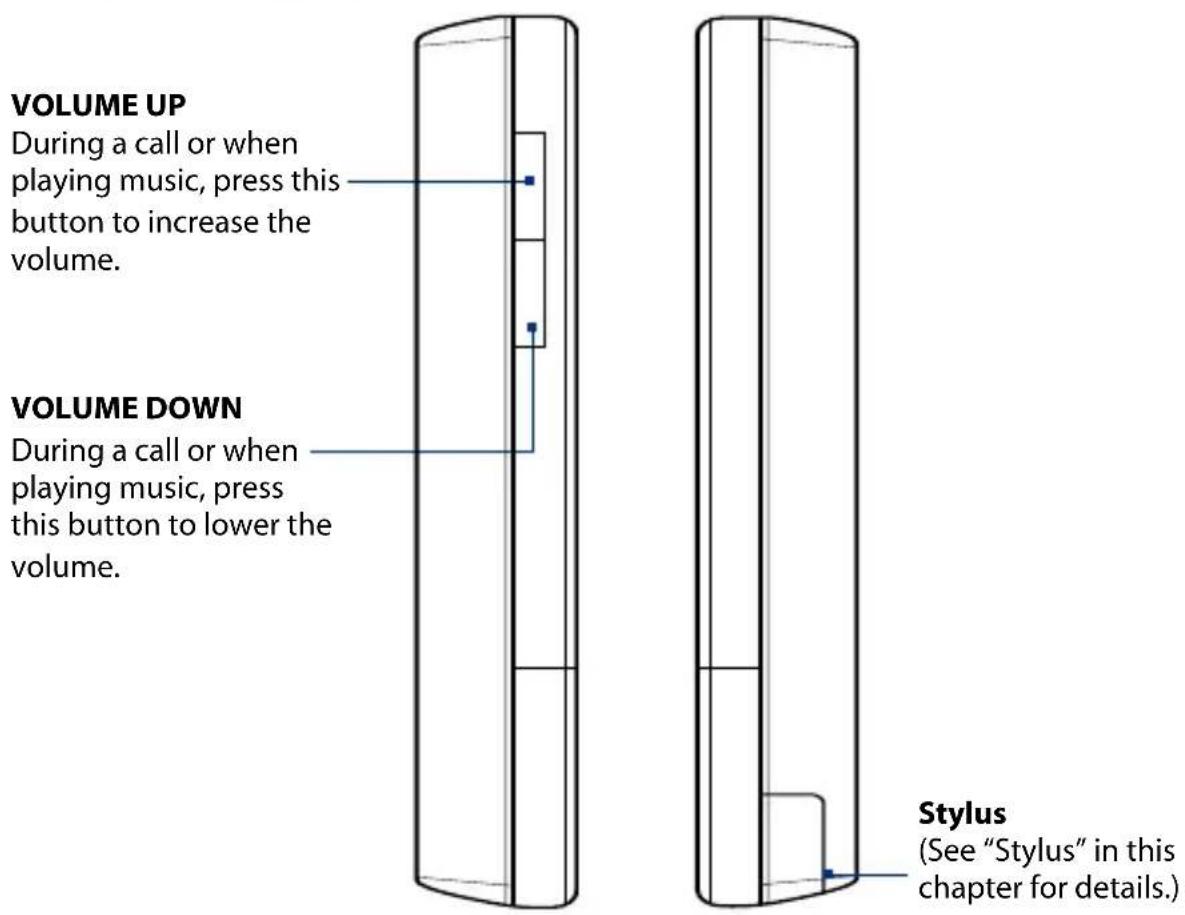
VOLUME UP
During a call or when playing music, press this button to increase the volume.
VOLUME DOWN
During a call or when — playing music, press this button to lower the volume.
Stylus
(See "Stylus" in this chapter for details.)
Front panel
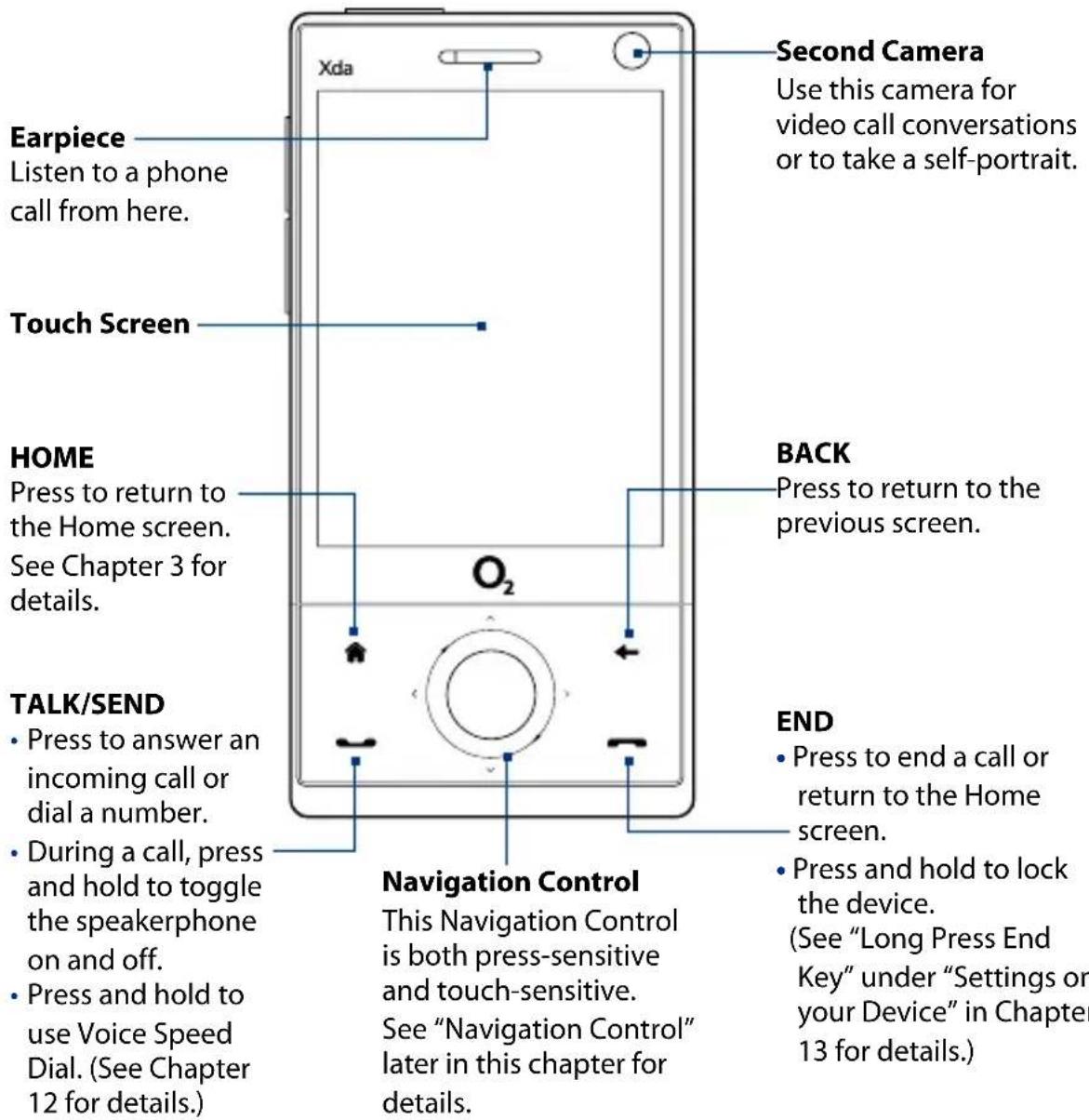
Notes When using the four buttons — HOME, BACK, TALK/SEND, and END — and the Navigation Control, please observe the following precautions:
- Make sure to press on the icons of the four buttons for the best accuracy. When pressing on the Navigation Control, make sure to press the outer areas near the ENTER button for directional control.
- For best results, press with your fingertip. Do not wear gloves.
24 Getting Started
Back panel
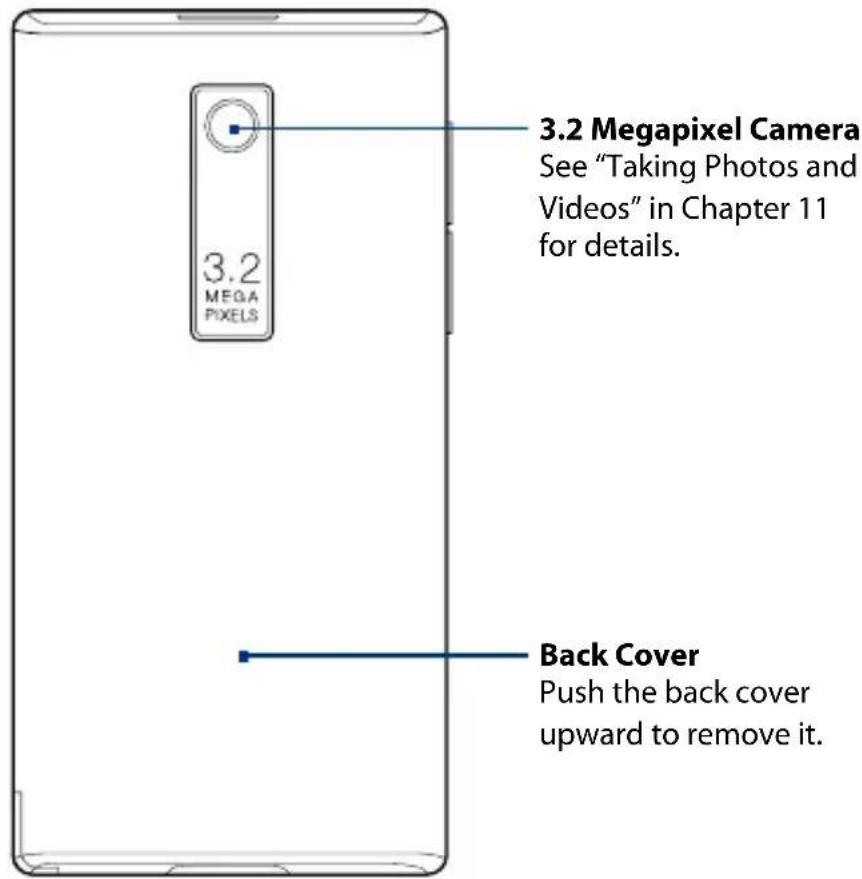
Bottom panel
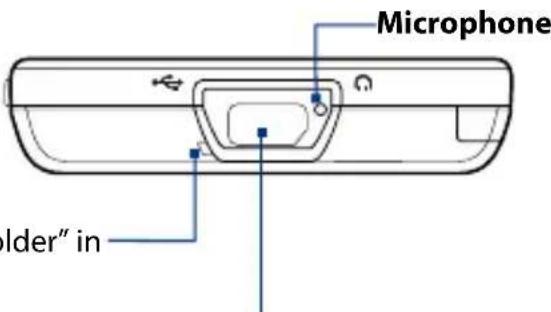
Strap Holder
See "Using the Strap Holder" in this chapter for details.
Sync Connector/Earphone Jack
Connect the supplied USB cable to synchronize information or plug in the AC adapter to recharge the battery. You can also connect the supplied USB stereo headset for hands-free conversation or for listening to audio media.
Accessories
The product package includes the following items and accessories:
- Battery
- AC adapter
- Screen protector
- Stereo headset
- USB sync cable
• Quick Start Guide and TouchFLO 3D Guide
• Getting Started and Application discs - Extra stylus
1.2 Installing the SIM Card and Battery
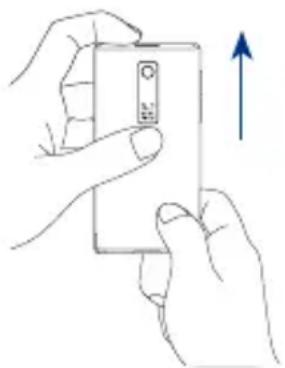
Always turn off your device before installing or replacing the SIM card and battery. You also need to remove the back cover before you can install these components.
To remove the back cover
- Make sure your device is turned off.
- Hold the device with both hands and the front panel facing down.
- Push the back cover up with your thumb until it disengages from the device and then slide it up to remove.
natural_image
Illustration of two hands holding a smartphone with a blue upward arrow indicating motion (no text or symbols)SIM card
The SIM card contains your phone number, service details, and phonebook/message memory. Your device supports both 1.8V and 3V SIM cards.
Note Some legacy SIM cards may not function with your device. You should consult with your service provider for a replacement SIM card. There may be fees for this service.
To install the SIM card
- Make sure your device is turned off.
- Locate the SIM card slot, then insert the SIM card with its gold contacts facing down and its cut-off corner facing out the card slot.
- Slide the SIM card completely into the slot.
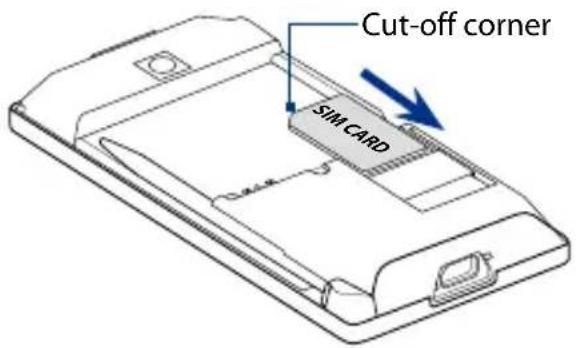
To remove the SIM card
- Remove the battery if it is installed.
- Slide the SIM card out from the SIM card slot with your thumb.
Battery
Your device comes with a rechargeable Lithium-ion or Lithium-ion polymer battery and is designed to use only manufacturer-specified original batteries and accessories. Battery performance depends on many factors, including network configuration, signal strength, the temperature of the environment in which you operate your device, the features and/or settings you select and use, items attached to connecting ports, and your voice, data, and other program usage patterns.
Battery life estimates (approximations):
• Standby time: Up to 285 hours for GSM
Up to 396 hours for WCDMA
- Talk time: Up to 330 minutes for GSM
Up to 270 minutes WCDMA
• Video call time: Up to 145 minutes for WCDMA
Note Battery life is subject to network and phone usage.
Warning! To reduce risk of fire or burns:
- Do not attempt to open, disassemble, or service the battery pack.
- Do not crush, puncture, short external contacts, or dispose of in fire or water.
- Do not expose to temperatures above 60 °C (140°F).
- Replace only with the battery pack designated for this product.
- Recycle or dispose of used battery as stipulated by local regulations.
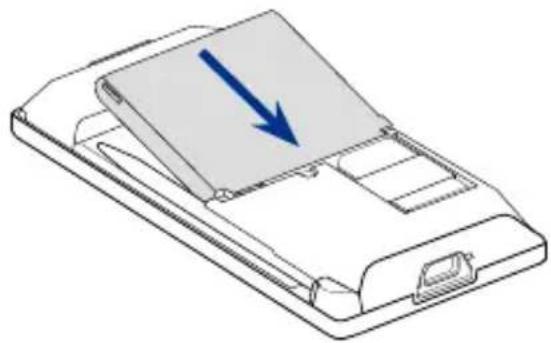
To install the battery
-
Align the battery's exposed copper contacts with the battery connectors inside the battery compartment.
-
Insert the contact's side of the battery first and then gently push the battery into place.
-
Replace the back cover.
natural_image
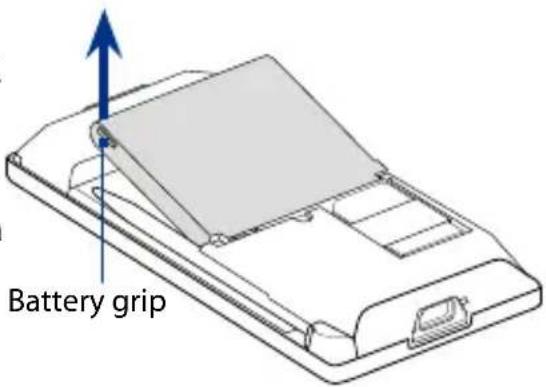
Line drawing of a device casing with a blue arrow pointing to the cover area (no text or symbols)To remove the battery
- Make sure your device is turned off.
- Remove the back cover.
- The top left and right sides of the battery have protruding grips. Lift a protruding grip from either side to remove the battery.
1.3 Charging the battery
New batteries are shipped partially charged. Before you start using your device, it is recommended that you install and charge the battery. Some batteries perform best after several full charge/discharge cycles.
To charge the battery
- Connect the USB connector of the AC adapter to the sync connector on your device.
- Plug in the AC adapter to an electrical outlet to start charging the battery.
Note Only the AC adapter and USB sync cable provided with your device must be used to charge the device.
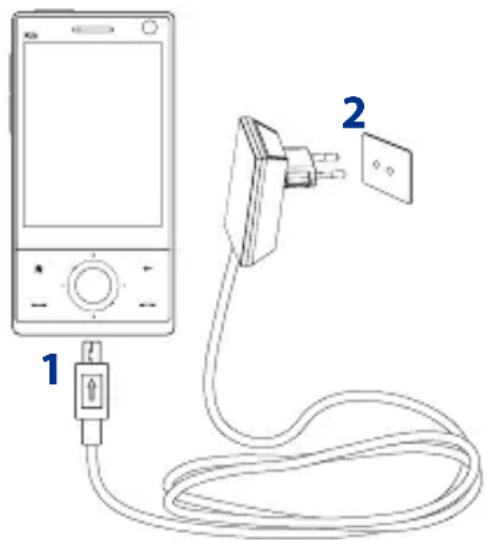
Charging is indicated by a "breathing" white light around the Navigation Control. As the battery is being charged while the power is on, a charging icon also appears in the title bar of the Home screen. After the battery has been fully charged, the Navigation Control LED shows a solid white light and a full battery icon uppears in the title bar of the Home screen.
For more information about the Navigation Control LED, see "LED Alerts" in this chapter.
Warning! • Do not remove the battery from the device while you are charging it using the AC or car adapter.
- As a safety precaution, the battery stops charging when it overheats.
1.4 Using the Strap Holder
The strap holder at the bottom panel of your device allows you to attach a wrist strap, neck lanyard, or string accessory.
To attach a strap, lanyard or string accessory to the strap holder
-
Remove the back cover.
-
Insert the loop of the strap, lanyard or string accessory through the strap holder hole.
Tip To pass through the strap holder easier, push the loop into the strap holder hole using a pointed object such as a needle or toothpick.
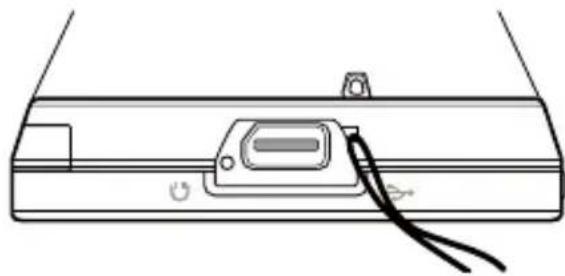
natural_image
Line drawing of a device rear panel with cable and connector (no text or symbols)-
Attach the loop over the small hook at the bottom of the back side of the device.
-
Slightly pull the strap, lanyard or string accessory to fix it securely in place.
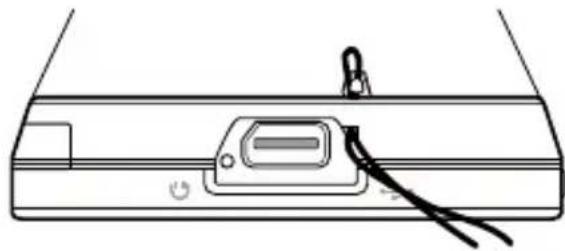
natural_image
Line drawing of a device rear panel with cable and indicator lights (no text or symbols)- Replace the back cover.
1.5 Starting Up
After installing your SIM card and battery and charging the battery, you can now power on and start using your device.
Turn your device on and off
To turn on the power
-
Press and hold the POWER button for a few seconds.
-
When you turn on your device for the first time, a Quick Start Wizard guides you to set up regional settings, date and time, and password. For more information about these settings, see Chapter 13. After the Quick Start Wizard finishes, the device installs customization settings, then restarts.
Note After the device restarts, you may be prompted to set up an e-mail account.
For instructions on how to set up an e-mail account, see Chapter 6.
To turn off the power
-
Press and hold the POWER button for a few seconds.
-
Tap Yes when a message prompts you to choose whether or not to turn off the device completely.
Auto configure the data connection settings
The first time you power on your device, you will see a notification message from
Connection Setup. Connection Setup automatically configures your device's data connections, such as 3G/GPRS, WAP, and MMS, so that you do not need to enter the settings manually for your device.
To automatically configure data connection settings
- When you see the notification message from the Connection Setup, tap Yes.
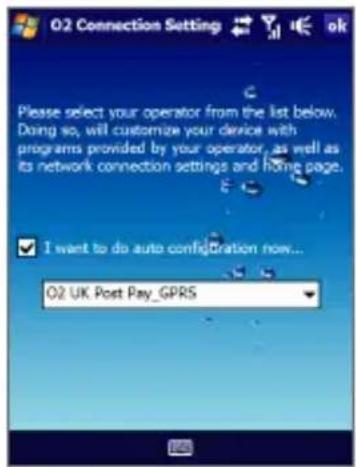
Note If you do not see the notification message, tap on the title bar to display the message.
- If your SIM card supports multiple network operator profiles, a message will appear with network profile choices. Select the profile you want to use and tap OK.
- Connection Setup then starts to configure your device's data connection settings.
- After the Connection Setup completes the configuration, tap Restart.
For more information about Connection Setup, see Chapter 13.
Switch to Sleep mode when not in use
Press and immediately release the POWER button to turn off the display temporarily and switch your device to Sleep mode. Sleep mode suspends your device to a low power state while the display is off in order to save battery power.
Your device automatically goes into Sleep mode when you leave the device idle after a certain period of time. You will still be able to receive messages and calls while your device is in Sleep mode. Pressing the POWER button again or incoming calls/messages will wake up your device.
1.6 Navigating Your Device
There are different ways you can navigate and interact with the interface of your device.
Finger-touch control
A quick and easy way to interact with the home screen and the whole interface of your device is by touch. Basically, the following are the types of actions, called finger gestures, you would use when interacting with your device:
Touch or tap
When selecting items on the screen, such as the Home screen tabs, Start menu, programs and settings icons, and large on-screen buttons, simply touch them with your finger. Apply some pressure with your finger pad when touching an item on the screen.
Tapping means to touch lightly and quickly with your finger pad or fingertip. On screens that display smaller-size items, you can more accurately select an item by tapping it with your fingertip.
Swipe
To swipe means to drag your finger vertically or horizontally across the screen. The following are some instances when you would use swiping:
• Flipping on the Home screen
Swipe your finger vertically to flip through favourite contacts, messages, music albums, photos, and more. For more information, see "Using the TouchFLO 3D Home Screen" in Chapter 3.
- Scrolling
When browsing the contacts list, web pages, documents, and certain selection lists on the Home screen (such as the All Programs list), slowly swipe your finger vertically across the screen to scroll. This allows you to scroll by page and to view the content or available selections as you scroll.
The direction of swiping resembles the way you move a printed document as you are reading it. For detailed instructions, see "Finger scrolling" in Chapter 3.
Slide
Sliding on the touch screen also involves dragging with your finger, but you need to press and hold your finger with some pressure before you start to drag. While dragging, do not release your finger until you have reached the target position.
The following are some instances when you would use sliding:
• Switching between Home screen tabs
Slide your finger left and right to switch between the Home screen tabs. For more information, see "Using the TouchFLO 3D Home screen" in Chapter 3.
- Advancing playback
In players that have a progress bar, such as the Home screen's Music tab and Windows Media® Player Mobile, slide your finger horizontally on their progress bar to advance forward or move backward in the music or video you are playing.
For more information about the Home screen's Music tab, see "Music" in Chapter 3.
For more information about Windows Media ^® Player Mobile, see "Using Windows Media ^® Player Mobile" in Chapter 11.
Flick
Flicking the screen is similar to swiping, except that you need to swipe your finger in light, quicker strokes. This finger gesture is always in a vertical direction, such as when flicking the contacts list. See “Finger scrolling” in Chapter 3 for details.
Finger zooming and panning
In programs such as Album and Opera Mobile, you can use finger gestures when zooming and panning. See Chapter 3, 8 and 11 for details.
Stylus
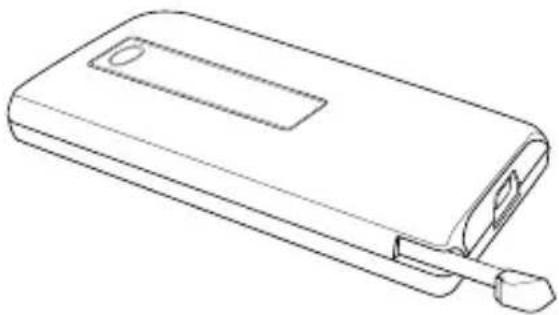
You can use the stylus to navigate and interact with the touch screen. To use the stylus, pull it out from the stylus compartment at the bottom of the right panel of your device. If the backlight is off, removing the stylus automatically turns the backlight back on.
natural_image
Line drawing of a rectangular electronic device with a handle and slot, no text or symbols presentThe stylus is magnetic and sticks to the side when held close to the device. This prevents you from accidentally losing or misplacing the stylus.
Basically, you tap with the stylus to open programs and select items on the screen, and you tap and hold on the screen to open a shortcut menu. You can also use the stylus the same way as what you do with finger gestures, such as swiping, sliding and flicking on the screen.
Navigation Control
On the home screen and in many programs on your device, you can use the Navigation Control for directional control. Press the directional arrows to navigate up, down, left, and right on the screen. When an item has been selected on the screen, press the ENTER button (the center button) to confirm your selection.
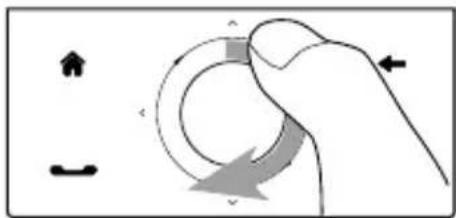
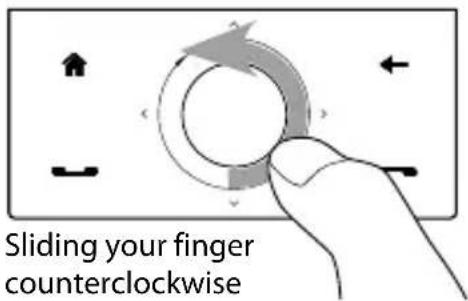
The Navigation Control is also touch sensitive and can be used for zooming. Slide your finger clockwise around the Navigation Control to zoom in, counterclockwise to zoom out.
The following programs allow you to use the Navigation Control for zooming:
- Album
- Camera
- Opera Mobile
• Word Mobile and Excel Mobile
natural_image
Hand holding a circular button with directional arrows, no text or symbols presentSliding your finger clockwise
Tip If you purchase and install GPS navigation software on your device, you can also use the Navigation Control for zooming in the GPS software.
On the Home screen's Music tab, you can advance forward in the music you are playing by sliding clockwise around the Navigation Control. To move backward in the music, slide counterclockwise. See "Music" in Chapter 3 for details.
1.7 Home Screen
The default home screen of the device is the TouchFLO™ 3D Home screen which allows finger-touch access to the most important functions such as contacts, text messages, e-mail, Internet, and more.
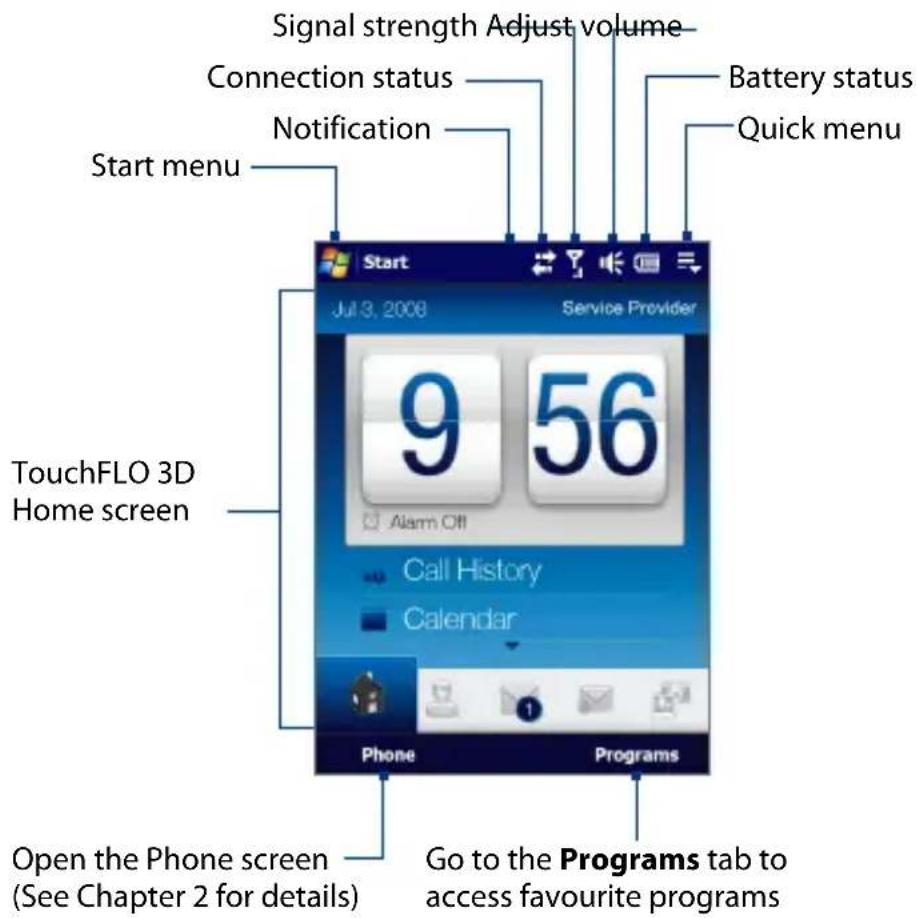
For more information about using the TouchFLO 3D Home screen, see Chapter 3.
1.8 Status Icons
When you touch or tap the icon area of the title bar, the System Status screen opens and displays larger status icons so you can touch them with your finger more easily and accurately.
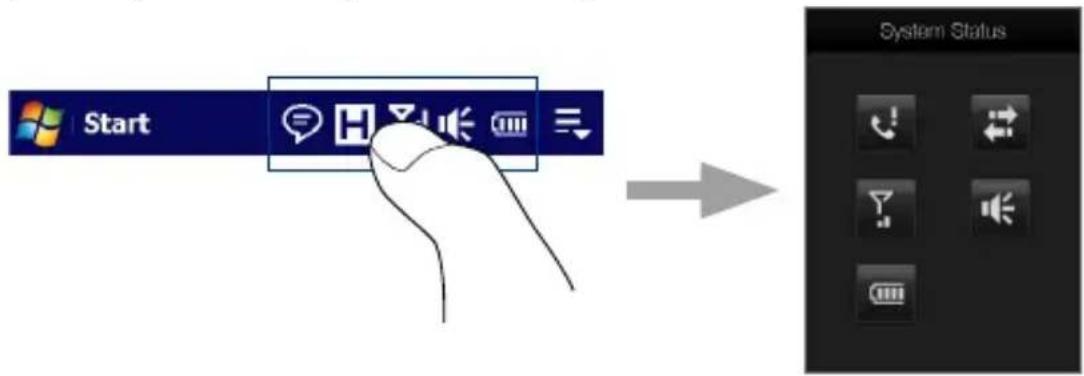
Tip The System Status screen can be disabled in TouchFLO settings. See "Settings on your Device" in Chapter 13 for details.
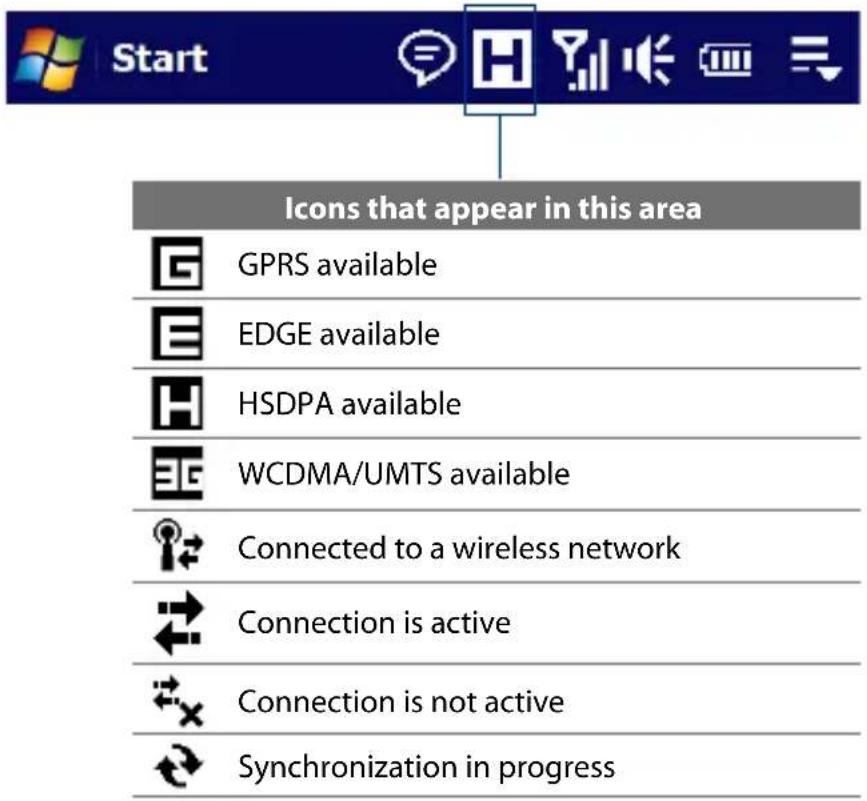
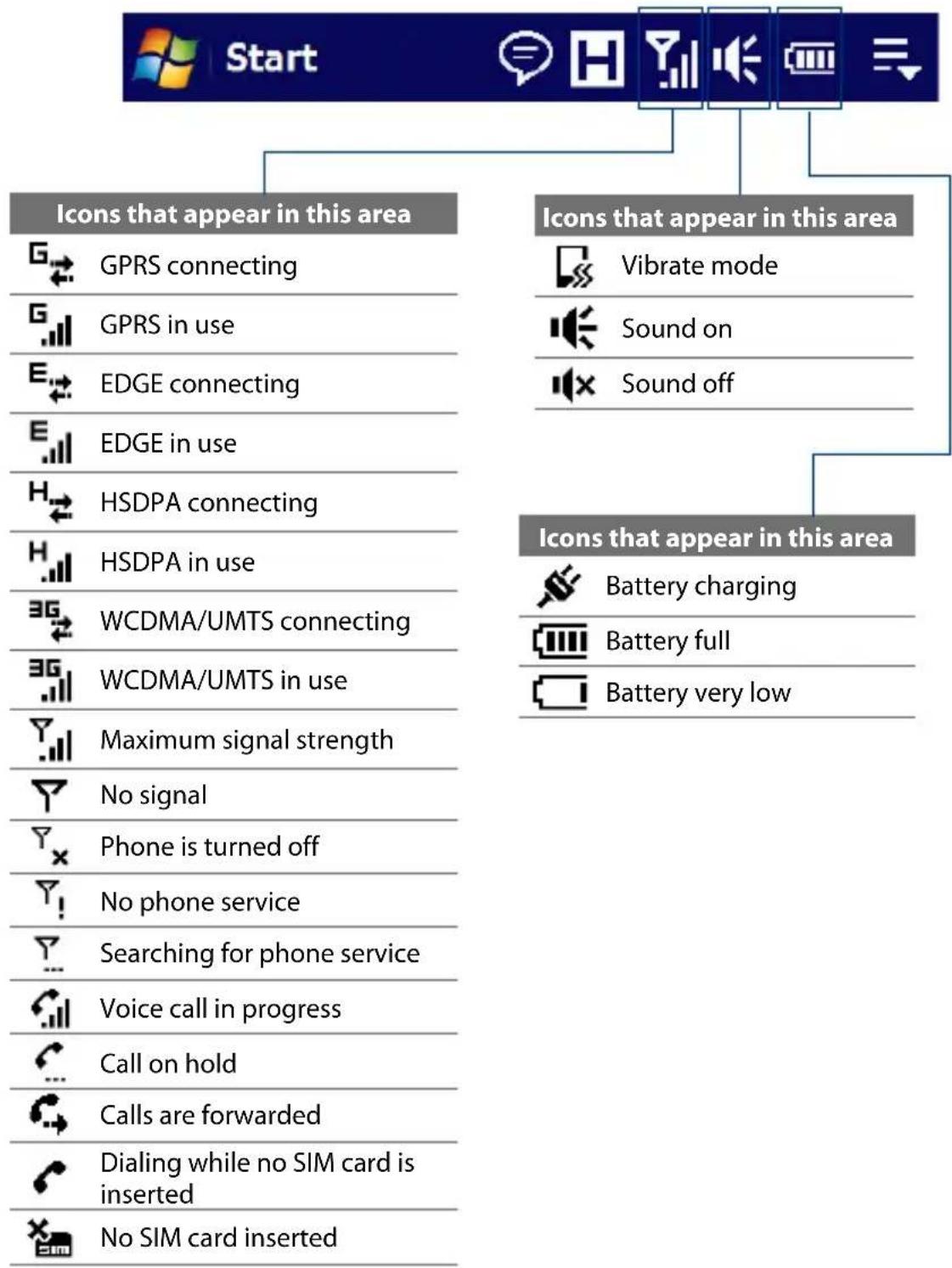
The following are some of the status icons that you may see on the device.

| Icons that appear in this area | |
| Connection Setup | |
| Multiple notifications; tap the icon to view all | |
| New text messages; SMS notification of voice mail | |
| Sending MMS | |
| Receiving MMS | |
| MMS sent | |
| Cannot send MMS | |
| New incoming MMS | |
| New Windows Live™ message | |
| Missed call | |
| Icons that appear in this area | |
| Speakerphone on | |
| Roaming | |
| Alarm | |
| Other wireless network(s) detected | |
| Wired headset connected | |
| Bluetooth on | |
| Bluetooth visible mode on | |
| Bluetooth stereo headset connected | |
| ActiveSync notification | |
| Synchronization error | |
1.9 Start Menu
The Start menu, which can be opened from the top left corner of the screen, gives you access to all the programs and settings of your Windows Mobile-powered device. Touch or tap to select an item on the Start menu.
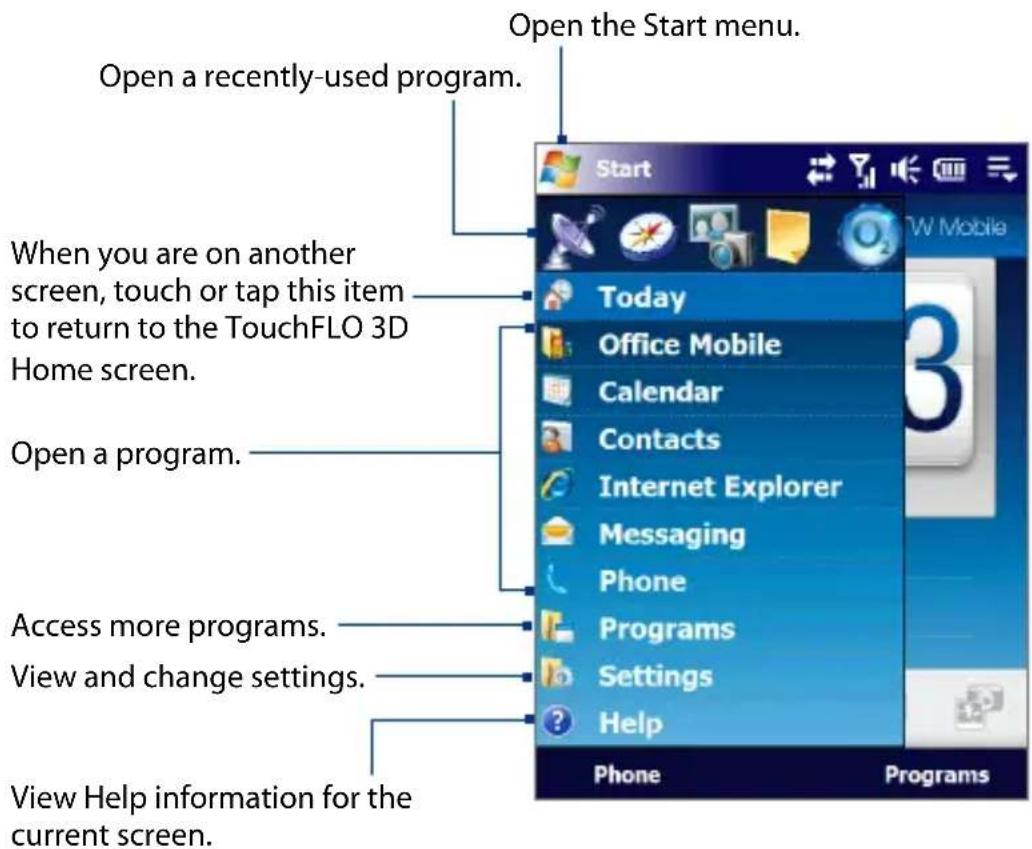
By default, the Start menu is displayed in a large size to make it easier for you to touch menu items with your finger when selecting them from the Start menu. The Start menu can also be displayed in a smaller size, if preferred. Tap Start > Settings > System tab > TouchFLO and then clear the Enable large Start menu check box to display a smaller Start menu.
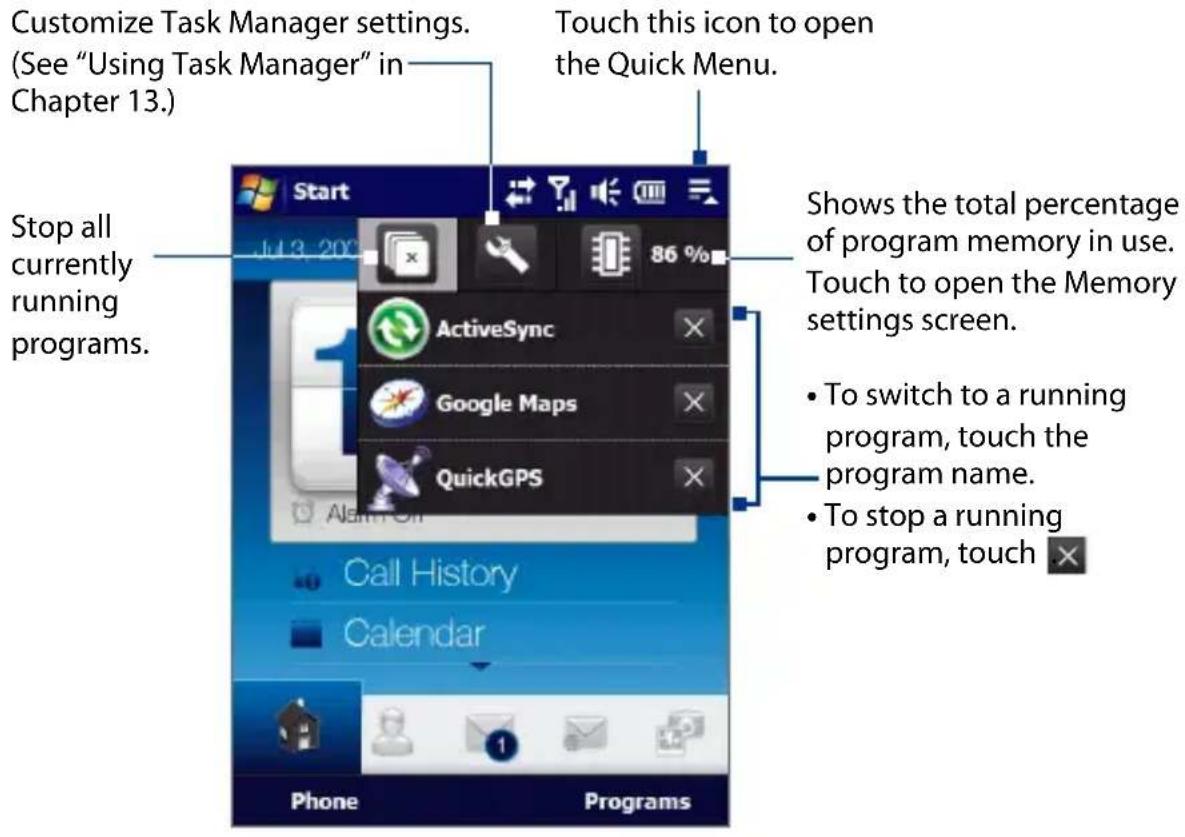
1.10 Quick Menu
The Quick menu, which can be opened from the top right corner of the screen, shows the currently running programs. You can quickly switch between running programs, stop programs, and see how much program memory is being used.
1.11 LED Alerts
The buttons below the touch screen and the exterior edge of the Navigation Control which is an LED ring will light up in the following situations:
Controls Light Behavior
SEND button Light flashes when there is an incoming call.
END button Light stays solid when there is an incoming call.
Navigation Control The LED ring shows a "breathing" white light when the battery is being charged.
- The LED ring shows a solid white light when the battery is fully charged.
- The LED ring flashes a white light once when the battery level is low and reaches down to about 10% .
- The top and bottom parts of the LED ring flashes a white light twice when there is a new e-mail, voice mail, or meeting reminder.
- A white light goes around the LED ring counterclockwise twice starting from the top when there is a missed call or new SMS or MMS message.
The LED ring, HOME, BACK, SEND, and END buttons will flash a white light once when one of the buttons or Navigation Control is pressed.
1.12 Adjusting the Volume
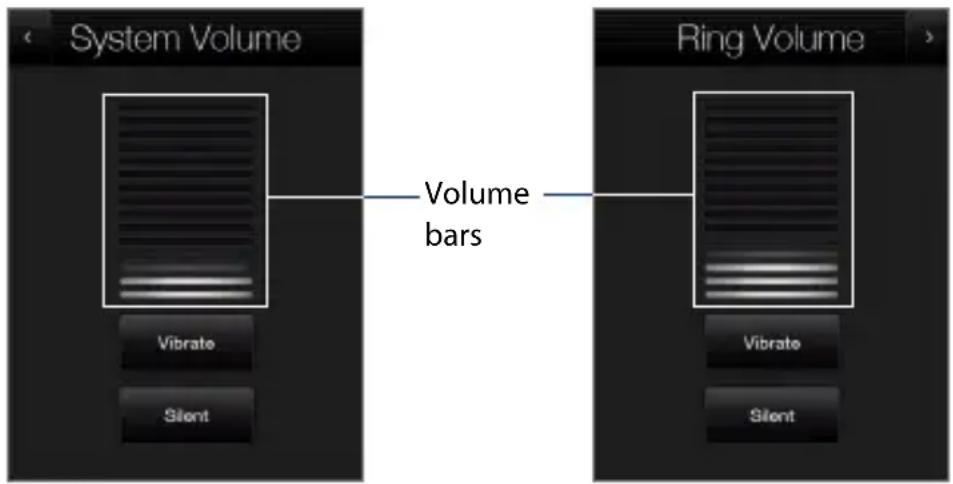
Adjusting the system volume changes the volume level of sound notifications and audio/video playback, whereas adjusting the ring volume affects only the volume of the phone ring. The system volume and ring volume can be separately adjusted.
- Touch the icon area in the title bar and then touch the Speaker icon (on the System Status screen.
- To switch between the Ring Volume and System Volume screens, touch the Back and Next icons ( ) top of the screen.
- On either screens, you can do the following:
- To increase or decrease the volume level, drag your finger up or down the volume bars. You can also press the VOLUME UP/DOWN buttons on the left panel of your device.
flowchart
graph LR
    A["System Volume"] --> B["Volume bars"]
    C["Vibrate"] --> B
    D["Silent"] --> B
    E["Vibrate"] --> F["Ring Volume"]
    G["Silent"] --> F
- Touch Vibrate to enable or disable Vibrate mode.
-
Touch Silent to mute both the system and ring volume.
-
The System Volume or Ring Volume screen automatically closes. You can also manually close the screen by touching the screen.
Note On certain screens that do not show the volume status icon on the title bar, you need to use the VOLUME UP/DOWN buttons on the left panel of your device to adjust the volume. Also use these buttons to adjust the conversation phone volume during an ongoing call.
1.13 Using your Device as a USB Drive
To easily carry media and other files with you, you can use the internal storage of your device as a USB flash drive. Touch Start > Settings >
Connections tab > USB to PC and then select Disk Drive mode. This allows you to copy files from your computer to the device and vice versa faster.
When Disk Drive mode is used:
- You will not be able to use your device to access files from the internal storage while it is connected to your PC.
- Your PC will only connect to the device's internal storage. When you access your device from the PC, you will only see the contents of the device's internal storage.
Remember to change back to ActiveSync mode when you need to synchronize data between your device and your PC.
44 Getting Started
Chapter 2
Using Phone Features
2.1 Using the Phone
2.2 Voice Call
2.3 Video Call
2.4 Smart Dial
2.5 Setting Up Bluetooth SIM Access for
Car Kit Phones
2.1 Using the Phone
Like a standard mobile phone, you can use your device to make, receive, and keep track of calls and send messages.
The Phone screen
To open the Phone screen, do one of the following:
- On the Home screen, tap Phone.
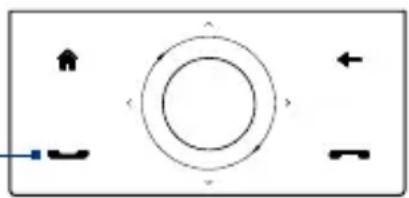
- Press the TALK/SENDTALK/SEND button.
natural_image
Pure diagram of a circular component with directional arrows and symbols, no readable text or labelsEnter your PIN
Most SIM cards are preset with a PIN (personal identification number) that is provided by your wireless service provider.
- Enter the preset PIN assigned by your wireless service provider.
- Tap Enter.
Note If you entered the wrong PIN three times, the SIM card will be blocked. If this happens, you can unblock it with the PUK (PIN Unblocking Key) obtained from your wireless service provider.
2.2 Voice Call
Make a call
To make a call from the Phone screen
-
On the Home screen, tap Phone.
-
Tap the keys on the keypad to enter the phone number.
Tip If you tapped a wrong number, tap ← to erase each subsequent digit of a number. To erase the entire number, tap and hold
- Press the TALK/SEND button to place the call.
Tip When in a call, use the VOLUME UP/DOWN buttons on the side of the device to adjust the phone volume.
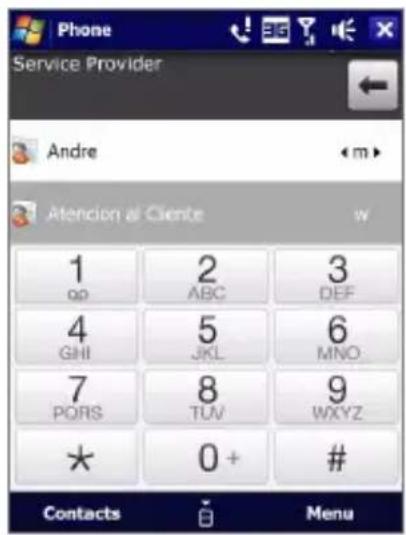
Note After tapping 6 keys and the number you are dialing is not in your contacts, a Save to Contacts? button will appear above the keypad. Tap it to save the number to your Contacts.
To make a call from Contacts
On the Home screen, tap Start > Contacts to open the Contacts screen.
Do one of the following:
- Select the contact to call and then press TALK/SEND.
Note If the contact has more than one number stored, press NAVIGATION right/left to select the number you want to call before pressing TALK/SEND. - Tap the contact to open the contact details and then tap the phone number you want to call.
- Tap and hold the contact you want to call and then from the menu, select Call Work, Call Home, or Call Mobile.
To make a call from the TouchFLO 3D Home screen
Refer to Chapter 3 to learn how to make a call from the TouchFLO 3D Home screen.
To make an emergency call
Enter the international emergency number for your locale, and press the TALK/SEND button on your device.
Tip Additional emergency numbers may be included in your SIM card. Contact your wireless service provider for details.
To make an international call
- Tap and hold the number 0 key on the Phone screen until the plus (+) sign appears.
The plus (+) sign replaces the international prefix of the country that you are calling.
- Enter the full phone number you want to dial, and press the TALK/SEND button on your device. The full phone number includes the country code, area code (without the leading zero, if any), and phone number.
To call voice mail
Number 1 is generally reserved for your voice mail. Tap and hold this button on the Phone screen keypad to call voice mail and retrieve your voice mail messages.
Answer a call
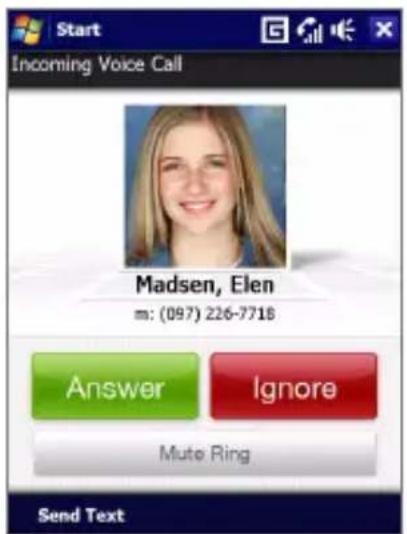
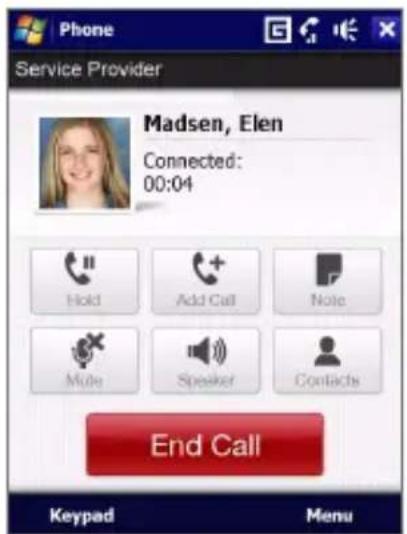
When you receive a phone call, a message will appear, giving you the option to either answer or ignore the incoming call. The TALK/SEND button will also flash when you receive a call.
To answer or reject an incoming call
- To answer the call, tap Answer, or press the TALK/SEND button.
- To reject the call, tap Ignore, or press the END button.
• To mute the ringing sound without rejecting the call, tap Mute Ring.
Tip You can also place your phone face down to mute the ring without rejecting the call.
To reject a call and send a text message
When you reject a call, you can choose to automatically send a text message to the mobile phone of the caller.
- On the Phone screen, tap Menu > Options > Advanced tab.
- Select the Reject call with text message check box.
- Change the default text message if needed, then tap OK.
When Reject call with text message is enabled, tap Send Text to reject the call and send the text message to the caller.
To put a call on hold
Your device notifies you when you have another incoming call, and gives you the option of rejecting or accepting the call. If you are already on a call and accept the new call, you can choose to switch between the two callers, or set up a conference call between all three parties.
- Tap Answer to take the second call, and put the first one on hold.
- To end the second call and return to the first call, tap End Call or press END on your device.
To switch between two calls
During a call, tap

To set up a conference call
-
Either put a call on hold, and dial a second number; or, accept a second incoming call when you already have one in progress.
Tip To dial a second number, tap on the screen. -
Tap

Note Not all mobile phone networks support conference calling. Contact your wireless service provider for details.
To turn on and off the Speakerphone
During a call, tap to toggle between turning on or off the speakerphone. The speakerphone icon 📋 appears in the title bar when the speakerphone is on.
Tip You can also press and hold TALK/SEND to toggle between turning on or off the speakerphone.
Warning! To avoid damage to your hearing, do not hold your device against your ear when the Speakerphone is turned on.
To mute the microphone during a call
Tap to toggle between turning on or off the microphone. When the microphone is turned off, the mute icon 📄×appears on the screen.
To open Notes while in a call
Tap or pull out the stylus.
To vibrate the device when the call is established
You can set the device to vibrate once to alert you that the call has been established with the other party.
-
On the Phone screen, tap Menu > Options > Advanced tab.
-
Select the Vibrate device when connection is established check box and then tap OK.
End a call
When a call is in progress, tap End Call or press the END button to hang up.
To add a new phone number to Contacts after a call
If the phone number of the person who called is not in Contacts, you can choose to save the number after you hang up.
-
On the Phone screen, tap Menu > Options > Advanced tab.
-
Select the Add new phone number to Contacts at end of call check box, then tap OK.
When you enable this option, a pop-up message appears after you end the phone call and lets you add the phone number to Contacts.
To check a missed call
You will see the icon in the title bar when you missed a call. To check who the caller was, do one of the following:
- Tap the title bar, then tap 🔊 and then tap View.
- On the Phone screen, tap Menu > Call History and then tap
Call History
Use Call History to check for missed calls, dialed numbers, and calls received. To open the Call History screen, tap Menu > Call History on the Phone screen.
Speed Dial
Use Speed Dial to call frequently-used numbers with a single tap. For example, if you assign a contact to the location 2 in Speed Dial, you can tap and hold the number 2 key on the Phone screen keypad to dial the contact's number.
To create a Speed Dial entry
- On the Phone screen, tap Menu > Speed Dial.
- Tap Menu > New.
- Tap a contact, then select the phone number of the contact that you want assigned to the speed dial key.
- In Location, select an available key to use as the speed dial key.
- Tap OK.
Note When you assign a new phone number in an occupied speed dial key, the new phone number will replace the existing one.
Tips
- To create a Speed Dial entry from Contacts or SIM card contacts, tap the contact, select the number you want to add to Speed Dial, then tap Menu > Add to Speed Dial.
- To delete a Speed Dial entry, in the Speed Dial list, tap and hold the desired entry, then tap Delete.
Turn the phone function on and off
In many countries, you are required by law to turn off the phone while on board an aircraft.
To enable or disable the phone function
- Tap Start > Programs > Comm Manager.
- On the Comm Manager screen, tap the Phone button to enable or disable the phone function. When enabled, the ON indicator is activated.
To enable or disable Airplane Mode
Another way to turn off the phone function is to switch your device to Airplane Mode.
When you enable Airplane Mode, all wireless radios on your device are turned off, including the phone function and Bluetooth.
When you disable Airplane Mode, the phone function is turned back on and the previous state of Bluetooth is restored.
- Tap Start > Programs > Comm Manager.
- On the Comm Manager screen, tap the Airplane Mode button to enable or disable Airplane Mode. When enabled, the ON indicator is activated.
2.3 Video Call
Your device lets you make video calls when you are within a 3G network coverage area. You need to use a 3G-enabled SIM card to make video calls.
Make a video call
Do one of the following:
- On the Phone keypad, tap the phone number to call, then tap Menu > Video Call to start a video call.
• From Contacts, tap and hold the desired contact, and tap Video Call. - From Call History, tap and hold the desired phone number or contact, and tap Video Call.
Note The other party's image will appear on the screen about 3 to 5 seconds after a connection is established, depending on the signal strength. The streaming images quality may also be influenced by the signal.
When the video call is unsuccessful, a message pops up asking you if you want to try again, make a voice call instead, or send an SMS/MMS message.
Answer a video call
To answer or reject an incoming video call
• To answer the video call, tap Answer, or press TALK on your device.
• To reject the video call, tap Ignore, or press END on your device.
• To mute the ringing sound without rejecting the call, tap Mute Ring.
When Reject call with text message is enabled in Phone settings, tap Send Text to reject the call and send the text message to the caller.
Tip You can also place your phone face down to mute the ring without rejecting the call.
End a video call
Once a video call is in progress, tap End Call to hang up.
Change settings
While on a video call, you can change certain settings such as the size of the image, brightness of the video image, the camera to use, and more.
The following shows the Video Call screen and control buttons during an ongoing call.
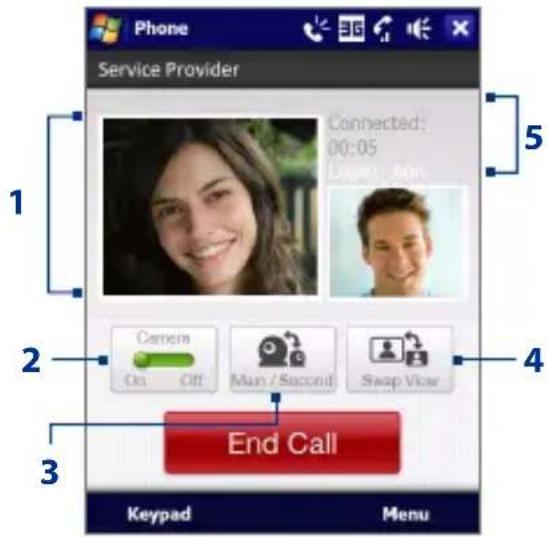
1 Image display area. Displays your image and the other party's image, depending on the selected Swap Image setting.
2 Camera. Tap to toggle between turning on/off the camera. When the camera is turned off, the image displayed depends on the Video Call options you have set. See "Video call options" for details.
3 Switch. Tap to toggle between using the Main (back) and Second (front) camera.
4 View. Tap to toggle between the 2 view options. You can choose to have the other party's image small or large.
5 Status area. Displays your service provider name, the other party's information, and call timer.
Brightness
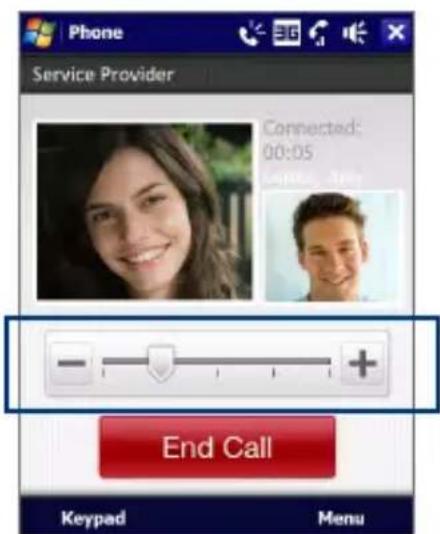
To adjust the brightness of the live image, press NAVIGATION right to make it brighter or press NAVIGATION left to make it less bright. When you press NAVIGATION left or right during a video call, a brightness bar appears on the screen.
Notes • You can also tap Menu > Brightness to adjust the brightness of the live image.
• You cannot adjust the brightness for a still image.
Brightness bar
Video call options
On the Phone screen, or on the screen of the ongoing video call, you can also tap Menu > Video Call Options and set the following options:
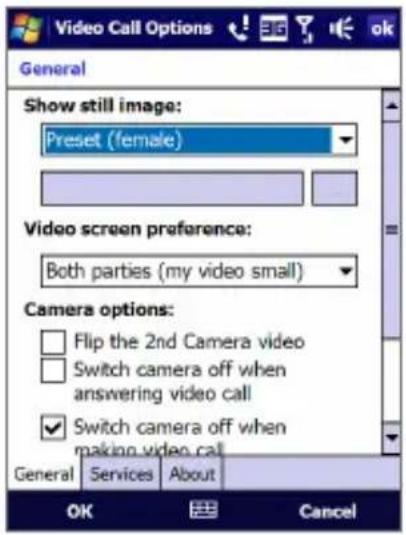
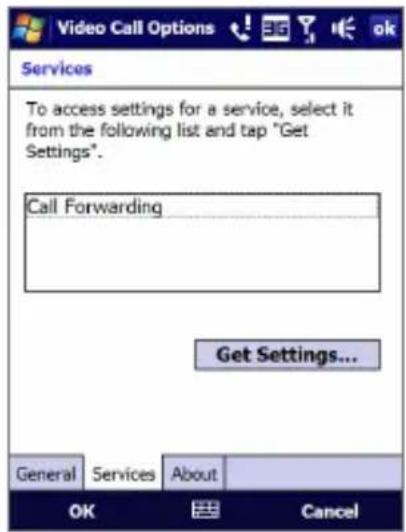
Video Call Options: Services tabVideo Call Options: Go
General tab
• Show still image. Select the image you want to display when you turn off the camera.
- Preset (female). Displays a female picture in place of your image.
- Preset (male). Displays a male picture in place of your image.
- Custom image. Lets you use an image file as your display picture. When this option is selected, the File Name box and the Browse button will be enabled, allowing you to select an image file.
- Last video frame. Uses the last video frame before you stopped the camera as your display image.
- Video screen preference. Change how your image and the other party's image are displayed on the screen, select your preference from the Video screen preference list or tap the View button on the Video Call screen.
- Camera options:
- Flip the 2nd camera video. Select this check box if you are going to show a text document to the other party using the second camera.
- Switch camera off when answering video call. Select this check box to not send a video feed of yourself to the other party when answering a video call. Instead, the option you selected in Show still image will be displayed.
- Switch camera off when making video call. Select this check box to not send a video feed of yourself to the other party when making a video call. Instead, the option you selected in Show still image will be displayed.
- Display info:
- Show call timer. Select this check box to display the call period in the status area.
- Show phone number and name. Select this check box to display the other party's phone number and name in the status area.
Services tab
To set up further calling options for Video Call, tap the Services tab. On the Services screen, select the desired service from the list, then tap Get Settings to access its settings.
2.4 Smart Dial
Smart Dial makes it easy for you to dial a phone number.
When you start entering a phone number or contact name, Smart Dial automatically searches and sorts the contact entries on the SIM card, in Contacts, and the phone numbers in Call History (including incoming, outgoing, and missed calls). You can then select the desired number or contact from the filtered list to dial.
Smart Dial panel
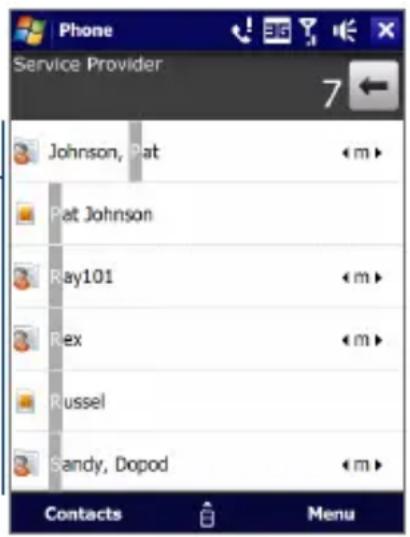
To find a contact name or number
You can just enter the first letter of the name or number of a contact.
Smart Dial will search for contact phone numbers and the first character of a contact name as well as from the character that appears after a space, dash, or underscore in a contact name. For example, if you tap number "2" on the phone keypad, which is associated with [a, b, and c] on the Phone keypad, contact names such as the following will be considered matches: "Ben Miller", "George Adams", "John-Carter", "Carter, Ellen", "Dixon, Allan", "Thomas_Clark", "JaneCampbell".
If the matching list is long and you want to narrow down the search further, enter another letter. Using the same example above, if you continue to tap "3" which is associated with [d, e, f], the matching list will be narrowed down to the following names: "Ben Miller", "George Adams", "Carter, Ellen", "Dixon, Allan".
Make a call or send a text message using Smart Dial
-
On the Home screen, tap Phone.
-
Begin entering the first few numbers or characters.
When you start entering a number or letter, the Smart Dial panel will display matches found.
Tip Tap to lose the phone keypad and to see if there are more matching contacts.
-
In the Smart Dial panel, flick and slide your finger on the touch screen or press NAVIGATION up/down to browse the list or select a contact.
-
You can do one of the following:
- Tap the contact to call the selected contact.
- To send a text message to the selected contact, tap Menu > Send Text Message.
- To call a different phone number associated with the selected contact, select the contact and then press NAVIGATION left/right to select the number to call.
2.5 Setting Up Bluetooth SIM Access for Car Kit Phones
Bluetooth car kits that support the SIM Access Profile (SAP) can connect to your device and access its SIM card via Bluetooth. Once a SAP connection has been established, you can download SIM contacts from your device to the car kit phone. You can also use the car kit phone to answer and make calls using your device's SIM card.
Note To enable downloading contacts onto the car kit, ensure that all contacts on the device are stored in the SIM card and not in the device memory. Configure the car kit to download contacts only from the SIM card.
- On your device, make sure that Bluetooth is turned on and set to visible mode. For information about turning on Bluetooth and enabling visible mode, see "Bluetooth Modes" in Chapter 9.
- On the Home screen, slide to the Settings tab and then tap Menu >Bluetooth Devices >SIM Access tab.
- Select the Remote SIM Access check box, then tap OK.
- Connect the car kit phone to your device via Bluetooth. To learn how to connect, consult your car kit phone's manual.
- If this is the first time you are pairing the car kit phone with your device, enter the car kit's passcode on your device.
- A pop-up message should appear on your device saying that a connection has been established between your device and car kit phone. Tap OK.
- On the Bluetooth screen, tap the SIM Access tab, then tap Connect.
Note You will not be able to make/receive calls, send/receive messages or perform related activities on your device when the SIM Access Profile connection is active. You'll be able to do all these from the car kit phone during this time. After the connection is disconnected, you will be able to use your device as before.
Chapter 3
TouchFLO™ 3D
3.1 About TouchFLO™ 3D
3.2 Using the TouchFLO 3D Home Screen
3.3 Finger Gestures

3.1 About TouchFLO™ 3D
TouchFLO™ 3D gives you touch control over your Windows Mobile-powered device. TouchFLO 3D provides the following features:
- A Home screen that allows finger-touch access to the most widely-used functions, such as People, Messages, Mail, Music, Internet, and more
- Allows you to use finger gestures to navigate screens
3.2 Using the TouchFLO 3D Home Screen
The TouchFLO 3D Home screen have the following tabs:
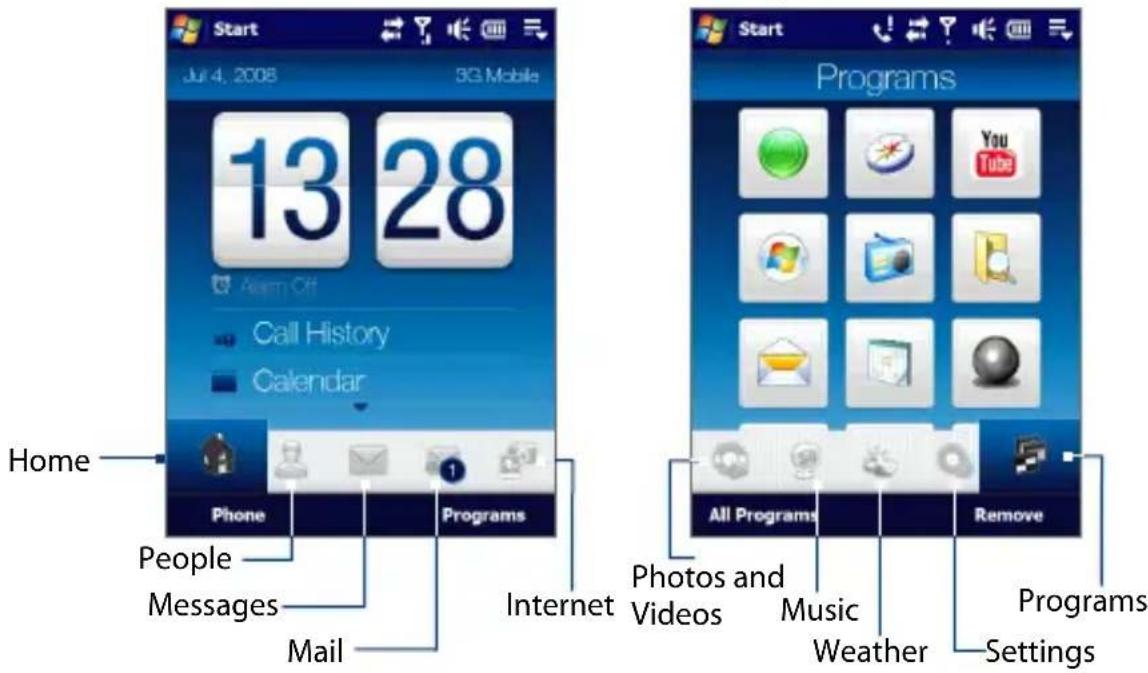
To switch between the tabs of the Home screen
Do one of the following:
- Touch or tap the desired tab on the Home screen.
- Press Navigation Right or Left to move to the next or previous tab.
- Press and hold your finger on the active tab, then slide your finger right or left over the tabs. Release when you have selected the desired tab.
Note Apply some pressure when pressing and holding on the active tab to be able to slide over the tabs.
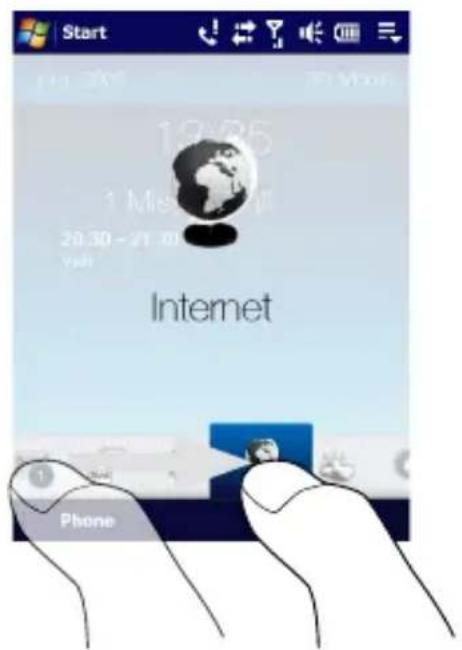
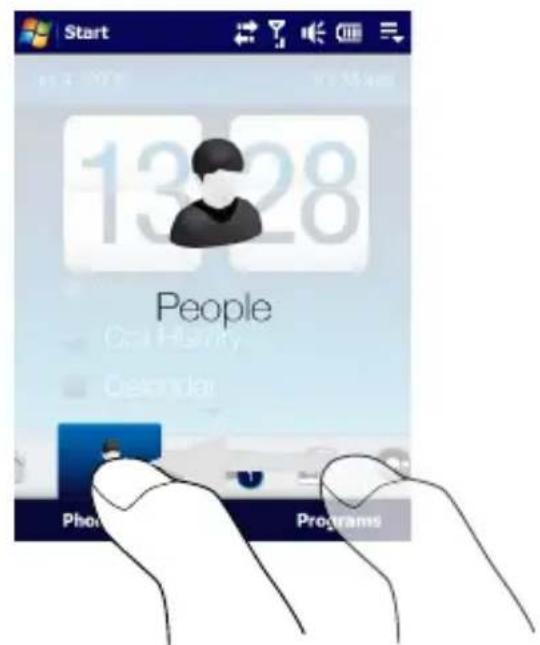
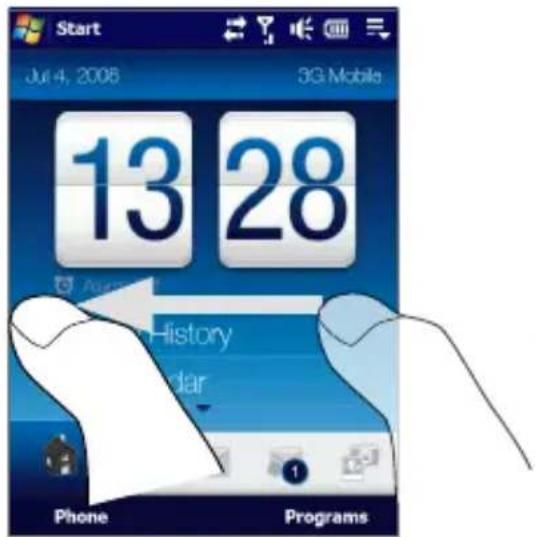
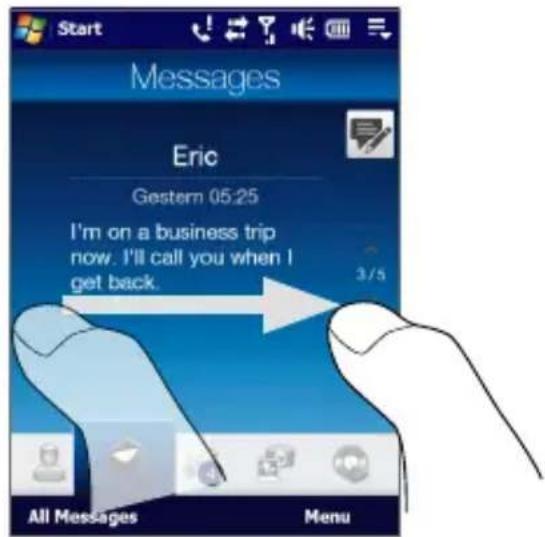
- Swipe left across the screen to move to the next tab, and swipe right across the screen to move to the previous tab.
Home
The Home tab displays the current date, a flip-style clock, and an Alarm icon that indicates whether the alarm is on or off. Missed calls and your upcoming calendar appointments are also shown on the Home tab.
To select an item on the Home tab
- Touch the item; or
- Press Navigation Up or Down first to navigate to the item you want to select and then press ENTER.
Touch the date or the flip clock to open the Clock & Alarms screen where you can set the date, time, and alarm.
(See Chapter 13 for details.)
Touch this area to view — details about missed calls in the Call History.
(See Chapter 2 for details.)
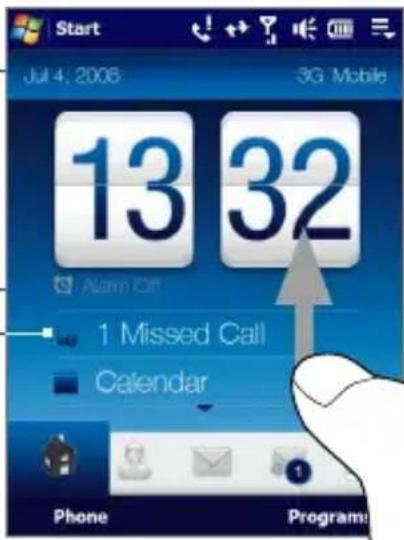
Swipe upward on the screen to display the smaller digital clock and view more appointments.
Home tab with flip clock
One all-day appointment and up to two timed appointments can be displayed. Touch this area to create, edit or view an appointment.
(See "Calendar" in Chapter 12 for details.)
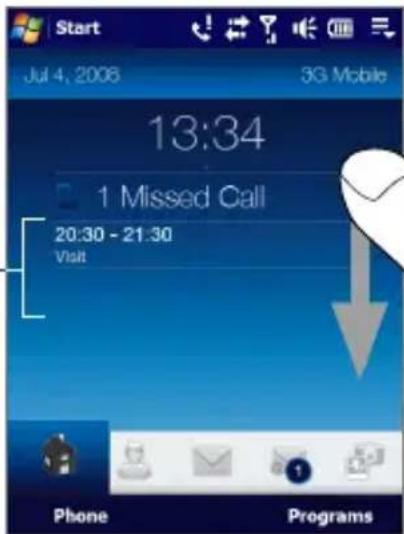
Swipe downward on the screen to change back to the flip clock.
Home tab with smaller digital clock
People
On the People tab, you can add favourite contacts who you most frequently communicate with. This allows you to quickly make calls, send text messages, and send e-mails to your favourite contacts.
Tip You can add up to 15 favourite contacts on the People tab.
To add favourite contacts
You should already have created or synchronized contacts on your device before you can add them to the People tab.
- On the Home screen, slide your finger to the People tab.
- Touch the small or big Plus icon, or touch Add Favourite.
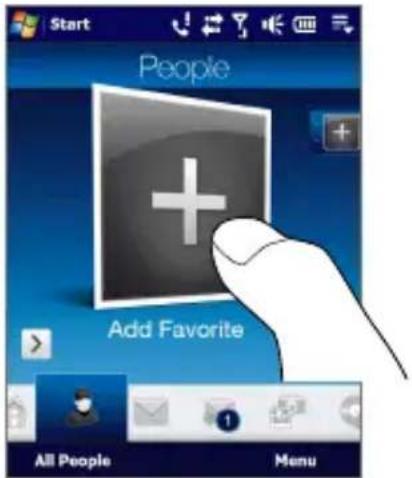
- On the Select a Contact screen, touch the name of the desired contact.
Tips To create a new contact, touch Menu > New Contact. See "Contacts" in Chapter 12 for details.
• SIM contacts cannot be added as favourite contacts.
- Select a phone number or e-mail address to associate to the favourite contact.
Note If there is no picture associated with the contact, the next screen prompts you to assign a picture to the contact.
- To add another favourite contact, touch the small Plus icon ( + ) at the right side of the screen and repeat steps 3 and 4.
To choose from your favourite contacts
• Do any of the following:
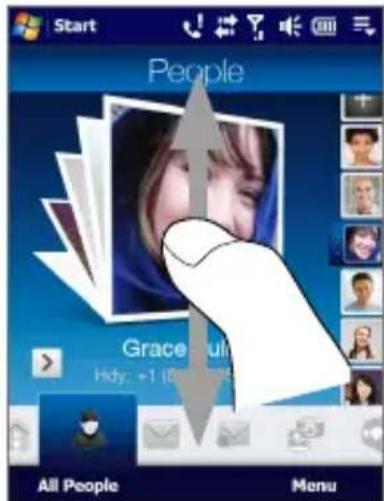
To flip through the contact pictures one at a time, swipe your finger up or down the screen. You can also press Navigation Up or Down to flip through the contact pictures.
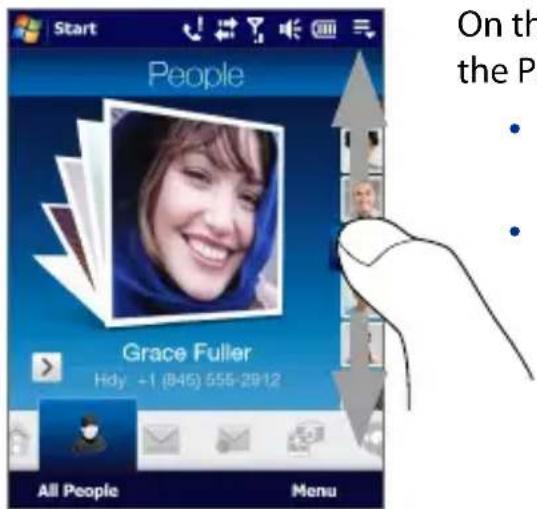
On the picture strip at the right side of the People screen:
- Touch the picture of the desired favourite contact; or
-
Press and hold on the currently selected contact picture to display a slide-out bar, and then slide up or down the picture strip. Release your finger when the desired favourite contact is selected.
-
After selecting a favourite contact, touch the right arrow icon ( ), the phone number or e-mail address shown below the contact picture to place a call, send a text message, or send an e-mail to the contact.
- Touch the picture of the contact on the center screen to access his or her contact card. On the contact card, you will see the last outgoing or incoming call as well as contact details such as phone numbers, e-mail address, and more.
Tips
- On the People tab, touch All People to access SIM contacts and all contacts that are stored on your device.
- To remove the current favourite contact, touch Menu > Remove Favourite.
Messages
On the Messages tab, you can read SMS text messages as they arrive and create a new SMS text message. You can also view the text of received MMS messages on this tab.
When there are new incoming SMS/MMS messages, the icon on the Messages tab will show the number of new messages. For example, indicates that there is a new message received.

To view the entire message thread from the sender and reply, touch - the message on the screen.
Touch All Messages to access all text messages in your inbox and other folders.

Touch this icon to create a new SMS text message.
To flip through received SMS/MMS messages, swipe your finger upward/downward, touch the Up/Down arrow on the screen, or press Navigation Up/Down.
- Touch Menu to remove the current message and access more options.
For more information about working with SMS and MMS messages, see "Text Messages" and "MMS" in Chapter 6.
The Mail tab is where you send and receive e-mail messages. Including Outlook E-mail, you can add up to four POP3/IMAP4 and web-based e-mail accounts in this tab.
To add an e-mail account
- On the Home screen, slide your finger to the Mail tab.
- If this is your first time to add an e-mail account, touch New Account on the bottom-right side of the screen.
- Set up your e-mail account using the E-mail Setup wizard.
- To add another e-mail account, touch Menu > Accounts > New Account and use the E-mail Setup wizard to set up your account. For detailed instructions on setting up e-mail accounts using the E-mail Setup wizard, see Chapter 6.
To check e-mail
When there are new e-mails, the icon on the Mail tab and the respective icons of the e-mail accounts will show the number of newly received messages.
• To browse through received e-mails, swipe up or down on the envelope image or press Navigation Up/Down.
- Touch the e-mail on the screen to open and read the message.
Touch Inbox to access all e-mail messages of the currently selected account.
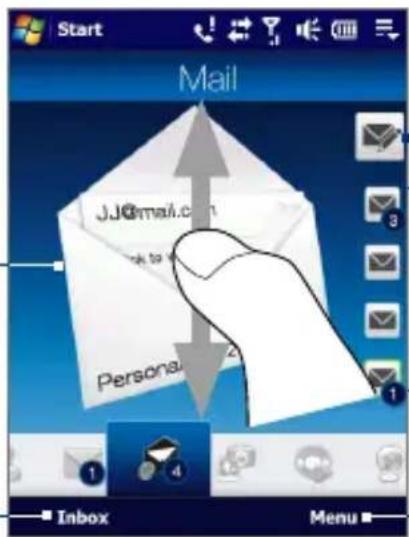
After selecting an e-mail account, touch this icon to create and send a new e-mail message.
These are your e-mail accounts. Touch an icon to select an e-mail account and view the new e-mails received in that account.
Touch Menu to access more options.
For more information about working with e-mails, see Chapter 6 and 7.
Photos and Videos
The Photos and Videos tab lets you visually flip through your photos and video clips and view them in full screen. From this tab, you can also activate the Camera so you can take pictures and record video clips.
The Photos and Videos tab displays pictures and video files from the current favourite album. By default, the Camera Shots album which stores the pictures and videos that you captured using the device camera is set as the favourite. You can change to another favourite album, if preferred.
To set an album as a Favourite
- On the Photos and Videos tab, touch Album to open the Album program.
- Touch Albums and then select one of the listed favourite albums.
- Tap Menu > Set as Favourite. and then tap OK on the confirmation screen.
To view photos and videos
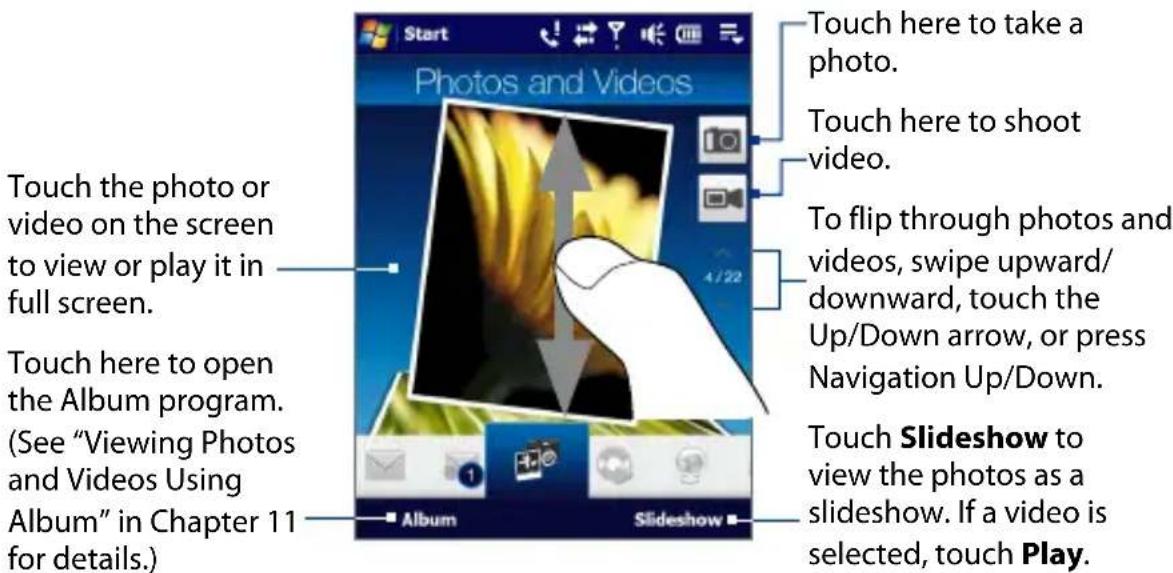
Tips
- For more information about viewing in full screen, see "View an image" and "Play back video" in Chapter 11. The file formats that can be viewed on the Photos and Videos tab are the same as the Album program.
- To transfer media files from a computer and view them on the Photos and Videos tab, copy or synchronize them to a folder under \My Device (the device memory) or \Internal Storage (the built-in storage).
Music
The Music tab allows you to visually browse through albums and music tracks and play music. The albums and music tracks that you see on the Music tab are from the Now Playing list of the Library.
Note Your device searches for all music files that have the following audio formats: MP3 (.mp3), WMA (.wma), AAC/AAC+ (.aac), and MPEG-4 (.m4a). It searches for music from the following locations: Device: \My Music (including all subfolders) \My Documents (including all subfolders) Storage: \Internal Storage (including all subfolders)
To play music
On the Music tab, flip through albums and all the music in each album, then touch the Play icon on the middle-right side of the screen to start playback.
Swipe upward/ downward on the screen or press Navigation Up/Down to flip through albums and the music or songs in an album.
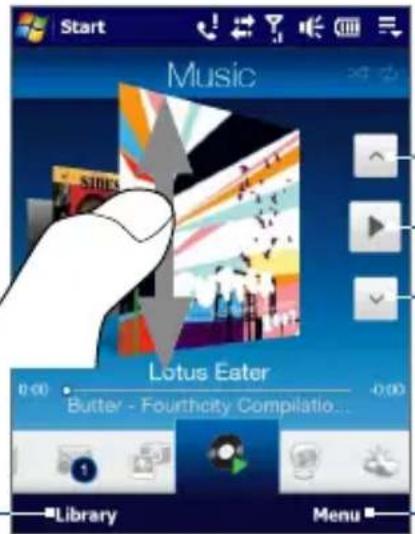
- Touch here to go to the previous album or the previous music in the current album.
Touch here to play or pause. You can also press the ENTER button to play or pause.
- Touch here to go to the next album or the next music in the current album.
Touch here to access the Library.
Touch Menu to set music playback to Repeat, turn Shuffle on or off, and more.
To advance forward or backward in the music
Do one of the following:
- Touch and hold on the thin bar below the album art to display the progress bar:
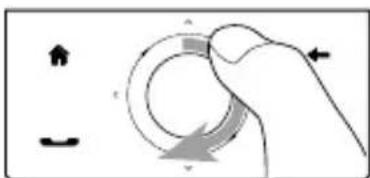
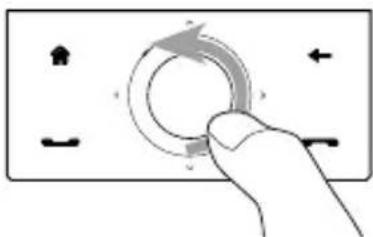
Drag your finger right or left on the progress bar to move forward or backward in the current music. - Slide your finger around the Navigation Control as follows:
natural_image
Hand holding a circular button with directional arrows, no text or symbols presentSlide your finger clockwise to advance forward in the music.
natural_image
Hand holding a circular button with directional arrows, no text or symbols visibleTo move backward in the music, slide your finger counterclockwise.
To set repeat and shuffle modes
Touch Menu > Repeat and choose whether to repeat once, repeat all, or do not repeat. To toggle shuffle mode on and off, touch Menu > Shuffle and then select Shuffle On or Shuffle Off.
The icons on the upper-right side of the Music tab show whether repeat and shuffle modes are enabled.

Repeat [One] Repeat [All] Shuffle [On]

To browse and play music in the Library
The Library organizes music into categories, such as Now Playing, Artists, Albums, Genres, All Songs, and more. When you add more albums or music tracks to your device, go to the Library to locate and play the new albums or music tracks.
-
On the Music tab, touch Library to open the Library screen.
-
The tabs at the bottom of the Library screen correspond to the different categories. To browse music under a certain category, slide to the tab that corresponds to the desired category.
-
Tap a music track to play it.
Note When you select a category in the Library such as Artists and play its music, the Now Playing list will be replaced with the music tracks from that category.
To use playlists
You can group your favourite music into a playlist and then play back the playlist.
• To create a new playlist:
- Select the desired music on the Music tab or the Library.
- Touch Menu > Add to Playlist.
- Touch
, enter a Playlist name and then touch OK.
• To add more music files to a playlist:
- On the Playlists tab, touch a playlist to open it.
- Touch Menu > Edit.
- Touch Menu > Add.
- Select the check boxes of the music you want to add to the playlist, or touch Menu > Select All to choose all the music.
- Touch OK three times and then touch Up to return to the Playlists tab.
• To play back a playlist:
- On the Playlists tab, touch a playlist to open it.
- Touch the first song in the playlist. The Music tab starts playing the first song. After each song, the next one in the playlist will be played.
Note Playlists are not automatically updated when music files have been deleted from the device memory or internal storage.
There are two types of playlists that can be shown on the Playlists tab:
- Custom playlists. Playlists that are created on the Music tab.
- Windows Media® Player playlists. Playlists that are in Windows Media® Player Mobile's Library (which is synchronized with Windows Media® Player on your computer). They are indicated by the Windows Media® Player icon ( ). These playlists cannot be edited.
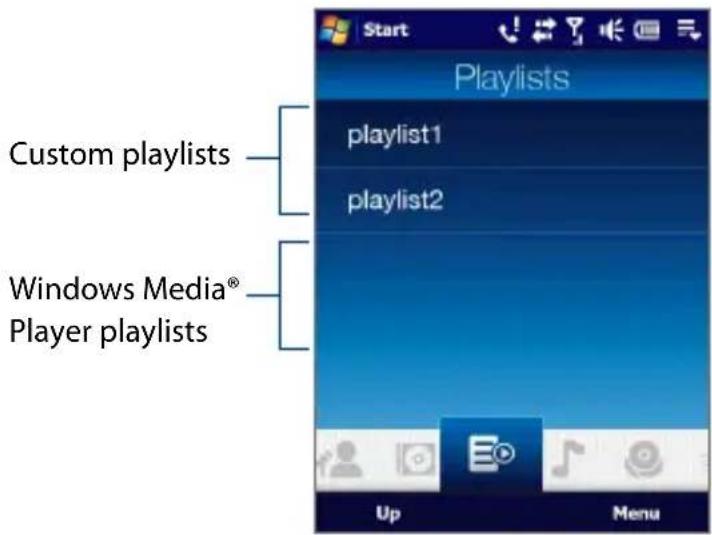
Note If a Windows Media® Player playlist contains a combination of music, video and image files, only music files in the playlist will be synchronized to your device and other media types will be filtered out.
Internet
On the Internet tab, you can open Opera Mobile™ to browse the web and add web favourites for one-touch access to your favourite web sites.
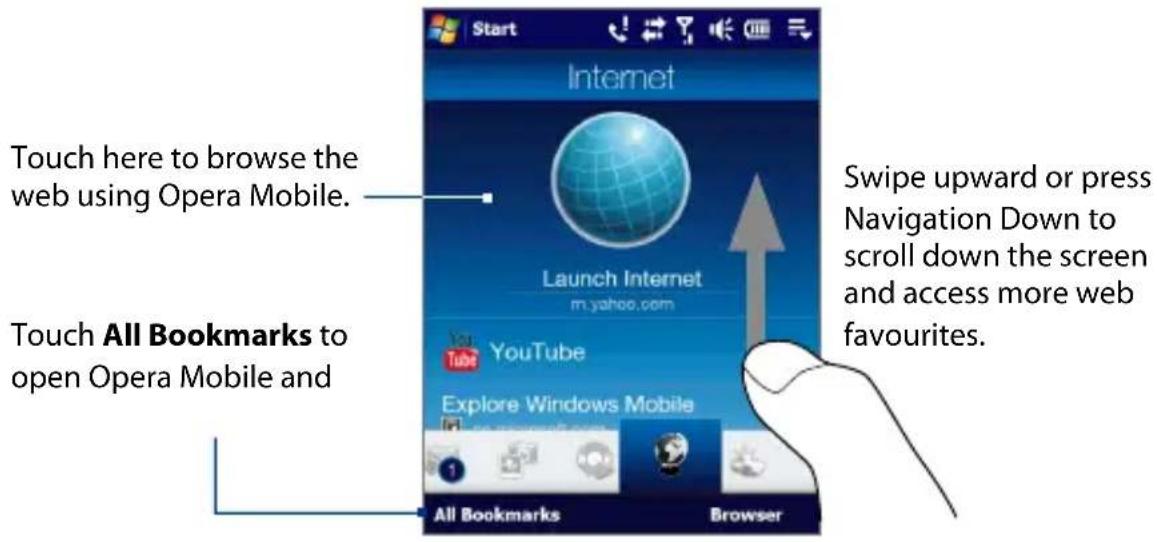
For more information about using Opera Mobile, see Chapter 8.
Weather
The Weather tab shows you the current weather as well as weather information for the next five days of the week.
To add a city
The Weather tab can display weather information of your local city and other added cities. Follow the steps below to add a city on this tab.
Tip You can add up to 10 cities on the Weather tab.
- On the Weather tab, touch Menu > Add Location.
- The Select Country screen then appears. Flick your finger on the screen repeatedly in light, quick strokes to continuously scroll down the list of countries. You can also slowly scroll through the country list by dragging your finger upward on the screen. Touch the desired country to select it.
- The Select City screen then appears. Flick your finger on the screen repeatedly in light, quick strokes to continuously scroll down the list of cities. You can also slowly scroll through the city list by dragging your finger upward on the screen. Touch the desired city to select it.
To view weather information
Your device automatically connects to the Internet via the 3G/GPRS/EDGE data connection or Wi-Fi to download and display weather information. The current temperature, temperature range, type of weather (sunny, cloudy, showers, or others), and the time of day (daytime or nighttime) are shown on the Weather tab. To see the weather information for the next five days of the week, touch the screen or touch 5-day at the bottom-left side of the screen.
Touch the screen or touch 5-day at the bottom to see the weather information for the next five days of the week.
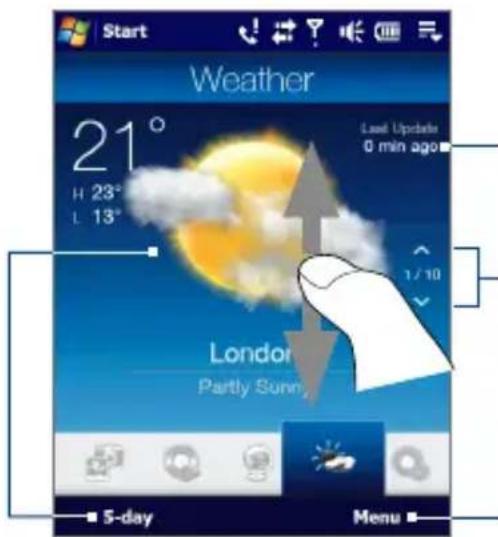
Shows the last weather update. Touch this item to download the latest weather information.
To switch between cities, swipe your finger upward/downward, touch the Up/Down arrow on the screen, or press Navigation Up/Down.
Touch Menu to add or delete a city, change the temperature to Celsius or Fahrenheit, and more.
To choose download options
- On the Weather tab, touch Menu > Settings.
Tip You can also slide to the Settings tab and then touch Data.
- You can choose from the following options:
- Download weather automatically. When this option is selected, weather information is automatically downloaded from the AccuWeather web site whenever you select the Weather tab, if the data has not been updated within the last three hours. Weather data is also downloaded every time an ActiveSync connection is established (through over-the-air or USB connections).
Clear this option if you prefer to manually download weather information.
- Download weather when roaming. Select this option only if you want to allow automatic download of weather data when roaming. This may incur additional costs.
Settings
The Settings tab allows you to synchronize information with your computer or the Exchange Server, change sound settings such as the ring tone, and choose a different wallpaper for the Home tab. You can also easily turn on and off the communications features of your device such as Wi-Fi, Bluetooth, and more.
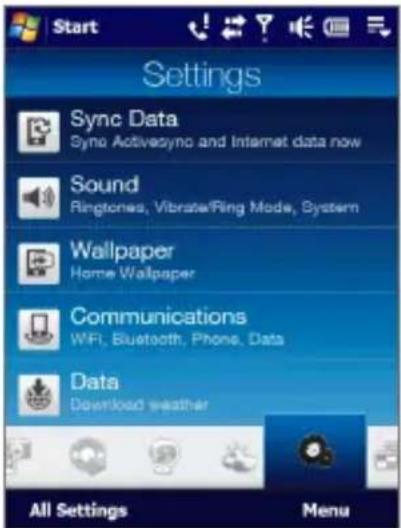
Programs
The Programs tab allows you to add your favourite programs for one-touch access.
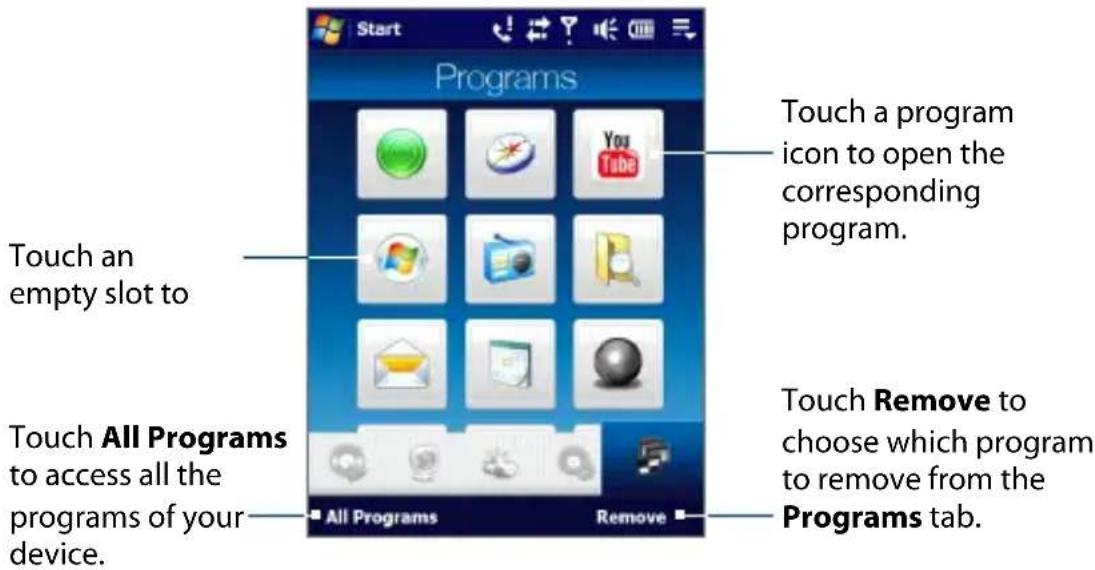
When you have filled up the screen with programs, scroll down the
Programs tab to access more empty slots and add more programs. To scroll down, press and hold on the screen and then drag your finger upward. You can add up to 18 favourite programs.
To scroll back up, press and hold on the screen and then drag your finger downward.
Note To replace a slot with another program, you must delete the occupying program shortcut first and then add your desired program.
3.3 Finger Gestures
You can use finger gestures to scroll, zoom and pan on the touch screen.
Finger scrolling
Finger scrolling can be used to scroll up and down web pages, documents, and lists such as the contacts list, file list, message list, calendar appointments list, and more.
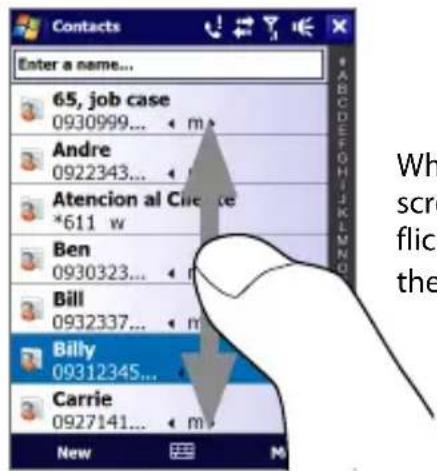
When finger scrolling, swipe or flick your finger on the touch screen.
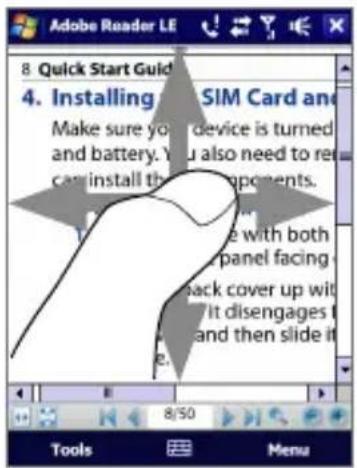
To scroll up and down
• To scroll down, swipe your finger upward on the touch screen. To scroll up, swipe your finger downward on the touch screen.
- To auto-scroll, flick your finger upward or downward on the touch screen. Touch the screen to stop scrolling.
To scroll left and right
• To scroll towards the right, swipe your finger to the left. To scroll towards the left, swipe your finger to the right.
- To auto-scroll, flick your finger left or right. Touch the screen to stop scrolling.
Finger zooming
The type of finger gesture to use when zooming varies in different programs.
- To zoom in on a web page in Opera Mobile, tap your finger twice on the screen. See "Using Opera Mobile" in Chapter 8 for details.
- To zoom in on a photo in Album, make a full-circle swipe on the touch screen. See "Viewing Photos and Videos Using Album" in Chapter 11 for details.
Finger panning
You can use finger panning to move to and view other parts of a zoomed photo, web page, document, or an e-mail. To pan, touch and hold on the touch screen and then drag your finger in any direction.
Tip To enable or mute finger scrolling and panning sound, touch Start > Settings > System tab > TouchFLO, and then select or clear the Enable sound when finger scrolling and panning check box.
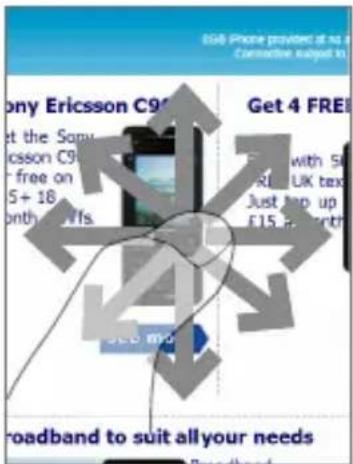
78 TouchFLO™ 3D
Chapter 4
Entering Text
4.1 Selecting an Input Method
4.2 Using the Full QWERTY
4.3 Using the Compact QWERTY
4.4 Using the Phone Keypad
4.5 Using Multitap and T9 Modes
4.6 Using Numeric and Symbol Mode
4.7 Using Block Recognizer
4.8 Using Letter Recognizer
4.9 Using Transcriber
4.1 Selecting an Input Method
When you start a program or select a field that requires text or numbers, the Input Panel icon becomes available on the menu bar.
Tap the Input Selector arrow (that appears next to the Input Panel icon) to open a menu where you can select a text input method and customize input options. After selecting a text input method, the corresponding Input Panel is displayed, which you can use to enter text.
Tip Select Other Input Methods to display more input methods.
To show or hide the Input Panel, tap the Input Panel icon.
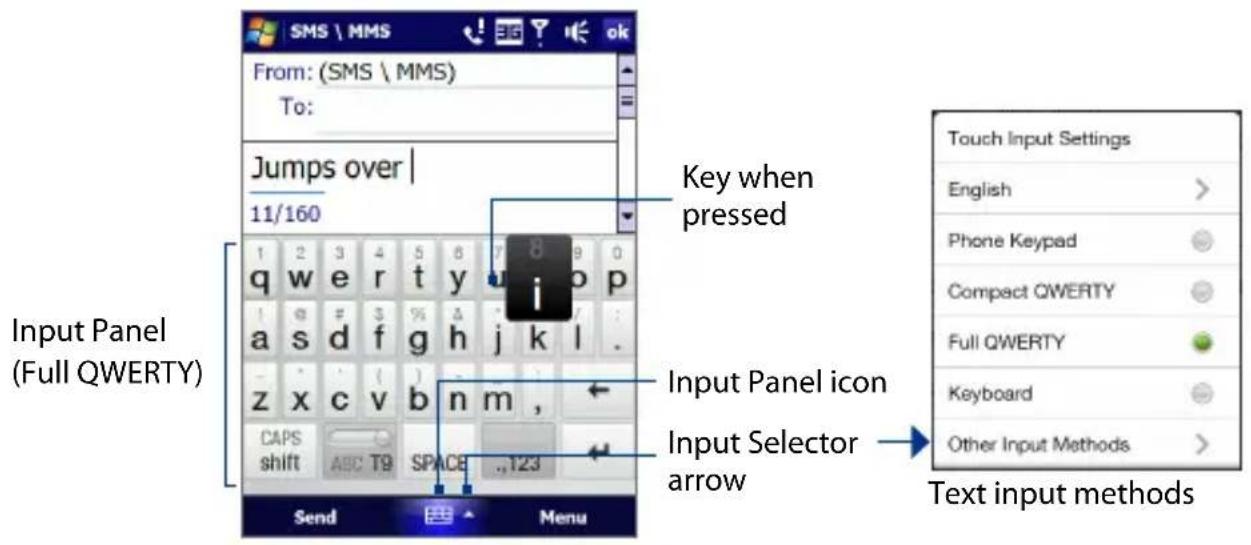
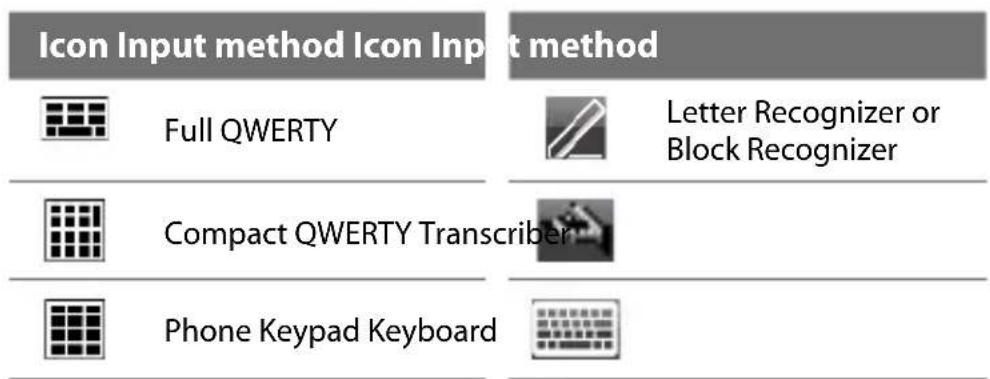
Notes
- Some text input methods may not be available in certain language versions of the device.
- When in landscape mode, the Compact QWERTY and Phone Keypad are not available.
4.2 Using the Full QWERTY
The Full QWERTY is a full on-screen QWERTY keyboard layout similar to a desktop PC keyboard.
Tip You can also use the Windows Mobile on-screen keyboard which also has a QWERTY keyboard layout by selecting Keyboard (or Other Input Methods > Keyboard) on the Text input method menu.
- Tap to enter letters or symbols. - Tap and hold to enter a punctuation mark, symbol, or number that appears on top of a key
- Tap to enter an uppercase letter. - Tap twice to turn on Caps Lock.
Tap to toggle between using Normal or T9 mode.
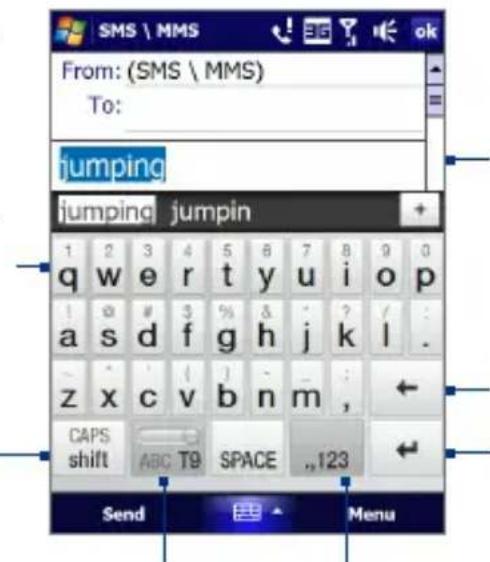
Displays the word candidate list in T9 mode. Tap a word to insert it into your text. Tap to add a word to the T9 dictionary.
Tap to delete the previous character. Tap to create a new line.
Tap to open a keyboard layout that lets you easily enter numbers and symbols. See "Using Numeric and Symbol Mode" for details.
To enter text using the Full QWERTY
- Start a program that accepts text input, such as Word Mobile.
- Tap the Input Selector arrow, then tap Full QWERTY.
- Start tapping keys on the keyboard as you would on a PC keyboard to enter your text. To learn how to enter text using T9 mode, see "Using Multitap and T9 Modes" in this chapter.
4.3 Using the Compact QWERTY
The Compact QWERTY is a type of on-screen keyboard which features 20 keys. With its large, touch-friendly keys and enhanced features such as T9 predictive input, you can enter text faster and more accurately.
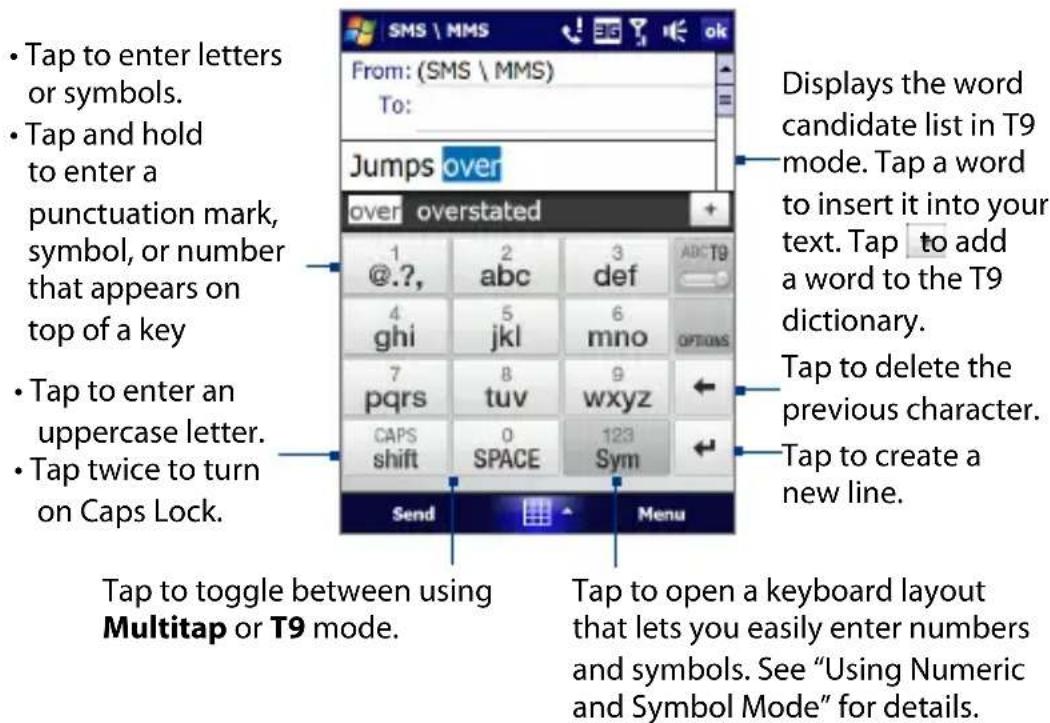
Tip You can tap and hold to immediately open the numeric keyboard.
To enter text using the Compact QWERTY
- Start a program that accepts text input, such as Word Mobile.
- Tap the Input Selector arrow, then tap Compact QWERTY.
- Start tapping keys on the keyboard to enter your text. To learn how to enter text using Multitap or T9 mode, see "Using Multitap and T9 Modes" in this chapter.
4.4 Using the Phone Keypad
The Phone Keypad is a 12-key on-screen keypad that has a layout similar to mobile phone keypads, plus some additional keys. The Phone Keypad has large keys and enhanced input features such as T9 predictive input, which makes it faster for you to enter text in your messages and documents.
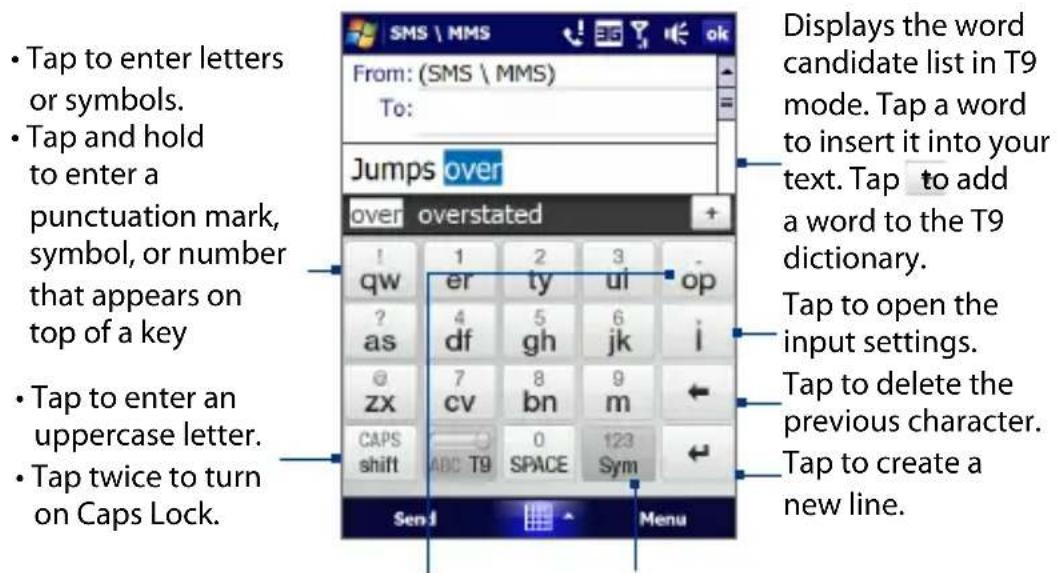
Tap to toggle between using Multitap or T9 mode.
Tap to open a keyboard layout that lets you easily enter numbers and symbols. See "Using Numeric and Symbol Mode" for details.
Tip You can tap and hold to immediately open the numeric keyboard.
To enter text using the Phone Keypad
- Start a program that accepts text input, such as Word Mobile.
- Tap the Input Selector arrow, then tap Phone Keypad.
- Start tapping keys on the keyboard to enter your text. To learn how to enter text using Multitap or T9 mode, see "Using Multitap and T9 Modes" in this chapter.
4.5 Using Multitap and T9 Modes
When using the on-screen keyboards, you can choose to enter text using Multitap or T9 mode.
Multitap mode
In Multitap mode (for Compact QWERTY and Phone Keypad), enter a character by tapping a key until the desired character is displayed on the screen.
- To enter the first letter that shows on a key, tap the key once. To enter the second letter, tap twice.
- To enter a punctuation mark, symbol, or number that appears on top of a key, tap and hold the key.
T9 mode
T9 is a predictive text input mode which displays a word candidate list as you enter the first few characters so you just select the word that you want.
To enter text using T9 mode
- Start entering the first few letters of a word. As you enter each letter, predicted words will appear above the keyboard.
- Tap the desired word to immediately insert it to your text.
Note Navigate through the word candidate list if there are more words to choose from.
To add a word to the T9 dictionary
If the word that you have entered is not found in the dictionary, you can add it to the dictionary.
-
While in T9 mode, type a letter and then tap on right side of the word candidate list.
-
Type the word you want to add and then tap ADD.
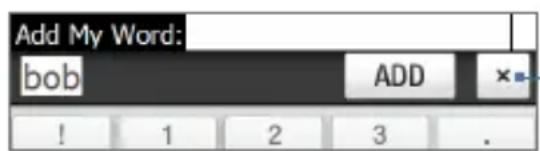
Tap to not add the word.
To customize Touch Input settings
-
Tap the Input Selector arrow, then tap Touch Input Settings.
-
On the Touch Input Settings screen, select or clear the following options according to your preferences:
- Spell Correction. Lets you correct typographical errors by selecting from a list of possible words that reflect the characters of the keys you have tapped as well as characters of nearby keys.
- Word Completion in T9 mode. Lets you select from a list of possible words based on the keys that you have tapped and on the words available in the dictionary.
- Word Completion in ABC mode. Lets you select from a list of possible combinations based on the characters that appear on the keys that you tapped.
- Auto-Substitution. Automatically inserts an apostrophe when you type common contracted words (for example, “dont” automatically becomes “don’t”).
- Tap Done.
4.6 Using Numeric and Symbol Mode
Switch to Numeric and Symbol mode to let you easily enter numbers and common symbols such as parentheses, braces, currency signs, punctuation marks, special characters, and more. Numeric and Symbol mode is available when using the Full QWERTY, Compact QWERTY, and Phone Keypad.
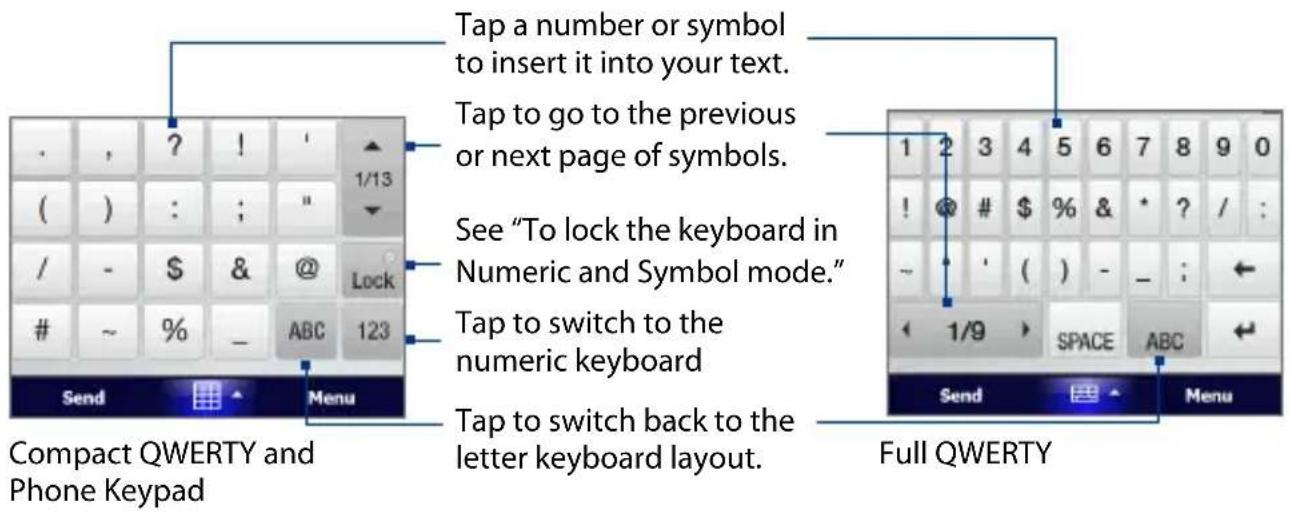
To switch to Numeric and Symbol mode
- While using Full QWERTY, Compact QWERTY, or Phone Keypad, tap Sym / 123
- Locate the number or symbol, then tap it to insert it into your text.
To lock the keyboard in Numeric and Symbol mode
You can lock the keyboard in Numeric and Symbol mode so you can continuously enter symbols and numbers.
- Tap the Input Selector arrow and then tap Other Input Methods > Options.
- In the Input Method tab, select a Touch input method in the Input method list, then tap Options.
- Clear the Turn on one-touch symbol entry check box.
Tip In Compact QWERTY and Phone Keypad, tap / to toggle between locking the keyboard in Numeric and Symbol mode and switching back to the letter keyboard layout after tapping a symbol or number.
4.7 Using Block Recognizer
With Block Recognizer, you use a single stroke to write letters, numbers, symbols, and punctuation, which are then converted into typed text.
To use Block Recognizer
-
From a program, tap the Input Selector arrow and then tap Other Input Methods > Block Recognizer.
-
Write characters, numbers, and symbols in the designated writing area.
-
Enter letters by writing in the abc (left) area of the box.
- Enter numbers by writing in the 123 (right) area of the box.
- Enter symbols and punctuation by tapping the left or right area of the box (a gray dot appears), then writing the desired character.
Tip For help with writing characters, tap the question mark near the writing area.
4.8 Using Letter Recognizer
With Letter Recognizer, you can write individual letters, numbers, and punctuation marks, which are then converted into typed text.
To use Letter Recognizer
-
From a program, tap the Input Selector arrow and then tap Other Input Methods > Letter Recognizer.
-
Write characters, numbers, and symbols in the designated writing area.
-
Enter uppercase letters by writing in the ABC (left) area of the box.
- Enter lowercase letters by writing in the abc (middle) area of the box.
- Enter numbers by writing in the 123 (right) area of the box.
- Enter punctuation and symbols by writing the desired character in the 123 (right) area of the box.
Tip For help with writing characters, tap the question mark near the writing area.
4.9 Using Transcriber
Transcriber is a handwriting recognition program that enables you to write in cursive, print, or a combination of both.
To write using Transcriber
- Open a program that accepts user input, such as Word Mobile.
- Tap the Input Selector arrow and then tap Other Input Methods > Transcriber. The Transcriber introductory screen appears. Read the introduction and tap OK.
- Position the cursor where you want text to appear.
- Use the stylus to write anywhere on the screen. The handwriting will be converted to text shortly after you lift the stylus from the screen.
To enter punctuation and symbols
Transcriber comes with an on-screen keyboard that provides an easy way to add punctuation or a special symbol to existing text. To use this on-screen keyboard, tap on the Transcriber toolbar.
The keyboard remains visible until you tap the button again.
Tips To reposition the keyboard, tap and hold the title bar, then drag to the desired location.
- When no text is selected, you can open the keyboard by using the gesture (draw a line straight down and then straight up). For more information about using Transcriber gestures, see Help on your device.
To edit text
- In a program, draw a line from left to right across the text you want to edit.
- After you lift the stylus from the screen, the line disappears and the selected text will be highlighted.
- Do either of the following:
- Rewrite the text.
- Use gestures to capitalize letters, insert a space, and so on. For information about using Transcriber gestures, see Help on your device.
Chapter 5
Synchronizing Information With Your Computer
5.1 About Synchronization
5.2 Setting Up Windows Mobile® Device Center on Windows Vista®
5.3 Setting Up ActiveSync® on Windows XP®
5.4 Synchronizing With Your Computer
5.5 Synchronizing via Bluetooth
5.6 Synchronizing Music and Video
5.1 About Synchronization
You can take information from your computer wherever you go by synchronizing them to your device. The following types of information can be synchronized between your computer and your device:
- Microsoft® Office Outlook® information, which include Office Outlook e-mail, contacts, calendar, tasks, and notes
Notes, which are created using Microsoft® Office OneNote® 2007
• Media, such as pictures, music, and video - Favourites, which are the bookmarked links to your favourite web sites
- Files, such as documents and other files
Before you can synchronize, you need to install and set up first the synchronization software on your computer. For more information, see "Setting Up Windows Mobile Device Center on Windows Vista®" and "Setting Up ActiveSync® on Windows XP®" in this chapter.
Note ActiveSync or Windows Mobile Device Center only synchronises data on your computer and device. To back up files in the internal storage, use Windows Explorer on your computer to copy files from the internal storage to your computer.
Ways to synchronize
After you have installed the synchronization software on your computer, connect and synchronize your device with your computer by:
- Using the supplied USB sync cable. Upon connecting the sync cable to your device and your computer, the synchronization process automatically starts.
- Using Bluetooth. You must first set up a Bluetooth partnership between your device and your computer before you can synchronize information between them using Bluetooth. For more information about setting up a Bluetooth partnership, see Chapter 9. For information about synchronizing through Bluetooth, see "Synchronizing via Bluetooth" later in this chapter.
Try to synchronize regularly in order to keep information up-to-date in both your device and your computer.
Notes • You can also synchronize Outlook e-mail, contacts, calendar, and tasks on your device with the Exchange Server at your work. For more information about setting up your device to synchronize with the Exchange Server, see Chapter 7.
- If you are sending your device for repair or performing a hard reset, data from your device will be lost. It is recommended that you sync your device to your computer to back up your files. To back up files in the internal storage to your computer, use Windows Explorer to copy files from the internal storage to the computer.
5.2 Setting Up Windows Mobile® Device Center on Windows Vista®
Microsoft Windows Mobile ^® Device Center is the replacement for Microsoft ^® ActiveSync ^® on Windows Vista ^® .
Note Some versions of Windows Vista ^® come with Windows Mobile Device Center already installed. If Windows Mobile Device Center is not available on your Windows Vista ^® , you can install it from the Getting Started Disc that came with your device.
Set up synchronization in Windows Mobile Device Center When you connect your device to your computer and start Windows Mobile Device Center for the first time, you are asked to create a Windows Mobile partnership with your device. To create a partnership:
- Connect your device to your computer. Windows Mobile Device Center configures itself, then opens.
- On the license agreement screen, click Accept.
- On the Windows Mobile Device Center's Home screen, click Set up your device.
Note Choose Connect without setting up your device if you only want to transfer media files, check for updates, and explore your device but not synchronize Outlook information.
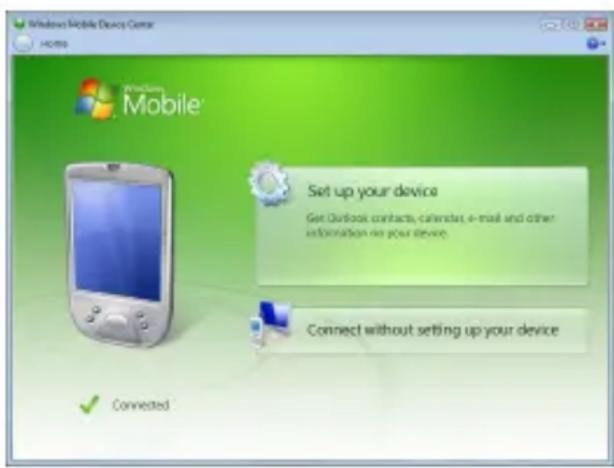
92 Synchronizing Information With Your Computer
- Select the items you want to synchronize, then click Next.
- Enter a device name, then click Set Up.
When you finish the setup wizard, Windows Mobile Device Center synchronizes your device automatically. Notice that Outlook e-mails and other information appear on your device after synchronization.
Use Windows Mobile Device Center
To open Windows Mobile Device Center, click Start > All Programs > Windows Mobile Device Center on your Windows Vista computer.
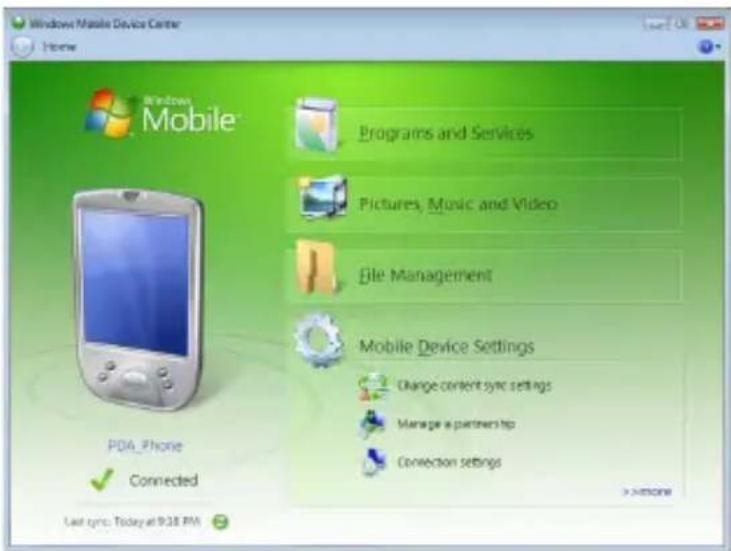
On Windows Mobile Device Center, you can do the following:
- Click Mobile Device Settings to change synchronization settings.
- When you click Pictures, Music and Video > XX new pictures/video clips are available for import, a wizard guides you to tag and transfer photos from your device to the Photo Gallery on your computer.
- Click Pictures, Music and Video > Add media to your device from Windows Media Player to synchronize music and video files using Windows Media® Player. For more information, see "Using Windows Media® Player Mobile" in Chapter 11.
- Click File Management > Browse the contents of your device to view documents and files on your device.
Note See Windows Mobile Device Center Help for more information.
5.3 Setting Up ActiveSync® on Windows XP®
The Getting Started disc that comes with your device contains Microsoft ActiveSync 4.5 or later. Follow the steps in this section to install and set up ActiveSync on Windows XP or other compatible Windows systems.
Note For a list of compatible Windows systems, go to http://www.microsoft.com/windowsmobile/activesync/activesync45.mspx.
Install ActiveSync
- Place the Getting Started disc to the disc drive of your computer.
- Click Setup and Installation.
- Select the ActiveSync check box, then click Install.
- Read the license terms, then click Accept.
- When installation is completed, click Done.
- On the Getting Started with Windows Mobile screen, click Close.
Set up synchronization in ActiveSync
- Connect your device to your computer. The Synchronization Setup Wizard automatically starts and guides you to create a synchronization partnership. Click Next to proceed.
- To synchronize your device with your computer, clear the Synchronize directly with a server running Microsoft Exchange check box, then click Next.
- Select the information types that you want to synchronize, then click Next.
- Select or clear the Allow wireless data connections check box according to your preference.
- Click Finish.
When you finish the wizard, ActiveSync synchronizes your device automatically. Notice that Outlook e-mails and other information appear on your device after synchronization.
5.4 Synchronizing With Your Computer
Connect and synchronize your device with your computer using the USB cable or Bluetooth connection.
Start and stop synchronization
You can manually synchronize either from your device or computer.
From your device
- On the TouchFLO 3D Home screen, slide to the Settings tab and then touch Sync Data; or
- Tap Start > Programs > ActiveSync, then tap Sync. To end synchronization before it completes, tap Stop.
Tip To delete a partnership with one computer completely, disconnect your device from that computer first. In ActiveSync on your device, tap Menu > Options, tap the computer name, then tap Delete.
From Windows Mobile Device Center
- Click Start > All Programs > Windows Mobile Device Center.
- Click at the lower left of the Windows Mobile Device Center.
To end synchronization before it completes, click .

From ActiveSync on your computer
When you connect your device to your computer, ActiveSync automatically opens on your computer and synchronizes.
• To manually start synchronization, click
• To end synchronization before it completes, click


Change which information is synchronized
You can change the information types and the amount of information to synchronize for each type either on your device or your computer. Follow the steps below to change synchronization settings on your device.
Note Before changing synchronization settings on your device, disconnect it from your computer.
-
In ActiveSync on your device, tap Menu > Options.
-
Select the check box for any items you want to synchronize. If you cannot select a check box, you might have to clear the check box for the same information type elsewhere in the list.
-
To change synchronization settings for an information type, for instance, E-mail, select it and tap Settings.
You can then set the download size limit, specify the time period of information to download, and more.
Notes
- Some information types such as Favourites, Files and Media cannot be selected in ActiveSync Options on your device. You can only select or clear these items from your computer's Windows Mobile Device Center or ActiveSync.
- A computer can have sync partnerships with many different Windows Mobile powered devices, but a device can have sync partnerships with at most two computers. To ensure that your device will synchronize properly with both computers, set up the second computer using the same synchronization settings you used on the first computer.
- Outlook e-mail can be synchronized with only one computer.
Troubleshoot sync connection problem
In some cases, when the computer connects to the Internet or a local network, it may disconnect the connection with your device in favor of the Internet or network connection.
If this happens, tap Start > Settings > Connections tab > USB to PC, then clear the Enable advanced network functionality check box. This makes your computer utilize a serial USB connection with your device.
5.5 Synchronizing via Bluetooth
You can connect and synchronize your device with the computer using Bluetooth.
Note To connect and synchronize your device with a computer via Bluetooth, your computer must have a built-in Bluetooth or installed with a Bluetooth adapter or dongle.
To synchronize with a computer via Bluetooth
- Set up Windows Mobile Device Center or ActiveSync on your computer to synchronize through Bluetooth. See the program's Help for instructions.
- On your device, tap Start > Programs > ActiveSync.
- Make sure that Bluetooth on both your device and the computer are turned on and set to visible mode. See "Bluetooth Modes" in Chapter 9 for details.
If this is the first time you have connected to this computer via Bluetooth, you must first complete the Bluetooth wizard on your device and set up a Bluetooth partnership between your device and the computer. For more information about creating a Bluetooth partnership, see “Bluetooth Partnerships” in Chapter 9.
- Tap Menu > Connect via Bluetooth. Make sure the Bluetooth function of both your device and the computer are turned on and set to visible mode.
Note To conserve battery power, turn off Bluetooth when not in use.
5.6 Synchronizing Music and Video
If you want to carry your music or other digital media along with you while you travel, set up Windows Media® Player on your computer to synchronize music and video with your device.
Other than selecting the Media information type to be synchronized, all media synchronization settings must be set in Windows Media® Player. Before media can be synchronized, you must do the following:
- Install Windows Media® Player Version 11 on your computer. (Windows Media® Player 11 works only in Windows XP or later versions).
- Connect your device to the computer with a USB cable. If your device is currently connected using Bluetooth, you must end that connection before media can be synchronized.
- Set up a sync partnership between your device and your computer's Windows Media® Player.
For more information about using Windows Media® Player Mobile, see Chapter 11.
Chapter 6
Exchanging Messages
6.1 Messaging
6.2 Text Messages
6.3 MMS
6.4 Types of E-mail Accounts
6.5 E-mail Setup Wizard
6.6 Using E-mail
6.1 Messaging
Messaging is a central location where you will find all types of messaging accounts, which include text messages (SMS), multimedia messages (MMS), and e-mail accounts.
To select a messaging account
Do one of the following:
- On the TouchFLO 3D Home screen, slide to the Mail tab and then touch Menu > Accounts > Accounts. The Account Picker screen then opens where you can select an account.
Tip You can also tap Start > Messaging. to access the Account Picker screen.
- While you are in a message list of a certain account, for example SMS \ MMS, tap Menu > Go To to switch to other types of messaging accounts.
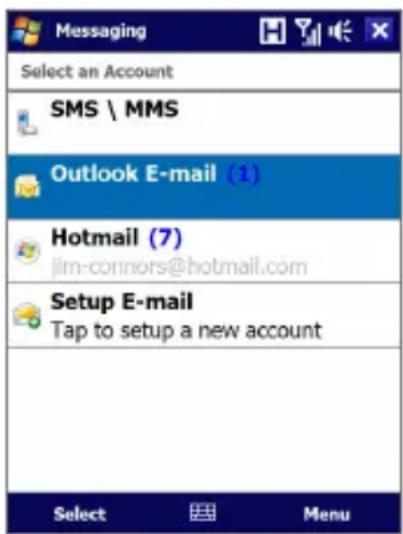
Account Picker screen
To configure message account settings
- Tap Menu > Options on the Account Picker screen; or
- Tap Menu > Tools > Options while you're in a message list.
To automatically add a signature in outgoing messages
You can automatically add your name and other information as your signature in outgoing SMS, MMS, and e-mail messages:
Note You need to specify your signature for each type of messaging account.
- Tap Start > Messaging, then tap Menu > Options.
- Tap Signatures.
- Select a messaging account in which to add a signature.
- Select the Use signature with this account check box.
-
In the provided text box, enter the information that will be displayed as your signature.
-
If you want the signature to be added whenever you reply or forward messages, select the Use when replying and forwarding check box, then tap OK.
-
Repeat the steps to add a signature to other messaging accounts.
6.2 Text Messages
Send short text messages (SMS) up to 160 characters long to other mobile phones.
Create a new text message
Depending on your preference, there are a number of alternative ways you can create a new text message.
From the TouchFLO 3D Home screen
-
On the Home screen, slide to the Messages tab.
-
Touch the New icon ( ) on the upper right side of the screen.
Tip To send a text message to a favourite contact, first select the photo of the desired contact in the People tab to open his or her contact card and then touch Send text message. For more information about working with favourite contacts, see “People” in Chapter 3.
From the Account Picker screen
- Tap Start > Messaging > SMS \ MMS.
- Tap Menu > New > SMS.
From the Contacts screen
- Tap Start > Contacts.
- Tap the contact's name to open his or her contact card.
- Touch Send text message.
Compose and send a text message
After creating a new text message, follow the steps below to enter your message and then send it.
- To add recipients, enter their mobile phone numbers in the To field, separating them with a semicolon. You can also tap To or tap Menu > Add Recipient to add mobile phone numbers from Contacts..
- Enter your message.
Tip To choose from preset messages, tap Menu > My Text and tap a desired message. To check the spelling, tap Menu > Spell Check.
- Tap Send.
Tips • For more information about entering text and symbols, see Chapter 4.
- If you want to know when a text message is received, before sending the message that you are composing, tap Menu > Message Options, then select the Request message delivery notification check box.
- To always receive a delivery notification, tap Menu > Tools > Options in the text message list, tap SMS \ MMS, then select the Request delivery notifications check box.
Manage text messages
Text messages that are sent to and received from a contact (or number) are grouped as a single thread in your inbox. Threaded SMS lets you see exchanged messages (similar to a chat program) with a contact on the screen.
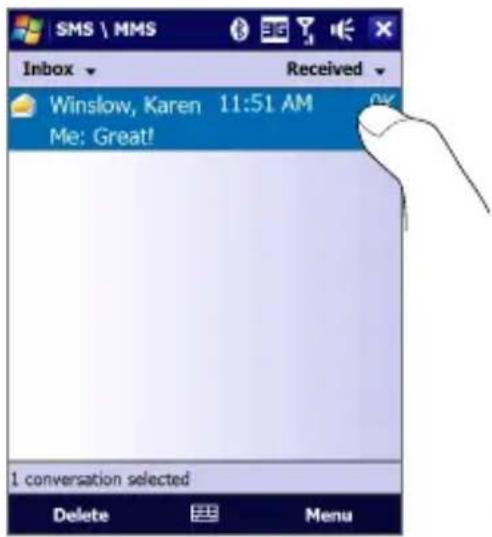
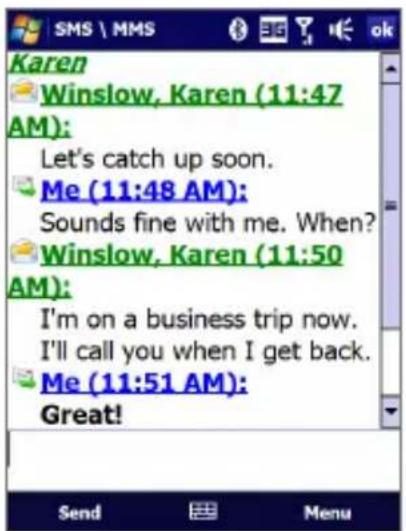
To reply to a text message
- In the SMS \ MMS inbox, tap a message thread to open it.
- At the bottom of the screen, type your reply message and then tap Send.
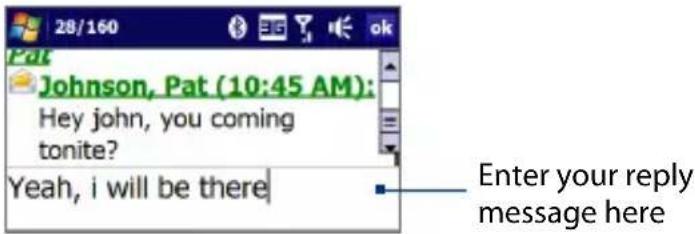
To copy a message in the thread to the SIM card
- In the SMS \ MMS inbox, tap the message to open it.
- Use the Navigation Up or Down control to select a message in the thread that you want to copy to the SIM card.
Note You cannot copy a sent message from the thread to the SIM card.
- Tap Menu > Copy to SIM.
To copy a text message from the SIM card to the device
- In the SMS \ MMS inbox, select the SIM message you want to copy.
- Tap Menu > Copy to Phone.
Note Copying SIM text messages to your device results in duplicate messages in the Inbox folder when your SIM card is in use.
To delete a message in the thread
- In the SMS \ MMS inbox, tap a message thread to open it.
- Use the Navigation Up or Down control to select a message in the thread that you want to delete.
- Tap Menu > Delete.
To delete all messages in a thread
- In the SMS \ MMS inbox, select a message thread using the Navigation Up or Down control.
- Tap Delete.
To reply to a text message with an MMS message
You can reply to a text message in a thread or to a SIM text message using an MMS message.
- In the SMS \ MMS inbox, tap a message thread to open it.
- Tap Menu > Insert, and then in the menu, select the item you want to insert: Picture/Video, Audio or Attachment.
- Tap Send.
Tips • You can also insert a vCard or vCalendar in your MMS message.
- To compose an MMS message complete with text, emoticons, media and attachments, tap Menu > Advanced Composer. For instructions on composing and sending an MMS message, see “MMS” in this chapter.
6.3 MMS
Sending multimedia messages (MMS) to your friends and family is fun and easy. You can include pictures, videos, and audio clips in a multimedia message.
Notes • Multimedia messaging is a charged service and has to be provisioned on your mobile phone account. Contact your wireless service provider to have MMS provisioned as part of your calling plan.
- Make sure the size of MMS messages that you send is within the limits allowed by your wireless service provider.
Change MMS settings
Check your device to see if it is preconfigured with your wireless service provider's MMS settings. Add the MMS settings of your wireless service provider if there are no preset MMS settings found on your device.
To configure MMS message settings
- Tap Start > Messaging > SMS \ MMS.
- Tap Menu > MMS Options. The Settings screen then appears.
-
In the Preferences tab, choose from the available options according to your needs.
-
Tap the Servers tab and check if your device is preset with MMS server settings.
If there are no preset settings, tap New and enter the following information, which you obtained from your wireless service provider:
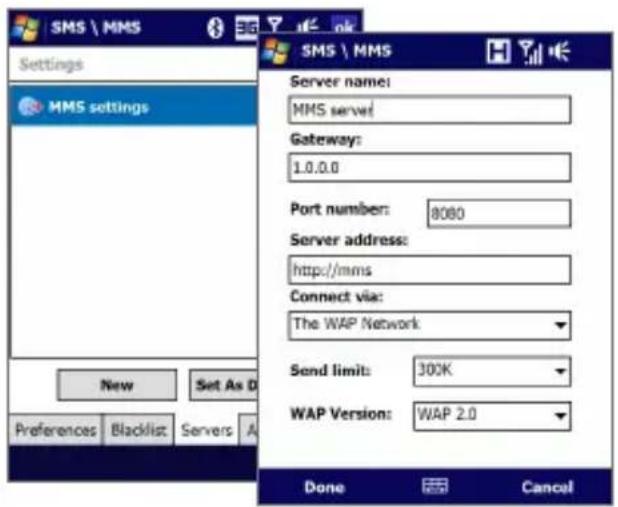
- Gateway. Location of the MMS server, which is usually in the form of an IP address.
- Port number. HTTP port number used for connecting to the MMS server and for file transfer.
- Server address. URL address of the server where MMS messages are stored.
- Connect via. Select the connection that your device uses for MMS messages.
- Send limit. Select the maximum MMS message size allowed by your wireless service provider.
- WAP version. Select either WAP 1.2 or WAP 2.0, depending on which one is being used by your wireless service provider.
5. Tap Done.
Notes • If your device already has preset MMS settings, it is recommended that you do not change these settings. If you change the preset settings, your device may not be able to send and receive MMS messages.
- If you add several MMS message service providers to the Settings screen, you can choose one as your default provider. Select the provider's name in the list, then tap Set As Default.
Create and send MMS messages
You can compose MMS messages in a combination of slides, where each slide can consist of a photo, video or audio clip, and/or text.
To compose an MMS message
- Tap Start > Messaging > SMS \ MMS, then tap Menu > New > MMS.
- When you see the Choose a MMS screen, tap a preset template, or tap Custom to open a blank MMS message.
Note If you prefer to start composing from a blank MMS message every time, select the Always choose custom check box.
- In To, enter the recipient's phone number or e-mail address directly, or tap To, Cc, or Bcc to choose a phone number or an e-mail address from Contacts.
Note You may need to scroll up to see Cc and Bcc.
- Enter a subject for your message.
-
Tap the Insert icon ( ) to select and insert a photo or video clip. When selecting a photo or video clip, you can:
-
Tap Select to insert the selected photo or video clip into the MMS message you are composing.
- Tap to take a photo and insert it into the MMS message.
- Tap 📄 to record MMS video and insert it into the MMS message.
-
Tap Exit ( ) to quit selection and return to the MMS message.
-
Enter text and insert audio clips by tapping the respective areas. See "To add text to an MMS message" and "To add an audio clip to an MMS message" for details.
-
To add more slides, tap ▶ or tap Menu > Slides > Insert Slide. Repeat steps 5 and 6 to insert photos/videos, text, and audio onto your slides.
-
Tap Send to send the MMS message.
You can also send an MMS message from Pictures & Videos, Album, or the Camera program.
To add text to an MMS message
When you tap Insert text here on your MMS message, an empty screen appears where you can enter your text. You can insert the following types of information:
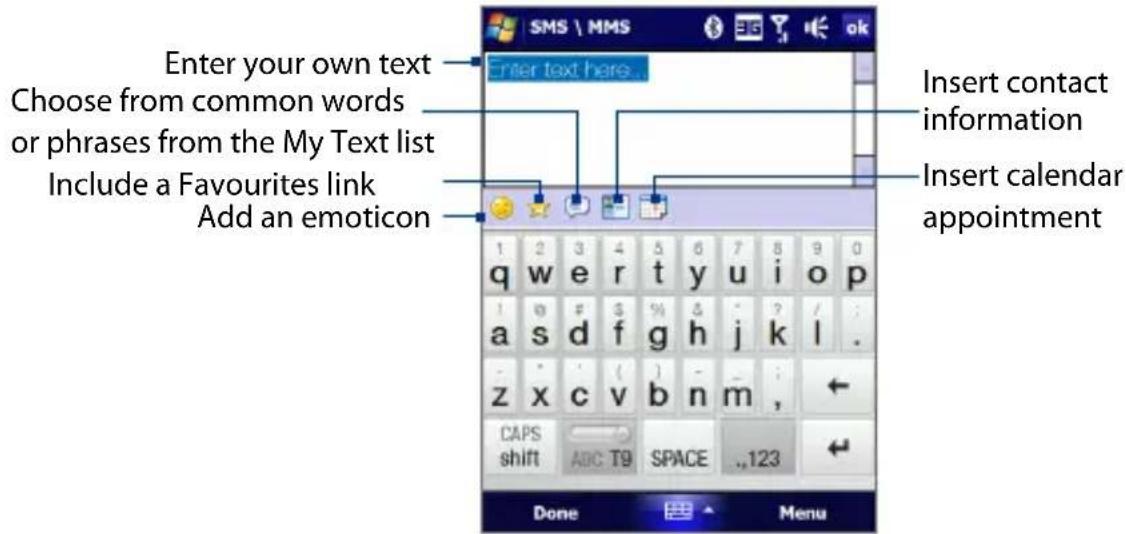
Tip To edit or delete a phrase on the My Text list, tap and hold a string, then tap Edit or Delete from the shortcut menu. To add a new phrase, tap New.
To add an audio clip to an MMS message
You can add one audio clip per slide in your MMS message.
- Tap Insert audio on your MMS message.
By default, My Documents will be shown. Tap My Music or another folder that contains audio files. When navigating folders, tap the down arrow (▼to return to the upper folder.
-
Select an audio file. When selected, you can:
-
Tap to play the audio clip, to pause, or to stop playback.
- Tap Select to insert it into your MMS message.
- Tap Exit (✗) to quit selection and return to your MMS message.
Note To record a new audio clip and add it to your MMS message, tap . The Record pop-up window then opens. Tap Record to start recording, and Stop to end the recording. Tap Play to listen to the recorded audio clip, then tap Add. The new audio clip is then inserted into your MMS message.
View and reply to MMS messages
To view an MMS message
- Use the playback controls
- Tap Contents to see a list of files included in the message. On the Message Contents screen, you can do the following:
- To save a file, select it, and tap Menu > Save.
- To save the contents of a text file to the My Text list, tap Menu > Save into My Text.
- To associate a photo to one of your contacts, tap Menu > Assign to Contact.


To reply to an MMS message
- In the SMS \ MMS inbox, press Navigation Up or Down to select the mobile phone number or name of the contact who sent you the MMS message.
- In the threaded message, MMS messages will have the icon. Tap this icon to open and view an MMS message.
- After viewing the MMS message, tap Menu > via MMS to reply with an MMS message or tap Menu > via SMS to reply with a text message.
To block a phone number from sending you MMS messages
If you do not want to receive MMS messages from a particular sender, you can add the sender's phone number to the MMS Blacklist.
- When you receive a new MMS message, open and view the message.
- To avoid receiving MMS messages from this sender next time, tap Menu > Show > Message Detail.
- On the Message Detail screen, tap Menu > Show Contact Details.
- Tap Menu > Save to Blacklist.
- Tap Done.
Tip To unblock a phone number and allow the sender to send you MMS messages, remove the number from the Blacklist. Go to the SMS \ MMS inbox, tap Menu > MMS Options > Blacklist tab, tap and hold the phone number in the Blacklist, and then tap Delete.
6.4 Types of E-mail Accounts
You can set up the following types of e-mail accounts on your device:
- Outlook e-mail that you sync with your computer or the Exchange Server.
- E-mail account that you have from an Internet Service Provider (ISP) or other e-mail provider.
- Web-based e-mail accounts such as Gmail®, Yahoo!® Mail Plus, AOL®, and others.
• Work account that you access using a VPN connection.
Set up your device to synchronize Outlook e-mail with the computer
If you have installed the synchronization software on your computer and created a partnership with your device, then your device is ready to send and receive Outlook e-mail.
If you have not yet installed the synchronization software nor created a partnership, do so by following the procedures in Chapter 5.
Tip To set up your company e-mail account so that you can access Outlook e-mail messages wirelessly, you must set up your device to synchronize via an over-the-air connection with your company's Exchange Server. For more information about synchronizing with your company e-mail server, see Chapter 7.
Add an e-mail account
To add a new e-mail account, you can do one of the following:
- On the TouchFLO 3D Home screen, slide to the Mail tab and then touch Menu > Accounts > New Account; or
- Tap Start > Messaging > Setup E-mail.
The E-mail Setup wizard then opens and lets you enter your e-mail account settings. See "E-mail Setup Wizard" in this chapter for details.
6.5 E-mail Setup Wizard
Windows Mobile's E-mail Setup wizard walks you through the process of setting up your e-mail account. It has an Auto Setup feature which can automatically set up your e-mail account based on the e-mail address and password that you enter, if your e-mail provider settings are preconfigured on your device. If the settings are not found on your device, Auto Setup then attempts to retrieve the settings online for which you may be charged when your device connects to the Internet and downloads them. If it cannot find the e-mail settings online, you need to enter them manually.
Note For more information about setting up your company Outlook e-mail account, see Chapter 7.
Set up an Internet e-mail account
Set up a POP3 or IMAP4 e-mail account on your device if you have an e-mail account from an Internet service provider (ISP) or other e-mail service provider, or a web-based account such as Gmail, Yahoo! Mail Plus, or AOL. You can also add a work account that you access using a VPN server connection as a POP3/IMAP4 account.
- Add a new e-mail account. See "Add an e-mail account" for instructions.
- Enter your E-mail address and the Password for your e-mail account and select the Save password option. Tap Next.
-
If e-mail provider settings are found preconfigured on your device, the E-mail Setup wizard shows a successful message. Tap Next. If the settings are not found on your device, select the Try to get e-mail settings automatically from the Internet checkbox to find and download e-mail server settings from the Internet and then tap Next.
-
Enter Your name and the Account display name and then tap Next.
Note If the E-mail Setup wizard was unsuccessful in finding and downloading settings from the Internet, select Internet e-mail from the Your e-mail provider list on the next screen. You will be asked to enter e-mail server settings. See "To specify e-mail server settings" for details.
- In the Automatic Send/Receive list, choose how frequent you want e-mail messages to be automatically sent and downloaded on your device.
Note Tap Review all download settings to select download options, set the e-mail format as HTML or plain text, and more. For more information, see "To customize download and format settings."
- Tap Finish.
To specify e-mail server settings
If Auto Setup is unsuccessful, contact your ISP or e-mail provider for the Incoming mail server and Outgoing mail server settings so you can enter them on your device.
Other options that you can select include the following:
- Select the Outgoing server requires authentication check box, if required by your provider.
- If the outgoing e-mail server requires a different user name and password for sending e-mail, clear the Use the same user name and password for sending e-mail check box. You will be prompted to enter this information.
- Tap Advanced Server Settings, then select the Require SSL check boxes if your e-mail provider uses an SSL connection for more secured e-mail. From the Network connection list, select the data connection that you use for connecting to the Internet.
To customize download and format settings
Before you tap Finish when setting up your POP3 or IMAP4 e-mail account, you can tap the Review all download settings link at the bottom of the screen to choose download options, message format, and other settings.
Options Description
| Automatic Send/Receive You can select a time interval for connecting to the Internet automatically to send and receive messages. | |
| Download messages Set the number of days of messages that you want to be downloaded to your device. | |
| Options Description | |
| Send/receive when I click Send | By default, messages are immediately delivered when you tap Send. If you prefer to save outgoing messages to the Outbox folder first, clear the check box. (In this case, you will need to manually send messages by tapping Menu > Send/Receive). |
| Use automatic send/receive schedule when roaming | This allows your device to data roam when there is a set time interval for connecting to the Internet automatically. Since this may result in higher connection costs, you may want to leave the check box cleared. |
| When deleting messages Choose whether to delete messages from the mail server when you delete them on your device. | |
| Message format Select HTML or Plain Text. | |
| Message download limit Select the e-mail download size. If you have large volumes of e-mail, use a lower size or select to download headers only. | |
Set up a custom domain e-mail
When you are using an e-mail domain name that is hosted by a different e-mail provider (for example, your e-mail address may be Benjamin@startup.com but Email.com hosts the e-mail account and provides e-mail services), select the Custom Domain option in the E-mail Setup wizard to set up your e-mail account on your device.
- Add a new e-mail account. See "Add an e-mail account" for instructions.
- Enter your E-mail address and the Password for your e-mail account and select the Save password option. Tap Next.
- Clear the Try to get e-mail settings automatically from the Internet and then tap Next.
- In Your e-mail provider, select Custom domain and then tap Next.
- Enter the domain of your e-mail provider and then tap Next.
-
The E-mail Setup wizard then tries to find the e-mail provider settings on your device or from the Internet. If the settings are found, it shows a successful message. Tap Next.
-
Enter Your name and the Account display name and then tap Next.
Note If the E-mail Setup wizard was unsuccessful in finding the settings, you will be prompted to enter e-mail server settings on the succeeding screens. See "To specify e-mail server settings" for details.
- In the Automatic Send/Receive list, choose how frequent you want e-mail messages to be automatically sent and downloaded on your device.
Note Tap Review all download settings to select download options, set the e-mail format as HTML or plain text, and more. For more information, see "To customize download and format settings."
- Tap Finish.
6.6 Using E-mail
After setting up e-mail accounts on your device, you can start sending and receiving e-mail messages.
Create a new e-mail message
Depending on your preference, there are two ways you can create a new e-mail message.
To start from an empty message
- On the TouchFLO 3D Home screen, slide to the Mail tab.
- Select the e-mail account you want to use on the right side of the screen.
Tip To choose from other e-mail accounts that are not displayed on the Mail tab, touch Menu > Accounts > Accounts and then select an e-mail account from the Account Picker screen.
- Touch the New Mail icon ( ) to create a new e-mail.
To send an e-mail to a favourite contact
- On the TouchFLO 3D Home screen, slide to the People tab.
- Swipe your finger on the screen to flip through the photos of your favourite contacts.
- When the photo of the desired contact is displayed, touch the displayed photo and then touch Send e-mail.
112 Exchanging Messages
For more information about working with favourite contacts, see "People" in Chapter 3.
Tip You can also touch Start > Contacts, select a contact name, and then touch Send e-mail.
Compose and send an e-mail
After creating a new e-mail, follow the steps below to enter your message and then send it.
- To add recipients, enter their e-mail addresses, separating them with a semicolon. You can also tap To if you want to add e-mail addresses stored in Contacts.
- Enter a subject and compose your message.
Tip To choose from preset messages, tap Menu > My Text and tap a desired message. To check the spelling, tap Menu > Spell Check.
- Tap Send.
Tips • For more information about entering text and symbols, see Chapter 4.
- To set the message priority, tap Menu > Message Options.
- If you are working offline, e-mail messages are moved to the Outbox folder and will be sent the next time you connect.
To add an attachment to a message
- In the message that you are composing, tap Menu > Insert and tap the item you want to attach: Picture, Voice Note, or File.
- Select the file or picture you want to attach, or record a voice note.
Filter the Inbox message list
When the Inbox on your device is full of messages, you can filter your Inbox to display only the messages that contain a particular sender or subject you are searching for.
To filter your Inbox
Enter the sender name or e-mail subject you want to look for. As you type characters, the message list narrows down to the sequence of characters you have entered.
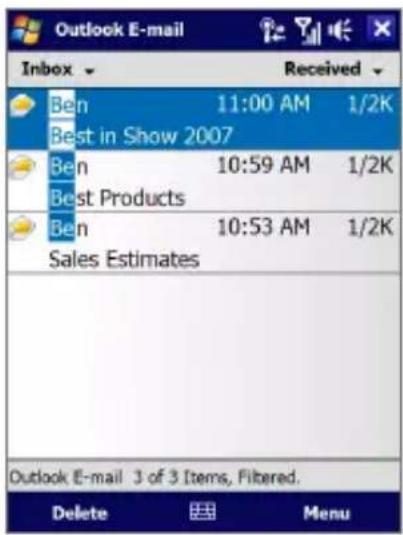
For example, entering "B", then "E" narrows the list to only the e-mails that contain sender names and e-mail subjects that start with "BE."
View and reply to messages
To download a complete e-mail
By default, each e-mail received in the inbox on your device contains only the first few kilobytes of the message. When you open an e-mail, it displays only the headers and part of the message. You must download the whole e-mail to view the complete content.
To download a complete e-mail message, open the e-mail and then do one of the following:
- Finger-scroll to the end of the message, and tap Get entire message and any attachments (POP3 e-mail account) or tap Get the rest of this message (IMAP4 and Outlook e-mail accounts).
- Tap Menu > Download Message.
Notes
- The Fetch Mail feature, which is available for POP3 and IMAP4 Internet e-mail accounts, downloads an entire e-mail without the need for you to perform a full synchronization. This limits the download to just the e-mail message that you want and helps save data cost.
Fetch Mail is also available for Outlook E-mail. See "Instant download through Fetch Mail" in Chapter 7 for details.
- Download may take some time, depending on the speed of your Internet connection, size of the whole e-mail, and whether file attachments are automatically downloaded.
To download file attachments
• POP3 e-mail account:
File attachments of a POP3 Internet e-mail account are automatically downloaded when you download a complete e-mail.
• IMAP4 and Outlook e-mail accounts:
File attachments appear below the subject of an e-mail message. Tapping an attachment opens the attachment if it has been fully downloaded or marks it for download the next time you send and receive e-mail.
You can set automatic download of file attachments. See "Customize e-mail settings" in this chapter for details.
To reply to or forward a message
-
Open the message and tap Menu > Reply, Menu > Reply All, or Menu > Forward.
-
Enter your response, then tap Send.
Notes • You can receive and view HTML e-mails from any type of e-mail account. The HTML format is retained, without layout shifting or resizing. HTML e-mail support in Outlook Mobile is available only if you are synchronizing your device with Microsoft Exchange Server 2007.
- When replying using an Outlook e-mail account, you can customize ActiveSync to exclude addresses, including your own, from being added to the recipient list. Tap Menu > Options in ActiveSync, select the E-mail item, tap Settings, then tap Advanced. In the My e-mail addresses text box, enter e-mail addresses you want to exclude.
Synchronize e-mails
Synchronizing e-mails ensures that new e-mails are downloaded to the device Inbox folder, e-mails in the Outbox folder are sent, and e-mails deleted from the server are removed from your device. The manner in which you synchronize e-mails depends on the type of e-mail account you have.
To automatically synchronize an Outlook e-mail account
- Connect your device to your computer through USB or Bluetooth.
Otherwise, connect through Wi-Fi or a data connection if you are synchronizing Outlook e-mail with the Exchange Server. For more information, see Chapter 7.
- Synchronization automatically begins, and your device sends and receives Outlook e-mail.
To manually synchronize your Outlook or Internet e-mail account
- Select your Internet e-mail account. (See "To select a messaging account" in this chapter.)
- Tap Menu > Send/Receive.
Customize e-mail settings
To change the download size and format for Outlook e-mail
- Disconnect your device from the computer.
- Tap Start > Programs > ActiveSync.
- Tap Menu > Options, select E-mail, then tap Settings.
- On the E-mail Sync Options screen:
- Under Message format, select HTML or Plain text.
-
Under Download size limit, select the desired e-mail size.
-
Close ActiveSync and reconnect your device to the computer.
To change the download size and format for Internet e-mail
- Tap Menu > Options on the Account Picker screen, or tap Menu > Tools > Options while you're in a message list.
- Tap your POP3 or IMAP4 Internet e-mail account.
- Tap Download Size Settings.
- Under Message format, select HTML or Plain text.
- Under Download size limit, select the desired e-mail size.
- Tap Done.
To automatically receive attachments on Outlook e-mails
- Tap Start > Programs > ActiveSync.
- Tap Menu > Options.
- Tap E-mail > Settings, then select Include file attachments.
To automatically receive attachments on IMAP4 e-mails
- Tap Menu > Options on the Account Picker screen, or tap Menu > Tools > Options while you're in a message list.
- Tap the name of your IMAP4 e-mail account.
- Tap Download Size Settings.
- In Download attachments:
- Select All attachments to always download file attachments; or
- Select a file size limit for auto-downloading attachments.
- Tap Done.
To store attachments on the internal storage
- Tap Start > Messaging.
- Tap Menu > Options > Storage tab.
- Select the When available, use this storage card to store attachments check box.
Chapter 7
Working With Company E-mails and Meeting Appointments
7.1 Synchronizing with the Exchange Server
7.2 Working With Company E-mails
7.3 Managing Meeting Requests
7.4 Finding Contacts in the Company Directory
7.1 Synchronizing with the Exchange Server
To keep up-to-date with your company e-mails and meeting schedules while you're out of the office, you can connect your device to the Internet through Wi-Fi or a data connection and synchronize with your company's Exchange Server.
Set up an Exchange Server connection
Before you can synchronize or access information on the Exchange Server, you need to set up an Exchange Server connection on your device. You need to get the following information from your network administrator and enter them on your device:
- Exchange Server name (must be Outlook Web Access server name)
- Domain name
- User name and password that you use at work
If you have not synchronized your device with your computer, follow these steps to set up an Exchange Server connection.
- Add a new e-mail account. See "Add an e-mail account" in Chapter 6 for instructions.
- Enter the E-mail address and Password for the e-mail account and select the Save password option. Tap Next.
- Clear the Try to get e-mail settings automatically from the Internet option and tap Next.
- In Your e-mail provider, select Exchange server and tap Next.
- Tap Next again.
- Select the Attempt to detect Exchange Server Settings automatically option and tap Next.
- Enter the Domain name and tap Next.
- In Server address, enter the Exchange Server address and tap Next.
- Select the items that you want to sync with the Exchange Server.
Tips
- To change synchronization settings of an information item, for example, E-mail, select the item, then tap Settings.
- To change the rules for resolving synchronization conflicts, tap Menu > Advanced.
10. Tap Finish.
Notes
- If you synchronized e-mails with your computer before, open ActiveSync on your device, then tap Menu > Add Server Source to set up an Exchange Server connection. When prompted to select information types for synchronization, you must first clear the E-mail check box under the Windows PC item before you can select E-mail under Exchange Server.
- To change Exchange Server settings, open ActiveSync on your device, then tap Menu > Configure Server.
Start synchronization
Before you start synchronizing with the Exchange Server, make sure your device has been set up with a Wi-Fi or data connection to the Internet so that you can synchronize over the air. For more information about connections, see Chapter 8.
After you finish setting up an Exchange Server connection, your device automatically starts synchronization.
To manually start synchronization, you can do one of the following:
- On the TouchFLO 3D Home screen, slide to the Settings tab and then touch Sync Data; or
- Tap Start > Programs > ActiveSync and then tap Sync.
Note If you connect your device to your office computer via a USB or Bluetooth connection, you can use this connection to the computer to "pass through" to the network and download Outlook e-mails and other information to your device.
7.2 Working With Company E-mails
Your device gives you instant access to your company e-mails and lets you manage your messages easier. Direct Push, Fetch Mail, Remote e-mail search, and e-mail flags are just some of the tools you can use to manage your e-mails.
Note Some messaging features depend on the Microsoft Exchange Server version used in your company. Check with your network administrator for the availability of these features.
Automatic synchronization through Direct Push
Direct Push technology (push e-mail feature) enables you to receive new e-mails on your device as soon as they arrive in your Inbox on the Exchange Server. Items such as contacts, calendar and tasks are also immediately updated onto your device when these items have been changed or new entries have been added on the Exchange Server. To make Direct Push work, you need to have a Wi-Fi or data connection on your device.
You need to perform a full synchronization between your device and the Exchange Server first before Direct Push can be enabled.
Requirement The Direct Push feature works for your device only if your company is using Microsoft Exchange Server 2003 Service Pack 2 (SP2) with Exchange ActiveSync or higher version.
You can turn on Direct Push in the Comm Manager or ActiveSync.
To turn on Direct Push in Comm Manager
-
To open the Comm Manager, slide to the Settings tab on the TouchFLO 3D Home screen and then touch Communications.
Tip You can also tap Start > Programs > Comm Manager. -
On the Comm Manager screen, touch Microsoft Direct Push.
To turn on Direct Push in ActiveSync
- Tap Start > Programs > ActiveSync and then tap Menu > Schedule.
- Select As items arrive in the Peak times and Off-peak times boxes.
Note When Direct Push is off, you need to manually retrieve your e-mails.
Scheduled synchronization
If you do not want to use Direct Push, you can set a regular schedule for synchronizing Outlook e-mail and information.
- In ActiveSync on your device, tap Menu > Schedule.
- Select a shorter time interval in the Peak times box for you to be able to receive e-mails more frequently. (Peak times usually refer to your working hours when e-mail volume is high).
- Select a longer interval in the Off-peak times box.
Tip To set the days and hours that make up your peak and off-peak times, tap the peak times link at the bottom of the screen.
Instant download through Fetch Mail
The Fetch Mail feature downloads an entire e-mail immediately without the need for you to perform a full Send/Receive action. This limits the download to just the e-mail message that you want and helps save data cost.
Requirement Fetch Mail works for your device only if your company is using Microsoft Exchange Server 2007 or higher.
- On the TouchFLO 3D Home screen, slide to the Mail tab, select your Outlook account, and then tap Inbox.
Tip You can also tap Start > Messaging > Outlook E-mail.
-
Open an e-mail message.
-
By default, only the first few words of the message is shown. To download the whole e-mail, finger-scroll to the end of the message, then tap Get the rest of this message.
-
Wait for the remainder of the message body to download.
Notes • For information about changing e-mail sync options such as setting the download size for e-mail, see "Customize e-mail settings" in Chapter 6.
- When you receive an e-mail that contains a link to a document such as a PDF or Microsoft Office document located on SharePoint or an internal file server, you can tap the link to view the document on your device. You can view the document only if you have a Microsoft Outlook account that synchronizes with Microsoft Exchange Server 2007 or later. Exchange Server must also be set up to allow access to SharePoint document libraries or internal file servers.
Search for e-mails on the Exchange Server
You can access e-mails that are not available on your device by searching your Microsoft Exchange Server mailbox. The search results are downloaded and displayed in a Search Results folder.
Requirement Your company must be using Microsoft Exchange Server 2007 or higher.
- Tap Start > Messaging > Outlook E-mail.
- Tap Menu > Tools > Search Server.
- In the Look for text box, enter the search keyword.
- Choose the date range of messages to search from.
- In the Look in list, specify whether to search in the Inbox, Sent Items, or All Folders.
- Tap Search.
Tip To clear the search results and return to the message list, tap Menu > Clear Results.
Flag your messages
Flags serve as a reminder for you to follow-up on important issues or requests contained in e-mail messages. Flagging messages, which has been a useful feature on desktop Outlook E-mail, can also be done in Outlook Mobile on your device. You can flag received e-mail messages on your device.
Requirement Flags are enabled only if e-mails are synchronized with Microsoft Exchange Server 2007 or higher. Flags are disabled or hidden if e-mails are synchronized with earlier versions of Microsoft Exchange Server.
To flag or unflag a message
- Open Outlook on your device and access the Inbox.
- Select a message or open a message.
- Tap Menu > Follow Up and select one of the following options:
- Set Flag Mark the message with a red flag to indicate that it needs follow up.
- Complete Flag Mark the message with a check mark to indicate that the issue or request in the e-mail is already completed.
- Clear Flag Remove the flag to unmark the message.
Note E-mail message reminders are displayed on your device if the messages are flagged with reminders and synchronized from the Exchange Server.
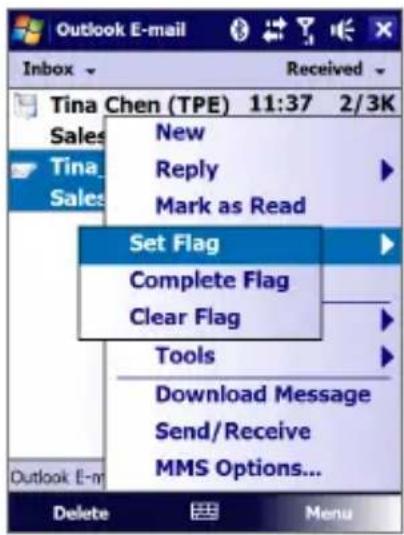
Out-of-office auto-reply
Outlook Mobile allows you to retrieve and change your out-of-office status. Just like desktop Outlook E-mail, Outlook Mobile automatically sends an auto-reply message when you're not available.
To send out-of-office auto-reply messages
- Tap Start > Messaging > Outlook E-mail.
- Tap Menu > Tools > Out of Office.
- In the I am currently list, select Out of the Office.
- Enter your auto-reply message, then tap Done.
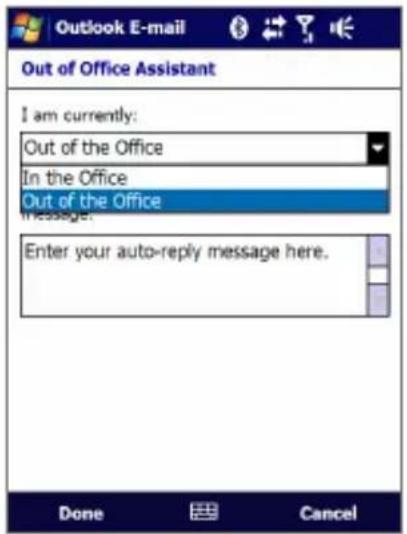
7.3 Managing Meeting Requests
When you schedule and send meeting requests from your device, you can invite attendees to your meeting and check their status to know about their availability.
When you receive a meeting request, you can reply by accepting or declining the request. The meeting request also clearly indicates whether or not there are conflicting or adjacent meetings.
Requirement Your company must be using Microsoft Exchange Server 2007 or higher.
To reply to a meeting request
- When you receive a meeting request e-mail, a notification will be displayed on your device. Open the e-mail.
- Tap Accept to reply and accept the meeting request, or tap Menu > Decline if you cannot attend the meeting.
Tips • Before responding, you can check your availability during the time of the requested meeting by tapping View your calendar.
- If the time of the meeting conflicts with your other appointments, a "Scheduling Conflict" status appears on top of the e-mail.
- Choose whether or not to edit your response e-mail before sending, then tap OK.
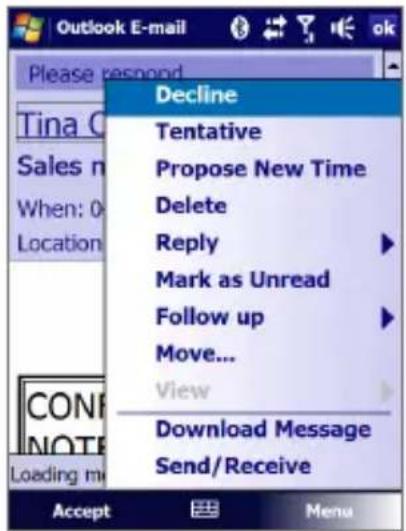
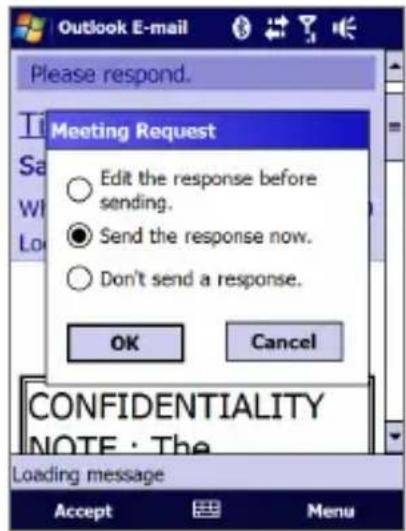
If you accepted the meeting request, it will automatically be added as an appointment in Calendar on your device.
To view the list of meeting participants
- Tap Start > Calendar.
- Tap a meeting request that you sent and then tap Attendees. The required and optional attendees will be listed.
Icons indicating whether each attendee has accepted or declined the meeting request will also be displayed.
Note To see the icon indicators in the attendees list, make sure Calendar is synchronized with the Exchange Server.
Tips • For information about creating a meeting request, see "To send a meeting request" in Chapter 12.
- To view an attendee's contact information, tap the attendee's name. If the attendee is included in your contacts list, you will see the contact information immediately. If the attendee is not in your contacts list, tap Company Directory to view the contact information.
7.4 Finding Contacts in the Company Directory
In addition to having contacts on your device, you can access contact information from your organization's Company Directory. By having over-the-air access to the Company Directory, you can easily send e-mail messages and meeting requests to anyone in your company.
Requirement Access to the Company Directory is available only if your organization is running Microsoft Exchange Server 2003 SP2 or higher, and you have completed your first synchronization with the Exchange Server.
- Synchronize with the Exchange Server.
- Do any of the following:
• In Contacts, tap Menu > Company Directory.
- In a new e-mail message, tap the To box (or tap Menu > Add Recipient), then tap Company Directory on the top of the list.
126 Working With Company E-mails and Meeting Appointments
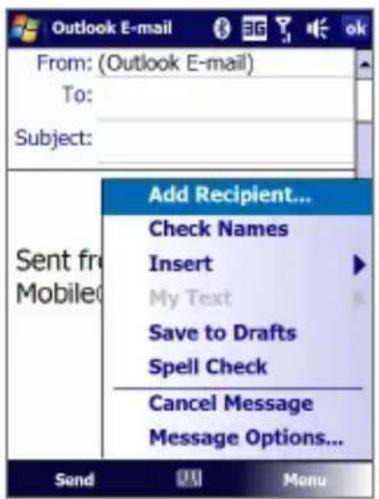
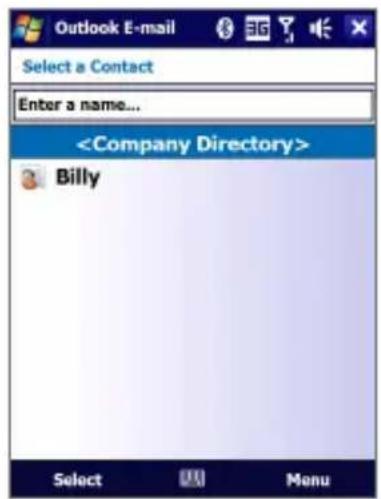
- When creating a meeting request and selecting required and optional attendees in Calendar, tap Company Directory.
- Enter a partial or full contact name and tap Search. In the search results list, tap a contact to select it.
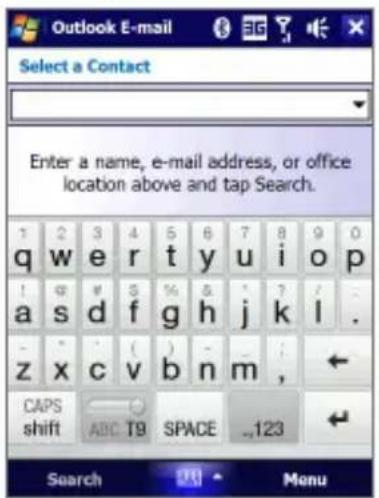
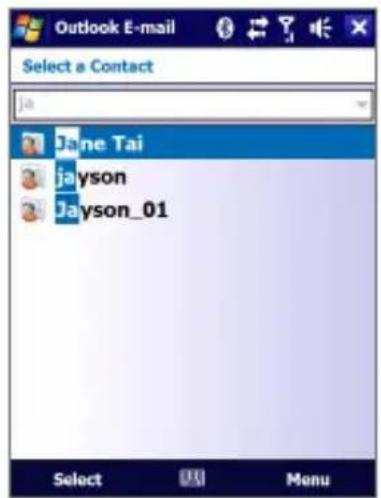
Notes • You can save a contact from the Company Directory to your device by selecting the contact, then tapping Menu > Save to Contacts.
- You can search on the following information as long as that information is included in the Company Directory: First name, Last name, E-mail name, Display name, E-mail address, or Office location.
Chapter 8
Internet
8.1 Ways of Connecting to the Internet
8.2 Starting a Data Connection
8.3 Using Opera Mobile™
8.4 Using YouTube™ Client
8.5 Using Streaming Media
8.6 Using Windows Live™
8.7 Using Your Device as a Modem
(Internet Sharing)
8.8 Using RSS Hub
8.1 Ways of Connecting to the Internet
Your device's networking capabilities allow you to access the Internet or your corporate network at work through one of the following connections:
• Wi-Fi
- GPRS, 3G or EDGE
- Dial-up
Note You can also add and set up the following connections:
- VPN: A VPN connection is used to access your corporate network by using an existing Internet connection.
- Proxy: A Proxy connection is used to access the Internet using an existing connection to your corporate or WAP network.
Wi-Fi
Wi-Fi provides wireless Internet access over distances of up to 300 feet (100 meters).
To use Wi-Fi on your device, you need access to a wireless access point or "hotspot".
Note The availability and range of your device's Wi-Fi signal depends on the number, infrastructure, and other objects through which the signal passes.
To turn Wi-Fi on and off
- On the Home screen, slide to the Settings tab.
- On the Settings screen, tap Communications > Wi-Fi to enable/disable the wireless function.
When enabled, the On indicator is activated and available wireless networks will be detected.
To connect to a wireless network
After Wi-Fi is turned on, your device scans for available wireless networks in your area.
- The network names of the detected wireless networks are displayed on a pop-up message window. Tap the desired wireless network, then tap OK.
Note When you select an open (unsecured) network, you will be automatically connected to the network after tapping OK. You do not need to do steps 2 and 3.
-
On the next pop-up message window, do one of the following:
-
Tap The Internet if the wireless network connects your device to the Internet.
-
Tap Work if the wireless network connects your device to a private network.
-
Enter the key and then tap Connect.
![Multiple Networks Detected Select a network to connect to: ● HTC [Security-enabled] ○ wlan [Security-enabled] ○ HTCQUEST [Unsecured] OK Menu](/content/2026/06/1146282/images/35c685579c7a2887a49487d7093fe03f957fdc6442794e580da1d631dfb1b264.jpg)
![New Network Detected "HTC [Security-enabled]" network connects me to: ● The Internet (or work via a VPN) ○ Work Settings Connect Menu](/content/2026/06/1146282/images/6e5017a459fa5be7a4c6b2198e39e03b57e17e4e7dbe3bdfe69fbdd72b9dfdd6.jpg)
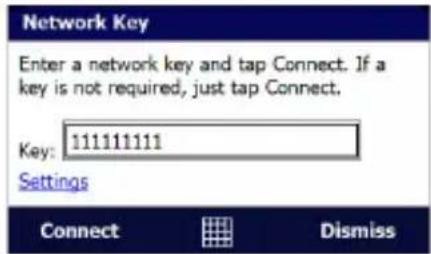
Next time you use your device to detect wireless networks, you will not see the pop-up message windows again, and you will not be prompted to enter the network key of the previously accessed wireless network (unless you perform a hard reset which will erase custom settings on your device).
Note Wi-Fi networks are self-discoverable, which means no additional steps are required for your device to connect to a Wi-Fi network. It may be necessary to provide a username and password for certain closed wireless networks.
To check wireless network status
You can check the current wireless connection status from any of the following screens of your device:
- Title bar.
When you enable Wi-Fi on your device, the Wi-Fi ON icon 📋 appears on the title bar.
After Wi-Fi is turned on, your device scans for available wireless networks and the wireless signal icon appears on the title bar. The arrows in this icon move back and forth while your device is scanning for a wireless network signal. Once your device successfully connects to a wireless network, the arrows stop moving.
- Wireless LAN screen.
On the Home screen, slide to the Settings tab and then tap Menu > Wireless Networks. On the Main tab, you will see the wireless network that your device is currently connected to.
The configuration and signal quality of the wireless network are also shown.
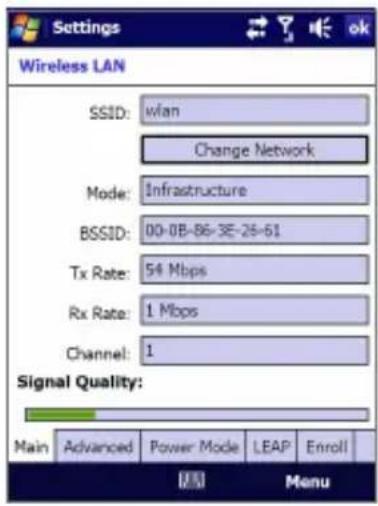
- Configure Wireless Networks screen.
On the Home screen, slide to the Settings tab and then tap All Settings. In the Connections tab, tap Wi-Fi. This screen displays the wireless networks currently available.
To connect to a wireless network in the list, tap and hold on the desired network, then tap Connect. Tap a wireless network in the list to view or change its connection settings.
You can also add new wireless networks, if available, by tapping Add New.
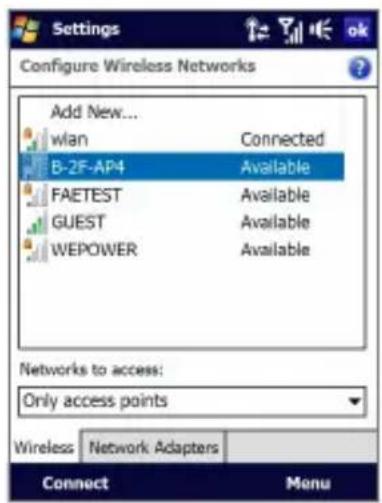
To save battery power while connected to a wireless network
Using Wi-Fi quickly consumes battery power. Turn off Wi-Fi when not in use. You can also enable power saving settings.
- On the Home screen, slide to the Settings tab.
- On the Settings screen, tap Menu > Wireless Networks > Power Mode tab.
- On the Power Mode tab, move the Power Save Mode slider to a position that optimizes performance with the least power consumption.
For example, move the slider to the left (Best Performance) to have the optimal wireless network performance; move to the right (Best Battery) to obtain the maximum battery usage.
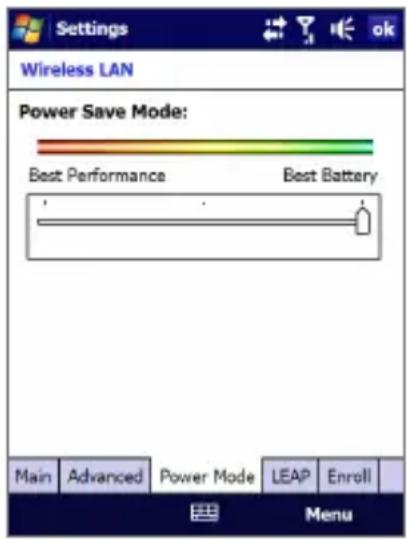
GPRS/3G
Use GPRS/3G (or EDGE, if available) to connect to the Internet and to send and receive e-mail and picture messages on your device. You will need a data plan to use your wireless service provider's GPRS/3G network. Check with your wireless service provider to find out about GPRS/3G rates.
GPRS/3G settings are already preconfigured on your device, and your device is ready to use your wireless service provider's GPRS/3G services. Do not change the settings as this may cause services to stop working.
To add a new GPRS/3G connection
When you need to add another GPRS/3G connection on your device, obtain the Access point name from your wireless service provider. Also, check if the GPRS/3G network requires a user name and password.
- On the Home screen, slide to the Settings tab and then tap All Settings.
- On the Connections tab, tap Connections.
132 Internet
- In My ISP, tap Add a new modem connection.
- On the Make New Connection screen, enter a name for the connection.
- In the Select a modem list, select Cellular Line (GPRS, 3G), then tap Next.
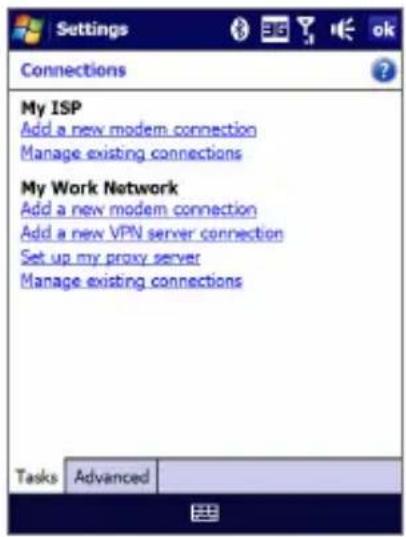
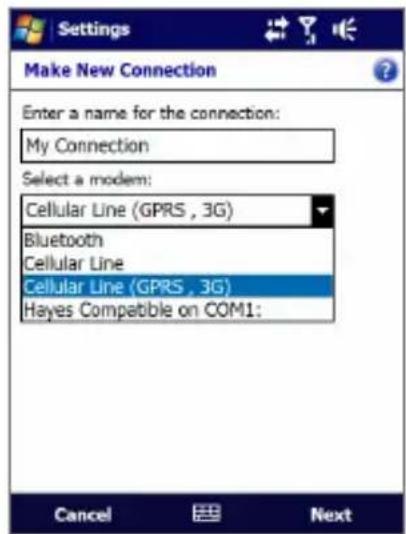
- Enter the Access point name, then tap Next.
- Enter the user name and password, if required, then tap Finish.
Notes
• To view help information for any screen, tap the help icon ( ? ).
- To modify your connection settings, tap Manage existing connections on the Connections screen, and complete the connection wizard.
Dial-up
To set up a dial-up connection to your Internet Service Provider (ISP) on your device, you need the same settings that you normally use when you dial up from your computer. This includes the ISP server phone number, your user name and password.
- On the Home screen, slide to the Settings tab and then tap All Settings.
- On the Connections tab, tap Connections.
- In My ISP, tap Add a new modem connection.
-
In the Select a modem list, select Cellular Line, then tap Next.
-
Enter the ISP server phone number, then tap Next.
- Enter your user name, password, and any other information required by your ISP, then tap Finish.
8.2 Starting a Data Connection
After setting up a data connection such as GPRS/3G or ISP dial-up on your device, you can now connect your device to the Internet. The connection is started automatically when you begin using a program that accesses the Internet such as Opera Mobile.
To manually start a data connection
If you have set up multiple types of data connections on your device, you can manually start a connection.
- On the Home screen, slide to the Settings tab and then tap All Settings.
- On the Connections tab, tap Connections.
- Tap Manage existing connections.
- Tap and hold the name of the desired connection, then tap Connect.
To disconnect active data connections
- Tap Start > Programs > Comm Manager.
- Tap the Data Connection button.
Note You cannot reconnect a data connection in Comm Manager.
8.3 Using Opera Mobile™
Opera Mobile™ is a full-featured Internet browser, optimized for use on your device.
Note You can also use Internet Explorer® Mobile to browse the web. To open Internet Explorer Mobile, tap Start > Internet Explorer.
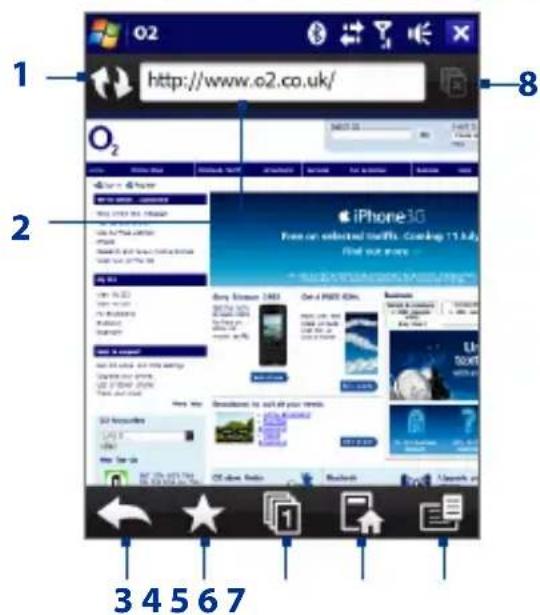
1 Refresh. Tap to reload the web page being viewed.
2 Address bar. Enter the URL of the web site here.
3 Back. Tap to go back to the previous web page viewed.
4 Favourites. Tap to go to the Favourites screen where you can add a favourite, edit favourite web pages, and send the favourite URL link via one of the Messaging accounts.
5 Tabs. Tap to add a new browsing tab or switch to another existing browsing tab.
6 Home. Tap to go to the Home page.
7 Menu. Tap to open a list where you can change Opera Mobile settings, check downloads, view History, and more.
8 Close tab. Tap to close the current tab. This is only enabled if you have more than one tab opened.
9 Exit Full Screen mode. When browsing the web, Opera Mobile automatically switches to Full screen mode. Tap to show the address and Menu bars again.
To open Opera Mobile
On the Home screen, slide to the Internet tab and then tap Browser.
To go to a web site
- On the Opera Mobile screen, tap the address bar.
- Enter the URL address and tap
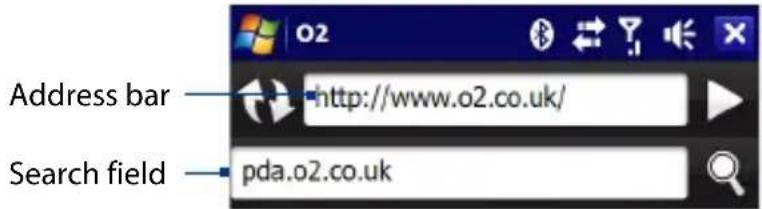
Tip When you tap the address bar, a search field also appears. Quickly search the web by entering the search item and tapping
View web pages
While browsing web pages, use finger gestures to pan and zoom on the web page. To zoom in, tap your finger twice on the screen. To zoom out, tap your finger twice on the screen again.
Tip Touch and hold an empty area on a web page to open a shortcut menu that lets you go back to the previous page, reload the page, add the page as a Favourite, and more. You can also tap and hold a link or image on a web page to open a menu with different options.
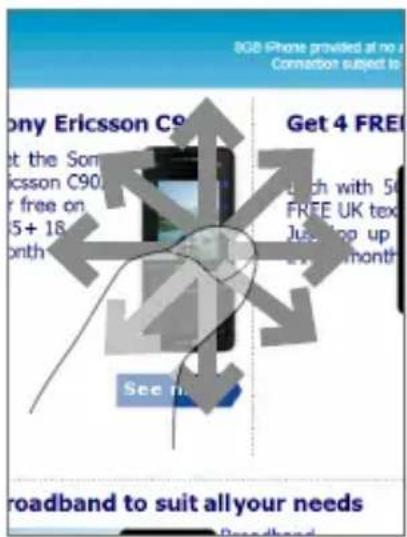
To change the screen orientation
Change the screen orientation by simply turning your device sideways.
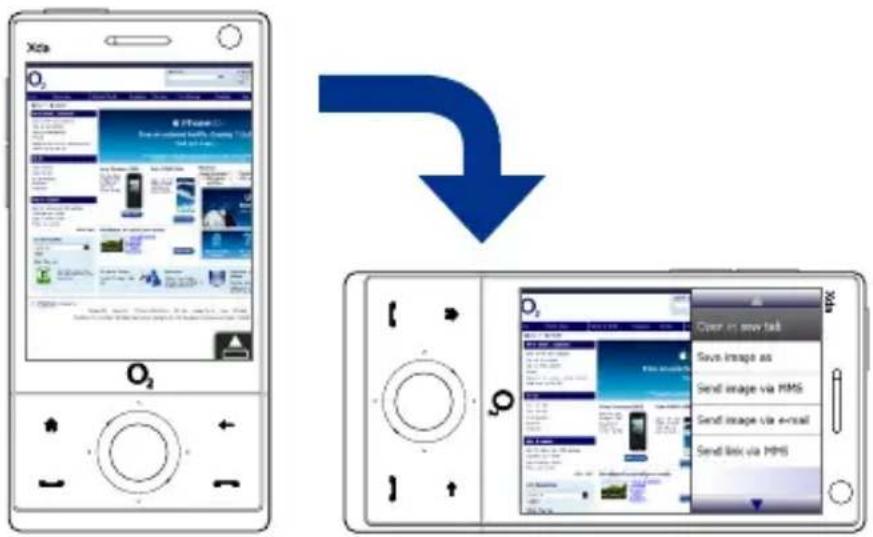
flowchart
graph TD
    A["Download Phone"] --> B["Save Image as"]
    B --> C["Send Image via HMS"]
    C --> D["Send Image via e-mail"]
    D --> E["Send list via HMS"]
Opera Mobile menu
On the menu bar, tap to open the menu.
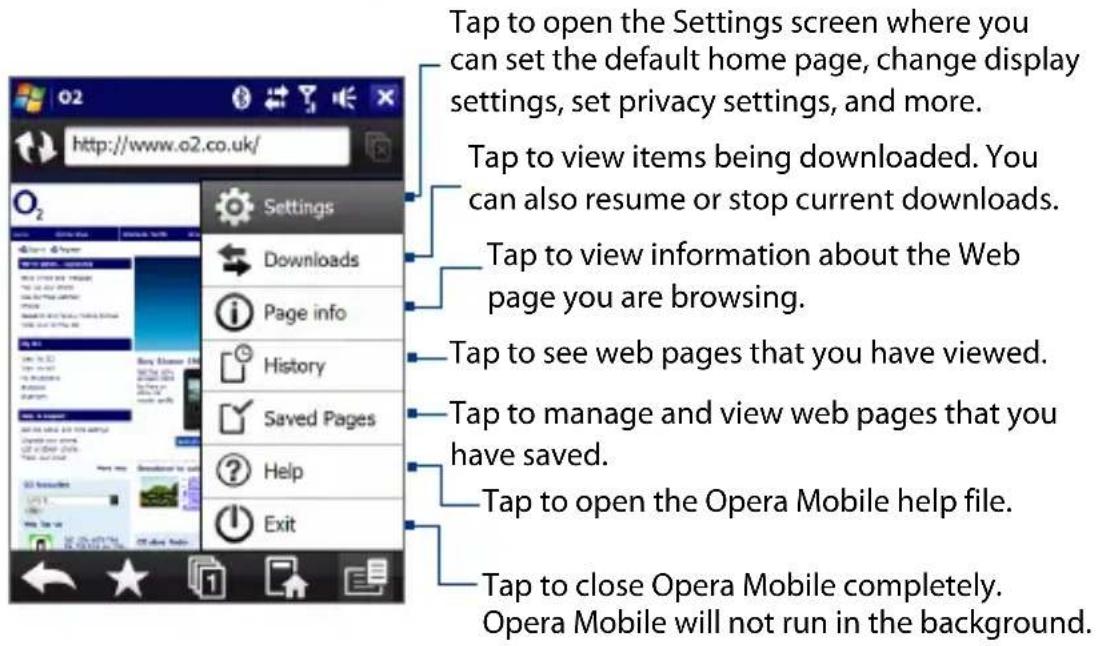
Note: For more information about using Opera Mobile, go to:
http://www.opera.com/products/mobile/
8.4 Using YouTube™
YouTube™ lets you browse, search, and watch video clips from the YouTube server.
Note You need an active connection to use YouTube. If you are using a GPRS/3G connection, your data connection bill may increase significantly due to large file sizes of the videos.
To open YouTube
Tap Start > Programs > YouTube.
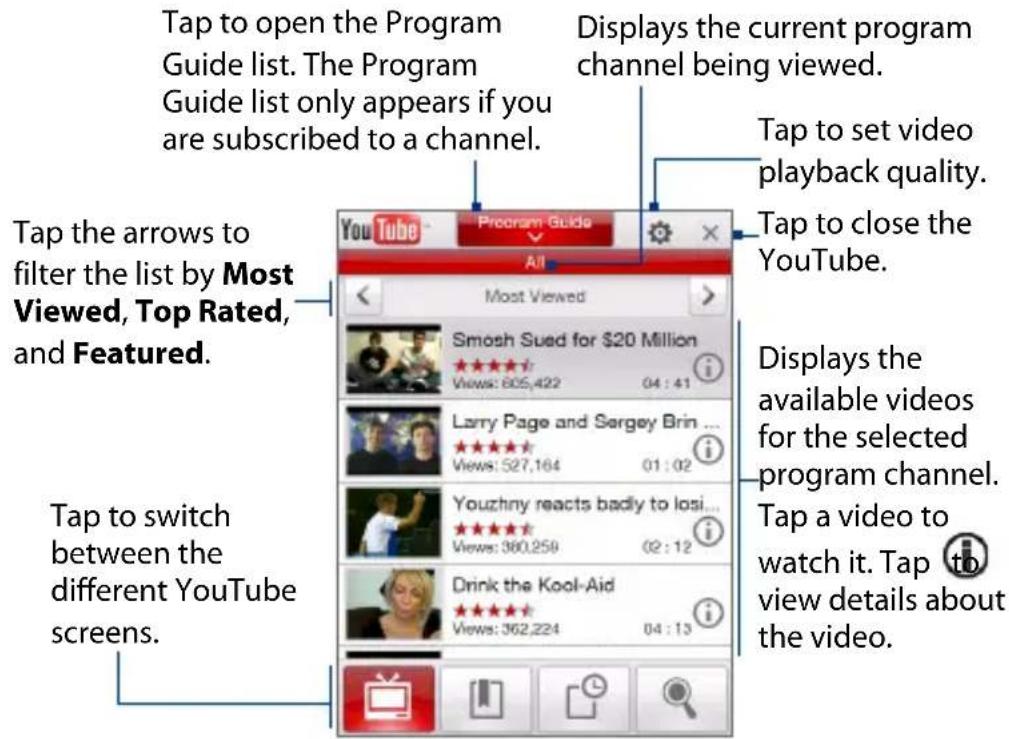
Browse for videos
The Program Guide list lets you change the program channel so you can browse different types of videos available on the YouTube server. By default, there is only one channel in the Program Guide.
To add a new program channel into the Program Guide list
- On the YouTube screen, tap
- On the Search screen, enter the channel you want to add to the Program Guide list.
- Tap Search. YouTube searches for the channel and then displays the available videos from it.
- Tap and then on the confirmation screen, tap OK. The channel you just subscribed to will now be shown when you tap Program Guide.
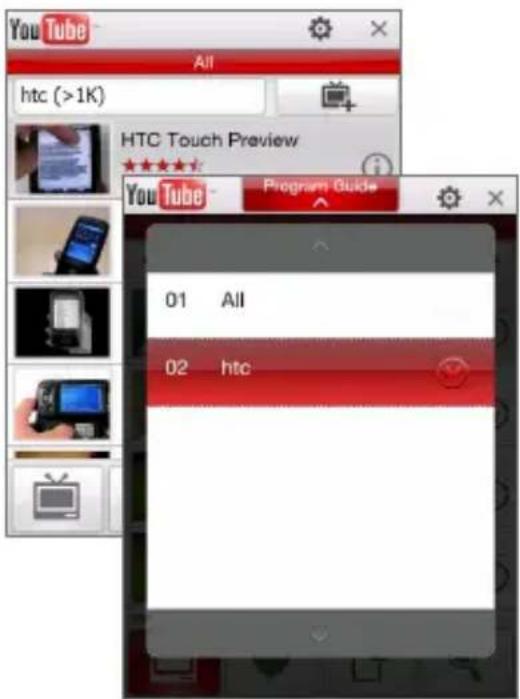
Tip You can also add a YouTube user as a program channel. To add, tap in an of the YouTube screens and then tap .
To change the program channel
- On the Videos screen, tap Program Guide at the top of the screen.
- On the Program Guide list, select a channel.
- The video list refreshes to display the available videos for the newly selected channel.
To delete a program channel from the Program Guide list
You can only delete program channels that you have added to the Program Guide list.
- On the Videos screen, tap Program Guide.
- Scroll down to the channel you want to delete and then tap
- On the confirmation screen, tap Yes.

Watching videos
On the Videos, Bookmarks, or History screen, tap a video to launch the YouTube Video Player.
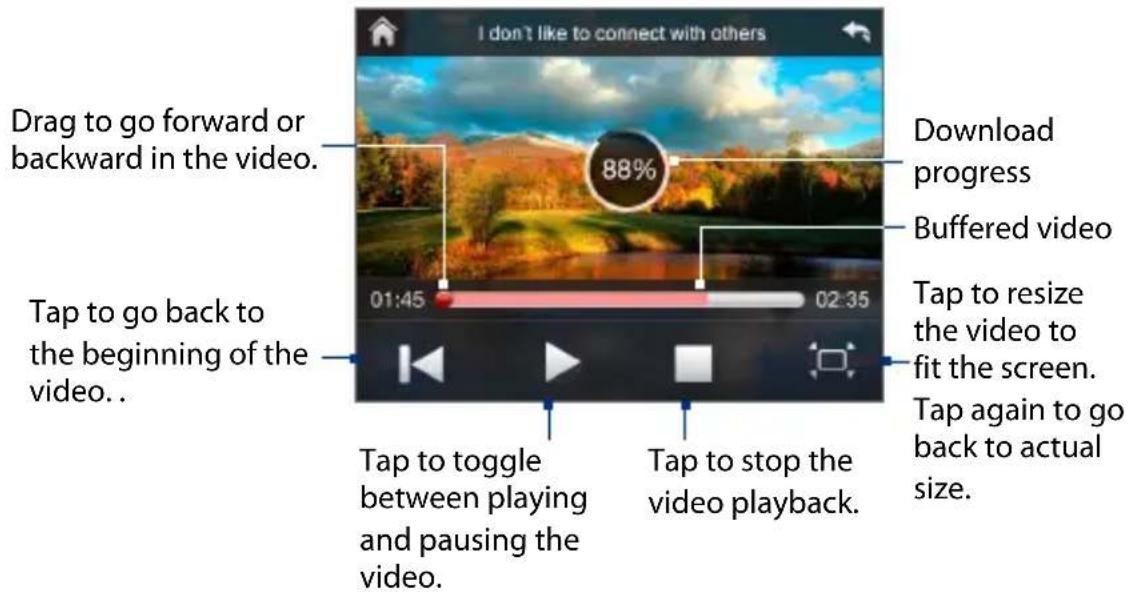
Tip To adjust the volume, press the VOLUME CONTROLS on the side of the device.
Navigation Control
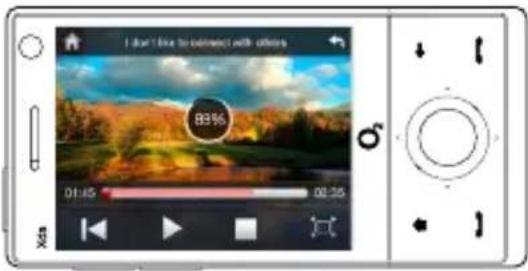
This control Does this
ENTER Toggle between playing and pausing video playback.
| NAVIGATION RIGHT(Landscape orientation) | Press and hold to go forward in the video. |
| NAVIGATION LEFT(Landscape orientation) | Press and hold to go back in the video |
VOLUME BUTTONS Press to adjust the volume.
When you tap Stop ( ) or finish watching the entire video, you are presented with options on what you can do next.
Tap to go back to the previous page of related videos.
Tap to send the link to the video you just watched to another person using one of the Messaging accounts.
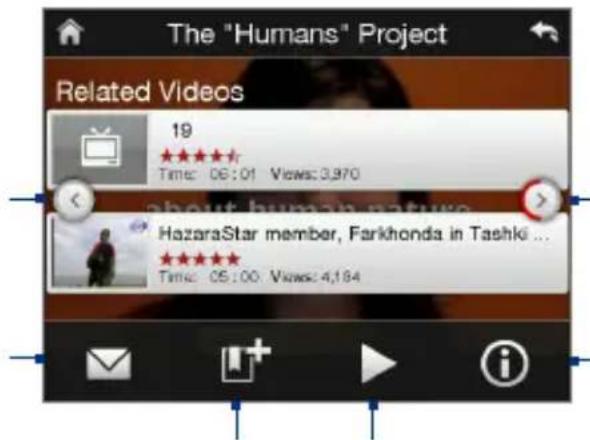
Tap to add the video to your Bookmarks.
Tap to play back the video again.
Tap to go to the next page of related videos. If no action is taken, it automatically goes to the next page after 10 seconds. Tap to view details about the video you just watched.
Bookmarks
You can store frequently viewed videos into Bookmarks for quick access.
To view Bookmarks
On the YouTube screen, tap Tap a video to watch it.

To add a video into Bookmarks
Do one of the following:
• After watching a video, tap
- On the list of videos, tap on the video you want to add to Bookmarks and then tap Bookmark.

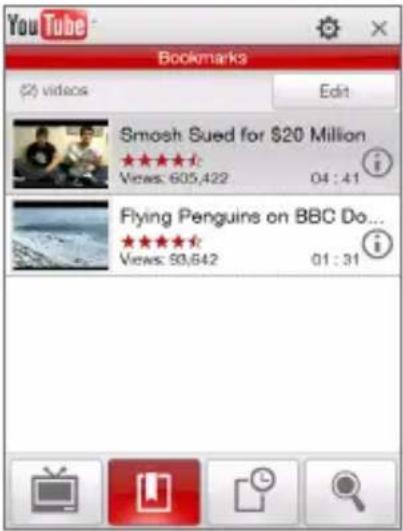
To delete a video from Bookmarks
- On the Bookmarks screen, tap Edit.
- Tap on the video you want to remove from Bookmarks.
- On the confirmation screen, tap Yes.
- Tap Done.
History
View recently watched videos on the History screen.
To view History
On the YouTube screen, tap . Tap a video to watch it.
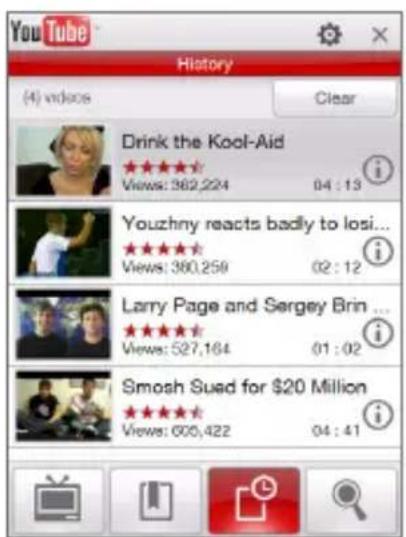
Note To clear the History list, tap Clear.
8.5 Using Streaming Media
Streaming Media lets you stream live broadcasts or on-demand media content from the web. The media is sent in a continuous stream to your device and is played as it arrives, along with the audio.
The Streaming Media program allows you to play 3GP and MPEG-4 files. It also supports playback of SDP (Session Description Protocol) files.
To access streaming content via Opera Mobile
In Opera Mobile, you can open a web page containing RTSP (Real Time Streaming Protocol) links to streaming media content then play the content in the Streaming Media program.
- On the Home screen, slide to the Internet tab and tap Browser.
- In the address bar, enter the URL address of the web page that contains the RTSP link to the desired *.3gp, *.mp4, or *.sdp file.
142 Internet
- On the web page, tap the RTSP link.
- Streaming Media then automatically opens and starts playing the file. During playback, use the button controls to play/pause, switch to full screen, rewind, and fast forward.
Rewind
Drag to go backward or forward on the video.
Tap to switch to full screen mode. In full screen mode, tap the screen to switch back.
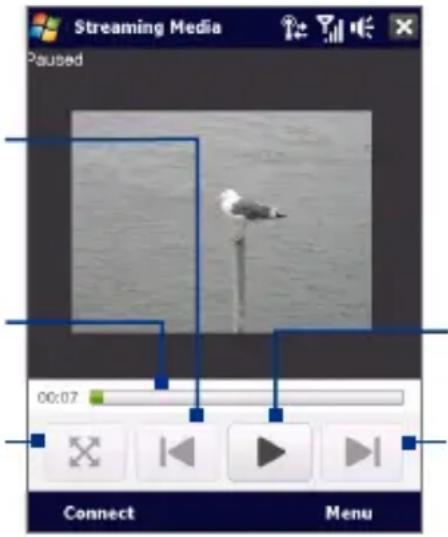
Tap to toggle between playing or pausing the video playback.
Fast forward
To stream media files directly on the Streaming Media Player
Streaming Media only supports RTSP links when you stream *.3gp and *.mp4 files directly on the program.
Note Before you launch the Streaming Media program, make sure that you are connected to the Internet.
- Tap Start > Programs > Streaming Media.
- From the program, tap Connect.
- Enter the URL for the web site (rtsp://) and the file name.
- Tap Connect.
- Streaming Media then starts playing the file. During playback, use the button controls to play/pause, switch to full screen, rewind, and fast forward.
To view streaming video information
Tap Menu > Properties to view the properties and general information of a streaming video clip, such as video codec, audio codec, dimension, frames, and duration of the video.
To configure streaming video connection settings
Tap Menu > Options to configure the following settings:
- Connect via. Choose whether you want to connect to the Internet or corporate network (intranet) to locate a streaming video clip.
- UDP port range. Specify a range of port numbers to use for streaming.
• Media buffer. Specify the memory space (in terms of duration) to allot for storing video and audio data while streaming media.
8.6 Using Windows Live™
Windows Live™ gives you a full Internet experience on your device.
Windows Live™ helps you to find information, pursue your interests, and get in touch with friends and family on the Internet easier.
Windows Live™ offers the following key features:
• Live Search Bar, which lets you search for information on the web.
• Live Messenger, the next generation of MSN Messenger Mobile.
• Live Mail, the next generation of Hotmail.
• Live Contacts, your address book for storing Live Mail, Live Messenger and Hotmail contacts.
Set up Windows Live™
The first time you use Windows Live™, sign in using your Windows Live™ ID, which is your Windows Live™ Mail or Hotmail address, and password.
To set up Windows Live™ for the first time
- Tap Start > Programs > Windows Live and then tap Sign in to Windows Live.
- Tap the links to read the Windows Live™ Term of Use and the Microsoft Privacy Statement. After reviewing them, tap Accept.
144 Internet
- Enter your Windows Live™ Mail or Hotmail address and password, select the Save password checkbox, then tap Next.
- Tap Next.
- Choose what information you want to sync online with your device.
If you select Store Windows Live contacts in your mobile phone's contact list, your Windows Live™ contacts will be added to the contact list and to Windows Live™ Messenger on your device.
If you select Sync e-mail, your Windows Live™ Mail or Hotmail inbox messages will be downloaded to your device.
-
Tap Next.
-
After synchronization is complete, tap Done.
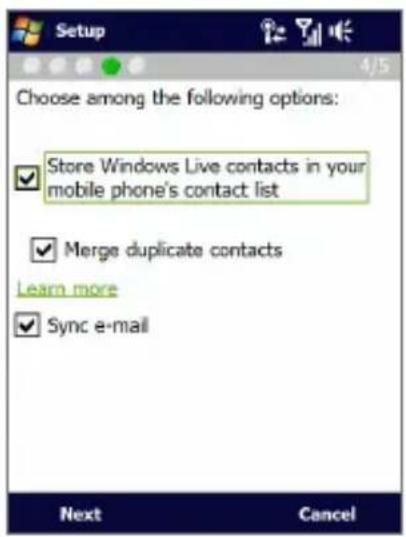
The Windows Live™ interface
On the Windows Live™ main screen, you will see a search bar, navigation buttons, and an area where you can show and customize your profile.
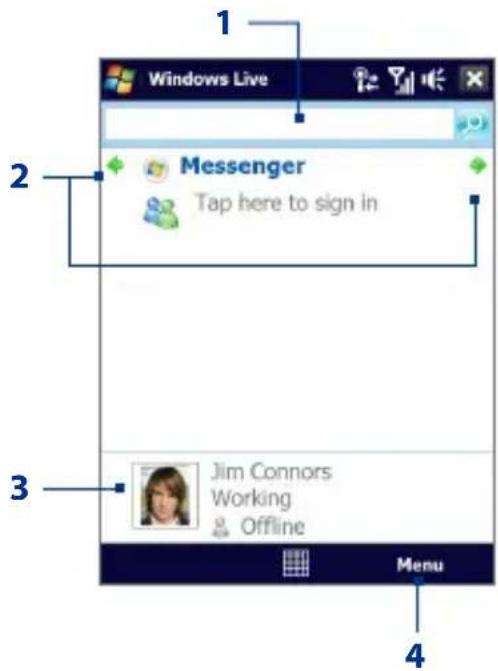
1 Search bar
2 Navigation buttons. Tap the left or right arrow to switch between Windows Live™ Messenger, Windows Live™ Mail, and Sync status.
3 Tap to change the display name, picture, or personal message.
4 Tap Menu to access and change settings.
Windows Live™ Messenger
With this mobile version of Windows Live™ Messenger, you enjoy many of the same cool features that you get from the desktop version, which include the following:
- Instant messaging via text and voice
• Multiple conversations - Insert emoticons
- Contact list with presence
- Send and receive files including photos
- Change status/display name
• View contacts by online status, groups, and more - Send messages even when a contact is offline
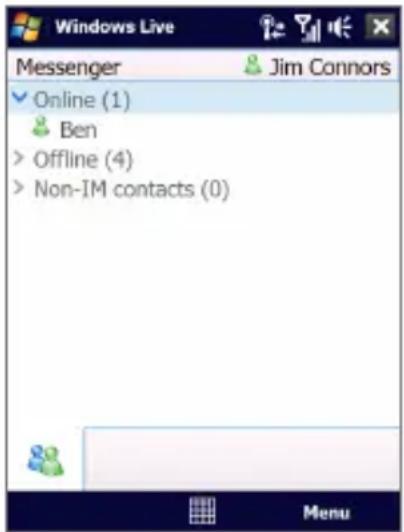
Note Before you can use Windows Live™ Messenger, your device must be connected to the Internet. For information about setting up an Internet connection, see "Ways of Connecting to the Internet" in this chapter.
Launch Messenger and sign in
To open Windows Live™ Messenger
Do one of the following:
- Tap Start > Programs > Messenger.
- On the Windows Live™ main screen, tap the left or right arrow until you see Messenger, then tap it.
To sign in and out
-
Tap Sign in on the Messenger screen.
-
If this is your first time to sign in, a message appears to inform you that your messenger contacts will be added to the contact list on your device. Tap OK to add them.
Signing in may take several minutes, depending on your connection speed.
- To sign out, tap Menu > Sign Out.
To start and end conversations
- In the contact list, select a contact, then tap Send IM to open a message screen.
- Enter your text message in the text entry area of the message screen.
- To add an emoticon, tap Menu > Add emoticon then tap an icon from the list.
- Tap Send.
- To end a conversation with the current contact, tap Menu > End conversation.
Tips To send a file, tap Menu > Send. You can choose to send a picture, voice clip or any file. To invite one or more contacts to the conversation, tap Menu > Options > Add participant.
- To send a voice message, tap Voice Clip on a message screen then start talking. After you have recorded a message, tap Send.
Add Windows Live™ contacts
You can add new Windows Live™ contacts in Windows Live™ Messenger or in Contacts.
To add a Windows Live™ contact in Live Messenger
- Tap Menu > Add new contact.
- Enter the e-mail address of the contact, then tap OK.
To add a Windows Live™ contact in Contacts
- On the Home screen, slide to the People tab and then tap All People.
- Tap New, then tap Windows Live.
- In the IM box, enter the e-mail address of the contact, which can be a Windows Live ID or any other e-mail address.
Tip You can fill in other information about the contact, if desired. This is not necessary if you will communicate with the contact only through Windows Live™ Messenger or Live Mail.
- Tap OK.
- Follow the remaining instructions to add the new contact to your Windows Live™ contact list.
8.7 Using Your Device as a Modem (Internet Sharing)
Internet Sharing connects your desktop or notebook computer to the Internet by using your device's data connection (GPRS or EDGE, for instance). You can choose to connect via USB or Bluetooth.
Notes
- Make sure your device has a SIM card installed, and your device has a GPRS/3G or phone dial-up modem connection. If your device has not been set up with a data connection yet, tap Menu > Connection Settings on the Internet Sharing screen. For more information about setting up these connections, see "GPRS/3G" and "Dial-up" in this chapter.
- If you want to use a USB cable connection, you must first install Windows Mobile Device Center or Microsoft ActiveSync version 4.5 or later on the computer.
- If you want to use a Bluetooth connection, make sure your computer has built-in Bluetooth capability. If your computer does not have Bluetooth, you can connect and use a Bluetooth adapter or dongle.
- Before using Internet Sharing, disconnect from Windows Mobile Device Center or ActiveSync on your computer.
To set up your device as a USB modem
- On your device, tap Start > Programs > Internet Sharing.
- In the PC Connection list, select USB.
- In the Network Connection list, select the name of the connection that your device uses to connect to the Internet.
- Connect your device to the computer using the USB cable.
- Tap Connect.
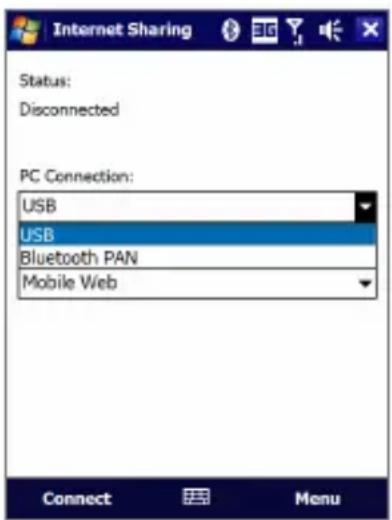
To use your device as a Bluetooth modem
For the computer to use the Internet connection of your device, activate Internet Sharing on your device, then set up a Bluetooth Personal Area Network (PAN) between the computer and your device.
- On your device, turn on Bluetooth and set it to visible mode by following the steps in "To turn Bluetooth on and make your device visible" section in Chapter 9.
- Initiate a Bluetooth partnership from your device by following the steps in "To create a Bluetooth partnership"
- Tap Start > Programs > Internet Sharing.
- Select Bluetooth PAN as the PC Connection.
- From the Network Connection list, select the name of the connection that your device uses to connect to the Internet.
- Tap Connect.
- On your computer, set up a Bluetooth Personal Area Network (PAN) with your device:
For Windows Vista:
a. Click Start > Control Panel > Network and Internet > Network and Sharing Center.
b. Click Manage network connections and then under Personal Area Network, double-click Bluetooth Network Connection.
c. In the Bluetooth Personal Area Network Devices dialog box, select your device, then click Connect.
For Windows XP:
a. Tap Start > Control Panel > Network Connections.
b. Under Personal Area Network, click the Bluetooth Network Connection icon.
c. Under Network Tasks, click View Bluetooth network devices.
d. In the Bluetooth Personal Area Network Devices dialog box, select your device, then click Connect.
Note If the Bluetooth adapter or dongle on your computer was installed using a third-party provided driver, open the Bluetooth software that came with the Bluetooth adapter/dongle to connect your computer and device via Bluetooth. Refer to the Bluetooth adapter/dongle documentation for more information.
- On the Internet Sharing screen on your device, check if a connected status message is displayed, which indicates that your computer has
been successfully connected to the Internet using your device as a Bluetooth modem.
To end the Internet connection
On the Internet Sharing screen, tap Disconnect.
8.8 Using RSS Hub
RSS Hub is an RSS reader that keeps you up-to-date with the latest news from the Internet. It monitors Internet news channels and downloads the most current news updates and podcasts so you are instantly informed of breaking news and events.
For more information and tips on using RSS Hub, see Help on your device.
Note Make sure you have an active Internet connection (such as EDGE or GPRS) before using RSS Hub.
Subscribe to and organize news channels
You must subscribe to news channels before you can receive RSS feeds.
To subscribe to news channels
- Tap Start > Programs > RSS Hub, then tap Continue.
- In the New Channel Wizard screen, select the Choose from a list of known Channels option, then tap Next. A list of RSS channels is displayed.

Tap to load pre-selected RSS channels.
150 Internet
Note If the RSS channel you want to subscribe to is not in the list of known channels, tap Back, then select another option on the New Channel Wizard screen. For more information on these other options, see the Help on your device.
- Select the checkboxes of the RSS channels you want to subscribe to, then tap Finish.
Tip Channels are grouped by categories. If you want to select all channels in a category, select the category check box.
- The channel list appears. Tap Refresh to update the channels.
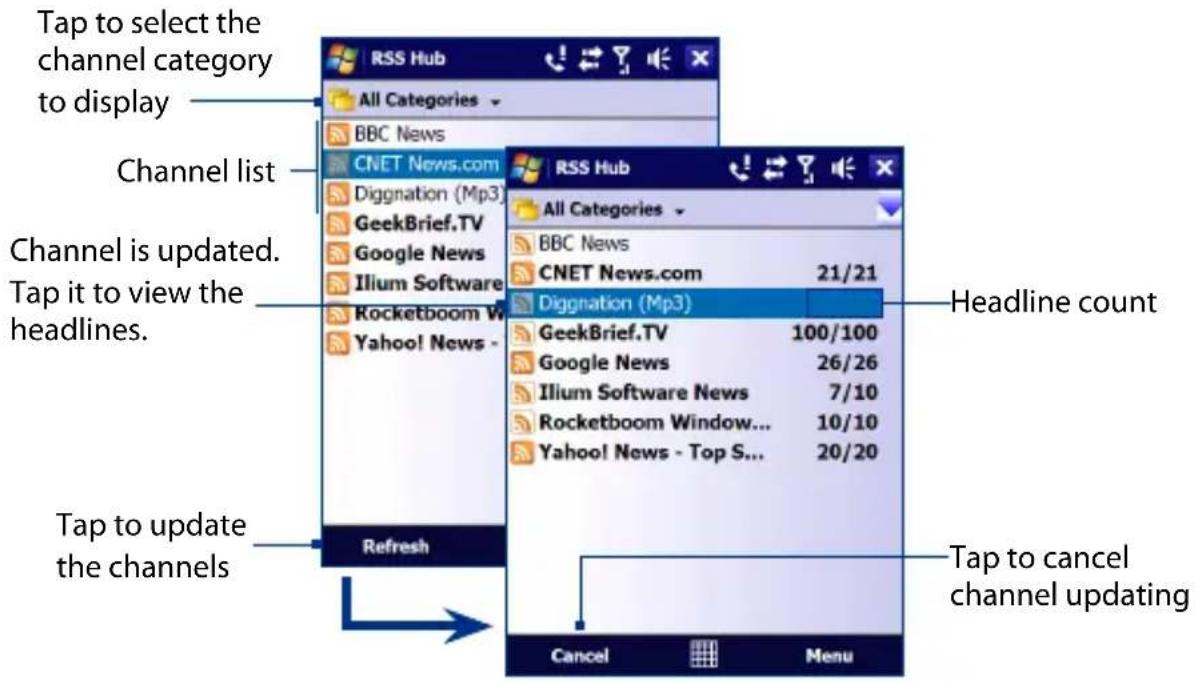
To add new channels
-
In the channel list, tap Menu > Channel > New to open the New Channel Wizard screen.
-
Select an option, then follow screen instructions to add new channels. For more information on New Channel Wizard options, see Help on your device.
To filter the channels in the display
In the channel list, tap Menu > View, then select:
- Updated to display only those channels with unread headlines.
• All to display all subscribed channels.
Manage channel categories
To view all the channels in a particular category, tap All Categories in the upper left area of the channel list, then tap the category you want to display.
To add a new category, tap Menu > Categories in the channel list to display all categories, then tap Menu > New.
To rename or delete a category, tap Menu > Categories in the channel list to display all categories, select a category, then tap Menu > Rename or Menu > Delete.
If you want to change the channel category, tap and hold the channel in the channel list, then tap Change Category. Select a new category and tap OK.
View and organize headlines
Tap a channel in the channel list to display the headlines for that channel.
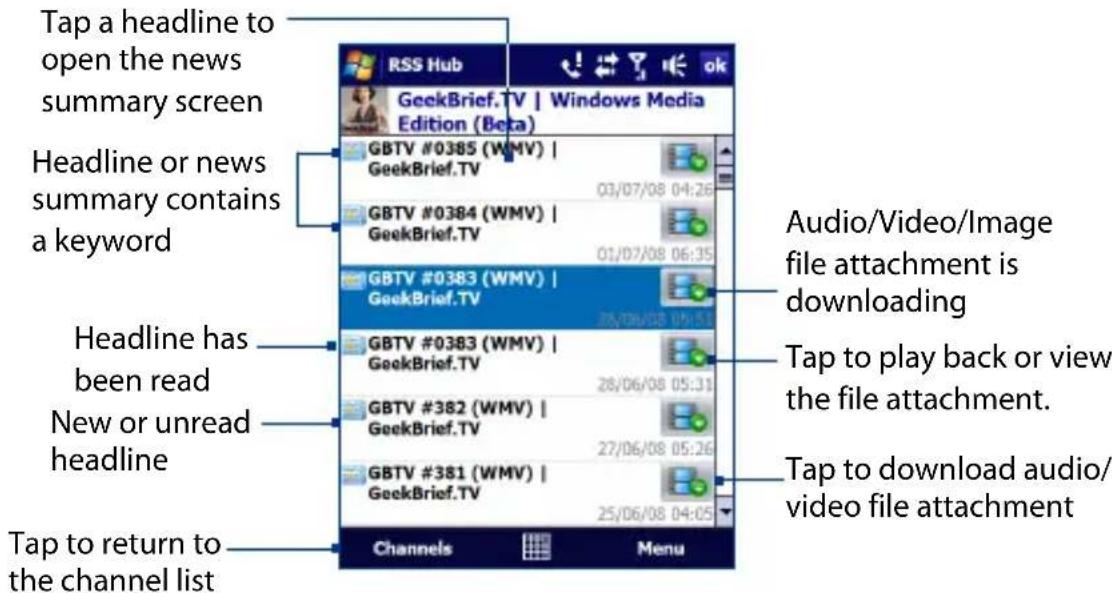
New or unread headlines display in bold and are marked with a blue newspaper icon. Headlines that have been read are marked with a gray newspaper icon.
152 Internet
View the news summary
Tap a headline in the headline list to display the news summary.
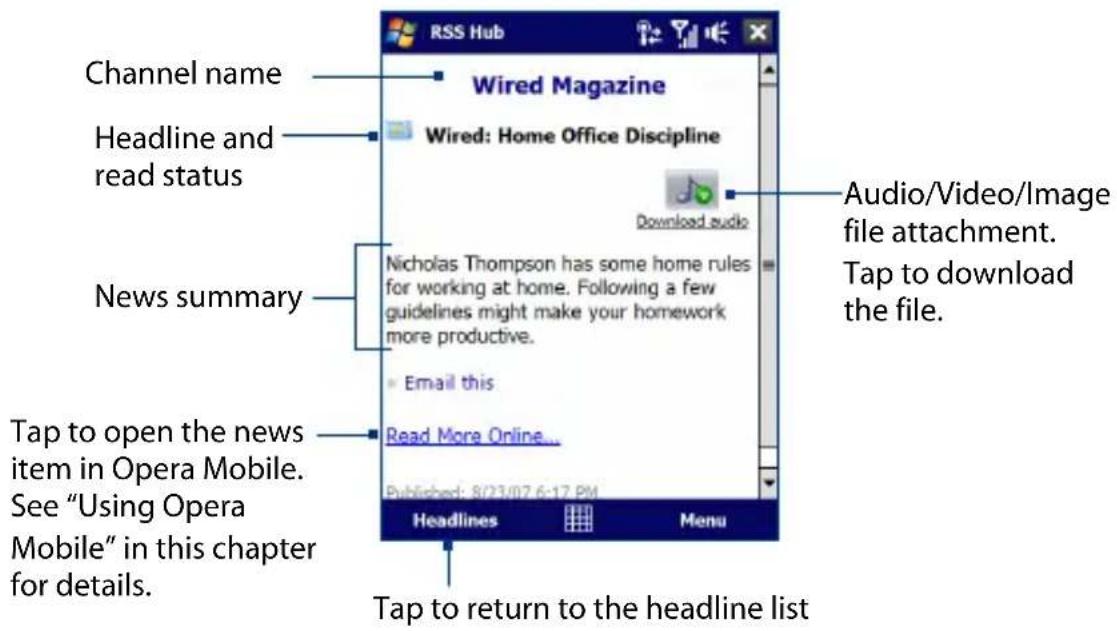
To change view options
In the news summary screen, tap Menu to change the text size, fit the text to the screen (text wrap), or enable ClearType for better viewing.
To download, play, or save podcasts
-
When you see an audio or video file attachment in the news summary, do one of the following to download the file:
-
Tap Menu > Podcasts > Start Download.
- Tap the Download audio/Download video link below the audio/video file icon.
Tip To cancel the file download, tap Menu > Podcasts > Cancel Download, or tap Cancel download below the audio/video file icon.
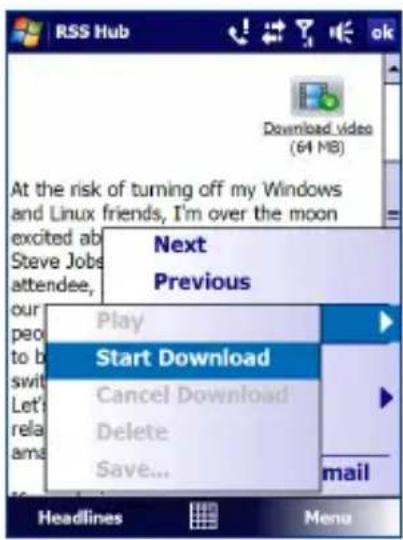
-
After downloading the file, do one of the following:
-
Tap Menu > Podcasts > Play or tap Play audio/Play video below the audio/video file icon to play back the file.
- Tap Menu > Podcast > Save to save a copy of the file to the device main memory or internal storage.
To send the headline link via e-mail
- In the news summary screen, tap Menu > Send Link via Email.
- Messaging opens and displays the Account Picker screen. Tap the e-mail account you want to use to send the headline link.
A new e-mail message is then created with the headline link. - Specify the e-mail recipients, then send it.
Note For more information on how to compose e-mails, see "Using E-mail" in Chapter 6.
To view the next or previous news summary
In the news summary screen, tap Menu > Next or Menu > Previous, or press NAVIGATION left or right.
For more information about the features and configuring RSS Hub, refer to the online help. To open the online help, tap Start > Help while in RSS Hub.
154 Internet
Chapter 9
Bluetooth
9.1 Bluetooth Modes
9.2 Bluetooth Partnerships
9.3 Connecting a Bluetooth Hands-free or
Stereo Headset
9.4 Beaming Information Using Bluetooth
9.5 Bluetooth Explorer and Bluetooth
File Sharing
9.6 Printing Files via Bluetooth
9.1 Bluetooth Modes
Bluetooth is a short-range wireless communications technology. Devices with Bluetooth capabilities can exchange information over a distance of about eight meters without requiring a physical connection.
Bluetooth on your device operates in three different modes:
- On. Bluetooth is turned on. Your device can detect other Bluetooth-enabled devices, but not vice versa.
- Visible. Bluetooth is turned on, and all other Bluetooth-enabled devices can detect your device.
- Off. Bluetooth is turned off. In this mode, you can neither send nor receive information using Bluetooth.
Notes
- By default, Bluetooth is turned off. If you turn it on, then turn off your device, Bluetooth also turns off. When you turn on your device again, Bluetooth automatically turns on.
- Turn off Bluetooth when not in use to conserve battery power, or in places where using a wireless device is prohibited, such as on board an aircraft and in hospitals.
To turn Bluetooth on and make your device visible
- On the Home screen, slide to the Settings tab and then tap Menu > Bluetooth Devices > Mode tab.
- Select the Turn on Bluetooth and Make this device visible to other devices check boxes.
- Tap OK. The Title bar will show 🔒 to indicate that the device is in Visible mode.
To turn off Bluetooth visibility after a certain period of time
You can automatically turn off Bluetooth visibility after a specified period of time.
- On the Home screen, slide to the Settings tab and then tap Menu > Bluetooth Devices > Timeout tab.
- In Turn off Visible mode, select the time before your device's Bluetooth visibility turns off. Tap OK.
9.2 Bluetooth Partnerships
A Bluetooth partnership is a relationship that you create between your device and another Bluetooth-enabled device in order to exchange information in a secure manner.
To create a Bluetooth partnership
- On the Home screen, slide to the Settings tab and then tap Menu > Bluetooth Devices > Devices tab.
- Tap Add new device. Your device displays the names of other Bluetooth devices within range.
- Tap the device name in the box, then tap Next.
- Specify a passcode to establish a secure connection. The passcode can be 1 up to 16 characters.
- Tap Next.
- Wait for the paired device to accept the partnership. The receiving party needs to enter the same passcode that you specified.
- The name of the paired device is then displayed. You may edit and enter a new name for that device.
- Select the check boxes of services that you want to use from the paired device, then tap Finish.
Note Creating a Bluetooth partnership between two devices is a one-time process. Once a partnership is created, the devices can recognize the partnership and exchange information without entering a passcode again.
To accept a Bluetooth partnership
- Ensure that Bluetooth is turned on and in visible mode.
- Tap Yes when prompted to establish a partnership with the other device.
-
Enter a passcode (the same passcode that is entered on the device requesting the partnership) to establish a secure connection. The passcode must be between 1 and 16 characters.
-
Tap Next.
-
Tap Finish. You can now exchange information with the paired device.
Tips To rename a Bluetooth partnership, tap and hold the partnership's name on the Devices tab of the Bluetooth screen, then tap Edit.
- To delete a Bluetooth partnership, tap and hold the partnership's name on the Devices tab, then tap Delete.
9.3 Connecting a Bluetooth Hands-free or Stereo Headset
For hands-free phone conversations, you can use a Bluetooth hands-free headset such as a car kit with your device. Your device also supports A2DP (Advanced Audio Distribution Profile) which allows you to use a Bluetooth stereo headset for hands-free phone conversations and for listening to stereo music.
To connect a Bluetooth hands-free or stereo headset
- Make sure that both your device and the Bluetooth headset are turned on and within close range, and that the headset is visible. Refer to the manufacturer's documentation to find out how to set the headset in visible mode.
- On the Home screen, slide to the Settings tab and then tap Menu > Bluetooth Devices > Devices tab > Add new device.
- Tap the name of the Bluetooth headset, then tap Next. The device will automatically pair the device with the Bluetooth headset.
Windows Mobile will automatically try one of the preconfigured passcodes (0000, 1111, 8888, 1234) to pair the Bluetooth headset with the device. If this fails, you have to enter the passcode delivered with your headset manually.
Note If the Bluetooth stereo headset becomes disconnected, turn the headset on and repeat step 1 to 2 above. Tap and hold the name of the Bluetooth stereo headset and tap Set as Wireless Stereo.
9.4 Beaming Information Using Bluetooth
You can beam information, such as contacts, calendar items, tasks, and files from your device to your computer or to another Bluetooth-enabled device.
Note If your computer does not have built-in Bluetooth capability, you need to connect and use a Bluetooth adapter or dongle on your computer.
To beam information from your device to a computer
-
Turn on Bluetooth on your device, and make your device visible. For information about this, see "To turn Bluetooth on and make your device visible".
-
Set Bluetooth on your computer to visible mode, create a Bluetooth partnership, then enable your computer to receive Bluetooth beams.
Note If the Bluetooth adapter or dongle on your computer was installed using a third-party provided driver, open the Bluetooth software that came with the Bluetooth adapter/dongle and enable the adapter/dongle to be discovered by other devices. Refer to the Bluetooth adapter's documentation for more information.
If your computer has Windows Vista or Windows XP SP2 and your computer's Bluetooth adapter is supported by your Windows version, do the following steps:
a. On your computer, open Bluetooth Devices from the Control Panel, then click the Options tab on the Bluetooth Devices window.
b. For Windows Vista, select Allow Bluetooth devices to find this computer.
For Windows XP, select Turn discovery on and Allow Bluetooth devices to connect to this computer.
c. Create a Bluetooth partnership between your device and computer. For information about creating a partnership, see "Bluetooth partnerships".
d. In the Options tab of Bluetooth Devices, select Show the Bluetooth icon in the notification area.
e. To enable your computer to receive Bluetooth beams, right-click the Bluetooth icon in the notification area at the bottom-right corner of your computer screen and select Receive a File. You are now ready to beam.
- On your device, select an item to beam. The item can be an appointment in your calendar, a task, a contact card, or a file.
- To beam a contact, tap Menu > Send Contact > Beam.
To beam other types of information, tap Menu >Beam [type of item].
- Tap the device name to which you want to send the item.
- If you beamed a calendar, task, or contact item to your computer and it is not automatically added to Outlook, select File > Import and Export in Outlook to import it.
To beam information to a Bluetooth-enabled device such as another Windows Mobile-powered device, follow steps 1 to 5 in the above procedure.
Tips
- The default folder on your computer where beamed items are stored may be C:\Documents and Settings\your_username\My Documents in Windows XP or C:\Users\your_username\My Documents in Windows Vista.
- For your device to receive Bluetooth beams, tap Start > Settings > Connections tab > Beam and make sure the Receive all incoming beams check box is selected.
9.5 Bluetooth Explorer and Bluetooth File Sharing
Bluetooth Explorer searches for other Bluetooth devices that have file sharing enabled and lets you access their Bluetooth shared folder. You can copy files from and to their shared folder, and create subfolders in it. When you enable Bluetooth file sharing on your device, other Bluetooth-enabled devices will also be able to access your Bluetooth shared folder.
To enable Bluetooth Explorer and Bluetooth file sharing on your device
- On the Home screen, slide to the Settings tab and then tap Menu >Bluetooth Devices >FTP tab.
-
Select the Enable Bluetooth Explorer check box. This makes the \Bluetooth device folder visible in the File Explorer.
-
Select the Enable File Sharing check box.
You can use the default Bluetooth shared folder, or tap Browse to use another folder as your shared folder.
- Tap OK.
To use Bluetooth Explorer
-
Bluetooth Explorer is integrated with the File Explorer program. You can open it by tapping Start > Programs > Bluetooth Explorer or by tapping the down arrow (▼) on the upper left of File Explorer screen then tapping Bluetooth.
-
Bluetooth Explorer then scans for other Bluetooth devices that have file sharing enabled. From the list, tap to select a Bluetooth device you want to connect to. You may need to enter a passcode in order for you to connect to the selected device. If there are files contained in the Bluetooth shared folder on the other device, you will be able to see them on the Bluetooth Explorer screen.
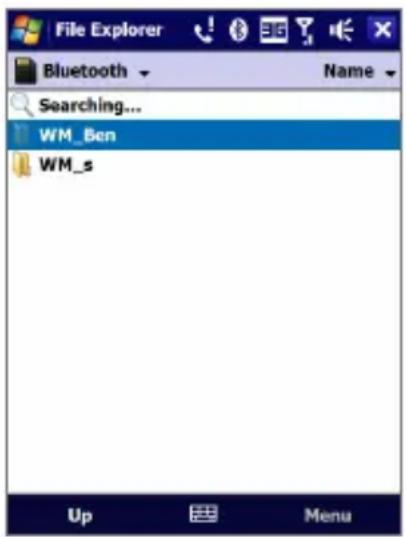
- Select one or more files, then tap Menu > Edit and choose to cut or copy the files.
- Tap Up twice.
- Navigate to the folder where you want to paste the files on your device, then tap Menu > Edit > Paste.
9.6 Printing Files via Bluetooth
Connect your device to a Bluetooth printer to print contact information, appointment details, images, and other file types.
Note You can print files in the .txt, .jpg, .xhtml, .vcf, .vcs file formats.
Before you start printing, make sure to turn on the Bluetooth printer and to turn on Bluetooth on your device. To turn on Bluetooth, tap Start > Programs > Comm Manager, then tap the Bluetooth button.
To print contact information
- On the Home screen, slide to the People tab and then tap All People.
- Select the contact whose information you want to print.
- Tap Menu > Print via Bluetooth > Menu > Search Devices. Your device starts to search for Bluetooth devices.
- Select the Bluetooth printer and tap Menu > Send File.
- Set the printing options you want, then tap Print.
To print a calendar appointment
- Tap Start > Calendar, then select (highlight) the appointment whose details you want to print.
- Follow steps 3 to 5 in the "To print contact information" procedure.
To print a JPEG file
- In Pictures & Videos, locate the JPEG file you want to print.
- Tap and hold the JPEG image file and then on the menu, tap Print via Bluetooth.
- Follow steps 3 to 5 in the "To print contact information" procedure:
To print a text file
- In File Explorer, locate the text file you want to print.
- Tap and hold the txt file and then on the menu, tap Print via Bluetooth.
- Follow steps 3 to 5 in the "To print contact information" procedure:
Chapter 10
Navigating on the Road
10.1 Google™ Maps
(Available by Country)
10.2 Guidelines and Preparation for Using GPS
10.3 Downloading Satellite Data via QuickGPS
10.1 Google™ Maps (Available by Country)
Google™ Maps lets you track your current location, view real-time traffic situations, and receive detailed directions to your destination. It also provides a search tool where you can locate places of interest or an address on a vector or a satellite map.
Note You need an active data connection or Wi-Fi connection to use Google Maps.
Open Google Maps
Tap Start > Programs > Google Maps.
Note The first time you open Google Maps, you will be asked to accept terms and conditions when using Google Maps. You must agree to the terms and conditions for you to be able to run Google Maps.
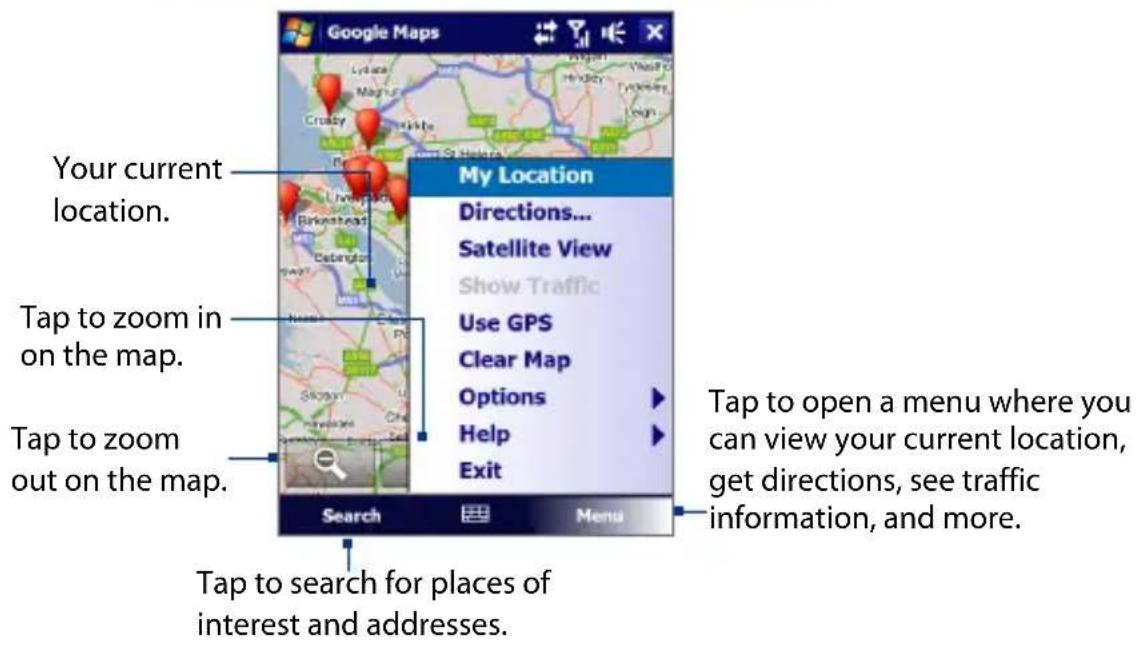
Notes • Currently, traffic information is only available for the U.S.
- Tap Menu > Options > Reset Google Maps to reset the Google Map cookies, history of search terms, preferences, and image cache.
Tip Tap Menu > Help > Tips to learn more about the program and its many features
Search for a place of interest
You can search and locate a place of interest using Google Maps. Google Maps also shows the contact information and gives directions on how to get to the place of interest from your current location.
Note You can also search for keywords, addresses, and postal codes.
- On the Google Maps screen, tap Search.
- Enter the place of interest you want to go to (for example, museums in London), then tap OK.
- On the Search Results tab, tap an item to view its contact information.
Note If the place of interest you want is the first item, just tap the Address tab to view the contact information.
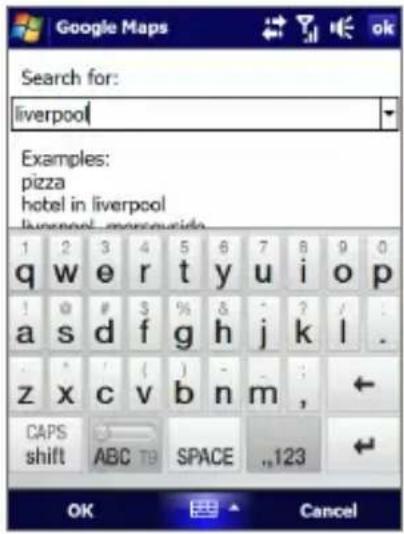
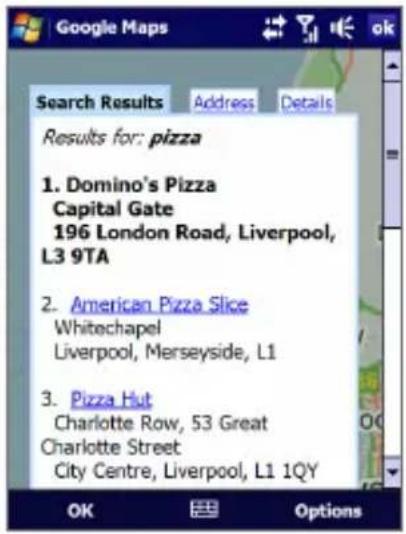
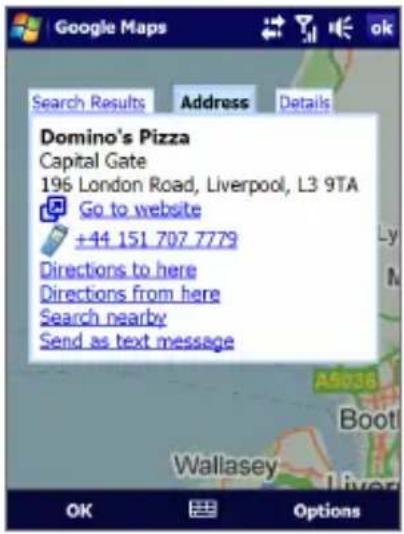
- On the Address tab, you can:
- Tap Go to web site to open the web site of the place of interest.
Note This information only appears when the web site of the place of interest is available.
- Tap the [phone number] to call the place of interest that you have selected.
-
Tap Directions to here or Directions from here to get directions on how to get to the place of interest from your current location or vice versa.
-
Tap Search nearby to search for other places of interest near your current location.
- Tap Send as text message to send the contact information to a contact saved on your device via SMS.
For more information about Google Maps, go to http://www.google.com/gmm/index.html.
10.2 Guidelines and Preparation for Using GPS
If you install a GPS software on your device, please follow these guidelines before and when using your device as a GPS device.
- Do not operate the GPS system while driving. The plotted GPS route is only for driving reference. It should not interfere with actual driving behavior.
- When using the device inside a vehicle, use the car holder to mount the device securely in place. Avoid placing the device in the areas shown in the following diagram:
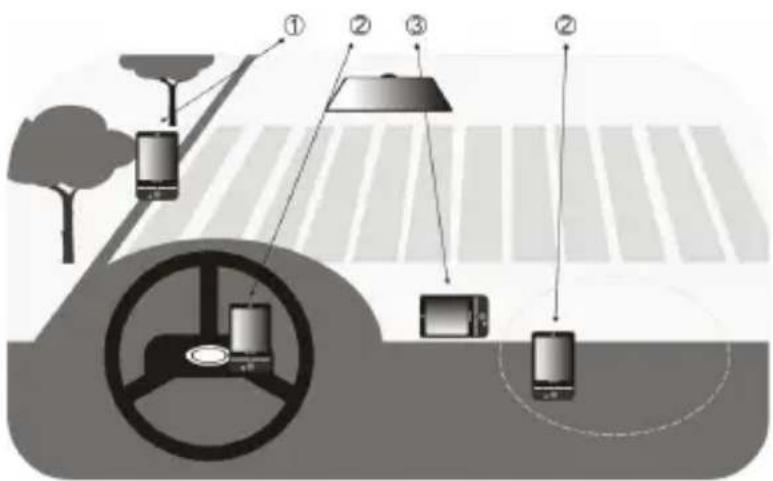
1 Do not place where it will block the driver's vision.
2 Do not place where air bags could deploy.
3 Do not place anywhere in the vehicle without securing the device in the holder.
- Please use the GPS system cautiously. Users shall be liable for any damages resulting from negligent operation of the system.
- The GPS signal cannot pass through solid non-transparent objects. Signal reception may be affected by obstructions such as high-rise buildings, tunnels, bridges, forests, weather (rainy or cloudy days), etc. If the vehicle's visor contains metal, it will be difficult for the GPS signal to pass through.
- Wireless communication products (such as mobile phones or radar-detecting devices) may interfere with the satellite signal, resulting in unstable signal reception.
- The Global Positioning System (GPS) is built and operated by the US Defense Department. The Department is responsible for the accuracy and maintenance of the system. Any changes that the Department makes may affect the accuracy and function of the GPS system.
- Do not leave your device in a vehicle or expose the device to direct sunlight to avoid overheating the battery, which could pose damage to the device or risk to the vehicle.
10.3 Downloading Satellite Data via QuickGPS
Before you start using your device for GPS navigation, open the QuickGPS program first to download ephemeris data (current satellite position and timing information) onto your device. This data is needed to determine the GPS position of your current location.
QuickGPS downloads ephemeris data from a web server, instead of from the satellites, using the Internet connection on your device, which can be via Wi-Fi, ActiveSync or GPRS/3G. This significantly speeds up the time for determining your GPS position.
To open QuickGPS
Tap Start > Programs > QuickGPS.
To download data
Tap Download on the QuickGPS screen.
On the screen, initially, you will see the Valid time of the downloaded data. As time passes, the remaining days and hours of validity will be shown.
To speed up GPS positioning, download the latest ephemeris data when the validity of the data expires.
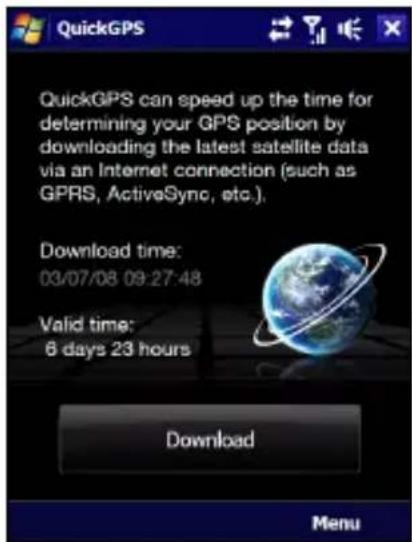
Download options
To configure download times, tap Menu > Options and choose from the available options:
• Remind me when data expires.
Enables your device to display a reminder message when the validity of the ephemeris data has expired.
When you see the reminder message, tap Menu to dismiss the reminder or to set the snooze time so that you will be reminded again. Tap OK to open the QuickGPS program and download the latest data.
- Autodownload when data expires. Allows ephemeris data to be automatically updated onto your device when the data has expired.
- Autodownload when connected to PC via ActiveSync.
Allows ephemeris data to be automatically downloaded via ActiveSync to your device when your device is connected to your computer. Your computer must be connected to the Internet in order to download data.
Note The ephemeris data is stored on HTC web servers. QuickGPS is preconfigured to connect to these servers.
Chapter 11
Experiencing Multimedia
11.1 Taking Photos and Videos
11.2 Viewing Photos and Videos Using Album
11.3 Using Windows Media® Player Mobile
11.4 Using FM Radio
11.5 Using Audio Booster
11.6 Using MP3 Trimmer
11.1 Taking Photos and Videos
Use Camera to take photos and record video clips. You can either use the main (back) camera or second (front) camera to take photos or shoot videos.
To open the Camera screen
On the Home screen, slide to the Photos and Videos tab and then tap the camera icon (D). The screen orientation automatically switches to landscape mode when you open Camera.
Tip You can also tap Start > Programs > Camera to open the Camera program.
To exit the Camera
Tap the Exit icon ( ) on the Camera screen. Tap the screen to show the Camera screen icons.
Capture modes
The camera on your device allows you to capture pictures and video clips by using various built-in modes that provide you flexibility in taking your shots.
To change the capture mode
- Press NAVIGATION left or right (Landscape orientation).
- Tap the middle icon at the bottom of the screen (the icon displayed is based on the current Capture mode.) On the on-screen menu, tap the Capture mode you want to use.
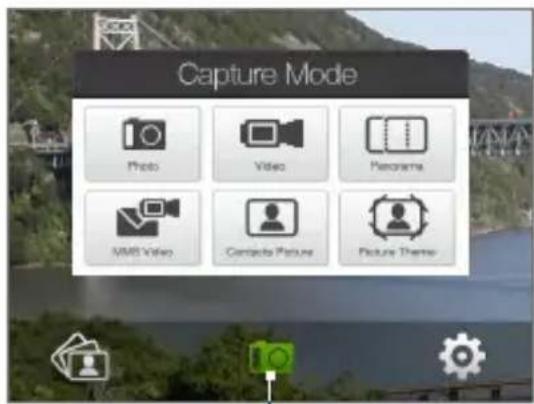
Current Capture mode
You can select from the following capture modes:
Icon Capture Mode

Photo Captures standard still images.
Video Captures video clips, with or without accompanying audio.
Panorama Captures a sequence of still images continuously in one direction, and allows stitching of all the images to create a panoramic view of a scenery.
MMS Video Captures video clips suitable for sending with MMS messages.
Contacts Picture Captures a still image and gives you the option to immediately assign it as a Photo ID for a contact.
Picture Theme Captures still images and places them within frames.
Note When using the second camera to capture, you can only use Photo, Video, MMS Video, Contacts Picture, and Picture Theme modes.
Supported file formats
Using the available capture modes, the camera in your device captures files in the following formats:
Capture mode Format
| Photo / Contacts Picture / | JPEG |
| Picture Theme / Panorama |
Video / MMS Video H.263 (.3gp) ; MPEG-4 (.mp4)
172 Experiencing Multimedia
Camera controls
The camera comes with an auto-focus function to let you capture sharp and crisp photos and videos of your subjects. Depending on the Shoot Option you have chosen, you will need to either touch or press the ENTER button to activate auto-focus. When auto-focus is activated, it is indicated by a flashing white bracket ( ). When focus is set, the bracket changes to a steady green bracket ( ).
Note For more information about the different shoot options, see "Advanced Options" in this chapter.
By default, you only need to press the ENTER button once to activate auto-focus and to take the photo or start capturing video. For example, in Photo mode, press ENTER to activate auto-focus; when focus is set, Camera automatically takes the shot.
Notes • In Video or MMS Video mode, press ENTER again to stop recording.
- In Picture Theme or Panorama mode, press ENTER for each shot you need to take.
On-screen controls and indicators
Tap the screen to display the controls and indicators.
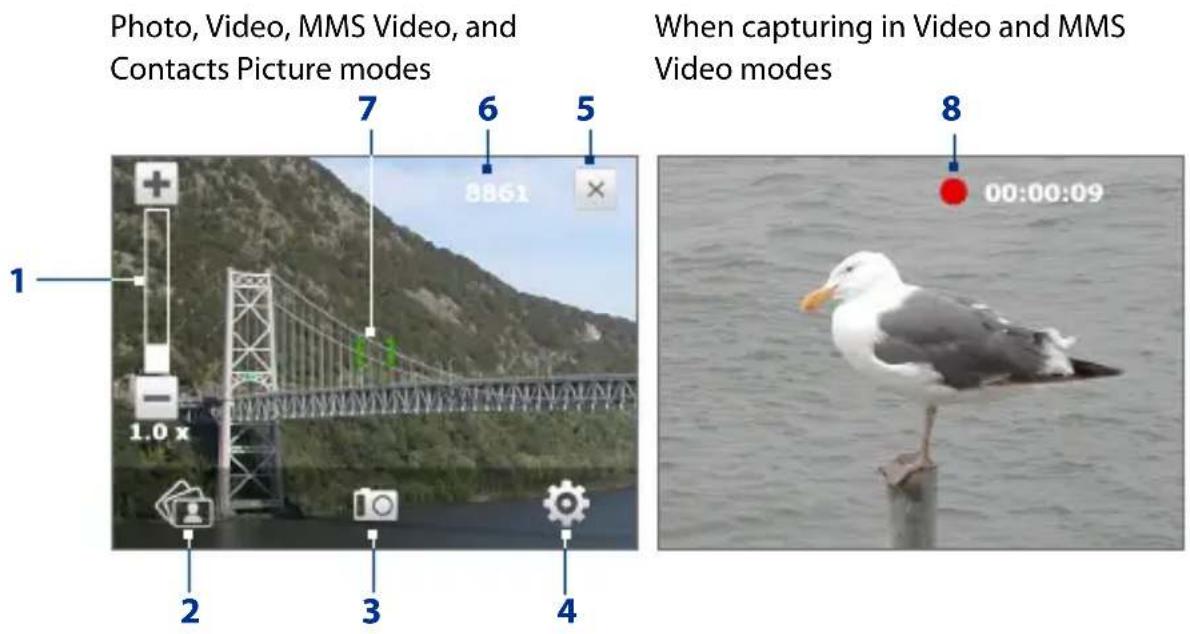
1 Zoom control. Tap to zoom in, or to zoom out.
Tip You can also press NAVIGATION up/down (Landscape orientation) or slide your finger clockwise or counterclockwise on the center NAVIGATION CONTROL to zoom in or out.
2 Album. Tap to open Album. See "Viewing Photos and Videos Using Album" for details.
3 Capture mode. Displays the current capture mode. Tap to open an on-screen menu where you can choose the capture mode.
4 Menu. Tap to open the Camera Settings screen. See "Menu Panel" for details.
5 Exit. Tap to exit the Camera program.
6 Remaining information indicator. In Photo, Contacts Picture, Picture Theme, and Panorama modes, this shows the remaining/available shots of pictures based on the current settings.
In Video and MMS Video modes, this shows the remaining duration that can be recorded. While recording video, this shows the recorded duration.
7 Auto-focus indicator. Displays a flashing bracket ( ) when focusing. When focus is set, the flashing bracket changes to a steady green bracket (
8 Recording indicator. Flashes when recording a video.
Picture Theme mode
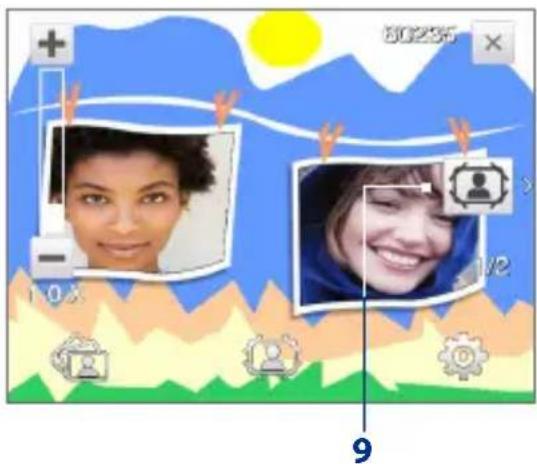
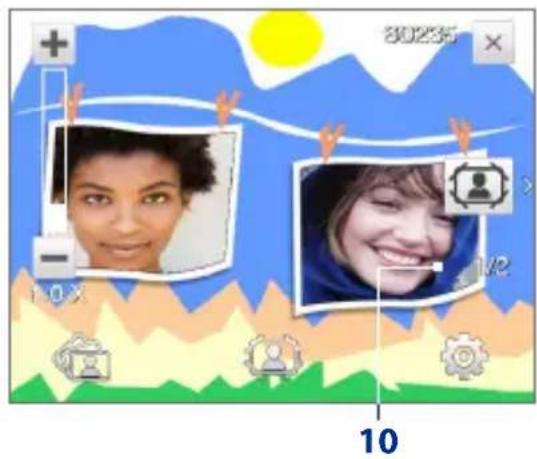
174 Experiencing Multimedia
9 Template Selector icon. In Picture Theme mode, tap to toggle among different templates.
10 Progress indicator. In Picture Theme and Panorama modes, this shows the number of consecutive shots.
Menu Panel
The Menu Panel provides a quick way of adjusting most common camera settings and lets you access more advanced camera settings. On the Camera screen, tap 📄 open the Menu Panel. To adjust a setting, keep tapping a button on the panel, for instance, Resolution, to cycle through the available settings. To access advanced options, tap
Note The available settings on the panel depend on the selected Capture mode.
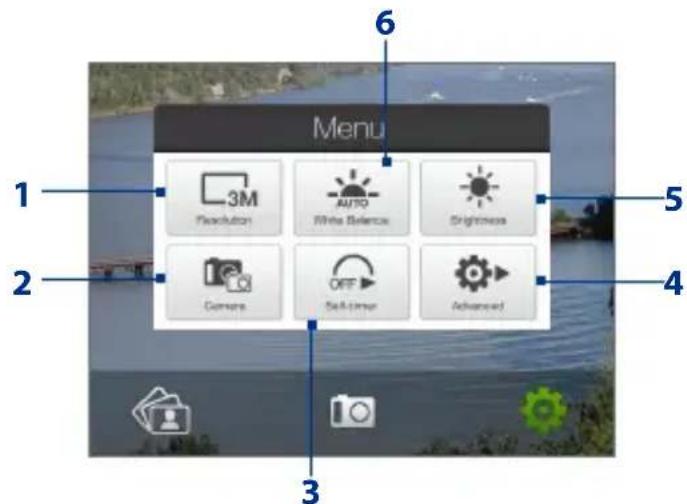
1 Resolution. Tap to change the resolution (capture size). See the table in the following pages for the supported resolutions.
2 Camera. Tap to select the camera to use. You can choose from main camera ( ), second camera ( ), and second camera flip ( )
3 Self-timer. Tap to set the self-timer to 2 seconds, 10 seconds, or Off when in the Photo or Contacts Picture mode. When you press the ENTER button to capture a still image, it starts to count down, then captures a still image after the time expires.
4 Advanced. Tap to open the advanced camera settings. See "Advanced Options" for details.
5 Brightness. Tap to open the Brightness bar at the bottom of the screen. On the Brightness bar, tap to decrease, or to increase the brightness level. Tap outside the Brightness bar to apply the change.
6 White Balance. White balance enables the camera to capture colors more accurately by adjusting to different lighting conditions. White balance settings include: Auto ( ), Daylight ( ), Night ( ), Incandescent ( ), and Fluorescent ( ).
Zooming
Before capturing a photo or a video clip, you can zoom in to make the object in focus move closer, or zoom out to make the object move farther away.
To zoom in
Slide your finger around the NAVIGATION CONTROL clockwise, press NAVIGATION up (Landscape orientation), or tap +
To zoom out
Slide your finger around the NAVIGATION CONTROL counterclockwise, press NAVIGATION down (Landscape orientation), or tap.
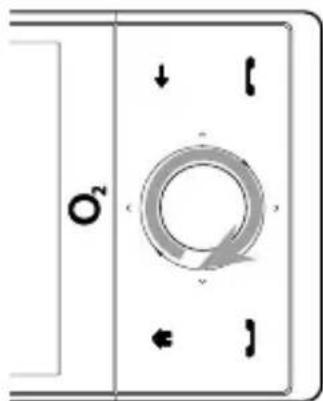
Zoom In
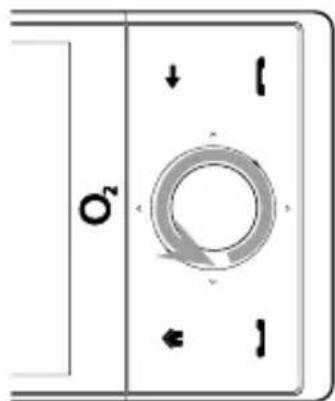
Zoom Out
The camera zoom range for a photo or a video clip depends on the capture mode and resolution. Refer to the table for more information.
| Capture mode Resolution Zoom range | ||
| Photo | 3M 3M (2048 x 1536) | 1.0x to 2.0x |
| 2M 2M (1600 x 1200) | 1.0x to 2.0x | |
| 1M 1M (1280 x 960) | 1.0x to 2.0x | |
| Large (640 x 480) | 1.0x to 2.0x | |
| Medium (320 x 240) | 1.0x to 4.0x | |
| Video | CIF CIF (352 x 288) | 1x and 1.5x |
| Large (320 x 240) | 1x and 1.5x | |
| Medium (176 x 144) | 1x and 1.5x | |
| Small (128 x 96) | 1x and 1.5x | |
| Panorama | Large (640 x 480) | 1x and 2x |
| Medium (320 x 240) | 1x, 2x and 4x | |
| MMS Video | Medium (176 x 144) | 1x and 1.5x |
| Small (128 x 96) | 1x and 1.5x | |
| Contacts Picture | Medium (240 x 320) | 1.0x to 4.0x |
| Picture Theme | Determined by the current template | Depends on the size of the selected template |
Note For capture size settings and zoom ranges when using the second camera, please refer to the online help.
The Review screen
After capturing, the Review screen lets you view, send, or delete the photo or video clip by tapping an icon at the bottom of the screen.
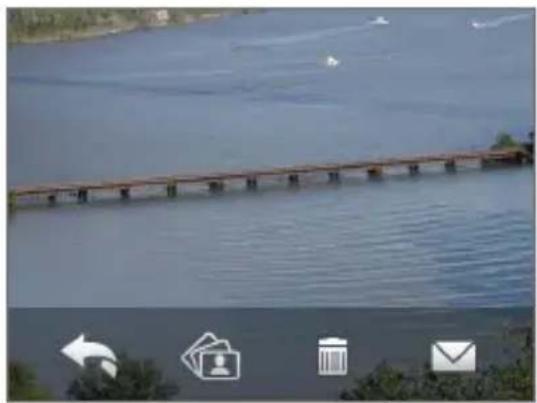
natural_image
Aerial view of a long wooden bridge spanning a calm river, with no visible text or symbols.Review screen icons
Icon Function

Back Return to the live Camera screen.

Delete Delete the captured image or video.

View View the captured image or video in the Album program.

Send Send the captured image or video via e-mail or MMS.
Assign to Contact After capturing in Contacts Picture mode, tap this icon to assign the photo to a selected contact.
Advanced Options
The Advanced Options let you adjust options for your selected capture mode and set Camera program preferences. Access the Advanced Options by tapping Advanced on the Menu Panel.
You can either tap on-screen or press NAVIGATION up/down (Landscape orientation) to navigate through the Advanced Options screen.
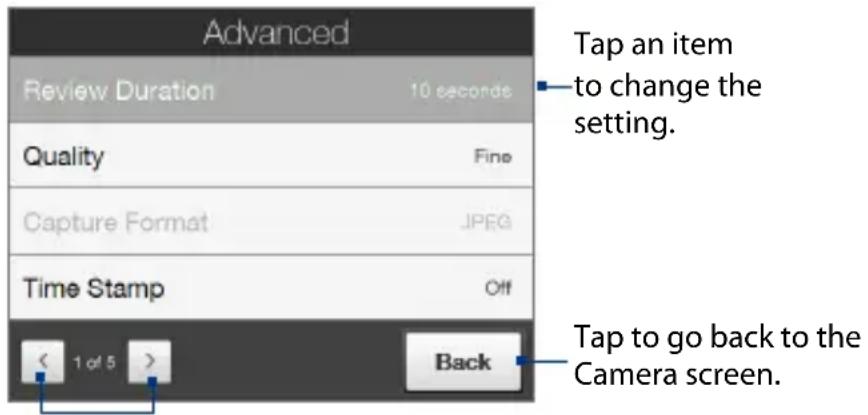
Tap to go through the different Advanced Camera Settings screens.
- Quality. Select the JPEG image quality level for all captured still images. Choose from Basic, Normal, Fine, and Super Fine.
- Capture Format. Select the desired file format.
- Time Stamp (Photo mode). Choose whether or not to include the shooting date and time on captured photos.
- Storage. Select where you want to save your files. You can either save the files to the main memory or to the internal storage.
- Keep Backlight. Turn the backlight on or off. This overrides your device backlight settings while you are using the camera.
- Shutter Sound. Choose whether or not you want the camera to make a shutter sound when you press the ENTER button.
-
Shoot Option. The camera comes with an auto-focus feature that is activated when the ENTER button is either touched or pressed.
-
Touch and Press. Requires you to touch the ENTER button to activate the auto-focus; when focus is set, press the ENTER button to take the shot.
- Touch. Requires you to touch the ENTER button to activate autofocus; when focus is set, Camera automatically takes the shot.
Full Press. Requires you to press the ENTER button to activate auto-focus; when focus is set, Camera automatically takes the shot.
- Review Duration. Set a time length for displaying the captured image/video on the Review screen. Select No Limit if you do not want to impose a time limit. Select No Review to immediately return to the live Camera screen after capturing and saving.
• Image Properties. This option lets you adjust the capture properties, such as Contrast, Saturation, and Sharpness.
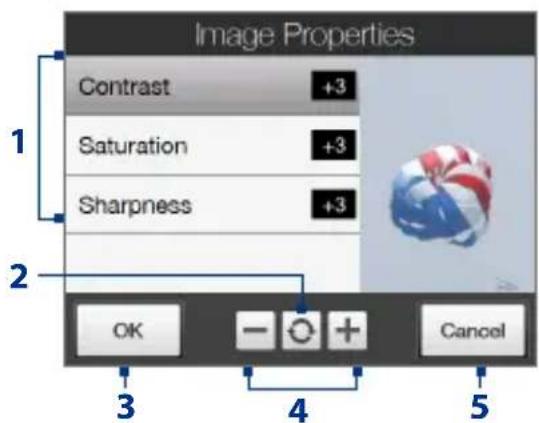
1 Tap a property to adjust.
2 Tap to reset all properties to their default values.
3 Tap to save the settings.
4 Tap / or press NAVIGATION left/right (Landscape orientation) to increase/decrease the value.
5 Tap to close the submenu without applying and saving the changes.
- Effect. Choose a special effect such as Grayscale, Sepia, or others, to apply to your photos or video clips.
- Metering Mode. Select a metering mode to allow the camera to measure the amount of light and calculate the best-fit exposure value before capturing. Choose either Center Area to measure light using the center area of the subject, or Average to measure light using the area around the subject.
- Prefix. When Default is selected as the prefix, the file name of each new captured file is set to "IMAGE" or "VIDEO" followed by a sequential
number, for example: IMAGE_001.jpg. You may also choose to name files using either the current Date or Date & Time as the prefix.
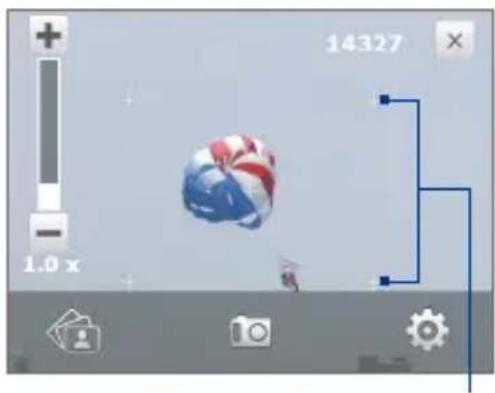
• Counter. To reset the file naming counter back to 1, tap Reset.
- Flicker Adjustment. When taking indoor shots, flicker on the camera screen may be caused by inconsistencies between the vertical scan rate of the camera display and the flicker frequency of fluorescent lighting. To reduce flicker, you can change the flicker adjustment setting to Auto or to the proper frequency (50Hz or 60Hz) of the power in the country where your device is being used.
- Grid (Photo mode). Choose whether or not to show a grid on the Camera screen. Showing a grid helps you frame and center your subject easily and accurately.
- Record with Audio (Video and MMS Video mode). Select On to record audio with the captured video clips, or select Off to capture video without audio. Grid marks
- Template (Picture Theme mode). Select a template.
- Recording Limit (Video mode). Set the maximum duration or file size for recording video.
- Template Folder (Picture Theme mode). By default, templates are stored in the \My Documents\Templates folder on the device's Main Memory. If you transferred some templates to the internal storage (via File Explorer), set this option to Main + Card to specify that templates are located in both the main memory and the internal storage.
- Show Reminder (Contacts Picture mode). Select On if you want the Camera to always display a message that confirms whether or not to assign the captured picture to a contact.
• Help. Tap to open the Camera program help file.
- About. Tap to display version and copyright information.
11.2 Viewing Photos and Videos Using Album
Use Album to view images and videos in your device. Album offers a host of features that let you rotate images, view your images as a slideshow, use images as contact pictures, and more.
Note Album can only display files in the BMP, GIF, PNG, JPG, Animated GIF, 3GP, MP4, and WMV formats.
To open Album
Do one of the following:
- On the Home screen, slide to the Photos and Videos tab and tap Album.
• In the Camera program, tap - Tap Start > Programs > Album.
Note When you open Album from the Camera program, the screen orientation of Album is switched to landscape mode.
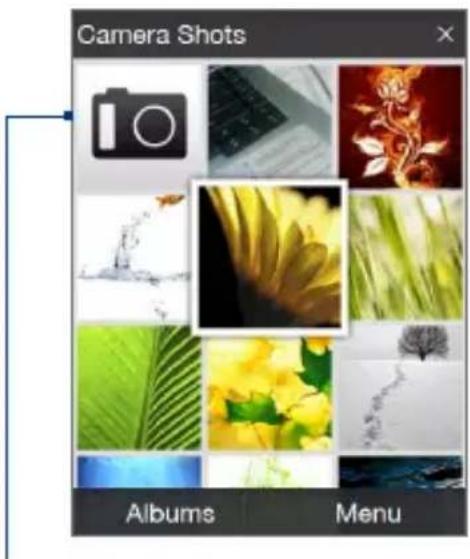
Tap to open the Camera program.
Select a photo or video to view
- On the main Album screen, tap Albums and then select the album to view. The contents of the album are then displayed on the main Album screen.
- Browse through the files by sliding your finger upward or downward.
-
Do one of the following:
-
Tap an image to view it in full screen mode. See "View an image" for details.
- Tap a video file (files with the icon) to play back the video file. See "Play back video" in this chapter for details.
- Select a still image and then tap Menu > Slideshow to view the images in the album as a slideshow. Animated GIF and video files will not be played back in the slideshow. See "To view still images as a slideshow" in this chapter for details.
View an image
While viewing an image in full screen, tap the screen or press ENTER to open the on-screen menu.
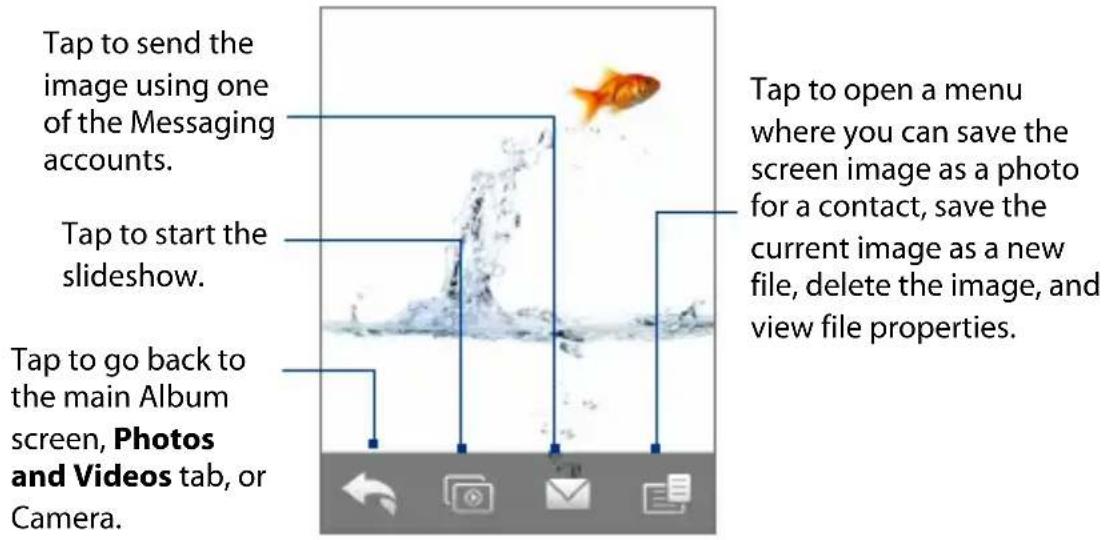
Tip You can delete multiple files at once by selecting Menu > Delete Items on the main Album screen and then selecting the files to delete.
To rotate the image
While viewing images, you can automatically rotate the image by simply turning your device sideways.
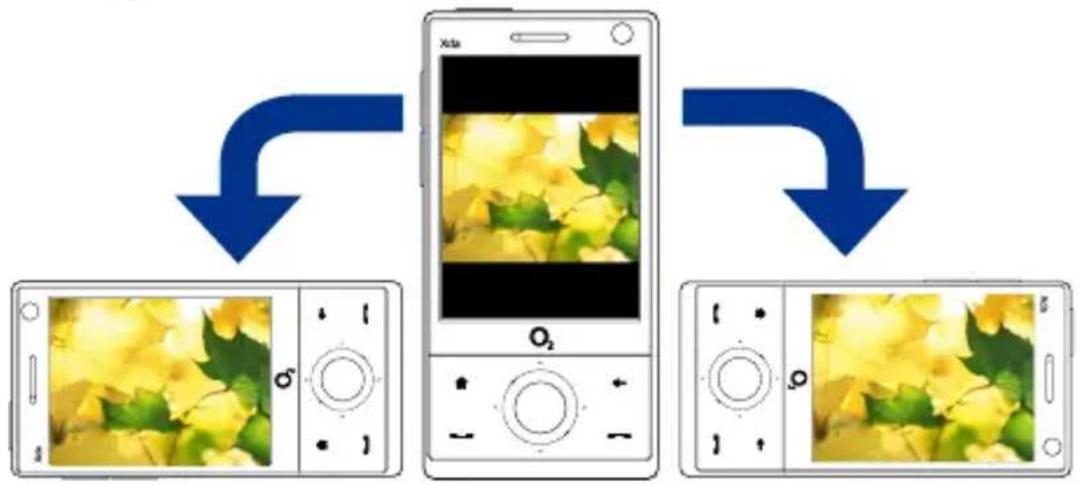
flowchart
graph TD
    A["Device"] -->|Blue Arrow Down| B["O₂ Mode"]
    B -->|Blue Arrow Up| C["Smart Phone"]
To view the next or previous image
When viewing images in Portrait or Landscape mode, go to the next image by swiping your finger across the screen from right to left. Go back to the previous image by swiping your finger from left to right.
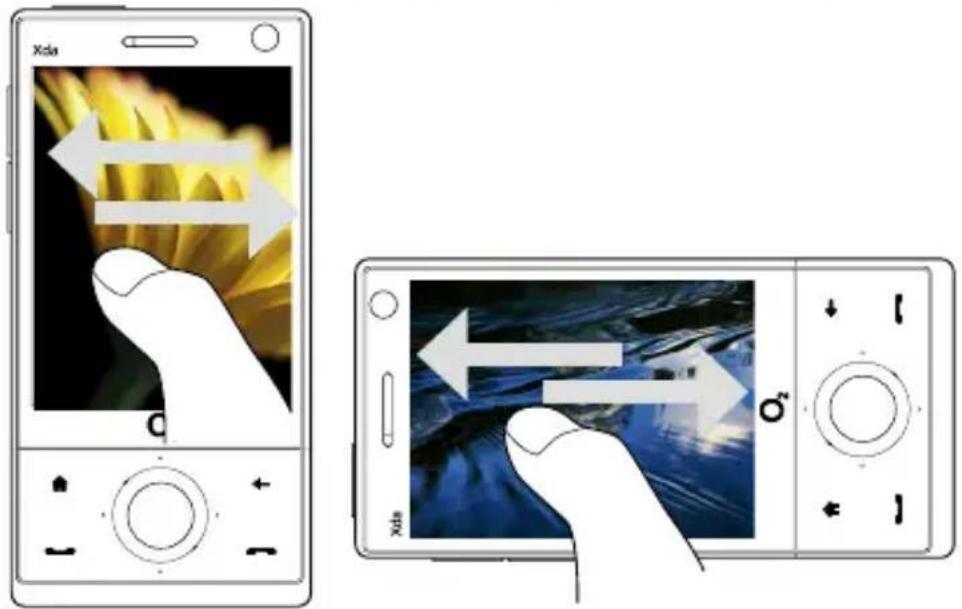
To zoom in or out of an image
While viewing an image, make a full circle motion on the screen with your finger.
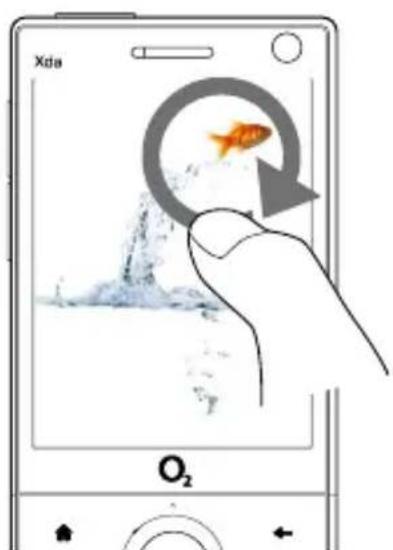
Slide your finger clockwise on an area to zoom in on that area.
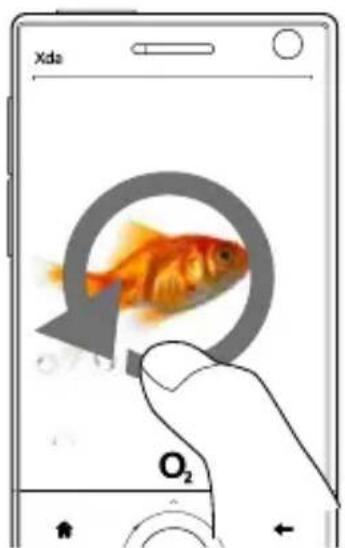
Slide your finger counterclockwise to zoom out.
184 Experiencing Multimedia
Tips - When you zoom in on an image, double tap the screen to automatically zoom out and fit the image to the screen.
- When you zoom in on an image, tap and hold the screen so you can pan the image.
- You can also zoom in and out of the image by sliding your finger around the NAVIGATION CONTROL clockwise/counterclockwise.
- When you zoom in on an image, tap the screen to open the on-screen menu. On the on-screen menu, tap and then select Save Screen Image to save the image on-screen as a new file.
To view still images as a slideshow
While viewing the slideshow, tap the screen to show playback controls.
Note The screen orientation automatically switches to landscape mode when viewing a slideshow.
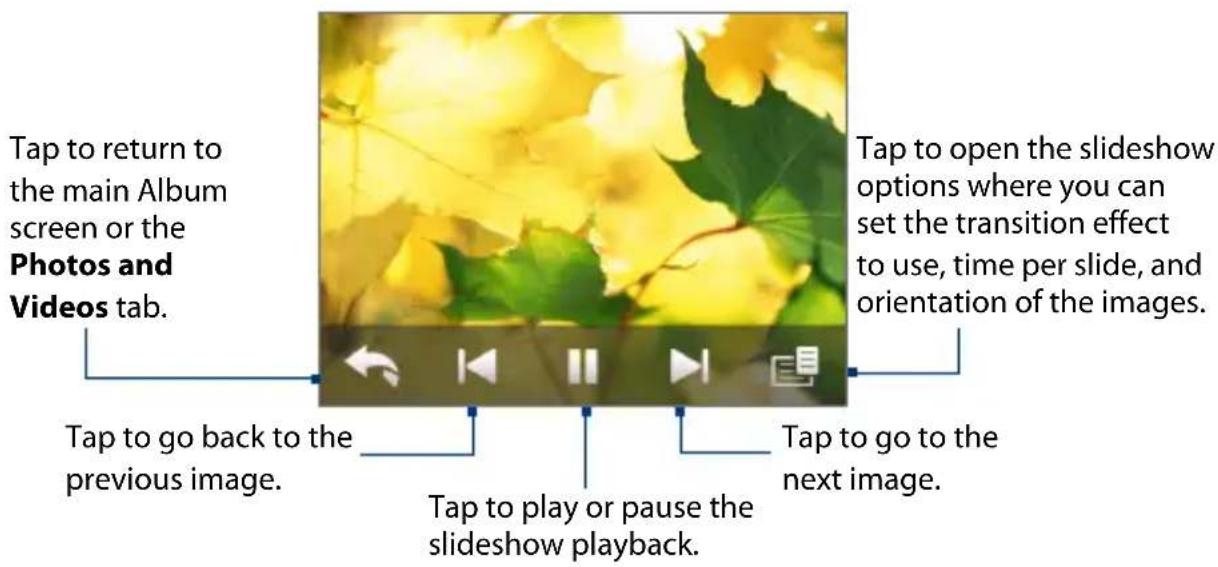
Tip If the images are in your favourite album, you can start the slideshow from the Photos and Videos tab on the Home screen. On the Photos and Video tab, tap Slideshow.
Play back video
While playing back video, tap the screen to show the playback controls.
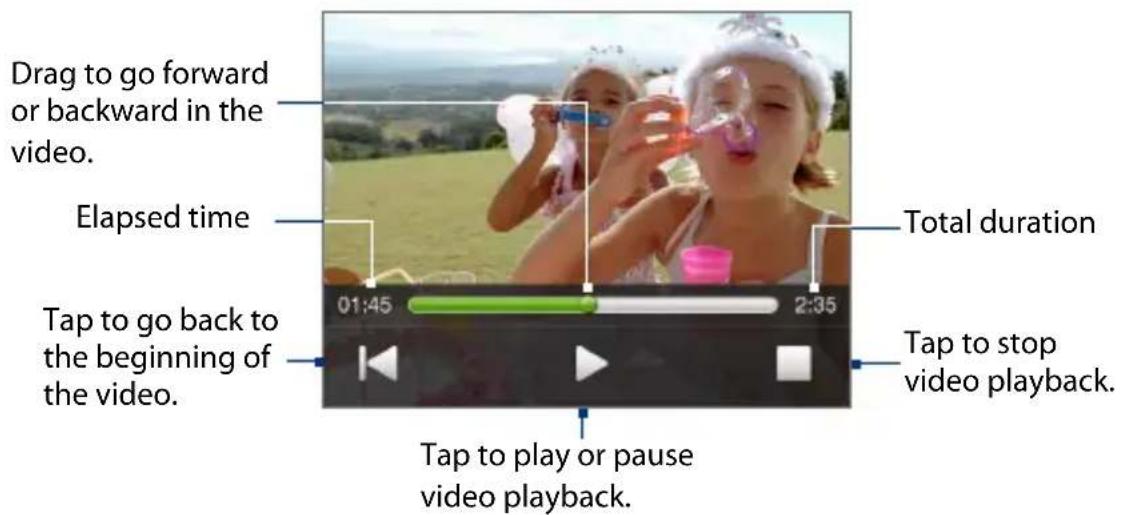
Tip If the video is in your favourite album, you can start the video playback from the Photos and Videos tab on the Home screen. On the Photos and Video tab, tap Play.
Close Album
Close Album by tapping on the main Album screen. When viewing files in full screen mode, tap the screen to show the on-screen menu or playback controls and then tap to go back to the main Album screen.
11.3 Using Windows Media® Player Mobile
Windows Media® Player Mobile plays digital audio and video files that are stored on your device or on a network, such as on a web site.
| Video File Formats Supported File Extensions | |
| Windows Media Video | .wmv, .asf |
| MPEG4 Simple Profile | .mp4 |
| H.263 | .3gp, .3g2 |
| H.264 | .mp4, .3gp, .3g2, .m4v |
| Motion JPEG | .avi |
| Audio File Formats Supported File Extensions | |
| Windows Media Audio | .wma |
| WAVE | .wav |
| MP3 | .mp3 |
| MIDI and SP MIDI | .mid, .midi, .rmi |
| AMR Narrow Band | .amr, .3gp |
| AMR Wide Band | .awb,.3gp |
| AAC, AAC+, and eAAC+ | .aac, .mp4, .m4a, .3gp |
| MPEG4 audio | .m4a |
| QCELP | .qcp, .3g2 |
| EVRC | .qcp |
To open Windows Media® Player Mobile
Tap Start > Programs > Windows Media.
About the controls
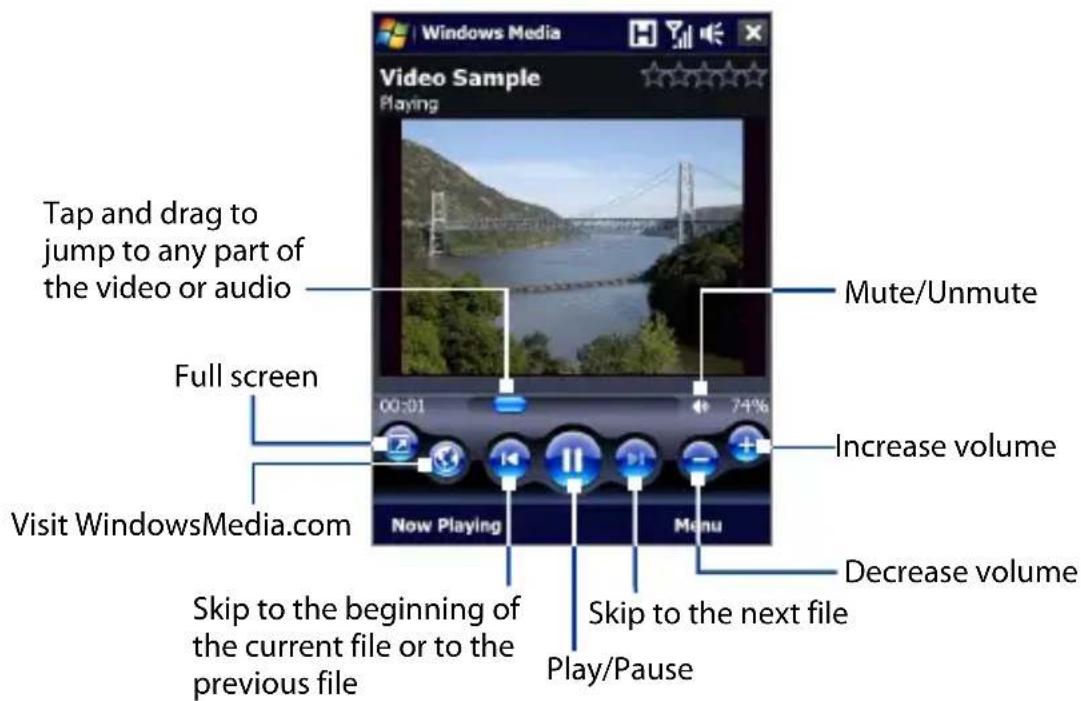
About the screens and menus
Windows Media ^® Player Mobile has three primary screens:
- Playback screen. The screen that displays the playback controls (such as Play, Pause, Next, Previous, and Volume) and the video window. You can change the appearance of this screen by choosing a different skin.
- Now Playing screen. The screen that displays the Now Playing playlist. This special playlist indicates the current file being played and any files that are “queued up” to play next.
- Library screen. The screen that lets you quickly find your audio files, video files, and playlists. It contains categories such as My Music, My Videos, My TV, and My Playlists.
At the bottom of each screen, you can open a Menu. The commands on this menu vary, depending on which screen you are viewing. For more information about the commands in these menus, see Help on your device.
Synchronize video and audio files
Use the latest version of Windows Media® Player on your computer to synchronize digital media files from your computer to your device. This ensures that protected files and album art (for skins) are copied to your device correctly.
To synchronize content to your device automatically
- On your computer, open Windows Media® Player, then connect your device to your computer.
- In the Device Setup Wizard, select Yes, search my computer now.
Note If you have previously opened Windows Media® Player and searched for media on your computer, you will not be prompted to search your computer in Step 2.
- On the Device Setup dialog box, enter a name for your device and click Finish. Windows Media starts synchronizing the music files in the PC with the device.
-
Click Stop Sync and then on the left panel of Windows Media® Player, right-click the name of your device and click Set Up Sync.
-
Select the playlist(s) that you want to sync between your computer and device, then click Add.
Note On the Device Setup dialog box, make sure that the Sync this device automatically check box is selected.
- Click Finish.
The files will begin synchronizing to your device. The next time you connect your device to your computer while Windows Media® Player is running, synchronization will start automatically.
To synchronize content manually to your device
- If you have not set up media synchronization between your device and computer, follow steps 1 to 3 in "To synchronize content to your device automatically".
- Click the Sync tab on the Windows Media® Player of your computer. Select a Playlist or a Library on the left panel of the Windows Media® Player.
- From the Content List, drag the media files that you want to sync to your device and drop them to the Sync List.
Playlists and Library List Sync ListContent List
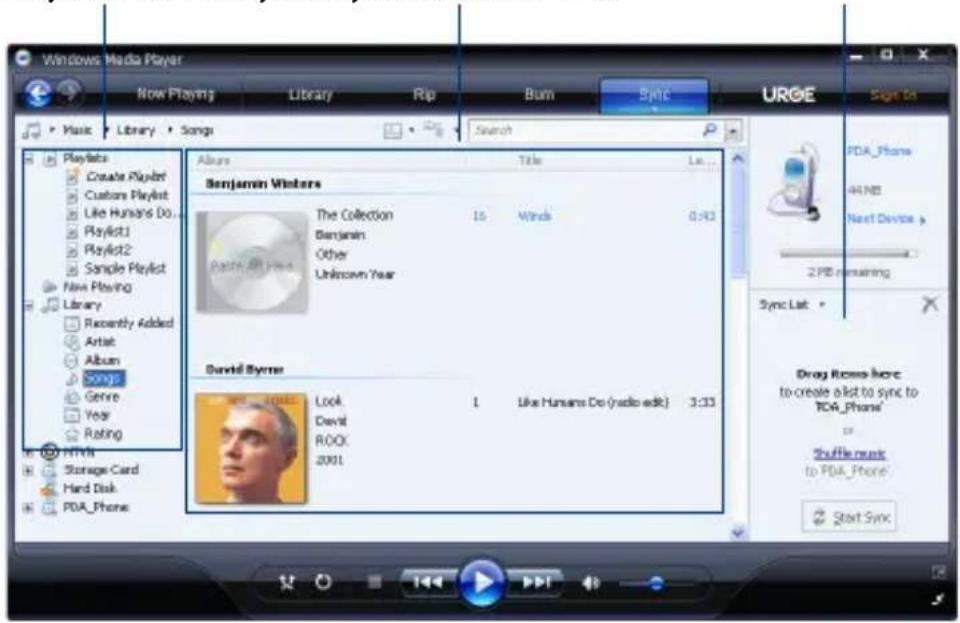
- Click Start Sync to start synchronizing the selected files to your device.
Notes
- Use Windows Media® Player 11 or higher on your computer to synchronize media files to your device.
- Audio files copy faster if Windows Media® Player is configured to automatically set the quality level for audio files copied to your device. For more information, see the Windows Media® Player Help.
Play media
Use the Library to find and play songs, videos, and playlists that are stored on your device or internal storage.
To update the Library
- If you are not on the Library screen, tap Menu > Library.
- On the Library screen, tap the Library arrow (near the top of the screen), then tap the media storage that you want use, for example, internal storage.
- In most cases, Windows Media® Player Mobile automatically updates the library. However, you can manually update the library to ensure that it contains new files that you recently copied to your device or internal storage. Tap Menu > Update Library to manually update the library list.
To play video and audio files on your device
- Select a category (for example, My Music or My Playlists).
- Tap and hold the item that you want to play (such as a song, album, or artist name), then tap Play.
Tips
- To play a media file that is stored on your device but is not in a library, on the Library screen, tap Menu > Open File. Tap and hold the item that you want to play (such as a file or a folder), then tap Play.
- To play a media file from the Internet or a network server, tap Menu > Library then tap Menu > Open URL.
Playlists
In Windows Media® Player Mobile, you can create a new playlist by saving the current Now Playing playlist and giving it a new name.
To save a new playlist
- If you are not on the Library screen, tap Menu > Library.
- Tap to select a category (for example, My Music or My Playlists).
- Select a media file that you want, then tap Menu > Queue Up. This adds the file to the Now Playing list.
Repeat this step until you have added all desired media files to the Now Playing list.
Note You cannot select multiple files simultaneously.
-
After adding the media files, tap Menu > Now Playing.
-
On the Now Playing screen, tap Menu > Save Playlist.
-
Enter the playlist name, then tap Done.
-
To play back the playlist you created, tap My Playlists in the Library, select your playlist, then tap Play.
Troubleshooting
If you encounter a problem while using the Windows Media® Player Mobile, a number of resources are available to help you troubleshoot the issue.
For more information, see the Troubleshooting Windows Media® Player Mobile page at the Microsoft web site (http://www.microsoft.com/windows/windowsmedia/player/windowsmobile/troubleshooting.aspx).
11.4 Using FM Radio
FM Radio allows you to listen to FM radio stations on your device. Since FM Radio uses the provided stereo wired headset as an antenna, you must plug in the headset first onto the earphone jack of your device before you open the program.
To open FM Radio
Tap Start > Programs > FM Radio.
The first time this program is used, it will automatically scan for available FM channels in your area, save them as presets, then play the first FM station found. For information about saving favourite stations as presets, see "Save presets."
When you tap 📊 on the FM Radio screen, the program continues to run in the background and allows you to continue listening to the radio while you use other programs. To turn off the FM radio, tap 🔒 on the upper right corner of the FM Radio screen.
FM Radio controls
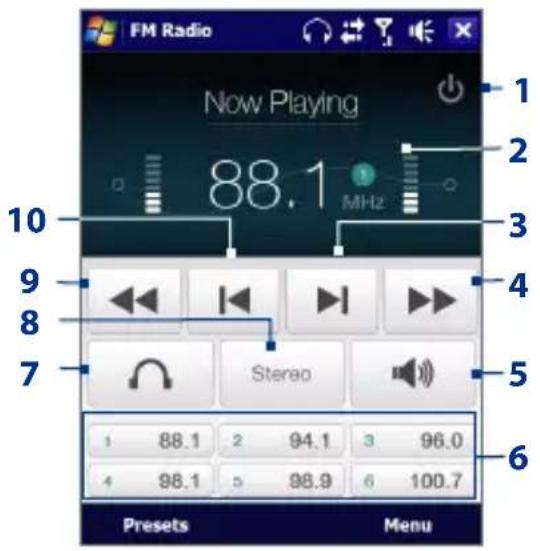
This control Does this
| 1 |  | Turns off FM radio. |
| 2 |  | See “Radio display” for details. |
| 3 |  | Searches the FM band for the next higher FM channel. |
| 4 |  | Increases the radio frequency by 0.1MHz. |
| 5 |  | Turns the sound on or off. |
| This control Does this | ||
| 6 |  | Allows you to save up to six favourite FM stations as presets. Tap a button to tune in to a favourite station. |
| 7 |  | Switches between headset and speaker output. |
| 8 | Stereo/Mono Allows you to switch between Mono and Stereo modes. | |
| 9 |  | Decreases the radio frequency by 0.1MHz. |
| 10 |  | Searches the FM band for the next lower FM channel. |
Tip Tap Menu to choose more options for FM Radio, such as Scan & Save to perform a rescan of the FM band for available FM stations and save them as presets, and more.
Radio display
1 Shows the station name when the RDS (Radio Data System) or RDBS (Radio Data Broadcast System) signal is available.
2 Shows the preset number when you select a preset FM station.
3 Shows the received signal strength.
4 Shows the radio frequency.
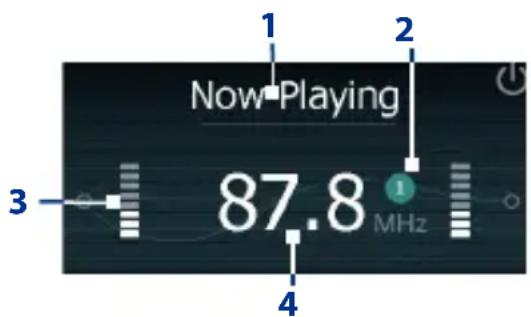
Device controls used in FM Radio
Navigation
- Press NAVIGATION left/right to search the FM band for the next lower/higher FM channel. When the search reaches the last station, it cycles back to the beginning of the FM band.
- Press NAVIGATION up/down to select the previous/next available preset station.
- Press the ENTER button to toggle mute on and off.
Volume Control
Press the VOLUME CONTROL on the side of the device to adjust the FM Radio volume.
Save presets
Presets are favourite FM stations that you can save for easy access. You can save up to six FM stations to the preset buttons on the main FM Radio screen, or save up to 20 presets on the Presets screen.
To save FM stations
- Tune to the desired FM frequency, then tap Presets.
-
On the Presets screen, tap that appears on the desired preset number where you want to save the FM station.
You can save up to 20 preset radio stations. Radio stations that are saved on Presets 1 to 6 can be accessed on the main FM Radio screen.
Tip Tap to remove a favourite FM station from the list. -
When done, tap OK.
To listen to a preset FM station
Do one of the following:
- On the main FM Radio screen, tap the preset button that shows your favourite station.
- On the Preset screen, select a preset number that shows your favourite station, then tap Listen.
FM Radio Main Menu
Tap Menu on the FM Radio screen to access options for the FM Radio program.
- Scan & Save Automatically scan radio stations that can be picked up by the device and save them as presets. Existing presets will be cleared and replaced with the newly scanned radio stations. You can have a maximum of 20 preset radio stations.
- Stereo Toggles between using Stereo or Mono mode when listening to an FM radio station.
-
Mute Toggles between muting and restoring the volume.
-
Output Select whether to use the device Speaker or Wired Headset to listen to the radio.
- Sleep Set how much time must pass before FM Radio goes into sleep mode. The Sleep option is switched to Off every time you launch FM Radio.
- Exit Select to turn off FM Radio.
11.5 Using Audio Booster
Audio Booster optimizes sound for a better listening experience. It provides preset moods, such as hip hop, jazz, rock, etc., and several enhancement presets that suit different types of music.
To access Audio Booster
Tap Start > Programs > Audio Booster.
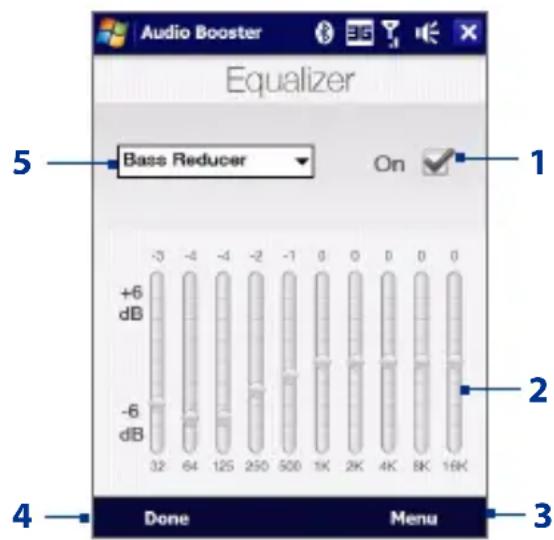
This control Does this
| 1 On Select the check box to enable or disable the equalizer. | |
| 2 Frequency band | Drag the sliders to adjust the frequency. |
| 3 Menu | • Tap Menu > Cancel to exit Audio Booster without applying the modified settings: • Tap Menu > Save as Preset or Delete Preset to save or delete preset equalizer settings. |
| 4 Done Tap to apply the modified settings. | |
| 5 Equalizer presets | Tap to choose the Equalizer preset to use. |
To use a Equalizer preset
Tap the list box then select a desired preset.
To create a custom equalizer preset
- Adjust the frequency bands to your desired values by dragging the equalizer controls. The selected values are indicated on top of the sliders.
- Save your equalizer settings as a preset by tapping Menu > Save as Preset.
- Enter a preset name and then tap Done. The preset you created will be added to the list box.
To delete a custom equalizer preset
- Tap the list box then select the Equalizer preset you want to delete.
- Tap Menu > Delete Preset.
Note You can only delete custom equalizer presets. Equalizer presets that are pre-installed cannot be deleted.
11.6 Using MP3 Trimmer
Use MP3 Trimmer to trim MP3 files. You can choose to save it as a new file or set it as a ring tone.
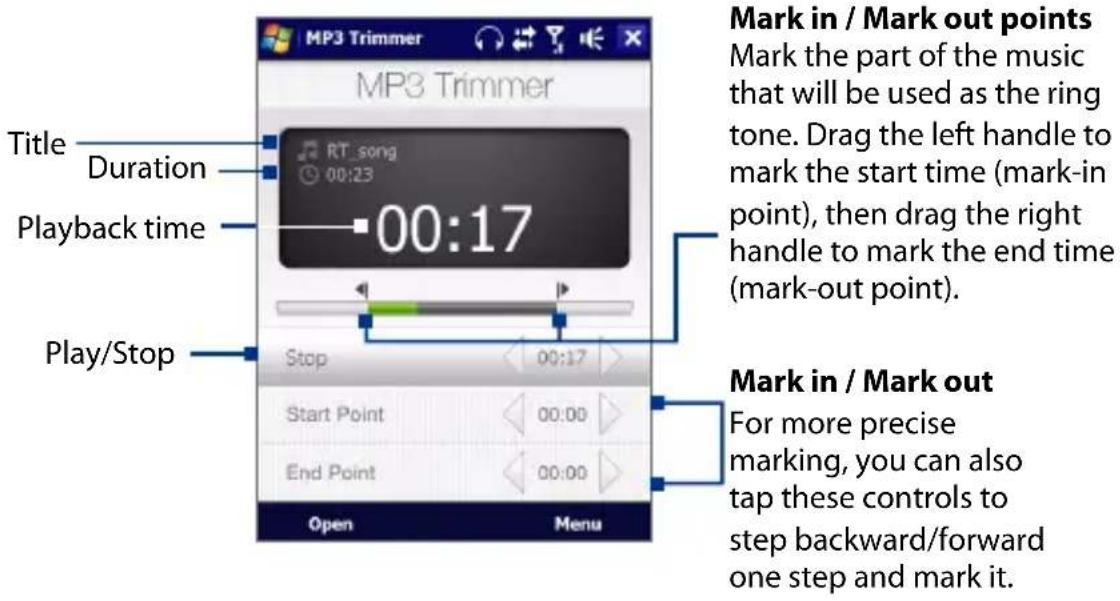
To trim the MP3 file
- Tap Start > Programs > MP3 Trimmer.
- Tap Open to find the MP3 file in the device.
- On the MP3 Trimmer screen, use the stylus to adjust the Mark in point and Mark out point.
After you set the Mark in point, the song will play back starting from the Mark in point.
After you set the Mark out point, the song will play back starting from 5 seconds before the Mark out point.
- Tap Play to play back the trimmed song.
- Tap Menu and select to whether set the file as the default ring tone, save the file to the ring tone folder, or save it using another file name.
Tip If you only want to save the song to the ring tone folder for future use, tap Save to Ring Tone Folder. Later on, you can tap Start > Settings > Personal tab > Phone to set it as your ring tone.
Chapter 12
Programs
12.1 Programs on your Device
12.2 Adding and Removing Programs
12.3 Adobe ^® Reader ^® LE
12.4 Calendar
12.5 Contacts
12.6 Comm Manager
12.7 Microsoft® Office Mobile
12.8 Notes
12.9 Java
12.10 SIM Manager
12.11 Spb GPRS Monitor (Available by Country)
12.12 Sprite Backup
12.13 Tasks
12.14 Voice Recorder
12.15 Voice Speed Dial
12.16 ZIP
12.1 Programs on your Device
The following are programs you can find on your device or install from the Applications disc.
Programs in the Start Menu
| Icon Description | |
 | Office Mobile Use the complete suite of Microsoft® Office applications for your mobile device. |
 Excel Mobile Create new workbooks or view and edit Excel workbooks. Excel Mobile Create new workbooks or view and edit Excel workbooks. | |
 OneNote Mobile Create notes with text, photos, and voice recordings. OneNote Mobile Create notes with text, photos, and voice recordings. | |
 PowerPoint Mobile View PowerPoint slides and presentations. PowerPoint Mobile View PowerPoint slides and presentations. | |
 Word Mobile Create, view, and edit Word documents. Word Mobile Create, view, and edit Word documents. | |
 | Calendar Keep track of your appointments and create meeting requests. |
 | Contacts Keep track of your friends and colleagues. |
 | Internet Explorer Mobile Browse web and WAP sites as well as download new programs and files from the Internet. |
 | Messaging Send and receive e-mail, MMS, and text messages. |
 | Phone Make and receive calls, switch between calls, and set up conference calling. See Chapter 2 for details. |
 | Help See Help topics for the current screen or program. |
Programs screen
| Icon Description | |
 | Games Play these pre-installed games: Bubble Breaker, Teeter and Solitaire. |
 | ActiveSync Synchronize information between your device and a PC or the Exchange Server. See Chapter 5 and 7 for details. |
 | Adobe Reader LE View PDF (Portable Document Format) files on your device. |
 | Album View photos and videos that you captured using the device camera. See Chapter 11 for details. |
 | Audio Booster Enhances your music experience by providing you with controls for adjusting equalizer, 3D sound, treble, and bass settings. See Chapter 11 for details. |
 | Bluetooth Explorer Search for other Bluetooth devices that have file sharing enabled and access their Bluetooth shared folder. See Chapter 9 for details. |
 | Calculator Perform basic arithmetic and calculations, such as addition, subtraction, multiplication, and division. |
 | Camera Take photos and shoot video clips with accompanying audio. See Chapter 11 for details. |
 | Comm Manager Manage your device's connections (including Internet and Bluetooth), turn the phone on or off, and enable or disable the Direct Push function. |
 | File Explorer Organize and manage files on your device. |
 | FM Radio Listen to your favourite FM radio stations. See Chapter 11 for details. |
| [282X] | Getting Started View a list of "how to's" that you can reference to learn basic features and settings of your device. |
 | Google Maps(Available by Country) View your current location, search for places of interest and addresses, seek directions, and more. See Chapter 10 for details. |
Icon Description
 | Internet Sharing Connect your notebook computer to the Internet using your device's data connection. See Chapter 8 for details. |
 | Java Download and install Java applications, such as games and tools, on your device. |
 | Messenger This is the mobile version of Windows LiveTM Messenger. See Chapter 8 for details. |
 | MP3 Trimmer Trim MP3 files, and choose to save the trimmed music as a new file or set it as a ring tone. See Chapter 11 for details. |
 | Notes Create handwritten or typed notes, drawings, and voice recordings. |
 | Opera Mobile This is the mobile version of the Opera browser. See Chapter 8 for details. |
 | Pictures & Videos View, organize, and sort pictures, animated GIFs, and video files on your device. |
 | QuickGPS Download satellite data over the Internet via ActiveSync (if your device is connected to a computer), Wi-Fi or a data connection to speed up the time for determining your current GPS position. See Chapter 10 for details. |
 | RSS Hub Download and read the latest web feeds from the Internet. See Chapter 8 for details. |
 | Search Search contacts, data, and other information on your device. |
 | SIM Manager Manage the contacts that are stored on your SIM card. You can also use this program to copy SIM contents to Contacts on your device. |
 | Spb GPRS Monitor(Available by Country) Use this program to measure the amount of data transfers that you have made via the GPRS or GSM network connection, and calculate network usage costs. You can install this program from the Applications disc. |
 | Sprite Backup Back up your device's data and files to a specified folder, the internal storage, or a computer. You can install this program from the Applications disc. |
 | Streaming Media Stream live or on-demand video. See Chapter 8 for details. |
| Icon Description | |
| Tasks Keep track of your tasks. | |
| Voice Recorder Record your voice and send it via e-mail, MMS or beaming. You can also set the recorded voice as your ring tone. | |
| Voice Speed Dial Record voice tags so that you can dial a phone number or launch programs by speaking a word. | |
| Windows Live Use this mobile version of Windows LiveTM to find information on the web. It also lets you sign into your Windows Live account so that you can access your Live Mail messages and send/receive instant messages in Live Messenger. See Chapter 8 for details. | |
| Windows Media Player Mobile Play back audio and video files. See Chapter 11 for details. | |
| You Tube | YouTubeTM Search for uploaded videos in YouTube and play them on your device. See Chapter 8 for details. |
| ZIP Save memory and free up storage space on your device by compressing files in the conventional ZIP format. | |
| STK (SIM Tool Kit) Service Access information and other services offered by your wireless service provider. | |
12.2 Adding and Removing Programs
Additional programs, such as the programs in the Applications disc or other programs that you purchase, can be installed and uninstalled on your device. Your device does not allow you to uninstall most of the preinstalled programs.
Note Before you purchase additional programs for your device, make sure that they are compatible with your device.
To install a program
- Download the program to your computer (or insert the CD or disk that contains the program into your computer).
You may see a single *.exe file, a *.zip file, a Setup.exe file, or several versions of files for different device types and processors. Be sure to select only the programs designed for your device.
202 Programs
- Read any installation instructions or documentation that comes with the program. Many programs provide special installation instructions.
- Connect your device to the computer.
- Double-click the installation setup file.
To uninstall a program
- Tap Start > Settings > System tab > Remove Programs.
- In the Programs in storage memory list, select the program you want to remove, then tap Remove.
12.3 Adobe ^® Reader ^® LE
Adobe® Reader® LE is an application for viewing PDF (Portable Document Format) documents on your device. It supports a subset of the features found in the PC versions of Adobe Reader.
To open Adobe Reader LE
- Tap Start > Programs > Adobe Reader LE.
To open a PDF file on your device
- Open a PDF file in Adobe Reader LE: or
- Open File Explorer, find the PDF file, then tap the file to open it.
To navigate through a PDF document
You can use the controls in the program and finger gestures to navigate a PDF document.
- Tap Tools > View > Continuous and then slide your finger up or down the screen to scroll through the pages in the document.
Tip You can also drag the scroll bars to scroll through the pages.
- Tap to zoom in or to zoom out. After zooming in, slide your finger on the screen to pan the current page.
- Press NAVIGATION up/down/right/left to move to the desired direction of the page.
- Tap to return to the previous page; tap to move to the next page. Tap to jump to the first page; tap to jump to the last page.
- Tap Tools > Go To > Page Number to enter a page number that you want to view.
To search for text in the document
-
Tap Tools > Find > Text or tap in the toolbar.
-
Type in the text to be searched, then tap Find.
The matched text in the document will be highlighted.
- To view the next occurrence of the text, tap Tools > Find > Next.
Tips
- Adobe Reader LE displays a bookmark pane for the PDF files that contain bookmarks. Tap the bookmarks to go to a specific section/page within the file.
- Adobe Reader LE supports password-protected PDF files with up to 128-bit encryption. When you open a password-protected PDF file, you will be prompted to enter the password before opening it.
12.4 Calendar
Use Calendar to create appointments, including meetings and other events. You can also synchronize Calendar appointments between your device and computer.
To open the Calendar screen
- On the TouchFLO 3D Home screen, tap Calendar or a displayed appointment; or
- Tap Start > Calendar.
Create appointments
To schedule an appointment
-
Open the Calendar screen and then tap Menu > New Appointment.
-
Enter a name for the appointment.
-
Do one of the following:
-
If it is a special occasion such as a birthday or a whole-day event, set the All Day option to Yes.
- If there is a time frame for the appointment, set the start and end dates and times.
204 Programs
-
Specify the type of category for your appointment, so that it can be grouped with other related appointments. Tap Categories, then select a preset category (Business, Holiday, Personal, or Seasonal), or tap New to create your own category.
-
When finished, tap OK to return to the calendar.
Notes • All-day events do not occupy blocks of time in Calendar; instead, they appear in banners at the top of the calendar.
- To remove an appointment, tap Menu > Delete Appointment.
Tip To have the time entered automatically in Day view, tap and drag to select a time slot for the new appointment, and tap Menu > New Appointment.
To set the reminder time for new appointments
By default, Calendar has been set to display a reminder alert when you have new upcoming appointments. You can change the reminder time.
- Open the Calendar screen.
- Tap Menu > Tools > Options > Appointments tab.
- Make sure the Set reminders for new items check box is selected.
- Set the time when you want the reminder to alert you.
- Tap OK to return to the Calendar screen.
View appointments
By default, Calendar displays appointments in Agenda view. You can also look at your appointments in Day, Week, Month, and Year views.
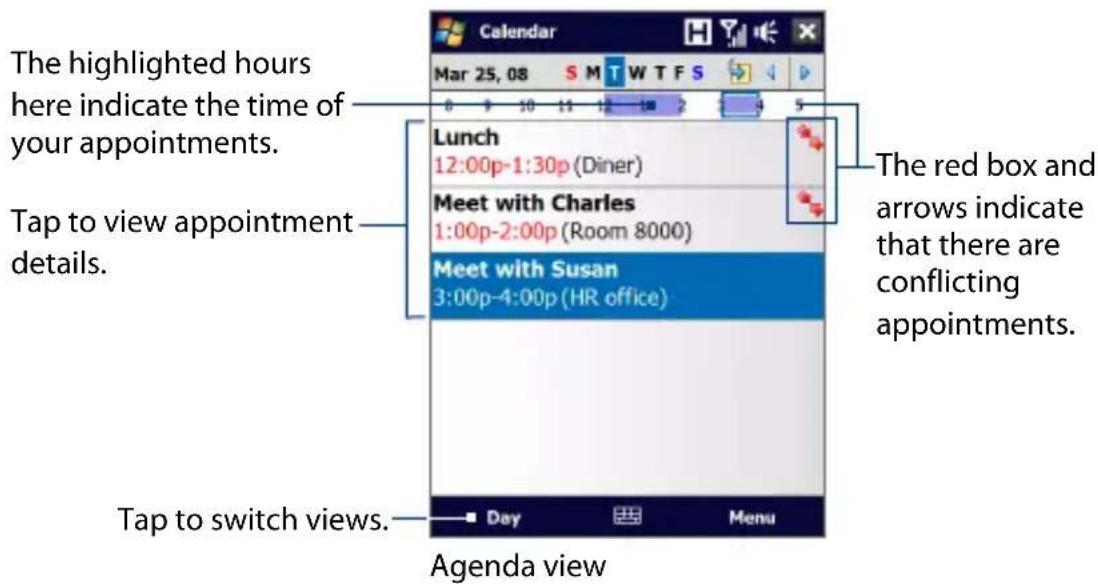
- To see detailed appointment information in any view, tap the appointment.
- To view appointments by category, tap Menu > Filter, then select the desired category.
- To change the default view that Calendar uses to display appointments, tap Menu > Tools > Options > General tab. Tap the Start in box, then choose the calendar view.
- When in Month view, you will see the following indicators:
Morning appointment
Afternoon or evening appointment
Both morning and afternoon/evening appointments
All-day event
Send appointments
To send a meeting request
Use Calendar to schedule meetings via e-mail with contacts who use Outlook or Outlook Mobile.
- Open the Calendar screen.
-
Schedule a new appointment, or open an existing one and tap Menu > Edit.
-
Tap Attendees, then tap Add Required Attendee or Add Optional Attendee and add the contacts whom you want to invite.
Note You can specify if an attendee is required or optional only if your device is connected to a Microsoft Exchange 2007 server. Otherwise, all attendees are designated as required. For more information, see "Managing Meeting Requests" in Chapter 7.
-
When you have finished adding attendees, tap Done.
-
Tap OK to send.
Tip To choose the e-mail account to use for sending meeting requests, tap Menu > Tools > Options > Appointments tab. Tap the Send meeting requests via box and choose to send via your Outlook E-mail, POP3/IMAP4 or Windows Live™ account.
Notes • If you're sending the meeting request using your Outlook E-mail account, it will be sent to the attendees the next time you synchronize your device with your computer or Exchange Server.
- When attendees accept your meeting request, the meeting is automatically added to their schedules. When their response is sent back to you, your calendar is updated as well.
To send appointment details as a vCalendar
A vCalendar is a standard file format used for exchanging scheduling and task information. vCalendar files can be exported to Outlook on the computer.
After selecting the appointment to send in the Calendar screen, tap Menu > Send as vCalendar to send a vCalendar containing appointment details as a file attachment in an MMS message. For more information, see "MMS" in Chapter 6.
12.5 Contacts
Contacts is your address book and information storage for people and businesses you communicate with. You can add the following types of contacts to your device:
- Outlook contacts. Contacts that are stored on your device, which can be created on your device or synchronized with your PC or the Exchange Server.
- SIM contacts. Contacts that are stored on the SIM card. Only a name and phone number can be stored for each entry.
- Windows Live™ contacts. Contacts that you communicate with using Windows Live™ Messenger or MSN.
Note You can only add Windows Live™ contacts after you have set up Windows Live™ on your device. See "Add Windows Live contacts" in Chapter 8 for details.
To open the Contacts screen
- On the TouchFLO 3D Home screen, slide to the People tab and then tap All People; or
- Tap Start > Contacts.
Add new contacts
To add a contact on your device
- Open the Contacts screen.
- Tap New, select Outlook Contact, and enter the contact information.
- In the File as field, choose how you want the contact name to appear in the contact list.
- To add a photo of the contact, tap Select a picture, and then select the picture file or tap Camera to take a photo of the contact.
- To assign a ring tone to the contact, tap the Ring tone field, scroll through the list of tones, then select a desired tone.
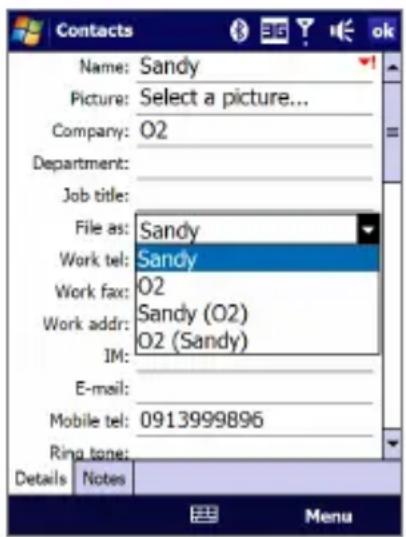
- When finished, tap OK.
Tips If a person who is not in your list of contacts called you and you want to save that person's phone number, tap and hold the phone number in the Call History and then tap Save to Contacts from the shortcut menu.
- To save a phone number that is contained in a message, open the message, tap the underlined phone number, and then tap Menu > Save to Contacts.
- To edit contact information, tap the contact name and then tap Menu > Edit.
To add a contact to your SIM card
- Open the Contacts screen.
- Tap New, then select SIM Contact.
- Enter a contact name and phone number.
- Tap OK.
Tip You can also use the SIM Manager to add and edit contacts on your SIM card. For more information, see "SIM Manager" in this chapter.
Organize and search contacts
To group similar contacts
For easier management, you can group similar contacts by assigning them to categories.
- Create a new Outlook contact or edit an existing Outlook contact.
- Tap Categories.
- Select a preset category such as Business or Personal, or tap New to create your own category.
- When finished, tap OK.
To find a contact on your device
There are several ways to find a contact when your contact list is long:
- Begin entering a contact name in the provided text box until the contact you want is displayed.
- On the Quick Scroll bar on the right of the Contacts screen, scroll to or tap a letter to go directly to the part of the contacts list where contact names start with that letter.
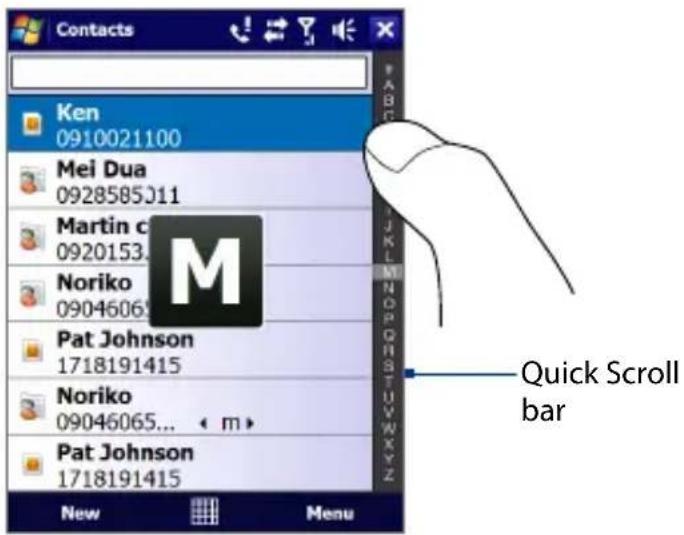
Note You can disable the Quick Scroll bar by tapping Menu > Options and selecting the Show alphabetical index check box. This will show the alphabetical index at the top of the Contacts list.
- Filter the list by categories. In the contact list, tap Menu > Filter, then tap a category you've assigned to a contact. To show all contacts again, select Menu > Filter > All Contacts.
Share contact information
To beam a contact's details
You can quickly send contact information to another mobile phone or device through Bluetooth beaming.
- On the Contacts screen, select a contact.
- Tap Menu > Send Contact > Beam, then select a device where to beam the contact to.
Note Before beaming, make sure Bluetooth is turned on and set to visible mode on your device and the target mobile device. You can also beam contact information to your computer. See Chapter 9 for details.
To send contact information via text messaging
- On the Contacts screen, select a contact.
- Tap Menu > Send Contact > SMS \ MMS.
- Select the contact information you want to send, then tap Done.
- In the new text message, enter the mobile phone number of the recipient, then tap Send.
To send contact information as a vCard
A vCard (virtual business card) is a standard file format used for exchanging contact information. vCard files can be exported to Outlook on the computer. From your device, you can send a vCard containing contact information as file attachment in an MMS message.
- On the Contacts screen, select a contact.
- Tap Menu > Send as vCard.
- A new MMS message is created with the vCard file attached. Enter the mobile phone number or e-mail address of the recipient, then tap Send.
For more information, see "MMS" in Chapter 6.
12.6 Comm Manager
Comm Manager is a central location where you can easily turn on and off the communication features of your device such as the phone, Wi-Fi, data connection, Bluetooth, and more.
To access the Comm Manager
Do one of the following:
- On the TouchFLO 3D Home screen, slide to the Settings tab and then touch Communications.
- Touch Start > Programs > Comm Manager.
- Touch Start > Settings > Connections tab > Comm Manager.
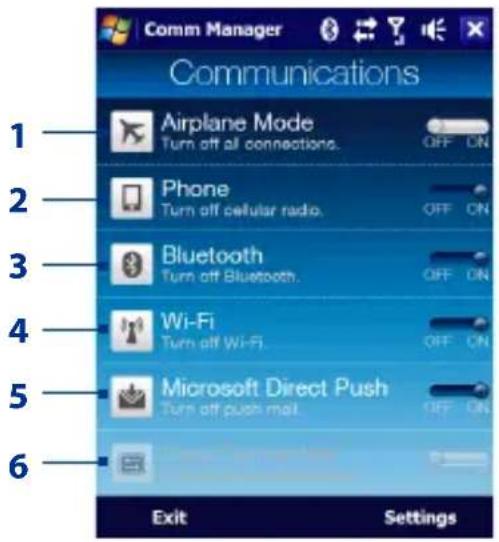
1 Switch Airplane Mode on or off. Turning on Airplane Mode turns off the phone, Wi-Fi and Bluetooth functions. For more information, see "To enable or disable Airplane Mode" in Chapter 2.
2 Switch the phone on or off. Tap Settings > Phone to set the ring tone and other phone settings. See Chapter 13 for details.
3 Switch Bluetooth on or off. Tap Settings > Bluetooth to configure Bluetooth on your device. See Chapter 9 for details.
4 Switch Wi-Fi on or off. Tap Settings > Wireless LAN to configure wireless network connection settings. See Chapter 8 for details.
5 Switch between automatically receiving (as items arrive) or manually retrieving Outlook e-mails. See Chapter 7 for details.
6 Disconnect active data connections (GPRS, for example). You cannot reconnect a data connection in Comm Manager.
12.7 Microsoft® Office Mobile
Microsoft® Office Mobile consists of the following applications:
- Microsoft® Office Excel® Mobile lets you create and edit Excel workbooks and templates on your device.
- Microsoft® Office OneNote® Mobile lets you create notes with text, photos, and voice recordings for synchronization later with Microsoft® Office OneNote® 2007 on your computer.
212 Programs
- Microsoft® Office PowerPoint® Mobile allows you to view (not create) slide show presentations in *.ppt and *.pps formats.
- Microsoft® Office Word Mobile lets you create and edit documents and templates in Word Mobile and save them as *.doc, *.rtf, *.txt, and *.dot files.
To use Microsoft Office Mobile
- Tap Start > Office Mobile.
- Tap the Office Mobile application that you want to use.
When working with Word Mobile and Excel Mobile files, you can use the Navigation Control on your device for zooming:
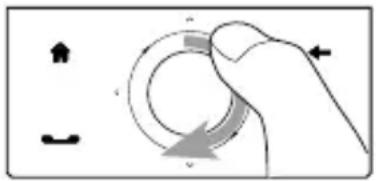
natural_image
Hand holding a circular button with directional arrows, no text or symbols presentTo zoom in, slide your finger clockwise around the Navigation Control.
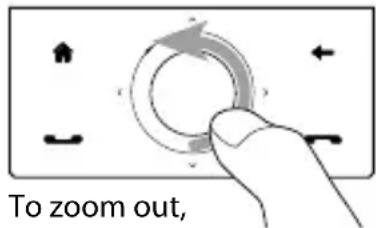
slide your finger counterclockwise around the Navigation Control.
Word Mobile and Excel Mobile do not fully support some features of Microsoft® Office Word and Microsoft® Office Excel®. To see a complete list of features that are not supported in Word Mobile and Excel Mobile, see Help on your device.
Tips
- By default, Word Mobile saves documents in .docx format, while Excel Mobile saves workbooks in .xlsx format. If you want to open these types of files on a computer that uses Microsoft Office 2000, Office XP, or Office 2003, you need to download and install the File Format Converter in your computer. You can find this converter at http://www.microsoft.com/downloads/details.aspx?familyId=941B3470-3AE9-4AEE-8F43-C6BB74CD1466&displaylang=en.
- If you want Word Mobile to save documents in .doc format, tap Menu > Tools > Options (or Menu > Options when no document is opened), then change the Default template to Word 97-2003 Document (.doc).
- If you want Excel Mobile to save workbooks in a format that is compatible with Microsoft Office 2000, Office XP, or Office 2003, tap Menu > Options (with no workbook opened), then change the Template for new workbook to Blank 97-2003 Workbook.
12.8 Notes
Using Notes, you can create handwritten and typed notes, record voice notes, convert handwritten notes to text for easy readability, and more.
To create a note
-
Tap Start > Programs > Notes. In the note list, tap New.
-
Choose an input method and then enter your text.
Tip For more information about input methods and entering text, see Chapter 4.
- When finished, tap OK to save and return to the note list.
Notes To select handwritten text, tap and hold next to the writing. As soon as dots appear, and before they form a complete circle, quickly drag across the writing.
- If a letter crosses three ruled lines, it is treated as a drawing rather than text.
To draw in a note
-
Create or open a note file.
-
Use the stylus to draw on the screen. A selection box then appears around your drawing.
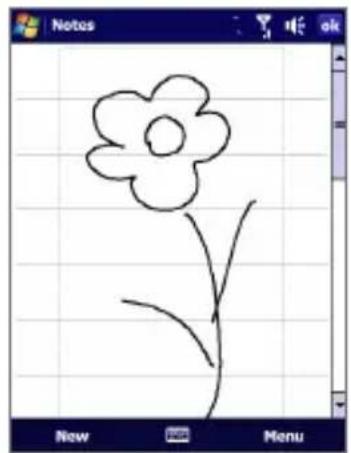
natural_image
Simple line drawing of a flower with stem and leaves on grid paper (no text or symbols)- Tap OK to save.
Note To select a drawing (for example, to copy or delete it), tap and hold the drawing briefly. When you lift the stylus, the drawing is selected.
To record a voice note
You can create a stand-alone recording (voice note) or you can add a recording to a note.
- Tap Start > Programs > Notes.
- If you do not see the Recording toolbar, tap Menu > View Recording Toolbar.
- Do one of the following:
-
To add a recording to a note, create or open a note.
• To create a stand-alone recording, record from the note list. -
Tap the Record icon (☐) to begin recording your voice. Tap the Stop icon (☐) when you are finished recording.
Tip To select the voice recording format, return to the note list and then tap Menu > Options > Global Input Options link (at the bottom of the Options screen). On the Input screen, tap the Options tab and choose the desired format from the Voice recording format list.
12.9 Java
MIDlets are Java applications such as games and tools that can run on mobile devices, while a MIDlet suite is a collection of one or more MIDlets. The Java program lets you download, install and manage MIDlets or MIDlet suites on your device. Your device supports Java 2 Micro Edition, J2ME.
To open the Java program
Tap Start > Programs > Java.
Install and launch MIDlets/MIDlet suites
There are several ways to install a MIDlet/MIDlet suite.
To download and install via Internet Explorer Mobile
- Tap Menu > Install > Browser to open Internet Explorer Mobile.
- Locate the MIDlet/MIDlet suite while connected to the Internet.
- Select the MIDlet/MIDlet suite to download.
-
Information about the MIDlet/MIDlet suite is then displayed. Tap Continue.
-
Confirm to start downloading.
-
Select
or a folder where to install the MIDlet suite to, then tap OK.
To install from your device
You can copy MIDlets/MIDlet suites from the computer to your device using the USB sync cable or Bluetooth connection. Copy them to the root folder or any subfolder on your device.
-
Tap Menu > Install > Local Files. The program then searches for MIDlets/MIDlet suites on your device and displays them in a list.
-
From the list, tap the MIDlet/MIDlet suite that you want to install.
-
Confirm to start the installation.
-
Select
or a folder where to install the MIDlet suite to, then tap OK.
To run a MIDlet/MIDlet suite
Do one of the following:
• After installation of the MIDlet/MIDlet suite is complete, tap Yes.
- On the Java screen, open the folder that contains the MIDlet/MIDlet suite. Select the MIDlet/MIDlet suite, then tap Launch.
Manage MIDlets/MIDlet suites
You can organize MIDlets/MIDlet suites into folders for easy identification, renaming, updating, and more. If the device memory is full, uninstall some MIDlets/MIDlet suites to free up memory space.
To create folders
-
On the Java screen, tap Menu > New Folder.
-
Enter a folder name, then tap Create.
To update a MIDlet/MIDlet suite
Tap and hold a MIDlet/MIDlet suite, then tap Update. Alternatively, you can tap Menu >Actions >Update.
Java will search for updates for the selected MIDlet/MIDlet suite where it was installed from before.
To uninstall MIDlets
Before you uninstall a MIDlet, make sure that it is not running.
- Tap and hold the MIDlet, then tap Uninstall.
- Tap OK to confirm.
Note To uninstall all MIDlets and folders from the current folder, tap Menu > Uninstall All.
12.10 SIM Manager
SIM Manager allows you to view the contents of your SIM card, transfer contacts from your SIM card to your device or vice versa, and make a call to a SIM contact.
To create a contact on your SIM card
- Tap Start > Programs > SIM Manager.
- Tap New and enter a contact name and phone number.
- Tap Save to save the information on your SIM card.
Tip To change contact information on your SIM card, tap a SIM contact, edit the information, and then tap Save.
To copy SIM contacts to your device
If you have saved contacts on your SIM card, you can copy them into Contacts on your device.
- On the SIM Manager screen, select the desired contact, or select all SIM contacts by tapping Menu > Select All.
- Tap Menu > Save to Contacts.
To copy contacts to the SIM card
Only one phone number per contact name can be stored on a SIM card.
When you copy a contact that has several phone numbers to your SIM card, SIM Manager saves each number under a separate name.
To save each number under a different contact name on the SIM card, SIM Manager appends an indicator at the end of each name.
By default, /M, /W and /H are appended to indicate mobile, work and home phone numbers respectively. You can edit this indicator first before you start copying contacts to your SIM card. Indicators of the other types of phone numbers are left empty for you to define them.
- On the SIM Manager screen, tap Menu > Tools > Options.
-
Select the check boxes of the types of phone numbers that you want to be added to the SIM card.
-
Under the Mark column, you can change the indicator that will be appended to the SIM contact names for each phone number type. To do so, select a phone type, tap Edit, enter your desired indicator, then tap Save.
-
After modifying, tap OK.
-
Tap Menu > Contacts to SIM.
-
Select the check boxes of the contact's phone numbers that you want to copy to your SIM card, then tap Save.
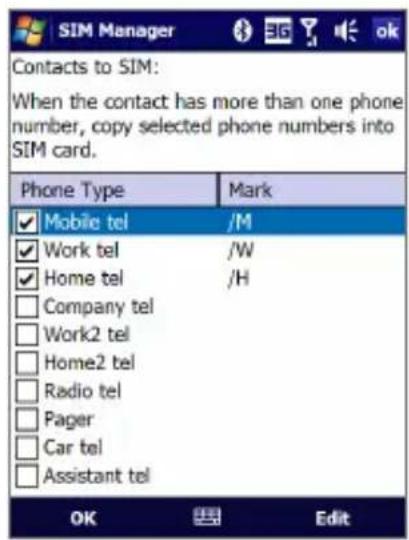
To store your SIM card's phone number
- On the SIM Manager screen, tap Menu > Tools > List of Own Numbers.
- Tap Voice Line 1.
- Change the name, if desired, then enter your mobile phone number.
- Tap Save.
When your phone number is stored on the SIM card, it will appear on the SIM Manager screen.
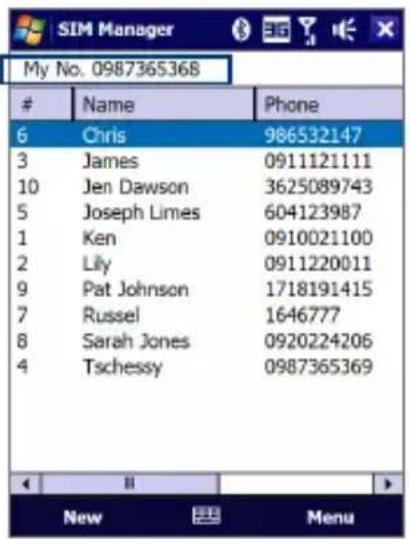
12.11 Spb GPRS Monitor (Available by Country)
Using Spb GPRS Monitor, you can monitor how much data you have sent and received on your device, and check the network usage costs by taking into account your service plan details. You can also view connection cost and traffic charts, generate reports of network connection usage, and export reports to CSV files for use with Microsoft® Office Excel® and Access.
Install GPRS Monitor
The GPRS Monitor program is included in the Applications disc. To install it onto your device, run the program's installer on your computer. Follow the on-screen instructions on your computer and your device to complete the installation.
The GPRS Monitor icon and pop-up window
You can enable the GPRS Monitor icon to be shown on the title bar. This icon shows the data connection or dial-up connection speed, data traffic, and battery status.
To show the GPRS Monitor icon on the title bar
- Tap Start > Programs > Spb GPRS Monitor.
- Tap Tools > Options > Icon tab.
- Select the Show taskbar icon check box.
By default, the GPRS Monitor icon shows three bars that represent the following status information:
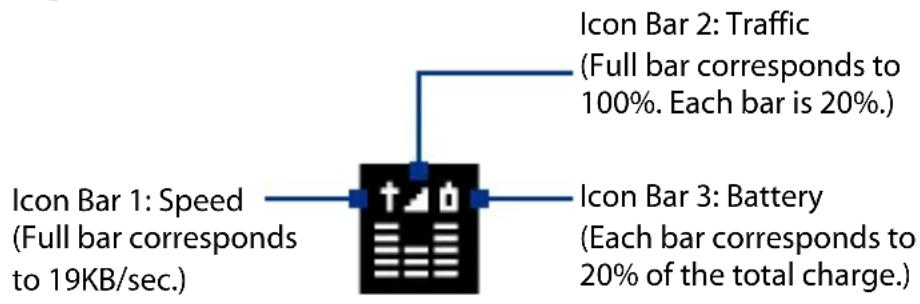
bar
| Icon Bar Type | Component Description | Percentage | | ------------- | --------------------- | ---------- | | Icon Bar 1 | Speed (Full bar corresponds to 19KB/sec.) | - | | Icon Bar 2 | Traffic (Full bar corresponds to 100%, Each bar is 20%) | - | | Icon Bar 3 | Battery (Each bar corresponds to 20% of the total charge.) | - |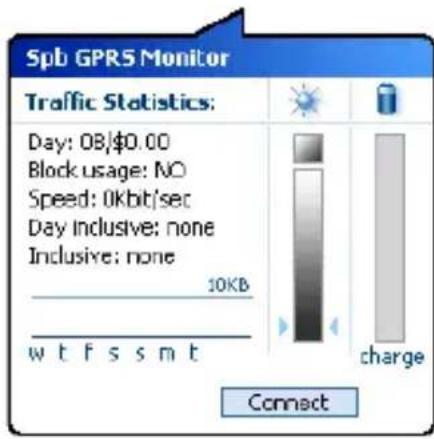
When you tap the GPRS Monitor icon on the title bar, a pop-up window opens and shows you detailed statistics about your data transfers, such as the data size you have just transferred and its cost, the allowable amount of data that you can transfer, and more.
Set up monitoring and notification
To select the connection to be monitored
- On the GPRS Monitor screen, tap Tools > Options > Connection tab.
- Select the Enable connection monitoring check box.
- In the Connection list, select the connection you want to monitor.
To enter your service plan details
Service plan details, or tariffs, determine the price that you pay for your data transfers. The tariff may either be flat rate or time-based, depending on whether you're using GPRS or a phone dial-up connection for data transfers.
Contact your wireless service provider to find out about your tariff, and enter the information in the Tariff tab or the Tariff Details tab on the Options screen.
Note The calculation of network usage costs is based on the information that you entered, and is only an estimate. The actual amount billed by your service provider may differ.
To set up traffic limit notifications
You can set up traffic limit notifications if you want to be notified when a traffic limit is reached.
- On the GPRS Monitor screen, tap Tools > Options.
- Enable the notifications on the Day Warn and Month Warn tabs. You can specify up to three daily and three monthly limits.
Once traffic reaches one of these limits, you will receive a notification.
View charts and reports
On the GPRS Monitor, you can view network connection cost charts and traffic charts, as well as generate detailed reports of network connection usage during a given period of time. These reports can be exported to CSV files that you can open using Excel, Access, or other similar spreadsheet and database software applications.
To view charts and generate reports
On the GPRS Monitor screen:
- Tap the Chart tab to view the network connection cost charts and traffic charts.
- Tap the Report tab to generate reports on network traffic and tariff.
For more information about using Spb GPRS Monitor, see Help on your device.
12.12 Sprite Backup
Use Sprite Backup to back up data, which includes settings, files, contacts, and all other information, to the device memory, internal storage or a computer.
Note If you are sending your device for repair or performing a hard reset, data from your device will be lost. It is recommended that you use Sprite Backup to back up your files including settings, contacts and other information to your computer or internal storage.
To install Sprite Backup
- Make sure your device is connected to your computer via a USB cable.
- Insert the Applications disc on your computer's CD or DVD drive and start the Sprite Backup installation. You can also download Sprite Backup from the HTC e-Club website (http://www.htc.com/member/login.aspx), then double-click the downloaded setup file to start the installation.
- Follow the on-screen instructions to install the Sprite Backup PC Manager to your computer and the Sprite Backup program onto your device.
To open Sprite Backup
- On your device, tap Start > Programs > Sprite Backup.
Before you start to back up or restore files, please check the following:
- Make sure that the device storage memory has at least 15MB of free space. To check, tap Start > Settings > System tab > Memory > Main tab.
- Make sure that the internal storage has at least 100MB of free space. To check, tap Start > Settings > System tab > Memory > Storage Card tab.
To back up data
- To back up data remotely to a computer, enable the PC backup feature first. See "To enable remote backup to a computer" for instructions.
- On the Sprite Backup main screen, tap Backup.
- On the Backup Data Selection screen, you will see a tree view of the data and files on your device. Tap "+" on the left of an item to view its sub-items. Use the check boxes to select or exclude items for backup.
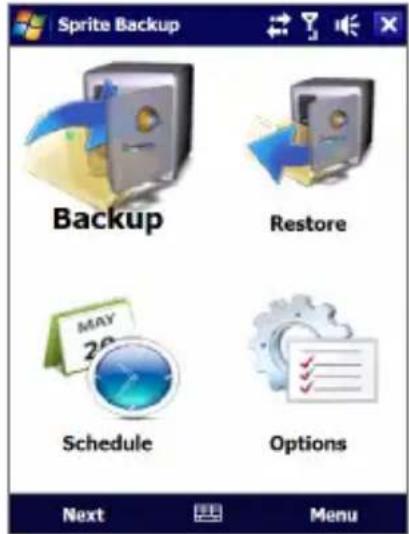
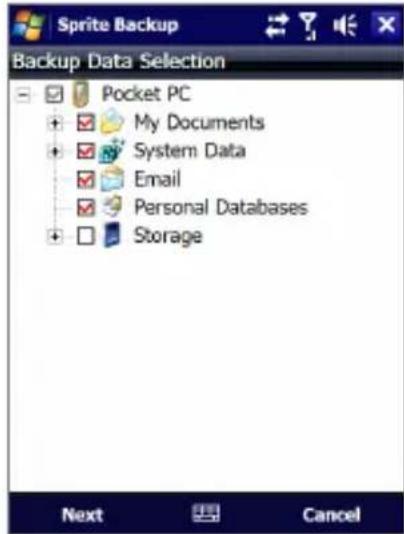
Main screen Backup Data Selection screen
Notes
- It is recommended that you do not back up the File System of your device as this may cause restoration problems. To not back up the File System, expand the System Data folder by tapping "+" on its left side and then clearing the File System checkbox.
222 Programs
- When File System is not backed up, you will need to reinstall all third party software to your device after you do a hard reset and restored your files.
- After selecting data items, tap Next. The Save As screen then appears.
- Enter a file name for the backup file.
- In Location, choose whether to save the backup file to \Internal Storage, \My Documents on the device memory, or to a PC.
Tip When backing up to the internal storage or to \My Documents on the device memory, you can also choose a specific folder where to save the backup file.
- Tap Next.
- On the Device Reset Required screen, tap Next to start the backup.
Note Do not start and use any programs on your device until the backup process is completed.
To restore data
- On the Sprite Backup main screen, tap Restore. Sprite Backup then searches for all available backup files from the device memory and internal storage and then displays them on the Open File screen.
Tip To search for backup files created on your computer, connect your device to your computer and run Sprite Backup PC Manager on your computer. In Sprite Backup's Open File screen on your device, set Location to PC.
- Select the backup file you want to restore and then tap Next.
- In the tree view, select the items you want to be restored to your device and then tap Next.
Note If your phone has SIM PIN lock enabled, a screen will appear asking you to set up Sprite Backup SIM Unlock feature. It is recommended that you set up this feature to avoid file restoration errors. To set up, tap Setup Phone SIM Lock.
- On the Device Reset Required screen, tap Next to begin restoring data.
Note Sprite Backup soft resets your device first before it begins the backup or restoration process. It soft resets again after the operation is completed.
To enable remote backup to a computer
- On the Sprite Backup main screen, tap Options > Networking > PC.
- Select the Enable PC Backup check box and choose whether to do the remote backup to your computer via ActiveSync or network.
For more information about using Sprite Backup, see the Sprite Backup Help or download the Sprite Backup User manual from http://www.spritesoftware.com/.
12.13 Tasks
Use Tasks to keep track of things you need to do. A task can occur once or repeatedly (recurring).
Your tasks are displayed in a task list. Overdue tasks are displayed in red. A reminder will be displayed when you have new tasks to be completed.
To create a task
-
Tap Start > Programs > Tasks.
-
Tap Menu > New Task, enter a subject for the task, and fill in information such as start and due dates, priority, and so on.
-
Specify the type of category for your task, so that it can be grouped with other related tasks. Tap Categories, then select a preset category (Business, Holiday, Personal, or Seasonal), or tap New to create your own category.
-
When finished, tap OK.
To change the priority of a task
Before you can sort tasks by priority, you need to specify a priority level for each task.
-
Tap Start > Programs > Tasks.
-
Tap the task you want to change the priority for.
-
Tap Edit, and tap a priority level in the Priority box.
-
Tap OK to return to the task list.
Note All new tasks are assigned a Normal priority by default.
To show start and due dates in the task list
- Tap Start > Programs > Tasks.
- Tap Menu > Options.
- Select the Show start and due dates check box, then tap OK.
To send task information as a vCalendar
After selecting the task to send in the Task screen, tap Menu > Send as vCalendar to send a vCalendar containing task details as a file attachment in an MMS message. For more information, see "MMS" in Chapter 6.
12.14 Voice Recorder
Voice Recorder lets you record your voice and quickly send it as an MMS or e-mail attachment, beam it via Bluetooth, or set the recorded voice as your ring tone.
Note Voice Recorder saves voice recordings in AMR-NB (Adaptive Multi-Rate Narrowband) format only. This is a common speech audio format used in mobile devices.
To record your voice
- Tap Start > Programs > Voice Recorder.
- Hold the device's microphone close to your mouth.
- Touch Record or ● to start recording. Tap Stop or ■ to end the recording.
To select or create a folder where to save voice recordings
By default, all recordings are saved in the My Voices folder of the internal storage. You can choose another folder or create a new folder to save your voice recordings.
- Tap the arrow beside the folder name on the top-left of the screen.
- In the menu that opens, choose an existing folder or touch Add/Delete to create a new folder.
To play back a voice recording
On the Voice Recorder screen, touch a voice recording, or navigate to a voice recording and then tap Play ( ).
Tip If you need to adjust the sound volume, touch any of the status icons on the title bar and then touch the Volume icon ( ) to open the System Volume screen where you can adjust the volume.
To send a voice recording through MMS
Select a voice recording, then tap Menu > Send via MMS. A new MMS message is then created with the voice recording automatically inserted as an audio clip.
See "MMS" in Chapter 6 to learn how to compose and send MMS messages.
To send a voice recording via e-mail
Select a voice recording, tap Menu > Send, and then select an e-mail account. This creates a new e-mail message with the voice recording inserted as a file attachment.
See "Using E-mail" in Chapter 6 to learn how to send e-mails.
To beam a voice recording via Bluetooth
- Select the voice recording you want to beam, then tap Menu >Beam File.
Tip To select multiple recordings, tap and drag over the desired recordings or tap Menu > Select All.
- Tap the device you want to send the voice recording to.
- On the other device, accept the file transfer to receive the file.
To set a voice recording as ring tone
Select the voice recording, then tap Menu > Set as Ringtone.
To rename or move a recording
- Select the voice recording, then tap Menu > Rename/Move.
Tip To select multiple recordings, tap and drag over the desired recordings or tap Menu > Select All. Note that you can move multiple files, but you cannot rename multiple files simultaneously.
- In Name, enter the new voice recording name.
- To move the voice recording, select the new destination Folder and Location.
- Tap OK.
12.15 Voice Speed Dial
You can record voice tags so that you can dial a phone number or launch programs simply by speaking a word.
To create a voice tag for a phone number
- On the TouchFLO 3D Home screen, slide to the People tab and then touch All People to open the Contacts screen.
Tip You can also touch Start > Contacts to open the Contacts screen.
-
Do one of the following:
-
Scroll to the desired contact, then touch Menu > Add Voice Tag.
- Touch the desired contact to open the contact card and then touch Menu > Add Voice Tag.
-
Use the stylus to tap and hold the desired contact, then tap Add Voice Tag.
-
Select the phone number that you want to create a voice tag for, then touch Record ( ).
Tip To ensure voice recognition accuracy, record your voice in a quiet place.
- When completed, a Voice Tag icon 🎨 is displayed on the right of the item.
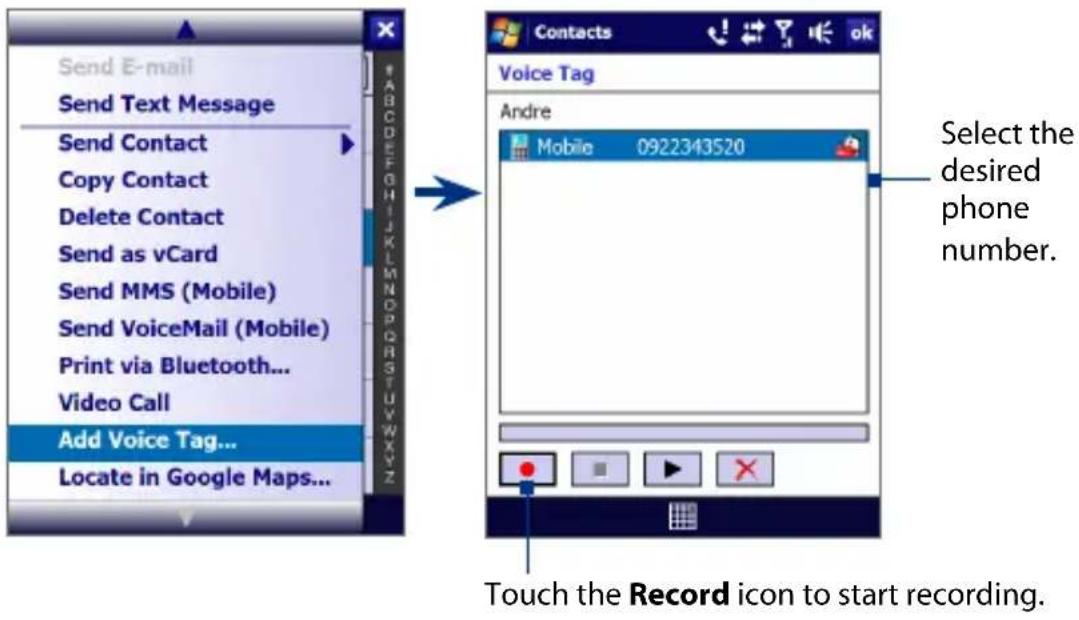
To create a voice tag for a program
Touch Start > Settings > Personal tab > Voice Speed Dial > Application tab.
The Application tab displays a list of all installed programs on your device. The procedure for creating a voice tag for a program is the same as the procedure for creating a voice tag for a phone number.
To make a call or launch programs using a voice tag
- Touch Start > Programs > Voice Speed Dial.
- After the beep, say the recorded voice tag that you have assigned to the phone number you want to call or the program you want to launch. The system will repeat the voice tag, then dial out or launch the program automatically.
Note If the system cannot recognize your voice tag, move to a quiet place, then try again while speaking clearly.
To view and test the voice tags you have created
- Touch Start > Settings > Personal tab > Voice Speed Dial.
-
The Voice Tag tab displays a list that contains all the voice tags you have created. Select an item in the list, then do one of the following.
-
Touch the Record button ( ) to rebuild the voice tag.
- Touch the Play button ( ) to play the voice tag.
- Touch the Delete button ( ) to delete the voice tag.
12.16 ZIP
The ZIP program increases the storage capacity of your device by allowing you to compress files in the conventional ZIP format. It also allows you to extract files from a zip file.
To start ZIP on your device
Tap Start > Programs > ZIP.
Each time you start ZIP, it searches for files that have the .zip file extension, and displays these files on the Archive List screen.
To open a ZIP file and extract files
- Touch a zip file to open it, or navigate to a zip file and then touch File > Open Archive.
Note You cannot select multiple ZIP files.
-
From the zip file, select files by doing one of the following:
-
Touch a file to select it.
- To select several files, touch Menu > Action and make sure MultiSelect Mode is selected. Select files by touching each file. (Touch a selected file to deselect it).
-
To select all files, touch Menu > Action > Select All.
-
Touch Menu > Action > Extract.
-
Choose a folder where the files will be extracted to, then touch Extract.
-
Touch Menu > File > Close Archive to close the zip file.
To create a new zip archive
- Touch File > New Archive.
- On the Save As screen, enter the zip file name and choose a folder where you want to save it. You can also choose whether to save the zip file on the device's main memory or internal storage.
- Touch Save.
- Touch Menu > Action > Add.
- Navigate to the folder that contains the files you want to archive.
- Select files to add by doing one of the following:
- Touch a file to select it.
- To select several consecutive files, drag over the files.
- To select several non-contiguous files, use the stylus to tap and hold on the screen and then select Multi-Select Mode. Select files by tapping each file. (Tap a selected file to deselect it).
- To select all files, use the stylus to tap and hold on the screen and then tap Select All.
- Touch Add.
- Touch Menu > File > Close Archive to save and close the zip file.
Chapter 13
Managing Your Device
13.1 Copying and Managing Files
13.2 Settings on your Device
13.3 Changing Basic Settings
13.4 Using Connection Setup
13.5 Using Task Manager
13.6 Protecting Your Device
13.7 Managing Memory
13.8 Resetting Your Device
13.9 Windows Update
13.10 Battery Saving Tips
13.1 Copying and Managing Files
You can copy files between your device and computer, or copy files to the internal storage of your device. You can also efficiently manage your files and folders using File Explorer.
To copy files using Windows Mobile Device Center or ActiveSync
- Connect your device to the computer.
- Click File Management > Browse the contents of your device in Windows Mobile Device Center on your computer, or click Explore in ActiveSync on your computer. This opens Windows Explorer on your computer and displays the contents of your device.
- To copy a file from your device to your computer:
a. Browse the contents of your device, right-click the file you want to copy, then click Copy.
b. Right-click a folder on your computer, then click Paste.
- To copy a file from your computer to your device:
a. Browse the folders on your computer, right-click the file you want to copy, then click Copy.
b. Right-click a folder on your device, then click Paste.
To manage files on your device using File Explorer
File Explorer lets you browse and manage the contents of your device. The root folder on the device is named My Device, and contains the following folders: My Documents, Program Files, Windows, and more.
- Tap Start > Programs > File Explorer.
- Tap a folder or file to open it.
- To return to an upper level folder, tap Up and select the folder.
- To quickly delete, rename, or copy a file, tap and hold the file, then choose the desired operation on the shortcut menu. To copy or delete multiple files, tap and drag over the desired files to select, tap and hold the selection, then choose the desired operation on the shortcut menu.
To copy files to the internal storage
- Tap Start > Programs > File Explorer and navigate to the appropriate folder.
- Tap and hold the file you want to copy, then tap Copy.
- Tap the down arrow (▼), then tap Internal Storage in the list.
- Tap and hold an empty area on the screen and then select Paste on the menu.
Tip You can configure programs such as Word Mobile and Excel Mobile to directly save edited files onto the internal storage. In the program's file list, tap Menu > Options, then select the Internal Storage in the Save to box.
To format the internal storage
To learn how to format the internal storage, see "Clear Storage" in this chapter.
13.2 Settings on your Device
You can adjust the device settings to suit the way you work. To see all available settings, slide to the Settings tab on the Home screen and tap All Settings.
Personal tab
Icon Description

Buttons Assign a program or function to a hardware button.

Input Set options for each of the input methods.

Lock Set a password for your device.

Menus Set which programs will appear in the Start menu.

Owner Information Enter your personal information on your device.
232 Managing Your Device
| Icon Description | |
 | Phone Customize phone settings such as ring tone, set a PIN number for your SIM card, and more. |
 | Sounds & Notifications Enable sounds for events, notifications, and more, and set the type of notification for different events. |
 | Today Customize the appearance and the information to be displayed on the Home screen. |
 | TTY Enable TTY (Teletypewriter) support for your device. |
 | Voice Speed Dial Create voice tags for voice dialing contacts and SIM contacts as well as for launching programs. |
System tab
| Icon Description | |
 | About This is where you can see basic information such as the Windows Mobile® version and type of processor used on your device. You can also specify a name for your device. |
 | Certificates See information about certificates that are installed on your device. |
 | Clear Storage Reset your device to factory default settings and/or format the internal storage. |
 | Clock & Alarms Set the device clock to the date and time of your locale or to a visiting time zone when you're traveling. Alarms can also be set at specified days and times of a week. |
 | Device Information See information about the firmware version, hardware, identity, and the duration of calls made on your device. |
 | Error Reporting Enable or disable the device's error reporting function. When this function is enabled and a program error occurs, technical data about the state of the program and your computer will be logged in a text file and delivered to Microsoft's technical support if you choose to send it. |
Icon Description
 | External GPS Set the appropriate GPS communication ports, if required. You may need to do this when there are programs on your device that access GPS data or you have connected a GPS receiver to your device. See Help for details. |
 | Hearing Aid Compliance When using a hearing aid, turn on this feature to reduce interference between the device and hearing aid during a call. |
 | Key Lock Lock the buttons on your device except for the POWER button when the device is in Sleep mode. This ensures you will not switch the device on by accident and consume unnecessary power. |
 | Long Press End Key Choose the desired function to be executed (for instance, lock the device) when pressing and holding the END key. |
 | Managed Programs Displays the programs that were installed on your device using System Center Mobile Device Manager. |
 | Memory Check the device memory allocation status and internal storage information. You can also stop currently running programs. |
 | Microphone AGC Adjust the volume of your voice automatically when you are recording. |
 | Power Check the remaining battery power. You can also set the brightness of the backlight and timeout for turning off the display (switching device to Sleep mode) to conserve battery power. |
 | Regional Settings Set the regional configuration to use, including the format for displaying numbers, currency, date, and time on your device. |
 | Remove Programs Remove programs that you installed on your device. |
 | Screen Re-calibrate the screen, apply ClearType, and change the screen text size. |
 | Task Manager Stop running programs and set the (×button to end programs immediately when you tap the button. For more information, see "Using Task Manager" in this chapter. |
Icon Description

TouchFLO You can enable or mute the finger scrolling and panning sound. You can also enable or disable the large Start menu, and choose to show or hide the System Status screen when title bar icons are tapped.

Windows Update Link to Microsoft's web site and update Windows Mobile® on your device with the latest security patches or fixes, if they are available.
Connections tab
Icon Description

Advanced Network Turn on/off HSDPA, set the line type to use when making circuit switch data (CSD) connection, and set the GPRS authentication method. HSDPA is a 3.5G digital data service that provides high-speed downstream data rates. In order for your device to attain the high connection speed of HSDPA, your wireless service provider must support this feature and you must be within the coverage area of your service provider's HSDPA network. Your device supports up to 7.2 Mbps download speeds.

Beam Set your device to receive incoming Bluetooth beams.

Bluetooth Turn Bluetooth on, set your device to visible mode, and scan for other Bluetooth devices.

Comm Manager Manage your device's connections (including GPRS/3G and Bluetooth), turn the phone on or off, and enable or disable the Direct Push function.

Connection Setup Configure your device's data connections, such as GPRS, WAP, and MMS, based on the detected or selected network operator. See "Using Connection Setup" in this chapter for details.

Connections Set up one or more types of modem connections for your device, such as phone dial-up, GPRS, and more, so that your device can connect to the Internet or a private local network.

Domain Enroll Enroll your device in your company's domain to let System Center Mobile Device Manager to manage the device. Please ask your Server Administrator for more details.
Icon Description

SMS Service Enables sending of SMS text messages via a data connection, such as GPRS or a circuit-switched connection.

USB to PC Set the type of USB connection to your PC. Select the ActiveSync option for synchronising data, or use Disk Drive mode for transferring files.

Wi-Fi Scan for available wireless networks.

Wireless LAN See information about the active wireless network, and customize Wi-Fi settings.
13.3 Changing Basic Settings
Date and time
To set the date and time
- On the Home screen Home tab, tap the time display and then tap the Time tab.
Tip Tap the More tab and select the Display the clock on the title bar in all programs option to show the clock on all screens.
- Select the correct time zone and change the date or time.
Note During synchronization, the time on your device is updated with the time on your computer.
To set the date and time for a different location
If you visit or communicate with someone in a particular time zone often, you can select it as your visiting time zone.
- On the Home screen Home tab, tap the time display and then tap the Time tab.
- Tap Visiting.
- Select the correct time zone and change the date or time.
Regional settings
The style in which numbers, currency, dates, and times are displayed is specified in regional settings.
- On the Home screen, slide to the Settings tab and then tap All Settings.
- On the System tab, tap Regional Settings > Region tab and then select your region from the list.
Note This does not change the language of your device's operating system.
The region you select determines which options will be available on the other tabs.
- To customize regional settings further, tap the appropriate tabs and set the desired options.
Display settings
To adjust the screen brightness
- On the Home screen, slide to the Settings tab and then tap All Settings.
- On the System tab, tap Power > Backlight tab.
- Adjust the brightness by dragging the slider under On battery power and On external power.
To set the backlight to dim after a time delay
- On the Home screen, slide to the Settings tab and then tap All Settings.
- On the System tab, tap Power > Advanced tab.
- In On battery power and On external power, select the Turn off backlight if device is not used for check box, then specify the time delay.
To increase or decrease the size of text on the screen
- On the Home screen, slide to the Settings tab and then tap All Settings.
- On the System tab, tap Screen > Text Size tab.
- Move the slider to increase or decrease the text size.
Device name
The device name is used to identify your device in the following situations:
• Synchronizing with a computer
- Connecting to a network
• Restoring information from a backup
Note If you synchronize multiple devices with the same computer, each device must have a unique name.
To change the device name
- On the Home screen, slide to the Settings tab and then tap All Settings.
- On the System tab, tap About > Device ID tab.
- Enter the device name.
Notes • The device name must begin with a letter, consist of letters from A to Z, numbers from 0 to 9, and cannot contain spaces. Use the underscore character to separate words.
- If you enroll your device to your company's domain, the device name will be changed to be the same as the one used to enroll the device.
Ringer settings
To change the ring type and ring tone
- On the Home screen, slide to the Settings tab and then tap Sound.
- Scroll down and then tap Ring Type. Select the Ring Type you want to use and then tap Done.
- Tap Ringtone and then select the ringtone you want to use.
- Tap Done.
Tips
- You can use *.wav, *.mid, *.mp3, *.wma, or other types of sound files that you downloaded from the Internet or copied from your computer as ring tones. For a complete list of supported audio file formats for ring tones, see "Specifications" in the Appendix.
- To use your sound files as ring tones, copy them first to the /My Documents/My Ringtones folder on your device, then select the sound from the Ring tone list of your device. For more information about copying files, see "Copying and Managing Files" in this chapter.
Alarms and notifications
To set an alarm
- On the Home screen Home tab, tap the time display and then tap the Alarms tab.
- Tap
and enter a name for the alarm. - Tap the day of the week for the alarm. Select multiple days by tapping each desired day. Tap again to deselect the day.
-
Tap the time to open a clock and set the time for the alarm.
Tip You can drag the hour and minute hands of the clock to set the time. -
Tap the alarm icon ( ) to specify the type of alarm you want. You can choose a flashing light, a single sound, a repeating sound, or vibration.
-
If you choose to play a sound, tap the list next to the Play sound check box and tap the sound you want.
To choose how to be notified about events or actions
- On the Home screen, slide to the Settings tab and then tap Sound > Advanced.
- On the Sounds tab, choose how you want to be notified by selecting the appropriate check boxes.
- On the Notifications tab, in Event, tap an event name and choose how you want to be notified by selecting the appropriate check boxes. You can choose from several options, such as a special sound, a message, or a flashing light.
Tip Turning off sounds and flashing light notifications helps conserve battery power.
Phone services
Your device can directly link to the mobile phone network, and enable you to access and change the settings of various phone services for your device. Phone services may include Call Forwarding, Call Waiting, Voicemail, and more. Contact your wireless service provider to find out about the availability of phone services for your device.
To access and change settings of phone services
- On the Home screen, slide to the Settings tab and then tap All Settings.
- On the Personal tab, tap Phone > Services tab.
- Select the service you want to use, then tap Get Settings.
- Choose your desired options, then tap OK.
For more information about customizing settings of phone services, see Help on your device.
13.4 Using Connection Setup
Connection Setup configures your device's data connections, such as GPRS, WAP, and MMS, for you so that you do not need to enter the settings manually onto your device. All you need to do is to select your network operator, then Connection Setup does all the configuration for you.
To automatically configure the device's data connections
The first time you power on your device, or when you insert a new SIM card and then power on your device, Connection Setup will display a notification message to inform you that it will automatically configure your device's connection settings.
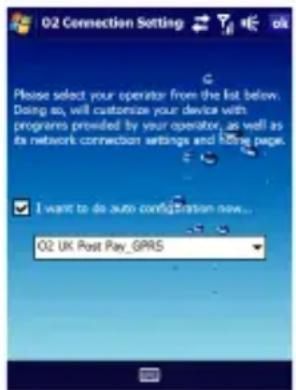
- Tap Yes on the notification message.
Note If your SIM card supports multiple network operator profiles, the next message that appears will display network profile choices. Select the profile you want to use and tap OK.
- When prompted to automatically configure your device to the proper network settings, tap Yes.
Connection Setup configures your device's data connection settings.
- After the Connection Setup completes the configuration, tap Restart.
To manually select the network operator to use for data connections
You can also manually select your network operator from Connection Setup's settings screen. Connection Setup will then reconfigure your device's data connections settings based on the operator that you selected.
- On the Home screen, slide to the Settings tab and then tap All Settings.
- On the Connections tab, tap Connection Setup.
- Select the network Country and Operator you want to use, then tap OK.
Note If you choose a Country and/or Operator that is different from the installed SIM card network operator, you may not be able to access network services. - When prompted to confirm whether you want to configure the data connection settings based on the selected network, tap Yes.
Connection Setup configures the data connection settings. - After the Connection Setup completes the configuration, tap Restart.
13.5 Using Task Manager
Task Manager lets you view and stop running programs, configure the button, and enable the Quick Menu on the Home screen.
To open Task Manager
- Tap the Quick Menu button on the top right corner of the Home screen to open the Quick Menu, then tap 📋
- On the Home screen, slide to the Settings tab and then tap All Settings. On the System tab, tap Task Manager.
To switch back to a running program
- Tap the program name in the Quick Menu.
- On the Task Manager screen, tap and hold the program name on the Running tab, then tap Activate.
To configure the Exit (×) button
You can configure the Exit button to shut down running programs when the button is tapped, or to just temporarily close the program screen but keep the program running.
-
On the Task Manager screen, tap the Button tab.
-
Select the Enable the "X" button to end running programs check box.
Note When the Enable the "X" button to end running programs check box is not selected, tapping the Exit button will only close a program screen. The program is not ended and continues to run in the background.
-
Choose the action for shutting down programs (by tapping the button, or by tapping and holding the button).
-
Tap OK.
To close running programs from the Task Manager
-
On the Task Manager screen, tap the Running tab.
-
Do one of the following:
-
Select the check box of the programs that you want to close, then tap Stop Selected.
- Tap Stop All to close all programs in the list.
- Tap Menu > Stop All but Selected to close all programs except those which check boxes are selected.
Tip You can also close running programs from the Quick Menu on the Home screen. See "Quick Menu" in Chapter 1 for details.
To add a running program to the exclusive list
If you add a running program to the Exclusive Programs List, it will not be closed when you tap Stop Selected or Stop All and will not be listed in the Quick Menu on the Home Screen.
- On the Task Manager screen, tap the Running tab.
- Tap and hold the program name, then tap Add Exclusive.
Tip To remove a program from the exclusive list, tap the Exclusive tab, select the check box of the program, then tap Remove.
To set the sorting preference and program icon size in the Quick Menu
- On the Task Manager screen, tap the Others tab.
- In Sort programs in Quick Menu by, choose whether to sort according to Program name or Memory usage. The list will be sorted in ascending order.
- In Program icon size in Quick Menu, choose whether to use Small size or Large size.
13.6 Protecting Your Device
Protect your SIM card with a PIN
You can protect your SIM card from unauthorized use by assigning a PIN (personal identification number). The default SIM card PIN is provided by your wireless service provider.
To enable the SIM card PIN
- On the Home screen, slide to the Settings tab and then tap All Settings.
- On the Personal tab, tap Phone > PIN tab.
- Select the Require PIN when phone is used check box.
- Enter the PIN number and then tap OK. To change the PIN at any time, tap Change PIN.
Tip
Emergency calls can be placed at any time, without requiring a PIN.
Protect your device with a password
You can help keep your data more secure by requiring a password every time the device is turned on.
To set a device password
- On the Home screen, slide to the Settings tab and then tap All Settings.
- On the Personal tab, tap Lock.
-
Select the Prompt if device unused for check box, then specify the idle time before the device requires a password.
-
In the Password type box, select the type of password you would like to use.
Tip If your device is configured to connect to a network, use an alphanumeric password for increased security.
- Enter the password in both the Password and Confirm boxes.
- Tap OK. The next time the device is turned on, you will be prompted to enter your password.
Notes To ensure that you can always make emergency calls, do not begin your password with the digits of your local emergency number.
- If you entered a hint, the hint will be displayed after the wrong password is entered five times.
• Each time a wrong password is entered, the device response time gets longer until the device appears to be not responding. - If you forget your password, you can hard reset or clear the device memory. Before you do this, make sure you back up your data and files so that you can restore them back to your device. For more information about hard resetting the device and clearing the memory, see “Resetting Your Device” in this chapter.
13.7 Managing Memory
To see how much memory is available for use
- On the Home screen, slide to the Settings tab and then tap All Settings.
- On the System tab, tap Memory > Main tab. The amount of memory allocated to data storage versus program storage is displayed, as well as the amount of memory in use versus the available memory.
To see the available space of the internal storage
- On the Home screen, slide to the Settings tab and then tap All Settings.
- On the System tab, tap Memory > Storage Card tab.
If your device is running low on memory, try the following to free memory on your device:
- Close programs which are not in use.
- Move files and e-mail attachments to the internal storage.
- Delete unnecessary files. Tap Start > Programs > File Explorer. Tap and hold the file, and tap Delete.
- Delete large files. To find large files on your device, tap Start > Programs > Search. In the Type list, tap Larger than 64 KB, and tap Search.
- In Opera Mobile or Internet Explorer Mobile, delete temporary Internet files and clear history information.
- Remove programs you no longer use.
- Reset your device.
13.8 Resetting Your Device
Soft reset
Occasionally, you may need to reset your device. A soft (or normal) reset of your device clears all active program memory and shuts down all active programs. This can be useful when your device is running slower than normal, or a program is not performing properly. A soft reset is also necessary after the installation of some programs. If a soft reset is performed when programs are running, unsaved work will be lost.
To perform a soft reset
- Pull out the stylus.
- Use the stylus to press the RESET button located at the opening of the stylus compartment.
Your device restarts and displays the Home screen.
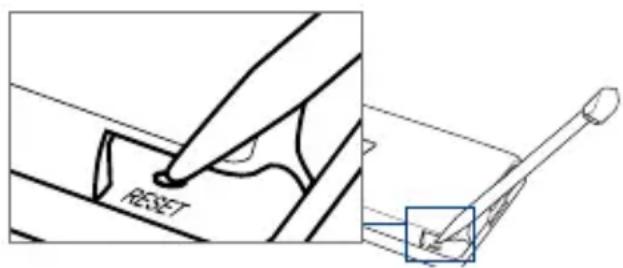
Hard reset
You can also perform a hard reset (also known as a full reset). A hard reset should only be performed if a normal reset does not solve a system problem. After a hard reset, the device is restored to its default settings—
the way it was when you first purchased it and turned it on. Any programs you installed, data you entered, and settings you customized on your device will be lost. Only Windows Mobile ^® software and other pre-installed programs will remain.
Warning! Your device will be set back to factory default settings. Make sure that any additional installed programs and/or user data have been backed up before you perform a hard reset.
To perform a hard reset
- Pull out the stylus.
- With the device turned on, press and hold the VOLUME DOWN and ENTER buttons, then press the RESET button with the stylus tip.
- Release the RESET button, but continue pressing the VOLUME DOWN and ENTER buttons until you see this message on the screen:
This operation will delete all your personal data, and reset all settings to manufacturer default. Press VolUp to restore manufacturer default, or press other keys to cancel.
- Release the VOLUME DOWN and ENTER buttons, then press the VOLUME UP button to perform the hard reset, or press any other button to cancel the reset.
Clear Storage
You can also use Clear Storage to reset your device back to factory default settings and/or format the internal storage.
- On the Home screen, slide to the Settings tab and then tap All Settings.
- On the System tab, tap Clear Storage.
- In the drop-down menu, select whether to Clear Storage only, Format internal storage only, or Clear storage and format internal storage.
- Enter "1234" and then tap Yes.
13.9 Windows Update
You can update Windows Mobile® on your device with the latest updates, security patches or fixes, if these are available.
To set up Windows Update
The first time you run Windows Update, you need to set up how you want Windows Update to check for patches on the Microsoft web site.
- On the Home screen, slide to the Settings tab and then tap All Settings.
- On the System tab, tap Windows Update.
- On the Update Setup screen, tap Next.
- Choose how you want to check for updates, Manual or Automatic, then tap Next.
Note If you select Automatic, you will be asked if you want to use your current data plan to check for updates. Select or clear the Use my data plan to check for and download updates check box and tap Next.
- Tap Finish.
To check for updates
- On the Home screen, slide to the Settings tab and then tap All Settings.
- On the System tab, tap Windows Update.
- Tap Check Now.
Note Windows Mobile ^® updates may not be available at all times. Check the Windows Mobile ^® web site for update information.
To change Windows Update options
- On the Home screen, slide to the Settings tab and then tap All Settings.
- On the System tab, tap Windows Update.
-
Tap Menu and select the option you want to change.
-
Tap Connections to change how the device connects to the Internet when checking for updates.
- Tap Change Schedule to change how Windows Update checks for Windows Mobile® updates.
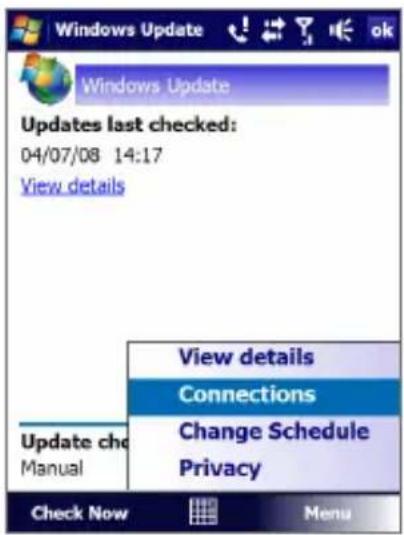
13.10 Battery Saving Tips
How long your battery power lasts depends on the battery type and how you use your device. Try the following to help conserve battery life:
- When the device is not in use, press POWER to switch off the display.
- On the Home screen, slide to the Settings tab and then tap All Settings. On the System tab, tap Power > Advanced tab of the Power settings screen. Here, you can specify the time before your device automatically turns off the display and backlight to conserve battery power. For optimum conservation, specify 3 minutes or less.
- On the Home screen, slide to the Settings tab and then tap All Settings. On the System tab, tap Power > Backlight tab to adjust the backlight brightness settings.
- Use the AC adapter to plug your device into an external power outlet whenever possible, especially when using a modem or other peripherals.
- Turn Bluetooth off when you are not using it. Make your device visible to other devices only when you are trying to establish a Bluetooth partnership. For more information about Bluetooth, see Chapter 9.
- Lower the volume.
- Close battery-intensive programs, such as the Camera, when you are done using them. Make sure the programs are ended and are not continuously running in the background. Refer to “Using Task Manager” in this chapter for information on closing programs.
Appendix
A.1 Specifications
A.2 Regulatory Notices
A.1 Specifications
System Information
Processor Qualcomm® MSM7201A™ 528 MHz
Memory - ROM : 256 MB
- RAM:192 MB DDR
- Internal storage: 4 GB
Note: Figures are the total ROM and RAM memory available for use and storage. Since the memory is shared by the operating system, applications, and data, the actual available memory is less than what is specified.
Operating System Windows Mobile® 6.1 Professional
Power
Battery Rechargeable Lithium-ion or Lithium-ion polymer battery, 900 mAh
Battery Life (estimates)
Standby time: WCDMA: Up to 396 hours
GSM: Up to 285 hours
Talk time: WCDMA: Up to 270 minutes GSM: Up to 330 minutes
Video call time: Up to 145 minutes
(The above are subject to network and phone usage.)
AC Adapter Voltage range/frequency: 100 - 240V AC, 50/60 Hz DC output: 5V and 1A
Communications
Network HSDPA/WCDMA:
- 900/2100 MHz - Up to 384 kbps up-link and 7.2 Mbps down-link speeds
Tri-band GSM/GPRS/EDGE:
- 900/1800/1900 MHz (Band frequency and data speed are operator dependent.)
Internal Antenna Yes
Physical
Dimensions 102 mm (L) X 51 mm (W) X 11.35 mm (T)
Weight 110 g (with battery)
Display
LCD Type 2.8-inch TFT-LCD flat touch-sensitive screen
Resolution 480 x 640 VGA resolution
Camera Module
Type Main camera: 3.2 megapixel color camera with auto focus Second camera: VGA CMOS color camera
| Resolution Photo: 3M (2048 x 1536) |
| 2M (1600 x 1200) |
| 1M (1280 x 960) |
| VGA (640 x 480) |
| QVGA (320 x 240) |
| • Video: CIF (352 x 288) |
| QVGA (320 x 240) |
| QCIF (176 x 144) |
| Sub-QCIF (128 x 96) |
Digital Zoom Up to 4X
Connections
I/O Port HTC ExtUSB™ (11-pin mini-USB and audio jack in one; USB 2.0 high speed)
| WirelessConnections | Bluetooth® 2.0 with EDRWi-Fi® (IEEE 802.11 b/g) |
Audio
Microphone/ Built-in Speaker
| Ring tone Supports MP3;AAC, AAC+, WMA, WAV, AMR-NB formats40 polyphonic and standard MIDI format 0 and 1 (SMF) / SP MIDI | |
| SupportedPlayback Formats | Windows Media® Player: MP3, MPEG-4, AAC, AAC+, eAAC+, WMA, WAV, AMR, AMR-NB, AMR-WB, AWB, SP-MIDITouchFLOTM 3D: MP3, MPEG-4, WMA, AAC, AAC+ |
Controls
Device Control TouchFLO™ 3D
- Touch-sensitive navigation control with ENTER button
- HOME button
- BACK button
• Phone buttons: TALK/SEND and END - POWER button
• VOLUME CONTROL buttons - RESET button
Others
Special Features FM radio with RDS
• GPS and A-GPS ready
(GPS navigation software not included)
A.2 Regulatory Notices
Regulatory Agency Identifications
For regulatory identification purposes, your product is assigned a model number of DIAM300.
To ensure continued reliable and safe operation of your device, use only the accessories listed below with your DIAM300.
The Battery Pack has been assigned a model number of DIAM160.
Note This product is intended for use with a certified Class 2 Limited Power Source, rated 5 Volts DC, maximum 1 Amp power supply unit.
European Union Notice
Products with CE marking comply with the R&TTE Directive (99/5/EC), the EMC Directive (89/336/EEC), and the Low Voltage Directive (73/23/EEC) & (2006/95/EC) issued by the Commission of the European Community.
Compliance with these directives implies conformity to the following European Norms (in parentheses are the equivalent international standards).
Safety of Information Technology Equipment.
• ETSI EN 300 328
Electromagnetic compatibility and Radio spectrum Matters (ERM); Wideband Transmission systems; data transmission equipment operating in the 2.4 GHz ISM band and using spread spectrum modulation techniques.
• EN 300 440-2 V1.1.2
Electromagnetic compatibility and Radio spectrum Matters (ERM); Short range devices; Radio equipment to be used in the 1 GHz to 40 GHz frequency range; Part 2: Harmonized EN under Article 3(2) of the R&TTE Directive.
• EN 301 489-24
Electromagnetic compatibility and Radio spectrum Matters (ERM); Electromagnetic Compatibility (EMC) standard for radio equipment and services; Part 24: Specific conditions for IMT-2000 CDMA direct spread (UTRA) for mobile and portable (UE) radio and ancillary equipment.
• ETSI EN 301 511
Global system for mobile communications (GSM); Harmonized EN for mobile stations in the GSM 900 and GSM 1800 bands, covering essential requirements of article 3.2 of the R&TTE directive (1995/5/EC).
• ETSI EN 301 489-1
Electromagnetic compatibility and Radio spectrum Matters (ERM); Electromagnetic Compatibility (EMC) standard for radio equipment and services; Part 1: Common technical requirements.
• ETSI EN 301 489-7
Electromagnetic compatibility and Radio spectrum Matters (ERM); Electromagnetic Compatibility (EMC) standard for radio equipment and services; Part 7: Specific conditions for mobile and portable radio and ancillary equipment of digital cellular radio telecommunications systems (GSM and DCS).
Electromagnetic compatibility and Radio spectrum Matters (ERM); Electromagnetic Compatibility (EMC) standard for radio equipment and services; Part 17: Specific conditions for 2.4 GHz wideband transmission systems.
254 Appendix
• ETSI EN 301 908-1 & -2
Electromagnetic compatibility and Radio spectrum Matters (ERM); Base Stations (BS), Repeaters and User Equipment (UE) for IMT-2000 Third Generation cellular networks; Part 1: Harmonized EN for IMT-2000, introduction and common requirements, covering essential requirements of article 3.2 of the R&TTE Directive.
• EN 50360 / 50361
Product standard to demonstrate the compliance of mobile phones with the basic restrictions related to human exposure to electromagnetic fields (300 MHz \~ 3 GHz).
• EN 50392
Generic standard to demonstrate the compliance of low power electronic and electrical apparatus with the basic restrictions related to human exposure to electromagnetic fields (10 MHz - 300 GHz) - General public.
• EN 55013:2001
Sound and television broadcast receivers and associated equipment - Radio disturbance characteristics - Limits and methods of measurement (CISPR 13:2001 (Modified))
• EN 55020:2007
Sound and television broadcast receivers and associated equipment - Immunity characteristics - Limits and methods of measurement (CISPR 20:2006)

| This equipment may be operated in: | |||||||
| AT BE BG CH CY CZ DE DK | |||||||
| EE ES FI FR GB GR HU IE | |||||||
| IT IS LI LT LU LV MT NL | |||||||
| NO PL PT RO SE SI SK TR | |||||||
Safety Precautions for RF Exposure
Use only original manufacturer-approved accessories, or accessories that do not contain any metal.
Use of non-original manufacturer-approved accessories may violate your local RF exposure guidelines and should be avoided.
Exposure to Radio Frequency (RF) Signals
Your device contains a radio transmitter and receiver. The radiated output power is far below the international radio frequency exposure limits. These limits are part of comprehensive guidelines and establish permitted levels of RF energy for the general population. The guidelines are based on the safety standards previously set by international standards bodies:
• American National Standards Institute (ANSI) IEEE. C95.1-1992
• National Council on Radiation Protection and Measurement (NCRP). Report 86. 1986
• International Commission on Non-Ionizing Radiation Protection (ICNIRP) 1996
- Ministry of Health (Canada), Safety Code 6. The standards include a substantial safety margin designed to assure the safety of all persons, regardless of age and health.
The exposure standard for wireless mobile phones employs a unit of measurement known as the Specific Absorption Rate, or SAR. The standard incorporates a substantial margin of safety to give additional protection for the public and to account for any variations in usage.
As with other mobile radio transmitting equipment, users are advised that for satisfactory operation of the equipment and for the safety of personnel, it is recommended that no part of the human body be allowed to come too close to the antenna during operation of the equipment.
Your device has an internal antenna. Use only the supplied integral antenna. Use of unauthorized or modified antennas may impair call quality and damage the phone, causing loss of performance and SAR levels exceeding the recommended limits as well as result in non-compliance with local regulatory requirements in your country.
To assure optimal phone performance and ensure human exposure to RF energy is within the guidelines set forth in the relevant standards; always
use your device only in its normal-use position. Do not touch or hold the antenna area unnecessarily when placing or receiving a phone call. Contact with the antenna area may impair call quality and cause your device to operate at a higher power level than needed. Avoiding contact with the antenna area when the phone is IN USE optimizes the antenna performance and the battery life.
Body-worn measurements were tested for typical body-worn operations with the back of the device kept 1.5 cm from the body.
SAR Information
0,945 W/KG @10g
Telecommunications & Internet Association (TIA) Safety Information
Pacemakers
The Health Industry Manufacturers Association recommends that a minimum separation of six inches be maintained between a handheld wireless phone and a pacemaker to avoid potential interference with the pacemaker. These recommendations are consistent with the independent research by and recommendations of Wireless Technology Research.
Persons with pacemakers:
- Should ALWAYS keep the phone more than six inches from their pacemaker when the phone is turned ON.
- Should not carry the phone in a breast pocket.
- Should use the ear opposite the pacemaker to minimize the potential for interference. If you have any reason to suspect that interference is taking place, turn the phone OFF immediately.
Hearing Aids
Some digital wireless phones may interfere with some hearing aids. In the event of such interference, you may want to consult your service provider, or call the customer service line to discuss alternatives.
Other Medical Devices
If you use any other personal medical device, consult the manufacturer of your device to determine if they are adequately shielded from external RF energy. Your physician may be able to assist you in obtaining this information.
Turn the phone OFF in health care facilities when any regulations posted in these areas instruct you to do so. Hospitals or health care facilities may be using equipment that could be sensitive to external RF energy.
WEEE Notice
The Directive on Waste Electrical and Electronic Equipment (WEEE), which entered into force as European law on 13th February 2003, resulted in a major change in the treatment of electrical equipment at end-of-life.
The purpose of this Directive is, as a first priority, the prevention of WEEE, and in addition, to promote the reuse, recycling and other forms of recovery of such wastes so as to reduce disposal.

The WEEE logo (shown at the left) on the product or on its box indicates that this product must not be disposed of or dumped with your other household waste. You are liable to dispose of all your electronic or electrical waste equipment by relocating over to the specified collection point for recycling of such hazardous waste. Isolated collection and proper recovery of your electronic and electrical waste equipment at the time of disposal will allow us to help conserving natural resources. Moreover, proper recycling of the electronic and electrical waste equipment will ensure safety of human health and environment. For more information about electronic and electrical waste equipment disposal, recovery, and collection points, please contact your local city center, household waste disposal service, shop from where you purchased the equipment, or manufacturer of the equipment.
RoHS Compliance
This product is in compliance with Directive 2002/95/EC of the European Parliament and of the Council of 27 January 2003, on the restriction of the use of certain hazardous substances in electrical and electronic equipment (RoHS) and its amendments.
Index
Symbols
3G 131
A
A2DP 158
ActiveSync
- about 199
- set up 93
- synchronize with computer 94
- synchronize with Exchange Server 118
Add and remove programs 201
Adobe Reader LE 199, 202
Airplane Mode 52, 210
Alarm 238
Album
- about 181, 199
- close Album 185
- play back video 185
- select a photo or video to view 181
- view an image 182
Attachment
- add to e-mail 112
- download 114
- set IMAP4 to automatically receive attachments 116
- set Outlook to automatically receive attachments 116
Audio Booster 194, 199
B
Back cover
- remove 25
Backlight
- adjust brightness 236
- set backlight timeout 236
Back up data 220
Basic settings 235
Battery
- battery information 26
- charge battery 28
- install 27
- remove 27
- save battery power 131,247
Beam via Bluetooth 159
Block Recognizer 87
Bluetooth
- about 156
- Bluetooth Explorer 160, 199
- Bluetooth file sharing 160
- Bluetooth shared folder 160
- hands-free headset 158
- modem 147
- modes 156
- partnership (pairing) 157
- SIM Access Profile (SAP) 58
- stereo headset 158
- synchronize 96
- turn on and off 210
- visible 156
Bluetooth Explorer 199
C
Calculator 199
Calendar
- about 198
- create appointment 203
- send appointment 205
- view appointment 204
Call History 51
Calling
- from Contacts 47
- from Home screen 47
- from Phone screen 47
Camera
- about 170, 199
- Advanced Options 178
- capture modes 170
- controls 172
- file formats 171
- icons 172
- Menu Panel 174
- specifications 251
-zooming 175
Car kit phones 58
Clear Storage 245
Clock & Alarms 232, 235, 238
Comm Manager 199, 210, 234
Compact QWERTY 82
Company Directory 125
Conference call 49
Configure data connection settings 30, 131, 239
Connect device to Internet
- Dial-up 132
- GPRS/3G 131
- start a connection 133
- ways of connecting 128
Connection Setup 30, 36, 239
Contacts 198, 206
Contacts Picture capture mode 171
Copy
- contacts to SIM card 216
- copy and manage files 230
- media files from PC to device 187
- SIM contacts to device 216
D
Device name 237
Dial-up 132
Dimensions and weight 250
Direct Push 120, 210
Disconnect data connection 210
Download
- download complete e-mail 113
- e-mail download settings 109, 115
- file attachments 114
- Java applications 214
- satellite data 167
- synchronize e-mails 114
- web feeds 149
Draw 212
E
- Internet e-mail account (POP3/IMAP4) 108
- mail server settings 109
- Mail tab (Home screen) 66
- send 112
- settings (POP3/IMAP4) 109
- setup wizard 108
- synchronize 90, 114, 118
- types of e-mail accounts 107
EDGE 131
Emergency call 48
Emoticon
- MMS 105
- Windows Live Messenger 146
Equalizer 195
Excel Mobile 198, 211
Exchange Server 118
F
Favourite contacts 63
File Explorer 199, 230
Find contact
- Company Directory 125
- on device 208
Finger gestures 76
Finger panning 77
Finger scrolling 76
FM Radio 190, 199
Forward e-mail 114
Full QWERTY 81
G
Games 199
Getting Started 199
Google Maps 164, 199
GPRS 131
GPRS Monitor 200, 218
GPS 166, 167, 200
H
Hard reset 244, 245
Help 198
Home screen 35,60
Home tab (Home screen) 62
|
IMAP4 108
Input methods
- Block Recognizer 87
- Compact QWERTY 82
- Full QWERTY 81
- Letter Recognizer 87
- Phone Keypad 83
- Transcriber 88
Input Panel 80
Input Selector arrow 80
International call 48
Internet 128
Internet e-mail 108
Internet Explorer Mobile 198
Internet Sharing 147, 199
Internet tab (Home screen) 72
J
Java
- about 200
- create folders 215
- install MIDlets/MIDlet suites from device 214
- install MIDlets/MIDlet suites from Internet 214
- manage MIDlets/MIDlet suites 215
- uninstall MIDlets 215
- update a MIDlet/MIDlet suite 215
L
Letter Recognizer 87
Library
- Music tab (Home screen) 69
- Windows Media Player Mobile 187
Live Messenger 145
M
Mail tab (Home screen) 66
Meeting request 124, 205
Memory 40, 243, 250
Messages tab (Home screen) 65
Messaging
- about 98, 198
- e-mail 107, 108, 111
- multimedia (MMS) 102
- text (SMS) 99
Messenger 145, 200
262 Index
Microsoft Office Mobile 198, 211
MIDlet/MIDlet suite 214
MMS
- about 102
- add audio clip 105
- add photo/video 104
- add text 105
- blacklist 106
- create MMS message 104
- MMS settings 102
- reply message 106
- view message 106
MMS Video capture mode 171
Modem
- Bluetooth 147
- USB 147
MP3 Trimmer 195, 200
Multimedia 102, 169
Multitap 84
Music tab (Home screen) 68
N
News channels (web feeds) 149
Notes 200, 212
Now Playing
- Music tab (Home screen) 68, 69
- Windows Media Player Mobile 187
Numeric and Symbol Mode 86
0
Office Mobile 198, 211
OneNote Mobile 198, 211
Open PDF file 202
Opera Mobile 134, 200
P
Panorama capture mode 171
Password 242
People tab (Home screen) 63
Phone 46, 198
Phone Keypad 83
Phone services 238
Photo capture mode 171
Photos and Videos tab (Home screen) 67
Pictures & Videos 200
Picture Theme capture mode 171
PIN 46,242
Playlists
- Music tab (Home screen) 70
- Windows Media Player Mobile 190
Play media 189
Play music
- Music tab (Home screen) 68
- Windows Media Player Mobile 189
Podcasts 152
POP3 108
PowerPoint Mobile 198, 211
Programs 198
Programs tab (Home screen) 75
Put call on hold 49
Q
QuickGPS 167, 200
Quick menu 40, 240
R
Record
- voice note 213
- voice recording 223
Regional Settings 233, 236
Regulatory notices 252
Remote Desktop Mobile 200
Reply
- e-mail 114
- MMS 106
- text (SMS) 65, 101
Reset
- clear storage 245
- hard reset 244
- soft reset 244
Review screen (Camera) 177
Ring tone 74, 237
Ring type 237
RSS Hub
- about 149,200
- headline list 151
- news channels 149
- podcasts 152
- summary view 152
S
Safety information 5
Screen text size 236
Search 200
Send
- e-mail 112
- MMS message 104
- text message (SMS) 99
Settings (Connections tab)
- Advanced Network 234
- Beam 234
- Bluetooth 234
- Connections 131, 132, 234
- Connection Setup 234, 239
- Domain Enroll 234
- SMS Service 235
- USB to PC 95, 235
- Wi-Fi 130, 235
- Wireless LAN 130, 235
Settings (Personal tab)
- Buttons 231
- Input 231
- Lock 231, 242
- Menus 231
- Owner Information 231
- Phone 232, 237, 238
- Sounds & Notifications 232, 238
- Today 232
- TTY 232
- Voice Speed Dial 227, 232
Settings (System tab)
- About 232, 237
- Certificates 232
- Clear Storage 232, 245
- Clock & Alarms 232, 235, 238
- Device Information 232
- Error Reporting 232
- External GPS 233
- Hearing Aid Compliance 233
- Key Lock 233
- Long Press End Key 233
- Managed Programs 233
- Memory 233
- Microphone AGC 233
- Power 233
- Regional Settings 233, 236
- Remove Programs 202, 233
- Screen 233, 236
- Task Manager 233, 240
- TouchFLO 39, 77, 234
- Windows Update 234, 246
Settings tab (Home screen) 74
SIM Access Profile (SAP) 58
SIM card
- install 25
- PIN 242
- remove 26
264 Index
SIM Manager
- about 200, 216
- copy contacts to SIM card 216
- copy SIM contacts to device 216
- create SIM contact 216
Sleep mode 31
Smart Dial 56
SMS 65, 99, 112
Soft reset 244
Sounds & Notifications 232, 238
Spb GPRS Monitor 200, 218
Speakerphone 50
Specifications 250
Speed Dial 51
Sprite Backup 200, 220
Start menu 39
Status icons 36
STK (SIM Tool Kit) Service 201
Streaming Media 141, 200
Swap/switch calls 49
Synchronize
- ActiveSync 94
- change information types 94
- music and videos 96
- via Bluetooth 95
- Windows Media Player 187
- Windows Mobile Device Center 91
- with computer 74, 94
- with Exchange Server 74, 118
T
T9 84
Task Manager 233, 240
Tasks 201, 222
Text messages
- copy from SIM card 101
- copy to SIM card 101
-
create new message 99
-
Messages tab (Home screen) 65
- send 100
Text size (screen) 236
TouchFLO 3D 59
Transcriber 88
Troubleshoot
- sync connection 95
- Windows Media Player Mobile 190
Turn device on and off 30
Turn phone function on and off 210
Turn the phone function on and off 52
U
USB modem 147
USB to PC 95, 235
V
Vibrate 38, 42, 50, 238
Video call
- about 53
- answer video call 53
- end video call 53
- make video call 53
- settings 54
Video capture mode 171
Voice call
- about 47
- answer call 48
- end call 50
- make call 47
Voicemail 48
Voice Recorder 201, 223
Voice Speed Dial
- about 201, 225, 232
- create
- voice tag for phone number 225
- voice tag for program 226
- make call or launch program 226
Voice tag
- create
- for phone number 225
- for program 226
- make call or launch program 226
W
Weather tab (Home screen) 72
Wi-Fi 128, 210
Windows Live 143, 201
Windows Live Messenger 145, 200
Windows Media Player Mobile
- about 201
- file formats 185
- menus 187
- playlists 190
- troubleshoot 190
Windows Mobile Device Center 91
Windows Update 234, 246
Word Mobile 198, 211
Y
YouTube 137, 201
Z
ZIP
- about 201, 227
- create archive 228
- open zip file and extract files 227
Zooming
- Camera 175
- finger gestures 77
266 Index