
KUB40 - Kitchen sink RANGEMASTER - Free user manual and instructions
Find the device manual for free KUB40 RANGEMASTER in PDF.


| Product Type | Kitchen Sink |
| Brand | Rangemaster |
| Model | KUB40 |
| Material | Stainless Steel |
| Installation Type | Topmount / Drop-in |
| Number of Bowls | 1 |
| Dimensions (L x W x D) | 560 mm x 450 mm x 200 mm |
| Cut-out Dimensions (L x W) | 540 mm x 430 mm |
| Weight | 6.5 kg |
| Finish | Satin / Brushed |
| Drain Hole Diameter | 90 mm |
| Overflow | Yes |
| Includes Drainer | No |
| Soundproofing Pads | Included |
| Cleaning Instructions | Wipe with mild detergent and soft cloth; avoid abrasive cleaners |
| Maintenance | Rinse after use; dry to prevent water spots |
| Safety Notes | Do not use harsh chemicals or steel wool; ensure proper support during installation |
| Spare Parts Available | Yes – strainer, basket, clips |
| Warranty | 2 years limited |
| Compliance | CE marked |
Frequently Asked Questions - KUB40 RANGEMASTER
User questions about KUB40 RANGEMASTER
0 question about this device. Answer the ones you know or ask your own.
Ask a new question about this device
Download the instructions for your Kitchen sink in PDF format for free! Find your manual KUB40 - RANGEMASTER and take your electronic device back in hand. On this page are published all the documents necessary for the use of your device. KUB40 by RANGEMASTER.
USER MANUAL KUB40 RANGEMASTER
STAINLESS STEEL UNDERMOUNT BOWLS
Installation Instructions & Aftercare Information
RANGEMaster sinks & taps
Fig.1
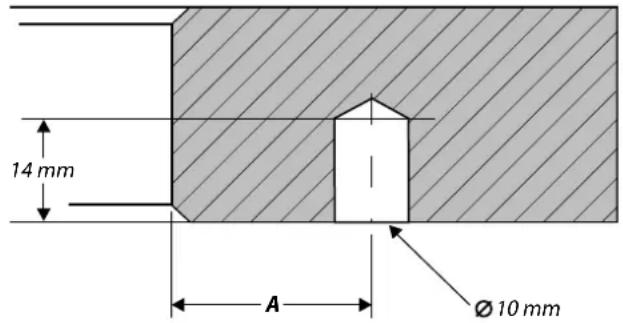
Dimension A: 33 mm, 27 mm or 22 mm depending on the bowl – see the templates in this booklet for this dimension.
Installer
Please leave this leaflet with the user, as it contains valuable after care advice.
Notes
Undermount sinks should only be fixed to granite worktops by a specialist installer.
⚠️ Please beware of sharp metal edges prior to and during installation.
During installation, take care to protect the bowl from scuffs and scratches.
Avoid straining and overtightening of all plumbing fixtures connected to the bowl.
We recommend that the worktop opening is sealed using waterproof sealant or a similar material.
Installation
Preparing the Worktop
- Decide on the position that your bowl (or bowls) is to be fitted. Check that the bowl will not foul on the cabinet below.
- Place the sink upside down on the worktop. Position the sink on the worktop as required. Make sure the cabinet framework will clear all parts of the bowl. Using a soft, sharp pencil draw around the bowl as accurately as possible. Remove the bowl.
Alternatively, you can use a bowl template. For details go to www.rangemaster.co.uk.
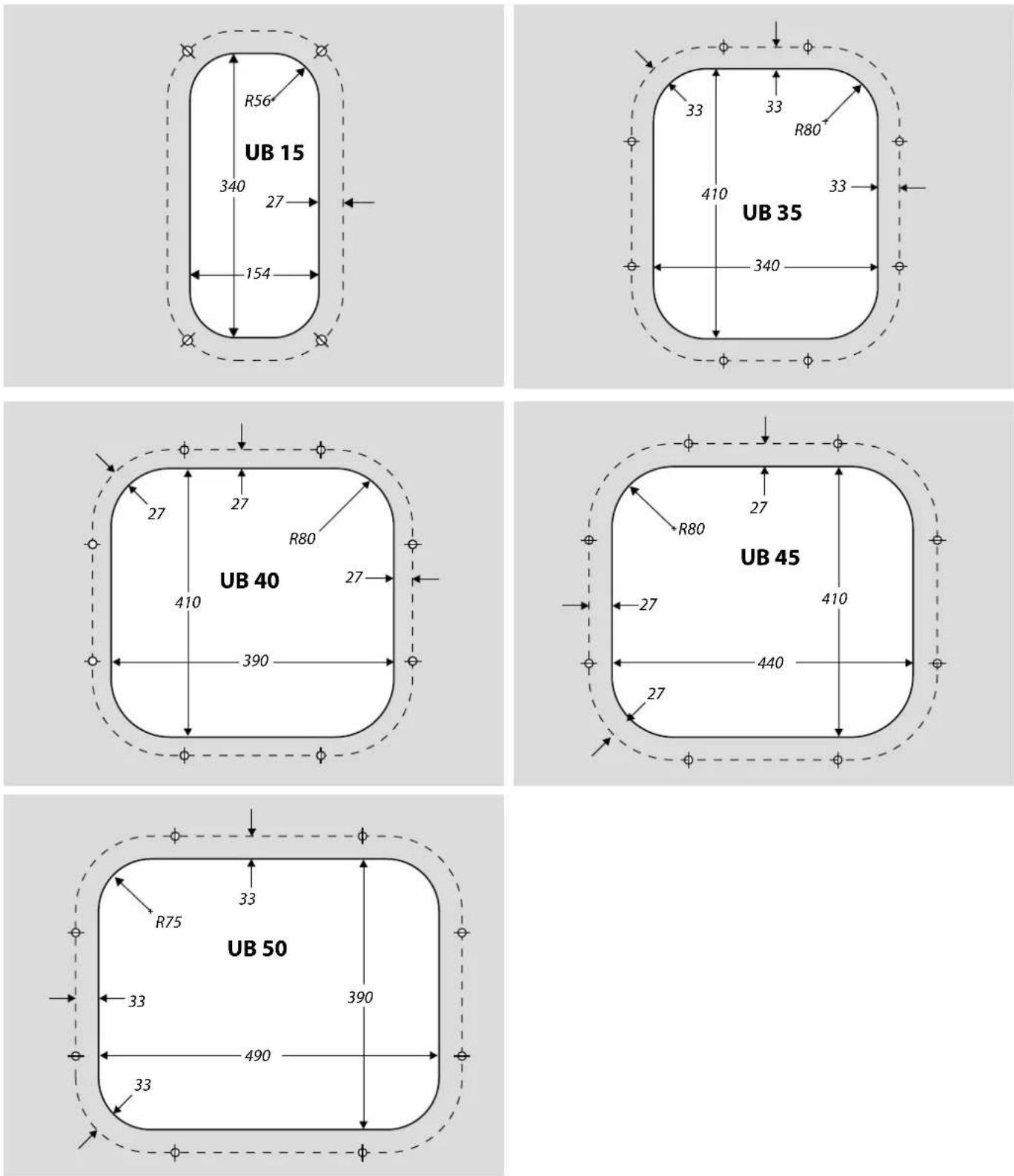
- Referring to the templates as shown in this booklet, draw another line – as indicate by 'A' (Fig.1) inside the sink top outline – this is the cutting line for the opening.
- Drill as large a hole as possible inside the cutting line. Using a padsaw, jigsaw or similar, cut out the opening up to the cutting line.
- On the underside of the worktop, mark the positions for the threaded inserts – see the templates in this booklet for the correct dimensions or go to www.rangemaster.co.uk for template details.
- Drill the 10 mm diameter holes (Fig.1) for the threaded inserts (refer to the worksurface supplier for drilling advice and the drill bit diameter required).
- Glue the threaded fixing inserts into the drilled holes.
Applying the Sealant
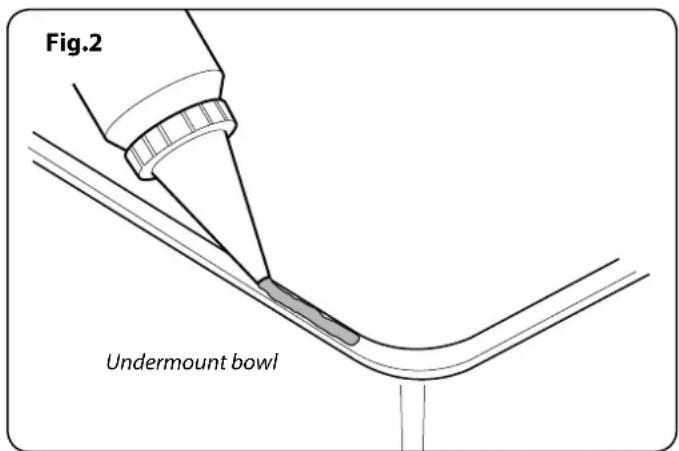
Apply silicone sealant (not supplied) to the bowl rim (Fig.2).
Fitting the Bowl
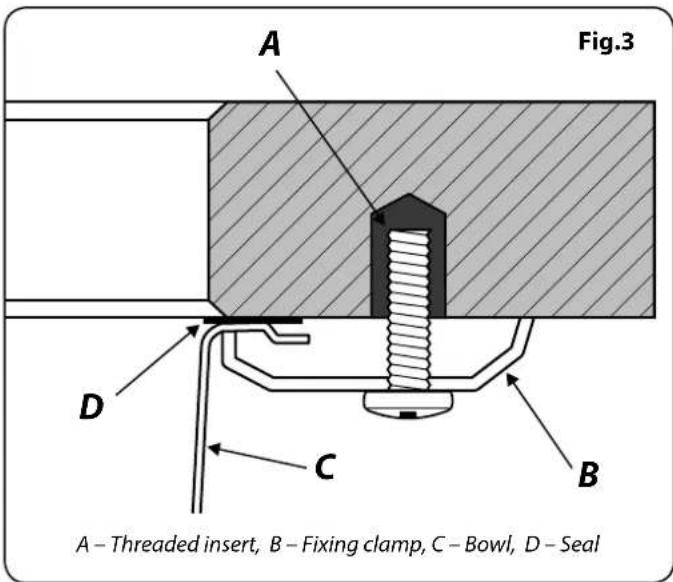
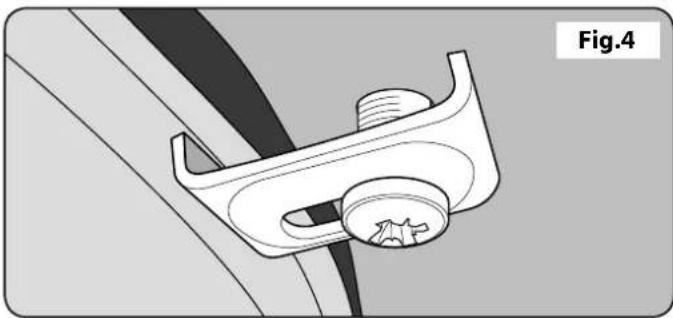
Position the bowl to the worktop. Using the fixing clamps and screws (Fig.3), secure the bowl to the worktop (Fig.4).

DO NOT tighten fully at first attempt.

DO NOT overtighten the clamps.
Remove any surplus sealing material or wipe away any excess sealant.
Note: Some bowls may require additional support (this should be supplied and fitted by your installer).
Fitting the Square Overflow Pipework (Kube & Quadbowl models)
The overflow pipework for the square style underbowls may require modifying to fit.
Fig.5 shows the suggested areas of the overflow pipework that may need to be cut. Measure the pipework, and cut the areas show as required. Fit together as normal.
To ensure a watertight seal, apply silicon sealant onto the sink-side face of the rubber seal before fitting it to the sink (Fig.6).
natural_image
Mechanical component diagram showing a clamp or bracket assembly (no text or symbols)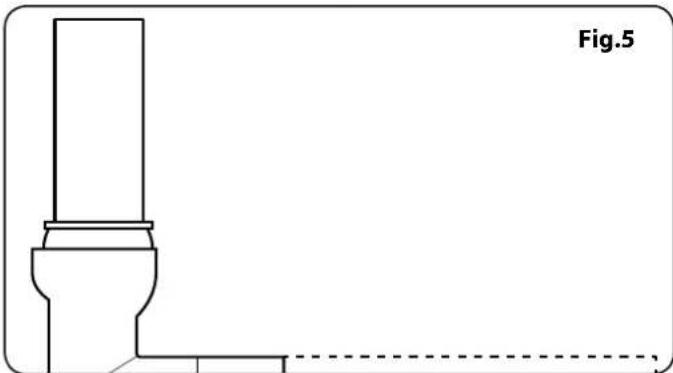
natural_image
Technical line drawing of a corner architectural detail (no text or symbols)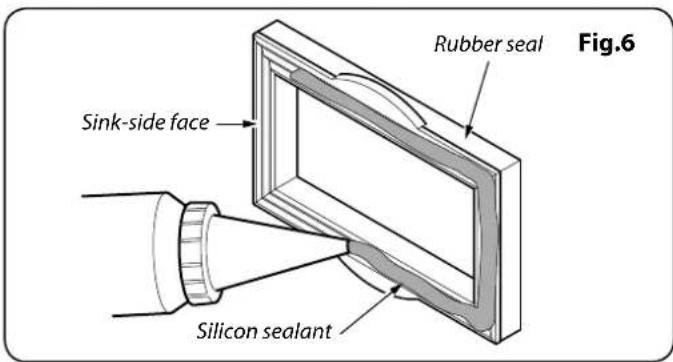
Atlantic Single Bowl Templates
Atlantic Double Bowl Templates
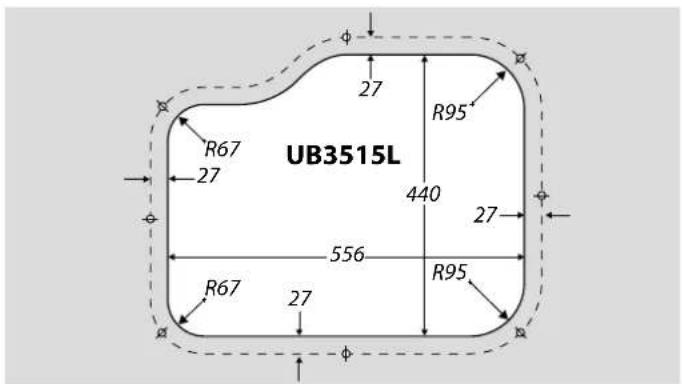
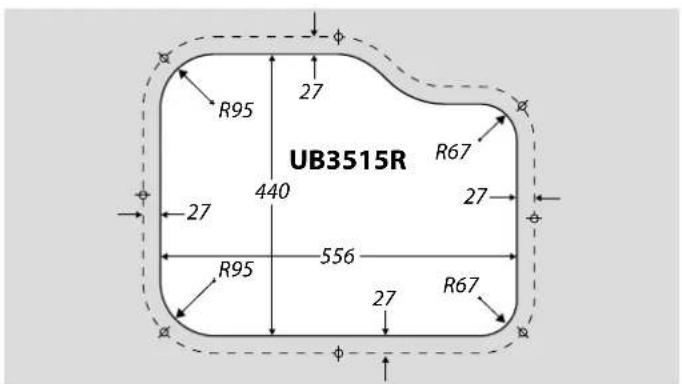
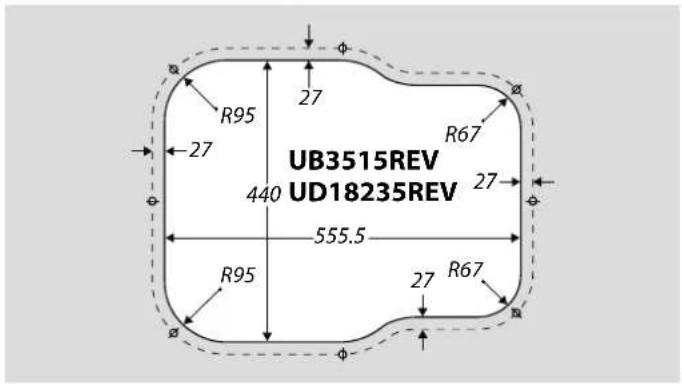
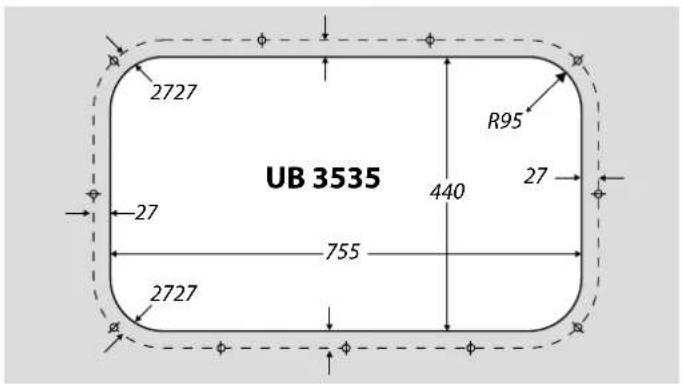
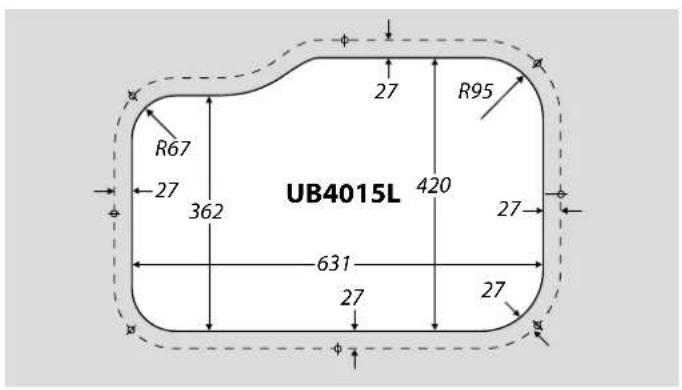
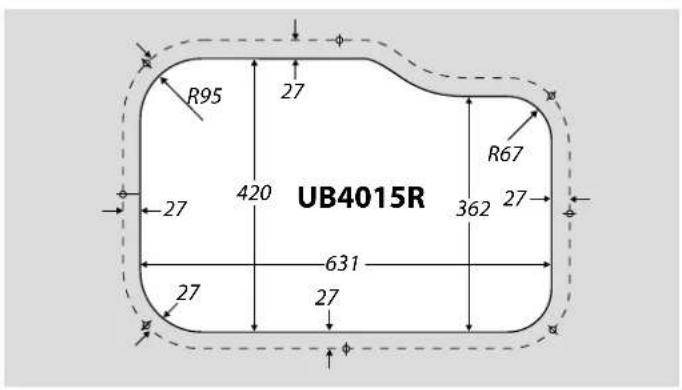
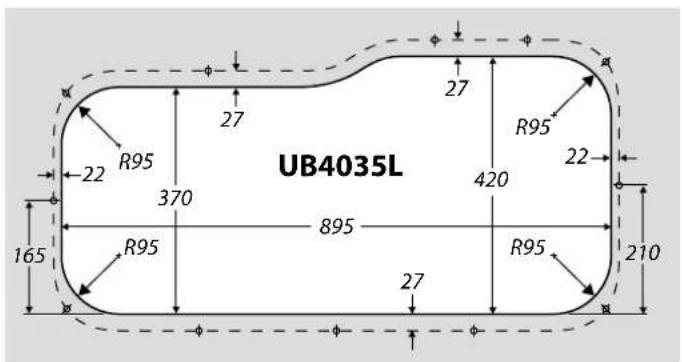
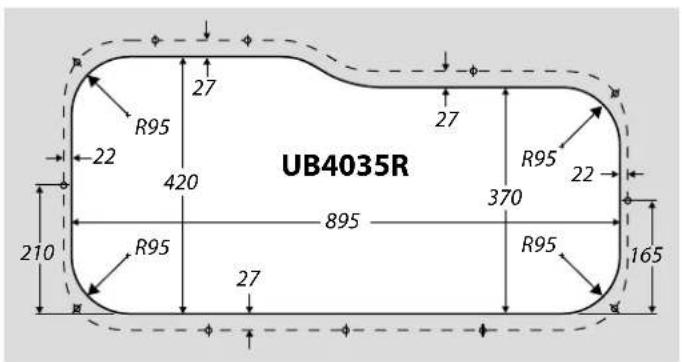
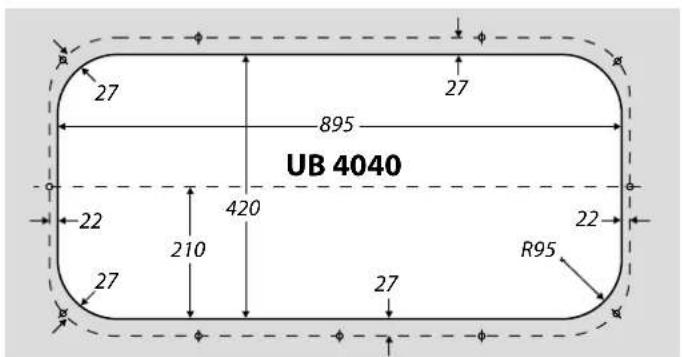
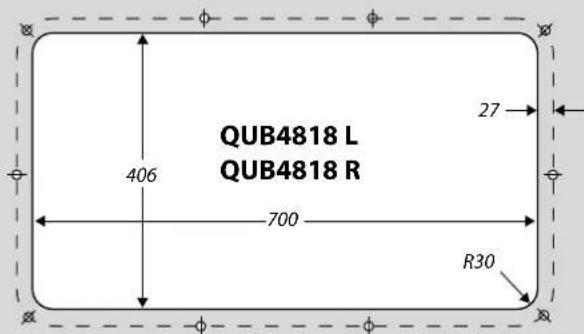
All dimensions in mm
Quadbowl Templates
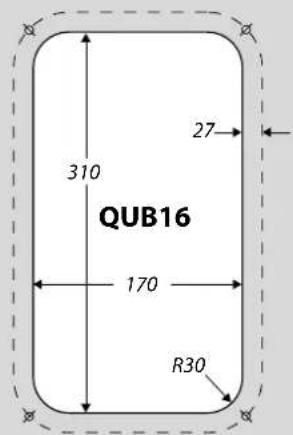
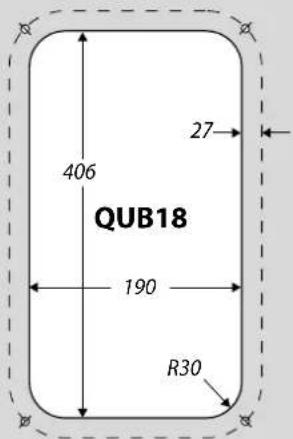
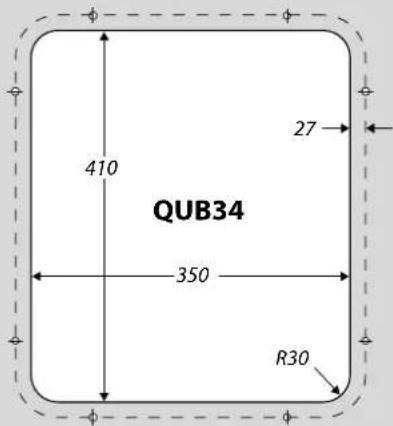
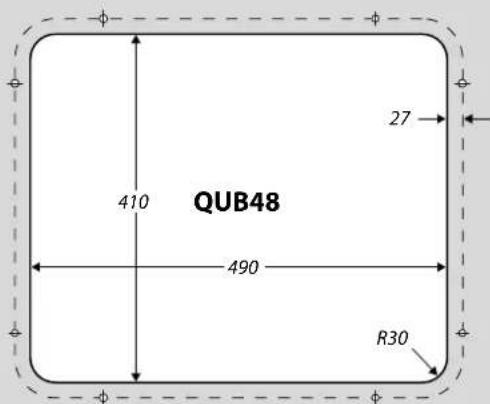
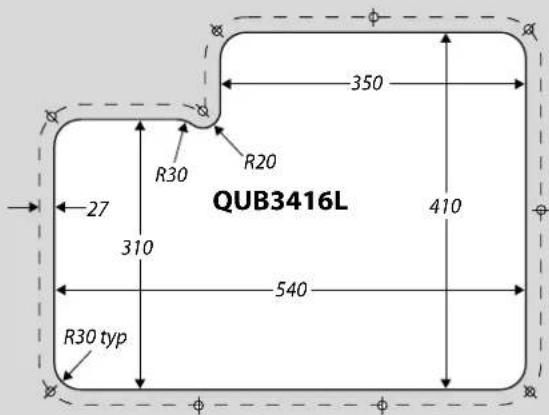
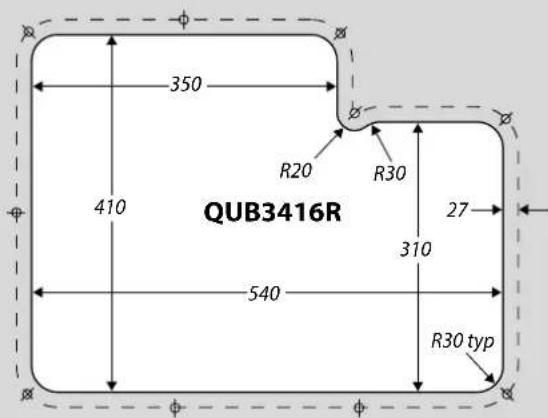
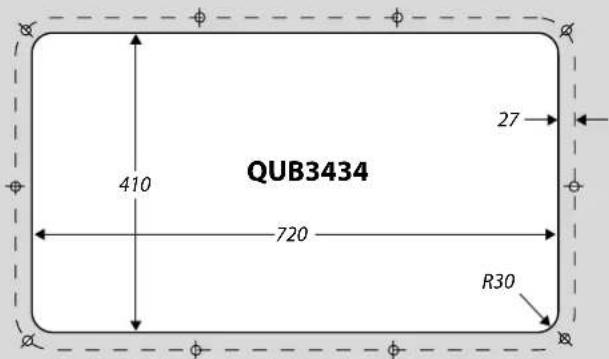
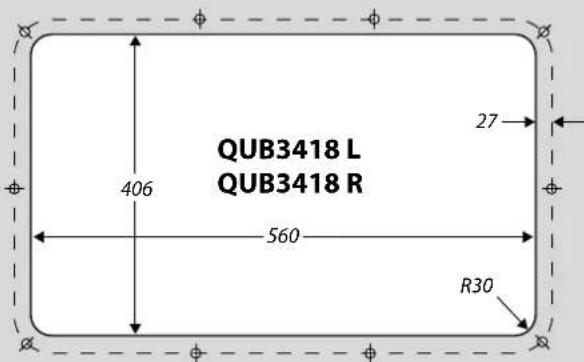
Kube Templates
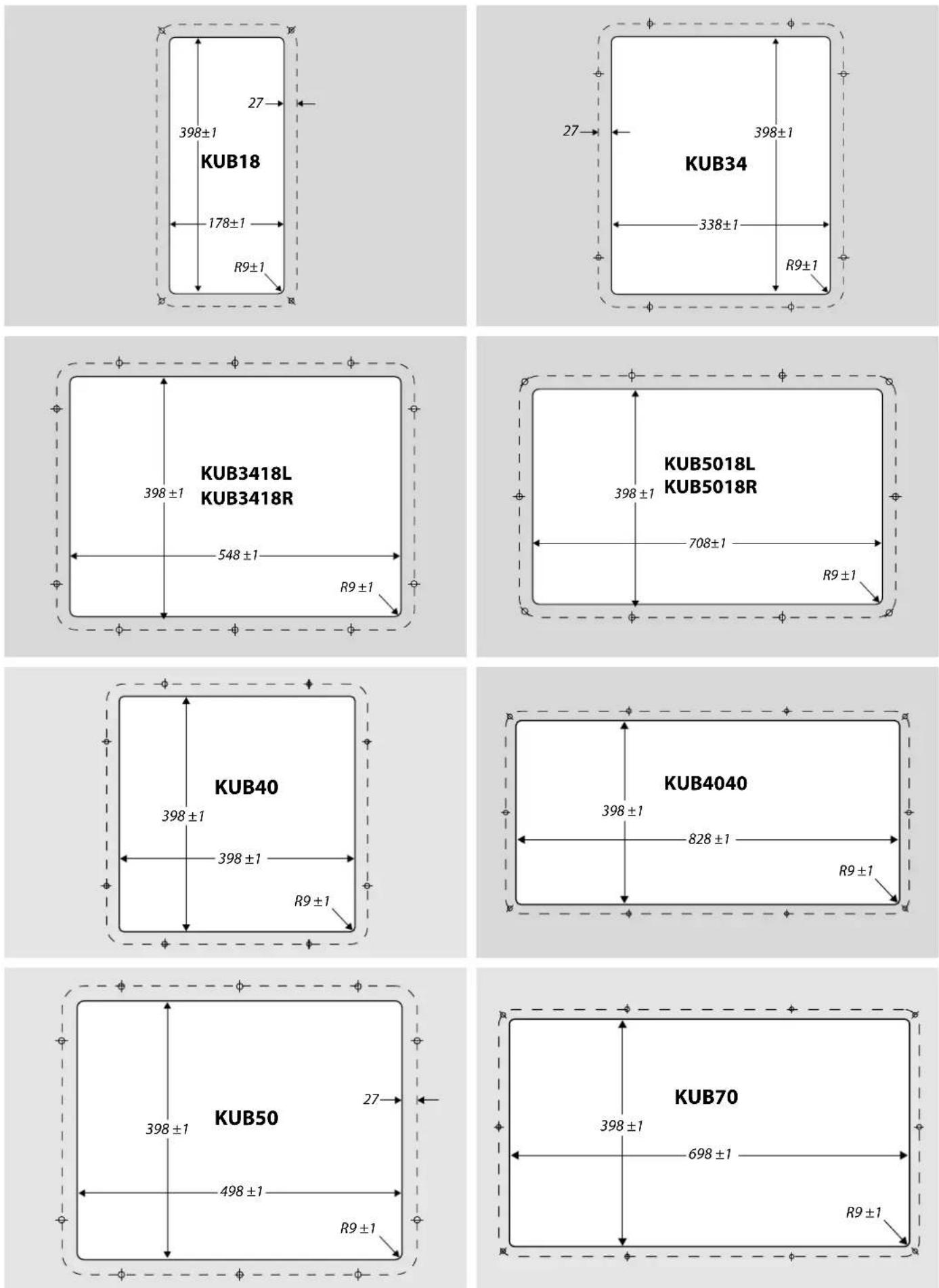
All dimensions in mm
Day-to-day Care
Routine cleaning of your stainless steel bowl is easy if the following simple procedure is followed:
After use wipe the bowl with a soft damp soapy cloth and rinse with clean water. In hard water areas, an application of proprietary cream cleaner or stainless steel sink cleaner will avoid any build-up of a dull film of waterborne deposits.
Although stainless steel is an extremely durable material and will withstand a great deal of hard use, it can be scratched by hard or sharp objects. If the surfaces are to be kept in a blemish free condition reasonable care should be taken when handling such items.
Cleaning
Always use a soft cloth. The use of coarse grit scouring powders or soap-filled wire wool cleaning pads is not recommended, since both will mark the surface of the bowl. Wire wool pads can leave tiny fragments of wire embedded in the surface and these can rust and leave small brown rust stains. Vigorous rubbing with a soft cloth with a proprietary cream cleaner or stainless steel sink cleaner will remove these stains.
Always remove wet cleaning aids (cloths, containers, etc.) from the bowl surface after use to avoid the formation of water marks and rust stains.
Discolouration and Heavy Staining
In most cases, staining of stainless steel is due to something being deposited on the steel rather than an attack on the material itself. The most common cause of staining is the build-up of a thin film of waterborne deposits on the bowl surface, often first seen as a rainbow effect. The build-up of such a film can be avoided by drying the surface of the bowl after use.
Should such a film appear, apply proprietary cream cleaner or stainless steel sink cleaner neat and rub vigorously with a damp cloth around the bowl. After cleaning, rinse thoroughly with clean water and dry.
Wire wool products and ferrous water supply pipes can leave minute ferrous particles adhered to the bowl surface. Since stainless steel under normal conditions does not rust, these particles can cause the appearance of small brown rust stains. These stains can be removed using the procedure described above.
Caution!
Certain household products contain substances that will attack the stainless steel surface. They are:
1. Bleaches
Most common domestic bleaches contain Chlorine in the form of a hypochlorite. Chlorine attacks the microscopic Chromium Oxide film on the surface and can cause pitting of the surface.
Bleaches should always be used in the prescribed strength specified by the manufacturers. Undiluted bleaches can cause pitting and staining of the surface and should be immediately rinsed off with plenty of clean water.
All cleaning agents containing hypochlorites are unsuitable for use with stainless steel and, even highly diluted, can cause pitting under certain circumstances. For this reason we strongly recommend that the bowl is not used for soaking clothes or cleaning clothes in hypochlorite solutions for long periods.
2. Silver Dip Cleaners
These are particularly harmful since they contain strong acids that can cause discolouration and pitting. The first sign of this is an iridescent rainbow stain that turns an etched dull grey colour.
Should any silver dip cleaner come into contact with the surface of the bowl it should be immediately rinsed off with plenty of clean water.
3. Corrosive Foodstuffs
Fruit juices, damp salt, vinegar, ready made mustards, pickle and mayonnaise can cause pitting and corrosion if left in contact with the stainless steel surface for long periods.
4. Acids
Sulphuric, Hydrochloric and other strong acids will cause pitting corrosion, as will photographic developing liquids. If contact occurs immediately wash off with plenty of clean water.
25 Year Guarantee
We guarantee to replace any stainless steel bowl that breaks due to material or manufacturing defects within 25 years from the date of purchase.
The guarantee does not cover normal wear and tear occurring through use of the product.
For the guarantee to apply the owner must follow the use, care and cleaning instructions provided.
Accessories and waste fittings are not included in this guarantee.
CE
RANGEmaster
Meadow Lane, Long Eaton,
Nottingham, NG10 2GD, England
Tel: +44 (0) 115 946 4000 Fax: +44 (0) 115 973 6602
E-mail: consumers@rangemaster.co.uk
www.rangemaster.co.uk
13 / 14 (QUB18, QUB3418, QUB4818, KUB5018)
EN 13310:2003
Kitchen sink made of: Stainless Steel
Cleanability: Pass
Load resistance: NPD / N/A
Durability: Pass
- STAINLESS STEEL UNDERMOUNT BOWLS
- Installation Instructions & Aftercare Information
- Installer
- Notes
- Installation
- Preparing the Worktop
- Applying the Sealant
- Fitting the Bowl
- Fitting the Square Overflow Pipework (Kube & Quadbowl models)
- Atlantic Single Bowl Templates
- Atlantic Double Bowl Templates
- Quadbowl Templates
- Kube Templates
- Day-to-day Care
- Cleaning
- Discolouration and Heavy Staining
- Caution!
- Certain household products contain substances that will attack the stainless steel surface. They are:
- Bleaches
- Silver Dip Cleaners
- Corrosive Foodstuffs
- Acids
- Year Guarantee
- CE
- RANGEmaster
Brand : RANGEMASTER
Model : KUB40
Category : Kitchen sink