
SCV36X - Wine cellar SMEG - Free user manual and instructions
Find the device manual for free SCV36X SMEG in PDF.


| Product Type | Wine Cellar |
| Brand | Smeg |
| Model | SCV36X |
| Bottle Capacity | 36 bottles |
| Dimensions (W x H x D) | 60 cm x 85 cm x 60 cm |
| Weight | 45 kg |
| Power Supply | 220-240 V, 50/60 Hz |
| Energy Consumption | 150 kWh/year |
| Temperature Range | 5°C to 20°C |
| Number of Zones | 2 temperature zones |
| Interior Light | LED interior lighting |
| Shelves | 5 wooden shelves |
| Door Type | Stainless steel full door |
| Climate Class | SN (Extended Temperate) to T (Tropical) |
| Noise Level | 39 dB |
| Defrost Type | Automatic defrost |
| Compressor | Low-vibration compressor |
| Cleaning and Maintenance | Clean interior with mild soap and water; dust condenser grill annually |
| Safety Features | Child lock, temperature alarm |
| Spare Parts Availability | Genuine spare parts available through Smeg service centers |
Frequently Asked Questions - SCV36X SMEG
User questions about SCV36X SMEG
0 question about this device. Answer the ones you know or ask your own.
Ask a new question about this device
Download the instructions for your Wine cellar in PDF format for free! Find your manual SCV36X - SMEG and take your electronic device back in hand. On this page are published all the documents necessary for the use of your device. SCV36X by SMEG.
USER MANUAL SCV36X SMEG
- THE ENVIRONMENT - DISPOSAL INSTRUCTIONS ...... 20
- PRECAUTIONS FOR USE 21
- SAFETY PRECAUTIONS 22
- INSTALLATION AND CONNECTION 23
4.1 Positioning and levelling the appliance 23 4.2 Electrical connection 23 4.3 Overall dimensions 24
- GETTING TO KNOW YOUR APPLIANCE 25
- BEFORE INSTALLATION 25
- CONTROL PANEL 26
- OPERATION 27
8.1 Switching on 27 8.2 Setting the temperature 27 8.3 Switching on the light 27 8.4 Storage Temperatures 28 8.5 Filling the cellar with bottles 29 8.6 Practical hints for storing and enjoying wines 29
- ACCESSORIES 30
- CLEANING AND MAINTENANCE 31
10.1 Defrosting the wine cellar 31 10.2 Cleaning the wine cellar 31 10.3 Switching off the wine cellar 31 10.4 Operating noises 31 10.5 Identifying and Dealing with Malfunctions. 32
- SOME HINTS FOR SAVING MONEY
INSTRUCTIONS FOR THE INSTALLER: these are intended for the qualified engineer who is to install, commission and test the appliance

INSTRUCTIONS FOR THE USER: these provide recommendations for use, a description of the controls and the correct procedures for cleaning and maintaining the appliance
1. THE ENVIRONMENT - DISPOSAL INSTRUCTIONS
OUR WINE CELLARS ARE PACKAGED USING NON-POLLUTANT, ENVIRONMENT-FRIENDLY, RECYCLABLE MATERIALS. WE URGE YOU TO COOPERATE BY DISPOSING OF THE PACKAGING PROPERLY. CONTACT YOUR LOCAL DEALER OR THE COMPETENT LOCAL ORGANISATIONS FOR THE ADDRESSES OF COLLECTION, RECYCLING AND DISPOSAL FACILITIES.
NEVER LEAVE ALL OR PART OF THE PACKAGING LYING AROUND: PACKAGING PARTS, AND ESPECIALLY PLASTIC BAGS, MAY REPRESENT A SUFFOCATION HAZARD FOR CHILDREN.
IMPORTANT: YOUR OLD APPLIANCE MUST ALSO BE DISPOSED OF PROPERLY.
DELIVER THE APPLIANCE TO YOUR LOCAL ORGANISATION AUTHORISED TO COLLECT SCRAPPED APPLIANCES. PROPER DISPOSAL ALLOWS THE INTELLIGENT RECOVERY OF VALUABLE MATERIALS. REFRIGERATION APPLIANCES CONTAIN GASES WHICH MAY DAMAGE THE ENVIRONMENT; IT IS IMPORTANT TO ENSURE THAT THE REFRIGERATION CIRCUIT PIPELINES ARE NOT DAMAGED UNTIL THE COMPETENT SERVICE HAS TAKEN DELIVERY OF THE APPLIANCE.
BEFORE SCRAPPING YOUR APPLIANCE IT IS IMPORTANT TO REMOVE DOORS AND LEAVE SHELVES IN POSITION AS FOR USE, TO ENSURE THAT CHILDREN CANNOT ACCIDENTALLY BECOME TRAPPED INSIDE DURING PLAY. ALSO, CUT THE POWER SUPPLY LEAD AND REMOVE IT AND THE PLUG.
BY LAW, APPLIANCES MUST ONLY BE DISPOSED OF AT SUITABLY EQUIPPED FACILITIES.
2. PRECAUTIONS FOR USE

ELECTRICAL CONNECTION: SEE INSTALLATION INSTRUCTIONS FOR SAFETY REGULATIONS FOR ELECTRIC OR GAS APPLIANCES AND FOR VENTILATION FUNCTIONS.
IN YOUR INTEREST AND TO ENSURE YOUR SAFETY, BY LAW ALL ELECTRIC APPLIANCES MUST ONLY BE INSTALLED AND SERVICED BY QUALIFIED STAFF, IN ACCORDANCE WITH THE RELEVANT REGULATIONS.
GAS OR ELECTRIC APPLIANCES MUST ALWAYS BE DISCONNECTED BY SUITABLY SKILLED PEOPLE.

THIS MANUAL CONSTITUTES AN INTEGRAL PART OF THE APPLIANCE: TAKE GOOD CARE OF IT AND KEEP IT TO HAND THROUGHOUT THE APPLIANCE'S LIFE CYCLE. WE URGE YOU TO READ THIS MANUAL AND ALL THE INFORMATION IT CONTAINS CAREFULLY BEFORE USING THE APPLIANCE. INSTALLATION MUST BE CARRIED OUT BY QUALIFIED STAFF IN COMPLIANCE WITH THE RELEVANT REGULATIONS. THIS APPLIANCE IS INTENDED FOR HOUSEHOLD USE AND COMPLIES WITH THE EEC DIRECTIVES CURRENTLY IN FORCE. THE APPLIANCE IS BUILT TO PROVIDE THE FOLLOWING FUNCTION: COOLING OF DRINKS; ALL OTHER USES ARE TO BE CONSIDERED IMPROPER.
The manufacturer declines all liability for uses other than those stated above.

Never use this appliance for cooling rooms.
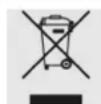
This appliance is marked according to the European Directive 2002/96/EC on Waste Electrical and Electronic Equipment (WEEE).
This guideline is the framework for a Europe-wide validity of return and recycling of waste electrical and electronic equipment.

Never obstruct the openings and slits provided for ventilation and heat dispersal.

Setting the thermostats too low in summer causes considerably increased ice formation on the back of the appliance, significantly reducing its efficiency. During the summer or whenever the weather is particularly hot and/or humid, the wine cellar should be kept at a fairly high setting to prevent ice from building up in the back of the interior, causing loss of efficiency.
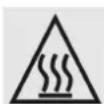
During operation, the appliance's rear surface may heat up considerably; this is quite normal and does not indicate a malfunction.

The nameplate with the technical data, serial number and mark is in the bottom left-hand corner of the wine cellar's interior.
The nameplate must never be removed.
It is best to open the door as little as possible, particularly in hot weather. Opening the door often or leaving it open will cause variations in temperature inside the appliance which might lead to deterioration of the wine's condition.

The manufacturer declines all responsibility for injury or damage caused by failure to comply with the above regulations or deriving from tampering with even just one part of the appliance and the use of non-original spare parts.
3. Safety precautions
Instructions for the installer: These are intended for the qualified engineer who is to install, commission and test the appliance.






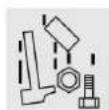
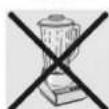

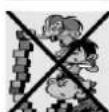
The appliance must be transported in its packaging by at least two people and installed by qualified staff to prevent damage or injury.
The refrigerant in the appliance's circuit is of R134a type.
THE REFRIGERANT IS ALSO HARMFUL TO THE EYES: TAKE GREAT CARE IN CASE OF LEAKS FROM THE REFRIGERATION CIRCUIT.
NEVER ATTEMPT TO MOVE THE APPLIANCE BY PULLING ON THE DOOR OR THE HANDLE. TAKE CARE THAT THE DOOR DOES NOT CLOSE AGAIN, TRAPPING YOUR FINGERS.
ON INSTALLATION, IF ANY MANUFACTURING DEFECTS OR DAMAGE CAUSED IN TRANSIT ARE NOTED, CALL YOUR NEAREST SERVICE CENTRE AT ONCE.
FOR INSTALLATION AND CONNECTION, FOLLOW THE INSTRUCTIONS PROVIDED IN THIS MANUAL ONLY.
IN CASE OF MALFUNCTIONS, DISCONNECT THE APPLIANCE FROM THE POWER SUPPLY BY REMOVING THE PLUG, WITHOUT PULLING ON THE POWER SUPPLY LEAD.
ALL REPAIRS OR OTHER WORK NOT COVERED BY THIS MANUAL MUST BE CARRIED OUT BY A QUALIFIED ENGINEER, TO BE FOUND AT AN AUTHORISED SERVICE CENTRE. NEVER ATTEMPT TO REPAIR THE APPLIANCE YOURSELF.
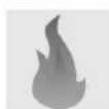
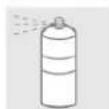
NEVER STORE SPRAY CANS CONTAINING FLAMMABLE GASES INSIDE THE APPLIANCE. ANY LEAKS MAY CONSTITUTE A SERIOUS THREAT TO USERS' SAFETY.
THE USE OF ELECTRICAL APPLIANCES (SUCH AS ICE-CREAM MAKERS OR WHISKS) INSIDE THE APPLIANCE IS FORBIDDEN.
NEVER LEAN ON THE APPLIANCE'S SHELVES AND DRAWERS OR USE THEM AS STEPS.
THE APPLIANCE IS INTENDED FOR USE BY ADULTS KEEP CHILDREN AT A SAFE DISTANCE AND NEVER ALLOW THEM TO PLAY WITH IT.
4. INSTALLATION AND CONNECTION
Always place the wine cellar in a dry place with satisfactory ventilation. Never expose it to direct sunlight or install it outdoors. Depending on its climate class (stated on the nameplate inside), the wine cellar can be used in different temperature conditions:
| Class Ambient temperature | |
| SN (Subnormal) from +10°C to +32°C | |
| N (Normal) from +16°C to +32°C | |
| ST (Subtropical) from +18°C to +38°C | |
| T (Tropical) from +18°C to +43°C |
Never place the wine cellar close to heat sources unless strictly necessary. If this is unavoidable, a suitable insulating panel must be used to allow the appliance to function properly. Otherwise, place the appliance at least 3 cm from electric or gas cookers and at least 30 cm from combustion or radiation heating systems.
To allow proper cooling of the condenser, the wine cellar must not be placed too close to the wall. Leave a gap of at least 5 cm between the back of the appliance and the wall. There must be an opening of at least 200 cm² behind the wine cellar. If the wine cellar is installed underneath a wall cupboard, the distance between the two must be at least 5 cm.
Take care not to scratch or damage the floor when installing the appliance on parquet or linoleum.
4.1 Positioning and levelling the appliance
Place the wine cellar on a firm, level surface. To compensate for any unevenness in the floor, the appliance has 4 adjustable feet. To adjust them, turn the screw as shown in figure 1 to level the appliance.

Fig. 1)
4.2 Electrical connection
Before switching the wine cellar on for the first time, leave it standing upright for about two hours. Then connect the appliance's power supply lead to a mains socket with earth contact, installed in accordance with electrical safety regulations. The rated voltage and frequency are stated on the nameplate inside the wine cellar. The appliance must be connected to the electrical mains and earthed in compliance with the relevant regulations and requirements. The appliance is able to withstand brief voltage fluctuations of not more than 15% below or 10% above the rated value. If the power supply lead has to be replaced, this operation must only be carried out by an authorised Smeg technical service engineer.
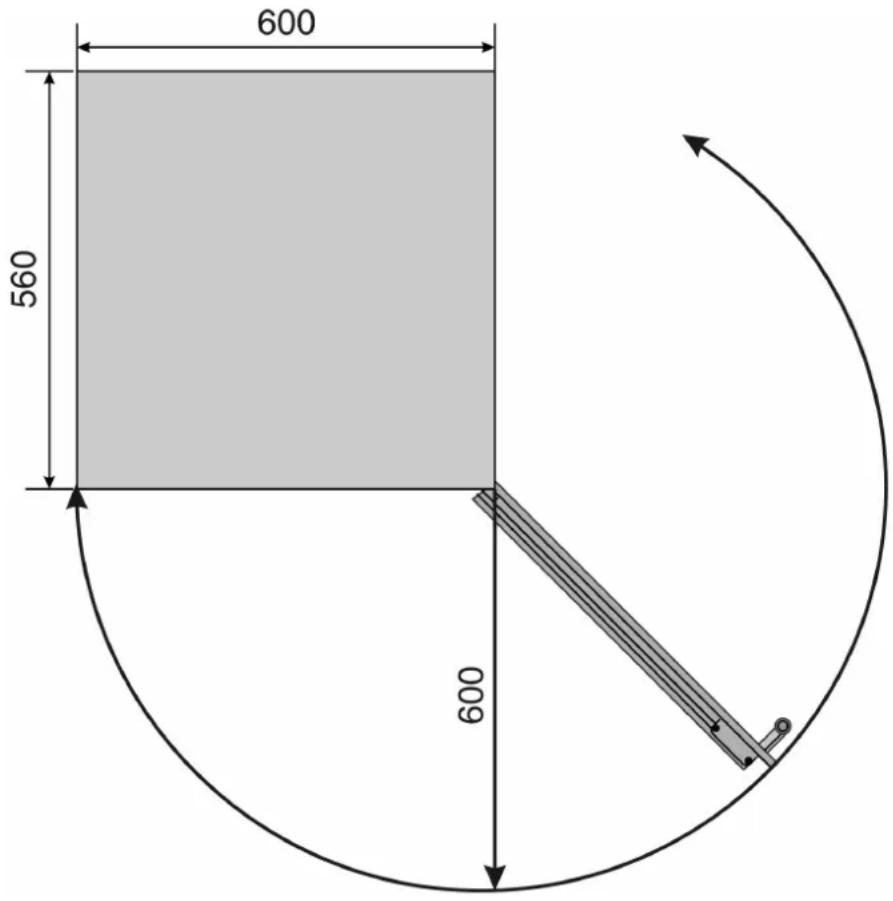
4.3 Overall dimensions
The drawing below shows the product's maximum overall dimensions with the door open.
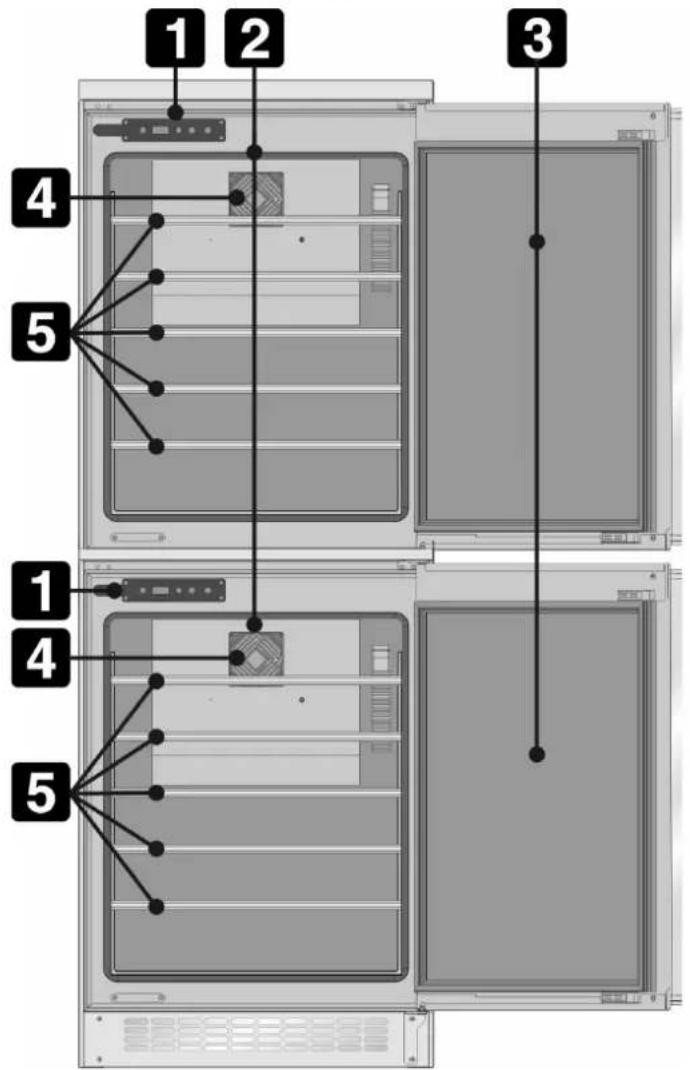
5. GETTING TO KNOW YOUR APPLIANCE

6. BEFORE INSTALLATION
Never leave packaging residues unattended in the home. Separate waste packaging materials by type and consign them to the nearest separate disposal centre.

The inside of the appliance should be cleaned to remove all manufacturing residues. For further information, see "10. Cleaning and maintenance".
On first use or after a lengthy power blackout, the appliance should be run for about 2 hours before bottles are placed inside.
7. CONTROL PANEL
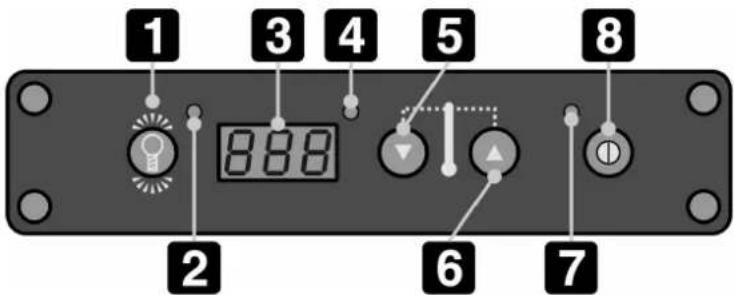
LIGHT ON/OFF KEY: THIS KEY SWITCHES THE NEON LIGHT INSIDE THE WINE CELLAR ON AND OFF.
LIGHT ON/OFF INDICATOR LED: THIS LED INDICATES WHETHER THE LIGHT INSIDE THE WINE CELLAR IS ON OR OFF.
TEMPERATURE DISPLAY: SHOWS THE TEMPERATURE PRESENT OR SET INSIDE THE WINE CELLAR.
COOLING LED: WHEN ON, THIS LED INDICATES THAT THE TEMPERATURE INSIDE THE WINE CELLAR IS BEING REDUCED TO MEET THE DISPLAY SETTING.
CHILLING TEMPERATURE DECREASE KEY: KEY USED TO REDUCE THE SET TEMPERATURE.
CHILLING TEMPERATURE INCREASE KEY: KEY USED TO RAISE THE SET TEMPERATURE.
POWER ON LED: THIS LED REMAINS ON AS LONG AS THE WINE CELLAR IS RECEIVING POWER.
ON/OFF KEY: STARTS AND STOPS OPERATION OF THE WINE CELLAR.
8. OPERATION
To keep your wine in optimum condition, it will not be possible to switch the light on until the temperature inside the cellar drops below 25°C.
8.1 Switching on

Whenever the cellar is receiving power, even if it is not in operation, the LED 8 indicating that it is powered up will illuminate. Once the LED is on, press the button ⏻ to put the cellar into operation. The display will show the actual temperature inside the cellar when it is switched on. You can now move on to set the temperature you require.
8.2 Setting the temperature

The default temperature at which the thermostat is set is 15°C. If you wish to change this, simply proceed as follows:
- Press button for a few seconds until the figure shown on the display starts to flash;
- use buttons and to set the temperature value you require;
- about 5 seconds after the last key is pressed, the display stops flashing and the chosen temperature remains set.
Depending on whether the temperature set is higher or lower than the current temperature inside the cellar, the appliance will start to heat up or cool down and the LEDs 4 or 5 will illuminate accordingly.
In two-section cellars, the two compartments are independent and two different temperatures can be set following the procedure described above.

The temperature variations generated by the refrigeration elements inside the wine cellar are gradual and cause absolutely no deterioration in the quality of the wine stored inside.
8.3 Switching on the light

To switch on the light inside the cellar, simply press key

To keep your wine in optimum condition, it will not be possible to switch the light on until the temperature inside the cellar drops below 25°C.
8.4 Storage Temperatures
As you will certainly already know, to enjoy the flavour and bouquet of each wine at its best, it should be stored and drunk at a specific temperature. The following table lists these temperatures in relation to the type of wine.
| WINE TEMPERATURE | |
| Young whites 10° - 12°C | |
| Mature whites 12° -14°C | |
| Young, light rosés 10° - 12°C | |
| Mature, full-bodied rosés 12° -14°C | |
| Nouveau reds 10° -14°C | |
| Young, light reds with low tannin 14° -16°C | |
| Mature, full-bodied reds with high tannin 16° -18°C | |
| Very mature and cask-aged reds 16° -18°C | |
| Sweet and aromatic sparkling wines 8°C | |
| Sweet and aromatic red sparkling wines 10° - 12°C | |
| "Charmat method" sparkling wines | 8° -10°C |
| "Long Charmat method" sparkling wines | 10° - 12°C |
| "Traditional method" sparkling wines without year | 8° -10°C |
| "Traditional method" sparkling wines with year | 10° - 12°C |
| Dessert wines | 10° -18°C |
| Fortified or liqueur wines | 10° -18°C |
8.4.1 White wines
White wines are generally more acidic than reds and contain less tannin.
To be enjoyed at its best, an acidic drink should usually be stored at a slightly lower temperature than other types, and so these wines should be stored at a temperature between 10°C and 14°C.
Young, fresh, aromatic white wines can be served at a temperature as low as 10°C, while for less aromatic wines 12°C is recommended. For full, mature white wines which have aged in the bottle for a few years, higher temperatures are acceptable and they can be served at between 12°C and 14°C.
Serving a white wine at a higher temperature means emphasising its "sweet" properties, while the acidity and sharpness considered pleasant and desirable in wines of this kind will be less noticeable.
8.4.2 Rosé wines
Generally, the rules for serving rosé wines are the same as for whites. However, it is important to consider these wines' tannin content and serve them at a higher temperature if necessary so that their flavour is not too sharp. Tannin content permitting, young, fresh rosé wines are served between 10°C and 12°C, while more robust, full-bodied types, including more mature wines, can be served between 12°C and 14°C.
8.4.3 Red wines
The serving temperature for red wines depends on a great deal of factors, but in view of their higher tannin and lower acidity than whites, they are usually served at higher temperatures. Young red wines with low tannin are usually served between 14° and 16°C, while for more full-bodied types 16°C or in exceptional cases even 18°C may be recommended.
Young, red wines with low tannin and a fairly uncomplicated structure can be served at between 12°C and 14°C without tasting too sharp, and will still be very pleasant. This rule certainly applies to "nouveau" wines, made by a special method which reduces their tannin content; they can be appreciated to the full at cooler temperatures than other red wines.
8.4.4 Sparkling wines
In view of large number of types of sparkling wines on the market, there would be little sense in laying down one rule to fit them all. Sweet, aromatic white sparkling wines can be served at a temperature as low as 8°C; their aromatic nature means they are excellent at low temperatures.
Sweet red sparkling wines such as Brachetto may be served at temperatures between 10°C and 12°C; here again, the more aromatic sparkling wines are suitable for lower temperatures, even down to 8°C, while those with a slightly higher tannin content require temperatures as high as 14°C.
Dry sparkling wines made by the "Charmat method" or "Martinotti method", such as some Prosecco wines, can be served at temperatures between 8°C and 10°C.
Sparkling wines made by the "traditional method" and the "méthode Champenoise", such as Champagne, require special consideration. In general these sparkling wines are served at temperatures between 8°C and 10°C. However, for prestige wines marked with the vintage, or sparkling wines that have been aged for a long time, even 12°C may be advisable to allow the development of the complex bouquet that has been slowly and painstakingly built up over the years.
8.4.5 Dessert wines and fortified wines
These two types of wine generally both contain a high alcohol percentage and they are both often also sweet. However, there are dry dessert wines, such as Marsala, with a sugar content so low as to be almost imperceptible on the palate. For these wines, the serving temperature depends on which features you wish to emphasise. If you prefer to accentuate the wine's sweetness, the complexity of its bouquet and its austerity, it should be served at a high temperature, between 14°C and 18°C; remember that in this case its alcohol content will also be more in evidence.
If you require a fresher sensation, or to reduce the sweetness of over-sweet wines, serve at a lower temperature, between 10°C and 14°C.
Young, fresh, dry dessert wines can be served at colder temperatures, below 10°C, which makes the alcohol content considerably less noticeable. However, remember that as the temperature is reduced, the bouquet also becomes less evident. One of these wines' key characteristics is the charm and complexity of their bouquet; serving them too cold also means sacrificing this important feature.
8.5 Filling the cellar with bottles
The cellar's shelves are able to hold up to 36 bottles of 760 ml, placed with the neck of the bottle pointing towards the door.
If the bottles are of different shapes and sizes, this number may be smaller.
To ensure the circulation of air through the cellar is not obstructed, the bottles must be placed so that their bottoms do not touch the rear wall.
If you wish to place hot bottles inside the appliance, cool them to room temperature before doing so.
8.6 Practical hints for storing and enjoying wines
- Wines in the bottle must always be stored out of their original packaging (boxes or crates);
- Once opened, bottles must be placed so that the wine covers the whole of the cork. There must be no air between the cork and the liquid;
- Before serving, wine should be brought slowly to the ideal serving temperature: for example, a rosé should be placed on the table about 2-3 hours before serving and a red 3-4 hours before. White wine should be served straight from the refrigerator. Sparkling wines and Champagne should be chilled in the refrigerator a short time before serving.
9. ACCESSORIES
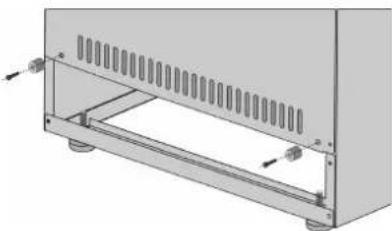
Spacers
The appliance comes complete with two spacers which allow the wine to be kept at the correct distance from its rear wall. They fit into place as shown on the right.
First fit the cylinder into the hole in the rear of the appliance, and then insert the pin into the cylinder just fitted.
10. CLEANING AND MAINTENANCE
Before carrying out any operations, disconnect the appliance from the electricity supply.

10.1 Defrosting the wine cellar
The wine cellar has automatic defrosting. During normal operation of the appliance, frost forms on its rear wall when the compressor is working and melts when it is not in operation. When the compressor is not working, the frost which has built up on the back wall melts and the water flows into the opening provided in the bottom of the body of the refrigerator. From here, it flows into the tray on the compressor, where it evaporates.
Warning: the amount of ice which forms on the rear wall may vary with changes in weather conditions (temperature and humidity), the frequency with which the door is opened, the appliance's operating temperatures and the number of bottles stored inside.

The formation of condensation on the inside surfaces of the wine cellar during normal use is quite normal and does not indicate a malfunction.
10.2 Cleaning the wine cellar
Before cleaning, disconnect the plug from the electrical mains. Clean the outside using only water and a gentle liquid detergent or an ordinary detergent for washable surfaces (such as a window-cleaning product). Never use products containing abrasives or substances which may attack the lacquered or painted parts, acids or chemical solvents. Use a sponge or a soft cloth.
Do not use steam cleaners to clean the inside; the procedures and products recommended for the outside should be used.
Never wash removable wooden parts in the dishwasher; use only warm water and washing-up liquid or water and vinegar. Take care not to wet the electrical lighting components with water or detergents.
Clean the gaskets with warm water and then dry.
Take care not to block the defrosting water drainage hole with cleaning residues (foam or soap). Keep it unobstructed and clean it periodically with a toothpick.
To allow the appliance to operate at full efficiency, periodically also clean the outside of its rear with a cloth, to prevent excessive dust and dirt from collecting and interfering with its operation.
10.3 Switching off the wine cellar
If the wine cellar is to be out of use for some time, press the button on the control panel. Then empty the cellar, disconnect it from the electrical mains, and once it has defrosted dry any residual moisture which has collected. Leave the door ajar to prevent the humidity and trapped air from creating unpleasant smells.
The appliance should not be left unattended for more than 3-4 days. If you are to be away for some time, it is best to switch the wine cellar off.
10.4 Operating noises
The wine cellar is cooled by means of a compression system. In order to maintain the preset temperature inside the wine cellar, the compressor comes into operation in response to the level of cooling required, and may operate continuously if necessary. When the compressor starts up a humming sound will be heard, tending to drop in volume after a few minutes. Other normal wine cellar operating noises are a gurgling and a rustling due to the refrigerant flowing through the pipes in the circuit. These noises are perfectly normal and do not mean that the appliance is malfunctioning. If they are over-loud, there may be other causes. In this case, check that:
- The wine cellar is properly levelled on the floor and does not vibrate when the compressor is in operation: adjust the feet provided as appropriate;
- the shelves are correctly fitted and securely in place: fit correctly;
- the bottles on the various shelves are stable and not touching: the vibration due to operation of the compressor may generate some noise;
- do not place kitchen units or other appliances so that they are touching the wine cellar
10.5 Identifying and Dealing with Malfunctions.
Your new wine cellar has been designed and built to strict quality standards. This section is intended to enable you to identify the origin of any malfunctions which may occur before contacting your local authorised After-Sales Service.
| PROBLEM POSSIBLE CAUSE PROBABLE SOLUTION | ||
| Noisy operation - see point “10.4 Operating noises” | ||
| The compressor starts up too often or operates continuously: | - compressor and condenser cooling inadequate:- rise in outside temperature;- door opened often or for long-periods; | check that the rear of the appliance is properly ventilated as explained in point "4. installation and connection" and that the condenser is not over-dirty;try not to open the door too often. |
| The compressor does not start up: - | Switch turned off;- power supply lead not connected to the electrical mains;- mains socket not supplying electrical power;- Room temperature too high. | - Press button ;connect the cable to the power supply;contact the electricity supplier |
| Cooling inside the wine cellar insufficient: | - Inside temperature set too high (meaning reduced cooling effect).- door opened often or for long-periods. | - Adjust the temperature using keysor as described in points "8.2 Setting the temperature";open the door less often and for as short a time as possible |
| Too much condensation forming inside the wine cellar | - check that the door gaskets are providing an airtight seal on the wine cellar;- door opened often or for long-periods; | In case of cracks, try to soften the gasket by pulling it with one hand and sliding your closed fingers along the inside;open the door less often and for shorter times, especially when the appliance is working in warm, humid conditions; |
| Water in bottom of wine cellar: | - "Condensation drain" opening blocked | - Clear the drain opening |
| Door hard to open just after closing: | - if you attempt to open a door again just after closing it, considerable strength is required. This is because of the vacuum caused by cooling of the warm air that has entered the appliance. | |
| Doors out of alignment | - The appliance is not properly levelled | - check that the wine cellar is levelled properly |
Instructions for the User
AFTER-SALES SERVICE - READING THE NAMEPLATE.
IF THE PROBLEMS WITH THE PRODUCT YOU HAVE PURCHASED ARE NOT AMONGST THOSE DESCRIBED ABOVE AND IF YOU NEED MORE INFORMATION, PLEASE CONTACT THE LOCAL AUTHORISED AFTER-SALES SERVICE. YOU WILL FIND THE ADDRESS AND TELEPHONE NUMBER IN YOUR LOCAL TELEPHONE DIRECTORY.
WHEN CONTACTING THE AFTER-SALES SERVICE, PLEASE BE READY TO INFORM OUR CALL SERVICE OPERATORS CLEARLY OF THE MODEL OF THE PRODUCT YOU HAVE PURCHASED AND THE SERIAL NUMBER MARKED ON THE NAMEPLATE INSIDE THE BODY OF THE WINE CELLAR.
SERIAL N.
MODEL
11.SOME HINTS FOR SAVING MONEY
The following is some simple, practical advice which will allow you to run your wine cellar to best effect, with peak performance and lower power consumption:
1. Place the wine cellar in the coolest part of the kitchen, well away from the cooker, radiators, and the window, to protect it from variations in temperature. 2. The correct distance from the wall is at least 5 centimetres. This leaves enough room around the wine cellar for effective ventilation, necessary to prevent overheating and high power consumption. 3. Never place bottles touching the sides of the wine cellar. 4. Do not place bottles inside the wine cellar when they are still hot. This would tend to cause ice to form on the sides. 5. The coldest area is at the bottom; arrange wines depending on the temperature required. 6. Only open the door for the time strictly necessary for removing or inserting bottles, especially in hot weather. Opening the door often and for long periods causes the temperature inside the wine cellar to rise. This might cause the wines' quality to deteriorate and also increase the appliance's power consumption, as it has to reduce the temperature back to the set level. 7. After disconnecting the power supply, make sure that the condenser and the coil on the back of the appliance are clean. The layer of dust which forms disperses the low temperature and considerably increases power consumption. 8. If the wine cellar is to be out of use for a long period, it is best to empty it and switch it off.


- THE ENVIRONMENT - DISPOSAL INSTRUCTIONS
- IMPORTANT: YOUR OLD APPLIANCE MUST ALSO BE DISPOSED OF PROPERLY
- PRECAUTIONS FOR USE
- SAFETY PRECAUTIONS
- INSTALLATION AND CONNECTION
- POSITIONING AND LEVELLING THE APPLIANCE
- ELECTRICAL CONNECTION
- OVERALL DIMENSIONS
- GETTING TO KNOW YOUR APPLIANCE
- BEFORE INSTALLATION
- CONTROL PANEL
- OPERATION
- SWITCHING ON
- SETTING THE TEMPERATURE
- SWITCHING ON THE LIGHT
- STORAGE TEMPERATURES
- WHITE WINES
- ROSÉ WINES
- RED WINES
- SPARKLING WINES
- DESSERT WINES AND FORTIFIED WINES
- FILLING THE CELLAR WITH BOTTLES
- PRACTICAL HINTS FOR STORING AND ENJOYING WINES
- ACCESSORIES
- SPACERS
- CLEANING AND MAINTENANCE
- DEFROSTING THE WINE CELLAR
- CLEANING THE WINE CELLAR
- SWITCHING OFF THE WINE CELLAR
- OPERATING NOISES
- IDENTIFYING AND DEALING WITH MALFUNCTIONS
- INSTRUCTIONS FOR THE USER
- SOME HINTS FOR SAVING MONEY
Brand : SMEG
Model : SCV36X
Category : Wine cellar