ManualGo.com
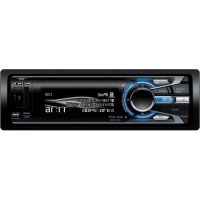
 DSX-A30 - Car stereo SONY - Free user manual and instructions
Find the device manual for free DSX-A30 SONY in PDF.


Download the instructions for your Car stereo in PDF format for free! Find your manual DSX-A30 - SONY and take your electronic device back in hand. On this page are published all the documents necessary for the use of your device. DSX-A30 by SONY.
USER MANUAL DSX-A30 SONY
IT Gebruiksaanwijzing
NL Be sure to install this unit in the dashboard of the car for safety. For installation and connections, see the supplied installation/connections manual. Notice for customers: the following information is only applicable to equipment sold in countries applying EU Directives The manufacturer of this product is Sony Corporation, 1-7-1 Konan Minato-ku Tokyo, 108-0075 Japan. The Authorized Representative for EMC and product safety is Sony Deutschland GmbH, Hedelfinger Strasse 61, 70327 Stuttgart, Germany. For any service or guarantee matters please refer to the addresses given in separate service or guarantee documents.
Disposal of Old Electrical & Electronic Equipment (Applicable in the European Union and other European countries with separate collection systems) This symbol on the product or on its packaging indicates that this product shall not be treated as household waste. Instead it shall be handed over to the applicable collection point for the recycling of electrical and electronic equipment. By ensuring this product is disposed of correctly, you will help prevent potential negative consequences for the environment and human health, which could otherwise be caused by inappropriate waste handling of this product. The recycling of materials will help to conserve natural resources. For more detailed information about recycling of this product, please contact your local Civic Office, your household waste disposal service or the shop where you purchased the product. Applicable accessory: Remote commander
Disposal of waste batteries (applicable in the European Union and other European countries with separate collection systems) This symbol on the battery or on the packaging indicates that the battery provided with this product shall not be treated as household waste. On certain batteries this symbol might be used in combination with a chemical symbol. The chemical symbols for mercury (Hg) or lead (Pb) are added if the battery contains more than 0.0005% mercury or 0.004% lead. By ensuring these batteries are disposed of correctly, you will help prevent potentially negative consequences for the environment and human health which could otherwise be caused by inappropriate waste handling of the battery. The recycling of the materials will help to conserve natural resources. In case of products that for safety, performance or data integrity reasons require a permanent connection with an incorporated battery, this battery should be replaced by qualified service staff only. To ensure that the battery will be treated properly, hand over the product at end-of-life to the applicable collection point for the recycling of electrical and electronic equipment. For all other batteries, please view the section on how to remove the battery from the product safely. Hand the battery over to the applicable collection point for the recycling of waste batteries. For more detailed information about recycling of this product or battery, please contact your local Civic Office, your household waste disposal service or the shop where you purchased the product.
Windows Media is either a registered trademark or trademark of Microsoft Corporation in the United States and/or other countries.
This product contains technology subject to certain intellectual property rights of Microsoft. Use or distribution of this technology outside of this product is prohibited without the appropriate license(s) from Microsoft. MPEG Layer-3 audio coding technology and patents licensed from Fraunhofer IIS and Thomson. Warning if your car’s ignition has no ACC position Be sure to set the Auto Off function (page 16). The unit will shut off completely and automatically in the set time after the unit is turned off, which prevents battery drain. If you do not set the Auto Off function, press and hold until the display disappears each time you turn the ignition off.
Getting Started Canceling the DEMO mode
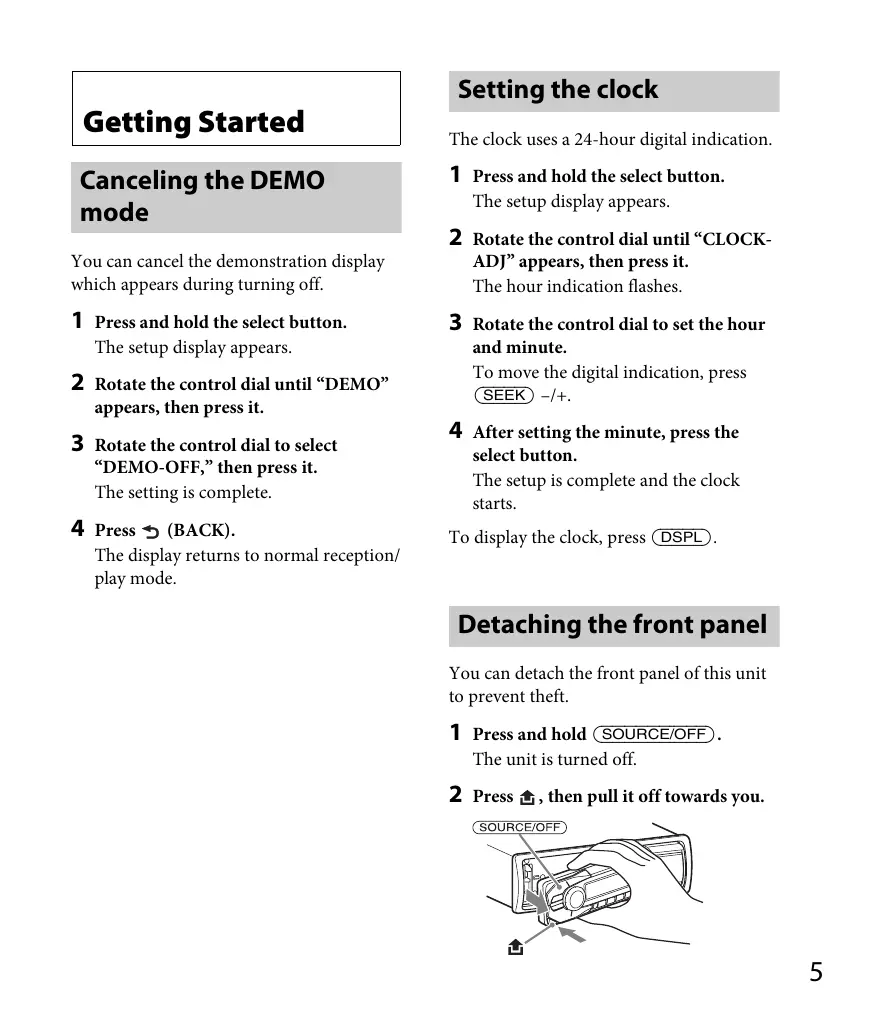
The clock uses a 24-hour digital indication.
Press and hold the select button. The setup display appears.
Rotate the control dial until “CLOCKADJ” appears, then press it. The hour indication flashes.
Rotate the control dial to set the hour and minute. To move the digital indication, press –/+.
After setting the minute, press the select button. The setup is complete and the clock starts.
You can cancel the demonstration display which appears during turning off.
Press and hold the select button. The setup display appears.
Rotate the control dial until “DEMO” appears, then press it.
Rotate the control dial to select “DEMO-OFF,” then press it. The setting is complete.
Press (BACK). The display returns to normal reception/ play mode.
Detaching the front panel You can detach the front panel of this unit to prevent theft.
Press and hold . The unit is turned off.
, then pull it off towards you.
Caution alarm If you turn the ignition switch to the OFF position without detaching the front panel, the caution alarm will sound for a few seconds. The alarm will only sound if the built-in amplifier is used. Note Do not subject the front panel to heat/high temperature or moisture. Avoid leaving it in a parked car or on a dashboard/rear tray.
Attaching the front panel Engage part of the front panel with part of the unit, as illustrated, and push the left side into position until it clicks.
Location of controls Main unit
This section contains instructions on the location of controls and basic operations.
(BROWSE) button page 14 To enter the Quick-BrowZer™ mode.
SOURCE/OFF button Press to turn on the power/change the source (Radio/USB/AUX). Press and hold for 1 second to turn off the power. Press and hold for more than 2 seconds to turn off the power and the display disappears. Control dial/select button page 15, 16
To adjust volume (rotate); enter sound setting (press); enter menu (press and hold); select setup items (press and rotate). MODE button page 10 Press to select the radio band (FM/MW/ LW). Display window
(BACK) button Press to return to the previous display.
(front panel release) button page 5
SEEK –/+ buttons Radio: To tune in stations automatically (press); find a station manually (press and hold). USB: To skip tracks (press); skip tracks continuously (press, then press again within about 1 second and hold); reverse/fast-forward a track (press and hold). Receptor for the remote commander AF (Alternative Frequencies)/ TA (Traffic Announcement)/ PTY (Program Type) button page 11, 11 To set AF and TA (press); select PTY (press and hold) in RDS. Number buttons Radio: To receive stored stations (press); store stations (press and hold). USB: /*: ALBUM / (during MP3/ WMA/AAC playback) To skip albums (press); skip albums continuously (press and hold). : PAUSE : SHUF page 13 DSPL (display)/SCRL (scroll) button page 11, 13 To change display items (press); scroll the display item (press and hold). USB connector page 12
AUX input jack page 17 * This button has a tactile dot. Note If the unit is turned off and the display disappears, it cannot be operated with the remote commander unless on the unit is pressed.
RM-X211 Remote commander
Remove the insulation film before use.
(+)/ (–) buttons To control USB, the same as / (ALBUM /) on the unit. Setup, sound setting, etc., can be operated by . DSPL/SCRL button
OFF button To turn off the power; stop the source. SOURCE button To turn on the power; change the source (Radio/USB/AUX). ()/ () buttons To control Radio/USB, the same as –/+ on the unit. Setup, sound setting, etc., can be operated by .
Number buttons To receive stored stations (press); store stations (press and hold). To pause playback (press ). * This button has a tactile dot.
Receiving the stored stations
Storing and receiving stations Caution When tuning in stations while driving, use Best Tuning Memory (BTM) to prevent an accident.
Storing automatically — BTM 1
Press repeatedly until “TUNER” appears. To change the band, press repeatedly. You can select from FM1, FM2, FM3, MW or LW.
Press and hold the select button. The setup display appears.
Rotate the control dial until “BTM” appears, then press it. The unit stores stations in order of frequency on the number buttons.
While receiving the station that you want to store, press and hold a number button ( to ) on the main unit until “MEMORY” appears*. * When the remote commander is used, the number buttons to are available.
Select the band, then press a number button ( to ) on the main unit*. * When the remote commander is used, the number buttons to are available.
Tuning automatically 1
Select the band, then press +/– to search for the station. Scanning stops when the unit receives a station. Repeat this procedure until the desired station is received. Tip
If you know the frequency of the station you want to listen to, press and hold +/– to locate the approximate frequency, then press +/– repeatedly to fine adjust to the desired frequency (manual tuning).
RDS FM stations with Radio Data System (RDS) service send inaudible digital information along with the regular radio program signal. Notes • Depending on the country/region, not all RDS functions may be available. • RDS will not work if the signal strength is too weak, or if the station you are tuned to is not transmitting RDS data.
Changing display items Press .
Setting AF (Alternative Frequencies) and TA (Traffic Announcement) AF continuously retunes the station with the strongest signal in a network, and TA provides current traffic information or traffic programs (TP) if received.
Press repeatedly until the desired setting appears.
activate AF and deactivate TA.
activate TA and deactivate AF.
activate both AF and TA.
deactivate both AF and TA.
Receiving emergency announcements With AF or TA on, the emergency announcements will automatically interrupt the currently selected source. Tip If you adjust the volume level during a traffic announcement, that level will be stored into memory for subsequent traffic announcements, independently from the regular volume level.
Staying with one regional program — REGIONAL When the AF function is on: this unit’s factory setting restricts reception to a specific region, so you will not be switched to another regional station with a stronger frequency. If you leave this regional program’s reception area, set “REG-OFF” in setup during FM reception (page 17). Note This function does not work in the UK and in some other areas.
Storing RDS stations with the AF and TA setting You can preset RDS stations along with the AF/TA setting. If you use the BTM function, only RDS stations are stored with the same AF/TA setting. If you preset manually, you can preset both RDS and non-RDS stations with the AF/TA setting for each.
Set AF/TA, then store the station with BTM or manually.
Selecting PTY (Program Types) Displays the currently received program type. Also searches your selected program type.
Press and hold (PTY) during FM reception. The current program type name appears if the station is transmitting PTY data.
Rotate the control dial until the desired program type appears, then press it. The unit starts to search for a station broadcasting the selected program type.
Type of programs NEWS (News), AFFAIRS (Current Affairs), INFO (Information), SPORT (Sports), EDUCATE (Education), DRAMA (Drama), CULTURE (Culture), SCIENCE (Science), VARIED (Varied), POP M (Pop Music), ROCK M (Rock Music), EASY M (M.O.R. Music), LIGHT M (Light classical), CLASSICS (Serious classical), OTHER M (Other Music), WEATHER (Weather), FINANCE (Finance), CHILDREN (Children’s program), SOCIAL A (Social Affairs), RELIGION (Religion), PHONE IN (Phone In), TRAVEL (Travel), LEISURE (Leisure), JAZZ (Jazz Music), COUNTRY (Country Music), NATION M (National Music), OLDIES (Oldies Music), FOLK M (Folk Music), DOCUMENT (Documentary)
USB devices • MSC (Mass Storage Class)-type USB devices compliant with the USB standard can be used. • Corresponding codec is MP3 (.mp3), WMA (.wma) and AAC (.m4a). • Backup of data in a USB device is recommended. For details on the compatibility of your USB device, visit the support site on the back cover. Note Connect the USB device after starting the engine. Depending on the USB device, malfunction or damage may occur if it is connected before starting the engine.
Playing back a USB device 1
Setting CT (Clock Time) The CT data from the RDS transmission sets the clock.
Open the USB cover, then connect the USB device to the USB connector with its USB cable.
Set “CT-ON” in setup (page 16).
Note The CT function may not work properly even though an RDS station is being received.
If a USB device is already connected, to start playback, press repeatedly until “USB” appears. To stop playback, press and hold for 1 second. To remove the USB device, stop the USB playback, then remove the USB device. Note Do not use USB devices so large or heavy that they may fall down due to vibration, or cause a loose connection.
Changing display items Displayed items may differ depending on the USB device, recording format and settings. Press .
Searching and playing tracks Playing tracks in various modes You can listen to tracks repeatedly (repeat play) or in random order (shuffle play). Available play modes differ depending on the selected sound source.
During playback, press and hold the select button.
Rotate the control dial to select “REPEAT,” then press it.
Rotate the control dial to select the setting, then press it.
Notes • The maximum number of displayable data is as follows. – folders (albums): 128 – files (tracks) per folder: 500 • It may take time for playback to begin, depending on the amount of recorded data. • DRM (Digital Rights Management) files may not be played. • During playback or fast-forward/reverse of a VBR (Variable Bit Rate) MP3/WMA/AAC file, elapsed playing time may not display accurately. • Playback of the following MP3/WMA/AAC files is not supported. – lossless compression – copyright-protected
track in normal order (Normal play).
During playback, press (SHUF) repeatedly until the desired play mode appears. Playback in selected play mode may take time to start.
album in random order.
device in random order.
track in normal order (Normal play).
Searching a track by name — Quick-BrowZer™
When entering the Quick-BrowZer mode, the repeat/shuffle setting is canceled.
Searching by skip items — Jump mode When many items are in a category, you can search the desired item quickly.
Press + in Quick-BrowZer mode. The item name will appear.
Rotate the control dial to select the item near the one desired. It skips in steps of 10% of the total item number.
Press the select button. The display returns to the QuickBrowZer mode and the selected item appears.
Rotate the control dial to select the desired item and press it. Playback starts if the selected item is a track.
You can search for a track in a USB device easily by category.
Press (BROWSE)*. The unit enters the Quick-BrowZer mode, and the list of search categories appears. When the track list appears, press (BACK) repeatedly until the desired search category appears. * During playback, press (BROWSE) for more than 2 seconds to directly return to the beginning of the category list (USB only).
Rotate the control dial to select the desired search category, then press it to confirm.
Repeat step 2 until the desired track is selected. Playback starts.
To cancel Jump mode, press –.
Sound Settings and Setup Menu Changing the sound settings Adjusting the sound characteristics 1
During reception/playback, press the select button.
Rotate the control dial until the desired menu item appears, then press it.
Rotate the control dial to select the setting, then press it.
The following items can be set: EQ3 PRST (EQ3 PRESET) (page 15)
FADER Adjusts the relative level: “FRONT-15 (F15)” – “CENTER (0)” – “REAR-15 (R15).” AUX VOL*2 (AUX Volume level) Adjusts the volume level for each connected auxiliary equipment: “+18 dB” – “0 dB” – “–8 dB.” This setting negates the need to adjust the volume level between sources. *1 When EQ3 is activated (page 16). *2 When AUX source is activated (page 18).
Enjoying sophisticated sound functions Selecting the sound quality — EQ3 Preset
You can select an equalizer curve from 7 equalizer curves (XPLOD, VOCAL, EDGE, CRUISE, SPACE, GRAVITY, CUSTOM or OFF).
EQ3 HIGH*1 (page 16)
During reception/playback, press the select button.
Rotate the control dial until “EQ3 PRST” appears, then press it.
Rotate the control dial until the desired equalizer curve appears, then press it.
BALANCE Adjusts the sound balance: “RIGHT-15 (R15)” – “CENTER (0)” – “LEFT-15 (L15).”
To cancel the equalizer curve, select “OFF” in step 3. Tip The equalizer curve setting can be memorized for each source.
Customizing the equalizer curve — EQ3 Setting “CUSTOM” of EQ3 allows you to make your own equalizer settings.
Select a source, then press the select button.
Rotate the control dial until “EQ3 LOW,” “EQ3 MID” or “EQ3 HIGH” appears, then press it.
Rotate the control dial to adjust the selected item, then press it. The volume level is adjustable in 1 dB steps, from –10 dB to +10 dB.
Adjusting setup items 1
Press and hold the select button. The setup display appears.
Rotate the control dial until the desired item appears, then press it.
Rotate the control dial to select the setting, then press it*. The setting is complete.
* For CLOCK-ADJ and BTM settings, step 4 is not necessary.
The following items can be set depending on the source and setting: CLOCK-ADJ (Clock Adjust) (page 5) CT (Clock Time) Activates the CT function: “ON,” “OFF” (page 12). BEEP Activates the beep sound: “ON,” “OFF.”
Repeat steps 2 and 3 to adjust the equalizer curve. To restore the factory-set equalizer curve, press and hold the select button before the setting is complete.
CAUT ALM*1 (Caution Alarm) Activates the caution alarm: “ON,” “OFF” (page 6). AUX-A*1 (AUX Audio) Activates the AUX source display: “ON,” “OFF” (page 17). AUTO OFF Shuts off automatically after a desired time when the unit is turned off: “NO,” “30S (Seconds),” “30M (Minutes),” “60M (Minutes).”
DEMO (Demonstration) Activates the demonstration: “ON,” “OFF.” DIMMER Changes the display brightness: “ON,” “OFF.” AUTO SCR (Auto Scroll) Scrolls long items automatically: “ON,” “OFF.” REGIONAL*2 Restricts reception to a specific region: “ON,” “OFF” (page 11). REPEAT (page 13) LOUDNESS Reinforces bass and treble for clear sound at low volume levels: “ON,” “OFF.” BTM (page 10)
Using optional equipment Auxiliary audio equipment By connecting an optional portable audio device to the AUX input jack (stereo mini jack) on the unit and then simply selecting the source, you can listen on your car speakers. Connecting the portable audio device
Turn off the portable audio device. Turn down the volume on the unit. Connect the portable audio device to the unit with a connecting cord (not supplied)*. * Be sure to use a straight type plug.
*1 When the unit is turned off. *2 When FM is received.
Adjusting the volume level Be sure to adjust the volume for each connected audio device before playback.
Turn down the volume on the unit.
Additional Information
Press repeatedly until “AUX” appears.
Start playback of the portable audio device at a moderate volume.
Set your usual listening volume on the unit. Adjust the input level (page 15).
• Cool off the unit beforehand if your car has been parked in direct sunlight. • Do not leave the front panel or audio devices brought in inside the car, or it may cause malfunction due to high temperature in direct sunlight. • Power antenna (aerial) extends automatically.
To maintain high sound quality Do not splash liquid onto the unit.
Playback order of MP3/WMA/ AAC files
MP3/WMA/AAC Folder (album) MP3/WMA/ AAC file (track)
If you have any questions or problems concerning your unit that are not covered in this manual, consult your nearest Sony dealer.
Cleaning the connectors
Maintenance Replacing the lithium battery of the remote commander When the battery becomes weak, the range of the remote commander becomes shorter. Replace the battery with a new CR2025 lithium battery. Use of any other battery may present a risk of fire or explosion.
The unit may not function properly if the connectors between the unit and the front panel are not clean. In order to prevent this, detach the front panel (page 5) and clean the connectors with a cotton swab. Do not apply too much force. Otherwise, the connectors may be damaged.
Notes Notes on the lithium battery • Keep the lithium battery out of the reach of children. Should the battery be swallowed, immediately consult a doctor. • Wipe the battery with a dry cloth to assure a good contact. • Be sure to observe the correct polarity when installing the battery. • Do not hold the battery with metallic tweezers, otherwise a short-circuit may occur. • Do not expose the battery to excessive heat such as direct sunlight, fire or the like.
• For safety, turn off the ignition before cleaning the connectors, and remove the key from the ignition switch. • Never touch the connectors directly with your fingers or with any metal device.
WARNING Battery may explode if mistreated. Do not recharge, disassemble, or dispose of in fire.
Specifications Tuner section FM Tuning range: 87.5 – 108.0 MHz Antenna (aerial) terminal: External antenna (aerial) connector Intermediate frequency: 25 kHz Usable sensitivity: 8 dBf Selectivity: 75 dB at 400 kHz Signal-to-noise ratio: 80 dB (stereo) Separation: 50 dB at 1 kHz Frequency response: 20 – 15,000 Hz
Dimensions: Approx. 178 × 50 × 120 mm (7 1/8 × 2 × 4 7/8 in) (w/h/d) Mounting dimensions: Approx. 182 × 53 × 103 mm (7 1/4 × 2 1/8 × 4 1/8 in) (w/h/d) Mass: Approx. 0.7 kg (1 lb 9 oz) Supplied accessories: Remote commander: RM-X211 Parts for installation and connections (1 set)
Your dealer may not handle some of the above listed accessories. Please ask the dealer for detailed information. Design and specifications are subject to change without notice.
MW/LW Tuning range: MW: 531 – 1,602 kHz LW: 153 – 279 kHz Antenna (aerial) terminal: External antenna (aerial) connector Intermediate frequency: 9,124.5 kHz or 9,115.5 kHz/4.5 kHz
Sensitivity: MW: 26 μV, LW: 45 μV USB Player section Interface: USB (Full-speed)
Maximum current: 500 mA Power amplifier section Output: Speaker outputs Speaker impedance: 4 – 8 ohms Maximum power output: 50 W × 4 (at 4 ohms)
Outputs: Audio outputs terminal (rear) Power antenna (aerial) relay control terminal Power amplifier control terminal Inputs: Remote controller input terminal Antenna (aerial) input terminal AUX input jack (stereo mini jack) USB signal input connector Power requirements: 12 V DC car battery (negative ground (earth))
Troubleshooting The following checklist will help you remedy problems you may encounter with your unit. Before going through the checklist below, check the connection and operating procedures. For details on using the fuse and removing the unit from the dashboard, refer to the installation/connections manual supplied with this unit. If the problem is not solved, visit the support site on the back cover.
General No power is being supplied to the unit. Check the connection or fuse. If the unit is turned off and the display disappears, it cannot be operated with the remote commander. – Turn on the unit.
The power antenna (aerial) does not extend. The power antenna (aerial) does not have a relay box. No sound. The ATT function is activated. The position of the fader control “FADER” is not set for a 2-speaker system. No beep sound. The beep sound is canceled (page 16). An optional power amplifier is connected and you are not using the built-in amplifier. The contents of the memory have been erased. The power supply lead or battery has been disconnected or it is not connected properly. Stored stations and correct time are erased. The fuse has blown. Makes noise when the position of the ignition is switched. The leads are not matched correctly with the car’s accessory power connector. During playback or reception, demonstration mode starts. If no operation is performed for 5 minutes with “DEMO-ON” set, demonstration mode starts. – Set “DEMO-OFF” (page 17). The display disappears from/does not appear in the display window. The dimmer is set to “DIM-ON” (page 17). The display disappears if you press and hold . – Press on the unit until the display appears. The connectors are dirty (page 19).
The Auto Off function does not operate. The unit is turned on. The Auto Off function activates after turning off the unit. – Turn off the unit.
Radio reception The stations cannot be received. The sound is hampered by noises. The connection is not correct. – Connect a power antenna (aerial) control lead (blue) or accessory power supply lead (red) to the power supply lead of a car’s antenna (aerial) booster (only when your car has built-in radio antenna (aerial) in the rear/side glass). – Check the connection of the car antenna (aerial). – If the auto antenna (aerial) will not go up, check the connection of the power antenna (aerial) control lead. Preset tuning is not possible. Store the correct frequency in the memory. The broadcast signal is too weak. Automatic tuning is not possible. The broadcast signal is too weak. – Perform manual tuning.
RDS The SEEK starts after a few seconds of listening. The station is non-TP or has weak signal. – Deactivate TA (page 11). No traffic announcements. Activate TA (page 11). The station does not broadcast any traffic announcements despite being TP. – Tune in another station.
PTY displays “- - - - - - - -.” The current station is not an RDS station. RDS data has not been received. The station does not specify the program type. Program service name flashes. There is no alternative frequency for the current station. – Press +/– while the program service name is flashing. “PI SEEK” appears and the unit starts searching for another frequency with the same PI (Program Identification) data.
USB playback You cannot play back items via a USB hub. This unit cannot recognize USB devices via a USB hub. Cannot play back items. A USB device does not work. – Reconnect it. The USB device takes longer to play back. The USB device contains files with a complicated tree structure. The sound is intermittent. The sound may be intermittent at a high-bitrate of more than 320 kbps.
Error displays/Messages CHECKING The unit is confirming the connection of a USB device. – Wait until confirming the connection is finished. ERROR There may be an internal malfunction. – Press for more than 2 seconds (the display disappears), then press again. ERROR-01 There may be an internal malfunction. – Check the connection. If the error indication remains on in the display, consult your nearest Sony dealer. The connection of speakers/amplifiers is incorrect. – See the installation/connections manual of this model to check the connection. ERROR-99 There may be an internal malfunction. – Press for more than 2 seconds (the display disappears), then press again. If the error indication remains on in the display, consult your nearest Sony dealer. NO AF There is no alternative frequency for the current station. – Press +/– while the program service name is flashing. The unit starts searching for another frequency with the same PI (Program Identification) data (“PI SEEK” appears).
NO MUSIC The USB device does not contain a music file. – Connect a USB device with a music file in it. NO NAME An album/artist/track name is not written in the USB. NO SUPRT (Not Supported) USB hub is not supported on this unit. The connected USB device is not supported. – For details on the compatibility of your USB device, visit the support site. NO TP The unit will continue searching for available TP stations. NO USB USB is selected as source without a USB device connected. A USB device or a USB cable has been disconnected during playback. – Be sure to connect a USB device and USB cable. OVERLOAD USB device is overloaded. – Disconnect the USB device, then change the source by pressing . – Indicates that the USB device is out of order, or an unsupported device is connected. READ The unit is reading all track and album information on the USB device. – Wait until reading is complete and playback starts automatically. Depending on the USB device structure, it may take more than a minute.
If these solutions do not help improve the situation, consult your nearest Sony dealer.
www.sony-europe.com/myproducts