
PC 455 ADORA - Refrigerator Philco - Free user manual and instructions
Find the device manual for free PC 455 ADORA Philco in PDF.


| Product Type | Freestanding Refrigerator |
| Model | PC 455 ADORA |
| Brand | Philco |
| Height (cm) | 85 |
| Width (cm) | 50 |
| Depth (cm) | 55 |
| Weight (kg) | 22 |
| Power Supply | 220-240 V / 50 Hz |
| Energy Class | A+ |
| Noise Level (dB) | 40 |
| Total Capacity (L) | 155 |
| Refrigerator Capacity (L) | 120 |
| Freezer Capacity (L) | 35 |
| Temperature Control | Mechanical thermostat, adjustable range 0°C to 10°C |
| Defrost Type | Automatic (refrigerator) / Manual (freezer) |
| Shelves | 3 adjustable glass shelves |
| Door Hinge | Reversible (left/right) with simple tools |
| Cooling Technology | Static (natural convection) |
| Compressor Type | Standard, R600a refrigerant |
| Interior Light | LED (automatic on door opening) |
| Repairability Index | 6.5/10 |
| Spare Parts Availability | At least 5 years from launch |
| Annual Energy Consumption (kWh) | 210 |
Frequently Asked Questions - PC 455 ADORA Philco
User questions about PC 455 ADORA Philco
0 question about this device. Answer the ones you know or ask your own.
Ask a new question about this device
Download the instructions for your Refrigerator in PDF format for free! Find your manual PC 455 ADORA - Philco and take your electronic device back in hand. On this page are published all the documents necessary for the use of your device. PC 455 ADORA by Philco.
USER MANUAL PC 455 ADORA Philco
Famous for Quality the World Over
Dear customer,
Thank you for buying a PHILCO brand product. So that your appliance serves you well, please read all the instructions in this user's manual.
CONTENTS
SECTION 1: BEFORE USING YOUR FRIDGE ...... 2
- General warnings....2
• Security warnings 4
• Installation and Operation of your Refrigerator ....6
• Before Starting to Operate Your Refrigerator ....6
• Information on No-Frost technology....7
SECTION 2: PRODUCT DESCRIPTION....8
• Product description....8
• Display and Control Panel ....9
SECTION 3: SHIPMENT AND REPOSITIONING....10
SECTION 4: USAGE INFORMATION .... 11
- Operating Your Fridge....11
- Cooler Temperature Settings....11
• Super Freezer Mode 11 - Friendly lighting (light sensor)....12
• Freezer Temperature Settings 12 - Warnings about Temperature Adjustments....13
- Accessories....13
- Icebox....13
• Freezer Basket......14 - Odour filter 14
- Railed Storage Compartment....14
- Crisper Air Adjustment Button....15
SECTION 5: PLACING FOOD .... 16
• Refrigerator Compartment 16
- Deep Freezer Compartment .... 16
SECTION 6: CLEANING AND MAINTENANCE....20
• Cleaning Door Glasses 21
• Defrosting....21
- Replacing lighting material....21
SECTION 7: BEFORE CALLING SERVICE 22
- Recommendations for Energy Saving....23
SECTION 8: INFORMATION SHEET 24
SECTION 1: BEFORE USING YOUR FRIDGE
General warnings
WARNING: Keep ventilation openings, in the appliance enclosure or in the built-in structure, clear of obstruction.
WARNING: Do not use mechanical devices or other means to accelerate the defrosting process, other than those recommended by the manufacturer.
WARNING: Do not use electrical appliances inside the food storage compartments of the appliance, unless they are of the type recommended by the manufacturer.
WARNING: Do not damage the refrigerant circuit.
WARNING: To avoid a hazard due to the instability of the appliance, it must be fixed in accordance with the instructions.
- If your appliance uses R600a as a refrigerant – you can learn this information from the label on the cooler- you should be careful during shipment and montage to prevent your appliance's cooler elements from being damaged. Although R600a is a environmental friendly and natural gas, as it is explosive, in case of a leakage to be occurred due to a damage in the cooler elements move your fridge from open flame or heat sources and ventilate the room where the appliance is located for a few minutes.
- While carrying and positioning the fridge, do not give damage to the cooler gas circuit.
- Do not store explosive substances such as aerosol cans with a flammable propellant in this appliance.
- This appliance is intended to be used in household and similar applications such as;
- staff kitchen areas in shops, offices and other work environments
- farm houses and by clients in hotels, motels and other residential type environments
- bed and breakfast type environments;
- catering and similar non-retail applications
- If the socket does not match the refrigerator plug, it must be replaced by the manufacturer, its service agent or similar qualified persons in order to avoid a hazard.
- A specially grounded plug has been connected to the power cable of your refrigerator. This plug should be used with a specially grounded socket of 16 amperes. If there is no such socket in your house, please have it installed by an authorized electrician.
- This appliance can be used by children aged from 8 years and above and persons with reduced physical, sensory or mental capabilities or lack of experience and knowledge if they have been given supervision or instruction concerning use of the appliance in a safe way and understandt the hazard involved. Children shall not play with the appliance. Cleaning and user maintenance, shall not be made by children without supervision.
- If the supply cord is demaged, it must be replaced by the manufacturer, its service agent or similar qualified persons in order to avoid a hazard.
Notes:
- Please read the instruction manual carefully before installing and using your appliance.
• We are not responsible of the damage occurred due to misuse. -
Follow all instructions on your appliance and instruction manual, and keep this manual in a safe place to resolve the problems that may occur in the future.
-
This appliance is produced to be used at houses and it can only be used in house and for the specified purposes. It is not suitable for commercial or common use. Such use will cause the guarantee of the appliance to be cancelled and our company will not be responsible for the losses to be occurred.
- This appliance is produced to be used in houses and it is only suitable for cooling / storing foods. It is not suitable for commercial or common use and/or for storing substances except for food. Our company is not responsible for the losses to be occurred in the contrary case.
Grounding instructions
- This appliance must be grounded. In the event of a failure or malfunction the grounding will reduce the risk of injury by electrical shock by ensuring a lower.
- You must connect the power plug into an appropriate power socket installed and grounded in accordance with local laws and regulations.
Security warnings
- Please do not use a multi-way socket or an extension cable.
- Please do not insert a plug whose cable is damaged, torn or worn-out into the socket.
- Please never pull, bend or damage the cable.

natural_image
Illustration of four different techniques for using a tool, showing hand positioning and cutting process (no text or symbols)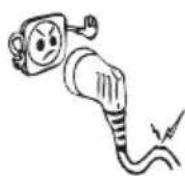
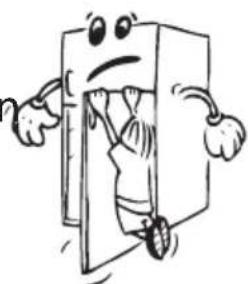
- This product has been designed for utilization by adults; please do not let children play with the device and dangle their body by hanging on the door.
natural_image
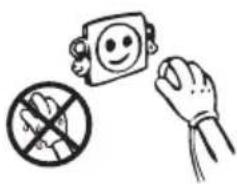
Cartoon illustration of a character inside a door, showing facial expression and limbs (no text or symbols)- Never ever take out the plug from the socket with wet hands in order not to cause any electrical shock!
- Please do not ever place acidic drinks in glass bottles and cans in the deep-freeze compartment of your refrigerator. Bottles and cans may burst out.
- For your safety, please do not place any explosive and flammable materials in the refrigerator. Place the drinks with high alcohol content into the cooling compartment of the device with their lids tightly closed and in a vertical position.
- Avoid any manual contact as you take out the ice made in the deep freeze compartment; the ice may cause burns and/or cuts.
- Never ever touch the frozen food with bare hands! Do not eat the ice cream and ice cubes immediately after you taken them out of the deep freeze compartment!
- Please do not refreeze the frozen food once they are thawed. It may pose a danger for your health since it might cause problems such as food poisoning.
- Please do not cover the body and/or top of the refrigerator with cloth, table cover etc. This will negatively affect the performance of the refrigerator.
- Secure the accessories inside the appliance in order to prevent them get damaged while moving.
natural_image
Illustration of a hand holding a smiling face icon, with a crossed-out hand symbol nearby (no text or labels)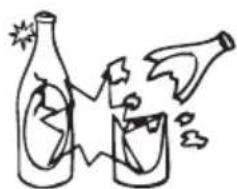
natural_image
Simple line drawing of a bottle, glass, and spray bottle (no text or symbols)
Installation and Operation of your Refrigerator
Before starting to use your fridge, you should pay attention to the following points:
- The operation voltage of your refrigerator is 220-240 V and 50 Hz. - Our company shall not be held responsible for damages that may arise due to utilization with no grounding installation.
- Place your refrigerator in a suitable spot that it will not be exposed to direct sunlight.
- It should be at least 50 cm away from heat sources such as cookers, ovens, wing radiators and stoves and at least 5 cm away from electrical ovens.
- Your refrigerator should not be used in the open air and should not remain under the rain.
- If your refrigerator is juxtaposed with a deep freeze, it is necessary to leave a space of at least 2 cm between them in order to prevent condensation on the outer surfaces.
- Please do not place any heavy objects on your refrigerator and place your refrigerator in a suitable spot in such a way that there will be a free space of minimum 15 cm on the top.
- If your are going to place the refrigerator beside your kitchen cabinets then you should keep a clearance of at least 2 cm's between them.
- To prevent the condenser (the black backside component with fins) from touching the wall, put on the plastic distance guide in its place rotating 90°.
- Refrigerator should be placed against a wall with a free distance not exceeding 75mm.
- To ensure smooth and vibration-free operation of your refrigerator, the adjustable front feet must be set at the suitable height and mutually balanced. You can ensure this by turning the adjustable feet clockwise (or counter-clockwise). This process should be performed before the food is placed in the refrigerator.
- Before using your refrigerator, wipe all its parts with warm water in which you shall add one teaspoon of food soda, then rinse it with clean water and dry it. After the cleaning process is completed, place all the parts back.
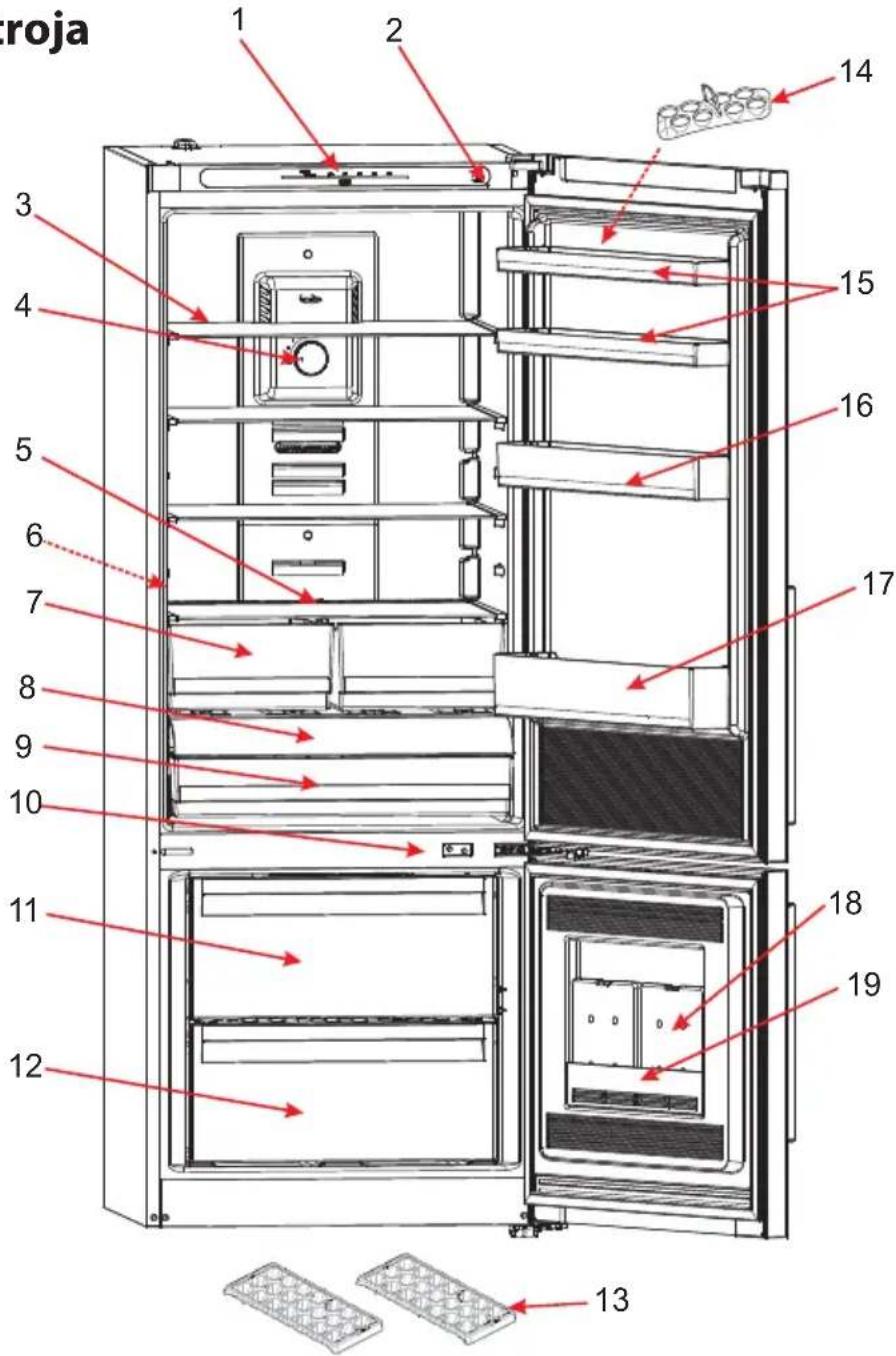
- As the fluid inside the cooler accumulator in the cooler door (see page 24, item 19) is chemical, accumulator door should not be damaged and the fluid inside it should not be drunk.

Before Starting to Operate Your Refrigerator
- During the first operation or to ensure the efficient operation of the device following the relocation processes, allow your refrigerator to remain idle for 3 hours (in a vertical position), then insert the plug to the socket. Otherwise, you may damage the compressor.
- The first time you operate your refrigerator, an odor might be smelt. This odor shall disappear once your refrigerator starts cooling.

natural_image
Simple line drawing of a smiling face on a square object held by a hand (no text or symbols)Information on No-Frost technology
No-frost refrigerators differ from other static refrigerators in their operating principle.
In normal fridges, the humidity entering the fridge due to door openings and the humidity inherent in the food causes freezing in the freezer department. To defrost the frost and ice in the freezer compartment, you are periodically required to turn off the fridge, place the food that needs to be kept frozen in a separately cooled container, and remove the ice gathered in the freezer department.
The situation is completely different in no-frost fridges. Dry and cold air is blown into the fridge and freezer compartments homogeneously and evenly from several points via a blower fan. Cold air dispersed homogeneously and evenly between the shelves cools all of your food equally and uniformly, thus preventing humidity and freezing.
Therefore your no-frost fridge allows you ease of use, in addition to its huge capacity and stylish appearance.

natural_image
Technical line drawing of a refrigerator interior with doors, refrigerators, and airbags (no text or labels)SECTION 2: PRODUCT DESCRIPTION
Product description

This figure has been drawn for information purposes about parts and accessories of the appliance. Parts may vary according to the model of the appliance.
Display and Control Panel

Freezer partition temperature setting button
This button allows setting temperature of the freezer. In order to set values for freezer partition, press this button. Use this button also to activate SF mode.
SR light
In case of a problem within the fridge, the alarm and SR will release red light and the appliance will emit audible alarm.
Alarm light
In case any of the doors remains open for more than 2 minutes, the alarm will release red light and alert sound will be released.
Lv light
When mains voltage is very low, this symbol will light on. Red warning lights will go off when mains voltage raises the appropriate level.
SECTION 3: SHIPMENT AND REPOSITIONING
• Original package and foam may be kept for re-transportation (optionally).
- You should fasten your fridge with thick package, bands or strong cords and follow the instructions for transportation on the package for re-transportation.
- Remove movable parts (shelves, accessories, vegetable bins etc.) or fi x them into the fridge against shocks using bands during re-positioning and transportation.

natural_image
Simple line drawing of two children playing a board game (no text or symbols)
Carry your fridge in the upright position.


Pay attention to glass surface when transporting

SECTION 4: USAGE INFORMATION
Operating Your Fridge

Note:
Your appliance will check its own status for about 25 seconds after switching for the first time. So, it will be a reasonable action to make all usage settings 25 seconds after switching on.
Cooler Temperature Settings

This allows automatic adjustment of temperature settings on the cooler compartment of your refrigerator. It may be adjusted to any setting between 1 and 5. Cooling level is increased when the thermostat setting knob is rotated from 1 to 5.
Location of thermostat;
5: This setting is used for more cooling.
3 - 4: For regular use and best performance.
1 - 2: This setting is used for less cooling.
You can operate your refrigerator with a lower cooling level in winter to save energy.
Super Freezer Mode
When would it be used?
• To freeze huge quantities of food.
• To freeze fast food.
• To freeze food quickly.
• To store seasonal food for a long time.
How to use?
- Press freezer button until super freezing light comes on.
- If you do not press any button within 3 seconds, the setting will be made once „Super freezing“ appears. Led will blink for 5 times and it will beep.
• Super freezing symbol will be displayed during this mode.
- Maximum amount of fresh food (in kilograms) to be frozen within 24 hours is shown on the appliance label.
- For optimal appliance performance in maximum freezer capacity, set the appliance to active SF mode 3 hours before you put the fresh food into the freezer.
• Freezing operation will be completed 24 hours after all fresh food was placed.
During this mode:
- If you press freezing button, super freezing led will blink; if you do not press any button within 3 seconds, the mode will be cancelled and the setting will be restored to the previous one.

Note:
"Super Freezer" mode will be automatically cancelled after 24 hours or when freezer sensor temperature drops beneath -32 °C.
Friendly lighting (light sensor)
If you want the inner lighting of your fridge to work according to ambient light, you can choose this mode. You should press the „Freezer Compartment Temperature Setting“ button for 3 seconds to activate this mode. To cancel, you should repeat the same.
When this mode is activated, in case the ambient light is enough, your device's inner lighting will not turn on.
Freezer Temperature Settings
• The initial temperature of the Setting Display is -18^ .
- Press freezer setting button once.
- Once you press the button for the first time, the last value set will blink on the display.
• Every time you press the button, the setting temperature will decrease. (-16°C, -18°C, -20°C, super freezing)
- If you press freezer setting button until super freezer symbol is displayed on Freezer Settings Display and you do not press any button within the following 3 seconds, Super Freezing will blink.
• If you keep on pressing, it will restart from -16^ .
Warnings about Temperature Adjustments

- Your temperature adjustments will not be deleted when an energy breakdown occurs.
-
It is not recommended that you operate your fridge in environments colder than 10^ C in terms of its efficiency.
-
Temperature adjustments should be made according to the frequency of door openings, the quantity of food kept inside the fridge and ambient temperature of the place of your fridge.
- Your fridge should be operated up to 24 hours according to the ambient temperature without interruption after being plugged in to be completely cooled. Do not open doors of your fridge frequently and do not place much food inside it in this period.
- A 5 minute delaying function is applied to prevent damage to the compressor of your fridge, when you take the plug off and then plug it on again to operate it or when an energy breakdown occurs. Your fridge will start to operate normally after 5 minutes.
- Your fridge is designed to operate in the ambient temperature intervals stated in the standards, according to the climate class stated in the information label. We do not recommend operating your fridge out of stated temperatures value limits in terms of cooling eff ectiveness.
| Climate Class Ambient temperature (°C) | |
| T 16 to 43 | |
| ST 16 to 38 | |
| N 16 to 32 | |
| SN 10 to 32 | |
Note:
- If the ambient temperature is under 25°C, the fridge settings should be made between „1 or 3 position“.
-
If the ambient temperature is over 25^ C, the fridge setting should be incremented until reaching sufficient cooling.
-
For optimum setting, the fridge should be set to -18^ or -20^ .
- If you use the fridge in places where ambient temperature is very high in summer, you should set freezer thermostat to -24°C.
Accessories
Icebox
- To remove the icebox, first pull the upper basket to the end. Then, hold the front side of icebox and remove it.
• Fill 34 of icebox with water and insert it.
• You can take your ice approximately 2 hours later.
• You can remove icebox and service.
Note:
When placing the icebox after filling with water, make sure that you position it horizontally without tilting. Otherwise, water inside icebox may pour on the basket.

natural_image
3D illustration of a refrigerator interior showing internal compartments with blue liquid (no text or symbols)Freezer Basket
- This partition allows your food to be stored in a more organized manner and accessed more easily.
- In order to remove freezer baskets; pull it towards yourself to the end, and lift its front side upward by grasping the handles on the sides of the basket and remove it.
- In order to fit freezer baskets, follow the abovementioned process reversely.

natural_image
3D illustration of a refrigerator interior showing blue insulation material being removed, with an arrow indicating the process (no text or symbols present)Note:
When closing freezer door, ensure that freezer baskets are entirely closed. When removing freezer baskets, always grasp the handles on the sides of basket.
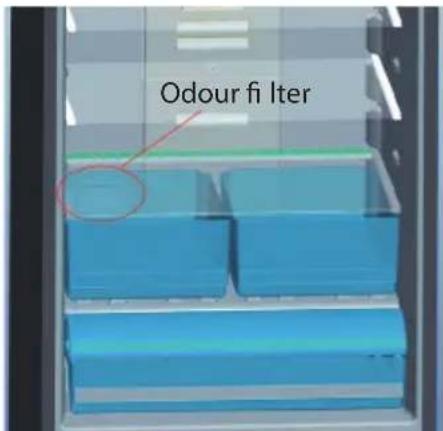
Odour fi Iter
Disturbing odours in cooler partition are removed via an odour filter in this area.
Railed Storage Compartment
Railed storage compartment offers 2 separate functional usages:

1- Usage as 0°C Compartment: In order to use this function of the compartment, switch on the sliding door shown on the figure.
2- Usage as Crisper: In order to use this compartment as crisper, you should close the sliding door.
- When railed storage compartment is used as 0°C compartment, it ensures that your food is preserved at 0°C. You can keep the frozen foods that you take out of the deepfreeze compartment in order to defrost them or you can keep the meats and cleaned fishes (in plastic bags or packets) etc. which you will use within 1-2 days without need for freezing. (Water is frozen in 0°C but the foods including salt or sugar can be frozen in colder environments.)
- Open railed storage compartment by pulling it towards yourself slowly. When doing this, the door will open automatically.
! Please do not put the food you would like frozen or iceboxes in this partition.

natural_image
Interior view of a refrigerator with blue shelves and door (no visible text or symbols)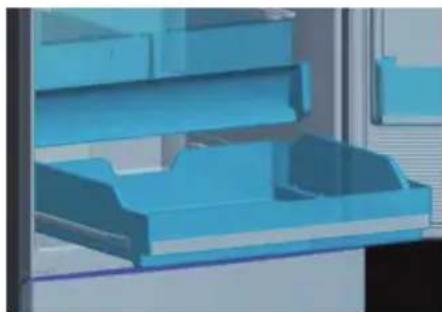
natural_image
Close-up of a blue plastic appliance with shelves and grilles (no visible text or symbols)
natural_image
Interior view of a refrigerator with blue shelves and glass door (no visible text or symbols)Figure -1- Figure -2- Figure -3-
In order to remove railed storage compartment;
• Lift the door and open it to the end. (Picture-1)
- Slide the partition on the rails and pull it towards yourself. (Picture-2)
- Remove the partition by freeing the wheels on the rails out from the stoppage point. (Picture-3)
Crisper Air Adjustment Button
Turn the crisper valve on the rear side of the crisper to open position when the crisper is filled excessively. This way, the air intake into the crisper is adjusted and food remains fresh for a longer period of time.
If you witness condensation on the glass shelf, you must open the slap behind the shelf.

natural_image
3D rendered mechanical part with blue and gray surfaces and a red directional arrow indicating motion (no text or symbols)SECTION 5: PLACING FOOD
Refrigerator Compartment
- Food should be placed to the fridge in closed containers or covered with appropriate material.
• Hot food and beverages should be cooled to room temperature before being placed in the fridge. - Do not thrust packed food or containers to the lamp or door of the fridge compartment.
• Vegetables and fruits: can be placed to the vegetable bin directly without being wrapped.
• Some suggestions on the placing and storing of your food in the fridge compartment are supplied below.
| Food Storing time | Where to place in the fridge department | |
| Vegetables and fruits 1 | week In the Crisper (without being wrapped) | |
| Meat and fi sh 2 to 3 days | Wrapped in plastic foil or bags or in a meat container (on glass shelf) | |
| Fresh cheese 3 to 4 days In special door shelf | ||
| Butter and Margarine 1 | week In special door shelf | |
| Bottled product, Milk and Yoghurt | Until the expiry date recommended by the producer | In special door shelf |
| Eggs 1 month In the egg shelf | ||
| Cooked food | All shelves | |

NOTE:
Potatoes, onion and garlic shouldn't be kept in the fridge.
Deep Freezer Compartment
• To store frozen food for a long time and have ice, please use deep freezer of your fridge.
- If you want to use your fridge with maximum freezing capacity: After placing frozen food into upper basket rather than other baskets, run Super Freezing mode. It will be automatically stopped 24 hours after Super Freezing mode is activated.
* Place the food to be frozen into upper basket of freezer partition without exceeding freezing capacity of your fridge (for model 466).
* Place the food to be frozen into lower basket of freezer partition without exceeding freezing capacity of your fridge (for model 566).
* When using Super Freezing mode, you should not place already-frozen food next to fresh food you want to freeze.
- After placing them to another place, reactivate „Super Freezing“ mode. You can place your food near other food after having them frozen (at least 24 hours after 2nd activation of „Super Freezing“ mode).
- Please do not place the food you will freeze near already-frozen food.
- Freeze food (meat, mince meat, fish, etc.) after dividing them into parts that you can consume at one time.
- Please never refreeze frozen food after thawing them. It may be hazardous to your health as it may lead to food poisoning.
-
Do not place hot food to the freezer before cooling them. This may cause other frozen food in the freezer to get decayed.
-
When buying frozen food, make sure that it was frozen under appropriate conditions and its package is not torn.
- Follow the instructions for storing conditions on the package of the frozen food while storing them. In case of no description, food should be consumed as soon as possible.
- Frozen food should be carried without damaging and placed in cooling shelf as soon as possible. Do not use door shelves for freezing.
- In case of humidification on package of frozen food and a smelly odour, food may have been stored under inappropriate conditions beforehand and it may have gotten decayed. Do not buy those kinds of food.
- Storing time for frozen food may differ according to the ambient temperature, frequency of door openings, thermostat adjustments, type of food and the time between the buying of the food and placing of the food in the freezer. Always follow instructions on the package and do not exceed storing period.
- If you leave the door of freezer open for a long time, frosting will appear on the lower stage of freezer. Thus, air circulation will be obstructed. In order to avoid this, first unplug the cord and wait until thawed. After ice melts, you should clean the freezer.
• You can take off baskets, cover, etc. to increase storing volume of freezer.
• Volume specified on the product label shows the value without baskets, covers, etc.
Cooling Accumulator
* In case of any power failure or power cut, cooling accumulators may be employed to slow thawing down. The longest storing period is ensured when cooling accumulator is placed directly on the food in upper partition.
* It may be stored in cooling accumulator partition to save area.
* Cooling accumulator may also be used to temporarily cool food down (e.g. in a cold bag).
Some suggestions on the placing and storing of your food in the freezer compartment are supplied pages.
| Meat and fi sh Preparation | Storing time (months) | Thawing time in room temperature (hours) |
| Steak Wrapping in a foil 6-10 1-2 | ||
| Lamb meat Wrapping in a foil 6-8 1-2 | ||
| Veal roast | Wrapping in a foil 6-10 1-2 | |
| Veal cubes | In small pieces | 6-10 1-2 |
| Lamb cubes | In pieces | 4-8 2-3 |
| Minced meat | In packages without using spices | 1-3 2-3 |
| Giblets (pieces) | In pieces | 1-3 1-2 |
| Bologna sausage/salami | Should be packaged even if it has membrane | |
| Chicken and turkey Wrapping in a foil 7-8 | 10-12 | |
| Goose and Duck | Wrapping in a foil | 4-8 |
| Deer - Rabbit - Wild boar | In 2.5 kg portions and as fillets | 9-12 |
| Meat and fi sh Preparation | Storing time (months) | Thawing time in room temperature (hours) | |
| Fresshwater fi shes (Salmon, Carp, Crane, Siluroidea) | After cleaning the bowels and scales of the fi sh, wash and dry it; and if necessary, cut the tail and head. | 2 | Until it is thawed completely |
| Lean fi sh; bass, turbot, fl ounder | 4-8 | Until it is thawed completely | |
| Fatty fi shes (Tunny, Mackarel, bluefi sh, anchovy) | 2-4 | Until it is thawed completely | |
| Shellfi sh Cleaned and in bags 4-6 | Until it is thawed completely | ||
| Caviar | In its package, aluminium or plastic container | 2-3 | Until it is thawed completely |
| Snail | In salty water, aluminium or plastic container | 3 | Until it is thawed completely |

Note:
Frozen meat should be cooked as fresh meat after being thawed. If the meat is not cooked after being thawed, it should never be frozen again.
| Vegetables and Fruits | Preparation | Storing time (months) | Thawing time in room temperature (hours) |
| Cauliflower | Take the leaves apart, cut the heart into pieces, and leave it in water with a little lemon juice for a while | 10-12 | It can be used as frozen |
| String beans and beans | Wash and cut to small pieces 10-13 | It can be used as frozen | |
| Beans Hull and wash | 12 | It can be used as frozen | |
| Mushroom and asparagus | Wash and cut to small pieces 6-9 | It can be used as frozen | |
| Cabbage Cleaned 6-8 | 2 | ||
| Eggplant Cut to pieces of 2cm after washing | 10-12 | Separate them from one another | |
| Corn | Clean and pack with its stem or as sweetcorn | 12 | It can be used as frozen |
| Carrot | Clean and cut to slices | 12 | It can be used as frozen |
| Pepper | Cut the stem, cut into two pieces and remove the core | 8-10 | It can be used as frozen |
| Spinach | Washed | 6-9 2 | |
| Apple and pear | Peel and slice | 8-10 | 5-in fridge |
| Apricot and Peach Wash and hull 4-6 4-in fridge | |||
| Strawberry and Blackberry | Yıkayıp ayıklayın 8-12 2 | ||
| Cooked fruits | Adding 10 % of sugar in the container | 12 | 4 |
| Plum, cherry, sourberry | Wash and hull the stems 8-12 5-7 | ||
| Dairy Products Pastry | Preparation | Storing time (months) | Storing Conditions | ||
| Packet (Homogenize) Milk | In its own packet 2 -3 Only homogeneous products | ||||
| Cheese-excluding white cheese | In slices 6 -8 | Original package may be used for short storing period. It should be wrapped in foil for longer periods. | |||
| Butter, margarine In its package 6 | |||||
| * Egg | Albumen | 10 -12 | 30 gr of it is equal to a yolk. | In closed container | |
| Egg mixture (Albumen – yolk) | Mixed completely, you may add a pinch of salt or sugar to prevent thickening | 10 | 50 gr of it is equal to a yolk. | ||
| Yolk | Mixed completely, you may add a pinch of salt or sugar to prevent thickening | 8 -10 | 20 gr of it is equal to a yolk. | ||
* Should never be frozen with its shell. Albumen and yolk should be frozen individually or completely mixed.
| Storing time (months) | Thawing time in room temperature (hours) | Thawing time in oven (minutes) | |
| Bread | 4-6 | 2-3 | 4-5 (220-225 °C) |
| Biscuits | 3-6 | 1-1,5 | 5-8 (190-200 °C) |
| Pastry | 1-3 | 2-3 | 5-10 (200-225 °C) |
| Pie | 1-1,5 | 3-4 | 5-8 (190-200 °C) |
| Phy Ilo dough | 2-3 | 1-1,5 | 5-8 (190-200 °C) |
| Pizza | 2-3 | 2-4 | 15-20 (200 °C) |
Some spices in cooked food (aniseed, basil, dill, vinegar, spice mix, ginger, garlic, onion, mustard, thyme, marjoram, black pepper, bologna sausage etc.) may have a foul taste when stored for a long time. Therefore, frozen food should be spiced just a little or spice should be added after the food is thawed.
The storing time for the food depends on the oil used. Margarines, veal fat, olive oil and butter are suitable, peanut oil and lard are not suitable.
Cooked food in liquid form should be frozen in plastic containers; other food should be frozen wrapped in plastic foil or in plastic bags.
SECTION 6: CLEANING AND MAINTENANCE

Make sure to unplug the fridge before starting to clean it.
• Do not wash your fridge by pouring water.
- You can wipe the inner and outer sides of your appliance with a soft cloth or a sponge using warm and soapy water. Cleaning water must not penetrate into holes in front-bottom side of freezer partition, instrument panel or lighting systems.
- Remove the parts individually and clean with soapy water. Do not wash in washing machine.
- Never use flammable, explosive or corrosive material like thinner, gas, acid for cleaning.
- The condenser (the back part with black wings) should be cleaned using a vacuum cleaner or a dry brush at least once a year. This will help your freezer to operate more efficiently and will enable you to save energy.

natural_image
Illustration of a hand holding a smiling emoji next to a box with a sad face, and another hand reaching toward it (no text or symbols)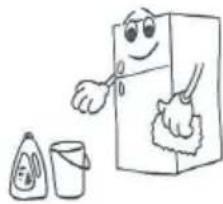
natural_image
Cartoon illustration of a refrigerator with a smile and a hand brushing it, next to a cup and a bottle (no text or symbols)
natural_image
Cartoon illustration of a smiling refrigerator with arms pointing at it, accompanied by a pencil and bowl (no text or symbols)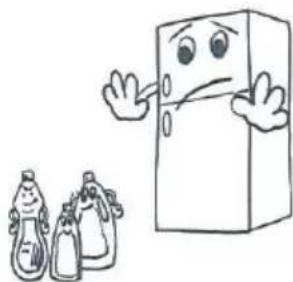
natural_image
Cartoon illustration of a smiling refrigerator with arms and legs, accompanied by two smaller objects (no text or symbols)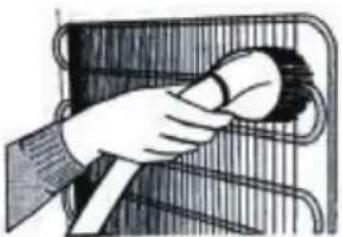
natural_image
Illustration of a hand holding a cylindrical object inside a rack (no text or symbols visible)Cleaning Door Glasses
Water based products which are not abrasive should be used in cleaning glasses.
Defrosting
- Your fridge defrosts automatically. Water produced by defrosting flows to evaporating container passing through water collecting groove, and vaporizes here by itself.

Replacing lighting material
Please call service technician.

SECTION 7: BEFORE CALLING SERVICE
Check Warnings

Your fridge warns you if the temperatures for fridge and freezer departments are in improper levels or when a problem occurs in the appliance. Warning codes will be displayed on Cooler and Freezer Indicators.
| ERROR CODE | MEANING REASON DO... | ||
| SR Failure | re warning Indicated when one or more parts of the fridge fail or in case of a problem in cooling system. | Contact the nearest authorized technical service as soon as possible. | |
| LV Low voltage | It switches to standby status when voltage supply of fridge lowers below 170 Volt. | This feature will avoid compressor from getting damaged due to low voltage.Once voltage supply of fridge reaches the desired level, it will automatically start to run. | |
If your fridge is not operating;
• Is there any electrical faults?
• Is your appliance plugged?
- Is the fuse of the socket outlet that the plug is plugged or the main fuse blown?
- Is there any fault in the socket outlet? Examine this by plugging your fridge into a socket outlet which you are sure that is working.
If your fridge is operating too loudly;
Normal Noises
Cracking (Ice cracking) Noise:
• During automatic defrosting.
- When the appliance is cooled or warmed (due to expansion of appliance material).
Short cracking:
Heard when the thermostat switches the compressor on/off.
Compressor noise (Normal motor noise):
This noise means that the compressor operates normally Compressor may cause more noise for a short time when it is activated.
Bubbling noise and splash:
This noise is caused by the flow of the refrigerant in the tubes of the system.
Water flow noise:
Normal flow noise of water flowing to the evaporation container during defrosting. This noise can be heard during defrosting.
Air Blow Noise:
Normal fan noise. This noise can be heard in No-Frost fridge during normal operation of the system due to the circulation of air.
If the edges of fridge cabinet that the door joint contact are warm;
Especially in summer (hot weather), the surfaces that the joint contact may get warmer during the operation of the compressor, this is normal.
If humidity builds up inside the fridge;
- Are all food packed properly? Are the containers dried before placing them in the fridge?
- Are the fridge doors opened frequently? Humidity of the room gets in the fridge when the doors are opened. Humidity build up will be faster when you open the doors more frequently, especially if the humidity of the room is high.
• Building up of water drops on the rear wall after automatic defrosting is normal. (in Static Models)
If the doors are not opened and closed properly;
- Do the food packages prevent closing of the door?
- Are the door compartments, shelves and drawers placed properly?
- Are door gaskets broken or torn?
• Is your fridge on a level surface?
If your fridge is not cooling enough;
See page 11. (Warning regarding temperature settings).
IMPORTANT NOTES:

- Compressor protection thermal fuse will be blown after sudden power breakdowns or after unplugging the appliance, because the gas in the cooling system is not stabilized yet. Your fridge will start after 5 to 10 minutes; there is nothing to worry about.
- If you will not use your fridge for a long time (e.g. in summer holidays) unplug it; and clean the fridge after the defrosting procedure (see SECTION 4), and leave the door open to prevent humidity and smell.
- If the problem persists after you have followed all the instructions above, please consult to the nearest Authorized Technical Service.
- The appliance you have purchased is designed for home type use and can be used only at home and for the stated purposes. It is not suitable for commercial or common use. If the consumer use the appliance in a way that does not comply with these features, we emphasize that the producer and the dealer shall not be responsible for any repair and failure within the guarantee period.
Conformity Information
This equipment is designed for use at an ambient temperature within the 16^ - 43^ range.
The appliance is designed in compliance with the , IEC60335-1 / IEC60335-2-24, 2004/108/EC standards.
Recommendations for Energy Saving
- Place your appliance in a cool and well-ventilated room, avoid placing towards direct sunlight or near heat radiators (radiator, oven, etc.). Otherwise, use insulation plate.
- Allow hot food and drinks to cool down outside the appliance.
- Place frozen food in refrigerator for thawing. When frozen food is thawed, its lower temperature will help refrigerator cool down. Thus, energy will be saved. Putting frozen food outside will cause waste of energy.
- When putting drinks and homemade food into refrigerator, make sure that they are in an enclosed bowl. Otherwise, humidity in the appliance will rise. This will make operation time longer. Preserving drinks and homemade food in enclosed bowls will also avoid deterioration of odours and tastes.
- When putting drinks and food in the refrigerator, leave door of appliance open for some time as short as possible.
- Keep compartments with different temperature values in the appliance closed. (crisper, chiller compartment, etc.)
• Door gasket should be clean and flexible. Replace old gaskets.
SECTION 8: INFORMATION SHEET
Information Sheet: PHILCO®

| Brand Philco | |
| Product number PC 455 Adora | |
| Type of appliance 3) 7 | |
| Energy efficiency class (A... low electricity consumption to G high electricity consumption) | A++ |
| Electricity consumption per 365 days 1) kWh 309 | |
| Total available volume: I 455 | |
| of which: refrigerator part I 351 | |
| of which: freezer part I 104 | |
| Star mark for the freezer area **** | |
| Freezing capacity kg/24h 14 | |
| Climatic class 2) T/N | |
| Voltage 220-240 V ~ 50 Hz | |
| Noise level 4) dB (re 1pW) | 44 |
| Dimensions in mm (h x w x d) | 1868/700/735 |
| Weight kg | 104 |
1) Electricity consumption in kWh / year is based on the results of a normalised test carried out over a period of 24 hours. Actual electricity consumption depends on the use and location of the appliance.
2) SN: ambient temperatures from +10 °C to +32 °C
ST: ambient temperatures from +18 °C to +38 °C
N: ambient temperatures from +16 °C to +32 °C
3) 1 = Refrigerator without low temperature areas
7 = Refrigerator/freezer with low temperature areas ( ** )
8 = Box freezer
4) Noise level according to European norm EN 60704
INSTRUCTIONS AND INFORMATION REGARDING THE DISPOSAL OF USED PACKAGING MATERIALS
Dispose of packaging material at a public waste disposal site.
DISPOSAL OF USED ELECTRICAL AND ELECTRONIC APPLIANCES

The meaning of the symbol on the product, its accessory or packaging indicates that this product shall not be treated as household waste. Please, dispose of this product at your applicable collection point for the recycling of electrical & electronic equipment waste. Alternatively in some states of the European Union or other European states you may return your products to your local retailer when buying an equivalent new product. The correct disposal of this product will help save valuable natural resources and help in preventing the potential negative impact on the environment and human health, which could be caused as a result of improper liquidation of waste. Please ask your local authorities or the nearest waste collection centre for further details. The improper disposal of this type of waste may fall subject to national regulations for fines.
For business entities in the European Union
If you wish to dispose of an electrical or electronic device, request the necessary information from your seller or supplier.
Disposal in other countries outside the European Union
If you wish to dispose of this product, request the necessary information about the correct disposal method from local government departments or from your seller.

This product meets all the basic EU regulation requirements that relate to it.
Changes to the text, design and technical specifications may occur without prior notice and we reserve the right to make these changes.
DVOUDVÉŘOVÁ CHLADNIČKA
NÁVOD K OBSLUZE
PHILCO

Famous for Quality the World Over
Vážený zákazníku,
natural_image
Illustration of four different techniques for using a tool, showing hand positioning and cutting process (no text or symbols)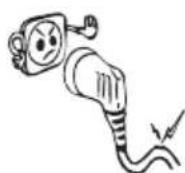
natural_image
Cartoon illustration of a character inside a refrigerator with arms and legs (no text or symbols)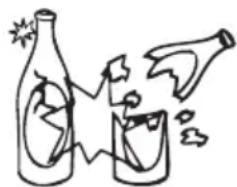
natural_image
Simple line drawing of a bottle and glass with explosion effects (no text or symbols)
natural_image
Simple line drawing of a hand holding a smiling square character (no text or symbols)natural_image
Technical line drawing of a refrigerator interior with doors, refrigerators, and airbags (no text or labels)ČÁST 2: POPIS PŘÍSTROJE
Popis přístroje

natural_image
Simple line drawing of two children playing a board game (no text or symbols)
natural_image
3D illustration of a refrigerator interior showing internal compartments and ventilation slots (no text or symbols)Koše mrazničky
natural_image
3D illustration of a refrigerator interior showing blue insulation and a curved arrow indicating rotation (no text or symbols)Poznámka:

natural_image
Interior view of a refrigerator with blue shelves and open door (no visible text or symbols)
natural_image
Close-up of a blue plastic shelf or rack mechanism (no text or symbols visible)
natural_image
Interior view of a refrigerator with blue shelves and open door (no visible text or symbols)natural_image
3D rendered mechanical component with blue blocks and a red directional arrow indicating movement (no text or symbols)ČÁST 5: UMÍSTĚNÍ POTRAVIN
Chladnička
natural_image
Cartoon illustration of a hand using a tool to clean or remove a box, with no text or symbols present.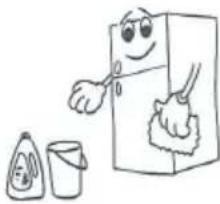
natural_image
Cartoon illustration of a smiling refrigerator with hands cleaning it, next to a cup and a bag (no text or symbols)
natural_image
Cartoon illustration of a smiling refrigerator with arms pointing at it, accompanied by a pencil and bowl (no text or symbols)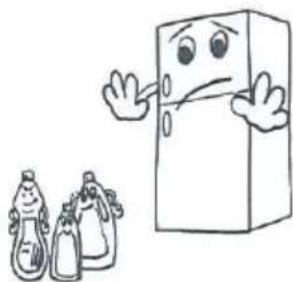
natural_image
Cartoon illustration of a smiling refrigerator with two smaller food items nearby (no text or symbols)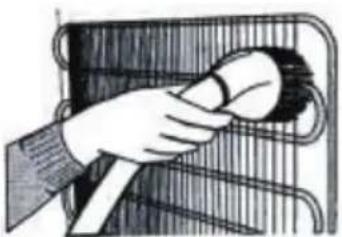
natural_image
Illustration of a hand holding a device inside a rack (no text or symbols visible)Famous for Quality the World Over
Vážený zákazník,
natural_image
Illustration of three hands performing a rope knotting technique (no text or symbols present)
natural_image
Cartoon illustration of a person peeking through a door, with arms and legs bent (no text or symbols)
natural_image
Illustration of a hand holding a smiling face icon next to a crossed-out 'no' symbol (no text or numbers present)
natural_image
Simple line drawing of two bottles and a container with arrows indicating motion (no text or symbols)
natural_image
Simple line drawing of a hand holding a smiling square character (no text or symbols)natural_image
Technical line drawing of a refrigerator interior with doors, seats, and fixtures (no text or labels)ČAST 2: POPIS PRÍSTROJA
Popis prístroja
natural_image
Simple line drawing of two children playing a board game (no text or symbols)
natural_image
3D illustration of a refrigerator interior showing internal compartments with blue liquid (no text or symbols)Koše mrazničky
natural_image
Interior view of a refrigerator showing blue insulation material being placed into the door (no text or symbols visible)Poznámka:

natural_image
Interior view of a refrigerator with blue shelves and door frame (no visible text or symbols)
natural_image
Close-up of a blue plastic refrigerator with shelves and grilles (no visible text or symbols)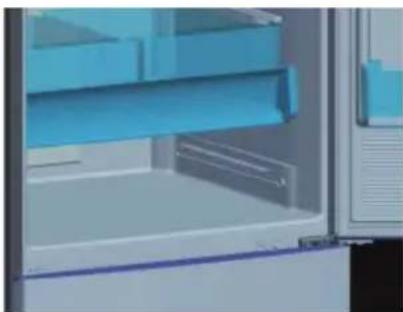
natural_image
Interior view of a refrigerator with blue shelves and open door (no visible text or symbols)natural_image
3D rendered mechanical part with blue and gray surfaces and a red directional arrow (no text or symbols)ČASŤ 5: UMIESTNENIE POTRAVÍN
Chladnička
natural_image
Cartoon illustration of a hand using a tool to clean or remove a box, with no text or symbols present.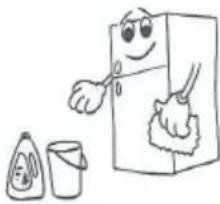
natural_image
Cartoon illustration of a smiling refrigerator with hands cleaning it, next to a cup and a bag (no text or symbols)
natural_image
Cartoon illustration of a smiling refrigerator with arms pointing at it, accompanied by a pencil and bowl (no text or symbols)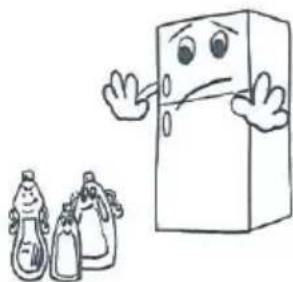
natural_image
Cartoon illustration of a smiling rectangular character and two small figurines (no text or symbols)
natural_image
Illustration of a hand holding a device inside a rack (no text or symbols visible)is a registered trademark used under license from Electrolux International Company, U.S.A.
- CONTENTS
- SECTION 1: BEFORE USING YOUR FRIDGE ...... 2
- SECTION 2: PRODUCT DESCRIPTION....8
- SECTION 3: SHIPMENT AND REPOSITIONING....10
- SECTION 4: USAGE INFORMATION .... 11
- SECTION 5: PLACING FOOD .... 16
- SECTION 6: CLEANING AND MAINTENANCE....20
- SECTION 7: BEFORE CALLING SERVICE 22
- SECTION 8: INFORMATION SHEET 24
- SECTION 1: BEFORE USING YOUR FRIDGE
- General warnings
- Notes:
- Grounding instructions
- Security warnings
- Installation and Operation of your Refrigerator
- Before Starting to Operate Your Refrigerator
- Information on No-Frost technology
- SECTION 2: PRODUCT DESCRIPTION
- This figure has been drawn for information purposes about parts and accessories of the appliance. Parts may vary according to the model of the appliance.
- Display and Control Panel
- Freezer partition temperature setting button
- SR light
- Alarm light
- Lv light
- SECTION 3: SHIPMENT AND REPOSITIONING
- SECTION 4: USAGE INFORMATION
- Operating Your Fridge
- Note:
- Location of thermostat;
- Super Freezer Mode
- When would it be used?
- How to use?
- During this mode:
- Friendly lighting (light sensor)
- Freezer Temperature Settings
- Warnings about Temperature Adjustments
- Accessories
- Icebox
- Freezer Basket
- Odour fi Iter
- Railed Storage Compartment
- In order to remove railed storage compartment;
- Crisper Air Adjustment Button
- SECTION 5: PLACING FOOD
- Refrigerator Compartment
- Deep Freezer Compartment
- Cooling Accumulator
- SECTION 6: CLEANING AND MAINTENANCE
- Make sure to unplug the fridge before starting to clean it.
- Cleaning Door Glasses
- Defrosting
- Replacing lighting material
- SECTION 7: BEFORE CALLING SERVICE
- Check Warnings
- If your fridge is not operating;
- If your fridge is operating too loudly;
- Normal Noises
- Cracking (Ice cracking) Noise:
- Short cracking:
- Compressor noise (Normal motor noise):
- Bubbling noise and splash:
- Water flow noise:
- Air Blow Noise:
- If the edges of fridge cabinet that the door joint contact are warm;
- If humidity builds up inside the fridge;
- If the doors are not opened and closed properly;
- If your fridge is not cooling enough;
- IMPORTANT NOTES:
- Conformity Information
- Recommendations for Energy Saving
- SECTION 8: INFORMATION SHEET
- INSTRUCTIONS AND INFORMATION REGARDING THE DISPOSAL OF USED PACKAGING MATERIALS
- DISPOSAL OF USED ELECTRICAL AND ELECTRONIC APPLIANCES
- For business entities in the European Union
- Disposal in other countries outside the European Union
- DVOUDVÉŘOVÁ CHLADNIČKA
- NÁVOD K OBSLUZE
- PHILCO
- ČÁST 2: POPIS PŘÍSTROJE
- Koše mrazničky
- Poznámka:
- ČÁST 5: UMÍSTĚNÍ POTRAVIN
- Chladnička
- ČAST 2: POPIS PRÍSTROJA
- ČASŤ 5: UMIESTNENIE POTRAVÍN
Brand : Philco
Model : PC 455 ADORA
Category : Refrigerator