
KX-P1082 - Drucker PANASONIC - Kostenlose Bedienungsanleitung
Finden Sie kostenlos die Bedienungsanleitung des Geräts KX-P1082 PANASONIC als PDF.


| Produkttyp | Nadelmatrix-Drucker (Impact Dot Matrix) |
| Modell | Panasonic KX-P1082 |
| Abmessungen (B×T×H) | 403 × 286 × 115 mm |
| Gewicht | ca. 6,9 kg |
| Stromversorgung | AC 240 V, 50 Hz, 0,6 A |
| Druckgeschwindigkeit (Entwurf) | 160 Zeichen pro Sekunde |
| Druckgeschwindigkeit (NLQ) | 32 Zeichen pro Sekunde |
| Druckmodi | Entwurf, Courier NLQ, Bold PS NLQ, Komprimiert |
| Zeichen pro Zoll | 10 (Pica), 12 (Elite), 15 (halbkomprimiert), 17 (komprimiert), Proportionalabstand |
| Papierführung | Reibungs- und Traktorantrieb |
| Papierformat (Einzelblatt) | Breite: 102–229 mm, Höhe: 127–363 mm |
| Papierformat (Endlospapier) | Breite: 76–254 mm |
| Durchschlagskapazität | max. 3 Blatt (Gesamtdicke < 0,25 mm) |
| Lebensdauer Druckkopf | 100 Millionen Zeichen (Entwurfsmodus) |
| Farbband | Spezial-Kassette, nahtlos, schwarz, Lebensdauer ca. 3 Millionen Zeichen |
| Puffergröße | 1 KB |
| Schnittstelle | Parallel (Centronics); optional RS-232C seriell (XON/XOFF, ETX/ACK, DTR) |
| DIP-Schalter | 8 Schalter für Druckermodus, Zeichensatz, Papierauslauf, automatischen Zeilenvorschub u. a. |
| Selbsttest | Über LF-Taste beim Einschalten; DIP-Liste über FF-Taste |
| Betriebsumgebung | Temperatur: 5–40 °C, Luftfeuchtigkeit: 20–80 % |
Häufig gestellte Fragen - KX-P1082 PANASONIC
Benutzerfragen zu KX-P1082 PANASONIC
0 Frage zu diesem Gerät. Beantworten Sie die, die Sie kennen, oder stellen Sie Ihre eigene.
Eine neue Frage zu diesem Gerät stellen
Laden Sie die Anleitung für Ihr Drucker kostenlos im PDF-Format! Finden Sie Ihr Handbuch KX-P1082 - PANASONIC und nehmen Sie Ihr elektronisches Gerät wieder in die Hand. Auf dieser Seite sind alle Dokumente veröffentlicht, die für die Verwendung Ihres Geräts notwendig sind. KX-P1082 von der Marke PANASONIC.
BEDIENUNGSANLEITUNG KX-P1082 PANASONIC
WARNUNG:
UM BRAND- ODER STROMSCHLAGGEFAHR ZU VERMEIDEN, SETZEN SIE DIESES PRODUKT NICHT REGEN ODER FEUCHTIGKEIT AUS.
Die Seriennummer des Geräts befindet sich auf dem Etikett an der Unterseite des Geräts. Notieren Sie diese Nummer unten und bewahren Sie dieses Buch zusammen mit Ihrem Kaufbeleg als dauerhaften Nachweis Ihres Kaufs auf, falls das Gerät gestohlen wird oder für spätere Referenz.
MODELL-NR. KX-P1082
NAME DES HÄNDLERS ____
SERIENNUMMER ____
KAUFDATUM ____
WICHTIG
Die Adern in dieser Netzzuleitung sind gemäß folgendem Code gefärbt:
Grün und Gelb: Erde
Blau: Nullleiter
Braun: Außenleiter
Da die Farben der Adern in der Netzzuleitung dieses Geräts möglicherweise nicht mit den farbigen Markierungen übereinstimmen, die die Anschlüsse in Ihrem Stecker kennzeichnen, gehen Sie wie folgt vor:
Die grün-gelbe Ader muss an den Anschluss im Stecker angeschlossen werden, der mit dem Buchstaben E oder mit dem Sicherheitserdungssymbol 1/2 gekennzeichnet ist oder grün oder grün-gelb gefärbt ist.
Die blaue Ader muss an den Anschluss angeschlossen werden, der mit dem Buchstaben N gekennzeichnet oder schwarz gefärbt ist.
Das Kabel, das braun gefärbt ist, muss an die Klemme angeschlossen werden, die mit dem Buchstaben L oder der Farbe Rot gekennzeichnet ist.
WARNUNG: Dieses Gerät muss geerdet werden.
●Dieses Gerät wird gemäß BS800:1977 hergestellt.
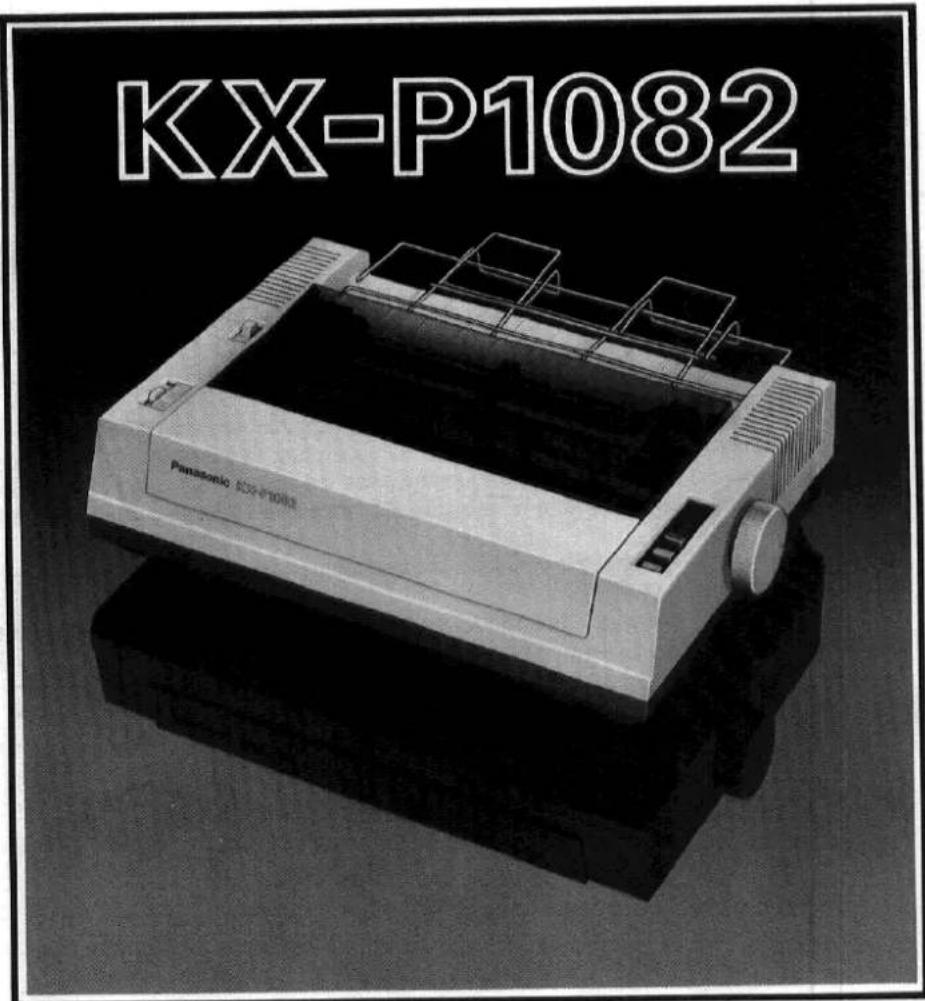
Bedienungsanleitung
Impact-Dot-Matrix-Drucker
Panasonic
Bevor Sie dieses Gerät in Betrieb nehmen, lesen Sie bitte diese Anleitung vollständig.
INHALTSVERZEICHNIS
Abschnitt
Seite
EINFÜHRUNG
1.1 Produktübersicht 1-1 1.2 Bezeichnung der Teile 1-2 1.3 Technische Daten 1-3
INSTALLATION
2.1 Auspacken und Prüfung 2-1 2.2 Standortanforderungen 2-1 2.3 Ersteinrichtung 2-1
BETRIEB
3.1 Schalter und Anzeigen 3-1 3.2 Detektoren 3-2 3.3 DIP-Schalter 3-2 3.4 Initialisierung 3-4 3.5 Selbsttest 3-5 3.6 Hex-Dump 3-5 3.7 Empfangspuffer 3-5 3.8 Austausch der Abdeckungen 3-5
SOFTWAREBEFEHLE
4.1 Einführung 4-1 4.2 Steuercodes 4-1 4.3 Eingabe von Steuercodes über kommerzielle Softwarepakete 4-1 4.4 Direkte Eingabe von Steuercodes über die Tastatur 4-2 4.5 Eingabe von Steuercodes aus einem Programm 4-2 4.6 Eingabe von Hexadezimalcodes 4-2 4.7 Steuercodes 4-3 4.8 Mischen von Druckmodi 4-94 4.9 DIP-Schalter und Steuercodes 4-96
SCHNITTSTELLEN
5.1 Parallele Schnittstelle 5-1 5.2 Steckerstiftsignale 5-2
WARTUNG
6.1 Vorbeugende Wartung 6-1 6.2 Regelmäßige Wartung 6-1 6.3 Fehlerbehebung 6-2
ANHANG A Zeichensatztabellen A-1 ANHANG B Tabellen für proportionalen Abstand B-1 ANHANG C DIP-Schalter-Einstellungen C-1 ANHANG D Leere Matrizen für Download-Zeichen D-1 ANHANG E Softwarebefehle E-1 ANHANG F Papier und Druckbereich F-1 INDEX INDEX-1
Tabelle
Seite
INSTALLATION
2.1 Installationsanforderungen 2-1
BETRIEB
3.1 DIP-Schalter-Einstellungen 3-3
3.2 Internationaler Zeichensatz 3-3
3.3 IBM Proprinter-Modus 3-3
SOFTWARE-BEFEHLE
4.1 Eingabeformate 4-3
4.2 Proportionalabstand: Standardmodus-Zeichen 4-16
4.3 Druckmodusauswahl 4-21
4.4 Positionen internationaler Zeichensätze 4-32
4.5 Positionen internationaler kursiver Zeichen 4-33
4.6 Punktauflösung 4-36
4.7 Punktdichte (Punkte pro Zoll) 4-44
4.8 Auswahl der Papiervorschubmenge 4-47
4.9 Gemischte Druckmodi (Standardmodus)... Nur Steuercodes 4-94
4.10 Gemischte Druckmodi (Standardmodus)... Wahlschalter/Steuercodes 4-94
4.11 Gemischte Druckmodi (IBM Proprinter-Modus)... Nur Steuercodes 4-95
4.12 Gemischte Druckmodi (IBM Proprinter-Modus)... Wahlschalter/Steuercodes 4-95
4.13 Softwaresteuerung der DIP-Schalterfunktion 4-96
SCHNITTSTELLE
5.1 Druckerstatussignale 5-1
5.2 Steckerbelegung 5-1
WARTUNG
6.1 Fehlerbehebung 6-2
Abbildung
Seite
EINFÜHRUNG
1.1 Teileposition 1-2
INSTALLATION
2.1 Entfernen der Druckerabdeckung 2-1
2.2 Entfernen der Wagenanschläge 2-1
2.3A Positionieren des Druckkopfs 2-2
2.3B Entfernen des Farbbandspiels 2-2
2.3C Installieren der Farbbandkassette 2-2
2.4A Papierführungen 2-2
2.4B Einbau der Papierführungen 2-2
2.5A Papiereinzugswähler 2-3
2.5B Einlegen eines Einzelblatts 2-3
2.5C Ausrichten eines Einzelblatts 2-3
2.6A Entriegeln des Traktors 2-4
2.6B Anheben der Traktorabdeckung 2-4
2.6C Einlegen von Endlospapier 2-4
2.6D Befestigen des Papiers 2-4
2.7 Stapeln des Papiers 2-5
2.8 Einstellen des Formularanfangs 2-5
2.9 Einstellen des Druckkopfabstands 2-5
BETRIEB
3.1 ONLINE & OFFLINE 3-1
3.2 Position der DIP-Schalter 3-2
3.3 Ersetzen der vorderen Abdeckung 3-5
3.4 Ersetzen der oberen Abdeckung 3-5
SCHNITTSTELLEN
5.1 Paralleler Schnittstellenanschluss 5-1
5.2 Zeitdiagramm 5-3
1.1 Produktübersicht
Dieser Drucker ist ein langlebiger, hochzuverlässiger Nadeldrucker. Darüber hinaus hat er eine kleine Stellfläche, was ihn ideal für einen kompakten Arbeitsplatz macht.
Dieser Drucker verwendet einen Druckkopf mit neun Nadeln, um im Entwurfsmodus ein 9×9-Punktmatrix-Zeichen zu bilden. Im Modus für nahezu Briefqualität beträgt die Matrix 18×18. Der Standardzeichensatz besteht aus 96 ASCII-Zeichen, die in der herkömmlichen Schriftart oder kursiv gedruckt werden können. Über DIP-Schalter kann der Benutzer alternative IBM®-Zeichensätze auswählen. Mit diesen Sätzen stehen Liniengrafiken zur Verfügung. Der Benutzer kann auch 10 internationale Zeichensätze auswählen.
Zusätzlich zum Drucken in Pica (10 Zeichen pro Zoll) und Elite (12 Zeichen pro Zoll) kann dieser Drucker im Komprimiertmodus mit 17 Zeichen pro Zoll und im halbkomprimierten Modus mit 15 Zeichen pro Zoll drucken. Der Komprimiertmodus ergibt insgesamt 137 Zeichen pro Zeile.
Zusätzlich zu den oben genannten vier Schriftbreiten verfügt dieser Drucker über Proportionalschrift, sodass fünf grundlegende Schriftbreiten verfügbar sind.
Die normale Druckgeschwindigkeit beträgt 160 Zeichen pro Sekunde (CPS). Die Verarbeitungsgeschwindigkeit wird durch bidirektionales Drucken erhöht. Das heißt, der Drucker druckt von rechts nach links sowie in der normalen Art von links nach rechts. Es wird auch eine Logiksuchtechnik verwendet, die dem Drucker eine Vorausschaufähigkeit verleiht, die es ihm ermöglicht, Leerzeichen am Anfang und Ende einer Zeile sowie die leeren Zeilen zwischen Absätzen zu überspringen.
Eine große Auswahl an Druckstilen ermöglicht es dem Benutzer, einzigartige Dokumente und Zeichnungen zu erstellen. Sie können Zeichen in doppelter Breite oder komprimiert, fett oder unterstrichen drucken und hoch- oder tiefgestellte Zeichen usw. drucken. Mit Bitmap-Grafiken kann der Drucker Spezialeffekte erzeugen, die von Firmenlogos bis zu fotorealistischen Bildern reichen.
Der Drucker verfügt über Reibungs- und Traktorvorschub als Standardfunktionen und verarbeitet sowohl Einzelblätter als auch Endlospapier. Dies ermöglicht es dem Benutzer, Briefe auf Firmenbriefpapier zu erstellen oder Berichte vom Computer zu drucken. Das nahtlose Farbband kann bis zu drei Millionen Zeichen drucken, und das Kassetten-Design macht den Farbbandwechsel schnell, einfach und sauber.
Ein 1024-Byte-Puffer (1K) ist mit der standardmäßigen parallelen Schnittstelle vorhanden. Serielle Kommunikation ist über eine optionale RS-232C-Schnittstellenkarte möglich, die die Handshake-Protokolle XON/XOFF, ETX/ACK und DTR Drop unterstützt.
Einige Software für Ihren Computer erfordert, dass Sie einen bestimmten Drucker für die Ausgabe auswählen.
Wählen Sie Panasonic, falls es aufgeführt ist. Falls Panasonic nicht in der Software aufgeführt ist, können Sie eine der folgenden Optionen wählen:
- Epson RX-80™...(DIP-Schalter 1=EIN)
- IBM Proprinter*...(DIP-Schalter 1=AUS)
Überprüfen Sie nach der Auswahl Ihre DIP-Schalter. Siehe Abschnitt 3.3.
*Siehe Anhang – für anwendbaren Code
1.2 Bezeichnungen der Teile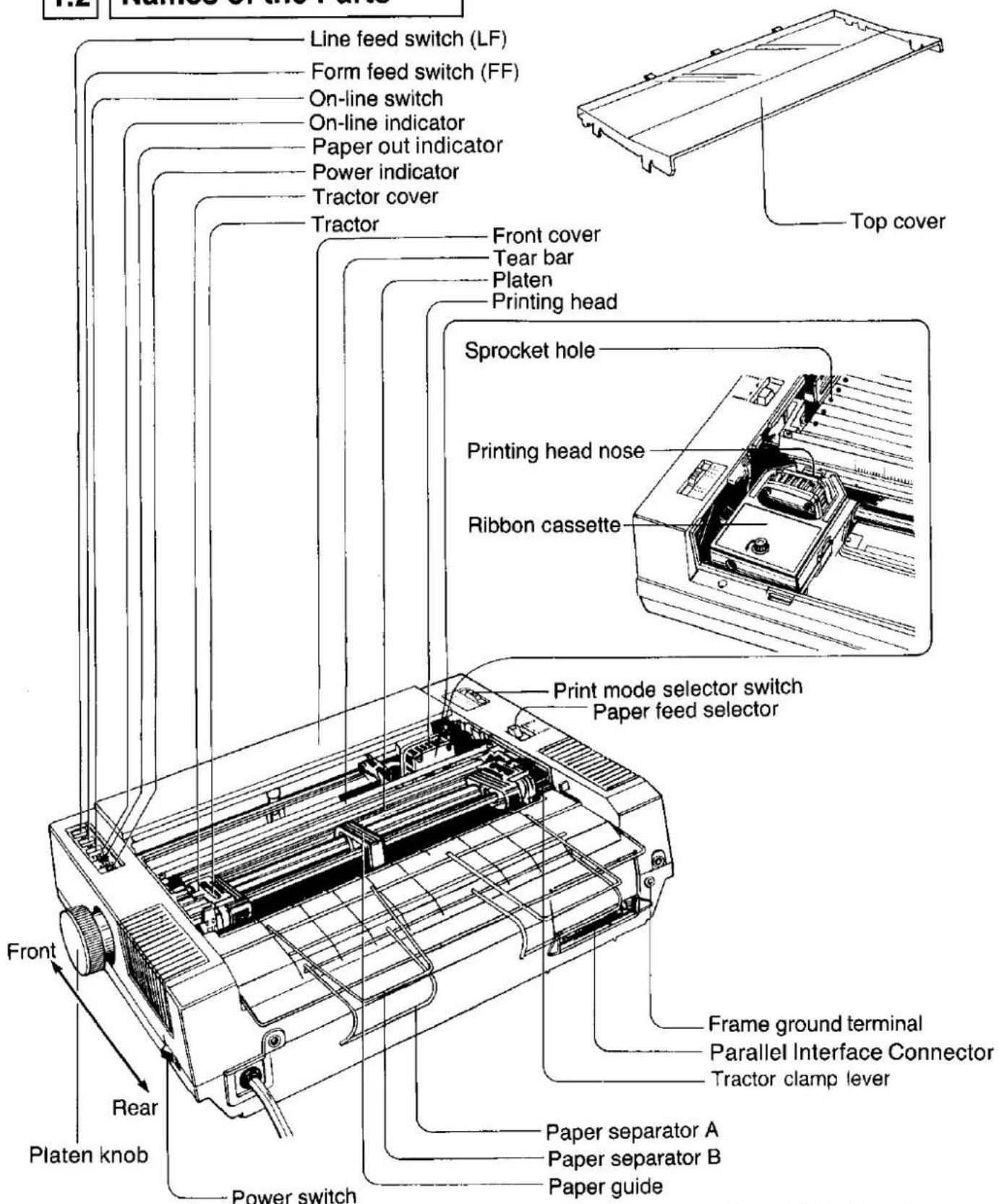
Abbildung 1.1 Position der Teile
1.3 Technische Daten
| Power requirements: | AC 240 V (50 Hz) | ||
| Current: | 0.6 A | ||
| Fuses: | 1.25 A 250 V 2.5 A 250 V | ||
| Printing mode: | Draft, Near Letter Quality (Courier, Bold PS), Dot Graphics | ||
| Character set: | 96 ASCII characters, 96 Italic ASCII characters, 32 International characters (10 countries), 32 Italic International characters (10 countries), 135 IBM special characters | ||
| Dot configuration: | 3/254 inch (0.3 mm) dot diameter | ||
| Draft (Pica) | NLQ | ||
| Dot alignment(Hor.×Ver.) | 9×9 | 18×18 | |
| Dot pitch (Hor.) | 1/120'' (0.21 mm) | 1/240'' (0.11 mm) | |
| (Ver.) | 1/12'' (0.35 mm) | 1/144'' (0.18 mm) | |
| Character size | |||
| Ordinary characters: | 0.078 (W)×0.095 (H) in. (1.99×2.42 mm) | ||
| Superscript/subscript characters: | 0.078 (W)×0.053 (H) in. (1.99×1.36 mm) | ||
| Number of characters per line(per inch (25.4mm)): | Pica | 80 CPL (10 cpi) | |
| Elite | 96 CPL (12 cpi) | ||
| Semi Compressed | 120 CPL (15 cpi) | ||
| Compressed | 137 CPL (17 cpi) | ||
| Pica elongated | 40 CPL (5 cpi) | ||
| Elite elongated | 48 CPL (6 cpi) | ||
| Semi Compressed elongated | 60 CPL (7.5 cpi) | ||
| Compressed elongated | 68 CPL (8.5 cpi) | ||
| Printing speed: | Draft-Pica 160 CPS | ||
| Draft-Elite 160 CPS | |||
| NLQ 32 CPS | |||
| Printing direction: | Text printing (Draft., NLQ): Bi-direction | ||
| Bit Image printing: Single-direction (left→right) | |||
| New line time: | Approx. 100 msec [with 1/6 inch (4.2 mm) line feeding] | ||
| Paper feed: | Tractor feed (with fanfold paper) | ||
| Friction feed (with single sheet) | |||
| Paper used: | Fanfold (continuous) paper width: 3~10 inches (76~254 mm) | ||
| Single sheet Width: 4~9 inches (102~229 mm) | |||
| Height: 5~14.3 inches (127~363 mm) | |||
| Thickness (paper weight in pound): 11~21.5 pound | |||
| (paper weight in g/m2): 41~81 g/m2 (only 1 sheet) | |||
| 3 max. | |||
| Number of sheets: | 3 max. | ||
| Paper thickness: | Total thickness of sheets must be less than 1/100 in. (0.25 mm) | ||
| Storage environment: | -4°F (-20°C) to 140°F (60°C) temperature, 10~90% humidity | ||
| Operating environment: | 41°F (5°C) to 104°F (40°C) temperature, 20~80% humidity | ||
| Head service life: | 100 million characters in draft mode | ||
| Ribbon: | Specially designed cassette seamless ribbon | ||
| Ink color: Black | |||
| Service life: Max. 3 million characters in draft mode | |||
| Dimensions: | 15-43/50 (W)×11-1/4 (D)×4-53/100 (H) in. (403×286×115 mm) | ||
| Weight: | Approx. 15.2 pounds (6.9 kg) | ||
2.1 Auspacken und Prüfung
Öffnen Sie vorsichtig den Versandkarton und entnehmen Sie den Inhalt. Der Karton sollte die folgenden Artikel enthalten:
Drucker
Farbbandkassette (1)
Papierstützen (2)
Bedienungsanleitung
Prüfen Sie den Drucker und das Zubehör auf Schäden. Melden Sie Schäden oder fehlende Teile dem Geschäft, in dem das Gerät gekauft wurde. Auf der Innenseite des vorderen Umschlags dieses Handbuchs befindet sich ein Bereich zum Eintragen wichtiger Informationen zum Drucker.
2.2 | Standortanforderungen
Der Drucker kann in jeder normalen Büroumgebung installiert werden. Es sind keine speziellen elektrischen Anschlüsse oder Kühlung erforderlich. Es ist jedoch ein Mindestabstand von 4 Zoll (10 cm) erforderlich, um eine ausreichende Belüftung zu gewährleisten. Der Drucker sollte auf einer ebenen, horizontalen Fläche aufgestellt werden, entfernt von Heizungen oder anderen Wärmequellen. Der Drucker sollte nicht in übermäßig feuchter oder staubiger Umgebung verwendet werden. Tabelle 2.1 listet die Betriebsanforderungen des Druckers auf.
Netzspannung AC 240 V
Frequenz 50 Hz
Temperatur 41\~104°F (5\~40°C)
Luftfeuchtigkeit 20\~80%
Tabelle 2.1 Installationsanforderungen
2.3 | Erstinstallation
Entfernen der Druckerabdeckungen
Um die obere Abdeckung Ⓐ zu entfernen, heben Sie die Abdeckung in der in Abbildung 2.1 gezeigten Richtung an. Entfernen Sie die vordere Abdeckung Ⓑ, indem Sie sie nach vorne und oben ziehen.
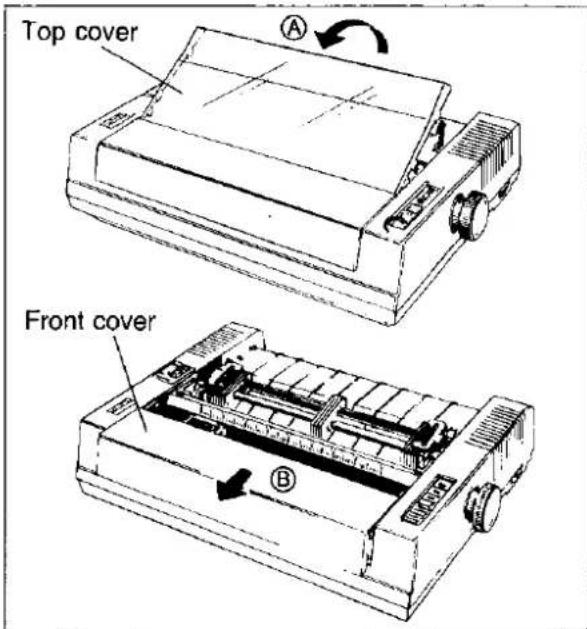
Abbildung 2.1 Entfernen der Druckerabdeckung
- Entfernen Sie das Schutzpapier um die Walze.
Entfernen der Wagenanschläge
Während des Transports wird der Druckkopfwagen durch Wagenanschläge gehalten, um Schäden am Kopf zu verhindern. Entfernen Sie diese vor dem Betrieb des Geräts. Siehe Abbildung 2.2.
Stellen Sie sicher, dass Sie sie vor dem Transport des Geräts wieder einsetzen.
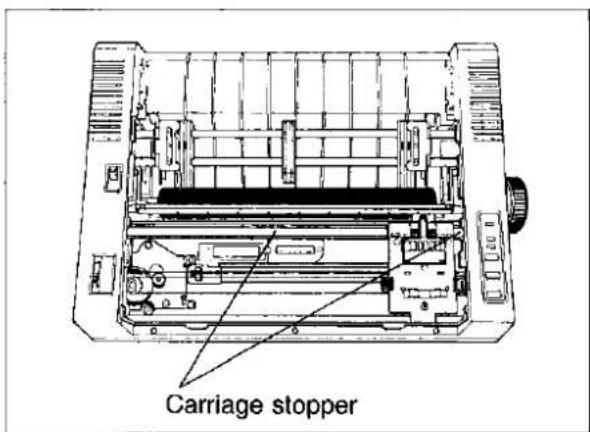
Abbildung 2.2 Entfernen der Wagenanschläge
Montage der Farbbandkassette
Stellen Sie sicher, dass der Drucker ausgeschaltet ist. Schieben Sie den Druckkopfwagen vorsichtig in Richtung Gerätemitte. Entfernen Sie vor dem Einsetzen der Kassette jeglichen Schlupf im Farbband, indem Sie den Knopf der Kassette gegen den Uhrzeigersinn drehen.
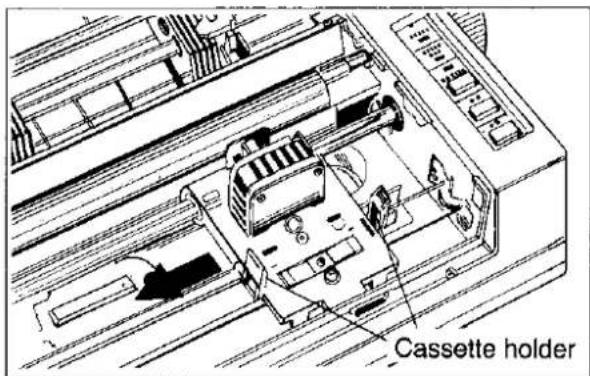
Abbildung 2.3A Positionierung des Druckkopfs
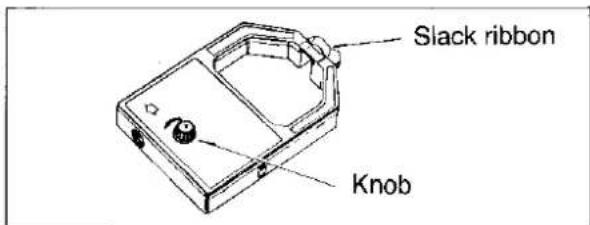
Abbildung 2.3B Entfernen des Farbbandschlupfs
Positionieren Sie die Kassette über dem Druckkopf und setzen Sie sie wie in Abbildung 2.3C gezeigt ein. Stellen Sie sicher, dass das Farbband zwischen der Farbbandabdeckung und der Nase des Druckkopfs verläuft. Drücken Sie dann vorsichtig, aber fest auf die Kassette, bis die beiden seitlichen Laschen einrasten. Wenn Sie das Einrasten nicht spüren, drehen Sie den Knopf leicht und drücken Sie erneut.
Hinweis: Drehen Sie den Knopf, um sicherzustellen, dass das Farbband nicht verdreht ist.
Zum Entfernen der Kassette spreizen Sie die seitlichen Laschen vorsichtig und heben Sie die Kassette an.
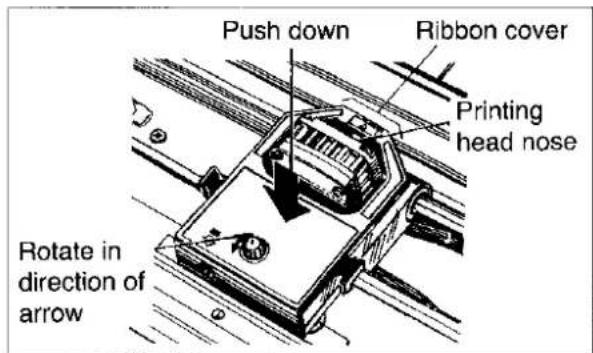
Abbildung 2.3C Einsetzen der Farbbandkassette
Montage der Papierführungen
Papierführungen gewährleisten den reibungslosen Durchlauf von Endlospapier oder Endlosformularpapier. Die Abbildungen 2.4A und 2.4B zeigen, wie die Führungen installiert werden. Installieren Sie zuerst Führung A in den Löchern an der oberen Rückseite des Gehäuses. Installieren Sie dann Führung B in den vorderen Löchern.
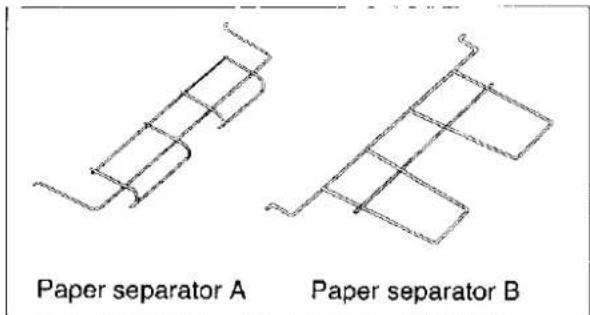
Abbildung 2.4A Papierführungen
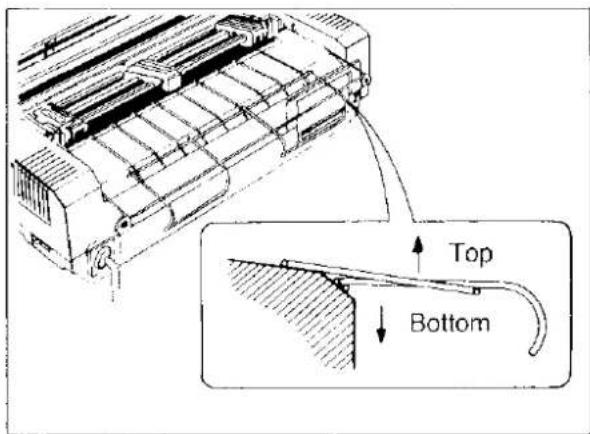
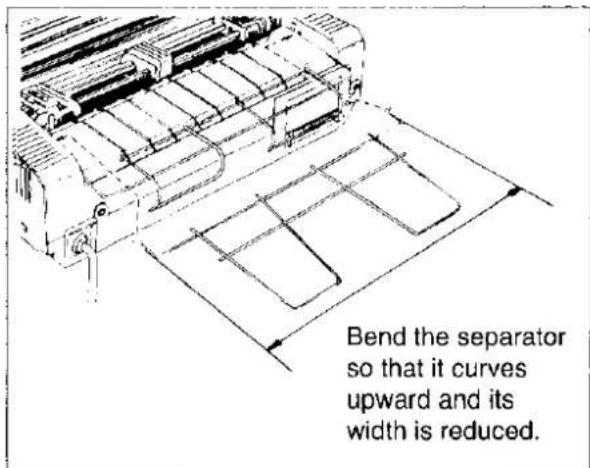
Abbildung 2.4B Installation der Papierführungen
Einlegen des Papiers
Der Papiereinzug des Druckers kann Einzelblätter oder Endlospapier im Computerformat verarbeiten. Bei Einzelblättern wird das Papier von Andruckrollen gehalten, die das Papier gegen die Schreibwalze drücken. Bei Endlospapier wird das Papier durch den Traktorantrieb durch den Drucker gezogen.
Einzelblatt
Gehen Sie zum Einlegen eines einzelnen Blattes Papier wie folgt vor:
- Schalten Sie den Netzschalter EIN.
- Stellen Sie den PAPIEREINZUG-Wahlschalter auf die Position FRIKTION. Siehe Abbildung 2.5A. Heben Sie die Abreißkante an, die sich vor der Schreibwalze befindet.
- Führen Sie das Papier wie in Abbildung 2.5B gezeigt in den Drucker ein. Der Drucker ergreift das Papier und dreht es etwa halb um die Schreibwalze.
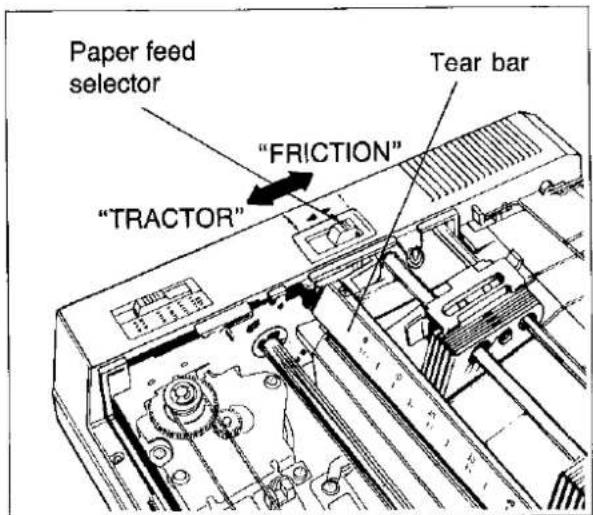
Abbildung 2.5A Papiereinzug-Wahlschalter
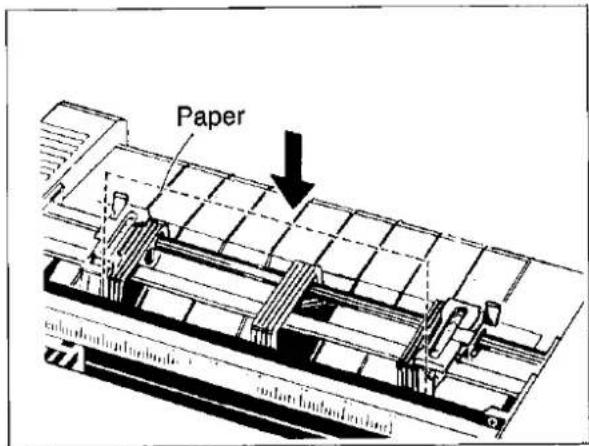
Abbildung 2.5B Einlegen eines einzelnen Blattes
- Drehen Sie den Walzenknopf, um das Papier vorzuschieben. Stecken Sie das Papier unter die Abreißkante und senken Sie die Kante dann in ihre Position.
- Um das Papier horizontal oder vertikal auszurichten, stellen Sie den PAPIEREINZUG-Wahlschalter auf die Position TRAKTOR. Siehe Abbildung 2.5C. Dadurch werden die Andruckrollen gelöst und das Papier kann nach Bedarf positioniert werden. Stellen Sie den Schalter vor dem Drucken wieder auf FRIKTION. Siehe Abbildung 2.5A.
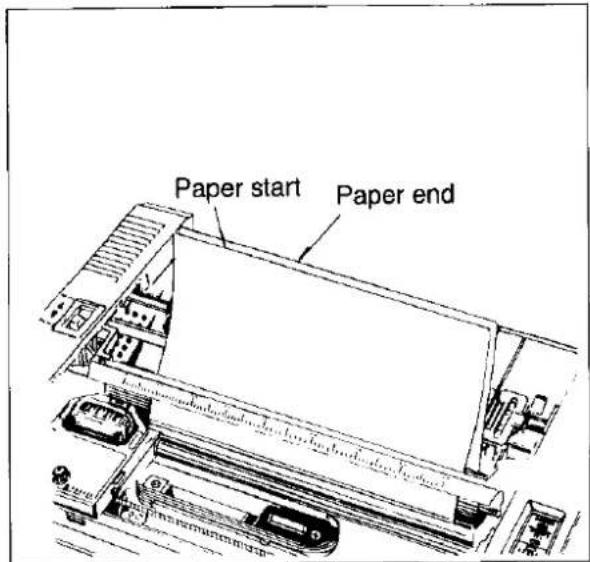
Abbildung 2.5C Ausrichten eines einzelnen Blattes
Endlospapier
Die folgenden Schritte beschreiben, wie Endlospapier eingelegt wird:
- Schalten Sie den Netzschalter EIN.
- Siehe Abbildungen 2.6A und 2.6B. Entriegeln Sie die Traktoren, indem Sie die Traktor-Klemmhebel nach oben ziehen. Schieben Sie die Traktoren zu den Seiten und heben Sie die Abdeckungen an.
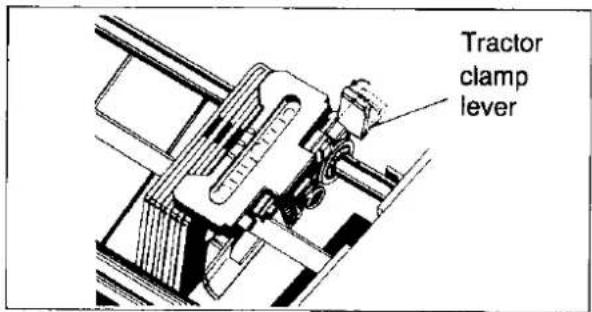
Abbildung 2.6A Entriegeln des Traktors
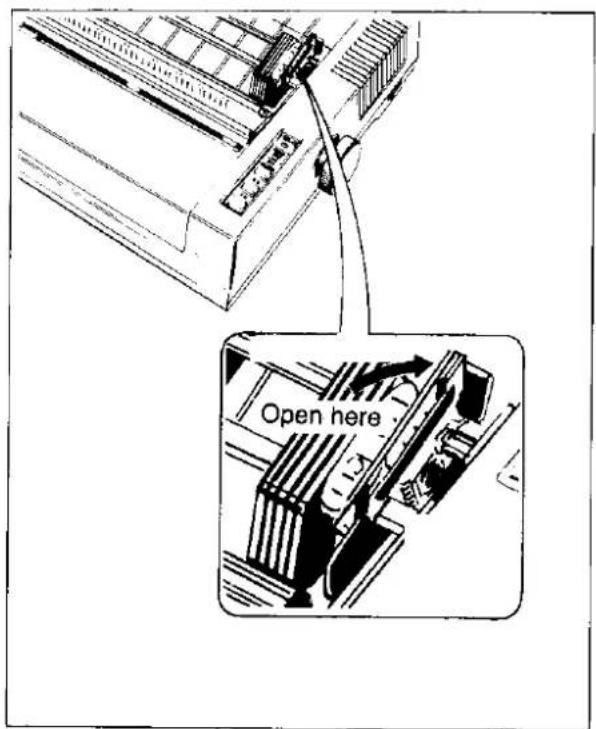
Abbildung 2.6B Anheben der Druckerabdeckung
- Stellen Sie den PAPIEREINZUG-Wahlschalter auf die Position FRIKTION, wie beim Einlegen von Einzelblättern.
- Heben Sie die Abreißkante an, die sich vor der Schreibwalze befindet. - Führen Sie das Papier wie in Abbildung 2.6C gezeigt in den Drucker ein. Der Drucker erfasst das Papier und dreht es etwa halb um die Schreibwalze.
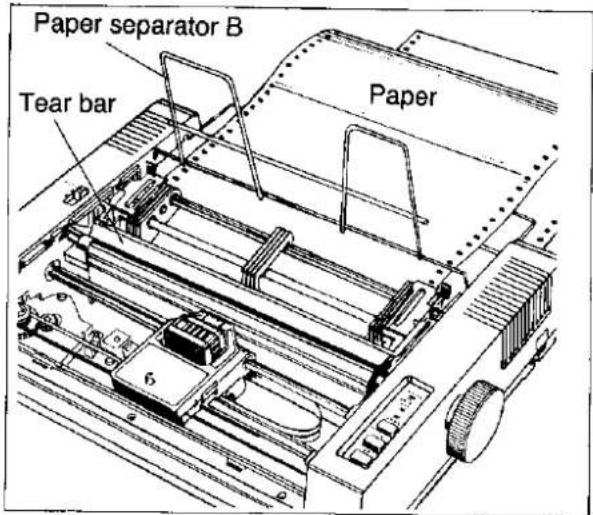
Abbildung 2.6C Einführen von Endlospapier
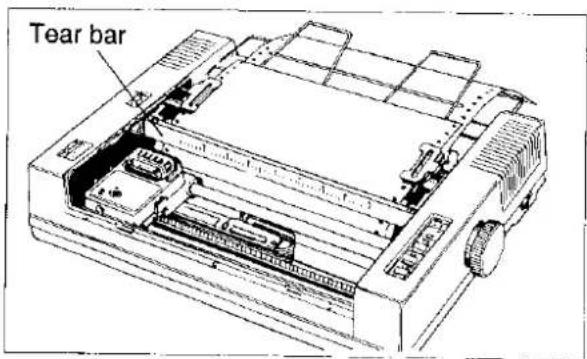
Abbildung 2.6D Montieren des Papiers
- Drehen Sie den Walzenknopf, um das Papier vorzuschieben. Stecken Sie das Papier unter die Abreißkante und senken Sie die Kante dann in ihre Position.
- Stellen Sie den PAPIEREINZUG-Wahlschalter auf die Position TRAKTOR.
- Positionieren Sie die Traktoren so, dass die Papierlochungen mit den Traktorstiften ausgerichtet sind, und schließen Sie die Traktorabdeckungen. Siehe Abbildung 2.6D.
- Zentrieren Sie das Papier horizontal mit der Skala an der Abreißkante als Orientierung. Der Drucker druckt zwischen 0 und 80 auf der Skala. Drücken Sie die Klemmhebel der Traktoren nach unten, um sie zu verriegeln.
- Um einen reibungslosen Papierfluss bei Endlospapier zu gewährleisten, achten Sie darauf, dass der Papierstapel nicht höher als die Papierführungen ist. Wenn Sie das Papier wie in Abbildung 2.7 gezeigt zuführen, erzeugt das Papiergewicht einen Gegenzug. Das Papier sollte direkt hinter dem Drucker liegen und nicht seitlich versetzt.
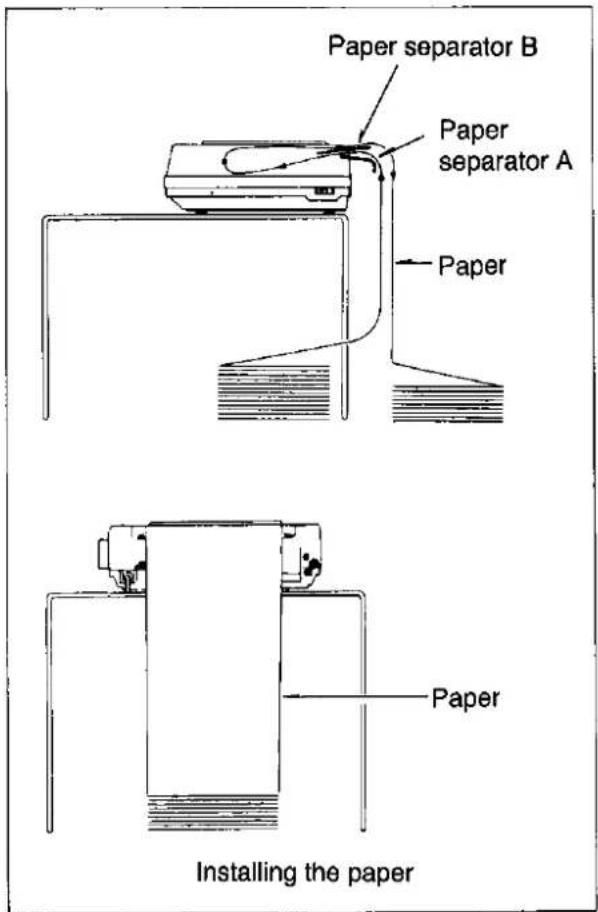
Abbildung 2.7 Stapeln des Papiers
Ausrichten des Formularanfangs
Der Drucker verfügt über einen Zeilenzähler, der die vertikale Position des Druckkopfs verfolgt. Bei jedem Einschalten wird der Zeilenzähler zurückgesetzt und die aktuelle Position des Kopfes als Zeile eins festgelegt. Diese Position wird als FORMULARANFANG bezeichnet. Wenn die Taste Formularvorschub (FF) gedrückt wird, wird das Papier um die Länge einer Seite vorgeschoben. Eine Seite wird durch den Seitenlängen-Befehl definiert.
Die erste Textzeile beginnt etwa 1/6 Zoll (4,2 mm) vom oberen Rand der hinteren Andruckplatte entfernt.
(Der Abstand zwischen der Unterkante der Zeichen und der Oberkante der hinteren Andruckplatte beträgt etwa 1/6 Zoll (4,2 mm).)
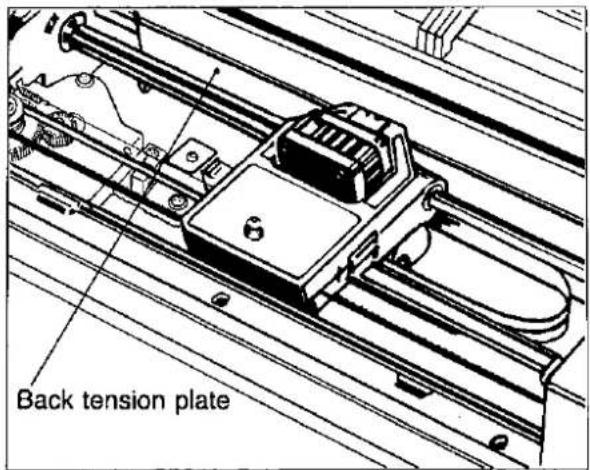
Abbildung 2.8 Einstellen des Formularanfangs
Einstellen des Druckkopfabstands
Der Abstand zwischen Druckkopf und Druckwalze kann eingestellt werden, um die Papierdicke auszugleichen.
Hinweis: Ein falscher Abstand kann zu Tintenverschmierung führen.
Abbildung 2.9 zeigt die Position des Abstandshebels. Bewegen Sie den Hebel für Einzelblätter zur Walze hin und für mehrteilige Formulare von der Walze weg.
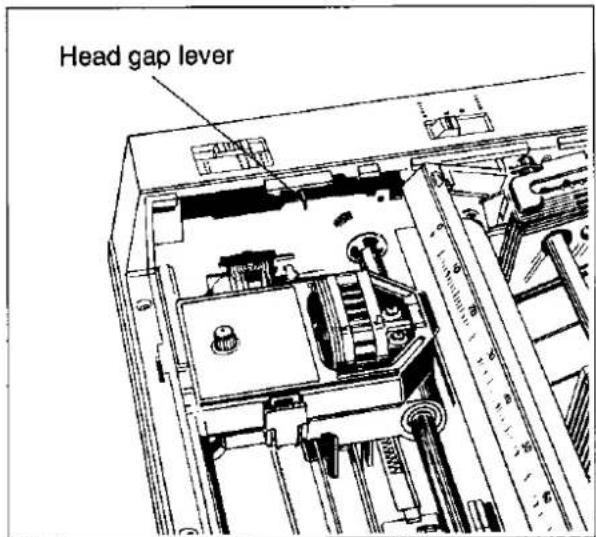
Abbildung 2.9 Einstellen des Druckkopfabstands
3.1 Schalter und Anzeigen
Netzschalter
Der Netzschalter befindet sich auf der rechten Seite des Druckers nach hinten. Er dient zum Ein- und Ausschalten der Wechselspannung. Wenn der Drucker mit Strom versorgt wird, leuchtet die Betriebsanzeige an der Vorderseite.
Online-Schalter
Der ONLINE-Schalter ist ein Tastschalter, der die Kommunikationsleitung zum Computer öffnet und schließt. Wenn der Netzschalter eingeschaltet wird, startet der Drucker im ONLINE-Modus, wenn Papier eingelegt ist. Wenn kein Papier eingelegt ist, startet der Drucker im OFFLINE-Modus. Im ONLINE-Modus kann der Drucker Informationen vom Computer empfangen und die ONLINE-Anzeige leuchtet. Im OFFLINE-Modus ist die Anzeige aus und der Drucker kann keine Daten mehr empfangen. Siehe Abbildung 3.1.
![graph LR A["COMPUTER"] <--> B["PRINTER"] C["COMPUTER"] <--> D["X"] E["PRINTER"] --> F["ON LINE"] G["ON LINE"] --> H["OFF LINE"]](/content/2026/05/794194/images/1bba12385f5b13d92ccb3a27ac28bacefce5ec9aef72b3eafbb46b2955f8ff55.jpg)
Abbildung 3.1 ONLINE & OFFLINE
Wenn der Drucker auf ONLINE geschaltet wird, passiert Folgendes:
• Die ONLINE-Anzeige leuchtet - die Kommunikationsleitung zwischen Drucker und Computer ist offen • Ein ACK-Signal wird gesendet - die Schnittstellensignalpegel sind:
B u s y = L o w
Select = High
Error = High
Wenn der Drucker auf OFF LINE geschaltet ist, treten folgende Aktionen auf:
● Die ON LINE-Leuchte ist aus. ● Die Kommunikationsleitung zwischen Drucker und Computer ist unterbrochen. ● Die Schnittstellensignalpegel sind:
B u s y = H i g h
Select = Low
Error = Low
Formularvorschub-Schalter
Dieser Schalter ist sowohl im OFF LINE- als auch im ON LINE-Modus aktiv. Durch Drücken des FF-Schalters wird das Papier von seiner aktuellen Position zum Anfang der nächsten Seite vorgeschoben. Danach wird ein neuer Seitenanfang festgelegt.
Zeilenvorschub-Schalter
Dieser Schalter ist sowohl im OFF LINE- als auch im ON LINE-Modus aktiv. Durch Drücken dieses Schalters wird das Papier um eine Zeile vorgeschoben. Ein mehrfacher Zeilenvorschub kann durch Gedrückthalten des Schalters erreicht werden.
Druckmodus-Wahlschalter
Mit dem Druckmodus-Wahlschalter kann der Benutzer einen von vier grundlegenden Druckmodi auswählen: Entwurf, Courier Near Letter Quality (NLQ), Bold PS NLQ und Komprimiert.
Der Druckmodus kann mit diesem Schalter geändert werden, wenn der Drucker entweder OFF LINE oder ON LINE ist.
- Entwurfsmodus (Std. Pgm.) ist ein Hochgeschwindigkeits-Druckmodus. Der Drucker druckt bidirektional mit 160 Zeichen pro Sekunde. Dieser Modus wird für Rohentwürfe und vorläufige Dokumente verwendet.
Der Moduswechsel von diesem Modus zu einem anderen Modus kann über Softwarebefehle ausgeführt werden.
- Courier NLQ (Courier) ermöglicht dem Benutzer, qualitativ hochwertige Dokumente im Courier-Schriftstil zu drucken. Die hohe Dichte wird durch einen doppelten Druckkopfdurchlauf erreicht.
Dieser Druckmodus kann nicht über Software in einen anderen Modus geändert werden.
- Bold PS NLQ (Bold PS) ermöglicht dem Benutzer, qualitativ hochwertige Dokumente im Bold-PS-Schriftstil zu drucken. Die hohe Dichte wird durch einen doppelten Druckkopfdurchlauf erreicht. In diesem Modus werden Zeichen im proportionalen Abstand gedruckt.
Dieser Druckmodus kann nicht über Software in einen anderen Modus geändert werden.
- Komprimierter Modus (Comp.). In diesem Modus können maximal 137 Zeichen pro Zeile gedruckt werden. Daher ist es möglich, Druckausgaben, die für breites Papier [15,5 Zoll (394 mm)] ausgelegt sind, auf schmalem Papier [8,5 Zoll (216 mm)] zu drucken.
Dieser Druckmodus kann nicht über Software in einen anderen Modus geändert werden.
Einzelheiten zu jedem dieser Modi finden Sie in KAPITEL 4.
Papierende-Anzeige
Die Anzeigeleuchte PAPER OUT leuchtet, wenn weniger als 1,5 Zoll (38 mm) Papier verbleiben oder wenn kein Papier eingelegt ist, und blinkt bei Überlastung.
3.2 Detektoren
Papierende-Detektor
Der Papierende-Detektor befindet sich unter der Walze und erkennt das Fehlen von Papier. Wenn dem Drucker das Papier ausgeht, leuchtet die PAPER-OUT-Leuchte. Folgende Bedingungen gelten:
- Der Drucker akzeptiert keine Daten vom Computer.
- Der Drucker ist OFF LINE und die ON-LINE-Leuchte ist aus und der Alarm ertönt. ● Die LF- und FF-Tasten sind aktiv. ● Die Schnittstellensignalpegel sind:
Busy = High
Select = Low
Error = Low
PO = High
Um die Kommunikation mit dem Computer wiederherzustellen, legen Sie Papier ein und drücken Sie die Taste ON LINE.
Der Drucker setzt den Druck fort.
Verwenden Sie kein transparentes oder halbtransparentes Papier, da es nicht erkannt wird.
Überlastdetektor
Eine Überlastung kann auftreten, wenn der Weg des Druckkopfs blockiert ist. Während dieser Zeit gelten die folgenden Bedingungen.
- Die Kommunikation mit dem Computer stoppt und der Drucker geht in den Offline-Modus. ● Der Alarm ertönt in Abständen von einer Sekunde. ● Die Tasten an der Frontblende sind deaktiviert. ● Die Pegel der Schnittstellensignale sind:
Busy = High
Select = Low
Error = Low
Um den Drucker zurückzusetzen, beseitigen Sie die Ursache der Überlastung und schalten Sie das Gerät aus und wieder ein. Der Drucker setzt den Druck fort.
Überhitzungsdetektor
Wenn der Drucker über einen längeren Zeitraum kontinuierlich druckt, kann der Druckkopf überhitzen. Wenn dies geschieht, bewirkt eine interne Schutzschaltung, dass der Drucker den Druckvorgang beendet und der Alarm in Intervallen von einer Sekunde ertönt. Dieser Zustand bleibt bestehen, bis die Kopftemperatur ausreichend gesunken ist. Zu diesem Zeitpunkt nimmt der Drucker den Druckvorgang automatisch wieder auf.
3.3 DIP-Schalter
Schalten Sie den Strom aus, bevor Sie die DIP-Schalter einstellen. Die DIP-Schalter ermöglichen es dem Benutzer, bestimmte Betriebsbedingungen des Druckers einzustellen. Abbildung 3.2 zeigt die Position der Schalter, und Tabelle 3.1 ist eine Zusammenfassung der Schaltereinstellungen.
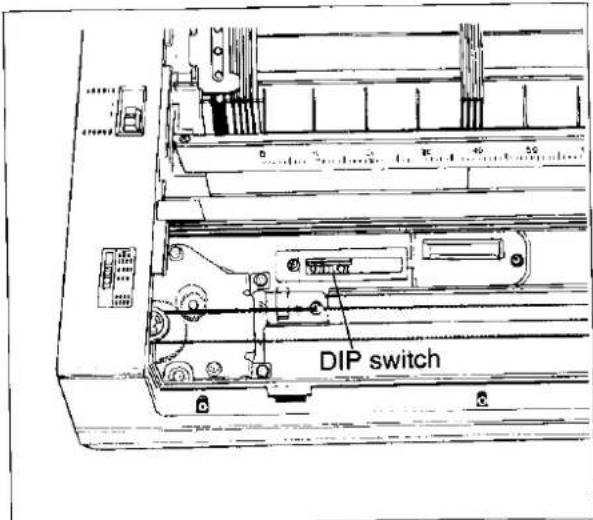
Abbildung 3.2 Position der DIP-Schalter
Die Schaltereinstellungen werden beim Einschalten in den Speicher eingelesen. Diese Speicherorte enthalten dann ein Abbild der Schaltereinstellungen. Der Computer kann die Schaltereinstellungen ändern, indem er neue Befehle herunterlädt. Der internationale Zeichensatz und die Schalter für den Seitenvorschub (Skip Perforation) usw. können auf diese Weise geändert werden. Informationen zur Softwaresteuerung der Schalter finden Sie in Abschnitt 4.10.
| SWITCH NUMBER | FUNCTION | ON | OFF | POSITION WHEN SHIPPED |
| SW1 | Printer Mode | Standard Mode | IBM Proprinter Mode | ON |
| SW2 | Paper Out Detector | Ineffective | Effective | OFF |
| SW3 | AUTO FEED XT | Fixed Internally | Not Fixed Internally | OFF |
| SW4 | Skip Perforation | 1 inch (25.4 mm) Skip | No Skip | OFF |
| SW5 SW6 SW7 | Character Set | SW1=ON: See International Character Set Chart SW1=OFF: See IBM Proprinter Mode Chart | OFF OFF ON | |
| SW8 | 7 bit/8 bit | 7 bit | 8 bit | OFF |
Tabelle 3.1 DIP-Schaltereinstellungen
| SW5 | SW6 | SW7 | INTERNATIONAL CHARACTER SET |
| ON | ON | ON | USA |
| OFF | ON | ON | FRANCE |
| ON | OFF | ON | ENGLAND |
| OFF | OFF | ON | ENGLAND |
| ON | ON | OFF | DENMARK I |
| OFF | ON | OFF | SWEDEN |
| ON | OFF | OFF | ITALY |
| OFF | OFF | OFF | SPAIN |
Tabelle 3.2 Internationaler Zeichensatz
| PRINTER MODE SW1 |
EIN Standardmodus
AUS IBM-Proprinter-Modus
Jeder Druckermodus verfügt über den folgenden Zeichensatz. IBM-Zeichensätze werden durch SW7 ausgewählt, wenn SW1 auf AUS gesetzt ist.
Standardmodus
| ASCII | = 96 |
| Italic ASCII | = 96 |
| International | = 32 |
| Italic International | = 32 |
IBM-Zeichensatz 1
| ASCII | = 96 |
| Special Characters | = 95 |
IBM-Zeichensatz 2
| ASCII | = 96 |
| Special Characters | =132 |
Siehe ANHANG A für die Zeichensatztabellen.
| SWITCH NUMBER | FUNCTION | ON | OFF |
| SW5 | Automatic CR | Causes Automatic CR on LF, VT, ESC+J | Prevents Automatic CR on LF, VT, ESC+J |
| SW6 | Zero font | ∅ | 0 |
| SW7 | Character Set | Set 2 | Set 1 |
Tabelle 3.3 IBM-Proprinter-Modus
PAPIER-ENDE-SENSOR SW2
EIN Der Papierende-Sensor ist nicht aktiv und das Drucken ist im Papierende-Zustand möglich (die Papierende-Anzeige leuchtet). Bei Verwendung von Einzelblättern ist das Drucken in den letzten 1,5 Zoll (38 mm) des Blattes möglich.
AUS Der Papierende-Sensor ist aktiv und das Drucken stoppt automatisch im Papierende-Zustand.
AUTO-EINZUG XT SW3
EIN Ein Zeilenvorschub-Befehl (LF) wird jedem Wagenrücklauf (CR) hinzugefügt.
AUS Nur Wagenrücklauf.
PERFORATIONSSPRUNG SW4
EIN Ein Rand von 3 Zeilen wird vor und nach der Perforation zwischen den Seiten übersprungen.
AUS Das Drucken ist kontinuierlich, KEINE Ränder um die Perforation.
Die Einstellung kann per Software geändert werden. Siehe Seite 4-65.
ZEICHENSATZ SW5, 6 & 7.
Die Kombination dieser Schaltereinstellungen wird zusammen mit der DIP-Schalter-1-Einstellung verwendet, um einen von 7 internationalen Zeichensätzen oder IBM-Proprinter-Modi auszuwählen. Die Zeichensatzdiagramme befinden sich in ANHANG A.
Die internationalen Zeichensätze werden ausgewählt, wenn der DIP-Schalter 1 auf EIN gesetzt ist.
Die IBM-Proprinter-Modi werden ausgewählt, wenn der DIP-Schalter 1 auf AUS gesetzt ist.
7/8-BIT-CODE-AUSWAHL SW8
ON=7 BIT
OFF=8 BIT
Dieser Schalter wählt die Größe des Datenworts. Wenn der Computer ein 7-Bit-Wort sendet, muss der Drucker ebenfalls auf 7 Bit eingestellt sein. Wenn die beiden Einstellungen nicht übereinstimmen, treten zufällige Fehler auf und eine sinnvolle Kommunikation ist nicht möglich. Informationen zur 7-Bit- und 8-Bit-Formatierung finden Sie in Abschnitt 4.7.
3.4 | Initialisierung
A. Einschaltsequenz
Beim Einschalten des Druckers sollten die folgenden Verfahren befolgt werden:
- Stellen Sie sicher, dass die Wagenstopper entfernt wurden.
- Stellen Sie die DIP-Schalter wie erforderlich ein.
- Stellen Sie sicher, dass das Farbband korrekt installiert ist.
- Stecken Sie das Netzkabel in eine geeignete Steckdose und schalten Sie den Drucker ein.
- Legen Sie das Papier ein und stellen Sie den Papiereinzugswähler ein.
B. Initialisierung
Der Drucker wird unter den folgenden Bedingungen initialisiert:
—Die Wechselspannung wird eingeschaltet —Das PRIME-Signal wird empfangen —Der RESET-Befehl wird empfangen (nur im Standardmodus)
Wenn der Drucker initialisiert wird, werden die folgenden Bedingungen eingestellt:
— der Druckkopf fährt in die äußerste linke Position — der Druckpuffer wird gelöscht — der Empfangspuffer wird gelöscht (nicht durch den RESET-Befehl gelöscht) — die Einstellungen für den vertikalen Tabulator werden gelöscht — die horizontalen Tabulatoren werden alle 8 Spalten gesetzt — die DIP-Schalter werden gelesen und die Druckermodi eingestellt — der Druckmodus hängt von der Position des Druckmodus-Wahlschalters ab — die aktuelle Formularposition wird als Formularanfang festgelegt — alle Modi, die durch Steuer- und Escape-Befehle gesetzt wurden, werden gelöscht — der Drucker geht ONLINE
3.5 Selbsttest
Der Drucker verfügt über eine Selbsttestfunktion, die es dem Benutzer ermöglicht, den Drucker unabhängig von einem Computer zu testen. Der Modus wird durch Einschalten des Netzschalters bei gleichzeitigem Drücken des Zeilenvorschub-Schalters (LF) aktiviert. Alle 96 ASCII-Zeichen werden kontinuierlich über die Breite der Walze gedruckt, bis der Drucker ausgeschaltet wird.
Der Selbsttestdruck stoppt automatisch nach ca. 30 Minuten (bei Entwurfszeichendruck).
Es ist möglich, eine Liste der aktuellen DIP-Schaltereinstellungen auszudrucken, sodass der Benutzer die Einstellungen überprüfen kann, ohne den Drucker zu bewegen. Diese Funktion wird durch Einschalten des Netzschalters bei gleichzeitigem Drücken des Formularvorschub-Schalters (FF) aktiviert. Der Ausdruck listet alle möglichen Einstellungen jedes Schalters auf, wobei die aktuelle Einstellung unterstrichen ist.
3.6 Hex-Dump
Der HEX-DUMP-Modus wird durch Einschalten des Netzschalters bei gleichzeitigem Drücken der Schalter für Zeilenvorschub (LF) und Formularvorschub (FF) aktiviert. In diesem Modus werden alle vom Computer empfangenen Daten im Hexadezimalcode anstelle der normalen ASCII-Zeichen gedruckt. Funktionscodes für den Drucker (CR, LF, HT usw.) werden nicht ausgeführt. Zum Zurücksetzen des Modus schalten Sie den Drucker aus und wieder ein.
3.7 Empfangspuffer
Der Drucker verfügt über einen Empfangspuffer von 1 KB. Dies kann die Wartezeit des Computers verringern, die durch das Warten auf den Abschluss des Druckvorgangs entsteht. Dadurch wird der Gesamtdurchsatz des gesamten Systems erhöht. Wenn der Drucker OFFLINE ist und sich noch Daten im Empfangspuffer befinden, ertönt der Summer wiederholt (Alarmton) und zeigt das Vorhandensein von Daten im Puffer an.
3.8 Austausch der Abdeckungen
Setzen Sie zuerst die vordere Abdeckung wie in Abbildung 3.3A gezeigt ein. Drücken Sie sie dann wie in Abbildung 3.3B gezeigt hinein.
3.3A.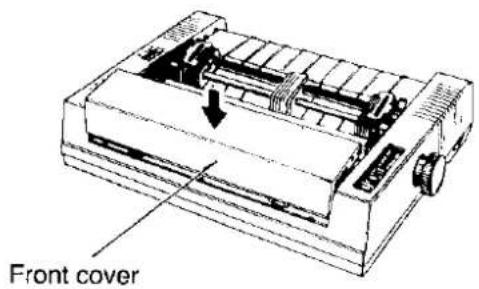
3.3B.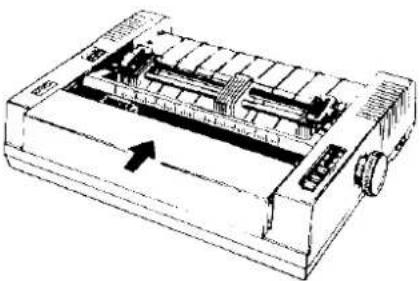
Abbildung 3.3 Austausch der vorderen Abdeckung
Setzen Sie die obere Abdeckung (Abbildung 3.4A) so ein, dass die Laschen an der Vorderseite unter die vordere Abdeckung gleiten. Drücken Sie dann nach unten, sodass die Laschen an der Seite einrasten (Abbildung 3.4B).
3.4A.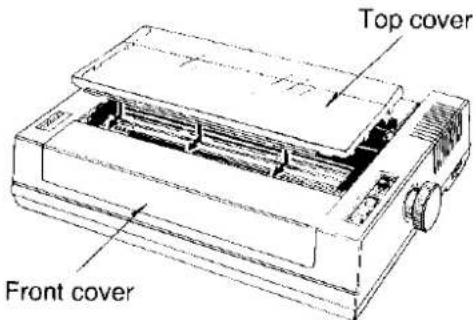
3.4B.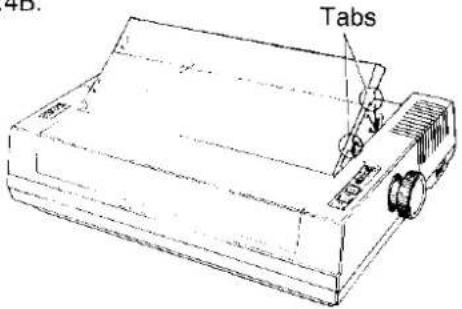
Abbildung 3.4 Austausch der oberen Abdeckung
4.1 Einführung
Damit ein Computer mit einem Drucker kommunizieren kann, müssen beide Geräte eine gemeinsame Sprache oder ein gemeinsames Kodierungsschema verstehen. Ein solches Kodierungsschema ist ASCII (American Standard Code for Information Interchange). Als Beispiel kann der ASCII-Code für das Zeichen "K" in jeder der folgenden Formen ausgedrückt werden:
(01001011) 2 —Binär
4B HEX, 4B—Hexadezimal
75 dez, 75—Dezimal
Viele Computer ermöglichen die Eingabe von ASCII-Codes in hexadezimaler Form. Die meisten Computer, die ASCII unterstützen, erlauben die Eingabe in dezimaler Form. Viele erlauben die Eingabe in beiden Formen. Nach der Eingabe werden die ASCII-Codes vom Computer in binäre Form umgewandelt und dann an den Drucker gesendet.
In den folgenden Abschnitten sehen Sie, wie Sie verschiedene ASCII-Codes eingeben, um den Drucker die gewünschten Funktionen ausführen zu lassen. Da das dezimale Äquivalent des ASCII-Codes am häufigsten verwendet wird, verwenden alle folgenden Beispiele die dezimale Form.
Anhang A enthält die ASCII-Zeichen- und Steuerbefehlstabellen, die von diesem Drucker verwendet werden.
4.2 Steuercodes
Die verschiedenen Druckerfunktionen werden über Steuercodes eingestellt, die aus einem oder mehreren ASCII-Zeichen bestehen, die auf besondere Weise in den Computer eingegeben werden. Diese Steuercodes unterscheiden sich oft von Drucker zu Drucker. Steuercodes fallen im Allgemeinen in zwei Kategorien: Ein-Byte-Steuercodes und Mehr-Byte-Steuercodes. Die Mehr-Byte-Steuercodes werden oft als Escape-Sequenzen bezeichnet, da jeder Code mit dem ASCII-Code für das ESCAPE-Zeichen (ESC) beginnt. Ein solches ESC-Zeichen sollte nicht mit der Escape-Taste verwechselt werden, die sich auf einigen Computertastaturen befindet.
Steuercodes können auf verschiedene Weise von Ihrem Computer an diesen Drucker gesendet werden. Die drei häufigsten Möglichkeiten sind:
- Über kommerzielle Softwarepakete
- Direkt über die Tastatur
- Aus einem selbst geschriebenen Programm
Die letzten beiden Methoden beziehen sich speziell auf die BASIC-Sprache, obwohl auch andere Sprachen wie FORTRAN, PASCAL usw. verwendet werden können. Wir verwenden BASIC, da es eine relativ einfache Sprache ist. Außerdem ist es die am häufigsten verwendete Mikrocomputersprache.
4.3 Eingabe von Steuercodes über kommerzielle Softwarepakete
Viele Computerbenutzer haben nicht die Zeit, das Fachwissen oder das Interesse, Software für ihre Anwendungen zu entwickeln. In solchen Fällen kann von Fachleuten geschriebene Software gekauft werden. Solche Software sollte nicht nur den Bedürfnissen des Benutzers entsprechen, sondern auch mit Computer und Drucker kompatibel sein.
Kommerzielle Software wird oft mit einem sogenannten Treiber geschrieben. Ein Treiber ist der Teil der Software, der es dem Benutzer ermöglicht, das Paket auf den verwendeten Drucker- und Schnittstellentyp zu konfigurieren. Nach dem Starten der Software wird der Benutzer in der Regel aufgefordert, zusätzliche Informationen anzugeben, wie zum Beispiel:
- Marke/Modell des verwendeten Druckers.
- Steckplatznummer, in der die Schnittstellenkarte installiert ist.
- Baudrate, Parität usw., wenn eine serielle Schnittstelle verwendet wird.
Sobald die erforderlichen Informationen bereitgestellt wurden, liefert die Software dem Computer die Steuercodes und andere Daten, die dieser Drucker benötigt.
Viele Textverarbeitungsprogramme fordern Sie auf, die ASCII-Codes einzugeben, die dieser Drucker für spezielle Einstellungen wie Unterstreichen, Kompaktschrift, Hoch- und Tiefstellung, Kursivschrift usw. verwendet. In allen Fällen sollten Sie sich im Handbuch Ihrer Software über die ordnungsgemäße Verwendung des Pakets mit diesem Drucker informieren.
4.4 Eingabe von Steuercodes direkt über die Tastatur
Bei vielen Computern ist die BASIC-Sprache nach dem Einschalten sofort einsatzbereit. Bei anderen muss BASIC von Kassette oder Diskette geladen werden. In jedem Fall können Sie, sobald BASIC bereit ist, die Steuerbefehle dieses Druckers direkt über Ihre Computertastatur eingeben.
BASIC erfordert die Verwendung des PRINT-Befehls (oder LPRINT, PRINT# usw., je nach Art des BASIC, das Ihr Computer verwendet), um die Steuerbefehle zu verarbeiten und an diesen Drucker zu senden. Als Teil dieses PRINT-Befehls müssen Sie die entsprechenden ASCII-Codes für die CHR$-Funktion angeben.
Zum Beispiel setzt der Befehl: LPRINT CHR$(15) gefolgt von einem RETURN diesen Drucker in den Kompaktschriftmodus. Nachfolgende Ausgaben an diesen Drucker erscheinen im Kompaktschriftmodus.
Wenn nach der Ausgabe des obigen Befehls nachfolgende PRINT-Anweisungen nichts an den Drucker ausgeben, prüfen Sie einen oder mehrere der folgenden Punkte:
- Haben Sie dem Computer mitgeteilt, dass die Ausgabe an den Drucker und nicht an den Bildschirm gehen soll? Zum Beispiel bewirkt PR#1 auf dem Apple®-Computer, dass nachfolgende PRINT-Anweisungen an den Drucker und nicht an den Bildschirm gehen. LPRINT bewirkt dasselbe in Microsoft® BASIC.
- Ist dieser Drucker online? Wenn nicht, drücken Sie die grüne ON LINE-Taste auf der Vorderseite.
- Ist das Schnittstellenkabel in den Computer und den Drucker eingesteckt?
- Bei Verwendung einer seriellen Schnittstelle: Ist die Baudrateneinstellung am Drucker dieselbe wie am Computer oder an der Schnittstellenkarte?
Beachten Sie, dass Sie bei der direkten Eingabe eines BASIC-Befehls über die Tastatur KEINE Zeilennummer verwenden, wie Sie es in einem BASIC-Programm tun würden. Darüber hinaus können Steuercodes nur zeilenweise eingegeben werden.
4.5 Eingabe von Steuercodes aus einem Programm
Steuerbefehle können auch aus einem BASIC-Programm heraus eingegeben werden. Der Vorteil dieser Technik besteht darin, dass Sie eine Reihe verschiedener Steuerbefehle in ein einzelnes Programm integrieren können und so Ausgaben mit einer Vielzahl spezieller Funktionen erzeugen können. Dies geschieht, indem Sie Ihr Programm einmal ausführen. In diesem Fall verlangt BASIC, dass jeder Zeile in Ihrem Programm eine Zeilennummer vorangestellt wird.
Als Beispiel haben wir bereits erwähnt, dass der Befehl LPRINT CHR\$(15), direkt über die Tastatur eingegeben, den Kompaktdruck auf diesem Drucker aktiviert. Aus einem BASIC-Programm heraus könnte dieser Befehl wie folgt aussehen:
50 LPRINT CHR\$(15)
Der Rest dieses Kapitels zeigt Ihnen, wie Sie jeden der Steuerbefehle eingeben, die dieser Drucker verwendet. Alle Beispiele sind IBM-PC® BASIC-Programme, die LPRINT verwenden, um auf den Drucker zuzugreifen, und Dezimalzahlen für die ASCII-Codes verwenden.
4.6 Eingabe von Hexadezimalcode
Falls Sie ASCII-Codes in hexadezimaler Form eingeben möchten, müssen Sie pro Code zwei zusätzliche Zeichen angeben. Dies sind das kaufmännische Und-Zeichen (&) und der Buchstabe H. Das folgende Beispiel veranschaulicht den BASIC-Befehl zum Aktivieren des Kompaktdrucks auf diesem Drucker.
Dezimal
LPRINT CHR\$(15)
Hexadezimal
LPRINT CHR\$(&HOF)
Siehe Anhang A für die ASCII-Codetabelle.
4.7 Steuercodes
Eine Reihe von Druckerbefehlen erfordert nur ein einzelnes ASCII-codiertes Zeichen als Teil der LPRINT-Anweisung. Der Befehl LPRINT CHR\$(15), den wir bereits besprochen haben, ist ein Beispiel für einen Ein-Byte-Steuerbefehl.
Mehrbyte-Steuercodes, oft auch Escape-Steuercodes oder Escape-Sequenzen genannt, beginnen immer mit einer ESC-Bezeichnung. ESC wird durch CHR\(27) in dezimaler Form oder CHR\(&H1B) in hexadezimaler Form bezeichnet. Auf die ESC-Bezeichnung folgen immer ein oder mehrere zusätzliche Codes, daher der Name Mehrbyte-Steuercode.
In BASIC werden diese zwei oder mehr Bytes zu einem einzigen Befehl oder einer Zeichenkette verbunden (oder konkateniert), entweder mit einem Pluszeichen (+), einem Semikolon (;) oder ohne Symbol, indem man ein Byte nach dem anderen ohne Leerzeichen auflistet. BASIC auf vielen Computern erlaubt Ihnen, jedes dieser Formate zu verwenden. Schlagen Sie in Ihrem BASIC-Handbuch nach, um die richtige Methode der Zeichenkettenkonkatenation zu erfahren.
Tabelle 4.1 zeigt äquivalente Methoden zur Eingabe von Mehrbyte-Steuerbefehlen für die meisten Computer.
Es gibt noch ein weiteres Eingabeformat, das häufig verwendet wird, um die Tastenanschläge zu reduzieren, die für die Eingabe eines Mehrbyte-Steuerbefehls erforderlich sind. Wenn Sie die Mehrbyte-Steuerbefehle auf den folgenden Seiten untersuchen, werden Sie feststellen, dass das zweite Byte, mit Ausnahme von ESC+SO und ESC+SI, immer ein Zeichen ist, das irgendwo auf Ihrer Tastatur erscheint. In solchen Fällen können Sie, anstatt den ASCII-Code dieses Zeichens als Teil der CHR\$-Funktion einzugeben, einfach dieses Zeichen in Anführungszeichen (") eingeben. Zum Beispiel, um den Pica-Schriftgrad einzustellen (ESC+P), können Sie eingeben:
LPRINT CHR\(27)+CHR\(80);
oder
LPRINT CHR\$(27) + "P";
Als weiteres Beispiel, um die doppelte Breite einzustellen, können Sie eingeben:
LPRINT CHR\(27)+CHR\(87)+CHR\$(1);
oder
LPRINT CHR\(27) + "W" + CHR\(1);
Mit dieser Methode kann jedes der drei in Tabelle 4.1 gezeigten Eingabeformate verwendet werden (abhängig vom verwendeten BASIC).
Mehrbyte-Steuercodes können durch die folgenden Klassifikationen zusammengefasst werden:
- Schriftartauswahl ● Zeichendichteauswahl ● Zeichenhervorhebungsauswahl ● Zeichensatzauswahl ● Bitbild- (Grafik-) Modusauswahl ● Papiervorschubsteuerung - Seitenformatauswahl - Tabulatorfunktion ● Wagenrücklaufsteuerung - Datensteuerung ● Laden von Zeichen - Verschiedenes
HINWEIS: Bestimmte Programme in diesem Abschnitt enthalten OPEN-, WIDTH-, PRINT- und CLOSE-Anweisungen. Diese BASIC-Anweisungen sind auf vielen IBM-kompatiblen Computern notwendig, um unerwünschte "Unterbrechungen" in der Ausgabe zu vermeiden. Siehe Seite 4-38 für weitere Informationen. PRINT #1 erzeugt kein CR und LF, daher müssen CR und LF verwendet werden, wenn sie erforderlich sind.
| Two-Byte Command | Three-Byte Command | |
| FunctionNameCode | Set Pica PitchESC+P27,80 DEC | Set Double Width PrintingESC+W+127,87,1 DEC |
| Input Format 1Input Format 2Input Format 3 | LPRINT CHR(27)+CHR(80);LPRINT CHR(27);CHR(80);LPRINT CHR(27)CHR(80); | LPRINT CHR(27)+CHR(87)+CHR(1);LPRINT CHR(27);CHR(87);CHR(1);LPRINT CHR(27)CHR(87)CHR$(1); |
Tabelle 4.1 Eingabeformate
SCHRIFTARTAUSWAHL
Der Begriff Schriftart bezieht sich auf einen bestimmten Stil, eine Form oder ein Design einer Zeichengruppe. Schriftartauswahlbefehle ermöglichen es Ihnen, ein bestimmtes Zeichensatzdesign aus einer Vielzahl solcher Designs auszuwählen, wodurch eine größere Flexibilität im Erscheinungsbild Ihres endgültigen Dokuments entsteht.
Zu den speziellen Schriftarten dieses Druckers gehören Kursiv, Tiefgestellt, Hochgestellt und Nearly Letter Quality. Obwohl es eine Entwurfsschriftart gibt, wählt der Befehl zur Auswahl dieser Schriftart auch 10 Zeichen pro Zoll (25,4 mm). Dieser Befehl wird daher im Abschnitt über Zeichendichten behandelt.
KURSIVSCHRIFT:
(Nur Standardmodus)
Wählt kursiven Zeichendruck.
Name: Einstellung: ESC+4
Freigabe: ESC+5
Code: Einstellung: 27,52 DEZ 1B,34 HEX
Freigabe: 27,53 DEC 1B,35 HEX
Eingabeformat: Einstellung: LPRINT CHR\$(27) + "4";
Freigabe: LPRINT CHR\$(27) + "5";
Beispiel: 10 REM KURSIVSCHRIFT EIN/AUS
20 LPRINT CHR\$(27)+"4";
30 LPRINT "KURSIVSCHRIFT EIN"
40 LPRINT CHR\$(27)+"5";
50 LPRINT "KURSIVSCHRIFT AUS"
60 END
KURSIVSCHRIFT EIN
KURSIVSCHRIFT AUS
Kommentare:
- Kursivschrift kann in der Schriftart Near Letter Quality und im Proportionalabstand gedruckt werden.
- Kursivschrift an den Positionen 160 DEC-254 DEC (A0 HEX-FE HEX) wird anstelle der Zeichen an den Positionen 32 DEC-126 DEC (20 HEX-7E HEX) gedruckt.
NEAR LETTER QUALITY (NLQ) SCHRIFTART:
(Nur Standardmodus)
Wählt den Druck mit einer Schrift aus, die der Briefqualität nahekommt.
| Name: | Courier NLQ Setting: | ESC+x+n | n=1,49,129,177 |
| Bold PS NLQ Setting: | ESC+x+n | n=2,50,130,178 | |
| Release: | ESC+x+m | m=0,48,128,176 |
| Code: | Setting: 27,120,n DEC | 1B,78,n HEX |
| Release: 27,120,m DEC | 1B,78,m HEX |
| Input Format: Setting: LPRINT CHR(27) + "x" + CHR(n); |
| Release: LPRINT CHR(27) + "x" + CHR(m); |
| Example: | 10 REM NEAR LETTER QUALITY FONT |
| 20 LPRINT "PRINTING USING THE DRAFT FONT" | |
| 30 LPRINT CHR(27)+"x"+CHR(1); | |
| 40 LPRINT "PRINTING USING THE COURIER NLQ FONT" | |
| 50 LPRINT CHR(27)+"x"+CHR(2); | |
| 60 LPRINT "PRINTING USING THE BOLD PS NLQ FONT" | |
| 70 LPRINT CHR(27)+"x"+CHR(0); | |
| 80 LPRINT "PRINTING USING THE DRAFT FONT" | |
| 90 END |
| PRINTING USING THE DRAFT FONT |
| PRINTING USING THE COURIER NLQ FONT |
| PRINTING USING THE BOLD PS NLQ FONT |
| PRINTING USING THE DRAFT FONT |
Anmerkungen:
- Dieser Befehl stellt den Druck in Briefqualität in der jeweils eingestellten Schriftbreite ein.
- Zeichen in Briefqualität werden mit zwei Druckkopfdurchgängen gedruckt. Daher ist der Doppeldruck durch ESC+G bei Druck in Briefqualität wirkungslos.
- Tief- und Hochstellungszeichen können in der Schrift mit Briefqualität gedruckt werden.
- Die Schriften werden wie folgt eingestellt: n=0: Entwurfsschrift n=1: Courier NLQ-Schrift n=2: Bold PS NLQ-Schrift
- Bei Einstellung der Bold PS NLQ-Schrift (n=2) werden Zeichen mit proportionalem Abstand gedruckt. Wenn nach ESC+x+2 ein anderer Befehl zur Schriftbreitenwahl ausgeführt wird, wird die Schriftbreite geändert.
HOCHSTELLUNGSSCHRIFT:
Wählt die Hochstellungsschrift, bei der Zeichen auf der oberen Hälfte der Zeile gedruckt werden. Die Zeichen werden auf die Hälfte ihrer ursprünglichen Höhe verkleinert.
| Name: | Setting: | ESC+S+n | n=0,48,128,176 |
| Release: | ESC+T |
| Code: | Setting: 27,83,n DEC | 1B,53,n HEX |
| Release: 27,84 DEC | 1B,54 HEX |
| Input Format: Setting: LPRINT CHR(27) + “S” + CHR(n);Release: LPRINT CHR$(27) + “T”; |
| Example: | (See SUBSCRIPT.) |
Anmerkungen:
- Hochgestellte Zeichen haben normale Breite.
- Um sehr kleine Zeichen wie Exponenten zu drucken, setzen Sie gleichzeitig den Hochstellungs- und den Kompressmodus.
- Hochgestellte Zeichen können im Modus mit Briefqualität gedruckt werden.
- ESC+T hebt auch die Einstellung für Tiefstellung auf. • Siehe Anmerkungen zur Tiefstellung.
SUBSCRIPT FONT:
Wählt die Tiefstellschrift mit Zeichen, die auf der unteren Hälfte der Zeile gedruckt werden. Die Zeichen werden auf 1/2 ihrer ursprünglichen Höhe reduziert.
| Name: | Setting: ESC+S+m | m=1,49,129,177 |
| Release: ESC+T |
| Code: | Setting | 27,83,m DEC | 1B,53,m HEX |
| Release: | 27,84 DEC | 1B,54 HEX |
| Input Format: Setting: LPRINT CHR(27) + "S" + CHR(m);Release: LPRINT CHR$(27) + "T"; |
| Example: | 10 REM SUPER/SUB SCRIPT |
| 20 LPRINT CHR(27) + "-" + CHR(1); | |
| 30 LPRINT CHR(27) + "S" + CHR(0); | |
| 40 LPRINT "ABCDEFGHIJKLMN - SUPERSCRIPT" | |
| 50 LPRINT CHR(27) + "S" + CHR(1); | |
| 60 LPRINT "ABCDEFGHIJKLMN - SUBSCRIPT" | |
| 70 LPRINT CHR(27) + "T"; | |
| 80 LPRINT "ABCDEFGHIJKLMN" | |
| 90 LPRINT CHR(27) + "-" + CHR$(0); | |
| 100 END | |
| ABCDEFGHIJKLMNOPQRSTUVWXYZCRIPT | |
| ABCDEFGHIJKLMNOPQRSTUVWXYZCRIPT |
Kommentare:
- Tiefstellzeichen haben normale Breite.
- Um sehr kleine Zeichen, wie z.B. Exponenten, zu drucken, setzen Sie den Tiefstell- und den Kompressionsmodus gleichzeitig.
- Tiefstellzeichen können im Modus für fast Briefqualität gedruckt werden. -ESC+T hebt auch die Hochstell-Druckeinstellung auf.
- Sowohl im Tiefstell- als auch im Hochstellmodus führt der Drucker einen Doppelschlag mit Einrichtungsdruck aus. Nach dem ersten Durchgang des Druckkopfes wird das Papier um 1/216 Zoll (0,12 mm) vorgeschoben und die Zeile erneut gedruckt. Der Drucker kompensiert automatisch den Papiervorschub, um die korrekte Zeilenzahl beizubehalten.
DRUCKMODUS AUSWÄHLEN:
Wählt die Drucktypen und die Qualität
(nur IBM Proprinter Modus)
Name: ESC+I+n n=0,2,4,6
Code: 27,73,n DEC 1B,49,n HEX
Eingabeformat: LPRINT CHR\(27) + "T" + CHR\(n);
Beispiel:
10 REM PRINTING FONTS AND QUALITY SELECTS
20 LPRINT CHR(27) + "=" + CHR(67) + CHR(0) + CHR(20) + "A";
30 FOR I = 1 TO 5
40 LPRINT CHR(0) + CHR(0);
50 LPRINT CHR(0) + CHR(0) + CHR(2) + CHR(7);
60 LPRINT CHR(7) + CHR(7) + CHR(254) + CHR(64);
70 LPRINT CHR(64) + CHR(48) + CHR$(0);
80 NEXT I
90 FOR I = 0 TO 6 STEP 2
100 LPRINT CHR(27) + "I" + CHR(0);
110 LPRINT "n = "; I;
120 LPRINT CHR(27) + "I" + CHR(I);
130 LPRINT "ABCDE"
140 NEXT I
150 END
n = 0 ABCDE
n = 2 ABCDE
n = 4 ♩♩♩♩♩
n = 6 ♩♩♩♩♩
Kommentar:
● Dieser Befehl wählt den Zeichengenerator (ROM-CG oder DOWNLOAD-Zeichen) und die Druckerschriftarten aus.
n=0: Interne Zeichen im Entwurfsmodus (Draft).
n=2: Interne Zeichen im NLQ-Modus.
n=4: Heruntergeladene Zeichen im Entwurfsmodus (Draft).
n=6: Heruntergeladene Zeichen im NLQ-Modus.
- Bei n = 4 wird die zweite von zwei horizontal benachbarten Spalten nicht angesteuert. Bei n = 6 (heruntergeladene NLQ-Schrift) werden alle Spalten angesteuert und doppelt gespitzte Zeichen gedruckt.
NLQ-DRUCK:
Wählt den Druck mit einer Schrift in Near-Letter-Quality.
(Nur im IBM Proprinter-Modus)
Name: Setzen: ESC+G Aufheben: ESC+H
Code: Setzen: 27,71 DEC 1B,47 HEX Aufheben: 27,72 DEC 1B,48 HEX
Eingabeformat: Setzen: LPRINT CHR\(27) + "G" ; Aufheben: LPRINT CHR\(27) + "H" ;
Beispiel: 10 REM SCHRIFT IN NEAR-LETTER-QUALITY 20 LPRINT "DRUCKEN MIT DER ENTWURFSSCHRIFT" 30 LPRINT CHR\$(27)+"G"; 40 LPRINT "DRUCKEN MIT DER NLQ-SCHRIFT" 50 LPRINT CHR\$(27)+"H"; 60 LPRINT "DRUCKEN MIT DER ENTWURFSSCHRIFT" 70 END
DRUCKEN MIT DER ENTWURFSSCHRIFT DRUCKEN MIT DER NLQ-SCHRIFT DRUCKEN MIT DER ENTWURFSSCHRIFT
Kommentare:
- Dieser Befehl setzt den Druck auf Near Letter Quality (Courier) in der jeweils eingestellten Schriftbreite.
- Wenn die Modi "Emphasized" und "NLQ" (gesetzt durch ESC+G) gleichzeitig aktiv sind, werden Zeichen im Fettdruck und im Doppelschlag-Draft-Font gedruckt.
AUSWAHL DER SCHRIFTBREITE
Der Begriff "Schriftbreite" (Pitch) bezieht sich bei Nadeldruckern auf die Anzahl der Zeichen, die in einem Zoll (25,4 mm) gedruckt werden. Dies umfasst 10, 12, 15, 17 Zeichen pro Zoll sowie proportionalen Abstand.
DRAFT-PICA-SCHRIFTBREITE:
(Nur Standardmodus)
Setzt den Druck auf Draft-Pica-Schriftbreite (10 Zeichen pro Zoll).
Name: ESC+P
Code: 27,80 DEC 1B,50 HEX
Eingabeformat: LPRINT CHR\$(27) + "P";
Beispiel: 10 REM DRAFT-PICA-SCHRIFTBREITE
20 LPRINT CHR\$(27)+"P";
30 LPRINT "PICA"
40 FOR I=1 TO 3
50 LPRINT "ABCDE";
60 NEXT I
70 LPRINT CHR\$(10);
80 END
FICA
ABCDEABCDEABCDE
Kommentare:
- Die Einstellung von Pica-Schrift ergibt 10 Zeichen pro Zoll oder 80 Zeichen pro Zeile.
- Pica-Schrift kann auf Elite, Proportional, Komprimiert usw. geändert werden, indem die entsprechenden Steuerbefehle eingegeben werden.
- ESC+P gibt die Near-Letter-Quality-Schrift frei und die anschließende Ausgabe wird in Draft-Schrift gedruckt.
- Wenn ESC+P nach der Einstellung von Komprimiertdruck ausgeführt wird, wird Draft-Schrift mit 17 Zeichen pro Zoll gedruckt.
- Wenn ESC+P nach der Einstellung von Proportionalabstand ausgeführt wird, wird Draft-Schrift mit Proportionalabstand gedruckt.
DRAFT ELITE PITCH:
(Nur Standardmodus)
Stellt Draft-Elite-Schrift (12 Zeichen pro Zoll) ein.
Name: ESC+M
Code: 27,77 DEC 1B,4D HEX
Eingabeformat: LPRINT CHR\$(27) + "M";
Beispiel: 10 REM DRAFT ELITE PITCH
20 LPRINT "----DRAFT PICA----"
30 LPRINT CHR\$(27)+"M";
40 LPRINT "----DRAFT ELITE----"
50 END
----DRAFT PICA---- ----DRAFT ELITE----
Kommentare:
- Die Einstellung des Elite-Schriftbildes ergibt 12 Zeichen pro Zoll oder 96 Zeichen pro Zeile.
- Komprimierter Druck und Proportionalschrift können nicht mit dem Elite-Schriftbild verwendet werden. Beim Elite-Schriftbild werden die Einstellungen für komprimierten Druck oder Proportionalschrift ignoriert. Wenn die Elite-Schriftbild-Bezeichnung nach der Einstellung von komprimiertem Druck oder Proportionalschrift erfolgt, werden komprimierter Druck oder Proportionalschrift aufgehoben und das Elite-Schriftbild bleibt aktiv.
- ESC+M hebt die Near-Letter-Quality-Schriftart auf und die nachfolgende Ausgabe wird mit der Draft-Schriftart gedruckt.
ELITE-SCHRIFTBILD:
(nur IBM Proprinter Modus)
Stellt den Druck auf 12 Zeichen pro Zoll ein (96 Zeichen pro Zeile).
Name: Setting: ESC+: Release: DC2
Code: Setting: 27,58 DEC 1B, 3A HEX Release: 18 DEC 12 HEX
Input Format: Setting: LPRINT CHR\(27)+“ :”; Release: LPRINT CHR\(18);
Example: 10 REM ELITE PITCH 20 LPRINT CHR\$(27)+";"; 30 LPRINT "----ELITE---- 40 LPRINT CHR\$(18); 50 LPRINT "----PICA---- 60 END
ELITE PICA
Comments:
- The elite and compressed modes cannot be used together. In the elite pitch, the compressed print setting will be ignored.
- If the elite pitch designation is made after compressed mode has been set, compressed mode is released and the elite pitch remains in effect. ●This command does not affect Draft or NLQ font mode.
NEAR LETTER QUALITY—PICA PITCH:
(Standard Mode only)
Sets near letter quality pica pitch (10 characters per inch) printing.
Name: ESC+n
Code: 27,110 DEC 1B,6E HEX
Input Format: LPRINT CHR\$(27) + "n";
Example: 10 REM NEAR LETTER QUALITY, PICA PITCH
20 LPRINT CHR\$(27)+"n";
30 LPRINT "NLQ PICA PITCH"
40 LPRINT "NLO PICA PITCH WITH";
50 LPRINT CHR\(27) + "S" + CHR\(1);
60 LPRINT "SUBSCRIPT";
70 LPRINT CHR\(27) + "S" + CHR\(0);
80 LPRINT "SUPERSCRIPT"
90 LPRINT CHR\$(27)+"T"
100 LPRINT CHR\$(27) + "P"
110 END
NLQ PICA PITCH
NLQ PICA PITCH WITH SUBSCRIPT SUPERSCRIPT
Kommentare:
- Wenn ESC+n nach der Einstellung des Kompaktdrucks ausgeführt wird, wird die Near-Letter-Quality-Schrift mit 17 Zeichen pro Zoll gedruckt.
- Wenn ESC+n nach der Einstellung des proportionalen Abstands ausgeführt wird, wird die Near-Letter-Quality-Schrift mit proportionalem Abstand gedruckt.
- Near letter quality Zeichen werden mit zwei Druckkopfdurchgängen gedruckt. Daher ist der Doppeldruck durch ESC+G im Near Letter Quality Pica-Schriftgrad wirkungslos.
- Hoch- und Tiefgestellte Zeichen können mit Near Letter Quality Pica-Schriftgrad gedruckt werden.
- ESC+P beendet den Near Letter Quality Pica-Schriftgrad und stellt auf Draft Pica-Schriftgrad um.
NEAR LETTER QUALITY – ELITE-SCHRIFTGRAD:
(nur Standardmodus)
Setzt den Near Letter Quality Elite-Schriftgrad (12 Zeichen pro Zoll) für den Druck.
Name: ESC+o
Code: 27,111 DEC 1B,6F HEX
Eingabeformat: LPRINT CHR\$(27) + "o";
Example: 10 REM NEAR LETTER QUALITY, ELITE PITCH
20 LPRINT CHR$(27)+"o";
30 LPRINT "NLQ ELITE PITCH"
40 LPRINT "NLQ ELITE PITCH WITH ";
50 LPRINT CHR(27)+"S"+CHR(1);
60 LPRINT "SUBSCRIPT";
70 LPRINT CHR(27)+"S"+CHR(0);
80 LPRINT "SUPERSCRIPT"
90 LPRINT CHR$(27)+"T";
100 LPRINT CHR$(27)+"P";
110 LPRINT "DRAFT PICA PITCH"
120 END
NLQ ELITE-SCHRIFTGRAD
NLQ ELITE-SCHRIFTGRAD MIT TIEFGESTELLTEN HOCHGESTELLTEN
DRAFT PICA-SCHRIFTGRAD
Kommentare:
- Wenn Near Letter Quality Elite-Schriftgrad und Kompaktdruck oder Proportionalschrift gleichzeitig eingestellt sind, werden Kompaktdruck oder Proportionalschrift ignoriert und Elite-Near-Letter-Quality-Zeichen werden gedruckt.
- Near Letter Quality Zeichen werden mit zwei Druckkopfdurchgängen gedruckt. Daher ist der Doppeldruck durch ESC+G im Near Letter Quality Elite-Schriftgrad wirkungslos.
- Sub-/Superscript-Zeichen können mit Druckern in Near Letter Quality Elite Pitch gedruckt werden.
- ESC+P hebt Near Letter Quality Elite Pitch auf und stellt den Druck auf Draft Pica Pitch um.
KOMPRIMIERTE SCHRIFTART:
Stellt den Druck auf komprimierte Schriftart (17 Zeichen pro Zoll) ein.
Name: Einstellung: SI oder ESC+SI
Freigabe: DC2
Code: Einstellung: 15 oder 27,15 DEC 0F oder 1B,0F HEX
Freigabe: 18 DEC 12 HEX
Eingabeformat: Einstellung: LPRINT CHR\$(15);
oder
LPRINT CHR\(27)+CHR\(15);
Freigabe: LPRINT CHR\$(18);
Beispiel:
10 REM COMPRESSED PITCH
20 LPRINT "DRAFT PICA PITCH - 10 CHARACTERS PER INCH"
30 LPRINT CHR$(15);
40 LPRINT "COMPRESSED PITCH USING (SI) - 17 CHARACTERS PER INCH"
50 LPRINT CHR$(18);
60 LPRINT "BACK TO DRAFT PICA PITCH - 10 CHARACTERS PER INCH"
70 LPRINT CHR(27)+CHR(15);
80 LPRINT "COMPRESSED PITCH USING (ESC+SI) - 17 CHARACTERS PER INCH"
90 LPRINT CHR$(18);
100 LPRINT "BACK TO DRAFT PICA PITCH - 10 CHARACTERS PER INCH"
110 END
DRAFT PICA PITCH - 10 ZEICHEN PRO ZOLL
KOMPRIMIERTE SCHRIFTART MIT (SI) - 17 ZEICHEN PRO ZOLL
ZURÜCK ZUR ENTWURF-PICA-SCHRIFT - 10 ZEICHEN PRO ZOLL
KOMPRIMIERTE SCHRIFT MIT (ESC+SI) - 17 ZEICHEN PRO ZOLL
ZURÜCK ZUR ENTWURF-PICA-SCHRIFT - 10 ZEICHEN PRO ZOLL
Bemerkungen:
- Die Einstellung der komprimierten Schrift ergibt 17 Zeichen pro Zoll oder 137 Zeichen pro Zeile.
- Wenn gleichzeitig verstärkte und komprimierte Zeichen eingestellt sind, wird die komprimierte Schrift ignoriert und verstärkte Zeichen werden gedruckt. Wenn die verstärkte Schrift jedoch aufgehoben wird, werden die Zeichen in komprimierter Schrift gedruckt. Verwenden Sie DC2, um die komprimierte Schrift aufzuheben.
PROPORTIONALE SCHRIFT:
(Nur Standardmodus)
Setzt proportionalen Abstand zwischen den Zeichen.
| Name: | Setting: ESC+p+n | n=1,49,129,177 |
| Release: ESC+p+m | m=0,48,128,176 |
| Code: | Setting: 27,112,n DEC | 1B,70,n HEX |
| Release: 27,112,m DEC | 1B,70,m HEX |
| Input Format: Setting: LPRINT CHR(27) + "p" + CHR(n); Release: LPRINT CHR(27) + "p" + CHR(m); |
Beispiel:
10 REM PROPORTIONALE SCHRIFT 20 LPRINT "ENTWURF-PICA-SCHRIFT:" 30 LPRINT " ABCDEFGHIJKLMNOPQRSTUVWXYZabcdefghijklmnopqrstuvwxyz" 40 LPRINT CHR(27) + "p" + CHR(1); 50 LPRINT "PROPORTIONALE SCHRIFT:" 60 LPRINT " ABCDEFGHIJKLMNOPQRSTUVWXYZabcdefghijklmnopqrstuvwxyz" 70 LPRINT CHR$(27)+"n"; 80 LPRINT "COURIER NLQ PROPORTIONALE SCHRIFT:" 90 LPRINT " ABCDEFGHIJKLMNOPQRSTUVWXYZabcdefghijklmnopqrstuvwxyz" 100 LPRINT CHR$(27) + "P"; 110 LPRINT CHR(27)+"p"+CHR(0); 120 END
ENTWURF-PICA-SCHRIFT:
ABCDEFGHIJKLMNOPQRSTUVWXYZabcdefghijklmnopqrstuvwxyz
PROPORTIONALE SCHRIFT:
ABCDEFGHIJKLMNOPQRSTUVWXYZabcdefghijklmnopqrstuvwxyz
COURIER NLQ PROPORTIONAL SPACING:
ABCDEFGHIJKLMNOPQRSTUVWXYZabcdefghijklmnopqrstuvwxyz
Kommentare:
- Bei Verwendung des proportionalen Abstands im Entwurfsmodus werden Zeichen fett gedruckt, nicht als Entwurfszeichen. Siehe Tabelle 4.2 für die Tabelle des proportionalen Abstands.
- Proportionaler Abstand kann nur bei Pica-Schrift aktiviert werden. Wenn proportionaler Abstand zusammen mit Kompaktdruck eingestellt ist, wird der Kompaktdruck ignoriert und die Zeichen werden mit proportionalem Abstand gedruckt.
- Wenn der proportionale Abstand aufgehoben wird, werden die Zeichen in Pica-Schrift gedruckt.
| ASCII code | Char. | Width |
| 0 | A | 12 |
| 1 | B | 12 |
| 2 | C | 11 |
| 3 | D | 10 |
| 4 | E | 8 |
| 5 | F | 12 |
| 6 | G | 12 |
| 7 | H | 12 |
| 8 | I | 12 |
| 9 | J | 12 |
| 10 | K | 11 |
| 11 | L | 12 |
| 12 | M | 12 |
| 13 | N | 12 |
| 14 | O | 12 |
| 15 | P | 12 |
| 16 | Q | 12 |
| 17 | R | 12 |
| 18 | S | 12 |
| 19 | T | 12 |
| 20 | U | 12 |
| 21 | V | 12 |
| 22 | W | 12 |
| 23 | X | 12 |
| 24 | Y | 12 |
| 25 | Z | 12 |
| 26 | A | 12 |
| 27 | B | 12 |
| 28 | C | 12 |
| 29 | D | 12 |
| 30 | E | 12 |
| 31 | F | 12 |
| 32 | G | 12 |
| 33 | H | 12 |
| 34 | I | 12 |
| 35 | J | 12 |
| 36 | K | 12 |
| 37 | L | 12 |
| 38 | M | 12 |
| 39 | N | 12 |
| 40 | O | 12 |
| 41 | P | 12 |
| 42 | Q | 12 |
| 43 | R | 12 |
| 44 | S | 12 |
| 45 | T | 12 |
| 46 | U | 12 |
| 47 | V | 12 |
| 48 | W | 12 |
| 49 | X | 12 |
| 50 | Y | 12 |
| 51 | Z | 12 |
| 52 | A | 12 |
| 53 | B | 12 |
| 54 | C | 12 |
| 55 | D | 12 |
| 56 | E | 12 |
| 57 | F | 12 |
| 58 | G | 12 |
| 59 | H | 12 |
| 60 | I | 12 |
| 61 | J | 12 |
| 62 | K | 12 |
| 63 | L | 12 |
Tabelle 4.2 Proportionaler Abstand: Standardmodus Zeichen Einheit: 1/120 Zoll (0,21 mm)
PROGRAMMIERBARE SCHRIFTGRÖSSE:
(nur Standardmodus)
Setzt eine Zeichenbreite auf 10, 12, 15, 17 oder proportionalen Abstand.
Name: ESC+w+n n=0,1,2,3,4
Code: 27,119,n DEZ 1B,77,n HEX
Eingabeformat: LPRINT CHR\(27) + "w" + CHR\(n);
Example: 10 REM PROGRAMMABLE PITCH
20 FOR L=1 TO 2
30 IF L=1 THEN LPRINT "DRAFT FONT:":GOTO 50
40 LPRINT CHR$(27)+"n";"NEAR LETTER QUALITY FONT:"
50 FOR I=0 TO 4
60 LPRINT CHR(27)+"w"+CHR(I);
70 IF I=4 THEN 110
80 READ X
90 LPRINT "CHARACTERS PER INCH=";X
100 NEXT I
110 LPRINT "proportional spacing"
120 LPRINT CHR$(10);:RESTORE
130 NEXT L
140 LPRINT CHR(27)+"F";CHR(27)+"w"+CHR$(0);
150 DATA 10,12,15,17
160 END
DRAFT FONT:
CHARACTERS PER INCH = 10
CHARACTERS PER INCH = 12
CHARACTERS PER INCH = 15
CHARACTERS PER INCH = 17
proportional spacing
NEAR LETTER QUALITY FONT:
CHARACTERS PER INCH = 10
CHARACTERS PER INCH = 12
CHARACTERS PER INCH = 15
CHARACTERS PER INCH = 17
proportional spacing
Kommentare:
- Pitches are set as follows:
n=0: 10 characters per inch
n=1: 12 characters per inch
n=2: 15 characters per inch
n=3: 17 characters per inch
n=4: proportional spacing
●Dieser Befehl hebt alle vorherigen Zeichenbreiteneinstellungen auf. - Wenn Fettdruck aktiviert wurde und ESC+w+2 (15 Zeichen pro Zoll) oder ESC+w+3 (17 Zeichen pro Zoll) ausgeführt wird, wird der Fettdruck aufgehoben und die Zeichen werden mit 15 (bzw. 17) Zeichen pro Zoll gedruckt. - Die Ausführung von ESC+w+n ändert nur die Zeichenbreite und beeinflusst nicht die Zeichenschriftart.
PROGRAMMIERBARE SCHRIFTGRÖSSE/HERVORHEBUNG:
(nur Standardmodus)
Legt eine Kombination aus Schriftgröße und/oder Hervorhebung fest.
Name: ESC+!+n 0≤n≤255
Code: 27,33,n DEC 1B,21,n HEX
Eingabeformat: LPRINT CHR\(27) + “!” + CHR\(n);
Beispiel: 10 REM DRUCKMODUS-AUSWAHL
20 WIDTH "LPT1:", 255
30 OPEN "LPT1:" AS #1
40 DIM D(80)
50 D(1)=0:N=2:K=1
60 FOR I=1 TO 16
70 D(N)=K:D(N+1)=K+3:D(N+2)=K+7:D(N+3)=K+8
80 IF N+4>80 THEN 100
90 D(N+4)=K+15:N=N+5:K=K+16
100 NEXT I
110 PRINT#1, CHR\(27) + "D" + CHR\(12) + CHR\$(0);
120 FOR N=1 TO 80
130 PRINT#1, CHR\(27) + " ! "+CHR\(O);
140 PRINT#1, "MODE:"; D(N); CHR\$(9);
150 PRINT#1, CHR\(27) + " ! "+CHR\(D(N));
160 PRINT#1,"Print Mode Combinations"
170 PRINT#1, CHR\$(10);
180 NEXT N
190 CLOSE
200 END
| MODE: 0 | Print Mode Combinations |
| MODE: 1 | Print Mode Combinations |
| MODE: 4 | Print Mode Combinations |
| MODE: 8 | Print Mode Combinations |
| MODE: 9 | Print Mode Combinations |
| MODE: 16 | Print Mode Combinations |
| MODE: 17 | Print Mode Combinations |
| MODE: 20 | Print Mode Combinations |
| MODE: 24 | Print Mode Combinations |
| MODE: 25 | Print Mode Combinations |
| MODE: 32 | Print Mode Combinations |
| MODE: 33 | Print Mode Combinations |
| MODE: 36 | Print Mode Combinations |
| MODE: 40 | Print Mode Combinations |
| MODE: 41 | Print Mode Combinations |
| MODE: 48 | Print Mode Combinations |
| MODE: 49 | Print Mode Combinations |
| MODE: 52 | Print Mode Combinations |
| MODE: 56 | Print Mode Combinations |
| MODE: 57 | Print Mode Combinations |
Print Mode Combinations
Print Mode Combinations
Print Mode Combinations
Print Mode Combinations
Druckmoduskombinationen
Druckmoduskombinationen
Druckmoduskombinationen
Druckmoduskombinationen
Druckmoduskombinationen
Druckmoduskombinationen
Druckmoduskombinationen
Druckmoduskombinationen
Druckmoduskombinationen
Druckmoduskombinationen
Druckmoduskombinationen
Druckmoduskombinationen
Druckmoduskombinationen
Druckmoduskombinationen
Druckmoduskombinationen
Kombinationen der Druckmodi
Kombinationen der Druckmodi
Kombinationen der Druckmodi
Kombinationen der Druckmodi
Kombinationen der Druckmodi
Kombinationen der Druckmodi
Kombinationen der Druckmodi
Kombinationen der Druckmodi
Kombinationen der Druckmodi
Kombinationen der Druckmodi
Kombinationen der Druckmodi
Kombinationen der Druckmodi
Kombinationen der Druckmodi
Kombinationen der Druckmodi
Kombinationen der Druckmodi
Druckmoduskombinationen
Druckmoduskombinationen
Druckmoduskombinationen
Druckmoduskombinationen
Druckmoduskombinationen
Druckmoduskombinationen
Druckmoduskombinationen
Druckmoduskombinationen
Druckmoduskombinationen
Druckmoduskombinationen
Druckmoduskombinationen
Druckmoduskombinationen
Druckmoduskombinationen
Beispiel: MODUS: 212 (Fortsetzung) MODUS: 216
| Print Mode Combinations |
| Print Mode Combinations |
| Print Mode Combinations |
| Print Mode Combinations |
| Print Mode Combinations |
| Print Mode Combinations |
| Print Mode Combinations |
| Print Mode Combinations |
| Print Mode Combinations |
| Print Mode Combinations |
| Print Mode Combinations |
Anmerkungen:
- Die Druckmodi entsprechen der Einstellung jedes Bits, wie unten dargestellt.
| bit | 7 | 6 | 5 | 4 | 3 | 2 | 1 | 0 |
| “1” | Under-lining | Italic | Double width | Double printing | Emphasized | Compressed | No meaning | Elite |
| “0” | Normal | Normal | Normal | Normal | Normal | Normal | Pica |
- Die Bits 0 und 2 betreffen nur die Schriftbreite.
- Wenn n=49 (31 HEX) ist, erzeugt das Setzen der Bits 0, 4 und 5 auf "1" doppelte Breite, Elite und Doppeldruck.
- Wenn die Bits 2 und 3 beide auf "1" gesetzt sind, hat der hervorgehobene Druck Vorrang vor der Komprimierung.
- Die Kombinationen aus Schriftbreite und Hervorhebung werden durch den Wert von "n" bestimmt, wie in Tabelle 4.3 dargestellt.
- Siehe auch Abschnitt 4.8 Mischen von Druckmodi und den Befehl ESC+!+n im Abschnitt "ZEICHENHERVORHEBUNG" dieses Handbuchs.
| n | UL | IT | DW | DP | EM | COM | EL |
| 0 | |||||||
| 1 | ○ | ||||||
| 2/3 | |||||||
| 3 | ○ | ||||||
| 4 | ○ | ||||||
| 5 | ○ | ||||||
| 6 | ○ | ||||||
| 7 | ○ | ||||||
| 8 | ○ | ||||||
| 9 | ○ | ○ | |||||
| 10 | ○ | ||||||
| 11 | ○ | ○ | |||||
| 12 | ○ | ||||||
| 13 | ○ | ○ | |||||
| 14 | ○ | ||||||
| 15 | ○ | ○ | |||||
| 16 | ○ | ||||||
| 17 | ○ | ○ | |||||
| 18 | ○ | ||||||
| 19 | ○ | ○ | |||||
| 20 | ○ | ○ | |||||
| 21 | ○ | ○ | |||||
| 22 | ○ | ○ | |||||
| 23 | ○ | ○ | |||||
| 24 | ○ | ○ | |||||
| 25 | ○ | ○ | ○ | ||||
| 26 | ○ | ○ | |||||
| 27 | ○ | ○ | ○ | ||||
| 28 | ○ | ○ | |||||
| 29 | ○ | ○ | ○ | ||||
| 30 | ○ | ○ | |||||
| 31 | ○ | ○ | ○ | ||||
| 32 | ○ | ||||||
| 33 | ○ | ○ | |||||
| 34 | ○ | ||||||
| 35 | ○ | ○ | |||||
| 36 | ○ | ○ | |||||
| 37 | ○ | ○ | |||||
| 38 | ○ | ○ | |||||
| 39 | ○ | ○ | |||||
| 40 | ○ | ○ | |||||
| 41 | ○ | ○ | ○ | ||||
| 42 | ○ | ○ |
| n | UL | IT | DW | DP | EM | COM | EL |
| 43 | ○ | ○ | ○ | ||||
| 44 | ○ | ○ | |||||
| 45 | ○ | ○ | ○ | ||||
| 46 | ○ | ○ | |||||
| 47 | ○ | ○ | ○ | ||||
| 48 | ○ | ○ | |||||
| 49 | ○ | ○ | ○ | ||||
| 50 | ○ | ○ | |||||
| 51 | ○ | ○ | ○ | ||||
| 52 | ○ | ○ | ○ | ||||
| 53 | ○ | ○ | ○ | ||||
| 54 | ○ | ○ | ○ | ||||
| 55 | ○ | ○ | ○ | ||||
| 56 | ○ | ○ | ○ | ||||
| 57 | ○ | ○ | ○ | ○ | |||
| 58 | ○ | ○ | ○ | ||||
| 59 | ○ | ○ | ○ | ○ | |||
| 60 | ○ | ○ | ○ | ||||
| 61 | ○ | ○ | ○ | ○ | |||
| 62 | ○ | ○ | ○ | ||||
| 63 | ○ | ○ | ○ | ○ | |||
| 64 | ○ | ||||||
| 65 | ○ | ○ | |||||
| 66 | ○ | ||||||
| 67 | ○ | ○ | |||||
| 68 | ○ | ○ | |||||
| 69 | ○ | ○ | |||||
| 70 | ○ | ○ | |||||
| 71 | ○ | ○ | |||||
| 72 | ○ | ○ | |||||
| 73 | ○ | ○ | ○ | ||||
| 74 | ○ | ○ | |||||
| 75 | ○ | ○ | ○ | ||||
| 76 | ○ | ○ | |||||
| 77 | ○ | ○ | ○ | ||||
| 78 | ○ | ○ | |||||
| 79 | ○ | ○ | ○ | ||||
| 80 | ○ | ○ | |||||
| 81 | ○ | ○ | ○ | ||||
| 82 | ○ | ○ | |||||
| 83 | ○ | ○ | ○ | ||||
| 84 | ○ | ○ | ○ | ||||
| 85 | ○ | ○ | ○ |
UL: Unterstreichung
IT: Kursiv
DW: Doppelte Breite
DP: Doppeldruck
EM: Hervorgehoben
COM: Komprimiert
EL: Elite
Tabelle 4.3. Druckmodusauswahl
| n | UL | IT | DW | DP | EM | COM | EL |
| 86 | ○ | ○ | ○ | ||||
| 87 | ○ | ○ | ○ | ||||
| 88 | ○ | ○ | ○ | ||||
| 89 | ○ | ○ | ○ | ○ | |||
| 90 | ○ | ○ | ○ | ||||
| 91 | ○ | ○ | ○ | ○ | |||
| 92 | ○ | ○ | ○ | ||||
| 93 | ○ | ○ | ○ | ○ | |||
| 94 | ○ | ○ | ○ | ||||
| 95 | ○ | ○ | ○ | ○ | |||
| 96 | ○ | ○ | |||||
| 97 | ○ | ○ | ○ | ||||
| 98 | ○ | ○ | |||||
| 99 | ○ | ○ | ○ | ||||
| 100 | ○ | ○ | ○ | ||||
| 101 | ○ | ○ | ○ | ||||
| 102 | ○ | ○ | ○ | ||||
| 103 | ○ | ○ | ○ | ||||
| 104 | ○ | ○ | ○ | ||||
| 105 | ○ | ○ | ○ | ○ | |||
| 106 | ○ | ○ | ○ | ||||
| 107 | ○ | ○ | ○ | ○ | |||
| 108 | ○ | ○ | ○ | ||||
| 109 | ○ | ○ | ○ | ○ | |||
| 110 | ○ | ○ | ○ | ||||
| 111 | ○ | ○ | ○ | ○ | |||
| 112 | ○ | ○ | ○ | ||||
| 113 | ○ | ○ | ○ | ○ | |||
| 114 | ○ | ○ | ○ | ||||
| 115 | ○ | ○ | ○ | ○ | |||
| 116 | ○ | ○ | ○ | ○ | |||
| 117 | ○ | ○ | ○ | ○ | |||
| 118 | ○ | ○ | ○ | ○ | |||
| 119 | ○ | ○ | ○ | ○ | |||
| 120 | ○ | ○ | ○ | ○ | |||
| 121 | ○ | ○ | ○ | ○ | ○ | ||
| 122 | ○ | ○ | ○ | ○ | |||
| 123 | ○ | ○ | ○ | ○ | ○ | ||
| 124 | ○ | ○ | ○ | ○ | |||
| 125 | ○ | ○ | ○ | ○ | ○ | ||
| 126 | ○ | ○ | ○ | ○ | |||
| 127 | ○ | ○ | ○ | ○ | ○ | ||
| 128 | ○ |
| n | UL | IT | DW | DP | EM | COM | EL |
| 129 | ○ | ○ | |||||
| 130 | ○ | ||||||
| 131 | ○ | ○ | |||||
| 132 | ○ | ○ | |||||
| 133 | ○ | ○ | |||||
| 134 | ○ | ○ | |||||
| 135 | ○ | ○ | |||||
| 136 | ○ | ○ | |||||
| 137 | ○ | ○ | ○ | ||||
| 138 | ○ | ○ | |||||
| 139 | ○ | ○ | ○ | ||||
| 140 | ○ | ○ | |||||
| 141 | ○ | ○ | ○ | ||||
| 142 | ○ | ○ | |||||
| 143 | ○ | ○ | ○ | ||||
| 144 | ○ | ○ | |||||
| 145 | ○ | ○ | ○ | ||||
| 146 | ○ | ○ | |||||
| 147 | ○ | ○ | ○ | ||||
| 148 | ○ | ○ | ○ | ||||
| 149 | ○ | ○ | ○ | ||||
| 150 | ○ | ○ | ○ | ||||
| 151 | ○ | ○ | ○ | ||||
| 152 | ○ | ○ | ○ | ||||
| 153 | ○ | ○ | ○ | ○ | |||
| 154 | ○ | ○ | ○ | ||||
| 155 | ○ | ○ | ○ | ○ | |||
| 156 | ○ | ○ | ○ | ||||
| 157 | ○ | ○ | ○ | ○ | |||
| 158 | ○ | ○ | ○ | ||||
| 159 | ○ | ○ | ○ | ○ | |||
| 160 | ○ | ○ | |||||
| 161 | ○ | ○ | ○ | ||||
| 162 | ○ | ○ | |||||
| 163 | ○ | ○ | ○ | ||||
| 164 | ○ | ○ | ○ | ||||
| 165 | ○ | ○ | ○ | ||||
| 166 | ○ | ○ | ○ | ||||
| 167 | ○ | ○ | ○ | ||||
| 168 | ○ | ○ | ○ | ||||
| 169 | ○ | ○ | ○ | ○ | |||
| 170 | ○ | ○ | ○ | ||||
| 171 | ○ | ○ | ○ | ○ |
UL: Unterstreichung
IT: Kursiv
DW: Doppelte Breite
DP: Doppeldruck
EM: Hervorgehoben
COM: Komprimiert
EL: Elite
| n | UL | IT | DW | DP | EM | COM | EL |
| 172 | ○ | ○ | ○ | ||||
| 173 | ○ | ○ | ○ | ○ | |||
| 174 | ○ | ○ | ○ | ||||
| 175 | ○ | ○ | ○ | ○ | |||
| 176 | ○ | ○ | ○ | ||||
| 177 | ○ | ○ | ○ | ○ | |||
| 178 | ○ | ○ | ○ | ||||
| 179 | ○ | ○ | ○ | ○ | |||
| 180 | ○ | ○ | ○ | ○ | |||
| 181 | ○ | ○ | ○ | ○ | |||
| 182 | ○ | ○ | ○ | ○ | |||
| 183 | ○ | ○ | ○ | ○ | |||
| 184 | ○ | ○ | ○ | ○ | |||
| 185 | ○ | ○ | ○ | ○ | ○ | ||
| 186 | ○ | ○ | ○ | ○ | |||
| 187 | ○ | ○ | ○ | ○ | ○ | ||
| 188 | ○ | ○ | ○ | ○ | |||
| 189 | ○ | ○ | ○ | ○ | ○ | ||
| 190 | ○ | ○ | ○ | ○ | |||
| 191 | ○ | ○ | ○ | ○ | ○ | ||
| 192 | ○ | ○ | |||||
| 193 | ○ | ○ | ○ | ||||
| 194 | ○ | ○ | |||||
| 195 | ○ | ○ | ○ | ||||
| 196 | ○ | ○ | ○ | ||||
| 197 | ○ | ○ | ○ | ||||
| 198 | ○ | ○ | ○ | ||||
| 199 | ○ | ○ | ○ | ||||
| 200 | ○ | ○ | ○ | ||||
| 201 | ○ | ○ | ○ | ○ | |||
| 202 | ○ | ○ | ○ | ||||
| 203 | ○ | ○ | ○ | ○ | |||
| 204 | ○ | ○ | ○ | ||||
| 205 | ○ | ○ | ○ | ○ | |||
| 206 | ○ | ○ | ○ | ||||
| 207 | ○ | ○ | ○ | ○ | |||
| 208 | ○ | ○ | ○ | ||||
| 209 | ○ | ○ | ○ | ○ | |||
| 210 | ○ | ○ | ○ | ||||
| 211 | ○ | ○ | ○ | ○ | |||
| 212 | ○ | ○ | ○ | ○ | |||
| 213 | ○ | ○ | ○ | ○ | |||
| 214 | ○ | ○ | ○ | ○ |
| n | UL | IT | DW | DP | EM | COM | EL |
| 215 | ○ | ○ | ○ | ○ | |||
| 216 | ○ | ○ | ○ | ○ | |||
| 217 | ○ | ○ | ○ | ○ | ○ | ||
| 218 | ○ | ○ | ○ | ○ | |||
| 219 | ○ | ○ | ○ | ○ | ○ | ||
| 220 | ○ | ○ | ○ | ○ | |||
| 221 | ○ | ○ | ○ | ○ | ○ | ||
| 222 | ○ | ○ | ○ | ○ | |||
| 223 | ○ | ○ | ○ | ○ | ○ | ||
| 224 | ○ | ○ | ○ | ||||
| 225 | ○ | ○ | ○ | ○ | |||
| 226 | ○ | ○ | ○ | ||||
| 227 | ○ | ○ | ○ | ○ | |||
| 228 | ○ | ○ | ○ | ○ | |||
| 229 | ○ | ○ | ○ | ○ | |||
| 230 | ○ | ○ | ○ | ○ | |||
| 231 | ○ | ○ | ○ | ○ | |||
| 232 | ○ | ○ | ○ | ○ | |||
| 233 | ○ | ○ | ○ | ○ | ○ | ||
| 234 | ○ | ○ | ○ | ○ | |||
| 235 | ○ | ○ | ○ | ○ | ○ | ||
| 236 | ○ | ○ | ○ | ○ | |||
| 237 | ○ | ○ | ○ | ○ | ○ | ||
| 238 | ○ | ○ | ○ | ○ | |||
| 239 | ○ | ○ | ○ | ○ | ○ | ||
| 240 | ○ | ○ | ○ | ○ | |||
| 241 | ○ | ○ | ○ | ○ | ○ | ||
| 242 | ○ | ○ | ○ | ○ | |||
| 243 | ○ | ○ | ○ | ○ | ○ | ||
| 244 | ○ | ○ | ○ | ○ | ○ | ||
| 245 | ○ | ○ | ○ | ○ | ○ | ||
| 246 | ○ | ○ | ○ | ○ | ○ | ||
| 247 | ○ | ○ | ○ | ○ | ○ | ||
| 248 | ○ | ○ | ○ | ○ | ○ | ||
| 249 | ○ | ○ | ○ | ○ | ○ | ○ | |
| 250 | ○ | ○ | ○ | ○ | ○ | ||
| 251 | ○ | ○ | ○ | ○ | ○ | ○ | |
| 252 | ○ | ○ | ○ | ○ | ○ | ||
| 253 | ○ | ○ | ○ | ○ | ○ | ○ | |
| 254 | ○ | ○ | ○ | ○ | ○ | ||
| 255 | ○ | ○ | ○ | ○ | ○ | ○ |
UL: Unterstrichen
IT: Kursiv
DW: Doppelte Breite
DP: Doppeldruck
EM: Hervorgehoben
COM: Komprimiert
EL: Elite
AUSWAHL DER ZEICHENHERVORHEBUNG
Zeichenhervorhebung bezieht sich auf die Verwendung von Steuerbefehlen, um "ein oder mehrere Zeichen hervorzuheben" auf der gedruckten Seite. Zeichen können durch hervorgehobenen Druck, Doppeldruck, Doppelbreitdruck und Unterstreichung hervorgehoben werden. Jede Methode wird unten besprochen.
EMPHASIS-DRUCK:
Setzt den Druck auf die doppelte horizontale Punktdichte.
| Name: | Setting: | ESC+E |
| Release: | ESC+F |
| Code: | Setting: 27,69 DEC | 1B,45 HEX |
| Release: 27,70 DEC | 1B,46 HEX |
| Input Format: Setting: LPRINT CHR(27) + “E”; Release: LPRINT CHR(27) + “F”; |
| Example: | 10 REM EMPHASIZED PRINTING |
| 20 LPRINT CHR(27) + "E"; | |
| 30 LPRINT "EMPHASIZED CHARACTERS" | |
| 40 LPRINT CHR(27) + "F"; | |
| 50 LPRINT "DRAFT CHARACTERS" | |
| 60 END |
HERVORGEHOBENE ZEICHEN
ENTWURFSZEICHEN
Anmerkungen:
- Hervorgehobene Zeichen werden mit halber Geschwindigkeit gedruckt (80 Zeichen pro Sekunde im Entwurfsmodus mit Pica-Schrift).
- Wenn Hervorhebung und Kompaktdruck gleichzeitig eingestellt sind, wird der Kompaktdruck ignoriert. Nach dem Aufheben des Hervorhebungsdrucks werden die Zeichen jedoch im Kompaktdruck gedruckt. Der Kompaktdruck muss separat aufgehoben werden.
- Hervorgehobener Druck ist in Pica-Schrift, Elite-Schrift und proportionalem Abstand verfügbar.
- Wenn der Druckmodus-Wahlschalter auf "Komp." steht, ist dieser Befehl nicht funktionsfähig.
DOPPELDRUCK:
(nur Standardmodus)
Setzt den Druck jeder Datenzeile mit zwei Durchgängen des Druckkopfs, wobei das Papier zwischen dem ersten und zweiten Durchgang um 1/216 Zoll (0,12 mm) transportiert wird.
| Name: | Setting: | ESC+G |
| Release: | ESC+H |
| Code: | Setting: 27,71 DEC | 1B,47 HEX |
| Release: 27,72 DEC | 1B,48 HEX |
| Input Format: Setting: LPRINT CHR(27) + "G" ;Release: LPRINT CHR(27) + "H" ; |
Beispiel:
| 10 REM DOUBLE PRINTING |
| 20 LPRINT "[1] Character Highlighting OFF - DRAFT PICA" |
| 30 LPRINT CHR(27)+"G"; |
| 40 LPRINT "[2] Character Highlighting ON - DOUBLE PRINT PICA" |
| 50 LPRINT CHR(27)+"M"; |
| 60 LPRINT "[3] Character Highlighting ON - DOUBLE PRINT ELITE" |
| 70 LPRINT CHR(27)+"p"+CHR(1); |
| 80 LPRINT CHR(27)+"P"; |
| 90 LPRINT "[4] Character Highlighting ON - DOUBLE PRINT, PROP. SPACING" |
| 100 LPRINT CHR(27)+"H"; CHR(27)+"p"+CHR(0) |
| 110 END |
| [1] Character Highlighting OFF - DRAFT PICA |
| [2] Character Highlighting ON - DOUBLE PRINT PICA |
| [3] Character Highlighting ON - DOUBLE PRINT ELITE |
| [4] Character Highlighting ON - DOUBLE PRINT, PROP. SPACING |
Anmerkung:
- Hochgestellte, tiefgestellte und NLQ-Zeichen erfordern zwei Durchgänge des Druckkopfs. Daher hat das Setzen des Doppeldrucks keine Auswirkung auf solche Zeichen.
DOPPELTE BREITE DRUCKEN – EINZELNE ZEILE:
Setzt den Druck mit doppelter Breite (verlängerte Zeichen) für nur eine Zeile.
Name: Einstellung: SO oder ESC+SO
Freigabe: DC4 oder ESC+W+m m=0,48,128,176
Code: Einstellung: 14 oder 27,14 DEZ 0E oder 1B, 0E HEX
Freigabe 1: 20 DEZ 14 HEX
Freigabe 2: 27,87,m DEZ 1B,57,m HEX
Eingabeformat: Einstellung: LPRINT CHR\$(14);
oder
LPRINT CHR\(27)+CHR\(14);
Freigabe 1: LPRINT CHR\$(20);
Freigabe 2: LPRINT CHR\(27) + "W" + CHR\(m);
Beispiel: 10 REM DOPPELTE BREITE DRUCKEN - EINZELNE ZEILE
20 LPRINT "DRAFT PICA"; CHR\$(10);
30 LPRINT CHR\$(14);
40 LPRINT "DOUBLE WIDTH"; CHR$(10);
50 LPRINT "...RELEASED BY A (LF)"
60 LPRINT CHR$(14);
70 LPRINT "DOUBLE WIDTH";
80 LPRINT CHR$(20);
90 LPRINT "...ALSO RELEASED BY DC4"
100 LPRINT CHR$(14);
110 LPRINT "DOUBLE WIDTH";
120 LPRINT CHR(27) + "W" + CHR(0);
130 LPRINT "...AND ALSO RELEASED BY ESC+W+O"
140 END
DRAFT PICA
DOUBLE WIDTH
...RELEASED BY A (LF)
DOUBLE WIDTH...ALSO RELEASED BY DC4
DOPPELTE BREITE...UND AUCH FREIGEGEBEN DURCH ESC+W+0
Kommentare:
●Einzeiliger Doppelbreitdruck wird freigegeben, wenn:
—ein LF, FF oder VT ausgeführt wird.
—ein CR ausgeführt wird (nur IBM Proprinter-Modus).
—der Drucker initialisiert wird (nur Standardmodus).
—DC4 oder ESC+W+m ausgeführt wird.
—ESC+!+0 ausgeführt wird (nur Standardmodus).
- Siehe "DOPPELBREITER DRUCK" auf Seite 4-27.
DOPPELBREITER DRUCK:
Setzt doppelt breiten (gestreckten) Zeichendruck.
Name: Setzen: ESC+W+n n=1,49,129,177
Freigabe: ESC+W+m m=0,48,128,176
Code: Setzen: 27,87,n DEZ 1B,57,n HEX
Freigabe: 27,87,m DEZ 1B,57,m HEX
Eingabeformat: Einstellung: LPRINT CHR\(27) + "W" + CHR\(n);
Freigabe: LPRINT CHR\(27) + "W" + CHR\(m);
Beispiel: 10 REM DOPPELTE BREITE MIT (ESC+W+n)
20 LPRINT "DRAFT PICA"; CHR\$(10);
30 LPRINT CHR\(27) + "W" + CHR\(1);
40 LPRINT "DOPPELTE BREITE";
50 LPRINT CHR\(20); CHR\(10);
60 LPRINT "NICHT DURCH LF ODER DC4 FREIGEGEBEN"; CHR\$(10);
70 LPRINT CHR\(27) + "W" + CHR\(0);
80 LPRINT "FREIGEGEBEN DURCH ESC+W+0"
90 ENDE
DRAFT PICA
DOPPELTE BREITE
NICHT DURCH LF ODER DC4 FREIGEGEBEN
FREIGEGEBEN DURCH ESC+W+0
Kommentare:
●Der Doppelbreitdruck, der mit ESC+W+n eingestellt wird, wird nur durch ESC+W+m oder ESC+!+0 aufgehoben (nur Standardmodus).
- Siehe "DOPPELBREITDRUCK—EINZELNE ZEILE" auf Seite 4-26.
UNTERSTREICHUNG:
Setzt kontinuierliche Unterstreichung von Zeichen.
| Name: | Setting: ESC+-+n | n=1,49,129,177 |
| Release: ESC+-+m | m=0,48,128,176 |
| Code: | Setting: 27,45,n DEC | 1B,2D,n HEX |
| Release: 27,45,m DEC | 1B,2D,m HEX |
| Input Format: Setting: LPRINT CHR(27) + “-” + CHR(n);Release: LPRINT CHR(27) + “-” + CHR(m); |
| Example 1: | 10 REM CONTINUOUS UNDERLINING |
| 20 LPRINT CHR(27) + "-" + CHR(1); | |
| 30 LPRINT "CONTINUOUS UNDERLINING" | |
| 40 LPRINT CHR(27) + "-" + CHR(0); | |
| 50 LPRINT "NO UNDERLINING" | |
| 60 END |
KONTINUIERLICHE UNTERSTREICHUNG
KEINE UNTERSTREICHUNG
| Example 2: | 10 REM BROKEN UNDERLINING |
| 20 LPRINT "BROKEN"; | |
| 30 FOR I=1 TO 6 | |
| 40 LPRINT CHR(8); | |
| 50 NEXT I | |
| 60 FOR I=1 TO 6 | |
| 70 LPRINT CHR(95); | |
| 80 NEXT I | |
| 90 LPRINT CHR$(10); | |
| 100 END |
GEBROCHEN
Kommentare:
- Bitbilddaten und durch den HT-Code gesetzte Leerzeichen, durch ESC+f+0+n gesetzte Leerzeichen (nur Standardmodus), IBM-12-Punkt-Sonderzeichen werden nicht unterstrichen. ●Stift Nr. 9 des Druckkopfs wird für die Unterstreichung verwendet.
- Da g, j, p, q und y echte Unterlängen haben, verwenden sie ebenfalls Stift Nr. 9 und berühren die Unterstreichung.
- Wenn zwei Druckkopfdurchgänge erforderlich sind, wird die Unterstreichung nur im ersten Durchgang gedruckt.
ÜBERSTREICHUNG:
(nur IBM Proprinter-Modus)
Setzt kontinuierliche Überstreichung von Zeichen.
| Name: | Setting: ESC+_+n | n=1,49,129,177 |
| Release: ESC+_+m | m=0,48,128,176 |
| Code: | Setting: 27,95,nDEC | 1B,5F,nHEX |
| Release: 27,95,mDEC | 1B,5F,mHEX |
| Input Format: Setting: LPRINT CHR(27) + “_” + CHR(n);Release: LPRINT CHR(27) + “_” + CHR(m); |
| Example: | 10 REM CONTINUOUS OVERLINING |
| 20 LPRINT CHR(27) + "_" + CHR(1); | |
| 30 LPRINT "continuous overlining" | |
| 40 LPRINT CHR(27) + "_" + CHR(0); | |
| 50 LPRINT "no overlining" | |
| 60 END |
durchgehende Überstreichung keine Überstreichung
Anmerkungen:
- Bitbilddaten und Leerzeichen, die durch den HT-Code gesetzt werden, sowie IBM-12-Punkt-Sonderzeichen werden nicht überstrichen. ●Stift Nr. 1 des Druckkopfs wird für die Überstreichung verwendet.
- Wenn zwei Druckkopfdurchgänge erforderlich sind, wird die Überstreichung nur im ersten Durchgang gedruckt.
PROGRAMMIERBARE SCHRIFTGRÖSSE/HERVORHEBUNG:
(nur Standardmodus)
Legt eine Kombination aus Schriftgröße und/oder Hervorhebung fest.
Name: ESC+!+n 0≤n≤255
Code: 27,33,n DEZ 1B,21,n HEX
Eingabeformat: LPRINT CHR\(27) + "!" + CHR\(n);
Beispiel: (siehe Seite 4-18)
Anmerkungen:
- Die Druckmodi entsprechen der Einstellung jedes Bits, wie unten dargestellt.
| bit | 7 | 6 | 5 | 4 | 3 | 2 | 1 | 0 |
| “1” | Underlining | Italic | Double width | Double printing | Emphasized | Compres-sed | No meaning | Elite |
| “0” | Normal | Normal | Normal | Normal | Normal | Normal | Pica |
- Bits 0 und 2 betreffen nur die Schriftgröße.
- Wenn n=49 (31 hex), erzeugt das Setzen der Bits 0, 4 und 5 auf "1" doppelte Breite, Elite und Doppeldruck.
- Wenn die Bits 2 und 3 beide auf "1" gesetzt sind, hat der Fettdruck Vorrang vor der Komprimierung.
- Die Kombinationen aus Schriftbreite und Hervorhebung werden durch den Wert von "n" bestimmt, wie in Tabelle 4.3 dargestellt.
- Siehe auch Abschnitt 4.8 Mischen von Druckmodi und den Befehl ESC+l+n im Abschnitt "ZEICHENBREITE", Seite 4-18.
ZEICHENSATZAUSWAHL
Mit den Zeichensatzbefehlen können Sie auf eine Vielzahl von ASCII-Zeichensätzen zugreifen, die auf diesem Drucker verfügbar sind. Die Einstellung der DIP-Schalter 1 und 7, wie unten gezeigt, bestimmt, auf welchen Zeichenmodus Sie zugreifen können. Innerhalb jedes Zeichenmodus können Sie dann die entsprechenden Steuerbefehle eingeben, um auf bestimmte Zeichensätze zuzugreifen.
| SW1 | SW7 | FUNCTION |
| ON | —— | Standard |
| OFF | ON | IBM Character Set 2 |
| OFF | OFF | IBM Character Set 1 |
(— bedeutet EIN oder AUS.)
Anhang A enthält die Zeichensätze in jedem dieser Modi.
Im Standardmodus können Sie auf Entwurfs-, internationale und kursive internationale Zeichen zugreifen.
Im IBM-Proprinter-Modus können Sie auf einen von zwei verschiedenen Grafikmodi zugreifen, um diesen Drucker den IBM-Proprinter emulieren zu lassen.
INTERNATIONALER ZEICHENSATZ:
(Nur Standardmodus)
Wählt einen von 10 internationalen Zeichensätzen aus.
Name: ESC+R+n 0≤n≤10 (außer 2)
Code: 27,82,n DEZ 1B,52,n HEX
Eingabeformat: LPRINT CHR\(27) + "R" + CHR\(n);
Beispiel: 10 REM SPANISCHE ZEICHEN AUSWÄHLEN 20 LPRINT "DRUCKMUSTER AUF SPANISCH" 30 LPRINT CHR\$(10); 40 LPRINT CHR\(27) + "R" + CHR\(7); 50 LPRINT "ESCA"; CHR\$(92); "OL" 60 END
DRUCKMUSTER AUF SPANISCH
ESCANOL
Anmerkungen:
Tabelle 4.4 zeigt die Zuordnung internationaler Zeichen zu ihren jeweiligen Positionen. Die internationalen Zeichensätze 0-7 können mit den DIP-Schaltern 1, 5, 6 und 7 eingestellt werden. Der internationale Zeichensatz 2 ist jedoch wirkungslos. ●Die Zeichensätze 8, 9 und 10 sind nur über Software zugänglich.
| n | 350 23H | 360 24H | 640 40H | 910 5BH | 920 5CH | 930 5DH | 940 5EH | 960 60H | 1230 7BH | 1240 7CH | 1250 7DH | 1260 7EH | |
| USA | 0 | # | @ | [ | \ | ] | ^ | ' | | | ||||
| FRANCE | 1 | # | à | ° | ç | § | ^ | ' | é | ù | è | " | |
| 2 | Ineffective | ||||||||||||
| ENGLAND | 3 | £ | @ | [ | \ | ] | ^ | ' | | | ||||
| DENMARK I | 4 | # | @ | Æ | ∅ | Å | ^ | ' | æ | ø | å | ~ | |
| SWEDEN | 5 | # | ø | É | Å | Ö | Å | Ü | é | å | ö | å | ü |
| ITALY | 6 | # | @ | ° | \ | é | ^ | ù | å | ò | è | i | |
| SPAIN | 7 | Pt | @ | i | Ñ | ¿ | ^ | ' | " | ñ | } | ~ | |
| JAPAN | 8 | # | @ | [ | ¥ | ] | ^ | ' | | | ||||
| NORWAY | 9 | # | ø | É | Æ | ∅ | Å | Ü | é | æ | ø | å | ü |
| DENMARK II | 10 | # | É | Æ | ∅ | Å | Ü | é | æ | ø | å | ü | |
Tabelle 4.4 Positionen internationaler Zeichensätze
KURSIVE INTERNATIONALE ZEICHEN:
(Nur Standardmodus)
Weist den Positionen 128 DEC-159 DEC (80 HEX-9F HEX) und 255 DEC (FF HEX) kursive internationale Zeichen zu.
| Name: | Setting: | ESC+6 |
| Release: | ESC+7 |
| Code: | Setting: 27,54 DEG | 1B,36 HEX |
| Release: 27,55 DEC | 1B,37 HEX |
| Input Format: Setting: LPRINT CHR(27) + “6”; Release: LPRINT CHR(27) + “7”; |
| Example: | 10 REM ITALIC INTERNATIONAL CHARACTERS |
| 20 LPRINT "ITALIC INTERNATIONAL CHARACTERS" | |
| 30 LPRINT CHR(27)+"6";CHR(10); | |
| 40 FOR I=128 TO 159 | |
| 50 LPRINT CHR(I); | |
| 60 NEXT I | |
| 70 LPRINT CHR(255) | |
| 80 LPRINT CHR$(27)+"7"; | |
| 90 END |
KURSIVE INTERNATIONALE ZEICHEN
aèuòi °£; jǐNǚR&AaçSßKéΦ" Aòuàbùéé¥θ
Anmerkungen:
- Tabelle 4.5 zeigt die Zuordnung kursiver internationaler Zeichen zu ihren jeweiligen Positionen.
- Dieser Befehl registriert Zeichen nur in den Bereichen 128 DEC-159 DEC, 255 DEC.
| LOCATION | CHAR. | LOCATION | CHAR. | LOCATION | CHAR. | LOCATION | CHAR. | ||||
| DEC | HEX | DEC | HEX | DEC | HEX | DEC | HEX | ||||
| 128 | 80 | à | 137 | 89 | 146 | 92 | 155 | 9B | ö | ||
| 129 | 81 | è | 138 | 8A | ñ | 147 | 93 | ∞ | 156 | 9C | ü |
| 130 | 82 | ù | 139 | 8B | 148 | 94 | 157 | 9D | |||
| 131 | 83 | ò | 140 | 8C | Pt | 149 | 95 | 158 | 9E | é | |
| 132 | 84 | i | 141 | 8D | 150 | 96 | .. | 159 | 9F | ¥ | |
| 133 | 85 | ° | 142 | 8E | à | 151 | 97 | Ä | 255 | FF | |
| 134 | 86 | £ | 143 | 8F | 152 | 98 | Ö | ||||
| 135 | 87 | i | 144 | 90 | 153 | 99 | Ü | ||||
| 136 | 88 | ¿ | 145 | 91 | β | 154 | 9A | ä | |||
Tabelle 4.5 Positionen internationaler kursiver Zeichen
IBM-ZEICHENSATZ I:
(nur IBM Proprinter-Modus)
Wählt den IBM Proprinter-Modus (Zeichensatz 1).
Name: ESC+7
Code: 27,55 DEC 1B,37 HEX
Eingabeformat: LPRINT CHR\$(27) + "7";
Example: 10 REM IBM PROPRINTER MODE (CHARACTER SET 1)
20 WIDTH "LPT1:", 255
30 OPEN "LPT1:" AS #1
40 PRINT#1, "SPECIAL CHARACTERS"
50 PRINT#1, CHR$(10);
60 PRINT#1, CHR$(27) + "7";
70 FOR I=160 TO 239:PRINT#1, CHR$(I);:NEXT I
80 PRINT#1, CHR(13); CHR(10);
90 FOR I=240 TO 254:PRINT#1, CHR$(I);:NEXT I
100 PRINT#1, CHR$(10);
110 CLOSE
120 END
SONDERZEICHEN
A160RnB02-¬4%; 8% |||+||nq|||n|^|||T|||+|||Fπ|||=|||Fπ|||+|Γ| xβΓπΣσμτξθΩδφΦ∈∩
≡±≥∫j÷≈°•-f#²■
Kommentare:
●Siehe Anhang A. - Die Ausgabe des obigen Beispielprogramms wurde absichtlich verkleinert, damit alle Zeichen für den Druck dieses Handbuchs korrekt gesetzt werden konnten.
IBM-ZEICHENSATZ II:
(nur IBM Proprinter-Modus)
Wählt den IBM Proprinter-Modus (Zeichensatz 2).
Name: ESC+6
Code: 27,54 DEC 1B,36 HEX
Eingabeformat: LPRINT CHR\$(27) + "6";
Example: 10 REM IBM PROPRINTER MODE (CHARACTER SET 2)
20 WIDTH "LPT1:", 255
30 OPEN "LPT1:" AS #1
40 PRINT#1, "SPECIAL CHARACTERS"
50 PRINT#1, CHR$(10);
60 PRINT#1, CHR$(27) + "6";
70 FOR I=3 TO 6:PRINT#1, CHR$(I); :NEXT I
80 PRINT#1, CHR$(21);
90 FOR I=128 TO 202:PRINT#1, CHR$(I); :NEXT I
100 PRINT#1, CHR(13); CHR(10);
110 FOR I=203 TO 254:PRINT#1, CHR$(I); :NEXT I
120 PRINT#1, CHR$(10);
130 CLOSE
140 END
SONDERZEICHEN
◆◆◆◆◆◆◆◆◆◆◆◆◆◆◆◆◆◆◆◆◆◆◆◆◆◆◆◆◆◆◆◆◆◆◆◆◆◆◆◆◆◆◆◆◆◆◆◆◆◆◆◆◆◆◆◆◆◆◆◆◆◆◆◆◆◆◆◆◆◆◆◆◆◆◆◆◆◆◆◆◆◆◆◆◆◆◆◆◆◆◆◆◆◆◆◆◆◆◆◆ ◆◆◆◆◆◆◆◆◆◆◆◆◆◆◆◆◆◆◆◆◆◆◆◆◆◆◆◆◆◆◆◆◆◆◆◆◆◆◆◆◆◆◆◆◆◆◆◆◆◆◆◆◆◆◆◆◆◆◆◆◆◆◆◆◆◆◆◆◆◆◆◆◆◆◆◆◆◆◆◆◆◆◆◆◆◆◆◆◆◆◆◆◆◆◆◆◆◆◆◆◇
Anmerkungen:
●Siehe Anhang A.
- Die Ausgabe des obigen Beispielprogramms wurde absichtlich reduziert, damit alle Zeichen für den Druck dieses Handbuchs korrekt gesetzt werden konnten.
AUSWAHL DES BITBILD- (GRAFIK-) MODUS
Der Bitbild- (Grafik-) Modus ermöglicht es Ihnen, das Auslösen jedes Stifts des Druckkopfs zu steuern, um praktisch jedes gewünschte Grafikdesign zu erstellen.
Punktdichte (Punktauflösung) bezieht sich auf die maximale Anzahl von Punkten, die auf einer bestimmten Zeile gedruckt werden können. Dieser Drucker ermöglicht Ihnen den Zugriff auf eine Vielzahl von Punktdichten über spezifische Steuerbefehle. Die verschiedenen Punktdichten und die entsprechenden Steuerbefehle sind in Tabelle 4.6 aufgeführt.
| Command | Function | Dot Density |
| ESC + K + n1 + n2 | Standard density designation | 60 |
| ESC + L + n1 + n2 | Double density designation | 120 |
| ESC + Y + n1 + n2 | Double speed, double density designation | 120 |
| ESC + Z + n1 + n2 | Quadruple density designation | 240 |
| ESC + * + m + n1 + n2 (Standard mode only) | 8-Pin Mode Selection: | |
| m=0 (Standard) | 60 | |
| m=1 (Double) | 120 | |
| m=2 (Double speed, double density) | 120 | |
| m=3 (Quadruple density) | 240 | |
| m=4 | 80 | |
| m=5 | 72 | |
| m=6 | 90 | |
| m=7 | 144 | |
| ESC + ^ + + m + n1 + n2 (Standard mode only) | 9-Pin Mode Selection: | |
| m=0 (Standard) | 60 | |
| m=1 (Double) | 120 | |
| m=2 (Double speed, double density) | 120 | |
| m=3 (Quadruple density) | 240 | |
| m=4 | 80 | |
| m=5 | 72 | |
| m=6 | 90 | |
Tabelle 4.6 Punktauflösung (Punkte pro Zoll)
Wie Sie sehen, verwendet jeder Grafiksteuerbefehl zwei Bytes, n1 und n2, zur Bezeichnung der tatsächlichen Anzahl von Punkten, die Sie auf einer Zeile drucken möchten. Die in Ihrem Programm eingegebenen Daten müssen dieser Punktspezifikation entsprechen; andernfalls enthalten Ihre Grafikdaten wahrscheinlich seltsame Zeichen.
Die Bestimmung der Werte von n1 und n2 kann auf folgende Weise erfolgen. Angenommen, Sie möchten N Punkte auf einer Zeile drucken, wobei N innerhalb des entsprechenden Punktdichtebereichs liegt. Dann ergeben sich aus der folgenden Division die Werte n1 und n2.
n _ 2 2 5 6 ) N - 2 5 6 × n _ 2 n _ 1
Das heißt, n2 ist der ganzzahlige Quotient und n1 ist der Rest. Für Benutzer mit BASIC-Programmierkenntnissen: n2 = INT(N/256) und n1 = N - (256 · n2).
Als Beispiel nehmen wir an, wir möchten 967 Punkte pro Zeile drucken. Dann:
2 5 6 ) 9 6 7 7 6 8 1 9 9 , also n _ 2 = 3 und n _ 1 = 1 9 9
8-Nadel-Bitbildmodus
Von den 9 Stiften im Druckkopf verwendet der 8-Bit-Bitbild-Grafikmodus nur die oberen acht Stifte. Jeder Stift entspricht einer Zweierpotenz. Durch Summieren der Zweierpotenzen, die den Stiften entsprechen, die Sie auslösen möchten, erhalten Sie einen numerischen Wert, der den Drucker anweist, eine Punktspalte zu drucken. Durch Techniken wie Schleifen in BASIC werden numerische Werte für jede Spalte einer Zeile eingegeben und verarbeitet. Das Ergebnis ist eine Grafikzeile.
| Pin No. | Pins | 8-Bit Interface | 7-Bit Interface |
| 1 | 27 = 128 | Not used | |
| 2 | 26 = 64 | 26 = 64 | |
| 3 | 25 = 32 | 25 = 32 | |
| 4 | 24 = 16 | 24 = 16 | |
| 5 | 23 = 8 | 23 = 8 | |
| 6 | 22 = 4 | 22 = 4 | |
| 7 | 21 = 2 | 21 = 2 | |
| 8 | 20 = 1 | 20 = 1 | |
| 9 | Not used | Not used |
Als Beispiel: Angenommen, Sie möchten die Stifte 1, 2, 5 und 8 gleichzeitig auslösen. Dann berechnen Sie die folgende Summe:
Eingabecode = Stift-1-Code + Stift-2-Code + Stift-5-Code + Stift-8-Code = 27 + 26 + 23 + 20 = 128 + 64 + 8 + 1 = 201
Daher wird der Wert 201 in die CHR$-Funktion eingegeben, um eine einzelne Punktspalte zu drucken, die durch das Auslösen der Stifte 1, 2, 5 und 8 entsteht.
Für unser letztes Beispiel beziehen wir uns auf die Standarddichte-Bezeichnung in Tabelle 4.6. Diese Einstellung wird durch ESC+K+n1+n2 angegeben. Angenommen, Sie möchten 100 Punktspalten drucken, wobei jede Spalte nur die Stifte 1 und 8 auslöst.
Sie berechnen zuerst die Werte von n1 und n2.
256/ 0 - 100/0 - 100/100 , also n2 = 0 und n1 = 100
Unser Steuercode ESC + K + n1 + n2 übersetzt sich nun in:
LPRINT CHR (27) + "K" + CHR (100) + CHR (0)
Als nächstes berechnen Sie den Code für das gleichzeitige Auslösen der Stifte 1 und 8:
= 27 + 20 = 128 + 1 = 129
Eingabecode = Stift-1-Code + Stift-8-Code
Schließlich integrieren wir unsere beiden Berechnungen in das folgende Programm. Beachten Sie, dass die Zeilen 20 und 30 für die ordnungsgemäße Ausführung dieses Programms auf vielen IBM-kompatiblen Computern erforderlich sind.
Solche BASIC-Anweisungen unterdrücken CR- und LF-Codes und ermöglichen das Drucken auf einer vollen Zeile ohne unerwünschte "Zeilenumbrüche". Programme, die Anweisungen wie Zeilen 20 und 30 enthalten, können LPRINT nicht zum Drucken von Daten verwenden. In solchen Fällen müssen PRINT#-Anweisungen verwendet werden. Zeile 90 ist notwendig, um alle offenen Dateien zu schließen.
10 REM STANDARD DENSITY
20 WIDTH "LPT1:", 255
30 OPEN "LPT1:" AS #1
40 PRINT#1, CHR(27) + "K" + CHR(100) + CHR$(0);
50 FOR I = 1 TO 100
60 PRINT#1, CHR$(129);
70 NEXT I
80 PRINT#1, CHR$(10);
90 CLOSE
100 END
9-Pin-Bitbild-Modus (nur Standardmodus)
Im 9-Nadel-Bitbildmodus können alle 9 Nadeln des Druckkopfs ausgelöst werden. Die 9 Nadeln im Druckkopf sind in zwei Teile unterteilt: die oberen 8 Nadeln und die unterste Nadel.
Wie im 8-Nadel-Modus entsprechen die oberen 8 Nadeln Zweierpotenzen, von 20 bis 27. Das Auslösen einer oder mehrerer dieser 8 Nadeln repräsentiert 1 Byte Daten. Die 9. (unterste) Nadel repräsentiert ein zusätzliches Byte Daten. Wenn sie ausgelöst wird, wird sie durch den Wert 27 dargestellt. Wenn sie nicht ausgelöst wird, wird sie durch den Wert 0 dargestellt. Zusammen bestimmen diese zwei Bytes die Punktkonfiguration für eine einzelne Grafiksäule.
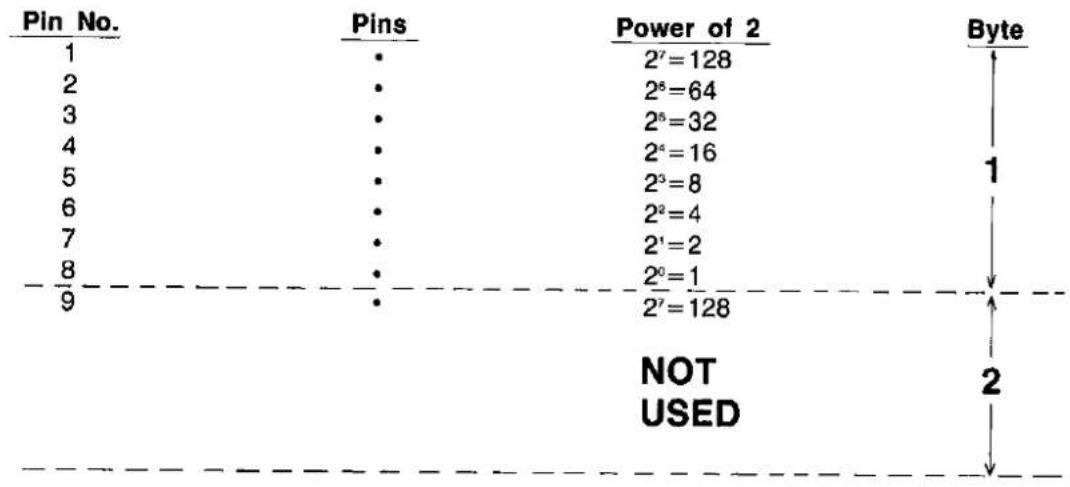
Als Beispiel: Angenommen, Sie möchten die Nadeln 1, 2, 5, 8 und 9 gleichzeitig auslösen. Dann bestimmen Sie die folgenden zwei Werte:
Byte 1: Eingabecode = Nadel-1-Code + Nadel-2-Code + Nadel-5-Code + Nadel-8-Code
= 2 ^ 7 + 2 ^ 6 + 2 ^ 3 + 2 ^ 0
= 1 2 8 + 6 4 + 8 + 1
= 2 0 1
Byte 2: Eingabecode = Nadel-9-Code
= 2 ^ 7
= 1 2 8
Somit werden die zwei Bytes für eine einzelne Punktsäule wie folgt eingegeben:
CHR\(201); CHR\(128);
Beziehen Sie sich auf die 9-Nadel-Standarddichte-Bezeichnung in Tabelle 4.6. Diese Einstellung wird durch ESC+^+m+n1+n2 angegeben, wobei m=0. Angenommen, Sie möchten 100 Punktsäulen drucken, wobei jede Säule die Nadeln 1, 2, 5, 8 und 9 wie oben auslöst.
Wie im 8-Nadel-Beispiel auf Seite 4-38 ist n1 = 100 und n2 = 0. Unser Steuercode ESC +^ + m + n1 + n2 übersetzt sich nun in:
LPRINT CHR (2 7) + ^ ^ " + CHR (0) + CHR (1 0 0) + CHR (0)
Wenn wir diese Informationen in ein Programm einbauen, könnten wir Folgendes haben:
10 REM 9-PIN STANDARD DENSITY
20 WIDTH "LPT1:", 255
30 OPEN "LPT1:" AS #1
40 PRINT#1, CHR(27) + "^"+CHR(0) + CHR(100) + CHR(0);
50 FOR I=1 TO 100
60 PRINT#1, CHR(201) + CHR(128);
70 NEXT I
80 PRINT#1, CHR$(10);
90 CLOSE
100 END
Bevor wir mit Beispielen für jeden Grafiksteuerbefehl fortfahren, sind drei wichtige Punkte zu beachten.
Erstens wird Bit-Image-Grafik automatisch auf Einzelrichtungsdruck (von links nach rechts) eingestellt. Dies geschieht, um sicherzustellen, dass die Punkte vertikal korrekt ausgerichtet sind.
Zweitens wird der Grafikmodus unmittelbar nach dem Drucken aller Bit-Image-Daten aufgehoben. Der Druck kehrt in den Textmodus zurück.
Drittens werden Bit-Image-Daten nicht von MSB-Steuerbefehlen beeinflusst.
GRAFIK MIT STANDARDDICHTE:
Setzt den Grafikmodus mit Standarddichte (480 Punkte pro Zeile/60 Punkte pro Zoll (25,4 mm)).
Name: ESC + K + n1 + n2
Code: 27,75,n1,n2 DEC 1B,4B,n1,n2 HEX
Eingabeformat: LPRINT CHR(27) + "K" + CHR(n1) + CHR$(n2);
Example: 10 REM STANDARD DENSITY GRAPHICS
20 WIDTH "LPT1:", 255
30 OPEN "LPT1:" AS #1
40 PRINT#1, "STANDARD DENSITY GRAPHICS"
50 PRINT#1, CHR$(10);
60 PRINT#1, CHR(27) + "K" + CHR(64) + CHR$(1);
70 FOR I = 1 TO 20
80 PRINT#1, CHR(1) + CHR(1) + CHR(3) + CHR(3);
90 PRINT#1, CHR(7) + CHR(7) + CHR(15) + CHR(15);
100 PRINT#1, CHR(31) + CHR(31) + CHR(63) + CHR(63);
110 PRINT#1, CHR(127) + CHR(127) + CHR(255) + CHR(255);
120 NEXT I
130 PRINT#1, CHR$(10);
140 CLOSE
150 END
STANDARD DENSITY GRAPHICS
GRAFIK MIT DOPPELTER DICHTE:
Setzt den Grafikmodus mit doppelter Dichte (960 Punkte pro Zeile/120 Punkte pro Zoll (25,4 mm)).
Name: ESC + L + n1 + n2
Code: 27,76,n1,n2 DEC 1B,4C,n1,n2 HEX
Eingabeformat: LPRINT CHR(27) + "L" + CHR(n1) + CHR$(n2);
Example: 10 REM DOUBLE DENSITY GRAPHICS
20 WIDTH "LPT1:", 255
30 OPEN "LPT1:" AS #1
40 PRINT#1, "DOUBLE DENSITY GRAPHICS"
50 PRINT#1, CHR$(10);
60 PRINT#1, CHR(27) + "L" + CHR(144) + CHR$(1);
70 FOR I=1 TO 25
80 PRINT#1, CHR(1) + CHR(1) + CHR(3) + CHR(3);
90 PRINT#1, CHR(7) + CHR(7) + CHR(15) + CHR(15);
100 PRINT#1, CHR(31) + CHR(31) + CHR(63) + CHR(63);
110 PRINT#1, CHR(127) + CHR(127) + CHR(255) + CHR(255);
120 NEXT I
130 PRINT#1, CHR$(10);
140 CLOSE
150 END
GRAFIK MIT DOPPELTER DICHTE
GRAFIK MIT DOPPELTER GESCHWINDIGKEIT UND DOPPELTER DICHTE:
Setzt den Grafikmodus mit doppelter Geschwindigkeit und doppelter Dichte (960 Punkte pro Zeile/120 Punkte pro Zoll (25,4 mm)).
Name: ESC + Y + n1 + n2
Code: 27,89,n1,n2 DEZ 1B,59,n1,n2 HEX
Eingabeformat: LPRINT CHR\(27) + "Y" + CHR\(n1) + CHR\$(n2);
Example: 10 REM DOUBLE SPEED, DOUBLE DENSITY GRAPHICS
20 WIDTH "LPT1:", 255
30 OPEN "LPT1:" AS #1
40 PRINT#1, "DOUBLE SPEED, DOUBLE DENSITY GRAPHICS"
50 PRINT#1, CHR$(10);
60 PRINT#1, CHR(27) + "Y" + CHR(144) + CHR$(1);
70 FOR I=1 TO 25
80 PRINT#1, CHR(1) + CHR(1) + CHR(3) + CHR(3);
90 PRINT#1, CHR(7) + CHR(7) + CHR(15) + CHR(15);
100 PRINT#1, CHR(31) + CHR(31) + CHR(63) + CHR(63);
110 PRINT#1, CHR(127) + CHR(127) + CHR(255) + CHR(255);
120 NEXT I
130 PRINT#1, CHR$(10);
140 CLOSE
150 END
GRAFIK MIT DOPPELTER GESCHWINDIGKEIT UND DOPPELTER DICHTE

Kommentar:
●Horizontal benachbarte Punkte können nicht gedruckt werden.
GRAFIK MIT VIERFACHER DICHTE:
Setzt den Grafikmodus mit vierfacher Dichte (1920 Punkte pro Zeile/240 Punkte pro Zoll (25,4 mm)).
Name: ESC + Z + n 1 + n 2
Code: 27,90,n1,n2 DEZ 1B,5A,n1,n2 HEX
Eingabeformat: LPRINT CHR\(27) + "Z" + CHR\(n1) + CHR\$(n2);
Example: 10 REM QUADRUPLE DENSITY GRAPHICS
20 WIDTH "LPT1:", 255
30 OPEN "LPT1:" AS #1
40 PRINT#1, "QUADRUPLE DENSITY GRAPHICS"
50 PRINT#1, CHR$(10);
60 PRINT#1, CHR(27) + "Z" + CHR(144) + CHR$(1);
70 FOR I = 1 TO 25
80 PRINT#1, CHR(1) + CHR(1) + CHR(3) + CHR(3);
90 PRINT#1, CHR(7) + CHR(7) + CHR(15) + CHR(15);
100 PRINT#1, CHR(31) + CHR(31) + CHR(63) + CHR(63);
110 PRINT#1, CHR(127) + CHR(127) + CHR(255) + CHR(255);
120 NEXT I
130 PRINT#1, CHR$(10);
140 CLOSE
150 END
GRAFIK MIT VIERFACHER DICHTE

Kommentar:
● Horizontal benachbarte Punkte können nicht gedruckt werden.
AUSWAHL DES 8-NADEL-BITBILD-MODUS:
Wählt einen von acht 8-Nadel-Bitbild-Grafikmodi.
(Nur Standardmodus)
Name: ESC + x + m + n1 + n2 0 ≤ m ≤ 7
Code: 27,42,m,n1,n2 DEZ 1B,2A,m,n1,n2 HEX
Eingabeformat: LPRINT CHR\(27) + " * " + CHR\(m) + CHR\(n1) + CHR\(n2);
Example: 10 REM 8-PIN BIT IMAGE MODE SELECTION
20 WIDTH "LPT1:", 255
30 OPEN "LPT1:" AS #1
40 FOR M=0 TO 7
50 PRINT#1, "IMAGE MODE ="; M
60 PRINT#1, CHR$(10);
70 PRINT#1, CHR(27) + "*"+CHR(M)+CHR(200)+CHR(O);
80 FOR I=1 TO 25
90 PRINT#1, STRING(4, CHR(15));
100 PRINT#1, STRING(4, CHR(240));
110 NEXT I
120 PRINT#1, CHR$(10);
130 NEXT M
140 PRINT#1, CHR$(10);
150 CLOSE
160 END

IMAGE MODE = 0

IMAGE MODE = 1

IMAGE MODE = 2

IMAGE MODE = 3

IMAGE MODE = 4

IMAGE MODE = 5

IMAGE MODE = 6

IMAGE MODE = 7
Kommentare:
- Tabelle 4.7 veranschaulicht die verschiedenen Modi basierend auf den Werten von m.
| Value of m | Mode | Dot Density |
| 0 | Standard density | 480 dpl/ 60 dpi |
| 1 | Double density | 960 dpl/120 dpi |
| 2 | Double speed, double density | 960 dpl/120 dpi |
| 3 | Quadruple density | 1920 dpl/240 dpi |
| 4 | 640 dot density | 640 dpl/ 80 dpi |
| 5 | 576 dot density | 576 dpl/ 72 dpi |
| 6 | 720 dot density | 720 dpl/ 90 dpi |
| 7 | 1152 dot density | 1152 dpl/144 dpi |
Tabelle 4.7 Punktdichte
- Sowohl der vertikale als auch der horizontale Punktabstand im 576-Punkt-Dichte-Modus betragen 1/72 Zoll (0,35 mm), wodurch ein Seitenverhältnis von 1:1 entsteht. ●Die folgenden Einstellungen sind äquivalent: -ESC + K + n1 + n2 und ESC + * + 0 + n1 + n2 -ESC + L + n1 + n2 und ESC + * + 1 + n1 + n2 -ESC + Y + n1 + n2 und ESC + X + 2 + n1 + n2 —ESC+Z+n1+n2 und ESC+*+3+n1+n2
AUSWAHL DES 9-NADEL-BITBILD-MODUS:
(Nur Standardmodus)
Wählt einen von acht 9-Nadel-Bitbild-Grafikmodi.
Name:
ESC + ^ + m + n _ 1 + n _ 2
0 ≤ m ≤ 7
Code:
2 7, 9 4, m, n _ 1, n _ 2 DEC
1 8, 5 E, m, n _ 1, n _ 2 HEX
Eingabeformat: LPRINT CHR\(27) + " ^ " + CHR\(m) + CHR\(n.) + CHR\(n2);
Beispiel:
10 REM 9-PIN BIT IMAGE MODE SELECTION
20 WIDTH "LPT1:", 255
30 OPEN "LPT1:" AS #1
40 FOR N=0 TO 7
50 PRINT#1, "IMAGE MODE =";N
60 PRINT#1, CHR$(10);
70 PRINT#1, CHR(27)+"^"+CHR(N)+CHR(180)+CHR(0);
80 FOR I=1 TO 10
90 PRINT#1, CHR(0)+CHR(128)+CHR(0)+CHR(128);
100 PRINT#1, CHR(1)+CHR(128)+CHR(1)+CHR(128);
110 PRINT#1, CHR(3)+CHR(128)+CHR(3)+CHR(128);
120 PRINT#1, CHR(7)+CHR(128)+CHR(7)+CHR(128);
130 PRINT#1, CHR(15)+CHR(128)+CHR(15)+CHR(128);
140 PRINT#1, CHR(31)+CHR(128)+CHR(31)+CHR(128);
150 PRINT#1, CHR(63)+CHR(128)+CHR(63)+CHR(128);
160 PRINT#1, CHR(127)+CHR(128)+CHR(127)+CHR(128);
170 PRINT#1, CHR(255)+CHR(128)+CHR(255)+CHR(128);
180 NEXT I
190 PRINT#1, CHR$(10);
200 NEXT N
210 PRINT#1, CHR$(10);
220 CLOSE
230 END
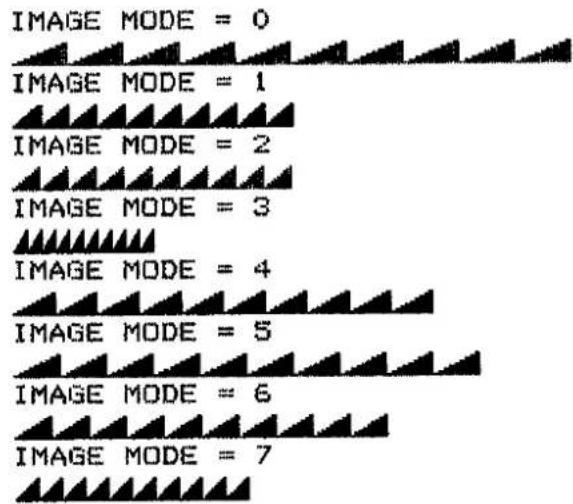
BIT-BILD-MODUS-NEUZUWEISUNG:
(Nur Standardmodus)
Weist die Dichte des Bitbild-Grafikmodus neu zu.
| Name: | ESC+?+n+m | n=75,76,89,90 |
| m=0,1,2,3,4,5,6,7 |
| Code: | 27,63,n,m DEC | 1B,3F,n,m,HEX |
Eingabeformat: LPRINT CHR\(27) + "?" + CHR\(n) + CHR\$(m);
Beispiel:
10 REM BIT IMAGE MODE REASSIGNMENT
20 WIDTH "LPT1:", 255
30 OPEN "LPT1:" AS #1
40 FOR L=1 TO 2
50 IF L=1 THEN PRINT#1, "NORMAL (ESC+K+n1+n2)"
60 IF L=2 THEN PRINT#1, "REASSIGN (ESC+K+n1+n2) TO QUAD. DENSITY"
70 PRINT#1, CHR$(10);
80 IF L=2 THEN PRINT#1, CHR(27)+?"?"+"K"+CHR(3);
90 PRINT#1, CHR(27)+"K"+CHR(0)+CHR$(1);
100 FOR I=1 TO 256
110 PRINT#1, CHR$(255);
120 NEXT I
130 PRINT#1, CHR(10); CHR(10);
140 NEXT L
150 CLOSE
160 END
NORMAL (ESC+K+n1+n2)
NEUZUWEISUNG (ESC+K+n1+n2) AUF QUAD-DICHTE
Kommentare:
- The value of “n” specifies the graphics mode which is to be reassigned:
    n=75: Reassign STANDARD DENSITY (ESC+K+n₁+n₂)
    n=76: Reassign DOUBLE DENSITY (ESC+L+n₁+n₂)
    n=89: Reassign DOUBLE SPEED, DOUBLE DENSITY (ESC+Y+n₁+n₂)
    n=90: Reassign QUADRUPLE DENSITY (ESC+Z+n₁+n₂)

- The value of “m” specifies the graphics mode to which the original is to be reassigned:
    m=0: Reassign to STANDARD DENSITY
    m=1: Reassign to DOUBLE DENSITY
    m=2: Reassign to DOUBLE SPEED, DOUBLE DENSITY
    m=3: Reassign to QUADRUPLE DENSITY
    m=4: Reassign to 640 DOTS PER LINE DENSITY
    m=5: Reassign to 576 DOTS PER LINE DENSITY
    m=6: Reassign to 720 DOTS PER LINE DENSITY
    m=7: Reassign to 1152 DOTS PER LINE DENSITY
- Einzelheiten zu den verschiedenen Bit-Image-Dichten finden Sie in Tabelle 4.6 auf Seite 4-36.
PAPIERVORSCHUBSTEUERUNG
Papier Vorschub bezieht sich entweder auf die Angabe der Menge des zuzuführenden Papiers oder auf die Befehle, die den Papiervorschub tatsächlich auslösen. Papiervorschubmenge und -ausführung werden unten erörtert. Einstellungen für Seitenlänge, vertikale Tabulatorpositionen und Perforationsüberspringen bleiben auch bei Änderung der Papiervorschubmenge unverändert.
•PAPIERVORSCHUBMENGE•
Tabelle 4.8 listet die verschiedenen Steuerbefehle für den Papiervorschub auf.
| Line Pitch Size | Standard Mode | IBM Proprinter Mode |
| 1/8'' (3.2 mm) 7/72'' (2.47 mm) 1/6'' (4.2 mm) 7/72'' 1/216'' | ESC+0ESC+1ESC+2ESC+A+nESC+3+n | ESC+0ESC+1'ESC+A+12 2 ESC+A+n, ESC+2ESC+3+nIf not set, default line spacing is 1/6'' . 2 ESC+A+n must be followed by ESC+2. |
Tabelle 4.8 Auswahl der Papiervorschubmenge
1/8 ZOLL PAPIERVORSCHUB:
Setzt die Papiervorschubmenge auf 1/8 Zoll (3,2 mm).
Name: ESC+0
Code: 27,48 DEZ 1B,30 HEX
Eingabeformat: LPRINT CHR$(27) + "0";
Example: 10 REM PAPER FEED AMOUNT=1/8 INCH
20 LPRINT "PAPER FEED AMOUNT = 1/8 INCH"
30 LPRINT CHR$(27)+"0";
40 FOR I=1 TO 4
50 LPRINT "____"
60 NEXT I
70 END
PAPIERVORSCHUBMENGE = 1/8 ZOLL
Kommentar:
- ESC+0 setzt den Papiervorschub von 1/8 Zoll in allen Druckermodi.
7/72 ZOLL PAPIERVORSCHUB:
Stellt die Papiervorschubmenge auf 7/72 Zoll (2,47 mm) ein.
Name: ESC+1
Code: 27,49 DEZ 1B,31 HEX
Eingabeformat: LPRINT CHR\$(27) + "1";
Example: 10 REM PAPER FEED AMOUNT=7/72 INCH
20 LPRINT "PAPER FEED AMOUNT = 7/72 INCH"
30 LPRINT CHR$(27)+"1";
40 FOR I=1 TO 4
50 LPRINT "____"
60 NEXT I
70 END
PAPIERVORSCHUBMENGE = 7/72 ZOLL
Kommentar:
- ESC+1 stellt den Papiervorschub von 7/72 Zoll in allen Druckermodi ein.
1/6 ZOLL PAPIERVORSCHUB:
Stellt die Papiervorschubmenge auf 1/6 Zoll (4,2 mm) ein.
Name: ESC+2
Code: 27,50 DEZ 1B,32 HEX
Eingabeformat: LPRINT CHR\$(27) + "2";
Example: 10 REM PAPER FEED AMOUNT=1/6 INCH
20 LPRINT "PAPER FEED AMOUNT = 1/6 INCH"
30 LPRINT CHR$(27)+"2";
40 FOR I=1 TO 4
50 LPRINT ""
60 NEXT I
70 END
PAPIERVORSCHUBMENGE = 1/6 ZOLL
Kommentar:
- ESC+2 stellt den Papiervorschub von 1/8 Zoll nur im Standard-Druckermodus ein. Verwenden Sie ESC+A+n, n=12, um den Papiervorschub von 1/8 Zoll einzustellen, und verwenden Sie ESC+2, um die ESC+A+n-Einstellung im IBM-Proprinter-Modus zu aktivieren. Der IBM-Proprinter-Modus ist standardmäßig auf 1/8 Zoll eingestellt.
PAPIERVORSCHUB n/72 ZOLL:
Stellt den programmierbaren Papiervorschub auf 1/72 Zoll ein.
Name: ESC+A+n
Code: 27,65,n DEC 1B,41,n HEX
Eingabeformat: LPRINT CHR\(27) + "A" + CHR\(n);
Example: 10 REM PAPER FEED AMOUNT=n/72 INCH
20 WIDTH "LPT1:",255
30 OPEN "LPT1:" AS #1
40 PRINT#1,"PAPER FEED AMOUNT = n/72 INCH"
50 FOR I=1 TO 20
60 PRINT#1,CHR(27)+"A"+CHR(I);
70 PRINT#1,"____"
80 PRINT#1,CHR$(10);
90 NEXT I
100 CLOSE
110 END
PAPER FEED AMOUNT = n/72 INCH
Kommentare:
- Nur im IBM-Proprinter-Modus muss ESC+2 nach ESC+A+n eingegeben werden, damit der Papiervorschub von 1/72 Zoll wirksam wird.
- Der Papiervorschub von n/72 Zoll ist für 0 ≤ n ≤ 85 gültig.
PAPIERVORSCHUB n/216 ZOLL:
Stellt den programmierbaren Papiervorschub auf 1/216 Zoll ein.
Name: ESC+3+n
Code: 27,51,n DEC 1B,33,n HEX
Eingabeformat: LPRINT CHR\(27) + "3" + CHR\(n);
Beispiel: 10 REM PAPIERVORSCHUBMENGE=n/216 ZOLL
20 WIDTH "LPT1:", 255
30 OPEN "LPT1:" AS #1
40 PRINT#1, "PAPIERVORSCHUB = n/216 ZOLL"
50 FOR I=1 TO 20
60 PRINT#1, CHR(27) + "3" + CHR(I);
70 PRINT#1,"
80 PRINT#1, CHR$(10);
90 NEXT I
100 CLOSE
110 END
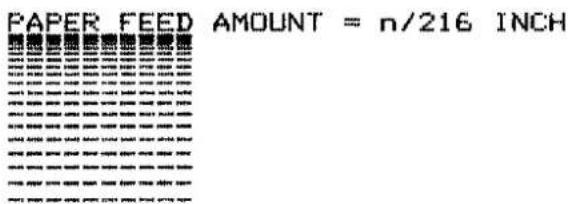
Kommentare:
- Der Papiervorschub von n / 216 Zoll ist gültig für 0 ≤ n ≤ 255 .
- ESC+3+n setzt den programmierbaren Papiervorschub von 1/2 16 in allen Druckermodi.
AUTOMATISCHER ZEILENVORSCHUB-MODUS:
(Nur IBM Proprinter-Modus)
Führt automatisch einen Zeilenvorschub nach einem Wagenrücklauf aus.
| Name: | Setting: | ESC+5+n | n=1,49,129,177 |
| Release: | ESC+5+m | m=0,48,128,176 |
| Code: | Setting: 27,53,n DEC | 1B,35,n HEX |
| Release: 27,53,m DEC | 1B,35,m HEX |
| Input Format: | Setting: | LPRINT CHR(27) + “5” + CHR(n); |
| Release: | LPRINT CHR(27) + “5” + CHR(m); |
| Example: | 10 REM AUTOMATIC LINE FEED MODE (for IBM PROPRINTER) |
| 20 WIDTH "LPT1:", 255 | |
| 30 OPEN "LPT1:" AS #1 | |
| 40 PRINT#1, CHR(27)+"5"+CHR(1); | |
| 50 FOR I=1 TO 3 | |
| 60 PRINT#1, "AUTO LINE FEED MODE ON"; CHR(13); | |
| 70 NEXT I | |
| 80 PRINT#1, CHR(27)+"5"+CHR(0); | |
| 90 FOR I=1 TO 3 | |
| 100 PRINT#1,"AUTO LINE FEED MODE OFF"; CHR(13); | |
| 110 NEXT I | |
| 120 CLOSE | |
| 130 END |
| AUTO | LINE | FEED | MODE | ON |
| AUTO | LINE | FEED | MODE | ON |
| AUTO | LINE | FEED | MODE | ON |
| AUTO | LINE | FEED | MODE | OFF |
Anmerkungen:
- DIP-Schalter 3 steuert auch die automatische Zeilenvorschubfunktion (siehe Abschnitt 3.3). Das Setzen dieses Schalters auf EIN entspricht der Ausführung des Befehls ESC+5+n. Ebenso entspricht das Setzen des Schalters auf AUS der Ausführung des Befehls ESC+5+m.
- Die Zeilen 20, 30, 120 und alle PRINT#-Anweisungen im obigen Beispiel-BASIC-Programm sind für diejenigen Computer notwendig, die automatisch einen Zeilenvorschub nach einem Wagenrücklauf ausführen.
- In diesem Modus ist der Zeilenvorschub an den Wagenrücklauf gekoppelt.
•PAPIERVORSCHUB AUSFÜHRUNG•
ZEILENVORSCHUB (LF):
Bewirkt, dass die Daten im Puffer gedruckt werden und führt dann einen einzelnen Zeilenvorschub aus.
Name: LF
Code: 10 DEZ 0A HEX
Eingabeformat: LPRINT CHR\$(10);
Beispiel: 10 REM ZEILENVORSCHUB 20 LPRINT "ZEILE"; CHR\$(10); "VORSCHUB" 30 ENDE
ZEILENVORSCHUB
Anmerkungen:
- Wenn die neue Zeilenposition in den Perforationsüberspringungsbereich fällt, rückt das Papier zur nächsten Seitenanfangsposition vor (wenn DIP-Schalter 4 auf EIN steht).
- Wenn keine Daten, "Leerzeichen"-Daten (ASCII 32) oder Leerzeichen zwischen den HT-Druckpositionen im Puffer vorhanden sind, führt LF den Papiervorschub nur um 1 Zeile aus.
- Der durch LF erzeugte Zeilenabstand hängt von der Einstellung der Papiervorschubmenge ab.
- Der LF-Code hebt den durch SO gesetzten einzeiligen Doppelbreitdruck auf.
- Nur im IBM-Proprinter-Modus steuert der DIP-Schalter 5 die automatische CR-Funktion. Wenn dieser Schalter auf AUS steht, führt LF einen einfachen Zeilenvorschub aus. Der Wagen kehrt jedoch nicht zur linken Randposition zurück. Wenn dieser Schalter auf EIN steht, wird jedem Zeilenvorschub (LF) ein Wagenrücklauf-Befehl (CR) hinzugefügt.
FORM FEED (FF):
Führt Papier zur nächsten Seitenanfangsposition, nachdem zuerst alle Daten im Puffer gedruckt wurden.
Name: FF
Code: 12 DEZ 0C HEX
Eingabeformat: LPRINT CHR\$(12);
Beispiel: (Siehe ESC+C+0+n oder ESC+C+n)
Kommentare:
- FF hebt den durch SO gesetzten einzeiligen Doppelbreitdruck auf (siehe Seite 4-26).
- Die Menge des Formularvorschubs hängt von der durch den Seitenlängen-Steuerbefehl eingestellten Seitenlänge ab.
n/216 ZOLL PAPIERVORSCHUB:
Druckt die Daten im Druckpuffer aus und führt das Papier um 1/2 Zoll vor.
Name: ESC+J+n
Code: 27,74,n DEC 1B,4A,n HEX
Input Format: LPRINT CHR\(27) + "J" + CHR\(n);
Example: 10 REM SINGLE-LINE PROGRAMMABLE PAPER FEED 20 LPRINT " SINGLE-LINE PROGRAMMABLE PAPER FEED"; 30 LPRINT CHR\(27)+"J"+CHR\(108); 40 LPRINT "OF ONE-HALF INCH" 50 FOR I=1 TO 3 60 LPRINT "NORMAL PAPER FEED" 70 NEXT I 80 END
SINGLE-LINE PROGRAMMABLE PAPER FEED
OF ONE-HALF INCH
NORMAL PAPER FEED
NORMAL PAPER FEED
NORMAL PAPER FEED
Comments:
- In the IBM Proprinter mode only, when DIP switch 5 (Automatic CR) is ON, Carriage Return command (CR) is added automatically to this command.
- Single-line, 1/216 inch paper feed is valid for 0 ≤ n ≤ 255 .
- This command sets the paper feed for ONE line only. Subsequent paper feed returns to previous setting. However, the carriage does not return to the left margin position. Instead, printing of next line begins where previous printing left off.
- This command does not release single-line double width printing.
n-LINE PAPER FEED:
(Nur im Standardmodus)
Führt nach dem Drucken der Daten im Puffer einen Papiervorschub um "n" Zeilen aus.
Name: ESC+f+1+n
Code: 27,102,1,n DEZ 1B,66,01,n HEX
Eingabeformat: LPRINT CHR\(27) + "f" + CHR\(1) + CHR\$(n);
Beispiel: 10 REM n-ZEILEN PAPIERVORSCHUB 20 LPRINT "PAPIERVORSCHUB VON"; 30 LPRINT CHR\(27) + "f" + CHR\(1) + CHR\$(6); 40 LPRINT "6 ZEILEN" 50 ENDE
PAPIERVORSCHUB VON
6 ZEILEN
Kommentare:
- ESC+1+1+n verwendet den aktuellen Papiervorschubbetrag und der Druck wird in der unmittelbar nächsten Spalte fortgesetzt, wo der vorherige Druck endete.
- Der Wert von n muss im Bereich 0 ≤ n ≤ 127 liegen. Wenn n ≥ 128 ist, wird das Papier um n - 128 Zeilen vorgeschoben.
- Der programmierbare n-Zeilen-Papiervorschub hebt den Doppelbreitdruck nicht auf.
SEITENFORMATSTEUERUNG
Seitenformatbefehle ermöglichen es Ihnen, das Layout Ihrer gedruckten Seite zu gestalten. Solche Befehle umfassen Seitenlänge, Randausrichtung, Zentrierung, Blocksatz und Perforationsüberspringungsbefehle.
SEITENLÄNGE (IN ZOLL):
Setzt die Seitenlänge in Zoll.
Name: ESC+C+0+n
Code: 27,67,0,n DEZ 1B,43,00,n HEX
Eingabeformat: LPRINT CHR\(27) + "C" + CHR\(0) + CHR\$(n);
Example: 10 REM PAGE LENGTH (INCHES)
20 LPRINT CHR(27) + "C" + CHR(0) + CHR$(1);
30 LPRINT "THIS PAGE IS 1 INCH LONG";
40 LPRINT CHR$(12);
50 LPRINT CHR(27) + "C" + CHR(0) + CHR$(2);
60 LPRINT "THIS PAGE IS 2 INCHES LONG";
70 LPRINT CHR$(12);
80 LPRINT "NEXT PAGE"
90 END
DIESE SEITE IST 1 ZOLL LANG
DIESE SEITE IST 2 ZOLL LANG
NÄCHSTE SEITE
Kommentare:
- Beim Empfang von ESC+C+0+n wird die aktuelle Zeilenposition zum oberen Seitenrand. ●Der Wert von n muss im Bereich 1≤n≤22 liegen.
- ESC+C+0+n hebt die Einstellungen für VT, VFU und Überspringen der Perforation auf. ●Die Seitenlänge ändert sich nicht, auch wenn die Papiervorschubmenge geändert wird.
- Die Begriffe "Formular" und "Seite" sind austauschbar.
SEITENLÄNGE (ZEILEN):
Setzt die Seitenlänge in Anzahl der Zeilen.
Name: ESC+C+n
Code: 27,67,n DEZ 1B,43,n HEX
Eingabeformat: LPRINT CHR\(27) + "C" + CHR\(n);
Beispiel: 10 REM SEITENLÄNGE (ZEILEN) 20 LPRINT CHR\(27) + "C" + CHR\(3); 30 LPRINT "DIESE SEITE IST 3 ZEILEN LANG" 40 LPRINT CHR\$(12); 50 LPRINT CHR\(27) + "C" + CHR\(5); 60 LPRINT "DIESE SEITE IST 5 ZEILEN LANG" 70 LPRINT CHR\$(12); 80 LPRINT "NÄCHSTE SEITE" 90 ENDE
DIESE SEITE IST 3 ZEILEN LANG
DIESE SEITE IST 5 ZEILEN LANG
NÄCHSTE SEITE
Kommentare:
- Beim Empfang von ESC+C+n wird die aktuelle Zeilenposition zur oberen Seitenposition.
- Der Wert von n muss im Bereich 1 ≤ n ≤ 127 liegen. Wenn n = 0 ist, kehrt die Seitenlänge zur Zollangabe zurück.
- ESC+C+n hebt die Einstellungen für VT, VFU und Überspringen der Perforation auf.
- Die Seitenlänge ändert sich nicht, auch wenn die Papiervorschubmenge geändert wird.
- Die Begriffe "Formular" und "Seite" sind austauschbar.
OBERES FORMULAR:
(Nur IBM Proprinter-Modus)
Setzt den oberen Rand des Formulars.
Name: ESC+4
Code: 27,52 DEC 1B,34 HEX
Eingabeformat: LPRINT CHR\$(27) + "4";
Beispiel: 10 REM TOP OF FORM SET
20 LPRINT CHR\(27)+"C"+CHR\(4);
30 LPRINT "----TOP OF FORM POSITION----"; CHR\$(12);
40 LPRINT "---NEXT PAGE TOP OF FORM POSITION---";
50 LPRINT CHR\$(10)
60 LPRINT CHR\$(27)+"4";
70 LPRINT "---NEW TOP OF FORM POSITION---"; CHR\$(12);
80 LPRINT "----NEXT PAGE TOP OF FORM POSITION----"
90 END
---TOP OF FORM POSITION---
---NEXT PAGE TOP OF FORM POSITION---
---NEW TOP OF FORM POSITION---
---NEXT PAGE TOP OF FORM POSITION---
Kommentar:
● Dieser Befehl setzt die aktuelle Papierposition als Formularkopf.
LINKER RAND:
(nur Standardmodus)
Setzt die Position des linken Rands.
Name: ESC+1+n
Code: 27,108,n DEZ 1B,6C,n HEX
Eingabeformat: LPRINT CHR\(27) + "I" + CHR\(n);
Example: 10 REM LEFT MARGIN SETTING
20 FOR I=1 TO 5
30 LPRINT "0123456789";
40 NEXT I
50 LPRINT CHR$(10);
60 LPRINT CHR(27)+"1"+CHR(10);
70 LPRINT "LEFT MARGIN 10"
80 LPRINT CHR(27)+"1"+CHR(20);
90 LPRINT "LEFT MARGIN 20"
100 END
01234567890123456789012345678901234567890123456789
LINKER RAND 10
LINKER RAND 20
Kommentare:
- Wenn der Wert von n den Wert des rechten Rands überschreitet, ist ESC + 1 + n wirkungslos und der linke Rand ändert sich nicht.
- Das Setzen der Position des linken Rands löscht alle Daten im Druckpuffer.
- Bei proportionalem Abstand wird der linke Rand mit Pica-Schrittweite gesetzt.
- Sobald die Position des linken Rands festgelegt ist, wird diese Einstellung durch eine Änderung des Zeichenmodus nicht verändert.
RECHTER RAND:
(Nur Standardmodus)
Legt die Position des rechten Rands fest.
Name: ESC+Q+n
Code: 27,81,n DEZ 1B,51,n HEX
Eingabeformat: LPRINT CHR\(27) + "Q" + CHR\(n);
Example: 10 REM RIGHT MARGIN SETTING
20 FOR I=1 TO 5
30 LPRINT "1234567890";
40 NEXT I
50 LPRINT CHR$(10)
60 LPRINT CHR(27)+"Q"+CHR(40);
70 LPRINT "RIGHT MARGIN 40"
80 FOR I=1 TO 5
90 LPRINT "1234567890";
100 NEXT I
110 LPRINT CHR$(10)
120 LPRINT CHR(27)+"Q"+CHR(30);
130 LPRINT "RIGHT MARGIN 30"
140 FOR I=1 TO 5
150 LPRINT "1234567890";
160 NEXT I
170 LPRINT CHR$(10)
180 END
12345678901234567890123456789012345678901234567890
RIGHT MARGIN 40
1234567890123456789012345678901234567890
1234567890
RIGHT MARGIN 30
123456789012345678901234567890
12345678901234567890
Kommentare:
●Zulässige Werte für "n" sind unten angegeben.
Pica print 2≤n≤80
Compressed print 4≤n≤137
Double Width print 1≤n≤40
Double Width/Compressed print 2≤n≤68
●Jede Angabe links von der Position des linken Rands wird ignoriert. - Das Setzen des rechten Rands löscht alle Daten im Puffer. - Bei proportionaler Schrift wird der rechte Rand mit Pica-Schrittweite gesetzt. - Sobald die Position des rechten Rands festgelegt ist, wird diese Einstellung durch eine Änderung des Zeichenmodus nicht verändert.
RANDSATZ:
(Nur IBM Proprinter-Modus)
Legt die Positionen von linkem und rechtem Rand fest.
Name: ESC + X + n 1 + n 2
Code: 27,88, n1,n2 DEZ 1B,58, n1,n2 HEX
Eingabeformat: LPRINT CHR(27) + "X" + CHR(n1) + CHR$(n2);
Beispiel: 10 REM EINSTELLUNG LINKER/RECHTER RAND
20 FÜR I=1 BIS 5
30 LPRINT "1234567890";
40 NÄCHSTES I
50 LPRINT CHR$(10)
60 LPRINT "LINKER RAND=10 : RECHTER RAND=40"
70 LPRINT CHR(27) + "X" + CHR(10) + CHR$(40);
80 FÜR I=1 BIS 5
90 LPRINT "1234567890";
100 NÄCHSTES I
110 LPRINT CHR$(10)
120 ENDE
12345678901234567890123456789012345678901234567890
LINKER RAND=10 : RECHTER RAND=40
Kommentare:
- Die linke Randspalte ist auf n1 in der aktuellen Breite gesetzt, und die rechte Randspalte ist auf n2 gesetzt.
- Zulässige Werte für „n2“ sind unten angegeben.
Pica-Druck
2 ≤ n2 ≤ 80
Komprimierter Druck
4 ≤ n2 ≤ 137
- Jede Bezeichnung links von der linken Randposition wird ignoriert.
- Das Setzen des Randes löscht alle Daten im Puffer.
- Sobald die Randposition gesetzt ist, ändert eine Änderung des Zeichenmodus diese Randeinstellung nicht.
- Wenn n1 = 0 , ändert sich der linke Rand nicht. Wenn ne = 0 , ändert sich der rechte Rand nicht.
LINKSBÜNDIG:
(Nur Standardmodus)
Setzt die Druckausrichtung am linken Rand.
Name: ESC+a+0
Code: 27,97,0 DEC 1B,61,00 HEX
Eingabeformat: LPRINT CHR\(27) + "a" + CHR\(0);
Beispiel: (Siehe RECHTSBÜNDIG)
Kommentare:
●Dieser Befehl löscht die Einstellungen von ESC+a+1, ESC+a+2 und ESC+a+3. ●Der Drucker ist standardmäßig auf diese Einstellung eingestellt. ●48, 128 und 176 können auch anstelle von 0 verwendet werden.
AUTOMATISCHE ZENTRIERUNG:
(Nur Standardmodus)
Aktiviert die automatische Zentrierung einer Druckzeile zwischen linkem und rechtem Rand.
Name: ESC+a+1
Code: 27,97,1 DEC 1B,61,01 HEX
Eingabeformat: LPRINT CHR\(27) + "a" + CHR\(1);
Beispiel: (Siehe RECHTSBÜNDIG)
Kommentare:
- Dieser Befehl löscht die Einstellungen ESC+a+0, ESC+a+2 und ESC+a+3. -49, 129 und 177 können auch anstelle von 1 verwendet werden.
RECHTSBÜNDIGUNG:
(Nur Standardmodus)
Setzt die Druckausrichtung am rechten Rand.
Name: ESC+a+2
Code: 27,97,2 DEC 1B,61,02 HEX
Eingabeformat: LPRINT CHR\(27) + "a" + CHR\(2);
Example: 10 REM AUTO CENTERING, RIGHT ALIGNMENT, LEFT ALIGNMENT
20 LPRINT CHR(27) + "Q" + CHR(40);
30 FOR I = 1 TO 4: LPRINT "1234567890"; : NEXT I
40 LPRINT
50 LPRINT CHR(27) + "a" + CHR(1);
60 LPRINT "AUTO CENTERING"
70 LPRINT "THIS IS SAMPLE TEXT."
80 LPRINT CHR(27) + "a" + CHR(2);
90 LPRINT "RIGHT ALIGNMENT"
100 LPRINT "THIS IS SAMPLE TEXT."
110 LPRINT CHR(27) + "a" + CHR(0);
120 LPRINT "LEFT ALIGNMENT"
130 LPRINT "THIS IS SAMPLE TEXT."
140 END
1234567890123456789012345678901234567890
AUTO CENTERING
THIS IS SAMPLE TEXT.
RIGHT ALIGNMENT
THIS IS SAMPLE TEXT.
LEFT ALIGNMENT
THIS IS SAMPLE TEXT.
Kommentare:
●Dieser Befehl löscht die Einstellungen ESC+a+0, ESC+a+1 und ESC+a+3. ●50, 130 und 178 können auch anstelle von 2 verwendet werden.
AUTOMATISCHE RECHTSFERTIGUNG:
(Nur Standardmodus)
Setzt die automatische Rechtsfertigung einer Druckzeile zwischen linkem und rechtem Rand.
Name: ESC+a+3
Code: 27,97,3 DEC 1B,61,03 HEX
Eingabeformat: LPRINT CHR\(27) + "a" + CHR\(3);
Beispiel:
10 REM AUTO JUSTIFICATION
20 LPRINT CHR(27)+"a"+CHR(3);
30 LPRINT CHR(27)+"Q"+CHR(40);
40 FOR I=0 TO 2
50 IF I=0 THEN LPRINT CHR$(27)+"P";"(DRAFT)"
60 IF I=1 THEN LPRINT CHR$(27)+"n";"(NLQ)"
70 IF I=2 THEN LPRINT CHR(27)+"p"+CHR(1);"(NLQ-PROPORTIONAL SPACING)"
80 LPRINT "SAMPLE TEXT FOR AUTO JUSTIFICATION"
90 LPRINT "THE QUICK BROWN FOX JUMPED OVER THE LAZY DOG"
100 LPRINT "This printer has a variety of features for WORD PROCESSING."
110 LPRINT CHR$(10);
120 NEXT I
130 END
(ENTWURF)
BEISPIELTEXT FÜR AUTOMATISCHEN AUSGLEICH DER SCHNELLE BRAUNE FUCHS SPRANG ÜBER DEN FAULEN HUND Dieser Drucker verfügt über eine Vielzahl von Funktionen für die TEXTVARARBEITUNG.
(NLQ)
BEISPIELTEXT FÜR AUTOMATISCHEN AUSGLEICH DER SCHNELLE BRAUNE FUCHS SPRANG ÜBER DEN FAULEN HUND Dieser Drucker verfügt über eine Vielzahl von Funktionen für die TEXTVARARBEITUNG.
(NLQ-PROPORTIONALER ZEICHENABSTAND)
BEISPIELTEXT FÜR AUTOMATISCHEN AUSGLEICH DER SCHNELLE BRAUNE FUCHS SPRANG ÜBER DEN FAULEN HUND Dieser Drucker verfügt über eine Vielzahl von Funktionen für die TEXTVARARBEITUNG.
Anmerkungen:
- Der Druck erfolgt beim Empfang von Druckausführungsbefehlen (CR, LF, FF usw.).
- BS und DEL sind im Modus für automatischen Ausgleich wirkungslos.
- Wenn das letzte Zeichen einer Zeile ein Punkt (.) ist, wird kein automatischer Ausgleich ausgeführt. ● Der automatische Ausgleich wird ausgeführt, wenn Daten den rechten Rand überschreiten und beim Empfang von Druckausführungsbefehlen (CR, LF, FF usw.).
- Eine zu geringe oder zu hohe Anzahl von Zeichen kann möglicherweise nicht ausgeglichen werden.
- Dieser Befehl löscht die Einstellungen ESC+a+0, ESC+a+1 und ESC+a+2. -51, 131 und 179 können anstelle von 3 verwendet werden.
PERFORATION ÜBERSPRINGEN:
Legt das Überspringen der Perforation fest.
| Name: | Setting: | ESC+N+n |
| Release: | ESC+O |
| Code: | Setting: 27,78,n DEC | 1B,4E,n HEX |
| Release: 27,79 DEC | 1B,4F HEX |
| Input Format: Setting: LPRINT CHR(27) + "N" + CHR(n) ;Release: LPRINT CHR$(27) + "O" ; |
Example: 10 REM SKIP PERFORATION
20 LPRINT CHR(27)+"C"+CHR(6);
30 LPRINT CHR(27)+"N"+CHR(3);
40 FOR I=1 TO 3
50 LPRINT "PAGE LENGTH SET TO 6 LINES - SKIP 3 LINES FROM PERF."
60 NEXT I
70 LPRINT CHR$(27)+"0";
80 FOR I=1 TO 7
90 LPRINT "SKIP PERFORATION IS CANCELLED"
100 NEXT I
110 END
PAGE LENGTH SET TO 6 LINES - SKIP 3 LINES FROM PERF.
PAGE LENGTH SET TO 6 LINES - SKIP 3 LINES FROM PERF.
PAGE LENGTH SET TO 6 LINES - SKIP 3 LINES FROM PERF.
SKIP PERFORATION IS CANCELLED
SKIP PERFORATION IS CANCELLED
SKIP PERFORATION IS CANCELLED
SKIP PERFORATION IS CANCELLED
SKIP PERFORATION IS CANCELLED
Kommentare:
- Der Wert von n gibt die Anzahl der Zeilen (oder das n-fache des aktuellen Zeilenabstands) an, die am unteren Seitenrand übersprungen werden sollen.
- Dieser Befehl ist nur für 1 ≤ n ≤ 127 wirksam. Wenn n ≥ 128 ist, wird der Wert als n - 128 verarbeitet.
- Der Überspringungsbetrag ändert sich nicht, auch wenn die Papierzufuhr nach einer Überspringungsanweisung geändert wird.
- Die Überspringungseinstellung wird beim Empfang des Seitenlängen-Befehls aufgehoben.
- Wenn DIP-Schalter 4 auf ON gesetzt ist, wird der Überspringungsbetrag auf 1 Zoll (25,4 mm) gesetzt. Wenn DIP-Schalter 4 auf OFF gesetzt ist, wird die Überspringung nicht ausgeführt, es sei denn, sie wird durch ESC+N+n angegeben.
TABULIERUNG
Die Tabellierung kann bei der Erstellung von Dokumenten äußerst wichtig sein, bei denen Elemente an anderen Stellen als den Standard-Randeinstellungen gedruckt werden müssen. Das Drucken von Tabellen kann beispielsweise eine umfangreiche Verwendung von Tabulatoren ("Tabs") erfordern. Die folgenden Steuerbefehle beziehen sich entweder auf horizontale oder vertikale Tabulatoren. Für horizontale oder vertikale Tabulatoren werden wir Befehle besprechen, die Tabulatoren setzen und ausführen.
• Horizontal •
EINSTELLUNG DES HORIZONTALEN TABULATORSTOPS:
Setzt horizontale Tabulatoren auf angegebene Werte.
Name: Einstellung: ESC + D + n1 + n2 + ... + nk + 0
Freigabe: ESC+D+0
Code: Einstellung: 27,68,n1,n2,...,n4,0 DEZ 1B,44,n1,n2,...,nx,00 HEX
Freigabe: 27,68,0 DEZ 1B,44,00 HEX
Eingabeformat: Einstellung: LPRINT CHR(27) + "D" + CHR(n1) + CHR(n2) + ... + CHR(n_n) + CHR$(0);
Freigabe: LPRINT CHR(27) + "D" + CHR(0);
Beispiel: (Siehe HT, Beispiel 1, auf Seite 4-67)
Kommentare:
● Horizontale Tabulatoren werden von der linken Randposition aus gesetzt.
- Horizontale Tabulatoren müssen so festgelegt werden, dass n1 < n2 < ... < nn gilt.
● Es können maximal 32 Tabulatoren in einer einzelnen Zeile gesetzt werden.
- ESC + D + n1 + n2 + ... +nk + 0 setzt horizontale Tabulatorstopps. Der HT-Befehl auf Seite 4-67 führt die Tabulatorzuweisung aus.
- Bei proportionaler Schrift werden horizontale Tabulatoren mit Pica-Schriftbreite gesetzt.
- Wenn die Zeichenbreite nach dem Festlegen der horizontalen Tabulatoren geändert wird, ändern sich die Tabulatorpositionen nicht.
- Wenn der linke Rand geändert wird, werden horizontale Tabulatoren standardmäßig auf alle 8 Spalten gesetzt, beginnend mit der neuen linken Randposition (nur Standardmodus).
- Wenn der Rand geändert wird, werden horizontale Tabulatoren entsprechend der neuen linken Randposition verschoben. (nur IBM Proprinter-Modus)
EINSTELLUNG DER HORIZONTALEN TABULATORENHEIT:
(nur Standardmodus)
Setzt horizontale Tabulierung alle "n" Positionen, beginnend am linken Rand.
Name: ESC+e+0+n
Code: 27,101,0,n DEC 1B,65,00,n HEX
Input Format: LPRINT CHR\(27) + "e" + CHR\(0) + CHR\$(n);
Example: (See HT, example 2, on page 4-67)
Comments:
●The HT unit setting is released when n=0 (ESC+e+0+0).
- HT is set every 8 columns in the default status.
- ESC+e+0+n sets horizontal tab units. The HT command on page 4-67 executes this tab designation.
HORIZONTAL TAB EXECUTION:
Executes the horizontal TAB as designated by ESC+D+n1+n2+...+nx+0, ESC+e+0+n
Name: HT
Code: 9 DEC 09 HEX
Input Format: LPRINT CHR\$(9);
Example 1: 10 REM HORIZONTAL TAB SETTING/EXECUTION/RELEASE
20 LPRINT "HT SETTING"
30 FOR I=1 TO 5
40 LPRINT "0123456789";
50 NEXT I
60 LPRINT CHR$(10);
70 LPRINT CHR$(27)+"D";
80 LPRINT CHR(1)+CHR(8)+CHR(20)+CHR(30)+CHR(45)+CHR(0);
90 FOR I=1 TO 5
100 LPRINT CHR(9);"HT";CHR(48+I);
110 NEXT I
120 LPRINT CHR$(10);
130 LPRINT "HT RELEASE"
140 LPRINT CHR(27)+"D"+CHR(0);
150 FOR I=1 TO 5
160 LPRINT CHR(9);"HT";CHR(48+I);
170 NEXT I
180 LPRINT CHR$(10);
190 END

HT SETTING
01234567890123456789012345678901234567890123456789
HT1 HT2 HT3 HT4 HT5
HT RELEASE
HT1HT2HT3HT4HT5
(The Example 1 program is executed in Standard printer mode. In the IBM Proprinter mode, horizontal tab positions are shifted one character to the left.)
Example 2: 10 REM HT UNIT SETTING/EXECUTION
(Standard 20 FOR I=1 TO 5
Modus nur) 30 LPRINT "0123456789";
40 NEXT I
50 LPRINT CHR\$(10);
60 LPRINT CHR\(27) + "e" + CHR\(0) + CHR\$(8);
70 LPRINT CHR\$(9); "TAB";
80 LPRINT CHR\(9); CHR\(9); "TAB";
90 LPRINT CHR\(9); CHR\(9); CHR\$(9); "TAB"
100 END
01234567890123456789012345678901234567890123456789
TAB TAB TAB
Kommentare:
- Wenn der Wert des horizontalen Tabulators kleiner ist als die aktuelle Spaltenposition, wird dieser HT ignoriert.
- Wenn der Wert des horizontalen Tabulators die maximale Druckbreite überschreitet, werden alle Daten innerhalb des korrekten Druckbereichs gemäß der HT-Einstellung(en) gedruckt. Es wird ein einzelner Zeilenvorschub ausgeführt.
- Im Unterstreichungsmodus werden die Leerzeichen zwischen aufeinanderfolgenden HT-Druckpositionen nicht unterstrichen.
- Wenn der Drucker eingeschaltet wird, wird TAB automatisch alle 8 Zeichen gesetzt.
• Vertikal •
EINSTELLUNG DES VERTIKALEN TABULATORS:
Setzt den vertikalen Tabulator auf die angegebenen Werte.
Name: Einstellung: ESC + B + n1 + n2 + ... + nx + 0
Freigabe: ESC+B+0
Code: Einstellung: 27,66,n1,n2,...,nx,0 DEZ 1B,42,n1,n2,...,nx,00 HEX
Freigabe: 27,66,0 DEZ 1B,42,00 HEX
Eingabeformat: Einstellung: LPRINT CHR\(27) + "B" + CHR\(n1) + CHR\(n2) + ... + CHR\(n*) + CHR\$(0);
Freigabe: LPRINT CHR\(27) + "B" + CHR\(0);
Beispiel: (Siehe VT, Beispiel 1, auf Seite 4-69)
Bemerkungen:
- VT wird von der oberen Seitenposition aus gesetzt.
- Vertikale Tabulatoren müssen so festgelegt werden, dass n1 < n2 < ... < nn . ●Maximal 16 Tabulatoren können gesetzt werden (im Standardmodus). ●Maximal 64 Tabulatoren können gesetzt werden (im IBM Proprinter-Modus).
- ESC + B + n1 + n2 + ... + nn + 0 setzt vertikale Tabulatorstopps. Der VT-Befehl auf Seite 4-69 führt die Tabulatorzuweisung aus.
- Wenn die Papiervorschubmenge nach einer VT-Festlegung geändert wird, bleiben die VT-Positionen wie ursprünglich eingestellt.
- Die VT-Einstellung wird durch Seitenlängen-Festlegungsbefehle aufgehoben.
EINSTELLUNG DER VERTIKALTABULATOR-EINHEIT:
(nur Standardmodus)
Setzt die Vertikaltabulierung alle "n" Zeilen, beginnend am Seitenanfang.
Name: ESC+e+1+n
Code: 27,101,1,n DEZ 1B,65,01,n HEX
Eingabeformat: LPRINT CHR\(27) + "e" + CHR\(1) + CHR\$(n);
Beispiel: (Siehe VT, Beispiel 2, auf Seite 4-70)
Anmerkungen:
- Die VT-Einheitseinstellung wird aufgehoben, wenn n = 1 (ESC+e+1+1).
- Die maximale Länge für eine VT-Einheit ist die Seitenlänge, und wenn eine VT-Einheitsfestlegung die Seitenlänge überschreitet, wird die Einstellung ignoriert.
- Wenn die Papiervorschubmenge nach einer VT-Einheitsfestlegung geändert wird, bleibt die VT-Einheit wie ursprünglich eingestellt.
- Wenn n = 0 ist, werden Daten gedruckt, aber das Papier wird nicht vorgeschoben.
- Die VT-Einheitseinstellung wird durch den Seitenlängen-Festlegungsbefehl aufgehoben.
- Im IBM-Proprinter-Modus, wenn DIP-Schalter 5 auf AUS steht, führt VT einen Seitenvorschub zur nächsten vertikalen Tab-Position aus, jedoch kehrt der Wagen nicht zur linken Randposition zurück. Wenn dieser Schalter auf EIN steht, wird jedem VT ein Wagenrücklauf-Befehl (CR) hinzugefügt.
VERTIKAL-TAB-AUSFÜHRUNG:
Führt den vertikalen Tab aus, wie durch ESC+B+n1+n2+...+nx+0, ESC+b+m+n1+n2+...+nx+0 oder ESC+e+1+n festgelegt.
Name: VT
Code: 11 DEC OB HEX
Eingabeformat: LPRINT CHR\$(11);
Example 1: 10 REM VERTICAL TAB SETTING/EXECUTION/RELEASE
20 LPRINT "THIS PAGE IS 10 LINES LONG"
30 LPRINT CHR(27) + "C" + CHR(10);
40 LPRINT CHR(27) + "B" + CHR(3) + CHR(7) + CHR(0);
50 LPRINT "1ST LINE"; CHR$(11);
60 LPRINT "3RD LINE"; CHR$(11);
70 LPRINT "7TH LINE"; CHR$(12);
80 LPRINT CHR(27) + "B" + CHR(0);
90 LPRINT "1ST LINE"; CHR$(11);
100 LPRINT "3RD LINE"; CHR$(11);
110 LPRINT "7TH LINE"
120 END
DIESE SEITE IST 10 ZEILEN LANG 1. ZEILE
3. ZEILE
7. ZEILE
1. ZEILE 3. ZEILE 7. ZEILE
(Das Beispiel-1-Programm wird im Standard-Druckermodus ausgeführt. Im IBM-Proprinter-Modus wird die vertikale Tab-Position um eine Zeile nach oben verschoben.
Beispiel 2: (Siehe nächste Seite)
Example 2: 10 REM VT UNIT SETTING/EXECUTION
(Standard mode only)
20 LPRINT "THIS PAGE IS 20 LINES LONG"
30 LPRINT CHR(27) + "C" + CHR(20);
40 LPRINT CHR(27) + "e" + CHR(1) + CHR$(6);
50 LPRINT "1ST LINE"; CHR$(11);
60 LPRINT "7TH LINE"; CHR$(11);
70 LPRINT "13TH LINE"; CHR$(11);
80 LPRINT "19TH LINE"; CHR$(12);
90 LPRINT "1ST LINE (NEXT PAGE)"
100 END
DIESE SEITE IST 20 ZEILEN LANG 1. ZEILE
7. ZEILE
13. ZEILE
19. ZEILE
1. ZEILE (NÄCHSTE SEITE)
Kommentare:
- Wenn Tabulatoren mit dem VT- oder VFU-Einstellbefehl gesetzt werden und keine Tabulatoreinstellung an einer Position vorhanden ist, die über die aktuelle Zeile hinausgeht, werden Daten gedruckt und das Papier wird zur nächsten Seitenanfangsposition vorgeschoben (wie bei FF) (nur Standardmodus).
- Wenn Tabulatoren mit dem VT-Einstellbefehl gesetzt werden und keine Tabulatoreinstellung an einer Position vorhanden ist, die über die aktuelle Zeile hinausgeht, werden Daten gedruckt und das Papier wird um eine Zeile vorgeschoben (wie bei LF) (nur IBM Proprinter-Modus).
- Wenn kein vertikaler Tabulator mit ESC + B + n1 + n2 + ... + nx + 0 gesetzt wurde, bewirkt die Ausführung von VT, dass die Daten im Puffer gedruckt werden und das Papier um eine Zeile vorgeschoben wird (gleiche Funktion wie LF).
VFU-KANALAUSWAHL:
(nur Standardmodus)
Wählt einen von acht Kanälen im Vertical Format Unit (VFU).
Name: ESC+/+n 0≤n≤7
Code: 27,47,n DEZ 1B,2F,n HEX
Eingabeformat: LPRINT CHR(27) + "/" + CHR(n);
Beispiel: (Siehe VFU-EINSTELLUNG, Seiten 4-71, 4-72)
Kommentare:
- Der Wert von n muss im Bereich 0 ≤ n ≤ 7 liegen und wählt einen von acht Kanälen (0-7).
- Kanal 0 ist die Standardeinstellung.
VFU-EINSTELLUNG:
(nur Standardmodus)
Legt die Tab-Position jedes Kanals in der VFU (Vertical Format Unit) fest.
Name: Einstellung: ESC+b+m+n₁+n₂+...+nₓ+0 0≤m≤7, 1≤x≤16 Freigabe: ESC+b+m+0
Code: Einstellung: 27,98,m,n1,n2,...,nx,0 DEZ 1B,62,m,n1,n2,...,nx,00 HEX Freigabe: 27,98,m,0 DEZ 1B,62,m,00 HEX
Eingabeformat: Einstellung: LPRINT CHR\(27) + "b" + CHR\(m) + CHR\(n1) + CHR\(n2) + ... + CHR\(nx) + CHR\(0); Freigabe: LPRINT CHR\(27) + "b" + CHR\(m) + CHR\$(0);
Example: 10 REM VFU CHANNEL SELECTION
20 REM SET PAGE LENGTH TO 17 LINES
30 LPRINT CHR(27) + "C" + CHR(14);
40 REM VFU CHANNEL 1
50 LPRINT CHR(27) + "b" + CHR(1);
60 LPRINT CHR(3) + CHR(6) + CHR$(0);
70 REM VFU CHANNEL 2
80 LPRINT CHR(27) + "b" + CHR(2);
90 LPRINT CHR(4) + CHR(8) + CHR$(0);
100 REM VFU CHANNEL 3
110 LPRINT CHR(27) + "b" + CHR(3);
120 LPRINT CHR(5) + CHR(10) + CHR$(0);
130 REM EXECUTE EACH VFU CHANNEL
140 FOR N=1 TO 3
150 LPRINT "***** THIS LINE IS 'TOP OF PAGE' *****"
160 LPRINT CHR(27) + "/"+CHR(N);
170 FOR I=1 TO 2
180 LPRINT CHR$(11); "THIS IS VERTICAL TAB CHANNEL;"; N
190 NEXT I
200 LPRINT CHR$(12);
210 NEXT N
220 END
***** DIESE ZEILE IST 'SEITENANFANG' *****
DIES IST VERTIKALER TAB-KANAL: 1
DIES IST VERTIKALER TAB-KANAL: 1
***** DIESE ZEILE IST 'SEITENANFANG' *****
DIES IST VERTIKALER TAB-KANAL: 2
DIES IST VERTIKALER TAB-KANAL: 2
***** DIESE ZEILE IST 'SEITENANFANG' *****
DIES IST VERTIKALER TAB-KANAL: 3
Kommentare:
- Der VFU hat acht Kanäle. Mit jedem Kanal können maximal 16 vertikale Tabulatoren gesetzt werden.
- Der VFU gilt für 0 ≤ m ≤ 7 und wählt einen Kanal basierend auf dem Wert von "m".
- Jede VFU-Einstellung, die die Seitenlänge überschreitet, ist wirkungslos.
- Um den VFU zu bedienen, geben Sie den VT-Code (11 csc ) ein, nachdem Sie den Kanal über den VFU-Kanalauswahlbefehl (ESC+/+n) ausgewählt haben.
- Die VFU-Position ändert sich nicht, auch wenn die Papiervorschubmenge nach der VFU-Einstellung geändert wird.
- Die VFU-Einstellung wird durch die Seitenlängen-Designationsbefehle aufgehoben.
- Der vertikale Tabulator, der mit ESC + B + n1 + n2 + ... + nx + 0 angegeben wird, wird auf VFU-Kanal 0 gesetzt.
ALLE TABULATOREN ANFANGSZURÜCKSETZEN:
Setzt alle Tabulatoren auf die Einschaltzustände zurück.
(Nur IBM Proprinter-Modus)
Name: ESC+R
Code: 27,82 DEZ 1B,52 HEX
Eingabeformat: LPRINT CHR\$(27) + "R";
Example: 10 REM ALL TAB INITIAL CLEAR
20 WIDTH "LPT1:", 255
30 OPEN "LPT1:" AS #1
40 FOR I=1 TO 5
50 PRINT#1, "1234567890";
60 NEXT I
70 PRINT#1, CHR$(10)
80 PRINT#1, CHR$(27) + "4";
90 PRINT#1, CHR(27) + "D" + CHR(5) + CHR(15) + CHR(30) + CHR$(0);
100 PRINT#1, CHR(27) + "B" + CHR(2) + CHR(5) + CHR(8) + CHR$(0);
110 FOR I=1 TO 3
120 PRINT#1, CHR(13); CHR(11);
130 FOR J=1 TO 3
140 PRINT#1, CHR$(9); "H";
150 NEXT J
160 PRINT#1, CHR$(10)
170 NEXT I
180 PRINT#1, CHR$(27) + "R";
190 PRINT#1, CHR$(27) + "4";
200 PRINT#1, "(ALL TAB CLEAR )"; CHR$(10)
210 FOR I=1 TO 3
220 FOR J=1 TO 3
230 PRINT#1, CHR$(9); "H";
240 NEXT J
250 PRINT#1, CHR(13); CHR(11);
260 NEXT I
270 END
H H H
H H H
H H H ( ALL TAB CLEAR ) H H H H H H H H H
Kommentar:
- Dieser Befehl setzt horizontale Tabulatoren an jeder 8. Position und löscht alle vertikalen Tabulatoren.
WAGENSTEUERUNG
Wagensteuerungsbefehle ermöglichen es Ihnen, das Ausmaß der Bewegung, die Richtung der Bewegung oder die Geschwindigkeit des Wagens zu steuern.
RÜCKSCHRITT:
Druckt Daten im Puffer und rückt ein Leerzeichen zurück, bevor das nächste Zeichen gedruckt wird.
Name: BS
Code: 8 DEZ 08 HEX
Eingabeformat: LPRINT CHR\$(8);
Beispiel: 10 REM UNTERSTREICHEN DURCH RÜCKSCHRITT
20 LPRINT "ABCDE";
30 FOR I=1 TO 5
40 LPRINT CHR\$(B);
50 NEXT I
60 LPRINT "____"
70 END
ABCDE
Kommentare:
- Da BS die Breite eines Zeichens zurücksetzt, hängt die Menge des Zurücksetzens von dem Zeichenmodus ab, der beim Empfang des BS-Codes eingestellt war.
- Siehe Unterstreichen, Beispiel 2, Seite 4-28.
WAGENRÜCKLAUF:
Druckt alle Daten im Puffer.
Name: CR
Code: 13 DEC 0D HEX
Eingabeformat: LPRINT CHR\$(13);
Beispiel: 10 REM WAGENRÜCKLAUF
20 LPRINT "ABCDE";
30 LPRINT "FGHIJ";
40 LPRINT "KLMNO";
50 REM NOW ADD CARRIAGE RETURN
60 LPRINT CHR$(13);
70 LPRINT "PQRST"
80 END
ABCDEFGHIJKLMNOPQRSTUVWXYZ
FQRST
Kommentare:
- Einige Computer führen bei einem Wagenrücklauf automatisch einen Zeilenvorschub aus. Einzelheiten entnehmen Sie bitte dem Handbuch Ihres Computers.
- Wenn DIP-Schalter 3 eingeschaltet ist, wird das Papier automatisch transportiert (ein LF wird automatisch ausgeführt), sobald ein CR-Code ausgeführt wird.
HOME DRUCKKOPF:
(nur Standardmodus)
Bewirkt, dass der Druckkopf in seine Ausgangsposition zurückkehrt.
Name: ESC+<
Code: 27,60 DEC 1B,3C HEX
Eingabeformat: LPRINT CHR$(27)+"<";
Beispiel: 10 REM HOME THE PRINT HEAD
20 LPRINT "RETURN HEAD TO HOME"
30 LPRINT CHR$(27)+"<";
40 END
KOPF ZURÜCK IN DIE GRUNDPOSITION
EINZELRICHTUNG:
Setzt den Einzelrichtungsdruckmodus (von links nach rechts).
| Name: | Setting: | ESC+U+n | n=1,49,129,177 |
| Release: | ESC+U+m | m=0,48,128,176 |
| Code: | Setting: 27,85,n DEC | 1B,55,n HEX |
| Release: 27,85,m DEC | 1B,55,m HEX |
| Input Format: | Setting: | LPRINT CHR(27) + “U” + CHR(n) ; |
| Release: | LPRINT CHR(27) + “U” + CHR(m) ; |
| Example: | 10 REM SINGLE DIRECTION PRINTING |
| 20 LPRINT CHR(27) + "U" + CHR(1); | |
| 30 LPRINT "SINGLE DIRECTION PRINTING" | |
| 40 LPRINT "SINGLE DIRECTION PRINTING" | |
| 50 LPRINT CHR(27) + "U" + CHR(0); | |
| 60 LPRINT "BI-DIRECTIONAL PRINTING" | |
| 70 LPRINT "BI-DIRECTIONAL PRINTING" | |
| 80 END |
| SINGLE DIRECTION PRINTING |
| SINGLE DIRECTION PRINTING |
| BI-DIRECTIONAL PRINTING |
| BI-DIRECTIONAL PRINTING |
HALBGESCHWINDIGKEITSDRUCK:
(nur Standardmodus)
Setzt den Druck auf halbe Geschwindigkeit.
| Name: | Setting: ESC+s+n | n=1,49,129,177 |
| Release: ESC+s+m | m=0,48,128,176 |
| Code: | Setting: 27,115,n DEC | 1B,73,n HEX |
| Release: 27,115,m DEC | 1B,73,m HEX |
| Input Format: Setting: LPRINT CHR(27) + "s" + CHR(n) ;Release: LPRINT CHR(27) + "s" + CHR(m) ; |
| Example: | 10 REM HALF SPEED PRINTING |
| 20 LPRINT "HIGH SPEED PRINTING" | |
| 30 LPRINT CHR(27)+"s"+CHR(1); | |
| 40 LPRINT "HALF SPEED PRINTING" | |
| 50 LPRINT CHR(27)+"s"+CHR(0); | |
| 60 LPRINT "HIGH SPEED PRINTING" | |
| 70 END |
| HIGH | SPEED | PRINTING |
| HALF | SPEED | PRINTING |
| HIGH | SPEED | PRINTING |
Kommentar:
- Halbgeschwindigkeitsdruck kann nur in den Modi Pica, Elite, Standarddichte-Bild, Doppeldichte-Bild mit doppelter Geschwindigkeit und 576 Punkte/Zeile-Bild eingestellt werden.
n-SPACE WAGENRÜCKLAUF:
(nur Standardmodus)
Überspringt "n" Leerzeichen zwischen der aktuellen und der nächsten Zeichenposition.
Name: ESC+f+0+n
Code: 27,102,0,n dezimal 1B,66,00,n hexadezimal
Eingabeformat: LPRINT CHR(27) + "f" + CHR(0) + CHR$(n);
Beispiel: 10 REM n-SPACE WAGENRÜCKLAUF
20 FÜR I=1 BIS 5
30 LPRINT "1234567890";
40 NÄCHSTES I
50 LPRINT CHR$(10);
60 LPRINT "PRINT UND";
70 LPRINT CHR(27)+"f"+CHR(0)+CHR$(20);
80 LPRINT "ÜBERSPRINGE 20 LEERZEICHEN"
90 ENDE
DRUCKEN UND
20 LEERSCHRITTE ÜBERSPRINGEN
Anmerkungen:
- Die Abstandsgröße hängt von der aktuellen Zeichenbreite ab.
- Der Wert von n muss im Bereich 0 ≤ n ≤ 127 liegen. Wenn n ≥ 128 ist, wird die Anweisung mit einem Abstand von n - 128 ausgeführt.
- Beim Unterstreichen werden Leerschritte, die mit ESC+f+0+n übersprungen werden, nicht unterstrichen.
- Wenn die Anzahl der zu überspringenden Leerschritte dazu führen würde, dass der Druck über die rechte Randsetzung hinaus beginnt, werden diese Leerschritte jenseits des rechten Rands ignoriert.
DATENSTEUERUNG
Datensteuerung bezieht sich auf das Format der Eingabedaten (7 oder 8 Bit), die Manipulation von Daten, die sich bereits im Druckpuffer befinden (CAN oder DEL), das Festlegen undefinierter Codes als druckbare Codes oder die Bereitschaft des Druckers, Daten zu empfangen (DC1 oder DC3).
Wie bereits erklärt, hat jedes einzelne Zeichen einen entsprechenden ASCII-Code. Ein solcher ASCII-Code kann in binärer Notation ausgedrückt werden. In 7-Bit-Binärnotation besteht ein Zeichen aus einer Kombination von sieben Nullen und Einsen, während in 8-Bit-Binärnotation ein Zeichen aus einer Kombination von acht Nullen und Einsen besteht. In beiden Fällen, da das rechteste Bit in der 2° = 1-Spalte steht, trägt es das "geringste Gewicht" aller Bits und wird als niederwertigstes Bit (LSB) bezeichnet. Das linkeste Bit steht in der 2° = 64-Spalte (7-Bit-Darstellung) oder in der 2° = 128-Spalte (8-Bit-Darstellung) und trägt daher das "größte Gewicht" aller Bits. Dieses Bit wird als höchstwertiges Bit (MSB) bezeichnet.
Es gibt Computer sowie Schnittstellen, die nur 7-Bit-Zeichen senden (ASCII-Codes 0–127). Mit diesem Drucker können Sie jedoch auf Zeichen mit ASCII-Codes größer als 127 zugreifen. Die Software dieses Druckers enthält 3 Befehle zur Steuerung des MSB.
ABBRECHEN:
Löscht alle Daten im Puffer.
Name: CAN
Code: 24 DEC 18 HEX
Input Format: LPRINT CHR\$(24);
Example: 10 REM CANCEL
20 LPRINT "CANCEL CLEARS";
30 LPRINT CHR\$(24);
40 LPRINT "CANCEL CLEARS THE BUFFER"
50 END
CANCEL CLEARS THE BUFFER
REMOTE PRINTER SELECT:
Selects the printer remotely, enabling it to receive data.
Name: DC1 (Device Control 1)
Code: 17 DEC 11 HEX
Input Format: LPRINT CHR\$(17);
Example: (See DC3)
Comments:
- Der Empfang von DC1, während der Drucker durch DC3 (Standardmodus)/ESC+Q+3 (IBM Proprinter-Modus) abgewählt ist, ermöglicht es dem Drucker, Daten zu empfangen.
- Die zuvor zwischen DC3 (Standardmodus)/ESC+Q+3 (IBM Proprinter-Modus) und DC1 empfangenen Druckpufferdaten gehen verloren.
FERN-ABWAHL DES DRUCKERS:
(Nur Standardmodus)
Wählt den Drucker fern, wodurch er am Datenempfang gehindert wird.
Name: DC3 (Device Control 3)
Code: 19 DEC 13 HEX
Eingabeformat: LPRINT CHR\$(19);
| Example: | 10 REM REMOTE SELECT/DESELECT |
| 20 LPRINT "SELECT" | |
| 30 LPRINT CHR(19); | |
| 40 LPRINT "DESELECT" | |
| 50 LPRINT CHR(17); | |
| 60 LPRINT "SELECT" | |
| 70 END |
AUSWÄHLEN
AUSWÄHLEN
Kommentar:
- Alle im abgewählten Zustand gesendeten Daten werden ungültig. Um in den ausgewählten Zustand zurückzukehren, senden Sie den DC1-Code.
LÖSCHEN:
(Nur Standardmodus)
Löscht das letzte im Puffer gespeicherte Zeichen.
Name: DEL
Code: 127 DEC 7F HEX
Eingabeformat: LPRINT CHR$(127);
Beispiel: 10 REM DELETE
20 LPRINT "COMPUTE";
30 LPRINT CHR$(127); "ING"
40 END
COMPUTING
Kommentar:
- Nur gewöhnlicher Text kann DELletiert werden. Bitbilddaten, Abstände zwischen Ausgaben, die durch aufeinanderfolgende TABs erzeugt werden, und Zeichenmodusbezeichnungen können nicht DELletiert werden.
MSB EIN:
(Nur Standardmodus)
Setzt das MSB auf 1.
Name: ESC+>
Code: 27,62 DEC 1B,3E HEX
Eingabeformat: LPRINT CHR\$(27) + " >";
Beispiel: 10 REM MSB AUF 1
20 WIDTH "LPT1:", 255
30 OPEN "LPT1:" AS #1
40 PRINT#1, "MSB EIN"
50 PRINT#1, CHR\$(10);
60 PRINT#1, CHR\$(27)+">";
70 FÜR I=32 BIS 111:PRINT#1,CHR\$(I)::NÄCHSTES I
80 PRINT#1, CHR\$(10);
90 FÜR I=112 BIS 126:PRINT#1,CHR\$(I)::NÄCHSTES I
100 FÜR I=160 BIS 224:PRINT#1,CHR\$(I);:NÄCHSTES I
110 PRINT#1, CHR\$(10);
120 FÜR I=225 BIS 254:PRINT#1,CHR\$(I)::NÄCHSTES I
130 PRINT#1, CHR\$(10);
140 SCHLIESSEN
150 END
MSB ON
Kommentare:
-ESC+> hat keine Wirkung auf Bitbilddaten.
- Diese Einstellung kann durch ESC+# aufgehoben werden.
- Die Ausgabe des obigen Beispielprogramms wurde absichtlich reduziert, damit alle Zeichen für den Druck dieses Handbuchs korrekt gesetzt werden konnten.
MSB AUS:
(nur Standardmodus)
Setzt das MSB auf 0.
Name: ESC+=
Code: 27,61 DEZ 1B,3D HEX
Eingabeformat: LPRINT CHR\$(27)+“=”;
Example: 10 REM MSB TO 0
20 WIDTH "LPT1:", 255
30 OPEN "LPT1:" AS #1
40 PRINT#1, "MSB OFF"
50 PRINT#1, CHR$(10);
60 PRINT#1, CHR$(27) + "=";
70 FOR I = 32 TO 111:PRINT#1, CHR$(I); :NEXT I
80 PRINT#1, CHR$(10);
90 FOR I = 112 TO 126:PRINT#1, CHR$(I); :NEXT I
100 FOR I = 160 TO 224:PRINT#1, CHR$(I); :NEXT I
110 PRINT#1, CHR$(10);
120 FOR I = 225 TO 254:PRINT#1, CHR$(I); :NEXT I
130 PRINT#1, CHR$(10);
140 CLOSE
150 END
MSB AUS
Kommentare:
- ESC+= hat keine Wirkung auf Bitbilddaten.
- Diese Einstellung kann durch ESC+# aufgehoben werden.
- Die Ausgabe des obigen Beispielprogramms wurde absichtlich reduziert, damit alle Zeichen für den Druck dieses Handbuchs korrekt gesetzt werden konnten.
MSB CANCEL:
(Nur Standardmodus)
Setzt den Drucker so, dass das 8. Bit "wie es ist" empfangen wird.
Name: ESC+#
Code: 27,35 DEC 1B,23 HEX
Eingabeformat: LPRINT CHR\$(27) + " #";
Example: 10 REM MSB AS IS
20 WIDTH "LPT1:", 255
30 OPEN "LPT1:" AS #1
40 PRINT#1, "RECEIVE MSB AS IS"
50 PRINT#1, CHR$(10);
60 PRINT#1, CHR$(27) + "#";
70 FOR I=32 TO 111:PRINT#1, CHR$(I); :NEXT I
80 PRINT#1, CHR$(10);
90 FOR I=112 TO 126:PRINT#1, CHR$(I); :NEXT I
100 FOR I=160 TO 224:PRINT#1, CHR$(I); :NEXT I
110 PRINT#1, CHR$(10);
120 FOR I=225 TO 254:PRINT#1, CHR$(I); :NEXT I
130 PRINT#1, CHR$(10);
140 CLOSE
150 END
MSB WIE ES IST EMPFANGEN
!"#\%&'()*++,-./0123456789;;<=>?@ABCDEFGHIJKLMNOPQRSTUVWXYZ[]_^`abcdefghijklmnopqrstuvwxyz!\ !#"#\%&'()*++,-./0123456789;;<=>?@ABCDEFGHIJKLMNOPQRSTUVWXYZ[]^_^`abcdefghijklmnopqrstuvwxyz{!}\~
Kommentare:
- Diese Einstellung hat keine Wirkung auf Bitbilddaten.
- Die Ausgabe des obigen Beispielprogramms wurde absichtlich reduziert, damit alle Zeichen für den Druck dieses Handbuchs korrekt gesetzt werden konnten.
UNDEFINIERTER CODE-DRUCK:
(nur Standardmodus)
Kennzeichnet undefinierte Codes an den Positionen 0 DEC \~31 DEC, 128 DEC\~159 DEC als Druckcodes für internationale Zeichen.
| Name: | Setting: | ESC+I+n | n=1,49,129,177 |
| Release: | ESC+I+m | m=0,48,128,176 |
| Code: | Setting: 27,73,n DEC | 1B,49,n HEX |
| Release: 27,73,m DEC | 1B,49,m HEX |
| Input Format: Setting: LPRINT CHR(27) + "I" + CHR(n); Release: LPRINT CHR(27) + "T" + CHR(m); |
| Example: | 10 REM CONTROL CODE SELECTION |
| 20 FOR I=0 TO 1 | |
| 30 LPRINT CHR(27)+"I"+CHR(I); | |
| 40 LPRINT "PARAMETER=";I | |
| 50 FOR J=0 TO 6 | |
| 60 LPRINT CHR(J); | |
| 70 NEXT J | |
| 80 FOR J=128 TO 134 | |
| 90 LPRINT CHR(J); | |
| 100 NEXT J | |
| 110 NEXT I | |
| 120 LPRINT CHR$(10); | |
| 130 END |
| PARAMETER = 0 |
| PARAMETER = 1 |
| aèuòi°fàèuòi°f |
Anmerkungen:
●Die folgenden Zeichen werden mit diesem Befehl gedruckt. - DC3 ist im Undefinierter-Code-Druckmodus wirkungslos.
| Code (DEC) | Print Code | Code (DEC) | Print Code | Code (DEC) | Print Code | Code (DEC) | Print Code | Code (DEC) | Print Code |
| 0 | à | 13 | (CR) | 26 | ä | 135 | (BEL) | 148 | (DC4) |
| 1 | è | 14 | (SO) | 27 | (ESC) | 136 | (BS) | 149 | ø |
| 2 | ù | 15 | (SI) | 28 | ü | 137 | (HT) | 150 | " |
| 3 | ò | 16 | § | 29 | É | 138 | (LF) | 151 | Ä |
| 4 | ì | 17 | ß | 30 | é | 139 | (VT) | 152 | (CAN) |
| 5 | ° | 18 | (DC2) | 31 | ¥ | 140 | (FF) | 153 | Ü |
| 6 | £ | 19 | (DC3) | 128 | à | 141 | (CR) | 154 | ä |
| 7 | (BEL) | 20 | (DC4) | 129 | è | 142 | (SO) | 155 | (ESC) |
| 8 | (BS) | 21 | ø | 130 | ù | 143 | (SI) | 156 | ü |
| 9 | (HT) | 22 | " | 131 | ò | 144 | § | 157 | É |
| 10 | (LF) | 23 | Ä | 132 | i | 145 | ß | 158 | é |
| 11 | (VT) | 24 | (CAN) | 133 | ° | 146 | (DC2) | 159 | ¥ |
| 12 | (FF) | 25 | Ü | 134 | £ | 147 | (DC3) |
- Internationale Zeichen befinden sich in den ASCII-Positionen 0 DEC-31 DEC und 128 DEC-159 DEC. Während diese Zeichen normalerweise als nicht druckbare Codes festgelegt sind, setzt ESC+I+n diese als druckbare Zeichen.
FERN-DESELEKTION DES DRUCKERS:
(nur IBM Proprinter-Modus)
Deselktiert den Drucker aus der Ferne und deaktiviert ihn für den Datenempfang.
Name: ESC+Q+3
Code: 27,81,3 DEC 1B,51,03 HEX
Eingabeformat: LPRINT CHR\(27) + "Q" + CHR\(3);
Beispiel: 10 REM FERN-AUSWAHL/DESELEKTION
20 LPRINT "SELECT"
30 LPRINT CHR\(27) + "Q" + CHR\(3);
40 LPRINT "DESELECT"
50 LPRINT CHR\$(17);
60 LPRINT "SELECT"
70 END
SELECT
SELECT
Kommentar:
- Alle Daten, die im Deselect-Status gesendet werden, werden ungültig. Um zum Select-Status zurückzukehren, senden Sie den DC1-Code.
AUSWAHL HERUNTERLADBARER ZEICHEN
Wenn der Drucker nicht alle Zeichen enthält, die Sie benötigen, können Sie die Zeichen individuell gestalten. Solche Zeichen werden nach der Erstellung im RAM des Druckers gespeichert (heruntergeladen).
Standardmodus
Im Standardmodus können Sie bis zu 40 Zeichen individuell gestalten. Um ein Zeichen in den RAM herunterzuladen, müssen Sie zuerst das Zeichen entwerfen. In der untenstehenden Matrix stellen die Kreise Stifte dar, die ausgelöst werden können. Sie können jeden beliebigen Kreis verdunkeln. Keine zwei benachbarten horizontalen Kreise sind ausgefüllt.
| 27 | ○ | ○ | ○ | ○ | ○ | ○ | ○ | ○ | ○ |
| 26 | ○ | ○ | ○ | ○ | ○ | ○ | ○ | ○ | ○ |
| 25 | ○ | ○ | ○ | ○ | ○ | ○ | ○ | ○ | ○ |
| 24 | ○ | ○ | ○ | ○ | ○ | ○ | ○ | ○ | ○ |
| 23 | ○ | ○ | ○ | ○ | ○ | ○ | ○ | ○ | ○ |
| 22 | ○ | ○ | ○ | ○ | ○ | ○ | ○ | ○ | ○ |
| 21 | ○ | ○ | ○ | ○ | ○ | ○ | ○ | ○ | ○ |
| 20 | ○ | ○ | ○ | ○ | ○ | ○ | ○ | ○ | ○ |
| D1 | D2 | D3 | D4 | D5 | D6 | D7 | D8 | D9 |
Sobald Sie das Zeichen entworfen haben, müssen Sie jede Punktsäule D1-D6 quantifizieren, indem Sie die Zweierpotenzen summieren, die durch jeden Punkt dargestellt werden. Betrachten Sie das Design des griechischen Zeichens γ (Gamma) unten.
| 27 | ○ | ○ | ● | ○ | ○ | ○ | ○ | ○ | ● |
| 28 | ○ | ○ | ○ | ● | ○ | ○ | ● | ○ | ○ |
| 25 | ○ | ○ | ○ | ○ | ● | ○ | ○ | ○ | ○ |
| 24 | ○ | ○ | ● | ○ | ○ | ● | ○ | ○ | ○ |
| 23 | ○ | ● | ○ | ○ | ○ | ● | ○ | ○ | ○ |
| 22 | ○ | ● | ○ | ○ | ○ | ● | ○ | ○ | ○ |
| 21 | ○ | ○ | ● | ○ | ● | ○ | ○ | ○ | ○ |
| 20 | ○ | ○ | ○ | ● | ○ | ○ | ○ | ○ | ○ |
| D1 | D2 | D3 | D4 | D5 | D6 | D7 | D8 | D9 |
Dann ist D1=0
D _ 8 = 2 ^ 2 + 2 ^ 3 + 2 ^ 4 = 4 + 8 + 1 6 = 2 8
D _ 2 = 2 ^ 2 + 2 ^ 3 = 4 + 8 = 1 2
D _ 7 = 2 ^ 6 = 6 4
D _ 3 = 2 ^ 1 + 2 ^ 4 + 2 ^ 7 = 2 + 1 6 + 1 2 8 = 1 4 6
D _ 8 = 0
D _ 4 = 2 ^ 0 + 2 ^ 6 = 1 + 6 4 = 6 5
D _ 9 = 2 ^ 7 = 1 2 8
D _ 6 = 2 ^ 1 + 2 ^ 5 = 2 + 3 2 = 3 4
Die Methode, mit der die Werte D₁ bis D₉ in den Steuerbefehl eingegeben werden, wird gleich besprochen. Sobald Sie jedoch Ihr Zeichen entworfen haben, müssen Sie auch festlegen, wo im RAM diese Informationen gespeichert werden. Im 8-Bit-Modus können beliebige Adressen von 32DEC-126DEC ( 20HEX-7EHEX ) und 128DEC-255DEC ( 80HEX-FFHEX ) verwendet werden, um Ihr Zeichen zu speichern. Im 7-Bit-Modus können beliebige Adressen von 32DEC-126DEC ( 20HEX-7EHEX ) verwendet werden, um Ihr Zeichen zu speichern. Nach dem Herunterladen "ersetzt" das von Ihnen erstellte Zeichen das ursprüngliche Zeichen an dieser Adresse, bis die Download-Zuweisung aufgehoben wird.
DEFINITION LADBARER ZEICHEN:
(Nur Standardmodus)
Definiert ein ladbares Zeichen an einer bestimmten Adresse im RAM.
Name: Setzen: ESC+y+loc+D1+D2+...+D9 (loc = Ortscode) Freigeben: ESC+z+loc
Code: Setzen: 27,121,loc,D₁,D₂,...,D₉ DEZ 1B,79,loc,D₁,D₂,...,D₉ HEX Freigeben: 27,122,loc DEZ 1B,7A,loc HEX
Eingabeformat: Setzen: LPRINT CHR\(27) + "y" + CHR\(loc) + CHR\(D1) + CHR\(D2) + ... + CHR\(Dn); Freigeben: LPRINT CHR\(27) + "z" + CHR\$(loc);
Beispiel: 10 REM GAMMA IN ADRESSE 67 (DEZ) SPEICHERN 20 LPRINT CHR\(27) + "y" + CHR\(67); 30 LPRINT CHR\(0) + CHR\(12) + CHR\$(146); 40 LPRINT CHR\(65) + CHR\(34) + CHR\$(28); 50 LPRINT CHR\(64) + CHR\(0) + CHR\$(128); 60 FOR I = 1 TO 10 70 LPRINT CHR\$(67); 80 NEXT I 90 LPRINT CHR\$(10); 100 REM GAMMA FREIGEBEN UND ZU "C" ZURÜCKKEHREN 110 LPRINT CHR\(27) + "z" + CHR\(67); 120 FOR I = 1 TO 10 130 LPRINT CHR\$(67); 140 NEXT I 150 LPRINT CHR\$(10); 160 END
Kommentare:
- Download-Zeichen sind 9 Punkte breit mit einem Abstand von 3 Punkten. - Vermeiden Sie die Verwendung desselben Stifts in zwei benachbarten Spalten; andernfalls wird der Stift in der zweiten Spalte des Paares nicht ausgelöst. - Wenn Sie heruntergeladene Schriftarten im NLQ-Modus verwenden, werden die Zeichen im Fettdruck- und Doppelschlagmodus gedruckt.
IBM Proprinter-Modus
Im IBM Proprinter-Modus können Sie bis zu 32 Zeichen individuell gestalten. Um ein Zeichen in den RAM herunterzuladen, müssen Sie zuerst das Zeichen entwerfen. In der folgenden Matrix stellen die Kreise Stifte dar, die ausgelöst werden können. Sie können jeden Kreis nach Belieben schwärzen.
| 27 | ○ | ○ | ○ | ○ | ○ | ○ | ○ | ○ | ○ | ○ | ○ |
| 28 | ○ | ○ | ○ | ○ | ○ | ○ | ○ | ○ | ○ | ○ | ○ |
| 25 | ○ | ○ | ○ | ○ | ○ | ○ | ○ | ○ | ○ | ○ | ○ |
| 24 | ○ | ○ | ○ | ○ | ○ | ○ | ○ | ○ | ○ | ○ | ○ |
| 23 | ○ | ○ | ○ | ○ | ○ | ○ | ○ | ○ | ○ | ○ | ○ |
| 22 | ○ | ○ | ○ | ○ | ○ | ○ | ○ | ○ | ○ | ○ | ○ |
| 21 | ○ | ○ | ○ | ○ | ○ | ○ | ○ | ○ | ○ | ○ | ○ |
| 20 | ○ | ○ | ○ | ○ | ○ | ○ | ○ | ○ | ○ | ○ | ○ |
| P1 | P2 | P3 | P4 | P5 | P6 | P7 | P8 | P9 | P10 | P11 |
Sobald Sie das Zeichen entworfen haben, müssen Sie jede Punktsäule, P1 - P2, quantifizieren, indem Sie die Zweierpotenzen summieren, die durch jeden Punkt dargestellt werden. Betrachten Sie das Design des griechischen Zeichens γ (Gamma).
| 27 | ○ | ○ | ● | ○ | ○ | ○ | ○ | ○ | ● | ○ | ○ |
| 28 | ○ | ○ | ○ | ● | ○ | ○ | ● | ○ | ○ | ○ | ○ |
| 25 | ○ | ○ | ○ | ○ | ● | ○ | ○ | ○ | ○ | ○ | ○ |
| 24 | ○ | ○ | ● | ○ | ○ | ● | ○ | ○ | ○ | ○ | ○ |
| 23 | ○ | ● | ○ | ○ | ○ | ● | ○ | ○ | ○ | ○ | ○ |
| 22 | ○ | ● | ○ | ○ | ○ | ● | ○ | ○ | ○ | ○ | ○ |
| 21 | ○ | ○ | ● | ○ | ● | ○ | ○ | ○ | ○ | ○ | ○ |
| 20 | ○ | ○ | ○ | ● | ○ | ○ | ○ | ○ | ○ | ○ | ○ |
| P1 | P2 | P3 | P4 | P5 | P6 | P7 | P8 | P9 | P10 | P11 |
| P1=0 | P7=26=64 |
| P2=22+23=4+8=12 | P6=0 |
| P3=21+24+27=2+16+128=146 | P9=27=128 |
| P4=20+25=1+64=65 | P10=0 |
| P5=21+25=2+32=34 | P11=0 |
| P6=22+23+24=4+8+16=28 |
Als Nächstes müssen Sie bestimmen, wo im RAM die Zeichen gespeichert werden sollen. Die Variablen „n₁“, „n₂“ und „m“ werden für diesen Zweck verwendet. Der für „m“ angegebene Wert gibt die ASCII-Position an, an der das erste heruntergeladene Zeichen gespeichert wird. Der für „n₁, n₂“ angegebene Wert gibt an, wie viele Zeichen heruntergeladen werden sollen. Das Ergebnis der folgenden Division ergibt die Werte n₁ und n₂.
Berechnung der Gesamtzahl mit dieser Formel:
Gesamtzahl = (Anzahl der Download-Zeichen × 13) + 2
n _ 2 2 5 6 √ Gesamtzahl - 2 5 6 × n _ 2n _ 1
Das heißt, n2 ist der ganzzahlige Quotient und n1 ist der Rest. Für Benutzer mit BASIC-Programmierkenntnissen: n2 = INT(N/256) und n1 = N - (256 · n2).
Zum Beispiel für 32 Zeichen: Gesamtzahl = (32 × 13) + 2 = 418
2 5 6 ) 4 1 8 2 5 6 1 6 2 , also n _ 2 = 1 und n _ 1 = 1 6 2
Als Nächstes müssen wir den Wert von „a“ definieren, der die Attributinformationen angibt. Attributinformationen enthalten, ob die oberen 8 Stifte oder die unteren 8 Stifte ausgelöst werden sollen.
Wenn Attribut = 0 (MSB aus), wird das Zeichen mit den oberen 8 Stiften des Druckkopfs gedruckt.
Wenn Attribut=128 (MSB gesetzt), wird das Zeichen mit den unteren 8 Nadeln des Druckkopfs gedruckt.
DEFINITION LADBARER ZEICHEN: (nur IBM Proprinter Modus)
Definiert ladbare Zeichen an bestimmten Speicheradressen.
Name: ESC+=+n1+n2+20+m+a+0+P1+P2+...+P11 33≤ m≤126
Code: 27,61,n1,n2,20,m,a,0,P1,P2,...,P11 DEZ 1B,3D,n1,n2,14,m,a,00,P1,P2,...,P11 HEX
Eingabeformat: LPRINT CHR\(27) + "=" + CHR\(n1) + CHR\(n2) + CHR\(20) + CHR\(m) + CHR\(a) + CHR\(0) + CHR\(P1) + CHR\(P2) + ... + CHR\(P1);
Beispiel: 10 REM DEFINITION LADBARER ZEICHEN 20 LPRINT CHR\(27) + "=" + CHR\(28) + CHR\(0) + CHR\(20) + CHR\$(65); 30 REM SPEICHERN AN STELLE VON "A" - ASCII 65 40 LPRINT CHR\(0) + CHR\(0); 50 LPRINT CHR\(0) + CHR\(12) + CHR\(146) + CHR\(65); 60 LPRINT CHR\(34) + CHR\(28) + CHR\(64) + CHR\(0); 70 LPRINT CHR\(128) + CHR\(0) + CHR\$(0); 80 REM SPEICHERN AN STELLE VON "B" - ASCII 66 90 LPRINT CHR\(128) + CHR\(0); 100 LPRINT CHR\(0) + CHR\(12) + CHR\(146) + CHR\(65); 110 LPRINT CHR\(34) + CHR\(28) + CHR\(64) + CHR\(0); 120 LPRINT CHR\(128) + CHR\(0) + CHR\$(0); 130 REM LADBAREN ZEICHENGENERATOR (CG) WÄHLEN 140 LPRINT CHR\(27) + "I" + CHR\(4); 150 LPRINT "ABABABABAB" 160 LPRINT CHR\(27) + "I" + CHR\(6); 170 LPRINT "ABABABABAB" 180 END
Kommentare:
- Ladbare Zeichen können mit ESC+I+4 oder ESC+I+6 gedruckt werden. Siehe Seite 4-7.
- Im Entwurfsmodus (ESC+I+4) wird die zweite von zwei horizontal benachbarten Spalten nicht angesteuert. Im NLQ-Modus werden alle Spalten angesteuert.
- Ladbare Zeichen benötigen 13 Bytes pro Zeichen: 1 Byte für Attributinformation, 1 Byte für Nulldaten und 11 Bytes für das Zeichendesign.
- Wenn n1 = n2 = 0 , werden alle ladbaren Zeichen gelöscht.
VERSCHIEDENES
SUMMER:
Der Summer ertönt für ungefähr 0,2 Sekunden.
Name: BEL
Code: 7 DEC 07 HEX
Eingabeformat: LPRINT CHR\$(7);
Beispiel: 10 REM SUMMER 10 MAL ERTÖNEN LASSEN 20 FÜR I=1 BIS 10 30 LPRINT CHR\$(7); 40 NÄCHSTES I 50 ENDE
ESCAPE:
Erstes Byte jedes mehrbyteigen Druckersteuercodes.
Name: ESC
Code: 27 DEC 1B HEX
Eingabeformat: LPRINT CHR\$(27);
Kommentar:
- Kann auf bestimmten Computern nicht durch die ESC-Taste erzeugt werden.
NULL:
Letztes Byte bestimmter mehrbyteiger Druckersteuercodes.
Name: NUL
Code: 0 DEC 00 HEX
Eingabeformat: LPRINT CHR\$(0);
DRUCKER ZURÜCKSETZEN:
(nur Standardmodus)
Initialisiert den Drucker, wodurch Daten im Druckpuffer, aber nicht im Empfangspuffer, gelöscht werden.
Name: ESC+@
Code: 27,64 DEC 1B,40 HEX
Eingabeformat: LPRINT CHR\$(27)+“@”;
Beispiel: 10 REM DRUCKER ZURÜCKSETZEN
20 LPRINT CHR\$(27)+"n";
30 LPRINT CHR\(27) + "W" + CHR\(1);
40 LPRINT "HALLO! AUF WIEDERSEHEN!"
50 LPRINT CHR\$(27)+"@";
60 LPRINT "HALLO! AUF WIEDERSEHEN!"
70 ENDE
__SUPPIMER__
Kommentar:
- Siehe Abschnitt 3.4 für eine Erklärung der Druckerinitialisierung.
DRUCKEN DER GESAMTZEICHENTABELLE (Kontinuierlich): (nur IBM Proprinter-Modus)
Druckt kontinuierlich aus der gesamten Zeichentabelle.
Name: ESC+ n1 + n2
Code: 27,92,n1,n2 DEZ 1B,5C,n1,n2 HEX
Eingabeformat: LPRINT CHR\(27) + “\” + CHR\(n1) + CHR\$(n2);
Example: 10 REM ALL CHARACTER CHART CONTINUOUS PRINTING
20 WIDTH "LPT1:", 255
30 OPEN "LPT1:" AS #1
40 PRINT#1, "0123456789ABCDEF"; CHR(13); CHR(10);
50 PRINT#1, CHR(27) + "\" + CHR(16) + CHR$(0);
60 FOR I = 0 TO 15
70 PRINT#1, CHR$(I);
80 NEXT I
90 PRINT#1, CHR(13); CHR(10);
100 END
0123456789ABCDEF
♥♦♣♠
Kommentare:
- Dieser Befehl ermöglicht das Drucken aller Zeichen, einschließlich Zeichen mit einem ASCII-Wert unterhalb von Dezimal 32. ●Siehe IBM-Gesamtzeichentabelle. (Anhang A).
- Die für n1 und n2 angegebenen Werte geben an, wie viele Zeichen aus der Gesamtzeichentabelle gedruckt werden sollen, wobei die Gesamtzahl mit dieser Formel berechnet wird: Gesamtzahl = n2 × 256 + n1 . Im obigen Beispiel beträgt die Gesamtzahl 16, n1 = 16 und n2 = 0 .
- Die auf diesen Befehl folgenden und durch n1 und n2 bezeichneten Daten werden als Zeichen aus der Gesamtzeichentabelle gedruckt.
DRUCKEN DER GESAMTZEICHENTABELLE (EINZELN): (nur IBM Proprinter-Modus)
Druckt ein einzelnes Zeichen aus der Gesamtzeichentabelle.
Name: ESC+^
Code: 27,94 DEZ 1B,8E HEX
Eingabeformat: LPRINT CHR\$(27)+
Example: 10 REM ALL CHARACTER CHART ONE CHARACTER PRINTING
20 FOR I=1 TO 8
30 READ A
40 LPRINT CHR(27)+"^"+CHR(A);
50 NEXT I
60 LPRINT
70 DATA 3,4,5,6,20,21,27,31
Kommentar:
- Nur die nächsten Daten nach diesem Befehl werden als Zeichen aus der Gesamtzeichentabelle gedruckt.
- Siehe IBM-Gesamtzeichentabelle (Anhang A).
PAPIERENDE-ERKENNUNG:
Aktiviert den Papierendensensor.
| Name: | Setting: | ESC+9 |
| Release: | ESC+8 |
| Code: | Setting: 27,57 DEC | 1B,39 HEX |
| Release: 27,56 DEC | 1B,38 HEX |
| Input Format: Setting: LPRINT CHR(27) + "9"; |
| Release: LPRINT CHR(27) + "8"; |
Kommentare:
- Die Aktivierung des Papierendensensors bewirkt, dass der Druck 13 Zeilen vor dem Seitenende stoppt. Der Papierendestatus wird dann festgestellt.
- Die Deaktivierung des Papierendensensors bewirkt, dass der Druck nach dem Papierende fortgesetzt wird.
INKREMENTELLES (ANSICHTS-)DRUCKEN:
(nur Standard-Modus)
Gibt jedes Zeichen nach der Eingabe aus und führt das Papier vor, um das gedruckte Zeichen jenseits der Skalenplatte zu zeigen.
| Name: | Setting: ESC+i+n | n=1,49,129,177 |
| Release: ESC+i+m | m=0,48,128,176 |
| Code: | Setting: 27,105,n DEC | 1B,69,n HEX |
| Release: 27,105,n DEC | 1B,69,m HEX |
| Input Format: Setting: LPRINT CHR(27) + “i” + CHR(n);Release: LPRINT CHR(27) + “i” + CHR(m); |
| Example: | 10 REM INCREMENTAL (VIEW) PRINTING |
| 20 LPRINT "STANDARD PRINTING IN EFFECT" | |
| 30 LPRINT CHR(27)+"i"+CHR(1); | |
| 40 LET A="INCREMENTAL" | |
| 50 FOR I=1 TO 11 | |
| 60 LET B=MID(A,I,1) | |
| 70 LPRINT B;:FOR J=1 TO 5000:NEXT J | |
| 80 NEXT I | |
| 90 LPRINT CHR(27)+"i"+CHR(0); | |
| 100 LPRINT CHR(10); | |
| 110 LPRINT "STANDARD PRINTING IN EFFECT ONCE AGAIN" | |
| 120 END |
| STANDARD PRINTING IN EFFECT |
| INCREMENTAL |
| STANDARD PRINTING IN EFFECT ONCE AGAIN |
Anmerkungen:
●Der Druck erfolgt unidirektional (von links nach rechts). - Wenn Daten in Abständen von weniger als 0,1 Sekunden eingegeben werden, erfolgt der Ausdruck kontinuierlich. - Beim Empfang dieses Befehls werden Zentrierungs-, Ausrichtungs- und Blocksatzbefehle aufgehoben.
4.8 | Mischen von Druckmodi
Dieser Drucker bietet eine Vielzahl von Druckmodi. Die Tabellen 4.9 und 4.11 zeigen Druckmodi, die durch entsprechende Steuercodes gemischt werden können. Die Tabellen 4.10 und 4.12 zeigen, welche Druckmodi, die über den Schalter eingestellt werden, mit Druckmodus-Steuercodes gemischt werden können.
Standardmodus
| Y=YesN=No | Pica | Elite | Proportional Spacing | Semi Compressed | Compressed | NLQ Font | Double Width | Emphasized | Double Print | Underline | Superscript | Subscript |
| Pica | — | *1 | *1 | *1 | *1 | Y | Y | Y | Y | Y | Y | Y |
| Elite | *1 | — | *1 | *1 | *1 | Y | Y | Y | Y | Y | Y | Y |
| Proportional Spacing | *1 | *1 | — | *1 | *1 | Y | Y | *5 | Y | Y | Y | Y |
| Semi Compressed | *1 | *1 | *1 | — | *1 | Y | Y | *2 | Y | Y | Y | Y |
| Compressed | *1 | *1 | *1 | *1 | — | Y | Y | *2 | Y | Y | Y | Y |
| NLQ Font | Y | Y | Y | Y | Y | — | Y | Y | *3 | Y | Y | Y |
| Double Width | Y | Y | Y | Y | Y | Y | — | Y | Y | Y | Y | Y |
| Emphasized | Y | Y | *5 | *2 | *2 | Y | Y | — | Y | Y | Y | Y |
| Double Print | Y | Y | Y | Y | Y | *3 | Y | Y | — | Y | *4 | *4 |
| Underline | Y | Y | Y | Y | Y | Y | Y | Y | Y | — | Y | Y |
| Superscript | Y | Y | Y | Y | Y | Y | Y | Y | *4 | Y | — | N |
| Subscript | Y | Y | Y | Y | Y | Y | Y | Y | *4 | Y | N | — |
Tabelle 4.9 Gemischte Druckmodi – Nur Steuercodes
*1. Obwohl verschiedene Zeichenabstände nicht gleichzeitig eingestellt werden können, können sie in einer Zeile gemischt werden. *2. Es werden nur hervorgehobene Zeichen gedruckt. *3. Da Zeichen in Fast-Druckqualität mit einem Doppeldurchgang gedruckt werden, wird die Doppeldruck-Designation ignoriert. *4. Da Hoch-/Tiefgestellte Zeichen mit einem Doppeldurchgang gedruckt werden, wird die Doppeldruck-Designation ignoriert. *5. Im Proportionalabstandsmodus werden hervorgehobene Zeichen automatisch gedruckt. Daher wird die Hervorhebungs-Designation ignoriert.
Hinweis: Alle Zeichenmodi können in einer Zeile gemischt werden.
Tabelle 4.10 Gemischte Druckmodi – Schalter/Steuercodes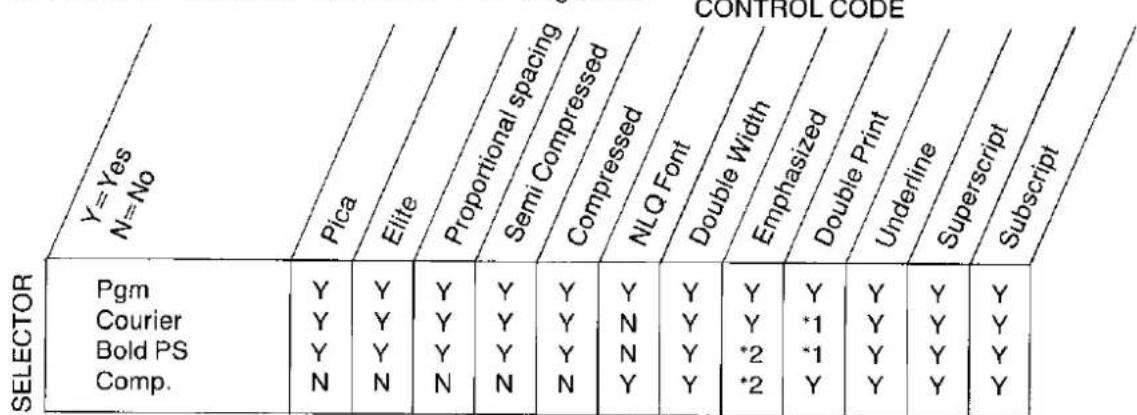
*1. Da Zeichen in Fast-Druckqualität mit einem Doppeldurchgang gedruckt werden, wird die Doppeldruck-Designation ignoriert. *2. Wenn 15 oder 17 Zeichen pro Zoll über Software ausgewählt werden, setzt ESC+E Hervorhebungsdruck. Wenn 15 oder 17 Zeichen pro Zoll über den Schalter ausgewählt werden, wird ESC+E ignoriert und 15 oder 17 Zeichen pro Zoll werden gedruckt.
IBM Proprinter-Modus
| Y=Yes N=No | Pica | Elite | Compressed | NLQ Font | Double Width | Emphasized | Overline | Underline | Superscript | Subscript |
| Pica | - | *1 | *1 | Y | Y | Y | Y | Y | Y | Y |
| Elite | *1 | - | *1 | Y | Y | Y | Y | Y | Y | Y |
| Compressed | *1 | *1 | - | Y | Y | *2 | Y | Y | Y | Y |
| NLQ Font | Y | Y | Y | - | Y | Y | Y | Y | Y | Y |
| Double Width | Y | Y | Y | Y | - | Y | Y | Y | Y | Y |
| Emphasized | Y | Y | *2 | Y | Y | - | Y | Y | Y | Y |
| Overline | Y | Y | Y | Y | Y | Y | - | Y | Y | Y |
| Underline | Y | Y | Y | Y | Y | Y | Y | - | Y | Y |
| Superscript | Y | Y | Y | Y | Y | Y | Y | Y | - | N |
| Subscript | Y | Y | Y | Y | Y | Y | Y | Y | N | - |
Tabelle 4.11 Gemischte Druckmodi – Nur Steuercodes
*1. Obwohl verschiedene Zeichenabstände nicht gleichzeitig eingestellt werden können, können sie in einer Zeile gemischt werden.
*2. Es werden nur hervorgehobene Zeichen gedruckt.
Hinweis: Alle Zeichenmodi können in einer einzigen Zeile gemischt werden.
Tabelle 4.12 Gemischte Druckmodi – Wahlschalter/Steuercodes *1. Wenn Kompressschriftzeichen über Software ausgewählt werden, setzt ESC+E den Intensivdruck. Wenn Kompressschriftzeichen über den Wahlschalter ausgewählt werden, wird ESC+E ignoriert und Kompressschriftzeichen werden gedruckt.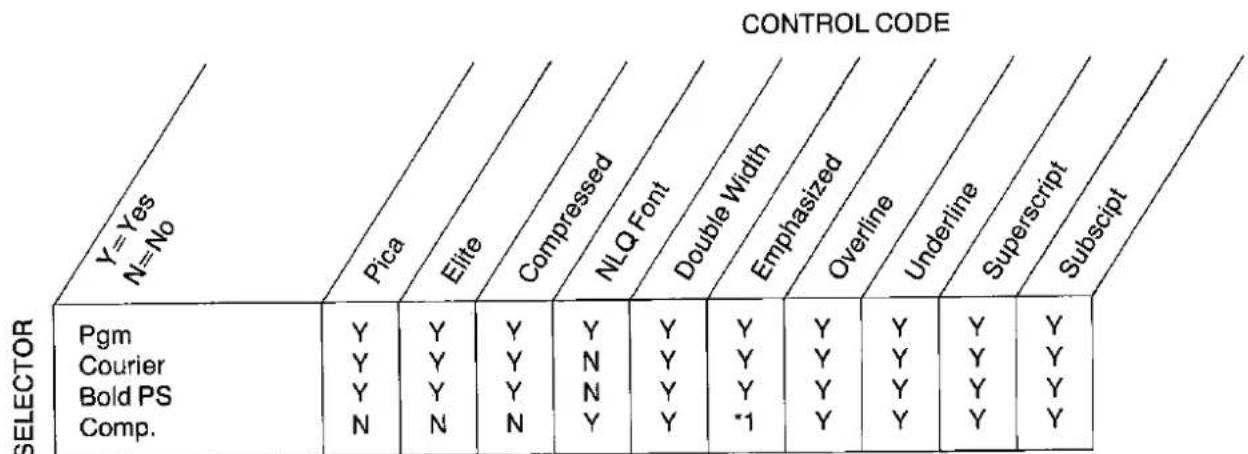
4.9 DIP-Schalter und Steuercodes
Wie in Abschnitt 3.3 erläutert, werden die DIP-Schaltereinstellungen beim Einschalten des Druckers in den Druckerspeicher eingelesen. Bestimmte Druckerfunktionen, die über diese DIP-Schalter eingestellt werden, können auch durch das Senden der entsprechenden Steuerbefehle eingestellt werden. Tabelle 4.13 zeigt die DIP-Schalterfunktionen, die auch über Software eingestellt werden können. DER STEUERBEFEHL ÜBERSCHREIBT IMMER DIE ENTSPRECHENDE(N) DIP-SCHALTEREINSTELLUNG(EN).
| SWITCH NO. | FUNCTION | SETTING | ||||
| DIP SWITCH | SOFTWARE | |||||
| SW1SW5SW6SW7(Standard only) | Selection of International Char. Set•USA•France•England•Denmark I•Sweden•Italy•Spain | SW1ONONONONONONONONONONONONONONONONONONONONONONONONONONONONONONONONONONONONONONONONONONONONONONONONONONONONONONONONONONONONONONONONONONONONONONONONONONONONONONONONONONONONONONONONONONONONONONONONONONONONOFOFFOFFOFFOFFOFFOFFOFFOFFOFFOFFOFFOFFOFFOFFOFFOFFOFFOFFOFFOFFOFFOFFOFFOFFOFFOFFOFFOFFOFFOFFOFFOFFOFFOFFOFFOFFOFFOFFOFFOFFOFFOFFOFFOFFOFFOFFOFFOFFOFFOFFOFFOFFOFFOFFOFFOFFOFFOFFOFFOFFOFFOFFOFFOFFOFFOFFOFFOFFOFFOFFOFFOFFOFFOFFOFFOFFOFFOFFOFFOFFOFFOFFOFFOFFOFFOFFOFFOFFOFFOFFOFFOFFOFFOFFOFFOFFOFFOFFOFFOFFFFOFFOFFOFFOFFOFFOFFOFFOFFOFFOFFOFFOFFOFFOFFOFFOFFOFFOFFOFFOFFOFFOFFOFFOFFOFFOFFOFFOFFOFFOFFOFFOFFOFFOFFOFFOFFOFFOFFOFFOFFOFFOFFOFFOFFOFFOFFOFFOFFOFFOFFOFFOFFOFFOFFOFFOFFOFFOFFOFFOFFOFFOFFOFFOFFOFFOFFOFFOFFOFFOFFOFFOFFOFFOFFOFFOFFOFFOFFOFFOFFOFFOFFOFFOFFOFFOFFOFFOFFOFFOFFOFFOFFOFFOFFOFFOFFOFFOFFOFFFFFFFFFFFFFFFFFFFFFFFFFFFFFFFFFFFFFFFFFFFFFFFFFFFFFFFFFFFFFFFFFFFFFFFFFFFFFFFFFFFFFFFFFFFFFFFFFFFFFFFFFFFFFFFFFFFFFFFFFFFFFFFFFFFFFFFFFFFFFFFFFFFFFFFFFFFFFFFFFFFFFFFFFFFFFFFFFFFFFFFFFFFFFFFFFFFFFFFFFFFFFFFFFFFFFFFFFFFFFFFFFFFFFFFFFFFFFFFFFFFFFFFFFFFFFFFFFFFFFFFFFFFFFFFFFFFFFFFFFFFFFFFFFFFFFFFFFFFFFFFFFFFFFFFFFFFFFFFFFFFFFFFFFFFFFFFFFFFFFFFFFFFFFFFFFFFFFFFFFFFFFFFFFFFFFFFFFFFFFFFFFFFFFFFFFFFFFFFFFFFFFFFFFFFFFFFFFFFFFFFFFFFFFFFFFFFFFFFFFFFFFFFFFFFFFFFFFFFFFFFFFFFFFFFFFFFFFFFFFFFFFFFFFFFFFFFFFFFFFFFFFFFFFFFFFFFFFFFFFFFFFFFFFFFFFFFFFFFFFFFFFFFFFFFFFFFFFFFFFFFFFFFFFFFFFFFFFFFFFFFFFFFFFFFFFFFFFFFFFFFFFFFFFFFFFFFFFFFFFFFFFFFFFFFFFFFFFFFFFFFFFFFFFFFFFFFFFFFFFFFFFFFFFFFFFFFFFFFFFFFFFFFFFFFFFFFFFFFFFFFFFFFFFFFFFFFFFFFFFFFFFFFFFFFFFFFFFFFFFFFFFFFFFFFFFFFFFFFFFFFFFFFFFFFFFFFFFFFFFFFFFFFFFFFFFFFFFFFFFFFFFFFFFFFFFFFFFFFFFFFFFFFFFFFFFFFFFFFFFFFFFFFFFFFFFFFFFFFFFFFFFFFFFFFFFFFFFFFFFFFFFFFFFFFFFFFFFFFFFFFFFFFFFFFFFFFFFFFFFFFFFFFFFFFFFFFFFFFFFFFFFFFFFFFFFFFFFFFFFFFFFFFFFFFFFFFFFFFFFFFFFFFFFFFFFFFFFFFFFFFAFFFFFFFFFFFFFFFFFFFFFFFFFFFFFFFFFFFFFFFFFFFFFFFFFFFFFFFFFFFFFFFFFFFFFFFFFFFFFFFFFFFFFFFFFFFFFFFFFFFFFFFFFFFFFFFFFFFFFFFFFFFFFFFFFFFFFFFFFFFFFFFFFFFFFFFFFFFFFFFFFFFFFFFFFFFFFFFFFFFFFFFFFFFFFFFFFFFFFFFFFFFFFFFFFFFFFFFFFFFFFFFFFFFFFFFFFFFFFFFFFFFFFFFFFFFFFFFFFFFFFFFFFFFFFFFFFFFFFFFFFFFFFFFFFFFFFFFFFFFFFFFFFFFFFFFFFFFFFFFFFFFFFFFFFFFFFFFFFFFFFFFFFFFFFFFFFFFFFFFFFFFFFFFFFFFFFFFFFFFFFFFFFFFFFFFFFFFFFFFFFFFFFFFFFFFFFFFFFFFFFFFFFFFFFFFFFFFFFFFFFFFFFFFFFFFFFFFFFFFFFFFFFFFFFFFFFFFFFFFFFFFFFFFFFFFFFFFFFFFFFFFFFFFFFFFFFFFFFFFFFFFFFFFFFFFFFFFFFFFFFFFFFFFFFFFFFFFFFFFFFFFFFFFFFFFFFFFFFFFFFFFFFFFFFFFFFFFFFFFFFFFFFFFFFFFFFFFFFFFFFFFFFFFFFFFFFFFFFFFFFFFFFFFFFFFFFFFFFFFFFFFFFFFFFFFFFFFFFFFFFFFFFFFFFFFFFFFFFFFFFFFFFFFFFFFFFFFFFFFFFFFFFFFFFFFFFFFFFFFFFFFFFFFFFFFFFFFFFFFFFFFFFFFFFFFFFFFFFFFFFFFFFFFFFFFFFFFFFFFFFFFFFFFFFFFFFFFFFFFFFFFFFFFFFFFFFFFFFFFFFFFFFFFFFFFFFFFFFFFFFFFFFFFFFFFFFFFFFFFFFFFFFFFFFFFFFFFFFFFFFFFFFFFFFFFFFFFFFFFFFFFFFFFFFFFFFFFFFFFFFFFFFFFFFFFFFFFFFFFFFFFFFFFFFFFFFFFFFFFFFFFFFFFFFFFFFFFFFFFFFFFFFFFFFFFFFFFFFFFFFFFFFFFFFFFFFFFFFFFFFFFFFFFFFFFFFFFFFFFFFFFFFFFFFFFFFFFFFFFFFFFFFFFFFFFFFFFFFFFFFFFFFFFFFFFFFFFFFFFFFFFFFFFFFFFFFFFFFFFFFFFFFFFFFFFFFFFFFFFFFFFFFFFFFFFFFFFFFFFFFFFFFFFFFFFFFFFFFFFFFFFFFFFFFFFFFFFFFFFFFFFFFFFFFFFFFFFFFFFFFFFFFFFFFFFFFFFFFFFFFFFFFFFFFFFFFFFFFFFFFFFFFFFFFFFFFFFFFFFFFFFFFFFFFFFFFFFFFFFFFFFFFFFFFFFFFFFFFFFFFFFFFFFFFFFFFFFFFFFFFFFFFFFFFFFFFFFFFFFFFFFFFFFFFFFFFFFFFFFFFFFFFFFFFFFFFFFFFFFFFFFFFFFFFFFFFFFFFFFFFFFFFFFFFFFFFFFFFFFFFFFFFFFFFFFFFFFFFFFFFFFFFFFFFFFFFFFFFFFFFFFFFFFFFFFFFFFFFFFFFFFFFFFFFFFFFFFFFFFFFFFFFFFFFFFFFFFFFFFFFFFFFFFFFFFFFFFFFFFFFFFFFFFFFFFFFFFFFFFFFFFFFFFFFFFFFFFFFFFFFFFFFFFFFFFFFFFFFFFFFFFFFFFFFFFFFFFFFFFFFFFFFFFFFFFFFFFFFFFFFFFFFFFFFFFFFFFFFFFFFFFFFFFFFFFFFFFFFFFFFFFFFFFFFFFFFFFFFFFFFFFFFFFFFFFFFFFFFFFFFFFFFFFFFFFFFFFFFFFFFFFFFFFFFFFFFFFFFFFFFFFFFFFFFFFFFFFFFFFFFFFFFFFFFFFFFFFFFFFFFFFFFFFFFFFFFFFFFFFFFFFFFFFFFFFFFFFFFFFFFFFFFFFFFFFFFFFFFFFFFFFFFFFFFFFFFFFFFFFFFFFFFFFFFFFFFFFFFFFFFFFFFFFFFFFFFFFFFFFFFFFFFFFFFFFFFFFFFFFFFFFFFFFFFFFEFFFFFFFFFFFFFFFFFFFFFFFFFFFFFFFFFFFFFFFFFFFFFFFFFFFFFFFFFFFFFFFFFFFFFFFFFFFFFFFFFFFFFFFFFFFFFFFFFFFFFFFFFFFFFFFFFFFFFFFFFFFFFFFFFFFFFFFFFFFFFFFFFFFFFFFFFFFFFFFFFFFFFFFFFFFFFFFFFFFFFFFFFFFFFFFFFFFFFFFFFFFFFFFFFFFFFFFFFFFFFFFFFFFFFFFFFFFFFFFFFFFFFFFFFFFFFFFFFFFFFFFFFFFFFFFFFFFFFFFFFFFFFFFFFFFFFFFFFFFFFFFFFFFFFFFFFFFFFFFFFFFFFFFFFFFFFFFFFFFFFFFFFFFFFFFFFFFFFFFFFFFFFFFFFFFFFFFFFFFFFFFFFFFFFFFFFFFFFFFFFFFFFFFFFFFFFFFFFFFFFFFFFFFFFFFFFFFFFFFFFFFFFFFFFFFFFFFFFFFFFFFFFFFFFFFFFFFFFFFFFFFFFFFFFFFFFFFFFFFFFFFFFFFFFFFFFFFFFFFFFFFFFFFFFFFFFFFFFFFFFFFFFFFFFFFFFFFFFFFFFFFFFFFFFFFFFFFFFFFFFFFFFFFFFFFFFFFFFFFFFFFFFFFFFFFFFFFFFFFFFFFFFFFFFFFFFFFFFFFFFFFFFFFFFFFFFFFFFFFFFFFFFFFFFFFFFFFFFFFFFFFFFFFFFFFFFFFFFFFFFFFFFFFFFFFFFFFFFFFFFFFFFFFFFFFFFFFFFFFFFFFFFFFFFFFFFFFFFFFFFFFFFFFFFFFFFFFFFFFFFFFFFFFFFFFFFFFFFFFFFFFFFFFFFFFFFFFFFFFFFFFFFFFFFFFFFFFFFFFFFFFFFFFFFFFFFFFFFFFFFFFFFFFFFFFFFFFFFFFFFFFFFFFFFFFFFFFFFFFFFFFFFFFFFFFFFFFFFFFFFFFFFFFFFFFFFFFFFFFFFFFFFFFFFFFFFFFFFFFFFFFFFFFFFFFFFFFFFFFFFFFFFFFFFFFFFFFFFFFFFFFFFFFFFFFFFFFFFFFFFFFFFFFFFFFFFFFFFFFFFFFFFFFFFFFFFFFFFFFFFFFFFFFFFFFFFFFFFFFFFFFFFFFFFFFFFFFFFFFFFFFFFFFFFFFFFFFFFFFFFFFFFFFFFFFFFFFFFFFFFFFFFFFFFFFFFFFFFFFFFFFFFFFFFFFFFFFFFFFFFFFFFFFFFFFFFF(F) | SW1SW5SW6SW7ESC+R+0ESC+R+1ESC+R+3ESC+R+4ESC+R+5ESC+R+6ESC+R+7 | SW1SW5SW6SW7ESC+R+0ESC+R+1ESC+R+3ESC+R+4ESC+R+5ESC+R+6ESC+R+7 | SW1SW5SW6SW7ESC+R+0ESC+R+1ESC+R+3ESC+R+4ESC+R+5ESC+R+6ESC+R+7 | SW1SW5SW6SW7ESC+8ESC+9ESC+9ESC+5+1ESC+5+0ESC+N+6ESC+OESC+OESC+6ESC+7ESC+7ESC+=ESC+#ESC+#ESC+#ESC+#ESC+#ESC+#ESC+#ESC+#ESC+#ESC+#ESC+#ESC+#ESC+#ESC+#ESC+#ESC+#ESC+#ESC+#ESC+#ESC+#ESC+#ESC+#ESC+#ESC+#ESC+#ESC+#ESC+#ESC+#ESC+#ESC+#ESC+#ESC+#ESC+#ESC+#ESC+#ESC+#ESC+#ESC+#ESC+#ESC+#ESC+#ESC+#ESC+#ESC+#ESC+#ESC+#ESC+#ESC+#ESC+#ESC+#ESC##ESC+#ESC##ESC##ESC##ESC##ESC##ESC##ESC##ESC##ESC##ESC##ESC##ESC##ESC##ESC##ESC##ESC##ESC##ESC##ESC##ESC##ESC##ESC##ESC##ESC##ESC##ESC##ESC##ESC##ESC##ESC##ESC##ESC##ESC##ESC##ESC##ESC##ESC##ESC##ESC##ESC##ESC##ESC##ESC##ESC##ESC##ESC##ESC##ESC##ESC##ESC##ESC###ESC##ESC##ESC##ESC##ESC##ESC##ESC##ESC##ESC##ESC##ESC##ESC##ESC##ESC##ESC##ESC##ESC##ESC##ESC##ESC##ESC##ESC##ESC##ESC##ESC##ESC##ESC##ESC##ESC##ESC##ESC##ESC##ESC##ESC##ESC##ESC##ESC##ESC##ESC##ESC##ESC##ESC##ESC##ESC##ESC##ESC##ESC##ESC##ESC##ESC###### |
Tabelle 4.13 Softwaresteuerung der DIP-Schalterfunktionen
Hinweis:
- Die internationalen Zeichensätze Japan (ESC+R+8), Norwegen (ESC+R+9) und Dänemark II (ESC+R+10) sind nur über Software auswählbar.
- Die Einstellung AUTO FEED XT (SW3) ermöglicht es dem Drucker, nach einem Wagenrücklauf einen Zeilenvorschub auszugeben. Durch Einfügen von LPRINT CHR\$(10) an den entsprechenden Stellen eines Programms können Sie ebenfalls nach einem Wagenrücklauf einen Zeilenvorschub auslösen. Siehe auch die LF-Bezeichnung in Abschnitt 4.7.
5.1 Parallele Schnittstelle
Die Kommunikation mit einem Computer erfolgt über eine parallele Schnittstelle, die auf dem Centronics-Standard basiert.
Technische Daten:
●Datenübertragungsgeschwindigkeit: mindestens 1000 Zeichen pro Sekunde •Synchronisation: externer STROBE-Impuls - Logikpegel: TTL ●Handshaking: BUSY- und ACK-Signale - Steckertyp: 57-30360 (AMPHENOL) oder gleichwertig - Kabel: abgeschirmtes Kabel mit maximal 3 Metern Länge verwenden.
Wenn der Drucker Daten verarbeitet, ist das BUSY-Signal hoch. Der Drucker akzeptiert dann keine neuen Daten vom Computer. Nach Abschluss der Verarbeitung geht das BUSY-Signal auf niedrig. (Das BUSY-Signal ist auch hoch, wenn der Drucker OFFLINE ist). Wenn dies geschieht, geht das ACK-Signal auf niedrig und zeigt dem Computer an, dass die Daten verarbeitet wurden und der Drucker bereit ist, weitere Daten zu akzeptieren. Diese Handshake-Routine wird jedes Mal ausgeführt, wenn ein Zeichen an den Drucker gesendet wird.
| BUSY | SLCT | PO | ERROR | |
| ON LINE | LOW | HIGH | LOW | HIGH |
| OFF LINE | HIGH | LOW | LOW | LOW |
| PAPER OUT | HIGH | LOW | HIGH | LOW |
Tabelle 5.1 Druckerstatussignale
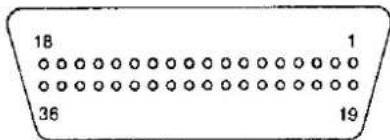
Hinweis: Dies ist kein 57-30360-Stecker.
Abbildung 5.1 Paralleler Schnittstellenanschluss (Druckerseite)
| Signal pin | Return side pin | Signal | Direction |
| 1 | 19 | STB | Input |
| 2 | 20 | DATA 1 | Input |
| 3 | 21 | DATA 2 | |
| 4 | 22 | DATA 3 | |
| 5 | 23 | DATA 4 | |
| 6 | 24 | DATA 5 | |
| 7 | 25 | DATA 6 | |
| 8 | 26 | DATA 7 | |
| 9 | 27 | DATA 8 | |
| 10 | 28 | ACK | Output |
| 11 | 29 | BUSY | Output |
| 12 | PO | Output | |
| 13 | SLCT | Output | |
| 14 | AUTO FEED XT | Input | |
| 15 | |||
| 16 | SG | ||
| 17 | FG | ||
| 18 | +5 V | Output | |
| 31 | 30 | PRIME | Input |
| 32 | ERROR | Output | |
| 33 | SG | ||
| 34 | |||
| 35 | |||
| 36 |
Tabelle 5.2 Stiftbelegung des Anschlusses
5.2 | Stiftsignale des Anschlusses
Hinweise:
- "EINGANG" bezieht sich auf ein Signal, das in den Drucker eingeht. "AUSGANG" bezeichnet ein Signal, das den Drucker verlässt.
- "RÜCKLEITUNG" bezeichnet den Rückleiter eines verdrillten Kabelpaares und ist mit der Signalmasse verbunden.
- Alle Schnittstellensignale sind auf TTL-Pegel.
STB... STROBE
- Dies ist ein synchronisierendes Eingangssignal zum Einlesen von Daten in den Drucker.
- Dieses Signal ist normalerweise hoch. Daten werden eingelesen, wenn es niedrig wird.
- Der Impuls muss mindestens 1 Mikrosekunde lang niedrig sein.
DATA 1-DATA 8
- Dies sind die Eingangssignale, die die 8 Datenbits der Informationen übertragen.
- Das Signal wird synchron zum STROBE-Impuls gelesen. Ein hoher Pegel bedeutet eine logische "1".
- Das Signal muss 0,5 Mikrosekunden vor und nach dem STROBE-Impuls anliegen.
ACK... ACKNOWLEDGE
- Dies ist ein Ausgangssignal an den Computer, das anzeigt, dass der Drucker bereit ist, den nächsten Datenblock zu empfangen. Es wird gesendet, wenn das BUSY-Signal von hoch auf niedrig fällt. Daher kann es als Datenanforderungsimpuls betrachtet werden. ●Das Signal ist normalerweise hoch. Wenn die Bedingung erfüllt ist, wird das Signal niedrig.
- Das ACK-Signal wird automatisch gesendet, wenn der Drucker eingeschaltet wird.
BUSY
- Dieses Ausgangssignal zeigt den Status des Druckers an. Das Signal ist hoch, wenn der Drucker beschäftigt ist und keine Daten empfangen kann. ●Das Signal ist unter den folgenden Bedingungen hoch:
- Empfangspuffer voll
- Drucker verarbeitet Daten
- Drucker ist OFFLINE
- Drucker befindet sich in einem Fehlerzustand
PO... PAPER OUT
●Dieses Ausgangssignal zeigt an, dass nur noch 13 Zeilen Papier übrig sind. - Das Signal ist normalerweise niedrig und wird während eines "Papierstau"-Zustands hoch.
SLCT... SELECT
- SELECT ist ein Ausgangssignal, das den ON LINE- oder OFF LINE-Zustand des Druckers anzeigt. Das Signal ist im ON LINE-Zustand hoch und im OFF LINE-Zustand niedrig. ●Der Drucker wechselt in den ON LINE-Zustand:
- wenn der Drucker eingeschaltet wird
- wenn PRIME empfangen wird
- wenn der RESET-Befehl empfangen wird
- wenn der ON LINE-Schalter gedrückt wird
●Der Drucker wechselt in den OFF LINE-Zustand:
- wenn dem Drucker das Papier ausgeht
- wenn der Drucker auf OFF LINE geschaltet wird
AUTO FEED XT (AFXT)
- Dieses Eingangssignal bestimmt, ob zu jedem Wagenrücklauf (CR) ein Zeilenvorschub (LF) hinzugefügt wird.
- Wenn niedrig ist, erfolgt eine CR+LF-Aktion. Wenn hoch ist, wird nur ein Wagenrücklauf ausgeführt.
- DIP SW3 kann die Reaktion des Druckers auf ein AFXT-Signal verändern. Wenn SW3 ON ist, führt der Drucker unabhängig vom Pegel des eingehenden Signals ein CR+LF aus. Wenn SW3 OFF ist, ist diese automatische Aktion deaktiviert.
SG... SIGNALMASSE
- Die verdrillten Rückleiter (Pins 19–30) sind mit der Signalerde verbunden.
FG... RAHMENERDE
●Die Rahmenerde ist identisch mit der Gehäusemasse.
+5 V
Dies ist nur für die Auswertung bestimmt. Es sollte nicht zur Stromversorgung externer Geräte verwendet werden.
PRIME
Dieses Eingangssignal dient zur Initialisierung des Druckers. Das Signal ist normalerweise hoch und geht zum Zurücksetzen des Druckers auf niedrig. Es kann jederzeit während des Druckerbetriebs empfangen werden.
FEHLER
Dieses Ausgangssignal ist ein "Fehler"- oder "Störungs"-Zustand. Normalerweise hoch, geht dieses Signal bei einem Fehler auf niedrig. Ein Fehlerzustand kann verursacht werden durch:
- einen "Papierstau"-Zustand.
- den Drucker, der OFFLINE ist
- einen Überlastzustand
Zeitdiagramm
(Bei Empfang eines normalen Druckcodes)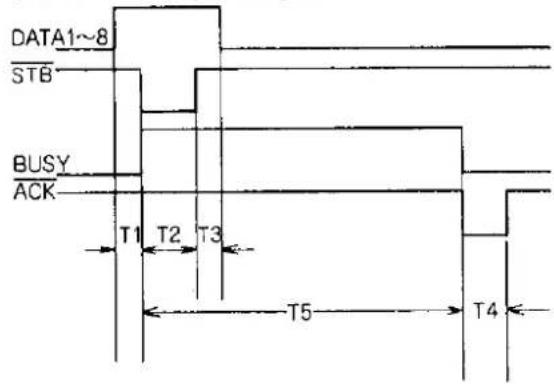
T1... 0,5 μs (Min.) T2... 1 μs (Min.) T3... 0,5 μs (Min.) T4... 5 μs (Max.) T5... 1 ms oder weniger, wenn der Puffer nicht voll ist 1 s oder weniger, wenn der Puffer voll ist
Abbildung 5.2 Zeitdiagramm
Der Drucker erfordert keine routinemäßige Wartung. Dennoch verlängert eine angemessene Pflege des Druckers seine Lebensdauer. Die folgenden vorbeugenden und regelmäßigen Maßnahmen werden empfohlen:
6.1 Vorbeugende Wartung
- Halten Sie alle Flüssigkeiten vom Drucker fern. Ein versehentliches Verschütten einer Flüssigkeit in den Drucker kann schwere Schäden verursachen.
- Blockieren Sie nicht den Luftstrom um den Drucker. Legen Sie keine Bücher, Papier oder andere Gegenstände auf den Drucker.
- Besondere Vorsicht ist geboten, um den Drucker zu schützen, wenn er in einer ungünstigen Umgebung wie einer Werkstatt, einem staubigen oder sandigen Bereich usw. verwendet wird.
- Stellen Sie beim Transport des Druckers sicher, dass die Wagenstopper angebracht sind. Dies hilft, Schäden am Druckkopf zu vermeiden.
- Die Lebensdauer des Druckkopfs kann durch Beachtung einiger einfacher Vorsichtsmaßnahmen verlängert werden.
- Betreiben Sie den Drucker nicht ohne Papier und eine installierte Farbbandkassette.
- Vermeiden Sie die kontinuierliche Verwendung derselben Nadeln (Unterstreichungen, Halbgrafiken usw.), ohne dem Druckkopf Zeit zum Abkühlen zu geben.
- Behindern Sie nicht die Bewegung des Druckkopfs während des Betriebs.
- Wenn der Drucker längere Zeit nicht verwendet wird, ziehen Sie das Netzkabel ab.
6.2 | Regelmäßige Wartung
Die Reinigung des Geräts ist die wichtigste Maßnahme, die der Benutzer durchführen kann. Die Häufigkeit der Reinigung hängt von der Umgebung ab.
- Schalten Sie das Gerät AUS.
- Reinigen Sie Gehäuse und Abdeckungen mit einem weichen Tuch. Verwenden Sie ein mildes handelsübliches Reinigungsmittel.
- Entfernen Sie die obere Abdeckung und die Rauchglasabdeckungen. Saugen oder entstauben Sie den Innenbereich des Geräts. Achten Sie darauf, das Flachbandkabel und den Wagenantriebsriemen nicht zu beschädigen.
- Die Walze sollte nur mit denaturiertem Alkohol gereinigt werden.
- Die Wagenführungsstange kann mit einem sehr leichten Öl geschmiert werden.
Farbbandkassette (KX-P110)
Ein einzelnes Farbband ermöglicht das Drucken von etwa 3 Millionen Zeichen. Wenn der Druck zu verblassen beginnt, drücken Sie vorsichtig mit der Spitze eines Kugelschreibers oder eines anderen Gegenstands auf die Zählfeder im Loch der Farbbandkassette. Sobald die Farbbandkassette auf dem Schlitten montiert ist und eine kurze Zeit lang gedruckt wird, werden die Zeichen dicker.
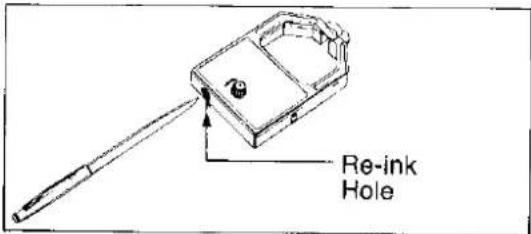
Hinweis:
Das Farbband nicht neu einfärben, bevor der Druck zu verblassen beginnt. Wenn das Farbband zu viel Tinte enthält, können die Zeichen beim Drucken verschmieren.
- Abnutzung der Druckkopfnadeln kann zu ernsthaften Schäden am Farbband und zu verblassendem Druck führen. In einem solchen Fall muss der Drucker gewartet werden.
- Staub und Papierreste auf der Schlittenwelle und der Schlittenführungswelle können die Bewegung des Schlittens behindern. Reinigen Sie diese mit einem weichen Tuch. Regelmäßige Reinigung ist für den ordnungsgemäßen Betrieb und eine längere Lebensdauer des Produkts erforderlich.
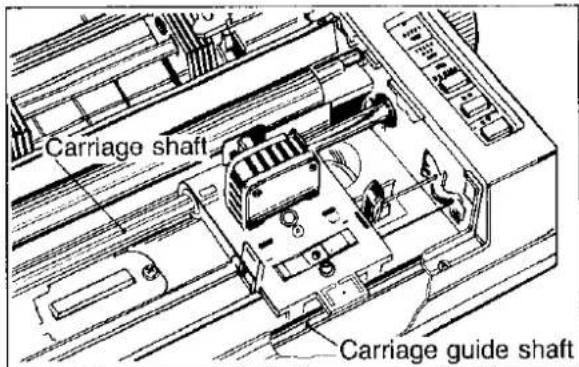
6.3 Fehlerbehebung
Die meisten Probleme im Zusammenhang mit dem Drucker lassen sich auf unsachgemäße Einrichtung, Installation oder Verkabelung zurückführen. Tabelle 6.1 hilft dem Benutzer, einige der häufigsten Probleme zu identifizieren und
zu beheben. Wenn Sie zusätzliche Hilfe benötigen, wenden Sie sich an das Geschäft, in dem das Gerät gekauft wurde.
| SYMPTOM | POSSIBLE CAUSE | PROBABLE SOLUTION |
| Printer Dead | No AC PowerFuse blown | Check Power CordReplace fuse |
| Power on but printer not printing | Printer not ON LINE; out of paper | Press ON LINE switch; replace paper |
| Printer won't go ON LINE | Out of paper | Replace paper |
| Paper slips around platen | Paper feed selector in TRACTOR position. | Set selector to FRICTION |
| Head moves but does not print | Ribbon not installed correctly | Re-inset ribbon |
| Paper bunches up around platen | No reverse tension on paper | Set paper supply lower than printer |
| Continuous Paper/Error indicator flashing | OVERLOAD condition | Carriage travel path blocked; carriage stoppers not removed |
| Printout double-spaced or no spacing | AFXT switch improperly set | Set DIP switchSW3—as required |
| Cannot print ASCII characters with code above 127, italic characters printing | 7 bit/8 bit switch set incorrectly on printer or interface | Set DIP switchSW8—as required |
| Cannot change print mode from computer | Print mode switch set incorrectly | Normal condition.Refer to Section 3.1 |
Tabelle 6.1 Fehlerbehebung
Standardmodus Zeichensatz
| 0 | 1 | 2 | 3 | 4 | 5 | 6 | 7 | 8 | 9 | A | B | C | D | E | F | |
| 0 | NUL | SP | 0 | @ | P | ' | p | SP | 0 | @ | P | ' | p | |||
| 1 | DC1 | ! | 1 | A | Q | a | q | DC1 | ! | 1 | A | Q | a | q | ||
| 2 | DC2 | " | 2 | B | R | b | r | DC2 | " | 2 | B | R | b | r | ||
| 3 | DC3 | # | 3 | C | S | c | s | DC3 | # | 3 | C | S | c | s | ||
| 4 | DC4 | 4 | D | T | d | t | DC4 | 4 | D | T | d | t | ||||
| 5 | % | 5 | E | U | e | u | % | 5 | E | U | e | u | ||||
| 6 | & | 6 | F | V | f | v | & | 6 | F | V | f | v | ||||
| 7 | BEL | ' | 7 | G | W | g | w | BEL | ' | 7 | G | W | g | w | ||
| 8 | BS | CAN | ( | 8 | H | X | h | x | BS | CAN | ( | 8 | H | X | h | x |
| 9 | HT | ) | 9 | I | Y | i | y | HT | ) | 9 | I | Y | i | y | ||
| A | LF | * | : | J | Z | j | z | LF | * | : | J | Z | j | z | ||
| B | VT | ESC | + | ; | K | [ | k | { | VT | ESC | + | ; | K | [ | k | { |
| C | FF | , | < | L | \ | I | | | FF | , | < | L | \ | I | / | ||
| D | CR | - | = | M | ] | m | } | CR | - | = | M | ] | m | } | ||
| E | SO | . | > | N | ^ | n | ~ | SO | . | > | N | ^ | n | ~ | ||
| F | SI | / | ? | O | _ | o | DEL | SI | / | ? | O | _ | o | DEL |
IBM Zeichensatz 1
| 0 | 1 | 2 | 3 | 4 | 5 | 6 | 7 | 8 | 9 | A | B | C | D | E | F | |
| 0 | NUL | SP | 0 | @ | P | ' | p | á | α | ≡ | ||||||
| 1 | DC1 | ! | 1 | A | Q | a | q | DC1 | í | β | ± | |||||
| 2 | DC2 | " | 2 | B | R | b | r | DC2 | ó | ≥ | ||||||
| 3 | DC3 | # | 3 | C | S | c | s | DC3 | ú | π | ≤ | |||||
| 4 | DC4 | 4 | D | T | d | t | DC4 | ñ | \Sigma | |||||||
| 5 | % | 5 | E | U | e | u | Ñ | \sigma | ||||||||
| 6 | & | 6 | F | V | f | v | a | \mu | ÷ | |||||||
| 7 | BEL | , | 7 | G | W | g | w | BEL | o | \gamma | ≈ | |||||
| 8 | BS | CAN | ( | 8 | H | X | h | x | BS | CAN | ¿ | \Phi | ° | |||
| 9 | HT | ) | 9 | I | Y | i | y | HT | \theta | ■ | ||||||
| A | LF | * | : | J | Z | j | z | LF | \Omega | ● | ||||||
| B | VT | ESC | + | ; | K | [ | k | VT | ESC | 1⁄2 | δ | √ | ||||
| C | FF | , | < | L | \ | l | FF | 1⁄4 | \infty | " | ||||||
| D | CR | - | = | M | ] | m | CR | i | \phi | ^2 | ||||||
| E | SO | . | > | N | ^ | n | SO | << | \epsilon$ | ■ | ||||||
| F | SI | / | ? | O | _ | o | SI | >> | ∩ | SP |
IBM Zeichensatz 2
| 0 | 1 | 2 | 3 | 4 | 5 | 6 | 7 | 8 | 9 | A | B | C | D | E | F | ||
| 0 | NUL | SP | 0 | @ | P | ' | p | Ç | É | á | α | ≡ | |||||
| 1 | DC1 | ! | 1 | A | Q | a | q | ü | æ | í | β | ± | |||||
| 2 | DC2 | " | 2 | B | R | b | r | é | Æ | ó | ≥ | ||||||
| 3 | ♥ | DC3 | # | 3 | C | S | c | s | â | ô | ú | π | ≤ | ||||
| 4 | ♦ | DC4 | 4 | D | T | d | t | ä | ö | ñ | \Sigma | ||||||
| 5 | ♣ | § | % | 5 | E | U | e | u | à | ò | Ñ | \sigma | J | ||||
| 6 | ♠ | & | 6 | F | V | f | v | å | û | a | \mu | ÷ | |||||
| 7 | BEL | ' | 7 | G | W | g | w | ç | ù | o | \gamma | ≈ | |||||
| 8 | BS | CAN | ( | 8 | H | X | h | x | ê | ÿ | ¿ | \Phi | ° | ||||
| 9 | HT | ) | 9 | I | Y | i | y | ë | Ö | — | \theta | ■ | |||||
| A | LF | * | : | J | Z | j | z | è | Ü | ¬ | \Omega | • | |||||
| B | VT | ESC | + | ; | K | I | k | i | φ | 1⁄2 | δ | √ | |||||
| C | FF | , | < | L | \ | l | | | î | £ | 1⁄4 | \infty | ° | |||||
| D | CR | - | = | M | ] | m | i | ¥ | i | \phi$ | 2 | ||||||
| E | SO | , | > | N | ^ | n | ~ | Ä | Pt | << | ε | ■ | |||||
| F | SI | / | ? | O | _ | o | Å | f | >> | ∩ | SP | ||||||
IBM Alle Zeichentabelle
| 0 | 1 | 2 | 3 | 4 | 5 | 6 | 7 | 8 | 9 | A | B | C | D | E | F | ||
| 0 | SP | SP | SP | 0 | @ | P | ' | p | Ç | É | á | α | ≡ | ||||
| 1 | SP | SP | ! | 1 | A | Q | a | q | ü | æ | í | ± | |||||
| 2 | SP | SP | " | 2 | B | R | b | r | é | Æ | ó | ≥ | |||||
| 3 | ♥ | SP | # | 3 | C | S | c | s | å | ð | ú | π | ≤ | ||||
| 4 | ♦ | ¶ | § | 4 | D | T | d | t | ä | ö | ñ | ||||||
| 5 | ♣ | § | % | 5 | E | U | e | u | à | ò | Ñ | σ | J | ||||
| 6 | ♠ | SP | & | 6 | F | V | f | v | å | û | µ | ÷ | |||||
| 7 | SP | SP | ' | 7 | G | W | g | w | ç | ù | γ | ≈ | |||||
| 8 | SP | SP | ( | 8 | H | X | h | x | ē | ÿ | ¿ | ° | |||||
| 9 | SP | SP | ) | 9 | I | Y | i | y | è | Ö | — | θ | ■ | ||||
| A | SP | → | * | : | J | Z | j | z | è | Ü | ¬ | Ω | • | ||||
| B | SP | ← | + | ; | K | [ | k | { | ï | ¢ | 1⁄2 | δ | √ | ||||
| C | SP | SP | . | < | L | \ | i | | | î | £ | 1⁄4 | ∞ | ° | ||||
| D | SP | SP | - | = | M | ] | m | } | i | ¥ | i | φ | 2 | ||||
| E | SP | SP | . | > | N | ^ | n | ~ | Ä | Pt | << | ■ | |||||
| F | SP | ∅ | / | ? | O | _ | o | SP | Å | ƒ | >> | SP |
Internationaler Zeichensatz
| n | 350 23H | 360 24H | 640 40H | 910 5BH | 920 5CH | 930 5DH | 940 5EH | 960 60H | 1230 7BH | 1240 7CH | 1250 7DH | 1260 7EH | |
| USA | 0 | # | @ | [ | \ | ] | ^ | ' | | | ||||
| FRANCE | 1 | # | à | ° | ç | § | ^ | ' | é | ù | è | .. | |
| 2 | Ineffective | ||||||||||||
| ENGLAND | 3 | £ | @ | [ | \ | ] | ^ | ' | | | ||||
| DENMARK I | 4 | # | @ | Æ | ∅ | Å | ^ | ' | æ | ø | å | ~ | |
| SWEDEN | 5 | # | ø | É | Å | Ö | Å | Ü | é | ä | ö | å | ü |
| ITALY | 6 | # | @ | ° | \ | é | ^ | ù | à | ò | è | i | |
| SPAIN | 7 | Pt | @ | i | Ñ | ¿ | ^ | ' | .. | ñ | } | ~ | |
| *JAPAN | 8 | # | @ | [ | ¥ | ] | ^ | ' | | | ||||
| *NORWAY | 9 | # | ø | É | Æ | ∅ | Å | Ü | é | æ | ø | å | ü |
| *DENMARK II | 10 | # | É | Æ | ∅ | Å | Ü | é | æ | ø | å | ü | |
*Nur über Software zugänglich
*Kursiver Internationaler Zeichensatz
| LOCATION | CHAR. | LOCATION | CHAR. | LOCATION | CHAR. | LOCATION | CHAR. | ||||
| DEC | HEX | DEC | HEX | DEC | HEX | DEC | HEX | ||||
| 128 | 80 | à | 137 | 89 | Ñ | 146 | 92 | AE | 155 | 9B | ö |
| 129 | 81 | è | 138 | 8A | ñ | 147 | 93 | æ | 156 | 9C | ü |
| 130 | 82 | ù | 139 | 8B | α | 148 | 94 | ∅ | 157 | 9D | É |
| 131 | 83 | ò | 140 | 8C | Pt | 149 | 95 | ø | 158 | 9E | é |
| 132 | 84 | i | 141 | 8D | Å | 150 | 96 | 159 | 9F | ¥ | |
| 133 | 85 | ° | 142 | 8E | à | 151 | 97 | Å | 255 | FF | ∅ |
| 134 | 86 | £ | 143 | 8F | ç | 152 | 98 | Ö | |||
| 135 | 87 | j | 144 | 90 | § | 153 | 99 | Ü | |||
| 136 | 88 | ¿ | 145 | 91 | ß | 154 | 9A | ä | |||
*Nur im Standardmodus zugänglich
Tabellen für proportionalen Zeichenabstand
Zeichen im Standardmodus
| ASCII code | Char. | Width |
| 0 | A | 12 |
| 1 | B | 12 |
| 2 | C | 11 |
| 3 | D | 10 |
| 4 | E | 8 |
| 5 | F | 12 |
| 6 | G | 12 |
| 7 | H | 5 |
| 8 | I | 12 |
| 9 | J | 12 |
| 10 | K | 11 |
| 11 | L | 12 |
| 12 | M | 12 |
| 13 | N | 12 |
| 14 | O | 12 |
| 15 | P | 11 |
| 16 | Q | 10 |
| 17 | R | 11 |
| 18 | S | 12 |
| 19 | T | 12 |
| 20 | U | 12 |
| 21 | V | 12 |
| 22 | W | 8 |
| 23 | X | 12 |
| 24 | Y | 12 |
| 25 | Z | 12 |
| 26 | A | 12 |
| 27 | B | 10 |
| 28 | C | 11 |
| 29 | D | 12 |
| 30 | E | 12 |
| 31 | F | 12 |
| 32 | G | 12 |
| 33 | H | 5 |
| 34 | I | 8 |
| 35 | J | 12 |
| 36 | K | 12 |
| 37 | L | 12 |
| 38 | M | 12 |
| 39 | N | 5 |
| 40 | O | 7 |
| 41 | O | 7 |
| 42 | P | 12 |
| 43 | Q | 12 |
| 44 | R | 12 |
| 45 | S | 12 |
| 46 | T | 6 |
| 47 | U | 10 |
| 48 | V | 12 |
| 49 | W | 12 |
| 50 | X | 12 |
| 51 | Y | 12 |
| 52 | Z | 12 |
| 53 | A | 12 |
| 54 | B | 12 |
| 55 | C | 12 |
| 56 | D | 12 |
| 57 | E | 12 |
| 58 | F | 12 |
| 59 | G | 12 |
| 60 | H | 12 |
| 61 | I | 12 |
| 62 | J | 10 |
| 63 | 12 |
| ASCII code | Char. | Width |
| 64 | @ | 12 |
| 65 | A | 12 |
| 66 | B | 12 |
| 67 | C | 12 |
| 68 | D | 12 |
| 69 | E | 12 |
| 70 | F | 12 |
| 71 | G | 12 |
| 72 | H | 12 |
| 73 | I | 8 |
| 74 | J | 11 |
| 75 | K | 12 |
| 76 | L | 12 |
| 77 | M | 12 |
| 78 | N | 12 |
| 79 | O | 12 |
| 80 | P | 12 |
| 81 | Q | 12 |
| 82 | R | 12 |
| 83 | S | 12 |
| 84 | T | 12 |
| 85 | U | 12 |
| 86 | V | 12 |
| 87 | W | 12 |
| 88 | X | 10 |
| 89 | Y | 12 |
| 90 | Z | 10 |
| 91 | I | 8 |
| 92 | J | 10 |
| 93 | K | 8 |
| 94 | L | 12 |
| 95 | M | 12 |
| 96 | n | 11 |
| 97 | o | 12 |
| 98 | p | 11 |
| 99 | q | 11 |
| 100 | r | 11 |
| 101 | s | 12 |
| 102 | t | 11 |
| 103 | u | 12 |
| 104 | v | 12 |
| 105 | w | 13 |
| 106 | x | 10 |
| 107 | y | 12 |
| 108 | z | 10 |
| 109 | w | 13 |
| 110 | u | 12 |
| 111 | y | 12 |
| 112 | z | 10 |
| 113 | u | 9 |
| 114 | y | 12 |
| 115 | s | 12 |
| 116 | t | 11 |
| 117 | u | 12 |
| 118 | y | 12 |
| 119 | w | 13 |
| 120 | x | 10 |
| 121 | y | 12 |
| 122 | z | 10 |
| 123 | t | 12 |
| 124 | u | 12 |
| 125 | y | 12 |
| 126 | z | 12 |
| 127 | e | 12 |
| ASCII code | Char. | Width |
| 128 | â | 11 |
| 129 | φ | 11 |
| 130 | û | 11 |
| 131 | ô | 11 |
| 132 | 8 | |
| 133 | ° | 8 |
| 134 | Ê | 12 |
| 135 | 10 | |
| 136 | φ | 11 |
| 137 | N | 12 |
| 138 | n | 12 |
| 139 | n | 12 |
| 140 | n | 12 |
| 141 | A | 12 |
| 142 | â | 11 |
| 143 | G | 11 |
| 144 | S | 12 |
| 145 | B | 11 |
| 146 | AE | 12 |
| 147 | B | 12 |
| 148 | D | 12 |
| 149 | ô | 11 |
| 150 | â | 9 |
| 151 | A | 12 |
| 152 | O | 12 |
| 153 | U | 12 |
| 154 | ê | 11 |
| 155 | ô | 11 |
| 156 | û | 12 |
| 157 | E | 12 |
| 158 | ê | 11 |
| 159 | V | 12 |
| 160 | S | 12 |
| 161 | 10 | |
| 162 | s | 10 |
| 163 | 12 | |
| 164 | 11 | |
| 165 | % | 12 |
| 166 | & | 12 |
| 167 | · | 6 |
| 168 | ( | 8 |
| 169 | ) | 8 |
| 170 | 12 | |
| 171 | + | 12 |
| 172 | · | 7 |
| 173 | - | 12 |
| 174 | · | 7 |
| 175 | 10 | |
| 176 | O | 12 |
| 177 | 12 | |
| 178 | 12 | |
| 179 | 2 | 12 |
| 180 | 3 | 12 |
| 181 | 4 | 12 |
| 182 | 5 | 12 |
| 183 | 6 | 12 |
| 184 | 8 | 12 |
| 185 | 9 | 12 |
| 186 | 7 | 7 |
| 187 | s | 7 |
| 188 | 10 | |
| 189 | = | 11 |
| 190 | 9 | |
| 191 | 11 |
| ASCII code | Char. | Width |
| 192 | @ | 12 |
| 193 | A | 12 |
| 194 | B | 12 |
| 195 | C | 12 |
| 196 | D | 12 |
| 197 | E | 12 |
| 198 | F | 12 |
| 199 | G | 12 |
| 200 | H | 12 |
| 201 | I | 10 |
| 202 | J | 12 |
| 203 | K | 12 |
| 204 | L | 10 |
| 205 | M | 12 |
| 206 | N | 12 |
| 207 | O | 12 |
| 208 | P | 12 |
| 209 | Q | 12 |
| 210 | R | 12 |
| 211 | S | 12 |
| 212 | T | 12 |
| 213 | U | 12 |
| 214 | V | 12 |
| 215 | W | 12 |
| 216 | X | 12 |
| 217 | Y | 12 |
| 218 | Z | 12 |
| 219 | ( 7 \\ 1 \\ 1 \\ 1 \\ 1 \\ 1 \\ 1 \\ 1 \\ 1 \\ 1 \\ 1 \\ 1 \\ 1 \\ 1 \\ 1 \\ 1 \\ 1 \\ 1 \\ 1 \\ 1 \\ 1 \\ 1 \\ 1 \\ 1 \\ 1 \\ 1 \\ 1 \\ 1 \\ 1 \\ 1 \\ 1 \\ 1 \\ 1 \\ 1 \\ 1 ) | |
| 220 | ||
| 221 | ||
| 222 | ||
| 223 | ||
| 224 | ||
| 225 | ||
| 226 | ||
| 227 | ||
| 228 | ||
| 229 | ||
| 230 | ||
| 231 | ||
| 232 | ||
| 233 | ||
| 234 | ||
| 235 | ||
| 236 | ||
| 237 | ||
| 238 | ||
| 239 | ||
| 240 | ||
| 241 | ||
| 242 | ||
| 243 | ||
| 244 | ||
| 245 | ||
| 246 | ||
| 247 | ||
| 248 | ||
| 249 | ||
| 250 | ||
| 251 | ||
| 252 | ||
| 253 | ||
| 254 | ||
| 255 |
Einheit: 1/120 Zoll (0,21 mm)
IBM-Grafikzeichen Nur wirksam, wenn der Druckmodus-Wahlschalter auf "Fett PS" eingestellt ist.
| ASCII code | Char. | Width |
| 3 | ♥ | 12 |
| 4 | ♦ | 12 |
| 5 | ♣ | 12 |
| 6 | ♠ | 12 |
| 20 | ¶ | 12 |
| 21 | § | 10 |
| 26 | → | 12 |
| 27 | ← | 12 |
| 31 | ∅ | 12 |
| 128 | Ç | 12 |
| 129 | ü | 11 |
| 130 | é | 12 |
| 131 | ä | 12 |
| 132 | ä | 12 |
| 133 | ä | 12 |
| 134 | ä | 12 |
| 135 | ç | 11 |
| 136 | ö | 12 |
| 137 | õ | 12 |
| 138 | è | 12 |
| 139 | i | 8 |
| 140 | i | 8 |
| 141 | i | 8 |
| 142 | Ä | 12 |
| 143 | Ä | 12 |
| 144 | É | 12 |
| 145 | æ | 12 |
| 146 | Æ | 12 |
| 147 | ö | 10 |
| 148 | ö | 10 |
| 149 | ö | 10 |
| 150 | ü | 11 |
| 151 | ü | 11 |
| 152 | y | 11 |
| 153 | Ö | 12 |
| 154 | Ü | 12 |
| 155 | ¢ | 11 |
| 156 | £ | 12 |
| 157 | ¥ | 12 |
| 158 | Pt | 12 |
| 159 | f | 12 |
| 160 | á | 12 |
| 161 | i | 8 |
| 162 | ö | 10 |
| 163 | ü | 11 |
| 164 | ñ | 11 |
| 165 | Ñ | 12 |
| 166 | a | 12 |
| 167 | ø | 12 |
| 168 | ¿ | 12 |
| 169 | ¬ | 12 |
| 170 | 1⁄2 | 12 |
| 171 | 1⁄4 | 12 |
| 172 | i | 5 |
| 173 | << | 12 |
| 174 | >> | 12 |
| 175 | ||
| 224 | α | 12 |
| 225 | β | 12 |
| 226 | Γ | 12 |
| 227 | π | 12 |
| 228 | Σ | 12 |
| ASCII code | Char. | Width |
| 229 | σ | 12 |
| 230 | µ | 12 |
| 231 | γ | 12 |
| 232 | 12 | |
| 233 | θ | 12 |
| 234 | Ω | 12 |
| 235 | δ | 12 |
| 236 | ∞ | 12 |
| 237 | φ | 12 |
| 238 | 12 | |
| 239 | 12 | |
| 240 | 12 | |
| 241 | ± | 12 |
| 242 | ≥ | 12 |
| 243 | ≤ | 12 |
| 246 | ÷ | 12 |
| 247 | ≈ | 12 |
| 248 | o | 8 |
| 249 | ■ | 12 |
| 250 | ● | 12 |
| 251 | v- | 12 |
| 252 | n | 8 |
| 253 | z | 8 |
| 254 | ■ | 12 |
| 255 | SP | 12 |
Einheit: 1/120 Zoll (0,21 mm)
DIP-Schaltereinstellungen
| SWITCH NUMBER | FUNCTION | ON | OFF | POSITION WHEN SHIPPED |
| SW1 | Printer Mode | Standard Mode | IBM Proprinter Mode | ON |
| SW2 | Paper Out Detector | Ineffective | Effective | OFF |
| SW3 | AUTO FEED XT | Fixed Internally | Not Fixed Internally | OFF |
| SW4 | Skip Perforation | 1 inch (25.4 mm) Skip | No Skip | OFF |
| SW5 SW6 SW7 | Character Set | SW1=ON: See International Character Set Chart SW1=OFF: See IBM Proprinter Mode Chart | OFF OFF ON | |
| SW8 | 7 bit/8 bit | 7 bit | 8 bit | OFF |
DIP-Schaltereinstellungen
| SW5 | SW6 | SW7 | INTERNATIONAL CHARACTER SET |
| ON | ON | ON | USA |
| OFF | ON | ON | FRANCE |
| ON | OFF | ON | ENGLAND |
| OFF | OFF | ON | ENGLAND |
| ON | ON | OFF | DENMARK I |
| OFF | ON | OFF | SWEDEN |
| ON | OFF | OFF | ITALY |
| OFF | OFF | OFF | SPAIN |
Internationaler Zeichensatz
| SWITCH NUMBER | FUNCTION | ON | OFF |
| SW5 | Automatic CR | Causes Automatic CR on LF, VT, ESC+J | Prevents Automatic CR on LF, VT, ESC+J |
| SW6 | Zero font | 0 | 0 |
| SW7 | Character Chart | Set 2 | Set 1 |
IBM-Proprinter-Modus
Matrix-Raster für benutzerdefinierte Zeichen (für Standardmodus)
Kopieren Sie diese Seite zuerst. Verwenden Sie dann die leeren Raster, um Ihre benutzerdefinierten Zeichen zu entwerfen.
Matrix-Raster für benutzerdefinierte Zeichen: Entwurf (für IBM-Proprinter-Modus)
Kopieren Sie diese Seite zuerst.
Verwenden Sie dann leere Matrizen, um Ihre Download-Zeichen zu entwerfen.
Software-Befehle (Standardmodus)
| FONT SELECTION | Page | |
| Name | Function | |
| ESC+4 | Selects Italic printing | 4-4 |
| ESC+5 | Releases Italic printing | 4-4 |
| ESC+x+n | Selects print font | 4-5 |
| ESC+S+0 | Selects superscript printing | 4-6 |
| ESC+S+1 | Selects subscript printing | 4-6 |
| ESC+T | Releases sub/superscript printing | 4-6 |
| CHARACTER PITCH SELECTION | Page | |
| Name | Function | |
| ESC+P | Sets 10 cpi (pica pitch) draft printing | 4-9 |
| ESC+M | Sets 12 cpi (elite pitch) draft printing | 4-10 |
| ESC+n | Sets 10 cpi NLQ printing | 4-12 |
| ESC+o | Sets 12 cpi NLQ printing | 4-13 |
| SI | Sets 17 cpi (compressed) printing | 4-14 |
| ESC+SI | Sets 17 cpi (compressed) printing | 4-14 |
| DC2 | Releases compressed printing | 4-14 |
| ESC+p+1 | Sets proportional spacing | 4-15 |
| ESC+p+0 | Releases proportional spacing | 4-15 |
| ESC+w+n | Sets 10, 12, 15, 17 cpi or proportional spacing | 4-17 |
| ESC+!+n | Sets certain pitches based upon value of n | 4-18 |
| CHARACTER HIGHLIGHT SELECTION | Page | |
| Name | Function | |
| ESC+E | Sets emphasis printing | 4-24 |
| ESC+F | Releases emphasis printing | 4-24 |
| ESC+G | Sets double printing | 4-25 |
| ESC+H | Releases double printing | 4-25 |
| SO | Sets single-line double width printing | 4-26 |
| DC4 | Releases single-line double width printing | 4-26 |
| ESC+SO | Sets single-line double width printing | 4-26 |
| ESC+W+1 | Sets double width printing | 4-27 |
| ESC+W+0 | Releases double width printing | 4-27 |
| ESC+-+1 | Sets underlining | 4-28 |
| ESC+-+0 | Releases underlining | 4-28 |
| ESC+!+n | Sets highlighting based upon value of n | 4-30 |
Software-Befehle (Standardmodus)
| CHARACTER SET SELECTION | Page | |
| Name | Function | |
| ESC+R+n | Selects international character set | 4-31 |
| ESC+6 | Sets italic international character set | 4-33 |
| ESC+7 | Releases italic international character set | 4-33 |
| BIT IMAGE (GRAPHICS) MODE SELECTION | Page | |
| Name | Function | |
| ESC+K+n1+n2 | Sets standard density (480 dots/line) | 4-41 |
| ESC+L+n1+n2 | Sets double density (960 dots/line) | 4-41 |
| ESC+Y+n1+n2 | Sets double density/double speed (960 dots/line) | 4-42 |
| ESC+Z+n1+n2 | Sets quadruple density (1920 dots/line) | 4-43 |
| ESC+X+m+n1+n2 | Sets 8-pin bit image mode selection(480, 576, 640, 720, 960, 1152, 1920 dots/line) | 4-44 |
| ESC+^+m+n1+n2 | Sets 9-pin bit image mode selection(480, 576, 640, 720, 960, 1152, 1920 dots/line) | 4-45 |
| ESC+?+n+m | Reassigns graphics mode density | 4-46 |
| PAPER FEED SELECTION Amount Page | ||
| Name | Fuction | |
| ESC+0 | Sets paper feed to 1/8 inch (3.2 mm) | 4-48 |
| ESC+1 | Sets paper feed to 7/72 inch (2.47 mm) | 4-48 |
| ESC+2 | Sets paper feed to 1/6 inch (4.2 mm) | 4-49 |
| ESC+A+n | Sets paper feed to n/72 inch | 4-50 |
| ESC+3+n | Sets paper feed to n/216 inch | 4-51 |
| Execution Page | ||
| Name | Function | |
| LF | Feeds paper one line | 4-53 |
| FF | Feeds paper to next top of form position | 4-53 |
| ESC+J+n | Executes one-line paper feed of n/216 inch | 4-54 |
| ESC+f+1+n | Feeds paper “n” lines | 4-55 |
Software-Befehle (Standardmodus)
SEITENFORMATSTEUERUNG Seite
| Name | Function | |
| ESC+C+0+n | Sets page length in inches | 4-56 |
| ESC+C+n | Sets page length in lines | 4-57 |
| ESC+l+n | Sets left margin | 4-59 |
| ESC+Q+n | Sets right margin | 4-60 |
| ESC+a+0 | Enables left alignment | 4-62 |
| ESC+a+1 | Enables auto centering | 4-62 |
| ESC+a+2 | Enables right alignment | 4-63 |
| ESC+a+3 | Enables auto justification | 4-64 |
| ESC+N+n | Sets skip perforation | 4-65 |
| ESC+O | Releases skip perforation | 4-65 |
| TABULATION | Horizontal | Page |
| Name | Function | |
| ESC+D+n1+...+n,+0 | Sets horizontal tab | 4-66 |
| ESC+D+0 | Releases horizontal tab | 4-66 |
| ESC+e+0+n | Sets horizontal tab every “n” positions | 4-66 |
| HT | Executes horizontal tab | 4-67 |
| Vertical | Page | |
| Name | Function | |
| ESC+B+n1+...+n,+0 | Sets vertical tab | 4-68 |
| ESC+B+0 | Releases vertical tab | 4-68 |
| ESC+e+1+n | Sets vertical tab every “n” lines | 4-68 |
| VT | Executes vertical tab | 4-69 |
| ESC+/+n | Selects VFU channel | 4-71 |
| ESC+b+m+n1+...+n,+0 | Sets VFU tabulation | 4-71 |
| ESC+b+m+0 | Releases VFU tabulation | 4-71 |
Software-Befehle (Standardmodus)
| CARRIAGE CONTROL | Page | |
| Name | Function | |
| BS | Prints, then backspaces one character | 4-74 |
| CR | Prints a line, then returns carriage | 4-75 |
| ESC+< | Homes print head | 4-75 |
| ESC+U+1 | Sets single direction printing | 4-76 |
| ESC+U+0 | Releases single direction printing | 4-76 |
| ESC+s+1 | Sets half speed printing | 4-76 |
| ESC+s+0 | Releases half speed printing | 4-76 |
| ESC+f+0+n | Skips “n” spaces on a line | 4-77 |
| DATA CONTROL | Page | |
| Name | Function | |
| CAN | Clears data in buffer | 4-78 |
| DC1 | Selects printer remotely | 4-79 |
| DC3 | Deselects printer remotely | 4-79 |
| DEL | Deletes last printable character | 4-80 |
| ESC+> | Sets MSB on | 4-80 |
| ESC+= | Sets MSB off | 4-81 |
| ESC+# | Cancels MSB setting | 4-82 |
| ESC+I+1 | Selects undefined code printing | 4-83 |
| ESC+I+0 | Releases printing code from undefined code locations | 4-83 |
| DOWNLOADABLE CHARACTER SELECTION | Page | |
| Name | Function | |
| ESC+y+loc+D1+D2+...+D9 | Defines download draft font | 4-86 |
| ESC+z+loc | Cancels download character | 4-86 |
Software-Befehle (Standardmodus)
VERSCHIEDENES Seite
| Name | Function | |
| BEL | Sounds the buzzer | 4-89 |
| ESC | First byte of multi-byte control codes | 4-89 |
| NUL | Last byte of certain multi-byte control codes | 4-90 |
| ESC+@ | Initializes the printer | 4-90 |
| ESC+9 | Enables paper-out detection | 4-93 |
| ESC+8 | Disables paper-out detection | 4-93 |
| ESC+i+1 | Sets incremental (view) printing | 4-93 |
| ESC+i+0 | Releases incremental (view) printing | 4-93 |
Software-Befehle (IBM Proprinter-Modus)
| FONT SELECTION | Page | |
| Name | Function | |
| ESC+S+0 | Selects superscript printing | 4-6 |
| ESC+S+1 | Selects subscript printing | 4-6 |
| ESC+T | Releases sub/superscript printing | 4-6 |
| ESC+I+0 | Selects draft font print mode | 4-7 |
| ESC+I+2 | Selects NLQ font print mode | 4-7 |
| ESC+I+4 | Selects download code print (draft) | 4-7 |
| ESC+I+6 | Selects download code print (NLQ) | 4-7 |
| ESC+G | Selects NLQ printing | 4-8 |
| ESC+H | Releases NLQ printing | 4-8 |
| CHARACTER PITCH SELECTION | Page | |
| Name | Function | |
| ESC+: | Sets 12 cpi (elite pitch) printing | 4-11 |
| DC2 | Releases elite and compressed printing | 4-11 |
| SI | Sets 17 cpi (compressed) printing | 4-14 |
| ESC+SI | Sets 17 cpi (compressed) printing | 4-14 |
| CHARACTER HIGHLIGHT SELECTION | Page | |
| Name | Function | |
| ESC+E | Sets emphasis printing | 4-24 |
| ESC+F | Releases emphasis printing | 4-24 |
| SO | Sets single-line double width printing | 4-26 |
| DC4 | Releases single-line double width printing | 4-26 |
| ESC+SO | Sets single-line double width printing | 4-26 |
| ESC+W+1 | Sets double width printing | 4-27 |
| ESC+W+0 | Releases double width printing | 4-27 |
| ESC+-+1 | Sets underlining | 4-28 |
| ESC+-+0 | Releases underlining | 4-28 |
| ESC+_+1 | Sets overlining | 4-29 |
| ESC+_+0 | Releases overlining | 4-29 |
A
Quittung (ACK) 3-1, 5-2
Alarm 3-2
Alle Zeichendruck 4-91, 4-92
ASCII-Tabellen A-1
Automatischer Zeilenvorschub 4-52
B
Rücktaste (BS) 4-74
BASIC 4-1, 4-2, 4-3
Klingel (BEL) 4-89
Bidirektionaler Druck 1-1, 4-76
Bitbild: Grafik 4-36\~4-46
Neuzuordnung 4-46
Auswahl 4-36, 4-44, 4-45
Puffer löschen 4-78
BUSY 3-1,5-2
C
Abbrechen (CAN) 4-78
Wagenrücklauf-Steuerbefehle 4-74
Wagenrücklauf 4-75
Befehle für Zeichenhervorhebung 4-24
Befehle für Zeichenabstand 4-9
Befehle für Zeichensätze 4-31
Komprimiert:
Abstandsfreigabe 4-14
Abstandseinstellung 4-14
tiefgestellt 4-6
hochgestellt 4-6
D
Datensteuerbefehle 4-78
Löschen (DEL) 4-80
Detektoren: Papierende 3-2, 3-3 Überhitzung 3-2
Gerätesteuerung (DC1–DC4) 4-14, 4-26, 4-79
DIP-Schalter: Tabelle 3-3
Funktion 3-3
Position 3-3
Softwaresteuerung von 4-96
Punktdichte 4-36
Doppeldruck 4-25
Doppelte Breite Druck 4-26, 4-27
Herunterladen: Zeichenbefehle 4-86, 4-88 Matrixblanks D-1, D-2
Entwurf: Schriftart 4-4, 4-9 Modus 3-1
E
Elite-Schritt 1-1, 4-10, 4-11,
4-13, 4-21
Fettdruck 4-24
ERROR-Signal 5-3
Escape (ESC) 4-1, 4-89
Escape-Sequenzen 4-1
Befehle zur Schriftauswahl 4-4
Befehl für Seitenvorschub (FF) 2-5, 3-1, 4-53
Schalter für Seitenvorschub 3-1
Befehl für Seitenlänge (siehe Befehl für Seitenlänge)
Reibantrieb 2-4
Grafik:
Bitbild 4-36
Block 1-1, 4-5, 4-12, 4-13, 4-28
doppelte Dichte 4-41
doppelte Geschwindigkeit 4-42
IBM 4-5, 4-12, 4-13, 4-28, 4-34, 4-35
vierfache Dichte 4-43
Standarddichte 4-41
9-polig 4-45
H
Halbe Geschwindigkeit drucken 4-76
Hexdump 3-5
Hexadezimaleingabe 4-2
Druckkopf in Grundstellung fahren Befehl 4-75
Horizontal: Abstand 4-77
Tabulator ausführen 4-67
Tabulator setzen 4-66
1
IBM-Zeichensatz 4-34, 4-35
Inkrementelles Drucken 4-93
Kontrollleuchten 3-1
Initialisierung 3-4
Eingabeformat 4-3
Schnittstellenanschluss 5-1
Schnittstellensignale 5-2
Internationale Zeichen 1-1, 3-3, 4-31, 4-83, A-5
Kursivschrift 1-1, 4-4
Internationale Zeichen in Kursivschrift 4-33, A-5
L
Zeilenvorschub (LF)-Befehl 4-53
Zeilenvorschub-Schalter 3-1
M
Wartung, vorbeugende 6-1
Wartung, regelmäßige 6-1
Rand, links 4-59
Rand, rechts 4-60
Randeinstellung 4-61
Mischen von Druckmodi 4-60
Most significant bit (MSB): cancel 4-82 set 4-80, 4-81
N
Near letter quality (NLQ) 3-1, 4-5, 4-8,
4-12, 4-13
Null (NUL) command 4-90
0
On Line/Off Line 3-1
Overlining 4-29
Overload detector 3-2
P
Page format commands 4-56
Page length commands 4-56, 4-57
Paper:
feed commands 4-47
installation 2-3
out detector 3-2
out detect command 4-93
out indicator 1-2
out signal 5-1,5-2
perforation skip 4-65
separator 2-2
Pica pitch 4-9, 4-12
Power switch 2-3, 3-1
Print:
head gap 2-5
mode select switch 3-1
Printer reset command 4-90
Programmable:
paper feed—n/72 inch 4-50
paper feed —n/216 inch 4-51
Papierzufuhr—n/216 Zoll,
Einzelzeile 4-54
Schrittweite 4-17
Schrittweite/Hervorhebung 4-18, 4-30
Proportionalschrift 3-1, 4-15
R
Farbbandinstallation 2-2
Fernbedienung Drucker abwählen 4-79, 4-84
Fernbedienung Drucker wählen 4-79
S
SELECT-Signal 5-3
Selbsttest 3-5
Shift In (SI) 4-14
Shift Out (SO) 4-26, 4-27
Signalerde 5-3
Einweg-Druck 4-76
Perforationsüberspringen 4-65
Softwarebefehle Index E-1
Abstände: horizontal 4-77
proportional 4-15
vertikal 4-55
Technische Daten 1-3
Grafik mit Standarddichte 4-41
STROBE-Signal 5-2
Tiefgestellte Schrift 4-6
Hochgestellte Schrift 4-6
Schalter:
Formularvorschub 3-1
Zeilenvorschub 3-1
Online 3-1
Druckmodus-Wahlschalter 3-1
T
Tabulator: Befehle 4-66 horizontal 4-66, 4-67 Anfangslöschung 4-73 vertikal 4-68
Seitenvorschub (Seitenanfang) 2-5, 4-58
Traktoren 2-4
Fehlerbehebung 6-2
U
Druck undefinierter Codes 4-83
Unterstreichungsbefehl 4-28
V
Vertikal: Formateinheit 4-71 Abstand 4-68 Tabulatorausführung 4-69 Tabulatorsetzen 4-68
Druckansicht (siehe inkrementeller Druck)
MEMO
Matsushita Electric Trading Co., Ltd.
Postfach 288, Zentral-Osaka, Japan

- WARNUNG
- WICHTIG
- BEDIENUNGSANLEITUNG
- PANASONIC
- INHALTSVERZEICHNIS
- ABSCHNITT
- SEITE
- EINFÜHRUNG
- INSTALLATION
- BETRIEB
- SOFTWAREBEFEHLE
- SCHNITTSTELLEN
- WARTUNG
- TABELLE
- SOFTWARE-BEFEHLE
- SCHNITTSTELLE
- ABBILDUNG
- PRODUKTÜBERSICHT
- AUSPACKEN UND PRÜFUNG
- STANDORTANFORDERUNGEN
- ERSTINSTALLATION
- ENTFERNEN DER DRUCKERABDECKUNGEN
- ENTFERNEN DER WAGENANSCHLÄGE
- MONTAGE DER FARBBANDKASSETTE
- MONTAGE DER PAPIERFÜHRUNGEN
- EINLEGEN DES PAPIERS
- EINZELBLATT
- ENDLOSPAPIER
- AUSRICHTEN DES FORMULARANFANGS
- EINSTELLEN DES DRUCKKOPFABSTANDS
- SCHALTER UND ANZEIGEN
- NETZSCHALTER
- ONLINE-SCHALTER
- FORMULARVORSCHUB-SCHALTER
- ZEILENVORSCHUB-SCHALTER
- DRUCKMODUS-WAHLSCHALTER
- PAPIERENDE-ANZEIGE
- DETEKTOREN
- PAPIERENDE-DETEKTOR
- ÜBERLASTDETEKTOR
- ÜBERHITZUNGSDETEKTOR
- DIP-SCHALTER
- PAPIER-ENDE-SENSOR SW
- AUTO-EINZUG XT SW
- PERFORATIONSSPRUNG SW
- ZEICHENSATZ SW
- BIT-CODE-AUSWAHL SW
- INITIALISIERUNG
- EINSCHALTSEQUENZ
- SELBSTTEST
- HEX-DUMP
- EMPFANGSPUFFER
- AUSTAUSCH DER ABDECKUNGEN
- STEUERCODES
- EINGABE VON STEUERCODES ÜBER KOMMERZIELLE SOFTWAREPAKETE
- EINGABE VON STEUERCODES DIREKT ÜBER DIE TASTATUR
- EINGABE VON STEUERCODES AUS EINEM PROGRAMM
- LPRINT CHR\$(15)
- EINGABE VON HEXADEZIMALCODE
- SCHRIFTARTAUSWAHL
- KURSIVSCHRIFT
- KOMMENTARE
- NEAR LETTER QUALITY (NLQ) SCHRIFTART
- (NUR STANDARDMODUS)
- ANMERKUNGEN
- HOCHSTELLUNGSSCHRIFT
- SUBSCRIPT FONT
- DRUCKMODUS AUSWÄHLEN
- KOMMENTAR
- NLQ-DRUCK
- AUSWAHL DER SCHRIFTBREITE
- DRAFT-PICA-SCHRIFTBREITE
- DRAFT ELITE PITCH
- ELITE-SCHRIFTBILD
- COMMENTS
- NEAR LETTER QUALITY—PICA PITCH
- NEAR LETTER QUALITY – ELITE-SCHRIFTGRAD
- KOMPRIMIERTE SCHRIFTART
- BEISPIEL
- BEMERKUNGEN
- PROPORTIONALE SCHRIFT
- PROGRAMMIERBARE SCHRIFTGRÖSSE
- PROGRAMMIERBARE SCHRIFTGRÖSSE/HERVORHEBUNG
- AUSWAHL DER ZEICHENHERVORHEBUNG
- EMPHASIS-DRUCK
- HERVORGEHOBENE ZEICHEN
- DOPPELDRUCK
- ANMERKUNG
- DOPPELTE BREITE DRUCKEN – EINZELNE ZEILE
- DOPPELBREITER DRUCK
- UNTERSTREICHUNG
- ÜBERSTREICHUNG
- ZEICHENSATZAUSWAHL
- INTERNATIONALER ZEICHENSATZ
- KURSIVE INTERNATIONALE ZEICHEN
- IBM-ZEICHENSATZ I
- IBM-ZEICHENSATZ II
- AUSWAHL DES BITBILD- (GRAFIK-) MODUS
- NADEL-BITBILDMODUS
- PIN-BITBILD-MODUS (NUR STANDARDMODUS)
- GRAFIK MIT STANDARDDICHTE
- GRAFIK MIT DOPPELTER DICHTE
- GRAFIK MIT DOPPELTER GESCHWINDIGKEIT UND DOPPELTER DICHTE
- GRAFIK MIT VIERFACHER DICHTE
- AUSWAHL DES 8-NADEL-BITBILD-MODUS
- AUSWAHL DES 9-NADEL-BITBILD-MODUS
- BIT-BILD-MODUS-NEUZUWEISUNG
- PAPIERVORSCHUBSTEUERUNG
- PAPIERVORSCHUBMENGE
- ZOLL PAPIERVORSCHUB
- PAPIERVORSCHUB N/72 ZOLL
- PAPIERVORSCHUB N/216 ZOLL
- AUTOMATISCHER ZEILENVORSCHUB-MODUS
- PAPIERVORSCHUB AUSFÜHRUNG
- ZEILENVORSCHUB (LF)
- FORM FEED (FF)
- N/216 ZOLL PAPIERVORSCHUB
- N-LINE PAPER FEED
- SEITENFORMATSTEUERUNG
- SEITENLÄNGE (IN ZOLL)
- SEITENLÄNGE (ZEILEN)
- OBERES FORMULAR
- LINKER RAND
- RECHTER RAND
- RANDSATZ
- LINKSBÜNDIG
- AUTOMATISCHE ZENTRIERUNG
- RECHTSBÜNDIGUNG
- AUTOMATISCHE RECHTSFERTIGUNG
- (ENTWURF)
- (NLQ)
- (NLQ-PROPORTIONALER ZEICHENABSTAND)
- PERFORATION ÜBERSPRINGEN
- TABULIERUNG
- HORIZONTAL
- EINSTELLUNG DES HORIZONTALEN TABULATORSTOPS
- EINSTELLUNG DER HORIZONTALEN TABULATORENHEIT
- HORIZONTAL TAB EXECUTION
- VERTIKAL
- EINSTELLUNG DES VERTIKALEN TABULATORS
- EINSTELLUNG DER VERTIKALTABULATOR-EINHEIT
- VERTIKAL-TAB-AUSFÜHRUNG
- VFU-KANALAUSWAHL
- VFU-EINSTELLUNG
- ALLE TABULATOREN ANFANGSZURÜCKSETZEN
- WAGENSTEUERUNG
- RÜCKSCHRITT
- WAGENRÜCKLAUF
- HOME DRUCKKOPF
- EINZELRICHTUNG
- HALBGESCHWINDIGKEITSDRUCK
- N-SPACE WAGENRÜCKLAUF
- DATENSTEUERUNG
- ABBRECHEN
- REMOTE PRINTER SELECT
- FERN-ABWAHL DES DRUCKERS
- LÖSCHEN
- MSB EIN
- MSB AUS
- MSB CANCEL
- UNDEFINIERTER CODE-DRUCK
- FERN-DESELEKTION DES DRUCKERS
- AUSWAHL HERUNTERLADBARER ZEICHEN
- STANDARDMODUS
- DEFINITION LADBARER ZEICHEN
- IBM PROPRINTER-MODUS
- DEFINITION LADBARER ZEICHEN: (NUR IBM PROPRINTER MODUS)
- VERSCHIEDENES
- SUMMER
- ESCAPE
- NULL
- DRUCKER ZURÜCKSETZEN
- DRUCKEN DER GESAMTZEICHENTABELLE (KONTINUIERLICH): (NUR IBM PROPRINTER-MODUS)
- DRUCKEN DER GESAMTZEICHENTABELLE (EINZELN): (NUR IBM PROPRINTER-MODUS)
- PAPIERENDE-ERKENNUNG
- INKREMENTELLES (ANSICHTS-)DRUCKEN
- (NUR STANDARD-MODUS)
- MISCHEN VON DRUCKMODI
- DIP-SCHALTER UND STEUERCODES
- HINWEIS
- PARALLELE SCHNITTSTELLE
- TECHNISCHE DATEN
- STIFTSIGNALE DES ANSCHLUSSES
- HINWEISE
- STB... STROBE
- DATA 1-DATA
- ACK... ACKNOWLEDGE
- BUSY
- PO... PAPER OUT
- SLCT... SELECT
- AUTO FEED XT (AFXT)
- SG... SIGNALMASSE
- FG... RAHMENERDE
- V
- PRIME
- FEHLER
- VORBEUGENDE WARTUNG
- REGELMÄSSIGE WARTUNG
- FARBBANDKASSETTE (KX-P110)
- FEHLERBEHEBUNG
- IBM ZEICHENSATZ
- IBM ALLE ZEICHENTABELLE
- KURSIVER INTERNATIONALER ZEICHENSATZ
- TABELLEN FÜR PROPORTIONALEN ZEICHENABSTAND
- MATRIX-RASTER FÜR BENUTZERDEFINIERTE ZEICHEN: ENTWURF (FÜR IBM-PROPRINTER-MODUS)
- SOFTWARE-BEFEHLE (STANDARDMODUS)
- A
- B
- C
- D
- E
- H
- L
- M
- N
- P
- R
- S
- T
- U
- MEMO
Marke : PANASONIC
Modell : KX-P1082
Kategorie : Drucker