
UCIB80BK - Refrigerator Cookology - Free user manual and instructions
Find the device manual for free UCIB80BK Cookology in PDF.


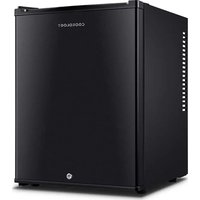
| Product Type | Freestanding Refrigerator |
| Brand | Cookology |
| Model | UCIB80BK |
| Total Volume | Approx. 80 L |
| Dimensions (H x W x D) | 85 x 55 x 55 cm |
| Weight | Approx. 25 kg |
| Power Supply | 220-240 V, 50 Hz |
| Energy Class | F (EU energy label) |
| Annual Energy Consumption | ~120 kWh/year |
| Defrost Type | Manual (freezer section) |
| Noise Level | ~40 dB |
| Climate Class | N-ST (16-38°C) |
| Refrigerant | R600a (Isobutane) |
| Number of Shelves | 3 glass shelves |
| Door Hinge | Right hinged, reversible |
| Lighting | LED interior light |
| Thermostat | Adjustable dial |
| Reversible Door | Yes, user-reversible |
| Includes | Ice tray, egg tray, bottle rack |
| Cleaning | Wipe with damp cloth, mild detergent |
| Eco Mode | Not specified |
Frequently Asked Questions - UCIB80BK Cookology
User questions about UCIB80BK Cookology
0 question about this device. Answer the ones you know or ask your own.
Ask a new question about this device
Download the instructions for your Refrigerator in PDF format for free! Find your manual UCIB80BK - Cookology and take your electronic device back in hand. On this page are published all the documents necessary for the use of your device. UCIB80BK by Cookology.
USER MANUAL UCIB80BK Cookology
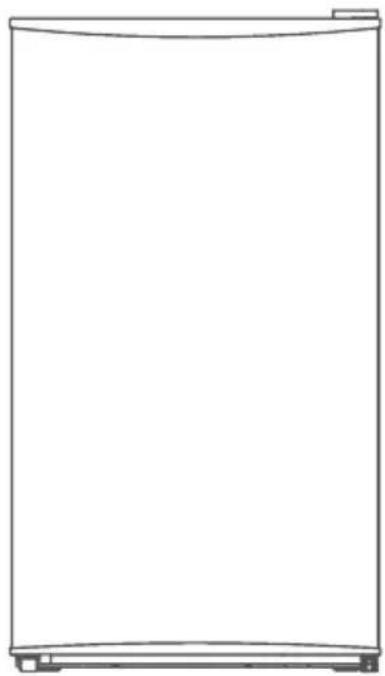
Under Counter Fridge Freezer
USER'S MANUAL
UCIB80BK
UCIB80WH
UCIB80SL
UK CA
C €
CONTENTS
1 Safety warnings
2 Proper use of the refrigerator
3 Structure and functions
4 Maintenance of refrigerator
5.1 Trouble shooting 14
1 Safety warnings
1.1 Warning
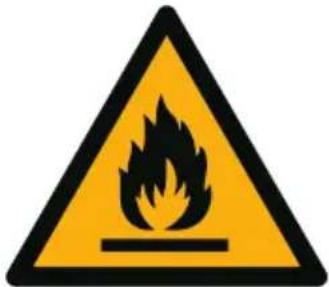
Warning: risk of fire / flammable materials
This appliance is intended to be used in household and similar applications such as staff kitchen areas in shops, offices and other working environments; farm houses and by clients in hotels, motels and other residential type environments; bed and breakfast type environments; catering and similar non-retail applications.
This appliance is not intended for use by persons (including children) with reduced physical, sensory or mental capabilities, or lack of experience and knowledge, unless they have been given supervision or instruction concerning use of the appliance by a person responsible for their safety.
Children should be supervised to ensure that they do not play with the appliance.
If the supply cord is damaged, it must be replaced by the manufacturer, its service agent or similarly qualified persons in order to avoid a hazard.
Do not store explosive substances such as aerosol cans with a flammable propellant in this appliance.
The appliance has to be unplugged after use and before carrying out user maintenance on the appliance.
Warning: Keep ventilation openings, in the appliance enclosure or in the built-in structure, clear of obstruction.
Warning: Do not use mechanical devices or other means to accelerate the defrosting process, other than those recommended by the manufacturer.
Warning: Do not damage the refrigerant circuit.
Warning: Do not use electrical appliances inside the food storage compartments of the appliance, unless they are of the type recommended by the manufacturer.
Warning: Please abandon the refrigerator according to local regulators for it use flammable blowing gas and refrigerant.
Warning: When positioning the appliance, ensure the supply cord is not trapped or damaged.
Warning: Do not locate multiple portable socket-outlets or portable power supplies at the rear of the appliance.
Do not use extension cords or ungrounded (two prong) adapters.
Danger: Risk of child entrapment. Before you throw away your old refrigerator or freezer:
- Take off the doors.
- Leave the shelves in place so that children may not easily climb inside.
The refrigerator must be disconnected from the electrical supply before attempting the installation of any accessory.
Refrigerant and cyclopentane foaming material used for the appliance are flammable. Therefore, when the appliance is scrapped, it shall be kept away from any fire source and be recovered by a special recovering company with corresponding qualification other than be disposed by combustion, so as to prevent damage to the environment or any other harm.
For doors or lids fitted with locks and keys, the keys must be kept out of the reach of children and not in the vicinity of the refrigerating appliance, to prevent children from being locked inside.
For EU standard: This appliance can be used by children aged from 8 years and above and persons with reduced physical sensory or mental capabilities or lack of experience and knowledge if they have been given supervision or instruction concerning use of the appliance in a safe way and understand the hazards involved. Children shall not play with the appliance. Cleaning and user maintenance shall not be made by children without supervision. Children aged from 3 to 8 years are allowed to load and unload refrigerating appliances.
To avoid contamination of food, please respect the following instructions:
- Opening the door for long periods can cause a significant increase of the temperature in the compartments of the appliance. Clean regularly surfaces that can come in contact with food and accessible drainage systems.
- Clean water tanks if they have not been used for 48 hours; flush the water system connected to a water supply if water has not been drawn for 5 days. (note 1)
- Store raw meat and fish in suitable containers in the refrigerator, so that it is not in contact with or drip onto other food.
- Two-star frozen-food compartments are suitable for storing pre-frozen food, storing or making ice-cream and making ice cubes. (note 2)
- One-, two- and three-star compartments are not suitable for the freezing of fresh food. (note 3)
- For appliances without a 4-star compartment: this refrigerating appliance is not suitable for freezing foodstuffs. (note 4)
- If the refrigerating appliance is left empty for long periods, switch off, defrost, clean, dry, and leave the door open to prevent mould developing within the appliance. Note 1,2,3,4: Please confirm whether it is applicable according to your product compartment type.
For a freestanding appliance: this refrigerating appliance is not intended to be used as a built-in appliance
Any replacement or maintenance of the LED lamps is intended to be made by the manufacturer, its service agent or similar qualified person. (See chapter 2.4 for lamp replacement)
Warning: To avoid a hazard due to instability of the appliance, it must be fixed in accordance with the instructions.
Warning: Connect to potable water supply only. (Suitable for ice making machine)
To Prevent A Child From Being Entrapped, Keep Out Of Reach Of Children And Not In The Vicinity Of Freezer (Or Refrigerator). (Suitable for products with locks)
1.2 Meaning of safety warning symbols
 | This is a prohibition symbol.Any incompliance with instructions marked with this symbol may result in damage to the product or endanger the personal safety of the user. |
| Prohibition symbol | |
 | This is a warning symbol.It is required to operate in strict observance of instructions marked with this symbol; or otherwise damage to the product or personal injury may be caused. |
| Warning symbol | |
 | This is a cautioning symbol.Instructions marked with this symbol require special caution.Insufficient caution may result in slight or moderate injury, or damage to the product. |
| Note symbol |
This manual contains lots of important safety information which shall be observed by the users.
1.3 Electricity related warnings
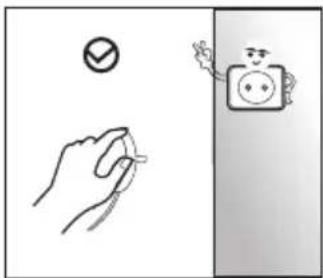
- Do not pull the power cord when pulling the power plug of the refrigerator. Please firmly grasp the plug and pull it out from the socket directly.
- To ensure safe use, do not damage the power cord or use the power cord when it is damaged or worn.
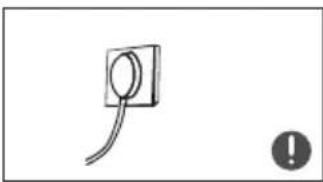
- Please use a dedicated power socket and the power socket shall not be shared with other electrical appliances. The power plug should be firmly contacted with the socket or else fires might be caused.
- Please ensure that the grounding electrode of the power socket is equipped with a reliable grounding line.
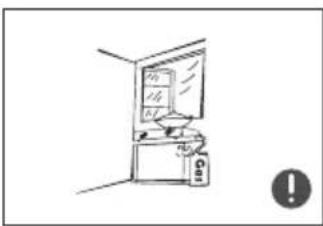
- Please turn off the valve of the leaking gas and then open the doors and windows in case of leakage of gas and other flammable gases. Do not unplug the refrigerator and other electrical appliances considering that spark may cause a fire.
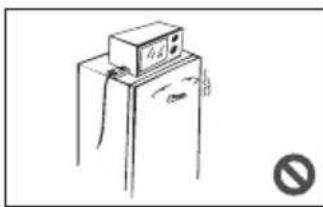
- Do not use electrical appliances on the top of the appliance, unless they are of the type recommended by the manufacturer.
1.4 Warnings for using
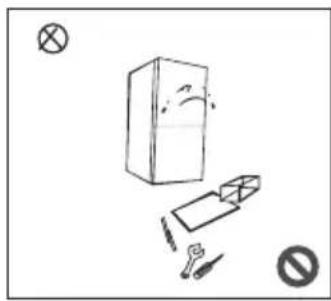
- Do not arbitrarily disassemble or reconstruct the refrigerator, nor damage the refrigerant circuit; maintenance of the appliance must be conducted by a specialist.
- A damaged power cord must be replaced by the manufacturer, its maintenance department, or related professionals in order to avoid danger.
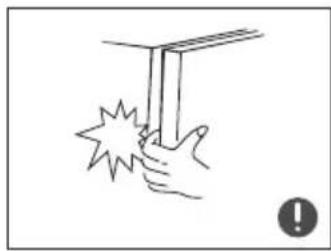
- The gaps between refrigerator doors and between doors and the refrigerator body are small. Be careful not to put your hands in these areas to prevent squeezing your fingers. Please close the refrigerator door gently to avoid falling articles.
- Do not pick up foods or containers with wet hands in the freezing chamber when the refrigerator is running, especially metal containers, to avoid frostbite.
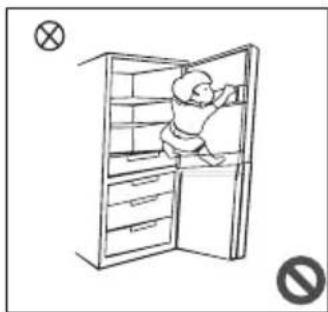
Do not allow any child to get into or climb the refrigerator; otherwise suffocation or falling injury of the child may be caused.
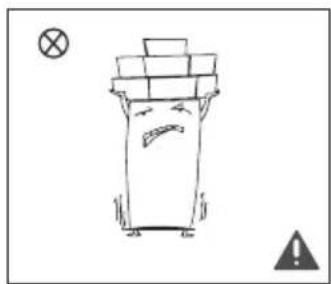
Do not place heavy objects on the top of the refrigerator, considering that objects may fall when closing or opening the door, and accidental injuries might be caused.
Please pull out the plug in case of power failure or cleaning. Do not connect the refrigerator to power supply within five minutes to prevent damage to the compressor due to successive starts.
1.5 Warnings for placement
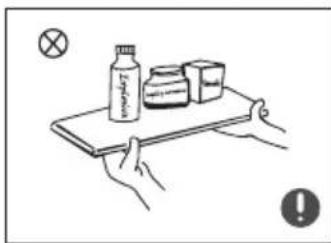
- Do not put flammable, explosive, volatile, and highly corrosive items in the refrigerator to prevent damage to the product or fire accidents.
- Do not place flammable items near the refrigerator to avoid fires.
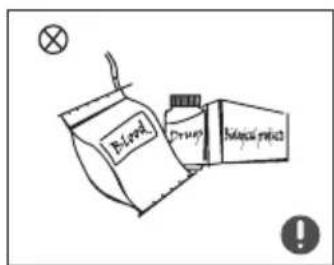
The refrigerator is intended for household use, such as storage of foods; it shall not be used for other purposes, such as storage of blood, drugs, or biological products, etc.
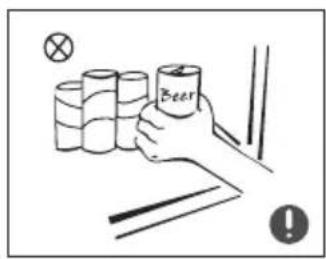
Do not store beer, beverages, or other fluids contained in bottles or enclosed containers in the freezing chamber of the refrigerator; otherwise, the bottles or enclosed containers may crack due to freezing and cause damage.
1.6 Warnings for energy
1) Refrigerating appliances might not operate consistently (possibility of defrosting of contents or temperature becoming too warm in the frozen food compartment) when sited for an extended period of time below the cold end of the range of temperatures for which the refrigerating appliance is designed. 2) Effervescent drinks should not be stored in food freezer compartments or cabinets, or in low-temperature compartments or cabinets, and some products such as water ices should not be consumed too cold. 3) The need to not exceed the storage time(s) recommended by the food manufacturers for any kind of food, and particularly for commercially quick-frozen food in food-freezer and frozen-food storage compartments or cabinets. 4) The precautions necessary to prevent an undue rise in the temperature of the frozen food while defrosting the refrigerating appliance, such as wrapping the frozen food in several layers of newspaper. 5) A rise in temperature of the frozen food during manual defrosting, maintenance, or cleaning could shorten the storage life.
1.7 Warnings for disposal
Refrigerant and cyclopentane foaming material used for the refrigerator are flammable. Therefore, when the refrigerator is scrapped, it shall be kept away from any fire source and be recovered by a special recovering company with corresponding qualification other than be disposed by combustion, so as to prevent damage to the environment or any other harm.
When the refrigerator is scrapped, disassemble the doors, and remove gasket of door and shelves; put the doors and shelves in a proper place, so as to prevent trapping of any child.
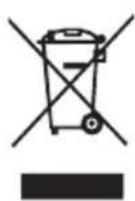
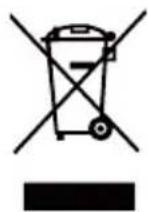
Correct Disposal of this product: This marking indicates that this product should not be disposed with other household wastes throughout the EU. To prevent possible harm to the environment or human health from uncontrolled waste disposal, recycle it responsibly to promote the sustainable reuse of material resources. To return your used device, please use the return and collection systems or contact the retailer where the product was purchased. They can take this product for environmental safe recycling.
2 Proper use of the refrigerator
2.1 Placement
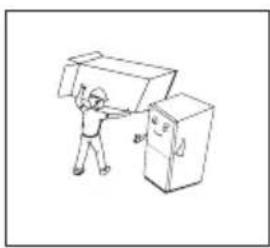
- Before use, remove all packing materials, including bottom cushions, foam pads and tapes inside of the refrigerator; tear off the protective film on the doors and the refrigerator body.
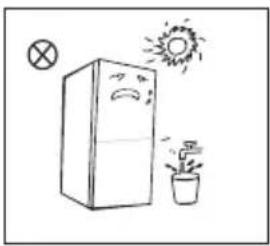
- Keep away from heat and avoid direct sunlight. Do not place the freezer in moist or watery places to prevent rust or reduction of insulating effect.
- Do not spray or wash the refrigerator; do not put the refrigerator in moist places easy to be splashed with water so as not to affect the electrical insulation properties of the refrigerator.
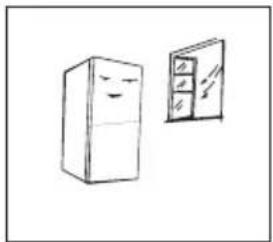
- The refrigerator is placed in a well-ventilated indoor place; the ground shall be flat, and sturdy (rotate left or right to adjust the wheel for levelling if unstable).
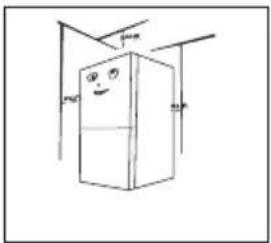
- The top space of the refrigerator shall be greater than 30cm, and The refrigerator should be placed against a wall with a free distance more than10cm to facilitate heat dissipation.
! Precautions before installation:
Information in the Instruction Manual is only for reference. The physical product may differ. Before installation and adjusting of accessories, it shall be ensured that the refrigerator is disconnected from power.
Precautions shall be taken to prevent fall of the handle from causing any personal injury.
2.2 Levelling feet
Schematic diagram of the levelling feet
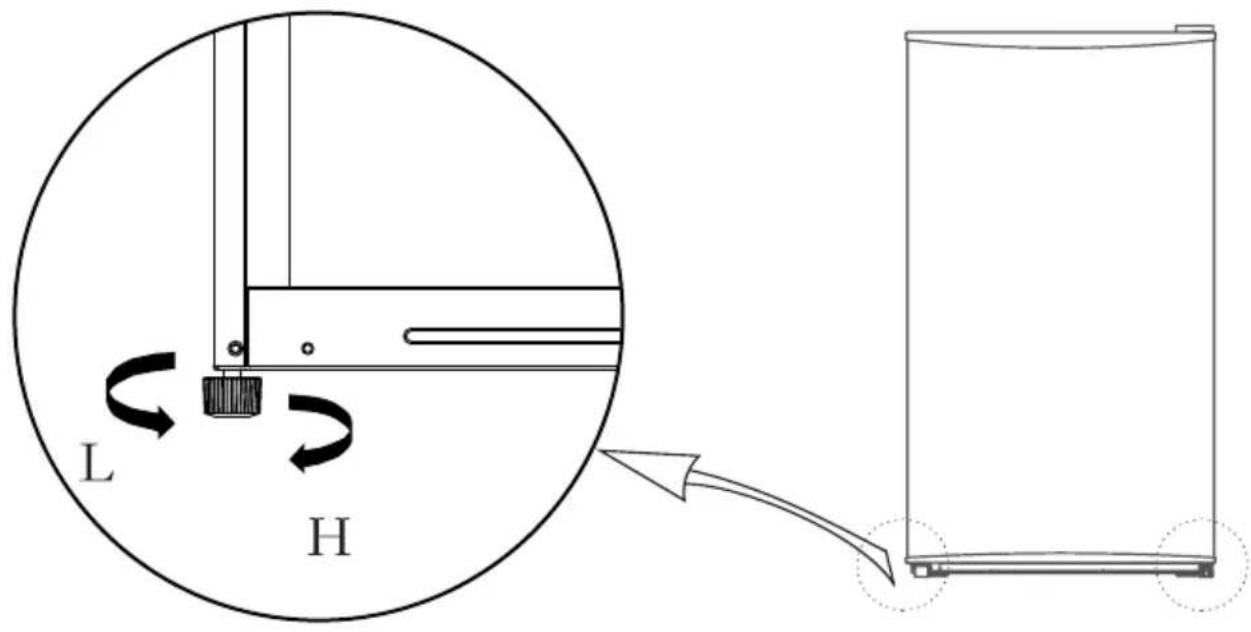
(The picture above is only for reference. The actual configuration will depend on the physical product or statement by the distributor)
Adjusting procedures:
a. Turn the feet clockwise to raise the refrigerator; b. Turn the feet counterclockwise to lower the refrigerator; c. Adjust the right and left feet based on the procedures above to a horizontal level.
2.3 Door Right-Left Change
| List of tools to be provided by the user | |||
| Cross screwdriver | Putty knife thin-blade screwdriver | ||
| 5/16" socket spanner | Masking tape | ||
| Parts to be used for door reverse | |||
| Number | Name | Number | Note |
| 1 | Upper hinge | 1 | Pre-installed on the refrigerator, still used when door is reversed |
| 2 | Hinge cover | 1 | Pre-installed on the refrigerator, still used when door is reversed |
| 3 | Tapping locking screw | 5 | Pre-installed on the refrigerator, still used when door is reversed |
| 4 | Hole cap | 1 | Pre-installed on door end caps, still used when door is reversed |
| 5 | Pin | 2 | Pre-installed on the refrigerator, still used when door is reversed |
| 6 | Lower hinge assembly | 1 | Pre-installed on the refrigerator, still used when door is reversed |
| 7 | Levelling foot | 1 | Pre-installed on the refrigerator, still used when door is reversed |
| 8 | Stopper | 1 | Pre-installed on door end caps, still used when door is reversed |
| 9 | Tapping screw | 1 | Pre-installed on door end caps, still used when door is reversed |
1) Power off the refrigerator, and remove all objects from the door trays. 2) Dismantle the hinge cover, screws and upper hinge, and remove the hole cap and pins from the other side.
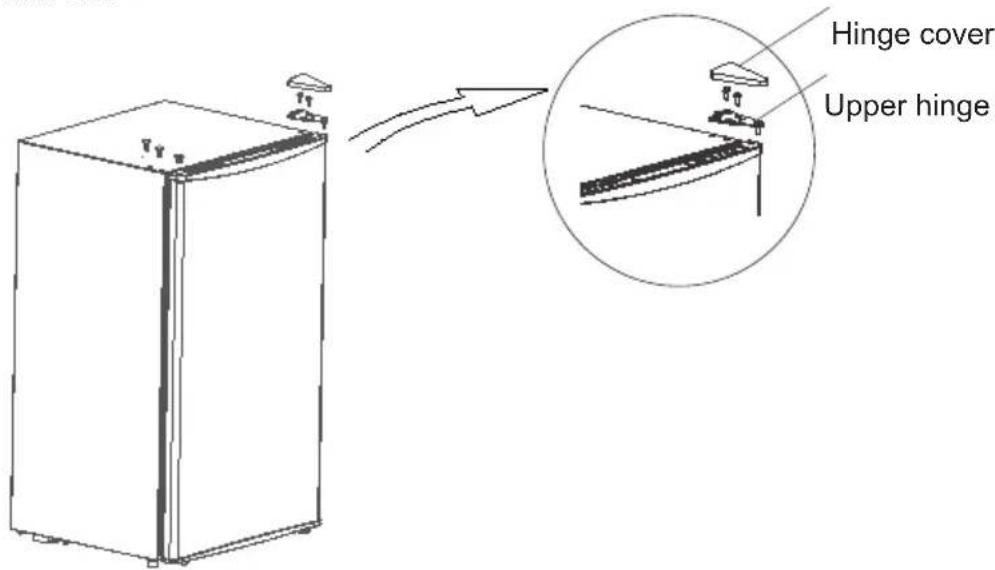
3) Remove the door first, then remove the lower hinge assembly and levelling foot, interchange the positions of the lower hinge assembly and levelling foot and install them.
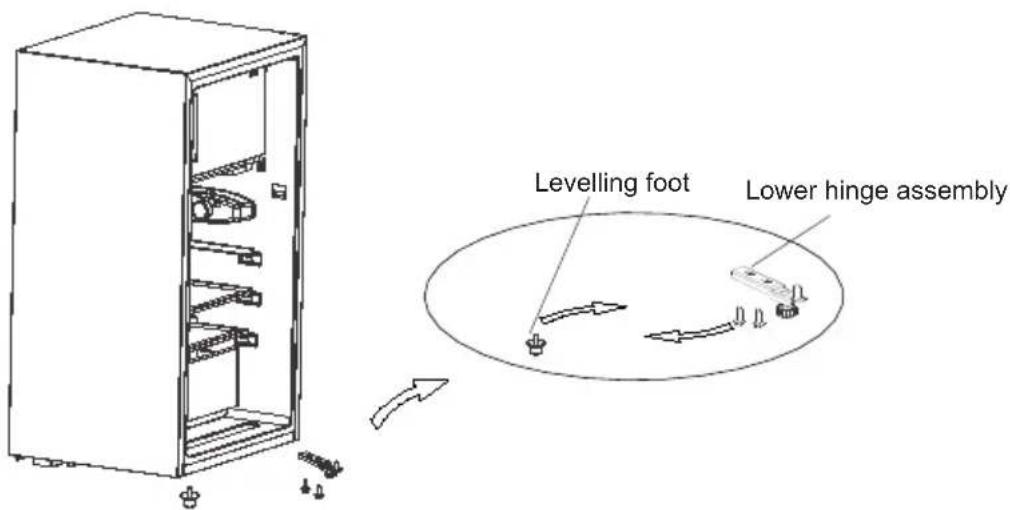
(The picture above is only for reference. The actual configuration will depend on the physical product or statement by the distributor)
4) Dismantle the stopper under the door stopper and assemble the
on the other side
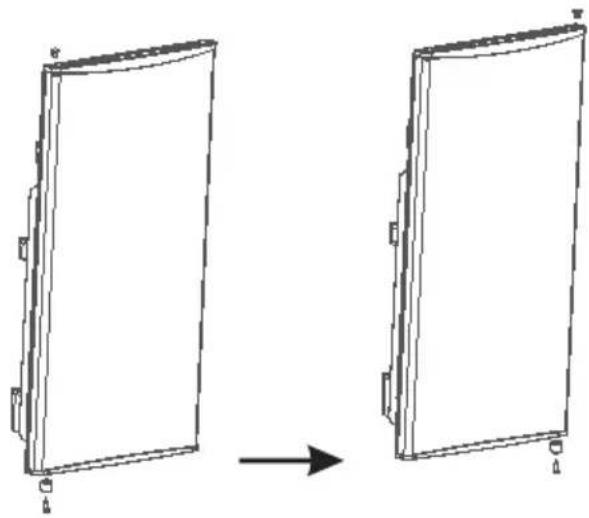
5) Install the door on the lower hinge assembly, and then install the upper hinge, hinge cover, pins and hole cap in sequence.
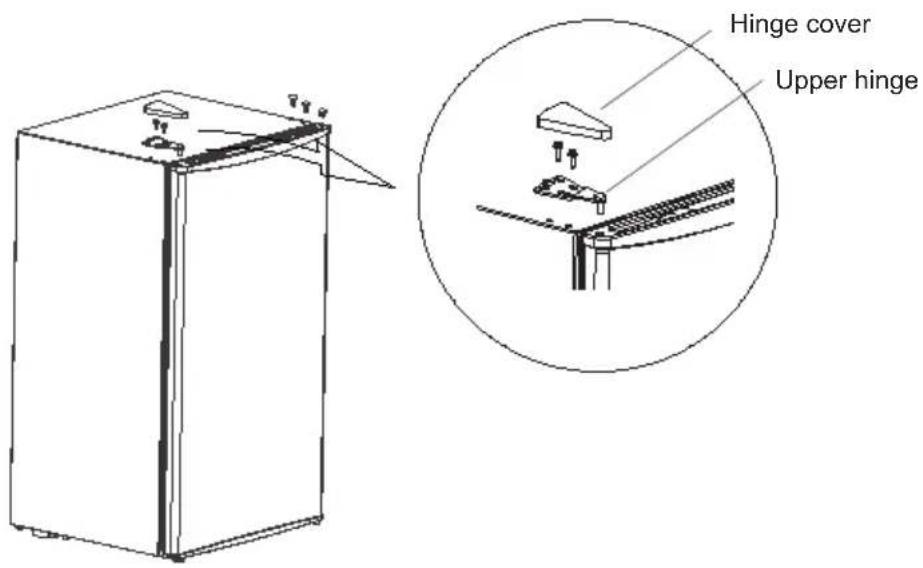
(The picture above is only for reference. The actual configuration will depend on the physical product or statement by the distributor)
2.4 Changing the Light (optional)
Any replacement or maintenance of the LED lamps is intended to be made by the manufacturer, its service agent or similar qualified person. Replacement must first cut off the power supply.
(Above is only for reference. The actual configuration will depend on the physical product or statement by the distributor)
2.5 Starting to use
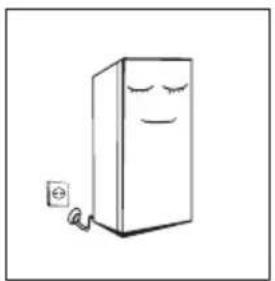
- Before initial start, keep the refrigerator still for half an hour before connecting it to power supply.
- Before putting any fresh or frozen foods, the refrigerator shall have run for 2-3 hours, or for above 4 hours in summer when the ambient temperature is high.
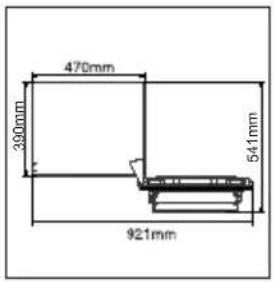
- Spare enough space for convenient opening of the doors and drawers or statement by the distributor.
2.6 Energy saving tips
- The appliance should be located in the coolest area of the room, away from heat producing appliances or heating ducts, and out of the direct sunlight.
- Let hot foods cool to room temperature before placing in the appliance. Overloading the appliance forces the compressor to run longer. Foods that freeze too slowly may lose quality, or spoil.
- Be sure to wrap foods properly, and wipe containers dry before placing them in the appliance. This cuts down on frost build-up inside the appliance.
- Appliance storage bin should not be lined with aluminum foil, wax paper, or paper toweling. Liners interfere with cold air circulation, making the appliance less efficient.
- Organize and label food to reduce door openings and extended searches. Remove as many items as needed at one time, and close the door as soon as possible.
3 Structure and functions
3.1 Key components
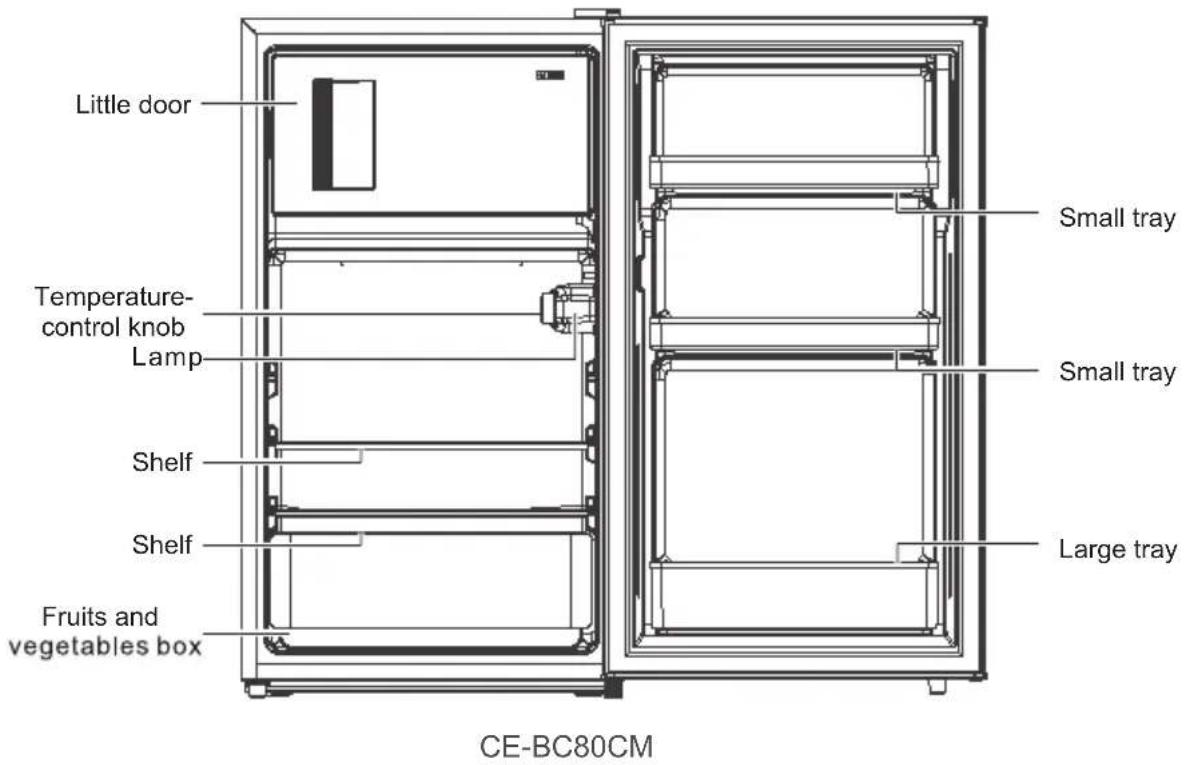

( The picture above is only for reference. The actual configuration will depend on the physical product or statement by the distributor )
Refrigerating chamber
- The Refrigerating Chamber is suitable for storage of a variety of fruits, vegetables, beverages and other food consume in the short term. Cooking foods shall not be put in the refrigerating chamber until cooled to room temperature. Suggested storage time 3 days to 5 days. It is the most energy efficient to place food in the position shown in the picture above.
- Foods are recommended to be sealed up before putting into the refrigerator.
- It is recommended to put bottled or canned drinks and other items on the door;
Note: Storing too much food during operation after the initial connection to power may adversely affect the freezing effect of the refrigerator. Foods stored shall not block the air outlet; otherwise, the freezing effect will also be adversely affected.
3.2 Functions
(1)
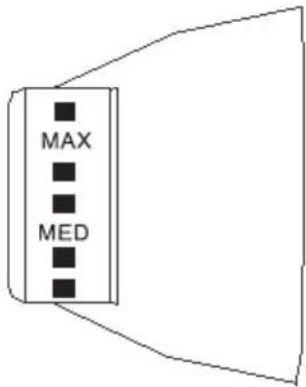

(The picture above is only for reference. The actual configuration will depend on the physical product or statement by the distributor)
- Turn the temperature control knob to MAX, the internal temperature of the refrigerator becomes lower.
- Turn the temperature control knob to MIN, the internal temperature of the refrigerator becomes higher.
- The letter on the knob only represents the level, but does not mean the specific temperature. The "OFF" means stop working.
- Recommended gear: "MED".
- If there is no special need, please avoid setting the gear at MAX all the time to prevent the tank bladder from frosting.
(2)
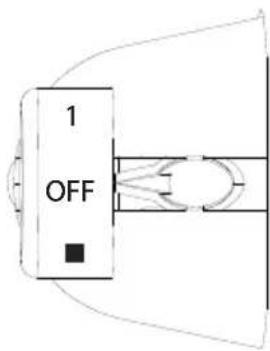
(The picture above is only for reference. The actual configuration will depend on the physical product or statement by the distributor)
The figures do not mean specific set temperature, but temperature level.
"1" means the warmest setting.
"4" means the coldest setting.
The higher the figure, the lower the actual temperature inside the refrigerator.
"OFF" means stop running.
• Recommended gear: 3 gears - Note: It is recommended to adjust and use within the range of 1–4 gears. Exceeding this range may cause the refrigerator temperature to be too low.
4 Maintenance of refrigerator
4.1 Cleaning
• Dust behind the refrigerator and on the ground should be cleaned promptly to improve cooling efficiency and save energy. - Check the door gasket regularly to ensure there is no debris. Clean the door gasket with a soft cloth dampened with soapy water or diluted detergent. - The interior of the refrigerator should be cleaned regularly to avoid odors.
- Turn off the power before cleaning the interior, and remove all food, drinks, shelves, drawers, etc.
- Use a soft cloth or sponge to clean the inside of the refrigerator with two tablespoons of baking soda and a quart of warm water. Then rinse with water and wipe dry. After cleaning, open the door and let it dry naturally before turning the power back on.
- For areas that are difficult to clean in the refrigerator (such as narrow gaps or corners), it is recommended to wipe them regularly with a soft rag, soft brush, etc., and when necessary, use auxiliary tools (such as thin sticks) to ensure no contaminants or bacterial accumulation in these areas.
- Do not use soap, detergent, scouring powder, spray cleaners, etc., as these may cause odors inside the refrigerator or contaminate food.
- Clean the bottle racks, shelves, and drawers with a soft cloth dampened with soapy water or diluted detergent. Dry with a soft cloth or let them dry naturally.
- Wipe the outer surface of the refrigerator with a soft cloth dampened with soapy water, detergent, etc., and then wipe dry.
- Do not use hard brushes, steel wool, wire brushes, abrasives (such as toothpaste), organic solvents (such as alcohol, acetone, banana oil, etc.), boiling water, or acidic or alkaline items, as these may damage the surface and interior of the refrigerator. Boiling water and organic solvents such as benzene may deform or damage plastic parts.
- Do not rinse directly with water or other liquids during cleaning to avoid short circuits or affect electrical insulation after immersion.
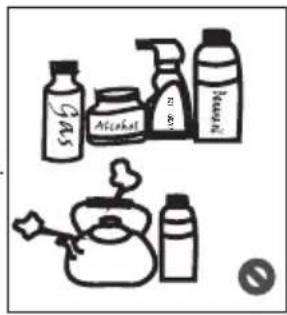

Please unplug the refrigerator for defrosting and cleaning.
4.2 Defrost
• Power off the refrigerator. Remove the food from the refrigerator and place it properly to prevent it from melting. Clear the drain pipe (use soft materials to prevent damage to the liner). Prepare water containers for defrosting. (Pay attention to clean the compressor compartment to avoid water overflowing to the ground.) You can use natural temperature for natural defrost, or use an ice shovel to eliminate frost (use a plastic or wooden ice shovel to avoid damaging the liner or pipes). You can also use an appropriate amount of hot water to speed up defrosting, and dry the water with a dry towel after defrosting. After defrosting, put the food back in the cabinet and power on the refrigerator.
4.3 Stop using
- Power failure: In case of power failure, even in summer, foods inside the appliance can be kept for several hours. During the power failure, reduce the number of door openings and do not put fresh food into the appliance.
- Long-time nonuse: The appliance should be unplugged and then cleaned. Leave the doors open to prevent odor.
- Moving: Before moving the refrigerator, take all objects out, fix the glass partitions, vegetable holder, freezing chamber drawers, etc. with tape, and tighten the leveling feet. Close the doors and seal them with tape. During moving, the appliance should not be laid upside down or horizontally, or be vibrated. The inclination during movement should be no more than 45 degrees.

The appliance should run continuously once started. Generally, the operation of the appliance should not be interrupted; otherwise, the service life may be impaired.
5. Troubleshooting
5.1 You may try to solve the following simple problems by yourself. If they cannot be solved, please contact the after-sales department.
| Not work | Check whether the appliance is connected to power or whether the plug is in well contactCheck whether the voltage is too lowCheck whether there is a power failure or partial circuits have tripped |
| Odor | Odorous foods shall be tightly wrappedCheck whether there is any rotten foodClean the inside of the refrigerator |
| Long-time operation of the compressor | Long operation of the refrigerator is normal in summerwhen the ambient temperature is highIt is not suggestible having too much food in the appliance at the same timeFood shall get cool before being put into the applianceThe doors are opened too frequently |
| Light not work | Check whether the refrigerator is connected to power supply and whether the illuminating light is damagedHave the light replaced by a specialist |
| Doors cannot be properly closed | The door is stuck by food packages Too much food is placedThe refrigerator is tilted |
| Loud noise | Check whether the floor is level and whether the refrigerator is placed stablyCheck whether accessories are placed at proper locations |
| Gasket gap | Remove foreign matters on the door sealHeat the door seal and then cool it for restoration(or blow it with an electrical drier or use a hot towel for heating) |
| Water tray overflows | There is too much food in the chamber or food stored contains too much water, resulting in heavy defrostingThe doors are not closed properly, resulting in frosting due to entry of air and increased water due to defrosting |
| Over heat on sidewall | Heat dissipation of the built-in condenser via the housing, which is normalWhen housing becomes hot due to high ambient temperature, storage of too much food or shutdown of the compressor is shut down, provide sound ventilation to facilitate heat dissipation |
| Surface condensation | Condensation on the exterior surface and door seals of the refrigerator is normal when the ambient humidity is too high. Just wipe the condensate with a clean towel. |
| Noise | Buzz: The compressor may produce buzzes during operation, and the buzzes are loud particularly upon start or stop. This is normal.Creak: Refrigerant flowing inside of the appliance may produce creak, which is normal. |
Table 1 Climate classes
| Class Symbol | Ambient temperature range °C | |
| Extended temperate | SN | + 10 to + 32 |
| Temperate | N | + 16 to + 32 |
| Subtropical | ST | + 16 to + 38 |
| Tropical | T | + 16 to + 43 |
Extended temperate: 'This refrigerating appliance is intended to be used at ambient temperatures ranging from 10 °C to 32 °C.'
Temperate: 'This refrigerating appliance is intended to be used at ambient temperatures ranging from 16 °C to 32 °C.'
Subtropical: 'This refrigerating appliance is intended to be used at ambient temperatures ranging from 16 °C to 38 °C.'
Tropical: 'This refrigerating appliance is intended to be used at ambient temperatures ranging from 16 °C to 43 °C.'
If the wine cooler operates outside the climate class (ambient temperature range) for which it is rated, it may not be able to maintain satisfactory internal temperatures.
Please register the warranty for this product on www.Cookology.com
- CONTENTS
- SAFETY WARNINGS
- PROPER USE OF THE REFRIGERATOR
- STRUCTURE AND FUNCTIONS
- MAINTENANCE OF REFRIGERATOR
- WARNING
- WARNING: RISK OF FIRE / FLAMMABLE MATERIALS
- MEANING OF SAFETY WARNING SYMBOLS
- ELECTRICITY RELATED WARNINGS
- WARNINGS FOR USING
- WARNINGS FOR PLACEMENT
- WARNINGS FOR ENERGY
- WARNINGS FOR DISPOSAL
- PLACEMENT
- PRECAUTIONS BEFORE INSTALLATION
- LEVELLING FEET
- ADJUSTING PROCEDURES
- DOOR RIGHT-LEFT CHANGE
- CHANGING THE LIGHT (OPTIONAL)
- STARTING TO USE
- ENERGY SAVING TIPS
- KEY COMPONENTS
- REFRIGERATING CHAMBER
- FUNCTIONS
- (THE PICTURE ABOVE IS ONLY FOR REFERENCE. THE ACTUAL CONFIGURATION WILL DEPEND ON THE PHYSICAL PRODUCT OR STATEMENT BY THE DISTRIBUTOR)
- CLEANING
- DEFROST
- STOP USING
- TROUBLESHOOTING
Brand : Cookology
Model : UCIB80BK
Category : Refrigerator