
D7RW - Cooker Fotile - Free user manual and instructions
Find the device manual for free D7RW Fotile in PDF.


User questions about D7RW Fotile
0 question about this device. Answer the ones you know or ask your own.
Ask a new question about this device
Download the instructions for your Cooker in PDF format for free! Find your manual D7RW - Fotile and take your electronic device back in hand. On this page are published all the documents necessary for the use of your device. D7RW by Fotile.
USER MANUAL D7RW Fotile
Please read this instruction manual carefully before using
Electric Hob
D7RW
CONTENTS
PACKING LIST 1
WARNING AND SAFETY INSTRUCTIONS 2
CARING FOR THE ENVIRONMENT 4
BEFORE USING FOR THE FIRST TIME 5
CLEARING AND CARE 12
PROBLEM SOLVING GUIDE 13
SPECIFICATION 13
COMPONENTS DIGARAM 14
PACKING LIST
Thanks for purchasing our product! Please read this handbook before using, and you will know the correct operation rules so that you can enjoy a completely new cooking.
Please pay attention to the amount of accessories, and make sure there is no scarcity or shatters.
-
Please contact the dealer when our company or the dealer is responsible for the above carelessness.
-
Please contact the nearest service center if the user should bear the responsibility.
| Integral Machine | one |
| User's Handbook | one |
| Warranty Card | one |
| Rack | one |
WARNING AND SAFETY INSTRUCTIONS

-
To avoid the risk of accidents and damage the appliance, please read these instructions carefully before using it for the first time. They contain important notes on its installation, safety, use and care.
-
This appliance can be used by children aged from 8 years and above and persons with reduced physical, sensory or mental capabilities or lack of experience and knowledge if they have been given supervision or instruction concerning use of the appliance in a safe way and understand the hazards involved. Children shall not play with the appliance. Cleaning and user maintenance shall not be made by children without supervision.
-
Keep these instructions in a safe place for reference, and pass them on to any future user.
WARNING: The appliance and its accessible parts become hot during use.
Care should be taken to avoid touching heating elements.
Children less than 8 years of age shall be kept away unless continuously supervised.
WARNING: Unattended cooking on a hob with fat or oil can be dangerous and may result in fire.
NEVER try to extinguish a fire with water, but switch off the appliance and then cover flame e.g. with a lid or a fire blanket.
WARNING: Danger of fire: do not store items on the cooking surfaces.
WARNING: If the surface is cracked, switch off the appliance to avoid the possibility of electric shock.
WARNING: Use only hob guards designed by the manufacturer of the cooking appliance or indicated by the manufacturer of the appliance in the instructions for use as suitable or hob guards incorporated in the appliance. The use of inappropriate guards can cause accidents.
■ Technical safety
-
The appliance must be installed and connected by a suitably qualified and competent person in strict accordance with current local and national safety regulations. The manufacturer cannot be pay for the damage caused by incorrect installation or connection.
-
The electrical safety of this appliance can only be guaranteed when continuity is complete between it and an effective earthing system which complies with current local and national safety regulations. It is most important that this basic safety requirement is present and regularly tested, and where there is any doubt, the household wiring system should be inspected by a qualified electrician. The manufacturer cannot undertake the consequences of an inadequate earthing system (e.g. electric shock).
-
Do not connect the appliance to the mains electricity supply by an extension lead. Extension leads do not guarantee the required safety of the appliance (e.g. danger of overheating).
-
Never open the casing of the appliance. Tampering with electrical connections or components is highly dangerous to the user and can cause operational faults.
-
If the supply cord is damaged, it must be replaced by the manufacturer, its service agent or similarly qualified persons in order to avoid a hazard.
-
The connection must carried out with full-disconnection switch, of an adequate size for the current drawn and with minimum aperture between contracts of 3mm for disconnection in the case of emergency, cleaning or bulb exchange. Under no circumstances must the earth wire pass through this switch.
-
In order to avoid a hazard due to inadvertent resetting of the thermal cut-out, this appliance must not be supplied through an external switching device, such as a timer, or connected to circuit that is regularly switched on and off by the utility.
Correct use
-
For safety reasons this appliance must only be operated after it has been built in. This is necessary to ensure that all electrical components are shielded.
-
This appliance is intended for household use only and is not to be used for commercial purposes.
3.Do not leave the appliance unattended whilst it is in use. Pans that have boiled dry can cause damage to the ceramic surface for which the manufacturer cannot be held liable. Boiling fat or oil could ignite and cause a fire.
-
Use this appliance for the preparation of food only. Any other use are at the owner's risk and could be dangerous. The manufacturer cannot be held liable for damage resulting from incorrect or improper use or operation.
-
Do not use the appliance to heat up the room. Due to the high temperatures radiated, objects near the appliance could catch fire. The life of the appliance could also be reduced.
-
During prolonged or intensive use of the appliance, the frame gets hot and the control panel can also become quite hot. This is quite normal and does not indicate a fault.
-
The appliance is not intended to be operated by means of an external timer or separate remote-control system.
-
Do not operate the hob through outer timer or independent remote control.
■ Safety with children
-
Use the safety lock to prevent children operating the appliance or altering the settings.
-
The appliance is only intended for use by adults who have read these instructions.
-
This appliance is not a toy! To avoid the risk of injury, keep children away, and do not allow them to play with it or use the controls. They will not understand the potential dangers posed by it. They should be supervised whenever you are working in the kitchen.
-
Older children may use the appliance only when its operation has been clearly explained to them and they are able to use it safely, recognising the dangers of misuse.
-
The appliance gets hot when in use and remains hot for quite a while after being switched off. To safeguard against burning, keep children well away from the appliance at all times.
-
Do not store anything which might arouse a child's interest in storage areas above or next to the appliance. Otherwise they could be tempted into climbing onto the appliance with the risk of burning themselves.
-
Keep all pans out of reach of children. Turn pan handles inwards away from the edge of the hob to avoid the danger of burning or scalding. Special hob guards are available from good retail outlets.
-
Packaging, e.g. cling film, polystyrene and plastic wrappings, must be kept out of the reach of babies and young children to avoid the danger of suffocation. Dispose of or recycle all packaging safely as soon as possible.
■ Protecting the appliance from damage
-
Do not use pots and pans on the ceramic hob with bases with pronounced edges or ridges, e.g. cast iron pans. These could scratch or scour the hob surface permanently.
-
Never heat an empty pan unless the manufacturer of the pan expressly states that you can do so. This could damage the appliance.
-
Keep the hob clean. Grains of salt, sugar and sand (e.g. from cleaning vegetables) can cause scratches.
-
Do not allow either solid or liquid sugar, or pieces of plastic or aluminium foil to get onto the cooking zones when they are hot. If this occurs, switch off the appliance, and carefully scrape off all the sugar, plastic or aluminium residues from the hob whilst they are still hot, using a shielded scaper blade. Take care not to burn yourself.
-
If residues are allowed to cool before being removed, the ceramic surface will be susceptible to pitting or even cracking. Once the residues have been removed, allow the cooking zone to cool down, and then clean with a suitable proprietary ceramic hob cleaner. To prevent the risk of spillages etc: burning on, remove any soiling as quickly as possible and ensure that pan bases are clean, dry and free of grease.
-
Do not drop anything on the ceramic surface. Even a light object could cause damage in certain circumstances.
-
Do not use a steam cleaner to clean this appliance. The steam could reach the electrical components and cause a short circuit. Pressurised steam could also cause permanent damage to the surface and to other components, for which the manufacturer cannot accept liability.
-
Never place hot pans on the area around the controls. This could damage the electronic unit underneath.
■ Appliance faults
-
In the event of damage or a defect, switch off the appliance immediately. Disconnect completely from the electricity supply. Contact the FOTILE Service center. Do not reconnect the appliance to the mains electricity supply until it has been repaired.
-
If there is any damage to the ceramic surface, the appliance must be disconnected from the mains electricity supply immediately, and not used until it has been repaired. Otherwise, there will be a danger of electric shock.
-
Repairs may only be carried out by a suitably qualified and competent person in accordance with local and national safety regulations. Repairs and other work by unqualified persons could be very dangerous and could damage the appliance. The manufacturer cannot be held liable for unauthorised work.
-
While the appliance is under guarantee, repairs should only be undertaken by a service technician authorised by the manufacturer. Otherwise the guarantee will be invalidated.
■ Futher safety notes
- When using an electric socket near the appliance, care should be taken that the cable of the electrical appliance does not come into contacting with the hot appliance. The insulation on the cable could become damaged, giving rise to an electric shock hazard.
- Always ensure that food is sufficiently cooked or reheated. Many factors will affect the overall cooking time, including the size and amount of the food and its temperature. Some food may contain micro-organisms which are only destroyed by thorough cooking at a sufficiently high temperature for long enough. Therefore, when cooking or reheating food such as poultry, it is particularly important that the food is completely cooked through. If in doubt, select a longer cooking or reheating time.
- Do not use plastic or aluminium foil containers. These melt at high temperatures, and could damage the ceramic surface and catch fire.
- If a domestic animal gets onto the hob, a sensor could be touched and a cooking zone switched on. Keep pets away from the hob at all times.
- Spray canisters, aerosols and other inflammable substances must not be stored in a drawer under the hob. Cutlery inserts must be heat-resistant.
- If the surface is crack, switch off the appliance to avoid the possibility of electric shock.
- Danger of fire: do not store any items on the hob surface. Unattend cooking on the hob with fat or oil can be dangerous and may result in fire. Never try to extinguish a fire with water, but switch off the appliance and then cover the flame e.g. with a lid or a fire blanket.
CARING FOR THE ENVIRONMENT
■ Disposal of the packing material
- The transport and protective packing has been selected from materials which are environmentally friendly for disposal, and can normally be recycled.
- Ensure that any plastic wrappings, bags, etc. are disposed of safely and kept out of the reach of babies and young children. Danger of suffocation!
- Rather than just throwing these materials away, please ensure they are offered for recycling.
■ Disposal of your old appliance
-
Electrical and electronic appliances often contain materials which, if handled or disposed of incorrectly, could be potentially hazardous to human health and to the environment. They are, however, essential for the correct functioning of your appliance.
-
Please do not therefore dispose of it with your household waste.
- Please dispose of it at your local community waste collection/recycling centre, and ensure that it presents no danger to children while being stored for disposal.
- It should be disconnected from the mains electricity supply by a competent person.

BEFORE USING FOR THE FIRST TIME
Please stick the extra data plate for the appliance supplied with this document in the space provided in the "After sales service" section of this booklet.
■ Cleaning for the first time
-
Remove any protective wrapping and stickers.
-
Before using for the first time, clean the appliance with a damp cloth only and then wipe dry.

Do not use washing up liquid to clean the ceramic surface as it can leave a blue sheen which may be difficult to remove.
- On hobs with bevelled glass edges, a small gap may be visible between the hob and the worktop during the first few days after installation. This gap will reduce with time as the appliance is used and will not affect the electrical safety of your appliance.
- Metal components have a protective coating which may give off a slight smell when heated up at the first time.
- The smell and any fumes given off do not mean that the appliance is defective or has been wrongly installed, and they are not harmful to health.
Double circle cooking zones have two heating elements. Each cooking zone has overheating protection (a temperature limiter), which stops the ceramic surface from becoming too hot. When a power level is selected, the heat switches on and the element can be seen through the ceramic surface. The temperature of the cooking zones depends on the power level selected, and is electronically regulated. This controls the "timing" of a cooking zone, switching the element on and off.
Double circle zone

- Overheating protection
- Outer heating element
- Inner heating element
INSTALLATION
■ Installation Requirements
- This hob should be kept away at least 150mm from the combustible and more than 100mm from the incombustible material.
- If parts of the base of the hob can still be touched after installation, an intermediate floor should be fitted. There should be a gap of at least 25 mm between the rearmost point of the hob and the mains connection.

Separate electrical outlet should be installed on the cabinet.
■ Safety instructions for installation
Fit the wall units and extractor hood before fitting the hob to avoid damaging the appliance.
- The veneer or laminate coatings of worktops (or adjacent kitchen units) must be treated with 100°C heat-resistant adhesive which will not dissolve or distort. Any backmoulds must be of heat-resistant material.
- This equipment may only be used in mobile installations such as ships, caravans, aircraft etc. if a risk assessment has been carried out by a suitably qualified engineer.
- The hob may not be built in over a fridge, fridge-freezer, freezer, dishwasher, washing machine or tumble dryer.
- After installing the hob, ensure that the connection cable cannot come into contact with the underside of the appliance. Make sure that there is no mechanical obstruction, such as a drawer, which could damage it.
- According to the table-board cutting template, make a hole in the cooking table-board, then fit the hob into the hole. And make 4 air inlet holes (R25) on the cabinet (see the fig.1)

Do not use any sealant unless expressly instructed to do so. The sealing strip under the edge of the top part of the hob provides a sufficient seal for the worktop.
Electrical connection
The installer must check that
- The voltage and cycles of the mains supply correspond to that indicated in the rating plate of the appliance.
- The electrical installation can stand the maximum power indicated in the rating plate of the appliances.
- The electrical connection has adequate earthing in accordance with regulations in force.
- The connection must be carried out with a full-disconnection switch, of an adequate size for the current drawn and with a minimum aperture between contracts of 3mm for disconnection in the case of emergency, cleaning or bulb exchange. Under no circumstances must the earth wire pass through this switch.
After making the electrical connection, verify the correct working of all the electrical parts of the hob.
The manufacture is not liable for any direct or indirect damage caused by faulty installation operations are carried out by unqualified personnel or not complying with the local and general regulation in force.
■ Installation Diagram

Single set installation
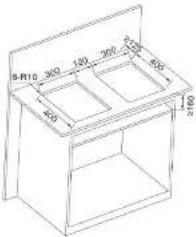
Two sets installation
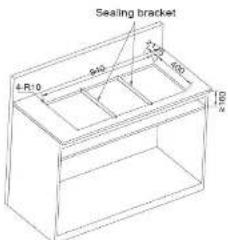
Three sets installation

Schematic Diagram of Installation Position of Sealing Bracket

Attention: The bottom of built-in table must have plate, and it has to keep at least 25mm away form the hob bottom.
OPERATION
Settings
| Cooking process | Settings* |
| standard factory settings | |
| Melting butter, chocolate etc. Dissolving gelatine Preparing yoghurt | 1 - 2 |
| Thickening sauces containing egg yolk and butterWarming small quantities of food/liquidKeeping warm food which sticks easilyCooking rice | 1 - 3 |
| Warming liquid and semi-solid foodsThickening sauces, e.g. HollandaiseMaking portridgePreparing omelettes, lightly fried eggsSteaming fruit | 2 - 4 |
| Defrosting deep frozen foodSteaming vegetables, fishCooking dumplings, potatoes, pulsesCooking broths, pulse soups | 3 - 5 |
| Bringing to the boil and continued cooking of large quantities of food | 5 |
| Gentle braising (without overheating the fat) of meat, fish,vegetables, fried eggs etc. | 6 - 7 |
| Frying pancakes etc. | 7 - 8 |
| Boiling large quantities of waterBringing to the boil | 8 - 9 |
| Frying rice, fish, steak etc. | 9 |
* These settings and figures, which envisage approx. 4 helpings, should only be taken as a guide. With deep pans, larger quantities or when cooking without a lid, a higher setting is required. For smaller quantities, select a lower setting.

Attention: Family power supply should be matched with product rated power.
Pans
-
Pans made of any materials can be used on a ceramic hob.
-
However, the best pans are those with a thick base which has slight concave when cold. When heated, the base flattens to rest evenly on the hob, optimising the conduction of the heat.
3.Pans made of glass, ceramic or stoneware are less suitable, as they do not conduct the heat so well. - Do not use pots and pans on the ceramic hob with bases with pronounced edges or or ridges, e.g. cast iron pans. These could scratch or scour the hob surface permanently.
- Lift pans into position on the hob. Sliding them into place will cause scuffs and scratches.
- Check that the diameter of the pan base is wide enough for the cooking zone so that heat is not lost unnecessarily. Please note that the maximum diameter quoted by manufacturers often refers to the diameter of the top rim of the pot or pan. The diameter of the base (generally smaller) is more important.

Cold
Hot

Too small

Suitable
■ Tips on saving energy
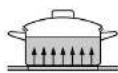
- Use a pan lid whenever possible to minimise heat loss.
- Select a smaller pan when cooking small quantities. A small pan on a small cooking zone uses less energy than a large, partially filled pan on a large cooking zone.
- Use as little water as possible to cook with, and reduce the power setting once the water has come to the boil or the oil is hot enough to fry in.
- When cooking for a long time, switch the cooking zone off about 5 to 10 minutes before the end of the cooking time. In this way, use is made of the residual heat.
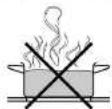
Uncovered

Covered
■ Test run confirmation
In order to ensure your benefit, please confirm the test run before installation.
Place a cookware with a small amount of water in the heating area of the oven panel.
★ Plug in the power, the cooker sounds a "Beep". All digital tubes light up for about 1 second, and the cooker goes into standby mode.
★ Test method: Place a cookware with a small amount of water in the heating area of the oven panel, touch the power key (☐) for start-up. The digital tube of cooking range has display and goes into a standby state. Then clockwise sliding on the annular sliding control adjusts the level, and the cooking range begins to work, with water heated. It can be judged that the cooker is normal.
■ Introduction to Use
Operating interface

- Introduction of interface: The whole machine has a cooking range, with heating power, timing and a variety of function keys.
- Power-on: Plug in the power, the cooker sounds a "Beep". All digital tubes light up for about 1 second, and the cooker goes into standby mode.
- Slandby: The cooker goes into standby mode 1 second after power-on. After the cooker is used, the cooking range is shut down, and the residual heat protection disappears, the cooker goes into standby state.
- Start-up:
4.1 In standby, the power key is pressed to turn on the cooker.
4.2 Sliding clockwise or counterclockwise on the annular sliding control adjusts the heating power after start-up. The heating power indicates the appropriate heating power, and the cooker starts to heat.
4.3 Under the start-up of the cooking range, it will be turned off automatically after heating is not set but lasts for 1 minute. - Heating power regulation:
5.1 Sliding clockwise (or counterclockwise) in the annular sliding control area can increase (or decrease) the healing power. The cooking range level ranges from 1 to 9.
5.2 The maximum power of the cooking range is 2400 W when input voltage is 240VAC.
5.3 Reference power per level:
| Input Voltage/V | Heating level | Keep-warm | 0 | 1 | 2 | 3 | 4 | 5 | 6 | 7 | 8 | 9 |
| 220V~ | Inner-circle power (W) | 100 | 0 | 100 | 200 | 300 | 400 | 500 | 600 | 700 | 800 | 900 |
| Double-circle power (W) | 300 | 0 | 300 | 500 | 700 | 900 | 1100 | 1300 | 1500 | 1800 | 2000 | |
| 240V~ | Inner-circle power (W) | 120 | 0 | 120 | 240 | 360 | 480 | 600 | 720 | 840 | 960 | 1080 |
| Double-circle power (W) | 360 | 0 | 360 | 600 | 840 | 1080 | 1320 | 1560 | 1800 | 2160 | 2400 |
Note
- The above powers of various heating levels are the average power over a heating cycle. Deviations may occur and are for reference only.
-
Frequent on-off of radiant heat discs is normal during operation, which is caused by the automatic control of power and the activated protection when the temperature reaches the upper limit.
-
Keep-warm function:
6.1 After the cooking range is turned on or in the working process, the keep-warm key ⚙ is pressed, and the cooking range goes into keep-warm mode, with heating power displayed as *P*
6.2 In keep-warm mode, the keep-warm key is pressed again to exit keep-warm mode, and the cooking range stops heating. In keep-warm mode, the level can also be adjusted directly or other functions can be turned on, and the cooking range will exit the keep-warm mode and goes into the set heating state.
- Double-circle/inner-circle heating switch function:
7.1 After the cooking range is turned on or in the working process, the double-circle switch key © is pressed, and the cooking range goes into the inner-circle heating mode. The lower right corner of the heating power shown in the heating power digital tube shows a bright spot.
7.2 Sliding clockwise or (or counterclockwise) in the annular sliding control area can increase (or decrease) the inner-circle heating power, with the level ranging from 1 to 9.
7.3 In the inner-circle heating mode, the double-circle key is pressed again to switch back to the double-circle heating mode.
- Manual timing function:
8.1 After the cooking range is turned on and heated, the timing key is pressed, and the cooking range goes into the manual timing setting state, with the timing display flashing. At this time, the timing time can be adjusted by sliding the annular sliding control area. The maximum timing is 99 minutes.
8.2 When the manual timing setting state is selected, the addition and subtraction can be adjusted by sliding clockwise (or counterclockwise) in the annular sliding control area. After sliding clockwise (or counterclockwise) for certain angle, and then the finger is held for a long time to enter quick adjustment mode.
8.3 The manual timing setting state will exit after 6 seconds of timing without operation, or the
timing key is pressed to exit the timing setting state after the timing setting is completed.
8.4 When the timing time expires, the cooking range is turned off, with the cooker ringing for 30 seconds. At this point, any key can be pressed to stop the cooker from ringing.
8.5 The timing key is pressed long to quickly turn off manual timing.
8.6 Adjusting the level does not affect the manual timing time.
-
Default timing function: The default timing for all heating levels (1 - 9) is 2 hours, and the cooker will be shut down when the set time expires. The default timing will be reset to 2 hours after changing the heating level, and the timing will be restarted.
-
Shutdown: The cooking range will be turned off directly when the power key is pressed while the cooking range is working.
-
Child lock:
11.1 The child lock key is pressed for 2 seconds when the cooker is turned on to lock keys in the operation area. All keys cannot be operated except the power key and the child lock key. At the same time, other key lights will be off except the power key and the child lock key.
11.2 In the state of child lock, the power key is pressed to turn off the cooking range. After shutting down, the child lock will not be released. In the power-on state, the child lock key is pressed for 2 seconds to release the child lock.
- Waste heat indication: After cooking and the turn-off of cooking range, cooking range
heating power will be displayed if the panel temperature of the heating area is high. After the heating area is cooled, the waste heat indication will disappear.
Safety function
- Automatic power-off
1.1 No key is pressed after 1 minute of power-on;
1.2 no key is pressed after 1 minute of heating shutdown;
1.3 the system reports an error.
- Safe shutdown
In order to prevent long time heating if it is forgotten to shut down the cooker, the controller will automatically shut the cooker down after 2 hours of operation.
- Overheat protection
When the temperature of the heating plate exceeds a certain value, the power supply of the heating plate will be cut off for protection. Heating will be started again after the temperature of the heating plate is lowered down to a certain value.
Notes
Please use the cleaning shovel to clean the dirt in time so as not to affect the sensitivity of the keys when there is dirt on the glass-ceramic surface.
CLEANING AND CARE
- The appliance should be cleaned after each use. Allow the hob to cool down before cleaning. Wipe all coarse soiling off using a damp cloth. Stubborn soiling may need to be removed with a shielded scraper blade. Finally, clean the hob with a suitable proprietary ceramic hob cleaner applied with kitchen paper or a clean cloth. Do not apply cleaner whilst the hob is still hot, as this could result in marking. Please follow the manufacturer's instructions. Finally wipe the appliance with a damp cloth, and then dry it with a clean, soft cloth. Ensure that all cleaning agent residues are removed. Residues can burn onto the hob the next time it is used, and cause damage to the ceramic surface.
- Spots caused by limescale deposits, water and aluminium residues (which have a metallic appearance) can be removed using the ceramic hob cleaner. Should any sugar, plastic or aluminium foil spill or fall on to a hot cooking zone, first switch off the appliance. Then carefully scrape off all the sugar, plastic or aluminium residues from the hob whilst they are still hot using a shielded scraper blade. Take care not to burn yourself. Allow the cooking zone to cool down, and then clean as described above with a suitable proprietary ceramic hob cleaner. Appliances with aluminium frames (see data plate) are prone to scratching, alkali and acid damage.
- Take great care when cleaning the aluminium frame. Do not use cleaning agents for stainless steel or descaling agents on aluminium surfaces. Soiling should be wiped off as soon as possible after using the appliance. If the soiling is left for a long time it can have a damaging effect on the aluminium surfaces. Intensive cleaning with proprietary ceramic hob cleaners can cause the frame to take on a shiny appearance.

Attention: Do not use a steam cleaner to clean this appliance. The steam could reach electrical components and cause a short circuit.
- Only use proprietary cleaning products which are suitable for cleaning ceramic hobs. Never use cleaners containing sand, soda, alkalis, acids or chlorides, oven sprays, dishwasher detergents, nor steel wool, abrasive cleaning agents, hard brushes, scouring pads and cloths. You should also avoid using sponges etc. which have previously been used with abrasive cleaning agents, as this will damage the surface.
- Do not use washing up liquid to clean the ceramic surface, as it can leave a blue sheen which may be difficult to remove.
- Do not use sharp objects which may damage the seals between the ceramic surface and the frame or between the frame and the worktop.
- To prevent the risk of spillages burning on, remove any soiling as soon as possible, and ensure that pan bases are clean, dry and free of grease.
PROBLEM SOLVING GUIDE
| Problems | The cause of problem | Settlements for the problem |
| The hob or cooking zones can't be switched on | The safety lock is activated | Deactivate the safety lock |
| The mains fuse has blown | Contact a qualified electrician or the FOTILE Service Department | |
| The food in the pan hardly heats up or does not heat up at all when the auto heat-up function is switched on | There is too much food in the pan. | Select a higher continued cooking setting next time, or start cooking at the highest setting |
| The pan is not conducting heat properly | Change the pan | |
| The heating switches on and off on the cooking zone | If the heating switches on and off at the highest setting, the overheating protection mechanism has been triggered | It is normal for the heating element to switch on and off.See "How the cooking zones work". |
SPECIFICATION
| Model | Rated Voltage | Length of wire | Rated Power |
| D7RW | 220-240V 50-60Hz | 1.5m | 2000-2400W |
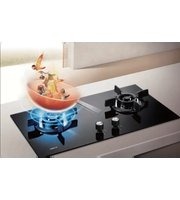
COMPONENTS DIGARAM

- Electric Hob
- CONTENTS
- PACKING LIST
- WARNING AND SAFETY INSTRUCTIONS
- ■ Technical safety
- Correct use
- ■ Safety with children
- ■ Protecting the appliance from damage
- ■ Appliance faults
- ■ Futher safety notes
- CARING FOR THE ENVIRONMENT
- ■ Disposal of the packing material
- ■ Disposal of your old appliance
- BEFORE USING FOR THE FIRST TIME
- ■ Cleaning for the first time
- INSTALLATION
- ■ Installation Requirements
- ■ Safety instructions for installation
- Electrical connection
- Pans
- ■ Tips on saving energy
- ■ Test run confirmation
- ■ Introduction to Use
- Note
- Safety function
- Notes
- CLEANING AND CARE
Brand : Fotile
Model : D7RW
Category : Cooker