PXPWS-1824 - Pressure washer Ozito - Free user manual and instructions
Find the device manual for free PXPWS-1824 Ozito in PDF.


| Product Type | Electric Pressure Washer |
| Brand | Ozito |
| Model | PXPWS-1824 |
| Power Source | Corded Electric |
| Voltage | 240 V |
| Power Rating | 1800 W |
| Max Pressure | 2000 psi (138 bar) |
| Flow Rate | 6 L/min (1.6 GPM) |
| Weight | 5.2 kg (11.5 lb) |
| Dimensions (W x H x D) | 30 x 25 x 20 cm (11.8 x 9.8 x 7.9 in) |
| Hose Length | 6 m (19.7 ft) |
| Power Cable Length | 5 m (16.4 ft) |
| Features | Adjustable spray nozzle, detergent tank, quick-connect fittings, on/off switch |
| Safety Features | Thermal overload protection, trigger lock, safety valve |
| Maintenance | Rinse after use, store in frost-free area, check hose for leaks |
| Spare Parts | Available from Ozito service centers: nozzles, hose, spray gun, pump |
Frequently Asked Questions - PXPWS-1824 Ozito
User questions about PXPWS-1824 Ozito
0 question about this device. Answer the ones you know or ask your own.
Ask a new question about this device
Download the instructions for your Pressure washer in PDF format for free! Find your manual PXPWS-1824 - Ozito and take your electronic device back in hand. On this page are published all the documents necessary for the use of your device. PXPWS-1824 by Ozito.
USER MANUAL PXPWS-1824 Ozito
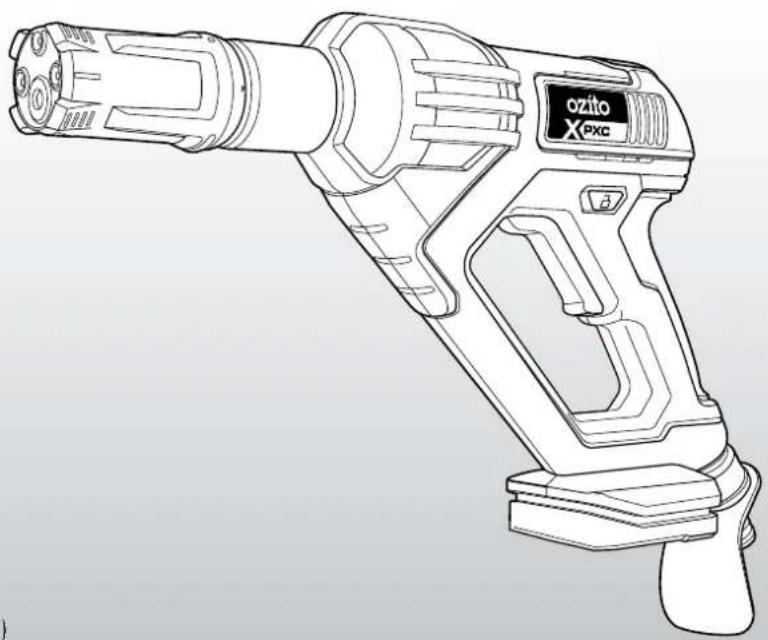
PORTABLE PRESSURE WASHER
INSTRUCTION MANUAL
SPECIFICATIONS
Input: 18V
Rated Pressure: 2.4 MPa (348 psi)
Allowable Pressure: 2.4 MPa (348 psi)
Max. Flow: 5.4 l/min
Rated Flow: 2.7 l/min
Water Inlet Temperature: 5°-40°C
Max. Inlet Water Pressure: 0.5 MPa (72 psi)
Max. Suction Height: 2m
Weight: 3.4kg
ozito.com.au
5 YEAR REPLACEMENT WARRANTY
natural_image
Line drawing of a handheld electrical tool with no visible text or symbols on the device itselfSTANDARD EQUIPMENT
Portable Pressure Washer
Nozzle, Lance x 2
Siphon Hose, Foam Sprayer
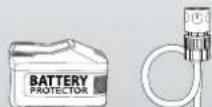
Battery Protector, Bottle Adapter
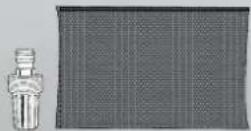
Water Filter, Transport Bag
PXPWS-1824
WARRANTY
IN ORDER TO MAKE A CLAIM UNDER THIS WARRANTY YOU MUST RETURN THE PRODUCT TO YOUR NEAREST BUNNINGS WAREHOUSE WITH YOUR BUNNINGS REGISTER RECEIPT. PRIOR TO RETURNING YOUR PRODUCT FOR WARRANTY PLEASE TELEPHONE OUR CUSTOMER SERVICE HELPLINE:
Australia 1800 069 486
New Zealand 0508 069 486
TO ENSURE A SPEEDY RESPONSE PLEASE HAVE THE MODEL NUMBER AND DATE OF PURCHASE AVAILABLE. A CUSTOMER SERVICE REPRESENTATIVE WILL TAKE YOUR CALL AND ANSWER ANY QUESTIONS YOU MAY HAVE RELATING TO THE WARRANTY POLICY OR PROCEDURE.
WARNING
The following actions will result in the warranty being void.
- If the tool has been operated on a supply voltage other than that specified on the tool.
- If the tool shows signs of damage or defects caused by or resulting from abuse, accidents or alterations.
- Failure to perform maintenance as set out within the instruction manual.
- If the tool is disassembled or tampered with in any way.
• Professional, industrial or high frequency use.
The benefits provided under this warranty are in addition to other rights and remedies which are available to you at law.
Our goods come with guarantees that cannot be excluded at law. You are entitled to a replacement or refund for a major failure and for compensation for any other reasonably foreseeable loss or damage. You are also entitled to have the goods repaired or replaced if the goods fail to be of acceptable quality and the failure does not amount to a major failure.
Generally you will be responsible for all costs associated with a claim under this warranty, however, where you have suffered any additional direct loss as a result of a defective product you may be able to claim such expenses by contacting our customer service helpline above.
5 YEAR REPLACEMENT WARRANTY
Your Product is guaranteed for a period of 60 months from the original date of purchase and is intended for DIY (Do It Yourself) use only. If a product is defective it will be replaced in accordance with the terms of this warranty. Lithium Ion batteries and chargers are covered by a 36 month warranty and are excluded from the warranty extension. Warranty excludes consumable parts.
KNOW YOUR PRODUCT
PORTABLE PRESSURE WASHER
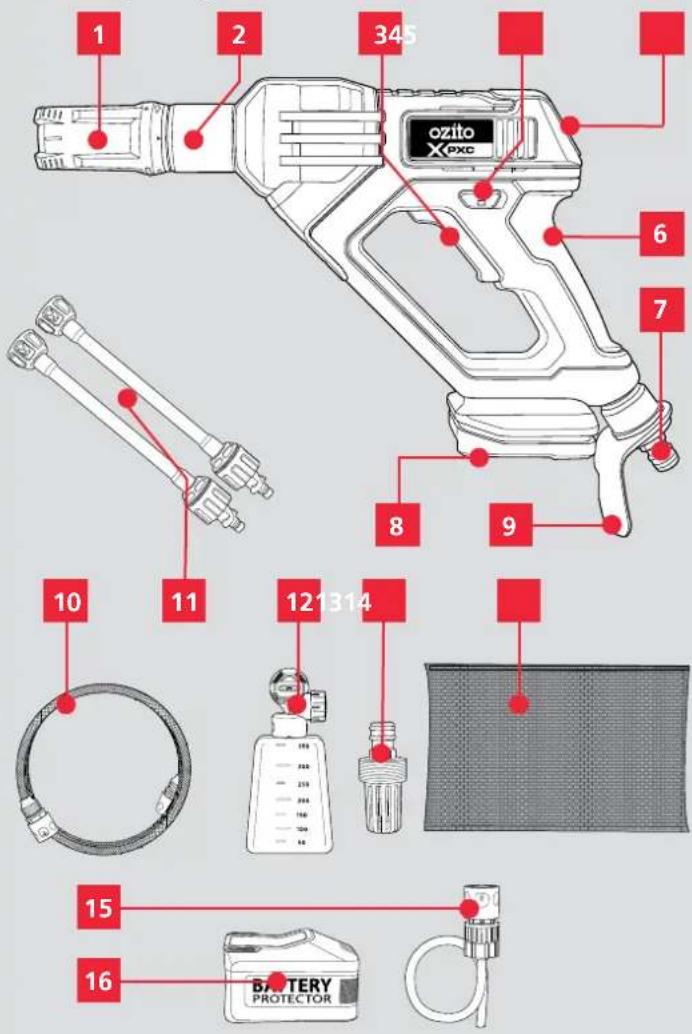
- Multifunction Nozzle
- Splash Guard
- Connector
- ∅12mm x 5m Siphon Hose
- On/Off Trigger
- Extension Lance x 2
- Trigger Lock
- 350ml Foam Sprayer
- ECO Button
- Water Filter
- Air Release Trigger
- Transport Bag
- ∅12mm Water Inlet
- Bottle Adapter
- Battery Seating
- Silicon Battery Protector
BATTERY & CHARGER
This tool is compatible with all batteries & chargers from the Ozito PXC range.
ONLINE MANUAL
Scan this QR Code with your mobile device to take you to the online manual.
SETUP & PREPARATION
1. ACCESSORIES
Fitting Outlet Accessories
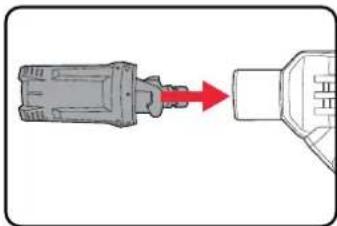
Either the included Multifunction Nozzle or Foam Sprayer can be attached directly to the Connector of the Pressure Washer depending on your cleaning application.
- Push the desired outlet accessory into the connector and twist counterclockwise to lock it into place.
natural_image
Diagram showing a connector with a red arrow pointing to its tip, no text or symbols present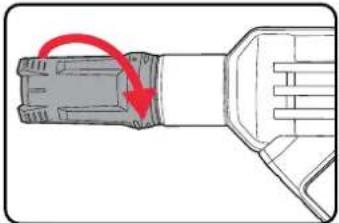
natural_image
Diagram of a plug with a red arrow indicating a pin or insertion point (no text or symbols present)- To disconnect the accessory, push the accessory into the connector, twist clockwise and pull it out.
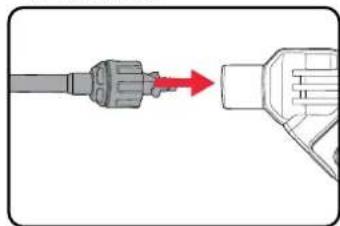
Note: If a longer reach is required, connect one or both of the Extension Lances together and to the Connector, and attached the desired outlet accessory to the free end of the extension lance as described in step 1 above.
- Push the Extension Lance into the Connector and twist clockwise to hold in place.
natural_image
Diagram showing a plug with a red arrow pointing to a connector (no text or symbols present)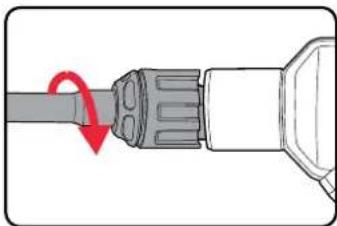
natural_image
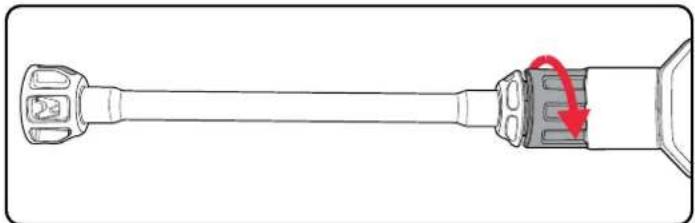
Diagram of a cable being inserted into a plug, showing a red arrow indicating the direction (no text or symbols present)Note: There is a locking sleeve on the extension lance to prevent any movement during use.
- Rotate the sleeve clockwise until it tightens up against the connector.
natural_image
Diagram of a mechanical component with a red arrow indicating rotation or force direction (no text or symbols)
WARNING! ENSURE THE SELECTED ATTACHMENT IS SECURE BEFORE YOU BEGIN OPERATION.

WARNING: DO NOT SPRAY FLAMMABLE LIQUIDS.

WARNING! WATER THAT HAS PASSED THROUGH THE PRESSURE WASHER IS NOT DRINKABLE.
Using the Multifunction Nozzle
The water jet can be controlled when using the Multifunction Nozzle.
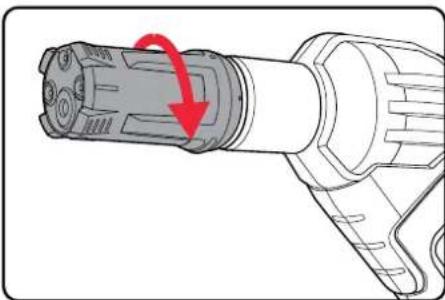
By turning the nozzle you can change the shape of the water jet from solid cone to a narrow flat fan, a wide flat fan or high impact rotating jet.

WARNING DO NOT OPERATE THE UNIT WHILE CHANGING THE NOZZLE SPRAY PATTERNS.
Turn the Multifunction Nozzle counterclockwise to select the spray pattern.
Note: The nozzle will only rotate in one direction to select a spray pattern, rotating the nozzle clockwise will disconnect the nozzle from the connector.
- Solid Cone
A narrow jet over a small area for general purpose concentrated cleaning.
- Narrow Flat Fan
A fan jet to clean larger areas faster.
- Wide Flat Fan
A wide soft water fan to wash away foam soap, dust, loose dirt or sand.
• High Impact Rotating Jet
Covers a wide area to remove ingrained dirt.
natural_image
Diagram of a mechanical component with a red arrow indicating rotation or change (no text or symbols present)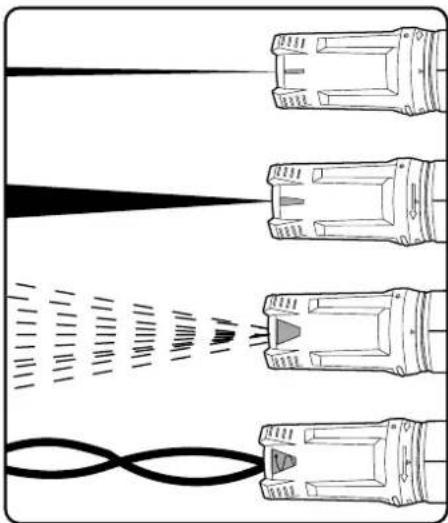
natural_image
Diagram showing four types of electrical connectors with varying line patterns and a wavy line, no text or symbols present.Using the Foam Sprayer
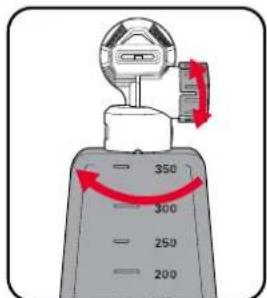
Pour detergent directly into the foam bottle and attach it to the lance or directly to the connector. Follow the detergent manufacturers' directions for use.
Unscrew the container of the foam sprayer, then fill with foam cleaner. You can control the quantity of foam by turning the dial during use.

WARNING! NEVER RUN BLEACH OR DETERGENTS NOT DESIGNED FOR PRESSURE WASHERS WITH THIS UNIT.
Fitting Inlet Accessories
Either the included Siphon Hose or Bottle Adaptor can be attached directly to the Water Inlet of the Pressure Washer depending on what water sauce you choose to use. Alternatively as the water inlet is equipped with a standard hose connector (01/2, 13mm approx.), plug your supply hose coupling onto the water inlet. Water source maximum pressure of 0.3 MPa (43psi), max. water temperature 40°C.

WARNING: THIS PRODUCT MUST NOT BE CONNECTED TO THE POTABLE WATER MAINS WITHOUT BACK FLOW PREVENTION. CHECK LOCAL AND NATIONAL PLUMBING REGULATIONS BEFORE CONNECTING THE MACHINE TO THE POTABLE WATER MAINS.
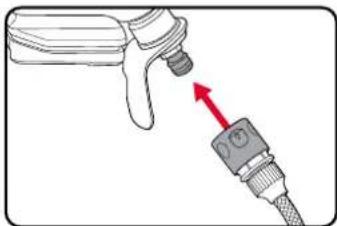
- 5m Siphon Hose
-
Push quick connector onto the Water Inlet.
-
The connector will snap and lock in place to secure the siphon hose in place.
natural_image
Diagram of a handheld device with a red arrow pointing to its connector (no text or symbols present)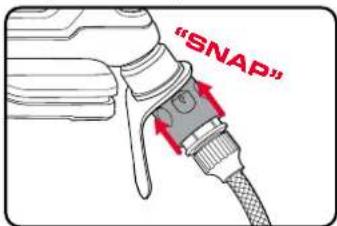
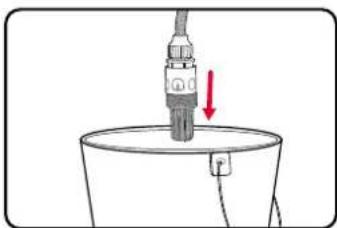
3 Equip the supplied Water Filter to the opposite end to use water from a container filled with clean water. Max. suction height 2m.
natural_image
Diagram of a plug inserted into a container with a red arrow indicating force (no text or symbols)Note: The included water filter must be in place to prevent impurities in the water source from entering the unit and damaging the pump.
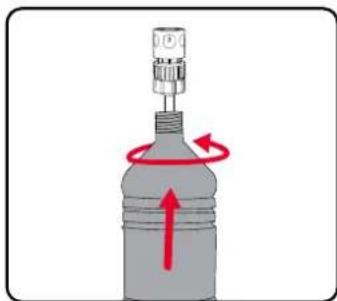
- Bottle Adapter
-
Insert the bottle adapter into the water inlet. Turn the bottle ant-clockwise to secure in place.
-
Push quick connector onto the Water Inlet.
natural_image
Diagram of a bottle with a valve and red circular motion arrows indicating rotation (no text or symbols)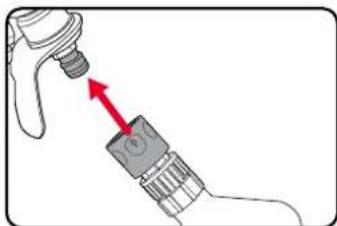
natural_image
Diagram of a hand holding a spray bottle with a red arrow indicating direction (no text or symbols)- The quick connector will snap and lock in place to secure the bottle adaptor in place.
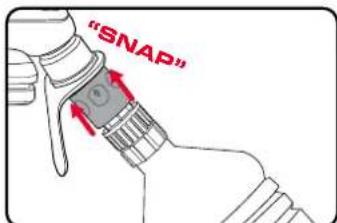
2. INSERTING & REMOVING THE BATTERY
Inserting the Battery

WARNING! PROTECT YOUR BATTERY AGAINST MOISTURE, RAIN AND HIGH HUMIDITY. MAKE SURE THAT NO WATER RUNS OVER THE BATTERY OR ITS CONTACTS DURING OPERATION.
Align the ribs of the battery with the recess of the battery seating and push in until it clicks into place.
Note: Ensure that the contacts on the pressure washer and the battery are dry.
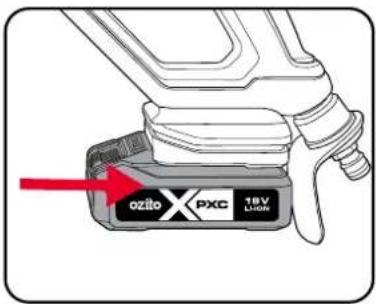
Removing the Battery
Press and hold the battery release tab as you slide the battery out.
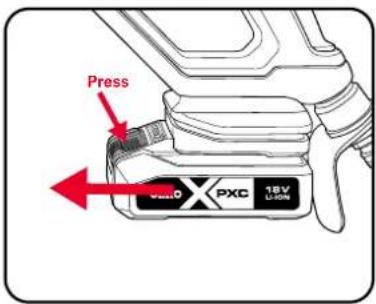
Battery Protection
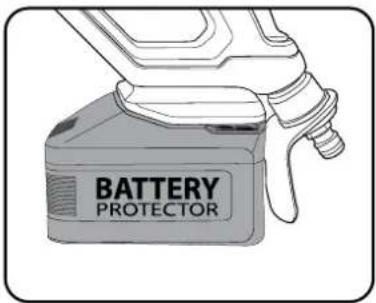
Pull the Silicon Battery Protector over the fitted battery. Make sure that battery protector is not damaged, is correctly seated and seals off every contact surface from the machine.
Always remove the silicon battery protector before you remove the battery.
Run Time
The operating time of the PXC battery (the amount of operating time and the area you can cover with a single battery charge) is largely dependent on the battery age, ECO mode in operation and the rate of work.
Frequently turning the equipment on and off will also reduce the runtime. If the operating time of the PXC battery (runtime) is still unsatisfactory in spite of the above measures, you can remedy the problem by using PXC battery with a larger capacity (Ah).
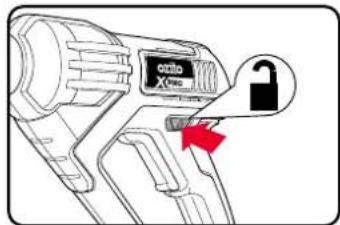
- Push the Trigger Lock in from the side to unlock.
-
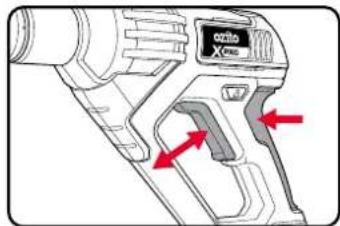
Squeeze the Air Release Trigger to release any air from inside the pressure washer.
-
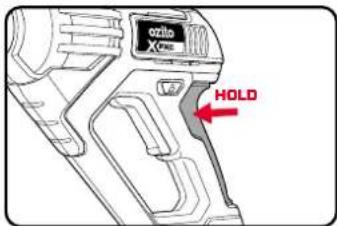
Squeeze the On/Off Trigger to start spraying, release the On/Off trigger to stop spraying.
ECO Mode
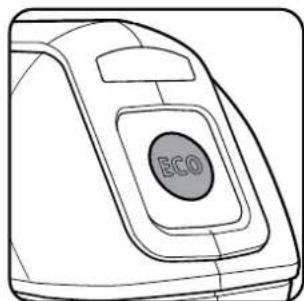
Press the ECO Button to increase the operating time of the battery and reduce the pressure level.
natural_image
Line drawing of a device with an 'ECO' button on the lid (no text or symbols beyond the label)Usage
The Pressure washer is designed to force clean water at pressure via a pump through concentrating nozzle. It is intended for washing dirt, mud and dust from cars, garden equipment, outdoor furniture, wash down driveways, patios, decks and brick walls.

WARNING: LOCK THE TRIGGER WHEN NOT IN USE TO PREVENT ACCIDENTAL OPERATION.

WARNING! DO NOT POINT THE SPRAY JET AT ANY PART OF YOUR BODY, OTHER PEOPLE, PETS OR ANIMALS. THE PRESSURISED WATER STREAM CAN CAUSE SERIOUS CUTS AND INJURIES.

WARNING! ENSURE THAT THE SPRAY JET IS NOT DIRECTED AT POWER LINES, ELECTRICAL OUTLETS OR ELECTRONICS.
Note: Teflon Tape (not included) can be used on threads to ensure a water tight seal and prevent any leakage. Wind Teflon Tape clockwise on fittings.

ENSURE THE PRESSURE WASHER IS
SWITCHED OFF AND THE BATTERY IS REMOVED
BEFORE PERFORMING ANY OF THE FOLLOWING TASKS
Cleaning
- Keep air intake clean and air vents free of debris to avoid overheating the motor.
- If the enclosure of the pressure washer requires cleaning do not use solvents but a moist soft cloth only. Never let any liquid get inside the pressure washer; never immerse any part of the pressure washer into liquid.
- No lubrication is necessary as the motor is equipped with lifetime lubricated bearings.
- Replace worn or damaged parts for safety.
- Periodically check the intake water filter in order to prevent clogging that could jeopardize the pump's operation.
Unscrew the water inlet connector (a) from the intake hose filter (b) and clean the exposed inlet sieve under running water.
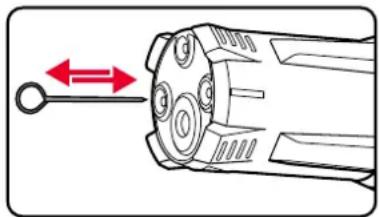
- Use a pin (not included) to clean a clogged nozzle.
natural_image
Mechanical component diagram showing a pin inserted into a housing with red directional arrows indicating motion (no text or symbols)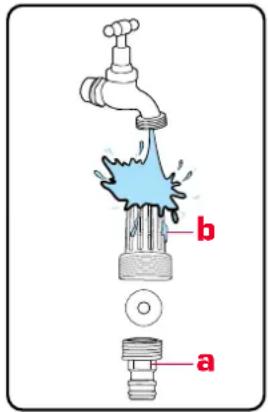
Storage
- The equipment should be completely emptied of water each time after it is used. This requires you to switch on the equipment without a connected water supply and to press the on/off trigger (max. 1 min.) until no more water emerges. Then you must switch off the equipment.
If the equipment is not used for a prolonged period of time, lime deposits will begin to form in the electric pump, which in turn can lead to starting difficulties.
- When not in use, the pressure washer should be stored in a dry, frost free location, out of children's reach.
- Store the supplied accessories in the transport bag in a dark and dry place at above freezing temperature. The ideal storage temperature is between 5°C and 30°C.
- Remove the battery from the pressure washer when in storage.
- Allow the motor to cool before you put the equipment in an enclosed area.

STORE THE PRESSURE WASHER AND ITS
ACCESSORIES IN A SAFE AND DRY PLACE OUT OF THE REACH OF CHILDREN.
Note: Ozito Industries will not be responsible for any damage or injuries caused by repair of the pressure washer by an unauthorised person or by mishandling of the pressure washer. This machine is designed for DIY use - use in commercial or industrial environments will void the warranty.
DESCRIPTION OF SYMBOLS
| V | Volts | Hz | Hertz | |
| a.c./~ | Alternating current | W | Watts | |
| dc/--- | Direct current | ∅ | Diameter | |
| Ah | Ampere hour | ml | Milliliter | |
| l/min | Litres per minute | psi | Pounds per square inch | |
| mm | Millimetre | °C | Degrees Celsius | |
| MPa | Megapascals | Warning! | ||
| m | Metres | Wear eye protection | ||
| [CGG] | Regulatory compliance mark (RCM) | |||
| [4kew] | Read instruction manual to reduce the risk of injury | |||
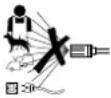 | Warning! Do not direct the jet at persons, animals, live electrical equipment or the pressure washer itself | This machine is not suitable for connection to a potable water supply. | ||
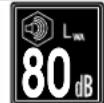 | Sound power level | Do not use in the rain or leave the pressure washer outdoors while raining | ||
| V | Volts | Hz | Hertz |
| a.c./~ | Alternating current | W | Watts |
| dc/--- | Direct current | Diameter | |
| Ah | Ampere hour | ml | Milliliter |
| l/min | Litres per minute | psi | Pounds per square inch |
| mm | Millimetre | °C | Degrees Celsius |
| MPa | Megapascals | Warning! | |
| m | Metres | Wear eye protection |
CARING FOR THE ENVIRONMENT
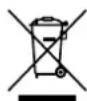
Power tools that are no longer usable should not be disposed of with household waste but in an environmentally friendly way. Please recycle where facilities exist. Check with your local council authority for recycling advice.

Recycling packaging reduces the need for landfill and raw materials. Reuse of recycled material decreases pollution in the environment. Please recycle packaging where facilities exist. Check with your local council authority for recycling advice.
SPARE PARTS
Spare parts can be ordered from the Special Orders Desk at your local Bunnings Warehouse.
For further information, visit www.ozito.com.au or
contact Ozito Customer Service:
Australia 1800 069 486
New Zealand 0508 069 486
E-mail: enquiries@ozito.com.au

WARNING! When using electric machines, basic safety precautions, including the following, should always be followed to reduce risk of fire, electric shock, personal injury and material damage.
-Read the whole manual carefully and make sure you know how to switch the machine off in an emergency, before operating the machine. Save these instructions and other documents supplied with this machine for future reference.
-This appliance is not intended for use by persons (including children) with reduced physical, sensory or mental capabilities, or lack of experience and knowledge, unless they have been given supervision or instruction concerning use of the appliance by a person responsible for their safety.
Children should be supervised to ensure that they do not play with the appliance.
-This appliance is compatible and only to be used with all batteries & chargers from the Ozito PXC range. Refer to the PXC battery and charger manuals for information regarding charging, use and storage.
-Remove the batteries from the appliance before being charged.
-Do not combine different types of batteries or new and used batteries.
-If the appliance is to be stored unused for a long period, the batteries should be removed.
-Do not use modified or damaged batteries.

GENERAL MACHINE SAFETY WARNINGS

WARNING! Read all safety warnings, instructions, illustrations and specifications provided with this machine. Failure to follow all instructions listed below may result in electric shock, fire and/or serious injury.
Save all warnings and instructions for future reference.
The term "machine" in the warnings refers to your mains-operated (corded) machine or battery-operated (cordless) machine.
1) Work area safety
a) Keep work area clean and well lit. Cluttered or dark areas invite accidents.
b) Do not operate machines in explosive atmospheres, such as in the presence of flammable liquids, gases or dust. Machines create sparks which may ignite the dust or fumes.
c) Keep children and bystanders away while operating a machine. Distractions can cause you to lose control.
2) Electrical safety
a) Machine plugs must match the outlet. Never modify the plug in any way. Do not use any adapter plugs with earthed (grounded) machines. Unmodified plugs and matching outlets will reduce risk of electric shock.
b) Avoid body contact with earthed or grounded surfaces, such as pipes, radiators, ranges and refrigerators. There is an increased risk of electric shock if your body is earthed or grounded.
c) Do not expose machines to rain or wet conditions. Water entering a machine will increase the risk of electric shock.
d) Do not abuse the cord. Never use the cord for carrying, pulling or unplugging the machine. Keep cord away from heat, oil, sharp edges or moving parts. Damaged or entangled cords increase the risk of electric shock.
e) When operating a machine outdoors, use an extension cord suitable for outdoor use. Use of a cord suitable for outdoor use reduces the risk of electric shock.
f) If operating a power tool in a damp location is unavoidable, use a residual current device (RCD) protected supply. Use of an RCD reduces the risk of electric shock.
3) Personal safety
a) Stay alert, watch what you are doing and use common sense when operating a machine. Do not use a machine while you are tired or under the influence of drugs, alcohol or medication. A moment of inattention while operating machines may result in serious personal injury.
b) Use personal protective equipment. Always wear eye protection. Protective equipment such as a dust mask, non-skid safety shoes, hard hat or hearing protection used for appropriate conditions will reduce personal injuries.
c) Prevent unintentional starting. Ensure the switch is in the off-position before connecting to power source and/or battery pack, picking up or carrying the machine. Carrying machines with your finger on the switch or energising machines that have the switch on invites accidents.
d) Remove any adjusting key or wrench before turning the machine on. A wrench or a key left attached to a rotating part of the machine may result in personal injury.
e] Do not overreach. Keep proper footing and balance at all times. This enables better control of the machine in unexpected situations.
f) Dress properly. Do not wear loose clothing or jewellery. Keep your hair and clothing away from moving parts. Loose clothes, jewellery or long hair can be caught in moving parts.
g) If devices are provided for the connection of dust extraction and collection facilities, ensure these are connected and properly used. Use of dust collection can reduce dust-related hazards.
h] Do not let familiarity gained from frequent use of machines allow you to become complacent and ignore machine safety principles. A careless action can cause severe injury within a fraction of a second.
4) Machine use and care
a) Do not force the machine. Use the correct machine for your application. The correct machine will do the job better and safer at the rate for which it was designed.
b) Do not use the machine if the switch does not turn it on and off. Any machine that cannot be controlled with the switch is dangerous and must be repaired.
c) Disconnect the plug from the power source and/or remove the battery pack, if detachable, from the machine before making any adjustments, changing accessories, or storing machines. Such preventive safety measures reduce the risk of starting the machine accidentally.
d) Store idle machines out of the reach of children and do not allow persons unfamiliar with the machine or these instructions to operate the machine. Machines are dangerous in the hands of untrained users.
e) Maintain machines and accessories. Check for misalignment or binding of moving parts, breakage of parts and any other condition that may affect the machine's operation. If damaged, have the machine repaired before use. Many accidents are caused by poorly maintained machines.
f) Keep cutting machines sharp and clean. Properly maintained cutting machines with sharp cutting edges are less likely to bind and are easier to control.
g) Use the machine, accessories and machine bits etc. in accordance with these instructions, taking into account the working conditions and the work to be performed. Use of the machine for operations different from those intended could result in a hazardous situation.
h) Keep handles and grasping surfaces dry, clean and free from oil and grease. Slippery handles and grasping surfaces do not allow for safe handling and control of the machine in unexpected situations.
5) Battery machine use and care
a) Recharge only with the charger specified by the manufacturer. A charger that is suitable for one type of battery pack may create a risk of fire when used with another battery pack.
b) Use machines only with specifically designated battery packs. Use of any other battery packs may create a risk of injury and fire.
c) When battery pack is not in use, keep it away from other metal objects, like paper clips, coins, keys, nails, screws or other small metal objects, that can make a connection from one terminal to another. Shorting the battery terminals together may cause burns or a fire.
d) Under abusive conditions, liquid may be ejected from the battery; avoid contact. If contact accidentally occurs, flush with water. If liquid contacts eyes, additionally seek medical help. Liquid ejected from the battery may cause irritation or burns.
e) Do not use a battery pack or machine that is damaged or modified. Damaged or modified batteries may exhibit unpredictable behaviour resulting in fire, explosion or risk of injury.
f) Do not expose a battery pack or machine to fire or excessive temperature. Exposure to fire or temperature above 130 °C may cause explosion.
g) Follow all charging instructions and do not charge the battery pack or machine outside the temperature range specified in the instructions. Charging improperly or at temperatures outside the specified range may damage the battery and increase the risk of fire.
6) Service
a) Have your machine serviced by a qualified repair person using only identical replacement parts. This will ensure that the safety of the machine is maintained.
b) Never service damaged battery packs. Service of battery packs should only be performed by the manufacturer or authorized service providers.

PRESSURE WASHER SAFETY WARNINGS

WARNING! The appliance is not to be used by persons (including children) with reduced physical, sensory or mental capabilities, or lack of experience and knowledge, unless they have been given supervision or instruction.
Young children should be supervised to ensure that they do not play with the appliance.
- Unsafe operation of your pressure washer could lead to serious injury or death to you or others.
- The spray gun/wand is a powerful cleaning tool that could look like a toy to a child.
- Improper control of gun/wand can result in injuries to self, others and property damage. Reactive force from the spray can result in gun/lance movement, potentially causing the operator to slip, fall or misdirect the spray.
- Become familiar with the operation and controls of the pressure washer.
- Keep children away from the pressure washer at all times.
- Never modify or remove the safety features of this product.
- Do not operate the machine with missing, broken or unauthorised parts.
- Never leave wand unattended while unit is running.
- Keep work area free of obstacles.
- Stand on stable surface and grip gun/lance firmly. Expect the gun to kick back when engaged.
- Do not use to pump flammable or explosive liquids such as gasoline, fuel oil, kerosene, solvents or thinners. Pump should only be used with liquids compatible with pressure washer component materials. Failure to follow to this warning can result in serious personal injury, death and/or property damage.
- Only use cleaning agents designed for pressure washers. The use of other cleaning agents or chemicals may adversely affect the safety and/or operation of the appliance.
- Do not use the appliance within range of persons unless they wear protective clothing.
- Pressure jets can be dangerous if subject to misuse. The jet must not be directed at persons, animals, live electrical equipment or the appliance itself.
- Do not direct the jet against yourself or others in order to clean clothes or foot-wear.
- To ensure appliance safety, use only original spare parts from the manufacturer or approved by the manufacturer.
- Pressure hoses, fittings and couplings are important for the safety of the appliance. Use only hoses, fittings and couplings recommended by the manufacturer.
- Do not use the appliance if important parts of the appliance are damaged, e.g. safety devices, pressure hoses, trigger gun.
- Water that has flowed through a backflow preventer is considered to be non-potable.
- Depending on the application, shielded nozzle can be used for pressure cleaning, which will reduce the emission of hydrous aerosols dramatically. However, not all applications allow the use of such a device. If shielded nozzles are not applicable for the protection against aerosols, a respiratory mask of class FFP 2 or equivalent may be needed, depending on the cleaning environment.
- Never touch the battery with wet hands.
• Always disconnect the product from the battery when leaving the machine unattended. - This product must not be connected to the potable water mains without backflow prevention. Check local and national plumbing regulations before connecting the machine to the potable water mains.
- Do not operate the machine at temperatures below 0^ .
- It is recommended that a reinforced garden hose (with minimum diameter of 12mm) is used for the inlet connection when used with mains pressure.
- During use of pressure cleaners, aerosols may be formed. Inhalation of aerosols can be hazardous to health.
- Avoid using power tools and machines for long periods of time without breaks. Vibration from tools and machines can be transmitted into your hands and arms.-Do not use modified or damaged batteries.
- Do not use the portable pressure washer in the rain or leave outdoors while it is raining. WARNING! When servicing, use only identical replacement parts. Use of any other parts may create a hazard or cause product damage. To ensure safety and reliability, all repairs should be performed by a qualified service technician.

DANGER! Always remove the battery from the portable pressure washer:
- when the equipment is left unattended,
- when the equipment is being checked, cleaned, or having maintenance work done,
• or if the equipment vibrates abnormally.
- PORTABLE PRESSURE WASHER
- SPECIFICATIONS
- WARRANTY
- Australia 1800 069 486
- WARNING
- The following actions will result in the warranty being void.
- YEAR REPLACEMENT WARRANTY
- KNOW YOUR PRODUCT
- BATTERY & CHARGER
- SETUP & PREPARATION
- ACCESSORIES
- Fitting Outlet Accessories
- Using the Multifunction Nozzle
- WARNING DO NOT OPERATE THE UNIT WHILE CHANGING THE NOZZLE SPRAY PATTERNS.
- - Solid Cone
- - Narrow Flat Fan
- - Wide Flat Fan
- • High Impact Rotating Jet
- Using the Foam Sprayer
- WARNING! NEVER RUN BLEACH OR DETERGENTS NOT DESIGNED FOR PRESSURE WASHERS WITH THIS UNIT.
- Fitting Inlet Accessories
- WARNING: THIS PRODUCT MUST NOT BE CONNECTED TO THE POTABLE WATER MAINS WITHOUT BACK FLOW PREVENTION. CHECK LOCAL AND NATIONAL PLUMBING REGULATIONS BEFORE CONNECTING THE MACHINE TO THE POTABLE WATER MAINS.
- - 5m Siphon Hose
- - Bottle Adapter
- INSERTING & REMOVING THE BATTERY
- Inserting the Battery
- Removing the Battery
- Battery Protection
- Run Time
- ECO Mode
- Usage
- ENSURE THE PRESSURE WASHER IS
- SWITCHED OFF AND THE BATTERY IS REMOVED
- BEFORE PERFORMING ANY OF THE FOLLOWING TASKS
- Cleaning
- Storage
- STORE THE PRESSURE WASHER AND ITS
- ACCESSORIES IN A SAFE AND DRY PLACE OUT OF THE REACH OF CHILDREN.
- DESCRIPTION OF SYMBOLS
- CARING FOR THE ENVIRONMENT
- SPARE PARTS
- GENERAL MACHINE SAFETY WARNINGS
- 1) Work area safety
- 2) Electrical safety
- 3) Personal safety
- 4) Machine use and care
- 5) Battery machine use and care
- 6) Service
- PRESSURE WASHER SAFETY WARNINGS
Brand : Ozito
Model : PXPWS-1824
Category : Pressure washer