
FP2620W2-R - Smoke detector FireAngel - Free user manual and instructions
Find the device manual for free FP2620W2-R FireAngel in PDF.


| Product Type | Smoke Alarm (Thermoptek) |
| Model Number | FP2620W2-R (ST-632 + W2-Module) |
| Power Source | Internal lithium battery, 10-year life, automatically activated when mounted on base plate |
| Sensor Technology | Thermoptek (optical smoke detection + thermal enhancement) – “toast-proof” |
| Interlinking | Wireless via Wi-Safe 2; works with up to 50 W2-Module enabled devices |
| Alarm Patterns | 3 loud beeps repeating (alarm), single chirp every 45s (low battery/fault), chirp every 4 hours (remote low battery) |
| Smart Silence | Press test button to silence false alarm for up to 10 minutes; alarm returns to full sensitivity automatically |
| Sleep Easy | Press test button to silence low battery chirp for 8 hours (recommend replace within 30 days) |
| Test Feature | Monthly test via test button; tests smoke sensing circuit; no smoke needed |
| LED Indicators | Red LED (alarm, silence, interlink status) and Amber LED (low battery, fault, radio module status) |
| Low Battery Warning | Chirp every 45s with amber LED; lasts at least 30 days; replace alarm immediately |
| Fault Indication | Yellow LED flash with chirp at different times; replace immediately |
| Operating Temperature | 4°C to 38°C (40°F to 100°F) |
| Mounting | Ceiling or wall; base plate included; battery activates when locked on base |
| Installation | DIY; drill holes, use supplied screws and anchors; twist alarm onto base plate clockwise |
| Maintenance | Vacuum with soft brush every 3 months; do not paint or use solvents |
| Disposal | Battery deactivates when removed from base; recycle via WEEE scheme; do not open or burn |
| Warranty | 5 years from original purchase date; replacement free of charge (proof of purchase required) |
| Certifications | CE 0832-CPR-F2598, EN 14604:2005+AC:2008, RED Directive 2014/53/EU |
| Radio Frequency | 868 MHz; max RF power +10 dBm; range over 200m line-of-sight (max 35m between alarms recommended) |
| Dimensions (approx.) | 120 mm diameter, 50 mm height (typical for similar models) |
| Weight (approx.) | 200 g (typical) |
Frequently Asked Questions - FP2620W2-R FireAngel
User questions about FP2620W2-R FireAngel
0 question about this device. Answer the ones you know or ask your own.
Ask a new question about this device
Download the instructions for your Smoke detector in PDF format for free! Find your manual FP2620W2-R - FireAngel and take your electronic device back in hand. On this page are published all the documents necessary for the use of your device. FP2620W2-R by FireAngel.
USER MANUAL FP2620W2-R FireAngel
THERMOPTEK ® Wi-Safe 2
TEST YOUR ALARM MONTHLY
Please retain this user manual for future reference
CONTENTS
Introduction 3
Automatic Power Engage .....3
Sensor Technology....3
Positioning 3
How to install your Smoke Alarm .....5
Interlinking your smoke alarms. . . . . . . 6
Operation. 8
LED Indicators .....9
Alarm Test 10
Alarm Smart Silence™. . . . . . . . . . 10
Sleep Easy™. 12
Troubleshooting 13
Maintenance 15
Disposal 15
Warranty 15

CE 19
0832-CPR-F2598
EN 14604:2005+AC:2008
Smoke Alarm Devices
FSTDOP19002
Model No. ST-632

651d/13
W2-Module Independently tested to:
EN 301 489-1
EN 301 489-3
EN 300 220-2
Frequency 868MHz
Max RF power: +10dBm
Hereby, FireAngel Safety Technology Limited, declares that W2-Module is in compliance with the essential requirements and other relevant provisions of Directive 2014/53/EU. The declaration of conformity may be consulted at http://spru.es/EC-W2-Module
Note: This User Manual is also available in large text and other formats. Please call 0330 094 5830 for further information
ST-632 + W2-Module
GN5488R1
FireAngel Safety Technology Limited Vanguard Centre, Coventry CV4 7EZ UK www.fireangeltech.com
Technical Support: 0330 094 5830 / EIRE dial 1-800 523171 Email: technicalsupport@fireangeltech.com
2

INTRODUCTION
Groundbreaking Thermoptek technology combines the very latest in optical sensing with thermal enhancement, providing faster response to both fire types eliminating the need for ionisation sources which can be harmful to the environment. In addition, this smoke alarm allows the low battery warning chirp to be silenced until it is convenient to replace the alarm (recommended within no more than 30 days).
IMPORTANT: This user manual contains important information regarding the operation of your smoke alarm. Ensure you read this user manual fully before installing and operating the alarm. If you are installing this smoke alarm for use by others, you must leave this manual with the end user.
AUTOMATIC POWER ENGAGE
Your 10 year life smoke alarm is powered by an internal lithium battery. To avoid unnecessary use of the battery prior to installation, and to ease disposal when the alarm reaches the end of its life, the alarm is supplied with the battery in a deactivated state. The battery on this alarm is automatically enabled when the alarm is fully locked on to the base plate.
WARNING: Lithium batteries must not be exposed to excessive heat.
IMPORTANT: Your alarm will not work until it is correctly fitted to the base plate.
THERMOPTEK TECHNOLOGY
Thermoptek alarms are “toast-proof” meaning they can be positioned in areas close to kitchens that may be affected by cooking fumes. Heat alarms should be used in kitchens where required.
This combines an optical sensing chamber with thermal enhancement. The alarm is effective at detecting slow burning fires, and constant monitoring of temperature changes enables the sensitivity of the alarm to be instantly increased thereby quickening the typical response time to fast flaming fires significantly.
POSITIONING
WARNING: Your smoke alarm can be installed into a new build property as additional protection to an existing smoke detection system only. It cannot be used as a substitute for a hard wired system as required in new build properties. In this type of property the building regulations require alarms to be interlinked. You can obtain further information from your local fire service or building control department at your local council offices. These sources generally provide advice on new builds or projects that require planning permission.
Your smoke alarm typically meets the minimum requirements for family living units in existing buildings, as long as at least one unit is installed on each floor/level of your property.
In order to achieve the earliest fire warning, we recommend that a smoke alarm is fitted in all rooms where the temperature is normally between 4°C (40°F) and 38°C (100°F). Check the section on 'Positioning' to ensure that the smoke alarm is to be correctly positioned for the particular dwelling into which it is intended to be installed.

EXISTING HOMES

MINIMUM RECOMMENDATIONS

RECOMMENDED FOR ADDITIONAL PROTECTION
NOTE: Kitchens should be covered by a self contained heat detector.
For further advice on where to install your alarms refer to BS 5839-6
WARNING: The alarm positions shown are based on typical homes. Construction and layout of individual dwellings will vary, so this should be regarded only as a guide. Check with your local fire station for additional guidance or, for further advice, see standard BS5839-6.
Smoke alarms should be sited at least
300mm from light fittings and walls.
Ideally as central as possible in the room.
If positioning your smoke alarm on the wall, the top of the detection element must be between 150mm and 300mm below the ceiling, and at least 300mm from a wall.
Smoke alarms should be positioned at no more than 600mm vertically below the highest point in the room.

Multi-family or mixed occupant residence (Tenancy building, student accommodation)
Your smoke alarm can also be used in individual flats and bedsits, providing the same conditions are met as for a single-family residence. However, there must already be a primary fire detection system that meets regulatory requirements for common areas such as lobbies and hallways.
Institutions and Hotels
This includes motels, hospitals, day care facilities, long-term health care facilities, boarding houses and dormitories. Your smoke alarm can be used in individual
sleeping/resident rooms, providing the same conditions are met as for a single-family residence. However, there must already be a primary fire detection system that meets regulatory requirements for common areas such as lobbies and hallways. Use of this smoke alarm in common areas may not provide sufficient fire warning to residents or meet regulatory requirements. This smoke alarm is designed to operate as a standalone smoke alarm.
WARNING: Without interlinking, this smoke alarm will not communicate with other smoke alarms. It is not intended as a substitute for a complete alarm system.
Mobile Homes and Caravans
This smoke alarm is suitable for use in mobile homes and caravans.
Commercial and Industrial Premises
This smoke alarm is not intended for any non-residential, commercial or industrial application, nor for any other purpose than described above.
IMPORTANT: Obstructions such as steel reinforcement in concrete could block or impede the wireless signal. While the wireless range is over 200 metres in clear air / clear line of sight, the effective range may be reduced by wall and other obstructions in the building. Always ensure that after any building work or after repositioning large items of furniture (beds, sofas, shelving units etc.), you carry out an alarm test on all networked smoke alarms to ensure they are all still working. It is recommended not to exceed 35m as the maximum distance between smoke alarms in the network. NOTE: The W2-Module in your ST-632 unit enables the alarm to interlink with up to 50 Wi-Safe 2 devices in a single network.
HOWTO INSTALL YOUR SMOKE ALARM
IMPORTANT: Make sure you have read and understood this manual before installing your smoke alarm.
1. Preparation
The base plate should be attached to the ceiling or wall.
Break out the tabs from the base plate. Use the fixing slots on the base plate as a guide when marking the position of the drill holes. With an appropriately sized drill, drill the holes and insert the plastic fixing anchors supplied (if needed).

Base plate tabs
2. Install Base Plate
Fit the base plate to the ceiling or wall using the screws provided.

3. Fit Your FireAngel Smoke Alarm
To fit to the smoke alarm to the base plate included in this pack, position the alarm on the base plate then twist it clockwise until the alarm is locked in position. Make sure the alarm is twisted on fully.

The battery will now activate. The red indicator LED on the front of the alarm should flash approximately once every 45 seconds to show that the alarm is active.
WARNING: Removing the smoke alarm from its base plate will deactivate the unit and prevent it from detecting smoke.
4. Test Your FireAngel smoke alarm
After fitting the alarm to the base plate, wait for 5 seconds for the alarm to settle, then test the alarm. See "Alarm Test".
INTERLINKING YOUR SMOKE ALARMS
The W2-Module in your ST-632 enables you to wirelessly interlink with other alarms with a W2-Module and create a Wi-Safe 2 network.
In order to communicate with each other, W2-Module enabled alarms need to be “learned in” or interlinked. If one alarm activates, all other interlinked smoke alarms will also sound. Note that Wi-Safe 2 smoke alarms can only be interlinked with other Wi-Safe 2 smoke alarms and other products within the Wi-Safe 2 range.
"Learning in" (interlinking) your Smoke Alarms:
The process below describes ‘learning in’ two alarms into a network, “Alarm 1” and “Alarm 2”.
- Alarm 1: Install Alarm 1 as described previously.
- Alarm 2: Install the base plate for Alarm 2 in one of the recommended locations. Do not fit the second alarm to its base plate yet.
- Alarm 2: Using a pen, a paper clip that has been opened out, briefly push and release the learn button located in a circular hole in the back of Alarm 2.

The red LED next to the learn button will flash briefly then light up for approximately five seconds to show that it is ready to receive the "learn in" signal. During these five seconds you will need to briefly press the test button on Alarm 1 to wirelessly interlink the two alarms.
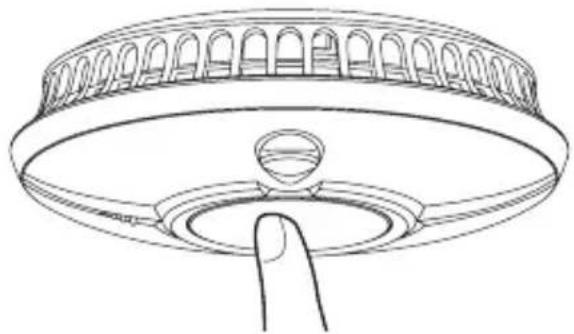
Alarm 1 will give an audible sound consisting of 2 cycles of 3 loud beeps.
Alarm 2 The red LED on the wireless module of Alarm 2 will flash to indicate that it has been "learned-in" successfully.

Note: If the test button is not pressed quickly enough (before the red LED on the wireless module of Alarm 2 has extinguished), the learn-in process will fail. If this happens, repeat the process again, as described above.
-
Fit Alarm 2 onto its base plate to complete the installation.
-
Additional alarms should be “learned-in” the same way. When learning in additional alarms, any alarm already in the network, can be used as ‘Alarm 1’. This means that you can “learn-in” the additional alarm to any alarm already in the network. It will then become part of the whole network. You do not have to “learn it in” to each alarm in the network.
-
After completing the "learn-in" procedure, test the alarms as described in "Alarm Test".
If any interlinked alarm fails to respond to the "Alarm Test", remove it from its base plate and repeat the learning in process.
Unlearning a Wi-Safe 2 Alarm
To remove an alarm from a network, push and release, then push and hold the learn button. When the red LED goes out, release the button. Once the LED has flashed 5 times you have successfully 'Unlearned' the alarm.
When removing an alarm from any Wi-Safe 2 network it is generally good practice to “unlearn” every alarm (in the same way as mentioned above) and rebuild the network once again by following the “learn-in” process on page 6.
Please note: It is important not to rush the Wi-Safe 2 system and is also good practice to allow several minutes after un-learning the system before rebuilding the network once again.
OPERATION
NORMAL CONDITION
The alarm will check its sounder once a month. If the alarm is interlinked with a FireAngel Wireless Gateway unit via a Wi-Safe 2 network, it will report the alarm status into the Wireless Gateway.
During normal operation, the LED does not flash and the audible alarm signal does not sound.
NOTE: The alarm checks the sounder every 30 days. During this time the unit may emit an unobtrusive clicking noise. This does not resemble the alarm signal or fault signal and will be difficult to detect during everyday activity.
ALARM CONDITION
If the alarm goes into alarm, 3 loud beeps will sound, which continually repeat until the cause of the alarm being activated is found and resolved. The red LED on the alarm will flash rapidly (once per second) during these alarms. All interlinked alarms will sound the same pattern.
FAULT INDICATION
If the yellow LED flashes and an short audible beep is heard at a different time, this indicates that there is a fault; the unit may not detect smoke and may not sound an alarm in the event of a fire. If this occurs, it is strongly recommended that you replace the alarm immediately.
LOW BATTERY CONDITION
IMPORTANT: Your smoke alarm requires that its battery has sufficient power capacity to operate correctly.
Should your FireAngel smoke alarm enter a low battery condition, the unit will emit an audible 'chirp' once every 45 seconds and the amber LED will flash at around the same time. All other alarms in the network will also emit an audible low battery chirp once every 4 hours.
When this occurs, we recommend you replace the alarm immediately. Your smoke alarm will continue to warn of this low battery condition for at least 30 days, however, failure to change the alarm after this time would mean your smoke alarm may have insufficient power to alert you in a real fire situation. When the alarm is removed from the base plate the battery will automatically deactivate and the low power warning chirp should stop, allowing you to dispose of the alarm.
| ST-632 LED Indicators | ||||
| Red LED Amber LED | Audible signal | Status Action required | ||
| Flashes every second | 3 loud beeps repeating | Alarm | Check if there is a fire hazard and vacate property | |
| Flashes once every 45 seconds | 3 loud beeps repeating | Other alarm in network in alarm status | Check if there is a fire hazard and vacate property | |
| Flashes once every 10 seconds for up to 10 mins | “Smart Silence” Alarm has reduced sensitivity | This will be as a result of you silencing a false alarm. Sensitivity will return to normal within 10 mins | ||
| Flashes once every 45 seconds | Flashes at the same time as the red LED see note | Single chirp at the same time as the LED flash | Low powerpack | Replace within 30 days |
| Flashes once every 45 seconds | Flashes once every 45 seconds, 20-25 seconds after the red LED | Single chirp at the same time as the red LED flash | Fault | Call Technical Support if within warranty. If not replace alarm immediately |
| Flashes once every 45 seconds | Flashes at the same time as the red LED see note | Sounder Fault | Call Technical Support if within warranty. If not replace alarm immediately | |
| Flashes once every 45 seconds | Single chirp every four hours | Other alarm in network has low powerpack | Locate alarm with low powerpack and replace | |
| Flashes once every 45 seconds | Double flashes at the same time as the red LED see note | Single chirp at the same time as the LED flash | Radio module low battery | Call Technical Support if within warranty. If not replace alarm immediately |
| Flashes once every 45 seconds | Double flashes every 45 seconds, 20-25 seconds after the red LED | Single chirp at same time as the red LED flash | Radio module fault | Call Technical Support if within warranty. If not replace alarm immediately |
Note: The amber LED may flash twice on the ST-632, indicating that the fault is with the wireless module. In this event, please contact Technical Support for guidance on how to replace W2-Module within the unit. Telephone: 0330 094 5830 or e-mail: technicalsupport@fireangeltech.com
ALARM TEST
The alarm must be properly attached to the base plate before it can be tested.
a) Press the test button in the centre and release.

b) The unit will give an audible alarm consisting of 2 cycles of 3 loud beeps, then stop automatically.
c) The red LED on the alarm will flash rapidly during the audible signal.

NOTE: The test button accurately tests the alarm's smoke sensing circuit, there is no need to test your alarm with smoke. If your smoke alarm fails to give an audible test signal, please refer immediately to the trouble shooting guide at the end of this manual.
WARNING: You should test your smoke alarm every month.
If your ST-632 is interlinked with other smoke alarms, we recommend that every individual smoke alarm is tested during the monthly test.
a) Briefly press the test button in the centre of the smoke alarm and release.
b) The unit you are testing will give an audible alarm consisting of 2 cycles of 3 loud beeps, then stop automatically. The red LED on this alarm will flash rapidly (once per second) during the audible alarm. All interlinked alarms will give an audible alarm consisting of 2 cycles of 3 loud beeps, then stop automatically, indicating the test is complete. The red LED on all interlinked alarms will not flash rapidly. If any alarm fails to self-test, see Troubleshooting..
ALARM SMART SILENCE™
DANGER: If your smoke alarm emits the full alarm signal and you are not testing the unit, the smoke alarm is warning you of a potentially dangerous situation that requires your immediate attention. Only use the
alarm silence function after making sure that there is no ongoing fire emergency situation. Do not block the vents on the alarm or disable the smoke alarm in any way, as this will remove your protection. Smoke alarms can sometimes react to cooking fumes or other non emergency situations. Your smoke alarm features “Smart Silence” technology. In the event of a known false alarm your smoke alarm can be temporarily silenced by pressing the central test button. Your alarm will automatically return to full sensitivity within 10 minutes.
NOTE: If the level of smoke reaching the alarm is very high, the alarm silence will be overridden and the alarm will continue to sound.
- Briefly press and release the pause button, the alarm sound will shortly stop.

- Your alarm will silence and enter into a reduced sensitivity reset cycle for approximately 10 minutes.

- During the reduced sensitivity reset cycle, the red LED on your alarm will continue to flash more rapidly than normal, approximately once every 10 seconds.
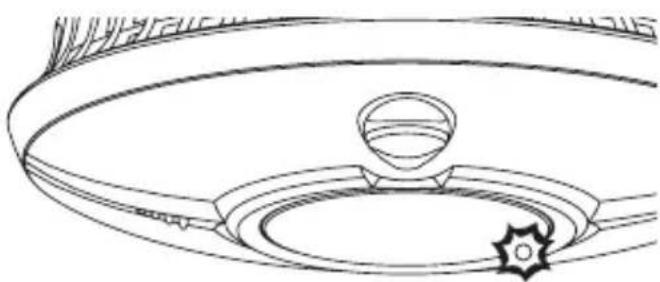
- Once the reset cycle is complete, your alarm will automatically return to full sensitivity after a maximum of 10 minutes and the red LED will revert to flashing once every 45 seconds.


DANGER: Never ignore any alarm. Ignoring the alarm may result in injury or death. If your smoke alarm activates and alarms and you are not absolutely certain of the source of the smoke, get everyone out of the house immediately.
If your ST-632 is interlinked with other alarms, pressing the test button will also silence other alarms in the network. However, any alarm that has sensed smoke (an instigating alarm) cannot be remotely silenced. This means that any alarm that has sensed smoke will continue to sound allowing you to locate it.
If any instigating alarm in the network has not been silenced after a short period (2-4 minutes), all other alarms will start sounding again to alert you.
WARNING: If any alarm in the network is sounding, it is warning you of a potentially hazardous situation. Do not ignore it.
SLEEP EASY™
Low battery warnings often start at night or when it maybe inconvenient to replace your alarm. You can silence the audible chirp for a period of 8 hours by pressing the test button. Your smoke alarm will still detect smoke during this time of low battery warning silence. However it is recommended that
you replace your alarm immediately, and certainly within 30 days, as your alarm may then have insufficient power to warn you of a real fire situation after this time.
WARNING: Your smoke alarm cannot be silenced if the chirp is indicating a fault. In this instance, the unit should be replaced immediately to ensure protection in the event of a fire.
TROUBLESHOOTING
Problem Solution
| Your FireAngel smoke alarm does not sound during testing. | Make sure alarm has been rotated clockwise as far as it can go and is securely located on base plate (this means the battery has been activated). If testing immediately after first activating the alarm you should allow a few seconds for the alarm to settle before testing.Make sure you push the centre of the test button firmly.Check the LED flashing pattern (see the section on “LED indicators”).If the unit has been silenced and is in low sensitivity mode, it may not test.Wait 15 minutes then try again.If the alarm has been recently fitted and it still fails to self-test then contact technical support (see below). |
| Your FireAngel smoke alarm cannot be removed from its base plate. | If you find that you cannot remove the smoke alarm from its base plate, the locking mechanism may have been engaged.Undue force may result in damage to the smoke alarm or the base plate, or both. For more information, contact your installer, or the FireAngel Technical Support Team between 9am - 5pm Monday – Friday.Telephone: 0330 094 5830. |
| Your FireAngel smoke alarm activates when no smoke is visible. | Check the location of your smoke alarm (see the section on "Positioning").Clean the smoke alarm (see the section on "Maintenance").If the alarm is sounding but the red LED is only flashing once every 45 seconds, this indicates that an interlinked alarm has detected smoke.Vacate the property if there is a fire hazard. |
| Other interlinked units fail to silence when one unit is silenced | Interlinked units that have sensed smoke can’t be silenced. If one or more unit remains in alarm, all other interlinked units will emit their audible warning again within 4 minutes. Vacatethe property if there is a fire hazard. |
Problem Solution
| Your FireAngel smoke alarm emits a brief beep intermittently. | Check the location of your smoke alarm (see "Application" and "Positioning").Check that your smoke alarm is definitely the source of the beeping; ensure the noise isn't coming from another alarm (smoke/carbon monoxide/gas/burglar alarm) by process of elimination.If the brief beep is emitted once every 45 seconds, and the yellow LED is flashing around the same time, this indicates that the battery is low. The unit should be replaced within 7 days.If your smoke alarm is chirping once every 4 hours, it is indicating that another alarm in the network has entered a low battery condition. Locate the alarm with the low battery condition and replace the alarm as soon as possible and in any event within 30 days. |
| You experience frequent unwanted alarms. | Check the location of your smoke alarm (see "Positioning").Clean the smoke alarm (see "Maintenance").Any activated alarm will cause other interlinked alarms to sound. Carry out these checks on the activated alarms in particular (red LED flashing rapidly during alarm).Any activated alarm will cause other interlinked alarms to sound. Carry out these checks on the activated alarms in particular (red LED flashing rapidly during alarm). |
| The yellow LED is flashing and the alarm is emitting a short 'chirp'. | If the yellow LED is flashing at around the same time as the chirp, this indicates low power status; the alarm should be replaced as soon as possible, within a maximum of 7 days.If the yellow LED is flashing at a different time to the chirp, this indicates a fault; the alarm should be replaced as soon as possible. |
| If you have any questions, please contact the Technical Support Team between 9am - 5pm Monday - Friday. Telephone: 0330 094 5830 or e-mail:technicalsupport@fireangeltech.com You can also visit the support section of our website www.fireangeltech.com | |
MAINTENANCE
Your smoke alarm has been designed to be as maintenance-free as possible, however there are several things you must do to keep it working properly.
CAUTION: Your smoke alarm is a sealed electrical device and no attempt should be made to open the case. Attempting to open the case will invalidate your Warranty.
Testing
Test your smoke alarm once every month see 'Alarm Test'. Any test failures should be reported to the Technical Support Team.
Cleaning
As a minimum your smoke alarm should be cleaned once every 3 months using your vacuum cleaner fitted with the soft brush attachment.

WARNING: Your smoke alarm may false alarm when it is being cleaned using a vacuum cleaner.
IMPORTANT: Do not use solvents or cleaners on your smoke alarm, as they may cause damage to the sensor or circuitry. The unit can be wiped with a slightly damp cloth.
CAUTION: Do not paint the smoke alarm as this may block the openings and prevent smoke from entering the sensor.
DISPOSAL
Waste electrical products should not be disposed of with your other household waste. The alarm is ideally suited for disposal within the waste electronic and electrical equipment (WEEE) recycling scheme.
Please recycle where facilities exist. Check with your local authority, retailer or contact our technical support team for recycling/disposal advice as regional variations apply.
Once the alarm is removed from the base plate the internal battery will be deactivated and the alarm will stop emitting the low power warning chirp. The unit is now ready for disposal.
WARNING: Do not attempt to open.
WARNING: Do not burn.
WARRANTY
FireAngel Safety Technology Limited warrants to the original purchaser that its enclosed smoke alarm be free from defects in materials and workmanship under normal residential use and service for a period of 5 (five) years from the date of purchase. Provided product is sent back to FireAngel Safety Technology Limited with proof and date of purchase, FireAngel Safety Technology Limited hereby warrants that during the 5 (five) year period commencing from the date of purchase FireAngel Safety Technology Limited, at its discretion, agrees to replace the unit free of charge. The warranty on any replacement ST-632 alarm, will last
for the remainder of the period of the original warranty in respect of the alarm originally purchased – that is from the date of original purchase and not from the date of receipt of the replacement product. FireAngel Safety Technology Limited reserves the right to offer an alternative product similar to that being replaced if the original model is no longer available or in stock. This warranty applies to the original retail purchaser from the date of original retail purchase and is not transferable. Proof of purchase is required.
This warranty does not cover damage resulting from accident, misuse, disassembly, abuse or lack of reasonable care of the product, or applications not in accordance with the user manual. It does not cover events and conditions outside of FireAngel Safety Technology Limited's control, such as Acts of God (fire, severe weather etc.). It does not apply to retail stores, service centres or any distributors or agents. FireAngel Safety Technology Limited will not recognise any changes to this warranty by third parties.
FireAngel Safety Technology Limited shall not be liable for any incidental or consequential damages caused by the breach of any expressed or implied warranty. Except to the extent prohibited by applicable law, any implied warranty of merchantability or fitness for a particular purpose is limited in duration for 5 (five) years.
This warranty does not affect your statutory rights. Except for death or personal injury, FireAngel Safety Technology Limited shall not be liable for any loss of use, damage, cost or expense relating to this product or for any indirect, or consequential loss, damages or costs incurred by you or any other user of this product.
(UK) technicalsupport@fireangeltech.com
(DE) technik@fireangeltech.com
(FR) supporttechnique@fireangeltech.com
(NL) klantenservice@fireangeltech.com
(INT) Internationalsupport@fireangeltech.com



- CONTENTS
- INTRODUCTION
- AUTOMATIC POWER ENGAGE
- THERMOPTEK TECHNOLOGY
- POSITIONING
- MULTI-FAMILY OR MIXED OCCUPANT RESIDENCE (TENANCY BUILDING, STUDENT ACCOMMODATION)
- INSTITUTIONS AND HOTELS
- MOBILE HOMES AND CARAVANS
- COMMERCIAL AND INDUSTRIAL PREMISES
- HOWTO INSTALL YOUR SMOKE ALARM
- PREPARATION
- INSTALL BASE PLATE
- FIT YOUR FIREANGEL SMOKE ALARM
- TEST YOUR FIREANGEL SMOKE ALARM
- INTERLINKING YOUR SMOKE ALARMS
- LEARNING IN" (INTERLINKING) YOUR SMOKE ALARMS
- UNLEARNING A WI-SAFE 2 ALARM
- OPERATION
- NORMAL CONDITION
- ALARM CONDITION
- FAULT INDICATION
- LOW BATTERY CONDITION
- ALARM TEST
- ALARM SMART SILENCE™
- SLEEP EASY™
- TROUBLESHOOTING
- MAINTENANCE
- TESTING
- CLEANING
- DISPOSAL
- WARRANTY
Brand : FireAngel
Model : FP2620W2-R
Category : Smoke detector