
PSLGR14 - Lawn mower SereneLife - Free user manual and instructions
Find the device manual for free PSLGR14 SereneLife in PDF.


| Product Type | Lawn Mower |
| Brand | SereneLife |
| Model | PSLGR14 |
| Power Source | Electric Corded |
| Motor Power | 1200 W |
| Cutting Width | 14 inches (35.5 cm) |
| Cutting Height Adjustment | 6 positions, 1-2.5 inches |
| Grass Bag Capacity | 10 gallons (38 L) |
| Mulching Capability | Yes |
| Side Discharge | Yes |
| Handle Type | Foldable Ergonomic |
| Wheel Size | 7 inch front, 8 inch rear |
| Weight | 28 lbs (12.7 kg) |
| Dimensions (L x W x H) | 30 x 18 x 12 inches |
| Power Cord Length | 50 feet (15.2 m) |
| Safety Switch | Blade Brake Clutch |
| Noise Level | 80 dB |
| Certification | ETL Approved |
| Warranty | 2 Years Limited |
| What's in the Box | Mower, Grass Bag, Owner's Manual |
Frequently Asked Questions - PSLGR14 SereneLife
User questions about PSLGR14 SereneLife
0 question about this device. Answer the ones you know or ask your own.
Ask a new question about this device
Download the instructions for your Lawn mower in PDF format for free! Find your manual PSLGR14 - SereneLife and take your electronic device back in hand. On this page are published all the documents necessary for the use of your device. PSLGR14 by SereneLife.
USER MANUAL PSLGR14 SereneLife
natural_image
Two types of hair tools: a manual angle brush and a flat-rolled saw blade, shown against a plain background (no text or symbols visible).Safety Instructions
Cordless Grass and Shrub Shears
Please read and save these instructions.
General safety regulations for electric tools
This equipment is not designed to be used by people (including children) with limited physical, sensory or mental capacities or those with no experience and/or knowledge unless they are supervised by a person who is responsible for their safety or they have received instructions from such a person in how to use the equipment safely. Children must always be supervised in order to ensure that they do not play with the equipment.

CAUTION: Read all safety regulations and instructions.
Any failures made in following the safety regulations and instructions may result in an electric shock, fire and/or serious injury.
Keep all safety regulations and instructions in a safe place for future use.
The term “electric tool” used in the safety regulations refers to electric tools operated from the mains power supply (with a power cable) and to battery operated electric tools (without a power cable).
1. Workplace safety
- Keep your work area clean and well illuminated. Untidy or unlit work areas can result in accidents.
- Do not use this tool in a potentially explosive environment containing combustible liquids, gases or dust.
Electric tools generate sparks, which can in turn ignite dust or vapors.
- Keep children and other persons away from the electric tool while it is being used.
Allowing yourself to get distracted can cause you to lose control of the tool.
2. ELECTRICAL SAFETY
- The tool's connector plug must be able to fit into the socket outlet. Do not modify the plug in any way! Do not use adapter plugs in conjunction with electrically grounded tools.
Unmodified plugs and matching socket outlets reduce the risk of an electric shock.
- Avoid touching grounded surfaces, such as those of pipes/tubes, heaters, cookers and refrigerators.
There is an increased risk of getting an electric shock if you are electrically grounded.
- Keep the tool away from rain and moisture/wet conditions.
Penetration of water into an electric tool increases the risk of an electric shock.
- Do not use the cable to carry the tool, hang it up or pull the plug out of the socket. Keep the cable away from sources of heat, oil, sharp edges and moving tool parts.
Damaged or tangled cable increases the risk of an electric shock.
- If you intend to use an electric tool outdoors, ensure that you only use extension cable that is approved for outdoor applications.
Using extension cable that is approved for outdoor applications reduces the risk of an electric shock.
- If operation of the electric tool in a damp environment can not be avoided, use a earthleakage circuit-breaker. The earth-leakage circuit-breaker reduces the risk of an electric shock.
3. PERSONAL SAFETY
- Be alert, work conscientiously and exercise appropriate caution when using the electric tool. Do not use the tool if you are tired or are under the influence of drugs/medication or alcohol.
One moment of carelessness or lack of attention when using the electric tool can cause serious bodily injury!
• Always wear personal protective equipment (PPE), including safety goggles.
Wearing personal protective equipment such as a dust mask, non-slip footwear, protective headgear and ear muffs (depending upon the type of electric tool and the particular application) reduces the risk of sustaining injury.
- Make sure that the tool cannot start up accidentally. Ensure that the electric tool is switched off before you connect the tool to the power supply and/or insert the battery, or pick up or carry the tool. Physically touching the switch with your finger when carrying the tool or connecting the tool to the power supply switched on can lead to accidents.
- Remove adjusting tools/wrench(es) prior to switching on the power tool.
A tool or wrench that is positioned inside a rotating power tool part can cause injury.
- Avoid abnormal working postures. Make sure you stand squarely and keep your balance at all times.
This way, you will be able to have better control over the tool in unexpected situations.
- Wear suitable clothes. Never wear loose fitting clothes or jewelry. Keep hair, clothes and gloves away from moving parts.
Loose clothing, dangling jewelry and long hair can be caught by moving parts.
- If dust extraction and dust collection devices can be mounted, ensure that these are connected and are properly used.
The use of a dust extraction system can reduce the danger posed by dust.
4. Using the treatment of electric tools
- Do not overload your tool. Only use suitable electric tools to perform your work.
Using the right electric tool allows you to work better and safer within the tool's quoted capacity range.
- Do not use an electric tool whose switch is defective.
An electric tool that no longer can be switched on or off is dangerous and must be repaired.
- Pull the plug out of the socket and/or remove the battery before making any adjustments to the tool, changing accessories or put the tool down.
This precaution eliminates the possibility of inadvertently starting the tool.
- When not in use, store electric tools out of the reach of children. Do not allow those persons to use this tool who are unfamiliar with it or who have not read these instructions.
Electric tools are dangerous when they are used by inexperienced persons.
- Take good care of your tool. Check that moving parts properly function and do not jam, that parts are not broken off or damaged in any way and that the tool can be used to its full capacity. Have damaged parts repaired prior to using the tool.
The cause of many accidents can be traced back to poorly maintained electric tools.
- Keep your blades sharp and clean.
Properly maintained blades with sharp edges jam less frequently and are easier to use.
- Make sure to use electric tools, accessories, attachments, etc. in accordance with these instructions. Take the conditions in your work area and the job in hand into account.
Using electric tools for applications other than those intended can lead to dangerous situations.
5. CAREFUL HANDLING AND USE OF CORDLESS EQUIPMENT
- Ensure that the equipment is switched off before you insert the battery.
Inserting a battery into an electric tool that is switched on can cause accidents.
- Only charge the batteries in chargers that are recommended by the manufacturer. A charger that is designed for a certain type of batteries may pose a fire risk if it is used with other types of batteries.
- Use only the correct batteries in the electric tools. The use of other batteries may result in injuries and a fire risk.
- Keep unused batteries away from paper clips, coins, keys, nails, screws and other metallic objects that could cause a short circuit between the contacts. A short circuit between the battery contacts may cause burns or a fire.
- In case of incorrect use, fluid may escape from the battery. Avoid contact with it. If you touch it by mistake, rinse the affected area with water. If you get the fluid in your eyes, also seek medical advice. Leaking battery fluid can cause skin irritation or burns.
6. SERVICE
- Have your tool repaired only by authorized specialists using original replacement parts. This will ensure that your tool remains safe to use.
Additional safety instructions
- The battery pack supplied with your cordless tool is not charged. The battery pack has to be charged before you use the tool for the first time.
- The battery pack does not reach its maximum capacitance until it has been charged and discharged approximately five times.
- Battery packs lose their charge even when they are not being used. Regular charging is therefore recommended.
- Please check the data marked on the rating plate of the battery charger. Be sure to connect the battery charger to a power supply with the voltage marked on the rating plate. Never connect it to a different mains voltage.
- Keep the battery charger and the cordless tool out of children's reach.
- Wear suitable work clothes. Wear safety goggles.
- Never open the battery pack. Avoid contact with a leaking battery pack. In case of accidental contact, wash the affected area of skin with soap and water. If battery acids gets in your eye, rinse out the eye with clear water for at least 10 minutes and seek a doctor's advice immediately. Neutralize other affected areas with a mild acid such as lemon juice or vinegar.
- Protect the battery charger and its cable from damage and sharp edges. Have damaged cables repaired without delay by a qualified electrician.
- Make sure that the contacts of the battery pack do not come into contact with other metallic objects such as nails or screws. There is a risk of short-circuiting!
- Use only battery chargers that are intended for the battery pack in question.
- Do not use damaged battery chargers.
- Leave repairs strictly to the appointed service center or authorized dealers.
- Do not use the supplied battery charger to charge other cordless tools.
- Never allow the battery pack to become fully discharged. This will cause it to develop a defect.
- Timely recharging of the battery pack will help it serve you well for a long time. You must recharge the battery pack when you notice that the power of the cordless tool drops.
- In heavy use the battery pack will become warm. Allow the battery pack to cool to room temperature before commencing with the charging.
- Protect your cordless tool and the battery charger from moisture and rain.
-
Do not use the cordless tool or the battery charger near vapors and inflammable liquids.
-
Do not throw battery packs into an open fire. There is a risk of explosion!
- Use the battery charger only in dry conditions and an ambient temperature of 10 - 40^ .
- Do not keep the battery charger in places where the temperature is liable to reach 50^ C. In particular, do not leave the battery charger in a car that is parked in the sunshine.
- Do not ignite the battery pack or expose it to fire.
Do not lose these safety instructions.
flowchart
graph TD
    A["Warning"] --> B["Packet"]
    B --> C["Envelope"]
    C --> D["ISC"]
    D --> E["Disposal"]
    style A fill:#f9f,stroke:#333
    style B fill:#ccf,stroke:#333
    style C fill:#cfc,stroke:#333
    style D fill:#fcc,stroke:#333
    style E fill:#ffc,stroke:#333
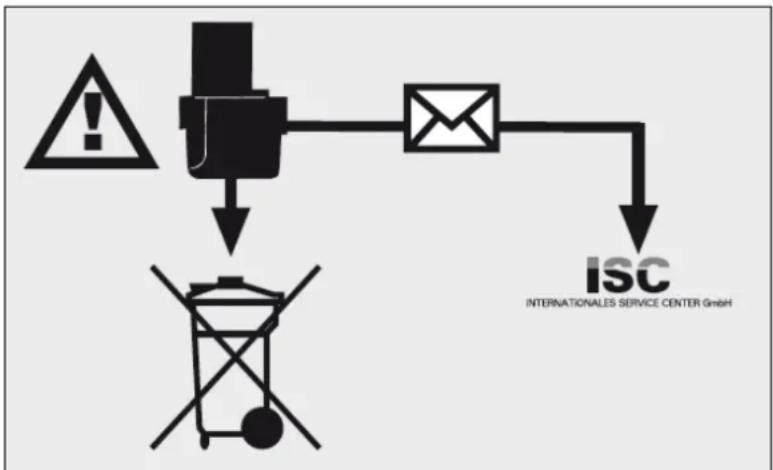
Rechargeable batteries and cordless electric machines and tools contain materials that are potentially harmful to the environment. Never place any cordless electric machines or tools in your household refuse. When cordless electric machines or tools become defective or worn, remove the rechargeable batteries and return them to iSC GmbH Eschenstrasse 6, D-94405, Germany. If the rechargeable batteries cannot be removed, return the complete cordless machine or tool. You can then be sure that the equipment will be correctly disposed of by the manufacturer.
Safety instructions for grass shears
- Before you begin your work, examine the material you want to cut. Remove any foreign bodies. Keep a continuous watch out for foreign bodies while you are working. If you come across any foreign bodies while cutting, turn off the device (release the ON button) and remove the items in question.
- Keep the device at a suitable distance from your body while working. Only switch on the device when all parts of the body are well out of the way.
- Make sure that no people or animals ever come within the working or swiveling range of the device.
- Only use the device in broad daylight or make sure that you provide adequate artificial light.
- Important! The cutting tools continue running on after the device has been switched off.
- When the device is not in use, make sure that it is stored in such a way that there is no risk of hands coming into contact with the cutting blades.
- If the cutting blades get jammed while cutting, turn off the device (release the ON button) and remove the object in question (thick branch, foreign body) with a suitable blunt aid. Never remove any such objects with your fingers as the pre-tensioned blade can cause serious injuries through cutting.
- Keep the air vents clean.
- Keep the charging cable away from the blades. Never use the device with the charging cable plugged in.
- We recommend that you use a socket with a residual current device with maximum 30mA tripping current for the charger.
- Never attempt to remove the cuttings with the motor running or to hold material you wish to cut. Always switch off the device before attempting to remove any jammed cuttings.
- Make sure you keep all parts of your body away from the blade. Never attempt to remove the cuttings with the blade running or to hold the material you wish to cut. Always switch off the equipment before attempting to
remove any jammed cuttings. A single moment of carelessness when using the hedge trimmer can result in serious injuries.
- Carry the hedge trimmer by its handle with the blades at a standstill. Always fit the protective cover when transporting the hedge trimmer or putting it into storage. Careful handling of the equipment reduces the likelihood of injury by the blade.
- Keep the cable out of the cutting zone. During operation the cable may be hidden by the hedge and be cut through by accident.
- Hold the equipment correctly, for example with both hands if the equipment is fitted with two handles.
- Familiarize yourself with the operator controls and proper operation of the machine.
- Local regulations may set minimum age requirements for the user.
- Always keep in mind that the operator or user of the equipment is responsible for accidents or risks involving other persons or their property.
- Never use the machine with safety devices which are damaged or fitted in the wrong position.
- Beware of injuries to your feet and hands by the cutting mechanism.
- Use only spare parts and accessories which are recommended by the manufacturer.
- Do not switch on the motor until your hands and feet are a safe distance from the cutting mechanism.
- Switch off the machine:
- whenever it is left unattended;
- before inspecting or cleaning the machine and before carrying out any work on it;
- if it begins to vibrate excessively.
- Hold the power tool by the insulated handles because the blade may strike concealed power cables. Contact between the blade and a live cable can make the metal parts of the equipment live and will cause an electric shock.
- It is recommended to search the hedge for hidden objects such as wire fencing.
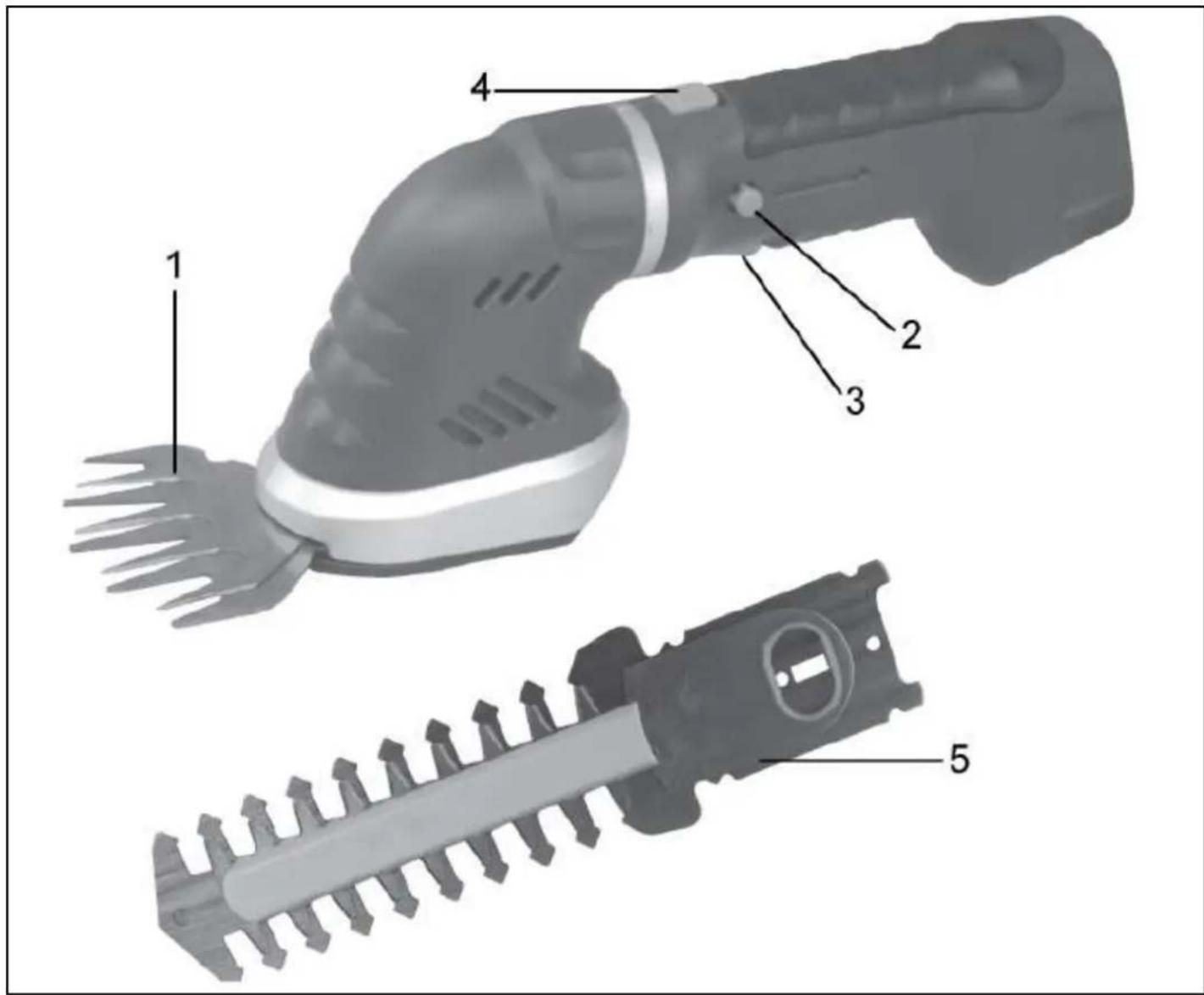
Fig.1
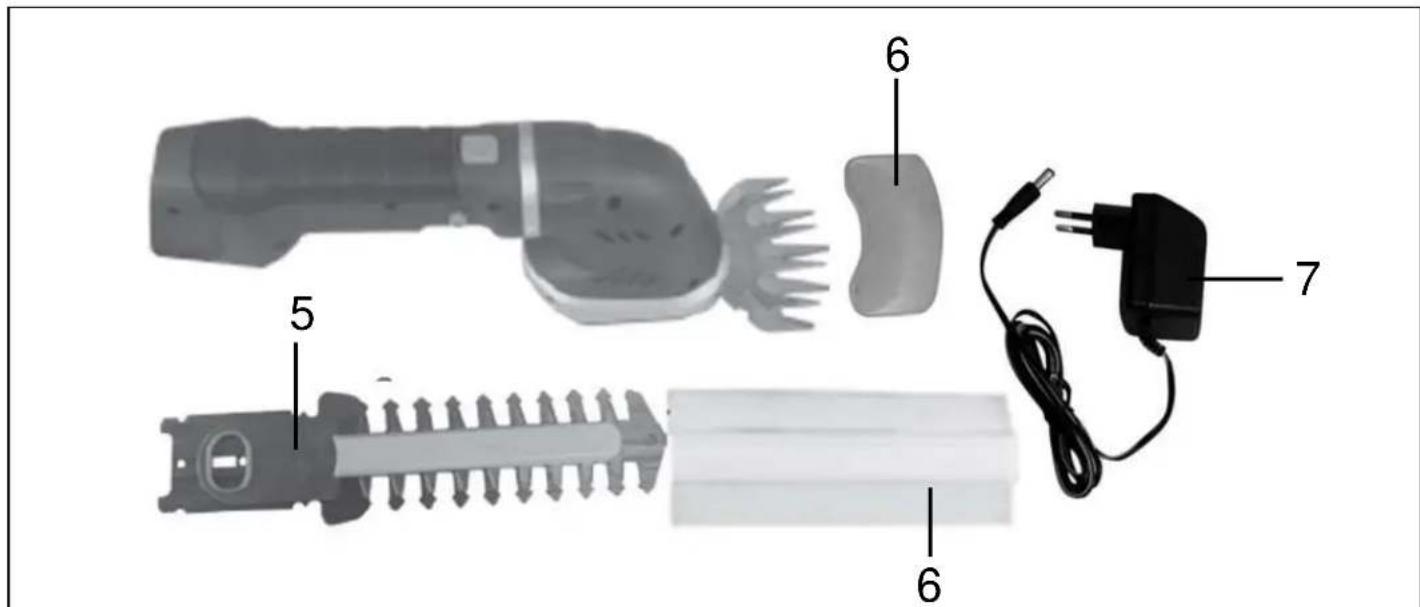
Fig.2
natural_image
3D rendering of a handheld electric shaver with labeled component 8 (no text or symbols beyond label)Fig.3
natural_image
3D rendered diagram of a medical device with labeled component (no text or symbols beyond label)Fig.4
natural_image
Close-up of a mechanical component with labeled parts (1 and 2), no visible text or symbols beyond labelsFig.5
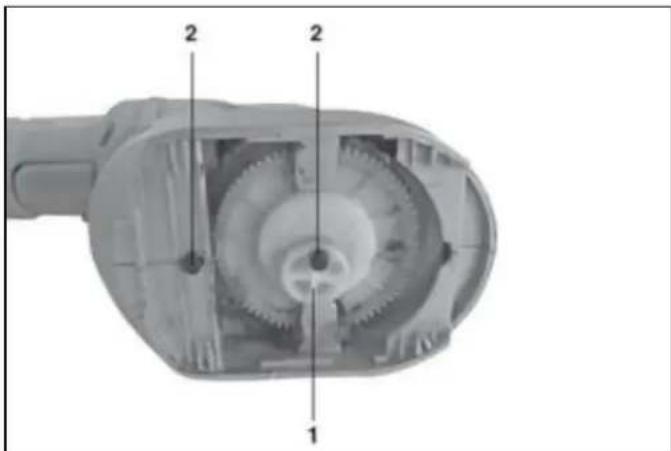
Fig.6
natural_image
Diagram of a mechanical tool with a central blade and threaded end (no text or symbols)Fig.7
natural_image
Metal mechanical component with spoked blades and a circular feature, labeled with number 1 (no text or symbols on the part itself)Fig.8
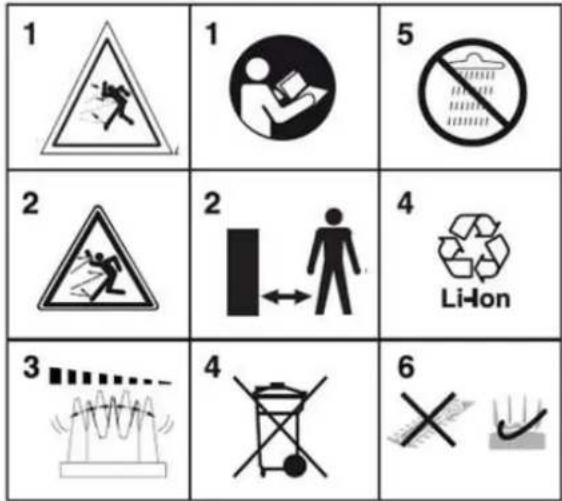
Fig.9
Important!
When using the equipment, a few safety precautions must be observed to avoid injuries and damage. Please read the complete operating instructions and safety regulations with due care. Keep this manual in a safe place so that the information is available at all times. If you give the equipment to any other person, hand over these operating instructions and safety regulations as well. We cannot accept any liability for damage or accidents which arise due to a failure to follow these instructions and the safety instructions.
1. Safety regulations
Please refer to the booklet included in delivery for the safety instructions.
Caution!
Read all safety regulations and instructions.
Any errors made in following the safety regulations and instructions may result in an electric shock, fire and/or serious injury.
Keep all safety regulations and instructions in a safe place for future use.
Explanation of the warning signs on the equipment (see Fig. 9)
- Important. Read the operating instructions and follow the warnings and safety instructions.
- Keep all other persons away from the danger zone.
- Important. The cutter blades continue to run after the motor is switched off. Wait for the blades to come to a standstill. Risk of injury!
- Dispose of batteries correctly!
- Protect the tool from the damp and never expose it to rain.
- Extension only with grass cutter blade! It is prohibited to use the extension with the hedge cutter blade!
2. Layout (Fig. 1 / 2)
1 Grass cutter blade
2 Safety lock-off
3 ON button
4 Locking device
5 Shrub cutter blade
6 Blade guard
7 Battery charger
3. Intended use
The equipment is designed for cutting the edges of lawns and small areas of grass in private and hobby gardens.
Equipment designed for use in private and hobby gardens is regarded as unsuitable for use in public facilities, parks and sports centers, along roadways, or in agriculture and forestry. The operating instructions as supplied by the manufacturer must be kept and referred to in order to ensure that the equipment is properly used and maintained.
Important. This equipment must not be used for composting purposes (shredding) as this could result in injury or damage to property.
The equipment may only be used for the tasks it is designed to handle. Any other use is deemed to be a case of misuse. The user / operator and not the manufacturer will be liable for any damage or injuries of any kind caused as a result of this.
Please note that our equipment has not been designed for use in commercial, trade or industrial applications. Our warranty will be voided if the equipment is used in commercial, trade or industrial businesses or for equivalent purposes.
4. Technical data
| Speed n_0 | 1000 rpm |
| Cutting width of the grass cutter | 93 mm |
| Cutting width of the shrub shears | 150 mm |
| Cutting thickness of the shrub shears | 8 mm |
| Max. operating time | 60 min |
| Battery pack | Li-Ion / 7.2 V DC / 1.3 Ah |
| Charging time | 3-5 h |
| Protection class | III |
| L_pA sound power level | 72.7 dB |
| L_WA noise level | 92.7 dB |
| Vibration a_hv grass shears | ≤slant 2.5 m/s^2 |
| Vibration a_hv shrub shears | 5.5 m/s ^2 |
Sound and vibration were measured in accordance with EN ISO 3744.
5. Before starting the equipment
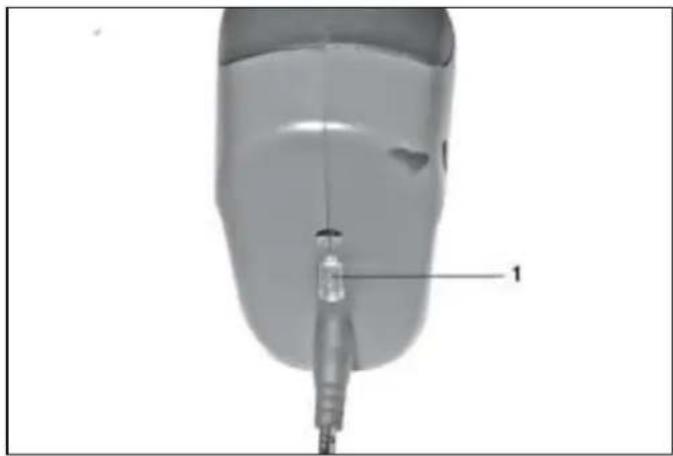
5.1. Charging the battery pack (Figure 4)
- Connect the equipment to the charger (Figure 4).
- Check that your mains voltage is the same as that marked on the rating plate of the battery charger. Plug the battery charger in a socket-outlet. The red LED (Figure 4/Item 1) comes on to indicate that charging voltage is available.
- The battery pack is being charged. An empty battery pack requires a maximum charging period of 3 to 5 hours. The temperature of the battery pack may rise slightly during the charging operation. This is normal.
- As soon as battery pack is fully charged, the red LED (Figure 4/Item 1) extinguishes.
If the battery pack fails to charge, please check
- whether there is voltage at the socket-outlet
If you still fail to charge the battery pack, please return the complete tool together with the battery charger to our Customer Service Center.
Timely recharging of the battery will help it serve you well for a long time. You must recharge the battery pack when you notice that the power of the tool drops.
Never allow the battery pack to become fully discharged. This will cause it to develop a defect.
5.3 Adjusting the handle
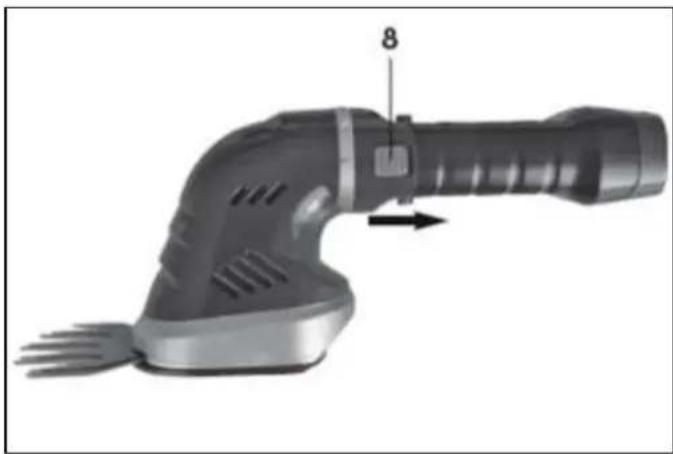
The handle can be turned -90/-45/+45/+90 by pulling the lock (Fig. 3/Item 8) in the direction indicated by the arrow. Take care to engage it correctly. The appliance can now be used, for example, as an edge trimmer.
6. Operation
The area to be cut must first be cleared of stones and other solid objects. The safety lock-off (Fig. 1/Item 2) prevents the tool being started unintentionally. Activate the safety lock-off (Figure 1/Item 2) by pressing and pressing the ON/OFF switch (Figure 1 Item 3) at the same time. To switch off the equipment, let go of the ON/OFF switch (Figure 1 / Item 3).
6.1. Cutting grass
Allow the grass cutter to glide over the ground. The best cutting performance is achieved on dry lawns. When you notice a drop in cutting performance, recharge at once so that the batteries do not become fully discharged. The blades must be kept in the black guard hood when the grass cutter is not in use.
6.2. Cutting hedges
The equipment can be used to cut small hedges and bushes.
Hold the shrub shears slightly tilted in the direction of the hedge you wish to cut.
Start by cutting the sides of the hedge working from the bottom up, and finally cut the top of the hedge. Make sure that there are no foreign bodies in or alongside the hedge, which could damage the blades.
When to cut hedges:
- As a general rule: hedges which loose their leaves in the autumn should be cut in June and October.
• Evergreen hedges can be cut in April and August.
6.3. Changing the blades Important. Risk of injury!
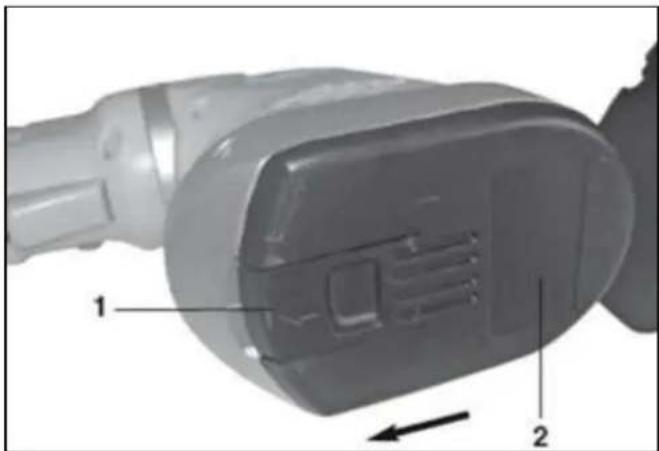
To remove the blades, raise the lug (Fig. 5/Item 1) and push off the cover (Fig. 5/Item 2) in direction of the arrow.
Once you have removed the blade you will be able to see the toothed wheels of the gear unit (Fig. 6). Make sure that no dirt gets into the gear unit when you change the blade.
To assemble, proceed in reverse order.
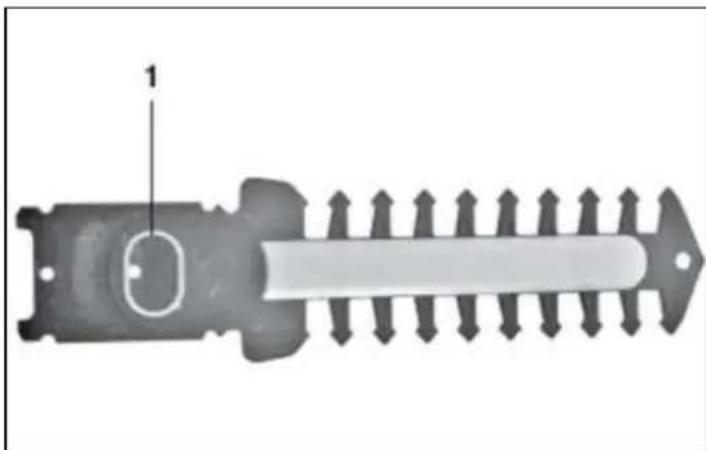
When you fit the hedge cutter blade check the position of the pin for the eccentric connector (Fig. 6/Item 1). Take the hedge cutter blade and slide the eccentric mount (Fig. 7/Item 1) into position so that the pin for the eccentric connector and the eccentric mount fit together precisely when assembled. Slot the hedge cutter blade onto the guide pins (Fig. 6/Item 2).
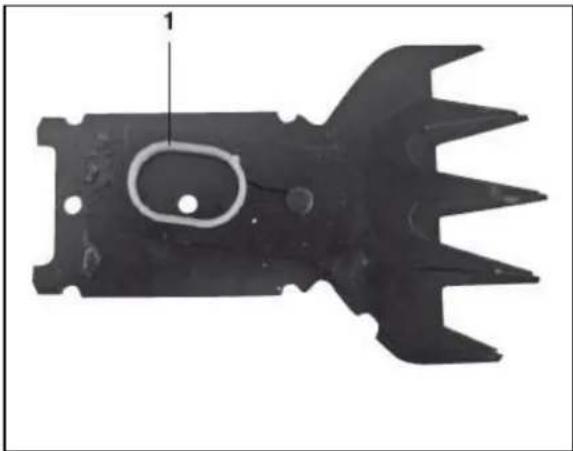
When you fit the grass cutter blade check the position of the pin for the eccentric connector (Fig. 6/Item 1) again. Shift the eccentric mount (Fig. 8/Item 1) on the grass cutter blade to the left or the right to find the position at which the pin for the eccentric connector (Fig. 6/Item 1) and the eccentric mount (Fig. 8/Item 1) match up.
7. Cleaning, maintenance and ordering of spare parts
7.1 Cleaning
- Keep all safety devices, air vents and the motor housing free of dirt and dust as far as possible. Wipe the equipment with a clean cloth or blow it with compressed air at low pressure.
• We recommend that you clean the equipment immediately after you use it. - Clean the appliance regularly with a damp cloth and some soft soap. Do not use cleaning agents or solvents; these may be aggressive to the plastic parts in the appliance. Ensure that no water can get into the interior of the tool.
- The shears should be cleaned thoroughly every time before and after use. A few drops of oil (for example sewing machine oil) applied to the blades improve the cutting performance. However, never apply grease to the blades. To guarantee a constant exact cut it is necessary that grass residues and dirt is removed also from the top and bottom blades.
Important.
Because of the risk of injury or damage to property, never clean the product with running water, especially not with a pressure hose. Store the cordless shears in a dry and frost-free location. The storage place must be inaccessible to children.
7.2 Servicing
- For good cutting performance the blades should always be sharp. They can therefore be resharpened with a whetstone. In particular we recommend to remove notches and ridges which are produced on the blades by stones or the like.
- There are no parts inside the equipment which require additional maintenance.
8. Disposal and recycling
The equipment is supplied in packaging to prevent it from being damaged in transit. The raw materials in this packaging can be reused or recycled. The equipment and its accessories are made of various types of material, such as metal and plastic. Defective components must be disposed of as special waste. Ask your dealer or your local council.
Never place any electric power tools in your household refuse.
To comply with European Directive 2002/96/EC concerning old electric and electronic equipment and its implementation in national laws, old electric power tools have to be separated from other waste and disposed of in an environment-friendly fashion, e.g. by taking to a recycling depot.
Recycling alternative to the return request:
As an alternative to returning the equipment to the manufacturer, the owner of the electrical equipment must make sure that the equipment is properly disposed of if he no longer wants to keep the equipment. The old equipment can be returned to a suitable collection point that will dispose of the equipment in accordance with the national recycling and waste disposal regulations. This does not apply to any accessories or aids without electrical components supplied with the old equipment.
The reprinting or reproduction by any other means, in whole or in part, of documentation and papers accompanying products is permitted only with the express consent of the iSC GmbH.
Subject to technical changes
- Safety Instructions
- Cordless Grass and Shrub Shears
- General safety regulations for electric tools
- CAUTION: Read all safety regulations and instructions.
- Workplace safety
- ELECTRICAL SAFETY
- PERSONAL SAFETY
- Using the treatment of electric tools
- CAREFUL HANDLING AND USE OF CORDLESS EQUIPMENT
- SERVICE
- Additional safety instructions
- Do not lose these safety instructions.
- Safety instructions for grass shears
- Important!
- Safety regulations
- Caution!
- Explanation of the warning signs on the equipment (see Fig. 9)
- Layout (Fig. 1 / 2)
- Intended use
- Important. This equipment must not be used for composting purposes (shredding) as this could result in injury or damage to property.
- Technical data
- Before starting the equipment
- Charging the battery pack (Figure 4)
- Adjusting the handle
- Operation
- Cutting grass
- Cutting hedges
- When to cut hedges:
- Changing the blades Important. Risk of injury!
- Cleaning, maintenance and ordering of spare parts
- Cleaning
- Important.
- Servicing
- Disposal and recycling
Brand : SereneLife
Model : PSLGR14
Category : Lawn mower