MS076D - Uncategorized Maruyama - Free user manual and instructions
Find the device manual for free MS076D Maruyama in PDF.


| Product Type | Backpack Blower |
| Model | MS076D |
| Engine Displacement | 76 cc |
| Maximum Output Power | 3.5 kW |
| Fuel Tank Capacity | 2 L |
| Fuel Type | Mixed fuel (gasoline + 2-stroke oil, ratio 50:1) |
| Air Volume | 800 m³/h |
| Air Speed | 200 m/s |
| Ignition System | Transistorized electronic |
| Starting System | Recoil starter |
| Weight | 11 kg |
| Dimensions (L x W x H) | 48 x 38 x 54 cm |
| Sound Pressure Level | 105 dB(A) |
| Sound Power Level | 112 dB(A) |
| Vibration Level (front handle) | 4.5 m/s² |
| Spark Plug | NGK BPMR7A |
| Maintenance | Clean air filter after each use; replace spark plug annually; check fuel filter and carburetor periodically |
| Safety Equipment | Use hearing protection, safety goggles, gloves, and sturdy footwear |
| Included Accessories | Harness, tool kit, owner's manual |
| Spare Parts Available | Air filter, spark plug, fuel cap, recoil starter assembly |
| Repairability | Serviceable by authorized Maruyama dealers |
Frequently Asked Questions - MS076D Maruyama
User questions about MS076D Maruyama
0 question about this device. Answer the ones you know or ask your own.
Ask a new question about this device
Download the instructions for your Uncategorized in PDF format for free! Find your manual MS076D - Maruyama and take your electronic device back in hand. On this page are published all the documents necessary for the use of your device. MS076D by Maruyama.
USER MANUAL MS076D Maruyama
natural_image
Abstract logo with a stylized mountain and wave design inside a dark circular frame (no text or symbols)MARUYAMA®
BACKPACK POWER SPRAYER PULVERIZADOR TIPO MOCHILA CON MOTOR
MS076D
OWNER'S/OPERATOR'S MANUAL MANUAL DE PROPIETARIO U OPERADOR
Completely read and understand this manual before using this product Antes de utilizar este producto, es preciso leer y comprender este manual.
Thank you for purchasing this product.
This operation manual explains the correct handling method, simple checks and maintenance of this product.
Please read this operation manual carefully, understand its contents, and use it to maintain the superior performance of this product.
Keep this manual carefully after you read it and use it for extended operation of this product. Note that discrepancies between the actual product and
the content of this manual may be found as we are continually making improvements to provide better quality products to our customers.
- Please keep this operation manual carefully.
- If you lose this operation manual, purchase a replacement at your nearest sales outlet or our sales office.
- Modifying this product prevents safe and comfortable operation, and is very dangerous
Purpose of use
This product can be used for the following agricultural work. Avoid use for purposes other than the following.
1) Spraying chemicals for blight or harmful insects on general farm crops
2) Spraying chemicals for blight or harmful insects on fruit trees
3) Spraying chemicals for blight or harmful insects on crops cultivated in greenhouse
4) Spraying chemicals for blight or harmful insects on flowers
5) Spraying disinfecting liquid or insecticide on
farm house or chicken house
6) Spraying chemicals and water for blight or harmful on garden trees, bonsai, or lawns
7) Spraying disinfecting liquid and insecticide for urban sanitation
8) Spraying chemicals for blight or harmful insects on flower beds and in parks
9) Spraying weed killer to control weeds
10) Cleaning and spraying water for vegetables or root vegetables
When transporting by automobile, take action to prevent the machine from falling.
Warnings
In this manual, important handling cautions are indicated as follows:

DANGER
Death or serious injury may occur when not complying with the warning.

WARNING
Possibly death or serious injury may occur when not complying with the warning.

COUTION
Possibly injury may occur when not complying with the warning
COUTION
Machine will possibly be damaged if not complying with the warning
-
In order to work safely ____ 2 Cautions prior to work ____ 2 Warning label ____ 2 Cautions when using this product ____ 3
-
Name of each part 4
-
Handling and operating method 5
Assembly of nozzle 5
Oil feeding and mixing 6
How to remove or mount strainer 6
Start 7
Operation and shutting down 9
- Cleaning, maintenance, and storage 11
Cleaning, maintenance and draining 11
Storage 12
Trouble-shooting and actions 12
- Specifications 13
Cautions prior to work
The following persons shall not do spraying work.
- Person who cannot do normal spraying work due to fatigue, illness, effects of chemicals.
- Person who is under the influence of liquor
- Person who is pregnant
- Other than spray operator
- Children should be prevented from using this machine.
Appropriate clothes for the work shall be worn
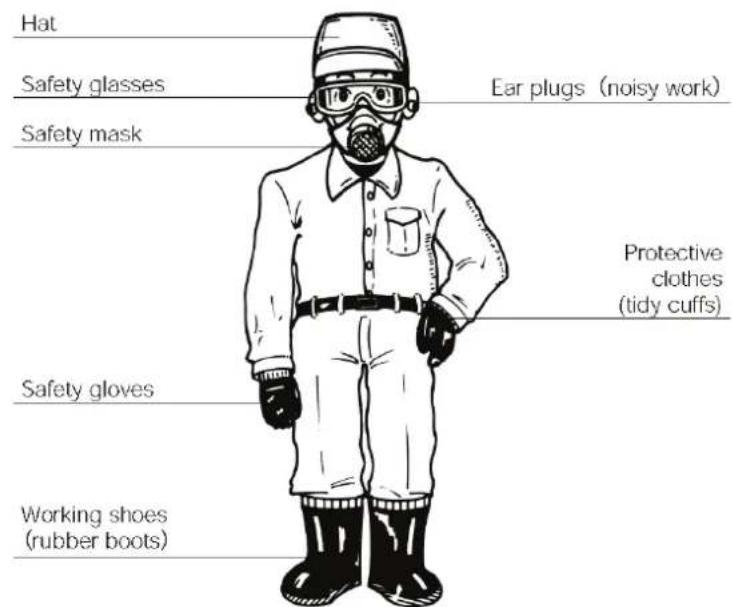
- Check and maintain protective equipment to maintain their normal functions at all times, and use them correctly.
- When lending the machine to another party or having someone else operate it, provide training on the operating method in advance, and explain each at the warning labels with k(Safety caution mark).
- Always remove dirt or mud to make the indications legible.
- The following alarm labels are attached.

Read operation manual thoroughly. Make sure you read the operation manual thoroughly prior to use.

Wear personal protective equipment Wear protectors such as hat, safety glasses, ear plugs during work.

Cautions for high temperatures Muffler of engine, fin of cylinder, etc. are at high temperatures. Don't touch them.

Prohibition of fire Don't put a naked flame close to a place where supplying fuel or doing maintenance.

Cautions for exhaust gas Take care not to breathe in exhaust gas from the engine.
Cautions when using this product
Chemicals
- Read labels of chemicals to be used carefully, and understand the method of use and cautions. When spraying quantity per tank (1000m _2 ) or if the chemical is mistaken, agricultural chemicals can cause damage.
- Store chemicals in a safe place, and be careful not to break open their containers during transportation.
• Treat chemical containers to ensure safety. -
Pay attention to the handling of chemicals. If a chemical enters into eye or mouth, wash it off with water immediately.
• If you feel ill, see a doctor immediately. -
According to wind direction, change the spraying method to protect workers and houses. When spraying chemicals, work from upwind to downwind. Also give consideration to prevent chemicals from drifting or scattering on crops, enclosures, fish-breeding ponds, and houses nearby.
- When working in and greenhouse, pay attention to ventilation.
- When preparing chemicals, prepare the necessary amount only in accordance with the established spraying plan. If too much chemicals are left over, action is difficult.

CAUTION
- Do not use this machine when there are people, especially children, near the site.
- Because the tank when completely filled with the chemical is very heavy, pay careful attention not to hurt your lower back when carrying it.
- Always adopt a safe working posture when carrying the tank. Do not work at elevated sites using stairs or ladders while carrying the tank.
Fuel

DANGER
- Don't bring a naked flame close to where fuel is supplied or the machine is main-tained.
- When supplying fuel, make sure you stop the engine and wait for the engine to cool down. If fuel is spilled, wipe it off.
- Don't use gasoline alone as fuel.
When using general-purpose two-cycle engine oil
| Gasoline | : | Two-cycle engine oil |
| 50 | : | 1 |
Engine

CAUTION
- Temperature of engine is high during operation and immediately after stopping. You will get a burn if you touch the muffler, cylinder fin, etc.
- When starting the engine, confirm that the ball valve is securely closed to prevent explosion caused by a sudden spray.
- Don't touch the spark plug during engine operation. You might get shock.
- Don't operate inside a room. You might suffer by carbon monoxide poisoning.
- Don't breathe in the exhaust gas from the engine.

WARNING
Recoil Starter

CAUTION
- Potential danger on recoil disassembly.Do not disassemble the recoil.Contact the sales office for repair.
- Do not pull the starting rope thoroughly. Potential failure may be concerned if disregarded.
Pump
- Chemicals are sprayed from the nozzle at a high pressure. Don't spray them toward any body.
Checks prior to work
CAUTION
- Check for loose screws in each portion.
- Loose screws cause accidents.
- Adjust length of carrying strap to fit your physique
2. Name of each part
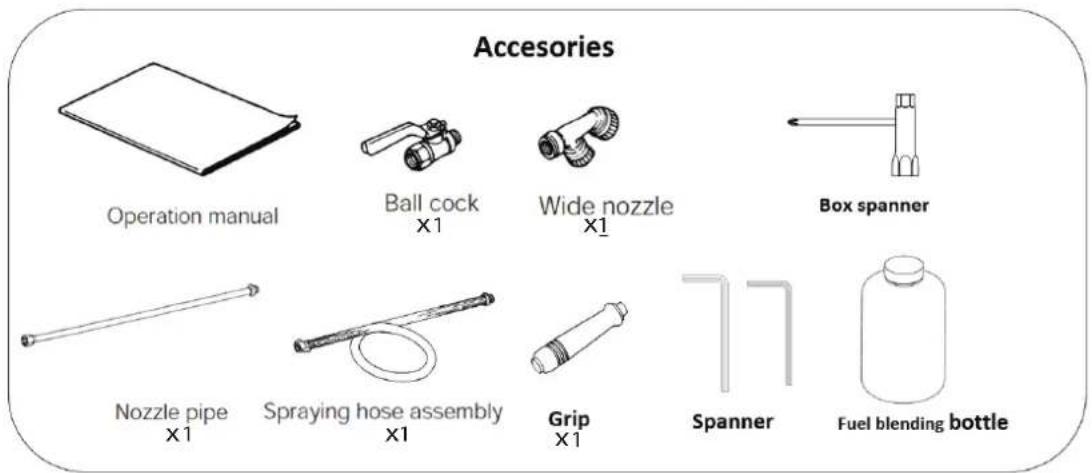
Confirmation of standard parts
After opening the package, confirm that all accessories are present.
If accessories are missing or damaged, inform the sales outlet where you purchased the product.
Name of each part
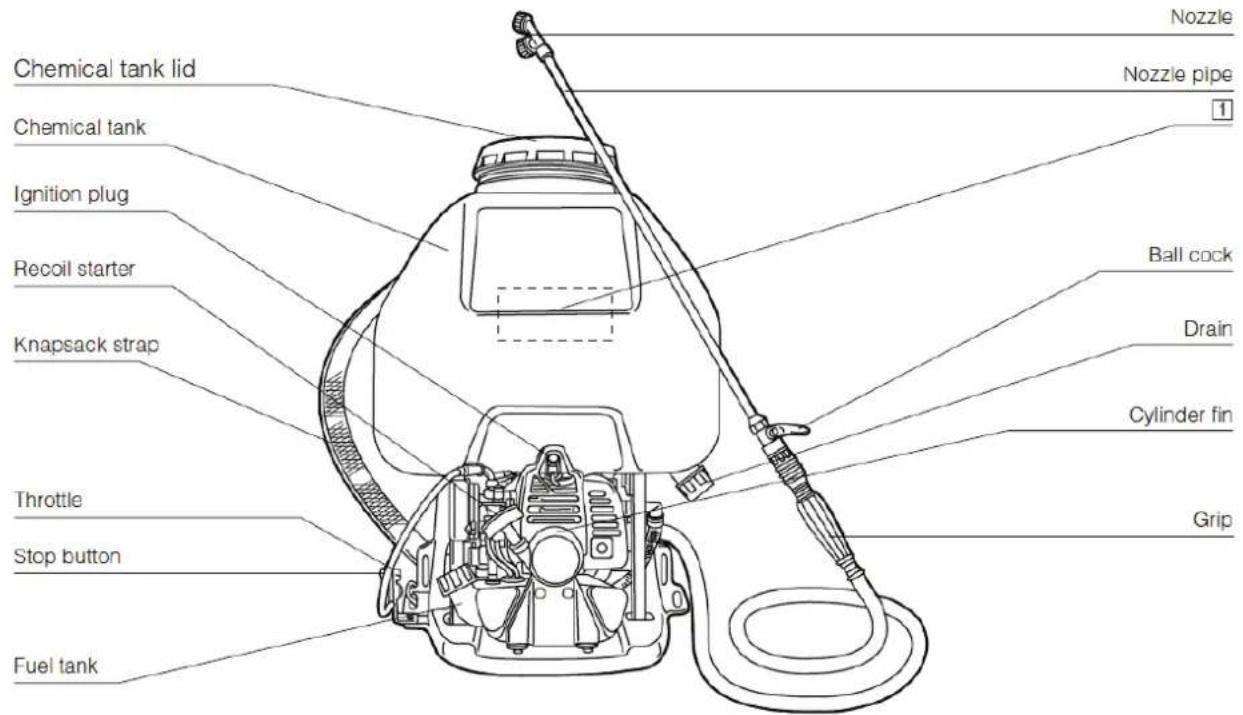
1
PRECAUCION
- Read Operator's Manual carefully
- Do not operate when the tank is empty.
- Use the strainer to fill the tank with chemical liquid.
- Wash up inside pump after every day's spraying job by numping fresh water so that
residual chemicals are drain out through nozzle and drain hole.
Residual chemicals are drain out through icezile shell. After cleaning drain out remaining water completely
After cleaning drain out remaining water completely, 5 for the open from storage drain all water out of the - For the long term storage, drain all water out of the tank, pump, hose and nozzle,
Store in a dry, cool, and dark place. The equipment must be free from freezing as freeze
may break pump.
563054
Assembly of nozzle
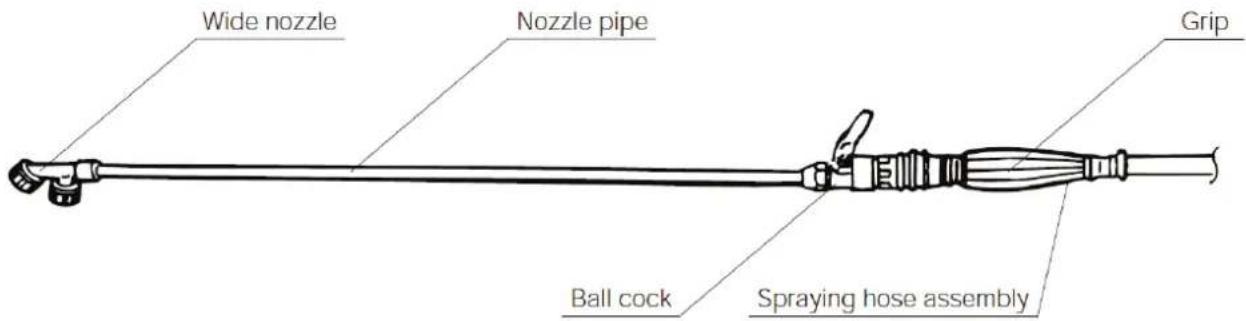
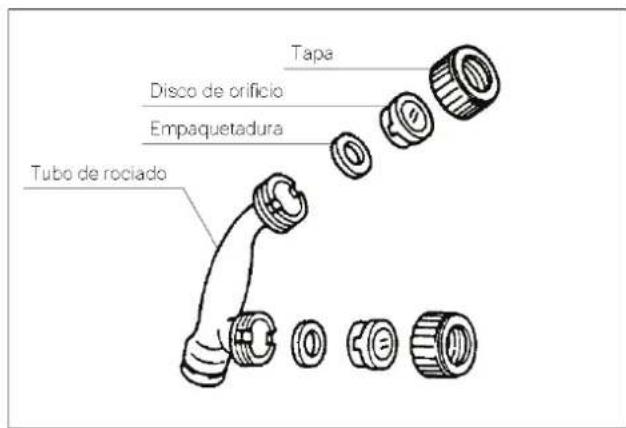
After confirming the existence of packing, securely tighten nozzle pipe to grip, and wide nozzle to nozzle pipe. Tighten the screw securely after confirming the packing to make ensure there is no water leakage. Over-tightening will cause extrusion or break the packing. Correct tightening pressure is important.
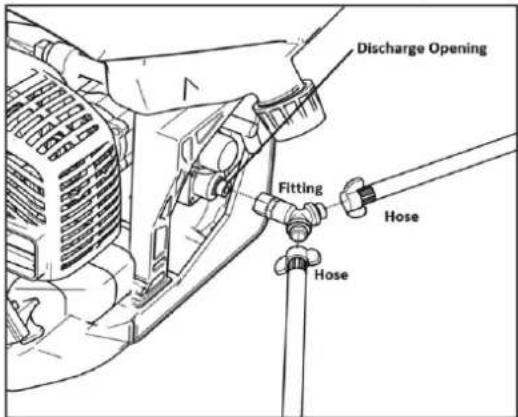
Connect a fitting to discharge opening of the sprayer, and Connect hoses to fitting.
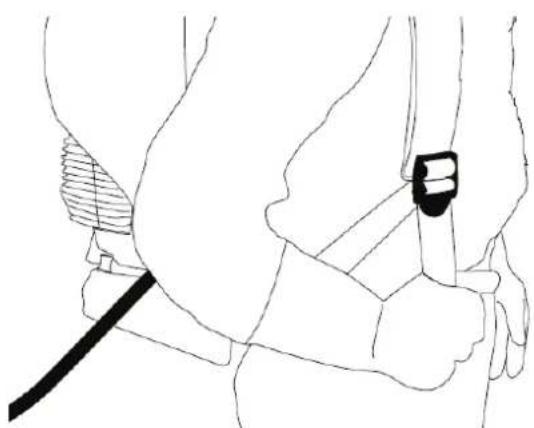
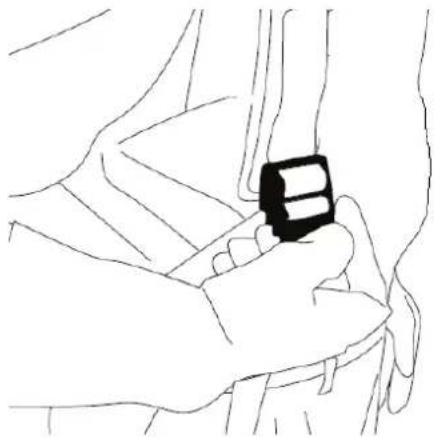
The adjustment of knapsack strap
- Tighten the strap
natural_image
Line drawing of a person wearing a sash and holding a tool, no text or symbols presentPull the strap downward.
- Loosen the strap
natural_image
Line drawing of a person's seatbelt buckle being adjusted (no text or symbols)Lift strap buckle upward to loosen.
Oil feeding and mixing
Oil feeding
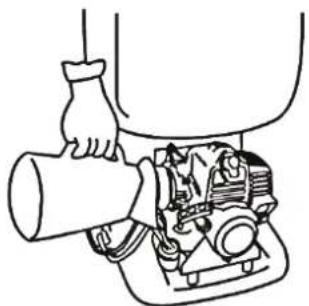
- Make sure you use blended fuel.
Gasoline : exclusive oil
50 : 1
Use exclusive oil for two-cycle engine engines.
natural_image
Line drawing of a hand operating a mechanical device with no visible text or symbolsThere is a possibility of fuel igniting. Make sure you observe the following items.

DANGER
There is a possibility of fuel igniting. Make sure you observe the following items.
- When feeding fuel, stop the engine and ensure no source of fire such as cigarette is close to the area.
- Don't spill fuel. If fuel is spilled, wipe it all off at once and start the engine after it is dry.
- Don't feed fuel above the standard line. There is the possibility of leakage.
- When a fuel leakage is found, use the engine after repair are done.
- After feeding fuel, make sure you close the fuel tank cap.
- When starting the engine, be more than three meters from the supply tank.
CAUTION
- If operating the machine with gasoline alone, the engine will seize.
Make sure to mix exclusive two-cycle engine oil in the specified quantity. - The mixing ratio shall be the designated ratio for exclusive two-cycle engine oil.
- Use lead-free gasoline for automobiles for fuel.
How to remove or mount strainer
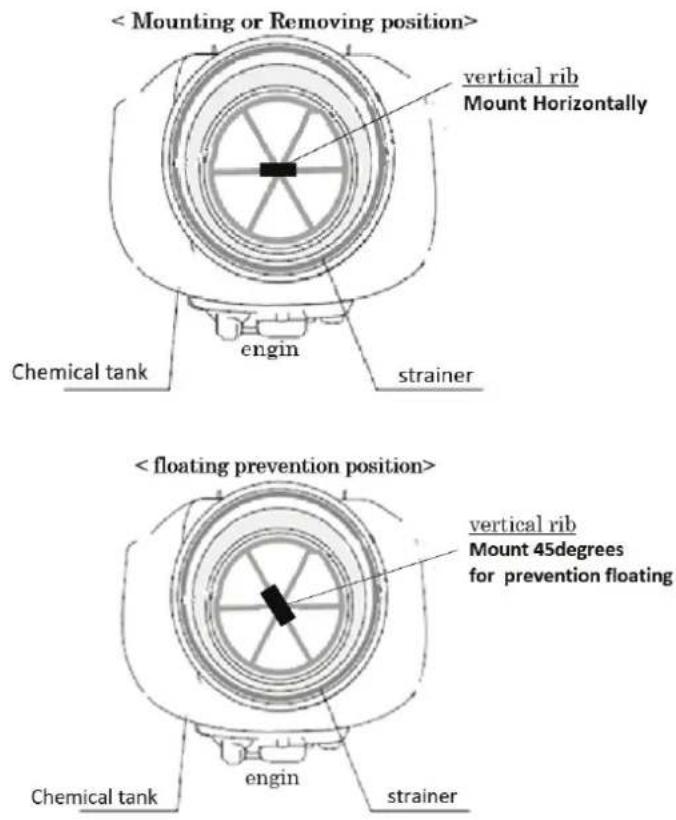
Mixing chemicals
- Read the instructions for the chemical to be used carefully and follow the mixing method and cautions for use.
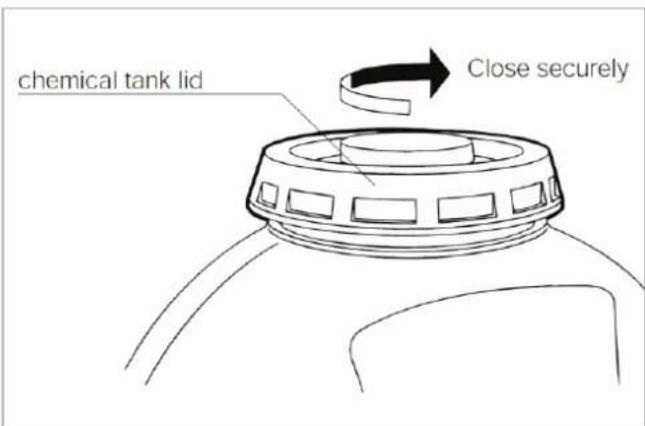
- After confirming the proper placement of the chemical cover, close the cover securely. Otherwise, chemicals will spill and you might be covered with them when you carry the machine on your back.
Start of engine
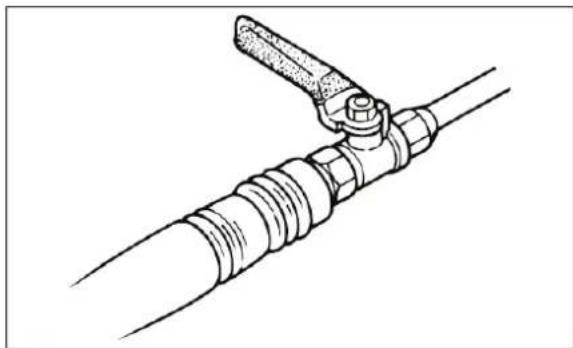
- When starting the engine, make sure to put water or chemicals into the chemical tank. Without water or chemicals in the tank, the pump will break down. - It is confirmed that the ball cock has closed before it starts.
natural_image
Technical line drawing of a pipe fitting with a handle (no text or symbols)1
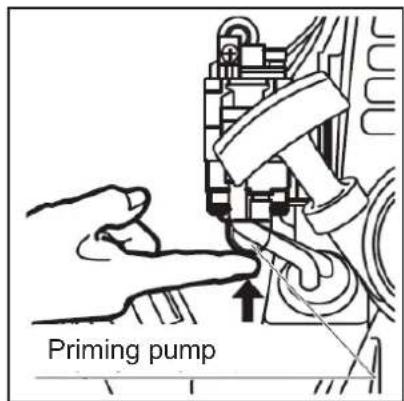
Perform priming.Push priming pump installed in front of the carburetor (rear in the specification with cell starter) several times slowly, and confirm that fuel fills the priming pump and returns to the tank.
2
Fully close the choke. (In hot weather or when engine is hot, the choke should be partly open or fully open.)
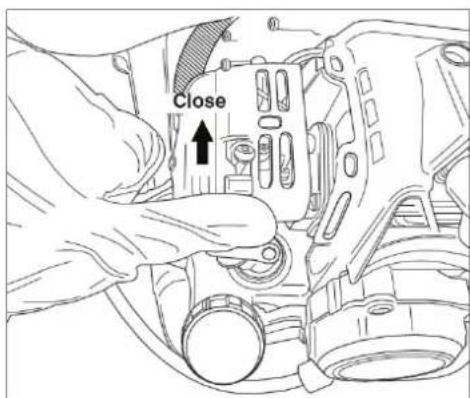
3
Move throttle lever to medium-and lowspeed position.
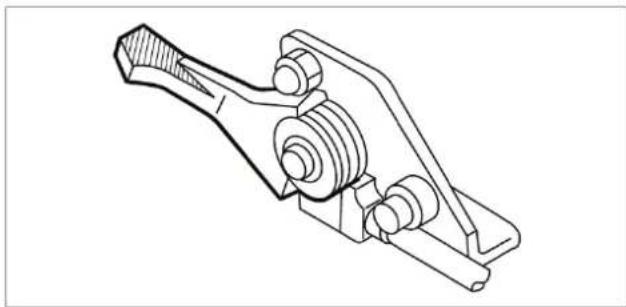
natural_image
Technical line drawing of a mechanical clamp or bracket assembly (no text or symbols)4
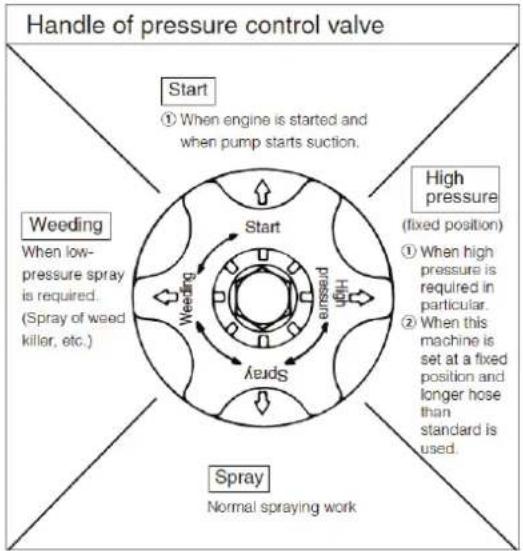
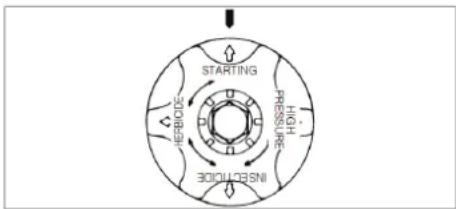
Set handle of pressure control valve at "Start" position.
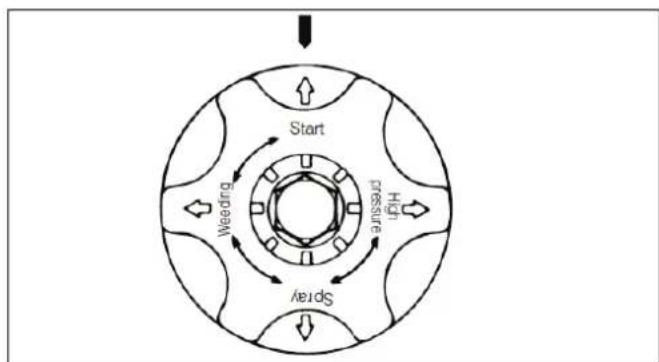
flowchart
graph TD
    A["Start"] --> B["Spay"]
    B --> C["Weeding"]
    C --> D["High pressure"]
    D --> E["End"]
5
Engine will start.
After pulling starting rope gently by two or three times, pull it hard to start the engine.
[Pulling method for starting rope]
- Grasp starting rope tight with right hand.
- Hold chemical tank with left hand.
- Pull starting rope slowly until resistance is felt.
- Pull starting rope straight from entrance of starter.
- Do not pull starting rope to the end.
- Don't release starting rope from pulled state, and let it return to its original state gradually.
CAUTION
If the engine does not start by repeated action, try pulling the rope after fully opening the choke.
※ If the engine still does not start, refer to page 13.
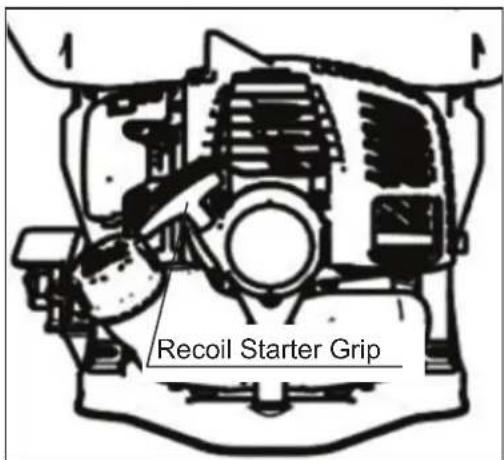
6
Return choke slowly.
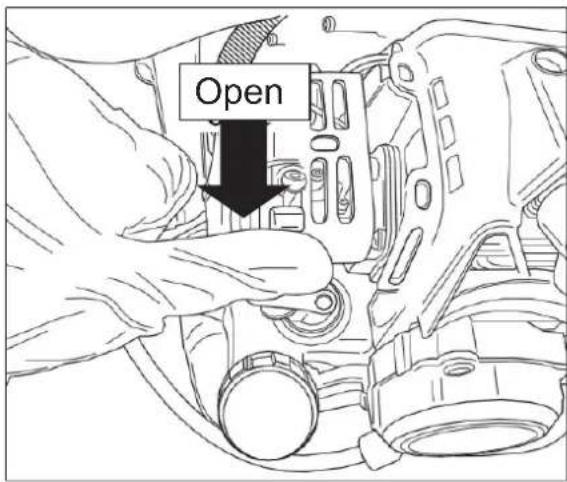
CAUTION
- Frequent operation of choke when starting the engine causes too much fuel to be sucked in, making the engine difficult to start. In that case, start after making the choke fully open.
- After starting the engine, accelerate bit by bit quickly by opening and closing the throttle lever several times.
- This operation is to bleed air in the carburetor. When there is air present, there is the possibility of poor acceleration and engine stalling.
- Supply fuel prior to use if possible. This will make starting next time easy
Operation
1
Turn the handle of the pressure control valve until there is sufficient pressure for work such as spraying weeds (fixed position).
flowchart
graph TD
    A["Start"] --> B["When engine is started and pump starts suction."]
    B --> C["Weeding"]
    C --> D["When low-pressure spray is required. (Spray of weed killer, etc.)"]
    D --> E["Start"]
    E --> F["Heads"]
    F --> G["Spray"]
    G --> H["Normal spraying work"]
    H --> I["High pressure (fixed position)."]
    I --> J["When high pressure is required in particular."]
    J --> K["When this machine is set at a fixed position and longer hose than standard is used."]
2
After confirming spraying state and abnormalities in the machine, move throttle lever to high-speed position
CAUTION
- When setting the pressure control valve handle to "spray", "weeding" with throttle fully open at the "high pressure" position of pressure control valve handle, engine revolutions increase as pressure decreases. When using this machine at the "spray", "weeding" position, use at a position little bit back from full open throttle.
- No-load running shall not be carried out except for draining operation. Piston packing might be damaged.
3
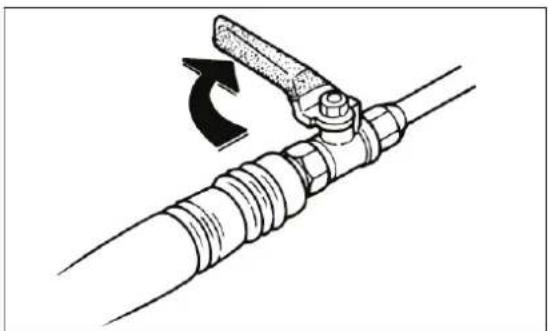
When opening ball valve, chemicals will be sprayed from nozzle in a mist.
Stop
Close ball cock
1
natural_image
Diagram of a pipe fitting with a clamping tool, showing a curved arrow indicating rotation (no text or symbols present)2
Return throttle lever to low speed
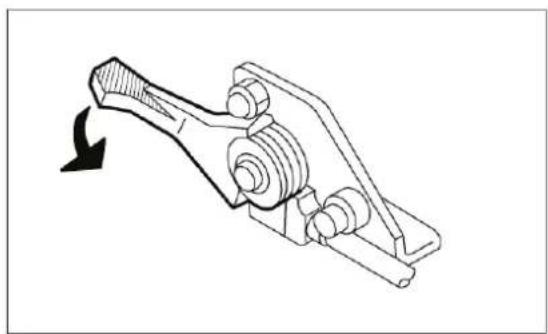
natural_image
Technical line drawing of a mechanical clamp or lever mechanism with no visible text or symbols3
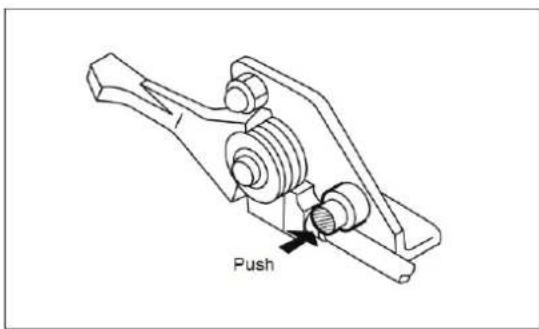
Push stop button to stop engine.
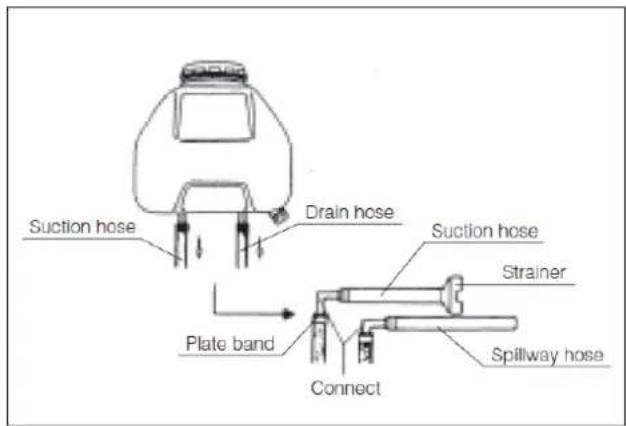
Use at fixed position
Connecting method of hose when sucking water from the separate tank in case of operating at fixed position. (Hose, strainer, etc., are optional accessories.)
(1) Remove suction and spillway hose from the tank.
(2) Insert respective hose connection into suction and spillway hose, and fix them using plate
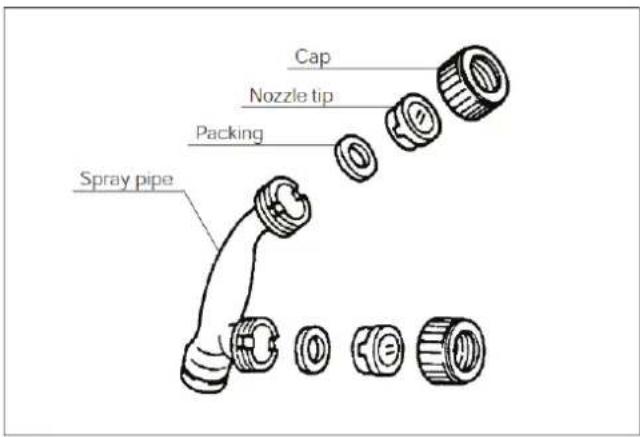
Replacement nozzle
(1) Round nozzle 25 (Optional accessory) Exclusive nozzle for rounding up weed remover.
(2) Replacement nozzle tip D-6 (Optional accessory)
a. Using replacement nozzle tip, about 1.5 times of spray volume is available compare to standard nozzle.
b. When large volume of spray or large volume of spray at low pressure is necessary, this replacing nozzle can be used.
c. D-6 is indicated on the surface of replacement nozzle tip.(C-35 is standard)
d. Replacement can be done by loosening the screw of the nozzle cap. When replacing, stop the machine. Close ball cock.
Cleaning, maintenance and draining
For cleaning, checking and maintenance, be sure to stop the machine.
Check and maintenance items for each season
Cleaning of air cleaner
- When elements become dirty and clog state, reduced output or difficulty starting is observed. Clean the regularly to remove dirt and prevent clogging.
- When cleaning the element, wash it using gasoline, dip it in the blended fuel used and install it after squeezing it hard.
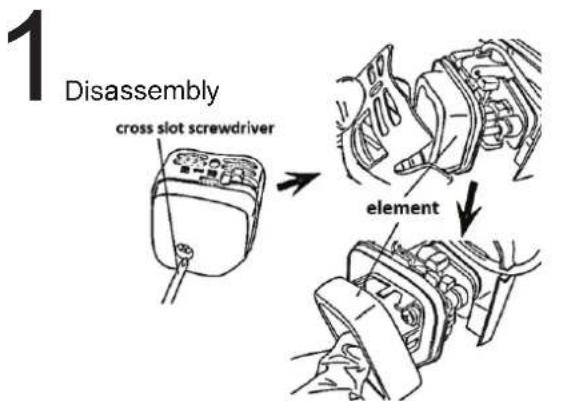
2 Clean
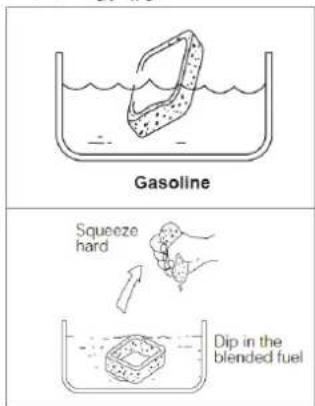
3 Squeeze
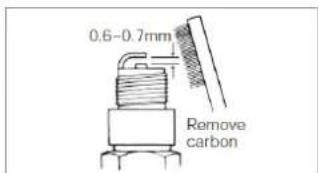
Cleaning ignition plug
- Remove carbon, and adjust the clearance to 0.6-0.7mm.
Pump
Check for worn piston packing and seal packing, and replace worn one with new one.
※ For disassembly and maintenance, consult with the sales outlet where you purchased the product or sales office.
Drain
CAUTION
Make sure of drain, otherwise the pump might be damaged by freezing in winter.
①Remove drain cap of chemical tank and hose connecting screw of pump to drain residual liquid.
②Put fresh water into the chemical tank, start the engine, spray from the nozzle to clean the pump and inside of the hose.
③Operate for 15-20 seconds to drain residual liquid at the throttle lever position, which is a little bit back from full open position.
④Set throttle lever at low speed, and stop the engine with the stop button.
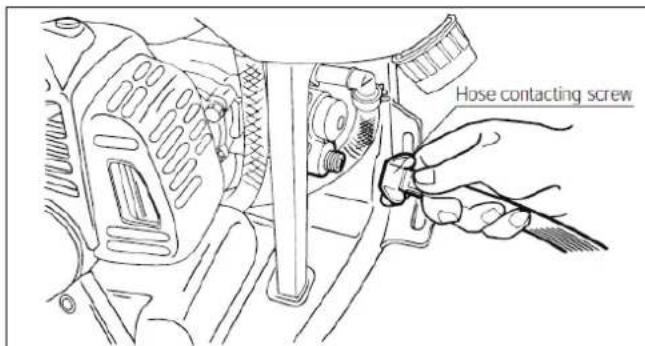
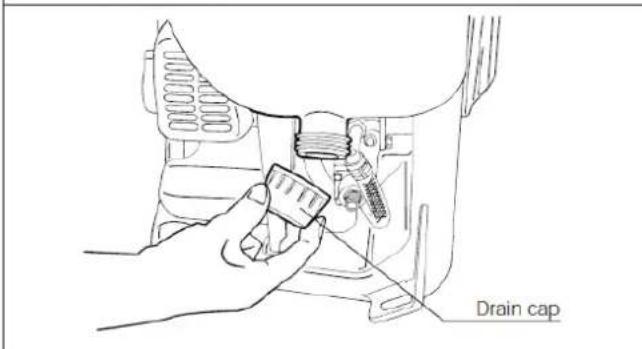

CAUTION
Don't leave chemicals in the chemical tank and pump. This might cause the machine to break down.
1
Remove fuel from fuel tank, and operate the machine in idling state until it stops.
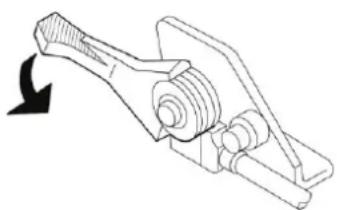
3
Move throttle lever to low-speed position.
natural_image
Technical line drawing of a mechanical clamp or wrench (no text or symbols)2
Set pressure control valve handle to "START".
flowchart
graph TD
    A["STARTING"] --> B["PRESTISH"]
    B --> C["INSPECTION"]
    C --> D["INTESTOICE"]
    D --> A
    style A fill:#f9f,stroke:#333
    style B fill:#ccf,stroke:#333
    style C fill:#cfc,stroke:#333
    style D fill:#fcc,stroke:#333
4
After finishing the above, put the machine in a box and store it at a place free from moisture and which is well ventilated.
CAUTION
- When damage is found, store it after making repairs. In this case, use the genuine parts specified by us for all parts and consumable goods.
-
Store at a place that is free from moisture, dust, and contaminants.
-
When the condition of pump and engine is poor, the following can be expected.
- Where marked with ☆, request adjustment or repair at sales outlet or our sales office.
Pump
| Symptom | Cause t | Treatment |
| No suction | (1) Loose connecting of suction hose(2) Suction hose clogged with chemicals(3) Wear to piston packing(4) Foreign matter in valve portion | (1) Tighten sufficiently.(2) Disassemble and clean ☆(3) Replace with new parts ☆(4) Disassemble and clean ☆ |
| Pressure cannot be increased.(poor spraying state) | (1) Wear to piston packing(2) Scratch on the inside surface of cylinder(3) Scratch on delivery valve(4) Wear to pressure control valve seat(5) Foreign material on each valve(6) Wear to cam handle(7) Wear to nozzle hole(8) Too high a nozzle number used | (1) Replace with new one. ☆(2) Replace with new one. ☆(3) Replace with new one. ☆(4) Replace with new one. ☆(5) Disassemble and clean. ☆(6) Replace with new one. ☆(7) Replace with new one. ☆(8) Decrease number of nozzles or replace with smaller |
Engine
| Symptom | Cause | Treatment |
| Does not start | No fuelFuel filter is cloggedMis-startingBad spark plugWeak sparkPoor carburetor | · Supply fuel.Clean· Refer item "Starting engine"Replace. ☆ Replace or service coil / flywheel. ☆ Replace / service ☆ |
| Insufficient output | Poor adjustment of throttle wireClogging of air cleaner elementCarbon building up at exhaust port and muffler | · Adjust. ☆ Clean. Clean. ☆ |
| Excessive vibration | Loose part | · Tighten |
| Excessive noise | Loose muffler and muffler cover | · Tighten |
- Specification
| MS076D | |
| L × W × H(mm) | 365 × 465 × 635 |
| Dry weight(kg) | 9.0 |
| Chemical tank capacity ( L ) | 25 |
| Fuel tank capacity (L) | 0.6 |
| Pump | |
| Type | Maruyama Twin piston |
| Maximum pressure (PSI) | 500 |
| Suction ( L /min) | 7.5 |
| Rotational frequency(rpm) | 1930 |
| Engine | |
| Model | Maruyama EE263P |
| Type | Forced Air Cool, 2-cycle |
| Displacement(mL) | 25.4 |
| Max. Peak Power (hp/min-1) | 1 |
| Fuel | Mixed gasoline (50 : 1) |
| Ignition system | Electronic Ignition |
| Ignition system | CJ6Y equivalent |
| Stating system | Recoil Starter (Effortless start) |
The specification may be changed for product improvement, without prior notice.
- Read Operator's Manual carefully.
- Do not operate when the tank is empty.
- Use the strainer to fill the tank with chemical liquid.
- Wash up inside pump after every day's spraying job by pumping fresh water so that
Residual chemicals are drain out through nozzle and drain hole.
After cleaning drain out remaining water completely - For the long term storage, drain all water out of the tank, pump, hose and nozzle, Store in a dry, cool, and dark place. The equipment must be free from freezing as freeze may break pump.
natural_image
Line drawing of a person wearing a helmet and belt, holding a tool (no text or symbols)natural_image
Line drawing of a person adjusting a seatbelt (no text or symbols)natural_image
Line drawing of a pipe fitting with a handle and coiled tube (no text or symbols)natural_image
Technical line drawing of a mechanical clamp or bracket assembly (no text or symbols)flowchart
graph TD
    Start --> feeding
    feeding --> feeding_start
    feeding --> feeding_end
    feeding --> feeding_start
    feeding --> feeding_end
5
Arranque el motor.
natural_image
Diagram of a pipe fitting with a lever and directional arrow indicating rotation (no text or symbols)2
natural_image
Technical line drawing of a mechanical clamp or bracket assembly with a directional arrow indicating motion (no text or symbols present)3
natural_image
Technical line drawing of a mechanical clamp or lever mechanism (no text or symbols)4
- MARUYAMA®
- BACKPACK POWER SPRAYER PULVERIZADOR TIPO MOCHILA CON MOTOR
- MS076D
- OWNER'S/OPERATOR'S MANUAL MANUAL DE PROPIETARIO U OPERADOR
- Purpose of use
- Warnings
- DANGER
- WARNING
- COUTION
- Cautions prior to work
- Cautions when using this product
- Chemicals
- CAUTION
- Fuel
- Engine
- Recoil Starter
- Pump
- Checks prior to work
- Name of each part
- Confirmation of standard parts
- PRECAUCION
- Assembly of nozzle
- The adjustment of knapsack strap
- Oil feeding and mixing
- Oil feeding
- How to remove or mount strainer
- Mixing chemicals
- Start of engine
- 1
- 2
- 3
- 4
- 5
- [Pulling method for starting rope]
- 6
- Operation
- Stop
- Use at fixed position
- Replacement nozzle
- Cleaning, maintenance and draining
- Check and maintenance items for each season
- Cleaning of air cleaner
- Cleaning ignition plug
- Drain
Brand : Maruyama
Model : MS076D
Category : Uncategorized