
Techno - Car seat Chipolino - Free user manual and instructions
Find the device manual for free Techno Chipolino in PDF.


| Product Type | Car Seat |
| Brand | Chipolino |
| Model | Techno |
| Group | 1/2/3 (9-36 kg) |
| Installation | Forward-facing with vehicle seat belt |
| Weight of Child | 9-36 kg |
| Dimensions (HxWxD) | 62 x 44 x 38 cm |
| Weight of Seat | 5.2 kg |
| Material | Polypropylene shell, polyester fabric |
| Harness Type | 5-point harness |
| Side Impact Protection | Integrated headrest with side wings |
| Recline Positions | 3 positions |
| Headrest Adjustment | 7 positions |
| Harness Height Adjustment | Adjustable with headrest |
| Seat Cover Removable | Yes, machine washable at 30°C |
| Cleaning Instructions | Hand wash with mild soap, air dry |
| Compliance | ECE R44/04 |
| Warranty | 2 years |
| Country of Origin | China |
| Spare Parts Available | Yes (harness, buckle, cover) |
| Repairability | Contact authorized service center |
| Manual Languages | English, others via request |
Frequently Asked Questions - Techno Chipolino
User questions about Techno Chipolino
0 question about this device. Answer the ones you know or ask your own.
Ask a new question about this device
Download the instructions for your Car seat in PDF format for free! Find your manual Techno - Chipolino and take your electronic device back in hand. On this page are published all the documents necessary for the use of your device. Techno by Chipolino.
USER MANUAL Techno Chipolino
natural_image
Line drawing of a car seat assembly (no text or symbols)This child restraint system is designed and manufactured in compliance with the requirements of Regulation 44 of the United Nations Economic Commission for Europe concerning the safe transportation of children, the provisions of the Product safety Directive 2001/95/EU of the European Parliament and The Council as well as the Consumer Protection Law of Bulgarian Legislation.
NOTICE
For universal child restraint, groups 0+, I, II and III
- This is a “UNIVERSAL” CHILD RESTRAINT. It is approved to Regulation No 44, 04 series of amendments, for general use in vehicles and it will fit most, but not all, car seats.
- A correct fit is likely if the vehicle manufacturer has declared in the vehicle handbook that the vehicle is capable of accepting a “universal” child restraint for these age groups.
- This child restraint has been classified as "universal" under more stringent conditions than those which applied to earlier designs which do not carry this notice.
If in doubt, consult either the child restraint manufacturer or the retailer.
NOTICE
for semi-universal child restraint, groups 0+ and I
- This is an ISOFIX CHILD RESTRAINT. It is approved to Regulation No 44, 04 series of amendments, for general use in vehicles fitted with ISOFIX anchorages systems.
- It will fit vehicles with positions approved as ISOFIX positions (as detailed in the vehicle handbook), depending on the category of the child seat and of the fixture.
The mass group and the ISOFIX size class for which this device is intended is GROUP 0+ (0-13 kg), ISOFIX class D u GROUP I (9-18kg), ISOFIX class D.
NOTICE
for semi-universal child restraintq groups 0+, I, II и III
This child restraint is classified Semi-universal use and is suitable for fixing into the seat positions of the following car:
CAR CAR REAR ____ ____
Refer to
Vehicle list
Outer Centre
Yes Yes No
Seat positions in other cars may also be suitable to accept this either the child restraint manufacturer or the retailer.
chilc

DO NOT FORGET THAT NO RESTRAINT SYSTEM CAN PROVIDE ABSOLUTE PROTECTION IN CASE OF A CRASH OR ROAD ACCIDENT! DRIVE WITH CARE WHEN THERE IS A CHILD IN YOUR VEHICLE!
IN ORDER TO ENSURE THE SAFETY OF YOUR CHILD, FOLLOW EXACTLY THE INSTRUCTIONS AND SAFETY RECOMMENDATIONS IN THIS MANUAL!
MISUSE OF THE CAR SEAT WILL CONTRIBUTE TO REDUCING ITS SECURITY AND SAFETY FEATURES! FAILURE OF THE GUIDELINES OF THIS INSTRUCTION INCREASES THE RISK OF SERIOUS INJURY OR DEATH!
CAUTION!
NEVER INSTALL THE CAR SEAT IN FORWARD FACING POSTION BEFORE THE CHILD'S WEIGHT EXCEEDS 9 kg!
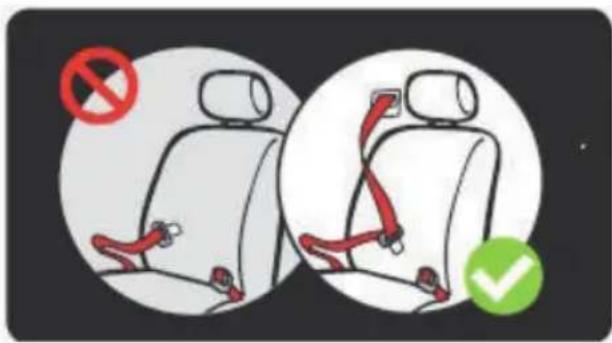
It is prohibited to place the car seat in a vehicle with a two-point seat belt. Place the cars seat ONLY in a vehicle with a 3-point seat safety belt.
CAUTION! The child restraint is suitable for use in vehicles, equipped with approved LAP/3-POINT/STATIC/WITH RETRACTOR SAFETY BELTS in compliance with ECE R16.
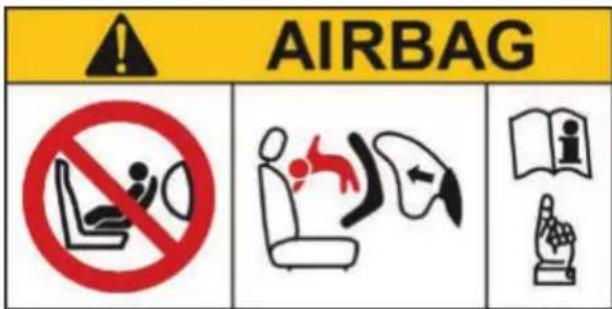
Do not place the restraint system on a vehicle seat equipped with air bag! This may result in death or serious injury!
Review the instructions of the vehicle for information about airbags and conditions of transportation of children.
PLACE OF THE CAR SEAT IN THE VEHICLE
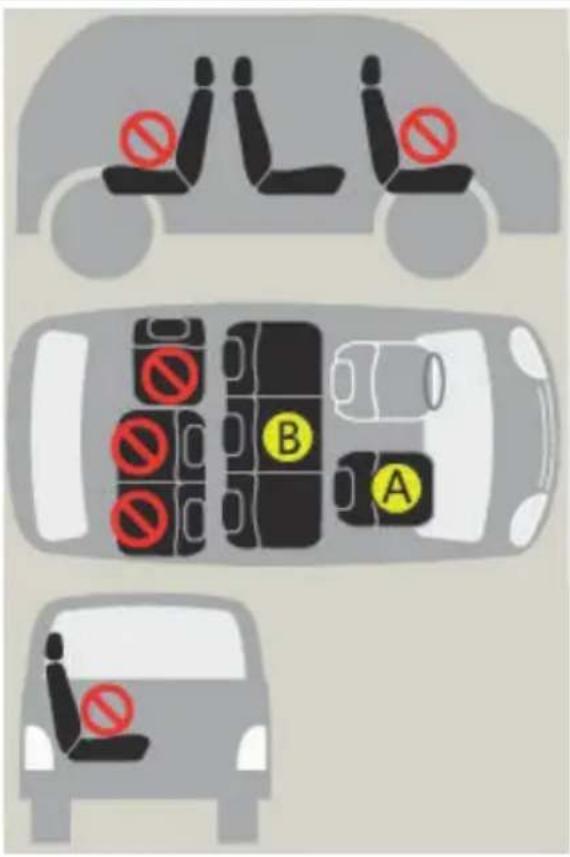

Do not install the car seat on that seat in the vehicle.

"REARWARD FACING" installation of the car seat is not recommended on a seat equipped with air bag, which cannot be deactivated. Only use with 3-point seat belt and airbag off or position of the vehicle seat as far back as possible so the car seat to be away from the air bag.

You can install car seat only if the vehicle seat is equipped with 3-point safety belt.
The rear outside seats are the most safety position of the vehicle for child under 12 years old. Install the car seat on vehicle seat "FORWARD FACING". Do not install on side facing or rearward facing vehicle seat. If any doubt about installation, please check your vehicle user manual, or contact the vehicle supplier.
| Child restraint TECHNO | ||
| Group Method of installation in the vehicle Approved type of system | ||
| 0+ and I “Rearward facing” | 3-point safety vehicle belt Universal | |
| ISOFIX attachment+ top tether Semi-universal ISOFIX | ||
| I “Forward facing” | 3-point safety vehicle belt Universal | |
| II and III 3- | point safety vehicle belt Universal | |
| II and III 3- | point safety vehicle belt + additional fixing Semi-universal | |

natural_image
Simple line drawing of a baby with green bandage inside a circle (no text or symbols)Newborn
Rearward facing

0-18kg
approx from birth to 4 years


natural_image
Simple icon of a child with arms outstretched inside a circle (no text or symbols)Infant
Forward facing

9-18kg
approx from 9 months to 4 years old

natural_image
Simple icon of a child with arms outstretched inside a circle (no text or symbols)Toddler

15-25kg
approx from 3 to 6 years old


natural_image
Simple icon of a person in green clothing standing with hands on hips, enclosed in a circle (no text or symbols)Kid

22-36kg
approx from 5 to 12 years old

CAUTION! NEVER LEAVE YOUR CHILD UNATTENDED!
CAUTION! DO NOT USE ANCHOR POINTS OTHER THAN THE ONES DESCRIBED IN THIS MANUAL AND MARKED ON THE RESTRAINT SYSTEM.
✿ CAUTION! NEVER INSTALL THE CHILD RESTRAINT IN THE DIRECTION OF VEHICLE MOVE MENT AND FACING FORWARD BEFORE THE CHILD WEIGHT REACHES 9kg!
CAUTION! THE CAR SEAT SAFETY MUST BE PROPERLY ADJUSTED ACCORDING TO CHILD'S HEIGHT, NOT TWISTED AND SNUG WELL AGAINST BABY'S BODY.
✿ CAUTION! THIS CHILD RESTRAINT SHOULD NOT BE MODIFIED OR ADAPTED WITH NEW FITTINGS, WITHOUT PREVIOUS AUTHORIZATION BY THE COMPETENT AUTHORITY.
CAUTION! KEEP AWAY FROM FIRE!
Installation in the vehicle and securing the child in the car seat to be done only by adult!
The hard parts and the parts of the child restraint made of plastic should be located and installed so that when the vehicle is in normal use, they can not be trapped by a sliding seat or in a door of the vehicle.
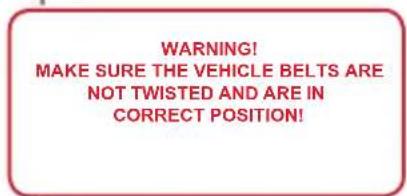
Do not allow the safety belts of the car seat and the vehicle to be twisted, frayed or torn, latches and locks (buckles) must be always in good order and firmly fixed.
If you find uncertainty or defect in the structure, latches, straps or locking mechanisms of the car seat or ISOFIX attachments, discontinue usage until removal of the damaged parts and replacement with new ones.
✿ After a violent impact the car seat and belts may be damaged. therefore, it is recommended to replace the car seat with new one.
✿ Never use a second hand child restraint. it may have suffered structural damage, which may make the child restraint extremely dangerous.
Do not use this car seat without its seat cover and do not replace it with a new one, unless supplied by the manufacturer. The fabric parts are integral parts of the restraint system and its safety features!
Always make sure that you are not carrying any unsecured objects, especially on the back shelf, which, in case of an accident, may injure the car's occupants
Do not put additional pads except the ones supplied from the manufacturer! Placing additional pads may obscure the safety of your child.
Do not use spare parts and other components not supplied by the manufacturer. The manufacturer assumes no responsibility for safety in the event that are used spare p
It is recommended to cover the car seat if the vehicle is parked under strong sun shine – extreme sun exposure will make the plastic to deteriorate and the fabric to fade restraint has not become too hot before placing your child seat.
The child car seat does not replace the child's cot or bed. When a child needs a sleep, you have to place him in a suitable baby stroller, baby crib or bed.
Do not attach objects with long cords or strings on the car seat in suffocation!
✿ Never place a child seat on beds, couches or similar soft surfaces!
Do not allow children to play with the product!
Do not remove stickers and warnings – they contain important information!
The packaging of the product must be kept out of the reach of children at the time of and after unpacking in order to avoid the risk of strangulation!
PRODUCT FEATURES
Child restraint restraint while traveling in a vehicle designed for children weighing from 0 to 36 kg, classified in weight groups:
- 0+ (0-13 kg): universal and semi-universal integral ISOFIX child restraint, ISOFIX class D. The restraint system is installed in direction opposite to the direction of the vehicle and the child is "rearward facing";
- I (9-18kg): universal and semi-universal integral ISOFIX child restraint, ISOFIX class D. The restraint system is installed in direction opposite to the direction of the vehicle and the child is "rearward facing" or in the direction of the vehicle and the child is "facing forward";
- II (15-25kg): universal and semi-universal non-integral system for securing children. The restraint system is installed in the direction of the vehicle and the child is "facing forward";
- III (22-36kg): universal and semi-universal non-integral system for securing children. The restraint system is installed in the direction of the vehicle and the child is "facing forward";
❖ ISOFIX attachments to vehicle (for groups 0+ and I);
❖ Possibility for additional fixing of the car seat groups II and III with ISOFIX connectors;
✿ Top tether (only for groups 0+ and I, "REARWARD FACING" car seat);
❖ The restraint rotates 3600 on the base;
◆ Backrest recline;
◆ Head rest height adjustment;
◆ 5-point safety harness on the restraint;
◆ Additional soft pads;
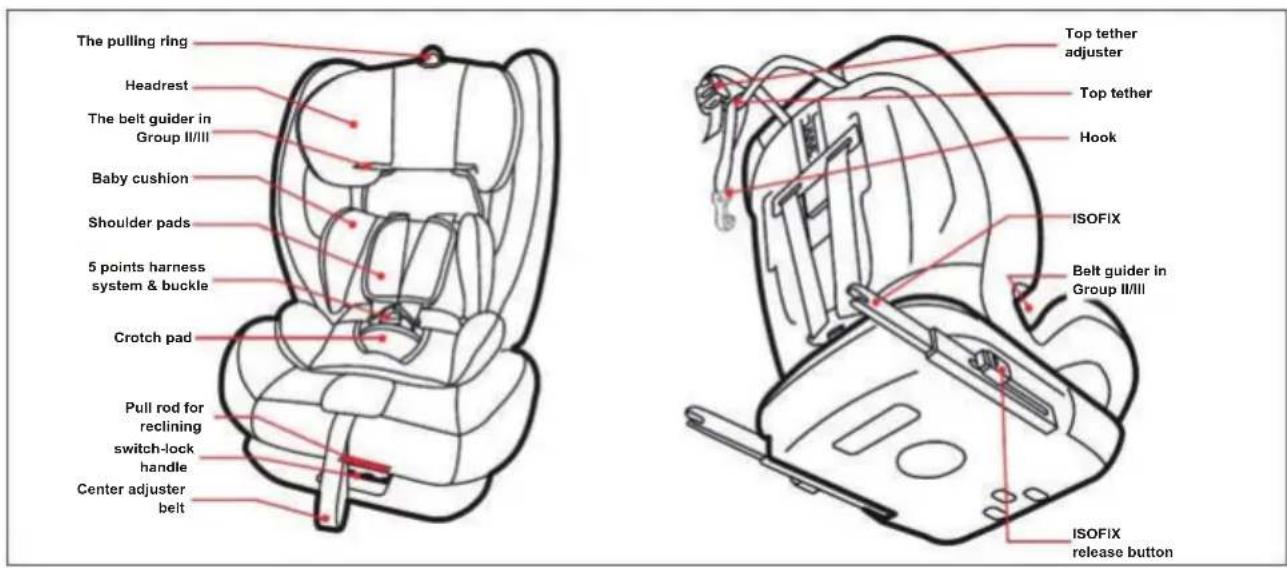
MAIN PARTS DIAGRAM
INSTRUCTIONS FOR USE
IMPORTANT!
- Follow exactly the instructions and sequence of installation steps and use of the product described in the text and figures of this manual.
- Check the security of fixing after each operation!
• ALWAYS CHECK THE SECURITY OF FIXING OF THE SAFETY BELTS!
• After each installation make sure that the seat belts are not twisted and are in the correct position
INSTALLATION OF CAR SEAT GROUP 0+ AND GROUP I
For groups 0+ and I you can install the car seat on vehicle seat with 3-point safety belt of the vehicle or with ISOFIX connectors:
"REARWARD FACING" group 0+ and I
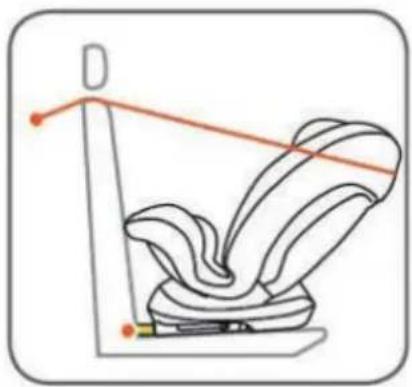
natural_image
Line drawing of a car seat assembly with a red trend line and circular markers (no text or symbols)ISOFIX+top tether
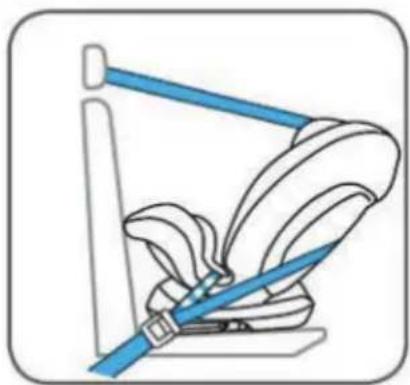
natural_image
Illustration of a car seatbelt with a blue diagonal bar, no text or symbols present3- point safety belt of the vehicle
"FORWARD FACING" group I
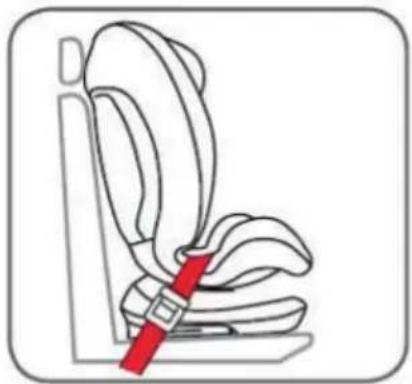
natural_image
Line drawing of a car seatbelt with a red belt (no text or symbols)3- point safety belt of the vehicle
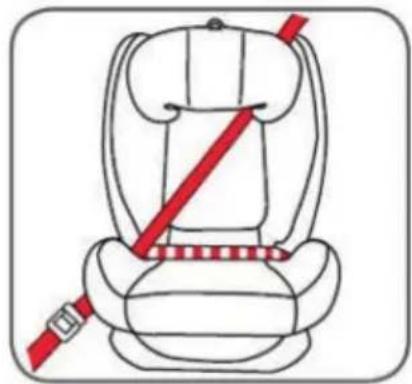
natural_image
Line drawing of a car seatbelt with red diagonal band indicating usage (no text or symbols)3- point safety belt of the vehicle

At ISOFIX attachment, there are three anchor points - two ISOFIX connectors and top tether.

For groups II and III the car seat is installed with ISOFIX + 3-point safety belt of the vehicle or only with 3 – point safety belt of the vehicle. DO NOT USE THE TOP TETHER!
INSTALLATION OF THE CAR SEAT WITH ISOFIX CONNECTORS
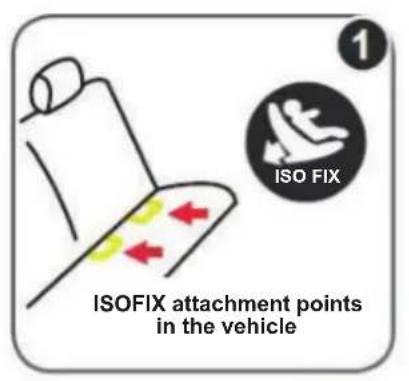
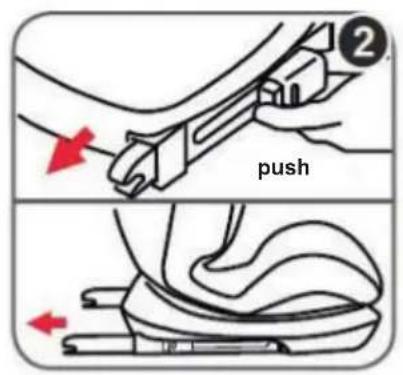
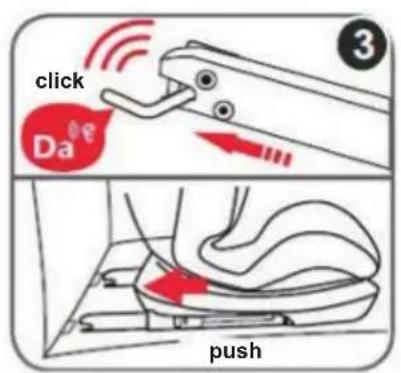
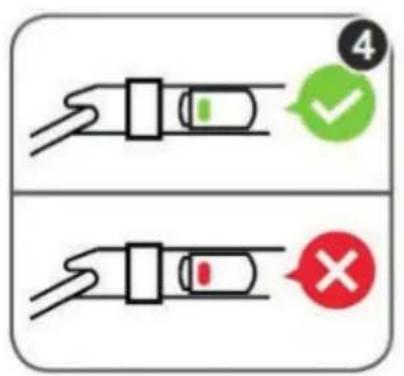
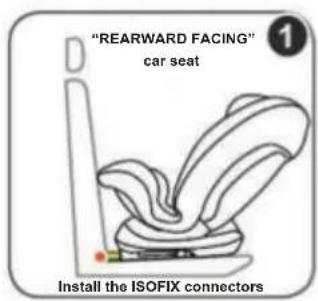
IMPORTANT! When the ISOFIX connectors are fixed the indicators must show „green color” (4)! That is confirmation for correct fixing of the car seat.
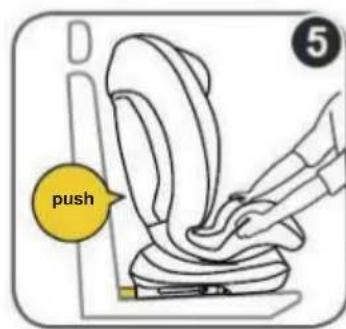
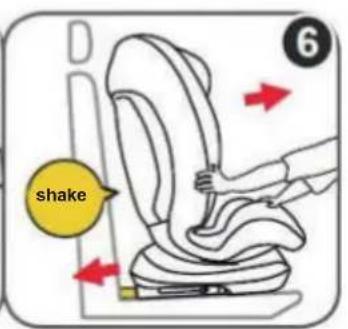
CAUTION! After installation make sure that the car seat is firmly and securely secured to the vehicle seat (5 and 6). If the seat shakes or the ISOFIX connectors are removed, repeat steps 1 to 4 to reinstall the seat.
INSTALLATION OF THE CAR SEAT WITH ISOFIX AND TOP TETHER
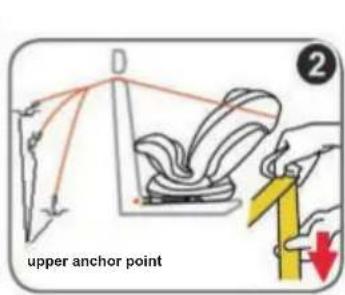
Note: The upper anchor point is fixed device on the trunk or the floor of the vehicle.
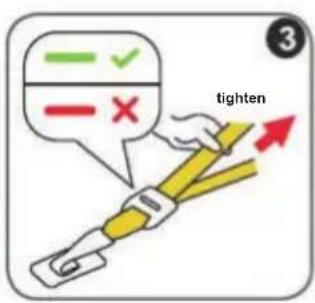
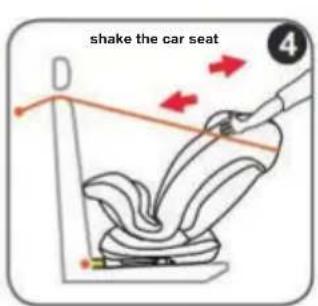
IMPORTANT! Tighten the belt of the top tether, until the indicator of top tether adjuster show „green color” (3) If the indicator does not show green, reinstall.
CAUTION! After installation make sure the car seat is firmly and securely secured (4).
INSTALLATION OF THE CAR SEAT groups 0+ and I WITH 3-POINT SAFETY BELT OF THE VEHICLE (“REARWARD FACING”)
CAUTION! Place the car seat in the vehicle "REARWARD FACING"! (1)
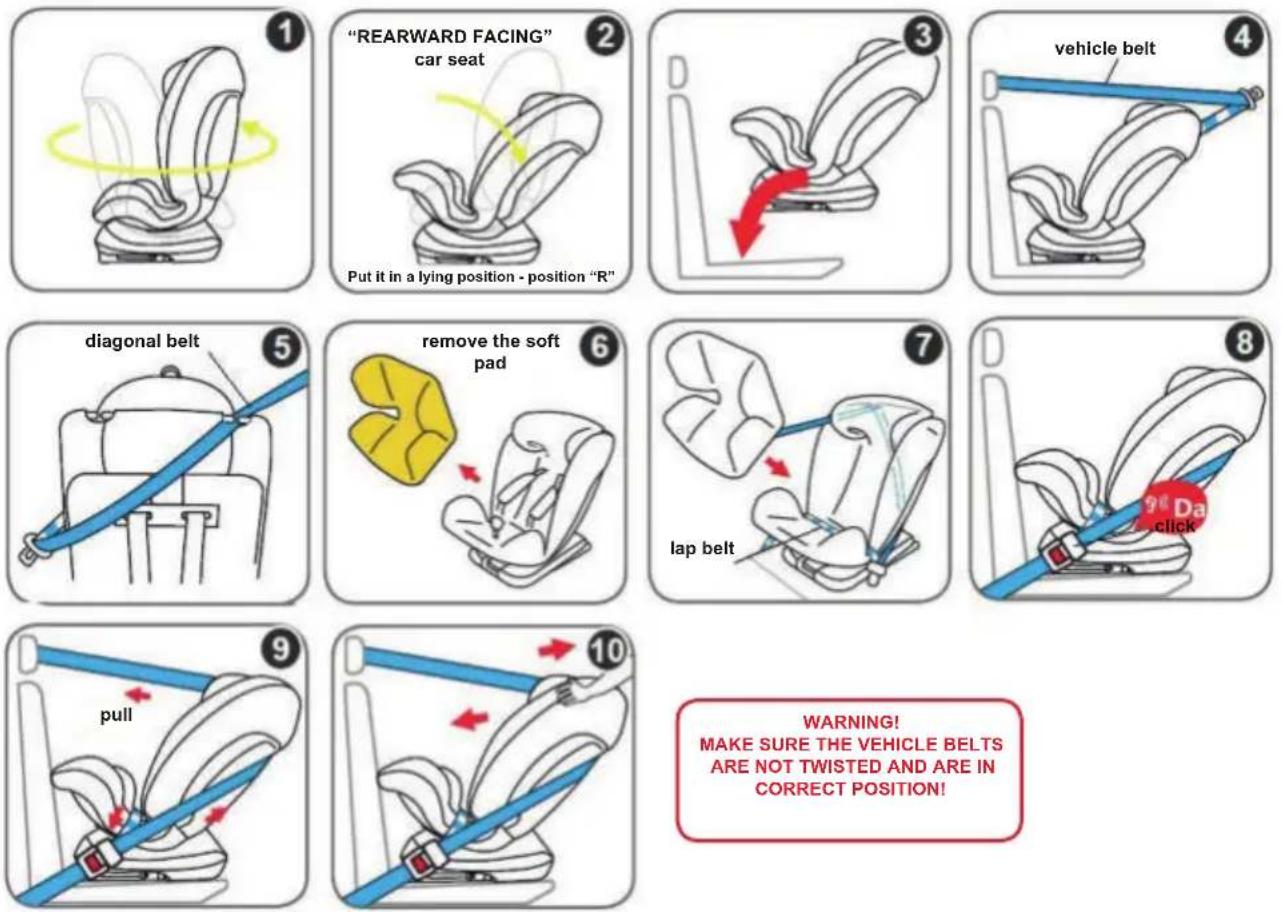
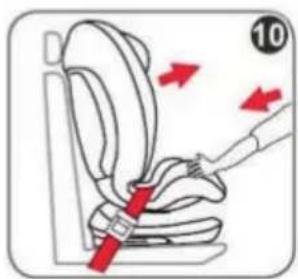
IMPORTANT! Make sure the vehicle belts are tightened and the car seat is well fixed to the vehicle seat.
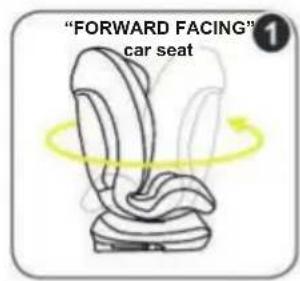
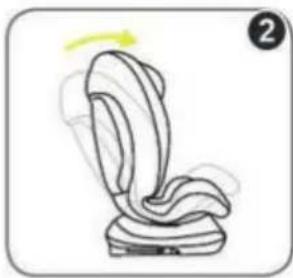
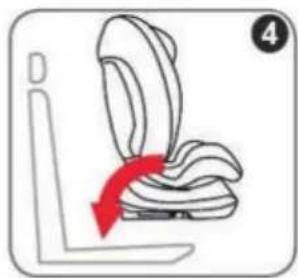
INSTALLATION OF THE CAR SEAT group I WITH 3-POINT SAFETY BELT OF THE VEHICLE ("FORWARD FACING")
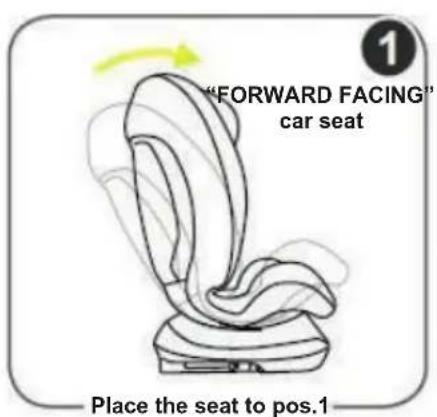
CAUTION! Place the car seat in the vehicle "FORWARD FACING"! (1)
natural_image
Line drawing of a car seat with a yellow arrow indicating rotation (no text or symbols)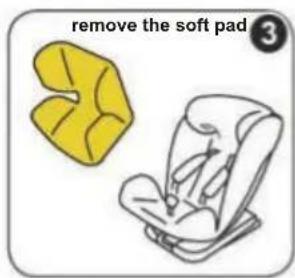
natural_image
Illustration of a car seatbelt with a red arrow indicating rotation (no text or symbols)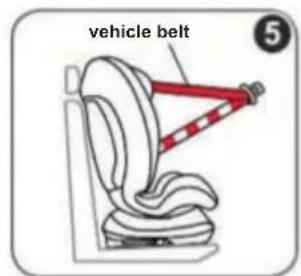
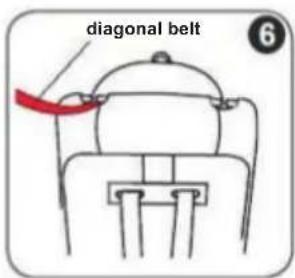
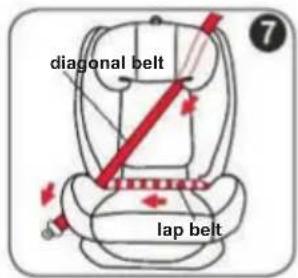
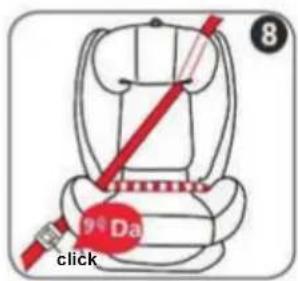
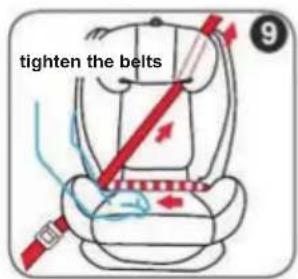
natural_image
Illustration of a car seatbelt with red arrows indicating force or movement (no text or symbols)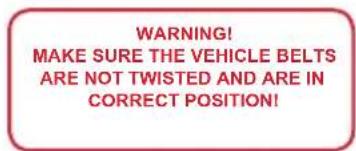
IMPORTANT! Make sure the vehicle belts are tightened and the car seat is well fixed to the vehicle seat.
5-POINT HARNESS OF THE CAR SEAT.
USE FOR GROUPS 0+ and I
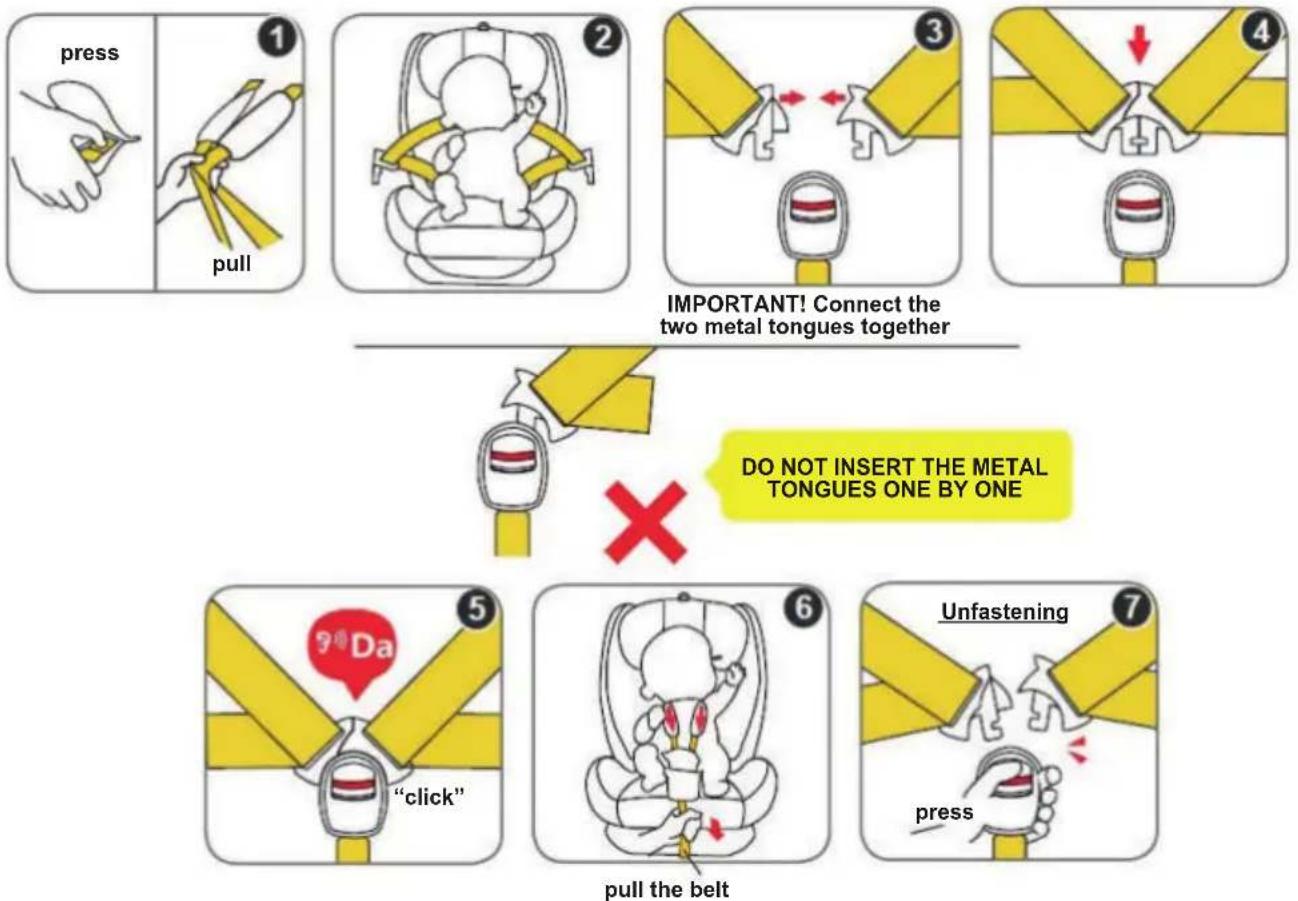
After placing the child in the car seat and fastening the belt, pull the adjusting strap to secure the belt (6). The seat belts should be adjusted according to the body and size of the child, snug well against baby's body and not loosened. The recommended distance between the belts and the body of the child should be about 3cm (or two fingers).
INSTALLATION OF THE CAR SEAT GROUP II AND GROUP III
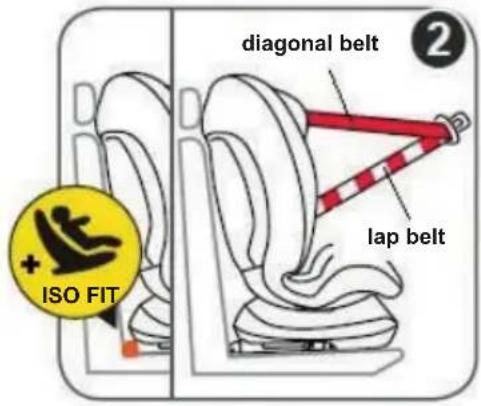
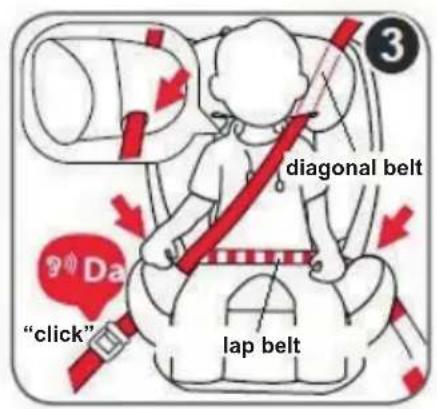
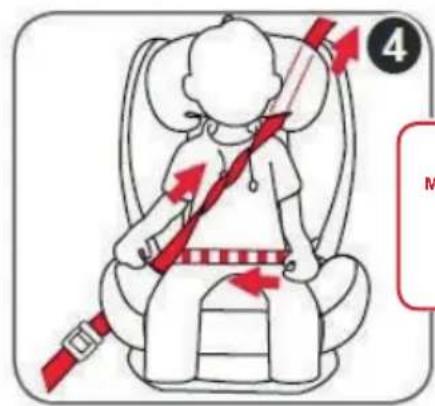
CAUTION! IN GROUP II AND III, THE SEAT IS FITTED TO THE VEHICLE SEAT WITH THE 3-POINT BELT OF THE VEHICLE (DIAGONAL AND LAP). ISOFIX MOUNTING IS OPTIONAL AND CAN BE USED FOR ADDITIONAL ATTACHEMENT OF THE CAR SEAT TO THE VEHICLE SEAT!
CAUTION! When using ISOFIX installation with combination with 3-point safety belt of the vehicle, DO NOT PLACE THE TOP TETHER!
CAUTION! Only use position 1 for the seat recline!
IMPORTANT! The lap belt should cover the pelvis of the child, not the waist!
UNLOCKING OF ISOFIX CONNECTORS AND TOP TETHER
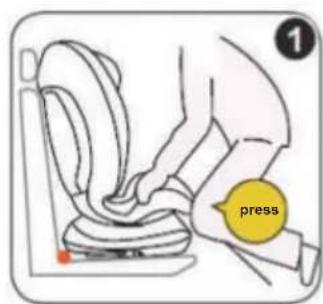
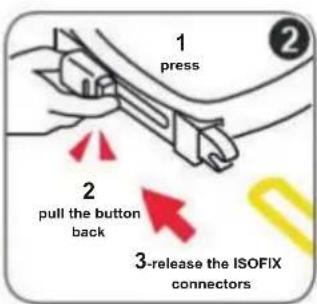
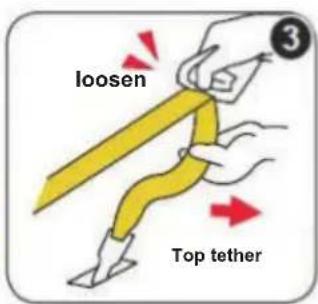
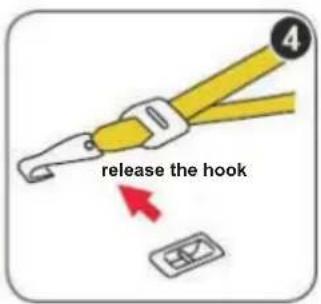
CAUTION! Do not unlock or remove parts of the ISOFIX system applying strength! If the ISOFIX system is not unlocked, please repeat the steps shown in the figure
ADJUSTING THE RECLINE OF THE CAR SEAT
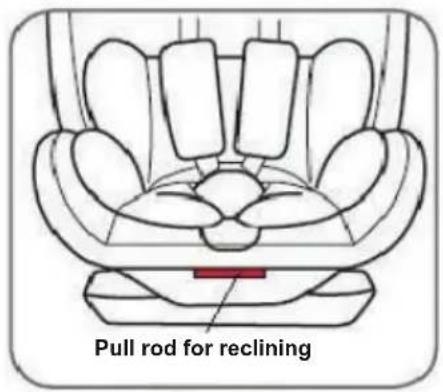
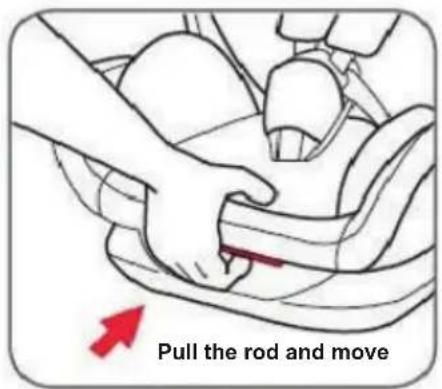
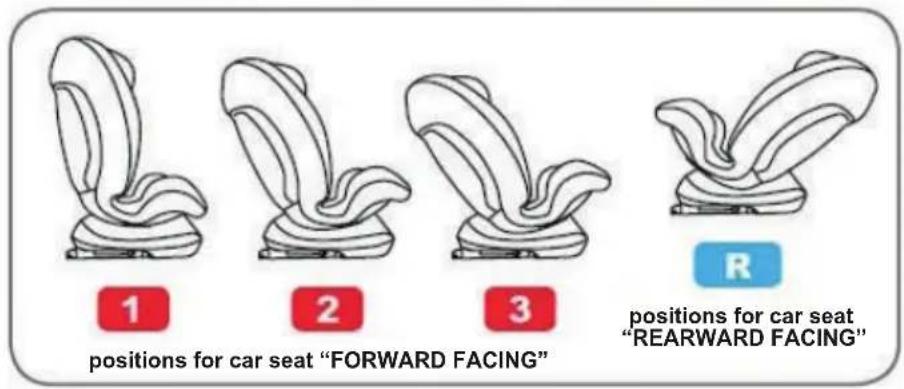
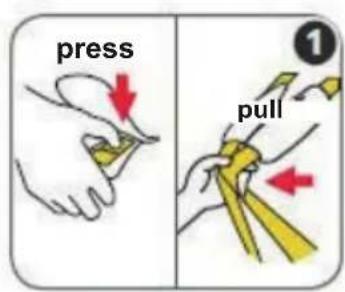
TIGHTENING AND LOOSENING OF 5-POINT HARNESS OF THE CAR SEAT
The recommended distance between the belts and the body of the child should be about 3cm (or two fingers).
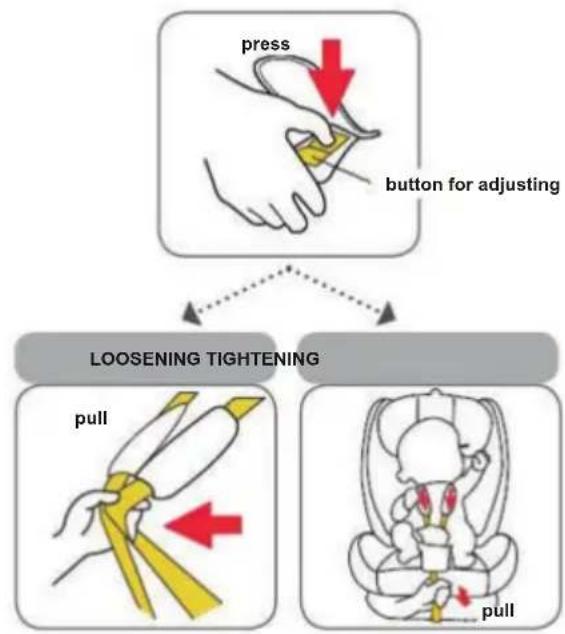
flowchart
graph TD
    A["press"] --> B["button for adjusting"]
    B --> C["loosening tightening"]
    C --> D["pull"]
    D --> E["pull"]
LOOSENING
Press the button for adjustment with one hand and with the other pull the shoulder belts.
TIGHTENING
Pull the adjustment strap and tighten, holding the shoulder straps with the other hand. Keep the recommended distance of about 3mm (two fingers) between the child's body and the shoulder straps!
CAUTION! The belts should not be twisted!
ADJUSTING THE HEIGHT OF THE HEADREST
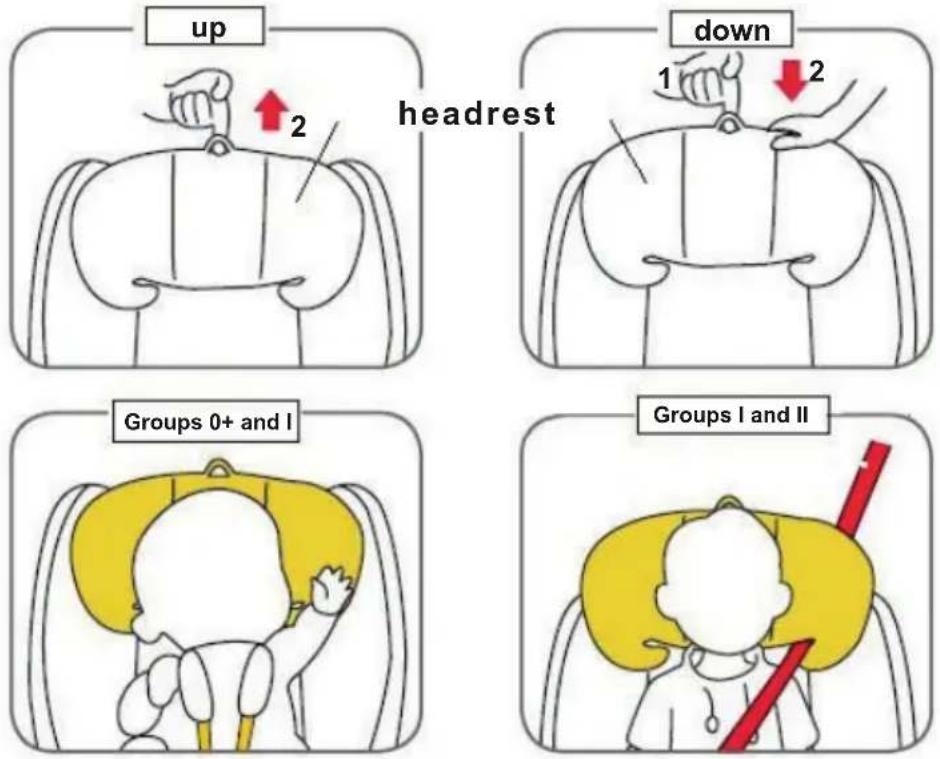
IMPORTANT! Fix the headrest in suitable for your child position. Headrest should not be too high or too low to the child's head.
For groups 0 + and I the slot for shoulder straps should higher than the child's shoulder!
For groups II and III the belts guide for groups II and III (of the head rest should be higher than the child's shoulder and the child's head must be well protected both sides of the headrest.
Notice: Loosen the pulling ring, to fix the chosen position.
ROTATION/CHANGE OF THE DIRECTION OF THE CAR SEAT
The seat of the car seat can be rotated at 360^ . It can be fixed in two positions – 'FORWARD FACING' and "REARWARD FACING".
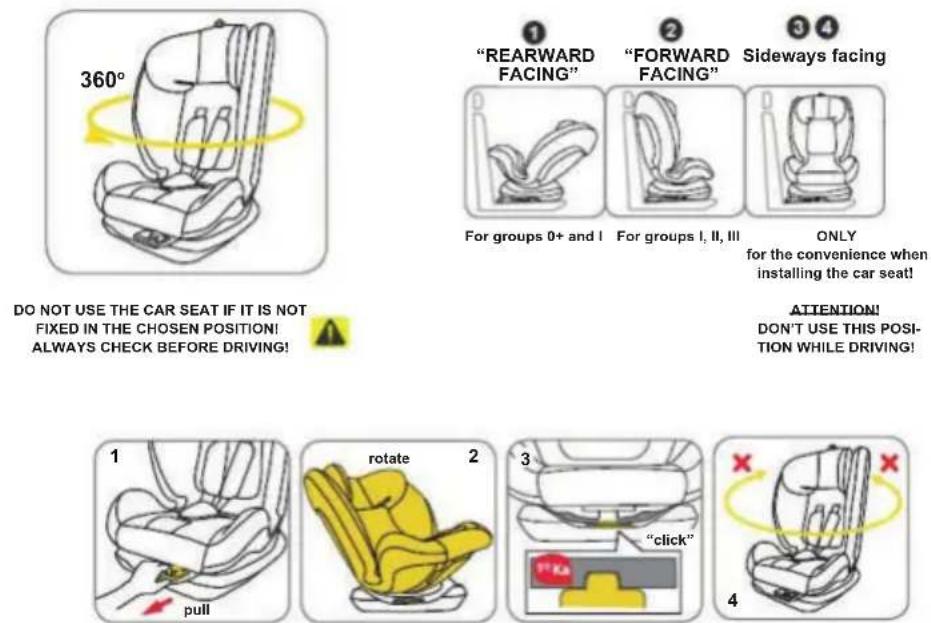
CAUTION! The seat is fixed only in position "REARWARD FACING" or in position "FORWARD FACING", when you hear click sound(3). Make sure the seat is fixed in the chosen positon (4)!
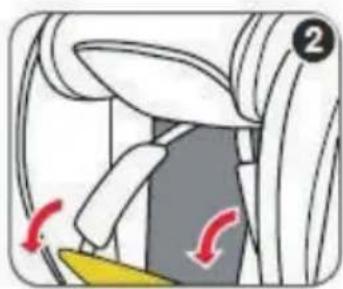
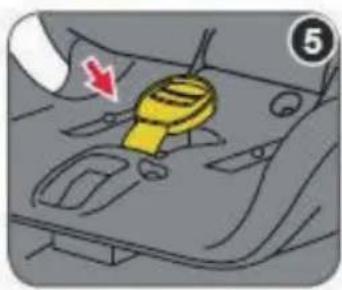
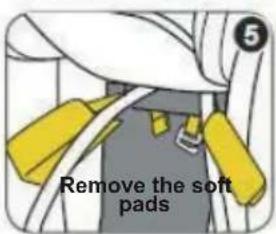
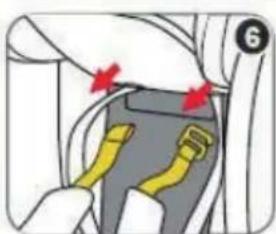
STORING THE 5-POINT HARNESS OF THE CAR SEAT FOR groups II and III
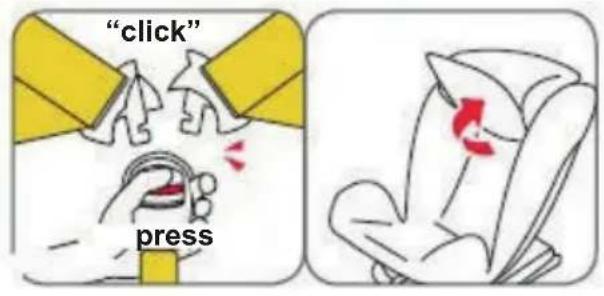
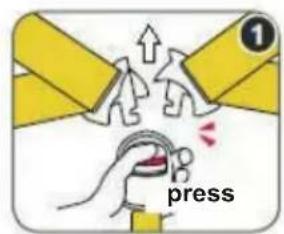
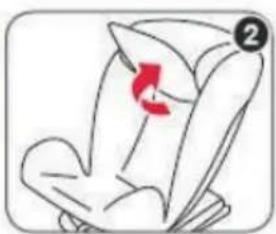
Unfasten the buckle of 5-point harness, fix the headrest in the highest position and lift the pad!
Follow the consequence of figure from 1 to 5 below:
natural_image
Diagram of a car seatbelt mechanism showing red and yellow directional arrows (no text or symbols)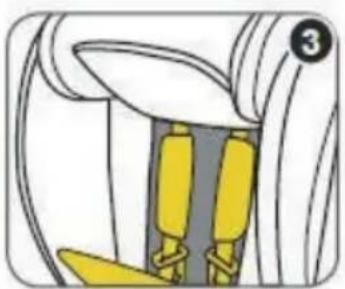
natural_image
Diagram of a mechanical component with yellow parts and a numbered label (3), no readable text or symbols present.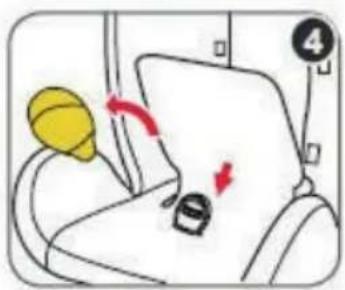
natural_image
Mechanical gear shift lever diagram showing a yellow belt and red arrow (no text or symbols)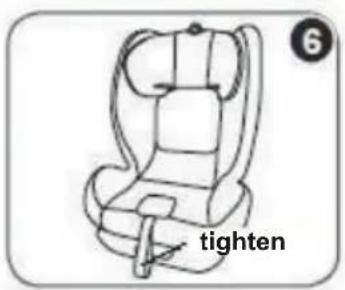
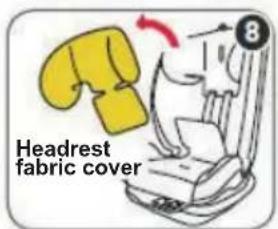
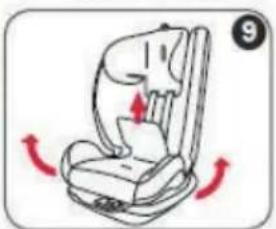
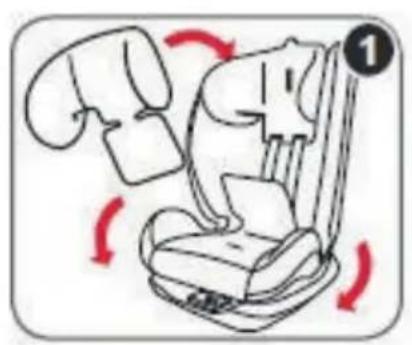
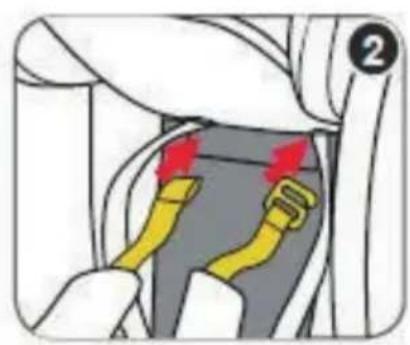
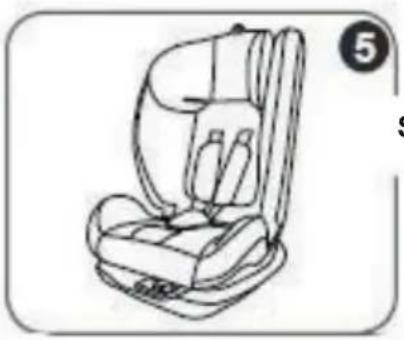
REMOVAL OF THE FABRIC COVER OF THE CAR SEAT
CAUTION! Do not use the car seat without its fabric cover!
natural_image
Illustration of a person sitting in a chair with a red arrow pointing to the seat area (no text or symbols)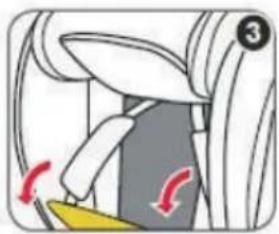
natural_image
Mechanical component diagram showing a belt switch with red directional arrows indicating motion (no text or symbols)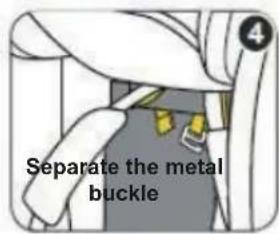
natural_image
Illustration of a hand holding a yellow belt buckle with red arrows indicating motion (no text or symbols)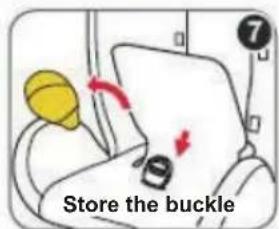
natural_image
Illustration of a car seat with red arrows indicating motion direction (no text or symbols)PLACING THE FABRIC COVER
natural_image
Illustration of a yellow belt buckle with red arrows indicating motion or force (no text or symbols)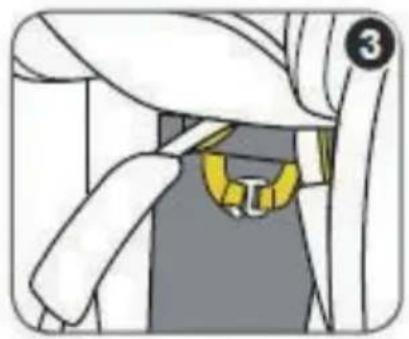
natural_image
Illustration of a car seatbelt buckle being adjusted for a seatbelt (no text or symbols present)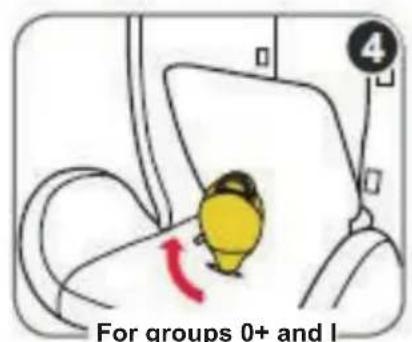
natural_image
Line drawing of a car comfort seat with seatbelt and seat rack (no text or symbols)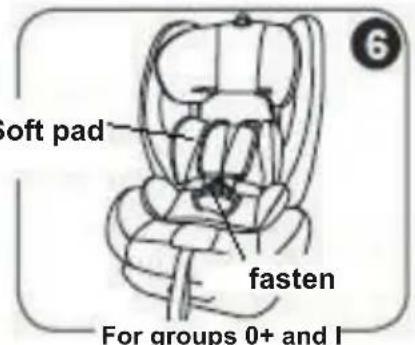
CARE AND MAINTENANCE
- Clean the fabrics, plastic parts and metal parts with damp cotton cloth or sponge and mild soap Upholstery may be hand washed at 30 °C using mild detergent!
Do not bleach! Do not tumble dry! Do not machine wash! Do not iron!
Do not use abrasive, bleach or other aggressive detergents.
❖ Always after cleaning leave the car seat fully dry and after that use it or store it.
❖ Harnesses must be cleaned with damp cloth and mild soap!
Do not wet or remove the stickers. They contain important information!
Always store your car seat indoors – on dry and clean place. Do not expose to direct environment influence - sun, rain, moisture and high temperature intervals.
Please, contact your authorized dealer for problems connected with the use or repair.
Fabric:
Outer: 100% polyester
Filling: 100% polyester


Materials used: plastic, metal, textile
STKTH020xxx
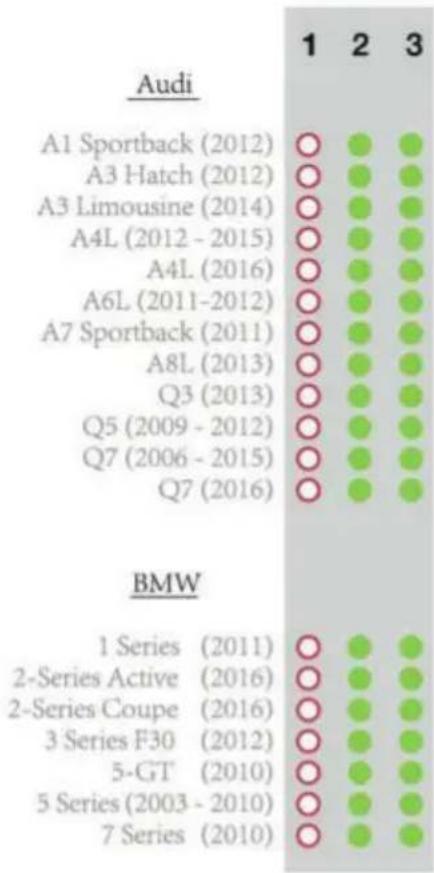
List of vehicles, suitable for fixing of semi-universal child restraint system, model „TECHNO”
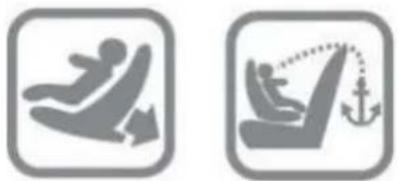
natural_image
Two gray icons showing a person sliding down and a person on a swing, with an anchor symbol (no text or symbols present)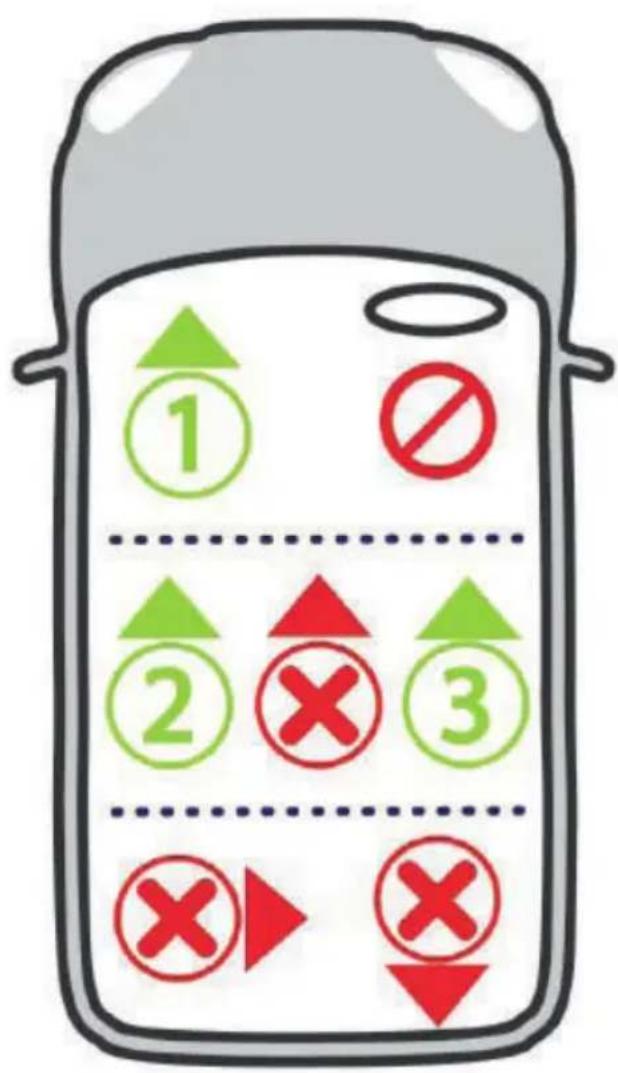
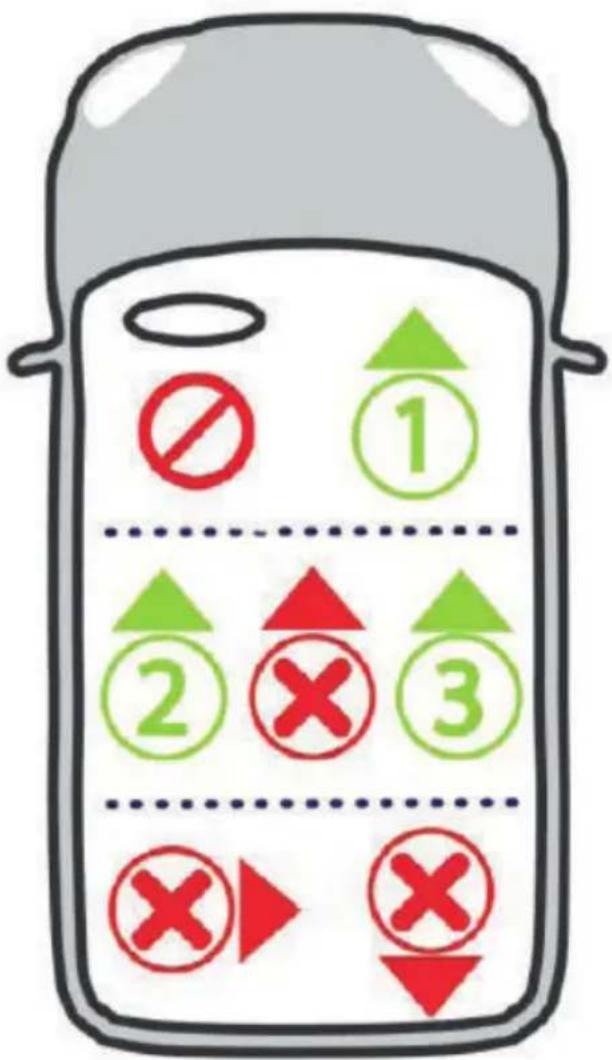
Child restraint system model „TECHNO“ can be fitted on the marked place in the vehicle.
Child restraint system model „TECHNO“ CANNOT be fitted on the marked place in the vehicle.
If your vehicle is not listed in this manual or it is not marked with or, then please refer to your vehicle's handbook or contact the manufacturer for further information.
Seat positions in other vehicles may also be suitable to accept the child restraint. If in doubt, consult either the child restraint manufacturer or the retailer.
bar
| Series | Series | Rating | | :--- | :--- | :--- | | Audi | 1 | ● | | Audi | 2 | ● | | Audi | 3 | ● | | BMW | 1 Series (2011) | ○ | | BMW | 2-Series Active (2016) | ○ | | BMW | 2-Series Coupe (2016) | ○ | | BMW | 3 Series F30 (2012) | ○ | | BMW | 5-GT (2010) | ○ | | BMW | 5 Series (2003 - 2010) | ○ | | BMW | 7 Series (2010) | ○ |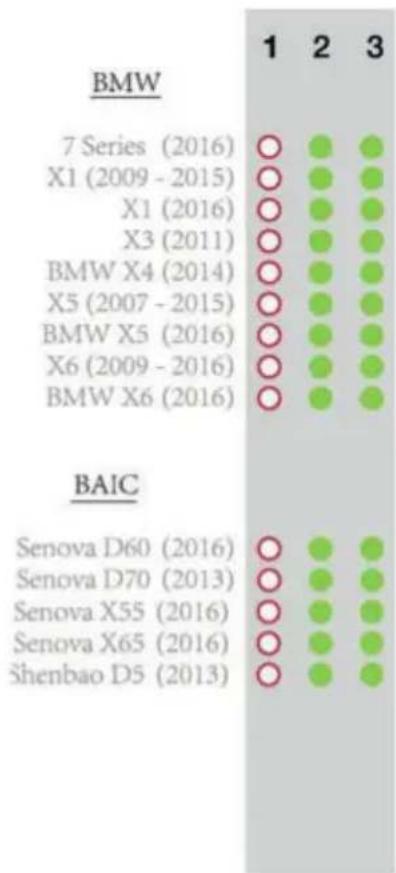
scatter
| Model | Series | Value | | :--- | :--- | :--- | | BMW | 1 | ● | | BMW | 2 | ● | | BMW | 3 | ● | | BAIC | 1 | ○ | | BAIC | 2 | ● | | BAIC | 3 | ● | | Senova D60 (2016) | ○ | ● | | Senova D70 (2013) | ○ | ● | | Senova X55 (2016) | ○ | ● | | Senova X65 (2016) | ○ | ● | | Shenbao D5 (2013) | ○ | ● |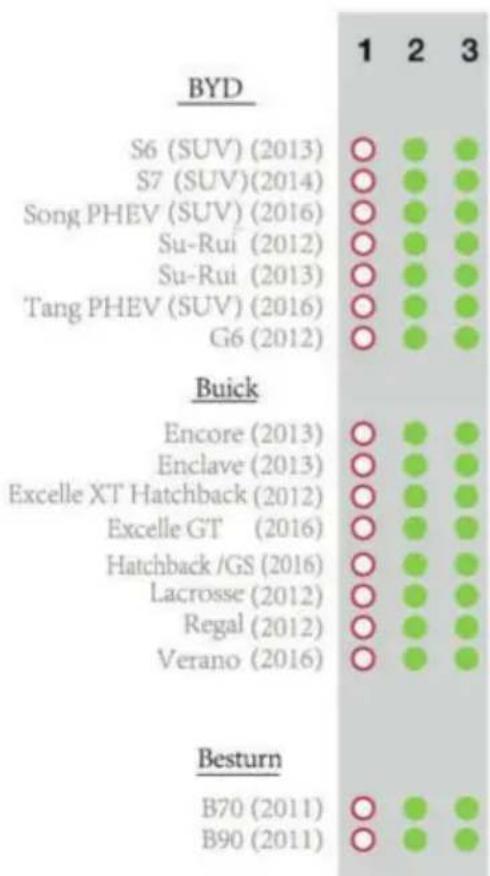
bar
| Model | 1 | 2 | 3 | |---|---|---|---| | S6 (SUV) (2013) | ○ | ● | ● | | S7 (SUV)(2014) | ○ | ● | ● | | Song PHEV (SUV) (2016) | ○ | ● | ● | | Su-Rui (2012) | ○ | ● | ● | | Su-Rui (2013) | ○ | ● | ● | | Tang PHEV (SUV) (2016) | ○ | ● | ● | | G6 (2012) | ○ | ● | ● | | Encore (2013) | ○ | ● | ● | | Enclave (2013) | ○ | ● | ● | | Excelle XT Hatchback (2012) | ○ | ● | ● | | Excelle GT (2016) | ○ | ● | ● | | Hatchback /GS (2016) | ○ | ● | ● | | Lacrosse (2012) | ○ | ● | ● | | Regal (2012) | ○ | ● | ● | | Verano (2016) | ○ | ● | ● | | B70 (2011) | ○ | ● | ● | | B90 (2011) | ○ | ● | ● |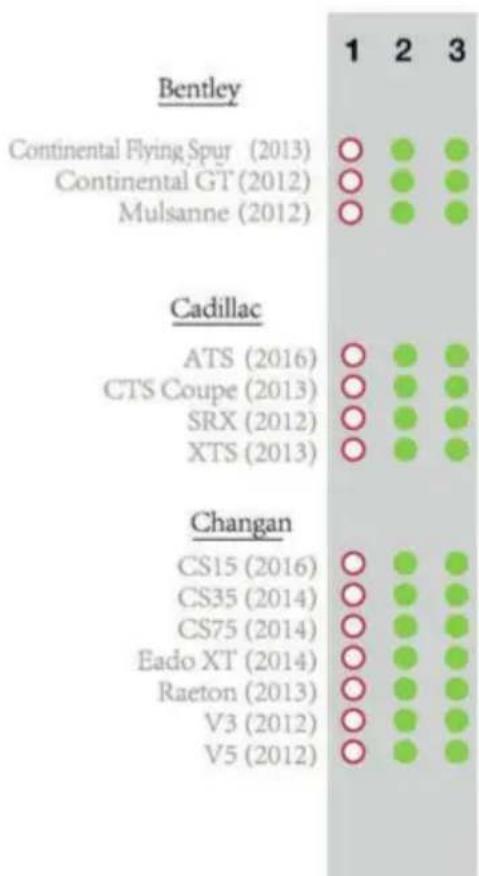
scatter
| Gene | Mutation | Value | |---|---|---| | Bentley | Continental Flying Spur (2013) | ○ | | Bentley | Continental GT (2012) | ○ | | Bentley | Mulsanne (2012) | ○ | | Cadillac | ATS (2016) | ○ | | Cadillac | CTS Coupe (2013) | ○ | | Cadillac | SRX (2012) | ○ | | Cadillac | XTS (2013) | ○ | | Changan | CS15 (2016) | ○ | | Changan | CS35 (2014) | ○ | | Changan | CS75 (2014) | ○ | | Changan | Eado XT (2014) | ○ | | Changan | Raeton (2013) | ○ | | Changan | V3 (2012) | ○ | | Changan | V5 (2012) | ○ |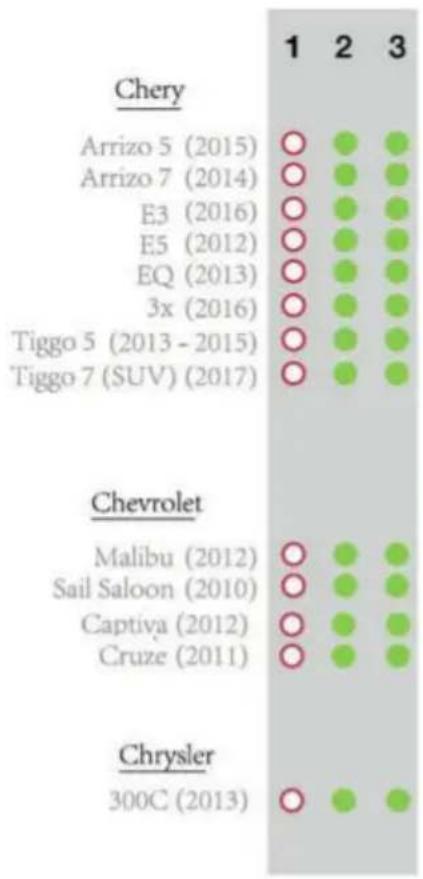
other
| Model | Period | Value | | :--- | :--- | :--- | | Chery | 1 | 0 | | Chery | 2 | 0 | | Chery | 3 | 0 | | Chevrolet | 1 | 0 | | Chevrolet | 2 | 0 | | Chevrolet | 3 | 0 | | Chrysler | 1 | 0 | | Chrysler | 2 | 0 | | Chrysler | 3 | 0 |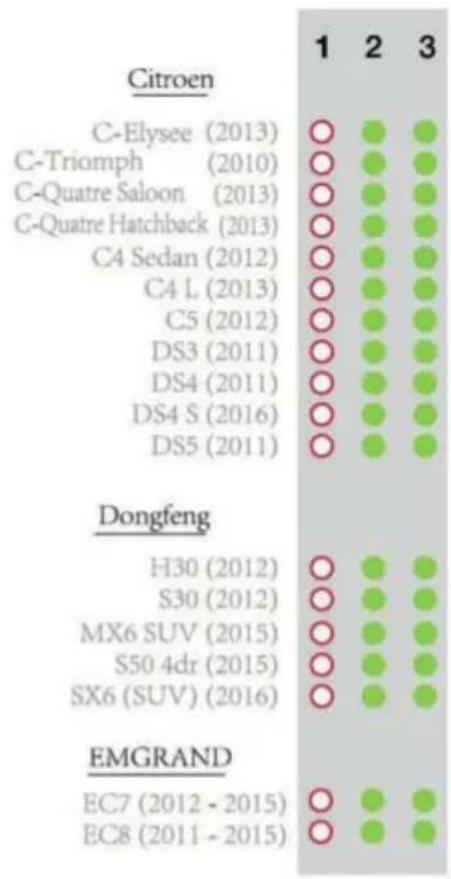
treemap
| Gene | Study | 1 | 2 | 3 | |---|---|---|---|---| | Citroen | C-Elysee (2013) | ○ | ● | ● | | Citroen | C-Triomph (2010) | ○ | ● | ● | | Citroen | C-Quatre Saloon (2013) | ○ | ● | ● | | Citroen | C-Quatre Hatchback (2013) | ○ | ● | ● | | Citroen | C4 Sedan (2012) | ○ | ● | ● | | Citroen | C4 L (2013) | ○ | ● | ● | | Citroen | C5 (2012) | ○ | ● | ● | | Citroen | DS3 (2011) | ○ | ● | ● | | Citroen | DS4 (2011) | ○ | ● | ● | | Citroen | DS4 S (2016) | ○ | ● | ● | | Citroen | DS5 (2011) | ○ | ● | ● | | Dongfeng | H30 (2012) | ○ | ● | ● | | Dongfeng | S30 (2012) | ○ | ● | ● | | Dongfeng | MX6 SUV (2015) | ○ | ● | ● | | Dongfeng | S50 4dr (2015) | ○ | ● | ● | | Dongfeng | SX6 (SUV) (2016) | ○ | ● | ● | | EMGRAND | EC7 (2012 - 2015) | ○ | ● | ● | | EMGRAND | EC8 (2011 - 2015) | ○ | ● | ● |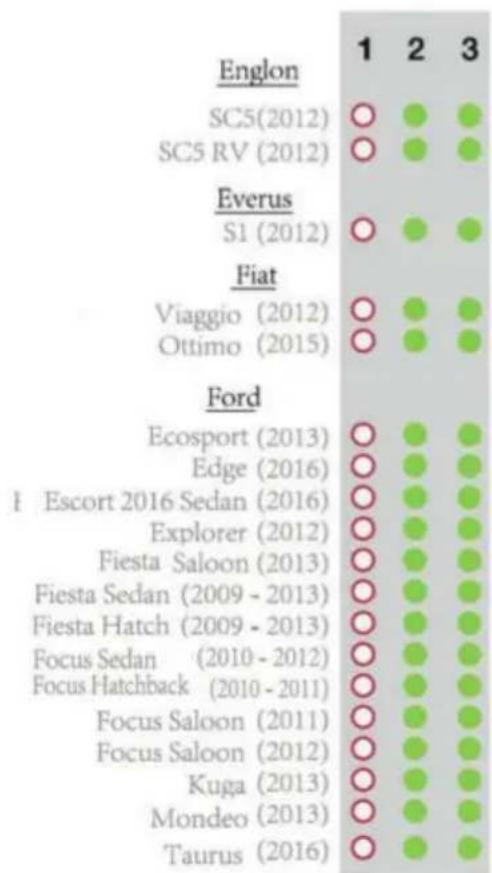
heatmap
| | 1 | 2 | 3 | |---|---|---|---| | Englon SC5(2012) | ○ | ● | ● | | Englon SC5 RV (2012) | ○ | ● | ● | | Everus S1 (2012) | ○ | ● | ● | | Fiat Viaggio (2012) | ○ | ● | ● | | Fiat Ottimo (2015) | ○ | ● | ● | | Ford Ecosport (2013) | ○ | ● | ● | | Ford Edge (2016) | ○ | ● | ● | | I Escort 2016 Sedan (2016) | ○ | ● | ● | | I Explorer (2012) | ○ | ● | ● | | I Fiesta Saloon (2013) | ○ | ● | ● | | I Fiesta Sedan (2009 - 2013) | ○ | ● | ● | | I Fiesta Hatch (2009 - 2013) | ○ | ● | ● | | I Focus Sedan (2010 - 2012) | ○ | ● | ● | | I Focus Hatchback (2010 - 2011) | ○ | ● | ● | | Focus Saloon (2011) | ○ | ● | ● | | Focus Saloon (2012) | ○ | ● | ● | | Kuga (2013) | ○ | ● | ● | | Mondeo (2013) | ○ | ● | ● | | Taurus (2016) | ○ | ● | ● |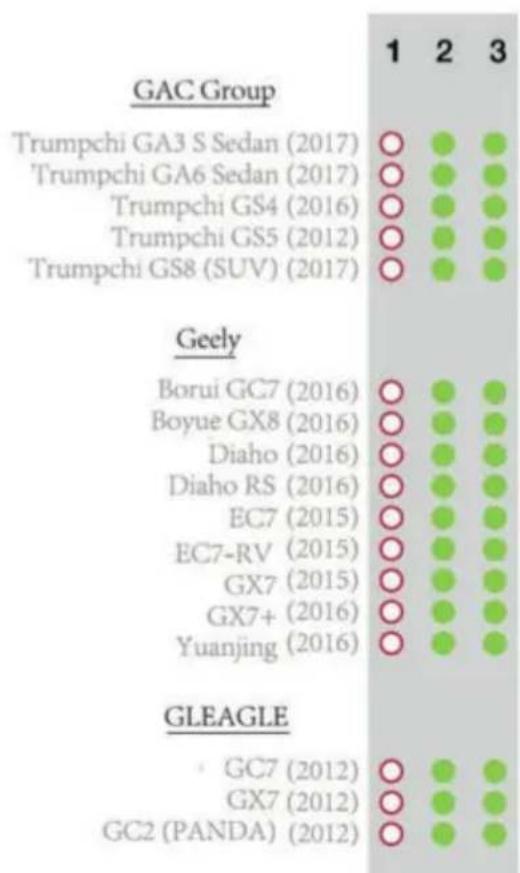
other
| Model | Event Count | | :--- | :--- | | Trumpchi GA3 S Sedan (2017) | ○ | | Trumpchi GA6 Sedan (2017) | ○ | | Trumpchi GS4 (2016) | ○ | | Trumpchi GS5 (2012) | ○ | | Trumpchi GS8 (SUV) (2017) | ○ | | Bozui GC7 (2016) | ○ | | Boyue GX8 (2016) | ○ | | Diaho (2016) | ○ | | Diaho RS (2016) | ○ | | EC7 (2015) | ○ | | EC7-RV (2015) | ○ | | GX7 (2015) | ○ | | GX7+ (2016) | ○ | | Yuanjing (2016) | ○ | | GC7 (2012) | ○ | | GX7 (2012) | ○ | | GC2 (PANDA) (2012) | ○ |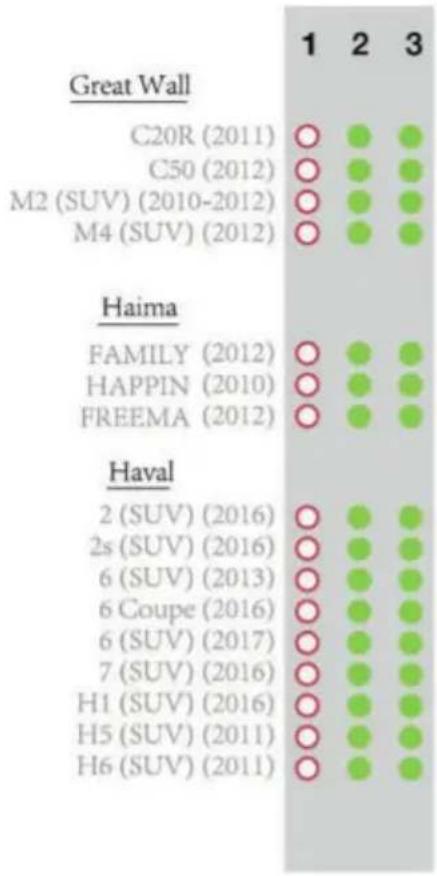
bar
| Model | Year | Value | |---|---|---| | Honda | 1 | ● | | Honda | 2 | ● | | Honda | 3 | ● | | Civic Saloon (2013) | 1 | ● | | Civic Saloon (2013) | 2 | ● | | Civic Saloon (2013) | 3 | ● | | CR-V (2012 - 2014) | 1 | ● | | CR-V (2014) | 2 | ● | | CR-V (2015) | 1 | ● | | CR-V (2015) | 2 | ● | | Greiz (2015) | 1 | ● | | Greiz (2015) | 2 | ● | | Gienia (2017) | 1 | ● | | Gienia (2017) | 2 | ● | | Jade (2013) | 1 | ● | | Jade (2013) | 2 | ● | | Spirior (2011 - 2015) | 1 | ● | | Spirior (2015) | 2 | ● | | Spirior (2016) | 1 | ● | | Spirior (2016) | 2 | ● | | UR-V (SUV) (2017) | 1 | ● | | UR-V (SUV) (2017) | 2 | ● | | XR-V (2016) | 1 | ● | | XR-V (2016) | 2 | ● | The chart displays the color-coded dots representing values for each model in the Honda series. The legend is not explicitly labeled.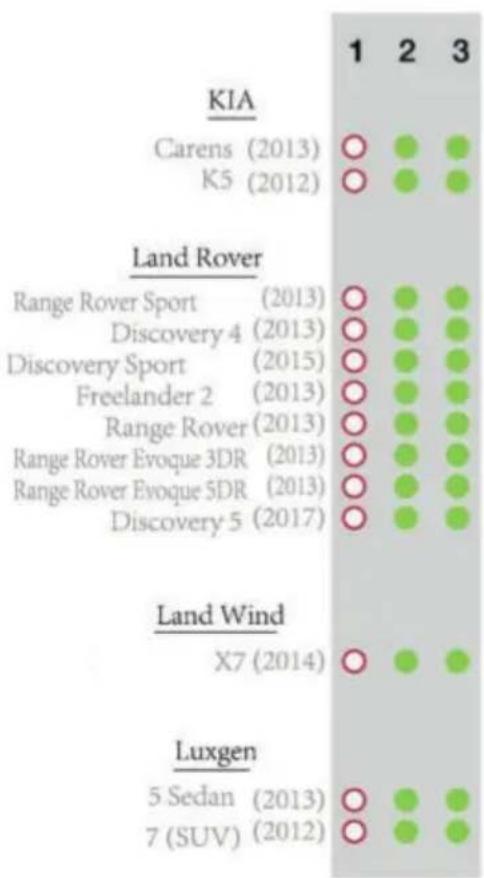
tree
| Category | Location | Year | Node Color | Node Size | |---|---|---|---|---| | KIA | Carens | 2013 | ○ | ● | | KIA | K5 | 2012 | ○ | ● | | Land Rover | Range Rover Sport | 2013 | ○ | ● | | Land Rover | Discovery 4 | 2013 | ○ | ● | | Land Rover | Discovery Sport | 2015 | ○ | ● | | Land Rover | Freelander 2 | 2013 | ○ | ● | | Land Rover | Range Rover | 2013 | ○ | ● | | Land Rover | Range Rover Evoque 3DR | 2013 | ○ | ● | | Land Rover | Range Rover Evoque 5DR | 2013 | ○ | ● | | Land Rover | Discovery 5 | 2017 | ○ | ● | | Land Wind | X7 | 2014 | ○ | ● | | Luxgen | 5 Sedan | 2013 | ○ | ● | | Luxgen | 7 (SUV) | 2012 | ○ | ● |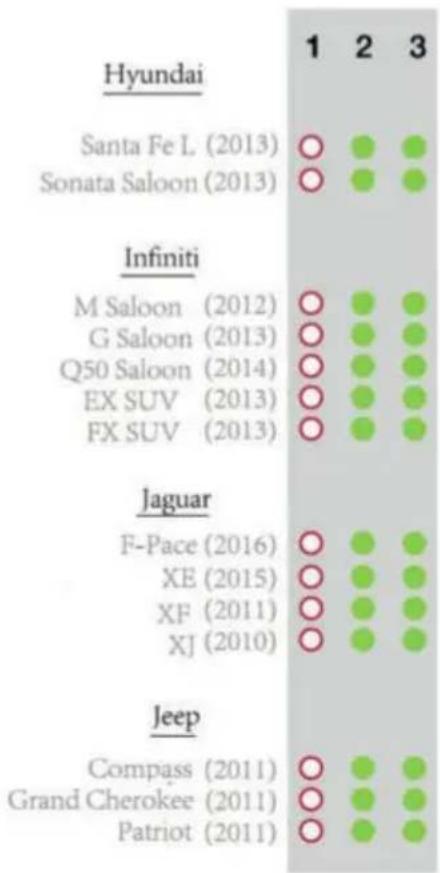
tree
| Model | Year | Number of Vehicles | |---|---|---| | Hyundai | 1 | Red circle | | Hyundai | 2 | Green dot | | Hyundai | 3 | Green dot | | Infiniti | 1 | Red circle | | Infiniti | 2 | Green dot | | Infiniti | 3 | Green dot | | Jaguar | 1 | Red circle | | Jaguar | 2 | Green dot | | Jaguar | 3 | Green dot | | Jeep | 1 | Red circle | | Jeep | 2 | Green dot | | Jeep | 3 | Green dot | | Compass | 1 | Red circle | | Compass | 2 | Green dot | | Compass | 3 | Green dot | | Grand Cherokee | 1 | Red circle | | Grand Cherokee | 2 | Green dot | | Grand Cherokee | 3 | Green dot | | Patriot | 1 | Red circle | | Patriot | 2 | Green dot | | Patriot | 3 | Green dot | | Sonata Saloon | 1 | Red circle | | Sonata Saloon | 2 | Green dot | | Sonata Saloon | 3 | Green dot | | M Saloon (2012) | 1 | Red circle | | M Saloon (2012) | 2 | Green dot | | M Saloon (2012) | 3 | Green dot | | G Saloon (2013) | 1 | Red circle | | G Saloon (2013) | 2 | Green dot | | G Saloon (2013) | 3 | Green dot | | Q50 Saloon (2014) | 1 | Red circle | | Q50 Saloon (2014) | 2 | Green dot | | Q50 Saloon (2014) | 3 | Green dot | | EX SUV (2013) | 1 | Red circle | | EX SUV (2013) | 2 | Green dot | | EX SUV (2013) | 3 | Green dot | | FX SUV (2013) | 1 | Red circle | | FX SUV (2013) | 2 | Green dot | | FX SUV (2013) | 3 | Green dot | | F-Pace (2016) | 1 | Red circle | | F-Pace (2016) | 2 | Green dot | | XE (2015) | 1 | Red circle | | XE (2015) | 2 | Green dot | | XF (2011) | 1 | Red circle | | XF (2011) | 2 | Green dot | | XJ (2010) | 1 | Red circle | | XJ (2010) | 2 | Green dot | | Hyundai: Santa Fe L (2013); Sonata Saloon (2013) | ○ | ● | The chart displays the number of vehicles in each year for each vehicle. The data is presented in a table format with the vehicle names and their corresponding years. The legend is not explicitly labeled.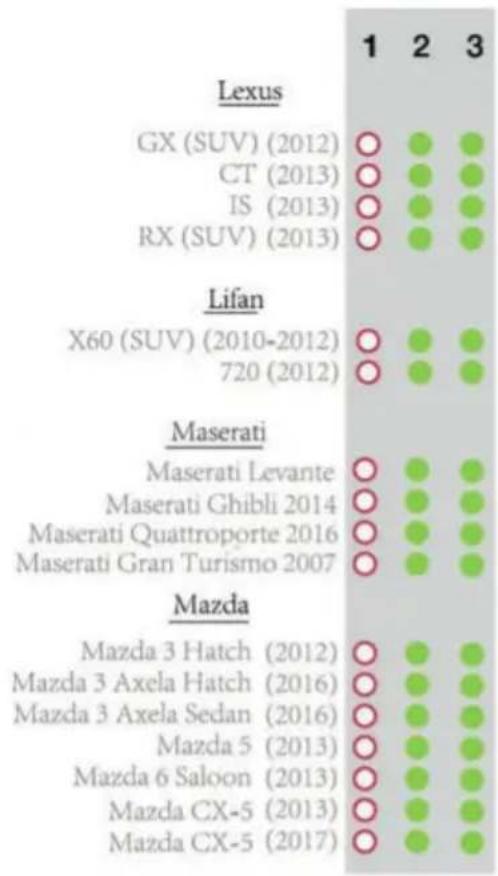
scatter
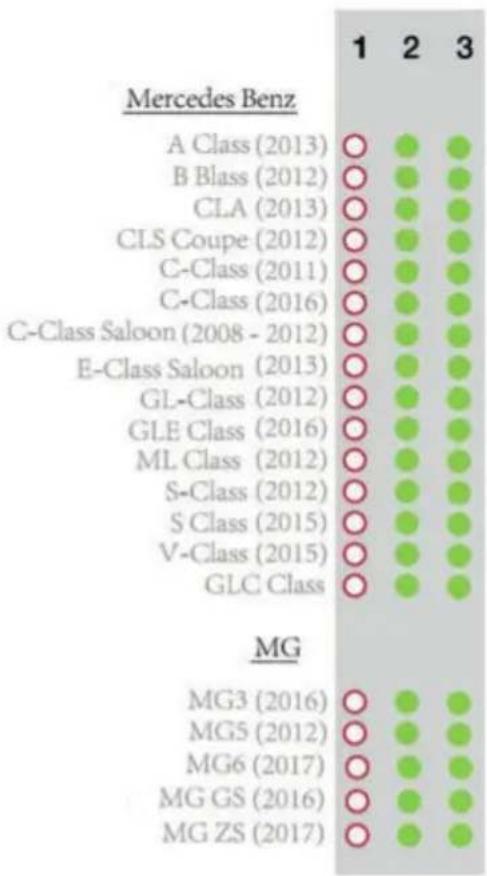
| Class | 1 | 2 | 3 | | :--- | :--- | :--- | :--- | | Mercedes Benz | | | | | A Class (2013) | ○ | ● | ● | | B Blass (2012) | ○ | ● | ● | | CLA (2013) | ○ | ● | ● | | CLS Coupe (2012) | ○ | ● | ● | | C-Class (2011) | ○ | ● | ● | | C-Class (2016) | ○ | ● | ● | | C-Class Saloon (2008 - 2012) | ○ | ● | ● | | E-Class Saloon (2013) | ○ | ● | ● | | GL-Class (2012) | ○ | ● | ● | | GLE Class (2016) | ○ | ● | ● | | ML Class (2012) | ○ | ● | ● | | S-Class (2012) | ○ | ● | ● | | S Class (2015) | ○ | ● | ● | | V-Class (2015) | ○ | ● | ● | | GLC Class | ○ | ● | ● | | MG | | | | | MG3 (2016) | ○ | ● | ● | | MG5 (2012) | ○ | ● | ● | | MG6 (2017) | ○ | ● | ● | | MG GS (2016) | ○ | ● | ● | | MG ZS (2017) | ○ | ● | ● |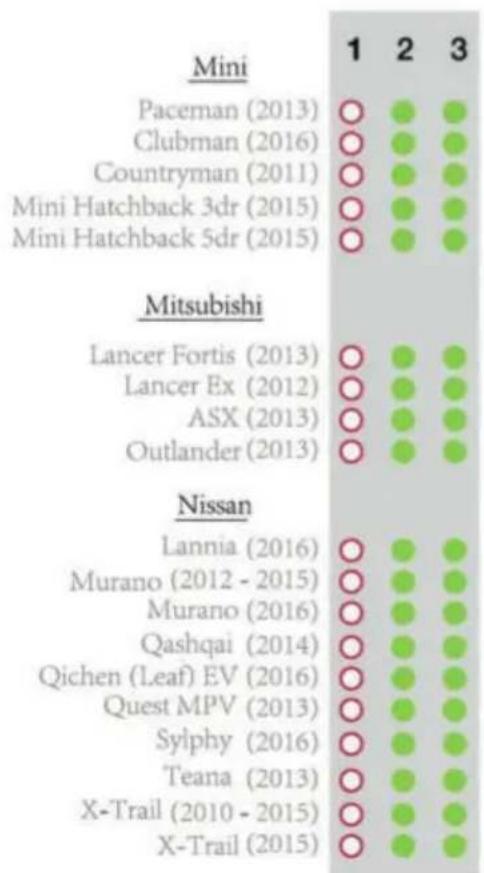
other
| Manufacturer | Category | Value | |---|---|---| | Paceman (2013) | ○ | ● | | Clubman (2016) | ○ | ● | | Countryman (2011) | ○ | ● | | Mini Hatchback 3dr (2015) | ○ | ● | | Mini Hatchback 5dr (2015) | ○ | ● | | Mitsubishi | ○ | ● | | Lancer Fortis (2013) | ○ | ● | | Lancer Ex (2012) | ○ | ● | | ASX (2013) | ○ | ● | | Outlander (2013) | ○ | ● | | Nissan | ○ | ● | | Lannia (2016) | ○ | ● | | Murano (2012 - 2015) | ○ | ● | | Murano (2016) | ○ | ● | | Qashqai (2014) | ○ | ● | | Qichen (Leaf) EV (2016) | ○ | ● | | Quest MPV (2013) | ○ | ● | | Sylphy (2016) | ○ | ● | | Teana (2013) | ○ | ● | | X-Trail (2010 - 2015) | ○ | ● | | X-Trail (2015) | ○ | ● |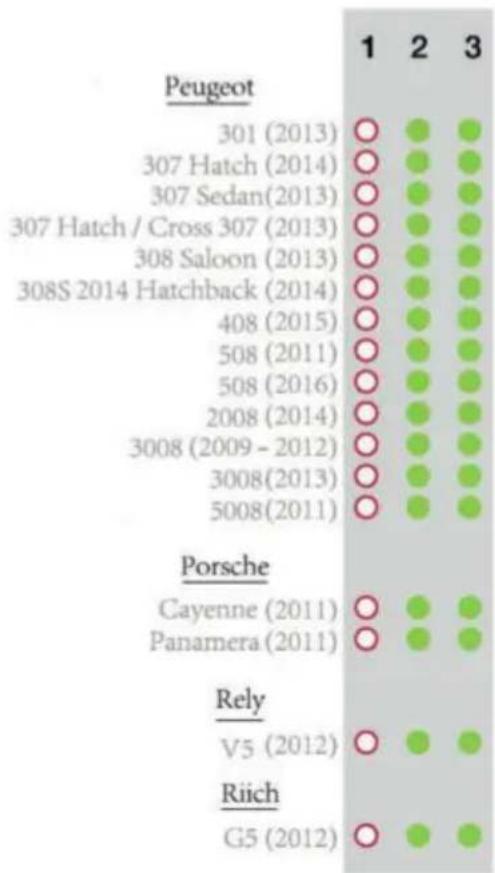
heatmap
| Model | 1 | 2 | 3 | |---|---|---|---| | Peugeot | ○ | ● | ● | | 301 (2013) | ○ | ● | ● | | 307 Hatch (2014) | ○ | ● | ● | | 307 Sedan (2013) | ○ | ● | ● | | 307 Hatch / Cross 307 (2013) | ○ | ● | ● | | 308 Saloon (2013) | ○ | ● | ● | | 308S 2014 Hatchback (2014) | ○ | ● | ● | | 408 (2015) | ○ | ● | ● | | 508 (2011) | ○ | ● | ● | | 508 (2016) | ○ | ● | ● | | 2008 (2014) | ○ | ● | ● | | 3008 (2009 - 2012) | ○ | ● | ● | | 3008 (2013) | ○ | ● | ● | | 5008 (2011) | ○ | ● | ● | Porsche Cayenne (2011) | ○ | ● | ● | Panamera (2011) | ○ | ● | ● | Rely V5 (2012) | ○ | ● | ● | Riich G5 (2012) | ○ | ● | ● |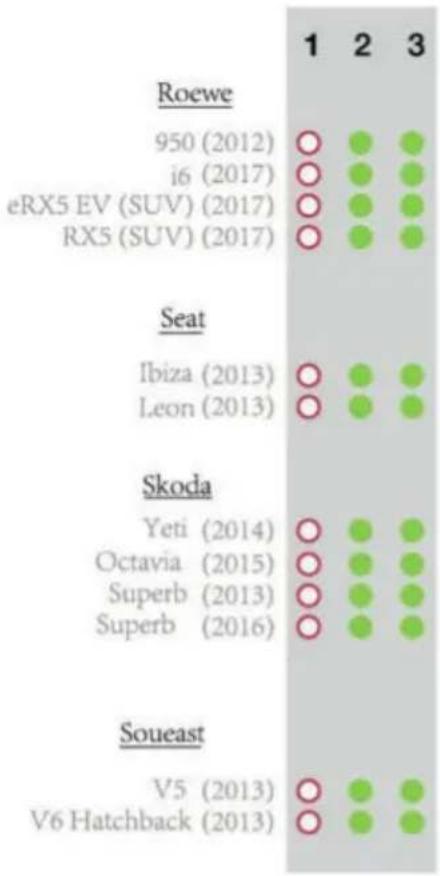
heatmap
| Category | Model (Year) | Value | |---|---|---| | Roewe | 950 (2012) | ○ ● ● ● | | Roewe | i6 (2017) | ○ ● ● ● | | Roewe | eRX5 EV (SUV) (2017) | ○ ● ● ● | | Roewe | RX5 (SUV) (2017) | ○ ● ● ● | | Seat | Ibiza (2013) | ○ ● ● ● | | Seat | Leon (2013) | ○ ● ● ● | | Skoda | Yeti (2014) | ○ ● ● ● | | Skoda | Octavia (2015) | ○ ● ● ● | | Skoda | Superb (2013) | ○ ● ● ● | | Skoda | Superb (2016) | ○ ● ● ● | | Soueast | V5 (2013) | ○ ● ● ● | | Soueast | V6 Hatchback (2013) | ○ ● ● ● |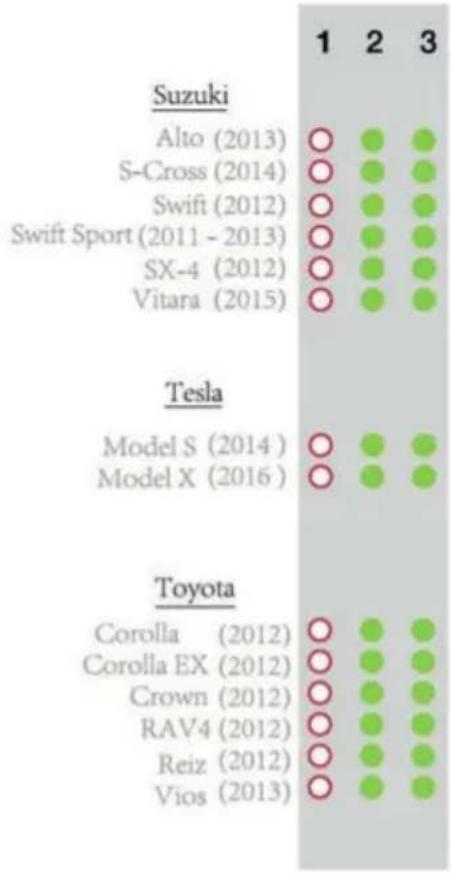
other
| Model | Year | Value | | :--- | :--- | :--- | | Suzuki | 1 | 1 | | Suzuki | 2 | 2 | | Suzuki | 3 | 3 | | Tesla | 1 | 1 | | Tesla | 2 | 2 | | Tesla | 3 | 3 | | Toyota | 1 | 1 | | Toyota | 2 | 2 | | Toyota | 3 | 3 | | Corolla | 1 | 1 | | Corolla | 2 | 2 | | Corolla | 3 | 3 | | Corolla EX | 1 | 1 | | Corolla EX | 2 | 2 | | Corolla EX | 3 | 3 | | Crown | 1 | 1 | | Crown | 2 | 2 | | Crown | 3 | 3 | | RAV4 | 1 | 1 | | RAV4 | 2 | 2 | | RAV4 | 3 | 3 | | Reiz | 1 | 1 | | Reiz | 2 | 2 | | Reiz | 3 | 3 | | Vios | 1 | 1 | | Vios | 2 | 2 | | Vios | 3 | 3 | | Alto (2013) | 1 | ○ | | Alto (2013) | 2 | ● | | Alto (2013) | 3 | ● | | S-Cross (2014) | 1 | ○ | | S-Cross (2014) | 2 | ● | | S-Cross (2014) | 3 | ● | | Swift (2012) | 1 | ○ | | Swift (2012) | 2 | ● | | Swift (2012) | 3 | ● | | Swift Sport (2011 - 2013) | 1 | ○ | | Swift Sport (2011 - 2013) | 2 | ● | | Swift Sport (2011 - 2013) | 3 | ● | | SX-4 (2012) | 1 | ○ | | SX-4 (2012) | 2 | ● | | SX-4 (2012) | 3 | ● | | Vitara (2015) | 1 | ○ | | Vitara (2015) | 2 | ● | | Vitara (2015) | 3 | ● | The chart displays a single column with '●' in the middle row and '○' in the bottom row. The data is presented in a grid layout with rows labeled 'Suzuki', 'Tesla', and 'Toyota'. The legend indicates that 'Suzuki' is represented by a red circle, 'Tesla' by a green circle, and 'Toyota' by a blue circle.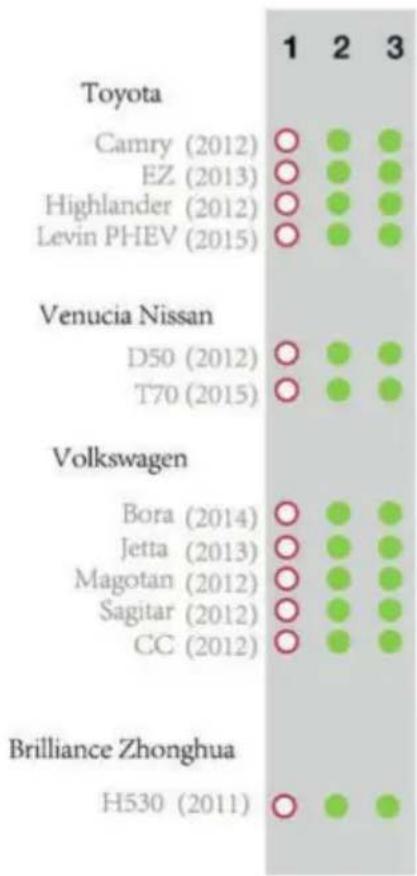
heatmap
| Manufacturer | Year | Value | | :--- | :--- | :--- | | Toyota | 1 | | | Camry (2012) | 1 | ● | | EZ (2013) | 1 | ● | | Highlander (2012) | 1 | ● | | Levin PHEV (2015) | 1 | ● | | Venucia Nissan | 1 | | | D50 (2012) | 1 | ● | | T70 (2015) | 1 | ● | | Volkswagen | 1 | | | Bora (2014) | 1 | ● | | Jetta (2013) | 1 | ● | | Magotan (2012) | 1 | ● | | Sagitar (2012) | 1 | ● | | CC (2012) | 1 | ● | | Brilliance Zhonghua | 1 | | | H530 (2011) | 1 | ● | The chart displays a single numerical value per row and column for each data point. The color intensity corresponds to the value in the legend: green = high value, red = low value.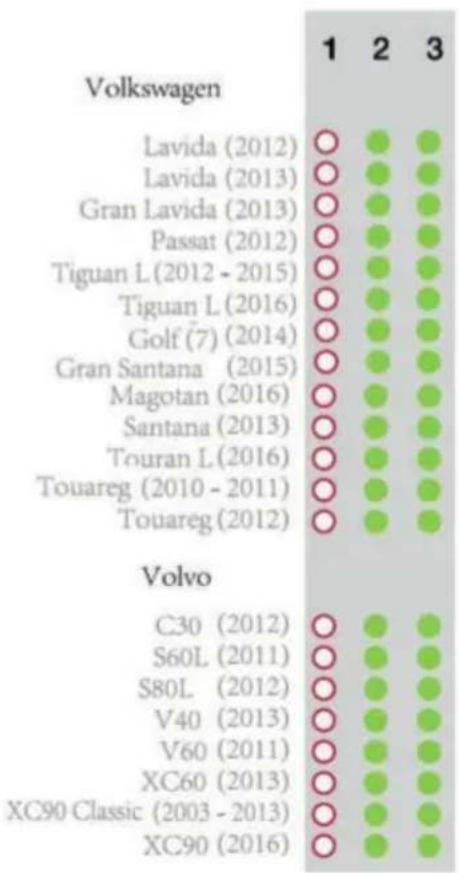
heatmap
| Model | 1 | 2 | 3 | |---|---|---|---| | Lavida (2012) | ○ | ● | ● | | Lavida (2013) | ○ | ● | ● | | Gran Lavida (2013) | ○ | ● | ● | | Passat (2012) | ○ | ● | ● | | Tiguan L (2012 - 2015) | ○ | ● | ● | | Tiguan L (2016) | ○ | ● | ● | | Golf (7) (2014) | ○ | ● | ● | | Gran Santana (2015) | ○ | ● | ● | | Magotan (2016) | ○ | ● | ● | | Santana (2013) | ○ | ● | ● | | Touran L (2016) | ○ | ● | ● | | Touareg (2010 - 2011) | ○ | ● | ● | | Touareg (2012) | ○ | ● | ● | | C30 (2012) | ○ | ● | ● | | S60L (2011) | ○ | ● | ● | | S80L (2012) | ○ | ● | ● | | V40 (2013) | ○ | ● | ● | | V60 (2011) | ○ | ● | ● | | XC60 (2013) | ○ | ● | ● | | XC90 Classic (2003 - 2013) | ○ | ● | ● | | XC90 (2016) | ○ | ● | ● |- NOTICE
- For universal child restraint, groups 0+, I, II and III
- for semi-universal child restraint, groups 0+ and I
- for semi-universal child restraintq groups 0+, I, II и III
- CAUTION!
- PLACE OF THE CAR SEAT IN THE VEHICLE
- PRODUCT FEATURES
- MAIN PARTS DIAGRAM
- INSTRUCTIONS FOR USE
- IMPORTANT!
- INSTALLATION OF CAR SEAT GROUP 0+ AND GROUP I
- "REARWARD FACING" group 0+ and I
- "FORWARD FACING" group I
- INSTALLATION OF THE CAR SEAT WITH ISOFIX CONNECTORS
- INSTALLATION OF THE CAR SEAT WITH ISOFIX AND TOP TETHER
- INSTALLATION OF THE CAR SEAT groups 0+ and I WITH 3-POINT SAFETY BELT OF THE VEHICLE (“REARWARD FACING”)
- INSTALLATION OF THE CAR SEAT group I WITH 3-POINT SAFETY BELT OF THE VEHICLE ("FORWARD FACING")
- 5-POINT HARNESS OF THE CAR SEAT.
- USE FOR GROUPS 0+ and I
- INSTALLATION OF THE CAR SEAT GROUP II AND GROUP III
- UNLOCKING OF ISOFIX CONNECTORS AND TOP TETHER
- TIGHTENING AND LOOSENING OF 5-POINT HARNESS OF THE CAR SEAT
- LOOSENING
- TIGHTENING
- ROTATION/CHANGE OF THE DIRECTION OF THE CAR SEAT
- STORING THE 5-POINT HARNESS OF THE CAR SEAT FOR groups II and III
- REMOVAL OF THE FABRIC COVER OF THE CAR SEAT
- PLACING THE FABRIC COVER
- CARE AND MAINTENANCE
Brand : Chipolino
Model : Techno
Category : Car seat