eiQFFSTD7 - Tumble drier ElectriQ - Free user manual and instructions
Find the device manual for free eiQFFSTD7 ElectriQ in PDF.


| Product Type | Tumble Dryer, Air-Vented |
| Model | eiQFFSTD7 |
| Brand | ElectriQ |
| Dimensions (H x W x D) | 840 x 595 x 555 mm |
| Weight | 33 kg |
| Rated Voltage | 220–240 V, 50 Hz |
| Rated Input Power | 2000 W |
| Capacity | 7 kg |
| Energy Efficiency Class | C |
| Standard Cotton Program Time (full load) | 120 min |
| Standard Cotton Program Time (partial load) | 68 min |
| Weighted Annual Energy Consumption | 451.6 kWh |
| Drying Programmes | Mix, Cotton, Synthetic, 1 Hour Dry |
| Dryness Levels | Iron Dry, Cupboard Dry, Extra Dry |
| Anti-Crease Function | Yes, selectable |
| Child Lock | Yes (press Program + Dryness for 2 seconds) |
| Lint Filter Cleaning | After each use, wipe clean |
| Safety Cut-out | Resettable at rear if overheated |
| Vent Pipe Requirement | Must be vented outside; min 10 cm gap from rear wall |
| Adjustable Feet | Yes, to level the unit |
Frequently Asked Questions - eiQFFSTD7 ElectriQ
User questions about eiQFFSTD7 ElectriQ
0 question about this device. Answer the ones you know or ask your own.
Ask a new question about this device
Download the instructions for your Tumble drier in PDF format for free! Find your manual eiQFFSTD7 - ElectriQ and take your electronic device back in hand. On this page are published all the documents necessary for the use of your device. eiQFFSTD7 by ElectriQ.
USER MANUAL eiQFFSTD7 ElectriQ
Thank you for choosing electriQ
Please read this user manual before using this
Tumble Dryer and keep it safe for future reference.
Visit our page www.electriQ.co.uk for our entire product range
CONTENTS
SAFETY WARNINGS 3
PRECAUTIONS 5
KEY COMPONENTS 7
INSTALLATION 7
POSITION OF THE DRYER 7
ADJUSTING THE FEET 8
NOTES REGARDING POSITIONING 8
OPERATION 9
QUICK START 9
DRYING LABELS 9
BEFORE USE 10
CONTROL PANEL 11
FOLLOWING USE 12
DRYING PROGRAMMES TABLE 12
MAINTENANCE AND CARE 13
CLEANING THE FILTER 13
CLEANING THE CABINET AND DRUM 13
SAFETY CUT OUT 13
TROUBLESHOOTING 14
FAULT CODES 15
electriQ UK SUPPORT 15
DISPOSAL 15
PRODUCT FICHE 16
SPECIFICATION 16
SAFETY WARNINGS
For your continued safety and to reduce the risk of injury or electric shock, please follow all the safety precautions listed below.
- Read all instructions carefully before using the appliance and keep them for future reference.
- Retain the manual. If you pass the unit onto a third party, make sure to include the manual.
- This appliance can be used by children aged from 8 years and above and persons with reduced physical sensory or mental capabilities or lack of experience and knowledge if they have been given supervision or instruction concerning use of the appliance in a safe way and understand the hazards involved. Children shall not play with the appliance. Cleaning and user maintenance shall not be made by children without supervision.
- Children should be supervised to ensure that they do not play with the appliance.
- Children of less than 3 years should be kept away unless continuously supervised.
- The unit must be maneuvered by a minimum of 2 people.
- Do not use if the power cord is damaged.
- Never touch the power cord/plug with wet hands. This may cause a short circuit or electric shock.
- If the supply cord is damaged, it must be replaced by the manufacturer, its service agent or a similarly qualified person.
- Do not store explosive substances such as aerosol cans with a flammable propellant in this appliance.
- Do not use extension cords or ungrounded adapters.
- The tumble dryer is not to be used if industrial chemicals have been used for cleaning.
- When positioning the appliance, ensure the supply cord is not trapped or damaged.
- Use a dedicated power socket. The power socket shall not be shared with other electrical appliances.
- Ensure the socket is suitably earthed. If in any doubt a suitable socket must be installed by a qualified electrician.
- When unplugging the appliance firmly grasp the plug and pull out
from the socket. Do not pull the power cord.
- This appliance is intended to be used in household and similar applications and is not designed for use within a commercial environment.
- The lint trap has to be cleaned frequently.
- Lint must not to be allowed to accumulate around the tumble dryer.
- Do not dry unwashed items in the tumble dryer.
- Items that have been soiled with substance such as cooking oil, acetone, alcohol, petrol, kerosene, spot removers, turpentine, waxes and wax removers should be washed in hot water with extra detergent before being dried in the tumble dryer.
- Items such as foam rubber (latex form), shower caps, waterproof textiles, rubber backed articles and clothes or pillows fitted with foam rubber pads should not be dried in the tumble dryer.
- Fabric softeners, or similar products, should be used as specified by the fabric softener instructions.
- Never stop a tumble dryer before the end of the drying cycle unless all items are quickly removed and spread out so that the heat is dissipated.
- Diagrams within the manual are for illustrative purposes only, due to continual product improvement the product may vary from the illustrations. The exhaust air must not be discharged into a flue which is used for exhausting fumes from appliance burning gas or other fuels.
- The appliance must not be install behind a lockable door, a sliding door or a door with a hinge on the opposite side, to that of the tumble dryer. In such a way that a full opening of the tumble dryer door is restricted.
- Oil-affected items can ignite spontaneously, especially when exposed to heat sources such as in a tumble dryer. The items become warm, causing an oxidation reaction in the oil. Oxidation creates heat. If the heat cannot escape, the items can become hot enough to catch fire. Piling, stacking or storing oil-affected items can prevent heat from escaping and so create a fire
hazard.
- The appliance should not be overturned during normal use or maintenance.
- Remove all objects from pockets such as lighters and matches.
- For appliances with ventilation openings in the base, that a carpet must not obstruct the openings.
- The plug must be accessible after installation.
- Warning: The appliance must not be supplied through an external switching device, such as a timer, or connected to a circuit that is regularly switched on and off by a utility.
- Remove all packaging before using the appliance. Otherwise serious damage may result.
PRECAUTIONS
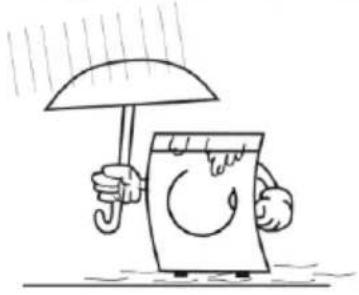
Install or store where it will not be exposed to temperatures below freezing or exposed to water or weather, which could cause permanent damage and invalidate the warranty.
natural_image
Cartoon illustration of a smiling phone character holding an umbrella, with raindrops falling (no text or symbols)Thoroughly spin the laundry in washing machine. High spin speed can reduce the drying time and save energy consumption.
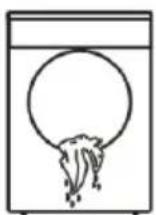
Keep area around the exhaust opening and adjacent surrounding areas free from the accumulation of lint, dust and dirt. An obstructed port might reduce the airflow.
natural_image
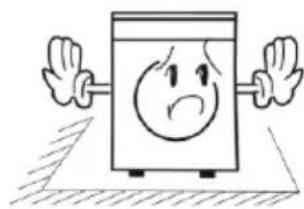
Cartoon illustration of a sad washing machine with arms and legs (no text or symbols)Make sure combustible sprayer will not be close to dryer when it is working, and once the gas leaks, do not touch plug or start/pause on it.
natural_image
Line drawing of a vintage washing machine with a handle and front panel (no text or symbols)Do not wash or dry articles that have been cleaned in, washed in, soaked in or spotted with combustible or explosive substances (such as wax, oil, paint, gasoline, degreasers, dry-cleaning solvents, kerosene, etc.).
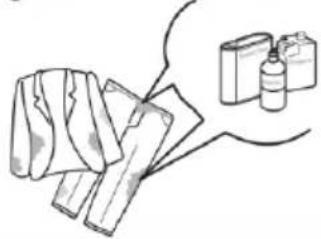
natural_image
Illustration of a jacket and two containers with a bottle, no text or symbols presentDo not allow children on or in the appliance. Close supervision of children is necessary when the appliance is used near children.
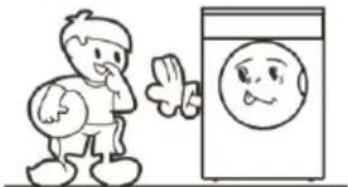
natural_image
Cartoon illustration of a child waving next to a washing machine with a smiling face (no text or symbols)Do not store plastic, paper or clothing that may burn or melt on top of the dryer during operation.
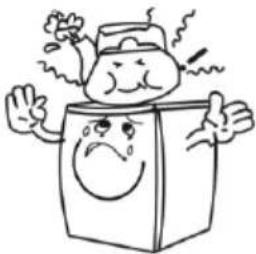
natural_image
Cartoon illustration of a smiling refrigerator with arms and legs, surrounded by steam and a flower (no text or symbols)Do not dry articles containing rubber, plastic or similar materials such as padded bras, tennis shoes, bath mats, rugs, bibs, nappies, raincoats, plastic bags or pillows that may melt or burn. Some rubber materials, when heated, can under certain circumstances produce fire by spontaneous combustion.
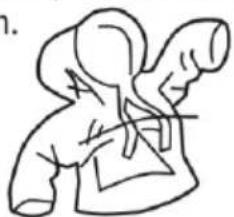
natural_image
Simple line drawing of a person in a hooded garment (no text or symbols)Never attempt to operate this appliance if it is damaged, malfunctioning, partially disassembled, or has missing or broken parts, including a damaged cord or plug.
natural_image
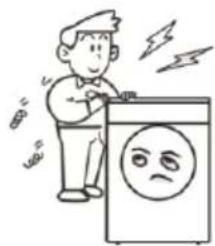
Cartoon illustration of a person standing beside a washing machine with a sad face on its side (no text or symbols)Please do not use the machine when your feet or hands are wet.
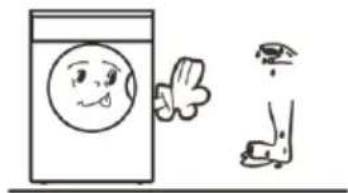
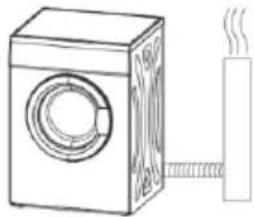
The exhaust air must not be discharged into a flue which is used for exhausting fumes from appliances burning gas or other fuels.
natural_image
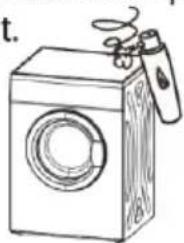
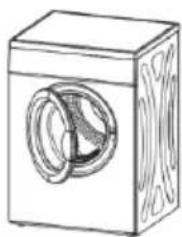
Line drawing of a washing machine with a coiled spring attached to its side, emitting steam (no text or symbols)The door can be opened only after the drying programme has completed.
Do not open the door before the programme has finished to avoid being scalded by hot steam or over heating the dryer.
natural_image
Line drawing of a rectangular box with a circular vent and lid (no text or symbols)KEY COMPONENTS
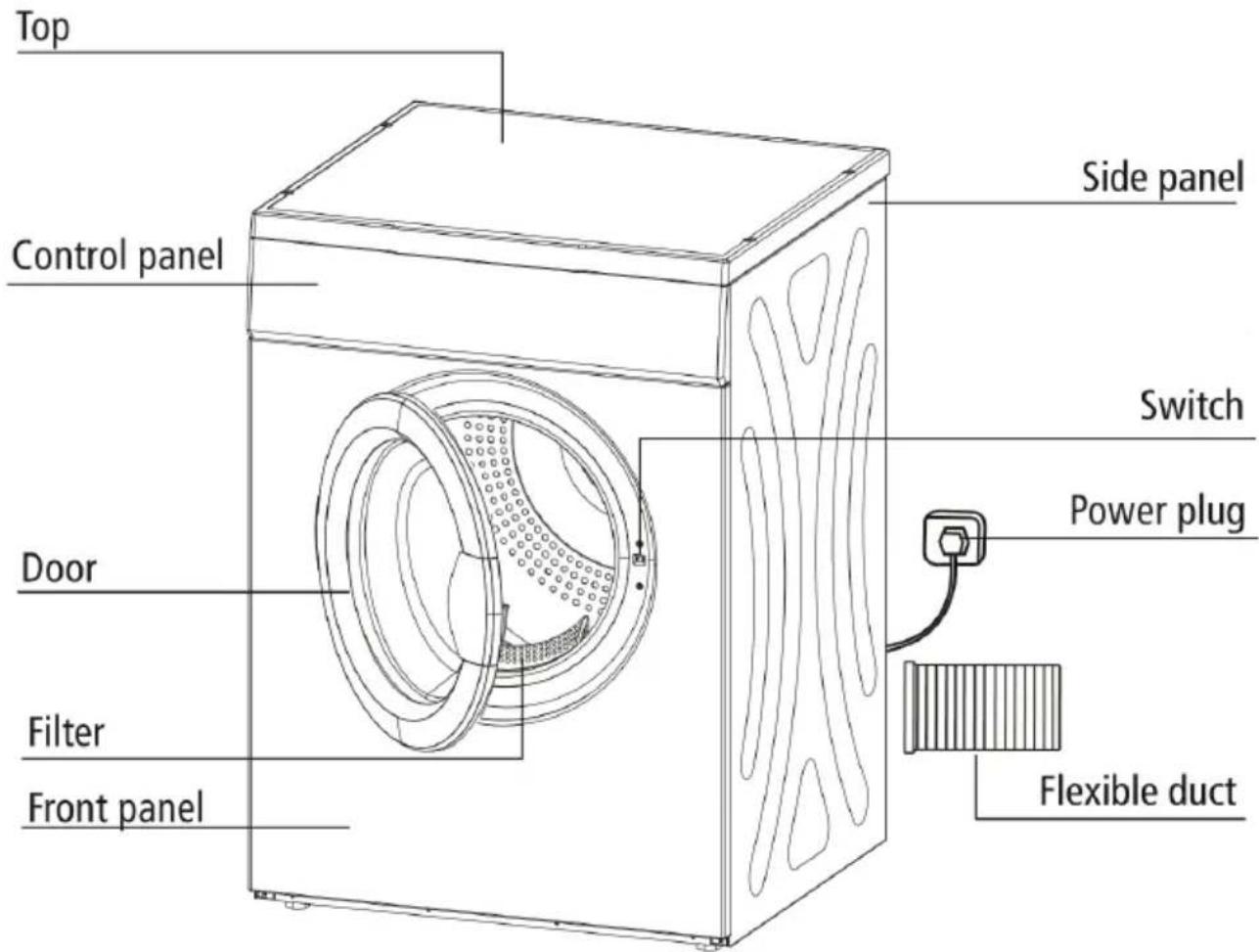
INSTALLATION
POSITION OF THE DRYER
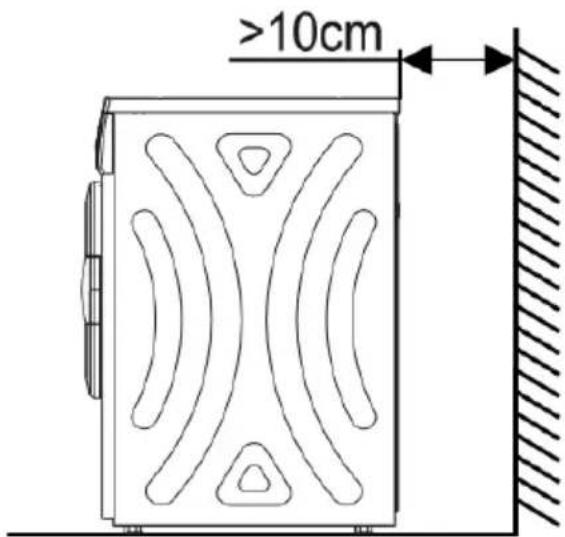
The dryer should be placed in a ventilated area with a gap of at least 10cm between the rear of the unit and the wall.
It is advisable to leave a space of at least 1.5 metres in front of the appliance.
Do not restrict the ventilation.
ADJUSTING THE FEET
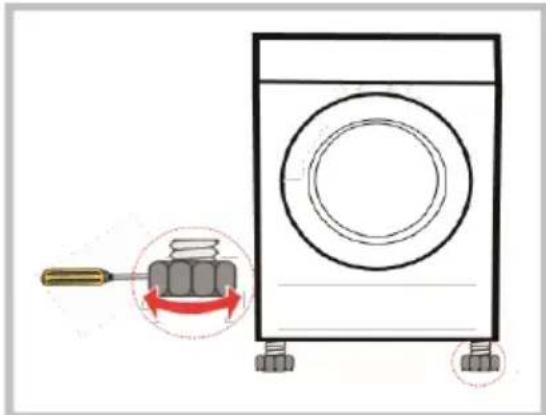
Once the dryer is in its permanent position it should be checked to ensure it both level and stable. Using a spirit level the feed should be adjusted.
natural_image
Diagram showing a washing machine with a screwdriver inserted, illustrating the process (no text or symbols present)NOTES REGARDING POSITIONING
- The appliance must be installed indoors. Do not install in a position where is may be exposed to rain or excessive moisture.
- Do not place the rear of the dryer close to curtains, or anything that could be caught by wind.
- Do not place the dryer near gas appliances or close to anything flammable.
FITTING THE VENT PIPE
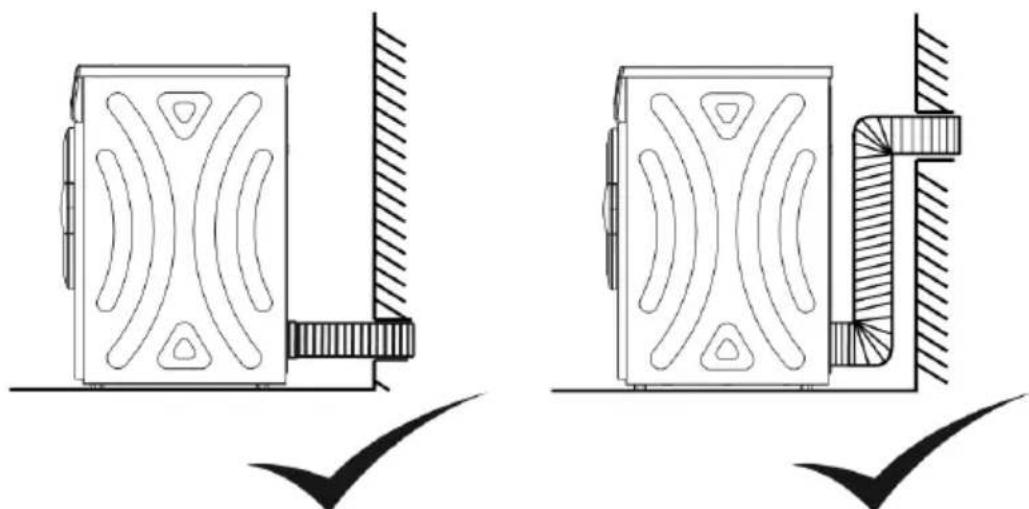
Attach the vent pipe to the rear of the appliance using the adaptor pre fitted to the vent pipe. Route the pipe so the opposite end will expel the hot air outside. Where possible bends to the pipework should be minimized.
natural_image
Technical line drawing of two mechanical or architectural components with curved internal patterns, shown in two different angles (no text or symbols)OPERATION
QUICK START
Before use ensure the appliance is correctly installed, and there are no signs of damage.
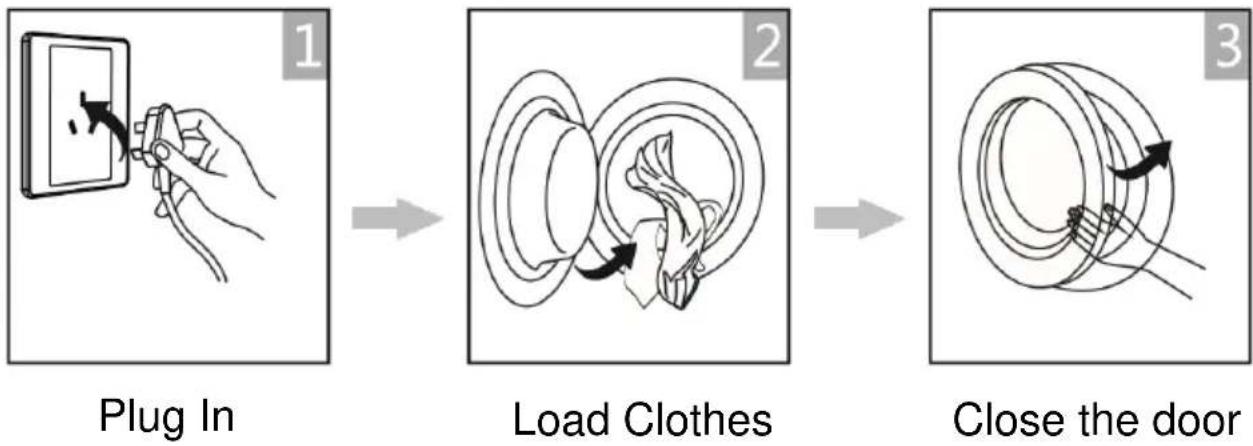
flowchart
graph LR
    A["Plug In"] --> B["Load Clothes"]
    B --> C["Close the door"]
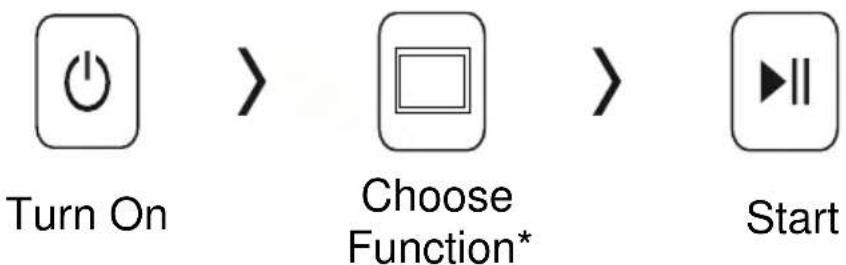
flowchart
graph LR
    A["Turn On"] --> B["Choose Function*"]
    B --> C["Start"]
* If no function is selected, the appliance will start with the default settings
DRYING LABELS
 Dry Dry |  Normal Normal |  Do not tumble dry Do not tumble dry |  Do not dry Do not dry |
 Line dry / hang to dry Line dry / hang to dry |  Drip dry Drip dry |  Dry flat Dry flat |  In the shade In the shade |
 Dry clean Dry clean |  Do not dry clean Do not dry clean |  Dry clean with any solvent Dry clean with any solvent |  Dry clean with petroleum solvent only Dry clean with petroleum solvent only |
BEFORE USE
- Ensure the laundry is thoroughly spun in the washing machine. This will reduce the drying time and reduce energy consumption.
- For best performance and uniform results, sort the laundry according to the fabric type and most appropriate drying program.
- Before drying, please ensure zips, hooks and eyelets, buttons and similar are fastened to prevent them catching during operation.
- Do not over dry clothes, because over dried clothes can become creased easily.
- Articles should be spun dried before placing in the dryer. Putting soaking items into the dryer may result in damage.
- Do not dry articles containing rubber or similar elastic materials.
- The door should only be opened only after the drying programme has finished to prevent scalding by hot steam or over heating the dryer.
- Clean the lint filter and empty the container after each use to avoid extending the drying time and increasing energy consumption.
- Do not put clothes into the dryer if they have been dry cleaned.
• Not suitable for silk or woolen textiles - Do not overload the appliance. Please see below for approximate weights.
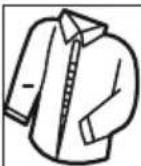 | Mixed-fabric clothes 800g | 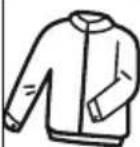 | Jacket Cotton 800g | 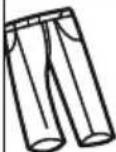 | Jeans 800g | 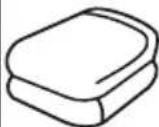 | Towel quilt Cotton 900g |
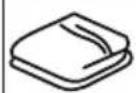 | Single bedsheet Cotton | 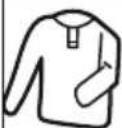 | Work clothes 1120g | 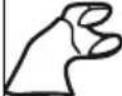 | 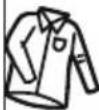 | Long sleeve shirt Cotton 300g | |
| 600g | Sleepwear 200g | ||||||
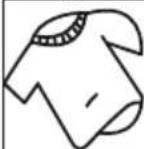 | Short sleeve shirt Cotton 180g |  | Pants Cotton 70g | 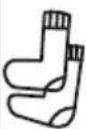 | Socks mixed-weave 50g | ||
CONTROL PANEL
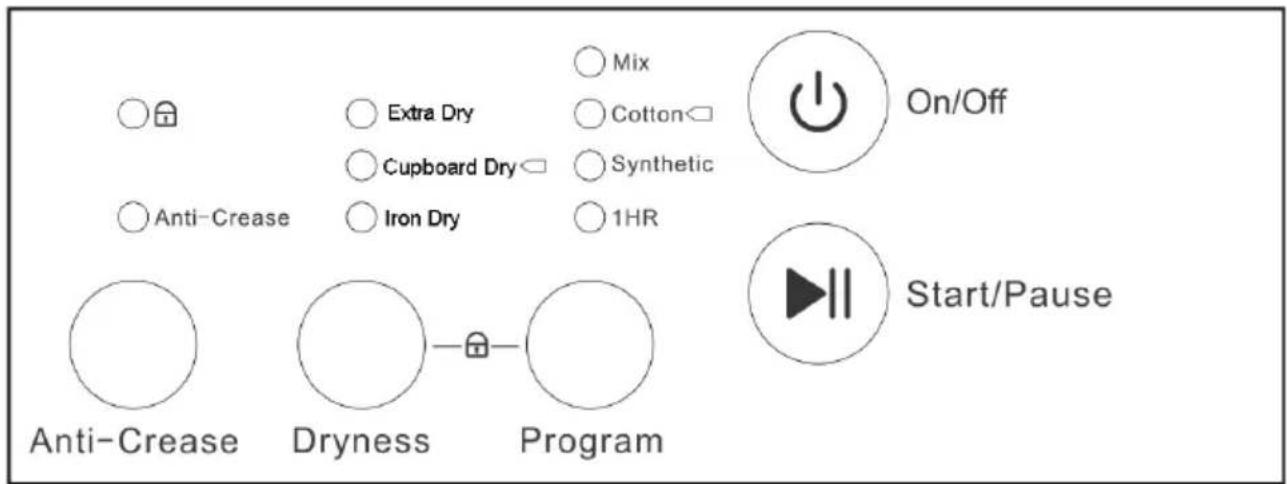
| On/Off | Use to turn the appliance on and off. |
| CHOOSE THE DESIRED PROGRAMME | |
| Program | Press to choose between the 4 available functions: Mix, Cotton, Synthetic and 1 hour. |
| CHOOSE THE EXTRA FEATURES REQUIRED | |
| Anti-Crease | Press to turn on / off the anti-crease function. When activated the indicator light will be illuminated. |
| Dryness | Press to choose the level of dryness, between Iron Dry, Cupboard Dry and Extra Dry. |
| START THE DRYING PROGRAM | |
| Start / Pause | Press the Start / Pause button to start the drying program. Press again to pause it. |
| OTHER FEATURES | |
| Child Lock | Press and hold the Program and dryness buttons for 2 seconds to turn the child lock on / off. |


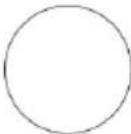

- The symbol indicates the “standard cotton program, which is the most appropriate to normal cotton garments at the rated load.
- Using the Cotton Program with the Dryness set to Extra is ideal for cotton laundry and is the most efficient in terms of energy consumption for drying wet cotton laundry.
FOLLOWING USE
- Once the drying function has finished the appliance will bleep.
- Press the On/Off button and unplug the appliance.
- Remove the dried clothes from the appliance
- Clean the lint filter, cabinet and drum.
DRYING PROGRAMMES TABLE
| Clothing Type | Approximate amount of remaining humidity | Capacity (KG) | Programs | Dryness Level | Note |
| Cotton | 70% | 7 / 3.5 / 1 | Cotton | Extra | Select the most suitable program and Dryness Level based on the type and quantity of foods to be dried. |
| 60% | 7 / 3.5 / 1 | Cotton | Cupboard | ||
| 7 / 3.5 | Cotton | Iron | |||
| Mix | 70% | 7 / 3.5 / 1 | Mix | Extra | |
| 60% | 7 / 3.5 / 1 | Mix | Cupboard | ||
| Synthetic | 50% | 3.5 / 1 | Synthetic | Extra | |
| 40% | 3.5 / 1 | Synthetic | Standard | ||
| Cotton | - | 1 | 1Hr | - |
MAINTENANCE AND CARE
CLEANING THE FILTER
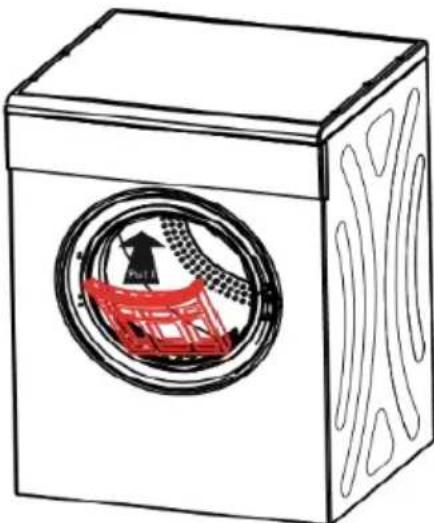
- Clean the lint filter after each use. Remove by pulling straight up.
- To clean the filter wipe with a cloth to remove any lint which has accumulated.
- Allow the filter to dry before reinserting back into the appliance.
natural_image
Illustration of a box with a red traditional Japanese-style lantern inside, no text or symbols present.CLEANING THE CABINET AND DRUM
- Use a soft damp cloth to wipe the cabinet and drum
- Do not directly rinse with water.
- Do not use scourers or scrapers
- Do not use alcohol, detergent or bleach wipes.
- After cleaning the drum, ensure the door is left open to allow the drum to dry naturally.
SAFETY CUT OUT
This dryer has a safety cut out which is activated if the temperature is too high.
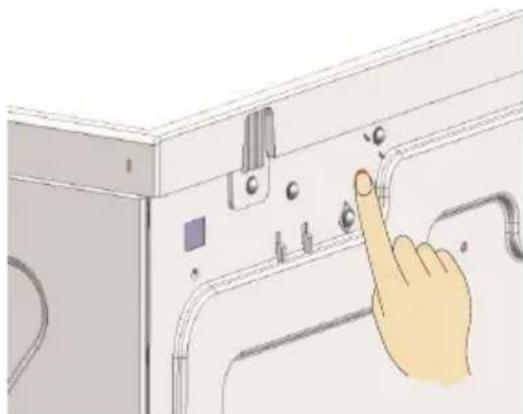
If the unit cuts out, leave the appliance for at least 10 minutes to cool before pressing the rest button. (press until you hear it click, you may require a pencil or similar)
The reset button is located on the rear of the appliance.
natural_image
Illustration of a hand pressing down on a kitchen appliance panel with buttons and tubing (no text or symbols)The cutout may operate for one of the following reasons which should be resolved before further use.
• The lint filter is blocked
- The exhaust outlet on the rear of the dryer is blocked.
- Poor ventilation in the room where the dryer is located.
• Lightweight article has been sucked over the filter.
TROUBLESHOOTING
You may try to solve the following simple problems by yourself. If they cannot be solved, please contact the after-sales department.
| Problem | Cause | Solution |
| Will not start | Power cut.The power plug is not plugged tight.Appliance overloaded.The safety cutout has activated | Check electricity supply.Check the power socket, make sure the plug is correctly inserted.Ensure there is not too much within the appliancePress the reset button on the rear of the appliance. |
| External hot or burning smell | The lint filter is dirty.The uptake or exhaust duct is dirty. | Make sure the lint filter is clean.Check to ensure the vent pipe is unobstructed. |
| Clothes are too dry | The machine is too full.Clothes not removed after the program has finished.The clothes aren't sorted properly.The drying temperature is too high. | Make sure the machine is not overloaded.Take out the clothes immediately following completion f the program.Observe the maintenance label on clothes. |
| Clothes shrink | Too dry. | Observe the maintenance label on clothes. If prone to shrinking they should examine the clothing when dry.Use the iron dry setting or remove the clothes early and then complete drying by hanging until fully dry. |
| Hairball on clothes | It is normal for synthetic fibre and permanent press fibre to cause hairballs. This is due to rubbing while washing / drying. | Use fabric softener to lubricate the fibre.Turn garments inside out to reduce rubbing. |
| Noises while operating. | Wet clothes moving within the drum | This is normal. |
| Air bumping | Bumping of the drum due to steam expelled. | This is normal |
FAULT CODES
| Failure indication | Description | Reason | Action by Dryer |
| Iron and Cupboard LED's flashing | Temperature Sensor error | Temperature Sensor is open or PCB fault | Current operation cancelled |
| Extra LED flashing | Temperature Sensor error | Temperature Sensor is short or PCB fault | Current operation cancelled |
electriQ UK SUPPORT
www.electriQ.co.uk/support
Call: 0333 043 6692 or complete the online form
Office hours: 9AM - 5PM Monday to Friday
www.electriQ.co.uk
Unit J6, Lowfields Business Park Lowfields Way, Elland West Yorkshire, HX5 9DA
DISPOSAL
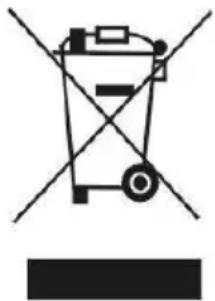
Do not dispose this product as unsorted waste. Collection of such waste must be handled separately as special treatment is necessary.
natural_image
Pure electrical circuit lines without any symbolsRecycling facilities are now available for all customers at which you can deposit your old electrical products. Customers will be able to take any old electrical equipment to participating sites run by their local councils. Please remember that this equipment will be further handled during the recycling process, so please be considerate when depositing your equipment. Please contact the local council for details of your local household waste recycling centres.
PRODUCT FICHE
| Model | eiQFSTD7 |
| Rated Capacity | 7Kg |
| Dryer Type | Air-Vented |
| Energy Efficiency Class | C |
| Weighted annual energy consumption(AEc) | 451.6kWh* |
| Automatic or Non Automatic | Automatic |
| EU Ecolabel | N/A |
| Energy consumption of the standard cotton programme at full load | 3.81 kWh |
| Energy consumption of the standard cotton programme at partial load | 2.05 kWh |
| Power Consumption of the off-Mode (Po) | 0.46W |
| Power Consumption of the left-onMode (Po) | 0.46W |
| Duration of the left-on mode | 10 min |
| Programme time of the ‘Standard Cotton Program” | |
| Weighted programme time of the ‘Standard Cotton Program” at full and partial load | 90 min |
| Programme time of the ‘Standard Cotton Program” at full load | 120 min |
| Programme time of the ‘Standard Cotton Program” at partial load | 68 min |
| Sound Power level for the ‘Standard Cotton Program” at full load | 69dB |
* Energy consumption per year is based on 160 drying cycles on the standard cotton programme at full and partial load, and the consumption of the low-power modes. Actual energy usage will depend on how the appliance is used.
SPECIFICATION
| Dimensions | 555 x 595 x 840 mm |
| Rated input power | 2000W |
| Rated Voltage | 220 – 240V |
| Rated Frequency | 50 Hz |
| Weight | 33KG |
| Rated Capacity | 7KG |
- CONTENTS
- SAFETY WARNINGS
- PRECAUTIONS
- KEY COMPONENTS
- INSTALLATION
- POSITION OF THE DRYER
- ADJUSTING THE FEET
- NOTES REGARDING POSITIONING
- FITTING THE VENT PIPE
- OPERATION
- QUICK START
- DRYING LABELS
- BEFORE USE
- CONTROL PANEL
- FOLLOWING USE
- MAINTENANCE AND CARE
- CLEANING THE FILTER
- CLEANING THE CABINET AND DRUM
- SAFETY CUT OUT
- TROUBLESHOOTING
- FAULT CODES
- electriQ UK SUPPORT
- DISPOSAL
- PRODUCT FICHE
- SPECIFICATION
Brand : ElectriQ
Model : eiQFFSTD7
Category : Tumble drier