 ManualGo.com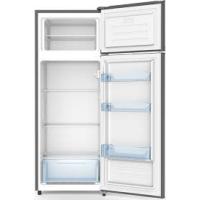
RFDP246RC - Fridge FRIGELUX - Free user manual and instructions
Find the device manual for free RFDP246RC FRIGELUX in PDF.


Download the instructions for your Fridge in PDF format for free! Find your manual RFDP246RC - FRIGELUX and take your electronic device back in hand. On this page are published all the documents necessary for the use of your device. RFDP246RC by FRIGELUX.
USER MANUAL RFDP246RC FRIGELUX
1. GENERAL SAFETY INSTRUCTIONS For your own safety and for the proper utilisation of the appliance, read this manual carefully, including the warnings and recommendations, before installing the appliance and using it for the first time. In order to avoid damage to the appliance and/or personal injury, persons using the appliance should be fully familiar with its operation and safety functions. Keep these recommendations close to the appliance, for future reference, and ensure that the document is transferred with the appliance if it is sold or in the case of moving. This will ensure optimum operation of the appliance. To avoid any risk of injury, keep this manual. The manufacturer declines any liability whatsoever in the case of operating/handling errors concerning the appliance. Safety of children and other vulnerable persons •
This appliance shall not be used by people (including children) whose physical, mental or sensory abilities are diminished or who do not have the necessary experience or knowledge, unless they are placed under the surveillance of a person responsible for their security and aware of the risks involved. The cleaning and maintenance of this device should not be carried out by unsupervised children. Keep all packaging out of the reach of children, to avoid any risk of suffocation. If you decide to scrap the appliance, disconnect it from the wall socket, cut the connection cable (as close to the appliance as possible) and remove the door in order to prevent children playing with it, with the resulting risk of electric shock or being trapped inside. Keep the appliance and its power cable out of reach of children under 8 years old. Children from 3 to 8 can load and unload the appliance. Children must be under supervision to ensure they do not play with the appliance.
General safety CAUTION — This appliance is intended to be used in household and similar applications; such as kitchen staff in shop; offices and other working environments; bed and breakfast; farm houses and clients in hotels, motels and other residential environments; catering and other similar non-retail applications. CAUTION — Never store inflammable substances, such as aerosols, inside the appliance, as they could leak or release fluids. CAUTION — A damaged power cable should be immediately replaced by the manufacturer or by a qualified retailer, in order to avoid any risk of electric shock. CAUTION — Keep the ventilation openings well open and ensure that air can circulate by keeping enough space between the appliance and walls. CAUTION — Do not damage the refrigerating circuit. 19
CAUTION — Do not use electrical appliances inside the compartment, unless they are tolerated by the manufacturer. CAUTION — The refrigerating and insulating systems contain inflammable gases. When the appliance is scrapped, it should be deposited at an accredited collection centre. Do not expose the appliance to fire. Refrigerating fluid The refrigerating circuit in the appliance uses refrigerating isobutane (R600a), which is a natural gas respectful of the environment but highly inflammable. When transporting or installing the appliance, ensure that no element of the refrigerating circuit is damaged. The refrigerating fluid (R600a) is inflammable. Caution: Fire risk If the refrigerating circuit is damaged: ▪ Avoid open flames or any source of heat. ▪ Ensure that the room in which the appliance is installed is well ventilated. It is dangerous to change the specification of the appliance in any way whatsoever. Damage to the power cable may cause a short circuit and/or electric shock. Electrical safety ▪ ▪ ▪ ▪ ▪ ▪ ▪ ▪ ▪ ▪
We decline any liability in case of incidents caused by poor electrical installation. Do not extend the power cable. Do not use an extension cable, adapter, or multi-way socket. Check that the wall socket is not damaged. A wall socket in poor condition may cause the appliance to overheat and explode. Check that the wall socket used for the appliance is properly accessible. Never pull on the power cord. Ensure that the appliance is always electrically earthed. If the wall socket is loose, do not connect the cable, as there is a risk of electric shock or fire. Do not use the appliance if the interior lighting cover is not installed. Disconnect the appliance before replacing the light bulb (in case of a LED light, please refer to the chapter “Change the light bulb”). The appliance operates on a single phase 220~240 V / 50 Hz power supply. The appliance must be connected to an earthed wall socket, in accordance with applicable recommendations. Do not attempt to replace a damaged power cord, contact your after-sales service. The power socket must be easily accessible but out of reach of children. In case of doubt, contact your installation technician. When positioning the appliance, ensure that the power cord is not pinched or damaged. 20
Do not store inflammable substances or fluids inside the appliance. This would create a risk of explosion. ▪ Do not operate other electrical equipment inside the appliance (mixers, whirling rotor for ice cream, etc.). ▪ When disconnecting the appliance, grip the plug firmly and do not pull on the cable. ▪ This appliance is designed for food and beverage storage. ▪ Do not expose the appliance to direct sunlight. ▪ Keep the appliance away from candles, luminaires and open flames, in order to avoid fire risk. ▪ The appliance is heavy. Be careful when moving it. ▪ If your appliance is equipped with castors, remember that these are only designed to facilitate minor movements. Do not move the appliance over long distances. ▪ Do not lean or climb on the appliance or its elements. ▪ In order to avoid falling objects and to prevent damage to the appliance, do not overload the compartments of the appliance. To avoid contamination of food, please respect the following instructions: ▪
clean regularly surfaces that come in contact with food and accessible drainage systems.
store raw meat and fish in suitable containers so that it is not in contact with or drip onto other food.
Caution! Cleaning and servicing ▪ ▪ ▪
Before carrying out servicing, switch off the power supply and disconnect the appliance. When cleaning the appliance, do not use metal objects, steam systems, volatile fluids, organic solvents or abrasive substances. Do not use sharp or pointed objects to remove ice. Use a plastic scraper.
Important information concerning installation! ▪ ▪
To ensure proper electrical connection, follow the recommendations given in the present manual. Unpack the appliance and visually check that it is not damaged. Do not connect a damaged appliance. Inform your retailer or point of sale of any damage. In such a case, keep the packaging. It is recommended that the appliance be allowed to settle for at least 4 hours before connecting the electrical power supply, so that the compressor fluid feed is correct. Proper air circulation is necessary to avoid overheating. To ensure sufficient ventilation, observe the installation recommendations provided. In order to avoid fire risk, wherever possible, ensure that the appliance is not in contact with walls or with any hot element (compressor, condenser). Observe the installation recommendations. 21
The appliance should not be placed close to radiators or cooking hot plates or gas rings. Check that electrical sockets remain accessible when the appliance is installed.
POWER SAVING To limit the electricity consumption of your appliance: ▪ ▪ ▪ ▪ ▪
Install it in an appropriate place (see “Installing your appliance”). Leave the doors open as little time as possible. Do not put food that is still hot into the appliance. To ensure that the appliance operates properly, clean the condenser regularly (see “Routine servicing of your appliance”). Regularly inspect the door seals and ensure that they are still closing properly. If this is not the case, contact your after-sales service.
Trouble shooting ▪ ▪
Any electrical work should be carried out by a qualified and skilled technician. The appliance should be repaired by an accredited repair centre, using only manufacturer’s original spare parts.
The appliance is designed for home use only. The manufacturer declines any liability whatsoever in the case of another utilisation.
The following spare parts: door handles, door hinges, trays and trays, are available to professional repairers and final consumers for a minimum period of 7 years and door seals for a minimum period of 10 years from of the marketing of the last unit in the model.
The list of spare parts and the procedure for ordering them (professional access / final consumer access) are available on the following website: www.interfroidservices.fr or by post to the following address: Interfroid Services, 143 Bd Pierre Lefaucheux - 72230 ARNAGE.
All FRIGELUX refrigeration appliances benefit from a 1-year parts warranty.
R600A Safety instructions Caution: Do not obstruct the ventilation grills on the appliance.
Caution: Do not use mechanical means or any other means to speed up the de-icing process. De-ice only as recommended by the manufacturer.
Caution: Do not store explosive substances, such as aerosol cans containing an inflammable propellant, in the appliance. Caution: Do not damage the refrigerating circuit in the appliance. Caution: The refrigerating units use isobutane (R600a), and therefore should not be placed close to ignition sources (for example, electrical contacts that are exposed or open contacts that could be closed by the refrigerating fluid in the event of a leak). The refrigerating fluid type is specified on the power cabinet identification plate. Caution: Do not use electrical equipment in the compartments of the appliance, unless they are of the type authorized by the manufacturer.
This appliance meets the requirements of all applicable European directives and their amendments.
Crisper drawer cover
To find out more about your product, consult the online EPREL database. As defined in Commission Delegated Regulation (EU) 2019/2016, all information relating to this refrigeration appliance is available on the EPREL Base (European Product Database for energy labeling). This database enables you to consult the information and technical documentation of your refrigeration appliance. You can access the EPREL Database by scanning the QR code on the energy label of your appliance or by going directly to: www.ec.europa.eu and searching the reference of your refrigeration appliance.
3. INSTALLATION INSTRUCTIONS Location When selecting a location for your appliance you should make sure the floor is flat and firm, and the room is well ventilated. An average ambient temperature must be observed. This temperature is specific according to the climatic class of the device: •
SN : This refrigerating appliance is intended to be used at ambient temperatures ranging from 10 °C to 32 °C • N : This refrigerating appliance is intended to be used at ambient temperatures ranging from 16 °C to 32 °C • T : This refrigerating appliance is intended to be used at ambient temperatures ranging from 16 °C to 38 °C • ST : This refrigerating appliance is intended to be used at ambient temperatures ranging from 16 °C to 43 °C Avoid location near a heat source, eg, cooker, boiler or radiator. Also, avoid direct sunlight in out-buildings or terraces/outside seating areas. If you are placing your appliance in an out-building such as a garage or annex ensure that it is placed above the damp course, otherwise condensation will occur on the cabinet. Never place the appliance in a wall recessed or into fitted cabinets or furniture when it is working, the metal grid at the back may become hot and the sides warm. This refrigerating appliance is not intended to be used as a built-in appliance Leveling the appliance If your appliance is not leveled, the door and magnetic seal alignment will be affected and may cause a malfunction. Once the appliance is placed in its final location, adjust the leveling feet at the front by turning them.
Cleaning before use Wipe the inside of the appliance with a weak solution of bicarbonate of soda. Then rinse with warm water using a damp sponge or cloth. Wash the baskets and shelves in warm soapy water and dry completely before replacing them. Before plugging in 25
Check that you have a socket which is compatible with the plug supplied with the appliance. DO NOT SWITCH ON UNTIL FOUR HOURS AFTER MOVING THE APPLIANCE. The coolant fluid needs time to settle. If the appliance is switched off at any time, wait 30 minutes before switching back on to allow the coolant fluid to settle. Before filling your appliance Before storing foods in your appliance, turn it on and wait for 24 hours, to make sure it is working properly and to allow it to reach the correct temperature. 4. USE INSTRUCTIONS Temperature setting:
Your refrigerator has one control for regulating the temperature. The temperature control is located at the top of the fridge. The first time you put your appliance into operation, set the thermostat between "3 and 4" and let it run empty for 4 hours before storing food for it to cool sufficiently. The range of the temperature control is from position "1" the warmest to "7" the coldest. Adjust the temperature control to the setting that best suits your needs. The setting between “3 and 4” should be appropriate for home or office refrigerator use. To turn the refrigerator off, turn the temperature control to “0”. Refrigerating appliance thermostat has 7 settings: • Summer: recommend to set on 3~4. recommended temperature for keeping 4℃
±2℃. The appliance assures that this temperature is maintained as long as it is in operation. Normal: recommend to set on 3~4. recommended temperature for keeping 4℃
±2℃. The appliance assures that this temperature is maintained as long as it is in operation. Winter: recommend to set on 2~3. recommended temperature for keeping 4℃ ±2℃. The appliance assures that this temperature is maintained as long as it is in operation. 26
NOTE: ▪ Turning the temperature control to "0" position stops the cooling cycle but does not shut off the power to the refrigerator. ▪ If the unit is unplugged, lost power, or turned off; you must wait 3 to 5 minutes before ▪ Restarting the unit. If you attempt to restart before this time delay, the refrigerator will not start. ▪ If you choose to change the thermostat setting, adjust thermostat control by one numerical increment at a time. Allow several hours for temperature to stabilize between adjustments. Do not leave the door open for too long so that the indoor temperature does not rise too much.
5. FOOD CONSERVATION PREPARING FOOD FOR THE REFRIGERATOR Carefully wrap fresh foods: they will then keep their flavor, color, humidity content and freshness. You also avoid the taste of some foods contaminating the taste of others. Only vegetables, fruit and salad vegetables can be stored in the vegetable compartment without being packed. Let hot dishes and drinks cool down outside the appliance. Remove the cardboard packs from around yoghurt pots. Check the consume-by dates on the products you have bought. You should not exceed these. ARRANGING FOOD IN YOUR REFRIGERATOR The temperature inside your refrigerator is not uniform. Some areas are colder than others and you must store your food in the appropriate areas according to their type to ensure that they can be kept safely. Leave a space between the food items to allow the air to circulate freely and avoid different products contaminating each other. Do not put packages and food in contact with the wall at the back of the appliance, this is a particularly cold and damp area of the appliance and water droplets and frost condense there as part of your refrigerator's normal operation.
The coldest area, indicated by the logo, is designed for delicate, sensitive and highly perishable food: meat, poultry, fish, cooked meats, prepared dishes, ready-made salads, egg or cream based dishes and pastries, fresh pasta, pastry, pizza/quiches, fresh produce and raw milk cheese, ready-to-use vegetables sold in plastic bags and, more generally, any fresh product whose consume-by date is linked to its storage at a temperature of +4°C or below.
Under recommended setting, the best storage time of fridge is no more than 3 days The best storage time may reduce other settings.
Eggs, cooked food, packaged food, fruits and vegetables, dairy products, cakes, drinks and other foods are not suitable for freezing.
Seafood (fish, shrimp, shellfish), freshwater aquatic products and meat products (recommended for 3 months, the longer the storage time, the worse the taste and nutrition), suitable for frozen fresh food.
Seafood (fish, shrimp, shellfish), freshwater aquatic products and meat products (recommended for 3 months, the longer the storage time, the worse the taste and nutrition), are not suitable for frozen fresh food.
Seafood (fish, shrimp, shellfish), freshwater aquatic products and meat products (recommended for 2 months, the longer the storage time, the worse the taste and nutrition), are not suitable for frozen fresh food
Seafood (fish, shrimp, shellfish), freshwater aquatic products and meat products (recommended for 1 months, the longer the storage time, the worse the taste and nutrition), are not suitable for frozen fresh food.
Fresh pork, beef, fish, chicken, some packaged processed foods, etc. (Recommended to eat within the same day, preferably no more than 3 days). Partially encapsulated processed foods (non-freezable foods)
FROZEN AND DEEP- FROZEN FOOD Your domestic appliance enables you to freeze food, it lowers its core temperature rapidly and you can therefore keep it longer. Deep-freezing is an industrial process that is quicker and more intense that domestic freezing. The products you purchase from the shops are deep-frozen.
PREPARING FOOD FOR FREEZING Freezing does not sterilize. It is therefore important to observe some simple hygiene rules when preparing your food for freezing: wash your hands before you touch the food and clean the kitchen tools you have just used before using them again. Only freeze fresh, good quality food. Refer to the table "Food Freezing Guide" to know which products you can freeze and how long you can keep them. Blanch fruit and vegetables before freezing them to preserve their color, smell, taste and vitamins: plunge them in boiling water for few moments. Divide the food you wish to freeze into small individual portions corresponding to one meal each. Small portions freeze quicker at their core. Pack the food hermetically so that they do not lose their flavor or dry up. Use plastic bags, polyethylene film, aluminum foil or special freezer containers for this. If you are using plastic bags, compress them to eliminate the air before sealing them hermetically.
Note on each package: -The freezing date -The consume-by date -The type of food contained 29
-The number of portions contained
If you are purchasing deep-frozen food, pick it up last when you are shopping. Check that: - The packaging isn't damaged - They are not covered in a layer of frost (which means that they have partially defrosted). Pack them in an isotherm bag or in newspaper. Transport them quickly and store them immediately. Comply with the maximum storage dates shown on the pack. Your appliance has a **** freezer compartment, this enables you to keep deep-frozen food in an optimal manner. ARRANGING FOOD IN YOUR FREEZER Do not put fresh food next to food that has already been frozen to avoid causing the frozen food to warm up. The maximum weight of food that you can freeze over 24 hours is shown on the information plate (inside your appliance near the bottom of the left-hand wall) under the heading: "CAPACITE DE CONGELATION/ FREEZING CAPACITY (kg/24h)". DEFROSTING FOOD You can defrost food in five different ways: - By putting them in your appliance's refrigerator section for several hours - By leaving them to defrost gently at ambient temperature - In a conventional oven at a very low temperature (40/50°C) - In a microwave oven - By cooking them immediately Defrosting them in the refrigerator is the slowest but safest method. Never refreeze food once it has defrosted, even partially, without cooking it first. We advise not to place any items you have just taken out of the freezer straight into your mouth (ice cream, ice cubes, etc.), they will be at a very low temperature and you risk frostbite. Avoid touching frozen or deep-frozen food with wet hands; your skin may stick to the food. We recommend that you only defrost food for immediate use. 30
FOOD PRESERVATION. For optimal conservation of foodstuffs, it is recommended to adjust the temperatures of the compartments as below: Storage conditions Compartment
Compartment for Compartment for non-frozen food fresh food
1 star Compartment for frozen food 2 stars
Compartment for Compartment for highly perishable highly perishable food food
No star and ice making
6. CLEANING YOUR APPLIANCE Defrosting The defrost of fridge part is automatic and for freezer part is manual. Defrost your freezer when frost is accumulated on the evaporator is about 2mm: ▪ ▪ ▪ ▪ ▪ ▪ ▪
Set the thermostat to "OFF" for defrosting. Unplug your appliance from the main power. Remove all contents from the appliance. Leave the appliance door open to allow melting of the ice. Remove large pieces of ice if necessary with dishcloth or something that will not damage the walls. Do not use hot water or other electric heaters to melt the accumulated ice. After defrosting, remove the accumulated ice / water and try the appliance with a soft cloth. 31
Restart the unit according to the start instructions. Never use a knife or other sharp instrument to scrape ice inside.
Cleaning the inside After defrosting you should clean the appliance internally with a weak solution of bicarbonate of soda. Then rinse with warm water using a damp sponge or cloth and wipe dry. Wash the baskets in warm soapy water and ensure they are completely dry before replacing them. Condensation will form on the back wall of the fridge; however, it will normally run down the back wall and into the drain hole behind the vegetable drawer. Cleaning the outside Use standard non-abrasive detergent diluted in warm water to clean the exterior. The grille of the condenser at the back and the adjacent components can be vacuumed using a soft brush attachment. Do not use harsh cleaners, scouring pads or solvents to clean any part of the appliance. If you're going on vacation If your appliance is not to be used for several months, remove all food, turn off and unplug the appliance from the outlet. Clean and dry the inside and outside of the appliance thoroughly. Also leave the door open, blocking it if necessary, to prevent condensation, odors, mold. Moving the unit ▪ Location Do not place your appliance near a heat source, for example stove, boiler or radiator. Also, avoid direct sunlight. ▪ Leveling Make sure the appliance is level. Use the adjustable feet at the front. If the appliance is not level, the doors and magnetic sealing alignments will be affected and may cause malfunctions. ▪ Do not turn on the appliance for 4 hours After any movement, it must not be connected for 4 hours. This delay allows the coolant to be adjusted. ▪ Installation Let your device breathe. Heat is released from the walls so it is important to leave a circulation of air around your device. 32
Energy saving tips ▪ ▪
The appliance should be located in the coolest area of the room, away from heat producing appliances or heating ducts, and out of the direct sunlight. Let hot foods cool to room temperature before placing them inside. An overload will force the compressor to run longer. Food that freezes too slowly may lose quality, or deteriorate. Be sure to wrap foods properly, and wipe containers dry before placing them in the appliance. This cuts down on frost build-up inside. Storage bin should not be lined with aluminum foil, wax paper, or paper toweling. Liners interfere with cold air circulation, making the appliance less efficient. Organize and label food to reduce door openings and extended searches. Remove as many items as needed at one time, and close the door as soon as possible.
This refrigeration appliance has been designed by the manufacturer in such a way as to guarantee the most efficient use of energy. If you change to current drawers, baskets and shelves combination you may impact the energy consumption Changing the light bulb Light bulb data: 220-240 V, max. 10 W To switch off the appliance, set the temperature regulator to position “OFF”. ▪ Unplug the mains plug. ▪ To change the light bulb, undo the screw. ▪ Press the light bulb cover as shown and slide it backwards. ▪ Change the defective light bulb. ▪ Refit the light bulb cover and the screw. ▪ Put the refrigerator back into operation. Turn off your appliance ▪ ▪ ▪ ▪ ▪ ▪
If the unit is not likely to operate for a long period of time: Remove all food from your appliance from the refrigerator. Switch off the appliance by setting the thermostat to position “OFF”. Unplug the appliance. Clean it thoroughly. Keep the door open to prevent odors from rising.
7. MAINTENANCE AND AFTER SALES SERVICE Maintenance This product should be serviced by an authorized engineer and only genuine spare parts should be used. 33
Under no circumstances should you attempt to repair the appliance yourself. Repairs carried out by inexperienced persons may cause injury or serious malfunctioning. Contact the local store where your purchase was made. When the appliance is not in use for long periods, disconnect from the electricity supply, empty all foods and clean the appliance, leaving the door ajar to prevent unpleasant smells. Troubleshooting You can solve many common problems easily, saving you the cost of a possible service call. Try the suggestions below to see if you can solve the problem before calling for service. Problems
If the internal temperature of the Freezer is -18℃ or less when the power returns, your food is safe. The food in your Freezer will remain frozen for approx 15 hours with the door closed. Do not open the Freezer door more than necessary.
✓ Check the adjustment of the feet of your appliance and its stability. ✓ Check that it is not touching a wall. ✓ Check that all the movable parts (trays, racks, etc..) are securely in place.
The appliance does ✓ Check if the temperature is correct. If this is not the case, adjust the temperature appropriately. not get cold enough ✓ Make sure that you have not placed a large amount of food or hot food in your appliance. ✓ Be careful not to open the door too often or leave it open. ✓ Check that the door is closed tightly. ✓ Keep your device away from heat sources. ✓ Make sure that the ventilation around the unit is respected. Your appliance ✓ Check that your appliance is connected to the electrical supply. does not get cold at ✓ Check that the circuit-breaker for your house has all not cut out and that the fuse has not blown or been unscrewed
Frost forms inside your appliance
✓ Be careful not to open your appliance’s door too often and not to leave it open.
Some foods do not freeze completely
✓ This is quite normal for food that contains a lot of sugar, fat or alcohol not to freeze completely and to remain partially soft (ice cream, fruit juice, etc…).
Frozen meat has white streaks
✓ Check that your temperature is correctly set and is not at a too low temperature ✓ Check that you haven’t kept this meat too long in the freezer ✓ It is normal for the door to offer some resistance to being opened, particularly when you have just shut it: a slight depression forms in your appliance to ensure the door seals perfectly. AIl you have to do is wait a few seconds before re-opening.
The door is difficult to open
The appliance is not working
Condensation appears on the outside of the appliance
✓ Check that your appliance is connected to the electrical supply. ✓ Check that the circuit-breaker for your house has not cut out and that the fuse has not blown or been unscrewed ✓ This may be due to a change in the room temperature. Wipe off any residue of moisture. If the problem continues contact the local store where your purchase was made.
The light does not ✓ Check that your appliance is connected to the electrical supply. work ✓ Check that the circuit-breaker for your house has not cut out and that the fuse has not blown or been unscrewed ✓ Check that the bulb is not burned out and refer to the "Changing the bulb" section. Odors in the ✓ Check that you do not have spoiled food, if so, throw it away. appliance ✓ Check that your strong-smelling foods are packed.
If the display shows an error code, unplug your device and contact your after-sale service center. 8. ENVIRONMENT
This appliance is marked according to the European directive 2012/19/CE on Waste Electrical and Electronic Equipment (WEEE). By ensuring this product is disposed of correctly, you will help prevent potential negative consequences for the environment and human health, which could otherwise be caused by inappropriate waste handling of this product.
The symbol on the product, or on the documents accompanying the product, the Crossed-Out Wheelie Bin, indicates that this appliance may not be treated as household waste. Instead it shall be handed over to the applicable collection point for the recycling of electrical and electronic equipment, or, if you are buying an equivalent product, to the retailer of the new product.
The user is responsible for taking the appliance to the appropriate collection center at the end of its useful life. Selective and appropriate collection for the recycling of no longer used appliances and their disposal and destruction in an environmentally friendly manner, helps to prevent potential negative effects on the environment and health, and encourages the recycling of materials used to make the product.
For more detailed information about treatment, recovery and recycling of this product, please contact your local authority, your household waste disposal service or the retailer where you purchased the product.
9. WARNING As we continuously improve our products for the benefit of our customers, we reserve the right to modify technical characteristics without notice. Warranties for FRIGELUX brand products are offered exclusively by selected retailers. No part of these instructions may be considered as a supplementary guarantee. FRIO ENTREPRISE cannot be held liable for errors or technical or editorial omissions in this document. Non-binding document.