
CV730 - Lawn mower engine KOHLER - Free user manual and instructions
Find the device manual for free CV730 KOHLER in PDF.


User questions about CV730 KOHLER
0 question about this device. Answer the ones you know or ask your own.
Ask a new question about this device
Download the instructions for your Lawn mower engine in PDF format for free! Find your manual CV730 - KOHLER and take your electronic device back in hand. On this page are published all the documents necessary for the use of your device. CV730 by KOHLER.
USER MANUAL CV730 KOHLER
CV18-CV26, CV620-CV750
VERTICAL CRANKSHAFT
Safety Precautions
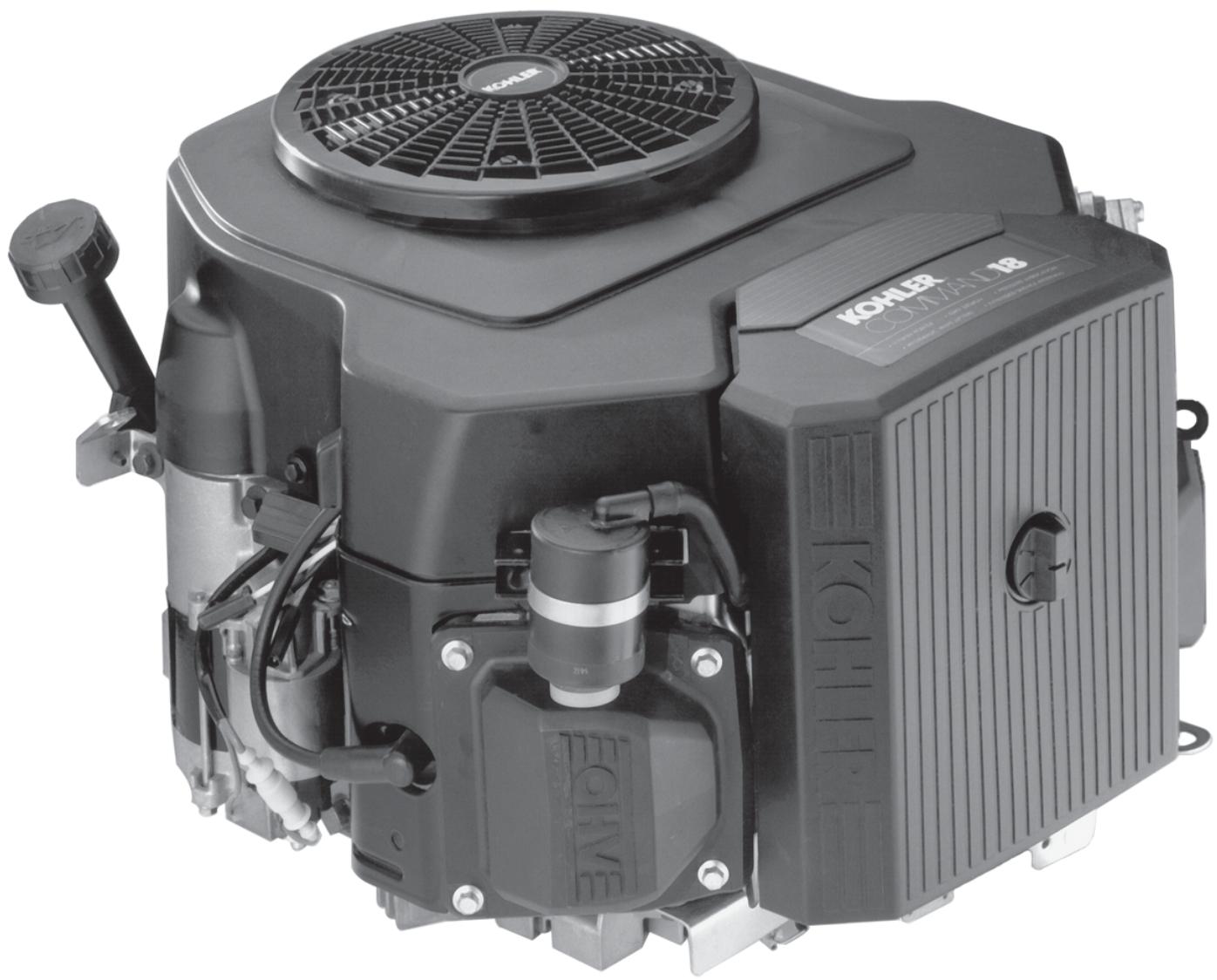
To ensure safe operation please read the following statements and understand their meaning. Also refer to your equipment owner's manual for other important safety information. This manual contains safety precautions which are explained below. Please read carefully.

WARNING
Warning is used to indicate the presence of a hazard that can cause severe personal injury, death, or substantial property damage if the warning is ignored.

CAUTION
Caution is used to indicate the presence of a hazard that will or can cause minor personal injury or property damage if the caution is ignored.
NOTE
Note is used to notify people of installation, operation, or maintenance information that is important but not hazard-related.
For Your Safety!
These precautions should be followed at all times. Failure to follow these precautions could result in injury to yourself and others.
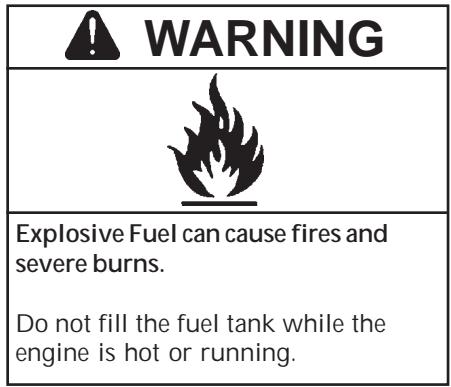
Explosive Fuel!
Gasoline is extremely flammable and its vapors can explode if ignited. Store gasoline only in approved containers, in well ventilated, unoccupied buildings, away from sparks or flames. Do not fill the fuel tank while the engine is hot or running, since spilled fuel could ignite if it comes in contact with hot parts or sparks from ignition. Do not start the engine near spilled fuel. Never use gasoline as a cleaning agent.
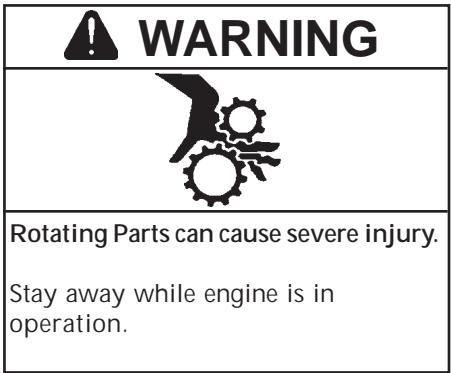
Rotating Parts!
Keep hands, feet, hair, and clothing away from all moving parts to prevent injury. Never operate the engine with covers, shrouds, or guards removed.
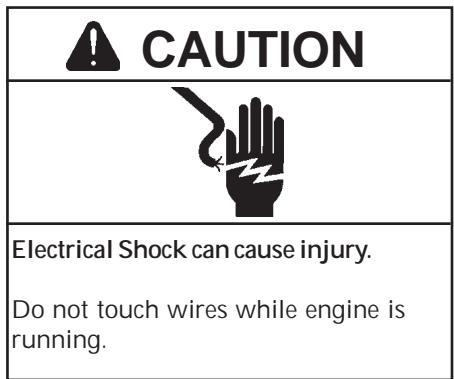
Electrical Shock!
Never touch electrical wires or components while the engine is running. They can be sources of electrical shock.
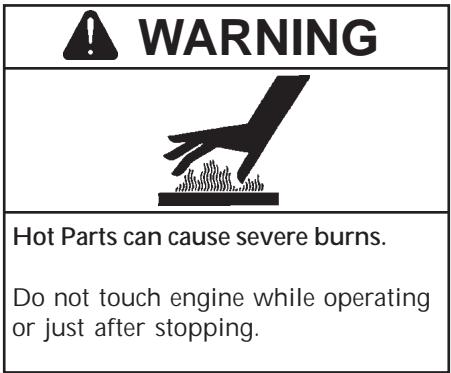
Hot Parts!
Engine components can get extremely hot from operation. To prevent severe burns, do not touch these areas while the engine is running, or immediately after it is turned off. Never operate the engine with heat shields or guards removed.
Safety Precautions (Cont.)

WARNING

Accidental Starts can cause severe injury or death.
Disconnect and ground spark plug leads before servicing.

WARNING

Carbon Monoxide can cause severe nausea, fainting or death.
Avoid inhaling exhaust fumes, and never run the engine in a closed building or confined area.

WARNING

Explosive Gas can cause fires and severe acid burns.
Charge battery only in a well ventilated area. Keep sources of ignition away.
Accidental Starts!
Disabling engine. Accidental starting can cause severe injury or death. Before working on the engine or equipment, disable the engine as follows: 1) Disconnect the spark plug lead(s). 2) Disconnect negative (-) battery cable from battery.
Lethal Exhaust Gases!
Engine exhaust gases contain poisonous carbon monoxide. Carbon monoxide is odorless, colorless, and can cause death if inhaled. Avoid inhaling exhaust fumes, and never run the engine in a closed building or confined area.
Explosive Gas!
Batteries produce explosive hydrogen gas while being charged. To prevent a fire or explosion, charge batteries only in well ventilated areas. Keep sparks, open flames, and other sources of ignition away from the battery at all times. Keep batteries out of the reach of children. Remove all jewelry when servicing batteries.
Before disconnecting the negative (-) ground cable, make sure all switches are OFF. If ON, a spark will occur at the ground cable terminal which could cause an explosion if hydrogen gas or gasoline vapors are present.
Congratulations – You have selected a fine four-cycle, twin cylinder, air-cooled engine. Kohler designs long life strength and on-the-job durability into each engine...making a Kohler engine dependable...dependability you can count on. Here are some reasons why:
- Efficient overhead valve design, and pressure lubrication provide maximum power, torque, and reliability under all operating conditions.
- Dependable, maintenance-free electronic ignition ensures fast, easy starts time after time.
- Kohler engines are easy to service. All routine service areas (like the dipstick and oil fill, air cleaner, spark plugs, and carburetor) are easily and quickly accessible.
- Parts subject to the most wear and tear (like the cylinder liner and camshaft) are made from precision formulated cast iron.
- Every Kohler engine is backed by a worldwide network of over 10,000 distributors and dealers. Service support is just a phone call away. Call 1-800-544-2444 (U.S. & Canada) for Sales & Service assistance.
To keep your engine in top operating condition, follow the maintenance procedures in this manual.

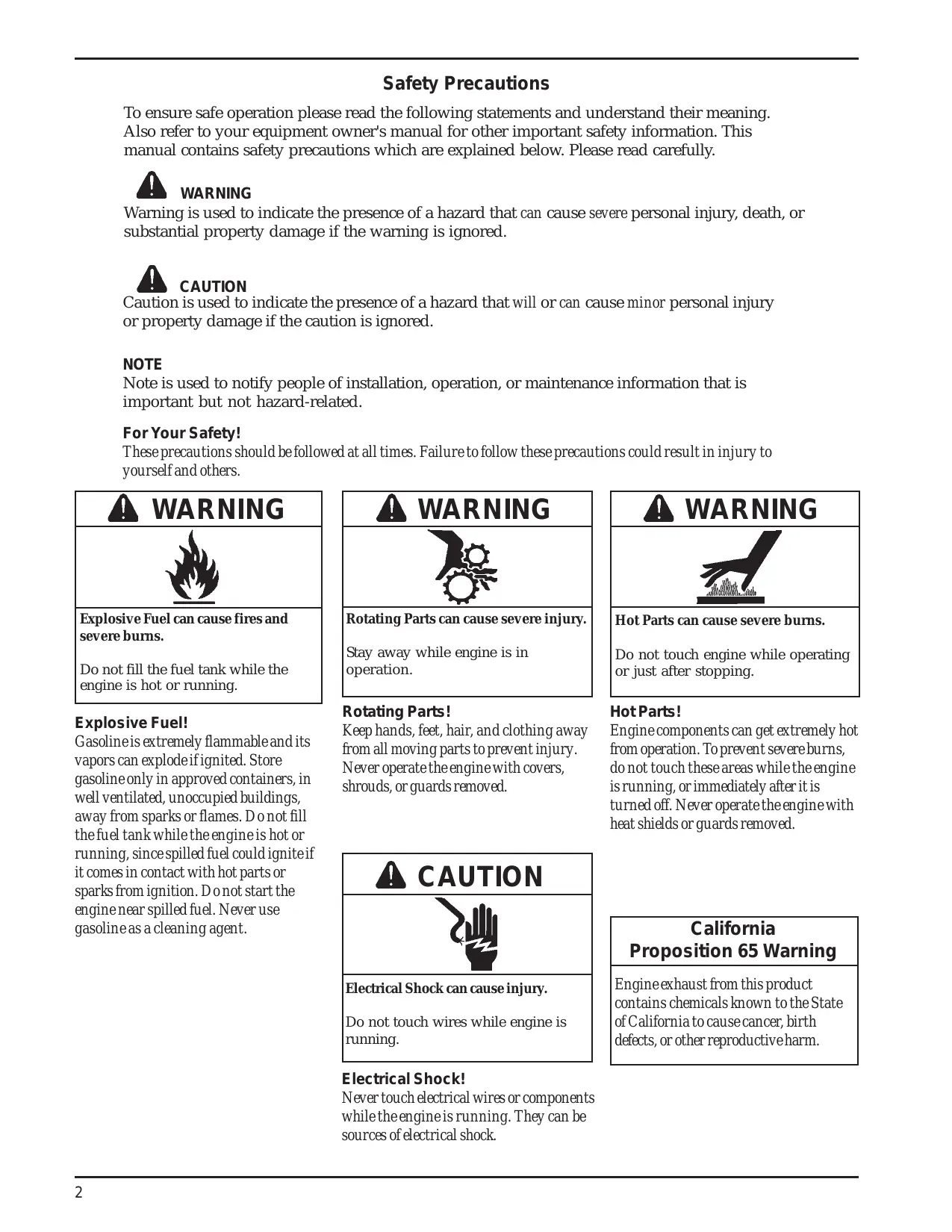
Figure 1. Typical Command Vertical Shaft Carbureted Engine.
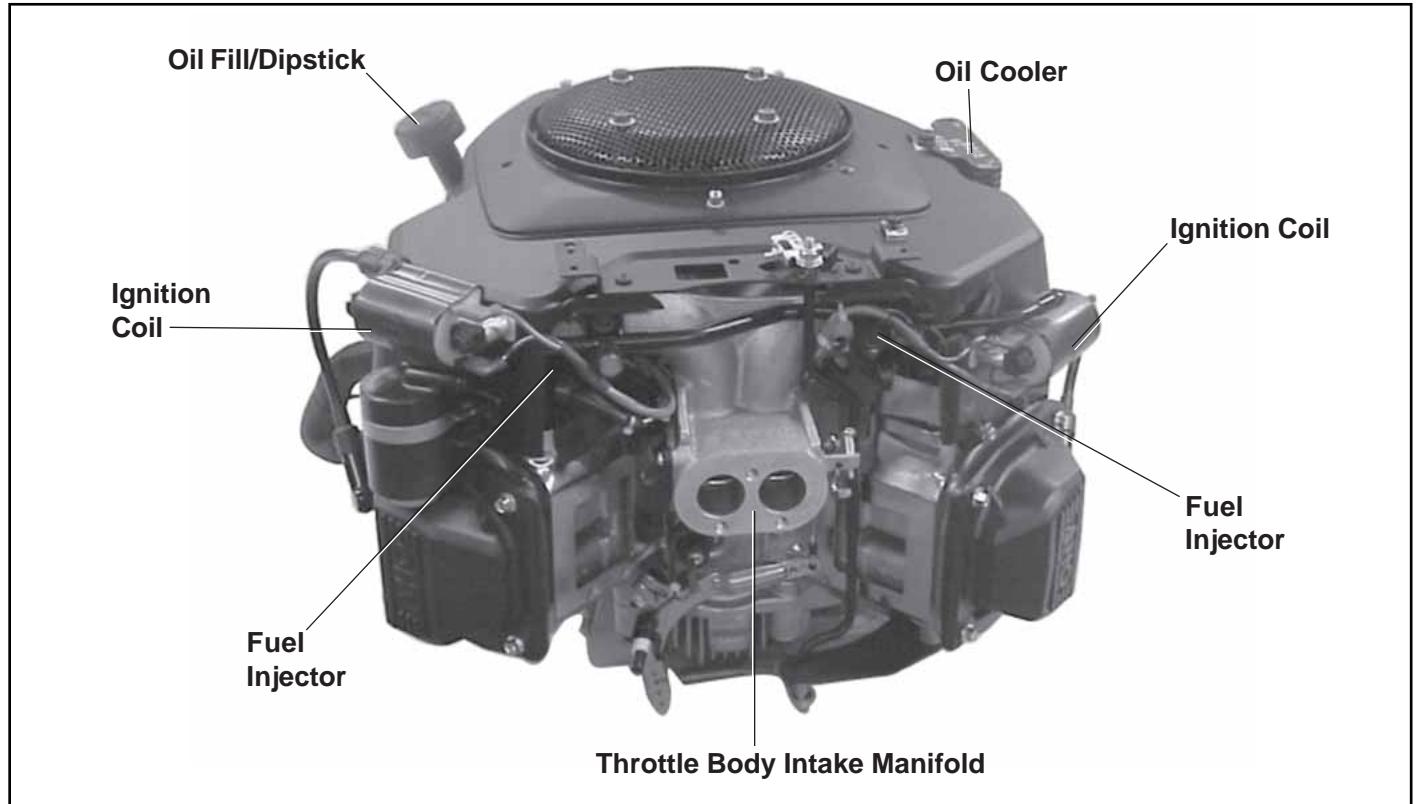
Figure 2. Typical Command Vertical Shaft EFI Engine.
Oil Recommendations
Using the proper type and weight of oil in the crankcase is extremely important. So is checking oil daily and changing oil regularly. Failure to use the correct oil, or using dirty oil, causes premature engine wear and failure.
Oil Type
Use high quality detergent oil of API (American Petroleum Institute) service class SG, SH, SJ or higher. Select the viscosity based on the air temperature at the time of operation as shown in the following table.
RECOMMENDED SAE VISCOSITY GRADES
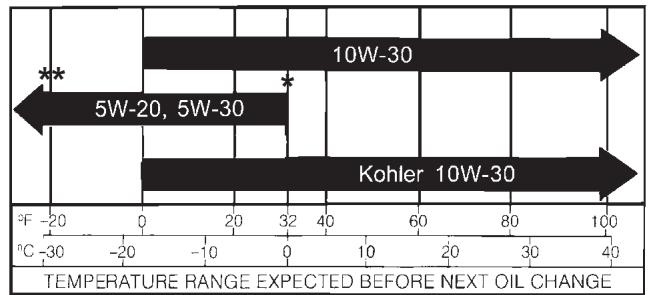
Figure 3. Viscosity Grades Table.
Use of synthetic oil having 5W-20 or 5W-30 rating is acceptable, up to 4^ (40^) .
*Synthetic oils will provide better starting in extreme cold below -23^ (-10^) .
NOTE: Using other than service class SG, SH, SJ or higher oil or extending oil change intervals longer than recommended can cause engine damage.
NOTE: Synthetic oils meeting the listed classifications may be used with oil changes performed at the recommended intervals. However to allow piston rings to properly seat, a new or rebuilt engine should be operated for at least 50 hours using standard petroleum based oil before switching to synthetic oil.
A logo or symbol on oil containers identifies the API service class and SAE viscosity grade. See Figure 4.
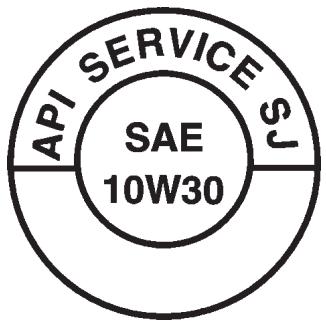
Figure 4. Oil Container Logo.
Refer to Maintenance Instructions beginning on page 8 for detailed oil check, oil change, and oil filter change procedures.
Fuel Recommendations

WARNING: Explosive Fuel!
Gasoline is extremely flammable and its vapors can explode if ignited. Store gasoline only in approved containers, in well ventilated, unoccupied buildings, away from sparks or flames. Do not fill the fuel tank while the engine is hot or running, since spilled fuel could ignite if it comes in contact with hot parts or sparks from ignition. Do not start the engine near spilled fuel. Never use gasoline as a cleaning agent.
General Recommendations
Purchase gasoline in small quantities and store in clean, approved containers. A container with a capacity of 2 gallons or less with a pouring spout is recommended. Such a container is easier to handle and helps eliminate spillage during refueling.
Do not use gasoline left over from the previous season, to minimize gum deposits in your fuel system and to ensure easy starting.
Do not add oil to the gasoline.
Do not overfill the fuel tank. Leave room for the fuel to expand.
Fuel Type
For best results use only clean, fresh, unleaded gasoline with the pump sticker octane rating of 87 or higher. In countries using the Research method, it should be 90 octane minimum.
Unleaded gasoline is recommended as it leaves less combustion chamber deposits and reduces harmful exhaust emissions. Leaded gasoline is not recommended and must not be used on EFI engines, or on other models where exhaust emissions are regulated.
Gasoline/Alcohol blends
Gasohol (up to 10% ethyl alcohol, 90% unleaded gasoline by volume) is approved as a fuel for Kohler engines. Other gasoline/alcohol blends including E20 and E85 are not to be used and not approved. Any failures resulting from use of these fuels will not be warranted.
Gasoline/Ether blends
Methyl Tertiary Butyl Ether (MTBE) and unleaded gasoline blends (up to a maximum of 15% MTBE by volume) are approved as a fuel for Kohler engine. Other gasoline/ether blends are not approved.
Engine Identification Numbers
When ordering parts, or in any communication involving an engine, always give the Model, Specification, and Serial Numbers of the engine.
The engine identification numbers appear on a decal (or decals) affixed to the engine shrouding. Include letter suffixes, if there are any. Record your engine identification numbers on the identification label below (Figure 5) for future reference.
For Models CV18-CV745
KOHLER
IMPORTANT ENGINE INFORMATION
THIS ENGINE MEETS U.S. EPA PH2 AND EC STAGE II (SN:4) EMISSION REGS FOR SI SORE NOT FOR SALE IN CALIFORNIA UNLESS PREEMPT PER SEC. 209(e)(1) of CAA
FAMILY
TYPE APP
DISPL (CC)
MODEL NO.
SPEC.NO.
SERIAL NO.
BUILD DATE
OEM PROD. NO.
EMISSION COMPLIANCE PERIOD:
EPA:
CERTIFIED ON:
REFER TO OWNER'S MANUAL FOR HP RATING, SAFETY, MAINTENANCE AND ADJUSTMENTS
1-800-544-2444 KohlerEngines.com
KOHLER CO. KOHLER, WISCONSIN USA
KOHLER
IMPORTANT ENGINE INFORMATION
THIS ENGINE MEETS U.S. EPA PH2, EC STAGE II (SN:4) AND CA
2008 AND LATER EXH EMISSION REGS FOR SI SORE
FAMILY
TYPE APP
DISPL (CC)
MODEL NO.
SPEC.NO.
SERIAL NO.
BUILD DATE
OEM PROD. NO.
EMISSION COMPLIANCE PERIOD:
EPA: CARB:
CERTIFIED ON:
REFER TO OWNER'S MANUAL FOR HP RATING, SAFETY, MAINTENANCE AND ADJUSTMENTS
1-800-544-2444 KohlerEngines.com
KOHLER CO. KOHLER. WISCONSIN USA
For Model CV750
KOHLER
IMPORTANT ENGINE INFORMATION
THIS ENGINE MEETS EMISSION REGS FOR U.S. EPA 2005 AND LATER AND EC STAGE II (SN:4) SI SMALL OFF-ROAD ENGINES
AND CA 2005 AND LATER LSI ENGINES
FAMILY
TYPE APP
DISPL (CC)
MODEL NO.
SPEC.NO.
SERIAL NO.
BUILD DATE
OEM PROD. NO.
EMISSION COMPLIANCE PERIOD:
EPA:
CERTIFIED ON:
REFER TO OWNER'S MANUAL FOR HP RATING,
SAFETY, MAINTENANCE AND ADJUSTMENTS
1-800-544-2444 KohlerEngines.com
KOHLER CO. KOHLER, WISCONSIN USA
Figure 5. Engine Identification Label.
The Emission Compliance Period referred to on the Emission Control or Air Index label indicates the number of operating hours for which the engine has been shown to meet Federal and CARB emission requirements. The following table provides the Engine Compliance Period (in hours) associated with the category descriptor found on the certification label.
Emission Compliance Period (Hours)
| EPA | Category C 250 hours | Category B 500 hours | Category A 1000 hours |
| CARB | Moderate 125 hours | Intermediate 250 hours | Extended 500* hours |
*Extended hours for Model CV750 is 1000.
Refer to certification label for engine displacement.
Exhaust Emission Control System for models CV18/ CV620, CV20/CV640, CV23/CV680, CV675, CV730, CV740, CV750 is EM. Exhaust Emission Control System for models CV26/CV735 and CV745 are EM, O2S, ECM, MFI.
Model Designation
Model CV20S for example: C designates Command engine, V designates vertical crankshaft, and 20 designates horsepower. Some model numbers (CV675) use a numerical designation rather than horsepower. A letter suffix designates a specific version as follows:
Suffix
S
ST
Designates
Electric Start
Electric/Retractable Start
Operating Instructions
Also read the operating instructions of the equipment this engine powers.
Pre-Start Checklist
- Check oil level. Add oil if low. Do not overfill.
- Check fuel level. Add fuel if low.
- Check cooling air intake areas and external surfaces of engine. Make sure they are clean and unobstructed.
- Check that the air cleaner components and all shrouds, equipment covers, and guards are in place and securely fastened.
- Check that any clutches or transmissions are disengaged or placed in neutral. This is especially important on equipment with hydrostatic drive. The shift lever must be exactly in neutral to prevent resistance which could keep the engine from starting.

WARNING: Lethal Exhaust Gases!
Engine exhaust gases contain poisonous carbon monoxide.
Carbon monoxide is odorless, colorless, and can cause death if
Inhaled. Avoid inhaling exhaust fumes, and never run the
engine in a closed buildingor confined area.
Cold Weather Starting Hints
- Be sure to use the proper oil for the temperature expected. See Figure 3 on page 5.
- Declutch all possible external loads.
- Be sure the battery is in good condition. A warm battery has much more starting capacity than a cold battery.
- Use fresh winter grade fuel. NOTE: Winter grade gasoline has higher volatility to improve starting. Do not use gasoline left over from summer.
Starting
- Place the throttle control midway between the slow and fast positions. Place the choke control (non-EFI engines only) into the on position.
- Start the engine by activating the key switch.
Release the switch as soon as the engine starts.
EFI Engines Only - Initial Starting or After
Running out of Fuel (Dry System).
a. Turn the key switch to the on position for one minute. Allow the fuel pump to cycle and prime the system. Turn the key switch off.
b. Turn the key switch to the start position, crank and start engine.
c. If the engine fails to start, repeat steps a and b. If the engine does not start after two priming intervals, contact your Kohler Engine Service Dealer for further assistance.
NOTE: Do not crank the engine continuously for more than 10 seconds at a time. If the engine does not start, allow a 60 second cool down period between starting attempts. Failure to follow these guidelines can burn out the starter motor.
NOTE: Upon start-up, a metallic ticking may occur. This is caused by hydraulic lifter breakdown during storage. Run the engine for 5 minutes. The noise will normally cease in the first minute. If
noise continues, run the engine at mid-throttle for 20 minutes. If noise persists, take the engine to your local Kohler Service outlet.
NOTE: If the engine develops sufficient speed to disengage the starter but does not keep running (a false start), engine rotation must be allowed to come to a complete stop before attempting to restart the engine. If the starter is engaged while the flywheel is rotating, the starter pinion and flywheel ring gear may clash, resulting in damage to the starter.
If the starter does not turn the engine over, shut off starter immediately. Do not make further attempts to start the engine until the condition is corrected. Do not jump start using another battery (refer to Battery). See your Kohler Engine Service Dealer for service assistance.
Carbureted Engines Only:
- For a Cold Engine – Gradually return the choke control to the off position after the engine starts and warms up.
The engine/equipment may be operated during the warm-up period, but it may be necessary to leave the choke partially on until the engine warms up.
- For a Warm Engine – Return choke to off position as soon as engine starts.
Stopping
- Remove the load by disengaging all PTO driven attachments.
- For Carbureted Engines Without A Shutdown Solenoid: Move the throttle to the slow or low idle position. Allow the engine to run at idle for 30-60 seconds; then stop the engine.
For Carbureted Engines Equipped With A
Shutdown Solenoid: Position the throttle control between half and full throttle; then stop the engine.
For EFI Engines: Move the throttle to the slow or idle position; turn key off to stop engine.
Battery
A 12 volt battery is normally used. Refer to the operating instructions of the equipment this engine powers for specific battery requirements.
If the battery charge is not sufficient to crank the engine, recharge the battery (see page 14).
Operating
Angle of Operation
This engine will operate continuously at angles up to 25^ . Check oil level to assure crankcase oil level is at the "FULL" mark on the dipstick.
Refer to the operating instructions of the equipment this engine powers. Because of equipment design or application, there may be more stringent restrictions regarding the angle of operation.
NOTE: Do not operate this engine continuously at angles exceeding 25^ in any direction. Engine damage could result from insufficient lubrication.
Cooling
NOTE: If debris builds up on the grass screen or other cooling areas, stop the engine immediately and clean. Operating the engine with blocked or dirty air intake and cooling areas can cause extensive damage due to overheating. See Clean Air Intake/Cooling Area, page 13.

WARNING: Hot Parts!
Engine components can get extremely hot from operation. To prevent severe burns, do not touch these areas while the engine is running, or immediately after it is turned off. Never operate the engine with heat shields or guards removed.
Engine Speed
NOTE: Do not tamper with the governor setting to increase the maximum engine speed. Overspeed is hazardous and will void the engine warranty. The maximum allowable high idle speed for these engines is 3750 RPM, no load.
Maintenance Instructions
Maintenance, repair, or replacement of the emission control devices and systems, which are being done at the customers expense, may be performed by any non-road engine repair establishment or individual. Warranty repairs must be performed by an authorized Kohler service outlet.

WARNING: Accidental Starts!
Disabling engine. Accidental starting can cause severe injury or death. Before working on the engine or equipment, disable the engine as follows: 1) Disconnect the spark plug lead(s). 2) Disconnect negative (-) battery cable from battery.
Maintenance Schedule
These required maintenance procedures should be performed at the frequency stated in the table. They should also be included as part of any seasonal tune-up.
| Frequency | Maintenance Required |
| Daily Or Before Starting Engine | ·Fill fuel tank. ·Check oil level. ·Check air cleaner for dirty1, loose, or damaged parts. ·Check air intake and cooling areas, clean as necessary1. |
| Every 25 Hours | ·Service precleaner element1. |
| Every 100 Hours | ·Replace air cleaner element1. ·Change oil (more frequently under severe conditions). ·Remove cooling shrouds and clean cooling areas1,3. ·Check oil cooler fins, clean as necessary (if equipped). |
| Every 200 Hours | ·Change oil filter. ·Check spark plug condition and gap. ·Replace fuel filter (Carbureted engines). |
| Every 250 Hours | ·Replace heavy-duty air cleaner element and check inner element1. |
| Annually or Every 500 Hours | ·Have bendix starter drive serviced2. ·Have solenoid shift starter disassembled and cleaned2. |
| Every 1500 Hours | ·Replace fuel filter1 (EFI engines). |
1 Perform these maintenance procedures more frequently under extremely dusty, dirty conditions.
2Only required for Denso starters. Not necessary on Delco starters. Have a Kohler Engine Service Dealer perform these services.
3Cleanout kits 25 755 20-S (black) or 25 755 21-S (gold) allow cooling areas to be cleaned without removing shrouds.
Check Oil Level
The importance of checking and maintaining the proper oil level in the crankcase cannot be overemphasized. Check oil BEFORE EACH USE as follows:
- Make sure the engine is stopped, level, and is cool so the oil has had time to drain into the sump.
- To keep dirt, debris, etc., out of the engine, clean the area around the dipstick before removing it.
- Unthread and remove the dipstick; wipe oil off. Reinsert the dipstick into the tube and rest the cap on the tube. Do not thread the cap onto the tube. See Figure 6.

Figure 6. Checking Oil Level.
- Pull the dipstick out and check the oil level.
The oil level should be up to, but not over, the "FULL" mark on the dipstick. See Figure 7.
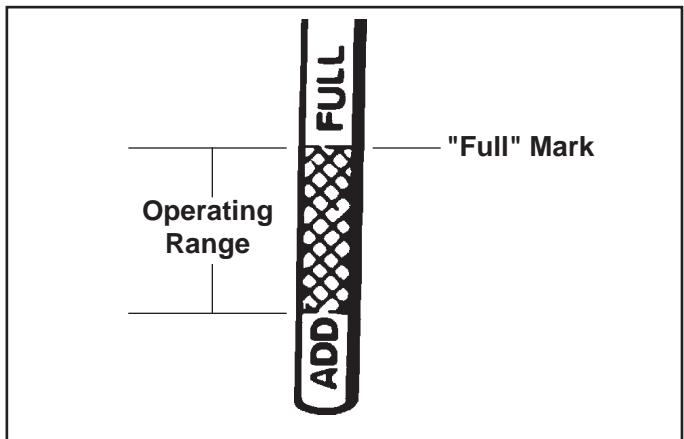
Figure 7. Oil Level Dipstick.
- If the level is low, add oil of the proper type, up to the "FULL" mark on the dipstick. (Refer to "Oil Type" on page 5.) Always check the level with the dipstick before adding more oil.
NOTE: To prevent extensive engine wear or damage, always maintain the proper oil level in the crankcase. Never operate the engine with the oil level below the "ADD" mark or over the "FULL" mark on the dipstick.
Oil Sentry™
Some engines are equipped with an optional Oil Sentry™ oil pressure switch. If the oil pressure drops below an acceptable level, the Oil Sentry™ will either shut off the engine or activate a warning signal, depending on the application.
NOTE: Make sure the oil level is checked BEFORE EACH USE and is maintained up to the "FULL" mark on the dipstick. This includes engines equipped with Oil Sentry™.
Change Oil and Filter, Service Oil cooler
Change Oil
Change oil after every 100 hours of operation (more frequently under severe conditions). Refill with service class SG, SH, SJ or higher oil as specified in the Viscosity Grades table (Figure 3) on page 5.
Change the oil while the engine is still warm. The oil will flow more freely and carry away more impurities. Make sure the engine is level when filling, checking, or changing the oil.
Change the oil as follows (see Figure 8):
- To keep dirt, debris, etc., out of the engine, clean the area around the oil fill cap/dipstick before removing it.
- Remove one of the oil drain plugs and the oil fill cap/dipstick. Be sure to allow ample time for complete drainage.
- Reinstall the drain plug. Make sure it is tightened to 13.6 N·m (10 ft. lb.) torque.
-
Fill the crankcase, with new oil of the propert type, to the "FULL" mark on the dipstick. Refer to Oil Type on page 5. Always check the level with the dipstick before adding more oil.
-
Reinstall the oil fill cap/dipstick and tighten securely.
NOTE: To prevent extensive engine wear or damage, always maintain the proper oil level in the crankcase. Never operate the engine with the oil level below the "ADD" mark or over the "FULL" mark on the dipstick.
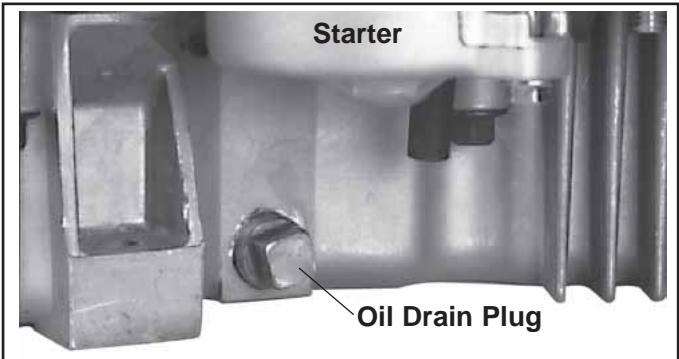
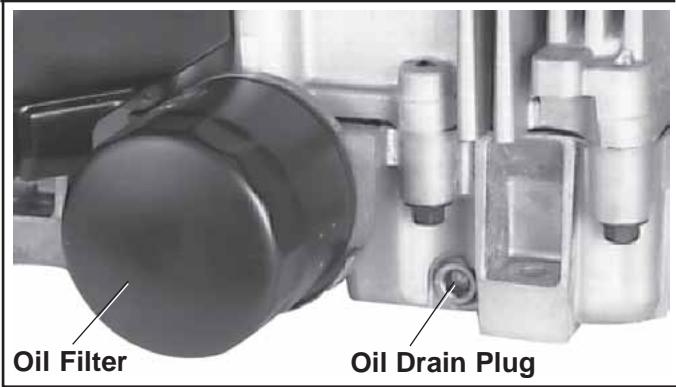
Figure 8. Oil Drain Plugs and Oil Filter.
Service Oil cooler
Some engines are equipped with an oil cooler. One style of oil cooler mounts on the engine crankcase and has the oil filter on it (see Figure 9). The other style of oil cooler is mounted on the blower housing (see Figure 10), separate from the oil filter.
Inspect and clean oil cooler every 100 hours of operation (more frequently under severe conditions). Oil cooler must be kept free of debris.
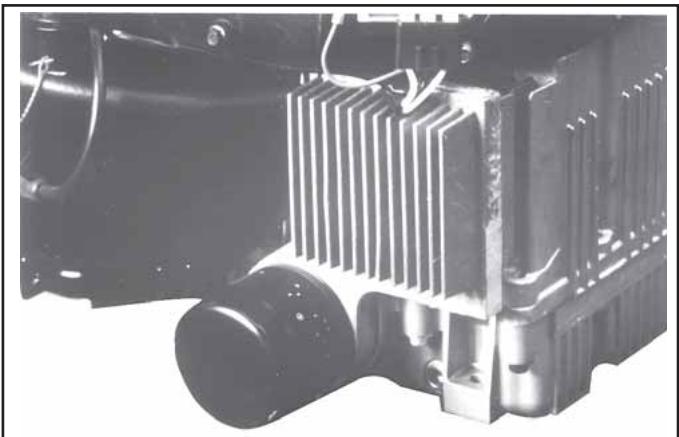
Figure 9. Crankcase Mounted Oil Cooler.
To service the crankcase mounted oil cooler, clean off the outside fins with a brush or with compressed air.
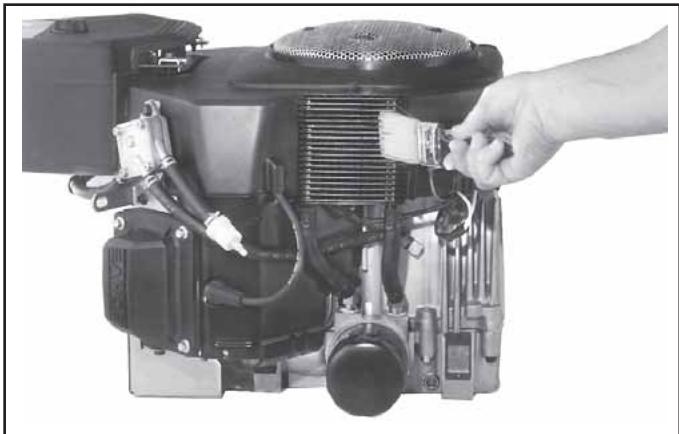
Figure 10. Blower Housing Mounted Oil Cooler.
To service the blower housing mounted style oil cooler, clean the outside of fins with a brush. See Figure 10. Remove the two screws holding the cooler unit to the blower housing. Tilt the cooler downward as shown in Figure 11. Clean the inside of the cooler with a brush, as shown in Figure 11, or with compressed air. After cleaning, reinstall the oil cooler to the blower housing with the two mounting screws.
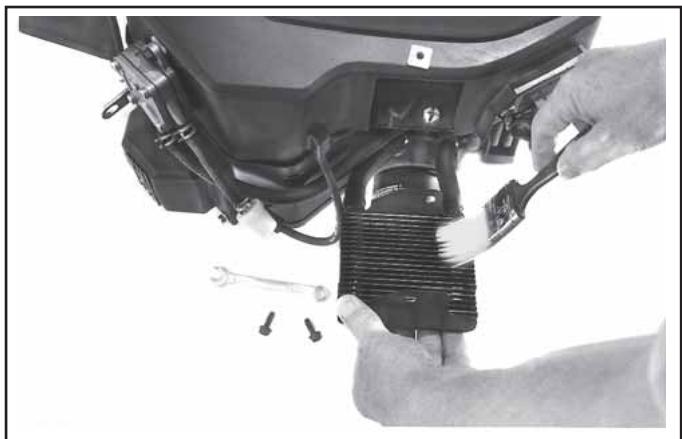
Figure 11. Cleaning Blower Housing Mounted Oil cooler.
Change Oil Filter
Replace the oil filter at least every other oil change (every 200 hours of operation). Always use a genuine Kohler oil filter. Use chart below to determine part number to order.
| Oil Filter Part No. | Length |
| 12 050 01-S | 2-1/2" |
| 52 050 02-S | 3-3/8" |
Replace the oil filter as follows:
- Drain the oil from the engine crankcase.
- Allow the oil filter to drain.
- Before removing the oil filter, clean the area around the oil filter to keep dirt and debris out of the engine. Remove the old filter. Wipe off the surface where the filter mounts. See Figure 8.
- Place a new replacement filter in a shallow pan with the open end up. Pour new oil, of the proper type, in through the threaded center hole. Stop pouring when the oil reaches the bottom of the threads. Allow a minute or two for the oil to be absorbed by the filter material.
- Apply a thin film of clean oil to the rubber gasket on the new filter.
- Install the new oil filter to the filter adapter or oil cooler. Turn the oil filter clockwise until the rubber gasket contacts the filter adapter or oil cooler, then tighten the filter an additional 3/4 to 1 turn.
-
Reinstall the drain plug. Make sure it is tightened to 13.6 N·m (10 ft. lb.) torque.
-
Fill the crankcase with new oil, of the proper type, to the "FULL" mark on the dipstick.
- Test run the engine to check for leaks. Stop the engine, allow a minute for the oil to drain down, and recheck the level on the dipstick. Make sure oil level is up to but not over the "FULL" mark on the dipstick.
Service Precleaner and Air Cleaner Element
These engines are equipped with a replaceable, high density paper air cleaner element. Most engines are also equipped with an oilied, foam precleaner which surrounds the paper element. See Figures 12 and 13. Some engines use a heavy-duty air cleaner system. See Figure 15.
Check the air cleaner daily or before starting the engine. Check for a buildup of dirt and debris around the air cleaner system. Keep this area clean. Also check for loose or damaged components. Replace all bent or damaged air cleaner components.
NOTE: Operating the engine with loose or damaged air cleaner components could allow unfiltered air into the engine causing premature wear and failure.
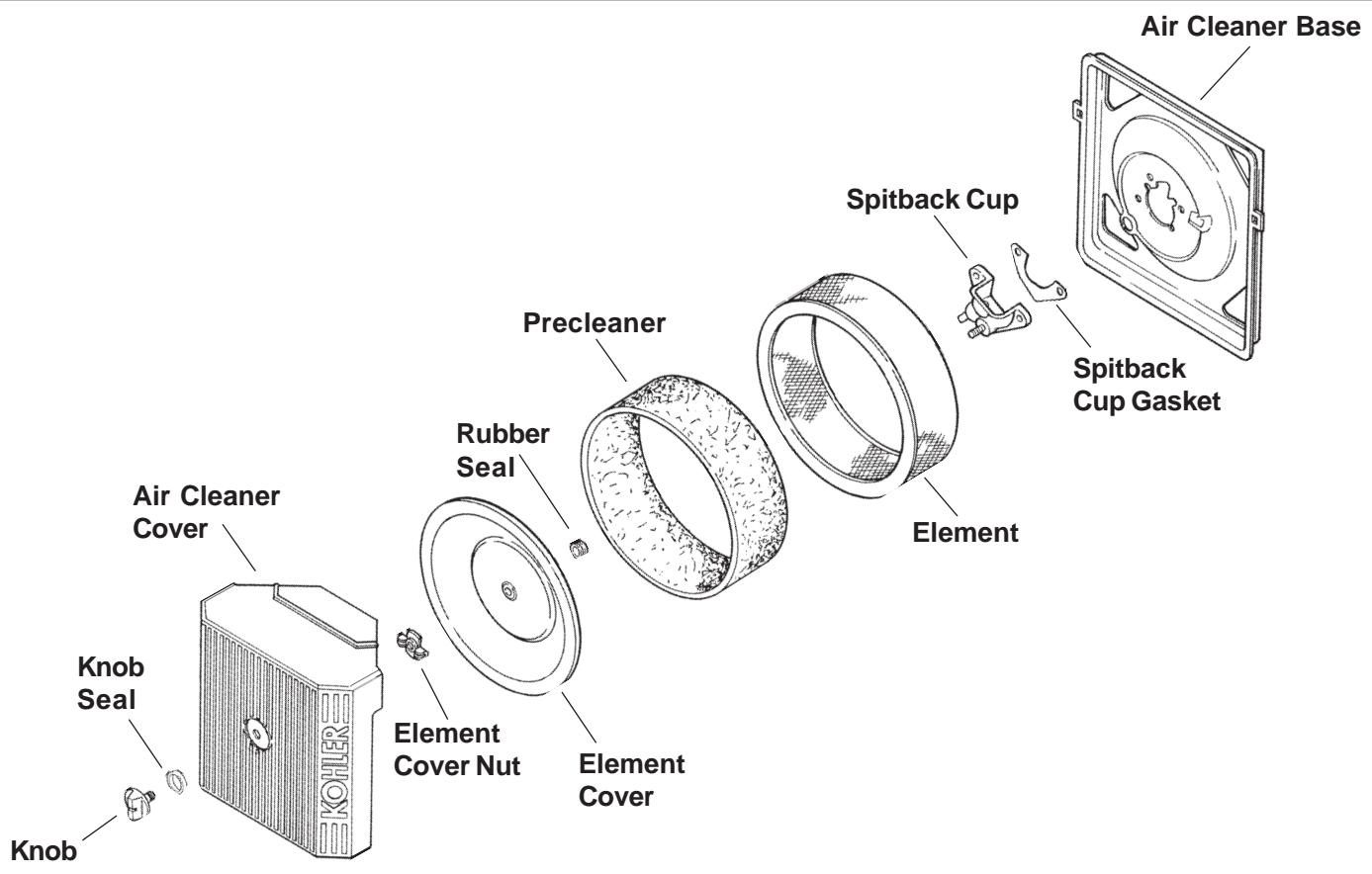
Figure 12. Air Cleaner System Components - Type A (Standard).
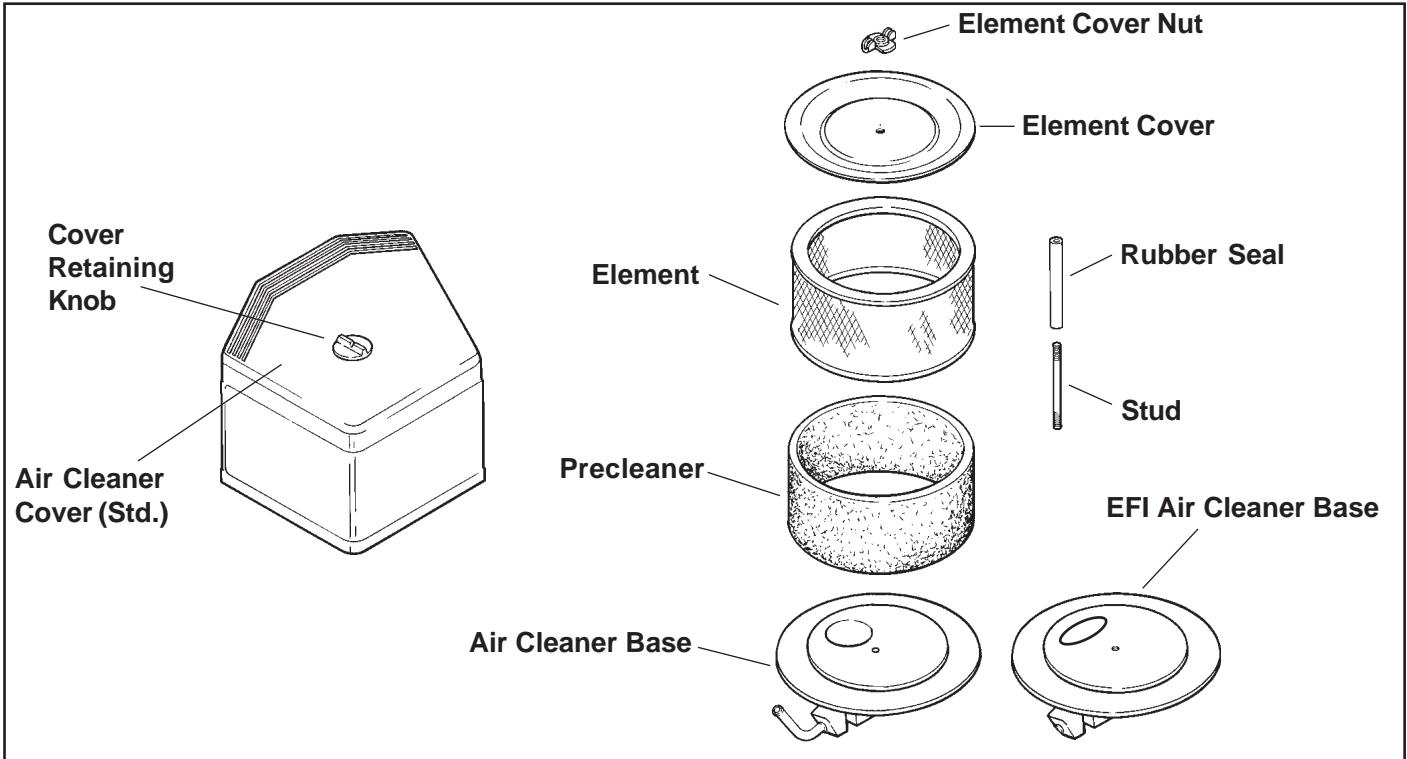
Figure 13. Air Cleaner System Components - Type B (Commercial Mower).
Service Precleaner
If so equipped, wash and reoil the precleaner every 25 hours of operation (more often under extremely dusty or dirty conditions).
- Loosen the cover retaining knob and remove the cover.
- Remove the precleaner from the paper element.
- Wash the precleaner in warm water with detergent. Rinse the precleaner thoroughly until all traces of detergent are eliminated. Squeeze out excess water (do not wring). Allow the precleaner to air dry.
- Saturate the precleaner with new engine oil. Squeeze out all excess oil.
- Reinstall the precleaner over the paper element.
- Reinstall the air cleaner cover. Secure cover with the cover retaining knob.
- When precleaner replacement is necessary order genuine Kohler Parts.
| Type A | 24 083 02-S | 61 mm (2.40 in.) high x 173 mm (6.81 in.) O.D. |
| 24 083 05-S | 71 mm (2.79 in.) high x 173 mm (6.81 in.) O.D. | |
| Type B | 45 083 01-S | 73 mm (2.90 in.) high x 152 mm (6.00 in.) O.D. |
Service Paper Element
Every 100 hours of operation (more often under extremely dusty or dirty conditions), replace the paper element.
- Loosen the cover retaining knob and remove the cover.
- Clean the area around the element to prevent debris from getting in the engine when element is removed.
- Remove the element cover wing nut, element cover, and paper element with precleaner. Separate the precleaner from the element and service as necessary.
- Do not wash the paper element or use pressurized air, as this will damage the element. Replace a dirty, bent, or damaged element with a genuine Kohler element. Handle new element carefully; do not use if the sealing surfaces are bent or damaged.
- When servicing the air cleaner, check the air cleaner base. Make sure it is secured and not bent or damaged. Also, check the element cover for damage or improper fit. Replace all damaged air cleaner components.
-
Check the condition of the rubber seal on the air cleaner stud. If it is worn, damaged, or its condition is questionable in any way, replace it.
-
Reinstall the paper element, precleaner, element cover, element cover wing nut and air cleaner cover. Secure cover with the cover retaining knob.
- When element replacement is necessary, order genuine Kohler Parts.
| Type A | 47 083 03-S | 65 mm (2.55 in.) high x 178 mm (7.00 in.) O.D. |
| 24 083 03-S | 74 mm (2.91 in.) high x 178 mm (7.00 in.) O.D. | |
| Type B | 45 083 02-S | 78 mm (3.08 in.) high x 154 mm (6.07 in.) O.D. |
Heavy-Duty Air Cleaner
To Service
Every 250 hours of operation (more often under extremely dusty or dirty conditions), replace the paper element and check inner element. Follow these steps.
- Unhook the two retaining clips and remove the end cap from the air cleaner housing.
- Pull the air cleaner element out of the housing. See Figure 14.
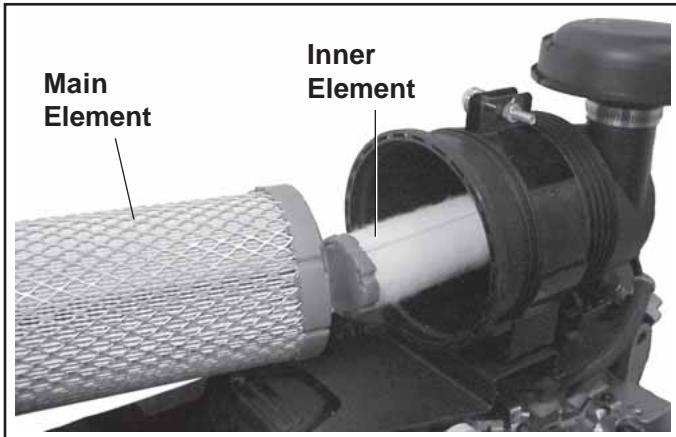
Figure 14. Removing Elements.
- After the main element is removed, check the condition of the inner element. It should be replaced whenever it appears dirty, typically every other time the main element is replaced. Clean the area around the base of the inner element before removing it, so dirt does not get into the engine.
- Do not wash the paper element and inner element or use pressurized air, this will damage the elements. Replace dirty, bent or damaged elements with new genuine Kohler elements as required. Handle new elements carefully; do not use if the sealing surfaces are bent or damaged.
-
Check all parts for wear, cracks, or damage. Replace any damaged components.
-
Install the new inner element, Kohler Part No. 2508304-S followed by the outer element, Kohler Part No. 2508301-S. Slide each fully into place in the air cleaner housing.
- Reinstall the end cap so the dust ejector valve is down and secure with the two retaining clips. See Figure 15.
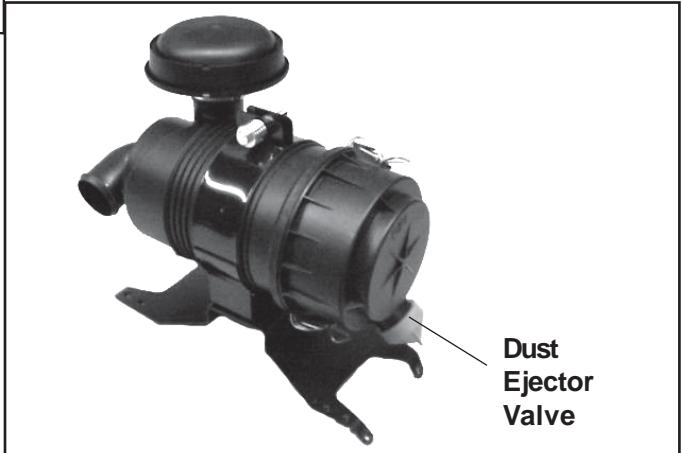
Figure 15. Heavy-Duty Air Cleaner Assembly.
Clean Air Intake/Cooling Areas
To ensure proper cooling, make sure the grass screen, cooling fins, and other external surfaces of the engine are kept clean at all times.
Every 100 hours of operation (more often under extremely dusty, dirty conditions), remove the blower housing* and other cooling shrouds. Clean the cooling fins and external surfaces as necessary. Make sure the cooling shrouds are reinstalled.
*Cleanout kits 25 755 20-S (black) or 25 755 21-S (gold) allow inspection and cleanout of the cooling fins, without removing the blower housing.
NOTE: Operating the engine with a blocked grass screen, dirty or plugged cooling fins, and/or cooling shrouds removed, will cause engine damage due to overheating.
Ignition System
Carbureted Engines - Use an electronic Capacitive Discharge (CD) ignition system. Other than periodically checking/replacing the spark plugs, no maintenance, timing, or adjustments are necessary or possible with this system.
EFI Engines - Incorporate a computer-controlled battery ignition system with individual coils. Other than periodically checking/replacing the spark plugs, no maintenance, timing, or adjustments are necessary or possible with this system.
Check Spark Plugs
Every 200 hours of operation, remove the spark plugs, check condition, and reset the gap or replace with new plugs as necessary. The standard spark plug is a Champion® RC12YC (Kohler Part No. 12 132 02-S). RFI compliant engines use a Champion® XC12YC (Kohler Part No. 25 132 14-S) spark plug. A high-performance spark plug, Champion® Platinum 3071 (used on Pro Series engines, Kohler Part No. 25 132 12-S) is also available. Equivalent alternate brand plugs can also be used.
- Before removing the spark plug, clean the area around the base of the plug to keep dirt and debris out of the engine.
- Remove the plug and check its condition. Replace the plug if worn or reuse is questionable.
NOTE: Do not clean the spark plug in a machine using abrasive grit. Some grit could remain in the spark plug and enter the engine causing extensive wear and damage.
- Check the gap using a wire feeler gauge. Adjust the gap to 0.76 ~mm (0.030 in.) by carefully bending the ground electrode. See Figure 16.
- Reinstall the spark plug into the cylinder head. Torque the spark plug to 24.4-29.8 N·m (18-22 ft. lb.).
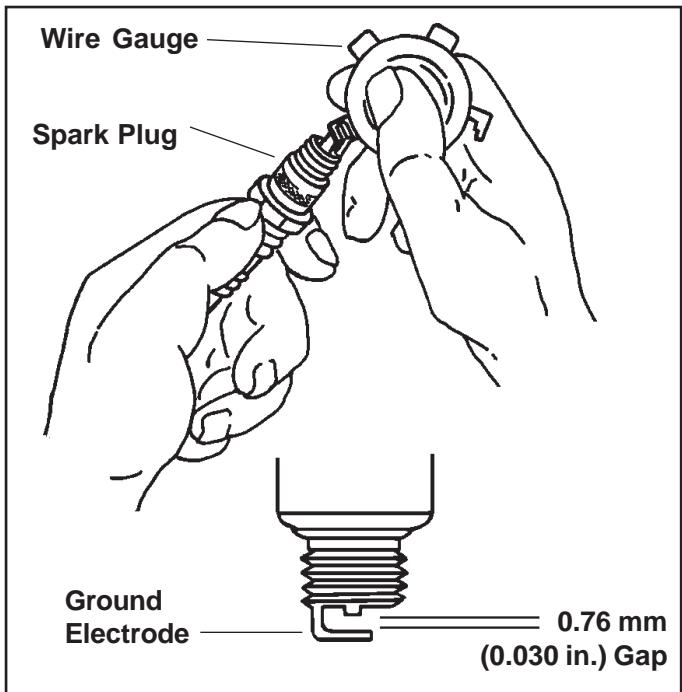
Figure 16. Servicing Spark Plug.
Battery Charging

WARNING: Explosive Gas!
Batteries produce explosive hydrogen gas while being charged. To prevent a fire or explosion, charge batteries only in well ventilated areas. Keep sparks, open flames, and other sources of ignition away from the battery at all times. Keep batteries out of the reach of children. Remove all jewelry when servicing batteries.
Before disconnecting the negative (-) ground cable, make sure all switches are OFF. If ON, a spark will occur at the ground cable terminal which could cause an explosion if hydrogen gas or gasoline vapors are present.
Fuel System

WARNING: Fuel System Under Pressure!
The EFI fuel system operates under high pressure, and the fuel filter and fuel line used must be approved system components only. Use of substitute parts can result in system failure, gasoline leakage and possible explosion.
Fuel Filter
Carbureted Engines: Most engines are equipped with an in-line fuel filter. Periodically inspect the filter and replace with a genuine Kohler filter every 200 operating hours.
EFI Engines: A special, high volume, high pressure filter with greater filtration capabilities and internal surface area is used. See Figure 17.
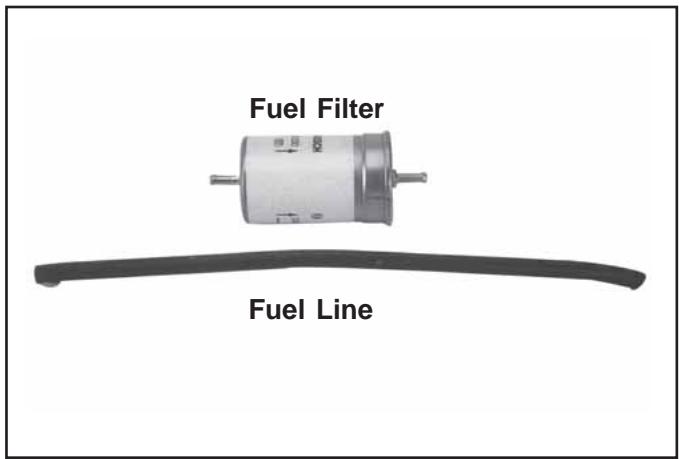
Figure 17. EFI Fuel Filter and Line.
Replacement is recommended every 1500 hours, or more frequently under extremely dusty or dirty conditions. When replacement is necessary, always use genuine Kohler parts.
Fuel Line
Carbureted Engines: In compliance with CARB Tier III Emission Regulations, carbureted engines with a Family identification number beginning with "6" or greater (see Figure 18), must use Low Permeation SAE 30 R7 rated fuel line; certified to meet CARB requirements. Standard fuel line may not be used. Order replacement hose by part number through a Kohler Engine Service Dealer.
KOHLER
IMPORTANT ENGINE INFORMATION
THIS ENGINE MEETS U.S. EPA AND CA 2005 AND
LATER AND EC STAGE II (SN:4) EMISSION REGS
FOR SI SMALL OFF-ROAD ENGINES
FAMILY
TYPE APP
DISPL. (CC)
MODEL NO.
SPEC.NO.
SERIAL NO.
BUILD DATE
OEM PROD. NO.
EMISSION COMPLIANCE PERIOD:
EPA: CARB:
CERTIFIED ON:
REFER TO OWNER'S MANUAL FOR HP RATING,
SAFETY, MAINTENANCE AND ADJUSTMENTS
1-800-544-2444 www.kohlerengines.com
KOHLER CO. KOHLER, WISCONSIN USA
Figure 18. Family Number Location.
EFI Engines: A special fuel line, capable of withstanding the high pressure of the EFI fuel system, is used (must meet SAE R9 specifications). See Figure 17. If fuel line must be replaced, see your Kohler Engine Service Dealer.
Carburetor Troubleshooting and Adjustments
Engines in this series use either a single barrel or two barrel carburetor depending on model, and may also be equipped with a Governed Idle System. Specific adjustment procedure(s) are provided based on the model and carburetor involved. If the engine is equipped with a Governed Idle System, refer to Models with Governed Idle System when performing any carburetor adjustment, as an additional step to the listed procedure(s) is required.
NOTE: Carburetor adjustments should be made only after the engine has warmed up.
The carburetor is designed to deliver the correct fuel-to-air mixture to the engine under all operating conditions. The high speed mixture is set at the factory and cannot be adjusted. The low idle fuel adjusting needle (if equipped) is also set at the factory and normally does not need adjustment.
NOTE: To ensure correct engine operation at altitudes above 1525 meters (5000 ft.), it may be necessary to have an authorized Kohler dealer install a special high-altitude jet kit in the carburetor. If a high-altitude kit has been installed, the engine must be reconverted to the original jet size, before it is operated at lower altitudes, or overheating and engine damage can result.
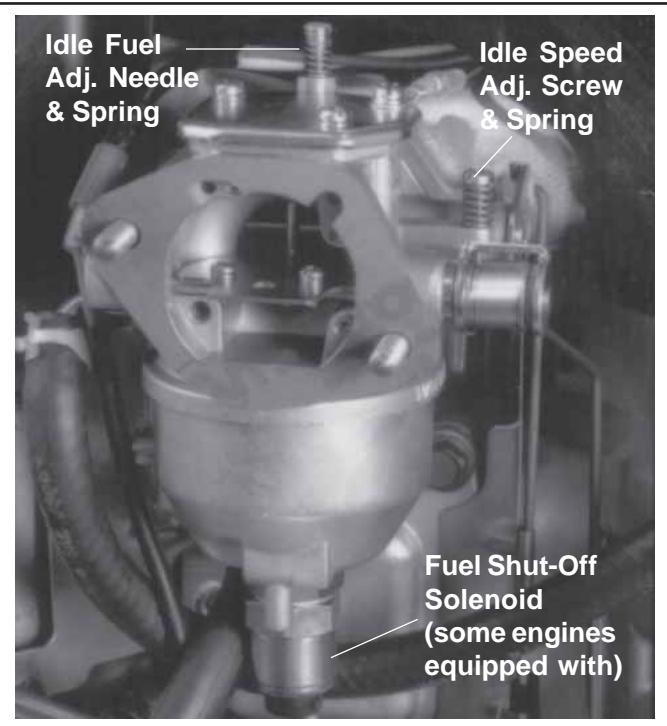
Figure 19. Carburetor CV18-23,CV620-CV730,CV740.
Troubleshooting
If engine troubles are experienced that appear to be fuel system related, check the following areas before adjusting the carburetor.
- Make sure the fuel tank is filled with clean, fresh gasoline.
- Make sure the fuel tank cap vent is not blocked and that it is operating properly.
- If the fuel tank is equipped with a shut-off valve, make sure it is open.
-
If the engine is equipped with an in-line fuel filter, make sure it is clean and unobstructed. Replace the filter if necessary.
-
Make sure fuel is reaching the carburetor. This includes checking the fuel lines and fuel pump for restrictions or faulty components, replace as necessary.
- Make sure the air cleaner element is clean and all air cleaner element components are fastened securely.
If, after checking the items listed above, the engine is hard to start, runs roughly, or stalls at low idle speed, it may be necessary to adjust or service the carburetor.
Adjust Carburetor
Models CV18-740
NOTE: Certified engines may have a fixed idle fuel adjusting needle. Do not attempt steps 1 and 2 below. Proceed directly to step 3.
- With the engine stopped, turn the low idle fuel adjusting needle in (clockwise) until it bottoms lightly.
NOTE: The tip of the low idle fuel adjusting needle is tapered to critical dimensions. Damage to the needle and the seat in carburetor body will result if the needle is forced.
- Preliminary Settings: Turn the adjusting needle out (counterclockwise) from lightly bottomed 2-1/4 turns.
- Start the engine and run at half throttle for 5 to 10 minutes to warm up. The engine must be warm before making final settings (steps 4, 5, and 6).
- Low Idle Speed Setting: Place the throttle control into the idle or slow position. Set the low idle speed to 1200 RPM* (± 75 RPM) by turning the low idle speed adjusting screw in or out. Check the speed using a tachometer.
*NOTE: The actual low idle speed depends on the application – refer to equipment manufacturer's recommendations. The recommended low idle speed for basic engines is 1200 RPM. To ensure best results when setting the low idle fuel needle, the low idle speed must not exceed 1200 RPM (± 75 RPM).
-
Low Idle Fuel Needle Setting: Place the throttle into the idle or slow position. Turn the low idle fuel adjusting needle in (slowly) until engine speed decreases and then back out approximately 3/4 to 1 turn to obtain the best low speed performance.
-
Recheck the idle speed using a tachometer. Readjust the speed as necessary.
Models with Governed Idle System
An optional governed idle control system is supplied on some CV18-740 engines. The purpose of this system is to maintain a desired idle speed regardless of ambient conditions (temperature, parasitic load, etc.) that may change. Engines with this feature contain a small secondary spring connected between the governor lever and the lower adjustment tab of the main bracket. See Figure 20.
The system requires an additional procedure for setting the idle speed. If speed adjustments are required proceed as follows.
- Make any necessary speed or control adjustments following the appropriate instructions covered in this section.
- Move the throttle control to the idle position. Hold the governor lever away from the carburetor, or hold the throttle lever so it is tight against the idle speed adjusting screw, to negate the governor activation. See Figure 21. Check the speed with a tachometer and adjust it to 1500 RPM.
- Release the governor lever and allow the engine to return to the governed idle speed. Check it with a tachometer against the equipment manufacturers recommended idle speed. Governed Idle Speed (RPM) is typically 300 RPM (approximate) higher than the low idle speed. If adjustment is necessary, bend the adjusting tab on the speed control assembly to set. See Figure 20.
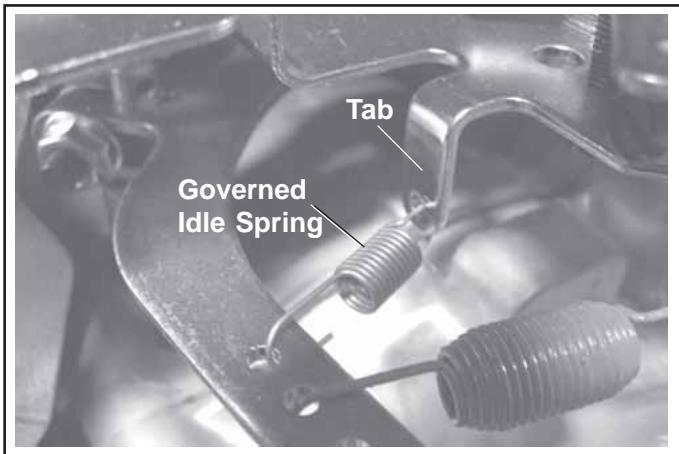
Figure 20. Governed Idle Spring Location.
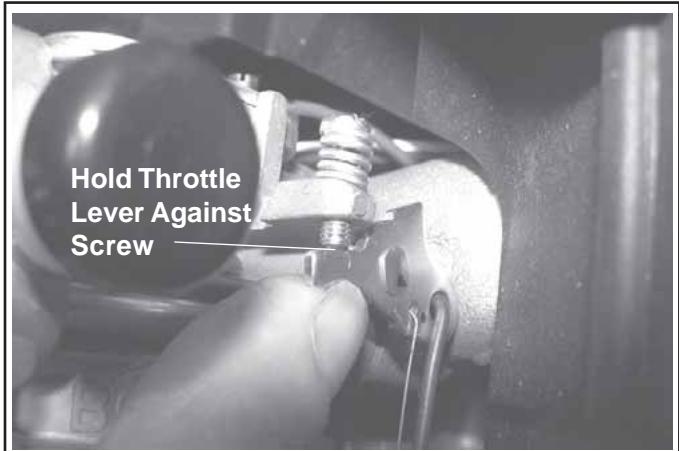
Figure 21. Holding Throttle Lever Against Idle Stop Screw.
Model CV750
CV750 engines use a Keihin BK two-barrel carburetor with fixed main jets and fixed or limiter-equipped low idle fuel adjusting needles. See Figure 22. Adjustments are made as follows.
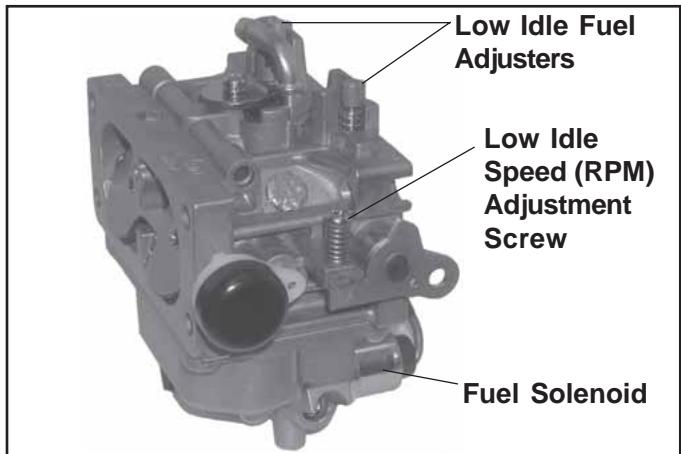
Figure 22. Keihin Two-Barrel Carburetor.
Low Idle Speed (RPM) Adjustment
- Low Idle Speed (RPM) Setting: Place the throttle control into the idle or slow position. Set the low idle speed to 1200 RPM* ( ± 75 RPM) by turning the low idle speed adjusting screw in or out. Check the speed using a tachometer.
*NOTE: The actual low idle speed depends on the application. Refer to the equipment manufacturer's recommendations. The low idle speed for basic engines is 1200 RPM. To ensure best results when setting the low idle fuel needle, the low idle speed should be 1200 RPM (± 75 RPM).
Low Idle Fuel Adjustment
NOTE: Engines will have fixed low idle or limiter caps on the two idle fuel adjusting needles. Step 3 can only be performed within the limits allowed by the cap. Do not attempt to remove the limiter caps.
- Start the engine and run at half throttle for 5 to 10 minutes to warm up. The engine must be warm before doing steps 2, 3, and 4.
- Place the throttle control into the idle or slow position. Adjust the low idle speed to 1200 RPM* Follow the Adjusting the Low Idle Speed (RPM) procedure.
- Low Idle Fuel Needle(s) Setting: Place the throttle into the idle or slow position.
a. Turn one of the low idle fuel adjusting needles out (counterclockwise) from the preliminary setting until the engine speed decreases (rich). Note the position of the needle. Now turn the adjusting needle in (clockwise). The engine speed may increase, then it will decrease as the needle is turned in (lean). Note the position of the needle. Set the adjusting needle midway between the rich and lean settings. See Figure 23.
b. Repeat the procedure on the other low idle adjustment needle.
- Recheck/adjust the Low Idle Speed (RPM), to the specified setting.
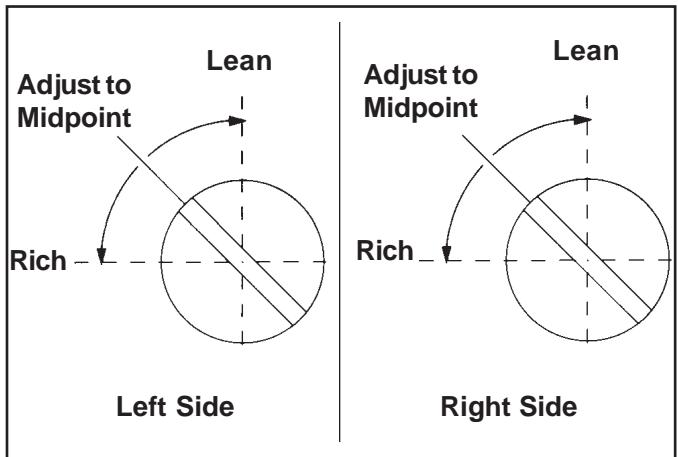
Figure 23. Optimum Low Idle Fuel Settings.
An optional governed idle control system is supplied on some CV750 engines. The purpose of this system is to maintain a desired idle speed regardless of ambient conditions (temperature, parasitic load, etc.) that may change. Engines with this feature contain a small secondary spring connected between the governor lever and the lower adjustment tab of the main bracket. See Figure 20. Refer to the same adjustment procedure covered in Models with Governed Idle System for the CV18-740 models on page 16, when adjustments are required.
Electronic Fuel Injection (EFI) System
The EFI system is a complete, electronically-controlled, fuel management system, designed to deliver a precisely controlled fuel flow under all operating conditions. The electronic control unit (ECU), the "brain" of the system, automatically adjusts fuel delivery and ignition timing based upon load, speed, operating temperature, and exhaust emission levels. The low idle speed is the only manual adjustment possible. The ECU continuously monitors operation of the EFI system. If it detects a problem or fault within the system, it will illuminate the malfunction indicator light (MIL), which is mounted in view of the operator. This is a signal that normal, programmed operation has been affected, and service by an authorized Kohler Engine Dealer is required.
NOTE: Do not spray water at the wiring harness or any of the electrical components, especially the ECU, as it could cause malfunction, damage, or failure.
Troubleshooting
If the MIL comes on, or the engine becomes hard to start, runs roughly, or stalls at low idle speed, initial checks should be made in the following areas:
- Make sure the fuel tank is filled with clean, fresh gasoline, and shut-off valve (if so equipped) is opened completely.
- Make sure fuel tank vent cap is not blocked and it is operating properly.
- Make sure the air cleaner element and precleaner are clean and all components are properly secured. Clean or replace as necessary.
- Make sure the proper fuel filter is being used, and it is clean and unobstructed. Replace filter only with genuine Kohler parts.
Make sure all connections to sensors, ECU, and fuel injectors are properly secured. - Make sure a good 12 volt battery is being used and is fully charged.
If these checks do not correct the problem, or the MIL remains on, further diagnosis and servicing by an authorized Kohler Engine Dealer is necessary.
Adjustment - EFI Throttle Body
Low Idle Speed (RPM) is the only adjustment that can be made. All other fuel calibrations are controlled by the ECU. The standard low idle speed is 1500 RPM* (± 75 RPM).
*NOTE: The actual low idle speed depends on the application -- refer to equipment manufacturer's recommendations.
When an EFI engine is started cold, the ECU will briefly set a higher (200-400 RPM) low idle speed, similar to a fast idle. Do not attempt to perform any readjustment during this "warm-up" period.
If adjustment is to be made, the engine must be at operating temperature, air cleaner in place, and check engine light must be off (no fault codes present).
- Start the engine and run at half throttle for 5 to 10 minutes to warm up.
- Place the throttle control into the idle or slow position.
- Turn the low idle speed adjusting screw in or out and check RPM with a tachometer. See Figure 24.
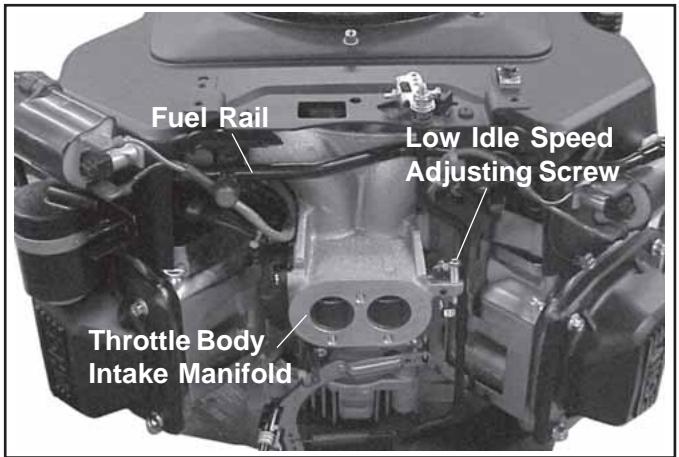
Figure 24. EFI Throttle Body Manifold.
Troubleshooting
When troubles occur, be sure to check the simple causes which, at first, may seem too obvious to be considered. For example, a starting problem could be caused by an empty fuel tank. Some common causes of engine troubles are listed in the following table.
Do not attempt to service or replace major engine components, or any items that require special timing or adjustment procedures. Have your Kohler Engine Service Dealer do this work.
| Possible Cause Problem | No Fuel | Improper Fuel | Dirt In Fuel Line /System | Dirty Grass Screen | Incorrect Oil Level | Engine Overloaded | Dirty Air Cleaner | Faulty Spark Plug |
| Will Not Start | • | • | • | • | • | • | • | |
| Hard Starting | • | • | • | • | • | |||
| Stops Suddenly | • | • | • | • | • | • | • | |
| Lacks Power | • | • | • | • | • | • | • | |
| Operates Erratically | • | • | • | • | • | • | ||
| Knocks or Pings | • | • | • | • | ||||
| Skips or Misfires | • | • | • | • | • | |||
| Backfires | • | • | • | • | • | |||
| Overheats | • | • | • | • | • | • | ||
| High Fuel Consumption | • | • | • |
Storage
If the engine will be out of service for two months or more, use the following storage procedure:
- Clean the exterior surfaces of the engine. On EFI engines, avoid spraying water at the wiring harness or any of the electrical components.
- Change the oil and filter while the engine is still warm from operation. See Change Oil and Filter on page 9.
- The fuel system must be completely emptied, or the gasoline must be treated with a stabilizer to prevent deterioration. If you choose to use a stabilizer, follow the manufacturers recommendations, and add the correct amount for the capacity of the fuel system. Fill the fuel tank with clean, fresh gasoline. Run the engine for 2-3 minutes to get stabilized fuel into the carburetor. Close fuel shut off valve when unit is being stored or transported.
To empty the system, run the engine until the tank and fuel system are empty.
- Remove the spark plugs. Add one tablespoon of engine oil into each spark plug hole. Install plugs, but do not connect the plug leads. Crank the engine two or three revolutions.
- On units with EFI engines, disconnect the negative (-) battery cable or use a "battery minder" trickle charger while the unit is in storage.
- Store the engine in a clean, dry place.
Parts Ordering
The engine Specification, Model, and Serial Numbers are required when ordering replacement parts from your Kohler Engine Service Dealer. These numbers are found on the identification plate which is affixed to the engine shrouding. Include letter suffixes if there are any. See Engine Identification Numbers on page 6.
Always insist on genuine Kohler parts. All genuine Kohler parts meet strict standards for fit, reliability, and performance.
Major Repair
Major repair information is available in Kohler Engine Service Manuals. This type of repair generally requires the services of a trained mechanic and the use of special tools and equipment. Kohler Engine Service Dealers have the facilities, training, and genuine Kohler replacement parts necessary to perform this service.
For the nearest Sales & Service location:
- visit our website www.kohlerengines.com
- call 1-800-544-2444 (U.S. & Canada)
- look in the yellow pages under Engines-Gasoline
Specifications
Model: CV18/CV620 CV20/CV640 CV23/CV675/CV680
Bore: mm (in.) 77 (3.03) 77 (3.03) 80 (3.2)
Stroke: mm (in.) 67 (2.6) 67 (2.6) 67 (2.6)
Displacement: cm^3 (in³) 624 (38.1) 624 (38.1) 674 (41)
Power (@3600 RPM): ... kW (HP) 13.4 (18) 14.9 (20) 16.4 (22*)
Compression Ratio: 8.5:1 8.5:1 8.5:1
Weight: kg (lb.) 41 (90) 41 (90) 41 (90)
Oil Capacity (w/filter) - approximate, determined by oil filter and oil cooler used: 1.6-1.8 L (1.7-1.9 U.S. qt.)
Lubrication: Full Pressure w/full Flow Filter
Model: CV730 CV26/CV735 CV740 CV745 CV750
Bore: 83 (3.27) 83 (3.27) 83 (3.27) 83 (3.27)
Stroke: 67 (2.6) 67 (2.6) 67 (2.6) 67 (2.6) 69 (2.72)
Displacement: cm^3 (in^3) 725 (44.2) 725 (44.2) 725 (44.2) 725 (44.2) 747 (45.6)
Power (@3600 RPM): kW (HP) 18.6 (25) 19.4 (26) 20.1 (27) 20.9 (28) 22.4 (30*)
Compression Ratio: 9.0:1 9.0:1 9.0:1 9.0:1 9.4:1
Weight: 43 (94) 43 (94) 43 (94) 43 (94) 47 (105)
Oil Capacity (w/filter) - approximate, determined by oil filter and oil cooler used: 1.6-1.8 L (1.7-1.9 U.S. qt.)
Lubrication: Full Pressure w/full Flow Filter
Exhaust Emission Control System for models CV18/CV620, CV20/CV640, CV23/CV675/CV680, CV730, CV740, CV750 is EM.
Exhaust Emission Control System for models CV26/CV735 and CV745 are EM, O2S, ECM, MFI.
*Horsepower ratings exceed Society of Automotive Engineers Small Engine Test Code J1940. Actual engine horsepower is lower and affected by, but not limited to, accessories (air cleaner, exhaust, charging, cooling, fuel pump, etc.), application, engine speed and ambient operating conditions (temperature, humidity, and altitude). Kohler reserves the right to change product specifications, designs and equipment without notice and without incurring obligation.
LIMITED 2 YEAR COMMAND ENGINE WARRANTY
Kohler Co. warrants to the original consumer that each new COMMAND engine sold by Kohler Co. will be free from manufacturing defects in materials or workmanship in normal service for a period of two (2) years from date of purchase, provided if is operated and maintained in accordance with Kohler Co.'s instructions and manuals.
Our obligation under this warranty is expressly limited, at our option, to the replacement or repair at Kohler Co., Kohler, Wisconsin 53044, or at a service facility designated by us of such parts as inspection shall disclose to have been defective.
EXCLUSIONS:
Mufflers on engines used commercially (non-residential) are warranted for one (1) year from date of purchase, except catalytic mufflers, which are warranted for two (2) years.
This warranty does not apply to defects caused by casualty or unreasonable use, including faulty repairs by others and failure to provide reasonable and necessary maintenance.
The following items are not covered by this warranty:
Engine accessories such as fuel tanks, clutches, transmissions, power-drive assemblies, and batteries, unless supplied or installed by Kohler Co. These are subject to the warranties, if any, of their manufacturers.
KOHLER CO. AND/OR THE SELLER SHALL NOT BE LIABLE FOR SPECIAL, INDIRECT, INCIDENTAL, OR CONSEQUENTIAL DAMAGES OF ANY KIND, including but not limited to labor costs or transportation charges in connection with the repair or replacement of defective parts.
IMPLIED OR STATUTORY WARRANTY, INCLUDING WARRANTY OF MERCHANTABILITY OR FITNESS FOR A PARTICULAR PURPOSE, ARE EXPRESSLY LIMITED TO THE DURATION OF THIS WRITTEN WARRANTY. We make no other express warranty, nor is any one authorized to make any on our behalf.
Some states do not allow limitations on how long an implied warranty lasts, or the exclusion or limitation of incidental or consequential damages, so the above limitation or exclusion may not apply to you.
This warranty gives you specific legal rights, and you may also have other rights, which vary from state to state.
TO OBTAIN WARRANTY SERVICE:
Purchaser must bring the engine to an authorized Kohler service facility. To locate the nearest facility, visit our website, www.kohlerengines.com, and click on DEALER LOCATOR to use the locator function, consult your Yellow Pages or telephone 1-800-544-2444.
ENGINE DIVISION, KOHLER CO., KOHLER, WISCONSIN 53044
KOHLER CO.
FEDERAL AND CALIFORNIA EMISSION CONTROL SYSTEMS
LIMITED WARRANTY
SMALL OFF-ROAD AND CLASS 1 LSI ENGINES
The U.S. Environmental Protection Agency (EPA), the California Air Resources Board (CARB), and Kohler Co. are pleased to explain the Federal and California Emission Control Systems Warranty on your off-road equipment engine. In California beginning in 2006, "emissions" means both exhaust and evaporative emissions. For California, small off-road engines produced in 2006 and later, and Class 1 LSI (Large Spark Ignited engines at or below 1.0 liter) produced in 2002 and later, must be designed, built and equipped to meet the state's stringent anti-smog standards. In other states, 1997 and later model year engines must be designed, built and equipped, to meet the U.S. EPA regulations for non-road engines. The engine must be free from defects in materials and workmanship, which cause it to fail to conform with U.S. EPA standards for the first two years of engine use from the date of sale to the ultimate purchaser. Kohler Co. must warrant the emission control system on the engine for the period of time listed above, provided there has been no abuse, neglect or improper maintenance.
The emission control system may include parts such as the carburetor or fuel injection system, the ignition system, and catalytic converter. Also included are the hoses, belts and connectors and other emission-related assemblies.
Where a warrantable condition exists, Kohler Co. will repair the engine at no cost, including diagnosis (if the diagnostic work is performed at an authorized dealer), parts and labor.
MANUFACTURER'S WARRANTY COVERAGE
Small off-road engines produced in 2006 or later, and Class 1 LSI engines produced in 2002 and later, are warranted for two years in California. In other states, 1997 and later model year engines are warranted for two years. If any emission related part on the engine is defective, the part will be repaired or replaced by Kohler Co. free of charge.
OWNER'S WARRANTY RESPONSIBILITIES
(a) The engine owner is responsible for the performance of the required maintenance listed in the owner's manual. Kohler Co. recommends that you retain all receipts covering maintenance on the engine, but Kohler Co. cannot deny warranty solely for the lack of receipts or for your failure to assure that all scheduled maintenance was performed.
(b) Be aware, however, that Kohler Co. may deny warranty coverage if the engine or a part has failed due to abuse, neglect, improper maintenance or unapproved modifications.
(c) For warranty repairs, the engine must be presented to a Kohler Co. service center as soon as a problem exists. Call 1-800-544-2444 or access our website at: www.kohlerengines.com, for the names of the nearest service centers. The warranty repairs should be completed in a reasonable amount of time, not to exceed 30 days.
If you have any questions regarding warranty rights and responsibilities, you should contact Kohler Co. at 1-920-457-4441 and ask for an Engine Service representative.
COVERAGE
Kohler Co. warrants to the ultimate purchaser and each subsequent purchaser that the engine will be designed, built and equipped, at the time of sale, to meet all applicable regulations. Kohler Co. also warrants to the initial purchaser and each subsequent purchaser, that the engine is free from defects in materials and workmanship which cause the engine to fail to conform with applicable regulations for a period of two years.
Small off-road engines produced in 2006 or later, and Class 1 LSI engines produced in 2002 and later, are warranted for two years in California. For 1997 and later model years, EPA requires manufacturers to warrant engines for two years in all other states. These warranty periods will begin on the date the engine is purchased by the initial purchaser. If any emission related part on the engine is defective, Kohler Co. will replace the part at no cost to the owner. Kohler Co. is liable for damages to other engine components caused by the failure of a warranted part still under warranty.
Kohler Co. shall remedy warranty defects at any authorized Kohler Co. engine dealer or warranty station. Warranty repair work done at an authorized dealer or warranty station shall be free of charge to the owner if such work determines that a warranted part is defective.
Continued on next page.
Listed below are the parts covered by the Federal and California Emission Control Systems Warranty. Some parts listed below may require scheduled maintenance and are warranted up to the first scheduled replacement point for that part. The warranted parts include the following if they were present in the engine purchased:
- Oxygen sensor (if equipped)
- Intake manifold (if equipped)
- Exhaust manifold (if equipped)
- Catalytic muffler (if equipped)
Thermal reactor muffler (if equipped) - Fuel lines, fuel line fittings and clamps (if equipped)
- Spark advance module (if equipped)
-
Crankcase breather
Air Injection System (if equipped) -
Air pump or pulse valve assembly (if equipped)
- Control/distribution valve (if equipped)
- Distribution manifold (if equipped)
- Air hoses (if equipped)
-
Vacuum lines (if equipped)
-
Ignition module(s) with high tension lead
- Gaseous fuel regulator (if equipped)
Electronic control unit (if equipped) - Carburetor or fuel injection system
- Fuel metering valve (if equipped)
-
Air filter, fuel filter, and spark plugs (only to first scheduled replacement point)
Evaporative System (if equipped) -
Canister (if equipped)
-Canister filter (if equipped)
Vapor hose (if equipped) - Orifice connector (if equipped)
-Fuel tank (if equipped) - Fuel cap (if equipped)
- Primer bulb canister (if equipped)
LIMITATIONS
This Emission Control Systems Warranty shall not cover any of the following:
(a) repair or replacement required because of misuse or neglect, improper maintenance, repairs improperly performed or replacements not conforming to Kohler Co. specifications that adversely affect performance and/or durability and alterations or modifications not recommended or approved in writing by Kohler Co.,
(b) replacement of parts and other services and adjustments necessary for required maintenance at and after the first scheduled replacement point,
(c) consequential damages such as loss of time, inconvenience, loss of use of the engine or equipment, etc.,
(d) diagnosis and inspection fees that do not result in eligible warranty service being performed, and
(e) any add-on or modified part, or malfunction of authorized parts due to the use of add-on or modified parts.
MAINTENANCE AND REPAIR REQUIREMENTS
The owner is responsible for the proper use and maintenance of the engine. Kohler Co. recommends that all receipts and records covering the performance of regular maintenance be retained in case questions arise. If the engine is resold during the warranty period, the maintenance records should be transferred to each subsequent owner. Kohler Co. reserves the right to deny warranty coverage if the engine has not been properly maintained; however, Kohler Co. may not deny warranty repairs solely because of the lack of repair maintenance or failure to keep maintenance records.
Normal maintenance, replacement or repair of emission control devices and systems may be performed by any repair establishment or individual; however, warranty repairs must be performed by a Kohler authorized service center. Any replacement part or service that is equivalent in performance and durability may be used in non-warranty maintenance or repairs, and shall not reduce the warranty obligations of the engine manufacturer.
KOHLER
ENGINESE
FOR SALES AND SERVICE INFORMATION
IN U.S. AND CANADA, CALL 1-800-544-2444
KohlerEngines.com
ENGINE DIVISION, KOHLER CO., KOHLER, WISCONSIN 53044
| FORM NO.: | 24 590 02-B |
| ISSUED: | 11/04 |
| REVISED: | 9/08 |
LITHO IN U.S.A.

1P24 590 02-B