World Instruments - Music Software Garritan - Free user manual and instructions
Find the device manual for free World Instruments Garritan in PDF.


| Product Type | Virtual Instrument Software Library |
| Brand | Garritan |
| Model | World Instruments |
| Category | Software / Audio Plugins |
| Format | VST, AU, AAX (32/64-bit) |
| Standalone Operation | Yes, with included ARIA Player |
| Sample Library Size | Approximately 5.5 GB |
| Number of Instruments | Over 50 unique world instruments |
| Sampling Rate / Bit Depth | 44.1 kHz / 24-bit |
| Built-in Effects | Reverb, EQ, and Ambiance controls |
| Minimum System Requirements (Windows) | Windows 7 or later, 4 GB RAM, 10 GB free disk |
| Minimum System Requirements (macOS) | macOS 10.9 or later, 4 GB RAM, 10 GB free disk |
| Activation Method | Online activation via eLicense or serial number |
| License Type | Perpetual license for one computer |
| Installation Media | Download (ISO) or optional physical DVD |
| Documentation | PDF user manual included |
| Updates | Free minor updates for registered users |
| Customer Support | Email support and online forum |
| Interface Language | English |
Frequently Asked Questions - World Instruments Garritan
User questions about World Instruments Garritan
0 question about this device. Answer the ones you know or ask your own.
Ask a new question about this device
Download the instructions for your Music Software in PDF format for free! Find your manual World Instruments - Garritan and take your electronic device back in hand. On this page are published all the documents necessary for the use of your device. World Instruments by Garritan.
USER MANUAL World Instruments Garritan
ARIA
ENGINE

Endless Wave Technology by CONEXANT™
www.garritan.com

Microsoft
Windows 7

Windows XP

Windows Vista


A User's Guide to

GARRITAN WORLD INSTRUMENTS
Including the ARIA™ Player
This guide written by Gary Garritan
Produced by: Gary Garritan
Programming: Chad Beckwith, Markleford Friedman
ARIA Engine Development: Plogue Art et Technologie, Inc.
Additional Programming: Eric Patenaude, Tom Hopkins
Document Editing: Jim Williams
MIDI/SFZ Programming: Chad Beckwith, Markleford Friedman
Art Direction: James Mireau
Project Management: Max Deland
Software Development: Jeff Hurchalla
Manual Layout: Adina Cucicov
Additional Samples: Herman Witkam, Doru Malaia, Jack De
Mello, Gene Nery, McGill University
Endless Wave Technology by CONEXANT
Garritan World Instruments™ is a trademark of Garritan Corp. Use of the Garritan World Instruments library and the contents herein are subject to the terms and conditions of the license agreement distributed with the library. You should carefully read the license agreement before using this product. The sounds presented in Garritan World Instruments are protected by copyright and may not be distributed, whether modified or unmodified. The Guide to Garritan World Instruments and instrument lists contained herein are also covered by copyright. ARIA™ is a trademark of Garritan and Plogue Art et Technologie, Inc. FINALE is a trademark of MakeMusic, Sibelius is a trademark of Avid Technologies, Inc., Endless Wave is a trademark of Conexant, Inc., and any other trademarks of third-party programs are trademarks of their respective owners. No part of this publication may be copied, reproduced, or otherwise transmitted or recorded, for any purpose, without prior written permission from Garritan Corp. The information contained herein may change without notice and does not represent a commitment on the part of Garritan Corporation.
Garritan World Instruments
Garritan Corporation
P.O. Box 400, Orcas, WA 98280 USA
Visit us on the World Wide Web at: www.garritan.com
Copyright © 2011 by Garritan Corp. All rights reserved.
A User's Guide to
GARRITAN WORLD INSTRUMENTS
Including the ARIA™ Player

Table of Contents
Welcome to the Garritan World Instruments 6
Garritan World Instruments At a Glance 7
End User License Agreement 8
What the World Instruments Package Includes 9
How to Use This Manual 9
Further Documentation 10
Specifications & Computer System Requirements 11
Regarding Soundcards & Speakers 13
INSTALLATION & ACTIVATION 15
Quick Reference Installation 16
Quick Reference Activation 18
ARIA PLAYER BASICS 21
Getting Around the ARIA Player Interface 22
Using ARIA Player as a Standalone 24
Using ARIA as a VST, AU, or RTAS Plug-in 24
Notation Version of Garritan World Instruments 26
A WORLD OF INSTRUMENTS 27
The Music and Instruments of Africa 28
The Music and Instruments of India 30
The Music and Instruments of China 31
The Music and Instruments of Japan 33
The Music and Instruments of Other Asian Regions 35
The Music and Instruments of Europe 36
The Music and Instruments of The Middle East 38
The Music and Instruments of North America 40
The Music and Instruments of Latin America 41
The Music and Instruments of Australia & Oceania 43
Studying World Music and Cultures 44
PLAYING GARRITAN WORLD INSTRUMENTS 47
Basic Performance Controls 48
- Modulation Wheel Control 49
- Note Velocity 51
- Sustain Pedal 52
- Keyswitching 54
- Additional Controls 57
- Instrument-Specific Performance Controls 60
Putting It All Together for a Real-Time Performance 61
Using Scala Files—Ethnic and Non-Western Tunings 62
Performance Controllers Chart for Garritan World Instruments 64
ENSEMBLE PRESETS 63
Load Pre-set Ethnic Bands and Ensembles Easily 66
List of Ensemble Presets 66
Loading Ensemble Presets 70
WORLD

DIRECTORY OF INSTRUMENTS IN GARRITAN WORLD INSTRUMENTS 71
Organization of Instruments 72
The Wind Instruments
Africa 73
China 74
India 76
Japan 78
Other Asian Regions 79
Europe (Flutes, Pennywhistles, Recorders, Shawm, Chanters, & Bagpipes) 80
Latin America 90
Middle East 92
North America 92
Oceania 94
The Percussion Instruments
Africa 96
China 104
India 107
Japan (Complete Taiko Drum Collection) 112
Other Asian Regions 116
Europe 119
Latin America 120
Middle East 123
North America 126
Oceania (Complete Balinese & Javanese Gamelan, Hawaiian Percussion) 127
The String Instruments
Africa 134
China 136
India 137
Japan 139
Other Asian Regions 140
Europe 140
Latin America 143
Middle East 144
North America 145
Oceania 147
Other Instruments
Asia 148
Europe 149
Latin America 150
North America 151
Conclusion 152
Getting Help....153
The Garritan Community 154
Acknowledgements 155
About Garritan 156
The World of Sampling and Virtual Instruments 157
Downloadable Sounds and Other Garritan Libraries 158
Welcome to World Instruments!
A New World Order of Music
Music is very important to all peoples around the world. It is an integral part of a people's identity, reflects who they are, and distinguishes them from other cultures. Many cultures have created a rich and beautiful musical heritage that they express through unique musical instruments. In the West we experience only a small fraction of the number of instruments that grace this planet.
Today's music incorporates cultural cues from all regions of the globe. Every day we hear a cross-pollination of musical instruments in blockbuster movies, television, popular games, Olympic sporting events, ceremonies, and contemporary music. We are fortunate to live in a time where exposure to such a diverse palette of sound is so easily accessible.
We produced this World Instruments library to celebrate the wonderful instruments from around the world. We did our best to capture the essence of these enthralling instruments while providing the necessary controls to play them expressively. The Garritan World Instruments collection offers a large variety of beautifully sampled Native American and European flutes, bamboo flutes, Irish flutes, Chinese and Japanese flutes, pan flutes, and many other exotic winds from around the globe. Included is a dynamic array of percussion instruments of all sizes and shapes—Taiko drums, Gamelan instruments, Ewe and log drums, tablas, cymbals and gongs, mallet instruments, talking drums, steel drums, a broad selection of Latin percussion, and much, much more. There are numerous plucked and bowed strings, including Indian Sitar, Japanese koto and shamisen, African kora, Middle Eastern oud and santoor, and erhu, to name just a few. It took seven years of searching for these instruments in order to provide this comprehensive collection, yet it by no means encompasses the vast number of instruments throughout the world.
We think the world of you and your music. With Garritan World Instruments you need not be an ethnomusicologist to produce world-class music. Our goal is to take you on a musical journey—to explore new instruments and new types of music. There is a world of instruments waiting for you to discover. It is our hope that these diverse musical instruments from around the globe will allow you to take your music in new and exciting directions.
Happy Musical Journeys!
Mary Moniton
Garritan World Instruments At a Glance
Thank you for choosing Garritan World Instruments. Garritan World Instruments puts an entire world of musical instruments at your fingertips. The following list presents some of the outstanding features of the Garritan World Instruments library:
- A Comprehensive World Instrument Collection—Garritan World Instruments is a complete collection of instruments from around the world, offering more individually sampled instruments than any other ethnic sample library.
- No Sampler Required—The entire World Instruments library is integrated into the ARIA Player and works as a virtual instrument. There is no need to purchase a separate sampler. The Garritan ARIA Player features Conexant's EndlessWave™ technology for hard disc streaming.
- Intuitive Controls—The controls in Garritan World Instruments are streamlined and standardized, so that you can quickly become familiar with the library. Advanced functions such as auto-legato, keyswitched bends and tremolos, alternation, air noises, rolls, arpeggios, and other controls provide realistic results with minimal effort.
- Ensembles and Groups—Create various sections and groupings—from traditional Chinese orchestras, Gamelan ensembles, Taiko groups, drumming circles—to eclectic Bollywood bands, folk bands, or any group of your choosing. The Ensemble Manager makes it easy to load various preconfigured or user-created templates.
- Play from the Score of your Notation Program—You can create great-sounding World Instruments sounds directly from the score of major notation programs. Check your notation program for integrated support for the Garritan World Instruments library.
- Universal Format—Garritan World Instruments supports all popular formats, both on Mac and PC, as a standalone program or as a plug-in (VST, RTAS, and OSX AudioUnits), and works with supported notation programs. Garritan World Instruments can transform your computer into an ethnomusicologist's dream.
- World Tunings—A unique feature of Garritan World Instruments is its support for Scala files to adjust to different temperaments and tunings. While many ethnic sample libraries use equal temperament based on Western tuning, Garritan World Instruments supports Scala, a standard file format for musical tunings supporting hundreds of different scales. With Scala support, musicians can play an instrument in its native form.
- Suited for Every Musician—Professional composers can use this collection for quickly sketching parts involving ethnic instruments and to capture creative ideas. Hobbyists can use it to explore the world of world instrumentation. Students can use it to score projects and to study world music and ethnomusicology. The instruments in this collection can also be used to supplement the Garritan Personal Orchestra and Jazz & Big Band libraries.
End User License Agreement
Please read the terms of the following software licensing agreement before using this software. By installing and loading these products on your computer you acknowledge that you have read this license agreement, understand the agreement, and agree to its terms and conditions. If you do not agree to these terms and conditions, do not install or use the sounds contained herein. This is the complete agreement between you and Garritan Corporation that supersedes any other representations or prior agreements, whether oral or in writing.
An important thing to understand is that YOU ARE OBTAINING A LICENSE FOR YOUR USE ONLY—THE SOUNDS DO NOT BELONG TO YOU. The implications are described below. The sounds, samples, and programming in Garritan World Instruments library remain the sole property of Garritan and are licensed (not sold) to you. There are no refunds once installed and registered.
What You May Do: You may use these sounds in recordings, music productions, public performances, and for other reasonable musical purposes within musical compositions. You may use these sounds in your own musical compositions as much as you like without any need to pay Garritan Corporation or obtain further permission. If you do use these sounds, we ask that you include the following credits in any written materials or credits accompanying your music that utilizes material from Garritan World Instruments (CD booklet, film credits, etc.): "Instrument samples used in this recording are from Garritan World Instruments"—or a similar credit where practicable. You are allowed a maximum of four (4) installations per purchase.
What You May Not Do: The enclosed sounds may not be re-used in any commercial sample library or competitive product. You are absolutely forbidden to duplicate, copy, distribute, transfer, upload, download, trade, or loan this software or any of the contents in any way to anyone. You may not redistribute this product in whole or in part through an archive, collection, through the Internet, a binaries group, newsgroup, or any type of media, or through a network. You may not resell the product without written permission from Garritan and payment of an additional fee. The sounds and samples contained within this software may not be edited, modified, digitally altered, re-synthesized, or manipulated without direct written consent from Garritan Corporation.
Disclaimers and Conditions: A right to use Garritan World Instruments is granted to the original end-user only, and this license is not transferable unless there is written consent from Garritan Corporation and payment of an additional fee. The sounds of Garritan World Instruments will only work with the bundled Garritan ARIA Player and will not work with any other sampler. Licensor will not be responsible if the content of this product does not fit the particular purpose of the Licensee. Please make sure before installing this item that it meets your needs, as there are no refunds. Information contained herein is subject to change without notice and does not represent a commitment on the part of Garritan Corporation. The sounds are licensed "as is" without warranties of any kind. Neither Garritan Corporation, nor any agent or distributor, can be held responsible for any direct or indirect or consequential loss arising from the use of this product in whatever form. The ARIA Player is covered by the installer's End User License Agreement and is incorporated by reference. Garritan World Instruments may not be returned for any reason other than manufacturing defects. The terms of this license shall be construed in accordance with the substantive laws of the United States of America and the State of Washington. The user agrees to read the manual before seeking technical support and to make sure his or her system meets or exceeds the recommended requirements. Garritan World Instruments may not be returned for any reason other than manufacturing defects. Again, there are no refunds once installed and registered.
What the World Instruments Package Includes
This World Instruments library includes the following:
- The "Garritan ARIA Player" installer file that contains the ARIA Player software and the ARIA User's Manual in PDF form. *
- The "Garritan World Instruments" installer file that contains the Garritan World Instruments sound library and World Instruments User's Guide in PDF form.
- If you have not received an Activation Keycard by e-mail, a unique serial number is provided so that you can register the product and receive a keycard. Don't lose this—store it in a safe place! You may have received this serial number through a reseller if you ordered a download version through them.
* Note: Please make sure to get the latest ARIA Player update. Periodic updates are always being made. Log onto your account at www.garritan.com to get the very latest.
Before you begin the installation, make sure you have read the End User License Agreement in the preceding pages. By installing the software you are indicating you agree to the terms of the license.
How to Use This Manual
The goal of this manual is to help you learn how to use the various instruments contained in the Garritan World Instruments library and use the controls to play the instruments. Although many dislike reading manuals, if you wish to get the most out of this new library it is essential to read this manual. Doing so will help you understand how to use this software library. The operation of many of the essential features is not obvious and many of the conventions that ethnic music uses are different in this library.
The ARIA Player has a separate manual that can be found in the same directory as this file. Please refer to the separate ARIA Player User's Guide to find out how to register, activate, and use ARIA. The ARIA User's Guide is an important part of the documentation.
We'll do our best to make it easy for you to use this manual and to provide information about the various instruments, playing techniques, and modes of control. And, of course, by no means can playing organ music or specific techniques be taught from this or any other manual. Individual study and research will enhance your ability to use this library.
You can refer to this manual whenever you wish. It is provided in digital form as an Adobe Acrobat document file (also known as a PDF) that can be viewed on a computer monitor or printed. If you do not have the Adobe Acrobat Reader, it is available free from www.adobe.com. A digital manual is eco-friendly and can be easily updated. If you need to have a paper copy, you can print this document or order one at www.lulu.com. A printed copy can be a handy reference.
The easiest way to obtain the information you seek is to use the Bookmarks pane along the left side of this PDF document. By opening the Bookmarks pane, you can go to the various topics from the section names. With a PDF document, you can also zoom in to make the page larger to see more details or zoom out to see multiple pages at once.
Further Documentation
For the latest information, including additional documentation and updates, visit our support pages at www.garritan.com/support. There you can find updated information provided after the manual was written, corrections or additions to this manual, FAQ pages with answers to common questions, suggestions from the users of Garritan software, and news about upcoming Garritan releases. Please also refer to the separate ARIA Player manual that contains important information about using the ARIA Player. You can also visit the Garritan Forums for up-to-date information at: www.garritan.com/forum.html.
Specifications & Computer System Requirements
The following table lists the computer and hardware requirements for using Garritan World Instruments. You can use Garritan World Instruments on most modern personal computers that meet the specifications listed below. These specifications provide the minimum standards. For optimal functioning, we recommend you have a powerful enough computer with a fast CPU (Core 2 Duo or more recommended), a fast hard drive, and a sufficient amount of RAM. Please also observe the system requirements of your host application, notation program, and/or sequencing program, if applicable. See the Garritan forum or website if you are looking for recommendations or more information.
Computer System Requirements
Computer Operating System Hardware
Windows
PC
Microsoft Windows 7
Microsoft Windows XP (SP3 required)
Microsoft Windows Vista 32
Microsoft Windows Vista 64

WinXP
WinVista
Mac Mac OS X 10.6 minimum

Universal
- Core 2 Duo CPU or better recommended
- 1 GB Minimum, 2 GB RAM recommended to play the complex ethnic ensembles. There is a direct correlation between the number of instruments that can be loaded and the amount of available RAM. • 3 GB of free hard drive space • Hard drive speed of at least 7200 RPM preferred
- Internet connection for download version, DVD-ROM drive required for boxed version installation • Monitor with 1,024x768 resolution or better • A sound card compatible with ASIO 2
- Keyboard: A MIDI interface may be required if you are using a MIDI keyboard. Many keyboards now use USB. The Mod Wheel on the keyboard controls volume so make sure to move it up to an audible level. If you do not have a Mod Wheel, then have the ability to assign the controller within your music program or sequencer. • High-quality speakers and amplifier, or high-quality headphones.
- Internet connection for downloads, updates, and online registration.
• Mac Intel CPU or better, Mac OS X 10.6 minimum - 2 GB RAM recommended to play complex ethnic ensembles. There is a direct correlation between the number of instruments that can be loaded and the amount of available RAM. • 3 GB of free hard drive space • Hard drive speed of at least 7200 RPM preferred - Internet connection for download version, DVD-ROM drive required for boxed version installation • Monitor with 1,024x768 resolution or better • A sound card compatible with Core Audio - A MIDI interface may be required if you are using a MIDI keyboard. Many keyboards now use USB. The Mod Wheel on the keyboard controls volume so make sure to move it up to an audible level. If you do not have a Mod Wheel, then have the ability to assign the controller within your music program or sequencer. • High-quality speakers and amplifier, or high-quality headphones. - Internet connection for downloads, updates, and online registration.

If you are using Garritan World Instruments within a host music program (such as a notation program, DAW, and/or sequencing program), there may be additional resource requirements. Please also observe the system requirements of your host application, if applicable. The demands of various other processing software (including the sequencer, audio and effects processors, other plug-ins, and so on) can affect functionality.

WORLD
Regarding Sound Cards, Audio & MIDI Interfaces
The quality of the audio interface will have a significant effect on the quality of the sound you will hear from Garritan World Instruments. It will also have a substantial effect on performance (both latency and polyphony). Therefore, a good sound card is one of the most important components in optimizing the sound and performance of Garritan World Instruments.
In theory, any audio or sound interface that the manufacturer supports for your operating system and computer, and that has good drivers should work. However, you are unlikely to get the best sonic results from a sound card designed for computer games or system sounds. Most computers come with a consumer-grade sound card, and we recommend that you get a good quality sound interface beyond the one built into your computer. Older SoundBlaster sound cards (that do not support multiple sample rates) and gamer-oriented or home system sound cards may be problematic. It is not possible for us to test all built-in or third-party sound cards, and some interfaces do have problems on some platforms, so please see the specifications page on the Garritan website if you are considering buying a new sound card to run Garritan World Instruments.
A low-latency audio interface with ASIO 2.0 or WDM/WaveRT drivers (Windows) or Core Audio drivers (Mac) is required for World Instruments to work as a standalone program. These drivers are normally installed with the audio interface, or the most recent versions can be acquired from the manufacturer's website. Contact the manufacturer of your sound card for more information.
Any MIDI interface the manufacturer supports for your system should also work with Garritan World Instruments.
Please note:
When Garritan World Instruments is running as a plug-in, it uses the audio driver selected by the host's setup. If the host (typically your sequencer or notation program) is set up properly and works well, then the ARIA Player plug-in should pass through the same audio and MIDI setup. For this information, please refer to your sequencer's, notation program's, or host's manual.
Regarding Speakers, Amplification, and Headphones
Amplifiers and speakers or headphones are needed to listen to the audio output that Garritan World Instruments produces through the computer's audio or sound card(s).
The quality of the audio amplifiers and speakers is extremely important; there is little point in expending a great deal on a high-end computer system and audio interface but using inferior personal computer speakers.
Regarding 64-bit Computing
Garritan World Instruments with the ARIA Player is 64-bit compatible and takes full advantage of the new 64-bit operating systems, processors, and hardware that are now available. The Garritan ARIA Player is also fully 32-bit compatible. At the time of this writing, 64-bit computing is gaining popularity, but 64-bit hosts, audio, and MIDI drivers have not fully penetrated the entire market. To be true 64-bit the entire audio path must be 64-bit, including sampler, host, operating system, audio, and MIDI hardware. As hosts, operating systems, and hardware become 64-bit enabled, Garritan World Instruments will work with those 64-bit platforms. Please also consult the Garritan website for further information and updated recommendations.
Updating to Latest Version
Be sure to check the Garritan website for any possible updates that have occurred since the time your software was manufactured. Software is frequently updated and a more recent version may be available. After the library has been installed, it needs to be activated. You are given a 30-day grace period for each library before activation is required, but it is recommended that you activate as soon as possible.
INSTALLATION AND ACTIVATION
Quick Reference Installation
Below is just a quick reference for installing Garritan World Instruments. For a complete reference and guide to installing the ARIA Player, please refer to the separate ARIA User's Guide included with Garritan World Instruments.
Installing World Instruments is a three-part process:
3 Steps for Installing Garritan World Instruments:
- Step 1. ARIA Installation • Step 2. Sound Library Installation
- Step 3. Activation
Installing the ARIA Player and the sound library are now two separate processes. ARIA is installed first, then the World Instrument sound library.
PC Setup: To begin, extract the contents of the zip file you downloaded to a folder of your choosing, then click on the .exe application icon and follow the on-screen prompts. If you have the DVD version, just double-click the .exe file.
Mac Setup: To begin, open the mpkg installer from the installation zip file and follow the on-screen prompts. If you have the DVD version, double-click on the installer icon.
You will be given the option to install several components:
- Standalone will load the Garritan ARIA Player as its own software program. You can play instruments, record basic MIDI, and render audio files.
- VST Plug-in will let you load Garritan ARIA Player as a VST plug-in to use with sequencers such as Cubase, Sonar, and Reaper, as well as notation programs such as Finale.
- AU Plug-in (Mac only) will let you load Garritan ARIA Player as an Audio Units plug-in within hosts such as Logic and Digital Performer. • RTAS Plug-in will let you use Garritan ARIA Player in Pro Tools M-Powered, LE, and HD.
Once you have selected your plug-in installation options, you can specify which parts of the library you want installed. We recommend you install the entire library.
WORLD

At this point, you can sit back and let the installer do the work. If you have the download version, you can delete the extraction folder once Garritan World Instruments is successfully installed. Before doing so, however, we suggest you make a backup copy of the installation zip file and put it in a safe place. If anything happens to your computer, you can reinstall Garritan World Instruments from the discs or the backup file.
IMPORTANT!
Please do not cancel setup after installation begins, otherwise a partial, broken installation may result.
Quick Reference Activation
Garritan World Instruments features an innovative Drag and Drop authorization system. Upon launching Garritan World Instruments for the first time you will be asked to activate it. Clicking yes will launch your browser and bring you to the www.garritan.com website. Here are the steps to activate Garritan World Instruments:
![graph LR A["1 Register Online"] --> B["2 Download Product"] B --> C["3 Get Keycard & Activate (Drag & Drop)"]](/content/2026/07/1452760/images/835a504b3b89d58ccf32f3c6d63eab0a79b2f0078813949c46a3f8b3b0cdfb6a.jpg)
- Create an account on www.garritan.com if you have not already done so, and log in to your account. (Note: If you have purchased Garritan World Instruments directly through Garritan you already have an account and received a keycard.)
- A unique serial number is provided by your reseller (if you did not buy direct), so that you can register the product and retrieve your activation keycard PNG image. Follow the on-screen instructions to enter your serial number and proceed to download your keycard.
- Save the keycard PNG to your desktop and launch the ARIA Player in standalone mode.
- With ARIA Player's screen open, literally click and drag the PNG icon from the desktop onto the ARIA Player screen. You will see the successful authorization!
Drag and Drop Keycard PNG icon from the Desktop onto the Garritan World Instruments ARIA Player

WORLD
Another Alternative: Drag and Drop from the Browser
Another method would be to drag and drop the personalized keycard PNG image from your browser (when logged into your account) onto the ARIA Player. Dragging and dropping your keycard may not work with all browsers and you should first try the previous method.
Another Alternative: Use the File Menu
You can also go to the File Menu, open the PNG file from there, and ARIA will activate.
Note: You can transfer your keycard PNG image file to a flash drive if your music computer does not have internet access. It will also be e-mailed to you.
IMPORTANT!
The keycard has your personal information. Don't lose this—we recommend saving your personalized keycard to a safe place for future installations.


ARIA PLAYER BASICS
Getting Around the ARIA Player Interface

- The active instrument light shows you which instrument's parameters you are changing. Click this area on another instrument to change the focus of the controls.
- The instrument display features a drop-down menu for loading that appears when the field is clicked.
- MIDI channel assignment is quick and clear.
- Tuning controls help you to control fine tuning.
- Stereo output assignment allows you to route instruments to as many as 16 unique stereo output channels when ARIA Player runs as a plug-in.
- Per-instrument sends let you apply the perfect amount of reverb to each instrument.
- Mute and solo buttons allow you to silence or solo the individual channels so you hear only certain parts in a mix.
- A keyboard shows the range of notes that can be played on that instrument (indicated by the white notes), keyswitches in pink, and the selected keyswitch in beige color.
- Keyswitch window displays the active keyswitch.
WORLD

- Graphical faders give you a quick idea of an instrument's presence in the mix. The faders respond to CC#7 commands.
- Window Selection allows you to select between the Mixer, Controls, Effects, and Settings windows.
- Ensemble Presets allow you to quickly load instrumental groups and ensembles. Please refer to the section on Ensembles later in this manual for a list of presets.
For more information about the features of the ARIA Player, please refer to the separate ARIA User's Manual.
Using the ARIA Player
Once installed and activated, you can load Garritan World Instruments into the ARIA Player. There are several ways to use Garritan World Instruments with the ARIA Player: you can play it “live” as a standalone application, as a plug-in within a sequencer, or with a supported notation program.
Using ARIA as a Standalone
If you have installed the standalone version of the ARIA Player, you can find it in your Applications folder or Program menu. ARIA will attempt to determine the best audio playback configuration to use on your machine. You can access ARIA's playback system from the Tools > Preferences menu.
To use a MIDI keyboard with Garritan World Instruments, make sure to have the device drivers installed and the unit turned on before starting the ARIA Player Standalone. Your MIDI control device should appear in the MIDI Input Devices menu of the Preferences dialog.
The Ensemble Manager allows you to use preconfigured or user-created templates, such as a regional percussion ensemble or a large ethnic instrumental group. Using existing templates or creating your own can save a lot of setup time. You can also load instruments yourself and use the File>Save command. The File>Save As Default command will automatically load all settings and instruments that are currently present each time you start the program.
The Standalone program also features a MIDI and audio recording system located at the bottom of the screen. With these controls, you can load existing MIDI files for the ARIA Player to play back, as well as record yourself playing live.
Using ARIA as a VST, AU, or RTAS Plug-in
Depending on your system and the options you selected at installation, you may have one or more of these plug-in formats available.
Configuring VST
At installation, you will be prompted for the VST plugins folder directory. The installer will attempt to locate an existing VST plugins folder, or you can specify your own. You can always
find the VST in the Garritan/ARIA Player/VST directory. The VST plug-in ends with a .dll extension. In your host's VST plug-in configuration menu, ensure that the specified installation directory is included in the list of VST directories. You may need to re-scan the folders to have ARIA Player VST appear in the list of software instruments.
From there, just load the ARIA Player and go! You will find the VST listed as ARIA Player VST.dll, which contains a single stereo output, and ARIA Player Multi VST.dll, which allows you to assign up to 16 stereo outputs.
Important Notes for PC Users:
To use the ARIA Player with more than one VST application, you need to manually copy the ARIA Player VST_x86.dll, installed into the chosen folder during installation of the library, to the appropriate VST-compatible host application's VST folder. Please refer to your particular application's user's guide and the Garritan support site for more information.
Regarding 64-bit hosts: Some hosts have one common VST folder for both x64 and 32-bit plug-ins; please only use the version of the plug-in that is native to your host, e.g., for the x64-bit version of Sonar, use the ARIA Player VST_x64.dll. Mac OSX has standard folders for both VST and Audio Units plug-ins and does not require this extra step.
Configuring AU (Audio Units—Mac Only)
The ARIA Player will install into the default Mac OSX AU plug-ins folder, after which it will be readily available to your applications.
Configuring RTAS (Pro Tools systems only)
The ARIA Player will automatically install the RTAS plug-in to its proper location to work with Pro Tools.
For more information about using the ARIA Player, please refer to the ARIA User's Manual.
Notation Version of Garritan World Instruments
Garritan World Instruments contains a separate Notation folder with instruments that are programmed with important differences that make them more compatible with the way supported notation programs such as Finale™ handle MIDI data.
The programming differences are:
- Legato mode—controlled by CC#68 rather than CC#64. This difference applies to all sustaining string and wind instruments.
- Pitchbend range—extended to +/-12 semitones for all instruments.
- Keyswitches—All notation version keyswitches consistently reside in the bottom octave of the MIDI spec (between C-2 and B-2) for all instruments.
A WORLD of INSTRUMENTS
The Music and Instruments of Africa

Africa is the second most populous and second largest continent, and is believed to be the place where mankind first appeared. Anthropologists conjecture that it is also where music most likely originated. As the ancient birthplace of mankind, Africa remains home to numerous cultures and peoples, and its music reflects its rich and varied heritage.
A characteristic of African music is that much of it is percussion-oriented. African music also often uses polyrhythms, where different rhythmic patterns are played together to create intricate metric interactions. A master drummer often leads a group of drummers in a village.
Percussion instruments are also sometimes used to mimic words and to communicate. Most African languages are tonal, so by producing different sounds at different pitches on the drum, the drummer can imitate the tones of the language. This is heard in the various African “talking” drums. Call-and-response is a popular form—with a leader calling, or playing a musical phrase, and the group responding. In some cultures, percussion instruments carry actual messages from one village to another. An entire community may join together to create rhythmic tapestries of sound – in Africa, it takes a village to make music.
Musicologically, Africa can be categorized into five regions: North Africa, West Africa, Central Africa, East Africa, and Southern Africa. Within each region there may be many different styles and variations in music and instrumentation.
WORLD

North African countries, including Egypt, Libya, Algeria, Tunisia, Sudan, Morocco, and Western Sahara, are strongly influenced by Middle Eastern culture, and their music and instrumentation reflect that. For example, the Arghul and Mijwiz are North African reed instruments that have similarities to their Middle Eastern counterparts.
West Africa, or sub-Saharan Africa, is equally rich in its musical heritage. Mali, Senegal, Nigeria, Ghana, and Guinea provide some of the most sophisticated and complex musical traditions in all of Africa. The Ewe peoples of West Africa (Ghana, Togo, and Benin) are renowned for their experience and excellence in drumming and have developed a deep tradition based on the Ewe drums. The delicate 21-string Kora harp is also popular in West African communities, and the other-worldly sounds of Udu drums can be heard among certain tribes in the region, particularly in Nigeria.
Central and Middle Africa, dominated by the Congo River, display a mixture of European and Cuban influences. Congolese rumba is quite popular, not only in Africa, but also throughout the world. In addition to numerous drums, the gentler, more delicate side of the Congo is reflected in the small Donnu harp.
East African countries are strongly influenced by Islamic traditions, yet also evolved their own uniquely flavored styles. Ethiopia and the surrounding regions have musical traditions dating back well over a millennium—and Kenya enjoys its own special Benga music. The begana, which resembles a large lyre, is one of numerous instruments commonly heard in East Africa.
South Africa, long the economic center of the continent, has largely led the recording, broadcasting, and media industries in Africa. The region has evolved a musical sound and style of its own by fusing homegrown jazz, jive, gumboot music, the Soweto beat, Zulu choir, and many other stylistic and formal elements.
The Music and Instruments of India

With well over one billion people and ancient roots, India is profoundly endowed with a multiplicity of musical traditions, the product of numerous ethnic groups, dialects, cultures and peoples. An almost endless palette of types and forms and genres, the music of India includes folk, popular, Indi-pop, traditional and, recently, Bollywood-style music. India's rich classical music tradition, spanning thousands of years, continues to this day to inspire students, composers, and listeners worldwide. The array of instruments in India is equally varied. Some instruments are used in North Indian music (Hindustani) and some are used in the music of Southern India (Carnatic). There are also various instruments used in Indian folk music.
Perhaps the most familiar form of Indian music is the Raga. A that is a seven-note interval pattern based on twelve notes to the octave, although tuned differently that the western chromatic scale. Because of the uneven intervals, each that has a different feeling and flavor. A single line melody is established using a raga, which governs which notes from the that are used in the song and how scales ascend and descend. A tala or rhythm is established to accompany the melody. The skill of a musician is demonstrated by an ability to improvise on melodic ideas from the raga.
There is a traditional system often used for the classification of Indian instruments. The five classes of instruments, including some representative instruments included in Garritan World Instruments, are:
- Wind Blown (Sushir): Bansuri, Harmonium, Nadaswaram, Pungi Snake Charmer, Shenai, Shiva Whistle
- Non-Membranous Percussion (Ghan): Chimta, Chippli, Ghatam, Ghungharu, Hatheli, Khartal, Maneera, Murchang
- Plucked Strings (Tat): Gopichand, Santur, Tanpura, Sitar
• Bowed Strings (Vitat): Sarangi (bowed and drone)
- Membranous Percussion (Avanaddh): Dafli, Damroo, Dhol, Dholak, Khol, Maddal, Mridangam, Naal, Nagara, Pakhawaj, Tabla, Tamte, Tasha, Tavil, Udaku
In addition to these traditional five classes, a sixth class of electronic instruments has been created. One such instrument in the Garritan World Instruments collection is the Electric Sitar.
The Beatles and Ravi Shankar popularized the sounds of India in the West. But more recently an exploding film industry, known as Bollywood, has emerged in India showcasing the subcontinent's broad range of traditional, folk and popular music.
The Music and Instruments of China

China is among the oldest civilizations, with a formal history dating to 2100 BCE or earlier. China boasts the earliest musical scale in recorded history and China's musical traditions were established even before the ascendency of the Roman Empire. The oldest known written music is the "Solitary Orchid," believed to have been written by Confucius (551 BCE. – 479 BCE). Confucius conceived of music as a way of calming passions and dispelling unrest.
Music has always held an integral role in Chinese culture and thought. The ancient Chinese believed that sound influenced the harmony of the universe. A vital duty of the emperor of each dynasty was to seek out and establish that dynasty's standard of pitch.
Traditional Chinese music can be played on solo instruments or collectively in small ensembles or larger orchestras. There was no use of musical scores as music was orally transmitted and memorized by the musicians. Typically, there is no conductor in traditional Chinese music, although in modern times a conductor and scores are used.
Classical Chinese musical instruments comprise a wide variety of string, wind, and percussion instruments, and are classified by the “eight sounds,” according to the materials used in their construction.
• Bamboo: Dizi, Xiao, Suona, Bawu • Wood: Temple Blocks and Pan Clappers • Stone: stone mallet instruments • Metal: Tam-tam, gongs, cymbals (bo), (Bianzhong and Temple Bells) - Clay: Xun and other ocarina-like instruments • Gourd: Sheng, Hulusi - Hide: Datangu Lion Drum and other drums
- Silk: Guqin, Guzheng, Chaozhou Guzheng, Pipa, Yueqin, Erhu, and other plucked or bowed instruments
Unlike Western music, most instruments are melodic and not supported by chords, which is why Oriental music does not contain the thicker, denser textures of Western music. Emphasis is given to the proper articulation and nuance of each tone.
Chinese music is largely based on a pentatonic or five-tone scale, though in some cases, the pentatonic scale is expanded to a seven-tone scale (notably in Northern Chinese folk music).
Chinese instruments often accompany a form of musical drama known as the Chinese Opera. Chinese Operas are stories with music about history and folk legends. Today there are several hundred different styles of opera in China, such as the Beijing Opera style.
While retaining its classical musical traditions, the development of Chinese music was also influenced by other cultures. As the destination of the Silk Road, a major trade route, China had extensive Middle Eastern and European contact and absorbed many of the concepts of these cultures into its own traditions.
In modern China, musicians are trained in both traditional Chinese and Western styles. Many of the foremost performers of Western classical music are Chinese. Today, China also manufactures more musical instruments, both Western and Chinese, than any other country.
The Music and Instruments of Japan

The Japanese word for music is “ongaku,” meaning fun or comfort with sound. There are several types of traditional Japanese music (hogaku). Some of the more important ones are listed below:
Gagaku: Gagaku, or “elegant music,” is the oldest form of Japanese classical music and has been performed at the Imperial court for centuries. Gagaku also accompanied classical dance and was used in religious ceremonies. It is the oldest continually played court music in the world, introduced to Japan in the Nara period alongside Buddhism and is still performed today. Traditional Japanese music was often improvised and is characterized as calm with no specific beat. Samurai warriors often listened to Gagaku music for tranquility and to enrich their lives. Traditional Japanese music is based on a five-note scale. Instruments in Gagaku music include Hichiriki, Sho, Koto, Gong, Tsuzumi, and various other instruments.
- Nogaku: Music played during Noh performances. Noh, or Nogaku, is a form of classical Japanese musical drama that has been performed since the 14th century. Noh theater is traditionally accompanied by three drummers (Tsuzumi drum, Kotsuzumi, Shime-Daiko drum) and a flautist.
- Sōkyoku: Sōkyoku literally means “koto music” and represents music performed on the koto, or by an ensemble of koto, shamisen and shakuhachi players. There is a large body of Japanese music played with the Koto.
Shakuhachi-gaku: Japan has a unique tradition involving a particular wind instrument - the Shakuhachi. Honkyoku were songs played on the Shakuhachi by Buddhist komosu monks for enlightenment. Honkyoku involves the practice of suizen ("blowing Zen") and the noises
that make up part of the sound of shakuhachi are appreciated just as much as the note played. The primary genres of shakuhachi music are: honkyoku (traditional solo), sankyoku (ensemble with koto and shamisen) and shinkyoku (contemporary music composed for shakuhachi and koto). Although the sect that originated this practice has disappeared, the shakuhachi has since become the most popular Japanese wind instrument.
- Shamisenongaku: Music played with the Shamisen. Kabuki performances are often accompanied by the shamisen.
- Min'yō: Japan also has a folk music tradition in which performers would play instruments to accompany legend and story. Japanese folk songs included work songs, religious songs for gatherings (weddings, funerals, festivals, etc.), and children's songs. In Min'yō, singers are often accompanied by the Shamisen, Taiko drums, Shakuhachi, Tsuzumi, Koto, or other instruments. Okinawan folk music would often be accompanied by the sanshin. Japanese Puppet Theater also often had instrumental accompaniment.
- Taiko: The most popular musical form in Japan is the Taiko, which refers to the art of Japanese drum ensembles. The Japanese Taiko Ensemble includes a variety of percussion instruments. Taiko means “big drum” in Japanese. Taiko drums come in different sizes and some can be as large as six feet (two meters) in diameter. Although Taiko originated hundreds of years ago (and by some accounts as many as two thousand), they are more popular today than ever. There are reputedly over 8,000 Taiko groups in Japan alone, and a Taiko Ensemble movement has caught on worldwide.
Western music has become very popular in recent years in Japan and has overshadowed traditional music. Still, a revival of Japanese traditional music has been in vogue in recent years, not only in Japan but throughout the world.
And not to be forgotten, another popular music craze in recent years has been Karaoke—a form of entertainment in which amateur singers sing to well-known pop song instrumentals. Game music has also seen explosive growth in recent years, and Japan has been in the forefront of this type of music.
WORLD
The Music and Instruments of Other Asian Regions

Aside from the musical powerhouses of China, India and Japan, there are other regions of Asia that have developed their own rich musical traditions. The remaining area in Asia accounts for a substantial landmass and a very large population with a wealth of unique musical thought and culture... from Tibetan temple music, to the nomadic music of Central Asia, to the Oriental hues of the Koreas.
As geography might suggest, there are also many musical commonalities among Oriental cultures. The influence of Chinese and Japanese traditions is easily evident in Vietnam and the Koreas by their use of pentatonic and five-tone scales.
Chinese instruments were adopted early on and evolved within these cultures. The Vietnamese Dan Tranh is similar to the Chinese Guzheng or Japanese Koto, and the Vietnamese Dan Ty Ba is similar to the Chinese Pipa or Japanese Biwa. South Korea has its own cultural traditions of court music and folk music. The Jang Gu drum, Chabara cymbals, and Kkwenggwari gong are percussion instruments from the Koreas. More recently, Korea has developed its own style of pop music.
Bangladesh, Bengal, Myanmar (Burma), Cambodia, and Thailand are more influenced by Indian classical music. Southeast Asia also has its own folk styles. Percussion instruments in the region include Thai Nipple Gong, Cambodian Luo gongs and cymbals (Kesi and Ching), and Kompang, Gedul drum in Malaysia, and the Gopischand in Bengal.
The music of the Himalayas (Nepal and Tibet) is primarily meditative—Tibetan singing bowls, Tingsha and various other cymbals, and Temple Bells. The Jogi Baja, a reed instrument, can be heard in ceremonies and rituals in Nepal.
Central Asia and Mongolia have a nomadic heritage and evolved the unique vocal traditions of Mongolian Long Song, overtone chanting, and Tuvan throat singing.
The Music and Instruments of Europe

Europe is known as the birthplace of traditional “Western” classical music, but the continent also has vast folk and ethnic landscapes in its music traditions. The various folk traditions throughout Europe are regional and musical styles are often reflective of nation-states. There are also variations within regions, with each town or village having its own flavor.
A quick tour of the European music tradition shows an impressive mix: Irish and Celtic music, Spain's fiery Flamenco music, Swiss Alpenmusic, Basque music in the Pyrenees regions of France and Spain, gypsy music from Eastern Europe, Slavic shepherd music, and many other styles that stretch from the Atlantic Ocean to the Asian border, from the Baltic to the Mediterranean Seas.
European folk music has had a significant impact on Western classical music. Many of the classical music greats such as Chopin, Tchaikovsky, Bartok, Smetana, and other legendary composers have borrowed generously from local folk music for their inspiration.
One particular flavor of European folk music that has enjoyed a resurgence in popularity is Celtic music. Irish and Scottish immigrants brought this unique musical tradition to the Americas and other parts of the globe. More recently, the international successes of “Riverdance” and Enya have exposed large audiences to the style. Today, Celtic and Irish traditional music is stronger than it has ever been. Celtic instruments in the Garritan World Instrument collection include the Irish whistle, Uilleann pipes, pennywhistle, bodhran, Celtic harp, and wire strung harp.
Another well-known flavor is Eastern European music, particularly Gypsy music. Ever since nomadic peoples arrived in Eastern Europe during the Middle Ages (from various places east), the Gypsies have been one of Europe's greatest musical treasures. Gypsies are well known for their songs that celebrate all aspects of life. Klezmer music also originates in eastern Europe, drawing largely on the traditions of Ashkenazi Jews as well as influences from Gypsy and Romanian styles.
Whereas other regions of the world are more percussion-oriented, Europe seemed to have focused more on wind and stringed instruments. Eastern European instruments in Garritan World Instruments include the balalaika, mandolins, accordions, zitter, tambura, kaval, European bagpipes, chanters, recorders, shawms, shepherd flutes, and overtone flutes.
European musical traditions spread throughout the globe and influenced many other cultures. Colonial expansion in the new world brought settlers, traders, and missionaries who brought their music with them everywhere they went. In recent years, another settlement (or some might say, invasion) occurred when Europe brought us the British sound (the Beatles) and all sorts of multiethnic fusions and crossover music.
The Music and Instruments of the Middle East
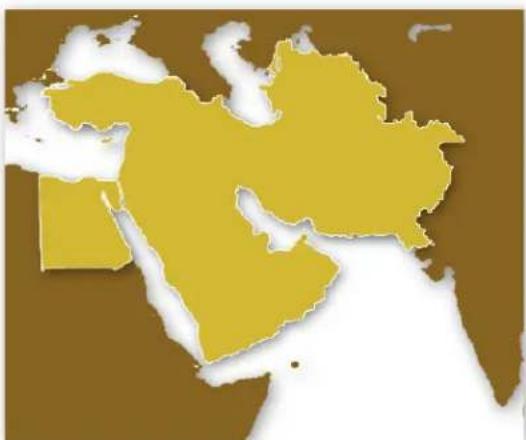
The Middle East is regarded as the cradle of human civilization and that distinction may also apply to its music. Middle Eastern music can be traced back to the Bedouins of ancient times, whose caravan songs reflected nomadic life.
As the geographical crossroads between Africa, Europe, and Asia, there are many influences that have left their mark upon Middle Eastern music. From Arab folk song, to Persian classical music, to Sufi “whirling dervish” music, to belly-dancing music, to religious chant, to Egyptian pop—Middle Eastern music is as different from Western idioms as it is fascinating.
Here are some of the major differences between Middle Eastern and Western music:
- Quarter Tone Scales—Some Middle Eastern music uses quarter-tones, whereby an octave can have 17 notes, 19 notes, or 24 notes. Thus, there are notes that don't exist in Western music.
- Vocal Emphasis—A common thread throughout the region is the connection between words and music. Most Middle Eastern music is oriented towards vocalization. There is also a high regard for poetry, often accompanied by musicians.
- Melody and Ornamentation—Melodies are a main component in Middle Eastern music. Melodies seem to progress by step with various instrumental parts moving independently. Musicians will often repeat what a singer or soloist plays and then improvise on the melody, but with no harmony. A unique aspect is the focus on ornamentation by each instrument, rather than from the combining of various tones.
- No Harmony and no Chords—Middle Eastern music is usually monophonic (one line at a time) and does not typically employ harmony and chords. In contrast, Western music typically includes harmonization and backing chords.
WORLD

- Rhythm—Rhythms in Middle Eastern music are organized into patterns of emphasized and non-emphasized beats, and the patterns can be quite complex and exciting. Rhythm often sets the emotional tone of the song: energetic, romantic, sad, etc. There are many different beat styles in Middle Eastern music.
- Oral Rather Than Written—Most Middle Eastern music traditions are passed on by ear. Because modern notation developed around a Western twelve tone scale, representation of Middle Eastern scales and characteristic rhythmic embellishments can be difficult. Additionally, while the transposed music reads left to right, accompanying Arabic text or lyrics is predominantly read right to left.
Middle Eastern music traditions emphasize the soloist or small ensemble—most likely the outgrowth of nomadic traditions. The instrument ensembles (called takht) that accompany the singers can range from two to thirty instruments. Some of the instruments popular in a Middle Eastern takht can include the Oud, the Quanun or Santoor, various flutes, Daff (tambourine), Dumbek, Darabuka, Naqqara, goblet drums (Zarb), a variety of frame drums (Riqq), finger cymbals (Zills) and various other instruments.
Like much of the region, music in the Middle East is in conflict. There is a struggle going on between ideologies in the Middle East, and certain types of music (especially popular music) are frowned upon by certain elements of society. Some regard music for pleasure, rather than for religious purposes, as sinful. Nevertheless, Middle Eastern rulers throughout history have supported the musical arts. In recent years, the rise of the oil economy has brought workers to the Middle East from Africa, India and other areas, and these musical traditions are having an influence upon modern music in the Middle East.
The Music and Instruments of North America

Before Columbus set foot in the new world, North America was inhabited by Native American peoples who had a long and rich cultural heritage. Traditional songs among the Native peoples were handed down from generation to generation. Music was a means of communicating with supernatural powers, commanding the elements (such as rain or wind), or healing the sick. Singing was usually accompanied with dance and various instruments.
Traditional instrumentations consisted of flute and percussion instruments, such as drums, rattles, and shakers. Various tribes had different types of drums. Powwow drums are played communally by players who sit around them in a circle. They also played various smaller drums such as the Cherokee hand drum, Buffalo drum, Native log drums, and Pueblo drum—made of hollowed logs with rawhide skins. The Native American Flute is also an important instrument used in courtship, healing, meditation, and rituals. Recently, the Native American flute has achieved popularity for its unique sound, featured in a variety of films and recordings.
Ever since the Europeans began settling the New World, North America has been a melting pot of musical styles, cultures, and thought from literally every part of the globe. The music of Early Colonial America was very similar to the songs and styles of Britain, France, and Spain. As large numbers of Europeans immigrated to America, they brought their instruments and styles with them. Enslaved Africans brought their musical traditions and expressed them with newfangled instruments, such as the banjo, and traditional African call and response form established a foundation for spirituals and gospel music.
African-American spirituals gave rise to blues music reflecting pain and oppression. Mixed cultures also resulted in hybrid music forms—the French-African Creole music of New Orleans, for example.
This melting pot of America also brewed up a new musical genre, Jazz, that ignited the musical imagination of the entire world. The use of syncopation, asymmetrical rhythms, and free improvisation on melodies reflected the sense of freedom in the United States in the early nineteenth century.
Country music is believed to originate from a mixture of African-American spirituals, blues, and Appalachian folk music. Rural Appalachian folk music was a mixture of British, Irish-Celtic, and African influences. Instrumentation included blow bottles and jugs, banjo, dulcimer, zither, washtub bass, harmonica, and washboard (all of which are included in the Garritan World Instruments library).
Each successive wave of immigrants contributed a unique musical flavor to North America. Whether it was the Civil War, or the opening up of the frontier in the West, music mirrors the historical forces that shaped America.
The Music and Instruments of Latin America

The music of Latin America is some of the most rhythmic and energetic in the world. Almost anywhere you go in Central and South America and the Caribbean Islands, music is close by.
The music of Latin America is a fusion of indigenous peoples, Europeans (mainly Spanish and Portuguese), and Africans. These traditions have all meshed together to bring South America a feast of musical expression—from bossa nova and samba, to tango, to vallenato and other unique styles.
People who have traveled to Brazil say it is the most musical country on the planet. Afro-Brazilian music maintains styles close to African origins, with a dominance of percussion instruments driving energetic syncopated rhythms. The combination of African and Portuguese influences is also apparent in Brazilian folk dances, including the samba, batuque, lundu, and the bossa nova.
Argentinian music was largely influenced by Hispanic elements, as evidenced by the popular Tango. The Bandoneon (Tango accordion) is a popular instrument used in Argentinian tango. Other musical styles such as zamba, milonga and chamamé also originated in Argentina.
The music of Mexico also features various musical styles influenced by a variety of cultures. Ranchera music, originally consisting of a singer and guitar, has now expanded to include other instruments. Mariachi is a popular musical genre from Mexico. Usually a Mariachi band consists of violins, trumpets, Spanish guitar, guitarrón, and sometimes the Veracruz harp.
The music of the Andes reflects musical elements from the indigenous peoples of Bolivia, Ecuador, Chile, and Peru. Music is part of everyday life in the Andes regions. Popular instruments in the Andes today are the Andean panflutes and siku, quena, tarka, and South American Harp.
In the nearby Caribbean, a host of styles also developed from African influences—the Cuban rumba, the biguine in Martinique, kaiso in Trinidad, reggae in Jamaica, calypso, and the Trinidadian steel band.
Percussion plays a major role in Latin American music and there are far too many Latin percussion instruments to list all of them here (but many are included in this library).
WORLD
The Music and Instruments of Australia & Oceania

From the island continent of Australia to the small Polynesian and Hawaiian Islands, the music of the Pacific is as great in scope as it is in geography.
The music of Indonesia reflects the diversity of its more than 17,000 islands. The most popular and well-known form of Indonesian music is Gamelan, which means orchestra in Balinese, and represents the traditional music ensemble of Indonesia. The instruments in a Gamelan ensemble include a variety of tuned instruments including metallophones, bamboo flutes (suling), xylophones, drums, gongs, and chimes. Java and Bali have distinctive Gamelan ensembles. Balinese Gamelan is often faster and more dramatic and intense, whereas Javanese Gamelan is more mellow and contemplative. The distinctive ethereal sound of the Gamelan can be attributed to the differences in tuning between instruments while playing interweaving patterns.
The music of Hawaii is associated with a popular dance, known as the hula, and chant (mele). The chant (mele) is typically accompanied by an ipu heke (a double gourd). Hula dance is often accompanied by the ipu (single gourd), kala'au (rhythm sticks) and Kaekeeke (long bamboo sticks). The ukulele, a small guitar-like instrument, was brought to the Hawaiian Islands by Portuguese explorers. The ukulele later became the instrument most associated with Hawaiian music.
Studying World Music and Cultures
Mastering World Instruments requires study and practice, as does learning any instrument. Learning more about the music and instruments of different peoples will benefit your skills. There are many excellent resources on ethnomusicology and region-specific books and resources for learning more about ethnic music styles. Understanding the musical traditions of other cultures will go a long way and your performance will sound even more authentic. Of course, the best way to learn about how world music should sound is to listen to ethnic recordings or attend live concerts.
Groups of Instruments in Garritan World Instruments
Wind
Instruments

Blowing into a bamboo shoot or a grass reed is one of the most ancient forms of making music. Wind instruments have been found in every culture since antiquity. Originally, wind instruments could play only one note but holes were added later to produce more pitches. Some instruments were blown on the side (like a Western flute,
Chinese Dizi or Indian Bansuri), others had a fipple or mouthpiece at the end (like the Recorder, Pennywhistle or Chinese Xiao). Other flutes and reed instruments evolved over time producing a wide array of musical colors.
Percussion
Instruments

World Instruments includes a vast variety of percussion instruments from Africa, Asia, India, China, Japan, the Middle East, Europe, Oceania, and Latin America. There are more percussion instruments around the globe than any other type of instrument. In addition to individual percussion instruments there are Percussion
Ensembles such as Taiko Ensemble, Gamelan, Ewe Drums, etc. Each Percussion Ensemble contains a selection of percussion sounds.
WORLD

Stringed
Instruments

Stringed instruments, whether bowed or plucked, can be found in every musical culture. Similarities and variations of the different types of stringed instruments evolved as different cultures migrated and intermingled.
Other
Instruments

Wind, percussion, and stringed instruments are just a few of the kinds of instruments found throughout the world. There are other types of instruments including keyboards (such as the harmonium and accordion), mouth organs, and harmonicas.

PLAYING GARRITAN WORLD INSTRUMENTS
Playing Garritan World Instruments
Garritan provides stellar tools to transform high-quality instrument sounds into stunningly realistic performances. The ARIA Player offers an easy, intuitive, and standardized control system to enable you to play and shape the instrumental sounds, either in real time, or through a sequencer or notation program. The controls for one family of instruments generally carry over to other families so that you feel at home with the entire soundset, and the system is streamlined so that you can make great music quickly. With a little practice, you can perform several tasks simultaneously, as a real musician does, so you can hear the musical results as you play. This chapter introduces you to the performance controllers that offer you a wide range of possibilities for musical expression.

Basic Performance Controls:
The Real-Time Control System: (Wind and Bowed String Instruments)
With a MIDI keyboard it is possible to start making music within minutes of installing the Garritan World Instruments library. The four basic controls are shown above. Play the keyboard with your right hand. The sharpness of a sustaining instrument's attack is controlled by how hard you strike the key. With your left hand, use the modulation wheel to control dynamics and special keyswitch notes that will alter the playing style of the samples (imparting bends or arpeggiations, for example). The sustain pedal connects the notes, allowing you to make slurs and legato transitions.
WORLD
In addition to these four basic controls, World Instruments features other means for greater control over your instruments, all of which are user-adjustable. Automatic Variability imparts subtle changes in tuning and timbre, and portamento controls let you continuously glide between notes. With this controller-based approach, you play your articulations in real time in much the same manner as a real player does. For even more authentic sounds, you can also load in ethnic scales and tunings.
Note:
Instruments that do not sustain their sounds, such as percussion instruments and plucked strings, follow the General MIDI convention of using note velocity for dynamics and sustain pedal for sustains.
1. Modulation Wheel Control
(Volume and Expression for Wind & Some Stringed Instruments)


Shaping Dynamics & Playing Expressively
One thing that makes many ethnic instruments sound unique is dynamic contrast. Every individual note and phrase has unwritten dynamics and nuances that players interpret. Without dynamics, music lacks its depth of expression. Dynamics and expression for the wind and sustaining string instruments in Garritan World Instruments are achieved through the Mod Wheel. Normally, this controller is mounted on the left side of the keyboard and is played with the left hand. In typical General MIDI soundsets, the Mod Wheel is used to add modulation or vibrato to the sound. In Garritan World Instruments, the Mod Wheel simultaneously controls both Volume (ppp to fff) and Timbre (brightness or tone) for all wind instruments. Especially with the wind instruments, louder levels produce a brighter sound.
Get to Know Your Mod Wheel for expressive winds and bowed strings! The Mod Wheel controls the dynamic ebb and flow of volume and timbre changes. In the case of a sequencer, make sure to record a nudge of the Mod Wheel at the beginning of every MIDI track so that the selected instrument will start with the correct volume upon playback. Remember that the Mod Wheel is not a “set and forget” controller. It is intended to be used as an expressive controller that is in nearly constant motion, shaping the volume and timbre of a passage. It is analogous to the air being blown through a wind instrument or a bow being drawn across the string in a stringed instrument.
You will discover that using the Mod Wheel control adds a new dimension of feeling and expression to your performances, making them all the more believable. Try experimenting with the Mod Wheel to develop control over the dynamics. As you play a melody, attempt a gradual crescendo or decrescendo, instead of going suddenly from soft to loud or loud to soft.

As shown above, the Modulation Wheel allows you to simulate a surging crescendo/diminuendo
Exercise: Play a melody with your right hand only and notice that there is little variation at all. It doesn't sing as it should. Now imagine how you would sing the tune. Where is the peak of the phrase? Where would you make a crescendo and a diminuendo? Now, as you play the melody, attempt those crescendos or decrescendos with the Mod Wheel. Listen to the effect as you make gradual changes, adjusting the dynamics to suit your musical sensibilities.
IMPORTANT!
Even though instruments in ARIA load with a default value, it is best to always record Mod Wheel data at the beginning of every MIDI sequence track in order to start with the correct initial volume.
Note: In addition to the Mod Wheel (CC#1), World Instruments will also respond to breath control (CC#2) and MIDI expression (CC#11) to control the function of expressive volume/timbre. Be careful to use only one at a time, or the data between these controllers will cause interference. It is not necessary for the user to take any steps to activate these extra controllers. They are always active.
WORLD
2. Note Velocity
(Attack for Sustaining Instruments—Volume for Percussive Instruments)


Virtually all keyboards made today support a feature called "Note Velocity" that refers to how hard you strike a given key. The harder you press down a key, the harder and sharper the attack. The more gently you hit the key, the softer the attack.
Applying proper accentuation brings clarity and emphasis to the notes being played. It also shapes the rhythm and flow of a piece of music. The degree of force you apply to the keys will vary depending on the instrument selected and the musical context. With wind instruments, accents are made by forceful "tonguing" to emphasize the attack of certain notes. With bowed strings, like the erhu, notes are emphasized by how hard the player digs the bow into the string. Whenever you feel that a note should be accented, do it by striking the key harder.
It is important to note that this control relates to attack strength and is, for the most part, independent of volume. Wind instruments in Garritan World Instruments have volume controlled by the Mod Wheel. So, don't always try to play notes louder by banging on the keyboard, or the result may be a heavily accented note that you did not intend.
Percussive instruments use note velocity for volume and volume-related timbre changes, in addition to attacks. Plucked strings will also use note velocity for volume and dynamic. The Mod Wheel has no effect on these instruments.
3. Sustain Pedal
(Legato for Sustaining Instruments)


Legato—Playing Smoothly and Evenly
So far, we have focused on aspects of performance that are controlled with your fingers, but an important part of your performance comes from your foot. Most keyboards include a sustain pedal. Instruments that can play sustained notes (such as wind instruments) use the sustain pedal to activate the legato playing techniques. "Legato" literally means connected, and directs the performer to play smoother transitions between notes instead of accenting each one.
Legato is achieved by holding the sustain pedal down for the desired group of notes. Whenever you depress the sustain pedal, the attack portion of the sample is removed to create much smoother transitions between notes. As note velocity accents notes to make them sound detached, the legato feature blends notes into an unbroken seamless musical phrase. To get an idea of what the legato sustain function does, consider the following illustration. This is what a waveform of a musical phrase may look like when played on a typical sampler:

Notice how disconnected the notes are. Depressing the sustain pedal removes the attack portion of the sample and connects the notes for a smoother sounding effect.

In the case of wind instruments, notes are tongued when you have your foot off the sustain pedal. Slurs between notes occur when you hold down the pedal. For instruments possessing sustain pedals (pianos), it functions as you would expect.
WORLD
Choosing Between Auto-Legato and Sustain-Pedal Legato (CC#64)
Since Garritan World Instruments gives two choices for legato creation, the question arises—which should I use?
Auto-Legato is the most convenient method to use and can give good results when used as designed. It has some limitations related to the way it handles polyphony. Its detection of overlapping notes, where it automatically stops the first of the overlapping notes in favor of the second, means that it functions in what is commonly known as “mono mode.” This gives automatic transition control and the ability to do easy trills, but it can only play one note at a time. It works well with any single line part.
All Standard instruments are, by default, in “mono” mode and can only play one note at a time under any circumstances—just like a real instrument using standard performance techniques. So, with these instruments it becomes a choice of convenience and one based on the relative smoothness of the note transitions when comparing the two methods. The CC#64 method of manual legato is more flexible and usually provides smoother transitions, but requires more work on the part of the user. With the manual approach it is up to the user to place the CC#64 “switch” data in the MIDI tracks as needed.
Most users will probably find themselves using a combination of auto-legato and sustain-pedal legato, the choice dictated by convenience, the requirements of the track, and the specific instruments being used in the composition. In the case of single-line parts the user may wish to begin by using the convenient Auto-Legato and change the approach to CC#64 only if Auto-Legato is insufficient for the desired results. The two techniques have slightly different sounds.

4. Keyswitching
(Changing Articulations and Techniques in Real Time)

Changing Articulations in Real Time
Keyswitching is a feature that allows you to change articulations quickly while playing. With the simple touch of a key located on the keyboard below the playable range of an instrument, you can move between different playing styles without having to load multiple patches. In World Instruments, keyswitching is used for a variety of techniques, such as switching between single hits, various rolls, triplets and flams (for percussion); bends, chiffs and nuances in the winds; and single plucks, glisses and tremolo (for strings). These keyswitch instruments are denoted by KS next to their name. All patches initially load using the first keyswitch as the default, and any keyswitch remains active until another keyswitch message is received.
Here is an example of a typical Keyswitch layout for a percussion KS instrument:

In the ARIA player, the keyswitches are displayed below the instrument's range using a dark pink color. The selected keyswitch is displayed in yellow and the represented patch is identified in the window to the left of the keyswitches.
Although it may be tempting to use your mouse to trigger one of the displayed Keyswitches in the ARIA player, it is seldom recommended. The player's graphic representations of keys, wheels, and knobs are primarily there for convenient testing. Be advised that if you use the mouse to trigger a
WORLD
keyswitch you want to record to a sequencer track or notation staff, the mouse action will not be recorded. When recording a track or entering notation, use your external MIDI keyboard to record the keyswitch note or manually enter the keyswitch note into your track.
Keyswitch Tips
• Always put the keyswitching note for the particular instrument before the first note of the articulation you want to play, not at the same time! - If you transpose your score, you must be sure not to transpose the KS notes! Any transposition to these notes will change (or eliminate) their function. Although it may be tempting to use your mouse to trigger one of the displayed keyswitches in the ARIA Player, it is seldom recommended. The Player's graphic representations of keys, wheels, and knobs are primarily there for auditioning sounds.
Keyswitch Percussion Tips
- The Specialty Rolls for Percussion Instruments will end on Note Release; program your note duration for the full roll or simply release the Note to end the Roll early.
- All of the Percussion Key Switch Rolls sync to your project's tempo.
- Only trigger one Specialty Roll at a time; pressing and holding multiple notes will override previous notes and Rolls.
Keyswitches for the Various Instrument Groups
Keyswitch assignments for Winds:
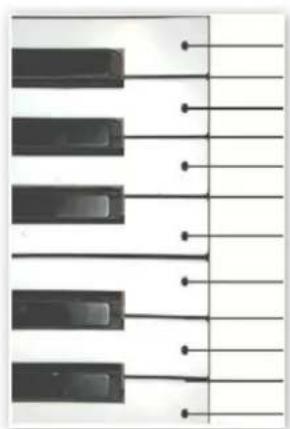
A1 = Gliss
G1 = Chiff
F1 = Flutter
E1 = Bend Down
D1 = Bend Up
C1 = Default
Keyswitch assignments for the Stringed Instruments:

B1 = Gliss Down (except fiddle, erhu, and rebab)
A1 = Gliss Up (except fiddle, erhu, and rebab)
G1 = Bend Down (or tremolo for bowed strings)
F1 = Bend Up (pizz for fiddle and erhu), F#1 = mutes for fiddle)
E1 = Tremolo2 (Bisbigliando2-harps, down bows - bowed strings)
D1 = Tremolo (on Release, Bisbigliando on harps, auto-alternating
for bowed strings) D#1 = forced up bows on bowed strings
C1 = Default (C#1 Mutes for some stringed instruments)
Keyswitch assignments for Percussion Instruments

B1 = Specialty Roll 6
A#1 = Specialty Roll 5
A1 = Specialty Roll 4
G#1 = Specialty Roll 3
G1 = Specialty Roll 2
F#1 = Specialty Roll 1
F1 = Triplet
E1 = Flam
D1 = Rolls (on Release)
C1 = Default
Keyswitch assignments for Other Instruments

G1 = Chiff
F1 = Bend Down
E1 = Bend Up
D1 = Rolls (on Release)
C1 = Default
WORLD
Note:
The Keyswitch assignments will vary between some of the instruments in each category, depending on whether or not they are capable of producing the articulations and effects. Because of this, certain instruments will have more Keyswitches than others. The keyswitch labels will also vary to reflect the proper terms for the instrument's articulations and effects (e.g., hits, plucks, tremolo, bisbigliando, etc.).
5. Additional Performance Controls


In addition to the four basic controls, there are many other ways you can fine-tune your World Instruments performances.

Pitch Bend Wheel: This control can be used to bend the pitch of a note at its start or while it is sustaining. It is especially useful for trombone and guitar. For wind instruments, the pitchbend range is limited to +/-2 semitones to give the user subtle control over scoops, bends, and other important effects while avoiding such artifacts as formant displacement. Note that the Notation folder instruments have a consistent pitchbend range of +/-12 semitones for compatibility with various notation programs.
Pitch Bend Bypass: CC#19 can be used to turn off pitch bend so that bend data can be applied to only one of two overlapping notes, if desired.

Automatic Variability Controls (CC#22 & CC#23): These controls automatically create tuning and timbre variability from note to note. The VAR 1 knob controls intonation with random tuning variations, adjustable from a few cents to an entire semitone. The VAR 2 knob introduces random variations in timbre quality by adjusting a filter on the instrument. The combination of both controls provides a more human result in the quality of the sound. The VAR 1 and VAR 2 controls can also be adjusted or varied throughout a piece by using MIDI controllers CC#22 and CC#23, respectively.

Portamento Control (CC#20): This control is related to Pitch bend above and will allow you to slide from note to note. This is particularly helpful with wind instruments that bend pitches between notes in idiomatic usage. There is a knob that adjusts the portamento for instruments that use this function. Additionally, MIDI controller CC#20 can be assigned to an external MIDI fader or drawn as graphic data in your sequencer of choice. In general, slides between smaller intervals require greater values than slides between larger intervals. It is best to draw the data manually (for any specific notes that require slides) in your sequencer or to assign this feature to a separate hardware controller (CC#20) for real-time control. You can also add varying amounts of portamento for smooth portamento effects (play two notes in a row and one will glide into the other).

Length Control (CC#21): The default length is the natural release/decay length of the sample. As you adjust MIDI controller CC#21, the length of the release/decay of the sample can be varied over a useful range. This can be used along with MIDI note length data and velocity strength to give a wider variety of articulation types ranging from very short and light to accented and forceful. It can also give control of note releases in legato situations by lengthening releases for smoother overlaps. With wind instruments, very short staccato notes can help create the illusion of double- and triple-tonguing.

Vibrato Control: Wind, brass and bowed stringed instruments have vibrato control. There are two vibrato controllers: Aftertouch controls vibrato intensity and MIDI controller CC#17 controls vibrato speed. Because these components are independent, vibrato can be added to an instrument with natural variations in entrance timing, speed variations, and intensity.
WORLD

- Hidden Aftertouch (Channel Pressure) Vibrato Intensity: Many keyboards send Aftertouch data when finger pressure on a key is varied while the key is held. Aftertouch data is used to adjust the vibrato intensity of a NonVib instrument. Aftertouch data can also be “drawn” into MIDI tracks manually.
- Vibrato Speed Controller (CC#17): This controller, when used in conjunction with Aftertouch, will vary the vibrato speed. CC#17 can be assigned to an available slider or knob on a hardware keyboard to give real-time control. Vibrato speed controller data can also be “drawn” into MIDI tracks manually.
It is important to be aware that the vibrato features do not apply to any instruments with naturally recorded vibrato in the samples (such as most string instruments). Instruments that have vibrato control will display a knob labeled “VibSpd(CC#17)” in the Instrument Controls on the Controls tab of the interface.
Note:
M-Audio and some other keyboard manufacturers often use CC#131 as a substitute for Aftertouch when the keyboard model doesn't have Aftertouch sensitivity built in. A programmable slider on the keyboard can be assigned to CC#131 and the keyboard will output Aftertouch data.

Bow Noise / Air Flow Noise (CC#12): MIDI controller CC#12 controls the sound of the air column moving through wind instruments. MIDI controller CC#12 also controls the level of bow noise for certain solo string instruments. This can be used for many things, from creating a “breathy” sound to adding a little subtle “grit” to the tone. This sound is tied to the amplitude portion of the Vibrato control so that the air flow pulsates in synchronization with the speed of the vibrato. The default setting is off for wind instruments and low for bowed string instruments.

Bend Speed (CC#13): MIDI controller CC#13 controls the speed of the bend between notes for the instruments that utilize Bend Up and Bend Down keyswitches.

Flutter Tongue/Growl sound (CC#18): MIDI controller CC#18 controls the level of the flutter tongue or “growl” effect. The default setting is off.
Tone Quality control (CC#26 & CC#27): MIDI controller CC#26 controls the basic warmth of the tone quality. It is set by default to a useful value, but CC#27 allows the user to modify the center frequency of this EQ function, if desired. Be careful not to modify the center frequency while a note is being sustained or you may get unnatural “sweep” artifacts. It is best set to one value for an entire track.
6. Instrument Specific Performance Controls

Deep Percussion (Doun Doun Ba, Bombo, Powwow Drums, Gong & Gong Ageng):
Bass Drum Fundamental Control (CC#20): Certain deep-toned percussion instruments in Garritan World Instruments have an adjustable fundamental tone that is controlled by a knob designated 'BDFund' in the controller section of the ARIA Player. This control can add a great deal of energy to extremely low frequencies, so use it with care.
Fretted Stringed Instruments (Mandolin, Octave Mandolin, Banjo, Banjolele, Ukulele, Tenor Ukulele, Oud, Guitarron, and also Wirestrung harp):
Muted Keyswitch (C#1): The Muted Keyswitch can be used for introducing damping to the decay of the sound. Notes played with the Muted Keyswitch enabled will end abruptly at note release. They will sound Muted and diminished for sustained notes.
Accordions (Concert Accordion, Concertina, French Accordion, Italian Mussette Accordion):
Bellows Noise (CC#12): All accordion instruments include bellows noise. The “Bellows” Control can be found in the controller section of the ARIA Player. This control lowers and raises the volume and presence of the accordion bellows.
Bowed Stringed Instruments (Fiddle, Sarangi, Rebab):
Vibrato Control: The Fiddle and Rehab have vibrato control which is unique among sampled solo strings. Pizz Keyswitch (B1): The Pizz Keyswitch will enable the pizzicato articulation samples for bowed instruments within Garritan World Instruments.
Putting It All Together for a Real-Time Performance
The basic system is to use your Mod Wheel, Note Velocity, Sustain Pedal, Keyswitches, and other controllers to play your instruments with nuances and expression. It couldn't be easier! With the more advanced controls you can fine-tune your performance. This approach lets you play your articulations in real time in much the same manner as a player of the actual instrument does.
Using your hands and feet simultaneously to perform the different tasks requires some coordination. The key is to start simple and to realize that you do not have to do it perfectly the first time. The best way to learn is to practice playing just the notes with one hand. Learn the fingerings for the notes and apply the accents where appropriate. Once you are acquainted with the notes and the accentuation scheme, gradually add the other controllers and use keyswitches. For example, play a wind instrument melody with the right hand. After a few practice runs try riding the Mod Wheel for expression. Then keyswitch a bend attack and add the sustain pedal for legato phrasing. Soon you'll develop coordination, and by combining the different controls in real-time you'll have an unlimited amount of expressive capabilities. Once you get the hang of it, you can play almost anything that comes to your musical imagination.
Create ensembles of your choosing with individual instruments. With Garritan World Instruments, you can build instrumental ensembles, one instrument at a time, exactly the way you want. You can combine world regions and have a hybrid Hawaiian-Afro-Celtic ensemble, or any grouping of your choosing. When you create a section from separate instruments performed individually, with variations in timing and expression, you can achieve a very realistic performance. You can assign instruments of a section to different MIDI channels so that you can have individual parts for each player, or you can assign multiple instruments all to a single MIDI channel to create automatic ensemble unisons.
By using the real-time performance controls to play each instrument expressively and building ensembles, the final result can be extraordinary.
Using Scala files—Ethnic and Non-Western Tunings
A unique feature of the Garritan World Instruments is its support for Scala files to adjust to different temperaments and tunings. Scales and tunings are very important in world music and Garritan World Instruments supports Scala, a standard file format for musical tunings supporting hundreds of different scales. With Scala support, musicians can play an instrument in its native form.
Many digital musicians are accustomed to Western equal temperament tunings, but there are many hundreds of different tunings that are used in many different regions around the globe. While the default tuning of the instruments in this library is Western equal temperament, you can also choose from among various exotic and non-Western tunings and scales. These non-Western scales will add more realism to your ethnic instrumentation.
Scala is a powerful format used in musical tunings, such as just intonation scales, equal and historical temperaments, microtonal and macrotonal scales, and non-Western scales. It supports scale creation, editing, comparison, analysis, storage, tuning of electronic instruments, MIDI file generation, and tuning conversion. A very large library of scales is freely available for Scala.
Scala Import Button:
The Import button provides a variety of other tunings that can be imported and used with World Instruments. The Scala file import feature enables the use of thousands of other tunings, if desired. This is a feature that could be very useful in World Instruments where non-Western scales are often used.

The following menu appears when the "Import" button is clicked:
WORLD


The Scala Center box allows you to select the base note (or center) of your scale.
Notes:
Some of the Scala files were designed to match the preset instrument "ensembles". When you load an ensemble, check to see if there is a corresponding Scala file that can also be loaded. Loading a matching Scala file will impart more realism to your ethnic instrument ensembles. Try experimenting with different tunings.
The ARIA player loads Scala files globally, so it applies to all of the instruments. Use multiple instances of the ARIA player to handle instruments with different tuning requirements.
Performance Controllers Chart for Garritan World Instruments
Below is a chart of the most widely used performance controllers for the various instruments in the Garritan World Instruments library. The following chart gives the name and a brief description of the instrument controllers and their abbreviations in the Instrument Directory.
CHART OF PERFORMANCE CONTROLLERS
| MW (vol/eq) Mod Wheel for expression and volume control | |
| Vel (attack) Note Velocity for accents and attack | |
| Lgth | Length Control—Sample release time |
| VAR 1 Automatic variability of intonation | |
| VAR 2 Automatic variability of timbre | |
| FiltLv Filter gain level | |
| FiltFq Filter center frequency | |
| Keyswitches/KS Keyswitches | |
| VibSpd Vibrato speed control | |
| VibAmt Vibrato intensity control | |
| SusLeg Sustain Pedal legato control | |
| Sus (sus) Sustain Pedal for normal sustain control | |
| SusDp | Sustain Pedal with damping control |
| Vel (vol) | Note Velocity for Volume control |
| Fluttr | Flutter tongue/ Growl |
| Porta | Portamento control |
| AirNs | Air flow noise |
| Bellows | Accordion bellows noise |
| BowNs Bow Noise | |
| BndSpd | Bend Speed |
| BDFund | Bass Drum Fundamental |
| Auto-Legato | Auto-Legato Toggle |
ENSEMBLE PRESETS
Load Ethnic Bands and Ensembles Easily
The Garritan World Instruments installation includes a folder/directory called "Ensembles" that contains a collection of useful pre-configured bands, ensembles, and other instrumental groups for your convenience.
Loading an Ensemble presets can give you a quick head start to setting up a group of instruments. Each file loads a selection of instruments along with pan, level, and effect settings. Ensembles do not load tunings. The Ensembles folder can be found in the folder where the Garritan World Instruments library was installed. The default location is: /Garritan/World Instruments/Ensembles.
Various setups of sections and instrument groupings are listed in the table below. The patch names of the instruments are listed for each ensemble preset. Where appropriate, a local equivalent instrument is given in parenthesis.
List of Ensemble Presets:
| LIST OF ENSEMBLE PRESETS | |
| Ensemble Name: Instruments Included: | |
| African Orchestra Gyil, | Balafon, Kalimbas,Doun Doun Ba, Kpanlogo 3, Ashiko, Sangban, Apentima, Bougarabou, Televi, Kora, Ngoni, Begena, Bolon Bass |
| African Night Strings Begena, Bolon, Domu, Kora, Ngoni, Berimbau (Mbela), Gopichand | |
| Akogo Thumb Band | Kalimbas, Likembe, Mbira, Sanza, Domu, Kora, Begena, Bolon |
| Andean Highlands Ensemble | Quena, Andean Panpipes, Peruvian Panpipes, Tarka, Ocarina 1 & 2, South American Harp (arpa), Ukulele (Charango), Cajon, Bombo, Teponaxtli |
| Appalachian Folk Band | Bottle blows, Banjo, Banjolele, Mandolin, Fiddle, Fretless Zither, Dulcimer, Washtub Bass, Kashiklar (Spoons), Washboard, Accordion, Harmonica |
| Balkan Folkdance Band | Kaval, Double Flute, Dvojnice Double Flute, Dvojnice Drone, Gaida Bagpipes Balalaika, Bulgarska Tambura, Fiddle, Mandolin, Octave Mandolin, Oud Concert Accordion |
| Bluegrass Band Fiddle, | Banjo, Banjolele, Mandolin, Octave Mandolin, Washtub Bass, Harmonica, Bass Harmonica |
LIST OF ENSEMBLE PRESETS
| Ensemble Name: Instruments Included: | |
| Caribbean Music Ensemble | PVC Flute, Steelpan, Hang Drum, Latin Percussion1, Latin Percussion 2, Cuica, Bombo (Tassa), Afoxê, Agogo Bell, Agogo Block, Atabaque, Balafon, Bolon Bass or Guitarron |
| Chinese Orchestra Bawu | Di-Zi, Guanzi, Hulusi, Sheng, Suona, Xiao, Erhu, Guzheng, Pipa, Yueqin Bianzhong, Bo, Chinese Cymbals, Chinese Gongs, Datangu Lion Drum, Tangku |
| Celtic Consort | Low Irish Whistle, Irish Flute, Clarke Pennywhistle, Pennywhistles in D, Bb, Uilleann Pipes; Celtic Harp, Wire Strung Harp (Clarsach), Fiddle, Mandolin; Bodhrán, Riqq or Daff (Tambourine), Concertina |
| Djembe Drumming Ensemble | Djembe, Ashiko, Bougarabou, Shekere, Kpoko Kpoko, Dawuro, Axatse, Afoxe Dun Dun Set: Kenkeni (smallest), Sangban (medium), and Dun Dun Ba (largest). |
| Down Under Berimbau | Didgeridoo, Bullroarer, Conch Shell, Rainstick, Jaw Harps, Kala’au (boomerangs) |
| Ewe Drumming Ensemble | Atoke, Axatse, Gankokwe, Kagan, Kpanlogo 1 Large, Kpanlogo 2 Medium, Kpanlogo 3 Combo, Sogo |
| Gamelan Bali Orchestra | Suling 1, 2; Strings: Rebab; Angklung, Ceng Ceng, Gendér, Giying (Ugal), Kantil, Kenong (Kemong) Kendhang, Pemade, Penyacah, Reyong |
| Gamelan Java Orchestra | Suling 1, 3; Rebab, Bonang, Gong & Gong Ageng, Kempul, Kempyang, Kenong (Kemong), Ketuk, Pelog Panerus, Saron Barung, Saron Demong, Saron Panerus (Peking), Slendro, Panerus, Slentem |
| Global Village 1 Conch | Shell, Duduk, Shakuhachi, Sarangi Drone, Koto, Guitarron; Tablas, O-daiko, Tibetan Bells, Pelog Panerus, Washboard, Djembe, Chinese Cymbals, Hang Drum, Harmonium, Concert Accordion |
| Global Village 2 Alphorn | Uilleann Pipes, Dizi, Peruvian Panpipes, Irish flute;; South American Harp, Santoor, Fiddle, Washtub Bass, Tambura; Tablas, Powwow Drums, Steel Drums, Balafon, Concertina, |
| Gong Gang Gong (India | Singing Gong), Kkwenggwari, Chinese Gongs, Luo Gong, Thai Gong, Gong & Gong Ageng, Kempul |
| Hawaiian Hulu Hang | Hawaiian Nose Flute, Conch Shell Ukulele, Tenor Ukulele Pahu Hula, Ipu, Kaekeeke, Kala’au, Lava Stones & Rattles (Ili’ili & ‘Uli’uli), Toere, Bullroarer |
LIST OF ENSEMBLE PRESETS
| Ensemble Name: Instruments Included: | |
| Indian HindustaniEnsemble(North India) | Bansuri 1, Pungi Snake Charmer, Shenai, Shiva WhistleTambura, Sarangi DroneSitar, Tambura, Santoor, Sarangi, Fretless Zither (Samandal)Tablas, Manjeera, Ghungroo, PakhawajHarmonium |
| Indian CarnaticEnsemble(South India) | Bansuri 2 (Venu), Shenai; Drone: TamburaFiddle, Gopichand Electric Sitar; Other: HarmoniumTablas, Mridangam, Ghatam, Chenda, Kanjeera, Murchang, Dafli |
| Irish Traditional Troupe | Tinwhistle, Irish Flute, Bodhrán, Irish Harp, Wire-strung Harp, Fiddle, Bodhran |
| Japanese TaikoEnsemble | Chanchiki, Chu-daiko, Daibyosi, Hira-daiko, Hyoushigi, Ko-daiko, Nagado-daiko, O-daiko, Okawa, Okedo-daiko, Shime-daiko, Tebyoshi, Tsuzumi,Uchiwa-daiko |
| Japanese Traditional(Gagaku) | Shakuhachi, Hichiriki, Knotweed FluteKoto, Sanshin, ShamisenKo-daiko, Chu-daiko, Ko-daiko, O-daiko, Okedo-daiko, Shime-daiko, Tsuzumi |
| Jug & Bottle Band Bottle | Blows, Tinaja, Ipu, Udu, Ibo, Ghatam, Conch Shell, Slide Whistle,Ocarina 1 & 2, Bone Flute 1 & 2 |
| KlezmerGypsyBand | Diplica, Fiddle, Guitarron (bass), SantoorFrame Drum, Bass Drum. CymbalAccordion, Alphorn |
| MalaysianPaluan Ensemble | Rebab, Oud (Gambus), Suona (Serunai), Bansuri 1 (Bamboo flute), Geduk,Kesi, Angklung, Kendhang (Gendang), Kompang, Luo Gong, Gong & GongAgcng |
| MexicanRanchera Band | Veracruz Harp, Guitarron, Fiddle, Tenor Ukulele (Vihuela) |
| Middle East Takht Arghul | Mijwiz 1, Duduk, MaqrunahBasic Middle East Percussion, Arabian Frame DrumRebab, Oud, Santoor |
| NativePowwow Circle | Native American Flute, Buffalo Drum, Powwow Drums, Native Log Drum,Pueblo (Taos) Drum |
| Piping Hot Catalan Bagpipes | Duda Bagpipes, Gaita Bagpipe, Koza Bagpipes, ScottishHighland Bagpipes, Uilleann Pipes, Melodica |
LIST OF ENSEMBLE PRESETS
| Ensemble Name: Instruments Included: | |
| Renaissance Consort | Alto Recorder, Bass Recorder, Piccolo Recorder, Sopranino Recorder, Soprano Recorder, Tenor Recorder, Folk Shawm,Riqq or Daff (tambourine),Oud (lute), Zitter, Fiddle,Hurdy Gurdy |
| Slovakian Shepherd Band | Bone Flute 1, Shepherds Folk Pipe 1 & 2, Bass Overtone Flute, Koncovka Alto Flute, Tenor Overtone Flute, Duda Bagpipes, Panpipes (Andean Panpipes),Zitter, Mandolin, Octave Mandolin |
| South East Asia Piri, Bamboo | Flute, Khaen Mouth Organ,Dan Tranh, Dan Ty Ba, Choazhou Guzheng,Ching, Geduk, Kesi, Kompang, Luo Gong, Tangku, Thai Gong |
| Squeezer Pleasers | Bandoneon, Concertina, Concert Accordion, French Accordion, Italian Mussette Accordion, Harmonium, Melodica |
| Susu Balafon Ensemble | Balafon, Gyil, Kalimbas, Mbira, Doun Doun Ba, Atoxe |
| Thunder Troupe Powwow | Drums, Buffalo Drum, Bombo, Kpanlogo 1 Large, Datangu Lion Drum, Doun Doun Ba, Chu-daiko, Nagado-daiko, O-daiko, Okedo-daiko,Kendhang |
| Tibetan Mystic Ensemble | Tibetan Cymbals, Tibetan Singing Bowl, Tibetan Bells, Tingsha,Jogi Baja |
| Talking Drums Dondo, | Tama (Talking Drum), Damroo, Cuica |
| Wood World African Log | Drum, Nigerian Log Drum, Krin Slit Drum, Teponaxtli, Toere, Stir Drum, Tonetag, Kaekeeke, Kala’au, Pan Clappers, Hyoushigi, Temple Blocks, Agogo Blocks |
Loading Ensemble Preset Files
In standalone mode there are two ways to load Ensemble preset files:
- Load from the File menu (File/Load)
- Drag and Drop
When ARIA is used as a plug-in from within a host program, the Drag and Drop method must be used to load ensemble files. This can be done as follows: With the ARIA player interface displayed, open the “Ensembles” folder/directory to display the numbered collection of ensemble files. Using the mouse button, click and hold on the file you wish to load. Drag it to the ARIA interface and release the mouse button. The instruments and their configurations will load automatically.

Note that in Standalone mode you can create customized ensemble files. Just load the instruments you want, adjust their settings to your liking, and use the Save As command from the File menu to save the .aria preset.
Note:
There are special groups of scala files made for use in combination with the Ensemble files. After loading your ensemble, click on the ARIA SETTINGS page to import these special scala files. The scala files made for use within the ensemble files start with the ensemble file name. Try using these scala files as a starting point to explore the possibilities of exotic and unique scales that are authentic to these groups of instruments.
DIRECTORY OF INSTRUMENTS IN GARRITAN WORLD INSTRUMENTS
Organization of Instruments
It is no easy task to classify many hundreds of instruments from all corners of the globe. Classification of musical instruments has been studied by many ethnomusicologists and there are different classification systems. Instruments have a wide variety of origins, performance contexts, and physical characteristics.
The Sachs-Hornbostel system is the one preferred by most ethnomusicologists. This system classifies musical instruments as follows:
- Idiophones—sound is primarily produced by the actual body of the instrument vibrating, rather than a string, membrane, or column of air. This group includes most percussion instruments except for drums.
- Membranophones—sound is primarily produced by the vibration of a tightly stretched membrane. This group includes most drums and kazoos.
- Chordophones—a class of instruments comprising strings stretched between fixed points. Sound is primarily produced by the vibration of a string or strings. This group contains most stringed instruments (zithers, lutes, violins, guitars), harps, and stringed keyboard instruments, such as pianos and harpsichords.
- Aerophones—this class of instruments produce sound when a player blows into the instrument causing air to vibrate. Flutes and trumpets are part of this group.
The Sachs-Hornbostel system has never gained general popularity since it often goes against people's intuitive perception of how instruments relate to each other. The most intuitive way is to classify by geographical location and then sub-categorize by instrument family type. We've used a more simple method. Instruments are associated with a family type. Within each family type are the geographical regions. We have used common family names rather than the ethnomusicology names to make it easier to navigate.
Family
Geographic Region
| | Winds | Asia | |
| | Percussion | ----> | Africa | ----> Instrument |
| | Strings | | Europe | |
| | Other Instruments | | etc | |
| -------- |
THE WIND INSTRUMENTS
| ARIA name: Description: Controls; | |||
| Africa | |||
Arghul The Arg  | [ ] | odwind instrument thatconsists of two asymmetrical pipes. One pipe,a chanter with between five and seven fingerholes, is dedicated to the melody. The secondpipe, longer than the first, produces a drone.Arghuls come in different sizes and are played inEgypt and surrounding regions.Range: C3- C6 | Vel (attack), MW(vol/eq), Porta,Lgth, VAR1,VAR2, FiltLv,FiltFq, VibSpd,Vib Amt, AirNs,Fluttr, Auto-Legato, BndSpd,Keyswitches |
Mijwiz 1 The N  | [ ] | onal instrument of Egyptand is one of the oldest wind instruments. Itsname means “dual” as it consists of two shortbamboo reed pipes tied together. Instead of hav-ing a separate reed attached to a mouthpiece,the reed in the Mijwiz is a vibrating tonguemade from a slit cut into the wall of the instru-ment itself.Range: C3-C6 | Vel (attack), MW(vol/eq), Porta,Lgth, VAR1,VAR2, FiltLv,FiltFq, VibSpd,Vib Amt, AirNs,Fluttr, Auto-Legato, BndSpd,Keyswitches |
Mijwiz 2 Anotl  | [ ] | ment with a differentrange and character.Range: C4- C6 | Vel (attack), MW(vol/eq), Porta,Lgth, VAR1,VAR2, FiltLv,FiltFq, VibSpd,Vib Amt, AirNs,Fluttr, Auto-Legato, BndSpd,Keyswitches |
THE WIND INSTRUMENTS
| ARIA name: Description: Controls: | |||
| China | |||
Bawu The Bawu is a side-blown wind instrument found throughout China. Although it resembles a flute, it is actually a reed instrument. It is often played as a solo instrument, and is featured in films and in popular music. It is also referred to as a Bawoo.Range: G3- C6Vel (attack), MW (vol/eq), Porta, Lgth, VAR1, VAR2, FiltLv, FiltFq, VibSpd, Vib Amt, AirNs, Fluttr, Auto-Legato, BndSpd, Keyswitches found throughout China. Although it resembles a flute, it is actually a reed instrument. It is often played as a solo instrument, and is featured in films and in popular music. It is also referred to as a Bawoo.Range: G3- C6Vel (attack), MW (vol/eq), Porta, Lgth, VAR1, VAR2, FiltLv, FiltFq, VibSpd, Vib Amt, AirNs, Fluttr, Auto-Legato, BndSpd, Keyswitches | amboo flute, is the most common flute of China. The Di-Zi is a side-blown bamboo flute having six finger holes, and is characterized by an additional hole covered by a piece of thin fiber (Muo kong) that buzzes when played and creates a distinctive tone. The Di-Zi is also known as the Ti-tzu or Hengdi.Range: C4- C7 | Vel (attack), MW (vol/eq), Porta, Lgth, VAR1, VAR2, FiltLv, FiltFq, VibSpd, Vib Amt, AirNs, Fluttr, Auto-Legato, BndSpd, Keyswitches | |
Di-Zi The Di- | |||
| Guanzi The Guanzi is a Chinese double-reed windinstrument. Its name literally means “tube,” which describes its cylindrical shape. It is usually made from rosewood and has seven finger holes with one or two thumb holes. The ends of the instrument are decorated with metal. Also called Guan or Bili.Range: G3- C6Vel (attack), MW (vol/eq), Porta, Lgth, VAR1, VAR2, FiltLv, FiltFq, VibSpd, Vib Amt, AirNs, Fluttr, Auto-Legato, BndSpd, Keyswitches | |||
| Hulusi The Hulusi is a popular Chinese reed instrument. The instrument has a gourd wind chamber, a main melody pipe with seven finger holes, and one or two auxiliary drone pipes. Hulusi means “gourd silk,” referring to the instrument’s soft silky tone.Range: G3- C6Vel (attack), MW (vol/eq), Porta, Lgth, VAR1, VAR2, FiltLv, FiltFq, VibSpd, Vib Amt, AirNs, Fluttr, Auto-Legato, BndSpd, Keyswitches | |||
THE WIND INSTRUMENTS
| ARIA name: Description: Controls: | |||
| China | |||
| Sheng The Sheng, or Chinese Mouth Organ, is a multiple free-reed instrument consisting of a bundle of 13-17 vertical pipes fastened together. Sound is produced by blowing air into a mouthpiece at the base and covering the holes on the various pipes. The Sheng can produce interesting chords as well as single notes, and is used as both a solo and accompanying instrument. Also called Shung. Range: C4- C7 | Vel (attack), MW (vol/eq), Porta, Lgth, VAR1, VAR2, FiltLv, FiltFq, VibSpd, Vib Amt, AirNs, Fluttr, Auto-Legato, BndSpd, Keyswitches | ||
| Suona The Suona is a double-reed wind instrument with a flaring metal bell at its end. It has a distinctively loud tone and is used in Chinese traditional music ensembles and outdoor performances. The Suona is also known as a Laba. Range: C4 - G6 | Vel (attack), MW (vol/eq), Porta, Lgth, VAR1, VAR2, FiltLv, FiltFq, VibSpd, Vib Amt, AirNs, Fluttr, Auto-Legato, BndSpd, Keyswitches | ||
| Xiao The Xiao is a Chinese end-blown flute that has been used in Chinese music for over two millennia. The instrument has six finger holes and is played vertically—similarly to the Shakuha-chi. It is usually made of dark brown bamboo. The Xiao has a soft and low tone. The Xiao is also known as the Di Xiao or Dong Xiao. Range: C3- C7 | Vel (attack), MW (vol/eq), Porta, Lgth, VAR1, VAR2, FiltLv, FiltFq, VibSpd, Vib Amt, AirNs, Fluttr, Auto-Legato, BndSpd, Keyswitches | ||
THE WIND INSTRUMENTS
| ARIA name: Description: Controls: | |||
| India | |||
Bansuri 1 The Ba  | side-blown alto flute of Northern India and surrounding regions. It is made of a single length of bamboo with six or seven finger holes. Bansuris range in length from about 12 inches up to about 40 inches, with 20-inch bansuris being the most common. This instrument is associated with the god Krishna who was often depicted playing a Bansuri. Range: C3- C8 | Vel (attack), MW (vol/eq), Porta, Lgth, VAR1, VAR2, FiltLv, FiltFq, VibSpd, Vib Amt, AirNs, Fluttr, Auto-Legato, BndSpd, Keyswitches | |
| Bansuri 2 (Venu) |  | Another Bansuri instrument with a different timbre and character. Venu is a variant of the Bansuri used in Southern Indian Carnatic music. Range: C3- C8 | Vel (attack), MW (vol/eq), Porta, Lgth, VAR1, VAR2, FiltLv, FiltFq, VibSpd, Vib Amt, AirNs, Fluttr, Auto-Legato, BndSpd, Keyswitches |
THE WIND INSTRUMENTS
| ARIA name: Description: Controls: | |||
| India | |||
| Pungi Snake Charmer |  | The Pungi Snake Charmer's pipe is a North Indian reed instrument used by snake charmers. It consists of two pipes, a melody chanter and a drone, that are attached to a gourd. To produce sound, the player blows into a mouth-piece attached to the top and plays the chanter with his fingers. The reeds are placed inside a protective gourd, so the player's lips never touch them. The instrument is also known as the Bean.Range: C3- C6 | Vel (attack), MW (vol/eq), Porta, Lgth, VAR1, VAR2, FiltLv, FiltFq, VibSpd, Vib Amt, AirNs, Fluttr, Auto-Legato, BndSpd, Keyswitches |
Shenai The Shenai is an Indian reed instrument with  | a wooden body and a brass bell. It is mainly a Northern Indian instrument although there are Carnatic variants in Southern India. The instrument commonly has seven to nine finger holes and is played like an oboe. It is actually a quadruple-reed instrument that has two upper reeds and two lower reeds. The Shenai is thought to bring good luck and is often played at Indian weddings and festivals.Range: C3- C7 | Vel (attack), MW (vol/cq), Porta, Lgth, VAR1, VAR2, FiltLv, FiltFq, VibSpd, Vib Amt, AirNs, Fluttr, Auto-Legato, BndSpd, Keyswitches | |
| Shiva Whistle |  | The Shiva Whistle is a small wooden wind instrument. It has a picture of the Hindu deity Shiva on it. It differs from the Bansuri in that it is an end blown instrument and not a side-blown flute.Range: C5- C8 | Vel (attack), MW (vol/cq), Porta, Lgth, VAR1, VAR2, FiltLv, FiltFq, VibSpd, Vib Amt, AirNs, Fluttr, Auto-Legato, BndSpd, Keyswitches |
THE WIND INSTRUMENTS
| ARIA name: Description: Controls; | |||
| Japan | |||
| Hichiriki The | Hichiriki is a cylindrical double-reed wind | instrument used in the Gagaku (court) music of Japan. It is characterized by its nasal timbre. The instrument has a narrow range but with its large reed there is great flexibility of pitch and embellishment techniques.Range: C4- G6 | Vel (attack), MW (vol/eq), Porta, Lgth, VAR1, VAR2, FiltLv, FiltFq, VibSpd, Vib Amt, AirNs, Fluttr, Auto-Legato, BndSpd, Keyswitches |
| KnotweedFlute |  | This Knotweed Flute is a small six-holed end-blown flute made from the bamboo-like stalks of the Knotweed.Range: C4- C8 | Vel (attack), MW (vol/eq), Porta, Lgth, VAR1, VAR2, FiltLv, FiltFq, VibSpd, Vib Amt, AirNs, Fluttr, Auto-Legato, BndSpd, Keyswitches |
THE WIND INSTRUMENTS
ARIA name: Description: Controls:
Japan
Shakuhachi The Shakuhachi is a traditional notched flute

from Japan. The end-blown flute has five finger holes and a thumb hole. The instrument is made from the root of the bamboo and is crafted with precision. Although tuned to a pentatonic (five note) scale, by using various fingerings (partial holings) and by controlling the embouchure, the player can produce great flexibility in tone and pitch.
- Range: C3-C7
Vel (attack), MW (vol/eq), Porta, Lgth, VAR1, VAR2, FiltLv, FiltFq, VibSpd, VibAmt, AirNs, Fluttr, Auto-Legato, BndSpd, Keyswitches
THE WIND INSTRUMENTS
ARIA name: Description: Controls:
Other Asian Regions
Bamboo Flute

See Europe: Bamboo Flute
reed instrument from Nepal played in various ceremonies and rituals. Players of the instrument often use the technique of circular breathing, which allows the player to play extended passages.
- Range: C3-C7
Vel (attack), MW (vol/eq), Porta, Lgth, VAR1, VAR2, FiltLv, FiltFq, VibSpd, VibAmt, AirNs, Fluttr, Auto-Legato, BndSpd, Keyswitches
THE WIND INSTRUMENTS
| ARIA name: Description: Controls: | |||
| Other Asian Regions | |||
Piri The Piri is  | a Korean double reed instrument used in both the folk and court music of Korea. It is made of bamboo and has seven finger holes. Its large reed and cylindrical bore give it a sound mellower than that of many other types of oboe. Range: C3- C6 | Vel (attack), MW (vol/eq), Porta, Lgth, VAR1, VAR2, FiltLv, FiltFq, VibSpd, Vib Amt, AirNs, Fluttr, Auto-Legato, BndSpd, Keyswitches | |
THE WIND INSTRUMENTS
| ARIA name: Description: Controls: | |||
| Europe | |||
| End Blown Flutes: | |||
| Double Flute | The Double Flute originates from Albania. | This flute is distinctive in that it combines two flute bores, combining a familiar six-hole shepherd pipe and an overtone flute.· Range: C4- C7 | Vel (attack), MW (vol/eq), Porta, Lgth, VAR1, VAR2, FiltLv, FiltFq, VibSpd, Vib Amt, AirNs, Fluttr, Auto-Legato, BndSpd, Keyswitches |
| Dvojnice Double Flute |  | The Dvojnice (double shepherd pipe) is a carved wooden double-tube flute from the Balkans. This traditional instrument has seven finger holes, three on one pipe and four on the other, allowing the player to play a harmony at the same time as the melody.· Range: C4- C8 | Vel (attack), MW (vol/eq), Porta, Lgth, VAR1, VAR2, FiltLv, FiltFq, VibSpd, Vib Amt, AirNs, Fluttr, Auto-Legato, BndSpd, Keyswitches |
THE WIND INSTRUMENTS
| ARIA name: Description: Controls: | |||
| Europe | |||
| DvojniceDouble FluteDrone | This instrument is the second pipe for the Double Flute above. The player begins a tune by playing one pipe to state the melody and the harmony on the drone side is then added. Range: C4- C8 | Vel (attack), MW (vol/eq), Porta, Lgth, VAR1, VAR2, FiltLv, FiltFq, VibSpd, Vib Amt, AirNs, Fluttr, Auto-Legato, BndSpd, Keyswitches | |
Kaval The Kaval is a long end-blown flute from  Bulgaria and the Balkans and is used in folk music in the region. The Kaval is fully open at both ends and sound is made by blowing across the sharpened edge of the mouthpiece. The instrument has eight playing holes (seven in front and one in the back) and four extra holes near the bottom of the instrument. Range: C4- C7 Bulgaria and the Balkans and is used in folk music in the region. The Kaval is fully open at both ends and sound is made by blowing across the sharpened edge of the mouthpiece. The instrument has eight playing holes (seven in front and one in the back) and four extra holes near the bottom of the instrument. Range: C4- C7 | Vel (attack), MW (vol/eq), Porta, Lgth, VAR1, VAR2, FiltLv, FiltFq, VibSpd, Vib Amt, AirNs, Fluttr, Auto-Legato, BndSpd, Keyswitches | ||
| Overtone Flutes: | |||
| BassOvertoneFlute |  | This Overtone Bass Flute, or Bass Fujara, is a large instrument in the key of G. This contra-bass Slovakian instrument can be as large as five and a half feet long and produces a wide range of harmonics and overtones. Range: C3- C6 | Vel (attack), MW (vol/eq), Porta, Lgth, VAR1, VAR2, FiltLv, FiltFq, VibSpd, Vib Amt, AirNs, Fluttr, Auto-Legato, BndSpd, Keyswitches |
| KoncovkaAlto Flute |  | The Koncovka is a Slovakian overtone alto flute that is traditionally played by shepherds. This instrument is in the key of D and plays melodies with no finger holes. Melodies are created on the Koncovka flute by blocking (fully or partially) the bottom hole of the flute with the index finger to create various pitches. Range: G4- C8 | Vel (attack), MW (vol/eq), Porta, Lgth, VAR1, VAR2, FiltLv, FiltFq, VibSpd, Vib Amt, AirNs, Fluttr, Auto-Legato, BndSpd, Keyswitches |
THE WIND INSTRUMENTS
| ARIA name: Description: Controls: | |||
| Europe | |||
| TenorOvertoneFlute |  | The Fujara is a folk shepherd's flute originating from the Slovakian mountain region. This Tenor Overtone Flute is often played while standing. Although it has no finger holes, a range of a few octaves can be achieved with the right combination of breath and blocking. Range: C4 - C7 | Vel (attack), MW (vol/eq), Porta, Lgth, VAR1, VAR2, FiltLv, FiltFq, VibSpd, Vib Amt, AirNs, Fluttr, Auto-Legato, BndSpd, Keyswitches |
| Whistles: | |||
| ClarkePennywhistle |  | Clarke has been the leading maker of Irish Pennywhistles for over 150 years. Clarke Pennywhistles are known for their clear distinctive tone quality. Pennywhistles come in a variety of sizes and keys. A skilled player can make a Pennywhistle sing with ornaments, trills, flutter tonguing, and effects. Range: C4 - C8 | Vel (attack), MW (vol/eq), Porta, Lgth, VAR1, VAR2, FiltLv, FiltFq, VibSpd, Vib Amt, AirNs, Fluttr, Auto-Legato, BndSpd, Keyswitches |
| HandmadePennywhistle |  | This handmade Pennywhistle is a fine handcrafted six-holed instrument. In recent years, with the popularity ofTitanicandRiverdance, a number of instrument craftsmen in different countries have started lines of high-end Pennywhistles made of exotic woods and fine materials. Range: C4 - C8 | Vel (attack), MW (vol/eq), Porta, Lgth, VAR1, VAR2, FiltLv, FiltFq, VibSpd, Vib Amt, AirNs, Fluttr, Auto-Legato, BndSpd, Keyswitches |
| Low Irish Whistle |  | The Low Irish Whistle has one of the most distinctive sounds in Irish music. Its unique sound has been used in films such as the hauntingTitanicsoundtrack and inRiver-dance. The Low Whistle is the Low D that is pitched one octave below the traditional D whistle. Range: C3 - C7 | Vel (attack), MW (vol/eq), Porta, Lgth, VAR1, VAR2, FiltLv, FiltFq, VibSpd, Vib Amt, AirNs, Fluttr, Auto-Legato, BndSpd, Keyswitches |
THE WIND INSTRUMENTS
| ARIA name: Description: Controls: | |||
| Europe | |||
| Pennywhistle in Bb |  | Pennywhistles originated in Ireland centuries ago. This pennywhistle is an end-blown flute tuned in the key of Bb, which is the lowest note it is capable of playing. The Bb Pennywhistle is one of the most standard Penny-whistle instruments. Range: F4 - F7 | Vel (attack), MW (vol/eq), Porta, Lgth, VAR1, VAR2, FiltLv, FiltFq, VibSpd, Vib Amt, AirNs, Fluttr, Auto-Legato, BndSpd, Keyswitches |
| Pennywhistle in D |  | The D Pennywhistle is the most popular key because so much Irish and Celtic music is in the key of D. Although a diatonic instrument, it is also possible to play chromatically by half-holing or cross-fingering. Range: A4 - A7 | Vel (attack), MW (vol/eq), Porta, Lgth, VAR1, VAR2, FiltLv, FiltFq, VibSpd, Vib Amt, AirNs, Fluttr, Auto-Legato, BndSpd, Keyswitches |
| Pennywhistle in G |  | The G Pennywhistle is rare and not as common as the other keys. Range: D5 - C8 | Vel (attack), MW (vol/eq), Porta, Lgth, VAR1, VAR2, FiltLv, FiltFq, VibSpd, Vib Amt, AirNs, Fluttr, Auto-Legato, BndSpd, Keyswitches |
| Sopilka Whistle |  | The Sopilka Whistle is a Ukrainian high-pitched folk whistle. The instrument is similar in range to the common piccolo flute. The sound of the Sopilka depends on the strength of the player's blowing into the instrument. Range: C5 - C8 | Vel (attack), MW (vol/eq), Porta, Lgth, VAR1, VAR2, FiltLv, FiltFq, VibSpd, Vib Amt, AirNs, Fluttr, Auto-Legato, BndSpd, Keyswitches |
THE WIND INSTRUMENTS
| ARIA name: Description: Controls: | |||
| Europe | |||
| Susato Pennywhistle |  | The Susato Pennywhistle is made of sturdy plastic. Some prefer these whistles not only for their tone, but also because they are less affected by changes in temperature or atmosphere than metal-based whistles. Range: C4 – C8 | Vel (attack), MW (vol/eq), Porta, Lgth, VAR1, VAR2, FiltLv, FiltFq, VibSpd, Vib Amt, AirNs, Fluttr, Auto-Legato, BndSpd, Keyswitches |
| Tin Whistle in Bb |  | Another version of the Bb Pennywhistle. Range: F4 - F7 | Vel (attack), MW (vol/eq), Porta, Lgth, VAR1, VAR2, FiltLv, FiltFq, VibSpd, Vib Amt, AirNs, Fluttr, Auto-Legato, BndSpd, Keyswitches |
| Recorders: | |||
| Alto Recorder |  | The Recorder (also known as “flûte à bec” in France, “blockflöte” in Germany, and “flauto dolce” in Italy) has a long history in Europe dating from Medieval times. Recorders are generally end-blown flutes with seven finger holes and a range of about two octaves. The alto instrument is pitched in the key of F and is also known as the Treble Recorder. Range: C4- G7 | Vel (attack), MW (vol/eq), Porta, Lgth, VAR1, VAR2, FiltLv, FiltFq, VibSpd, Vib Amt, AirNs, Fluttr, Auto-Legato, BndSpd, Keyswitches |
| Bass Recorder |  | The Bass Recorder is the largest and deep-est-voiced instrument of the recorder family. This instrument has a bocal or bent-neck design to direct the player’s breath to the main body of the instrument. The instrument is pitched in the key of F. Range: C4- C6 | Vel (attack), MW (vol/eq), Porta, Lgth, VAR1, VAR2, FiltLv, FiltFq, VibSpd, Vib Amt, AirNs, Fluttr, Auto-Legato, BndSpd, Keyswitches |
THE WIND INSTRUMENTS
| ARIA name: Description: Controls: | |||
| Europe | |||
| Piccolo Recorder |  | The Piccolo Recorder, or Garklein, is the smallest of all the recorders, approximately six inches in length. Though not used as frequently as other recorders it often serves to fill out chords in ensembles. This instrument is pitched in the key of C.Range: C5- C8 | Vel (attack), MW (vol/eq), Porta, Lgth, VAR1, VAR2, FiltLv, FiltFq, VibSpd, Vib Amt, AirNs, Fluttr, Auto-Legato, BndSpd, Keyswitches |
| Sopranino Recorder |  | The Sopranino Recorder is the highest voiced recorder used in a typical recorder family. It is pitched in the key of F.Range: F5 - C8 | Vel (attack), MW (vol/eq), Porta, Lgth, VAR1, VAR2, FiltLv, FiltFq, VibSpd, Vib Amt, AirNs, Fluttr, Auto-Legato, BndSpd, Keyswitches |
| Soprano Recorder |  | The Soprano Recorder is the most common among learners and is often used in classroom setting. It is about twelve inches in length and pitched in the key of C.Range: G4- G7 | Vel (attack), MW (vol/eq), Porta, Lgth, VAR1, VAR2, FiltLv, FiltFq, VibSpd, Vib Amt, AirNs, Fluttr, Auto-Legato, BndSpd, Keyswitches |
| Tenor Recorder |  | The Tenor Recorder is known for its soft, melodious sound. It is pitched in the key of C.Range: G3- G6 | Vel (attack), MW (vol/eq), Porta, Lgth, VAR1, VAR2, FiltLv, FiltFq, VibSpd, Vib Amt, AirNs, Fluttr, Auto-Legato, BndSpd, Keyswitches |
| Reeds: | |||
THE WIND INSTRUMENTS
ARIA name: Description: Controls:
Europe
Diplica The Alto Natural clarinet, or Diplica, is an

ancient, clarinet-like instrument from the Czech Republic, Hungary, and parts of Croatia. This single-reed instrument consists of a single wood pipe with seven finger holes.
- Range: G3 - C5
Vel (attack), MW (vol/eq), Porta, Lgth, VAR1, VAR2, FiltLv, FiltFq, VibSpd, VibAmt, AirNs, Fluttr, Auto-Legato, BndSpd, Keyswitches
Folk Shawm The Folk Shawm, also known as a Mey, is

an ancient folk instrument that has changed little over the centuries. This double-reed instrument is made from cherry wood and has seven finger holes.
- Range: C3 - C5
Vel (attack), MW (vol/eq), Porta, Lgth, VAR1, VAR2, FiltLv, FiltFq, VibSpd, Vib Amt, AirNs, Fluttr, Auto-Legato, BndSpd, Keyswitches
Chanters & Bagpipes:
Bagpipes have a long history throughout Europe and are part of the musical traditions of many countries. The instrument consists of a single- or double-reed instrument that uses a bag (traditionally made from animal skin) to retain and blow air to vibrate reeds. The bag is pressed with the arm to send air to a reed pipe with finger holes called the chanter, which produces the melody notes. Some bagpipes can also produce a drone that accompanies the melody, but unlike the familiar Scottish bagpipes, many European bagpipes are droneless.
Catalan Bagpipes

The Catalan bagpipes have a different character and the widest range, approximately three octaves. There are several names for the Catalan bagpipes: coixinera, caterineta, borrega, manxa borrega, mossa verda, ploranera, Sac de les Aspres, and Sac de Gemecs (which means “bag of moans”).
- Drone Range: C2-B2
- Melodic Range: C3-C6
Vel (attack), MW (vol/eq), Porta, Lgth, VAR1, VAR2, FiltLv, FiltFq, VibSpd, VibAmt, AirNs, Auto-Legato, BndSpd, Keyswitches
| ARIA name: Description: Controls: | |||
| Europe | |||
| Duda Bagpipes |  | The Duda is popular throughout Eastern Europe. The chanter of the Duda has a double reed similar to an oboe, and a conical bore with seven finger-holes. This chanter is relatively high pitched and has a range of approximately two octaves.Drone Range: C2- B2Melodic Range: C4- C6 | Vel (attack), MW (vol/eq), Porta, Lgth, VAR1, VAR2, FiltLv, FiltFq, VibSpd, VibAmt, AirNs, Auto-Legato, BndSpd, Keyswitches |
| Gaita Bagpipes |  | The Gaita, which means “bagpipe,” is a traditional bagpipe used in Spain and Portugal. The Gaita has become popular in recent years in pipe bands. The Gaita chanter has a range of approximately three octaves.Drone Range: C2- B2Melodic Range: C4- C7 | Vel (attack), MW (vol/eq), Porta, Lgth, VAR1, VAR2, FiltLv, FiltFq, VibSpd, VibAmt, AirNs, Auto-Legato, BndSpd, Keyswitches |
| Koza Bagpipcs |  | The Koza is a Polish bagpipe that consists of a large goatskin bag and a single reed chanter. The chanter has a range of approximately two octaves.Drone Range: C2- B2Melodic Range: C3- C5 | Vel (attack), MW (vol/eq), Porta, Lgth, VAR1, VAR2, FiltLv, FiltFq, VibSpd, VibAmt, AirNs, Auto-Legato, BndSpd, Keyswitches |
| Scottish Highland Bagpipes |  | Scottish Highland Bagpipes, or the Great Highland Bagpipes, are the most recognized of the bagpipes and represent the national instrument of Scotland. Scottish Bagpipes are commonly used in formal ceremonies throughout the United Kingdom and the Commonwealth.Drone Range: C2- B2Melodic Range: C3- E5 | Vel (attack), MW (vol/eq), Porta, Lgth, VAR1, VAR2, FiltLv, FiltFq, VibSpd, VibAmt, AirNs, Auto-Legato, BndSpd, Keyswitches |
| ARIA name: Description: Controls: | |||
| Europe | |||
| Uilleann Pipes |  | The Uilleann Pipes are the national bagpipe of Ireland. They are distinguished from other bagpipes as air is not blown with the mouth but rather air is pumped into the bag by means of a bellows attached to the player's elbow. The instrument is known for its sweet tone and wide range of expression. The instrument has been more recently popularized years in Riverdance.Drone Range: C2 - B2Melodic Range – G3 - G6 | Vel (attack), MW (vol/eq), Porta, Lgth, VAR1, VAR2, FiltLv, FiltFq, VibSpd, VibAmt, AirNs, Auto-Legato, BndSpd, Keyswitches |
| Side Blown Flutes: | |||
| Bamboo Flute |  | This small instrument is a simple Bamboo Flute with six holes and is in the key of F. There are a variety of small bamboo flutes from many cultures.Range: Range: C4 – C8 | Vel (attack), MW (vol/eq), Porta, Lgth, VAR1, VAR2, FiltLv, FiltFq, VibSpd, VibAmt, AirNs, Fluttr, Auto-Legato, BndSpd, Keyswitches |
| Bone Flute 1 A Bone Flute unearthed in Slovenia is reported to be the oldest handcrafted musical instrument. This six-hole Bone Flute is also from Slovenia and is carved from the thighbone of a turkey.Range: C5 - C7 | Vel (attack), MW (vol/eq), Porta, Lgth, VAR1, VAR2, FiltLv, FiltFq, VibSpd, VibAmt, AirNs, Fluttr, Auto-Legato, BndSpd, Keyswitches | ||
Bone Flute 2 Another Bone Flute from Slovenia. This instrument has seven finger holes. | Vel (attack), MW (vol/eq), Porta, Lgth, VAR1, VAR2, FiltLv, FiltFq, VibSpd, VibAmt, AirNs, Fluttr, Auto-Legato, BndSpd, Keyswitches | ||
| ARIA name: Description: Controls: | |||
| Europe | |||
| Irish Flute The |  | pular side-blown fluteused in traditional Irish music. The basic instrument is a simple wooden flute with six open holes and tuned in the key of D, a widely used key for Irish music.Range: C3 - C7 | Vel (attack), MW (vol/eq), Porta, Lgth, VAR1, VAR2, FiltLv, FiltFq, VibSpd, Vib Amt, AirNs, Fluttr, Auto-Legato, BndSpd, Keyswitches |
| Shepherds Folk Pipe 1 |  | The Shepherds Folk Pipe, or Soprano Folk Pipe, is a six-hole end-blown flute in the key of D. The Shepherd's Pipe is played by Slovak shepherds to accompany them while herding their sheep.Range: G4 - G7 | Vel (attack), MW (vol/eq), Porta, Lgth, VAR1, VAR2, FiltLv, FiltFq, VibSpd, Vib Amt, AirNs, Fluttr, Auto-Legato, BndSpd, Keyswitches |
| Shepherds Folk Pipe 2 |  | A tenor version of the Soprano Shepherd's Folk Pipe. This flute is a six-hole end-blown folk flute and plays an octave lower than the Shepherds Folk Pipe 1Range: G3 – G6 | Vel (attack), MW (vol/eq), Porta, Lgth, VAR1, VAR2, FiltLv, FiltFq, VibSpd, Vib Amt, AirNs, Fluttr, Auto-Legato, BndSpd, Keyswitches |
| ARIA name: Description: Controls: | |||
| Latin America | |||
| Andean Panpipes |  | The Andean Panpipes (or panflutes) is a popular folk instrument in the Andes mountains region of South America. The instrument consists of two rows of bamboo pipes of gradually increasing length, joined together in a bundle and giving the alternate notes of the scale. Each pipe is tuned to a certain note depending on its length. Panpipes produce their distinctive breathy sound when the player blows horizontally across the open end of the pipes. Panpipes are also known as Zampoñas. Range: C4 – C7 | Vel (attack), MW (vol/eq), Porta, Lgth, VAR1, VAR2, FiltLv, FiltFq, VibSpd, Vib Amt, AirNs, Fluttr, Auto-Le-gato, Keyswitches |
| Ocarina 1 |  | The Ocarina is a simple wind instrument having a hollow oval body with finger holes. Sound is produced by covering various holes with the fingers and by blowing through the sound hole. The tone can also be varied by how hard the player blows into the instrument. The Ocarina is believed to have originated from Mesoamerica with the Mayan and the Aztecs. Range: G4 – C7 | Vel (attack), MW (vol/eq), Porta, Lgth, VAR1, VAR2, FiltLv, FiltFq, VibSpd, Vib Amt, AirNs, Fluttr, Auto-Le-gato, BndSpd, Keyswitches |
| Ocarina 2 Another Ocarina instrument with a different timbre and character. Range: G4 – C7 | Vel (attack), MW (vol/eq), Porta, Lgth, VAR1, VAR2, FiltLv, FiltFq, VibSpd, Vib Amt, AirNs, Fluttr, Auto-Le-gato, BndSpd, Keyswitches | ||
THE WIND INSTRUMENTS
| ARIA name: Description: Controls: | |||
| Latin America | |||
| Peruvian Panpipes |  | Panpipes have long been a part of the culture of Peru and other Andean regions. This Panpipe instrument has a different range and character than the traditional Andean panpipes. It is played by Peruvian folk musicians of the Andes mountains. Also known as Siku. Range: C5- C8 | Vel (attack), MW (vol/eq), Porta, Lgth, VAR1, VAR2, FiltLv, FiltFq, VibSpd, Vib Amt, AirNs, Fluttr, Auto-Le-gato, Keyswitches |
Quena 'The Quena is an end-blown  | Shepherd's flute originating in the Andean region of South America prior to the Spanish conquest. The instrument is made from carved bamboo cane with a U-shaped mouthpiece and has six finger holes in front and one in the back. It is also known as a Kena. Range: C4 - C7 | Vel (attack), MW (vol/eq), Porta, Lgth, VAR1, VAR2, FiltLv, FiltFq, VibSpd, Vib Amt, AirNs, Fluttr, Auto-Le-gato, BndSpd, Keyswitches | |
Tarka 'The Tarka is a unique rectangular flute that  | originates from the Andes Mountain highlands. It is made from wood, carved with traditional designs, and hand painted in rich colors. The instrument has six finger holes and a whistle-type mouthpiece. Range: C4 - G6 | Vel (attack), MW (vol/eq), Porta, Lgth, VAR1, VAR2, FiltLv, FiltFq, VibSpd, Vib Amt, AirNs, Fluttr, Auto-Le-gato, BndSpd, Keyswitches | |
THE WIND INSTRUMENTS
| ARIA name: Description: Controls: | |||
| Middle East | |||
Duduk The Duduk is known for its  | hauntingly beauti-ful and expressive tone. This instrument has a small body with a large double reed and is capable of sustaining drone notes for long periods of time. Originally from Armenia, the Duduk can be found throughout Turkey, Persia, and surrounding areas. The instrument has not changed through the centuries and has become popular in recent years. It is featured in such films as Gladiator and The Lion, the Witch and the Wardrobe. Range: G2 - G5 | Vel (attack), MW (vol/eq), Porta, Lgth, VAR1, VAR2, FiltLv, FiltFq, VibSpd, Vib Amt, AirNs, Fluttr, Auto-Le-gato, BndSpd, Keyswitches | |
Maqrunah The Maqrunah is a reed  | instrument from Tu-nisia and Libya and often played by shepherds. A unique characteristic is its horn bell at one end. Although the Maqrunah has a limited melodic range, it produces a distinctly ornate and breathy tone. Range: C4 – C6 | Vel (attack), MW (vol/eq), Porta, Lgth, VAR1, VAR2, FiltLv, FiltFq, VibSpd, Vib Amt, AirNs, Fluttr, Auto-Le-gato, BndSpd, Keyswitches | |
THE WIND INSTRUMENTS
| ARIA name: Description: Controls: | |||
| North America | |||
| Bottle Blows |  | The Bottle Blows consist of different size bottles and jugs of different materials. Sound is produced by the player holding the mouth of the bottle or jug near his or her mouth and blowing across the top. These instruments are common in jug bands. Range: C2 - G4 | Vel (attack), MW (vol/eq), Porta, Lgth, VAR1, VAR2, FiltLv, FiltFq, VibSpd, Vib Amt, AirNs, Fluttr, Auto-Legato, Key-switches |
THE WIND INSTRUMENTS
| ARIA name: Description: Controls: | |||
| North America | |||
| Fife The Fife is a small, high-pitched, transverse | Vel (attack), MW(vol/cq), Porta, Lgth,VAR1, VAR2, FiltLv,FiltFq, VibSpd, VibAmt, AirNs, Fluttr,Auto-Legato, BndSpd,Keyswitches | ||
 | flute used in Appalachian folk music. It is asimple instrument usually consisting of a tubewith six finger holes and diatonic tuning. TheFife is similar to a piccolo, but can be louderand shriller due to its narrower bore.Range: C4 – C8 | ||
| NativeAmericanFlute |  | The design of the Native American Flute issignificantly different than the constructionof flutes from anywhere else in the world. Ithas five or six finger holes on the bottom andis typically made with two air chambers. TheNative American flute has achieved somemeasure of fame for its distinctive sound, andis used in a variety of films, documentaries, andworld music recordings.Range: C3 – C7 | Vel (attack), MW(vol/cq), Porta, Lgth,VAR1, VAR2, FiltLv,FiltFq, VibSpd, VibAmt, AirNs, Fluttr,Auto-Legato, BndSpd,Keyswitches |
| PVCFlute |  | The Plumber’s Pipe is a simple flute made frominexpensive plastic PVC plumbing pipe. Plasticplumbing pipe is considered ideal for simpleflutes since it is easy to work with, waterproof,nearly unbreakable, and sounds remarkablygood.Range: C4 – G6 | Vel (attack), MW(vol/cq), Porta, Lgth,VAR1, VAR2, FiltLv,FiltFq, VibSpd, VibAmt, AirNs, Fluttr,Auto-Legato, BndSpd,Keyswitches |
| SlideWhistle |  | The Slide Whistle, also known as a SwaneeWhistle, is a wind instrument consisting of atube with a slide piston in it. Moving the slidevaries the pitch. The slide whistle is commonlyused as a sound effect (in animated cartoons orin comedy soundtracks). It is possible to playserious melodies on the slide whistle.Range: G3 – G7 | Vel (attack), MW(vol/cq), Porta, Lgth,VAR1, VAR2, FiltLv,FiltFq, VibSpd, VibAmt, AirNs, Fluttr,Auto-Legato, BndSpd,Keyswitches |
THE WIND INSTRUMENTS
| ARIA name: Description: Controls: | |||
| Oceania | |||
| Conch Shell The Conch Shell, or shell trumpet, is a wind instrument made from a seashell. A hole is carved in the end of the shell and the player blows into the instrument like a trumpet. Polynesian Conch Shell trumpets were historically used throughout the South Pacific. In some Polynesian islands it is known as the Putatara to the Maori. This instrument was featured in the score for the film Alien. Range: C3 - E4 | Vel (attack), MW (vol/eq), Porta, Lgth, VAR1, VAR2, FiltLv, FiltFq, VibSpd, Vib Amt, AirNs, Fluttr, Auto-Le-gato, BndSpd, Keyswitches | ||
| Didgeridoo The Didgeridoo is a wind instrument developed by indigenous Australians and is now popular throughout the world. The didgeridoo is traditionally made from hollowing out a eucalyptus tree, but modern instruments are made from a variety of woods, PVC, and other materials. It is played by holding the end to the mouth and vibrating the lips to produce a drone sound while using a special circular breathing technique. The sound can be varied by imparting vocalizations. The Didgeridoo is used by indigenous Australians to bring the listener into a dream state. Range: C3 – C6 | Vel (attack), MW (vol/eq), Porta, Lgth, VAR1, VAR2, FiltLv, FiltFq, VibSpd, Vib Amt, AirNs, Fluttr, Auto-Le-gato, BndSpd, Keyswitches | ||
| Hawaiian Nose Flute |  | The Hawaiian Nose Flute, or Ohe Hano Ihu, is a bamboo flute that is played with the breath from the nose rather than the mouth. Although capable of only one octave, it produces a beautiful tone. Like other nose flutes in various cultures, it was traditionally used between lovers. Range: G4 – C7 | Vel (attack), MW (vol/eq), Porta, Lgth, VAR1, VAR2, FiltLv, FiltFq, VibSpd, Vib Amt, AirNs, Fluttr, Auto-Le-gato, BndSpd, Keyswitches |
THE WIND INSTRUMENTS
| ARIA name: Description: Controls: | |||
| Oceania | |||
Suling 1 The Suling  |  | bamboo flute usedin Balinese Gamelan orchestras. A notch is cut into the side of the top end and encircled with a thin band made of rattan, leaving a small slit into which the player will blow. The Suling provides one of the most expressive sounds in the Gamelan ensemble.Range: G3 – C7 | Vel (attack), MW (vol/eq), Porta, Lgth, VAR1, VAR2, FiltLv, FiltFq, VibSpd, Vib Amt, AirNs, Fluttr, Auto-Le-gato, BndSpd, Keyswitches |
| Suling 2 A differen | | ment with a different range and character.Range: C4 – C7 | Vel (attack), MW (vol/eq), Porta, Lgth, VAR1, VAR2, FiltLv, FiltFq, VibSpd, Vib Amt, AirNs, Fluttr, Auto-Le-gato, BndSpd, Keyswitches |
Suling 3 Another Suling  | | of a different size and type.Range: C4 – C8 | Vel (attack), MW (vol/eq), Porta, Lgth, VAR1, VAR2, FiltLv, FiltFq, VibSpd, Vib Amt, AirNs, Fluttr, Auto-Le-gato, BndSpd, Keyswitches |
THE PERCUSSION INSTRUMENTS
| ARIA name: | Program Description: | Controller Assignments: | |
 | Africa | ||
| Adodo The Adoc |  of small bells shaped like a dumbbell with three bells on either end. It is played by holding the center handle while striking the bells with a stick. This instrument originates from Ghana and is also known as a Flower Bell.C2-F2 – single hits of small bells shaped like a dumbbell with three bells on either end. It is played by holding the center handle while striking the bells with a stick. This instrument originates from Ghana and is also known as a Flower Bell.C2-F2 – single hits | Vel (vol/eq), Var 1, Var 2, Lgth, FiltLv, FiltFq, Keyswitches | |
| African Log Drum |  | The Log Drum is common throughout Africa. It is made by hollowing out a log and carving out slit openings for the sound to resonate. The Log Drums are usually played with wood sticks. The instrument is known by many names and is found in a variety of sizes.C2-F2 – single hitsF#2-G2 – rolls | Vel (vol/eq), Var 1, Var 2, Lgth, FiltLv, FiltFq, Keyswitches |
| Apentima The Apentima is a single-headed carved drum made from Tenebrous wood, a hard wood believed to have spiritual powers. The Apentima is played by the Ashanti people of Ghana.C2-A2 – various hits |  | Vel (vol/eq), Var 1, Var 2, Lgth, FiltLv, FiltFq, Keyswitches | |
| Ashiko The Ashiko is a large conical drum designed to be played with bare hands. It is found through-out sub-Saharan Africa and West Africa. Some tribes consider the Ashiko to be male and the Djembe female.C2-B3 – various hand hits |  | Vel (vol/eq), Var 1, Var 2, Lgth, FiltLv, FiltFq, Keyswitches | |
Balafon The Balafon (or Balaphon)  | is a mallet instrument of West Africa consisting of wooden bars laid out like a xylophone. The player strikes the bars using mallets.Range is C3 – C7 | Vel (vol/eq), Var 1, Var 2, Lgth, FiltLv, FiltFq, Keyswitches | |
THE PERCUSSION INSTRUMENTS
| ARIA name: | Program Description: | Controller Assignments: | ||
 Africa Africa | ||||
| Basic African Percussion | The Basic African Percussion set includes a select combination of African percussion instruments. | Vel (vol/eq), Var 1, Var 2, Lgth, FiltLv, FiltFq, Keyswitches | ||
| C2-C#2 – African Log DrumD2-D#2 – ApentimaE2-F#2 – AshikoG2-A2 – BourarabouA#2-C3 – DjembeC#3-D#3 – DondoE3-F3 – Doun Doun BaF#3-G3 – KaganG#3-A3 – Kpanlogo 1A#3-B3 – Kpanlogo 2C4-C#4 – Kpanlogo 3D4-D#4 – FontomfromE4-F#4 – Ibo | G4-A4 – KenkeniA#4-C5 – Krin Slit DrumC#5-D#5 – Morocco DrumE5-F#5 – SakaraG5-A5 – SangbanA#5-C6 – TamaC#6-G6 – SistrumG#6-B6 – TeleviB6-D7 – Tonetang Stir DrumD#7-F7 – AdodoF#7-G#7 – DawuroA7-A#7 – AtokeB7-C8 – Axatse | |||
| Bougarabou The Bougarabou is a single-headed drum covered with cow skin over an elongated goblet-shaped drum. It is often placed on a single stand or played in sets of three or four. The drum is also known as Boucarabou and originates in Senegal.C2-A4 – various hits | Vel (vol/eq), Var 1, Var 2, Lgth, FiltLv, FiltFq, Keyswitches | |||
| Dawuro The Dawuro is a banana-shaped metal bell with a slit along its upper surface. It is played by musicians in Ghana and surrounding regions. The Ewe name is Toke.C2-G2 – various hits | Vel (vol/cq), Var 1, Var 2, Lgth, FiltLv, FiltFq, Keyswitches | |||
THE PERCUSSION INSTRUMENTS
| ARIA name: | Program Description: | Controller Assignments: | |
 | Africa | ||
Djembe The Djembe is a popular  | hand drum from WestAfrica and literally means “everyone gather together”. The instrument is shaped like a large goblet with skin covering the large end. It is played with bare hands. There are three main notes in the Djembe: bass tone (the lowest), medium tone (a round, full sound), and slap (a high, sharp sound).C2-G2 – various hits with flat hand, palm, edge, slap and mute. | Vel (vol/eq), Var 1, Var 2, Lgth, FiltLv, FiltFq, Keyswitches | |
Dondo A Dondo is a double-headed wooden “talking” | drum with lacings connecting the two heads. The player hits the heads while squeezing the lacings, thus creating variations in pitch in which the drum seems to “talk”.C2-D7 – various hits and pitch variations | Vel (vol/eq), Var 1, Var 2, Lgth, FiltLv, FiltFq, Keyswitches | |
| Doun Doun Ba |  | The Doun Doun Ba is the largest of the doun doun set of West Africa bass drums. The other drums in the dun dun set are Kenkeni and Sangban. The instrument consists of a double-headed cylindrical drum with cowskin heads on each cnd. It is known by various names throughout West Africa such as Dun-Dun, Dunun, and Junjun.C2-D3 – various hits | Vel (vol/eq), Var 1, Var 2, Lgth, FiltLv, FiltFq, BDFund, Keyswitches |
THE PERCUSSION INSTRUMENTS
ARIA name:
Program Description:
Controller Assignments:

Africa
Ewe Drums
Ewe drums refer to a collection of percussion instruments played by the Ewe people of Ghana, Benin, and Togo. Ewe drum ensembles typically consist of drums, bells, and rattles. The drums in a Ewe ensemble come in several different sizes and typically have wooden conical bodies and are covered with animal skin. The Ewe peoples use these instruments for drum dialoging to mimic the tone of spoken language.
Atoke The Atoke is  | a small banana-shaped metal bell from Ghana. It is made from forged iron and produces a bell-like tone when struck with its iron rod beater. It is held in the palm of a player's hand while being hit with the rod in the other hand. • C2 – D3 – various hits | Vel (vol/eq), Var 1, Var 2, Lgth, FiltLv, FiltFq, Keyswitches |
Axatse The Axatse,  | from Ghana, is a gourd shaker covered with a net of small hard objects such as beads or seeds. The dry rattling sound of the Axatse is produced by striking it lightly on the thigh and the palm. It is also called Chekere. • C2 – C3 – various rattles and shakes | Vel (vol/eq), Var 1, Var 2, Lgth, FiltLv, FiltFq, Keyswitches |
Gankokwe The Gankokwe is a hand-forged iron bell-like instrument 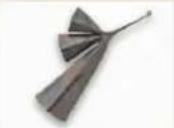 | played with a wooden stick. Some Ewe ensembles include two Gankokwe, one larger than the other. Two different Gankokwe are included in this patch. • C2 – E3 and A3 - B3 – various hits on the various bells, open and clasped. | Vel (vol/eq), Var 1, Var 2, Lgth, FiltLv, FiltFq, Keyswitches |
| Kagan The Kagan is part of a traditional Ewe drum ensemble. It is constructed of a solid carved piece of wood and is approximately twenty inches tall with a head five to six inches in diameter. • C2 – G2 – various hits and slaps | Vel (vol/eq), Var 1, Var 2, Lgth, FiltLv, FiltFq, Keyswitches | |
Kpanlogo 1 Large  | The Kpanlogo is a deep-sounding conga-shaped drum from Ghana. It is headed with antelope skin and tuned by hammering in pegs. The Kpanlogo is used in rituals and to summon the town. ◆ C2 – F2 – various hits and slaps | Vel (vol/eq), Var 1, Var 2, Lgth, FiltLv, FiltFq, BDFund, BDFund, Key-switches |
THE PERCUSSION INSTRUMENTS
| ARIA name: | Program Description: | Controller Assignments: | |
 Africa Africa | |||
Kpanlogo 2 Medium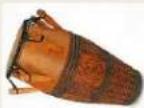 | A different Kpanlogo instrument that is smaller in size.C2 – F2 – various hits and slaps | Vel (vol/eq), Var 1, Var 2, Lgth, FiltLv, FiltFq | |
Kpanlogo 3 Combo | Another Kpanlogo instrument combining different drums.C2 – C4 – various hits on a different Kpanlogo. | Vel (vol/cq), Var 1, Var 2, Lgth, FiltLv, FiltFq | |
| Sogo The Sogo is part of the Ewe drum ensemble and represents one of the master drums played by the leader of the group. The Sogo can be played either with two wooden sticks, one hand and one stick, or both hands.C2 – C3 – various hits | Vel (vol/eq), Var 1, Var 2, Lgth, FiltLv, FiltFq | ||
Fontomfrom The Fontomfrom is a tribal drum from the  | Vel (vol/eq), Var 1, Var 2, Lgth, FiltLv, FiltFq, Keyswitches | ||
Gome The Gome is a box-like drum from Ghana  | made with goatskin stretched over a wooden box frame. The drummer sits atop the box and plays this drum with both his hands. The heels of the feet also press against the skin to change the pitch.C2-C3 – various hits and pitch bends | Vel (vol/eq), Var 1, Var 2, Lgth, FiltLv, FiltFq, Keyswitches | |
THE PERCUSSION INSTRUMENTS
| ARIA name: | Program Description: | Controller Assignments: | |
 Africa Africa | |||
Gyil The Gyil is a pentatonic malllet instrument 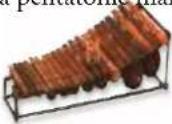 | from Ghana. It is made of 14 hardwood keys, called liga, mounted on a wooden frame. Below it are hanging gourds and spider web silk that produce a resonating sound. Range: G3-C7 | Vel (vol/eq), Var 1, Var 2, Lgth, FiltLv, FiltFq, Keyswitches | |
Ibo The Ibo is a “pot drum” from the Ibo and  | Hausa tribes of Nigeria. Ibo is the Nigerian name for pottery. C2-C3 - various hits | Vel (vol/eq), Var 1, Var 2, Lgth, FiltLv, FiltFq, Keyswitches | |
| Kalimbas The Kalimba, also called a thumb piano, is an ancient instrument from Africa. Kalimbas are made of small springy metal strips attached to a sounding box made of either gourd or wood. Kalimbas come in many shapes and sizes. Range: C2-C6 | Vel (vol/eq), Var 1, Var 2, Lgth, FiltLv, FiltFq, Keyswitches | ||
Kenkeni The Kenkeni is a mid-sized West African drum  | with double animal skin heads. It the smallest drum in the Doun Doun set of bass drums. C2-D3 - various hits | Vel (vol/eq), Var 1, Var 2, Lgth, FiltLv, FiltFq, Keyswitches | |
| Kpoko Kpoko |  | The Kpoko Kpoko is a double-ended rattle instrument from the Ibo tribe of Nigeria. It produces a unique wood rattling sound. C2-A2 - various rattles | Vel (vol/eq), Var 1, Var 2, Lgth, FiltLv, FiltFq, Keyswitches |
| Krin Slit Drum |  | The Krin is a slit drum made from a piece of hollowed tree trunk with slots of different lengths and is played with a stick. The instrument is originally from the forest regions of Guinea and is used to transmit messages between villages. Also known as Kolokolos. C2-G4 - various hits | Vel (vol/eq), Var 1, Var 2, Lgth, FiltLv, FiltFq, Keyswitches |
THE PERCUSSION INSTRUMENTS
| ARIA name: | Program Description: | Controller Assignments: | |
 Africa Africa | |||
Likembe The Likembe is a kalimba-like instrument from  | Uganda, the Congo, and Zaire. Also known as a Kisani, this instrument is common throughout the African continent.C2-A2 – various plucks | Vel (vol/eq), Var 1, Var 2, Lgth, FiltLv, FiltFq, Keyswitches | |
Mbira The Mbira is a rhumb piano from Zimbabwe  | that is similar to the kalimba and likembe. It is considered a sacred instrument in various African cultures and is used to communicate with ancestors, ward off harmful spirits, and cure illness.Range is C2–C8 | Vel (vol/eq), Var 1, Var 2, Lgth, FiltLv, FiltFq, Keyswitches | |
| Morocco Drum |  | The Morocco drums are a pair of ceramic drums with heads consisting of cow hide. They are similar to a bongo drum except that they are closed on the bottom.C2-E3 – various hits | Vel (vol/eq), Var 1, Var 2, Lgth, FiltLv, FiltFq, Keyswitches |
| Nigerian Log Drum |  | Nigerian Log Drums, also known as Obrom, are hand-carved from a solid log. They are made from cutting slits in the side of the log and hollowing it out through the slit. Log Drums are used to communicate between villages. Under the right conditions, the sound can be heard miles away.C2-F3 – various hits | Vel (vol/eq), Var 1, Var 2, Lgth, FiltLv, FiltFq, Keyswitches |
Sakara The Sakara, originating from the Yoruba region  | of Nigeria, is a frame drum instrument whose circular body is made of baked clay covered with goatskin. Pegs around the body of the instrument are used for tuning.C2-G2 – various hits | Vel (vol/eq), Var 1, Var 2, Lgth, FiltLv, FiltFq, Keyswitches | |
THE PERCUSSION INSTRUMENTS
| ARIA name: | Program Description: | Controller Assignments: | |
 Africa Africa | |||
| Sangban The Sangban is a mid-sized drum in a DounDoun set of West African bass drums. The drum is carved out of a single piece of wood and both ends are covered with cowskin heads.C2-E3 – various hits | Vel (vol/eq), Var 1, Var 2, Lgth, FiltLv, FiltFq, Keyswitches | ||
| Sanza The Sanza is a thumb piano from Zaire with resonators (rattles of various kinds). It is played by depressing and releasing the tongues with the thumbs and fingers.C2-C5 – various hits with rattles | Vel (vol/eq), Var 1, Var 2, Lgth, FiltLv, FiltFq, Keyswitches | ||
| Sistrum The Sistrum is a small wooden instrument from Egypt and other regions of Africa. It consists of a U-shaped metal frame which, when shaken, produces a jingling sound.C2-A5 – various shakes and jingles. | Vel (vol/eq), Var 1, Var 2, Lgth, FiltLv, FiltFq, Keyswitches | ||
| Tama (Talking Drum) |  | The Tama, or Talking Drum, is an hourglass-shaped double-headed drum from Nigeria.C2-C3 – various hits and rolls. | Vel (vol/eq), Var 1, Var 2, Lgth, FiltLv, FiltFq, Keyswitches |
| Televi The Televi is a small rattle from Ghana consisting of two small gourds filled with seeds and attached to either end of a string. Also known as an Asalato.C2-A3 - various hits and rattles | Vel (vol/eq), Var 1, Var 2, Lgth, FiltLv, FiltFq, Keyswitches | ||
| Tonetang (Stir Drum) | 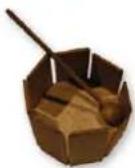 | The Tonetang Stir Drum is a small octagonal wooden bowl-like instrument played with a wooden beater.C2-B2 - various hits and stirs | Vel (vol/eq), Var 1, Var 2, Lgth, FiltLv, FiltFq, Keyswitches |
THE PERCUSSION INSTRUMENTS
| ARIA name: | Program Description: | Controller Assignments: | |||
 | Africa | ||||
Udu Drums Udu means “vessel”  | and the instrument consists of a jug made of clay. It is played with the fingers and the holes are cupped alternately, making sound by compressing and releasing the air inside it, producing a unique and unusual sound. The Udu drum originates from the Ibo and Hausa peoples of Nigeria. | Vel (vol/eq), Var 1, Var 2, Lgth, FiltLv, FiltFq, Keyswitches | |||
| C2 – Hole PopC#2 – Hole Pop ReleaseD2 – Hole Pop Rel MuteD#2 – Low Fast ReleaseE2 – Low Hole PopF2 – Low Hole Pop-RelF#2 – Low OpenG2 – Low Slow Release | |||||
THE PERCUSSION INSTRUMENTS
| ARIA name: | Program Description: | Controller Assignments: | |
 China China | |||
| Basic Chinese Percussion | The Basic Chinese Percussion set includes a set of Chinese percussion instruments.C2-G#2 – Datangu Lion DrumA2-G3 – Temple BlocksG#3-C#4 – BianzhongD4-E4 – BoF4-A#4 – Chinese CymbalsB4-F#5 – Temple BellsG5-C6 – Chinese Gongs | Vel (vol/eq), Var 1, Var 2, Lgth, FiltLv, FiltFq, Keyswitches | |
WORLD

THE PERCUSSION INSTRUMENTS
| ARIA name: | Program Description: | Controller Assignments: | |
| China | |||
Bianzhong The  | ancient Chinese instrument consisting of a large rack of bronze bells, played melodically using poles. Range is C2-B2 | Vel (vol/eq), Var 1, Var 2, Lgth, FiltLv, FiltFq, Keyswitches | |
Bo Bo are Chinese cymbal instruments often used  | in Sichuan Opera to accent the movement of the actors. Bo are made of bronze and are played by striking the cymbals together. C2 - D2 - different hits | Vel (vol/eq), Var 1, Var 2, Lgth, FiltLv, FiltFq, Keyswitches | |
| Chinese Cymbals |  | The Chinese cymbals in this collection consist of an assortment of cymbals played with various mallets and sticks. C2 - B3 - different hits in different cymbals | Vel (vol/eq), Var 1, Var 2, Lgth, FiltLv, FiltFq, Keyswitches |
| Chinese Gongs |  | Gongs belong to the oldest and most important musical instruments of China and much of Asia. The Chinese gongs in this collection consist of an assortment of traditional Chinese gongs played with various mallets and sticks. C2 - D4 - different hits in different gongs | Vel (vol/eq), Var 1, Var 2, Lgth, FiltLv, FiltFq, Keyswitches |
| Datangu Lion Drum |  | The Datangu is a large bass drum used to accompany traditional Chinese Lion Dancing. The Datangu is played with two sticks in a low stance with the knees bent. C2 - G#2 - different hits | Vel (vol/eq), Var 1, Var 2, Lgth, FiltLv, FiltFq, BDFund, Keyswitches |
| Pan Clappers |  | Pan Clappers are a Chinese rhythm instrument played by striking both clappers together. The instrument is also known as Pi Pan Clappers or Shooing Pan Clappers. C2 - E2 - different hits | Vel (vol/eq), Var 1, Var 2, Lgth, FiltLv, FiltFq, Keyswitches |
THE PERCUSSION INSTRUMENTS
| ARIA name: | Program Description: | Controller Assignments: | |
 China China | |||
| Temple Bells |  | Temple Bells are often a symbol of peace and good luck in Chinese traditions. The Temple Bells in this collection consist of an assortment of bells played with various beaters.C2 – C3 – different hits on different bells with varying ringing. | Vel (vol/eq), Var 1, Var 2, Lgth, FiltLv, FiltFq, Keyswitches |
| Temple Blocks |  | Temple blocks are hollow carved wooden instruments played using rubber or wooden mallets. They are common throughout China and are used for religious ceremonies.C2 – F5 – different hits | Vel (vol/eq), Var 1, Var 2, Lgth, FiltLv, FiltFq, Keyswitches |
WORLD

THE PERCUSSION INSTRUMENTS
| ARIA name: | Program Description: | Controller Assignments: | |
 India India | |||
| Basic Indian Percussion | This Basic Indian Percussion set includes a set of Indian percussion instruments. | Vel (vol/eq), Var 1, Var 2, Lgth, FiltLv, FiltFq, Keyswitches | |
| C2-D2 – ChendaD#2-C3 – DamrooC#3-D3 – DholD#3-C#4 – DholakD4-G4 – KanjeeraG#4-A#4 – NaalB4-C5 – NagaraC#5-E5 – TablaF5-G5 – Tamte | |||
Chenda The Chenda is a hollow cylindrical Indian  | drum with ends covered with cow hide. It is played upright and struck with two slender sticks. The Chendra is often used as accompaniment in Hindu dance.C2 – A3 – different hits | Vel (vol/eq), Var 1, Var 2, Lgth, FiltLv, FiltFq, Keyswitches | |
| Chimta The Chimta (literally tongs) consists of a long folded steel strip with small metal jingles. There are several Chimtas presented in this collection. This instrument is a traditional percussion instrument used in popular Punjabi music.C2 – C7 – hits and shakes from different Chimtas | Vel (vol/eq), Var 1, Var 2, Lgth, FiltLv, FiltFq, Keyswitches | ||
| Chippli The Chippli consist of a pair of small hand-held wood instruments each with a jingle. The instrument is also known as a Kattai.C2 – F#2 – different hits and jingles | Vel (vol/eq), Var 1, Var 2, Lgth, FiltLv, FiltFq, Keyswitches | ||
THE PERCUSSION INSTRUMENTS
| ARIA name: | Program Description: | Controller Assignments: | |
 India India | |||
Dafli The Dafli is an Indian tambourine consisting  | of a circular wooden or metal ring with a skin drum head. It is often used in weddings and other celebrations and is also known as Dufli or Daf.C2 – F2 – different hits | Vel (vol/eq), Var 1, Var 2, Lgth, FiltLv, FiltFq, Keyswitches | |
| Damroo | 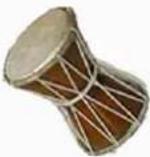 | The Damroo, or Damru, is a two-sided drum with an hour-glass shape. The instrument is also known as the “monkey talking drum.” There are two different Damroos in this collection.C2 – D#4 – Damroo 1—different hits, flams and rollsC5 – G#5 – Damroo 2—different hits and boings | Vel (vol/eq), Var 1, Var 2, Lgth, FiltLv, FiltFq, Keyswitches |
Dhol The Dhol is a large double barrel-shaped drum  | played with sticks. It is a loud instrument and often used in weddings in the Indian subcontinent and is now used in Indian pop music. It is also known as a Dohol.C2 – D4 – different hits and slaps | Vel (vol/eq), Var 1, Var 2, Lgth, FiltLv, FiltFq, Keyswitches | |
Dholak The Dholak is popular folk drum played in  | North India, Pakistan, and Nepal. The instrument is made of hollowed out wood and has two tunable heads.C2 – G4 – different hits and slaps on different parts of the head and drum | Vel (vol/eq), Var 1, Var 2, Lgth, FiltLv, FiltFq, Keyswitches | |
Ghatam ‘The Ghatam is a clay goblet drum used in  | South Indian classical music. It is played with the fingers and sometimes with metal rings on the fingers. Similar to the African Udu drum and also known as a Matka.C2 – B3 – different hits and pops | Vel (vol/eq), Var 1, Var 2, Lgth, FiltLv, FiltFq, Keyswitches | |
WORLD

THE PERCUSSION INSTRUMENTS
| ARIA name: | Program Description: | Controller Assignments: | |
| India | |||
| Ghungroo The Ghungroo, or Indian Ankle Bells, consists of a cluster of small bells worn around the ankles of classical dancers to accent rhythmic movements. The pitch of the sounds produced depends on the size and composition of the bells.C2 – E3 – different hitsC4 – F#4 – sustained shakes | Vel (vol/eq), Var 1, Var 2, Lgth, FiltLv, FiltFq, Keyswitches | ||
| Gong (Singing Gong) |  | This small Gong from India, also known as a Singing Gong, is common in Hindu religious ceremonies. The instrument is played by hitting with a stick or stirring the surface with a stick.C2 – F#2 – different hits and stirs | Vel (vol/eq), Var 1, Var 2, Lgth, FiltLv, FiltFq, Keyswitches |
| Hatheli Hatheli are wooden hand-held jingles. They produce sound by shaking the instrument.C2 – A#4 – Hatheli set 1 - different hits, jingles, and rattles | Vel (vol/eq), Var 1, Var 2, Lgth, FiltLv, FiltFq, Keyswitches | ||
| Kanjeera The Kanieera is a small tambourine-like instrument with copper or bronze discs in its frame. It is held with one hand and struck with fingers and palm of the other hand.C2 – D#4 – various hits | Vel (vol/eq), Var 1, Var 2, Lgth, FiltLv, FiltFq, Keyswitches | ||
| Khartal The Khartal is a small percussion instrument of India consisting of a block of hard wood with jingles. Khartals are shaken to produce their sound. They can also be clapped together to make rhythmic beats.C2 – A2 – Khartal set 1 -various hits & jinglesC3 – G3 – Khartal set 2 -various hits & jingles | Vel (vol/eq), Var 1, Var 2, Lgth, FiltLv, FiltFq, Keyswitches | ||
THE PERCUSSION INSTRUMENTS
| ARIA name: | Program Description: | Controller Assignments: | |
 India India | |||
Khol The Khol is a double-sided drum covered with  | goatskin leather and laced together with leather straps around the circumference of the drum.C2 – A3 – various hits | Vel (vol/eq), Var 1, Var 2, Lgth, FiltLv, FiltFq, Keyswitches | |
| Manjeera |  | Manjeera are small unpitched cymbals used in folk and devotional music. They are usually made of bronze, brass, or copper and are held and played with the hands. They are also known as Manjira or Jhanji.C2 – C3 –Manjeera 1 - various hitsC4 – A4 – Manjeera 2 -various hits | Vel (vol/eq), Var 1, Var 2, Lgth, FiltLv, FiltFq, Keyswitches |
Murchang The Murchang is a mouth instrument that is  | very similar to a Jaw harp. It is used in the Carnatic music of South India and Pakistan and is also known as the Morsing.”C2 – G#5 – various hit | Vel (vol/eq), Var 1, Var 2, Lgth, FiltLv, FiltFq, Keyswitches | |
Mridangam The Mridangam is a double-sided oblong  | drum. Its body is made of hollowed jackfruit wood and both ends of the drum are covered by animal skin laced with leather straps. The Mridangam is often used in South Indian dance.C2 – G5 – various hits | Vel (vol/eq), Var 1, Var 2, Lgth, FiltLv, FiltFq, Keyswitches | |
| Naal The Naal is an Indian folk drum with a high-pitched head on one side and a lower-pitched head on the other side. The instrument is also known as a Dholki.C2 – C4 – various hits and slaps | Vel (vol/eq), Var 1, Var 2, Lgth, FiltLv, FiltFq, Keyswitches | ||
| Nagara The Nagara is a kettle drum played in traditional Indian ensembles. These drums are about one to two feet in diameter and played with sticks.C2 – C3 – various head hits and rim hits | Vel (vol/eq), Var 1, Var 2, Lgth, FiltLv, FiltFq, Keyswitches | ||
THE PERCUSSION INSTRUMENTS
| ARIA name: | Program Description: | Controller Assignments: | |
 | India | ||
| Pakhawaj |  | The Pakhawaj is a double-sided barrel drum used in traditional classical music of North India. The instrument is played horizontally set on a cushion in front of a crossed-leg player.The larger bass skin is played with the one hand and the smaller treble skin by the other hand.It is similar to the Mridangam of South India.• C2 – C3 – various hits and slaps | Vel (vol/eq), Var 1, Var 2, Lgth, FiltLv, FiltFq, Keyswitches |
| Stir Drum The | Stir Drum is a small percussion instrument  | consisting of graduated tongues of wood. It is played by using a beater in a circular motion around the inner sides of the instrument.• C2 – D3 – various hits | Vel (vol/eq), Var 1, Var 2, Lgth, FiltLv, FiltFq, Keyswitches |
| Tablas Tablas are the most popular percussion instrument of India. The set includes two drums. The tabla dayan (right hand drum) is made of wood and the bayan (left hand drum) is a medium-low pitched kettledrum made of metal. Both drums have heads made of goatskin. | Vel (vol/eq), Var 1, Var 2, Lgth, FiltLv, FiltFq, BDFund, Keyswitches | ||
| Tamte The Tamte is a flat circular drum with a skin pulled over it and played with a stick. The Tamte is also called Tammatai and is played throughout North India.• C2 – F3 – various hits | Vel (vol/eq), Var 1, Var 2, Lgth, FiltLv, FiltFq, Keyswitches | ||
THE PERCUSSION INSTRUMENTS
| ARIA name: | Program Description: | Controller Assignments: | |
| India | |||
| Tasha The Tasha is a small kettle drum that is played with the hand or with bamboo beaters. The Tasha is used in ceremonial occasions in India.C2 – G3 – various hits | Vel (vol/eq), Var 1, Var 2, Lgth, FiltLv, FiltFq, Keyswitches | ||
| Tavil The Tavil is a round-bodied drum with two skins wrapped around two large hemp hoops on both sides. One side is usually played with a stick while the other side is played with the hands or with metal thimbles on the fingers. This instrument is played often in South Indian festivals.C2 – F4 – various hits with stick and hand | Vel (vol/eq), Var 1, Var 2, Lgth, FiltLv, FiltFq, Keyswitches | ||
| Udaku The Udaku is a small drum with heads held in position by interlacing cotton threads that can be pulled to change the pitch. The instrument is also known as the Udukke.C2 – D4 – various hits | Vel (vol/eq), Var 1, Var 2, Lgth, FiltLv, FiltFq, Keyswitches | ||
THE PERCUSSION INSTRUMENTS
| ARIA name: | Program Description: | Controller Assignments: | |
 Japan Japan | |||
| Japanese percussion is generally known as Taiko which means “big drum.” Taiko includes a variety of percussion instruments. Taiko drums come in different sizes and some can be as large as six feet (two meters) long. | |||
| Chanchiki The | Chanchiki is a saucer-shaped bell, suspended by a cord like a gong, and played with a mallet. The instrument is also known as the Atarigane.C2-B2 – various hits | Vel (vol/eq), Var 1, Var 2, Lgth, FiltLv, FiltFq, Keyswitches | |
THE PERCUSSION INSTRUMENTS
| ARIA name: | Program Description: | Controller Assignments: | |
| Japan | |||
| Chu-daiko The Chu-daiko is a medium-sized drum that is popular in the Taiko ensemble. The Chu-daiko comes in various sizes. In this collection there are several Chu-daiko (18", 21", and 22").C2 – E2 – various combo hitsC3 – A4 – various hitsC5 – D#6 – various rim hitsC7 – F7 – various hits | Vel (vol/eq), Var 1, Var 2, Lgth, FiltLv, FiltFq, BDFund, Keyswitches | ||
| Daibyoshi The Daibyoshi is a short-bodied tunable drum made with stave construction. The Daibyoshi is relatively high-pitched and is often used in Kabuki Theater.C2 – A2 – Various hits | Vel (vol/eq), Var 1, Var 2, Lgth, FiltLv, FiltFq, Keyswitches | ||
| Hira-daiko |  | The Hira-daiko, meaning “stout drum,” is a type of drum that is wider than it is deep. The instrument is carved from a single piece of wood with drumheads tacked to its rims. The Hira-daiko come in a variety of sizes and some are quite large.C2 – F#2 – Various hits | Vel (vol/eq), Var 1, Var 2, Lgth, FiltLv, FiltFq, BDFund, Keyswitches |
| Hyoushigi The Hyoushigi is a simple Japanese musical instrument consisting of two wooden blocks used as clappers, similar to a clave. The Hyoushigi are used in Taiko ensembles.C2-A3 – various hits and strikes | Vel (vol/eq), Var 1, Var 2, Lgth, FiltLv, FiltFq, Keyswitches | ||
Ko-daiko The Ko-1 "the" events  | the smaller members of the Nagado-daiko family of drums. The Kodaiko in this collection is a 14" drum.G3 – 14" Kodaiko 1 drum hitG#3 – 14" Kodaiko 1 rim hitA3 – 14" Kodaiko 2 drum hitA#3 – 14" Kodaiko 2 rim hit | Vel (vol/eq), Var 1, Var 2, Lgth, FiltLv, FiltFq, Keyswitches | |
THE PERCUSSION INSTRUMENTS
| ARIA name: | Program Description: | Controller Assignments: | |
| Japan | |||
| Nagado-daiko | The Nagado-daiko, | meaning “elongated drum,”is one of the most popular taiko drums used in modern groups. It is known for its distinctively deep and resonant tone. The Nagado-daiko is carved from a single piece of wood and comes in a wide range of sizes. The instrument is played a number of ways on a variety of stands.C2 – E3 – various hits | Vel (vol/eq), Var 1,Var 2, Lgth, FiltLv,FiltFq, BDFund,Keyswitches |
| O-daiko |  | The O-daiko, meaning “big fat drum,” are large barrel-shaped drums. O-daiko are nearly three feet in diameter and typically placed on a stand and played horizontally, often by two people at once.C2 – F#4 – various hitsC5 – G5 – various hits | Vel (vol/eq), Var 1,Var 2, Lgth, FiltLv,FiltFq, BDFund,Keyswitches |
| Okawa The Okawa | also called the | Otsuzumi,”is a smallhand drum used in Kabuki theater. The drum consists of two heads stretched over steel rings,placed over an hourglass shaped body and laced together with rope.C2 – A#2 – various hits | Vel (vol/eq), Var 1,Var 2, Lgth, FiltLv,FiltFq, Keyswitches |
| Okedo-daiko | The Okedo-daiko is  | a large double headed drumused in Kodo playing. This instrument can be set on a stand or strapped to the player’s body. Kodo playing is known for its speedy stick work and cross-over arm movements. In Kodo playing, other instruments are also used (such as small cymbals, rattles, or jingles) to add contrast.C2-B3 – various hits, upper notes with jingles | Vel (vol/eq), Var 1,Var 2, Lgth, FiltLv,FiltFq, BDFund,Keyswitches |
WORLD

THE PERCUSSION INSTRUMENTS
| ARIA name: | Program Description: | Controller Assignments: | |
| Japan | |||
Shime-daiko The Shime-daiko is a  | small rope-tensioned drum with animal skin drumheads on both sides. The shime-daiko is played with sticks called “bachi.” The Shime-daiko is often used in Japanese folk music.C2 – E3 – various hits | Vel (vol/eq), Var 1, Var 2, Lgth, FiltLv, FiltFq, Keyswitches | |
Tebyoshi The Tebyoshi is a small ashtray-shaped brass  | cymbal that produces a unique metallic sound. It is held in one hand by a cord and played by striking or scraping it with a beater. The instrument is also called the Chappa.C2-B2 – various hits, open and clasp | Vel (vol/eq), Var 1, Var 2, Lgth, FiltLv, FiltFq, Keyswitches | |
Tsuzumi The Tsuzumi is a small hourglass-shaped drum  | with two taut drum heads with cords that can be squeezed to change pitch. The Tsuzumi is used in Taiko ensembles and is one of the few Japanese drums played with hands or fingers.C2-B3 – various hits and strikes | Vel (vol/eq), Var 1, Var 2, Lgth, FiltLv, FiltFq, Keyswitches | |
| Uchiwa-daiko The Uchiwa-daiko is a natural-skin drum with a round ring and no body. This hand-held drum can be played individually or set up in a rack and played as a set. Uchiwa literally means “wind fan.”C2-E2 – various hits | Vel (vol/eq), Var 1, Var 2, Lgth, FiltLv, FiltFq, Keyswitches | ||
THE PERCUSSION INSTRUMENTS
| ARIA name: | Program Description: | Controller Assignments: | |
 | Other Asian Regions | ||
Chabara The Chabara are circular brass cymbals from   Korea used in Buddhist rituals and procession-als. They are held by cloth handles and played by striking each other. The Chabara produce a clanging sound. The instrument is also known as Jabara.C2-F2 – various hitsVel (vol/cq), Var 1, Var 2, Lgth, FiltLv, FiltFq, Keyswitches Korea used in Buddhist rituals and procession-als. They are held by cloth handles and played by striking each other. The Chabara produce a clanging sound. The instrument is also known as Jabara.C2-F2 – various hitsVel (vol/cq), Var 1, Var 2, Lgth, FiltLv, FiltFq, Keyswitches | |||
| Ching The Ching are small bowl-shaped finger cym-bals used in Cambodia and Thailand. They are made of a mixture of iron, copper, and gold. They measure about two inches in diameter and are played by striking the two cymbals together.C2-B2 – various hits and claspsVel (vol/cq), Var 1, Var 2, Lgth, FiltLv, FiltFq, Keyswitches | |||
Geduk The Geduk is a short barrel-shaped double- headed drum used in Malaysian folk music.C2-F2 – various hitsVel (vol/cq), Var 1, Var 2, Lgth, FiltLv, FiltFq, Keyswitches headed drum used in Malaysian folk music.C2-F2 – various hitsVel (vol/cq), Var 1, Var 2, Lgth, FiltLv, FiltFq, Keyswitches | |||
Jang Gu The Jang Gu is an hourglass drum that is played  in Korea. The instrument is also known as the Changgo.C2-D#3 – various hits on both headsVel (vol/cq), Var 1, Var 2, Lgth, FiltLv, FiltFq, Keyswitches in Korea. The instrument is also known as the Changgo.C2-D#3 – various hits on both headsVel (vol/cq), Var 1, Var 2, Lgth, FiltLv, FiltFq, Keyswitches | |||
Kesi The Kesi consists of a pair of cymbals, one of  which is affixed to a rack, while the other is tied by rope. Sound is made by clashing one cymbal against another. This instrument is used in the traditional Paluan ensemble of Malaysia.C2-A2 – various hitsVel (vol/cq), Var 1, Var 2, Lgth, FiltLv, FiltFq, Keyswitches which is affixed to a rack, while the other is tied by rope. Sound is made by clashing one cymbal against another. This instrument is used in the traditional Paluan ensemble of Malaysia.C2-A2 – various hitsVel (vol/cq), Var 1, Var 2, Lgth, FiltLv, FiltFq, Keyswitches | |||
Kkwenggwari The vli-ari is a small brass gong from  Korea played with a wooden mallet. The instru-ment is also known as the Koeagkari.C2-C3 – various hitsVel (vol/cq), Var 1, Var 2, Lgth, FiltLv, FiltFq, Keyswitches Korea played with a wooden mallet. The instru-ment is also known as the Koeagkari.C2-C3 – various hitsVel (vol/cq), Var 1, Var 2, Lgth, FiltLv, FiltFq, Keyswitches | |||
THE PERCUSSION INSTRUMENTS
| ARIA name: | Program Description: | Controller Assignments: | |
 Other Asian Regions Other Asian Regions | |||
| Kompang The | Kompang is a shallow wooden frame drum | with a goat or cow hide skin. It is played in kompang ensembles throughout Malaysia for processions and to accompany choral singingC2-C3 – various hits | Vel (vol/eq), Var 1, Var 2, Lgth, FiltLv, FiltFq, Keyswitches |
| Luo Gong The | Luo Gong, is a type of  | Bronze gong from Malaysia and is played with a wooden mallet.C2-D#3 – various hits and bongs | Vel (vol/eq), Var 1, Var 2, Lgth, FiltLv, FiltFq, Keyswitches |
| Madal The Madal | is a Nepalese hand drum made of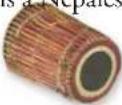 | wood or clay. Both heads of the drum are played with the hands, holding the drum horizontally.C2-C3 – various hits | Vel (vol/eq), Var 1, Var 2, Lgth, FiltLv, FiltFq, Keyswitches |
| Tangku The Tangku | is a tomtom-like drum used in | ceremonies throughout Taiwan and other Asian regions. The drum is sometimes suspended in a wooden frame and produces a deep sound.C2-F#2 – various hits | Vel (vol/eq), Var 1, Var 2, Lgth, FiltLv, FiltFq, Keyswitches |
| Thai Gong The | Thai Cymbals are a heavy iron gong and is | crafted to produce a clear tone. It has a hump in its centre and is also known as Hump Gong or Nipple Gong. Thai Gongs are often played with other instruments throughout Thailand and Myanmar.C2-B2 – various hits | Vel (vol/eq), Var 1, Var 2, Lgth, FiltLv, FiltFq, Keyswitches |
| Tibetan Cymbals |  | Tibetan Cymbals are made of different metals. They are played by holding one in each hand and rubbing or lightly tapping them together. Tibetan Cymbals are used in religious processes and ceremonies.C2-C8 – various hits, clangs and clasps | Vel (vol/eq), Var 1, Var 2, Lgth, FiltLv, FiltFq, Keyswitches |
THE PERCUSSION INSTRUMENTS
| ARIA name: | Program Description: | Controller Assignments: | |
| [z6wc] | Other Asian Regions | ||
| Tibetan Singing Bowl |  | The Tibetan Singing Bowl produces a characteristic sustaining ringing sound. It is made of metal and played by rubbing or stirring a mallet clockwise around the outside edge or inside surface of the bowl. Singing bowls are often used in Buddhist meditation and prayer. These instruments are also known as Himalayan bowls.C2-C5 – various hits and stirsC6-A6 – more bowls, various hits | Vel (vol/cq), Var 1, Var 2, Lgth, FiltLv, FiltFq, Keyswitches |
| Tibetan Bells Tibetan Temple Bells are ritual instruments usedby Tibetan Buddhist practitioners. Sound is produced by striking the bell with a Puja stick.C2-C3 – Bell1 - various hitsC4-D#4 – Bell 2 hits & stirC5-D#5 – Bell 3 hits | Vel (vol/cq), Var 1, Var 2, Lgth, FiltLv, FiltFq, Keyswitches | ||
Tingsha The Tingsha are small hand cymbals used in | Tibetan Buddhist rituals. Sound is produced by striking the two small cymbals together at right angles. They make clear and beautiful ringing tones and overtones. Typical sizes range from two to four inches in diameter. The Tingsha is sounded at the beginning and end of meditation and teaching sessions.C2-C3 – various hits | Vel (vol/cq), Var 1, Var 2, Lgth, FiltLv, FiltFq, Keyswitches | |
THE PERCUSSION INSTRUMENTS
| ARIA name: | Program Description: | Controller Assignments: | |
 Europe Europe | |||
Bodhrán The Bodhrán is a traditional and popular  | Celtic drum. This single-headed drum consists of a round wooden frame with an animal skin stretched over it. Although common in Irish music, the bodhrán has more recently gained popularity throughout the world.• C2-F4 – various hits and slaps | Vel (vol/eq), Var 1, Var 2, Lgth, FiltLv, FiltFq, Keyswitches | |
| Hang Drum The Hang Drum, or Hang, is a contemporary instrument made in Switzerland. It consists of a harmonically tuned steel shell similar to a steelpan. It differs from a steelpan in that it is played with hands and fingers while resting on the player's lap. The sound of the Hang Drum sound is considered softer and warmer than the traditional steelpan.• C3-C5 – various hits |  | ||
| Jaw Harps The Jaw Harp is known by many names, including Jew's harp, Khomuz, and Marranzano. It consists of an oblong metal frame with a single key or tongue down the middle that is plucked with the finger. It produces a buzzing tone and the sounds can be varied by changing the size and shape of the mouth. In this collection, there are three different Jaw harps in various keys:C2-C3 – Jaw Harp in DC4-D#5 – Jaw Harp in F#C6-G7 – Jaw Harp in G |  | Vel (vol/eq), Var 1, Var 2, Lgth, FiltLv, FiltFq, Keyswitches | |
| Rattle Cog 'The Rattle Cog consists of a cog wheel set in a frame that, when spun, causes a flat piece of wood to move across the cog wheel to produce a clacking sound.C2-E2– various rattle rolls |  | Vel (vol/eq), Var 1, Var 2, Lgth, FiltLv, FiltFq, Keyswitches | |
THE PERCUSSION INSTRUMENTS
| ARIA name: | Program Description: | Controller Assignments: | ||
 | Latin America | |||
Afoxê The Afoxê consists of a gourd  | shaker (cabaça)wrapped with cords that are strung with beads. The instrument is shaken to produce its sound.C2-D3 – various shakes | Vel (vol/eq), Var 1, Var 2, Lgth, FiltLv, FiltFq, Keyswitches | ||
Agogo Bell Agogo Bells consist of two cone-shaped bells, | one larger and one smaller. The instrument is played by striking them with a wooden stick.C2-C6 – various hits | Vel (vol/eq), Var 1, Var 2, Lgth, FiltLv, FiltFq, Keyswitches | ||
| Agogo Block |  | The Agogo Block is an instrument used in Brazilian and Latin music. It is made of wood blocks of different sizes, resulting in different pitches. The instrument is played with a wooden beater.C2-G2 – various hits | Vel (vol/eq), Var 1, Var 2, Lgth, FiltLv, FiltFq, Keyswitches | |
| Atabaque The Atabaque is a tall. wooden Brazilian drum. The conical shell is traditionally made of Jacaranda wood and has a single head made from calfskin.C2-G4 – various hits and slaps | Vel (vol/eq), Var 1, Var 2, Lgth, FiltLv, FiltFq, Keyswitches | |||
| Berimbau The Berimbau is a single-string percussion instrument from Brazil. It consists of a single metal string strung across a four to five foot long wooden bow. To produce sound, the string is struck with a wooden stick called a baqueta. A hollowed-out gourd acts as a resonator. The player changes the tone by pressing against the steel string. The instrument originated from the mbelz, or musical bow, of Africa.C3 open hit, D3 close hit, E3 clasped, F3 buzz | Vel (vol/eq), Var 1, Var 2, Lgth, FiltLv, FiltFq, Keyswitches | |||
THE PERCUSSION INSTRUMENTS
| ARIA name: | Program Description: | Controller Assignments: | |||
 | Latin America | ||||
| Bombo The Bombo is an Argentinian drum made of a hollowed tree trunk covered with animal skin. The Bombo is played while hanging to the side of the player and is struck with a mallet or stick. The Bombo sometimes serves as a bass instrument and has a deep and dark tone.C2-C3 – various hits | Vel (vol/eq), Var 1, Var 2, Lgth, FiltLv, FiltFq, BDFund, Keyswitches | ||||
| Cuica The Cuica is a Brazilian friction drum. The drum has a bamboo stick running inside the body of the drum which, when rubbed with a wet cloth, produces a high-pitched squeaky sound with variable pitches.C2-F2 – various rubs and squeaks | Vel (vol/cq), Var 1, Var 2, Lgth, FiltLv, FiltFq, Keyswitches | ||||
| Latin Percussion 1 | |||||
 | C2 Batá (iyá /low)C#2 Batá (iyá /low muffled)D2 Batá (iyá /low slap)D#2 Batá (Itótele /mid open)E2 Batá (Itótele /mid muffled)F2 Batá (Itótele /mid slap)F#2 Batá (okónkolo/high open)G2 Batá (okónkolo/high muffled)G#2 Batá (okónkolo/high slap)A2 Bongo (low open)A#2 Bongo (low muffled)B2 Bongo (low slap)C3 Bongo High (open)C#3 Bongo (high muffled)D3 Bongo High slap)D#3 Cajón (low)E3 Cajón (slap)F3 Cajón (stick hit)F#3 Conga (low)G3 Conga (open)G#3 Conga (muffled)A3 Conga (slap)A#3 Cuica (low)B3 Cuica (mid)C4 Cuica (high)C#4 Djembe (open) | D4 Djembe (muffled)D#4 Djembe (slap)E4 Pandeiro (open)F4 Pandciro (muffled)F#4 Pandciro (slap)G4 Quinto (open)G#4 Quinto (muffled)A4 Quinto (slap)A#4 Super Tumba (low)B4 Super Tumba (open)C5 Super Tumba (muffled)C#5 Super Tumba (slap)D5 Surdu (open)D#5 Surdu (muffled)E5 The Box (low)F5 The Box (mid)F#5 The Box (high)G5 Timbales (low)G#5 Timbales (high)A5 Timbales (edge)A#5 Tumba (low)B5 Tumba (open)C6 Tumba (muffled)C#6 Tumba (slap)D6 Udu (long)D#6 Udu (short) | Vel (vol/cq), Var 1, Var 2, Lgth, FiltLv, FiltFq, Keyswitches | ||
THE PERCUSSION INSTRUMENTS
| ARIA name: | Program Description: | Controller Assignments: | |||
 | Latin America | ||||
| Latin Percussion 2 | |||||
 | C2 Cabasa(short)C#2 Cabasa(shake)D2 Cabasa(slap)D#2 Guiro(medium - short)F2 Guiro(medium - long)F# Guiro(medium - short)G#2 Guiro(medium - long)A2 Guiro(high - short)B2 Guiro(high - long)C3 Maracas(short)C#3 Maracas(long)D3 Maracas 2(short)D#3 Maracas 2(long)E3 Egg Shaker(short)F3 Egg Shaker 2(short)F#3 Egg Shaker 3(short)G3 Egg Shaker (medium)G#3 Egg Shaker 2(medium)A3 Shekere(low)A#3 Shekere(high)B3 Shekere(short)C4 Shekere 2(short)C#4 Claves(high)D4 Jam block(medium)D#4 Jam block(high)E4 Woodblock(high)F4 Agogo Bell(medium)F#4 Agogo Bell(closed)G4 Agogo Bell(high)G#4 Agogo Bell(high mute) | A4 Bongo Bell(low open)A#4 Bongo Bell(low mute)B4 Bongo Bell(high open)C5 Bongo Bell(high mute)C#5 Cha Cha Bell(open)D5 Cha Cha Bell(mute)D#5 Timbale Bell(open)E5 Timbale Bell(mute)F5 CastanetsF#5 Hand ClapsG5 Finger snapsG#5 JawboneA5 Rainstick 1A#5 Rainstick 2B5 Tambourine(short stroke)C6 Tambourine(roll)C#6 Tambourine(hit)D6 Triangle1(open)D#6 Triangle1(mute)E6 Triangle2(open)F6 Triangle2(mute)F#6 Whistle1(short)G6 Whistle2(long)G#6 Whistle1(short)A6 Whistle2(long)A#6 Whistle3(short flutter)B6 Whistle3(mediumflutter)C7 Whistle3(long flutter) | Vel(vol/eq),Var 1,Var 2,Lgth,FiltLv,FiltFq,Keyswitches | ||
| Rain Stick The Rain Stick is a long, hollow tube filled with small beads which, when turned,simulate the sound of rain. Rain Sticks can be found in Chile and other regions of South America. The Chilean name for the Rain stick is “Palo de Lluvia.”• C2 - A2 – various pouring rain sounds | Vel(vol/eq),Var 1,Var 2,Lgth,FiltLv,FiltFq,Keyswitches | ||||
| ARIA name: | Program Description: | Controller Assignments: | |
| Latin America | |||
Teponaxtli The Teponaxtli is a wooden slit drum from  central Mexico originally played by the Aztecs and surrounding cultures. It is made from a section of a hollowed hardwood tree trunk and has three slits on its top, cut into the shape of an “H.” The instrument is also known as the Teponaztli.• C2 - C3 – various hits central Mexico originally played by the Aztecs and surrounding cultures. It is made from a section of a hollowed hardwood tree trunk and has three slits on its top, cut into the shape of an “H.” The instrument is also known as the Teponaztli.• C2 - C3 – various hits | Vel (vol/eq), Var 1, Var 2, Lgth, FiltLv, FiltFq, Keyswitches | ||
Tinaja The Tinaja is an earthenware  jug used for percussion in Flamenco music.• C2 - G#2 – various hits and pops jug used for percussion in Flamenco music.• C2 - G#2 – various hits and pops | Vel (vol/eq), Var 1, Var 2, Lgth, FiltLv, FiltFq, Keyswitches | ||
| ARIA name: | Program Description: | Controller Assignments: | |
 Middle East Middle East | |||
| Arabian Frame Drum |  | Arabian Frame Drums come in many sizes and variety. They consist of a round wooden frame drum whose diameter is much bigger than its depth. Animal skin traditionally is stretched over the frame. Arabian Frame Drums are known by various names throughout the region.• C2 - E2 – various hits and a roll (E2) | Vel (vol/eq), Var 1, Var 2, Lgth, FiltLv, FiltFq, Keyswitches |
| ARIA name: | Program Description: | Controller Assignments: | |
 Middle East Middle East | |||
| BasicMiddle EastPercussion | The Basic Middle East Percussion set includes a select combination of percussion instruments from the Middle East region. | Vel (vol/eq), Var 1, Var 2, Lgth, FiltLv, FiltFq, Keyswitches | |
| C2-D#2 – BendirE2-G#2 – DaffA2-E3 – DarbukaF3-A#3 – DoiraB3-G#4 – Duff | |||
Bendir The Bendir is a frame drum  | from Morocco, with two strings stretched across the underside, producing a distinctive buzzing sound, not unlike a snare.C2 - D3 – various hits | Vel (vol/eq), Var 1, Var 2, Lgth, FiltLv, FiltFq, Keyswitches | |
Daff The Daff is a small-framed tambourine with  | metal discs commonly used throughout the Middle East. The instrument is also known as the Def.C2 - D#7 – various hits and shakes | Vel (vol/eq), Var 1, Var 2, Lgth, FiltLv, FiltFq, Keyswitches | |
Darabuka The Darabuka is a goblet-thaped drum used  | throughout the Middle East and surrounding regions. The instrument is also known by as a Darbuka.C2 - E5 – various hits | Vel (vol/eq), Var 1, Var 2, Lgth, FiltLv, FiltFq, Keyswitches | |
Doira The Doira i zed frame drum  | with jingles, used in classical music of Iran. The instrument is also known as a Ghaval.C2 - F#3 – various hits | Vel (vol/eq), Var 1, Var 2, Lgth, FiltLv, FiltFq, Keyswitches | |
Duff The Duff is a frame drum that  | has a goatskinhead stretched over the frame.C2 - F#3 – various hits | Vel (vol/eq), Var 1, Var 2, Lgth, FiltLv, FiltFq, Keyswitches | |

| ARIA name: | Program Description: | Controller Assignments: | |
| Middle East | |||
| Dumbek The Dumbek is a very popular drum in the Middle East. It is goblet-shaped with a head stretched over the bowl that can produce a variety of sounds by being played by the hands and fingers.C2 - E3 – various hits, taps and rolls | Vel (vol/eq), Var 1, Var 2, Lgth, FiltLv, FiltFq, Keyswitches | ||
| Kashiklar The Kashiklar is a percussive wooden spoon instrument used in dance in various countries in the Middle East.C2 - D#3 – various single and multiple hits | Vel (vol/eq), Var 1, Var 2, Lgth, FiltLv, FiltFq, Keyswitches | ||
| Kudum The Kudum consists of a pair of small, hemispherical drums from Turkey that are used in dervish mystical music. The instrument is also known as the Ghodum.C2 - A3 – various hits | Vel (vol/eq), Var 1, Var 2, Lgth, FiltLv, FiltFq, Keyswitches | ||
| Naqqāra The Naqqāra is a small drum with a rounded back and a hide head. The Naqqāra can be found in different sizes in different regions of Iran and there are some other Middle Eastern varieties of the instrument.C2 - G2 – various hits | Vel (vol/eq), Var 1, Var 2, Lgth, FiltLv, FiltFq, Keyswitches | ||
| Riqq The Riqq is a type of tambourine used in Arabic music. It has a round wooden frame that is covered with thin animal or fish skin and equipped with double rows of metal jingles. In various regions the instrument is similar to the Daff.C2 - F5 – various hits and shakes | Vel (vol/eq), Var 1, Var 2, Lgth, FiltLv, FiltFq, Keyswitches | ||
Tar The Tar is a large single-headed frame drum  | Vel (vol/eq), Var 1, Var 2, Lgth, FiltLv, FiltFq, Keyswitches | ||
| ARIA name: | Program Description: | Controller Assignments: | |
| Middle East | |||
Tumbak The Tumbak is a small single-headed drum played throughout Persia and the Middle East. It is shaped like a goblet with the upper half being wider than the lower, similar to the Darbuka.C2 - F3 – various hits played throughout Persia and the Middle East. It is shaped like a goblet with the upper half being wider than the lower, similar to the Darbuka.C2 - F3 – various hits | Vel (vol/eq), Var 1, Var 2, Lgth, FiltLv, FiltFq, Keyswitches | ||
Zarb The Zarb is an Iranian goblet-shaped drum, made of wood and covered with a goatskin. The Zarb is often used in classical Persian music as a main rhythm instrument.C2 - F4 – various hits made of wood and covered with a goatskin. The Zarb is often used in classical Persian music as a main rhythm instrument.C2 - F4 – various hits | Vel (vol/eq), Var 1, Var 2, Lgth, FiltLv, FiltFq, Keyswitches | ||
Zills Zills are small brass finger-cymbals used by belly dancers in the Middle East. They are worn on the thumb and middle finger by dancers. The instrument is also known as the Sagat in some countries.C2 - F4 – various rings, clangs and clasps. belly dancers in the Middle East. They are worn on the thumb and middle finger by dancers. The instrument is also known as the Sagat in some countries.C2 - F4 – various rings, clangs and clasps. | Vel (vol/eq), Var 1, Var 2, Lgth, FiltLv, FiltFq, Keyswitches | ||
| ARIA name: | Program Description: | Controller Assignments: | |
 North America North America | |||
| Buffalo Drum | The Buffalo Drum is 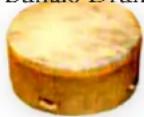 | a large Native American frame drum used for ceremonies and religious rituals. In the Native American tradition, music is a means of communicating with nature and the supernatural.• C2-F2 – various hits | Vel (vol/eq), Var 1, Var 2, Lgth, FiltLv, FiltFq, Keyswitches |
| ARIA name: | Program Description: | Controller Assignments: | |
| [cxx3] North America | |||
| Powwow Drums |  | The Powwow Drum comes in various sizes. The largest Powwow drum is often played by multiple drummers together in unison sitting in a circle around the drum. The Powwow drum has a large base covered with hide (buffalo, deer, or cow) and produces a deep sound.• C2-F2 – various hits | Vel (vol/eq), Var 1, Var 2, Lgth, FiltLv, FiltFq, BDFund, Keyswitches |
| Native Log Drum |  | The Native American log drum is a small drum made from animal skin stretched over a hollowed log.• C2-A2 – various hits | Vel (vol/eq), Var 1, Var 2, Lgth, FiltLv, FiltFq, Keyswitches |
| Pueblo Drum (Taos) |  | The Taos drum is a traditional Pueblo Indian drum made from a hollow log frame with its walls thinned down.• C2-A3 – various hits | Vel (vol/eq), Var 1, Var 2, Lgth, FiltLv, FiltFq, Keyswitches |
| Spoons See Kashiklar in Middle East percussion. | |||
Washboard The Washboard is used  | as a percussion instrument in bluegrass, dixieland, and other American folk music traditions. Sound is produced by scraping the corrugated metal surface of the washboard with common metal finger thimbles.• C2-F3 – various hits and scrape rolls | Vel (vol/eq), Var 1, Var 2, Lgth, FiltLv, FiltFq, Keyswitches | |
| ARIA name: | Program Description: | Controller Assignments: | |
 | Oceania | ||
| Gamelan Balinese | |||
| ARIA name: | Program Description: | Controller Assignments: | |
 Oceania Oceania | |||
| Gamelan means orchestra in Balinese and represents the traditional music ensemble of Indonesia. Java and Bali have distinctive Gamelan ensembles and this collection includes both. The instruments in a Gamelan ensemble include a variety of instruments such as metallophones, xylophones, drums, gongs, and chimes. The distinctive ethereal sound of the gamelan can be attributed to the differences in tuning between instruments while playing interweaving patterns. | |||
| Angklung The Angklung consists of pitched bamboo tubes hung from a wooden frame. In addition to being part of the Balinese Gamelan, there are also ensembles of angklung called Gamelan Angklung.C2-A#2 – various hits of the various bamboo tubes. | Vel (vol/eq), Var 1, Var 2, Lgth, FiltLv, FiltFq, Keyswitches | ||
| Ceng Ceng The Ceng Ceng is a set of small cymbals used in the Balinese gamelan for rhythm and color. Each cymbal differs in diameter and thickness and creates a different pitch.C2-F#2 – various hits | Vel (vol/eq), Var 1, Var 2, Lgth, FiltLv, FiltFq, Keyswitches | ||
| Gendér The Gendér phone used in both Balinese and Javanese gamelan ensembles. It consists of 10 to 14 tuned metal bars suspended over tuned resonators. The Gendér instruments usually play the elaboration part to support the melody. Gendér Barung is pitched an octave lower than Gendér Panerus.C2 – D#4 – various hits | Vel (vol/eq), Var 1, Var 2, Lgth, FiltLv, FiltFq, Keyswitches | ||
| Giying (Ugal) |  | The Giying, or Ugal, has ten keys and is the largest and deepest of the gangsa metallophones. It is played with wooden mallets while sitting on a chair or bench. The Giying plays an improvised version of the core melody,C2 – C3 – various hits | Vel (vol/eq), Var 1, Var 2, Lgth, FiltLv, FiltFq, Keyswitches |
| ARIA name: | Program Description: | Controller Assignments: | |
| Oceania | |||
| Kantil The Kantil has ten metal keys and is playedwith wooden mallets. It is the highest-pitchedand one of the smallest gangsa instruments.The Kantil often plays the main melody andalso interlocking parts.C2 - D#4 - various hits | Vel (vol/eq), Var1, Var 2, Lgth,FiltLv, FiltFq,Keyswitches | ||
| Kemong See Kenong in Gamelan Java | |||
| Kendhang The Kendhang drums often provide theunderlying beat for the Balinese gamelanorchestra. The Kendhang Ageng is the largestof the Kendhang drums and has a rich deeptone. The Kendhang Ciblon is a medium-sized drum that plays more complex rhythms.This instrument is similar to the Gendang inMalaysia and Ghi Nang in Vietnam.C2 - G3 - Kendhang - various hitsC4 - A4 - Kendhang AgengC5 - G#5 - Kendang Ciblon | Vel (vol/cq), Var1, Var 2, Lgth,FiltLv, FiltFq,Keyswitches | ||
| Pemade The Pemade has ten metal bars that rest ina carved wooden frame and is played withwooden mallets. It is pitched one octavelower than the Kantil and also plays the mainmelody and interlocking parts.C2 - C3- various hits | Vel (vol/cq), Var1, Var 2, Lgth,FiltLv, FiltFq,Keyswitches | ||
| Penyacah The Penvacah is a metallophone instrumentwith seven metal keys in a decorated woodenframe. It is played with wooden mallets withrubber tips. The Penyacah often plays themain melody.C2 - G#2 - various hits | Vel (vol/cq), Var1, Var 2, Lgth,FiltLv, FiltFq,Keyswitches | ||
| ARIA name: | Program Description: | Controller Assignments: | |
 Oceania Oceania | |||
Reyong The Reyong consists of a long row of metal | gong-chimes (resembling upside-down kettle pots) suspended on cords in a wood frame. Each pot has a different pitch and is played with padded sticks.C2 – A3 – various hits | Vel (vol/eq), Var 1, Var 2, Lgth, FiltLv, FiltFq, Keyswitches | |
| Gamelan Javanese | |||
| Bonang The Bonang is a series of gong-chimes (sometimes called kettles or pots) resting on cords in a wooden cradle and arranged in two rows. Each gong has a different pitch and is played with sticks that are lightly padded with coiled string. Bonang Panerus sounds one octave higher then Bonang Barung. The Bonang are similar to the Balinese Reyong.C2 – E7 – various hits | Vel (vol/eq), Var 1, Var 2, Lgth, FiltLv, FiltFq, Keyswitches | ||
| Gong & Gong Ageng |  | The Gong Ageng is usually hung at the back of the gamelan. It has a flat surface with a protruding knob at the center of the sphere. It can vary in size but is usually the largest hanging gong in the Javanese gamelan. The Gong Ageng is believed to embody the spirit of the gamelan and is therefore the most respected instrument in a gamelan.C2 - A2 - Gong Ageng – various hits | Vel (vol/eq), Var 1, Var 2, Lgth, FiltLv, FiltFq, Keyswitches |
| ARIA name: | Program Description: | Controller Assignments: | |
| Oceania | |||
Kempul The Ke  | | ging pitched gongsused in Javanese gamelan. Each gong has a flat surface with a protruding knob at the center. The number of Kempul can vary from gamelan to gamelan and the different sizes produce different pitches.C2 – G#2 – various hits | Vel (vol/eq), Var 1, Var 2, Lgth, FiltLv, FiltFq, Keyswitches |
| Kempyang The Kempyang consists of two kettle-gongs made of bronze and mounted in a wooden cradle. The two kettles are pitched about a semitone apart, producing a dissonant sound when played together. Together with the Ketuk, they keep the beat in the colotomic structure of the gamelan.C2 – A#2 - various sustains & choke |  | Vel (vol/eq), Var 1, Var 2, Lgth, FiltLv, FiltFq, Keyswitches | |
| Kenong (Kemong) | 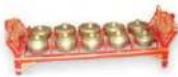 | The Kenong is a series of cradled kettle-gongs made of bronze and mounted in wooden cases. The Kenong comes in different sizes and various sets are often situated around the player. The numbers of Kenong vary in different gamelan ensembles and it is not uncommon for there to be about ten Kenongs in a gamelan. Also called Kemong in Balinese Gamelan.C2 – C3 – various hitsA4 – G6 – various hits | Vel (vol/eq), Var 1, Var 2, Lgth, FiltLv, FiltFq, Keyswitches |
| Ketuk The Ketuk consists of a single cradled kettle-gong of definite pitch. In a Javanese gamelan ensemble, there usually is only one Ketuk, which serves as a punctuating instrument. It is often situated next to the Kempyang and pitched lower than the Kempyang.C2 – A#2 - various sustains & choke | Vel (vol/eq), Var 1, Var 2, Lgth, FiltLv, FiltFq, Keyswitches | ||
| ARIA name: | Program Description: | Controller Assignments: | |
| Oceania | |||
Pelog Panerus The Pelog Panerus is  | a metallophone instrument with seven bronze bars placed over a wooden frame—each bar tuned to a different pitch. Javanese music uses two scales: a seven-note scale called pelog, and a five-note scale called slendro.C2 – A2 – various hits | Vel (vol/eq), Var 1, Var 2, Lgth, Lgth, FiltLv, FiltFq, Keyswitches | |
| Saron Barung |  | The Saron typically consists of seven bronze bars placed on top of a resonating frame. The Saron Barung is pitched one octave lower than the Saron Panerus and one octave higher than the Saron Demung. It is played with a wooden mallet.C2 – A3 - various sustaining hits | Vel (vol/eq), Var 1, Var 2, Lgth, FiltLv, FiltFq, Keyswitches |
| Saron Demong |  | The Saron Demung possesses the largest metal bars and produces the lowest sound among the sarons. Its pitches are an octave lower than the Saron Barung.C2 – G#3 – various sustaining hits | Vel (vol/eq), Var 1, Var 2, Lgth, FiltLv, FiltFq, Keyswitches |
| Saron Panerus (Peking) |  | Also known as Peking, the Saron Panerus is the smallest Saron in the Saron family. The Saron Panerus sounds an octave higher than the Saron Barung.C2 – G#2 – various sustaining hits | Vel (vol/eq), Var 1, Var 2, Lgth, FiltLv, FiltFq, Keyswitches |
| Slendro Panerus |  | The Slendro Panerus is similar to the Saron Panerus, but tuned to a different tuning system. Slendro Panerus has seven metal bars placed on a resonating frame.C2 – G#2 – various hits | Vel (vol/eq), Var 1, Var 2, Lgth, FiltLv, FiltFq, Keyswitches |
| ARIA name: | Program Description: | Controller Assignments: | |
| Oceania | |||
Slentem The Slentem consists of bronze bars suspended | over tube resonators. It has a range of about an octave. Slentem usually have seven bars that are tuned to either the Pelog system or the Slendro system. This instrument usually plays the main melody in a Gemelan ensemble.C2 – C4 – various dampened hitsB4 – C6 – various sustaining hits | Vel (vol/eq), Var 1, Var 2, Lgth, FiltLv, FiltFq, Keyswitches | |
| Hawaiian Percussion | |||
| Basic Hawaiian Percussion | The Basic Hawaiian Percussion set includes a select combination of Hawaiian percussion instruments. | Vel (vol/cq), Var 1, Var 2, Lgth, FiltLv, FiltFq, Keyswitches | |
| C2-E2 – KaekeekeF2-D#3 – IpuE3-G3 – KaekeekeG#3-D4 – Pahu HulaD#4-C#7 – Lava Stones & Rattles | |||
Ipu The Ipu is a percussion instrument made from | a gourd and used for Hawaiian hula dancing.C2-D#3, C4 – A#4 – various hits and slaps | Vel (vol/cq), Var 1, Var 2, Lgth, FiltLv, FiltFq, Keyswitches | |
Kaekeeke The Kaekeeke are long bamboo sticks played | by striking the instrument on the floor.C2-A#2, E3 – G3, C4 – E4 – various hits and strikes on the floor | Vel (vol/eq), Var 1, Var 2, Lgth, FiltLv, FiltFq, Keyswitches | |
Kala’au The Kala’au are rhythm sticks shaped from a  | Vel (vol/cq), Var 1, Var 2, Lgth, FiltLv, FiltFq, Keyswitches | ||
THE PERCUSSION INSTRUMENTS
| ARIA name: | Program Description: | Controller Assignments: | |
| Oceania | |||
| Lava Stones & Rattles (Ili'ili & 'Uli'uli) |  | Lava Stones, or ili'ili, are played by hula dancers. Lava stones are personal to the player as their size is chosen to fit the player's hands. Prior to the introduction of the ukulele into Hawaiian music over a century ago, most Hawaiian instruments were percussive. Thus, the main function of the 'ili'ili and other Hawaiian instruments is to help maintain the beat. Included in this instrument patch are Hawaiian ili'ili and 'uli'uli rattle.◆ E4 – G5 – various hits | Vel (vol/eq), Var 1, Var 2, Lgth, FiltLv, FiltFq, Keyswitches |
Pahu Hula The Ha  | "Pahu" literally means "drum." Pahu drums are made of hollowed out coconut trunks and covered by either sharkskin or calfskin. The drum was seen as a vehicle for the spirit of the gods and is important for performing the hula.G#4 – D5 – various hits | Vel (vol/eq), Var 1, Var 2, Lgth, FiltLv, FiltFq, Keyswitches | |
Toere The Toere i  | "rum with a slit along the side. It is made from Hawaiian hardwoods and varies in size. Toere drum sticks are made from ironwood.A5 – C7 – various hits | Vel (vol/eq), Var 1, Var 2, Lgth, FiltLv, FiltFq, Keyswitches | |
THE STRING INSTRUMENTS
| ARIA name: Description: | Controls: | ||
| Africa | |||
| Begena The |  | iopian stringed instrument that resembles a large lyre. The Begena has ten strings and leather thongs that give a buzzing sound. Range: F1 – G3 | Vel (attack), MW (vol/eq), Sus, Lgth, VAR1, VAR2, FiltLv, FiltFq, Keyswitches (includes mutes) |
WORLD

THE STRING INSTRUMENTS
| ARIA name: Description: | Controls: | ||
| Africa | |||
Bolon The  | Bolon, also known as the Nbolon, is a bass instrument with four strings. It is made of a gourd body with a bent ngoni-wood neck and twisted rawhide strings. This instrument is played in Guinea and surrounding regions and is used to accompany other instruments. The sound can be described as mellow and full.Range: C2-G2 | Vel (attack), MW (vol/eq), Sus, Lgth, VAR1, VAR2, FiltLv, FiltFq, Keyswitches | |
Domu The Domu (or Mangbetu)  | Harp from the Congo. The resonator is tightly covered with animal hide and fur, and it has two sound holes and an arched wood neck.Range: G3-G6 | Vel (attack), MW (vol/eq), Sus, Lgth, VAR1, VAR2, FiltLv, FiltFq, Keyswitches | |
| Kora |  | The Kora is a 21-stringed harp made out of a large calabash gourd covered with stretched skin, and it has a protruding stick to which strings are attached. The strings, made of fishing line, are plucked using the thumb and index finger of both hands. The sound of a kora is similar to that of a delicate harp. The instrument is played throughout West Africa and most popular in Gambia and Senegal.Range: C2-C6 | Vel (attack), MW (vol/eq), Sus, Lgth, VAR1, VAR2, FiltLv, FiltFq, Keyswitches |
Ngoni The Ngoni is a banjo-like instrument found  | throughout West Africa. Its body is a hollowed-out piece of wood with dried animal skin stretched over it like a drum. The neck is a fretless dowel protruding from the body. 'The Ngoni's strings are made of fishing line. The American banjo is believed to be a descendant of the Ngoni.Range: C2-C5 | Vel (attack), MW (vol/eq), Sus, Lgth, VAR1, VAR2, FiltLv, FiltFq, VibSpd, VibAmt, Keyswitches | |
THE STRING INSTRUMENTS
| ARIA name: Description: | Controls: | ||
| China | |||
| Choazhou Guzheng |  | The Choazhou Guzheng is popular in the southern coastal Chinese provinces, Taiwan, and other areas of Southeast Asia. This 17 metal-stringed Guzheng is a smaller version of the common 21-to 26-string silk-stringed Guzheng. It has thin gauged strings and moveable bridges to adjust the pitch of each string. Range: G2 – G5 | Vel (attack), MW (vol/eq), Sus, Lgth, VAR1, VAR2, FiltLv, FiltFq, Keyswitches |
Erhu The Erhu is a stringed instrument played with  | Vel (attack), MW (vol/eq), Sus, Lgth, VAR1, VAR2, FiltLv, FiltFq, BowNs, VibSpd, VibAmt, Keyswitches (include pizzicato) | ||
| Guzheng The Cuyheng is a long, zither-like instrument with 21 to 26 silk strings and movable bridges. The instrument has a long, rounded, wooden base over which the strings are stretched. Players play the strings with picks attached to their fingers while touching or bending the strings with their other hand. It is also known as the Gu-Zheng, the Zheng, or Cheng. It is one of the most ancient Chinese musical instruments and still one of the most popular. Range: C2 – C6 | Vel (attack), MW (vol/eq), Sus, Lgth, VAR1, VAR2, FiltLv, FiltFq, Keyswitches | ||
| Pipa The Pipa is a four-stringed, pear-shaped, plucked instrument that is often used in Chinese music. The history of the Pipa dates back over 2,000 years. This instrument has a wide dynamic range and many playing techniques have developed. Range: C2 – C7 | Vel (attack), MW (vol/eq), Sus, Lgth, VAR1, VAR2, FiltLv, FiltFq, VibSpd, VibAmt, Keyswitches (includes mutes) | ||
WORLD

THE STRING INSTRUMENTS
| ARIA name: Description: | Controls: | ||
| China | |||
| Yueqin |  | The Yueqin is also known as the Chinese moon lute and dates back over 2,000 years. “Yue” means “the moon” in Chinese. It is a fretted string instrument with a circular body, short neck and four metal strings played with a plectrum. Range: C3 – G6 | Vel (attack), MW (vol/eq), Sus, Lgth, VAR1, VAR2, FiltLv, FiltFq, VibSpd, VibAmt, Keyswitches (includes mutes) |
THE STRING INSTRUMENTS
| ARIA name: Description: | Controls: | ||
| India | |||
| Electric Sitar |  | The Electric Sitar is an electric instrument designed to mimic the sound of the traditional Indian sitar. The instrument has six playing strings and additional sympathetic strings that are amplified with electric pickups. Range: C2 – C7 (drone C2-B2) | Vel (attack), MW (vol/eq), Sus, Lgth, VAR1, VAR2, FiltLv, FiltFq, VibSpd, VibAmt, Keyswitches |
Sarangi The Sarangi is a bowed,  | boxy, short-necked fiddle from the Indian subcontinent. The instrument is roughly rectangular in shape and is about two feet long. It has three or four main playing strings that are played with a bow, and a number of metal strings (several dozen) that resonate sympathetically. The instrument has no frets or fingerboard and notes are determined by sliding the fingernail against the string rather than pressing it against a fingerboard. Range: C2 – C6 – Single notes plus the resonating sympathetic string. | Vel (attack), MW (vol/eq), Sus, Lgth, VAR1, VAR2, FiltLv, FiltFq, VibSpd, VibAmt, Keyswitches | |
| Sarangi Drone | The sympathetic resonating string for the Sarangi. Range: C2 – C6 | Vel (attack), MW (vol/eq), Sus, Lgth, VAR1, VAR2, FiltLv, FiltFq, VibSpd, VibAmt, Keyswitches | |
THE STRING INSTRUMENTS
| ARIA name: Description: | Controls: | ||
| India | |||
| Sitar The Sita |  | ular Indian stringedinstrument. The instrument has a long neck withraised frets and a gourd base. Sitars have six orseven melody strings and about thirteen symp- pathetic strings that act as a drone. The dronenotes resonate with the melody notes, giving theSitar its distinctive sustaining sound. The Sitar isused for playing extended improvised melodiesknown as ragas.Range: C2 – C6C2-C3 cand be used as drone | Vel (attack), MW(vol/eq), Sus, Lgth,VAR1, VAR2, FiltLv,FiltFq, VibSpd,VibAmt, Keyswitches |
| Tambura The |  | npura) is an accompanimentstringed instrument that provides a drone inclassical Indian music. The instrument has a longneck and four to six sustaining strings that pro-duce a long sustaining and buzzing drone sound.Although resembling a Sitar, Tamburas havedewer strings, no sympathetic strings, no frets,and a moveable bridge used to adjust the pitch.Range: E1 – C5 | Vel (attack), MW(vol/eq), Sus, Lgth,VAR1, VAR2, FiltLv,FiltFq, Keyswitches |
WORLD

THE STRING INSTRUMENTS
| ARIA name: Description: | Controls: | ||
| Japan | |||
| Koto The Koto is a Japanese zither. It is the largest of the Asian zithers at around six feet in length. The instrument usually has 13 silk strings set upon movable bridges. The Koto is played horizontally and the player plucks the strings using picks attached to his or her fingers. A common technique is “tsuki,” where the player plucks the string while pressing the string on the other side of the bridge with the other hand, causing the note to bend. Another technique is to pluck the string rapidly in alternating directions to produce a tremolo effect. Range: C3 – C6 | Vel (attack), MW (vol/eq), Sus, Lgth, VAR1, VAR2, FiltLv, FiltFq, Keyswitches | ||
| Sanshin |  | The Sanshin is a three-string instrument that is very important in traditional Okinawan music. It is a precursor of the Japanese Shamisen and consists of a roughly square sound box covered with snakeskin, a long neck, and three strings. It is played with a plectrum worn on the index finger. Range: C2- C6 | Vel (attack), MW (vol/eq), Sus, Lgth, VAR1, VAR2, FiltLv, FiltFq, VibSpd, VibAmt, Keyswitches (incudles mutes) |
| Shamisen |  | The Shamisen is a long-necked, fretless, three-stringed instrument (Shamisen literally means “three flavor strings”). The instrument is similar in sound and size to a banjo with a box-like skin-covered body. It has soap-soaked strings thar are plucked with a heavy ivory plectrum called a “bachi.” Range: C2 – F6 | Vel (attack), MW (vol/eq), Sus, Lgth, VAR1, VAR2, FiltLv, FiltFq, VibSpd, VibAmt, Keyswitches (includes mutes) |
THE STRING INSTRUMENTS
| ARIA name: Description: | Controls: | ||
| Other Asian Regions | |||
| Dan Tranh |  | The Dan Tranh is a zither-like instrument that is popular in Vietnam. It is similar to a small Chinese Zheng with 17 thin-gauged steel strings and a moveable bridge for each string. The Dan Tranh's body is made from the Vietnamese wootung tree and has a distinctive bright and clear tone. Range: C3 – G6 | Vel (attack), MW (vol/eq) Lgth, VAR1, VAR2, FiltLv, FiltFq, Key-switches |
| Dan Ty Ba Th |  | Ty Ba, is a pear-shaped and lute-like stringed instrument from Vietnam. This instrument has four strings of braided silk and four wooden tuning pegs on the neck. It is made from wood of the wootung tree and used in royal court ensembles This instrument is played with a plectrum. Range: C2 – G6 | Vel (attack), MW (vol/eq) Lgth, VAR1, VAR2, FiltLv, FiltFq, VibSpd,VibAmt, Keyswitches (includes mutes) |
| Gopi-chand |  | The Gopichand is a popular folk instrument of Bengal. The two bamboo legs are squeezed together by the left hand while the right hand plucks the string, producing a distinctive bending sound. The Gopichand is used mainly as a rhythmic instrument. Range: G3 – C6 | Vel (attack), MW (vol/eq) Lgth, VAR1, VAR2, FiltLv, FiltFq, VibSpd,VibAmt, Keyswitches |
THE STRING INSTRUMENTS
| ARIA name: Description: | Controls: | ||
| Europe | |||
| Balalaika |  | The Balalaika is one of the most popular and best known instruments in Russia and Eastern Europe. This stringed instrument has a unique triangular body, a fretted neck, and three strings (sometimes four or six), and is played by plucking or strumming.Range: G3 – C7 | Vel (attack), MW (vol/eq), Sus, Lgth, VAR1, VAR2, FiltLv, FiltFq, VibSpd, VibAmt, Keyswitches (includes mutes) |
WORLD

THE STRING INSTRUMENTS
| ARIA name: Description: | Controls: | ||
| Europe | |||
| Bulgarska Tambura |  | The Bulgarian Tambura is a mandolin-like instrument popular in folk music in the Balkans. The long neck is fretted and the eight strings (four pairs in unison) are played with a pick. Range: C3 – E6 | Vel (attack), MW (vol/eq), Sus, Lgth, VAR1, VAR2, FiltLv, FiltFq, VibSpd, VibAmt, Key-switches (includes mutes) |
| Celtic Harp |  | The Celtic harp is the national instrument of Ireland and its history extends over 1000 years. The Celtic harp often has 36 strings but that can vary. It uses sharpening levers, rather than pedals, to play in different keys. The instrument is played with both hands. Its sound is brighter than that of an orchestral harp. Range: C2 – C7 | Vel (attack), MW (vol/eq), Sus, Lgth, VAR1, VAR2, FiltLv, FiltFq, VibSpd, VibAmt, Keyswitches (includes Bisbigliando) |
Fiddle The fiddle usually refers  | to a folk violin used for playing a wide variety of ethnic or traditional folk music. The fiddle is very popular in Irish, Gypsy, and other folk traditions throughout the world. Range: G3 – G7 | Vel (attack), MW (vol/eq), Sus, Lgth, VAR1, VAR2, FiltLv, FiltFq, VibSpd, BowNs, VibAmt, Keyswitches (includes Pizzicato) | |
| Hurdy Gurdy |  | The Hurdy Gurdy, also known as a wheel fiddle, is a stringed instrument in which the strings are rubbed with a rosined rotating wheel. This wheel is turned with a crank, functioning much like a violin bow, and the left hand plays the melody on the keys of the keybox. Range: C3 – G4 | Vel (attack), MW (vol/eq), Sus, Lgth, VAR1, VAR2, FiltLv, FiltFq, VibSpd, VibAmt, |
THE STRING INSTRUMENTS
| ARIA name: Description: | Controls: | ||
| Europe | |||
| Mandolin | The Mandolin is a lute-like instrument with a teardrop-shaped (or oval) body with a sound-hole and a straight fretted neck. The modern versions usually have eight metal strings in four pairs, tuned in unisons or octaves, and are either plucked or strummed in a tremolo. This instrument has become popular in Italy and throughout Europe. Range: G3 – C7 | Vel (attack), MW (vol/eq), Sus, Lgth, VAR1, VAR2, FiltLv, FiltFq, VibSpd, VibAmt, Keyswitches (includes mutes) | |
| Octave Mandolin |  | A pear-shaped Italian instrument with a fretted neck and from four to six pairs of strings, tuned an octave lower than a typical mandolin. Range: C2 – C6 | Vel (attack), MW (vol/eq), Sus, Lgth, VAR1, VAR2, FiltLv, FiltFq, VibSpd, VibAmt, Keyswitches (includes mutes) |
| Wire Strung Harp (Clarsach) |  | The Wire Strung Harp, or Clarsach, is a traditional instrument of Ireland and serves as its national symbol. The technique of playing a wire-strung harp is different from a gut or nylon strung harp. While certain fingers play, other fingers dampen the strings. The wire-string harp produces a beautiful, bell-like, haunting tone. Range: F2 – C7 | Vel (attack), MW (vol/eq), Sus, Lgth, VAR1, VAR2, FiltLv, FiltFq, Keyswitches (includes bisbigliando) |
THE STRING INSTRUMENTS
| ARIA name: Description: | Controls: | ||
| Europe | |||
Zitter This Zitter is a ten string | dulcimer-like instrument from Slovenia, with fretted bottom strings and the others playing open. The Zitter comes in many sizes and types throughout Europe and is believed to be the ancestor of the Mountain Dulcimer. It is known by various names—Epinette (France), Langspil (Iceland), and Scheitholz (Germany).Range: C2 – C7 | Vel (attack), MW (vol/eq), Sus, Lgth, VAR1, VAR2, FiltLv, FiltFq, Keyswitches | |
THE STRING INSTRUMENTS
| ARIA name: Description: | Controls: | ||
| Latin America | |||
| South American Harp (Arpa) |  | The South American Harp (or arpa) is common throughout South America and is the national instrument of Paraguay. This instrument is triangular in shape and is very light for its size. It typically has 36 nylon strings that are played with the fingernails. The South American Harp produces a distinctly bright, clear sound. Range: C2 – C7 | Vel (attack), MW (vol/eq), Sus, Lgth, VAR1, VAR2, FiltLv, FiltFq, Keyswitches (includes bisbigliando) |
THE STRING INSTRUMENTS
| ARIA name: Description: | Controls: | ||
| Latin America | |||
| Veracruz Harp |  | The Veracruz Harp is popular in the Veracruz region of Mexico and is played in Mariachi bands. It is similar to the South American Harp in appearance and playing technique but usually has a wider body, a deeper tone, and is played standing up rather than sitting. Range: C2 – C7 | Vel (attack), MW (vol/eq), Sus, Lgth, VAR1, VAR2, FiltLv, FiltFq, Keyswitches (includes bisbigliando) |
| Guitar-ron |  | The Guitarron is a large, deep-bodied Mexican bass guitar with six strings and a fretless neck. The strings are thick and often played in octaves, with a strong, pronounced plucking action. Range: G1 – G4 | Vel (attack), MW (vol/eq), Sus, Lgth, VAR1, VAR2, FiltLv, FiltFq, VibSpd, VibAmt, Keyswitches (includes mutes) |
THE STRING INSTRUMENTS
| ARIA name: Description: | Controls: | ||
| Middle East | |||
Oud The Oud is a near-shaped  | Middle Eastern lute with a short neck and eleven strings. The player uses a pick (originally made from a bird's feather) to pluck the strings. The Oud is one of the most important instruments in Arabic classical music. The instrument is also known as the Ud. • Range: C3 – G5 | Vel (attack), MW (vol/eq), Sus, Lgth, VAR1, VAR2, FiltLv, FiltFq, VibSpd, VibAmt, Keyswitches (includes mutes) | |
THE STRING INSTRUMENTS
| ARIA name: Description: | Controls: | ||
| Middle East | |||
| Santoor The Santoor is a dulcimer-like stringed in- | Vel (attack), MW (vol/eq), Sus, Lgth, VAR1, VAR2, FiltLv, FiltFq, Keyswitches | ||
 | strument originating in Iran and is popular throughout the Middle East. Its wooden body is trapezoidal, with narrow sides and a wide soundboard. The instrument's 72 strings are grouped into 2 to 3 strings per note. The instrument is played with two wooden hammers. One common technique is a bounce stroke where the mallet is bounced across the strings, producing quick repetitions. It is also known as the Santour, Santur, and Sanduri. Range: G3 – G7 | ||
THE STRING INSTRUMENTS
| ARIA name: Description: | Controls: | ||
| North America | |||
| Banjo The Banjo is a popular instrument in American folk music. It consists of a circular drum body covered with a parchment drum head. Attached to the drum body is a long neck, similar to that of a guitar, with five or six strings. It is a descendant of African stringed instruments originating with African slaves. Range: G2 – G6 | Vel (attack), MW (vol/cq), Sus, Lgth, VAR1, VAR2, FiltLv, FiltFq, VibSpd, VibAmt, Keyswitches (includes mutes) | ||
| Banjolele The Banjolele (or banjo ukulele) is a four-stringed musical instrument with a small banjo-type body and a fretted ukulele neck. Range: G3 – C7 | Vel (attack), MW (vol/cq), Sus, Lgth, VAR1, VAR2, FiltLv, FiltFq, VibSpd, VibAmt, Keyswitches (includes mutes) | ||
THE STRING INSTRUMENTS
| ARIA name: Description: | Controls: | ||
| North America | |||
Dulcimer The Dulcimer is a stringed instrument that originates from the Appalachian Mountains of America. The Appalachian Dulcimer is shaped like an hourglass, played on the lap, and has a narrow fingerboard attached to a larger soundbox underneath.Range: G2 – C6Vel (attack), MW (vol/eq), Sus, Lgth, VAR1, VAR2, FiltLv, FiltFq, Keyswitches originates from the Appalachian Mountains of America. The Appalachian Dulcimer is shaped like an hourglass, played on the lap, and has a narrow fingerboard attached to a larger soundbox underneath.Range: G2 – C6Vel (attack), MW (vol/eq), Sus, Lgth, VAR1, VAR2, FiltLv, FiltFq, Keyswitches | |||
| Fiddle See Europe: Strings | |||
| Fretless Zither |  | The Fretless Zither consists of a simple shallow box with many open metal strings stretched over the top. The melody strings on the right are tuned either diatonically (or sometimes chromatically). To the left are several chords made up of several strings that are grouped together. This instrument is also known as an American Zither.Range: G3 – C7 | Vel (attack), MW (vol/eq), Sus, Lgth, VAR1, VAR2, FiltLv, FiltFq, Keyswitches |
| Hammered Dulcimer | See Middle East: Strings: Santoor | ||
| Washtub Bass |  | The Washtub Bass, or “gutbucket,” is a single-stringed bass instrument that uses a metal wash-tub as a resonator.Range: C2 – G\C4 | Vel (attack), MW (vol/eq), Sus, Lgth, VAR1, VAR2, FiltLv, FiltFq, VibSpd, VibAmt, BndSpd, Keyswitches |
WORLD

Oceania
| Rebab The Rehab is a two-stringed bowed instrument | Vel (attack), MW (vol/eq) Lgth, VAR1, VAR2, FiltLv, FiltFq, BowNs, VibSpd,VibAmt, Keyswitches | ||
 | used as a melodic voice in the Balinese gamelan. The Rehab's heart-shaped body is made from wood or coconut shell and is covered with animal gut. The instrument is played with the player sitting cross-legged and holding it in a vertical position. The bow is made from wood and horse hair, similar to a violin bow. Range: B4 – G5 | ||
| Tenor Ukulele |  | The Tenor Ukulele is a larger version of the standard Ukulele. This instrument has eight strings: two strings are doubled and the third and fourth are paired with octaves. Range: C3 – C6 | Vel (attack), MW (vol/eq), Sus, Lgth, VAR1, VAR2, FiltLv, FiltFq, VibSpd, VibAmt, Keyswitches (including mutes) |
Ukulele The Ukulele is small guitar-shaped instrument  | of Hawaiian origin and the most popular instrument of the islands. The instrument has four nylon strings tuned to G-C-E-A. Ukuleles come in many different sizes. Range: C3 – G6 | Vel (attack), MW (vol/eq), Sus, Lgth, VAR1, VAR2, FiltLv, FiltFq, VibSpd, VibAmt, Keyswitches (including mutes) | |
OTHER INSTRUMENTS
| ARIA name: Description: | Controls: | ||
| Asia | |||
| Bullroarer The Bullroarer consists of a piece of wood connected to a long cord. It is played by swinging it lasso-style, over the head, which causes it to spin and make a humming sound. This type of instrument has been used in Hawaii, Polynesia, Native America, and other cultures throughout the world.C3 – F3 – various whirs | Vel (vol/eq), Lgth, Var 1, Var 2, FiltLv, FiltFq, VibSpd, VibAmt, Keyswitches | ||
| Harmo-nium |  | The harmonium is a free-standing keyboard instrument. Sound is produced by air supplied by foot- or hand-operated bellows being blown through sets of free reeds. Notes are selected by playing the white and black keys on the front of the instrument. Some models feature a stop that creates a form of vibrato. A popular example of the use of a harmonium can be found in Beatles songs such as “We Can Work It Out.”Range: C2 – C6 | Vel (attack), MW (vol/eq), Sus, Lgth, VAR1, VAR2, FiltLv, FiltFq, AirNs, Bellows, Keyswitches |
| Khaen Mouth Organ |  | The Khaen, or Thai Mouth Organ, is a small free-reed mouth organ from Thailand. The instrument consists of a group of pipes connected with a small, hollowed-out hardwood reservoir into which air is blown. The Khaen is tuned to a pentatonic scale. It is also called a Pi Joom in Northern Thailand.Range: C5 – C7 | Vel (attack), MW (vol/eq), Porta, Lgth, VAR1, VAR2, FiltLv, FiltFq, VibSpd, VibAmt, AirNs, Fluttr, Auto-Legato, BndSpd, Keyswitches |
OTHER INSTRUMENTS
| ARIA name: Description: | Controls: | ||
| Europe | |||
| Alphorn The | Alphorn, used by d | dwellers in the Swiss AlpMountains and Alpine regions, is a long hollow tube with a wooden mouthpiece. It is also known as the alpenhorn or alpine horn.Range: C2 – C6 | Vel (attack), MW (vol/cq), Porta,Lgth, VAR1, VAR2,FiltLv, FiltFq,VibSpd, Vib Amt,AirNs, Fluttr, Auto-Legato |
 | |||
Concertina The Concertina is a type of small accordion with  | a unique shape. It typically has buttons on both sides. Each button produces one note, unlike the accordion, which produces chords with a single button. The Concertina was reportedly developed in England and Germany. Its compact size makes it very mobile and visually entertaining.Range: C3 – F6 | Vel (attack), Lgth,VAR1, VAR2,FiltLv, FiltFq,VibSpd, Vib Amt,Bellows, BndSpd,Keyswitches | |
| Concert Accordion |  | The Accordion, also known as a squeezebox,originated in Austria in the nineteenth century and is now a common folk instrument throughout the world. The instrument consists of a bellows that the player expands and contracts,forcing air across a set of metal reeds to produce sound. Notes on a keyboard trigger the various reeds. In this library the Accordion uses the bassoon switch (one reed in the chamber) for a round warm sound.Range: C2 – G6 | Vel (attack), Lgth,VAR1, VAR2,FiltLv, FiltFq,VibSpd, Vib Amt,Bellows, BndSpd,Keyswitches |
| French Accordion |  | French Accordion using a switch with three reeds.Range: C2 – C6 | Vel (attack), Lgth,VAR1, VAR2,FiltLv, FiltFq,VibSpd, Vib Amt,Bellows, BndSpd,Keyswitches |
OTHER INSTRUMENTS
| ARIA name: Description: | Controls: | ||
| Europe | |||
| Italian Mussette Accordion |  | The Italian Mussette Accordion is played throughout Italy. It uses a switch with three reeds (two mids and one high).• Range: C2 – C6 | Vel (attack), Lgth, VAR1, VAR2, FiltLv, FiltFq, VibSpd, Vib Amt, Bellows, BndSpd, Keyswitches |
Latin America
| Bandoneón | The Bandoneón is a square-built button ac-cordion, commonly used in Argentinean tango.Unlike the typical keyboard accordion, the Ban-doneón has buttons on both sides rather than akeyboard. The switch used is a combined middleand low reed.Range: C3 – C7 | Vel (attack), Lgth,VAR1, VAR2,FiltLv, FiltFq,VibSpd, Vib Amt,Bellows, BndSpd,Keyswitches |
| SteelDrums |  | Steel Drums are a set of pitched percussioninstruments, each drum tuned chromatically.Each drum is skillfully hammered from 55-gallon steel oil drums and fine tuned by beatingthe head into separate tuned areas. The instru-ment originates from Trinidad and is also knownas steelpan or pans. There are several pans in asteelpan band consisting of Tenor (lead), second,mid-range, and bass pans.Range: G1 – G6 |
OTHER INSTRUMENTS
| ARIA name: Description: | Controls: | ||
| North America | |||
| Melodica The melodica is a mouth-blown free-reed instrument consisting of a tube attached to a keyboard. The player blows into the tube while playing the keys of the keyboard. It can be played with articulation and expression like a wind instrument. Range: C3 – C7 | Vel (attack), MW (vol/eq), Porta, Lgth, VAR1, VAR2, FiltLv, FiltFq, VibSpd, Vib Amt, AirNs, Fluttr, Auto-Legato, BndSpd, Keyswitches | ||
| Harmonica The Harmonica is a free-reed wind instrument that is played by blowing or sucking air through holes (reed chambers). Each tone is determined by the size of reed. Longer reeds make deep, low sounds and short reeds make higher-pitched sounds. Pitches can also be changed (bending a note) by redirecting air flow into the chamber. There are many types of Harmonicas, including diatonic, chromatic, tremolo, orchestral, and bass versions. Range: C5 – G7 | Vel (attack), MW (vol/eq), Porta, Lgth, VAR1, VAR2, FiltLv, FiltFq, VibSpd, Vib Amt, AirNs, Fluttr, Auto-Legato, BndSpd, Keyswitches | ||
| Bass Harmonic |  | The Bass Harmonica has double sets of reeds tuned in octaves, with the bottom reeds playing lower than the upper reeds. Range: C2 – G3 | Vel (attack), MW (vol/eq), Porta, Lgth, VAR1, VAR2, FiltLv, FiltFq, VibSpd, Vib Amt, AirNs, Fluttr, Auto-Legato, BndSpd, Keyswitches |
Conclusion
We have presented the main features of the Garritan World Instruments library.
You now have the finest and most comprehensive collection of world instruments at your fingertips.
We cordially invite you to share the music you make with World Instruments with us and with others. Feel free to post your work on the Garritan forum or submit it for inclusion in our demo pages.
May you make wonderful world-class music!
Getting Help
The first place to look for a solution to any problem you may be experiencing is in this manual. The next best place is the separate ARIA Player manual. Please read these manuals before contacting support. Next, check the readme files (if any) that contain important information and all last-minute changes that were not available when creating this guide. Whenever you encounter problems, you should also check if you have installed the latest updates. The version number of your software is displayed in the Settings tab. Updates are released regularly to fix known problems and improve the software.
Selecting the “Get Help” button in the “Settings” tab in the ARIA Player will link directly to the Support site. To better assist you, we will ask you for all information about your hardware and software environments. In your report, you should include a description of the problem, the steps you have taken to try to remedy the problem, the specs of your computer, and a description of your software and hardware.
GET HELP
If there is a severe technical issue (crash, empty UI), please go to the “Generate Logs” link. For Windows the link is in the Start Menu, and Mac users can find the Generate Log link in your library’s folder. This link will open a window and will allow you to create a log on your desktop. Please attach the log to an e-mail and send it to us. That will help us identify the issue so we can get back to you.
If you are unable to find a solution to your problem by any of the above methods, please visit our support page, http://www.garritan.com/support. The best way to get the help you need is by giving us plenty of detailed information about the problem you are having. We do ask you to read this guide thoroughly and exhaust the other avenues of support before contacting us.
Regarding Third-Party Customer Service: Please do not call Garritan for technical support regarding any third-party application. Please contact the respective companies for support.
For the Latest... The ARIA Player is dynamic software that is evolving and growing. Please check the support area of our website at www.garritan.com for the latest up-to-date information, troubleshooting, FAQs, helpful hints, and tutorials. Another resource is the support forums, where you can discuss problems directly with other users and with experts from our forums.
The Garritan Community
Learn, Share Music, and Stay up to date
I invite you to join the Garritan Community.
Owning Garritan libraries and soundware gives you much more than a product. One of the most valuable benefits is membership in the Garritan Community of musicians.
The Garritan Forum is where Garritan users from around the world come to discuss everything related to soundware and music. It is the perfect place to find the latest news and announcements, ask questions, and share your music made with Garritan World Instruments. If you want to browse, share your music, share your thoughts about the sounds, impart knowledge, listen to demos, learn, and interact with other users—you can do it there! You can also communicate privately with other musicians, respond to polls, participate in real-time chats, read how-to tutorials, and receive help from others. There is a wealth of information among the tens of thousands of posts in the forum and a convenient search feature to find what you are looking for.
The Garritan forum can be accessed at: http://www.garritan.com/forum.html
You don't have to register to browse posts, but before you can post, you will have to sign up. Registration is fast, simple, and absolutely free, so please join our community today! In addition to the official Garritan Forum, there are other independent Garritan Communities where you can find valuable information and interact with other users. I urge you to contribute and be a part of the Garritan Community, where you will find an indispensable resource for musicians.

Acknowledgements
I would like to thank many people from around the world who have been writing us for more sounds, particularly world instrument sounds. It is encouraging to know there are so many people interested in world music and world instruments.
Producing Garritan World Instruments would not have been possible without the combined help, talent, and support of many extraordinary people. I am grateful to those who have contributed and would like to thank them all.
First I would like to thank Chad Beckwith, Tom Hopkins, and Markleford Friedman who programmed the instruments and transformed these samples into expressive, playable instruments.
A world of thanks to the many musicians who have played for this collection—for enduring the relentless scales, sore fingers, numb lips, and meticulous playing to produce these samples. Thanks to the players: Jay Easton, Bruce Hamilton, John Bonica, Andy Jones, Gene Nery, and the other musicians who played in this collection. There are too many musicians to name.
Some of the sounds contained herein originated from the R.A.W. collection by Herman Witkam, and many thanks go to Herman for providing those sounds. Thanks also to Jack De Mello of the Mountain Apple Company for some of the Hawaiian instrument sounds. A big thank you to Petr Pololanik, who recorded many of the Eastern European instruments in the Czech Republic, and many, many thanks to Cristina Malaia for providing many of the Doru Malaia Ethnic Drum and Percussion sounds. Thank you, Vipin Venugopalan, for recording some of the Indian instruments in Mumbai. And thanks to Dan Kury for recording the Native American flute, and to Jeannot Welter and Clive Romney for recording a number of fine instruments in this collection.
The custom-made ARIA sample engine for Garritan World Instruments was developed by David Viens of Plogue Art et Technologie Inc. David Viens and his team took up the task brilliantly and brought forth the super-charged and technologically stunning ARIA sample engine used for this project. Thanks also to Sebastien Beaulieu, Eric Patenaude, and Pascal Maheux for assisting with the development of the engine. And a special thanks to Max Deland for helping manage this project. I wish to thank Magnus Jonsson for providing a special edition of Ambience reverb. Thanks to Conexant for providing the Endless Wave technologies.
Thanks to Jeannot Welter for the tedious sample editing. Thanks also to Vipin Venugopalan and Gene Nery for editing and looping. And thank you, Lukasz Stasinski, for sample editing.
Thanks to Mark Simon and David Burnett for hosting the Garritan Forums on Northern Sounds to exchange ideas and help users support one another. I would also like to thank Stephen Croes, Dean of Music Technology, and Kurt Biederwolf, Chair of the Music Synthesis Department, at Berklee College of Music, who were very helpful in discussing many of the problems facing music students, leading to the development of our libraries as a creative solution for classroom work.
I wish to thank our beta team who provided valuable input: Prof. Jim Williams, Dan Kury, Bill DeWitt, Jack Cannon, Robert Davis, David Sosnowski, Pat Azzarello, Jim Ortner, Trond Bjornard Ph.D., Rick Schneblin, Randy Bowser, Jeremy & Julian Soule, Houston Haynes, Mike Moscariello, Kevin Gates, Danny Williams, Keith Walls, Gunther Bombe, Peter O'Regan, Francesco Marchetti, Colton Provias, Sean Hannifin and Alan Belkin. And thanks again to James Mireau for the fantastic GUI work for ARIA and the World Instrument graphics. And thanks to Tony Monaghan for his work on the Garritan site and World Instruments page. And finally, a big thank you goes to Jim Williams for his tireless editing of these manuals.
About Garritan
Everything we do is aimed at helping musicians realize and maximize their creative potential. To that end, high-quality, expressive and affordable software instruments should be within the reach of every musician.
We intentionally make products that work smarter and easier, simplifying music technology to foster, enhance, and democratize musical creativity. Researchers at heart, we pioneer innovation, creating new standards that are consistently in the forefront of music technology... yet we remain focused on the human elements of music and real performance.
We believe education is crucial for musicians to reach their highest potential. Our broad presence in colleges and universities and our free online music courses attest to this.
We truly want to spread the joy of creating music with these remarkable tools—high quality, affordable, authentic tools that educate, enable and inspire musicians toward achievement and excellence.
The World of Sampling and Virtual Instruments
Garritan World Instruments is a complete collection of actual high-quality recordings (or samples) of nearly every note of each musical instrument commonly used in a World Instruments context. When Garritan World Instruments is loaded and you play a note on your keyboard, what you hear sounds remarkably like the real thing, because it is an actual recording of an instrument.
Developed in the early eighties, sampling technology has grown substantially. Sampling is now everywhere. Many movies, prime-time television shows, and interactive games use sampling technology. Now everyone can have a set of World Instruments in their computer. With Garritan World Instruments, the sample player is integrated with the sounds, effectively turning a computer into a band of virtual instruments.
Tip:
Don't overlook the possibility of combining World Instruments with Personal Orchestra, Jazz & Big Band, or other Garritan libraries. World Instruments can expand your palette of sounds for many musical applications, not just world music.
Downloadable Sounds and Other Garritan Libraries
Get More Sounds Instantly and Easily!
Download sounds quickly and easily to expand your musical palette. Simply go to the “Settings” tab in the ARIA Player and click on the “Get More Sounds” button. You’ll be taken to the Garritan Download Shop where you will be able to download additional sounds and libraries.
Please be sure to check out Personal Orchestra, Authorized Steinway Virtual Concert Grand, Jazz & Big Band, Concert & Marching Band, and other soundware products.
For information on all the Garritan libraries and upcoming new products, visit our website at: www.garritan.com
Products from Garritan
- Jazz & Big Band • Personal Orchestra • Concert & Marching Band • Classic Pipe Organs
- Instant Orchestra
- Harps



- A USER'S GUIDE TO
- GARRITAN WORLD INSTRUMENTS
- THIS GUIDE WRITTEN BY GARY GARRITAN
- TABLE OF CONTENTS
- WORLD
- DIRECTORY OF INSTRUMENTS IN GARRITAN WORLD INSTRUMENTS
- WELCOME TO WORLD INSTRUMENTS
- GARRITAN WORLD INSTRUMENTS AT A GLANCE
- END USER LICENSE AGREEMENT
- WHAT THE WORLD INSTRUMENTS PACKAGE INCLUDES
- HOW TO USE THIS MANUAL
- FURTHER DOCUMENTATION
- SPECIFICATIONS & COMPUTER SYSTEM REQUIREMENTS
- COMPUTER SYSTEM REQUIREMENTS
- COMPUTER OPERATING SYSTEM HARDWARE
- REGARDING SOUND CARDS, AUDIO & MIDI INTERFACES
- PLEASE NOTE
- REGARDING SPEAKERS, AMPLIFICATION, AND HEADPHONES
- REGARDING 64-BIT COMPUTING
- UPDATING TO LATEST VERSION
- INSTALLATION AND ACTIVATION
- QUICK REFERENCE INSTALLATION
- STEPS FOR INSTALLING GARRITAN WORLD INSTRUMENTS
- IMPORTANT
- QUICK REFERENCE ACTIVATION
- ANOTHER ALTERNATIVE: DRAG AND DROP FROM THE BROWSER
- ANOTHER ALTERNATIVE: USE THE FILE MENU
- ARIA PLAYER BASICS
- GETTING AROUND THE ARIA PLAYER INTERFACE
- USING THE ARIA PLAYER
- USING ARIA AS A STANDALONE
- USING ARIA AS A VST, AU, OR RTAS PLUG-IN
- CONFIGURING VST
- IMPORTANT NOTES FOR PC USERS
- CONFIGURING AU (AUDIO UNITS—MAC ONLY)
- CONFIGURING RTAS (PRO TOOLS SYSTEMS ONLY)
- NOTATION VERSION OF GARRITAN WORLD INSTRUMENTS
- A WORLD OF INSTRUMENTS
- THE MUSIC AND INSTRUMENTS OF AFRICA
- THE MUSIC AND INSTRUMENTS OF INDIA
- THE MUSIC AND INSTRUMENTS OF CHINA
- THE MUSIC AND INSTRUMENTS OF JAPAN
- THE MUSIC AND INSTRUMENTS OF OTHER ASIAN REGIONS
- THE MUSIC AND INSTRUMENTS OF EUROPE
- THE MUSIC AND INSTRUMENTS OF THE MIDDLE EAST
- THE MUSIC AND INSTRUMENTS OF NORTH AMERICA
- THE MUSIC AND INSTRUMENTS OF LATIN AMERICA
- THE MUSIC AND INSTRUMENTS OF AUSTRALIA & OCEANIA
- STUDYING WORLD MUSIC AND CULTURES
- GROUPS OF INSTRUMENTS IN GARRITAN WORLD INSTRUMENTS
- WIND
- INSTRUMENTS
- PERCUSSION
- STRINGED
- OTHER
- PLAYING GARRITAN WORLD INSTRUMENTS
- BASIC PERFORMANCE CONTROLS
- THE REAL-TIME CONTROL SYSTEM: (WIND AND BOWED STRING INSTRUMENTS)
- NOTE
- MODULATION WHEEL CONTROL
- SHAPING DYNAMICS & PLAYING EXPRESSIVELY
- NOTE VELOCITY
- SUSTAIN PEDAL
- LEGATO—PLAYING SMOOTHLY AND EVENLY
- CHOOSING BETWEEN AUTO-LEGATO AND SUSTAIN-PEDAL LEGATO (CC#64)
- KEYSWITCHING
- CHANGING ARTICULATIONS IN REAL TIME
- KEYSWITCH TIPS
- KEYSWITCH PERCUSSION TIPS
- KEYSWITCHES FOR THE VARIOUS INSTRUMENT GROUPS
- ADDITIONAL PERFORMANCE CONTROLS
- INSTRUMENT SPECIFIC PERFORMANCE CONTROLS
- PUTTING IT ALL TOGETHER FOR A REAL-TIME PERFORMANCE
- USING SCALA FILES—ETHNIC AND NON-WESTERN TUNINGS
- SCALA IMPORT BUTTON
- NOTES
- PERFORMANCE CONTROLLERS CHART FOR GARRITAN WORLD INSTRUMENTS
- ENSEMBLE PRESETS
- LOAD ETHNIC BANDS AND ENSEMBLES EASILY
- LOADING ENSEMBLE PRESET FILES
- ORGANIZATION OF INSTRUMENTS
- FAMILY
- GEOGRAPHIC REGION
- THE WIND INSTRUMENTS
- JAPAN
- OTHER ASIAN REGIONS
- EUROPE
- CHANTERS & BAGPIPES
- THE PERCUSSION INSTRUMENTS
- AFRICA
- EWE DRUMS
- CONCLUSION
- GETTING HELP
- GET HELP
- THE GARRITAN COMMUNITY
- ACKNOWLEDGEMENTS
- ABOUT GARRITAN
- THE WORLD OF SAMPLING AND VIRTUAL INSTRUMENTS
- TIP
- DOWNLOADABLE SOUNDS AND OTHER GARRITAN LIBRARIES
- PRODUCTS FROM GARRITAN
Brand : Garritan
Model : World Instruments
Category : Music Software